Skip to content

High-quality research proteins.

  • 1-800-805-6531

  • Mon - Sat 8.00-18.00, Sun - Closed

  • info@prospecbio.com

  • PO Box 6591 East Brunswick NJ 08816

  • Products
    • Cytokines
    • Growth factors
    • Chemokines
    • Cd antigens
    • Neurotrophins
    • Hormones
    • Enzymes
    • Viral antigens
    • Recombinant proteins
    • Natural proteins
    • Monoclonal antibodies
    • Polyclonal antibodies
    • Thermal Packaging
  • About
    • Company
    • Founder
    • Contribution
  • Customers
    • Eastern Asia
    • Eastern Europe
    • North America
    • South America
    • South East Asia
    • Southern Asia
    • Western Europe
  • Ordering
    • Ordering Method
    • Ordering - Credit Card
    • Ordering - PO
    • Shipping Fees
    • FAQs
  • Services
    • DNA Cloning
    • Protein Expression
    • Monoclonal Antibody
    • Fermentation
    • Technology License
  • Contact us
Log in

Country/region

  • USD $ | Albania
  • USD $ | Andorra
  • USD $ | Argentina
  • USD $ | Armenia
  • USD $ | Australia
  • USD $ | Austria
  • USD $ | Azerbaijan
  • USD $ | Belarus
  • USD $ | Belgium
  • USD $ | Bolivia
  • USD $ | Brazil
  • USD $ | Bulgaria
  • USD $ | Cambodia
  • USD $ | Canada
  • USD $ | Chile
  • USD $ | China
  • USD $ | Colombia
  • USD $ | Costa Rica
  • USD $ | Croatia
  • USD $ | Cyprus
  • USD $ | Czechia
  • USD $ | Denmark
  • USD $ | Estonia
  • USD $ | Finland
  • USD $ | France
  • USD $ | Georgia
  • USD $ | Germany
  • USD $ | Greece
  • USD $ | Hong Kong SAR
  • USD $ | Hungary
  • USD $ | Iceland
  • USD $ | India
  • USD $ | Ireland
  • USD $ | Israel
  • USD $ | Italy
  • USD $ | Japan
  • USD $ | Kazakhstan
  • USD $ | Latvia
  • USD $ | Liechtenstein
  • USD $ | Lithuania
  • USD $ | Madagascar
  • USD $ | Malta
  • USD $ | Mexico
  • USD $ | Moldova
  • USD $ | Monaco
  • USD $ | Netherlands
  • USD $ | New Zealand
  • USD $ | North Macedonia
  • USD $ | Norway
  • USD $ | Panama
  • USD $ | Paraguay
  • USD $ | Peru
  • USD $ | Philippines
  • USD $ | Poland
  • USD $ | Portugal
  • USD $ | Romania
  • USD $ | Singapore
  • USD $ | Slovakia
  • USD $ | Slovenia
  • USD $ | South Africa
  • USD $ | South Korea
  • USD $ | Spain
  • USD $ | Sri Lanka
  • USD $ | Sweden
  • USD $ | Switzerland
  • USD $ | Taiwan
  • USD $ | Thailand
  • USD $ | Türkiye
  • USD $ | Ukraine
  • USD $ | United Kingdom
  • USD $ | United States
  • USD $ | Uruguay
  • USD $ | Vatican City
  • USD $ | Venezuela
  • USD $ | Vietnam
  • Facebook
  • Instagram
logoProSpec - Recombinant Protein Manufacturer for academic and R&D industry
Become a distributor
Account Log in
Wishlist
Cart Cart(0)
  • Products
    +
    • Cytokines
    • Growth factors
    • Chemokines
    • Cd antigens
    • Neurotrophins
    • Hormones
    • Enzymes
    • Viral antigens
    • Recombinant proteins
    • Natural proteins
    • Monoclonal antibodies
    • Polyclonal antibodies
    • Thermal Packaging
  • About
    +
    • Company
    • Founder
    • Contribution
  • Customers
    +
    • Eastern Asia
    • Eastern Europe
    • North America
    • South America
    • South East Asia
    • Southern Asia
    • Western Europe
  • Ordering
    +
    • Ordering Method
    • Ordering - Credit Card
    • Ordering - PO
    • Shipping Fees
    • FAQs
  • Services
    +
    • DNA Cloning
    • Protein Expression
    • Monoclonal Antibody
    • Fermentation
    • Technology License
  • Contact us

Item added to your cart

View cart
View All
  • Cytokines
  • Growth factors
  • Chemokines
  • Cd antigens
  • Neurotrophins
  • Hormones
  • Enzymes
  • Viral antigens
  • Recombinant proteins
  • Natural proteins
  • Monoclonal antibodies
  • Polyclonal antibodies
  • Thermal Packaging
  • Tumor Necrosis Factor

    Tumor Necrosis Factor

    View All
  • 4-1BB

    4-1BB

    View All
  • Adiponectin

    Adiponectin

    View All
  • AIF1

    AIF1

    View All
  • Other Cytokines

    Other Cytokines

    View All
  • AITRL

    AITRL

    View All
  • Angiopoietin

    Angiopoietin

    View All
  • Apolipoprotein

    Apolipoprotein

    View All
  • B-Cell Activating Factor

    B-Cell Activating Factor

    View All
  • Beta Defensin

    Beta Defensin

    View All
  • Bone Morphogenetic Protein

    Bone Morphogenetic Protein

    View All
  • B type Natriuretic Peptide

    B type Natriuretic Peptide

    View All
  • BST

    BST

    View All
  • Betacellulin

    Betacellulin

    View All
  • Cardiotrophin

    Cardiotrophin

    View All
  • Activin

    Activin

    View All
  • Fibroblast Growth Factor

    Fibroblast Growth Factor

    View All
  • Other Growth Factors

    Other Growth Factors

    View All
  • CSF

    CSF

    View All
  • CTGF

    CTGF

    View All
  • IGFBP

    IGFBP

    View All
  • VEGF Protein

    VEGF Protein

    View All
  • EGF

    EGF

    View All
  • Epigen

    Epigen

    View All
  • Erythropoietin

    Erythropoietin

    View All
  • Insulin-Like Growth Factor

    Insulin-Like Growth Factor

    View All
  • Growth Hormone

    Growth Hormone

    View All
  • HDGF

    HDGF

    View All
  • Hepatocyte Growth Factor

    Hepatocyte Growth Factor

    View All
  • Insulin

    Insulin

    View All
  • BCA-1/ BLC (CXCL13)

    BCA-1/ BLC (CXCL13)

    View All
  • BRAK (CXCL14)

    BRAK (CXCL14)

    View All
  • C-10 (CCL6)

    C-10 (CCL6)

    View All
  • Other Chemokines

    Other Chemokines

    View All
  • MEC (CCL28)

    MEC (CCL28)

    View All
  • LD78-beta (CCL3L1)

    LD78-beta (CCL3L1)

    View All
  • CTACK (CCL27)

    CTACK (CCL27)

    View All
  • CXCL16

    CXCL16

    View All
  • CXCL17

    CXCL17

    View All
  • Platelet Factor-4 (CXCL4)

    Platelet Factor-4 (CXCL4)

    View All
  • ENA-78 (CXCL5)

    ENA-78 (CXCL5)

    View All
  • Eotaxin (CCL11,24,26)

    Eotaxin (CCL11,24,26)

    View All
  • Exodus-2 (CCL21)

    Exodus-2 (CCL21)

    View All
  • Fractalkine (CX3CL1)

    Fractalkine (CX3CL1)

    View All
  • CXCL6

    CXCL6

    View All
  • Other CD Antigens

    Other CD Antigens

    View All
  • CD14

    CD14

    View All
  • CD164

    CD164

    View All
  • CD1

    CD1

    View All
  • CD2

    CD2

    View All
  • CD200

    CD200

    View All
  • CD207

    CD207

    View All
  • CD226

    CD226

    View All
  • CD23

    CD23

    View All
  • CD244

    CD244

    View All
  • CD247

    CD247

    View All
  • CD27

    CD27

    View All
  • CD274

    CD274

    View All
  • CD300

    CD300

    View All
  • CD33

    CD33

    View All
  • Other Neurotrophins

    Other Neurotrophins

    View All
  • Beta-NGF

    Beta-NGF

    View All
  • BDNF

    BDNF

    View All
  • CDNF

    CDNF

    View All
  • CNTF

    CNTF

    View All
  • GDNF

    GDNF

    View All
  • Glia Maturation Factor

    Glia Maturation Factor

    View All
  • MANF

    MANF

    View All
  • Midkine

    Midkine

    View All
  • Neuroglobin

    Neuroglobin

    View All
  • Neurotrophic factors

    Neurotrophic factors

    View All
  • Neuregulin

    Neuregulin

    View All
  • Neuropilin

    Neuropilin

    View All
  • Pigment Epithelium-Derived Factor

    Pigment Epithelium-Derived Factor

    View All
  • Pleiotrophin

    Pleiotrophin

    View All
  • Peptide Hormones

    Peptide Hormones

    View All
  • Other Hormones

    Other Hormones

    View All
  • HCG

    HCG

    View All
  • Endothelin

    Endothelin

    View All
  • Exendin

    Exendin

    View All
  • FSH

    FSH

    View All
  • Glucagon

    Glucagon

    View All
  • GHRP

    GHRP

    View All
  • GLP

    GLP

    View All
  • Thyrostimulin

    Thyrostimulin

    View All
  • Inhibin A

    Inhibin A

    View All
  • LHRH

    LHRH

    View All
  • Melanotan

    Melanotan

    View All
  • Procalcitonin

    Procalcitonin

    View All
  • PTH

    PTH

    View All
  • Peroxiredoxin

    Peroxiredoxin

    View All
  • Peptidase

    Peptidase

    View All
  • Synthetase

    Synthetase

    View All
  • Transferase

    Transferase

    View All
  • Hydrolase

    Hydrolase

    View All
  • Dehydrogenase

    Dehydrogenase

    View All
  • ACE2

    ACE2

    View All
  • Esterase

    Esterase

    View All
  • Protein Kinases

    Protein Kinases

    View All
  • Other Enzymes

    Other Enzymes

    View All
  • Phosphatase

    Phosphatase

    View All
  • Deaminase

    Deaminase

    View All
  • Oxygenase

    Oxygenase

    View All
  • Adenylate Kinase

    Adenylate Kinase

    View All
  • Lyase

    Lyase

    View All
  • Chagas

    Chagas

    View All
  • SARS

    SARS

    View All
  • Influenza

    Influenza

    View All
  • ASFV

    ASFV

    View All
  • Astrovirus

    Astrovirus

    View All
  • Borrelia

    Borrelia

    View All
  • Helicobacter Pylori

    Helicobacter Pylori

    View All
  • Chikungunya

    Chikungunya

    View All
  • Chlamydia

    Chlamydia

    View All
  • Cytomegalo

    Cytomegalo

    View All
  • Dengue

    Dengue

    View All
  • EBV

    EBV

    View All
  • Ebola

    Ebola

    View All
  • Feline Leukemia Virus

    Feline Leukemia Virus

    View All
  • Hepatitis A

    Hepatitis A

    View All
  • Other

    Other

    View All
  • Actin

    Actin

    View All
  • ADAM

    ADAM

    View All
  • Complement Component

    Complement Component

    View All
  • Ag85

    Ag85

    View All
  • Eukaryotic Translation Initiation Factor

    Eukaryotic Translation Initiation Factor

    View All
  • Anterior Gradient Protein

    Anterior Gradient Protein

    View All
  • Heat Shock Protein

    Heat Shock Protein

    View All
  • Alpha-2-HS-Glycoprotein

    Alpha-2-HS-Glycoprotein

    View All
  • Hemoglobin

    Hemoglobin

    View All
  • Allergy

    Allergy

    View All
  • Anaplasma

    Anaplasma

    View All
  • Angiogenin

    Angiogenin

    View All
  • Ankyrin Repeat Domain

    Ankyrin Repeat Domain

    View All
  • Annexin

    Annexin

    View All
  • Other Natural Proteins

    Other Natural Proteins

    View All
  • Aprotinin

    Aprotinin

    View All
  • Transferrin

    Transferrin

    View All
  • Avidin

    Avidin

    View All
  • Anti Coagulation Factors

    Anti Coagulation Factors

    View All
  • Natural Albumin

    Natural Albumin

    View All
  • Natural Coagulation Factors

    Natural Coagulation Factors

    View All
  • Fibronectin

    Fibronectin

    View All
  • Thrombin

    Thrombin

    View All
  • Anti Human Enzyme

    Anti Human Enzyme

    View All
  • Other Monoclonal Antibodies

    Other Monoclonal Antibodies

    View All
  • Anti Human Cytokine

    Anti Human Cytokine

    View All
  • Anti Human Heat Shock Protein

    Anti Human Heat Shock Protein

    View All
  • Anti Mouse Lymphocyte

    Anti Mouse Lymphocyte

    View All
  • Anti Human Chemokine

    Anti Human Chemokine

    View All
  • Anti Human Lymphocyte

    Anti Human Lymphocyte

    View All
  • Anti Viral Monoclonal

    Anti Viral Monoclonal

    View All
  • Anti Mouse Cytokine

    Anti Mouse Cytokine

    View All
  • Anti-GST Monoclonal

    Anti-GST Monoclonal

    View All
  • Other Polyclonal Antibodies

    Other Polyclonal Antibodies

    View All
  • Anti Viral

    Anti Viral

    View All
  • Anti-GST Monoclonal

    Anti-GST Monoclonal

    View All
Back

Search results

1000 results found for “Parvovirus”

Name

Description

Product #

Price

Quantity

Shipping Method

  • View Data Sheet

    Name :

    Parvovirus B19 VLP VP2

    Description:

    Parvovirus B19 VLP VP2 Recombinant

    Product # :

    PRV-001

    Price :

    Quantity :

    Shipping Method :

    Ice Icon

    Shipped with Ice Packs

    Add To Cart

    More Info

    • description
    • source
    • formulation
    • More Info
    • Citations

    Description

    Recombinant Parvovirus B19 VLP VP2 produced in SF9 is a glycosylated, polypeptide chain having a calculated molecular mass of 60,839 Dalton. Parvovirus B19 VLP VP2 is purified by proprietary chromatographic techniques.

    Source

    Sf9 insect cells.

    Formulation

    Parvovirus B19 VLP VP2 protein solution is supplied in 16mM Sodium phosphate pH-7.4, 120mM NaCl and 20% glycerol.

    Citations

    More Info

    • Introduction

      The B19 virus, usually referred to as parvovirus B19 or sometimes as erythrovirus B19, belongs to the family of parvoviruses, genus erythrovirus. B19 virus causes a childhood rash named “fifth disease” or “erythema infectiosum” which is ordinarily known as “slapped cheek syndrome”. Erythroviruses are members of the Parvoviridae family of small DNA viruses. The B19 virus is a non-enveloped, icosahedral virus which contains a single-stranded linear DNA genome. Parvovirus B19 is classified as erythrovirus because of its capability to invade red blood cell precursors in the bone marrow. This virus is mainly spread by infected respiratory droplets; though, blood-borne transmission has also been reported.

    • Physical Appearance

      Sterile Filtered clear solution.

    • Stability

      Store at 4°C if entire vial will be used within 2-4 weeks. Store, frozen at -20°C for longer periods of time. Avoid multiple freeze-thaw cycles.

    • Immunological Functions

      1. Binds IgG-type human antibodies.2. Immunodot test with positive/negative sera.

    • Applications

      Western blot with anti-Parvovirus B19 positive sera.

    ProSpec's products are furnished for LABORATORY RESEARCH USE ONLY. The product may not be used as drugs, agricultural or pesticidal products, food additives or household chemicals.

    Parvovirus B19 Vlp Vp2
  • View Data Sheet

    Name :

    Parvovirus B19 VLP VP1/VP2

    Description:

    Parvovirus B19 VLP VP1/VP2 Co-Capsid Recombinant

    Product # :

    PRV-002

    Price :

    Quantity :

    Shipping Method :

    Ice Icon

    Shipped with Ice Packs

    Add To Cart

    More Info

    • description
    • source
    • formulation
    • purity
    • More Info
    • Citations

    Description

    Recombinant Parvovirus B19 VLP VP1/VP2 Co-Capsid produced in SF9 containing B19 capsid proteins VP1 (81kDa) and VP2 (61kDa).Parvovirus B19 VLP VP1/VP2 is purified by proprietary chromatographic techniques.

    Source

    Sf9 insect cells.

    Formulation

    Parvovirus B19 VLP VP1/VP2 protein solution is supplied in 16mM Sodium phosphate pH-7.4, 120mM NaCl and 20% glycerol.

    Purity

    Greater than 95% as determined by SDS-PAGE.

    Citations

    More Info

    • Introduction

      The B19 virus, usually referred to as parvovirus B19 or sometimes as erythrovirus B19, belongs to the family of parvoviruses, genus erythrovirus. B19 virus causes a childhood rash named “fifth disease” or “erythema infectiosum” which is ordinarily known as “slapped cheek syndrome”. Erythroviruses are members of the Parvoviridae family of small DNA viruses. The B19 virus is a non-enveloped, icosahedral virus which contains a single-stranded linear DNA genome. Parvovirus B19 is classified as erythrovirus because of its capability to invade red blood cell precursors in the bone marrow. This virus is mainly spread by infected respiratory droplets; though, blood-borne transmission has also been reported.

    • Physical Appearance

      Sterile Filtered clear solution.

    • Stability

      Store at 4°C if entire vial will be used within 2-4 weeks. Store, frozen at -20°C for longer periods of time. Avoid multiple freeze-thaw cycles.

    ProSpec's products are furnished for LABORATORY RESEARCH USE ONLY. The product may not be used as drugs, agricultural or pesticidal products, food additives or household chemicals.

    Parvovirus B19 Vlp Vp1 Vp2
  • View Data Sheet

    Name :

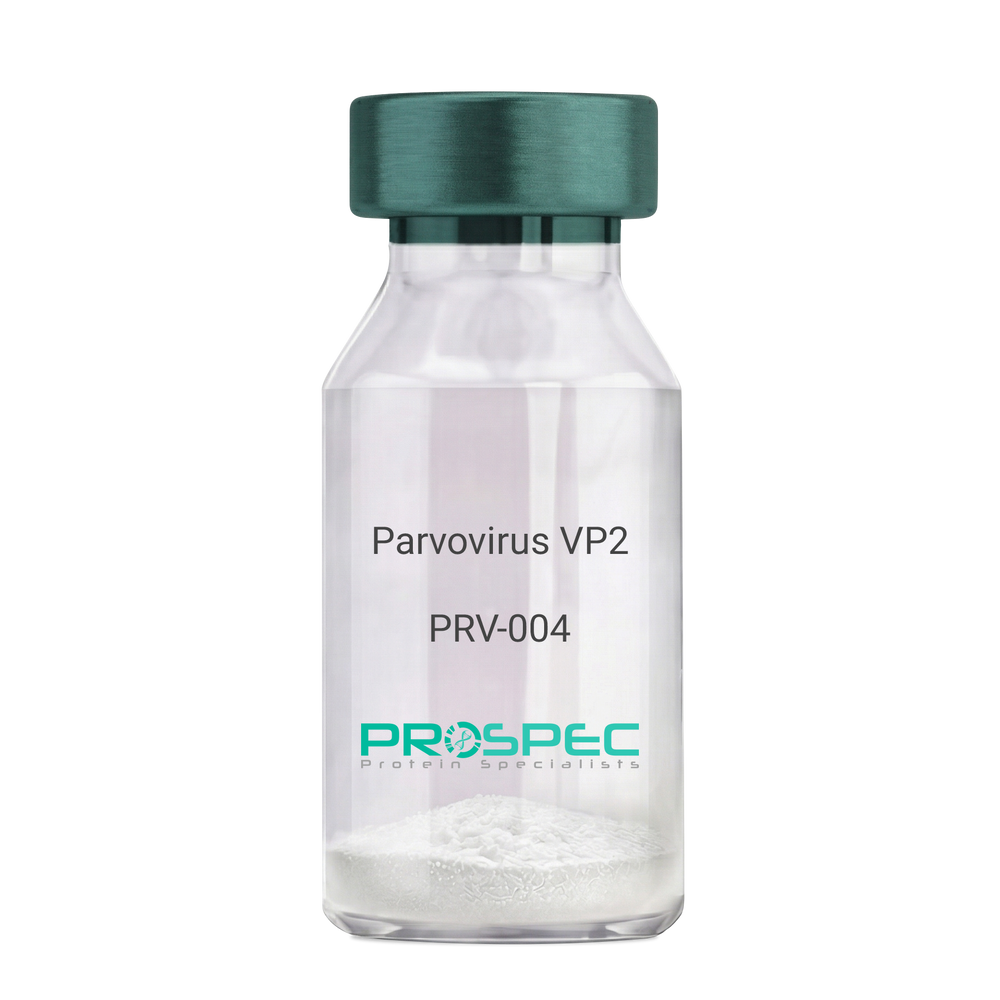
    Parvovirus VP2

    Description:

    Parvovirus VP2 Canine Recombinant

    Product # :

    PRV-004

    Price :

    Quantity :

    Shipping Method :

    Room Temp Icon

    Shipped at Room temp

    Add To Cart

    More Info

    • description
    • source
    • formulation
    • purity
    • More Info
    • Citations

    Description

    Recombinant canine Parvovirus VP2 produced in SF9 is a glycosylated, polypeptide chain containing 584 a.a and having a calculated molecular mass of 64,657 Dalton. Parvovirus VP2 is purified by proprietary chromatographic techniques.

    Source

    Sf9 insect cells.

    Formulation

    Parvovirus VP2 was lyophilized from 30mM NaCl, 20mM Na-phosphate, pH 7.4, 0.01% Tween 20 and 10% trehalose.

    Purity

    Greater than 90.0% as determined by SDS-PAGE.

    Citations

    More Info

    • Physical Appearance

      Sterile Filtered White lyophilized (freeze-dried) powder.

    • Stability

      Lyophilized Parvovirus VP2 although stable at room temperature for 3 weeks, should be stored desiccated below -18°C. Upon reconstitution Parvovirus VP2 should be stored at 4°C between 2-7 days and for future use below -18°C. For long term storage it is recommended to add a carrier protein (0.1% HSA or BSA). Please prevent freeze-thaw cycles.

    • Solubility

      It is recommended to reconstitute the lyophilized Parvovirus VP2 in sterile 18MΩ-cm H2O not less than 100µg/ml, which can then be further diluted to other aqueous solutions.

    • Background

      Parvoviruses, small single-stranded DNA viruses, are known for their remarkable stability and diverse host range, causing infections in various animals, including humans. One of the key structural proteins in parvoviruses is VP2, a capsid protein responsible for viral entry and immune recognition. The study of Parvovirus VP2 Recombinant Protein has opened avenues for unraveling the intricacies of viral pathogenesis, host interactions, and has even spurred the development of innovative antiviral therapeutics. This research delves into the significance of Parvovirus VP2 Recombinant Protein, exploring its structural characteristics, functional roles, and its implications in both virology and therapeutic research.

      Structural Insights into VP2 Protein:

      VP2, forming the viral capsid, is pivotal for parvovirus infectivity. Its unique structural features, including distinct domains responsible for receptor binding and viral entry, provide valuable insights into the viral lifecycle. Understanding the three-dimensional structure of VP2, both in its native form and as a recombinant protein, sheds light on viral assembly, stability, and the mechanisms behind host specificity.

      Functional Roles in Viral Pathogenesis:

      VP2 plays a central role in determining tissue tropism and immune recognition. Its interactions with host cell receptors influence viral entry, replication, and spread. Additionally, VP2 is a target for neutralizing antibodies, making it a key player in the host immune response. By deciphering VP2's functions, researchers gain crucial knowledge about parvovirus pathogenesis, aiding in the development of antiviral strategies and vaccines.

      VP2 Recombinant Protein as a Research Tool:

      Recombinant VP2 proteins serve as invaluable tools in virological research. They enable scientists to study viral entry mechanisms, receptor interactions, and immune responses in a controlled laboratory setting. Utilizing VP2 recombinant proteins, researchers can investigate antiviral compounds, study the efficacy of potential vaccines, and explore the dynamics of parvovirus-host interactions, contributing significantly to our understanding of viral infections.

      Therapeutic Implications and Vaccine Development:

      Parvovirus VP2 has emerged as a promising target for antiviral drug development. By disrupting VP2 interactions with host receptors, researchers are exploring novel therapeutic interventions to inhibit viral entry and replication. Furthermore, insights into VP2 immunogenicity have paved the way for the development of vaccines that trigger robust immune responses against parvovirus infections, offering hope for the prevention and control of these diseases.

      Parvovirus VP2 Recombinant Protein, with its pivotal roles in viral pathogenesis and host interactions, has become a cornerstone in parvovirus research. Its structural intricacies, functional significance, and potential therapeutic applications underscore its importance in both basic virology and drug discovery. As our understanding of VP2 continues to expand, it holds the promise of not only unraveling the mysteries of parvovirus infections but also guiding the development of innovative antiviral therapies, ultimately benefiting both human and animal health.

    ProSpec's products are furnished for LABORATORY RESEARCH USE ONLY. The product may not be used as drugs, agricultural or pesticidal products, food additives or household chemicals.

    Parvovirus Vp2
  • View Data Sheet

    Name :

    Parvovirus B19 VLP VP1

    Description:

    Parvovirus VLP VP1 Recombinant

    Product # :

    PRV-003

    Price :

    Quantity :

    Shipping Method :

    Ice Icon

    Shipped with Ice Packs

    Add To Cart

    More Info

    • description
    • source
    • formulation
    • purity
    • More Info
    • Citations

    Description

    Recombinant Parvovirus B19 VLP VP1 produced in e.coli contains 227 amino acids from the N-terminus of VP1 protein sequence.Parvovirus B19 VLP VP1/VP2 is purified by proprietary chromatographic techniques.

    Source

    e.coli.

    Formulation

    Parvovirus B19 VLP VP1 protein solution is supplied in PBS and 25mM K2CO3.

    Purity

    Greater than 90.0% as determined by 12% PAGE (coomassie staining).

    Citations

    More Info

    • Introduction

      The B19 virus, usually referred to as parvovirus B19 or sometimes as erythrovirus B19, belongs to the family of parvoviruses, genus erythrovirus. B19 virus causes a childhood rash named “fifth disease” or “erythema infectiosum” which is ordinarily known as “slapped cheek syndrome”. Erythroviruses are members of the Parvoviridae family of small DNA viruses. The B19 virus is a non-enveloped, icosahedral virus which contains a single-stranded linear DNA genome. Parvovirus B19 is classified as erythrovirus because of its capability to invade red blood cell precursors in the bone marrow. This virus is mainly spread by infected respiratory droplets; though, blood-borne transmission has also been reported.

    • Physical Appearance

      Sterile Filtered clear solution.

    • Stability

      Store at 4°C if entire vial will be used within 2-4 weeks. Store, frozen at -20°C for longer periods of time. Avoid multiple freeze-thaw cycles.

    ProSpec's products are furnished for LABORATORY RESEARCH USE ONLY. The product may not be used as drugs, agricultural or pesticidal products, food additives or household chemicals.

    Parvovirus B19 Vlp Vp1
  • View Data Sheet

    Name :

    PARVA Human

    Description:

    Parvin Alpha Human Recombinant

    Alpha-parvin, Actopaxin, CH-ILKBP, Calponin-like integrin-linked kinase-binding protein, Matrix-remodeling-associated protein 2, PARVA, MXRA2.

    Product # :

    PRO-1257

    Price :

    Quantity :

    Shipping Method :

    Ice Icon

    Shipped with Ice Packs

    Add To Cart

    More Info

    • description
    • source
    • formulation
    • purity
    • More Info
    • Citations

    Description

    PARVA Human Recombinant produced in E.Coli is a single, non-glycosylated polypeptide chain containing 395 amino acids (1-372 a.a) and having a molecular mass of 44.6kDa.PARVA is fused to a 23 amino acid His-tag at N-terminus & purified by proprietary chromatographic techniques.

    Source

    Escherichia Coli.

    Formulation

    PARVA protein solution (0.5mg/ml) containing 20mM Tris-HCl buffer (pH 8.0), 0.15M NaCl, 10% glycerol and 1mM DTT.

    Purity

    Greater than 85.0% as determined by SDS-PAGE.

    Citations

    More Info

    • Introduction

      Alpha-parvin (PARVA) belongs to the parvin family of actin-binding proteins. PARVA has a role in the regulation of cell adhesion, cytoskeleton organization, motility and survival as well as in ciliogenesis. Parvins are related with focal contacts and contain calponin homology domains which connect to actin filaments. PARVA is extensively expressed, with the highest levels in heart, skeletal muscle, kidney and liver.

    • Synonyms

      Alpha-parvin, Actopaxin, CH-ILKBP, Calponin-like integrin-linked kinase-binding protein, Matrix-remodeling-associated protein 2, PARVA, MXRA2.

    • Physical Appearance

      Sterile Filtered colorless solution.

    • Stability

      Store at 4°C if entire vial will be used within 2-4 weeks. Store, frozen at -20°C for longer periods of time. For long term storage it is recommended to add a carrier protein (0.1% HSA or BSA).Avoid multiple freeze-thaw cycles.

    • Amino Acid Sequence

      MGSSHHHHHH SSGLVPRGSH MGSMATSPQK SPSVPKSPTP KSPPSRKKDD SFLGKLGGTL ARRKKAKEVS ELQEEGMNAI NLPLSPIPFE LDPEDTMLEE NEVRTMVDPN SRSDPKLQEL MKVLIDWIND VLVGERIIVK DLAEDLYDGQ VLQKLFEKLE SEKLNVAEVT QSEIAQKQKL QTVLEKINET LKLPPRSIKW NVDSVHAKSL VAILHLLVAL SQYFRAPIRL PDHVSIQVVV VQKREGILQS RQIQEEITGN TEALSGRHER DAFDTLFDHA PDKLNVVKKT LITFVNKHLN KLNLEVTELE TQFADGVYLV LLMGLLEGYF VPLHSFFLTP DSFEQKVLNV SFAFELMQDG GLEKPKPRPE DIVNCDLKST LRVLYNLFTK YRNVE.

    ProSpec's products are furnished for LABORATORY RESEARCH USE ONLY. The product may not be used as drugs, agricultural or pesticidal products, food additives or household chemicals.

    Parva Human
  • View Data Sheet

    Name :

    Parainfluenza Type-2

    Description:

    Parainfluenza Virus Type-2

    Product # :

    IHA-029

    Price :

    Quantity :

    Shipping Method :

    Ice Icon

    Shipped with Ice Packs

    Add To Cart

    More Info

    • description
    • formulation
    • purity
    • More Info
    • Citations

    Description

    MA 104 cells inoculated with parainfluenza 2 virus, strain II ALTB cc 2056.

    Formulation

    The Parainfluenza type-2 solution contains STE, 0.02% sodium azide (NaN3).

    Purity

    Greater than 90.0% as determined byAnalysis by SDS-PAGE.

    Citations

    More Info

    • Introduction

      Parainfluenza virus, PIV, contains a group of four distinct serotypes of single-stranded RNA viruses belonging to the paramyxovirus family and two subtypes (4a and 4b). Parainfluenza viruse is a negative-sense, single-stranded RNA viruse that possess fusion and hemagglutinin-neuraminidase glycoprotein "spikes" on their surface. The virion varies in size (average diameter between 150 and 300 nm) and shape.

    • Physical Appearance

      Sterile Filtered colorless solution.

    • Stability

      Parainfluenza type-2 although stable 4°C for 4 weeks, should be stored below -18°C. Please prevent freeze-thaw cycles.

    • Inactivation

      Thimerosal and beta propiolactone treatment.This product has been treated in a manner consistent with methods of inactivation. Generally accepted good laboratory practices appropriate to microbiological/viral safe handling practices and techniques are required at work.

    • Immunological Activity

      Serological studies of Parainfluenza virus, immunogen for antibody production.

    ProSpec's products are furnished for LABORATORY RESEARCH USE ONLY. The product may not be used as drugs, agricultural or pesticidal products, food additives or household chemicals.

    Parainfluenza Type 2
  • View Data Sheet

    Name :

    Parainfluenza Type-3

    Description:

    Parainfluenza Virus Type-3

    Product # :

    IHA-030

    Price :

    Quantity :

    Shipping Method :

    Ice Icon

    Shipped with Ice Packs

    Add To Cart

    More Info

    • description
    • formulation
    • purity
    • More Info
    • Citations

    Description

    MA 104 cells inoculated with Parainfluenza-3 virus, strain III v2932.

    Formulation

    The Parainfluenza type-3 solution contains STE, 0.09% sodium azide (NaN3) and 0.005% thimerosal. Do not centrifuge! Mix thoroughly before use!

    Purity

    Greater than 90.0% as determined byAnalysis by SDS-PAGE.

    Citations

    More Info

    • Introduction

      Parainfluenza virus, PIV, contains a group of four distinct serotypes of single-stranded RNA viruses belonging to the paramyxovirus family and two subtypes (4a and 4b). Parainfluenza viruse is a negative-sense, single-stranded RNA viruse that possess fusion and hemagglutinin-neuraminidase glycoprotein "spikes" on their surface. The virion varies in size (average diameter between 150 and 300 nm) and shape.

    • Physical Appearance

      Opaque (non-clear) solution. Do not centrifuge! Mix thoroughly before use!

    • Stability

      Parainfluenza type-3 although stable 4°C for 4 weeks, Should be stored below -18°C. Please prevent freeze-thaw cycles.

    • Inactivation

      Thimerosal and beta propiolactone treatmentThis product has been treated in a manner consistent with methods of inactivation. Generally accepted good laboratory practices appropriate to microbiological/viral safe handling practices and techniques are required at work.

    • Immunological Activity

      ELISA, HIT.

    ProSpec's products are furnished for LABORATORY RESEARCH USE ONLY. The product may not be used as drugs, agricultural or pesticidal products, food additives or household chemicals.

    Parainfluenza Type 3
  • View Data Sheet

    Name :

    Norovirus Group-1

    Description:

    Norovirus Group-1 Capsid Recombinant

    Product # :

    NRV-213

    Price :

    Quantity :

    Shipping Method :

    Ice Icon

    Shipped with Ice Packs

    Add To Cart

    More Info

    • description
    • source
    • formulation
    • purity
    • More Info
    • Citations

    Description

    The Recombinant Norovirus Group-1 Capsid, E.Coli derived, is a positive sense RNA virus with 7.5kb nucleotides, encoding a major structural protein VP1 with 50-55kDa and a VP2 protein. The full length of VP1 capsid protein is derived from the group 1 Norwalk virus. The protein is fused to a 6 His tag at N-terminal and purified by chromatography techniques.

    Source

    Escherichia Coli.

    Formulation

    PBS, 25Mm K2CO3 and 25% glycerol.

    Purity

    Protein is >95% pure as determined by 10% PAGE (coomassie staining).

    Citations

    More Info

    • Introduction

      Human norovirus is classified into two groups, group 1& group 2. Norwalk virus is the species which belongs to group 1 and was discovered in 1968 at Ohio. Norovirus is a familiar virus which causes human gastroenteritis with the following symptoms vomiting, diarrhea and sickness. CDC report revealed that there are 19-21 million Americans infected by Nororvirus annually with 800 deaths, 1 in 15 people with infection. Around the world, this virus affects about 267 million people and causes over 200,000 deaths each year; these losses are mostly in less developed countries and in the very young, elderly and immuno-suppressed population, though, most cases are self-limited with a full recovery within just a few days.Norovirus is extremely contagious and can spread from human to human through infected food, water or contaminated surfaces. The outbreaks usually occur from November-April, while the peak is in January. Norovirus is a positive sense RNA virus with 7.5 kb nucleotides, encoding a major structural protein VP1 with 50-55kDa. The full length of VP1 capsid comprises the internal N-terminal, Hinge, shell (S) and protruding (P) domains. P domain from 225 to 520 forms P1- P2-P1 structure. Moreover, P domain has a receptor binding region which recognizes human histo-blood group antigens (HBGAs). P domain expressed in bacteria can spontaneously form a P dime as well as a P particle aggregated by 12 P dimmers. P particle displays an increased binding activity to HBGAs higher than virus-like particle (VLP) formed by the full-length capsid. For norovirus vaccine development, we consider P domain as a good candidate.

    • Physical Appearance

      Sterile Filtered clear solution.

    • Stability

      The Recombinant Norovirus Group-1 although stable at 4°C for 1 week, should be stored below -18°C. Please prevent freeze thaw cycles.

    ProSpec's products are furnished for LABORATORY RESEARCH USE ONLY. The product may not be used as drugs, agricultural or pesticidal products, food additives or household chemicals.

    Norovirus Group 1
  • View Data Sheet

    Name :

    SIV p55

    Description:

    Simian Immunodeficiency Virus p55 Recombinant

    Product # :

    SIV-114

    Price :

    Quantity :

    Shipping Method :

    Ice Icon

    Shipped with Ice Packs

    Add To Cart

    More Info

    • description
    • source
    • formulation
    • purity
    • More Info
    • Citations

    Description

    Recombinant SIV p55- Strains: SIV mac 23g and SIV smH4 is glycosylated with N-linked sugars and produced using baculovirus vectors in insect cells.

    Source

    Baculovirus Insect Cells.

    Formulation

    SIV p55 Protein solution containing 10mM Tris, pH 8, 140mM NaCl & 400mM L-Arginine.

    Purity

    Greater than 90.0% as determined by:
    (a) Analysis by RP-HPLC.
    (b) Analysis by SDS-PAGE.

    Citations

    More Info

    • Introduction

      Simian immunodeficiency virus, SIV, is a retrovirusthat is found in strains, having the HIV-1and HIV-2specific strains that infect humans. SIV strains may cause an AIDS-like immune deficiency known as SAIDS (simian acquired immunodeficiency syndrome) if they cross species boundaries. HIV-2 is more similar to SIV strains than to HIV-1, suggesting for the first time the simian origin of HIV. HIV-2 is derived from the SIV strain found in sooty mangabeys whereas HIV-1, the predominant virus found in humans, is derived from SIV strains infecting chimpanzees.

    • Physical Appearance

      Sterile Filtered colorless solution.

    • Stability

      Recombinant SIV p55 although stable at 4°C for 3 weeks, should be stored below -18°C. For long term storage it is recommended to add a carrier protein (0.1% HSA). Please avoid freeze-thaw cycles.

    ProSpec's products are furnished for LABORATORY RESEARCH USE ONLY. The product may not be used as drugs, agricultural or pesticidal products, food additives or household chemicals.

    Siv P55
  • View Data Sheet

    Name :

    Norovirus Group-2

    Description:

    Norovirus Group-2 Capsid Recombinant

    Product # :

    NRV-214

    Price :

    Quantity :

    Shipping Method :

    Ice Icon

    Shipped with Ice Packs

    Add To Cart

    More Info

    • description
    • source
    • formulation
    • purity
    • More Info
    • Citations

    Description

    The Recombinant Norovirus Group-2 Capsid, E.Coli derived, is a positive sense RNA virus with 7.5kb nucleotides, encoding a major structural protein VP1 with 58~60kDa. The Recombinant Norovirus has two groups, group 1 and group 2. Group 2 recombinant capsid was derived from the full length capsid 53 to 548Aa.

    Source

    Escherichia Coli.

    Formulation

    PBS & 25Mm K2CO3

    Purity

    Protein is 95% pure as determined by 10% PAGE (coomassie staining).

    Citations

    More Info

    • Introduction

      Human norovirus is classified into two groups, group 1& group 2. Norwalk virus is the species which belongs to group 1 and was discovered in 1968 at Ohio. Norovirus is a familiar virus which causes human gastroenteritis with the following symptoms vomiting, diarrhea and sickness. CDC report revealed that there are 19-21 million Americans infected by Nororvirus annually with 800 deaths, 1 in 15 people with infection. Around the world, this virus affects about 267 million people and causes over 200,000 deaths each year; these losses are mostly in less developed countries and in the very young, elderly and immuno-suppressed population, though, most cases are self-limited with a full recovery within just a few days. Norovirus is extremely contagious and can spread from human to human through infected food, water or contaminated surfaces. The outbreaks usually occur from November-April, while the peak is in January. Norovirus is a positive sense RNA virus with 7.5 kb nucleotides, encoding a major structural protein VP1 with 50-55kDa. The full length of VP1 capsid comprises the internal N-terminal, Hinge, shell (S) and protruding (P) domains. P domain from 225 to 520 forms P1- P2-P1 structure. Moreover, P domain has a receptor binding region which recognizes human histo-blood group antigens (HBGAs). P domain expressed in bacteria can spontaneously form a P dime as well as a P particle aggregated by 12 P dimmers. P particle displays an increased binding activity to HBGAs higher than virus-like particle (VLP) formed by the full-length capsid. For norovirus vaccine development, we consider P domain as a good candidate.

    • Physical Appearance

      Sterile Filtered clear solution.

    • Stability

      The Recombinant Norovirus Group-2 although stable at 4°C for 1 week, should be stored below -18°C. Please prevent freeze thaw cycles.

    ProSpec's products are furnished for LABORATORY RESEARCH USE ONLY. The product may not be used as drugs, agricultural or pesticidal products, food additives or household chemicals.

    Norovirus Group 2
  • View Data Sheet

    Name :

    Astrovirus Capsid

    Description:

    Astrovirus Capsid Recombinant

    Product # :

    ASR-001

    Price :

    Quantity :

    Shipping Method :

    Ice Icon

    Shipped with Ice Packs

    Add To Cart

    More Info

    • description
    • source
    • formulation
    • purity
    • More Info
    • Citations

    Description

    Recombinant Astrovirus Capsid (50-450 aa) produced in E.coli and migrates at42-45kDa. The Astrovirus Capsid is fused to a 6xHis tag and purified by proprietary chromatographic technique.

    Source

    Escherichia Coli.

    Formulation

    Astrovirus Capsidprotein solution contains 25mM Tris Base and 10mM K2CO3.

    Purity

    Protein is >95% pure as determined by 10% PAGE (coomassie staining).

    Citations

    More Info

    • Introduction

      Astroviruses are the main cause of gastroenteritis in children and elderly adults. Astroviruses are associated with 5–9% of cases of gastroenteritis in young children. The virus is found in faecal matter and in epithelial intestinal cells. Astrovirus’s main transmission is by contaminated food or water.

    • Physical Appearance

      Sterile Filtered colorless solution.

    • Stability

      Store at 4°C if entire vial will be used within 2-4 weeks.Store, frozen at -20°C for longer periods of time.For long term storage it is recommended to add a carrier protein (0.1% HSA or BSA).Avoid multiple freeze-thaw cycles.

    • Applications

      ELISA, Western blot.

    ProSpec's products are furnished for LABORATORY RESEARCH USE ONLY. The product may not be used as drugs, agricultural or pesticidal products, food additives or household chemicals.

    Astrovirus 2
  • View Data Sheet

    Name :

    Norovirus Group-1 P-Domain

    Description:

    Norovirus Group-1 Capsid P-Domain Recombinant

    Product # :

    NRV-215

    Price :

    Quantity :

    Shipping Method :

    Ice Icon

    Shipped with Ice Packs

    Add To Cart

    More Info

    • description
    • source
    • formulation
    • purity
    • More Info
    • Citations

    Description

    The Recombinant Norovirus Group-1 Capsid P-Domain, E.Coli derived, Norwalk strain contains a.a. from 225-520 having a Mw of 30kDa. The protein is fused to a 6xHis tag at N-terminal and purified by chromatography techniques. P-domain (225-520 a.a.) forms P1- P2-P1 structure. P-domain has a receptor binding region to recognize human histo-blood group antigens (HBGAs). P-domain expressed in bacteria can spontaneously form a P dime and a P particle aggregated by 12 P dimmers. P-particle displays an enhanced binding activity to HBGAs higher than virus-like particle (VLP) formed by the full length capsid.

    Source

    Escherichia Coli.

    Formulation

    Phosphate buffer and 10 mM K2CO3.

    Purity

    Protein is >95% pure as determined by 12% PAGE (coomassie staining).

    Citations

    More Info

    • Introduction

      Human norovirus is classified into two groups, group 1& group 2. Norwalk virus is the species which belongs to group 1 and was discovered in 1968 at Ohio. Norovirus is a familiar virus which causes human gastroenteritis with the following symptoms vomiting, diarrhea and sickness. CDC report revealed that there are 19-21 million Americans infected by Nororvirus annually with 800 deaths, 1 in 15 people with infection. Around the world, this virus affects about 267 million people and causes over 200,000 deaths each year; these losses are mostly in less developed countries and in the very young, elderly and immuno-suppressed population, though, most cases are self-limited with a full recovery within just a few days. Norovirus is extremely contagious and can spread from human to human through infected food, water or contaminated surfaces. The outbreaks usually occur from November-April, while the peak is in January. Norovirus is a positive sense RNA virus with 7.5 kb nucleotides, encoding a major structural protein VP1 with 50-55kDa. The full length of VP1 capsid comprises the internal N-terminal, Hinge, shell (S) and protruding (P) domains. P domain from 225 to 520 forms P1- P2-P1 structure. Moreover, P domain has a receptor binding region which recognizes human histo-blood group antigens (HBGAs). P domain expressed in bacteria can spontaneously form a P dime as well as a P particle aggregated by 12 P dimmers. P particle displays an increased binding activity to HBGAs higher than virus-like particle (VLP) formed by the full-length capsid. For norovirus vaccine development, we consider P domain as a good candidate.

    • Physical Appearance

      Sterile Filtered clear solution.

    • Stability

      The Recombinant Norovirus Group-1 P-Domain although stable at 4°C for 1 week, should be stored below -18°C. Please prevent freeze thaw cycles.

    ProSpec's products are furnished for LABORATORY RESEARCH USE ONLY. The product may not be used as drugs, agricultural or pesticidal products, food additives or household chemicals.

    Norovirus Group 1 P Domain
  • View Data Sheet

    Name :

    Norovirus Group-2 P-Domain

    Description:

    Norovirus Group-2 Capsid P-Domain Recombinant

    Product # :

    NRV-216

    Price :

    Quantity :

    Shipping Method :

    Ice Icon

    Shipped with Ice Packs

    Add To Cart

    More Info

    • description
    • source
    • formulation
    • purity
    • More Info
    • Citations

    Description

    The Recombinant Norovirus Group-2 Capsid P-Domain, E.Coli derived, VA387 Strain contains a.a. from 225-520 having a Mw of 30kDa. The protein is fused to a 6xHis tag at N-terminal and purified by chromatography techniques. P-domain (225-520 a.a.) forms P1- P2-P1 structure. P-domain has a receptor binding region to recognize human histo-blood group antigens (HBGAs). P-domain expressed in bacteria can spontaneously form a P dime and a P particle aggregated by 12 P dimmers. P-particle displays an enhanced binding activity to HBGAs higher than virus-like particle (VLP) formed by the full length capsid.

    Source

    Escherichia Coli.

    Formulation

    Phosphate buffer and 17mM K2CO3.

    Purity

    Protein is >95% pure as determined by 12% PAGE (coomassie staining).

    Citations

    More Info

    • Introduction

      Human norovirus is classified into two groups, group 1& group 2. Norwalk virus is the species which belongs to group 1 and was discovered in 1968 at Ohio. Norovirus is a familiar virus which causes human gastroenteritis with the following symptoms vomiting, diarrhea and sickness. CDC report revealed that there are 19-21 million Americans infected by Nororvirus annually with 800 deaths, 1 in 15 people with infection. Around the world, this virus affects about 267 million people and causes over 200,000 deaths each year; these losses are mostly in less developed countries and in the very young, elderly and immuno-suppressed population, though, most cases are self-limited with a full recovery within just a few days. Norovirus is extremely contagious and can spread from human to human through infected food, water or contaminated surfaces. The outbreaks usually occur from November-April, while the peak is in January. Norovirus is a positive sense RNA virus with 7.5 kb nucleotides, encoding a major structural protein VP1 with 50-55kDa. The full length of VP1 capsid comprises the internal N-terminal, Hinge, shell (S) and protruding (P) domains. P domain from 225 to 520 forms P1- P2-P1 structure. Moreover, P domain has a receptor binding region which recognizes human histo-blood group antigens (HBGAs). P domain expressed in bacteria can spontaneously form a P dime as well as a P particle aggregated by 12 P dimmers. P particle displays an increased binding activity to HBGAs higher than virus-like particle (VLP) formed by the full-length capsid. For norovirus vaccine development, we consider P domain as a good candidate.

    • Physical Appearance

      Sterile Filtered clear solution.

    • Stability

      The Recombinant Norovirus Group-2 P-Domain although stable at 4°C for 1 week, should be stored below -18°C. Please prevent freeze thaw cycles.

    ProSpec's products are furnished for LABORATORY RESEARCH USE ONLY. The product may not be used as drugs, agricultural or pesticidal products, food additives or household chemicals.

    Norovirus Group 2 P Domain
  • View Data Sheet

    Name :

    RSV Paired Antibody

    Description:

    Mouse Anti Human Respiratory Syncytial Virus

    Product # :

    ANT-653

    Price :

    Quantity :

    Shipping Method :

    Ice Icon

    Shipped with Ice Packs

    Add To Cart

    More Info

    • description
    • formulation
    • purity
    • More Info
    • Citations

    Description

    RSV gold conjugation antibody and RSV capture antibody are used to develop rapid test for RSV rapid test. Please note that when ordering for example: 100µg antibody we ship 50µg from each of the antibodies (100µg in total).

    Formulation

    * RSV gold conjugation antibody in PBS, PH 7.4.
    * RSV capture antibody in PBS, PH 7.4.

    Purity

    Greater than 95%.

    Citations

    More Info

    • Physical Appearance

      2 vials of sterile Filtered clear colorless solution.

    • Stability

      RSV Paired Antibody although stable at 4°C for 1 week, should be stored below -18°C. Please prevent freeze thaw cycles.

    • Applications

      Lateral flow rapid test.

    • Type

      Mouse antibody Monoclonal.

    • Purification Method

      Purified monoclonal IgG2a by protein A chromatography.

    ProSpec's products are furnished for LABORATORY RESEARCH USE ONLY. The product may not be used as drugs, agricultural or pesticidal products, food additives or household chemicals.

    Rsv Paired Antibody
  • View Data Sheet

    Name :

    HERV-K

    Description:

    Endogenous retrovirus K Envelope Human Recombinant

    Product # :

    HER-001

    Price :

    Quantity :

    Shipping Method :

    Ice Icon

    Shipped with Ice Packs

    Add To Cart

    More Info

    • description
    • source
    • formulation
    • purity
    • More Info
    • Citations

    Description

    The E.Coli derived HERV-K recombinant truncated protein is fused to a Six histidine tag at C-terminus and has a MW of 51.5kDa (pI 9.06).

    Source

    Escherichia Coli.

    Formulation

    10mM Tris-HCl, pH 7.2.

    Purity

    Protein is >90% pure as determined by SDS PAGE.

    Citations

    More Info

    • Introduction

      HERVK is related with several tumors such as passenger virus, and anti-Retroviral therapy against amyotrophic lateral sclerosis/ALS has exhibited to decrease the symptoms of amyotrophic lateral sclerosis/ALS. High counts of viral sequences exist in the human genome but stay silent. Though, in pathological conditions, these viruses are produced. Human Endogenous Retrovirus-K, is produced in neurons of a subpopulation of patients with amyotrophic lateral sclerosis/ALS, a progressive neurodegenerative disease. The envelope protein of this HERV results in degeneration of neurons, and transgenic animals producing this protein advance an ALS-like syndrome triggered by nucleolar dysfunction in motor neurons. Reactivation of the HERVK is controlled by the transcription factor TDP-43. Therefore, therapeutic tactics against this virus alter the course of the disease.

    • Physical Appearance

      Sterile Filtered clear solution.

    • Stability

      HERV-K although stable at 4°C for 1 week, should be stored below -18°C. Please prevent freeze thaw cycles.

    • Amino Acid Sequence

      MWTVPSFTND SYQVYNVFST NSFQLLTVKR TPHEAWRVPL TTKTNKTKGL PDCPKKPTNG PFIVTSILWD NCNAPKAVVL QTLAMGIVID WAPKGHYWQD CSSKNTLCSE FIYSLDYIEH GWQSYTMRQR VSPYPFKWMD TGIAPPRPKI IHPFFTPEHP ELWKLAAALS GIKIWNTTYQ LLRTKTKTPT FNITLISEWV IPIRSCVKPP YMLLVGNIIM MPDAQTIECH NCKLFTCIDA TFNPTTSILL VRAREGVWIP VSLHRPWESS PSIHIVNEVL KDILKRTKRF IFTLIAVLAG LLAVTATAAT AGVAIRSSVQ TAHYVEACQK NSSRLWNSQA QIDQKLANQI NDLRQSVTWL GDRVMNLQHR MQLQCDWNTS DYCITPYAYN QDQHSWENVS RHLKAWDDNL TLDISQLKEQIFEASQAHLS TVPGSHIFEG ITKQLPDFNP FKWLKPVRGS LLLLALLILV CLCCLLLVCRCL.

    • Applications

      Detection of Human Endogenious Retrovirus K in individuals is untested.

    ProSpec's products are furnished for LABORATORY RESEARCH USE ONLY. The product may not be used as drugs, agricultural or pesticidal products, food additives or household chemicals.

    Human Endogenous Retrovirus K
  • View Data Sheet

    Name :

    JEV

    Description:

    Japanese Encephalitis Virus ENV Recombinant

    Product # :

    TBE-290

    Price :

    Quantity :

    Shipping Method :

    Ice Icon

    Shipped with Ice Packs

    Add To Cart

    More Info

    • description
    • source
    • formulation
    • purity
    • More Info
    • Citations

    Description

    The E.coli derived recombinant protein contains full length Japanese Encephalitis virus ENV antigen having an Mw of 50kDa. The protein is fused to a 6 histidines tag. GenBank: AHK05344.1

    Source

    Escherichia Coli.

    Formulation

    20mM Tris-MES pH 6.5, 8M urea, 200mM NaCl and 0.05% Tween-20.

    Purity

    Encephalitis protein is >90% pure as determined by SDS-PAGE (coomassie staining).

    Citations

    More Info

    • Introduction

      Japanese encephalitis previously known as Japanese B encephalitis is a virus from the family Flaviviridae. it is closely related to the West Nile virus and St. Louis encephalitis virus. Positive sense single stranded RNA genome is packaged in the capsid, formed by the capsid protein. The outer envelope is formed by envelope (E) protein and is the protective antigen. It aids in entry of the virus to the inside of the cell. The genome also encodes several nonstructural proteins also (NS1,NS2a,NS2b,NS3,N4a,NS4b,NS5). NS1 is produced as secretory form also. NS3 is a putative helicase, and NS5 is the viral polymerase. It has been noted that the Japanese encephalitis virus (JEV) infects the lumen of the endoplasmic reticulum (ER) and rapidly accumulates substantial amounts of viral proteins for the JEV. Japanese Encephalitis is diagnosed by detection of antibodies in serum and CSF (cerebrospinal fluid) by IgM capture ELISA.

    • Stability

      Encephalitis protein although stable at 4°C for 1 week, should be stored below -18°C. Please prevent freeze thaw cycles.

    • Specificity

      Immunoreactive with sera from JEV-infected individuals.

    • Purification Method

      Encephalitis protein was Purified by proprietary chromatographic technique.

    ProSpec's products are furnished for LABORATORY RESEARCH USE ONLY. The product may not be used as drugs, agricultural or pesticidal products, food additives or household chemicals.

    Jev
  • View Data Sheet

    Name :

    VZV ORF26

    Description:

    Varicella Zoster Virus ORF26 Recombinant

    Product # :

    VZV-233

    Price :

    Quantity :

    Shipping Method :

    Ice Icon

    Shipped with Ice Packs

    Add To Cart

    More Info

    • description
    • source
    • formulation
    • purity
    • More Info
    • Citations

    Description

    The E.Coli derived recombinant protein contains the VZV ORF26 immunodominant regions, amino acids 9-33, 184-208.

    Source

    Escherichia Coli.

    Formulation

    25mM Tris-Hcl pH 7.2, 1mM EDTA and 50% glycerol.

    Purity

    Varicella protein is >95% pure as determined by 10% PAGE (coomassie staining).

    Citations

    More Info

    • Introduction

      VZV is closely related to the herpes simplex viruses(HSV), sharing much genomehomology. The known envelope glycoproteins (gB, gC, gE, gH, gI, gK, gL) correspond with those in HSV, however there is no equivalent of HSV gD. VZV virons are spherical and 150-200 nm in diameter. Their lipidenvelope encloses the nucleocapsid of 162 capsomeres arranged in a hexagonalform. Its DNAis a single, linear, double-stranded molecule, 125,000 nt long. The virus is very susceptible to disinfectants, notably sodium hypochlorite. Within the body it can be treated by a number of drugs and therapeutic agents including aciclovir, zoster-immune globulin(ZIG), and vidarabine.

    • Stability

      Varicella protein although stable at 4°C for 1 week, should be stored below -18°C. Please prevent freeze thaw cycles.

    • Specificity

      Immunoreactive with sera of VZV-infected individuals.

    • Purification Method

      Varicella was purified by proprietary chromatographic technique.

    ProSpec's products are furnished for LABORATORY RESEARCH USE ONLY. The product may not be used as drugs, agricultural or pesticidal products, food additives or household chemicals.

    Vzv Orf26
  • View Data Sheet

    Name :

    HTNV (1-200 a.a.)

    Description:

    Hantavirus Recombinant (1-200 a.a.)

    HTNV, Hantaan Virus, Hantanvirus.

    Product # :

    HTV-002

    Price :

    Quantity :

    Shipping Method :

    Ice Icon

    Shipped with Ice Packs

    Add To Cart

    More Info

    • description
    • source
    • formulation
    • purity
    • More Info
    • Citations

    Description

    The Hantavirus Recombinant (1-200 a.a.) protein is expressed in E. coli and is fused to a Six histidine tag at C-terminus and has a MW of 23.8kDa (pI 7.96).

    Source

    E.Coli

    Formulation

    HTNV is formulated in 1XPBS.

    Purity

    HTNV protein is >90% pure as determined by SDS PAGE.

    Citations

    More Info

    • Synonyms

      HTNV, Hantaan Virus, Hantanvirus.

    • Physical Appearance

      Sterile filtered colorless solution.

    • Stability

      Upon arrival, Store at -20°C. Please avoid multiple freeze/thaw cycles.

    • Background

      What is the source or expression system of Hantavirus- Nucleocapsid Protein?
      Escherichia Coli.

      What is the Purity of Hantavirus- Nucleocapsid Protein?
      Hantavirus- Nucleocapsid Protein is >90% pure as determined by SDS-PAGE.

      What is the molecular weight / Mw of Hantavirus- Nucleocapsid Protein?
      Hantavirus- Nucleocapsid Protein having a total Mw of 23.8kDa.

      Is Hantavirus- Nucleocapsid conjugated to a Tag?
      Hantavirus- Nucleocapsid is fused to 6xHis Tag at N-terminal.

      What is the Biological Activity of Hantavirus- Nucleocapsid Protein?
      The biological functionality of Hantavirus- Nucleocapsid Protein will be determined in the future.

      What is the endotoxin level for Hantavirus- Nucleocapsid Protein?
      The endotoxin level is minimal, Hantavirus- Nucleocapsid Protein was purified using conventional chromatography techniques.

      What is the amino acid sequence of Hantavirus- Nucleocapsid Protein?
      Hantavirus- Nucleocapsid Protein is composed from 1-200 amino acids.

      What applications can Hantavirus- Nucleocapsid Protein be used in?
      Hantavirus-Nucleocapsid Protein can probably be used in western blot, ELISA and Lateral Flow.

      What is the function of the hantavirus nucleocapsid (N) protein?
      The hantavirus nucleocapsid (N) protein surrounds the viral RNA binding site and protects it during viral replication and assembly.

      Why is hantavirus nucleocapsid protein commonly used in ELISA assays?
      The hantavirus N protein is highly immunogenic, conserved and widely expressed and induces a strong antibody response in infected individuals.

      Does hantavirus N protein bind RNA?
      Hantavirus N protein contains RNA-binding domains that specifically interact with viral genomic

      Is the hantavirus nucleocapsid protein suitable for antibody production?
      Resulting from high immunogenicity, recombinant hantavirus N protein is highly used as an immunogen for generating both polyclonal and monoclonal antibodies.

    • Purification Method

      Purified by proprietary chromatographic technique.

    ProSpec's products are furnished for LABORATORY RESEARCH USE ONLY. The product may not be used as drugs, agricultural or pesticidal products, food additives or household chemicals.

    hantavirus nucleocapsid
  • View Data Sheet

    Name :

    Reovirus Antibody

    Description:

    Respiratory Enteric Orphan Virus, Mouse antibody

    Product # :

    ANT-348

    Price :

    Quantity :

    Shipping Method :

    Room Temp Icon

    Shipped at Room temp

    Add To Cart

    More Info

    • formulation
    • More Info
    • Citations

    Formulation

    1mg/ml in PBS (after reconstitution).

    Citations

    More Info

    • Introduction

      ReoVirus belongs to the RNA virus family of Reoviridae. The virions of reoviruses lack an outer envelope and show spheroidal. They measure approximately 70 nanometres and have two icosahedral capsids. Reoviruses enclose a core of segmented, double-stranded RNA virus and are a non-pathogenic naturally occurring virus. Approximately 100% of the population demonstrate signs of a previous reovirus infection, normally confined to the gastrointestinal or respiratory systems in the body. Reovirus particularly targets cells with a highly activated Ras signaling pathway and hence is a potent cancer killer.

    • Solubility

      Reconstitute with H20. Mix gently, wash the sides of the vial and wait 30-60 seconds before use.

    • Immunogen

      Peptide mix corresponding to T1L sigma 1 protein.

    • Ig Subclass

      Mouse IgG2a.

    • Clone

      YRreoV.

    • Note

      This antibody will block binding of virus.

    • Titer

      For staining use 10ul per 1,000,000 cells. For other applications titer has to be determined by the investigator.

    • Shipping Conditions

      Antibody is shipped lyophilized at ambient temperature.

    • Type

      Mouse antibody Monoclonal.

    • Storage Procedures

      In lyophilized form, for long periods, store at 4°C in a dry environment. After reconstitution, if not intended for use within a month, aliquot and store at -20°C.

    • Purification Method

      Ion exchange column.

    ProSpec's products are furnished for LABORATORY RESEARCH USE ONLY. The product may not be used as drugs, agricultural or pesticidal products, food additives or household chemicals.

    Reovirus Antibody
  • View Data Sheet

    Name :

    HEV ORF2 (452-617 a.a.)

    Description:

    Hepatitis E Virus ORF2 (452-617 a.a.) Recombinant

    Product # :

    HEV-236

    Price :

    Quantity :

    Shipping Method :

    Ice Icon

    Shipped with Ice Packs

    Add To Cart

    More Info

    • description
    • formulation
    • purity
    • More Info
    • Citations

    Description

    The E.Coli derived HEV protein contains the HEV immunodominant regions from ORF2 452-617 a.a. having a Mw. of 44.3 kDa. HEV ORF2 protein is fused to a 26kDa GST tag and purified by standard chromatography techniques.

    Formulation

    25mM Tris-HCl, 1mM EDTA, 0.5M urea and 50% glycerol.

    Purity

    HEV ORF2 protein is >95% pure as determined by 10% PAGE (coomassie staining).

    Citations

    More Info

    • Introduction

      Hepatitis E virus (HEV), the major etiologic agent of enterically transmitted non-A, non-B hepatitis worldwide, is a spherical, non-enveloped, single stranded RNA virus that is approximately 32 to 34 nm in diameter. HEV belongs to a genus of HEV-like viruses (unassigned genus). HEV has a single-stranded polyadenylated RNA genome of approximately 8 kb. Based on its physicochemical properties it is presumed to be a calici-like virus.

    • Stability

      HEV ORF2 protein although stable at 4°C for 1 week, should be stored below -18°C. Please prevent freeze thaw cycles.

    • Applications

      HEV ORF2 antigen is suitable for ELISA and Western blots, excellent antigen for detection of HEV with minimal specificity problems.

    • Specificity

      Immunoreactive with sera HEV-infected individuals.

    • Purification Method

      HEV ORF2 protein was purified by proprietary chromatographic technique.

    ProSpec's products are furnished for LABORATORY RESEARCH USE ONLY. The product may not be used as drugs, agricultural or pesticidal products, food additives or household chemicals.

    Hev Orf2 452 617
  • View Data Sheet

    Name :

    HTNV

    Description:

    Hantavirus Recombinant

    HTNV, Hantaan Virus, Hantanvirus.

    Product # :

    HTV-001

    Price :

    Quantity :

    Shipping Method :

    Ice Icon

    Shipped with Ice Packs

    Add To Cart

    More Info

    • description
    • source
    • formulation
    • purity
    • More Info
    • Citations

    Description

    The Hantavirus nucleocapsid (N) fusion protein is expressed in E. coli and is fused to 6xHis tag. Hantavirus nucleocapsid (N) is conserved among different strains, and is used to test the specific IgM and IgG to Hantavirus.

    Source

    E.Coli

    Formulation

    HTNV is formulated in 1xPBS pH-7.4 and 0.05% Sodium azide.

    Purity

    HTNV protein is >95% pure as determined by 12% PAGE (coomassie staining).

    Citations

    More Info

    • Synonyms

      HTNV, Hantaan Virus, Hantanvirus.

    • Physical Appearance

      Sterile filtered colorless solution.

    • Stability

      Upon arrival, Store at -20°C. Please avoid multiple freeze/thaw cycles.

    • Amino Acid Sequence

      GSMATMEELQREINAHEGQLVIARQKVRDAEKQYEKDPDELNKRTLTDRE GVAVSIQAKIDELKRQLADRIATGKNLGKEQDPTGVEPGDHLKERSMLSY GNVLDLNHLDIDEPTGQTADWLSIVVYVD

    • Background

      What is the source or expression system of Hantavirus- Nucleocapsid Protein?
      Escherichia Coli.

      What is the Purity of Hantavirus- Nucleocapsid Protein?
      Hantavirus- Nucleocapsid Protein is >95% pure as determined by SDS-PAGE.

      Is Hantavirus- Nucleocapsid conjugated to a Tag?
      Hantavirus- Nucleocapsid is fused to 6xHis.

      What is the Biological Activity of Hantavirus- Nucleocapsid Protein?
      The biological functionality of Hantavirus- Nucleocapsid Protein will be determined in the future.

      What is the endotoxin level for Hantavirus- Nucleocapsid Protein?
      The endotoxin level is minimal, Hantavirus- Nucleocapsid Protein was purified using conventional chromatography techniques.

      What applications can Hantavirus- Nucleocapsid Protein be used in?
      Hantavirus-Nucleocapsid Protein can probably be used in Immunoassay.

      What is the function of the hantavirus nucleocapsid (N) protein?
      The hantavirus nucleocapsid (N) protein surrounds the viral RNA binding site and protects it during viral replication and assembly.

      Why is hantavirus nucleocapsid protein commonly used in ELISA assays?
      The hantavirus N protein is highly immunogenic, conserved and widely expressed and induces a strong antibody response in infected individuals.

      Does hantavirus N protein bind RNA?
      Hantavirus N protein contains RNA-binding domains that specifically interact with viral genomic

      Is the hantavirus nucleocapsid protein suitable for antibody production?
      Resulting from high immunogenicity, recombinant hantavirus N protein is highly used as an immunogen for generating both polyclonal and monoclonal antibodies.

    • Purification Method

      Purified by proprietary chromatographic technique.

    ProSpec's products are furnished for LABORATORY RESEARCH USE ONLY. The product may not be used as drugs, agricultural or pesticidal products, food additives or household chemicals.

    Hantavirus Protein
  • View Data Sheet

    Name :

    Norovirus Group-I Paired Antibody

    Description:

    Mouse Anti Norovirus Group-I Paired

    Product # :

    ANT-662

    Price :

    Quantity :

    Shipping Method :

    Ice Icon

    Shipped with Ice Packs

    Add To Cart

    More Info

    • description
    • formulation
    • purity
    • More Info
    • Citations

    Description

    Paired Norovirus Group-I antibodies, capture and conjugating, target the viral nuclear protein. They were developed to detect Norovirus I antigen in stool rapid test. The capture antibody is used as a coating antibody, and the conjugating antibody is used as the conjugate to bind to colloid gold. Please note that when ordering for example: 100µg antibody we ship 50µg from each of the antibodies (100µg in total).

    Formulation

    * Norovirus Group I capture antibody in 1xPBS, pH 7.4.
    * Norovirus Group I conjugating antibody in 1xPBS, pH 7.4.

    Purity

    Greater than 95%.

    Citations

    More Info

    • Introduction

      Noroviruses are categorized into two groups - group 1 and group 2. Norovirus is a widespread virus which can cause human gastroenteritis, an illness characterized with symptoms such as abdominal pain, diarrhea, vomiting and sickness. In America there are about 20 million causes of infection by Nororvirus, 800 ending in deaths. Worldwide, this virus infects around 267 million people and causes over 200,000 deaths per year. Even though having norovirus is unpleasant, it is seldom dangerous and typically ends in full recovery after few days. The cases resulting in deaths are primarily very young, elderly and immuno-suppressed individuals and people from less developed countries. Norovirus is extremely contagious and is spread from person to person, by infected food or water or polluted surfaces. Outbreaks usually happen from November to April, peaking in January.

    • Physical Appearance

      2 vials of sterile filtered clear colorless solution.

    • Stability

      Norovirus Group I antibody although stable at 4°C for 1 week, should be stored below -18°C. For long term storage it is recommended to add a carrier protein (0.1% HSA or BSA). Please prevent freeze-thaw cycles.

    • Applications

      Lateral flow immunoassay.

    • Type

      Mouse antibody Monoclonal.

    • Purification Method

      Purified monoclonal IgG by protein A chromatography.

    ProSpec's products are furnished for LABORATORY RESEARCH USE ONLY. The product may not be used as drugs, agricultural or pesticidal products, food additives or household chemicals.

    Norovirus Group I Paired Antibody
  • View Data Sheet

    Name :

    Norovirus Group-II Paired Antibody

    Description:

    Mouse Anti Norovirus Group-II Paired

    Product # :

    ANT-663

    Price :

    Quantity :

    Shipping Method :

    Ice Icon

    Shipped with Ice Packs

    Add To Cart

    More Info

    • description
    • formulation
    • purity
    • More Info
    • Citations

    Description

    Paired Norovirus Group-II antibodies, capture and conjugating, target the viral nuclear protein. They were developed to detect Norovirus II antigen in stool rapid test. The capture antibody is used as a coating antibody, and the conjugating antibody is used as the conjugate to bind to colloid gold. Please note that when ordering for example: 100µg antibody we ship 50µg from each of the antibodies (100µg in total).

    Formulation

    * Norovirus Group II capture antibody in 1xPBS, pH 7.4.
    * Norovirus Group II conjugating antibody in 1xPBS, pH 7.4.

    Purity

    Greater than 90%.

    Citations

    More Info

    • Introduction

      Noroviruses are categorized into two groups - group 1 and group 2. Norovirus is a widespread virus which can cause human gastroenteritis, an illness characterized with symptoms such as abdominal pain, diarrhea, vomiting and sickness. In America there are about 20 million causes of infection by Nororvirus, 800 ending in deaths. Worldwide, this virus infects around 267 million people and causes over 200,000 deaths per year. Even though having norovirus is unpleasant, it is seldom dangerous and typically ends in full recovery after few days. The cases resulting in deaths are primarily very young, elderly and immuno-suppressed individuals and people from less developed countries. Norovirus is extremely contagious and is spread from person to person, by infected food or water or polluted surfaces. Outbreaks usually happen from November to April, peaking in January.

    • Physical Appearance

      2 vials of sterile filtered clear colorless solution.

    • Stability

      Norovirus Group II antibody although stable at 4°C for 1 week, should be stored below -18°C. For long term storage it is recommended to add a carrier protein (0.1% HSA or BSA). Please prevent freeze-thaw cycles.

    • Applications

      Lateral flow immunoassay.

    • Type

      Mouse antibody Monoclonal.

    • Purification Method

      Purified monoclonal IgG by protein A chromatography.

    ProSpec's products are furnished for LABORATORY RESEARCH USE ONLY. The product may not be used as drugs, agricultural or pesticidal products, food additives or household chemicals.

    Norovirus Group Ii Paired Antibody
  • View Data Sheet

    Name :

    VZV ORF9

    Description:

    Varicella Zoster Virus ORF9 Recombinant

    Product # :

    VZV-232

    Price :

    Quantity :

    Shipping Method :

    Ice Icon

    Shipped with Ice Packs

    Add To Cart

    More Info

    • description
    • formulation
    • purity
    • More Info
    • Citations

    Description

    The E.Coli derived recombinant protein contains the VZV ORF9 immunodominant regions, amino acids 6-28, 76-100.

    Formulation

    25mM Tris-Hcl pH 8.0, 1mM EDTA and 50% glycerol.

    Purity

    Varicella protein is >95% pure as determined by 10% PAGE (coomassie staining).

    Citations

    More Info

    • Introduction

      VZV is closely related to the herpes simplex viruses(HSV), sharing much genomehomology. The known envelope glycoproteins (gB, gC, gE, gH, gI, gK, gL) correspond with those in HSV, however there is no equivalent of HSV gD. VZV virons are spherical and 150-200 nm in diameter. Their lipidenvelope encloses the nucleocapsid of 162 capsomeres arranged in a hexagonalform. Its DNAis a single, linear, double-stranded molecule, 125,000 nt long. The virus is very susceptible to disinfectants, notably sodium hypochlorite. Within the body it can be treated by a number of drugs and therapeutic agents including aciclovir, zoster-immune globulin(ZIG), and vidarabine.

    • Stability

      Varicella protein although stable at 4°C for 1 week, should be stored below -18°C. Please prevent freeze thaw cycles.

    • Specificity

      Immunoreactive with sera of VZV-infected individuals.

    • Purification Method

      Varicella was purified by proprietary chromatographic technique.

    ProSpec's products are furnished for LABORATORY RESEARCH USE ONLY. The product may not be used as drugs, agricultural or pesticidal products, food additives or household chemicals.

    Vzv Orf9
  • 1
  • 2
  • 3
  • …
  • 42
Your browser does not support the video tag.

Products

  • Cytokines
  • Growth Factors
  • Chemokines
  • CD Antigens
  • Neurotrophins
  • Hormones
  • Enzymes
  • Viral Antigens
  • Recombinant Proteins
  • Natural Proteins
  • Monoclonal Antibodies
  • Polyclonal Antibodies
  • Thermal Packaging

About

  • Company
  • Founder
  • Contribution
  • Contact Us
  • My Account

Ordering

  • Ordering Method
  • Ordering - Credit Card
  • Ordering PO
  • Shipping Fees
  • FAQ's

Legal

  • Terms & Conditions
  • Privacy
  • Site Map
  • info@prospecbio.com
  • Facebook
  • Instagram
  • Linkedin Profile

© 2026 ProSpec-Tany TechnoGene Ltd. All Rights Reserved.

  • Choosing a selection results in a full page refresh.
  • Opens in a new window.