Skip to content

High-quality research proteins.

  • 1-800-805-6531

  • Mon - Sat 8.00-18.00, Sun - Closed

  • info@prospecbio.com

  • PO Box 6591 East Brunswick NJ 08816

  • Products
    • Cytokines
    • Growth factors
    • Chemokines
    • Cd antigens
    • Neurotrophins
    • Hormones
    • Enzymes
    • Viral antigens
    • Recombinant proteins
    • Natural proteins
    • Monoclonal antibodies
    • Polyclonal antibodies
    • Thermal Packaging
  • About
    • Company
    • Founder
    • Contribution
  • Customers
    • Eastern Asia
    • Eastern Europe
    • North America
    • South America
    • South East Asia
    • Southern Asia
    • Western Europe
  • Ordering
    • Ordering Method
    • Ordering - Credit Card
    • Ordering - PO
    • Shipping Fees
    • FAQs
  • Services
    • DNA Cloning
    • Protein Expression
    • Monoclonal Antibody
    • Fermentation
    • Technology License
  • Contact us
Log in

Country/region

  • USD $ | Albania
  • USD $ | Andorra
  • USD $ | Argentina
  • USD $ | Armenia
  • USD $ | Australia
  • USD $ | Austria
  • USD $ | Azerbaijan
  • USD $ | Belarus
  • USD $ | Belgium
  • USD $ | Bolivia
  • USD $ | Brazil
  • USD $ | Bulgaria
  • USD $ | Cambodia
  • USD $ | Canada
  • USD $ | Chile
  • USD $ | China
  • USD $ | Colombia
  • USD $ | Costa Rica
  • USD $ | Croatia
  • USD $ | Cyprus
  • USD $ | Czechia
  • USD $ | Denmark
  • USD $ | Estonia
  • USD $ | Finland
  • USD $ | France
  • USD $ | Georgia
  • USD $ | Germany
  • USD $ | Greece
  • USD $ | Hong Kong SAR
  • USD $ | Hungary
  • USD $ | Iceland
  • USD $ | India
  • USD $ | Ireland
  • USD $ | Israel
  • USD $ | Italy
  • USD $ | Japan
  • USD $ | Kazakhstan
  • USD $ | Latvia
  • USD $ | Liechtenstein
  • USD $ | Lithuania
  • USD $ | Madagascar
  • USD $ | Malta
  • USD $ | Mexico
  • USD $ | Moldova
  • USD $ | Monaco
  • USD $ | Netherlands
  • USD $ | New Zealand
  • USD $ | North Macedonia
  • USD $ | Norway
  • USD $ | Panama
  • USD $ | Paraguay
  • USD $ | Peru
  • USD $ | Philippines
  • USD $ | Poland
  • USD $ | Portugal
  • USD $ | Romania
  • USD $ | Singapore
  • USD $ | Slovakia
  • USD $ | Slovenia
  • USD $ | South Africa
  • USD $ | South Korea
  • USD $ | Spain
  • USD $ | Sri Lanka
  • USD $ | Sweden
  • USD $ | Switzerland
  • USD $ | Taiwan
  • USD $ | Thailand
  • USD $ | Türkiye
  • USD $ | Ukraine
  • USD $ | United Kingdom
  • USD $ | United States
  • USD $ | Uruguay
  • USD $ | Vatican City
  • USD $ | Venezuela
  • USD $ | Vietnam
  • Facebook
  • Instagram
logoProSpec - Recombinant Protein Manufacturer for academic and R&D industry
Become a distributor
Account Log in
Wishlist
Cart Cart(0)
  • Products
    +
    • Cytokines
    • Growth factors
    • Chemokines
    • Cd antigens
    • Neurotrophins
    • Hormones
    • Enzymes
    • Viral antigens
    • Recombinant proteins
    • Natural proteins
    • Monoclonal antibodies
    • Polyclonal antibodies
    • Thermal Packaging
  • About
    +
    • Company
    • Founder
    • Contribution
  • Customers
    +
    • Eastern Asia
    • Eastern Europe
    • North America
    • South America
    • South East Asia
    • Southern Asia
    • Western Europe
  • Ordering
    +
    • Ordering Method
    • Ordering - Credit Card
    • Ordering - PO
    • Shipping Fees
    • FAQs
  • Services
    +
    • DNA Cloning
    • Protein Expression
    • Monoclonal Antibody
    • Fermentation
    • Technology License
  • Contact us

Item added to your cart

View cart
View All
  • Cytokines
  • Growth factors
  • Chemokines
  • Cd antigens
  • Neurotrophins
  • Hormones
  • Enzymes
  • Viral antigens
  • Recombinant proteins
  • Natural proteins
  • Monoclonal antibodies
  • Polyclonal antibodies
  • Thermal Packaging
  • Tumor Necrosis Factor

    Tumor Necrosis Factor

    View All
  • 4-1BB

    4-1BB

    View All
  • Adiponectin

    Adiponectin

    View All
  • AIF1

    AIF1

    View All
  • Other Cytokines

    Other Cytokines

    View All
  • AITRL

    AITRL

    View All
  • Angiopoietin

    Angiopoietin

    View All
  • Apolipoprotein

    Apolipoprotein

    View All
  • B-Cell Activating Factor

    B-Cell Activating Factor

    View All
  • Beta Defensin

    Beta Defensin

    View All
  • Bone Morphogenetic Protein

    Bone Morphogenetic Protein

    View All
  • B type Natriuretic Peptide

    B type Natriuretic Peptide

    View All
  • BST

    BST

    View All
  • Betacellulin

    Betacellulin

    View All
  • Cardiotrophin

    Cardiotrophin

    View All
  • Activin

    Activin

    View All
  • Fibroblast Growth Factor

    Fibroblast Growth Factor

    View All
  • Other Growth Factors

    Other Growth Factors

    View All
  • CSF

    CSF

    View All
  • CTGF

    CTGF

    View All
  • IGFBP

    IGFBP

    View All
  • VEGF Protein

    VEGF Protein

    View All
  • EGF

    EGF

    View All
  • Epigen

    Epigen

    View All
  • Erythropoietin

    Erythropoietin

    View All
  • Insulin-Like Growth Factor

    Insulin-Like Growth Factor

    View All
  • Growth Hormone

    Growth Hormone

    View All
  • HDGF

    HDGF

    View All
  • Hepatocyte Growth Factor

    Hepatocyte Growth Factor

    View All
  • Insulin

    Insulin

    View All
  • BCA-1/ BLC (CXCL13)

    BCA-1/ BLC (CXCL13)

    View All
  • BRAK (CXCL14)

    BRAK (CXCL14)

    View All
  • C-10 (CCL6)

    C-10 (CCL6)

    View All
  • Other Chemokines

    Other Chemokines

    View All
  • MEC (CCL28)

    MEC (CCL28)

    View All
  • LD78-beta (CCL3L1)

    LD78-beta (CCL3L1)

    View All
  • CTACK (CCL27)

    CTACK (CCL27)

    View All
  • CXCL16

    CXCL16

    View All
  • CXCL17

    CXCL17

    View All
  • Platelet Factor-4 (CXCL4)

    Platelet Factor-4 (CXCL4)

    View All
  • ENA-78 (CXCL5)

    ENA-78 (CXCL5)

    View All
  • Eotaxin (CCL11,24,26)

    Eotaxin (CCL11,24,26)

    View All
  • Exodus-2 (CCL21)

    Exodus-2 (CCL21)

    View All
  • Fractalkine (CX3CL1)

    Fractalkine (CX3CL1)

    View All
  • CXCL6

    CXCL6

    View All
  • Other CD Antigens

    Other CD Antigens

    View All
  • CD14

    CD14

    View All
  • CD164

    CD164

    View All
  • CD1

    CD1

    View All
  • CD2

    CD2

    View All
  • CD200

    CD200

    View All
  • CD207

    CD207

    View All
  • CD226

    CD226

    View All
  • CD23

    CD23

    View All
  • CD244

    CD244

    View All
  • CD247

    CD247

    View All
  • CD27

    CD27

    View All
  • CD274

    CD274

    View All
  • CD300

    CD300

    View All
  • CD33

    CD33

    View All
  • Other Neurotrophins

    Other Neurotrophins

    View All
  • Beta-NGF

    Beta-NGF

    View All
  • BDNF

    BDNF

    View All
  • CDNF

    CDNF

    View All
  • CNTF

    CNTF

    View All
  • GDNF

    GDNF

    View All
  • Glia Maturation Factor

    Glia Maturation Factor

    View All
  • MANF

    MANF

    View All
  • Midkine

    Midkine

    View All
  • Neuroglobin

    Neuroglobin

    View All
  • Neurotrophic factors

    Neurotrophic factors

    View All
  • Neuregulin

    Neuregulin

    View All
  • Neuropilin

    Neuropilin

    View All
  • Pigment Epithelium-Derived Factor

    Pigment Epithelium-Derived Factor

    View All
  • Pleiotrophin

    Pleiotrophin

    View All
  • Peptide Hormones

    Peptide Hormones

    View All
  • Other Hormones

    Other Hormones

    View All
  • HCG

    HCG

    View All
  • Endothelin

    Endothelin

    View All
  • Exendin

    Exendin

    View All
  • FSH

    FSH

    View All
  • Glucagon

    Glucagon

    View All
  • GHRP

    GHRP

    View All
  • GLP

    GLP

    View All
  • Thyrostimulin

    Thyrostimulin

    View All
  • Inhibin A

    Inhibin A

    View All
  • LHRH

    LHRH

    View All
  • Melanotan

    Melanotan

    View All
  • Procalcitonin

    Procalcitonin

    View All
  • PTH

    PTH

    View All
  • Peroxiredoxin

    Peroxiredoxin

    View All
  • Peptidase

    Peptidase

    View All
  • Synthetase

    Synthetase

    View All
  • Transferase

    Transferase

    View All
  • Hydrolase

    Hydrolase

    View All
  • Dehydrogenase

    Dehydrogenase

    View All
  • ACE2

    ACE2

    View All
  • Esterase

    Esterase

    View All
  • Protein Kinases

    Protein Kinases

    View All
  • Other Enzymes

    Other Enzymes

    View All
  • Phosphatase

    Phosphatase

    View All
  • Deaminase

    Deaminase

    View All
  • Oxygenase

    Oxygenase

    View All
  • Adenylate Kinase

    Adenylate Kinase

    View All
  • Lyase

    Lyase

    View All
  • Chagas

    Chagas

    View All
  • SARS

    SARS

    View All
  • Influenza

    Influenza

    View All
  • ASFV

    ASFV

    View All
  • Astrovirus

    Astrovirus

    View All
  • Borrelia

    Borrelia

    View All
  • Helicobacter Pylori

    Helicobacter Pylori

    View All
  • Chikungunya

    Chikungunya

    View All
  • Chlamydia

    Chlamydia

    View All
  • Cytomegalo

    Cytomegalo

    View All
  • Dengue

    Dengue

    View All
  • EBV

    EBV

    View All
  • Ebola

    Ebola

    View All
  • Feline Leukemia Virus

    Feline Leukemia Virus

    View All
  • Hepatitis A

    Hepatitis A

    View All
  • Other

    Other

    View All
  • Actin

    Actin

    View All
  • ADAM

    ADAM

    View All
  • Complement Component

    Complement Component

    View All
  • Ag85

    Ag85

    View All
  • Eukaryotic Translation Initiation Factor

    Eukaryotic Translation Initiation Factor

    View All
  • Anterior Gradient Protein

    Anterior Gradient Protein

    View All
  • Heat Shock Protein

    Heat Shock Protein

    View All
  • Alpha-2-HS-Glycoprotein

    Alpha-2-HS-Glycoprotein

    View All
  • Hemoglobin

    Hemoglobin

    View All
  • Allergy

    Allergy

    View All
  • Anaplasma

    Anaplasma

    View All
  • Angiogenin

    Angiogenin

    View All
  • Ankyrin Repeat Domain

    Ankyrin Repeat Domain

    View All
  • Annexin

    Annexin

    View All
  • Other Natural Proteins

    Other Natural Proteins

    View All
  • Aprotinin

    Aprotinin

    View All
  • Transferrin

    Transferrin

    View All
  • Avidin

    Avidin

    View All
  • Anti Coagulation Factors

    Anti Coagulation Factors

    View All
  • Natural Albumin

    Natural Albumin

    View All
  • Natural Coagulation Factors

    Natural Coagulation Factors

    View All
  • Fibronectin

    Fibronectin

    View All
  • Thrombin

    Thrombin

    View All
  • Anti Human Enzyme

    Anti Human Enzyme

    View All
  • Other Monoclonal Antibodies

    Other Monoclonal Antibodies

    View All
  • Anti Human Cytokine

    Anti Human Cytokine

    View All
  • Anti Human Heat Shock Protein

    Anti Human Heat Shock Protein

    View All
  • Anti Mouse Lymphocyte

    Anti Mouse Lymphocyte

    View All
  • Anti Human Chemokine

    Anti Human Chemokine

    View All
  • Anti Human Lymphocyte

    Anti Human Lymphocyte

    View All
  • Anti Viral Monoclonal

    Anti Viral Monoclonal

    View All
  • Anti Mouse Cytokine

    Anti Mouse Cytokine

    View All
  • Anti-GST Monoclonal

    Anti-GST Monoclonal

    View All
  • Other Polyclonal Antibodies

    Other Polyclonal Antibodies

    View All
  • Anti Viral

    Anti Viral

    View All
  • Anti-GST Monoclonal

    Anti-GST Monoclonal

    View All
Back

Search results

1000 results found for “serpin”

Name

Description

Product #

Price

Quantity

Shipping Method

  • View Data Sheet

    Name :

    LRPAP1 Mouse

    Description:

    Low Density Lipoprotein Receptor Related Protein Associated Protein 1 Mouse Recombinant

    Low density lipoprotein-related protein-associated protein 1 (alpha-2-macroglobulin receptor-associated protein 1), A2MRAP, HBP44, RAP, A2RAP, Alpha-2-MRAP.

    Product # :

    PRO-2224

    Price :

    Quantity :

    Shipping Method :

    Ice Icon

    Shipped with Ice Packs

    Add To Cart

    More Info

    • description
    • source
    • formulation
    • purity
    • More Info

    Description

    LRPAP1 Mouse Recombinant produced in E.Coli is a single, non-glycosylated polypeptide chain containing 355 amino acids (29-360 a.a) and having a molecular mass of 41.4kDa. LRPAP1 is fused to a 23 amino acid His-tag at N-terminus & purified by proprietary chromatographic techniques.

    Source

    Escherichia Coli.

    Formulation

    LRPAP1 protein solution (1mg/ml) containing Phosphate buffered saline (pH7.4) and 10% glycerol.

    Purity

    Greater than 90.0% as determined by SDS-PAGE.

    More Info

    • Introduction

      LRPAP1 is a member of the alpha-2-MRAP family. LRPAP1 cooperates with LRP1/alpha-2-macroglobulin receptor and glycoprotein 330. LRPAP1, located on the cell surface, creates a complex with the alpha 2 macroglobulin receptor light and heavy chains and has part in the pathogenesis of membrane glomerular nephritis.

    • Synonyms

      Low density lipoprotein-related protein-associated protein 1 (alpha-2-macroglobulin receptor-associated protein 1), A2MRAP, HBP44, RAP, A2RAP, Alpha-2-MRAP.

    • Physical Appearance

      Sterile Filtered colorless solution.

    • Stability

      Store at 4°C if entire vial will be used within 2-4 weeks. Store, frozen at -20°C for longer periods of time. For long term storage it is recommended to add a carrier protein (0.1% HSA or BSA).Avoid multiple freeze-thaw cycles.

    • Amino Acid Sequence

      MGSSHHHHHH SSGLVPRGSH MGSQPIAGHG GKYSREKNEP EMAAKRESGE EFRMEKLNQL WEKAKRLHLS PVRLAELHSD LKIQERDELN WKKLKVEGLD KDGEKEAKLI HNLNVILARY GLDGRKDAQM VHSNALNEDT QDELGDPRLE KLWHKAKTSG KFSSEELDKL WREFLHYKEK IQEYNVLLDT LSRAEEGYEN LLSPSDMAHI KSDTLISKHS ELKDRLRSIN QGLDRLRKVS HQGYGSTTEF EEPRVIDLWD LAQSANFTEK ELESFREELK HFEAKIEKHN HYQKQLEISH QKLKHVESIG DPEHISRNKE KYVLLEEKTK ELGYKVKKHL QDLSSRVSRA RHNEL.

    ProSpec's products are furnished for LABORATORY RESEARCH USE ONLY. The product may not be used as drugs, agricultural or pesticidal products, food additives or household chemicals.

    Lrpap1 Mouse
  • View Data Sheet

    Name :

    YWHAG Human

    Description:

    Tyr-3/Trp-5 Monooxygenase Activation Protein Gamma Human Recombinant

    14-3-3 protein gamma, Protein kinase C inhibitor protein 1, KCIP-1, YWHAG, Tyrosine 3-monooxygenase/tryptophan 5-monooxygenase activation protein, gamma polypeptide.

    Product # :

    PKA-238

    Price :

    Quantity :

    Shipping Method :

    Ice Icon

    Shipped with Ice Packs

    Add To Cart

    More Info

    • description
    • source
    • formulation
    • purity
    • More Info

    Description

    YWHAG Human Recombinant produced in E.Coli is a single, non-glycosylated, polypeptide chain containing 247 amino acids (1-247) and having a molecular mass of 28 kDa. YWHAG is purified by proprietary chromatographic techniques.

    Source

    Escherichia Coli.

    Formulation

    YWHAG solution containing 20mM Tris 7.5.

    Purity

    Greater than 95.0% as determined by SDS-PAGE.

    More Info

    • Introduction

      The 14-3-3 family of proteins plays a key regulatory role in signal transduction, checkpoint control, apoptotic and nutrient-sensing pathways. 14-3-3 proteins are highly conserved and ubiquitously expressed. There are at least seven isoforms that have been identified in mammals. The 14-3-3gamma, a subtype of the 14-3-3 family of proteins, was thought to be brain and neuron-specific. It has been shown to interact with RAF1 and protein kinase C, proteins involved in various signal transduction pathways.

    • Synonyms

      14-3-3 protein gamma, Protein kinase C inhibitor protein 1, KCIP-1, YWHAG, Tyrosine 3-monooxygenase/tryptophan 5-monooxygenase activation protein, gamma polypeptide.

    • Physical Appearance

      Sterile filtered colorless solution.

    • Stability

      Store at 4°C if entire vial will be used within 2-4 weeks. Store, frozen at -20°C for longer periods of time. For long term storage it is recommended to add a carrier protein (0.1% HSA or BSA).Avoid multiple freeze-thaw cycles.

    • Amino Acid Sequence

      MVDREQLVQK ARLAEQAERY DDMAAAMKNV TELNEPLSNE ERNLLSVAYK NVVGARRSSW RVISSIEQKT SADGNEKKIE MVRAYREKIE KELEAVCQDV LSLLDNYLIK NCSETQYESK VFYLKMKGDY YRYLAEVATG EKRATVVESS EKAYSEAHEI SKEHMQPTHP IRLGLALNYS VFYYEIQNAP EQACHLAKTA FDDAIAELDT LNEDSYKDST LIMQLLRDNL TLWTSDQQDD DGGEGNN.

    ProSpec's products are furnished for LABORATORY RESEARCH USE ONLY. The product may not be used as drugs, agricultural or pesticidal products, food additives or household chemicals.

    Ywhag Human
  • View Data Sheet

    Name :

    SARS MERS, Sf9 Active

    Description:

    SARS MERS Spike Recombinant, Sf9 Active

    Middle East respiratory syndrome coronavirus, Human betacoronavirus 2c EMC/2012, MERS-CoV, MERS, MERSCoV SP, Spike glycoprotein, S glycoprotein, S, Spike protein, E2, Peplomer protein

    Product # :

    SARS-061

    Price :

    Quantity :

    Shipping Method :

    Ice Icon

    Shipped with Ice Packs

    Add To Cart

    More Info

    • description
    • source
    • formulation
    • purity
    • biological activity
    • More Info

    Description

    SARS MERS Recombinant produced in Sf9 Baculovirus cells is a single, glycosylated polypeptide chain containing 1285 amino acids (18-1296 aa) and having a molecular mass of 141.6kDa. SARS MERS is fused to a 6 amino acid His-tag at C-terminus & purified by proprietary chromatographic techniques.

    Source

    Sf9, Baculovirus cells.

    Formulation

    The SARS MERS solution (0.25mg/ml) contains 10% glycerol and Phosphate-Buffered Saline (pH 7.4).

    Purity

    Greater than 85.0% as determined by SDS-PAGE.

    Biological Activity

    Measured by its binding ability in a functional ELISA with Human DPPIV/CD26 (CAT# enz-1187).

    More Info

    • Synonyms

      Middle East respiratory syndrome coronavirus, Human betacoronavirus 2c EMC/2012, MERS-CoV, MERS, MERSCoV SP, Spike glycoprotein, S glycoprotein, S, Spike protein, E2, Peplomer protein

    • Physical Appearance

      Sterile filtered colorless solution.

    • Stability

      Store at 4°C if entire vial will be used within 2-4 weeks.Store, frozen at -20°C for longer periods of time.For long term storage it is recommended to add a carrier protein (0.1% HSA or BSA).Avoid multiple freeze-thaw cycles.

    • Amino Acid Sequence

      YVDVGPDSVK SACIEVDIQQ TFFDKTWPRP IDVSKADGII YPQGRTYSNI TITYQGLFPY QGDHGDMYVY SAGHATGTTP QKLFVANYSQ DVKQFANGFV VRIGAAANST GTVIISPSTS ATIRKIYPAF MLGSSVGNFS DGKMGRFFNH TLVLLPDGCG TLLRAFYCIL EPRSGNHCPA GNSYTSFATY HTPATDCSDG NYNRNASLNS FKEYFNLRNC TFMYTYNITE DEILEWFGIT QTAQGVHLFS SRYVDLYGGN MFQFATLPVY DTIKYYSIIP HSIRSIQSDR KAWAAFYVYK LQPLTFLLDF SVDGYIRRAI DCGFNDLSQL HCSYESFDVE SGVYSVSSFE AKPSGSVVEQ AEGVECDFSP LLSGTPPQVY NFKRLVFTNC NYNLTKLLSL FSVNDFTCSQ ISPAAIASNC YSSLILDYFS YPLSMKSDLS VSSAGPISQF NYKQSFSNPT CLILATVPHN LTTITKPLKY SYINKCSRLL SDDRTEVPQL VNANQYSPCV SIVPSTVWED GDYYRKQLSP LEGGGWLVAS GSTVAMTEQL QMGFGITVQY GTDTNSVCPK LEFANDTKIA SQLGNCVEYS LYGVSGRGVF QNCTAVGVRQ QRFVYDAYQN LVGYYSDDGN YYCLRACVSV PVSVIYDKET KTHATLFGSV ACEHISSTMS QYSRSTRSML KRRDSTYGPL QTPVGCVLGL VNSSLFVEDC KLPLGQSLCA LPDTPSTLTP RSVRSVPGEM RLASIAFNHP IQVDQLNSSY FKLSIPTNFS FGVTQEYIQT TIQKVTVDCK QYVCNGFQKC EQLLREYGQF CSKINQALHG ANLRQDDSVR NLFASVKSSQ SSPIIPGFGG DFNLTLLEPV SISTGSRSAR SAIEDLLFDK VTIADPGYMQ GYDDCMQQGP ASARDLICAQ YVAGYKVLPP LMDVNMEAAY TSSLLGSIAG VGWTAGLSSF AAIPFAQSIF YRLNGVGITQ QVLSENQKLI ANKFNQALGA MQTGFTTTNE AFQKVQDAVN NNAQALSKLA SELSNTFGAI SASIGDIIQR LDVLEQDAQI DRLINGRLTT LNAFVAQQLV RSESAALSAQ LAKDKVNECV KAQSKRSGFC GQGTHIVSFV VNAPNGLYFM HVGYYPSNHI EVVSAYGLCD AANPTNCIAP VNGYFIKTNN TRIVDEWSYT GSSFYAPEPI TSLNTKYVAP QVTYQNISTN LPPPLLGNST GIDFQDELDE FFKNVSTSIP NFGSLTQINT TLLDLTYEML SLQQVVKALN ESYIDLKELG NYTYYNKWPH HHHHH.

    • Background

      Severe acute respiratory syndrome coronavirus (SARS-CoV) and Middle East respiratory syndrome coronavirus (MERS-CoV) have caused significant outbreaks with severe respiratory illness in recent years. The spike proteins of these viruses play a crucial role in viral entry and host cell recognition. This research aims to explore the structure, function, and implications of SARS and MERS spike proteins in viral pathogenesis and the development of therapeutic interventions. Understanding the mechanisms of viral entry can provide valuable insights into the design of effective antiviral strategies.

      Structure and Function of SARS and MERS Spike Proteins:

      The spike proteins of SARS-CoV and MERS-CoV are trimeric glycoproteins located on the viral surface. They consist of S1 and S2 subunits, with the S1 subunit responsible for receptor binding and the S2 subunit involved in membrane fusion. The spike proteins contain key domains, including the receptor-binding domain (RBD) and the fusion peptide, which mediate the interactions with host cell receptors and membrane fusion during viral entry.

      Interaction with Host Cell Receptors:

      The SARS-CoV spike protein primarily interacts with the angiotensin-converting enzyme 2 (ACE2) receptor, which is expressed in various tissues, including the respiratory tract. The binding of the SARS-CoV spike protein to ACE2 is crucial for viral entry into host cells. Similarly, the MERS-CoV spike protein interacts with the dipeptidyl peptidase 4 (DPP4) receptor, which is predominantly expressed in the lungs and other tissues. These receptor interactions determine the host range and tissue tropism of the viruses.

      Implications for Viral Pathogenesis:

      The interaction between the spike proteins of SARS-CoV and MERS-CoV and their respective receptors initiates a cascade of events leading to viral entry and replication. The binding of the spike protein to the receptor triggers conformational changes that expose the fusion peptide, facilitating membrane fusion and viral entry into host cells. The specificity and affinity of the spike-receptor interaction play a critical role in determining viral tropism, disease severity, and transmission dynamics.

      Therapeutic Strategies Targeting Spike Proteins:

      The spike proteins of SARS-CoV and MERS-CoV present attractive targets for the development of antiviral interventions. Various approaches have been explored, including the development of neutralizing antibodies that specifically target the spike proteins and inhibit viral entry. Additionally, small molecule inhibitors and peptide-based therapeutics are being investigated to disrupt the spike-receptor interaction and block viral entry. Vaccine development efforts have also focused on generating immune responses against the spike proteins to prevent infection.

      Challenges and Future Directions:

      Although significant progress has been made in understanding the structure and function of SARS and MERS spike proteins, several challenges remain. The emergence of novel coronavirus variants necessitates continuous surveillance and adaptation of therapeutic strategies. Additionally, potential cross-reactivity and immunogenicity concerns need to be addressed to ensure the safety and efficacy of spike protein-based therapeutics.

      Conclusion:

      The study of SARS and MERS spike proteins provides valuable insights into the mechanisms of viral entry and pathogenesis. Understanding the interactions between spike proteins and host cell receptors is crucial for the development of effective antiviral strategies. Further research on spike protein structure, receptor binding, and fusion mechanisms is essential to combat current and future coronavirus outbreaks. By unraveling the complexities of viral entry, we can pave the way for the development of novel therapeutics to mitigate the impact of SARS-CoV, MERS-CoV, and related coronaviruses.

    ProSpec's products are furnished for LABORATORY RESEARCH USE ONLY. The product may not be used as drugs, agricultural or pesticidal products, food additives or household chemicals.

    product_image.jpg
  • View Data Sheet

    Name :

    Lymphotactin Human

    Description:

    Lymphotactin Human Recombinant (XCL1)

    XCL1, Cytokine SCM-1, ATAC, Lymphotaxin, SCM-1-alpha, Small inducible cytokine C1, XC chemokine ligand 1, LTN, LPTN, SCM1, SCM-1, SCYC1, SCM-1a.

    Product # :

    CHM-314

    Price :

    Quantity :

    Shipping Method :

    Room Temp Icon

    Shipped at Room temp

    Add To Cart

    More Info

    • description
    • source
    • formulation
    • purity
    • biological activity
    • More Info

    Description

    Lymphotactin Human Recombinant produced in E.Coli is a single, non-glycosylated, polypeptide chain containing 92 amino acids and having a molecular mass of 10007 Dalton. The Lymphotactin is purified by proprietary chromatographic techniques.

    Source

    Escherichia Coli.

    Formulation

    The XCL1 was lyophilized from a concentrated (1mg/ml) solution in water containing no additives.

    Purity

    Greater than 99.0% as determined by:
    (a) Analysis by RP-HPLC.
    (b) Analysis by SDS-PAGE.

    Biological Activity

    The Biological activity is calculated by its ability to chemoattract human T cells at 10-100ng/ml corresponding to a Specific Activity of 10,000-100,000IU/mg.

    More Info

    • Introduction

      Chemokine (C motif) ligand (XCL1) is a small cytokine belonging to the XC chemokine family that is also known as lymphotactin. It is found in high levels in spleen, thymus, intestine and peripheral blood leukocytes, and at lower levels in lung, prostate gland and ovary. Cellular sources for XCL1 include activated thymic and peripheral blood CD8+ T cells. This chemokine attracts T cells. In humans, XCL1 is closely related to another chemokine called XCL2, whose geneis found at the same locus on chromosome 1. XCL1 induces it chemotactic function by binding to a chemokine receptor called XCR1.

    • Synonyms

      XCL1, Cytokine SCM-1, ATAC, Lymphotaxin, SCM-1-alpha, Small inducible cytokine C1, XC chemokine ligand 1, LTN, LPTN, SCM1, SCM-1, SCYC1, SCM-1a.

    • Physical Appearance

      Sterile Filtered White lyophilized (freeze-dried) powder.

    • Stability

      Lyophilized Lymphotactin although stable at room temperature for 3 weeks, should be stored desiccated below -18°C. Upon reconstitution XCL1 should be stored at 4°C between 2-7 days and for future use below -18°C. For long term storage it is recommended to add a carrier protein (0.1% HSA or BSA). Please avoid freeze-thaw cycles.

    • Solubility

      It is recommended to reconstitute the lyophilized Lymphotactin in sterile 18MΩ-cm H2O not less than 100µg/ml, which can then be further diluted to other aqueous solutions.

    • Amino Acid Sequence

      The sequence of the first five N-terminal amino acids was determined and was found to be Gln-Ser-Glu-Val-Ser.

    ProSpec's products are furnished for LABORATORY RESEARCH USE ONLY. The product may not be used as drugs, agricultural or pesticidal products, food additives or household chemicals.

    Lymphotactin Human
  • View Data Sheet

    Name :

    MEP1B Mouse

    Description:

    Meprin A Beta Mouse Recombinant

    Meprin A subunit beta (EC:3.4.24.63), Endopeptidase-2, Meprin B, Mep1b, Mep-1b.

    Product # :

    PRO-2313

    Price :

    Quantity :

    Shipping Method :

    Ice Icon

    Shipped with Ice Packs

    Add To Cart

    More Info

    • description
    • source
    • formulation
    • purity
    • More Info

    Description

    MEP1B produced in Sf9 Insect cells is a single, glycosylated polypeptide chain containing 642 amino acids (21-654aa) and having a molecular mass of 72.6kDa. (Molecular size on SDS-PAGE will appear at approximately 70-100kDa).MEP1Bis expressed with an 8 amino acid His tag at C-Terminus and purified by proprietary chromatographic techniques.

    Source

    Sf9 Insect cells.

    Formulation

    MEP1B protein solution (0.25mg/ml) contains Phosphate Buffered Saline (pH 7.4) and 10% glycerol.

    Purity

    Greater than 90.0% as determined by SDS-PAGE.

    More Info

    • Introduction

      Meprin A subunit beta (MEP1B) belongs to the astacin family of zinc endopeptidases 1, 2. MEP1B is a disulfide-linked, tetrameric metalloendopeptidase in renal brush border membranes. MEP1B is highly regulated, secreted cell-surface metalloendopeptidase, which is amply expressed in the kidney and intestine.

    • Synonyms

      Meprin A subunit beta (EC:3.4.24.63), Endopeptidase-2, Meprin B, Mep1b, Mep-1b.

    • Physical Appearance

      Sterile filtered colorless solution.

    • Stability

      Store at 4°C if entire vial will be used within 2-4 weeks. Store, frozen at -20°C for longer periods of time. For long term storage it is recommended to add a carrier protein (0.1% HSA or BSA).Avoid multiple freeze-thaw cycles.

    • Amino Acid Sequence

      LPAPEKFVKD IDGGIDQDIF DINQGLGLDL FEGDIKLEAN GKNSIIGDHK RWPHTIPYVL EDSLEMNAKG VILNAFERYR LKTCIDFKPW SGEANYISVF KGSGCWSSVG NIHAGKQELS IGTNCDRIAT VQHEFLHALG FWHEQSRADR DDYVIIVWDR IQPGKEHNFN IYNDSVSDSL NVPYDYTSVM HYSKTAFQNG TESTIVTRIS EFEDVIGQRM DFSDYDLLKL NQLYNCTSSL SFMDSCDFEL ENICGMIQSS GDSADWQRVS QVLSGPESDH SKMGQCKDSG FFMHFNTSIL NEGATAMLES RLLYPKRGFQ CLEFYLYNSG SGNDQLNIYT REYTTGQQGG VLTLQRQIKE VPIGSWQLHY VTLQVTKKFR VVFEGLRGPG TSSGGLSIDD INLSETRCPH HIWHIQNFTQ ILGGQDTSVY SPPFYSSKGY AFQIYMDLRS STNVGIYFHL ISGANDDQLQ WPCPWQQATM TLLDQNPDIR QRMFNQRSIT TDPTMTSDNG SYFWDRPSKV GVTDVFPNGT QFSRGIGYGT TVFITRERLK SREFIKGDDI YILLTVEDIS HLNSTSAVPD PVPTLAVHNA CSEVVCQNGG ICVVQDGRAE CKCPAGEDWW YMGKRCEKRG STRDVEHHHH HH.

    ProSpec's products are furnished for LABORATORY RESEARCH USE ONLY. The product may not be used as drugs, agricultural or pesticidal products, food additives or household chemicals.

    MEP1B Mouse
  • View Data Sheet

    Name :

    Borrelia Garinii DbpA

    Description:

    Borrelia Garinii Decorin Binding Protein A Recombinant

    Product # :

    BOR-025

    Price :

    Quantity :

    Shipping Method :

    Ice Icon

    Shipped with Ice Packs

    Add To Cart

    More Info

    • description
    • source
    • formulation
    • purity
    • More Info

    Description

    Recombinant Borrelia Garinii Decorin Binding Protein A produced in E.coli is a non-glycosylated, polypeptide chain having a calculated molecular mass of 19kDa. Borrelia Garinii DbpA is expressed with a -10x His tag at N-terminus and purified by proprietary chromatographic techniques.

    Source

    Escherichia Coli.

    Formulation

    Borrelia Garinii DbpA is supplied in 20mM HEPES buffer pH-7.6, 250mM NaCl and 20% glycerol.

    Purity

    Greater than 80.0% as determined by SDS-PAGE.

    More Info

    • Introduction

      Borrelia is a part of the genus of bacteria of the spirochete phylum. Borrelia causes borreliosis, which is a zoonotic, vector-borne disease transmitted mainly by ticks and some by lice, depending on the species. Of the 36 known species of Borrelia, 12 are distinguished to cause Lyme disease or borreliosis and are transmitted by ticks. The main Borrelia species causing Lyme disease are Borrelia burgdorferi, Borrelia afzelii, and Borrelia garinii. Borreliella garinii DbpA demonstrates the typical lipid anchor and decorin/glycoaminoglycon binding properties of a DbpA protein.

    • Physical Appearance

      Sterile Filtered clear solution.

    • Stability

      Store at 4°C if entire vial will be used within 2-4 weeks. Store, frozen at -20°C for longer periods of time. Avoid multiple freeze-thaw cycles.

    • Immunological Functions

      1. Binds IgG- and IgM-type human antibodies.2. Immunodot test with Lyme disease positive/negative plasma.

    • Applications

      Western blot with Lyme positive plasma.

    ProSpec's products are furnished for LABORATORY RESEARCH USE ONLY. The product may not be used as drugs, agricultural or pesticidal products, food additives or household chemicals.

    Borrelia Garinii Dbpa
  • View Data Sheet

    Name :

    SCG5 Human

    Description:

    Secretogranin-V Human Recombinant

    7B2, SgV, P7B2, SGNE1, Secretogranin-5, Secretory granule endocrine protein I.

    Product # :

    PRO-467

    Price :

    Quantity :

    Shipping Method :

    Ice Icon

    Shipped with Ice Packs

    Add To Cart

    More Info

    • description
    • source
    • formulation
    • purity
    • More Info

    Description

    SCG5 Human Recombinant produced in E.Coli is a single, non-glycosylated polypeptide chain containing 195 amino acids (27-212 a.a.) and having a molecular mass of 22 kDa. SCG5 is fused to a 8 amino acid His tag at C-terminus and purified by standard chromatography techniques.

    Source

    Escherichia Coli.

    Formulation

    SCG5 solution (0.5mg/ml) containing 20mM Tris-HCl pH-8, 0.1mM PMSF, 1mM DTT, 0.1M NaCl and 20% glycerol.

    Purity

    Greater than 85% as determined by SDS-PAGE.

    More Info

    • Introduction

      SCG5 also called 7B2 protein is localized in neuroendocrine tissues. SCG5 functions as a chaperone protein for the proprotein convertase PC2 and is essential for the production of an active PC2 enzyme.

    • Synonyms

      7B2, SgV, P7B2, SGNE1, Secretogranin-5, Secretory granule endocrine protein I.

    • Physical Appearance

      Sterile Filtered colorless liquid formulation.

    • Stability

      Store at 4°C if entire vial will be used within 2-4 weeks. Store, frozen at -20°C for longer periods of time.Please avoid freeze thaw cycles.

    • Amino Acid Sequence

      MYSPRTPDRV SEADIQRLLH GVMEQLGIAR PRVEYPAHQA MNLVGPQSIE GGAHEGLQHL GPFGNIPNIV AELTGDNIPK DFSEDQGYPD
      PPNPCPVGKT ADDGCLENTP DTAEFSREFQ LHQHLSDPEH DYPGLGKWNK KLLYEKMKGG ERRKRRSVNP YLQGQRLDNV VAKKSVPHFS
      DEDKDPELEH HHHHH.

    ProSpec's products are furnished for LABORATORY RESEARCH USE ONLY. The product may not be used as drugs, agricultural or pesticidal products, food additives or household chemicals.

    Scg5 Human
  • View Data Sheet

    Name :

    Clusterin Mouse

    Description:

    Apolipoprotein-J Mouse Recombinant

    CLI, AAG4, KUB1, SGP2, SGP-2, SP-40, TRPM2, MGC24903, Clusterin, Apolipoprotein J, Apo-J.

    Product # :

    CYT-1172

    Price :

    Quantity :

    Shipping Method :

    Room Temp Icon

    Shipped at Room temp

    Add To Cart

    More Info

    • description
    • source
    • formulation
    • purity
    • More Info

    Description

    Clusterin Mouse Recombinant is a single, glycosylated polypeptide chain containing 433 amino acids (22-448a.a) and having a molecular mass of 50.2kDa (calculated). Clusterin is fused to a 6 a.a His tag at C-terminal.

    Source

    HEK293

    Formulation

    Clusterin filtered (0.4 µm) and lyophilized from 0.5mg/ml in 20 mM Tris buffer and 50 mM NaCl, pH 7.5.

    Purity

    Greater than 90.0% as determined by SDS-PAGE.

    More Info

    • Introduction

      Clusterin also known as Apolipoprotein J (APO-J) is a 75-80 kD disulfide-linked heterodimeric protein containing about 30% of N-linked carbohydrate rich in sialic acid but truncated forms targeted to the nucleus have also been identified.
      The precursor polypeptide chain is cleaved proteolytically to remove the 22-mer secretory signal peptide and subsequently between residues 227/228 to generate the a and b chains. These are assembled in anti-parallel to give a heterodimeric molecule in which the cysteine-rich centers are linked by 5 disulfide bridges and are flanked by 2 predicted coiled-coil a-helices and 3 predicted amphipathic a-helices.
      Across a broad range of species clusterin shows a high degree of sequence homology ranging from 70% -80%. It is nearly ubiquitously expressed in most mammalian tissues and can be found in plasma, milk, urine, cerebrospinal fluid and semen.
      It is able to bind and form complexes with numerous partners such as immunoglobulins, lipids, heparin, bacteria, complement components, paraoxonase, beta amyloid, leptin and others. Clusterin has been ascribed a plethora of functions such as phagocyte recruitment, aggregation induction, complement attack prevention, apoptosis inhibition, membrane remodeling, lipid transport, hormone transport and/or scavenging, matrix metalloproteinase inhibition.
      Clusterin is up/down regulated on the mRNA or protein level in many pathological and clinically relevant situations including cancer, organ regeneration, infection, Alzheimer disease, retinitis pigmentosa, myocardial infarction, renal tubular damage, autoimmunity and others.

    • Synonyms

      CLI, AAG4, KUB1, SGP2, SGP-2, SP-40, TRPM2, MGC24903, Clusterin, Apolipoprotein J, Apo-J.

    • Physical Appearance

      Filtered White lyophilized (freeze-dried) powder.

    • Stability

      Store lyophilized protein at -20°C. Aliquot the product after reconstitution to avoid repeated freezing/thawing cycles. Reconstituted protein can be stored at 4°C for a limited period of time; it does not show any change after two weeks at 4°C.

    • Solubility

      It is recommended to add deionized water to prepare a working stock solution of approximately 0.5mg/ml and let the lyophilized pellet dissolve completely.

    • Amino Acid Sequence

      EQEVSDNELQ ELSTQGSRYI NKEIQNAVQG VKHIKTLIEK TNAERKSLLN SLEEAKKKKE DALEDTRDSE MKLKAFPEVC NETMMALWEE CKPCLKHTCM KFYARVCRSG SGLVGQQLEE FLNQSSPFYF WMNGDRIDSL LESDRQQSQV LDAMQDSFAR ASGIIDTLFQ DRFFARELHD PHYFSPIGFP HKRPHFLYPK SRLVRSLMSP SHYGPPSFHN MFQPFFEMIH QAQQAMDVQL HSPAFQFPDV DFLREGEDDR TVCKEIRRNS TGCLKMKGQC EKCQEILSVD CSTNNPAQAN LRQELNDSLQ VAERLTEQYK ELLQSFQSKM LNTSSLLEQL NDQFNWVSQL ANLTQGEDKY YLRVSTVTTH SSDSEVPSRV TEVVVKLFDS DPITVVLPEE VSKDNPKFMD TVAEKALQEY RRKSRAEHHH HHH

    • Background

      What is the molecular weight/Mw of CLUSTERIN Protein?
      CLUSTERIN Protein has a total Mw of 50.2kDa.

      What is the source or expression system of CLUSTERIN Protein?
      HEK293

      What is the Purity of CLUSTERIN Protein?
      CLUSTERIN Protein is >90% pure as determined by SDS-PAGE.

      What is the Biological Activity of CLUSTERIN Protein?
      The biological functionality of CLUSTERIN Protein will be determined in the future.

      What is the amino acid sequence of CLUSTERIN Protein?
      EQEVSDNELQ ELSTQGSRYI NKEIQNAVQG VKHIKTLIEK TNAERKSLLN SLEEAKKKKE DALEDTRDSE MKLKAFPEVC NETMMALWEE CKPCLKHTCM KFYARVCRSG SGLVGQQLEE FLNQSSPFYF WMNGDRIDSL LESDRQQSQV LDAMQDSFAR ASGIIDTLFQ DRFFARELHD PHYFSPIGFP HKRPHFLYPK SRLVRSLMSP SHYGPPSFHN MFQPFFEMIH QAQQAMDVQL HSPAFQFPDV DFLREGEDDR TVCKEIRRNS TGCLKMKGQC EKCQEILSVD CSTNNPAQAN LRQELNDSLQ VAERLTEQYK ELLQSFQSKM LNTSSLLEQL NDQFNWVSQL ANLTQGEDKY YLRVSTVTTH SSDSEVPSRV TEVVVKLFDS DPITVVLPEE VSKDNPKFMD TVAEKALQEY RRKSRAEHHH HHH

      What applications can CLUSTERIN Protein be used in?
      CLUSTERIN Protein can probably be used in western blot, ELISA and Lateral Flow.

      What is the endotoxin level for CLUSTERIN Protein?
      The endotoxin level is minimal, CLUSTERIN Protein was purified using conventional chromatography techniques.

    ProSpec's products are furnished for LABORATORY RESEARCH USE ONLY. The product may not be used as drugs, agricultural or pesticidal products, food additives or household chemicals.

    Clusterin Mouse
  • View Data Sheet

    Name :

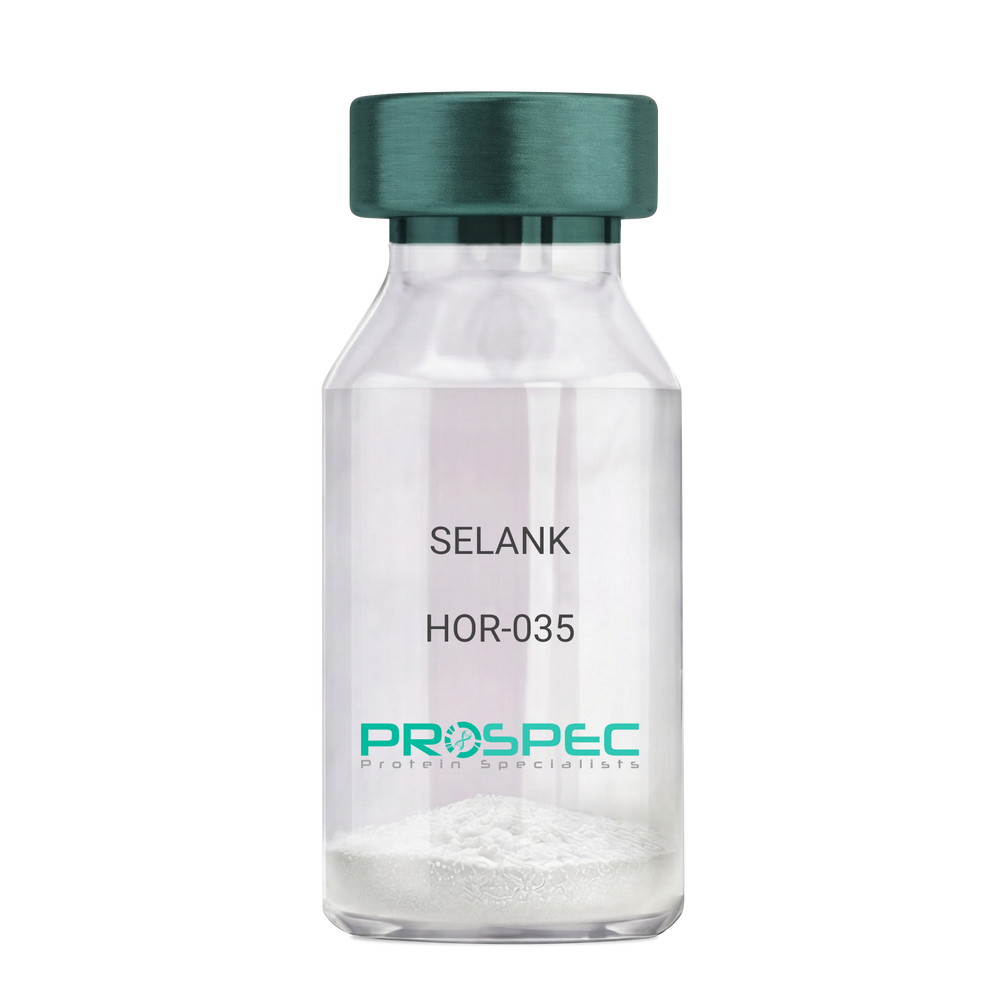
    SELANK

    Description:

    SELANK

    Product # :

    HOR-035

    Price :

    Quantity :

    Shipping Method :

    Room Temp Icon

    Shipped at Room temp

    Add To Cart

    More Info

    • description
    • formulation
    • purity
    • More Info

    Description

    SELANK Synthetic is a single, non-glycosylated polypeptide chain containing 7 amino acids, having a molecular mass of 751.89 Dalton and a Molecular formula of C33H57N11O9.

    Formulation

    The protein was lyophilized with no additives.

    Purity

    Greater than 97.0% as determined by analysis by RP-HPLC.

    More Info

    • Physical Appearance

      Sterile Filtered White lyophilized (freeze-dried) powder.

    • Stability

      Lyophilized SELANK although stable at room temperature for 3 weeks, should be stored desiccated below -18°C. Upon reconstitution SELANK should be stored at 4°C between 2-7 days and for future use below -18°C. For long term storage it is recommended to add a carrier protein (0.1% HSA or BSA). Please prevent freeze-thaw cycles.

    • Solubility

      It is recommended to reconstitute the lyophilized SELANK in sterile 18MΩ-cm H2O not less than 100 µg/ml, which can then be further diluted to other aqueous solutions.

    • Amino Acid Sequence

      H-Thr-Lys-Pro-Arg-Pro-Gly-Pro-OH.

    • Background

      Selank, also known as TP-7, is a synthetic peptide that has garnered significant attention in the scientific community due to its potential anxiolytic, neuroprotective, and nootropic effects. This heptapeptide, derived from the naturally occurring human tetrapeptide Tuftsin, has been shown to possess a wide range of biological activities, including enhancing memory, reducing anxiety, and potentially mitigating the effects of neurodegenerative diseases.

      Selank's primary mechanism of action involves its interaction with the GABAergic system, the body's main inhibitory neurotransmitter system. By modulating the activity of GABA receptors, Selank can exert a calming effect on the brain, reducing anxiety and enhancing cognitive function. Studies by Semenova et al. (2014) have demonstrated that Selank can enhance memory and learning in rats, suggesting potential applications in cognitive enhancement and the treatment of cognitive disorders.

      In addition to its anxiolytic and nootropic effects, Selank has been shown to possess neuroprotective properties. Research by Ershov et al. (2016) found that Selank could protect neurons from oxidative stress, suggesting potential applications in the treatment of neurodegenerative diseases such as Alzheimer's and Parkinson's disease.

      Given its anxiolytic, nootropic, and neuroprotective effects, Selank has been proposed as a potential therapeutic agent for a variety of conditions, including anxiety disorders, cognitive disorders, and neurodegenerative diseases. For instance, a study by Medvedev et al. (2017) found that Selank could improve symptoms in patients with generalized anxiety disorder, indicating its potential as a therapeutic agent in the treatment of anxiety disorders.

      While research on Selank is promising, it is important to note that most studies have been conducted in animals or in vitro. More research is needed to fully understand the potential effects and applications of Selank in humans. However, the existing body of research suggests that Selank could be a promising tool in the treatment of anxiety disorders, cognitive disorders, and neurodegenerative diseases.

    ProSpec's products are furnished for LABORATORY RESEARCH USE ONLY. The product may not be used as drugs, agricultural or pesticidal products, food additives or household chemicals.

    Selank
  • View Data Sheet

    Name :

    Streptavidin (37-159), His

    Description:

    Streptavidin (37-159 a.a) Recombinant, His Tag

    Product # :

    PRO-1495

    Price :

    Quantity :

    Shipping Method :

    Ice Icon

    Shipped with Ice Packs

    Add To Cart

    More Info

    • description
    • source
    • formulation
    • purity
    • More Info

    Description

    Streptavidin Recombinant produced in E. coli is a single polypeptide chain containing 148 amino acids (37-159) and having a molecular mass of 15.6kDa. Streptavidin is fused to a 25 amino acid His-tag at N-terminus & purified by proprietary chromatographic techniques.

    Source

    E.coli.

    Formulation

    The Streptavidin solution (0.25mg/ml) contains 20mM Tris-HCl buffer (pH 8.0), 0.15M NaCl and 20% glycerol.

    Purity

    Greater than 90% as determined by SDS-PAGE.

    More Info

    • Introduction

      Streptavidin is a tetrameric protein secreted by Streptomyces avidinii which binds firmly to biotin. Streptavidin is widely used in molecular biology through its unique high affinity for the vitamin biotin. The dissociation constant (Kd) of the biotin-streptavidin complex is about ~10-15 mol/L. The strong affinity recognition of biotin and biotinylated molecules has made streptavidin one of the most important components in diagnostics and laboratory kits. The streptavidin/biotin system has one of the biggest free energies of association of yet observed for noncovalent binding of a protein and small ligand in aqueous solution (K_assoc = 10**14). The complexes are also extremely stable over a wide range of temperature and pH.

    • Physical Appearance

      Sterile Filtered colorless solution.

    • Stability

      Store at 4°C if entire vial will be used within 2-4 weeks. Store, frozen at -20°C for longer periods of time. For long term storage it is recommended to add a carrier protein (0.1% HSA or BSA).Avoid multiple freeze-thaw cycles.

    • Amino Acid Sequence

      MGSSHHHHHH SSGLVPRGSH MGSHMAEAGI TGTWYNQLGS TFIVTAGADG ALTGTYESAV GNAESRYVLT GRYDSAPATD GSGTALGWTV AWKNNYRNAH SATTWSGQYV GGAEARINTQ WLLTSGTTEA NAWKSTLVGH DTFTKVKP.

    ProSpec's products are furnished for LABORATORY RESEARCH USE ONLY. The product may not be used as drugs, agricultural or pesticidal products, food additives or household chemicals.

    Streptavidin 37 159 His
  • View Data Sheet

    Name :

    IMP3 Human

    Description:

    IMP3 Human Recombinant

    BRMS2, C15orf12, MRPS4, U3 snoRNP protein IMP3.

    Product # :

    PRO-015

    Price :

    Quantity :

    Shipping Method :

    Ice Icon

    Shipped with Ice Packs

    Add To Cart

    More Info

    • description
    • source
    • formulation
    • purity
    • More Info

    Description

    IMP3 Human Recombinant produced in E.Coli is a single, non-glycosylated polypeptide chain containing 207 amino acids (1-184 a.a) and having a molecular mass of 24kDa. IMP3 is fused to a 23 amino acid His-tag at N-terminus & purified by proprietary chromatographic techniques.

    Source

    E.coli.

    Formulation

    IMP3 protein solution (1mg/ml) containing 20mM Tris-HCl buffer (pH 8.0), 0.4M Urea and 10% glycerol.

    Purity

    Greater than 90% as determined by SDS-PAGE.

    More Info

    • Introduction

      IMP3 is the human homolog of the yeast Imp3 protein and Essential for the early cleavages during pre-18S ribosomal RNA processing. IMP3 is a Part of the 60-80S U3 small nucleolar ribonucleoprotein (U3 snoRNP). IMP3 is a member of to the ribosomal protein S4P family and localizes to the nucleoli and interacts with the U3 snoRNP complex. IMP3 contains an S4 domain. U3 small nucleolar ribonucleoprotein protein IMP3 is a protein which in humans is encoded by the IMP3 gene.

    • Synonyms

      BRMS2, C15orf12, MRPS4, U3 snoRNP protein IMP3.

    • Physical Appearance

      Sterile Filtered colorless solution.

    • Stability

      Store at 4°C if entire vial will be used within 2-4 weeks. Store, frozen at -20°C for longer periods of time. For long term storage it is recommended to add a carrier protein (0.1% HSA or BSA).Avoid multiple freeze-thaw cycles.

    • Amino Acid Sequence

      MGSSHHHHHH SSGLVPRGSH MGSMVRKLKF HEQKLLKQVD FLNWEVTDHN LHELRVLRRY RLQRREDYTR YNQLSRAVRE LARRLRDLPE RDQFRVRASA ALLDKLYALG LVPTRGSLEL CDFVTASSFC RRRLPTVLLK LRMAQHLQAA VAFVEQGHVR VGPDVVTDPA FLVTRSMEDF VTWVDSSKIK RHVLEYNEER DDFDLEA.

    ProSpec's products are furnished for LABORATORY RESEARCH USE ONLY. The product may not be used as drugs, agricultural or pesticidal products, food additives or household chemicals.

    Imp3 Human
  • View Data Sheet

    Name :

    Latexin Human

    Description:

    Latexin Human Recombinant

    LXN, TCI, ECI, Latexin, Endogenous carboxypeptidase inhibitor, Tissue carboxypeptidase inhibitor, MUM.

    Product # :

    ENZ-407

    Price :

    Quantity :

    Shipping Method :

    Ice Icon

    Shipped with Ice Packs

    Add To Cart

    More Info

    • description
    • source
    • formulation
    • purity
    • More Info

    Description

    Recombinant Human Latexin produced in E.Coli is a single, non-glycosylated polypeptide chain containing 222 amino acids and having a molecular mass of 25.7kDa. Latexin is purified by conventional chromatography techniques.

    Source

    Escherichia Coli.

    Formulation

    The Latexin protein solution contains 20mM Tris-HCl, pH-7.5, 50mM NaCl and 10% Glycerol.

    Purity

    Greater than 95.0% as determined by SDS-PAGE.

    More Info

    • Introduction

      Latexin enzyme is a carboxypeptidase A inhibitor that is highly expressed in the heart, prostate, ovary, kidney, pancrease, brain and colon. Latexin has no noticeable sequence resemblance with plant and parasite inhibitors, however it is related to a human putative tumor suppressor protein, TIG1. Latexin is down-regulated in the presenilin-1-deficient mouse brain, thus putatively playing a role in Alzheimer's disease.

    • Synonyms

      LXN, TCI, ECI, Latexin, Endogenous carboxypeptidase inhibitor, Tissue carboxypeptidase inhibitor, MUM.

    • Physical Appearance

      Sterile filtered colorless solution.

    • Stability

      Store at 4°C if entire vial will be used within 2-4 weeks. Store, frozen at -20°C for longer periods of time. For long term storage it is recommended to add a carrier protein (0.1% HSA or BSA). Avoid multiple freeze-thaw cycles.

    • Amino Acid Sequence

      MEIPPTNYPA SRAALVAQNY INYQQGTPHR VFEVQKVKQA SMEDIPGRGH KYRLKFAVEE IIQKQVKVNC TAEVLYPSTG QETAPEVNFTFEGETGKNPD EEDNTFYQRL KSMKEPLEAQ NIPDNFGNVS PEMTLVLHLA WVACGYIIWQ NSTEDTWYKM VKIQTVKQVQ RNDDFIELDYTILLHNIASQ EIIPWQMQVL WHPQYGTKVK HNSRLPKEVQ LE.

    ProSpec's products are furnished for LABORATORY RESEARCH USE ONLY. The product may not be used as drugs, agricultural or pesticidal products, food additives or household chemicals.

    Latexin Human
  • View Data Sheet

    Name :

    ENHO Human

    Description:

    Energy Homeostasis Associated Human Recombinant

    Adropin, Energy homeostasis-associated protein, ENHO, C9orf165, UNQ470.

    Product # :

    PRO-1569

    Price :

    Quantity :

    Shipping Method :

    Room Temp Icon

    Shipped at Room temp

    Add To Cart

    More Info

    • description
    • source
    • formulation
    • purity
    • More Info

    Description

    ENHO Human Recombinant produced in E.Coli is a single, non-glycosylated, polypeptide chain (a.a 34-76) containing 121 amino acids including extra 78 N-terminal amino acids. The total molecular mass is 13.05kDa (calculated).

    Source

    Escherichia Coli.

    Formulation

    ENHO filtered (0.4 µm) and lyophilized from 0.5mg/ml in phosphate buffered saline.

    Purity

    Greater than 90.0% as determined by SDS-PAGE.

    More Info

    • Introduction

      Energy Homeostasis Associated (ENHO) participates in glucose homeostasis maintenance and lipid metabolism. ENHO is expressed in the liver and the brain. The role of ENHO in obesity or diabetes is studied.

    • Synonyms

      Adropin, Energy homeostasis-associated protein, ENHO, C9orf165, UNQ470.

    • Physical Appearance

      Filtered White lyophilized (freeze-dried) powder.

    • Stability

      Store lyophilized protein at -20°C. Aliquot the product after reconstitution to avoid repeated freezing/thawing cycles. Reconstituted protein can be stored at 4°C for a limited period of time; it does not show any change after two weeks at 4°C.

    • Solubility

      It is recommended to add deionized water to prepare a working stock solution of approximately 0.5mg/ml and let the lyophilized pellet dissolve completely. ENHO is not sterile! Please filter the product by an appropriate sterile filter before using it in the cell culture.

    • Amino Acid Sequence

      MGGKSNGEKK YIVGFKQGFK SCAKKEDVIS EKGGKLQKCF KYVDAASATL NEKAVEELKK DPSVAYVEED KLFKALTSCHSRSADVDSLS ESSPNSSPGP CPEKAPPPQK PSHEGSYLLQ P.

    ProSpec's products are furnished for LABORATORY RESEARCH USE ONLY. The product may not be used as drugs, agricultural or pesticidal products, food additives or household chemicals.

    Enho Human
  • View Data Sheet

    Name :

    Borrelia p30

    Description:

    Borrelia Burgdorferi p30 Recombinant

    Product # :

    BOR-028

    Price :

    Quantity :

    Shipping Method :

    Ice Icon

    Shipped with Ice Packs

    Add To Cart

    More Info

    • description
    • source
    • formulation
    • purity
    • More Info

    Description

    Borrelia Burgdorferi p30 Recombinant produced in E.Coli is a single, non-glycosylated polypeptide chain having a molecular mass of 29kDa. Borrelia p30 is expressed with a 6xHis tag and purified by proprietary chromatographic techniques.

    Source

    Escherichia Coli.

    Formulation

    Borrelia p30 is supplied in 20mM HEPES buffer pH-7.5, 400mM NaCl and 20% glycerol.

    Purity

    Greater than 80.0% as determined by SDS-PAGE.

    More Info

    • Introduction

      Borrelia is a part of the genus of bacteria of the spirochete phylum. Borrelia causes borreliosis, which is a zoonotic, vector-borne disease transmitted mostly by ticks and some by lice, depending on the species. Of the 36 known species of Borrelia, 12 are distinguished to cause Lyme disease or borreliosis and are transmitted by ticks. The Gram-negative bacterium Borreliella spielmanii is one of the pathogens of the Borreliella burgdorferi sensu lato complex causing Lyme disease. DbpA, also known as p17 or Osp17, is a heterogeneous protein among the human pathogenic B. burgdorferi sensu lato species.

    • Physical Appearance

      Sterile Filtered clear solution.

    • Stability

      Store at 4°C if entire vial will be used within 2-4 weeks. Store, frozen at -20°C for longer periods of time. Avoid multiple freeze-thaw cycles.

    • Immunological Functions

      1. Binds IgG- and IgM-type human antibodies.2. Immunodot test with Lyme disease positive/negative samples.

    • Applications

      Western blot with Lyme positive plasma.

    ProSpec's products are furnished for LABORATORY RESEARCH USE ONLY. The product may not be used as drugs, agricultural or pesticidal products, food additives or household chemicals.

    Borrelia P30
  • View Data Sheet

    Name :

    SNX5 Human

    Description:

    Sorting Nexin 5 Human Recombinant

    Sorting nexin-5 isoform a, Sorting nexin-5, SNX5.

    Product # :

    PRO-786

    Price :

    Quantity :

    Shipping Method :

    Ice Icon

    Shipped with Ice Packs

    Add To Cart

    More Info

    • description
    • source
    • formulation
    • purity
    • More Info

    Description

    SNX5 Human Recombinant produced in E.Coli is a single, non-glycosylated polypeptide chain containing 427 amino acids (1-404 a.a) and having a molecular mass of 49.2kDa.SNX5 is fused to a 23 amino acid His-tag at N-terminus & purified by proprietary chromatographic techniques.

    Source

    Escherichia Coli.

    Formulation

    SNX5 protein solution (0.25mg/ml) in phosphate buffered saline (pH7.4), 20% glycerol and 1mM DTT.

    Purity

    Greater than 85.0% as determined by SDS-PAGE.

    More Info

    • Introduction

      Sorting nexin-5 (SNX5) belongs to the sorting nexin family, whose members contains a phox (PX) domain, (which is a phosphoinositide binding domain) and are involved in intracellular trafficking. SNX5 protein is a component of the mammalian retromer complex, which facilitates cargo recovery from endosomes to the trans-Golgi network. SNX5 binds to the Fanconi anemia, complementation group A protein.

    • Synonyms

      Sorting nexin-5 isoform a, Sorting nexin-5, SNX5.

    • Physical Appearance

      Sterile Filtered clear solution.

    • Stability

      Store at 4°C if entire vial will be used within 2-4 weeks. Store, frozen at -20°C for longer periods of time. For long term storage it is recommended to add a carrier protein (0.1% HSA or BSA).Avoid multiple freeze-thaw cycles.

    • Amino Acid Sequence

      MGSSHHHHHH SSGLVPRGSH MGSMAAVPEL LQQQEEDRSK LRSVSVDLNV DPSLQIDIPD ALSERDKVKF TVHTKTTLPT FQSPEFSVTR QHEDFVWLHD TLIETTDYAG LIIPPAPTKP DFDGPREKMQ KLGEGEGSMT KEEFAKMKQE LEAEYLAVFK KTVSSHEVFL QRLSSHPVLS KDRNFHVFLE YDQDLSVRRK NTKEMFGGFF KSVVKSADEV LFTGVKEVDD FFEQEKNFLI NYYNRIKDSC VKADKMTRSH KNVADDYIHT AACLHSLALE EPTVIKKYLL KVAELFEKLR KVEGRVSSDE DLKLTELLRY YMLNIEAAKD LLYRRTKALI DYENSNKALD KARLKSKDVK LAEAHQQECC QKFEQLSESA KEELINFKRK RVAAFRKNLI EMSELEIKHA RNNVSLLQSC IDLFKNN.

    ProSpec's products are furnished for LABORATORY RESEARCH USE ONLY. The product may not be used as drugs, agricultural or pesticidal products, food additives or household chemicals.

    Snx5 Human
  • View Data Sheet

    Name :

    Borrelia p28

    Description:

    Borrelia Burgdorferi p28 Recombinant

    Product # :

    BOR-027

    Price :

    Quantity :

    Shipping Method :

    Ice Icon

    Shipped with Ice Packs

    Add To Cart

    More Info

    • description
    • source
    • formulation
    • purity
    • More Info

    Description

    Borrelia Burgdorferi p28 Recombinant produced in E.Coli is a single, non-glycosylated polypeptide chain having a molecular mass of 27kDa. Borrelia p28 is expressed with a 10xHis tag and purified by proprietary chromatographic techniques.

    Source

    Escherichia Coli.

    Formulation

    Borrelia p28 is supplied in 20mM HEPES buffer pH-7.5, 400mM NaCl and 20% glycerol.

    Purity

    Greater than 80.0% as determined by SDS-PAGE.

    More Info

    • Introduction

      Borrelia is a part of the genus of bacteria of the spirochete phylum. Borrelia causes borreliosis, which is a zoonotic, vector-borne disease transmitted mostly by ticks and some by lice, depending on the species. Of the 36 known species of Borrelia, 12 are distinguished to cause Lyme disease or borreliosis and are transmitted by ticks. The Gram-negative bacterium Borreliella spielmanii is one of the pathogens of the Borreliella burgdorferi sensu lato complex causing Lyme disease. DbpA, also known as p17 or Osp17, is a heterogeneous protein among the human pathogenic B. burgdorferi sensu lato species.

    • Physical Appearance

      Sterile Filtered clear solution.

    • Stability

      Store at 4°C if entire vial will be used within 2-4 weeks. Store, frozen at -20°C for longer periods of time. Avoid multiple freeze-thaw cycles.

    • Immunological Functions

      1. Binds IgG- and IgM-type human antibodies.2. Immunodot test with Lyme disease positive/negative samples.

    • Applications

      Western blot with Lyme positive plasma.

    ProSpec's products are furnished for LABORATORY RESEARCH USE ONLY. The product may not be used as drugs, agricultural or pesticidal products, food additives or household chemicals.

    Borrelia P28
  • View Data Sheet

    Name :

    Cardiac Actin Bovine

    Description:

    Cardiac Actin Bovine

    Actin alpha cardiac muscle 1, Alpha-cardiac actin, ACTC1, ACTC.

    Product # :

    PRO-519

    Price :

    Quantity :

    Shipping Method :

    Room Temp Icon

    Shipped at Room temp

    Add To Cart

    More Info

    • description
    • source
    • formulation
    • purity
    • More Info

    Description

    Ultra pure Cardiac Actin having a Molecular mass of 43,000 dalton.

    Source

    Bovine Heart.

    Formulation

    The protein was lyophilized from a 1mg/ml solution containing 10mM Tris-acetate buffer pH 8.0, 0.2mM CaCl2, 0.2mM ATP, 1mM DTT and 0.5% SDS.

    Purity

    Greater than 98.0% as determined by:
    (a) Analysis by RP-HPLC.
    (b) Analysis by SDS-PAGE.

    More Info

    • Introduction

      Alpha-cardiac actin belongs to the actin family which is comprised of three main groups of actin isoforms, alpha, beta, and gamma. The alpha actins are found in muscle tissues and are a major constituent of the contractile apparatus. Defects in the cardiac actin have been associated with idiopathic dilated cardiomyopathy (IDC) and familial hypertrophic cardiomyopathy (FHC).

    • Synonyms

      Actin alpha cardiac muscle 1, Alpha-cardiac actin, ACTC1, ACTC.

    • Physical Appearance

      Sterile Filtered White lyophilized (freeze-dried) powder.

    • Stability

      Lyophilized Cardiac-Actin although stable at room temperature for 3 weeks, should be stored desiccated below -18°C. Upon reconstitution Cardiac Actin should be stored at 4°C between 2-7 days and for future use below -18°C.For long term storage it is recommended to add a carrier protein (0.1% HSA or BSA).Please prevent freeze-thaw cycles.

    • Solubility

      It is recommended to reconstitute the lyophilized Cardiac Actin in sterile 18MΩ-cm H2O not less than 100µg/ml, which can then be further diluted to other aqueous solutions.

    • Applications

      Protein standard in 1D and 2D SDS gelelectrophoresis
      Immunoassays
      Immunization.

    ProSpec's products are furnished for LABORATORY RESEARCH USE ONLY. The product may not be used as drugs, agricultural or pesticidal products, food additives or household chemicals.

    Cardiac Actin
  • View Data Sheet

    Name :

    SEPSECS Human

    Description:

    Selenocysteinyl-tRNA(Sec) synthase Human Recombinant

    SLA, SLA/LP autoantigen, SLA-p35, Selenocysteinyl-tRNA(Sec) synthase, Selenocysteine synthase, Liver-pancreas antigen, Soluble liver antigen, Sec synthase, UGA suppressor tRNA-associated protein.

    Product # :

    ENZ-033

    Price :

    Quantity :

    Shipping Method :

    Ice Icon

    Shipped with Ice Packs

    Add To Cart

    More Info

    • description
    • source
    • formulation
    • purity
    • More Info

    Description

    SEPSECS produced in E.Coli is a single, non-glycosylated polypeptide chain containing 521 amino acids (1-501a.a.) and having a molecular mass of 57.9kDa.SEPSECS is fused to a 20 amino acid His-tag at N-terminus & purified by proprietary chromatographic techniques.

    Source

    Escherichia Coli.

    Formulation

    The SEPSECS protein solution (0.5mg/1ml) is formulated in 20mM Tris-HCl buffer (pH8.0) 1mM DTT, 100mM NaCl and 10% glycerol.

    Purity

    Greater than 90% as determined by SDS-PAGE.

    More Info

    • Introduction

      SEPSECS catalyzes the last step of sec synthesis by way of converting O-phosphoseryl-tRNA(sec) to selenocysteinyl-tRNA(sec) using selenophosphate as the selenium donor. Furthermore, SEPSECS protein is considered a specific marker of autoimmune hepatitis.

    • Synonyms

      SLA, SLA/LP autoantigen, SLA-p35, Selenocysteinyl-tRNA(Sec) synthase, Selenocysteine synthase, Liver-pancreas antigen, Soluble liver antigen, Sec synthase, UGA suppressor tRNA-associated protein.

    • Physical Appearance

      Sterile Filtered clear solution.

    • Stability

      Store at 4°C if entire vial will be used within 2-4 weeks. Store, frozen at -20°C for longer periods of time. For long term storage it is recommended to add a carrier protein (0.1% HSA or BSA).Avoid multiple freeze-thaw cycles

    • Amino Acid Sequence

      MGSSHHHHHH SSGLVPRGSH MNRESFAAGE RLVSPAYVRQ GCEARRSHEH LIRLLLEKGK CPENGWDEST LELFLHELAI MDSNNFLGNC GVGEREGRVA SALVARRHYR FIHGIGRSGD ISAVQPKAAG SSLLNKITNS LVLDIIKLAG VHTVANCFVV PMATGMSLTL CFLTLRHKRP KAKYIIWPRI DQKSCFKSMI TAGFEPVVIE NVLEGDELRT DLKAVEAKVQ ELGPDCILCI HSTTSCFAPR VPDRLEELAV ICANYDIPHI VNNAYGVQSS KCMHLIQQGA RVGRIDAFVQ SLDKNFMVPV GGAIIAGFND SFIQEISKMY PGRASASPSL DVLITLLSLG SNGYKKLLKE RKEMFSYLSN QIKKLSEAYN ERLLHTPHNP ISLAMTLKTL DEHRDKAVTQ LGSMLFTRQV SGARVVPLGS MQTVSGYTFR GFMSHTNNYP CAYLNAASAI GMKMQDVDLF IKRLDRCLKA VRKERSKESD DNYDKTEDVD IEEMALKLDN VLLDTYQDAS S.

    ProSpec's products are furnished for LABORATORY RESEARCH USE ONLY. The product may not be used as drugs, agricultural or pesticidal products, food additives or household chemicals.

    Sepsecs Human
  • View Data Sheet

    Name :

    Anaplasma Msp5

    Description:

    Anaplasma phagocytophilum Msp5 Recombinant

    Major surface protein 5, msp5.

    Product # :

    PRO-2565

    Price :

    Quantity :

    Shipping Method :

    Ice Icon

    Shipped with Ice Packs

    Add To Cart

    More Info

    • description
    • source
    • formulation
    • purity
    • More Info

    Description

    Recombinant Anaplasma Msp5 produced in SF9 is a glycosylated, polypeptide chain having a calculated molecular mass of 20kDa. Anaplasma Msp5 is expressed with a -6x His tag at N-terminus and purified by proprietary chromatographic techniques.

    Source

    Sf9 insect cells.

    Formulation

    Anaplasma Msp5 is supplied at a 20mM HEPES buffer pH-8.0, 200mM NaCl and 20% Glycerol.

    Purity

    Greater than 80% as determined by SDS-PAGE.

    More Info

    • Introduction

      The granulocytic anaplasmosis disease is initiated by the Gram-negative bacterium Anaplasma phagocytophilum. Anaplasma Msp5 is preserved among the Anaplasma classes and expressed in the salivary glands of infected ticks.

    • Synonyms

      Major surface protein 5, msp5.

    • Physical Appearance

      Sterile Filtered solution.

    • Stability

      Store at 4°C if entire vial will be used within 2-4 weeks. Store, frozen at -20°C for longer periods of time. Avoid multiple freeze-thaw cycles.

    • Immunological Functions

      Binds IgG- and IgM-type human antibodies.

    ProSpec's products are furnished for LABORATORY RESEARCH USE ONLY. The product may not be used as drugs, agricultural or pesticidal products, food additives or household chemicals.

    Anaplasma Phagocytophilum Msps
  • View Data Sheet

    Name :

    SCG3 Human

    Description:

    Secretogranin III Human Recombinant

    Secretogranin III, secretogranin-3, SGIII.

    Product # :

    PRO-1556

    Price :

    Quantity :

    Shipping Method :

    Ice Icon

    Shipped with Ice Packs

    Add To Cart

    More Info

    • description
    • source
    • formulation
    • purity
    • More Info

    Description

    SCG3 Human Recombinant produced in E.coli is a single, non-glycosylated polypeptide chain containing 472 amino acids (20-468) and having a molecular mass of 53.0kDa.SCG3 is fused to a 23 amino acid His-tag at N-terminus & purified by proprietary chromatographic techniques.

    Source

    Escherichia Coli.

    Formulation

    The SCG3 solution (0.5mg/ml) contains 20mM Tris-HCl buffer (pH 8.0), 0.15M NaCl, 1mM DTT and 20% glycerol.

    Purity

    Greater than 85% as determined by SDS-PAGE.

    More Info

    • Introduction

      SCG3 belongs to the chromogranin/secretogranin family of neuroendocrine secretory proteins. Though, the function of SCG3 is unknown, Granins operate as precursors for biologically active peptides. Several granins are known to serve as helper proteins in sorting and proteolytic processing of prohormones.

    • Synonyms

      Secretogranin III, secretogranin-3, SGIII.

    • Physical Appearance

      Sterile Filtered clear solution.

    • Stability

      Store at 4°C if entire vial will be used within 2-4 weeks. Store, frozen at -20°C for longer periods of time. For long term storage it is recommended to add a carrier protein (0.1% HSA or BSA).Avoid multiple freeze-thaw cycles.

    • Amino Acid Sequence

      MGSSHHHHHH SSGLVPRGSH MGSFPKPGGS QDKSLHNREL SAERPLNEQI AEAEEDKIKK TYPPENKPGQ SNYSFVDNLN LLKAITEKEK IEKERQSIRS SPLDNKLNVE DVDSTKNRKL IDDYDSTKSG LDHKFQDDPD GLHQLDGTPL TAEDIVHKIA ARIYEENDRA VFDKIVSKLL NLGLITESQA HTLEDEVAEV LQKLISKEAN NYEEDPNKPT SWTENQAGKI PEKVTPMAAI QDGLAKGEND ETVSNTLTLT NGLERRTKTY SEDNFEELQY FPNFYALLKS IDSEKEAKEK ETLITIMKTL IDFVKMMVKY GTISPEEGVS YLENLDEMIA LQTKNKLEKN ATDNISKLFP APSEKSHEET DSTKEEAAKM EKEYGSLKDS TKDDNSNPGG KTDEPKGKTE AYLEAIRKNI EWLKKHDKKG NKEDYDLSKM RDFINKQADA YVEKGILDKE EAEAIKRIYS SL.

    ProSpec's products are furnished for LABORATORY RESEARCH USE ONLY. The product may not be used as drugs, agricultural or pesticidal products, food additives or household chemicals.

    Scg3 Human
  • View Data Sheet

    Name :

    SELE Human, HEK

    Description:

    E-Selectin Human Recombinant, HEK

    E-selectin, Endothelial leukocyte adhesion molecule 1, ELAM-1, Leukocyte-endothelial cell adhesion molecule 2, LECAM2, CD62E antigen, SELE, ELAM1, ELAM, ESEL, CD62E.

    Product # :

    PRO-1645

    Price :

    Quantity :

    Shipping Method :

    Room Temp Icon

    Shipped at Room temp

    Add To Cart

    More Info

    • description
    • source
    • formulation
    • purity
    • More Info

    Description

    SELE Human Recombinant produced by mammalian expression system in human cells is a single polypeptide chain containing 543 amino acids (22-556). SELE is fused to an 8 amino acid His-tag at C-terminus is purified by proprietary chromatographic techniques.

    Source

    HEK293 cells.

    Formulation

    SELE was lyophilized from a 0.2 µM filtered solution of PBS and 4% Mannitol, pH 7.5.

    Purity

    Greater than 95% as determined by SDS-PAGE.

    More Info

    • Introduction

      E-selectin which is also called Endothelial leukocyte adhesion molecule 1, ELAM1, ELAM belongs to a family of divalent cation-dependent carbohydrate-binding glycoproteins or adhesion molecules. Eselectin is expressed on the surface of endothelial cells and mediates the interaction of leukocytes and platelets with endothelial cells during an inflammatory response. E-selectin is present in single copy in the human genome and contains 14 exons spanning about 13 kb of DNA.

    • Synonyms

      E-selectin, Endothelial leukocyte adhesion molecule 1, ELAM-1, Leukocyte-endothelial cell adhesion molecule 2, LECAM2, CD62E antigen, SELE, ELAM1, ELAM, ESEL, CD62E.

    • Physical Appearance

      Sterile Filtered White lyophilized (freeze-dried) powder.

    • Stability

      Lyophilized SELE although stable at room temperature for 3 weeks, should be stored desiccated below -18°C. Upon reconstitution SELE should be stored at 4°C between 2-7 days and for future use below -18°C. Please prevent freeze-thaw cycles.

    • Solubility

      It is recommended to reconstitute the lyophilized SELE in 1xPBS to a concentration no less than 100 µg/ml, which can then be further diluted to other aqueous solutions.

    • Amino Acid Sequence

      WSYNTSTEAMTYDEASAYCQQRYTHLVAIQNKEEIEYLNSILSYSPSYYWIGIRKVNNVW
      VWVGTQKPLTEEAKNWAPGEPNNRQKDEDCVEIYIKREKDVGMWNDERCSKKKLALCYTA
      ACTNTSCSGHGECVETINNYTCKCDPGFSGLKCEQIVNCTALESPEHGSLVCSHPLGNFSY
      NSSCSISCDRGYLPSSMETMQCMSSGEWSAPIPACNVVECDAVTNPANGFVECFQNPGSFPW
      NTTCTFDCEEGFELMGAQSLQCTSSGNWDNEKPTCKAVTCRAVRQPQNGSVRCSHSPAGEFT
      FKSSCNFTCEEGFMLQGPAQVECTTQGQWTQQIPVCEAFQCTALSNPERGYMNCLPSASGSFR
      YGSSCEFSCEQGFVLKGSKRLQCGPTGEWDNEKPTCEAVRCDAVHQPPKGLVRCAHSPIGEFTY
      KSSCAFSCEEGFELHGSTQLECTSQGQWTEEVPSCQVVKCSSLAVPGKINMSCSGEPVFGTVCKF
      ACPEGWTLNGSAARTCGATGHWSGLLPTCEAPTESNIPVDHHHHHH.

    ProSpec's products are furnished for LABORATORY RESEARCH USE ONLY. The product may not be used as drugs, agricultural or pesticidal products, food additives or household chemicals.

    Sele Human Hek
  • View Data Sheet

    Name :

    SEMG1 Human

    Description:

    Semenogelin I Human Recombinant

    CT103, dJ172H20.2, SEMG, SGI, Semenogelin-1, Semenogelin I, SEMG1.

    Product # :

    PRO-1732

    Price :

    Quantity :

    Shipping Method :

    Ice Icon

    Shipped with Ice Packs

    Add To Cart

    More Info

    • description
    • source
    • formulation
    • purity
    • More Info

    Description

    SEMG1 Human Recombinant produced in E. coli is a single polypeptide chain containing 462 amino acids (24-462) and having a molecular mass of 52kDa. SEMG1 is fused to a 23 amino acid His-tag at N-terminus & purified by proprietary chromatographic techniques.

    Source

    Escherichia Coli.

    Formulation

    The SEMG1 solution (0.25mg/ml) contains 20mM Tris-HCl buffer (pH 7.5), 0.5M NaCl, 10% glycerol, 250mM Imidazole, 0.1mM PMSF and 1mM DTT.

    Purity

    Greater than 85% as determined by SDS-PAGE.

    More Info

    • Introduction

      SEMG1 is the predominant protein in semen. The secreted protein takes part in the formation of a gel matrix which encases ejaculated spermatozoa. The prostate-specific antigen (PSA) protease processes SEMG1 into smaller peptides, with each possibly having a separate function. The proteolysis process breaks down the gel matrix and allows the spermatozoa to shift more freely. 2 transcript variants encoding different isoforms have been found for SEMG1.

    • Synonyms

      CT103, dJ172H20.2, SEMG, SGI, Semenogelin-1, Semenogelin I, SEMG1.

    • Physical Appearance

      Sterile Filtered clear solution.

    • Stability

      Store at 4°C if entire vial will be used within 2-4 weeks. Store, frozen at -20°C for longer periods of time. For long term storage it is recommended to add a carrier protein (0.1% HSA or BSA).Avoid multiple freeze-thaw cycles.

    • Amino Acid Sequence

      MGSSHHHHHH SSGLVPRGSH MGSQKGGSKG RLPSEFSQFP HGQKGQHYSG QKGKQQTESK GSFSIQYTYH VDANDHDQSR KSQQYDLNAL HKTTKSQRHL GGSQQLLHNK QEGRDHDKSK GHFHRVVIHH KGGKAHRGTQ NPSQDQGNSP SGKGISSQYS NTEERLWVHG LSKEQTSVSG AQKGRKQGGS QSSYVLQTEE LVANKQQRET KNSHQNKGHY QNVVEVREEH SSKVQTSLCP AHQDKLQHGS KDIFSTQDEL LVYNKNQHQT KNLNQDQQHG RKANKISYQS SSTEERRLHY GENGVQKDVS QSSIYSQTEE KAQGKSQKQI TIPSQEQEHS QKANKISYQS SSTEERRLHY GENGVQKDVS QRSIYSQTEK LVAGKSQIQA PNPKQEPWHG ENAKGESGQS TNREQDLLSH EQKGRHQHGS HGGLDIVIIE QEDDSDRHLA QHLNNDRNPL FT.

    ProSpec's products are furnished for LABORATORY RESEARCH USE ONLY. The product may not be used as drugs, agricultural or pesticidal products, food additives or household chemicals.

    Semg1 Human
  • View Data Sheet

    Name :

    HPSE Human

    Description:

    Heparanase-1 Human Recombinant

    Heparanase, HPA, HSE1, HPA1, HPR1, HPSE1, heparanase-1, EC 3.2.1.166, Endo-glucoronidase, HEP, Heparanase-1, Hpa1.

    Product # :

    ENZ-778

    Price :

    Quantity :

    Shipping Method :

    Ice Icon

    Shipped with Ice Packs

    Add To Cart

    More Info

    • description
    • source
    • formulation
    • purity
    • More Info

    Description

    HPSE Human Recombinant produced in E.Coli is a single, non-glycosylated polypeptide chain containing 531 amino acids (36-543 a.a) and having a molecular mass of 60kDa.HPSE is fused to a 23 amino acid His-tag at N-terminus.

    Source

    Escherichia Coli.

    Formulation

    HPSE protein solution (1mg/ml) containing 20mM Tris-HCl (pH 8.0), 10% glycerol and 0.4M Urea.

    Purity

    Greater than 85% as determined by SDS-PAGE.

    More Info

    • Introduction

      HPSE also known as Heparanase-1 is an enzyme which cleaves heparan sulfate proteoglycans to allow cell movement through changing the extracellular matrix. In fact, the Heparan sulfate proteoglycans are major components of the basement membrane and extracellular matrix. In addition, this cleavage can release bioactive molecules from the extracellular matrix. HPSE is significant for the overall degradation of proteins in lysosomes.

    • Synonyms

      Heparanase, HPA, HSE1, HPA1, HPR1, HPSE1, heparanase-1, EC 3.2.1.166, Endo-glucoronidase, HEP, Heparanase-1, Hpa1.

    • Physical Appearance

      Sterile Filtered clear solution.

    • Stability

      Store at 4°C if entire vial will be used within 2-4 weeks. Store, frozen at -20°C for longer periods of time.For long term storage it is recommended to add a carrier protein (0.1% HSA or BSA).Please avoid freeze thaw cycles.

    • Amino Acid Sequence

      MGSSHHHHHH SSGLVPRGSH MGSQDVVDLD FFTQEPLHLV SPSFLSVTID ANLATDPRFL ILLGSPKLRT LARGLSPAYL RFGGTKTDFL IFDPKKESTF EERSYWQSQV NQDICKYGSI PPDVEEKLRL EWPYQEQLLL REHYQKKFKN STYSRSSVDV LYTFANCSGL DLIFGLNALL RTADLQWNSS NAQLLLDYCS SKGYNISWEL GNEPNSFLKK ADIFINGSQL GEDFIQLHKL LRKSTFKNAK LYGPDVGQPR RKTAKMLKSF LKAGGEVIDS VTWHHYYLNG RTATKEDFLN PDVLDIFISS VQKVFQVVES TRPGKKVWLG ETSSAYGGGA PLLSDTFAAG FMWLDKLGLS ARMGIEVVMR QVFFGAGNYH LVDENFDPLP DYWLSLLFKK LVGTKVLMAS VQGSKRRKLR VYLHCTNTDN PRYKEGDLTL YAINLHNVTK YLRLPYPFSN KQVDKYLLRP LGPHGLLSKS VQLNGLTLKM VDDQTLPPLM EKPLRPGSSL GLPAFSYSFF VIRNAKVAAC I.

    ProSpec's products are furnished for LABORATORY RESEARCH USE ONLY. The product may not be used as drugs, agricultural or pesticidal products, food additives or household chemicals.

    Hpse Human
  • View Data Sheet

    Name :

    SRP14 Human

    Description:

    Signal Recognition Particle 14kDa Human Recombinant

    Signal recognition particle 14 kDa protein, SRP14, 18 kDa Alu RNA-binding protein, ALURBP, MGC14326.

    Product # :

    PRO-013

    Price :

    Quantity :

    Shipping Method :

    Ice Icon

    Shipped with Ice Packs

    Add To Cart

    More Info

    • description
    • source
    • formulation
    • purity
    • More Info

    Description

    SRP14 Human Recombinant fused with a 24 amino acid His tag at N-terminus produced in E.Coli is a single, non-glycosylated, polypeptide chain containing 160 amino acids (1-136 a.a.) and having a molecular mass of 17.1kDa. The SRP14 is purified by proprietary chromatographic techniques.

    Source

    Escherichia Coli.

    Formulation

    The SRP14 solution (1 mg/ml) contains 20mM Tris-HCl buffer (pH8.0), 20% glycerol, 0.1M NaCl and 1mM DTT.

    Purity

    Greater than 85.0% as determined by SDS-PAGE.

    More Info

    • Introduction

      SRP14 is a ribonucleoprotein complex which mediates the directing of proteins to the endoplasmic reticulum. The “Alu domain” of SRP is comprised of the heterodimer of the SRP9 and SRP14 proteins that are bound to the 5' and 3' terminal sequences of SRP RNA. SRP9/14 binding may be critical to the transcription, maturation, nucleolus localization and transport of SRP RNA.

    • Synonyms

      Signal recognition particle 14 kDa protein, SRP14, 18 kDa Alu RNA-binding protein, ALURBP, MGC14326.

    • Physical Appearance

      Sterile Filtered colorless solution.

    • Stability

      Store at 4°C if entire vial will be used within 2-4 weeks. Store, frozen at -20°C for longer periods of time. For long term storage it is recommended to add a carrier protein (0.1% HSA or BSA).Avoid multiple freeze-thaw cycles.

    • Amino Acid Sequence

      MGSSHHHHHH SSGLVPRGSH MGSHMVLLES EQFLTELTRL FQKCRTSGSV YITLKKYDGR TKPIPKKGTV EGFEPADNKC LLRATDGKKK ISTVVSSKEV NKFQMAYSNL LRANMDGLKK RDKKNKTKKT KAAAAAAAAA PAAAATAATT AATTAATAAQ.

    ProSpec's products are furnished for LABORATORY RESEARCH USE ONLY. The product may not be used as drugs, agricultural or pesticidal products, food additives or household chemicals.

    Srp14 Human
  • 1
  • …
  • 7
  • 8
  • 9
  • 10
  • 11
  • …
  • 42
Your browser does not support the video tag.

Products

  • Cytokines
  • Growth Factors
  • Chemokines
  • CD Antigens
  • Neurotrophins
  • Hormones
  • Enzymes
  • Viral Antigens
  • Recombinant Proteins
  • Natural Proteins
  • Monoclonal Antibodies
  • Polyclonal Antibodies
  • Thermal Packaging

About

  • Company
  • Founder
  • Contribution
  • Contact Us
  • My Account

Ordering

  • Ordering Method
  • Ordering - Credit Card
  • Ordering PO
  • Shipping Fees
  • FAQ's

Legal

  • Terms & Conditions
  • Privacy
  • Site Map
  • info@prospecbio.com
  • Facebook
  • Instagram
  • Linkedin Profile

© 2026 ProSpec-Tany TechnoGene Ltd. All Rights Reserved.

  • Choosing a selection results in a full page refresh.
  • Opens in a new window.