Skip to content

High-quality research proteins.

  • 1-800-805-6531

  • Mon - Sat 8.00-18.00, Sun - Closed

  • info@prospecbio.com

  • PO Box 6591 East Brunswick NJ 08816

  • Products
    • Cytokines
    • Growth factors
    • Chemokines
    • Cd antigens
    • Neurotrophins
    • Hormones
    • Enzymes
    • Viral antigens
    • Recombinant proteins
    • Natural proteins
    • Monoclonal antibodies
    • Polyclonal antibodies
    • Thermal Packaging
  • About
    • Company
    • Founder
    • Contribution
  • Customers
    • Eastern Asia
    • Eastern Europe
    • North America
    • South America
    • South East Asia
    • Southern Asia
    • Western Europe
  • Ordering
    • Ordering Method
    • Ordering - Credit Card
    • Ordering - PO
    • Shipping Fees
    • FAQs
  • Services
    • DNA Cloning
    • Protein Expression
    • Monoclonal Antibody
    • Fermentation
    • Technology License
  • Contact us
Log in

Country/region

  • USD $ | Albania
  • USD $ | Andorra
  • USD $ | Argentina
  • USD $ | Armenia
  • USD $ | Australia
  • USD $ | Austria
  • USD $ | Azerbaijan
  • USD $ | Belarus
  • USD $ | Belgium
  • USD $ | Bolivia
  • USD $ | Brazil
  • USD $ | Bulgaria
  • USD $ | Cambodia
  • USD $ | Canada
  • USD $ | Chile
  • USD $ | China
  • USD $ | Colombia
  • USD $ | Costa Rica
  • USD $ | Croatia
  • USD $ | Cyprus
  • USD $ | Czechia
  • USD $ | Denmark
  • USD $ | Estonia
  • USD $ | Finland
  • USD $ | France
  • USD $ | Georgia
  • USD $ | Germany
  • USD $ | Greece
  • USD $ | Hong Kong SAR
  • USD $ | Hungary
  • USD $ | Iceland
  • USD $ | India
  • USD $ | Ireland
  • USD $ | Israel
  • USD $ | Italy
  • USD $ | Japan
  • USD $ | Kazakhstan
  • USD $ | Latvia
  • USD $ | Liechtenstein
  • USD $ | Lithuania
  • USD $ | Madagascar
  • USD $ | Malta
  • USD $ | Mexico
  • USD $ | Moldova
  • USD $ | Monaco
  • USD $ | Netherlands
  • USD $ | New Zealand
  • USD $ | North Macedonia
  • USD $ | Norway
  • USD $ | Panama
  • USD $ | Paraguay
  • USD $ | Peru
  • USD $ | Philippines
  • USD $ | Poland
  • USD $ | Portugal
  • USD $ | Romania
  • USD $ | Singapore
  • USD $ | Slovakia
  • USD $ | Slovenia
  • USD $ | South Africa
  • USD $ | South Korea
  • USD $ | Spain
  • USD $ | Sri Lanka
  • USD $ | Sweden
  • USD $ | Switzerland
  • USD $ | Taiwan
  • USD $ | Thailand
  • USD $ | Türkiye
  • USD $ | Ukraine
  • USD $ | United Kingdom
  • USD $ | United States
  • USD $ | Uruguay
  • USD $ | Vatican City
  • USD $ | Venezuela
  • USD $ | Vietnam
  • Facebook
  • Instagram
logoProSpec - Recombinant Protein Manufacturer for academic and R&D industry
Become a distributor
Account Log in
Wishlist
Cart Cart(0)
  • Products
    +
    • Cytokines
    • Growth factors
    • Chemokines
    • Cd antigens
    • Neurotrophins
    • Hormones
    • Enzymes
    • Viral antigens
    • Recombinant proteins
    • Natural proteins
    • Monoclonal antibodies
    • Polyclonal antibodies
    • Thermal Packaging
  • About
    +
    • Company
    • Founder
    • Contribution
  • Customers
    +
    • Eastern Asia
    • Eastern Europe
    • North America
    • South America
    • South East Asia
    • Southern Asia
    • Western Europe
  • Ordering
    +
    • Ordering Method
    • Ordering - Credit Card
    • Ordering - PO
    • Shipping Fees
    • FAQs
  • Services
    +
    • DNA Cloning
    • Protein Expression
    • Monoclonal Antibody
    • Fermentation
    • Technology License
  • Contact us

Item added to your cart

View cart
View All
  • Cytokines
  • Growth factors
  • Chemokines
  • Cd antigens
  • Neurotrophins
  • Hormones
  • Enzymes
  • Viral antigens
  • Recombinant proteins
  • Natural proteins
  • Monoclonal antibodies
  • Polyclonal antibodies
  • Thermal Packaging
  • Tumor Necrosis Factor

    Tumor Necrosis Factor

    View All
  • 4-1BB

    4-1BB

    View All
  • Adiponectin

    Adiponectin

    View All
  • AIF1

    AIF1

    View All
  • Other Cytokines

    Other Cytokines

    View All
  • AITRL

    AITRL

    View All
  • Angiopoietin

    Angiopoietin

    View All
  • Apolipoprotein

    Apolipoprotein

    View All
  • B-Cell Activating Factor

    B-Cell Activating Factor

    View All
  • Beta Defensin

    Beta Defensin

    View All
  • Bone Morphogenetic Protein

    Bone Morphogenetic Protein

    View All
  • B type Natriuretic Peptide

    B type Natriuretic Peptide

    View All
  • BST

    BST

    View All
  • Betacellulin

    Betacellulin

    View All
  • Cardiotrophin

    Cardiotrophin

    View All
  • Activin

    Activin

    View All
  • Fibroblast Growth Factor

    Fibroblast Growth Factor

    View All
  • Other Growth Factors

    Other Growth Factors

    View All
  • CSF

    CSF

    View All
  • CTGF

    CTGF

    View All
  • IGFBP

    IGFBP

    View All
  • VEGF Protein

    VEGF Protein

    View All
  • EGF

    EGF

    View All
  • Epigen

    Epigen

    View All
  • Erythropoietin

    Erythropoietin

    View All
  • Insulin-Like Growth Factor

    Insulin-Like Growth Factor

    View All
  • Growth Hormone

    Growth Hormone

    View All
  • HDGF

    HDGF

    View All
  • Hepatocyte Growth Factor

    Hepatocyte Growth Factor

    View All
  • Insulin

    Insulin

    View All
  • BCA-1/ BLC (CXCL13)

    BCA-1/ BLC (CXCL13)

    View All
  • BRAK (CXCL14)

    BRAK (CXCL14)

    View All
  • C-10 (CCL6)

    C-10 (CCL6)

    View All
  • Other Chemokines

    Other Chemokines

    View All
  • MEC (CCL28)

    MEC (CCL28)

    View All
  • LD78-beta (CCL3L1)

    LD78-beta (CCL3L1)

    View All
  • CTACK (CCL27)

    CTACK (CCL27)

    View All
  • CXCL16

    CXCL16

    View All
  • CXCL17

    CXCL17

    View All
  • Platelet Factor-4 (CXCL4)

    Platelet Factor-4 (CXCL4)

    View All
  • ENA-78 (CXCL5)

    ENA-78 (CXCL5)

    View All
  • Eotaxin (CCL11,24,26)

    Eotaxin (CCL11,24,26)

    View All
  • Exodus-2 (CCL21)

    Exodus-2 (CCL21)

    View All
  • Fractalkine (CX3CL1)

    Fractalkine (CX3CL1)

    View All
  • CXCL6

    CXCL6

    View All
  • Other CD Antigens

    Other CD Antigens

    View All
  • CD14

    CD14

    View All
  • CD164

    CD164

    View All
  • CD1

    CD1

    View All
  • CD2

    CD2

    View All
  • CD200

    CD200

    View All
  • CD207

    CD207

    View All
  • CD226

    CD226

    View All
  • CD23

    CD23

    View All
  • CD244

    CD244

    View All
  • CD247

    CD247

    View All
  • CD27

    CD27

    View All
  • CD274

    CD274

    View All
  • CD300

    CD300

    View All
  • CD33

    CD33

    View All
  • Other Neurotrophins

    Other Neurotrophins

    View All
  • Beta-NGF

    Beta-NGF

    View All
  • BDNF

    BDNF

    View All
  • CDNF

    CDNF

    View All
  • CNTF

    CNTF

    View All
  • GDNF

    GDNF

    View All
  • Glia Maturation Factor

    Glia Maturation Factor

    View All
  • MANF

    MANF

    View All
  • Midkine

    Midkine

    View All
  • Neuroglobin

    Neuroglobin

    View All
  • Neurotrophic factors

    Neurotrophic factors

    View All
  • Neuregulin

    Neuregulin

    View All
  • Neuropilin

    Neuropilin

    View All
  • Pigment Epithelium-Derived Factor

    Pigment Epithelium-Derived Factor

    View All
  • Pleiotrophin

    Pleiotrophin

    View All
  • Peptide Hormones

    Peptide Hormones

    View All
  • Other Hormones

    Other Hormones

    View All
  • HCG

    HCG

    View All
  • Endothelin

    Endothelin

    View All
  • Exendin

    Exendin

    View All
  • FSH

    FSH

    View All
  • Glucagon

    Glucagon

    View All
  • GHRP

    GHRP

    View All
  • GLP

    GLP

    View All
  • Thyrostimulin

    Thyrostimulin

    View All
  • Inhibin A

    Inhibin A

    View All
  • LHRH

    LHRH

    View All
  • Melanotan

    Melanotan

    View All
  • Procalcitonin

    Procalcitonin

    View All
  • PTH

    PTH

    View All
  • Peroxiredoxin

    Peroxiredoxin

    View All
  • Peptidase

    Peptidase

    View All
  • Synthetase

    Synthetase

    View All
  • Transferase

    Transferase

    View All
  • Hydrolase

    Hydrolase

    View All
  • Dehydrogenase

    Dehydrogenase

    View All
  • ACE2

    ACE2

    View All
  • Esterase

    Esterase

    View All
  • Protein Kinases

    Protein Kinases

    View All
  • Other Enzymes

    Other Enzymes

    View All
  • Phosphatase

    Phosphatase

    View All
  • Deaminase

    Deaminase

    View All
  • Oxygenase

    Oxygenase

    View All
  • Adenylate Kinase

    Adenylate Kinase

    View All
  • Lyase

    Lyase

    View All
  • Chagas

    Chagas

    View All
  • SARS

    SARS

    View All
  • Influenza

    Influenza

    View All
  • ASFV

    ASFV

    View All
  • Astrovirus

    Astrovirus

    View All
  • Borrelia

    Borrelia

    View All
  • Helicobacter Pylori

    Helicobacter Pylori

    View All
  • Chikungunya

    Chikungunya

    View All
  • Chlamydia

    Chlamydia

    View All
  • Cytomegalo

    Cytomegalo

    View All
  • Dengue

    Dengue

    View All
  • EBV

    EBV

    View All
  • Ebola

    Ebola

    View All
  • Feline Leukemia Virus

    Feline Leukemia Virus

    View All
  • Hepatitis A

    Hepatitis A

    View All
  • Other

    Other

    View All
  • Actin

    Actin

    View All
  • ADAM

    ADAM

    View All
  • Complement Component

    Complement Component

    View All
  • Ag85

    Ag85

    View All
  • Eukaryotic Translation Initiation Factor

    Eukaryotic Translation Initiation Factor

    View All
  • Anterior Gradient Protein

    Anterior Gradient Protein

    View All
  • Heat Shock Protein

    Heat Shock Protein

    View All
  • Alpha-2-HS-Glycoprotein

    Alpha-2-HS-Glycoprotein

    View All
  • Hemoglobin

    Hemoglobin

    View All
  • Allergy

    Allergy

    View All
  • Anaplasma

    Anaplasma

    View All
  • Angiogenin

    Angiogenin

    View All
  • Ankyrin Repeat Domain

    Ankyrin Repeat Domain

    View All
  • Annexin

    Annexin

    View All
  • Other Natural Proteins

    Other Natural Proteins

    View All
  • Aprotinin

    Aprotinin

    View All
  • Transferrin

    Transferrin

    View All
  • Avidin

    Avidin

    View All
  • Anti Coagulation Factors

    Anti Coagulation Factors

    View All
  • Natural Albumin

    Natural Albumin

    View All
  • Natural Coagulation Factors

    Natural Coagulation Factors

    View All
  • Fibronectin

    Fibronectin

    View All
  • Thrombin

    Thrombin

    View All
  • Anti Human Enzyme

    Anti Human Enzyme

    View All
  • Other Monoclonal Antibodies

    Other Monoclonal Antibodies

    View All
  • Anti Human Cytokine

    Anti Human Cytokine

    View All
  • Anti Human Heat Shock Protein

    Anti Human Heat Shock Protein

    View All
  • Anti Mouse Lymphocyte

    Anti Mouse Lymphocyte

    View All
  • Anti Human Chemokine

    Anti Human Chemokine

    View All
  • Anti Human Lymphocyte

    Anti Human Lymphocyte

    View All
  • Anti Viral Monoclonal

    Anti Viral Monoclonal

    View All
  • Anti Mouse Cytokine

    Anti Mouse Cytokine

    View All
  • Anti-GST Monoclonal

    Anti-GST Monoclonal

    View All
  • Other Polyclonal Antibodies

    Other Polyclonal Antibodies

    View All
  • Anti Viral

    Anti Viral

    View All
  • Anti-GST Monoclonal

    Anti-GST Monoclonal

    View All
Back

Search results

1000 results found for “hnrnp”

Name

Description

Product #

Price

Quantity

Shipping Method

  • View Data Sheet

    Name :

    CHGA Human, His

    Description:

    Chromogranin-A Human Recombinant, His Tag

    CGA, CHGA, Vasostatin-2, Pituitary secretory protein I, SP-I.

    Product # :

    PRO-699

    Price :

    Quantity :

    Shipping Method :

    Ice Icon

    Shipped with Ice Packs

    Add To Cart

    More Info

    • description
    • source
    • formulation
    • purity
    • More Info

    Description

    Recombinant Human CHGA produced in E.Coli is a single, non-glycosylated polypeptide chain containing 460 amino acids (19-457 a.a) and having a molecular mass of 51.2kDa (Molecular weight on SDS-PAGE will appear higher). Chromgranin-A is fused to 21 amino acid His Tag at N-terminus and purified by proprietary chromatographic techniques.

    Source

    Escherichia Coli.

    Formulation

    The CHGA protein (0.5mg/ml) contains 20mM Tris-HCl buffer pH-7.5, 2mM EDTA, 0.1mM PMSF and 10% glycerol.

    Purity

    Greater than 80.0% as determined by Analysis by SDS-PAGE.

    More Info

    • Introduction

      Chromgranin-A is part of the neuroendocrine secretory protein family. CHGA is located in secretory vesicles of neurons and endocrine cells. Chromgranin-A is a precursor to three biologically active peptides; vasostatin, pancreastatin, and parastatin. These peptides act as autocrine or paracrine negative modulators of the neuroendocrine system. Other peptides, including chromostatin, beta-granin, WE-14 and GE-25, are also derived from the full-length protein. Chromgranin-A has numerous biological activities on some tissues and organs and exerts a large spectrum of homeostatic actions, including antifungal and antimicrobial effect, modulation of cell adhesion, and inhibition of parathyroid hormone secretion.

    • Synonyms

      CGA, CHGA, Vasostatin-2, Pituitary secretory protein I, SP-I.

    • Physical Appearance

      Sterile filtered colorless solution.

    • Stability

      Store at 4°C if entire vial will be used within 2-4 weeks. Store, frozen at -20°C for longer periods of time. For long term storage it is recommended to add a carrier protein (0.1% HSA or BSA). Avoid multiple freeze-thaw cycles.

    • Amino Acid Sequence

      MGSSHHHHHH SSGLVPRGSH MLPVNSPMNK GDTEVMKCIV EVISDTLSKP SPMPVSQECF ETLRGDERIL SILRHQNLLK ELQDLALQGA KERAHQQKKH SGFEDELSEV LENQSSQAEL KEAVEEPSSK DVMEKREDSK EAEKSGEATD GARPQALPEP MQESKAEGNN QAPGEEEEEE EEATNTHPPA SLPSQKYPGP QAEGDSEGLS QGLVDREKGL SAEPGWQAKR EEEEEEEEEA EAGEEAVPEE EGPTVVLNPH PSLGYKEIRK GESRSEALAV DGAGKPGAEE AQDPEGKGEQ EHSQQKEEEE EMAVVPQGLF RGGKSGELEQ EEERLSKEWE DSKRWSKMDQ LAKELTAEKR LEGQEEEEDN RDSSMKLSFR ARAYGFRGPG PQLRRGWRPS SREDSLEAGL PLQVRGYPEE KKEEEGSANR RPEDQELESL SAIEAELEKV AHQLQALRRG.

    ProSpec's products are furnished for LABORATORY RESEARCH USE ONLY. The product may not be used as drugs, agricultural or pesticidal products, food additives or household chemicals.

    Chromogranin A Human His
  • View Data Sheet

    Name :

    REN Human, HEK

    Description:

    Renin Human Recombinant, HEK

    Renin, Angiotensinogenase, EC 3.4.23.15, HNFJ2, Angiotensin-Forming Enzyme, Renin Precursor Renal, EC 3.4.23.

    Product # :

    PRO-2044

    Price :

    Quantity :

    Shipping Method :

    Room Temp Icon

    Shipped at Room temp

    Add To Cart

    More Info

    • description
    • source
    • formulation
    • purity
    • More Info

    Description

    Renin Human Recombinant produced in HEK cells is a single, glycosylated, polypeptide chain (Leu24-Arg406) containing a total of 393 amino acids, having a calculated molecular mass of 43.7kDa and fused to a 10 aa His tag at C-Terminus.

    Source

    HEK 293.

    Formulation

    REN was filtered (0.4µm) and lyophilized from 0.5mg/ml solution in phosphate buffered saline and 5% (w/v) trehalose.

    Purity

    Greater than 95.0% as determined by SDS-PAGE.

    More Info

    • Introduction

      Renin is a highly specific endopeptidase which generates angiotensin I from angiotensinogen in the plasma. angiotensin I is an important regulator of blood pressure and electrolyte balance. Renin initiates a cascade of reactions that produce an elevation of blood pressure and increased sodium retention by the kidney.

    • Synonyms

      Renin, Angiotensinogenase, EC 3.4.23.15, HNFJ2, Angiotensin-Forming Enzyme, Renin Precursor Renal, EC 3.4.23.

    • Physical Appearance

      Filtered White lyophilized (freeze-dried) powder.

    • Stability

      Store lyophilized protein at -20°C. Aliquot the product after reconstitution to avoid repeated freezing/thawing cycles. Reconstituted protein can be stored at 4°C for a limited period of time; it does not show any change after two weeks at 4°C.

    • Solubility

      It is recommended to add deionized water to prepare a working stock solution of approximately 0.5 mg/ml and let the lyophilized pellet dissolve completely. REN is not sterile! Please filter the product by an appropriate sterile filter before using it in the cell culture.

    • Amino Acid Sequence

      LPTDTTTFKR IFLKRMPSIR ESLKERGVDM ARLGPEWSQP MKRLTLGNTT SSVILTNYMD TQYYGEIGIG TPPQTFKVVF DTGSSNVWVP SSKCSRLYTA CVYHKLFDAS DSSSYKHNGT ELTLRYSTGT VSGFLSQDII TVGGITVTQM FGEVTEMPAL PFMLAEFDGV VGMGFIEQAI GRVTPIFDNI ISQGVLKEDV FSFYYNRDSE NSQSLGGQIV LGGSDPQHYE GNFHYINLIK TGVWQIQMKG VSVGSSTLLC EDGCLALVDT GASYISGSTS SIEKLMEALG AKKRLFDYVV KCNEGPTLPD ISFHLGGKEY TLTSADYVFQ ESYSSKKLCT LAIHAMDIPP PTGPTWALGA TFIRKFYTEF DRRNNRIGFA LAR HHHHHHH HHH.

    ProSpec's products are furnished for LABORATORY RESEARCH USE ONLY. The product may not be used as drugs, agricultural or pesticidal products, food additives or household chemicals.

    Ren Human Hek
  • View Data Sheet

    Name :

    Adiponectin Mouse, His

    Description:

    Adiponectin Mouse Recombinant, His Tag

    Acrp30, AdipoQ, GBP-28, APM-1, ACDC.

    Product # :

    CYT-537

    Price :

    Quantity :

    Shipping Method :

    Ice Icon

    Shipped with Ice Packs

    Add To Cart

    More Info

    • description
    • source
    • formulation
    • purity
    • More Info
    • sds-page

    Description

    The Adiponectin Mouse is created as a recombinant protein with a 21 a.a N-terminal fusion of His Tag. The Adiponectin His-Tagged Fusion Protein, produced in E. coli, is a 27.2kDa protein containing 251 amino acid residues of the Acrp30 Mouse, 18-247 amino acids.

    Source

    Escherichia Coli.

    Formulation

    Acrp30 Mouse is a sterile filtered liquid formulation containing (1mg/ml) 20mM Tris-HCl pH-8, 1mM DTT and 10% Glycerol.

    Purity

    Acrp30 Mouse purity is greater than 90% as determined by SDS-PAGE.

    sds-page

    Adiponectin-sds-page - Product image 1

    More Info

    • Introduction

      Adiponectin is an adipocyte specific secreted protein that circulates in the plasma. It is induced during adipocyte differentiation and its secretion is stimulated by insulin. Mouse adiponectin shares about 83% amino acid identity with that human. Adiponectin plays a role in various physiological processes such as energy homeostasis and obesity. Adiponectin is reduced in obese humans, and decreased level is associated with insulin resistance and hyperinsulinemia.

    • Synonyms

      Acrp30, AdipoQ, GBP-28, APM-1, ACDC.

    • Stability

      Store at 4°C if entire vial will be used within 2-4 weeks. Store, frozen at -20°C for longer periods of time. For long term storage it is recommended to add a carrier protein (0.1% HSA or BSA).Avoid multiple freeze-thaw cycles.

    • Amino Acid Sequence

      MGSSHHHHHH SSGLVPRGSH MEDDVTTTEE LAPALVPPPK GTCAGWMAGI PGHPGHNGTP GRDGRDGTPG EKGEKGDAGL LGPKGETGDV GMTGAEGPRG FPGTPGRKGE PGEAAYVYRS AFSVGLETRV TVPNVPIRFT KIFYNQQNHY DGSTGKFYCN IPGLYYFSYH ITVYMKDVKV SLFKKDKAVL FTYDQYQEKN VDQASGSVLL HLEVGDQVWL QVYGDGDHNG LYADNVNDST FTGFLLYHDT N.

    • Background

      What is the molecular weight/Mw of ADIPONECTIN Protein?
      ADIPONECTIN Protein has a total Mw of 27.2kDa.

      What is the source or expression system of ADIPONECTIN Protein?
      Escherichia Coli.

      What is the Purity of ADIPONECTIN Protein?
      ADIPONECTIN Protein is >90% pure as determined by SDS-PAGE.

      What is the Biological Activity of ADIPONECTIN Protein?
      The biological functionality of ADIPONECTIN Protein will be determined in the future.

      What is the amino acid sequence of ADIPONECTIN Protein?
      MGSSHHHHHH SSGLVPRGSH MEDDVTTTEE LAPALVPPPK GTCAGWMAGI PGHPGHNGTP GRDGRDGTPG EKGEKGDAGL LGPKGETGDV GMTGAEGPRG FPGTPGRKGE PGEAAYVYRS AFSVGLETRV TVPNVPIRFT KIFYNQQNHY DGSTGKFYCN IPGLYYFSYH ITVYMKDVKV SLFKKDKAVL FTYDQYQEKN VDQASGSVLL HLEVGDQVWL QVYGDGDHNG LYADNVNDST FTGFLLYHDT N.

      What applications can ADIPONECTIN Protein be used in?
      ADIPONECTIN Protein can probably be used in western blot, ELISA and Lateral Flow.

      What is the endotoxin level for ADIPONECTIN Protein?
      The endotoxin level is minimal, ADIPONECTIN Protein was purified using conventional chromatography techniques.

    ProSpec's products are furnished for LABORATORY RESEARCH USE ONLY. The product may not be used as drugs, agricultural or pesticidal products, food additives or household chemicals.

    Acrp30 Mouse His
  • View Data Sheet

    Name :

    NKp46 Human

    Description:

    Natural Cytotoxicity Receptor NKp46 Human Recombinant

    Natural cytotoxicity triggering receptor 1, Natural killer cell p46-related protein, hNKp46, NK-p46, NKp46, NK cell-activating receptor, Lymphocyte antigen 94 homolog, CD335 antigen, NCR1, LY94, NCRNKp46, CD335.

    Product # :

    PRO-432

    Price :

    Quantity :

    Shipping Method :

    Ice Icon

    Shipped with Ice Packs

    Add To Cart

    More Info

    • description
    • source
    • formulation
    • purity
    • More Info

    Description

    NKp46 Human Recombinant produced in E.Coli is a single, non-glycosylated polypeptide chain containing 235 amino acids (22-255) and having a molecular mass of 26.6kDa. NKp46 is purified by proprietary chromatographic techniques.

    Source

    Escherichia Coli.

    Formulation

    NKp46 (1mg/ml) contains phosphate buffered saline (pH7.4) & 1mM EDTA.

    Purity

    Greater than 95.0% as determined by SDS-PAGE.

    More Info

    • Introduction

      A natural cytotoxicity receptor (NCR) NKp46 has been shown to represent a novel NK cell-specific molecule involved in human NK cell activation. The natural cytotoxicity receptors (NCRs) are a recently characterized family of Ig-like activation receptors that appear to be major triggering receptors in tumor cell recognition. The three known NCRs include NKp46 and NKp30, which are expressed on circulating NKcells, and NKp44, which is expressed only on activating NK cells. NKp46 has been implicated in NK cell-mediated lysis of several autologous tumor cells, pathogen-infected cell lines and mononuclear phagocytes infected with an intracellular bacterium. The Lysis of tumor cells by NK-cells involves recognition by NKp46 of heparan sulfate moieties of membrane heparan sulfate proteoglycans. Furthermore, NKp46 is a surface receptor involved in NK-cell cell death by apoptosis. NKp46 has two extracellular Ig-like domains followed by a ~40 residue stalk region, a type I transmembrane domain, and a short cytoplasmic tail. The extracellular Ig-like domain of NKp46 (22-255aa) is purified by FPLC gel-filtration chromatography, after refolding of the isolated inclusion bodies in a redox buffer. In addition, engagement of the antigen with the monoclonal antibody stimulates intracellular calcium levels and the synthesis of cytokines. CD59 is an NKp46 coreceptor (by physical association) together they activate cytotoxicity of human NK-cells, their engagement results in tyrosine phosphorylation of CD3-zeta chains associated with NKp46. Reduced cell surface expression of NKp46 and other NK-cell receptors is linked to the impaired NK-cell cytolytic function in viremic HIV-1 infection.

    • Synonyms

      Natural cytotoxicity triggering receptor 1, Natural killer cell p46-related protein, hNKp46, NK-p46, NKp46, NK cell-activating receptor, Lymphocyte antigen 94 homolog, CD335 antigen, NCR1, LY94, NCRNKp46, CD335.

    • Physical Appearance

      Sterile filtered colorless solution.

    • Stability

      Store at 4°C if entire vial will be used within 2-4 weeks. Store, frozen at -20°C for longer periods of time. For long term storage it is recommended to add a carrier protein (0.1% HSA or BSA). Avoid multiple freeze-thaw cycles.

    • Amino Acid Sequence

      MQQQTLPKPF IWAEPHFMVP KEKQVTICCQ GNYGAVEYQL HFEGSLFAVD RPKPPERINKVKFYIPDMNS RMAGQYSCIY RVGELWSEPS NLLDLVVTEM YDTPTLSVHP GPEVISGEEV TFYCRLDTAT SMFLLLKEGR SSHVQRGYGK VQAEFPLGPV TTAHRGTYRX FGSYNNHAWSFPSEPVKLLV TGDIENTSLA PEDPTFSADT WGTYLLTTET GLQKDHALWD HTAQN.

    ProSpec's products are furnished for LABORATORY RESEARCH USE ONLY. The product may not be used as drugs, agricultural or pesticidal products, food additives or household chemicals.

    Nkp46 Human
  • View Data Sheet

    Name :

    NMRAL1 Human

    Description:

    NmrA-Like Family Domain Containing 1 Human Recombinant

    NmrA-like family domain containing protein 1, short chain dehydrogenase/reductase family 48A member 1, HSCARG, SDR48A1, FLJ25918.

    Product # :

    PRO-1131

    Price :

    Quantity :

    Shipping Method :

    Ice Icon

    Shipped with Ice Packs

    Add To Cart

    More Info

    • description
    • source
    • formulation
    • purity
    • More Info

    Description

    NMRAL1 Human Recombinant produced in E. coli is a single polypeptide chain containing 323 amino acids (1-299) and having a molecular mass of 35.9 kDa.NMRAL1 is fused to a 24 amino acid His-tag at N-terminus & purified by proprietary chromatographic techniques.

    Source

    E.coli.

    Formulation

    The NMRAL1 solution (0.5mg/ml) contains 20mM Tris-HCl buffer (pH 8.0), 0.15M NaCl and 20% glycerol.

    Purity

    Greater than 95% as determined by SDS-PAGE.

    More Info

    • Introduction

      NMRAL1 is a redox sensor protein which goes through reformation and subcellular rearrangement in reaction to alterations in intracellular NADPH/NADP+ levels. When the NADPH concentration is low the protein is found mostly as a monomer, and binds argininosuccinate synthase (ASS1), which takes part in nitric oxide synthesis. Association with ASS1 defects NMRAL1 activity and diminishes the production of nitric oxide, which then inhibits apoptosis. When the NADPH concentration is normal , the protein is found as a dimer and hides the binding site for ASS1.

    • Synonyms

      NmrA-like family domain containing protein 1, short chain dehydrogenase/reductase family 48A member 1, HSCARG, SDR48A1, FLJ25918.

    • Physical Appearance

      Sterile Filtered colorless solution.

    • Stability

      Store at 4°C if entire vial will be used within 2-4 weeks. Store, frozen at -20°C for longer periods of time. For long term storage it is recommended to add a carrier protein (0.1% HSA or BSA).Avoid multiple freeze-thaw cycles.

    • Amino Acid Sequence

      MGSSHHHHHH SSGLVPRGSH MGSHMVDKKL VVVFGGTGAQ GGSVARTLLE DGTFKVRVVT RNPRKKAAKE LRLQGAEVVQ GDQDDQVIME LALNGAYATF IVTNYWESCS QEQEVKQGKL LADLARRLGL HYVVYSGLEN IKKLTAGRLA AAHFDGKGEV EEYFRDIGVP MTSVRLPCYF ENLLSHFLPQ KAPDGKSYLL SLPTGDVPMD GMSVSDLGPV VLSLLKMPEK YVGQNIGLST CRHTAEEYAA LLTKHTRKVV HDAKMTPEDY EKLGFPGARD LANMFRFYAL RPDRDIELTL RLNPKALTLD QWLEQHKGDF NLL

    ProSpec's products are furnished for LABORATORY RESEARCH USE ONLY. The product may not be used as drugs, agricultural or pesticidal products, food additives or household chemicals.

    Nmral1 Human
  • View Data Sheet

    Name :

    NPL Human

    Description:

    N-acetylneuraminate Pyruvate Lyase Human Recombinant

    N-acetylneuraminate lyase, NALase, N-acetylneuraminate pyruvate-lyase, N-acetylneuraminic acid aldolase, Sialate lyase, Sialate-pyruvate lyase, Sialic acid aldolase, Sialic acid lyase, NPL, C1orf13, NAL, C112, NPL1.

    Product # :

    ENZ-125

    Price :

    Quantity :

    Shipping Method :

    Ice Icon

    Shipped with Ice Packs

    Add To Cart

    More Info

    • description
    • source
    • formulation
    • purity
    • More Info

    Description

    NPL produced in E.Coli is a single, non-glycosylated polypeptide chain containing 340 amino acids (1-320 a.a.) and having a molecular mass of 37.3kDa.NPL is fused to a 20 amino acid His-tag at N-terminus & purified by proprietary chromatographic techniques.

    Source

    Escherichia Coli.

    Formulation

    NPL protein solution (1mg/ml) containing 20mM Tris-HCl buffer (pH8.0), 20% glycerol, 0.1M NaCl and 1mM DTT.

    Purity

    Greater than 95.0% as determined by SDS-PAGE.

    More Info

    • Introduction

      N-acetylneuraminate lyase (NPL) is an enzyme which catalyzes the chemical reaction (N-acetylneuraminate ->N-acetyl-D-mannosamine + pyruvate). NPL is a member of a family of lyases, specifically the oxo-acid-lyases, which cleave carbon-carbon bonds. NPL participates in amino sugars metabolism.

    • Synonyms

      N-acetylneuraminate lyase, NALase, N-acetylneuraminate pyruvate-lyase, N-acetylneuraminic acid aldolase, Sialate lyase, Sialate-pyruvate lyase, Sialic acid aldolase, Sialic acid lyase, NPL, C1orf13, NAL, C112, NPL1.

    • Physical Appearance

      Sterile Filtered colorless solution.

    • Stability

      Store at 4°C if entire vial will be used within 2-4 weeks. Store, frozen at -20°C for longer periods of time. For long term storage it is recommended to add a carrier protein (0.1% HSA or BSA).Avoid multiple freeze-thaw cycles.

    • Amino Acid Sequence

      MGSSHHHHHH SSGLVPRGSH MAFPKKKLQG LVAATITPMT ENGEINFSVI GQYVDYLVKE QGVKNIFVNG TTGEGLSLSV SERRQVAEEW VTKGKDKLDQ VIIHVGALSL KESQELAQHA AEIGADGIAV IAPFFLKPWT KDILINFLKE VAAAAPALPF YYYHIPALTG VKIRAEELLD GILDKIPTFQ GLKFSDTDLL DFGQCVDQNR QQQFAFLFGV DEQLLSALVM GATGAVGSTY NYLGKKTNQM LEAFEQKDFS LALNYQFCIQ RFINFVVKLG FGVSQTKAIM TLVSGIPMGP PRLPLQKASR EFTDSAEAKL KSLDFLSFTD LKDGNLEAGS.

    ProSpec's products are furnished for LABORATORY RESEARCH USE ONLY. The product may not be used as drugs, agricultural or pesticidal products, food additives or household chemicals.

    Npl Human
  • View Data Sheet

    Name :

    RPN2 Human

    Description:

    Ribophorin II Human Recombinant

    Dolichyl-diphosphooligosaccharide--protein glycosyltransferase subunit 2, Dolichyl-diphosphooligosaccharide--protein glycosyltransferase 63 kDa subunit, RIBIIR, Ribophorin II, RPN-II, Ribophorin-2, RPN2, SWP1, RPNII.

    Product # :

    ENZ-349

    Price :

    Quantity :

    Shipping Method :

    Ice Icon

    Shipped with Ice Packs

    Add To Cart

    More Info

    • description
    • source
    • formulation
    • purity
    • More Info

    Description

    RPN2 Human Recombinant produced in E.coli is a single, non-glycosylated polypeptide chain containing 539 amino acids (23-540) and having a molecular mass of 59.2kDa.RPN2 is fused to a 21 amino acid His-tag at N-terminus & purified by proprietary chromatographic techniques.

    Source

    Escherichia Coli.

    Formulation

    The RPN2 solution (1mg/ml) contains 20mM Tris-HCl buffer (pH8.0), 10% glycerol and 0.1M NaCl.

    Purity

    Greater than 90.0% as determined by SDS-PAGE.

    More Info

    • Introduction

      Ribophorin 2 (RPN2) is a dolichyl-diphosphooligosaccharide protein glycosyltransferase subunit 2. The Ribophorin 2 protein is part of an N-oligosaccharyl transferase complex which links high mannose oligosaccharides to asparagine residues found in the Asn-X-Ser/Thr consensus motif of nascent polypeptide chains. RPN2 is analogous in sequence to the yeast oligosaccharyl transferase subunit SWP1.

    • Synonyms

      Dolichyl-diphosphooligosaccharide--protein glycosyltransferase subunit 2, Dolichyl-diphosphooligosaccharide--protein glycosyltransferase 63 kDa subunit, RIBIIR, Ribophorin II, RPN-II, Ribophorin-2, RPN2, SWP1, RPNII.

    • Physical Appearance

      Sterile filtered colorless solution.

    • Stability

      Store at 4°C if entire vial will be used within 2-4 weeks. Store, frozen at -20°C for longer periods of time. For long term storage it is recommended to add a carrier protein (0.1% HSA or BSA).Avoid multiple freeze-thaw cycles.

    • Amino Acid Sequence

      MGSSHHHHHH SSGLVPRGSH MLTPTHYLTK HDVERLKASL DRPFTNLESA FYSIVGLSSL GAQVPDAKKA CTYIRSNLDP SNVDSLFYAA QASQALSGCE ISISNETKDL LLAAVSEDSS VTQIYHAVAA LSGFGLPLAS QEALSALTAR LSKEETVLAT VQALQTASHL SQQADLRSIV
      EEIEDLVARL DELGGVYLQF EEGLETTALF VAATYKLMDH VGTEPSIKED QVIQLMNAIF SKKNFESLSE AFSVASAAAV LSHNRYHVPV VVVPEGSASD THEQAILRLQ VTNVLSQPLT QATVKLEHAK SVASRATVLQ KTSFTPVGDV FELNFMNVKF SSGYYDFLVE VEGDNRYIAN
      TVELRVKIST EVGITNVDLS TVDKDQSIAP KTTRVTYPAK AKGTFIADSH QNFALFFQLV DVNTGAELTP HQTFVRLHNQ KTGQEVVFVA EPDNKNVYKF ELDTSERKIE FDSASGTYTL YLIIGDATLK NPILWNVADV VIKFPEEEAP STVLSQNLFT PKQEIQHLFR EPEKRPPTV.

    ProSpec's products are furnished for LABORATORY RESEARCH USE ONLY. The product may not be used as drugs, agricultural or pesticidal products, food additives or household chemicals.

    Rpn2 Human
  • View Data Sheet

    Name :

    PNP Human

    Description:

    Purine Nucleoside Phosphorylase Human Recombinant

    Purine nucleoside phosphorylase, Inosine phosphorylase, NP, PUNP, PRO1837, FLJ94043, FLJ97288, FLJ97312, MGC117396, MGC125915, MGC125916, PNP.

    Product # :

    ENZ-025

    Price :

    Quantity :

    Shipping Method :

    Ice Icon

    Shipped with Ice Packs

    Add To Cart

    More Info

    • description
    • source
    • formulation
    • purity
    • More Info

    Description

    PNP Human Recombinant fused with a 20 amino acid His tag at N-terminus produced in E.Coli is a single, non-glycosylated, polypeptide chain containing 309 amino acids (1-289 a.a.) and having a molecular mass of 34.2kDa. The PNP is purified by proprietary chromatographic techniques.

    Source

    Escherichia Coli.

    Formulation

    The PNP solution (1mg/ml) contains 20mM Tris-HCl buffer (pH8.0), 0.1M NaCl, 2mM DTT and 10% glycerol.

    Purity

    Greater than 90.0% as determined by SDS-PAGE.

    More Info

    • Introduction

      PNP is a member of the PNP/MTAP phosphorylase family of proteins. PNP catalyzes the reversible phosphorolysis of ribonucleosides and 2’-deoxyribonucleosides with specificity for guanine, hypoxanthine and their analogs. PNP deficiency is a rare autosomal recessive genetic disease linked to a severe defect in T-lymphocyte function and neurologic disorder in children, comprising four percent of combined immunodeficiency cases.

    • Synonyms

      Purine nucleoside phosphorylase, Inosine phosphorylase, NP, PUNP, PRO1837, FLJ94043, FLJ97288, FLJ97312, MGC117396, MGC125915, MGC125916, PNP.

    • Physical Appearance

      Sterile Filtered colorless solution.

    • Stability

      Store at 4°C if entire vial will be used within 2-4 weeks. Store, frozen at -20°C for longer periods of time. For long term storage it is recommended to add a carrier protein (0.1% HSA or BSA).Avoid multiple freeze-thaw cycles.

    • Amino Acid Sequence

      MGSSHHHHHH SSGLVPRGSH MENGYTYEDY KNTAEWLLSH TKHRPQVAII CGSGLGGLTD KLTQAQIFDY GEIPNFPRST VPGHAGRLVF GFLNGRACVM MQGRFHMYEG YPLWKVTFPV RVFHLLGVDT LVVTNAAGGL NPKFEVGDIM LIRDHINLPG FSGQNPLRGP NDERFGDRFP AMSDAYDRTM RQRALSTWKQ MGEQRELQEG TYVMVAGPSF ETVAECRVLQ KLGADAVGMS TVPEVIVARH CGLRVFGFSL ITNKVIMDYE SLEKANHEEV LAAGKQAAQK LEQFVSILMA SIPLPDKAS.

    ProSpec's products are furnished for LABORATORY RESEARCH USE ONLY. The product may not be used as drugs, agricultural or pesticidal products, food additives or household chemicals.

    Pnp Human
  • View Data Sheet

    Name :

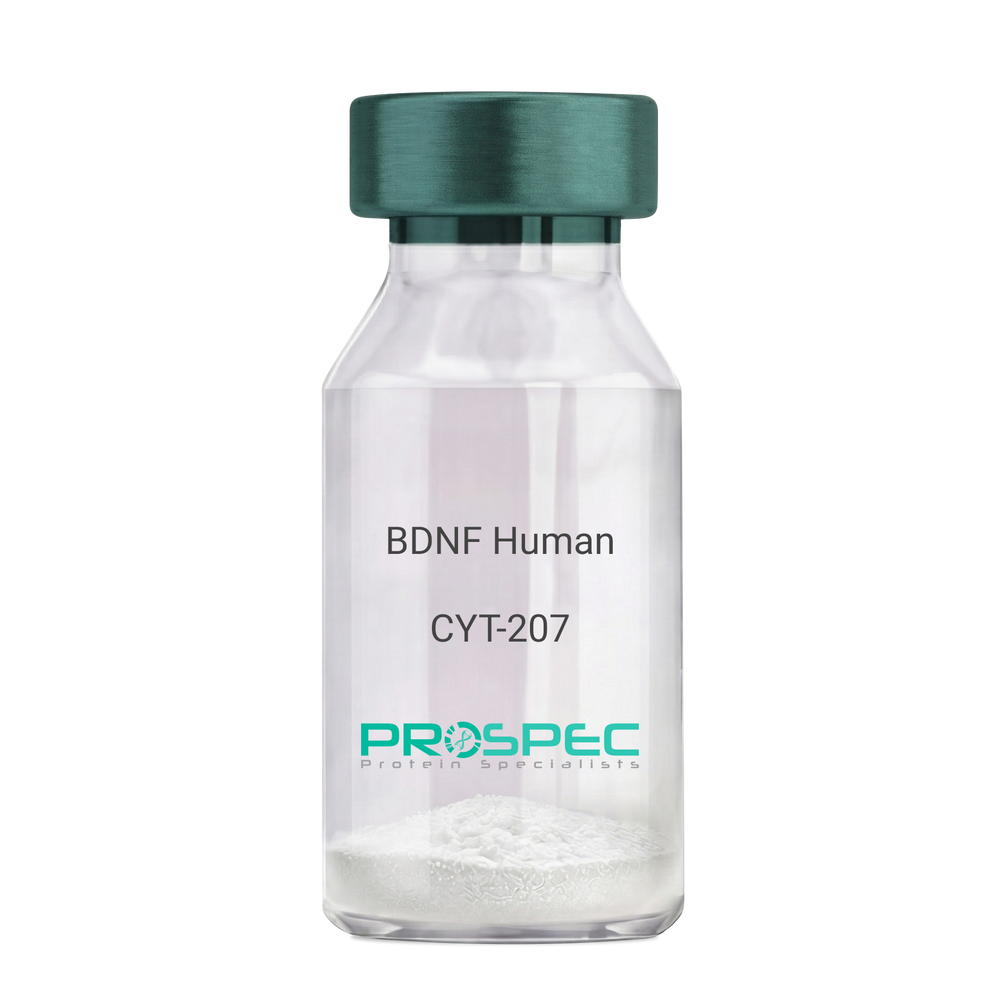
    BDNF Human

    Description:

    Brain-Derived Neurotrophic Factor Human Recombinant

    Brain-Derived Neurotrophic Factor, BDNF, MGC34632.

    Product # :

    CYT-207

    Price :

    Quantity :

    Shipping Method :

    Room Temp Icon

    Shipped at Room temp

    Add To Cart

    More Info

    • description
    • source
    • formulation
    • purity
    • biological activity
    • More Info
    • Activity

    Description

    BDNF Human Recombinant produced in E.Coli is a homodimer, non-glycosylated, polypeptide chain containing 2 x 119 amino acids (and an N-terminal Met) and having a total molecular mass of 28kDa. BDNF Human Recombinant is purified by proprietary chromatographic techniques.

    Source

    Escherichia Coli.

    Formulation

    The protein was lyophilized with 20mM PB and 400mM NaCl, pH 7.2.

    Purity

    BDNF is greater than 950% as determined SDS-PAGE.

    Biological Activity

    The activity was determined using Immobilized Human TrkB-His tag protein 2ug/ml (100 μl/well) for its binding to NHS-Biotin BDNF. The ED50 of was found to be ≤20ng/mL

    Activity

    bdnf activity - Product image 1

    More Info

    • Introduction

      BDNF promotes the survival of neuronal populations that are all located either in the central nervous system or directly connected to it. BDNF is a major regulator of synaptic transmission and plasticity at adult synapses in many regions of the cns. The versatility of BDNF is emphasized by its contribution to a range of adaptive neuronal responses including long-term potentiation (ltp), long-term depression (ltd), certain forms of short-term synaptic plasticity, as well as homeostatic regulation of intrinsic neuronal excitability.

    • Synonyms

      Brain-Derived Neurotrophic Factor, BDNF, MGC34632.

    • Physical Appearance

      Sterile Filtered White lyophilized (freeze-dried) powder.

    • Stability

      Lyophilized BDNF although stable at room temperature for 3 weeks, should be stored desiccated below -18°C. Upon reconstitution BDNF should be stored at 4°C between 2-7 days and for future use below -18°C.For long term storage it is recommended to add a carrier protein (0.1% HSA or BSA).Please prevent freeze-thaw cycles.

    • Solubility

      It is recommended to reconstitute the lyophilized BDNF in sterile 18M-cm H2O not less than 100µg/ml, which can then be further diluted to other aqueous solutions.

    • Amino Acid Sequence

      HSDPARRGE LSVCDSISEW VTAADKKTAV DMSGGTVTVL EKVPVSKGQL KQYFYETKCN PMGYTKEGCR GIDKRHWNSQ CRTTQSYVRA LTMDSKKRIG WRFIRIDTSC VCTLTIKRGR.

    • Background

      Final Thoughts

      Although more research is needed on the safety and effectiveness of BDNF human recombinant, trials suggest that this laboratory-produced protein may be effective in managing and treating several neurological and psychiatric disorders. It's important for experts to stay up to date on the latest developments and research to learn more about potential risks and benefits.

      What is the molecular weight/Mw of BDNF Protein?
      BDNF Protein has a total Mw of 27kDa.

      What is the source or expression system of BDNF Protein?
      Escherichia Coli.

      What is the Purity of BDNF Protein?
      BDNF Protein is >97% pure as determined by SDS-PAGE.

      What is the Biological Activity of BDNF Protein?
      The ED50, as determined by the dose-dependent induction of C6 cells proliferation, is 1.3-2µg/ml.

      What is the amino acid sequence of BDNF Protein?
      MHSDPARRGE LSVCDSISEW VTAADKKTAV DMSGGTVTVL EKVPVSKGQL KQYFYETKCN PMGYTKEGCR GIDKRHWNSQ CRTTQSYVRA LTMDSKKRIG WRFIRIDTSC VCTLTIKRGR.

      What applications can BDNF Protein be used in?
      BDNF Protein can probably be used in western blot, ELISA and Lateral Flow.

      What is the endotoxin level for BDNF Protein?
      The endotoxin level is minimal, BDNF Protein was purified using conventional chromatography techniques.

    • Protein content

      BDNF quantitation was carried out by two independent methods:1. UV spectroscopy at 280 nm using the absorbency value of 1.6 as the extinction coefficient for a 0.1% (1mg/ml) solution. This value is calculated by the PC GENE computer analysis program of protein sequences (IntelliGenetics). 2. Analysis by RP-HPLC, using a standard solution of Brain-derived Neurotrophic Factor as a Reference Standard.

    ProSpec's products are furnished for LABORATORY RESEARCH USE ONLY. The product may not be used as drugs, agricultural or pesticidal products, food additives or household chemicals.

    Bdnf Human
  • View Data Sheet

    Name :

    GHRP2

    Description:

    Growth Hormone Releasing Peptide-2

    GHRP-2, GHRP.

    Product # :

    HOR-271

    Price :

    Quantity :

    Shipping Method :

    Room Temp Icon

    Shipped at Room temp

    Add To Cart

    More Info

    • description
    • formulation
    • purity
    • More Info

    Description

    Growth Hormone Releasing Peptide-2 Synthetic is a single, non-glycosylated polypeptide chain containing 6 amino acids, having a molecular mass of 817.9 Dalton and a Molecular formula of C45H55N9O6.

    Formulation

    The GHRP-2 hormone was lyophilized with no additives.

    Purity

    Greater than 99.0% as determined by analysis by RP-HPLC.

    More Info

    • Introduction

      GH-releasing peptides (GHRPs) are synthetic peptides that like GHRH act directly on pituitary somatotrophs to stimulate GH release. GHRP-2, an investigational drug, is one of the most potent members of the GHRP family. It has been shown to be effective in adults via the oral and intranasal as well as the iv route of administration.

    • Synonyms

      GHRP-2, GHRP.

    • Physical Appearance

      Sterile Filtered White lyophilized (freeze-dried) powder.

    • Stability

      Lyophilized Growth Hormone Releasing Peptide-2 although stable at room temperature for 3 weeks, should be stored desiccated below -18°C. Upon reconstitution GHRP-2 should be stored at 4°C between 2-7 days and for future use below -18°C.For long term storage it is recommended to add a carrier protein (0.1% HSA or BSA).Please prevent freeze-thaw cycles.

    • Solubility

      It is recommended to reconstitute the lyophilized GHRP-2 in sterile 18MΩ-cm H2O not less than 100 µg/ml, which can then be further diluted to other aqueous solutions.

    • Amino Acid Sequence

      H-D-Ala-D-2-Nal-Ala-Trp-D-Phe-Lys-NH2.

    ProSpec's products are furnished for LABORATORY RESEARCH USE ONLY. The product may not be used as drugs, agricultural or pesticidal products, food additives or household chemicals.

    Ghrp 2 Human
  • View Data Sheet

    Name :

    PSPN Mouse

    Description:

    Persephin Mouse Recombinant

    Persephin, PSPN.

    Product # :

    CYT-802

    Price :

    Quantity :

    Shipping Method :

    Room Temp Icon

    Shipped at Room temp

    Add To Cart

    More Info

    • description
    • source
    • formulation
    • purity
    • biological activity
    • More Info

    Description

    PSPN Mouse Recombinant produced in E.Coli is a disulfide-linked homodimer containing 2x96 amino acids and having a molecular mass of 20.7kDa. The PSPN is purified by proprietary chromatographic techniques.

    Source

    Escherichia Coli.

    Formulation

    Lyophilized from a 0.2?m filtered concentrated solution in 30 %ACN, 0.1 %TFA, 150mM NaCl.

    Purity

    Greater than 95.0% as determined by:
    (a) Analysis by RP-HPLC.
    (b) Analysis by SDS-PAGE.

    Biological Activity

    Fully biologically active when compared to standard. The ED50 as determined by a cell proliferation assay using human TT medullary thyroid cancer cells is less than 0.1ng/ml, corresponding to a specific activity of > 1.0 × 10,000,000 IU/mg. 

    More Info

    • Introduction

      Persephin is a member of the GDNF ligand subfamily of the TGF-beta superfamily. PSPN encourages the existence and growth of key dopaminergic and motor neurons, as well as taking part in kidney development. Nonetheless, persephin does not support existence of peripheral neurons.

    • Synonyms

      Persephin, PSPN.

    • Physical Appearance

      Sterile Filtered White lyophilized (freeze-dried) powder.

    • Stability

      Lyophilized PSPN although stable at room temperature for 3 weeks, should be stored desiccated below -18°C. Upon reconstitution PSPN should be stored at 4°C between 2-7 days and for future use below -18°C. For long term storage it is recommended to add a carrier protein (0.1% HSA or BSA). Please prevent freeze-thaw cycles.

    • Solubility

      It is recommended to reconstitute the lyophilized PSPN in sterile 18MΩ-cm H2O not less than 100µg/ml, which can then be further diluted to other aqueous solutions.

    • Amino Acid Sequence

      ALAGSCRLWS LTLPVAELGL GYASEEKVIF RYCAGSCPQE ARTQHSLVLA RLRGRGRAHG RPCCQPTSYA DVTFLDDQHH WQQLPQLSAA ACGCGG

    ProSpec's products are furnished for LABORATORY RESEARCH USE ONLY. The product may not be used as drugs, agricultural or pesticidal products, food additives or household chemicals.

    Pspn Mouse
  • View Data Sheet

    Name :

    H3N2 Switzerland Recombinant

    Description:

    H3N2 Influenza A- Virus Switzerland 2013 Recombinant

    Product # :

    Price :

    Quantity :

    Shipping Method :

    Ice Icon

    Shipped with Ice Packs

    Add To Cart

    More Info

    • description
    • source
    • formulation
    • purity
    • More Info

    Description

    Recombinant Full-Length H3N2 Switzerland 2013 is glycosylated with N-linked sugars, produced using baculovirus vectors in insect cells.

    Source

    Baculovirus Insect Cells.

    Formulation

    The Recombinant H3N2 A/ Switzerland 2013 solution contains 10mM Sodium phosphate, pH 7.1,150mM NaCl and 0.005% Tween-20.

    Purity

    Greater than 90.0% as determined by SDS-PAGE.

    More Info

    • Introduction

      H3N2 is a subtype of the influenza A virus. Its name derives from the forms of the two kinds of proteinson the surface of its coat, hemagglutinin(H) and neuraminidase(N). H3N2 exchanges genes for internal proteins with other influenza subtypes. H3N2 has tended to dominate in prevalence over H1N1, H1N2, and influenza B. H3N2 strain descended from H2N2 by antigenic shift, in which genes from multiple subtypes re-assorted to form a new virus. Both the H2N2and H3N2 strains contained genesfrom avian influenzaviruses.

    • Physical Appearance

      Sterile Filtered colorless solution.

    • Stability

      H3N2 A/ Switzerland 2013 recombinant should be stored at 4°C. Do not freeze!

    ProSpec's products are furnished for LABORATORY RESEARCH USE ONLY. The product may not be used as drugs, agricultural or pesticidal products, food additives or household chemicals.

    product_image.jpg
  • View Data Sheet

    Name :

    RARRES2 Human, HEK

    Description:

    Retinoic Acid Receptor Responder 2 Human Recombinant, HEK

    Chemerin, TIG2, Tazarotene-induced gene 2 protein, Retinoic acid receptor responder protein 2, RAR-responsive protein TIG2, RARRES2, HP10433.

    Product # :

    PRO-2596

    Price :

    Quantity :

    Shipping Method :

    Ice Icon

    Shipped with Ice Packs

    Add To Cart

    More Info

    • description
    • source
    • formulation
    • purity
    • More Info

    Description

    RARRES2 produced in Sf9 Baculovirus cells is a single, glycosylated polypeptide chain (21-157 a.a.) and fused to a 6 aa His Tag at C-terminus containing a total of 143 amino acids and having a molecular mass of 16.6kDa. RARRES2 shows multiple bands between 13.5-18kDa on SDS-PAGE, reducing conditions and purified by proprietary chromatographic techniques.

    Source

    HEK293.

    Formulation

    RARRES2 protein solution (0.5mg/ml) contains 10% glycerol & Phosphate buffered saline (pH7.4).

    Purity

    Greater than 90.0% as determined by SDS-PAGE.

    More Info

    • Introduction

      RARRES2 is a secreted chemotactic protein that initiates chemotaxis through the ChemR23 G protein-coupled seven-transmembrane domain ligand. RARRES2 is upregulated by the synthetic retinoid tazarotene and found in many tissues. RARRES2 acts as an adipokine and is truncated on both termini from the proprotein. RARRES2 is structurally related to the cathelicidin precursors, cystatin C and kininogens. RARRES2 promotes calcium mobilization and chemotaxis of immature dendritic cells and macrophages. RARRES2 is secreted as a precursor of little biological activity, which requires proteolytic cleavage of its COOH-terminal domain to be exchangeed into a potent and highly specific agonist of ChemR23.

    • Synonyms

      Chemerin, TIG2, Tazarotene-induced gene 2 protein, Retinoic acid receptor responder protein 2, RAR-responsive protein TIG2, RARRES2, HP10433.

    • Physical Appearance

      Sterile Filtered colorless solution.

    • Stability

      Store at 4°C if entire vial will be used within 2-4 weeks. Store, frozen at -20°C for longer periods of time. For long term storage it is recommended to add a carrier protein (0.1% HSA or BSA).Avoid multiple freeze-thaw cycles.

    • Amino Acid Sequence

      ELTEAQRRGL QVALEEFHKH PPVQWAFQET SVESAVDTPF PAGIFVRLEF KLQQTSCRKR DWKKPECKVR PNGRKRKCLA CIKLGSEDKV LGRLVHCPIE TQVLREAEEH QETQCLRVQR AGEDPHSFYF PGQFAFSHHH HHH.

    ProSpec's products are furnished for LABORATORY RESEARCH USE ONLY. The product may not be used as drugs, agricultural or pesticidal products, food additives or household chemicals.

    Chemerin Protein
  • View Data Sheet

    Name :

    HNMT Human, Active

    Description:

    Histamine N-Methyltransferase Human Recombinant, Active

     HMT, HNMT-S1, HNMT-S2, MRT51.

    Product # :

    ENZ-1071

    Price :

    Quantity :

    Shipping Method :

    Ice Icon

    Shipped with Ice Packs

    Add To Cart

    More Info

    • description
    • source
    • formulation
    • purity
    • biological activity
    • More Info

    Description

    HNMT Human Recombinant produced in E.Coli is a single, non-glycosylated polypeptide chain containing 328 amino acids (1-292 a.a) and having a molecular mass of 37.4kDa. HNMT is fused to a 36 amino acid His-tag at N-terminus & purified by proprietary chromatographic techniques.

    Source

    Escherichia Coli.

    Formulation

    HNMT protein solution (1mg/ml) containing 20mM, Tris-Hcl (pH8.0) and 10% glycerol.

    Purity

    Greater than 90.0% as determined by SDS-PAGE.

    Biological Activity

    Specific activity is > 200 nmol/min/mg, and is defined as the amount of enzyme that transfer 1.0 nmole of methyl group per minute at 37°C.

    More Info

    • Introduction

      Histamine N-Methyltransferase or HNMT, is located in the cell cytosol. Sadenosyl-L-methionine acts as a methyl donor for HNMT which inactivates histamine. By inactivation of histamine, it affects the immune system’s response. HNMT acts on histamine in body tissues such as kidney, central nervous system and bronchus. The protein has a crucial part in the airway response to histamine & histamine degradation process and regulation.

    • Synonyms

      HMT, HNMT-S1, HNMT-S2, MRT51.

    • Physical Appearance

      Sterile Filtered clear colorless solution.

    • Stability

      Store at 4°C if entire vial will be used within 2-4 weeks. Store, frozen at -20°C for longer periods of time. For long term storage it is recommended to add a carrier protein (0.1% HSA or BSA).Please avoid freeze-thaw cycles.

    • Amino Acid Sequence

      MRGSHHHHHH GMASMTGGQQ MGRDLYDDDD KDRWGSMASS MRSLFSDHGK YVESFRRFLN HSTEHQCMQE FMDKKLPGII GRIGDTKSEI KILSIGGGAG EIDLQILSKV QAQYPGVCIN NEVVEPSAEQ IAKYKELVAK TSNLENVKFA WHKETSSEYQ SRMLEKKELQ KWDFIHMIQM LYYVKDIPAT LKFFHSLLGT NAKMLIIVVS GSSGWDKLWK KYGSRFPQDD LCQYITSDDL TQMLDNLGLK YECYDLLSTM DISDCFIDGD ENGDLLWDFL TETCNFNATA PPDLRAELGK DLQEPEFSAK KEGKVLFNNT LSFIVIEA.

    ProSpec's products are furnished for LABORATORY RESEARCH USE ONLY. The product may not be used as drugs, agricultural or pesticidal products, food additives or household chemicals.

    Hnmt Protein
  • View Data Sheet

    Name :

    BSND Human

    Description:

    Bartter Syndrome Infantile with Sensorineural Deafness Human Recombinant

    Bartter Syndrome Infantile With Sensorineural Deafness (Barttin) , Deafness Autosomal Recessive 73, DFNB73, BART, barttin.

    Product # :

    PRO-1551

    Price :

    Quantity :

    Shipping Method :

    Ice Icon

    Shipped with Ice Packs

    Add To Cart

    More Info

    • description
    • source
    • formulation
    • purity
    • More Info

    Description

    BSND Human Recombinant produced in E.coli is a single, non-glycosylated polypeptide chain containing 290 amino acids (54-320) and having a molecular mass of 31.7kDa.BSND is fused to a 23 amino acid His-tag at N-terminus & purified by proprietary chromatographic techniques.

    Source

    Escherichia Coli.

    Formulation

    The BSND solution (0.25mg/ml) contains 20mM Tris-HCl buffer (pH 8.0), 0.15M NaCl, 1mM DTT and 10% glycerol.

    Purity

    Greater than 90% as determined by SDS-PAGE.

    More Info

    • Introduction

      BSND is a vital beta subunit for CLC chloride channels. These heteromeric channels are restricted to basolateral membranes of renal tubules and of potassium-secreting epithelia of the inner ear. BSND gene mutations are linked with Bartter syndrome with sensorineural deafness.

    • Synonyms

      Bartter Syndrome Infantile With Sensorineural Deafness (Barttin) , Deafness Autosomal Recessive 73, DFNB73, BART, barttin.

    • Physical Appearance

      Sterile Filtered clear solution.

    • Stability

      Store at 4°C if entire vial will be used within 2-4 weeks. Store, frozen at -20°C for longer periods of time. For long term storage it is recommended to add a carrier protein (0.1% HSA or BSA).Avoid multiple freeze-thaw cycles.

    • Amino Acid Sequence

      MGSSHHHHHH SSGLVPRGSH MGSCQCYPKI TFVPADSDFQ GILSPKAMGL LENGLAAEMK SPSPQPPYVR LWEEAAYDQS LPDFSHIQMK VMSYSEDHRS LLAPEMGQPK LGTSDGGEGG PGDVQAWMEA AVVIHKGSDE SEGERRLTQS WPGPLACPQG PAPLASFQDD LDMDSSEGSS PNASPHDREE ACSPQQEPQG CRCPLDRFQD FALIDAPTLE DEPQEGQQWE IALPNNWQRY PRTKVEEKEA SDTGGEEPEK EEEDLYYGLP DGAGDLLPDK ELGFEPDTQG

    ProSpec's products are furnished for LABORATORY RESEARCH USE ONLY. The product may not be used as drugs, agricultural or pesticidal products, food additives or household chemicals.

    Bsnd Human
  • View Data Sheet

    Name :

    MUSTN1 Human

    Description:

    Musculoskeletal, Embryonic Nuclear Protein 1 Human Recombinant

    Musculoskeletal, Embryonic Nuclear Protein 1, MUSTANG, Musculoskeletal Embryonic Nuclear Protein 1, Musculoskeletal Temporally Activated Novel, MUSTN1.

    Product # :

    PRO-2061

    Price :

    Quantity :

    Shipping Method :

    Ice Icon

    Shipped with Ice Packs

    Add To Cart

    More Info

    • description
    • source
    • formulation
    • purity
    • More Info

    Description

    MUSTN1 Human Recombinant produced in E.Coli is a single, non-glycosylated polypeptide chain containing 105 amino acids (1-82 a.a) and having a molecular mass of 11.3kDa. MUSTN1 is fused to a 23 amino acid His-tag at N-terminus & purified by proprietary chromatographic techniques.

    Source

    Escherichia Coli.

    Formulation

    MUSTN1 protein solution (0.25 mg/ml) containing 20mM Tris-HCl buffer (pH 8.0), 0.15M NaCl, 10% glycerol and 1mM DTT.

    Purity

    Greater than 80.0% as determined by SDS-PAGE.

    More Info

    • Introduction

      Musculoskeletal, Embryonic Nuclear Protein 1, also known as MUSTN1 is a member of the MUSTANG family. MUSTN1 is implicated in the development andregeneration of the musculoskeletal system.

    • Synonyms

      Musculoskeletal, Embryonic Nuclear Protein 1, MUSTANG, Musculoskeletal Embryonic Nuclear Protein 1, Musculoskeletal Temporally Activated Novel, MUSTN1.

    • Physical Appearance

      Sterile Filtered clear solution.

    • Stability

      Store at 4°C if entire vial will be used within 2-4 weeks. Store, frozen at -20°C for longer periods of time. For long term storage it is recommended to add a carrier protein (0.1% HSA or BSA).Avoid multiple freeze-thaw cycles.

    • Amino Acid Sequence

      MGSSHHHHHH SSGLVPRGSH MGSMSQAGAQ EAPIKKKRPP VKEEDLKGAR GNLTKNQEIK SKTYQVMREC EQAGSAAPSV FSRTRTGTET VFEKPKAGPT KSVFG.

    ProSpec's products are furnished for LABORATORY RESEARCH USE ONLY. The product may not be used as drugs, agricultural or pesticidal products, food additives or household chemicals.

    Mustn1 Human
  • View Data Sheet

    Name :

    HIV-1 gp41, HRP

    Description:

    HIV-1 gp41 Recombinant, HRP labeled

    Product # :

    HIV-118

    Price :

    Quantity :

    Shipping Method :

    Ice Icon

    Shipped with Ice Packs

    Add To Cart

    More Info

    • description
    • source
    • formulation
    • purity
    • More Info

    Description

    HIV-1 gp41 HRP labeledis a non-glycosylated polypeptide chain, containing 288 amino acids (466-753 a.a.) and having a Mw of 32kDa. HIV1 gp41 HRP labeled is fused to an 114kDa beta-galactosidase tag at N-terminus having a total Mw of 146kDa.

    Source

    Escherichia Coli.

    Formulation

    (1mg/ml) 8M urea, 20mM Tris-HCl pH-8.0 and 10mM b-mercaptoethanol.

    Purity

    Greater than 95.0% as determined by SDS-PAGE.

    More Info

    • Introduction

      Human immunodeficiency virus (HIV) is a retrovirusthat can lead to a condition in which the immune systembegins to fail, leading to opportunistic infections. HIV primarily infects vital cells in the humanimmune systemsuch as helper T cells(specifically CD4+ T cells), macrophagesand dendritic cells. HIV infection leads to low levels of CD4+ T cells through three main mechanisms: firstly, direct viral killing of infected cells; secondly, increased rates of apoptosisin infected cells; and thirdly, killing of infected CD4+ T cells by CD8 cytotoxic lymphocytesthat recognize infected cells. When CD4+ T cell numbers decline below a critical level, cell-mediated immunityis lost, and the body becomes progressively more susceptible to opportunistic infections. HIV was classified as a member of the genus Lentivirus, part of the family of Retroviridae. Lentiviruses have many common morphologies and biological properties. Many species are infected by lentiviruses, which are characteristically responsible for long-duration illnesses with a long incubation period. Lentiviruses are transmitted as single-stranded, positive-sense, enveloped RNA viruses. Upon entry of the target cell, the viral RNA genomeis converted to double-stranded DNAby a virally encoded reverse transcriptasethat is present in the virus particle. This viral DNA is then integrated into the cellular DNA by a virally encoded integraseso that the genome can be transcribed. Once the virus has infected the cell, two pathways are possible: either the virus becomes latentand the infected cell continues to function, or the virus becomes active and replicates, and a large number of virus particles are liberated that can then infect other cells.

    • Physical Appearance

      Sterile filtered colorless clear solution.

    • Stability

      HIV-1 horseradish peroxidase although stable at 4°C for 1 week, should be stored below -18°C. Please prevent freeze thaw cycles.

    • Specificity

      Reacts strongly with human HIV positive serum.

    ProSpec's products are furnished for LABORATORY RESEARCH USE ONLY. The product may not be used as drugs, agricultural or pesticidal products, food additives or household chemicals.

    Hiv 1 Gp41 Hrp
  • View Data Sheet

    Name :

    NRG4 Human

    Description:

    Neuregulin-4 Human Recombinant

    Neuregulin 4, HRG4, Pro-neuregulin-4, membrane-bound isoform, Pro-NRG4, NRG-4.

    Product # :

    CYT-808

    Price :

    Quantity :

    Shipping Method :

    Ice Icon

    Shipped with Ice Packs

    Add To Cart

    More Info

    • description
    • source
    • formulation
    • purity
    • More Info

    Description

    NRG4 Human Recombinant produced in E.Coli is a single, non-glycosylated polypeptide chain containing 84 amino acids (1-61 a.a.) and having a molecular mass of 9.1kDa. NRG4 is fused to a 23 amino acid His-tag at N-terminus & purified by proprietary chromatographic techniques.

    Source

    Escherichia Coli.

    Formulation

    NRG4 protein solution (0.25mg/ml) contains 20mM Tris-HCl(pH8.0), 30% glycerol, 0.15M NaCl and 1mM DTT.

    Purity

    Greater than 90% as determined by SDS-PAGE.

    More Info

    • Introduction

      Neuregulin-4 (NRG4) is a part of the neuregulin family that owns 1 EGF-like domain and is a low affinity ligand for the ERBB4 tyrosine kinase receptor. NRG4 links ERBB1 and ERBB2 coreceptors, resulting in ligand-stimulated tyrosine phosphorylation and activation of the ERBB receptors.

    • Synonyms

      Neuregulin 4, HRG4, Pro-neuregulin-4, membrane-bound isoform, Pro-NRG4, NRG-4.

    • Physical Appearance

      Sterile Filtered clear solution.

    • Stability

      Store at 4°C if entire vial will be used within 2-4 weeks. Store, frozen at -20°C for longer periods of time. For long term storage it is recommended to add a carrier protein (0.1% HSA or BSA).Avoid multiple freeze-thaw cycles.

    • Amino Acid Sequence

      MGSSHHHHHH SSGLVPRGSH MGSMPTDHEE PCGPSHKSFC LNGGLCYVIP TIPSPFCRCV ENYTGARCEE VFLPGSSIQT KSNL.

    ProSpec's products are furnished for LABORATORY RESEARCH USE ONLY. The product may not be used as drugs, agricultural or pesticidal products, food additives or household chemicals.

    Nrg4 Human
  • View Data Sheet

    Name :

    GLP1R Human

    Description:

    Glucagon Like Peptide 1 Receptor Human Recombinant

    GLP1, GLP2, GRPP

    Product # :

    HOR-027

    Price :

    Quantity :

    Shipping Method :

    Room Temp Icon

    Shipped at Room temp

    Add To Cart

    More Info

    • description
    • source
    • formulation
    • purity
    • More Info

    Description

    GLP1R Human Recombinant produced in E.Coli is a single, non-glycosylated, polypeptide chain (aa 24-145) containing 132 amino acids including a 10 a.a N-terminal His tag. The total molecular mass is 15.55 kDa (calculated).

    Source

    Escherichia Coli.

    Formulation

    GLP1R filtered (0.4 µm) and lyophilized from 0.5mg/ml in 50mM Acetate Buffer, pH 4.0.

    Purity

    Greater than 90.0% as determined by SDS-PAGE.

    More Info

    • Introduction

      The glucagon-like peptide-1 receptor, also known as GLP1R, is a receptor protein found on brain neurons and beta cells of the pancreas. GLP1R activates a signalling cascade that leads to the initiation of adenylyl cyclase and increased intracellular cAMP levels. In humans, GLP1R is synthesized by GLP1R gene, which is present on chromosome 6.
      GLP1R takes part in the control of blood sugar level by enhancing insulin secretion. GLP1R is a part of the glucagon receptor family of G protein-coupled receptors. GLP1R consists of two domains, one transmembrane (TMD) domain, that binds the N-terminal region of GLP-1. And one extracellular (ECD) which binds the C-terminal helix of GLP-1. The TMD domain contains a fulcrum of polar residues that controls the biased signaling of the receptor, while the transmembrane helical boundaries and extracellular surface are a trigger for biased agonism.

    • Synonyms

      GLP1, GLP2, GRPP

    • Physical Appearance

      Filtered White lyophilized (freeze-dried) powder.

    • Stability

      Store lyophilized protein at -20°C. Aliquot the product after reconstitution to avoid repeated freezing/thawing cycles. Reconstituted protein can be stored at 4°C for a limited period of time; it does not show any change after two weeks at 4°C.

    • Solubility

      It is recommended to reconstitute the lyophilized Hepatocyte Growth Factor in 100mM Acetate buffer to a working concentration approximately 0.5mg/ml. Further dilutions should be made using buffer containing protein.

    • Amino Acid Sequence

      MKHHHHHHAS RPQGATVSLW ETVQKWREYR RQCQRSLTED PPPATDLFCN RTFDEYACWP DGEPGSFVNV SCPWYLPWAS SVPQGHVYRF CTAEGLWLQK DNSSLPWRDL SECEESKRGE RSSPEEQLLF LY

    ProSpec's products are furnished for LABORATORY RESEARCH USE ONLY. The product may not be used as drugs, agricultural or pesticidal products, food additives or household chemicals.

    Glp1R Human
  • View Data Sheet

    Name :

    proBDNF Human

    Description:

    Precursor Brain-Derived Neurotrophic Factor Human Recombinant

    proBDNF, Precursor Form Brain-derived Neurotrophic Factor.

    Product # :

    CYT-014

    Price :

    Quantity :

    Shipping Method :

    Room Temp Icon

    Shipped at Room temp

    Add To Cart

    More Info

    • description
    • source
    • formulation
    • purity
    • More Info

    Description

    proBDNF Human Recombinant produced in E.Coli is a single, non-glycosylated, non-covalently linked homodimer with each polypeptide chain containing 229 amino acids and having a molecular mass of 52kDa. The proBDNF is purified by proprietary chromatographic techniques.

    Source

    Escherichia Coli.

    Formulation

    proBDNF was lyophilized from a concentrated (0.5mg/ml) solution in 20mM PB, pH 8.0 and 500mM NaCl.

    Purity

    Greater than 95.0% as determined by:
    (a) Analysis by RP-HPLC.
    (b) Analysis by SDS-PAGE.

    More Info

    • Introduction

      proBDNF (the precursor form of Brain-derived neurotrophic factor) interacts preferentially with p75NTR (the pan-neurotrophin receptor p75) and vps10p domain-containing receptor sortilin and induces neuronal apoptosis, while the mature BDNF selectively binds with great affinity to the TrkB kinase receptor and promotes the survival, growth and differentiation of neurons. Since proneurotrophins and mature neurotrophins bring forth opposite biological effects, proBDNF cleavage in the neuronal system is regulated in a specific and cell-context dependent manner. proBDNF has an important role in negative regulation of neurotrophic actions in the brain.

    • Synonyms

      proBDNF, Precursor Form Brain-derived Neurotrophic Factor.

    • Physical Appearance

      Sterile Filtered White lyophilized (freeze-dried) powder.

    • Stability

      Lyophilized proBDNF although stable at room temperature for 3 weeks, should be stored desiccated below -18°C. Upon reconstitution proBDNF should be stored at 4°C between 2-7 days and for future use below -18°C.Please prevent freeze-thaw cycles.

    • Solubility

      It is recommended to reconstitute the lyophilized proBDNF in sterile 18M-cm H2O not less than 100µg/ml, which can then be further diluted to other aqueous solutions.

    • Amino Acid Sequence

      The sequence of the first five N-terminal amino acids was determined and was found to be Met-Ala-Pro-Met-Lys.

    • Background

      Precursor Brain-Derived Neurotrophic Factor Human Recombinant: Unveiling the Potential of a Key Neurotrophic Factor

      Abstract:

      Precursor Brain-Derived Neurotrophic Factor (proBDNF) human recombinant is a pivotal neurotrophic factor that plays a critical role in neuronal development, survival, and synaptic plasticity. This research paper provides a comprehensive overview of proBDNF, including its characteristics, processing mechanisms, and potential therapeutic applications. Furthermore, innovative methodologies for the production and optimization of proBDNF human recombinant are proposed, highlighting its future implications in the field of neuroregenerative medicine.

      Introduction:

      Understanding the intricate processes underlying neuronal development and function is crucial for advancing neuroregenerative strategies. Neurotrophic factors, such as proBDNF, have garnered significant attention due to their pivotal roles in supporting neuronal growth and survival. This paper delves into the unique features of proBDNF and presents novel approaches for its production and optimization.

      Characteristics and Processing Mechanisms:

      proBDNF is a precursor protein consisting of 247 amino acids and is processed into mature brain-derived neurotrophic factor (mBDNF) through proteolytic cleavage. The ratio between proBDNF and mBDNF is tightly regulated and determines the balance between neuronal survival and apoptosis. Additionally, proBDNF exerts distinct biological functions through its receptor interactions, modulating synaptic plasticity and neuronal activity.

      Production of proBDNF Human Recombinant:

      Efficient production methodologies are essential to harness the therapeutic potential of proBDNF human recombinant. Various expression systems, including bacterial, yeast, and mammalian cell-based platforms, have been explored. Each system presents unique advantages and challenges, necessitating careful selection to achieve high yields and protein quality. Optimization strategies, such as codon optimization, fusion protein tags, and growth conditions, have been employed to enhance production efficiency. Purification techniques, such as affinity chromatography and size exclusion chromatography, have been optimized to isolate high-quality proBDNF recombinant.

      Potential Therapeutic Applications:

      proBDNF human recombinant holds immense promise for neuroregenerative medicine. Its role in promoting neuronal survival, axonal growth, and synaptic plasticity positions it as a valuable therapeutic agent for neurodegenerative disorders, spinal cord injuries, and stroke. Additionally, the balance between proBDNF and mBDNF presents a potential therapeutic target for fine-tuning neuronal processes and restoring proper brain function.

      Conclusion:

      proBDNF human recombinant represents a crucial neurotrophic factor with diverse therapeutic applications in neuroregenerative medicine. Optimizing production methodologies and further understanding its processing mechanisms will enhance its clinical utility. With its potential implications in neurodegenerative disorders and neuronal repair, proBDNF human recombinant holds immense promise as a transformative tool for promoting neural health and regeneration.

      What is the molecular weight/Mw of BDNF Protein?
      BDNF Protein has a total Mw of 52kDa.

      What is the source or expression system of BDNF Protein?
      Escherichia Coli.

      What is the Purity of BDNF Protein?
      BDNF Protein is >95% pure as determined by SDS-PAGE.

      What is the Biological Activity of BDNF Protein?
      The biological functionality of BDNF Protein will be determined in the future.

      What is the amino acid sequence of BDNF Protein?
      The sequence of the first five N-terminal amino acids was determined and was found to be Met-Ala-Pro-Met-Lys.

      What applications can BDNF Protein be used in?
      BDNF Protein can probably be used in western blot, ELISA and Lateral Flow.

      What is the endotoxin level for BDNF Protein?
      The endotoxin level is minimal, BDNF Protein was purified using conventional chromatography techniques.

    ProSpec's products are furnished for LABORATORY RESEARCH USE ONLY. The product may not be used as drugs, agricultural or pesticidal products, food additives or household chemicals.

    Probdnf Human
  • View Data Sheet

    Name :

    GNG4 Human

    Description:

    Guanine Nucleotide Binding Protein Gamma 4 Human Recombinant

    Guanine Nucleotide Binding Protein (G Protein) Gamma 4, Guanine Nucleotide-Binding Protein G(I)/G(S)/G(O) Subunit Gamma-4, GNGT4.

    Product # :

    PRO-1842

    Price :

    Quantity :

    Shipping Method :

    Ice Icon

    Shipped with Ice Packs

    Add To Cart

    More Info

    • description
    • source
    • formulation
    • purity
    • More Info

    Description

    GNG4 Human Recombinant produced in E.coli is a single, non-glycosylated polypeptide chain containing 95 amino acids (1-72) and having a molecular mass of 10.4 kDa. GNG4 is fused to a 23 amino acid His-tag at N-terminus.

    Source

    Escherichia Coli.

    Formulation

    The GNG4 solution (0.5mg/ml) contains 20mM Tris-HCl buffer (pH 8.0), 0.4M Urea and 10% glycerol.

    Purity

    Greater than 85% as determined by SDS-PAGE.

    More Info

    • Introduction

      GNG4 belongs to a multigene family and is involved in defining the specificity of receptor-G protein interaction. In mammals, G protein alpha, beta and gamma polypeptides are encoded by no less than 16, 4 and 7 genes, respectively. It is a well-known fact that different G protein complexes expressed in different tissues carry structurally distinct members of the alpha beta and gamma subunits and that privileged connotation between members of subunit families rise G protein functional diversity.

    • Synonyms

      Guanine Nucleotide Binding Protein (G Protein) Gamma 4, Guanine Nucleotide-Binding Protein G(I)/G(S)/G(O) Subunit Gamma-4, GNGT4.

    • Physical Appearance

      Sterile Filtered clear solution.

    • Stability

      Store at 4°C if entire vial will be used within 2-4 weeks. Store, frozen at -20°C for longer periods of time. For long term storage it is recommended to add a carrier protein (0.1% HSA or BSA).Avoid multiple freeze-thaw cycles.

    • Amino Acid Sequence

      MGSSHHHHHH SSGLVPRGSH MGSMKEGMSN NSTTSISQAR KAVEQLKMEA CMDRVKVSQA AADLLAYCEA HVREDPLIIP VPASENPFRE KKFFC

    ProSpec's products are furnished for LABORATORY RESEARCH USE ONLY. The product may not be used as drugs, agricultural or pesticidal products, food additives or household chemicals.

    Gng4 Human
  • View Data Sheet

    Name :

    PTPN11 Human, Active

    Description:

    Protein Tyrosine Phosphatase Non Receptor Type-11 Human Recombinant, Active

    PTPN11, Tyrosine-protein phosphatase non-receptor type 11, Protein-tyrosine phosphatase 1D, PTP-1D, Proteintyrosine phosphatase 2C, PTP-2C, SH-PTP2, SH-PTP3, BPTP3, CFC, JMML, METCDS, NS1, SHP-2, shp-2, PTP2C, SHPTP2.

    Product # :

    PKA-126

    Price :

    Quantity :

    Shipping Method :

    Ice Icon

    Shipped with Ice Packs

    Add To Cart

    More Info

    • description
    • source
    • formulation
    • purity
    • biological activity
    • More Info

    Description

    PTPN11 Human produced in Sf9 Insect cells is a single, glycosylated polypeptide chain containing 602 amino acids ( 1-593 a.a.) and having a molecular mass of 69.1 kDa.PTPN11 is expressed with a 9 amino acid His tag at C-Terminus and purified by proprietary chromatographic techniques.

    Source

    Sf9, Insect cells.

    Formulation

    PTPN11 protein solution (1mg/ml) contains Phosphate Buffered Saline (pH 7.4) and 10% glycerol.

    Purity

    Greater than 90.0% as determined by SDS-PAGE.

    Biological Activity

    Specific activity is grather than 400 unit/mg  and is defined as the amount of enzyme that hydrolyze 1.0 nmole of pnitrophenyl phosphate (pNPP) per minute at pH 7.5 at 37C.

    More Info

    • Introduction

      Protein Tyrosine Phosphatase Non Receptor Type-11 or PTPN11 has 2 Src homology 2 domains and part of the tyrosine phosphatase group of proteins. PTPN11 is responsible for the catalyzation of tyrosine residues dephosphorylation in proteins and takes part in the stimulation and activation of Erk/MAP kinase transduction via signals from tyrosine kinase. Noonan syndrome and acute myeloid leukemia can be caused from mutations in PTPN11.

    • Synonyms

      PTPN11, Tyrosine-protein phosphatase non-receptor type 11, Protein-tyrosine phosphatase 1D, PTP-1D, Proteintyrosine phosphatase 2C, PTP-2C, SH-PTP2, SH-PTP3, BPTP3, CFC, JMML, METCDS, NS1, SHP-2, shp-2, PTP2C, SHPTP2.

    • Physical Appearance

      Sterile Filtered clear solution.

    • Stability

      Store at 4°C if entire vial will be used within 2-4 weeks. Store, frozen at -20°C for longer periods of time. For long term storage it is recommended to add a carrier protein (0.1% HSA or BSA).Avoid multiple freeze-thaw cycles.

    • Amino Acid Sequence

      ADPMTSRRWF HPNITGVEAE NLLLTRGVDG SFLARPSKSN PGDFTLSVRR NGAVTHIKIQ NTGDYYDLYG GEKFATLAEL VQYYMEHHGQ LKEKNGDVIE LKYPLNCADP TSERWFHGHL SGKEAEKLLT EKGKHGSFLV RESQSHPGDF VLSVRTGDDK GESNDGKSKV THVMIRCQEL KYDVGGGERF DSLTDLVEHY KKNPMVETLG TVLQLKQPLN TTRINAAEIE SRVRELSKLA ETTDKVKQGF WEEFETLQQQ ECKLLYSRKE GQRQENKNKN RYKNILPFDH TRVVLHDGDP NEPVSDYINA NIIMPEFETK CNNSKPKKSY IATQGCLQNT VNDFWRMVFQ ENSRVIVMTT KEVERGKSKC VKYWPDEYAL KEYGVMRVRN VKESAAHDYT LRELKLSKVG QGNTERTVWQ YHFRTWPDHG VPSDPGGVLD FLEEVHHKQE SIMDAGPVVV HCSAGIGRTG TFIVIDILID
      IIREKGVDCD IDVPKTIQMV RSQRSGMVQT EAQYRFIYMA VQHYIETLQR RIEEEQKSKR KGHEYTNIKY SLADQTSGDQ SPLPPCTPTP PCAEMREDSA RVYENVGLMQ QQKSFRHHHH HH

    ProSpec's products are furnished for LABORATORY RESEARCH USE ONLY. The product may not be used as drugs, agricultural or pesticidal products, food additives or household chemicals.

    Ptpn11 Enzyme
  • View Data Sheet

    Name :

    Midkine Human, His

    Description:

    Midkine Human Recombinant, His Tag

    NEGF-2, Neurite Growth-Promoting Factor 2, MK, Neurite outgrowth-promoting protein, Midgestation and kidney protein, Amphiregulin-associated protein, ARAP, Neurite outgrowth-promoting factor 2, FLJ27379, Midkine, MK1, NEGF2.

    Product # :

    CYT-444

    Price :

    Quantity :

    Shipping Method :

    Room Temp Icon

    Shipped at Room temp

    Add To Cart

    More Info

    • description
    • source
    • formulation
    • purity
    • More Info

    Description

    Midkine Human Recombinant is manufactured with N-terminal fusion of His Tag, having a molecular mass of 14.6 kDa protein and containing 121 amino acid residues of the Midkine human and 10 additional amino acid residues – His Tag (underlined).

    Source

    Escherichia Coli.

    Formulation

    Lyophilized from 0.5mg/ml in 0.05M phosphate buffer and 0.1M NaCl, pH 7.2.

    Purity

    Greater than 95% as determined by SDS-PAGE.

    More Info

    • Introduction

      Midkine (MK) is the product of a retinoic acid responsive gene, MK, and is a member of a family of heparin binding factors. It contains 121 amino acid residues including 10 conserved cysteine residues, all of which appear to be disulphide linked.
      Midkine is expressed during embryogenesis, showing an expression pattern that suggests functions in neurogenesis, cell migration, secondary organogenetic induction, and mesoderm-epithelial interaction.
      The widespread downregulation of MK in the adult human is reverted in a number of cancers, in which polypeptides are able to act as both transforming growth factors and promoters of angiogenesis.
      Midkine (MK), induces chemotaxis of human neutrophils and was found to trigger mobilization of intracellular calcium of these cells.
      Midkine induces histamine release from rat peritoneal mast cells with a rapid response in a dose dependent manner.
      Midkine is also a potent stimulator of collagen and glycosaminoglycan synthesis.

    • Synonyms

      NEGF-2, Neurite Growth-Promoting Factor 2, MK, Neurite outgrowth-promoting protein, Midgestation and kidney protein, Amphiregulin-associated protein, ARAP, Neurite outgrowth-promoting factor 2, FLJ27379, Midkine, MK1, NEGF2.

    • Physical Appearance

      Filtered White lyophilized (freeze-dried) powder.

    • Stability

      Store lyophilized protein at -20°C. Aliquot the product after reconstitution to avoid repeated freezing/thawing cycles. Reconstituted protein can be stored at 4°C for a limited period of time; it does not show any change after two weeks at 4°C.

    • Solubility

      Add 0.2 ml of PBS pH 7.2 and let the lyophilized pellet dissolve completely.

    • Amino Acid Sequence

      MKHHHHHHHM KKKDKVKKGG PGSECAEWAW GPCTPSSKDC GVGFREGTCG AQTQRIRCRV PCNWKKEFGA DCKYKFENWG ACDGGTGTKV RQGTLKKARY NAQCQETIRV TKPCTPKTKA KAKAKKGKGK D.

    ProSpec's products are furnished for LABORATORY RESEARCH USE ONLY. The product may not be used as drugs, agricultural or pesticidal products, food additives or household chemicals.

    Midkine Human His
  • View Data Sheet

    Name :

    AGRP Human

    Description:

    Agouti–Related Protein Human Recombinant

    ART, AGRT, ASIP2, MGC118963, AGRP.

    Product # :

    HOR-283

    Price :

    Quantity :

    Shipping Method :

    Room Temp Icon

    Shipped at Room temp

    Add To Cart

    More Info

    • description
    • source
    • formulation
    • purity
    • More Info

    Description

    The Human Agouti-related protein is created as a recombinant protein with N-terminal fusion of His Tag.The Human Agouti-related protein His-Tagged Fusion Protein, produced in E. coli, is 14.4 kDa (calculated) protein containing 112 amino acid residues of the human AGRP and 16 additional amino acid residues - His Tag, thrombin cleavage site (highlighted).The AGRP is purified by proprietary chromatographic techniques.

    Source

    Escherichia Coli.

    Formulation

    AGRP protein was lyophilized from 0.5mg/ml in 5mM TRIS, 25mM NaCl, pH 7.5.

    Purity

    Purity of Agouti–related protein recombinant human is >95% as determined by SDS-PAGE.

    More Info

    • Introduction

      Agouti-related protein is an endogenous antagonist of hypothalamic alpha-melanocortin receptors MC3R and MC4R with potent orexigenic activity. Although a complete deletion of the AGRP gene does not produce any significant metabolic phenotypes, reduction in AGRP expression by RNA interference is associated with increased metabolic rate along with reduced weight gain. In hypothalamus, it is produced by neurons in the medial portion of arcuate nucleus, which produce also the potent orexigenic peptide Neuropeptide Y (NP-Y). Another site of central AGRP production is the hypothalamic nucleus. AGRP encompasses 132 amino acid residues and its alpha-melanocortin inhibiting activity results in a 34 amino acid cystine knot domain within the C-terminal (87-132) portion of the protein. Both AGRP and NP-Y expression was shown to be suppressed by leptin. Central administration of AGRP induces hyperphagia and increased gain in body weight in rodents, but may also exert metabolic effects even when hyperphagia is prevented. In the absence of hyperphagia, intracerebralventricular administration of AGRP caused significant increases in plasma leptin and insulin concentrations (twofold and 1.5-fold, respectively) and fat pad mass.
      In the periphery, AGRP mRNA was found in adrenal glands, lung, testis, ovary, skeletal muscle and adipose tissue in humans or rodents. In the adrenals, it was shown that AGRP antagonizes glucosteroid production mediated by MC4R. AGRP could then modulate locally the functions of some peripheral tissues such as adrenals.
      In human and rat serum, detectable levels of AGRP-like activity were reported in the lower picogram range. The serum AGRP levels were elevated in obese humans compared to lean controls and increased with fasting in rats.

    • Synonyms

      ART, AGRT, ASIP2, MGC118963, AGRP.

    • Physical Appearance

      Sterile Filtered White lyophilized (freeze-dried) powder.

    • Stability

      Store lyophilized AGRP protein at -20°C. Aliquot the product after reconstitution to avoid repeated freezing/thawing cycles. Reconstituted protein can be stored at 4°C for a limited period of time; it does not show any change after two weeks at 4°C.

    • Solubility

      Add deionized water to prepare a working stock solution of approximately 0.5mg/ml and let the lyophilized pellet dissolve completely.

    • Amino Acid Sequence

      MKHHHHHHHM LVPRGSAQMG LAPMEGIRRP DQALLPELPG LGLRAPLKKT TAEQAEEDLL QEAQALAEVL DLQDREPRSS RRCVRLHESC LGQQVPCCDP CATCYCRFFN AFCYCRKLGT AMNPCSRT.

    ProSpec's products are furnished for LABORATORY RESEARCH USE ONLY. The product may not be used as drugs, agricultural or pesticidal products, food additives or household chemicals.

    Agrp Human
  • 1
  • …
  • 7
  • 8
  • 9
  • 10
  • 11
  • …
  • 42
Your browser does not support the video tag.

Products

  • Cytokines
  • Growth Factors
  • Chemokines
  • CD Antigens
  • Neurotrophins
  • Hormones
  • Enzymes
  • Viral Antigens
  • Recombinant Proteins
  • Natural Proteins
  • Monoclonal Antibodies
  • Polyclonal Antibodies
  • Thermal Packaging

About

  • Company
  • Founder
  • Contribution
  • Contact Us
  • My Account

Ordering

  • Ordering Method
  • Ordering - Credit Card
  • Ordering PO
  • Shipping Fees
  • FAQ's

Legal

  • Terms & Conditions
  • Privacy
  • Site Map
  • info@prospecbio.com
  • Facebook
  • Instagram
  • Linkedin Profile

© 2026 ProSpec-Tany TechnoGene Ltd. All Rights Reserved.

  • Choosing a selection results in a full page refresh.
  • Opens in a new window.