Skip to content

High-quality research proteins.

  • 1-800-805-6531

  • Mon - Sat 8.00-18.00, Sun - Closed

  • info@prospecbio.com

  • PO Box 6591 East Brunswick NJ 08816

  • Products
    • Cytokines
    • Growth factors
    • Chemokines
    • Cd antigens
    • Neurotrophins
    • Hormones
    • Enzymes
    • Viral antigens
    • Recombinant proteins
    • Natural proteins
    • Monoclonal antibodies
    • Polyclonal antibodies
    • Thermal Packaging
  • About
    • Company
    • Founder
    • Contribution
  • Customers
    • Eastern Asia
    • Eastern Europe
    • North America
    • South America
    • South East Asia
    • Southern Asia
    • Western Europe
  • Ordering
    • Ordering Method
    • Ordering - Credit Card
    • Ordering - PO
    • Shipping Fees
    • FAQs
  • Services
    • DNA Cloning
    • Protein Expression
    • Monoclonal Antibody
    • Fermentation
    • Technology License
  • Contact us
Log in

Country/region

  • USD $ | Albania
  • USD $ | Andorra
  • USD $ | Argentina
  • USD $ | Armenia
  • USD $ | Australia
  • USD $ | Austria
  • USD $ | Azerbaijan
  • USD $ | Belarus
  • USD $ | Belgium
  • USD $ | Bolivia
  • USD $ | Brazil
  • USD $ | Bulgaria
  • USD $ | Cambodia
  • USD $ | Canada
  • USD $ | Chile
  • USD $ | China
  • USD $ | Colombia
  • USD $ | Costa Rica
  • USD $ | Croatia
  • USD $ | Cyprus
  • USD $ | Czechia
  • USD $ | Denmark
  • USD $ | Estonia
  • USD $ | Finland
  • USD $ | France
  • USD $ | Georgia
  • USD $ | Germany
  • USD $ | Greece
  • USD $ | Hong Kong SAR
  • USD $ | Hungary
  • USD $ | Iceland
  • USD $ | India
  • USD $ | Ireland
  • USD $ | Israel
  • USD $ | Italy
  • USD $ | Japan
  • USD $ | Kazakhstan
  • USD $ | Latvia
  • USD $ | Liechtenstein
  • USD $ | Lithuania
  • USD $ | Madagascar
  • USD $ | Malta
  • USD $ | Mexico
  • USD $ | Moldova
  • USD $ | Monaco
  • USD $ | Netherlands
  • USD $ | New Zealand
  • USD $ | North Macedonia
  • USD $ | Norway
  • USD $ | Panama
  • USD $ | Paraguay
  • USD $ | Peru
  • USD $ | Philippines
  • USD $ | Poland
  • USD $ | Portugal
  • USD $ | Romania
  • USD $ | Singapore
  • USD $ | Slovakia
  • USD $ | Slovenia
  • USD $ | South Africa
  • USD $ | South Korea
  • USD $ | Spain
  • USD $ | Sri Lanka
  • USD $ | Sweden
  • USD $ | Switzerland
  • USD $ | Taiwan
  • USD $ | Thailand
  • USD $ | Türkiye
  • USD $ | Ukraine
  • USD $ | United Kingdom
  • USD $ | United States
  • USD $ | Uruguay
  • USD $ | Vatican City
  • USD $ | Venezuela
  • USD $ | Vietnam
  • Facebook
  • Instagram
logoProSpec - Recombinant Protein Manufacturer for academic and R&D industry
Become a distributor
Account Log in
Wishlist
Cart Cart(0)
  • Products
    +
    • Cytokines
    • Growth factors
    • Chemokines
    • Cd antigens
    • Neurotrophins
    • Hormones
    • Enzymes
    • Viral antigens
    • Recombinant proteins
    • Natural proteins
    • Monoclonal antibodies
    • Polyclonal antibodies
    • Thermal Packaging
  • About
    +
    • Company
    • Founder
    • Contribution
  • Customers
    +
    • Eastern Asia
    • Eastern Europe
    • North America
    • South America
    • South East Asia
    • Southern Asia
    • Western Europe
  • Ordering
    +
    • Ordering Method
    • Ordering - Credit Card
    • Ordering - PO
    • Shipping Fees
    • FAQs
  • Services
    +
    • DNA Cloning
    • Protein Expression
    • Monoclonal Antibody
    • Fermentation
    • Technology License
  • Contact us

Item added to your cart

View cart
View All
  • Cytokines
  • Growth factors
  • Chemokines
  • Cd antigens
  • Neurotrophins
  • Hormones
  • Enzymes
  • Viral antigens
  • Recombinant proteins
  • Natural proteins
  • Monoclonal antibodies
  • Polyclonal antibodies
  • Thermal Packaging
  • Tumor Necrosis Factor

    Tumor Necrosis Factor

    View All
  • 4-1BB

    4-1BB

    View All
  • Adiponectin

    Adiponectin

    View All
  • AIF1

    AIF1

    View All
  • Other Cytokines

    Other Cytokines

    View All
  • AITRL

    AITRL

    View All
  • Angiopoietin

    Angiopoietin

    View All
  • Apolipoprotein

    Apolipoprotein

    View All
  • B-Cell Activating Factor

    B-Cell Activating Factor

    View All
  • Beta Defensin

    Beta Defensin

    View All
  • Bone Morphogenetic Protein

    Bone Morphogenetic Protein

    View All
  • B type Natriuretic Peptide

    B type Natriuretic Peptide

    View All
  • BST

    BST

    View All
  • Betacellulin

    Betacellulin

    View All
  • Cardiotrophin

    Cardiotrophin

    View All
  • Activin

    Activin

    View All
  • Fibroblast Growth Factor

    Fibroblast Growth Factor

    View All
  • Other Growth Factors

    Other Growth Factors

    View All
  • CSF

    CSF

    View All
  • CTGF

    CTGF

    View All
  • IGFBP

    IGFBP

    View All
  • VEGF Protein

    VEGF Protein

    View All
  • EGF

    EGF

    View All
  • Epigen

    Epigen

    View All
  • Erythropoietin

    Erythropoietin

    View All
  • Insulin-Like Growth Factor

    Insulin-Like Growth Factor

    View All
  • Growth Hormone

    Growth Hormone

    View All
  • HDGF

    HDGF

    View All
  • Hepatocyte Growth Factor

    Hepatocyte Growth Factor

    View All
  • Insulin

    Insulin

    View All
  • BCA-1/ BLC (CXCL13)

    BCA-1/ BLC (CXCL13)

    View All
  • BRAK (CXCL14)

    BRAK (CXCL14)

    View All
  • C-10 (CCL6)

    C-10 (CCL6)

    View All
  • Other Chemokines

    Other Chemokines

    View All
  • MEC (CCL28)

    MEC (CCL28)

    View All
  • LD78-beta (CCL3L1)

    LD78-beta (CCL3L1)

    View All
  • CTACK (CCL27)

    CTACK (CCL27)

    View All
  • CXCL16

    CXCL16

    View All
  • CXCL17

    CXCL17

    View All
  • Platelet Factor-4 (CXCL4)

    Platelet Factor-4 (CXCL4)

    View All
  • ENA-78 (CXCL5)

    ENA-78 (CXCL5)

    View All
  • Eotaxin (CCL11,24,26)

    Eotaxin (CCL11,24,26)

    View All
  • Exodus-2 (CCL21)

    Exodus-2 (CCL21)

    View All
  • Fractalkine (CX3CL1)

    Fractalkine (CX3CL1)

    View All
  • CXCL6

    CXCL6

    View All
  • Other CD Antigens

    Other CD Antigens

    View All
  • CD14

    CD14

    View All
  • CD164

    CD164

    View All
  • CD1

    CD1

    View All
  • CD2

    CD2

    View All
  • CD200

    CD200

    View All
  • CD207

    CD207

    View All
  • CD226

    CD226

    View All
  • CD23

    CD23

    View All
  • CD244

    CD244

    View All
  • CD247

    CD247

    View All
  • CD27

    CD27

    View All
  • CD274

    CD274

    View All
  • CD300

    CD300

    View All
  • CD33

    CD33

    View All
  • Other Neurotrophins

    Other Neurotrophins

    View All
  • Beta-NGF

    Beta-NGF

    View All
  • BDNF

    BDNF

    View All
  • CDNF

    CDNF

    View All
  • CNTF

    CNTF

    View All
  • GDNF

    GDNF

    View All
  • Glia Maturation Factor

    Glia Maturation Factor

    View All
  • MANF

    MANF

    View All
  • Midkine

    Midkine

    View All
  • Neuroglobin

    Neuroglobin

    View All
  • Neurotrophic factors

    Neurotrophic factors

    View All
  • Neuregulin

    Neuregulin

    View All
  • Neuropilin

    Neuropilin

    View All
  • Pigment Epithelium-Derived Factor

    Pigment Epithelium-Derived Factor

    View All
  • Pleiotrophin

    Pleiotrophin

    View All
  • Peptide Hormones

    Peptide Hormones

    View All
  • Other Hormones

    Other Hormones

    View All
  • HCG

    HCG

    View All
  • Endothelin

    Endothelin

    View All
  • Exendin

    Exendin

    View All
  • FSH

    FSH

    View All
  • Glucagon

    Glucagon

    View All
  • GHRP

    GHRP

    View All
  • GLP

    GLP

    View All
  • Thyrostimulin

    Thyrostimulin

    View All
  • Inhibin A

    Inhibin A

    View All
  • LHRH

    LHRH

    View All
  • Melanotan

    Melanotan

    View All
  • Procalcitonin

    Procalcitonin

    View All
  • PTH

    PTH

    View All
  • Peroxiredoxin

    Peroxiredoxin

    View All
  • Peptidase

    Peptidase

    View All
  • Synthetase

    Synthetase

    View All
  • Transferase

    Transferase

    View All
  • Hydrolase

    Hydrolase

    View All
  • Dehydrogenase

    Dehydrogenase

    View All
  • ACE2

    ACE2

    View All
  • Esterase

    Esterase

    View All
  • Protein Kinases

    Protein Kinases

    View All
  • Other Enzymes

    Other Enzymes

    View All
  • Phosphatase

    Phosphatase

    View All
  • Deaminase

    Deaminase

    View All
  • Oxygenase

    Oxygenase

    View All
  • Adenylate Kinase

    Adenylate Kinase

    View All
  • Lyase

    Lyase

    View All
  • Chagas

    Chagas

    View All
  • SARS

    SARS

    View All
  • Influenza

    Influenza

    View All
  • ASFV

    ASFV

    View All
  • Astrovirus

    Astrovirus

    View All
  • Borrelia

    Borrelia

    View All
  • Helicobacter Pylori

    Helicobacter Pylori

    View All
  • Chikungunya

    Chikungunya

    View All
  • Chlamydia

    Chlamydia

    View All
  • Cytomegalo

    Cytomegalo

    View All
  • Dengue

    Dengue

    View All
  • EBV

    EBV

    View All
  • Ebola

    Ebola

    View All
  • Feline Leukemia Virus

    Feline Leukemia Virus

    View All
  • Hepatitis A

    Hepatitis A

    View All
  • Other

    Other

    View All
  • Actin

    Actin

    View All
  • ADAM

    ADAM

    View All
  • Complement Component

    Complement Component

    View All
  • Ag85

    Ag85

    View All
  • Eukaryotic Translation Initiation Factor

    Eukaryotic Translation Initiation Factor

    View All
  • Anterior Gradient Protein

    Anterior Gradient Protein

    View All
  • Heat Shock Protein

    Heat Shock Protein

    View All
  • Alpha-2-HS-Glycoprotein

    Alpha-2-HS-Glycoprotein

    View All
  • Hemoglobin

    Hemoglobin

    View All
  • Allergy

    Allergy

    View All
  • Anaplasma

    Anaplasma

    View All
  • Angiogenin

    Angiogenin

    View All
  • Ankyrin Repeat Domain

    Ankyrin Repeat Domain

    View All
  • Annexin

    Annexin

    View All
  • Other Natural Proteins

    Other Natural Proteins

    View All
  • Aprotinin

    Aprotinin

    View All
  • Transferrin

    Transferrin

    View All
  • Avidin

    Avidin

    View All
  • Anti Coagulation Factors

    Anti Coagulation Factors

    View All
  • Natural Albumin

    Natural Albumin

    View All
  • Natural Coagulation Factors

    Natural Coagulation Factors

    View All
  • Fibronectin

    Fibronectin

    View All
  • Thrombin

    Thrombin

    View All
  • Anti Human Enzyme

    Anti Human Enzyme

    View All
  • Other Monoclonal Antibodies

    Other Monoclonal Antibodies

    View All
  • Anti Human Cytokine

    Anti Human Cytokine

    View All
  • Anti Human Heat Shock Protein

    Anti Human Heat Shock Protein

    View All
  • Anti Mouse Lymphocyte

    Anti Mouse Lymphocyte

    View All
  • Anti Human Chemokine

    Anti Human Chemokine

    View All
  • Anti Human Lymphocyte

    Anti Human Lymphocyte

    View All
  • Anti Viral Monoclonal

    Anti Viral Monoclonal

    View All
  • Anti Mouse Cytokine

    Anti Mouse Cytokine

    View All
  • Anti-GST Monoclonal

    Anti-GST Monoclonal

    View All
  • Other Polyclonal Antibodies

    Other Polyclonal Antibodies

    View All
  • Anti Viral

    Anti Viral

    View All
  • Anti-GST Monoclonal

    Anti-GST Monoclonal

    View All
Back

Search results

1000 results found for “hint”

Name

Description

Product #

Price

Quantity

Shipping Method

  • View Data Sheet

    Name :

    IMPA1 Antibody

    Description:

    Inositol Monophosphatase 1, Mouse Anti Human

    Inositol monophosphatase 1, IMP 1, IMPase 1, Inositol-1(or 4)-monophosphatase 1, Lithium-sensitive myo-inositol monophosphatase A1, IMPA1, IMPA, IMP.

    Product # :

    ANT-625

    Price :

    Quantity :

    Shipping Method :

    Ice Icon

    Shipped with Ice Packs

    Add To Cart

    More Info

    • formulation
    • More Info

    Formulation

    1mg/ml containing PBS, pH-7.4, 10% Glycerol and 0.02% Sodium Azide.

    More Info

    • Introduction

      Inositol monophosphatase1 (IMPA1) is responsible for the provision of inositol essential for synthesis of phosphatidylinositol and polyphosphoinositides. IMPA1 has a central role in the phosphatidylinositol signaling pathway by catalyzing the hydrolysis of inositol monophosphates. IMPA1 has been recognized as the pharmacological target for lithium action in the brain. The IMPA1 enzyme has a magnesium-dependent phosphatase activity and is inhibited by therapeutic concentrations of lithium. Inhibition of inositol monophosphate hydroylosis and ensuing depletion of inositol for phosphatidylinositol synthesis may perhaps explain the anti-manic and anti-depressive effects of lithium administered to treat bipolar disorder.

    • Synonyms

      Inositol monophosphatase 1, IMP 1, IMPase 1, Inositol-1(or 4)-monophosphatase 1, Lithium-sensitive myo-inositol monophosphatase A1, IMPA1, IMPA, IMP.

    • Physical Appearance

      Sterile filtered colorless solution.

    • Immunogen

      Anti-human IMPA1 mAb, is derived from hybridization of mouse F0 myeloma cells with spleen cells from BALB/c mice immunized with a recombinant human IMPA1 protein 1-277amino acids purified from E. coli.

    • Ig Subclass

      Mouse IgG1 heavy chain and k light chain.

    • Clone

      PAT2G5AT.

    • Applications

      The antibody has been tested by ELISA, Western blot analysis, Flow cytometry and ICC/IF to assure specificity and reactivity. Since application varies, however, each investigation should be titrated by the reagent to obtain optimal results.

    • Type

      Mouse Anti Human Monoclonal.

    • Storage Procedures

      For periods up to 1 month store at 4°C, for longer periods of time, store at -20°C. Prevent freeze thaw cycles.

    • Purification Method

      IMPA1 antibody was purified from mouse ascitic fluids by protein-A affinity chromatography.

    ProSpec's products are furnished for LABORATORY RESEARCH USE ONLY. The product may not be used as drugs, agricultural or pesticidal products, food additives or household chemicals.

    Impa1 Antibody
  • View Data Sheet

    Name :

    CEBPB Antibody

    Description:

    CCAAT/enhancer-binding protein beta, Mouse Anti Human

    CCAAT/enhancer-binding protein beta, C/EBP beta, Liver activator protein, Nuclear factor NF-IL6, Transcription factor 5, TCF-5, CEBPB, LAP, TCF5, CRP2, IL6DBP, MGC32080.

    Product # :

    ANT-406

    Price :

    Quantity :

    Shipping Method :

    Ice Icon

    Shipped with Ice Packs

    Add To Cart

    More Info

    • formulation
    • More Info

    Formulation

    1mg/ml containing PBS, pH-7.4, & 0.1% Sodium Azide.

    More Info

    • Introduction

      CEBPB is an intronless gene and its protein is a bZIP transcription factor which can bind as a homodimer to certain DNA regulatory regions. CEBPB can also form heterodimers with the related proteins CEBP-alpha, CEBP-delta, and CEBP-gamma. CEBPB is important in the regulation of genes involved in immune and inflammatory responses and has been shown to bind to the IL-1 response element in the IL-6 gene, as well as to regulatory regions of several acute-phase and cytokine genes. In addition, CEBPB can bind the promoter and upstream element and stimulate the expression of the collagen type I gene.

    • Synonyms

      CCAAT/enhancer-binding protein beta, C/EBP beta, Liver activator protein, Nuclear factor NF-IL6, Transcription factor 5, TCF-5, CEBPB, LAP, TCF5, CRP2, IL6DBP, MGC32080.

    • Immunogen

      Anti-human CEBPB mAb, is derived from hybridization of mouse SP2/O myeloma cells with spleen cells from BALB/c mice immunized with recombinant human CEBPB amino acids 1-271 purified from E. coli.

    • Ig Subclass

      Mouse IgG1 heavy chain and κ light chain.

    • Clone

      P47A1AT.

    • Applications

      CEBPB antibody has been tested by ELISA and Western blot analysis to assure specificity and reactivity. Since application varies, however, each investigation should be titrated by the reagent to obtain optimal results. Recommended dilution range for Western blot analysis is 1:500 ~ 2,000. Recommended starting dilution is 1:1,000.

    • Type

      Mouse Anti Human Monoclonal.

    • Storage Procedures

      For periods up to 1 month store at 4°C, for longer periods of time, store at -20°C. Prevent freeze thaw cycles.

    • Purification Method

      CEBPB antibody was purified from mouse ascitic fluids by protein-G affinity chromatography.

    ProSpec's products are furnished for LABORATORY RESEARCH USE ONLY. The product may not be used as drugs, agricultural or pesticidal products, food additives or household chemicals.

    Cebpb Antibody
  • View Data Sheet

    Name :

    CINP Antibody

    Description:

    Cyclin-Dependent Kinase 2 Interacting Protein, Mouse Anti Human

    Cyclin-dependent kinase 2 interacting protein, CDK2-interacting protein, MGC849.

    Product # :

    ANT-677

    Price :

    Quantity :

    Shipping Method :

    Ice Icon

    Shipped with Ice Packs

    Add To Cart

    More Info

    • formulation
    • More Info

    Formulation

    1mg/ml containing PBS, pH-7.4, 10% Glycerol and 0.02% Sodium Azide.

    More Info

    • Introduction

      CINP is a member of the CINP family. CINP cooperates with the components of the replication complex and 2 kinases, CDK2 and CDC7, to provide a working and physical link between CDK2 and CDC7 throughout the firing of the origins of replication.

    • Synonyms

      Cyclin-dependent kinase 2 interacting protein, CDK2-interacting protein, MGC849.

    • Physical Appearance

      Sterile filtered colorless solution.

    • Immunogen

      Anti-human CINP mAb, is derived from hybridization of mouse F0 myeloma cells with spleen cells from BALB/c mice immunized with recombinant human CINP amino acids 1-212 purified from E. coli.

    • Ig Subclass

      Mouse IgG1 heavy chain and K light chain.

    • Clone

      PAT1G10AT.

    • Applications

      CINP antibody has been tested by ELISA, Western blot analysis to assure specificity and reactivity. Since application varies, however, each investigation should be titrated by the reagent to obtain optimal results.

    • Type

      Mouse Anti Human Monoclonal.

    • Storage Procedures

      For periods up to 1 month store at 4°C, for longer periods of time, store at -20°C. Prevent freeze thaw cycles.

    • Purification Method

      CINP antibody was purified from mouse ascitic fluids by protein-A affinity chromatography.

    ProSpec's products are furnished for LABORATORY RESEARCH USE ONLY. The product may not be used as drugs, agricultural or pesticidal products, food additives or household chemicals.

    Cinp Antibody
  • View Data Sheet

    Name :

    MIP 3b Antibody

    Description:

    Macrophage Inflammatory-3 Beta CCL19, Mouse Anti-Human

    Small inducible cytokine A19, CCL19, Macrophage inflammatory protein 3 beta, MIP-3- beta, EBI1-ligand chemokine, ELC, Beta chemokine exodus-3, CK beta-11, chemokine (C-C motif) ligand 19, CKb11, MIP3B, MIP-3b, SCYA19, MGC34433.

    Product # :

    ANT-213

    Price :

    Quantity :

    Shipping Method :

    Room Temp Icon

    Shipped at Room temp

    Add To Cart

    More Info

    • formulation
    • More Info

    Formulation

    1mg/ml in PBS (after reconstitution).

    More Info

    • Introduction

      Chemokine (C-C motif) ligand 19 (CCL19) is a small cytokine belonging to the CC chemokine family that is also known as EBI1 ligand chemokine (ELC) and macrophage inflammatory protein-3-beta (MIP-3-beta). CCL19 is expressed abundantly in thymus and lymph nodes, with moderate levels in trachea and colonand low levels in stomach, small intestine, lung, kidney and spleen. The gene for CCL19 is located on human chromosome 9. This chemokine elicits its effects on its target cells by binding to the chemokine receptor chemokine receptor CCR7. It attracts certain cells of the immune system, including dendritic cellsand antigen-engaged B cells.

    • Synonyms

      Small inducible cytokine A19, CCL19, Macrophage inflammatory protein 3 beta, MIP-3- beta, EBI1-ligand chemokine, ELC, Beta chemokine exodus-3, CK beta-11, chemokine (C-C motif) ligand 19, CKb11, MIP3B, MIP-3b, SCYA19, MGC34433.

    • Solubility

      Reconstitute with 0.5ml of H20. Mix gently, wash the sides of the vial and wait 30-60 seconds before use.

    • Immunogen

      r.Human MIP-3b.

    • Ig Subclass

      Mouse IgG1.

    • Clone

      YNR-HMIP3b.

    • Titer

      By direct ELISA, 1:10,000 dilution will yield 0.4 O.D using alkaline phosphatase conjugated rabbit anti-mouse Ig (Jackson Laboratories).

    • Type

      Mouse Anti Human Monoclonal.

    • Storage Procedures

      Lyophilized: store at 4 C. After reconstitution, if not intended for use within a month, aliquot and store at 20 C.

    • Purification Method

      Protein A.

    ProSpec's products are furnished for LABORATORY RESEARCH USE ONLY. The product may not be used as drugs, agricultural or pesticidal products, food additives or household chemicals.

    Mip 3B Antibody
  • View Data Sheet

    Name :

    TH Mouse

    Description:

    Tyrosine Hydroxylase Mouse Recombinant

    Tyrosine 3-monooxygenase, Tyrosine 3-hydroxylase, TH.

    Product # :

    ENZ-988

    Price :

    Quantity :

    Shipping Method :

    Ice Icon

    Shipped with Ice Packs

    Add To Cart

    More Info

    • description
    • source
    • formulation
    • purity
    • More Info

    Description

    TH Mouse Recombinant produced in Sf9 Baculovirus cells is a single, glycosylated polypeptide chain containing 507 amino acids (1-498a.a.) and having a molecular mass of 57.0kDa (Molecular size on SDS-PAGE will appear at approximately 50-70kDa). TH is expressed with a 6 amino acid His tag at C-Terminus and purified by proprietary chromatographic techniques.

    Source

    Sf9, Baculovirus cells.

    Formulation

    TH protein solution (0.25mg/ml) containing Phosphate Buffered Saline (pH 7.4) and 10% glycerol.

    Purity

    Greater than 90.0% as determined by SDS-PAGE.

    More Info

    • Introduction

      Tyrosine 3-monooxygenase (Th), is a rate-limiting enzyme in catecholamine synthesis. Th utilizes tetrahydrobiopterin as well as molecular oxygen to convert tyrosine to DOPA. Th regulates dopamine (DA) neurotransmission at the biosynthesis and reuptake steps. Th takes a vital part in the physiology of adrenergic neurons. Furthermore, Th effects overexpression in lymphocytes on the differentiation as well as function of T helper cells.

    • Synonyms

      Tyrosine 3-monooxygenase, Tyrosine 3-hydroxylase, TH.

    • Physical Appearance

      Sterile Filtered colorless solution.

    • Stability

      Store at 4°C if entire vial will be used within 2-4 weeks. Store, frozen at -20°C for longer periods of time. For long term storage it is recommended to add a carrier protein (0.1% HSA or BSA).Avoid multiple freeze-thaw cycles.

    • Amino Acid Sequence

      ADPMPTPSAS SPQPKGFRRA VSEQDTKQAE AVTSPRFIGR RQSLIEDARK EREAAAAAAA AAVASAEPGN PLEAVVFEER DGNAVLNLLF SLRGTKPSSL SRALKVFETF EAKIHHLETR PAQRPLAGSP HLEYFVRFEV PSGDLAALLS SVRRVSDDVR SAREDKVPWF PRKVSELDKC HHLVTKFDPD LDLDHPGFSD QAYRQRRKLI AEIAFQYKQG EPIPHVEYTK EEIATWKEVY ATLKGLYATH ACREHLEAFQ LLERYCGYRE DSIPQLEDVS HFLKERTGFQ LRPVAGLLSA RDFLASLAFR VFQCTQYIRH ASSPMHSPEP DCCHELLGHV PMLADRTFAQ FSQDIGLASL GASDEEIEKL STVYWFTVEF GLCKQNGELK AYGAGLLSSY GELLHSLSEE PEVRAFDPDT AAVQPYQDQT YQPVYFVSES FSDAKDKLRN YASRIQRPFS VKFDPYTLAI DVLDSPHTIR RSLEGVQDEL HTLTQALSAI SHHHHHH.

    ProSpec's products are furnished for LABORATORY RESEARCH USE ONLY. The product may not be used as drugs, agricultural or pesticidal products, food additives or household chemicals.

    Th Mouse
  • View Data Sheet

    Name :

    CD4 biotin Antibody

    Description:

    CD4-Biotinylated, Mouse Anti-Human

    gp55, HLA-2, L3 / T4, Ly-4, T cell antigen T4/LEU3, T4, sCD4, CD4mut.

    Product # :

    ANT-167

    Price :

    Quantity :

    Shipping Method :

    Room Temp Icon

    Shipped at Room temp

    Add To Cart

    More Info

    • formulation
    • More Info

    Formulation

    1mg/ml in PBS (after reconstitution).

    More Info

    • Introduction

      CD4 is a cell-surface glycoprotein found on the mature helper T cells and immature thymocytes, as well as on monocytes and macrophages. (Some cytotoxic T cells have CD4 protein as well.) Normally, about 65% of T cells in the blood are CD4+ (have CD4 protein protruding from their membrane). A mature T cell with either have CD4 or CD8, but not both. During one stage of development T cells develop CD4 and CD8 receptors, but they eventually are differentiated in the thymus and become more specialized.

    • Synonyms

      gp55, HLA-2, L3 / T4, Ly-4, T cell antigen T4/LEU3, T4, sCD4, CD4mut.

    • Solubility

      Reconstitute with of H20. Mix gently, wash the sides of the vial and wait 30-60 seconds before use.

    • Immunogen

      Purified human PBL CD4+ T cells.

    • Ig Subclass

      Mouse IgG2b.

    • Clone

      hCD4.

    • Applications

      Blocking and staining antibody. Blocks blinding of HIV to CD4. For staining, use 10 ml/1,000,000 cells. Titer for blocking T cell activation should be determined by the investigator.

    • Available Conjugates

      This antibody is also available conjugated to FITC.

    • Type

      Mouse Anti Human Monoclonal.

    • Storage Procedures

      Lyophilized: store at 4oC. After reconstitution, if not intended for use within a month, aliquot and store at -20oC.

    • Purification Method

      Ion exchange column.

    ProSpec's products are furnished for LABORATORY RESEARCH USE ONLY. The product may not be used as drugs, agricultural or pesticidal products, food additives or household chemicals.

    Cd4 Biotin Antibody
  • View Data Sheet

    Name :

    NNMT Mouse

    Description:

    Nicotinamide N-Methyltransferase Mouse Recombinant

    Nicotinamide N-methyltransferase , Nnmt, icotinamide N-methyltransferase isoform1.

    Product # :

    ENZ-1037

    Price :

    Quantity :

    Shipping Method :

    Ice Icon

    Shipped with Ice Packs

    Add To Cart

    More Info

    • description
    • source
    • formulation
    • purity
    • More Info

    Description

    NNMT Mouse Recombinant produced in E.Coli is a single, non-glycosylated polypeptide chain containing 288 amino acids (1-264a.a) and having a molecular mass of 32.1kDa.NNMT is fused to a 24 amino acid His-tag at N-terminus & purified by proprietary chromatographic techniques.

    Source

    Escherichia Coli.

    Formulation

    NNMT protein solution (1mg/ml) containing 20mM Tris-HCl (pH8.0), 10% glycerol and 1mM DTT.

    Purity

    Greater than 90.0% as determined by SDS-PAGE.

    More Info

    • Introduction

      NNMT is part of the family of transferases, especially those transferring one-carbon group methyltransferases. NNMT is mostly expressed in the liver, and a lower expression is seen in the kidney, lung, skeletal muscle, placenta and heart. NNMT catalyzes the N-methylation of nicotinamide and other pyridines to form pyridinium ions. This activity is significant for biotransformation of many drugs and xenobiotic compounds. NNMT is accountable for the enzymatic activity which uses S-adenosyl methionine as the methyl donor. NNMT expression is related with tumor stage and DFS time in hepatocellular carcinoma cases. NNMT is a good candidate as a tumor marker of various kinds of cancers. NNMT serum levels have significance in the premature detection and in the management of patients with colorectal cancer.

    • Synonyms

      Nicotinamide N-methyltransferase , Nnmt, icotinamide N-methyltransferase isoform1.

    • Physical Appearance

      Sterile filtered colorless solution.

    • Stability

      Store at 4°C if entire vial will be used within 2-4 weeks. Store, frozen at -20°C for longer periods of time. For long term storage it is recommended to add a carrier protein (0.1% HSA or BSA).Avoid multiple freeze-thaw cycles.

    • Amino Acid Sequence

      MGSSHHHHHH SSGLVPRGSH MGSHMESGFT SKDTYLSHFN PRDYLEKYYS FGSRHCAENE ILRHLLKNLF KIFCLGAVKG ELLIDIGSGP TIYQLLSACE SFTEIIVSDY TDQNLWELQK WLKKEPGAFD WSPVVTYVCD LEGNRMKGPE KEEKLRRAIK QVLKCDVTQS QPLGGVSLPP ADCLLSTLCL DAACPDLPAY RTALRNLGSL LKPGGFLVMV DALKSSYYMI GEQKFSSLPL GWETVRDAVE EAGYTIEQFE VISQNYSSTT SNNEGLFSLV GRKPGRSE.

    ProSpec's products are furnished for LABORATORY RESEARCH USE ONLY. The product may not be used as drugs, agricultural or pesticidal products, food additives or household chemicals.

    Nnmt Mouse
  • View Data Sheet

    Name :

    CD8 Biotin Antibody

    Description:

    CD8, Rat Anti-Mouse, Biotin

    CD8, MAL, p32.

    Product # :

    ANT-281

    Price :

    Quantity :

    Shipping Method :

    Room Temp Icon

    Shipped at Room temp

    Add To Cart

    More Info

    • formulation
    • More Info

    Formulation

    1mg/ml in PBS (after reconstitution).

    More Info

    • Introduction

      CD8 is a cell surface glycoprotein found on most cytotoxic T lymphocytes that mediates efficient cell-cell interactions within the immune system. CD8 acts as a co-receptor, and the T-cell receptor on the T lymphocyte recognize antigen displayed by an antigen presenting cell (APC) in the context of class I MHC molecules. The functional CD8 is either a homodimer composed of two alpha chains, or a heterodimer composed of one alpha and one beta chain. Both alpha and beta chains share significant homology to immunoglobulin variable light chains.
      CD8 identifies cytotoxic/suppressor t-cells that interact with MHC class I bearing targets. CD8 is thought to play a role in the process of t-cell mediated killing. CD8 alpha chains bind to class-I MHC molecules alpha-3 domains.

    • Synonyms

      CD8, MAL, p32.

    • Solubility

      Reconstitute with of H20. Mix gently, wash the sides of the vial and wait 30-60 seconds before use.

    • Immunogen

      Purified Mouse LN T cells.

    • Ig Subclass

      Rat IgM.

    • Clone

      NYRmCD8.

    • Applications

      FACS staining, immunohistochemistry, Western Blotting. For staining, use 10 µl/1,000,000 cells.

    • Available Conjugates

      This antibody is only available unconjugated and conjugated to FITC.

    • Type

      Rat Anti Mouse Monoclonal.

    • Storage Procedures

      Lyophilized: store at 4°C. After reconstitution, if not intended for use within a month, aliquot and store at -20°C.

    • Purification Method

      Ion Exchange Column.

    ProSpec's products are furnished for LABORATORY RESEARCH USE ONLY. The product may not be used as drugs, agricultural or pesticidal products, food additives or household chemicals.

    Cd8 Antibody Biotin
  • View Data Sheet

    Name :

    VEGF (121 a.a.) Human

    Description:

    Vascular Endothelial Growth Factor (121 a.a.) Human Recombinant

    Vascular endothelial growth factor A, VEGF-A, Vascular permeability factor, VPF, VEGF, MGC70609.

    Product # :

    CYT-343

    Price :

    Quantity :

    Shipping Method :

    Room Temp Icon

    Shipped at Room temp

    Add To Cart

    More Info

    • description
    • source
    • formulation
    • purity
    • biological activity
    • More Info

    Description

    Vascular Endothelial Growth Factor-121 Human Recombinant produced in E.Coli is a non-glycosylated, polypeptide double chain containing 2x121 amino acids and having a molecular mass of 28.4kDa. VEGF121 circulates more freely than other VEGF forms, which bind more tightly with vascular heparin sulfates.

    Source

    Escherichia Coli.

    Formulation

    The protein was lyophilized from a concentrated (1mg/ml) solution with no additives.

    Purity

    Greater than 98.0% as determined by:
    (a) Analysis by RP-HPLC.
    (b) Analysis by SDS-PAGE.

    Biological Activity

    VEGF-121 has full biological activity when compared to standards. The activity is determined by the dose-dependent proliferation of HUVECs and is typically 1-6ng/ml corresponding to a specific activity of 166,667-1,000,000U/mg.

    More Info

    • Introduction

      Vascular endothelial growth factor is an important signaling protein involved in both vasculogenesis and angiogenesis. As its name implies, VEGF activity has been mostly studied on cells of the vascular endothelium, although it does have effects on a number of other cell types (e.g. stimulation monocyte/ macrophagemigration, neurons, cancer cells, kidney epithelial cells ).VEGF mediates increased vascular permeability, induces angiogenesis, vasculogenesis and endothelial cell growth, promotes cell migration, and inhibits apoptosis. In vitro, VEGF has been shown to stimulate endothelial cell mitogenesisand cell migration. VEGF is also a vasodilator and increases microvascular permeability and was originally referred to as vascular permeability factor.
      Elevated levels of this protein are linked to POEMS syndrome, also known as Crow-Fukase syndrome. Mutations in this gene have been associated with proliferative and nonproliferative diabetic retinopathy.

    • Synonyms

      Vascular endothelial growth factor A, VEGF-A, Vascular permeability factor, VPF, VEGF, MGC70609.

    • Physical Appearance

      Sterile Filtered White lyophilized (freeze-dried) powder.

    • Stability

      Lyophilized Vascular Endothelial Growth Factor 121 although stable at room temperature for 3 weeks, should be stored desiccated below -18°C. Upon reconstitution VEGF-121 should be stored at 4°C between 2-7 days and for future use below -18°C.For long term storage it is recommended to add a carrier protein (0.1% HSA or BSA).Please prevent freeze-thaw cycles.

    • Solubility

      It is recommended to reconstitute the lyophilized Vascular Endothelial Growth Factor -121 in sterile 18MΩ-cm H2O not less than 100µg/ml, which can then be further diluted to other aqueous solutions.

    • Amino Acid Sequence

      APMAEGGGQN HHEVVKFMDV YQRSYCHPIE TLVDIFQEYP DEIEYIFKPS CVPLMRCGGC CNDEGLECVP TEESNITMQI MRIKPHQGQH IGEMSFLQHN KCECRPKKDR ARQENCDKPR R

    ProSpec's products are furnished for LABORATORY RESEARCH USE ONLY. The product may not be used as drugs, agricultural or pesticidal products, food additives or household chemicals.

    Vegf121 Human
  • View Data Sheet

    Name :

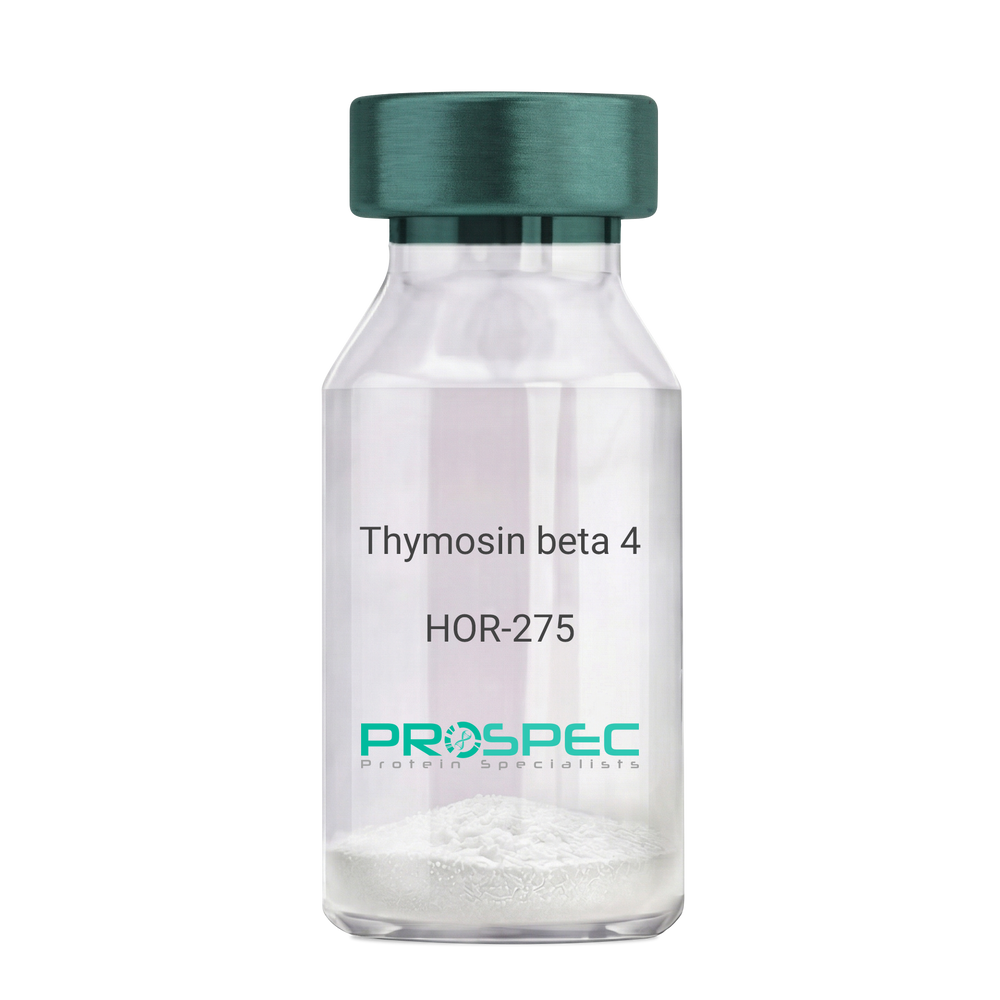
    Thymosin beta 4

    Description:

    Thymosin β4

    Thymosin beta-4. TB500, TB-500

    Product # :

    HOR-275

    Price :

    Quantity :

    Shipping Method :

    Room Temp Icon

    Shipped at Room temp

    Add To Cart

    More Info

    • description
    • formulation
    • purity
    • More Info

    Description

    Thymosin b4 is a 43 amino acid peptide which is regarded as the main intracellular G-actin sequestering peptide. It has a molecular weight of 4963.55 Da, and its molecular formula is: C212H350N56O78S1. Extracellular Thymosin b4 may contribute to physiological processes such as angiogenesis, wound healing, and regulation of inflammation.

    Formulation

    The protein (1mg/ml) was lyophilized with no additives.

    Purity

    Greater than 98.0% as determined by RP-HPLC.

    More Info

    • Introduction

      Thymosin is a hormone secreted from the thymus. Its primary function is to stimulate the production of T cells, which are an important part of the immune system. Thymosin also assists in the development of B cells to plasma cells to produce antibodies. The predominant form of thymosin, thymosin b4, is a member of a highly conserved family of actin monomer-sequestering proteins. b-thymosins are the primary regulators of unpolymerized actin, and are essential for maintaining the small cytoplasmic pool of free G-actin monomers required for rapid filament elongation and allowing for the flux of monomers between the thymosin-bound pool and F-actin.

    • Synonyms

      Thymosin beta-4. TB500, TB-500

    • Physical Appearance

      Sterile Filtered White lyophilized (freeze-dried) powder.

    • Stability

      Lyophilized Thymosin b4 although stable at room temperature for 3 weeks, should be stored desiccated below -18°C. Upon reconstitution T beta 4 should be stored at 4°C between 2-7 days and for future use below -18°C.For long term storage it is recommended to add a carrier protein (0.1% HSA or BSA).Please prevent freeze-thaw cycles.

    • Solubility

      It is recommended to reconstitute the lyophilized Thymosin beta-4 in sterile 18MΩ-cm H2O not less than 100 µg/ml, which can then be further diluted to other aqueous solutions.

    • Amino Acid Sequence

      Thymosin b4 has an a.a. sequence of Ac-Ser-Asp-Lys-Pro-Asp-Met-Ala-Glu-Ile-Glu-Lys-Phe-Asp-Lys-Ser-Lys-Leu-Lys-Lys-Thr-Glu-Thr-Gln-Glu-Lys-Asn-Pro-Leu-Pro-Ser-Lys-Glu-Thr-Ile-Glu-Gln-Glu-Lys-Gln-Ala-Gly-Glu-Ser-OH.

    ProSpec's products are furnished for LABORATORY RESEARCH USE ONLY. The product may not be used as drugs, agricultural or pesticidal products, food additives or household chemicals.

    Thymosin Beta 4
  • View Data Sheet

    Name :

    GAPDH Antibody

    Description:

    Glyceraldehyde-3-Phosphate Dehydrogenase, Mouse Anti Human

    G3PD, GAPD, MGC88685, GAPDH, Glyceraldehyde-3-Phosphate Dehydrogenase.

    Product # :

    ANT-005

    Price :

    Quantity :

    Shipping Method :

    Ice Icon

    Shipped with Ice Packs

    Add To Cart

    More Info

    • formulation
    • More Info

    Formulation

    1mg/ml containing PBS, pH-7.4, & 0.1% Sodium Azide.

    More Info

    • Introduction

      GAPDH is a catalytic enzyme normally known to play a role in glycolysis. GAPDH exists as a tetramer composed of 36-kDa subunits and has a range of intracellular functions. GAPDH catalyzes the reversible reduction of 1,3-bisphosphoglycerate to glyceraldehyde 3-phosphophate in the presence of NADPH. Besides functioning as a glycolytic enzyme in cytoplasm, GAPDH has function in intracellular processes such as membrane fusion, microtubule bundling, phosphotransferase activity, nuclear RNA export, DNA replication and DNA repair. GAPDH catalyzes a vital energy-yielding step in carbohydrate metabolism, the reversible oxidative phosphorylation of glyceraldehyde-3-phosphate in the presence of inorganic phosphate and nicotinamide adenine dinucleotide (NAD). The enzyme exists as a tetramer of identical chains.

    • Synonyms

      G3PD, GAPD, MGC88685, GAPDH, Glyceraldehyde-3-Phosphate Dehydrogenase.

    • Physical Appearance

      Sterile Filtered clear solution.

    • Immunogen

      Anti-human GAPDH mAb, is derived from hybridization of mouse F0 myeloma cells with spleen cells from BALB/c mice immunized with recombinant human GAPDH amino acids 1-335 purified from E. coli.

    • Ig Subclass

      Mouse IgG2b heavy chain and κ light chain.

    • Clone

      PAT8G4AT.

    • Applications

      GAPDH antibody has been tested by ELISA, Western blot and Immunofluorescence analysis to assure specificity and reactivity. Since application varies, however, each investigation should be titrated by the reagent to obtain optimal results. Recommended dilution range for Western blot analysis and Immunofluorescence is 1:500 ~ 10,000.
      Recommended starting dilution is 1:1,000.

    • Type

      Mouse Anti Human Monoclonal.

    • Storage Procedures

      For periods up to 1 month store at 4°C, for longer periods of time, store at -20°C. Prevent freeze thaw cycles.

    • Purification Method

      GAPDH antibody was purified from mouse ascitic fluids by protein-G affinity chromatography.

    ProSpec's products are furnished for LABORATORY RESEARCH USE ONLY. The product may not be used as drugs, agricultural or pesticidal products, food additives or household chemicals.

    Gapdh Antibody
  • View Data Sheet

    Name :

    MIF Rat

    Description:

    Macrophage Migration Inhibitory Factor Rat Recombinant

    Macrophage migration inhibitory factor, MIF, Glutathione-binding 13 kDa protein, L-dopachrome isomerase, L-dopachrome tautomerase, Phenylpyruvate tautomerase.

    Product # :

    CYT-193

    Price :

    Quantity :

    Shipping Method :

    Room Temp Icon

    Shipped at Room temp

    Add To Cart

    More Info

    • description
    • source
    • formulation
    • purity
    • More Info

    Description

    MIF Rat Recombinant produced in E.Coli is a single, non-glycosylated polypeptide chain containing 115 amino acids and having a molecular mass of 12.5kDa. The MIF is purified by proprietary chromatographic techniques.

    Source

    Escherichia Coli.

    Formulation

    Lyophilized from a 0.2µm filtered concentrated solution in 1×PBS, pH 7.4 and 5% trehalose.

    Purity

    Greater than 95.0% as determined by:
    (a) Analysis by RP-HPLC.
    (b) Analysis by SDS-PAGE.

    More Info

    • Introduction

      The cytokine Macrophage migration inhibitory factor (MIF) has been identified to be secreted by the pituitary gland and the monocyte/macrophage and to play an important role in endotoxic shock. MIF has the unique property of being released from macrophages and T cells in response to physiological concentrations of glucocorticoids. The secretion of MIF is tightly regulated and decreases at high, anti-inflammatory steroid concentration.

    • Synonyms

      Macrophage migration inhibitory factor, MIF, Glutathione-binding 13 kDa protein, L-dopachrome isomerase, L-dopachrome tautomerase, Phenylpyruvate tautomerase.

    • Physical Appearance

      Sterile Filtered White lyophilized (freeze-dried) powder.

    • Stability

      Lyophilized MIF although stable at room temperature for 3 weeks, should be stored desiccated below -18°C. Upon reconstitution MIF should be stored at 4°C between 2-7 days and for future use below -18°C. For long term storage it is recommended to add a carrier protein (0.1% HSA or BSA).Please prevent freeze-thaw cycles.

    • Solubility

      It is recommended to reconstitute the lyophilized MIF in sterile 18MΩ-cm H2O not less than 100µg/ml, which can then be further diluted to other aqueous solutions.

    • Amino Acid Sequence

      MPMFIVNTNV PRASVPEGFL SELTQQLAQA TGKPAQYIAV HVVPDQLMTF SGTSDPCALC SLHSIGKIGG AQNRNYSKLL CGLLSDRLHI SPDRVYINYY DMNAANVGWN GSTFA.

    ProSpec's products are furnished for LABORATORY RESEARCH USE ONLY. The product may not be used as drugs, agricultural or pesticidal products, food additives or household chemicals.

    Mif Rat
  • View Data Sheet

    Name :

    GARS Antibody

    Description:

    Glycyl-TRNA Synthetase, Mouse Anti Human

    Glycine--tRNA ligase, Diadenosine tetraphosphate synthetase, AP-4-A synthetase, Glycyl-tRNA synthetase, GlyRS, GARS, CMT2D, DSMAV, HMN5, SMAD1.

    Product # :

    ANT-544

    Price :

    Quantity :

    Shipping Method :

    Ice Icon

    Shipped with Ice Packs

    Add To Cart

    More Info

    • formulation
    • More Info

    Formulation

    1mg/ml containing PBS, pH-7.4, 10% Glycerol and 0.02% Sodium Azide.

    More Info

    • Introduction

      GARS is an (alpha)2 dimer which is a member of the class II family of tRNA synthetases. GARS is a glycyl-tRNA synthetase, one of the aminoacyl-tRNA synthetases which charge tRNAs with their cognate amino acids. GARS catalyzes the attachment of glycine to tRNA(Gly). In addition, GARS is able to produce diadenosine tetraphosphate (Ap4A), which is a universal pleiotropic signaling molecule required for cell regulation pathways, by direct condensation of two ATPs. GARS has been demonstrated to be a target of autoantibodies in the human autoimmune diseases, polymyositis or dermatomyositis.

    • Synonyms

      Glycine--tRNA ligase, Diadenosine tetraphosphate synthetase, AP-4-A synthetase, Glycyl-tRNA synthetase, GlyRS, GARS, CMT2D, DSMAV, HMN5, SMAD1.

    • Physical Appearance

      Sterile filtered colorless solution.

    • Immunogen

      Anti-human GARS mAb, is derived from hybridization of mouse F0 myeloma cells with spleen cells from BALB/c mice immunized with recombinant human GARS amino acids 43-289 purified from E. coli.

    • Ig Subclass

      Mouse IgG1 heavy chain and k light chain.

    • Clone

      PAT4E10AT.

    • Applications

      GARS antibody has been tested by ELISA, Western blot analysis to assure specificity and reactivity. Since application varies, however, each investigation should be titrated by the reagent to obtain optimal results. Recommended starting dilution is 1:500.

    • Type

      Mouse Anti Human Monoclonal.

    • Storage Procedures

      For periods up to 1 month store at 4°C, for longer periods of time, store at -20°C. Prevent freeze thaw cycles.

    • Purification Method

      GARS antibody was purified from mouse ascitic fluids by protein-A affinity chromatography.

    ProSpec's products are furnished for LABORATORY RESEARCH USE ONLY. The product may not be used as drugs, agricultural or pesticidal products, food additives or household chemicals.

    Gars Antibody
  • View Data Sheet

    Name :

    HSPB8 Human, His

    Description:

    Heat Shock 22kDa Protein 8 Human Recombinant, His Tag

    HSPB8, H11, HMN2, CMT2L, DHMN2, E2IG1, HMN2A, HSP22, Heat shock protein beta-8, Alpha-crystallin C chain, Small stress protein-like protein HSP22, E2-induced gene 1 protein, Protein kinase H11, CRYAC.

    Product # :

    HSP-031

    Price :

    Quantity :

    Shipping Method :

    Ice Icon

    Shipped with Ice Packs

    Add To Cart

    More Info

    • description
    • source
    • formulation
    • purity
    • More Info

    Description

    HSPB8 Human Recombinant produced in E.Coli is a single, non-glycosylated polypeptide chain containing 216 amino acids (1-196 a.a.) and having a molecular mass of 23.7kDa. The HSPB8 is fused to a 20 amino acid His Tag at N-terminus and purified by conventional chromatography.

    Source

    Escherichia Coli.

    Formulation

    The HSPB8 protein solution contains 20mM Tris-HCl pH-8, 100mM NaCl, and 10% glycerol.

    Purity

    Greater than 95.0% as determined by SDS-PAGE.

    More Info

    • Introduction

      HSPB8 is part of the superfamily of small heat-shock proteins containing a conservative alpha-crystallin domain at the C-terminal part of the molecule. HSPB8 is induced by estrogen in estrogen receptor-positive breast cancer cells. HSPB8 protein functions as a chaperone in association with BAG3, a stimulator of macroautophagy. HSPB8 participates in the regulation of cell proliferation, apoptosis, and carcinogenesis. Mutations in HSPB8 gene have been related with different neuromuscular diseases, including Charcot-Marie-Tooth disease.

    • Synonyms

      HSPB8, H11, HMN2, CMT2L, DHMN2, E2IG1, HMN2A, HSP22, Heat shock protein beta-8, Alpha-crystallin C chain, Small stress protein-like protein HSP22, E2-induced gene 1 protein, Protein kinase H11, CRYAC.

    • Physical Appearance

      Sterile Filtered colorless solution.

    • Stability

      Store at 4°C if entire vial will be used within 2-4 weeks. Store, frozen at -20°C for longer periods of time. For long term storage it is recommended to add a carrier protein (0.1% HSA or BSA).Avoid multiple freeze-thaw cycles.

    • Amino Acid Sequence

      MGSSHHHHHH SSGLVPRGSH MADGQMPFSC HYPSRLRRDP FRDSPLSSRL LDDGFGMDPF PDDLTASWPD WALPRLSSAW PGTLRSGMVP RGPTATARFG VPAEGRTPPP FPGEPWKVCV NVHSFKPEEL MVKTKDGYVE VSGKHEEKQQ EGGIVSKNFT KKIQLPAEVD PVTVFASLSP EGLLIIEAPQ VPPYSTFGES SFNNELPQDS QEVTCT.

    ProSpec's products are furnished for LABORATORY RESEARCH USE ONLY. The product may not be used as drugs, agricultural or pesticidal products, food additives or household chemicals.

    Hspb8 Human His
  • View Data Sheet

    Name :

    ECSIT Human

    Description:

    ECSIT homolog Human Recombinant

    ECSIT Homolog (Drosophila), Evolutionarily Conserved Signaling Intermediate In Toll Pathway Mitochondrial, Likely Ortholog Of Mouse Signaling Intermediate In Toll Pathway Evolutionarily Conserved, Protein SITPEC.

    Product # :

    PRO-1241

    Price :

    Quantity :

    Shipping Method :

    Ice Icon

    Shipped with Ice Packs

    Add To Cart

    More Info

    • description
    • source
    • formulation
    • purity
    • More Info

    Description

    ECSIT Human Recombinant produced in E. coli is a single polypeptide chain containing 222 amino acids (19-217) and having a molecular mass of 24.6 kDa.ECSIT is fused to a 23 amino acid His-tag at N-terminus & purified by proprietary chromatographic techniques.

    Source

    E.coli.

    Formulation

    The ECSIT solution contains 20mM Tris-HCl buffer (pH 8.0), 0.1M NaCl, 1mM DTT and 10% glycerol.

    Purity

    Greater than 90% as determined by SDS-PAGE.

    More Info

    • Introduction

      ECSIT homolog (ECSIT) is a ubiquitously expressed protein which has a vital role as an adaptor protein in the cytosolic signal transduction cascade events triggered by Toll receptor activation. ECSIT promotes proteolytic activation of MAP3K1. ECSIT is also involved in the BMP signaling pathway. ECSIT is essential for normal embryonic development. ECSIT was originally classified as a cytoplasmic protein interacting specifically with TNF receptor associated factor (TRAF)-6 in the TLR pathway. ECSIT gene knockdown results in gravely impaired complex I assembly and disrupted mitochondrial function.

    • Synonyms

      ECSIT Homolog (Drosophila), Evolutionarily Conserved Signaling Intermediate In Toll Pathway Mitochondrial, Likely Ortholog Of Mouse Signaling Intermediate In Toll Pathway Evolutionarily Conserved, Protein SITPEC.

    • Physical Appearance

      Sterile Filtered colorless solution.

    • Stability

      Store at 4°C if entire vial will be used within 2-4 weeks. Store, frozen at -20°C for longer periods of time. For long term storage it is recommended to add a carrier protein (0.1% HSA or BSA).Avoid multiple freeze-thaw cycles.

    • Amino Acid Sequence

      MGSSHHHHHH SSGLVPRGSH MGSGTCGAAL TGTSISQVPL PKDSTGAADP PQPHIVGIQS PDQQAALARH NPARPVFVEG PFSLWLRNKC VYYHILRADL LPPEEREVEE TPEEWNLYYP MQLDLEYVRS GWDNYEFDIN EVEEGPVFAM CMAGAHDQAT MAKWIQGLQE TNPTLAQIPV VFRLAGSTRE LQTSSAGLEE PPLPEDHQEE DDNLQRQQQG QS

    ProSpec's products are furnished for LABORATORY RESEARCH USE ONLY. The product may not be used as drugs, agricultural or pesticidal products, food additives or household chemicals.

    Ecsit Human
  • View Data Sheet

    Name :

    C19ORF80 Rat

    Description:

    Chromosome 19 Open Reading Frame 80 Rat Recombinant

    Betatrophin, Angiopoietin-like protein 8, Lipasin, C19orf80, Angptl8, RIFL, TD26, PRO1185, PVPA599.

    Product # :

    PRO-2024

    Price :

    Quantity :

    Shipping Method :

    Room Temp Icon

    Shipped at Room temp

    Add To Cart

    More Info

    • description
    • source
    • formulation
    • purity
    • More Info

    Description

    C19ORF80 Rat Recombinant produced in E. coli is a polypeptide chain containing 193 amino acids and having a total molecular mass of 22.0 kDa. C19ORF80 has a N-Terminal His-tag (10 AA residue).

    Source

    Escherichia Coli.

    Formulation

    Filtered (0.4 µm) and lyophilized from a 0.5mg/ml solution containing 0.03M Acetate buffer pH 4.0.

    Purity

    Greater than 95.0% as determined by SDS-PAGE.

    More Info

    • Introduction

      Chromosome 19 Open Reading Frame 80 (C19ORF80) is a significant new regulator of lipid metabolism which regulates serum triglyceride levels, possibly by promoting ANGPTL3 cleavage. C19ORF80 belongs to the ANGPTL protein family. C19ORF80 is a hormone which specifically promotes pancreatic beta cell proliferation and beta cell mass expansion, thus improving glucose tolerance. C19ORF80 is mainly expressed in the liver; it is also expressed in adipose tissues. C19ORF80 is expressed in response to food intake and stimulated by insulin.

    • Synonyms

      Betatrophin, Angiopoietin-like protein 8, Lipasin, C19orf80, Angptl8, RIFL, TD26, PRO1185, PVPA599.

    • Physical Appearance

      Filtered White lyophilized (freeze-dried) powder.

    • Stability

      Store lyophilized protein at -20°C. Aliquot the product after reconstitution to avoid repeated freezing/thawing cycles. Reconstituted protein can be stored at 4°C for a limited period of time; it does not show any change after two weeks at 4°C.

    • Solubility

      It is recommended to add 0.1M Acetate buffer pH-4 to prepare a working stock solution of approximately 0.5mg/ml and let the lyophilized pellet dissolve completely. For conversion into higher pH value, we recommend intensive dilution by relevant buffer to a concentration of 10µg/ml. In higher concentrations the solubility of this antigen is limited. C19ORF80 is not sterile! Please filter the product by an appropriate sterile filter before using it in the cell culture.

    • Amino Acid Sequence

      MKHHHHHHAS VRPAPVAPLG GPEPAQYEEL TLLFHGALQL GQALNGVYKA TEARLTEAGR NLGLFDQALE FLGREVNQGR DATRELRTSL SEIQAEEDTL HLRAEATARS LREVARAQHA LRNSVRRLQV QLRGAWLGQA HQEFENLKDR ADKQNHLLWA LTGHVQRQQR EMAEQQQWLR QIQQRLHMAA LPA

    ProSpec's products are furnished for LABORATORY RESEARCH USE ONLY. The product may not be used as drugs, agricultural or pesticidal products, food additives or household chemicals.

    C19Orf80 Rat
  • View Data Sheet

    Name :

    CETN1 Human

    Description:

    Centrin-1 Human Recombinant

    Centrin EF-hand protein 1, calcium binding protein, Caltractin isoform 2, CETN.

    Product # :

    PRO-1104

    Price :

    Quantity :

    Shipping Method :

    Ice Icon

    Shipped with Ice Packs

    Add To Cart

    More Info

    • description
    • source
    • formulation
    • purity
    • More Info

    Description

    CETN1 Human Recombinant produced E. coli is a single polypeptide chain containing 196 amino acids (1-172) and having a molecular mass of 22.1kDa.CETN1 is fused to a 24 amino acid His-tag at N-terminus & purified by proprietary chromatographic techniques.

    Source

    E.coli.

    Formulation

    The CETN1 solution (0.5mg/1ml) contains 20mM Tris-HCl buffer (pH 8.0), 0.1M NaCl, 1mM DTT and 10% glycerol.

    Purity

    Greater than 90% as determined by SDS-PAGE.

    More Info

    • Introduction

      CETN1 is an EF-hand type Ca2+-binding protein. CETN1 is localized to the centrosome of interphase cells, and reorganizes the region of the spindle poles during mitosis, reflecting the dynamic behavior of the centrosome during the cell cycle. CETN1 has a vital part in the determination of centrosome position and isolation, and in the course of microtubule separating.

    • Synonyms

      Centrin EF-hand protein 1, calcium binding protein, Caltractin isoform 2, CETN.

    • Physical Appearance

      Sterile Filtered colorless solution.

    • Stability

      Store at 4°C if entire vial will be used within 2-4 weeks. Store, frozen at -20°C for longer periods of time. For long term storage it is recommended to add a carrier protein (0.1% HSA or BSA).Avoid multiple freeze-thaw cycles.

    • Amino Acid Sequence

      MGSSHHHHHH SSGLVPRGSH MGSHMASGFK KPSAASTGQK RKVAPKPELT EDQKQEVREA FDLFDVDGSG TIDAKELKVA MRALGFEPRK EEMKKMISEV DREGTGKISF NDFLAVMTQK MSEKDTKEEI LKAFRLFDDD ETGKISFKNL KRVANELGEN LTDEELQEMI DEADRDGDGE VNEEEFLRIM KKTSLY

    ProSpec's products are furnished for LABORATORY RESEARCH USE ONLY. The product may not be used as drugs, agricultural or pesticidal products, food additives or household chemicals.

    Cetn1 Human
  • View Data Sheet

    Name :

    LIF Human, GST

    Description:

    Leukemia Inhibitory Factor, GST tag Human Recombinant

    D factor, MLPLI, HILDA, Emfilermin, Leukemia Inhibitory factor, Differentiation-stimulating factor, Melanoma-derived LPL inhibitor.

    Product # :

    CYT-001

    Price :

    Quantity :

    Shipping Method :

    Ice Icon

    Shipped with Ice Packs

    Add To Cart

    More Info

    • description
    • source
    • formulation
    • purity
    • More Info

    Description

    LIF produced in E.Coli is a single, non-glycosylated polypeptide chain containing 415 amino acids (23-202a.a.) and having a molecular mass of 47.2kDa.LIF is fused to a 236 amino acid His-GST tag at N-terminus & purified by proprietary chromatographic techniques.

    Source

    Escherichia Coli.

    Formulation

    The LIF GST protein solution (1mg/1ml) is formulated in 20mM Tris-HCl buffer (pH 8.0) 1mM DTT, 50mM NaCl and 20% glycerol.

    Purity

    Greater than 90% as determined by SDS-PAGE.

    More Info

    • Introduction

      Leukemia inhibitory factor, is a pleiotropic cytokine which is expressed by numerous cells including activated T lymphocytes, monocytes, mast cells and neuronal cells. LIF takes part in the induction of hematopoietic differentiation in normal and myeloid leukemia cells, induction of neuronal cell differentiation, regulator of mesenchymal to epithelial conversion during kidney development, and is a key player in immune tolerance at the maternal-fetal interface.

    • Synonyms

      D factor, MLPLI, HILDA, Emfilermin, Leukemia Inhibitory factor, Differentiation-stimulating factor, Melanoma-derived LPL inhibitor.

    • Physical Appearance

      Sterile Filtered clear solution.

    • Stability

      Store at 4°C if entire vial will be used within 2-4 weeks. Store, frozen at -20°C for longer periods of time.Please avoid freeze thaw cycles.

    • Amino Acid Sequence

      MHHHHHHMSP ILGYWKIKGL VQPTRLLLEY LEEKYEEHLY ERDEGDKWRN KKFELGLEFP NLPYYIDGDV KLTQSMAIIR YIADKHNMLG GCPKERAEIS MLEGAVLDIR YGVSRIAYSK DFETLKVDFL SKLPEMLKMF EDRLCHKTYL NGDHVTHPDF MLYDALDVVL YMDPMCLDAF PKLVCFKKRI EAIPQIDKYL KSSKYIAWPL QGWQATFGGG DHPPKSDLVP RGSHMSPLPI TPVNATCAIR HPCHNNLMNQ IRSQLAQLNG SANALFILYY TAQGEPFPNN LDKLCGPNVT DFPPFHANGT EKAKLVELYR IVVYLGTSLG NITRDQKILN PSALSLHSKL NATADILRGL LSNVLCRLCS KYHVGHVDVT YGPDTSGKDV FQKKKLGCQL LGKYKQIIAV LAQAF

    ProSpec's products are furnished for LABORATORY RESEARCH USE ONLY. The product may not be used as drugs, agricultural or pesticidal products, food additives or household chemicals.

    Lif Human Gst
  • View Data Sheet

    Name :

    LIFR Mouse

    Description:

    Leukemia Inhibitory Factor Receptor Alpha Mouse Recombinant

    Leukemia inhibitory factor receptor, LIF receptor, LIF-R, D-factor/LIF receptor, CD118, CD antigen, leukemia inhibitory factor receptor isoform 1 precursor, Lifr.

    Product # :

    CYT-1170

    Price :

    Quantity :

    Shipping Method :

    Ice Icon

    Shipped with Ice Packs

    Add To Cart

    More Info

    • description
    • source
    • formulation
    • purity
    • biological activity
    • More Info

    Description

    LIFR Mouse Recombinant produced in Baculovirus is a single glycosylated polypeptide chain containing 794 amino acids (44-828 aa) and having a molecular mass of 89.6kDa.LIFR is fused to a 9 amino acid His tag at C-terminus and purified by proprietary chromatographic techniques.

    Source

    Sf9, Baculovirus cells.

    Formulation

    LIFR protein (0.25mg/ml) contains 10% glycerol and Phosphate-Buffered Saline (pH 7.4).

    Purity

    Greater than 90.0% as determined by SDS-PAGE.

    Biological Activity

    Measured by its ability to inhibit proliferation using TF-1 human erythroleukemic cells. The ED50 range ≤ 1ug/ml with Mouse LIF.

    More Info

    • Introduction

      Leukemia Inhibitory Factor Receptor Alpha or LIFR is a protein, part of the Interleukin-6 receptor group of proteins. As such, LIFR acts as a mediator for various proteins (IL-6, IL-11, IL-27, Oncostatin M etc). LIFR has many functions as a cytokine, he has an affect on the cell proliferation, differentiation and survival in the different stages of life. In different types of breast cancer LIFR is down regulated, and as such, can be used as a prognostic tool.

    • Synonyms

      Leukemia inhibitory factor receptor, LIF receptor, LIF-R, D-factor/LIF receptor, CD118, CD antigen, leukemia inhibitory factor receptor isoform 1 precursor, Lifr.

    • Physical Appearance

      Sterile Filtered colorless solution.

    • Stability

      Store at 4°C if entire vial will be used within 2-4 weeks. Store, frozen at -20°C for longer periods of time. For long term storage it is recommended to add a carrier protein (0.1% HSA or BSA).Avoid multiple freeze-thaw cycles.

    • Amino Acid Sequence

      ADPLKRGVQD LKCTTNNMRV WDCTWPAPLG VSPGTVKDIC IKDRFHSCHP LETTNVKIPA LSPGDHEVTI NYLNGFQSKF TLNEKDVSLI PETPEILDLS ADFFTSSLLL KWNDRGSALP HPSNATWEIK VLQNPRTEPV ALVLLNTMLS GKDTVQHWNW TSDLPLQCAT HSVSIRWHID SPHFSGYKEW SDWSPLKNIS WIRNTETNVF PQDKVVLAGS NMTICCMSPT KVLSGQIGNT LRPLIHLYGQ TVAIHILNIP VSENSGTNII FITDDDVYGT VVFAGYPPDV PQKLSCETHD LKEIICSWNP GRITGLVGPR NTEYTLFESI SGKSAVFHRI EGLTNETYRL GVQMHPGQEI HNFTLTGRNP LGQAQSAVVI NVTERVAPHD PTSLKVKDIN STVVTFSWYL PGNFTKINLL CQIEICKANS KKEVRNATIR GAEDSTYHVA VDKLNPYTAY TFRVRCSSKT FWKWSRWSDE KRHLTTEATP SKGPDTWREW SSDGKNLIVY WKPLPINEAN GKILSYNVSC SLNEETQSVL EIFDPQHRAE IQLSKNDYII SVVARNSAGS SPPSKIASME IPNDDITVEQ AVGLGNRIFL TWRHDPNMTC DYVIKWCNSS RSEPCLLDWR KVPSNSTETV IESDQFQPGV RYNFYLYGCT NQGYQLLRSI IGYVEELAPI VAPNFTVEDT SADSILVKWD DIPVEELRGF LRGYLFYFQK GERDTPKTRS LEPHHSDIKL KNITDISQKT LRIADLQGKT SYHLVLRAYT HGGLGPEKSM FVVTKENSHH HHHH.

    ProSpec's products are furnished for LABORATORY RESEARCH USE ONLY. The product may not be used as drugs, agricultural or pesticidal products, food additives or household chemicals.

    Lifr Mouse
  • View Data Sheet

    Name :

    CNTF Human, His Active

    Description:

    Ciliary Neurotrophic Factor Human Recombinant, His Tag Active

    Ciliary neurotrophic factor, CNTF, HCNTF.

    Product # :

    CYT-909

    Price :

    Quantity :

    Shipping Method :

    Ice Icon

    Shipped with Ice Packs

    Add To Cart

    More Info

    • description
    • source
    • formulation
    • purity
    • biological activity
    • More Info

    Description

    CNTF Human Recombinant produced in E.Coli is a single, non-glycosylated polypeptide chain containing 220 amino acids (1-200 a.a) and having a molecular mass of 25kDa. CNTF is fused to a 20 amino acid His-tag at N-terminus & purified by proprietary chromatographic techniques.

    Source

    Escherichia Coli.

    Formulation

    CNTF protein solution (1mg/ml) containing 20 mM Tris-HCl buffer (pH 8.5), 1 mM DTT,30% Glycerol and 0.2M NaCl.

    Purity

    Greater than 95.0% as determined by SDS-PAGE.

    Biological Activity

    Measured in a cell proliferation assay using TF-1 human erythroleukemic cell. The ED50 for this effects is less or equal to 1 ug/ml.

    More Info

    • Introduction

      CNTF is a polypeptide hormone whose actions appear to be restricted to the nervous system where it promotes neurotransmitter synthesis and neurite outgrowth in certain neuronal populations. The protein is a potent survival factor for neurons and oligodendrocytes and may be relevant in reducing tissue destruction during inflammatory attacks. A mutation in this gene, which results in aberrant splicing, leads to ciliary neurotrophic factor deficiency, but this phenotype is not causally related to neurologic disease. In addition to the predominant monocistronic transcript originating from this locus, the gene is also co-transcribed with the upstream ZFP91 gene. Co-transcription from the two loci results in a transcript that contains a complete coding region for the zinc finger protein but lacks a complete coding region for ciliary neurotrophic factor.
      CNTF is a survival factor for various neuronal cell types. Seems to prevent the degeneration of motor axons after axotomy.

    • Synonyms

      Ciliary neurotrophic factor, CNTF, HCNTF.

    • Physical Appearance

      Sterile Filtered clear solution.

    • Stability

      Store at 4°C if entire vial will be used within 2-4 weeks. Store, frozen at -20°C for longer periods of time. For long term storage it is recommended to add a carrier protein (0.1% HSA or BSA).Avoid multiple freeze-thaw cycles.

    • Amino Acid Sequence

      MGSSHHHHHH SSGLVPRGSH MAFTEHSPLT PHRRDLCSRS IWLARKIRSD LTALTESYVK HQGLNKNINL DSADGMPVAS TDQWSELTEA ERLQENLQAY RTFHVLLARL LEDQQVHFTP TEGDFHQAIH TLLLQVAAFA YQIEELMILL EYKIPRNEAD GMPINVGDGG LFEKKLWGLK VLQELSQWTV RSIHDLRFIS SHQTGIPARG SHYIANNKKM.

    • Background

      What is the molecular weight/Mw of CNTF Protein?
      CNTF Protein has a total Mw of 25kDa.

      What is the source or expression system of CNTF Protein?
      Escherichia Coli.

      What is the Purity of CNTF Protein?
      CNTF Protein is >95% pure as determined by SDS-PAGE.

      What is the Biological Activity of CNTF Protein?
      Measured in a cell proliferation assay using TF-1 human erythroleukemic cell. The ED50 for this effects is less or equal to 1 ug/ml.

      What is the amino acid sequence of CNTF Protein?
      MGSSHHHHHH SSGLVPRGSH MAFTEHSPLT PHRRDLCSRS IWLARKIRSD LTALTESYVK HQGLNKNINL DSADGMPVAS TDQWSELTEA ERLQENLQAY RTFHVLLARL LEDQQVHFTP TEGDFHQAIH TLLLQVAAFA YQIEELMILL EYKIPRNEAD GMPINVGDGG LFEKKLWGLK VLQELSQWTV RSIHDLRFIS SHQTGIPARG SHYIANNKKM.

      What applications can CNTF Protein be used in?
      CNTF Protein can probably be used in western blot, ELISA and Lateral Flow.

      What is the endotoxin level for CNTF Protein?
      The endotoxin level is minimal, CNTF Protein was purified using conventional chromatography techniques.

    ProSpec's products are furnished for LABORATORY RESEARCH USE ONLY. The product may not be used as drugs, agricultural or pesticidal products, food additives or household chemicals.

    Cntf Human His Active
  • View Data Sheet

    Name :

    Histrelin

    Description:

    Histrelin

    Product # :

    HOR-244

    Price :

    Quantity :

    Shipping Method :

    Room Temp Icon

    Shipped at Room temp

    Add To Cart

    More Info

    • description
    • formulation
    • purity
    • More Info

    Description

    Histrelin has a molecular formula of C66H86N18O12, a.a. sequence of Pyr-His-Trp-Ser-Tyr-D-His(Bzl)-Leu-Arg-Pro-NHEt and having a Mw of 1323.32 Dalton.

    Formulation

    The Histrelin peptide was lyophilized with no additives.

    Purity

    Greater than 99.0% as determined by(a) Analysis by RP-HPLC.
    (b) Analysis by SDS-PAGE.

    More Info

    • Introduction

      Histrelin is a hormone similar to one normally released from the hypothalamus gland in the brain. Histrelin works by decreasing the amount of estrogen and testosterone in the blood. Suppressing estrogen can cause thinning of the bones or slowing of their growth. Histrelin acetate is a potent LHRH agonist which stimulates LH and FSH release and inhibits the actions of sex steroids on the male and female reproductive tracts. After a transient increase, continuous administration results in down regulation of LH and FSH levels followed by a suppression of ovarian and testicular steroid biosynthesis. Histrelin potency in vivo and in vitro is similar to that of the D-Trp6-containing analog. Especially because of its high water solubility and greater lipophilic character, it appears promising for clinical application.

    • Physical Appearance

      Sterile Filtered White lyophilized (freeze-dried) powder.

    • Stability

      Lyophilized Histrelin although stable at room temperature for 3 weeks, should be stored desiccated below -18°C. Upon reconstitution Histrelin should be stored at 4°C between 2-7 days and for future use below -18°C. For long term storage it is recommended to add a carrier protein (0.1% HSA or BSA).Please prevent freeze-thaw cycles.

    • Solubility

      It is recommended to reconstitute the lyophilized Histrelin in sterile 18MΩ-cm H2O not less than 100 µg/ml, which can then be further diluted to other aqueous solutions.

    ProSpec's products are furnished for LABORATORY RESEARCH USE ONLY. The product may not be used as drugs, agricultural or pesticidal products, food additives or household chemicals.

    Histrelin
  • View Data Sheet

    Name :

    HPRT PAT1D9AT Antibody

    Description:

    Hypoxanthine-Guanine Phosphoribosyltransferase Clone PAT1D9AT, Mouse Anti Human

    Hypoxanthine-Guanine Phosphoribosyltransferase , EC 2.4.2.8, HGPRT, HGPRTase, HPRT, HPRT1.

    Product # :

    ANT-727

    Price :

    Quantity :

    Shipping Method :

    Ice Icon

    Shipped with Ice Packs

    Add To Cart

    More Info

    • formulation
    • More Info

    Formulation

    1mg/ml containing PBS, pH-7.4, 10% Glycerol and 0.02% Sodium Azide.

    More Info

    • Introduction

      HPRT1 has a main part in the generation of purine nucleotides through the purine salvage pathway. HPRT1 primarily functions to salvage purines from degraded DNA to renewed purine synthesis. Therefore, it performs as a catalyst in the reaction between guanine and phosphoribosyl pyrophosphate to form GMP.

    • Synonyms

      Hypoxanthine-Guanine Phosphoribosyltransferase , EC 2.4.2.8, HGPRT, HGPRTase, HPRT, HPRT1.

    • Physical Appearance

      Sterile filtered colorless solution.

    • Immunogen

      Anti-human HPRT mAb, is derived from hybridization of mouse F0 myeloma cells with spleen cells from BALB/c mice immunized with recombinant human HPRT amino acids 1-218 purified from E. coli.

    • Ig Subclass

      Mouse IgG2b heavy chain and κ light chain.

    • Clone

      PAT1D9AT.

    • Applications

      HPRT antibody has been tested by ELISA, Western blot analysis, ICC/IF and Flow cytometry to assure specificity and reactivity. Since application varies, however, each investigation should be titrated by the reagent to obtain optimal results.

    • Type

      Mouse Anti Human Monoclonal.

    • Storage Procedures

      For periods up to 1 month store at 4°C, for longer periods of time, store at -20°C. Prevent freeze thaw cycles.

    • Purification Method

      HPRT antibody was purified from mouse ascitic fluids by protein-A affinity chromatography.

    ProSpec's products are furnished for LABORATORY RESEARCH USE ONLY. The product may not be used as drugs, agricultural or pesticidal products, food additives or household chemicals.

    Hprt1 Antibody
  • View Data Sheet

    Name :

    PA2G4 Antibody

    Description:

    Proliferation-associated protein 2G4, Mouse Anti Human

    Proliferation-associated protein 2G4, Cell cycle protein p38-2G4 homolog, hG4-1, ErbB3-binding protein 1, PA2G4, EBP1, p38-2G4.

    Product # :

    ANT-655

    Price :

    Quantity :

    Shipping Method :

    Ice Icon

    Shipped with Ice Packs

    Add To Cart

    More Info

    • formulation
    • More Info

    Formulation

    1mg/ml containing PBS, pH-7.4, 10% Glycerol and 0.02% Sodium Azide.

    More Info

    • Introduction

      PA2G4 belongs to the peptidase M24C family and functions as an RNA-binding protein involved in cellular proliferation and differentiation processes. PA2G4 is a component of pre-ribosomal ribonucleoprotein complexes, participating in ribosome assembly and regulating the later steps of rRNA processing. Also, PA2G4 interacts with ErbB-3 and may function as a modulator of the ErbB-3 mediated signal transduction pathway by regulating the effects of Neuregulin-1. Furthermore, PA2G4 is a transcriptional co-repressor of androgen receptor-regulated genes and other cell cycle regulatory genes through its interactions with histone deacetylases. PA2G4 is implicated in growth inhibition and the induction of differentiation of human cancer cells. In addition, PA2G4 mediates cap-independent translation of specific viral IRESs (internal ribosomal entry site). PA2G4 associates with 28S, 18S and 5.8S mature rRNAs, several rRNA precursors and probably U3 small nucleolar RNA.

    • Synonyms

      Proliferation-associated protein 2G4, Cell cycle protein p38-2G4 homolog, hG4-1, ErbB3-binding protein 1, PA2G4, EBP1, p38-2G4.

    • Physical Appearance

      Sterile filtered colorless solution.

    • Immunogen

      Anti-human PA2G4 mAb, is derived from hybridization of mouse F0 myeloma cells with spleen cells from BALB/c mice immunized with a recombinant human PA2G4 protein 1-394 amino acids purified from E. coli.

    • Ig Subclass

      Mouse IgG1 heavy chain and k light chain.

    • Clone

      PAT5E7AT.

    • Applications

      The antibody has been tested by ELISA, Western blot analysis, Flow cytometry and ICC/IF to assure specificity and reactivity. Since application varies, however, each investigation should be titrated by the reagent to obtain optimal results.

    • Type

      Mouse Anti Human Monoclonal.

    • Storage Procedures

      For periods up to 1 month store at 4°C, for longer periods of time, store at -20°C. Prevent freeze thaw cycles.

    • Purification Method

      PA2G4 antibody was purified from mouse ascitic fluids by protein-A affinity chromatography.

    ProSpec's products are furnished for LABORATORY RESEARCH USE ONLY. The product may not be used as drugs, agricultural or pesticidal products, food additives or household chemicals.

    Pa2G4 Antibody
  • View Data Sheet

    Name :

    TOLLIP Antibody

    Description:

    Toll-interacting protein, Mouse Anti Human

    TOLLIP, Toll-interacting protein, FLJ33531, IL-1RAcPIP.

    Product # :

    ANT-430

    Price :

    Quantity :

    Shipping Method :

    Ice Icon

    Shipped with Ice Packs

    Add To Cart

    More Info

    • formulation
    • More Info

    Formulation

    1mg/ml containing PBS, pH-7.4, & 0.1% Sodium Azide.

    More Info

    • Introduction

      TOLLIP is a ubiquitin-binding protein that interacts with several Toll-like receptor (TLR) signaling cascade components. TOLLIP regulates inflammatory signaling and is involved in interleukin-1 receptor trafficking and in the turnover of IL1R-associated kinase.

    • Synonyms

      TOLLIP, Toll-interacting protein, FLJ33531, IL-1RAcPIP.

    • Immunogen

      Anti-human TOLLIP mAb, is derived from hybridization of mouse F0 myeloma cells with spleen cells from BALB/c mice immunized with recombinant human TOLLIP amino acids 61-274 purified from E. coli.

    • Ig Subclass

      Mouse IgG2a heavy chain and κ light chain.

    • Clone

      Pk1B17AT.

    • Applications

      TOLLIP antibody has been tested by ELISA and Western blot analysis to assure specificity and reactivity. Since application varies, however, each investigation should be titrated by the reagent to obtain optimal results. Recommended dilution range for Western blot analysis is 1:500 ~ 1,000. Recommended starting dilution is 1:500.

    • Type

      Mouse Anti Human Monoclonal.

    • Storage Procedures

      For periods up to 1 month store at 4°C, for longer periods of time, store at -20°C. Prevent freeze thaw cycles.

    • Purification Method

      TOLLIP antibody was purified from mouse ascitic fluids by protein-G affinity chromatography.

    ProSpec's products are furnished for LABORATORY RESEARCH USE ONLY. The product may not be used as drugs, agricultural or pesticidal products, food additives or household chemicals.

    Tollip Antibody
  • 1
  • …
  • 7
  • 8
  • 9
  • 10
  • 11
  • …
  • 42
Your browser does not support the video tag.

Products

  • Cytokines
  • Growth Factors
  • Chemokines
  • CD Antigens
  • Neurotrophins
  • Hormones
  • Enzymes
  • Viral Antigens
  • Recombinant Proteins
  • Natural Proteins
  • Monoclonal Antibodies
  • Polyclonal Antibodies
  • Thermal Packaging

About

  • Company
  • Founder
  • Contribution
  • Contact Us
  • My Account

Ordering

  • Ordering Method
  • Ordering - Credit Card
  • Ordering PO
  • Shipping Fees
  • FAQ's

Legal

  • Terms & Conditions
  • Privacy
  • Site Map
  • info@prospecbio.com
  • Facebook
  • Instagram
  • Linkedin Profile

© 2026 ProSpec-Tany TechnoGene Ltd. All Rights Reserved.

  • Choosing a selection results in a full page refresh.
  • Opens in a new window.