Skip to content

High-quality research proteins.

  • 1-800-805-6531

  • Mon - Sat 8.00-18.00, Sun - Closed

  • info@prospecbio.com

  • PO Box 6591 East Brunswick NJ 08816

  • Products
    • Cytokines
    • Growth factors
    • Chemokines
    • Cd antigens
    • Neurotrophins
    • Hormones
    • Enzymes
    • Viral antigens
    • Recombinant proteins
    • Natural proteins
    • Monoclonal antibodies
    • Polyclonal antibodies
    • Thermal Packaging
  • About
    • Company
    • Founder
    • Contribution
  • Customers
    • Eastern Asia
    • Eastern Europe
    • North America
    • South America
    • South East Asia
    • Southern Asia
    • Western Europe
  • Ordering
    • Ordering Method
    • Ordering - Credit Card
    • Ordering - PO
    • Shipping Fees
    • FAQs
  • Services
    • DNA Cloning
    • Protein Expression
    • Monoclonal Antibody
    • Fermentation
    • Technology License
  • Contact us
Log in

Country/region

  • USD $ | Albania
  • USD $ | Andorra
  • USD $ | Argentina
  • USD $ | Armenia
  • USD $ | Australia
  • USD $ | Austria
  • USD $ | Azerbaijan
  • USD $ | Belarus
  • USD $ | Belgium
  • USD $ | Bolivia
  • USD $ | Brazil
  • USD $ | Bulgaria
  • USD $ | Cambodia
  • USD $ | Canada
  • USD $ | Chile
  • USD $ | China
  • USD $ | Colombia
  • USD $ | Costa Rica
  • USD $ | Croatia
  • USD $ | Cyprus
  • USD $ | Czechia
  • USD $ | Denmark
  • USD $ | Estonia
  • USD $ | Finland
  • USD $ | France
  • USD $ | Georgia
  • USD $ | Germany
  • USD $ | Greece
  • USD $ | Hong Kong SAR
  • USD $ | Hungary
  • USD $ | Iceland
  • USD $ | India
  • USD $ | Ireland
  • USD $ | Israel
  • USD $ | Italy
  • USD $ | Japan
  • USD $ | Kazakhstan
  • USD $ | Latvia
  • USD $ | Liechtenstein
  • USD $ | Lithuania
  • USD $ | Madagascar
  • USD $ | Malta
  • USD $ | Mexico
  • USD $ | Moldova
  • USD $ | Monaco
  • USD $ | Netherlands
  • USD $ | New Zealand
  • USD $ | North Macedonia
  • USD $ | Norway
  • USD $ | Panama
  • USD $ | Paraguay
  • USD $ | Peru
  • USD $ | Philippines
  • USD $ | Poland
  • USD $ | Portugal
  • USD $ | Romania
  • USD $ | Singapore
  • USD $ | Slovakia
  • USD $ | Slovenia
  • USD $ | South Africa
  • USD $ | South Korea
  • USD $ | Spain
  • USD $ | Sri Lanka
  • USD $ | Sweden
  • USD $ | Switzerland
  • USD $ | Taiwan
  • USD $ | Thailand
  • USD $ | Türkiye
  • USD $ | Ukraine
  • USD $ | United Kingdom
  • USD $ | United States
  • USD $ | Uruguay
  • USD $ | Vatican City
  • USD $ | Venezuela
  • USD $ | Vietnam
  • Facebook
  • Instagram
logoProSpec - Recombinant Protein Manufacturer for academic and R&D industry
Become a distributor
Account Log in
Wishlist
Cart Cart(0)
  • Products
    +
    • Cytokines
    • Growth factors
    • Chemokines
    • Cd antigens
    • Neurotrophins
    • Hormones
    • Enzymes
    • Viral antigens
    • Recombinant proteins
    • Natural proteins
    • Monoclonal antibodies
    • Polyclonal antibodies
    • Thermal Packaging
  • About
    +
    • Company
    • Founder
    • Contribution
  • Customers
    +
    • Eastern Asia
    • Eastern Europe
    • North America
    • South America
    • South East Asia
    • Southern Asia
    • Western Europe
  • Ordering
    +
    • Ordering Method
    • Ordering - Credit Card
    • Ordering - PO
    • Shipping Fees
    • FAQs
  • Services
    +
    • DNA Cloning
    • Protein Expression
    • Monoclonal Antibody
    • Fermentation
    • Technology License
  • Contact us

Item added to your cart

View cart
View All
  • Cytokines
  • Growth factors
  • Chemokines
  • Cd antigens
  • Neurotrophins
  • Hormones
  • Enzymes
  • Viral antigens
  • Recombinant proteins
  • Natural proteins
  • Monoclonal antibodies
  • Polyclonal antibodies
  • Thermal Packaging
  • Tumor Necrosis Factor

    Tumor Necrosis Factor

    View All
  • 4-1BB

    4-1BB

    View All
  • Adiponectin

    Adiponectin

    View All
  • AIF1

    AIF1

    View All
  • Other Cytokines

    Other Cytokines

    View All
  • AITRL

    AITRL

    View All
  • Angiopoietin

    Angiopoietin

    View All
  • Apolipoprotein

    Apolipoprotein

    View All
  • B-Cell Activating Factor

    B-Cell Activating Factor

    View All
  • Beta Defensin

    Beta Defensin

    View All
  • Bone Morphogenetic Protein

    Bone Morphogenetic Protein

    View All
  • B type Natriuretic Peptide

    B type Natriuretic Peptide

    View All
  • BST

    BST

    View All
  • Betacellulin

    Betacellulin

    View All
  • Cardiotrophin

    Cardiotrophin

    View All
  • Activin

    Activin

    View All
  • Fibroblast Growth Factor

    Fibroblast Growth Factor

    View All
  • Other Growth Factors

    Other Growth Factors

    View All
  • CSF

    CSF

    View All
  • CTGF

    CTGF

    View All
  • IGFBP

    IGFBP

    View All
  • VEGF Protein

    VEGF Protein

    View All
  • EGF

    EGF

    View All
  • Epigen

    Epigen

    View All
  • Erythropoietin

    Erythropoietin

    View All
  • Insulin-Like Growth Factor

    Insulin-Like Growth Factor

    View All
  • Growth Hormone

    Growth Hormone

    View All
  • HDGF

    HDGF

    View All
  • Hepatocyte Growth Factor

    Hepatocyte Growth Factor

    View All
  • Insulin

    Insulin

    View All
  • BCA-1/ BLC (CXCL13)

    BCA-1/ BLC (CXCL13)

    View All
  • BRAK (CXCL14)

    BRAK (CXCL14)

    View All
  • C-10 (CCL6)

    C-10 (CCL6)

    View All
  • Other Chemokines

    Other Chemokines

    View All
  • MEC (CCL28)

    MEC (CCL28)

    View All
  • LD78-beta (CCL3L1)

    LD78-beta (CCL3L1)

    View All
  • CTACK (CCL27)

    CTACK (CCL27)

    View All
  • CXCL16

    CXCL16

    View All
  • CXCL17

    CXCL17

    View All
  • Platelet Factor-4 (CXCL4)

    Platelet Factor-4 (CXCL4)

    View All
  • ENA-78 (CXCL5)

    ENA-78 (CXCL5)

    View All
  • Eotaxin (CCL11,24,26)

    Eotaxin (CCL11,24,26)

    View All
  • Exodus-2 (CCL21)

    Exodus-2 (CCL21)

    View All
  • Fractalkine (CX3CL1)

    Fractalkine (CX3CL1)

    View All
  • CXCL6

    CXCL6

    View All
  • Other CD Antigens

    Other CD Antigens

    View All
  • CD14

    CD14

    View All
  • CD164

    CD164

    View All
  • CD1

    CD1

    View All
  • CD2

    CD2

    View All
  • CD200

    CD200

    View All
  • CD207

    CD207

    View All
  • CD226

    CD226

    View All
  • CD23

    CD23

    View All
  • CD244

    CD244

    View All
  • CD247

    CD247

    View All
  • CD27

    CD27

    View All
  • CD274

    CD274

    View All
  • CD300

    CD300

    View All
  • CD33

    CD33

    View All
  • Other Neurotrophins

    Other Neurotrophins

    View All
  • Beta-NGF

    Beta-NGF

    View All
  • BDNF

    BDNF

    View All
  • CDNF

    CDNF

    View All
  • CNTF

    CNTF

    View All
  • GDNF

    GDNF

    View All
  • Glia Maturation Factor

    Glia Maturation Factor

    View All
  • MANF

    MANF

    View All
  • Midkine

    Midkine

    View All
  • Neuroglobin

    Neuroglobin

    View All
  • Neurotrophic factors

    Neurotrophic factors

    View All
  • Neuregulin

    Neuregulin

    View All
  • Neuropilin

    Neuropilin

    View All
  • Pigment Epithelium-Derived Factor

    Pigment Epithelium-Derived Factor

    View All
  • Pleiotrophin

    Pleiotrophin

    View All
  • Peptide Hormones

    Peptide Hormones

    View All
  • Other Hormones

    Other Hormones

    View All
  • HCG

    HCG

    View All
  • Endothelin

    Endothelin

    View All
  • Exendin

    Exendin

    View All
  • FSH

    FSH

    View All
  • Glucagon

    Glucagon

    View All
  • GHRP

    GHRP

    View All
  • GLP

    GLP

    View All
  • Thyrostimulin

    Thyrostimulin

    View All
  • Inhibin A

    Inhibin A

    View All
  • LHRH

    LHRH

    View All
  • Melanotan

    Melanotan

    View All
  • Procalcitonin

    Procalcitonin

    View All
  • PTH

    PTH

    View All
  • Peroxiredoxin

    Peroxiredoxin

    View All
  • Peptidase

    Peptidase

    View All
  • Synthetase

    Synthetase

    View All
  • Transferase

    Transferase

    View All
  • Hydrolase

    Hydrolase

    View All
  • Dehydrogenase

    Dehydrogenase

    View All
  • ACE2

    ACE2

    View All
  • Esterase

    Esterase

    View All
  • Protein Kinases

    Protein Kinases

    View All
  • Other Enzymes

    Other Enzymes

    View All
  • Phosphatase

    Phosphatase

    View All
  • Deaminase

    Deaminase

    View All
  • Oxygenase

    Oxygenase

    View All
  • Adenylate Kinase

    Adenylate Kinase

    View All
  • Lyase

    Lyase

    View All
  • Chagas

    Chagas

    View All
  • SARS

    SARS

    View All
  • Influenza

    Influenza

    View All
  • ASFV

    ASFV

    View All
  • Astrovirus

    Astrovirus

    View All
  • Borrelia

    Borrelia

    View All
  • Helicobacter Pylori

    Helicobacter Pylori

    View All
  • Chikungunya

    Chikungunya

    View All
  • Chlamydia

    Chlamydia

    View All
  • Cytomegalo

    Cytomegalo

    View All
  • Dengue

    Dengue

    View All
  • EBV

    EBV

    View All
  • Ebola

    Ebola

    View All
  • Feline Leukemia Virus

    Feline Leukemia Virus

    View All
  • Hepatitis A

    Hepatitis A

    View All
  • Other

    Other

    View All
  • Actin

    Actin

    View All
  • ADAM

    ADAM

    View All
  • Complement Component

    Complement Component

    View All
  • Ag85

    Ag85

    View All
  • Eukaryotic Translation Initiation Factor

    Eukaryotic Translation Initiation Factor

    View All
  • Anterior Gradient Protein

    Anterior Gradient Protein

    View All
  • Heat Shock Protein

    Heat Shock Protein

    View All
  • Alpha-2-HS-Glycoprotein

    Alpha-2-HS-Glycoprotein

    View All
  • Hemoglobin

    Hemoglobin

    View All
  • Allergy

    Allergy

    View All
  • Anaplasma

    Anaplasma

    View All
  • Angiogenin

    Angiogenin

    View All
  • Ankyrin Repeat Domain

    Ankyrin Repeat Domain

    View All
  • Annexin

    Annexin

    View All
  • Other Natural Proteins

    Other Natural Proteins

    View All
  • Aprotinin

    Aprotinin

    View All
  • Transferrin

    Transferrin

    View All
  • Avidin

    Avidin

    View All
  • Anti Coagulation Factors

    Anti Coagulation Factors

    View All
  • Natural Albumin

    Natural Albumin

    View All
  • Natural Coagulation Factors

    Natural Coagulation Factors

    View All
  • Fibronectin

    Fibronectin

    View All
  • Thrombin

    Thrombin

    View All
  • Anti Human Enzyme

    Anti Human Enzyme

    View All
  • Other Monoclonal Antibodies

    Other Monoclonal Antibodies

    View All
  • Anti Human Cytokine

    Anti Human Cytokine

    View All
  • Anti Human Heat Shock Protein

    Anti Human Heat Shock Protein

    View All
  • Anti Mouse Lymphocyte

    Anti Mouse Lymphocyte

    View All
  • Anti Human Chemokine

    Anti Human Chemokine

    View All
  • Anti Human Lymphocyte

    Anti Human Lymphocyte

    View All
  • Anti Viral Monoclonal

    Anti Viral Monoclonal

    View All
  • Anti Mouse Cytokine

    Anti Mouse Cytokine

    View All
  • Anti-GST Monoclonal

    Anti-GST Monoclonal

    View All
  • Other Polyclonal Antibodies

    Other Polyclonal Antibodies

    View All
  • Anti Viral

    Anti Viral

    View All
  • Anti-GST Monoclonal

    Anti-GST Monoclonal

    View All
Back

Search results

1000 results found for “gliadin”

Name

Description

Product #

Price

Quantity

Shipping Method

  • View Data Sheet

    Name :

    GLP1R Human

    Description:

    Glucagon Like Peptide 1 Receptor Human Recombinant

    GLP1, GLP2, GRPP

    Product # :

    HOR-027

    Price :

    Quantity :

    Shipping Method :

    Room Temp Icon

    Shipped at Room temp

    Add To Cart

    More Info

    • description
    • source
    • formulation
    • purity
    • More Info

    Description

    GLP1R Human Recombinant produced in E.Coli is a single, non-glycosylated, polypeptide chain (aa 24-145) containing 132 amino acids including a 10 a.a N-terminal His tag. The total molecular mass is 15.55 kDa (calculated).

    Source

    Escherichia Coli.

    Formulation

    GLP1R filtered (0.4 µm) and lyophilized from 0.5mg/ml in 50mM Acetate Buffer, pH 4.0.

    Purity

    Greater than 90.0% as determined by SDS-PAGE.

    More Info

    • Introduction

      The glucagon-like peptide-1 receptor, also known as GLP1R, is a receptor protein found on brain neurons and beta cells of the pancreas. GLP1R activates a signalling cascade that leads to the initiation of adenylyl cyclase and increased intracellular cAMP levels. In humans, GLP1R is synthesized by GLP1R gene, which is present on chromosome 6.
      GLP1R takes part in the control of blood sugar level by enhancing insulin secretion. GLP1R is a part of the glucagon receptor family of G protein-coupled receptors. GLP1R consists of two domains, one transmembrane (TMD) domain, that binds the N-terminal region of GLP-1. And one extracellular (ECD) which binds the C-terminal helix of GLP-1. The TMD domain contains a fulcrum of polar residues that controls the biased signaling of the receptor, while the transmembrane helical boundaries and extracellular surface are a trigger for biased agonism.

    • Synonyms

      GLP1, GLP2, GRPP

    • Physical Appearance

      Filtered White lyophilized (freeze-dried) powder.

    • Stability

      Store lyophilized protein at -20°C. Aliquot the product after reconstitution to avoid repeated freezing/thawing cycles. Reconstituted protein can be stored at 4°C for a limited period of time; it does not show any change after two weeks at 4°C.

    • Solubility

      It is recommended to reconstitute the lyophilized Hepatocyte Growth Factor in 100mM Acetate buffer to a working concentration approximately 0.5mg/ml. Further dilutions should be made using buffer containing protein.

    • Amino Acid Sequence

      MKHHHHHHAS RPQGATVSLW ETVQKWREYR RQCQRSLTED PPPATDLFCN RTFDEYACWP DGEPGSFVNV SCPWYLPWAS SVPQGHVYRF CTAEGLWLQK DNSSLPWRDL SECEESKRGE RSSPEEQLLF LY

    ProSpec's products are furnished for LABORATORY RESEARCH USE ONLY. The product may not be used as drugs, agricultural or pesticidal products, food additives or household chemicals.

    Glp1R Human
  • View Data Sheet

    Name :

    Aln G 1.0101

    Description:

    Major pollen allergen Aln g 1 Recombinant

    Major pollen allergen Aln g 1, Allergen Aln g I, Aln g 1.

    Product # :

    PRO-2280

    Price :

    Quantity :

    Shipping Method :

    Ice Icon

    Shipped with Ice Packs

    Add To Cart

    More Info

    • description
    • source
    • formulation
    • purity
    • More Info

    Description

    Recombinant Major pollen allergen Aln g 1 produced in SF9 is a glycosylated, polypeptide chain having a calculated molecular mass of 18,710 Dalton. Aln G 1.0101 is expressed with a 10xHis tag at N-terminus and purified by proprietary chromatographic techniques.

    Source

    Sf9 insect cells.

    Formulation

    Aln G 1.0101 is supplied in 20mM HEPES buffer pH-7.9 and 6M Urea.

    Purity

    Greater than 80.0% as determined by SDS-PAGE.

    More Info

    • Introduction

      Major pollen allergen Aln g 1 (Aln G 1.0101) causes an allergic reaction in humans.

    • Synonyms

      Major pollen allergen Aln g 1, Allergen Aln g I, Aln g 1.

    • Physical Appearance

      Sterile Filtered clear solution.

    • Stability

      Store at 4°C if entire vial will be used within 2-4 weeks. Store, frozen at -20°C for longer periods of time. Avoid multiple freeze-thaw cycles.

    • Immunological Functions

      1. Binds IgE type human antibodies. 2. Immunodot test with positive/negative sera panels.

    • Molar extinction coefficient

      7450; A280(1mg/ml)=0.398

    ProSpec's products are furnished for LABORATORY RESEARCH USE ONLY. The product may not be used as drugs, agricultural or pesticidal products, food additives or household chemicals.

    Aln G 10101
  • View Data Sheet

    Name :

    GDF11 Human, His

    Description:

    Growth and Differentiation factor 11 Human Recombinant, His Tag

    Growth Differentiation Factor 11, BMP11, Bone Morphogenetic Protein 11, BMP-11, GDF-11, Growth/Differentiation Factor 11, Growth/differentiation factor 11.

    Product # :

    CYT-887

    Price :

    Quantity :

    Shipping Method :

    Ice Icon

    Shipped with Ice Packs

    Add To Cart

    More Info

    • description
    • source
    • formulation
    • purity
    • More Info

    Description

    GDF11 Human Recombinant produced in E.Coli is a single, non-glycosylated polypeptide chain containing 132 amino acids (299-407a.a) and having a molecular mass of 14.8kDa. GDF11 is fused to a 23 amino acid His-tag at N-terminus & purified by proprietary chromatographic techniques.

    Source

    Escherichia Coli.

    Formulation

    GDF11 protein solution (1mg/ml) containing 20mM Tris-HCl (pH8.0) and 10% glycerol.

    Purity

    Greater than 85.0% as determined by SDS-PAGE.

    More Info

    • Introduction

      GDF-11 belongs to the bone morphogenetic protein (BMP) family and the TGF-beta superfamily. GDF-11 is a central developmental factor which controls muscular and neural development. In adults, GDF-11 encourages cardiac hypertrophy reverse by the revival of cardiomyocytes.

    • Synonyms

      Growth Differentiation Factor 11, BMP11, Bone Morphogenetic Protein 11, BMP-11, GDF-11, Growth/Differentiation Factor 11, Growth/differentiation factor 11.

    • Physical Appearance

      Sterile Filtered colorless solution.

    • Stability

      Store at 4°C if entire vial will be used within 2-4 weeks. Store, frozen at -20°C for longer periods of time. For long term storage it is recommended to add a carrier protein (0.1% HSA or BSA).Avoid multiple freeze-thaw cycles.

    • Amino Acid Sequence

      MGSSHHHHHH SSGLVPRGSH MGSNLGLDCD EHSSESRCCR YPLTVDFEAF GWDWIIAPKR YKANYCSGQC EYMFMQKYPH THLVQQANPR GSAGPCCTPT KMSPINMLYF NDKQQIIYGK IPGMVVDRCG CS.

    • Background

      What is the molecular weight/Mw of GDF11 HUMAN, HIS Protein?
      GDF11 HUMAN, HIS Protein has a total Mw of 14.8kDa.

      What is the source or expression system of GDF11 HUMAN, HIS Protein?
      Escherichia Coli.

      What is the Purity of GDF11 HUMAN, HIS Protein?
      GDF11 HUMAN, HIS Protein is >85% pure as determined by SDS-PAGE.

      What is the Biological Activity of GDF11 HUMAN, HIS Protein?
      The biological functionality of GDF11 HUMAN, HIS Protein will be determined in the future.

      What is the amino acid sequence of GDF11 HUMAN, HIS Protein?
      MGSSHHHHHH SSGLVPRGSH MGSNLGLDCD EHSSESRCCR YPLTVDFEAF GWDWIIAPKR YKANYCSGQC EYMFMQKYPH THLVQQANPR GSAGPCCTPT KMSPINMLYF NDKQQIIYGK IPGMVVDRCG CS.

      What applications can GDF11 HUMAN, HIS Protein be used in?
      GDF11 HUMAN, HIS Protein can probably be used in western blot, ELISA and Lateral Flow.

      What is the endotoxin level for GDF11 HUMAN, HIS Protein?
      The endotoxin level is minimal, GDF11 HUMAN, HIS Protein was purified using conventional chromatography techniques.


    ProSpec's products are furnished for LABORATORY RESEARCH USE ONLY. The product may not be used as drugs, agricultural or pesticidal products, food additives or household chemicals.

    Gdf11 Human His
  • View Data Sheet

    Name :

    ARTN Human

    Description:

    Artemin Human Recombinant

    ART, ARTN , EVN, NBN.

    Product # :

    CYT-306

    Price :

    Quantity :

    Shipping Method :

    Room Temp Icon

    Shipped at Room temp

    Add To Cart

    More Info

    • description
    • source
    • formulation
    • purity
    • biological activity
    • More Info

    Description

    Artemin Human Recombinant produced in E.Coli is a disulfide-linked homodimer, non-glycosylated, polypeptide chain containing 2 x 113 amino acids and having a total molecular mass of 24.2 kDa. Artemin is purified by proprietary chromatographic techniques.

    Source

    Escherichia Coli.

    Formulation

    Artemin was lyophilized after extensive dialysis against 10mM sodium citrate pH-4.5 and 25mM sodium chloride.

    Purity

    Greater than 98.0% as determined by:
    (a) Analysis by RP-HPLC.
    (b) Analysis by SDS-PAGE.

    Biological Activity

    The activity is determined by the dose-dependent proliferation of the SH-SY5Y cell line and is typically 4-8 ng/mL. The activity can also be determined by its ability to promote survival and neurite outgrowth.

    More Info

    • Introduction

      The protein encoded by this gene is a member of the glial cell line-derived neurotophic factor (GDNF) family of ligands which are a group of ligands within the TGF-beta superfamily of signaling molecules. GDNFs are unique in having neurotrophic properties and have potential use for gene therapy in neurodegenrative disease. Artemin has been shown in culture to support the survival of a number of periferal neuron populations and at least one population of dopaminergic CNS neurons. Its role in the PNS and CNS is further substantiated by its expression pattern in the proximity of these neurons. This protein is a ligand for the RET receptor and uses GFR-alpha 3 as a coreceptor. Four alternatively spliced transcripts have been described, two of which encode the same protein.

    • Synonyms

      ART, ARTN , EVN, NBN.

    • Physical Appearance

      Sterile Filtered White lyophilized (freeze-dried) powder.

    • Stability

      Lyophilized Artemin although stable at room temperature for 3 weeks, should be stored desiccated below -18°C. Upon reconstitution Artemin Human Recombinant should be stored at 4°C between 2-7 days and for future use below -18°C.For long term storage it is recommended to add a carrier protein (0.1% HSA or BSA).Please prevent freeze-thaw cycles.

    • Solubility

      It is recommended to reconstitute the lyophilized Artemin in sterile 18MΩ-cm H2O not less than 100µg/ml, which can then be further diluted to other aqueous solutions.

    • Amino Acid Sequence

      AGGPGSRARA AGARGCRLRS QLVPVRALGL GHRSDELVRF RFCSGSCRRA RSPHDLSLAS LLGAGALRPP PGSRPVSQPC CRPTRYEAVS FMDVNSTWRT VDRLSATACG CLG.

    • Background

      Artemin Human Recombinant: Unraveling its Role in Neurobiology and Therapeutic Applications

      Abstract:

      Artemin, a member of the glial cell line-derived neurotrophic factor (GDNF) family, holds significant potential in neurobiology and therapeutic interventions. This research paper provides an overview of Artemin human recombinant, elucidating its molecular characteristics, signaling pathways, and therapeutic implications in neurological disorders. Understanding the multifaceted role of Artemin offers new avenues for targeted therapies. This article offers a concise analysis of Artemin, highlighting its impact on neurobiology and its therapeutic applications.

      Introduction:

      Neurological disorders represent a major challenge in healthcare, necessitating innovative therapeutic strategies. Artemin, a member of the GDNF family, has emerged as a promising molecule in neurobiology. This paper provides an overview of Artemin, shedding light on its structure, function, and therapeutic potential.

      Artemin Signaling and Mechanisms:

      Artemin binds to its receptor, Ret tyrosine kinase, and activates downstream signaling pathways, including the PI3K/AKT and MAPK pathways. These signaling cascades play crucial roles in neuronal survival, growth, and differentiation, highlighting the significance of Artemin in neurodevelopment and neuroprotection.

      Artemin in Neurological Disorders:

      Artemin has been implicated in various neurological disorders, including peripheral neuropathies and neurodegenerative diseases. Its neuroprotective properties and ability to enhance neuronal survival and regeneration make it a promising target for therapeutic interventions. Furthermore, Artemin may play a role in pain modulation and sensory neuron function.

      Therapeutic Potential of Artemin Human Recombinant:

      Artemin human recombinant offers promising prospects in the field of neurotherapeutics. Strategies aimed at modulating Artemin signaling or delivering exogenous Artemin hold potential for promoting neuronal survival, regeneration, and functional recovery. Artemin-based therapies could be developed for a range of neurological disorders, including peripheral neuropathies, Parkinson's disease, and spinal cord injuries.

      Challenges and Future Directions:

      While the therapeutic targeting of Artemin shows promise, several challenges lie ahead. Further research is needed to understand the precise mechanisms underlying Artemin's effects and its interactions with other signaling pathways. Additionally, the development of effective delivery methods and the identification of patient subgroups that may benefit from Artemin-based therapies are important considerations for clinical translation.

      Conclusion:

      Artemin human recombinant represents a promising avenue for therapeutic interventions in neurological disorders. Understanding the molecular mechanisms and functional implications of Artemin in neurobiology offers new opportunities for developing innovative treatments. Continued research in this field has the potential to improve the lives of individuals affected by neurological conditions and advance the field of neurotherapeutics.

      What is the molecular weight/Mw of ARTN Protein?
      ARTN Protein has a total Mw of 24.2kDa.

      What is the source or expression system of ARTN Protein?
      Escherichia Coli.

      What is the Purity of ARTN Protein?
      ARTN Protein is >98% pure as determined by SDS-PAGE.

      What is the Biological Activity of ARTN Protein?
      The activity is determined by the dose-dependent proliferation of the SH-SY5Y cell line and is typically 4-8 ng/mL. The activity can also be determined by its ability to promote survival and neurite outgrowth.

      What is the amino acid sequence of ARTN Protein?
      AGGPGSRARA AGARGCRLRS QLVPVRALGL GHRSDELVRF RFCSGSCRRA RSPHDLSLAS LLGAGALRPP PGSRPVSQPC CRPTRYEAVS FMDVNSTWRT VDRLSATACG CLG.

      What applications can ARTN Protein be used in?
      ARTN Protein can probably be used in western blot, ELISA and Lateral Flow.

      What is the endotoxin level for ARTN Protein?
      The endotoxin level is minimal, ARTN Protein was purified using conventional chromatography techniques.

    ProSpec's products are furnished for LABORATORY RESEARCH USE ONLY. The product may not be used as drugs, agricultural or pesticidal products, food additives or household chemicals.

    Artemin Human
  • View Data Sheet

    Name :

    Super Leptin qA Ovine

    Description:

    Super Leptin Antagonist Ovine Recombinant

    Product # :

    CYT-1245

    Price :

    Quantity :

    Shipping Method :

    Room Temp Icon

    Shipped at Room temp

    Add To Cart

    More Info

    • description
    • source
    • formulation
    • purity
    • biological activity
    • More Info

    Description

    Super Leptin Antagonist Ovine Recombinant is a single polypeptide chain containing 146 amino acids, an additional Ala at N-terminus acids and having a molecular mass of ~ 16 kDa. Super Ovine Leptin Antagonist was mutated, resulting in D23L/L39A/D40A/F41A that was purified by proprietary chromatographic techniques.

    Source

    Escherichia coli.

    Formulation

    The protein was lyophilized from a concentrated (1mg/ml) solution with 0.003mM NaHCO3.

    Purity

    Greater than 98.0% as determined by:

    (a) Gel filtration analysis.

    (b) Analysis by SDS-PAGE.

    Biological Activity

    ProSpec’s super Ovine leptin antagonist is capable of inhibiting leptin-induced proliferation of BAF/3 cells stably transfected with the long form of human leptin receptor. Super Ovine leptin antagonist also inhibits various leptin effects in several in vitro bioassays.

    More Info

    • Physical Appearance

      White lyophilized (freeze-dried) powder.

    • Stability

      Lyophilized Super Leptin Antagonist although stable at room temperature for several weeks, should be stored desiccated below -18°C. Upon reconstitution of super Ovine leptin antagonist at > 0.1 mg/ml and up to 2 mg/ml and filter sterilization super Ovine leptin antagonist can be stored at 4C or even room temperature for several weeks making it suitable for long term infusion studies using osmotic pumps. At lower concentration addition of a carrier protein (0.1% HSA or BSA) is suggested. Please prevent freeze-thaw cycles.

    • Solubility

      It is recommended to reconstitute the lyophilized Super Leptin Antagonist in sterile water or sterile 0.4% NaHCO3 adjusted to pH 10, not less than 100µg/ml, which can then be further diluted to other aqueous solutions.

    • Amino Acid Sequence

      The sequence of the first five N-terminal amino acids was determined and was found to be Ala-Val-Pro-Ile-Arg.

    • Background

      Leptin is a hormone which mainly produced by adipocytes. Leptin’s main part is to regulate long-term energy balance. Leptin is encoded by the LEP gene. Leptin receptors are expressed by various brain and peripheral cell types. leptin levels influence satiety, appetite and triggers behaviours which save energy. When leptin levels are high, the brain interprets that energy reserves are high, whereas low leptin levels means that energy reserves are low, in the process adapting the organism to starvation through a variety of metabolic, neurobiochemical, endocrine and behavioral change.

    • Protein content

      Protein quantitation was carried out by UV spectroscopy at 280 nm using the absorbency value of 0.2 as the extinction coefficient for a 0.1% (1mg/ml) solution at pH 8.0. This value is calculated by the PC GENE computer analysis program of protein sequences (IntelliGenetics).

    ProSpec's products are furnished for LABORATORY RESEARCH USE ONLY. The product may not be used as drugs, agricultural or pesticidal products, food additives or household chemicals.

    Leptin Super Antagonist Ovine
  • View Data Sheet

    Name :

    Leptin Receptor Chicken

    Description:

    Leptin Receptor Chicken Recombinant

    OB Protein, Obesity Protein, OBS, Obesity factor, Leptin Receptor.

    Product # :

    CYT-509

    Price :

    Quantity :

    Shipping Method :

    Ice Icon

    Shipped with Ice Packs

    Add To Cart

    More Info

    • description
    • source
    • formulation
    • purity
    • More Info

    Description

    Leptin Binding Domain Chicken Recombinant also called Leptin Receptor produced in E.Coli is a single, non-glycosylated, polypeptide chain containing 208 amino acids and having a molecular mass of 24.5 kDa. Chicken Leptin Receptor consists of the cytokine binding domain of leptin receptor amino acids 420-626 of chicken leptin receptor.The Leptin Binding Domain is purified by proprietary chromatographic techniques.

    Source

    Escherichia Coli.

    Formulation

    The protein was filter sterilized and stored at 4°C (0.2 to 0.5 mg/ml) solution of Tris-HCl buffer, pH 9.0 with 150mM NaCl.

    Purity

    Greater than 99.0% as determined by:
    (a) Analysis by SEC-HPLC.
    (b) Analysis by SDS-PAGE.

    More Info

    • Introduction

      Leptin Receptor is a part of the gp130 family of cytokine receptors that stimulate gene transcription by activating cytosolic STAT proteins. Leptin Receptor plays a role in the regulation of fat metabolism and in novel hematopoietic pathway that is obligatory for normal lymphopoiesis. Leptin Receptorparticipates in the regulation of counter-regulatory response to hypoglycemia by inhibiting neurons of the parabrachial nucleus.Leptin Receptoraffectsspecifically on T lymphocyte responses.

    • Synonyms

      OB Protein, Obesity Protein, OBS, Obesity factor, Leptin Receptor.

    • Physical Appearance

      Sterile Filtered colorless solution at a concentration of 0.4 mg/ml.

    • Stability

      Sterile solutions at 0.5mg/ml or less are stable at 4°C for several months.

    • Amino Acid Sequence

      The sequence of the first six N-terminal amino acids was determined and was found to be Ala-Ile-Asp-Val-Asn-Ile Biological ActivityBiological Activity is evidenced by high affinity binding of mammalian leptins at 1:1 molar ratio.

    • Protein content

      Protein quantitation was carried out by two independent methods1. UV spectroscopy at 280 nm using the absorbency value of 2.45 as the extinction coefficient for a 0.1% (1mg/ml) solution. This value is calculated by the PC GENE computer analysis program of protein sequences (IntelliGenetics). 2. Analysis by RP-HPLC, using a calibrated solution of Leptin Binding Domain as a Reference Standard.

    ProSpec's products are furnished for LABORATORY RESEARCH USE ONLY. The product may not be used as drugs, agricultural or pesticidal products, food additives or household chemicals.

    Leptin Receptor Chicken
  • View Data Sheet

    Name :

    LGALS2 Human

    Description:

    Galectin-2 Human Recombinant

    HL14, Gal-2, Beta-galactoside-binding lectin L-14-II, Lactose-binding lectin 2, S-Lac lectin 2.

    Product # :

    CYT-725

    Price :

    Quantity :

    Shipping Method :

    Ice Icon

    Shipped with Ice Packs

    Add To Cart

    More Info

    • description
    • source
    • formulation
    • purity
    • More Info
    • SDS-PAGE

    Description

    LGALS2 Human Recombinant produced in E.Coli is a single, non-glycosylated, polypeptide chain containing 152 amino acids (1-132 a.a.) and having a molecular mass of 16.8 kDa. The LGALS2 is fused to a 20 amino acid His-Tag at N-terminus and purified by proprietary chromatographic techniques.

    Source

    Escherichia Coli.

    Formulation

    The Galectin-2 His tag 0.5mg/ml protein solution contains 20mM Tris-HCl pH-8, 0.2M NaCl, 10% glycerol & 1mM DTT.

    Purity

    Greater than 95.0% as determined by SDS-PAGE.

    SDS-PAGE

    LGALS2 Human-SDS-PAGE - Product image 1

    More Info

    • Introduction

      LGALS2 is a soluble beta-galactoside binding lectin that controls cell-to-cell adhesion and cell-to-extracellular matrix interactions and takes part in tumor progression, pre-mRNA splicing and apoptosis. LGALS2 induces apoptosis in activated T cells and binds to the cytokine lymphotoxin-alpha (LTA) with threat of myocardial infarction.

    • Synonyms

      HL14, Gal-2, Beta-galactoside-binding lectin L-14-II, Lactose-binding lectin 2, S-Lac lectin 2.

    • Physical Appearance

      Sterile Filtered colorless solution.

    • Stability

      Store at 4°C if entire vial will be used within 2-4 weeks. Store, frozen at -20°C for longer periods of time. For long term storage it is recommended to add a carrier protein (0.1% HSA or BSA).Avoid multiple freeze-thaw cycles.

    • Amino Acid Sequence

      MGSSHHHHHH SSGLVPRGSH MTGELEVKNM DMKPGSTLKI TGSIADGTDG FVINLGQGTD KLNLHFNPRF SESTIVCNSL DGSNWGQEQR
      EDHLCFSPGS EVKFTVTFES DKFKVKLPDG HELTFPNRLG HSHLSYLSVR GGFNMSSFKL KE.

    • Background

      What is the molecular weight/Mw of LGALS2 HUMAN Protein?
      LGALS2 HUMAN Protein has a total Mw of 17kDa.

      What is the source or expression system of LGALS2 HUMAN Protein?
      Escherichia Coli.

      What is the Purity of LGALS2 HUMAN Protein?
      LGALS2 HUMAN Protein is >95% pure as determined by SDS-PAGE.

      What is the Biological Activity of LGALS2 HUMAN Protein?
      The biological functionality of LGALS2 HUMAN Protein will be determined in the future.

      What is the amino acid sequence of LGALS2 HUMAN Protein?
      MGSSHHHHHH SSGLVPRGSH MGSHMACGLV ASNLNLKPGE CLKVRGEVAS DAKSFVLNLG KDSNNLCLHF NPRFNAHGDA NTIVCNTKED GTWGTEHREP AFPFQPGSIT EVCITFDQAD LTIKLPDGHE FKFPNRLNME AINYMAADGD FKIKCVAFE.
      What applications can LGALS2 HUMAN Protein be used in?
      LGALS2 HUMAN Protein can probably be used in western blot, ELISA and Lateral Flow.

      What is the endotoxin level for LGALS2 HUMAN Protein?
      The endotoxin level is minimal, LGALS2 HUMAN Protein was purified using conventional chromatography techniques.


    ProSpec's products are furnished for LABORATORY RESEARCH USE ONLY. The product may not be used as drugs, agricultural or pesticidal products, food additives or household chemicals.

    Lgals2 Human
  • View Data Sheet

    Name :

    Insulin Human

    Description:

    Insulin Human Recombinant

    Product # :

    CYT-270

    Price :

    Quantity :

    Shipping Method :

    Room Temp Icon

    Shipped at Room temp

    Add To Cart

    More Info

    • description
    • source
    • formulation
    • purity
    • biological activity
    • More Info

    Description

    Insulin Human Recombinant produced in E.Coli is a two chain, non-glycosylated polypeptide chain containing 51 amino acids and having a molecular mass of 5807 Dalton. Insulin is purified by proprietary chromatographic techniques.

    Source

    Escherichia Coli.

    Formulation

    The protein was lyophilized from a concentrated (1mg/ml) solution with no additives.

    Purity

    Greater than 98.0% as determined by RP-HPLC analysis.

    Biological Activity

    The Biological Activity was determined to be 28 units/mg.

    More Info

    • Introduction

      Insulin decreases blood glucose concentration. It increases cell permeability to monosaccharides, amino acids and fatty acids. It accelerates glycolysis, the pentose phosphate cycle, and glycogen synthesis in liver.

    • Physical Appearance

      Sterile Filtered White lyophilized (freeze-dried) powder.

    • Stability

      Lyophilized Insulin although stable at room temperature for 3 weeks, should be stored desiccated below -18°C. Upon reconstitution Insulin should be stored at 4°C between 2-7 days and for future use below -18°C.For long term storage it is recommended to add a carrier protein (0.1% HSA or BSA).Please prevent freeze-thaw cycles.

    • Solubility

      It is recommended to reconstitute the lyophilized Insulin in sterile 0.005N HCl not more than 1 mg/ml.

    ProSpec's products are furnished for LABORATORY RESEARCH USE ONLY. The product may not be used as drugs, agricultural or pesticidal products, food additives or household chemicals.

    Insulin Human
  • View Data Sheet

    Name :

    CFD Human

    Description:

    Complement Factor D Human

    Complement factor D, Adipsin, C3 convertase activator, Properdin factor D, CFD, DF, PFD.

    Product # :

    PRO-2699

    Price :

    Quantity :

    Shipping Method :

    Ice Icon

    Shipped with Ice Packs

    Add To Cart

    More Info

    • description
    • source
    • formulation
    • purity
    • More Info

    Description

    Human Complement Factor D produced in Human plasma is glycosylated polypeptide chain having a total molecular mass of 24kDa.

    Source

    Human Plasma.

    Formulation

    CFD protein solution contains 10mM Sodium phosphate and 145mM NaCl, pH 7.3.

    Purity

    Greater than 95.0% as determined by SDS-PAGE.

    More Info

    • Introduction

      CFD is an important component of the alternative pathway of complement activation. CFD cleaves and activates factor B when it binds C3b or a C3b-like protein such as C3 or CVF. CFD is a serine protease that exists as a mature protease, but it exhibits a highly restricted specificity and it appears to be substrate activated. CFD cleaves factor B bound to C3b leading to the release of the Ba fragment and leaving the Bb fragment bound to C3b. The C3b,Bb complex is called a C3 or C5 convertase because it converts these proteins to their active forms by cleaving off the small peptides C3a and C5a, respectively.

    • Synonyms

      Complement factor D, Adipsin, C3 convertase activator, Properdin factor D, CFD, DF, PFD.

    • Physical Appearance

      Sterile filtered solution.

    • Stability

      CFD Human is stable at 4°C if entire vial will be used within 2-4 weeks.Store, frozen below -20°C for longer periods of time.For long term storage it is recommended to add a carrier protein (0.1% HSA or BSA).Avoid multiple freeze-thaw cycles.

    • Human Virus Test

      Plasma from each donor has been tested and found negative for antibody to HIV-1, HIV-2, HCV and HBSAG.

    ProSpec's products are furnished for LABORATORY RESEARCH USE ONLY. The product may not be used as drugs, agricultural or pesticidal products, food additives or household chemicals.

    Cfd Human
  • View Data Sheet

    Name :

    Thyroglobulin Human

    Description:

    Thyroglobulin Human Recombinant

    Thyroglobulin, TGN, AITD3, TG.

    Product # :

    PRO-2803

    Price :

    Quantity :

    Shipping Method :

    Room Temp Icon

    Shipped at Room temp

    Add To Cart

    More Info

    • description
    • source
    • formulation
    • purity
    • More Info
    • sds-page

    Description

    Thyroglobulin Human produced in a mammalian cell line is a single, non-glycosylated polypeptide chain (1-2768 a.a.) and having a molecular mass of 304640 Dalton. Thyroglobulin Human is fused with GlyAlaProGly4SerHis10-tag at C-terminal and purified by proprietary chromatographic techniques.

    Source

    Mammalian cell line.

    Formulation

    Thyroglobulin was lyophilized from PBS, pH 7.4 and 5.4 % sucrose.

    Purity

    Greater than 95.0% as determined by SDS-PAGE.

    sds-page

    Thyroglobulin Recombinant Human SDS-PAGE - Product image 1

    More Info

    • Synonyms

      Thyroglobulin, TGN, AITD3, TG.

    • Physical Appearance

      Sterile Filtered White lyophilized (freeze-dried) powder.

    • Stability

      Lyophilized Thyroglobulin although stable at room temperature for 3 weeks, should be stored desiccated below -18°C. Upon reconstitution Thyroglobulin should be stored at 4°C between 2-7 days and for future use below -18°C. For long term storage it is recommended to add a carrier protein (0.1% HSA or BSA). Please prevent freeze-thaw cycles.

    • Solubility

      It is recommended to reconstitute the lyophilized Thyroglobulin in sterile 18MΩ-cm H2O not less than 100µg/ml, which can then be further diluted to other aqueous solutions.

    • Background

      Thyroglobulin, a glycoprotein primarily produced in the thyroid gland, stands at the center of thyroid hormone synthesis. Comprising a series of tyrosine residues, thyroglobulin serves as the scaffold upon which thyroid hormones are assembled. Beyond its pivotal role in thyroid physiology, thyroglobulin has garnered significant attention in the realm of thyroid disease diagnostics, offering valuable insights into thyroid function and disorders. This research delves into the intricacies of thyroglobulin human recombinant protein, exploring its biochemical properties, physiological significance, and its crucial applications in both clinical and research settings.

      Structural Complexity of Thyroglobulin:

      Thyroglobulin is a large, dimeric protein boasting an intricate structure composed of multiple domains. Within its structure lie tyrosine residues crucial for iodine incorporation, a process fundamental for thyroid hormone synthesis. Its size and complexity reflect the sophistication of thyroid hormone production, as thyroglobulin acts as a reservoir for thyroid hormones within the thyroid follicles.

      Physiological Significance in Thyroid Function:

      Thyroglobulin plays a central role in the synthesis of triiodothyronine (T3) and thyroxine (T4), the thyroid hormones essential for regulating metabolism and overall body homeostasis. During thyroid hormone synthesis, thyroglobulin is secreted into the follicular lumen, where it undergoes iodination and subsequent proteolysis, releasing T3 and T4. This process highlights the indispensable nature of thyroglobulin in thyroid hormone production, making it a key biomolecule in thyroid physiology.

    ProSpec's products are furnished for LABORATORY RESEARCH USE ONLY. The product may not be used as drugs, agricultural or pesticidal products, food additives or household chemicals.

    Thyroglobulin Antigen
  • View Data Sheet

    Name :

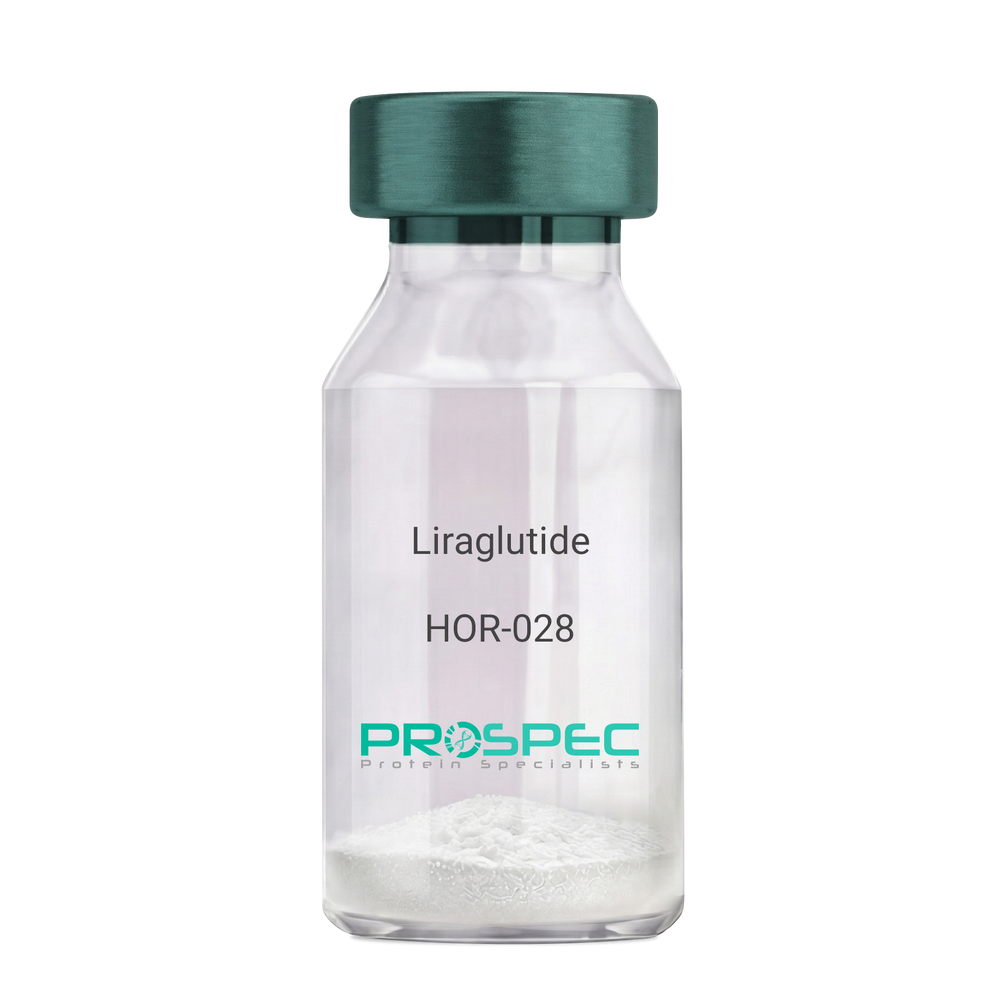
    Liraglutide

    Description:

    Liraglutide

    Product # :

    HOR-028

    Price :

    Quantity :

    Shipping Method :

    Room Temp Icon

    Shipped at Room temp

    Add To Cart

    More Info

    • description
    • formulation
    • purity
    • More Info
    • HPLC, MS

    Description

    Liraglutide peptide is a single, non-glycosylated polypeptide chain containing 31 amino acids, having a molecular mass of 3751 Dalton and a Molecular formula of C172H265N43O51.

    Formulation

    The protein (1mg/ml) was lyophilized with no additives.

    Purity

    Greater than 97% as determined by RP-HPLC.

    HPLC, MS

    liraglutide hplc - Product image 1
    liraglutide mass spec - Product image 2

    More Info

    • Introduction

      Liraglutide is a long-acting GLP1 analogue sharing 97% a.a. homology to human GLP1. Liraglutide differs from GLP1 by the substitution of arginine for lysine at position 34. While GLP1 is degraded swiftly by DPP4 resulting in short life of insulin, Liraglutide contains a fatty acid that binds to albumin and prolongs the half-life of the structure. liraglutide causes insulin to secret in the presence of increasing glucose levels. Due toits receptor site, liraglutide inhibits glucagon secretion and delays gastric emptying.

    • Physical Appearance

      Sterile Filtered White lyophilized (freeze-dried) powder.

    • Stability

      Store the lyophilized Liraglutide between 2-8°C, do not freeze. Upon reconstitution Lypressin should be stored at 4°C between 2-7 days and for future use below -18°C. Please prevent freeze-thaw cycles.

    • Solubility

      It is recommended to reconstitute the lyophilized Liraglutide in sterile 18MΩ-cm H2O not less than 100 µg/ml, which can then be further diluted to other aqueous solutions.
      Lypressin is also soluble in 1% Acetic Acid.

    • Amino Acid Sequence

      H-His-Ala-Glu-Gly-Thr-Phe-Thr-Ser-Asp-Val-Ser-Ser-Tyr-Leu-Glu-Gly-Gln-Ala-Ala-Lys(γ-Glu-palmitoyl)-Glu-Phe-Ile-Ala-Trp-Leu-Val-Arg-Gly-Arg-Gly-OH

    ProSpec's products are furnished for LABORATORY RESEARCH USE ONLY. The product may not be used as drugs, agricultural or pesticidal products, food additives or household chemicals.

    Liraglutide
  • View Data Sheet

    Name :

    Leptin-B Tilapia

    Description:

    Leptin-B Tilapia Recombinant

    Product # :

    CYT-1110

    Price :

    Quantity :

    Shipping Method :

    Room Temp Icon

    Shipped at Room temp

    Add To Cart

    More Info

    • description
    • source
    • formulation
    • purity
    • biological activity
    • More Info

    Description

    Leptin-B Tilapia Recombinant produced in E.Coli is a single, non-glycosylated polypeptide chain containing 152 amino acids and having a molecular mass of 15,243 Dalton. The Leptin-B Tilapia is purified by proprietary chromatographic techniques.

    Source

    Escherichia Coli.

    Formulation

    Lyophilized from a concentrated (1mg/ml) solution containing NaHCO3 at 1:2 salt: protein ratio.

    Purity

    Greater than 95.0% as determined by:
    (a) Gel filtration analysis.
    (b) Analysis by SDS-PAGE.

    Biological Activity

    Tilapia leptins were found to be biologically active in promoting proliferation of BAF/3 cells stably transfected with the long form of human leptin receptor, but their activity was lower than that of mammalian leptin. Furthermore, the Tilapia leptins were biologically active in promoting STAT‐LUC activation in COS7 cells transfected with Tilapia leptin receptor but not in cells transfected with human leptin receptor. Tilapia Leptin A was more active than Tilapia Leptin B.

    More Info

    • Introduction

      Leptin is a protein hormone. It is mainly produced in adipose cells that regulate energy homeostasis by restraining hunger. Leptin ties to nuclear receptors in the hypothalamus (arcuate nucleus). Similar to insulin resistance in type II diabetes, in obesity there is a decrease in the sensitivity towards leptin, ending in a failure to identify satiety, even in high levels of energy stores or leptin itself. Full-length cDNA encoding 2 leptin sequences (tLepA and tLepB) and 1 leptin receptor sequence (tLepR) exists in tilapia (Oreochromis niloticus). The full-length cDNA of tLepR is 3423 bp, encoding a protein of 1140 amino acid which contained all functionally important domains conserved among vertebrate leptin receptors. The cDNAs of tLepA and tLepB are 486 bp and 459 bp in length, encoding proteins of 161 aa and 152 aa, respectively. The three-dimensional structures of tLepA and tLepB demonstrates strong conservation of tertiary structure with that of human leptin comprised of 4 helixes.

    • Physical Appearance

      Sterile Filtered White lyophilized (freeze-dried) powder.

    • Stability

      Lyophilized Leptin-B Tilapia although stable at room temperature for 3 weeks, should be stored desiccated below -18°C. Upon reconstitution Leptin-B Tilapia should be stored at 4°C between 2-7 days and for future use below -18°C. For long term storage it is recommended to add a carrier protein (0.1% HSA or BSA). Please prevent freeze-thaw cycles.

    • Solubility

      It is recommended to reconstitute the lyophilized Leptin-B Tilapia in sterile water or 0.4% NaHCO3 adjusted to pH 8-9, not less than 100µg/ml, which can then be further diluted to other aqueous solutions.

    • Amino Acid Sequence

      The first six N-terminal amino acids of recombinant Tilapia leptin B are Ala-Leu-Leu-Thr-Lys-Gly.

    • Protein content

      Protein quantitation was carried out by UV spectroscopy at 280 nm using the absorbency value of 0.19 for 1 mg/ml Leptin-B Tilapia as the extinction coefficient for a 0.1% (1mg/ml) solution at pH 8.0. This value is calculated by the DNAman computer analysis program of protein sequences.

    ProSpec's products are furnished for LABORATORY RESEARCH USE ONLY. The product may not be used as drugs, agricultural or pesticidal products, food additives or household chemicals.

    Leptin B
  • View Data Sheet

    Name :

    Colloidal Gold

    Description:

    Colloidal Gold 40nM 2OD

    Product # :

    PRO-2830

    Price :

    Quantity :

    Shipping Method :

    Ice Icon

    Shipped with Ice Packs

    Add To Cart

    More Info

    • description
    • formulation
    • More Info

    Description

    Gold nanoparticles have one-of-a-kind properties turn them to ideal for detecting even the smallest amounts of biological molecules. These particles can be loaded with drugs or other therapeutic agents and then targeted to specific cells/tissues. Further to their diagnostic applications, gold nanoparticles may also take part in drug delivery and cancer therapy. Colloidal Gold is purified by proprietary chromatographic techniques.

    Formulation

    Colloidal Gold solution (6.7mg/ml) contains 50mM sodium citrate.

    More Info

    • Physical Appearance

      Sterile Filtered red solution.

    • Stability

      Colloidal Gold should be stored at 4°C, DO NOT FREEZE.

    • Background

      Colloidal gold is liquid form colloid nanoparticles of gold in a water. The colloidal gold color is dependent of the particle size, below 100 nm gives a is deep purple red color due to the spherical nanoparticles. Colloid gold is crucial for research due to its unique properties such as electronic charge, Mw and optical properties. Colloid gold is used in biomedical devices, electron microscopy and nanotechnology.

    ProSpec's products are furnished for LABORATORY RESEARCH USE ONLY. The product may not be used as drugs, agricultural or pesticidal products, food additives or household chemicals.

    Colloidal Gold
  • View Data Sheet

    Name :

    LGALS14 Human

    Description:

    Galectin-14 Human Recombinant

    Placental protein 13-like, Charcot-Leyden crystal protein 2, CLC2, Galectin-14, Gal-14, LGALS14, PPL13, MGC22235.

    Product # :

    CYT-003

    Price :

    Quantity :

    Shipping Method :

    Ice Icon

    Shipped with Ice Packs

    Add To Cart

    More Info

    • description
    • source
    • formulation
    • purity
    • More Info

    Description

    LGALS14 Human Recombinant fused with a 23 amino acid His tag at N-terminus produced in E.Coli is a single, non-glycosylated, polypeptide chain containing 162 amino acids (1-139 a.a.) and having a molecular mass of 18.5kDa. The LGALS14 is purified by proprietary chromatographic techniques.

    Source

    Escherichia Coli.

    Formulation

    The LGALS14 solution (0.5mg/ml) contains 20mM Tris-HCl buffer (pH8.0), 20% glycerol, 0.1M NaCl and 1mM DTT.

    Purity

    Greater than 90.0% as determined by SDS-PAGE.

    More Info

    • Introduction

      Galectin14, aka LGALS14, is a member of the galectin family of carbohydrate binding proteins. Galectin family members contain one or two carbohydrate recognition domains, which can bind beta-galactoside. The LGALS14 gene is predominantly expressed in the placenta. LGALS14 is expressed intracellularly in the placenta and eosinophils and is released by eosinophils following allergen stimulation. LGALS14 may be involved in the development of allergic inflammation.

    • Synonyms

      Placental protein 13-like, Charcot-Leyden crystal protein 2, CLC2, Galectin-14, Gal-14, LGALS14, PPL13, MGC22235.

    • Physical Appearance

      Sterile Filtered colorless solution.

    • Stability

      Store at 4°C if entire vial will be used within 2-4 weeks. Store, frozen at -20°C for longer periods of time. For long term storage it is recommended to add a carrier protein (0.1% HSA or BSA).Avoid multiple freeze-thaw cycles.

    • Amino Acid Sequence

      MGSSHHHHHH SSGLVPRGSH MGSMSSLPVP YTLPVSLPVG SCVIITGTPI LTFVKDPQLE VNFYTGMDED SDIAFQFRLH FGHPAIMNSR VFGIWRYEEK CYYLPFEDGK PFELCIYVRH KEYKVMVNGQ RIYNFAHRFP PASVKMLQVL RDISLTRVLI SD.

    • Background

      What is the molecular weight/Mw of LGALS14 HUMAN Protein?
      LGALS14 HUMAN Protein has a total Mw of 18.5kDa.

      What is the source or expression system of LGALS14 HUMAN Protein?
      Escherichia Coli.

      What is the Purity of LGALS14 HUMAN Protein?
      LGALS14 HUMAN Protein is >90% pure as determined by SDS-PAGE.

      What is the Biological Activity of LGALS14 HUMAN Protein?
      The biological functionality of LGALS14 HUMAN Protein will be determined in the future.

      What is the amino acid sequence of LGALS14 HUMAN Protein?
      MGSSHHHHHH SSGLVPRGSH MGSMSSLPVP YTLPVSLPVG SCVIITGTPI LTFVKDPQLE VNFYTGMDED SDIAFQFRLH FGHPAIMNSR VFGIWRYEEK CYYLPFEDGK PFELCIYVRH KEYKVMVNGQ RIYNFAHRFP PASVKMLQVL RDISLTRVLI SD.
      What applications can LGALS14 HUMAN Protein be used in?
      LGALS14 HUMAN Protein can probably be used in western blot, ELISA and Lateral Flow.

      What is the endotoxin level for LGALS14 HUMAN Protein?
      The endotoxin level is minimal, LGALS14 HUMAN Protein was purified using conventional chromatography techniques.


    ProSpec's products are furnished for LABORATORY RESEARCH USE ONLY. The product may not be used as drugs, agricultural or pesticidal products, food additives or household chemicals.

    Lgals14 Human
  • View Data Sheet

    Name :

    LCN2 Rat

    Description:

    Neutrophil Gelatinase Associated Lipocalin/Lipocalin-2 Rat Recombinant

    Neutrophil gelatinase-associated lipocalin, NGAL, Alpha-2-microglobulin-related protein, Alpha-2U globulin-related protein, Lipocalin-2, Siderocalin LCN2, p25.

    Product # :

    ENZ-920

    Price :

    Quantity :

    Shipping Method :

    Ice Icon

    Shipped with Ice Packs

    Add To Cart

    More Info

    • description
    • source
    • formulation
    • purity
    • More Info

    Description

    LCN2 Rat Recombinant produced in E.Coli is a single, non-glycosylated polypeptide chain containing 201 amino acids (21-198 a.a) and having a molecular mass of 22.9kDa. LCN2 is fused to a 23 amino acid His-tag at N-terminus & purified by proprietary chromatographic techniques.

    Source

    Escherichia Coli.

    Formulation

    LCN2 protein solution (0.25mg/ml) containing Phosphate Buffered Saline (pH7.4) and 20% glycerol.

    Purity

    Greater than 95.0% as determined by SDS-PAGE.

    More Info

    • Introduction

      Lipocalin-2 also called Neutrophil Gelatinase Associated Lipocalin (NGAL) belongs to a family of lipocans which include 25 proteins (including a1-microglobulin and b-lactoglobulin), which are characterized by their ability to bind small lipophilic substances in their hydrophobic core. They thereby serve as transporters of substances like retinal, biliverdins & prostaglandins. There are indications that NGAL is involved in modulation of the inflammatory response and is found in the plasma of patients after stroke.

    • Synonyms

      Neutrophil gelatinase-associated lipocalin, NGAL, Alpha-2-microglobulin-related protein, Alpha-2U globulin-related protein, Lipocalin-2, Siderocalin LCN2, p25.

    • Physical Appearance

      Sterile Filtered colorless solution.

    • Stability

      Store at 4°C if entire vial will be used within 2-4 weeks. Store, frozen at -20°C for longer periods of time. For long term storage it is recommended to add a carrier protein (0.1% HSA or BSA).Avoid multiple freeze-thaw cycles.

    • Amino Acid Sequence

      MGSSHHHHHH SSGLVPRGSH MGSQDSTQNL IPAPPLISVP LQPGFWTERF QGRWFVVGLA ANAVQKERQS RFTMYSTIYE LQEDNSYNVT SILVRGQGCR YWIRTFVPSS RPGQFTLGNI HSYPQIQSYD VQVADTDYDQ FAMVFFQKTS ENKQYFKVTL YGRTKGLSDE LKERFVSFAK SLGLKDNNIV FSVPTDQCID N.

    ProSpec's products are furnished for LABORATORY RESEARCH USE ONLY. The product may not be used as drugs, agricultural or pesticidal products, food additives or household chemicals.

    Lcn2 Rat
  • View Data Sheet

    Name :

    Leptin Chicken

    Description:

    Leptin Chicken Recombinant

    OB Protein, Obesity Protein, OBS, Obesity factor.

    Product # :

    CYT-505

    Price :

    Quantity :

    Shipping Method :

    Room Temp Icon

    Shipped at Room temp

    Add To Cart

    More Info

    • description
    • source
    • formulation
    • purity
    • biological activity
    • More Info

    Description

    Leptin Chicken Recombinant produced in E.Coli is a single, non-glycosylated, polypeptide chain containing 145 amino acids and having a molecular mass of 16 kDa.The Leptin is purified by proprietary chromatographic techniques.

    Source

    Escherichia Coli.

    Formulation

    The protein was lyophilized from a concentrated (1mg/ml) solution with 0.0045mM NaHCO3.

    Purity

    Greater than 95.0% as determined by:
    (a) Analysis by SEC-HPLC.
    (b) Analysis by SDS-PAGE.

    Biological Activity

    Biological active as evidenced by inducing proliferation of BAF/3 cells stably transfected with the long form of human leptin receptor. Its activity is however 5-10 fold lower as compared to mammalian leptins.

    More Info

    • Introduction

      A 16-kDa peptide hormone secreted from white adipocytes and implicated in the regulation of food intake and energy balance. Leptin provides the key afferent signal from fat cells in the feedback system that controls body fat stores.

    • Synonyms

      OB Protein, Obesity Protein, OBS, Obesity factor.

    • Physical Appearance

      Sterile Filtered White lyophilized (freeze-dried) powder.

    • Stability

      Lyophilized Leptin although stable at room temperature for 3 weeks, should be stored desiccated below -18°C. Upon reconstitution Leptin should be stored at 4°C between 2-7 days and for future use below -18°C.For long term storage it is recommended to add a carrier protein (0.1% HSA or BSA).Please prevent freeze-thaw cycles.

    • Solubility

      It is recommended to reconstitute the lyophilized Leptin in sterile 18MΩ-cm H2O not less than 100µg/ml, which can then be further diluted to other aqueous solutions.

    • Amino Acid Sequence

      The sequence of the first five N-terminal amino acids was determined and was found to be Ala-Val-Pro-Cys-Gln.

      Recombinant Chicken leptin was produced according to the a.a. sequence published by the groups of Taouis & McMutry, see Raver et al. Protein Expr Purif. 1998 Dec; 14(3):403-8.

    • Protein content

      Protein quantitation was carried out by two independent methods1. UV spectroscopy at 280 nm using the absorbency value of 0.19 as the extinction coefficient for a 0.1% (1mg/ml) solution. This value is calculated by the PC GENE computer analysis program of protein sequences (IntelliGenetics). 2. Analysis by RP-HPLC,using calibrated solution of Leptin Chicken as a Reference Standard.

    ProSpec's products are furnished for LABORATORY RESEARCH USE ONLY. The product may not be used as drugs, agricultural or pesticidal products, food additives or household chemicals.

    Leptin Chicken
  • View Data Sheet

    Name :

    MPZL1 Human

    Description:

    Myelin Protein Zero-Like 1 Human Recombinant

    Myelin Protein Zero-Like 1, PZRa, PZR, Protein Zero-Related, PZRb, Immunoglobulin Family Transmembrane Protein, Myelin Protein Zero-Like Protein 1, MPZL1b, Protein Zero Related, PZR1b.

    Product # :

    PRO-1611

    Price :

    Quantity :

    Shipping Method :

    Ice Icon

    Shipped with Ice Packs

    Add To Cart

    More Info

    • description
    • source
    • formulation
    • purity
    • More Info

    Description

    MPZL1 Human Recombinant produced in E.coli is a single, non-glycosylated polypeptide chain containing 148 amino acids (38-162) and having a molecular mass of 16.1kDa.MPZL1 is fused to a 23 amino acid His-tag at N-terminus & purified by proprietary chromatographic techniques.

    Source

    Escherichia Coli.

    Formulation

    The MPZL1 solution contains 20mM Tris-HCl buffer (pH 8.0), 0.15M NaCl, 1mM DTT and 20% glycerol.

    Purity

    Greater than 90% as determined by SDS-PAGE.

    More Info

    • Introduction

      Myelin Protein Zero-Like 1 (MPZL1) is a cell surface receptor, which is involved in signal transduction processes. MPZL1 recruits PTPN11/SHP-2 to the cell membrane and is a putative substrate of PTPN11/SHP-2. MPZL1 is a main receptor for concanavalin-A (ConA) and it is involved in cellular signaling induced by ConA, which most likely includes Src family tyrosine-protein kinases. MPZL1 Isoform 3 appears to have a dominant negative role by blocking tyrosine phosphorylation of MPZL1 induced by ConA. Isoform 1, but not isoform 2 and isoform 3, might be involved in regulation of integrin-mediated cell motility.

    • Synonyms

      Myelin Protein Zero-Like 1, PZRa, PZR, Protein Zero-Related, PZRb, Immunoglobulin Family Transmembrane Protein, Myelin Protein Zero-Like Protein 1, MPZL1b, Protein Zero Related, PZR1b.

    • Physical Appearance

      Sterile filtered colorless solution.

    • Stability

      Store at 4°C if entire vial will be used within 2-4 weeks. Store, frozen at -20°C for longer periods of time. For long term storage it is recommended to add a carrier protein (0.1% HSA or BSA).Avoid multiple freeze-thaw cycles.

    • Amino Acid Sequence

      MGSSHHHHHH SSGLVPRGSH MGSLEVYTPK EIFVANGTQG KLTCKFKSTS TTGGLTSVSW SFQPEGADTT VSFFHYSQGQ VYLGNYPPFK DRISWAGDLD KKDASINIEN MQFIHNGTYI CDVKNPPDIV VQPGHIRLYV VEKENLPV.

    ProSpec's products are furnished for LABORATORY RESEARCH USE ONLY. The product may not be used as drugs, agricultural or pesticidal products, food additives or household chemicals.

    Mpzl1 Human
  • View Data Sheet

    Name :

    NECTIN1 Human

    Description:

    Nectin Cell Adhesion Molecule 1 Human Recombinant

    PVRL1, CD111, CLPED1, ED4, HIgR, HVIS, HVEC, Nectin-1, OFC7, PRR, PRR1, PVRR, PVRR1, SK-12.

    Product # :

    PRO-2648

    Price :

    Quantity :

    Shipping Method :

    Ice Icon

    Shipped with Ice Packs

    Add To Cart

    More Info

    • description
    • source
    • formulation
    • purity
    • More Info

    Description

    NECTIN1 Human Recombinant produced in Sf9 Baculovirus cells is a single, glycosylated polypeptide chain containing 334amino acids (31-355a.a) and having a molecular mass of 37.3kDa.NECTIN1 is fused to an 9 amino acid His-tag at C-terminus & purified by proprietary chromatographic techniques.

    Source

    Sf9, Baculovirus cells.

    Formulation

    The NECTIN1 solution (1mg/ml) contains Phosphate-Buffered Saline (pH 7.4) and 10% glycerol.

    Purity

    Greater than 95.0% as determined by SDS-PAGE.

    More Info

    • Introduction

      Nectin-1, also referred to as ED4, is a poliovirus receptor- related 1 protein is a part of the Nectin family. Nectin-1 endorses cell-cell contacts by forming homophilic or heterophilic trans-dimers. Heterophilic interactions among PVRL1/nectin-1 & PVRL4/nectin-4 and among PVRL1/nectin-1 & PVRL3/nectin-3 have been found. Nectin-1 acts as an entry receptor for herpes simplex virus & pseudorabies virus as well. Likewise, Neurite outgrowth-promoting activity has been shown by Nectin-1.

    • Synonyms

      PVRL1, CD111, CLPED1, ED4, HIgR, HVIS, HVEC, Nectin-1, OFC7, PRR, PRR1, PVRR, PVRR1, SK-12.

    • Physical Appearance

      Sterile Filtered colorless solution.

    • Stability

      Store at 4°C if entire vial will be used within 2-4 weeks. Store, frozen at -20°C for longer periods of time. For long term storage it is recommended to add a carrier protein (0.1% HSA or BSA).Avoid multiple freeze-thaw cycles.

    • Amino Acid Sequence

      ADPQVVQVND SMYGFIGTDV VLHCSFANPL PSVKITQVTW QKSTNGSKQN VAIYNPSMGV SVLAPYRERV EFLRPSFTDG TIRLSRLELE DEGVYICEFA TFPTGNRESQ LNLTVMAKPT NWIEGTQAVL RAKKGQDDKV LVATCTSANG KPPSVVSWET RLKGEAEYQE IRNPNGTVTV ISRYRLVPSR EAHQQSLACI VNYHMDRFKE SLTLNVQYEP EVTIEGFDGN WYLQRMDVKL
      TCKADANPPA TEYHWTTLNG SLPKGVEAQN RTLFFKGPIN YSLAGTYICE ATNPIGTRSG QVEVNITEFP YTPSPPEHGR RAGPVPTAHH HHHH

    ProSpec's products are furnished for LABORATORY RESEARCH USE ONLY. The product may not be used as drugs, agricultural or pesticidal products, food additives or household chemicals.

    Nectin1 Human
  • View Data Sheet

    Name :

    Procalcitonin Human

    Description:

    Procalcitonin Human Recombinant

    Procalcitonin, PCT.

    Product # :

    HOR-304

    Price :

    Quantity :

    Shipping Method :

    Room Temp Icon

    Shipped at Room temp

    Add To Cart

    More Info

    • description
    • source
    • formulation
    • purity
    • More Info

    Description

    Procalcitonin Human Recombinant produced in E.Coli is a single, non-glycosylated, polypeptide chain containing 116 amino acids and having a molecular mass of 12.8 kDa.The Procalcitonin is purified by standard chromatographic techniques.

    Source

    Escherichia Coli.

    Formulation

    Lyophilized from 10mM sodium phosphate pH-7.5.

    Purity

    Greater than 95.0% as determined by SDS-PAGE.

    More Info

    • Introduction

      Procalcitonin is a peptide hormone mainly produced by the C cells of the thyroid and certain endocrine cells of the lung. Under normal expression conditions, procalcitonin is immediately cleaved into three specific fragments, an N terminal residue, calcitonin and katacalcin. Levels of unprocessed procalcitonin rise significantly after bacterial infection, trauma or shock.

    • Synonyms

      Procalcitonin, PCT.

    • Physical Appearance

      Sterile Filtered White lyophilized (freeze-dried) powder.

    • Stability

      Lyophilized procalcitonin although stable at room temperature for 3 weeks, should be stored desiccated below -18°C. Upon reconstitution procalcitonin should be stored at 4°C between 2-7 days and for future use below -18°C.For long term storage it is recommended to add a carrier protein (0.1% HSA or BSA).Please prevent freeze-thaw cycles.

    • Solubility

      It is recommended to reconstitute the lyophilized procalcitonin sterile 18MΩ-cm H2O at 100 µg/ml, which can then be further diluted to other aqueous solutions.

    • Amino Acid Sequence

      APFRSALESS PADPATLSED EARLLLAALV QDYVQMKASE LEQEQEREGS SLDSPRSKRC GNLSTCMLGT YTQDFNKFHT FPQTAIGVGA PGKKRDMSSD LERDHRPHVS MPQNAN.

    ProSpec's products are furnished for LABORATORY RESEARCH USE ONLY. The product may not be used as drugs, agricultural or pesticidal products, food additives or household chemicals.

    Procalcitonin Human
  • View Data Sheet

    Name :

    LGALS2 Mouse, Active

    Description:

    Galectin-2, BioActive Mouse Recombinant

    Galectin-2, Gal-2, Lgals2, 2200008F12Rik, AI324147.

    Product # :

    CYT-1155

    Price :

    Quantity :

    Shipping Method :

    Ice Icon

    Shipped with Ice Packs

    Add To Cart

    More Info

    • description
    • source
    • formulation
    • purity
    • biological activity
    • More Info

    Description

    LGALS2 Mouse Recombinant produced in E.Coli is a single, non-glycosylated polypeptide chain containing 153 amino acids (1-130 a.a) and having a molecular mass of 17.3kDa.LGALS2 is fused to a 23 amino acid His-tag at N-terminus & purified by proprietary chromatographic techniques.

    Source

    E.coli.

    Formulation

    LGALS2 protein (1mg/ml) contains 10% glycerol, 0.1M NaCl, 1mM DTT and 20mM Tris-HCl buffer (pH 8.0).

    Purity

    Greater than 95% as determined by SDS-PAGE.

    Biological Activity

    Measured by its ability to agglutinate human red blood cells. The ED50 is ≥ 20ug/ml.

    More Info

    • Introduction

      Galectin-2 or LGALS2 is a protein, part of the galectin proteins family. The galectin proteins family holds galectin proteins family lectins that mediates adhesion between cells or cells to ECM. This family also take part in pre-mRNA splicing, apoptosis & tumor progression. Galectin-2 induces apoptosis in T cells that are activated & binds to lymphotoxin-a, also can implicatate on myocardial infarction. LGALS2 from human and mouse share about 65% amino acid sequence resemblance.

    • Synonyms

      Galectin-2, Gal-2, Lgals2, 2200008F12Rik, AI324147.

    • Physical Appearance

      Sterile Filtered colorless solution.

    • Stability

      Store at 4°C if entire vial will be used within 2-4 weeks. Store, frozen at -20°C for longer periods of time. For long term storage it is recommended to add a carrier protein (0.1% HSA or BSA).Avoid multiple freeze-thaw cycles.

    • Amino Acid Sequence

      MGSSHHHHHH SSGLVPRGSH MGSMSEKFEV KDLNMKPGMS LKIKGKIHND VDRFLINLGQ GKETLNLHFN PRFDESTIVC NTSEGGRWGQ EQRENHMCFS PGSEVKITIT FQDKDFKVTL PDGHQLTFPN RLGHNQLHYL SMGGLQISSF KLE

    • Background

      What is the molecular weight/Mw of LGALS2 MOUSE, ACTIVE Protein?
      LGALS2 MOUSE, ACTIVE Protein has a total Mw of 17.3kDa.

      What is the source or expression system of LGALS2 MOUSE, ACTIVE Protein?
      Escherichia Coli.

      What is the Purity of LGALS2 MOUSE, ACTIVE Protein?
      LGALS2 MOUSE, ACTIVE Protein is >95% pure as determined by SDS-PAGE.

      What is the Biological Activity of LGALS2 MOUSE, ACTIVE Protein?
      Measured by its ability to agglutinate human red blood cells. The ED50 is ≥ 20ug/ml.

      What is the amino acid sequence of LGALS2 MOUSE, ACTIVE Protein?
      MGSSHHHHHH SSGLVPRGSH MGSMSEKFEV KDLNMKPGMS LKIKGKIHND VDRFLINLGQ GKETLNLHFN PRFDESTIVC NTSEGGRWGQ EQRENHMCFS PGSEVKITIT FQDKDFKVTL PDGHQLTFPN RLGHNQLHYL SMGGLQISSF KLE.

      What applications can LGALS2 MOUSE, ACTIVE Protein be used in?
      LGALS2 MOUSE, ACTIVE Protein can probably be used in western blot, ELISA and Lateral Flow.

      What is the endotoxin level for LGALS2 MOUSE, ACTIVE Protein?
      The endotoxin level is minimal, LGALS2 MOUSE, ACTIVE Protein was purified using conventional chromatography techniques.


    ProSpec's products are furnished for LABORATORY RESEARCH USE ONLY. The product may not be used as drugs, agricultural or pesticidal products, food additives or household chemicals.

    Galectin 2 Mouse
  • View Data Sheet

    Name :

    LGALS8 Human

    Description:

    Galectin-8 Human Recombinant

    Galectin-8, Gal-8, Po66 carbohydrate-binding protein, Po66-CBP, Prostate carcinoma tumor antigen 1, PCTA-1, LGALS8.

    Product # :

    CYT-017

    Price :

    Quantity :

    Shipping Method :

    Room Temp Icon

    Shipped at Room temp

    Add To Cart

    More Info

    • description
    • source
    • formulation
    • purity
    • biological activity
    • More Info

    Description

    Galectin-8 Human Recombinant produced in E.Coli is a single, non-glycosylated, Polypeptide chain containing 317 amino acids and having a molecular mass of 35.8kDa.The LGALS8 is purified by proprietary chromatographic techniques.

    Source

    Escherichia Coli.

    Formulation

    LGALS8 was lyophilized from a concentrated (1mg/ml) solution in 20mM PBS, pH 7.4.

    Purity

    Greater than 95.0% as determined by:
    (a) Analysis by RP-HPLC.
    (b) Analysis by SDS-PAGE.

    Biological Activity

    The ED50 of Galectin-8 as determined by its ability to agglutinate human red blood cells is 0.8~4 µg/ml.

    More Info

    • Introduction

      Galectins are a family of animal lectins with an affinity for beta-galactosides. This family has at least 14 identified members. Galectins share similarities in the CRD (the carbohydrate recognition domain). Galectins are synthesized as cytosolic proteins. Though localized principally in the cytoplasm and lacking a classical signal peptide, galectins can also be stimulated to secretion by non-classical pathways or alternatively targeted to the nucleus. Galectins are involved in modulating cell-cell and cell-matrix interactions. Galectin-8 is a tandem-repeat-type member of the galectin family, consisting of 2 CRDs attached by a linker peptide. Galectin-8 is greatly expressed in lung carcinomas, a number of forms of prostate carcinomas, in addition to other tumor cells. Galectin-8 attaches to a subset of cell surface integrins to modulate ECM-integrin interactions. Once immobilized, Galectin-8 promotes cell adhesion by ligation and clustering of cell surface integrin receptors. On the other hand, as a soluble ligand, Galectin-8 can inhibit cell adhesion.

    • Synonyms

      Galectin-8, Gal-8, Po66 carbohydrate-binding protein, Po66-CBP, Prostate carcinoma tumor antigen 1, PCTA-1, LGALS8.

    • Physical Appearance

      Sterile Filtered White lyophilized (freeze-dried) powder.

    • Stability

      Lyophilized LGALS8 although stable at room temperature for 3 weeks, should be stored desiccated below -18°C. Upon reconstitution Galectin-8 should be stored at 4°C between 2-7 days and for future use below -18°C.Please prevent freeze-thaw cycles.

    • Solubility

      It is recommended to reconstitute the lyophilized Galectin-8 in sterile 18M-cm H2O not less than 100µg/ml, which can then be further diluted to other aqueous solutions.

    • Amino Acid Sequence

      The sequence of the first five N-terminal amino acids was determined and was found to be Met-Met-Leu-Ser-Leu.

    • Background

      What is the molecular weight/Mw of LGALS8 HUMAN Protein?
      LGALS8 HUMAN Protein has a total Mw of 35.8kDa.

      What is the source or expression system of LGALS8 HUMAN Protein?
      Escherichia Coli.

      What is the Purity of LGALS8 HUMAN Protein?
      LGALS8 HUMAN Protein is >95% pure as determined by SDS-PAGE.

      What is the Biological Activity of LGALS8 HUMAN Protein?
      The ED50 of Galectin-8 as determined by its ability to agglutinate human red blood cells is 0.8~4 µg/ml.

      What is the amino acid sequence of LGALS8 HUMAN Protein?
      LGALS8 HUMAN Protein is composed from 317 amino acids.

      What applications can LGALS8 HUMAN Protein be used in?
      LGALS8 HUMAN Protein can probably be used in western blot, ELISA and Lateral Flow.

      What is the endotoxin level for LGALS8 HUMAN Protein?
      The endotoxin level is minimal, LGALS8 HUMAN Protein was purified using conventional chromatography techniques.


    ProSpec's products are furnished for LABORATORY RESEARCH USE ONLY. The product may not be used as drugs, agricultural or pesticidal products, food additives or household chemicals.

    Lgals8 Human
  • View Data Sheet

    Name :

    GNAI3 Human

    Description:

    Guanine Nucleotide Binding Protein Alpha Inhibiting Activity 3 Human Recombinant

    Guanine nucleotide binding protein (G protein) alpha inhibiting activity polypeptide 3, G(i) alpha-3, 87U6.

    Product # :

    PRO-1074

    Price :

    Quantity :

    Shipping Method :

    Ice Icon

    Shipped with Ice Packs

    Add To Cart

    More Info

    • description
    • source
    • formulation
    • purity
    • More Info

    Description

    GNAI3 Human Recombinant produced in E. coli is a single polypeptide chain containing 377 amino acids (1-354) and having a molecular mass of 43.0kDa.GNAI3 is fused to a 23 amino acid His-tag at N-terminus & purified by proprietary chromatographic techniques.

    Source

    E.coli.

    Formulation

    The GNAI3 solution (0.5mg/1ml) contains 20mM Tris-HCl buffer (pH 8.0), 0.1M NaCl, 2mM DTT and 20% glycerol.

    Purity

    Greater than 90% as determined by SDS-PAGE.

    More Info

    • Introduction

      GNAI3 is a member of the G-alpha family and G (i/o/t/z) subfamily which act as modulators or transducers in several transmembrane signaling systems. G(k) is the stimulatory G protein of receptor-regulated K+ channels. The active GTP-bound form inhibits the connotation of RGS14 with centrosomes and is essential for the translocation of RGS14 from the cytoplasm to the plasma membrane. GNAI3 takes part in cell division and is known to cooperate with RIC8A, S1PR1, RGS5, RGS10, RGS12, RGS14, RGS16, RGS18, and RGS19.

    • Synonyms

      Guanine nucleotide binding protein (G protein) alpha inhibiting activity polypeptide 3, G(i) alpha-3, 87U6.

    • Physical Appearance

      Sterile Filtered colorless solution.

    • Stability

      Store at 4°C if entire vial will be used within 2-4 weeks. Store, frozen at -20°C for longer periods of time. For long term storage it is recommended to add a carrier protein (0.1% HSA or BSA).Avoid multiple freeze-thaw cycles.

    • Amino Acid Sequence

      MGSSHHHHHH SSGLVPRGSH MGSMGCTLSA EDKAAVERSK MIDRNLREDG EKAAKEVKLL LLGAGESGKS TIVKQMKIIH EDGYSEDECK QYKVVVYSNT IQSIIAIIRA MGRLKIDFGE AARADDARQL FVLAGSAEEG VMTPELAGVI KRLWRDGGVQ ACFSRSREYQ LNDSASYYLN DLDRISQSNY IPTQQDVLRT RVKTTGIVET HFTFKDLYFK MFDVGGQRSE RKKWIHCFEG VTAIIFCVAL SDYDLVLAED EEMNRMHESM KLFDSICNNK WFTETSIILF LNKKDLFEEK IKRSPLTICY PEYTGSNTYE EAAAYIQCQF EDLNRRKDTK EIYTHFTCAT DTKNVQFVFD AVTDVIIKNN LKECGLY

    ProSpec's products are furnished for LABORATORY RESEARCH USE ONLY. The product may not be used as drugs, agricultural or pesticidal products, food additives or household chemicals.

    Gnai3 Human
  • View Data Sheet

    Name :

    LIN7B Human

    Description:

    LIN7B Human Recombinant

    LIN-7B, MALS-2, MALS2, VELI2, Protein lin-7 homolog B, Veli-2, hVeli2, Mammalian lin-seven protein 2, Vertebrate lin-7 homolog 2, UNQ3116/PRO10200.

    Product # :

    PRO-1298

    Price :

    Quantity :

    Shipping Method :

    Ice Icon

    Shipped with Ice Packs

    Add To Cart

    More Info

    • description
    • source
    • formulation
    • purity
    • More Info

    Description

    LIN7B Human Recombinant produced in E.Coli is a single, non-glycosylated polypeptide chain containing 230 amino acids (1-207 a.a.) and having a molecular mass of 25.3kDa.LIN7B is fused to a 23 amino acid His-tag at N-terminus & purified by proprietary chromatographic techniques.

    Source

    Escherichia Coli.

    Formulation

    LIN7B protein solution (0.25mg/ml) contains 20mM Tris-HCl buffer, (pH 8.0), 0.2M NaCl, 50% glycerol and 2mM DTT.

    Purity

    Greater than 90.0% as determined by SDS-PAGE

    More Info

    • Introduction

      LIN7B (VELI2), is a member of the Velis family. Velis family contains minor synaptic proteins which interact with other proteins at the post-synaptic density (PSD) of neuronal synapses. Velis which contain the PDZ motif, participate in recruiting cell adhesion molecules, receptors, and channels. Lin7B protein is ubiquitously expressed with a high expression in the brain, liver, and testis. Lin7B localizes at the synaptic junctions in neurons, bind to CASK, which is a neurexin-binding protein highly concentrated in synapses, and Mint1, a binding partner with a vesicle trafficking protein.

    • Synonyms

      LIN-7B, MALS-2, MALS2, VELI2, Protein lin-7 homolog B, Veli-2, hVeli2, Mammalian lin-seven protein 2, Vertebrate lin-7 homolog 2, UNQ3116/PRO10200.

    • Physical Appearance

      Sterile filtered colorless solution.

    • Stability

      Store at 4°C if entire vial will be used within 2-4 weeks. Store, frozen at -20°C for longer periods of time. For long term storage it is recommended to add a carrier protein (0.1% HSA or BSA). Avoid multiple freeze-thaw cycles.

    • Amino Acid Sequence

      MGSSHHHHHH SSGLVPRGSH MGSMAALVEP LGLERDVSRA VELLERLQRS GELPPQKLQA LQRVLQSRFC SAIREVYEQL YDTLDITGSA EIRAHATAKA TVAAFTASEG HAHPRVVELP KTDEGLGFNI MGGKEQNSPI YISRVIPGGV ADRHGGLKRG DQLLSVNGVS VEGEQHEKAV ELLKAAQGSV KLVVRYTPRV LEEMEARFEK MRSARRRQQH QSYSSLESRG.

    ProSpec's products are furnished for LABORATORY RESEARCH USE ONLY. The product may not be used as drugs, agricultural or pesticidal products, food additives or household chemicals.

    Lin7B Human
  • View Data Sheet

    Name :

    YEATS4 Human

    Description:

    YEATS Domain Containing 4 Human Recombinant

    YEATS domain-containing protein 4, Glioma-amplified sequence 41, Gas41, NuMA-binding protein 1, NuBI-1, NuBI1, YEATS4, GAS41, YAF9, 4930573H17Rik, B230215M10Rik.

    Product # :

    PRO-1019

    Price :

    Quantity :

    Shipping Method :

    Ice Icon

    Shipped with Ice Packs

    Add To Cart

    More Info

    • description
    • source
    • formulation
    • purity
    • More Info

    Description

    YEATS4 Human Recombinant produced in E.Coli is a single, non-glycosylated polypeptide chain containing 250 amino acids (1-227 a.a.) and having a molecular mass of 28.9kDa. YEATS4 is fused to a 23 amino acid His-tag at N-terminus & purified by proprietary chromatographic techniques.

    Source

    E.coli.

    Formulation

    YEATS4 protein solution (0.5mg/ml) containing 20mM Tris-HCl buffer (pH8.0), 30% glycerol, 2mM DTT,0.2M NaCl and 0.1mM PMSF.

    Purity

    Greater than 90% as determined by SDS-PAGE.

    More Info

    • Introduction

      YEATS Domain Containing 4 (YEATS4) has a high sequence homology to the human MLLT1, and yeast and human MLLT3 proteins. MLLT1 and MLLT3 proteins, both belong to a group of transcription factors, which indicates that YEATS might also represent a transcription factor. YEATS is believed to be necessary for RNA transcription. The YEATS gene has been shown to be amplified in tumors.

    • Synonyms

      YEATS domain-containing protein 4, Glioma-amplified sequence 41, Gas41, NuMA-binding protein 1, NuBI-1, NuBI1, YEATS4, GAS41, YAF9, 4930573H17Rik, B230215M10Rik.

    • Physical Appearance

      Sterile Filtered colorless solution.

    • Stability

      Store at 4°C if entire vial will be used within 2-4 weeks. Store, frozen at -20°C for longer periods of time. For long term storage it is recommended to add a carrier protein (0.1% HSA or BSA).Avoid multiple freeze-thaw cycles.

    • Amino Acid Sequence

      MGSSHHHHHH SSGLVPRGSH MGSMFKRMAE FGPDSGGRVK GVTIVKPIVY GNVARYFGKK REEDGHTHQW TVYVKPYRNE DMSAYVKKIQ FKLHESYGNP LRVVTKPPYE ITETGWGEFE IIIKIFFIDP NERPVTLYHL LKLFQSDTNA MLGKKTVVSE FYDEMIFQDP TAMMQQLLTT SRQLTLGAYK HETEFAELEV KTREKLEAAK KKTSFEIAEL KERLKASRET INCLKNEIRK LEEDDQAKDI.

    ProSpec's products are furnished for LABORATORY RESEARCH USE ONLY. The product may not be used as drugs, agricultural or pesticidal products, food additives or household chemicals.

    Yeats4 Human
  • 1
  • …
  • 7
  • 8
  • 9
  • 10
  • 11
  • …
  • 42
Your browser does not support the video tag.

Products

  • Cytokines
  • Growth Factors
  • Chemokines
  • CD Antigens
  • Neurotrophins
  • Hormones
  • Enzymes
  • Viral Antigens
  • Recombinant Proteins
  • Natural Proteins
  • Monoclonal Antibodies
  • Polyclonal Antibodies
  • Thermal Packaging

About

  • Company
  • Founder
  • Contribution
  • Contact Us
  • My Account

Ordering

  • Ordering Method
  • Ordering - Credit Card
  • Ordering PO
  • Shipping Fees
  • FAQ's

Legal

  • Terms & Conditions
  • Privacy
  • Site Map
  • info@prospecbio.com
  • Facebook
  • Instagram
  • Linkedin Profile

© 2026 ProSpec-Tany TechnoGene Ltd. All Rights Reserved.

  • Choosing a selection results in a full page refresh.
  • Opens in a new window.