Search results
1000 results found for “SMAD”
Name
Description
Product #
Price
Quantity
Shipping Method
- View Data Sheet
Name :
SUGT1 HumanDescription:
SGT1 Recombinant Human
SGT1, suppressor of G2 allele of SKP1 (S. cerevisiae), SGT1, Putative 40-6-3 protein, SGT1B protein.
Product # :
PRO-096Price :
Quantity :
Shipping Method :
Shipped with Ice Packs
More Info
- description
- source
- formulation
- purity
- More Info
Description
SGT1 produced in E.Coli is a single, non-glycosylated polypeptide chain containing 252 amino acids (115-365.a.a) and having a molecular mass of 30.7kDa. SGT1 is fused to a 21 amino acid His-tag at N-terminus & purified by proprietary chromatographic techniques.
Source
Escherichia Coli.
Formulation
The SGT1 protein solution (0.5mg/1ml) is formulated in 20 mM Tris-HCl buffer (pH8.0), 0.1M NaCl, 1mM DTT and 20% glycerol.
Purity
Greater than 90% as determined by SDS-PAGE.
More Info
-
Introduction
SUGT1 is homolog to yeast protein SGT1, a regulator of the cell cycle which is vital for G1/S and G2/M transitions. SUGT1 holds a CS domain, a SGS domain, a p23 domain and three tetratricopeptide repeats (TPR). SUGT1 protein associates with Skp1 p19 and CUL-1, subunits of the SCF ubiquitin ligase complex, and is believed to take a part in protein degradation. Furthermore, SUGT1 is essential for the kinetochores assembly, and has a role as a co-chaperone for HSP90.
-
Synonyms
SGT1, suppressor of G2 allele of SKP1 (S. cerevisiae), SGT1, Putative 40-6-3 protein, SGT1B protein.
-
Physical Appearance
Sterile Filtered clear solution.
-
Stability
Store at 4°C if entire vial will be used within 2-4 weeks. Store, frozen at -20°C for longer periods of time.Please avoid freeze thaw cycles.
-
Amino Acid Sequence
MGSSHHHHHH SSGLVPRGSH MHRVGQAGLQ LLTSSDPPAL DSQSAGITGA DANFSVWIKR CQEAQNGSES EVWTHQSKIK YDWYQTESQVVITLMIKNVQ KNDVNVEFSE KELSALVKLP SGEDYNLKLE LLHPIIPEQS TFKVLSTKIE IKLKKPEAVR WEKLEGQGDV PTPKQFVADVKNLYPSSSPY TRNWDKLVGE IKEEEKNEKL EGDAALNRLF QQIYSDGSDE VKRAMNKSFM ESGGTVLSTN WSDVGKRKVE INPPDDMEWKKY
ProSpec's products are furnished for LABORATORY RESEARCH USE ONLY. The product may not be used as drugs, agricultural or pesticidal products, food additives or household chemicals.
- View Data Sheet
Name :
IMPAD1 HumanDescription:
Inositol Monophosphatase Domain Containing 1 Human Recombinant
Inositol monophosphatase 3, IMP 3, IMPase 3, EC 3.1.3.25, EC 3.1.3.7, Golgi 3-prime phosphoadenosine 5-prime phosphate 3-prime phosphatase, Golgi-resident PAP phosphatase, gPAPP, Inositol monophosphatase domain-containing protein 1, Inositol-1(or 4)-monophosphatase 3, Myo-inositol monophosphatase A3, IMPAD1, IMPA3, GPAPP, IMP-3.
Product # :
PRO-1346Price :
Quantity :
Shipping Method :
Shipped with Ice Packs
More Info
- description
- source
- formulation
- purity
- More Info
Description
IMPAD1 Human Recombinant produced in E.Coli is a single, non-glycosylated polypeptide chain containing 349 amino acids (34-359 a.a) and having a molecular mass of 37.6kDa.IMPAD1 is fused to a 23 amino acid His-tag at N-terminus & purified by proprietary chromatographic techniques.
Source
Escherichia Coli.
Formulation
IMPAD1 protein solution (1mg/ml) containing 20mM Tris-HCl buffer (pH 8.0), 2M Urea and 20% glycerol.
Purity
Greater than 90.0% as determined by SDS-PAGE.
More Info
-
Introduction
Inositol monophosphatase 3 (IMPAD1) belongs to the inositol monophosphatase family. IMPAD1 is restricted to the Golgi apparatus and catalyzes the hydrolysis of phosphoadenosine phosphate (PAP) to adenosine monophosphate (AMP). IMPAD1 gene mutations cause the GRAPP type chondrodysplasia with joint dislocations, and a pseudogene of the IMPAD1 gene is located on the long arm of chromosome 1.
-
Synonyms
Inositol monophosphatase 3, IMP 3, IMPase 3, EC 3.1.3.25, EC 3.1.3.7, Golgi 3-prime phosphoadenosine 5-prime phosphate 3-prime phosphatase, Golgi-resident PAP phosphatase, gPAPP, Inositol monophosphatase domain-containing protein 1, Inositol-1(or 4)-monophosphatase 3, Myo-inositol monophosphatase A3, IMPAD1, IMPA3, GPAPP, IMP-3.
-
Physical Appearance
Sterile Filtered colorless solution.
-
Stability
Store at 4°C if entire vial will be used within 2-4 weeks. Store, frozen at -20°C for longer periods of time. For long term storage it is recommended to add a carrier protein (0.1% HSA or BSA).Avoid multiple freeze-thaw cycles.
-
Amino Acid Sequence
MGSSHHHHHH SSGLVPRGSH MGSGRFSLFG LGGEPGGGAA GPAAAADGGT VDLREMLAVS VLAAVRGGDE VRRVRESNVL HEKSKGKTRE GAEDKMTSGD VLSNRKMFYL LKTAFPSVQI NTEEHVDAAD QEVILWDHKI PEDILKEVTT PKEVPAESVT VWIDPLDATQ EYTEDLRKYV TTMVCVAVNG KPMLGVIHKP FSEYTAWAMV DGGSNVKARS SYNEKTPRIV VSRSHSGMVK QVALQTFGNQ TTIIPAGGAG YKVLALLDVP DKSQEKADLY IHVTYIKKWD ICAGNAILKA LGGHMTTLSG EEISYTGSDG IEGGLLASIR MNHQALVRKL PDLEKTGHK.
ProSpec's products are furnished for LABORATORY RESEARCH USE ONLY. The product may not be used as drugs, agricultural or pesticidal products, food additives or household chemicals.
- View Data Sheet
Name :
MED20 HumanDescription:
Mediator Complex Subunit 20 Human Recombinant
Mediator of RNA polymerase II transcription subunit 20, Mediator complex subunit 20, TRF-proximal protein homolog, hTRFP, MED20, TRFP, PRO0213.
Product # :
PRO-1204Price :
Quantity :
Shipping Method :
Shipped with Ice Packs
More Info
- description
- source
- formulation
- purity
- More Info
Description
MED20 Human Recombinant produced in E.Coli is a single, non-glycosylated polypeptide chain containing 235 amino acids (1-212 a.a.) and having a molecular mass of 25.6kDa.MED20 is fused to a 23 amino acid His-tag at N-terminus & purified by proprietary chromatographic techniques.
Source
E.coli.
Formulation
MED20 protein solution (0.25mg/ml) containing 20mM Tris-HCl buffer (pH 8.5), 0.2M NaCl, 50% glycerol and 1mM DTT.
Purity
Greater than 90% as determined by SDS-PAGE.
More Info
-
Introduction
Mediator Complex Subunit 20 (MED20) is a subunit of the Mediator complex, which is a multiprotein coactivator of RNA transcription that interacts with DNA-bound transcriptional activators, RNA polymerase II, and general initiation factors. The Mediator functions as a link to transmit information from gene-specific regulatory proteins to the basal RNA polymerase II transcription apparatus. Mediator is recruited to promoters by direct interactions with regulatory proteins and functions as a scaffold for the compilation of a functional preinitiation complex with RNA polymerase II and the general transcription factors.
-
Synonyms
Mediator of RNA polymerase II transcription subunit 20, Mediator complex subunit 20, TRF-proximal protein homolog, hTRFP, MED20, TRFP, PRO0213.
-
Physical Appearance
Sterile Filtered colorless solution.
-
Stability
Store at 4°C if entire vial will be used within 2-4 weeks. Store, frozen at -20°C for longer periods of time. For long term storage it is recommended to add a carrier protein (0.1% HSA or BSA).Avoid multiple freeze-thaw cycles.
-
Amino Acid Sequence
MGSSHHHHHH SSGLVPRGSH MGSMGVTCVS QMPVAEGKSV QQTVELLTRK LEMLGAEKQG TFCVDCETYH TAASTLGSQG QTGKLMYVMH NSEYPLSCFA LFENGPCLIA DTNFDVLMVK LKGFFQSAKA SKIETRGTRY QYCDFLVKVG TVTMGPSARG ISVEVEYGPC VVASDCWSLL LEFLQSFLGS HTPGAPAVFG NRHDAVYGPA DTMVQYMELF NKIRKQQQVP VAGIR.
ProSpec's products are furnished for LABORATORY RESEARCH USE ONLY. The product may not be used as drugs, agricultural or pesticidal products, food additives or household chemicals.
- View Data Sheet
Name :
HIV-1 gp41 16kDaDescription:
HIV-1 gp41 16kDa Recombinant
Product # :
HIV-004Price :
Quantity :
Shipping Method :
Shipped at Room temp
More Info
- description
- source
- formulation
- purity
- More Info
Description
Recombinant HIV-1 gp41 Subtype B produced in E.coli is a non-glycosylated polypeptide chain having a molecular mass of 16kDa and fused to a His tag at N-terminus.
Source
Escherichia Coli.
Formulation
Lyophilized from 1mg/ml in 20mM Na-carbonate, pH 9.6.
Purity
Greater than 95.0% as determined by SDS-PAGE.
More Info
-
Introduction
Human immunodeficiency virus (HIV) is a retrovirusthat can lead to a condition in which the immune systembegins to fail, leading to opportunistic infections. HIV primarily infects vital cells in the humanimmune systemsuch as helper T cells(specifically CD4+ T cells), macrophagesand dendritic cells. HIV infection leads to low levels of CD4+ T cells through three main mechanisms: firstly, direct viral killing of infected cells; secondly, increased rates of apoptosisin infected cells; and thirdly, killing of infected CD4+ T cells by CD8 cytotoxic lymphocytesthat recognize infected cells. When CD4+ T cell numbers decline below a critical level, cell-mediated immunityis lost, and the body becomes progressively more susceptible to opportunistic infections. HIV was classified as a member of the genus Lentivirus, part of the family of Retroviridae. Lentiviruses have many common morphologies and biological properties. Many species are infected by lentiviruses, which are characteristically responsible for long-duration illnesses with a long incubation period. Lentiviruses are transmitted as single-stranded, positive-sense, enveloped RNA viruses. Upon entry of the target cell, the viral RNA genomeis converted to double-stranded DNAby a virally encoded reverse transcriptasethat is present in the virus particle. This viral DNA is then integrated into the cellular DNA by a virally encoded integraseso that the genome can be transcribed. Once the virus has infected the cell, two pathways are possible: either the virus becomes latentand the infected cell continues to function, or the virus becomes active and replicates, and a large number of virus particles are liberated that can then infect other cells.
-
Physical Appearance
Sterile Filtered White lyophilized (freeze-dried) powder.
-
Stability
HIV-1 gp41 although stable at room temperature for 4 weeks, should be stored below -18°C. Please prevent freeze thaw cycles.
-
Solubility
It is recommended to reconstitute the lyophilized HIV-1 gp41 in sterile 18M-cmH2O not less than 100µg/ml, which can then be further diluted to other aqueous solutions.
ProSpec's products are furnished for LABORATORY RESEARCH USE ONLY. The product may not be used as drugs, agricultural or pesticidal products, food additives or household chemicals.
- View Data Sheet
Name :
ADRM1 AntibodyDescription:
Adhesion Regulating Molecule 1, Mouse Anti Human
Proteasomal ubiquitin receptor ADRM1, 110 kDa cell membrane glycoprotein, Gp110, Adhesion-regulating molecule 1, ARM-1, Proteasome regulatory particle non-ATPase 13, hRpn13, Rpn13 homolog, ADRM1, ARM1, Rpn13.
Product # :
ANT-409Price :
Quantity :
Shipping Method :
Shipped with Ice Packs
More Info
- formulation
- More Info
Formulation
1mg/ml containing PBS, pH-7.4, 10% Glycerol and 0.02% Sodium Azide.
More Info
-
Introduction
Proteasomal ubiquitin receptor ADRM1 (ADRM1) functions as a proteasomal ubiquitin receptor. ADRM1 is an integral plasma membrane protein which promotes cell adhesion. ADRM1 is assumed to undergo O-linked glycosylation. ADRM1 gene expression is induced by gamma interferon in some cancer cells. ADRM1 employs the deubiquitinating enzyme UCHL5 at the 26S proteasome and promotes its activity.
-
Synonyms
Proteasomal ubiquitin receptor ADRM1, 110 kDa cell membrane glycoprotein, Gp110, Adhesion-regulating molecule 1, ARM-1, Proteasome regulatory particle non-ATPase 13, hRpn13, Rpn13 homolog, ADRM1, ARM1, Rpn13.
-
Physical Appearance
Sterile filtered colorless solution.
-
Immunogen
Anti-human ADRM1 mAb, is derived from hybridization of mouse F0 myeloma cells with spleen cells from BALB/c mice immunized with a recombinant human ADRM1 protein 1-407 amino acids purified from E. coli.
-
Ig Subclass
Mouse IgG2b heavy chain and k light chain.
-
Clone
PAT34C2AT.
-
Applications
The antibody has been tested by ELISA, Western blot analysis, Flow cytometry and ICC/IF to assure specificity and reactivity. Since application varies, however, each investigation should be titrated by the reagent to obtain optimal results.
-
Type
Mouse Anti Human Monoclonal.
-
Storage Procedures
For periods up to 1 month store at 4°C, for longer periods of time, store at -20°C. Prevent freeze thaw cycles.
-
Purification Method
ADRM1 antibody was purified from mouse ascitic fluids by protein-G affinity chromatography.
ProSpec's products are furnished for LABORATORY RESEARCH USE ONLY. The product may not be used as drugs, agricultural or pesticidal products, food additives or household chemicals.
- View Data Sheet
Name :
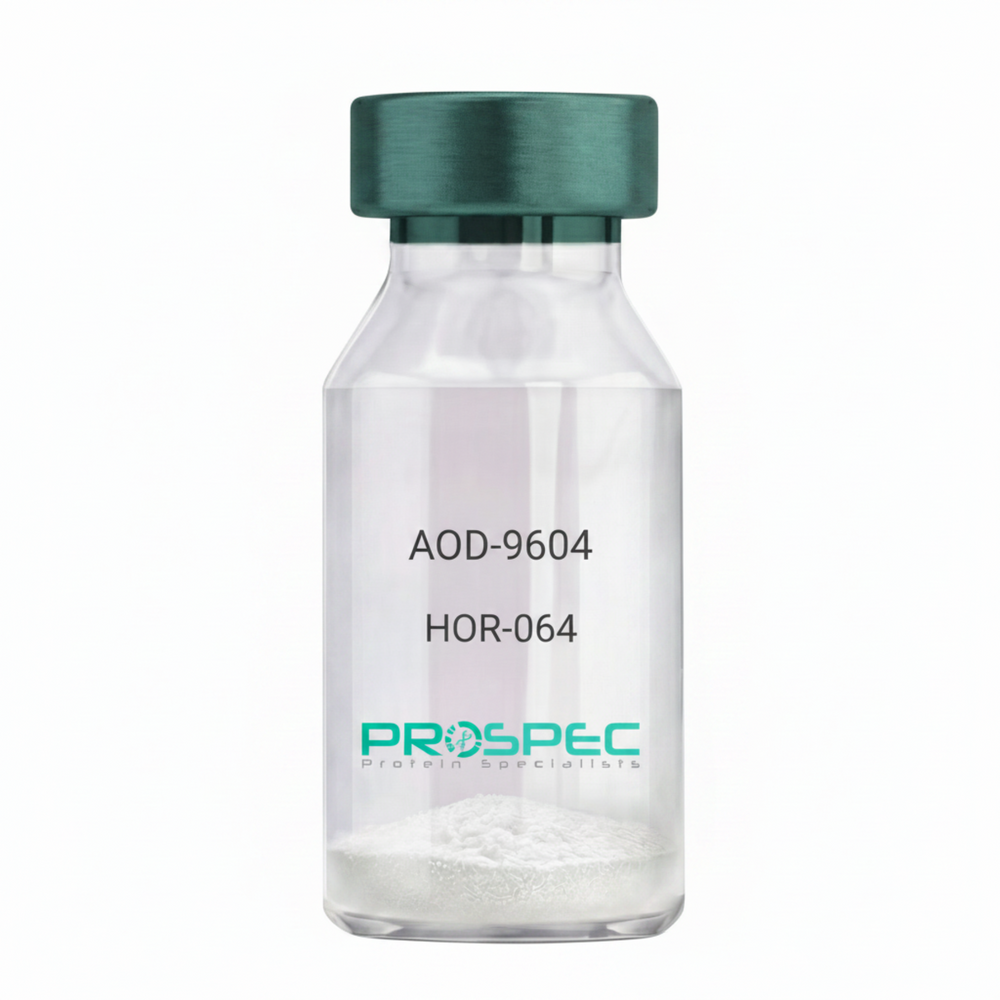
AOD-9604Description:
AOD-9604
Product # :
HOR-064Price :
Quantity :
Shipping Method :
Shipped at Room temp
More Info
- description
- formulation
- purity
- More Info
Description
AOD-9604 is a synthetic single, non-glycosylated polypeptide chain containing 16 amino acids, having a molecular mass of 1815 Dalton and a Molecular formula of C78H123N23O23 S2.
Formulation
The protein was lyophilized with no additives.
Purity
Greater than 97.0% as determined by analysis by RP-HPLC.
More Info
-
Physical Appearance
Sterile Filtered White lyophilized (freeze-dried) powder.
-
Stability
Lyophilized AOD-9604 although stable at room temperature for 3 weeks, should be stored desiccated below -18°C. Upon reconstitution AOD-9604 should be stored at 4°C between 2-7 days and for future use below -18°C.
For long term storage it is recommended to add a carrier protein (0.1% HSA or BSA).
Please prevent freeze-thaw cycles.
-
Solubility
It is recommended to reconstitute the lyophilized AOD-9604 in sterile 18MΩ-cm H2O not less than 100 µg/ml, which can then be further diluted to other aqueous solutions.
-
Amino Acid Sequence
H-Tyr-Leu-Arg-Ile-Val-Gln-Cys-Arg-SerVal-Glu-Gly-Ser-Cys-Gly-Phe-OH (Disulfide bond).
-
Background
AOD-9604 is a synthetic analog of the C-terminal fragment (177–191) AOD-9604 stimulates lipolysis (fat breakdown) without the unwanted growth-promoting or insulin-antagonizing effects of full-length hGH. AOD-9604 is a potent lipolytic tool in animal models and researchers focus on its regenerative properties in joint health and its ability to modulate beta3 adrenergic receptors without the systemic risks of growth hormone.
ProSpec's products are furnished for LABORATORY RESEARCH USE ONLY. The product may not be used as drugs, agricultural or pesticidal products, food additives or household chemicals.
- View Data Sheet
Name :
AntideDescription:
Antide Acetate
Product # :
HOR-242Price :
Quantity :
Shipping Method :
Shipped at Room temp
More Info
- description
- formulation
- purity
- More Info
Description
Antide acetate (Ac-AA10-NH2) is an LHRH antagonist and represses LH and FSH release from the pituitary gland. Antide Mw is 1590.6 Dalton.
Formulation
The Antide peptide was lyophilized with no additives.
Purity
Greater than 98.0% as determined by RP-HPLC.
More Info
-
Physical Appearance
Sterile Filtered White lyophilized (freeze-dried) powder.
-
Stability
Lyophilized Antide although stable at room temperature for 3 weeks, should be stored desiccated below -18°C. Upon reconstitution Antide should be stored at 4°C between 2-7 days and for future use below -18°C. For long term storage it is recommended to add a carrier protein (0.1% HSA or BSA).Please prevent freeze-thaw cycles.
-
Solubility
It is recommended to reconstitute the lyophilized Antide in sterile water at 0.1mg-0.5mg/ml.
-
Amino Acid Sequence
Ac-D-2-Nal-D-Phe(4-CL)-3-D-Pal-Ser-Lys(nicotinoyl)-D-Lys(nicotinoyl)-Leu-Lys(Isopropyl)-Pro-D-Ala-Nh2.
ProSpec's products are furnished for LABORATORY RESEARCH USE ONLY. The product may not be used as drugs, agricultural or pesticidal products, food additives or household chemicals.
- View Data Sheet
Name :
ST13 AntibodyDescription:
HSP70 Interacting Protein, Mouse Anti Human
AAG2, SNC6, HSPABP, FAM10A1, FAM10A4, HSPABP1, ST-13, Hsc70-interacting protein, Suppression of tumorigenicity protein 13, Putative tumor suppressor ST13, Protein FAM10A1, Progesterone receptor-associated p48 protein, Renal carcinoma antigen NY-REN-33, ST13, HIP, HOP, P48, PRO0786, FLJ27260, MGC129952.
Product # :
ANT-330Price :
Quantity :
Shipping Method :
Shipped with Ice Packs
More Info
- formulation
- More Info
Formulation
1mg/ml containing PBS, pH-7.4, & 0.1% Sodium Azide.
More Info
-
Introduction
ST13 is an adaptor protein (co-chaperone) that mediates the association of HSP70 & HSP90 and appears in early receptor complexes. ST13 plays a role in the assembly process of glucocorticoid receptor, which requires the assistance of multiple molecular chaperones. The expression of ST13 is downregulated in colorectal carcinoma tissue signifying that is candidate tumor suppressor gene. Through common binding to both Hsp70 and Hsp90, ST13 functions as an adaptor that can integrate Hsp70 and Hsp90 interactions. The expression of ST13 decreases in colorectal cancer tissue compared with that in adjacent normal tissue. ST13 is mostly expressed in colorectal epithelia and adenocarcinoma cells. ST13 functions to promote the efficiency of glucocorticoid receptor maturation in cells. The expression levels of the ST13 gene were significantly decreased in primary tumors compared with adjacent mucosa.
-
Synonyms
AAG2, SNC6, HSPABP, FAM10A1, FAM10A4, HSPABP1, ST-13, Hsc70-interacting protein, Suppression of tumorigenicity protein 13, Putative tumor suppressor ST13, Protein FAM10A1, Progesterone receptor-associated p48 protein, Renal carcinoma antigen NY-REN-33, ST13, HIP, HOP, P48, PRO0786, FLJ27260, MGC129952.
-
Immunogen
Anti-human ST13 mAb, is derived from hybridization of mouse F0 myeloma cells with spleen cells from BALB/c mice immunized with recombinant human ST13 amino acids 1-369 purified from E. coli.
-
Ig Subclass
Mouse IgG1 heavy chain and κ light chain.
-
Clone
PAT1F1AT.
-
Applications
ST13 antibody has been tested by ELISA and Western blot analysis to assure specificity and reactivity. Since application varies, however, each investigation should be titrated by the reagent to obtain optimal results. Recommended dilution range for Western blot analysis is 1:1000 ~ 3000. Recommended starting dilution is 1:1000.
-
Type
Mouse Anti Human Monoclonal.
-
Storage Procedures
For periods up to 1 month store at 4°C, for longer periods of time, store at -20°C. Prevent freeze thaw cycles.
-
Purification Method
ST13 antibody was purified from mouse ascitic fluids by protein-G affinity chromatography.
ProSpec's products are furnished for LABORATORY RESEARCH USE ONLY. The product may not be used as drugs, agricultural or pesticidal products, food additives or household chemicals.
- View Data Sheet
Name :
LSM2 AntibodyDescription:
LSM2 Homolog, U6 Small Nuclear RNA Associated, Mouse Anti Human
LSM2 homolog U6 small nuclear RNA associated (S. cerevisiae), Small nuclear ribonuclear protein D homolog, chromosome 6 open reading frame 28, snRNP core Sm-like protein Sm-x5, C6orf28, YBL026W, Protein G7b, snRNP.
Product # :
ANT-082Price :
Quantity :
Shipping Method :
Shipped with Ice Packs
More Info
- formulation
- More Info
Formulation
1mg/ml containing PBS, pH-7.4, & 0.1% Sodium Azide.
More Info
-
Introduction
LSM2 is a member of the snRNP Sm proteins family. Sm-like proteins are branded in several organisms based on sequence homology with the Sm protein family. Sm-like proteins hold the Sm sequence motif that is made up of 2 regions separated by a linker of variable length which folds as a loop. The Sm-like proteins are believed to create a steady heteromer present in tri-snRNP particles, which are vital for pre-mRNA splicing. LSM2 binds specifically to the 3'-terminal U-tract of U6 snRNA nad takes part in pre-mRNA splicing.
-
Synonyms
LSM2 homolog U6 small nuclear RNA associated (S. cerevisiae), Small nuclear ribonuclear protein D homolog, chromosome 6 open reading frame 28, snRNP core Sm-like protein Sm-x5, C6orf28, YBL026W, Protein G7b, snRNP.
-
Immunogen
Anti-human LSM2 mAb, is derived from hybridization of mouse FO myeloma cells with spleen cells from BALB/c mice immunized with recombinant human LSM2 amino acids 1-95 purified from E. coli.
-
Ig Subclass
Mouse IgG2a heavy chain and k light chain.
-
Clone
PAT2B2AT.
-
Applications
LSM2 antibody has been tested by ELISA, Western blot analysis to assure specificity and reactivity. Since application varies, however, each investigation should be titrated by the reagent to obtain optimal results. Recommended dilution range for Western blot analysis is 1:1,000~1:3,000.
-
Type
Mouse Anti Human Monoclonal.
-
Storage Procedures
For periods up to 1 month store at 4°C, for longer periods of time, store at -20°C. Prevent freeze thaw cycles.
-
Purification Method
LSM2 antibody was purified from mouse ascitic fluids by protein-G affinity chromatography.
ProSpec's products are furnished for LABORATORY RESEARCH USE ONLY. The product may not be used as drugs, agricultural or pesticidal products, food additives or household chemicals.
- View Data Sheet
Name :
PSME1 AntibodyDescription:
Proteasome Activator Subunit 1, Mouse Anti Human
REG-alpha, PA28alpha, PA28a, Proteasome Activator subunit-1, Proteasome Activator 28 subunit alpha, Interferon gamma up-regulated I-5111 protein.
Product # :
ANT-580Price :
Quantity :
Shipping Method :
Shipped with Ice Packs
More Info
- formulation
- More Info
Formulation
1mg/ml containing PBS, pH-7.4, 10% Glycerol and 0.02% Sodium Azide.
More Info
-
Introduction
PSME1 is an interferon gamma (IFNG) inducible proteasome activator essential for presentation of certain major histocompatibility (MHC) class I antigens. The PSME1 complex is an alternate proteasome activator which operates with no use of ubiquitin. The PSME1 complex is made out of two homologous subunits, alpha and beta, that functions in similar catalytic properties and is connected to a hexameric ring.
-
Synonyms
REG-alpha, PA28alpha, PA28a, Proteasome Activator subunit-1, Proteasome Activator 28 subunit alpha, Interferon gamma up-regulated I-5111 protein.
-
Physical Appearance
Sterile filtered colorless solution.
-
Immunogen
Anti-human PSME1 mAb, is derived from hybridization of mouse F0 myeloma cells with spleen cells from BALB/c mice immunized with a recombinant human PSME1 protein 1-249 amino acids purified from E. coli.
-
Ig Subclass
Mouse IgG2a heavy chain and k light chain.
-
Clone
PAT12H3AT.
-
Applications
PSME1 antibody has been tested by ELISA and Western blot analysis to assure specificity and reactivity. Since application varies, however, each investigation should be titrated by the reagent to obtain optimal results.
-
Type
Mouse Anti Human Monoclonal.
-
Storage Procedures
For periods up to 1 month store at 4°C, for longer periods of time, store at -20°C. Prevent freeze thaw cycles.
-
Purification Method
PSME1 antibody was purified from mouse ascitic fluids by protein-A affinity chromatography.
ProSpec's products are furnished for LABORATORY RESEARCH USE ONLY. The product may not be used as drugs, agricultural or pesticidal products, food additives or household chemicals.
- View Data Sheet
Name :
SARS MERS RBDDescription:
SARS MERS Spike Receptor Binding Domain Recombinant
Middle East respiratory syndrome coronavirus, Human betacoronavirus 2c EMC/2012, MERS-CoV, MERS, MERSCoV RBD, MERS RBD, receptor binding domain, RBD, Spike RBD protein, Spike glycoprotein, S glycoprotein, E2, Peplomer protein
Product # :
SARS-054Price :
Quantity :
Shipping Method :
Shipped with Ice Packs
More Info
- description
- source
- formulation
- purity
- More Info
Description
SARS MERS RBD Recombinant produced in Sf9 Baculovirus cells is a single, glycosylated polypeptide chain containing 258 amino acids (358-606 aa) and having a molecular mass of 28.2kDa.SARS MERS RBD is fused to a 6 amino acid His-tag at C-terminus & purified by proprietary chromatographic techniques.
Source
Sf9, Baculovirus cells.
Formulation
The SARS MERS RBD solution (0.5mg/ml) contains 10% glycerol and Phosphate-Buffered Saline (pH 7.4).
Purity
Greater than 90.0% as determined by SDS-PAGE.
More Info
-
Introduction
Since April 2012, cases of the Middle East Respiratory Syndrome Coronavirus (MERS-CoV) have been identified in various countries. Coronaviruses are the cause of the common cold, SARS (severe acute respiratory syndrome) and other severe illnesses with high mortality rates, all are classified into coronavirus family. MERS-CoV is a new type of SARS found in the coronavirus family causing severe pneumonia with sudden and serious respiratory illness with high mortality rates as well. Since January 27th 2015, the WHO has reported 956 human cases, including 351 deaths. More cases of the new coronavirus strain are expected. Like in other coronaviruses, large surface spike glycoprotein is a central structural protein of this virus; it is located above the virion surface to bind and enter into the target cell. Spike protein has 2 domains- S1 and S2. The S1 domain is responsible for cellular tropism and interaction with target cell, while the S2 domain is responsible for membrane fusion. The C-terminal of S1 domain contains a receptor binding domain, and is also a potential target for vaccine development and an antigen for diagnosis.
-
Synonyms
Middle East respiratory syndrome coronavirus, Human betacoronavirus 2c EMC/2012, MERS-CoV, MERS, MERSCoV RBD, MERS RBD, receptor binding domain, RBD, Spike RBD protein, Spike glycoprotein, S glycoprotein, E2, Peplomer protein
-
Physical Appearance
Sterile filtered colorless solution.
-
Stability
Store at 4°C if entire vial will be used within 2-4 weeks.Store, frozen at -20°C for longer periods of time.For long term storage it is recommended to add a carrier protein (0.1% HSA or BSA).Avoid multiple freeze-thaw cycles.
-
Amino Acid Sequence
ADPSGVYSVS SFEAKPSGSV VEQAEGVECD FSPLLSGTPP QVYNFKRLVF TNCNYNLTKL LSLFSVNDFT CSQISPAAIA SNCYSSLILD YFSYPLSMKS DLSVSSAGPI SQFNYKQSFS NPTCLILATV PHNLTTITKP LKYSYINKCS RLLSDDRTEV PQLVNANQYS PCVSIVPSTV WEDGDYYRKQ LSPLEGGGWL VASGSTVAMT EQLQMGFGIT VQYGTDTNSV CPKLEFANDT KIASQLGNCV EYHHHHHH
ProSpec's products are furnished for LABORATORY RESEARCH USE ONLY. The product may not be used as drugs, agricultural or pesticidal products, food additives or household chemicals.
- View Data Sheet
Name :
SDF 1a Mouse, HisDescription:
Stromal Cell-Derived Factor-1 alpha (CXCL12), Mouse Recombinant, His Tag
SDF-1, CXCL12, Pre-B cell growth-stimulating factor, PBSF, hIRH, chemokine (C-X-C motif) ligand 12, SDF1, SDF1A, TPAR1, SCYB12, SDF-1a, TLSF-a, 12-O tetradecanoylphorbol 13-acetate repressed protein 1, Thymic lymphoma cell stimulating factor, TLSF.
Product # :
CHM-323Price :
Quantity :
Shipping Method :
Shipped with Ice Packs
More Info
- description
- source
- formulation
- purity
- More Info
Description
SDF 1a Mouse Recombinant produced in E.Coli is a single, non-glycosylated polypeptide chain containing 91 amino acids (22-89 a.a) and having a molecular mass of 10.4kDa. SDF 1a is fused to a 23 amino acid His-tag at N-terminus & purified by proprietary chromatographic techniques.
Source
Escherichia Coli.
Formulation
SDF 1a protein solution (0.25mg/ml) containing Phosphate Buffered Saline (pH7.4) and 10% glycerol.
Purity
Greater than 95.0% as determined by SDS-PAGE.
More Info
-
Introduction
SDF-1 (stromal cell-derived factor-1) is small cytokine belonging to the chemokine family that is officially designated Chemokine (C-X-C motif) ligand 12 (CXCL12). It is produced in two forms, SDF-1?/CXCL12a and SDF-1?/CXCL12b, by alternate splicing of the same gene. Chemokines are characterized by the presence of four conserved cysteines, which form two disulfide bonds. The CXCL12 proteins belong to the group of CXC chemokines, whose initial pair of cysteines are separated by one intervening amino acid. CXCL12 is strongly chemotactic for lymphocytes and has been implicated as an important cell co-ordinator during development. During embryogenesis it directs the migration of hematopoietic cells from foetal liver to bone marrow. Mice which were knocked-out for CXCL12 gene were lethal before the birth or within just 1 hour of life. As another role, CXCL12a alters also the electrophysiology of neurons. CXCL12 was shown to be expressend in many tissues in mice (including brain, thymus, heart, lung, liver, kidney, spleen and bone marrow).
The receptor for this chemokine is CXCR4, which was previously called fusin. This CXCL12-CXCR4 interaction used to be considered exclusive (unlike for other chemokines and their receptors), but recently it was suggested that CXCL12 is also bound by CXCR7 receptor.
The gene for CXCL12 is located on human chromosome 10. In human and mouse both CXCL12 and CXCR4 show high identity of sequence: 99% and 90%, respectively. -
Synonyms
SDF-1, CXCL12, Pre-B cell growth-stimulating factor, PBSF, hIRH, chemokine (C-X-C motif) ligand 12, SDF1, SDF1A, TPAR1, SCYB12, SDF-1a, TLSF-a, 12-O tetradecanoylphorbol 13-acetate repressed protein 1, Thymic lymphoma cell stimulating factor, TLSF.
-
Physical Appearance
Sterile Filtered colorless solution.
-
Stability
Store at 4°C if entire vial will be used within 2-4 weeks. Store, frozen at -20°C for longer periods of time. For long term storage it is recommended to add a carrier protein (0.1% HSA or BSA).Avoid multiple freeze-thaw cycles.
-
Amino Acid Sequence
MGSSHHHHHH SSGLVPRGSH MGSKPVSLSY RCPCRFFESH IARANVKHLK ILNTPNCALQ IVARLKNNNR QVCIDPKLKW IQEYLEKALN K.
ProSpec's products are furnished for LABORATORY RESEARCH USE ONLY. The product may not be used as drugs, agricultural or pesticidal products, food additives or household chemicals.
- View Data Sheet
Name :
SERTAD1 HumanDescription:
SERTA Domain Containing 1 Human Recombinant
SERTA domain-containing protein 1, CDK4-binding protein p34SEI1, SEI-1, Transcriptional regulator interacting with the PHD-bromodomain 1, TRIP-Br1, SERTAD1, SEI1.
Product # :
PRO-1157Price :
Quantity :
Shipping Method :
Shipped with Ice Packs
More Info
- description
- source
- formulation
- purity
- More Info
Description
SERTAD1 Human Recombinant produced in E.Coli is a single, non-glycosylated polypeptide chain containing 260 amino acids (1-236 a.a) and having a molecular mass of 27.3kDa (Molecular weight on SDS-PAGE will appear higher).SERTAD1 is fused to a 24 amino acid His-tag at N-terminus & purified by proprietary chromatographic techniques.
Source
Escherichia Coli.
Formulation
SERTAD1 protein solution (0.5mg/ml) containing 20mM Tris-HCl buffer (pH8.0), 10% glycerol and 1mM DTT.
Purity
Greater than 85% as determined by SDS-PAGE.
More Info
-
Introduction
SERTA domain-containing protein (SERTAD1) functions with E2F-responsive promoters to integrate signals provided by PHD- and/or bromodomain-containing transcription factors. SERTAD1 stimulates E2F-1/DP-1 transcriptional activity. SERTAD1 reduces the activity of cyclin D1/CDK4 resistant to the inhibitory effects of p16(INK4a). In addition, SERTAD1 interacts with the PHD-bromodomain of TIF1, TRIM28/TIF1B and p300/CBP. Furthermore, SERTAD1 binds to DP1 and interacts with CDK4.
-
Synonyms
SERTA domain-containing protein 1, CDK4-binding protein p34SEI1, SEI-1, Transcriptional regulator interacting with the PHD-bromodomain 1, TRIP-Br1, SERTAD1, SEI1.
-
Physical Appearance
Sterile filtered colorless solution.
-
Stability
Store at 4°C if entire vial will be used within 2-4 weeks. Store, frozen at -20°C for longer periods of time. For long term storage it is recommended to add a carrier protein (0.1% HSA or BSA).Avoid multiple freeze-thaw cycles.
-
Amino Acid Sequence
MGSSHHHHHH SSGLVPRGSH MGSHMLSKGL KRKREEEEEK EPLAVDSWWL DPGHTAVAQA PPAVASSSLF DLSVLKLHHS LQQSEPDLRH LVLVVNTLRR IQASMAPAAA LPPVPSPPAA PSVADNLLAS SDAALSASMA SLLEDLSHIE GLSQAPQPLA DEGPPGRSIG GAAPSLGALD LLGPATGCLL DDGLEGLFED IDTSMYDNEL WAPASEGLKP GPEDGPGKEE APELDEAELD YLMDVLVGTQ ALERPPGPGR.
ProSpec's products are furnished for LABORATORY RESEARCH USE ONLY. The product may not be used as drugs, agricultural or pesticidal products, food additives or household chemicals.
- View Data Sheet
Name :
CAMP HumanDescription:
Cathelicidin Antimicrobial Peptide Human Recombinant
CAP-18, CAP18, CRAMP, FALL-39, FALL39, HSD26, LL37, 18 kDa cationic antimicrobial protein, FALL-39 peptide antibiotic, Cathelicidin antimicrobial peptide.
Product # :
PRO-1405Price :
Quantity :
Shipping Method :
Shipped with Ice Packs
More Info
- description
- source
- formulation
- purity
- More Info
Description
CAMP Human Recombinant produced in E.Coli is a single, non-glycosylated polypeptide chain containing 163 amino acids (34-173 a.a.) and having a molecular mass of 18.4kDa.CAMP is fused to a 23 amino acid His-tag at N-terminus.
Source
Escherichia Coli.
Formulation
CAMP protein solution (0.5mg/ml) contains 20mM Tris-HCl buffer (pH 8.0), 0.4M UREA and 10% glycerol.
Purity
Greater than 85.0% as determined by SDS-PAGE.
More Info
-
Introduction
CAMP belongs to the antimicrobial peptide family, contains highly conserved N-terminal signal peptide, a cathelin domain and a structurally variable cationic antimicrobial peptide that produced by extracellular proteolysis from the C-terminus. CAMP has numerous functions besides the antimicrobial activity such as: cell chemotaxis, immune mediator induction and inflammatory response regulation.
-
Synonyms
CAP-18, CAP18, CRAMP, FALL-39, FALL39, HSD26, LL37, 18 kDa cationic antimicrobial protein, FALL-39 peptide antibiotic, Cathelicidin antimicrobial peptide.
-
Physical Appearance
Sterile Filtered clear solution.
-
Stability
Store at 4°C if entire vial will be used within 2-4 weeks. Store, frozen at -20°C for longer periods of time. For long term storage it is recommended to add a carrier protein (0.1% HSA or BSA).Avoid multiple freeze-thaw cycles.
-
Amino Acid Sequence
MGSSHHHHHH SSGLVPRGSH MGSQVLSYKE AVLRAIDGIN QRSSDANLYR LLDLDPRPTM DGDPDTPKPV SFTVKETVCP RTTQQSPEDC DFKKDGLVKR CMGTVTLNQA RGSFDISCDK DNKRFALLGD FFRKSKEKIG KEFKRIVQRI KDFLRNLVPR TES.
ProSpec's products are furnished for LABORATORY RESEARCH USE ONLY. The product may not be used as drugs, agricultural or pesticidal products, food additives or household chemicals.
- View Data Sheet
Name :
RAD51D (1-328) HumanDescription:
RAD51D (1-328 a.a.) Human Recombinant
BROVCA4, R51H3, RAD51L3, TRAD, DNA repair protein RAD51 homolog 4, RAD51 homolog D, RAD51-like protein 3, RAD51D.
Product # :
PRO-1861Price :
Quantity :
Shipping Method :
Shipped with Ice Packs
More Info
- description
- source
- formulation
- purity
- More Info
Description
RAD51D (1-328) Human Recombinant produced in E. coli is. a single polypeptide chain containing 351 amino acids and having a molecular mass of 37.4kDa. RAD51D (1-328) is fused to a 23 amino acid His-tag at N-terminus & purified by proprietary chromatographic techniques.
Source
Escherichia Coli.
Formulation
RAD51D (1-328) solution (0.25mg/ml) contains 20mM Tris-HCl buffer (pH 8.0), 0.1M NaCl, 10% glycerol and 1mM DTT.
Purity
Greater than 90% as determined by SDS-PAGE.
More Info
-
Introduction
RAD51D is a member of the RAD51 protein family whose members are extremely similar to bacterial RecA and Saccharomyces cerevisiae Rad51. RAD51 protein family members take part in the homologous recombination and repair of DNA. RAD51D forms a complex with several other members of the RAD51 family which catalyzes homologous pairing between single- and double-stranded DNA, and participates in the early stage of recombinational repair of DNA.
-
Synonyms
BROVCA4, R51H3, RAD51L3, TRAD, DNA repair protein RAD51 homolog 4, RAD51 homolog D, RAD51-like protein 3, RAD51D.
-
Physical Appearance
Sterile Filtered colorless solution.
-
Stability
Store at 4°C if entire vial will be used within 2-4 weeks. Store, frozen at -20°C for longer periods of time. For long term storage it is recommended to add a carrier protein (0.1% HSA or BSA).Avoid multiple freeze-thaw cycles.
-
Amino Acid Sequence
MGSSHHHHHH SSGLVPRGSH MGSMGVLRVG LCPGLTEEMI QLLRSHRIKT VVDLVSADLE EVAQKCGLSY KALVALRRVL LAQFSAFPVN GADLYEELKT STAILSTGIG SLDKLLDAGL YTGEVTEIVG GPGSGKTQVC LCMAANVAHG LQQNVLYVDS NGGLTASRLL QLLQAKTQDE EEQAEALRRI QVVHAFDIFQ MLDVLQELRG TVAQQVTGSS GTVKVVVVDS VTAVVSPLLG GQQREGLALM MQLARELKTL ARDLGMAVVV TNHITRDRDS GRLKPALGRS WSFVPSTRIL LDTIEGAGAS GGRRMACLAK SSRQPTGFQE MVDIGTWGTS EQSATLQGDQ T.
ProSpec's products are furnished for LABORATORY RESEARCH USE ONLY. The product may not be used as drugs, agricultural or pesticidal products, food additives or household chemicals.
- View Data Sheet
Name :
CALM2 Human 135 a.aDescription:
Calmodulin-2 135 a.a. Human Recombinant
CALM2, CAM2, CAMB, CAMII, PHKD2, calmodulin 2.
Product # :
PRO-370Price :
Quantity :
Shipping Method :
Shipped with Ice Packs
More Info
- description
- source
- formulation
- purity
- More Info
Description
CALM2 Human Recombinant full length protein expressed in E.coli, containing 135 amino acids and having a Molecular Weight of approximately 16 kDa.
Source
Escherichia Coli.
Formulation
CALM2 at 1mg/ml in 20mM HEPES-KOH, pH7, 50mM NaCl, 1mM EDTA and 1mM DTT.
Purity
Greater than 90% as determined by SDS-PAGE.
More Info
-
Introduction
Calmodulin (CaM) is an intracellular receptor protein for Ca2+-ions. It activates the myosin light chain kinase which is the catalyst of myosin phosphorylation. CaM participates in the activation of enzymes such as cyclic nucleotide- dependent phosphodiesterase, calcineurin, ATPase, Myosin Light Chain Kinases, and CAM kinase.
-
Synonyms
CALM2, CAM2, CAMB, CAMII, PHKD2, calmodulin 2.
-
Physical Appearance
Sterile Filtered clear solution.
-
Stability
Store vial at -20°C to -80°C. When stored at the recommended temperature, this protein is stable for 12 months.Please prevent freeze-thaw cycles.
-
Amino Acid Sequence
MADQLTEEQI AEFKEAFSLF DKDGDGTITT KELGTVMRSL GQNPTEAELQ DMINEVDADG NGTIDFPEFL TMMARKMKDT DSEEEIREAF RVFDKDGNGY ISAAELRHVM TNLGEKLTDE EVDEMIREAD IDGDGQ.
ProSpec's products are furnished for LABORATORY RESEARCH USE ONLY. The product may not be used as drugs, agricultural or pesticidal products, food additives or household chemicals.
- View Data Sheet
Name :
MAPK1 HumanDescription:
Mitogen-Activated Protein Kinase 1 Human Recombinant
Mitogen-activated protein kinase 1, EC 2.7.11.24, Extracellular signal-regulated kinase 2, ERK-2, Mitogen-activated protein kinase 2, MAP kinase 2, MAPK 2, p42-MAPK, ERT1, ERK, p38, p40, p41, ERK2, MAPK2, PRKM1, PRKM2, P42MAPK, p41mapk.
Product # :
PKA-215Price :
Quantity :
Shipping Method :
Shipped with Ice Packs
More Info
- description
- source
- formulation
- purity
- More Info
Description
MAPK1 Recombinant (extracellular signal-regulated kinase) a Mitogen-Activated Protein Kinase, is a highly active form produced by phosphorylation of the purified ERK2/MAPK1 in vitro with MEK1 is a non-glycosylated polypeptide having a molecular mass of 44.6 kDa. MAPK1 is purified by proprietary chromatographic techniques.
Source
Escherichia Coli.
Formulation
MAPK1 is supplied containing 50mM Tris-HCL, 150mM NaCl, 2mM DTT, pH 8.0, 100 Units*/mg.
Purity
Greater than 95.0% as determined by SDS-PAGE.
More Info
-
Introduction
Mitogen-activated protein kinase 1 (MAPK1) is also known as "extracellular signal-regulated kinase 2" (ERK2). Two similar (85% sequence identity) protein kinases were originally called ERK1 and ERK2. They were found during a search for protein kinases that are rapidly phosphorylated after activation of cell surface tyrosine kinasessuch as the epidermal growth factor receptor. Phosphorylation of ERKs leads to the activation of their kinase activity.
The molecular events linking cell surface receptors to activation of ERKs are complex. It was found that RasGTP-binding proteins are involved in the activation of ERKs. Another protein kinase, Raf-1, was shown to phosphorylate a "MAPK kinase", thus qualifying as a "MAPK kinase kinase". The MAPK kinase was named "MAPK/ERK kinase" (MEK).
Receptor-linked tyrosine kinases, Ras, Raf, MEK and MAPK could be fitted into a signaling cascade linking an extracellular signal to MAPK activation.
Transgenic gene knockoutmice lacking MAPK1 have major defects in early development. -
Synonyms
Mitogen-activated protein kinase 1, EC 2.7.11.24, Extracellular signal-regulated kinase 2, ERK-2, Mitogen-activated protein kinase 2, MAP kinase 2, MAPK 2, p42-MAPK, ERT1, ERK, p38, p40, p41, ERK2, MAPK2, PRKM1, PRKM2, P42MAPK, p41mapk.
-
Physical Appearance
Sterile Filtered clear solution.
-
Stability
MAPK1 should be stored at 4°C if entire vial will be used within 2-4 weeks. For long term storage it is recommended to store at -20°C. Avoid multiple freeze-thaw cycles.
-
Unit Definition
1 U = 1 pmol/min transferred to myelin basic protein at 30°C.
ProSpec's products are furnished for LABORATORY RESEARCH USE ONLY. The product may not be used as drugs, agricultural or pesticidal products, food additives or household chemicals.
- View Data Sheet
Name :
MEMO1 AntibodyDescription:
Mediator of Cell Motility 1, Mouse Anti Human
Protein MEMO1, C21orf19-like protein, Hepatitis C virus NS5A-transactivated protein 7, HCV NS5A-transactivated protein 7, Mediator of ErbB2-driven cell motility 1, Mediator of cell motility 1, Memo-1, MEMO1, C2orf4, MEMO, NS5ATP7, CGI-27.
Product # :
ANT-090Price :
Quantity :
Shipping Method :
Shipped with Ice Packs
More Info
- formulation
- More Info
Formulation
1mg/ml containing PBS, pH-7.4, & 0.1% Sodium Azide.
More Info
-
Introduction
Mediator of ErbB2-driven cell motility 1 (MEMO1) is a member of the UPF0103 family. MEMO1 regulates cell migration by transmitting extracellular chemotactic signals to the microtubule cytoskeleton. Furthermore, MEMO1 controls the localization of APC and CLASP2 to the cell membrane, using the regulation of GSK3B activity. MEMO1 is essential for breast carcinoma cell migration, suggesting a key role in tumorigenesis. MEMO1 is also a mediator of ERBB2 signaling.
-
Synonyms
Protein MEMO1, C21orf19-like protein, Hepatitis C virus NS5A-transactivated protein 7, HCV NS5A-transactivated protein 7, Mediator of ErbB2-driven cell motility 1, Mediator of cell motility 1, Memo-1, MEMO1, C2orf4, MEMO, NS5ATP7, CGI-27.
-
Immunogen
Anti-human MEMO1 mAb, is derived from hybridization of mouse FO myeloma cells with spleen cells from BALB/c mice immunized with recombinant human MEMO1 amino acids 1-297 purified from E. coli.
-
Ig Subclass
Mouse IgG1 heavy chain and kappa light chain.
-
Clone
P1E9AT.
-
Type
Mouse Anti Human Monoclonal.
-
Storage Procedures
For periods up to 1 month store at 4°C, for longer periods of time, store at -20°C. Prevent freeze thaw cycles.
-
Purification Method
MEMO1 antibody was purified from mouse ascitic fluids by protein-G affinity chromatography.
ProSpec's products are furnished for LABORATORY RESEARCH USE ONLY. The product may not be used as drugs, agricultural or pesticidal products, food additives or household chemicals.
- View Data Sheet
Name :
SMAC/DIABLO AntibodyDescription:
SMAC/DIABLO, Mouse Anti Human
Diablo homolog mitochondrial, Second mitochondria-derived activator of caspase, Smac protein, Direct IAP-binding protein with low pI, DIABLO, SMAC, SMAC3, DIABLO-S, FLJ10537, FLJ25049.
Product # :
ANT-487Price :
Quantity :
Shipping Method :
Shipped with Ice Packs
More Info
- formulation
- More Info
Formulation
1mg/ml containing PBS, pH-7.4, 10% Glycerol and 0.02% Sodium Azide.
More Info
-
Introduction
Smac/Diablo is a proapoptotic protein that increases caspase activation in the cytochrome c/Apaf-1/caspase-9 pathway by its binding to the inhibitor of apoptosis proteins (IAPs) and removing their inhibitory activity. Smac/Diablo is a mitochondrial protein which enters the cytosol when cells go through apoptosis, and it moderates the caspase inhibition of IAPs.Smac/DIABLO expression is associated with the result of renal cell carcinoma.Dimeric form of Smac/DIABLO implies that once expressed in the cell the protein has a little probability of dissociation and, thus, loss of function. Survivin, Smac/DIABLO, & PKC-? play an important part in the inhibition of apoptosis by FGF-2 in human small cell lung cancer cells. Mitochondrial survivin associates with Smac/DIABLO, delaying its release. Decreased expression of Smac protein takes part in ovarian carcinogenesis and chemotherapeutic resistance. Smac/DIABLO plays a role in tumor cells during the pathway of apoptosis induction. SMAC protein is regulated by XIAP and degraded by proteasome. SMAC protein takes part inleukemic cell apoptosis. Smac is released during stress-induced apoptosis in multiple myeloma cells.
-
Synonyms
Diablo homolog mitochondrial, Second mitochondria-derived activator of caspase, Smac protein, Direct IAP-binding protein with low pI, DIABLO, SMAC, SMAC3, DIABLO-S, FLJ10537, FLJ25049.
-
Physical Appearance
Sterile filtered colorless solution.
-
Immunogen
Anti-human SMAC/DIABLO mAb, clone PAT19F2A, is derived from hybridization of mouse F0 myeloma cells with spleen cells from BALB/c mice immunized with a recombinant human SMAC/DIABLO protein 56-239 amino acids purified from E. coli.
-
Ig Subclass
Mouse IgG2a heavy chain and Kappa light chain.
-
Clone
PAT19F2A.
-
Applications
The antibody has been tested by ELISA, Western blot analysis to assure specificity and reactivity. Since application varies, however, each investigation should be titrated by the reagent to obtain optimal results. Recommended starting dilution is 1:3000.
-
Type
Mouse Anti Human Monoclonal.
-
Storage Procedures
For periods up to 1 month store at 4°C, for longer periods of time, store at -20°C. Prevent freeze thaw cycles.
-
Purification Method
SMAC/DIABLO antibody was purified from mouse ascitic fluids by protein-A affinity chromatography.
ProSpec's products are furnished for LABORATORY RESEARCH USE ONLY. The product may not be used as drugs, agricultural or pesticidal products, food additives or household chemicals.
- View Data Sheet
Name :
MutSDescription:
Thermus Aquaticus DNA Mismatch Repair Protein MutS Recombinant
MutS, Thermus Aquaticus DNA Mismatch Repair Protein, DNA mismatch repair protein MutS.
Product # :
PRO-2573Price :
Quantity :
Shipping Method :
Shipped with Ice Packs
More Info
- description
- source
- formulation
- purity
- More Info
Description
DNA Mismatch Repair Protein MutS Thermus Aquaticus Recombinant produced in E.coli is a single, non-glycosylated polypeptide chain containing 819 amino acids and having a molecular mass of 91.7kDa. The Thermus Aquaticus is fused to a 6 amino acid His-Tag at C-terminus and purified by proprietary chromatographic techniques.
Source
Escherichia Coli.
Formulation
The MutS protein is supplied in 20mM Tris-HCl, pH-8, 250mM NaCl, 0.1mM EDTA, 1mM DTT and 50% Glycerol.
Purity
Greater than 95.0% as determined by SDS-PAGE.
More Info
-
Introduction
The MutS DNA Mismatch Protein Identifies heteroduplex DNAs comprising mis-paired or unpaired bases. The MutS DNA Mismatch Protein binds in vitro to heteroduplex DNAs comprising mis-paired or unpaired bases over a varied temperature range from 4-70 °C and obtains a thermostable ATPase activity. The MutS DNA Mismatch Protein is active at temperature between 0 to 75°C. Since The MutS DNA Mismatch Protein competently binds to 1-4 bases deletion (or insertion) and mismatch base pairs of GT, CT and AG, it is suitable for sensing these mutations. Mutations can be distinguished in polyacrylamide gels or on a solid phase such as Ni agarose or beads or magnetic Ni-NTA particles.
-
Synonyms
MutS, Thermus Aquaticus DNA Mismatch Repair Protein, DNA mismatch repair protein MutS.
-
Physical Appearance
Sterile filtered colorless solution.
-
Stability
Store at 4°C if entire vial will be used within 2-4 weeks. Store, frozen at -20°C for longer periods of time. For long term storage it is recommended to add a carrier protein (0.1% HSA or BSA). Avoid multiple freeze-thaw cycles.
-
Amino Acid Sequence
MEGMLKGEGPGPLPPLLQQYVELRDQYPDYLLLFQVGDFYECFGEDAERLARALG
LVLTHKTSKDFTTPMAGIPLRAFEAYAERLLKMGFRLAVADQVEPAEEAEGLVRRE
VTQLLTPGTLLQESLLPREANYLAAIATGDGWGLAFLDVSTGEFKGTVLKSKSALY
DELFRHRPAEVLLAPELLENGAFLDEFRKRFPVMLSEAPFEPEGEGPLALRRARGA
LLAYAQRTQGGALSLQPFRFYDPGAFMRLPEATLRALEVFEPLRGQDTLFSVLDETR
TAPGRRLLQSWLRHPLLDRGPLEARLDRVEGFVREGALREGVRRLLYRLADLERLAT
RLELGRASPKDLGALRRSLQILPELRALLGEEVGLPDLSPLKEELEAALVEDPPLKVS
EGGLIREGYDPDLDALRAAHREGVAYFLELEERERERTGIPTLKVGYNAVFGYYLEVT
RPYYERVPKEYRPVQTLKDRQRYTLPEMKEKEREVYRLEALIRRREEEVFLEVRERAK
RQAEALREAARILAELDVYAALAEVAVRYGYVRPRFGDRLQIRAGRHPVVERRTEFVP
NDLEMAHELVLITGPNMAGKSTFLRQTALIALLAQVGSFVPAEEAHLPLFDGIYTRIG
ASDDLAGGKSTFMVEMEEVALILKEATENSLVLLDEVGRGTSSLDGVAIATAVAEALH
ERRAYTLFATHYFELTALGLPRLKNLHVAAREEAGGLVFYHQVLPGPASKSYGVEVAAM
AGLPKEVVARARALLQAMAARREGALDAVLERLLALDPDRLTPLEALRLLQELKALALGAPLDTMKGLEHHHHHH -
Applications
Recommended Applications:
1. Remove mismatch DNA (error correction) from gene synthesis reaction
2. Mutation detection and removal
3. Rapid isothermal SNP detection
-
Reaction Conditions
100mM KCl, 50mM Tris-HCl, pH-8.5, 10mM MgCl2, 0.1mM EDTA, 1mM DTT and 2% Glycerol.
-
Preparation protocol
1. After first round PCR, purify PCR fragments using Qiagen QIAquick PCR purification kit with elution in dH2O.
2. Dilute PCR product to 250 ng/µl in 10 mM Tris–HCl, pH 7.8, 50 mM NaCl and heat to 95 °C for 5 min followed by cooling at 0.1°C /s to 25 °C.
3. Add reaction buffer (100mM KCl, 50 mM Tris-HCl, pH 8.5, 10 mM MgCl2, 0.1 mM EDTA, 1 mM DTT, 2% Glycerol) to annealed PCR product, adjust DNA concentration to 11.5 ng/µl, add 6×His-MutS dimers to 950 nM.
4. Incubate the mixture at room temperature for 10 min, then add an equal volume of Ni-NTA beads pre-equilibrated with 1×binding buffer, and incubate for 30 min at room temperature. 5. Gently spin down beads and save supernatant for subsequent processing (second round PCR, cloning etc).
ProSpec's products are furnished for LABORATORY RESEARCH USE ONLY. The product may not be used as drugs, agricultural or pesticidal products, food additives or household chemicals.
- View Data Sheet
Name :
MMP-2 Human, HEKDescription:
Matrix Metalloproteinase-2 Human Recombinant, HEK
72 kDa type IV collagenase, 72 kDa gelatinase, Gelatinase A, Matrix metalloproteinase-2, MMP-2, TBE-1, MMP2, CLG4A, CLG4, MONA, MMP-II.
Product # :
ENZ-100Price :
Quantity :
Shipping Method :
Shipped with Ice Packs
More Info
- description
- source
- formulation
- purity
- biological activity
- More Info
- sds-page
Description
MMP-2 Human Recombinant produced in HEK293 cells is a proform of the Human MMP-2 (Ala30-Cys660) and fused with a ployhistide tag at the C-terminus, having an Mw of 71kDa. MMP-2 is purified by proprietary chromatographic techniques.
Source
HEK293 cells.
Formulation
The MMP-2 is supplied as a 0.2µm filtered solution in 20mM Tris-HCl, 150mM NaCl and 0.05% Brij 35, pH 7.4.
Purity
Greater than 95% as determined by SDS-PAGE.
Biological Activity
The activity was measured by its ability to cleave fluorogenic peptide substrate, Mca-PLGL-Dpa-AR-NH2 (RND,Catalog # ES001)., The specific activity is > 1,000 pmoles/min/µg.
Recombinant Human MMP-2 protein pro form needs to be activated with p-aminophenylmercuric acetate (APMA).
Activation Protocol:
1. Dilute MMP2 to 100µg/ml in the Assay Buffer: 50mM Tris, 10mM CaCl2, 150mM NaCl, 0.05% (w/v) and Brij 35, pH 7.5.
2. Activate MMP2 by adding APMA to a final concentration of 1mM. (Sigma, Catalog # A9563) and 100mM stock in DMSO.
3. Incubate at 37°C for 1 hour.sds-page
More Info
-
Introduction
Matrix metalloproteinase-2 (MMP-2) is a type IV collagenase, which is involved in endometrial menstrual breakdown, regulation of vascularization and the inflammatory response. MMP-2 contains a number of distinct domains: a prodomain that is cleaved upon activation; a catalytic domain containing the zinc binding site; a fibronectin like domain believed to have a role in substrate targeting; and a carboxyl terminal (hemopexin like) domain containing 2 N-linked glycosylation. The MMP-2 can degrade an extensive array of substrates including type IV, V, VII and X collagens as well as gelatin type I. In addition, MMP-2 interacts with THBS2, TIMP2, Thrombospondin 1, CCL7 and TIMP4. MMP-2 autocatalytic cleavage in the C-terminal generates the anti-angiogenic peptide, PEX. This process seems to be made possible by binding integrinv/beta3. Defects in the MMP-2 are the cause of Torg-Winchester syndrome (TWS), aka multicentric osteolysis nodulosis and arthropathy (MONA).
-
Synonyms
72 kDa type IV collagenase, 72 kDa gelatinase, Gelatinase A, Matrix metalloproteinase-2, MMP-2, TBE-1, MMP2, CLG4A, CLG4, MONA, MMP-II.
-
Physical Appearance
The MMP-2 is supplied as a sterile Filtered colorless solution.
-
Stability
Store MMP-2 at 4°C if entire vial will be used within 2-4 weeks. Store frozen at -20°C for longer periods of time.Avoid multiple freeze-thaw cycles.
ProSpec's products are furnished for LABORATORY RESEARCH USE ONLY. The product may not be used as drugs, agricultural or pesticidal products, food additives or household chemicals.
- View Data Sheet
Description:
Myostatin Propeptide Human Recombinant, HEK
GDF-8, MSTN, Growth Differentiation Factor 8, MSTN Muscle Hypertrophy.
Product # :
CYT-936Price :
Quantity :
Shipping Method :
Shipped with Ice Packs
More Info
- description
- source
- formulation
- purity
- More Info
Description
Myostatin Propetide Human Recombinant produced in HEK cells is a single, glycosylated, polypeptide chain (Asn24-Arg266) containing a total of 253 amino acids, having a calculated molecular mass of 29.1kDa. Myostatin Propetide is fused to a 10 aa C-terminal His tag.
Source
HEK 293.
Formulation
Myostatin Propetide solution at a concentration of 0.25mg/ml in phosphate buffered saline (PBS) pH 8.0 and 20% (w/v) glycerol.
Purity
Greater than 80.0% as determined by SDS-PAGE.
More Info
-
Introduction
GDF8 is a member of the bone morphogenetic protein (BMP) family and the TGF-beta superfamily. This group of proteins is characterized by a polybasic proteolytic processing site which is cleaved to produce a mature protein containing seven conserved cysteine residues. The members of this family are regulators of cell growth and differentiation in both embryonic and adult tissues. This gene is thought to encode a secreted protein which negatively regulates skeletal muscle growth.
-
Synonyms
GDF-8, MSTN, Growth Differentiation Factor 8, MSTN Muscle Hypertrophy.
-
Physical Appearance
Filtered colorless solution.
-
Stability
Store at 4°C if entire vial will be used within 2-4 weeks. Store, frozen at -20°C for longer periods of time. For long term storage it is recommended to add a carrier protein (0.1% HSA or BSA).Avoid multiple freeze-thaw cycles.
-
Amino Acid Sequence
NENSEQKENV EKEGLCNACT WRQNTKSSRI EAIKIQILSK LRLETAPNIS KDVIRQLLPK APPLRELIDQ YDVQRDDSSD GSLEDDDYHA TTETIITMPT ESDFLMQVDG KPKCCFFKFS SKIQYNKVVK AQLWIYLRPV ETPTTVFVQI LRLIKPMKDG TRYTGIRSLK LDMNPGTGIW QSIDVKTVLQ NWLKQPESNL GIEIKALDEN GHDLAVTFPG PGEDGLNPFL EVKVTDTPKR SRR HHHHHHH HHH.
ProSpec's products are furnished for LABORATORY RESEARCH USE ONLY. The product may not be used as drugs, agricultural or pesticidal products, food additives or household chemicals.
- View Data Sheet
Name :
SNRPD HumanDescription:
Small Nuclear Ribonucleoprotein Polypeptide D1, D2, D3 Human Recombinant
Product # :
PRO-997Price :
Quantity :
Shipping Method :
Shipped with Ice Packs
More Info
- description
- source
- formulation
- purity
- More Info
Description
SNRPD Human Recombinant produced in SF9 insect cells, is a mixed protein complex containing the SNRPD1 (16 kDa), SNRPD2 (18 kDa) and SNRPD3 (18 kDa) proteins. Each protein (SNRPD1+ SNRPD2+ SNRPD3) is individually fused to a -6xHis tag at N-terminus and purified by proprietary chromatographic techniques.
Source
Sf9 insect cells.
Formulation
SNRPD is supplied in 20mM HEPES buffer pH-7.5, 400mM NaCl and 20% glycerol.
Purity
Greater than 95% as determined by SDS-PAGE.
More Info
-
Physical Appearance
Sterile Filtered clear solution.
-
Stability
Store at 4°C if entire vial will be used within 2-4 weeks. Store, frozen at -20°C for longer periods of time. Avoid multiple freeze-thaw cycles.
-
Immunological Functions
1. Binds IgG-type human auto-antibodies.2. Standard ELISA test (checker-board analysis of positive/negative samples).
-
coating concentration
0.4-0.8 µg/ml (depending on the type of ELISA plate and coating buffer). Suitable for labeling of functional groups.
-
Applications
Western blot with:
a) Anti-Sm positive patient sera.
b) Monoclonal anti-hexa-His-tag antibody.
ProSpec's products are furnished for LABORATORY RESEARCH USE ONLY. The product may not be used as drugs, agricultural or pesticidal products, food additives or household chemicals.
- View Data Sheet
Name :
BCAM HumanDescription:
Basal Cell Adhesion Molecule (CD239) Human Recombinant
Basal cell adhesion molecule isoform 1, BCAM, AU, CD239, LU, MSK19, Auberger B antigen, B-CAM cell surface glycoprotein, F8/G253 antigen, Lutheran antigen, Lutheran blood group glycoprotein, CD_antigen: CD239, LU, MSK19.
Product # :
PRO-2429Price :
Quantity :
Shipping Method :
Shipped with Ice Packs
More Info
- description
- source
- formulation
- purity
- More Info
Description
BCAM produced in Sf9 Baculovirus cells is a single, glycosylated polypeptide chain containing 755 amino acids (32-547a.a.) and having a molecular mass of 83.2kDa. (Molecular size on SDS-PAGE will appear at approximately 70-100kDa). BCAM is expressed with a 239 amino acid hIgG-His tag at C-Terminus and purified by proprietary chromatographic techniques.
Source
Sf9, Baculovirus cells.
Formulation
BCAM protein solution (0.5mg/ml) containing Phosphate Buffered Saline (pH 7.4), and 10% glycerol.
Purity
Greater than 90% as determined by SDS-PAGE.
More Info
-
Introduction
Basal Cell Adhesion Molecule (BCAM) which is a product of alternate splicing of the Lutheran blood group molecule is a part of the immunoglobulin superfamily. BCAM contains five extracellular immunoglobulin domains, a single transmembrane domain, and a short C-terminal cytoplasmic tail. BCAM protein is upregulated following malignant transformation of some cell types in vivo and in vitro. Furthermore, BCAM interacts with integrin in sickle red cells, and participates in vasoocclusive episodes.
-
Synonyms
Basal cell adhesion molecule isoform 1, BCAM, AU, CD239, LU, MSK19, Auberger B antigen, B-CAM cell surface glycoprotein, F8/G253 antigen, Lutheran antigen, Lutheran blood group glycoprotein, CD_antigen: CD239, LU, MSK19.
-
Physical Appearance
Sterile Filtered colorless solution.
-
Stability
Store at 4°C if entire vial will be used within 2-4 weeks. Store, frozen at -20°C for longer periods of time. For long term storage it is recommended to add a carrier protein (0.1% HSA or BSA).Avoid multiple freeze-thaw cycles.
-
Amino Acid Sequence
EVRLSVPPLV EVMRGKSVIL DCTPTGTHDH YMLEWFLTDR SGARPRLASA EMQGSELQVT MHDTRGRSPP YQLDSQGRLV LAEAQVGDER DYVCVVRAGA AGTAEATARL NVFAKPEATE VSPNKGTLSV MEDSAQEIAT CNSRNGNPAP KITWYRNGQR LEVPVEMNPE GYMTSRTVRE ASGLLSLTST LYLRLRKDDR DASFHCAAHY SLPEGRHGRL DSPTFHLTLH YPTEHVQFWV GSPSTPAGWV REGDTVQLLC RGDGSPSPEY TLFRLQDEQE EVLNVNLEGN LTLEGVTRGQ SGTYGCRVED YDAADDVQLS KTLELRVAYL DPLELSEGKV LSLPLNSSAV VNCSVHGLPT PALRWTKDST PLGDGPMLSL SSITFDSNGT YVCEASLPTV PVLSRTQNFT LLVQGSPELK TAEIEPKADG SWREGDEVTL ICSARGHPDP KLSWSQLGGS PAEPIPGRQG WVSSSLTLKV TSALSRDGIS CEASNPHGNK RHVFHFGTVS PQTSQAVEPK SCDKTHTCPP CPAPELLGGP SVFLFPPKPK DTLMISRTPE VTCVVVDVSH EDPEVKFNWY VDGVEVHNAK TKPREEQYNS TYRVVSVLTV LHQDWLNGKE YKCKVSNKAL PAPIEKTISK AKGQPREPQV YTLPPSRDEL TKNQVSLTCL VKGFYPSDIA VEWESNGQPE NNYKTTPPVL DSDGSFFLYS KLTVDKSRWQ QGNVFSCSVM HEALHNHYTQ KSLSLSPGKH HHHHH.
ProSpec's products are furnished for LABORATORY RESEARCH USE ONLY. The product may not be used as drugs, agricultural or pesticidal products, food additives or household chemicals.