Search results
1000 results found for “SARS”
Name
Description
Product #
Price
Quantity
Shipping Method
- View Data Sheet
Name :
Ebola Sudan ProteinDescription:
Ebola Sudan Recombinant Protein
Product # :
EVD-079Price :
Quantity :
Shipping Method :
Shipped with Ice Packs
More Info
- description
- source
- formulation
- purity
- More Info
Description
Nucleoprotein (NP) of Ebola virus has strong antigenicity in immune reactions. C-terminal of EBO-S nucleoprotein was expressed and purified from E. coli, it migrated at 15kDa on SDS-PAGE and pI is 4.52. Ebola Sudan was purified by a proprietary chromatographic technique.
Source
Escherichia Coli.
Formulation
Ebola Sudan protein solution is supplied in Phosphate buffer and 0.02% sodium azide.
Purity
>95% pure as determined by 12% SDS-PAGE (Coomassie blue stain).
More Info
-
Introduction
Ebolavirus (EVD) belongs to the Filoviridae family of proteins which is comprised of a single-strand, non-infectious RNA genome. EVD genome is about 19,000 base pairs long and covers 7 genes in the order 3'-UTR-NP-VP35-VP40-GP-VP30-VP24-L-5'-UTR. There are 4 different ebolaviruses such as: Zaire (EBO-Z), Sudan (EBO-S), Cote d’Ivoire (EBO-CI) and Reston (EBO-R) that differ in amino acid sequence and location of where the gene overlaps. Similar to filoviruses and ebolavirions, EVD is a filamentous element that could appear in 3 forms: shepherd's crook, U shape or a 6 shape. Ebolaviruses may be coiled, toroid, or branched. Most ebolavirions are 80nm wideand 14,000nm long.
-
Stability
Store at 4°C if entire vial will be used within 2-4 weeks. Store, frozen at -20°C for longer periods of time. For long term storage it is recommended to add a carrier protein (0.1% HSA or BSA).Avoid multiple freeze-thaw cycles.
-
Applications
Immunoassay.
ProSpec's products are furnished for LABORATORY RESEARCH USE ONLY. The product may not be used as drugs, agricultural or pesticidal products, food additives or household chemicals.
- View Data Sheet
Name :
HSV-2 gGDescription:
Herpes Simplex Virus-2 gG Recombinant
Product # :
HSV-223Price :
Quantity :
Shipping Method :
Shipped with Ice Packs
More Info
- description
- formulation
- purity
- More Info
Description
The E.Coli derived recombinant protein contains the HSV-2 gG immunodominant regions, 525-578 amino acids, the total MW is 32,100 Dalton, fused with 26 kDa GST-tag.
Formulation
25mM Tris pH 8, 1.5M Urea and 50% glycerol.
Purity
HSV-2 gG protein is >95% pure as determined by 10% PAGE (coomassie staining).
More Info
-
Introduction
Entry of HSV into the host cell involves interactions of several viral glycoproteins with cell surface receptors. The virus particle is covered by an envelope which, when bound to specific receptors on the cell surface, will fuse with the cell membrane and create an opening, or pore, through which the virus enters the host cell. The sequential stages of HSV entry are analagous to those of other viruses. At first, complementary receptors on the virus and cell surface bring the two membranes into proximity. In an intermediate state, the two membranes begin to merge, forming a hemifusion state. Finally, a stable entry pore is formed through which the viral envelope contents are introduced to the host cell.
-
Physical Appearance
Sterile Filtered clear solution.
-
Stability
HSV-2 gG protein although stable at 4°C for 1 week, should be stored below -18°C. Please prevent freeze thaw cycles.
-
Specificity
Immunoreactive with sera of HSV-infected individuals.
-
Purification Method
HSV-2 gG protein was purified by proprietary chromatographic technique.
ProSpec's products are furnished for LABORATORY RESEARCH USE ONLY. The product may not be used as drugs, agricultural or pesticidal products, food additives or household chemicals.
- View Data Sheet
Name :
YARS2 HumanDescription:
Tyrosyl-tRNA Synthetase 2 Human Recombinant
Tyrosine--tRNA ligase mitochondrial, Tyrosyl-tRNA synthetase, TyrRS, YARS2, CGI-04, TYRRS, MLASA2, MT-TYRRS.
Product # :
ENZ-614Price :
Quantity :
Shipping Method :
Shipped with Ice Packs
More Info
- description
- source
- formulation
- purity
- More Info
Description
YARS2 Human Recombinant produced in E.Coli is a single, non-glycosylated polypeptide chain containing 482 amino acids (17-477 a.a.) and having a molecular mass of 53.7kDa.YARS2 is fused to a 21 amino acid His-tag at N-terminus & purified by proprietary chromatographic techniques.
Source
Escherichia Coli.
Formulation
YARS2 protein solution (0.25mg/ml) containing 20mM Tris-HCl buffer (pH8.0), 20% glycerol, 0.1M NaCl, 1mM DTT.
Purity
Greater than 85.0% as determined by SDS-PAGE.
More Info
-
Introduction
Tyrosyl-tRNA synthetase (YARS2) is a mitochondrial protein which catalyzes the attachment of tyrosine to tRNA(Tyr) in a two-step reaction: tyrosine is first activated by ATP to form Tyr-AMP and afterward transferred to the acceptor end of tRNA(Tyr). YARS2 gene mutations are linked with myopathy with lactic acidosis and sideroblastic anemia type 2 (MLASA2).
-
Synonyms
Tyrosine--tRNA ligase mitochondrial, Tyrosyl-tRNA synthetase, TyrRS, YARS2, CGI-04, TYRRS, MLASA2, MT-TYRRS.
-
Physical Appearance
Sterile Filtered colorless solution.
-
Stability
Store at 4°C if entire vial will be used within 2-4 weeks. Store, frozen at -20°C for longer periods of time. For long term storage it is recommended to add a carrier protein (0.1% HSA or BSA).Avoid multiple freeze-thaw cycles.
-
Amino Acid Sequence
MGSSHHHHHH SSGLVPRGSH MTLNLSVLLP LGLRKAHSGA QGLLAAQKAR GLFKDFFPET GTKIELPELF DRGTASFPQT IYCGFDPTAD SLHVGHLLAL LGLFHLQRAG HNVIALVGGA TARLGDPSGR TKEREALETE RVRANARALR LGLEALAANH QQLFTDGRSW GSFTVLDNSA WYQKQHLVDF LAAVGGHFRM GTLLSRQSVQ LRLKSPEGMS LAEFFYQVLQ AYDFYYLFQR YGCRVQLGGS DQLGNIMSGY EFINKLTGED VFGITVPLIT STTGAKLGKS AGNAVWLNRD KTSPFELYQF FVRQPDDSVE RYLKLFTFLP LPEIDHIMQL HVKEPERRGP QKRLAAEVTK LVHGREGLDS AKRCTQALYH SSIDALEVMS DQELKELFKE APFSEFFLDP GTSVLDTCRK ANAIPDGPRG YRMITEGGVS INHQQVTNPE SVLIVGQHIL KNGLSLLKIG KRNFYIIKWL QL.
ProSpec's products are furnished for LABORATORY RESEARCH USE ONLY. The product may not be used as drugs, agricultural or pesticidal products, food additives or household chemicals.
- View Data Sheet
Name :
SSR4 HumanDescription:
Signal Sequence Receptor, Delta Human Recombinant
TRAPD, Translocon-associated protein subunit delta, TRAP-delta, Signal sequence receptor subunit delta SSR-delta.
Product # :
PRO-1294Price :
Quantity :
Shipping Method :
Shipped with Ice Packs
More Info
- description
- source
- formulation
- purity
- More Info
Description
SSR4 Human Recombinant produced in E.Coli is a single, non-glycosylated polypeptide chain containing 144 amino acids (24-144 a.a.) and having a molecular mass of 16.1kDa.SSR4 is fused to a 23 amino acid His-tag at N-terminus & purified by proprietary chromatographic techniques.
Source
Escherichia Coli.
Formulation
SSR4 protein solution (1mg/ml) contains 20mM Tris-HCl buffer (pH 8.0), 0.4M UREA and 10% glycerol.
Purity
Greater than 90.0% as determined by SDS-PAGE.
More Info
-
Introduction
SSR4 is a member of the TRAP-delta family. SSR4 is the delta subunit of the translocon-associated protein complex that participates in translocating proteins through the endoplasmic reticulum membrane. SSR4 positioned in the Xq28 region and organized in a compact head-to-head manner with the isocitrate dehydrogenase 3 (NAD+) gamma gene. Both genes are motivated by a CpG-embedded bidirectional promoter.
-
Synonyms
TRAPD, Translocon-associated protein subunit delta, TRAP-delta, Signal sequence receptor subunit delta SSR-delta.
-
Physical Appearance
Sterile Filtered clear solution.
-
Stability
Store at 4°C if entire vial will be used within 2-4 weeks. Store, frozen at -20°C for longer periods of time. For long term storage it is recommended to add a carrier protein (0.1% HSA or BSA).Avoid multiple freeze-thaw cycles.
-
Amino Acid Sequence
MGSSHHHHHH SSGLVPRGSH MGSEACLEPQ ITPSYYTTSD AVISTETVFI VEISLTCKNR VQNMALYADV GGKQFPVTRG QDVGRYQVSW SLDHKSAHAG TYEVRFFDEE SYSLLRKAQR NNEDISIIPP LFTVSVDHRG TWNG.
ProSpec's products are furnished for LABORATORY RESEARCH USE ONLY. The product may not be used as drugs, agricultural or pesticidal products, food additives or household chemicals.
- View Data Sheet
Name :
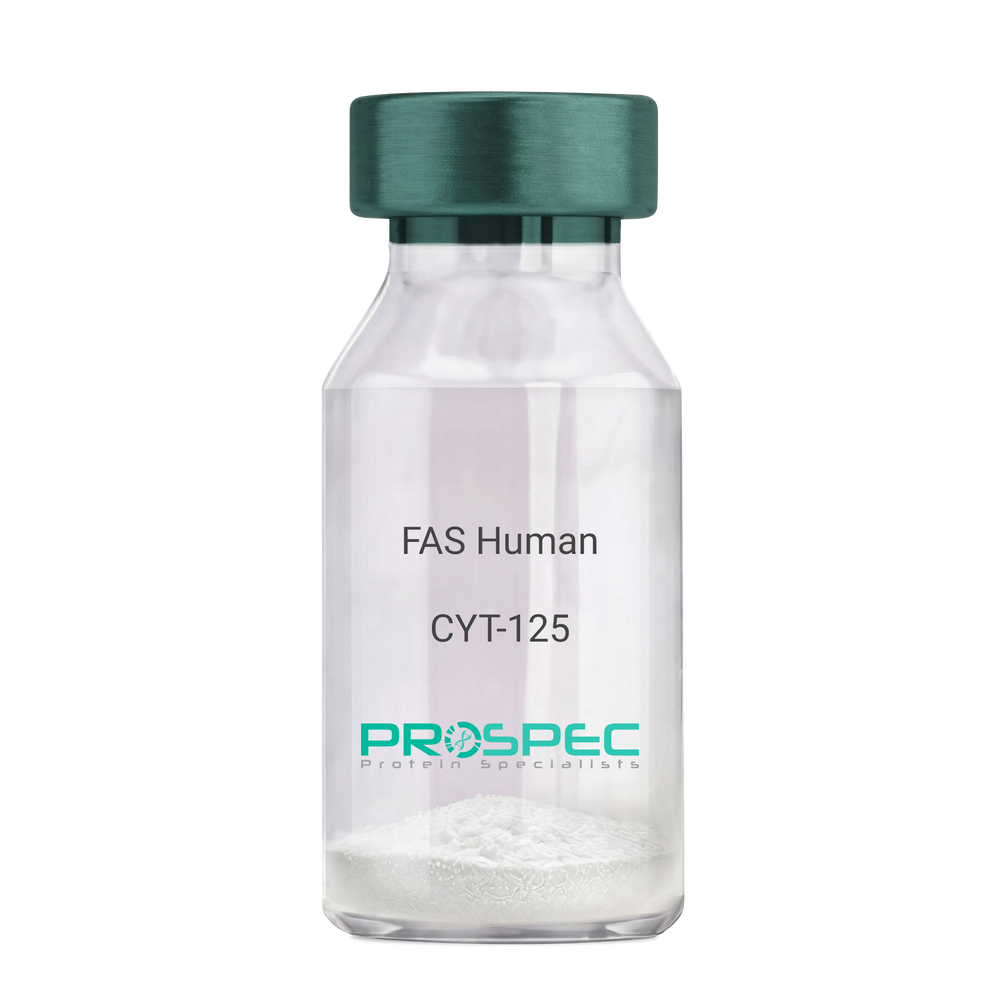
FAS HumanDescription:
sFas Receptor Human Recombinant
Tumor necrosis factor receptor superfamily member 6, Apo-1 antigen, Apoptosis-mediating surface antigen FAS, FASLG receptor, CD95, FAS, APT1, FAS1, APO-1, FASTM, ALPS1A, TNFRSF6.
Product # :
CYT-125Price :
Quantity :
Shipping Method :
Shipped at Room temp
More Info
- description
- source
- formulation
- purity
- biological activity
- More Info
Description
sFas Receptor Human Recombinant produced in E.coli is a single, non-glycosylated polypeptide chain containing 157 amino acids and having a molecular mass of 17.6kDa.The FAS is purified by proprietary chromatographic techniques.
Source
Escherichia Coli.
Formulation
FAS protein was lyophilized from a 0.2µm filtered concentrated solution in 1×PBS, pH 7.4.
Purity
Greater than 95.0% as determined by:
(a) Analysis by RP-HPLC.
(b) Analysis by SDS-PAGE.Biological Activity
The ED50 was determined by its ability to inhibit the cytotoxicity of Jurkat cells is between 10-15 µg/ml in the presence of 2ng/ml of hFasL.More Info
-
Introduction
Fas and Fas Ligand (FasL) are members of the TNF superfamily and are type I and type II transmembrane proteins, respectively. Binding of FasL to Fas initiates apoptosis in Fas-bearing cells. The apoptosis mechanism involves the recruitment of pro-caspase 8 through an adaptor molecule named FADD followed by processing of the pro-enzyme to active forms. These active caspases subsequently cleave a variety of cellular substrates leading to the eventual cell death. sFasR is able to inhibit FasL-induced apoptosis by acting as a decoy receptor whicht serves as a sink for FasL. The full length Fas Receptor is a 319 a.a type I transmembrane protein, which contains a 157 a.a extracellular domain, a 17 a.a transmembrane domain, and 145 a.a cytoplasmic domain. The mature human Fas ECD shares 55%, 58%, a.a sequence identity with the mouse, rat, Fas, respectively.
-
Synonyms
Tumor necrosis factor receptor superfamily member 6, Apo-1 antigen, Apoptosis-mediating surface antigen FAS, FASLG receptor, CD95, FAS, APT1, FAS1, APO-1, FASTM, ALPS1A, TNFRSF6.
-
Physical Appearance
Sterile Filtered White lyophilized (freeze-dried) powder.
-
Stability
Lyophilized FAS although stable at room temperature for 3 weeks, should be stored desiccated below -18°C. Upon reconstitution FAS should be stored at 4°C between 2-7 days and for future use below -18°C. For long term storage it is recommended to add a carrier protein (0.1% HSA or BSA). Please prevent freeze-thaw cycles.
-
Solubility
It is recommended to reconstitute the lyophilized FAS in sterile 18M-cm H2O not less than 100µg/ml, which can then be further diluted to other aqueous solutions.
-
Amino Acid Sequence
MRLSSKSVNA QVTDINSKGL ELRKTVTTVE TQNLEGLHHD GQFCHKPCPP GERKARDCTV NGDEPDCVPC QEGKEYTDKA HFSSKCRRCR LCDEGHGLEV EINCTRTQNT KCRCKPNFFC NSTVCEHCDP CTKCEHGIIK ECTLTSNTKC KEEGSRS.
-
Background
What is the molecular weight/Mw of FAS Protein?
FAS Protein has a total Mw of 17.6kDa.
What is the source or expression system of FAS Protein?
Escherichia Coli.
What is the Purity of FAS Protein?
FAS Protein is >95% pure as determined by SDS-PAGE.
What is the Biological Activity of FAS Protein?
The ED50 was determined by its ability to inhibit the cytotoxicity of Jurkat cells is between 10-15 µg/ml in the presence of 2ng/ml of hFasL.
What is the amino acid sequence of FAS Protein?
MRLSSKSVNA QVTDINSKGL ELRKTVTTVE TQNLEGLHHD GQFCHKPCPP GERKARDCTV NGDEPDCVPC QEGKEYTDKA HFSSKCRRCR LCDEGHGLEV EINCTRTQNT KCRCKPNFFC NSTVCEHCDP CTKCEHGIIK ECTLTSNTKC KEEGSRS.
What applications can FAS Protein be used in?
FAS Protein can probably be used in western blot, ELISA and Lateral Flow.
What is the endotoxin level for FAS Protein?
The endotoxin level is minimal, FAS Protein was purified using conventional chromatography techniques..
ProSpec's products are furnished for LABORATORY RESEARCH USE ONLY. The product may not be used as drugs, agricultural or pesticidal products, food additives or household chemicals.
- View Data Sheet
Name :
H3N2 PanamaDescription:
H3N2 Influenza-A Virus Panama/2007/99
Product # :
IHA-006Price :
Quantity :
Shipping Method :
Shipped with Ice Packs
More Info
- description
- formulation
- purity
- More Info
Description
Allantoic fluid of 10 days old embryonated eggs, inoculated with influenza A virus, strain A/Panama/2007/99. The Influenza Virus was purified by Ultracentrifugation with 10-40 % sucrose gradient.
Formulation
The H3N2 A/Panama/2007/99 solution contains STE, 0.09% sodium azide (NaN3) and 0.005% thimerosal.
Stir thoroughly prior to its use.Purity
Greater than 90.0% as determined byAnalysis by SDS-PAGE.
More Info
-
Introduction
H3N2 is a subtype of the influenza A virus. Its name derives from the forms of the two kinds of proteinson the surface of its coat, hemagglutinin(H) and neuraminidase(N). H3N2 exchanges genes for internal proteins with other influenza subtypes. H3N2 has tended to dominate in prevalence over H1N1, H1N2, and influenza B. H3N2 strain descended from H2N2 by antigenic shift, in which genes from multiple subtypes re-assorted to form a new virus. Both the H2N2 and H3N2 strains contained genes from avian influenza viruses.
-
Physical Appearance
Opaque suspension.
-
Stability
A/Panama/2007/99 although stable 4°C for 4 weeks, should be stored below -18°C. Please prevent freeze-thaw cycles.
-
Inactivation
Thimerosal and beta propiolactone treatmentThis product has been treated in a manner consistent with methods of inactivation. Generally accepted good laboratory practices appropriate to microbiological/viral safe handling practices and techniques are required at work.
-
Immunological Activity
Tested with anti-influenza A monoclonal antibodies in ELISA.Serological studies of influenza A virus, immunogen for antibody production.
ProSpec's products are furnished for LABORATORY RESEARCH USE ONLY. The product may not be used as drugs, agricultural or pesticidal products, food additives or household chemicals.
- View Data Sheet
Name :
Norovirus Group-1Description:
Norovirus Group-1 Capsid Recombinant
Product # :
NRV-213Price :
Quantity :
Shipping Method :
Shipped with Ice Packs
More Info
- description
- source
- formulation
- purity
- More Info
Description
The Recombinant Norovirus Group-1 Capsid, E.Coli derived, is a positive sense RNA virus with 7.5kb nucleotides, encoding a major structural protein VP1 with 50-55kDa and a VP2 protein. The full length of VP1 capsid protein is derived from the group 1 Norwalk virus. The protein is fused to a 6 His tag at N-terminal and purified by chromatography techniques.
Source
Escherichia Coli.
Formulation
PBS, 25Mm K2CO3 and 25% glycerol.
Purity
Protein is >95% pure as determined by 10% PAGE (coomassie staining).
More Info
-
Introduction
Human norovirus is classified into two groups, group 1& group 2. Norwalk virus is the species which belongs to group 1 and was discovered in 1968 at Ohio. Norovirus is a familiar virus which causes human gastroenteritis with the following symptoms vomiting, diarrhea and sickness. CDC report revealed that there are 19-21 million Americans infected by Nororvirus annually with 800 deaths, 1 in 15 people with infection. Around the world, this virus affects about 267 million people and causes over 200,000 deaths each year; these losses are mostly in less developed countries and in the very young, elderly and immuno-suppressed population, though, most cases are self-limited with a full recovery within just a few days.Norovirus is extremely contagious and can spread from human to human through infected food, water or contaminated surfaces. The outbreaks usually occur from November-April, while the peak is in January. Norovirus is a positive sense RNA virus with 7.5 kb nucleotides, encoding a major structural protein VP1 with 50-55kDa. The full length of VP1 capsid comprises the internal N-terminal, Hinge, shell (S) and protruding (P) domains. P domain from 225 to 520 forms P1- P2-P1 structure. Moreover, P domain has a receptor binding region which recognizes human histo-blood group antigens (HBGAs). P domain expressed in bacteria can spontaneously form a P dime as well as a P particle aggregated by 12 P dimmers. P particle displays an increased binding activity to HBGAs higher than virus-like particle (VLP) formed by the full-length capsid. For norovirus vaccine development, we consider P domain as a good candidate.
-
Physical Appearance
Sterile Filtered clear solution.
-
Stability
The Recombinant Norovirus Group-1 although stable at 4°C for 1 week, should be stored below -18°C. Please prevent freeze thaw cycles.
ProSpec's products are furnished for LABORATORY RESEARCH USE ONLY. The product may not be used as drugs, agricultural or pesticidal products, food additives or household chemicals.
- View Data Sheet
Name :
ASPSCR1 HumanDescription:
Alveolar Soft Part Sarcoma Chromosome Region, Candidate 1 Human Recombinant
ASPCR1, ASPL, ASPS, RCC17, TUG, UBXD9, UBXN9, Tether containing UBX domain for GLUT4, Alveolar soft part sarcoma chromosomal region candidate gene 1 protein, Alveolar soft part sarcoma locus, Renal papillary cell carcinoma protein 17, UBX domain-containing protein 9, ASPSCR1.
Product # :
PRO-1519Price :
Quantity :
Shipping Method :
Shipped with Ice Packs
More Info
- description
- source
- formulation
- purity
- More Info
Description
ASPSCR1 Human Recombinant produced in E. coli is a single polypeptide chain containing 576 amino acids (1-553) and having a molecular mass of 62.6kDa. ASPSCR1 is fused to a 23 amino acid His-tag at N-terminus & purified by proprietary chromatographic techniques.
Source
Escherichia Coli.
Formulation
The ASPSCR1 solution (0.25mg/ml) contains 20mM Tris-HCl buffer (pH 8.0), 0.15M NaCl, 10% glycerol and 1mM DTT.
Purity
Greater than 85% as determined by SDS-PAGE.
More Info
-
Introduction
Alveolar Soft Part Sarcoma Chromosome Region, Candidate 1 (ASPSCR1) contains a UBX domain and interacts with glucose transporter type 4 (GLUT4). ASPSCR1 is a tether, which sequesters the GLUT4 in intracellular vesicles in muscle and fat cells, and redistributes the GLUT4 to the plasma membrane. Translocation t(X;17)(p11;q25) of this ASPSCR1 with transcription factor TFE3 gene ends with a ASPSCR1-TFE3 fusion protein in alveolar soft part sarcoma and in renal cell carcinomas.
-
Synonyms
ASPCR1, ASPL, ASPS, RCC17, TUG, UBXD9, UBXN9, Tether containing UBX domain for GLUT4, Alveolar soft part sarcoma chromosomal region candidate gene 1 protein, Alveolar soft part sarcoma locus, Renal papillary cell carcinoma protein 17, UBX domain-containing protein 9, ASPSCR1.
-
Physical Appearance
Sterile Filtered clear solution.
-
Stability
Store at 4°C if entire vial will be used within 2-4 weeks. Store, frozen at -20°C for longer periods of time. For long term storage it is recommended to add a carrier protein (0.1% HSA or BSA).Avoid multiple freeze-thaw cycles.
-
Amino Acid Sequence
MGSSHHHHHH SSGLVPRGSH MGSMAAPAGG GGSAVSVLAP NGRRHTVKVT PSTVLLQVLE DTCRRQDFNP CEYDLKFQRS VLDLSLQWRF ANLPNNAKLE MVPASRSREG PENMVRIALQ LDDGSRLQDS FCSGQTLWEL LSHFPQIREC LQHPGGATPV CVYTRDEVTG EAALRGTTLQ SLGLTGGSAT IRFVMKCYDP VGKTPGSLGS SASAGQAAAS APLPLESGEL SRGDLSRPED ADTSGPCCEH TQEKQSTRAP AAAPFVPFSG GGQRLGGPPG PTRPLTSSSA KLPKSLSSPG GPSKPKKSKS GQDPQQEQEQ ERERDPQQEQ ERERPVDREP VDREPVVCHP DLEERLQAWP AELPDEFFEL TVDDVRRRLA QLKSERKRLE EAPLVTKAFR EAQIKEKLER YPKVALRVLF PDRYVLQGFF RPSETVGDLR DFVRSHLGNP ELSFYLFITP PKTVLDDHTQ TLFQANLFPA ALVHLGAEEP AGVYLEPGLL EHAISPSAAD VLVARYMSRA AGSPSPLPAP DPAPKSEPAA EEGALVPPEP IPGTAQPVKR SLGKVPKWLK LPASKR.
ProSpec's products are furnished for LABORATORY RESEARCH USE ONLY. The product may not be used as drugs, agricultural or pesticidal products, food additives or household chemicals.
- View Data Sheet
Name :
Influenza-A H1N1 AntibodyDescription:
Influenza-A Hemagglutinin H1N1, Mouse Antibody
Product # :
ANT-214Price :
Quantity :
Shipping Method :
Shipped with Ice Packs
More Info
- description
- formulation
- More Info
Description
Hybridoma clones have been derived from hybridization of Sp2/0 myeloma cells with spleen cells of Balb/c mice immunized with Influenza A/NewCaledonia/20/99 H1N1 derived from allantoic fluid of 10 days old embryonated eggs.
Formulation
In PBS, pH 7.4 and 0.09% NaN3.
More Info
-
Introduction
H1N1 is a subtype specie of Influenza A virus. H1N1 Influenza Virus has mutated into various strains such as the Spanish Flustrain, mild humanflu strains, endemic pigstrains, and various strains found in birds.
The Influenza A Virusis a globular particle about 100nm in diameter, sheathed in a lipid bilayer derived from the plasma membrane of its host. Studded in the lipid bilayer are two integral membrane proteins some 500 molecules of hemagglutinin ("H") and some 100 molecules of neuraminidase ("N"). Within the lipid bilayer are 3000 molecules of matrix protein and 8 pieces of RNA. Each of the 8 RNA molecules is associated with many copies of a nucleoprotein, several molecules of the three subunits of its RNA polymerase some "non-structural" protein molecules of uncertain function. -
Physical Appearance
Sterile Filtered clear solution.
-
Immunogen
Influenza A hemagglutinin H1N1.
-
Ig Subclass
mouse IgG1.
-
Clone
IA-H1N1.
-
Applications
Influenza A haemagglutinin 1 H1N1 immunodetection in direct or indirect ELISA, sandwich immunoassay, Western Blotting. Recommended pairs for Influenza A H1N1 in sandwich immunoassay (coating – conjugate): All pairs detect H1N1 of Influenza A as well as recombinant H1N1 with high specificity and do not interact with haemagglutinin H3N2.
-
Shipping Conditions
Antibody is shipped as in liquid form with ice packs.
-
Type
Mouse Antibody Monoclonal.
-
Storage Procedures
Should be stored at 4C.Do not freeze.
-
Purification Method
Protein-A column.
ProSpec's products are furnished for LABORATORY RESEARCH USE ONLY. The product may not be used as drugs, agricultural or pesticidal products, food additives or household chemicals.
- View Data Sheet
Name :
Borrelia Afzelii OspADescription:
Borrelia Afzelii Outer Surface Protein A Recombinant
Product # :
BOR-011Price :
Quantity :
Shipping Method :
Shipped with Ice Packs
More Info
- description
- source
- formulation
- purity
- More Info
Description
Recombinant Borrelia Afzelii Outer Surface Protein A produced in E.coli is a non-glycosylated, polypeptide chain having a calculated molecular mass of 30kDa. Borrelia Afzelii OspA is expressed with a -6x His tag at N-terminus and purified by proprietary chromatographic techniques.
Source
Escherichia Coli.
Formulation
Borrelia Afzelii OspA is supplied in 20mM HEPES buffer pH-8.0 and 20% glycerol.
Purity
Greater than 95.0% as determined by SDS-PAGE.
More Info
-
Introduction
Borrelia belongs to a genus of bacteria of the spirochete phylum. Borrelia causes borreliosis, which is a zoonotic, vector-borne disease transmitted mainly by ticks and some by lice, depending on the species. Of the 36 known species of Borrelia, 12 are distinguished to cause Lyme disease or borreliosis and are transmitted by ticks. The main Borrelia species causing Lyme disease are Borrelia burgdorferi, Borrelia afzelii, and Borrelia garinii. The Borrelia genus members have a linear chromosome which is about 900 kbp in length as well as an excess of both linear and circular plasmids in the 5-220 kbp size range. The plasmids are atypical, as compared to most bacterial plasmids, since they contain many paralogous sequences, a large number of pseudogenes and, in some cases, essential genes. Moreover, a number of the plasmids have features suggesting that they are prophages.
-
Physical Appearance
Sterile Filtered clear solution.
-
Stability
Store at 4°C if entire vial will be used within 2-4 weeks. Store, frozen at -20°C for longer periods of time. Avoid multiple freeze-thaw cycles.
-
Immunological Functions
1. Binds IgG- and IgM-type human antibodies.2. Immunodot test with Lyme disease positive/negative plasma; suitable for LTT (lymphocyte transformation test).
ProSpec's products are furnished for LABORATORY RESEARCH USE ONLY. The product may not be used as drugs, agricultural or pesticidal products, food additives or household chemicals.
- View Data Sheet
Name :
KRAS 2A HumanDescription:
Kirsten Rat Sarcoma Viral Oncogene, Isoform 2A Human Recombinant
GTPase KRas, K-Ras 2, Ki-Ras, c-K-ras, c-Ki-ras, KRAS, KRAS2, RASK2, C-K-RAS, CFC2, K-RAS2A, K-RAS2B, K-RAS4A, K-RAS4B, KI-RAS, KRAS1, NS, NS3, Kirsten rat sarcoma viral oncogene homolog.
Product # :
PRO-1446Price :
Quantity :
Shipping Method :
Shipped with Ice Packs
More Info
- description
- source
- formulation
- purity
- More Info
Description
KRAS 2A Human Recombinant produced in E.Coli is a single, non-glycosylated polypeptide chain containing 210 amino acids (1-186 a.a) and having a molecular mass of 23.8kDa.KRAS 2A is fused to a 24 amino acid His-tag at N-terminus & purified by proprietary chromatographic techniques.
Source
Escherichia Coli.
Formulation
KRAS 2A protein solution (0.5mg/ml) containing 20mM Tris-HCl buffer (pH8.0), 20% glycerol, 0.1M NaCl and 1mM DTT.
Purity
Greater than 90.0% as determined by SDS-PAGE.
More Info
-
Introduction
Kirsten Rat Sarcoma Viral Oncogene, Isoform 2A (KRAS-2A) belongs to the small GTPase superfamily. The KRAS-2A protein is involved in a variety of malignancies, including lung adenocarcinoma, mucinous adenoma, ductal carcinoma of the pancreas and colorectal carcinoma. Ras family members impact cell growth and differentiation events in a subcellular membrane compartmentalization-based signaling system under normal conditions. Oncogenic Ras can deregulate processes which control both cell proliferation and apoptosis.
-
Synonyms
GTPase KRas, K-Ras 2, Ki-Ras, c-K-ras, c-Ki-ras, KRAS, KRAS2, RASK2, C-K-RAS, CFC2, K-RAS2A, K-RAS2B, K-RAS4A, K-RAS4B, KI-RAS, KRAS1, NS, NS3, Kirsten rat sarcoma viral oncogene homolog.
-
Physical Appearance
Sterile Filtered colorless solution.
-
Stability
Store at 4°C if entire vial will be used within 2-4 weeks. Store, frozen at -20°C for longer periods of time. For long term storage it is recommended to add a carrier protein (0.1% HSA or BSA).Avoid multiple freeze-thaw cycles.
-
Amino Acid Sequence
MGSSHHHHHH SSGLVPRGSH MGSHMTEYKL VVVGAGGVGK SALTIQLIQN HFVDEYDPTI EDSYRKQVVI DGETCLLDIL DTAGQEEYSA MRDQYMRTGE GFLCVFAINN TKSFEDIHHY REQIKRVKDS EDVPMVLVGN KCDLPSRTVD TKQAQDLARS YGIPFIETSA KTRQRVEDAF YTLVREIRQY RLKKISKEEK TPGCVKIKKC.
ProSpec's products are furnished for LABORATORY RESEARCH USE ONLY. The product may not be used as drugs, agricultural or pesticidal products, food additives or household chemicals.
- View Data Sheet
Name :
HSV-2 VP22Description:
Herpes Simplex Virus-2 VP22 Recombinant
Product # :
HSV-228Price :
Quantity :
Shipping Method :
Shipped with Ice Packs
More Info
- description
- source
- formulation
- purity
- More Info
Description
The E.Coli derived Full length HSV-2 VP22 recombinant protein is fused to a Six histidine tag at C-terminus and has a MW of 33,5kDa (pI 10.5).
Source
Escherichia Coli.
Formulation
10 mM Phosphate buffer pH 7.6; 75 mM NaCl.
Purity
Protein is >90% pure as determined by SDS PAGE.
More Info
-
Introduction
Entry of HSV into the host cell involves interactions of several viral glycoproteins with cell surface receptors. The virus particle is covered by an envelope which, when bound to specific receptors on the cell surface, will fuse with the cell membrane and create an opening, or pore, through which the virus enters the host cell. The sequential stages of HSV entry are analagous to those of other viruses. At first, complementary receptors on the virus and cell surface bring the two membranes into proximity. In an intermediate state, the two membranes begin to merge, forming a hemifusion state. Finally, a stable entry pore is formed through which the viral envelope contents are introduced to the host cell.
-
Physical Appearance
Sterile Filtered clear solution.
-
Stability
HSV-2 VP22 although stable at 4°C for 1 week, should be stored below -18°C. Please prevent freeze thaw cycles.
-
Applications
ELISA, WB, Flow-Through.
ProSpec's products are furnished for LABORATORY RESEARCH USE ONLY. The product may not be used as drugs, agricultural or pesticidal products, food additives or household chemicals.
- View Data Sheet
Name :
Parainfluenza Type-2Description:
Parainfluenza Virus Type-2
Product # :
IHA-029Price :
Quantity :
Shipping Method :
Shipped with Ice Packs
More Info
- description
- formulation
- purity
- More Info
Description
MA 104 cells inoculated with parainfluenza 2 virus, strain II ALTB cc 2056.
Formulation
The Parainfluenza type-2 solution contains STE, 0.02% sodium azide (NaN3).
Purity
Greater than 90.0% as determined byAnalysis by SDS-PAGE.
More Info
-
Introduction
Parainfluenza virus, PIV, contains a group of four distinct serotypes of single-stranded RNA viruses belonging to the paramyxovirus family and two subtypes (4a and 4b). Parainfluenza viruse is a negative-sense, single-stranded RNA viruse that possess fusion and hemagglutinin-neuraminidase glycoprotein "spikes" on their surface. The virion varies in size (average diameter between 150 and 300 nm) and shape.
-
Physical Appearance
Sterile Filtered colorless solution.
-
Stability
Parainfluenza type-2 although stable 4°C for 4 weeks, should be stored below -18°C. Please prevent freeze-thaw cycles.
-
Inactivation
Thimerosal and beta propiolactone treatment.This product has been treated in a manner consistent with methods of inactivation. Generally accepted good laboratory practices appropriate to microbiological/viral safe handling practices and techniques are required at work.
-
Immunological Activity
Serological studies of Parainfluenza virus, immunogen for antibody production.
ProSpec's products are furnished for LABORATORY RESEARCH USE ONLY. The product may not be used as drugs, agricultural or pesticidal products, food additives or household chemicals.
- View Data Sheet
Name :
Anhui H7N9Description:
Hemagglutinin-Influenza A Virus H7N9 Anhui 2013 Recombinant
Hemagglutinin, Influenza A virus (A/Anhui/1-BALF_RG45/2013(H7N9) hemagglutinin, HA, Hemagglutinin HA1 chain, Hemagglutinin HA2 chain
Product # :
IHA-037Price :
Quantity :
Shipping Method :
Shipped with Ice Packs
More Info
- description
- source
- formulation
- purity
- More Info
Description
Anhui H7N9 produced in Sf9 Baculovirus cells is a single, glycosylated polypeptide chain containing 330 amino acids (19-339 aa) and having a molecular mass of 36 kDa.Anhui H7N9 is fused to a 6 amino acid His tag at C-terminus and purified by proprietary chromatographic techniques.
Source
Sf9, Baculovirus cells.
Formulation
The Anhui H7N9 solution (1mg/ml) contains 10% Glycerol and Phosphate-Buffered Saline (pH 7.4).
Purity
Greater than 95.0% as determined by SDS-PAGE.
More Info
-
Introduction
Hemagglutinin-Influenza A Virus H7N9 Anhui 2013 (Anhui H7N9) is a part of the influenza viruses hemagglutinin family. H7N9 Anhui is anantigenic glycoprotein which is responsible for binding the virus to the infected cell. An H7N9 virus was firstreported to have infected humans in March 2013, in China. Although the risk is low, The H7N9 virus has thegreatest potential compared with other influenza A viruses to cause a pandemicbecause like other type A viruses, it is not easily transmitted between people in its current form.
-
Synonyms
Hemagglutinin, Influenza A virus (A/Anhui/1-BALF_RG45/2013(H7N9) hemagglutinin, HA, Hemagglutinin HA1 chain, Hemagglutinin HA2 chain
-
Physical Appearance
Sterile Filtered colorless solution.
-
Stability
Store at 4°C if entire vial will be used within 2-4 weeks. Store, frozen at -20°C for longer periods of time. For long term storage it is recommended to add a carrier protein (0.1% HSA or BSA). Avoid multiple freeze-thaw cycles.
-
Amino Acid Sequence
ADLDKICLGH HAVSNGTKVN TLTERGVEVV NATETVERTN IPRICSKGKR TVDLGQCGLL GTITGPPQCD QFLEFSADLI IERREGSDVC YPGKFVNEEA LRQILRESGG IDKEAMGFTY SGIRTNGATS ACRRSGSSFY AEMKWLLSNT DNAAFPQMTK SYKNTRKSPA LIVWGIHHSV STAEQTKLYG SGNKLVTVGS SNYQQSFVPS PGARPQVNGL SGRIDFHWLM LNPNDTVTFS FNGAFIAPDR ASFLRGKSMG IQSGVQVDAN CEGDCYHSGG TIISNLPFQN IDSRAVGKCP RYVKQRSLLL ATGMKNVPEI PKGRHHHHHH
ProSpec's products are furnished for LABORATORY RESEARCH USE ONLY. The product may not be used as drugs, agricultural or pesticidal products, food additives or household chemicals.
- View Data Sheet
Name :
IBV-NPDescription:
Influenza B Virus Nucleoprotein Recombinant
Product # :
IHA-038Price :
Quantity :
Shipping Method :
Shipped with Ice Packs
More Info
- description
- source
- formulation
- More Info
Description
Recombinant Influenza B Virus Nucleoprotein produced in E. coli having a Mw of 76.8kDa. IBV-NP is fused to a 6xHis tag at its C terminal is and purified by proprietary chromatographic technique.
Source
E. coli.
Formulation
IBV-NP protein solution contains 25mM K2CO3 and PBS.
More Info
-
Physical Appearance
Sterile Filtered clear solution.
-
Stability
Store at 4°C if entire vial will be used within 2-4 weeks. Store, frozen at -20°C for longer periods of time. For long term storage it is recommended to add a carrier protein (0.1% HSA or BSA). Avoid multiple freeze-thaw cycles.
-
Amino Acid Sequence
HMSNMDIDGMNTGTIDKTPEEITSGTSGTTRPIIRPATLAPPSNKRTRNPSPDRTTTSSE
DDVGRKAQKKQTPTEIKKSVYNMVVKLGEFYNQMMVKAGLNDDMERNLIQNAHAVERILL
AATDDKKTEFQKKKNARDVKEGKEEIDHNKTGGTFYKMVRDDKTIYFSPIRITFLKEEVKT
MYKTTMGSDGFSGLNHIMIGHSQMNDVCFQRSKALKRVGLDPSLISTFAGSTVPRRSGATGV
AIKGGGTLVAEAIRFIGRAMADRGLLRDIKAKTAYEKILLNLKNKCSAPQQKALVDQVIGSRN
PGIADIEDLTLLARSMVVVRPSVASKVVLPISIYAKIPQLGFNVEEYSMVGYEAMALYNMATP
VSILRMGDDAKDKSQLFFMSCFGAAYEDLRVLSALTGTEFKPRSALKCKGFHVPAKEQVEGMGA
ALMSIKLQFWAPMTRSGGNEVGGDGGSGQISCSPVFAVERPIALSKQAVRRMLSMNIEGRDADV
KGNLLKMMNDSMAKKTSGNAFIGKKMFQISDKNKTNPIEIPIKQTIPNFFFGRDTAEDYDDLDYLE.
-
Background
Influenza B virus, often overshadowed by its influenza A counterpart, remains a substantial contributor to seasonal influenza infections and poses a considerable public health challenge. In the quest for effective countermeasures, Influenza B Virus Nucleoprotein Recombinant has emerged as a focal point in the ongoing battle against this resilient virus. This research endeavors to unveil the intricacies of the Nucleoprotein Recombinant, delving into its structural nuances, immunogenic capabilities, and applications in vaccine development and antiviral therapies. By dissecting the properties of the Nucleoprotein Recombinant, scientists aspire to fortify our defenses against Influenza B, potentially reshaping strategies for broader influenza immunity.
Structural Insights into Nucleoprotein Recombinant:
Engineered to replicate key viral components, the Influenza B Virus Nucleoprotein Recombinant serves as a molecular mirror, allowing a comprehensive study of the virus's genetic material. Understanding its three-dimensional structure and conformational intricacies is crucial, not only for decoding the virus's replication mechanisms but also for tailoring interventions like vaccines and antiviral drugs to specific vulnerabilities.
Immunogenic Potential and Vaccine Development:
The challenge of Influenza B's seasonal variability necessitates innovative approaches to vaccine development. Nucleoprotein Recombinant, designed to induce potent immune responses, emerges as a promising candidate. By presenting conserved viral elements to the immune system, the recombinant protein seeks to instigate robust and durable immunity, countering the virus's propensity for antigenic drift and promoting broader protection.
Application in Antiviral Therapies:
In addition to its role in vaccination, the Influenza B Virus Nucleoprotein Recombinant holds potential in antiviral therapies. The recombinant protein's ability to provoke immune responses can be harnessed for the development of immunotherapies. Monoclonal antibodies derived from the Nucleoprotein Recombinant may offer targeted treatments, providing a dynamic approach to mitigating the impact of Influenza B infections.
Challenges and Future Directions:
Despite the promises held by the Nucleoprotein Recombinant, challenges persist. The virus's ability to undergo genetic reassortment and antigenic drift requires ongoing vigilance and adaptability in recombinant strategies. Considerations of vaccine safety, efficacy, and public acceptance demand continual exploration to optimize the translational success of Nucleoprotein Recombinant-based interventions.
Influenza B Virus Nucleoprotein Recombinant stands as a beacon in the scientific quest against influenza, offering a pathway to a more comprehensive and resilient immunity. Its structural insights, immunogenic potential, and applications in vaccine development and antiviral therapies position it as a central player. As researchers delve deeper into the molecular intricacies of Nucleoprotein Recombinant, they not only fortify our defenses against Influenza B but potentially pave the way for a paradigm shift in our approach to influenza prevention and control, influencing the landscape of global health preparedness.
ProSpec's products are furnished for LABORATORY RESEARCH USE ONLY. The product may not be used as drugs, agricultural or pesticidal products, food additives or household chemicals.
- View Data Sheet
Name :
Chlamydia PneumoniaDescription:
Chlamydia Pneumonia Recombinant
Product # :
CHT-010Price :
Quantity :
Shipping Method :
Shipped with Ice Packs
More Info
- description
- source
- formulation
- purity
- More Info
Description
Recombinant Chlamydia pneumonia antigen, produced in E.coli is derived from VD2-VD3 region of the CP major outer membrane protein (this region is recognized only by Chlamydia pneumonia antibody), it contains 160 amino acids and fused with a His Tag at C-terminus, having a MW of about 21.5kDa, the protein forms a monomer and a dimer on SDS-PAGE gel,the majority of the protein forms a dimer, which migrates at a MW of 42kDa. Chlamydia pneumonia is purified by proprietary chromatographic technique.
Source
Escherichia Coli.
Formulation
PBS buffer and 25mM arginine.
Purity
Protein is >95% pure as determined by 10% PAGE (coomassie staining).
More Info
-
Introduction
Chlamydia pneumoniae, a human pathogen causing respiratory infections and most likely contributing to the development of atherosclerosis and heart disease, is an obligate intracellular parasite which for replication needs to productively interact with and enter human cells. A specific region of a major outer membrane protein (MOMP), C. pneumonia is only recognized by C. pneumonia positive sera, and is used as an antigen for detection of IgG and IgM to Chlamydia pneumonia.
-
Physical Appearance
Sterile filtered colorless solution.
-
Stability
Store at 4°C if entire vial will be used within 2-4 weeks. Store, frozen at -20°C for longer periods of time. For long term storage it is recommended to add a carrier protein (0.1% HSA or BSA).Avoid multiple freeze-thaw cycles.
-
Applications
Immunoassay.
ProSpec's products are furnished for LABORATORY RESEARCH USE ONLY. The product may not be used as drugs, agricultural or pesticidal products, food additives or household chemicals.
- View Data Sheet
Name :
H1N1 AntibodyDescription:
Influenza-A Hemagglutinin H1N1, Mouse Anti Human
Protein atonal homolog 1, ATH1, bHLHa14, HATH1, MATH-1.
Product # :
ANT-754Price :
Quantity :
Shipping Method :
Shipped with Ice Packs
More Info
- formulation
- More Info
Formulation
1mg/ml containing PBS, pH-7.4, 10% Glycerol and 0.02% Sodium Azide.
More Info
-
Introduction
H1N1 is a sub specie of the virus Influenza A. H1N1 Influenza Virus has evolved into many strains for example: the Spanish Flustrain, mild humanflu strains, endemic pigstrains & different strains found in birds.
The Virusis is a globular particle is sheathed in a lipid bilayer derived from the plasma membrane of its host and is about 100nm in diameter. In the lipid bilayer are two integral membrane antigens some 500 proteins of hemagglutinin ("H") and some 100 proteins of neuraminidase ("N"). -
Synonyms
Protein atonal homolog 1, ATH1, bHLHa14, HATH1, MATH-1.
-
Physical Appearance
Sterile filtered colorless solution.
-
Immunogen
Recombinant human H1N1/HA1 (18-344aa) purified from Baculovirus.
-
Ig Subclass
Mouse IgG1 heavy chain and κ light chain.
-
Clone
PAT1G7AT.
-
Applications
H1N1 antibody has been tested by ELISA, Western blot analysis to assure specificity and reactivity. Since application varies, however, each investigation should be titrated by the reagent to obtain optimal results.
-
Type
Mouse Anti Human Monoclonal.
-
Storage Procedures
For periods up to 1 month store at 4°C, for longer periods of time, store at -20°C. Prevent freeze thaw cycles.
-
Purification Method
H1N1 antibody was purified from mouse ascitic fluids by protein-G affinity chromatography.
ProSpec's products are furnished for LABORATORY RESEARCH USE ONLY. The product may not be used as drugs, agricultural or pesticidal products, food additives or household chemicals.
- View Data Sheet
Name :
H3N2 BrisbaneDescription:
H3N2 Influenza-A Virus Brisbane 10/07
Product # :
IHA-024Price :
Quantity :
Shipping Method :
Shipped with Ice Packs
More Info
- description
- formulation
- purity
- More Info
Description
Allantoic fluid of 10 days old embryonated eggs, inoculated with influenza A virus, strain A/Brisbane/10/07. The Influenza Virus was purified by Ultracentrifugation with 10-40 % sucrose gradient.
Formulation
The H3N2 A/Brisbane/10/07 solution contains STE, 0.1% sodium azide (NaN3) and 0.005% thimerosal.
Purity
Greater than 90.0% as determined byAnalysis by SDS-PAGE.
More Info
-
Introduction
H3N2 is a subtype of the influenza A virus. Its name derives from the forms of the two kinds of proteinson the surface of its coat, hemagglutinin(H) and neuraminidase(N). H3N2 exchanges genes for internal proteins with other influenza subtypes. H3N2 has tended to dominate in prevalence over H1N1, H1N2, and influenza B. H3N2 strain descended from H2N2by antigenic shift, in which genes from multiple subtypes re-assorted to form a new virus. Both the H2N2and H3N2 strains contained genesfrom avian influenzaviruses.
-
Physical Appearance
Sterile Filtered whitish (milky) solution.
-
Stability
A/Brisbane/10/07although stable 4°C for 4 weeks, should be stored below -18°C. Please prevent freeze-thaw cycles.
-
Inactivation
Thimerosal and beta propiolactone treatmentThis product has been treated in a manner consistent with methods of inactivation. Generally accepted good laboratory practices appropriate to microbiological/viral safe handling practices and techniques are required at work.
-
Immunological Activity
Tested with anti-influenza A monoclonal antibodies in ELISA.Serological studies of influenza A virus, immunogen for antibody production.
ProSpec's products are furnished for LABORATORY RESEARCH USE ONLY. The product may not be used as drugs, agricultural or pesticidal products, food additives or household chemicals.
- View Data Sheet
Name :
Dengue PremembraneDescription:
Dengue Virus Subtype 2, Premembrane Recombinant
Product # :
DEN-028Price :
Quantity :
Shipping Method :
Shipped with Ice Packs
More Info
- description
- source
- formulation
- purity
- More Info
Description
Recombinant dengue 2 premembrane is a whole length peptide expressed from E. coil with 18kDa in size. PreM is considered as a signal peptide responsible for dengue envelope translocation in cells. Experiment showed it can elicit protective immune response, it is considered as a potentialtarget for vaccine development. Recombinant dengue 2 PreM is fused with a 6xHis tag.
Source
Escherichia Coli.
Formulation
phosphate buffer saline and 0.25mM k2co3.
Purity
Protein is >95% pure as determined by 10% PAGE (coomassie staining).
More Info
-
Introduction
Caused by one of four closely related virus serotypes of the genus Flavivirus, family Flaviviridae, each serotype is sufficiently different that there is no cross-protection and epidemics caused by multiple serotypes (hyperendemicity) can occur. In cell culture experiments and mice Morpholino antisense oligos have shown specific activity against Dengue virus.
-
Physical Appearance
Sterile filtered colorless solution.
-
Stability
Recombinant dengue 2 premembrane although stable at 4°C for 1 week, should be stored below -18°C. Please prevent freeze thaw cycles.
-
Amino Acid Sequence
FHLTTRNGEPHMIVSRQEKGKSLLFKTEDGVNMCTLMAMDLGELCEDTI
TYNCPLLRQNEPEDIDCWCNSTSTWVTYGTCTTTGEHRREKRSVALVP
HVGMGLETRTETWMSSEGAWKHAQRIETWILRHPGFTIMAAILAYTIGT
TYFQRVLIFILLTAVAPSMT
ProSpec's products are furnished for LABORATORY RESEARCH USE ONLY. The product may not be used as drugs, agricultural or pesticidal products, food additives or household chemicals.
- View Data Sheet
Name :
HSV-2 gD (525-578)Description:
Herpes Simplex Virus-2 gD (525-578 a.a.) Recombinant
Product # :
HSV-229Price :
Quantity :
Shipping Method :
Shipped with Ice Packs
More Info
- description
- source
- formulation
- purity
- More Info
Description
The E.Coli derived recombinant protein contains the HSV-2 gD (525-578) immunodominant region. HSV2 gD is fused to a six histidine his tag at c-terminus and purified by proprietary chromatographic techniques.
Source
Escherichia Coli.
Formulation
(1mg/ml) in 1x PBS
Purity
Protein is >95% pure as determined by SDS-PAGE
More Info
-
Introduction
Receptors across the cell membrane interact with some viral glycoproteins therefor enabling HSV to enter the host cell. The HSV enter through pores created by the binding of particular receptors across the cell membrane with the virus's coating envelope, following by a fusion of the HSV and the host cell. HSV enters the host cell through the same mechanism and stages as other viruses do. Initially, matching receptors across the virus's envelope and host cell's membrane interacts and bring the two together. During the transitional stage, begins fusion between the host cell and virus (hemifusion state). The closing stage happens when a steady pore was made; through these pores the virus's particles enter the cell.
-
Physical Appearance
Sterile Filtered clear solution.
-
Stability
HSV-2 gD although stable at 4°C for 1 week, should be stored below -18°C. Please prevent freeze thaw cycles.
-
Applications
ELISA & WB.
ProSpec's products are furnished for LABORATORY RESEARCH USE ONLY. The product may not be used as drugs, agricultural or pesticidal products, food additives or household chemicals.
- View Data Sheet
Name :
Dengue Envelope-1 22kDaDescription:
Dengue Virus Subtype-1 Envelope 22kDa Recombinant
Product # :
DEN-005Price :
Quantity :
Shipping Method :
Shipped with Ice Packs
More Info
- description
- formulation
- purity
- More Info
Description
The E.coli derived recombinant 22 kDa protein is genetically engineered peptide which is derived from Dengue Type-1 N-terminus Envelope immunodeterminant regions and fused with a 6 aa His Tag. This region also contains a common antigen for Dengue type 1, 2 and 3.
Formulation
Phosphate buffered saline, pH-7.4.
Purity
Protein is >95% pure as determined by 10% PAGE (coomassie staining).
More Info
-
Introduction
Caused by one of four closely related virus serotypes of the genus Flavivirus, family Flaviviridae, each serotype is sufficiently different that there is no cross-protection and epidemics caused by multiple serotypes (hyperendemicity) can occur. In cell culture experiments and mice Morpholino antisense oligos have shown specific activity against Dengue virus.
-
Stability
Dengue Envelope ST1 although stable at 4°C for 1 week, should be stored below -18°C. Please prevent freeze thaw cycles.
-
Applications
Each laboratory should determine an optimum working titer for use in its particular application.
-
Purification Method
Purified by proprietary chromatographic technique.
ProSpec's products are furnished for LABORATORY RESEARCH USE ONLY. The product may not be used as drugs, agricultural or pesticidal products, food additives or household chemicals.
- View Data Sheet
Name :
TNFRSF14 Human, HisDescription:
HVEM Human Recombinant, His Tag
Tumor Necrosis Factor Receptor Superfamily Member 14, HVEM, TR2, Herpes Virus Entry Mediator A, Tumor Necrosis Factor Receptor-Like 2, Herpesvirus Entry Mediator, HVEA, ATAR, CD270, LIGHTR, CD40-Like Protein, Tumor Necrosis Factor Receptor-Like Gene2.
Product # :
CYT-800Price :
Quantity :
Shipping Method :
Shipped with Ice Packs
More Info
- description
- source
- formulation
- purity
- More Info
Description
TNFRSF14 Human Recombinant produced in E. Coli is a single, glycosylated polypeptide chain containing 187 amino acids (39-202) and having a molecular mass of 19.7kDa.TNFRSF14 is fused to a 23 amino acid His-tag at N-terminus & purified by proprietary chromatographic techniques.
Source
E.coli.
Formulation
The TNFRSF14 solution (0.5mg/ml) containing 20mM Tris-HCl (pH 8.0), 0.1M NaCl and 10% glycerol.
Purity
Greater than 85% as determined by SDS-PAGE.
More Info
-
Introduction
TNFRSF14, a member of the TNF receptor superfamily, is a type I transmembrane protein. TNFRSF14 is expressed in peripheral blood T cells, B cells, monocytes and in various tissues enriched in lymphoid cells. TNFRSF14 operates as a co-stimulatory factor for the activation of lymphoid cells and as a deterrent to infection by herpesvirus. Additionally, TNFRSF14 encourages the proliferation of T cells, and triggers apoptosis of various tumor cells.
-
Synonyms
Tumor Necrosis Factor Receptor Superfamily Member 14, HVEM, TR2, Herpes Virus Entry Mediator A, Tumor Necrosis Factor Receptor-Like 2, Herpesvirus Entry Mediator, HVEA, ATAR, CD270, LIGHTR, CD40-Like Protein, Tumor Necrosis Factor Receptor-Like Gene2.
-
Physical Appearance
Sterile filtered colorless solution.
-
Stability
Store at 4°C if entire vial will be used within 2-4 weeks. Store, frozen at -20°C for longer periods of time. For long term storage it is recommended to add a carrier protein (0.1% HSA or BSA).Avoid multiple freeze-thaw cycles.
-
Amino Acid Sequence
MGSSHHHHHH SSGLVPRGSH MGSLPSCKED EYPVGSECCP KCSPGYRVKE ACGELTGTVC EPCPPGTYIA HLNGLSKCLQ CQMCDPAMGL RASRNCSRTE NAVCGCSPGH FCIVQDGDHC AACRAYATSS PGQRVQKGGT ESQDTLCQNC PPGTFSPNGT LEECQHQTKC SWLVTKAGAG TSSSHWV.
ProSpec's products are furnished for LABORATORY RESEARCH USE ONLY. The product may not be used as drugs, agricultural or pesticidal products, food additives or household chemicals.
- View Data Sheet
Name :
S.Typhi OMPDescription:
Salmonella Typhi Outer Membrane Protein Recombinant
Product # :
STY-002Price :
Quantity :
Shipping Method :
Shipped with Ice Packs
More Info
- description
- source
- formulation
- purity
- More Info
Description
Recombinant Salmonella Typhi Outer Membrane Protein produced in E.coli contains 315 amino acids, and fused to a 6 His Tag at C-terminus, migrating as a 33kDa band on SDS-PAGE.S. typhi outer membrane protein is a central pathogen in S. typhi infection, and is directly exposed to the outside to interact with the human immune system.
Source
Escherichia Coli.
Formulation
Sterile Filtered solution containing 10mM Tris-HCl, 1mM EDTA and 50mM arginine.
Purity
Protein is >95% pure as determined by 12% PAGE (coomassie staining).
More Info
-
Introduction
Salmonella Typhi is a pathogen causing typhoid fever, affecting over 17 million people with approximately 600,000 deaths annually worldwide. If untreated, typhoid fever cases result in mortality rates ranging from 12-30%.
-
Physical Appearance
Sterile Filtered solution.
-
Stability
S.Typhi OMP although stable at 4°C for 1 week, should be stored below -18°C. Please prevent freeze thaw cycles.
ProSpec's products are furnished for LABORATORY RESEARCH USE ONLY. The product may not be used as drugs, agricultural or pesticidal products, food additives or household chemicals.
- View Data Sheet
Name :
CXADR HumanDescription:
Coxsackie Virus And Adenovirus Receptor Human Recombinant
Coxsackie Virus And Adenovirus Receptor, CAR, 46 KD Coxsackievirus And Adenovirus Receptor (CAR) Protein 11, Coxsackievirus B-Adenovirus Receptor, HCVADR, CVB3-Binding Protein, CAR4/6, HCAR.
Product # :
PRO-1548Price :
Quantity :
Shipping Method :
Shipped with Ice Packs
More Info
- description
- source
- formulation
- purity
- More Info
Description
CXADR Human Recombinant produced in E.coli is a single, non-glycosylated polypeptide chain containing 241 amino acids (20-237) and having a molecular mass of 26.0kDa.CXADR is fused to a 23 amino acid His-tag at N-terminus & purified by proprietary chromatographic techniques.
Source
Escherichia Coli.
Formulation
The CXADR solution (0.5mg/ml) contains 20mM Tris-HCl buffer (pH 8.0), 0.15M NaCl, 1mM DTT and 10% glycerol.
Purity
Greater than 90% as determined by SDS-PAGE.
More Info
-
Introduction
CXADR is a component of the epithelial apical junction complex which operates as an homophilic cell adhesion molecule and is crucial for tight junction integrity. CXADR also takes part in transepithelial relocation of leukocytes through adhesive interactions with AMICA1/JAML a transmembrane protein of the plasma membrane of leukocytes. A number of transcript variants encoding different isoforms were identified for this gene. Pseudogenes of this gene were located on chromosomes 15, 18, and 21.
-
Synonyms
Coxsackie Virus And Adenovirus Receptor, CAR, 46 KD Coxsackievirus And Adenovirus Receptor (CAR) Protein 11, Coxsackievirus B-Adenovirus Receptor, HCVADR, CVB3-Binding Protein, CAR4/6, HCAR.
-
Physical Appearance
Sterile Filtered clear solution.
-
Stability
Store at 4°C if entire vial will be used within 2-4 weeks. Store, frozen at -20°C for longer periods of time. For long term storage it is recommended to add a carrier protein (0.1% HSA or BSA).Avoid multiple freeze-thaw cycles.
-
Amino Acid Sequence
MGSSHHHHHH SSGLVPRGSH MGSLSITTPE EMIEKAKGET AYLPCKFTLS PEDQGPLDIE WLISPADNQK VDQVIILYSG DKIYDDYYPD LKGRVHFTSN DLKSGDASIN VTNLQLSDIG TYQCKVKKAP GVANKKIHLV VLVKPSGARC YVDGSEEIGS DFKIKCEPKE GSLPLQYEWQ KLSDSQKMPT SWLAEMTSSV ISVKNASSEY SGTYSCTVRN RVGSDQCLLR LNVVPPSNKA G.
ProSpec's products are furnished for LABORATORY RESEARCH USE ONLY. The product may not be used as drugs, agricultural or pesticidal products, food additives or household chemicals.