Search results
1000 results found for “Protein Phosphatase”
Name
Description
Product #
Price
Quantity
Shipping Method
- View Data Sheet
Name :
TRIB3 HumanDescription:
Tribbles Pseudokinase 3 Human Recombinant
Cell Growth Regulator With EF-Hand Domain 1, Cell Growth Regulatory Gene 11 Protein, Hydrophobestin, CGR11, Cell Growth Regulator With EF Hand Domain Protein 1, Cell Growth Regulator With EF Hand Domain 1, Tribbles homolog 3.
Product # :
PKA-070Price :
Quantity :
Shipping Method :
Shipped with Ice Packs
More Info
- description
- source
- formulation
- purity
- More Info
Description
TRIB3 Human Recombinant produced in E.Coli is a single, non-glycosylated polypeptide chain containing 381 amino acids (1-358 a.a) and having a molecular mass of 42.0kDa. TRIB3 is fused to a 23 amino acid His-tag at N-terminus & purified by proprietary chromatographic techniques.
Source
Escherichia Coli.
Formulation
TRIB3 protein solution (0.25mg/ml) containing 20mM Tris-HCl buffer (pH8.0) and 10% glycerol.
Purity
Greater than 85.0% as determined by SDS-PAGE.
More Info
-
Introduction
Tribbles Pseudokinase 3, also known as TRIB3, is a putative protein kinase which is induced by the transcription factor NF-kappaB. In addition, TRIB3 is a negative regulator of NF-kappaB, and can as well sensitize cells to TNF- and TRAIL-induced apoptosis. Furthermore, TRIB3 is able to negatively regulate the cell survival serine-threonine kinase AKT1. One of the diseases which are associated with TRIB3 is anoxia.
-
Synonyms
Cell Growth Regulator With EF-Hand Domain 1, Cell Growth Regulatory Gene 11 Protein, Hydrophobestin, CGR11, Cell Growth Regulator With EF Hand Domain Protein 1, Cell Growth Regulator With EF Hand Domain 1, Tribbles homolog 3.
-
Physical Appearance
Sterile Filtered colorless solution.
-
Stability
Store at 4°C if entire vial will be used within 2-4 weeks. Store, frozen at -20°C for longer periods of time. For long term storage it is recommended to add a carrier protein (0.1% HSA or BSA).Avoid multiple freeze-thaw cycles.
-
Amino Acid Sequence
MGSSHHHHHH SSGLVPRGSH MGSMRATPLA APAGSLSRKK RLELDDNLDT ERPVQKRARS GPQPRLPPCL LPLSPPTAPD RATAVATASR LGPYVLLEPE EGGRAYQALH CPTGTEYTCK VYPVQEALAV LEPYARLPPH KHVARPTEVL AGTQLLYAFF TRTHGDMHSL VRSRHRIPEP EAAVLFRQMA TALAHCHQHG LVLRDLKLCR FVFADRERKK LVLENLEDSC VLTGPDDSLW DKHACPAYVG PEILSSRASY SGKAADVWSL GVALFTMLAG HYPFQDSEPV LLFGKIRRGA YALPAGLSAP ARCLVRCLLR REPAERLTAT GILLHPWLRQ DPMPLAPTRS HLWEAAQVVP DGLGLDEARE EEGDREVVLY G.
ProSpec's products are furnished for LABORATORY RESEARCH USE ONLY. The product may not be used as drugs, agricultural or pesticidal products, food additives or household chemicals.
- View Data Sheet
Name :
MPI HumanDescription:
Mannose Phosphate Isomerase Human Recombinant
Mannose-6-phosphate isomerase, PMI1, CDG1B, Phosphohexomutase, Phosphomannose isomerase, EC 5.3.1.8, FLJ39201.
Product # :
ENZ-169Price :
Quantity :
Shipping Method :
Shipped with Ice Packs
More Info
- description
- source
- formulation
- purity
- More Info
Description
MPI Human Recombinant produced in E.coli is a single, non-glycosylated polypeptide chain containing 382 amino acids (1-362) and having a molecular mass of 41.9 kDa.The MPI is fused to a 20 amino acid His-Tag at N-terminus and purified by proprietary chromatographic techniques.
Source
E.coli.
Formulation
The MPI solution (0.5mg/ml) contains 20mM Tris-HCl buffer (pH 8.0), 0.4M Urea and 5% glycerol.
Purity
Greater than 90% as determined by SDS-PAGE.
More Info
-
Introduction
MPI is a member of the mannose-6-phosphate isomerase type 1 family. Although MPI is expressed in all tissues, it can be found more abundantly in heart, brain and skeletal muscle. Localized to the cytoplasm, MPI exploits zinc as a cofactor and catalyzes the interconversion of fructose-6-phosphate and mannose-6-phosphate. Mutations in the MPI gene are the cause of carbohydrate-deficient glycoprotein syndrome, type Ib.
-
Synonyms
Mannose-6-phosphate isomerase, PMI1, CDG1B, Phosphohexomutase, Phosphomannose isomerase, EC 5.3.1.8, FLJ39201.
-
Physical Appearance
Sterile Filtered colorless solution.
-
Stability
Store at 4°C if entire vial will be used within 2-4 weeks. Store, frozen at -20°C for longer periods of time. For long term storage it is recommended to add a carrier protein (0.1% HSA or BSA).Avoid multiple freeze-thaw cycles.
-
Amino Acid Sequence
MGSSHHHHHH SSGLVPRGSH MAAPRVFPLS CAVQQYAWGK MGSNSEVARL LASSDPLAQI AEDKPYAELW MGTHPRGDAK ILDNRISQKT LSQWIAENQD SLGSKVKDTF NGNLPFLFKV LSVETPLSIQ AHPNKELAEK LHLQAPQHYP DANHKPEMAI ALTPFQGLCG FRPVEEIVTF LKTAAGNNME DIFGELLLQL HQQYPGDIGC FAIYFLNLLT LKPGEAMFLE ANVPHAYLKG DCVECMACSD NTVRAGLTPK FIDVPTLCEM LSYTPSSSKD RLFLPTRSQE DPYLSIYDPP VPDFTIMKTE VPGSVTEYKV LALDSASILL MVQGTVIAST PTTQTPIPLQ RGGVLFIGAN ESVSLKLTEP KDLLIFRACC LL
ProSpec's products are furnished for LABORATORY RESEARCH USE ONLY. The product may not be used as drugs, agricultural or pesticidal products, food additives or household chemicals.
- View Data Sheet
Name :
STIP1 MouseDescription:
Stress-Induced-Phosphoprotein 1 Mouse Recombinant
Hop, p60, Sti1, STI1, mSTI1, Stress-induced-phosphoprotein 1, Hsc70/Hsp90-organizing protein.
Product # :
PRO-2396Price :
Quantity :
Shipping Method :
Shipped with Ice Packs
More Info
- description
- source
- formulation
- purity
- More Info
Description
STIP1 Mouse Recombinant produced in E.coli is a single, non-glycosylated polypeptide chain containing 563 amino acids (1-543) and having a molecular mass of 64.7kDa. STIP1 is fused to a 20 amino acid His-tag at N-terminus & purified by proprietary chromatographic techniques.
Source
Escherichia Coli.
Formulation
The STIP1 solution (1mg/ml) contains 20mM Tris-HCl(pH8.0), 0.1M NaCl, 1mM DTT and 10% glycerol.
Purity
Greater than 95% as determined by SDS-PAGE.
More Info
-
Introduction
STIP1 is an adaptor protein that mediates the functions of HSP70 & HSP90 in protein folding. STIP1 supports the transfer of proteins from HSP70 to HSP90 by binding together HSP90 and substrate-bound HSP70. STIP1 stimulates the ATPase activity of HSP70 and inhibits the ATPase activity of HSP90, suggesting that it regulates both the conformations and ATPase cycles of these chaperones. STIP1 genetic variations are involved in regulating corticosteroid response in asthmatic subjects with reduced lung function.
-
Synonyms
Hop, p60, Sti1, STI1, mSTI1, Stress-induced-phosphoprotein 1, Hsc70/Hsp90-organizing protein.
-
Physical Appearance
Sterile Filtered clear colorless solution.
-
Stability
Store at 4°C if entire vial will be used within 2-4 weeks. Store, frozen at -20°C for longer periods of time. For long term storage it is recommended to add a carrier protein (0.1% HSA or BSA).Avoid multiple freeze-thaw cycles.
-
Amino Acid Sequence
MGSSHHHHHH SSGLVPRGSH MEQVNELKEK GNKALSAGNI DDALQCYSEA IKLDPQNHVL YSNRSAAYAK KGDYQKAYED GCKTVDLKPD WGKGYSRKAA ALEFLNRFEE AKRTYEEGLK HEANNLQLKE GLQNMEARLA ERKFMNPFNL PNLYQKLEND PRTRSLLSDP TYRELIEQLQ NKPSDLGTKL QDPRVMTTLS VLLGVDLGSM DEEEEAATPP PPPPPKKEPK PEPMEEDLPE NKKQALKEKE LGNDAYKKKD FDKALKHYDR AKELDPTNMT YITNQAAVHF EKGDYNKCRE LCEKAIEVGR ENREDYRQIA KAYARIGNSY FKEEKYKDAI HFYNKSLAEH RTPDVLKKCQ QAEKILKEQE RLAYINPDLA LEEKNKGNEC FQKGDYPQAM KHYTEAIKRN PRDAKLYSNR AACYTKLLEF QLALKDCEEC IQLEPTFIKG YTRKAAALEA MKDYTKAMDV YQKALDLDSS CKEAADGYQR CMMAQYNRHD SPEDVKRRAM ADPEVQQIMS DPAMRLILEQ MQKDPQALSE HLKNPVIAQK IQKLMDVGLI AIR.
ProSpec's products are furnished for LABORATORY RESEARCH USE ONLY. The product may not be used as drugs, agricultural or pesticidal products, food additives or household chemicals.
- View Data Sheet
Name :
GPN1 HumanDescription:
GPN-loop GTPase 1 Human Recombinant
GPN-loop GTPase 1, XPA binding protein 1 GTPase, RNA polymerase II associated protein 4, MBD2-interacting protein, MBDin, ATP(GTP)-binding protein, XAB1, ATPBD1A, NTPBP, RPAP4.
Product # :
PRO-1140Price :
Quantity :
Shipping Method :
Shipped with Ice Packs
More Info
- description
- source
- formulation
- purity
- More Info
Description
GPN1 Human Recombinant produced in E. coli is a single polypeptide chain containing 398 amino acids (1-374) and having a molecular mass of 44.3 kDa.GPN1 is fused to a 24 amino acid His-tag at N-terminus & purified by proprietary chromatographic techniques.
Source
E.coli.
Formulation
The GPN1 solution (1mg/1ml) contains 20mM Tris-HCl buffer (pH 8.0), 50mM NaCl, 1mM DTT and 10% glycerol.
Purity
Greater than 90% as determined by SDS-PAGE.
More Info
-
Introduction
GPN-loop GTPase 1 (GPN1) is a member of the GPN-loop GTPase family. GPN1 is a guanosine triphosphatase enzyme which has a role in DNA repair and may function in activation of transcription. Small GTPases, which share a biochemical mechanism, act as binary molecular switches and function in the cell is nucleocytoplasmic transport of both proteins and RNA. In addition, GPN1 establishs an interface between the RNA polymerase II enzyme and chaperone/scaffolding protein, proposing that it is essential to connect RNA polymerase II to regulators of protein complex formation. GPN1 may also be involved in nuclear localization of XPA.
-
Synonyms
GPN-loop GTPase 1, XPA binding protein 1 GTPase, RNA polymerase II associated protein 4, MBD2-interacting protein, MBDin, ATP(GTP)-binding protein, XAB1, ATPBD1A, NTPBP, RPAP4.
-
Physical Appearance
Sterile Filtered colorless solution.
-
Stability
Store at 4°C if entire vial will be used within 2-4 weeks. Store, frozen at -20°C for longer periods of time. For long term storage it is recommended to add a carrier protein (0.1% HSA or BSA).Avoid multiple freeze-thaw cycles.
-
Amino Acid Sequence
MGSSHHHHHH SSGLVPRGSH MGSHMAASAA AAELQASGGP RHPVCLLVLG MAGSGKTTFV QRLTGHLHAQ GTPPYVINLD PAVHEVPFPA NIDIRDTVKY KEVMKQYGLG PNGGIVTSLN LFATRFDQVM KFIEKAQNMS KYVLIDTPGQ IEVFTWSASG TIITEALASS FPTVVIYVMD TSRSTNPVTF MSNMLYACSI LYKTKLPFIV VMNKTDIIDH SFAVEWMQDF EAFQDALNQE TTYVSNLTRS MSLVLDEFYS SLRVVGVSAV LGTGLDELFV QVTSAAEEYE REYRPEYERL KKSLANAESQ QQREQLERLR KDMGSVALDA GTAKDSLSPV LHPSDLILTR GTLDEEDEEA DSDTDDIDHR VTEESHEEPA FQNFMQESMA QYWKRNNK
ProSpec's products are furnished for LABORATORY RESEARCH USE ONLY. The product may not be used as drugs, agricultural or pesticidal products, food additives or household chemicals.
- View Data Sheet
Name :
PIN1 HumanDescription:
Peptidyl-Prolyl Cis/Trans Isomerase NIMA-Interacting 1 Human Recombinant
Peptidyl-prolyl cis-trans isomerase NIMA-interacting 1, EC 5.2.1.8, Rotamase Pin1, PPIase Pin1, DOD, UBL5, PIN1, PPIase.
Product # :
ENZ-331Price :
Quantity :
Shipping Method :
Shipped with Ice Packs
More Info
- description
- source
- formulation
- purity
- biological activity
- More Info
Description
PPIase Human Recombinant produced in E.Coli is a single, non-glycosylated polypeptide chain containing 163 amino acids & having a molecular mass of 18.2 kDa. The PIN1 is purified by proprietary chromatographic techniques.
Source
Escherichia Coli.
Formulation
The PIN1 protein solution (1 mg/ml) containing 20mM Tris-HCl buffer (pH7.5) 0.1M NaCl, 5mM DTT & 20% Glycerol.
Purity
Greater than 95.0% as determined by SDS-PAGE.
Biological Activity
Specific activity is > 330 nmoles/min/mg, and is defined as the amount of enzyme that cleaves 1umole of suc-AAFP-pNA per minute at 25C in Tris-HCl pH8.0 using chymotrypsin.More Info
-
Introduction
Human Pin 1 is a peptidyl-prolyl cis/trans isomerase (PPIase) that interacts with NIMA and essential for cell cycle regulation Pin1 is nuclear PPIase containing a WW protein interaction domain, and is structurally and functionally related to Ess1/Ptf1, an essential protein in budding yeast. PPIase activity is necessary for Ess1/Pin1 function in yeast. Pin1 is thus an essential PPIase that regulates mitosis presumably by interacting with NIMA and attenuating its mitosis-promoting activity. Substrates of Pin1 include the mitotic regulators (Cdc25 phosphatase and NIMA, PLK I, Wee, and Myt1 kinases), several transcription factors like b-Catenin, c-Jun, and the tumor suppressor protein p53, and some specific proteins like the RNA Pol II, the cytoskeleton protein tau, and the G1/S protein Cyclin D1.
-
Synonyms
Peptidyl-prolyl cis-trans isomerase NIMA-interacting 1, EC 5.2.1.8, Rotamase Pin1, PPIase Pin1, DOD, UBL5, PIN1, PPIase.
-
Physical Appearance
Sterile filtered colorless solution.
-
Stability
Store at 4°C if entire vial will be used within 2-4 weeks. Store, frozen at -20°C for longer periods of time. For long term storage it is recommended to add a carrier protein (0.1% HSA or BSA).Avoid multiple freeze-thaw cycles.
-
Amino Acid Sequence
MADEEKLPPG WEKRMSRSSG RVYYFNHITN ASQWERPSGN SSSGGKNGQG EPARVRCSHL LVKHSQSRRP SSWRQEKITR TKEEALELIN GYIQKIKSGE EDFESLASQF SDCSSAKARG DLGAFSRGQM QKPFEDASFA LRTGEMSGPV FTDSGIHIIL RTE.
ProSpec's products are furnished for LABORATORY RESEARCH USE ONLY. The product may not be used as drugs, agricultural or pesticidal products, food additives or household chemicals.
- View Data Sheet
Name :
DDX39A HumanDescription:
DEAD Box Protein 39A Human Recombinant
DEAD (Asp-Glu-Ala-Asp) box polypeptide 39A, BAT1, BAT1L, DDX39, DDXL, URH49, ATP-dependent RNA helicase DDX39A, DEAD box protein 39, Nuclear RNA helicase URH49, DDX39A.
Product # :
PRO-1990Price :
Quantity :
Shipping Method :
Shipped with Ice Packs
More Info
- description
- source
- formulation
- purity
- More Info
Description
DDX39A Human Recombinant produced in E.Coli is a single, non-glycosylated polypeptide chain containing 274 amino acids (1-249 a.a) and having a molecular mass of 31kDa. DDX39A is fused to a 25 amino acid His-tag at N-terminus & purified by proprietary chromatographic techniques.
Source
Escherichia Coli.
Formulation
DDX39A protein solution (1mg/ml) containing 20mM Tris-HCl buffer (pH 8.0), 10% glycerol and 0.4M Urea.
Purity
Greater than 80.0% as determined by SDS-PAGE.
More Info
-
Introduction
DDX39A which is a part of the DEAD box protein family is characterized by the conserved motif Asp-Glu-Ala-Asp. This pattern is implicated in a various cellular processes involving alteration of RNA secondary structure, nuclear and mitochondrial splicing, and ribosome and spliceosome assembly. Several members of the DEAD box protein family are taking part in embryogenesis, spermatogenesis, and cellular growth and division.
-
Synonyms
DEAD (Asp-Glu-Ala-Asp) box polypeptide 39A, BAT1, BAT1L, DDX39, DDXL, URH49, ATP-dependent RNA helicase DDX39A, DEAD box protein 39, Nuclear RNA helicase URH49, DDX39A.
-
Physical Appearance
Sterile Filtered colorless solution.
-
Stability
Store at 4°C if entire vial will be used within 2-4 weeks. Store, frozen at -20°C for longer periods of time. For long term storage it is recommended to add a carrier protein (0.1% HSA or BSA).Avoid multiple freeze-thaw cycles.
-
Amino Acid Sequence
MGSSHHHHHH SSGLVPRGSH MGSEFMAEQD VENDLLDYDE EEEPQAPQES TPAPPKKDIK GSYVSIHSSG FRDFLLKPEL LRAIVDCGFE HPSEVQHECI PQAILGMDVL CQAKSGMGKT AVFVLATLQQ IEPVNGQVTV LVMCHTRELA FQISKEYERF SKYMPSVKVS VFFGGLSIKK DEEVLKKNCP HVVVGTPGRI LALVRNRSFS LKNVKHFVLD ECDKMLEQLD MRRDVQEIFR LTPHEKQCMM FSATLSKDIR PVCRKFMQDP MEVF.
ProSpec's products are furnished for LABORATORY RESEARCH USE ONLY. The product may not be used as drugs, agricultural or pesticidal products, food additives or household chemicals.
- View Data Sheet
Name :
FABP4 ProteinDescription:
Fatty Acid Binding Protein 4 Human Recombinant
Fatty acid-binding protein adipocyte, AFABP, Fatty acid-binding protein 4, Adipocyte lipid-binding protein, ALBP, A-FABP, FABP4.
Product # :
PRO-416Price :
Quantity :
Shipping Method :
Shipped at Room temp
More Info
- description
- source
- formulation
- purity
- More Info
Description
14.7kDa protein containing 132 amino acid residues.
Source
Escherichia Coli.
Formulation
Sterile filtered and lyophilized from 0.5 mg/ml in 0.05M Acetate buffer pH4.
Purity
Greater than 90% as determined by SDS-PAGE.
More Info
-
Introduction
Adipocyte fatty acid binding protein FABP4 is a 15 kDa member of the intracellular fatty acid binding protein (FABP) family, which is known for the ability to bind fatty acids and related compounds (bile acids or retinoids) in an internal cavity. FABP4 is expressed in a differentiation-dependent fashion in adipocytes and is a critical gene in the regulation of the biological function of these cells.
In mice, targeted mutations in FABP4 provide significant protection from hyperinsulinemia and insulin resistance in the context of both dietary and genetic obesity. Adipocytes obtained from FABP4-deficient mice also have reduced efficiency of ipolysis in vitro and in vivo, and these mice exhibited moderately improved systemic dyslipidemia. Recent studies also demonstrated FABP4 expression in macrophages upon differentiation and activation. In these cells, FABP4 modulates inflammatory responses and cholesterol ester accumulation, and total or macrophage-specific FABP4 deficiency confers dramatic protection against atherosclerosis in the apoE-/- mice. These results indicate a central role for FABP4 in the development of major components of the metabolic syndrome through its distinct actions in adipocytes and macrophages. -
Synonyms
Fatty acid-binding protein adipocyte, AFABP, Fatty acid-binding protein 4, Adipocyte lipid-binding protein, ALBP, A-FABP, FABP4.
-
Physical Appearance
Sterile Filtered White lyophilized (freeze-dried) powder.
-
Stability
Store lyophilized protein at -20°C. Aliquot the product after reconstitution to avoid repeated freezing/thawing cycles. Reconstituted protein can be stored at 4°C for a limited period of time; it does not show any change after two weeks at 4°C.
-
Solubility
0.1M Acetate buffer pH4 and let the lyophilized pellet dissolve completely. For conversion into higher pH value, we recommend intensive dilution by relevant buffer to a concentration of 10μg/ml. In higher concentrations the solubility of this antigen is limited.
-
Amino Acid Sequence
MCDAFVGTWK LVSSENFDDY MKEVGVGFAT RKVAGMAKPN MIISVNGDVI TIKSESTFKN TEISFILGQE FDEVTADDRK VKSTITLDGG VLVHVQKWDG KSTTIKRKRE DDKLVVECVM KGVTSTRVYE RA.
-
Specificity
The amino acid sequence of the recombinant human FABP4 is 100% homologous to the amino acid sequence of the human FABP4.
-
Purification Method
Two-step procedure using size exclusion chromatography before and after refolding.
ProSpec's products are furnished for LABORATORY RESEARCH USE ONLY. The product may not be used as drugs, agricultural or pesticidal products, food additives or household chemicals.
- View Data Sheet
Name :
ATP6V1F HumanDescription:
ATPase Transporting, Lysosomal V1 Subunit F Human Recombinant
ATP6S14, VATF, Vma7, V-type proton ATPase subunit F, V-ATPase 14 kDa subunit.
Product # :
PRO-2166Price :
Quantity :
Shipping Method :
Shipped with Ice Packs
More Info
- description
- source
- formulation
- purity
- More Info
Description
ATP6V1F Human Recombinant produced in E.Coli is a single, non-glycosylated polypeptide chain containing 142 amino acids (1-119 a.a) and having a molecular mass of 15.8kDa.ATP6V1F is fused to a 23 amino acid His-tag at N-terminus & purified by proprietary chromatographic techniques.
Source
Escherichia Coli.
Formulation
ATP6V1F protein solution (0.5mg/ml) containing Phosphate buffered saline (pH7.4), 50% glycerol and 1mM DTT.
Purity
Greater than 90.0% as determined by SDS-PAGE.
More Info
-
Introduction
ATPase Transporting, Lysosomal V1 Subunit F (ATP6V1F) is a component of vacuolar ATPase (V-ATPase); it is a multi-subunit enzyme, which mediates acidification of eukaryotic intracellular organelles. V-ATPase dependent organelle acidification is required for such intracellular processes as protein sorting, zymogen activation, receptor-mediated endocytosis, and synaptic vesicle proton gradient generation. V-ATPase is comprised of a cytosolic V1 domain and a transmembrane V0 domain. The V1 domain contains 3 A and 3 B subunits, 2 G subunits as well as the C, D, E, F, and H subunits. The V1 domain has the ATP catalytic site. The V0 domain consists of 5 different subunits: a, c, c', c', and d.
-
Synonyms
ATP6S14, VATF, Vma7, V-type proton ATPase subunit F, V-ATPase 14 kDa subunit.
-
Physical Appearance
Sterile Filtered clear solution.
-
Stability
Store at 4°C if entire vial will be used within 2-4 weeks. Store, frozen at -20°C for longer periods of time. For long term storage it is recommended to add a carrier protein (0.1% HSA or BSA).Avoid multiple freeze-thaw cycles.
-
Amino Acid Sequence
MGSSHHHHHH SSGLVPRGSH MGSMAGRGKL IAVIGDEDTV TGFLLGGIGE LNKNRHPNFL VVEKDTTINE IEDTFRQFLN RDDIGIILIN QYIAEMVRHA LDAHQQSIPA VLEIPSKEHP YDAAKDSILR RARGMFTAED LR.
ProSpec's products are furnished for LABORATORY RESEARCH USE ONLY. The product may not be used as drugs, agricultural or pesticidal products, food additives or household chemicals.
- View Data Sheet
Name :
PAK4 HumanDescription:
p21 Activated Kinase 4 Human Recombinant
PAK-4, p21 (CDKN1A)-Activated Kinase 4, p21-Activated Kinase 4, Serine/threonine-protein kinase PAK 4, KIAA1142, PAK4.
Product # :
PKA-259Price :
Quantity :
Shipping Method :
Shipped with Ice Packs
More Info
- description
- source
- formulation
- purity
- More Info
Description
PAK4 Human Recombinant produced in E.Coli is a single, non-glycosylated polypeptide chain containing 628 amino acids (1-591 a.a.) and having a molecular mass of 68.3 kDa.PAK4 is fused to 37 amino acid His-Tag at N-terminus and is purified by standard chromatography techniques.
Source
Escherichia Coli.
Formulation
The PAK4 protein (0.5mg/ml) contains 25mM HEPES pH-7.5, 150mM NaCl, 5mM MgCl2 and 30% glycerol.
Purity
Greater than 90% as determined by SDS-PAGE.
More Info
-
Introduction
PAK4 is part of the group B family of p21-activated kinases (PAK). It's known as an effector protein for cell division cycle 42(Cdc42) and protein that plays an important role in regulating cytoskeletal organization and cell morphology. PAK4 expression is eminent in many cancer cell lines, and is involved in tumorigenesis. PAK proteins are significant effectors that associate Rho GTPases to cytoskeleton reorganization and nuclear signaling. PAK proteins are targets for the small GTP binding proteins Cdc42 and Rac and have been implicated in a wide range of biological activities. PAK4 cooperates specifically with the GTP-bound form of Cdc42Hs and weakly activates the JNK family of MAP kinases. PAK4 is a mediator of filopodia formation and is involved in the reorganization of the actin cytoskeleton. PAK4 activates the JNK pathway. PAK4 phosphorylates and inactivates the protein phosphatase SSH1, leading to increased inhibitory phosphorylation of the actin binding/depolymerizing factor cofilin. Decreased cofilin activity may lead to stabilization of actin filaments.
-
Synonyms
PAK-4, p21 (CDKN1A)-Activated Kinase 4, p21-Activated Kinase 4, Serine/threonine-protein kinase PAK 4, KIAA1142, PAK4.
-
Physical Appearance
Sterile filtered colorless solution.
-
Stability
Store at 4°C if entire vial will be used within 2-4 weeks. Store, frozen at -20°C for longer periods of time. For long term storage it is recommended to add a carrier protein (0.1% HSA or BSA). Avoid multiple freeze-thaw cycles.
-
Amino Acid Sequence
MRGSHHHHHH GMASMTGGQQ MGRDLYDDDD KDRWGSHMFG KRKKRVEISA PSNFEHRVHT GFDQHEQKFT GLPRQWQSLI EESARRPKPL VDPACITSIQ PGAPKTIVRG SKGAKDGALT LLLDEFENMS VTRSNSLRRD SPPPPARARQ ENGMPEEPAT TARGGPGKAG SRGRFAGHSE AGGGSGDRRR AGPEKRPKSS REGSGGPQES SRDKRPLSGP DVGTPQPAGL ASGAKLAAGR PFNTYPRADT DHPSRGAQGE PHDVAPNGPS AGGLAIPQSS SSSSRPPTRA RGAPSPGVLG PHASEPQLAP PACTPAAPAV PGPPGPRSPQ REPQRVSHEQ FRAALQLVVD PGDPRSYLDN FIKIGEGSTG IVCIATVRSS GKLVAVKKMD LRKQQRRELL FNEVVIMRDY QHENVVEMYN
SYLVGDELWV VMEFLEGGAL TDIVTHTRMN EEQIAAVCLA VLQALSVLHA QGVIHRDIKS DSILLTHDGR VKLSDFGFCA QVSKEVPRRK SLVGTPYWMA PELISRLPYG PEVDIWSLGI MVIEMVDGEP PYFNEPPLKA MKMIRDNLPP RLKNLHKVSP SLKGFLDRLL VRDPAQRATA AELLKHPFLA KAGPPASIVP LMRQNRTR.
ProSpec's products are furnished for LABORATORY RESEARCH USE ONLY. The product may not be used as drugs, agricultural or pesticidal products, food additives or household chemicals.
- View Data Sheet
Name :
PRTN3 HumanDescription:
Proteinase-3 Human
AGP7, P29, PR-3, ACPA, C-ANCA, MBT, MBN, Leukocyte proteinase 3, Neutrophil proteinase 4, Wegener granulomatosis autoantigen, Azurophil granule protein 7, myeloblastin, Serine proteinase neutrophil.
Product # :
ENZ-075Price :
Quantity :
Shipping Method :
Shipped with Ice Packs
More Info
- description
- source
- formulation
- purity
- More Info
Description
PRTN3 is a natural antigen having a molecular mass of 25kDa. PRTN3 is isolated from human peripheral blood leukocytes.
Source
Native.
Formulation
PRTN3 is supplied in 20mM Sodium Phosphate pH-6.2, 300mM NaCl, and 0.02% Lubrol.
Purity
Greater than 95% in the sum of different glycosylation isoforms according to following section as determined by SDS-PAGE and capillary electrophoresis.
More Info
-
Introduction
PRTN3 is a polymorphonuclear leukocyte serine protease which degrades elastin, fibronectin, laminin, vitronectin, and collagen types I, III, and IV (in vitro) and causes emphysema once managed by tracheal insufflation to hamsters.
-
Synonyms
AGP7, P29, PR-3, ACPA, C-ANCA, MBT, MBN, Leukocyte proteinase 3, Neutrophil proteinase 4, Wegener granulomatosis autoantigen, Azurophil granule protein 7, myeloblastin, Serine proteinase neutrophil.
-
Stability
Store at 4°C if entire vial will be used within 2-4 weeks. Store, frozen at -20°C for longer periods of time. Avoid multiple freeze-thaw cycles.
-
Immunological Functions
1. Binds IgG-type human auto-antibodies. Auto-antibodies to PR3 recognize conformation-dependent epitopes. 2. Standard ELISA test (checker-board analysis of positive/negative samples), immunodot analysis with positive/negative samples.
-
coating concentration
0.5-1.0 µg/ml (depending on the type of ELISA plate and coating buffer). Suitable for labeling of functional groups.
-
Applications
Western blot with rabbit anti-PR3 antisera and mouse anti-PR3 monoclonal antibodies.
ProSpec's products are furnished for LABORATORY RESEARCH USE ONLY. The product may not be used as drugs, agricultural or pesticidal products, food additives or household chemicals.
- View Data Sheet
Name :
TPMT HumanDescription:
Thiopurine S-methyltransferase Human Recombinant
TPMT, Thiopurine S-methyltransferase, EC 2.1.1.67, Thiopurine methyltransferase.
Product # :
PKA-255Price :
Quantity :
Shipping Method :
Shipped with Ice Packs
More Info
- description
- source
- formulation
- purity
- More Info
Description
TPMT Human Recombinant produced in E.Coli is a single, non-glycosylated, polypeptide chain containing 245 amino acids (1-245) and having a molecular mass of 28 kDa. Thiopurine S-methyltransferase is purified by proprietary chromatographic techniques.
Source
Escherichia Coli.
Formulation
1 mg/ml solution containing 20mM Tris 8.0, 0.2mM PMSF and 2mM EDTA.
Purity
Greater than 95.0% as determined by SDS-PAGE.
More Info
-
Introduction
TPMT, thiopurine S-methyltransferase, is a cytosolic enzyme that metabolizes thiopurine drugs via S-adenosyl-L-methionine as the S-methyl donor and S-adenosyl-L-homocysteine as a byproduct. TPMT activity exhibits autosomal codominant genetic polymorphism, and patients inheriting TPMT-deficiency are at high risk of potentially fatal hematopoietic toxicity.
-
Synonyms
TPMT, Thiopurine S-methyltransferase, EC 2.1.1.67, Thiopurine methyltransferase.
-
Physical Appearance
Sterile filtered colorless solution.
-
Stability
Store at 4°C if entire vial will be used within 2-4 weeks. Store, frozen at -20°C for longer periods of time. For long term storage it is recommended to add a carrier protein (0.1% HSA or BSA).Avoid multiple freeze-thaw cycles.
-
Amino Acid Sequence
MDGTRTSLDI EEYSDTEVQK NQVLTLEEWQ DKWVNGKTAF HQEQGHQLLK KHLDTFLKGKSGLRVFFPLC GKAVEMKWFA DRGHSVVGVE ISELGIQEFF TEQNLSYSEE PITEIPGTKVFKSSSGNISL YCCSIFDLPR TNIGKFDMIW DRGALVAINP GDRKCYADTM FSLLGKKFQY LLCVLSYDPT KHPGPPFYVP HAEIERLFGK ICNIRRLEKV DAFEERHKSW GIDCLFEKLYLLTEK.
ProSpec's products are furnished for LABORATORY RESEARCH USE ONLY. The product may not be used as drugs, agricultural or pesticidal products, food additives or household chemicals.
- View Data Sheet
Name :
FKBP2 HumanDescription:
FK506 Binding Protein 2 Human Recombinant
FKBP13, FKBP-2, Peptidyl-prolyl cis-trans isomerase FKBP2, PPIase FKBP2, FK506-binding protein 2, Rotamase, Immunophilin FKBP13, 13 kDa FK506-binding protein, 13 kDa FKBP, FKBP-13, FKBP2, PPIase.
Product # :
ENZ-503Price :
Quantity :
Shipping Method :
Shipped with Ice Packs
More Info
- description
- source
- formulation
- purity
- biological activity
- More Info
Description
FKBP2 Human Recombinant produced in E.Coli is a single, non-glycosylated, polypeptide chain containing 122 amino acids (22-142 a.a.) and having a molecular mass of 13.4 kDa. The FKBP2 is purified by proprietary chromatographic techniques.
Source
Escherichia Coli.
Formulation
The FKBP2 solution contains 20mM Tris-HCl pH-8, 1mM DTT, and 10% glycerol.
Purity
Greater than 90% as determined by SDS-PAGE.
Biological Activity
Specific activity is > 270 nmoles/min/ug, and is defined as the amount of enzyme that cleaves 1umole of suc-AAFP-pNA per minute at 25C in Tris-Hcl pH8.0 using chymotrypsin.More Info
-
Introduction
FKBP2 is part of the immunophilin protein family, which takes part in immunoregulation and basic cellular processes involving protein folding and trafficking. FKBP2 is a cis-trans prolyl isomerase that binds the immunosuppressants FK506 and rapamycin. FKBP2 functions as an ER chaperone and as a component of membrane cytoskeletal scaffolds.
-
Synonyms
FKBP13, FKBP-2, Peptidyl-prolyl cis-trans isomerase FKBP2, PPIase FKBP2, FK506-binding protein 2, Rotamase, Immunophilin FKBP13, 13 kDa FK506-binding protein, 13 kDa FKBP, FKBP-13, FKBP2, PPIase.
-
Physical Appearance
Sterile Filtered clear colorless solution.
-
Stability
Store at 4°C if entire vial will be used within 2-4 weeks. Store, frozen at -20°C for longer periods of time.For long term storage it is recommended to add a carrier protein (0.1% HSA or BSA).Avoid multiple freeze-thaw cycles.
-
Amino Acid Sequence
MATGAEGKRK LQIGVKKRVD HCPIKSRKGD VLHMHYTGKL EDGTEFDSSL PQNQPFVFSL GTGQVIKGWD QGLLGMCEGE KRKLVIPSEL GYGERGAPPK IPGGATLVFE VELLKIERRT EL.
ProSpec's products are furnished for LABORATORY RESEARCH USE ONLY. The product may not be used as drugs, agricultural or pesticidal products, food additives or household chemicals.
- View Data Sheet
Name :
G3BP1 HumanDescription:
GTPase Activating Protein (SH3 domain) Binding Protein 1 Human Recombinant
Ras GTPase-activating protein-binding protein 1, G3BP-1, ATP-dependent DNA helicase VIII, hDH VIII, GAP SH3 domain-binding protein 1, G3BP1, G3BP, HDH-VIII, MGC111040.
Product # :
ENZ-048Price :
Quantity :
Shipping Method :
Shipped with Ice Packs
More Info
- description
- source
- formulation
- purity
- More Info
Description
G3BP1 Human Recombinant fused with an 8 amino acid His tag at C-terminus produced in E.Coli is a single, non-glycosylated, polypeptide chain containing 474 amino acids (1-466 a.a.) and having a molecular mass of 53.2kDa.The G3BP1 is purified by proprietary chromatographic techniques.
Source
Escherichia Coli.
Formulation
The G3BP1 solution (0.5 mg/ml) contains 20mM Tris-HCl buffer (pH8.0), 10% glycerol, 2mM DTT and 100mM NaCl.
Purity
Greater than 85.0% as determined by SDS-PAGE.
More Info
-
Introduction
G3BP1 belongs to the heterogeneous nuclear RNA-binding proteins and is also an element of the Ras signal transduction pathway. G3BP1 is one of the DNA-unwinding enzymes that favors partially unwound 3'-tailed substrates and is also able to unwind partial RNA/DNA and RNA/RNA duplexes in an ATP-dependent fashion. G3BP1 binds specifically to the Ras-GTPase-activating protein by associating with its SH3 domain. In addition, G3BP1 cleaves exclusively between cytosine and adenine and cleaves MYC mRNA preferentially at the 3'-UTR.
-
Synonyms
Ras GTPase-activating protein-binding protein 1, G3BP-1, ATP-dependent DNA helicase VIII, hDH VIII, GAP SH3 domain-binding protein 1, G3BP1, G3BP, HDH-VIII, MGC111040.
-
Physical Appearance
Sterile Filtered colorless solution.
-
Stability
Store at 4°C if entire vial will be used within 2-4 weeks. Store, frozen at -20°C for longer periods of time. For long term storage it is recommended to add a carrier protein (0.1% HSA or BSA).Avoid multiple freeze-thaw cycles.
-
Amino Acid Sequence
MVMEKPSPLL VGREFVRQYY TLLNQAPDML HRFYGKNSSY VHGGLDSNGK PADAVYGQKE IHRKVMSQNF TNCHTKIRHV DAHATLNDGV VVQVMGLLSN NNQALRRFMQ TFVLAPEGSV ANKFYVHNDI FRYQDEVFGG FVTEPQEESE EEVEEPEERQ QTPEVVPDDS GTFYDQAVVS NDMEEHLEEP VAEPEPDPEP EPEQEPVSEI QEEKPEPVLE ETAPEDAQKS SSPAPADIAQ TVQEDLRTFS WASVTSKNLP PSGAVPVTGI PPHVVKVPAS QPRPESKPES QIPPQRPQRD QRVREQRINI PPQRGPRPIR EAGEQGDIEP RRMVRHPDSH QLFIGNLPHE VDKSELKDFF QSYGNVVELR INSGGKLPNF GFVVFDDSEP VQKVLSNRPI MFRGEVRLNV EEKKTRAARE GDRRDNRLRG PGGPRGGLGG GMRGPPRGGM VQKPGFGVGR GLAPRQVEHH HHHH.
ProSpec's products are furnished for LABORATORY RESEARCH USE ONLY. The product may not be used as drugs, agricultural or pesticidal products, food additives or household chemicals.
- View Data Sheet
Name :
UCK2 HumanDescription:
Uridine-Cytidine Kinase 2 Human Recombinant
UK, UCK 2, Uridine-Cytidine Kinase 2, Uridine Monophosphate Kinase, Cytidine Monophosphokinase 2.
Product # :
PKA-332Price :
Quantity :
Shipping Method :
Shipped with Ice Packs
More Info
- description
- source
- formulation
- purity
- More Info
Description
UCK2 produced in E.Coli is a single, non-glycosylated polypeptide chain containing 269 amino acids (1-261a.a.) and having a molecular mass of 30.3kDa.UCK2 is fused to an 8 amino acid His-tag at C-terminus & purified by proprietary chromatographic techniques.
Source
Escherichia Coli.
Formulation
The UCK2 protein solution (1mg/1ml) is formulated in 20mM Tris-HCl buffer (pH8.0), 2mM DTT, 100mM NaCl, 0.1mM PMSF, 1mM EDTA and 20% glycerol .
Purity
Greater than 90% as determined by SDS-PAGE.
More Info
-
Introduction
UCK2 is a member of the uridinekinase family. UCK2 catalyzes the phosphorylation of uridine monophosphate to uridine diphosphate and cytidine monophosphate. UCK2 has a part in the production of pyrimidine nucleoside triphosphates essential for RNA and DNA synthesis. Furthermore, an allele of this gene is an important player in mediating nonhumoral immunity to Hemophilus influenzae type B.
-
Synonyms
UK, UCK 2, Uridine-Cytidine Kinase 2, Uridine Monophosphate Kinase, Cytidine Monophosphokinase 2.
-
Physical Appearance
Sterile Filtered clear solution.
-
Stability
Store at 4°C if entire vial will be used within 2-4 weeks. Store, frozen at -20°C for longer periods of time.Please avoid freeze thaw cycles.
-
Amino Acid Sequence
MAGDSEQTLQ NHQQPNGGEP FLIGVSGGTA SGKSSVCAKI VQLLGQNEVD YRQKQVVILS QDSFYRVLTS EQKAKALKGQ FNFDHPDAFD NELILKTLKE ITEGKTVQIP VYDFVSHSRK EETVTVYPAD VVLFEGILAF YSQEVRDLFQ MKLFVDTDAD TRLSRRVLRD ISERGRDLEQ ILSQYITFVK PAFEEFCLPT KKYADVIIPR GADNLVAINL IVQHIQDILN GGPSKRQTNG CLNGYTPSRK RQASESSSRP HLEHHHHHH
ProSpec's products are furnished for LABORATORY RESEARCH USE ONLY. The product may not be used as drugs, agricultural or pesticidal products, food additives or household chemicals.
- View Data Sheet
Name :
PCNP HumanDescription:
PEST proteolytic Signal Containing Nuclear Protein Human Recombinant
PEST proteolytic signal-containing nuclear protein, PCNP, PEST-containing nuclear protein.
Product # :
PRO-906Price :
Quantity :
Shipping Method :
Shipped with Ice Packs
More Info
- description
- source
- formulation
- purity
- More Info
Description
PCNP Human Recombinant produced in E.Coli is a single, non-glycosylated polypeptide chain containing 202 amino acids (1-178 a.a.) and having a molecular mass of 21.5kDa.PCNP is fused to a 24 amino acid His-tag at N-terminus & purified by proprietary chromatographic techniques.
Source
Escherichia Coli.
Formulation
PCNP protein solution (1mg/ml) containing 20mM Tris-HCl buffer (pH 8.0) and 10% glycerol.
Purity
Greater than 95.0% as determined by SDS-PAGE.
More Info
-
Introduction
PEST proteolytic signal containing nuclear protein (PCNP) is a nuclear protein involved in cell cycle regulation and tumorigenesis. The PCNP protein is ubiquitinated post-translationally by NIRF (an ubiquitin ligase). The PCNP exists as 3 isoforms produced by alternative splicing events.
-
Synonyms
PEST proteolytic signal-containing nuclear protein, PCNP, PEST-containing nuclear protein.
-
Physical Appearance
Sterile Filtered clear solution.
-
Stability
Store at 4°C if entire vial will be used within 2-4 weeks. Store, frozen at -20°C for longer periods of time. For long term storage it is recommended to add a carrier protein (0.1% HSA or BSA).Avoid multiple freeze-thaw cycles.
-
Amino Acid Sequence
MGSSHHHHHH SSGLVPRGSH MGSHMADGKA GDEKPEKSQR AGAAGGPEEE AEKPVKTKTV SSSNGGESSS RSAEKRSAEE EAADLPTKPT KISKFGFAIG SQTTKKASAI SIKLGSSKPK ETVPTLAPKT LSVAAAFNED EDSEPEEMPP EAKMRMKNIG RDTPTSAGPN SFNKGKHGFS DNQKLWERNI KSHLGNVHDQ DN.
ProSpec's products are furnished for LABORATORY RESEARCH USE ONLY. The product may not be used as drugs, agricultural or pesticidal products, food additives or household chemicals.
- View Data Sheet
Name :
PAICS HumanDescription:
Phosphoribosylaminoimidazole Carboxylase Human Recombinant
PAICS, Phosphoribosylaminoimidazole Carboxylase Phosphoribosylaminoimidazole, Succinocarboxamide Synthetase, PAIS, AIRC, ADE2, ADE2H1, AIR Carboxylase, Multifunctional Protein ADE2, Multifunctional Protein ADE2H1, SAICAR Synthetase.
Product # :
ENZ-786Price :
Quantity :
Shipping Method :
Shipped with Ice Packs
More Info
- description
- source
- formulation
- purity
- More Info
Description
PAICS Human Recombinant produced in E.coli is a single, non-glycosylated polypeptide chain containing 448 amino acids (1-425) and having a molecular mass of 49.5kDa.PAICS is fused to a 23 amino acid His-tag at N-terminus & purified by proprietary chromatographic techniques.
Source
E.coli.
Formulation
The PAICS solution (0.25mg/ml) contains 20mM Tris-HCl buffer (pH8.0), 20% glycerol, 0.1M NaCl and 1mM DTT.
Purity
Greater than 90% as determined by SDS-PAGE.
More Info
-
Introduction
Phosphoribosylaminoimidazole Carboxylase (PAICS) is an enzyme involved in nucleotide biosynthesis and particularly in purine biosynthesis. PAICS is a bifunctional enzyme containing phosphoribosylaminoimidazole carboxylase activity at its N-terminal region and phosphoribosylaminoimidazole succinocarboxamide synthetase at its C-terminal region. PAICS catalyzes the conversion of 5'-phosphoribosyl-5-aminoimidazole(AIR) into 5'-phosphoribosyl-4-carboxy-5-aminoimidazole (CAIR) as described in the reaction. PAICS catalyzes steps six and seven of purine biosynthesis.
-
Synonyms
PAICS, Phosphoribosylaminoimidazole Carboxylase Phosphoribosylaminoimidazole, Succinocarboxamide Synthetase, PAIS, AIRC, ADE2, ADE2H1, AIR Carboxylase, Multifunctional Protein ADE2, Multifunctional Protein ADE2H1, SAICAR Synthetase.
-
Physical Appearance
Sterile Filtered colorless solution.
-
Stability
Store at 4°C if entire vial will be used within 2-4 weeks. Store, frozen at -20°C for longer periods of time. For long term storage it is recommended to add a carrier protein (0.1% HSA or BSA).Avoid multiple freeze-thaw cycles.
-
Amino Acid Sequence
MGSSHHHHHH SSGLVPRGSH MGSMATAEVL NIGKKLYEGK TKEVYELLDS PGKVLLQSKD QITAGNAARK NHLEGKAAIS NKITSCIFQL LQEAGIKTAF TRKCGETAFI APQCEMIPIE WVCRRIATGS FLKRNPGVKE GYKFYPPKVE LFFKDDANND PQWSEEQLIA AKFCFAGLLI GQTEVDIMSH ATQAIFEILE KSWLPQNCTL VDMKIEFGVD VTTKEIVLAD VIDNDSWRLW PSGDRSQQKD KQSYRDLKEV TPEGLQMVKK NFEWVAERVE LLLKSESQCR VVVLMGSTSD LGHCEKIKKA CGNFGIPCEL RVTSAHKGPD ETLRIKAEYE GDGIPTVFVA VAGRSNGLGP VMSGNTAYPV ISCPPLTPDW GVQDVWSSLR LPSGLGCSTV LSPEGSAQFA AQIFGLSNHL VWSKLRASIL NTWISLKQAD KKIRECNL.
ProSpec's products are furnished for LABORATORY RESEARCH USE ONLY. The product may not be used as drugs, agricultural or pesticidal products, food additives or household chemicals.
- View Data Sheet
Name :
ATP1B3 HumanDescription:
ATPaseTransporting Beta 3 Human Recombinant
ATPase Na+/K+ Transporting Beta 3 Polypeptide, Sodium-Potassium ATPase Subunit Beta 3 (Non-Catalytic), Sodium/Potassium-Transporting ATPase Subunit Beta-3, Sodium/Potassium-Dependent ATPase Subunit Beta-3, Sodium Pump Subunit Beta-3, ATPB-3, Sodium/Potassium-Transporting ATPase Beta-3 Chain, Sodium/Potassium-Dependent ATPase Beta-3 Subunit, Na K-ATPase Beta-3 Polypeptide, CD298 Antigen, CD298, ATP1B3.
Product # :
PRO-1962Price :
Quantity :
Shipping Method :
Shipped with Ice Packs
More Info
- description
- source
- formulation
- purity
- More Info
Description
ATP1B3 Human Recombinant produced in E.coli is a single, non-glycosylated polypeptide chain containing 246 amino acids (57-279) and having a molecular mass of 27.4 kDa.ATP1B3 is fused to a 23 amino acid His-tag at N-terminus & purified by proprietary chromatographic techniques.
Source
Escherichia Coli.
Formulation
The ATP1B3 solution (0.25mg/ml) contains 20mM Tris-HCl buffer (pH 8.0), 20% glycerol, 0.15M NaCl and 1mM DTT.
Purity
Greater than 80.0% as determined by SDS-PAGE.
More Info
-
Introduction
ATPaseTransporting Beta 3 (ATP1B3) is a member of the X(+)/potassium ATPases subunit beta family. ATP1B3 is the non-catalytic component of the active enzyme, which catalyzes the hydrolysis of ATP coupled with the exchange of Na+ and K+ ions across the plasma membrane. The beta subunit controls, by way of assembly of alpha/beta heterodimers, the quantity of sodium pumps transported to the plasma membrane. The precise role of the beta-3 subunit is unknown.
-
Synonyms
ATPase Na+/K+ Transporting Beta 3 Polypeptide, Sodium-Potassium ATPase Subunit Beta 3 (Non-Catalytic), Sodium/Potassium-Transporting ATPase Subunit Beta-3, Sodium/Potassium-Dependent ATPase Subunit Beta-3, Sodium Pump Subunit Beta-3, ATPB-3, Sodium/Potassium-Transporting ATPase Beta-3 Chain, Sodium/Potassium-Dependent ATPase Beta-3 Subunit, Na K-ATPase Beta-3 Polypeptide, CD298 Antigen, CD298, ATP1B3.
-
Physical Appearance
Sterile Filtered colorless solution.
-
Stability
Store at 4°C if entire vial will be used within 2-4 weeks. Store, frozen at -20°C for longer periods of time. For long term storage it is recommended to add a carrier protein (0.1% HSA or BSA).Avoid multiple freeze-thaw cycles.
-
Amino Acid Sequence
MGSSHHHHHH SSGLVPRGSH MGSTMWVMLQ TLNDEVPKYR DQIPSPGLMV FPKPVTALEY TFSRSDPTSY AGYIEDLKKF LKPYTLEEQK NLTVCPDGAL FEQKGPVYVA CQFPISLLQA CSGMNDPDFG YSQGNPCILV KMNRIIGLKP EGVPRIDCVS KNEDIPNVAV YPHNGMIDLK YFPYYGKKLH VGYLQPLVAV QVSFAPNNTG KEVTVECKID GSANLKSQDD RDKFLGRVMF KITARA.
ProSpec's products are furnished for LABORATORY RESEARCH USE ONLY. The product may not be used as drugs, agricultural or pesticidal products, food additives or household chemicals.
- View Data Sheet
Name :
MEK1 HumanDescription:
Mitogen Activated Kinase Kinase 1 Human Recombinant
Product # :
PKA-256Price :
Quantity :
Shipping Method :
Shipped with Ice Packs
More Info
- description
- source
- formulation
- purity
- biological activity
- More Info
Description
MAP2K1 active Human Recombinant produced in Sf9 cells is a glycosylated, polypeptide chain containing amino acids 2-393 having a molecular mass of 47 kDa. MAP2K1 is fused to a polyhistidine tag and is purified by proprietary chromatographic techniques.
Source
Sf9 Insect Cells.
Formulation
MEK1 is supplied at a concentration of in 40mM Tris, pH-8, 0.15M NaCl, 0.27M sucrose, 1mM DTT, 0.2mM PMSF, 1mM benzamidine, 0.1mM sodium vanadate and 0.03% Brij-35.
Purity
Greater than 90% as determined by SDS-PAGE.
Biological Activity
~125-175 units/mg. One unit of MEK1 activity transfers 1 nmol of phosphate to ERK1/2 peptide per minute at 30°C in a reaction containing 100µM ATP.
Recombinant active MEK1 also phosphorylates ERK1, ERK2, and GSK-3?. Kinase activity may vary depending on the substrate and reaction conditions.
The optimal concentration should be determined for each specific application.More Info
-
Introduction
MAP2K1 is a member of the dual specificity protein kinase family, which plays a role as a mitogen-activated protein (MAP) kinase kinase. MAP kinases, are recognized as extracellular signal-regulated kinases (ERKs), that act as an integration position for multiple biochemical signals. MEK1 is located upstream of MAP kinases and stimulates the enzymatic activity of MAP kinases upon wide variety of extra- and intracellular signals. As a key player of MAP kinase signal transduction pathway, MEK1 is involved in many cellular processes such as proliferation, differentiation, transcription regulation and development. MAP2K1 catalyzes the concomitant phosphorylation of a threonine and a tyrosine residue in a thr-glu-tyr sequence located in map kinases. MEK1 activates erk1 and erk2 map kinases.
-
Physical Appearance
Sterile Filtered clear solution.
-
Stability
Store at 4°C if entire vial will be used within 1-2 weeks. Store frozen at -20°C for longer periods of time. Avoid multiple freeze-thaw cycles.
ProSpec's products are furnished for LABORATORY RESEARCH USE ONLY. The product may not be used as drugs, agricultural or pesticidal products, food additives or household chemicals.
- View Data Sheet
Name :
StreptavidinDescription:
Streptavidin Recombinant
Product # :
PRO-791Price :
Quantity :
Shipping Method :
Shipped at Room temp
More Info
- description
- source
- formulation
- purity
- More Info
Description
Streptavidin Streptomyces Avidinii Recombinant produced in E.Coli. The molecular weight per tetramer is approximately 52kDa.
Source
Escherichia Coli.
Formulation
Lyophilized in 10mM potassium phosphate buffer pH 6.5.
Purity
Greater than 98.0% as determined by SDS-PAGE and HPLC.
More Info
-
Introduction
Streptavidin is a tetrameric protein secreted by Streptomyces avidinii which binds firmly to biotin. Streptavidin is widely used in molecular biology through its unique high affinity for the vitamin biotin. The dissociation constant (Kd) of the biotin-streptavidin complex is about ~10-15 mol/L. The strong affinity recognition of biotin and biotinylated molecules has made streptavidin one of the most important components in diagnostics and laboratory kits. The streptavidin/biotin system has one of the biggest free energies of association of yet observed for noncovalent binding of a protein and small ligand in aqueous solution (K_assoc = 10**14). The complexes are also extremely stable over a wide range of temperature and pH.
-
Physical Appearance
Sterile Filtered White lyophilized (freeze-dried) powder.
-
Stability
Streptavidin is shipped at ambient temperature, upon arrival store at -20°C.
-
Solubility
It is recommended to reconstitute the lyophilized Streptavidin in sterile 18MΩ-cm H2O not less than 0.5mg/ml, which can then be further diluted to other aqueous solutions.
-
Amino Acid Sequence
MAEAGITGTWYNQLGSTFIVTAGADGALTGTYESAVGNAESRYVLT
GRYDSAPATDGSGTALGWTVAWKNNYRNAHSATTWSGQYVGGA
EARINTQWLLTSGTTEANAWKSTLVGHDTFTKVKPSAAS. -
Proteolytic Activity
< 10-3 U/mg protein (Azocoll, 25 °C, 24 h, pH 8.0).
-
Specific Activity
> 17U/mg (one unit binds 1 μg D-biotin).
ProSpec's products are furnished for LABORATORY RESEARCH USE ONLY. The product may not be used as drugs, agricultural or pesticidal products, food additives or household chemicals.
- View Data Sheet
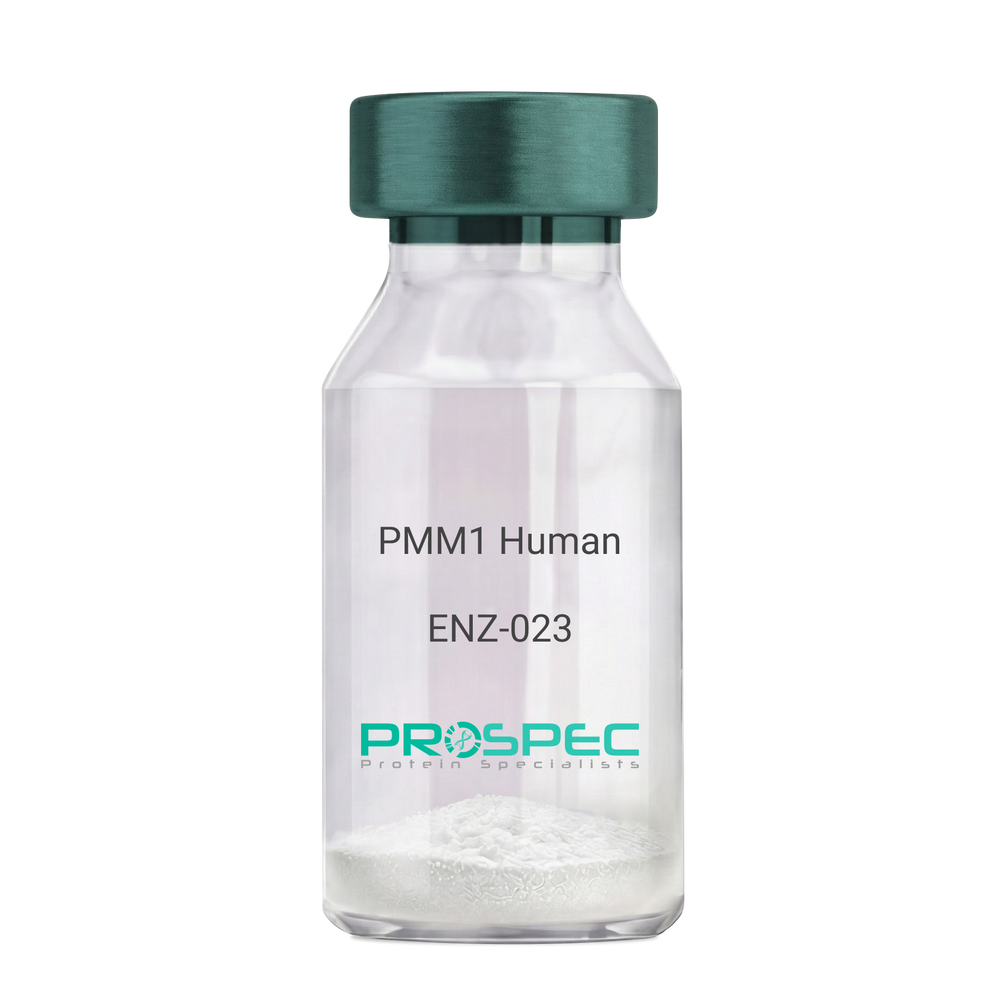
Name :
PMM1 HumanDescription:
Phosphomannomutase 1 Human Recombinant
Phosphomannomutase 1, PMM 1, PMMH-22, PMM1, PMMH22, Sec53.
Product # :
ENZ-023Price :
Quantity :
Shipping Method :
Shipped with Ice Packs
More Info
- description
- source
- formulation
- purity
- More Info
Description
PMM1 Human Recombinant fused with a 20 amino acid His tag at N-terminus produced in E.Coli is a single, non-glycosylated, polypeptide chain containing 282 amino acids (1-262 a.a.) and having a molecular mass of 31.9kDa. The PMM1 is purified by proprietary chromatographic techniques.
Source
Escherichia Coli.
Formulation
The PMM1 solution (0.5mg/ml) contains 20mM Tris-HCl buffer (pH8.0), 10% glycerol, 2mM DTT, 100mM NaCl and 0.1mM PMSF.
Purity
Greater than 90.0% as determined by SDS-PAGE.
More Info
-
Introduction
Phosphomannomutase 1 (PMM1) is an enzyme involved in the synthesis of the GDP-mannose and dolichol-phosphate-mannose required for a number of critical mannosyl transfer reactions. PMM1 catalyzes the conversion between D-mannose 6-phosphate and D-mannose 1-phosphate which is a substrate for GDP-mannose synthesis. GDP-mannose is used for the synthesis of dolichol-phosphate-mannose, which is crucial for N-linked glycosylation and accordingly the secretion of several glycoproteins as well as for the synthesis of glycosyl-phosphatidyl-inositol (GPI) anchored proteins. Additionally, PMM1 may be responsible for the degradation of glucose-1,6-bisphosphate in ischemic brain.
-
Synonyms
Phosphomannomutase 1, PMM 1, PMMH-22, PMM1, PMMH22, Sec53.
-
Physical Appearance
Sterile Filtered colorless solution.
-
Stability
Store at 4°C if entire vial will be used within 2-4 weeks. Store, frozen at -20°C for longer periods of time. For long term storage it is recommended to add a carrier protein (0.1% HSA or BSA).Avoid multiple freeze-thaw cycles.
-
Amino Acid Sequence
MGSSHHHHHH SSGLVPRGSH MAVTAQAARR KERVLCLFDV DGTLTPARQK IDPEVAAFLQ KLRSRVQIGV VGGSDYCKIA EQLGDGDEVI EKFDYVFAEN GTVQYKHGRL LSKQTIQNHL GEELLQDLIN FCLSYMALLR LPKKRGTFIE FRNGMLNISP IGRSCTLEER IEFSELDKKE KIREKFVEAL KTEFAGKGLR FSRGGMISFD VFPEGWDKRY CLDSLDQDSF DTIHFFGNET SPGGNDFEIF ADPRTVGHSV VSPQDTVQRC REIFFPETAH EA.
ProSpec's products are furnished for LABORATORY RESEARCH USE ONLY. The product may not be used as drugs, agricultural or pesticidal products, food additives or household chemicals.
- View Data Sheet
Name :
PRKACA HumanDescription:
cAMP-Dependent Protein Kinase A catalytic subunit α Human Recombinant
cAMP-dependent protein kinase alpha-catalytic subunit, EC 2.7.11.11, PKA C-alpha, PKACA, PRKACA, MGC48865, MGC102831.
Product # :
PKA-200Price :
Quantity :
Shipping Method :
Shipped with Ice Packs
More Info
- description
- source
- formulation
- purity
- More Info
Description
cAMP-dependent PKA is an ubiquitous serine/threonine protein kinase present in a variety of tissues (e.g. brain, skeletal muscle, heart). The intracellular cAMP level regulates cellular responses by altering the interaction between the catalytic C and regulatory R subunits of PKA. The inactive tetrameric PKA holoenzyme R2C2 is activated when cAMP binds to R2, which dissociates the tetramer to R2 cAMP 4 and two active catalytic subunits. Free Catalytic subunits of PKA can phosphorylate a wide variety of intracellular target proteins. In response to hormone- induced high cAMP levels, PKA phosphorylates glycogen synthetase (inhibition of the enzyme activity) and phosphorylase kinase to block glycogen synthesis. Different isoforms of catalytic and regulatory subunits suggest specific functions. The recombinant PKA catalytic subunit a is a 41kDa protein. The a-isoform is the predominant form with a broad tissue distribution and can be used for in vitro enzymological studies of neural and hormonal signal transduction or to phosphorylate target proteins in vivo including Ion channels, transcriptional activator proteins and regulatory enzymes of glycogen metabolism.
Source
Escherichia Coli.
Formulation
PKA catalytic subunit a is supplied in a buffer containing 20mM MOPS pH7, 150mM NaCl, 1mM DTT, 1mM EDTA and 50% Glycerin.
Purity
Greater than 95% as determined by SDS-PAGE.
More Info
-
Synonyms
cAMP-dependent protein kinase alpha-catalytic subunit, EC 2.7.11.11, PKA C-alpha, PKACA, PRKACA, MGC48865, MGC102831.
-
Stability
Store at 4°C if entire vial will be used within 2-4 weeks. Store, frozen at -20°C for longer periods of time. Avoid multiple freeze-thaw cycles.
-
Amino Acid Sequence
MGNAAAAKKG SEQESVKEFL AKAKEDFLKK WESPAQNTAH LDQFERIKTL GTGSFGRVML VKHKETGNHY AMKILDKQKV VKLKQIEHTL NEKRILQAVN FPFLVKLEFS FKDNSNLYMV MEYVPGGEMF SHLRRIGRFS EPHARFYAAQ IVLTFEYLHS LDLIYRDLKP ENLLIDQQGY IQVTDFGFAK RVKGRTWTLC GTPEYLAPEI ILSKGYNKAV DWWALGVLIY EMAAGYPPFF ADQPIQIYEK IVSGKVRFPS HFSSDLKDLL RNLLQVDLTK RFGNLKNGVN DIKNHKWFAT TDWIAIYQRK VEAPFIPKFK GPGDTSNFDD YEEEEIRVSI NEKCGKEFSE F.
-
Assay Conditions
Roskoski-AssayProtein kinase activity can be measured using a modified radioactive assay according to Roskoski et al.The assay will be performed in a mixture containing 50mM MOPS (pH7.0), 10mM MgCI2, 0.25 mg/ml bovine serum albumin, 100 IJM Kemptide (peptide substrate), 100 IJM unlabeled ATP mixed with [y_32p] ATP (500-1000 cpm/pmol) and Ca subunit in a final volume of 50 IJI. Reaction is started by addition of the Ca subunit and can be stopped after 5 minutes incubation at 30°C by spotting the reaction mix onto Whatman P-81 filters and soaking the filters four times in 75mM phosphoric acid (10 ml per sample) for at least 5 minutes. After four washing steps rinse filters with ethanol, dry and count. Roskoski, R., Jr. (1983) Methods Enzymol. 99, 3-6For the detection of phosphorylation in substrate proteins the phosphotransferase reaction can alternatively be stopped by taking aliquots of the mixture and adding SDS sample buffer. The phosphorylation status of the substrate proteins can subsequently be analysed using SDS PAGE and autoradiography. Zimmermann, B. (1999) Journal of Biological Chemistry.274, 9, 5370-78.
-
Unit Definition
One unit is defined as the amount of cAMP-Dependent Protein Kinase, recombinant C? catalytic subunit, required to incorporate 1 pmol of phosphate into the specific substrate peptide kemptide (LRRASLG) in one minute at 30°C.
-
Specific Activity
The specific activity of the recombinant PKA catalytic subunit alpha, is >10,000,000 U/mg.
ProSpec's products are furnished for LABORATORY RESEARCH USE ONLY. The product may not be used as drugs, agricultural or pesticidal products, food additives or household chemicals.
- View Data Sheet
Name :
PSAT1 HumanDescription:
Phosphoserine Aminotransferase 1 Human Recombinant
Phosphoserine aminotransferase, Phosphohydroxythreonine aminotransferase, PSAT, PSAT1, PSA, EPIP.
Product # :
ENZ-209Price :
Quantity :
Shipping Method :
Shipped with Ice Packs
More Info
- description
- source
- formulation
- purity
- More Info
Description
PSAT1 Human Recombinant produced in E.coli is a single, non-glycosylated polypeptide chain containing 394 amino acids (1-370) and having a molecular mass of 42.9kDa.PSAT1 is fused to a 24 amino acid His-tag at N-terminus & purified by proprietary chromatographic techniques.
Source
Escherichia Coli.
Formulation
The PSAT1 solution (1mg/ml) contains 20mM Tris-HCl buffer (pH8.0), 20% glycerol and 1mM DTT.
Purity
Greater than 90.0% as determined by SDS-PAGE.
More Info
-
Introduction
Phosphoserine aminotransferase (PSAT1) catalyzes the conversion of 3-phosphohydroxypyruvate into 3-phosphoserine which is dephosphorylated consequently by phosphoserine phosphatase to form L-serine. PSAT1 is probably a phosphoserine aminotransferase, based on similarity to proteins in mouse, rabbit, and Drosophila. PSAT1 is expressed at high levels in the brain, liver, kidney and pancreas, and very weakly expressed in the thymus, prostate, testis and colon. Defects in the PSAT1 gene are the cause of phosphoserine aminotransferase deficiency (PSATD). PSATD is distinguished biochemically by low plasma and cerebrospinal fluid concentrations of serine and glycine and clinically by intractable seizures, acquired microcephaly, hypertonia, and psychomotor retardation.
-
Synonyms
Phosphoserine aminotransferase, Phosphohydroxythreonine aminotransferase, PSAT, PSAT1, PSA, EPIP.
-
Physical Appearance
Sterile filtered colorless solution.
-
Stability
Store at 4°C if entire vial will be used within 2-4 weeks. Store, frozen at -20°C for longer periods of time. For long term storage it is recommended to add a carrier protein (0.1% HSA or BSA).Avoid multiple freeze-thaw cycles.
-
Amino Acid Sequence
MGSSHHHHHH SSGLVPRGSH MGSHMDAPRQ VVNFGPGPAK LPHSVLLEIQ KELLDYKGVG ISVLEMSHRS SDFAKIINNT ENLVRELLAV PDNYKVIFLQ GGGCGQFSAV PLNLIGLKAG RCADYVVTGA WSAKAAEEAK KFGTINIVHP KLGSYTKIPD PSTWNLNPDA SYVYYCANET VHGVEFDFIP DVKGAVLVCD MSSNFLSKPV DVSKFGVIFA GAQKNVGSAG VTVVIVRDDL LGFALRECPS VLEYKVQAGN SSLYNTPPCF SIYVMGLVLE WIKNNGGAAA MEKLSSIKSQ TIYEIIDNSQ GFYVCPVEPQ NRSKMNIPFR IGNAKGDDAL EKRFLDKALE LNMLSLKGHR SVGGIRASLY NAVTIEDVQK LAAFMKKFLE MHQL.
ProSpec's products are furnished for LABORATORY RESEARCH USE ONLY. The product may not be used as drugs, agricultural or pesticidal products, food additives or household chemicals.
- View Data Sheet
Name :
PGK1 Human, ActiveDescription:
Phosphoglycerate Kinase 1 Human Recombinant, BioActive
Phosphoglycerate kinase 1, MGC117307, MGC142128, MGC8947, MIG10, PGKA.
Product # :
PKA-124Price :
Quantity :
Shipping Method :
Shipped with Ice Packs
More Info
- description
- source
- formulation
- purity
- biological activity
- More Info
Description
PGK1 Human Recombinant produced in E.Coli is a single, non-glycosylated polypeptide chain containing 437 amino acids (1-417a.a.) and having a molecular mass of 46.8kDa.PGK1 is fused to a 20 amino acid His tag at N-Terminus and purified by proprietary chromatographic techniques.
Source
E.coli.
Formulation
The PGK1 solution (1mg/ml) contains 10% glycerol, 20mM Tris-HCl buffer (pH 8.0) and 1mM DTT.
.
Purity
Greater than 95.0% as determined by SDS-PAGE.
Biological Activity
Specific activity: > 600unit/mg. One unit will convert 1 umole of 1,3-Bisphosphoglycerate to 3-PGA per minute at pH 8.0 at 37C.
More Info
-
Introduction
Phosphoglycerate kinase 1, also referred to PGK1, is an X-linked enzyme whichfunctions in the glycolytic pathway.The gene encoding the erythrocyte enzyme PGK1 & it seems that PGK-1 plays a role as a polymerase alpha cofactor protein (primer recognition protein) as a glyxolytic enzyme role. The PGK1 catalyzes the reversible conversion of 1, 3-diphosphoglycerate to 3-phosphoglycerate during glycolysis, generating one molecule of ATP.
-
Synonyms
Phosphoglycerate kinase 1, MGC117307, MGC142128, MGC8947, MIG10, PGKA.
-
Physical Appearance
Sterile Filtered colorless solution.
-
Stability
Store at 4°C if entire vial will be used within 2-4 weeks. Store, frozen at -20°C for longer periods of time. For long term storage it is recommended to add a carrier protein (0.1% HSA or BSA).Avoid multiple freeze-thaw cycles.
-
Amino Acid Sequence
MGSSHHHHHH SSGLVPRGSH MSLSNKLTLD KLDVKGKRVV MRVDFNVPMK NNQITNNQRI KAAVPSIKFC LDNGAKSVVL MSHLGRPDGV PMPDKYSLEP VAVELKSLLG KDVLFLKDCV GPEVEKACAN PAAGSVILLE NLRFHVEEEG KGKDASGNKV KAEPAKIEAF RASLSKLGDV YVNDAFGTAH RAHSSMVGVN LPQKAGGFLM KKELNYFAKA LESPERPFLA ILGGAKVADK IQLINNMLDK VNEMIIGGGM AFTFLKVLNN MEIGTSLFDE EGAKIVKDLM SKAEKNGVKI TLPVDFVTAD KFDENAKTGQ ATVASGIPAG WMGLDCGPES SKKYAEAVTR AKQIVWNGPV GVFEWEAFAR GTKALMDEVV KATSRGCITI IGGGDTATCC AKWNTEDKVS HVSTGGGASL ELLEGKVLPG VDALSNI
ProSpec's products are furnished for LABORATORY RESEARCH USE ONLY. The product may not be used as drugs, agricultural or pesticidal products, food additives or household chemicals.
- View Data Sheet
Name :
PF 4 ProteinDescription:
Platelet Factor-4 Human (CXCL4)
CXCL4, PF-4, PF4, Iroplact, Oncostatin-A, SCYB4, MGC138298.
Product # :
CHM-234Price :
Quantity :
Shipping Method :
Shipped at Room temp
More Info
- description
- source
- formulation
- purity
- More Info
Description
Human PF-4 a 7.8 kDa protein consisting of 70 amino acid residues.
Source
Human Platelets.
Formulation
The CXCL4 protein was lyophilized in PBS buffer pH-7.4.
Purity
Greater than 95.0% as determined by:
(a) Analysis by RP-HPLC.
(b) Analysis by SDS-PAGE.More Info
-
Introduction
Platelet factor-4 is a 70-amino acid protein that is released from the alpha-granules of activated platelets and binds with high affinity to heparin. Its major physiologic role appears to be neutralization of heparin-like molecules on the endothelial surface of blood vessels, thereby inhibiting local antithrombin III activity and promoting coagulation. As a strong chemoattractant for neutrophils and fibroblasts, PF4 probably has a role in inflammation and wound repair. Oncostatin-A is a member of the CXC chemokine family. Human PF4 is used for the proof of heparin-induced thrombocytopenia. Furthermore it is used as an inhibitor in the angiogenesis during tumor therapy.
-
Synonyms
CXCL4, PF-4, PF4, Iroplact, Oncostatin-A, SCYB4, MGC138298.
-
Physical Appearance
Sterile Filtered white lyophilized powder.
-
Stability
Human CXCL4 although stable at 25°C 1 week, should be stored desiccated below -18°C. Please prevent freeze-thaw cycles.
-
Solubility
It is recommended to reconstitute the lyophilized CXCL4 in sterile 18MΩ-cm H2O not less than 100µg/ml, which can then be further diluted to other aqueous solutions.
-
Amino Acid Sequence
The sequence of the first four N-terminal amino acids was determined and was found to be Glu-Ala-Glu-Glu.
ProSpec's products are furnished for LABORATORY RESEARCH USE ONLY. The product may not be used as drugs, agricultural or pesticidal products, food additives or household chemicals.