Skip to content

High-quality research proteins.

  • 1-800-805-6531

  • Mon - Sat 8.00-18.00, Sun - Closed

  • info@prospecbio.com

  • PO Box 6591 East Brunswick NJ 08816

  • Products
    • Cytokines
    • Growth factors
    • Chemokines
    • Cd antigens
    • Neurotrophins
    • Hormones
    • Enzymes
    • Viral antigens
    • Recombinant proteins
    • Natural proteins
    • Monoclonal antibodies
    • Polyclonal antibodies
    • Thermal Packaging
  • About
    • Company
    • Founder
    • Contribution
  • Customers
    • Eastern Asia
    • Eastern Europe
    • North America
    • South America
    • South East Asia
    • Southern Asia
    • Western Europe
  • Ordering
    • Ordering Method
    • Ordering - Credit Card
    • Ordering - PO
    • Shipping Fees
    • FAQs
  • Services
    • DNA Cloning
    • Protein Expression
    • Monoclonal Antibody
    • Fermentation
    • Technology License
  • Contact us
Log in

Country/region

  • USD $ | Albania
  • USD $ | Andorra
  • USD $ | Argentina
  • USD $ | Armenia
  • USD $ | Australia
  • USD $ | Austria
  • USD $ | Azerbaijan
  • USD $ | Belarus
  • USD $ | Belgium
  • USD $ | Bolivia
  • USD $ | Brazil
  • USD $ | Bulgaria
  • USD $ | Cambodia
  • USD $ | Canada
  • USD $ | Chile
  • USD $ | China
  • USD $ | Colombia
  • USD $ | Costa Rica
  • USD $ | Croatia
  • USD $ | Cyprus
  • USD $ | Czechia
  • USD $ | Denmark
  • USD $ | Estonia
  • USD $ | Finland
  • USD $ | France
  • USD $ | Georgia
  • USD $ | Germany
  • USD $ | Greece
  • USD $ | Hong Kong SAR
  • USD $ | Hungary
  • USD $ | Iceland
  • USD $ | India
  • USD $ | Ireland
  • USD $ | Israel
  • USD $ | Italy
  • USD $ | Japan
  • USD $ | Kazakhstan
  • USD $ | Latvia
  • USD $ | Liechtenstein
  • USD $ | Lithuania
  • USD $ | Madagascar
  • USD $ | Malta
  • USD $ | Mexico
  • USD $ | Moldova
  • USD $ | Monaco
  • USD $ | Netherlands
  • USD $ | New Zealand
  • USD $ | North Macedonia
  • USD $ | Norway
  • USD $ | Panama
  • USD $ | Paraguay
  • USD $ | Peru
  • USD $ | Philippines
  • USD $ | Poland
  • USD $ | Portugal
  • USD $ | Romania
  • USD $ | Singapore
  • USD $ | Slovakia
  • USD $ | Slovenia
  • USD $ | South Africa
  • USD $ | South Korea
  • USD $ | Spain
  • USD $ | Sri Lanka
  • USD $ | Sweden
  • USD $ | Switzerland
  • USD $ | Taiwan
  • USD $ | Thailand
  • USD $ | Türkiye
  • USD $ | Ukraine
  • USD $ | United Kingdom
  • USD $ | United States
  • USD $ | Uruguay
  • USD $ | Vatican City
  • USD $ | Venezuela
  • USD $ | Vietnam
  • Facebook
  • Instagram
logoProSpec - Recombinant Protein Manufacturer for academic and R&D industry
Become a distributor
Account Log in
Wishlist
Cart Cart(0)
  • Products
    +
    • Cytokines
    • Growth factors
    • Chemokines
    • Cd antigens
    • Neurotrophins
    • Hormones
    • Enzymes
    • Viral antigens
    • Recombinant proteins
    • Natural proteins
    • Monoclonal antibodies
    • Polyclonal antibodies
    • Thermal Packaging
  • About
    +
    • Company
    • Founder
    • Contribution
  • Customers
    +
    • Eastern Asia
    • Eastern Europe
    • North America
    • South America
    • South East Asia
    • Southern Asia
    • Western Europe
  • Ordering
    +
    • Ordering Method
    • Ordering - Credit Card
    • Ordering - PO
    • Shipping Fees
    • FAQs
  • Services
    +
    • DNA Cloning
    • Protein Expression
    • Monoclonal Antibody
    • Fermentation
    • Technology License
  • Contact us

Item added to your cart

View cart
View All
  • Cytokines
  • Growth factors
  • Chemokines
  • Cd antigens
  • Neurotrophins
  • Hormones
  • Enzymes
  • Viral antigens
  • Recombinant proteins
  • Natural proteins
  • Monoclonal antibodies
  • Polyclonal antibodies
  • Thermal Packaging
  • Tumor Necrosis Factor

    Tumor Necrosis Factor

    View All
  • 4-1BB

    4-1BB

    View All
  • Adiponectin

    Adiponectin

    View All
  • AIF1

    AIF1

    View All
  • Other Cytokines

    Other Cytokines

    View All
  • AITRL

    AITRL

    View All
  • Angiopoietin

    Angiopoietin

    View All
  • Apolipoprotein

    Apolipoprotein

    View All
  • B-Cell Activating Factor

    B-Cell Activating Factor

    View All
  • Beta Defensin

    Beta Defensin

    View All
  • Bone Morphogenetic Protein

    Bone Morphogenetic Protein

    View All
  • B type Natriuretic Peptide

    B type Natriuretic Peptide

    View All
  • BST

    BST

    View All
  • Betacellulin

    Betacellulin

    View All
  • Cardiotrophin

    Cardiotrophin

    View All
  • Activin

    Activin

    View All
  • Fibroblast Growth Factor

    Fibroblast Growth Factor

    View All
  • Other Growth Factors

    Other Growth Factors

    View All
  • CSF

    CSF

    View All
  • CTGF

    CTGF

    View All
  • IGFBP

    IGFBP

    View All
  • VEGF Protein

    VEGF Protein

    View All
  • EGF

    EGF

    View All
  • Epigen

    Epigen

    View All
  • Erythropoietin

    Erythropoietin

    View All
  • Insulin-Like Growth Factor

    Insulin-Like Growth Factor

    View All
  • Growth Hormone

    Growth Hormone

    View All
  • HDGF

    HDGF

    View All
  • Hepatocyte Growth Factor

    Hepatocyte Growth Factor

    View All
  • Insulin

    Insulin

    View All
  • BCA-1/ BLC (CXCL13)

    BCA-1/ BLC (CXCL13)

    View All
  • BRAK (CXCL14)

    BRAK (CXCL14)

    View All
  • C-10 (CCL6)

    C-10 (CCL6)

    View All
  • Other Chemokines

    Other Chemokines

    View All
  • MEC (CCL28)

    MEC (CCL28)

    View All
  • LD78-beta (CCL3L1)

    LD78-beta (CCL3L1)

    View All
  • CTACK (CCL27)

    CTACK (CCL27)

    View All
  • CXCL16

    CXCL16

    View All
  • CXCL17

    CXCL17

    View All
  • Platelet Factor-4 (CXCL4)

    Platelet Factor-4 (CXCL4)

    View All
  • ENA-78 (CXCL5)

    ENA-78 (CXCL5)

    View All
  • Eotaxin (CCL11,24,26)

    Eotaxin (CCL11,24,26)

    View All
  • Exodus-2 (CCL21)

    Exodus-2 (CCL21)

    View All
  • Fractalkine (CX3CL1)

    Fractalkine (CX3CL1)

    View All
  • CXCL6

    CXCL6

    View All
  • Other CD Antigens

    Other CD Antigens

    View All
  • CD14

    CD14

    View All
  • CD164

    CD164

    View All
  • CD1

    CD1

    View All
  • CD2

    CD2

    View All
  • CD200

    CD200

    View All
  • CD207

    CD207

    View All
  • CD226

    CD226

    View All
  • CD23

    CD23

    View All
  • CD244

    CD244

    View All
  • CD247

    CD247

    View All
  • CD27

    CD27

    View All
  • CD274

    CD274

    View All
  • CD300

    CD300

    View All
  • CD33

    CD33

    View All
  • Other Neurotrophins

    Other Neurotrophins

    View All
  • Beta-NGF

    Beta-NGF

    View All
  • BDNF

    BDNF

    View All
  • CDNF

    CDNF

    View All
  • CNTF

    CNTF

    View All
  • GDNF

    GDNF

    View All
  • Glia Maturation Factor

    Glia Maturation Factor

    View All
  • MANF

    MANF

    View All
  • Midkine

    Midkine

    View All
  • Neuroglobin

    Neuroglobin

    View All
  • Neurotrophic factors

    Neurotrophic factors

    View All
  • Neuregulin

    Neuregulin

    View All
  • Neuropilin

    Neuropilin

    View All
  • Pigment Epithelium-Derived Factor

    Pigment Epithelium-Derived Factor

    View All
  • Pleiotrophin

    Pleiotrophin

    View All
  • Peptide Hormones

    Peptide Hormones

    View All
  • Other Hormones

    Other Hormones

    View All
  • HCG

    HCG

    View All
  • Endothelin

    Endothelin

    View All
  • Exendin

    Exendin

    View All
  • FSH

    FSH

    View All
  • Glucagon

    Glucagon

    View All
  • GHRP

    GHRP

    View All
  • GLP

    GLP

    View All
  • Thyrostimulin

    Thyrostimulin

    View All
  • Inhibin A

    Inhibin A

    View All
  • LHRH

    LHRH

    View All
  • Melanotan

    Melanotan

    View All
  • Procalcitonin

    Procalcitonin

    View All
  • PTH

    PTH

    View All
  • Peroxiredoxin

    Peroxiredoxin

    View All
  • Peptidase

    Peptidase

    View All
  • Synthetase

    Synthetase

    View All
  • Transferase

    Transferase

    View All
  • Hydrolase

    Hydrolase

    View All
  • Dehydrogenase

    Dehydrogenase

    View All
  • ACE2

    ACE2

    View All
  • Esterase

    Esterase

    View All
  • Protein Kinases

    Protein Kinases

    View All
  • Other Enzymes

    Other Enzymes

    View All
  • Phosphatase

    Phosphatase

    View All
  • Deaminase

    Deaminase

    View All
  • Oxygenase

    Oxygenase

    View All
  • Adenylate Kinase

    Adenylate Kinase

    View All
  • Lyase

    Lyase

    View All
  • Chagas

    Chagas

    View All
  • SARS

    SARS

    View All
  • Influenza

    Influenza

    View All
  • ASFV

    ASFV

    View All
  • Astrovirus

    Astrovirus

    View All
  • Borrelia

    Borrelia

    View All
  • Helicobacter Pylori

    Helicobacter Pylori

    View All
  • Chikungunya

    Chikungunya

    View All
  • Chlamydia

    Chlamydia

    View All
  • Cytomegalo

    Cytomegalo

    View All
  • Dengue

    Dengue

    View All
  • EBV

    EBV

    View All
  • Ebola

    Ebola

    View All
  • Feline Leukemia Virus

    Feline Leukemia Virus

    View All
  • Hepatitis A

    Hepatitis A

    View All
  • Other

    Other

    View All
  • Actin

    Actin

    View All
  • ADAM

    ADAM

    View All
  • Complement Component

    Complement Component

    View All
  • Ag85

    Ag85

    View All
  • Eukaryotic Translation Initiation Factor

    Eukaryotic Translation Initiation Factor

    View All
  • Anterior Gradient Protein

    Anterior Gradient Protein

    View All
  • Heat Shock Protein

    Heat Shock Protein

    View All
  • Alpha-2-HS-Glycoprotein

    Alpha-2-HS-Glycoprotein

    View All
  • Hemoglobin

    Hemoglobin

    View All
  • Allergy

    Allergy

    View All
  • Anaplasma

    Anaplasma

    View All
  • Angiogenin

    Angiogenin

    View All
  • Ankyrin Repeat Domain

    Ankyrin Repeat Domain

    View All
  • Annexin

    Annexin

    View All
  • Other Natural Proteins

    Other Natural Proteins

    View All
  • Aprotinin

    Aprotinin

    View All
  • Transferrin

    Transferrin

    View All
  • Avidin

    Avidin

    View All
  • Anti Coagulation Factors

    Anti Coagulation Factors

    View All
  • Natural Albumin

    Natural Albumin

    View All
  • Natural Coagulation Factors

    Natural Coagulation Factors

    View All
  • Fibronectin

    Fibronectin

    View All
  • Thrombin

    Thrombin

    View All
  • Anti Human Enzyme

    Anti Human Enzyme

    View All
  • Other Monoclonal Antibodies

    Other Monoclonal Antibodies

    View All
  • Anti Human Cytokine

    Anti Human Cytokine

    View All
  • Anti Human Heat Shock Protein

    Anti Human Heat Shock Protein

    View All
  • Anti Mouse Lymphocyte

    Anti Mouse Lymphocyte

    View All
  • Anti Human Chemokine

    Anti Human Chemokine

    View All
  • Anti Human Lymphocyte

    Anti Human Lymphocyte

    View All
  • Anti Viral Monoclonal

    Anti Viral Monoclonal

    View All
  • Anti Mouse Cytokine

    Anti Mouse Cytokine

    View All
  • Anti-GST Monoclonal

    Anti-GST Monoclonal

    View All
  • Other Polyclonal Antibodies

    Other Polyclonal Antibodies

    View All
  • Anti Viral

    Anti Viral

    View All
  • Anti-GST Monoclonal

    Anti-GST Monoclonal

    View All
Back

Search results

1000 results found for “NCK Adaptor Protein”

Name

Description

Product #

Price

Quantity

Shipping Method

  • View Data Sheet

    Name :

    DnaK SBD

    Description:

    DnaK Substrate Binding Domain E.Coli Recombinant

    HSP-70, HSP70, DnaK, Chaperone protein dnaK, Heat shock protein 70, Heat shock 70 kDa protein, groP, grpF, seg, b0014, JW0013.

    Product # :

    HSP-008

    Price :

    Quantity :

    Shipping Method :

    Ice Icon

    Shipped with Ice Packs

    Add To Cart

    More Info

    • description
    • source
    • formulation
    • purity
    • More Info

    Description

    Recombinant DnaK Substrate Binding domain produced in E.Coli is a single, non-glycosylated polypeptide chain containing (385-546 a.a.) 163 amino acids and having a molecular mass of 17.7 kDa.

    Source

    Escherichia Coli.

    Formulation

    The protein contains 25mM Tris-HCl, pH7.5, 2mM B-ME and 1mM DTT.

    Purity

    Greater than 95.0% as determined by SDS-PAGE.

    More Info

    • Introduction

      DnaK, originally identified for its DNA replication by bacteriophage l in E. coli is the bacterial hsp70 chaperone. This protein is involved in the folding and assembly of newly synthesized polypeptide chains and in preventing the aggregation of stress-denatured proteins. Dnak(residues 508-638) of the substrate binding domain is a-helical and appears to act as a lid covering the substrate binding cleft. DnaK(amino acid 508-638) was purified to apparent homogeneity by using conventional column chromatography techniques. Additional amino acid (Met) is attached at N- terminus.

    • Synonyms

      HSP-70, HSP70, DnaK, Chaperone protein dnaK, Heat shock protein 70, Heat shock 70 kDa protein, groP, grpF, seg, b0014, JW0013.

    • Physical Appearance

      Sterile filtered colorless solution.

    • Stability

      Store at 4°C if entire vial will be used within 2-4 weeks. Store, frozen at -20°C for longer periods of time. For long term storage it is recommended to add a carrier protein (0.1% HSA or BSA).Avoid multiple freeze-thaw cycles.

    • Amino Acid Sequence

      MDVKDVLLLD VTPLSLGIET MGGVMTTLIA KNTTIPTKHS QVFSTAEDNQ SAVTIHVLQG ERKRAADNKS LGQFNLDGIN PAPRGMPQIE VTFDIDADGI LHVSAKDKNS GKEQKITIKA SSGLNEDEIQ KMVRDAEANA EADRKFEELV QTRNQGDHLL HST.

    ProSpec's products are furnished for LABORATORY RESEARCH USE ONLY. The product may not be used as drugs, agricultural or pesticidal products, food additives or household chemicals.

    Dnak Sbd
  • View Data Sheet

    Name :

    MAPK3 Human, His

    Description:

    Mitogen-Activated Protein Kinase 3 Human Recombinant, His-Tag

    ERK1, HS44KDAP, HUMKER1A, P44ERK1, P44MAPK, PRKM3, MAP kinase3.

    Product # :

    PKA-265

    Price :

    Quantity :

    Shipping Method :

    Ice Icon

    Shipped with Ice Packs

    Add To Cart

    More Info

    • description
    • source
    • formulation
    • purity
    • More Info

    Description

    MAPK3 Human Recombinant produced in E.Coli is a single, non-glycosylated, polypeptide chain containing 399 amino acids (1-379 a.a.) and having a molecular mass of 45.2 kDa. The MAPK3 is fused to a 20 amino acid His-Tag at N-terminus and purified by proprietary chromatographic techniques.

    Source

    Escherichia Coli.

    Formulation

    The MAPK3 0.5mg/ml protein solution contains 20mM Tris-HCl buffer pH-8, 1mM DTT, 0.1M NaCl and 20% glycerol.

    Purity

    Greater than 90.0% as determined by SDS-PAGE.

    More Info

    • Introduction

      MAPK3 is a part of the MAP kinase family which is recognized as extracellular signal-regulated kinases (ERKs), that function in a signaling cascade that controls various cellular procedures such as proliferation, differentiation, and cell cycle progression in reaction to a variety of extracellular signals. MAPK3 is activated by upstream kinases, resulting in its translocation to the nucleus where it phosphorylates nuclear targets.

    • Synonyms

      ERK1, HS44KDAP, HUMKER1A, P44ERK1, P44MAPK, PRKM3, MAP kinase3.

    • Physical Appearance

      Sterile Filtered colorless solution.

    • Stability

      Store at 4°C if entire vial will be used within 2-4 weeks. Store, frozen at -20°C for longer periods of time. For long term storage it is recommended to add a carrier protein (0.1% HSA or BSA).Avoid multiple freeze-thaw cycles.

    • Amino Acid Sequence

      MGSSHHHHHH SSGLVPRGSH MAAAAAQGGG GGEPRRTEGV GPGVPGEVEM VKGQPFDVGP RYTQLQYIGE GAYGMVSSAY DHVRKTRVAI KKISPFEHQT YCQRTLREIQ ILLRFRHENV IGIRDILRAS TLEAMRDVYI VQDLMETDLY KLLKSQQLSN DHICYFLYQI LRGLKYIHSA NVLHRDLKPS NLLINTTCDL KICDFGLARI ADPEHDHTGF LTEYVATRWY RAPEIMLNSK GYTKSIDIWS VGCILAEMLS NRPIFPGKHY LDQLNHILGI LGSPSQEDLN CIINMKARNY LQSLPSKTKV AWAKLFPKSD SKALDLLDRM LTFNPNKRIT VEEALAHPYL EQYYDPTDEP VAEEPFTFAM ELDDLPKERL KELIFQETAR FQPGVLEAP.

    ProSpec's products are furnished for LABORATORY RESEARCH USE ONLY. The product may not be used as drugs, agricultural or pesticidal products, food additives or household chemicals.

    Mapk3 Human
  • View Data Sheet

    Name :

    OCM Human

    Description:

    Oncomodulin-1 Human Recombinant

    Oncomodulin-1, OM, Parvalbumin beta, OCM, OCM1, OCMN.

    Product # :

    PRO-143

    Price :

    Quantity :

    Shipping Method :

    Room Temp Icon

    Shipped at Room temp

    Add To Cart

    More Info

    • description
    • source
    • formulation
    • More Info

    Description

    The Recombinant Human Oncomodulin-1 produced in E.coli has a molecular mass of 13.21kDa containing 117 amino acid residues of the human Oncomodulin-1 and fused to a 9 a.a. His tag at N-terminus.

    Source

    Escherichia Coli.

    Formulation

    Oncomodulin-1 was filtered (0.4 µm) and lyophilized from 0.5 mg/ml in 20mM Tris and 50mM NaCl, pH 7.5.

    More Info

    • Introduction

      Oncomodulin is a member of the superfamily of calmodulin proteins, otherwise known as the EF-hand proteins. It is a high-affinity calcium ion-binding protein. Oncomodulin is an oncodevelopmental protein which is found in early embryonic cells in the placenta and also in tumors.

    • Synonyms

      Oncomodulin-1, OM, Parvalbumin beta, OCM, OCM1, OCMN.

    • Stability

      Store lyophilized protein at -20°C. Aliquot the product after reconstitution to avoid repeated freezing/thawing cycles. Reconstituted protein can be stored at 4°C for a limited period of time; it does not show any change after two weeks at 4°C.

    • Solubility

      It is recommended to add deionized water to prepare a working stock solution of approximately 0.5 mg/ml and let the lyophilized pellet dissolve completely. Product is not sterile! Please filter the product by an appropriate sterile filter before using it in the cell culture.

    • Amino Acid Sequence

      MKHHHHHHAS ITDVLSADDI S ITDVLSADDI AAALQECRDP DTFEPQKFFQ TSGLSKMSAN QVKDVFRFID NDQSGYLDEE ELKFFLQKFE SGARELTESE TKSLMAAADN DGDGKIGAEE FQEMVHS.

    • Applications

      Western blotting.

    ProSpec's products are furnished for LABORATORY RESEARCH USE ONLY. The product may not be used as drugs, agricultural or pesticidal products, food additives or household chemicals.

    Ocm Human
  • View Data Sheet

    Name :

    POMC Human

    Description:

    Proopiomelanocortin Human Recombinant

    Pro-opiomelanocortin, POMC, LPH, MSH, NPP, POC, ACTH, CLIP.

    Product # :

    PRO-236

    Price :

    Quantity :

    Shipping Method :

    Ice Icon

    Shipped with Ice Packs

    Add To Cart

    More Info

    • description
    • source
    • formulation
    • purity
    • More Info

    Description

    POMC produced in E.Coli is a single, non-glycosylated polypeptide chain containing 262 amino acids (27-267 a.a) and having a molecular mass of 28.9kDa (molecular weight on SDS-PAGE will appear higher).POMC is fused to a 21 amino acid His-tag at N-terminus & purified by proprietary chromatographic techniques.

    Source

    Escherichia Coli.

    Formulation

    POMC protein solution (0.25mg/ml) containing 20mM Tris-HCl buffer (pH 8.5), 1mM DTT, 50% glycerol, 0.1mM PMSF, 0.1M Imidazole and 0.2M NaCl.

    Purity

    Greater than 85.0% as determined by SDS-PAGE.

    More Info

    • Introduction

      Pro-opiomelanocortin preproprotein (POMC) is a polypeptide hormone precursor which experiences extensive, tissue-specific, post-translational processing via cleavage by subtilisin-like enzymes known as prohormone convertases. POMC regulates the corticosteroid production in the adrenal cortex. Furthermore, POMC is cleaved into ten hormone chains named NPP, g-MSH, ACTH, a-MSH, CLIP, Lipotropin b, Lipotropin g, b-MSH,b endorphin and Met-enkephalin. POMC gene defects are the cause of POMC deficiency, which is characterized by red hair and adrenal insufficiency.

    • Synonyms

      Pro-opiomelanocortin, POMC, LPH, MSH, NPP, POC, ACTH, CLIP.

    • Physical Appearance

      Sterile Filtered colorless solution.

    • Stability

      Store at 4°C if entire vial will be used within 2-4 weeks. Store, frozen at -20°C for longer periods of time. For long term storage it is recommended to add a carrier protein (0.1% HSA or BSA).Avoid multiple freeze-thaw cycles.

    • Amino Acid Sequence

      MGSSHHHHHH SSGLVPRGSH MWCLESSQCQ DLTTESNLLE CIRACKPDLS AETPMFPGNG DEQPLTENPR KYVMGHFRWD RFGRRNSSSS GSSGAGQKRE DVSAGEDCGP LPEGGPEPRS DGAKPGPREG KRSYSMEHFR WGKPVGKKRR PVKVYPNGAE DESAEAFPLE FKRELTGQRL
      REGDGPDGPA DDGAGAQADL EHSLLVAAEK KDEGPYRMEH FRWGSPPKDK RYGGFMTSEK SQTPLVTLFK NAIIKNAYKK GE.

    ProSpec's products are furnished for LABORATORY RESEARCH USE ONLY. The product may not be used as drugs, agricultural or pesticidal products, food additives or household chemicals.

    Pomc Human
  • View Data Sheet

    Name :

    Protein-L Cys

    Description:

    Protein L Cys Recombinant

    Product # :

    PRO-1931

    Price :

    Quantity :

    Shipping Method :

    Room Temp Icon

    Shipped at Room temp

    Add To Cart

    More Info

    • description
    • source
    • formulation
    • purity
    • More Info
    • sds-page, HPLC

    Description

    Recombinant Protein-L produced in E.Coli is a single non-glycosylated polypeptide chain fused with a Cys at C-terminus. Protein-L is comprised of 5 IgG-binding regions of protein L (B1-B2-B3-B4-B5) containing 366 amino acids in total and having a molecular mass of 40.6kDa, however, it migrates with an apparent molecular mass of 46kDa on SDS-PAGE. Cell wall binding region, cell membrane binding region and albumin binding region have been eliminated from the recombinant Protein-L to guarantee the maximum specific IgG binding.

    Source

    Escherichia Coli.

    Formulation

    Protein-L was lyophilized without any additives.

    Purity

    Greater than 96.0% as determined by:
    (a) Analysis by SEC-HPLC.
    (b) Analysis by SDS-PAGE.

    sds-page, HPLC

    Protein-L Cys SDS-PAGE - Product image 1
    Protein-L cys HPLC - Product image 2

    More Info

    • Introduction

      The Recombinant Protein L is comprised of 5 kappa-binding domains. Protein L has the exceptional ability to bind through kappa light chain interactions without hindering with the antibody’s antigen-binding site. This gives Protein L the capacity to bind a broader range of Ig classes and subclasses than other antibody-binding proteins. The recombinant Protein L is perfect for purification of polyclonal or monoclonal IgG antibodies. Protein L binds to IgG from humans, mice, rats and pigs.

    • Physical Appearance

      Sterile Filtered White lyophilized (freeze-dried) powder.

    • Stability

      Lyophilized Protein-L although stable at room temperature for 3 weeks, should be stored desiccated below -18°C. Upon reconstitution Protein-L should be stored at 4°C between 2-7 days and for future use below -18°C. For long term storage it is recommended to add a carrier protein (0.1% HSA or BSA). Please prevent freeze-thaw cycles.

    • Solubility

      It is recommended to reconstitute the lyophilized Protein-L in sterile 18M-cm H2O not less than 0.1mg/ml, which can then be further diluted to other aqueous solutions.

    • Amino Acid Sequence

      KEETPETPET DSEEEVTIKA NLIFANGSTQ TAEFKGTFEK ATSEAYAYAD TLKKDNGEYT VDVADKGYTL NIKFAGKEKT PEEPKEEVTI KANLIYADGK TQTAEFKGTF EEATAEAYRY ADALKKDNGE YTVDVADKGY TLNIKFAGKE KTPEEPKEEV TIKANLIYAD GKTQTAEFKG TFEEATAEAY RYADLLAKEN GKYTVDVADK GYTLNIKFAG KEKTPEEPKE EVTIKANLIY ADGKTQTAEF KGTFAEATAE AYRYADLLAK ENGKYTADLE DGGYTINIRF AGKKVDEKPE EKEQVTIKEN IYFEDGTVQT ATFKGTFAEA TAEAYRYADL LSKEHGKYTA DLEDGGYTIN IRFAGC.

    ProSpec's products are furnished for LABORATORY RESEARCH USE ONLY. The product may not be used as drugs, agricultural or pesticidal products, food additives or household chemicals.

    Protein L Cys
  • View Data Sheet

    Name :

    Streptavidin-NC

    Description:

    Streptavidin-NC Recombinant

    Product # :

    PRO-338

    Price :

    Quantity :

    Shipping Method :

    Ice Icon

    Shipped with Ice Packs

    Add To Cart

    More Info

    • description
    • source
    • formulation
    • purity
    • More Info

    Description

    Recombinant Streptavidin-NC produced in E.Coli is a single, non-glycosylated, polypeptide chain having a molecular mass of 24kDa. Streptavidin-NC is engineered to bind to nitrocellulose.

    Source

    Escherichia Coli.

    Formulation

    The sterile solution contains 10mM K2HPO4-KH2PO4, pH 7.3.

    Purity

    Greater than 93.0% as determined by SDS-PAGE.

    More Info

    • Introduction

      Streptavidin is a tetrameric protein secreted by Streptomyces avidinii which binds firmly to biotin. Streptavidin is wilyde used in molecular biology through its unique high affinity for the vitamin biotin. The dissociation constant (Kd) of the biotin-streptavidin complex is about ~10-15 mol/L. The strong affinity recognition of biotin and biotinylated molecules has made streptavidin one of the most important components in diagnostics and laboratory kits. The streptavidin/biotin system has one of the biggest free energies of association of yet observed for noncovalent binding of a protein and small ligand in aqueous solution (K_assoc = 10**14). The complexes are also extremely stable over a wide range of temperature and pH.

    • Physical Appearance

      Sterile Liquid formulation.

    • Stability

      Streptavidin-NC although stable at 4°C for 3 weeks, should be stored below -18°C. Please prevent freeze thaw cycles.

    ProSpec's products are furnished for LABORATORY RESEARCH USE ONLY. The product may not be used as drugs, agricultural or pesticidal products, food additives or household chemicals.

    Streptavidin Nc
  • View Data Sheet

    Name :

    CAMK2N1 Human

    Description:

    Calcium/Calmodulin Dependent Protein Kinase II Inhibitor 1 Human Recombinant

    PRO1489; RP11-401M16.1, Calcium/calmodulin-dependent protein kinase II inhibitor 1, CaMKII inhibitory protein alpha, CaMKIIN-alpha, CAMK2N1.

    Product # :

    PRO-1873

    Price :

    Quantity :

    Shipping Method :

    Ice Icon

    Shipped with Ice Packs

    Add To Cart

    More Info

    • description
    • source
    • formulation
    • purity
    • More Info

    Description

    CAMK2N1 Human Recombinant produced in E.Coli is a single, non-glycosylated polypeptide chain containing 101 amino acids (1-78 a.a) and having a molecular mass of 10.9kDa. CAMK2N1 is fused to a 23 amino acid His-tag at N-terminus & purified by proprietary chromatographic techniques.

    Source

    Escherichia Coli.

    Formulation

    CAMK2N1 protein solution (0.25mg/ml) containing 20mM Tris-HCl buffer (pH 8.0), 0.15M NaCl, 20% glycerol and 1mM DTT.

    Purity

    Greater than 90.0% as determined by SDS-PAGE.

    More Info

    • Introduction

      Calcium/Calmodulin Dependent Protein Kinase II Inhibitor 1 (CAMK2N1), which interacts with CAMK2B, is a part of the CAMK2N family. CAMK2N1 is also interacts with CAMK2A in a way which requires CAMK2A activation by Ca2+. CAMK2N1 is potent and specific inhibitor of CaM-kinase II (CAMK2).

    • Synonyms

      PRO1489; RP11-401M16.1, Calcium/calmodulin-dependent protein kinase II inhibitor 1, CaMKII inhibitory protein alpha, CaMKIIN-alpha, CAMK2N1.

    • Physical Appearance

      Sterile Filtered colorless solution.

    • Stability

      Store at 4°C if entire vial will be used within 2-4 weeks. Store, frozen at -20°C for longer periods of time. For long term storage it is recommended to add a carrier protein (0.1% HSA or BSA).Avoid multiple freeze-thaw cycles.

    • Amino Acid Sequence

      MGSSHHHHHH SSGLVPRGSH MGSMSEVLPY GDEKLSPYGD GGDVGQIFSC RLQDTNNFFG AGQNKRPPKL GQIGRSKRVV IEDDRIDDVL KNMTDKAPPG V.

    ProSpec's products are furnished for LABORATORY RESEARCH USE ONLY. The product may not be used as drugs, agricultural or pesticidal products, food additives or household chemicals.

    Camk2N1 Human
  • View Data Sheet

    Name :

    NUP62 Human

    Description:

    Nucleopurin 62kDa Human Recombinant

    Nuclear pore glycoprotein p62, 62 kDa nucleoporin, Nucleoporin Nup62, NUP62, p62, IBSN, SNDI.

    Product # :

    PRO-999

    Price :

    Quantity :

    Shipping Method :

    Ice Icon

    Shipped with Ice Packs

    Add To Cart

    More Info

    • description
    • source
    • formulation
    • purity
    • More Info

    Description

    NUP62 Human Recombinant produced in SF9 is a glycosylated, polypeptide chain having a calculated molecular mass of 66 kDa. NUP62 is expressed with a -10x His tag at N-terminus and purified by proprietary chromatographic techniques.

    Source

    Sf9 insect cells.

    Formulation

    NUP62 is supplied in 20mM HEPES buffer pH-8, 200mM NaCl and 20% glycerol.

    Purity

    Greater than 95% as determined by SDS-PAGE.

    More Info

    • Introduction

      Nucleopurin 62kDa (NUP62) belongs to the FG-repeat containing nucleoporins and is localized to the nuclear pore central plug. Nucleoporins are the principal components of the nuclear pore complex in eukaryotic cells. This complex is a colossal structure which extends across the nuclear envelope, forming an entryway that regulates the stream of macromolecules between the nucleus and the cytoplasm. NUP62 associates with the importin alpha/beta complex that is involved in the import of proteins containing nuclear localization signals. Defects in the NUP62 are the cause of SNDI (infantile striatonigral degeneration), aka infantile bilateral striatal necrosis (IBSN) or familial striatal degeneration.

    • Synonyms

      Nuclear pore glycoprotein p62, 62 kDa nucleoporin, Nucleoporin Nup62, NUP62, p62, IBSN, SNDI.

    • Physical Appearance

      Sterile Filtered clear solution.

    • Stability

      Store at 4°C if entire vial will be used within 2-4 weeks. Store, frozen at -20°C for longer periods of time. Avoid multiple freeze-thaw cycles.

    • Immunological Functions

      1. Binds IgG-type human auto-antibodies.2. Standard ELISA test (checker-board analysis of positive/negative sera), immunodot analysis with positive/negative samples.

    • coating concentration

      0.5-1.0 µg/ml (depending on the type of ELISA plate and coating buffer). Suitable for labeling of functional groups.

    • Applications

      Western blot with Polyclonal anti-Nup62 antibodies.

    ProSpec's products are furnished for LABORATORY RESEARCH USE ONLY. The product may not be used as drugs, agricultural or pesticidal products, food additives or household chemicals.

    Nup62 Human
  • View Data Sheet

    Name :

    NOV Human

    Description:

    Nephroblastoma Overexpressed Human Recombinant

    Protein NOV homolog, NovH, CCN family member 3, nsulin-like growth factor-binding protein 9, IBP-9, IGF-binding protein 9, IGFBP-9, Nephroblastoma-overexpressed gene protein homolog, NOV, CCN3, IGFBP9, NOVH.

    Product # :

    CYT-805

    Price :

    Quantity :

    Shipping Method :

    Room Temp Icon

    Shipped at Room temp

    Add To Cart

    More Info

    • description
    • source
    • formulation
    • purity
    • biological activity
    • More Info

    Description

    Nephroblastoma Overexpressed Human Recombinant produced in E.Coli is a single, non-glycosylated, polypeptide chain containing 331 amino acids and having a molecular mass of 36.2 kDa. The NOV is purified by proprietary chromatographic techniques.

    Source

    Escherichia Coli.

    Formulation

    Lyophilized from a 0.2µm filtered concentrated solution in 20mM Tris-HCl, pH 8.6 and 150 mM NaCl.

    Purity

    Greater than 95.0% as determined by:(a) Analysis by RP-HPLC.(b) Analysis by SDS-PAGE.

    Biological Activity

    Determined by a cell proliferation assay using murine Balb/c 3T3 cells is less than 1.0 µg/ml, corresponding to a specific activity of > 1000 IU/mg. range of 10.0 -50.0 ng/ml, corresponding to a specific activity of 20,000-100,000units/mg.

    More Info

    • Introduction

      Nephroblastoma Overexpressed (NOV) which is encoded by the NOV gene is a part of the CCN (CTGF/CYR61/NOV) family. NOV takes part in reducing tumorgenicity and proliferation of certain cancer cell lines. NOV interacts with numerous proteins and is involved in both internal and external cell signaling. NOV is expressed in particular tumors, including Wilm’s tumor and most nephroblastomas and is also exerts proangiogenic activities.

    • Synonyms

      Protein NOV homolog, NovH, CCN family member 3, nsulin-like growth factor-binding protein 9, IBP-9, IGF-binding protein 9, IGFBP-9, Nephroblastoma-overexpressed gene protein homolog, NOV, CCN3, IGFBP9, NOVH.

    • Physical Appearance

      Sterile Filtered White lyophilized (freeze-dried) powder.

    • Stability

      Lyophilized NOV although stable at room temperature for 3 weeks, should be stored desiccated below -18°C. Upon reconstitution NOV should be stored at 4°C between 2-7 days and for future use below -18°C. For long term storage it is recommended to add a carrier protein (0.1% HSA or BSA). Please prevent freeze-thaw cycles.

    • Solubility

      It is recommended to reconstitute the lyophilized NOV in sterile 18M-cm H2O not less than 100µg/ml, which can then be further diluted to other aqueous solutions.

    • Amino Acid Sequence

      MQVAATQRCP PQCPGRCPAT PPTCAPGVRA VLDGCSCCLV CARQRGESCS DLEPCDESSG LYCDRSADPS NQTGICTAVE GDNCVFDGVI YRSGEKFQPS CKFQCTCRDG QIGCVPRCQL DVLLPEPNCP APRKVEVPGE CCEKWICGPD EEDSLGGLTL AAYRPEATLG VEVSDSSVNC IEQTTEWTAC SKSCGMGFST RVTNRNRQCE MLKQTRLCMV RPCEQEPEQP TDKKGKKCLR TKKSLKAIHL QFKNCTSLHT YKPRFCGVCS DGRCCTPHNT KTIQAEFQCS PGQIVKKPVM VIGTCTCHTN CPKNNEAFLQ ELELKTTRGK M.

    ProSpec's products are furnished for LABORATORY RESEARCH USE ONLY. The product may not be used as drugs, agricultural or pesticidal products, food additives or household chemicals.

    Nov Human
  • View Data Sheet

    Name :

    PKNOX1 Human

    Description:

    PBX/Knotted 1 Homeobox 1 Human Recombinant

    pkonx1c, PREP1, Homeobox protein PKNOX1, Homeobox protein PREP-1, PBX/knotted homeobox 1, PKNOX1.

    Product # :

    PRO-1979

    Price :

    Quantity :

    Shipping Method :

    Ice Icon

    Shipped with Ice Packs

    Add To Cart

    More Info

    • description
    • source
    • formulation
    • purity
    • More Info

    Description

    PKNOX1 Human Recombinant produced in E.Coli is a single, non-glycosylated polypeptide chain containing 456 amino acids (1-436 a.a) and having a molecular mass of 49.7kDa. PKNOX1 is fused to a 20 amino acid His-tag at N-terminus & purified by proprietary chromatographic techniques.

    Source

    Escherichia Coli.

    Formulation

    PKNOX1 protein solution (0.25mg/ml) containing 20mM Tris-HCl buffer (pH 8.0), 0.1M NaCl and 10% glycerol.

    Purity

    Greater than 80.0% as determined by SDS-PAGE.

    More Info

    • Introduction

      PBX/Knotted 1 Homeobox 1 (PKNOX1) is a DNA-binding factor which takes part in the regulation of the transcriptional activity of AP-1 containing promoters. PKNOX1, which is also known as UEF3, PRP-1 and p64, is a Hmeobox protein. PKNOX1 forms stable complexes containing PBX proteins which synergize with AP-1 binding factors.

    • Synonyms

      pkonx1c, PREP1, Homeobox protein PKNOX1, Homeobox protein PREP-1, PBX/knotted homeobox 1, PKNOX1.

    • Physical Appearance

      Sterile Filtered colorless solution.

    • Stability

      Store at 4°C if entire vial will be used within 2-4 weeks. Store, frozen at -20°C for longer periods of time. For long term storage it is recommended to add a carrier protein (0.1% HSA or BSA).Avoid multiple freeze-thaw cycles.

    • Amino Acid Sequence

      MGSSHHHHHH SSGLVPRGSH MMATQTLSID SYQDGQQMQV VTELKTEQDP NCSEPDAEGV SPPPVESQTP MDVDKQAIYR HPLFPLLALL FEKCEQSTQG SEGTTSASFD VDIENFVRKQ EKEGKPFFCE DPETDNLMVK AIQVLRIHLL ELEKVNELCK DFCSRYIACL KTKMNSETLL SGEPGSPYSP VQSQQIQSAI TGTISPQGIV VPASALQQGN VAMATVAGGT VYQPVTVVTP QGQVVTQTLS PGTIRIQNSQ LQLQLNQDLS ILHQDDGSSK NKRGVLPKHA TNVMRSWLFQ HIGHPYPTED EKKQIAAQTN LTLLQVNNWF INARRRILQP MLDSSCSETP KTKKKTAQNR PVQRFWPDSI ASGVAQPPPS ELTMSEGAVV TITTPVNMNV DSLQSLSSDG ATLAVQQVMM AGQSEDESVD STEEDAGALA PAHISGLVLE NSDSLQ.

    ProSpec's products are furnished for LABORATORY RESEARCH USE ONLY. The product may not be used as drugs, agricultural or pesticidal products, food additives or household chemicals.

    Pknox1 Human
  • View Data Sheet

    Name :

    NANOG-TAT Human

    Description:

    NANOG-TAT Human Recombinant

    NANOG, Homeobox protein NANOG, Homeobox transcription factor Nanog, hNanog.

    Product # :

    PRO-090

    Price :

    Quantity :

    Shipping Method :

    Ice Icon

    Shipped with Ice Packs

    Add To Cart

    More Info

    • description
    • source
    • formulation
    • purity
    • More Info

    Description

    NANOG Human Recombinant produced in E.Coli is a single, non-glycosylated, Polypeptide chain containing 304 amino acids and c-terminal 13 amino acid TAT peptide having a molecular mass of 36.1kDa.The NANOG is purified by proprietary chromatographic techniques.

    Source

    Escherichia Coli.

    Formulation

    NANOG protein solution contains PBS and 50mM Arginine.

    Purity

    Greater than 95.0% as determined by SDS-PAGE analysis.

    More Info

    • Introduction

      NANOG is a multidomain homeobox transcription factor which functions to maintain the undifferentiated state of pluripotent stem cells. NANOG expression counteracts the differentiation-promoting signals induced by the extrinsic factors LIF, Stat3 and BMP. Once NANOG expression is downregulated, cell differentiation can proceed. Proteins which regulate NANOG expression include transcription factors Oct4, SOX2, FoxD3, and Tcf3 and tumor suppressor p53.

    • Synonyms

      NANOG, Homeobox protein NANOG, Homeobox transcription factor Nanog, hNanog.

    • Physical Appearance

      Sterile Filtered solution.

    • Stability

      Store at 4°C if entire vial will be used within 2-4 weeks. Store, frozen at -20°C for longer periods of time. For long term storage it is recommended to add a carrier protein (0.1% HSA or BSA).Avoid multiple freeze-thaw cycles.

    • Amino Acid Sequence

      VDPACPQSL PCFEASDCKE SSPMPVICGP EENYPSLQMS SAEMPHTETV SPLPSSMDLL IQDSPDSSTS PKGKQPTSAE NSVAKKEDKV PVKKQKTRTV FSSTQLCVLN DRFQRQKYLS LQQMQELSNI LNLSYKQVKT WFQNQRMKSK RWQKNNWPKN SNGVTQKASA PTYPSLYSSY HQGCLVNPTG NLPMWSNQTW NNSTWSNQTQ NIQSWSNHSW NTQTWCTQSW NNQAWNSPFY NCGEESLQSC MQFQPNSPAS DLEAALEAAG EGLNVIQQTT RYFSTPQTMD LFLNYSMNMQ PEDVGGYGRK KRRQRRR

    ProSpec's products are furnished for LABORATORY RESEARCH USE ONLY. The product may not be used as drugs, agricultural or pesticidal products, food additives or household chemicals.

    Nanog Tat Human
  • View Data Sheet

    Name :

    KLRC2 Human

    Description:

    Killer Cell Lectin-Like Receptor Subfamily C, Member 2 Human Recombinant

    Killer cell lectin-like receptor subfamily C member 2, NKG2-C type II integral membrane protein, NKG2-C-activating NK receptor, CD159 antigen-like family member C, NK cell receptor C, NKG2C, CD159c.

    Product # :

    PRO-1190

    Price :

    Quantity :

    Shipping Method :

    Ice Icon

    Shipped with Ice Packs

    Add To Cart

    More Info

    • description
    • source
    • formulation
    • purity
    • More Info

    Description

    KLRC2 Human Recombinant produced in E. coli is a single polypeptide chain containing 162 amino acids (94-231) and having a molecular mass of 18.4 kDa.KLRC2 is fused to a 24 amino acid His-tag at N-terminus & purified by proprietary chromatographic techniques.

    Source

    E.coli.

    Formulation

    The KLRC2 solution (0.5mg/1ml) contains 20mM Tris-HCl buffer (pH 8.0), 0.4M urea and 10% glycerol.

    Purity

    Greater than 85% as determined by SDS-PAGE.

    More Info

    • Introduction

      KLRC2 has a part as a receptor for the recognition of MHC class I HLA-E molecules by NK cells and some cytotoxic T-cells. The group, designated KLRC (NKG2) are expressed mainly in natural killer (NK) cells and encodes a family of transmembrane proteins categorized by a type II membrane orientation (extracellular C terminus) and the presence of a C-type lectin domain. The KLRC (NKG2) gene family is situated inside the NK complex, a region which holds a few C-type lectin genes specially expressed on NK cells. KLRC2 alternative splice variants are known but their full-length nature is yet to be determined.

    • Synonyms

      Killer cell lectin-like receptor subfamily C member 2, NKG2-C type II integral membrane protein, NKG2-C-activating NK receptor, CD159 antigen-like family member C, NK cell receptor C, NKG2C, CD159c.

    • Physical Appearance

      Sterile Filtered colorless solution.

    • Stability

      Store at 4°C if entire vial will be used within 2-4 weeks. Store, frozen at -20°C for longer periods of time. For long term storage it is recommended to add a carrier protein (0.1% HSA or BSA).Avoid multiple freeze-thaw cycles.

    • Amino Acid Sequence

      MGSSHHHHHH SSGLVPRGSH MGSMIPFLEQ NNFSPNTRTQ KARHCGHCPE EWITYSNSCY YIGKERRTWE ESLLACTSKN SSLLSIDNEE EMKFLASILP SSWIGVFRNS SHHPWVTING LAFKHKIKDS DNAELNCAVL QVNRLKSAQC GSSMIYHCKH KL

    ProSpec's products are furnished for LABORATORY RESEARCH USE ONLY. The product may not be used as drugs, agricultural or pesticidal products, food additives or household chemicals.

    Klrc2 Human
  • View Data Sheet

    Name :

    DNAJC12 Human

    Description:

    DnaJ (Hsp40) Homolog, Subfamily C, Member 12 Human Recombinant

    DnaJ homolog subfamily C member 12, J domain-containing protein 1, DNAJC12, JDP1, RP11-57G10.2.

    Product # :

    HSP-053

    Price :

    Quantity :

    Shipping Method :

    Ice Icon

    Shipped with Ice Packs

    Add To Cart

    More Info

    • description
    • source
    • formulation
    • purity
    • More Info

    Description

    DNAJC12 Human Recombinant produced in E. coli is a single polypeptide chain containing 222 amino acids (1-198) and having a molecular mass of 26kDa (Molecular weight on SDS-PAGE will appear higher).DNAJC12 is fused to a 24 amino acid His-tag at N-terminus & purified by proprietary chromatographic techniques.

    Source

    E.coli.

    Formulation

    The DNAJC12 solution (0.5mg/ml) contains 20mM Tris-HCl buffer, pH8.0, 10% glycerol, 2mM DTT and 100mM NaCl.

    Purity

    Greater than 90% as determined by SDS-PAGE.

    More Info

    • Introduction

      DnaJ (Hsp40) Homolog, Subfamily C, Member 12 (DNAJC12) belongs to the DnaJ/Hsp40 family. DnaJ/Hsp40 family members are linked with complex assembly, protein folding, and export. DnaJ/Hsp40 proteins are extremely conserved throughout evolution and function as co-chaperones regulating protein folding, transport, translational initiation and gene expression. DnaJC12 has a role in protein folding and export and is believed to be involved in estrogen control and the development of breast cancer. DNAJC12 is expressed at high levels in the brain, heart, and testis, and at reduced levels in the kidney and stomach.

    • Synonyms

      DnaJ homolog subfamily C member 12, J domain-containing protein 1, DNAJC12, JDP1, RP11-57G10.2.

    • Physical Appearance

      Sterile Filtered colorless solution.

    • Stability

      Store at 4°C if entire vial will be used within 2-4 weeks. Store, frozen at -20°C for longer periods of time. For long term storage it is recommended to add a carrier protein (0.1% HSA or BSA).Avoid multiple freeze-thaw cycles.

    • Amino Acid Sequence

      MGSSHHHHHH SSGLVPRGSH MGSHMDAILN YRSEDTEDYY TLLGCDELSS VEQILAEFKV RALECHPDKH PENPKAVETF QKLQKAKEIL TNEESRARYD HWRRSQMSMP FQQWEALNDS VKTSMHWVVR GKKDLMLEES DKTHTTKMEN EECNEQRERK KEELASTAEK TEQKEPKPLE KSVSPQNSDS SGFADVNGWH LRFRWSKDAP SELLRKFRNY EI.

    ProSpec's products are furnished for LABORATORY RESEARCH USE ONLY. The product may not be used as drugs, agricultural or pesticidal products, food additives or household chemicals.

    Dnajc12 Human
  • View Data Sheet

    Name :

    BMP 4 Human

    Description:

    Bone Morphogenetic Protein-4 Human Recombinant

    BMP4, ZYME, BMP2B, BMP2B1.

    Product # :

    CYT-361

    Price :

    Quantity :

    Shipping Method :

    Room Temp Icon

    Shipped at Room temp

    Add To Cart

    More Info

    • description
    • source
    • formulation
    • purity
    • More Info

    Description

    Bone Morphogenetic Protein-4 Human Recombinant produced in E.Coli is a monomeric, non-glycosylated, Polypeptide chain containing 116 amino acids and having a molecular mass of 13kDa. The BMP-4 is purified by proprietary chromatographic techniques.

    Source

    Escherichia Coli.

    Formulation

    BMP-4 was lyophilized from a 0.2µm filtered concentrated (1mg/ml) solution in 20mM Na2CO3 buffer, pH 9.0.

    Purity

    Greater than 95.0% as determined by:
    (a) Analysis by RP-HPLC.
    (b) Analysis by SDS-PAGE.

    More Info

    • Introduction

      The protein encoded by this gene is a member of the bone morphogenetic protein family which is part of the transforming growth factor-beta superfamily. The superfamily includes large families of growth and differentiation factors. Bone morphogenetic proteins were originally identified by an ability of demineralized bone extract to induce endochondral osteogenesis in vivo in an extraskeletal site. This particular family member plays an important role in the onset of endochondral bone formation in humans, and a reduction in expression has been associated with a variety of bone diseases, including the heritable disorder Fibrodysplasia Ossificans Progressiva. Alternative splicing in the 5' untranslated region of this gene has been described and three variants are described, all encoding an identical protein.

    • Synonyms

      BMP4, ZYME, BMP2B, BMP2B1.

    • Physical Appearance

      Sterile Filtered White lyophilized (freeze-dried) powder.

    • Stability

      Lyophilized Bone Morphogenetic Protein-4 although stable at room temperature for 3 weeks, should be stored desiccated below -18°C. Upon reconstitution BMP4 should be stored at 4°C between 2-7 days and for future use below -18°C.For long term storage it is recommended to add a carrier protein (0.1% HSA or BSA).Please prevent freeze-thaw cycles.

    • Solubility

      It is recommended to reconstitute the lyophilized Bone Morphogenetic Protein-4 in sterile 18M-cm H2O not less than 100µg/ml, which can then be further diluted to other aqueous solutions.

    • Amino Acid Sequence

      SPKHHSQRAR KKNKNCRRHS LYVDFSDVGW NDWIVAPPGY QAFYCHGDCP FPLADHLNST NHAIVQTLVN SVNSSIPKAC CVPTELSAIS MLYLDEYDKV VLKNYQEMVV EGCGCR.

    • Background

      What You Should Know About Bone Morphogenetic Protein-4 (BMP-4) Human Recombinant

      As part of the transforming growth factor-beta (TGF-β) superfamily, Bone morphogenetic protein-4 (BMP-4) participates in multiple developmental processes, from embryogenesis to bone and cartilage formation.

      Since this signaling protein is involved in many physiological processes, its laboratory-produced version has been studied for different medical applications. Additionally, a reduction in BMP-4 expression has been associated with multiple diseases, leading to further research into its potential therapeutic benefits.

      Are you interested in learning more about Bone Morphogenetic Protein-4 (BMP-4) human recombinant? Read on to find more information!

      How Does Bone Morphogenetic Protein-4 (BMP-4) Work?

      Bone Morphogenetic Protein-4 (BMP-4) regulates microRNAs miR-494 and miR-126-5p expression, controlling endothelial cells' involvement and function in angiogenesis. As such, it has diverse effects on cell growth, differentiation, and survival.

      The Role of BMP-4

      This protein emits signals that promote the formation of different tissues and organs, including the bones and cartilage, kidneys, teeth, and the neural tube. In other words, it's essential for the development of the heart, skeleton, and central nervous system.

      However, the role of BMP-4 goes beyond these processes. It participates in different physiological activities, such as:

      • Embryonic development
      • Wound healing
      • Bone remodeling
      • Immune response modulation
      • Tissue repair
      • Cardiac development and function

      What Is Bone Morphogenetic Protein-4 (BMP-4) Human Recombinant?

      To replicate the effects of the BMP4 found in humans and explore its possible therapeutic applications, many laboratories have started producing this protein in Chinese hamster ovary (CHO) cells.

      As mentioned, decreased BMP-4 expression has been associated with different diseases, including bone disorders, fibrosis, and cancer, which can cause other conditions, such as organ dysfunction.

      More research is needed, but BMP-4 human recombinant (rhBMP4) produced in CHO has the potential to address these diseases and could be used for other medical applications. These are some examples:

      • Cancer therapy
      • Development of engineered tissues and organs
      • Bone regeneration for the treatment of osteoporosis and nonunion fractures
      • Bone growth and fusion in spinal fusion surgeries (the U.S. Food and Drug Administration approved some bone morphogenetic proteins for these procedures)
      • Promotion of tissue repair and regeneration

      Final Thoughts BMP-4

      Although BMP-4 human recombinant produced in CHO offers potential benefits, several challenges remain, including possible side effects, as high doses can cause inflammation, bone overgrowth, and other issues.

      However, the long-term effects of rhBMP4 are still under investigation. Further research will provide solutions to address these challenges and allow experts to explore this laboratory-produced protein's power in different medical fields.

      What is the molecular weight/Mw of BMP4 Protein?
      BMP4 Protein has a total Mw of 13kDa.

      What is the source or expression system of BMP4 Protein?
      Escherichia Coli.

      What is the Purity of BMP4 Protein?
      BMP4 Protein is >95% pure as determined by SDS-PAGE.

      What is the Biological Activity of BMP4 Protein?
      The biological functionality of BMP4 Protein will be determined in the future.

      What is the amino acid sequence of BMP4 Protein?
      SPKHHSQRAR KKNKNCRRHS LYVDFSDVGW NDWIVAPPGY QAFYCHGDCP FPLADHLNST NHAIVQTLVN SVNSSIPKAC CVPTELSAIS MLYLDEYDKV VLKNYQEMVV EGCGCR.

      What applications can BMP4 Protein be used in?
      BMP4 Protein can probably be used in western blot, ELISA and Lateral Flow.

      What is the endotoxin level for BMP4 Protein?
      The endotoxin level is minimal, BMP4 Protein was purified using conventional chromatography techniques.

    ProSpec's products are furnished for LABORATORY RESEARCH USE ONLY. The product may not be used as drugs, agricultural or pesticidal products, food additives or household chemicals.

    Bmp4 Human
  • View Data Sheet

    Name :

    Protein-L Cys, His

    Description:

    Protein-L Cys Recombinant, His Tag

    Product # :

    PRO-1932

    Price :

    Quantity :

    Shipping Method :

    Room Temp Icon

    Shipped at Room temp

    Add To Cart

    More Info

    • description
    • source
    • formulation
    • purity
    • More Info

    Description

    Recombinant Protein-L produced in E.Coli is a single non-glycosylated polypeptide chain fused with a 6×His tag at N-terminus and a Cys on C-terminus. Protein-L is comprised of 5 IgG-binding regions of protein L (B1-B2-B3-B4-B5) containing 373 amino acids in total and having a molecular mass of 41.6kDa, however, it migrates with an apparent molecular mass of 46kDa on SDS-PAGE. Cell wall binding region, cell membrane binding region and albumin binding region have been eliminated from the recombinant Protein-L to guarantee the maximum specific IgG binding.

    Source

    Escherichia Coli.

    Formulation

    Protein-L was lyophilized without any additives.

    Purity

    Greater than 96.0% as determined by SDS-PAGE.

    More Info

    • Introduction

      The Recombinant Protein L is comprised of 5 kappa-binding domains. Protein L has the exceptional ability to bind through kappa light chain interactions without hindering with the antibody’s antigen-binding site. This gives Protein L the capacity to bind a broader range of Ig classes and subclasses than other antibody-binding proteins. The recombinant Protein L is perfect for purification of polyclonal or monoclonal IgG antibodies. Protein L binds to IgG from humans, mice, rats and pigs.

    • Physical Appearance

      Sterile Filtered White lyophilized (freeze-dried) powder.

    • Stability

      Lyophilized Protein-L although stable at room temperature for 3 weeks, should be stored desiccated below -18°C. Upon reconstitution Protein-L should be stored at 4°C between 2-7 days and for future use below -18°C. For long term storage it is recommended to add a carrier protein (0.1% HSA or BSA). Please prevent freeze-thaw cycles.

    • Solubility

      It is recommended to reconstitute the lyophilized Protein-L in sterile 18M-cm H2O not less than 0.1mg/ml, which can then be further diluted to other aqueous solutions.

    • Amino Acid Sequence

      MHHHHHHKEE TPETPETDSE EEVTIKANLI FANGSTQTAE FKGTFEKATS EAYAYADTLK KDNGEYTVDV ADKGYTLNIK FAGKEKTPEE PKEEVTIKAN LIYADGKTQT AEFKGTFEEA TAEAYRYADA LKKDNGEYTV DVADKGYTLN IKFAGKEKTP EEPKEEVTIK ANLIYADGKT QTAEFKGTFE EATAEAYRYA DLLAKENGKY TVDVADKGYT LNIKFAGKEK TPEEPKEEVT IKANLIYADG KTQTAEFKGT FAEATAEAYR YADLLAKENG KYTADLEDGG YTINIRFAGK KVDEKPEEKE QVTIKENIYF EDGTVQTATF KGTFAEATAE AYRYADLLSK EHGKYTADLE DGGYTINIRF AGC.

    ProSpec's products are furnished for LABORATORY RESEARCH USE ONLY. The product may not be used as drugs, agricultural or pesticidal products, food additives or household chemicals.

    Protein L Cys His
  • View Data Sheet

    Name :

    PMVK Human

    Description:

    Phosphomevalonate Kinase Human Recombinant

    Phosphomevalonate kinase, PMKase, hPMK, PMVK, PMKI, PMK, PMKA, PMKASE, HUMPMKI.

    Product # :

    PKA-308

    Price :

    Quantity :

    Shipping Method :

    Ice Icon

    Shipped with Ice Packs

    Add To Cart

    More Info

    • description
    • source
    • formulation
    • purity
    • More Info

    Description

    PMVK Human Recombinant fused with a 20 amino acid His tag at N-terminus produced in E.Coli is a single, non-glycosylated, polypeptide chain containing 212 amino acids (1-192 a.a.) and having a molecular mass of 24.1kDa. The PMVK is purified by proprietary chromatographic techniques.

    Source

    Escherichia Coli.

    Formulation

    The PMVK solution (1mg/ml) contains 20mM Tris-HCl buffer (pH 7.5), 1mM DTT, 10% glycerol and 0.1M NaCl.

    Purity

    Greater than 95.0% as determined by SDS-PAGE.

    More Info

    • Introduction

      Phosphomevalonate kinase (PMVK) is a cytosolic enzyme. PMVK is expressed highly in the heart, liver, skeletal muscle, kidney and pancreas and slightly lower in the brain, placenta, and lung. PMVK catalyzes the conversion of mevalonate 5-phosphate into mevalonate 5-diphosphate in the fifth reaction of the cholesterol biosynthetic pathway. Induced by sterol, PMVK participates in isopentenyl diphosphate biosynthesis via the mevalonate pathway.

    • Synonyms

      Phosphomevalonate kinase, PMKase, hPMK, PMVK, PMKI, PMK, PMKA, PMKASE, HUMPMKI.

    • Physical Appearance

      Sterile Filtered colorless solution.

    • Stability

      Store at 4°C if entire vial will be used within 2-4 weeks. Store, frozen at -20°C for longer periods of time. For long term storage it is recommended to add a carrier protein (0.1% HSA or BSA). Avoid multiple freeze-thaw cycles.

    • Amino Acid Sequence

      MGSSHHHHHH SSGLVPRGSH MAPLGGAPRL VLLFSGKRKS GKDFVTEALQ SRLGADVCAV LRLSGPLKEQ YAQEHGLNFQ RLLDTSTYKE AFRKDMIRWG EEKRQADPGF FCRKIVEGIS QPIWLVSDTR RVSDIQWFRE AYGAVTQTVR VVALEQSRQQ RGWVFTPGVD DAESECGLDN FGDFDWVIEN HGVEQRLEEQ LENLIEFIRS RL.

    ProSpec's products are furnished for LABORATORY RESEARCH USE ONLY. The product may not be used as drugs, agricultural or pesticidal products, food additives or household chemicals.

    Pmvk Human
  • View Data Sheet

    Name :

    NBL1 Human

    Description:

    Neuroblastoma 1 Human Recombinant

    D1S1733E, DAN, DAND1, NB, NO3, Neuroblastoma suppressor of tumorigenicity 1, DAN domain family member 1, Zinc finger protein DAN, NBL1.

    Product # :

    PRO-1365

    Price :

    Quantity :

    Shipping Method :

    Ice Icon

    Shipped with Ice Packs

    Add To Cart

    More Info

    • description
    • source
    • formulation
    • purity
    • More Info

    Description

    NBL1 Human Recombinant produced in E.Coli is a single, non-glycosylated polypeptide chain containing 187 amino acids (18-181 a.a) and having a molecular mass of 20kDa. NBL1 is fused to a 23 amino acid His-tag at N-terminus & purified by proprietary chromatographic techniques.

    Source

    E.coli.

    Formulation

    NBL1 protein solution (1mg/ml) containing 20mM Tris-HCl buffer (pH 8.0), 0.1M NaCl, 10% glycerol and 1mM DTT.

    Purity

    Greater than 90% as determined by SDS-PAGE.

    More Info

    • Introduction

      Neuroblastoma suppressor of tumorigenicity 1 (NBL1) is a part of the evolutionarily conserved CAN (Cerberus and DAN) family of proteins, which contain a domain resembling the CTCK (C-terminal cystine knot-like) motif found in several signaling molecules. NBL1 is a is a tumor suppressor of neuroblastoma and takes part in preventing cells from entering the final stage (G1/S) of the transformation process. NBL1 is produced in small neurons of the dorsal root ganglion. The expression of NBL1 is triggered by MATH-1.

    • Synonyms

      D1S1733E, DAN, DAND1, NB, NO3, Neuroblastoma suppressor of tumorigenicity 1, DAN domain family member 1, Zinc finger protein DAN, NBL1.

    • Physical Appearance

      Sterile Filtered colorless solution.

    • Stability

      Store at 4°C if entire vial will be used within 2-4 weeks. Store, frozen at -20°C for longer periods of time. For long term storage it is recommended to add a carrier protein (0.1% HSA or BSA).Avoid multiple freeze-thaw cycles.

    • Amino Acid Sequence

      MGSSHHHHHH SSGLVPRGSH MGSAPPPINK LALFPDKSAW CEAKNITQIV GHSGCEAKSI QNRACLGQCF SYSVPNTFPQ STESLVHCDS CMPAQSMWEI VTLECPGHEE VPRVDKLVEK ILHCSCQACG KEPSHEGLSV YVQGEDGPGS QPGTHPHPHP HPHPGGQTPE PEDPPGAPHT EEEGAED.

    ProSpec's products are furnished for LABORATORY RESEARCH USE ONLY. The product may not be used as drugs, agricultural or pesticidal products, food additives or household chemicals.

    Nbl1 Human
  • View Data Sheet

    Name :

    Cys-Protein-L

    Description:

    Cys-Protein L Recombinant

    Product # :

    PRO-1933

    Price :

    Quantity :

    Shipping Method :

    Room Temp Icon

    Shipped at Room temp

    Add To Cart

    More Info

    • description
    • source
    • formulation
    • purity
    • More Info

    Description

    Recombinant Protein-L produced in E.Coli is a single non-glycosylated polypeptide chain fused with a Cys at N-terminus. Protein-L is comprised of 5 IgG-binding regions of protein L (B1-B2-B3-B4-B5) containing 366 amino acids in total and having a molecular mass of 40.6kDa, however, it migrates with an apparent molecular mass of 46kDa on SDS-PAGE. Cell wall binding region, cell membrane binding region and albumin binding region have been eliminated from the recombinant Protein-L to guarantee the maximum specific IgG binding.

    Source

    Escherichia Coli.

    Formulation

    Protein-L was lyophilized without any additives.

    Purity

    Greater than 95.0% as determined by SDS-PAGE.

    More Info

    • Introduction

      The Recombinant Protein L is comprised of 5 kappa-binding domains. Protein L has the exceptional ability to bind through kappa light chain interactions without hindering with the antibody’s antigen-binding site. This gives Protein L the capacity to bind a broader range of Ig classes and subclasses than other antibody-binding proteins. The recombinant Protein L is perfect for purification of polyclonal or monoclonal IgG antibodies. Protein L binds to IgG from humans, mice, rats and pigs.

    • Physical Appearance

      Sterile Filtered White lyophilized (freeze-dried) powder.

    • Stability

      Lyophilized Protein-L although stable at room temperature for 3 weeks, should be stored desiccated below -18°C. Upon reconstitution Protein-L should be stored at 4°C between 2-7 days and for future use below -18°C. For long term storage it is recommended to add a carrier protein (0.1% HSA or BSA). Please prevent freeze-thaw cycles.

    • Solubility

      It is recommended to reconstitute the lyophilized Protein-L in sterile 18M-cm H2O not less than 0.1mg/ml, which can then be further diluted to other aqueous solutions.

    • Amino Acid Sequence

      CKEETPETPE TDSEEEVTIK ANLIFANGST QTAEFKGTFE KATSEAYAYA DTLKKDNGEY TVDVADKGYT LNIKFAGKEK TPEEPKEEVT IKANLIYADG KTQTAEFKGT FEEATAEAYR YADALKKDNG EYTVDVADKG YTLNIKFAGK EKTPEEPKEE VTIKANLIYA DGKTQTAEFK GTFEEATAEA YRYADLLAKE NGKYTVDVAD KGYTLNIKFA GKEKTPEEPK EEVTIKANLI YADGKTQTAE FKGTFAEATA EAYRYADLLA KENGKYTADL EDGGYTINIR FAGKKVDEKP EEKEQVTIKE NIYFEDGTVQ TATFKGTFAE ATAEAYRYAD LLSKEHGKYT ADLEDGGYTI NIRFAG.

    ProSpec's products are furnished for LABORATORY RESEARCH USE ONLY. The product may not be used as drugs, agricultural or pesticidal products, food additives or household chemicals.

    Cys Protein L
  • View Data Sheet

    Name :

    NGB Human, His

    Description:

    Neuroglobin Human Recombinant, His Tag

    NGB.

    Product # :

    CYT-1030

    Price :

    Quantity :

    Shipping Method :

    Room Temp Icon

    Shipped at Room temp

    Add To Cart

    More Info

    • description
    • source
    • formulation
    • purity
    • More Info

    Description

    Neuroglobin Human Recombinant produced in E.Coli is a single, non-glycosylated polypeptide chain containing 161 amino acids (1-151a.a) and having a molecular mass of 18kDa. NGB is fused to 10 amino acid His-tag at N-terminus & purified by proprietary chromatographic techniques.

    Source

    Escherichia Coli.

    Formulation

    NGB is Filtered (0.4μm) and lyophilized from 0.5mg/ml in phosphate buffered saline.

    Purity

    Greater than 90% as determined by SDS-PAGE.

    More Info

    • Introduction

      Neuroglobin, 151 amino acid residue protein, mainly expressed in vertebrate brain and retina, is a recently identified member of the globin superfamily. Augmenting O (2) supply, neuroglobin promotes survival of neurons upon hypoxic injury, potentially limiting brain damage. Moreover, neuroglobin may be a novel oxidative stress-responsive sensor for signal transduction in the brain. Neuroglobin expression is increased by neuronal hypoxia in vitro and focal cerebral ischemia in vivo, and neuronal survival after hypoxia is reduced by inhibiting neuroglobin expression with an antisense oligodeoxynucleotide and enhanced by neuroglobin overexpression.

    • Synonyms

      NGB.

    • Physical Appearance

      Filtered White lyophilized (freeze-dried) powder.

    • Stability

      Store lyophilized protein at -20°C. Aliquot the product after reconstitution to avoid repeated freezing/thawing cycles. Reconstituted protein can be stored at 4°C for a limited period of time; it does not show any change after two weeks at 4°C.

    • Solubility

      It is recommended to add deionized water to prepare a working stock solution of approximately 0.5mg/ml and let the lyophilized pellet dissolve completely. Neuroglobin is not sterile! Please filter the product by an appropriate sterile filter before using it in the cell culture.

    • Amino Acid Sequence

      MKHHHHHHAS MERPEPELIR QSWRAVSRSP LEHGTVLFAR LFALEPDLLP LFQYNCRQFS SPEDCLSSPE FLDHIRKVML VIDAAVTNVE DLSSLEEYLA SLGRKHRAVG VKLSSFSTVG ESLLYMLEKC LGPAFTPATR AAWSQLYGAV VQAMSRGWDG E.

    ProSpec's products are furnished for LABORATORY RESEARCH USE ONLY. The product may not be used as drugs, agricultural or pesticidal products, food additives or household chemicals.

    Ngb Human
  • View Data Sheet

    Name :

    CCM2 Human

    Description:

    Cerebral Cavernous Malformation 2 Human Recombinant

    Cerebral Cavernous Malformation 2, C7orf22, malcavernin, Cerebral Cavernous Malformations 2 Protein, Chromosome 7 Open Reading Frame 22, OSM, MGC4067.

    Product # :

    PRO-1825

    Price :

    Quantity :

    Shipping Method :

    Ice Icon

    Shipped with Ice Packs

    Add To Cart

    More Info

    • description
    • source
    • formulation
    • purity
    • More Info

    Description

    CCM2 Human Recombinant produced in E.Coli is a single, non-glycosylated polypeptide chain containing 311 amino acids (66-353 a.a) and having a molecular mass of 34.3kDa.CCM2 is fused to a 23 amino acid His-tag at N-terminus & purified by proprietary chromatographic techniques.

    Source

    Escherichia Coli.

    Formulation

    CCM2 protein solution (0.5mg/ml) containing 20mM Tris-HCl buffer (pH8.0), 20% glycerol and 1mM DTT.

    Purity

    Greater than 90.0% as determined by SDS-PAGE.

    More Info

    • Introduction

      Cerebral Cavernous Malformation 2, also known as CCM2 is a piece of the CCM signaling pathway which is a vital regulator of heart and vessel formation as well as integrity. CCM2 performs through the stabilization of endothelial cell junctions. In addition, CCM2 functions as a scaffold protein for MAP2K3-MAP3K3 signaling. CCM2 plays a key role in the modulation of MAP3K3-dependent p38 activation induced by hyperosmotic shock. Mutations in CCM2 result in cerebral cavernous malformations. Multiple transcript variants encoding dissimilar isoforms have been discovered for CCM2.

    • Synonyms

      Cerebral Cavernous Malformation 2, C7orf22, malcavernin, Cerebral Cavernous Malformations 2 Protein, Chromosome 7 Open Reading Frame 22, OSM, MGC4067.

    • Physical Appearance

      Sterile Filtered clear solution.

    • Stability

      Store at 4°C if entire vial will be used within 2-4 weeks. Store, frozen at -20°C for longer periods of time.For long term storage it is recommended to add a carrier protein (0.1% HSA or BSA).Please avoid freeze thaw cycles.

    • Amino Acid Sequence

      MGSSHHHHHH SSGLVPRGSH MGSEVKYLGQ LTSIPGYLNP SSRTEILHFI DNAKRAHQLP GHLTQEHDAV LSLSAYNVKL AWRDGEDIIL RVPIHDIAAV SYVRDDAAHL VVLKTDDSST KVDIKETYEV EASTFCFPES VDVGGASPHS KTISESELSA SATELLQDYM LTLRTKLSSQ EIQQFAALLH EYRNGASIHE FCINLRQLYG DSRKFLLLGL RPFIPEKDSQ HFENFLETIG VKDGRGIITD SFGRHRRALS TTSSSTTNGN RATGSSDDRS APSEGDEWDR MISDISSDIE ALGCSMDQDS A

    ProSpec's products are furnished for LABORATORY RESEARCH USE ONLY. The product may not be used as drugs, agricultural or pesticidal products, food additives or household chemicals.

    Ccm2 Human
  • View Data Sheet

    Name :

    WFDC12 Human

    Description:

    WAP Four-Disulfide Core Domain 12 Human Recombinant

    WAP Four-Disulfide Core Domain 12, Putative Protease Inhibitor WAP12, Whey Acidic Protein 2, Chromosome 20 Open Reading Frame 122, Protease Inhibitor WAP2, Single WAP Motif Protein 2, WAP Four-Disulfide Core Domain Protein 12, dJ211D12.4, C20orf122, SWAM2, WAP2.

    Product # :

    PRO-1830

    Price :

    Quantity :

    Shipping Method :

    Ice Icon

    Shipped with Ice Packs

    Add To Cart

    More Info

    • description
    • source
    • formulation
    • purity
    • More Info

    Description

    WFDC12 Human Recombinant produced in E.coli is a single, non-glycosylated polypeptide chain containing 111 amino acids (24-111) and having a molecular mass of 12.1 kDa. WFDC12 is fused to a 23 amino acid His-tag at N-terminus.

    Source

    Escherichia Coli.

    Formulation

    The WFDC12 solution (1mg/ml) contains 20mM Tris-HCl buffer (pH 8.0), 1mM DTT and 10% glycerol.

    Purity

    Greater than 85% as determined by SDS-PAGE.

    More Info

    • Introduction

      WFDC12 belongs to the WFDC (WAP-type four-disulfide core) domain family. The WAP signature motif or WFDC domain has four disulfide bonds created by eight cysteines at the core of the protein, which operates as a protease inhibitor.

    • Synonyms

      WAP Four-Disulfide Core Domain 12, Putative Protease Inhibitor WAP12, Whey Acidic Protein 2, Chromosome 20 Open Reading Frame 122, Protease Inhibitor WAP2, Single WAP Motif Protein 2, WAP Four-Disulfide Core Domain Protein 12, dJ211D12.4, C20orf122, SWAM2, WAP2.

    • Physical Appearance

      Sterile Filtered clear solution.

    • Stability

      Store at 4°C if entire vial will be used within 2-4 weeks. Store, frozen at -20°C for longer periods of time. For long term storage it is recommended to add a carrier protein (0.1% HSA or BSA).Avoid multiple freeze-thaw cycles.

    • Amino Acid Sequence

      MGSSHHHHHH SSGLVPRGSH MGSVKEGIEK AGVCPADNVR CFKSDPPQCH TDQDCLGERK CCYLHCGFKC VIPVKELEEG GNKDEDVSRP YPEPGWEAKC PGSSSTRCPQ K

    ProSpec's products are furnished for LABORATORY RESEARCH USE ONLY. The product may not be used as drugs, agricultural or pesticidal products, food additives or household chemicals.

    Wfdc12 Human
  • View Data Sheet

    Name :

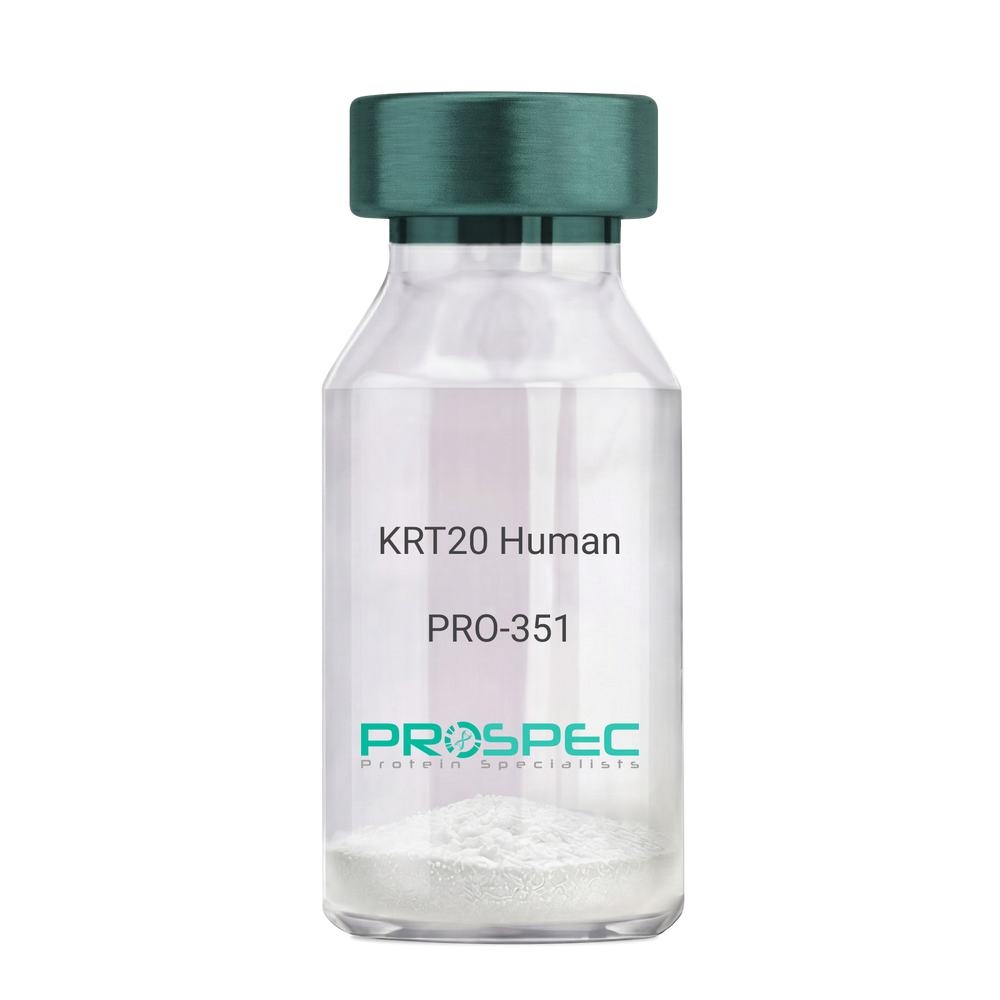
    KRT20 Human

    Description:

    Cytokeratin 20 Human Recombinant

    Keratin type I cytoskeletal 20, Cytokeratin-20, CK-20, Keratin-20, K20, Protein IT, KRT20, CD20, CK20, KRT21, MGC35423.

    Product # :

    PRO-351

    Price :

    Quantity :

    Shipping Method :

    Room Temp Icon

    Shipped at Room temp

    Add To Cart

    More Info

    • description
    • source
    • formulation
    • purity
    • More Info

    Description

    Cytokeratin 20 Human Recombinant produced in E.Coli is a single,non-glycosylated polypeptide chain having a molecular mass of 48,553 Dalton. The KRT20 is purified by proprietary chromatographic techniques.

    Source

    Escherichia Coli.

    Formulation

    The protein (1mg/1ml) was lyophilized after from a sterile solution containing 30mM Tris-HCL pH-8, 9.5M urea, 2mM DDT, 2mM EDTA and 10mM methylammonium chloride.

    Purity

    Greater than 95.0% as determined by SDS-PAGE.

    More Info

    • Introduction

      KRT20 is a member of the keratin family. The keratins are intermediate filament proteins responsible for the structural integrity of epithelial cells and are subdivided into cytokeratins and hair keratins. The type I cytokeratins consist of acidic proteins which are arranged in pairs of heterotypic keratin chains. This cytokeratin is a major cellular protein of mature enterocytes and goblet cells and is specifically expressed in the gastric and intestinal mucosa. The type I cytokeratin genes are clustered in a region of chromosome 17q12-q21.

    • Synonyms

      Keratin type I cytoskeletal 20, Cytokeratin-20, CK-20, Keratin-20, K20, Protein IT, KRT20, CD20, CK20, KRT21, MGC35423.

    • Physical Appearance

      Sterile Filtered White lyophilized (freeze-dried) powder.

    • Stability

      Lyophilized KRT20 although stable at room temperature for 3 weeks, should be stored desiccated below -18°C. Upon reconstitution KRT20 should be stored at 4°C between 2-7 days and for future use below -18°C.For long term storage it is recommended to add a carrier protein (0.1% HSA or BSA).Please prevent freeze-thaw cycles.

    • Solubility

      It is recommended to reconstitute the lyophilized KRT20 in sterile 18MΩ-cm H2O not less than 100µg/ml, which can then be further diluted to other aqueous solutions.

    • Reconstitution to filaments

      Performed by mixing equimolar amounts of cytokeratins of type I and type II at concentrations of approx. 0.5 mg/ml, both dissolved in 9.5 M urea buffer (see above). Protofilaments and filament complexes are obtained by dialyzing the resulting polypeptide solution stepwise to a concentration of 4 M urea and then to low salt condition (50 mM NaCI, 2 mM dithiothreitol, 10 mM Tris-HCI, pH 7.4). For immunization purposes, the solution can be further dialyzed against PBS (phosphate buffered saline, e.g. Dulbecco's PBS).

    ProSpec's products are furnished for LABORATORY RESEARCH USE ONLY. The product may not be used as drugs, agricultural or pesticidal products, food additives or household chemicals.

    Krt20 Human
  • View Data Sheet

    Name :

    MESDC2 Mouse

    Description:

    Mesoderm Development Candidate 2 Mouse Recombinant

    LDLR chaperone MESD, Mesoderm development candidate 2, Mesoderm development protein, Mesdc2, Mesd.

    Product # :

    PRO-2260

    Price :

    Quantity :

    Shipping Method :

    Ice Icon

    Shipped with Ice Packs

    Add To Cart

    More Info

    • description
    • source
    • formulation
    • purity
    • More Info

    Description

    MESDC2 Mouse Recombinant produced in E.Coli is a single, non-glycosylated polypeptide chain containing 218 amino acids (30-224 a.a) and having a molecular mass of 24.4kDa. MESDC2 is fused to a 23 amino acid His-tag at N-terminus & purified by proprietary chromatographic techniques.

    Source

    Escherichia Coli.

    Formulation

    MESDC2 protein solution (1mg/ml) containing Phosphate Buffered Saline (pH 7.4) and 10% glycerol.

    Purity

    Greater than 90.0% as determined by SDS-PAGE.

    More Info

    • Introduction

      Mesoderm development candidate 2 (MESDC2) is required for formation of the primitive streak and mesoderm during embryogenesis. MESDC2 binds to the Wnt co-receptors LRP5 and LRP6 in the endoplasmic reticulum and is required for their proper folding and cell surface expression.

    • Synonyms

      LDLR chaperone MESD, Mesoderm development candidate 2, Mesoderm development protein, Mesdc2, Mesd.

    • Physical Appearance

      Sterile Filtered colorless solution.

    • Stability

      Store at 4°C if entire vial will be used within 2-4 weeks. Store, frozen at -20°C for longer periods of time. For long term storage it is recommended to add a carrier protein (0.1% HSA or BSA).Avoid multiple freeze-thaw cycles.

    • Amino Acid Sequence

      MGSSHHHHHH SSGLVPRGSH MGSADTPGEA TPPPRKKKDI RDYNDADMAR LLEQWEKDDD IEEGDLPEHK RPSAPIDFSK LDPGKPESIL KMTKKGKTLM MFVTVSGNPT EKETEEITSL WQGSLFNANY DVQRFIVGSD RAIFMLRDGS YAWEIKDFLV SQDRCAEVTL EGQMYPGKGG GSKEKNKTKP EKAKKKEGDP KPRASKEDNR AGSRREDL.

    ProSpec's products are furnished for LABORATORY RESEARCH USE ONLY. The product may not be used as drugs, agricultural or pesticidal products, food additives or household chemicals.

    Mesdc2 Mouse
  • View Data Sheet

    Name :

    MYOZ1 Human

    Description:

    Myozenin 1 Human Recombinant

    CS-2, FATZ, MYOZ, Calsarcin-2, Filamin-, actinin- and telethonin-binding protein,Protein FATZ, MYOZ1.

    Product # :

    PRO-1652

    Price :

    Quantity :

    Shipping Method :

    Ice Icon

    Shipped with Ice Packs

    Add To Cart

    More Info

    • description
    • source
    • formulation
    • purity
    • More Info

    Description

    MYOZ1 Human Recombinant produced in E.Coli is a single, non-glycosylated polypeptide chain containing 322 amino acids (1-299 a.a.) and having a molecular mass of 34.1kDa.MYOZ1 is fused to a 23 amino acid His-tag at N-terminus & purified by proprietary chromatographic techniques.

    Source

    Escherichia Coli.

    Formulation

    MYOZ1 protein solution (1mg/ml) contains 20mM Tris-HCl buffer, (pH 8.0), 0.4M UREA and 10% glycerol.

    Purity

    Greater than 90.0% as determined by SDS-PAGE.

    More Info

    • Introduction

      Myozenin 1 (MYOZ1) is a member of the myozenin family. MYOZ1 is mostly expressed in the skeletal muscle. Members of the myozenin family act as calcineurin-interacting proteins which helps tether calcineurin to the sarcomere of cardiac and skeletal muscle. The myozenin family plays a significant role in modulation of calcineurin signaling.

    • Synonyms

      CS-2, FATZ, MYOZ, Calsarcin-2, Filamin-, actinin- and telethonin-binding protein,Protein FATZ, MYOZ1.

    • Physical Appearance

      Sterile Filtered clear solution.

    • Stability

      Store at 4°C if entire vial will be used within 2-4 weeks. Store, frozen at -20°C for longer periods of time. For long term storage it is recommended to add a carrier protein (0.1% HSA or BSA).Avoid multiple freeze-thaw cycles.

    • Amino Acid Sequence

      MGSSHHHHHH SSGLVPRGSH MGSMPLSGTP APNKKRKSSK LIMELTGGGQ ESSGLNLGKK ISVPRDVMLE ELSLLTNRGS KMFKLRQMRV EKFIYENHPD VFSDSSMDHF QKFLPTVGGQ LGTAGQGFSY SKSNGRGGSQ AGGSGSAGQY GSDQQHHLGS GSGAGGTGGP AGQAGRGGAA GTAGVGETGS GDQAGGEGKH ITVFKTYISP WERAMGVDPQ QKMELGIDLL AYGAKAELPK YKSFNRTAMP YGGYEKASKR MTFQMPKFDL GPLLSEPLVL YNQNLSNRPS FNRTPIPWLS SGEPVDYNVD IGIPLDGETE EL.

    ProSpec's products are furnished for LABORATORY RESEARCH USE ONLY. The product may not be used as drugs, agricultural or pesticidal products, food additives or household chemicals.

    Myoz1 Human
  • 1
  • …
  • 7
  • 8
  • 9
  • 10
  • 11
  • …
  • 42
Your browser does not support the video tag.

Products

  • Cytokines
  • Growth Factors
  • Chemokines
  • CD Antigens
  • Neurotrophins
  • Hormones
  • Enzymes
  • Viral Antigens
  • Recombinant Proteins
  • Natural Proteins
  • Monoclonal Antibodies
  • Polyclonal Antibodies
  • Thermal Packaging

About

  • Company
  • Founder
  • Contribution
  • Contact Us
  • My Account

Ordering

  • Ordering Method
  • Ordering - Credit Card
  • Ordering PO
  • Shipping Fees
  • FAQ's

Legal

  • Terms & Conditions
  • Privacy
  • Site Map
  • info@prospecbio.com
  • Facebook
  • Instagram
  • Linkedin Profile

© 2026 ProSpec-Tany TechnoGene Ltd. All Rights Reserved.

  • Choosing a selection results in a full page refresh.
  • Opens in a new window.