Skip to content

High-quality research proteins.

  • 1-800-805-6531

  • Mon - Sat 8.00-18.00, Sun - Closed

  • info@prospecbio.com

  • PO Box 6591 East Brunswick NJ 08816

  • Products
    • Cytokines
    • Growth factors
    • Chemokines
    • Cd antigens
    • Neurotrophins
    • Hormones
    • Enzymes
    • Viral antigens
    • Recombinant proteins
    • Natural proteins
    • Monoclonal antibodies
    • Polyclonal antibodies
    • Thermal Packaging
  • About
    • Company
    • Founder
    • Contribution
  • Customers
    • Eastern Asia
    • Eastern Europe
    • North America
    • South America
    • South East Asia
    • Southern Asia
    • Western Europe
  • Ordering
    • Ordering Method
    • Ordering - Credit Card
    • Ordering - PO
    • Shipping Fees
    • FAQs
  • Services
    • DNA Cloning
    • Protein Expression
    • Monoclonal Antibody
    • Fermentation
    • Technology License
  • Contact us
Log in

Country/region

  • USD $ | Albania
  • USD $ | Andorra
  • USD $ | Argentina
  • USD $ | Armenia
  • USD $ | Australia
  • USD $ | Austria
  • USD $ | Azerbaijan
  • USD $ | Belarus
  • USD $ | Belgium
  • USD $ | Bolivia
  • USD $ | Brazil
  • USD $ | Bulgaria
  • USD $ | Cambodia
  • USD $ | Canada
  • USD $ | Chile
  • USD $ | China
  • USD $ | Colombia
  • USD $ | Costa Rica
  • USD $ | Croatia
  • USD $ | Cyprus
  • USD $ | Czechia
  • USD $ | Denmark
  • USD $ | Estonia
  • USD $ | Finland
  • USD $ | France
  • USD $ | Georgia
  • USD $ | Germany
  • USD $ | Greece
  • USD $ | Hong Kong SAR
  • USD $ | Hungary
  • USD $ | Iceland
  • USD $ | India
  • USD $ | Ireland
  • USD $ | Israel
  • USD $ | Italy
  • USD $ | Japan
  • USD $ | Kazakhstan
  • USD $ | Latvia
  • USD $ | Liechtenstein
  • USD $ | Lithuania
  • USD $ | Madagascar
  • USD $ | Malta
  • USD $ | Mexico
  • USD $ | Moldova
  • USD $ | Monaco
  • USD $ | Netherlands
  • USD $ | New Zealand
  • USD $ | North Macedonia
  • USD $ | Norway
  • USD $ | Panama
  • USD $ | Paraguay
  • USD $ | Peru
  • USD $ | Philippines
  • USD $ | Poland
  • USD $ | Portugal
  • USD $ | Romania
  • USD $ | Singapore
  • USD $ | Slovakia
  • USD $ | Slovenia
  • USD $ | South Africa
  • USD $ | South Korea
  • USD $ | Spain
  • USD $ | Sri Lanka
  • USD $ | Sweden
  • USD $ | Switzerland
  • USD $ | Taiwan
  • USD $ | Thailand
  • USD $ | Türkiye
  • USD $ | Ukraine
  • USD $ | United Kingdom
  • USD $ | United States
  • USD $ | Uruguay
  • USD $ | Vatican City
  • USD $ | Venezuela
  • USD $ | Vietnam
  • Facebook
  • Instagram
logoProSpec - Recombinant Protein Manufacturer for academic and R&D industry
Become a distributor
Account Log in
Wishlist
Cart Cart(0)
  • Products
    +
    • Cytokines
    • Growth factors
    • Chemokines
    • Cd antigens
    • Neurotrophins
    • Hormones
    • Enzymes
    • Viral antigens
    • Recombinant proteins
    • Natural proteins
    • Monoclonal antibodies
    • Polyclonal antibodies
    • Thermal Packaging
  • About
    +
    • Company
    • Founder
    • Contribution
  • Customers
    +
    • Eastern Asia
    • Eastern Europe
    • North America
    • South America
    • South East Asia
    • Southern Asia
    • Western Europe
  • Ordering
    +
    • Ordering Method
    • Ordering - Credit Card
    • Ordering - PO
    • Shipping Fees
    • FAQs
  • Services
    +
    • DNA Cloning
    • Protein Expression
    • Monoclonal Antibody
    • Fermentation
    • Technology License
  • Contact us

Item added to your cart

View cart
View All
  • Cytokines
  • Growth factors
  • Chemokines
  • Cd antigens
  • Neurotrophins
  • Hormones
  • Enzymes
  • Viral antigens
  • Recombinant proteins
  • Natural proteins
  • Monoclonal antibodies
  • Polyclonal antibodies
  • Thermal Packaging
  • Tumor Necrosis Factor

    Tumor Necrosis Factor

    View All
  • 4-1BB

    4-1BB

    View All
  • Adiponectin

    Adiponectin

    View All
  • AIF1

    AIF1

    View All
  • Other Cytokines

    Other Cytokines

    View All
  • AITRL

    AITRL

    View All
  • Angiopoietin

    Angiopoietin

    View All
  • Apolipoprotein

    Apolipoprotein

    View All
  • B-Cell Activating Factor

    B-Cell Activating Factor

    View All
  • Beta Defensin

    Beta Defensin

    View All
  • Bone Morphogenetic Protein

    Bone Morphogenetic Protein

    View All
  • B type Natriuretic Peptide

    B type Natriuretic Peptide

    View All
  • BST

    BST

    View All
  • Betacellulin

    Betacellulin

    View All
  • Cardiotrophin

    Cardiotrophin

    View All
  • Activin

    Activin

    View All
  • Fibroblast Growth Factor

    Fibroblast Growth Factor

    View All
  • Other Growth Factors

    Other Growth Factors

    View All
  • CSF

    CSF

    View All
  • CTGF

    CTGF

    View All
  • IGFBP

    IGFBP

    View All
  • VEGF Protein

    VEGF Protein

    View All
  • EGF

    EGF

    View All
  • Epigen

    Epigen

    View All
  • Erythropoietin

    Erythropoietin

    View All
  • Insulin-Like Growth Factor

    Insulin-Like Growth Factor

    View All
  • Growth Hormone

    Growth Hormone

    View All
  • HDGF

    HDGF

    View All
  • Hepatocyte Growth Factor

    Hepatocyte Growth Factor

    View All
  • Insulin

    Insulin

    View All
  • BCA-1/ BLC (CXCL13)

    BCA-1/ BLC (CXCL13)

    View All
  • BRAK (CXCL14)

    BRAK (CXCL14)

    View All
  • C-10 (CCL6)

    C-10 (CCL6)

    View All
  • Other Chemokines

    Other Chemokines

    View All
  • MEC (CCL28)

    MEC (CCL28)

    View All
  • LD78-beta (CCL3L1)

    LD78-beta (CCL3L1)

    View All
  • CTACK (CCL27)

    CTACK (CCL27)

    View All
  • CXCL16

    CXCL16

    View All
  • CXCL17

    CXCL17

    View All
  • Platelet Factor-4 (CXCL4)

    Platelet Factor-4 (CXCL4)

    View All
  • ENA-78 (CXCL5)

    ENA-78 (CXCL5)

    View All
  • Eotaxin (CCL11,24,26)

    Eotaxin (CCL11,24,26)

    View All
  • Exodus-2 (CCL21)

    Exodus-2 (CCL21)

    View All
  • Fractalkine (CX3CL1)

    Fractalkine (CX3CL1)

    View All
  • CXCL6

    CXCL6

    View All
  • Other CD Antigens

    Other CD Antigens

    View All
  • CD14

    CD14

    View All
  • CD164

    CD164

    View All
  • CD1

    CD1

    View All
  • CD2

    CD2

    View All
  • CD200

    CD200

    View All
  • CD207

    CD207

    View All
  • CD226

    CD226

    View All
  • CD23

    CD23

    View All
  • CD244

    CD244

    View All
  • CD247

    CD247

    View All
  • CD27

    CD27

    View All
  • CD274

    CD274

    View All
  • CD300

    CD300

    View All
  • CD33

    CD33

    View All
  • Other Neurotrophins

    Other Neurotrophins

    View All
  • Beta-NGF

    Beta-NGF

    View All
  • BDNF

    BDNF

    View All
  • CDNF

    CDNF

    View All
  • CNTF

    CNTF

    View All
  • GDNF

    GDNF

    View All
  • Glia Maturation Factor

    Glia Maturation Factor

    View All
  • MANF

    MANF

    View All
  • Midkine

    Midkine

    View All
  • Neuroglobin

    Neuroglobin

    View All
  • Neurotrophic factors

    Neurotrophic factors

    View All
  • Neuregulin

    Neuregulin

    View All
  • Neuropilin

    Neuropilin

    View All
  • Pigment Epithelium-Derived Factor

    Pigment Epithelium-Derived Factor

    View All
  • Pleiotrophin

    Pleiotrophin

    View All
  • Peptide Hormones

    Peptide Hormones

    View All
  • Other Hormones

    Other Hormones

    View All
  • HCG

    HCG

    View All
  • Endothelin

    Endothelin

    View All
  • Exendin

    Exendin

    View All
  • FSH

    FSH

    View All
  • Glucagon

    Glucagon

    View All
  • GHRP

    GHRP

    View All
  • GLP

    GLP

    View All
  • Thyrostimulin

    Thyrostimulin

    View All
  • Inhibin A

    Inhibin A

    View All
  • LHRH

    LHRH

    View All
  • Melanotan

    Melanotan

    View All
  • Procalcitonin

    Procalcitonin

    View All
  • PTH

    PTH

    View All
  • Peroxiredoxin

    Peroxiredoxin

    View All
  • Peptidase

    Peptidase

    View All
  • Synthetase

    Synthetase

    View All
  • Transferase

    Transferase

    View All
  • Hydrolase

    Hydrolase

    View All
  • Dehydrogenase

    Dehydrogenase

    View All
  • ACE2

    ACE2

    View All
  • Esterase

    Esterase

    View All
  • Protein Kinases

    Protein Kinases

    View All
  • Other Enzymes

    Other Enzymes

    View All
  • Phosphatase

    Phosphatase

    View All
  • Deaminase

    Deaminase

    View All
  • Oxygenase

    Oxygenase

    View All
  • Adenylate Kinase

    Adenylate Kinase

    View All
  • Lyase

    Lyase

    View All
  • Chagas

    Chagas

    View All
  • SARS

    SARS

    View All
  • Influenza

    Influenza

    View All
  • ASFV

    ASFV

    View All
  • Astrovirus

    Astrovirus

    View All
  • Borrelia

    Borrelia

    View All
  • Helicobacter Pylori

    Helicobacter Pylori

    View All
  • Chikungunya

    Chikungunya

    View All
  • Chlamydia

    Chlamydia

    View All
  • Cytomegalo

    Cytomegalo

    View All
  • Dengue

    Dengue

    View All
  • EBV

    EBV

    View All
  • Ebola

    Ebola

    View All
  • Feline Leukemia Virus

    Feline Leukemia Virus

    View All
  • Hepatitis A

    Hepatitis A

    View All
  • Other

    Other

    View All
  • Actin

    Actin

    View All
  • ADAM

    ADAM

    View All
  • Complement Component

    Complement Component

    View All
  • Ag85

    Ag85

    View All
  • Eukaryotic Translation Initiation Factor

    Eukaryotic Translation Initiation Factor

    View All
  • Anterior Gradient Protein

    Anterior Gradient Protein

    View All
  • Heat Shock Protein

    Heat Shock Protein

    View All
  • Alpha-2-HS-Glycoprotein

    Alpha-2-HS-Glycoprotein

    View All
  • Hemoglobin

    Hemoglobin

    View All
  • Allergy

    Allergy

    View All
  • Anaplasma

    Anaplasma

    View All
  • Angiogenin

    Angiogenin

    View All
  • Ankyrin Repeat Domain

    Ankyrin Repeat Domain

    View All
  • Annexin

    Annexin

    View All
  • Other Natural Proteins

    Other Natural Proteins

    View All
  • Aprotinin

    Aprotinin

    View All
  • Transferrin

    Transferrin

    View All
  • Avidin

    Avidin

    View All
  • Anti Coagulation Factors

    Anti Coagulation Factors

    View All
  • Natural Albumin

    Natural Albumin

    View All
  • Natural Coagulation Factors

    Natural Coagulation Factors

    View All
  • Fibronectin

    Fibronectin

    View All
  • Thrombin

    Thrombin

    View All
  • Anti Human Enzyme

    Anti Human Enzyme

    View All
  • Other Monoclonal Antibodies

    Other Monoclonal Antibodies

    View All
  • Anti Human Cytokine

    Anti Human Cytokine

    View All
  • Anti Human Heat Shock Protein

    Anti Human Heat Shock Protein

    View All
  • Anti Mouse Lymphocyte

    Anti Mouse Lymphocyte

    View All
  • Anti Human Chemokine

    Anti Human Chemokine

    View All
  • Anti Human Lymphocyte

    Anti Human Lymphocyte

    View All
  • Anti Viral Monoclonal

    Anti Viral Monoclonal

    View All
  • Anti Mouse Cytokine

    Anti Mouse Cytokine

    View All
  • Anti-GST Monoclonal

    Anti-GST Monoclonal

    View All
  • Other Polyclonal Antibodies

    Other Polyclonal Antibodies

    View All
  • Anti Viral

    Anti Viral

    View All
  • Anti-GST Monoclonal

    Anti-GST Monoclonal

    View All
Back

Search results

598 results found for “Mitochondrial Transcription Factor”

Name

Description

Product #

Price

Quantity

Shipping Method

  • View Data Sheet

    Name :

    CNTF Rat, His

    Description:

    Ciliary Neurotrophic Factor Rat Recombinant, His Tag

    Ciliary neurotrophic factor, CNTF, Cntf.

    Product # :

    CYT-926

    Price :

    Quantity :

    Shipping Method :

    Ice Icon

    Shipped with Ice Packs

    Add To Cart

    More Info

    • description
    • source
    • formulation
    • purity
    • More Info

    Description

    CNTF Rat Recombinant produced in E. coli is a single, non-glycosylated polypeptide chain containing 223 amino acids (1-200a.a) and having a molecular mass of 25.2kDa.CNTF is fused to a 23 amino acid His-tag at N-terminus & purified by proprietary chromatographic techniques.

    Source

    Escherichia Coli.

    Formulation

    CNTF protein solution (0.5mg/ml) containing phosphate buffered saline (pH 7.4) and 10% glycerol.

    Purity

    Greater than 95.0% as determined by SDS-PAGE.

    More Info

    • Introduction

      CNTF is a polypeptide hormone whose actions appear to be restricted to the nervous system where it promotes neurotransmitter synthesis and neurite outgrowth in certain neuronal populations. The protein is a potent survival factor for neurons and oligodendrocytes and may be relevant in reducing tissue destruction during inflammatory attacks. A mutation in this gene, which results in aberrant splicing, leads to ciliary neurotrophic factor deficiency, but this phenotype is not causally related to neurologic disease. In addition to the predominant monocistronic transcript originating from this locus, the gene is also co-transcribed with the upstream ZFP91 gene. Co-transcription from the two loci results in a transcript that contains a complete coding region for the zinc finger protein but lacks a complete coding region for ciliary neurotrophic factor.
      CNTF is a survival factor for various neuronal cell types. Seems to prevent the degeneration of motor axons after axotomy.

    • Synonyms

      Ciliary neurotrophic factor, CNTF, Cntf.

    • Physical Appearance

      Sterile filtered colorless solution.

    • Stability

      Store at 4°C if entire vial will be used within 2-4 weeks.Store, frozen at -20°C for longer periods of time. For long term storage it is recommended to add a carrier protein (0.1% HSA or BSA).Avoid multiple freeze-thaw cycles.

    • Amino Acid Sequence

      MGSSHHHHHH SSGLVPRGSH MGSMAFAEQT PLTLHRRDLC SRSIWLARKI RSDLTALMES YVKHQGLNKN INLDSVDGVP VASTDRWSEM TEAERLQENL QAYRTFQGML TKLLEDQRVH FTPTEGDFHQ AIHTLMLQVS AFAYQLEELM VLLEQKIPEN EADGMPATVG DGGLFEKKLW GLKVLQELSQ WTVRSIHDLR VISSHQMGIS ALESHYGAKD KQM.

    • Background

      What is the molecular weight/Mw of CNTF Protein?
      CNTF Protein has a total Mw of 25.2kDa.

      What is the source or expression system of CNTF Protein?
      Escherichia Coli.

      What is the Purity of CNTF Protein?
      CNTF Protein is >95% pure as determined by SDS-PAGE.

      What is the Biological Activity of CNTF Protein?
      The biological functionality of CNTF Protein will be determined in the future.

      What is the amino acid sequence of CNTF Protein?
      MGSSHHHHHH SSGLVPRGSH MGSMAFAEQT PLTLHRRDLC SRSIWLARKI RSDLTALMES YVKHQGLNKN INLDSVDGVP VASTDRWSEM TEAERLQENL QAYRTFQGML TKLLEDQRVH FTPTEGDFHQ AIHTLMLQVS AFAYQLEELM VLLEQKIPEN EADGMPATVG DGGLFEKKLW GLKVLQELSQ WTVRSIHDLR VISSHQMGIS ALESHYGAKD KQM.
      What applications can CNTF Protein be used in?
      CNTF Protein can probably be used in western blot, ELISA and Lateral Flow.

      What is the endotoxin level for CNTF Protein?
      The endotoxin level is minimal, CNTF Protein was purified using conventional chromatography techniques

    ProSpec's products are furnished for LABORATORY RESEARCH USE ONLY. The product may not be used as drugs, agricultural or pesticidal products, food additives or household chemicals.

    Cntf Rat His
  • View Data Sheet

    Name :

    CSTF1 Human

    Description:

    Cleavage Stimulation Factor 1 Human Recombinant

    Cleavage stimulation factor subunit 1, CF-1 50 kDa subunit, Cleavage stimulation factor 50 kDa subunit, CSTF 50 kDa subunit, CstF-50, CSTF1, CstFp50.

    Product # :

    PRO-1170

    Price :

    Quantity :

    Shipping Method :

    Ice Icon

    Shipped with Ice Packs

    Add To Cart

    More Info

    • description
    • source
    • formulation
    • purity
    • More Info

    Description

    CSTF1 Human Recombinant produced in E.Coli is a single, non-glycosylated polypeptide chain containing 439 amino acids (1-431 a.a) and having a molecular mass of 49.4kDa.CSTF1 is fused to an 8 amino acid His-tag at C-terminus & purified by proprietary chromatographic techniques.

    Source

    Escherichia Coli.

    Formulation

    CSTF1 protein solution (1mg/ml) containing 20mM Tris-HCl buffer (pH8.0), 20% glycerol, 0.1M NaCl and 2M urea.

    Purity

    Greater than 90% as determined by SDS-PAGE.

    More Info

    • Introduction

      Cleavage stimulation factor subunit 1 (CSTF1) is involved in the polyadenylation and 3'end cleavage of pre-mRNAs. The CSTF1 gene encodes one of three subunits which merge to produce cleavage stimulation factor (CSTF). Like the mammalian G protein beta subunits, CSTF1 contains transducin-like repeats. CSTF1 is one of the numerous factors necessary for polyadenylation and 3'-end cleavage of mammalian pre-mRNAs. CSTF1 is responsible for the interaction of CSTF with other factors to create a stable complex on the pre-mRNA.

    • Synonyms

      Cleavage stimulation factor subunit 1, CF-1 50 kDa subunit, Cleavage stimulation factor 50 kDa subunit, CSTF 50 kDa subunit, CstF-50, CSTF1, CstFp50.

    • Physical Appearance

      Sterile filtered colorless solution.

    • Stability

      Store at 4°C if entire vial will be used within 2-4 weeks. Store, frozen at -20°C for longer periods of time. For long term storage it is recommended to add a carrier protein (0.1% HSA or BSA).Avoid multiple freeze-thaw cycles.

    • Amino Acid Sequence

      MYRTKVGLKD RQQLYKLIIS QLLYDGYISI ANGLINEIKP QSVCAPSEQL LHLIKLGMEN DDTAVQYAIG RSDTVAPGTG IDLEFDADVQ TMSPEASEYE TCYVTSHKGP CRVATYSRDG QLIATGSADA SIKILDTERM LAKSAMPIEV MMNETAQQNM ENHPVIRTLY DHVDEVTCLA FHPTEQILAS GSRDYTLKLF DYSKPSAKRA FKYIQEAEML RSISFHPSGD FILVGTQHPT LRLYDINTFQ CFVSCNPQDQ HTDAICSVNY NSSANMYVTG SKDGCIKLWD GVSNRCITTF EKAHDGAEVC SAIFSKNSKY ILSSGKDSVA KLWEISTGRT LVRYTGAGLS GRQVHRTQAV FNHTEDYVLL PDERTISLCC WDSRTAERRN LLSLGHNNIV RCIVHSPTNP GFMTCSDDFR ARFWYRRSTT DVEHHHHHH.

    ProSpec's products are furnished for LABORATORY RESEARCH USE ONLY. The product may not be used as drugs, agricultural or pesticidal products, food additives or household chemicals.

    Cstf1 Human
  • View Data Sheet

    Name :

    C-JUN Human (241 a.a.)

    Description:

    Jun Proto-Oncogene (1-241 a.a.) Human Recombinant

    Transcription factor AP-1, Activator protein 1, AP1, Proto-oncogene c-jun, V-jun avian sarcoma virus 17 oncogene homolog, p39, c-Jun.

    Product # :

    PKA-001

    Price :

    Quantity :

    Shipping Method :

    Ice Icon

    Shipped with Ice Packs

    Add To Cart

    More Info

    • description
    • source
    • formulation
    • purity
    • More Info

    Description

    C-JUN Human Recombinant fused with a 20 amino acid His tag at N-terminus produced in E.Coli is a single, non-glycosylated, polypeptide chain containing 261 amino acids (1-241 a.a.) and having a molecular mass of 27.3kDa. The C-JUN is purified by proprietary chromatographic techniques.

    Source

    Escherichia Coli.

    Formulation

    The C-JUN solution (0.25mg/ml) contains 20mM Tris-HCl buffer (pH 8.0), 10% glycerol, 2mM DTT and 0.1M NaCl.

    Purity

    Greater than 90.0% as determined by SDS-PAGE.

    More Info

    • Introduction

      C-JUN is a gene which, in combination with c-Fos, forms the AP-1early response transcription factor. C-JUN is activated by the JNKpathway. C-JUN is the putative transforming gene of avian sarcoma virus 17. C-JUN is a protein which is highly similar to the viral protein, and which interacts directly with specific target DNA sequences to regulate gene expression. The C-JUN gene is intronless and is mapped to 1p32-p31, a chromosomal region involved in both translocations and deletions in human malignancies.

    • Synonyms

      Transcription factor AP-1, Activator protein 1, AP1, Proto-oncogene c-jun, V-jun avian sarcoma virus 17 oncogene homolog, p39, c-Jun.

    • Physical Appearance

      Sterile Filtered colorless solution.

    • Stability

      Store at 4°C if entire vial will be used within 2-4 weeks. Store, frozen at -20°C for longer periods of time. For long term storage it is recommended to add a carrier protein (0.1% HSA or BSA).Avoid multiple freeze-thaw cycles.

    • Amino Acid Sequence

      MGSSHHHHHH SSGLVPRGSH MTAKMETTFY DDALNASFLP SESGPYGYSN PKILKQSMTL NLADPVGSLK PHLRAKNSDL LTSPDVGLLK LASPELERLI IQSSNGHITT TPTPTQFLCP KNVTDEQEGF AEGFVRALAE LHSQNTLPSV TSAAQPVNGA GMVAPAVASV AGGSGSGGFS ASLHSEPPVY ANLSNFNPGA LSSGGGAPSY GAAGLAFPAQ PQQQQQPPHH LPQQMPVQHP RLQALKEEPQ TVPEMPGETP P.

    ProSpec's products are furnished for LABORATORY RESEARCH USE ONLY. The product may not be used as drugs, agricultural or pesticidal products, food additives or household chemicals.

    Cjun Human
  • View Data Sheet

    Name :

    MORF4L2 Human

    Description:

    Mortality Factor 4 Like 2 Human Recombinant

    Mortality factor 4-like protein 2, MORF-related gene X protein, Protein MSL3-2, Transcription factor-like protein MRGX, MORF4L2, KIAA0026, MRGX, MORFL2.

    Product # :

    PRO-475

    Price :

    Quantity :

    Shipping Method :

    Ice Icon

    Shipped with Ice Packs

    Add To Cart

    More Info

    • description
    • source
    • formulation
    • purity
    • More Info

    Description

    MORF4L2 produced in E.Coli is a single, non-glycosylated polypeptide chain containing 308 amino acids (1-288 a.a.) and having a molecular mass of 34.4kDa (Molecular weight on SDS-PAGE will appear higher).MORF4L2 is fused to a 20 amino acid His-tag at N-terminus & purified by proprietary chromatographic techniques.

    Source

    Escherichia Coli.

    Formulation

    The MORF4L2 solution (0.5 mg/ml) contains 20mM Tris-HCl buffer (pH8.0), 20% glycerol and 1mM DTT.

    Purity

    Greater than 85.0% as determined by SDS-PAGE.

    More Info

    • Introduction

      MORF4L2 belongs to the mortality factor (MORF) family of transcriptional regulator which is involved in cell growth, regulation and senescence. MORF4L2 localizes to the nucleus, and it has a protein kinase C phosphorylation site as well as a tyrosine phosphorylation site. MORF4L2 interacts with the Rb tumor suppressor through its helix-loop-helix and leucine zipper regions. Furthermore, MORF4L2 has histone deacetylase activity and can either repress or promote the activity of the B-Myb promoter depending on the tissue.

    • Synonyms

      Mortality factor 4-like protein 2, MORF-related gene X protein, Protein MSL3-2, Transcription factor-like protein MRGX, MORF4L2, KIAA0026, MRGX, MORFL2.

    • Physical Appearance

      Sterile Filtered colorless solution.

    • Stability

      Store at 4°C if entire vial will be used within 2-4 weeks. Store, frozen at -20°C for longer periods of time. For long term storage it is recommended to add a carrier protein (0.1% HSA or BSA).Avoid multiple freeze-thaw cycles.

    • Amino Acid Sequence

      MGSSHHHHHH SSGLVPRGSH MSSRKQGSQP RGQQSAEEEN FKKPTRSNMQ RSKMRGASSG KKTAGPQQKN LEPALPGRWG GRSAENPPSG SVRKTRKNKQ KTPGNGDGGS TSEAPQPPRK KRARADPTVE SEEAFKNRME VKVKIPEELK PWLVEDWDLV TRQKQLFQLP AKKNVDAILE EYANCKKSQG NVDNKEYAVN EVVAGIKEYF NVMLGTQLLY KFERPQYAEI LLAHPDAPMS QVYGAPHLLR LFVRIGAMLA YTPLDEKSLA LLLGYLHDFL KYLAKNSASL FTASDYKVAS AEYHRKAL.

    ProSpec's products are furnished for LABORATORY RESEARCH USE ONLY. The product may not be used as drugs, agricultural or pesticidal products, food additives or household chemicals.

    Morf4L2 Human
  • View Data Sheet

    Name :

    STAT1 Antibody

    Description:

    STAT1, Mouse Anti Human

    Signal transducer and activator of transcription 1-alpha/beta, Transcription factor ISGF-3 components p91/p84, STAT1, ISGF-3, STAT91, DKFZp686B04100.

    Product # :

    ANT-468

    Price :

    Quantity :

    Shipping Method :

    Ice Icon

    Shipped with Ice Packs

    Add To Cart

    More Info

    • formulation
    • More Info

    Formulation

    1mg/ml containing PBS, pH-7.4, 10% Glycerol and 0.02% Sodium Azide.

    More Info

    • Introduction

      STAT1 is a member of the Signal Transducers and Activators of Transcriptionfamily of transcription factors. STAT1 is involved in upregulating genes due to a signal by either type Ior type IIinterferons. In response to IFN-?stimulation, STAT1 forms homodimers or heterodimers with STAT3that bind to the GAS (Interferon-Gamma Activated Sequence) promoter element; in response to either IFN-? or IFN-?stimulation, STAT1 forms a heterodimer with STAT2that can bind the ISRE (Interferon Stimulated Response Element) promoter element. In either case, binding of the promoter element leads to an increased expression of ISG (Interferon Stimulated Genes).

    • Synonyms

      Signal transducer and activator of transcription 1-alpha/beta, Transcription factor ISGF-3 components p91/p84, STAT1, ISGF-3, STAT91, DKFZp686B04100.

    • Physical Appearance

      Sterile filtered colorless solution.

    • Immunogen

      Anti-human STAT1 mAb, clone PAT1F4A, is derived from hybridization of mouse F0 myeloma cells with spleen cells from BALB/c mice immunized with a recombinant human STAT1 protein 1-712 amino acids purified from E. coli.

    • Ig Subclass

      Mouse IgG1 heavy chain and Kappa light chain.

    • Clone

      PAT1F4A.

    • Applications

      The antibody has been tested by ELISA, Western blot analysis to assure specificity and reactivity. Since application varies, however, each investigation should be titrated by the reagent to obtain optimal results. Recommended dilution range for Western blot analysis is 1:500 ~ 1:1000. Recommended starting dilution is 1:500.

    • Type

      Mouse Anti Human Monoclonal.

    • Storage Procedures

      For periods up to 1 month store at 4°C, for longer periods of time, store at -20°C. Prevent freeze thaw cycles.

    ProSpec's products are furnished for LABORATORY RESEARCH USE ONLY. The product may not be used as drugs, agricultural or pesticidal products, food additives or household chemicals.

    Stat1 Antibody
  • View Data Sheet

    Name :

    TNFRSF4 Mouse

    Description:

    TNF Receptor Superfamily Member 4 Mouse Recombinant

    Tumor necrosis factor receptor superfamily member 4, OX40 antigen, OX40L receptor, Txgp1, Tnfrsf4, tax-transcriptionally activated glycoprotein 1 receptor, TXGP1L, ACT35, Txgp, Ly-70, ACT3, OX4, CD134.

    Product # :

    CYT-1179

    Price :

    Quantity :

    Shipping Method :

    Ice Icon

    Shipped with Ice Packs

    Add To Cart

    More Info

    • description
    • source
    • formulation
    • purity
    • biological activity
    • More Info

    Description

    TNFRSF4 Mouse Recombinant produced in HEK293 cells is a single, glycosylated polypeptide chain (a.a 20-211) containing 435 amino acids and having a molecular mass of 48.6kDa.TNFRSF4 is fused to a 243 amino acid hIgG-His tag at C-terminus and purified by proprietary chromatographic techniques.

    Source

    HEK293 cells.

    Formulation

    TNFRSF4 protein (0.25mg/ml) contains Phosphate-Buffered Saline (pH 7.4) and 10% glycerol.

    Purity

    Greater than 95.0% as determined by SDS-PAGE.

    Biological Activity

    The ED50 range is ≤ 0.4 ug/ml which measured by its binding ability in a functional ELISA with Mouse OX40 Ligand/TNFSF4.

    More Info

    • Introduction

      TNFRSF4, also known as TNF Receptor Superfamily Member 4, is a T cell co-stimulatory molecule which belongs to the TNF receptor superfamily. TNFRSF4 coordinates with other co-stimulatory substances such as CD28, CD40, CD30, CD27 and 4-1BB to control the activation of the immune response. TNFRSF4 takes a vital part in antigen-specific T cell expansion as well as survival. TNFRSF4 is up-regulated on CD4+ and CD8+ T cells upon engagement of the TCR by antigen presenting cells along with co-stimulation by CD40-CD40 Ligand and CD28-B7. In addition, TNFRSF4 regulates cytokine production from T cells, antigen presenting cells, natural killer cells and natural killer cells. TNFRSF4 regulates cytokine receptor signaling.

    • Synonyms

      Tumor necrosis factor receptor superfamily member 4, OX40 antigen, OX40L receptor, Txgp1, Tnfrsf4, tax-transcriptionally activated glycoprotein 1 receptor, TXGP1L, ACT35, Txgp, Ly-70, ACT3, OX4, CD134.

    • Physical Appearance

      Sterile Filtered colorless solution.

    • Stability

      Store at 4°C if entire vial will be used within 2-4 weeks. Store, frozen at -20°C for longer periods of time. For long term storage it is recommended to add a carrier protein (0.1% HSA or BSA).Avoid multiple freeze-thaw cycles.

    • Amino Acid Sequence

      DGSMVTARRL NCVKHTYPSG HKCCRECQPG HGMVSRCDHT RDTLCHPCET GFYNEAVNYD TCKQCTQCNH RSGSELKQNC TPTQDTVCRC RPGTQPRQDS GYKLGVDCVP CPPGHFSPGN NQACKPWTNC TLSGKQTRHP ASDSLDAVCE DRSLLATLLW ETQRPTFRPT TVQSTTVWPR TSELPSPPTL VTPEGPLEPK SCDKTHTCPP CPAPELLGGP SVFLFPPKPK DTLMISRTPE VTCVVVDVSH EDPEVKFNWY VDGVEVHNAK TKPREEQYNS TYRVVSVLTV LHQDWLNGKE YKCKVSNKAL PAPIEKTISK AKGQPREPQV YTLPPSRDEL TKNQVSLTCL VKGFYPSDIA VEWESNGQPE NNYKTTPPVL DSDGSFFLYS KLTVDKSRWQ QGNVFSCSVM HEALHNHYTQ KSLSLSPGKH HHHHH

    ProSpec's products are furnished for LABORATORY RESEARCH USE ONLY. The product may not be used as drugs, agricultural or pesticidal products, food additives or household chemicals.

    Tnfrsf4 Mouse
  • View Data Sheet

    Name :

    TNF a Human, Sf9

    Description:

    Tumor Necrosis Factor-alpha Human Recombinant, Sf9

    Tumor Necrosis Factor, TNFA, Tumor Necrosis Factor Ligand Superfamily Member 2, Cachectin, TNF-Alpha, TNFSF2, TNF-A, Tumor Necrosis Factor (TNF Superfamily, Member 2), Tumor Necrosis Factor-Alpha, TNF, Macrophage-Derived, TNF, Monocyte-Derived, TNF Superfamily, APC1 Protein, Member 2, DIF, Tumor necrosis factor.

    Product # :

    CYT-903

    Price :

    Quantity :

    Shipping Method :

    Ice Icon

    Shipped with Ice Packs

    Add To Cart

    More Info

    • description
    • source
    • formulation
    • purity
    • biological activity
    • More Info

    Description

    TNF a produced in Sf9 Baculovirus cells is a single, glycosylated polypeptide chain containing 163 amino acids (77-233a.a.) and having a molecular mass of 18.1kDa. (Molecular size on SDS-PAGE will appear at approximately 18-28kDa). TNF a is expressed with a 6 amino acid His tag at C-Terminus and purified by proprietary chromatographic techniques.

    Source

    Sf9, Baculovirus cells.

    Formulation

    TNF a protein solution (1mg/ml) contains Phosphate Buffered Saline (pH 7.4) and 10% glycerol.

    Purity

    Greater than 90.0% as determined bySDS-PAGE.

    Biological Activity

    Measured in a cytotoxicity assay using L929 mouse fibrosarcoma cells in the presence of the metabolic inhibitor actinomycin D. 
    The ED50 for this effect is ≤ 0.2 ng/ml.

    More Info

    • Introduction

      Tumor necrosis factor is a cytokine involved in systemic inflammation and is a member of a group of cytokines that all stimulate the acute phase reaction. TNF is mainly secreted by macrophages.
      TNF causes apoptotic cell death, cellular proliferation, differentiation, inflammation, tumorigenesis and viral replication, TNF is also involved in lipid metabolism, and coagulation. TNF's primary role is in the regulation of immune cells.
      Dysregulation and, in particular, overproduction of TNF have been implicated in a variety of human diseases- autoimmune diseases, insulin resistance, and cancer.

    • Synonyms

      Tumor Necrosis Factor, TNFA, Tumor Necrosis Factor Ligand Superfamily Member 2, Cachectin, TNF-Alpha, TNFSF2, TNF-A, Tumor Necrosis Factor (TNF Superfamily, Member 2), Tumor Necrosis Factor-Alpha, TNF, Macrophage-Derived, TNF, Monocyte-Derived, TNF Superfamily, APC1 Protein, Member 2, DIF, Tumor necrosis factor.

    • Physical Appearance

      Sterile Filtered clear solution.

    • Stability

      Store at 4°C if entire vial will be used within 2-4 weeks. Store, frozen at -20°C for longer periods of time. For long term storage it is recommended to add a carrier protein (0.1% HSA or BSA).Please avoid freeze thaw cycles.

    • Amino Acid Sequence

      VRSSSRTPSD KPVAHVVANP QAEGQLQWLN RRANALLANG VELRDNQLVV PSEGLYLIYS QVLFKGQGCP STHVLLTHTI SRIAVSYQTK VNLLSAIKSP CQRETPEGAE AKPWYEPIYL GGVFQLEKGD RLSAEINRPD YLDFAESGQV YFGIIALHHH HHH.

    ProSpec's products are furnished for LABORATORY RESEARCH USE ONLY. The product may not be used as drugs, agricultural or pesticidal products, food additives or household chemicals.

    Tnf A Human Sf9
  • View Data Sheet

    Name :

    CPOX Human

    Description:

    Coproporphyrinogen Oxidase Human Recombinant

    CPO, CPX, HCP, Coproporphyrinogen-III oxidase, mitochondrial, COX, Coprogen oxidase, Coproporphyrinogenase, CPOX.

    Product # :

    ENZ-701

    Price :

    Quantity :

    Shipping Method :

    Ice Icon

    Shipped with Ice Packs

    Add To Cart

    More Info

    • description
    • source
    • formulation
    • purity
    • More Info

    Description

    CPOX Human Recombinant produced in E.coli is a single, non-glycosylated polypeptide chain containing 367 amino acids (111-454) and having a molecular mass of 41.6kDa. CPOX is fused to a 23 amino acid His-tag at N-terminus & purified by proprietary chromatographic techniques.

    Source

    E.coli.

    Formulation

    The CPOX solution (1mg/ml) contains 20mM Tris-HCl buffer (pH 8.0), 0.15M NaCl, 10% glycerol and 1mM DTT.

    Purity

    Greater than 95% as determined by SDS-PAGE.

    More Info

    • Introduction

      Coproporphyrinogen Oxidase (CPOX) which is localized to the internal membrane space of erythrocytes takes part in the 6th phase of heme biosynthesis. CPOX catalyzes the oxidative decarboxylation of propionic acid side chains of rings A and B of coproporphyrinogen III. Mutations in human CPOX gene forecast the clinical result of the disease, with either hepatic hereditary coproporphyria or hematological manifestations of erythropoietic harderoporphyria.

    • Synonyms

      CPO, CPX, HCP, Coproporphyrinogen-III oxidase, mitochondrial, COX, Coprogen oxidase, Coproporphyrinogenase, CPOX.

    • Physical Appearance

      Sterile Filtered colorless solution.

    • Stability

      Store at 4°C if entire vial will be used within 2-4 weeks. Store, frozen at -20°C for longer periods of time. For long term storage it is recommended to add a carrier protein (0.1% HSA or BSA).Avoid multiple freeze-thaw cycles.

    • Amino Acid Sequence

      MGSSHHHHHH SSGLVPRGSH MGSTSLGRPE EEEDELAHRC SSFMAPPVTD LGELRRRPGD MKTKMELLIL ETQAQVCQAL AQVDGGANFS VDRWERKEGG GGISCVLQDG CVFEKAGVSI SVVHGNLSEE AAKQMRSRGK VLKTKDGKLP FCAMGVSSVI HPKNPHAPTI HFNYRYFEVE EADGNKQWWF GGGCDLTPTY LNQEDAVHFH RTLKEACDQH GPDLYPKFKK WCDDYFFIAH RGERRGIGGI FFDDLDSPSK EEVFRFVQSC ARAVVPSYIP LVKKHCDDSF TPQEKLWQQL RRGRYVEFNL LYDRGTKFGL FTPGSRIESI LMSLPLTARW EYMHSPSENS KEAEILEVLR HPRDWVR.

    ProSpec's products are furnished for LABORATORY RESEARCH USE ONLY. The product may not be used as drugs, agricultural or pesticidal products, food additives or household chemicals.

    Cpox Human
  • View Data Sheet

    Name :

    TNF B Human, Sf9

    Description:

    Tumor Necrosis Factor-beta Human Recombinant, Sf9

    Lymphotoxin-alpha, LT-alpha, TNF-beta, Tumor necrosis factor ligand superfamily member 1, LTA, LT, TNFB, TNFSF1.

    Product # :

    CYT-989

    Price :

    Quantity :

    Shipping Method :

    Ice Icon

    Shipped with Ice Packs

    Add To Cart

    More Info

    • description
    • source
    • formulation
    • purity
    • biological activity
    • More Info

    Description

    Tumor Necrosis Factor-beta Human Recombinant produced in Sf9 Baculovirus cells is a single, glycosylated polypeptide chain containing 180 amino acids (35-205a.a.) and having a molecular mass of 19.7kDa (Molecular size on SDS-PAGE will appear at approximately 18-28kDa).TNFB is fused with a 6 amino acids His tag at C-Terminus and purified by proprietary chromatographic techniques.

    Source

    Sf9, Baculovirus cells.

    Formulation

    TNFB protein solution (0.5mg/ml) contains Phosphate Buffered Saline (pH7.4) and 10% glycerol.

    Purity

    Greater than 90.0% as determined by SDS-PAGE.

    Biological Activity

    Measured in a cytotoxicity assay using L-929 mouse fibrosarcoma cells in the presence of the metabolic inhibitor actinomycin D. The ED50 for this effect is ≤ 1ng/ml.

    More Info

    • Introduction

      Lymphotoxin alpha, a member of the tumor necrosis factor family, is a cytokine produced by lymphocytes. LTA is highly inducible, secreted, and exists as homotrimeric molecule. LTA forms heterotrimers with lymphotoxin-beta which anchors lymphotoxin-alpha to the cell surface. LTA mediates a large variety of inflammatory, immunostimulatory, and antiviral responses. LTA is also involved in the formation of secondary lymphoid organs during development and plays a role in apoptosis.

    • Synonyms

      Lymphotoxin-alpha, LT-alpha, TNF-beta, Tumor necrosis factor ligand superfamily member 1, LTA, LT, TNFB, TNFSF1.

    • Physical Appearance

      Sterile filtered colorless solution.

    • Stability

      Store at 4°C if entire vial will be used within 2-4 weeks. Store, frozen at -20°C for longer periods of time. For long term storage it is recommended to add a carrier protein (0.1% HSA or BSA).Avoid multiple freeze-thaw cycles.

    • Amino Acid Sequence

      ADPLPGVGLT PSAAQTARQH PKMHLAHSTL KPAAHLIGDP SKQNSLLWRA NTDRAFLQDG FSLSNNSLLV PTSGIYFVYS QVVFSGKAYS PKATSSPLYL AHEVQLFSSQ YPFHVPLLSS QKMVYPGLQE PWLHSMYHGA AFQLTQGDQL STHTDGIPHL VLSPSTVFFG AFALHHHHHH.

    ProSpec's products are furnished for LABORATORY RESEARCH USE ONLY. The product may not be used as drugs, agricultural or pesticidal products, food additives or household chemicals.

    Tnfb Human Sf9
  • View Data Sheet

    Name :

    ELOB Human

    Description:

    Elongin-B Human Recombinant

    ELOB, SIII, Elongin B, Transcription elongation factor B polypeptide 2, RNA polymerase II transcription factor SIII subunit B, SIII p18, Elongin 18 kDa subunit, TCEB2.

    Product # :

    PRO-664

    Price :

    Quantity :

    Shipping Method :

    Ice Icon

    Shipped with Ice Packs

    Add To Cart

    More Info

    • description
    • source
    • formulation
    • purity
    • More Info

    Description

    TCEB2 Human Recombinant produced in E.Coli is a single, non-glycosylated polypeptide chain containing 118 amino acids (1-118) and having a molecular mass of 13.1 kDa. TCEB2 is purified by standard chromatography techniques.

    Source

    Escherichia Coli.

    Formulation

    The TCEB2 protein solution contains 20mM Tris-HCl pH-8, 1mM DTT, 0.1mM PMSF, and 20% glycerol.

    Purity

    Greater than 95.0% as determined by SDS-PAGE.

    More Info

    • Introduction

      TCEB2 is a subunit of the SIIII complex which is a heterotrimer consisting of a transcriptionally active subunit (A) and two regulatory subunits (B and C). TCEB2 initiates elongation by RNA polymerase II by suppressing transient pausing of the polymerase at many sites within transcription units. The von Hippel-Lindau tumor suppressor protein binds to elongins B and C, and thereby inhibits transcription elongation.

    • Synonyms

      ELOB, SIII, Elongin B, Transcription elongation factor B polypeptide 2, RNA polymerase II transcription factor SIII subunit B, SIII p18, Elongin 18 kDa subunit, TCEB2.

    • Physical Appearance

      Sterile Filtered colorless solution.

    • Stability

      Store at 4°C if entire vial will be used within 2-4 weeks. Store, frozen at -20°C for longer periods of time. For long term storage it is recommended to add a carrier protein (0.1% HSA or BSA).Avoid multiple freeze-thaw cycles.

    • Amino Acid Sequence

      MDVFLMIRRH KTTIFTDAKE SSTVFELKRI VEGILKRPPD EQRLYKDDQL LDDGKTLGEC GFTSQTARPQ APATVGLAFR ADDTFEALCIEPFSSPPELP DVMKPQDSGS SANEQAVQ.

    ProSpec's products are furnished for LABORATORY RESEARCH USE ONLY. The product may not be used as drugs, agricultural or pesticidal products, food additives or household chemicals.

    Tceb2 Human
  • View Data Sheet

    Name :

    TRIM33 Human

    Description:

    Tripartite Motif Containing 33 Human Recombinant

    E3 ubiquitin-protein ligase TRIM33, Ectodermin homolog, RET-fused gene 7 protein, Protein Rfg7, Transcription intermediary factor 1-gamma, TIF1-gamma, Tripartite motif-containing protein 33, TRIM33, KIAA1113, RFG7, TIF1G, ECTO, PTC7, TF1G, TIFGAMMA, TIF1GAMMA.

    Product # :

    PRO-1506

    Price :

    Quantity :

    Shipping Method :

    Ice Icon

    Shipped with Ice Packs

    Add To Cart

    More Info

    • description
    • source
    • formulation
    • purity
    • More Info

    Description

    TRIM33 Human Recombinant produced in SF9 is a glycosylated, polypeptide chain having a calculated molecular mass of 124,041 Dalton. TRIM33 is expressed with a -10xHis tag at N-terminus and purified by proprietary chromatographic techniques.

    Source

    Sf9 Insect Cells.

    Formulation

    TRIM33 is supplied in 20mM HEPES buffer pH-7.9, 550mM NaCl and 6M Urea.

    Purity

    Greater than 80.0% as determined by SDS-PAGE.

    More Info

    • Introduction

      Tripartite Motif Containing 33 (TRIM33) belongs to the tripartite motif family. This motif includes 3 zinc-binding domains, a RING, a B-box type 1 and a B-box type 2, and a coiled-coil region. TRIM33 is assumed to be a transcriptional corepressor. TRIM33 functions as an E3 ubiquitin-protein ligase. TRIM33 also promotes SMAD4 ubiquitination, nuclear exclusion and degradation via the ubiquitin proteasome pathway. In addition, TRIM33 inhibits the transcriptional response to TGF-beta/BMP signaling cascade. Furthermore, TRIM33 has a role in the control of cell proliferation.

    • Synonyms

      E3 ubiquitin-protein ligase TRIM33, Ectodermin homolog, RET-fused gene 7 protein, Protein Rfg7, Transcription intermediary factor 1-gamma, TIF1-gamma, Tripartite motif-containing protein 33, TRIM33, KIAA1113, RFG7, TIF1G, ECTO, PTC7, TF1G, TIFGAMMA, TIF1GAMMA.

    • Physical Appearance

      Sterile Filtered clear solution.

    • Stability

      Store at 4°C if entire vial will be used within 2-4 weeks. Store, frozen at -20°C for longer periods of time. Avoid multiple freeze-thaw cycles.

    ProSpec's products are furnished for LABORATORY RESEARCH USE ONLY. The product may not be used as drugs, agricultural or pesticidal products, food additives or household chemicals.

    Trim33 Human
  • View Data Sheet

    Name :

    ACAT1 Human

    Description:

    Acetyl-Coenzyme A acetyltransferase 1 Human Recombinant

    Acetyl-CoA acetyltransferase, mitochondrial, EC 2.3.1.9, Acetoacetyl-CoA thiolase, T2, ACAT1, ACAT, MAT, THIL.

    Product # :

    ENZ-665

    Price :

    Quantity :

    Shipping Method :

    Ice Icon

    Shipped with Ice Packs

    Add To Cart

    More Info

    • description
    • source
    • formulation
    • purity
    • More Info

    Description

    ACAT1 Human Recombinant produced in E.coli is a single, non-glycosylated polypeptide chain containing 417 amino acids (34-427) and having a molecular mass of 43.8 kDa.ACAT1 is fused to a 23 amino acid His-tag at N-terminus & purified by proprietary chromatographic techniques.

    Source

    E.coli.

    Formulation

    The ACAT1 solution (1mg/ml) contains 20mM Tris-HCl buffer (pH 7.5), 0.1M NaCl, 10% glycerol and 1mM DTT.

    Purity

    Greater than 95% as determined by SDS-PAGE.

    More Info

    • Introduction

      Acetoacetyl-CoA thiolase (ACAT1) is an enzyme member of the membrane-bound acyltransferase family and Sterol o-acyltransferase subfamily. The ACAT1 enzyme catalyzes the reversible formation of acetoacetyl-CoA from 2 molecules of acetyl-CoA. ACAT1 plays a part in lipoprotein compilation and dietary cholesterol absorption. Added to its acyltransferase activity, ACAT1 acts as a ligase.

    • Synonyms

      Acetyl-CoA acetyltransferase, mitochondrial, EC 2.3.1.9, Acetoacetyl-CoA thiolase, T2, ACAT1, ACAT, MAT, THIL.

    • Physical Appearance

      Sterile Filtered colorless solution.

    • Stability

      Store at 4°C if entire vial will be used within 2-4 weeks. Store, frozen at -20°C for longer periods of time. For long term storage it is recommended to add a carrier protein (0.1% HSA or BSA).Avoid multiple freeze-thaw cycles.

    • Amino Acid Sequence

      MGSSHHHHHH SSGLVPRGSH MGSVSKPTLK EVVIVSATRT PIGSFLGSLS LLPATKLGSI AIQGAIEKAG IPKEEVKEAY MGNVLQGGEG QAPTRQAVLG AGLPISTPCT TINKVCASGM KAIMMASQSL MCGHQDVMVA GGMESMSNVP YVMNRGSTPY GGVKLEDLIV KDGLTDVYNK
      IHMGSCAENT AKKLNIARNE QDAYAINSYT RSKAAWEAGK FGNEVIPVTV TVKGQPDVVV KEDEEYKRVD FSKVPKLKTV FQKENGTVTA ANASTLNDGA AALVLMTADA AKRLNVTPLA RIVAFADAAV EPIDFPIAPV YAASMVLKDV GLKKEDIAMW EVNEAFSLVV LANIKMLEID
      PQKVNINGGA VSLGHPIGMS GARIVGHLTH ALKQGEYGLA SICNGGGGAS AMLIQKL.

    ProSpec's products are furnished for LABORATORY RESEARCH USE ONLY. The product may not be used as drugs, agricultural or pesticidal products, food additives or household chemicals.

    Acat1 Human
  • View Data Sheet

    Name :

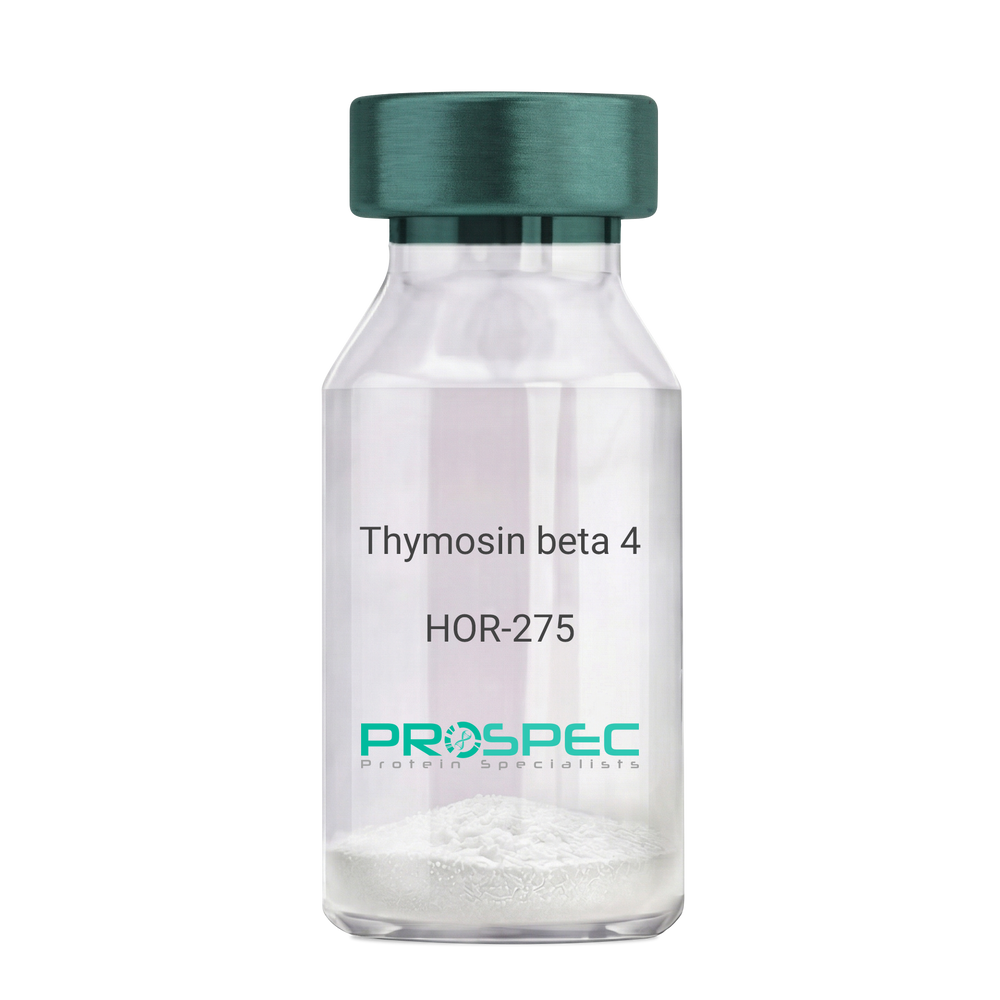
    Thymosin beta 4

    Description:

    Thymosin β4

    Thymosin beta-4. TB500, TB-500

    Product # :

    HOR-275

    Price :

    Quantity :

    Shipping Method :

    Room Temp Icon

    Shipped at Room temp

    Add To Cart

    More Info

    • description
    • formulation
    • purity
    • More Info

    Description

    Thymosin b4 is a 43 amino acid peptide which is regarded as the main intracellular G-actin sequestering peptide. It has a molecular weight of 4963.55 Da, and its molecular formula is: C212H350N56O78S1. Extracellular Thymosin b4 may contribute to physiological processes such as angiogenesis, wound healing, and regulation of inflammation.

    Formulation

    The protein (1mg/ml) was lyophilized with no additives.

    Purity

    Greater than 98.0% as determined by RP-HPLC.

    More Info

    • Introduction

      Thymosin is a hormone secreted from the thymus. Its primary function is to stimulate the production of T cells, which are an important part of the immune system. Thymosin also assists in the development of B cells to plasma cells to produce antibodies. The predominant form of thymosin, thymosin b4, is a member of a highly conserved family of actin monomer-sequestering proteins. b-thymosins are the primary regulators of unpolymerized actin, and are essential for maintaining the small cytoplasmic pool of free G-actin monomers required for rapid filament elongation and allowing for the flux of monomers between the thymosin-bound pool and F-actin.

    • Synonyms

      Thymosin beta-4. TB500, TB-500

    • Physical Appearance

      Sterile Filtered White lyophilized (freeze-dried) powder.

    • Stability

      Lyophilized Thymosin b4 although stable at room temperature for 3 weeks, should be stored desiccated below -18°C. Upon reconstitution T beta 4 should be stored at 4°C between 2-7 days and for future use below -18°C.For long term storage it is recommended to add a carrier protein (0.1% HSA or BSA).Please prevent freeze-thaw cycles.

    • Solubility

      It is recommended to reconstitute the lyophilized Thymosin beta-4 in sterile 18MΩ-cm H2O not less than 100 µg/ml, which can then be further diluted to other aqueous solutions.

    • Amino Acid Sequence

      Thymosin b4 has an a.a. sequence of Ac-Ser-Asp-Lys-Pro-Asp-Met-Ala-Glu-Ile-Glu-Lys-Phe-Asp-Lys-Ser-Lys-Leu-Lys-Lys-Thr-Glu-Thr-Gln-Glu-Lys-Asn-Pro-Leu-Pro-Ser-Lys-Glu-Thr-Ile-Glu-Gln-Glu-Lys-Gln-Ala-Gly-Glu-Ser-OH.

    ProSpec's products are furnished for LABORATORY RESEARCH USE ONLY. The product may not be used as drugs, agricultural or pesticidal products, food additives or household chemicals.

    Thymosin Beta 4
  • View Data Sheet

    Name :

    SYF2 Human

    Description:

    SYF2 RNA splicing factor Human Recombinant

    Pre-mRNA-splicing factor SYF2, CCNDBP1-interactor, p29, SYF2, CBPIN, GCIPIP, NTC31, fSAP29.

    Product # :

    PRO-969

    Price :

    Quantity :

    Shipping Method :

    Ice Icon

    Shipped with Ice Packs

    Add To Cart

    More Info

    • description
    • source
    • formulation
    • purity
    • More Info

    Description

    SYF2 Human Recombinant produced in E.coli is a single, non-glycosylated polypeptide chain containing 173 amino acids (94-243) and having a molecular mass of 20.5kDa.SYF2 is fused to a 23 amino acid His-tag at N-terminus & purified by proprietary chromatographic techniques.

    Source

    Escherichia Coli.

    Formulation

    The SYF2 solution (0.25mg/ml) contains 20mM Tris-HCl buffer (pH8.0), 50% glycerol, 0.2M NaCl, 5mM DTT and 2mM EDTA.

    Purity

    Greater than 90.0% as determined by SDS-PAGE.

    More Info

    • Introduction

      Pre-mRNA-splicing factor SYF2 (SYF2) may be involved in pre-mRNA splicing. The SYF2 protein interacts with cyclin D-type binding-protein 1, which is believed to be a cell cycle regulator at the G1/S transition. SYF2 is amply expressed in the heart, skeletal muscle and kidney and is expressed at lower levels in other tissues.

    • Synonyms

      Pre-mRNA-splicing factor SYF2, CCNDBP1-interactor, p29, SYF2, CBPIN, GCIPIP, NTC31, fSAP29.

    • Physical Appearance

      Sterile Filtered colorless solution.

    • Stability

      Store at 4°C if entire vial will be used within 2-4 weeks. Store, frozen at -20°C for longer periods of time. For long term storage it is recommended to add a carrier protein (0.1% HSA or BSA).Avoid multiple freeze-thaw cycles.

    • Amino Acid Sequence

      MGSSHHHHHH SSGLVPRGSH MGSDYEKVKL LEISAEDAER WERKKKRKNP DLGFSDYAAA QLRQYHRLTK QIKPDMETYE RLREKHGEEF FPTSNSLLHG THVPSTEEID RMVIDLEKQI EKRDKYSRRR PYNDDADIDY INERNAKFNK KAERFYGKYT AEIKQNLERG TAV.

    ProSpec's products are furnished for LABORATORY RESEARCH USE ONLY. The product may not be used as drugs, agricultural or pesticidal products, food additives or household chemicals.

    Syf2 Human
  • View Data Sheet

    Name :

    HIF1A Human, His

    Description:

    Hypoxia-Inducible Factor-1 Alpha Human Recombinant, His Tag

    Hypoxia-inducible factor 1 alpha, HIF-1 alpha, HIF1 alpha, ARNT-interacting protein, Member of PAS protein 1, Basic-helix-loop-helix-PAS protein MOP1, HIF1A, MOP1, HIF1, PASD8, HIF-1A.

    Product # :

    PRO-415

    Price :

    Quantity :

    Shipping Method :

    Ice Icon

    Shipped with Ice Packs

    Add To Cart

    More Info

    • description
    • source
    • formulation
    • purity
    • More Info

    Description

    HIF1A Recombinant Human produced in E.Coli is a single, non-glycosylated polypeptide chain containing 231 amino acids (576-785 a.a.) and having a molecular mass of 25.1 kDa. The HIF1A is fused to a 21 amino acid His-Tag at N-terminus and purified by proprietary chromatographic techniques.

    Source

    Escherichia Coli.

    Formulation

    HIF1A Human solution containing 20mM Tris-HCl pH-8, 1mM DTT, 0.2M NaCl & 10% glycerol.

    Purity

    Greater than 85.0% as determined by SDS-PAGE.

    More Info

    • Introduction

      HIF1A has a role as a master transcriptional monitor of the adaptive response to hypoxia. Under hypoxic conditions HIF1A activates the transcription of over 40 genes, including, erythropoietin, glucose transporters, glycolytic enzymes, vascular endothelial growth factor, and genes whose protein products increase oxygen release or facilitate metabolic adaptation to hypoxia. HIF1A functions as an essential role in embryonic vascularization, tumor angiogenesis and pathophysiology of ischemic disease.

    • Synonyms

      Hypoxia-inducible factor 1 alpha, HIF-1 alpha, HIF1 alpha, ARNT-interacting protein, Member of PAS protein 1, Basic-helix-loop-helix-PAS protein MOP1, HIF1A, MOP1, HIF1, PASD8, HIF-1A.

    • Physical Appearance

      Sterile filtered colorless solution.

    • Stability

      Store at 4°C if entire vial will be used within 2-4 weeks. Store, frozen at -20°C for longer periods of time. For long term storage it is recommended to add a carrier protein (0.1% HSA or BSA).Avoid multiple freeze-thaw cycles.

    • Amino Acid Sequence

      MGSSHHHHHH SSGLVPRGSH MSFDQLSPLE SSSASPESAS PQSTVTVFQQ TQIQEPTANA TTTTATTDEL KTVTKDRMED IKILIASPSP THIHKETTSA TSSPYRDTQS RTASPNRAGK GVIEQTEKSH PRSPNVLSVA LSQRTTVPEE ELNPKILALQ NAQRKRKMEH DGSLFQAVGI GTLLQQPDDH AATTSLSWKR VKGCKSSEQN GMEQKTIILI PSDLACRLLG Q.

    ProSpec's products are furnished for LABORATORY RESEARCH USE ONLY. The product may not be used as drugs, agricultural or pesticidal products, food additives or household chemicals.

    Hif1A Human His
  • View Data Sheet

    Name :

    SDF 1b Rat

    Description:

    Stromal Cell-Derived Factor-1 beta Rat Recombinant (CXCL12)

    SDF-1, CXCL12, Pre-B cell growth-stimulating factor, PBSF, hIRH, chemokine (C-X-C motif) ligand 12, SDF1, SDF1B, TPAR1, SCYB12, SDF-1b, TLSF-b, 12-O-tetradecanoylphorbol 13-acetate repressed protein 1, Thymic lymphoma cell-stimulating factor, TLSF.

    Product # :

    CHM-248

    Price :

    Quantity :

    Shipping Method :

    Room Temp Icon

    Shipped at Room temp

    Add To Cart

    More Info

    • description
    • source
    • formulation
    • purity
    • biological activity
    • More Info

    Description

    SDF-1 beta Rat Recombinant produced in E.Coli is a non-glycosylated, Polypeptide chain containing 72 amino acids and having a molecular mass of 8.4 kDa. The Rat SDF-1b is purified by proprietary chromatographic techniques.

    Source

    Escherichia Coli.

    Formulation

    The Rat SDF1B protein was lyophilized from a concentrated (1mg/ml) sterile solution containing 20mM Phsophate buffer pH-7.4 and 0.15M NaCl.

    Purity

    Greater than 97.0% as determined by:
    (a) Analysis by RP-HPLC.
    (b) Analysis by SDS-PAGE.

    Biological Activity

    The specific activity as determined by its ability to chemoattract human peripheral blood monocytes at 100-150ng/ml corresponding to a Specific Activity of 6,667-10,000IU/mg.

    More Info

    • Introduction

      SDF-1 (stromal cell-derived factor-1) is small cytokine belonging to the chemokine family that is officially designated Chemokine (C-X-C motif) ligand 12 (CXCL12). It is produced in two forms, SDF-1?/CXCL12a and SDF-1?/CXCL12b, by alternate splicing of the same gene. Chemokines are characterized by the presence of four conserved cysteines, which form two disulfide bonds. The CXCL12 proteins belong to the group of CXC chemokines, whose initial pair of cysteines are separated by one intervening amino acid. CXCL12 is strongly chemotactic for lymphocytes and has been implicated as an important cell co-ordinator during development. During embryogenesis it directs the migration of hematopoietic cells from foetal liver to bone marrow. Mice which were knocked-out for CXCL12 gene were lethal before the birth or within just 1 hour of life. As another role, CXCL12a alters also the electrophysiology of neurons. CXCL12 was shown to be expressend in many tissues in mice (including brain, thymus, heart, lung, liver, kidney, spleen and bone marrow).
      The receptor for this chemokine is CXCR4, which was previously called fusin. This CXCL12-CXCR4 interaction used to be considered exclusive (unlike for other chemokines and their receptors), but recently it was suggested that CXCL12 is also bound by CXCR7 receptor.
      The gene for CXCL12 is located on human chromosome 10. In human and mouse both CXCL12 and CXCR4 show high identity of sequence: 99% and 90%, respectively.

    • Synonyms

      SDF-1, CXCL12, Pre-B cell growth-stimulating factor, PBSF, hIRH, chemokine (C-X-C motif) ligand 12, SDF1, SDF1B, TPAR1, SCYB12, SDF-1b, TLSF-b, 12-O-tetradecanoylphorbol 13-acetate repressed protein 1, Thymic lymphoma cell-stimulating factor, TLSF.

    • Physical Appearance

      Sterile Filtered White lyophilized (freeze-dried) powder.

    • Stability

      Lyophilized SDF-1b although stable at room temperature for 3 weeks, should be stored desiccated below -18°C. Upon reconstitution CXCL12 should be stored at 4°C between 2-7 days and for future use below -18°C.For long term storage it is recommended to add a carrier protein (0.1% HSA or BSA).Please prevent freeze-thaw cycles.

    • Solubility

      It is recommended to reconstitute the lyophilized SDF-1b in sterile 18MΩ-cm H2O not less than 100µg/ml, which can then be further diluted to other aqueous solutions.

    • Amino Acid Sequence

      KPVSLSYRCP CRFFESHVAR ANVKHLKILN TPNCALQIVA RLKSNNRQVC IDPKLKWIQE YLDKALNKRL KM.

    ProSpec's products are furnished for LABORATORY RESEARCH USE ONLY. The product may not be used as drugs, agricultural or pesticidal products, food additives or household chemicals.

    Sdf 1B Rat
  • View Data Sheet

    Name :

    MAF1 Human

    Description:

    MAF1 Human Recombinant

    MAF1 homolog (S. cerevisiae), Repressor of RNA polymerase III transcription MAF1 homolog, homolog of yeast MAF1, MGC20332, MGC31779, MGC39758, DKFZp586G1123.

    Product # :

    PRO-921

    Price :

    Quantity :

    Shipping Method :

    Ice Icon

    Shipped with Ice Packs

    Add To Cart

    More Info

    • description
    • source
    • formulation
    • purity
    • More Info

    Description

    MAF1 Human Recombinant produced in E.coli is a single, non-glycosylated polypeptide chain containing 276 amino acids (1-256) and having a molecular mass of 31.0 kDa.The MAF1 is fused to a 20 amino acid His-Tag at N-terminus and purified by proprietary chromatographic techniques.

    Source

    E.coli.

    Formulation

    The MAF1 solution (1mg/ml) contains 20mM Tris-HCl buffer (pH 8.0) and 10% glycerol.

    Purity

    Greater than 90% as determined by SDS-PAGE.

    More Info

    • Introduction

      MAF1 resembles Maf1 which is a Saccharomyces cerevisiae – a highly conserved protein in eukaryotic cells, localized to the nucleus. MAF1 Interacts with BRF2, MAF1 and functions as a mediator for signals which explicitly inhibit RNA polymerase III (Pol III) activity by inhibiting the association of TFIIIB to DNA. MAF1 reacts to modifications in the cellular environment and represses pol III transcription.

    • Synonyms

      MAF1 homolog (S. cerevisiae), Repressor of RNA polymerase III transcription MAF1 homolog, homolog of yeast MAF1, MGC20332, MGC31779, MGC39758, DKFZp586G1123.

    • Physical Appearance

      Sterile Filtered colorless solution.

    • Stability

      Store at 4°C if entire vial will be used within 2-4 weeks. Store, frozen at -20°C for longer periods of time. For long term storage it is recommended to add a carrier protein (0.1% HSA or BSA).Avoid multiple freeze-thaw cycles.

    • Amino Acid Sequence

      MGSSHHHHHH SSGLVPRGSH MKLLENSSFE AINSQLTVET GDAHIIGRIE SYSCKMAGDD KHMFKQFCQE GQPHVLEALS PPQTSGLSPS RLSKSQGGEE EGPLSDKCSR KTLFYLIATL NESFRPDYDF STARSHEFSR EPSLSWVVNA VNCSLFSAVR EDFKDLKPQL WNAVDEEICL AECDIYSYNP DLDSDPFGED GSLWSFNYFF YNKRLKRIVF FSCRSISGST YTPSEAGNEL DMELGEEEVE EESRSRGSGA EETSTMEEDR VPVICI

    ProSpec's products are furnished for LABORATORY RESEARCH USE ONLY. The product may not be used as drugs, agricultural or pesticidal products, food additives or household chemicals.

    Maf1 Human
  • View Data Sheet

    Name :

    NDUFS4 Human

    Description:

    Histidine NADH Dehydrogenase Fe-S Protein 4 Human Recombinant

    AQDQ, NDUFS4, NADH dehydrogenase [ubiquinone] iron-sulfur protein 4 mitochondrial, NADH-ubiquinone oxidoreductase 18 kDa subunit, Complex I-18 kDa, CI-18 kDa, Complex I-AQDQ, CI-AQDQ.

    Product # :

    ENZ-421

    Price :

    Quantity :

    Shipping Method :

    Ice Icon

    Shipped with Ice Packs

    Add To Cart

    More Info

    • description
    • source
    • formulation
    • purity
    • More Info

    Description

    NDUFS4 Human Recombinant produced in E.Coli is a single, non-glycosylated, polypeptide chain containing 134 amino acids (43-175 a.a.) and having a molecular mass of 15.5 kDa.The NDUFS4 is purified by proprietary chromatographic techniques.

    Source

    Escherichia Coli.

    Formulation

    The NDUFS4 solution contains 20mM Tris pH-8 & 30% glycerol.

    Purity

    Greater than 90.0% as determined by SDS-PAGE.

    More Info

    • Introduction

      NDUFS4 is a subunit of the mitochondrial membrane respiratory chain NADH dehydrogenase (Complex I), the primary multi-subunit enzyme complex of the mitochondrial respiratory chain. Complex I is involved in cellular ATP production, the main source of energy for numerous vital processes in living cells. NDUFS4 removes electrons from NADH and passes them by a series of diverse protein-coupled redox centers to the electron acceptor ubiquinone. NDUFS4 presents a hotspot of mutations in the genetic apparatus of oxidative phosphorylation and the correct assembly of the subunit it encodes is essential for completion of the assembly of complex I.

    • Synonyms

      AQDQ, NDUFS4, NADH dehydrogenase [ubiquinone] iron-sulfur protein 4 mitochondrial, NADH-ubiquinone oxidoreductase 18 kDa subunit, Complex I-18 kDa, CI-18 kDa, Complex I-AQDQ, CI-AQDQ.

    • Physical Appearance

      Sterile Filtered colorless solution.

    • Stability

      Store at 4°C if entire vial will be used within 2-4 weeks. Store, frozen at -20°C for longer periods of time. For long term storage it is recommended to add a carrier protein (0.1% HSA or BSA).Please prevent freeze-thaw cycles.

    • Amino Acid Sequence

      MAQDQTQDTQ LITVDEKLDI TTLTGVPEEH IKTRKVRIFV PARNNMQSGV NNTKKWKMEF DTRERWENPL MGWASTADPL SNMVLTFSTK EDAVSFAEKN GWSYDIEERK VPKPKSKSYG ANFSWNKRTR VSTK.

    ProSpec's products are furnished for LABORATORY RESEARCH USE ONLY. The product may not be used as drugs, agricultural or pesticidal products, food additives or household chemicals.

    Ndufs4 Human
  • View Data Sheet

    Name :

    TNFA Rat, His Active

    Description:

    Tumor Necrosis Factor-alpha Rat Recombinant, His Tag Active

    Tumor Necrosis Factor-alpha, TNF a His,  Cachectin, TNF-alpha, Tumor necrosis factor ligand superfamily member 2, TNF-a, N-terminal fragment, NTF, Intracellular domain 1, Intracellular domain 2, ICD2, C-domain 1, C-domain 2, Tumor necrosis factor, soluble form, Tnfa, Tnfsf2, RATTNF, Tnfa.

    Product # :

    CYT-1057

    Price :

    Quantity :

    Shipping Method :

    Ice Icon

    Shipped with Ice Packs

    Add To Cart

    More Info

    • description
    • source
    • formulation
    • purity
    • biological activity
    • More Info

    Description

    TNFA Rat Recombinant produced in E.Coli is a single, non-glycosylated polypeptide chain containing 181 amino acids (80-235 a.a) and having a molecular mass of 19.9kDa.TNFA Rat is expressed with an 25 amino acid His tag at C-Terminus and purified by proprietary chromatographic techniques.

    Source

    Escherichia Coli.

    Formulation

    TNFA Rat protein solution (1mg/ml) contains Phosphate Buffered Saline (pH 7.4), 10% glycerol and 1mM DTT.

    Purity

    Greater than 90.0% as determined by SDS-PAGE.

    Biological Activity

    Measured in a cytotoxicity assay using L929 mouse fibrosarcoma cells in the presence of the metabolic inhibitor actinomycin D.
    The ED50 for this effect is ≤ to 0.2 ng/ml.

    More Info

    • Introduction

      Tumor necrosis factor is a cytokine involved in systemic inflammation and is a member of a group of cytokines that all stimulate the acute phase reaction. TNF is mainly secreted by macrophages.
      TNF causes apoptotic cell death, cellular proliferation, differentiation, inflammation, tumorigenesis and viral replication, TNF is also involved in lipid metabolism, and coagulation. TNF's primary role is in the regulation of immune cells.
      Dysregulation and, in particular, overproduction of TNF have been implicated in a variety of human diseases- autoimmune diseases, insulin resistance, and cancer.

    • Synonyms

      Tumor Necrosis Factor-alpha, TNF a His, Cachectin, TNF-alpha, Tumor necrosis factor ligand superfamily member 2, TNF-a, N-terminal fragment, NTF, Intracellular domain 1, Intracellular domain 2, ICD2, C-domain 1, C-domain 2, Tumor necrosis factor, soluble form, Tnfa, Tnfsf2, RATTNF, Tnfa.

    • Physical Appearance

      Sterile Filtered colorless liquid.

    • Stability

      Store at 4°C if entire vial will be used within 2-4 weeks. Store, frozen at -20°C for longer periods of time. For long term storage it is recommended to add a carrier protein (0.1% HSA or BSA).Avoid multiple freeze-thaw cycles.

    • Amino Acid Sequence

      MGSSHHHHHH SSGLVPRGSH MGSHMLRSSS QNSSDKPVAH VVANHQAEEQ LEWLSQRANA LLANGMDLKD NQLVVPADGL YLIYSQVLFK GQGCPDYVLL THTVSRFAIS YQEKVSLLSA IKSPCPKDTP EGAELKPWYE PMYLGGVFQL EKGDLLSAEV NLPKYLDITE SGQVYFGVIA L.

    • Background

      Tumor Necrosis Factor-alpha Rat Recombinant, His Tag Active: An In-Depth Analysis

      Abstract:


      Tumor Necrosis Factor-alpha (TNF-α) is a cytokine that plays a significant role in various physiological and pathological processes. This human research paper provides an in-depth analysis of TNF-α Rat Recombinant with a His Tag, focusing on its structure, signaling pathways, and diverse functions. Additionally, the paper explores the potential applications of TNF-α Rat Recombinant in human research.

      Introduction:


      TNF-α is a key mediator of inflammation and immune responses in humans. This research paper aims to provide a comprehensive analysis of TNF-α Rat Recombinant with a His Tag, highlighting its significance in human physiology and its potential applications in human research.

      Structure and Function of TNF-α:


      TNF-α is a homotrimeric protein that binds to two distinct receptors, TNFR1 and TNFR2, initiating downstream signaling cascades. It regulates immune cell activation, cytokine production, and cellular responses, influencing diverse biological processes.

      Signaling Pathways:


      Upon binding to its receptors, TNF-α activates various signaling pathways, including the NF-κB pathway, MAPK pathway, and cell death pathways. These pathways regulate gene expression and mediate cellular responses, impacting inflammation, apoptosis, and tissue homeostasis.

      Functions of TNF-α:


      TNF-α plays a crucial role in immune responses, inflammation, and tissue homeostasis. It regulates the activation and migration of immune cells, promotes cytokine production, and modulates cell survival and death. Dysregulation of TNF-α is implicated in the pathogenesis of various human diseases, making it an attractive target for research and therapeutic interventions.

      Applications in Human Research:


      TNF-α Rat Recombinant with a His Tag has diverse applications in human research. It can be used to investigate TNF-α signaling pathways, study its effects on immune cell functions, and explore its role in disease pathogenesis. Additionally, this recombinant protein can be utilized for in vitro and in vivo studies aimed at developing novel therapeutic strategies.

      Future Directions:


      Further research is necessary to unravel the intricate mechanisms of TNF-α signaling and its contributions to human diseases. Continued investigations will enable the development of targeted therapies and personalized medicine approaches. Future studies should also focus on optimizing the use of TNF-α Rat Recombinant in preclinical and clinical research settings.

    ProSpec's products are furnished for LABORATORY RESEARCH USE ONLY. The product may not be used as drugs, agricultural or pesticidal products, food additives or household chemicals.

    Tnfa Rat 2
  • View Data Sheet

    Name :

    TNF alpha human

    Description:

    Tumor Necrosis Factor-Alpha Human Recombinant

    TNF-alpha, Tumor necrosis factor ligand superfamily member 2, TNF-a, Cachectin, DIF, TNFA, TNFSF2.

    Product # :

    CYT-223

    Price :

    Quantity :

    Shipping Method :

    Room Temp Icon

    Shipped at Room temp

    Add To Cart

    More Info

    • description
    • source
    • formulation
    • purity
    • biological activity
    • More Info

    Description

    Tumor Necrosis Factor-a Human Recombinant produced in E.Coli is a single, non-glycosylated, polypeptide chain containing 158 amino acids (157 a.a. of the mature human TNF-alpha and an N-terminal methionine) and having a molecular mass of 17.5kDa. The TNF-alpha is purified by standard chromatographic techniques.

    Source

    Escherichia Coli.

    Formulation

    TNF-a Human was lyophilized from a concentrated 1mg/ml solution containing 20mM PB, pH-7.2, and 100mM NaCl.

    Purity

    Greater than 95.0% as determined by:
    (a) Analysis by RP-HPLC.
    (b) Analysis by SDS-PAGE.

    Biological Activity

    The Specific Activity is >5.0×10⁷ IU/mg as determined by the cytolysis of murine L929 cells in the presence of Actinomycin D.

    More Info

    • Introduction

      Tumor necrosis factor is a cytokine involved in systemic inflammation and is a member of a group of cytokines that all stimulate the acute phase reaction. TNF is mainly secreted by macrophages.
      TNF causes apoptotic cell death, cellular proliferation, differentiation, inflammation, tumorigenesis and viral replication, TNF is also involved in lipid metabolism, and coagulation. TNF's primary role is in the regulation of immune cells.
      Dysregulation and, in particular, overproduction of TNF have been implicated in a variety of human diseases- autoimmune diseases, INS resistance, and cancer.

    • Synonyms

      TNF-alpha, Tumor necrosis factor ligand superfamily member 2, TNF-a, Cachectin, DIF, TNFA, TNFSF2.

    • Physical Appearance

      Sterile Filtered White lyophilized (freeze-dried) powder.

    • Stability

      Lyophilized Tumor Necrosis Factor-a although stable at room temperature for 3 weeks, should be stored desiccated below -18°C. Upon reconstitution TNF-a should be stored at 4°C between 2-7 days and for future use below -18°C.For long term storage it is recommended to add a carrier protein (0.1% HSA or BSA).Please prevent freeze-thaw cycles.

    • Solubility

      It is recommended to reconstitute the lyophilized Tumor Necrosis Factor-alpha in sterile 18MΩ-cm H2O not less than 100µg/ml, which can then be further diluted to other aqueous solutions.

    • Amino Acid Sequence

      MVRSSSRTPS DKPVAHVVAN PQAEGQLQWL NRRANALLAN GVELRDNQLV VPSEGLYLIY SQVLFKGQGC PSTHVLLTHT ISRIAVSYQT KVNLLSAIKS PCQRETPEGA E AKPWYEPIY LGGVFQLEKG DRLSAEINRP DYLDFAESGQ VYFGIIAL.

    • Background

      TNF Alpha Human: An Overview of Its Role and Importance in Immunology

      TNF alpha human, also known as Tumor Necrosis Factor-alpha, is a critical cytokine in the immune system. Macrophages mainly produce this protein, and it plays a key role in inflammation and the acute phase reaction.

      This protein is involved in various cellular functions, including cell death, differentiation, proliferation, and immune regulation.

      Production and Properties

      Tumor Necrosis Factor-alpha is produced recombinantly in E. coli and consists of a single, non-glycosylated polypeptide chain. It includes 157 amino acids of the mature human TNF-alpha and an N-terminal methionine, resulting in a molecular mass of approximately 17.5 kDa.

      Furthermore, the protein is purified through standard chromatographic techniques to ensure high purity and biological activity.

      Solubility and Usage

      The lyophilized form of TNF appears as a sterile, white powder. It is recommended to reconstitute this powder in sterile water to achieve a solution of no less than 100µg/ml.

      This solution can then be further diluted for various experimental applications. TNF alpha is used extensively in research, particularly for studying its effects on cell signaling and immune response.

      Storage and Stability

      For long-term storage, TNF should be kept desiccated below -18°C. Once reconstituted, it should be used within a week if stored at 4°C or kept below -18°C for future use. Avoiding freeze-thaw cycles is crucial to maintain the protein's functionality.

      Biological Role and Implications

      TNF alpha human is involved in the regulation of immune cells and is known for its role in inflammatory processes.

      Dysregulation of TNF alpha production is linked to various diseases, such as autoimmune disorders, insulin resistance, and cancer. It is also a target for therapeutic interventions, particularly in conditions like rheumatoid arthritis and inflammatory bowel disease.

      Mechanism of Action

      TNF alpha can induce fever, apoptotic cell death, and can inhibit tumorigenesis and viral replication. Moreover, it is a potent mediator of the acute phase reaction, which influences the activity of various cells involved in systemic inflammation.

      Research and Clinical Importance

      Scientific research on TNF has provided insights into its complex role in disease mechanisms. Its interaction with receptors such as TNFRSF1A underscores its multifaceted effects across different organ systems, from liver function to brain activity.

      Ongoing studies continue to explore its therapeutic potential, especially how it can be modulated to treat diseases without harmful side effects.

      In essence, TNF alpha human is a versatile and powerful component of the immune system, important for both health and disease. Understanding its pathways and functions helps scientists develop better treatments for various inflammatory and autoimmune diseases.


    ProSpec's products are furnished for LABORATORY RESEARCH USE ONLY. The product may not be used as drugs, agricultural or pesticidal products, food additives or household chemicals.

    Tnf Alpha Human
  • View Data Sheet

    Name :

    TNFR Human, Sf9

    Description:

    Tumor Necrosis Factor Receptor, sf9 Human Recombinant

    Tumor Necrosis Factor Receptor Superfamily Member 9, Tumor Necrosis Factor Receptor Superfamily, Member 9, T-Cell Antigen 4-1BB Homolog, 4-1BB Ligand Receptor, T-Cell Antigen ILA, CD137 Antigen, CDw137, CD137, ILA, Interleukin-Activated Receptor, Homolog Of Mouse Ly63,Induced By Lymphocyte Activation (ILA), Homolog Of Mouse 4-1BB, Receptor Protein 4-1BB, T Cell Antigen ILA, 4-1BB.

    Product # :

    CYT-951

    Price :

    Quantity :

    Shipping Method :

    Ice Icon

    Shipped with Ice Packs

    Add To Cart

    More Info

    • description
    • source
    • formulation
    • purity
    • More Info

    Description

    TNFR produced in Sf9 Baculovirus cells is a single, glycosylated polypeptide chain containing 411 amino acids (18-186 a.a.) and having a molecular mass of 45.3kDa. (Migrates at 40-57kDa on SDS-PAGE under reducing conditions). TNFR is expressed with a 239 amino acid hIgG-His-tag at C-Terminus and purified by proprietary chromatographic techniques.

    Source

    Sf9, Baculovirus cells.

    Formulation

    TNFR protein solution (0.5mg/ml) contains Phosphate Buffered Saline (pH 7.4) and 10% glycerol.

    Purity

    Greater than 90.0% as determined by SDS-PAGE.

    More Info

    • Introduction

      TNFR1 belongs to the TNF-receptor superfamily. TNFR1 is a receptor for TNFSF2/TNF-alpha and homotrimeric TNFSF1/lymphotoxin-alpha.
      There are 2 types of soluble TNF receptors: sTNFR-I and sTNFR-II, which act to neutralize the biological activities of TNF alpha and TNF beta. The levels of these soluble receptors seem to increase as a result of shedding of the extracellular domains of the membrane bound receptors. TNF-a, TNFR1 and TNFR2 have roles in cellular differentiation. TNFR1 and TNFR2 function in cell type-specific renal injury.
      TNFR1 is capable of signaling both cell survival and apoptosis. TNFR1-induced apoptosis requires 2 sequential signaling complexes. TNFR1 is capable of activating NF-kappaB, mediate apoptosis, and function as a regulator of inflammation. Oxidative stress promotes TNFR1 and TNFR2 self-interaction, ligand-independent and enhanced ligand-dependent TNF signaling. TNFR1 contributes to the induction of non-cytocidal TNF effects including anti-viral state and activation of the acid sphingomyelinase. Human TNFR1 has a major region which controls cell surface expression. High levels of soluble TNF receptors are found in the amniotic fluid of pregnant women.
      Germline mutations of the extracellular domains of TNFR1 are linked to the autosomal dominant periodic fever syndrome. The impaired receptor clearance is believed to be a mechanism of the disease. Familial hibernian fever (FHF) is caused by defects in TNFRSF1A gene.

    • Synonyms

      Tumor Necrosis Factor Receptor Superfamily Member 9, Tumor Necrosis Factor Receptor Superfamily, Member 9, T-Cell Antigen 4-1BB Homolog, 4-1BB Ligand Receptor, T-Cell Antigen ILA, CD137 Antigen, CDw137, CD137, ILA, Interleukin-Activated Receptor, Homolog Of Mouse Ly63,Induced By Lymphocyte Activation (ILA), Homolog Of Mouse 4-1BB, Receptor Protein 4-1BB, T Cell Antigen ILA, 4-1BB.

    • Physical Appearance

      Sterile Filtered colorless solution.

    • Stability

      Store at 4°C if entire vial will be used within 2-4 weeks. Store, frozen at -20°C for longer periods of time. For long term storage it is recommended to add a carrier protein (0.1% HSA or BSA). Avoid multiple freeze-thaw cycles.

    • Amino Acid Sequence

      ADLFERTRSL QDPCSNCPAG TFCDNNRNQI CSPCPPNSFS SAGGQRTCDI CRQCKGVFRT RKECSSTSNA ECDCTPGFHC LGAGCSMCEQ DCKQGQELTK KGCKDCCFGT FNDQKRGICR PWTNCSLDGK SVLVNGTKER DVVCGPSPAD LSPGASSVTP PAPAREPGHS PQLEPKSCDK THTCPPCPAP ELLGGPSVFL FPPKPKDTLM ISRTPEVTCV VVDVSHEDPE VKFNWYVDGV EVHNAKTKPR EEQYNSTYRV VSVLTVLHQD WLNGKEYKCK VSNKALPAPI EKTISKAKGQ PREPQVYTLP PSRDELTKNQ VSLTCLVKGF YPSDIAVEWE SNGQPENNYK TTPPVLDSDG SFFLYSKLTV DKSRWQQGNV FSCSVMHEAL HNHYTQKSLS LSPGKHHHHH H.

    ProSpec's products are furnished for LABORATORY RESEARCH USE ONLY. The product may not be used as drugs, agricultural or pesticidal products, food additives or household chemicals.

    Tnfr Human Sf9
  • View Data Sheet

    Name :

    CEBPB Antibody

    Description:

    CCAAT/enhancer-binding protein beta, Mouse Anti Human

    CCAAT/enhancer-binding protein beta, C/EBP beta, Liver activator protein, Nuclear factor NF-IL6, Transcription factor 5, TCF-5, CEBPB, LAP, TCF5, CRP2, IL6DBP, MGC32080.

    Product # :

    ANT-406

    Price :

    Quantity :

    Shipping Method :

    Ice Icon

    Shipped with Ice Packs

    Add To Cart

    More Info

    • formulation
    • More Info

    Formulation

    1mg/ml containing PBS, pH-7.4, & 0.1% Sodium Azide.

    More Info

    • Introduction

      CEBPB is an intronless gene and its protein is a bZIP transcription factor which can bind as a homodimer to certain DNA regulatory regions. CEBPB can also form heterodimers with the related proteins CEBP-alpha, CEBP-delta, and CEBP-gamma. CEBPB is important in the regulation of genes involved in immune and inflammatory responses and has been shown to bind to the IL-1 response element in the IL-6 gene, as well as to regulatory regions of several acute-phase and cytokine genes. In addition, CEBPB can bind the promoter and upstream element and stimulate the expression of the collagen type I gene.

    • Synonyms

      CCAAT/enhancer-binding protein beta, C/EBP beta, Liver activator protein, Nuclear factor NF-IL6, Transcription factor 5, TCF-5, CEBPB, LAP, TCF5, CRP2, IL6DBP, MGC32080.

    • Immunogen

      Anti-human CEBPB mAb, is derived from hybridization of mouse SP2/O myeloma cells with spleen cells from BALB/c mice immunized with recombinant human CEBPB amino acids 1-271 purified from E. coli.

    • Ig Subclass

      Mouse IgG1 heavy chain and κ light chain.

    • Clone

      P47A1AT.

    • Applications

      CEBPB antibody has been tested by ELISA and Western blot analysis to assure specificity and reactivity. Since application varies, however, each investigation should be titrated by the reagent to obtain optimal results. Recommended dilution range for Western blot analysis is 1:500 ~ 2,000. Recommended starting dilution is 1:1,000.

    • Type

      Mouse Anti Human Monoclonal.

    • Storage Procedures

      For periods up to 1 month store at 4°C, for longer periods of time, store at -20°C. Prevent freeze thaw cycles.

    • Purification Method

      CEBPB antibody was purified from mouse ascitic fluids by protein-G affinity chromatography.

    ProSpec's products are furnished for LABORATORY RESEARCH USE ONLY. The product may not be used as drugs, agricultural or pesticidal products, food additives or household chemicals.

    Cebpb Antibody
  • View Data Sheet

    Name :

    EIF3I Human, Sf9

    Description:

    Eukaryotic Translation Initiation Factor 3I Human Recombinant, Sf9

    eIF3-beta, eIF3-p36, EIF3S2, PRO2242, TRIP-1, TRIP1, Eukaryotic translation initiationfactor 3 subunit I, eIF3i, TGF-beta receptor-interacting protein 1, eIF-3-beta.

    Product # :

    PRO-2611

    Price :

    Quantity :

    Shipping Method :

    Ice Icon

    Shipped with Ice Packs

    Add To Cart

    More Info

    • description
    • source
    • formulation
    • purity
    • More Info

    Description

    EIF3I Human Recombinant produced in Sf9 Baculovirus cells is a single, glycosylated polypeptide chain containing 331 amino acids (1-325 a.a) and having a molecular mass of 37.3kDa (Migrates at 40-57kDa on SDS-PAGE under reducing conditions).EIF3I is fused to an 6 amino acid His-tag at C-terminus & purified by proprietary chromatographic techniques.

    Source

    Sf9, Baculovirus cells.

    Formulation

    EIF3I protein solution (0.25mg/ml) 20mM Tris-HCl buffer (pH 8.0), 0.1M NaCl, 40% Glycerol and 1mM DTT.

    Purity

    Greater than 90.0% as determined by SDS-PAGE.

    More Info

    • Introduction

      Eukaryotic translation initiation factor 3, subunit I (EIF3I) is part of the eukaryotic translation initiation factor 3 (eIF-3) complex, which is essential for numerous steps in the initiation of protein synthesis. The eIF-3 complex links with the 40S ribosome and facilitates the recruitment of eIF-1, eIF-1A, eIF-2: GTP: methionyl-tRNAi and eIF-5 to form the 43S pre-initiation complex (43S PIC). The eIF-3 complex stimulates mRNA recruitment to the 43S PIC and scanning of the mRNA for AUG recognition. The eIF-3 complex is also essential for disassembly and recycling of post-termination ribosomal complexes and subsequently prevents premature joining of the 40S and 60S ribosomal subunits prior to initiation. Among the diseases associated with EIF3I are clonorchiasis, and tonsillitis.

    • Synonyms

      eIF3-beta, eIF3-p36, EIF3S2, PRO2242, TRIP-1, TRIP1, Eukaryotic translation initiation
      factor 3 subunit I, eIF3i, TGF-beta receptor-interacting protein 1, eIF-3-beta.

    • Physical Appearance

      Sterile Filtered colorless solution.

    • Stability

      Store at 4°C if entire vial will be used within 2-4 weeks. Store, frozen at -20°C for longer periods of time. For long term storage it is recommended to add a carrier protein (0.1% HSA or BSA).Avoid multiple freeze-thaw cycles.

    • Amino Acid Sequence

      MKPILLQGHE RSITQIKYNR EGDLLFTVAK DPIVNVWYSV NGERLGTYMG HTGAVWCVDA
      DWDTKHVLTG SADNSCRLWD CETGKQLALL KTNSAVRTCG FDFGGNIIMF STDKQMGYQC
      FVSFFDLRDP SQIDNNEPYM KIPCNDSKIT SAVWGPLGEC IIAGHESGEL NQYSAKSGEV
      LVNVKEHSRQ INDIQLSRDM TMFVTASKDN TAKLFDSTTL EHQKTFRTER PVNSAALSPN
      YDHVVLGGGQ EAMDVTTTST RIGKFEARFF HLAFEEEFGR VKGHFGPINS VAFHPDGKSY SSGGEDGYVR IHYFDPQYFE FEFEAHHHHH H.

    ProSpec's products are furnished for LABORATORY RESEARCH USE ONLY. The product may not be used as drugs, agricultural or pesticidal products, food additives or household chemicals.

    Eif3I Protein
  • View Data Sheet

    Name :

    METTL1 Human

    Description:

    Methyltransferase Like 1 Human Recombinant

    Methyltransferase-Like 1, TRM8, tRNA(m7G46)-methyltransferase, tRNA (guanine-N(7)-)-methyltransferase , C12orf1, YDL201w, D1075-like gene product, FLJ95748, EC 2.1.1.33.

    Product # :

    ENZ-054

    Price :

    Quantity :

    Shipping Method :

    Ice Icon

    Shipped with Ice Packs

    Add To Cart

    More Info

    • description
    • source
    • formulation
    • purity
    • More Info

    Description

    Recombinant Human METTL1 produced in E.Coli is a single, non-glycosylated polypeptide chain containing 296 amino acids (1-276a.a.) and having a molecular mass of 33.6kDa.METTL1 is fused to a 20 amino acid His-tag at N-terminus & purified by proprietary chromatographic techniques.

    Source

    Escherichia Coli.

    Formulation

    The METTL1 protein solution (0.5mg/1ml) is formulated in 20mM Tris-HCl buffer (pH8.0)
    1mM DTT, 50mM NaCl and 10% glycerol.

    Purity

    Greater than 90% as determined by SDS-PAGE.

    More Info

    • Introduction

      METTL1 is recognized as tRNA (guanine-N(7)-)-methyltransferase that is a part of the methyltransferase superfamily. METTL1 displays high sequence similarity to yeast ORF YDL201w and can be inactivated by phosphorylation. METTL1 protein has a conserved S-adenosylmethionine-binding motif and ccatalyzes the formation of N(7)-methylguanine at position 46 (m7G46) in tRNA.

    • Synonyms

      Methyltransferase-Like 1, TRM8, tRNA(m7G46)-methyltransferase, tRNA (guanine-N(7)-)-methyltransferase , C12orf1, YDL201w, D1075-like gene product, FLJ95748, EC 2.1.1.33.

    • Physical Appearance

      Sterile Filtered clear solution.

    • Stability

      Store at 4°C if entire vial will be used within 2-4 weeks.Store, frozen at -20°C for longer periods of time. For long term storage it is recommended to add a carrier protein (0.1% HSA or BSA).Avoid multiple freeze-thaw cycles.

    • Amino Acid Sequence

      MGSSHHHHHH SSGLVPRGSH MAAETRNVAG AEAPPPQKRY YRQRAHSNPM ADHTLRYPVK PEEMDWSELY PEFFAPLTQN QSHDDPKDKK EKRAQAQVEF ADIGCGYGGL LVELSPLFPD TLILGLEIRV KVSDYVQDRI RALRAAPAGG FQNIACLRSN AMKHLPNFFY KGQLTKMFFL FPDPHFKRTK HKWRIISPTL LAEYAYVLRV GGLVYTITDV LELHDWMCTH FEEHPLFERV PLEDLSEDPV VGHLGTSTEE GKKVLRNGGK NFPAIFRRIQ DPVLQAVTSQ TSLPGH

    ProSpec's products are furnished for LABORATORY RESEARCH USE ONLY. The product may not be used as drugs, agricultural or pesticidal products, food additives or household chemicals.

    Mettl1 Human
  • 1
  • …
  • 7
  • 8
  • 9
  • 10
  • 11
  • …
  • 25
Your browser does not support the video tag.

Products

  • Cytokines
  • Growth Factors
  • Chemokines
  • CD Antigens
  • Neurotrophins
  • Hormones
  • Enzymes
  • Viral Antigens
  • Recombinant Proteins
  • Natural Proteins
  • Monoclonal Antibodies
  • Polyclonal Antibodies
  • Thermal Packaging

About

  • Company
  • Founder
  • Contribution
  • Contact Us
  • My Account

Ordering

  • Ordering Method
  • Ordering - Credit Card
  • Ordering PO
  • Shipping Fees
  • FAQ's

Legal

  • Terms & Conditions
  • Privacy
  • Site Map
  • info@prospecbio.com
  • Facebook
  • Instagram
  • Linkedin Profile

© 2026 ProSpec-Tany TechnoGene Ltd. All Rights Reserved.

  • Choosing a selection results in a full page refresh.
  • Opens in a new window.