Search results
1000 results found for “Esterase”
Name
Description
Product #
Price
Quantity
Shipping Method
- View Data Sheet
Name :
TSTD3 HumanDescription:
Thiosulfate Sulfurtransferase Like Domain Containing 3 Human Recombinant
Thiosulfate Sulfurtransferase (Rhodanese)-Like Domain Containing 3, Rhodanese Domain-Containing Protein 3, Thiosulfate Sulfurtransferase/Rhodanese-Like Domain-Containing Protein 3.
Product # :
ENZ-723Price :
Quantity :
Shipping Method :
Shipped with Ice Packs
More Info
- description
- source
- formulation
- purity
- More Info
Description
TSTD3 Human Recombinant produced in E.Coli is a single, non-glycosylated polypeptide chain containing 120 amino acids (1-97 a.a) and having a molecular mass of 13.7kDa.TSTD3 is fused to a 23 amino acid His-tag at N-terminus & purified by proprietary chromatographic techniques.
Source
Escherichia Coli.
Formulation
TSTD3 protein solution (1mg/ml) containing 20mM Tris-HCl buffer (pH 8.0), 0.15M NaCl, 10% glycerol and 1mM DTT.
Purity
Greater than 90.0% as determined by SDS-PAGE.
More Info
-
Introduction
Thiosulfate Sulfurtransferase Like Domain Containing 3, also known as TSTD3 contains 1 rhodanese domain which is characterized by an active site cysteine residue that has the ability to bind sulfane sulfur and catalyse sulfur transfer.
-
Synonyms
Thiosulfate Sulfurtransferase (Rhodanese)-Like Domain Containing 3, Rhodanese Domain-Containing Protein 3, Thiosulfate Sulfurtransferase/Rhodanese-Like Domain-Containing Protein 3.
-
Physical Appearance
Sterile Filtered clear solution.
-
Stability
Store at 4°C if entire vial will be used within 2-4 weeks. Store, frozen at -20°C for longer periods of time. For long term storage it is recommended to add a carrier protein (0.1% HSA or BSA).Avoid multiple freeze-thaw cycles.
-
Amino Acid Sequence
MGSSHHHHHH SSGLVPRGSH MGSMKIEKCG WSEGLTSIKG NCHNFYTAIS KDVTYKELKN LLNSKNIMLI DVREIWEILE YQKIPESINV PLDEVGEALQ MNPRDFKEKY NEVKPSKSDS
ProSpec's products are furnished for LABORATORY RESEARCH USE ONLY. The product may not be used as drugs, agricultural or pesticidal products, food additives or household chemicals.
- View Data Sheet
Name :
PSAT1 HumanDescription:
Phosphoserine Aminotransferase 1 Human Recombinant
Phosphoserine aminotransferase, Phosphohydroxythreonine aminotransferase, PSAT, PSAT1, PSA, EPIP.
Product # :
ENZ-209Price :
Quantity :
Shipping Method :
Shipped with Ice Packs
More Info
- description
- source
- formulation
- purity
- More Info
Description
PSAT1 Human Recombinant produced in E.coli is a single, non-glycosylated polypeptide chain containing 394 amino acids (1-370) and having a molecular mass of 42.9kDa.PSAT1 is fused to a 24 amino acid His-tag at N-terminus & purified by proprietary chromatographic techniques.
Source
Escherichia Coli.
Formulation
The PSAT1 solution (1mg/ml) contains 20mM Tris-HCl buffer (pH8.0), 20% glycerol and 1mM DTT.
Purity
Greater than 90.0% as determined by SDS-PAGE.
More Info
-
Introduction
Phosphoserine aminotransferase (PSAT1) catalyzes the conversion of 3-phosphohydroxypyruvate into 3-phosphoserine which is dephosphorylated consequently by phosphoserine phosphatase to form L-serine. PSAT1 is probably a phosphoserine aminotransferase, based on similarity to proteins in mouse, rabbit, and Drosophila. PSAT1 is expressed at high levels in the brain, liver, kidney and pancreas, and very weakly expressed in the thymus, prostate, testis and colon. Defects in the PSAT1 gene are the cause of phosphoserine aminotransferase deficiency (PSATD). PSATD is distinguished biochemically by low plasma and cerebrospinal fluid concentrations of serine and glycine and clinically by intractable seizures, acquired microcephaly, hypertonia, and psychomotor retardation.
-
Synonyms
Phosphoserine aminotransferase, Phosphohydroxythreonine aminotransferase, PSAT, PSAT1, PSA, EPIP.
-
Physical Appearance
Sterile filtered colorless solution.
-
Stability
Store at 4°C if entire vial will be used within 2-4 weeks. Store, frozen at -20°C for longer periods of time. For long term storage it is recommended to add a carrier protein (0.1% HSA or BSA).Avoid multiple freeze-thaw cycles.
-
Amino Acid Sequence
MGSSHHHHHH SSGLVPRGSH MGSHMDAPRQ VVNFGPGPAK LPHSVLLEIQ KELLDYKGVG ISVLEMSHRS SDFAKIINNT ENLVRELLAV PDNYKVIFLQ GGGCGQFSAV PLNLIGLKAG RCADYVVTGA WSAKAAEEAK KFGTINIVHP KLGSYTKIPD PSTWNLNPDA SYVYYCANET VHGVEFDFIP DVKGAVLVCD MSSNFLSKPV DVSKFGVIFA GAQKNVGSAG VTVVIVRDDL LGFALRECPS VLEYKVQAGN SSLYNTPPCF SIYVMGLVLE WIKNNGGAAA MEKLSSIKSQ TIYEIIDNSQ GFYVCPVEPQ NRSKMNIPFR IGNAKGDDAL EKRFLDKALE LNMLSLKGHR SVGGIRASLY NAVTIEDVQK LAAFMKKFLE MHQL.
ProSpec's products are furnished for LABORATORY RESEARCH USE ONLY. The product may not be used as drugs, agricultural or pesticidal products, food additives or household chemicals.
- View Data Sheet
Name :
ENO2 ProteinDescription:
Enolase-2 Human
Gamma-enolase, EC 4.2.1.11, 2-phospho-D-glycerate hydro-lyase, Neural enolase, Neuron-specific enolase, NSE, Enolase 2, ENO2.
Product # :
ENZ-371Price :
Quantity :
Shipping Method :
Shipped with Ice Packs
More Info
- description
- source
- formulation
- purity
- More Info
Description
Human Neurone Specific Enolase produced in Human CNS having a molecular mass of 45kDa.
Source
Human CNS.
Formulation
The protein solution is in 10mM NaH2PO4 buffer pH 7.4 containing 150mM NaCl and 5mM MgSO4.
Purity
Greater than 96.0%.
More Info
-
Introduction
Neuron-specificenolase also caled NSE is a glycolytic isoenzyme which is situated in central and peripheral neurons and neuroendocrine cells. Enolase-2 is released into the CSF when neural tissue is injured. Neoplasms derived from neural or neuroendocrine tissue release Enolase-2 into the blood. Enolase-2 is a useful substance that has been detected in patients with certain tumors, such as neuroblastoma, small cell lung cancer, medullary thyroid cancer, carcinoid tumors, pancreatic endocrine tumors, and melanoma. ENO2 is 1 of the 3 enolase isoenzymes found in mammals. ENO2 isoenzyme, is found in mature neurons and cells of neuronal origin. An exchange from alpha enolase to gamma enolase occurs in neural tissue during development in rats and primates.
-
Synonyms
Gamma-enolase, EC 4.2.1.11, 2-phospho-D-glycerate hydro-lyase, Neural enolase, Neuron-specific enolase, NSE, Enolase 2, ENO2.
-
Physical Appearance
Sterile Filtered clear solution.
-
Stability
Human NSE although stable at 4°C for 1 week, should be stored at -18°C.
ProSpec's products are furnished for LABORATORY RESEARCH USE ONLY. The product may not be used as drugs, agricultural or pesticidal products, food additives or household chemicals.
- View Data Sheet
Name :
LIPG HumanDescription:
Lipase Endothelial Human Recombinant
LIPG, Lipase Endothelial, EDL, EL, Endothelial Cell-Derived Lipase, EC 3.1.1.3, PRO719, Endothelial Lipase, Lipoprotein Lipase H, EC 3.1.1.
Product # :
ENZ-785Price :
Quantity :
Shipping Method :
Shipped with Ice Packs
More Info
- description
- source
- formulation
- purity
- More Info
Description
LIPG Human Recombinant produced in E.coli is a single, non-glycosylated polypeptide chain containing 343 amino acids (21-340) and having a molecular mass of 38kDa.LIPG is fused to a 23 amino acid His-tag at N-terminus & purified by proprietary chromatographic techniques.
Source
Escherichia Coli.
Formulation
The LIPG solution (1mg/ml) contains 20mM Tris-HCl buffer (pH 8.0), 10% glycerol and 0.4M Urea.
Purity
Greater than 85% as determined by SDS-PAGE.
More Info
-
Introduction
Lipase Endothelial (LIPG) has extensive phospholipase activity and may be involved in lipoprotein metabolism and vascular biology. The LIPG protein is considered a member of the TG lipase family through its sequence and characteristic lid region which provides substrate specificity for enzymes of the TG lipase family. In addition, the LIPG has triglyceride lipase activities. LIPG hydrolyzes HDLs more efficiently than other lipoproteins.
-
Synonyms
LIPG, Lipase Endothelial, EDL, EL, Endothelial Cell-Derived Lipase, EC 3.1.1.3, PRO719, Endothelial Lipase, Lipoprotein Lipase H, EC 3.1.1.
-
Physical Appearance
Sterile Filtered clear solution.
-
Stability
Store at 4°C if entire vial will be used within 2-4 weeks.Store, frozen at -20°C for longer periods of time. For long term storage it is recommended to add a carrier protein (0.1% HSA or BSA).Avoid multiple freeze-thaw cycles.
-
Amino Acid Sequence
MGSSHHHHHH SSGLVPRGSH MGSSPVPFGP EGRLEDKLHK PKATQTEVKP SVRFNLRTSK DPEHEGCYLS VGHSQPLEDC SFNMTAKTFF IIHGWTMSGI FENWLHKLVS ALHTREKDAN VVVVDWLPLA HQLYTDAVNN TRVVGHSIAR MLDWLQEKDD FSLGNVHLIG YSLGAHVAGY AGNFVKGTVG RITGLDPAGP MFEGADIHKR LSPDDADFVD VLHTYTRSFG LSIGIQMPVG HIDIYPNGGD FQPGCGLNDV LGSIAYGTIT EVVKCEHERA VHLFVDSLVN QDKPSFAFQC TDSNRFKKGI CLSCRKNRCN SIGYNAKKMR NKRNSKMYLK TRA.
ProSpec's products are furnished for LABORATORY RESEARCH USE ONLY. The product may not be used as drugs, agricultural or pesticidal products, food additives or household chemicals.
- View Data Sheet
Name :
ME2 HumanDescription:
Malic Enzyme 2 Human Recombinant
Malic enzyme 2 NAD(+)-dependent mitochondrial, NAD-ME, ODS1, Malate Dehydrogenase, NAD-dependent malic enzyme mitochondrial, pyruvic-malic carboxylase, Malic enzyme 2, EC 1.1.1.38, EC 1.1.1.
Product # :
ENZ-376Price :
Quantity :
Shipping Method :
Shipped at Room temp
More Info
- description
- source
- formulation
- purity
- More Info
Description
ME2 Human Recombinant produced in E.coli is a single, non-glycosylated polypeptide chain containing 573 amino acids and having a total molecular mass of 64.4kDa.ME2 is purified by proprietary chromatographic techniques.
Source
Escherichia Coli.
Formulation
The protein was Lyophilized from a 0.2µm filtered concentrated solution in 20mM Tris, 150mM NaCl, 1mM b-mercaptoethanol, 1mM EDTA, pH8.0.
Purity
Greater than 95.0% as determined by
(a) Analysis by HPLC.
(b) Analysis by SDS-PAGE.More Info
-
Introduction
ME2 catalyzes the oxidative decarboxylation of malate to pyruvate, malat + NAD(P)+? pyruvate + CO2 + NAD(P)H+, and is found both in eukaryotic and prokaryotic cells. Three different isoforms of ME are known to be in mammalian tissues: a strictly cytosolic NADP+-dependent enzyme, an NADP+-dependent mitochondriail isoform, and a mitochondrial isoenzyme that is able to use both NAD+ and NADP+ but is more effective with NAD+. The mammalian isoforms size is about 62-64 kDa. A native size of 240,000 Da proposes a tetrameric structure for the active enzyme.
Mitochondrial NAD+-dependent ME 2 activity is seen in tissues that experience many cell divisions, like spleen, thymus, and the basal cells of the small intestinal mucosa. ME2 is also expressed all through the rapid cleavage stages of early Xenopus development. Activity for this isoform is low or nonexistent in brain, muscle, and normal and regenerating liver tissue from rat but was observed in rat adrenal cortex, pigeon and human skeletal muscle, and in heart muscle of some species. In addition, it is expressed in mitochondria of all tumor cells inspected to detain ascites tumors, hepatoma cells, and a variety of other tumors and transformed cell lines. -
Synonyms
Malic enzyme 2 NAD(+)-dependent mitochondrial, NAD-ME, ODS1, Malate Dehydrogenase, NAD-dependent malic enzyme mitochondrial, pyruvic-malic carboxylase, Malic enzyme 2, EC 1.1.1.38, EC 1.1.1.
-
Physical Appearance
Sterile Filtered White lyophilized (freeze-dried) powder.
-
Stability
Lyophilized ME2 although stable at room temperature for 3 weeks, should be stored desiccated below -18°C. Upon reconstitution ME2 should be stored at 4°C between 2-7 days and for future use below -18°C.Please prevent freeze-thaw cycles.
-
Solubility
It is recommended to reconstitute the lyophilized ME2 in sterile 18M-cm H2O not less than 100µg/ml, which can then be further diluted to other aqueous solutions.
-
Amino Acid Sequence
MLHIKEKGKPLMLNPRTNKGMAFTLQERQMLGLQGLLPPKIETQDIQALRFHRNLK
KMTSPLEKYIYIMGIQERNEKLFYRILQDDIESLMPIVYTPTVGLACSQYGHIFRRPKGL
FISISDRGHVRSIVDNWPENHVKAVVVTDGERILGLGDLGVYGMGIPVGKLCLYTAC
AGIRPDRCLPVCIDVGTDNIALLKDPFYMGLYQKRDRTQQYDDLIDEFMKAITDRYG
RNTLIQFEDFGNHNAFRFLRKYREKYCTFNDDIQGTAAVALAGLLAAQKVISKPISEH
KILFLGAGEAALGIANLIVMSMVENGLSEQEAQKKIWMFDKYGLLVKGRKAKIDSYQ
EPFTHSAPESIPDTFEDAVNILKPSTIIGVAGAGRLFTPDVIRAMASINERPVIFALSNPT
AQAECTAEEAYTLTEGRCLFASGSPFGPVKLTDGRVFTPGQGNNVYIFPGVALAVILC
NTRHISDSVFLEAAKALTSQLTDEELAQGRLYPPLANIQEVSINIAIKVTEYLYANKMAF
RYPEPEDKAKYVKERTWRSEYDSLLPDVYEWPESASSPPVITEHHHHHH.
ProSpec's products are furnished for LABORATORY RESEARCH USE ONLY. The product may not be used as drugs, agricultural or pesticidal products, food additives or household chemicals.
- View Data Sheet
Name :
glpE E.ColiDescription:
Thiosulfate sulfurtransferase E.Coli Recombinant
ECK3411, JW3388, b3425, Thiosulfate sulfurtransferase GlpE.
Product # :
ENZ-714Price :
Quantity :
Shipping Method :
Shipped with Ice Packs
More Info
- description
- source
- formulation
- purity
- More Info
Description
glpE Recombinant produced in E. coli is a single polypeptide chain containing 131 amino acids (1-108) and having a molecular mass of 14.5kDa. glpE is fused to a 23 amino acid His-tag at N-terminus & purified by proprietary chromatographic techniques.
Source
Escherichia Coli.
Formulation
The glpE solution (0.5mg/ml) contains 20mM Tris-HCl buffer (pH 8.0) and 10% glycerol.
Purity
Greater than 95.0% as determined by SDS-PAGE.
More Info
-
Introduction
Thiosulfate sulfurtransferase (glpE) is a mitochondrial matrix enzyme which is encoded by the nucleus. Escherichia coli glpE is a prototype for the single-domain rhodanese superfamily. glpE catalyzes the sulfur-transfer reaction in which a sulfur atom is transferred from thiosulfate to cyanide by a double-displacement mechanism.
-
Synonyms
ECK3411, JW3388, b3425, Thiosulfate sulfurtransferase GlpE.
-
Physical Appearance
Sterile Filtered colorless solution.
-
Stability
Store at 4°C if entire vial will be used within 2-4 weeks. Store, frozen at -20°C for longer periods of time. For long term storage it is recommended to add a carrier protein (0.1% HSA or BSA).Avoid multiple freeze-thaw cycles.
-
Amino Acid Sequence
MGSSHHHHHH SSGLVPRGSH MGSMDQFECI NVADAHQKLQ EKEAVLVDIR DPQSFAMGHA VQAFHLTNDT LGAFMRDNDF DTPVMVMCYH GNSSKGAAQY LLQQGYDVVY SIDGGFEAWQ RQFPAEVAYG A.
ProSpec's products are furnished for LABORATORY RESEARCH USE ONLY. The product may not be used as drugs, agricultural or pesticidal products, food additives or household chemicals.
- View Data Sheet
Name :
NEIL1 HumanDescription:
Nei Endonuclease VIII-Like 1 Human Recombinant
Endonuclease 8-like 1, DNA glycosylase/AP lyase Neil1, DNA-(apurinic or apyrimidinic site) lyase Neil1, Endonuclease VIII-like 1, FPG1, Nei homolog 1, NEH1, Nei-like protein 1, NEIL1, NEI1, hFPG1.
Product # :
ENZ-220Price :
Quantity :
Shipping Method :
Shipped with Ice Packs
More Info
- description
- source
- formulation
- purity
- More Info
Description
NEIL1 Human Recombinant produced in E.coli is a single, non-glycosylated polypeptide chain containing 410 amino acids (1-390) and having a molecular mass of 45.8kDa.NEIL1 is fused to a 20 amino acid His-tag at N-terminus & purified by proprietary chromatographic techniques.
Source
Escherichia Coli.
Formulation
The NEIL1 solution (0.5mg/ml) contains 20mM Tris-HCl buffer (pH8.0), 20% glycerol, 0.1M NaCl, 1mM DTT and 0.1mM PMSF.
Purity
Greater than 90.0% as determined by SDS-PAGE.
More Info
-
Introduction
NEIL1 is a member of a class of DNA glycosylases homologous to the bacterial Fpg/Nei family. These glycosylases initiate the first step in base excision repair by cleaving bases damaged by reactive oxygen species and introducing a DNA strand break via the associated lyase reaction. NEIL1 participates in the DNA repair pathway by initiating base excision repair by removing damaged bases, primarily oxidized pyrimidines.
-
Synonyms
Endonuclease 8-like 1, DNA glycosylase/AP lyase Neil1, DNA-(apurinic or apyrimidinic site) lyase Neil1, Endonuclease VIII-like 1, FPG1, Nei homolog 1, NEH1, Nei-like protein 1, NEIL1, NEI1, hFPG1.
-
Physical Appearance
Sterile filtered colorless solution.
-
Stability
Store at 4°C if entire vial will be used within 2-4 weeks. Store, frozen at -20°C for longer periods of time. For long term storage it is recommended to add a carrier protein (0.1% HSA or BSA). Avoid multiple freeze-thaw cycles.
-
Amino Acid Sequence
MGSSHHHHHH SSGLVPRGSH MPEGPELHLA SQFVNEACRA LVFGGCVEKS SVSRNPEVPF ESSAYRISAS ARGKELRLIL SPLPGAQPQQ EPLALVFRFG MSGSFQLVPR EELPRHAHLR FYTAPPGPRL ALCFVDIRRF GRWDLGGKWQ PGRGPCVLQE YQQFRENVLR NLADKAFDRP ICEALLDQRF FNGIGNYLRA EILYRLKIPP FEKARSVLEA LQQHRPSPEL TLSQKIRTKL QNPDLLELCH SVPKEVVQLG GKGYGSESGE EDFAAFRAWL RCYGMPGMSS LQDRHGRTIW FQGDPGPLAP KGRKSRKKKS KATQLSPEDR VEDALPPSKA PSRTRRAKRD LPKRTATQRP EGTSLQQDPE APTVPKKGRR KGRQAASGHC RPRKVKADIP SLEPEGTSAS.
ProSpec's products are furnished for LABORATORY RESEARCH USE ONLY. The product may not be used as drugs, agricultural or pesticidal products, food additives or household chemicals.
- View Data Sheet
Name :
HaeIIIDescription:
HaeIII Recombinant
site-specific DNA-methyltransferase, HaeIVRM.
Product # :
ENZ-1203Price :
Quantity :
Shipping Method :
Shipped with Ice Packs
More Info
- description
- source
- purity
- More Info
Description
HaeIII is a prokaryotic DNA that protects organisms from an unknown DNA. HaeIII’s recognition site is the GGCC nucleotide sequence which means it cleaves DNA at the site 5′-GG/CC-3.
Source
E. coli that carries the HaeIII gene from Haemophilus aegypticus
Purity
Great than 95 % as estimated by SDS-PAGE analyses.
More Info
-
Synonyms
site-specific DNA-methyltransferase, HaeIVRM.
-
Physical Appearance
Sterile Filtered colorless solution.
-
Stability
HaeIII although stable at 15°C for 1 week, should be stored below -18°C. Please prevent freeze-thaw cycles.
-
Background
HaeIII cleaves the DNA at the positions where the GGCC sequence is found. The cleavage happens between the 2nd and the third nucleotides -G and C. The resulting DNA fragments are known as restriction fragments. HaeIII cuts both strands of DNA in the same location, creating restriction fragments with blunt ends.
-
Storage Buffer
10mM Tris-HCl (pH 7.4), 1 mM DTT, 50% (v/v) glycerol, 0.1mM EDTA, 50 mM KCl and 200µg/ml BSA.
-
Unit Definition
1 unit is defined as the amount of HaeIII required to digest 1 µg of lambda DNA in 1 hour at 37°C in 50 µL of recommended reaction buffer.
ProSpec's products are furnished for LABORATORY RESEARCH USE ONLY. The product may not be used as drugs, agricultural or pesticidal products, food additives or household chemicals.
- View Data Sheet
Name :
melA E. coliDescription:
Alpha-Galactosidase E.coli Recombinant
Mel-7, Alpha-galactosidase, b4119, JW4080.
Product # :
ENZ-609Price :
Quantity :
Shipping Method :
Shipped with Ice Packs
More Info
- description
- source
- formulation
- purity
- More Info
Description
melA E. coli Recombinant produced in E. coli is a single polypeptide chain containing 474 amino acids (1-451) and having a molecular mass of 53.0kDa.melA is fused to a 23 amino acid His-tag at N-terminus & purified by proprietary chromatographic techniques.
Source
E.coli.
Formulation
The melA solution (1mg/1ml) contains 20mM Tris-HCl buffer (pH 8.0), 1mM DTT, 0.1M NaCl and 10% glycerol.
Purity
Greater than 90% as determined by SDS-PAGE.
More Info
-
Introduction
melA is a member of the glycosyl hydrolase 4 family. melA catalyze the hydrolysis of saccharides containing o-1,6,-galactoside bonds. melA catalyze the same reaction in E.coli, human and yeast but is found in different cellular sections: The E.coli melA is a cytoplasmic protein and the human and yeast melA are secretory proteins. Thus, even though the active enzyme from all three species has almost an equal molecular weight, structural resemblances, as well as dissimilarities, are probable.
-
Synonyms
Mel-7, Alpha-galactosidase, b4119, JW4080.
-
Physical Appearance
Sterile Filtered colorless solution.
-
Stability
Store at 4°C if entire vial will be used within 2-4 weeks. Store, frozen at -20°C for longer periods of time. For long term storage it is recommended to add a carrier protein (0.1% HSA or BSA).Avoid multiple freeze-thaw cycles.
-
Amino Acid Sequence
MGSSHHHHHH SSGLVPRGSH MGSMMSAPKI TFIGAGSTIF VKNILGDVFH REALKTAHIA LMDIDPTRLE ESHIVVRKLM DSAGASGKIT CHTQQKEALE DADFVVVAFQ IGGYEPCTVT DFEVCKRHGL EQTIADTLGP GGIMRALRTI PHLWQICEDM TEVCPDATML NYVNPMAMNT WAMYARYPHI KQVGLCHSVQ GTAEELARDL NIDPATLRYR CAGINHMAFY LELERKTADG SYVNLYPELL AAYEAGQAPK PNIHGNTRCQ NIVRYEMFKK LGYFVTESSE HFAEYTPWFI KPGREDLIER YKVPLDEYPK RCVEQLANWH KELEEYKKAS RIDIKPSREY ASTIMNAIWT GEPSVIYGNV RNDGLIDNLP QGCCVEVACL VDANGIQPTK VGTLPSHLAA LMQTNINVQT LLTEAILTEN RDRVYHAAMM DPHTAAVLGI DEIYALVDDL IAAHGDWLPG WLHR.
ProSpec's products are furnished for LABORATORY RESEARCH USE ONLY. The product may not be used as drugs, agricultural or pesticidal products, food additives or household chemicals.
- View Data Sheet
Name :
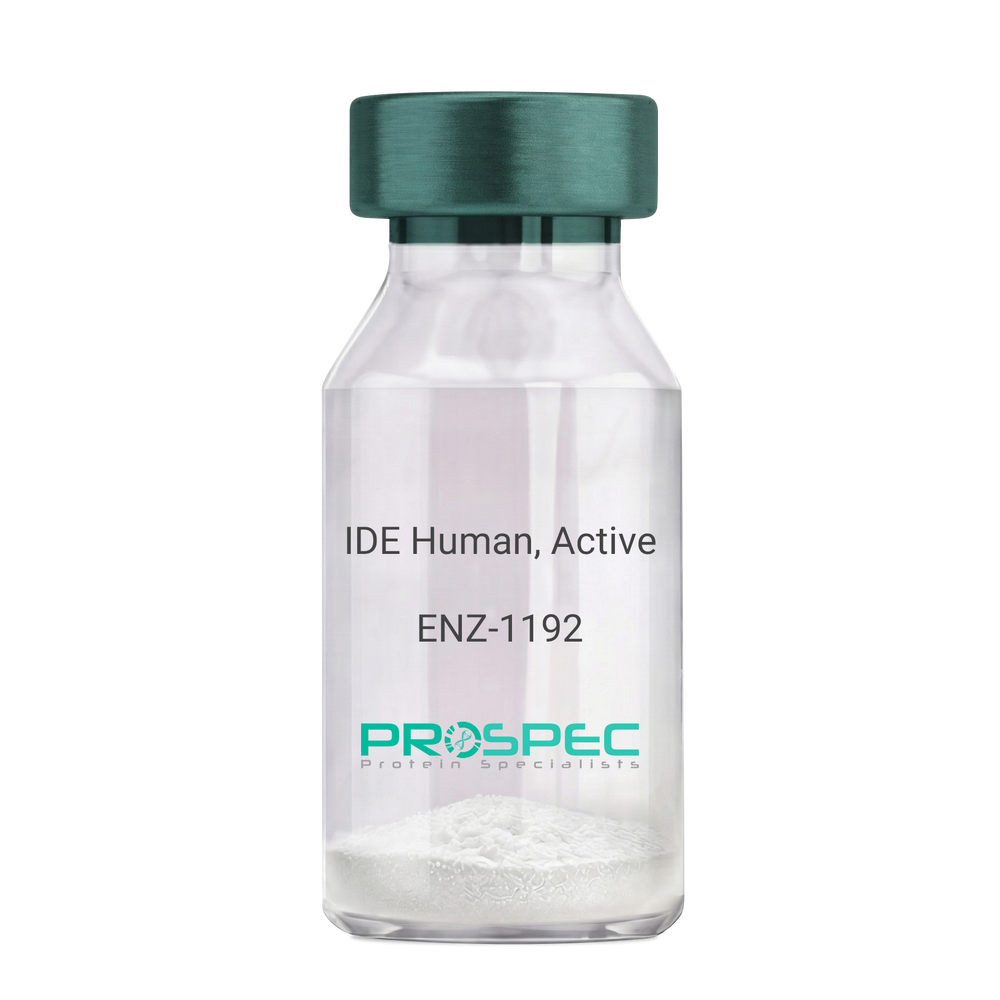
IDE Human, ActiveDescription:
Insulin-Degrading Enzyme Human Recombinant
Insulin-Degrading Enzyme, Abeta-Degrading Protease, Insulysin, EC 3.4.24.56, Insulinase, Insulin Protease, INSULYSIN, EC 3.4.24, IDE, insulin-degrading enzyme isoform 1.
Product # :
ENZ-1192Price :
Quantity :
Shipping Method :
Shipped with Ice Packs
More Info
- description
- source
- formulation
- purity
- biological activity
- More Info
Description
IDE Human, Active Human Recombinant produced in E.Coli is a single, non-glycosylated, polypeptide chain (42-1019 a.a) containing a total of 984 amino acids, having a molecular mass of 114 kDa. IDE is fused to a 6 amino acid His-tag at C-terminus and is purified by proprietary chromatographic techniques.
Source
Escherichia Coli.
Formulation
The IDE solution (0.5mg/ml) contains 10% Glycerol, 100mM NaCl, 0.05% Brij35 and 20mM Tris-HCl buffer (pH 7.5).
Purity
Greater than 90.0% as determined by SDS-PAGE.
Biological Activity
Specific activity is greater than 3,000 pmol/min/ug in which 1 unit will convert 1.0 pmole of Mca-RPPGFSAFK(Dnp)-OH to MCA-Pro-Leu-OH per minute at pH 7.5 at 25°C.
More Info
-
Synonyms
Insulin-Degrading Enzyme, Abeta-Degrading Protease, Insulysin, EC 3.4.24.56, Insulinase, Insulin Protease, INSULYSIN, EC 3.4.24, IDE, insulin-degrading enzyme isoform 1.
-
Physical Appearance
Filtered colorless solution.
-
Stability
Store at 4°C if entire vial will be used within 2-4 weeks. Store, frozen at -20°C for longer periods of time. For long term storage it is recommended to add a carrier protein (0.1% HSA or BSA). Avoid multiple freeze-thaw cycles.
-
Amino Acid Sequence
MNNPAIKRIG NHITKSPEDK REYRGLELAN GIKVLLISDP TTDKSSAALD VHIGSLSDPP NIAGLSHFCE HMLFLGTKKY PKENEYSQFL SEHAGSSNAF TSGEHTNYYF DVSHEHLEGA LDRFAQFFLC PLFDESCKDR EVNAVDSEHE KNVMNDAWRL FQLEKATGNP KHPFSKFGTG NKYTLETRPN QEGIDVRQEL LKFHSAYYSS NLMAVCVLGR ESLDDLTNLV VKLFSEVENK NVPLPEFPEH PFQEEHLKQL YKIVPIKDIR NLYVTFPIPD LQKYYKSNPG HYLGHLIGHE GPGSLLSELK SKGWVNTLVG GQKEGARGFM FFIINVDLTE EGLLHVEDII LHMFQYIQKL RAEGPQEWVF QECKDLNAVA FRFKDKERPR GYTSKIAGIL HYYPLEEVLT AEYLLEEFRP DLIEMVLDKL RPENVRVAIV SKSFEGKTDR TEEWYGTQYK QEAIPDEVIK KWQNADLNGK FKLPTKNEFI PTNFEILPLE KEATPYPALI KDTAMSKLWF KQDDKFFLPK ACLNFEFFSP FAYVDPLHCN MAYLYLELLK DSLNEYAYAA ELAGLSYDLQ NTIYGMYLSV KGYNDKQPIL LKKIIEKMAT FEIDEKRFEI IKEAYMRSLN NFRAEQPHQH AMYYLRLLMT EVAWTKDELK EALDDVTLPR LKAFIPQLLS RLHIEALLHG NITKQAALGI MQMVEDTLIE HAHTKPLLPS
QLVRYREVQL PDRGWFVYQQ RNEVHNNCGI EIYYQTDMQS TSENMFLELF CQIISEPCFN TLRTKEQLGY IVFSGPRRAN GIQGLRFIIQ SEKPPHYLES RVEAFLITME KSIEDMTEEA FQKHIQALAI RRLDKPKKLS AECAKYWGEI ISQQYNFDRD NTEVAYLKTL TKEDIIKFYK EMLAVDAPRR HKVSVHVLAR EMDSCPVVGE FPCQNDINLS QAPALPQPEV IQNMTEFKRG LPLFPLVKPH INFMAAKLHH HHHH. -
Background
Insulin-degrading enzyme (IDE) is a crucial protease that plays a significant role in maintaining glucose homeostasis by degrading insulin and other bioactive peptides. Dysregulation of IDE has been implicated in various metabolic disorders, particularly type 2 diabetes mellitus. IDE is also associated with the clearance of amyloid-beta peptides in the brain, making it relevant to Alzheimer's disease pathology. Studying the recombinant form of IDE is fundamental to understanding its functional mechanisms and exploring potential avenues for therapeutic interventions.
The primary goal of this research is to express and purify recombinant IDE using diverse expression systems. Recombinant DNA techniques will be employed to construct expression vectors containing the IDE gene, followed by expression in bacterial, yeast, or mammalian cell-based systems. The recombinant IDE will be purified using affinity chromatography or other appropriate methods, facilitating subsequent biochemical and biophysical characterization.
The second objective is to investigate the substrate specificity and catalytic activity of the purified IDE. In vitro enzymatic assays will be conducted to analyse the ability of the recombinant IDE to degrade insulin and other potential substrates. The effects of various factors, such as pH, temperature, and potential modulators, on IDE activity will be evaluated. Additionally, the interactions between IDE and its substrates will be explored using binding assays.
The third objective is to elucidate the three-dimensional structure of the IDE recombinant using techniques like X-ray crystallography or nuclear magnetic resonance (NMR) spectroscopy. Structural insights into the active site and binding pockets of IDE will provide valuable information for understanding its substrate recognition and catalytic mechanisms. This knowledge could be instrumental in designing targeted therapeutic compounds.
By characterizing the IDE recombinant, this research aims to contribute to our understanding of its role in insulin metabolism, glucose regulation, and potential therapeutic applications. The findings from this study may have implications for the development of novel treatments for diabetes and other related disorders.
ProSpec's products are furnished for LABORATORY RESEARCH USE ONLY. The product may not be used as drugs, agricultural or pesticidal products, food additives or household chemicals.
- View Data Sheet
Name :
REV1 HumanDescription:
REV1 Polymerase Human Recombinant
REV1 Polymerase (DNA Directed), REV1L, Alpha Integrin-Binding Protein 80, Rev1-Like Terminal Deoxycytidyl Transferase, AIBP80, REV1 (Yeast Homolog)- Like, REV1 Homolog (S. Cerevisiae) , REV1-Like (Yeast) , DNA Repair Protein REV1, REV1 Homolog, REV1- Like, EC 2.7.7.-.
Product # :
ENZ-796Price :
Quantity :
Shipping Method :
Shipped with Ice Packs
More Info
- description
- source
- formulation
- purity
- More Info
Description
REV1 Human Recombinant produced in E.coli is a single, non-glycosylated polypeptide chain containing 227 amino acids (51-256) and having a molecular mass of 25.2kDa.REV1 is fused to a 21 amino acid His-tag at N-terminus.
Source
Escherichia Coli.
Formulation
The REV1 solution (1mg/ml) contains 20mM Tris-HCl buffer (pH 8.0), 0.4M Urea and 10% glycerol.
Purity
Greater than 85.0% as determined by SDS-PAGE.
More Info
-
Introduction
REV1 Polymerase (REV1) contains a BRCT domain, which is imperative in protein-protein interactions. REV1 is a deoxycytidyl transferase involved in DNA repair. REV1 assists in the 1st step in the bypass of abasic lesions by the incorporation of a nucleotide opposite the lesion. REV1 is essential for normal generation of mutations by physical and chemical agents. REV1 transfers a dCMP residue from dCTP to the 3'-end of a DNA primer in a template-dependent reaction. A role for the human Rev1-like protein has been suggested as a scaffold which recruits DNA polymerases involved in translesion synthesis (TLS) of damaged DNA.
-
Synonyms
REV1 Polymerase (DNA Directed), REV1L, Alpha Integrin-Binding Protein 80, Rev1-Like Terminal Deoxycytidyl Transferase, AIBP80, REV1 (Yeast Homolog)- Like, REV1 Homolog (S. Cerevisiae) , REV1-Like (Yeast) , DNA Repair Protein REV1, REV1 Homolog, REV1- Like, EC 2.7.7.-.
-
Physical Appearance
Sterile Filtered colorless solution.
-
Stability
Store at 4°C if entire vial will be used within 2-4 weeks. Store, frozen at -20°C for longer periods of time. For long term storage it is recommended to add a carrier protein (0.1% HSA or BSA).Avoid multiple freeze-thaw cycles.
-
Amino Acid Sequence
MGSSHHHHHH SSGLVPRGSH MGVAIYVNGY TDPSAEELRK LMMLHGGQYH VYYSRSKTTH IIATNLPNAK IKELKGEKVI RPEWIVESIK AGRLLSYIPY QLYTKQSSVQ KGLSFNPVCR PEDPLPGPSN IAKQLNNRVN HIVKKIETEN EVKVNGMNSW NEEDENNDFS FVDLEQTSPG RKQNGIPHPR GSTAIFNGHT PSSNGALKTQ DCLVPMVNSV ASRLSPA.
ProSpec's products are furnished for LABORATORY RESEARCH USE ONLY. The product may not be used as drugs, agricultural or pesticidal products, food additives or household chemicals.
- View Data Sheet
Name :
DHRS9 HumanDescription:
Dehydrogenase/Reductase Member 9 Human Recombinant
Dehydrogenase/reductase SDR family member 9, 3-alpha hydroxysteroid dehydrogenase, 3-alpha-HSD, NADP-dependent retinol dehydrogenase/reductase, RDH-E2, RDHL, Short-chain dehydrogenase/reductase retSDR8, DHRS9, RDH15, RDHTBE, SDR9C4, RETSDR8, 3ALPHA-HSD.
Product # :
ENZ-216Price :
Quantity :
Shipping Method :
Shipped with Ice Packs
More Info
- description
- source
- formulation
- purity
- More Info
Description
DHRS9 Human Recombinant produced in E.coli is a single, non-glycosylated polypeptide chain containing 327 amino acids (18-319) and having a molecular mass of 35.9kDa.DHRS9 is fused to a 21 amino acid His-tag at N-terminus & purified by proprietary chromatographic techniques.
Source
Escherichia Coli.
Formulation
The DHRS9 solution (0.5mg/ml) contains 20mM Tris-HCl buffer (pH8.0), 20% glycerol, 0.1M NaCl, 1mM DTT and 0.1mM PMSF.
Purity
Greater than 90.0% as determined by SDS-PAGE.
More Info
-
Introduction
Dehydrogenase/reductase SDR family member 9 (DHRS9) functions as a homotetramer, which converts both 3-alpha-tetrahydroprogesterone (allopregnanolone) and 3-alpha-androstanediol to dihydroxyprogesterone and is believed to have a part in retinoic acid biosynthesis.
-
Synonyms
Dehydrogenase/reductase SDR family member 9, 3-alpha hydroxysteroid dehydrogenase, 3-alpha-HSD, NADP-dependent retinol dehydrogenase/reductase, RDH-E2, RDHL, Short-chain dehydrogenase/reductase retSDR8, DHRS9, RDH15, RDHTBE, SDR9C4, RETSDR8, 3ALPHA-HSD.
-
Physical Appearance
Sterile Filtered colorless solution.
-
Stability
Store at 4°C if entire vial will be used within 2-4 weeks. Store, frozen at -20°C for longer periods of time. For long term storage it is recommended to add a carrier protein (0.1% HSA or BSA).Avoid multiple freeze-thaw cycles.
-
Amino Acid Sequence
MGSSHHHHHH SSGLVPRGSH MGSHMRKGKL KIEDITDKYI FITGCDSGFG NLAARTFDKK GFHVIAACLT ESGSTALKAE TSERLRTVLL DVTDPENVKR TAQWVKNQVG EKGLWGLINN AGVPGVLAPT DWLTLEDYRE PIEVNLFGLI SVTLNMLPLV KKAQGRVINV SSVGGRLAIV GGGYTPSKYA VEGFNDSLRR DMKAFGVHVS CIEPGLFKTN LADPVKVIEK KLAIWEQLSP DIKQQYGEGY IEKSLDKLKG NKSYVNMDLS PVVECMDHAL TSLFPKTHYA AGKDAKIFWI PLSHMPAALQ DFLLLKQKAE LANPKAV.
ProSpec's products are furnished for LABORATORY RESEARCH USE ONLY. The product may not be used as drugs, agricultural or pesticidal products, food additives or household chemicals.
- View Data Sheet
Name :
GLO1 Human, ActiveDescription:
Glyoxalase-I Human Recombinant, Active
GLYI, GLOD1, GLO1, Glyoxalase-1, Lactoylglutathione lyase, Methylglyoxalase, Aldoketomutase, Ketone-aldehyde mutase, Glyoxalase I, S-D-lactoylglutathione methylglyoxal lyase, Glx I.
Product # :
ENZ-999Price :
Quantity :
Shipping Method :
Shipped with Ice Packs
More Info
- description
- source
- formulation
- purity
- biological activity
- More Info
Description
Glyoxalase-I Human Recombinant produced in E.Coli is a single, non-glycosylated, polypeptide chain containing 184 amino acids and having a molecular mass of 20.7 kDa. Glyoxalase-1 is purified by proprietary chromatographic techniques.
Source
Escherichia Coli.
Formulation
Glyoxalase-1 solution containing 20mM Tris-HCl pH-8, 1mM DTT and 10% glycerol.
Purity
Greater than 90.0% as determined by SDS-PAGE.
Biological Activity
Specific activity: > 400 units/mg. One unit will form 1.0umol of S-lactoylgutathione from methylglyoxal and reduced glutathione per minute at pH6.5 at 25CMore Info
-
Introduction
GLO1 is involved in the catalysis and formation of S-lactoyl-glutathione from methylglyoxal condensation and reduced glutatione. GLO1 is linked to HLA and is localized to 6p21.3-p21.1, between HLA and the centromere. GLO1 enzyme is ubundantly expressed and present in numerous tumor cell lines, in which its concentration is often upregulated ubiquitisly. GLO1 is a major susceptible gene for autism in an ethnic Chinese population from Taiwan. GLO1 might be involved in the pathophysiology of mood disorders. GLO1 plays a role in the pathophysiology of mood disorders. Overexpression of GLO1 is associated with kidney tumor.
-
Synonyms
GLYI, GLOD1, GLO1, Glyoxalase-1, Lactoylglutathione lyase, Methylglyoxalase, Aldoketomutase, Ketone-aldehyde mutase, Glyoxalase I, S-D-lactoylglutathione methylglyoxal lyase, Glx I.
-
Physical Appearance
Sterile filtered colorless solution.
-
Stability
Store at 4°C if entire vial will be used within 2-4 weeks. Store, frozen at -20°C for longer periods of time. For long term storage it is recommended to add a carrier protein (0.1% HSA or BSA).Avoid multiple freeze-thaw cycles.
-
Amino Acid Sequence
MAEPQPPSGG LTDEAALSCC SDADPSTKDF LLQQTMLRVK DPKKSLDFYT RVLGMTLIQK CDFPIMKFSL YFLAYEDKND IPKEKDEKIAWALSRKATLE LTHNWGTEDD ETQSYHNGNS DPRGFGHIGI AVPDVYSACK RFEELGVKFV KKPDDGKMKG LAFIQDPDGY WIEILNPNKM ATLM.
ProSpec's products are furnished for LABORATORY RESEARCH USE ONLY. The product may not be used as drugs, agricultural or pesticidal products, food additives or household chemicals.
- View Data Sheet
Name :
CHST10 HumanDescription:
Carbohydrate Sulfotransferase 10 Human Recombinant
Carbohydrate Sulfotransferase 10, HNK1ST, HNK-1 Sulfotransferase,HuHNK-1ST, HNK-1ST, EC 2.8.2.-, EC 2.8.2, CHST10.
Product # :
ENZ-894Price :
Quantity :
Shipping Method :
Shipped with Ice Packs
More Info
- description
- source
- formulation
- purity
- More Info
Description
CHST10 Human Recombinant produced in E.Coli is a single, non-glycosylated polypeptide chain containing 350 amino acids (28-356 a.a) and having a molecular mass of 41.2kDa.CHST10 is fused to a 21 amino acid His-tag at N-terminus & purified by proprietary chromatographic techniques.
Source
Escherichia Coli.
Formulation
CHST10 protein solution (0.5mg/ml) containing 20mM Tris-HCl (pH8.0) and 10% glycerol.
Purity
Greater than 85.0% as determined by SDS-PAGE.
More Info
-
Introduction
Carbohydrate Sulfotransferase 10, also known as CHST10 is a member of the sulfotransferase 2 family. CHST10 was first recognized as a sulfotransferase which acts on the human natural killer-1 (HNK-1) glycan. Furthermore, CHST10 is a carbohydrate involved in neurodevelopment as well as synaptic plasticity.
-
Synonyms
Carbohydrate Sulfotransferase 10, HNK1ST, HNK-1 Sulfotransferase,HuHNK-1ST, HNK-1ST, EC 2.8.2.-, EC 2.8.2, CHST10.
-
Physical Appearance
Sterile Filtered colorless solution.
-
Stability
Store at 4°C if entire vial will be used within 2-4 weeks. Store, frozen at -20°C for longer periods of time. For long term storage it is recommended to add a carrier protein (0.1% HSA or BSA).Avoid multiple freeze-thaw cycles.
-
Amino Acid Sequence
MGSSHHHHHH SSGLVPRGSH MTFKDPDVYS AKQEFLFLTT MPEVRKLPEE KHIPEELKPT GKELPDSQLV QPLVYMERLE LIRNVCRDDA LKNLSHTPVS KFVLDRIFVC DKHKILFCQT PKVGNTQWKK VLIVLNGAFS SIEEIPENVV HDHEKNGLPR LSSFSDAEIQ KRLKTYFKFF IVRDPFERLI SAFKDKFVHN PRFEPWYRHE IAPGIIRKYR RNRTETRGIQ FEDFVRYLGD PNHRWLDLQF GDHIIHWVTY VELCAPCEIM YSVIGHHETL EDDAPYILKE AGIDHLVSYP TIPPGITVYN RTKVEHYFLG ISKRDIRRLY ARFEGDFKLF GYQKPDFLLN.
ProSpec's products are furnished for LABORATORY RESEARCH USE ONLY. The product may not be used as drugs, agricultural or pesticidal products, food additives or household chemicals.
- View Data Sheet
Name :
ECHS1 HumanDescription:
Enoyl CoA Hydratase, Short chain, 1, Mitochondrial Human Recombinant
Enoyl-CoA hydratase 1, SCEH.
Product # :
ENZ-556Price :
Quantity :
Shipping Method :
Shipped with Ice Packs
More Info
- description
- source
- formulation
- purity
- More Info
Description
ECHS1 Human Recombinant produced in E.Coli is a single, non-glycosylated polypeptide chain containing 284 amino acids (28-290 a.a.) and having a molecular mass of 30.6kDa.ECHS1 is fused to a 21 amino acid His-tag at N-terminus & purified by proprietary chromatographic techniques.
Source
Escherichia Coli.
Formulation
The ECHS1 protein solution (1mg/ml) contains 20mM Tris-HCl buffer (pH-8), 1mM DTT,0.1M NaCl and 20% glycerol.
Purity
Greater than 95.0% as determined by SDS-PAGE.
More Info
-
Introduction
ECHS1 is part of the hydratase/isomerase superfamily. ECHS1 is localized in the mitochondrial matrix and Expressed in muscle, liver and fibroblasts, with low expression in kidney and spleen, ECHS1 exists as a homohexamer that takes part in the second phase of the mitochondrial fatty acid β-oxidation pathway.
-
Synonyms
Enoyl-CoA hydratase 1, SCEH.
-
Physical Appearance
Sterile filtered colorless solution.
-
Stability
Store at 4°C if entire vial will be used within 2-4 weeks. Store, frozen at -20°C for longer periods of time. For long term storage it is recommended to add a carrier protein (0.1% HSA or BSA).Avoid multiple freeze-thaw cycles.
-
Amino Acid Sequence
MGSSHHHHHH SSGLVPRGSH MASGANFEYI IAEKRGKNNT VGLIQLNRPK ALNALCDGLI DELNQALKIF EEDPAVGAIV LTGGDKAFAA GADIKEMQNL SFQDCYSSKF LKHWDHLTQV KKPVIAAVNG YAFGGGCELA MMCDIIYAGE KAQFAQPEIL IGTIPGAGGT QRLTRAVGKS LAMEMVLTGD RISAQDAKQA GLVSKICPVE TLVEEAIQCA EKIASNSKIV VAMAKESVNA AFEMTLTEGS KLEKKLFYST FATDDRKEGM TAFVEKRKAN FKDQ.
ProSpec's products are furnished for LABORATORY RESEARCH USE ONLY. The product may not be used as drugs, agricultural or pesticidal products, food additives or household chemicals.
- View Data Sheet
Name :
ACAT1 HumanDescription:
Acetyl-Coenzyme A acetyltransferase 1 Human Recombinant
Acetyl-CoA acetyltransferase, mitochondrial, EC 2.3.1.9, Acetoacetyl-CoA thiolase, T2, ACAT1, ACAT, MAT, THIL.
Product # :
ENZ-665Price :
Quantity :
Shipping Method :
Shipped with Ice Packs
More Info
- description
- source
- formulation
- purity
- More Info
Description
ACAT1 Human Recombinant produced in E.coli is a single, non-glycosylated polypeptide chain containing 417 amino acids (34-427) and having a molecular mass of 43.8 kDa.ACAT1 is fused to a 23 amino acid His-tag at N-terminus & purified by proprietary chromatographic techniques.
Source
E.coli.
Formulation
The ACAT1 solution (1mg/ml) contains 20mM Tris-HCl buffer (pH 7.5), 0.1M NaCl, 10% glycerol and 1mM DTT.
Purity
Greater than 95% as determined by SDS-PAGE.
More Info
-
Introduction
Acetoacetyl-CoA thiolase (ACAT1) is an enzyme member of the membrane-bound acyltransferase family and Sterol o-acyltransferase subfamily. The ACAT1 enzyme catalyzes the reversible formation of acetoacetyl-CoA from 2 molecules of acetyl-CoA. ACAT1 plays a part in lipoprotein compilation and dietary cholesterol absorption. Added to its acyltransferase activity, ACAT1 acts as a ligase.
-
Synonyms
Acetyl-CoA acetyltransferase, mitochondrial, EC 2.3.1.9, Acetoacetyl-CoA thiolase, T2, ACAT1, ACAT, MAT, THIL.
-
Physical Appearance
Sterile Filtered colorless solution.
-
Stability
Store at 4°C if entire vial will be used within 2-4 weeks. Store, frozen at -20°C for longer periods of time. For long term storage it is recommended to add a carrier protein (0.1% HSA or BSA).Avoid multiple freeze-thaw cycles.
-
Amino Acid Sequence
MGSSHHHHHH SSGLVPRGSH MGSVSKPTLK EVVIVSATRT PIGSFLGSLS LLPATKLGSI AIQGAIEKAG IPKEEVKEAY MGNVLQGGEG QAPTRQAVLG AGLPISTPCT TINKVCASGM KAIMMASQSL MCGHQDVMVA GGMESMSNVP YVMNRGSTPY GGVKLEDLIV KDGLTDVYNK
IHMGSCAENT AKKLNIARNE QDAYAINSYT RSKAAWEAGK FGNEVIPVTV TVKGQPDVVV KEDEEYKRVD FSKVPKLKTV FQKENGTVTA ANASTLNDGA AALVLMTADA AKRLNVTPLA RIVAFADAAV EPIDFPIAPV YAASMVLKDV GLKKEDIAMW EVNEAFSLVV LANIKMLEID
PQKVNINGGA VSLGHPIGMS GARIVGHLTH ALKQGEYGLA SICNGGGGAS AMLIQKL.
ProSpec's products are furnished for LABORATORY RESEARCH USE ONLY. The product may not be used as drugs, agricultural or pesticidal products, food additives or household chemicals.
- View Data Sheet
Name :
FUCA2 HumanDescription:
Fucosidase Alpha-L- 2 Plasma Human Recombinant
Fucosidase, alpha-L- 2, plasma, dJ20N2.5, RP1-20N2.5, Plasma alpha-L-fucosidase, Alpha-L-fucoside fucohydrolase 2, Alpha-L-fucosidase 2, PSEC0151, UNQ227/PRO260.
Product # :
ENZ-840Price :
Quantity :
Shipping Method :
Shipped with Ice Packs
More Info
- description
- source
- formulation
- purity
- More Info
Description
FUCA2 Human Recombinant produced in E.Coli is a single, non-glycosylated polypeptide chain containing 462 amino acids (29-467 a.a) and having a molecular mass of 53.3kDa.FUCA2 is fused to a 23 amino acid His-tag at N-terminus & purified by proprietary chromatographic techniques.
Source
Escherichia Coli.
Formulation
FUCA2 protein solution (1mg/ml) containing 20mM phosphate (pH8.0) and 10% glycerol.
Purity
Greater than 85.0% as determined by SDS-PAGE.
More Info
-
Introduction
Fucosidase Alpha-L- 2 Plasma (FUCA2) is a plasma alpha-L-fucosidase, which represents 10-20% of the total cellular fucosidase activity. FUCA2 protein belongs to the glycosyl hydrolase 29 family, and catalyzes the hydrolysis of the alpha-1,6-linked fucose fused to the reducing-end N-acetylglucosamine of the carbohydrate moieties of glycoproteins. FUCA2 is crucial for Helicobacter pylori adhesion to human gastric cancer cells.
-
Synonyms
Fucosidase, alpha-L- 2, plasma, dJ20N2.5, RP1-20N2.5, Plasma alpha-L-fucosidase, Alpha-L-fucoside fucohydrolase 2, Alpha-L-fucosidase 2, PSEC0151, UNQ227/PRO260.
-
Physical Appearance
Sterile Filtered colorless solution.
-
Stability
Store at 4°C if entire vial will be used within 2-4 weeks. Store, frozen at -20°C for longer periods of time. For long term storage it is recommended to add a carrier protein (0.1% HSA or BSA).Avoid multiple freeze-thaw cycles.
-
Amino Acid Sequence
MGSSHHHHHH SSGLVPRGSH MGSHSATRFD PTWESLDARQ LPAWFDQAKF GIFIHWGVFS VPSFGSEWFW WYWQKEKIPK YVEFMKDNYP PSFKYEDFGP LFTAKFFNAN QWADIFQASG AKYIVLTSKH HEGFTLWGSE YSWNWNAIDE GPKRDIVKEL EVAIRNRTDL RFGLYYSLFE WFHPLFLEDE SSSFHKRQFP VSKTLPELYE LVNNYQPEVL WSDGDGGAPD QYWNSTGFLA WLYNESPVRG TVVTNDRWGA GSICKHGGFY TCSDRYNPGH LLPHKWENCM TIDKLSWGYR REAGISDYLT IEELVKQLVE TVSCGGNLLM NIGPTLDGTI SVVFEERLRQ MGSWLKVNGE AIYETHTWRS QNDTVTPDVW YTSKPKEKLV YAIFLKWPTS GQLFLGHPKA ILGATEVKLL GHGQPLNWIS LEQNGIMVEL PQLTIHQMPC KWGWALALTN VI.
ProSpec's products are furnished for LABORATORY RESEARCH USE ONLY. The product may not be used as drugs, agricultural or pesticidal products, food additives or household chemicals.
- View Data Sheet
Name :
ACAT2 HumanDescription:
Acetyl-Coenzyme A acetyltransferase 2 Human Recombinant
Acetyl-CoA acetyltransferase cytosolic, Cytosolic acetoacetyl-CoA thiolase, ACAT2, Acetyl CoA transferase-like protein, ACAT-2.
Product # :
ENZ-295Price :
Quantity :
Shipping Method :
Shipped with Ice Packs
More Info
- description
- source
- formulation
- purity
- More Info
Description
ACAT2 Recombinant Human produced in E.Coli is a single, non-glycosylated polypeptide chain containing 433 amino acids (1-397 a.a.) and having a molecular mass of 45.4 kDa. The ACAT2 is fused to 36 amino acid His-Tag at N-terminus and purified by proprietary chromatographic techniques.
Source
Escherichia Coli.
Formulation
ACAT2 Human solution containing 20mM Tris pH-8, 0.1M NaCl, 1mM DTT and 20% glycerol.
Purity
Greater than 95.0% as determined by SDS-PAGE.
More Info
-
Introduction
ACAT2 enzyme participates in lipid metabolism. ACAT2 takes part in lipoprotein assembly, catalyzing cholesterol esterification in mammalian cells. ACAT2 is an integral membrane protein that localizes to the endoplasmic reticulum of human intestinal cells. ACAT2 deficiency contributes to severe mental retardation and hypotonus.
-
Synonyms
Acetyl-CoA acetyltransferase cytosolic, Cytosolic acetoacetyl-CoA thiolase, ACAT2, Acetyl CoA transferase-like protein, ACAT-2.
-
Physical Appearance
Sterile Filtered clear solution.
-
Stability
Store at 4°C if entire vial will be used within 2-4 weeks. Store, frozen at -20°C for longer periods of time. For long term storage it is recommended to add a carrier protein (0.1% HSA or BSA).Avoid multiple freeze-thaw cycles.
-
Amino Acid Sequence
MRGSHHHHHH GMASMTGGQQ MGRDLYDDDD KDRWGSMNAG SDPVVIVSAA RTIIGSFNGA LAAVPVQDLG STVIKEVLKR ATVAPEDVSE
VIFGHVLAAG CGQNPVRQAS VGAGIPYSVP AWSCQMICGS GLKAVCLAVQ SIGIGDSSIV VAGGMENMSK APHLAYLRTG VKIGEMPLTD SILCDGLTDA FHNCHMGITA ENVAKKWQVS REDQDKVAVL SQNRTENAQK AGHFDKEIVP VLVSTRKGLI EVKTDEFPRH GSNIEAMSKL KPYFLTDGTG TVTPANASGI NDGAAAVVLM KKSEADKRGL TPLARIVSWS QVGVEPSIMG IGPIPAIKQA VTKAGWSLED VDIFEINEAF AAVSAAIVKE LGLNPEKVNI EGGAIALGHP LGASGCRILV TLLHTLERMG RSRGVAALCI GGGMGIAMCV QR.
ProSpec's products are furnished for LABORATORY RESEARCH USE ONLY. The product may not be used as drugs, agricultural or pesticidal products, food additives or household chemicals.
- View Data Sheet
Name :
ST6GAL1 Human, sf9Description:
ST6 Beta-Galactosamide Alpha-2,6-Sialyltranferase 1, sf9 Human Recombinant
ST6 Beta-Galactoside Alpha-2,6-Sialyltransferase 1, ST6 Beta-Galactosamide Alpha-2,6-Sialyltranferase 1, ST6Gal I, CMP-N-Acetylneuraminate-Beta-Galactosamide-Alpha-2,6-Sialyltransferase 1,B-Cell Antigen CD75, Alpha 2,6-ST 1, EC 2.4.99.1, ST6GalI, SIAT1, CMP-N-Acetylneuraminate Beta-Galactosamide Alpha-2,6-Sialyltransferase, Sialyltransferase 1 (Beta-Galactoside Alpha-2,6-Sialyltransferase) , ST6 N-Acetylgalactosaminide Alpha-2,6-Sialyltransferase 1, Sialyltransferase 1, ST6N.
Product # :
ENZ-950Price :
Quantity :
Shipping Method :
Shipped with Ice Packs
More Info
- description
- source
- formulation
- purity
- More Info
Description
ST6GAL1 produced in Sf9 Baculovirus cells is a single, glycosylated polypeptide chain containing 389 amino acids (27-406 a.a.) and having a molecular mass of 44.6kDa. ST6GAL1 is expressed with a 6 amino acid His tag at C-Terminus and purified by proprietary chromatographic techniques.
Source
Sf9, Baculovirus cells.
Formulation
ST6GAL1 protein solution (0.5mg/ml) contains Phosphate Buffered Saline (pH 7.4) and 10% glycerol.
Purity
Greater than 90.0% as determined by SDS-PAGE.
More Info
-
Introduction
ST6GAL1 also known as ST6 Beta-Galactosamide Alpha-2,6-Sialyltranferase 1, is part of the glycosyltransferase family 29. ST6GAL1 is a type II membrane protein which catalyzes the transfer of sialic acid from CMP-sialic acid to galactose-containing substrates. Furthermore, ST6GAL1 is normally found in the Golgi however it can be proteolytically processed to a soluble form, ST6GAL1 is also involved in the generation of the cell-surface carbohydrate determinants as well differentiation antigens HB-6, CD75, and CD76.
-
Synonyms
ST6 Beta-Galactoside Alpha-2,6-Sialyltransferase 1, ST6 Beta-Galactosamide Alpha-2,6-Sialyltranferase 1, ST6Gal I, CMP-N-Acetylneuraminate-Beta-Galactosamide-Alpha-2,6-Sialyltransferase 1,B-Cell Antigen CD75, Alpha 2,6-ST 1, EC 2.4.99.1, ST6GalI, SIAT1, CMP-N-Acetylneuraminate Beta-Galactosamide Alpha-2,6-Sialyltransferase, Sialyltransferase 1 (Beta-Galactoside Alpha-2,6-Sialyltransferase) , ST6 N-Acetylgalactosaminide Alpha-2,6-Sialyltransferase 1, Sialyltransferase 1, ST6N.
-
Physical Appearance
Sterile Filtered colorless solution.
-
Stability
Store at 4°C if entire vial will be used within 2-4 weeks. Store, frozen at -20°C for longer periods of time. For long term storage it is recommended to add a carrier protein (0.1% HSA or BSA). Avoid multiple freeze-thaw cycles.
-
Amino Acid Sequence
ADPKEKKKGS YYDSFKLQTK EFQVLKSLGK LAMGSDSQSV SSSSTQDPHR GRQTLGSLRG LAKAKPEASF QVWNKDSSSK NLIPRLQKIW KNYLSMNKYK VSYKGPGPGI KFSAEALRCH LRDHVNVSMV EVTDFPFNTS EWEGYLPKES IRTKAGPWGR CAVVSSAGSL KSSQLGREID DHDAVLRFNG APTANFQQDV GTKTTIRLMN SQLVTTEKRF LKDSLYNEGI LIVWDPSVYH SDIPKWYQNP DYNFFNNYKT YRKLHPNQPF YILKPQMPWE LWDILQEISP EEIQPNPPSS GMLGIIIMMT LCDQVDIYEF LPSKRKTDVC YYYQKFFDSA CTMGAYHPLL YEKNLVKHLN QGTDEDIYLL GKATLPGFRT IHCHHHHHH.
ProSpec's products are furnished for LABORATORY RESEARCH USE ONLY. The product may not be used as drugs, agricultural or pesticidal products, food additives or household chemicals.
- View Data Sheet
Name :
SMUG1 HumanDescription:
Single-Strand-Selective Monofunctional Uracil-DNA Glycosylase 1 Human Recombinant
Single-strand selective monofunctional uracil DNA glycosylase, SMUG1, FDG, UNG3, HMUDG.
Product # :
ENZ-674Price :
Quantity :
Shipping Method :
Shipped with Ice Packs
More Info
- description
- source
- formulation
- purity
- More Info
Description
SMUG1 Human Recombinant produced in E.coli is a single, non-glycosylated polypeptide chain containing 293 amino acids (1-270) and having a molecular mass of 32.3kDa.SMUG1 is fused to a 23 amino acid His-tag at N-terminus & purified by proprietary chromatographic techniques.
Source
E.coli.
Formulation
The SMUG1 solution (0.5mg/ml) contains 20mM Tris-HCl buffer (pH 8.0), 0.2M NaCl, 30% glycerol and 1mM DTT.
Purity
Greater than 95% as determined by SDS-PAGE.
More Info
-
Introduction
Single-strand-selective monofunctional uracil-DNA glycosylase (SMUG1) is an enzyme responsible for recognizing base lesions in the genome and initiating base excision DNA repair. SMUG1 participates in base excision repair by removing uracil from single- and double-stranded DNA. SMUG1 serves as a monofunctional DNA glycosylase specific for uracil (U) residues in DNA and has inclination for single-stranded DNA substrates. SMUG1 activity is greater against mismatches (U/G) than against matches (U/A).
-
Synonyms
Single-strand selective monofunctional uracil DNA glycosylase, SMUG1, FDG, UNG3, HMUDG.
-
Physical Appearance
Sterile Filtered colorless solution.
-
Stability
Store at 4°C if entire vial will be used within 2-4 weeks. Store, frozen at -20°C for longer periods of time. For long term storage it is recommended to add a carrier protein (0.1% HSA or BSA).Avoid multiple freeze-thaw cycles.
-
Amino Acid Sequence
MGSSHHHHHH SSGLVPRGSH MGSMPQAFLL GSIHEPAGAL MEPQPCPGSL AESFLEEELR LNAELSQLQF SEPVGIIYNP VEYAWEPHRN YVTRYCQGPK EVLFLGMNPG PFGMAQTGVP FGEVSMVRDW LGIVGPVLTP PQEHPKRPVL GLECPQSEVS GARFWGFFRN LCGQPEVFFH HCFVHNLCPL LFLAPSGRNL TPAELPAKQR EQLLGICDAA LCRQVQLLGV RLVVGVGRLA EQRARRALAG LMPEVQVEGL LHPSPRNPQA NKGWEAVAKE RLNELGLLPL LLK.
ProSpec's products are furnished for LABORATORY RESEARCH USE ONLY. The product may not be used as drugs, agricultural or pesticidal products, food additives or household chemicals.
- View Data Sheet
Name :
CA13 HumanDescription:
Carbonic Anhydrase XIII Human Recombinant
Carbonic Anhydrase XIII, Carbonate Dehydratase XIII, EC 4.2.1.1, CA-XIII, Carbonic, Anhydrase 13, CAXIII.
Product # :
ENZ-902Price :
Quantity :
Shipping Method :
Shipped with Ice Packs
More Info
- description
- source
- formulation
- purity
- biological activity
- More Info
Description
CA13 Human Recombinant produced in E.Coli is a single, non-glycosylated polypeptide chain containing 285 amino acids (1-262a.a) and having a molecular mass of 31.8kDa.CA13 is fused to a 23 amino acid His-tag at N-terminus & purified by proprietary chromatographic techniques.
Source
Escherichia Coli.
Formulation
CA13 protein solution (0.5mg/ml) containing Phosphate buffered saline (pH7.4),10% glycerol and 1mM DTT.
Purity
Greater than 90.0% as determined by SDS-PAGE.
Biological Activity
Specific activity is > 2,500 pmol/min/ug, and is defined as the amount of enzyme that hydrolyze 1.0 pmole of 4-nitrophenyl acetate to 4-nitrophenol per minute at pH 7.5 at 37C.More Info
-
Introduction
Carbonic Anhydrase XIII, also known as CA13 is a member of the alpha-carbonic anhydrase family, which catalyzes the rapid interconversion of carbon dioxide and water tobicarbonate and protons, a reversible reaction which occurs relatively slowly in the absence of catalyst. Furthermore, the active siteof nearly all carbonic anhydrases contains a zinc ion; they have been classified as metalloenzymes. At least fivedistinct CA families (?, ?, ?, ? and ?) have been found. These families have no significant a.a sequence resemblance and in just about allcases are considered to be an example of convergent evolution. The ?-CAs have been demonstrated in humans.
-
Synonyms
Carbonic Anhydrase XIII, Carbonate Dehydratase XIII, EC 4.2.1.1, CA-XIII, Carbonic, Anhydrase 13, CAXIII.
-
Physical Appearance
Sterile Filtered clear solution.
-
Stability
Store at 4°C if entire vial will be used within 2-4 weeks.Store, frozen at -20°C for longer periods of time. For long term storage it is recommended to add a carrier protein (0.1% HSA or BSA).Avoid multiple freeze-thaw cycles.
-
Amino Acid Sequence
MGSSHHHHHH SSGLVPRGSP MGSMSRLSWG YREHNGPIHW KEFFPIADGD QQSPIEIKTK EVKYDSSLRP LSIKYDPSSA KIISNSGHSF NVDFDDTENK SVLRGGPLTG SYRLRQVHLH WGSADDHGSE HIVDGVSYAA ELHVVHWNSD KYPSFVEAAH EPDGLAVLGV FLQIGEPNSQ LQKITDTLDS IKEKGKQTRF TNFDLLSLLP PSWDYWTYPG SLTVPPLLES VTWIVLKQPI NISSQQLAKF RSLLCTAEGE AAAFLVSNHR PPQPLKGRKV RASFH.
ProSpec's products are furnished for LABORATORY RESEARCH USE ONLY. The product may not be used as drugs, agricultural or pesticidal products, food additives or household chemicals.
- View Data Sheet
Name :
PYCR1 HumanDescription:
Pyrroline-5-Carboxylate Reductase 1 Human Recombinant
P5C, PRO3, P5CR 1, Pyrroline-5-Carboxylate Reductase 1 mitochondrial, ARCL2B, PYCR, PIG45, PP222, Proliferation-Inducing Protein 45.
Product # :
ENZ-035Price :
Quantity :
Shipping Method :
Shipped with Ice Packs
More Info
- description
- source
- formulation
- purity
- More Info
Description
PYCR1 produced in E.Coli is a single, non-glycosylated polypeptide chain containing 339 amino acids (1-319a.a.) and having a molecular mass of 35.5kDa.PYCR1 is fused to a 20 amino acid His-tag at N-terminus & purified by proprietary chromatographic techniques.
Source
Escherichia Coli.
Formulation
The PYCR1 protein solution (0.5mg/1ml) is formulated in 20 mM Tris-HCl Buffer (pH 8.5) and 10% Glycerol.
Purity
Greater than 90% as determined by SDS-PAGE.
More Info
-
Introduction
PYCR1 is a universal housekeeping enzyme which catalyzes the NAD(P)H-dependent conversion of pyrroline-5-carboxylate to proline. PYCR1 enzyme also takes a physiologic part in the generation of NADP(+) in certain cell types. PYCR1 forms a homopolymer and localizes to the mitochondrion. Mutations in PYCR1 are the source of cutis laxa autosomal recessive type 2B (ARCL2B).
-
Synonyms
P5C, PRO3, P5CR 1, Pyrroline-5-Carboxylate Reductase 1 mitochondrial, ARCL2B, PYCR, PIG45, PP222, Proliferation-Inducing Protein 45.
-
Physical Appearance
Sterile Filtered clear solution.
-
Stability
Store at 4°C if entire vial will be used within 2-4 weeks. Store, frozen at -20°C for longer periods of time. For long term storage it is recommended to add a carrier protein (0.1% HSA or BSA).Avoid multiple freeze-thaw cycles.
-
Amino Acid Sequence
MGSSHHHHHH SSGLVPRGSH MSVGFIGAGQ LAFALAKGFT AAGVLAAHKI MASSPDMDLA TVSALRKMGV KLTPHNKETV QHSDVLFLAV KPHIIPFILD EIGADIEDRH IVVSCAAGVT ISSIEKKLSA FRPAPRVIRC MTNTPVVVRE GATVYATGTH AQVEDGRLME QLLSSVGFCT EVEEDLIDAV TGLSGSGPAY AFTALDALAD GGVKMGLPRR LAVRLGAQAL LGAAKMLLHS EQHPGQLKDN VSSPGGATIH ALHVLESGGF RSLLINAVEA SCIRTRELQS MADQEQVSPA AIKKTILDKV KLDSPAGTAL SPSGHTKLLP RSLAPAGKD
ProSpec's products are furnished for LABORATORY RESEARCH USE ONLY. The product may not be used as drugs, agricultural or pesticidal products, food additives or household chemicals.
- View Data Sheet
Name :
AARS HumanDescription:
Alanyl-tRNA Synthetase Human Recombinant
Alanyl-tRNA synthetase cytoplasmic, EC 6.1.1.7, Alanine-tRNA ligase, AlaRS, Renal carcinoma antigen NY-REN-42, PL-12, AARS.
Product # :
ENZ-305Price :
Quantity :
Shipping Method :
Shipped with Ice Packs
More Info
- description
- source
- formulation
- purity
- More Info
Description
Alanyl-tRNA synthetase Human Recombinant produced in SF9 is a glycosylated, polypeptide chain having a molecular mass of 110 kDa. PL-12 is expressed with a -6xHis tag and purified by proprietary chromatographic techniques.
Source
Sf9 insect cells.
Formulation
AARS is supplied in 20mM HEPES buffer pH-8, 250mM sodium chloride, and 20% glycerol.
Purity
AARS purity is greater than 95% as determined by SDS-PAGE.
More Info
-
Introduction
Alanyl-tRNA synthetase is a member of the aminoacyl-tRNA synthetase family, key enzymes of protein biosynthesis which charge tRNA molecules with the respective amino acids. This 108 kDa protein is an autoantigen recognized by PL-12 antibodies which occur in a subset of patients with polymyositis and dermatomyositis. Preliminary data suggest that epitope spreading occurs in the autoimmune PL-12 response such that even antibodies to an isolated alanyl-tRNA molecule can develop.
-
Synonyms
Alanyl-tRNA synthetase cytoplasmic, EC 6.1.1.7, Alanine-tRNA ligase, AlaRS, Renal carcinoma antigen NY-REN-42, PL-12, AARS.
-
Physical Appearance
Sterile Filtered clear solution.
-
Stability
Store at 4°C if entire vial will be used within 2-4 weeks. Store, frozen at -20°C for longer periods of time. Avoid multiple freeze-thaw cycles.
-
Immunological Functions
1. Binds IgG-type human auto-antibodies.2. Standard ELISA test (checker-board analysis of positive/negative sampels).
-
coating concentration
0.3-0.8 µg/ml (depending on the type of ELISA plate and coating buffer).Suitable for labeling of functional groups.
ProSpec's products are furnished for LABORATORY RESEARCH USE ONLY. The product may not be used as drugs, agricultural or pesticidal products, food additives or household chemicals.
- View Data Sheet
Name :
MPO HumanDescription:
Myeloperoxidase Human
Myeloperoxidase, EC 1.11.1.7, MPO.
Product # :
ENZ-074Price :
Quantity :
Shipping Method :
Shipped with Ice Packs
More Info
- description
- source
- formulation
- purity
- More Info
Description
MPO is a natural protein having a molecular mass of 150kDa containing 2 subunits each of a heavy chain with 64kDa and a light chain with 13kDa. MPO is isolated from human peripheral blood polymorphonuclear leukocytes.
Source
Human peripheral blood polymorphonuclear leukocytes.
Formulation
MPO solution is supplied in 20mM HEPES buffer pH-7.5, 200mM NaCl and 20% glycerol.
Purity
Greater than 80% as determined by SDS-PAGE.
More Info
-
Introduction
Myeloperoxidase is an important enzyme used by granulocytes during phagocytic lysis of foreign particles engulfed. In normal tissues and in a variety of myeloproliferative disorders myeloid cells of both neutrophilic and eosinophilic types, at all stages of maturation, exhibit strong cytoplasmic reactivity for MPO. Erythroid precursors, megakaryocytes, lymphoid cells, mast cells, and plasma cells are nonreactive. MPO is not observed in the neoplastic cells of a wide variety of epithelial tumors and sarcomas. MPO is useful in differentiating between myeloid and lymphoid leukemias.
-
Synonyms
Myeloperoxidase, EC 1.11.1.7, MPO.
-
Physical Appearance
Sterile filtered colorless solution.
-
Stability
Store at 4°C if entire vial will be used within 2-4 weeks.Store, frozen at -20°C for longer periods of time. Avoid multiple freeze-thaw cycles.
ProSpec's products are furnished for LABORATORY RESEARCH USE ONLY. The product may not be used as drugs, agricultural or pesticidal products, food additives or household chemicals.