Skip to content

High-quality research proteins.

  • 1-800-805-6531

  • Mon - Sat 8.00-18.00, Sun - Closed

  • info@prospecbio.com

  • PO Box 6591 East Brunswick NJ 08816

  • Products
    • Cytokines
    • Growth factors
    • Chemokines
    • Cd antigens
    • Neurotrophins
    • Hormones
    • Enzymes
    • Viral antigens
    • Recombinant proteins
    • Natural proteins
    • Monoclonal antibodies
    • Polyclonal antibodies
    • Thermal Packaging
  • About
    • Company
    • Founder
    • Contribution
  • Customers
    • Eastern Asia
    • Eastern Europe
    • North America
    • South America
    • South East Asia
    • Southern Asia
    • Western Europe
  • Ordering
    • Ordering Method
    • Ordering - Credit Card
    • Ordering - PO
    • Shipping Fees
    • FAQs
  • Services
    • DNA Cloning
    • Protein Expression
    • Monoclonal Antibody
    • Fermentation
    • Technology License
  • Contact us
Log in

Country/region

  • USD $ | Albania
  • USD $ | Andorra
  • USD $ | Argentina
  • USD $ | Armenia
  • USD $ | Australia
  • USD $ | Austria
  • USD $ | Azerbaijan
  • USD $ | Belarus
  • USD $ | Belgium
  • USD $ | Bolivia
  • USD $ | Brazil
  • USD $ | Bulgaria
  • USD $ | Cambodia
  • USD $ | Canada
  • USD $ | Chile
  • USD $ | China
  • USD $ | Colombia
  • USD $ | Costa Rica
  • USD $ | Croatia
  • USD $ | Cyprus
  • USD $ | Czechia
  • USD $ | Denmark
  • USD $ | Estonia
  • USD $ | Finland
  • USD $ | France
  • USD $ | Georgia
  • USD $ | Germany
  • USD $ | Greece
  • USD $ | Hong Kong SAR
  • USD $ | Hungary
  • USD $ | Iceland
  • USD $ | India
  • USD $ | Ireland
  • USD $ | Israel
  • USD $ | Italy
  • USD $ | Japan
  • USD $ | Kazakhstan
  • USD $ | Latvia
  • USD $ | Liechtenstein
  • USD $ | Lithuania
  • USD $ | Madagascar
  • USD $ | Malta
  • USD $ | Mexico
  • USD $ | Moldova
  • USD $ | Monaco
  • USD $ | Netherlands
  • USD $ | New Zealand
  • USD $ | North Macedonia
  • USD $ | Norway
  • USD $ | Panama
  • USD $ | Paraguay
  • USD $ | Peru
  • USD $ | Philippines
  • USD $ | Poland
  • USD $ | Portugal
  • USD $ | Romania
  • USD $ | Singapore
  • USD $ | Slovakia
  • USD $ | Slovenia
  • USD $ | South Africa
  • USD $ | South Korea
  • USD $ | Spain
  • USD $ | Sri Lanka
  • USD $ | Sweden
  • USD $ | Switzerland
  • USD $ | Taiwan
  • USD $ | Thailand
  • USD $ | Türkiye
  • USD $ | Ukraine
  • USD $ | United Kingdom
  • USD $ | United States
  • USD $ | Uruguay
  • USD $ | Vatican City
  • USD $ | Venezuela
  • USD $ | Vietnam
  • Facebook
  • Instagram
logoProSpec - Recombinant Protein Manufacturer for academic and R&D industry
Become a distributor
Account Log in
Wishlist
Cart Cart(0)
  • Products
    +
    • Cytokines
    • Growth factors
    • Chemokines
    • Cd antigens
    • Neurotrophins
    • Hormones
    • Enzymes
    • Viral antigens
    • Recombinant proteins
    • Natural proteins
    • Monoclonal antibodies
    • Polyclonal antibodies
    • Thermal Packaging
  • About
    +
    • Company
    • Founder
    • Contribution
  • Customers
    +
    • Eastern Asia
    • Eastern Europe
    • North America
    • South America
    • South East Asia
    • Southern Asia
    • Western Europe
  • Ordering
    +
    • Ordering Method
    • Ordering - Credit Card
    • Ordering - PO
    • Shipping Fees
    • FAQs
  • Services
    +
    • DNA Cloning
    • Protein Expression
    • Monoclonal Antibody
    • Fermentation
    • Technology License
  • Contact us

Item added to your cart

View cart
View All
  • Cytokines
  • Growth factors
  • Chemokines
  • Cd antigens
  • Neurotrophins
  • Hormones
  • Enzymes
  • Viral antigens
  • Recombinant proteins
  • Natural proteins
  • Monoclonal antibodies
  • Polyclonal antibodies
  • Thermal Packaging
  • Tumor Necrosis Factor

    Tumor Necrosis Factor

    View All
  • 4-1BB

    4-1BB

    View All
  • Adiponectin

    Adiponectin

    View All
  • AIF1

    AIF1

    View All
  • Other Cytokines

    Other Cytokines

    View All
  • AITRL

    AITRL

    View All
  • Angiopoietin

    Angiopoietin

    View All
  • Apolipoprotein

    Apolipoprotein

    View All
  • B-Cell Activating Factor

    B-Cell Activating Factor

    View All
  • Beta Defensin

    Beta Defensin

    View All
  • Bone Morphogenetic Protein

    Bone Morphogenetic Protein

    View All
  • B type Natriuretic Peptide

    B type Natriuretic Peptide

    View All
  • BST

    BST

    View All
  • Betacellulin

    Betacellulin

    View All
  • Cardiotrophin

    Cardiotrophin

    View All
  • Activin

    Activin

    View All
  • Fibroblast Growth Factor

    Fibroblast Growth Factor

    View All
  • Other Growth Factors

    Other Growth Factors

    View All
  • CSF

    CSF

    View All
  • CTGF

    CTGF

    View All
  • IGFBP

    IGFBP

    View All
  • VEGF Protein

    VEGF Protein

    View All
  • EGF

    EGF

    View All
  • Epigen

    Epigen

    View All
  • Erythropoietin

    Erythropoietin

    View All
  • Insulin-Like Growth Factor

    Insulin-Like Growth Factor

    View All
  • Growth Hormone

    Growth Hormone

    View All
  • HDGF

    HDGF

    View All
  • Hepatocyte Growth Factor

    Hepatocyte Growth Factor

    View All
  • Insulin

    Insulin

    View All
  • BCA-1/ BLC (CXCL13)

    BCA-1/ BLC (CXCL13)

    View All
  • BRAK (CXCL14)

    BRAK (CXCL14)

    View All
  • C-10 (CCL6)

    C-10 (CCL6)

    View All
  • Other Chemokines

    Other Chemokines

    View All
  • MEC (CCL28)

    MEC (CCL28)

    View All
  • LD78-beta (CCL3L1)

    LD78-beta (CCL3L1)

    View All
  • CTACK (CCL27)

    CTACK (CCL27)

    View All
  • CXCL16

    CXCL16

    View All
  • CXCL17

    CXCL17

    View All
  • Platelet Factor-4 (CXCL4)

    Platelet Factor-4 (CXCL4)

    View All
  • ENA-78 (CXCL5)

    ENA-78 (CXCL5)

    View All
  • Eotaxin (CCL11,24,26)

    Eotaxin (CCL11,24,26)

    View All
  • Exodus-2 (CCL21)

    Exodus-2 (CCL21)

    View All
  • Fractalkine (CX3CL1)

    Fractalkine (CX3CL1)

    View All
  • CXCL6

    CXCL6

    View All
  • Other CD Antigens

    Other CD Antigens

    View All
  • CD14

    CD14

    View All
  • CD164

    CD164

    View All
  • CD1

    CD1

    View All
  • CD2

    CD2

    View All
  • CD200

    CD200

    View All
  • CD207

    CD207

    View All
  • CD226

    CD226

    View All
  • CD23

    CD23

    View All
  • CD244

    CD244

    View All
  • CD247

    CD247

    View All
  • CD27

    CD27

    View All
  • CD274

    CD274

    View All
  • CD300

    CD300

    View All
  • CD33

    CD33

    View All
  • Other Neurotrophins

    Other Neurotrophins

    View All
  • Beta-NGF

    Beta-NGF

    View All
  • BDNF

    BDNF

    View All
  • CDNF

    CDNF

    View All
  • CNTF

    CNTF

    View All
  • GDNF

    GDNF

    View All
  • Glia Maturation Factor

    Glia Maturation Factor

    View All
  • MANF

    MANF

    View All
  • Midkine

    Midkine

    View All
  • Neuroglobin

    Neuroglobin

    View All
  • Neurotrophic factors

    Neurotrophic factors

    View All
  • Neuregulin

    Neuregulin

    View All
  • Neuropilin

    Neuropilin

    View All
  • Pigment Epithelium-Derived Factor

    Pigment Epithelium-Derived Factor

    View All
  • Pleiotrophin

    Pleiotrophin

    View All
  • Peptide Hormones

    Peptide Hormones

    View All
  • Other Hormones

    Other Hormones

    View All
  • HCG

    HCG

    View All
  • Endothelin

    Endothelin

    View All
  • Exendin

    Exendin

    View All
  • FSH

    FSH

    View All
  • Glucagon

    Glucagon

    View All
  • GHRP

    GHRP

    View All
  • GLP

    GLP

    View All
  • Thyrostimulin

    Thyrostimulin

    View All
  • Inhibin A

    Inhibin A

    View All
  • LHRH

    LHRH

    View All
  • Melanotan

    Melanotan

    View All
  • Procalcitonin

    Procalcitonin

    View All
  • PTH

    PTH

    View All
  • Peroxiredoxin

    Peroxiredoxin

    View All
  • Peptidase

    Peptidase

    View All
  • Synthetase

    Synthetase

    View All
  • Transferase

    Transferase

    View All
  • Hydrolase

    Hydrolase

    View All
  • Dehydrogenase

    Dehydrogenase

    View All
  • ACE2

    ACE2

    View All
  • Esterase

    Esterase

    View All
  • Protein Kinases

    Protein Kinases

    View All
  • Other Enzymes

    Other Enzymes

    View All
  • Phosphatase

    Phosphatase

    View All
  • Deaminase

    Deaminase

    View All
  • Oxygenase

    Oxygenase

    View All
  • Adenylate Kinase

    Adenylate Kinase

    View All
  • Lyase

    Lyase

    View All
  • Chagas

    Chagas

    View All
  • SARS

    SARS

    View All
  • Influenza

    Influenza

    View All
  • ASFV

    ASFV

    View All
  • Astrovirus

    Astrovirus

    View All
  • Borrelia

    Borrelia

    View All
  • Helicobacter Pylori

    Helicobacter Pylori

    View All
  • Chikungunya

    Chikungunya

    View All
  • Chlamydia

    Chlamydia

    View All
  • Cytomegalo

    Cytomegalo

    View All
  • Dengue

    Dengue

    View All
  • EBV

    EBV

    View All
  • Ebola

    Ebola

    View All
  • Feline Leukemia Virus

    Feline Leukemia Virus

    View All
  • Hepatitis A

    Hepatitis A

    View All
  • Other

    Other

    View All
  • Actin

    Actin

    View All
  • ADAM

    ADAM

    View All
  • Complement Component

    Complement Component

    View All
  • Ag85

    Ag85

    View All
  • Eukaryotic Translation Initiation Factor

    Eukaryotic Translation Initiation Factor

    View All
  • Anterior Gradient Protein

    Anterior Gradient Protein

    View All
  • Heat Shock Protein

    Heat Shock Protein

    View All
  • Alpha-2-HS-Glycoprotein

    Alpha-2-HS-Glycoprotein

    View All
  • Hemoglobin

    Hemoglobin

    View All
  • Allergy

    Allergy

    View All
  • Anaplasma

    Anaplasma

    View All
  • Angiogenin

    Angiogenin

    View All
  • Ankyrin Repeat Domain

    Ankyrin Repeat Domain

    View All
  • Annexin

    Annexin

    View All
  • Other Natural Proteins

    Other Natural Proteins

    View All
  • Aprotinin

    Aprotinin

    View All
  • Transferrin

    Transferrin

    View All
  • Avidin

    Avidin

    View All
  • Anti Coagulation Factors

    Anti Coagulation Factors

    View All
  • Natural Albumin

    Natural Albumin

    View All
  • Natural Coagulation Factors

    Natural Coagulation Factors

    View All
  • Fibronectin

    Fibronectin

    View All
  • Thrombin

    Thrombin

    View All
  • Anti Human Enzyme

    Anti Human Enzyme

    View All
  • Other Monoclonal Antibodies

    Other Monoclonal Antibodies

    View All
  • Anti Human Cytokine

    Anti Human Cytokine

    View All
  • Anti Human Heat Shock Protein

    Anti Human Heat Shock Protein

    View All
  • Anti Mouse Lymphocyte

    Anti Mouse Lymphocyte

    View All
  • Anti Human Chemokine

    Anti Human Chemokine

    View All
  • Anti Human Lymphocyte

    Anti Human Lymphocyte

    View All
  • Anti Viral Monoclonal

    Anti Viral Monoclonal

    View All
  • Anti Mouse Cytokine

    Anti Mouse Cytokine

    View All
  • Anti-GST Monoclonal

    Anti-GST Monoclonal

    View All
  • Other Polyclonal Antibodies

    Other Polyclonal Antibodies

    View All
  • Anti Viral

    Anti Viral

    View All
  • Anti-GST Monoclonal

    Anti-GST Monoclonal

    View All
Back

Search results

1000 results found for “transferrin”

Name

Description

Product #

Price

Quantity

Shipping Method

  • View Data Sheet

    Name :

    GST antibody

    Description:

    Glutathione-S-transferase, Mouse antibody

    Product # :

    ANT-164

    Price :

    Quantity :

    Shipping Method :

    Room Temp Icon

    Shipped at Room temp

    Add To Cart

    More Info

    • formulation
    • More Info

    Formulation

    Lyophilized with no salts.

    More Info

    • Introduction

      GST family of enzymescomprises a long list of cytosolic, mitochondrial, and microsomalproteinsthat are 45-55 kDa (dimer form) size and are capable of multiple reactions with a multitude of substrates, both endogenousand xenobiotic. GST catalyses the conjugation of reduced glutathione meaning the sulfhydryl group, to electrophilic centers on a wide variety of substrates. This activity is useful in the detoxification of endogenous compounds such as peroxidised lipids, as well as the metabolism of xenobiotics. GST binds toxins and function as transport protein. Glutathione S-transferase is used to create the so-called 'GST gene fusion system'. The GST is used to purify and detect proteins of interest. In a GST gene fusion system, the GST sequence is incorporated into an expression vector alongside the gene sequence encoding the protein of interest. Induction of protein expression from the vector's multiple cloning sites results in expression of a fusion protein - the protein of interest fused to the GST protein. This GST-fusion protein can then be purified from cells via its high affinity for glutathione. Fusion proteins offer an important biological assay for direct protein-to-protein interactions. The GST tag has the size of 220 amino acids, which, compared to other tags like the myc- or the FLAG-tag, is quite big. It is fused to the N-terminusof a protein. However, many commercially-available sources of GST-tagged plasmids include a thrombindomain for cleavage of the GST tag during protein purification. A GST-tag is often used to separate and purify proteins that contain the GST-fusion. GST-fusion proteins can be produced in Escherichia coli, as recombinant proteins.

    • Solubility

      Reconstitute with 1.0 ml of PBS. Mix gently, wash the sides of the vial and wait 30-60 seconds before use. Protein after reconstitution is 2 mgs/ml.

    • Immunogen

      glutathione-S-transferase (GST) of Schistosoma japonicum.

    • Ig Subclass

      Mouse IgG1.

    • Clone

      6C7.

    • Specificity

      glutathione-S-transferase (GST) of Schistosoma japonicum.

    • Type

      Mouse Antibody Monoclonal.

    • Purification Method

      Protein A column.

    ProSpec's products are furnished for LABORATORY RESEARCH USE ONLY. The product may not be used as drugs, agricultural or pesticidal products, food additives or household chemicals.

    Gst Igg1 Antibody
  • View Data Sheet

    Name :

    IFNAR1 Mouse

    Description:

    Interferon Alpha And Beta Receptor Mouse Recombinant

    IFN-R-1, IFN-alpha/beta receptor 1, Type I interferon receptor 1, Ifar, Ifnar, Infar CD118 and Ifnar1.

    Product # :

    CYT-994

    Price :

    Quantity :

    Shipping Method :

    Ice Icon

    Shipped with Ice Packs

    Add To Cart

    More Info

    • description
    • source
    • formulation
    • purity
    • More Info
    • SDS-PAGE

    Description

    IFNAR1 Mouse Recombinant produced in Sf9 Baculovirus cells is a single, glycosylated polypeptide chain containing 411 amino acids (27-429a.a) and having a molecular mass of 46.8kDa (Molecular size on SDS-PAGE will appear at approximately 40-57kDa).IFNAR1 is fused to an 6 amino acid His-tag at C-terminus & purified by proprietary chromatographic techniques.

    Source

    Sf9, Baculovirus cells.

    Formulation

    IFNAR1 protein solution (0.5mg/ml) contains Phosphate buffered saline (pH7.4) and 10% glycerol.

    Purity

    Greater than 90.0% as determined by SDS-PAGE.

    SDS-PAGE

    IFNAR1 Mouse - Product image 1

    More Info

    • Introduction

      Interferon Alpha And Beta Receptor, also known IFNAR1, belongs to the class II cytokine receptor family. IFNAR1 protein forms one of the two chains of a receptor for interferons alpha as well as beta. IFNAR1 binds and activates the receptor which stimulates Janus protein kinases, which in turn phosphorylate some proteins, including STAT1 & STAT2. Furthermore, IFNAR1 also functions as an antiviral factor.

    • Synonyms

      IFN-R-1, IFN-alpha/beta receptor 1, Type I interferon receptor 1, Ifar, Ifnar, Infar CD118 and Ifnar1.

    • Physical Appearance

      Sterile filtered colorless solution.

    • Stability

      Store at 4°C if entire vial will be used within 2-4 weeks. Store, frozen at -20°C for longer periods of time. For long term storage it is recommended to add a carrier protein (0.1% HSA or BSA).Avoid multiple freeze-thaw cycles.

    • Amino Acid Sequence

      ENLKPPENID VYIIDDNYTL KWSSHGESMG SVTFSAEYRT KDEAKWLKVP ECQHTTTTKC EFSLLDTNVY IKTQFRVRAE EGNSTSSWNE VDPFIPFYTA HMSPPEVRLE AEDKAILVHI SPPGQDGNMW ALEKPSFSYT IRIWQKSSSD KKTINSTYYV EKIPELLPET TYCLEVKAIH PSLKKHSNYS TVQCISTTVA NKMPVPGNLQ VDAQGKSYVL KWDYIASADV LFRAQWLPGY SKSSSGSRSD KWKPIPTCAN VQTTHCVFSQ DTVYTGTFFL HVQASEGNHT SFWSEEKFID SQKHILPPPP VITVTAMSDT LLVYVNCQDS TCDGLNYEII FWENTSNTKI SMEKDGPEFT LKNLQPLTVY CVQARVLFRA LLNKTSNFSE KLCEKTRPGS FSTLEHHHHH H

    • Background

      What is the molecular weight/Mw of IFNAR1 MOUSE Protein?
      IFNAR1 MOUSE Protein has a total Mw of 46.8kDa.

      What is the source or expression system of IFNAR1 MOUSE Protein?
      Sf9, Baculovirus cells.
      What is the Purity of IFNAR1 MOUSE Protein?
      IFNAR1 MOUSE Protein is >90% pure as determined by SDS-PAGE.

      What is the Biological Activity of IFNAR1 MOUSE Protein?
      The biological functionality of IFNAR1 MOUSE Protein will be determined in the future.

      What is the amino acid sequence of IFNAR1 MOUSE Protein?
      ENLKPPENID VYIIDDNYTL KWSSHGESMG SVTFSAEYRT KDEAKWLKVP ECQHTTTTKC EFSLLDTNVY IKTQFRVRAE EGNSTSSWNE VDPFIPFYTA HMSPPEVRLE AEDKAILVHI SPPGQDGNMW ALEKPSFSYT IRIWQKSSSD KKTINSTYYV EKIPELLPET TYCLEVKAIH PSLKKHSNYS TVQCISTTVA NKMPVPGNLQ VDAQGKSYVL KWDYIASADV LFRAQWLPGY SKSSSGSRSD KWKPIPTCAN VQTTHCVFSQ DTVYTGTFFL HVQASEGNHT SFWSEEKFID SQKHILPPPP VITVTAMSDT LLVYVNCQDS TCDGLNYEII FWENTSNTKI SMEKDGPEFT LKNLQPLTVY CVQARVLFRA LLNKTSNFSE KLCEKTRPGS FSTLEHHHHH H

      What applications can IFNAR1 MOUSE Protein be used in?
      IFNAR1 MOUSE Protein can probably be used in western blot, ELISA and Lateral Flow.

      What is the endotoxin level for IFNAR1 MOUSE Protein?
      The endotoxin level is minimal, IFNAR1 MOUSE Protein was purified using conventional chromatography techniques.


    ProSpec's products are furnished for LABORATORY RESEARCH USE ONLY. The product may not be used as drugs, agricultural or pesticidal products, food additives or household chemicals.

    Ifnar1 Mouse
  • View Data Sheet

    Name :

    EFNB1 Human, Sf9

    Description:

    Ephrin-B1 Human Recombinant, Sf9

    Ephrin B1, ELK Ligand, Ephrin-B1, Elk-L, EPLG2, LERK2, EFL3, Craniofrontonasal Syndrome (Craniofrontonasal Dysplasia), Eph-Related Receptor Tyrosine Kinase Ligand 2, EPH-Related Receptor Tyrosine Kinase Ligand 2, LERK-2, EFL-3, CFND, EFB1, CFNS, ELK ligand, ELK-L, EPH-related receptor tyrosine kinase ligand 2. 

    Product # :

    PRO-2543

    Price :

    Quantity :

    Shipping Method :

    Ice Icon

    Shipped with Ice Packs

    Add To Cart

    More Info

    • description
    • source
    • formulation
    • purity
    • More Info

    Description

    EFNB1 produced in Sf9 Baculovirus cells is a single, glycosylated polypeptide chain containing 452 amino acids (28-237a.a.) and having a molecular mass of 50.3kDa. (Molecular size on SDS-PAGE will appear at approximately 50-70kDa).EFNB1 is expressed with a 242 amino acid hIgG-His-tag at C-Terminus and purified by proprietary chromatographic techniques.

    Source

    Sf9, Baculovirus cells.

    Formulation

    EFNB1 protein solution (1mg/ml) contains 10% glycerol & Phosphate Buffered Saline (pH 7.4).

    Purity

    Greater than 90% as determined by SDS-PAGE.

    More Info

    • Introduction

      EFNB1 is a member of the Eph family. The cell-surface proteins Ephrins split into two groups, ephrin-A and ephrin-B, based on their structure and function and perform as ligands for Eph receptors. The transmembrane EFNB1 proteins have conserved cytoplasmic tyrosine residues that are phosphorylated upon interaction with an EphB receptor. In addition, EFNB1 transduces outside-in signals by C-terminal protein interfaces which influence integrin-mediated cell attachment and migration.

    • Synonyms

      Ephrin B1, ELK Ligand, Ephrin-B1, Elk-L, EPLG2, LERK2, EFL3, Craniofrontonasal Syndrome (Craniofrontonasal Dysplasia), Eph-Related Receptor Tyrosine Kinase Ligand 2, EPH-Related Receptor Tyrosine Kinase Ligand 2, LERK-2, EFL-3, CFND, EFB1, CFNS, ELK ligand, ELK-L, EPH-related receptor tyrosine kinase ligand 2.

    • Physical Appearance

      Sterile Filtered colorless solution.

    • Stability

      Store at 4°C if entire vial will be used within 2-4 weeks. Store, frozen at -20°C for longer periods of time. For long term storage it is recommended to add a carrier protein (0.1% HSA or BSA).Avoid multiple freeze-thaw cycles.

    • Amino Acid Sequence

      ADPLAKNLEP VSWSSLNPKF LSGKGLVIYP KIGDKLDIIC PRAEAGRPYE YYKLYLVRPE QAAACSTVLD PNVLVTCNRP EQEIRFTIKF QEFSPNYMGL EFKKHHDYYI TSTSNGSLEG LENREGGVCR TRTMKIIMKV GQDPNAVTPE QLTTSRPSKE ADNTVKMATQ APGSRGSLGD
      SDGKHETVNQ EEKSGPGASG GSSGDPDGFF NSKLEPKSCD KTHTCPPCPA PELLGGPSVF LFPPKPKDTL MISRTPEVTC VVVDVSHEDP EVKFNWYVDG VEVHNAKTKP REEQYNSTYR VVSVLTVLHQ DWLNGKEYKC KVSNKALPAP IEKTISKAKG QPREPQVYTL PPSRDELTKN
      QVSLTCLVKG FYPSDIAVEW ESNGQPENNY KTTPPVLDSD GSFFLYSKLT VDKSRWQQGN VFSCSVMHEA LHNHYTQKSL SLSPGKHHHH HH.

    ProSpec's products are furnished for LABORATORY RESEARCH USE ONLY. The product may not be used as drugs, agricultural or pesticidal products, food additives or household chemicals.

    Ephrin B1
  • View Data Sheet

    Name :

    IFNGR1 Human

    Description:

    IFN Gamma Receptor 1 Human Recombinant

    IFNGR1, CD119, IFNGR, IMD27A, IMD27B, CDw119.

    Product # :

    CYT-1074

    Price :

    Quantity :

    Shipping Method :

    Ice Icon

    Shipped with Ice Packs

    Add To Cart

    More Info

    • description
    • source
    • formulation
    • purity
    • More Info

    Description

    IFNGR1 Human Recombinant produced in Sf9 Baculovirus cells is a single, glycosylated polypeptide chain containing 234 amino acids (18-245a.a.) and having a molecular mass of 26.6kDa (Migrates at 28-40kDa on SDS-PAGE under reducing conditions).IFNGR1 is expressed with a 6 amino acid His tag at C-Terminus and purified by proprietary chromatographic techniques.

    Source

    Sf9, Baculovirus cells.

    Formulation

    IFNGR1 protein solution (1mg/ml) contains Phosphate Buffered Saline (pH 7.4) and 10% glycerol.

    Purity

    Greater than 90.0% as determined by SDS-PAGE.

    More Info

    • Introduction

      IFNGR1 is a part of the hematopoietic cytokine receptor superfamily. IFNGR1 forms a site that is recognized by the extracellular domain of IFNGR2 by inducing the rapid dimerization of chains. IFNGR1 Plays an important role in the IFN-gamma pathway that is essential for the cellular response to infectious agents. IFNGR1 is expressed in a membrane-bound form in various cells, and is over-expressed in tumor cells.

    • Synonyms

      IFNGR1, CD119, IFNGR, IMD27A, IMD27B, CDw119.

    • Physical Appearance

      Sterile filtered colorless solution.

    • Stability

      Store at 4°C if entire vial will be used within 2-4 weeks. Store, frozen at -20°C for longer periods of time. For long term storage it is recommended to add a carrier protein (0.1% HSA or BSA).Avoid multiple freeze-thaw cycles.

    • Amino Acid Sequence

      EMGTADLGPS SVPTPTNVTI ESYNMNPIVY WEYQIMPQVP VFTVEVKNYG VKNSEWIDAC INISHHYCNI SDHVGDPSNS LWVRVKARVG QKESAYAKSE EFAVCRDGKI GPPKLDIRKE EKQIMIDIFH PSVFVNGDEQ EVDYDPETTC YIRVYNVYVR MNGSEIQYKI LTQKEDDCDE IQCQLAIPVS SLNSQYCVSA EGVLHVWGVT TEKSKEVCIT IFNSSIKGHH HHHH.

    • Background

      What is the molecular weight/Mw of IFNGR1 HUMAN Protein?
      IFNGR1 HUMAN Protein has a total Mw of 16.8kDa.

      What is the source or expression system of IFNGR1 HUMAN Protein?
      Escherichia Coli.

      What is the Purity of IFNGR1 HUMAN Protein?
      IFNGR1 HUMAN Protein is >97% pure as determined by SDS-PAGE.

      What is the Biological Activity of IFNGR1 HUMAN Protein?
      The ED50 as determined by an anti-viral assay using human HeLa cells infected with encephalomyocarditis (EMC) virus is < 20.0 ng/ml, corresponding to a specific activity of > 5.0 × 10⁴ IU/mg.

      What is the amino acid sequence of IFNGR1 HUMAN Protein?
      QDPYVKEAEN LKKYFNAGDP DVADNGTLFL DILRNWKEES DRKIMQSQIV SFYFKLFKNF KDDQRIQKSV ETIKEDINVK FFNSNKKKRD DFEKLTNYSV TDSNVQRKAV HELIQVMAEL SPAAKIGKRK RSQMFRGRRA SQ.

      What applications can IFNGR1 HUMAN Protein be used in?
      IFNGR1 HUMAN Protein can probably be used in western blot, ELISA and Lateral Flow.

      What is the endotoxin level for IFNGR1 HUMAN Protein?
      The endotoxin level is minimal, IFNGR1 HUMAN Protein was purified using conventional chromatography techniques.


    ProSpec's products are furnished for LABORATORY RESEARCH USE ONLY. The product may not be used as drugs, agricultural or pesticidal products, food additives or household chemicals.

    Ifngr1 Human
  • View Data Sheet

    Name :

    EOGT Mouse

    Description:

    EGF Domain-Specific O-Linked N-Acetylglucosamine Transferase Mouse Recombinant

    EGF domain-specific O-linked N-acetylglucosamine transferase, Extracellular O-linked N-acetylglucosamine transferase.

    Product # :

    ENZ-946

    Price :

    Quantity :

    Shipping Method :

    Ice Icon

    Shipped with Ice Packs

    Add To Cart

    More Info

    • description
    • source
    • formulation
    • purity
    • More Info

    Description

    EOGT produced in Sf9 Baculovirus cells is a single, glycosylated polypeptide chain containing 516 amino acids (20-527 a.a.) and having a molecular mass of 60.4kDa (Migrates at 50-70kDa on SDS-PAGE under reducing conditions). EOGT is expressed with an 8 amino acid His tag at C-Terminus and purified by proprietary chromatographic techniques.

    Source

    Sf9, Baculovirus cells.

    Formulation

    EOGT protein solution (0.5mg/ml) contains Phosphate Buffered Saline (pH 7.4) and 10% glycerol.

    Purity

    Greater than 85.0% as determined by SDS-PAGE.

    More Info

    • Introduction

      EGF Domain-Specific O-Linked N-Acetylglucosamine Transferase (EOGT) takes part in the regulation of Notch receptor. EOGT catalyzes the transfer of a single N-acetylglucosamine from UDP-GlcNAc to a serine/ threonine residue in extracellular proteins resulting in their modification with a beta-linked N-acetylglucosamine (O-GlcNAc). EOGT mainly glycosylates the Thr residue positioned between the fifth and sixth conserved cysteines of folded EGF-like domains.

    • Synonyms

      EGF domain-specific O-linked N-acetylglucosamine transferase, Extracellular O-linked N-acetylglucosamine transferase.

    • Physical Appearance

      Sterile Filtered colorless solution.

    • Stability

      Store at 4°C if entire vial will be used within 2-4 weeks. Store, frozen at -20°C for longer periods of time. For long term storage it is recommended to add a carrier protein (0.1% HSA or BSA). Avoid multiple freeze-thaw cycles.

    • Amino Acid Sequence

      DKAHSEADDA PGKALYDYSS LRLPAEHIPF FLHNNRHVAS VCREDSHCPY KKHLENLNYC WGYEKSCAPE FRFGSPVCSY VDLGWTDTLE SAQDMFWRQA DFGYARERLG EIRTICQPER ASDSSLVCSR YLQYCRATGL YLDLRNIKRN HDRFKEDFLQ GGEIGGYCKL DSHALVSEGQ RKSPLQSWFA ELQGYTQLNF RPIEDAKCDI VVEKPTYFMK LDAGINMYHH FCDFLNLYLT QHVNNSFSTD VYIVMWDTST YGYGDLFSDT WKAFTDYDVI HLKTYDSKKV CFKEAVFSLL PRMRYGLFYN TPLISGCQNT GLFRAFSQHV LHRLNITQEG PKDGKVRVTI LARSTEYRKI LNQDELVNAL KTVSTFEVRV VDYKYRELGF LDQLRITHNT DIFIGMHGAG LTHLLFLPDW AAVFELYNCE DERCYLDLAR LRGIHYITWR KPSKVFPQDK GHHPTLGEHP KFTNYSFDVE EFMYLVLQAA EHVLQHPQWP FKKKHDELLE HHHHHH.

    ProSpec's products are furnished for LABORATORY RESEARCH USE ONLY. The product may not be used as drugs, agricultural or pesticidal products, food additives or household chemicals.

    Eogt Mouse
  • View Data Sheet

    Name :

    TNFR Human, His

    Description:

    Tumor Necrosis Factor Receptor Type Human Recombinant, His Tag

    Tumor necrosis factor receptor superfamily member 1A, Tumor necrosis factor receptor 1, Tumor necrosis factor receptor type I, TNF-R1, TNF-RI, TNFR-I, p60, p55, CD120a, TNFRSF1A, TNFAR, TNFR1, FPF, TBP1, TNF-R, p55-R, TNFR55, TNFR60, TNF-R-I, TNF-R55, MGC19588.

    Product # :

    CYT-673

    Price :

    Quantity :

    Shipping Method :

    Ice Icon

    Shipped with Ice Packs

    Add To Cart

    More Info

    • description
    • source
    • formulation
    • purity
    • More Info

    Description

    TNFR Human Recombinant produced in E.Coli is a single, non-glycosylated, Polypeptide chain containing 161 amino acids fragment (41-201) having a molecular weight of 22.68kDa and fused with a 4.5kDa amino-terminal hexahistidine tag. The TNFR His Tag is purified by proprietary chromatographic techniques.

    Source

    Escherichia Coli.

    Formulation

    TNFR His Tag protein is supplied in 1xPBS, 50% glycerol.

    Purity

    Greater than 95.0% as determined by SDS-PAGE.

    More Info

    • Introduction

      TNFR1 belongs to the TNF-receptor superfamily. TNFR1 is a receptor for TNFSF2/TNF-alpha and homotrimeric TNFSF1/lymphotoxin-alpha.
      There are 2 types of soluble TNF receptors: sTNFR-I and sTNFR-II, which act to neutralize the biological activities of TNF alpha and TNF beta. The levels of these soluble receptors seem to increase as a result of shedding of the extracellular domains of the membrane bound receptors. TNF-a, TNFR1 and TNFR2 have roles in cellular differentiation. TNFR1 and TNFR2 function in cell type-specific renal injury.
      TNFR1 is capable of signaling both cell survival and apoptosis. TNFR1-induced apoptosis requires 2 sequential signaling complexes. TNFR1 is capable of activating NF-kappaB, mediate apoptosis, and function as a regulator of inflammation. Oxidative stress promotes TNFR1 and TNFR2 self-interaction, ligand-independent and enhanced ligand-dependent TNF signaling. TNFR1 contributes to the induction of non-cytocidal TNF effects including anti-viral state and activation of the acid sphingomyelinase. Human TNFR1 has a major region which controls cell surface expression. High levels of soluble TNF receptors are found in the amniotic fluid of pregnant women.
      Germline mutations of the extracellular domains of TNFR1 are linked to the autosomal dominant periodic fever syndrome. The impaired receptor clearance is believed to be a mechanism of the disease. Familial hibernian fever (FHF) is caused by defects in TNFRSF1A gene.

    • Synonyms

      Tumor necrosis factor receptor superfamily member 1A, Tumor necrosis factor receptor 1, Tumor necrosis factor receptor type I, TNF-R1, TNF-RI, TNFR-I, p60, p55, CD120a, TNFRSF1A, TNFAR, TNFR1, FPF, TBP1, TNF-R, p55-R, TNFR55, TNFR60, TNF-R-I, TNF-R55, MGC19588.

    • Physical Appearance

      Sterile Filtered clear solution.

    • Stability

      Store at 4°C if entire vial will be used within 2-4 weeks. Store, frozen at -20°C for longer periods of time. Please avoid freeze thaw cycles.

    • Amino Acid Sequence

      DSVCPQGKYIHPQNNSICCTKCHKGTYLYNDCPGPGQ
      DTDCRECESGSFTASENHLRHCLSCSKCRKEMGQVE
      ISSCTVDRDTVCGCRKNQYRHYWSENLFQCFNCSLCL
      NGTVHLSCQEKQNTVCTCHAGFFLRENECVSCSNCKK
      SLECTKLCLPQIEN.

    ProSpec's products are furnished for LABORATORY RESEARCH USE ONLY. The product may not be used as drugs, agricultural or pesticidal products, food additives or household chemicals.

    Tnfr Human His
  • View Data Sheet

    Name :

    GPT Human

    Description:

    Glutamic-Pyruvate Transaminase Human Recombinant

    Glutamic-pyruvate transaminase (alanine aminotransferase), GPT1, ALT1, AAT1, Glutamic-alanine transaminase 1, EC 2.6.1.2.

    Product # :

    ENZ-192

    Price :

    Quantity :

    Shipping Method :

    Ice Icon

    Shipped with Ice Packs

    Add To Cart

    More Info

    • description
    • source
    • formulation
    • purity
    • More Info

    Description

    GPT Human Recombinant produced in E.coli is a single, non-glycosylated polypeptide chain containing 516 amino acids (1-496) and having a molecular mass of 56.8 kDa.GPT is fused to a 20 amino acid His-tag at N-terminus & purified by proprietary chromatographic techniques.

    Source

    E.coli.

    Formulation

    The GPT solution (0.5mg/ml) contains 20mM Tris-HCl buffer (pH 8.0), 2mM DTT and 20% glycerol.

    Purity

    Greater than 90% as determined by SDS-PAGE.

    More Info

    • Introduction

      GPT catalyzes the reversible transamination between alanine and 2-oxoglutarate to create pyruvate and glutamate. GPT has a crucial part in the intermediary metabolism of glucose and amino acids. GPT is broadly used as an indicator of liver reliability or hepatocellular destruction in clinical tests.

    • Synonyms

      Glutamic-pyruvate transaminase (alanine aminotransferase), GPT1, ALT1, AAT1, Glutamic-alanine transaminase 1, EC 2.6.1.2.

    • Physical Appearance

      Sterile Filtered colorless solution.

    • Stability

      Store at 4°C if entire vial will be used within 2-4 weeks. Store, frozen at -20°C for longer periods of time. For long term storage it is recommended to add a carrier protein (0.1% HSA or BSA).Avoid multiple freeze-thaw cycles.

    • Amino Acid Sequence

      MGSSHHHHHH SSGLVPRGSH MASSTGDRSQ AVRHGLRAKV LTLDGMNPRV RRVEYAVRGP IVQRALELEQ ELRQGVKKPF TEVIRANIGD AQAMGQRPIT FLRQVLALCV NPDLLSSPNF PDDAKKRAER ILQACGGHSL GAYSVSSGIQ LIREDVARYI ERRDGGIPAD PNNVFLSTGA SDAIVTVLKL LVAGEGHTRT GVLIPIPQYP LYSATLAELG AVQVDYYLDE ERAWALDVAE LHRALGQARD HCRPRALCVI NPGNPTGQVQ TRECIEAVIR FAFEERLFLL ADEVYQDNVY AAGSQFHSFK KVLMEMGPPY AGQQELASFH STSKGYMGEC GFRGGYVEVV NMDAAVQQQM LKLMSVRLCP PVPGQALLDL VVSPPAPTDP SFAQFQAEKQ AVLAELAAKA KLTEQVFNEA PGISCNPVQG AMYSFPRVQL PPRAVERAQE LGLAPDMFFC LRLLEETGIC VVPGSGFGQR EGTYHFRMTI LPPLEKLRLL LEKLSRFHAK FTLEYS

    ProSpec's products are furnished for LABORATORY RESEARCH USE ONLY. The product may not be used as drugs, agricultural or pesticidal products, food additives or household chemicals.

    Gpt Human
  • View Data Sheet

    Name :

    GPT Mouse

    Description:

    Glutamic-Pyruvate Transaminase Mouse Recombinant

    Alanine aminotransferase 1, ALT1, Glutamate pyruvate transaminase 1, GPT 1, Glutamic--alanine transaminase 1, Glutamic--pyruvic transaminase 1.

    Product # :

    ENZ-1030

    Price :

    Quantity :

    Shipping Method :

    Ice Icon

    Shipped with Ice Packs

    Add To Cart

    More Info

    • description
    • source
    • formulation
    • purity
    • biological activity
    • More Info

    Description

    GPT Mouse Recombinant produced in E.Coli is a single, non-glycosylated polypeptide chain containing 519 amino acids (1-496 a.a) and having a molecular mass of 57.5kDa.GPT is fused to a 23 amino acid His-tag at N-terminus & purified by proprietary chromatographic techniques.

    Source

    Escherichia Coli.

    Formulation

    GPT protein solution (0.5mg/ml) containing Phosphate Buffered Saline (pH7.4), 1mM DTT and 10% glycerol.

    Purity

    Greater than 90.0% as determined by SDS-PAGE.

    Biological Activity

    Specific activity is > 40units/mg, and is defined as the amount of enzyme that convert 1umole of L-Alanine to L-Glutamate per minute at pH 7.5 at 37C. 

    More Info

    • Introduction

      GPT catalyzes the reversible transamination between alanine and 2-oxoglutarate to create pyruvate and glutamate. GPT has a crucial part in the intermediary metabolism of glucose and amino acids. GPT is broadly used as an indicator of liver reliability or hepatocellular destruction in clinical tests.

    • Synonyms

      Alanine aminotransferase 1, ALT1, Glutamate pyruvate transaminase 1, GPT 1, Glutamic--alanine transaminase 1, Glutamic--pyruvic transaminase 1.

    • Physical Appearance

      Sterile filtered colorless solution.

    • Stability

      Store at 4°C if entire vial will be used within 2-4 weeks. Store, frozen at -20°C for longer periods of time. For long term storage it is recommended to add a carrier protein (0.1% HSA or BSA).Avoid multiple freeze-thaw cycles.

    • Amino Acid Sequence

      MGSSHHHHHH SSGLVPRGSH MGSMASQRND RIQASRNGLK GKVLTLDTMN PCVRRVEYAV RGPIVQRALE LEQELRQGVK KPFTEVIRAN IGDAQAMGQR PITFFRQVLA LCVYPNLLSS PDFPEDAKRR AERILQACGG HSLGAYSISS GIQPIREDVA QYIERRDGGI PADPNNIFLS TGASDAIVTM LKLLVAGEGR ARTGVLIPIP QYPLYSAALA ELDAVQVDYY LDEERAWALD IAELRRALCQ ARDRCCPRVL CVINPGNPTG QVQTRECIEA VIRFAFEEGL FLMADEVYQD NVYAEGSQFH SFKKVLTEMG PPYATQQELA SFHSVSKGYM GECGFRGGYV EVVNMDAEVQ KQMAKLMSVR LCPPVPGQAL MGMVVSPPTP SEPSFKQFQA ERQEVLAELA AKAKLTEQVF NEAPGIRCNP VQGAMYSFPQ IQLPLKAVQR AQDLGLAPDM FFCLCLLEET GICVVPGSGF GQQEGTYHFR MTILPPMEKL RVLLEKLRHF HAKFTHEYS.

    ProSpec's products are furnished for LABORATORY RESEARCH USE ONLY. The product may not be used as drugs, agricultural or pesticidal products, food additives or household chemicals.

    Gpt Mouse
  • View Data Sheet

    Name :

    TREM2 Antibody

    Description:

    Triggering receptor expressed on myeloid cells 2, Mouse Anti Human

    Triggering receptor expressed on myeloid cells 2, Triggering receptor expressed on monocytes 2, TREM-2, TREM2, Trem2a, Trem2b, Trem2c.

    Product # :

    ANT-429

    Price :

    Quantity :

    Shipping Method :

    Ice Icon

    Shipped with Ice Packs

    Add To Cart

    More Info

    • formulation
    • More Info

    Formulation

    1mg/ml containing PBS, pH-7.4, & 0.1% Sodium Azide.

    More Info

    • Introduction

      TREM2 is a membrane protein that forms a receptor signaling complex with TYROBP. TREM2 may be involved in chronic inflammation by triggering the production of constitutive inflammatory cytokines. Defects in the TREM2 gene are a source of polycystic lipomembranous osteodysplasia with sclerosing leukoencephalopathy (PLOSL).

    • Synonyms

      Triggering receptor expressed on myeloid cells 2, Triggering receptor expressed on monocytes 2, TREM-2, TREM2, Trem2a, Trem2b, Trem2c.

    • Immunogen

      Anti-human TREM2 mAb, is derived from hybridization of mouse F0 myeloma cells with spleen cells from BALB/c mice immunized with recombinant human TREM2 amino acids 19-161 purified from E. coli.

    • Ig Subclass

      Mouse IgG3 heavy chain and κ light chain.

    • Clone

      P2B5AT.

    • Applications

      TREM2 antibody has been tested by ELISA and Western blot analysis to assure specificity and reactivity. Since application varies, however, each investigation should be titrated by the reagent to obtain optimal results. Recommended dilution range for Western blot analysis is 1:500 ~ 1,000.Recommended starting dilution is 1:500.

    • Type

      Mouse Anti Human Monoclonal.

    • Storage Procedures

      For periods up to 1 month store at 4°C, for longer periods of time, store at -20°C. Prevent freeze thaw cycles.

    • Purification Method

      TREM2 antibody was purified from mouse ascitic fluids by protein-G affinity chromatography.

    ProSpec's products are furnished for LABORATORY RESEARCH USE ONLY. The product may not be used as drugs, agricultural or pesticidal products, food additives or household chemicals.

    Trem2 Antibody
  • View Data Sheet

    Name :

    IFN Beta 1b Human

    Description:

    IFN-Beta 1b Human Recombinant

    Leukocyte IFN, B cell IFN, Type I IFN, IFNB1, IFB, IFF, IFNB, IFN-b 1b, MGC96956.

    Product # :

    CYT-234

    Price :

    Quantity :

    Shipping Method :

    Room Temp Icon

    Shipped at Room temp

    Add To Cart

    More Info

    • description
    • source
    • formulation
    • purity
    • biological activity
    • More Info

    Description

    IFN beta 1b Human Recombinant produced in E.Coli is a single, non-glycosylated mutein (variant form) of human IFN beta-1b polypeptide chain containing 165 amino acids and having a molecular mass of 18510.86 Dalton.The IFN-beta gene was cloned from human fibroblasts and altered to substitute Serine for the Cysteine residue found at position 17. IFN beta-1b is purified by proprietary chromatographic techniques.

    Source

    Escherichia Coli.

    Formulation

    Lyophilized from 1mg/ml solution containing 50mg Human Albumin & 50mg dextrose.

    Purity

    Greater than 98.0% as determined by:
    (a) Analysis by RP-HPLC.
    (b) Analysis by SDS-PAGE.

    Biological Activity

    The specific activity as determined in a viral resistance assay (human "Wish" cell line and VSV virus or the monkey VERO cell line with EMCV virus) was found to be 32 x 106 IU/mg.

    More Info

    • Introduction

      IFN-beta 1b has antiviral, antibacterial and anticancer activities.

    • Synonyms

      Leukocyte IFN, B cell IFN, Type I IFN, IFNB1, IFB, IFF, IFNB, IFN-b 1b, MGC96956.

    • Physical Appearance

      Sterile Filtered White lyophilized (freeze-dried) powder.

    • Stability

      Lyophilized IFN-beta 1b although stable at room temperature for 3 weeks, should be stored desiccated below -18°C. Upon reconstitution IFNB 1b should be stored at 4°C between 2-7 days and for future use below -18°C.Please prevent freeze-thaw cycles.

    • Solubility

      It is recommended to reconstitute the lyophilized IFN beta-1b in sterile 18M-cm H2O at a concentration of 0.25mg/ml, which can then be further diluted to other aqueous solutions.

    • Amino Acid Sequence

      The sequence of the first five N-terminal amino acids was determined and was found to be Ser-Tyr-Asn-Leu-Leu.

    • Background

      What is the molecular weight/Mw of IFN BETA 1B HUMAN Protein?
      IFN BETA 1B HUMAN Protein has a total Mw of 18.5kDa.

      What is the source or expression system of IFN BETA 1B HUMAN Protein?
      Escherichia Coli.

      What is the Purity of IFN BETA 1B HUMAN Protein?
      IFN BETA 1B HUMAN Protein is >98% pure as determined by SDS-PAGE.

      What is the Biological Activity of IFN BETA 1B HUMAN Protein?
      The specific activity as determined in a viral resistance assay (human "Wish" cell line and VSV virus or the monkey VERO cell line with EMCV virus) was found to be 32 x 106 IU/mg.

      What is the amino acid sequence of IFN BETA 1B HUMAN Protein?
      The sequence of the first five N-terminal amino acids was determined and was found to be Ser-Tyr-Asn-Leu-Leu.

      What applications can IFN BETA 1B HUMAN Protein be used in?
      IFN BETA 1B HUMAN Protein can probably be used in western blot, ELISA and Lateral Flow.

      What is the endotoxin level for IFN BETA 1B HUMAN Protein?
      The endotoxin level is minimal, IFN BETA 1B HUMAN Protein was purified using conventional chromatography techniques.


    • Protein content

      Protein quantitation was carried out by two independent methods:1. UV spectroscopy at 280 nm using the absorbency value of 1.493 as the extinction coefficient for a 0.1% (1mg/ml) solution. This value is calculated by the PC GENE computer analysis program of protein sequences (IntelliGenetics).2. Analysis by RP-HPLC, using a calibrated solution of IFN-beta as a Reference Standard.

    ProSpec's products are furnished for LABORATORY RESEARCH USE ONLY. The product may not be used as drugs, agricultural or pesticidal products, food additives or household chemicals.

    Interferon Beta 1B Human
  • View Data Sheet

    Name :

    B3GAT3 Human

    Description:

    Beta-1,3-Glucuronyltransferase 3 Human Recombinant

    Beta-1,3-glucuronyltransferase 3, GLCATI, Galactosylgalactosylxylosylprotein 3-beta-glucuronosyltransferase 3, Glucuronosyltransferase I, GlcAT-I, GlcUAT-I, B3GAT3, UDP-GlcUA:Gal beta-1,3-Gal-R glucuronyltransferase.

    Product # :

    ENZ-711

    Price :

    Quantity :

    Shipping Method :

    Ice Icon

    Shipped with Ice Packs

    Add To Cart

    More Info

    • description
    • source
    • formulation
    • purity
    • More Info

    Description

    B3GAT3 Human Recombinant produced in E.Coli is a single, non-glycosylated polypeptide chain containing 330 amino acids (29-335 a.a) and having a molecular mass of 36.4kDa. B3GAT3 is fused to a 23 amino acid His-tag at N-terminus & purified by proprietary chromatographic techniques.

    Source

    Escherichia Coli.

    Formulation

    B3GAT3 protein solution (1mg/ml) containing 20mM Tris-HCl buffer (pH 8.0), 0.15M NaCl, 10% glycerol and 1mM DTT.

    Purity

    Greater than 90.0% as determined by SDS-PAGE.

    More Info

    • Introduction

      Beta-1,3-glucuronyltransferase 3 (B3GAT3) is involved in forming the linkage tetrasaccharide present in heparan sulfate and chondroitin sulfate. B3GAT3 has a part in the biosynthesis of l2/HNK-1 carbohydrate epitope on glycoproteins. B3GAT3 shows strict specificity for Gal-beta-1,3-Gal-beta-1,4-Xyl, exhibiting negligible incorporation into other galactoside substrates including Galbeta1-3Gal beta1-O-benzyl, Galbeta1-4GlcNAc and Galbeta1-4Glc.

    • Synonyms

      Beta-1,3-glucuronyltransferase 3, GLCATI, Galactosylgalactosylxylosylprotein 3-beta-glucuronosyltransferase 3, Glucuronosyltransferase I, GlcAT-I, GlcUAT-I, B3GAT3, UDP-GlcUA:Gal beta-1,3-Gal-R glucuronyltransferase.

    • Physical Appearance

      Sterile Filtered colorless solution.

    • Stability

      Store at 4°C if entire vial will be used within 2-4 weeks. Store, frozen at -20°C for longer periods of time. For long term storage it is recommended to add a carrier protein (0.1% HSA or BSA).Avoid multiple freeze-thaw cycles.

    • Amino Acid Sequence

      MGSSHHHHHH SSGLVPRGSH MGSQPCDCLP PLRAAAEQLR QKDLRISQLQ AELRRPPPAP AQPPEPEALP TIYVVTPTYA RLVQKAELVR LSQTLSLVPR LHWLLVEDAE GPTPLVSGLL AASGLLFTHL VVLTPKAQRL REGEPGWVHP RGVEQRNKAL DWLRGRGGAV GGEKDPPPPG TQGVVYFADD DNTYSRELFE EMRWTRGVSV WPVGLVGGLR FEGPQVQDGR VVGFHTAWEP SRPFPVDMAG FAVALPLLLD KPNAQFDSTA PRGHLESSLL SHLVDPKDLE PRAANCTRVL VWHTRTEKPK MKQEEQLQRQ GRGSDPAIEV.

    ProSpec's products are furnished for LABORATORY RESEARCH USE ONLY. The product may not be used as drugs, agricultural or pesticidal products, food additives or household chemicals.

    B3Gat3 Human
  • View Data Sheet

    Name :

    SSR2 Human

    Description:

    Signal Sequence Receptor, Beta Human Recombinant

    HSD25, TLAP, TRAP-BETA, TRAPB, Translocon-associated protein subunit beta, Signal sequence receptor subunit beta, SSR-beta.

    Product # :

    PRO-1380

    Price :

    Quantity :

    Shipping Method :

    Ice Icon

    Shipped with Ice Packs

    Add To Cart

    More Info

    • description
    • source
    • formulation
    • purity
    • More Info

    Description

    SSR2 Human Recombinant produced in E.Coli is a single, non-glycosylated polypeptide chain containing 155 amino acids (18-149a.a) and having a molecular mass of 16.8kDa. SSR2 is fused to a 23 amino acid His-tag at N-terminus & purified by proprietary chromatographic techniques.

    Source

    E.coli.

    Formulation

    SSR2 protein solution (0.5mg/ml) containing 20mM Tris-HCl buffer (pH8.0), 10% glycerol and 0.1M NaCl.

    Purity

    Greater than 90% as determined by SDS-PAGE.

    More Info

    • Introduction

      The signal sequence receptor (SSR) is a glycosylated endoplasmic reticulum membrane receptor related with protein translocation across the ER membrane. The SSR consists of 2 subunits, a 34-kD glycoprotein (alpha-SSR or SSR1) and a 22-kD glycoprotein (beta-SSR or SSR2). The human beta-signal sequence receptor gene (SSR2) maps to chromosome bands 1q21-q23. Diseases correlated with SSR2 include calcaneonavicular coalition, and osteosarcoma, and among its related super-pathways are Viral mRNA Translation and Generic Transcription Pathway.

    • Synonyms

      HSD25, TLAP, TRAP-BETA, TRAPB, Translocon-associated protein subunit beta, Signal sequence receptor subunit beta, SSR-beta.

    • Physical Appearance

      Sterile Filtered colorless solution.

    • Stability

      Store at 4°C if entire vial will be used within 2-4 weeks. Store, frozen at -20°C for longer periods of time. For long term storage it is recommended to add a carrier protein (0.1% HSA or BSA).Avoid multiple freeze-thaw cycles.

    • Amino Acid Sequence

      MGSSHHHHHH SSGLVPRGSH MGSEEGARLL ASKSLLNRYA VEGRDLTLQY NIYNVGSSAA LDVELSDDSF PPEDFGIVSG MLNVKWDRIA PASNVSHTVV LRPLKAGYFN FTSATITYLA QEDGPVVIGS TSAPGQGGIL AQREFDRRFS PHFLD.

    ProSpec's products are furnished for LABORATORY RESEARCH USE ONLY. The product may not be used as drugs, agricultural or pesticidal products, food additives or household chemicals.

    Ssr2 Human
  • View Data Sheet

    Name :

    GTF2H5 Human

    Description:

    General Transcription Factor IIH Polypeptide 5 Human Recombinant

    General transcription factor IIH subunit 5, bA120J8.2, C6orf175, TFB5, TFIIH, TGF2H5, TTD, TTD-A, TTDA, TFIIH basal transcription factor complex TTD-A subunit, TFB5 ortholog.

    Product # :

    PRO-2125

    Price :

    Quantity :

    Shipping Method :

    Ice Icon

    Shipped with Ice Packs

    Add To Cart

    More Info

    • description
    • source
    • formulation
    • purity
    • More Info

    Description

    GTF2H5 Human Recombinant produced in E.Coli is a single, non-glycosylated polypeptide chain containing 94 amino acids (1-71 a.a) and having a molecular mass of 10.4kDa.GTF2H5 is fused to a 23 amino acid His-tag at N-terminus & purified by proprietary chromatographic techniques.

    Source

    Escherichia Coli.

    Formulation

    GTF2H5 protein solution (1mg/ml) containing Phosphate buffered saline (pH7.4) and 10% glycerol.

    Purity

    Greater than 95.0% as determined by SDS-PAGE.

    More Info

    • Introduction

      General Transcription Factor IIH Polypeptide 5 (GTF2H5) is a subunit of transcription/repair factor TFIIH, which serves in gene transcription and DNA repair. GTF2H5 protein stimulates ERCC3/XPB ATPase activity which triggers DNA opening during DNA repair, and is involved in the regulation of cellular levels of TFIIH. GTF2H5 gene mutations result in trichothiodystrophy, complementation group A.

    • Synonyms

      General transcription factor IIH subunit 5, bA120J8.2, C6orf175, TFB5, TFIIH, TGF2H5, TTD, TTD-A, TTDA, TFIIH basal transcription factor complex TTD-A subunit, TFB5 ortholog.

    • Physical Appearance

      Sterile Filtered clear solution.

    • Stability

      Store at 4°C if entire vial will be used within 2-4 weeks. Store, frozen at -20°C for longer periods of time. For long term storage it is recommended to add a carrier protein (0.1% HSA or BSA).Avoid multiple freeze-thaw cycles.

    • Amino Acid Sequence

      MGSSHHHHHH SSGLVPRGSH MGSMVNVLKG VLIECDPAMK QFLLYLDESN ALGKKFIIQD IDDTHVFVIA ELVNVLQERV GELMDQNAFS LTQK.

    ProSpec's products are furnished for LABORATORY RESEARCH USE ONLY. The product may not be used as drugs, agricultural or pesticidal products, food additives or household chemicals.

    Gtf2H5 Human
  • View Data Sheet

    Name :

    Eptifibatide Human

    Description:

    Eptifibatide Human

    Product # :

    PRO-358

    Price :

    Quantity :

    Shipping Method :

    Room Temp Icon

    Shipped at Room temp

    Add To Cart

    More Info

    • description
    • formulation
    • purity
    • More Info

    Description

    Synthetic Eptifibatide is a 6 amino acid peptide having a MW of 832.5 Dalton the following sequence Mpr-Har-Gly-Asp-Trp-Pro-Cys-NH2.

    Formulation

    Eptifibatide was lyophilized with no additives.

    Purity

    Greater than 98.0% as determined by:
    (a) Analysis by RP-HPLC.
    (b) Analysis by SDS-PAGE.

    More Info

    • Introduction

      Eptifibatide binds to the platelet receptor glycoprotein (GP) IIb/IIIa of human platelets and inhibits platelet aggregation. Eptifibatide is a cyclic peptide derived from a protein discovered in the venom of the southeastern pygmy rattlesnake (Sistrurus miliarus barbouri). Eptifibatide belongs to the arginin-glycin-aspartat-mimetics and reversibly binds to platelets.

    • Physical Appearance

      Sterile Filtered White lyophilized (freeze-dried) powder.

    • Stability

      Lyophilized Eptifibatide although stable at room temperature for 3 weeks, should be stored desiccated below -18°C. Upon reconstitution Eptifibatide should be stored at 4°C between 2-7 days and for future use below -18°C.For long term storage it is recommended to add a carrier protein (0.1% HSA or BSA).Please prevent freeze-thaw cycles.

    • Solubility

      It is recommended to reconstitute the lyophilized Eptifibatide in sterile 18MΩ-cm H2O not less than 100µg/ml, which can then be further diluted to other aqueous solutions.

    ProSpec's products are furnished for LABORATORY RESEARCH USE ONLY. The product may not be used as drugs, agricultural or pesticidal products, food additives or household chemicals.

    Eptifibatide
  • View Data Sheet

    Name :

    MGAT2 Human, Sf9

    Description:

    Mannoside Acetylglucosaminyltransferase 2 Human Recombinant, Sf9

    Alpha-1, 6-mannosyl-glycoprotein 2-beta-N-acetylglucosaminyltransferase, MGAT2, CDG2A, CDGS2, GLCNACTII, GNT-II, GNT2, Beta-1,2-N-acetylglucosaminyltransferase II, GlcNAc-T II, Mannoside acetylglucosaminyltransferase 2, N-glycosyl-oligosaccharide-glycoprotein N-acetylglucosaminyltransferase II.

    Product # :

    ENZ-1077

    Price :

    Quantity :

    Shipping Method :

    Ice Icon

    Shipped with Ice Packs

    Add To Cart

    More Info

    • description
    • source
    • formulation
    • purity
    • More Info

    Description

    MGAT2 produced in Sf9 Baculovirus cells is a single, glycosylated polypeptide chain containing 427 amino acids (30-447a.a.) and having a molecular mass of 49.3kDa. (Molecular size on SDS-PAGE will appear at approximately 40-57kDa).MGAT2 is expressed with a 6 amino acid His tag at C-Terminus and purified by proprietary chromatographic techniques.

    Source

    Sf9, Baculovirus cells.

    Formulation

    MGAT2 protein solution (0.25mg/ml) contains 20mM Tris-HCl (pH 7.5), 10% glycerol, 0.15M NaCl and 1mM DTT.

    Purity

    Greater than 90.0% as determined by SDS-PAGE.

    More Info

    • Introduction

      MGAT2 is an enzyme which takes part in the catalyzation of a crucial step in the reaction of oligomannose which converts to complex N-glycans. MGAT2 has three domains, classic to glycosyltransferase: short N-terminal cytoplasmic domain, a C-terminal catalytic domain and hydrophobic non-cleavable signal-anchor domain. The enzyme MGAT2 is encoded by the MGAT2 gene in humans. There are no introns in the DNA coding the gene, therefore mutations in the MGAT2 will result in carbohydrate-deficient glycoprotein syndrome, type II.

    • Synonyms

      Alpha-1, 6-mannosyl-glycoprotein 2-beta-N-acetylglucosaminyltransferase, MGAT2, CDG2A, CDGS2, GLCNACTII, GNT-II, GNT2, Beta-1,2-N-acetylglucosaminyltransferase II, GlcNAc-T II, Mannoside acetylglucosaminyltransferase 2, N-glycosyl-oligosaccharide-glycoprotein N-acetylglucosaminyltransferase II.

    • Physical Appearance

      Sterile filtered colorless solution.

    • Stability

      Store at 4°C if entire vial will be used within 2-4 weeks. Store, frozen at -20°C for longer periods of time. For long term storage it is recommended to add a carrier protein (0.1% HSA or BSA).Avoid multiple freeze-thaw cycles.

    • Amino Acid Sequence

      ADPRQRKNEA LAPPLLDAEP ARGAGGRGGD HPSVAVGIRR VSNVSAASLV PAVPQPEADN LTLRYRSLVY QLNFDQTLRN VDKAGTWAPR ELVLVVQVHN RPEYLRLLLD SLRKAQGIDN VLVIFSHDFW STEINQLIAG VNFCPVLQVF FPFSIQLYPN EFPGSDPRDC PRDLPKNAAL
      KLGCINAEYP DSFGHYREAK FSQTKHHWWW KLHFVWERVK ILRDYAGLIL FLEEDHYLAP DFYHVFKKMW KLKQQECPEC DVLSLGTYSA SRSFYGMADK VDVKTWKSTE HNMGLALTRN AYQKLIECTD TFCTYDDYNW DWTLQYLTVS CLPKFWKVLV PQIPRIFHAG DCGMHHKKTC
      RPSTQSAQIE SLLNNNKQYM FPETLTISEK FTVVAISPPR KNGGWGDIRD HELCKSYRRL QHHHHHH.

    ProSpec's products are furnished for LABORATORY RESEARCH USE ONLY. The product may not be used as drugs, agricultural or pesticidal products, food additives or household chemicals.

    Mgat2 Protein
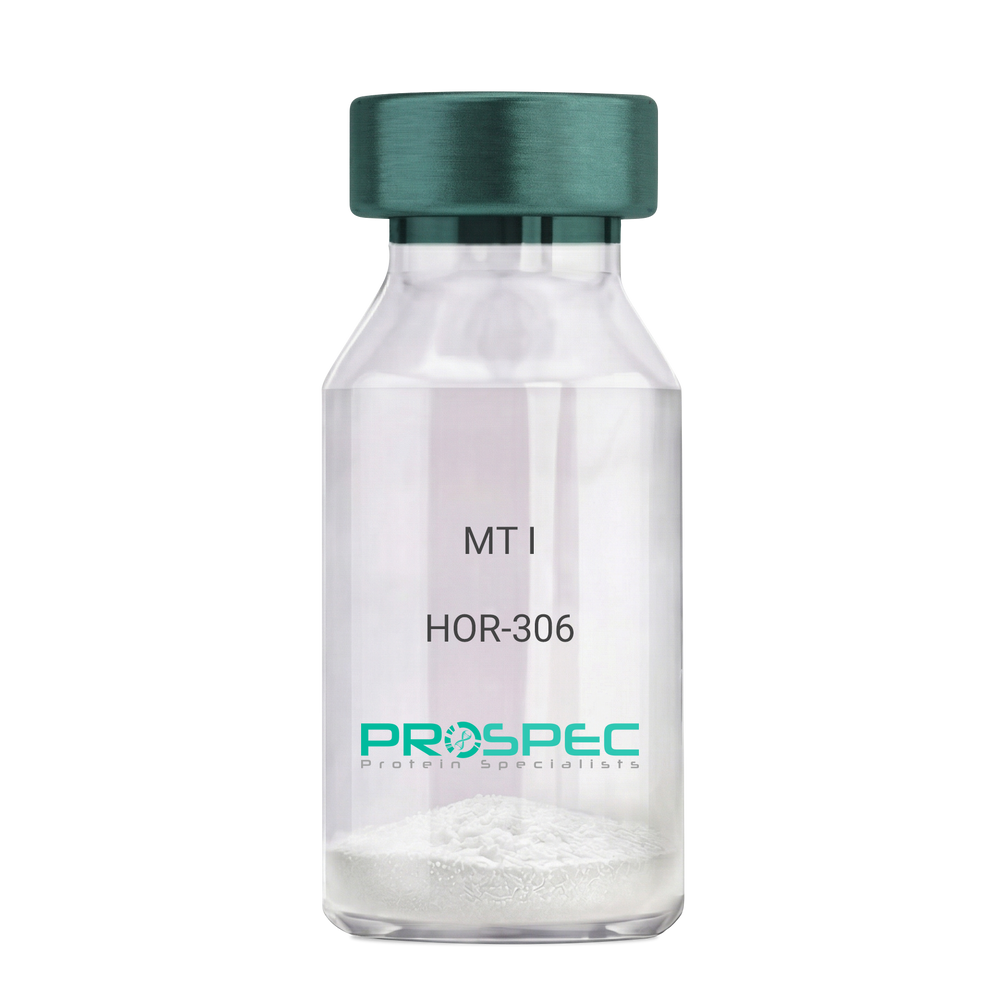
  • View Data Sheet

    Name :

    MT I

    Description:

    Melanotan-I

    Melanotan-I, MT-I, Melanotan-1.

    Product # :

    HOR-306

    Price :

    Quantity :

    Shipping Method :

    Room Temp Icon

    Shipped at Room temp

    Add To Cart

    More Info

    • description
    • formulation
    • purity
    • More Info

    Description

    Melanotan-I has the amino acid sequence of Ser-Tyr-Ser-Nle-Glu-His-D-Phe-Arg-Trp-Gly-Lys-Pro-Val and a molecular weight of 1647.4 Dalton.

    Formulation

    The protein (1mg/ml) was lyophilized with no additives.

    Purity

    Greater than 98.0% as determined by RP-HPLC.

    More Info

    • Synonyms

      Melanotan-I, MT-I, Melanotan-1.

    • Physical Appearance

      Sterile Filtered off-White lyophilized (freeze-dried) powder.

    • Stability

      Lyophilized Melanotan-I although stable at room temperature for 3 weeks, should be stored desiccated below -18°C. Upon reconstitution MT-I should be stored at 4°C between 2-7 days and for future use below -18°C.For long term storage it is recommended to add a carrier protein (0.1% HSA or BSA).Please prevent freeze-thaw cycles.

    • Solubility

      It is recommended to reconstitute the lyophilized Melanotan-I in sterile 1% acetic acid not less than 100 µg/ml, which can then be further diluted to other aqueous solutions.

    ProSpec's products are furnished for LABORATORY RESEARCH USE ONLY. The product may not be used as drugs, agricultural or pesticidal products, food additives or household chemicals.

    Melanotan I
  • View Data Sheet

    Name :

    Histrelin

    Description:

    Histrelin

    Product # :

    HOR-244

    Price :

    Quantity :

    Shipping Method :

    Room Temp Icon

    Shipped at Room temp

    Add To Cart

    More Info

    • description
    • formulation
    • purity
    • More Info

    Description

    Histrelin has a molecular formula of C66H86N18O12, a.a. sequence of Pyr-His-Trp-Ser-Tyr-D-His(Bzl)-Leu-Arg-Pro-NHEt and having a Mw of 1323.32 Dalton.

    Formulation

    The Histrelin peptide was lyophilized with no additives.

    Purity

    Greater than 99.0% as determined by(a) Analysis by RP-HPLC.
    (b) Analysis by SDS-PAGE.

    More Info

    • Introduction

      Histrelin is a hormone similar to one normally released from the hypothalamus gland in the brain. Histrelin works by decreasing the amount of estrogen and testosterone in the blood. Suppressing estrogen can cause thinning of the bones or slowing of their growth. Histrelin acetate is a potent LHRH agonist which stimulates LH and FSH release and inhibits the actions of sex steroids on the male and female reproductive tracts. After a transient increase, continuous administration results in down regulation of LH and FSH levels followed by a suppression of ovarian and testicular steroid biosynthesis. Histrelin potency in vivo and in vitro is similar to that of the D-Trp6-containing analog. Especially because of its high water solubility and greater lipophilic character, it appears promising for clinical application.

    • Physical Appearance

      Sterile Filtered White lyophilized (freeze-dried) powder.

    • Stability

      Lyophilized Histrelin although stable at room temperature for 3 weeks, should be stored desiccated below -18°C. Upon reconstitution Histrelin should be stored at 4°C between 2-7 days and for future use below -18°C. For long term storage it is recommended to add a carrier protein (0.1% HSA or BSA).Please prevent freeze-thaw cycles.

    • Solubility

      It is recommended to reconstitute the lyophilized Histrelin in sterile 18MΩ-cm H2O not less than 100 µg/ml, which can then be further diluted to other aqueous solutions.

    ProSpec's products are furnished for LABORATORY RESEARCH USE ONLY. The product may not be used as drugs, agricultural or pesticidal products, food additives or household chemicals.

    Histrelin
  • View Data Sheet

    Name :

    CXCL8 Human, GST

    Description:

    Interleukin-8 (1-72) (CXCL8) Human Recombinant, GST Tag

    Interleukin-8, IL-8, C-X-C motif chemokine 8, IL8, CXCL8

    Product # :

    CHM-047

    Price :

    Quantity :

    Shipping Method :

    Ice Icon

    Shipped with Ice Packs

    Add To Cart

    More Info

    • description
    • source
    • formulation
    • purity
    • More Info

    Description

    Recombinant Human Interleukin-8 produced in E. coli containing 72 amino acids.Recombinant Human Interleukin-8 is fused to GST tag at its N-terminus and purified by proprietary chromatographic technique.

    Source

    Escherichia Coli.

    Formulation

    IL8 GST solution contains 25mM Tris-Base/ 25mM K2CO3.

    Purity

    Protein is >95% pure as determined by 10% PAGE (coomassie staining).

    More Info

    • Introduction

      Interleukin-8 (IL-8) is a chemokine produced by macrophages and other cell types such as epithelial cells. It is also synthesized by endothelial cells, which store IL-8 in their storage vesicles, the Weibel-Palade bodies. When first encountering an antigen, the primary cells to encounter it are the macrophages who phagocytose the particle. Upon processing, they release chemokines to signal other immune cells to come in to the site of inflammation. IL-8 is one such chemokine. It serves as a chemical signal that attracts neutrophils at the site of inflammation, and therefore is also known as Neutrophil Chemotactic Factor.

    • Synonyms

      Interleukin-8, IL-8, C-X-C motif chemokine 8, IL8, CXCL8

    • Physical Appearance

      Sterile Filtered clear solution.

    • Stability

      Store at 4°C if entire vial will be used within 2-4 weeks.Store, frozen at -20°C for longer periods of time.For long term storage it is recommended to add a carrier protein (0.1% HSA or BSA).Avoid multiple freeze-thaw cycles.

    • Applications

      Immunoassay.

    • Background

      What is the source or expression system of CXCL8 HUMAN, GST Protein?
      Escherichia Coli.

      What is the Purity of CXCL8 HUMAN, GST Protein?
      CXCL8 HUMAN, GST Protein is >95% pure as determined by SDS-PAGE.

      What is the Biological Activity of CXCL8 HUMAN, GST Protein?
      The biological functionality of CXCL8 HUMAN, GST Protein will be determined in the future.

      What is the amino acid sequence of CXCL8 HUMAN, GST Protein?
      CXCL8 HUMAN, GST Protein is composed from 72 amino acids.

      What applications can CXCL8 HUMAN, GST Protein be used in?
      CXCL8 HUMAN, GST Protein can probably be used in western blot, ELISA and Lateral Flow.

      What is the endotoxin level for CXCL8 HUMAN, GST Protein?
      The endotoxin level is minimal, CXCL8 HUMAN, GST Protein was purified using conventional chromatography techniques.


    ProSpec's products are furnished for LABORATORY RESEARCH USE ONLY. The product may not be used as drugs, agricultural or pesticidal products, food additives or household chemicals.

    Il 8 Human
  • View Data Sheet

    Name :

    Thyroglobulin Human

    Description:

    Thyroglobulin Human Recombinant

    Thyroglobulin, TGN, AITD3, TG.

    Product # :

    PRO-2803

    Price :

    Quantity :

    Shipping Method :

    Room Temp Icon

    Shipped at Room temp

    Add To Cart

    More Info

    • description
    • source
    • formulation
    • purity
    • More Info
    • sds-page

    Description

    Thyroglobulin Human produced in a mammalian cell line is a single, non-glycosylated polypeptide chain (1-2768 a.a.) and having a molecular mass of 304640 Dalton. Thyroglobulin Human is fused with GlyAlaProGly4SerHis10-tag at C-terminal and purified by proprietary chromatographic techniques.

    Source

    Mammalian cell line.

    Formulation

    Thyroglobulin was lyophilized from PBS, pH 7.4 and 5.4 % sucrose.

    Purity

    Greater than 95.0% as determined by SDS-PAGE.

    sds-page

    Thyroglobulin Recombinant Human SDS-PAGE - Product image 1

    More Info

    • Synonyms

      Thyroglobulin, TGN, AITD3, TG.

    • Physical Appearance

      Sterile Filtered White lyophilized (freeze-dried) powder.

    • Stability

      Lyophilized Thyroglobulin although stable at room temperature for 3 weeks, should be stored desiccated below -18°C. Upon reconstitution Thyroglobulin should be stored at 4°C between 2-7 days and for future use below -18°C. For long term storage it is recommended to add a carrier protein (0.1% HSA or BSA). Please prevent freeze-thaw cycles.

    • Solubility

      It is recommended to reconstitute the lyophilized Thyroglobulin in sterile 18MΩ-cm H2O not less than 100µg/ml, which can then be further diluted to other aqueous solutions.

    • Background

      Thyroglobulin, a glycoprotein primarily produced in the thyroid gland, stands at the center of thyroid hormone synthesis. Comprising a series of tyrosine residues, thyroglobulin serves as the scaffold upon which thyroid hormones are assembled. Beyond its pivotal role in thyroid physiology, thyroglobulin has garnered significant attention in the realm of thyroid disease diagnostics, offering valuable insights into thyroid function and disorders. This research delves into the intricacies of thyroglobulin human recombinant protein, exploring its biochemical properties, physiological significance, and its crucial applications in both clinical and research settings.

      Structural Complexity of Thyroglobulin:

      Thyroglobulin is a large, dimeric protein boasting an intricate structure composed of multiple domains. Within its structure lie tyrosine residues crucial for iodine incorporation, a process fundamental for thyroid hormone synthesis. Its size and complexity reflect the sophistication of thyroid hormone production, as thyroglobulin acts as a reservoir for thyroid hormones within the thyroid follicles.

      Physiological Significance in Thyroid Function:

      Thyroglobulin plays a central role in the synthesis of triiodothyronine (T3) and thyroxine (T4), the thyroid hormones essential for regulating metabolism and overall body homeostasis. During thyroid hormone synthesis, thyroglobulin is secreted into the follicular lumen, where it undergoes iodination and subsequent proteolysis, releasing T3 and T4. This process highlights the indispensable nature of thyroglobulin in thyroid hormone production, making it a key biomolecule in thyroid physiology.

    ProSpec's products are furnished for LABORATORY RESEARCH USE ONLY. The product may not be used as drugs, agricultural or pesticidal products, food additives or household chemicals.

    Thyroglobulin Antigen
  • View Data Sheet

    Name :

    Hemopexin Human, Sf9

    Description:

    Hemopexin Human Recombinant, Sf9

    Hemopexin, Beta-1B-Glycoprotein, HX, Beta-1B-glycoprotein.

    Product # :

    PRO-2544

    Price :

    Quantity :

    Shipping Method :

    Ice Icon

    Shipped with Ice Packs

    Add To Cart

    More Info

    • description
    • source
    • formulation
    • purity
    • More Info

    Description

    Hemopexin produced in Sf9 Baculovirus cells is a single, glycosylated polypeptide chain containing 448 amino acids (24-462a.a.) and having a molecular mass of 50.4kDa. (Molecular size on SDS-PAGE will appear at approximately 50-70kDa).Hemopexin is expressed with a 9 amino acid His tag at C-Terminus and purified by proprietary chromatographic techniques.

    Source

    Sf9, Baculovirus cells.

    Formulation

    Hemopexin protein solution (0.5mg/ml) contains 10% glycerol & Phosphate Buffered Saline (pH 7.4).

    Purity

    Greater than 90.0% as determined by SDS-PAGE.

    More Info

    • Introduction

      Hemopexin (or haemopexin) is a plasma protein that binds heme with the highest affinity of any known protein. Hemopexin is generally expressed in liver, and belongs to acute phase reactants, the synthesis of which is induced after inflammation. Heme is potentially very toxic because of its ability to intercalate into lipid membrane and to generate hydroxyl radicals. Hemopexin’s function of scavenging the heme released or lost by the turnover of heme proteins such as hemoglobin defends the body from the oxidative damage that free heme can cause. Additionally, hemopexin discharges its bound ligand for internalisation upon interacting with a specific receptor located on the surface of liver cells. This hemopexin function is in order to preserve the body's iron. Hemopexin’s levels in the serum are an indication of how much heme is present in the blood. Low Hemopexin levels show that there is a lot of it in the serum. For that reason, low hemopexin levels indicate that there has been consid

    • Synonyms

      Hemopexin, Beta-1B-Glycoprotein, HX, Beta-1B-glycoprotein.

    • Physical Appearance

      Sterile filtered colorless solution.

    • Stability

      Store at 4°C if entire vial will be used within 2-4 weeks.Store, frozen at -20°C for longer periods of time. For long term storage it is recommended to add a carrier protein (0.1% HSA or BSA). Avoid multiple freeze-thaw cycles.

    • Amino Acid Sequence

      ADPTPLPPTS AHGNVAEGET KPDPDVTERC SDGWSFDATT LDDNGTMLFF KGEFVWKSHK WDRELISERW KNFPSPVDAA FRQGHNSVFL IKGDKVWVYP PEKKEKGYPK LLQDEFPGIP SPLDAAVECH RGECQAEGVL FFQGDREWFW DLATGTMKER SWPAVGNCSS ALRWLGRYYC FQGNQFLRFD PVRGEVPPRY PRDVRDYFMP CPGRGHGHRN GTGHGNSTHH GPEYMRCSPH LVLSALTSDN HGATYAFSGT HYWRLDTSRD GWHSWPIAHQ WPQGPSAVDA AFSWEEKLYL VQGTQVYVFL TKGGYTLVSG YPKRLEKEVG TPHGIILDSV DAAFICPGSS RLHIMAGRRL WWLDLKSGAQ ATWTELPWPH EKVDGALCME KSLGPNSCSA NGPGLYLIHG PNLYCYSDVE KLNAAKALPQ PQNVTSLLGC THHHHHHH.

    ProSpec's products are furnished for LABORATORY RESEARCH USE ONLY. The product may not be used as drugs, agricultural or pesticidal products, food additives or household chemicals.

    Hemopexin Protein
  • View Data Sheet

    Name :

    GPHB5 Human

    Description:

    Thyrostimulin Beta Human Recombinant

    Glycoprotein hormone beta-5, ZLUT1, GPHB5, GPB5.

    Product # :

    HOR-257

    Price :

    Quantity :

    Shipping Method :

    Room Temp Icon

    Shipped at Room temp

    Add To Cart

    More Info

    • description
    • source
    • formulation
    • purity
    • More Info

    Description

    GPHB5 Human Recombinant produced in E.Coli is a single, non-glycosylated, polypeptide chain containing 120 amino acids and having a total molecular mass of 13.34 kDa. The Thyrostimulin contains His tag which consists of 14 additional amino acids.The amino acid sequence of the recombinant human Thyrostimulin beta subunit is 100% homologous to the amino acid sequence of the human Thyrostimulin beta subunit without signal sequence. (N-terminal 24AA).Thyrostimulin is purified by proprietary chromatographic techniques.

    Source

    Escherichia Coli.

    Formulation

    The GPHB5 filtered (0.4µm) and lyophilized from 0.5mg/ml in 0.05M Acetate buffer pH 4.

    Purity

    Greater than 95.0% as determined by:
    (a) Analysis by RP-HPLC.
    (b) Analysis by SDS-PAGE.

    More Info

    • Introduction

      Human thyrostimulin ranks among the glycoprotein hormone family. These hormones consist of two subunits, the common alpha- and specific beta-subunits, which associate noncovalently to form a heterodimer. The alpha-subunit combines with four distinct beta-subunits giving rise to four biologically active hormones in human: FSH, LH, TSH, and CG. FSH, LH, and TSH, mainly expressed in the anterior pituitary, are essential for coordinated endocrine regulation in the hypothalamus- pituitary axis and show to activate specific G protein–coupled receptors in the thyroid (TSH receptor) and gonads (LH and FSH receptors), respectively.
      The heterodimeric glycoprotein hormones have only been identified in vertebrates and are highly conserved in organisms from primitive rayfin fish (Chondrostei) to human in both primary sequences and functional characteristics.
      Corticotroph-derived glycoprotein hormone (CGH), also referred to as thyrostimulin, is a noncovalent heterodimer of glycoprotein hormone alpha 2 (GPHA2) and glycoprotein hormone beta 5 (GPHB5).
      Recombinant A2/B5 heterodimeric glycoproteins activates human TSH receptors, but not LH and FSH receptors, and shows high affinity to TSH receptors in a radioligand receptor assay. The heterodimer also stimulates cAMP production and thymidine incorporation by cultured thyroid cells and increases serum thyroxine levels in TSH-suppressed rats in vivo. This new heterodimeric glycoprotein hormone was named as thyrostimulin based on its thyroid-stimulating activity. The expression of thyrostimulin in the anterior pituitary known to express TSH receptors suggested a paracrine mechanism.

    • Synonyms

      Glycoprotein hormone beta-5, ZLUT1, GPHB5, GPB5.

    • Physical Appearance

      Filtered White lyophilized (freeze-dried) powder.

    • Stability

      Lyophilized Thyrostimulin although stable at room temperature for 3 weeks, should be stored desiccated below -18°C. Upon reconstitution GPHB5 should be stored at 4°C between 2-7 days and for future use below -18°C. For long term storage it is recommended to add a carrier protein (0.1% HSA or BSA).Please prevent freeze-thaw cycles.

    • Solubility

      It is recommended to add 0.1M Acetate buffer pH4 to prepare a working stock solution of ~ 0.5 mg/ml and let the lyophilized pellet dissolve completely. For conversion into higher pH value, we recommend intensive dilution by relevant buffer to a concentration of 10μg/ml. In higher concentrations the solubility of this protein is limited. Product is not sterile! Please filter the product by an appropriate sterile filter before using it in the cell culture.

    • Amino Acid Sequence

      MRGSHHHHHH GMASASSGNL RTFVGCAVRE FTFLAKKPGC RGLRITTDAC WGRCETWEKP ILEPPYIEAH HRVCTYNETK QVTVKLPNCA PGVDPFYTYP VAIRCDCGAC STATTECETI.

    ProSpec's products are furnished for LABORATORY RESEARCH USE ONLY. The product may not be used as drugs, agricultural or pesticidal products, food additives or household chemicals.

    Gphb5 Human
  • View Data Sheet

    Name :

    IFI30 Human

    Description:

    IFN Gamma-Inducible protein 30 Human Recombinant

    IFI30, Gamma-IFN-Inducible Lysosomal Thiol Reductase, IFN Gamma-Inducible Protein 30 Preproprotein, Gamma-IFN-Inducible Protein IP-30, Legumaturain, GILT, IP30, IFI-30, MGC32056, EC 1.8.

    Product # :

    CYT-183

    Price :

    Quantity :

    Shipping Method :

    Ice Icon

    Shipped with Ice Packs

    Add To Cart

    More Info

    • description
    • source
    • formulation
    • purity
    • More Info
    • SDS-PAGE

    Description

    IFI30 Human Recombinant produced in E. coli is a single polypeptide chain containing 199 amino acids (58-232) and having a molecular mass of 22.5 kDa. IFI30 is fused to a 24 amino acid His-tag at N-terminus & purified by proprietary chromatographic techniques.

    Source

    E.coli.

    Formulation

    The IFI30 solution (1mg/1ml) contains 20mM Tris-HCl buffer (pH 8.0), 0.1M NaCl, 1mM DTT and 10% glycerol.

    Purity

    Greater than 90% as determined by SDS-PAGE.

    SDS-PAGE

    IFI30 Human - Product image 1

    More Info

    • Introduction

      IFNI30 inducible lysosomal thiol reductase (IFI30), is a part of the GILT family. IFI30 is a lysosomal thiol reductase which at low pH is capable of decreasing protein’s disulfide bonds. IFI30 is expressed constitutively in antigen-presenting cells and induced by gamma-IFN in other cell types. Also, IFI30 plays an important role in MHC class II-restricted antigen processing. IFI30 facilitates the generation of MHC class II-restricted epitopes from disulfide bond-containing antigen by the endocytic reduction of disulfide bonds and Also facilitates MHC class I-restricted recognition of exogenous antigens containing disulfide bonds by CD8+ T-cells or cross-presentation.

    • Synonyms

      IFI30, Gamma-IFN-Inducible Lysosomal Thiol Reductase, IFN Gamma-Inducible Protein 30 Preproprotein, Gamma-IFN-Inducible Protein IP-30, Legumaturain, GILT, IP30, IFI-30, MGC32056, EC 1.8.

    • Physical Appearance

      Sterile Filtered colorless solution.

    • Stability

      Store at 4°C if entire vial will be used within 2-4 weeks. Store, frozen at -20°C for longer periods of time. For long term storage it is recommended to add a carrier protein (0.1% HSA or BSA).Avoid multiple freeze-thaw cycles.

    • Amino Acid Sequence

      MGSSHHHHHH SSGLVPRGSH MGSMNAPLVN VTLYYEALCG GCRAFLIREL FPTWLLVMEI LNVTLVPYGN AQEQNVSGRW EFKCQHGEEE CKFNKVEACV LDELDMELAF LTIVCMEEFE DMERSLPLCL QLYAPGLSPD TIMECAMGDR GMQLMHANAQ RTDALQPPHE YVPWVTVNGK PLEDQTQLLT LVCQLYQGK.

    • Background

      What is the molecular weight/Mw of IFI30 HUMAN Protein?
      IFI30 HUMAN Protein has a total Mw of 22.5kDa.

      What is the source or expression system of IFI30 HUMAN Protein?
      Escherichia Coli.

      What is the Purity of IFI30 HUMAN Protein?
      IFI30 HUMAN Protein is >90% pure as determined by SDS-PAGE.

      What is the Biological Activity of IFI30 HUMAN Protein?
      The biological functionality of IFI30 HUMAN Protein will be determined in the future.

      What is the amino acid sequence of IFI30 HUMAN Protein?
      MGSSHHHHHH SSGLVPRGSH MGSMNAPLVN VTLYYEALCG GCRAFLIREL FPTWLLVMEI LNVTLVPYGN AQEQNVSGRW EFKCQHGEEE CKFNKVEACV LDELDMELAF LTIVCMEEFE DMERSLPLCL QLYAPGLSPD TIMECAMGDR GMQLMHANAQ RTDALQPPHE YVPWVTVNGK PLEDQTQLLT LVCQLYQGK.
      What applications can IFI30 HUMAN Protein be used in?
      IFI30 HUMAN Protein can probably be used in western blot, ELISA and Lateral Flow.

      What is the endotoxin level for IFI30 HUMAN Protein?
      The endotoxin level is minimal, IFI30 HUMAN Protein was purified using conventional chromatography techniques.


    ProSpec's products are furnished for LABORATORY RESEARCH USE ONLY. The product may not be used as drugs, agricultural or pesticidal products, food additives or household chemicals.

    Ifi30 Human
  • View Data Sheet

    Name :

    TSH Human

    Description:

    Thyroid Stimulating Hormone Human

    Glycoprotein hormones alpha chain, Anterior pituitary glycoprotein hormones common subunit alpha, Follitropin alpha chain, Follicle-stimulating hormone alpha chain, FSH-alpha, Lutropin alpha chain, Luteinizing hormone alpha chain, LSH-alpha, Thyrotropin alpha chain, Thyroid-stimulating hormone alpha chain, TSH-alpha, Choriogonadotropin alpha chain, Chorionic gonadotrophin alpha subunit, CG-alpha, Thyrotropin subunit beta, Thyroid-stimulating hormone subunit beta, TSH-beta, TSH-B, Thyrotropin beta chain, Thyrotropin alfa.

    Product # :

    HOR-001

    Price :

    Quantity :

    Shipping Method :

    Room Temp Icon

    Shipped at Room temp

    Add To Cart

    More Info

    • description
    • source
    • formulation
    • purity
    • biological activity
    • More Info

    Description

    Thyroid Stimulating Hormone Human produced in Human pituitary glands is an important indicator of thyroid function.

    Source

    Human pituitary glands

    Formulation

    Lyophilized from a concentrated solution containing 50mM ammonium bicarbonate.

    Purity

    Greater than 95% as determined by SDS-PAGE.

    Biological Activity

    11.72 IU/mg vial by Centaur CP. Siemens Centaur CP is standardized against WHO 3rd IRP 81/565.

    More Info

    • Introduction

      Thyroid-stimulating hormone (also known as TSH or thyrotropin) is a hormone synthesized and secreted by thyrotrope cells in the anterior pituitary gland which regulates the endocrine function of the thyroid gland.
      TSH stimulates the thyroid gland to secrete the hormones thyroxine (T4) and triiodothyronine (T3). TSH production is controlled by a Thyrotropin Releasing Hormone, (TRH), which is manufactured in the hypothalamus and transported to the Anterior Pituitary gland, where it increases TSH production and release. Somatostatin is also produced by the hypothalamus, and has an opposite effect on the pituitary production of TSH, decreasing or inhibiting its release.
      The level of Thyroid hormones (T3 and T4) in the blood have an additional effect on the pituitary release of TSH, When the levels of T3 and T4 are low, the production of TSH is increased, and conversely, when levels of T3 and T4 are high, then TSH production is decreased. This effect creates a regulatory negative feedback loop.
      TSH is a glycoprotein and consists of two subunits, the alpha and the beta subunit.
      The a (alpha) subunit is identical to that of human chorionic gonadotropin (HCG), luteinising hormone (LH), follicle-stimulating hormone (FSH).
      The b (beta) subunit is unique to TSH, and therefore determines its function.

    • Synonyms

      Glycoprotein hormones alpha chain, Anterior pituitary glycoprotein hormones common subunit alpha, Follitropin alpha chain, Follicle-stimulating hormone alpha chain, FSH-alpha, Lutropin alpha chain, Luteinizing hormone alpha chain, LSH-alpha, Thyrotropin alpha chain, Thyroid-stimulating hormone alpha chain, TSH-alpha, Choriogonadotropin alpha chain, Chorionic gonadotrophin alpha subunit, CG-alpha, Thyrotropin subunit beta, Thyroid-stimulating hormone subunit beta, TSH-beta, TSH-B, Thyrotropin beta chain, Thyrotropin alfa.

    • Physical Appearance

      Sterile Filtered White lyophilized (freeze-dried) powder.

    • Stability

      Lyophilized TSH although stable at room temperature for 3 weeks, should be stored desiccated below -18°C. Upon reconstitution TSH should be stored at 4°C between 2-7 days and for future use below -18°C. For long term storage it is recommended to add a carrier protein (0.1% HSA or BSA).Please prevent freeze-thaw cycles.

    • Solubility

      It is recommended to reconstitute the lyophilized TSH in sterile 18MΩ-cm H2O not less than 100 µg/ml, which can then be further diluted to other aqueous solutions.

    • Background

      What is the source or expression system of TSH HUMAN Protein?
      Human pituitary glands

      What is the Purity of TSH HUMAN Protein?
      TSH HUMAN Protein is >95% pure as determined by SDS-PAGE.

      What is the Biological Activity of TSH HUMAN Protein?
      11.72 IU/mg vial by Centaur CP. Siemens Centaur CP is standardized against WHO 3rd IRP 81/565.

      What applications can TSH HUMAN Protein be used in?
      TSH HUMAN Protein can probably be used in western blot, ELISA and Lateral Flow.

      What is the endotoxin level for TSH HUMAN Protein?
      The endotoxin level is minimal, TSH HUMAN Protein was purified using conventional chromatography techniques.

    ProSpec's products are furnished for LABORATORY RESEARCH USE ONLY. The product may not be used as drugs, agricultural or pesticidal products, food additives or household chemicals.

    Tsh Human
  • View Data Sheet

    Name :

    EFNB1 Human

    Description:

    Ephrin-B1 Human Recombinant

    ephrin-B1, LERK2, EPLG2, Elk-L, EPH-related receptor tyrosine kinase ligand 2, EFL-3, ELK ligand, CFND, CFNS, Craniofrontonasal Syndrome (craniofrontonasal dysplasia), MGC8782.

    Product # :

    PRO-918

    Price :

    Quantity :

    Shipping Method :

    Ice Icon

    Shipped with Ice Packs

    Add To Cart

    More Info

    • description
    • source
    • formulation
    • purity
    • More Info

    Description

    EFNB1 Human Recombinant produced in E.coli is a single, non-glycosylated polypeptide chain containing 231 amino acids (28-237) and having a molecular mass of 25.3 kDa.The EFNB1 is fused to a 21 amino acid His-Tag at N-terminus and purified by proprietary chromatographic techniques.

    Source

    E.coli.

    Formulation

    The EFNB1 solution (1mg/ml) contains 20mM Tris-HCl buffer (pH 8.0), 0.4M Urea and 5% glycerol.

    Purity

    Greater than 95% as determined by SDS-PAGE.

    More Info

    • Introduction

      EFNB1 is a member of the Eph family. The cell-surface proteins Ephrins split into two groups, ephrin-A and ephrin-B, based on their structure and function and perform as ligands for Eph receptors. The transmembrane EFNB1 proteins have conserved cytoplasmic tyrosine residues that are phosphorylated upon interaction with an EphB receptor. In addition, EFNB1 transduces outside-in signals by C-terminal protein interfaces which influence integrin-mediated cell attachment and migration.

    • Synonyms

      ephrin-B1, LERK2, EPLG2, Elk-L, EPH-related receptor tyrosine kinase ligand 2, EFL-3, ELK ligand, CFND, CFNS, Craniofrontonasal Syndrome (craniofrontonasal dysplasia), MGC8782.

    • Physical Appearance

      Sterile Filtered colorless solution.

    • Stability

      Store at 4°C if entire vial will be used within 2-4 weeks. Store, frozen at -20°C for longer periods of time. For long term storage it is recommended to add a carrier protein (0.1% HSA or BSA).Avoid multiple freeze-thaw cycles.

    • Amino Acid Sequence

      MGSSHHHHHH SSGLVPRGSH MLAKNLEPVS WSSLNPKFLS GKGLVIYPKI GDKLDIICPR AEAGRPYEYY KLYLVRPEQA AACSTVLDPN VLVTCNRPEQ EIRFTIKFQE FSPNYMGLEF KKHHDYYITS TSNGSLEGLE NREGGVCRTR TMKIIMKVGQ DPNAVTPEQL TTSRPSKEAD NTVKMATQAP GSRGSLGDSD GKHETVNQEE KSGPGASGGS SGDPDGFFNS K

    ProSpec's products are furnished for LABORATORY RESEARCH USE ONLY. The product may not be used as drugs, agricultural or pesticidal products, food additives or household chemicals.

    Efnb1 Human
  • 1
  • …
  • 6
  • 7
  • 8
  • 9
  • 10
  • …
  • 42
Your browser does not support the video tag.

Products

  • Cytokines
  • Growth Factors
  • Chemokines
  • CD Antigens
  • Neurotrophins
  • Hormones
  • Enzymes
  • Viral Antigens
  • Recombinant Proteins
  • Natural Proteins
  • Monoclonal Antibodies
  • Polyclonal Antibodies
  • Thermal Packaging

About

  • Company
  • Founder
  • Contribution
  • Contact Us
  • My Account

Ordering

  • Ordering Method
  • Ordering - Credit Card
  • Ordering PO
  • Shipping Fees
  • FAQ's

Legal

  • Terms & Conditions
  • Privacy
  • Site Map
  • info@prospecbio.com
  • Facebook
  • Instagram
  • Linkedin Profile

© 2026 ProSpec-Tany TechnoGene Ltd. All Rights Reserved.

  • Choosing a selection results in a full page refresh.
  • Opens in a new window.