Skip to content

High-quality research proteins.

  • 1-800-805-6531

  • Mon - Sat 8.00-18.00, Sun - Closed

  • info@prospecbio.com

  • PO Box 6591 East Brunswick NJ 08816

  • Products
    • Cytokines
    • Growth factors
    • Chemokines
    • Cd antigens
    • Neurotrophins
    • Hormones
    • Enzymes
    • Viral antigens
    • Recombinant proteins
    • Natural proteins
    • Monoclonal antibodies
    • Polyclonal antibodies
    • Thermal Packaging
  • About
    • Company
    • Founder
    • Contribution
  • Customers
    • Eastern Asia
    • Eastern Europe
    • North America
    • South America
    • South East Asia
    • Southern Asia
    • Western Europe
  • Ordering
    • Ordering Method
    • Ordering - Credit Card
    • Ordering - PO
    • Shipping Fees
    • FAQs
  • Services
    • DNA Cloning
    • Protein Expression
    • Monoclonal Antibody
    • Fermentation
    • Technology License
  • Contact us
Log in

Country/region

  • USD $ | Albania
  • USD $ | Andorra
  • USD $ | Argentina
  • USD $ | Armenia
  • USD $ | Australia
  • USD $ | Austria
  • USD $ | Azerbaijan
  • USD $ | Belarus
  • USD $ | Belgium
  • USD $ | Bolivia
  • USD $ | Brazil
  • USD $ | Bulgaria
  • USD $ | Cambodia
  • USD $ | Canada
  • USD $ | Chile
  • USD $ | China
  • USD $ | Colombia
  • USD $ | Costa Rica
  • USD $ | Croatia
  • USD $ | Cyprus
  • USD $ | Czechia
  • USD $ | Denmark
  • USD $ | Estonia
  • USD $ | Finland
  • USD $ | France
  • USD $ | Georgia
  • USD $ | Germany
  • USD $ | Greece
  • USD $ | Hong Kong SAR
  • USD $ | Hungary
  • USD $ | Iceland
  • USD $ | India
  • USD $ | Ireland
  • USD $ | Israel
  • USD $ | Italy
  • USD $ | Japan
  • USD $ | Kazakhstan
  • USD $ | Latvia
  • USD $ | Liechtenstein
  • USD $ | Lithuania
  • USD $ | Madagascar
  • USD $ | Malta
  • USD $ | Mexico
  • USD $ | Moldova
  • USD $ | Monaco
  • USD $ | Netherlands
  • USD $ | New Zealand
  • USD $ | North Macedonia
  • USD $ | Norway
  • USD $ | Panama
  • USD $ | Paraguay
  • USD $ | Peru
  • USD $ | Philippines
  • USD $ | Poland
  • USD $ | Portugal
  • USD $ | Romania
  • USD $ | Singapore
  • USD $ | Slovakia
  • USD $ | Slovenia
  • USD $ | South Africa
  • USD $ | South Korea
  • USD $ | Spain
  • USD $ | Sri Lanka
  • USD $ | Sweden
  • USD $ | Switzerland
  • USD $ | Taiwan
  • USD $ | Thailand
  • USD $ | Türkiye
  • USD $ | Ukraine
  • USD $ | United Kingdom
  • USD $ | United States
  • USD $ | Uruguay
  • USD $ | Vatican City
  • USD $ | Venezuela
  • USD $ | Vietnam
  • Facebook
  • Instagram
logoProSpec - Recombinant Protein Manufacturer for academic and R&D industry
Become a distributor
Account Log in
Wishlist
Cart Cart(0)
  • Products
    +
    • Cytokines
    • Growth factors
    • Chemokines
    • Cd antigens
    • Neurotrophins
    • Hormones
    • Enzymes
    • Viral antigens
    • Recombinant proteins
    • Natural proteins
    • Monoclonal antibodies
    • Polyclonal antibodies
    • Thermal Packaging
  • About
    +
    • Company
    • Founder
    • Contribution
  • Customers
    +
    • Eastern Asia
    • Eastern Europe
    • North America
    • South America
    • South East Asia
    • Southern Asia
    • Western Europe
  • Ordering
    +
    • Ordering Method
    • Ordering - Credit Card
    • Ordering - PO
    • Shipping Fees
    • FAQs
  • Services
    +
    • DNA Cloning
    • Protein Expression
    • Monoclonal Antibody
    • Fermentation
    • Technology License
  • Contact us

Item added to your cart

View cart
View All
  • Cytokines
  • Growth factors
  • Chemokines
  • Cd antigens
  • Neurotrophins
  • Hormones
  • Enzymes
  • Viral antigens
  • Recombinant proteins
  • Natural proteins
  • Monoclonal antibodies
  • Polyclonal antibodies
  • Thermal Packaging
  • Tumor Necrosis Factor

    Tumor Necrosis Factor

    View All
  • 4-1BB

    4-1BB

    View All
  • Adiponectin

    Adiponectin

    View All
  • AIF1

    AIF1

    View All
  • Other Cytokines

    Other Cytokines

    View All
  • AITRL

    AITRL

    View All
  • Angiopoietin

    Angiopoietin

    View All
  • Apolipoprotein

    Apolipoprotein

    View All
  • B-Cell Activating Factor

    B-Cell Activating Factor

    View All
  • Beta Defensin

    Beta Defensin

    View All
  • Bone Morphogenetic Protein

    Bone Morphogenetic Protein

    View All
  • B type Natriuretic Peptide

    B type Natriuretic Peptide

    View All
  • BST

    BST

    View All
  • Betacellulin

    Betacellulin

    View All
  • Cardiotrophin

    Cardiotrophin

    View All
  • Activin

    Activin

    View All
  • Fibroblast Growth Factor

    Fibroblast Growth Factor

    View All
  • Other Growth Factors

    Other Growth Factors

    View All
  • CSF

    CSF

    View All
  • CTGF

    CTGF

    View All
  • IGFBP

    IGFBP

    View All
  • VEGF Protein

    VEGF Protein

    View All
  • EGF

    EGF

    View All
  • Epigen

    Epigen

    View All
  • Erythropoietin

    Erythropoietin

    View All
  • Insulin-Like Growth Factor

    Insulin-Like Growth Factor

    View All
  • Growth Hormone

    Growth Hormone

    View All
  • HDGF

    HDGF

    View All
  • Hepatocyte Growth Factor

    Hepatocyte Growth Factor

    View All
  • Insulin

    Insulin

    View All
  • BCA-1/ BLC (CXCL13)

    BCA-1/ BLC (CXCL13)

    View All
  • BRAK (CXCL14)

    BRAK (CXCL14)

    View All
  • C-10 (CCL6)

    C-10 (CCL6)

    View All
  • Other Chemokines

    Other Chemokines

    View All
  • MEC (CCL28)

    MEC (CCL28)

    View All
  • LD78-beta (CCL3L1)

    LD78-beta (CCL3L1)

    View All
  • CTACK (CCL27)

    CTACK (CCL27)

    View All
  • CXCL16

    CXCL16

    View All
  • CXCL17

    CXCL17

    View All
  • Platelet Factor-4 (CXCL4)

    Platelet Factor-4 (CXCL4)

    View All
  • ENA-78 (CXCL5)

    ENA-78 (CXCL5)

    View All
  • Eotaxin (CCL11,24,26)

    Eotaxin (CCL11,24,26)

    View All
  • Exodus-2 (CCL21)

    Exodus-2 (CCL21)

    View All
  • Fractalkine (CX3CL1)

    Fractalkine (CX3CL1)

    View All
  • CXCL6

    CXCL6

    View All
  • Other CD Antigens

    Other CD Antigens

    View All
  • CD14

    CD14

    View All
  • CD164

    CD164

    View All
  • CD1

    CD1

    View All
  • CD2

    CD2

    View All
  • CD200

    CD200

    View All
  • CD207

    CD207

    View All
  • CD226

    CD226

    View All
  • CD23

    CD23

    View All
  • CD244

    CD244

    View All
  • CD247

    CD247

    View All
  • CD27

    CD27

    View All
  • CD274

    CD274

    View All
  • CD300

    CD300

    View All
  • CD33

    CD33

    View All
  • Other Neurotrophins

    Other Neurotrophins

    View All
  • Beta-NGF

    Beta-NGF

    View All
  • BDNF

    BDNF

    View All
  • CDNF

    CDNF

    View All
  • CNTF

    CNTF

    View All
  • GDNF

    GDNF

    View All
  • Glia Maturation Factor

    Glia Maturation Factor

    View All
  • MANF

    MANF

    View All
  • Midkine

    Midkine

    View All
  • Neuroglobin

    Neuroglobin

    View All
  • Neurotrophic factors

    Neurotrophic factors

    View All
  • Neuregulin

    Neuregulin

    View All
  • Neuropilin

    Neuropilin

    View All
  • Pigment Epithelium-Derived Factor

    Pigment Epithelium-Derived Factor

    View All
  • Pleiotrophin

    Pleiotrophin

    View All
  • Peptide Hormones

    Peptide Hormones

    View All
  • Other Hormones

    Other Hormones

    View All
  • HCG

    HCG

    View All
  • Endothelin

    Endothelin

    View All
  • Exendin

    Exendin

    View All
  • FSH

    FSH

    View All
  • Glucagon

    Glucagon

    View All
  • GHRP

    GHRP

    View All
  • GLP

    GLP

    View All
  • Thyrostimulin

    Thyrostimulin

    View All
  • Inhibin A

    Inhibin A

    View All
  • LHRH

    LHRH

    View All
  • Melanotan

    Melanotan

    View All
  • Procalcitonin

    Procalcitonin

    View All
  • PTH

    PTH

    View All
  • Peroxiredoxin

    Peroxiredoxin

    View All
  • Peptidase

    Peptidase

    View All
  • Synthetase

    Synthetase

    View All
  • Transferase

    Transferase

    View All
  • Hydrolase

    Hydrolase

    View All
  • Dehydrogenase

    Dehydrogenase

    View All
  • ACE2

    ACE2

    View All
  • Esterase

    Esterase

    View All
  • Protein Kinases

    Protein Kinases

    View All
  • Other Enzymes

    Other Enzymes

    View All
  • Phosphatase

    Phosphatase

    View All
  • Deaminase

    Deaminase

    View All
  • Oxygenase

    Oxygenase

    View All
  • Adenylate Kinase

    Adenylate Kinase

    View All
  • Lyase

    Lyase

    View All
  • Chagas

    Chagas

    View All
  • SARS

    SARS

    View All
  • Influenza

    Influenza

    View All
  • ASFV

    ASFV

    View All
  • Astrovirus

    Astrovirus

    View All
  • Borrelia

    Borrelia

    View All
  • Helicobacter Pylori

    Helicobacter Pylori

    View All
  • Chikungunya

    Chikungunya

    View All
  • Chlamydia

    Chlamydia

    View All
  • Cytomegalo

    Cytomegalo

    View All
  • Dengue

    Dengue

    View All
  • EBV

    EBV

    View All
  • Ebola

    Ebola

    View All
  • Feline Leukemia Virus

    Feline Leukemia Virus

    View All
  • Hepatitis A

    Hepatitis A

    View All
  • Other

    Other

    View All
  • Actin

    Actin

    View All
  • ADAM

    ADAM

    View All
  • Complement Component

    Complement Component

    View All
  • Ag85

    Ag85

    View All
  • Eukaryotic Translation Initiation Factor

    Eukaryotic Translation Initiation Factor

    View All
  • Anterior Gradient Protein

    Anterior Gradient Protein

    View All
  • Heat Shock Protein

    Heat Shock Protein

    View All
  • Alpha-2-HS-Glycoprotein

    Alpha-2-HS-Glycoprotein

    View All
  • Hemoglobin

    Hemoglobin

    View All
  • Allergy

    Allergy

    View All
  • Anaplasma

    Anaplasma

    View All
  • Angiogenin

    Angiogenin

    View All
  • Ankyrin Repeat Domain

    Ankyrin Repeat Domain

    View All
  • Annexin

    Annexin

    View All
  • Other Natural Proteins

    Other Natural Proteins

    View All
  • Aprotinin

    Aprotinin

    View All
  • Transferrin

    Transferrin

    View All
  • Avidin

    Avidin

    View All
  • Anti Coagulation Factors

    Anti Coagulation Factors

    View All
  • Natural Albumin

    Natural Albumin

    View All
  • Natural Coagulation Factors

    Natural Coagulation Factors

    View All
  • Fibronectin

    Fibronectin

    View All
  • Thrombin

    Thrombin

    View All
  • Anti Human Enzyme

    Anti Human Enzyme

    View All
  • Other Monoclonal Antibodies

    Other Monoclonal Antibodies

    View All
  • Anti Human Cytokine

    Anti Human Cytokine

    View All
  • Anti Human Heat Shock Protein

    Anti Human Heat Shock Protein

    View All
  • Anti Mouse Lymphocyte

    Anti Mouse Lymphocyte

    View All
  • Anti Human Chemokine

    Anti Human Chemokine

    View All
  • Anti Human Lymphocyte

    Anti Human Lymphocyte

    View All
  • Anti Viral Monoclonal

    Anti Viral Monoclonal

    View All
  • Anti Mouse Cytokine

    Anti Mouse Cytokine

    View All
  • Anti-GST Monoclonal

    Anti-GST Monoclonal

    View All
  • Other Polyclonal Antibodies

    Other Polyclonal Antibodies

    View All
  • Anti Viral

    Anti Viral

    View All
  • Anti-GST Monoclonal

    Anti-GST Monoclonal

    View All
Back

Search results

309 results found for “thymus expressed chemokine (ccl25)”

Name

Description

Product #

Price

Quantity

Shipping Method

  • View Data Sheet

    Name :

    SDF 1a Human, His

    Description:

    Stromal Cell-Derived Factor-1 alpha Human Recombinant, His Tag

    SDF-1, CXCL12, Pre-B cell growth-stimulating factor, PBSF, hIRH, chemokine (C-X-C motif) ligand 12, SDF1, SDF1A, TPAR1, SCYB12, SDF-1a, TLSF-a.

    Product # :

    CHM-241

    Price :

    Quantity :

    Shipping Method :

    Room Temp Icon

    Shipped at Room temp

    Add To Cart

    More Info

    • description
    • source
    • formulation
    • purity
    • More Info

    Description

    Stromal Cell-Derived Factor-1 alpha Human Recombinant produced in E.Coli is a non-glycosylated, Polypeptide chain containing 78 amino acids, having a molecular mass of 9.2 kDa. The SDF-1a is fused to 10 amino acids His-Tag at N-terminus and purified by proprietary chromatographic techniques.

    Source

    Escherichia Coli.

    Formulation

    The protein was filtered (0.4µm) and lyophilized from a concentrated (0.5mg/ml) solution containing 20mM Tris buffer pH-7.5 and 20mM sodium chloride.

    Purity

    Greater than 95.0% as determined SDS-PAGE.

    More Info

    • Introduction

      SDF-1 (stromal cell-derived factor-1) is small cytokine belonging to the chemokine family that is officially designated Chemokine (C-X-C motif) ligand 12 (CXCL12). It is produced in two forms, SDF-1?/CXCL12a and SDF-1?/CXCL12b, by alternate splicing of the same gene. Chemokines are characterized by the presence of four conserved cysteines, which form two disulfide bonds. The CXCL12 proteins belong to the group of CXC chemokines, whose initial pair of cysteines are separated by one intervening amino acid. CXCL12 is strongly chemotactic for lymphocytes and has been implicated as an important cell co-ordinator during development. During embryogenesis it directs the migration of hematopoietic cells from foetal liver to bone marrow. Mice which were knocked-out for CXCL12 gene were lethal before the birth or within just 1 hour of life. As another role, CXCL12a alters also the electrophysiology of neurons. CXCL12 was shown to be expressend in many tissues in mice (including brain, thymus, heart, lung, liver, kidney, spleen and bone marrow).
      The receptor for this chemokine is CXCR4, which was previously called fusin. This CXCL12-CXCR4 interaction used to be considered exclusive (unlike for other chemokines and their receptors), but recently it was suggested that CXCL12 is also bound by CXCR7 receptor.
      The gene for CXCL12 is located on human chromosome 10. In human and mouse both CXCL12 and CXCR4 show high identity of sequence: 99% and 90%, respectively.

    • Synonyms

      SDF-1, CXCL12, Pre-B cell growth-stimulating factor, PBSF, hIRH, chemokine (C-X-C motif) ligand 12, SDF1, SDF1A, TPAR1, SCYB12, SDF-1a, TLSF-a.

    • Physical Appearance

      White lyophilized (freeze-dried) powder.

    • Stability

      Lyophilized SDF1A although stable at room temperature for 3 weeks, should be stored desiccated below -18°C. Upon reconstitution CXCL12 should be stored at 4°C between 2-7 days and for future use below -18°C.For long term storage it is recommended to add a carrier protein (0.1% HSA or BSA).Please prevent freeze-thaw cycles.

    • Solubility

      It is recommended to add deionized water to a working concentration approximately 0.5 mg/ml and let the lyophilized pellet dissolve completely. Product is not sterile! Please filter the product by appropriate sterile filter before using it in the cell culture.

    • Amino Acid Sequence

      MKHHHHHHAS KPVSLSYRCP CRFFESHVAR ANVKHLKILN TPNCALQIVA RLKNNNRQVC IDPKLKWIQE YLEKALNK.

    ProSpec's products are furnished for LABORATORY RESEARCH USE ONLY. The product may not be used as drugs, agricultural or pesticidal products, food additives or household chemicals.

    Sdf 1A Human His
  • View Data Sheet

    Name :

    MIP 1b Rat

    Description:

    Macrophage Inflammatory Protein-1 beta Rat Recombinant (CCL4)

    C-C motif chemokine 4, Macrophage inflammatory protein 1-beta, MIP-1-beta, Small-inducible cytokine A4, Ccl4, Mip1b, Scya4.

    Product # :

    CHM-003

    Price :

    Quantity :

    Shipping Method :

    Room Temp Icon

    Shipped at Room temp

    Add To Cart

    More Info

    • description
    • source
    • formulation
    • purity
    • biological activity
    • More Info

    Description

    MIP-1b Rat Recombinant produced in E.Coli is a single, non-glycosylated polypeptide chain containing 69 amino acids and having a molecular mass of 7.8 kDa. The MIP-1b is purified by proprietary chromatographic techniques.

    Source

    Escherichia Coli.

    Formulation

    Filtered (0.2µm) and lyophilized from a concentrated (1mg/ml) solution in 30% Acetonitrile and 0.1% TFA.

    Purity

    Greater than 97.0% as determined by:
    (a) Analysis by RP-HPLC.
    (b) Analysis by SDS-PAGE.

    Biological Activity

    Determined by its ability to chemoattract human monocytes using a concentration range of 0.01-1.0 µg/ml.

    More Info

    • Introduction

      Macrophage Inflammatory Proteins (MIP) belong to the family of chemotactic cytokines known as chemokines. In humans, there are two major forms, MIP-1? and MIP-1? that are now officially named CCL3 and CCL4 respectively. Both are major factors produced by macrophages after they are stimulated with bacterial endotoxins. They activate human granulocytes (neutrophils, eosinophils and basophils) which can lead to acute neutrophilic inflammation. They also induce the synthesis and release of other pro-inflammatory cytokines such as interleukin 1 (IL-1), IL-6 and TNF-? from fibroblasts and macrophages. The genes for CCL3 and CCL4 are both located on human chromosome 17.

    • Synonyms

      C-C motif chemokine 4, Macrophage inflammatory protein 1-beta, MIP-1-beta, Small-inducible cytokine A4, Ccl4, Mip1b, Scya4.

    • Physical Appearance

      Sterile Filtered White lyophilized (freeze-dried) powder.

    • Stability

      Lyophilized Mouse MIP-1b although stable at room temperature for 3 weeks, should be stored desiccated below -18°C. Upon reconstitution Mouse CCL4 should be stored at 4°C between 2-7 days and for future use below -18°C.For long term storage it is recommended to add a carrier protein (0.1% HSA or BSA).Please prevent freeze-thaw cycles.

    • Solubility

      It is recommended to reconstitute the lyophilized Mouse MIP-1b in sterile 18MΩ-cm H2O not less than 100µg/ml, which can then be further diluted to other aqueous solutions.

    • Amino Acid Sequence

      APIGSDPPTS CCFSYTSRKI HRNFVMDYYE TSSLCSQPAV VFLTKKGRQI CADPSEPWVN EYVNDLELN.

    • Background

      What is the molecular weight/Mw of MIP 1B RAT Protein?
      MIP 1B RAT Protein has a total Mw of 7.8kDa.

      What is the source or expression system of MIP 1B RAT Protein?
      Escherichia Coli.

      What is the Purity of MIP 1B RAT Protein?
      MIP 1B RAT Protein is > 97% pure as determined by SDS-PAGE.

      What is the Biological Activity of MIP 1B RAT Protein?
      Determined by its ability to chemoattract human monocytes using a concentration range of 0.01-1.0 µg/ml.

      What is the amino acid sequence of MIP 1B RAT Protein?
      APIGSDPPTS CCFSYTSRKI HRNFVMDYYE TSSLCSQPAV VFLTKKGRQI CADPSEPWVN EYVNDLELN.

      What applications can MIP 1B RAT Protein be used in?
      MIP 1B RAT Protein can probably be used in western blot, ELISA and Lateral Flow.

      What is the endotoxin level for MIP 1B RAT Protein?
      The endotoxin level is minimal, MIP 1B RAT Protein was purified using conventional chromatography techniques.


    ProSpec's products are furnished for LABORATORY RESEARCH USE ONLY. The product may not be used as drugs, agricultural or pesticidal products, food additives or household chemicals.

    Mip 1B Rat
  • View Data Sheet

    Name :

    CXCL7 Rat

    Description:

    Neutrophil Activating Protein-2 Rat Recombinant (CXCL7)

    Platelet basic protein, PBP, Small inducible cytokine B7, CXCL7, Leukocyte-derived growth factor, LDGF, Macrophage-derived growth factor, MDGF, pro-platelet basic protein (chemokine (C-X-C motif) ligand 7), TC1, TC2, TGB, TGB1, B-TG1, CTAP3, NAP-2, SCYB7, THBGB, LA-PF4, THBGB1, Beta-TG, CTAPIII, CTAP-III.

    Product # :

    CHM-269

    Price :

    Quantity :

    Shipping Method :

    Room Temp Icon

    Shipped at Room temp

    Add To Cart

    More Info

    • description
    • source
    • formulation
    • purity
    • biological activity
    • More Info

    Description

    NAP-2 Rat Recombinant produced in E.coli is a single, non-glycosylated polypeptide chain containing 62 amino acids and having a molecular mass of 6.8kDa.The NAP 2 is purified by proprietary chromatographic techniques.

    Source

    Escherichia Coli.

    Formulation

    NAP-2 protein was lyophilized from a 0.2µm filtered concentrated solution in 1×PBS, pH 7.4.

    Purity

    Greater than 97.0% as determined by:
    (a) Analysis by RP-HPLC.
    (b) Analysis by SDS-PAGE.

    Biological Activity

    Measured by its ability to chemoattract BaF3 mouse pro-B cells transfected with human CXCR2. The ED50 for this effect is less than 10ng/ml, corresponding to a specific activity of 100,000units/mg.

    More Info

    • Introduction

      Chemokine (C-X-C motif) ligand (CXCL7) is a small cytokine belonging to the CXC chemokine family. It is a protein that is released in large amounts from platelets following their activation. It stimulates various processes including mitogenesis, synthesis of extracellular matrix, glucose metabolism and synthesis of plasminogen activator.

    • Synonyms

      Platelet basic protein, PBP, Small inducible cytokine B7, CXCL7, Leukocyte-derived growth factor, LDGF, Macrophage-derived growth factor, MDGF, pro-platelet basic protein (chemokine (C-X-C motif) ligand 7), TC1, TC2, TGB, TGB1, B-TG1, CTAP3, NAP-2, SCYB7, THBGB, LA-PF4, THBGB1, Beta-TG, CTAPIII, CTAP-III.

    • Physical Appearance

      Sterile Filtered White lyophilized (freeze-dried) powder.

    • Stability

      Lyophilized NAP-2 although stable at room temperature for 3 weeks, should be stored desiccated below -18°C. Upon reconstitution CXCL7 should be stored at 4°C between 2-7 days and for future use below -18°C. For long term storage it is recommended to add a carrier protein (0.1% HSA or BSA). Please prevent freeze-thaw cycles.

    • Solubility

      It is recommended to reconstitute the lyophilized NAP-2 in sterile 18M-cm H2O not less than 100µg/ml, which can then be further diluted to other aqueous solutions.

    • Amino Acid Sequence

      IELRCRCTNT LSGIPLNSIS RVNVFRPGAH CDNVEVIATL KNGKEVCLDP TAPMIKKIVK KI.

    • Background

      What is the molecular weight/Mw of CXCL7 RAT Protein?
      CXCL7 RAT Protein has a total Mw of 6.8kDa.

      What is the source or expression system of CXCL7 RAT Protein?
      Escherichia Coli.

      What is the Purity of CXCL7 RAT Protein?
      CXCL7 RAT Protein is > 97% pure as determined by SDS-PAGE.

      What is the Biological Activity of CXCL7 RAT Protein?
      Measured by its ability to chemoattract BaF3 mouse pro-B cells transfected with human CXCR2. The ED50 for this effect is less than 10ng/ml, corresponding to a specific activity of 100,000units/mg.

      What is the amino acid sequence of CXCL7 RAT Protein?
      IELRCRCTNT LSGIPLNSIS RVNVFRPGAH CDNVEVIATL KNGKEVCLDP TAPMIKKIVK KI.

      What applications can CXCL7 RAT Protein be used in?
      CXCL7 RAT Protein can probably be used in western blot, ELISA and Lateral Flow.

      What is the endotoxin level for CXCL7 RAT Protein?
      The endotoxin level is minimal, CXCL7 RAT Protein was purified using conventional chromatography techniques.


    ProSpec's products are furnished for LABORATORY RESEARCH USE ONLY. The product may not be used as drugs, agricultural or pesticidal products, food additives or household chemicals.

    Nap 2 Rat
  • View Data Sheet

    Name :

    CMV Pp65

    Description:

    Cytomegalo Virus Pp65 (UL83) Recombinant

    Product # :

    CMV-215

    Price :

    Quantity :

    Shipping Method :

    Ice Icon

    Shipped with Ice Packs

    Add To Cart

    More Info

    • description
    • source
    • formulation
    • purity
    • More Info

    Description

    The E.Coli derived 52.2 kDa recombinant protein contains the CMV Pp65 (UL83) immunodominant regions, 297-510 amino acids. Recombinant CMV-Pp65 is fused to a 26 kDa GST tag.

    Source

    Escherichia Coli.

    Formulation

    CMV PP65 protein solution is supplied in PBS.

    Purity

    CMV Pp65 protein is >90% pure as determined by SDS-PAGE.

    More Info

    • Introduction

      CMV belongs to the Betaherpesvirinae subfamily of Herpesviridae which includes herpes simplex virustypes 1 and 2, varicella-zoster virus, and Epstein-Barrvirus. The herpesviruses share a characteristic ability to remain latentover long periods. CMV is a double-stranded linear DNA virus with 162 hexagonal protein capsomeres surrounded by a lipid membrane. CMV has the largest genome of the herpes viruses, ranging from 230-240 kilobase pairs. Human CMV is composed of unique and inverted repeats that include the existence of 4 genome isomers caused by inversion of L-S genome components (class E). Replication may be divided into immediate early, delayed early, and late gene expression based on time of synthesis after infection. The DNA is replicated by rolling circles. In vitro, CMV replicates in human fibroblasts.

    • Stability

      CMV Pp65 protein although stable at 4°C for 1 week, should be stored below -18°C. Please prevent freeze thaw cycles.

    • Applications

      CMV Pp65 antigen is suitable for ELISA and Western blots, excellent antigen for detection of CMV with minimal specificity problems.

    • Specificity

      Strongly reacts with human CMV positive serum.

    • Purification Method

      CMV Pp65 was purified by proprietary chromatographic technique.

    ProSpec's products are furnished for LABORATORY RESEARCH USE ONLY. The product may not be used as drugs, agricultural or pesticidal products, food additives or household chemicals.

    Cmv Pp65
  • View Data Sheet

    Name :

    Eotaxin Rhesus Macaque

    Description:

    Eotaxin Rhesus Macaque Recombinant (CCL11)

    Small inducible cytokine A11, CCL11, Eosinophil chemotactic protein, chemokine (C-C motif) ligand 11, SCYA11, MGC22554.

    Product # :

    CHM-022

    Price :

    Quantity :

    Shipping Method :

    Room Temp Icon

    Shipped at Room temp

    Add To Cart

    More Info

    • description
    • source
    • formulation
    • purity
    • biological activity
    • More Info

    Description

    Recombinant Eotaxin Rhesus Macaque produced in E.coli cells is a non-glycosylated, homodimeric protein containing 74 amino acid chain and having a molecular mass of 8.4kDa. The Eotaxin is purified by proprietary chromatographic techniques.

    Source

    Escherichia Coli.

    Formulation

    The Eotaxin was lyophilized from a 0.2µm filtered concentrated solution in 2×PBS, pH 7.0.

    Purity

    Greater than 98.0% as determined by:
    (a) Analysis by RP-HPLC.
    (b) Analysis by SDS-PAGE.

    Biological Activity

    Fully biologically active when compared to standard. The biological activity determined by a chemotaxis bioassay using human peripheral blood eosinophils is in a concentration range of 0.1-10.0 ng/ml corresponding to a specific activity of 1.0 × 10⁵ - 1.0 × 10⁷ IU/mg.

    More Info

    • Introduction

      Chemokine (C-C motif) ligand 11 (CCL11) is a small cytokine belonging to the CC chemokine family that is also known as eotaxin. CCL11 selectively recruits eosinophils by inducing their chemotaxis, and therefore, is implicated in allergic responses. The effects of CCL11 are mediated by its binding to a G-protein-linked receptor known as a chemokine receptor. Chemokine receptors for which CCL11 is a ligand include CCR2, CCR3 and CCR5. The gene for human CCL11 (scya11) is encoded on three exons and is located on chromosome 17.

    • Synonyms

      Small inducible cytokine A11, CCL11, Eosinophil chemotactic protein, chemokine (C-C motif) ligand 11, SCYA11, MGC22554.

    • Physical Appearance

      Sterile Filtered White lyophilized (freeze-dried) powder.

    • Stability

      Lyophilized Eotaxin although stable at room temperature for 3 weeks, should be stored desiccated below -18°C. Upon reconstitution Eotaxin should be stored at 4°C between 2-7 days and for future use below -18°C.For long term storage it is recommended to add a carrier protein (0.1% HSA or BSA).Please prevent freeze-thaw cycles.

    • Solubility

      It is recommended to reconstitute the lyophilized Eotaxin Recombinant in sterile distilled H2O not less than 100µg/ml, which can then be further diluted to other aqueous solutions.

    • Amino Acid Sequence

      GPDSVATTCC FTLTNKKIPL QRLESYRRII SGKCPQKAVI FKTKLAKDIC ADPKKKWVQD SMKYLDRKSP TPKP

    • Background

      What is the molecular weight/Mw of EOTAXIN RHESUS MACAQUE Protein?
      EOTAXIN RHESUS MACAQUE Protein has a total Mw of 8.4kDa.

      What is the source or expression system of EOTAXIN RHESUS MACAQUE Protein?
      Escherichia Coli.

      What is the Purity of EOTAXIN RHESUS MACAQUE Protein?
      EOTAXIN RHESUS MACAQUE Protein is >98% pure as determined by SDS-PAGE.

      What is the Biological Activity of EOTAXIN RHESUS MACAQUE Protein?
      Fully biologically active when compared to standard. The biological activity determined by a chemotaxis bioassay using human peripheral blood eosinophils is in a concentration range of 0.1-10.0 ng/ml corresponding to a specific activity of 1.0 × 10⁵ - 1.0 × 10⁷ IU/mg.

      What is the amino acid sequence of EOTAXIN RHESUS MACAQUE Protein?
      GPDSVATTCC FTLTNKKIPL QRLESYRRII SGKCPQKAVI FKTKLAKDIC ADPKKKWVQD SMKYLDRKSP TPKP

      What applications can EOTAXIN RHESUS MACAQUE Protein be used in?
      EOTAXIN RHESUS MACAQUE Protein can probably be used in western blot, ELISA and Lateral Flow.

      What is the endotoxin level for EOTAXIN RHESUS MACAQUE Protein?
      The endotoxin level is minimal, EOTAXIN RHESUS MACAQUE Protein was purified using conventional chromatography techniques.


    ProSpec's products are furnished for LABORATORY RESEARCH USE ONLY. The product may not be used as drugs, agricultural or pesticidal products, food additives or household chemicals.

    Eotaxin Rhesus Macaque
  • View Data Sheet

    Name :

    MIP 1a Rat

    Description:

    Macrophage Inflammatory Protein-1 Alpha Rat Recombinant (CCL3)

    Small inducible cytokine A3, CCL3, Macrophage inflammatory protein 1-alpha, MIP-1-alpha, Tonsillar lymphocyte LD78 alpha protein, G0/G1 switch regulatory protein 19-1, G0S19-1 protein, SIS-beta, PAT 464.1, chemokine (C-C motif) ligand 3, MIP1A, SCYA3, G0S19-1, LD78ALPHA.

    Product # :

    CHM-343

    Price :

    Quantity :

    Shipping Method :

    Room Temp Icon

    Shipped at Room temp

    Add To Cart

    More Info

    • description
    • source
    • formulation
    • purity
    • biological activity
    • More Info

    Description

    Macrophage Inflammatory Protein-1 alpha Rat Recombinant produced in E.Coli is a single, non-glycosylated, polypeptide chain containing 69 amino acids and having a molecular mass of 7853 Dalton. The MIP-1a is purified by proprietary chromatographic techniques.

    Source

    Escherichia Coli.

    Formulation

    The protein was lyophilized from 1 mg/ml solution containing no additives.

    Purity

    Greater than 97.0% as determined by:
    (a) Analysis by RP-HPLC.
    (b) Analysis by SDS-PAGE.

    Biological Activity

    The Activity is calculated by the ability to chemoattract of rat peritoneal macrophages using a conc. of 60 ng/ml corresponding to a Specific Activity of 16,667IU/mg.

    More Info

    • Introduction

      Macrophage Inflammatory Proteins (MIP) belong to the family of chemotactic cytokines known as chemokines. In humans, there are two major forms, MIP-1a and MIP-1b that are now officially named CCL3 and CCL4 respectively. Both are major factors produced by macrophages after they are stimulated with bacterial endotoxins. They activate human granulocytes (neutrophils, eosinophils and basophils) which can lead to acute neutrophilic inflammation. They also induce the synthesis and release of other pro-inflammatory cytokines such as interleukin 1 (IL-1), IL-6 and TNF-a from fibroblasts and macrophages. The genes for CCL3 and CCL4 are both located on human chromosome 17.

    • Synonyms

      Small inducible cytokine A3, CCL3, Macrophage inflammatory protein 1-alpha, MIP-1-alpha, Tonsillar lymphocyte LD78 alpha protein, G0/G1 switch regulatory protein 19-1, G0S19-1 protein, SIS-beta, PAT 464.1, chemokine (C-C motif) ligand 3, MIP1A, SCYA3, G0S19-1, LD78ALPHA.

    • Physical Appearance

      Sterile Filtered White lyophilized (freeze-dried) powder.

    • Stability

      Lyophilized MIP-1a although stable at room temperature for 3 weeks, should be stored desiccated below -18°C. Upon reconstitution CCL3 should be stored at 4°C between 2-7 days and for future use below -18°C. For long term storage it is recommended to add a carrier protein (0.1% HSA or BSA).Please prevent freeze-thaw cycles.

    • Solubility

      It is recommended to reconstitute the lyophilized Macrophage Inflammatory Protein-1a in sterile 18MΩ-cm H2O not less than 100µg/ml, which can then be further diluted to other aqueous solutions.

    • Amino Acid Sequence

      The sequence of the first five N-terminal amino acids was determined and was found to be, Ala-Pro-Tyr-Gly-Ala.

    • Background

      What is the molecular weight/Mw of MIP 1A RAT Protein?
      MIP 1A RAT Protein has a total Mw of 7.85kDa.

      What is the source or expression system of MIP 1A RAT Protein?
      Escherichia Coli.

      What is the Purity of MIP 1A RAT Protein?
      MIP 1A RAT Protein is >97% pure as determined by SDS-PAGE.

      What is the Biological Activity of MIP 1A RAT Protein?
      The Activity is calculated by the ability to chemoattract of rat peritoneal macrophages using a conc. of 60 ng/ml corresponding to a Specific Activity of 16,667IU/mg.

      What is the amino acid sequence of MIP 1A RAT Protein?
      The sequence of the first five N-terminal amino acids was determined and was found to be, Ala-Pro-Tyr-Gly-Ala.
      What applications can MIP 1A RAT Protein be used in?
      MIP 1A RAT Protein can probably be used in western blot, ELISA and Lateral Flow.

      What is the endotoxin level for MIP 1A RAT Protein?
      The endotoxin level is minimal, MIP 1A RAT Protein was purified using conventional chromatography techniques.


    ProSpec's products are furnished for LABORATORY RESEARCH USE ONLY. The product may not be used as drugs, agricultural or pesticidal products, food additives or household chemicals.

    Mip 1A Rat
  • View Data Sheet

    Name :

    SDF 1b Feline

    Description:

    Stromal Cell-Derived Factor-1 beta Feline Recombinant (CXCL12)

    SDF-1, CXCL12, Pre-B cell growth-stimulating factor, PBSF, hIRH, chemokine (C-X-C motif) ligand 12, SDF1, SDF1B, TPAR1, SCYB12, SDF-1b, TLSF-b, 12-O-tetradecanoylphorbol 13-acetate repressed protein 1, Thymic lymphoma cell-stimulating factor, TLSF.

    Product # :

    CHM-247

    Price :

    Quantity :

    Shipping Method :

    Room Temp Icon

    Shipped at Room temp

    Add To Cart

    More Info

    • description
    • source
    • formulation
    • purity
    • biological activity
    • More Info

    Description

    Stromal Cell-Derived Factor-1 beta Feline Recombinant produced in E.Coli is a non-glycosylated, Polypeptide chain containing 72 amino acids and having a molecular mass of 8526 Dalton. The SDF-1b is purified by proprietary chromatographic techniques.

    Source

    Escherichia Coli.

    Formulation

    The protein was lyophilized from a concentrated (1 mg/ml) sterile solution containing no additives.

    Purity

    Greater than 97.0% as determined by(a) Analysis by RP-HPLC.
    (b) Analysis by SDS-PAGE.

    Biological Activity

    The specific activity as determined by its ability to chemoattract human peripheral T cells stimulated with IL-2 and PHA in a concentration range from 10-75 ng/ml corresponding to a Specific Activity of 13,334-100,000IU/mg.

    More Info

    • Introduction

      SDF-1 (stromal cell-derived factor-1) is small cytokine belonging to the chemokine family that is officially designated Chemokine (C-X-C motif) ligand 12 (CXCL12). It is produced in two forms, SDF-1?/CXCL12a and SDF-1?/CXCL12b, by alternate splicing of the same gene. Chemokines are characterized by the presence of four conserved cysteines, which form two disulfide bonds. The CXCL12 proteins belong to the group of CXC chemokines, whose initial pair of cysteines are separated by one intervening amino acid. CXCL12 is strongly chemotactic for lymphocytes and has been implicated as an important cell co-ordinator during development. During embryogenesis it directs the migration of hematopoietic cells from foetal liver to bone marrow. Mice which were knocked-out for CXCL12 gene were lethal before the birth or within just 1 hour of life. As another role, CXCL12a alters also the electrophysiology of neurons. CXCL12 was shown to be expressend in many tissues in mice (including brain, thymus, heart, lung, liver, kidney, spleen and bone marrow).
      The receptor for this chemokine is CXCR4, which was previously called fusin. This CXCL12-CXCR4 interaction used to be considered exclusive (unlike for other chemokines and their receptors), but recently it was suggested that CXCL12 is also bound by CXCR7 receptor.
      The gene for CXCL12 is located on human chromosome 10. In human and mouse both CXCL12 and CXCR4 show high identity of sequence: 99% and 90%, respectively.

    • Synonyms

      SDF-1, CXCL12, Pre-B cell growth-stimulating factor, PBSF, hIRH, chemokine (C-X-C motif) ligand 12, SDF1, SDF1B, TPAR1, SCYB12, SDF-1b, TLSF-b, 12-O-tetradecanoylphorbol 13-acetate repressed protein 1, Thymic lymphoma cell-stimulating factor, TLSF.

    • Physical Appearance

      Sterile Filtered White lyophilized (freeze-dried) powder.

    • Stability

      Lyophilized SDF-1b although stable at room temperature for 3 weeks, should be stored desiccated below -18°C. Upon reconstitution CXCL12 should be stored at 4°C between 2-7 days and for future use below -18°C.For long term storage it is recommended to add a carrier protein (0.1% HSA or BSA).Please prevent freeze-thaw cycles.

    • Solubility

      It is recommended to reconstitute the lyophilized SDF-1b in sterile 18MΩ-cm H2O not less than 100µg/ml, which can then be further diluted to other aqueous solutions.

    • Amino Acid Sequence

      KPVSLSYRCP CRFFESHVAR ANVKHLKILN TPNCALQIVA RLKNNNRQVC IDPKLKWIQE YLEKALNKRF KM.

    ProSpec's products are furnished for LABORATORY RESEARCH USE ONLY. The product may not be used as drugs, agricultural or pesticidal products, food additives or household chemicals.

    Cxcl12 Feline
  • View Data Sheet

    Name :

    Rantes Human

    Description:

    Rantes Human Recombinant (CCL5)

    Small inducible cytokine A5, CCL5, T-cell-specific RANTES protein, SIS-delta, T cell- specific protein P228, TCP228, chemokine (C-C motif) ligand 5, SISd, SCYA5, RANTES, D17S136E, MGC17164.

    Product # :

    CHM-328

    Price :

    Quantity :

    Shipping Method :

    Room Temp Icon

    Shipped at Room temp

    Add To Cart

    More Info

    • description
    • source
    • formulation
    • purity
    • biological activity
    • More Info

    Description

    Rantes Human Recombinant produced in E.Coli is a single, non-glycosylated polypeptide chain containing 68 amino acids and having a molecular mass of 7.8 kDa.
    The Rantes is purified by proprietary chromatographic techniques.

    Source

    Escherichia Coli.

    Formulation

    Lyophilized from a 0.2µm filtered solution in 35% (v/v) Acetonitrile and 0.1% (v/v) TFA.

    Purity

    Greater than 97.0% as determined by:
    (a) Analysis by RP-HPLC.
    (b) Analysis by SDS-PAGE.

    Biological Activity

    The activity is determined by the chemoattract of human blood monocytes at a concentration between 1-10 ng/ml.

    More Info

    • Introduction

      Regulated upon Activation, Normal T-cell Expressed, and Secreted or RANTES is an 8 kDa protein classified as a chemotactic cytokine or chemokine. Rantes has recently been renamed CCL5. RANTES is chemotactic for T cells, eosinophils and basophils and plays an active role in recruiting leukocytes into inflammatory sites. With the help of particular cytokines (i.e. IL-2 and IFN-g) that are released by T cells, RANTES also induces the proliferation and activation of certain natural killer (NK) cells to form CHAK (CC-Chemokine-activated killer) cells. Rantes is also an HIV-suppressive factor released from CD8+ T cells. The Rantes chemokine has been localized to chromosome 17 in humans.

    • Synonyms

      Small inducible cytokine A5, CCL5, T-cell-specific RANTES protein, SIS-delta, T cell- specific protein P228, TCP228, chemokine (C-C motif) ligand 5, SISd, SCYA5, RANTES, D17S136E, MGC17164.

    • Physical Appearance

      Sterile Filtered White lyophilized (freeze-dried) powder.

    • Stability

      Lyophilized Rantes although stable at room temperature for 3 weeks, should be stored desiccated below -18°C. Upon reconstitution Rantes should be stored at 4°C between 2-7 days and for future use below -18°C. For long term storage it is recommended to add a carrier protein (0.1% HSA or BSA).Please prevent freeze-thaw cycles.

    • Solubility

      It is recommended to reconstitute the lyophilized Rantes in sterile 18MΩ-cm H2O not less than 100µg/ml, which can then be further diluted to other aqueous solutions.

    • Amino Acid Sequence

      SPYSSDTTPC CFAYIARPLP RAHIKEYFYT SGKCSNPAVV FVTRKNRQVC ANPEKKWVRE YINSLEMS.

    ProSpec's products are furnished for LABORATORY RESEARCH USE ONLY. The product may not be used as drugs, agricultural or pesticidal products, food additives or household chemicals.

    Rantes Human
  • View Data Sheet

    Name :

    CCL21 Mouse

    Description:

    Exodus-2 Mouse Recombinant (CCL21)

    Small inducible cytokine A21, CCL21, Beta chemokine exodus-2, 6Ckine, Secondary lymphoid-tissue chemokine, SLC, chemokine (C-C motif) ligand 21, ECL, CKb9, TCA4, SCYA21, MGC34555.

    Product # :

    CHM-371

    Price :

    Quantity :

    Shipping Method :

    Room Temp Icon

    Shipped at Room temp

    Add To Cart

    More Info

    • description
    • source
    • formulation
    • purity
    • biological activity
    • More Info

    Description

    Exodus-2 Mouse Recombinant produced in E.Coli is a single, non-glycosylated, polypeptide chain containing 110 amino acids and having a molecular mass of 12kDa. The CCL21 is purified by proprietary chromatographic techniques.

    Source

    Escherichia Coli.

    Formulation

    Lyophilized from a concentrated (1mg/ml) solution in water containing 20mM Phosphate buffer and 0.15M NaCl pH-7.4.

    Purity

    Greater than 97.0% as determined by SDS-PAGE & RP-HPLC.

    Biological Activity

    Determined  by its ability to chemoattract total murine T cell population using a concentration range of 10-100ng/ml corresponding to a Specific Activity of 10,000-100,000IU/mg.

    More Info

    • Introduction

      Chemokine (C-C motif) ligand 21 (CCL21) is a small cytokine belonging to the CC chemokine family. This chemokine is also known as 6Ckine (because it has six conserved cysteine residues instead of the four cysteines typical to chemokines), exodus-2, and secondary lymphoid-tissue chemokine (SLC). CCL21 is expressed predominantly in the lymph nodes and, in contrast to other CC chemokines, is chemotactic for lymphocytes. The gene for CCL21 is located on human chromosome 9. CCL21 elicits its effects by binding to a cell surface chemokine receptor known as CCR7.

    • Synonyms

      Small inducible cytokine A21, CCL21, Beta chemokine exodus-2, 6Ckine, Secondary lymphoid-tissue chemokine, SLC, chemokine (C-C motif) ligand 21, ECL, CKb9, TCA4, SCYA21, MGC34555.

    • Physical Appearance

      Sterile Filtered White lyophilized (freeze-dried) powder.

    • Stability

      Lyophilized Exodus-2 although stable at room temperature for 3 weeks, should be stored desiccated below -18°C. Upon reconstitution CCL21 should be stored at 4°C between 2-7 days and for future use below -18°C. For long term storage it is recommended to add a carrier protein (0.1% HSA or BSA). Please prevent freeze-thaw cycles.

    • Solubility

      It is recommended to reconstitute the lyophilized Exodus2 in sterile 18MΩ-cm H2O not less than 100µg/ml, which can then be further diluted to other aqueous solutions

    • Amino Acid Sequence

      SDGGGQDCCL KYSQKKIPYS IVRGYRKQEP SLGCPIPAIL FLPRKHSKPE LCANPEEGWV QNLMRRLDQP PAPGKQSPGC RKNRGTSKSG KKGKGSKGCK RTEQTQPSRG.

    • Background

      What is the molecular weight/Mw of CCL21 MOUSE Protein?
      CCL21 MOUSE Protein has a total Mw of 12kDa.

      What is the source or expression system of CCL21 MOUSE Protein?
      Escherichia Coli.

      What is the Purity of CCL21 MOUSE Protein?
      CCL21 MOUSE Protein is >97% pure as determined by SDS-PAGE.

      What is the Biological Activity of CCL21 MOUSE Protein?
      Determined by its ability to chemoattract total murine T cell population using a concentration range of 10-100ng/ml corresponding to a Specific Activity of 10,000-100,000IU/mg.

      What is the amino acid sequence of CCL21 MOUSE Protein?
      SDGGGQDCCL KYSQKKIPYS IVRGYRKQEP SLGCPIPAIL FLPRKHSKPE LCANPEEGWV QNLMRRLDQP PAPGKQSPGC RKNRGTSKSG KKGKGSKGCK RTEQTQPSRG.

      What applications can CCL21 MOUSE Protein be used in?
      CCL21 MOUSE Protein can probably be used in western blot, ELISA and Lateral Flow.

      What is the endotoxin level for CCL21 MOUSE Protein?
      The endotoxin level is minimal, CCL21 MOUSE Protein was purified using conventional chromatography techniques.


    ProSpec's products are furnished for LABORATORY RESEARCH USE ONLY. The product may not be used as drugs, agricultural or pesticidal products, food additives or household chemicals.

    Ccl21 Mouse
  • View Data Sheet

    Name :

    CLCF1 Human, His

    Description:

    Neurotrophin-1 Human Recombinant, His Tag

    Cardiotrophin-like cytokine factor 1, B-cell-stimulating factor 3, BSF-3, Novel neurotrophin-1, NNT-1, CLCF1, BSF3, CLC, NNT1, NR6, CISS2.

    Product # :

    CYT-071

    Price :

    Quantity :

    Shipping Method :

    Ice Icon

    Shipped with Ice Packs

    Add To Cart

    More Info

    • description
    • source
    • formulation
    • purity
    • More Info
    • sds-page

    Description

    CLCF1 Human Recombinant produced in E.Coli is a single, non-glycosylated polypeptide chain containing 219 amino acids (28-225 a.a) and having a molecular mass of 24.6kDa.CLCF1 is fused to a 21 amino acid His-tag at N-terminus & purified by proprietary chromatographic techniques.

    Source

    Escherichia Coli.

    Formulation

    CLCF1 protein solution (1mg/ml) containing 20mM sodium citrate (pH 3.5), 0.4M Urea and 10% glycerol.

    Purity

    Greater than 90% as determined by SDS-PAGE.

    sds-page

    CLCF-sds-page - Product image 1

    More Info

    • Introduction

      Cardiotrophin-like cytokine factor 1 (CLCF1) is a member of the interleukin 6 family of cytokines, which are involved in cell signaling via phosphorylation of gp130. CLCF1 has a sequence of 225 amino acids with a 27 aa signal peptide, having a molecular mass of 22kDa in the mature form, and the maximum homology to cardiotrophin-1 and ciliary neurotrophic factor. CLCF1 is actively secreted from cells by forming a complex with soluble type I CRLF1 or soluble CNTFR. Defects in the CLCF1 gene cause cold-induced sweating syndrome 2 (CISS2). The CISS2 syndrome is typified by profuse sweating after exposure to cold as well as congenital physical abnormalities of the head and spine.

    • Synonyms

      Cardiotrophin-like cytokine factor 1, B-cell-stimulating factor 3, BSF-3, Novel neurotrophin-1, NNT-1, CLCF1, BSF3, CLC, NNT1, NR6, CISS2.

    • Physical Appearance

      Sterile Filtered clear solution.

    • Stability

      Store at 4°C if entire vial will be used within 2-4 weeks. Store, frozen at -20°C for longer periods of time. For long term storage it is recommended to add a carrier protein (0.1% HSA or BSA).Avoid multiple freeze-thaw cycles.

    • Amino Acid Sequence

      MGSSHHHHHH SSGLVPRGSH MLNRTGDPGP GPSIQKTYDL TRYLEHQLRS LAGTYLNYLG PPFNEPDFNP PRLGAETLPR ATVDLEVWRS LNDKLRLTQN YEAYSHLLCY LRGLNRQAAT AELRRSLAHF CTSLQGLLGS IAGVMAALGY PLPQPLPGTE PTWTPGPAHS DFLQKMDDFW LLKELQTWLW RSAKDFNRLK KKMQPPAAAV TLHLGAHGF.

    • Background

      Cardiotrophin-Like Cytokine Factor 1 Human Recombinant: A Significant Player in Neuronal Development and Immune Regulation

      Cardiotrophin-like cytokine factor 1 (CLCF1) has emerged as a crucial player in neuronal development and immune regulation. As a heterodimeric neurotropic cytokine, CLCF1 in complex with cytokine-like factor-1 (CLF-1) has demonstrated vital roles in neuronal development. Studies show that mice lacking this heterodimer exhibit reduced motor neurons and die shortly after birth due to suckling defects. In humans, mutations in the genes encoding for CLCF1 and CLF-1 manifest as Sohar-Crisponi or cold-induced sweating syndrome, with individuals at high risk of early death​1​.

      CLCF1 also exhibits a significant role in the regulation of hematopoiesis, particularly skewing towards myeloid cell differentiation. It has been demonstrated that in mice, CLCF1 promotes B-cell expansion, enhances humoral responses, and triggers autoimmunity. Further, CLCF1 administration resulted in an increase in circulating myeloid cells, along with augmented hematopoietic progenitor cells in the bone marrow. These findings underscore CLCF1's crucial role in modulating the immune system, particularly in the context of bonemarrow transplants and recovery following sub-lethal irradiation​2​.

      Interestingly, CLCF1 is a member of the IL-6 family of cytokines, known for their significant roles in immune regulation and stem cell biology. Like other family members, CLCF1 is secreted as a composite cytokine with CRLF1 and signals through the heterodimerization of the signaling chains LIFRβ and gp130. This suggests overlapping functions with leukemia inhibitor factor (LIF), another IL-6 family member. Expression of CLCF1 is documented in lymph nodes, spleen, and circulating lymphocytes, further establishing its role in immune modulation. However, the comprehensive implications of CLCF1 in immune regulation and hematopoiesis remain an active area of investigation​3​.

      In summary, Cardiotrophin-like cytokine factor 1 human recombinant represents a promising area of research with potential therapeutic implications in neurodevelopmental disorders and immune regulation.

      What is the molecular weight/Mw of CLCF Protein?
      CLCF Protein has a total Mw of 24.6kDa.

      What is the source or expression system of CLCF Protein?
      Escherichia Coli.

      What is the Purity of CLCF Protein?
      CLCF Protein is >90% pure as determined by SDS-PAGE.

      What is the Biological Activity of CLCF Protein?
      The biological functionality of CLCF Protein will be determined in the future.

      What is the amino acid sequence of CLCF Protein?
      MGSSHHHHHH SSGLVPRGSH MLNRTGDPGP GPSIQKTYDL TRYLEHQLRS LAGTYLNYLG PPFNEPDFNP PRLGAETLPR ATVDLEVWRS LNDKLRLTQN YEAYSHLLCY LRGLNRQAAT AELRRSLAHF CTSLQGLLGS IAGVMAALGY PLPQPLPGTE PTWTPGPAHS DFLQKMDDFW LLKELQTWLW RSAKDFNRLK KKMQPPAAAV TLHLGAHGF.

      What applications can CLCF Protein be used in?
      CLCF Protein can probably be used in western blot, ELISA and Lateral Flow.

      What is the endotoxin level for CLCF Protein?
      The endotoxin level is minimal, CLCF Protein was purified using conventional chromatography techniqu

    ProSpec's products are furnished for LABORATORY RESEARCH USE ONLY. The product may not be used as drugs, agricultural or pesticidal products, food additives or household chemicals.

    Clcf1 Human
  • View Data Sheet

    Name :

    CXCL4 Variant 1 Human

    Description:

    Platelet Factor-4 Variant 1 Human Recombinant

    CXCL4, PF-4, PF4, Iroplact, Oncostatin-A, SCYB4, MGC138298.

    Product # :

    CHM-243

    Price :

    Quantity :

    Shipping Method :

    Room Temp Icon

    Shipped at Room temp

    Add To Cart

    More Info

    • description
    • source
    • formulation
    • purity
    • More Info

    Description

    CXCL4 Variant-1 Human Recombinant produced in E.Coli is a single, non-glycosylated polypeptide chain containing 77 amino acids and having a molecular mass of 8.7 kDa. The CXCL4 Variant-1 is fused to 6xHis tag at N-Terminus and purified by standard chromatography techniques.

    Source

    Escherichia Coli.

    Formulation

    The protein was lyophilized without additives.

    Purity

    Greater than 95.0% as determined by SDS-PAGE.

    More Info

    • Introduction

      Platelet factor-4 is a 70-amino acid protein that is released from the alpha-granules of activated platelets . Its major physiologic role appears to be neutralization of molecules on the endothelial surface of blood vessels, thereby inhibiting local antithrombin III activity and promoting coagulation. As a strong chemoattractant for neutrophils and fibroblasts, PF4 probably has a role in inflammation and wound repair. Oncostatin-A is a member of the CXC chemocinfamily. Human PF4 is used for the proof of induced thrombocytopenia. Furthermore it is used as an inhibitor in the angiogenesis during tumor therapy.

    • Synonyms

      CXCL4, PF-4, PF4, Iroplact, Oncostatin-A, SCYB4, MGC138298.

    • Physical Appearance

      Sterile Filtered white lyophilized powder.

    • Stability

      Human CXCL4 although stable at 25°C 1 week, should be stored desiccated below -18°C. Please prevent freeze-thaw cycles.

    • Solubility

      It is recommended to reconstitute the lyophilized CXCL4 in sterile 18MΩ-cm H2O not less than 100µg/ml, which can then be further diluted to other aqueous solutions.

    • Amino Acid Sequence

      MHHHHHHEAE EDGDLQCLCV KTTSQVRPRH ITSLEVIKAG PHCPTAQLIA TLKNGRKICL DLQALLYKKI IKEHLES.

    ProSpec's products are furnished for LABORATORY RESEARCH USE ONLY. The product may not be used as drugs, agricultural or pesticidal products, food additives or household chemicals.

    Cxcl4 Variant 1
  • View Data Sheet

    Name :

    MIP 1b Human

    Description:

    Macrophage Inflammatory Protein-1 Beta Human Recombinant (CCL4)

    Small inducible cytokine A4, CCL4, Macrophage inflammatory protein 1-beta, MIP-1- beta, MIP-1-beta(1-69), T-cell activation protein 2, ACT-2, PAT 744, H400, SIS-gamma, Lymphocyte activation gene 1 protein, LAG-1, HC21, G-26 T-lymphocyte-secreted protein, chemokine (C-C motif) ligand 4, ACT2, G-26, LAG1, MIP1B, SCYA4, AT744.1, MGC104418, MGC126025, MGC126026.

    Product # :

    CHM-276

    Price :

    Quantity :

    Shipping Method :

    Room Temp Icon

    Shipped at Room temp

    Add To Cart

    More Info

    • description
    • source
    • formulation
    • purity
    • biological activity
    • More Info

    Description

    Macrophage Inflammatory Protein-1 beta Human Recombinant produced in E.Coli is a single, non-glycosylated, polypeptide chain containing 69 amino acids and having a molecular mass of 7620 Dalton. The CCL4 is purified by proprietary chromatographic techniques.

    Source

    Escherichia Coli.

    Formulation

    Lyophilized from a concentrated (1mg/ml) solution in water containing no additives.

    Purity

    Greater than 99.0% as determined by:
    (a) Analysis by RP-HPLC.
    (b) Analysis by SDS-PAGE.

    Biological Activity

    The Activity is calculated by the ability to chemoattract Human blood monocytes using a concentration of 5-20ng/ml corresponding to a Specific Activity of 50,000-200,000IU/mg.

    More Info

    • Introduction

      Macrophage Inflammatory Proteins belong to the family of chemotactic cytokines known as chemokines. In humans, there are two major forms, MIP-1a and MIP-1b that are now also named CCL3 and CCL4. Both factors are produced by macrophages after they are stimulated with bacterial endotoxins. MIP-1a and MIP-1b activate human granulocytes (neutrophils, eosinophils and basophils) which can lead to acute neutrophilic inflammation. MIP-1a and MIP-1b induce synthesis and release of other pro-inflammatory cytokines such as interleukin-1 (IL-1), IL-6 and TNF-alpha from fibroblasts and macrophages. CCL3 and CCL4 genes are both located on human chromosome 17.

    • Synonyms

      Small inducible cytokine A4, CCL4, Macrophage inflammatory protein 1-beta, MIP-1- beta, MIP-1-beta(1-69), T-cell activation protein 2, ACT-2, PAT 744, H400, SIS-gamma, Lymphocyte activation gene 1 protein, LAG-1, HC21, G-26 T-lymphocyte-secreted protein, chemokine (C-C motif) ligand 4, ACT2, G-26, LAG1, MIP1B, SCYA4, AT744.1, MGC104418, MGC126025, MGC126026.

    • Physical Appearance

      Sterile Filtered White lyophilized (freeze-dried) powder.

    • Stability

      Lyophilized MIP-1b although stable at room temperature for 3 weeks, should be stored desiccated below -18°C. Upon reconstitution CCL4 should be stored at 4°C between 2-7 days and for future use below -18°C. For long term storage it is recommended to add a carrier protein (0.1% HSA or BSA).Please prevent freeze-thaw cycles.

    • Solubility

      It is recommended to reconstitute the lyophilized Macrophage Inflammatory Protein-1b in sterile 18MΩ-cm H2O not less than 100µg/ml, which can then be further diluted to other aqueous solutions.

    • Amino Acid Sequence

      The sequence of the first five N-terminal amino acids was determined and was found to be, Ala-Pro-Met-Gly-Ser.

    • Background

      What is the molecular weight/Mw of MIP 1B HUMAN Protein?
      MIP 1B HUMAN Protein has a total Mw of 7.62kDa.

      What is the source or expression system of MIP 1B HUMAN Protein?
      Escherichia Coli.

      What is the Purity of MIP 1B HUMAN Protein?
      MIP 1B HUMAN Protein is >99% pure as determined by SDS-PAGE.

      What is the Biological Activity of MIP 1B HUMAN Protein?
      The Activity is calculated by the ability to chemoattract Human blood monocytes using a concentration of 5-20ng/ml corresponding to a Specific Activity of 50,000-200,000IU/mg.

      What is the amino acid sequence of MIP 1B HUMAN Protein?
      The sequence of the first five N-terminal amino acids was determined and was found to be, Ala-Pro-Met-Gly-Ser.

      What applications can MIP 1B HUMAN Protein be used in?
      MIP 1B HUMAN Protein can probably be used in western blot, ELISA and Lateral Flow.

      What is the endotoxin level for MIP 1B HUMAN Protein?
      The endotoxin level is minimal, MIP 1B HUMAN Protein was purified using conventional chromatography techniques.


    ProSpec's products are furnished for LABORATORY RESEARCH USE ONLY. The product may not be used as drugs, agricultural or pesticidal products, food additives or household chemicals.

    Mip 1B Human
  • View Data Sheet

    Name :

    CDC25A Human

    Description:

    Cell Division Cycle 25A Human Recombinant

    M-phase inducer phosphatase 1, Dual specificity phosphatase Cdc25A, CDC25A, CDC25A2.

    Product # :

    ENZ-091

    Price :

    Quantity :

    Shipping Method :

    Ice Icon

    Shipped with Ice Packs

    Add To Cart

    More Info

    • description
    • source
    • formulation
    • purity
    • More Info

    Description

    CDC25A Human Recombinant fused with a 36 amino acid His tag at N-terminus produced in E.Coli is a single, non-glycosylated, polypeptide chain containing 560 amino acids (1-524 a.a.) and having a molecular mass of 63.2kDa. The CDC25A is purified by proprietary chromatographic techniques.

    Source

    Escherichia Coli.

    Formulation

    The CDC25A solution (0.25 mg/ml) contains 20mM Tris-HCl buffer (pH 8.0), 5mM DTT, 20% glycerol, 0.2M NaCl and 1mM EDTA.

    Purity

    Greater than 80.0% as determined by SDS-PAGE.

    More Info

    • Introduction

      M-phase inducer phosphatase 1 (CDC25A) belongs to the CDC25 family of phosphatases. CDC25A is essential for progression from G1 to the S phase of the cell cycle. CDC25A activates the cyclin-dependent kinase CDC2 by eliminating 2 phosphate groups. CDC25A is specifically degraded in reaction to DNA damage, which inhibits cells with chromosomal abnormalities from progressing in the course of cell division. CDC25A is an oncogene, though its exact function in oncogenesis has not been determined.

    • Synonyms

      M-phase inducer phosphatase 1, Dual specificity phosphatase Cdc25A, CDC25A, CDC25A2.

    • Physical Appearance

      Sterile Filtered colorless solution.

    • Stability

      Store at 4°C if entire vial will be used within 2-4 weeks. Store, frozen at -20°C for longer periods of time. For long term storage it is recommended to add a carrier protein (0.1% HSA or BSA).Avoid multiple freeze-thaw cycles.

    • Amino Acid Sequence

      MRGSHHHHHH GMASMTGGQQ MGRDLYDDDD KDRWGSMELG PEPPHRRRLL FACSPPPASQ PVVKALFGAS AAGGLSPVTN LTVTMDQLQG LGSDYEQPLE VKNNSNLQRM GSSESTDSGF CLDSPGPLDS KENLENPMRR IHSLPQKLLG CSPALKRSHS DSLDHDIFQL IDPDENKENE AFEFKKPVRP VSRGCLHSHG LQEGKDLFTQ RQNSAPARML SSNERDSSEP GNFIPLFTPQ SPVTATLSDE DDGFVDLLDG ENLKNEEETP SCMASLWTAP LVMRTTNLDN RCKLFDSPSL CSSSTRSVLK RPERSQEESP PGSTKRRKSM SGASPKESTN PEKAHETLHQ SLSLASSPKG TIENILDNDP RDLIGDFSKG YLFHTVAGKH QDLKYISPEI MASVLNGKFA NLIKEFVIID CRYPYEYEGG HIKGAVNLHM EEEVEDFLLK KPIVPTDGKR VIVVFHCEFS SERGPRMCRY VRERDRLGNE YPKLHYPELY VLKGGYKEFF MKCQSYCEPP SYRPMHHEDF KEDLKKFRTK SRTWAGEKSK REMYSRLKKL.

    ProSpec's products are furnished for LABORATORY RESEARCH USE ONLY. The product may not be used as drugs, agricultural or pesticidal products, food additives or household chemicals.

    Cdc25A Human
  • View Data Sheet

    Name :

    MCP 2 Canine

    Description:

    Monocyte Chemotactic Protein-2 Canine Recombinant (CCL8)

    C-C motif chemokine 8, Monocyte chemoattractant protein 2, Monocyte chemotactic protein 2, MCP-2, Small-inducible cytokine A8, CCL8, MCP2.

    Product # :

    CHM-285

    Price :

    Quantity :

    Shipping Method :

    Room Temp Icon

    Shipped at Room temp

    Add To Cart

    More Info

    • description
    • source
    • formulation
    • purity
    • biological activity
    • More Info

    Description

    MCP2 Canine Recombinant produced in E.coli is a single, non-glycosylated, polypeptide chain containing 76 amino acids and having a molecular mass of 8.8kDa.The CCL8 is purified by proprietary chromatographic techniques.

    Source

    Escherichia Coli.

    Formulation

    MCP-2 protein was lyophilized from a 0.2µm filtered concentrated solution in PBS, pH7.4.

    Purity

    Greater than 98.0% as determined by:
    (a) Analysis by RP-HPLC.
    (b) Analysis by SDS-PAGE.

    Biological Activity

    The biological activity determined by a chemotaxis bioassay using human peripheral blood monocytes is in a concentration range of 10-100 ng/ml.

    More Info

    • Introduction

      Chemokine (C-C motif) ligand 8 (CCL8) is a small cytokine belonging to the CC chemokine family that was once called monocyte chemotactic protein-2 (MCP-2). The CCL8 protein is produced as a precursor containing 109 amino acids, which is cleaved to produce mature CCL8 containing 75 amino acids. The gene for CCL8 is encoded by 3 exons and is located within a large cluster of CC chemokines on chromosome 17q11.2 in humans. MCP-2 is chemotactic for and activates a many different immune cells, including mast cells, eosinophils and basophils, (that are implicated in allergic responses), and monocytes, T cells, and NK cells that are involved in the inflammatory response. CCL8 elicits its effects by binding to several different cell surface receptors called chemokine receptors. These receptors include CCR1, CCR2B and CCR5.

    • Synonyms

      C-C motif chemokine 8, Monocyte chemoattractant protein 2, Monocyte chemotactic protein 2, MCP-2, Small-inducible cytokine A8, CCL8, MCP2.

    • Physical Appearance

      Sterile Filtered White lyophilized (freeze-dried) powder.

    • Stability

      Lyophilized MCP-2 although stable at room temperature for 3 weeks, should be stored desiccated below -18°C. Upon reconstitution CCL8 should be stored at 4°C between 2-7 days and for future use below -18°C.For long term storage it is recommended to add a carrier protein (0.1% HSA or BSA).Please prevent freeze-thaw cycles.

    • Solubility

      It is recommended to reconstitute the lyophilized MCP2 in sterile 18M-cm H2O not less than 100µg/ml, which can then be further diluted to other aqueous solutions.

    • Amino Acid Sequence

      QPDSVSIPIT CCFSMVKRKI PMQKLESYMR ITNSQCPQEA VIFKTKASRE ICADPKQKWV QDYMNHLDQK SQAQKP.

    ProSpec's products are furnished for LABORATORY RESEARCH USE ONLY. The product may not be used as drugs, agricultural or pesticidal products, food additives or household chemicals.

    Mcp2 Canine
  • View Data Sheet

    Name :

    SDF 1b Rat

    Description:

    Stromal Cell-Derived Factor-1 beta Rat Recombinant (CXCL12)

    SDF-1, CXCL12, Pre-B cell growth-stimulating factor, PBSF, hIRH, chemokine (C-X-C motif) ligand 12, SDF1, SDF1B, TPAR1, SCYB12, SDF-1b, TLSF-b, 12-O-tetradecanoylphorbol 13-acetate repressed protein 1, Thymic lymphoma cell-stimulating factor, TLSF.

    Product # :

    CHM-248

    Price :

    Quantity :

    Shipping Method :

    Room Temp Icon

    Shipped at Room temp

    Add To Cart

    More Info

    • description
    • source
    • formulation
    • purity
    • biological activity
    • More Info

    Description

    SDF-1 beta Rat Recombinant produced in E.Coli is a non-glycosylated, Polypeptide chain containing 72 amino acids and having a molecular mass of 8.4 kDa. The Rat SDF-1b is purified by proprietary chromatographic techniques.

    Source

    Escherichia Coli.

    Formulation

    The Rat SDF1B protein was lyophilized from a concentrated (1mg/ml) sterile solution containing 20mM Phsophate buffer pH-7.4 and 0.15M NaCl.

    Purity

    Greater than 97.0% as determined by:
    (a) Analysis by RP-HPLC.
    (b) Analysis by SDS-PAGE.

    Biological Activity

    The specific activity as determined by its ability to chemoattract human peripheral blood monocytes at 100-150ng/ml corresponding to a Specific Activity of 6,667-10,000IU/mg.

    More Info

    • Introduction

      SDF-1 (stromal cell-derived factor-1) is small cytokine belonging to the chemokine family that is officially designated Chemokine (C-X-C motif) ligand 12 (CXCL12). It is produced in two forms, SDF-1?/CXCL12a and SDF-1?/CXCL12b, by alternate splicing of the same gene. Chemokines are characterized by the presence of four conserved cysteines, which form two disulfide bonds. The CXCL12 proteins belong to the group of CXC chemokines, whose initial pair of cysteines are separated by one intervening amino acid. CXCL12 is strongly chemotactic for lymphocytes and has been implicated as an important cell co-ordinator during development. During embryogenesis it directs the migration of hematopoietic cells from foetal liver to bone marrow. Mice which were knocked-out for CXCL12 gene were lethal before the birth or within just 1 hour of life. As another role, CXCL12a alters also the electrophysiology of neurons. CXCL12 was shown to be expressend in many tissues in mice (including brain, thymus, heart, lung, liver, kidney, spleen and bone marrow).
      The receptor for this chemokine is CXCR4, which was previously called fusin. This CXCL12-CXCR4 interaction used to be considered exclusive (unlike for other chemokines and their receptors), but recently it was suggested that CXCL12 is also bound by CXCR7 receptor.
      The gene for CXCL12 is located on human chromosome 10. In human and mouse both CXCL12 and CXCR4 show high identity of sequence: 99% and 90%, respectively.

    • Synonyms

      SDF-1, CXCL12, Pre-B cell growth-stimulating factor, PBSF, hIRH, chemokine (C-X-C motif) ligand 12, SDF1, SDF1B, TPAR1, SCYB12, SDF-1b, TLSF-b, 12-O-tetradecanoylphorbol 13-acetate repressed protein 1, Thymic lymphoma cell-stimulating factor, TLSF.

    • Physical Appearance

      Sterile Filtered White lyophilized (freeze-dried) powder.

    • Stability

      Lyophilized SDF-1b although stable at room temperature for 3 weeks, should be stored desiccated below -18°C. Upon reconstitution CXCL12 should be stored at 4°C between 2-7 days and for future use below -18°C.For long term storage it is recommended to add a carrier protein (0.1% HSA or BSA).Please prevent freeze-thaw cycles.

    • Solubility

      It is recommended to reconstitute the lyophilized SDF-1b in sterile 18MΩ-cm H2O not less than 100µg/ml, which can then be further diluted to other aqueous solutions.

    • Amino Acid Sequence

      KPVSLSYRCP CRFFESHVAR ANVKHLKILN TPNCALQIVA RLKSNNRQVC IDPKLKWIQE YLDKALNKRL KM.

    ProSpec's products are furnished for LABORATORY RESEARCH USE ONLY. The product may not be used as drugs, agricultural or pesticidal products, food additives or household chemicals.

    Sdf 1B Rat
  • View Data Sheet

    Name :

    LECT1 Human

    Description:

    Leukocyte Cell Derived Chemotaxin 1 Human Recombinant

    BRICD3, CHM-I, CHM1, MYETS1, Leukocyte cell-derived chemotaxin 1, Chondrosurfactant protein, CH-SP, Chondromodulin-1, ChM-I, LECT1.

    Product # :

    PRO-1846

    Price :

    Quantity :

    Shipping Method :

    Ice Icon

    Shipped with Ice Packs

    Add To Cart

    More Info

    • description
    • source
    • formulation
    • purity
    • More Info

    Description

    LECT1 Human Recombinant produced in E. coli is. a single polypeptide chain containing 144 amino acids (214-334) and having a molecular mass of 16.3kDa. LECT1 is fused to a 23 amino acid His-tag at N-terminus & purified by proprietary chromatographic techniques.

    Source

    Escherichia Coli.

    Formulation

    The LECT1 solution (1mg/ml) contains 20mM Tris-HCl buffer (pH 8.0), 0.4M UREA and 10% glycerol.

    Purity

    Greater than 90% as determined by SDS-PAGE.

    More Info

    • Introduction

      Leukocyte Cell Derived Chemotaxin 1, also known as LECT1, is a glycosylated transmembrane protein which is cleaved to form a mature, secreted protein. The mature protein encourages chondrocyte growth and inhibits angiogenesis. The mature protein takes part in endochondral bone development by permitting cartilaginous anlagen to be vascularized and replaced by bone. LECT1 is expressed in the avascular area of prehypertrophic cartilage and its expression reduces during vascular invasion and chondrocyte hypertrophy.

    • Synonyms

      BRICD3, CHM-I, CHM1, MYETS1, Leukocyte cell-derived chemotaxin 1, Chondrosurfactant protein, CH-SP, Chondromodulin-1, ChM-I, LECT1.

    • Physical Appearance

      Sterile Filtered clear solution.

    • Stability

      Store at 4°C if entire vial will be used within 2-4 weeks. Store frozen at -20°C for longer periods of time. For long term storage it is recommended to add a carrier protein (0.1% HSA or BSA).Avoid multiple freeze-thaw cycles.

    • Amino Acid Sequence

      MGSSHHHHHH SSGLVPRGSH MGSREVVRKI VPTTTKRPHS GPRSNPGAGR LNNETRPSVQ EDSQAFNPDN PYHQQEGESM TFDPRLDHEG ICCIECRRSY THCQKICEPL GGYYPWPYNY QGCRSACRVI MPCSWWVARI LGMV.

    ProSpec's products are furnished for LABORATORY RESEARCH USE ONLY. The product may not be used as drugs, agricultural or pesticidal products, food additives or household chemicals.

    Lect1 Human
  • View Data Sheet

    Name :

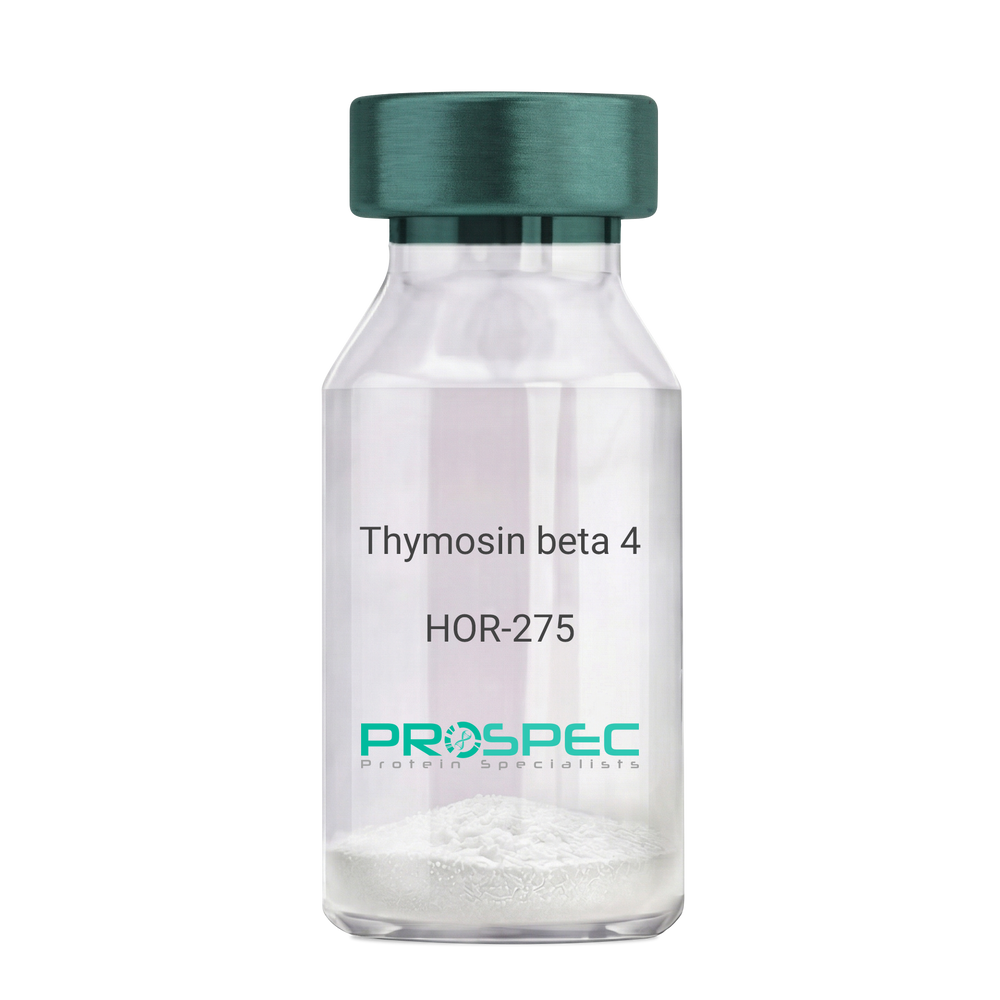
    Thymosin beta 4

    Description:

    Thymosin β4

    Thymosin beta-4. TB500, TB-500

    Product # :

    HOR-275

    Price :

    Quantity :

    Shipping Method :

    Room Temp Icon

    Shipped at Room temp

    Add To Cart

    More Info

    • description
    • formulation
    • purity
    • More Info

    Description

    Thymosin b4 is a 43 amino acid peptide which is regarded as the main intracellular G-actin sequestering peptide. It has a molecular weight of 4963.55 Da, and its molecular formula is: C212H350N56O78S1. Extracellular Thymosin b4 may contribute to physiological processes such as angiogenesis, wound healing, and regulation of inflammation.

    Formulation

    The protein (1mg/ml) was lyophilized with no additives.

    Purity

    Greater than 98.0% as determined by RP-HPLC.

    More Info

    • Introduction

      Thymosin is a hormone secreted from the thymus. Its primary function is to stimulate the production of T cells, which are an important part of the immune system. Thymosin also assists in the development of B cells to plasma cells to produce antibodies. The predominant form of thymosin, thymosin b4, is a member of a highly conserved family of actin monomer-sequestering proteins. b-thymosins are the primary regulators of unpolymerized actin, and are essential for maintaining the small cytoplasmic pool of free G-actin monomers required for rapid filament elongation and allowing for the flux of monomers between the thymosin-bound pool and F-actin.

    • Synonyms

      Thymosin beta-4. TB500, TB-500

    • Physical Appearance

      Sterile Filtered White lyophilized (freeze-dried) powder.

    • Stability

      Lyophilized Thymosin b4 although stable at room temperature for 3 weeks, should be stored desiccated below -18°C. Upon reconstitution T beta 4 should be stored at 4°C between 2-7 days and for future use below -18°C.For long term storage it is recommended to add a carrier protein (0.1% HSA or BSA).Please prevent freeze-thaw cycles.

    • Solubility

      It is recommended to reconstitute the lyophilized Thymosin beta-4 in sterile 18MΩ-cm H2O not less than 100 µg/ml, which can then be further diluted to other aqueous solutions.

    • Amino Acid Sequence

      Thymosin b4 has an a.a. sequence of Ac-Ser-Asp-Lys-Pro-Asp-Met-Ala-Glu-Ile-Glu-Lys-Phe-Asp-Lys-Ser-Lys-Leu-Lys-Lys-Thr-Glu-Thr-Gln-Glu-Lys-Asn-Pro-Leu-Pro-Ser-Lys-Glu-Thr-Ile-Glu-Gln-Glu-Lys-Gln-Ala-Gly-Glu-Ser-OH.

    ProSpec's products are furnished for LABORATORY RESEARCH USE ONLY. The product may not be used as drugs, agricultural or pesticidal products, food additives or household chemicals.

    Thymosin Beta 4
  • View Data Sheet

    Name :

    vMIP-II

    Description:

    MIP-2 Viral Recombinant

    MIP-2 Viral, Viral MIP-2, MIP2 Viral, Viral MIP2, Viral Macrophage inflammatory Protein-2.

    Product # :

    CHM-376

    Price :

    Quantity :

    Shipping Method :

    Room Temp Icon

    Shipped at Room temp

    Add To Cart

    More Info

    • description
    • source
    • formulation
    • purity
    • biological activity
    • More Info

    Description

    MIP-2 Viral Recombinant produced in E.Coli is a single,non-glycosylated, polypeptide chain containing 70 amino acids and having a molecular mass of 7.9 kDa. The MIP-2 is purified by proprietary chromatographic techniques.

    Source

    Escherichia Coli.

    Formulation

    Lyophilized from 1mg/ml solution containing 20mM Phospahte Buffer, pH 7.4 % 0.15M NaCl.

    Purity

    Greater than 97.0% as determined by RP-HPLC & SDS-PAGE.

    Biological Activity

    Determined by the inhibitory effect on monocyte migration response to human MIP1A using a concentration range of 1µg-10µg/ml of viral MIP2 which will inhibit 25ng/ml of human MIP1A.

    More Info

    • Introduction

      Viral MIP-2 is closely related to MIP-1α, show amino acid sequence similarity of about 41%. At the amino acid sequence level, Viral MIP-1 and Viral MIP-2 share 48% similarity. Viral MIP-1 and Viral MIP-2 are more closely linked to one another phylogenetically than to other human chemokines, signifying that they have gene duplication within the virus rather than by two independent gene aquisitions. Viral MIP-2 binds to the CCR3 chemokine receptor through which eotaxin and other β chemokines activate eosinophils. Viral MIP-2 activates and chemoattract human eosinphils.

    • Synonyms

      MIP-2 Viral, Viral MIP-2, MIP2 Viral, Viral MIP2, Viral Macrophage inflammatory Protein-2.

    • Physical Appearance

      Sterile Filtered White lyophilized (freeze-dried) powder.

    • Stability

      Lyophilized MIP-2 Viral protein although stable at room temperature for 3 weeks, should be stored desiccated below -18°C. Upon reconstitution CXCL2 should be stored at 4°C between 2-7 days and for future use below -18°C. For long term storage it is recommended to add a carrier protein (0.1% HSA or BSA).Please prevent freeze-thaw cycles.

    • Solubility

      It is recommended to reconstitute the lyophilized CXCL2 Viral in sterile 18MΩ-cm H2O not less than 100µg/ml, which can then be further diluted to other aqueous solutions.

    • Amino Acid Sequence

      LGASWHRPDK CCLGYQKRPL PQVLLSSWYP TSQLCSKPGV IFLTKRGRQV
      CADKSKDWVK KLMQQLPVTA.

    • Background

      What is the molecular weight/Mw of VMIP-II Protein?
      VMIP-II Protein has a total Mw of 7.9kDa.

      What is the source or expression system of VMIP-II Protein?
      Escherichia Coli.

      What is the Purity of VMIP-II Protein?
      VMIP-II Protein is >97% pure as determined by SDS-PAGE.

      What is the Biological Activity of VMIP-II Protein?
      Determined by the inhibitory effect on monocyte migration response to human MIP1A using a concentration range of 1µg-10µg/ml of viral MIP2 which will inhibit 25ng/ml of human MIP1A.

      What is the amino acid sequence of VMIP-II Protein?
      LGASWHRPDK CCLGYQKRPL PQVLLSSWYP TSQLCSKPGV IFLTKRGRQV
      CADKSKDWVK KLMQQLPVTA.

      What applications can VMIP-II Protein be used in?
      VMIP-II Protein can probably be used in western blot, ELISA and Lateral Flow.

      What is the endotoxin level for VMIP-II Protein?
      The endotoxin level is minimal, VMIP-II Protein was purified using conventional chromatography techniques.


    ProSpec's products are furnished for LABORATORY RESEARCH USE ONLY. The product may not be used as drugs, agricultural or pesticidal products, food additives or household chemicals.

    Cxcl2 Viral
  • View Data Sheet

    Name :

    MIP 1b Mouse

    Description:

    Macrophage Inflammatory Protein-1 beta Mouse Recombinant (CCL4)

    Small inducible cytokine A4, CCL4, Macrophage inflammatory protein 1-beta, MIP-1- beta, MIP-1-beta(1-69), T-cell activation protein 2, ACT-2, PAT 744, H400, SIS-gamma, Lymphocyte activation gene 1 protein, LAG-1, HC21, G-26 T-lymphocyte-secreted protein, chemokine (C-C motif) ligand 4, ACT2, G-26, LAG1, MIP1B, SCYA2, SCYA4, AT744.1, MGC104418, MGC126025, MGC126026.

    Product # :

    CHM-321

    Price :

    Quantity :

    Shipping Method :

    Room Temp Icon

    Shipped at Room temp

    Add To Cart

    More Info

    • description
    • source
    • formulation
    • purity
    • biological activity
    • More Info

    Description

    Macrophage Inflammatory Protein-1 beta Mouse Recombinant produced in E.Coli is a single, non-glycosylated, polypeptide chain containing 69 amino acids and having a molecular mass of 7808 Dalton. The MIP-1b is purified by proprietary chromatographic techniques.

    Source

    Escherichia Coli.

    Formulation

    Lyophilized from a concentrated (1 mg/ml) solution in water containing no additives.

    Purity

    Greater than 98.0% as determined by:
    (a) Analysis by RP-HPLC.
    (b) Analysis by SDS-PAGE.

    Biological Activity

    Mouse MIP-1 beta activity is calculated by the ability to chemoattract Human blood monocytes at 20-100ng/ml corresponding to a Specific Activity of 10,000-50,000IU/mg.

    More Info

    • Introduction

      Macrophage Inflammatory Proteins (MIP) belong to the family of chemotactic cytokines known as chemokines. In humans, there are two major forms, MIP-1? and MIP-1? that are now officially named CCL3 and CCL4 respectively. Both are major factors produced by macrophages after they are stimulated with bacterial endotoxins. They activate human granulocytes (neutrophils, eosinophils and basophils) which can lead to acute neutrophilic inflammation. They also induce the synthesis and release of other pro-inflammatory cytokines such as interleukin 1 (IL-1), IL-6 and TNF-? from fibroblasts and macrophages. The genes for CCL3 and CCL4 are both located on human chromosome 17.

    • Synonyms

      Small inducible cytokine A4, CCL4, Macrophage inflammatory protein 1-beta, MIP-1- beta, MIP-1-beta(1-69), T-cell activation protein 2, ACT-2, PAT 744, H400, SIS-gamma, Lymphocyte activation gene 1 protein, LAG-1, HC21, G-26 T-lymphocyte-secreted protein, chemokine (C-C motif) ligand 4, ACT2, G-26, LAG1, MIP1B, SCYA2, SCYA4, AT744.1, MGC104418, MGC126025, MGC126026.

    • Physical Appearance

      Sterile Filtered White lyophilized (freeze-dried) powder.

    • Stability

      Lyophilized Mouse MIP-1b although stable at room temperature for 3 weeks, should be stored desiccated below -18°C. Upon reconstitution Mouse CCL4 should be stored at 4°C between 2-7 days and for future use below -18°C.For long term storage it is recommended to add a carrier protein (0.1% HSA or BSA).Please prevent freeze-thaw cycles.

    • Solubility

      It is recommended to reconstitute the lyophilized Mouse MIP-1b in sterile 18MΩ-cm H2O not less than 100µg/ml, which can then be further diluted to other aqueous solutions.

    • Amino Acid Sequence

      APYGADTPTA CCFSYSRKIP RQFIVDYFET SSLCSQPGVI FLTKRNRQIC ADSKETWVQE YITDLELNA.

    • Background

      What is the molecular weight/Mw of MIP 1B MOUSE Protein?
      MIP 1B MOUSE Protein has a total Mw of 7.8kDa.

      What is the source or expression system of MIP 1B MOUSE Protein?
      Escherichia Coli.

      What is the Purity of MIP 1B MOUSE Protein?
      MIP 1B MOUSE Protein is > 98% pure as determined by SDS-PAGE.

      What is the Biological Activity of MIP 1B MOUSE Protein?
      Mouse MIP-1 beta activity is calculated by the ability to chemoattract Human blood monocytes at 20-100ng/ml corresponding to a Specific Activity of 10,000-50,000IU/mg.

      What is the amino acid sequence of MIP 1B MOUSE Protein?
      APYGADTPTA CCFSYSRKIP RQFIVDYFET SSLCSQPGVI FLTKRNRQIC ADSKETWVQE YITDLELNA.

      What applications can MIP 1B MOUSE Protein be used in?
      MIP 1B MOUSE Protein can probably be used in western blot, ELISA and Lateral Flow.

      What is the endotoxin level for MIP 1B MOUSE Protein?
      The endotoxin level is minimal, MIP 1B MOUSE Protein was purified using conventional chromatography techniques.


    ProSpec's products are furnished for LABORATORY RESEARCH USE ONLY. The product may not be used as drugs, agricultural or pesticidal products, food additives or household chemicals.

    Mip 1 Beta Mouse
  • View Data Sheet

    Name :

    CFL1 Antibody

    Description:

    Cofilin-1, Mouse Anti Human

    CFL-1, CFL1, Cofilin1, Cofilin-1, Cofilin non-muscle isoform, 18 kDa phosphoprotein, p18.

    Product # :

    ANT-354

    Price :

    Quantity :

    Shipping Method :

    Ice Icon

    Shipped with Ice Packs

    Add To Cart

    More Info

    • formulation
    • More Info

    Formulation

    1mg/ml containing PBS, pH-7.4, & 0.1% Sodium Azide.

    More Info

    • Introduction

      Cofilin is a family of actin-binding proteins which disassembles actin filaments. It is a widely distributed intracellular actin-modulating protein that binds and depolymerizes filamentous F-actin and inhibits the polymerization of monomeric G-actin in a pH-dependent manner. It is involved in the translocation of actin-cofilin complex from cytoplasm to nucleus.

    • Synonyms

      CFL-1, CFL1, Cofilin1, Cofilin-1, Cofilin non-muscle isoform, 18 kDa phosphoprotein, p18.

    • Immunogen

      Anti-human CFL1 mAb is derived from hybridization of mouse F0 myeloma cells with spleen cells from BALB/c mice immunized with recombinant human CFL1 amino acids 1-166 purified from E. coli.

    • Ig Subclass

      Mouse IgG1 heavy chain and κ light chain.

    • Clone

      PAT1C1AT.

    • Applications

      CFL1 antibody has been tested by ELISA and Western blot analysis to assure specificity and reactivity. Since application varies, however, each investigation should be titrated by the reagent to obtain optimal results. Recommended dilution range for Western blot analysis is 1:1,000 ~ 2,000.Recommended starting dilution is 1:1,000.

    • Type

      Mouse Anti Human Monoclonal.

    • Storage Procedures

      For periods up to 1 month store at 4°C, for longer periods of time, store at -20°C. Prevent freeze thaw cycles.

    • Purification Method

      CFL1 antibody was purified from mouse ascitic fluids by protein-G affinity chromatography.

    ProSpec's products are furnished for LABORATORY RESEARCH USE ONLY. The product may not be used as drugs, agricultural or pesticidal products, food additives or household chemicals.

    Cfl1 Antibody
  • View Data Sheet

    Name :

    CoV-2 Envelope (1-75)

    Description:

    Coronavirus 2019 Envelope (1-75 a.a.), Recombinant

    Product # :

    SARS-037

    Price :

    Quantity :

    Shipping Method :

    Room Temp Icon

    Shipped at Room temp

    Add To Cart

    More Info

    • description
    • source
    • formulation
    • purity
    • More Info

    Description

    The E.coli derived recombinant protein contains the Coronavirus 2019 CoV-2 Envelope, Wuhan-Hu-1 strain, amino acids 1-75 fused to GST-tag at N-terminal & His-tag at C-terminal having a calculated Mw of 36.8 kDa and migrating between 33-35 umder reducing condition.

    Source

    E.Coli

    Formulation

    CoV-2 Envelope protein is supplied in 20mM Tris, 5mM EDTA & 0.5M Arginine, pH-8 and 10% sucrose.

    Purity

    Protein is >90% pure as determined SDS-PAGE.

    More Info

    • Introduction

      A human infecting coronavirus (viral pneumonia) called 2019 novel coronavirus, 2019-nCoV was found in the fish market at the city of Wuhan, Hubei province of China on December 2019.

      The 2019-nCoV shares an 87% identity to the 2 bat-derived severe acute respiratory syndrome 2018 SARS-CoV-2 located in Zhoushan of eastern China. 2019-nCoV has an analogous receptor-BD-structure to that of 2018 SARS-CoV, even though there is a.a. diversity so thus the 2019-nCoV might bind to ACE2 receptor protein (angiotensin-converting enzyme 2) in humans.

      While bats are possibly the host of 2019-nCoV, researchers suspect that animal from the ocean sold at the seafood market was an intermediate host. RSCU analysis proposes that the 2019-nCoV is a recombinant within the viral spike glycoprotein between the bat coronavirus and an unknown coronavirus.

    • Physical Appearance

      Sterile Filtered White lyophilized (freeze-dried) powder.

    • Stability

      Lyophilized Cov-2 Envelope protein although stable at room temperature for 3 weeks, should be stored desiccated below -18°C. Upon reconstitution CoV2 Envelope protein should be stored at 4°C between 2-7 days and for future use below -18°C.For long term storage it is recommended to add a carrier protein (0.1% HSA or BSA).Please prevent freeze-thaw cycles.

    • Solubility

      It is recommended to add deionized water to prepare a working stock solution of approximately 0.5mg/ml and let the lyophilized pellet dissolve completely.

    • Purification Method

      Purified by Metal-Afinity chromatographic technique.

    ProSpec's products are furnished for LABORATORY RESEARCH USE ONLY. The product may not be used as drugs, agricultural or pesticidal products, food additives or household chemicals.

    product_image.jpg
  • View Data Sheet

    Name :

    MCP1 Rat, Sf9

    Description:

    Monocyte Chemotactic Protein-1 Rat Recombinant, Sf9

    Small inducible cytokine A2, CCL2, Monocyte chemotactic protein 1, MCP-1, Monocyte chemoattractant protein 1, Monocyte chemotactic and activating factor, MCAF, Monocyte secretory protein JE, HC11, chemokine (C-C motif) ligand 2, MCP1, SCYA2, GDCF-2, SMC-CF, HSMCR30, MGC9434, GDCF-2 HC11

    Product # :

    CHM-044

    Price :

    Quantity :

    Shipping Method :

    Ice Icon

    Shipped with Ice Packs

    Add To Cart

    More Info

    • description
    • source
    • formulation
    • purity
    • More Info

    Description

    MCP1 Rat Recombinant produced in Sf9 Baculovirus cells is a single, glycosylated polypeptide chain containing 134 amino acids (24-148 aa) and having a molecular mass of 15.1kDa.MCP1 is fused to a 6 amino acid His tag at C-terminus and purified by proprietary chromatographic techniques.

    Source

    Sf9, Baculovirus cells

    Formulation

    The MCP1 Rat protein solution (0.5mg/ml) contains 10% glycerol and Phosphate-Buffered Saline (pH 7.4).

    Purity

    Greater than 90% as determined by SDS-PAGE.

    More Info

    • Introduction

      Chemokine (C-C motif) ligand 2 (CCL2) is a small cytokine belongs to the CC chemokine family which is also known as monocyte chemotactic protein-1 (MCP-1). MCP 1 is found at the site of tooth eruption and bone degradation. In the bone, CCL2 is expressed by mature osteoclasts. CCL2 recruits immune cells, such as monocytes, to sites of tissue injury and infection. MCP 1is produced as a protein precursor containing signal peptide of 23 amino acids and a mature peptide of 76 amino acids. As with many other CC chemokines, CCL2 is located on chromosome 17 in humans. The cell surface receptors that bind CCL2 are CCR2 and CCR5.

    • Synonyms

      Small inducible cytokine A2, CCL2, Monocyte chemotactic protein 1, MCP-1, Monocyte chemoattractant protein 1, Monocyte chemotactic and activating factor, MCAF, Monocyte secretory protein JE, HC11, chemokine (C-C motif) ligand 2, MCP1, SCYA2, GDCF-2, SMC-CF, HSMCR30, MGC9434, GDCF-2 HC11

    • Physical Appearance

      Sterile filtered colorless solution.

    • Stability

      Store at 4°C if entire vial will be used within 2-4 weeks.Store, frozen at -20°C for longer periods of time.For long term storage it is recommended to add a carrier protein (0.1% HSA or BSA).Avoid multiple freeze-thaw cycles.

    • Amino Acid Sequence

      ADPQPDAVNA PLTCCYSFTG KMIPMSRLEN YKRITSSRCP KEAVVFVTKL KREICADPNK EWVQKYIRKL DQNQVRSETT VFYKIASTLR TSAPLNVNLT HKSEANASTL FSTTTSSTSV EVTSMTENHH HHHH

    ProSpec's products are furnished for LABORATORY RESEARCH USE ONLY. The product may not be used as drugs, agricultural or pesticidal products, food additives or household chemicals.

    Mcp1 Rat
  • View Data Sheet

    Name :

    NAP 2 Antibody

    Description:

    Natural anti-proliferative protein, Mouse-Anti Human

    Platelet basic protein, PBP, Small inducible cytokine B7, CXCL7, Leukocyte-derived growth factor, LDGF, Macrophage-derived growth factor, MDGF, pro-platelet basic protein (chemokine (C-X-C motif) ligand 7), TC1, TC2, TGB, TGB1, B-TG1, CTAP3, NAP-2, SCYB7, THBGB, LA-PF4, THBGB1, Beta-TG, CTAPIII, CTAP-III.

    Product # :

    ANT-170

    Price :

    Quantity :

    Shipping Method :

    Room Temp Icon

    Shipped at Room temp

    Add To Cart

    More Info

    • formulation
    • More Info

    Formulation

    1mg/ml in PBS (after reconstitution).

    More Info

    • Introduction

      Chemokine (C-X-C motif) ligand (CXCL7) is a small cytokine belonging to the CXC chemokine family. It is a protein that is released in large amounts from platelets following their activation. It stimulates various processes including mitogenesis, synthesis of extracellular matrix, glucose metabolism and synthesis of plasminogen activator.

    • Synonyms

      Platelet basic protein, PBP, Small inducible cytokine B7, CXCL7, Leukocyte-derived growth factor, LDGF, Macrophage-derived growth factor, MDGF, pro-platelet basic protein (chemokine (C-X-C motif) ligand 7), TC1, TC2, TGB, TGB1, B-TG1, CTAP3, NAP-2, SCYB7, THBGB, LA-PF4, THBGB1, Beta-TG, CTAPIII, CTAP-III.

    • Solubility

      Reconstitute with sterile H20. Mix gently, wash the sides of the vial and wait 30-60 seconds before use.

    • Immunogen

      r.Human NAP-2.

    • Ig Subclass

      Mouse IgG1.

    • Clone

      NYRhNAP-2.

    • Applications

      Direct ELISA, Western Blot, Immuneprecipitation.

    • Note

      This antibody will bind very well to protein A in a buffer (PBS) containing high salt concentration (3M Nacl).

    • Titer

      In direct ELISA, using alkaline phosphatase goat anti-mouse Ig (Jackson Laboratories) 1:10,000 dilution will yield 0.5 O.D within 10 minutes.

    • Shipping Conditions

      Antibody is shipped lyophilized at ambient temperature.

    • Type

      Mouse Anti Human Monoclonal.

    • Storage Procedures

      In lyophilized form, for long periods, store at 4oC in a dry environment. After reconstitution, if not intended for use within a month, aliquot and store at -20oC.

    • Purification Method

      ion exchange.

    ProSpec's products are furnished for LABORATORY RESEARCH USE ONLY. The product may not be used as drugs, agricultural or pesticidal products, food additives or household chemicals.

    Nap2 Antibody
  • View Data Sheet

    Name :

    TSLP Human, His

    Description:

    Thymic Stromal Lymphopoietin Human Recombinant, His Tag

    Thymic Stromal Lymphopoietin, TSLP.

    Product # :

    CYT-836

    Price :

    Quantity :

    Shipping Method :

    Room Temp Icon

    Shipped at Room temp

    Add To Cart

    More Info

    • description
    • source
    • formulation
    • purity
    • More Info

    Description

    TSLP Human Recombinant produced in E.Coli is a single, non-glycosylated, polypeptide chain (Tyr29-Gln159) containing 141 amino acids including a 10 aa His tag at N-terminus. The total calculated molecular mass is 16.2kDa.

    Source

    Escherichia Coli.

    Formulation

    TSLP was filtered (0.4µm) and lyophilized in phosphate buffered saline.

    Purity

    Greater than 95.0% as determined by SDS-PAGE.

    More Info

    • Introduction

      TSLP protein is a hemopoietic cytokine which signals throughout a heterodimeric receptor complex composed of the thymic stromal lymphopoietin receptor & the Interleukin-7 receptor alpha chain. TSLP impacts myeloid cells thus induces the discharge of T cell-attracting chemokines from monocytes & increases the growth of CD11c(+) dendritic cells. TSLP is mainly expressed in the heart, liver and prostate. TSLP is related in its biological activities with IL-7 and binds with the heterodimeric receptor complex consisting of the Interleukin-7 receptor alpha chain & the TSLPR. Similar to IL-7, TSLP enhances phosphorylation of STAT3 and STAT5, though uses kinases excluding JAKs for its activation. TSLP induces the release of T cell-attracting chemokines such asTARC & MDC from monocytes & triggers CD11c(+) dendritic cells. TSLP activated dendritic cells primes naive T cells to manufacture pro-allergic cytokines such as Iinterleukin-4, Interleukin-5, Interleukin-13 and TNF-alpha whereas down-regulating Interleukin-10 and IFN-gamma play a role in the initiation of allergic inflammation.

    • Synonyms

      Thymic Stromal Lymphopoietin, TSLP.

    • Physical Appearance

      Filtered White lyophilized (freeze-dried) powder.

    • Stability

      Store lyophilized protein at -20°C. Aliquot the product after reconstitution to avoid repeated freezing/thawing cycles. Reconstituted protein can be stored at 4°C for a limited period of time.

    • Solubility

      It is recommended to add deionized water to prepare a working stock solution of approximately 0.5mg/ml and let the lyophilized pellet dissolve completely. TSLP is not sterile! Please filter the product by an appropriate sterile filter before using it in the cell culture.

    • Amino Acid Sequence

      MKHHHHHHASYDFTNCDFEK IKAAYLSTIS KDLITYMSGT KSTEFNNTVS CSNRPHCLTE IQSLTFNPTA GCASLAKEMF AMKTKAALAI WCPGYSETQI NATQAMKKRR KRKVTTNKCL EQVSQLQGLW RRFNRPLLKQ Q.

    ProSpec's products are furnished for LABORATORY RESEARCH USE ONLY. The product may not be used as drugs, agricultural or pesticidal products, food additives or household chemicals.

    Tslp Human His
  • 1
  • …
  • 6
  • 7
  • 8
  • 9
  • 10
  • …
  • 13
Your browser does not support the video tag.

Products

  • Cytokines
  • Growth Factors
  • Chemokines
  • CD Antigens
  • Neurotrophins
  • Hormones
  • Enzymes
  • Viral Antigens
  • Recombinant Proteins
  • Natural Proteins
  • Monoclonal Antibodies
  • Polyclonal Antibodies
  • Thermal Packaging

About

  • Company
  • Founder
  • Contribution
  • Contact Us
  • My Account

Ordering

  • Ordering Method
  • Ordering - Credit Card
  • Ordering PO
  • Shipping Fees
  • FAQ's

Legal

  • Terms & Conditions
  • Privacy
  • Site Map
  • info@prospecbio.com
  • Facebook
  • Instagram
  • Linkedin Profile

© 2026 ProSpec-Tany TechnoGene Ltd. All Rights Reserved.

  • Choosing a selection results in a full page refresh.
  • Opens in a new window.