Search results
1000 results found for “lbp”
Name
Description
Product #
Price
Quantity
Shipping Method
- View Data Sheet
Name :
BMP 7 HumanDescription:
Bone Morphogenetic Protein-7 Human Recombinant
Osteogenic Protein 1, BMP-7.
Product # :
CYT-333Price :
Quantity :
Shipping Method :
Shipped at Room temp
More Info
- description
- source
- formulation
- purity
- More Info
Description
Bone Morphogenetic Protein-7 Human Recombinant produced in E.Coli is a monomeric, non-glycosylated, polypeptide chain containing 139 amino acids and having a molecular mass of 15679.97 Dalton. The BMP-7 is purified by proprietary chromatographic techniques.
Source
Escherichia Coli.
Formulation
BMP-7 was lyophilized from a concentrated (1mg/ml) sterile solution containing 10mM sodium citrate pH=3.5.
Purity
Greater than 95.0% as determined by:
(a) Analysis by RP-HPLC.
(b) Analysis by SDS-PAGE.More Info
-
Introduction
The bone morphogenetic proteins (BMPs) are a family of secreted signaling molecules that can induce ectopic bone growth. Many BMPs are part of the transforming growth factor-beta (TGFB) superfamily. BMPs were originally identified by an ability of demineralized bone extract to induce endochondral osteogenesis in vivo in an extraskeletal site. Based on its expression early in embryogenesis, the BMP encoded by this gene has a proposed role in early development. In addition, the fact that this BMP is closely related to BMP5 and BMP7 has lead to speculation of possible bone inductive activity.
-
Synonyms
Osteogenic Protein 1, BMP-7.
-
Physical Appearance
Sterile Filtered White lyophilized (freeze-dried) powder.
-
Stability
Lyophilized BMP-7 although stable at room temperature for 3 weeks, should be stored desiccated below -18°C. Upon reconstitution BMP 7 Human should be stored at 4°C between 2-7 days and for future use below -18°C.For long term storage it is recommended to add a carrier protein (0.1% HSA or BSA).Please prevent freeze-thaw cycles.
-
Solubility
It is recommended to briefly centrifuge the vial prior to opening to bring the contents to the bottom. Reconstitute in 20mM-100mM acetic acid at a concentration of 0.1-0.5mg per ml. Stock solutions should be apportioned into working aliquots and stored at <-20°C. Further dilutions should be made in appropriate buffered solutions.
-
Amino Acid Sequence
The sequence of the first five N-terminal amino acids was determined and was found to be Ser-Thr-Gly-Ser-Lys.
-
Background
Bone Morphogenetic Protein-7 Human Recombinant: A Comprehensive Review
Abstract:
Bone Morphogenetic Protein-7 (BMP-7) is a crucial member of the transforming growth factor-beta (TGF-β) superfamily with diverse roles in development, tissue repair, and regeneration.
This research paper provides a comprehensive review of BMP-7 Human Recombinant, focusing on its structure, signaling pathways, and diverse functions. Additionally, the paper explores the therapeutic potential of BMP-7 modulation.
Introduction:
BMP-7 is a multifunctional growth factor that plays a significant role in skeletal development and tissue homeostasis. This paper aims to provide an extensive review of BMP-7 Human Recombinant, highlighting its importance in various biological processes and its potential therapeutic applications.
Structure and Function of BMP-7:
BMP-7 is a disulfide-linked homodimeric protein composed of two subunits. It binds to specific cell surface receptors, activating downstream signaling pathways, including the Smad pathway and non-Smad signaling cascades. These pathways regulate cellular processes such as proliferation, differentiation, and apoptosis.
Skeletal Development and Regeneration:
BMP-7 is a key regulator of bone formation and remodeling. It promotes osteoblast differentiation and bone mineralization, contributing to skeletal development and repair. BMP-7 also plays a role in cartilage formation and chondrogenesis.
Tissue Repair and Regeneration:
Beyond its skeletal functions, BMP-7 is involved in tissue repair and regeneration in various organs, including the kidney, liver, and heart. It promotes the regeneration of damaged tissues by stimulating cell proliferation, angiogenesis, and extracellular matrix remodeling.
Therapeutic Potential:
Due to its regenerative and reparative properties, BMP-7 has attracted significant attention as a potential therapeutic agent. It has been investigated for its applications in bone regeneration, cartilage repair, and the treatment of kidney and liver diseases. Clinical trials exploring the therapeutic efficacy of BMP-7 are ongoing.
Challenges and Future Perspectives:
Despite the promising therapeutic potential of BMP-7, challenges remain, including optimizing its delivery systems, understanding its dosage and duration of treatment, and managing potential side effects. Future research should focus on unraveling the intricate mechanisms of BMP-7 signaling, developing targeted therapies, and enhancing its clinical applications.
What is the molecular weight/Mw of BMP7 Protein?
BMP7 Protein has a total Mw of 15kDa.
What is the source or expression system of BMP7 Protein?
Escherichia Coli.
What is the Purity of BMP7 Protein?
BMP7 Protein is >95% pure as determined by SDS-PAGE.
What is the Biological Activity of BMP7 Protein?
The biological functionality of BMP7 Protein will be determined in the future.
What is the amino acid sequence of BMP7 Protein?
BMP7 Protein is composed from 139 amino acids.
What applications can BMP7 Protein be used in?
BMP7 Protein can probably be used in western blot, ELISA and Lateral Flow.
What is the endotoxin level for BMP7 Protein?
The endotoxin level is minimal, BMP7 Protein was purified using conventional chromatography techniques.
ProSpec's products are furnished for LABORATORY RESEARCH USE ONLY. The product may not be used as drugs, agricultural or pesticidal products, food additives or household chemicals.
- View Data Sheet
Name :
FABP1 RatDescription:
Fatty Acid Binding Protein-1 Rat Recombinant
Fatty acid-binding protein, liver, Fatty acid-binding protein 1, Liver-type fatty acid-binding protein, L-FABP, Squalene- and sterol-carrier protein, SCP, Z-protein, p14, Fabp1, Fabplg, FABP1.
Product # :
PRO-2223Price :
Quantity :
Shipping Method :
Shipped with Ice Packs
More Info
- description
- source
- formulation
- purity
- More Info
Description
FABP1 Rat Recombinant produced in E. coli is a single non-glycosylated polypeptide chain containing 150 amino acids (1-127) and having a molecular mass of 16.7kDa.FABP1 is fused to a 23 amino acid His-tag at N-terminus & purified by proprietary chromatographic techniques.
Source
Escherichia Coli.
Formulation
The FABP1 solution (1mg/1ml) contains phosphate buffered saline (pH7.4), 20% glycerol and 1mM DTT.
Purity
Greater than 95.0% as determined by SDS-PAGE.
More Info
-
Introduction
FABP1 (Fatty acid binding protein1) encodes the fatty acid binding protein found in liver. FABP1 is composed of ten antiparallel beta strands that form a barrel with a bigger binding pocket than the other FABPs allowing it to accommodate two fatty acid. This protein binds free fatty acids and their coenzyme A derivatives, bilirubin, and some other small molecules in the cytoplasm; it may be involved in intracellular lipid transport and metabolism.
-
Synonyms
Fatty acid-binding protein, liver, Fatty acid-binding protein 1, Liver-type fatty acid-binding protein, L-FABP, Squalene- and sterol-carrier protein, SCP, Z-protein, p14, Fabp1, Fabplg, FABP1.
-
Physical Appearance
Sterile Filtered clear solution.
-
Stability
Store at 4°C if entire vial will be used within 2-4 weeks. Store, frozen at -20°C for longer periods of time. For long term storage it is recommended to add a carrier protein (0.1% HSA or BSA).Avoid multiple freeze-thaw cycles.
-
Amino Acid Sequence
MGSSHHHHHH SSGLVPRGSH MGSMNFSGKY QVQSQENFEP FMKAMGLPED LIQKGKDIKG VSEIVHEGKK VKLTITYGSK VIHNEFTLGE ECELETMTGE KVKAVVKMEG DNKMVTTFKG IKSVTEFNGD TITNTMTLGD IVYKRVSKRI.
ProSpec's products are furnished for LABORATORY RESEARCH USE ONLY. The product may not be used as drugs, agricultural or pesticidal products, food additives or household chemicals.
- View Data Sheet
Name :
FABP6 Human, HisDescription:
Fatty Acid Binding Protein 6 Human Recombinant, His Tag
I-BABP, ILBP, I-15P, I-BAP, ILBP3, ILLBP, I-BABP, I-BALB, FABP-6, Gastrotropin, Ileal lipid-binding protein, Intestinal 15 kDa protein, Intestinal bile acid-binding protein, Fatty acid-binding protein 6, FABP6.
Product # :
PRO-667Price :
Quantity :
Shipping Method :
Shipped with Ice Packs
More Info
- description
- source
- formulation
- purity
- More Info
Description
FABP6 Human Recombinant produced in E.Coli is a single, non-glycosylated polypeptide chain containing 128 amino acids and having a molecular mass of 18 kDa. FABP6 is fused to His tag at N-terminus and purified by standard chromatography techniques.
Source
Escherichia Coli.
Formulation
FABP6 His-Tag is supplied in 20mM Tris HCL pH=8, 0.5mM DTT and 50% glycerol.
Purity
Greater than 95% as determined by SDS-PAGE.
More Info
-
Introduction
FABP6 also called ileal fatty acid binding protein, is part of the small family of highly conserved, cytoplasmic proteins that bind long-chain fatty acids and other hydrophobic ligands. FABP6 cytosolic protein binds bile acid. FABP6 plays a role in fatty acid uptake, transport, and metabolism. FABP6 stimulates gastric acid and pepsinogen secretion. Seems to be able to bind to bile salts and bilirubins. FABP6 expression is restricted in the small intestine to the ileum where it is involved in the enterohepatic circulation of bile acids. Alternate transcription promoters generate 2 transcript variants, encoding a 128 aa and a 177 aa residue protein. Human FABP6 isoform 2 contains 128 amino acid residues and is acetylated on Ala2. FABP6 binds together fatty acids and bile acids and is directly involved in fatty acid transport and metabolism.
-
Synonyms
I-BABP, ILBP, I-15P, I-BAP, ILBP3, ILLBP, I-BABP, I-BALB, FABP-6, Gastrotropin, Ileal lipid-binding protein, Intestinal 15 kDa protein, Intestinal bile acid-binding protein, Fatty acid-binding protein 6, FABP6.
-
Physical Appearance
Sterile Filtered colorless liquid formulation.
-
Stability
Store at 4°C if entire vial will be used within 2-4 weeks. Store, frozen at -20°C for longer periods of time.Please avoid freeze thaw cycles.
ProSpec's products are furnished for LABORATORY RESEARCH USE ONLY. The product may not be used as drugs, agricultural or pesticidal products, food additives or household chemicals.
- View Data Sheet
Name :
LYPLA2 HumanDescription:
Lysophospholipase II Human Recombinant
Acyl-protein thioesterase 2, APT-2, Lysophospholipase II, LPL-II, LysoPLA II, LYPLA2, APT2, DJ886K2.4.
Product # :
ENZ-076Price :
Quantity :
Shipping Method :
Shipped with Ice Packs
More Info
- description
- source
- formulation
- purity
- More Info
Description
LYPLA2 Human Recombinant fused with a 20 amino acid His tag at N-terminus produced in E.Coli is a single, non-glycosylated, polypeptide chain containing 251 amino acids (1-231 a.a.) and having a molecular mass of 26.9kDa. The LYPLA2 is purified by proprietary chromatographic techniques.
Source
Escherichia Coli.
Formulation
The LYPLA2 solution (1 mg/ml) contains 20mM Tris-HCl buffer (pH 8.0), 1mM DTT, 10% glycerol and 100mM NaCl.
Purity
Greater than 95.0% as determined by SDS-PAGE.
More Info
-
Introduction
Acyl-protein thioesterase 2 (LYPLA2) is lysophospholipase which acts on biological membranes to regulate the multifunctional lysophospholipids. LYPLA2 may hydrolyze fatty acids from S-acylated cysteine residues in proteins such as trimeric G alpha proteins or HRAS.
-
Synonyms
Acyl-protein thioesterase 2, APT-2, Lysophospholipase II, LPL-II, LysoPLA II, LYPLA2, APT2, DJ886K2.4.
-
Physical Appearance
Sterile Filtered colorless solution.
-
Stability
Store at 4°C if entire vial will be used within 2-4 weeks. Store, frozen at -20°C for longer periods of time. For long term storage it is recommended to add a carrier protein (0.1% HSA or BSA).Avoid multiple freeze-thaw cycles.
-
Amino Acid Sequence
MGSSHHHHHH SSGLVPRGSH MCGNTMSVPL LTDAATVSGA ERETAAVIFL HGLGDTGHSW ADALSTIRLP HVKYICPHAP RIPVTLNMKM VMPSWFDLMG LSPDAPEDEA GIKKAAENIK ALIEHEMKNG IPANRIVLGG FSQGGALSLY TALTCPHPLA GIVALSCWLP LHRAFPQAAN GSAKDLAILQ CHGELDPMVP VRFGALTAEK LRSVVTPARV QFKTYPGVMH SSCPQEMAAV KEFLEKLLPP V.
ProSpec's products are furnished for LABORATORY RESEARCH USE ONLY. The product may not be used as drugs, agricultural or pesticidal products, food additives or household chemicals.
- View Data Sheet
Name :
RPP30 HumanDescription:
Ribonuclease P/MRP 30kDa Subunit Human Recombinant
Ribonuclease P protein subunit p30, RNaseP protein p30, RNase P subunit 2, RPP30, RNASEP2, TSG15, FLJ38491, RP11-320F15.1.
Product # :
ENZ-040Price :
Quantity :
Shipping Method :
Shipped with Ice Packs
More Info
- description
- source
- formulation
- purity
- More Info
Description
RPP30 Human Recombinant fused with a 23 amino acid His tag at N-terminus produced in E.Coli is a single, non-glycosylated, polypeptide chain containing 291 amino acids (1-268 a.a.) and having a molecular mass of 31.8kDa. The RPP30 is purified by proprietary chromatographic techniques.
Source
Escherichia Coli.
Formulation
The RPP30 solution (0.5 mg/ml) contains 20mM Tris-HCl buffer (pH8.0), 20% glycerol, 5mM DTT, 200mM NaCl and 1mM EDTA.
Purity
Greater than 90.0% as determined by SDS-PAGE.
More Info
-
Introduction
Ribonuclease P protein subunit p30 (RPP30) is a member of the eukaryotic/archaeal RNase P protein component 3 family. RPP30 is component of ribonuclease P, which is a protein complex that generates mature tRNA molecules by cleaving their 5'-ends. Ribonuclease P (RNase P) is small nuclear ribonucleoprotein (snRNPs) which acts on RNA substrates in vitro. In addition, RNase P which accumulate in the nucleolus, have a similar RNA component and several protein subunits in common.
-
Synonyms
Ribonuclease P protein subunit p30, RNaseP protein p30, RNase P subunit 2, RPP30, RNASEP2, TSG15, FLJ38491, RP11-320F15.1.
-
Physical Appearance
Sterile Filtered colorless solution.
-
Stability
Store at 4°C if entire vial will be used within 2-4 weeks. Store, frozen at -20°C for longer periods of time. For long term storage it is recommended to add a carrier protein (0.1% HSA or BSA).Avoid multiple freeze-thaw cycles.
-
Amino Acid Sequence
MGSSHHHHHH SSGLVPRGSH MGSMAVFADL DLRAGSDLKA LRGLVETAAH LGYSVVAINH IVDFKEKKQE IEKPVAVSEL FTTLPIVQGK SRPIKILTRL TIIVSDPSHC NVLRATSSRA RLYDVVAVFP KTEKLFHIAC THLDVDLVCI TVTEKLPFYF KRPPINVAID RGLAFELVYS PAIKDSTMRR YTISSALNLM QICKGKNVII SSAAERPLEI RGPYDVANLG LLFGLSESDA KAAVSTNCRA ALLHGETRKT AFGIISTVKK PRPSEGDEDC LPASKKAKCE G.
ProSpec's products are furnished for LABORATORY RESEARCH USE ONLY. The product may not be used as drugs, agricultural or pesticidal products, food additives or household chemicals.
- View Data Sheet
Name :
Leptin Ovine, MTSDescription:
Leptin Ovine Recombinant, MTS tag
OB Protein, Obesity Protein, OBS, Obesity factor.
Product # :
CYT-531Price :
Quantity :
Shipping Method :
Shipped at Room temp
More Info
- description
- source
- formulation
- purity
- biological activity
- More Info
Description
Leptin Ovine MTS tagged Recombinant produced in E.Coli is a single, non-glycosylated, polypeptide chain containing 157 amino acids and having a molecular mass of 17.5 kDa.The Leptin is purified by proprietary chromatographic techniques. The membrane translocating sequence Tag is composed of 10 amino acids Val-Leu-Leu-Pro-Val-Leu-Leu-Ala-Ala-Pro located at the N-terminus.
Source
Escherichia Coli.
Formulation
The protein was lyophilized from a concentrated (1mg/ml) solution with 0.02% NaHCO3.
Purity
Greater than 98.0% as determined by:
(a) Gel filtration analysis.
(b) Analysis by SDS-PAGE.Biological Activity
Biological active as evidenced by inducing proliferation of BAF/3 cells stably transfected with the long form of human leptin receptor.More Info
-
Introduction
A 16-kDa peptide hormone secreted from white adipocytes and implicated in the regulation of food intake and energy balance. Leptin provides the key afferent signal from fat cells in the feedback system that controls body fat stores.
-
Synonyms
OB Protein, Obesity Protein, OBS, Obesity factor.
-
Physical Appearance
Sterile Filtered White lyophilized (freeze-dried) powder.
-
Stability
Lyophilized Leptin Ovine MTS tagged although stable at room temperature for 3 weeks, should be stored desiccated below -18°C. Upon reconstitution Leptin should be stored at 4°C between 2-7 days and for future use below -18°C.For long term storage it is recommended to add a carrier protein (0.1% HSA or BSA).Please prevent freeze-thaw cycles.
-
Solubility
It is recommended to reconstitute the lyophilized Leptin in sterile 0.02% NaHCO3 not less than 100µg/ml, which can then be further diluted to other aqueous solutions.
-
Amino Acid Sequence
The sequence of the first five N-terminal amino acids was determined and was found to be Ala-Val-Leu-Leu-Pro.
-
Protein content
Protein quantization was carried out by UV spectroscopy at 280 nm using the absorbency value of 0.18 as the extinction coefficient for a 0.1% (1mg/ml) solution at pH 8.0. This value is calculated by the PC GENE computer analysis program of protein sequences (IntelliGenetics).
ProSpec's products are furnished for LABORATORY RESEARCH USE ONLY. The product may not be used as drugs, agricultural or pesticidal products, food additives or household chemicals.
- View Data Sheet
Name :
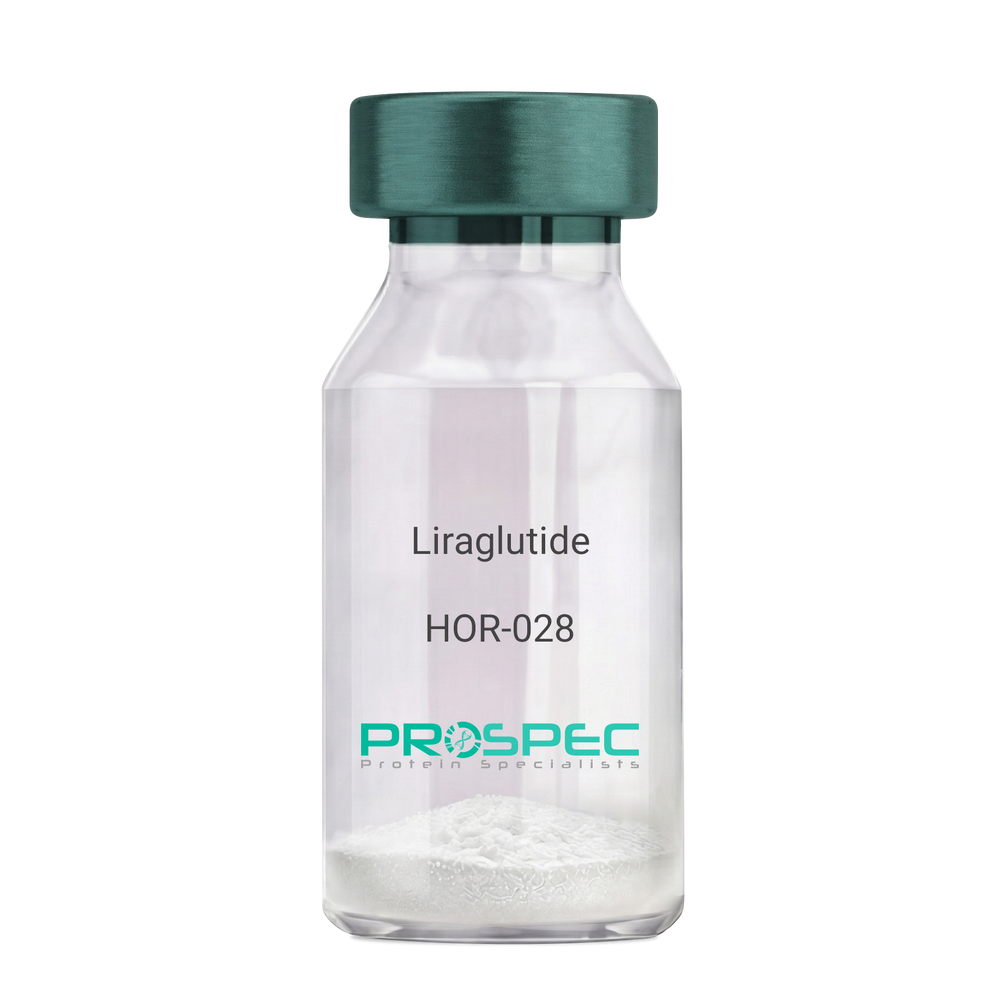
LiraglutideDescription:
Liraglutide
Product # :
HOR-028Price :
Quantity :
Shipping Method :
Shipped at Room temp
More Info
- description
- formulation
- purity
- More Info
- HPLC, MS
Description
Liraglutide peptide is a single, non-glycosylated polypeptide chain containing 31 amino acids, having a molecular mass of 3751 Dalton and a Molecular formula of C172H265N43O51.
Formulation
The protein (1mg/ml) was lyophilized with no additives.
Purity
Greater than 97% as determined by RP-HPLC.
HPLC, MS
More Info
-
Introduction
Liraglutide is a long-acting GLP1 analogue sharing 97% a.a. homology to human GLP1. Liraglutide differs from GLP1 by the substitution of arginine for lysine at position 34. While GLP1 is degraded swiftly by DPP4 resulting in short life of insulin, Liraglutide contains a fatty acid that binds to albumin and prolongs the half-life of the structure. liraglutide causes insulin to secret in the presence of increasing glucose levels. Due toits receptor site, liraglutide inhibits glucagon secretion and delays gastric emptying.
-
Physical Appearance
Sterile Filtered White lyophilized (freeze-dried) powder.
-
Stability
Store the lyophilized Liraglutide between 2-8°C, do not freeze. Upon reconstitution Lypressin should be stored at 4°C between 2-7 days and for future use below -18°C. Please prevent freeze-thaw cycles.
-
Solubility
It is recommended to reconstitute the lyophilized Liraglutide in sterile 18MΩ-cm H2O not less than 100 µg/ml, which can then be further diluted to other aqueous solutions.
Lypressin is also soluble in 1% Acetic Acid. -
Amino Acid Sequence
H-His-Ala-Glu-Gly-Thr-Phe-Thr-Ser-Asp-Val-Ser-Ser-Tyr-Leu-Glu-Gly-Gln-Ala-Ala-Lys(γ-Glu-palmitoyl)-Glu-Phe-Ile-Ala-Trp-Leu-Val-Arg-Gly-Arg-Gly-OH
ProSpec's products are furnished for LABORATORY RESEARCH USE ONLY. The product may not be used as drugs, agricultural or pesticidal products, food additives or household chemicals.
- View Data Sheet
Name :
SNRPB HumanDescription:
Small Nuclear Ribonucleoprotein Polypeptides B & B1 Human Recombinant
Small nuclear ribonucleoprotein-associated proteins B and B', snRNP-B, Sm protein B/B', Sm-B/B', SmB/B', SNRPB, COD, SNRPB1, SmB/SmB'.
Product # :
PRO-1511Price :
Quantity :
Shipping Method :
Shipped with Ice Packs
More Info
- description
- source
- formulation
- purity
- More Info
Description
SNRPB Human Recombinant produced in SF9 is a glycosylated, polypeptide chain having a calculated molecular mass of 25.4 kDa which migrates at 30kDa on SDS-PAGE. SNRPB is expressed with a -6x His tag and purified by proprietary chromatographic techniques.
Source
Sf9 insect cells.
Formulation
SNRPB is supplied in 20mM HEPES buffer pH-7.5, 0.01mM EDTA and 0.02% SDS.
Purity
Greater than 95% as determined by SDS-PAGE.
More Info
-
Introduction
SNRPB is one of several nuclear proteins which are found in common among U1, U2, U4/U6, and U5 small ribonucleoprotein particles (snRNPs). These snRNPs are involved in pre-mRNA splicing, and the SNRPB protein may also have a role in pre-mRNA splicing or snRNP structure. SNRPB binds to the downstream cleavage product (DCP) of histone pre-mRNA in a U7 snRNP dependent manner. SNRPB functions in the U7 snRNP complex which is involved in histone 3'-end processing.
-
Synonyms
Small nuclear ribonucleoprotein-associated proteins B and B', snRNP-B, Sm protein B/B', Sm-B/B', SmB/B', SNRPB, COD, SNRPB1, SmB/SmB'.
-
Physical Appearance
Sterile Filtered clear solution.
-
Stability
Store at 4°C if entire vial will be used within 2-4 weeks. Store, frozen at -20°C for longer periods of time. Avoid multiple freeze-thaw cycles.
ProSpec's products are furnished for LABORATORY RESEARCH USE ONLY. The product may not be used as drugs, agricultural or pesticidal products, food additives or household chemicals.
- View Data Sheet
Name :
MYCBP HumanDescription:
C-Myc Binding Protein Human Recombinant
C-Myc-binding protein, Associate of Myc 1, AMY-1, MYCBP, AMY1, FLJ41056.
Product # :
PRO-942Price :
Quantity :
Shipping Method :
Shipped with Ice Packs
More Info
- description
- source
- formulation
- purity
- More Info
Description
MYCBP Human Recombinant produced in E.Coli is a single, non-glycosylated polypeptide chain containing 123 amino acids (1-103 a.a.) and having a molecular mass of 14.1kDa.MYCBP is fused to a 20 amino acid His-tag at N-terminus & purified by proprietary chromatographic techniques.
Source
Escherichia Coli.
Formulation
MYCBP protein solution (1mg/ml) containing 20mM Tris-HCl buffer (pH8.0), 20% glycerol, 0.1M NaCl and 1mM DTT.
Purity
Greater than 95.0% as determined by SDS-PAGE.
More Info
-
Introduction
MYCBP is a member of the AMY1 family. MYCBP (c-Myc binding protein) binds to the transactivation domain of c-Myc and stimulates the activation of E-box-dependent transcription. MYCBP translocates from the cytoplasm to the nucleus during S phase when increased expression of c-Myc occurs. MYCBP also associates with AKAP 149 and AKAP 84 in mitochondria of somatic cells and sperm, suggesting a role for MYCBP in spermatogenesis. MYCBP is highly expressed in the heart, placenta, pancreas, skeletal muscle and kidney. It is also present at low levels in the lung.
-
Synonyms
C-Myc-binding protein, Associate of Myc 1, AMY-1, MYCBP, AMY1, FLJ41056.
-
Physical Appearance
Sterile Filtered colorless solution.
-
Stability
Store at 4°C if entire vial will be used within 2-4 weeks. Store, frozen at -20°C for longer periods of time. For long term storage it is recommended to add a carrier protein (0.1% HSA or BSA).Avoid multiple freeze-thaw cycles.
-
Amino Acid Sequence
MGSSHHHHHH SSGLVPRGSH MAHYKAADSK REQFRRYLEK SGVLDTLTKV LVALYEEPEK PNSALDFLKH HLGAATPENP EIELLRLELA EMKEKYEAIV EENKKLKAKL AQYEPPQEEK RAE.
ProSpec's products are furnished for LABORATORY RESEARCH USE ONLY. The product may not be used as drugs, agricultural or pesticidal products, food additives or household chemicals.
- View Data Sheet
Name :
BMP 2 Protein HumanDescription:
Bone Morphogenetic Protein-2 Human Recombinant
BMP-2, BMP2A.
Product # :
CYT-261Price :
Quantity :
Shipping Method :
Shipped at Room temp
More Info
- description
- source
- formulation
- purity
- biological activity
- More Info
Description
Bone Morphogenetic Protein-2 Human Recombinant produced in E.Coli is a homodimeric, non-glycosylated polypeptide chain containing 2x115 amino acids and having a molecular mass of 26kDa. The BMP-2 is purified by proprietary chromatographic techniques.
Source
Escherichia Coli.
Formulation
BMP2 was lyophilized from a concentrated (1mg/ml) sterile solution containing 10mM sodium citrate pH=3.5.
Purity
Greater than 95.0% as determined by:
(a) Analysis by RP-HPLC.
(b) Analysis by SDS-PAGE.Biological Activity
The ED50 as determined by its ability to induce alkaline phosphatase production by ATDC-5 cells is 0.5-1.0 µg/ml.More Info
-
Introduction
BMP2 belongs to the transforming growth factor-beta (TGFB) superfamily. Bone morphogenic protein induces bone formation. BMP2 is a candidate gene for the autosomal dominant disease of fibrodysplasia (myositis) ossificans progressiva.
-
Synonyms
BMP-2, BMP2A.
-
Physical Appearance
Sterile Filtered White lyophilized (freeze-dried) powder.
-
Stability
Lyophilized Bone Morphogenetic Protein-2 although stable at room temperature for 3 weeks, should be stored desiccated below -18°C. Upon reconstitution BMP2 should be stored at 4°C between 2-7 days and for future use below -18°C.For long term storage it is recommended to add a carrier protein (0.1% HSA or BSA).Please prevent freeze-thaw cycles.
-
Solubility
It is recommended to reconstitute the lyophilized Bone Morphogenetic Protein-2 in sterile 20mM AcOH (acetic Acid) not less than 100µg/ml, which can then be further diluted to other aqueous solutions.
-
Amino Acid Sequence
MQAKHKQRKR LKSSCKRHPL YVDFSDVGWN DWIVAPPGYH AFYCHGECPF PLADHLNSTN HAIVQTLVNS VNSKIPKACC VPTELSAISM LYLDENEKVV LKNYQDMVVE GCGCR.
-
Background
What is the molecular weight/Mw of BMP2 Protein?
BMP2 Protein has a total Mw of 26kDa.
What is the source or expression system of BMP2 Protein?
Escherichia Coli.
What is the Purity of BMP2 Protein?
BMP2 Protein is >95% pure as determined by SDS-PAGE.
What is the Biological Activity of BMP2 Protein?
The ED50 as determined by its ability to induce alkaline phosphatase production by ATDC-5 cells is 0.5-1.0 µg/ml.
What is the amino acid sequence of BMP2 Protein?
MQAKHKQRKR LKSSCKRHPL YVDFSDVGWN DWIVAPPGYH AFYCHGECPF PLADHLNSTN HAIVQTLVNS VNSKIPKACC VPTELSAISM LYLDENEKVV LKNYQDMVVE GCGCR.
What applications can BMP2 Protein be used in?
BMP2 Protein can probably be used in western blot, ELISA and Lateral Flow.
What is the endotoxin level for BMP2 Protein?
The endotoxin level is minimal, BMP2 Protein was purified using conventional chromatography techniques.
-
Protein content
Protein quantitation was carried out by two independent methods:1. UV spectroscopy at 280 nm using the absorbency value of 1.4 as the extinction coefficient for a 0.1% (1mg/ml) solution. This value is calculated by the PC GENE computer analysis program of protein sequences (IntelliGenetics). 2. Analysis by RP-HPLC, using a standard solution of BMP-2 as a Reference Standard.
ProSpec's products are furnished for LABORATORY RESEARCH USE ONLY. The product may not be used as drugs, agricultural or pesticidal products, food additives or household chemicals.
- View Data Sheet
Name :
PQBP1 HumanDescription:
Polyglutamine Binding Protein 1 Human Recombinant
Golyglutamine binding protein 1, Polyglutamine tract-binding protein 1, 38kDa nuclear protein containing a WW domain, mental retardation X-linked 55, Sutherland-Haan X-linked mental retardation syndrome, Npw38, MRXS3, MRX55, MRXS8, RENS1, SHS.
Product # :
PRO-1101Price :
Quantity :
Shipping Method :
Shipped with Ice Packs
More Info
- description
- source
- formulation
- purity
- More Info
Description
PQBP1 Human Recombinant produced in E. coli is a single polypeptide chain containing 289 amino acids (1-265) and having a molecular mass of 33.0kDa.PQBP1 is fused to a 24 amino acid His-tag at N-terminus & purified by proprietary chromatographic techniques.
Source
E.coli.
Formulation
The PQBP1 solution (0.5mg/1ml) contains 20mM Tris-HCl buffer (pH 8.0), 1mM DTT, 100mM NaCl and 20% glycerol.
Purity
Greater than 95% as determined by SDS-PAGE.
More Info
-
Introduction
PQBP1 is a transcription repressor which is connected to polyglutamine tract-containing transcription regulators and connective genes for neurodegenerative disorders. PQBP1 is restricts to the nucleus and can be found in neurons all over the brain, with high levels in hippocampus, olfactory bulb and cerebellar cortex. PQBP1 holds a WWP/WW domain that binds proline-rich motifs and a C2 domain which is able to stimulate Ca2+-dependent phospholipid signaling.
-
Synonyms
Golyglutamine binding protein 1, Polyglutamine tract-binding protein 1, 38kDa nuclear protein containing a WW domain, mental retardation X-linked 55, Sutherland-Haan X-linked mental retardation syndrome, Npw38, MRXS3, MRX55, MRXS8, RENS1, SHS.
-
Physical Appearance
Sterile Filtered colorless solution.
-
Stability
Store at 4°C if entire vial will be used within 2-4 weeks. Store, frozen at -20°C for longer periods of time. For long term storage it is recommended to add a carrier protein (0.1% HSA or BSA).Avoid multiple freeze-thaw cycles.
-
Amino Acid Sequence
MGSSHHHHHH SSGLVPRGSH MGSHMPLPVA LQTRLAKRGI LKHLEPEPEE EIIAEDYDDD PVDYEATRLE GLPPSWYKVF DPSCGLPYYW NADTDLVSWL SPHDPNSVVT KSAKKLRSSN ADAEEKLDRS HDKSDRGHDK SDRSHEKLDR GHDKSDRGHD KSDRDRERGY DKVDRERERD RERDRDRGYD KADREEGKER RHHRREELAP YPKSKKAVSR KDEELDPMDP SSYSDAPRGT WSTGLPKRNE AKTGADTTAA GPLFQQRPYP SPGAVLRANA EASRTKQQD
ProSpec's products are furnished for LABORATORY RESEARCH USE ONLY. The product may not be used as drugs, agricultural or pesticidal products, food additives or household chemicals.
- View Data Sheet
Name :
RPL18A HumanDescription:
Ribosomal Protein L18A Human Recombinant
Ribosomal Protein L18a, Ribosomal Protein L18a-Like Protein, 60S Ribosomal Protein L18a, L18A, RPL18A.
Product # :
PRO-1958Price :
Quantity :
Shipping Method :
Shipped with Ice Packs
More Info
- description
- source
- formulation
- purity
- More Info
Description
RPL18A Human Recombinant produced in E.coli is a single, non-glycosylated polypeptide chain containing 199 amino acids (1-176) and having a molecular mass of 23.2 kDa.RPL18A is fused to a 23 amino acid His-tag at N-terminus & purified by proprietary chromatographic techniques.
Source
Escherichia Coli.
Formulation
The RPL18A solution (1mg/ml) contains 20mM Tris-HCl buffer (pH 8.0), 0.4M Urea and 10% glycerol.
Purity
Greater than 85% as determined by SDS-PAGE.
More Info
-
Introduction
Ribosomal Protein L18A (RPL18A) is a ribosomal protein which is a component of the 60S subunit, belongs to the L18AE family of ribosomal proteins. RPL18A is located in the cytoplasm. RPL18A is co-transcribed with the U68 snoRNA, which is located in its 3rd intron. The RPL18A protein may play a role in viral replication by interacting with the hepatitis C virus internal ribosome entry site (IRES).
-
Synonyms
Ribosomal Protein L18a, Ribosomal Protein L18a-Like Protein, 60S Ribosomal Protein L18a, L18A, RPL18A.
-
Physical Appearance
Sterile Filtered clear solution.
-
Stability
Store at 4°C if entire vial will be used within 2-4 weeks. Store, frozen at -20°C for longer periods of time. For long term storage it is recommended to add a carrier protein (0.1% HSA or BSA).Avoid multiple freeze-thaw cycles.
-
Amino Acid Sequence
MGSSHHHHHH SSGLVPRGSH MGSMKASGTL REYKVVGRCL PTPKCHTPPL YRMRIFAPNH VVAKSRFWYF VSQLKKMKKS SGEIVYCGQV FEKSPLRVKN FGIWLRYDSR SGTHNMYREY RDLTTAGAVT QCYRDMGARH RARAHSIQIM KVEEIAASKC RRPAVKQFHD SKIKFPLPHR VLRRQHKPRF TTKRPNTFF.
ProSpec's products are furnished for LABORATORY RESEARCH USE ONLY. The product may not be used as drugs, agricultural or pesticidal products, food additives or household chemicals.
- View Data Sheet
Name :
LDHB AntibodyDescription:
Lactate Dehydrogenase B, Mouse Anti Human
Lactate Dehydrogenase, LDH, Lactate Dehydrogenase B, LDHB.
Product # :
ANT-585Price :
Quantity :
Shipping Method :
Shipped with Ice Packs
More Info
- formulation
- More Info
Formulation
1mg/ml containing PBS, pH-7.4, 10% Glycerol and 0.02% Sodium Azide.
More Info
-
Introduction
Lactate dehydrogenase (LDH) is an enzyme(EC1.1.1.27) present in a wide variety of organisms, including plants and animals.
A tetrameric enzyme that catalyses the interconversion of pyruvateand lactate with concomitant interconversion of NADH and NAD+. At high concentrations of pyruvate, the enzyme exhibits feedback inhibition and the rate of conversion of pyruvate to lactate is decreased. In vertebrates, genes for three different subunits (LDH-A, LDH-B and LDH-C) exist. -
Synonyms
Lactate Dehydrogenase, LDH, Lactate Dehydrogenase B, LDHB.
-
Physical Appearance
Sterile filtered colorless solution.
-
Immunogen
Anti-human LDHB mAb, is derived from hybridization of mouse F0 myeloma cells with spleen cells from BALB/c mice immunized with recombinant human LDHB amino acids 1-334 purified from E. coli.
-
Ig Subclass
Mouse IgG2a heavy chain and k light chain.
-
Clone
PAT14D7AT.
-
Applications
LDHB antibody has been tested by ELISA and Western blot analysis to assure specificity and reactivity. Since application varies, however, each investigation should be titrated by the reagent to obtain optimal results.
-
Type
Mouse Anti Human Monoclonal.
-
Storage Procedures
For periods up to 1 month store at 4°C, for longer periods of time, store at -20°C. Prevent freeze thaw cycles.
-
Purification Method
LDHB antibody was purified from mouse ascitic fluids by protein-A affinity chromatography.
ProSpec's products are furnished for LABORATORY RESEARCH USE ONLY. The product may not be used as drugs, agricultural or pesticidal products, food additives or household chemicals.
- View Data Sheet
Name :
NT-proBNP CanineDescription:
NT-Pro-B-type Natriuretic Protein Canine Recombinant
NPPB, Natriuretic Peptide Precursor B, BNP, B-type Natriuretic Peptide.
Product # :
CYT-1223Price :
Quantity :
Shipping Method :
Shipped at Room temp
More Info
- description
- source
- formulation
- purity
- More Info
Description
NT-proBNP Canine produced in E.coli is a single, non-glycosylated polypeptide chain (1-85 a.a) containing 101 a.a and having a molecular mass of 10,545 Dalton. NT-proBNP is fused with a 16 amino acids affinity tag at N-Terminus and purified by proprietary chromatographic techniques.
Source
Escherichia Coli.
Formulation
NT-proBNP was lyophilized from 10mM potassium phosphate, pH 7.4 and 150 mM NaCl.
Purity
Greater than 95.0% as determined by SDS-PAGE.
More Info
-
Synonyms
NPPB, Natriuretic Peptide Precursor B, BNP, B-type Natriuretic Peptide.
-
Physical Appearance
Sterile Filtered White lyophilized (freeze-dried) powder.
-
Stability
Lyophilized NT-proBNP although stable at room temperature for 3 weeks, should be stored desiccated below -18°C. Upon reconstitution NT-Pro B-type Natriuretic Protein should be stored at 4°C between 2-7 days and for future use below -18°C. For long term storage it is recommended to add a carrier protein (0.1% HSA or BSA). Please prevent freeze-thaw cycles.
-
Solubility
It is recommended to reconstitute the lyophilized NT-proBNP in sterile 18MΩ-cm H2O not less than 100µg/ml, which can then be further diluted to other aqueous solutions.
-
Background
N-terminal pro-brain natriuretic peptide, or NT-proBNP, has emerged as a significant biomarker in cardiovascular medicine, providing crucial insights into heart function and aiding in the diagnosis and management of heart-related conditions. This peptide, released in response to cardiac stress, reflects the heart's intricate signaling mechanisms and physiological responses. The study of NT-proBNP, especially in its recombinant form, has not only deepened our understanding of heart diseases but has also led to the development of advanced diagnostic tools and potential therapeutic interventions. This research delves into the world of NT-proBNP Recombinant Protein, exploring its biochemical intricacies, physiological roles, and its profound impact on cardiovascular healthcare.
Structural and Molecular Complexity of NT-proBNP:
NT-proBNP, derived from proBNP through enzymatic cleavage, is a stable peptide fragment. It acts as a precursor to the biologically active B-type natriuretic peptide (BNP) hormone. Understanding the molecular structure and processing of NT-proBNP is essential for unraveling the regulatory mechanisms governing its release and its significance in cardiovascular physiology.
Physiological Significance in Heart Function:
BNP and its precursor, NT-proBNP, play pivotal roles in cardiac homeostasis. They are secreted by ventricular myocardial cells in response to increased wall stress, primarily due to volume and pressure overload. Elevated levels of NT-proBNP serve as a sensitive indicator of heart failure, reflecting the heart's struggle to maintain effective circulation. Monitoring NT-proBNP levels aids clinicians in diagnosing heart failure, assessing its severity, and guiding therapeutic strategies, ultimately improving patient outcomes.
Diagnostic Applications and Clinical Relevance:
NT-proBNP assays, often utilizing recombinant NT-proBNP proteins, have become cornerstones in cardiovascular diagnostics. Elevated levels of NT-proBNP are indicative of heart failure, providing vital information for early intervention and personalized treatment plans. Moreover, the peptide's utility extends to predicting cardiovascular events, aiding in risk stratification among individuals with or at risk of heart diseases. The incorporation of NT-proBNP testing into clinical practice has significantly enhanced the accuracy and timeliness of cardiovascular disease diagnosis.
Potential Therapeutic Implications:
Research into NT-proBNP’s regulatory pathways has opened avenues for therapeutic interventions. Targeted therapies aimed at modulating the BNP system are under investigation, offering potential strategies for managing heart failure and related conditions. By understanding the complex interplay between NT-proBNP, its receptor systems, and cardiac function, researchers are exploring novel therapies to optimize cardiovascular health.
NT-proBNP Recombinant Protein, with its intricate involvement in cardiac physiology and its applications in diagnostics and potential therapeutics, stands as a beacon of hope in the realm of cardiovascular medicine. Its role as a diagnostic marker not only aids in early disease detection but also empowers clinicians to tailor treatments, improving patient outcomes and quality of life. As research continues to unravel the complexities of NT-proBNP, it holds the promise of not only enhancing our understanding of heart diseases but also shaping the future of cardiovascular healthcare. This research underscores the vital role of NT-proBNP in cardiovascular medicine, emphasizing its potential to transform the landscape of heart disease diagnosis and treatment.
What is the molecular weight / Mw of NT-proBNP Canine?
NT-proBNP Canine has a total Mw of 10,545 Da.
What is the source or expression system of NT-proBNP Canine?
Escherichia Coli.
What is the Purity of NT-proBNP Canine?
NT-proBNP Canine is >95% pure as determined by SDS-PAGE.
What is the Biological Activity of NT-proBNP Canine?
The biological functionality of NT-proBNP Canine will be determined in the future.
What is the amino acid sequence of NT-proBNP Canine?
NT-proBNP Canine Protein is composed from 16 amino acids.
What applications can NT-proBNP Canine be used in?
NT-proBNP Canine can probably be used in western blot, ELISA and Lateral Flow.
What is the endotoxin level for NT-proBNP Canine?
The endotoxin level is minimal, NT-proBNP Canine was purified using conventional chromatography techniques.
ProSpec's products are furnished for LABORATORY RESEARCH USE ONLY. The product may not be used as drugs, agricultural or pesticidal products, food additives or household chemicals.
- View Data Sheet
Name :
IL18BP HumanDescription:
Interleukin-18 Binding Protein Human Recombinant
Interleukin 18 Binding Protein, MC51L-53L-54L Homolog Gene Product, Tadekinig-Alfa, IL-18BP, IL18BPa, Interleukin-18-binding protein, Tadekinig-alfa.
Product # :
CYT-728Price :
Quantity :
Shipping Method :
Shipped with Ice Packs
More Info
- description
- source
- formulation
- purity
- More Info
Description
IL18BP Human Recombinant produced in E.Coli is a single, non-glycosylated polypeptide chain containing 187 amino acids (31-194 a.a) and having a molecular mass of 20kDa. IL18BP is fused to a 23 amino acid His-tag at N-terminus & purified by proprietary chromatographic techniques.
Source
Escherichia Coli.
Formulation
IL18BP protein solution (1mg/ml) containing 20mM Tris-HCl buffer (pH 8.0), 0.4M UREA and 10% glycerol.
Purity
Greater than 90% as determined by SDS-PAGE.
More Info
-
Introduction
Interleukin-18 Binding Protein (IL18BP) serves as an inhibitor of the proinflammatory cytokine, IL18. IL18BP binds IL18, inhibits the binding of IL18 to its receptor, and consequently inhibits IL18-induced IFN-gamma production, resulting in reduced T-helper type 1 immune responses. The IL18BP protein is constitutively expressed and secreted in mononuclear cells. Elevated levels of IL18BP protein are detected in the intestinal tissues of patients with Crohn's disease.
-
Synonyms
Interleukin 18 Binding Protein, MC51L-53L-54L Homolog Gene Product, Tadekinig-Alfa, IL-18BP, IL18BPa, Interleukin-18-binding protein, Tadekinig-alfa.
-
Physical Appearance
Sterile Filtered clear solution.
-
Stability
Store at 4°C if entire vial will be used within 2-4 weeks. Store, frozen at -20°C for longer periods of time. For long term storage it is recommended to add a carrier protein (0.1% HSA or BSA).Avoid multiple freeze-thaw cycles.
-
Amino Acid Sequence
MGSSHHHHHH SSGLVPRGSH MGSTPVSQTT TAATASVRST KDPCPSQPPV FPAAKQCPAL EVTWPEVEVP LNGTLSLSCV ACSRFPNFSI LYWLGNGSFI EHLPGRLWEG STSRERGSTG TQLCKALVLE QLTPALHSTN FSCVLVDPEQ VVQRHVVLAQ LWAGLRATLP PTQEALPSSH SSPQQQG.
ProSpec's products are furnished for LABORATORY RESEARCH USE ONLY. The product may not be used as drugs, agricultural or pesticidal products, food additives or household chemicals.
- View Data Sheet
Name :
LDL HumanDescription:
Low-Density Lipoprotein Human
Low Density Lipoprotein, LDL.
Product # :
PRO-562Price :
Quantity :
Shipping Method :
Shipped with Ice Packs
More Info
- description
- source
- More Info
Description
Human Low Density Lipoprotein (LDL) produced in Human plasma.
Source
Human plasma.
More Info
-
Introduction
LDL is a low-density lipoprotein that transports cholesterol and triglycerides from the liver to peripheral tissues. LDL (like all lipoproteins) facilitates the movement of fats and cholesterol within the water based solution of the blood stream. Each natural LDL particle contains a single Apo B-100 molecule (apolipoprotein B-100 is a protein with 4536 amino acid residues) that circulates the fatty acids and keeps them soluble in the aqueous environment. Additionally, the LDL core is highly-hydrophobic, consisting of linoleate (a polyunsaturated fatty acid) and about 1500 esterified cholesterol molecules. This core is enclosed by a shell of phospholipids and unesterified cholesterol in addition to a single copy of B-100 large protein (514 kD). Even though the LDL particles are approximately 22 nm in diameter and have a mass of about 3 million Daltons, they have a mass and size distribution since the LDL particles contain a varying number of fatty acids. LDL receptors are synthesized and placed in the plasma membrane when a cell requires cholesterol. The LDL receptors scatter freely until they link to clathrin-coated pits. LDL particles in the blood stream attach to these extracellular LDL receptors. The clathrin-coated pits at that time form vesicles that are endocytosed into the cell. Once the clathrin coat is dropped, the vesicles transport the LDL and their receptors to early endosomes, onto late endosomes to lysosomes. At this point the cholesterol esters in the LDL are hydrolysed. The LDL receptors are recovered back to the plasma membrane. Since LDLs convey cholesterol to the arteries and can be retained there by arterial proteoglycans initializing the formation of plaques, increased levels are linked to atherosclerosis, and thus heart attack, stroke, and peripheral vascular disease. And so, cholesterol within LDL lipoproteins is habitually called "bad" cholesterol. This is a misconception since the cholesterol transported on LDL is the same as the one transported on other lipoprotein particles, it is in itself not "bad", rather it is how and where the cholesterol is being transported, and in what amounts ultimately, which causes adverse effects. HDL / LDL ratio can give an indication of risk for arteriosclerosis.
-
Synonyms
Low Density Lipoprotein, LDL.
-
Physical Appearance
Yellow to orange liquid.
-
Stability
Human LDL although stable at 4°C for 1 week, should be stored below -15°C (short term i.e. < 3 months) and below -70°C for long term.Human LDL can be further diluted with saline + 15% sucrose.
-
Human Virus Test
Starting material donor tested and found negative for HIV I & II antibodies, Hepatitis B surface antigen, and Hepatitis C antibodies and Syphilis, HIV1 / HCV / HBV NAT.
ProSpec's products are furnished for LABORATORY RESEARCH USE ONLY. The product may not be used as drugs, agricultural or pesticidal products, food additives or household chemicals.
- View Data Sheet
Name :
LH PorcineDescription:
Luteinizing Hormone Porcine
Product # :
HOR-310Price :
Quantity :
Shipping Method :
Shipped at Room temp
More Info
- description
- source
- formulation
- More Info
Description
Porcine Luteinizing Hormone is a glycosylated, heterodimer polypeptide chain which stimulates maturation of follicle, induces ovulation, accelerates formation of corpus luteum and secretion of pregnanolone. Porcine Luteinizing Hormone delays ovulation and ovarian cyst.
Source
Porcine.
Formulation
The LH was lyophilized with no additives.
More Info
-
Physical Appearance
Sterile Filtered White lyophilized (freeze-dried) powder.
-
Stability
Lyophilized Porcine LH although stable at room temperature for 3 weeks, should be stored desiccated below -18°C. Upon reconstitution LH should be stored at 4°C between 2-7 days and for future use below -18°C. For long term storage it is recommended to add a carrier protein (0.1% HSA or BSA).Please prevent freeze-thaw cycles.
-
Solubility
It is recommended to reconstitute the lyophilized Porcine LH in sterile 18M-cm H2O at 100IU/4ml, which can then be further diluted to other aqueous solutions.
ProSpec's products are furnished for LABORATORY RESEARCH USE ONLY. The product may not be used as drugs, agricultural or pesticidal products, food additives or household chemicals.
- View Data Sheet
Name :
PMSGDescription:
Pregnant Mare Serum Gonadotropin
Product # :
HOR-272Price :
Quantity :
Shipping Method :
Shipped at Room temp
More Info
- description
- source
- formulation
- More Info
Description
PMSG is a complex glycoprotein obtained from the serum of pregnant mares. This 43-63 kda protein is capable of supplementing and being substituted for the follicle stimulating and interstitial cell-stimulating hormone of the anterior pituitary gland in both the male and female. Thus PMSG-Intervet stimulates development of the ovarian follicle in the female.
Source
Serum of pregnant mares.
Formulation
The PMSG was lyophilized with no additives.
More Info
-
Introduction
PMSG Hormone is a well know used hormone together with progestogen to increase ovulation just before to artificial insemination. PMSG hormone is a placental glycoprotein produced from the serum of pregnant mares. PMSG comprises of an alfa subunit and a beta subunit. PMSG hormone is secreted from endometrial cups within the pregnant mare uterus aging from 40 to 130 days into their maturation, and once extracted, it can been used to promote artificially estrus in female animals. These assemblies produce PMSG hormone to induce mare's ovarian and repsouctive structures. PMSG can induce the growth of follicles by ovaries and results in ovulatation. PMSG hormone has an about a 4 day half-life of bioactivity in species other than horses. The extended biological activity can cause ovarian stimulation and ovulation. However, PMSG use alone often causes cystic ovarian disease because of the unrestrained ovarian stimulation and due to the sugar molecules which decrease clearance of the hormone. PMSG is more likely to be used than other pituitary hormones due to the extended circulatory half-life. PMSG solely exhibits luteinizing hormone like activity, however in other animal classes it has FSH & LH like activity.
-
Physical Appearance
Sterile Filtered White lyophilized (freeze-dried) powder.
-
Stability
Lyophilized PMSG although stable at room temperature for 3 weeks, should be stored between 2-8°C.
-
Solubility
It is recommended to reconstitute the lyophilized PMSG in sterile 18M-cm H2O at a concentration of 1000 IU/ml, which can then be further diluted to other aqueous solutions.
ProSpec's products are furnished for LABORATORY RESEARCH USE ONLY. The product may not be used as drugs, agricultural or pesticidal products, food additives or household chemicals.
- View Data Sheet
Name :
LHRH HumanDescription:
Luteinizing Hormone Releasing Hormone Human
Progonadoliberin-1, Progonadoliberin I, LHRH, GRH, GNRH, LNRH.
Product # :
HOR-261Price :
Quantity :
Shipping Method :
Shipped at Room temp
More Info
- description
- formulation
- purity
- More Info
Description
Lutenizing Hormone Releasing Hormone Human Synthetic is a single, non-glycosylated, polypeptide chain containing 10 amino acids and having a molecular mass of 1182.2 Dalton. The molecular formula is C55H75N17O13.C2H4O2. The CAS Number is 71447-49-9.
Formulation
The LHRH was lyophilized from a concentrated (1 mg/ml) solution with no additives.
Purity
Greater than 98.0% as determined by RP-HPLC.
More Info
-
Introduction
Gonadotropin-releasing hormone 1 (GNRH1), also known as Luteinising-hormone releasing hormone (LHRH), is a peptide hormone responsible for the release of FSH and LH from the anterior pituitary. GNRH1 is synthesized and released by the hypothalamus.
At the pituitary, GNRH1 stimulates the synthesis and secretion of the gonadotropins follicle-stimulating hormone (FSH) and luteinizing hormone (LH). These processes are controlled by the size and frequency of GNRH1 pulses, as well as by feedback from androgens and estrogens. Low requency GNRH1 pulses lead to FSH release, whereas high frequency GNRH1 pulses stimulate LH release.
There are differences in GNRH1 secretion between males and females. In males, GNRH1 is secreted in pulses at a constant frequency, but in females the frequency of the pulses varies during the menstrual cycle and there is a large surge of GNRH1 just before ovulation.
GNRH1 secretion is pulsatile in all vertebrates, and is necessary for correct reproductive function. Thus, a single hormone, GNRH1, controls a complex process of follicular growth, ovulation, and corpus luteum maintenance in the female, and spermatogenesis in the male. -
Synonyms
Progonadoliberin-1, Progonadoliberin I, LHRH, GRH, GNRH, LNRH.
-
Physical Appearance
Sterile Filtered White lyophilized (freeze-dried) powder.
-
Stability
Lyophilized LHRH although stable at room temperature for 3 weeks, should be stored desiccated below -18°C. Upon reconstitution LNRH should be stored at 4°C between 2-7 days and for future use below -18°C.For long term storage it is recommended to add a carrier protein (0.1% HSA or BSA).Please prevent freeze-thaw cycles.
-
Solubility
It is recommended to reconstitute the lyophilized LHRH in sterile 18MΩ-cm H2O not less than 100µg/ml, which can then be further diluted to other aqueous solutions. The LHRH is also soluble in a 1% glacial acetic acid.
-
Amino Acid Sequence
Pyr-His-Trp-Ser-Tyr-Gly-Leu-Arg-Pro-Gly-NH2.
ProSpec's products are furnished for LABORATORY RESEARCH USE ONLY. The product may not be used as drugs, agricultural or pesticidal products, food additives or household chemicals.
- View Data Sheet
Name :
Adiponectin Mouse, TrimericDescription:
Adiponectin Mouse Recombinant, Trimeric form
Acrp30, AdipoQ, GBP-28, APM-1, ACDC.
Product # :
CYT-247Price :
Quantity :
Shipping Method :
Shipped at Room temp
More Info
- description
- source
- formulation
- purity
- More Info
Description
Trimeric form of Acrp30 Mouse was expressed in HEK293 cells.The cysteine 39 was replaced with alanine (C39A) 9. mAd-C39A can only form trimer, but not hexamer or HMW form.
Source
HEK293 (Human embryonic kidney cell line).
Formulation
Mouse Acrp30 filtered (0.4µm) and lyophilized from 0.5 mg/ml in 0.05M phosphate buffer, 0.05M NaCl, pH 7.2.
Purity
Acrp30 Mouse purity is greater than 95% as determined by SDS-PAGE.
More Info
-
Introduction
Adiponectin is a hormone exclusively expressed from adipose tissue. Many studies demonstrate that adiponectin has direct anti-diabetic, anti-atherogenic and anti-inflammatory functions. APM-1 can increase insulin sensitivity of skeletal muscle, attenuate hepatic lipogenesis and luconeogenesis, regulate NO production in endothelial cells, inhibit proliferation of smooth muscle cells and prevent lipid accumulation of macrophage cells.
In the circulation, adiponectin is present as three different oligomeric complexes, including the high molecular weight (HMW), the middle molecular weight (MMW, also called hexamer) and low molecular weigh (MMW, also called trimer) forms 8. Different oligomeric complex of adiponectin activates different signaling pathways and exerts distinct functions. -
Synonyms
Acrp30, AdipoQ, GBP-28, APM-1, ACDC.
-
Physical Appearance
Filtered white lyophilized (freeze-dried) powder.
-
Stability
Store lyophilized Acrp30 Mouse at -20°C. Aliquot the product after reconstitution to avoid repeated freezing/thawing cycles. Reconstituted Acrp30 Mouse can be stored at 4°C for a limited period of time; it does not show any change after two weeks at 4°C.
-
Solubility
Add deionized water to prepare a working stock solution of approximately 0.5 mg/mL and let the lyophilized pellet dissolve completely. Product is not sterile! Please filter the product by an appropriate sterile filter before using it in the cell culture.
-
Background
What is the molecular weight/Mw of ADIPONECTIN Protein?
ADIPONECTIN Protein has a total Mw of 26kDa.
What is the source or expression system of ADIPONECTIN Protein?
HEK293
What is the Purity of ADIPONECTIN Protein?
ADIPONECTIN Protein is >95% pure as determined by SDS-PAGE.
What is the Biological Activity of ADIPONECTIN Protein?
The biological functionality of ADIPONECTIN Protein will be determined in the future.
What applications can ADIPONECTIN Protein be used in?
ADIPONECTIN Protein can probably be used in western blot, ELISA and Lateral Flow.
What is the endotoxin level for ADIPONECTIN Protein?
The endotoxin level is minimal, ADIPONECTIN Protein was purified using conventional chromatography techniques.
ProSpec's products are furnished for LABORATORY RESEARCH USE ONLY. The product may not be used as drugs, agricultural or pesticidal products, food additives or household chemicals.
- View Data Sheet
Name :
LLODescription:
Listeriolysin-O Recombinant
Listeriolysin-O, LLO, hlyA.
Product # :
PRO-320Price :
Quantity :
Shipping Method :
Shipped with Ice Packs
More Info
- description
- source
- formulation
- purity
- biological activity
- More Info
Description
LLO is a single, non-glycosylated polypeptide chain containing 529 amino acids and having a molecular mass of 58kDa. (accession number: AAF64524).
Source
Escherichia Coli.
Formulation
The protein contains 50mM NaH2PO4, 1mM EDTA, 2.7mM KCl, pH 6.4, 1mM DTT, 5% (v/v) glycerol and 0.5M NaCl.
Purity
Greater than 90.0% as determined by SDS-PAGE.
Biological Activity
Hemolytic activity is 8,27E+05 HU/mg of protein where HU means hemolytic activity unit that is the amount of toxin needed to release half the hemoglobin (50% lysis) of the erythrocytes as determined by hemolysin assay.
More Info
-
Introduction
Listeriolysin O (aka LLO) is a hemolysin produced by Listeria monocytogenes bacteria, the pathogen responsible for causing listeriosis. The toxin may be regarded as a virulence factor, since it is crucial for the virulence of L. monocytogenes. LLO is a single polypeptide protein encoded by the hlyA gene and composed of 529 residues. LLO is a thiol-activated cholesterol-dependent pore forming toxin protein; therefore, it is activated by reducing agents and inhibited by oxidizing agents. Still, LLO differs from other thiol-activated toxins, as its cytolytic activity is maximized at a pH of 5.5. Inside the acidic phagosomes (average pH ~ 5.9) of cells that have phagocytosed L. monocytogenes, LLO is selectively activated by maximizing activity at a pH of 5.5. Following the phagosome lysis by LLO, the bacterium breaks out into the cytosol, where it is able to grow intracellularly, and the toxin has reduced activity in the more basic cytosol. Thus, LLO permits L. monocytogenes to break out from the phagosomes into the cytosol without harming the plasma membrane of the infected cell, which allows the bacteria to live intracellularly, where they are sheltered from extracellular immune system factors such as the complement system and antibodies. LLO also brings about dephosphorylation of histone H3 and deacetylation of histone H4 in the early phases of infection, before entry of L. monocytogenes into the host cell. The pore-forming activity is not implicated in causing the histone modifications. The modifications of the histones affect the down regulation of genes encoding proteins involved in the inflammatory response. Therefore, LLO may be significant in subverting the host immune response to L. monocytogenes. At its NH2-terminus it possesses a 25 residues long typical signal sequence excited during the secretion process. Moreover, in its NH2-terminus there is also a 19 amino acids PEST- like sequence that may target this toxin for degradation. The PEST-like sequence found in LLO and is considered crucial for virulence, given that mutants lacking the sequence lysed the host cell. Nevertheless, contrary to PEST's supposed role in protein degradation, evidence implies that the PEST-like sequence may control LLO production in the cytosol rather than increase degradation of LLO.
-
Synonyms
Listeriolysin-O, LLO, hlyA.
-
Physical Appearance
Sterile Filtered clear solution.
-
Stability
Store at 4°C if entire vial will be used within 2-4 weeks. Store, frozen at -20°C for longer periods of time. Avoid multiple freeze-thaw cycles.
ProSpec's products are furnished for LABORATORY RESEARCH USE ONLY. The product may not be used as drugs, agricultural or pesticidal products, food additives or household chemicals.
- View Data Sheet
Name :
LIF Human, YeastDescription:
LIF Human Recombinant, Yeast
CDF, HILDA, D-FACTOR, Differentiation- stimulating factor, Melanoma-derived LPL inhibitor, MLPLI, Emfilermin, Leukemia inhibitory factor, LIF, DIA.
Product # :
CYT-191Price :
Quantity :
Shipping Method :
Shipped at Room temp
More Info
- description
- source
- formulation
- purity
- biological activity
- More Info
Description
LIF Human Recombinant produced in yeast is a single, glycosylated polypeptide chain containing 180 amino acids and having a molecular mass of 58.5 kDa. The LIF is purified by proprietary chromatographic techniques.
Source
Pichia pastoris.
Formulation
The protein was lyophilized from a 0.2 µm filtered PBS.
Purity
Greater than 98.0% as determined by:
(a) Analysis by RP-HPLC.
(b) Analysis by SDS-PAGE.Biological Activity
The biological activity of recombinant human LIF was measured by the ability to induce differentiation of murine M1 myeloid leukemic cells. The minimal detectable concentration of human LIF in this assay is <0.05 ng/mL. The specific activity is > 1 x 10⁸ units/mg.More Info
-
Introduction
Leukemia Inhibitory Factor also called LIF is a lymphoid factor that promotes long-term maintenance of embryonic stem cells by suppressing spontaneous differentiation. Leukemia Inhibitory Factor has several functions such as cholinergic neuron differentiation, control of stem cell pluripotency, bone & fat metabolism, mitogenesis of factor dependent cell lines & promotion of megakaryocyte production in vivo. Human and mouse LIF exhibit a 78% identity in its amino acid sequence.
-
Synonyms
CDF, HILDA, D-FACTOR, Differentiation- stimulating factor, Melanoma-derived LPL inhibitor, MLPLI, Emfilermin, Leukemia inhibitory factor, LIF, DIA.
-
Physical Appearance
Sterile Filtered White lyophilized (freeze-dried) powder.
-
Stability
Lyophilized LIF although stable at room temperature for 3 weeks, should be stored desiccated below -18°C. Upon reconstitution LIF should be stored at 4°C between 2-7 days and for future use below -18°C. Please prevent freeze-thaw cycles.
-
Solubility
It is recommended to reconstitute the lyophilized LIF in sterile 18M-cm H2O not less than 100µg/ml, which can then be further diluted to other aqueous solutions.
-
Amino Acid Sequence
S P L P I T P V N A T C A I R H P C H N N L M N Q I R S Q L A Q L N G S A N A L F I L Y Y T A Q G E P F P N N L D K L C G P N V T D F P P F H A N G T E K A K L V E L Y R I V V Y L G T S L G N I T R D Q K I L N P S A L S L H S K L N A T A D I L R G L L S N V L C R L C S K Y H V G H V D V T Y G P D T S G K D V F Q K K K L G C Q L L G K Y K Q I I A V L A Q A F.
ProSpec's products are furnished for LABORATORY RESEARCH USE ONLY. The product may not be used as drugs, agricultural or pesticidal products, food additives or household chemicals.
- View Data Sheet
Name :
BGN MouseDescription:
Biglycan Mouse Recombinant
BGN, DSPG1, MRLS, PG-S1, PGI, SEMDX, SLRR1A, Biglycan, Bone/cartilage proteoglycan I, Biglycan Proteoglycan, MRLS.
Product # :
PRO-2537Price :
Quantity :
Shipping Method :
Shipped with Ice Packs
More Info
- description
- source
- formulation
- purity
- More Info
Description
BGN produced in Sf9 Insect cells is a single, glycosylated polypeptide chain containing 574 amino acids (38-369 a.a.) and having a molecular mass of 64.6kDa (Molecular size on SDS-PAGE will appear at approximately 50-70kDa). BGN is expressed with a 242 hIgG-His-tag at C-Terminus and purified by proprietary chromatographic techniques.
Source
Sf9, Insect cells.
Formulation
The BGN solution (0.5mg/ml) contains Phosphate Buffered Saline (pH 7.4) and 10% glycerol.
Purity
Greater than 90.0% as determined by SDS-PAGE.
More Info
-
Introduction
Biglycan (BGN) is a small cellular or pericellular matrix proteoglycan which takes part in assembly of collagen fibrils and muscle regeneration. BGN is closely correlated in structure to two other small proteoglycans, decorin and fibromodulin. BGN interacts with several proteins involved in muscular dystrophy, including alpha-dystroglycan, alpha- and gamma-sarcoglycan and collagen VI. BGN is also critical for the assembly of the dystrophin-associated protein complex.
-
Synonyms
BGN, DSPG1, MRLS, PG-S1, PGI, SEMDX, SLRR1A, Biglycan, Bone/cartilage proteoglycan I, Biglycan Proteoglycan, MRLS.
-
Physical Appearance
Sterile filtered colorless solution.
-
Stability
Store at 4°C if entire vial will be used within 2-4 weeks. Store, frozen at -20°C for longer periods of time. For long term storage it is recommended to add a carrier protein (0.1% HSA or BSA).Avoid multiple freeze-thaw cycles.
-
Amino Acid Sequence
ADPDEEASGS DTTSGVPDLD SVTPTFSAMC PFGCHCHLRV VQCSDLGLKT VPKEISPDTT LLDLQNNDIS ELRKDDFKGL QHLYALVLVN NKISKIHEKA FSPLRKLQKL YISKNHLVEI PPNLPSSLVE LRIHDNRIRK VPKGVFSGLR NMNCIEMGGN PLENSGFEPG AFDGLKLNYL
RISEAKLTGI PKDLPETLNE LHLDHNKIQA IELEDLLRYS KLYRLGLGHN QIRMIENGSL SFLPTLRELH LDNNKLSRVP AGLPDLKLLQ VVYLHSNNIT KVGINDFCPM GFGVKRAYYN GISLFNNPVP YWEVQPATFR CVTDRLAIQF GNYKKLEPKS CDKTHTCPPC PAPELLGGPS
VFLFPPKPKD TLMISRTPEV TCVVVDVSHE DPEVKFNWYV DGVEVHNAKT KPREEQYNST YRVVSVLTVL HQDWLNGKEY KCKVSNKALP APIEKTISKA KGQPREPQVY TLPPSRDELT KNQVSLTCLV KGFYPSDIAV EWESNGQPEN NYKTTPPVLD SDGSFFLYSK LTVDKSRWQQ GNVFSCSVMH EALHNHYTQK SLSLSPGKHH HHHH.
ProSpec's products are furnished for LABORATORY RESEARCH USE ONLY. The product may not be used as drugs, agricultural or pesticidal products, food additives or household chemicals.
- View Data Sheet
Name :
CBFB HUmanDescription:
Core Binding Factor Beta Human Recombinant
PEBP2B, polyomavirus enhancer binding protein b, PEA2, CBF-beta.
Product # :
PRO-534Price :
Quantity :
Shipping Method :
Shipped with Ice Packs
More Info
- description
- source
- formulation
- purity
- More Info
Description
CBFB Recombinant Human produced in E.Coli is a single, non-glycosylated polypeptide chain containing 182 amino acids (1-202 a.a.) and having a molecular mass of 23.6 kDa. The CBFB is fused to 20 amino acid His-Tag at N-terminus and purified by proprietary chromatographic techniques.
Source
Escherichia Coli.
Formulation
0.5mg/ml solution containing 20mM MES pH-6, 0.1mM PMSF & 10% glycerol.
Purity
Greater than 85.0% as determined by SDS-PAGE.
More Info
-
Introduction
CBFB beta subunit is a heterodimeric core-binding transcription factor that is part of the PEBP2/CBF transcription factor family which controls a host of genes particulary to hematopoiesis and osteogenesis. CBFB is a non-DNA binding regulatory subunit which increases DNA binding by alpha subunit.
-
Synonyms
PEBP2B, polyomavirus enhancer binding protein b, PEA2, CBF-beta.
-
Physical Appearance
Sterile filtered colorless solution.
-
Stability
CBFB Human although stable at 4C for 1 week, should be stored below -18C. Please prevent freeze thaw cycles.
-
Amino Acid Sequence
MGSSHHHHHH SSGLVPRGSH MPRVVPDQRS KFENEEFFRK LSRECEIKYT GFRDRPHEER QARFQNACRD GRSEIAFVAT GTNLSLQFFP
ASWQGEQRQT PSREYVDLER EAGKVYLKAP MILNGVCVIW KGWIDLQRLD GMGCLEFDEE RAQQEDALAQ QAFEEARRRT REFEDRDRSH
REEMEVRVSQ LLAVTGKKTT RP.
ProSpec's products are furnished for LABORATORY RESEARCH USE ONLY. The product may not be used as drugs, agricultural or pesticidal products, food additives or household chemicals.