Search results
1000 results found for “karyopherin”
Name
Description
Product #
Price
Quantity
Shipping Method
- View Data Sheet
Name :
CPE HumanDescription:
Carboxypeptidase-E Human Recombinant
Carboxypeptidase E, Carboxypeptidase H, CPH, CPE, CPE Human, Enkephalin convertase, Prohormone-processing carboxypeptidase.
Product # :
ENZ-687Price :
Quantity :
Shipping Method :
Shipped with Ice Packs
More Info
- description
- source
- formulation
- purity
- More Info
Description
CPE Human Recombinant produced in E.Coli is a single, non-glycosylated polypeptide chain containing 457 amino acids (43-476 a.a.) and having a molecular mass of 51.4kDa. CPE is fused to a 23 amino acid His-tag at N-terminus & purified by proprietary chromatographic techniques.
Source
Escherichia Coli.
Formulation
CPE protein solution (0.5mg/ml) contains 20mM Tris-HCl buffer (pH 8.0), 0.15M NaCl, 10% glycerol and 1mM DTT.
Purity
Greater than 85.0% as determined by SDS-PAGE.
More Info
-
Introduction
Carboxypeptidase-E (CPE ) is a carboxypeptidase that cleaves C-terminal amino acid residues and is involved in the biosynthesis of peptide hormones and neurotransmitters. CPE is a peripheral membrane protein. CPE specifically connects regulated secretory pathway proteins, including prohormones, but constitutively secreted proteins. Mutations in CPE are implicated in type II diabetes.
-
Synonyms
Carboxypeptidase E, Carboxypeptidase H, CPH, CPE, CPE Human, Enkephalin convertase, Prohormone-processing carboxypeptidase.
-
Physical Appearance
Sterile filtered colorless solution.
-
Stability
Store at 4°C if entire vial will be used within 2-4 weeks. Store, frozen at -20°C for longer periods of time. For long term storage it is recommended to add a carrier protein (0.1% HSA or BSA).Avoid multiple freeze-thaw cycles.
-
Amino Acid Sequence
MGSSHHHHHH SSGLVPRGSH MGSLQQEDGI SFEYHRYPEL REALVSVWLQ CTAISRIYTV GRSFEGRELL VIELSDNPGV HEPGEPEFKY IGNMHGNEAV GRELLIFLAQ YLCNEYQKGN ETIVNLIHST RIHIMPSLNP DGFEKAASQP GELKDWFVGR SNAQGIDLNR NFPDLDRIVY VNEKEGGPNN HLLKNMKKIV DQNTKLAPET KAVIHWIMDI PFVLSANLHG GDLVANYPYD ETRSGSAHEY SSSPDDAIFQ SLARAYSSFN PAMSDPNRPP CRKNDDDSSF VDGTTNGGAW YSVPGGMQDF NYLSSNCFEI TVELSCEKFP PEETLKTYWE DNKNSLISYL EQIHRGVKGF VRDLQGNPIA NATISVEGID HDVTSAKDGD YWRLLIPGNY KLTASAPGYL AITKKVAVPY SPAAGVDFEL ESFSERKEEE KEELMEWWKM MSETLNF.
ProSpec's products are furnished for LABORATORY RESEARCH USE ONLY. The product may not be used as drugs, agricultural or pesticidal products, food additives or household chemicals.
- View Data Sheet
Name :
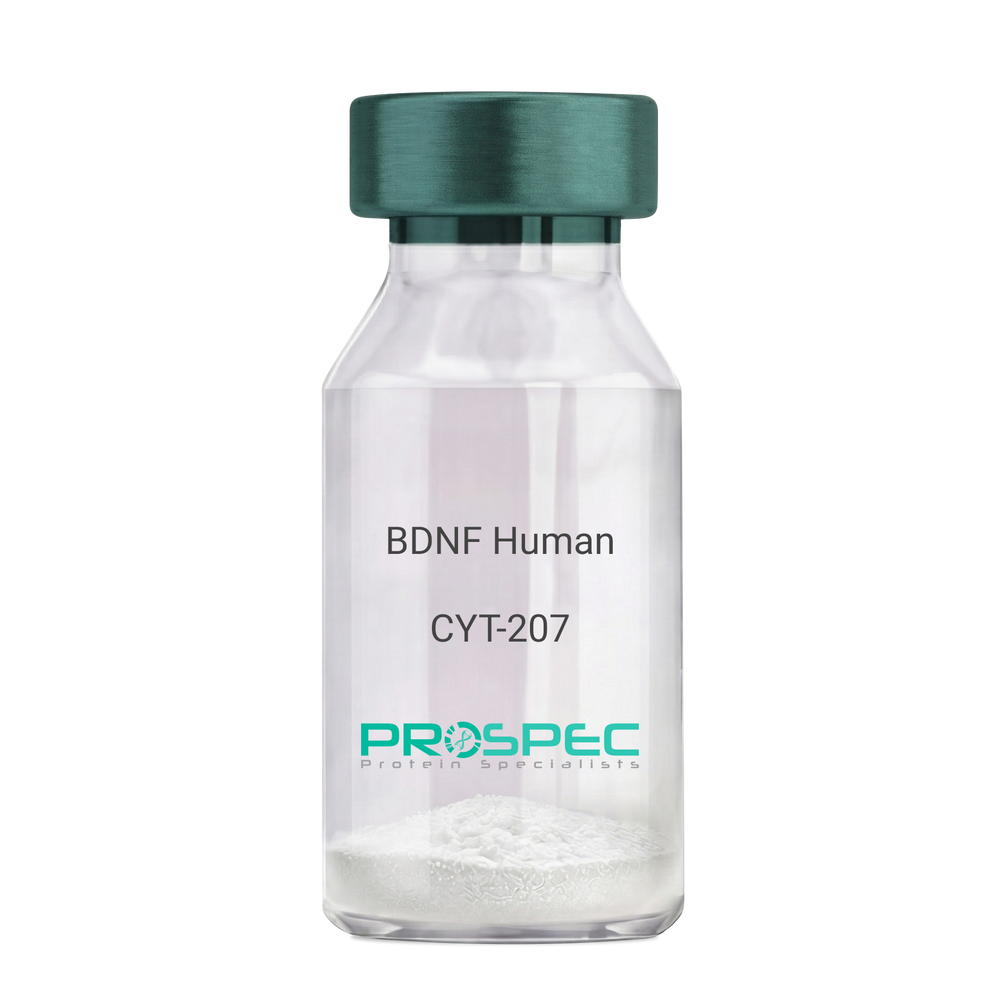
BDNF HumanDescription:
Brain-Derived Neurotrophic Factor Human Recombinant
Brain-Derived Neurotrophic Factor, BDNF, MGC34632.
Product # :
CYT-207Price :
Quantity :
Shipping Method :
Shipped at Room temp
More Info
- description
- source
- formulation
- purity
- biological activity
- More Info
- Activity
Description
BDNF Human Recombinant produced in E.Coli is a homodimer, non-glycosylated, polypeptide chain containing 2 x 119 amino acids (and an N-terminal Met) and having a total molecular mass of 28kDa. BDNF Human Recombinant is purified by proprietary chromatographic techniques.
Source
Escherichia Coli.
Formulation
The protein was lyophilized with 20mM PB and 400mM NaCl, pH 7.2.
Purity
BDNF is greater than 950% as determined SDS-PAGE.
Biological Activity
The activity was determined using Immobilized Human TrkB-His tag protein 2ug/ml (100 μl/well) for its binding to NHS-Biotin BDNF. The ED50 of was found to be ≤20ng/mLActivity
More Info
-
Introduction
BDNF promotes the survival of neuronal populations that are all located either in the central nervous system or directly connected to it. BDNF is a major regulator of synaptic transmission and plasticity at adult synapses in many regions of the cns. The versatility of BDNF is emphasized by its contribution to a range of adaptive neuronal responses including long-term potentiation (ltp), long-term depression (ltd), certain forms of short-term synaptic plasticity, as well as homeostatic regulation of intrinsic neuronal excitability.
-
Synonyms
Brain-Derived Neurotrophic Factor, BDNF, MGC34632.
-
Physical Appearance
Sterile Filtered White lyophilized (freeze-dried) powder.
-
Stability
Lyophilized BDNF although stable at room temperature for 3 weeks, should be stored desiccated below -18°C. Upon reconstitution BDNF should be stored at 4°C between 2-7 days and for future use below -18°C.For long term storage it is recommended to add a carrier protein (0.1% HSA or BSA).Please prevent freeze-thaw cycles.
-
Solubility
It is recommended to reconstitute the lyophilized BDNF in sterile 18M-cm H2O not less than 100µg/ml, which can then be further diluted to other aqueous solutions.
-
Amino Acid Sequence
HSDPARRGE LSVCDSISEW VTAADKKTAV DMSGGTVTVL EKVPVSKGQL KQYFYETKCN PMGYTKEGCR GIDKRHWNSQ CRTTQSYVRA LTMDSKKRIG WRFIRIDTSC VCTLTIKRGR.
-
Background
Final Thoughts
Although more research is needed on the safety and effectiveness of BDNF human recombinant, trials suggest that this laboratory-produced protein may be effective in managing and treating several neurological and psychiatric disorders. It's important for experts to stay up to date on the latest developments and research to learn more about potential risks and benefits.
What is the molecular weight/Mw of BDNF Protein?
BDNF Protein has a total Mw of 27kDa.
What is the source or expression system of BDNF Protein?
Escherichia Coli.
What is the Purity of BDNF Protein?
BDNF Protein is >97% pure as determined by SDS-PAGE.
What is the Biological Activity of BDNF Protein?
The ED50, as determined by the dose-dependent induction of C6 cells proliferation, is 1.3-2µg/ml.
What is the amino acid sequence of BDNF Protein?
MHSDPARRGE LSVCDSISEW VTAADKKTAV DMSGGTVTVL EKVPVSKGQL KQYFYETKCN PMGYTKEGCR GIDKRHWNSQ CRTTQSYVRA LTMDSKKRIG WRFIRIDTSC VCTLTIKRGR.
What applications can BDNF Protein be used in?
BDNF Protein can probably be used in western blot, ELISA and Lateral Flow.
What is the endotoxin level for BDNF Protein?
The endotoxin level is minimal, BDNF Protein was purified using conventional chromatography techniques.
-
Protein content
BDNF quantitation was carried out by two independent methods:1. UV spectroscopy at 280 nm using the absorbency value of 1.6 as the extinction coefficient for a 0.1% (1mg/ml) solution. This value is calculated by the PC GENE computer analysis program of protein sequences (IntelliGenetics). 2. Analysis by RP-HPLC, using a standard solution of Brain-derived Neurotrophic Factor as a Reference Standard.
ProSpec's products are furnished for LABORATORY RESEARCH USE ONLY. The product may not be used as drugs, agricultural or pesticidal products, food additives or household chemicals.
- View Data Sheet
Name :
SPINK7 HumanDescription:
Serine Peptidase Inhibitor Kazal Type 7 Human Recombinant
Serine peptidase inhibitor Kazal type 7, ECG2, ECRG2, Serine protease inhibitor Kazal-type 7, Esophagus cancer-related gene 2 protein, ECRG-2, SPINK7.
Product # :
PRO-1507Price :
Quantity :
Shipping Method :
Shipped with Ice Packs
More Info
- description
- source
- formulation
- purity
- More Info
Description
SPINK7 Human Recombinant produced in E.coli is a single, non-glycosylated polypeptide chain containing 89 amino acids (20-85) and having a molecular mass of 9.6 kDa.SPINK7 is fused to a 23 amino acid His-tag at N-terminus & purified by proprietary chromatographic techniques.
Source
Escherichia Coli.
Formulation
The SPINK7 solution (0.25mg/ml) contains 20mM Tris-HCl buffer (pH 8.0), 0.2M NaCl, 40% glycerol and 2mM DTT.
Purity
Greater than 85.0% as determined by SDS-PAGE.
More Info
-
Introduction
Serine peptidase inhibitor Kazal type 7 (SPINK7) which includes one Kazal-like domain is most likely serine protease inhibitor. Diseases linked with SPINK7 include esophageal cancer, and oral squamous cell carcinoma
-
Synonyms
Serine peptidase inhibitor Kazal type 7, ECG2, ECRG2, Serine protease inhibitor Kazal-type 7, Esophagus cancer-related gene 2 protein, ECRG-2, SPINK7.
-
Physical Appearance
Sterile Filtered colorless solution.
-
Stability
Store at 4°C if entire vial will be used within 2-4 weeks. Store, frozen at -20°C for longer periods of time. For long term storage it is recommended to add a carrier protein (0.1% HSA or BSA).Avoid multiple freeze-thaw cycles.
-
Amino Acid Sequence
MGSSHHHHHH SSGLVPRGSH MGSSEAASLS PKKVDCSIYK KYPVVAIPCP ITYLPVCGSD YITYGNECHL CTESLKSNGR VQFLHDGSC.
ProSpec's products are furnished for LABORATORY RESEARCH USE ONLY. The product may not be used as drugs, agricultural or pesticidal products, food additives or household chemicals.
- View Data Sheet
Name :
CKBB Human HisDescription:
Creatine Kinase Brain Human Recombinant, His Tag
EC 2.7.3.2, Creatine kinase B chain, Creatine kinase B type, CKB, CKBBB, B-CK, Creatine Kinase Brain.
Product # :
CKI-274Price :
Quantity :
Shipping Method :
Shipped with Ice Packs
More Info
- description
- source
- formulation
- purity
- More Info
Description
CKBB Recombinant Human produced in E.Coli is a single, non-glycosylated polypeptide chain containing 401 amino acids (1-381 a.a.) and having a molecular mass of 44.8 kDa. The CKB is fused to 20 amino acid His-Tag at N-terminus and purified by proprietary chromatographic techniques.
Source
Escherichia Coli.
Formulation
CKBB Human solution containing 20mM Trsi pH-8, 1mM DTT, & 10% glycerol.
Purity
Greater than 95.0% as determined by SDS-PAGE.
More Info
-
Introduction
CKB is a cytoplasmic enzyme that takes part in energy homeostasis. CKB enzyme reversibly catalyzes the transfer of phosphate among ATP and various phosphogens such as creatine phosphate. CKB functions as a homodimer in the brain as well as in different tissues, and as a heterodimer with a similar muscle isozyme in heart. Creatine kinases supply the energy of phosphate hydrolysis essential to drive the normal role of many cellular systems including muscle, tumor and cancer cells.
-
Synonyms
EC 2.7.3.2, Creatine kinase B chain, Creatine kinase B type, CKB, CKBBB, B-CK, Creatine Kinase Brain.
-
Physical Appearance
Sterile filtered colorless solution.
-
Stability
CKBB Human although stable at 4°C for 1 week, should be stored below -18°C. Please prevent freeze thaw cycles.
-
Amino Acid Sequence
MGSSHHHHHH SSGLVPRGSH MPFSNSHNAL KLRFPAEDEF PDLSAHNNHM AKVLTPELYA ELRAKSTPSG FTLDDVIQTG VDNPGHPYIM TVGCVAGDEE SYEVFKDLFD PIIEDRHGGY KPSDEHKTDL NPDNLQGGDD LDPNYVLSSR VRTGRSIRGF CLPPHCSRGE RRAIEKLAVE ALSSLDGDLA GRYYALKSMT EAEQQQLIDD HFLFDKPVSP LLLASGMARD WPDARGIWHN DNKTFLVWVN EEDHLRVISM QKGGNMKEVF TRFCTGLTQI ETLFKSKDYE FMWNPHLGYI LTCPSNLGTG LRAGVHIKLP NLGKHEKFSE VLKRLRLQKR GTGGVDTAAV GGVFDVSNAD
RLGFSEVELV QMVVDGVKLL IEMEQRLEQG QAIDDLMPAQ K.
ProSpec's products are furnished for LABORATORY RESEARCH USE ONLY. The product may not be used as drugs, agricultural or pesticidal products, food additives or household chemicals.
- View Data Sheet
Name :
CKS1B HumanDescription:
CDC28 Protein Kinase Regulatory Subunit 1B Human Recombinant
CDC28 Protein Kinase Regulatory Subunit 1B, CDC28 Protein Kinase 1B, Cyclin-Dependent Kinases Regulatory Subunit 1, NB4 Apoptosis/Differentiation Related Protein, CDC2-Associated Protein CKS1, Cell Division Control Protein CKS1, CDC28 Protein Kinase 1, PNAS-143, PNAS-16, PNAS-18, CKS-1, ckshs1.
Product # :
PRO-1834Price :
Quantity :
Shipping Method :
Shipped with Ice Packs
More Info
- description
- source
- formulation
- purity
- More Info
Description
CKS1B Human Recombinant produced in E.coli is a single, non-glycosylated polypeptide chain containing 102 amino acids (1-79) and having a molecular mass of 12.0 kDa. CKS1B is fused to a 23 amino acid His-tag at N-terminus.
Source
Escherichia Coli.
Formulation
The CKS1B solution (1mg/ml) contains 20mM Tris-HCl buffer (pH 8.0), 1mM DTT, 150mM NaCl and 20% glycerol.
Purity
Greater than 95% as determined by SDS-PAGE.
More Info
-
Introduction
CKS1B protein which binds to the catalytic subunit of cyclin dependent kinases is vital for their biological function. The CKS1B mRNA is expressed in HeLa cells during the course of cell cycle in several forms which suggests that the encoded protein has a particular function. Two transcript variants were identified for this gene however it seems that only one of them encodes a protein.
-
Synonyms
CDC28 Protein Kinase Regulatory Subunit 1B, CDC28 Protein Kinase 1B, Cyclin-Dependent Kinases Regulatory Subunit 1, NB4 Apoptosis/Differentiation Related Protein, CDC2-Associated Protein CKS1, Cell Division Control Protein CKS1, CDC28 Protein Kinase 1, PNAS-143, PNAS-16, PNAS-18, CKS-1, ckshs1.
-
Physical Appearance
Sterile Filtered clear solution.
-
Stability
Store at 4°C if entire vial will be used within 2-4 weeks. Store, frozen at -20°C for longer periods of time. For long term storage it is recommended to add a carrier protein (0.1% HSA or BSA).Avoid multiple freeze-thaw cycles.
-
Amino Acid Sequence
MGSSHHHHHH SSGLVPRGSH MGSMSHKQIY YSDKYDDEEF EYRHVMLPKD IAKLVPKTHL MSESEWRNLG VQQSQGWVHY MIHEPEPHIL LFRRPLPKKP KK
ProSpec's products are furnished for LABORATORY RESEARCH USE ONLY. The product may not be used as drugs, agricultural or pesticidal products, food additives or household chemicals.
- View Data Sheet
Name :
MED4 HumanDescription:
Mediator Complex Subunit 4 Human Recombinant
Mediator of RNA polymerase II transcription subunit 4, Mediator complex subunit 4, Vitamin D3 receptor-interacting protein complex 36 kDa component, Activator-recruited cofactor 36 kDa component, TRAP/SMCC/PC2 subunit p36 subunit, DRIP36, ARC36, MED4, VDRIP, TRAP36, HSPC126, FLJ10956, RP11-90M2.2.
Product # :
PRO-785Price :
Quantity :
Shipping Method :
Shipped with Ice Packs
More Info
- description
- source
- formulation
- purity
- More Info
Description
MED4 produced in E.Coli is a single, non-glycosylated polypeptide chain containing 278 amino acids (1-270 a.a.) and having a molecular mass of 30.7kDa. MED4 is fused to 8 amino acids His Tag at C-terminus and purified by proprietary chromatographic techniques.
Source
Escherichia Coli.
Formulation
The MED4 protein solution (0.5mg/ml) contains 20mM Tris-HCl buffer (pH8.0), 20% glycerol, 1mM DTT and 100mM NaCl.
Purity
Greater than 80.0% as determined by SDS-PAGE.
More Info
-
Introduction
Mediator complex subunit 4 (MED4) is a component of the Mediator complex, a coactivator involved in the regulated transcription of nearly all RNA polymerase II-dependent genes. MED4 is a component of the vitamin D receptor-interacting protein (DRIP) complex which functions as a nuclear receptor coactivator. The DRIP complex is able to activate nuclear receptors in a ligand-dependent manner. MED4 functions as a link to convey information from gene-specific regulatory proteins to the basal RNA polymerase II transcription apparatus. MED4 is recruited to promoters by direct interactions with regulatory proteins and serves as a scaffold for the assembly of a functional preinitiation complex with RNA polymerase II and the general transcription factors.
-
Synonyms
Mediator of RNA polymerase II transcription subunit 4, Mediator complex subunit 4, Vitamin D3 receptor-interacting protein complex 36 kDa component, Activator-recruited cofactor 36 kDa component, TRAP/SMCC/PC2 subunit p36 subunit, DRIP36, ARC36, MED4, VDRIP, TRAP36, HSPC126, FLJ10956, RP11-90M2.2.
-
Physical Appearance
Sterile filtered colorless solution.
-
Stability
Store at 4°C if entire vial will be used within 2-4 weeks. Store, frozen at -20°C for longer periods of time. For long term storage it is recommended to add a carrier protein (0.1% HSA or BSA). Avoid multiple freeze-thaw cycles.
-
Amino Acid Sequence
MAASSSGEKE KERLGGGLGV AGGNSTRERL LSALEDLEVL SRELIEMLAI SRNQKLLQAG EENQVLELLI HRDGEFQELM KLALNQGKIH HEMQVLEKEV EKRDGDIQQL QKQLKEAEQI LATAVYQAKE KLKSIEKARK GAISSEEIIK YAHRISASNA VCAPLTWVPG DPRRPYPTDL EMRSGLLGQM NNPSTNGVNG HLPGDALAAG RLPDVLAPQY PWQSNDMSMN MLPPNHSSDF LLEPPGHNKE DEDDVEIMST DSSSSSSESD LEHHHHHH.
ProSpec's products are furnished for LABORATORY RESEARCH USE ONLY. The product may not be used as drugs, agricultural or pesticidal products, food additives or household chemicals.
- View Data Sheet
Name :
YWHAE HumanDescription:
Tyr-3/Trp- 5 Monooxygenase Activation Protein Epsilon Human Recombinant
YWHAE, MDS, MDCR, KCIP-1, 14-3-3E, 14-3-3 Epsilon, FLJ45465, Tyr-3/Trp- 5 Monooxygenase Activation Protein Epsilon.
Product # :
PKA-253Price :
Quantity :
Shipping Method :
Shipped with Ice Packs
More Info
- description
- source
- formulation
- purity
- More Info
Description
YWHAE Human Recombinant produced in E.Coli is a single, non-glycosylated, polypeptide chain containing 255 amino acids (1-255) and having a molecular mass of 29 kDa. YWHAE is purified by proprietary chromatographic techniques.
Source
Escherichia Coli.
Formulation
YWHAE solution containing 20mM Tris 7.5.
Purity
Greater than 95.0% as determined by SDS-PAGE.
More Info
-
Introduction
The 14-3-3 family of proteins plays a key regulatory role in signal transduction, checkpoint control, apoptotic and nutrient-sensing pathways. 14-3-3 proteins are highly conserved and ubiquitously expressed. There are at least seven isoforms, β, γ, ε, σ, ζ, τ and η that have been identified in mammals. The 14-3-3 epsilon, a subtype of the 14-3-3 family of proteins, was thought to be brain and neuron-specific. It has been shown to interact with CDC25 phosphatases, RAF1 and IRS1 proteins, suggesting its role in diverse biochemical activities related to signal transduction, such as cell division and regulation of sensitivity. It has also been implicated in the pathogenesis of small cell lung cancer.
-
Synonyms
YWHAE, MDS, MDCR, KCIP-1, 14-3-3E, 14-3-3 Epsilon, FLJ45465, Tyr-3/Trp- 5 Monooxygenase Activation Protein Epsilon.
-
Physical Appearance
Sterile filtered colorless solution.
-
Stability
YWHAE Human Recombinant although stable at 4°C for 1 week, should be stored below -18°C. Please prevent freeze thaw cycles.
-
Amino Acid Sequence
MDDREDLVYQ AKLAEQAERY DEMVESMKKV AGMDVELTVE ERNLLSVAYK NVIGARRASWRIISSIEQKE ENKGGEDKLK MIREYRQMVE TELKLICCDI LDVLDKHLIP AANTGESKVFYYKMKGDYHR YLAEFATGND RKEAAENSLV AYKAASDIAM TELPPTHPIR LGLALNFSVFYYEILNSPDR ACRLAKAAFD DAIAELDTLS EESYKDSTLI MQLLRDNLTL WTSDMQGDGE EQNKEALQDV EDENQ.
ProSpec's products are furnished for LABORATORY RESEARCH USE ONLY. The product may not be used as drugs, agricultural or pesticidal products, food additives or household chemicals.
- View Data Sheet
Name :
SERTAD1 HumanDescription:
SERTA Domain Containing 1 Human Recombinant
SERTA domain-containing protein 1, CDK4-binding protein p34SEI1, SEI-1, Transcriptional regulator interacting with the PHD-bromodomain 1, TRIP-Br1, SERTAD1, SEI1.
Product # :
PRO-1157Price :
Quantity :
Shipping Method :
Shipped with Ice Packs
More Info
- description
- source
- formulation
- purity
- More Info
Description
SERTAD1 Human Recombinant produced in E.Coli is a single, non-glycosylated polypeptide chain containing 260 amino acids (1-236 a.a) and having a molecular mass of 27.3kDa (Molecular weight on SDS-PAGE will appear higher).SERTAD1 is fused to a 24 amino acid His-tag at N-terminus & purified by proprietary chromatographic techniques.
Source
Escherichia Coli.
Formulation
SERTAD1 protein solution (0.5mg/ml) containing 20mM Tris-HCl buffer (pH8.0), 10% glycerol and 1mM DTT.
Purity
Greater than 85% as determined by SDS-PAGE.
More Info
-
Introduction
SERTA domain-containing protein (SERTAD1) functions with E2F-responsive promoters to integrate signals provided by PHD- and/or bromodomain-containing transcription factors. SERTAD1 stimulates E2F-1/DP-1 transcriptional activity. SERTAD1 reduces the activity of cyclin D1/CDK4 resistant to the inhibitory effects of p16(INK4a). In addition, SERTAD1 interacts with the PHD-bromodomain of TIF1, TRIM28/TIF1B and p300/CBP. Furthermore, SERTAD1 binds to DP1 and interacts with CDK4.
-
Synonyms
SERTA domain-containing protein 1, CDK4-binding protein p34SEI1, SEI-1, Transcriptional regulator interacting with the PHD-bromodomain 1, TRIP-Br1, SERTAD1, SEI1.
-
Physical Appearance
Sterile filtered colorless solution.
-
Stability
Store at 4°C if entire vial will be used within 2-4 weeks. Store, frozen at -20°C for longer periods of time. For long term storage it is recommended to add a carrier protein (0.1% HSA or BSA).Avoid multiple freeze-thaw cycles.
-
Amino Acid Sequence
MGSSHHHHHH SSGLVPRGSH MGSHMLSKGL KRKREEEEEK EPLAVDSWWL DPGHTAVAQA PPAVASSSLF DLSVLKLHHS LQQSEPDLRH LVLVVNTLRR IQASMAPAAA LPPVPSPPAA PSVADNLLAS SDAALSASMA SLLEDLSHIE GLSQAPQPLA DEGPPGRSIG GAAPSLGALD LLGPATGCLL DDGLEGLFED IDTSMYDNEL WAPASEGLKP GPEDGPGKEE APELDEAELD YLMDVLVGTQ ALERPPGPGR.
ProSpec's products are furnished for LABORATORY RESEARCH USE ONLY. The product may not be used as drugs, agricultural or pesticidal products, food additives or household chemicals.
- View Data Sheet
Name :
ARPC2 HumanDescription:
Actin Related Protein 2/3 Complex, Subunit 2 Human Recombinant
ARC34, p34-Arc, PNAS-139, PRO2446, Actin-related protein 2/3 complex subunit 2, Arp2/3 complex 34 kDa subuni, ARPC2.
Product # :
PRO-1418Price :
Quantity :
Shipping Method :
Shipped with Ice Packs
More Info
- description
- source
- formulation
- purity
- More Info
Description
ARPC2 Human Recombinant produced in E.Coli is a single, non-glycosylated polypeptide chain containing 323 amino acids (1-300a.a) and having a molecular mass of 36.7kDa. ARPC2 is fused to a 23 amino acid His-tag at N-terminus & purified by proprietary chromatographic techniques.
Source
E.coli.
Formulation
ARPC2 protein solution (0.25mg/ml) containing 20mM Tris-HCl buffer (pH 8.0), 0.15M NaCl, 50% glycerol and 1mM DTT.
Purity
Greater than 90% as determined by SDS-PAGE.
More Info
-
Introduction
Actin-related protein 2/3 complex subunit 2 (ARPC2), is a part of the Rho family of small GTPases and one of seven subunits of the human Arp2/3 protein complex. The Arp2/3 protein complex has been implicated in the control of actin polymerization in cells and has been conserved through evolution. Nevertheless, the exact role of the protein (the p34 subunit) has yet to be determined.
-
Synonyms
ARC34, p34-Arc, PNAS-139, PRO2446, Actin-related protein 2/3 complex subunit 2, Arp2/3 complex 34 kDa subuni, ARPC2.
-
Physical Appearance
Sterile Filtered colorless solution.
-
Stability
Store at 4°C if entire vial will be used within 2-4 weeks. Store, frozen at -20°C for longer periods of time. For long term storage it is recommended to add a carrier protein (0.1% HSA or BSA).Avoid multiple freeze-thaw cycles.
-
Amino Acid Sequence
MGSSHHHHHH SSGLVPRGSH MGSMILLEVN NRIIEETLAL KFENAAAGNK PEAVEVTFAD FDGVLYHISN PNGDKTKVMV SISLKFYKEL QAHGADELLK RVYGSFLVNP ESGYNVSLLY DLENLPASKD SIVHQAGMLK RNCFASVFEK YFQFQEEGKE GENRAVIHYR DDETMYVESK KDRVTVVFST VFKDDDDVVI GKVFMQEFKE GRRASHTAPQ VLFSHREPPL ELKDTDAAVG DNIGYITFVL FPRHTNASAR DNTINLIHTF RDYLHYHIKC SKAYIHTRMR AKTSDFLKVL NRARPDAEKK EMKTITGKTF SSR.
ProSpec's products are furnished for LABORATORY RESEARCH USE ONLY. The product may not be used as drugs, agricultural or pesticidal products, food additives or household chemicals.
- View Data Sheet
Name :
GDF6 HumanDescription:
Bone Morphogenetic protein-13 Human Recombinant
Growth Differentiation Factor 6, Growth/Differentiation Factor 16, Bone Morphogenetic Protein 13, BMP-13, BMP13, GDF-6, Klippel-Feil Malformation, Segmentation Syndrome 1, Klip-Feil Malformation, Klippel-Feil Syndrome, MCOPCB6, SCDO4, CDMP2, LCA17, MCOP4, GDF16, KFS1, KFSL, SGM1, KFM, KFS, GDF6.
Product # :
CYT-938Price :
Quantity :
Shipping Method :
Shipped at Room temp
More Info
- description
- source
- formulation
- purity
- biological activity
- More Info
Description
BMP13 Human Recombinant produced in E.coli is a non-glycosylated disulfide linked homodimer containing 2 chains of 120 amino acids and having a molecular mass of 27.1kDa.The BMP-13 is purified by proprietary chromatographic techniques.
Source
Escherichia Coli.
Formulation
BMP-13 protein was lyophilized from a 0.2µm filtered concentrated solution in 30% Acetonitrile and 0.1% TFA.
Purity
Greater than 95.0% as determined by: (a) Analysis by HPLC. (b) Analysis by SDS-PAGE.
Biological Activity
The ED50 as determined by inducing alkaline phosphatase production of murine ATDC5 cells is less than 2.0µg/ml, corresponding to a specific activity of > 500IU/mg.More Info
-
Introduction
Growth/differentiation factors (GDF1-GDF15) belong to the BMP family of TGF-beta superfamily proteins. These factors are produced as inactive preproproteins which are subsequently cleaved and assembled into active secreted homodimers. BMP13 is a growth factor which controls proliferation and cellular differentiation in the retina and bone formation. BMP13 has a central role in regulating apoptosis during retinal development. GDF proteins are vital during embryonic development, particularly in the skeletal, nervous, and muscular systems. BMP13 gene mutations result in colobomata, which are congenital abnormalities in ocular development, and in Klippel-Feil syndrome (KFS), which is a congenital disorder of spinal segmentation.
-
Synonyms
Growth Differentiation Factor 6, Growth/Differentiation Factor 16, Bone Morphogenetic Protein 13, BMP-13, BMP13, GDF-6, Klippel-Feil Malformation, Segmentation Syndrome 1, Klip-Feil Malformation, Klippel-Feil Syndrome, MCOPCB6, SCDO4, CDMP2, LCA17, MCOP4, GDF16, KFS1, KFSL, SGM1, KFM, KFS, GDF6.
-
Physical Appearance
Sterile Filtered White lyophilized (freeze-dried) powder.
-
Stability
Lyophilized BMP13 although stable at room temperature for 3 weeks, should be stored desiccated below -18°C. Upon reconstitution BMP-13 should be stored at 4°C between 2-7 days and for future use below -18°C. For long term storage it is recommended to add a carrier protein (0.1% HSA or BSA). Please prevent freeze-thaw cycles.
-
Solubility
It is recommended to reconstitute the lyophilized BMP13 in sterile 18M-cm H2O not less than 100µg/ml, which can then be further diluted to other aqueous solutions.
-
Amino Acid Sequence
TAFASRHGKR HGKKSRLRCS KKPLHVNFKE LGWDDWIIAP LEYEAYHCEG VCDFPLRSHL EPTNHAIIQT LMNSMDPGST PPSCCVPTKL TPISILYIDA GNNVVYKQYE DMVVESCGCR.
-
Background
Bone Morphogenetic Protein-13 Human Recombinant: Unraveling its Potential in Tissue Engineering and Regenerative Medicine
Abstract:
Bone Morphogenetic Protein-13 (BMP-13) human recombinant is a pivotal member of the bone morphogenetic protein family, known for its crucial role in tissue development, regeneration, and repair. This research paper aims to provide a comprehensive analysis of BMP-13, including its characteristics, signaling pathways, and potential therapeutic applications. Furthermore, innovative methodologies for the production and optimization of BMP-13 human recombinant are proposed, shedding light on its future implications in the field of tissue engineering and regenerative medicine.
Introduction:
Tissue engineering and regenerative medicine hold great promise in addressing tissue repair and regeneration challenges. BMP-13, a prominent member of the BMP family, plays a vital role in orchestrating cellular responses during tissue development and healing. This paper explores the distinctive features of BMP-13 and presents novel approaches for the production and optimization of BMP-13 human recombinant, aiming to unlock its therapeutic potential in various regenerative contexts.
Characteristics and Signaling Pathways:
BMP-13 is a secreted growth factor belonging to the transforming growth factor-beta (TGF-β) superfamily. It exerts its biological effects by binding to specific cell surface receptors, initiating intricate intracellular signaling cascades. BMP-13 signaling pathways, including Smad-dependent and Smad-independent pathways, regulate critical processes such as cell differentiation, proliferation, and extracellular matrix synthesis, influencing tissue development and repair.
Production of BMP-13 Human Recombinant:
Efficient production methodologies are crucial for harnessing the therapeutic potential of BMP-13 human recombinant. Various recombinant protein expression systems, such as mammalian cells or baculovirus-insect cell systems, have been utilized for the production of functional BMP-13. Optimization strategies, including codon optimization, signal peptide engineering, and protein folding enhancement, have been employed to improve the yield and bioactivity of BMP-13 recombinant protein.
Potential Therapeutic Applications:
BMP-13 human recombinant holds immense promise in the field of tissue engineering and regenerative medicine. Its involvement in cartilage formation, osteogenesis, and tissue repair makes it a potential candidate for the treatment of musculoskeletal disorders, joint injuries, and cartilage defects. Furthermore, the ability of BMP-13 to modulate cell behavior and tissue remodeling indicates its wider therapeutic applications in diverse regenerative processes.
Conclusion:
BMP-13 human recombinant emerges as a crucial regulator in tissue engineering and regenerative medicine, offering significant potential for tissue repair and regeneration. Optimizing production methodologies and further unraveling its signaling mechanisms will undoubtedly enhance its therapeutic applications. Given its involvement in cartilage and bone formation, as well as tissue repair, BMP-13 human recombinant represents a valuable tool for promoting tissue regeneration and addressing the unmet clinical needs in regenerative medicine.
What is the molecular weight/Mw of GDF6 Protein?
GDF6 Protein has a total Mw of 27.1kDa.
What is the source or expression system of GDF6 Protein?
Escherichia Coli.
What is the Purity of GDF6 Protein?
GDF6 Protein is >95% pure as determined by SDS-PAGE.
What is the Biological Activity of GDF6 Protein?
The ED50 as determined by inducing alkaline phosphatase production of murine ATDC5 cells is less than 2.0µg/ml, corresponding to a specific activity of > 500IU/mg.
What is the amino acid sequence of GDF6 Protein?
TAFASRHGKR HGKKSRLRCS KKPLHVNFKE LGWDDWIIAP LEYEAYHCEG VCDFPLRSHL EPTNHAIIQT LMNSMDPGST PPSCCVPTKL TPISILYIDA GNNVVYKQYE DMVVESCGCR.
What applications can GDF6 Protein be used in?
GDF6 Protein can probably be used in western blot, ELISA and Lateral Flow.
What is the endotoxin level for GDF6 Protein?
The endotoxin level is minimal, GDF6 Protein was purified using conventional chromatography techniques.
ProSpec's products are furnished for LABORATORY RESEARCH USE ONLY. The product may not be used as drugs, agricultural or pesticidal products, food additives or household chemicals.
- View Data Sheet
Name :
FCAR HumanDescription:
Fc Fragment Of IgA Receptor Human Recombinant
Fc Fragment Of IgA Receptor, Fc Fragment Of IgA, Receptor For, CD89, Immunoglobulin Alpha Fc Receptor, Fc Alpha Receptor, FCAR Variant 14, IgA Fc Receptor, CD89 Antigen, CTB-61M7.2, FcalphaRI, Immunoglobulin alpha Fc receptor, IgA Fc receptor.
Product # :
PRO-2471Price :
Quantity :
Shipping Method :
Shipped with Ice Packs
More Info
- description
- source
- formulation
- purity
- More Info
Description
FCAR produced in Sf9 Baculovirus cells is a single, glycosylated polypeptide chain containing 215 amino acids (22-227a.a.) and having a molecular mass of 24.5kDa. (Molecular size on SDS-PAGE will appear at approximately 28-40kDa).FCAR is expressed with a 9 amino acid His tag at C-Terminus and purified by proprietary chromatographic techniques.
Source
Sf9, Baculovirus cells.
Formulation
FCAR protein solution (0.25mg/ml) contains Phosphate Buffered Saline (pH 7.4) and 10% glycerol.
Purity
Greater than 85.0% as determined by SDS-PAGE.
More Info
-
Introduction
Fc Fragment Of IgA Receptor, also known as FCAR, is part of the multichain immune recognition receptor family which is the most abundant immunoglobulin in mucosal areas however it is only the second most common antibody isotype in serum. FCAR participates in both pro-and anti-inflammatory responses depending on the state of IgA bound. FCAR is also a vital Fc receptor for neutrophil killing of tumor cells. Once FCAR expressing neutrophils interact with IgA-opsonized tumor cells, the neutrophils not only show antibody-dependent cell-mediated cytotoxicity, but also release the cytokines TNF-α and IL-1β which cause increased neutrophil migration to the site.
-
Synonyms
Fc Fragment Of IgA Receptor, Fc Fragment Of IgA, Receptor For, CD89, Immunoglobulin Alpha Fc Receptor, Fc Alpha Receptor, FCAR Variant 14, IgA Fc Receptor, CD89 Antigen, CTB-61M7.2, FcalphaRI, Immunoglobulin alpha Fc receptor, IgA Fc receptor.
-
Physical Appearance
Sterile Filtered colorless solution.
-
Stability
Store at 4°C if entire vial will be used within 2-4 weeks. Store, frozen at -20°C for longer periods of time. For long term storage it is recommended to add a carrier protein (0.1% HSA or BSA).Avoid multiple freeze-thaw cycles.
-
Amino Acid Sequence
ADPQEGDFPM PFISAKSSPV IPLDGSVKIQ CQAIREAYLT QLMIIKNSTY REIGRRLKFW NETDPEFVID HMDANKAGRY QCQYRIGHYR FRYSDTLELV VTGLYGKPFL SADRGLVLMP GENISLTCSS AHIPFDRFSL AKEGELSLPQ HQSGEHPANF SLGPVDLNVS GIYRCYGWYN RSPYLWSFPS NALELVVTDS IHQDYTTQNH HHHHH.
ProSpec's products are furnished for LABORATORY RESEARCH USE ONLY. The product may not be used as drugs, agricultural or pesticidal products, food additives or household chemicals.
- View Data Sheet
Name :
KLRC1 HumanDescription:
Killer Cell Lectin-Like Receptor Subfamily C, Member 1 Human Recombinant
NKG2-A/NKG2-B type II integral membrane protein isoform NKG2-A, KLRC1, Killer Cell Lectin-Like Receptor Subfamily C, Member 1, KLRC1, CD159A, NKG2, NKG2A, CD159 antigen-like family member A, NK cell receptor A, NKG2-A/B-activating NK receptor.
Product # :
PRO-2440Price :
Quantity :
Shipping Method :
Shipped with Ice Packs
More Info
- description
- source
- formulation
- purity
- More Info
Description
KLRC1 Human Recombinant produced in Sf9 Baculovirus cells is a single, glycosylated polypeptide chain containing 149 amino acids (94-233a.a.) and having a molecular mass of 17.1kDa. KLRC1 is expressed with a 9 amino acids His tag at C-Terminus and purified by proprietary chromatographic techniques.
Source
Sf9, Baculovirus cells.
Formulation
KLRC1 protein solution (0.25mg/ml) contains Phosphate Buffered Saline (pH 7.4) and 10% glycerol.
Purity
Greater than 90.0% as determined by SDS-PAGE.
More Info
-
Introduction
Killer Cell Lectin-Like Receptor Subfamily C, Member 1 (KLRC1) is a part of the killer cell lectin-like receptor family. KLRC1 functions as a receptor for the detection of MHC class I HLA-E molecules by NK cells and some cytotoxic T-cells. KLRC1 is also connects with CD94 and is expressed on NK cells and some activated T cell.
-
Synonyms
NKG2-A/NKG2-B type II integral membrane protein isoform NKG2-A, KLRC1, Killer Cell Lectin-Like Receptor Subfamily C, Member 1, KLRC1, CD159A, NKG2, NKG2A, CD159 antigen-like family member A, NK cell receptor A, NKG2-A/B-activating NK receptor.
-
Physical Appearance
Sterile Filtered colorless solution.
-
Stability
Store at 4°C if entire vial will be used within 2-4 weeks. Store, frozen at -20°C for longer periods of time. For long term storage it is recommended to add a carrier protein (0.1% HSA or BSA).Avoid multiple freeze-thaw cycles.
-
Amino Acid Sequence
ADPPSTLIQR HNNSSLNTRT QKARHCGHCP EEWITYSNSC YYIGKERRTW EESLLACTSK NSSLLSIDNE EEMKFLSIIS PSSWIGVFRN SSHHPWVTMN GLAFKHEIKD SDNAELNCAV LQVNRLKSAQ CGSSIIYHCK HKLHHHHHH
ProSpec's products are furnished for LABORATORY RESEARCH USE ONLY. The product may not be used as drugs, agricultural or pesticidal products, food additives or household chemicals.
- View Data Sheet
Name :
Activin-A Human ActiveDescription:
Activin-A Human Recombinant, Active
Inhba, Inhibin beta A, FSH releasing protein.
Product # :
CYT-145Price :
Quantity :
Shipping Method :
Shipped at Room temp
More Info
- description
- source
- formulation
- purity
- biological activity
- More Info
Description
Active form Activin-A Human Recombinant produced in e.coli is a homodimeric, non-glycosylated, polypeptide chain containing 2 x 117 amino acids and having a molecular weight of 26.2kDa.The Active form Activin-A is purified by standard chromatographic techniques.
Source
E.Coli.
Formulation
Human Activin-A was lyophilized from a concentrated 1mg/ml protein solution containing 0.1% TFA.
Purity
Greater than 95% as obsereved by SDS-PAGE.
Biological Activity
Biological activity is assessed by the ability to induce cytotoxicity of MPC-11 cells and was found to be 8.95ng/ml corresponding to a specific activity of 1.1 x 10⁵ units/mg.
More Info
-
Introduction
Activins are homodimers or heterodimers of the different β subunit isoforms, part of the TGFβ family. Mature Activin A has two 116 amino acids residues βA subunits (βA-βA). Activin displays an extensive variety of biological activities, including mesoderm induction, neural cell differentiation, bone remodelling, haematopoiesis, and reproductive physiology. Activins takes part in the production and regulation of hormones such as FSH, LH, GnRH and ACTH. Cells that are identified to express Activin A include fibroblasts, endothelial cells, hepatocytes, vascular smooth muscle cells, macrophages, keratinocytes, osteoclasts, bone marrow monocytes, prostatic epithelium, neurons, chondrocytes, osteoblasts, Leydig cells, Sertoli cells, and ovarian granulosa cells.
-
Synonyms
Inhba, Inhibin beta A, FSH releasing protein.
-
Physical Appearance
Lyophilized freeze dried powder.
-
Stability
Lyophilized Activin-A although stable at room temperature for 3 weeks, should be stored desiccated below -18°C. Upon reconstitution Activin-A should be stored at 4°C between 2-7 days and for future use below -18°C.For long term storage it is recommended to add a carrier protein (0.1% HSA or BSA).Please prevent freeze-thaw cycles.
-
Solubility
Human INHBA protein should be reconstituted in distilled pyrogen free water to a concentration of 100ug /ml which can then be further diluted to other aqueous solutions.
-
Amino Acid Sequence
MGLECDGKVN ICCKKQFFVS FKDIGWNDWI IAPSGYHANY CEGECPSHIA GTSGSSLSFH STVINHYRMR GHSPFANLKS CCVPTKLRPM SMLYYDDGQN IIKKDIQNMI VEECGCS.
-
Background
Title: Research on Activin A Human Recombinant: Molecular Characteristics, Signaling Pathways, Physiological Functions, and Therapeutic Potential
Introduction:
Activin A, a member of the transforming growth factor-beta (TGF-β) superfamily, is a multifunctional cytokine that plays a significant role in various biological processes in the human body. Its involvement in diverse physiological and pathological functions has garnered considerable attention in scientific research. This paper aims to provide an overview of Activin A, encompassing its molecular characteristics, signaling pathways, physiological functions, and therapeutic potential.
Activin A is encoded by the INHBA gene and is produced as a precursor protein that undergoes post-translational modifications to generate the mature form. The mature Activin A protein consists of two β-subunits held together by disulfide bonds. These structural features contribute to its functional properties and interactions with specific receptors.
Upon binding to its cell surface receptors, Activin A triggers intracellular signaling cascades, leading to various cellular responses. Canonical SMAD-dependent pathway as well as non-SMAD pathways, such as MAPK/ERK, PI3K/Akt, and JNK signaling, are activated by Activin A. The intricate network of signaling pathways enables Activin A to regulate diverse biological processes, including cell proliferation, differentiation, apoptosis, and tissue homeostasis.
Activin A exerts its physiological functions in a tissue-specific manner. It plays a critical role in embryonic development, particularly in organogenesis and patterning. Additionally, Activin A is involved in reproductive biology, where it participates in folliculogenesis, spermatogenesis, and hormonal regulation. It also contributes to neural development, immune system modulation, and skeletal homeostasis.
The multifunctional properties of Activin A have positioned it as a potential therapeutic target for various diseases. Its involvement in cancer, neurodegenerative disorders, fibrosis, and reproductive disorders has prompted extensive research to explore its therapeutic potential. Understanding the molecular mechanisms underlying Activin A's actions provides valuable insights for developing innovative therapeutic strategies.
In conclusion, Activin A is a versatile cytokine with diverse roles in human biology. This research aims to deepen our understanding of its molecular characteristics, signaling pathways, physiological functions, and therapeutic potential. By elucidating the complexities of Activin A, we strive to pave the way for novel therapeutic interventions in various human diseases.
ProSpec's products are furnished for LABORATORY RESEARCH USE ONLY. The product may not be used as drugs, agricultural or pesticidal products, food additives or household chemicals.
- View Data Sheet
Name :
CRYBA4 HumanDescription:
Crystallin Beta A4 Human Recombinant
Beta-crystallin A4, Beta-A4 crystallin, CRYBA4, MCOPCT4.
Product # :
HSP-048Price :
Quantity :
Shipping Method :
Shipped with Ice Packs
More Info
- description
- source
- formulation
- purity
- More Info
Description
CRYBA4 Human Recombinant produced in E.Coli is a single, non-glycosylated polypeptide chain containing 216 amino acids (1-196 a.a.) and having a molecular mass of 24.5kDa.CRYBA4 is fused to a 20 amino acid His-tag at N-terminus & purified by proprietary chromatographic techniques.
Source
Escherichia Coli.
Formulation
The CRYBA4 protein (1mg/ml) 20mM Tris-HCl buffer (pH8.0), 20% glycerol, 0.1M NaCl and 1mM DTT.
Purity
Greater than 95.0% as determined by SDS-PAGE.
More Info
-
Introduction
Beta-crystallin A4 (CRYBA4) is a member of the beta/gamma-crystallin family which are the dominant structural components of the vertebrate eye lens. Beta-crystallins construct aggregates of various sizes and are able to self-associate to form dimers or to form heterodimers with other beta-crystallins. The CRYBA4 gene being a beta acidic group member is part of a gene cluster with beta-B1, beta-B2, and beta-B3.
-
Synonyms
Beta-crystallin A4, Beta-A4 crystallin, CRYBA4, MCOPCT4.
-
Physical Appearance
Sterile filtered colorless solution.
-
Stability
Store at 4°C if entire vial will be used within 2-4 weeks. Store, frozen at -20°C for longer periods of time. For long term storage it is recommended to add a carrier protein (0.1% HSA or BSA).Avoid multiple freeze-thaw cycles.
-
Amino Acid Sequence
MGSSHHHHHH SSGLVPRGSH MTLQCTKSAG PWKMVVWDED GFQGRRHEFT AECPSVLELG FETVRSLKVL SGAWVGFEHA GFQGQQYILE RGEYPSWDAW GGNTAYPAER LTSFRPAACA NHRDSRLTIF EQENFLGKKG ELSDDYPSLQ AMGWEGNEVG SFHVHSGAWV CSQFPGYRGF QYVLECDHHS GDYKHFREWG SHAPTFQVQS IRRIQQ.
ProSpec's products are furnished for LABORATORY RESEARCH USE ONLY. The product may not be used as drugs, agricultural or pesticidal products, food additives or household chemicals.
- View Data Sheet
Name :
KCTD5 HumanDescription:
Potassium Channel Tetramerisation Domain Containing 5 Human Recombinant
BTB/POZ domain-containing protein KCTD5, KCTD5.
Product # :
PRO-1276Price :
Quantity :
Shipping Method :
Shipped with Ice Packs
More Info
- description
- source
- formulation
- purity
- More Info
Description
KCTD5 Human Recombinant produced in E. coli is a single polypeptide chain containing 257 amino acids (1-234) and having a molecular mass of 28.5 kDa. KCTD5 is fused to a 23 amino acid His-tag at N-terminus & purified by proprietary chromatographic techniques.
Source
E.coli.
Formulation
The KCTD5 solution (0.25mg/ml) contains 20mM Tris-HCl buffer (pH 8.0), 0.2M NaCl, 40% glycerol and 1mM DTT.
Purity
Greater than 90% as determined by SDS-PAGE.
More Info
-
Introduction
BTB/POZ domain-containing protein KCTD5 (KCTD5), is a 234 amino acid protein which localizes mainly in the cytoplasm however translocates to the nucleus on interaction with REP proteins. The expression of KCTD5 is up regulated post-transcriptionally in peripheral blood lymphocytes stimulated via the T-cell receptor. KCTD5 interacts particularly with cullin3, attaches ubiquitinated proteins, and created oligomers through its BTB domain.
-
Synonyms
BTB/POZ domain-containing protein KCTD5, KCTD5.
-
Physical Appearance
Sterile Filtered colorless solution.
-
Stability
Store at 4°C if entire vial will be used within 2-4 weeks. Store, frozen at -20°C for longer periods of time. For long term storage it is recommended to add a carrier protein (0.1% HSA or BSA).Avoid multiple freeze-thaw cycles.
-
Amino Acid Sequence
MGSSHHHHHH SSGLVPRGSH MGSMAENHCE LLSPARGGIG AGLGGGLCRR CSAGLGALAQ RPGSVSKWVR LNVGGTYFLT TRQTLCRDPK SFLYRLCQAD PDLDSDKDET GAYLIDRDPT YFGPVLNYLR HGKLVINKDL AEEGVLEEAE FYNITSLIKL VKDKIRERDS KTSQVPVKHV YRVLQCQEEE LTQMVSTMSD GWKFEQLVSI GSSYNYGNED QAEFLCVVSK ELHNTPYGTA SEPSEKAKIL QERGSRM
ProSpec's products are furnished for LABORATORY RESEARCH USE ONLY. The product may not be used as drugs, agricultural or pesticidal products, food additives or household chemicals.
- View Data Sheet
Name :
GAP43 HumanDescription:
Growth Associated Protein 43 Human Recombinant
Growth associated protein 43, Axonal membrane protein GAP-43, Neural phosphoprotein B-50, calmodulin-binding protein P-57, nerve growth-related peptide GAP43, neuromodulin, protein F1, pp46, B-50.
Product # :
PRO-1126Price :
Quantity :
Shipping Method :
Shipped with Ice Packs
More Info
- description
- source
- formulation
- purity
- More Info
Description
GAP43 Human Recombinant produced in E. coli is a single polypeptide chain containing 262 amino acids (1-238) and having a molecular mass of 27.3kDa (Molecular size on SDS-PAGE will appear higher).GAP43 is fused to a 24 amino acid His-tag at N-terminus & purified by proprietary chromatographic techniques.
Source
E.coli.
Formulation
The GAP43 solution (0.5mg/ml) contains 20mM Tris-HCl buffer (pH 8.0), 100mM Nacl and 10% glycerol.
Purity
Greater than 90% as determined by SDS-PAGE.
More Info
-
Introduction
GAP43 is a phosphoprotein of the presynaptic membrane that takes part in synaptic reorganization and neural development. GAP43 is found in large quantities in neuronal growth cones all through the development and axonal regeneration. Additionally, GAP43 is involved in specific regions of the normal adult nervous system and has a vital part in the conservation mechanism of long-term potentiation (LTP).
-
Synonyms
Growth associated protein 43, Axonal membrane protein GAP-43, Neural phosphoprotein B-50, calmodulin-binding protein P-57, nerve growth-related peptide GAP43, neuromodulin, protein F1, pp46, B-50.
-
Physical Appearance
Sterile Filtered colorless solution.
-
Stability
Store at 4°C if entire vial will be used within 2-4 weeks. Store, frozen at -20°C for longer periods of time. For long term storage it is recommended to add a carrier protein (0.1% HSA or BSA).Avoid multiple freeze-thaw cycles.
-
Amino Acid Sequence
MGSSHHHHHH SSGLVPRGSH MGSHMLCCMR RTKQVEKNDD DQKIEQDGIK PEDKAHKAAT KIQASFRGHI TRKKLKGEKK DDVQAAEAEA NKKDEAPVAD GVEKKGEGTT TAEAAPATGS KPDEPGKAGE TPSEEKKGEG DAATEQAAPQ APASSEEKAG SAETESATKA STDNSPSSKA EDAPAKEEPK QADVPAAVTA AAATTPAAED AAAKATAQPP TETGESSQAE ENIEAVDETK PKESARQDEG KEEEPEADQE HA
ProSpec's products are furnished for LABORATORY RESEARCH USE ONLY. The product may not be used as drugs, agricultural or pesticidal products, food additives or household chemicals.
- View Data Sheet
Name :
KARS HumanDescription:
Lysyl-tRNA Synthetase Human Recombinant
Lysine--tRNA ligase, Lysyl-tRNA synthetase, LysRS, KARS, KIAA0070, KRS, KARS2, CMTRIB.
Product # :
ENZ-161Price :
Quantity :
Shipping Method :
Shipped with Ice Packs
More Info
- description
- source
- formulation
- purity
- More Info
Description
KARS Human Recombinant produced in E.Coli is a single, non-glycosylated polypeptide chain containing 558 amino acids (63-597 a.a.) and having a molecular mass of 63.7kDa.KARS is fused to a 23 amino acid His-tag at N-terminus & purified by proprietary chromatographic techniques.
Source
Escherichia Coli.
Formulation
KARS protein solution (1mg/ml) containing 20mM Tris-HCl buffer (pH8.0), 20% glycerol, 0.1M NaCl and 1mM DTT.
Purity
Greater than 95.0% as determined by SDS-PAGE.
More Info
-
Introduction
Lysyl-tRNA synthetase (KARS) is a member of the class-II aminoacyl-tRNA synthetase family. KARS exists as both mitochondrial and cytoplasmic isoforms produced by alternative splicing, and believed to have a role in autoimmune diseases, such as polymyositis or dermatomyositis. The KARS protein functions to catalyze the aminoacylation of tRNAs by their corresponding amino acids, so linking amino acids with tRNA-contained nucleotide triplets.
-
Synonyms
Lysine--tRNA ligase, Lysyl-tRNA synthetase, LysRS, KARS, KIAA0070, KRS, KARS2, CMTRIB.
-
Physical Appearance
Sterile Filtered colorless solution.
-
Stability
Store at 4°C if entire vial will be used within 2-4 weeks. Store, frozen at -20°C for longer periods of time. For long term storage it is recommended to add a carrier protein (0.1% HSA or BSA).Avoid multiple freeze-thaw cycles.
-
Amino Acid Sequence
MGSSHHHHHH SSGLVPRGSH MGSGVGPEEE SVDPNQYYKI RSQAIHQLKV NGEDPYPHKF HVDISLTDFI QKYSHLQPGD HLTDITLKVA GRIHAKRASG GKLIFYDLRG EGVKLQVMAN SRNYKSEEEF IHINNKLRRG DIIGVQGNPG KTKKGELSII PYEITLLSPC LHMLPHLHFG LKDKETRYRQ RYLDLILNDF VRQKFIIRSK IITYIRSFLD ELGFLEIETP MMNIIPGGAV AKPFITYHNE LDMNLYMRIA PELYHKMLVV GGIDRVYEIG RQFRNEGIDL THNPEFTTCE FYMAYADYHD LMEITEKMVS GMVKHITGSY KVTYHPDGPE GQAYDVDFTP PFRRINMVEE LEKALGMKLP ETNLFETEET RKILDDICVA KAVECPPPRT TARLLDKLVG EFLEVTCINP TFICDHPQIM SPLAKWHRSK EGLTERFELF VMKKEICNAY TELNDPMRQR QLFEEQAKAK AAGDDEAMFI DENFCTALEY GLPPTAGWGM GIDRVAMFLT DSNNIKEVLL FPAMKPEDKK ENVATTDTLE STTVGTSV.
ProSpec's products are furnished for LABORATORY RESEARCH USE ONLY. The product may not be used as drugs, agricultural or pesticidal products, food additives or household chemicals.
- View Data Sheet
Name :
KLK3, HisDescription:
Kallikrein-3 Human Recombinant, His Tag
Prostate-specific antigen, PSA, Gamma-seminoprotein, Seminin, Kallikrein-3, P-30 antigen, Semenogelase, KLK3, APS, hK3, KLK2A1.
Product # :
ENZ-620Price :
Quantity :
Shipping Method :
Shipped with Ice Packs
More Info
- description
- source
- formulation
- purity
- More Info
Description
KLK3 Human Recombinant produced in E.coli is a single, non-glycosylated polypeptide chain containing 262 amino acids (25-261) and having a molecular mass of 28.8kDa.The KLK3 is fused to a 25 amino acid His-Tag at N-terminus and purified by proprietary chromatographic techniques.
Source
Escherichia Coli.
Formulation
KLK3 protein solution (1mg/ml) is supplied in 20mM Tris-HCl buffer (pH8.0) and 0.4M Urea.
Purity
Greater than 85.0% as determined by SDS-PAGE.
More Info
-
Introduction
Kallikrein-3 (KLK3) belongs to the kallikrein-related peptidase family. Kallikreins are a subgroup of serine proteases having various physiological functions. Numerous kallikreins are involved in carcinogenesis and some may be prospective cancer and other disease biomarkers. Kallikrein-3 is 1 of the 15 kallikrein subfamily members located in a cluster on chromosome 19 and is a protease present in seminal plasma. KLK3 hydrolyzes semenogelin-1 consequently leading to the liquefaction of the seminal coagulum. KLK3 is assumed to act normally in the liquefaction of seminal coagulum, probably by hydrolysis of the high molecular mass seminal vesicle protein. Serum level of the KLK3 protein, called PSA in the clinical setting, is beneficial in the diagnosis and monitoring of prostatic carcinoma.
-
Synonyms
Prostate-specific antigen, PSA, Gamma-seminoprotein, Seminin, Kallikrein-3, P-30 antigen, Semenogelase, KLK3, APS, hK3, KLK2A1.
-
Physical Appearance
Sterile Filtered clear solution.
-
Stability
Store at 4°C if entire vial will be used within 2-4 weeks. Store, frozen at -20°C for longer periods of time. For long term storage it is recommended to add a carrier protein (0.1% HSA or BSA).Avoid multiple freeze-thaw cycles.
-
Amino Acid Sequence
MGSSHHHHHH SSGLVPRGSH MGSHMIVGGW ECEKHSQPWQ VLVASRGRAV CGGVLVHPQW VLTAAHCIRN KSVILLGRHS LFHPEDTGQV FQVSHSFPHP LYDMSLLKNR FLRPGDDSSH DLMLLRLSEP AELTDAVKVM DLPTQEPALG TTCYASGWGS IEPEEFLTPK KLQCVDLHVI SNDVCAQVHP QKVTKFMLCA GRWTGGKSTC SGDSGGPLVC NGVLQGITSW GSEPCALPER PSLYTKVVHY RKWIKDTIVA NP.
ProSpec's products are furnished for LABORATORY RESEARCH USE ONLY. The product may not be used as drugs, agricultural or pesticidal products, food additives or household chemicals.
- View Data Sheet
Name :
YWHAG Human, HisDescription:
Tyr-3/Trp-5 Monooxygenase Activation Protein Gamma Human Recombinant, His Tag
14-3-3 protein gamma, Protein kinase C inhibitor protein 1, KCIP-1, YWHAG, Tyrosine 3-monooxygenase/tryptophan 5-monooxygenase activation protein, gamma polypeptide.
Product # :
PKA-262Price :
Quantity :
Shipping Method :
Shipped with Ice Packs
More Info
- description
- source
- formulation
- purity
- More Info
Description
YWHAG Human Recombinant produced in E.Coli is a single, non-glycosylated, polypeptide chain containing 246 amino acids (2-247) and having a molecular mass of 36 kDa. YWHAG is fused to His Tag and purified by proprietary chromatographic techniques.
Source
Escherichia Coli.
Formulation
YWHAG solution containing 1x PBS and 50% glycerol.
Purity
Greater than 95.0% as determined by SDS-PAGE.
More Info
-
Introduction
The 14-3-3 family of proteins plays a key regulatory role in signal transduction, checkpoint control, apoptotic and nutrient-sensing pathways. 14-3-3 proteins are highly conserved and ubiquitously expressed. There are at least seven isoforms that have been identified in mammals. The 14-3-3gamma, a subtype of the 14-3-3 family of proteins, was thought to be brain and neuron-specific. It has been shown to interact with RAF1 and protein kinase C, proteins involved in various signal transduction pathways.
-
Synonyms
14-3-3 protein gamma, Protein kinase C inhibitor protein 1, KCIP-1, YWHAG, Tyrosine 3-monooxygenase/tryptophan 5-monooxygenase activation protein, gamma polypeptide.
-
Physical Appearance
Sterile filtered colorless solution.
-
Stability
Store at 4°C if entire vial will be used within 2-4 weeks. Store, frozen at -20°C for longer periods of time. Avoid multiple freeze-thaw cycles.
ProSpec's products are furnished for LABORATORY RESEARCH USE ONLY. The product may not be used as drugs, agricultural or pesticidal products, food additives or household chemicals.
- View Data Sheet
Name :
CKMM Human ActiveDescription:
Creatine Kinase MB Muscle Human Recombinant
CKMB, CK-MB
Product # :
CKI-201Price :
Quantity :
Shipping Method :
Shipped at Room temp
More Info
- description
- source
- formulation
- purity
- biological activity
- More Info
Description
CKMM Human Recombinant produced in E. coli is a non-glycosylated disulfide-linked homodimer containing 2 x 381 amino acids and having a total molecular mass of approximately 86.2kDa. CKMM is purified by proprietary chromatographic techniques.
Source
Escherichia Coli.
Formulation
The protein was Lyophilized from a 0.2µm filtered concentrated solution in 20mM Tris, 150mM NaCl and 1mM TCEP, pH 8.0.
Purity
Greater than 95.0% as determined by Analysis by SDS-PAGE.
Biological Activity
The specific activity is > 1,900 pmol/min/μg and was measured by its ability to phosphorylate creatine at room temperature.More Info
-
Physical Appearance
Sterile Filtered White lyophilized (freeze-dried) powder.
-
Stability
Lyophilized CKMM Active although stable at room temperature for 3 weeks, should be stored desiccated below -18°C. Upon reconstitution CKMM Active should be stored at 4°C between 2-7 days and for future use below -18°C.
Please prevent freeze-thaw cycles. -
Solubility
It is recommended to reconstitute the lyophilized CKMM in sterile 18MΩ-cm H2O not less than 100µg/ml, which can then be further diluted to other aqueous solutions.
-
Amino Acid Sequence
MPFGNTHNKF KLNYKPEEEY PDLSKHNNHM AKVLTLELYK KLRDKETPSG FTVDDVIQTG VDNPGHPFIM TVGCVAGDEE SYEVFKELFD PIISDRHGGY KPTDKHKTDL NHENLKGGDD LDPNYVLSSR VRTGRSIKGY TLPPHCSRGE RRAVEKLSVE ALNSLTGEFK GKYYPLKSMT EKEQQQLIDD HFLFDKPVSP LLLASGMARD WPDARGIWHN DNKSFLVWVN EEDHLRVISM EKGGNMKEVF RRFCVGLQKI EEIFKKAGHP FMWNQHLGYV LTCPSNLGTG LRGGVHVKLA HLSKHPKFEE ILTRLRLQKR GTGGVDTAAV GSVFDVSNAD RLGSSEVEQV QLVVDGVKLM VEMEKKLEKG QSIDDMIPAQ K.
-
Background
CKMM is the muscle-specific form enzyme which catalyzes the reversible transfer of phosphate between ATP and creatine, thus keeping rapid cellular energy homeostasis in skeletal and cardiac muscle. Recombinant CKMM protein is used in studies of muscle metabolism, exercise physiology, muscular dystrophies, biomarker assay development, enzyme kinetics, and the evaluation of compounds affecting energy metabolism and muscle function.
What is the molecular weight / Mw of CKMM Protein?
CKMM Protein is a non covalently homodimer having a total Mw of 86.2kDa
What is the source or expression system of CKMM Protein?
Escherichia Coli.
What is the Purity of CKMM Protein?
CKMM Protein is >95% pure as determined by SDS-PAGE.
What is the Biological Activity of CKMM Protein?
The enzymatic activity was determined by its ability to phosphorylate creatine at room temperature. The specific activity is > 1,900 pmol/min/μg.
What is the amino acid sequence of CKMM Protein?
MPFGNTHNKF KLNYKPEEEY PDLSKHNNHM AKVLTLELYK KLRDKETPSG FTVDDVIQTG VDNPGHPFIM TVGCVAGDEE SYEVFKELFD PIISDRHGGY KPTDKHKTDL NHENLKGGDD LDPNYVLSSR VRTGRSIKGY TLPPHCSRGE RRAVEKLSVE ALNSLTGEFK GKYYPLKSMT EKEQQQLIDD HFLFDKPVSP LLLASGMARD WPDARGIWHN DNKSFLVWVN EEDHLRVISM EKGGNMKEVF RRFCVGLQKI EEIFKKAGHP FMWNQHLGYV LTCPSNLGTG LRGGVHVKLA HLSKHPKFEE ILTRLRLQKR GTGGVDTAAV GSVFDVSNAD RLGSSEVEQV QLVVDGVKLM VEMEKKLEKG QSIDDMIPAQ K
What applications can CKMM Protein be used in?
CKMM Protein can probably be used in western blot, ELISA and Lateral Flow.
What is the endotoxin level for CKMM Protein?
The endotoxin level is minimal, CKMM Protein was purified using conventional chromatography techniques.
ProSpec's products are furnished for LABORATORY RESEARCH USE ONLY. The product may not be used as drugs, agricultural or pesticidal products, food additives or household chemicals.
- View Data Sheet
Name :
CKMB HumanDescription:
Creatine Kinase MB Human Recombinant
CKMB, CK-MB
Product # :
CKI-286Price :
Quantity :
Shipping Method :
Shipped with Ice Packs
More Info
- description
- source
- formulation
- purity
- More Info
Description
Recombinant Human Creatine Kinase MB produced in E.Coli is a single, non-glycosylated, polypeptide chain, having a molecular weight of ~44kDa.The CKMB is purified by proprietary chromatographic techniques.
Source
Escherichia Coli.
Formulation
The protein solution contains 50mM Tris-HCL, 5mM B-mercaptoethanol, 1mM EDTA, 5mM disodium Succinate, Ph 8.0 and 50% glycerol.
Purity
Greater than 90.0% as determined by SDS-PAGE.
More Info
-
Introduction
The three isoenzymes (MM, MB, and BB) are found in muscle, cardiac and brain tissues. These recombinant proteins are ideal for calibrating diagnostic instruments and researching neuromuscular diseases. Creatine Kinases can be used for indications in many neuromuscular applications. These disorders include cardiac disease, mitochondrial disorders, inflammatory myopathies, myasthenia, polymyositis, McArdle's disease, NMJ disorders, muscular dystrophy, ALS, hypo and hyperthyroid disorders, central core disease, acid maltase deficiency, myoglobinuria, rhabdomyolysis, motor neuron diseases, rheumatic diseases, and other that create elevated or reduced levels of Creatine Kinases.
-
Physical Appearance
Sterile Filtered colorless liquid formulation.
-
Stability
CKMB although stable at 10°C for 7 days, should be stored below -18°C.Please prevent freeze-thaw cycles.
ProSpec's products are furnished for LABORATORY RESEARCH USE ONLY. The product may not be used as drugs, agricultural or pesticidal products, food additives or household chemicals.
- View Data Sheet
Name :
Cyclophilin B Human, HisDescription:
Cyclophilin-B Human Recombinant, His Tag
Peptidylprolyl isomerase B, PPIase, Rotamase, S-cyclophilin, PPIB, cyclophilin-like protein, peptidyl-prolyl cis-trans isomerase B, Cyclophilin B, SCYLP, CYPB, CYP-S1, MGC2224, MGC14109.
Product # :
ENZ-808Price :
Quantity :
Shipping Method :
Shipped at Room temp
More Info
- description
- source
- formulation
- purity
- More Info
Description
Cyclophilin-B Human Recombinant produced in E.Coli is a single, non-glycosylated, polypeptide chain (Asp34-Glu216) containing 193 amino acids including a 10 aa His tag at N-terminus. The total calculated molecular mass is 22kDa.
Source
Escherichia Coli.
Formulation
Cyclophilin-B was filtered (0.4 µm) and lyophilized in 20mM Tris buffer and 50mM NaCl, pH 7.5.
Purity
Greater than 95.0% as determined by SDS-PAGE.
More Info
-
Introduction
Cyclophilin B (also known as PPIB, peptidylpropyl isomerase B) is a cyclosporine-binding protein and is mainly located within the endoplasmic reticulum. It is associated with the secretory pathway and released in biological fluids. This protein can bind to cells derived from T- and B-lymphocytes, and may regulate cyclosporine A-mediated immunosuppression.
-
Synonyms
Peptidylprolyl isomerase B, PPIase, Rotamase, S-cyclophilin, PPIB, cyclophilin-like protein, peptidyl-prolyl cis-trans isomerase B, Cyclophilin B, SCYLP, CYPB, CYP-S1, MGC2224, MGC14109.
-
Physical Appearance
Filtered White lyophilized (freeze-dried) powder.
-
Stability
Store lyophilized protein at -20°C. Aliquot the product after reconstitution to avoid repeated freezing/thawing cycles. Reconstituted protein can be stored at 4°C for a limited period of time; it does not show any change after two weeks at 4°C.
-
Solubility
It is recommended to add deionized water to prepare a working stock solution of approximately 0.5mg/ml and let the lyophilized pellet dissolve completely. Cyclophilin-B is not sterile! Please filter the product by an appropriate sterile filter before using it in the cell culture.
-
Amino Acid Sequence
MKHHHHHHAS DEKKKGPKVT VKVYFDLRIG DEDVGRVIFG LFGKTVPKTV DNFVALATGE KGFGYKNSKF HRVIKDFMIQ GGDFTRGDGT GGKSIYGERF PDENFKLKHY GPGWVSMANA GKDTNGSQFF ITTVKTAWLD GKHVVFGKVL EGMEVVRKVE STKTDSRDKP LKDVIIADCG KIEVEKPFAI AKE.
ProSpec's products are furnished for LABORATORY RESEARCH USE ONLY. The product may not be used as drugs, agricultural or pesticidal products, food additives or household chemicals.
- View Data Sheet
Name :
Cyclophilin C HumanDescription:
Cyclophilin-C Human Recombinant
Peptidylprolyl Isomerase C (Cyclophilin C), Cyclophilin C, Rotamase C, EC 5.2.1.8, PPIase C, CYPC, Peptidyl-Prolyl Cis-Trans Isomerase C, Parvulin, PPIC.
Product # :
ENZ-809Price :
Quantity :
Shipping Method :
Shipped at Room temp
More Info
- description
- source
- formulation
- purity
- More Info
Description
Cyclophilin-C Human Recombinant produced in E.Coli is a single, non-glycosylated, polypeptide chain (Phe29-Trp212) containing 194 amino acids including a 10 aa His tag at N-terminus. The total calculated molecular mass is 21.3kDa.
Source
Escherichia Coli.
Formulation
Cyclophilin-C was filtered (0.4 µm) and lyophilized in 20mM Tris buffer and 50mM NaCl, pH 7.5.
Purity
Greater than 95.0% as determined by SDS-PAGE.
More Info
-
Introduction
Cyclophilin-C belongs to the peptidyl-prolyl cis-trans isomerase (PPIase)) family. PPIases catalyze the cis-trans isomerization of proline imidic peptide bonds in oligopeptides and accelerate the folding of proteins. Like other PPIases, the Cyclophilin-C protein can bind immunosuppressant cyclosporin A.
-
Synonyms
Peptidylprolyl Isomerase C (Cyclophilin C), Cyclophilin C, Rotamase C, EC 5.2.1.8, PPIase C, CYPC, Peptidyl-Prolyl Cis-Trans Isomerase C, Parvulin, PPIC.
-
Physical Appearance
Filtered White lyophilized (freeze-dried) powder.
-
Stability
Store lyophilized protein at -20°C. Aliquot the product after reconstitution to avoid repeated freezing/thawing cycles. Reconstituted protein can be stored at 4°C for a limited period of time; it does not show any change after two weeks at 4°C.
-
Solubility
It is recommended to add deionized water to prepare a working stock solution of approximately 0.5mg/ml and let the lyophilized pellet dissolve completely. Cyclophilin-C is not sterile! Please filter the product by an appropriate sterile filter before using it in the cell culture.
-
Amino Acid Sequence
MKHHHHHHASFRKRGPSVTA KVFFDVRIGD KDVGRIVIGL FGKVVPKTVE NFVALATGEK GYGYKGSKFH RVIKDFMIQG GDITTGDGTG GVSIYGETFP DENFKLKHYG IGWVSMANAG PDTNGSQFFI TLTKPTWLDG KHVVFGKVID GMTVVHSIEL QATDGHDRPL TNCSIINSGK IDVKTPFVVE IADW.
ProSpec's products are furnished for LABORATORY RESEARCH USE ONLY. The product may not be used as drugs, agricultural or pesticidal products, food additives or household chemicals.
- View Data Sheet
Name :
SARS Nucleocapsid, 1-49 a.a.Description:
SARS-Associated Coronavirus Nuclecapsid (1-49 a.a.), Recombinant
Product # :
SARS-005Price :
Quantity :
Shipping Method :
Shipped with Ice Packs
More Info
- description
- source
- formulation
- purity
- More Info
Description
The E.coli derived recombinant protein contains the Nucleocapsid protein 1-49 amino acids immunodominant regions.
Source
Escherichia Coli.
Formulation
SARS Nucleocaspid protein solution is supplied in PBS.
Purity
Protein is >90% pure as determined SDS-PAGE.
More Info
-
Introduction
The SARS Nucleocaspid is a protein that has a crucial structural importance, by making the virions associates with the RNA genome and therefore create a nucleocapsid that has the specific helical form. There has been found 3 different domain structures to the nucleocapsid antigen. This protein contains 3 outer structural proteins, the membrane (M), envelope (E), and spike (S) proteins.
-
Physical Appearance
Sterile Filtered clear solution.
-
Stability
Protein is shipped on ice packs. Upon arrival, Store at -20°C.
-
Specificity
Immunoreactive with sera of SARS-infected individuals.
-
Purification Method
Purified by proprietary chromatographic technique.
ProSpec's products are furnished for LABORATORY RESEARCH USE ONLY. The product may not be used as drugs, agricultural or pesticidal products, food additives or household chemicals.