Skip to content

High-quality research proteins.

  • 1-800-805-6531

  • Mon - Sat 8.00-18.00, Sun - Closed

  • info@prospecbio.com

  • PO Box 6591 East Brunswick NJ 08816

  • Products
    • Cytokines
    • Growth factors
    • Chemokines
    • Cd antigens
    • Neurotrophins
    • Hormones
    • Enzymes
    • Viral antigens
    • Recombinant proteins
    • Natural proteins
    • Monoclonal antibodies
    • Polyclonal antibodies
    • Thermal Packaging
  • About
    • Company
    • Founder
    • Contribution
  • Customers
    • Eastern Asia
    • Eastern Europe
    • North America
    • South America
    • South East Asia
    • Southern Asia
    • Western Europe
  • Ordering
    • Ordering Method
    • Ordering - Credit Card
    • Ordering - PO
    • Shipping Fees
    • FAQs
  • Services
    • DNA Cloning
    • Protein Expression
    • Monoclonal Antibody
    • Fermentation
    • Technology License
  • Contact us
Log in

Country/region

  • USD $ | Albania
  • USD $ | Andorra
  • USD $ | Argentina
  • USD $ | Armenia
  • USD $ | Australia
  • USD $ | Austria
  • USD $ | Azerbaijan
  • USD $ | Belarus
  • USD $ | Belgium
  • USD $ | Bolivia
  • USD $ | Brazil
  • USD $ | Bulgaria
  • USD $ | Cambodia
  • USD $ | Canada
  • USD $ | Chile
  • USD $ | China
  • USD $ | Colombia
  • USD $ | Costa Rica
  • USD $ | Croatia
  • USD $ | Cyprus
  • USD $ | Czechia
  • USD $ | Denmark
  • USD $ | Estonia
  • USD $ | Finland
  • USD $ | France
  • USD $ | Georgia
  • USD $ | Germany
  • USD $ | Greece
  • USD $ | Hong Kong SAR
  • USD $ | Hungary
  • USD $ | Iceland
  • USD $ | India
  • USD $ | Ireland
  • USD $ | Israel
  • USD $ | Italy
  • USD $ | Japan
  • USD $ | Kazakhstan
  • USD $ | Latvia
  • USD $ | Liechtenstein
  • USD $ | Lithuania
  • USD $ | Madagascar
  • USD $ | Malta
  • USD $ | Mexico
  • USD $ | Moldova
  • USD $ | Monaco
  • USD $ | Netherlands
  • USD $ | New Zealand
  • USD $ | North Macedonia
  • USD $ | Norway
  • USD $ | Panama
  • USD $ | Paraguay
  • USD $ | Peru
  • USD $ | Philippines
  • USD $ | Poland
  • USD $ | Portugal
  • USD $ | Romania
  • USD $ | Singapore
  • USD $ | Slovakia
  • USD $ | Slovenia
  • USD $ | South Africa
  • USD $ | South Korea
  • USD $ | Spain
  • USD $ | Sri Lanka
  • USD $ | Sweden
  • USD $ | Switzerland
  • USD $ | Taiwan
  • USD $ | Thailand
  • USD $ | Türkiye
  • USD $ | Ukraine
  • USD $ | United Kingdom
  • USD $ | United States
  • USD $ | Uruguay
  • USD $ | Vatican City
  • USD $ | Venezuela
  • USD $ | Vietnam
  • Facebook
  • Instagram
logoProSpec - Recombinant Protein Manufacturer for academic and R&D industry
Become a distributor
Account Log in
Wishlist
Cart Cart(0)
  • Products
    +
    • Cytokines
    • Growth factors
    • Chemokines
    • Cd antigens
    • Neurotrophins
    • Hormones
    • Enzymes
    • Viral antigens
    • Recombinant proteins
    • Natural proteins
    • Monoclonal antibodies
    • Polyclonal antibodies
    • Thermal Packaging
  • About
    +
    • Company
    • Founder
    • Contribution
  • Customers
    +
    • Eastern Asia
    • Eastern Europe
    • North America
    • South America
    • South East Asia
    • Southern Asia
    • Western Europe
  • Ordering
    +
    • Ordering Method
    • Ordering - Credit Card
    • Ordering - PO
    • Shipping Fees
    • FAQs
  • Services
    +
    • DNA Cloning
    • Protein Expression
    • Monoclonal Antibody
    • Fermentation
    • Technology License
  • Contact us

Item added to your cart

View cart
View All
  • Cytokines
  • Growth factors
  • Chemokines
  • Cd antigens
  • Neurotrophins
  • Hormones
  • Enzymes
  • Viral antigens
  • Recombinant proteins
  • Natural proteins
  • Monoclonal antibodies
  • Polyclonal antibodies
  • Thermal Packaging
  • Tumor Necrosis Factor

    Tumor Necrosis Factor

    View All
  • 4-1BB

    4-1BB

    View All
  • Adiponectin

    Adiponectin

    View All
  • AIF1

    AIF1

    View All
  • Other Cytokines

    Other Cytokines

    View All
  • AITRL

    AITRL

    View All
  • Angiopoietin

    Angiopoietin

    View All
  • Apolipoprotein

    Apolipoprotein

    View All
  • B-Cell Activating Factor

    B-Cell Activating Factor

    View All
  • Beta Defensin

    Beta Defensin

    View All
  • Bone Morphogenetic Protein

    Bone Morphogenetic Protein

    View All
  • B type Natriuretic Peptide

    B type Natriuretic Peptide

    View All
  • BST

    BST

    View All
  • Betacellulin

    Betacellulin

    View All
  • Cardiotrophin

    Cardiotrophin

    View All
  • Activin

    Activin

    View All
  • Fibroblast Growth Factor

    Fibroblast Growth Factor

    View All
  • Other Growth Factors

    Other Growth Factors

    View All
  • CSF

    CSF

    View All
  • CTGF

    CTGF

    View All
  • IGFBP

    IGFBP

    View All
  • VEGF Protein

    VEGF Protein

    View All
  • EGF

    EGF

    View All
  • Epigen

    Epigen

    View All
  • Erythropoietin

    Erythropoietin

    View All
  • Insulin-Like Growth Factor

    Insulin-Like Growth Factor

    View All
  • Growth Hormone

    Growth Hormone

    View All
  • HDGF

    HDGF

    View All
  • Hepatocyte Growth Factor

    Hepatocyte Growth Factor

    View All
  • Insulin

    Insulin

    View All
  • BCA-1/ BLC (CXCL13)

    BCA-1/ BLC (CXCL13)

    View All
  • BRAK (CXCL14)

    BRAK (CXCL14)

    View All
  • C-10 (CCL6)

    C-10 (CCL6)

    View All
  • Other Chemokines

    Other Chemokines

    View All
  • MEC (CCL28)

    MEC (CCL28)

    View All
  • LD78-beta (CCL3L1)

    LD78-beta (CCL3L1)

    View All
  • CTACK (CCL27)

    CTACK (CCL27)

    View All
  • CXCL16

    CXCL16

    View All
  • CXCL17

    CXCL17

    View All
  • Platelet Factor-4 (CXCL4)

    Platelet Factor-4 (CXCL4)

    View All
  • ENA-78 (CXCL5)

    ENA-78 (CXCL5)

    View All
  • Eotaxin (CCL11,24,26)

    Eotaxin (CCL11,24,26)

    View All
  • Exodus-2 (CCL21)

    Exodus-2 (CCL21)

    View All
  • Fractalkine (CX3CL1)

    Fractalkine (CX3CL1)

    View All
  • CXCL6

    CXCL6

    View All
  • Other CD Antigens

    Other CD Antigens

    View All
  • CD14

    CD14

    View All
  • CD164

    CD164

    View All
  • CD1

    CD1

    View All
  • CD2

    CD2

    View All
  • CD200

    CD200

    View All
  • CD207

    CD207

    View All
  • CD226

    CD226

    View All
  • CD23

    CD23

    View All
  • CD244

    CD244

    View All
  • CD247

    CD247

    View All
  • CD27

    CD27

    View All
  • CD274

    CD274

    View All
  • CD300

    CD300

    View All
  • CD33

    CD33

    View All
  • Other Neurotrophins

    Other Neurotrophins

    View All
  • Beta-NGF

    Beta-NGF

    View All
  • BDNF

    BDNF

    View All
  • CDNF

    CDNF

    View All
  • CNTF

    CNTF

    View All
  • GDNF

    GDNF

    View All
  • Glia Maturation Factor

    Glia Maturation Factor

    View All
  • MANF

    MANF

    View All
  • Midkine

    Midkine

    View All
  • Neuroglobin

    Neuroglobin

    View All
  • Neurotrophic factors

    Neurotrophic factors

    View All
  • Neuregulin

    Neuregulin

    View All
  • Neuropilin

    Neuropilin

    View All
  • Pigment Epithelium-Derived Factor

    Pigment Epithelium-Derived Factor

    View All
  • Pleiotrophin

    Pleiotrophin

    View All
  • Peptide Hormones

    Peptide Hormones

    View All
  • Other Hormones

    Other Hormones

    View All
  • HCG

    HCG

    View All
  • Endothelin

    Endothelin

    View All
  • Exendin

    Exendin

    View All
  • FSH

    FSH

    View All
  • Glucagon

    Glucagon

    View All
  • GHRP

    GHRP

    View All
  • GLP

    GLP

    View All
  • Thyrostimulin

    Thyrostimulin

    View All
  • Inhibin A

    Inhibin A

    View All
  • LHRH

    LHRH

    View All
  • Melanotan

    Melanotan

    View All
  • Procalcitonin

    Procalcitonin

    View All
  • PTH

    PTH

    View All
  • Peroxiredoxin

    Peroxiredoxin

    View All
  • Peptidase

    Peptidase

    View All
  • Synthetase

    Synthetase

    View All
  • Transferase

    Transferase

    View All
  • Hydrolase

    Hydrolase

    View All
  • Dehydrogenase

    Dehydrogenase

    View All
  • ACE2

    ACE2

    View All
  • Esterase

    Esterase

    View All
  • Protein Kinases

    Protein Kinases

    View All
  • Other Enzymes

    Other Enzymes

    View All
  • Phosphatase

    Phosphatase

    View All
  • Deaminase

    Deaminase

    View All
  • Oxygenase

    Oxygenase

    View All
  • Adenylate Kinase

    Adenylate Kinase

    View All
  • Lyase

    Lyase

    View All
  • Chagas

    Chagas

    View All
  • SARS

    SARS

    View All
  • Influenza

    Influenza

    View All
  • ASFV

    ASFV

    View All
  • Astrovirus

    Astrovirus

    View All
  • Borrelia

    Borrelia

    View All
  • Helicobacter Pylori

    Helicobacter Pylori

    View All
  • Chikungunya

    Chikungunya

    View All
  • Chlamydia

    Chlamydia

    View All
  • Cytomegalo

    Cytomegalo

    View All
  • Dengue

    Dengue

    View All
  • EBV

    EBV

    View All
  • Ebola

    Ebola

    View All
  • Feline Leukemia Virus

    Feline Leukemia Virus

    View All
  • Hepatitis A

    Hepatitis A

    View All
  • Other

    Other

    View All
  • Actin

    Actin

    View All
  • ADAM

    ADAM

    View All
  • Complement Component

    Complement Component

    View All
  • Ag85

    Ag85

    View All
  • Eukaryotic Translation Initiation Factor

    Eukaryotic Translation Initiation Factor

    View All
  • Anterior Gradient Protein

    Anterior Gradient Protein

    View All
  • Heat Shock Protein

    Heat Shock Protein

    View All
  • Alpha-2-HS-Glycoprotein

    Alpha-2-HS-Glycoprotein

    View All
  • Hemoglobin

    Hemoglobin

    View All
  • Allergy

    Allergy

    View All
  • Anaplasma

    Anaplasma

    View All
  • Angiogenin

    Angiogenin

    View All
  • Ankyrin Repeat Domain

    Ankyrin Repeat Domain

    View All
  • Annexin

    Annexin

    View All
  • Other Natural Proteins

    Other Natural Proteins

    View All
  • Aprotinin

    Aprotinin

    View All
  • Transferrin

    Transferrin

    View All
  • Avidin

    Avidin

    View All
  • Anti Coagulation Factors

    Anti Coagulation Factors

    View All
  • Natural Albumin

    Natural Albumin

    View All
  • Natural Coagulation Factors

    Natural Coagulation Factors

    View All
  • Fibronectin

    Fibronectin

    View All
  • Thrombin

    Thrombin

    View All
  • Anti Human Enzyme

    Anti Human Enzyme

    View All
  • Other Monoclonal Antibodies

    Other Monoclonal Antibodies

    View All
  • Anti Human Cytokine

    Anti Human Cytokine

    View All
  • Anti Human Heat Shock Protein

    Anti Human Heat Shock Protein

    View All
  • Anti Mouse Lymphocyte

    Anti Mouse Lymphocyte

    View All
  • Anti Human Chemokine

    Anti Human Chemokine

    View All
  • Anti Human Lymphocyte

    Anti Human Lymphocyte

    View All
  • Anti Viral Monoclonal

    Anti Viral Monoclonal

    View All
  • Anti Mouse Cytokine

    Anti Mouse Cytokine

    View All
  • Anti-GST Monoclonal

    Anti-GST Monoclonal

    View All
  • Other Polyclonal Antibodies

    Other Polyclonal Antibodies

    View All
  • Anti Viral

    Anti Viral

    View All
  • Anti-GST Monoclonal

    Anti-GST Monoclonal

    View All
Back

Search results

1000 results found for “hepatitis d”

Name

Description

Product #

Price

Quantity

Shipping Method

  • View Data Sheet

    Name :

    MDH E. coli

    Description:

    Malate Dehydrogenase Recombinant

    Malate dehydrogenase cytoplasmic, EC 1.1.1.37, Cytosolic malate dehydrogenase, MDHA, MOR2, MDH-s, MGC:1375, MDH1.

    Product # :

    ENZ-598

    Price :

    Quantity :

    Shipping Method :

    Ice Icon

    Shipped with Ice Packs

    Add To Cart

    More Info

    • description
    • source
    • formulation
    • purity
    • More Info
    • Citations

    Description

    MDH Recombinant produced in E. coli is a single polypeptide chain containing 336 amino acids (1-312) and having a molecular mass of 34.9kDa.MDH is fused to a 24 amino acid His-tag at N-terminus & purified by proprietary chromatographic techniques.

    Source

    E.coli.

    Formulation

    The MDH solution (1mg/ml) contains 20mM Tris-HCl buffer (pH 8.0), 50mM Nacl, 1mM DTT and 10% glycerol.

    Purity

    Greater than 95% as determined by SDS-PAGE.

    Citations

    More Info

    • Introduction

      Malate dehydrogenase (EC1.1.1.37) is an enzyme in the citric acid cycle that catalyzes the conversion of malate into oxaloacetate (using NAD+) and vice versa (this is a reversible reaction). Malate dehydrogenase is not to be confused with malic enzyme, which catalyzes the conversion of pyruvate using NADPH.
      Malate dehydrogenase is also involved in gluconeogenesis, the synthesis of glucose from smaller molecules. Pyruvate in the mitochondria is acted upon by pyruvate carboxylase to form oxaloacetate, a citric acid cycle intermediate. In order to get the oxaloacetate out of the mitochondria, malate dehydrogenase reduces it to malate, and it then traverses the inner mitochondrial membrane. Once in the cytosol, the malate is oxidized back to oxaloacetate by cytosolic malate dehydrogenase. Finally, phosphoenol-pyruvate carboxy kinase (PEPCK) converts oxaloacetate to phosphoenol pyruvate.

    • Synonyms

      Malate dehydrogenase cytoplasmic, EC 1.1.1.37, Cytosolic malate dehydrogenase, MDHA, MOR2, MDH-s, MGC:1375, MDH1.

    • Physical Appearance

      Sterile Filtered colorless solution.

    • Stability

      Store at 4°C if entire vial will be used within 2-4 weeks. Store, frozen at -20°C for longer periods of time. For long term storage it is recommended to add a carrier protein (0.1% HSA or BSA).Avoid multiple freeze-thaw cycles.

    • Amino Acid Sequence

      MGSSHHHHHH SSGLVPRGSH MGSHMKVAVL GAAGGIGQAL ALLLKTQLPS GSELSLYDIA PVTPGVAVDL SHIPTAVKIK GFSGEDATPA LEGADVVLIS AGVARKPGMD RSDLFNVNAG IVKNLVQQVA KTCPKACIGI ITNPVNTTVA IAAEVLKKAG VYDKNKLFGV TTLDIIRSNT FVAELKGKQP GEVEVPVIGG HSGVTILPLL SQVPGVSFTE QEVADLTKRI QNAGTEVVEA KAGGGSATLS MGQAAARFGL SLVRALQGEQ GVVECAYVEG DGQYARFFSQ PLLLGKNGVE ERKSIGTLSA FEQNALEGML DTLKKDIALG EEFVNK

    ProSpec's products are furnished for LABORATORY RESEARCH USE ONLY. The product may not be used as drugs, agricultural or pesticidal products, food additives or household chemicals.

    Mdh
  • View Data Sheet

    Name :

    DHRS4 Human

    Description:

    Dehydrogenase/Reductase Member 4 Human Recombinant

    Dehydrogenase/reductase SDR family member 4, NADPH-dependent carbonyl reductase/NADP-retinol dehydrogenase, CR, PHCR, NADPH-dependent retinol dehydrogenase/reductase, NRDR, humNRDR, Peroxisomal short-chain alcohol dehydrogenase, PSCD, SCAD-SRL, Short-chain dehydrogenase/reductase family member 4, DHRS4, SDR-SRL, SDR25C1, SDR25C2.

    Product # :

    ENZ-207

    Price :

    Quantity :

    Shipping Method :

    Ice Icon

    Shipped with Ice Packs

    Add To Cart

    More Info

    • description
    • source
    • formulation
    • purity
    • More Info
    • Citations

    Description

    DHRS4 Human Recombinant produced in E.coli is a single, non-glycosylated polypeptide chain containing 302 amino acids (1-278) and having a molecular mass of 32.1kDa.DHRS4 is fused to a 24 amino acid His-tag at N-terminus & purified by proprietary chromatographic techniques.

    Source

    Escherichia Coli.

    Formulation

    The DHRS4 solution (0.25mg/ml) contains 20mM Tris-HCl buffer (pH7.5), 20% glycerol and 1mM DTT.

    Purity

    Greater than 85.0% as determined by SDS-PAGE.

    Citations

    More Info

    • Introduction

      Dehydrogenase/reductase SDR family member 4 (DHRS4) is a member of the short-chain dehydrogenases/reductases (SDR) family. DHRS4 reduces all trans retinal and 9-cis retinal. In addition, the DHRS4 protein can catalyze the oxidation of all trans retinol with NADP as cofactor, but with a much lower efficiency. Furthermore, DHRS4 reduces alkyl phenyl ketones and alpha dicarbonyl compounds with aromatic rings, such as pyrimidine 4 aldehyde, 3 benzoylpyridine, 4 benzoylpyridine, menadione and 4 hexanoylpyridine.

    • Synonyms

      Dehydrogenase/reductase SDR family member 4, NADPH-dependent carbonyl reductase/NADP-retinol dehydrogenase, CR, PHCR, NADPH-dependent retinol dehydrogenase/reductase, NRDR, humNRDR, Peroxisomal short-chain alcohol dehydrogenase, PSCD, SCAD-SRL, Short-chain dehydrogenase/reductase family member 4, DHRS4, SDR-SRL, SDR25C1, SDR25C2.

    • Physical Appearance

      Sterile Filtered colorless solution.

    • Stability

      Store at 4°C if entire vial will be used within 2-4 weeks. Store, frozen at -20°C for longer periods of time. For long term storage it is recommended to add a carrier protein (0.1% HSA or BSA).Avoid multiple freeze-thaw cycles.

    • Amino Acid Sequence

      MGSSHHHHHH SSGLVPRGSH MGSHMHKAGL LGLCARAWNS VRMASSGMTR RDPLANKVAL VTASTDGIGF AIARRLAQDG AHVVVSSRKQ QNVDQAVATL QGEGLSVTGT VCHVGKAEDR ERLVATAVKL HGGIDILVSN AAVNPFFGSI MDVTEEVWDK TLDINVKAPA LMTKAVVPEM EKRGGGSVVI VSSIAAFSPS PGFSPYNVSK TALLGLTKTL AIELAPRNIR VNCLAPGLIK TSFSRMLWMD KEKEESMKET LRIRRLGEPE DCAGIVSFLC SEDASYITGE TVVVGGGTPS RL.

    ProSpec's products are furnished for LABORATORY RESEARCH USE ONLY. The product may not be used as drugs, agricultural or pesticidal products, food additives or household chemicals.

    Dhrs4 Human
  • View Data Sheet

    Name :

    CTSD Mouse

    Description:

    Cathepsin-D Mouse Recombinant

    Ctsd, CatD, CD, Cathepsin D.

    Product # :

    ENZ-1017

    Price :

    Quantity :

    Shipping Method :

    Ice Icon

    Shipped with Ice Packs

    Add To Cart

    More Info

    • description
    • source
    • formulation
    • purity
    • biological activity
    • More Info
    • Citations

    Description

    CTSD produced in Sf9 Baculovirus cells is a single, glycosylated polypeptide chain containing 398 amino acids (21-410 a.a.) and having a molecular mass of 44.0kDa (Molecular size on SDS-PAGE will appear at approximately 40-57kDa). CTSD is expressed with an 8 amino acid His tag at C-Terminus and purified by proprietary chromatographic techniques.

    Source

    Sf9, Baculovirus cells.

    Formulation

    CTSD protein solution (0.25mg/ml) contains Phosphate Buffered Saline (pH 7.4) and 10% glycerol.

    Purity

    Greater than 90.0% as determined by SDS-PAGE.

    Biological Activity

    Specific activity is > 1,000 pmol/min/ug in which one unit will convert 1.0 pmole of Mca-PLGL-Dpa-AR-NH2 to MCA- Pro-Leu-OH per minute at pH 3.5 at 25C.

    Citations

    More Info

    • Introduction

      Cathepsin D is synthesized as a 54kDa precursor, which is proteolytically processed to an intermediate 48kDa single chain, which matures into more stable 34kDa and 14kDa two chain form. It is an estrogen-regulated lysosomal protease that has been suggested to facilitate cancer cell migration and invasion by digesting the basement membrane, extracellular matrix, and xonnective tissue. Because of its mitogenic and proteolytic activities, it has been implicated as a prognostic marker in many tumor types. Cathepsin D is expressed in epithelial cells as well as in macrophages.

    • Synonyms

      Ctsd, CatD, CD, Cathepsin D.

    • Physical Appearance

      Sterile Filtered colorless solution.

    • Stability

      Store at 4°C if entire vial will be used within 2-4 weeks. Store, frozen at -20°C for longer periods of time. For long term storage it is recommended to add a carrier protein (0.1% HSA or BSA). Avoid multiple freeze-thaw cycles.

    • Amino Acid Sequence

      IIRIPLRKFT SIRRTMTEVG GSVEDLILKG PITKYSMQSS PKTTEPVSEL LKNYLDAQYY GDIGIGTPPQ CFTVVFDTGS SNLWVPSIHC KILDIACWVH HKYNSDKSST YVKNGTSFDI HYGSGSLSGY LSQDTVSVPC KSDQSKARGI KVEKQIFGEA TKQPGIVFVA AKFDGILGMG YPHISVNNVL PVFDNLMQQK LVDKNIFSFY LNRDPEGQPG GELMLGGTDS KYYHGELSYL NVTRKAYWQV HMDQLEVGNE LTLCKGGCEA IVDTGTSLLV GPVEEVKELQ KAIGAVPLIQ GEYMIPCEKV SSLPTVYLKL GGKNYELHPD KYILKVSQGG KTICLSGFMG MDIPPPSGPL WILGDVFIGS YYTVFDRDNN RVGFANAVVL LEHHHHHH.

    ProSpec's products are furnished for LABORATORY RESEARCH USE ONLY. The product may not be used as drugs, agricultural or pesticidal products, food additives or household chemicals.

    Ctsd Mouse
  • View Data Sheet

    Name :

    CFD Human

    Description:

    Complement Factor D Human

    Complement factor D, Adipsin, C3 convertase activator, Properdin factor D, CFD, DF, PFD.

    Product # :

    PRO-2699

    Price :

    Quantity :

    Shipping Method :

    Ice Icon

    Shipped with Ice Packs

    Add To Cart

    More Info

    • description
    • source
    • formulation
    • purity
    • More Info
    • Citations

    Description

    Human Complement Factor D produced in Human plasma is glycosylated polypeptide chain having a total molecular mass of 24kDa.

    Source

    Human Plasma.

    Formulation

    CFD protein solution contains 10mM Sodium phosphate and 145mM NaCl, pH 7.3.

    Purity

    Greater than 95.0% as determined by SDS-PAGE.

    Citations

    More Info

    • Introduction

      CFD is an important component of the alternative pathway of complement activation. CFD cleaves and activates factor B when it binds C3b or a C3b-like protein such as C3 or CVF. CFD is a serine protease that exists as a mature protease, but it exhibits a highly restricted specificity and it appears to be substrate activated. CFD cleaves factor B bound to C3b leading to the release of the Ba fragment and leaving the Bb fragment bound to C3b. The C3b,Bb complex is called a C3 or C5 convertase because it converts these proteins to their active forms by cleaving off the small peptides C3a and C5a, respectively.

    • Synonyms

      Complement factor D, Adipsin, C3 convertase activator, Properdin factor D, CFD, DF, PFD.

    • Physical Appearance

      Sterile filtered solution.

    • Stability

      CFD Human is stable at 4°C if entire vial will be used within 2-4 weeks.Store, frozen below -20°C for longer periods of time.For long term storage it is recommended to add a carrier protein (0.1% HSA or BSA).Avoid multiple freeze-thaw cycles.

    • Human Virus Test

      Plasma from each donor has been tested and found negative for antibody to HIV-1, HIV-2, HCV and HBSAG.

    ProSpec's products are furnished for LABORATORY RESEARCH USE ONLY. The product may not be used as drugs, agricultural or pesticidal products, food additives or household chemicals.

    Cfd Human
  • View Data Sheet

    Name :

    ADH1C Human

    Description:

    Alcohol Dehydrogenase 1C Human Recombinant

    Alcohol dehydrogenase 1C (class I) gamma polypeptide, Alcohol dehydrogenase subunit gamma, alcohol dehydrogenase 3 (class I) gamma polypeptide, ADH gamma subunit, aldehyde reductase, ADH3, EC 1.1.1.1, EC 1.1.1.

    Product # :

    ENZ-622

    Price :

    Quantity :

    Shipping Method :

    Ice Icon

    Shipped with Ice Packs

    Add To Cart

    More Info

    • description
    • source
    • formulation
    • purity
    • More Info
    • Citations

    Description

    ADH1C Human Recombinant produced in E. coli is a single polypeptide chain containing 399 amino acids (1-375) and having a molecular mass of 42.4 kDa.ADH1C is fused to a 24 amino acid His-tag at N-terminus & purified by proprietary chromatographic techniques.

    Source

    E.coli.

    Formulation

    The ADH1C solution (0.5mg/ml) contains 20mM Tris-HCl buffer (pH 8.0), 0.2M NaCl, 2mM DTT and 10% glycerol.

    Purity

    Greater than 90% as determined by SDS-PAGE.

    Citations

    More Info

    • Introduction

      ADH1C is a member of the zinc-containing alcohol dehydrogenase family which metabolizes a large assortment of substrates, such as ethanol, retinol, other aliphatic alcohols, hydroxysteroids, and lipid peroxidation products. ADH1 is a monomorphic and a key factor in fetal and infant livers, becoming less active in gestation and only weakly active during adulthood.

    • Synonyms

      Alcohol dehydrogenase 1C (class I) gamma polypeptide, Alcohol dehydrogenase subunit gamma, alcohol dehydrogenase 3 (class I) gamma polypeptide, ADH gamma subunit, aldehyde reductase, ADH3, EC 1.1.1.1, EC 1.1.1.

    • Physical Appearance

      Sterile Filtered colorless solution.

    • Stability

      Store at 4°C if entire vial will be used within 2-4 weeks. Store, frozen at -20°C for longer periods of time. For long term storage it is recommended to add a carrier protein (0.1% HSA or BSA).Avoid multiple freeze-thaw cycles.

    • Amino Acid Sequence

      MGSSHHHHHH SSGLVPRGSH MGSHMSTAGK VIKCKAAVLW ELKKPFSIEE VEVAPPKAHE VRIKMVAAGI CRSDEHVVSG NLVTPLPVIL GHEAAGIVES VGEGVTTVKP GDKVIPLFTP QCGKCRICKN PESNYCLKND LGNPRGTLQD GTRRFTCSGK PIHHFVGVST FSQYTVVDEN AVAKIDAASP LEKVCLIGCG FSTGYGSAVK VAKVTPGSTC AVFGLGGVGL SVVMGCKAAG AARIIAVDIN KDKFAKAKEL GATECINPQD YKKPIQEVLK EMTDGGVDFS FEVIGRLDTM MASLLCCHEA CGTSVIVGVP PDSQNLSINP MLLLTGRTWK GAIFGGFKSK ESVPKLVADF MAKKFSLDAL ITNILPFEKI NEGFDLLRSG KSIRTVLTF.

    ProSpec's products are furnished for LABORATORY RESEARCH USE ONLY. The product may not be used as drugs, agricultural or pesticidal products, food additives or household chemicals.

    Adh1C Human
  • View Data Sheet

    Name :

    LDHB Human, His

    Description:

    Lactate Dehydrogenase B Human Recombinant, His Tag

    LDH-H, TRG-5, L-lactate dehydrogenase B chain, LDH-B, EC=1.1.1.27, Renal carcinoma antigen NY-REN-46, LDHB.

    Product # :

    ENZ-539

    Price :

    Quantity :

    Shipping Method :

    Ice Icon

    Shipped with Ice Packs

    Add To Cart

    More Info

    • description
    • source
    • formulation
    • purity
    • biological activity
    • More Info
    • Citations

    Description

    LDHB Recombinant Human produced in E.Coli is a single, non-glycosylated polypeptide chain containing 354 amino acids (1-334 a.a.) and having a molecular mass of 38.8 kDa. The LDHB is fused to a 20 amino acids His-Tag at N-terminus and purified by proprietary chromatographic techniques.

    Source

    Escherichia Coli.

    Formulation

    LDHB Human solution containing 20mM Tris-HCl pH-8, 1mM DTT & 10% glycerol.

    Purity

    Greater than 95.0% as determined by SDS-PAGE.

    Biological Activity

    Specific activity is > 6 units/mg. in which one unit will convert 1.0 umole of pyruvate to L-lactate and beta-NAD per minute at pH 7.5 at 37°C.

    Citations

    More Info

    • Introduction

      LDHB is part of the lactate dehydrogenase family. LDHB is an oxidoreductase which catalyses the interconversion of pyruvate and lactate with concomitant interconversion of NADH and NAD+. LDHB catalyzes the oxidation of hydroxybutyrate, and frequently called Hydroxybutyrate Dehydrogenase (HBD). The LDH family consists of three members, LDH-A, LDH-B and LDH-C. LDHs function as powerful markers for germ cell tumors.

    • Synonyms

      LDH-H, TRG-5, L-lactate dehydrogenase B chain, LDH-B, EC=1.1.1.27, Renal carcinoma antigen NY-REN-46, LDHB.

    • Physical Appearance

      Sterile filtered colorless solution.

    • Stability

      Store at 4°C if entire vial will be used within 2-4 weeks. Store, frozen at -20°C for longer periods of time. For long term storage it is recommended to add a carrier protein (0.1% HSA or BSA).Avoid multiple freeze-thaw cycles.

    • Amino Acid Sequence

      MGSSHHHHHH SSGLVPRGSH MATLKEKLIA PVAEEEATVP NNKITVVGVG QVGMACAISI LGKSLADELA LVDVLEDKLK GEMMDLQHGS LFLQTPKIVA DKDYSVTANS KIVVVTAGVR QQEGESRLNL VQRNVNVFKF IIPQIVKYSP DCIIIVVSNP VDILTYVTWK LSGLPKHRVI GSGCNLDSAR FRYLMAEKLG IHPSSCHGWI LGEHGDSSVA VWSGVNVAGV SLQELNPEMG TDNDSENWKE VHKMVVESAY EVIKLKGYTN WAIGLSVADL IESMLKNLSR IHPVSTMVKG MYGIENEVFL SLPCILNARG LTSVINQKLK DDEVAQLKKS ADTLWDIQKD LKDL.

    ProSpec's products are furnished for LABORATORY RESEARCH USE ONLY. The product may not be used as drugs, agricultural or pesticidal products, food additives or household chemicals.

    Ldhb Human
  • View Data Sheet

    Name :

    D-Dimer Human

    Description:

    D-Dimer Human

    Product # :

    PRO-2795

    Price :

    Quantity :

    Shipping Method :

    Room Temp Icon

    Shipped at Room temp

    Add To Cart

    More Info

    • description
    • source
    • formulation
    • purity
    • More Info
    • Citations

    Description

    D-Dimer Human produced in Human Plasma is a specific degradation product of cross-linked fibrin and is used as a marker of hypercoagulation state that causes cardio-vascular diseases. D-Dimer is purified by proprietary chromatographic technique.

    Source

    Human plasma.

    Formulation

    D-Dimer was lyophilized from 10mM Tris-HCl and 0.15M NaCl.

    Purity

    Greater than 90.0% as determined by SDS-PAGE.

    Citations

    More Info

    • Physical Appearance

      Sterile Filtered White lyophilized (freeze-dried) powder.

    • Stability

      Lyophilized D-Dimer although stable at room temperature for 3 weeks, should be stored desiccated below -18°C. Upon reconstitution D-Dimer should be stored at 4°C between 2-7 days and for future use below -18°C. For long term storage it is recommended to add a carrier protein (0.1% HSA or BSA). Please prevent freeze-thaw cycles.

    • Solubility

      It is recommended to reconstitute the lyophilized D-Dimer in sterile 18MΩ-cm H2O not less than 100µg/ml, which can then be further diluted to other aqueous solutions.

    • Background

      D-dimer, a small protein fragment present in the blood after a blood clot dissolves, is a vital marker in the realms of hematology and vascular medicine. Its presence signifies the ongoing process of fibrinolysis, where clots formed in blood vessels are broken down. Beyond its diagnostic significance, understanding the roles of D-dimer in human physiology and pathology is essential for comprehending coagulation disorders and cardiovascular diseases. This research delves into the multifaceted aspects of D-dimer, exploring its physiological functions, diagnostic applications, and implications in various medical conditions.

      Physiological Functions:

      In physiological conditions, coagulation and fibrinolysis are finely regulated processes, ensuring hemostasis and preventing excessive bleeding or clot formation. D-dimer is a natural byproduct of fibrinolysis, created when plasmin, an enzyme, breaks down fibrin clots. In this context, D-dimer acts as a marker of the body's intricate balance between clot formation and dissolution. It reflects the ongoing maintenance of vascular integrity, showcasing the body's ability to prevent unnecessary clotting.

      Diagnostic Significance:

      D-dimer holds significant diagnostic value, especially in the context of thrombotic disorders. Elevated levels of D-dimer in the blood are indicative of increased fibrinolysis, potentially signaling an underlying clotting disorder. Clinically, D-dimer assays are widely used to rule out thromboembolic events, such as deep vein thrombosis (DVT) or pulmonary embolism (PE). Moreover, D-dimer levels are crucial in risk stratification and decision-making processes in emergency departments, aiding in the timely diagnosis and treatment of thrombotic conditions.

      Cardiovascular Implications:

      Research has indicated a strong correlation between elevated D-dimer levels and cardiovascular diseases. In conditions like coronary artery disease (CAD) and stroke, where abnormal clot formation contributes to pathogenesis, D-dimer serves as a prognostic marker. Its presence hints at the ongoing vascular damage and the potential risk of acute events. Studying these correlations provides valuable insights into the progression of cardiovascular diseases, aiding in the development of targeted therapeutic strategies.

      Beyond Coagulation Disorders:

      Interestingly, recent research has begun to explore D-dimer's involvement in conditions beyond coagulation disorders. Studies suggest links between elevated D-dimer levels and inflammatory diseases, such as sepsis and rheumatoid arthritis. This expanding scope highlights the intricate interplay between coagulation, inflammation, and immune responses, shedding light on novel avenues for therapeutic interventions.

      Conclusion:

      D-dimer, once a simple marker of fibrinolysis, has evolved into a multifaceted indicator in the realm of medicine. Its physiological role as a byproduct of clot dissolution is intertwined with its diagnostic significance in thrombotic events and cardiovascular diseases. Furthermore, emerging research is uncovering its involvement in inflammatory processes, broadening its clinical implications. By delving into the complexities of D-dimer, scientists and clinicians pave the way for a deeper understanding of coagulation disorders and associated conditions, driving advancements in diagnostics and therapies.

    ProSpec's products are furnished for LABORATORY RESEARCH USE ONLY. The product may not be used as drugs, agricultural or pesticidal products, food additives or household chemicals.

    D Dimer
  • View Data Sheet

    Name :

    CTSD Antibody

    Description:

    Cathepsin D, Mouse Anti Human

    Cathepsin D, EC 3.4.23.5, CTSD, CPSD, CLN10, MGC2311.

    Product # :

    ANT-324

    Price :

    Quantity :

    Shipping Method :

    Ice Icon

    Shipped with Ice Packs

    Add To Cart

    More Info

    • formulation
    • More Info
    • Citations

    Formulation

    1mg/ml containing PBS, pH-7.4, & 0.1% Sodium Azide.

    Citations

    More Info

    • Introduction

      Cathepsin D is synthesized as a 54kDa precursor, which is proteolytically processed to an intermediate 48kDa single chain, which matures into more stable 34kDa and 14kDa two chain form. It is an estrogen-regulated lysosomal protease that has been suggested to facilitate cancer cell migration and invasion by digesting the basement membrane, extracellular matrix, and xonnective tissue. Because of its mitogenic and proteolytic activities, it has been implicated as a prognostic marker in many tumor types. Cathepsin D is expressed in epithelial cells as well as in macrophages.

    • Synonyms

      Cathepsin D, EC 3.4.23.5, CTSD, CPSD, CLN10, MGC2311.

    • Physical Appearance

      Sterile Filtered colorless solution.

    • Immunogen

      Anti-human CTSD mAb is derived from hybridization of mouse SP2/O myeloma cells with spleen cells from BALB/c mice immunized with recombinant human CTSD amino acids 21-412 purified from E. coli.

    • Ig Subclass

      Mouse IgG2b heavy chain and κ light chain.

    • Clone

      P4G2AT.

    • Applications

      CTSD antibody has been tested by ELISA and Western blot analysis to assure specificity and reactivity. Since application varies, however, each investigation should be titrated by the reagent to obtain optimal results. Recommended dilution range for Western blot analysis is 1:500 ~ 2,000. Recommended starting dilution is 1:1,000.

    • Type

      Mouse Anti Human Monoclonal.

    • Storage Procedures

      For periods up to 1 month store at 4°C, for longer periods of time, store at -20°C. Prevent freeze thaw cycles.

    • Purification Method

      CTSD antibody was purified from mouse ascitic fluids by protein-G affinity chromatography.

    ProSpec's products are furnished for LABORATORY RESEARCH USE ONLY. The product may not be used as drugs, agricultural or pesticidal products, food additives or household chemicals.

    Ctsd Antibody
  • View Data Sheet

    Name :

    DDT Mouse

    Description:

    D-Dopachrome Tautomerase Mouse Recombinant

    D-dopachrome decarboxylase (EC:4.1.1.84), D-dopachrome tautomerase, Ddt.

    Product # :

    ENZ-1073

    Price :

    Quantity :

    Shipping Method :

    Ice Icon

    Shipped with Ice Packs

    Add To Cart

    More Info

    • description
    • source
    • formulation
    • purity
    • More Info
    • Citations

    Description

    DDT Mouse Recombinant produced in E.Coli is a single, non-glycosylated polypeptide chain containing 141 amino acids (1-118 a.a) and having a molecular mass of 15.5kDa. DDT is fused to a 23 amino acid His-tag at N-terminus & purified by proprietary chromatographic techniques.

    Source

    Escherichia Coli.

    Formulation

    DDT protein solution (1mg/ml) contains 20mM Tris-Hcl buffer (pH8.0) & 10% glycerol.

    Purity

    Greater than 95.0% as determined by SDS-PAGE.

    Citations

    More Info

    • Introduction

      DDT is an enzyme that catayzes the tautomerization of D-dopachrome to give 5,6-dihydroxyindole (DHI). DDT is part of the family of lyases, specifically the carboxy-lyases, which cleave carbon-carbon bonds. DDT shares a homologous amino acid sequence (33% identical) with MIF and has similar tautomerase activity. DDT functions a proinflammatory cytokine.

    • Synonyms

      D-dopachrome decarboxylase (EC:4.1.1.84), D-dopachrome tautomerase, Ddt.

    • Physical Appearance

      Sterile Filtered clear solution.

    • Stability

      Store at 4°C if entire vial will be used within 2-4 weeks. Store, frozen at -20°C for longer periods of time. For long term storage it is recommended to add a carrier protein (0.1% HSA or BSA).Avoid multiple freeze-thaw cycles.

    • Amino Acid Sequence

      MGSSHHHHHH SSGLVPRGSH MGSMPFVELE TNLPASRIPA GLENRLCAAT ATILDKPEDR VSVTIRPGMT LLMNKSTEPC AHLLVSSIGV VGTAEQNRTH SASFFKFLTE ELSLDQDRIV IRFFPLEAWQ IGKKGTVMTF L

    ProSpec's products are furnished for LABORATORY RESEARCH USE ONLY. The product may not be used as drugs, agricultural or pesticidal products, food additives or household chemicals.

    Ddt Mouse
  • View Data Sheet

    Name :

    ADH1A Human

    Description:

    Alcohol Dehydrogenase 1A Human Recombinant

    Alcohol dehydrogenase 1A, Alcohol dehydrogenase subunit alpha, ADH1A, ADH1.

    Product # :

    ENZ-580

    Price :

    Quantity :

    Shipping Method :

    Ice Icon

    Shipped with Ice Packs

    Add To Cart

    More Info

    • description
    • source
    • formulation
    • purity
    • More Info
    • Citations

    Description

    ADH1A Human Recombinant produced in E.coli is a single, non-glycosylated polypeptide chain containing 395 amino acids (1-375) and having a molecular mass of 42kDa.ADH1A is fused to a 20 amino acid His-tag at N-terminus & purified by proprietary chromatographic techniques.

    Source

    E.coli.

    Formulation

    The ADH1A solution (1mg/ml) contains 20mM Tris-HCl buffer (pH 8.0), 1mM DTT, 10% glycerol and 0.1M NaCl.

    Purity

    Greater than 90% as determined by SDS-PAGE.

    Citations

    More Info

    • Introduction

      Alcohol dehydrogenase 1A (ADH1A) is a member of the alcohol dehydrogenase family. ADH1A has a key role in ethanol metabolism. ADH1A along with coenzyme NAD catalyzes the reversible conversion of organic alcohols to ketones or aldehydes. The physiologic function of ADH1A in the liver is the elimination of ethanol formed by microorganisms in the intestinal tract. ADH1A is monomorphic and predominant in fetal and infant livers, growing to be less active in gestation and only weakly active during adulthood.

    • Synonyms

      Alcohol dehydrogenase 1A, Alcohol dehydrogenase subunit alpha, ADH1A, ADH1.

    • Physical Appearance

      Sterile Filtered colorless solution.

    • Stability

      Store at 4°C if entire vial will be used within 2-4 weeks. Store, frozen at -20°C for longer periods of time. For long term storage it is recommended to add a carrier protein (0.1% HSA or BSA).Avoid multiple freeze-thaw cycles.

    • Amino Acid Sequence

      MGSSHHHHHH SSGLVPRGSH MSTAGKVIKC KAAVLWELKK PFSIEEVEVA PPKAHEVRIK MVAVGICGTD DHVVSGTMVT PLPVILGHEA AGIVESVGEG VTTVKPGDKV IPLAIPQCGK CRICKNPESN YCLKNDVSNP QGTLQDGTSR FTCRRKPIHH FLGISTFSQY TVVDENAVAK
      IDAASPLEKV CLIGCGFSTG YGSAVNVAKV TPGSTCAVFG LGGVGLSAIM GCKAAGAARI IAVDINKDKF AKAKELGATE CINPQDYKKP IQEVLKEMTD GGVDFSFEVI GRLDTMMASL LCCHEACGTS VIVGVPPDSQ NLSMNPMLLL TGRTWKGAIL GGFKSKECVP KLVADFMAKK
      FSLDALITHV LPFEKINEGF DLLHSGKSIR TILMF.

    ProSpec's products are furnished for LABORATORY RESEARCH USE ONLY. The product may not be used as drugs, agricultural or pesticidal products, food additives or household chemicals.

    Adh1A Human
  • View Data Sheet

    Name :

    TATDN1 Human

    Description:

    TatD DNase Domain Containing 1 Human Recombinant

    TatD DNase Domain Containing 1, Hepatocarcinoma High Expression Protein, Putative Deoxyribonuclease TATDN1, EC 3.1.21, CDA11, TATDN1.

    Product # :

    PRO-2160

    Price :

    Quantity :

    Shipping Method :

    Ice Icon

    Shipped with Ice Packs

    Add To Cart

    More Info

    • description
    • source
    • formulation
    • purity
    • More Info
    • Citations

    Description

    TATDN1 Human Recombinant produced in E.Coli is a single, non-glycosylated polypeptide chain containing 320 amino acids (1-297 a.a) and having a molecular mass of 36kDa. TATDN1 is fused to a 23 amino acid His-tag at N-terminus & purified by proprietary chromatographic techniques.

    Source

    Escherichia Coli.

    Formulation

    TATDN1 protein solution (1mg/ml) containing Phosphate buffered saline (pH7.4), 10% glycerol and 1mM DTT.

    Purity

    Greater than 95.0% as determined by SDS-PAGE.

    Citations

    More Info

    • Introduction

      TatD DNase Domain Containing 1, also known as TATDN1, is a protein coding gene which is a part of the TatD DNase family. TATDN1 which is a deoxyribonuclease binds two divalent metal cations per subunit.

    • Synonyms

      TatD DNase Domain Containing 1, Hepatocarcinoma High Expression Protein, Putative Deoxyribonuclease TATDN1, EC 3.1.21, CDA11, TATDN1.

    • Physical Appearance

      Sterile Filtered clear solution.

    • Stability

      Store at 4°C if entire vial will be used within 2-4 weeks. Store, frozen at -20°C for longer periods of time. For long term storage it is recommended to add a carrier protein (0.1% HSA or BSA).Avoid multiple freeze-thaw cycles.

    • Amino Acid Sequence

      MGSSHHHHHH SSGLVPRGSH MGSMSRFKFI DIGINLTDPM FRGIYRGVQK HQDDLQDVIG RAVEIGVKKF MITGGNLQDS KDALHLAQTN GMFFSTVGCH PTRCGEFEKN NPDLYLKELL NLAENNKGKV VAIGECGLDF DRLQFCPKDT QLKYFEKQFE LSEQTKLPMF LHCRNSHAEF LDIMKRNRDR CVGGVVHSFD GTKEAAAALI DLDLYIGFNG CSLKTEANLE VLKSIPSEKL MIETDAPWCG VKSTHAGSKY IRTAFPTKKK WESGHCLKDR NEPCHIIQIL EIMSAVRDED PLELANTLYN NTIKVFFPGI.

    ProSpec's products are furnished for LABORATORY RESEARCH USE ONLY. The product may not be used as drugs, agricultural or pesticidal products, food additives or household chemicals.

    Tatdn1 Human
  • View Data Sheet

    Name :

    HSD17B10 Human

    Description:

    Hydroxysteroid (17-beta) Dehydrogenase 10 Human Recombinant

    17b-HSD10, ABAD, CAMR, DUPXp11.22, ERAB, HADH2, HCD2, MHBD, MRPP2, MRX17, MRX31, SCHAD, MRXS10, SDR5C1.

    Product # :

    PRO-823

    Price :

    Quantity :

    Shipping Method :

    Ice Icon

    Shipped with Ice Packs

    Add To Cart

    More Info

    • description
    • source
    • formulation
    • purity
    • More Info
    • Citations

    Description

    HSD17B10 Human Recombinant produced in E.Coli is a single, non-glycosylated, polypeptide chain containing 271 amino acids (12-261 a.a.) and having a molecular mass of 28.1 kDa. HSD17B10 protein is fused to a 21 amino acid His-Tag at N-terminus and purified by standard chromatography.

    Source

    Escherichia Coli.

    Formulation

    HSD17B10 protein solution (1mg/ml) containing 20mM Tris-HCl buffer (pH8.0), 0.1M NaCl, 1mM DTT & 10% glycerol.

    Purity

    Greater than 95% as determined by SDS-PAGE.

    Citations

    More Info

    • Introduction

      HSD17B10 functions in mitochondrial tRNA maturation. HSD17B10 is part of mitochondrial ribonuclease P, an enzyme composed of MRPP1/RG9MTD1, MRPP2/HSD17B10 and MRPP3/KIAA0391, which cleaves tRNA molecules in their 5''-ends. HSD17B10 interacts with intracellular amyloid-beta, and contributes to the neuronal dysfunction associated with Alzheimer disease.

    • Synonyms

      17b-HSD10, ABAD, CAMR, DUPXp11.22, ERAB, HADH2, HCD2, MHBD, MRPP2, MRX17, MRX31, SCHAD, MRXS10, SDR5C1.

    • Physical Appearance

      Sterile filtered colorless solution.

    • Stability

      Store at 4°C if entire vial will be used within 2-4 weeks. Store, frozen at -20°C for longer periods of time. For long term storage it is recommended to add a carrier protein (0.1% HSA or BSA).Avoid multiple freeze-thaw cycles.

    • Amino Acid Sequence

      MGSSHHHHHH SSGLVPRGSH MVAVITGGAS GLGLATAERL VGQGASAVLL DLPNSGGEAQ AKKLGNNCVF APADVTSEKD VQTALALAKG KFGRVDVAVN CAGIAVASKT YNLKKGQTHT LEDFQRVLDV NLMGTFNVIR LVAGEMGQNE PDQGGQRGVI INTASVAAFE GQVGQAAYSA SKGGIVGMTL PIARDLAPIG IRVMTIAPGL FGTPLLTSLP EKVCNFLASQ VPFPSRLGDP AEYAHLVQAI IENPFLNGEV IRLDGAIRMQ P.

    ProSpec's products are furnished for LABORATORY RESEARCH USE ONLY. The product may not be used as drugs, agricultural or pesticidal products, food additives or household chemicals.

    Hsd17B10 Human
  • View Data Sheet

    Name :

    LDHA Antibody

    Description:

    Lactate Dehydrogenase A, Mouse Anti Human

    LDH-A, GSD11, LDH1, LDHM, PIG19, EC 1.1.1.27, lactate dehydrogenase M, LDH-M, LDH-1, L-lactate dehydrogenase A chain, LDH muscle subunit, Renal carcinoma antigen NY-REN-59, Cell proliferation-inducing gene 19 protein, LDHA.

    Product # :

    ANT-004

    Price :

    Quantity :

    Shipping Method :

    Ice Icon

    Shipped with Ice Packs

    Add To Cart

    More Info

    • formulation
    • More Info
    • Citations

    Formulation

    1mg/ml containing PBS, pH-7.4, & 0.1% Sodium Azide.

    Citations

    More Info

    • Introduction

      LDHA catalyzes the conversion of L-lactate and NAD to pyruvate and NADH in the final step of anaerobic glycolysis. LDHA is localized primarily in muscle tissue and is part of the lactate dehydrogenase family. Mutations in LDHA have been linked to exertional myoglobinuria. LDH1 is decreased in essential thrombocythemia. LDHA is induced through a non-genomic pathway of estrogen action. Reduction in LDH-A activity results in stimulation of mitochondrial respiration and decrease of mitochondrial membrane potential.

    • Synonyms

      LDH-A, GSD11, LDH1, LDHM, PIG19, EC 1.1.1.27, lactate dehydrogenase M, LDH-M, LDH-1, L-lactate dehydrogenase A chain, LDH muscle subunit, Renal carcinoma antigen NY-REN-59, Cell proliferation-inducing gene 19 protein, LDHA.

    • Immunogen

      Anti-human LDHA mAb, is derived from hybridization of mouse F0 myeloma cells with spleen cells from BALB/c mice immunized with recombinant human LDHA amino acids 1-332 purified from E. coli.

    • Ig Subclass

      Mouse IgG2b heavy chain and κ light chain.

    • Clone

      PAT1A4AT.

    • Applications

      LDHA antibody has been tested by ELISA, Western blot and Immunofluorescence analysis to assure specificity and reactivity. Since application varies, however, each investigation should be titrated by the reagent to obtain optimal results. Recommended dilution range for Western blot analysis and Immunofluorescence is 1:500 ~ 8,000.
      Recommended starting dilution is 1:1,000.

    • Type

      Mouse Anti Human Monoclonal.

    • Storage Procedures

      For periods up to 1 month store at 4°C, for longer periods of time, store at -20°C. Prevent freeze thaw cycles.

    • Purification Method

      LDHA antibody was purified from mouse ascitic fluids by protein-G affinity chromatography.

    ProSpec's products are furnished for LABORATORY RESEARCH USE ONLY. The product may not be used as drugs, agricultural or pesticidal products, food additives or household chemicals.

    Ldha Antibody
  • View Data Sheet

    Name :

    Apo D Human

    Description:

    Apolipoprotein-D Human Recombinant

    Apolipoprotein D, Apo-D, ApoD.

    Product # :

    CYT-547

    Price :

    Quantity :

    Shipping Method :

    Room Temp Icon

    Shipped at Room temp

    Add To Cart

    More Info

    • description
    • source
    • formulation
    • purity
    • More Info
    • Citations

    Description

    Apolipoprotein-D Human Recombinant His Tag fusion protein at C-terminus (7 highlighted a.a.) produced in E.Coli is a single, non-glycosylated, Polypeptide chain containing 174 amino acids and having a molecular mass of 19.82kDa. The protein a.a sequence corresponds to the UniProtKB/Swiss-Prot entry P05090.The Following gene modifications were made:Trp99His, Cys116Ser, Ile118Ser, Leu120Ser amino acids exchanges were introduced at the surface of Apolipoprotein-D to enhance the protein’s solubility and another three Leu23Pro, Pro133Val, Asn134Ala amino acids exchanges which facilitate its genetic manipulation. The Apolipoprotein-D is purified by proprietary chromatographic techniques.

    Source

    Escherichia Coli.

    Formulation

    Filtered (0.4µm) and lyophilized from 1mg/ml in 4mM KH2PO4, 16mM Na2HPO4 and 115mM NaCl pH 7.5.

    Purity

    Greater than 90% as determined by SDS-PAGE.

    Citations

    More Info

    • Introduction

      Apolipoprotein-D is mainly associated with high density lipoproteins in human plasma. Apolipoprotein-D is an atypical apolipoprotein and, based on its primary structure, Apolipoprotein-D is a member of the lipocalin family. Lipocalins adopt a beta-barrel tertiary structure and transport small hydrophobic ligands. Apolipoprotein-D binds cholesterol, progesterone, pregnenolone, bilirubin and arachidonic acid.
      Apolipoprotein-D is expressed in numerous tissues having high levels of expression in spleen, testes and brain. Apolipoprotein-D is present at high concentrations in the cyst fluid of women with gross cystic disease of the breast, a condition associated with increased risk of breast cancer. Apolipoprotein-D accumulates in regenerating peripheral nerves and in the cerebrospinal fluid of patients with neurodegenerative conditions, such as Alzheimer's disease. Apolipoprotein-D participates in maintenance and repair within the central and peripheral nervous systems. Apolipoprotein-D is a multi-ligand, multi-functional transporter and transports a ligand from 1 cell to another within an organ, scavenge a ligand within an organ for transport to the blood or could transport a ligand from the circulation to specific cells within a tissue.

    • Synonyms

      Apolipoprotein D, Apo-D, ApoD.

    • Physical Appearance

      Filtered White lyophilized (freeze-dried) powder.

    • Stability

      Store lyophilized protein at -20°C. Aliquot the product after reconstitution to avoid repeated freezing/thawing cycles. Reconstituted protein can be stored at 4°C for a limited period of time; it does not show any change after two weeks at 4°C.

    • Solubility

      It is recommended to add deionized H2O to a working volume of 0.5mg/ml and let the lyophilized pellet dissolve completely. Product is not sterile! Please filter this product by an appropriate sterile filter before using it in the cell culture.

    • Amino Acid Sequence

      FHLGKCPNPP VQENFDVNKY PGRWYEIEKI PTTFENGRCI QANYSLMENG KIKVLNQELR ADGTVNQIEG EATPVNLTEP AKLEVKFSWF MPSAPYHILA TDYENYALVY SCTSISQSFH VDFAWILARN VALPPETVDS LKNILTSNNI DVKKMTVTDQ VNCPKLSAHHHHHH.

    • Background

      Apolipoprotein-D Human Recombinant: Illuminating the Role of a Multifaceted Lipid-Binding Protein

      Abstract:


      Apolipoprotein-D (ApoD), a multifunctional lipid-binding protein, has emerged as a fascinating player in lipid metabolism and neuroprotection. This research paper aims to provide an insightful overview of ApoD human recombinant, exploring its physiological functions, production methods, and potential therapeutic applications. By unraveling the complexities of ApoD, we gain valuable insights into its role in lipid homeostasis and its potential as a therapeutic target for neurodegenerative diseases. This article presents a concise yet comprehensive analysis of ApoD, humanizing its significance in the context of human health.

      Introduction:


      Understanding the intricate mechanisms underlying lipid metabolism and neuroprotection is crucial for the development of novel therapeutic strategies. ApoD, a versatile protein expressed in various tissues, offers unique insights into these areas. This paper delves into the multifaceted nature of ApoD, shedding light on its significance in lipid homeostasis and neuronal health.

      Structure and Function of Apolipoprotein-D:


      ApoD exhibits a complex molecular structure, comprising distinct domains that facilitate its binding to lipids and other biomolecules. It engages in diverse functions, including lipid transport, antioxidant defense, and modulation of neuroinflammatory responses. The versatility of ApoD underscores its pivotal role in maintaining cellular and tissue integrity.

      Regulation of Apolipoprotein-D Expression:


      The expression of ApoD is subject to intricate regulatory mechanisms influenced by hormonal and environmental cues. Understanding the factors governing ApoD expression provides valuable insights into its physiological roles and potential therapeutic applications.

      Apolipoprotein-D and Neurodegenerative Diseases:


      Growing evidence implicates ApoD in neuroprotection, particularly in the context of neurodegenerative diseases. ApoD exhibits neuroprotective properties by modulating oxidative stress, lipid peroxidation, and inflammatory responses, making it an intriguing target for therapeutic interventions.

      Production of Apolipoprotein-D Human Recombinant:


      Advanced biotechnological approaches, including recombinant DNA technology and protein expression systems, enable the production of ApoD human recombinant. These methods facilitate large-scale production, purification, and characterization of ApoD, paving the way for potential therapeutic applications.

      Therapeutic Potential of Apolipoprotein-D Human Recombinant:


      Targeting ApoD holds promise for the development of therapeutics aimed at neurodegenerative diseases. Modulating ApoD expression or function may provide neuroprotection, enhance neuronal survival, and mitigate the progression of neurodegenerative disorders.

      Conclusion:


      Apolipoprotein-D human recombinant represents a captivating area of research, bridging the fields of lipid metabolism and neurodegeneration. Understanding the intricate interplay between ApoD, lipid homeostasis, and neuroprotection is crucial for unraveling its full therapeutic potential. Continued investigation into the functions and mechanisms of ApoD will likely lead to novel therapeutic strategies for neurodegenerative diseases.

      What is the molecular weight/Mw of APO D Protein?
      APO D Protein has a total Mw of 19.82kDa.

      What is the source or expression system of APO D Protein?
      Escherichia Coli.

      What is the Purity of APO D Protein?
      APO D Protein is >90% pure as determined by SDS-PAGE.

      What is the Biological Activity of APO D Protein?
      The biological functionality of APO D Protein will be determined in the future.

      What is the amino acid sequence of APO D Protein?
      FHLGKCPNPP VQENFDVNKY PGRWYEIEKI PTTFENGRCI QANYSLMENG KIKVLNQELR ADGTVNQIEG EATPVNLTEP AKLEVKFSWF MPSAPYHILA TDYENYALVY SCTSISQSFH VDFAWILARN VALPPETVDS LKNILTSNNI DVKKMTVTDQ VNCPKLSAHHHHHH.

      What applications can APO D Protein be used in?
      APO D Protein can probably be used in western blot, ELISA and Lateral Flow.

      What is the endotoxin level for APO D Protein?
      The endotoxin level is minimal, APO D Protein was purified using conventional chromatography techniques.

    ProSpec's products are furnished for LABORATORY RESEARCH USE ONLY. The product may not be used as drugs, agricultural or pesticidal products, food additives or household chemicals.

    Apo D Human
  • View Data Sheet

    Name :

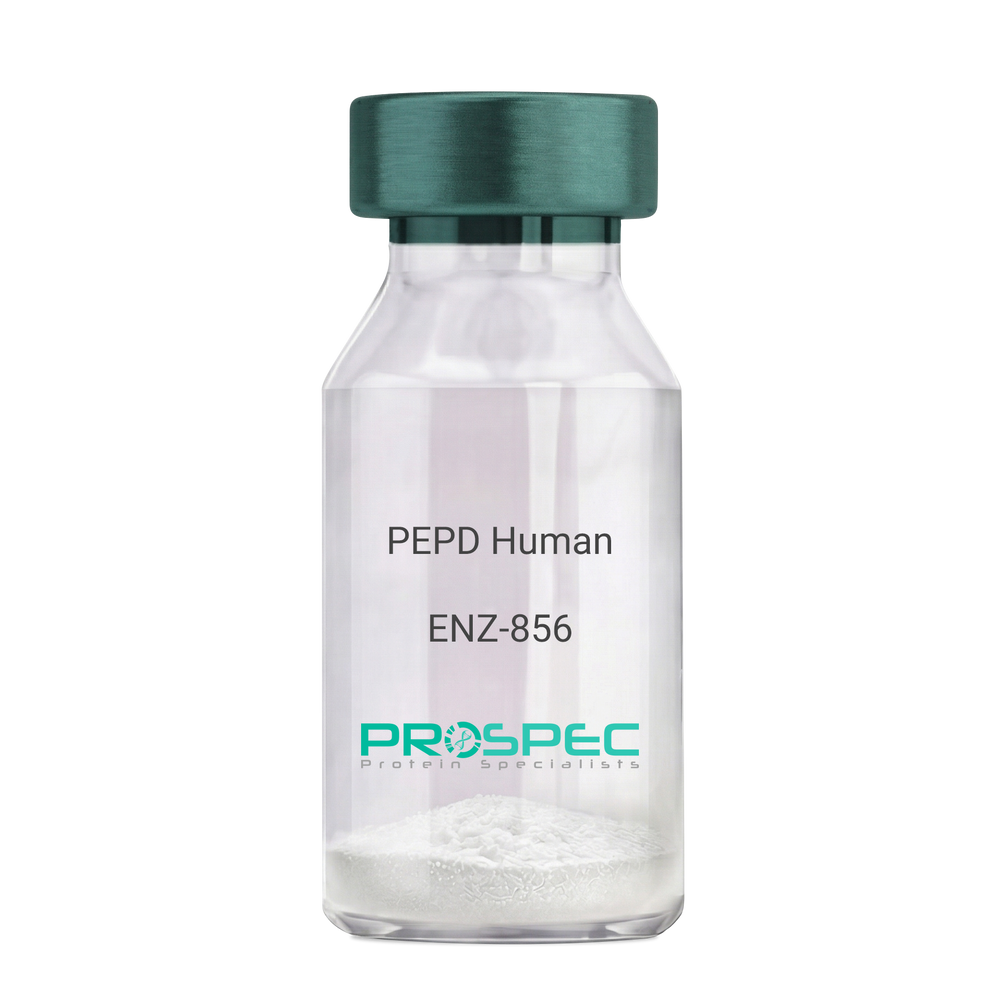
    PEPD Human

    Description:

    Peptidase D Human Recombinant

    Xaa-Pro dipeptidase, X-Pro dipeptidase, Imidodipeptidase, Peptidase D, Proline dipeptidase, Prolidase, PRD, PEPD, Xaa-Pro dipeptidase isoform 1, PROLIDASE.

    Product # :

    ENZ-856

    Price :

    Quantity :

    Shipping Method :

    Ice Icon

    Shipped with Ice Packs

    Add To Cart

    More Info

    • description
    • source
    • formulation
    • purity
    • More Info
    • Citations

    Description

    PEPD Human Recombinant produced in E.Coli is a single, non-glycosylated polypeptide chain containing 516 amino acids (1-493a.a.) and having a molecular mass of 56.9kDa.PEPD is fused to a 23 amino acid His-tag at N-terminus & purified by proprietary chromatographic techniques.

    Source

    E.coli.

    Formulation

    PEPD protein solution (0.5mg/ml) containing Phosphate buffered saline (pH7.4), 10% glycerol and 1mM DTT.

    Purity

    Greater than 90% as determined by SDS-PAGE.

    Citations

    More Info

    • Introduction

      Peptidase D, also known as PEPD, Is a part of the peptidase family. PEPD is involved in collagen metabolism due to the high level of iminoacids in collagen. PEPD recycles proline, and sets the pace for the production of collagen. PEPD is also parts dipeptides with a prolyl or hydroxyprolyl residue in the C-terminal position.

    • Synonyms

      Xaa-Pro dipeptidase, X-Pro dipeptidase, Imidodipeptidase, Peptidase D, Proline dipeptidase, Prolidase, PRD, PEPD, Xaa-Pro dipeptidase isoform 1, PROLIDASE.

    • Physical Appearance

      Sterile Filtered colorless solution.

    • Stability

      Store at 4°C if entire vial will be used within 2-4 weeks. Store, frozen at -20°C for longer periods of time. For long term storage it is recommended to add a carrier protein (0.1% HSA or BSA).Avoid multiple freeze-thaw cycles.

    • Amino Acid Sequence

      MGSSHHHHHH SSGLVPRGSH MGSMAAATGP SFWLGNETLK VPLALFALNR QRLCERLRKN PAVQAGSIVV LQGGEETQRY CTDTGVLFRQ ESFFHWAFGV TEPGCYGVID VDTGKSTLFV PRLPASHATW MGKIHSKEHF KEKYAVDDVQ YVDEIASVLT SQKPSVLLTL RGVNTDSGSVCREASFDGIS KFEVNNTILH PEIVECRVFK TDMELEVLRY TNKISSEAHR EVMKAVKVGM KEYELESLFE HYCYSRGGMR HSSYTCICGS GENSAVLHYG HAGAPNDRTI QNGDMCLFDM GGEYYCFASD ITCSFPANGK FTADQKAVYE AVLRSSRAVM GAMKPGVWWP DMHRLADRIH LEELAHMGIL SGSVDAMVQA HLGAVFMPHG LGHFLGIDVH DVGGYPEGVE RIDEPGLRSL RTARHLQPGM VLTVEPGIYF IDHLLDEALA DPARASFLNR EVLQRFRGFG GVRIEEDVVV TDSGIELLTC VPRTVEEIEA CMAGCDKAFT PFSGPK.

    ProSpec's products are furnished for LABORATORY RESEARCH USE ONLY. The product may not be used as drugs, agricultural or pesticidal products, food additives or household chemicals.

    Pepd Human
  • View Data Sheet

    Name :

    Hepatocyte Growth Factor Human, CHO

    Description:

    Hepatocyte Growth Factor Human Recombinant, CHO

    Scatter Factor (SF), Hepatopoietin (HPTA), HGF.

    Product # :

    CYT-251

    Price :

    Quantity :

    Shipping Method :

    Room Temp Icon

    Shipped at Room temp

    Add To Cart

    More Info

    • description
    • source
    • formulation
    • purity
    • biological activity
    • More Info
    • Citations

    Description

    Hepatocyte Growth Factor Human Recombinant produced in CHO is a heterodimer, non-glycosylated, polypeptide chain consisting an a-chain of 463 amino acids and b-chain of 234 having a total molecular mass of approximately 75kDa. The HGF is purified by proprietary chromatographic techniques.

    Source

    Chinese Hamster Ovarian Cells.

    Formulation

    The protein was lyophilized from a concentrated (1.4mg/ml) solution containing Phosphate-Buffered Saline with 0.02% Tween 80, pH 7.4.

    Purity

    Greater than 97.0% as determined by SDS-PAGE.

    Biological Activity

    The ED50, calculated by the dose-dependant proliferation of monkey 4MBr-5 indicator cells was found to be 20-40 ng/ml.

    Citations

    More Info

    • Introduction

      Hepatocyte Growth Factor (HGF) is a multifunctional growth factor which regulates both cell growth and cell motility. It exerts a strong mitogenic effect on hepatocytes and primary epithelial cells. HGF synergizes with Interleukin-3 and GM-CSF to stimulate colony formation of hematopoietic progenitor cells in vitro and may, therefore, also modulate hematopoiesis.

    • Synonyms

      Scatter Factor (SF), Hepatopoietin (HPTA), HGF.

    • Physical Appearance

      Sterile Filtered White lyophilized (freeze-dried) powder.

    • Stability

      Lyophilized Hepatocyte Growth Factor although stable at room temperature for 3 weeks, should be stored desiccated below -18°C. Upon reconstitution HGF should be stored at 4°C between 2-7 days and for future use below -18°C.For long term storage it is recommended to add a carrier protein (0.1% HSA or BSA).Please prevent freeze-thaw cycles.

    • Solubility

      It is recommended to reconstitute the lyophilized Hepatocyte Growth Factor in sterile 18MΩ-cm H2O not less than 100µg/ml, which can then be further diluted to other aqueous solutions.

    • Amino Acid Sequence

      Agrees with the sequence of native human HGF.

    • Background

      What is the molecular weight/Mw of HEPATOCYTE GROWTH FACTOR HUMAN, CHO Protein?
      HEPATOCYTE GROWTH FACTOR HUMAN, CHO Protein has a total Mw of 75kDa.

      What is the source or expression system of HEPATOCYTE GROWTH FACTOR HUMAN, CHO Protein?
      Chinese Hamster Ovarian Cells.

      What is the Purity of HEPATOCYTE GROWTH FACTOR HUMAN, CHO Protein?
      HEPATOCYTE GROWTH FACTOR HUMAN, CHO Protein is >97% pure as determined by SDS-PAGE.

      What is the Biological Activity of HEPATOCYTE GROWTH FACTOR HUMAN, CHO Protein?
      The ED50, calculated by the dose-dependant proliferation of monkey 4MBr-5 indicator cells was found to be 20-40 ng/ml.

      What is the amino acid sequence of HEPATOCYTE GROWTH FACTOR HUMAN, CHO Protein?
      Agrees with the sequence of native human HGF.

      What applications can HEPATOCYTE GROWTH FACTOR HUMAN, CHO Protein be used in?
      HEPATOCYTE GROWTH FACTOR HUMAN, CHO Protein can probably be used in western blot, ELISA and Lateral Flow.

      What is the endotoxin level for HEPATOCYTE GROWTH FACTOR HUMAN, CHO Protein?
      The endotoxin level is minimal, HEPATOCYTE GROWTH FACTOR HUMAN, CHO Protein was purified using conventional chromatography techniques.

    ProSpec's products are furnished for LABORATORY RESEARCH USE ONLY. The product may not be used as drugs, agricultural or pesticidal products, food additives or household chemicals.

    Hgf Human Cho
  • View Data Sheet

    Name :

    Hepatocyte Growth Factor Human

    Description:

    Hepatocyte Growth Factor Human Recombinant

    Scatter Factor (SF), Hepatopoietin (HPTA), HGF, HGFB, F-TCF.

    Product # :

    CYT-244

    Price :

    Quantity :

    Shipping Method :

    Room Temp Icon

    Shipped at Room temp

    Add To Cart

    More Info

    • description
    • source
    • formulation
    • purity
    • biological activity
    • More Info
    • Citations

    Description

    Hepatocyte Growth Factor Human Recombinant produced in Baculovirus is a heterodimer, non-glycosylated, polypeptide chain containing 697 a.a and having a total molecular mass of 78.0 KDa.The HGF is purified by proprietary chromatographic techniques.

    Source

    Insect cells.

    Formulation

    The sterile protein powder (1 mg/ml) is lyophilized from a solution containing 50mM acetic acid.

    Purity

    Greater than 95.0% as determined by SDS-PAGE.

    Biological Activity

    The activity was assayed for scattering activity in the MDCK cell assay. The ED50 for this effect is typically at 2.0-5.0 ng/ml.

    Citations

    More Info

    • Introduction

      Hepatocyte Growth Factor (HGF) is a multifunctional growth factor which regulates both cell growth and cell motility. It exerts a strong mitogenic effect on hepatocytes and primary epithelial cells. HGF synergizes with Interleukin-3 and GM-CSF to stimulate colony formation of hematopoietic progenitor cells in vitro and may, therefore, also modulate hematopoiesis.

    • Synonyms

      Scatter Factor (SF), Hepatopoietin (HPTA), HGF, HGFB, F-TCF.

    • Physical Appearance

      Sterile Filtered White lyophilized (freeze-dried) powder.

    • Stability

      Lyophilized Hepatocyte Growth Factor although stable at room temperature for 3 weeks, should be stored desiccated below -18°C. Upon reconstitution HGF should be stored at 4°C between 2-7 days and for future use below -18°C. For long term storage it is recommended to add a carrier protein (0.1% HSA or BSA).Please prevent freeze-thaw cycles.

    • Solubility

      It is recommended to reconstitute the lyophilized Hepatocyte Growth Factor in 50mM acetic acid to a concentration not less than 100µg/ml. Further dilutions should be made using buffer containing protein.

    • Amino Acid Sequence

      QRKRRNTIHEFKKSAKTTLIKIDPALKIKTKKVNTADQCANRCTRNKGLPFTCK
      AFVFDKARKQCLWFPFNSMSSGVKKEFGHEFDLYENKDYIRNCIIGKGRSYKGT
      VSITKSGIKCQPWSSMIPHEHSYRGKDLQENYCRNPRGEEGGPWCFTSNPEVRY
      EVCDIPQCSEVECMTCNGESYRGLMDHTESGKICQRWDHQTPHRHKFLPERYPD
      KGFDDNYCRNPDGQPRPWCYTLDPHTRWEYCAIKTCADNTMNDTDVPLETTECI
      QGQGEGYRGTVNTIWNGIPCQRWDSQYPHEHDMTPENFKCKDLRENYCRNPDGS
      ESPWCFTTDPNIRVGYCSQIPNCDMSHGQDCYRGNGKNYMGNLSQTRSGLTCSM
      WDKNMEDLHRHIFWEPDASKLNENYCRNPDDDAHGPWCYTGNPLIPWDYCPISR
      CEGDTTPTIVNLDHPVISCAKTKQLRVVNGIPTRTNIGWMVSLRYRNKHICGGS
      LIKESWVLTARQCFPSRDLKDYEAWLGIHDVHGRGDEKCKQVLNVSQLVYGPEG
      SDLVLMKLARPAVLDDFVSTIDLPNYGCTIPEKTSCSVYGWGYTGLINYDGLLR
      VAHLYIMGNEKCSQHHRGKVTLNESEICAGAEKIGSGPCEGDYGGPLVCEQHKM
      RMVLGVIVPGRGCAIPNRPGIFVRVAYYAKWIHKIILTYKVPQS.

    • Background

      What is the molecular weight/Mw of HEPATOCYTE GROWTH FACTOR HUMAN, Protein?
      HEPATOCYTE GROWTH FACTOR HUMAN, Protein has a total Mw of 78kDa.

      What is the source or expression system of HEPATOCYTE GROWTH FACTOR HUMAN, Protein?
      Insect cells.
      What is the Purity of HEPATOCYTE GROWTH FACTOR HUMAN, Protein?
      HEPATOCYTE GROWTH FACTOR HUMAN, Protein is >95% pure as determined by SDS-PAGE.

      What is the Biological Activity of HEPATOCYTE GROWTH FACTOR HUMAN, Protein?
      The activity was assayed for scattering activity in the MDCK cell assay. The ED50 for this effect is typically at 2.0-5.0 ng/ml.

      What is the amino acid sequence of HEPATOCYTE GROWTH FACTOR HUMAN, Protein?
      QRKRRNTIHEFKKSAKTTLIKIDPALKIKTKKVNTADQCANRCTRNKGLPFTCK
      AFVFDKARKQCLWFPFNSMSSGVKKEFGHEFDLYENKDYIRNCIIGKGRSYKGT
      VSITKSGIKCQPWSSMIPHEHSYRGKDLQENYCRNPRGEEGGPWCFTSNPEVRY
      EVCDIPQCSEVECMTCNGESYRGLMDHTESGKICQRWDHQTPHRHKFLPERYPD
      KGFDDNYCRNPDGQPRPWCYTLDPHTRWEYCAIKTCADNTMNDTDVPLETTECI
      QGQGEGYRGTVNTIWNGIPCQRWDSQYPHEHDMTPENFKCKDLRENYCRNPDGS
      ESPWCFTTDPNIRVGYCSQIPNCDMSHGQDCYRGNGKNYMGNLSQTRSGLTCSM
      WDKNMEDLHRHIFWEPDASKLNENYCRNPDDDAHGPWCYTGNPLIPWDYCPISR
      CEGDTTPTIVNLDHPVISCAKTKQLRVVNGIPTRTNIGWMVSLRYRNKHICGGS
      LIKESWVLTARQCFPSRDLKDYEAWLGIHDVHGRGDEKCKQVLNVSQLVYGPEG
      SDLVLMKLARPAVLDDFVSTIDLPNYGCTIPEKTSCSVYGWGYTGLINYDGLLR
      VAHLYIMGNEKCSQHHRGKVTLNESEICAGAEKIGSGPCEGDYGGPLVCEQHKM
      RMVLGVIVPGRGCAIPNRPGIFVRVAYYAKWIHKIILTYKVPQS.What applications can

      HEPATOCYTE GROWTH FACTOR HUMAN, Protein be used in?
      HEPATOCYTE GROWTH FACTOR HUMAN, Protein can probably be used in western blot, ELISA and Lateral Flow.

      What is the endotoxin level for HEPATOCYTE GROWTH FACTOR HUMAN, Protein?
      The endotoxin level is minimal, HEPATOCYTE GROWTH FACTOR HUMAN, Protein was purified using conventional chromatography techniques.

    ProSpec's products are furnished for LABORATORY RESEARCH USE ONLY. The product may not be used as drugs, agricultural or pesticidal products, food additives or household chemicals.

    Hgf Human
  • View Data Sheet

    Name :

    MVD Human

    Description:

    Mevalonate Decarboxylase Human Recombinant

    Diphosphomevalonate decarboxylase, Mevalonate (diphospho)decarboxylase, MDDase, Mevalonate pyrophosphate decarboxylase, MVD, MPD, FP17780.

    Product # :

    ENZ-226

    Price :

    Quantity :

    Shipping Method :

    Ice Icon

    Shipped with Ice Packs

    Add To Cart

    More Info

    • description
    • source
    • formulation
    • purity
    • More Info
    • Citations

    Description

    MVD Human Recombinant produced in E.coli is a single, non-glycosylated polypeptide chain containing 420 amino acids (1-400) and having a molecular mass of 45.6kDa.MVD is fused to a 20 amino acid His-tag at N-terminus & purified by proprietary chromatographic techniques.

    Source

    E.coli.

    Formulation

    The MVD solution (0.5mg/ml) contains 20mM Tris-HCl buffer (pH8.0), 20% glycerol and 1mM DTT.

    Purity

    Greater than 85% as determined by SDS-PAGE.

    Citations

    More Info

    • Introduction

      Diphosphomevalonate decarboxylase (MVD) catalyzes the conversion of mevalonate pyrophosphate into isopentenyl pyrophosphate in one of the early steps in cholesterol biosynthesis. MVD decarboxylates and dehydrates its substrate while hydrolyzing ATP. MVD is expressed in the heart, skeletal muscle, lung, liver, brain, pancreas, kidney and placenta.

    • Synonyms

      Diphosphomevalonate decarboxylase, Mevalonate (diphospho)decarboxylase, MDDase, Mevalonate pyrophosphate decarboxylase, MVD, MPD, FP17780.

    • Physical Appearance

      Sterile Filtered colorless solution.

    • Stability

      Store at 4°C if entire vial will be used within 2-4 weeks. Store, frozen at -20°C for longer periods of time. For long term storage it is recommended to add a carrier protein (0.1% HSA or BSA).Avoid multiple freeze-thaw cycles.

    • Amino Acid Sequence

      MGSSHHHHHH SSGLVPRGSH MASEKPLAAV TCTAPVNIAV IKYWGKRDEE LVLPINSSLS VTLHQDQLKT TTTAVISKDF TEDRIWLNGR EEDVGQPRLQ ACLREIRCLA RKRRNSRDGD PLPSSLSCKV HVASVNNFPT AAGLASSAAG YACLAYTLAR VYGVESDLSE VARRGSGSAC RSLYGGFVEW QMGEQADGKD SIARQVAPES HWPELRVLIL VVSAEKKLTG STVGMRASVE TSPLLRFRAE SVVPARMAEM ARCIRERDFP SFAQLTMKDS NQFHATCLDT FPPISYLNAI SWRIIHLVHR FNAHHGDTKV AYTFDAGPNA VIFTLDDTVA EFVAAVWHGF PPGSNGDTFL KGLQVRPAPL SAELQAALAM EPTPGGVKYI IVTQVGPGPQ ILDDPCAHLL GPDGLPKPAA.

    ProSpec's products are furnished for LABORATORY RESEARCH USE ONLY. The product may not be used as drugs, agricultural or pesticidal products, food additives or household chemicals.

    Mvd Human
  • View Data Sheet

    Name :

    MTHFD2 Human

    Description:

    MTHFD2 Human Recombinant

    Bifunctional methylenetetrahydrofolate dehydrogenase/cyclohydrolase, mitochondrial, NAD-dependent methylenetetrahydrofolate dehydrogenase, Methenyltetrahydrofolate cyclohydrolase, NMDMC, MTHFD2.

    Product # :

    ENZ-853

    Price :

    Quantity :

    Shipping Method :

    Ice Icon

    Shipped with Ice Packs

    Add To Cart

    More Info

    • description
    • source
    • formulation
    • purity
    • More Info
    • Citations

    Description

    MTHFD2 Human Recombinant produced in E.coli is a single, non-glycosylated polypeptide chain containing 344 amino acids (30-350) and having a molecular mass of 37.2kDa.MTHFD2 is fused to a 23 amino acid His-tag at N-terminus & purified by proprietary chromatographic techniques.

    Source

    Escherichia Coli.

    Formulation

    The MTHFD2 solution (1mg/ml) contains Phosphate buffered saline (pH7.4), 20% glycerol and 1mM DTT.

    Purity

    Greater than 95.0% as determined by SDS-PAGE.

    Citations

    More Info

    • Introduction

      MTHFD2 plays a role as a homodimer which requires magnesium and inorganic phosphate. MTHFD2 has a pseudogene on chromosome 7 and owns 3 different enzymatic activities. Each of the activities catalyzes 1 of 3 sequential reactions in the interconversion of 1-carbon derivatives of tetrahydrofolate, which are substrates for methionine, thymidylate, and de novo purine syntheses.

    • Synonyms

      Bifunctional methylenetetrahydrofolate dehydrogenase/cyclohydrolase, mitochondrial, NAD-dependent methylenetetrahydrofolate dehydrogenase, Methenyltetrahydrofolate cyclohydrolase, NMDMC, MTHFD2.

    • Physical Appearance

      Sterile Filtered clear solution.

    • Stability

      Store at 4°C if entire vial will be used within 2-4 weeks. Store, frozen at -20°C for longer periods of time. For long term storage it is recommended to add a carrier protein (0.1% HSA or BSA).Avoid multiple freeze-thaw cycles.

    • Amino Acid Sequence

      MGSSHHHHHH SSGLVPRGSH MGSLAAVRNE AVVISGRKLA QQIKQEVRQE VEEWVASGNK RPHLSVILVG ENPASHSYVL NKTRAAAVVG INSETIMKPA SISEEELLNL INKLNNDDNV DGLLVQLPLP EHIDERRICN AVSPDKDVDG FHVINVGRMC LDQYSMLPAT PWGVWEIIKR TGIPTLGKNV VVAGRSKNVG MPIAMLLHTD GAHERPGGDA TVTISHRYTP KEQLKKHTIL ADIVISAAGI PNLITADMIK EGAAVIDVGI NRVHDPVTAK PKLVGDVDFE GVRQKAGYIT PVPGGVGPMT VAMLMKNTII AAKKVLRLEE REVLKSKELG VATN.

    ProSpec's products are furnished for LABORATORY RESEARCH USE ONLY. The product may not be used as drugs, agricultural or pesticidal products, food additives or household chemicals.

    Mthfd2 Human
  • View Data Sheet

    Name :

    BDH2 Human

    Description:

    3-Hydroxybutyrate Dehydrogenase, Type 2 Human Recombinant

    3-hydroxybutyrate dehydrogenase type 2, FLJ13261, PRO20933, SDR15C1, UCPA-OR, UNQ6308, dehydrogenase/reductase (SDR family) member 6, Oxidoreductase UCPA, DHRS6, R-beta-hydroxybutyrate dehydrogenase, EFA6R, EC 1.1.1.30.

    Product # :

    ENZ-060

    Price :

    Quantity :

    Shipping Method :

    Ice Icon

    Shipped with Ice Packs

    Add To Cart

    More Info

    • description
    • source
    • formulation
    • purity
    • More Info
    • Citations

    Description

    BDH2 produced in E.Coli is a single, non-glycosylated polypeptide chain containing 265 amino acids (1-245a.a.) and having a molecular mass of 28.8kDa.BDH2 is fused to a 20 amino acid His-tag at N-terminus & purified by proprietary chromatographic techniques.

    Source

    Escherichia Coli.

    Formulation

    The BDH2 protein solution (1mg/1ml) is formulated in 20mM Tris-HCl buffer (pH8.0) 0.1M NaCl and 10% glycerol.

    Purity

    Greater than 95% as determined by SDS-PAGE.

    Citations

    More Info

    • Introduction

      BDH2 is a member of the short-chain dehydrogenases/reductases (SDR) family. BDH2 protein has a significant part in the peripheral utilization of 3-hydroxybutyrate. BDH2 can convert high levels of circulating 3-hydroxybutyrate into acetoacetate due to cytoplasmic localization in high ratio of oxidized NAD+, the NAD+ dependence and the kinetic parameters.

    • Synonyms

      3-hydroxybutyrate dehydrogenase type 2, FLJ13261, PRO20933, SDR15C1, UCPA-OR, UNQ6308, dehydrogenase/reductase (SDR family) member 6, Oxidoreductase UCPA, DHRS6, R-beta-hydroxybutyrate dehydrogenase, EFA6R, EC 1.1.1.30.

    • Physical Appearance

      Sterile Filtered clear solution.

    • Stability

      Store at 4°C if entire vial will be used within 2-4 weeks. Store, frozen at -20°C for longer periods of time.Please avoid freeze thaw cycles.

    • Amino Acid Sequence

      MGSSHHHHHH SSGLVPRGSH MGRLDGKVII LTAAAQGIGQ AAALAFAREG AKVIATDINE SKLQELEKYP GIQTRVLDVT KKKQIDQFAN EVERLDVLFN VAGFVHHGTV LDCEEKDWDF SMNLNVRSMY LMIKAFLPKM LAQKSGNIIN MSSVASSVKG VVNRCVYSTT KAAVIGLTKS VAADFIQQGI RCNCVCPGTV DTPSLQERIQ ARGNPEEARN DFLKRQKTGR FATAEEIAML CVYLASDESA YVTGNPVIID GGWSL

    ProSpec's products are furnished for LABORATORY RESEARCH USE ONLY. The product may not be used as drugs, agricultural or pesticidal products, food additives or household chemicals.

    Bdh2 Human
  • View Data Sheet

    Name :

    H3N2 Shandong

    Description:

    H3N2 Influenza-A Virus Shandong/9/93

    Product # :

    IHA-004

    Price :

    Quantity :

    Shipping Method :

    Ice Icon

    Shipped with Ice Packs

    Add To Cart

    More Info

    • description
    • formulation
    • purity
    • More Info
    • Citations

    Description

    Allantoic fluid of 10 days old embryonated eggs, inoculated with influenza A virus, strain A/Shandong/9/93. The Influenza Virus was purified by Ultracentrifugation with 10-40 % sucrose gradient.

    Formulation

    The H3N2A/ Shandong/9/93 solution (1.0mg/ml) contains STE, 0.1% sodium azide (NaN3) and 0.005% thimerosal.

    Stir thoroughly prior to its use.

    Purity

    Greater than 90.0%.

    Citations

    More Info

    • Introduction

      H3N2 is a subtype of the influenza A virus. Its name derives from the forms of the two kinds of proteinson the surface of its coat, hemagglutinin(H) and neuraminidase(N). H3N2 exchanges genes for internal proteins with other influenza subtypes. H3N2 has tended to dominate in prevalence over H1N1, H1N2, and influenza B. H3N2 strain descended from H2N2by antigenic shift, in which genes from multiple subtypes re-assorted to form a new virus. Both the H2N2and H3N2 strains contained genesfrom avian influenzaviruses.

    • Physical Appearance

      Opaque suspension.

    • Stability

      A/Shandong/9/93 although stable 4°C for 4 weeks, should be stored below -18°C. Please prevent freeze-thaw cycles.

    • Inactivation

      Thimerosal and beta propiolactone treatmentThis product has been treated in a manner consistent with methods of inactivation. Generally accepted good laboratory practices appropriate to microbiological/viral safe handling practices and techniques are required at work.

    • Immunological Activity

      Serological studies of influenza A virus, immunogen for antibody production.Tested with anti-influenza A monoclonal antibodies in ELISA.

    ProSpec's products are furnished for LABORATORY RESEARCH USE ONLY. The product may not be used as drugs, agricultural or pesticidal products, food additives or household chemicals.

    Shangdong 9 93
  • View Data Sheet

    Name :

    APO D Human, GST

    Description:

    APO-D Human Recombinant, GST Tag

    Apolipoprotein D, Apo-D, ApoD.

    Product # :

    CYT-652

    Price :

    Quantity :

    Shipping Method :

    Ice Icon

    Shipped with Ice Packs

    Add To Cart

    More Info

    • description
    • source
    • formulation
    • More Info
    • Citations

    Description

    APO-D Human Recombinant full length protein expressed in E.coli, shows a 48 kDa band on SDS-PAGE.The APO-D is purified by proprietary chromatographic techniques.

    Source

    Escherichia Coli.

    Formulation

    APO-D protein at 100µg/ml in 50mM Tris-Acetate, pH7.5, 1mM EDTA and 20% Glycerol.

    Citations

    More Info

    • Introduction

      Apolipoprotein-D is mainly associated with high density lipoproteins in human plasma. Apolipoprotein-D is an atypical apolipoprotein and, based on its primary structure, Apolipoprotein-D is a member of the lipocalin family. Lipocalins adopt a beta-barrel tertiary structure and transport small hydrophobic ligands. Apolipoprotein-D binds cholesterol, progesterone, pregnenolone, bilirubin and arachidonic acid.
      Apolipoprotein-D is expressed in numerous tissues having high levels of expression in spleen, testes and brain. Apolipoprotein-D is present at high concentrations in the cyst fluid of women with gross cystic disease of the breast, a condition associated with increased risk of breast cancer. Apolipoprotein-D accumulates in regenerating peripheral nerves and in the cerebrospinal fluid of patients with neurodegenerative conditions, such as Alzheimer's disease. Apolipoprotein-D participates in maintenance and repair within the central and peripheral nervous systems. Apolipoprotein-D is a multi-ligand, multi-functional transporter and transports a ligand from 1 cell to another within an organ, scavenge a ligand within an organ for transport to the blood or could transport a ligand from the circulation to specific cells within a tissue.

    • Synonyms

      Apolipoprotein D, Apo-D, ApoD.

    • Physical Appearance

      Sterile Filtered clear solution.

    • Stability

      Store vial at -20°C to -80°C. When stored at the recommended temperature, this protein is stable for 12 months.

    • Background

      What is the molecular weight/Mw of APO D Protein?
      APO D Protein has a total Mw of 48kDa.

      What is the source or expression system of APO D Protein?
      Escherichia Coli.

      What is the Biological Activity of APO D Protein?
      The biological functionality of APO D Protein will be determined in the future.

      What applications can APO D Protein be used in?
      APO D Protein can probably be used in western blot, ELISA and Lateral Flow.

      What is the endotoxin level for APO D Protein?
      The endotoxin level is minimal, APO D Protein was purified using conventional chromatography techniques.

    ProSpec's products are furnished for LABORATORY RESEARCH USE ONLY. The product may not be used as drugs, agricultural or pesticidal products, food additives or household chemicals.

    Apo D Human Gst
  • View Data Sheet

    Name :

    DHFR Human

    Description:

    Dihydrofolate Reductase Human Recombinant

    Dihydrofolate reductase, DHFR, DHFRP1.

    Product # :

    ENZ-443

    Price :

    Quantity :

    Shipping Method :

    Ice Icon

    Shipped with Ice Packs

    Add To Cart

    More Info

    • description
    • source
    • formulation
    • purity
    • biological activity
    • More Info
    • sds-page
    • Citations

    Description

    DHFR Human Recombinant fused with a 20 amino acids His tag at N-terminus produced in E.Coli is a single, non-glycosylated, polypeptide chain containing 207 amino acids (1-187 a.a.) and having a molecular mass of 23.6kDa.The DHFR is purified by proprietary chromatographic techniques.

    Source

    Escherichia Coli.

    Formulation

    The DHFR solution (1mg/ml) contains 20mM Tris-HCl buffer (pH8.0), 0.1M NaCl, 2mM DTT and 30% glycerol.

    Purity

    Greater than 95.0% as determined by SDS-PAGE.

    Biological Activity

    Specific activity is >2000 pmol/min/ug  is defined as the amount of enzyme that converts 1.0 pmole of dihydrofolic acid to tetrahydrofolic acid per minute at pH 6.5 at 25C.

    sds-page

    dhfr-human-sds-page - Product image 1

    Citations

    More Info

    • Introduction

      Dihydrofolate reductase (DHFR) is an enzyme that reduces dihydrofolic acid to tetrahydrofolic acid, with NADPH as electron donor that can be converted to the kinds of tetrahydrofolate cofactors applied in 1-carbon transfer chemistry. DHFR converts dihydrofolate into tetrahydrofolate, which is a methyl group shuttle required for the de novo synthesis of purines, thymidylic acid, and specific amino acids. Even though the functional DHFR gene is mapped to chromosome 5, numerous intronless processed pseudogenes or dihydrofolate reductase-like genes are identified on separate chromosomes.
      DHFR deficiency is associated with megaloblastic anemia.
      DHFR knockdown plays a role in the anticancer activity of 2-hydroxyoleic acid.
      DHFR gene insertion/deletion polymorphism is linked to variation in serum and red blood cell folate concentrations in women.

    • Synonyms

      Dihydrofolate reductase, DHFR, DHFRP1.

    • Physical Appearance

      Sterile Filtered colorless solution.

    • Stability

      Store at 4°C if entire vial will be used within 2-4 weeks. Store, frozen at -20°C for longer periods of time. For long term storage it is recommended to add a carrier protein (0.1% HSA or BSA).Avoid multiple freeze-thaw cycles.

    • Amino Acid Sequence

      MGSSHHHHHH SSGLVPRGSH MVGSLNCIVA VSQNMGIGKN GDLPWPPLRN EFRYFQRMTT TSSVEGKQNL VIMGKKTWFS IPEKNRPLKG RINLVLSREL KEPPQGAHFL SRSLDDALKL TEQPELANKV DMVWIVGGSS VYKEAMNHPG HLKLFVTRIM QDFESDTFFP EIDLEKYKLL PEYPGVLSDV QEEKGIKYKF EVYEKND.

    ProSpec's products are furnished for LABORATORY RESEARCH USE ONLY. The product may not be used as drugs, agricultural or pesticidal products, food additives or household chemicals.

    Dhfr Human
  • View Data Sheet

    Name :

    GDA Human, His

    Description:

    Guanine Deaminase Human Recombinant, His Tag

    CYPIN, GUANASE, NEDASIN, Guanine aminase, Guanine aminohydrolase, GAH, p51-nedasin.

    Product # :

    ENZ-682

    Price :

    Quantity :

    Shipping Method :

    Ice Icon

    Shipped with Ice Packs

    Add To Cart

    More Info

    • description
    • source
    • formulation
    • purity
    • More Info
    • Citations

    Description

    GDA Human Recombinant produced in E. coli is a single polypeptide chain containing 477 amino acids (1-454) and having a molecular mass of 53kDa. GDA is fused to a 23 amino acid His-tag at N-terminus & purified by proprietary chromatographic techniques.

    Source

    Escherichia Coli.

    Formulation

    The GDA solution (1mg/1ml) contains 20mM Tris-HCl buffer (pH 8.0), 0.15M NaCl,10% glycerol and 1mM DTT.

    Purity

    Greater than 90.0% as determined by SDS-PAGE.

    Citations

    More Info

    • Introduction

      GDA is a member of the ATZ/TRZ family and is in charge for the hydrolytic deamination of guanine. GDA takes part in microtubule assembly. Multiple transcript variants encoding different isoforms have been found for GDA.

    • Synonyms

      CYPIN, GUANASE, NEDASIN, Guanine aminase, Guanine aminohydrolase, GAH, p51-nedasin.

    • Physical Appearance

      Sterile Filtered colorless solution.

    • Stability

      Store at 4°C if entire vial will be used within 2-4 weeks.Store, frozen at -20°C for longer periods of time. For long term storage it is recommended to add a carrier protein (0.1% HSA or BSA).Avoid multiple freeze-thaw cycles.

    • Amino Acid Sequence

      MGSSHHHHHH SSGLVPRGSH MGSMCAAQMP PLAHIFRGTF VHSTWTCPME VLRDHLLGVS DSGKIVFLEE ASQQEKLAKE WCFKPCEIRE LSHHEFFMPG LVDTHIHASQ YSFAGSSIDL PLLEWLTKYT FPAEHRFQNI DFAEEVYTRV VRRTLKNGTT TACYFATIHT DSSLLLADIT DKFGQRAFVG KVCMDLNDTF PEYKETTEES IKETERFVSE MLQKNYSRVK PIVTPRFSLS CSETLMGELG NIAKTRDLHI QSHISENRDE VEAVKNLYPS YKNYTSVYDK NNLLTNKTVM AHGCYLSAEE LNVFHERGAS IAHCPNSNLS LSSGFLNVLE VLKHEVKIGL GTDVAGGYSY SMLDAIRRAV MVSNILLINK VNEKSLTLKE VFRLATLGGS QALGLDGEIG NFEVGKEFDA ILINPKASDS PIDLFYGDFF GDISEAVIQK FLYLGDDRNI EEVYVGGKQV VPFSSSV.

    ProSpec's products are furnished for LABORATORY RESEARCH USE ONLY. The product may not be used as drugs, agricultural or pesticidal products, food additives or household chemicals.

    Gda Human
  • 1
  • …
  • 6
  • 7
  • 8
  • 9
  • 10
  • …
  • 42
Your browser does not support the video tag.

Products

  • Cytokines
  • Growth Factors
  • Chemokines
  • CD Antigens
  • Neurotrophins
  • Hormones
  • Enzymes
  • Viral Antigens
  • Recombinant Proteins
  • Natural Proteins
  • Monoclonal Antibodies
  • Polyclonal Antibodies
  • Thermal Packaging

About

  • Company
  • Founder
  • Contribution
  • Contact Us
  • My Account

Ordering

  • Ordering Method
  • Ordering - Credit Card
  • Ordering PO
  • Shipping Fees
  • FAQ's

Legal

  • Terms & Conditions
  • Privacy
  • Site Map
  • info@prospecbio.com
  • Facebook
  • Instagram
  • Linkedin Profile

© 2026 ProSpec-Tany TechnoGene Ltd. All Rights Reserved.

  • Choosing a selection results in a full page refresh.
  • Opens in a new window.