Skip to content

High-quality research proteins.

  • 1-800-805-6531

  • Mon - Sat 8.00-18.00, Sun - Closed

  • info@prospecbio.com

  • PO Box 6591 East Brunswick NJ 08816

  • Products
    • Cytokines
    • Growth factors
    • Chemokines
    • Cd antigens
    • Neurotrophins
    • Hormones
    • Enzymes
    • Viral antigens
    • Recombinant proteins
    • Natural proteins
    • Monoclonal antibodies
    • Polyclonal antibodies
    • Thermal Packaging
  • About
    • Company
    • Founder
    • Contribution
  • Customers
    • Eastern Asia
    • Eastern Europe
    • North America
    • South America
    • South East Asia
    • Southern Asia
    • Western Europe
  • Ordering
    • Ordering Method
    • Ordering - Credit Card
    • Ordering - PO
    • Shipping Fees
    • FAQs
  • Services
    • DNA Cloning
    • Protein Expression
    • Monoclonal Antibody
    • Fermentation
    • Technology License
  • Contact us
Log in

Country/region

  • USD $ | Albania
  • USD $ | Andorra
  • USD $ | Argentina
  • USD $ | Armenia
  • USD $ | Australia
  • USD $ | Austria
  • USD $ | Azerbaijan
  • USD $ | Belarus
  • USD $ | Belgium
  • USD $ | Bolivia
  • USD $ | Brazil
  • USD $ | Bulgaria
  • USD $ | Cambodia
  • USD $ | Canada
  • USD $ | Chile
  • USD $ | China
  • USD $ | Colombia
  • USD $ | Costa Rica
  • USD $ | Croatia
  • USD $ | Cyprus
  • USD $ | Czechia
  • USD $ | Denmark
  • USD $ | Estonia
  • USD $ | Finland
  • USD $ | France
  • USD $ | Georgia
  • USD $ | Germany
  • USD $ | Greece
  • USD $ | Hong Kong SAR
  • USD $ | Hungary
  • USD $ | Iceland
  • USD $ | India
  • USD $ | Ireland
  • USD $ | Israel
  • USD $ | Italy
  • USD $ | Japan
  • USD $ | Kazakhstan
  • USD $ | Latvia
  • USD $ | Liechtenstein
  • USD $ | Lithuania
  • USD $ | Madagascar
  • USD $ | Malta
  • USD $ | Mexico
  • USD $ | Moldova
  • USD $ | Monaco
  • USD $ | Netherlands
  • USD $ | New Zealand
  • USD $ | North Macedonia
  • USD $ | Norway
  • USD $ | Panama
  • USD $ | Paraguay
  • USD $ | Peru
  • USD $ | Philippines
  • USD $ | Poland
  • USD $ | Portugal
  • USD $ | Romania
  • USD $ | Singapore
  • USD $ | Slovakia
  • USD $ | Slovenia
  • USD $ | South Africa
  • USD $ | South Korea
  • USD $ | Spain
  • USD $ | Sri Lanka
  • USD $ | Sweden
  • USD $ | Switzerland
  • USD $ | Taiwan
  • USD $ | Thailand
  • USD $ | Türkiye
  • USD $ | Ukraine
  • USD $ | United Kingdom
  • USD $ | United States
  • USD $ | Uruguay
  • USD $ | Vatican City
  • USD $ | Venezuela
  • USD $ | Vietnam
  • Facebook
  • Instagram
logoProSpec - Recombinant Protein Manufacturer for academic and R&D industry
Become a distributor
Account Log in
Wishlist
Cart Cart(0)
  • Products
    +
    • Cytokines
    • Growth factors
    • Chemokines
    • Cd antigens
    • Neurotrophins
    • Hormones
    • Enzymes
    • Viral antigens
    • Recombinant proteins
    • Natural proteins
    • Monoclonal antibodies
    • Polyclonal antibodies
    • Thermal Packaging
  • About
    +
    • Company
    • Founder
    • Contribution
  • Customers
    +
    • Eastern Asia
    • Eastern Europe
    • North America
    • South America
    • South East Asia
    • Southern Asia
    • Western Europe
  • Ordering
    +
    • Ordering Method
    • Ordering - Credit Card
    • Ordering - PO
    • Shipping Fees
    • FAQs
  • Services
    +
    • DNA Cloning
    • Protein Expression
    • Monoclonal Antibody
    • Fermentation
    • Technology License
  • Contact us

Item added to your cart

View cart
View All
  • Cytokines
  • Growth factors
  • Chemokines
  • Cd antigens
  • Neurotrophins
  • Hormones
  • Enzymes
  • Viral antigens
  • Recombinant proteins
  • Natural proteins
  • Monoclonal antibodies
  • Polyclonal antibodies
  • Thermal Packaging
  • Tumor Necrosis Factor

    Tumor Necrosis Factor

    View All
  • 4-1BB

    4-1BB

    View All
  • Adiponectin

    Adiponectin

    View All
  • AIF1

    AIF1

    View All
  • Other Cytokines

    Other Cytokines

    View All
  • AITRL

    AITRL

    View All
  • Angiopoietin

    Angiopoietin

    View All
  • Apolipoprotein

    Apolipoprotein

    View All
  • B-Cell Activating Factor

    B-Cell Activating Factor

    View All
  • Beta Defensin

    Beta Defensin

    View All
  • Bone Morphogenetic Protein

    Bone Morphogenetic Protein

    View All
  • B type Natriuretic Peptide

    B type Natriuretic Peptide

    View All
  • BST

    BST

    View All
  • Betacellulin

    Betacellulin

    View All
  • Cardiotrophin

    Cardiotrophin

    View All
  • Activin

    Activin

    View All
  • Fibroblast Growth Factor

    Fibroblast Growth Factor

    View All
  • Other Growth Factors

    Other Growth Factors

    View All
  • CSF

    CSF

    View All
  • CTGF

    CTGF

    View All
  • IGFBP

    IGFBP

    View All
  • VEGF Protein

    VEGF Protein

    View All
  • EGF

    EGF

    View All
  • Epigen

    Epigen

    View All
  • Erythropoietin

    Erythropoietin

    View All
  • Insulin-Like Growth Factor

    Insulin-Like Growth Factor

    View All
  • Growth Hormone

    Growth Hormone

    View All
  • HDGF

    HDGF

    View All
  • Hepatocyte Growth Factor

    Hepatocyte Growth Factor

    View All
  • Insulin

    Insulin

    View All
  • BCA-1/ BLC (CXCL13)

    BCA-1/ BLC (CXCL13)

    View All
  • BRAK (CXCL14)

    BRAK (CXCL14)

    View All
  • C-10 (CCL6)

    C-10 (CCL6)

    View All
  • Other Chemokines

    Other Chemokines

    View All
  • MEC (CCL28)

    MEC (CCL28)

    View All
  • LD78-beta (CCL3L1)

    LD78-beta (CCL3L1)

    View All
  • CTACK (CCL27)

    CTACK (CCL27)

    View All
  • CXCL16

    CXCL16

    View All
  • CXCL17

    CXCL17

    View All
  • Platelet Factor-4 (CXCL4)

    Platelet Factor-4 (CXCL4)

    View All
  • ENA-78 (CXCL5)

    ENA-78 (CXCL5)

    View All
  • Eotaxin (CCL11,24,26)

    Eotaxin (CCL11,24,26)

    View All
  • Exodus-2 (CCL21)

    Exodus-2 (CCL21)

    View All
  • Fractalkine (CX3CL1)

    Fractalkine (CX3CL1)

    View All
  • CXCL6

    CXCL6

    View All
  • Other CD Antigens

    Other CD Antigens

    View All
  • CD14

    CD14

    View All
  • CD164

    CD164

    View All
  • CD1

    CD1

    View All
  • CD2

    CD2

    View All
  • CD200

    CD200

    View All
  • CD207

    CD207

    View All
  • CD226

    CD226

    View All
  • CD23

    CD23

    View All
  • CD244

    CD244

    View All
  • CD247

    CD247

    View All
  • CD27

    CD27

    View All
  • CD274

    CD274

    View All
  • CD300

    CD300

    View All
  • CD33

    CD33

    View All
  • Other Neurotrophins

    Other Neurotrophins

    View All
  • Beta-NGF

    Beta-NGF

    View All
  • BDNF

    BDNF

    View All
  • CDNF

    CDNF

    View All
  • CNTF

    CNTF

    View All
  • GDNF

    GDNF

    View All
  • Glia Maturation Factor

    Glia Maturation Factor

    View All
  • MANF

    MANF

    View All
  • Midkine

    Midkine

    View All
  • Neuroglobin

    Neuroglobin

    View All
  • Neurotrophic factors

    Neurotrophic factors

    View All
  • Neuregulin

    Neuregulin

    View All
  • Neuropilin

    Neuropilin

    View All
  • Pigment Epithelium-Derived Factor

    Pigment Epithelium-Derived Factor

    View All
  • Pleiotrophin

    Pleiotrophin

    View All
  • Peptide Hormones

    Peptide Hormones

    View All
  • Other Hormones

    Other Hormones

    View All
  • HCG

    HCG

    View All
  • Endothelin

    Endothelin

    View All
  • Exendin

    Exendin

    View All
  • FSH

    FSH

    View All
  • Glucagon

    Glucagon

    View All
  • GHRP

    GHRP

    View All
  • GLP

    GLP

    View All
  • Thyrostimulin

    Thyrostimulin

    View All
  • Inhibin A

    Inhibin A

    View All
  • LHRH

    LHRH

    View All
  • Melanotan

    Melanotan

    View All
  • Procalcitonin

    Procalcitonin

    View All
  • PTH

    PTH

    View All
  • Peroxiredoxin

    Peroxiredoxin

    View All
  • Peptidase

    Peptidase

    View All
  • Synthetase

    Synthetase

    View All
  • Transferase

    Transferase

    View All
  • Hydrolase

    Hydrolase

    View All
  • Dehydrogenase

    Dehydrogenase

    View All
  • ACE2

    ACE2

    View All
  • Esterase

    Esterase

    View All
  • Protein Kinases

    Protein Kinases

    View All
  • Other Enzymes

    Other Enzymes

    View All
  • Phosphatase

    Phosphatase

    View All
  • Deaminase

    Deaminase

    View All
  • Oxygenase

    Oxygenase

    View All
  • Adenylate Kinase

    Adenylate Kinase

    View All
  • Lyase

    Lyase

    View All
  • Chagas

    Chagas

    View All
  • SARS

    SARS

    View All
  • Influenza

    Influenza

    View All
  • ASFV

    ASFV

    View All
  • Astrovirus

    Astrovirus

    View All
  • Borrelia

    Borrelia

    View All
  • Helicobacter Pylori

    Helicobacter Pylori

    View All
  • Chikungunya

    Chikungunya

    View All
  • Chlamydia

    Chlamydia

    View All
  • Cytomegalo

    Cytomegalo

    View All
  • Dengue

    Dengue

    View All
  • EBV

    EBV

    View All
  • Ebola

    Ebola

    View All
  • Feline Leukemia Virus

    Feline Leukemia Virus

    View All
  • Hepatitis A

    Hepatitis A

    View All
  • Other

    Other

    View All
  • Actin

    Actin

    View All
  • ADAM

    ADAM

    View All
  • Complement Component

    Complement Component

    View All
  • Ag85

    Ag85

    View All
  • Eukaryotic Translation Initiation Factor

    Eukaryotic Translation Initiation Factor

    View All
  • Anterior Gradient Protein

    Anterior Gradient Protein

    View All
  • Heat Shock Protein

    Heat Shock Protein

    View All
  • Alpha-2-HS-Glycoprotein

    Alpha-2-HS-Glycoprotein

    View All
  • Hemoglobin

    Hemoglobin

    View All
  • Allergy

    Allergy

    View All
  • Anaplasma

    Anaplasma

    View All
  • Angiogenin

    Angiogenin

    View All
  • Ankyrin Repeat Domain

    Ankyrin Repeat Domain

    View All
  • Annexin

    Annexin

    View All
  • Other Natural Proteins

    Other Natural Proteins

    View All
  • Aprotinin

    Aprotinin

    View All
  • Transferrin

    Transferrin

    View All
  • Avidin

    Avidin

    View All
  • Anti Coagulation Factors

    Anti Coagulation Factors

    View All
  • Natural Albumin

    Natural Albumin

    View All
  • Natural Coagulation Factors

    Natural Coagulation Factors

    View All
  • Fibronectin

    Fibronectin

    View All
  • Thrombin

    Thrombin

    View All
  • Anti Human Enzyme

    Anti Human Enzyme

    View All
  • Other Monoclonal Antibodies

    Other Monoclonal Antibodies

    View All
  • Anti Human Cytokine

    Anti Human Cytokine

    View All
  • Anti Human Heat Shock Protein

    Anti Human Heat Shock Protein

    View All
  • Anti Mouse Lymphocyte

    Anti Mouse Lymphocyte

    View All
  • Anti Human Chemokine

    Anti Human Chemokine

    View All
  • Anti Human Lymphocyte

    Anti Human Lymphocyte

    View All
  • Anti Viral Monoclonal

    Anti Viral Monoclonal

    View All
  • Anti Mouse Cytokine

    Anti Mouse Cytokine

    View All
  • Anti-GST Monoclonal

    Anti-GST Monoclonal

    View All
  • Other Polyclonal Antibodies

    Other Polyclonal Antibodies

    View All
  • Anti Viral

    Anti Viral

    View All
  • Anti-GST Monoclonal

    Anti-GST Monoclonal

    View All
Back

Search results

1000 results found for “gremlin”

Name

Description

Product #

Price

Quantity

Shipping Method

  • View Data Sheet

    Name :

    Resistin Human, His

    Description:

    Resistin Human Recombinant, His Tag

    Cysteine-rich secreted protein FIZZ3, Adipose tissue-specific secretory factor, ADSF, C/EBP-epsilon-regulated myeloid-specific secreted cysteine-rich protein, Cysteine-rich secreted protein A12-alpha-like 2, RSTN, XCP1, RETN1, MGC126603, MGC126609.

    Product # :

    CYT-256

    Price :

    Quantity :

    Shipping Method :

    Ice Icon

    Shipped with Ice Packs

    Add To Cart

    More Info

    • description
    • source
    • formulation
    • purity
    • More Info

    Description

    Resistin Human Recombinant produced in E.Coli is a single, non-glycosylated, Polypeptide chain containing a 92 amino acids fragment (17-108) of the mature Human Resistin, having a total molecular mass of 14.23kDa and fused with a 4.5kDa amino-terminal hexahistidine tag. The Resistin is purified by proprietary chromatographic techniques.

    Source

    Escherichia Coli.

    Formulation

    Resistin protein solution is supplied in 20mM Tris-HCl pH 8.0, 5mM EDTA and 50% glycerol.

    Purity

    Greater than 95% as determined by SDS-PAGE.

    More Info

    • Introduction

      Resistin, a product of the RSTN gene, is a peptide hormone belonging to the class of cysteine-rich secreted proteins which is termed the RELM family, and is also described as ADSF (Adipose Tissue- Specific Secretory Factor) and FIZZ3 (Found in Inflammatory Zone). Human resistin contains 108 amino acids as a prepeptide, and its hydrofobic signal peptide is cleaved before its secretion. Resistin circulates in human blood as a dimeric protein consisting of two 92 amino acid polypeptides, which are disulfide-linked via Cys26.
      Resistin may be an important link between obesity and insulin resistance. Mouse resistin, specifically produced and secreted by adipocyte, acts on skeletal muscle myocytes, hepatocytes and adipocytes themselves so that it reduces their sensitivity to insulin. Steppan et al. have suggested that resistin suppresses the ability of insulin to stimulate glucose uptake. They have also suggested that resistin is present at elevated levels in blood of obese mice, and is down regulated by fasting and antidiabetic drugs. Way et al., on the other hand, have found that resistin expression is severly suppressed in obesity and is stimulated by several antidiabetic drugs.
      Other studies have shown that mouse resistin increases during the differentiation of adipocytes, but it also seems to inhibit adipogenesis. In contrast, the human adipogenic differentiation is likely to be associated with a down regulation of resistin gene expression.

    • Synonyms

      Cysteine-rich secreted protein FIZZ3, Adipose tissue-specific secretory factor, ADSF, C/EBP-epsilon-regulated myeloid-specific secreted cysteine-rich protein, Cysteine-rich secreted protein A12-alpha-like 2, RSTN, XCP1, RETN1, MGC126603, MGC126609.

    • Physical Appearance

      Sterile filtered colorless solution.

    • Stability

      Store at 4°C if entire vial will be used within 2-4 weeks. Store, frozen at -20°C for longer periods of time.Please avoid freeze thaw cycles.

    ProSpec's products are furnished for LABORATORY RESEARCH USE ONLY. The product may not be used as drugs, agricultural or pesticidal products, food additives or household chemicals.

    Resistin Human His
  • View Data Sheet

    Name :

    GHBP Human, Sf9

    Description:

    Growth Hormone Binding Protein Human Recombinant, Sf9

    GHR, GHBP, GHIP.

    Product # :

    CYT-1152

    Price :

    Quantity :

    Shipping Method :

    Ice Icon

    Shipped with Ice Packs

    Add To Cart

    More Info

    • description
    • source
    • formulation
    • purity
    • biological activity
    • More Info

    Description

    GHBP Human produced in Sf9 Baculovirus cells is a single, glycosylated polypeptide chain containing 254 amino acids (19-264aa) and having a molecular mass of 29.4kDa.GHBP is fused to a 8 amino acid His tag at C-terminus and purified by proprietary chromatographic techniques.

    Source

    Sf9, Baculovirus cells.

    Formulation

    The GHBP solution (1mg/ml) contains 10% Glycerol and Phosphate-Buffered Saline (pH 7.4).

    Purity

    Greater than 95.0% as determined by SDS-PAGE.

    Biological Activity

    Measured by ability to inhibit GH-induced proliferation assay using Nb2-11 Rat lymphoma cells in the presence of 1.25ng/ml of human growth hormone. The ED50 for this effect is equal or less than 10ng/ml.

    More Info

    • Introduction

      Growth Hormone Binding Protein or GHR, is a protein, part of the cytokine receptor superfamily. GHR binds to 2 receptors, therefore it enhances signal transduction via dimerization of receptors. In elevated levels, growth hormone operates as an antagonist due to high variance in the binding sites affinities. The antagonist operation can be embellished even more when the binding site is reduced its affinity.

    • Synonyms

      GHR, GHBP, GHIP.

    • Physical Appearance

      Sterile Filtered colorless solution.

    • Stability

      Store at 4°C if entire vial will be used within 2-4 weeks. Store, frozen at -20°C for longer periods of time. For long term storage it is recommended to add a carrier protein (0.1% HSA or BSA).Avoid multiple freeze-thaw cycles.

    • Amino Acid Sequence

      FSGSEATAAI LSRAPWSLQS VNPGLKTNSS KEPKFTKCRS PERETFSCHW TDEVHHGTKN LGPIQLFYTR RNTQEWTQEW KECPDYVSAG ENSCYFNSSF TSIWIPYCIK LTSNGGTVDE KCFSVDEIVQ PDPPIALNWT LLNVSLTGIH ADIQVRWEAP RNADIQKGWM VLEYELQYKE VNETKWKMMD PILTTSVPVY SLKVDKEYEV RVRSKQRNSG NYGEFSEVLY VTLPQMSQFT
      CEEDFYLEHH HHHH

    ProSpec's products are furnished for LABORATORY RESEARCH USE ONLY. The product may not be used as drugs, agricultural or pesticidal products, food additives or household chemicals.

    Ghr Protein
  • View Data Sheet

    Name :

    GPC4 Human

    Description:

    Glypican-4 Human Recombinant

    Glypican 4, Glypican Proteoglycan 4, K-glypican, DJ900E8.1 (Glypican 4), glypican-4.

    Product # :

    PRO-1912

    Price :

    Quantity :

    Shipping Method :

    Ice Icon

    Shipped with Ice Packs

    Add To Cart

    More Info

    • description
    • source
    • formulation
    • purity
    • More Info

    Description

    GPC4 Human Recombinant produced in E.Coli is a single, non-glycosylated polypeptide chain containing 165 amino acids (401-529a.a) and having a molecular mass of 18kDa.GPC4 is fused to a 36 amino acid His-tag at N-terminus & purified by proprietary chromatographic techniques.

    Source

    Escherichia Coli.

    Formulation

    GPC4 protein solution (0.25 mg/ml) containing 20mM Tris-HCl buffer (pH 8.0), 0.1M NaCl and 10% glycerol.

    Purity

    Greater than 85% as determined by SDS-PAGE.

    More Info

    • Introduction

      Glypican 4, also known as GPC4, is part of a family of glycosylphosphatidylinositol (GPI)-anchored heparan sulphate proteoglycans (HSPGs) which take part in the control of cell division and growth regulation. GPC4 is broadly expressed in human tissues, including lung, kidney, heart, placenta, skeletal muscle, and pancreas. In addition, GPC4 has been shown to be present in astrocytes, haematopoietic-progenitor and bone-marrow-stromal cells.

    • Synonyms

      Glypican 4, Glypican Proteoglycan 4, K-glypican, DJ900E8.1 (Glypican 4), glypican-4.

    • Physical Appearance

      Sterile Filtered clear solution.

    • Stability

      Store at 4°C if entire vial will be used within 2-4 weeks. Store, frozen at -20°C for longer periods of time.For long term storage it is recommended to add a carrier protein (0.1% HSA or BSA).Please avoid freeze thaw cycles.

    • Amino Acid Sequence

      MRGSHHHHHH GMASMTGGQQ MGRDLYDDDD KDRWGSSSLP SNVCNDERMA AGNGNEDDCW NGKGKSRYLF AVTGNGLANQ GNNPEVQVDT SKPDILILRQ IMALRVMTSK MKNAYNGNDV DFFDISDESS GEGSGSGCEY QQCPSEFDYN ATDHAGKSAN EKADS

    ProSpec's products are furnished for LABORATORY RESEARCH USE ONLY. The product may not be used as drugs, agricultural or pesticidal products, food additives or household chemicals.

    Gpc4 Human
  • View Data Sheet

    Name :

    STX11 Human

    Description:

    Syntaxin-11 Human Recombinant

    Syntaxin-11, STX11, FHL4, HLH4, HPLH4.

    Product # :

    PRO-1111

    Price :

    Quantity :

    Shipping Method :

    Ice Icon

    Shipped with Ice Packs

    Add To Cart

    More Info

    • description
    • source
    • formulation
    • purity
    • More Info

    Description

    STX11 Human Recombinant produced in E.Coli is a single, non-glycosylated polypeptide chain containing 311 amino acids (1-287 a.a) and having a molecular mass of 35.8kDa.STX11 is fused to a 24 amino acid His-tag at N-terminus & purified by proprietary chromatographic techniques.

    Source

    E.coli.

    Formulation

    STX11 protein solution (1mg/ml) containing 20mM Tris-HCl buffer (pH8.0), 10% glycerol and 0.4M Urea.

    Purity

    Greater than 95% as determined by SDS-PAGE.

    More Info

    • Introduction

      Syntaxin-11 (STX11) belongs to the t-SNARE family. Syntaxin-11 regulates protein transport between late endosomes and the trans-Golgi network. STX11 interacts with the SNARE proteins SNAP-23 and VAMP. STX11 gene mutations are linked with familial hemophagocytic lymphohistiocytosis.

    • Synonyms

      Syntaxin-11, STX11, FHL4, HLH4, HPLH4.

    • Physical Appearance

      Sterile Filtered colorless solution.

    • Stability

      Store at 4°C if entire vial will be used within 2-4 weeks. Store, frozen at -20°C for longer periods of time. For long term storage it is recommended to add a carrier protein (0.1% HSA or BSA).Avoid multiple freeze-thaw cycles.

    • Amino Acid Sequence

      MGSSHHHHHH SSGLVPRGSH MGSHMKDRLA ELLDLSKQYD QQFPDGDDEF DSPHEDIVFE TDHILESLYR DIRDIQDENQ LLVADVKRLG KQNARFLTSM RRLSSIKRDT NSIAKAIKAR GEVIHCKLRA MKELSEAAEA QHGPHSAVAR ISRAQYNALT LTFQRAMHDY NQAEMKQRDN CKIRIQRQLE IMGKEVSGDQ IEDMFEQGKW DVFSENLLAD VKGARAALNE IESRHRELLR LESRIRDVHE LFLQMAVLVE KQADTLNVIE LNVQKTVDYT GQAKAQVRKA VQYEEKNPCR TLCCFCCPCL K.

    ProSpec's products are furnished for LABORATORY RESEARCH USE ONLY. The product may not be used as drugs, agricultural or pesticidal products, food additives or household chemicals.

    Stx11 Human
  • View Data Sheet

    Name :

    CXCL14 Rat

    Description:

    BRAK (CXCL14) Rat Recombinant

    C-X-C motif chemokine 14, B-cell and monocyte-activating chemokine, Chemokine BRAK, Kidney-expressed chemokine CXC, MIP-2G, Small-inducible cytokine B14, Cxcl14, Bmac, Kec, Ks1, Mip2g, Scyb14, BRAK, NJAC, AI414372, bolekine, MIP2gamma, 1110031L23Rik, 1200006I23Rik.

    Product # :

    CHM-021

    Price :

    Quantity :

    Shipping Method :

    Room Temp Icon

    Shipped at Room temp

    Add To Cart

    More Info

    • description
    • source
    • formulation
    • purity
    • biological activity
    • More Info

    Description

    CXCL14 Rat Recombinant produced in E.Coli is a single, non-glycosylated, Polypeptide chain containing 77 amino acids and having a molecular mass of 9.4kDa.The CXCL14 is purified by proprietary chromatographic techniques.

    Source

    Escherichia Coli.

    Formulation

    CXCL14 was lyophilized from a 0.2µm filtered concentrated solution in 30% Acetonitrile and 0.1% TFA.

    Purity

    Greater than 95.0% as determined by:
    (a) Analysis by RP-HPLC.
    (b) Analysis by SDS-PAGE.

    Biological Activity

    Determined by its ability to chemoattract activated monocytes using a concentration range of 1.0-10.0 ng/ml.

    More Info

    • Introduction

      CXCL14 is involved in immunoregulatory and inflammatory processes. BRAK protein is structurally related to the CXC (Cys-X-Cys) subfamily of cytokines. CXCL14 displays chemotactic activity for monocytes but not for lymphocytes, dendritic cells, neutrophils or macrophages. CXCL14 is involved in the homeostasis of monocyte-derived macrophages.

    • Synonyms

      C-X-C motif chemokine 14, B-cell and monocyte-activating chemokine, Chemokine BRAK, Kidney-expressed chemokine CXC, MIP-2G, Small-inducible cytokine B14, Cxcl14, Bmac, Kec, Ks1, Mip2g, Scyb14, BRAK, NJAC, AI414372, bolekine, MIP2gamma, 1110031L23Rik, 1200006I23Rik.

    • Physical Appearance

      Sterile Filtered White lyophilized (freeze-dried) powder.

    • Stability

      Lyophilized CXCL14 although stable at room temperature for 3 weeks, should be stored desiccated below -18°C. Upon reconstitution CXCL14 should be stored at 4°C between 2-7 days and for future use below -18°C.Please prevent freeze-thaw cycles.

    • Solubility

      It is recommended to reconstitute the lyophilized CXCL14 in sterile 18M-cm H2O not less than 100µg/ml, which can then be further diluted to other aqueous solutions.

    • Amino Acid Sequence

      SKCKCSRKGP KIRYSDVKKL EMKPKYPHCE EKMVIITTKS MSRYRGQEHC LHPKLQSTKR FIKWYNAWNE KRRVYEE.

    • Background

      What is the molecular weight/Mw of CXCL14 RAT Protein?
      CXCL14 RAT Protein has a total Mw of 9.4kDa.

      What is the source or expression system of CXCL14 RAT Protein?
      Escherichia Coli.

      What is the Purity of CXCL14 RAT Protein?
      CXCL14 RAT Protein is >95% pure as determined by SDS-PAGE.

      What is the Biological Activity of CXCL14 RAT Protein?
      Determined by its ability to chemoattract activated monocytes using a concentration range of 1.0-10.0 ng/ml.

      What is the amino acid sequence of CXCL14 RAT Protein?
      SKCKCSRKGP KIRYSDVKKL EMKPKYPHCE EKMVIITTKS MSRYRGQEHC LHPKLQSTKR FIKWYNAWNE KRRVYEE.

      What applications can CXCL14 RAT Protein be used in?
      CXCL14 RAT Protein can probably be used in western blot, ELISA and Lateral Flow.

      What is the endotoxin level for CXCL14 RAT Protein?
      The endotoxin level is minimal, CXCL14 RAT Protein was purified using conventional chromatography techniques.

    ProSpec's products are furnished for LABORATORY RESEARCH USE ONLY. The product may not be used as drugs, agricultural or pesticidal products, food additives or household chemicals.

    Cxcl14 Rat
  • View Data Sheet

    Name :

    VAMP2 Human

    Description:

    Synaptobrevin-2 Human Recombinant

    Vesicle-associated membrane protein 2, SYB2, VAMP-2, Synaptobrevin-2, VAMP2, FLJ11460.

    Product # :

    PRO-578

    Price :

    Quantity :

    Shipping Method :

    Ice Icon

    Shipped with Ice Packs

    Add To Cart

    More Info

    • description
    • source
    • formulation
    • purity
    • More Info

    Description

    VAMP2 Human Recombinant produced in E.Coli is a single, non-glycosylated polypeptide chain containing 126 amino acids (1-89) and having a molecular mass of 13.8 kDa. The VAMP contains 37 amino acids His-Tag fused at N-terminus and purified by standard chromatography techniques.

    Source

    Escherichia Coli.

    Formulation

    The protein solution (1mg/ml) contains 1X PBS pH 7.4 and 1mM EDTA.

    Purity

    Greater than 95.0% as dtermined by SDS-PAGE.

    More Info

    • Introduction

      Synaptobrevin 2 which is an 18 kDa integral membrane protein localized to the cytoplasmic surface of synaptic vesicle, consists of a proline-rich N-terminal region, a highly conserved hydrophilic domain, followed by a transmembrane anchor and a C-terminal. Synaptobrevin 2 is predominantly expressed in Langerhans islets and glomerular cells. The N-terminal domain of the protein (residues 1-89) forms a specific SNARE complex with the target membrane-associated t- or Q-SNAREs syntaxin 1 and SNAP-25.

    • Synonyms

      Vesicle-associated membrane protein 2, SYB2, VAMP-2, Synaptobrevin-2, VAMP2, FLJ11460.

    • Physical Appearance

      Sterile Filtered colorless solution.

    • Stability

      Store at 4°C if entire vial will be used within 2-4 weeks. Store, frozen at -20°C for longer periods of time. For long term storage it is recommended to add a carrier protein (0.1% HSA or BSA).Avoid multiple freeze-thaw cycles.

    • Amino Acid Sequence

      MRGSHHHHHH GMASMTGGQQ MGRDLYDDDD KDRWGSHMSA TAATAPPAAP AGEGGPPAPP PNLTSNRRLQ QTQAQVDEVV DIMRVNVDKV LERDQKLSEL DDRADALQAG ASQFETSAAK LKRKYW.

    ProSpec's products are furnished for LABORATORY RESEARCH USE ONLY. The product may not be used as drugs, agricultural or pesticidal products, food additives or household chemicals.

    Vamp2 Human
  • View Data Sheet

    Name :

    PSMD10 Antibody

    Description:

    Gankyrin, Mouse Anti Human

    26S proteasome non-ATPase regulatory subunit 10, 26S proteasome regulatory subunit p28, Gankyrin, PSMD10, p28, dJ889N15.2.

    Product # :

    ANT-609

    Price :

    Quantity :

    Shipping Method :

    Ice Icon

    Shipped with Ice Packs

    Add To Cart

    More Info

    • formulation
    • More Info

    Formulation

    1mg/ml containing PBS, pH-7.4, 10% Glycerol and 0.02% Sodium Azide.

    More Info

    • Introduction

      Gankyrin (proteasome 26S subunit) is a multicatalytic proteinase oncoprotein commonly overexpressed in most hepatocellular carcinomas. Proteasomes are found throughout eukaryotic cells at a high concentrations and cleave peptides in an ATP/ubiquitin-dependent process in a non-lysosomal pathway. Gankyrin interacts with S6 ATPase of the 19S regulatory particle of the 26S proteasome. Gankyrin is involved in theregulation of the phosphorylation of the retinoblastoma protein by CDK4, and to enhance the ubiquitinylation of p53 by MDM2. Gankyrin consists of 7 ankyrin repeats and is structurally similar to I kappa Bs. Gankyrin acts as a regulatory subunit of the 26s proteasome which is involved in the atp-dependent degradation of ubiquitinated proteins. Gankyrin is involved in progression of esophageal squamous cell carcinoma. gankyrin plays an oncogenic role especially in early stages of human epatocarcinogenesis. Gankyrin binds to NF-kappaB and suppresses its activity at the transcription level by modulating acetylation through SIRT1. Structural comparison between Gankyrin & p16(INK4A) identified numerous residues of gankyrin that are potentially important for CDK4 binding.

    • Synonyms

      26S proteasome non-ATPase regulatory subunit 10, 26S proteasome regulatory subunit p28, Gankyrin, PSMD10, p28, dJ889N15.2.

    • Physical Appearance

      Sterile filtered colorless solution.

    • Immunogen

      Anti-human PSMD10 mAb, is derived from hybridization of mouse F0 myeloma cells with spleen cells from BALB/c mice immunized with a recombinant human PSMD10 protein 1-226 amino acids purified from E.coli.

    • Ig Subclass

      Mouse IgG1 heavy chain and k light chain.

    • Clone

      PAT1F4AT.

    • Applications

      PSMD10 antibody has been tested by ELISA, Western blot analysis, Flow cytometry and ICC/IF to assure specificity and reactivity. Since application varies, however, each investigation should be titrated by the reagent to obtain optimal results.

    • Type

      Mouse Anti Human Monoclonal.

    • Storage Procedures

      For periods up to 1 month store at 4°C, for longer periods of time, store at -20°C. Prevent freeze thaw cycles.

    • Purification Method

      PSMD10 antibody was purified from mouse ascitic fluids by protein-A affinity chromatography.

    ProSpec's products are furnished for LABORATORY RESEARCH USE ONLY. The product may not be used as drugs, agricultural or pesticidal products, food additives or household chemicals.

    Psmd10 Antibody
  • View Data Sheet

    Name :

    NEFL Human

    Description:

    Neurofilament Light Human Recombinant

    Neurofilament light polypeptide, NF-L, NEFL, NF68, NFL, 68 kDa neurofilament protein.

    Product # :

    PRO-2584

    Price :

    Quantity :

    Shipping Method :

    Room Temp Icon

    Shipped at Room temp

    Add To Cart

    More Info

    • description
    • source
    • formulation
    • purity
    • More Info

    Description

    NEFL Human Recombinant produced in E.Coli is a single, non-glycosylated, polypeptide chain (2-543 a.a) containing 551 amino acids including a 9 a.a N-terminal His tag. The total molecular mass is 62.5kDa (calculated).

    Source

    Escherichia Coli.

    Formulation

    NEFL filtered (0.4 µm) and lyophilized from 0.5mg/ml solution in 15mM Tris and 85mM Glycine, pH 8.5.

    Purity

    Greater than 90.0% as determined by SDS-PAGE.

    More Info

    • Introduction

      NEFL or Neurofilament light polypeptide is a protein that is encoded through the NEFL gene. NEFL is correlated to a disease called Charcot–Marie–Tooth. The protein’s light subunit is determined by immunoassays in the plasma and cerebrospinal fluid, if present, it can indicate on axonal damage in neurological diseases. By doing so, NEFL can act as a marker for Huntington's disease, Amyotrophic Lateral Sclerosis and multiple sclerosis.

    • Synonyms

      Neurofilament light polypeptide, NF-L, NEFL, NF68, NFL, 68 kDa neurofilament protein.

    • Physical Appearance

      Filtered White lyophilized (freeze-dried) powder.

    • Stability

      Store lyophilized protein at -20°C. Aliquot the product after reconstitution to avoid repeated freezing/thawing cycles. Reconstituted protein can be stored at 4°C for a limited period of time; it does not show any change after two weeks at 4°C.

    • Solubility

      It is recommended to add deionized water to prepare a working stock solution of approximately 0.5mg/ml and let the lyophilized pellet dissolve completely.

    • Amino Acid Sequence

      MKHHHHHHAS SFSYEPYYST SYKRRYVETP RVHISSVRSG YSTARSAYSS YSAPVSSSLS VRRSYSSSSG SLMPSLENLD LSQVAAISND LKSIRTQEKA QLQDLNDRFA SFIERVHELE QQNKVLEAEL LVLRQKHSEP SRFRALYEQE IRDLRLAAED ATNEKQALQG EREGLEETLR NLQARYEEEV LSREDAEGRL MEARKGADEA ALARAELEKR IDSLMDEISF LKKVHEEEIA ELQAQIQYAQ ISVEMDVTKP DLSAALKDIR AQYEKLAAKN MQNAEEWFKS RFTVLTESAA KNTDAVRAAK DEVSESRRLL KAKTLEIEAC RGMNEALEKQ LQELEDKQNA DISAMQDTIN KLENELRTTK SEMARYLKEY QDLLNVKMAL DIEIAAYRKL LEGEETRLSF TSVGSITSGY SQSSQVFGRS AYGGLQTSSY LMSTRSFPSY YTSHVQEEQI EVEETIEAAK AEEAKDEPPS EGEAEEEEKD KEEAEEEEAA EEEEAAKEES EEAKEEEEGG EGEEGEETKE AEEEEKKVEG AGEEQAAKKK D.

    ProSpec's products are furnished for LABORATORY RESEARCH USE ONLY. The product may not be used as drugs, agricultural or pesticidal products, food additives or household chemicals.

    Hepsin Human
  • View Data Sheet

    Name :

    SHH Human

    Description:

    Sonic HedgeHog Human Recombinant

    SHH, HHG-1, HHG1, Sonic hedgehog protein, TPT, HLP3, HPE3, SMMCI, TPTPS, MCOPCB5.

    Product # :

    CYT-676

    Price :

    Quantity :

    Shipping Method :

    Room Temp Icon

    Shipped at Room temp

    Add To Cart

    More Info

    • description
    • source
    • formulation
    • purity
    • biological activity
    • More Info

    Description

    Sonic HedgeHog Recombinant Human produced in E.Coli is a single, non-glycosylated polypeptide chain containing 179 amino acids and having a molecular mass of 20.2kDa. The Cys at position 2 has been substituted with 2 Ile’s.

    Source

    Escherichia Coli.

    Formulation

    SHH is lyophilized from 10mM Na3PO4, pH 7.5.

    Purity

    Greater than 95.0% as determined by SDS-PAGE.

    Biological Activity

    The ED50 is measured by the dose-dependent induction of alkaline phosphatase production by CCL-226 fibroblasts and is 1.47μg/ml corresponding to a specific activity of 680U/mg.

    More Info

    • Introduction

      Recombinant Human Sonic Hedgehog is part of a small group of secreted proteins that are vital for development in both vertebrates and invertebrates. 3 mammalian hedgehog genes (sonic, desert, Indian) share about 60% homology. The Human Sonic Hedgehog is 99% homologous to the mouse gene. Sonic HedgeHog is a protein that is vital in guding the early embryo. It has been associated as the major inductive signal in patterning of the ventral neural tube, the anterior-posterior limb axis, and the ventral somites. Sonic HedgeHog binds to the patched receptor, which functions in association with smoothened, to activate the transcription of target genes. In the absence of sonic HedgeHog, patched receptor represses the constitutive signaling activity of smoothened. Sonic HedgeHog also regulates another factor, the gli oncogene. Sonic HedgeHog intercellular signal is essential for a various patterning events during development: signal produced by the notochord that induces ventral cell fate in the neural tube and somites, and the polarizing signal for patterning of the anterior-posterior axis of the developing limb bud. Sonic HedgeHog exhibits both floor plate- and motor neuron-inducing activity. Mutations in a long-range Sonic HedgeHog enhancer located in an intron of the limb region 1 gene result in preaxial polydactyly.

    • Synonyms

      SHH, HHG-1, HHG1, Sonic hedgehog protein, TPT, HLP3, HPE3, SMMCI, TPTPS, MCOPCB5.

    • Physical Appearance

      Sterile Filtered White lyophilized (freeze-dried) powder.

    • Stability

      Lyophilized Human Sonic HedgeHog although stable at room temperature for 3 weeks, should be stored desiccated below -18°C. Upon reconstitution Sonic HedgeHog should be stored at 4°C between 2-7 days and for future use below -18°C.Please prevent freeze-thaw cycles.

    • Solubility

      It is recommended to reconstitute the lyophilized SHH in sterile water not less than 100µg/ml, which can then be further diluted to other aqueous solutions.

    • Amino Acid Sequence

      MIIGPGRGFG KRRHPKKLTP LAYKQFIPNV AEKTLGASGR YEGKISRNSE RFKELTPNYN PDIIFKDEEN TGADRLMTQR CKDKLNALAI SVMNQWPGVK LRVTEGWDED GHHSEESLHY EGRALDITTS DRDRSKYGML ARLAVEAGFD WVYYESKAHI HCSVKAENSV AAKSGGCFP

    ProSpec's products are furnished for LABORATORY RESEARCH USE ONLY. The product may not be used as drugs, agricultural or pesticidal products, food additives or household chemicals.

    Sonic Hedgehog Human
  • View Data Sheet

    Name :

    Fibronectin Human

    Description:

    Fibronectin Human

    Product # :

    PRO-448

    Price :

    Quantity :

    Shipping Method :

    Room Temp Icon

    Shipped at Room temp

    Add To Cart

    More Info

    • description
    • source
    • formulation
    • purity
    • More Info

    Description

    Human Fibronectin produced purified from Human Plasma having a Molecular Weight of 440kDa.

    Source

    Human Plasma.

    Formulation

    The Fibronectin was lyophilized from a non sterile 2mg/ml buffer of 10mM sodium phosphate, pH 7.5 and 0.15M NaCl.

    Purity

    ≥ 95.0% as determined by SDS-PAGE.

    More Info

    • Introduction

      Plasma fibronectin level is elevated in severe coronary artery disease. Increased plasma fibronectin levels are related with venous thromboembolism (VTE) particularly in males, and extend the probable association between biomarkers and risk factors for arterial atherothrombosis and VTE. Fibronectin plays a role in several cellular processes, including tissue repair, embryogenesis, blood clotting, and cell migration/adhesion. Fibronectin consists in two main forms: 1) as an insoluble glycoprotein dimer that serves as a linker in the extracellular matrix and 2) as a soluble disulphide linked dimer found in the plasma. The plasma form is produced by hepatocytes, and the ECM form is synthesized by fibroblasts, chondrocytes, endothelial cells, macrophages, as well as certain epithelial cells. Fibronectin also takes part as a general cell adhesion molecule by anchoring cells to collagen or proteoglycan substrates. Fibronectin organizes cellular interaction with the ECM by binding to different components of the extracellular matrix and to membrane-bound Fibronectin receptors on cell surfaces.

    • Physical Appearance

      Filtered White lyophilized (freeze-dried) powder.

    • Stability

      Lyophilized Fibronectin although stable at room temperature for 3 weeks, should be stored desiccated below -18°C. Upon reconstitution Fibronectin should be stored at 4°C between 2-7 days and for future use below -18°C.

    • Solubility

      We suggest reconstituting the 1mg Fibronectin with a chaotropic agent such as urea at room temperature at a concentration of 0.2mg/ml using sterile water. Let stand 1-2 hours. The recommended concentration is 4M-5M urea.

      When using the protein as an attachment factor, wash the urea off after attaching the fibronectin to the growth surface (plate or dish).

    ProSpec's products are furnished for LABORATORY RESEARCH USE ONLY. The product may not be used as drugs, agricultural or pesticidal products, food additives or household chemicals.

    Fibronectin Human
  • View Data Sheet

    Name :

    FGF 2 Human (147 a.a.)

    Description:

    Fibroblast Growth Factor Basic 147 a.a. Human Recombinant

    Prostatropin, HBGH-2, HBGF-2, FGF-2, FGF-b.

    Product # :

    CYT-557

    Price :

    Quantity :

    Shipping Method :

    Room Temp Icon

    Shipped at Room temp

    Add To Cart

    More Info

    • description
    • source
    • formulation
    • purity
    • biological activity
    • More Info

    Description

    Fibroblast Growth Factor-2 Human Recombinant (FGF-2) produced in E.Coli is a single, non-glycosylated, polypeptide chain containing 147 amino acids and having a molecular mass of 16.5kDa. The FGF2 is purified by proprietary chromatographic techniques.

    Source

    Escherichia Coli.

    Formulation

    The bFGF was lyophilized from a sterile filtered solution containing 20mM Tris-HCl, pH 7.6 and 150mM NaCl.

    Purity

    Greater than 98.0% as determined by SDS-PAGE.

    Biological Activity

    The ED50, Calculated by the dose- dependent proliferation of mouse BALB/c 3T3 cells is < 0.05ng/ml corresponding to a specific activity of 2.0x10⁷ units/mg.

    More Info

    • Introduction

      FGF-basic is a member of the fibroblast growth factor (FGF) family. FGF family members possess broad mitogenic and cell survival activities, and are involved in a variety of biological processes, including embryonic development, cell growth, morphogenesis, tissue repair, tumor growth and invasion. This protein functions as a modifier of endothelial cell migration and proliferation, as well as an angiogenic factor. It acts as a mitogen for a variety of mesoderm- and neuroectoderm-derived cells in vitro, thus is thought to be involved in organogenesis. Three alternatively spliced variants encoding different isoforms have been described. The heparin-binding growth factors are angiogenic agents in vivo and are potent mitogens for a variety of cell types in vitro. There are differences in the tissue distribution and concentration of these 2 growth factors.

    • Synonyms

      Prostatropin, HBGH-2, HBGF-2, FGF-2, FGF-b.

    • Physical Appearance

      Sterile Filtered White lyophilized (freeze-dried) powder.

    • Stability

      Lyophilized basic-FGF although stable at room temperature for 3 weeks, should be stored desiccated below -18°C. Upon reconstitution FGFb should be stored at 4°C between 2-7 days and for future use below -18°C.For long term storage it is recommended to add a carrier protein (0.1% HSA or BSA).Please prevent freeze-thaw cycles.

    • Solubility

      It is recommended to reconstitute the lyophilized FGF-B in sterile 18MΩ-cm H2O not less than 100µg/ml, which can then be further diluted to other aqueous solutions.

    • Amino Acid Sequence

      MPALPEDGGS GAFPPGHFKD PKRLYCKNGG FFLRIHPDGR VDGVREKSDP HIKLQLQAEE RGVVSIKGVC ANRYLAMKED GRLLASKCVT DECFFFERLE SNNYNTYRSR KYTSWYVALK RTGQYKLGSK TGPGQKAILF LPMSAKS.

    • Background

      What is the molecular weight/Mw of FGF 2 Protein?
      FGF 2 Protein has a total Mw of 16.5kDa.

      What is the source or expression system of FGF 2 Protein?
      Escherichia Coli.

      What is the Purity of FGF 2 Protein?
      FGF 2 Protein is >98% pure as determined by SDS-PAGE.

      What is the Biological Activity of FGF 2 Protein?
      The ED50, Calculated by the dose- dependent proliferation of mouse BALB/c 3T3 cells is < 0.05ng/ml corresponding to a specific activity of 2.0x10⁷ units/mg.

      What is the amino acid sequence of FGF 2 Protein?
      MPALPEDGGS GAFPPGHFKD PKRLYCKNGG FFLRIHPDGR VDGVREKSDP HIKLQLQAEE RGVVSIKGVC ANRYLAMKED GRLLASKCVT DECFFFERLE SNNYNTYRSR KYTSWYVALK RTGQYKLGSK TGPGQKAILF LPMSAKS.

      What applications can FGF 2 Protein be used in?
      FGF 2 Protein can probably be used in western blot, ELISA and Lateral Flow.

      What is the endotoxin level for FGF 2 Protein?
      The endotoxin level is minimal, FGF 2 Protein was purified using conventional chromatography techniques.

    ProSpec's products are furnished for LABORATORY RESEARCH USE ONLY. The product may not be used as drugs, agricultural or pesticidal products, food additives or household chemicals.

    Fgf 2 147 Aa Human
  • View Data Sheet

    Name :

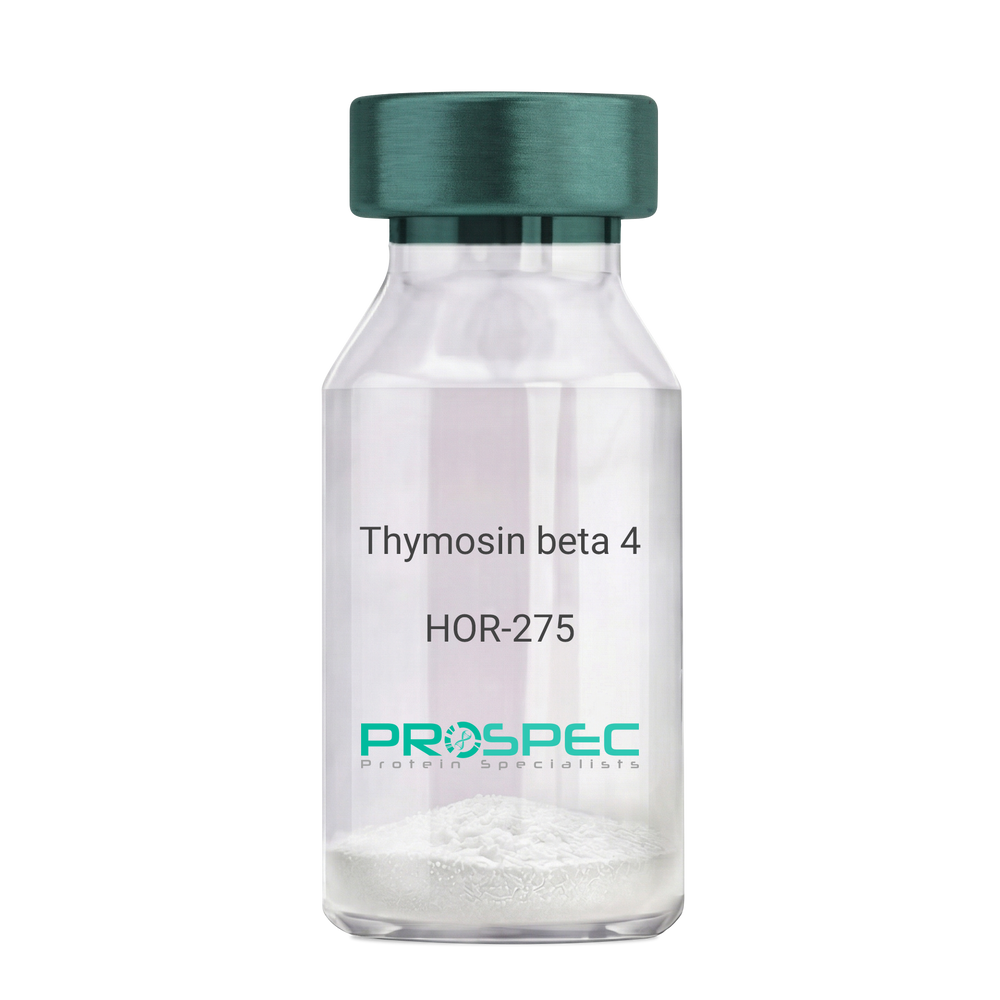
    Thymosin beta 4

    Description:

    Thymosin β4

    Thymosin beta-4. TB500, TB-500

    Product # :

    HOR-275

    Price :

    Quantity :

    Shipping Method :

    Room Temp Icon

    Shipped at Room temp

    Add To Cart

    More Info

    • description
    • formulation
    • purity
    • More Info

    Description

    Thymosin b4 is a 43 amino acid peptide which is regarded as the main intracellular G-actin sequestering peptide. It has a molecular weight of 4963.55 Da, and its molecular formula is: C212H350N56O78S1. Extracellular Thymosin b4 may contribute to physiological processes such as angiogenesis, wound healing, and regulation of inflammation.

    Formulation

    The protein (1mg/ml) was lyophilized with no additives.

    Purity

    Greater than 98.0% as determined by RP-HPLC.

    More Info

    • Introduction

      Thymosin is a hormone secreted from the thymus. Its primary function is to stimulate the production of T cells, which are an important part of the immune system. Thymosin also assists in the development of B cells to plasma cells to produce antibodies. The predominant form of thymosin, thymosin b4, is a member of a highly conserved family of actin monomer-sequestering proteins. b-thymosins are the primary regulators of unpolymerized actin, and are essential for maintaining the small cytoplasmic pool of free G-actin monomers required for rapid filament elongation and allowing for the flux of monomers between the thymosin-bound pool and F-actin.

    • Synonyms

      Thymosin beta-4. TB500, TB-500

    • Physical Appearance

      Sterile Filtered White lyophilized (freeze-dried) powder.

    • Stability

      Lyophilized Thymosin b4 although stable at room temperature for 3 weeks, should be stored desiccated below -18°C. Upon reconstitution T beta 4 should be stored at 4°C between 2-7 days and for future use below -18°C.For long term storage it is recommended to add a carrier protein (0.1% HSA or BSA).Please prevent freeze-thaw cycles.

    • Solubility

      It is recommended to reconstitute the lyophilized Thymosin beta-4 in sterile 18MΩ-cm H2O not less than 100 µg/ml, which can then be further diluted to other aqueous solutions.

    • Amino Acid Sequence

      Thymosin b4 has an a.a. sequence of Ac-Ser-Asp-Lys-Pro-Asp-Met-Ala-Glu-Ile-Glu-Lys-Phe-Asp-Lys-Ser-Lys-Leu-Lys-Lys-Thr-Glu-Thr-Gln-Glu-Lys-Asn-Pro-Leu-Pro-Ser-Lys-Glu-Thr-Ile-Glu-Gln-Glu-Lys-Gln-Ala-Gly-Glu-Ser-OH.

    ProSpec's products are furnished for LABORATORY RESEARCH USE ONLY. The product may not be used as drugs, agricultural or pesticidal products, food additives or household chemicals.

    Thymosin Beta 4
  • View Data Sheet

    Name :

    ACTN1 Human

    Description:

    Actinin Alpha 1 Human Recombinant

    ACTN1, Actinin, Alpha 1, Alpha-Actinin Cytoskeletal Isoform, F-Actin Cross-Linking Protein, Non-Muscle Alpha-Actinin-1, BDPLT15, Actinin 1 Smooth Muscle, Alpha-Actinin-1.

    Product # :

    PRO-2227

    Price :

    Quantity :

    Shipping Method :

    Ice Icon

    Shipped with Ice Packs

    Add To Cart

    More Info

    • description
    • source
    • formulation
    • purity
    • More Info

    Description

    ACTN1 Human Recombinant produced in E.Coli is a single, non-glycosylated polypeptide chain containing 274 amino acids (1-249 a.a) and having a molecular mass of 31.4kDa. ACTN1 is fused to a 25 amino acid His-tag at N-terminus & purified by proprietary chromatographic techniques.

    Source

    Escherichia Coli.

    Formulation

    ACTN1 protein solution (1mg/ml) containing Phosphate Buffered Saline (pH7.4) and 10% glycerol.

    Purity

    Greater than 95.0% as determined by SDS-PAGE.

    More Info

    • Introduction

      ACTN1 encodes a nonmuscle, cytoskeletal, alpha actinin isoform and maps to the same site as the structurally similar erythroid beta spectrin gene. Alpha actinins belong to the spectrin gene superfamily which represents a diverse group of cytoskeletal proteins, including the alpha and beta spectrins and dystrophins. Alpha actinin is an actin-binding protein with multiple roles in different cell types. In nonmuscle cells, the cytoskeletal isoform is found along microfilament bundles and adherens-type junctions, where it is involved in binding actin to the membrane. In contrast, skeletal, cardiac, and smooth muscle isoforms are localized to the Z-disc and analogous dense bodies, where they help anchor the myofibrillar actin filaments.

    • Synonyms

      ACTN1, Actinin, Alpha 1, Alpha-Actinin Cytoskeletal Isoform, F-Actin Cross-Linking Protein, Non-Muscle Alpha-Actinin-1, BDPLT15, Actinin 1 Smooth Muscle, Alpha-Actinin-1.

    • Physical Appearance

      Sterile Filtered colorless solution.

    • Stability

      Store at 4°C if entire vial will be used within 2-4 weeks. Store, frozen at -20°C for longer periods of time. For long term storage it is recommended to add a carrier protein (0.1% HSA or BSA).Avoid multiple freeze-thaw cycles.

    • Amino Acid Sequence

      MGSSHHHHHH SSGLVPRGSH MGSEFMDHYD SQQTNDYMQP EEDWDRDLLL DPAWEKQQRK TFTAWCNSHL RKAGTQIENI EEDFRDGLKL MLLLEVISGE RLAKPERGKM RVHKISNVNK ALDFIASKGV KLVSIGAEEI VDGNVKMTLG MIWTIILRFA IQDISVEETS AKEGLLLWCQ RKTAPYKNVN IQNFHISWKD GLGFCALIHR HRPELIDYGK LRKDDPLTNL NTAFDVAEKY LDIPKMLDAE DIVGTARPDE KAIMTYVSSF YHAF.

    ProSpec's products are furnished for LABORATORY RESEARCH USE ONLY. The product may not be used as drugs, agricultural or pesticidal products, food additives or household chemicals.

    Actn1 Human
  • View Data Sheet

    Name :

    GDF5 Mouse, His

    Description:

    Growth differentiation factor 5 Mouse Recombinant, His Tag

    Bmp-14, Bp, GDF-5, Bone morphogenetic protein 14, GDF5.

    Product # :

    CYT-852

    Price :

    Quantity :

    Shipping Method :

    Ice Icon

    Shipped with Ice Packs

    Add To Cart

    More Info

    • description
    • source
    • formulation
    • purity
    • More Info
    • sds-page

    Description

    GDF5 Mouse Recombinant produced in E.Coli is a single, non-glycosylated polypeptide chain containing 143 amino acids (376-495 a.a) and having a molecular mass of 16kDa.GDF5 is fused to a 23 amino acid His-tag at N-terminus & purified by proprietary chromatographic techniques.

    Source

    Escherichia Coli.

    Formulation

    GDF5 protein solution (0.5mg/ml) containing 20mM Tris-HCl buffer (pH 8.0) and 10% glycerol.

    Purity

    Greater than 90.0% as determined by SDS-PAGE.

    sds-page

    GDF5-sds-page - Product image 1

    More Info

    • Introduction

      GDF-5 is a member of the bone morphogenetic protein (BMP) family and the TGF-beta superfamily. This group of proteins is characterized by a polybasic proteolytic processing site which is cleaved to produce a mature protein containing seven conserved cysteine residues. The members of this family are regulators of cell growth and differentiation in both embryonic and adult tissues. Mutations in this gene are associated with acromesomelic dysplasia, Hunter-Thompson type; brachydactyly, type C; and chondrodysplasia, Grebe type. These associations confirm that the gene product plays a role in skeletal development.

    • Synonyms

      Bmp-14, Bp, GDF-5, Bone morphogenetic protein 14, GDF5.

    • Physical Appearance

      Sterile Filtered colorless solution.

    • Stability

      Store at 4°C if entire vial will be used within 2-4 weeks. Store, frozen at -20°C for longer periods of time. For long term storage it is recommended to add a carrier protein (0.1% HSA or BSA).Avoid multiple freeze-thaw cycles.

    • Amino Acid Sequence

      MGSSHHHHHH SSGLVPRGSH MGSAPLANRQ GKRPSKNLKA RCSRKALHVN FKDMGWDDWI IAPLEYEAFH CEGLCEFPLR SHLEPTNHAV IQTLMNSMDP ESTPPTCCVP TRLSPISILF IDSANNVVYK QYEDMVVESC GCR.

    • Background

      What is the molecular weight/Mw of GDF5 MOUSE Protein?
      GDF5 MOUSE Protein has a total Mw of 16kDa.

      What is the source or expression system of GDF5 MOUSE Protein?
      Escherichia Coli.

      What is the Purity of GDF5 MOUSE Protein?
      GDF5 MOUSE Protein is >90% pure as determined by SDS-PAGE.

      What is the Biological Activity of GDF5 MOUSE Protein?
      The biological functionality of GDF5 MOUSE Protein will be determined in the future.

      What is the amino acid sequence of GDF5 MOUSE Protein?
      MGSSHHHHHH SSGLVPRGSH MGSAPLANRQ GKRPSKNLKA RCSRKALHVN FKDMGWDDWI IAPLEYEAFH CEGLCEFPLR SHLEPTNHAV IQTLMNSMDP ESTPPTCCVP TRLSPISILF IDSANNVVYK QYEDMVVESC GCR.

      What applications can GDF5 MOUSE Protein be used in?
      GDF5 MOUSE Protein can probably be used in western blot, ELISA and Lateral Flow.

      What is the endotoxin level for GDF5 MOUSE Protein?
      The endotoxin level is minimal, GDF5 MOUSE Protein was purified using conventional chromatography techniques.

    ProSpec's products are furnished for LABORATORY RESEARCH USE ONLY. The product may not be used as drugs, agricultural or pesticidal products, food additives or household chemicals.

    Gdf5 Mouse
  • View Data Sheet

    Name :

    Polcalcin Phl p 7

    Description:

    Pollen Allergen Phl p 7 Recombinant

    Polcalcin Phl p 7, Calcium-binding pollen allergen Phl p 7, P7, Phl p 7.

    Product # :

    ALR-015

    Price :

    Quantity :

    Shipping Method :

    Ice Icon

    Shipped with Ice Packs

    Add To Cart

    More Info

    • description
    • source
    • formulation
    • purity
    • More Info

    Description

    Recombinant Polcalcin Phl p 7 produced in SF9 is a glycosylated, polypeptide chain having a calculated molecular mass of 9.0 kDa. Polcalcin Phl p 7 is purified by proprietary chromatographic techniques.

    Source

    Sf9 insect cells.

    Formulation

    Polcalcin Phl p 7 is supplied in 20mM HEPES buffer pH-8.0, 0.2M NaCl, 1mM CaCl2 and 20% Glycerol.

    Purity

    Greater than 95.0% as determined by SDS-PAGE.

    More Info

    • Introduction

      Phl p 7.0101 is a secondary allergen of timothy grass pollen, which is non-glycosylated protein. Grass pollen-sensitized individuals show IgE antibodies in their blood system. Phl p 7.0101 is a calcium binding protein with similar sequence to pollen antigens that exist in different plants, hence, cross-reactions are possible.

    • Synonyms

      Polcalcin Phl p 7, Calcium-binding pollen allergen Phl p 7, P7, Phl p 7.

    • Physical Appearance

      Sterile Filtered clear solution.

    • Stability

      Store at 4°C if entire vial will be used within 2-4 weeks. Store, frozen at -20°C for longer periods of time. Avoid multiple freeze-thaw cycles.

    • Immunological Functions

      1. Binds IgE type human antibodies. 2. Immunodot test with positive/negative sera panels.

    ProSpec's products are furnished for LABORATORY RESEARCH USE ONLY. The product may not be used as drugs, agricultural or pesticidal products, food additives or household chemicals.

    Polcalcin Phl P 7
  • View Data Sheet

    Name :

    GAGA-POZ

    Description:

    GAGA-POZ Drosophila Melanogaster Recombinant

    Transcription factor GAGA, Trithorax-like protein, GAGA factor, GAF, Adh transcription factor 2, Neural conserved at 70F, Trl, Adf-2, GAGA, Nc70F, TFGAGA, CG33261, GAGA-POZ.

    Product # :

    PRO-435

    Price :

    Quantity :

    Shipping Method :

    Ice Icon

    Shipped with Ice Packs

    Add To Cart

    More Info

    • description
    • source
    • formulation
    • purity
    • More Info

    Description

    GAGA-POZ Drosophila Melanogaster Recombinant produced in E.Coli is a single, non-glycosylated polypeptide chain containing 130 amino acids & having a molecular mass of 14 kDa.

    Source

    Escherichia Coli.

    Formulation

    The protein containing 10mM HEPES (pH-7.4) and 25mM NaCl.

    Purity

    Greater than 95% as determined by SDS-PAGE.

    More Info

    • Introduction

      The GAGA factor is a sequence-specific DNA-binding protein, which participates in the regulation of the expression of a variety of different classes of genes in Drosophila such as many developmentally regulated genes, stress induced genes, and cell cycle regulated genes, as well as housekeeping genes. GAGA contains a C-terminal glutamine-rich domain and a highly conserved N-terminal POZ domain which reported to be involved in self-oligomerization in a number of other POZ domain containing proteins. In case of GAGA protein, the N-terminal POZ domain mediates the formation of oligomers both in vitro and in vivo.

    • Synonyms

      Transcription factor GAGA, Trithorax-like protein, GAGA factor, GAF, Adh transcription factor 2, Neural conserved at 70F, Trl, Adf-2, GAGA, Nc70F, TFGAGA, CG33261, GAGA-POZ.

    • Physical Appearance

      Sterile filtered colorless solution.

    • Stability

      Store at 4°C if entire vial will be used within 2-4 weeks. Store, frozen at -20°C for longer periods of time. For long term storage it is recommended to add a carrier protein (0.1% HSA or BSA). Avoid multiple freeze-thaw cycles.

    • Amino Acid Sequence

      MSLPMNSLYS LTWGDYGTSL VSAIQLLRCH GDLVDCTLAA GGRSFPAHKI VLCAASPFLLDLLKNTPCKH PVVMLAGVNA NDLEALLEFV YRGEVSVDHA QLPSLLQAAQ CLNIQGLAPQTVTKDDYTTH.

    ProSpec's products are furnished for LABORATORY RESEARCH USE ONLY. The product may not be used as drugs, agricultural or pesticidal products, food additives or household chemicals.

    Gaga Factor
  • View Data Sheet

    Name :

    GNAZ Human

    Description:

    Guanine Nucleotide Binding Protein Alpha Z Polypeptide Human Recombinant

    Guanine Nucleotide Binding Protein (G Protein) Alpha Z Polypeptide, G(X) Alpha Chain, Guanine Nucleotide-Binding Protein G(Z) Subunit Alpha, Gz-Alpha, Transducin Alpha.

    Product # :

    PRO-1225

    Price :

    Quantity :

    Shipping Method :

    Ice Icon

    Shipped with Ice Packs

    Add To Cart

    More Info

    • description
    • source
    • formulation
    • purity
    • More Info

    Description

    GNAZ Human Recombinant produced in E. coli is a single polypeptide chain containing 375 amino acids (1-355) and having a molecular mass of 43.0 kDa.GNAZ is fused to a 20 amino acid His-tag at N-terminus & purified by proprietary chromatographic techniques.

    Source

    E.coli.

    Formulation

    The GNAZ solution (1mg/1ml) contains 20mM Tris-HCl buffer (pH 8.0), 0.4M Urea and 10% glycerol.

    Purity

    Greater than 90% as determined by SDS-PAGE.

    More Info

    • Introduction

      Guanine nucleotide-binding protein G(z) subunit alpha (GNAZ) belongs to the G protein subfamily which mediates signal transduction in pertussis toxin-insensitive systems. GNAZ has a role in maintaining the ionic balance of perilymphatic and endolymphatic cochlear fluids. G proteins are involved as modulators or transducers in a variety of transmembrane signaling systems.

    • Synonyms

      Guanine Nucleotide Binding Protein (G Protein) Alpha Z Polypeptide, G(X) Alpha Chain, Guanine Nucleotide-Binding Protein G(Z) Subunit Alpha, Gz-Alpha, Transducin Alpha.

    • Physical Appearance

      Sterile Filtered colorless solution.

    • Stability

      Store at 4°C if entire vial will be used within 2-4 weeks. Store, frozen at -20°C for longer periods of time. For long term storage it is recommended to add a carrier protein (0.1% HSA or BSA).Avoid multiple freeze-thaw cycles.

    • Amino Acid Sequence

      MGSSHHHHHH SSGLVPRGSH MGCRQSSEEK EAARRSRRID RHLRSESQRQ RREIKLLLLG TSNSGKSTIV KQMKIIHSGG FNLEACKEYK PLIIYNAIDS LTRIIRALAA LRIDFHNPDR AYDAVQLFAL TGPAESKGEI TPELLGVMRR LWADPGAQAC FSRSSEYHLE DNAAYYLNDL ERIAAADYIP TVEDILRSRD MTTGIVENKF TFKELTFKMV DVGGQRSERK KWIHCFEGVT AIIFCVELSG YDLKLYEDNQ TSRMAESLRL FDSICNNNWF INTSLILFLN KKDLLAEKIR RIPLTICFPE YKGQNTYEEA AVYIQRQFED LNRNKETKEI YSHFTCATDT SNIQFVFDAV TDVIIQNNLK YIGLC

    ProSpec's products are furnished for LABORATORY RESEARCH USE ONLY. The product may not be used as drugs, agricultural or pesticidal products, food additives or household chemicals.

    Gnaz Human
  • View Data Sheet

    Name :

    CXCL1 Mouse

    Description:

    GRO1/KC Mouse Recombinant (CXCL1)

    Growth-regulated alpha protein, CXCL1, Platelet-derived growth factor-inducible protein KC, Secretory protein N51, KC, Fsp, N51, gro, Gro1, Mgsa, Scyb1, chemokine (C-X-C motif) ligand 1.

    Product # :

    CHM-335

    Price :

    Quantity :

    Shipping Method :

    Room Temp Icon

    Shipped at Room temp

    Add To Cart

    More Info

    • description
    • source
    • formulation
    • purity
    • biological activity
    • More Info

    Description

    KC Mouse Recombinant also known as N51 and GRO-1 produced in E.Coli is a single, non-glycosylated, polypeptide chain containing 72 amino acids and having a molecular mass of approximately 7.8 kDa. The GRO-1 is purified by proprietary chromatographic techniques.

    Source

    Escherichia Coli.

    Formulation

    The protein solution (1mg/ml) was lyophilized from 20mM phosphate buffer pH-7.4 and 0.1M NaCl.

    Purity

    Greater than 97.0% as determined by:
    (a) Analysis by RP-HPLC.
    (b) Analysis by SDS-PAGE.

    Biological Activity

    The biological activity was determined by measuring the ability to chemoattrat human neutrophilsat a concentration of 10ng/ml-100ng/ml.

    More Info

    • Introduction

      Chemokine (C-X-C motif) ligand 1 (CXCL1) is a small cytokine belonging to the CXC chemokine family that was previously called GRO1 oncogene, Neutrophil-activating protein 3 (NAP-3) and melanoma growth stimulating activity, alpha (MSGA-a). It is secreted by human melanoma cells, has mitogenic properties and is implicated in melanoma pathogenesis. CXCL1 is expressed by macrophages, neutrophils and epithelial cells, and has neutrophil chemoattractant activity. CXCL1 plays a role in spinal cord development by inhibiting the migration of oligodendrocyte precursors and is involved in the processes of angiogenesis, inflammation, wound healing, and tumorigenesis. This chemokine elicits its effects by signaling through the chemokine receptor CXCR2. The gene for CXCL1 is located on human chromosome 4 amongst genes for other CXC chemokines.

    • Synonyms

      Growth-regulated alpha protein, CXCL1, Platelet-derived growth factor-inducible protein KC, Secretory protein N51, KC, Fsp, N51, gro, Gro1, Mgsa, Scyb1, chemokine (C-X-C motif) ligand 1.

    • Physical Appearance

      Sterile Filtered White lyophilized (freeze-dried) powder.

    • Stability

      Lyophilized KC Mouse although stable at room temperature for 3 weeks, should be stored desiccated below -18°C. Upon reconstitution CXCL1 should be stored at 4°C between 2-7 days and for future use below -18°C. For long term storage it is recommended to add a carrier protein (0.1% HSA or BSA).Please prevent freeze-thaw cycles.

    • Solubility

      It is recommended to reconstitute the lyophilized GRO1 Recombinant in sterile 18MΩ-cm H2O not less than 100µg/ml, which can then be further diluted to other aqueous solutions.

    • Amino Acid Sequence

      APIANELRCQ CLQTMAGIHL KNIQSLKVLP SGPHCTQTEV IATLKNGREA CLDPEAPLVQ KIVQKMLKGV PK.

    • Background

      What is the molecular weight/Mw of CXCL1 MOUSE Protein?
      CXCL1 MOUSE Protein has a total Mw of 7.8kDa.

      What is the source or expression system of CXCL1 MOUSE Protein?
      Escherichia Coli.

      What is the Purity of CXCL1 MOUSE Protein?
      CXCL1 MOUSE Protein is >97% pure as determined by SDS-PAGE.

      What is the Biological Activity of CXCL1 MOUSE Protein?
      The biological activity was determined by measuring the ability to chemoattrat human neutrophilsat a concentration of 10ng/ml-100ng/ml.

      What is the amino acid sequence of CXCL1 MOUSE Protein?
      APIANELRCQ CLQTMAGIHL KNIQSLKVLP SGPHCTQTEV IATLKNGREA CLDPEAPLVQ KIVQKMLKGV PK.

      What applications can CXCL1 MOUSE Protein be used in?
      CXCL1 MOUSE Protein can probably be used in western blot, ELISA and Lateral Flow.

      What is the endotoxin level for CXCL1 MOUSE Protein?
      The endotoxin level is minimal, CXCL1 MOUSE Protein was purified using conventional chromatography techniques.


    • Protein content

      Protein quantitation was carried out by two independent methods: 1. UV spectroscopy at 280 nm using the absorbency value of 0.03 as the extinction coefficient for a 0.1% (1mg/ml) solution. This value is calculated by the PC GENE computer analysis program of protein sequences (IntelliGenetics). 2. Analysis by RP-HPLC, using a standard solution of KC as a Reference Standard.

    ProSpec's products are furnished for LABORATORY RESEARCH USE ONLY. The product may not be used as drugs, agricultural or pesticidal products, food additives or household chemicals.

    Gro A Mouse
  • View Data Sheet

    Name :

    VSNL1 Human

    Description:

    Visinin-Like Protein-1 Human Recombinant

    VISL1, VISL-1, VIS1, VIS-1, VILIP, HLP3, Hippocalcin-like protein 3, VSNL1, VILIP-1, VILIP1, HLP-3, HPCAL3, HUVISL1, Visinin-like protein 1.

    Product # :

    PRO-723

    Price :

    Quantity :

    Shipping Method :

    Ice Icon

    Shipped with Ice Packs

    Add To Cart

    More Info

    • description
    • source
    • formulation
    • purity
    • More Info

    Description

    VSNL1 Human Recombinant produced in E.Coli is a single, non-glycosylated, polypeptide chain containing 191 amino acids (1-191 a.a.) and having a molecular mass of 22.1kDa.The VSNL1 is purified by proprietary chromatographic techniques.

    Source

    Escherichia Coli.

    Formulation

    The VSNL1 protein solution contains 20mM Tris-HCl buffer (pH8.0), 1mM DTT and 10% glycerol.

    Purity

    Greater than 95.0% as determined by SDS-PAGE.

    More Info

    • Introduction

      VSNL1 is a member of the visinin/recoverin subfamily of neuronal calcium sensor proteins. VILIP1 is strongly expressed in granule cells of the cerebellum where it associates with membranes in a calcium-dependent manner and modulates intracellular signaling pathways of the central nervous system by directly or indirectly regulating the activity of adenylyl cyclase. Changes in cellular expression of VSNL1 were found in hipppocampi of schizophrenics, since more interneurons showed immunoreactivity.
      VILIP1 is expressed in pancreatic beta-cells. VILIP-1 interacts with cell membrane and actin-based cytoskeleton. VSNL1 modulates cAMP-accumulation in C6 glioma cells. HLP3 modulates cGMP-accumulation in transfected neural cells and cerebellar granule neurons.

    • Synonyms

      VISL1, VISL-1, VIS1, VIS-1, VILIP, HLP3, Hippocalcin-like protein 3, VSNL1, VILIP-1, VILIP1, HLP-3, HPCAL3, HUVISL1, Visinin-like protein 1.

    • Physical Appearance

      Sterile Filtered colorless solution.

    • Stability

      Store at 4°C if entire vial will be used within 2-4 weeks. Store, frozen at -20°C for longer periods of time. For long term storage it is recommended to add a carrier protein (0.1% HSA or BSA).Please prevent freeze-thaw cycles.

    • Amino Acid Sequence

      MGKQNSKLAP EVMEDLVKST EFNEHELKQW YKGFLKDCPS GRLNLEEFQQ LYVKFFPYGD ASKFAQHAFR TFDKNGDGTI DFREFICALS ITSRGSFEQK LNWAFNMYDL DGDGKITRVE MLEIIEAIYK MVGTVIMMKM NEDGLTPEQR VDKIFSKMDK NKDDQITLDE FKEAAKSDPS IVLLLQCDIQ K.

    ProSpec's products are furnished for LABORATORY RESEARCH USE ONLY. The product may not be used as drugs, agricultural or pesticidal products, food additives or household chemicals.

    Vsnl1 Human
  • View Data Sheet

    Name :

    Thymalin

    Description:

    Thymulin

    Product # :

    HOR-047

    Price :

    Quantity :

    Shipping Method :

    Room Temp Icon

    Shipped at Room temp

    Add To Cart

    More Info

    • description
    • formulation
    • purity
    • More Info

    Description

    Thymulin Synthetic is a single, non-glycosylated polypeptide chain containing 9 amino acids, having a molecular mass of 858 Dalton and a Molecular formula of C33H54N12O15.

    Formulation

    The protein was lyophilized with no additives.

    Purity

    Greater than 97.0% as determined by analysis by RP-HPLC.

    More Info

    • Physical Appearance

      Sterile Filtered White lyophilized (freeze-dried) powder.

    • Stability

      Lyophilized Thymulin although stable at room temperature for 3 weeks, should be stored desiccated below -18°C. Upon reconstitution Thymulin should be stored at 4°C between 2-7 days and for future use below -18°C. For long term storage it is recommended to add a carrier protein (0.1% HSA or BSA). Please prevent freeze-thaw cycles.

    • Solubility

      It is recommended to reconstitute the lyophilized Thymulin in sterile 18MΩ-cm H2O not less than 100 µg/ml, which can then be further diluted to other aqueous solutions.

    • Amino Acid Sequence

      Pyr-Ala-Lys-Ser-Gln-Gly-Gly-Ser-Asn-OH.

    • Background

      Thymulin, a nonapeptide hormone, is produced primarily by the thymus gland and has been recognized for its pivotal role in the immune system. It plays a significant role in the maturation and differentiation of T lymphocytes, which are crucial for immune function. Beyond its immune-related functions, research has increasingly unveiled the diverse physiological roles of thymulin. This study aims to comprehensively investigate thymulin, shedding light on its immunological functions and exploring its potential applications in various aspects of health and medicine.

      The primary objective of this research is to elucidate the mechanisms underlying thymulin's role in immune regulation. In vitro and in vivo experiments will be conducted to explore thymulin's interactions with immune cells, its impact on T cell development and function, and its potential modulation of immune responses. Understanding these mechanisms is fundamental for harnessing thymulin's immunomodulatory properties.

      The second objective is to assess the clinical relevance of thymulin in immune-related disorders. Clinical trials and studies involving individuals with autoimmune diseases, immunodeficiencies, and age-related immune decline will be conducted to evaluate the potential therapeutic applications of thymulin. These investigations may offer insights into the use of thymulin as an immunomodulatory agent in various clinical settings.

      The third objective is to explore the broader implications of thymulin in health and medicine. Research will investigate its potential roles in areas beyond immunology, such as neuroprotection, wound healing, and tissue regeneration. Understanding the multifaceted properties of thymulin may open new avenues for therapeutic interventions in various medical specialties.

      By delving into the diverse functions of thymulin, this research aims to expand our knowledge of its physiological roles and clinical applications. The findings may have implications for the development of innovative approaches in immunology and healthcare, ultimately benefiting patients affected by immune-related disorders and other medical conditions.

      What is the molecular weight/Mw of THYMALIN Protein?
      THYMALIN Protein has a total Mw of 0.85kDa.

      What is the Purity of THYMALIN Protein?
      THYMALIN Protein is >97% pure as determined by SDS-PAGE.

      What is the Biological Activity of THYMALIN Protein?
      The biological functionality of THYMALIN Protein will be determined in the future.

      What is the amino acid sequence of THYMALIN Protein?
      Pyr-Ala-Lys-Ser-Gln-Gly-Gly-Ser-Asn-OH.

      What applications can THYMALIN Protein be used in?
      THYMALIN Protein can probably be used in western blot, ELISA and Lateral Flow.

      What is the endotoxin level for THYMALIN Protein?
      The endotoxin level is minimal, THYMALIN Protein was purified using conventional chromatography techniques.

    ProSpec's products are furnished for LABORATORY RESEARCH USE ONLY. The product may not be used as drugs, agricultural or pesticidal products, food additives or household chemicals.

    Thymulin
  • View Data Sheet

    Name :

    RELM b Human

    Description:

    RELM-Beta Human Recombinant

    Resistin-like beta, RELM beta, Cysteine-rich secreted protein FIZZ2, Colon and small intestine-specific cysteine-rich protein, Cysteine-rich secreted protein A12-alpha-like 1, Colon carcinoma-related gene protein, RELM-b, XCP2, HXCP2.

    Product # :

    CYT-780

    Price :

    Quantity :

    Shipping Method :

    Room Temp Icon

    Shipped at Room temp

    Add To Cart

    More Info

    • description
    • source
    • formulation
    • purity
    • More Info

    Description

    RELM-b Human Recombinant produced in E.Coli is a disulfide-linked homodimer, non-glycosylated, polypeptide chain containing 2 x 89 amino acids and having a total molecular mass of 19kDa. RELM-b is purified by proprietary chromatographic techniques.

    Source

    Escherichia Coli.

    Formulation

    RELM-b was lyophilized from a solution containing 0.1% Trifluoroacetic Acid (TFA).

    Purity

    Greater than 90.0% as determined by SDS-PAGE.

    More Info

    • Introduction

      RELM-beta (Resistin-Like Molecule-beta) is a member of a recently identified family of secreted proteins containing a conserved cystein-rich C-terminus. The RELM family consists of resistin (also called FIZZ3), RELM-alfa (FIZZ1), RELM-beta (FIZZ2) and RELM-gamma. Only resisistin and RELM-beta were found in humans whereas all four RELM family members were identified in rodents.
      RELM-beta appears to be produced as a homodimer exclusively by intestinal goblet cells and can be found in high quantities in stool. Remarkably, stool of germ-free mice displaying sterile intestinal tract does not contain RELM-beta until bacterial colonization takes place after pathogen-free mice entered natural environment. Some, but not all, colon carcinoma cell lines secrete RELM-beta into the cell culture supernatant.
      The physiological function of RELM-beta is not known. High doses of recombinant RELM-beta showed hyperglycemic effects including lowered glucose disposal and increased hepatic glucose production in mice.

    • Synonyms

      Resistin-like beta, RELM beta, Cysteine-rich secreted protein FIZZ2, Colon and small intestine-specific cysteine-rich protein, Cysteine-rich secreted protein A12-alpha-like 1, Colon carcinoma-related gene protein, RELM-b, XCP2, HXCP2.

    • Physical Appearance

      Sterile Filtered White lyophilized (freeze-dried) powder.

    • Stability

      Lyophilized RELM-b although stable at room temperature for 3 weeks, should be stored desiccated below -18°C. Upon reconstitution RELM-b Human Recombinant should be stored at 4°C between 2-7 days and for future use below -18°C.For long term storage it is recommended to add a carrier protein (0.1% HSA or BSA).Please prevent freeze-thaw cycles.

    • Solubility

      It is recommended to reconstitute the lyophilized RELM-b in sterile 0.1% TFA not less than 100µg/ml, which can then be further diluted to other aqueous solutions.

    • Amino Acid Sequence

      MQCSLDSVMD KKIKDVLNSL EYSPSPISKK LSCASVKSQG RPSSCPAGMA VTGCACGYGC GSWDVQLETT CHCQCSVVDW TTARCCHLT.

    ProSpec's products are furnished for LABORATORY RESEARCH USE ONLY. The product may not be used as drugs, agricultural or pesticidal products, food additives or household chemicals.

    Relm B Human
  • View Data Sheet

    Name :

    EGF Mouse, Biotin

    Description:

    Epidermal Growth Factor Mouse Recombinant, Biotin

    Urogastrone, URG, EGF.

    Product # :

    CYT-841

    Price :

    Quantity :

    Shipping Method :

    Ice Icon

    Shipped with Ice Packs

    Add To Cart

    More Info

    • description
    • source
    • formulation
    • purity
    • biological activity
    • More Info

    Description

    EGF Mouse Recombinant, Biotin produced in E.Coli is a non-glycosylated polypeptide chain containing 61 amino acids and having a total molecular mass of 7.0kDa. This version of EGF has a N terminal leader sequence hosting a biotin conjugation. There are 0.5 biotins for each EGF protein.

    Source

    Escherichia Coli.

    Formulation

    The protein (0.5mg/ml) solution contains sterile PBS.

    Purity

    Greater than 95.0% as determined by analysis by SDS-PAGE.

    Biological Activity

    The ED50 as determined by the dose-dependent proliferation of mouse BALB/c 3T3 cells is 0.14-0.2ng/ml, corresponding to a specific activity of 7.1x10⁶units/mg.

    More Info

    • Introduction

      Epidermal growth factor has a profound effect on the differentiation of specific cells in vivo and is a potent mitogenic factor for a variety of cultured cells of both ectodermal and mesodermal origin. The EGF precursor is believed to exist as a membrane-bound molecule which is proteolytically cleaved to generate the 53-amino acid peptide hormone that stimulates cells to divide. EGF stimulates the growth of various epidermal and epithelial tissues in vivo and in vitro and of some fibroblasts in cell culture.

    • Synonyms

      Urogastrone, URG, EGF.

    • Physical Appearance

      Sterile Filtered clear solution.

    • Stability

      Should be stored at 4°C.Please do not freeze.

    • Amino Acid Sequence

      MKKIDDDKNS YPGCPSSYDG YCLNGGVCMH IESLDSYTCN CVIGYSGDRC QTRDLEWWEL R.

    • Background

      Synergistic Explorations: Epidermal Growth Factor Mouse Recombinant and Biotin Conjugation for Enhanced Therapeutic Potential

      Abstract:

      This research paper delves into the innovative convergence of Epidermal Growth Factor Mouse Recombinant (EGF-MR) and biotin conjugation, unraveling their intricate interplay, molecular attributes, and therapeutic implications. By employing cutting-edge methodologies involving protein engineering, conjugation chemistry, and cellular assays, this study uncovers the augmented cellular responses driven by EGF-MR-biotin complex. The findings highlight a novel avenue for tailored regenerative medicine and targeted therapy.

      Introduction:

      Epidermal Growth Factor (EGF) governs pivotal cellular processes. This paper navigates the unexplored realm of Epidermal Growth Factor Mouse Recombinant (EGF-MR) in synergy with biotin conjugation, elucidating their combined molecular attributes and therapeutic potential.

      Protein Engineering and Biotin Conjugation:

      EGF-MR is strategically engineered to enable biotin conjugation, a process that enhances targeting and delivery. This paper delves into site-specific modification approaches, ensuring precise and controlled conjugation of biotin moieties to EGF-MR.

      Cellular Signaling Amplification:

      The EGF receptor (EGFR) activation triggers cascades of intracellular events. Structural studies and binding kinetics illuminate how the biotin-conjugated EGF-MR modulates EGFR interactions, amplifying downstream signaling pathways like the MAPK and PI3K/Akt cascades.

      Cellular Assays and Functional Responses:

      In vitro cellular assays, encompassing cell proliferation and migration studies, elucidate the effect of EGF-MR-biotin complex on cellular responses. Live-cell imaging techniques reveal enhanced cell motility and survival, underpinning the potential therapeutic impact.

      Tailored Delivery Strategies:

      The biotin-avidin interaction offers a strategic avenue for targeted drug delivery. Employing this interaction, EGF-MR-biotin complex can be directed to specific cell types, revolutionizing precision medicine and enabling tailored therapeutic interventions.

      Regenerative Medicine and Targeted Therapy:

      The augmented cellular responses initiated by EGF-MR-biotin complex hold significant promise. In regenerative medicine, the complex's potential to accelerate tissue regeneration becomes evident. Furthermore, in targeted therapy, the complex's enhanced cellular uptake offers a novel approach to modulate tumor microenvironments.

      Future Prospects and Challenges:

      While transformative, challenges persist, including optimizing conjugation efficiency and unraveling long-term effects. Future research should focus on refining delivery strategies and conducting comprehensive long-term studies to harness the full therapeutic potential.

      Conclusion:

      In a convergence of ingenious methodologies and visionary therapeutic approaches, the synergy between Epidermal Growth Factor Mouse Recombinant and biotin emerges as a captivating frontier. The molecular marriage between EGF-MR and biotin not only amplifies cellular responses but also opens doors for targeted interventions and precision therapies, revolutionizing the landscape of medical advancements.

      What is the molecular weight/Mw of MEGF, BIOTIN Protein?
      MEGF, BIOTIN Protein has a total Mw of 7kDa.

      What is the source or expression system of MEGF, BIOTIN Protein?
      Escherichia Coli.

      What is the Purity of MEGF, BIOTIN Protein?
      MEGF, BIOTIN Protein is >95% pure as determined by SDS-PAGE.

      What is the Biological Activity of MEGF, BIOTIN Protein?
      The ED50 as determined by the dose-dependent proliferation of mouse BALB/c 3T3 cells is 0.14-0.2ng/ml, corresponding to a specific activity of 7.1x10⁶units/mg.

      What is the amino acid sequence of MEGF, BIOTIN Protein?
      MKKIDDDKNS YPGCPSSYDG YCLNGGVCMH IESLDSYTCN CVIGYSGDRC QTRDLEWWEL R.

      What applications can MEGF, BIOTIN Protein be used in?
      MEGF, BIOTIN Protein can probably be used in western blot, ELISA and Lateral Flow.

      What is the endotoxin level for MEGF, BIOTIN Protein?
      The endotoxin level is minimal, MEGF, BIOTIN Protein was purified using conventional chromatography techniques.

    ProSpec's products are furnished for LABORATORY RESEARCH USE ONLY. The product may not be used as drugs, agricultural or pesticidal products, food additives or household chemicals.

    Egf Mouse Biotin
  • View Data Sheet

    Name :

    Flagellin

    Description:

    Flagellin Recombinant

    Product # :

    PRO-1240

    Price :

    Quantity :

    Shipping Method :

    Room Temp Icon

    Shipped at Room temp

    Add To Cart

    More Info

    • description
    • source
    • formulation
    • purity
    • More Info

    Description

    Flagellin Salmonella typhimurium Recombinant produced in E.Coli is a single, non-glycosylated, polypeptide chain containing 503 amino acids with Leu, Glu and a 6 × His at C-terminus and having a molecular mass of 52.7kDa.The Flagellin is purified by proprietary chromatographic techniques.

    Source

    Escherichia Coli.

    Formulation

    Lyophilized from a 0.2um filtered concentrated solution in PBS, pH 7.4.

    Purity

    Greater than 95.0% as determined by SDS-PAGE and HPLC analyses.

    More Info

    • Introduction

      Flagellin arranges itself in a hollow cylinder to create the filament in bacterial flagellum. Flagellin is the key substituent of bacterial flagellum, and is found in large quantities on almost all flagellated bacteria.

    • Physical Appearance

      Sterile Filtered White lyophilized (freeze-dried) powder.

    • Stability

      Lyophilized Flagellin although stable at room temperature for 3 weeks, should be stored desiccated below -18°C. Upon reconstitution Flagellin should be stored at 4°C between 2-7 days and for future use below -18°C.Please prevent freeze-thaw cycles.

    • Solubility

      It is recommended to reconstitute the lyophilized Flagellin in sterile 18M-cm H2O not less than 100µg/ml, which can then be further diluted to other aqueous solutions.

    • Amino Acid Sequence

      MAQVINTNSL SLLTQNNLNK SQSALGTAIE RLSSGLRINS AKDDAAGQAI ANRFTANIKG LTQASRNAND GISIAQTTEG ALNEINNNLQ RVRELAVQSA NSTNSQSDLD SIQAEITQRL NEIDRVSGQT QFNGVKVLAQ DNTLTIQVGA NDGETIDIDL KQINSQTLGL DTLNVQQKYK VSDTAATVTG YADTTIALDN STFKASATGL GGTDQKIDGD LKFDDTTGKY YAKVTVTGGT GKDGYYEVSV DKTNGEVTLA GGATSPLTGG LPATATEDVK NVQVANADLT EAKAALTAAG VTGTASVVKM SYTDNNGKTI DGGLAVKVGD DYYSATQNKD GSISINTTKY TADDGTSKTA LNKLGGADGK TEVVSIGGKT YAASKAEGHN FKAQPDLAEA AATTTENPLQ KIDAALAQVD TLRSDLGAVQ NRFNSAITNL GNTVNNLTSA RSRIEDSDYA TEVSNMSRAQ ILQQAGTSVL AQANQVPQNV LSLLRLEHHH HHH

    ProSpec's products are furnished for LABORATORY RESEARCH USE ONLY. The product may not be used as drugs, agricultural or pesticidal products, food additives or household chemicals.

    Flagellin
  • View Data Sheet

    Name :

    Adipsin Human, Sf9

    Description:

    Complement Factor D Human Recombinant, Sf9

    Complement Factor D (Adipsin), Properdin Factor D, D Component Of Complement (Adipsin), C3 Convertase Activator, EC 3.4.21.46, ADIPSIN, PFD, AND, DF, Complement Factor D Preproprotein, Complement Factor D, EC 3.4.21, Complement factor D.

    Product # :

    PRO-2213

    Price :

    Quantity :

    Shipping Method :

    Ice Icon

    Shipped with Ice Packs

    Add To Cart

    More Info

    • description
    • source
    • formulation
    • purity
    • More Info

    Description

    Adipsin produced in Sf9 Baculovirus cells is a single, glycosylated polypeptide chain containing 241 amino acids (21-253a.a.) and having a molecular mass of 26.01kDa. (Molecular size on SDS-PAGE will appear at approximately 28-40kDa). Adipsin is expressed with an 8 amino acid His tag at C-Terminus and purified by proprietary chromatographic techniques.

    Source

    Sf9, Baculovirus cells.

    Formulation

    Adipsin protein solution (1mg/ml) contains phosphate buffered saline (pH7.4).

    Purity

    Greater than 95.0% as determined by SDS-PAGE.

    More Info

    • Introduction

      Complement Factor D (Adipsin), which belongs to the trypsin family of peptidases, is involved in the alternative complement pathway of the complement system where it cleaves factor B. In the alternative complement pathway, Adipsin is best known for its role in humoral suppression of infectious agents. In addition, Adipsin is a serine protease which is secreted by adipocytes into the bloodstream. Ultimately, Adipsin has a high level of expression in fat, proposing a role for adipose tissue in immune system biology.

    • Synonyms

      Complement Factor D (Adipsin), Properdin Factor D, D Component Of Complement (Adipsin), C3 Convertase Activator, EC 3.4.21.46, ADIPSIN, PFD, AND, DF, Complement Factor D Preproprotein, Complement Factor D, EC 3.4.21, Complement factor D.

    • Physical Appearance

      Sterile Filtered colorless solution.

    • Stability

      Store at 4°C if entire vial will be used within 2-4 weeks. Store, frozen at -20°C for longer periods of time. For long term storage it is recommended to add a carrier protein (0.1% HSA or BSA).Avoid multiple freeze-thaw cycles.

    • Amino Acid Sequence

      PPRGRILGGR EAEAHARPYM ASVQLNGAHL CGGVLVAEQW VLSAAHCLED AADGKVQVLL GAHSLSQPEP SKRLYDVLRA VPHPDSQPDT IDHDLLLLQL SEKATLGPAV RPLPWQRVDR DVAPGTLCDV AGWGIVNHAG RRPDSLQHVL LPVLDRATCN RRTHHDGAIT ERLMCAESNR RDSCKGDSGG PLVCGGVLEG VVTSGSRVCG NRKKPGIYTR VASYAAWIDS VLAVEHHHHH H.

    ProSpec's products are furnished for LABORATORY RESEARCH USE ONLY. The product may not be used as drugs, agricultural or pesticidal products, food additives or household chemicals.

    Adipsin Human Sf9
  • 1
  • …
  • 6
  • 7
  • 8
  • 9
  • 10
  • …
  • 42
Your browser does not support the video tag.

Products

  • Cytokines
  • Growth Factors
  • Chemokines
  • CD Antigens
  • Neurotrophins
  • Hormones
  • Enzymes
  • Viral Antigens
  • Recombinant Proteins
  • Natural Proteins
  • Monoclonal Antibodies
  • Polyclonal Antibodies
  • Thermal Packaging

About

  • Company
  • Founder
  • Contribution
  • Contact Us
  • My Account

Ordering

  • Ordering Method
  • Ordering - Credit Card
  • Ordering PO
  • Shipping Fees
  • FAQ's

Legal

  • Terms & Conditions
  • Privacy
  • Site Map
  • info@prospecbio.com
  • Facebook
  • Instagram
  • Linkedin Profile

© 2026 ProSpec-Tany TechnoGene Ltd. All Rights Reserved.

  • Choosing a selection results in a full page refresh.
  • Opens in a new window.