Search results
1000 results found for “chromogranin”
Name
Description
Product #
Price
Quantity
Shipping Method
- View Data Sheet
Name :
pGH 22kDa HumanDescription:
Growth Hormone Placental 22kDa Human Recombinant
GHL, GHV, GH-V, hGH-V, PGH.
Product # :
CYT-235Price :
Quantity :
Shipping Method :
Shipped at Room temp
More Info
- description
- source
- formulation
- purity
- More Info
Description
Placental HGH 22kDa Recombinant produced in E.Coli is a single, non-glycosylated, polypeptide chain containing 192 amino acids and having a molecular mass of 22367 Dalton. Predicted pI=7.80. Placental Growth Hormone has dimished lactogenic (prolactin receptor mediated) activity characteristic to pituitary GHs. GH Placental Human Recombinant is purified by proprietary chromatographic techniques.
Source
Escherichia Coli.
Formulation
The protein was lyophilized from a concentrated (1mg/ml) solution with 0.0045mM NaHCO3 previously adjusted pH 8-9.
Purity
Greater than 98.0% as determined by:
(a) Analysis by SEC-HPLC.
(b) Analysis by SDS-PAGE.More Info
-
Introduction
GH is a member of the somatotropin/prolactin family of hormones which play an important role in growth control. The gene, along with four other related genes, is located at the growth hormone locus on chromosome 17 where they are interspersed in the same transcriptional orientation; an arrangement which is thought to have evolved by a series of gene duplications. The five genes share a remarkably high degree of sequence identity. Alternative splicing generates additional isoforms of each of the five growth hormones, leading to further diversity and potential for specialization. This particular family member is expressed in the pituitary but not in placental tissue as is the case for the other four genes in the growth hormone locus. Mutations in or deletions of the gene lead to growth hormone deficiency and short stature.
-
Synonyms
GHL, GHV, GH-V, hGH-V, PGH.
-
Physical Appearance
Sterile Filtered White lyophilized (freeze-dried) powder.
-
Stability
Lyophilized GH placental although stable at room temperature for 3 weeks, should be stored desiccated below -18°C. Upon reconstitution and filter sterilization HGH placental can be stored at 4°C for up to 4 weeks. For long term storage and more diluted solutions it is recommended to add a carrier protein (0.1% HSA or BSA). Please prevent freeze-thaw cycles.
-
Solubility
It is recommended to reconstitute the lyophilized Placental HGH in 0.4% NaHCO3or water adjusted to pH 9, not less than 100 µg/ml, which can then be further diluted to other aqueous solutions.
-
Amino Acid Sequence
The sequence of the first five N-terminal amino acids was determined and was found to be Ala-Phe-Pro-Thr-Ile.
-
Protein content
Protein quantitation was carried out by two independent methods1. UV spectroscopy at 280 nm using the absorbency value of 1.18 as the extinction coefficient for a 0.1% (1mg/ml) solution. This value is calculated by the PC GENE computer analysis program of protein sequences (IntelliGenetics). 2. Analysis by RP-HPLC, using a calibrated solution of GH-22K-placental as a Reference Standard.
ProSpec's products are furnished for LABORATORY RESEARCH USE ONLY. The product may not be used as drugs, agricultural or pesticidal products, food additives or household chemicals.
- View Data Sheet
Name :
SemaglutideDescription:
Semaglutide
Product # :
HOR-048Price :
Quantity :
Shipping Method :
Shipped at Room temp
More Info
- description
- formulation
- purity
- More Info
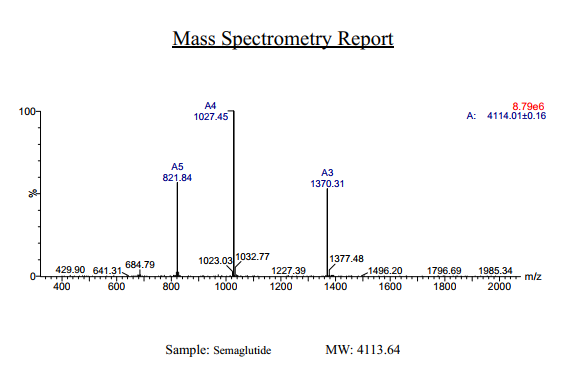
- HPLC, MS
Description
Semaglutide Synthetic is a single, non-glycosylated polypeptide chain containing 31 amino acids, having a molecular mass of 4113 Dalton and a Molecular formula of C187H291N45O59.
Formulation
The protein was lyophilized with no additives.
Purity
Greater than 97.0% as determined by analysis by RP-HPLC.
HPLC, MS
More Info
-
Physical Appearance
Sterile Filtered White lyophilized (freeze-dried) powder.
-
Stability
Lyophilized Semaglutide although stable at room temperature for 3 weeks, should be stored desiccated below -18°C. Upon reconstitution Semaglutide should be stored at 4°C between 2-7 days and for future use below -18°C. For long term storage it is recommended to add a carrier protein (0.1% HSA or BSA). Please prevent freeze-thaw cycles.
-
Solubility
It is recommended to reconstitute the lyophilized Semaglutide in sterile 18MΩ-cm H2O not less than 100 µg/ml, which can then be further diluted to other aqueous solutions.
-
Amino Acid Sequence
H-His-Aib-Glu-Gly-Thr-Phe-Thr-Ser-Asp-Val-Ser-Ser-Tyr-Leu-Glu-Gly-Gln-Ala-Ala-Lys(AEEAc-AEEAc-γ-Glu-17-carboxyheptadecanoyl)-Glu-Phe-Ile-Ala-Trp-Leu-Val-Arg-Gly-Arg-Gly-OH.
-
Background
Semaglutide, a glucagon-like peptide-1 receptor agonist (GLP-1 RA), has emerged as a breakthrough in the field of diabetes management and metabolic disorders. It is recognized for its potent glucose-lowering effects, weight management properties, and cardiovascular benefits. Beyond diabetes, semaglutide is under investigation for its potential applications in obesity treatment and other related conditions. This research aims to comprehensively explore semaglutide, shedding light on its multifaceted mechanisms of action and its broader therapeutic implications.
The primary objective of this research is to elucidate the mechanisms underlying the glucose-lowering and metabolic effects of semaglutide. In vitro and in vivo experiments will be conducted to investigate how semaglutide interacts with GLP-1 receptors, influences insulin secretion, and modulates glucose homeostasis. Understanding these mechanisms is crucial for harnessing the full therapeutic potential of semaglutide.
The second objective is to assess the clinical relevance of semaglutide in diabetes management. Clinical trials involving individuals with type 2 diabetes will be conducted to evaluate the efficacy, safety, and long-term outcomes of semaglutide treatment. These investigations may provide valuable insights into its use as a monotherapy or adjunct therapy in diabetes care.
The third objective is to explore the potential applications of semaglutide beyond diabetes. Research will investigate its role in obesity treatment, cardiovascular risk reduction, and non-alcoholic fatty liver disease (NAFLD) management. Understanding the multifaceted properties of semaglutide may open new avenues for therapeutic interventions in various metabolic and cardiovascular conditions.
By delving into the diverse functions of semaglutide, this research aims to expand our understanding of its therapeutic potential and clinical applications. The findings may contribute to improved treatment strategies for individuals affected by diabetes, obesity, and related metabolic disorders.
ProSpec's products are furnished for LABORATORY RESEARCH USE ONLY. The product may not be used as drugs, agricultural or pesticidal products, food additives or household chemicals.
- View Data Sheet
Name :
KRT18 BovineDescription:
Cytokeratin-18 Bovine
Keratin type I cytoskeletal 18, Cytokeratin-18, CK-18, Keratin-18, K18, KRT18,CYK18,Cell proliferation-inducing gene 46 protein.
Product # :
PRO-2785Price :
Quantity :
Shipping Method :
Shipped at Room temp
More Info
- description
- source
- formulation
- purity
- More Info
Description
KRT18 Bovine having a calculated molecular mass of 45 kDa, pI-5.4.
Source
Bovine liver.
Formulation
KRT18 was lyophilized from a 1mg/ml solution containing 30mM Tris/HCI pH 8, 9M urea, 2mM EDTA, 2mM DTT and 10mM methylammonium chloride.
Purity
Greater than 95.0% as determined by SDS-PAGE.
More Info
-
Synonyms
Keratin type I cytoskeletal 18, Cytokeratin-18, CK-18, Keratin-18, K18, KRT18,CYK18,Cell proliferation-inducing gene 46 protein.
-
Physical Appearance
Sterile Filtered White lyophilized (freeze-dried) powder.
-
Stability
Store the lyophilized KRT18 between 2-8°C, do not freeze. Upon reconstitution KRT18 should be stored at -20°C.Please prevent freeze-thaw cycles.
-
Solubility
It is recommended to reconstitute the lyophilized KRT18 in sterile 18MΩ-cm H2O not less than 100µg/ml, which can then be further diluted to other aqueous solutions.
-
Background
Keratin-18 (K18) is an intermediate filament protein that plays a vital role in maintaining the structural integrity of epithelial cells. Extensive research has been conducted on K18 in human and murine models, shedding light on its functions and implications for various epithelial tissues.
However, the study of K18 in bovine tissues is an emerging area with potential for advancing our understanding of epithelial cell biology and its applications in veterinary medicine and biotechnology. Bovine tissues, such as the liver and gastrointestinal tract, are of particular interest due to their relevance in cattle production and food safety.
This research aims to provide a comprehensive exploration of K18 in bovine tissues, elucidating its functions, structural significance, and potential applications.
The primary objective of this research is to elucidate the role of K18 in bovine tissues, particularly in maintaining the structural integrity of epithelial cells.In vitro and ex vivo experiments, utilizing bovine epithelial cell cultures and tissue specimens, will be conducted to investigate how K18 contributes to cellular morphology, cytoskeletal organization, and tissue resilience. Understanding these mechanisms is fundamental for deciphering the complexities of epithelial cell biology in bovine species.
The second objective is to assess the relevance of bovine K18 in veterinary medicine and cattle production. Studies involving bovine models will be conducted to evaluate the impact of K18 mutations or variations on tissue health, disease susceptibility, and meat quality. These investigations may provide valuable insights into potential applications in cattle breeding and food safety.
The third objective is to explore the potential biotechnological applications of bovine K18. Research will investigate the use of K18-expressing bovine cells as models for studying epithelial-related diseases and for developing tissue engineering approaches for veterinary medicine and biotechnology.
By delving into the functions and roles of K18 in bovine tissues, this research aims to expand our knowledge of epithelial cell biology, its implications for veterinary medicine, and its potential applications in biotechnology and cattle production.
ProSpec's products are furnished for LABORATORY RESEARCH USE ONLY. The product may not be used as drugs, agricultural or pesticidal products, food additives or household chemicals.
- View Data Sheet
Name :
Chymotrypsin PorcineDescription:
Alpha Chymotrypsin Porcine
a-chymotrypsin, alpha chymotrypsin.
Product # :
ENZ-1195Price :
Quantity :
Shipping Method :
Shipped at Room temp
More Info
- description
- source
- formulation
- biological activity
- More Info
Description
Chymotrypsin purified from porcine pancreas, CAS: 9004-07-3, EC: 3.4.21.1 having a molecular mass of ~25kDa.
Source
Porcine Pancreas.
Formulation
The protein (1mg/ml) was lyophilized with no additives.
Biological Activity
Greater than 1500 USP U/mg.
More Info
-
Synonyms
a-chymotrypsin, alpha chymotrypsin.
-
Physical Appearance
Sterile Filtered White lyophilized (freeze-dried) powder.
-
Stability
Lyophilized Chymotrypsin although stable at room temperature for 3 weeks, should be stored desiccated below -18°C. Upon reconstitution Chymotrypsin should be stored at 4°C between 2-7 days and for future use below -18°C. For long term storage it is recommended to add a carrier protein (0.1% HSA or BSA). Please prevent freeze-thaw cycles.
-
Solubility
It is recommended to reconstitute the lyophilized Chymotrypsin in sterile 18MΩ-cm H2O not less than 100µg/ml, which can then be further diluted to other aqueous solutions.
-
Background
Porcine chymotrypsin, derived from the pancreas of pigs, stands as a cornerstone in enzymology, serving as a paradigmatic model for understanding proteolytic mechanisms and substrate specificity. Renowned for its catalytic prowess and structural intricacies, porcine chymotrypsin has garnered significant attention from researchers across various scientific disciplines.
The fascination with porcine chymotrypsin stems from its ability to cleave peptide bonds selectively after large hydrophobic amino acids, such as tryptophan, tyrosine, and phenylalanine.
ProSpec's products are furnished for LABORATORY RESEARCH USE ONLY. The product may not be used as drugs, agricultural or pesticidal products, food additives or household chemicals.
- View Data Sheet
Name :
CSNK1A1 AntibodyDescription:
Casein kinase I isoform alpha, Mouse Anti Human
Casein kinase I isoform alpha, CKI-alpha, CK1, CSNK1A1, HLCDGP1, PRO2975.
Product # :
ANT-442Price :
Quantity :
Shipping Method :
Shipped with Ice Packs
More Info
- formulation
- More Info
Formulation
1mg/ml containing PBS, pH-7.4, & 0.1% Sodium Azide.
More Info
-
Introduction
Caseine Kinase 1 alpha belongs is a member of the protein kinase superfamily, CK1 Ser/Thr protein kinase family, Casein kinase I subfamily. The CK1 isoforms - alpha, beta, gamma, delta, epsilon and their splice variants are involved in diverse cellular processes including membrane trafficking, circadian rhythm, cell cycle progression, chromosome segregation, apoptosis and cellular differentiation. Possibly CSNK1A1 can phosphorylate a large number of proteins and is involved in Wnt signaling where it phosphorylates CTNNB1 on Ser45. CSNK1A1 also interacts with the Axin complex.
-
Synonyms
Casein kinase I isoform alpha, CKI-alpha, CK1, CSNK1A1, HLCDGP1, PRO2975.
-
Immunogen
Anti-human CSNK1A1 mAb, is derived from hybridization of mouse F0 myeloma cells with spleen cells from BALB/c mice immunized with recombinant human CSNK1A1 amino acids 1-337 purified from E. coli.
-
Ig Subclass
Mouse IgG2b heavy chain and κ light chain.
-
Clone
PAT2E2AT.
-
Applications
CSNK1A1 antibody has been tested by ELISA and Western blot analysis to assure specificity and reactivity. Since application varies, however, each investigation should be titrated by the reagent to obtain optimal results. Recommended dilution range for Western blot analysis is 1:1000 ~ 2000. Recommended starting dilution is 1:1000.
-
Type
Mouse Anti Human Monoclonal.
-
Storage Procedures
For periods up to 1 month store at 4°C, for longer periods of time, store at -20°C. Prevent freeze thaw cycles.
-
Purification Method
CSNK1A1 antibody was purified from mouse ascitic fluids by protein-G affinity chromatography.
ProSpec's products are furnished for LABORATORY RESEARCH USE ONLY. The product may not be used as drugs, agricultural or pesticidal products, food additives or household chemicals.
- View Data Sheet
Name :
OXM PorcineDescription:
Oxyntomodulin Porcine Recombinant
Product # :
HOR-292Price :
Quantity :
Shipping Method :
Shipped at Room temp
More Info
- description
- source
- formulation
- purity
- More Info
Description
Oxyntomodulin Porcine Recombinant produced in E.Coli is a single, non-glycosylated polypeptide chain containing 37 amino acids and having a molecular mass of 4420.86 Dalton. The OXM is purified by proprietary chromatographic techniques.
Source
Escherichia Coli.
Formulation
Lyophilized from a concentrated (1mg/ml) solution in water containing no additives.
Purity
Greater than 99.0% as determined by:
(a) Analysis by RP-HPLC.
(b) Analysis by SDS-PAGE.More Info
-
Introduction
OXM a 37 amino acid peptide which contains the glucagon sequence extended by a C-terminal basic octapeptide, its primary structure is identical in all mammals except in pig and cattle. OXM is released from the gut during digestion, together with glicentin another octapeptide containing molecule. It is considered as a putative physiological regulator of gastric acid secretion, it inhibits histamine.
-
Physical Appearance
Sterile Filtered White lyophilized (freeze-dried) powder.
-
Stability
Lyophilized Oxyntomodulin although stable at room temperature for 3 weeks, should be stored desiccated below -18°C. Upon reconstitution OXM should be stored at 4°C between 2-7 days and for future use below -18°C.For long term storage it is recommended to add a carrier protein (0.1% HSA or BSA).Please prevent freeze-thaw cycles.
-
Solubility
It is recommended to reconstitute the lyophilized Oxyntomodulin in 20mM acetic acid.
-
Amino Acid Sequence
His-Ser-Gln-Gly-Thr-Phe-Thr-Ser-Asp-Tyr-Ser-Lys-Tyr-Leu-Asp-Ser-Arg-Arg-Ala-Gln-Asp-Phe-Val-Gln-Trp-Leu-Met-Asn-Thr-Lys-Arg-Asn-Lys-Asn-Asn-Ile-Ala.
ProSpec's products are furnished for LABORATORY RESEARCH USE ONLY. The product may not be used as drugs, agricultural or pesticidal products, food additives or household chemicals.
- View Data Sheet
Name :
Leptin-A TilapiaDescription:
Leptin-A Tilapia Recombinant
Product # :
CYT-1109Price :
Quantity :
Shipping Method :
Shipped at Room temp
More Info
- description
- source
- formulation
- purity
- biological activity
- More Info
Description
Leptin-A Tilapia Recombinant produced in E.Coli is a single, non-glycosylated polypeptide chain containing 161 amino acids and having a molecular mass of 16,491 Dalton. The Leptin-A Tilapia is purified by proprietary chromatographic techniques.
Source
Escherichia Coli.
Formulation
Lyophilized from a concentrated (1mg/ml) solution containing NaHCO3 at 1:2 salt: protein ratio.
Purity
Greater than 95.0% as determined by:
(a) Gel filtration analysis.
(b) Analysis by SDS-PAGE.Biological Activity
Tilapia leptins were found to be biologically active in promoting proliferation of BAF/3 cells stably transfected with the long form of human leptin receptor, but their activity was lower than that of mammalian leptin. Furthermore, the Tilapia leptins were biologically active in promoting STAT‐LUC activation in COS7 cells transfected with Tilapia leptin receptor but not in cells transfected with human leptin receptor. Tilapia Leptin A was more active than Tilapia Leptin B.
More Info
-
Introduction
Leptin is a protein hormone. It is mainly produced in adipose cells that regulate energy homeostasis by restraining hunger. Leptin ties to nuclear receptors in the hypothalamus (arcuate nucleus). Similar to insulin resistance in type II diabetes, in obesity there is a decrease in the sensitivity towards leptin, ending in a failure to identify satiety, even in high levels of energy stores or leptin itself. Full-length cDNA encoding 2 leptin sequences (tLepA and tLepB) and 1 leptin receptor sequence (tLepR) exists in tilapia (Oreochromis niloticus). The full-length cDNA of tLepR is 3423 bp, encoding a protein of 1140 amino acid which contained all functionally important domains conserved among vertebrate leptin receptors. The cDNAs of tLepA and tLepB are 486 bp and 459 bp in length, encoding proteins of 161 aa and 152 aa, respectively. The three-dimensional structures of tLepA and tLepB demonstrates strong conservation of tertiary structure with that of human leptin comprised of 4 helixes.
-
Physical Appearance
Sterile Filtered White lyophilized (freeze-dried) powder.
-
Stability
Lyophilized Leptin-A Tilapia although stable at room temperature for 3 weeks, should be stored desiccated below -18°C. Upon reconstitution Leptin-A Tilapia should be stored at 4°C between 2-7 days and for future use below -18°C. For long term storage it is recommended to add a carrier protein (0.1% HSA or BSA). Please prevent freeze-thaw cycles.
-
Solubility
It is recommended to reconstitute the lyophilized Leptin-A Tilapia in sterile water or 0.4% NaHCO3 adjusted to pH 8-9, not less than 100µg/ml, which can then be further diluted to other aqueous solutions.
-
Amino Acid Sequence
The first six N-terminal amino acids of recombinant Tilapia leptin A are Ala-Pro-Leu-Pro-Val-Glu.
-
Protein content
Protein quantitation was carried out by UV spectroscopy at 280 nm using the absorbency value of 1.33 for 1 mg/ml Leptin-A Tilapia as the extinction coefficient for a 0.1% (1mg/ml) solution at pH 8.0. This value is calculated by the DNAman computer analysis program of protein sequences.
ProSpec's products are furnished for LABORATORY RESEARCH USE ONLY. The product may not be used as drugs, agricultural or pesticidal products, food additives or household chemicals.
- View Data Sheet
Name :
OT HumanDescription:
Oxytocin Human
OT, OXT, OT-NPI, Neurophysin 1, MGC126890, MGC126892.
Product # :
HOR-254Price :
Quantity :
Shipping Method :
Shipped at Room temp
More Info
- description
- formulation
- purity
- More Info
Description
Oxytocin Human Synthetic is a single, non-glycosylated, polypeptide chain containing 9 amino acids and having a molecular mass of 1007.2 Dalton. Oxytocin has a molecular formula of C43H66N12O12S2. The OT is purified by proprietary chromatographic techniques.
Formulation
The Oxytocin was lyophilized from a concentrated (1mg/ml) solution with no additives.
Purity
Greater than 98.0% as determined by RP-HPLC.
More Info
-
Introduction
Human Oxytocin stimulates uterine smooth muscle contractions indirectly and stimulates the mammary glands to increase lactation without increasing the production of milk.
-
Synonyms
OT, OXT, OT-NPI, Neurophysin 1, MGC126890, MGC126892.
-
Physical Appearance
Sterile Filtered White lyophilized (freeze-dried) powder.
-
Stability
Lyophilized Oxytocin although stable at room temperature for 3 weeks, should be stored desiccated below -18°C. Upon reconstitution Neurophysin 1 should be stored at 4°C between 2-7 days and for future use below -18°C.For long term storage it is recommended to add a carrier protein (0.1% HSA or BSA).Please prevent freeze-thaw cycles.
-
Solubility
It is recommended to reconstitute the lyophilized Oxytocin in sterile 18MΩ-cm H2O not less than 100 µg/ml, which can then be further diluted to other aqueous solutions.
-
Amino Acid Sequence
H-Cys-Tyr-Ile-Gln-Asn-Cys-Pro-Leu-Gly-NH2.
ProSpec's products are furnished for LABORATORY RESEARCH USE ONLY. The product may not be used as drugs, agricultural or pesticidal products, food additives or household chemicals.
- View Data Sheet
Name :
SCGB1D1 HumanDescription:
Secretoglobin Family 1D, Member 1 Human Recombinant
Secretoglobin family 1D member 1, Lipophilin-A, SCGB1D1, LIPHA, LPNA, LIPA, LPHA.
Product # :
PRO-1602Price :
Quantity :
Shipping Method :
Shipped at Room temp
More Info
- description
- source
- formulation
- purity
- More Info
Description
SCGB1D1 Human Recombinant produced in E.Coli is a single, non-glycosylated, polypeptide chain (a.a 22-90) containing 79 amino acids including a 10 a.a N-terminal His tag. The total molecular mass is 8.8kDa (calculated).
Source
Escherichia Coli.
Formulation
SCGB1D1 filtered (0.4 µm) and lyophilized from 0.5mg/ml in 20mM Tris buffer and 50mM NaCl, pH 7.5.
Purity
Greater than 95.0% as determined by SDS-PAGE.
More Info
-
Introduction
Secretoglobin Family 1D, Member 1 (SCGB1D1) belongs to the lipophilin subfamily, part of the uteroglobin superfamily, and is an ortholog of prostatein (which is the major secretory glycoprotein of the rat ventral prostate gland). SCGB1D1 binds androgens and other steroids. In addition SCGB1D1 binds chemotherapeutic drugs during the prostate cancer treatment. Steroid hormones regulate the SCGB1D1 transcription. SCGB1D1 is secreted into extracellular space. SCGB1D1 gene product represents one component of a heterodimeric molecule found in human tears whose elution profile is consistent with prostatein (which is a tetrameric molecule comprised of 3 peptide components in heterodimers).
-
Synonyms
Secretoglobin family 1D member 1, Lipophilin-A, SCGB1D1, LIPHA, LPNA, LIPA, LPHA.
-
Physical Appearance
Filtered White lyophilized (freeze-dried) powder.
-
Stability
Store lyophilized protein at -20°C. Aliquot the product after reconstitution to avoid repeated freezing/thawing cycles. Reconstituted protein can be stored at 4°C for a limited period of time; it does not show any change after two weeks at 4°C.
-
Solubility
It is recommended to add deionized water to prepare a working stock solution of approximately 0.5mg/ml and let the lyophilized pellet dissolve completely. SCGB1D1 is not sterile! Please filter the product by an appropriate sterile filter before using it in the cell culture.
-
Amino Acid Sequence
MKHHHHHHAS VVCQALGSEI TGFLLAGKPV FKFQLAKFKA PLEAVAAKME VKKCVDTMAY EKRVLITKTL GKIAEKCDR.
ProSpec's products are furnished for LABORATORY RESEARCH USE ONLY. The product may not be used as drugs, agricultural or pesticidal products, food additives or household chemicals.
- View Data Sheet
Name :
FSH Human, CHODescription:
Follicle Stimulating Hormone Human Recombinant, CHO
Follitropin subunit beta, Follicle-stimulating hormone beta subunit, FSH-beta, FSH-B, Follitropin beta chain, FSH.
Product # :
HOR-067Price :
Quantity :
Shipping Method :
Shipped at Room temp
More Info
- description
- source
- formulation
- purity
- biological activity
- More Info
Description
FSH Human Recombinant produced in CHO cells is heterodimeric, glycosylated, polypeptide chain transfected with two expression plasmids encoding the human FSH-alpha chain (Accession # P01215) containing 92 amino and human FSH beta chain containing 111 amino acids (Accession # P01225) having a Mw of 33 kDa.
FSH human recombinant is purified by proprietary chromatographic techniques.
Source
CHO Cells
Formulation
The recombinant FSH was lyophilized from 0.2µm filtered solution containing PBS, pH 7.4.
Purity
Greater than 97% by SDS-PAGE and SEC-HPLC analyses.
Biological Activity
Determined by calf testes membrane, binding characteristics to the testicular FSH receptor which was found to be 25 200 pg/mL.More Info
-
Introduction
Follicle stimulating hormone (FSH) is a hormone synthesised and secreted by gonadotropes in the anterior pituitary gland. FSH and LH act synergistically in reproduction: In women, in the ovary FSH stimulates the growth of immature Graafian follicles to maturation. As the follicle grows it releases inhibin, which shuts off the FSH production. In men, FSH enhances the production of androgen-binding protein by the Sertoli cells of the testes and is critical for spermatogenesis. In both males and females, FSH stimulates the maturation of germ cells. In females, FSH initiates follicular growth, specifically affecting granulosa cells. With the concomitant rise in inhibin B FSH levels then decline in the late follicular phase. This seems to be critical in selecting only the most advanced follicle to proceed to ovulation. At the end of the luteal phase, there is a slight rise in FSH that seems to be of importance to start the next ovulatory cycle. Like its partner, LH, FSH release at the pituitary gland is controlled by pulses of gonadotropin-releasing hormone (GnRH). Those pulses, in turn, are subject to the estrogen feed-back from the gonads.
-
Synonyms
Follitropin subunit beta, Follicle-stimulating hormone beta subunit, FSH-beta, FSH-B, Follitropin beta chain, FSH.
-
Physical Appearance
Sterile Filtered White lyophilized (freeze-dried) powder.
-
Stability
Lyophilized recombinant FSH although stable at room temperature for 3 weeks, should be stored desiccated below -18°C. Upon reconstitution FSH should be stored at 4°C between 2-7 days and for future use below -18°C. For long term storage it is recommended to add a carrier protein (0.1% HSA or BSA).Please prevent freeze-thaw cycles.
-
Solubility
It is recommended to reconstitute the lyophilized Follicle Stimulating Hormone in sterile 18MΩ-cm H2O not less than 100 µg/ml, which can then be further diluted to other aqueous solutions.
-
Amino Acid Sequence
FSH subunit alpha: APDVQDCPECTLQENPFFSQPGAPILQCMGCCFSRAYPTPLR SKKTMLVQKNVTSESTCCVAKSYNRVTVMGGFKVENHTACHCSTCYYHKS.
FSH subunit beta: NSCELTNITIAIEKEECRFCISINTTWCAGYCYTRDLVYKDP ARPKIQKTCTFKELVYETVRVPGCAHHADSLYTYPVATQCHCGKCDSDSTDCTVRGLGPSYCSFGEMKE.
ProSpec's products are furnished for LABORATORY RESEARCH USE ONLY. The product may not be used as drugs, agricultural or pesticidal products, food additives or household chemicals.
- View Data Sheet
Name :
CXCL14 HumanDescription:
BRAK (CXCL14) Human Recombinant
C-X-C motif chemokine 14, Small-inducible cytokine B14, Chemokine BRAK, Bolekine, NJAC, KS1, Kec, BMAC, MIP-2g, SCYB14, CXCL14, BRAK, MGC10687.
Product # :
CHM-001Price :
Quantity :
Shipping Method :
Shipped at Room temp
More Info
- description
- source
- formulation
- purity
- biological activity
- More Info
Description
CXCL14 Human Recombinant produced in E.Coli is a single, non-glycosylated, Polypeptide chain containing 77 amino acids and having a molecular mass of 9.4kDa.The CXCL14 is purified by proprietary chromatographic techniques.
Source
Escherichia Coli.
Formulation
CXCL14 was lyophilized after extensive dialysis against 20mM Tris-HCl, pH 8.5 and 1M NaCl.
Purity
Greater than 95.0% as determined by:
(a) Analysis by RP-HPLC.
(b) Analysis by SDS-PAGE.Biological Activity
The ED50 of CXCL14 as determined by its ability to induce calcium flux of prostaglandin E2 treated THP1 human acute monocytic leukemia cells was 1.0-10.0 ng/ml.More Info
-
Introduction
CXCL14 is involved in immunoregulatory and inflammatory processes. BRAK protein is structurally related to the CXC (Cys-X-Cys) subfamily of cytokines. CXCL14 displays chemotactic activity for monocytes but not for lymphocytes, dendritic cells, neutrophils or macrophages. CXCL14 is involved in the homeostasis of monocyte-derived macrophages.
-
Synonyms
C-X-C motif chemokine 14, Small-inducible cytokine B14, Chemokine BRAK, Bolekine, NJAC, KS1, Kec, BMAC, MIP-2g, SCYB14, CXCL14, BRAK, MGC10687.
-
Physical Appearance
Sterile Filtered White lyophilized (freeze-dried) powder.
-
Stability
Lyophilized CXCL14 although stable at room temperature for 3 weeks, should be stored desiccated below -18°C. Upon reconstitution CXCL14 should be stored at 4°C between 2-7 days and for future use below -18°C.Please prevent freeze-thaw cycles.
-
Solubility
It is recommended to reconstitute the lyophilized CXCL14 in sterile 18M-cm H2O not less than 100µg/ml, which can then be further diluted to other aqueous solutions.
-
Amino Acid Sequence
The sequence of the first five N-terminal amino acids was determined and was found to be Ser-Lys-Cys-Lys-Cys.
-
Background
What is the molecular weight/Mw of CXCL14 HUMAN Protein?
CXCL14 HUMAN Protein has a total Mw of 9.4kDa.
What is the source or expression system of CXCL14 HUMAN Protein?
Escherichia Coli.
What is the Purity of CXCL14 HUMAN Protein?
CXCL14 HUMAN Protein is >95% pure as determined by SDS-PAGE.
What is the Biological Activity of CXCL14 HUMAN Protein?
The ED50 of CXCL14 as determined by its ability to induce calcium flux of prostaglandin E2 treated THP1 human acute monocytic leukemia cells was 1.0-10.0 ng/ml.
What is the amino acid sequence of CXCL14 HUMAN Protein?
The sequence of the first five N-terminal amino acids was determined and was found to be Ser-Lys-Cys-Lys-Cys.
What applications can CXCL14 HUMAN Protein be used in?
CXCL14 HUMAN Protein can probably be used in western blot, ELISA and Lateral Flow.
What is the endotoxin level for CXCL14 HUMAN Protein?
The endotoxin level is minimal, CXCL14 HUMAN Protein was purified using conventional chromatography techniques.
ProSpec's products are furnished for LABORATORY RESEARCH USE ONLY. The product may not be used as drugs, agricultural or pesticidal products, food additives or household chemicals.
- View Data Sheet
Name :
CCL28 Human, HisDescription:
Mucosae-Associated Epithelial Chemokine Human Recombinant (CCL28), His Tag
MEC, CCK1, SCYA28, MGC71902, CCL28, C-C motif chemokine 28, Small-inducible cytokine A28, Mucosae-associated epithelial chemokine, Protein CCK1.
Product # :
CHM-366Price :
Quantity :
Shipping Method :
Shipped with Ice Packs
More Info
- description
- source
- formulation
- purity
- More Info
Description
CCL28 Human Recombinant produced in E.Coli is a non-glycosylated, Polypeptide chain containing 126 amino acids (23-127 a.a.) and having a molecular mass of 14.3 kDa. The CCL28 is fused to 20 amino acid His-Tag at N-terminus and purified by proprietary chromatographic techniques.
Source
Escherichia Coli.
Formulation
The CCL28 protein contains 10mM Sodium Citrate pH3.5 and 10% Glycerol.
Purity
Greater than 90% as determined by Analysis by SDS-PAGE.
More Info
-
Introduction
CCL28 is part of the subfamily of small cytokine CC genes. CCL28 shows chemotactic activity for resting CD4 or CD8 T cells and eosinophils. CCL28 binds to chemokine receptors CCR3 and CCR10. CCL28 is involved in the physiology of extracutaneous epithelial tissues, including diverse mucosal organs. CCL28 mediates mucosal immunity in HIV exposure and infection. CCL28 is involved in the pathogenesis of inflammatory skin diseases.
Human CCL28 cDNA encodes a 127 amino acid residue precursor protein with a putative 22 amino acid residue signal peptide that is cleaved to produce the 105 amino acid residue mature protein. Human and mouse CCL28 are highly conserved, sharing 83% amino acid identity in their mature regions. CCL28 shares the most homology with CCL27/CTACK. Human and mouse CCL28 RNA expression was found to be highest in normal and pathologic colon with the protein being expressed by epithelial cells. Human CCL28 RNA was also present in normal and asthmatic lung tissues. -
Synonyms
MEC, CCK1, SCYA28, MGC71902, CCL28, C-C motif chemokine 28, Small-inducible cytokine A28, Mucosae-associated epithelial chemokine, Protein CCK1.
-
Physical Appearance
Sterile filtered colorless solution.
-
Stability
Store at 4°C if entire vial will be used within 2-4 weeks. Store, frozen at -20°C for longer periods of time. For long term storage it is recommended to add a carrier protein (0.1% HSA or BSA). Avoid multiple freeze-thaw cycles.
-
Amino Acid Sequence
MGSSHHHHHH SSGLVPRGSH MILPIASSCC TEVSHHISRR LLERVNMCRI QRADGDCDLA AVILHVKRRR ICVSPHNHTV KQWMKVQAAK KNGKGNVCHR KKHHGKRNSN RAHQGKHETY GHKTPY.
-
Background
What is the molecular weight/Mw of CCL28 HUMAN, HIS Protein?
CCL28 HUMAN, HIS Protein has a total Mw of 14.3kDa.
What is the source or expression system of CCL28 HUMAN, HIS Protein?
Escherichia Coli.
What is the Purity of CCL28 HUMAN, HIS Protein?
CCL28 HUMAN, HIS Protein is > 90% pure as determined by SDS-PAGE.
What is the Biological Activity of CCL28 HUMAN, HIS Protein?
The biological functionality of CCL28 HUMAN, HIS Protein will be determined in the future.
What is the amino acid sequence of CCL28 HUMAN, HIS Protein?
MGSSHHHHHH SSGLVPRGSH MILPIASSCC TEVSHHISRR LLERVNMCRI QRADGDCDLA AVILHVKRRR ICVSPHNHTV KQWMKVQAAK KNGKGNVCHR KKHHGKRNSN RAHQGKHETY GHKTPY.
What applications can CCL28 HUMAN, HIS Protein be used in?
CCL28 HUMAN, HIS Protein can probably be used in western blot, ELISA and Lateral Flow.
What is the endotoxin level for CCL28 HUMAN, HIS Protein?
The endotoxin level is minimal, CCL28 HUMAN, HIS Protein was purified using conventional chromatography techniques.
ProSpec's products are furnished for LABORATORY RESEARCH USE ONLY. The product may not be used as drugs, agricultural or pesticidal products, food additives or household chemicals.
- View Data Sheet
Name :
CINP HumanDescription:
Cyclin-Dependent Kinase 2 Interacting Protein Human Recombinant
Cyclin-dependent kinase 2 interacting protein, CDK2-interacting protein, MGC849.
Product # :
PKA-269Price :
Quantity :
Shipping Method :
Shipped with Ice Packs
More Info
- description
- source
- formulation
- purity
- More Info
Description
CINP Human Recombinant produced in E.coli is a single, non-glycosylated polypeptide chain containing 232 amino acids (1-212) and having a molecular mass of 26.4 kDa.The CINP is fused to a 20 amino acid His-Tag at N-terminus and purified by proprietary chromatographic techniques.
Source
Escherichia Coli.
Formulation
CINP protein (1mg/ml) is supplied in 20mM Tris-HCL, pH-8, 0.1M NaCl, 1mM DTT and 20% Glycerol.
Purity
Greater than 95.0% as determined by SDS-PAGE.
More Info
-
Introduction
CINP is a member of the CINP family. CINP cooperates with the components of the replication complex and 2 kinases, CDK2 and CDC7, to provide a working and physical link between CDK2 and CDC7 throughout the firing of the origins of replication.
-
Synonyms
Cyclin-dependent kinase 2 interacting protein, CDK2-interacting protein, MGC849.
-
Physical Appearance
CINP is supplied as a sterile filtered clear solution.
-
Stability
Store at 4°C if entire vial will be used within 2-4 weeks. Store, frozen at -20°C for longer periods of time. For long term storage it is recommended to add a carrier protein (0.1% HSA or BSA).Avoid multiple freeze-thaw cycles.
-
Amino Acid Sequence
MGSSHHHHHH SSGLVPRGSH MEAKTLGTVT PRKPVLSVSA RKIKDNAADW HNLILKWETL NDAGFTTANN IANLKISLLN KDKIELDSSS PASKENEEKV CLEYNEELEK LCEELQATLD GLTKIQVKME KLSSTTKGIC ELENYHYGEE SKRPPLFHTW PTTHFYEVSH KLLEMYRKEL LLKRTVAKEL AHTGDPDLTL SYLSMWLHQP YVESDSRLHL ESMLLETGHR AL
ProSpec's products are furnished for LABORATORY RESEARCH USE ONLY. The product may not be used as drugs, agricultural or pesticidal products, food additives or household chemicals.
- View Data Sheet
Name :
RLN2 HumanDescription:
Relaxin-2 Human Recombinant
Prorelaxin H2, RLN2, H2, RLXH2, H2-RLX, bA12D24.1.1, bA12D24.1.2.
Product # :
PRO-1327Price :
Quantity :
Shipping Method :
Shipped with Ice Packs
More Info
- description
- source
- formulation
- purity
- More Info
Description
RLN2 Human Recombinant produced in E.Coli is a single, non-glycosylated polypeptide chain containing 184 amino acids (25-185 a.a) and having a molecular mass of 20.7kDa.RLN2 is fused to a 23 amino acid His-tag at N-terminus & purified by proprietary chromatographic techniques.
Source
Escherichia Coli.
Formulation
RLN2 protein solution (1mg/ml) containing 20mM Tris-HCl buffer (pH 8.0), 0.4M Urea and 10% glycerol.
Purity
Greater than 85.0% as determined by SDS-PAGE.
More Info
-
Introduction
Prorelaxin H2 (RLN2) is a member of a family which is produced by the ovary, targets the mammalian reproductive system to ripen the cervix, elongate the pubic symphysis and inhibit uterine contraction. It may also have other roles in boosting sperm motility, regulating blood pressure, controlling heart rate and releasing vasopressin. RLN2 is a peptide hormone linked to several therapeutically relevant physiological effects, including regulation of collagen metabolism and multiple vascular control pathways. The active form of the RLN2 protein consists of an A chain and a B chain linked by disulfide bonds.
-
Synonyms
Prorelaxin H2, RLN2, H2, RLXH2, H2-RLX, bA12D24.1.1, bA12D24.1.2.
-
Physical Appearance
Sterile Filtered colorless solution.
-
Stability
Store at 4°C if entire vial will be used within 2-4 weeks. Store, frozen at -20°C for longer periods of time. For long term storage it is recommended to add a carrier protein (0.1% HSA or BSA).Avoid multiple freeze-thaw cycles.
-
Amino Acid Sequence
MGSSHHHHHH SSGLVPRGSH MGSDSWMEEV IKLCGRELVR AQIAICGMST WSKRSLSQED APQTPRPVAE IVPSFINKDT ETINMMSEFV ANLPQELKLT LSEMQPALPQ LQQHVPVLKD SSLLFEEFKK LIRNRQSEAA DSSPSELKYL GLDTHSRKKR QLYSALANKC CHVGCTKRSL ARFC.
ProSpec's products are furnished for LABORATORY RESEARCH USE ONLY. The product may not be used as drugs, agricultural or pesticidal products, food additives or household chemicals.
- View Data Sheet
Name :
NRG1 A HumanDescription:
Neuregulin-1/Heregulin Alpha (EGF Domain) Human Recombinant
Neuregulin-1, Heregulin Alpha, NRG1-A, NRG1 A.
Product # :
CYT-736Price :
Quantity :
Shipping Method :
Shipped at Room temp
More Info
- description
- source
- formulation
- purity
- biological activity
- More Info
Description
Recombinant Human Neuregulin-1/Heregulin Alpha (EGF Domain) produced in E.Coli is a single, non-glycosylated, polypeptide chain containing 65 amino acids and having a total molecular mass of 7.4kDa. NRG1-A is purified by proprietary chromatographic techniques.
Source
Escherichia Coli.
Formulation
Lyophilized from a 0.2µm filtered solution in 20mM PB, pH 6.0 and 150mM NaCl.
Purity
Greater than 97.0% as determined by:
(a) Analysis by RP-HPLC.
(b) Analysis by SDS-PAGE.Biological Activity
The ED50 was determined by the dose-dependent stimulation of the proliferation of human MCF-7 cells is less than 40 ng/ml, corresponding to a specific activity of > 2.5×10⁴ units/mg.More Info
-
Introduction
Neuregulin/Heregulin is a family of structurally related polypeptide growth factors which are stemmed from alternatively spliced genes (NRG1, NRG2, NRG3 and NRG4). Thus far, there are more than 14 soluble and transmembrane proteins derived from the NRG1 gene. Proteolytic processing of the extracellular domain of the transmembrane NRG1 isoforms release soluble growth factors. These isoforms contain the heregulins (HRGs), glial growth factors (GGFs) and sensory and motor neuron-derived factor (SMDF). All these factors have the Ig and EGF-like domain, and are able to bind to ErbB3 and ErbB4 receptor tyrosin kinases. This binding stimulates erb3 and erb4 heterodimerization with erb2, promoting intrinsic kinase activity, which results in tyrosine phosphorylation. NRG1 isoforms act to induce the growth and differentiation of epithelial, neuronal, glial, and other types of cells.
-
Synonyms
Neuregulin-1, Heregulin Alpha, NRG1-A, NRG1 A.
-
Physical Appearance
Sterile Filtered White lyophilized (freeze-dried) powder.
-
Stability
Lyophilized NRG1-A although stable at room temperature for 3 weeks, should be stored desiccated below -18°C. Upon reconstitution NRG1-A should be stored at 4°C between 2-7 days and for future use below -18°C. Please prevent freeze-thaw cycles.
-
Solubility
It is recommended to reconstitute the lyophilized NRG1-A in sterile 18M-cm H2O not less than 100µg/ml, which can then be further diluted to other aqueous solutions.
-
Amino Acid Sequence
SHLVKCAEKE KTFCVNGGEC FMVKDLSNPS RYLCKCQPGF TGARCTENVP MKVQNQEKAE ELYQK.
ProSpec's products are furnished for LABORATORY RESEARCH USE ONLY. The product may not be used as drugs, agricultural or pesticidal products, food additives or household chemicals.
- View Data Sheet
Name :
NCALD HumanDescription:
Neurocalcin Delta Recombinant Human
Rocalcin Delta, MGC33870, MGC74858, Neurocalcin-Delta.
Product # :
PRO-093Price :
Quantity :
Shipping Method :
Shipped with Ice Packs
More Info
- description
- source
- formulation
- purity
- More Info
Description
NCALD produced in E.Coli is a single, non-glycosylated polypeptide chain containing 213 amino acids (1-193.a.a) and having a molecular mass of 24.4kDa. NCALD is fused to a 20 amino acid His-tag at N-terminus & purified by proprietary chromatographic techniques.
Source
Escherichia Coli.
Formulation
The NCALD protein solution (0.5mg/1ml) is formulated in 20 mM Tris-HCl buffer (pH8.0), 100mM NaCl, 1mM DTT and 40% glycerol.
Purity
Greater than 90% as determined by SDS-PAGE.
More Info
-
Introduction
NCALD belongs to the neuronal calcium sensor (NCS) family. NCALD is cytosolic at inactive calcium levels; but, high intracellular calcium levels induce a conformational transformation which exposes the myristoyl group, causing protein association with membranes and partial co-localization with the perinuclear trans-golgi network. NCALD protein is a regulator of signal transduction by G protein-coupled receptor.
-
Synonyms
Rocalcin Delta, MGC33870, MGC74858, Neurocalcin-Delta.
-
Physical Appearance
Sterile Filtered clear solution.
-
Stability
Store at 4°C if entire vial will be used within 2-4 weeks. Store, frozen at -20°C for longer periods of time.For long term storage it is recommended to add a carrier protein (0.1% HSA or BSA).Please avoid freeze thaw cycles.
-
Amino Acid Sequence
MGSSHHHHHH SSGLVPRGSH MGKQNSKLRP EVMQDLLEST DFTEHEIQEW YKGFLRDCPS GHLSMEEFKK IYGNFFPYGD ASKFAEHVFR TFDANGDGTI DFREFIIALS VTSRGKLEQK LKWAFSMYDL DGNGYISKAE MLEIVQAIYK MVSSVMKMPE DESTPEKRTE KIFRQMDTNR DGKLSLEEFI RGAKSDPSIV RLLQCDPSSA GQF.
ProSpec's products are furnished for LABORATORY RESEARCH USE ONLY. The product may not be used as drugs, agricultural or pesticidal products, food additives or household chemicals.
- View Data Sheet
Name :
NRG1 Human, SF9Description:
Neuregulin-1 Human Recombinant, Sf9
Neuregulin-1, NRG1, GGF, HGL, HRGA, NDF, SMDF, HRG, ARIA, GGF2, HRG1
Product # :
CYT-1186Price :
Quantity :
Shipping Method :
Shipped with Ice Packs
More Info
- description
- source
- formulation
- purity
- biological activity
- More Info
Description
NRG1 Human produced in Sf9 Baculovirus cells is a single, glycosylated polypeptide chain containing 231 amino acids (20-241 aa) and having a molecular mass of 25.1kDa.NRG1 is fused to a 6 amino acid His tag at C-terminus and purified by proprietary chromatographic techniques.
Source
Sf9, Baculovirus cells.
Formulation
The NRG1 solution (0.5mg/ml) contains 10% Glycerol and Phosphate-Buffered Saline (pH 7.4).
Purity
Greater than 90.0% as determined by SDS-PAGE.
Biological Activity
Determined by cell proliferation assay MCF7 human breast cancer cell. ED50 range for this effect is ≤ 15 ng/ml/
More Info
-
Introduction
Neuregulin/Heregulin is a family of structurally related polypeptide growth factors which are stemmed from alternatively spliced genes (NRG1, NRG2, NRG3 and NRG4). There are more than 14 soluble and transmembrane proteins derived from the NRG1 gene. Proteolytic processing of the extracellular domain of the transmembrane NRG1 isoforms release soluble growth factors. These isoforms contain the heregulins (HRGs), glial growth factors (GGFs) and sensory and motor neuron-derived factor (SMDF). All these factors have the Ig and EGF-like domain, and are able to bind to ErbB3 and ErbB4 receptor tyrosin kinases. This binding stimulates erb3 and erb4 heterodimerization with erb2, promoting intrinsic kinase activity, which results in tyrosine phosphorylation. NRG1 isoforms induce the growth and differentiation of epithelial, neuronal, glial, and other types of cells.
-
Synonyms
Neuregulin-1, NRG1, GGF, HGL, HRGA, NDF, SMDF, HRG, ARIA, GGF2, HRG1
-
Physical Appearance
Sterile filtered colorless solution.
-
Stability
Store at 4°C if entire vial will be used within 2-4 weeks.Store, frozen at -20°C for longer periods of time.For long term storage it is recommended to add a carrier protein (0.1% HSA or BSA).Avoid multiple freeze-thaw cycles.
-
Amino Acid Sequence
ADPSGKKPES AAGSQSPALP PRLKEMKSQE SAAGSKLVLR CETSSEYSSL RFKWFKNGNE
LNRKNKPQNI KIQKKPGKSE LRINKASLAD SGEYMCKVIS KLGNDSASAN ITIVESNEII TGMPASTEGA YVSSESPIRI SVSTEGANTS SSTSTSTTGT SHLVKCAEKE KTFCVNGGEC FMVKDLSNPS RYLCKCPNEF TGDRCQNYVM ASFYSTSTPF LSLPEHHHHH H
ProSpec's products are furnished for LABORATORY RESEARCH USE ONLY. The product may not be used as drugs, agricultural or pesticidal products, food additives or household chemicals.
- View Data Sheet
Name :
Glucagon Human, HisDescription:
Glucagon Human Recombinant, His Tag
Glucagon, GCG, GLP1, GLP2, GRPP.
Product # :
HOR-301Price :
Quantity :
Shipping Method :
Shipped with Ice Packs
More Info
- description
- source
- formulation
- purity
- More Info
Description
Glucagon Human Recombinant produced in E.Coli is a single, non-glycosylated polypeptide chain containing 112 amino acids (90-180 a.a.) and having a molecular mass of 12.8kDa.Glucagon is fused to a 21 amino acid His-tag at N-terminus & purified by proprietary chromatographic techniques.
Source
Escherichia Coli.
Formulation
Glucagon protein solution (0.5mg/ml) containing 20mM Tris-HCl buffer (pH 8.0), 1mM DTT, 50% glycerol and 0.2M NaCl.
Purity
Greater than 95.0% as determined by SDS-PAGE.
More Info
-
Introduction
Glucagon is an important hormone involved in carbohydrate metabolism. The hormone is synthesized and secreted from alpha cells (a-cells) of the islets of Langerhans, which are located in the endocrine portion of the pancreas. Glucagon is released when the glucose level in the blood is low (hypoglycemia), causing the liver to convert stored glycogen into glucose and release it into the bloodstream. The action of glucagon is thus opposite to that of insulin, which instructs the body's cells to take in glucose from the blood in times of satiation.
Glucagon is beneficial for the culture of some cell types. It has been used in some biochemical regulation studies of glycogenolysis in hepatocytes. It has been also been found to induce DNA replication in primary cultures of adult rat hepatocytes when used in combinations with EGF and Insulin. Glucagon increases the blood glucose concentration by promoting rapid breakdown of liver glycogen, and also acts to relax smooth muscle such as the gastrointestinal tract. -
Synonyms
Glucagon, GCG, GLP1, GLP2, GRPP.
-
Physical Appearance
Sterile filtered colorless solution.
-
Stability
Store at 4°C if entire vial will be used within 2-4 weeks. Store, frozen at -20°C for longer periods of time. For long term storage it is recommended to add a carrier protein (0.1% HSA or BSA).Avoid multiple freeze-thaw cycles.
-
Amino Acid Sequence
MGSSHHHHHH SSGLVPRGSH MKRHDEFERH AEGTFTSDVS SYLEGQAAKE FIAWLVKGRG RRDFPEEVAI VEELGRRHAD GSFSDEMNTI LDNLAARDFI NWLIQTKITD RK.
ProSpec's products are furnished for LABORATORY RESEARCH USE ONLY. The product may not be used as drugs, agricultural or pesticidal products, food additives or household chemicals.
- View Data Sheet
Name :
CCL22 Human, HisDescription:
Macrophage-Derived Chemokine Human Recombinant (CCL22), His Tag
C-C motif chemokine 22, Small-inducible cytokine A22, Macrophage-derived chemokine, MDC(1-69), Stimulated T-cell chemotactic protein 1, CC chemokine STCP-1, CCL22, MDC, SCYA22, ABCD-1, DC/B-CK, MGC34554, A-152E5.1.
Product # :
CHM-367Price :
Quantity :
Shipping Method :
Shipped with Ice Packs
More Info
- description
- source
- formulation
- purity
- More Info
- SDS-PAGE
Description
MDC Human Recombinant produced in E.Coli is a non-glycosylated, Polypeptide chain containing 90 amino acids (25-93 a.a.) and having a molecular mass of 10.3 kDa. The MDC is fused to 21 amino acid His-Tag at N-terminus purified by proprietary chromatographic techniques.
Source
Escherichia Coli.
Formulation
The MDC protein contains phosphate-buffered Saline (PBS) pH7.4 and 10% glycerol.
Purity
Greater than 95% as determined by Analysis by SDS-PAGE.
SDS-PAGE
More Info
-
Introduction
MDC (CCL22) is a small cytokine that belongs to the CC chemokine family. CCL22 is one of several Cys-Cys (CC) cytokine genes clustered on the q arm of chromosome 16. MDC shows chemotactic activity for natural killer cells, chronically activated T lymphocytes, monocytes and dendritic cells. On the other hand, MDC shows a mild activity for primary activated T lymphocytes and has no chemoattractant activity for neutrophils, eosinophils and resting T lymphocytes. MDC may also have a role in the trafficking of activated T lymphocytes to inflammatory sites and other aspects of activated T lymphocyte physiology. MDC interacts with cell surface chemokine receptors CCR4.
CCL22 is vastly expressed in macrophage and in monocyte-derived dendritic cells, and thymus. CCL22 is also found in the lymph node, appendix, activated monocytes, resting and activated macrophages. Lower expression of CCL22 can be seen in the lung and the spleen and very weak expression in the small intestine. In the lymph node CCL22 is expressed in a mature subset of Langerhans' cells (CD1a+ and CD83+).
Furthermore, CCL22 is expressed in atopic dermatitis, allergic contact dermatitis skin, and psoriasis, in both the epidermis and dermis. In addition, MDC has a role in hindering progression of lung cancer. Moreover, significantly higher CCL22 expression is linked to gastric cancer. -
Synonyms
C-C motif chemokine 22, Small-inducible cytokine A22, Macrophage-derived chemokine, MDC(1-69), Stimulated T-cell chemotactic protein 1, CC chemokine STCP-1, CCL22, MDC, SCYA22, ABCD-1, DC/B-CK, MGC34554, A-152E5.1.
-
Physical Appearance
Sterile filtered colorless solution.
-
Stability
Store at 4°C if entire vial will be used within 2-4 weeks. Store, frozen at -20°C for longer periods of time. For long term storage it is recommended to add a carrier protein (0.1% HSA or BSA). Avoid multiple freeze-thaw cycles.
-
Amino Acid Sequence
MGSSHHHHHH SSGLVPRGSH MGPYGANMED SVCCRDYVRY RLPLRVVKHF YWTSDSCPRP GVVLLTFRDK EICADPRVPW VKMILNKLSQ.
-
Background
What is the molecular weight/Mw of CCL22 HUMAN, HIS Protein?
CCL22 HUMAN, HIS Protein has a total Mw of 10.3kDa.
What is the source or expression system of CCL22 HUMAN, HIS Protein?
Escherichia Coli.
What is the Purity of CCL22 HUMAN, HIS Protein?
CCL22 HUMAN, HIS Protein is > 95% pure as determined by SDS-PAGE.
What is the Biological Activity of CCL22 HUMAN, HIS Protein?
The biological functionality of CCL22 HUMAN, HIS Protein will be determined in the future.
What is the amino acid sequence of CCL22 HUMAN, HIS Protein?
MGSSHHHHHH SSGLVPRGSH MGPYGANMED SVCCRDYVRY RLPLRVVKHF YWTSDSCPRP GVVLLTFRDK EICADPRVPW VKMILNKLSQ
What applications can CCL22 HUMAN, HIS Protein be used in?
CCL22 HUMAN, HIS Protein can probably be used in western blot, ELISA and Lateral Flow.
What is the endotoxin level for CCL22 HUMAN, HIS Protein?
The endotoxin level is minimal, CCL22 HUMAN, HIS Protein was purified using conventional chromatography techniques.
ProSpec's products are furnished for LABORATORY RESEARCH USE ONLY. The product may not be used as drugs, agricultural or pesticidal products, food additives or household chemicals.
- View Data Sheet
Name :
CRCP HumanDescription:
CGRP Receptor Component Human Recombinant
CGRP receptor component protein, CGRP-RCP, RCP, RCP9, Calcitonin gene-related peptide-receptor component protein, RNA polymerase III subunit C9, DNA-directed RNA polymerase III subunit RPC9, HsC17, MGC111194.
Product # :
PRO-919Price :
Quantity :
Shipping Method :
Shipped with Ice Packs
More Info
- description
- source
- formulation
- purity
- More Info
Description
CRCP Human Recombinant produced in E.coli is a single, non-glycosylated polypeptide chain containing 168 amino acids (1-148) and having a molecular mass of 19.0 kDa.The CRCP is fused to a 20 amino acid His-Tag at N-terminus and purified by proprietary chromatographic techniques.
Source
E.coli.
Formulation
The CRCP solution (0.5mg/ml) contains 20mM Tris-HCl buffer (pH 8.0), 0.1M NaCl, 1mM DTT and 20% glycerol.
Purity
Greater than 95% as determined by SDS-PAGE.
More Info
-
Introduction
CRCP is a ubiquitous coupling protein for the calcitonin gene-related peptide and adrenomedullin receptors. CRCP controls ligand sensitivity in several tissues and has DNA-directed RNA polymerase activity, catalytic activity and calcitonin receptor activity.
-
Synonyms
CGRP receptor component protein, CGRP-RCP, RCP, RCP9, Calcitonin gene-related peptide-receptor component protein, RNA polymerase III subunit C9, DNA-directed RNA polymerase III subunit RPC9, HsC17, MGC111194.
-
Physical Appearance
Sterile Filtered colorless solution.
-
Stability
Store at 4°C if entire vial will be used within 2-4 weeks. Store, frozen at -20°C for longer periods of time. For long term storage it is recommended to add a carrier protein (0.1% HSA or BSA).Avoid multiple freeze-thaw cycles.
-
Amino Acid Sequence
MGSSHHHHHH SSGLVPRGSH MEVKDANSAL LSNYEVFQLL TDLKEQRKES GKNKHSSGQQ NLNTITYETL KYISKTPCRH QSPEIVREFL TALKSHKLTK AEKLQLLNHR PVTAVEIQLM VEESEERLTE EQIEALLHTV TSILPAEPEA EQKKNTNSNV AMDEEDPA
ProSpec's products are furnished for LABORATORY RESEARCH USE ONLY. The product may not be used as drugs, agricultural or pesticidal products, food additives or household chemicals.
- View Data Sheet
Name :
NUCB2 Human, HisDescription:
Nucleobindin-2 Human Recombinant, His Tag
Nucleobindin-2, DNA-binding protein NEFA, Gastric cancer antigen Zg4, NUCB2, NEFA, Nesfatin.
Product # :
PRO-142Price :
Quantity :
Shipping Method :
Shipped at Room temp
More Info
- description
- source
- formulation
- More Info
Description
The Recombinant Human NUCB2 (Nesfatin) produced in E.coli has a molecular mass of 10.79kDa containing 92 amino acid residues of the human NUCB2 and fused to a 10 a.a. His tag at N-terminus.
Source
Escherichia Coli.
Formulation
NUCB2 (Nesfatin) was filtered (0.4 µm) and lyophilized from 0.5 mg/ml in 20mM Tris and 50mM NaCl, pH 7.5.
More Info
-
Introduction
Nucleobindin-2 (also known as NUCB2 or Nesfatin) is a EF-hand calcium-binding protein. Nucleobindin-2 takes part in calcium homeostasis and is a multifunctional protein that interacts with Ca(2+) nucleic acids & various regulatory proteins in different signaling pathways. NUCB2 (Nesfatin) is localized in neuronal perikarya and dendrites of mouse brain.
-
Synonyms
Nucleobindin-2, DNA-binding protein NEFA, Gastric cancer antigen Zg4, NUCB2, NEFA, Nesfatin.
-
Stability
Store lyophilized protein at -20°C. Aliquot the product after reconstitution to avoid repeated freezing/thawing cycles. Reconstituted protein can be stored at 4°C for a limited period of time; it does not show any change after two weeks at 4°C.
-
Solubility
It is recommended to add deionized water to prepare a working stock solution of approximately 0.5 mg/ml and let the lyophilized pellet dissolve completely. Product is not sterile! Please filter the product by an appropriate sterile filter before using it in the cell culture.
-
Amino Acid Sequence
MKHHHHHHAS VPIDIDKTKV QNIHPVESAK IEPPDTGLYY DEYLKQVIDV LETDKHFREK LQKADIEEIK SGRLSKELDL VPIDIDKTKV QNIHPVESAK IEPPDTGLYY DEYLKQVIDV LETDKHFREK LQKADIEEIK SGRLSKELDL VSHHVRTKLD EL.
-
Applications
Western blotting.
ProSpec's products are furnished for LABORATORY RESEARCH USE ONLY. The product may not be used as drugs, agricultural or pesticidal products, food additives or household chemicals.
- View Data Sheet
Name :
CAMK2N1 HumanDescription:
Calcium/Calmodulin Dependent Protein Kinase II Inhibitor 1 Human Recombinant
PRO1489; RP11-401M16.1, Calcium/calmodulin-dependent protein kinase II inhibitor 1, CaMKII inhibitory protein alpha, CaMKIIN-alpha, CAMK2N1.
Product # :
PRO-1873Price :
Quantity :
Shipping Method :
Shipped with Ice Packs
More Info
- description
- source
- formulation
- purity
- More Info
Description
CAMK2N1 Human Recombinant produced in E.Coli is a single, non-glycosylated polypeptide chain containing 101 amino acids (1-78 a.a) and having a molecular mass of 10.9kDa. CAMK2N1 is fused to a 23 amino acid His-tag at N-terminus & purified by proprietary chromatographic techniques.
Source
Escherichia Coli.
Formulation
CAMK2N1 protein solution (0.25mg/ml) containing 20mM Tris-HCl buffer (pH 8.0), 0.15M NaCl, 20% glycerol and 1mM DTT.
Purity
Greater than 90.0% as determined by SDS-PAGE.
More Info
-
Introduction
Calcium/Calmodulin Dependent Protein Kinase II Inhibitor 1 (CAMK2N1), which interacts with CAMK2B, is a part of the CAMK2N family. CAMK2N1 is also interacts with CAMK2A in a way which requires CAMK2A activation by Ca2+. CAMK2N1 is potent and specific inhibitor of CaM-kinase II (CAMK2).
-
Synonyms
PRO1489; RP11-401M16.1, Calcium/calmodulin-dependent protein kinase II inhibitor 1, CaMKII inhibitory protein alpha, CaMKIIN-alpha, CAMK2N1.
-
Physical Appearance
Sterile Filtered colorless solution.
-
Stability
Store at 4°C if entire vial will be used within 2-4 weeks. Store, frozen at -20°C for longer periods of time. For long term storage it is recommended to add a carrier protein (0.1% HSA or BSA).Avoid multiple freeze-thaw cycles.
-
Amino Acid Sequence
MGSSHHHHHH SSGLVPRGSH MGSMSEVLPY GDEKLSPYGD GGDVGQIFSC RLQDTNNFFG AGQNKRPPKL GQIGRSKRVV IEDDRIDDVL KNMTDKAPPG V.
ProSpec's products are furnished for LABORATORY RESEARCH USE ONLY. The product may not be used as drugs, agricultural or pesticidal products, food additives or household chemicals.
- View Data Sheet
Name :
CCM2 HumanDescription:
Cerebral Cavernous Malformation 2 Human Recombinant
Cerebral Cavernous Malformation 2, C7orf22, malcavernin, Cerebral Cavernous Malformations 2 Protein, Chromosome 7 Open Reading Frame 22, OSM, MGC4067.
Product # :
PRO-1825Price :
Quantity :
Shipping Method :
Shipped with Ice Packs
More Info
- description
- source
- formulation
- purity
- More Info
Description
CCM2 Human Recombinant produced in E.Coli is a single, non-glycosylated polypeptide chain containing 311 amino acids (66-353 a.a) and having a molecular mass of 34.3kDa.CCM2 is fused to a 23 amino acid His-tag at N-terminus & purified by proprietary chromatographic techniques.
Source
Escherichia Coli.
Formulation
CCM2 protein solution (0.5mg/ml) containing 20mM Tris-HCl buffer (pH8.0), 20% glycerol and 1mM DTT.
Purity
Greater than 90.0% as determined by SDS-PAGE.
More Info
-
Introduction
Cerebral Cavernous Malformation 2, also known as CCM2 is a piece of the CCM signaling pathway which is a vital regulator of heart and vessel formation as well as integrity. CCM2 performs through the stabilization of endothelial cell junctions. In addition, CCM2 functions as a scaffold protein for MAP2K3-MAP3K3 signaling. CCM2 plays a key role in the modulation of MAP3K3-dependent p38 activation induced by hyperosmotic shock. Mutations in CCM2 result in cerebral cavernous malformations. Multiple transcript variants encoding dissimilar isoforms have been discovered for CCM2.
-
Synonyms
Cerebral Cavernous Malformation 2, C7orf22, malcavernin, Cerebral Cavernous Malformations 2 Protein, Chromosome 7 Open Reading Frame 22, OSM, MGC4067.
-
Physical Appearance
Sterile Filtered clear solution.
-
Stability
Store at 4°C if entire vial will be used within 2-4 weeks. Store, frozen at -20°C for longer periods of time.For long term storage it is recommended to add a carrier protein (0.1% HSA or BSA).Please avoid freeze thaw cycles.
-
Amino Acid Sequence
MGSSHHHHHH SSGLVPRGSH MGSEVKYLGQ LTSIPGYLNP SSRTEILHFI DNAKRAHQLP GHLTQEHDAV LSLSAYNVKL AWRDGEDIIL RVPIHDIAAV SYVRDDAAHL VVLKTDDSST KVDIKETYEV EASTFCFPES VDVGGASPHS KTISESELSA SATELLQDYM LTLRTKLSSQ EIQQFAALLH EYRNGASIHE FCINLRQLYG DSRKFLLLGL RPFIPEKDSQ HFENFLETIG VKDGRGIITD SFGRHRRALS TTSSSTTNGN RATGSSDDRS APSEGDEWDR MISDISSDIE ALGCSMDQDS A
ProSpec's products are furnished for LABORATORY RESEARCH USE ONLY. The product may not be used as drugs, agricultural or pesticidal products, food additives or household chemicals.
- View Data Sheet
Name :
CENPB HumanDescription:
Centromere Protein B Human Recombinant
Major centromere autoantigen B, Centromere protein B, CENP-B, CENPB.
Product # :
PRO-390Price :
Quantity :
Shipping Method :
Shipped with Ice Packs
More Info
- description
- source
- formulation
- purity
- More Info
Description
CENPB Human Recombinant produced in SF9 is a glycosylated, polypeptide chain having a molecular mass of 80kDa. CENPB is expressed with a -6x His tag at N-terminus and purified by proprietary chromatographic techniques.
Source
Sf9 insect cells.
Formulation
CENPB is supplied at a concentration of in 20mM HEPES buffer pH-7.6, 250mM NaCl and 20% glycerol.
Purity
Greater than 95% as determined by SDS-PAGE.
More Info
-
Introduction
Centromere proteins are a group of proteins which form and/or mediate the function of centromeres, the central structures of chromosomes to which spindle fibers/microtubuli attach and pull the chromosomes apart in cell division. Currently, 9 centromere proteins are known and designated CENPA to CENP-I. Most of the centromere proteins are targets of autoantibodies, the anti-centromere antibodies.
CENPB is the most important of the centromeric autoantigens: it has a molecular weight of approx. 66 kDa and plays an important role in the formation of the centromeric chromatin. CENPB antibodies are present in the sera of up to 80% of patients with CREST syndrome. -
Synonyms
Major centromere autoantigen B, Centromere protein B, CENP-B, CENPB.
-
Physical Appearance
Sterile Filtered liquid formulation.
-
Stability
Store at 4°C if entire vial will be used within 2-4 weeks. Store, frozen at -20°C for longer periods of time. Avoid multiple freeze-thaw cycles.
-
coating concentration
0.15-0.375 µg/ml (depending on the type of ELISA plate and coating buffer).Suitable for biotinylation and iodination.
ProSpec's products are furnished for LABORATORY RESEARCH USE ONLY. The product may not be used as drugs, agricultural or pesticidal products, food additives or household chemicals.