Search results
1000 results found for “asparaginase”
Name
Description
Product #
Price
Quantity
Shipping Method
- View Data Sheet
Name :
CTSD HumanDescription:
Cathepsin-D Human Recombinant
Cathepsin D, EC 3.4.23.5, CTSD, CPSD, CLN10, MGC2311.
Product # :
ENZ-378Price :
Quantity :
Shipping Method :
Shipped with Ice Packs
More Info
- description
- source
- formulation
- purity
- More Info
Description
CTSD produced in HEK293 cells is a single, glycosylated polypeptide chain containing 398 amino acids (21-412 a.a.) and having a molecular mass of 43.4kDa. CTSD is expressed with a 6 amino acid His tag at C-Terminus and purified by proprietary chromatographic techniques.
Source
HEK293 Cells
Formulation
CTSD at 1mg/ml in 50mM MES, pH5.5, 100mM NaCl and 20% Glycerol.
Purity
Greater than 95% as determined by SDS-PAGE
More Info
-
Introduction
Cathepsin D is synthesized as a 54kDa precursor, which is proteolytically processed to an intermediate 48kDa single chain, which matures into more stable 34kDa and 14kDa two chain form. It is an estrogen-regulated lysosomal protease that has been suggested to facilitate cancer cell migration and invasion by digesting the basement membrane, extracellular matrix, and xonnective tissue. Because of its mitogenic and proteolytic activities, it has been implicated as a prognostic marker in many tumor types. Cathepsin D is expressed in epithelial cells as well as in macrophages.
-
Synonyms
Cathepsin D, EC 3.4.23.5, CTSD, CPSD, CLN10, MGC2311.
-
Physical Appearance
Sterile Filtered clear solution.
-
Stability
Store vial at -20°C to -80°C. When stored at the recommended temperature, this protein is stable for 12 months.Please prevent freeze-thaw cycles.
-
Amino Acid Sequence
LVRIPLHKFT SIRRTMSEVG GSVEDLIAKG PVSKYSQAVP AVTEGPIPEV LKNYMDAQYY GEIGIGTPPQ CFTVVFDTGS SNLWVPSIHC KLLDIACWIH HKYNSDKSST YVKNGTSFDI HYGSGSLSGY LSQDTVSVPC QSASSASALG GVKVERQVFG EATKQPGITF IAAKFDGILG MAYPRISVNN VLPVFDNLMQ QKLVDQNIFS FYLSRDPDAQ PGGELMLGGT DSKYYKGSLS YLNVTRKAYW QVHLDQVEVA SGLTLCKEGC EAIVDTGTSL MVGPVDEVRE LQKAIGAVPL IQGEYMIPCE KVSTLPAITL KLGGKGYKLS PEDYTLKVSQ AGKTLCLSGF MGMDIPPPSG PLWILGDVFI GRYYTVFDRD NNRVGFAEAA RLHHHHHH
-
Enzymatic Activity
> 20 pmol/min/ug, defined as the amount of enzyme which cleaves 1pmol of Mca-PLGLDpa-AR-NH2/min at pH-3.5 at 25C.
ProSpec's products are furnished for LABORATORY RESEARCH USE ONLY. The product may not be used as drugs, agricultural or pesticidal products, food additives or household chemicals.
- View Data Sheet
Name :
ACSF2 HumanDescription:
Acyl-CoA Synthetase Family Member 2 Human Recombinant
Acyl-CoA Synthetase Family Member 2, PPARG Binding, Long Chain Fatty Acid Acyl Co-A Ligase Like, Acyl-CoA Synthetase Family Member 2, Mitochondrial, EC 6.2.1.26, EC 6.2.1.-, FLJ20920, EC 6.2.1, AVYV493, ACSMW, Acyl-CoA synthetase family member 2, mitochondrial.
Product # :
ENZ-919Price :
Quantity :
Shipping Method :
Shipped with Ice Packs
More Info
- description
- source
- formulation
- purity
- More Info
Description
ACSF2 Human Recombinant produced in E.Coli is a single, non-glycosylated polypeptide chain containing 597 amino acids (42-615 a.a) and having a molecular mass of 66.1kDa. ACSF2 is fused to a 23 amino acid His-tag at N-terminus & purified by proprietary chromatographic techniques.
Source
E.coli.
Formulation
ACSF2 protein solution (0.5mg/ml) containing Phosphate Buffered Saline pH 7.4 and 10% glycerol.
Purity
Greater than 95% as determined by SDS-PAGE.
More Info
-
Introduction
Acyl-CoA synthetase family member 2, also known as ACSF2 is a member of the ATP-dependent AMP-binding enzyme family. Acyl-CoA synthetases are a family of enzymes which catalyze the thioesterification of fatty acids with coenzymeA to form activated intermediates, which play a basic part in lipid metabolism as well as homeostasis of lipid-related processes. ACSF2 is required for the complex of lipid synthesis, energy production via beta-oxidation, protein acylation and fatty-acid dependent transcriptional regulation. Moreover, ACSF2 is required for fatty acid import into cells by the process of vectorial acylation.
-
Synonyms
Acyl-CoA Synthetase Family Member 2, PPARG Binding, Long Chain Fatty Acid Acyl Co-A Ligase Like, Acyl-CoA Synthetase Family Member 2, Mitochondrial, EC 6.2.1.26, EC 6.2.1.-, FLJ20920, EC 6.2.1, AVYV493, ACSMW, Acyl-CoA synthetase family member 2, mitochondrial.
-
Physical Appearance
Sterile Filtered colorless solution.
-
Stability
Store at 4°C if entire vial will be used within 2-4 weeks. Store, frozen at -20°C for longer periods of time. For long term storage it is recommended to add a carrier protein (0.1% HSA or BSA).Avoid multiple freeze-thaw cycles.
-
Amino Acid Sequence
MGSSHHHHHH SSGLVPRGSH MGSLSSREVD RMVSTPIGGL SYVQGCTKKH LNSKTVGQCL ETTAQRVPER EALVVLHEDV RLTFAQLKEE VDKAASGLLS IGLCKGDRLG MWGPNSYAWV LMQLATAQAG IILVSVNPAY QAMELEYVLK KVGCKALVFP KQFKTQQYYN VLKQICPEVE NAQPGALKSQ RLPDLTTVIS VDAPLPGTLL LDEVVAAGST RQHLDQLQYN QQFLSCHDPI NIQFTSGTTG SPKGATLSHY NIVNNSNILG ERLKLHEKTP EQLRMILPNP LYHCLGSVAG TMMCLMYGAT LILASPIFNG KKALEAISRE RGTFLYGTPT MFVDILNQPD FSSYDISTMC GGVIAGSPAP PELIRAIINK INMKDLVVAY GTTENSPVTF AHFPEDTVEQ KAESVGRIMP HTEARIMNME AGTLAKLNTP GELCIRGYCV MLGYWGEPQK TEEAVDQDKW YWTGDVATMN EQGFCKIVGR SKDMIIRGGE NIYPAELEDF FHTHPKVQEV QVVGVKDDRM GEEICACIRL KDGEETTVEE IKAFCKGKIS HFKIPKYIVF VTNYPLTISG KIQKFKLREQ MERHLNL.
ProSpec's products are furnished for LABORATORY RESEARCH USE ONLY. The product may not be used as drugs, agricultural or pesticidal products, food additives or household chemicals.
- View Data Sheet
Name :
XPNPEP1 HumanDescription:
X-Prolyl Aminopeptidase-1 Human Recombinant
X-Prolyl Aminopeptidase (Aminopeptidase P) 1, Soluble, XPNPEPL, SAMP, X-Prolyl Aminopeptidase 1, Soluble, Aminoacylproline Aminopeptidase, Cytosolic Aminopeptidase P, Soluble Aminopeptidase P, X-Pro Aminopeptidase 1, EC 3.4.11.9, XPNPEPL1, X-Prolyl Aminopeptidase (Aminopeptidase P)-Like, Aminopeptidase P, Cytosolic, Xaa-Pro Aminopeptidase 1, XPNPEP, APP1, Xaa-Pro aminopeptidase 1.
Product # :
ENZ-880Price :
Quantity :
Shipping Method :
Shipped with Ice Packs
More Info
- description
- source
- formulation
- purity
- More Info
Description
XPNPEP1 Human Recombinant produced in E.Coli is a single, non-glycosylated polypeptide chain containing 655 amino acids (1-623 a.a) and having a molecular mass of 73.4kDa. XPNPEP1 is fused to a 32 amino acid His-tag at N-terminus & purified by proprietary chromatographic techniques.
Source
Escherichia Coli.
Formulation
XPNPEP1 protein solution (1mg/ml) containing Phosphate buffered saline (pH7.4) and 20% glycerol.
Purity
Greater than 85.0% as determined by SDS-PAGE.
More Info
-
Introduction
X-Prolyl Aminopeptidase-1, also known as XPNPEP1 is a member of the peptidase M24B family. XPNPEP1 encodes the cytosolic form of a metalloaminopeptidase which catalyzes the cleavage of the N-terminal amino acid adjacent to a proline residue. Furthermore, XPNPEP1 plays a role in degradation as well as maturation of tachykinins, neuropeptides and peptide hormones.
-
Synonyms
X-Prolyl Aminopeptidase (Aminopeptidase P) 1, Soluble, XPNPEPL, SAMP, X-Prolyl Aminopeptidase 1, Soluble, Aminoacylproline Aminopeptidase, Cytosolic Aminopeptidase P, Soluble Aminopeptidase P, X-Pro Aminopeptidase 1, EC 3.4.11.9, XPNPEPL1, X-Prolyl Aminopeptidase (Aminopeptidase P)-Like, Aminopeptidase P, Cytosolic, Xaa-Pro Aminopeptidase 1, XPNPEP, APP1, Xaa-Pro aminopeptidase 1.
-
Physical Appearance
Sterile filtered colorless solution.
-
Stability
Store at 4°C if entire vial will be used within 2-4 weeks. Store, frozen at -20°C for longer periods of time. For long term storage it is recommended to add a carrier protein (0.1% HSA or BSA).Avoid multiple freeze-thaw cycles.
-
Amino Acid Sequence
MGSSHHHHHH SSGLVPRGSH MGSEFELRRQ ASMPPKVTSE LLRQLRQAMR NSEYVTEPIQ AYIIPSGDAH QSEYIAPCDC RRAFVSGFDG SAGTAIITEE HAAMWTDGRY FLQAAKQMDS NWTLMKMGLK DTPTQEDWLV SVLPEGSRVG VDPLIIPTDY WKKMAKVLRS AGHHLIPVKE NLVDKIWTDR PERPCKPLLT LGLDYTGISW KDKVADLRLK MAERNVMWFV VTALDEIAWL FNLRGSDVEH NPVFFSYAII GLETIMLFID GDRIDAPSVK EHLLLDLGLE AEYRIQVHPY KSILSELKAL CADLSPREKV WVSDKASYAV SETIPKDHRC CMPYTPICIA KAVKNSAESE GMRRAHIKDA VALCELFNWL EKEVPKGGVT EISAADKAEE FRRQQADFVD LSFPTISSTG PNGAIIHYAP VPETNRTLSL DEVYLIDSGA QYKDGTTDVT RTMHFGTPTA YEKECFTYVL KGHIAVSAAV FPTGTKGHLL DSFARSALWD SGLDYLHGTG HGVGSFLNVH EGPCGISYKT FSDEPLEAGM IVTDEPGYYE DGAFGIRIEN VVLVVPVKTK YNFNNRGSLT FEPLTLVPIQ TKMIDVDSLT DKECDWLNNY HLTCRDVIGK ELQKQGRQEA LEWLIRETQP ISKQH.
ProSpec's products are furnished for LABORATORY RESEARCH USE ONLY. The product may not be used as drugs, agricultural or pesticidal products, food additives or household chemicals.
- View Data Sheet
Name :
NMNAT1 Human, ActiveDescription:
Nicotinamide Nucleotide Adenylyltransferase 1 Human Recombinant , Active
NMNAT, NMNAT1, PNAT1, Nicotinamide mononucleotide adenylyltransferase 1, NMN adenylyltransferase 1, Nicotinate-nucleotide adenylyltransferase 1, NaMN adenylyltransferase 1, EC=2.7.7.1, EC=2.7.7.18.
Product # :
ENZ-1002Price :
Quantity :
Shipping Method :
Shipped with Ice Packs
More Info
- description
- source
- formulation
- purity
- biological activity
- More Info
Description
NMNAT1 Recombinant Human produced in E.Coli is a single, non-glycosylated polypeptide chain containing 315 amino acids (1-279 a.a.) and having a molecular mass of 36 kDa. The NMNAT1 is fused to a 36 amino acid His-Tag at N-terminus and purified by proprietary chromatographic techniques.
Source
Escherichia Coli.
Formulation
The NMNAT1 solution (1mg/ml) contains 20mM Tris-HCl buffer (pH8.0), 20% glycerol, 0.1M NaCl, 1mM DTT and 1mM EDTA.
Purity
Greater than 95.0% as determined by SDS-PAGE.
Biological Activity
Specific activity is > 7,000 pmol/min/ug, and was obtained by measuring the beta-NAD from nicotinamide mononucleotide and ATP per minute at pH 8.0 at 37C.More Info
-
Introduction
NMNAT1 enzyme is vital for NAD biosynthesis, catalyzing the condensation of nicotinamide mononucleotide (NMN) or nicotinic acid mononucleotide (NaMN) with the AMP moiety of ATP to form NAD or NaAD. NMNAT1 is widely expressed with high levels in skeletal muscle, heart, liver and kidney. This protein appears to have the ability to protect against axonal degeneration following mechanical or toxic insults.
-
Synonyms
NMNAT, NMNAT1, PNAT1, Nicotinamide mononucleotide adenylyltransferase 1, NMN adenylyltransferase 1, Nicotinate-nucleotide adenylyltransferase 1, NaMN adenylyltransferase 1, EC=2.7.7.1, EC=2.7.7.18.
-
Physical Appearance
Sterile filtered colorless solution.
-
Stability
Store at 4°C if entire vial will be used within 2-4 weeks. Store, frozen at -20°C for longer periods of time.For long term storage it is recommended to add a carrier protein (0.1% HSA or BSA). Avoid multiple freeze-thaw cycles.
-
Amino Acid Sequence
MRGSHHHHHH GMASMTGGQQ MGRDLYDDDD KDRWGSMENS EKTEVVLLAC GSFNPITNMH LRLFELAKDY MNGTGRYTVV KGIISPVGDA YKKKGLIPAY HRVIMAELAT KNSKWVEVDT WESLQKEWKE TLKVLRHHQE KLEASDCDHQ QNSPTLERPG RKRKWTETQD SSQKKSLEPK TKAVPKVKLL CGADLLESFA VPNLWKSEDI TQIVANYGLI CVTRAGNDAQ KFIYESDVLW KHRSNIHVVN EWIANDISST KIRRALRRGQSIRYLVPDLV QEYIEKHNLY SSESEDRNAG VILAPLQRNT AEAKT.
ProSpec's products are furnished for LABORATORY RESEARCH USE ONLY. The product may not be used as drugs, agricultural or pesticidal products, food additives or household chemicals.
- View Data Sheet
Name :
GLO1 Human, ActiveDescription:
Glyoxalase-I Human Recombinant, Active
GLYI, GLOD1, GLO1, Glyoxalase-1, Lactoylglutathione lyase, Methylglyoxalase, Aldoketomutase, Ketone-aldehyde mutase, Glyoxalase I, S-D-lactoylglutathione methylglyoxal lyase, Glx I.
Product # :
ENZ-999Price :
Quantity :
Shipping Method :
Shipped with Ice Packs
More Info
- description
- source
- formulation
- purity
- biological activity
- More Info
Description
Glyoxalase-I Human Recombinant produced in E.Coli is a single, non-glycosylated, polypeptide chain containing 184 amino acids and having a molecular mass of 20.7 kDa. Glyoxalase-1 is purified by proprietary chromatographic techniques.
Source
Escherichia Coli.
Formulation
Glyoxalase-1 solution containing 20mM Tris-HCl pH-8, 1mM DTT and 10% glycerol.
Purity
Greater than 90.0% as determined by SDS-PAGE.
Biological Activity
Specific activity: > 400 units/mg. One unit will form 1.0umol of S-lactoylgutathione from methylglyoxal and reduced glutathione per minute at pH6.5 at 25CMore Info
-
Introduction
GLO1 is involved in the catalysis and formation of S-lactoyl-glutathione from methylglyoxal condensation and reduced glutatione. GLO1 is linked to HLA and is localized to 6p21.3-p21.1, between HLA and the centromere. GLO1 enzyme is ubundantly expressed and present in numerous tumor cell lines, in which its concentration is often upregulated ubiquitisly. GLO1 is a major susceptible gene for autism in an ethnic Chinese population from Taiwan. GLO1 might be involved in the pathophysiology of mood disorders. GLO1 plays a role in the pathophysiology of mood disorders. Overexpression of GLO1 is associated with kidney tumor.
-
Synonyms
GLYI, GLOD1, GLO1, Glyoxalase-1, Lactoylglutathione lyase, Methylglyoxalase, Aldoketomutase, Ketone-aldehyde mutase, Glyoxalase I, S-D-lactoylglutathione methylglyoxal lyase, Glx I.
-
Physical Appearance
Sterile filtered colorless solution.
-
Stability
Store at 4°C if entire vial will be used within 2-4 weeks. Store, frozen at -20°C for longer periods of time. For long term storage it is recommended to add a carrier protein (0.1% HSA or BSA).Avoid multiple freeze-thaw cycles.
-
Amino Acid Sequence
MAEPQPPSGG LTDEAALSCC SDADPSTKDF LLQQTMLRVK DPKKSLDFYT RVLGMTLIQK CDFPIMKFSL YFLAYEDKND IPKEKDEKIAWALSRKATLE LTHNWGTEDD ETQSYHNGNS DPRGFGHIGI AVPDVYSACK RFEELGVKFV KKPDDGKMKG LAFIQDPDGY WIEILNPNKM ATLM.
ProSpec's products are furnished for LABORATORY RESEARCH USE ONLY. The product may not be used as drugs, agricultural or pesticidal products, food additives or household chemicals.
- View Data Sheet
Name :
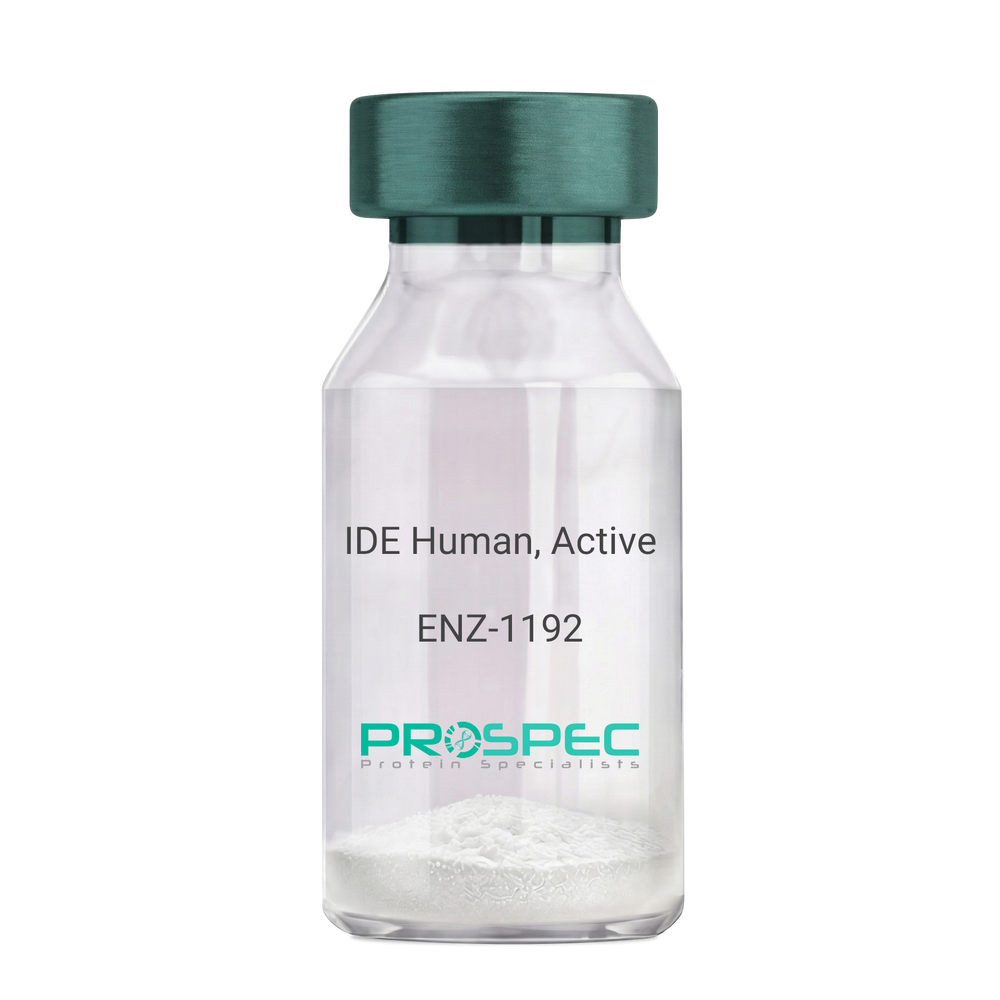
IDE Human, ActiveDescription:
Insulin-Degrading Enzyme Human Recombinant
Insulin-Degrading Enzyme, Abeta-Degrading Protease, Insulysin, EC 3.4.24.56, Insulinase, Insulin Protease, INSULYSIN, EC 3.4.24, IDE, insulin-degrading enzyme isoform 1.
Product # :
ENZ-1192Price :
Quantity :
Shipping Method :
Shipped with Ice Packs
More Info
- description
- source
- formulation
- purity
- biological activity
- More Info
Description
IDE Human, Active Human Recombinant produced in E.Coli is a single, non-glycosylated, polypeptide chain (42-1019 a.a) containing a total of 984 amino acids, having a molecular mass of 114 kDa. IDE is fused to a 6 amino acid His-tag at C-terminus and is purified by proprietary chromatographic techniques.
Source
Escherichia Coli.
Formulation
The IDE solution (0.5mg/ml) contains 10% Glycerol, 100mM NaCl, 0.05% Brij35 and 20mM Tris-HCl buffer (pH 7.5).
Purity
Greater than 90.0% as determined by SDS-PAGE.
Biological Activity
Specific activity is greater than 3,000 pmol/min/ug in which 1 unit will convert 1.0 pmole of Mca-RPPGFSAFK(Dnp)-OH to MCA-Pro-Leu-OH per minute at pH 7.5 at 25°C.
More Info
-
Synonyms
Insulin-Degrading Enzyme, Abeta-Degrading Protease, Insulysin, EC 3.4.24.56, Insulinase, Insulin Protease, INSULYSIN, EC 3.4.24, IDE, insulin-degrading enzyme isoform 1.
-
Physical Appearance
Filtered colorless solution.
-
Stability
Store at 4°C if entire vial will be used within 2-4 weeks. Store, frozen at -20°C for longer periods of time. For long term storage it is recommended to add a carrier protein (0.1% HSA or BSA). Avoid multiple freeze-thaw cycles.
-
Amino Acid Sequence
MNNPAIKRIG NHITKSPEDK REYRGLELAN GIKVLLISDP TTDKSSAALD VHIGSLSDPP NIAGLSHFCE HMLFLGTKKY PKENEYSQFL SEHAGSSNAF TSGEHTNYYF DVSHEHLEGA LDRFAQFFLC PLFDESCKDR EVNAVDSEHE KNVMNDAWRL FQLEKATGNP KHPFSKFGTG NKYTLETRPN QEGIDVRQEL LKFHSAYYSS NLMAVCVLGR ESLDDLTNLV VKLFSEVENK NVPLPEFPEH PFQEEHLKQL YKIVPIKDIR NLYVTFPIPD LQKYYKSNPG HYLGHLIGHE GPGSLLSELK SKGWVNTLVG GQKEGARGFM FFIINVDLTE EGLLHVEDII LHMFQYIQKL RAEGPQEWVF QECKDLNAVA FRFKDKERPR GYTSKIAGIL HYYPLEEVLT AEYLLEEFRP DLIEMVLDKL RPENVRVAIV SKSFEGKTDR TEEWYGTQYK QEAIPDEVIK KWQNADLNGK FKLPTKNEFI PTNFEILPLE KEATPYPALI KDTAMSKLWF KQDDKFFLPK ACLNFEFFSP FAYVDPLHCN MAYLYLELLK DSLNEYAYAA ELAGLSYDLQ NTIYGMYLSV KGYNDKQPIL LKKIIEKMAT FEIDEKRFEI IKEAYMRSLN NFRAEQPHQH AMYYLRLLMT EVAWTKDELK EALDDVTLPR LKAFIPQLLS RLHIEALLHG NITKQAALGI MQMVEDTLIE HAHTKPLLPS
QLVRYREVQL PDRGWFVYQQ RNEVHNNCGI EIYYQTDMQS TSENMFLELF CQIISEPCFN TLRTKEQLGY IVFSGPRRAN GIQGLRFIIQ SEKPPHYLES RVEAFLITME KSIEDMTEEA FQKHIQALAI RRLDKPKKLS AECAKYWGEI ISQQYNFDRD NTEVAYLKTL TKEDIIKFYK EMLAVDAPRR HKVSVHVLAR EMDSCPVVGE FPCQNDINLS QAPALPQPEV IQNMTEFKRG LPLFPLVKPH INFMAAKLHH HHHH. -
Background
Insulin-degrading enzyme (IDE) is a crucial protease that plays a significant role in maintaining glucose homeostasis by degrading insulin and other bioactive peptides. Dysregulation of IDE has been implicated in various metabolic disorders, particularly type 2 diabetes mellitus. IDE is also associated with the clearance of amyloid-beta peptides in the brain, making it relevant to Alzheimer's disease pathology. Studying the recombinant form of IDE is fundamental to understanding its functional mechanisms and exploring potential avenues for therapeutic interventions.
The primary goal of this research is to express and purify recombinant IDE using diverse expression systems. Recombinant DNA techniques will be employed to construct expression vectors containing the IDE gene, followed by expression in bacterial, yeast, or mammalian cell-based systems. The recombinant IDE will be purified using affinity chromatography or other appropriate methods, facilitating subsequent biochemical and biophysical characterization.
The second objective is to investigate the substrate specificity and catalytic activity of the purified IDE. In vitro enzymatic assays will be conducted to analyse the ability of the recombinant IDE to degrade insulin and other potential substrates. The effects of various factors, such as pH, temperature, and potential modulators, on IDE activity will be evaluated. Additionally, the interactions between IDE and its substrates will be explored using binding assays.
The third objective is to elucidate the three-dimensional structure of the IDE recombinant using techniques like X-ray crystallography or nuclear magnetic resonance (NMR) spectroscopy. Structural insights into the active site and binding pockets of IDE will provide valuable information for understanding its substrate recognition and catalytic mechanisms. This knowledge could be instrumental in designing targeted therapeutic compounds.
By characterizing the IDE recombinant, this research aims to contribute to our understanding of its role in insulin metabolism, glucose regulation, and potential therapeutic applications. The findings from this study may have implications for the development of novel treatments for diabetes and other related disorders.
ProSpec's products are furnished for LABORATORY RESEARCH USE ONLY. The product may not be used as drugs, agricultural or pesticidal products, food additives or household chemicals.
- View Data Sheet
Name :
HERC5 HumanDescription:
HECT and RLD Domain Containing E3 Ubiquitin Protein Ligase 5 Human Recombinant
HERC5, HECT and RLD Domain Containing E3 Ubiquitin Protein Ligase 5, CEB1, Hect Domain and RLD 5, Cyclin-E-Binding Protein 1, CEBP1, HECT Domain and RCC1-Like Domain-Containing Protein 5, E3 ISG15--Protein Ligase HERC5, Probable E3 Ubiquitin-Protein Ligase HERC5, EC 6.3.2.- , EC 6.3.2.
Product # :
ENZ-797Price :
Quantity :
Shipping Method :
Shipped with Ice Packs
More Info
- description
- source
- formulation
- purity
- More Info
Description
HERC5 Human Recombinant produced in E.Coli is a single, non-glycosylated polypeptide chain containing 367 amino acids (681-1024 a.a.) and having a molecular mass of 43kDa. HERC5 is fused to a 23 amino acid His-tag at N-terminus.
Source
Escherichia Coli.
Formulation
HERC5 protein solution (1mg/ml) contains 20mM Tris-HCl buffer (pH 8.0), 0.4M Urea and 10% glycerol.
Purity
Greater than 90.0% as determined by SDS-PAGE.
More Info
-
Introduction
HECT and RLD Domain Containing E3 Ubiquitin Protein Ligase 5 (HERC5) is a member of the HERC family of ubiquitin ligases, found in a cluster of HERC family genes on chromosome 4. HERC5 is a protein with a HECT domain and 5 RCC1 repeats. The HERC5 protein localizes to the cytoplasm and perinuclear region and serves as an INF-induced E3 protein ligase that mediates ISGylation of protein targets. HERC5 exhibits antiviral activity towards HIV-1, influenza A virus and human papillomavirus. HERC5 is a major E3 ligase for ISG15 conjugation. HERC5 also serves as a positive regulator of innate antiviral response in cells induced by INF. Pro-inflammatory cytokines upregulate HERC5 in endothelial cells. HERC5 is physically connected with polyribosomes, broadly modifies recently synthesized proteins in a cotranslational fashion.
-
Synonyms
HERC5, HECT and RLD Domain Containing E3 Ubiquitin Protein Ligase 5, CEB1, Hect Domain and RLD 5, Cyclin-E-Binding Protein 1, CEBP1, HECT Domain and RCC1-Like Domain-Containing Protein 5, E3 ISG15--Protein Ligase HERC5, Probable E3 Ubiquitin-Protein Ligase HERC5, EC 6.3.2.- , EC 6.3.2.
-
Physical Appearance
Sterile Filtered colorless solution.
-
Stability
Store at 4°C if entire vial will be used within 2-4 weeks. Store, frozen at -20°C for longer periods of time. For long term storage it is recommended to add a carrier protein (0.1% HSA or BSA).Avoid multiple freeze-thaw cycles.
-
Amino Acid Sequence
MGSSHHHHHH SSGLVPRGSH MGSFDLTVRR NHLIEDVLNQ LSQFENEDLR KELWVSFSGE IGYDLGGVKK EFFYCLFAEM IQPEYGMFMY PEGASCMWFP VKPKFEKKRY FFFGVLCGLS LFNCNVANLP FPLALFKKLL DQMPSLEDLK ELSPDLGKNL QTLLDDEGDN FEEVFYIHFN VHWDRNDTNL IPNGSSITVN QTNKRDYVSK YINYIFNDSV KAVYEEFRRG FYKMCDEDII KLFHPEELKD VIVGNTDYDW KTFEKNARYE PGYNSSHPTI VMFWKAFHKL TLEEKKKFLV FLTGTDRLQM KDLNNMKITF CCPESWNERD PIRALTCFSV LFLPKYSTME TVEEALQEAI NNNRGFG.
ProSpec's products are furnished for LABORATORY RESEARCH USE ONLY. The product may not be used as drugs, agricultural or pesticidal products, food additives or household chemicals.
- View Data Sheet
Name :
SMUG1 HumanDescription:
Single-Strand-Selective Monofunctional Uracil-DNA Glycosylase 1 Human Recombinant
Single-strand selective monofunctional uracil DNA glycosylase, SMUG1, FDG, UNG3, HMUDG.
Product # :
ENZ-674Price :
Quantity :
Shipping Method :
Shipped with Ice Packs
More Info
- description
- source
- formulation
- purity
- More Info
Description
SMUG1 Human Recombinant produced in E.coli is a single, non-glycosylated polypeptide chain containing 293 amino acids (1-270) and having a molecular mass of 32.3kDa.SMUG1 is fused to a 23 amino acid His-tag at N-terminus & purified by proprietary chromatographic techniques.
Source
E.coli.
Formulation
The SMUG1 solution (0.5mg/ml) contains 20mM Tris-HCl buffer (pH 8.0), 0.2M NaCl, 30% glycerol and 1mM DTT.
Purity
Greater than 95% as determined by SDS-PAGE.
More Info
-
Introduction
Single-strand-selective monofunctional uracil-DNA glycosylase (SMUG1) is an enzyme responsible for recognizing base lesions in the genome and initiating base excision DNA repair. SMUG1 participates in base excision repair by removing uracil from single- and double-stranded DNA. SMUG1 serves as a monofunctional DNA glycosylase specific for uracil (U) residues in DNA and has inclination for single-stranded DNA substrates. SMUG1 activity is greater against mismatches (U/G) than against matches (U/A).
-
Synonyms
Single-strand selective monofunctional uracil DNA glycosylase, SMUG1, FDG, UNG3, HMUDG.
-
Physical Appearance
Sterile Filtered colorless solution.
-
Stability
Store at 4°C if entire vial will be used within 2-4 weeks. Store, frozen at -20°C for longer periods of time. For long term storage it is recommended to add a carrier protein (0.1% HSA or BSA).Avoid multiple freeze-thaw cycles.
-
Amino Acid Sequence
MGSSHHHHHH SSGLVPRGSH MGSMPQAFLL GSIHEPAGAL MEPQPCPGSL AESFLEEELR LNAELSQLQF SEPVGIIYNP VEYAWEPHRN YVTRYCQGPK EVLFLGMNPG PFGMAQTGVP FGEVSMVRDW LGIVGPVLTP PQEHPKRPVL GLECPQSEVS GARFWGFFRN LCGQPEVFFH HCFVHNLCPL LFLAPSGRNL TPAELPAKQR EQLLGICDAA LCRQVQLLGV RLVVGVGRLA EQRARRALAG LMPEVQVEGL LHPSPRNPQA NKGWEAVAKE RLNELGLLPL LLK.
ProSpec's products are furnished for LABORATORY RESEARCH USE ONLY. The product may not be used as drugs, agricultural or pesticidal products, food additives or household chemicals.
- View Data Sheet
Name :
PRSS7 HumanDescription:
Protease Serine 7 Human Recombinant
PRSS7,ENTK,Protease, Serine, 7 (Enterokinase), Transmembrane Protease, Serine 15, Serine Protease 7, Enteropeptidase, EC 3.4.21.9, Transmembrane Protease Serine 15,Enterokinase Catalytic Subunit, Proenterokinase, Enterokinase, EC 3.4.21.
Product # :
ENZ-850Price :
Quantity :
Shipping Method :
Shipped with Ice Packs
More Info
- description
- source
- formulation
- purity
- More Info
Description
PRSS7 Human Recombinant produced in E.Coli is a single, non-glycosylated, polypeptide chain containing 237 amino acids (785-1019 a.a.) and having a molecular mass of 26.4kDa. The PRSS7 is purified by proprietary chromatographic techniques.
Source
Escherichia Coli.
Formulation
The PRSS7 protein solution (1mg/ml) contains 20mM Tris-HCl buffer (pH8.0) and 10% glycerol.
Purity
Greater than 85% as determined by SDS-PAGE.
More Info
-
Introduction
Protease Serine 7, also known as PRSS7, is in charge of initiating the activation of pancreatic proteolytic proenzymes such as trypsin, chymotrypsin and carboxypeptidase A. PRSS7 catalyzes the conversion of trypsinogen to trypsin which in turn activates other proenzymes including chymotrypsinogen, procarboxypeptidases, as well as proelastases.
-
Synonyms
PRSS7,ENTK,Protease, Serine, 7 (Enterokinase), Transmembrane Protease, Serine 15, Serine Protease 7, Enteropeptidase, EC 3.4.21.9, Transmembrane Protease Serine 15,Enterokinase Catalytic Subunit, Proenterokinase, Enterokinase, EC 3.4.21.
-
Physical Appearance
Sterile filtered colorless solution.
-
Stability
Store at 4°C if entire vial will be used within 2-4 weeks. Store, frozen at -20°C for longer periods of time. For long term storage it is recommended to add a carrier protein (0.1% HSA or BSA). Avoid multiple freeze-thaw cycles.
-
Amino Acid Sequence
MAIVGGSNAK EGAWPWVVGL YYGGRLLCGA SLVSSDWLVS AAHCVYGRNL EPSKWTAILG LHMKSNLTSP QTVPRLIDEI VINPHYNRRR KDNDIAMMHL EFKVNYTDYI QPICLPEENQ VFPPGRNCSI AGWGTVVYQG TTANILQEAD VPLLSNERCQ QQMPEYNITE NMICAGYEEG GIDSCQGDSG GPLMCQENNR WFLAGVTSFG YKCALPNRPG VYARVSRFTE WIQSFLH
ProSpec's products are furnished for LABORATORY RESEARCH USE ONLY. The product may not be used as drugs, agricultural or pesticidal products, food additives or household chemicals.
- View Data Sheet
Name :
LYPLA2 HumanDescription:
Lysophospholipase II Human Recombinant
Acyl-protein thioesterase 2, APT-2, Lysophospholipase II, LPL-II, LysoPLA II, LYPLA2, APT2, DJ886K2.4.
Product # :
ENZ-076Price :
Quantity :
Shipping Method :
Shipped with Ice Packs
More Info
- description
- source
- formulation
- purity
- More Info
Description
LYPLA2 Human Recombinant fused with a 20 amino acid His tag at N-terminus produced in E.Coli is a single, non-glycosylated, polypeptide chain containing 251 amino acids (1-231 a.a.) and having a molecular mass of 26.9kDa. The LYPLA2 is purified by proprietary chromatographic techniques.
Source
Escherichia Coli.
Formulation
The LYPLA2 solution (1 mg/ml) contains 20mM Tris-HCl buffer (pH 8.0), 1mM DTT, 10% glycerol and 100mM NaCl.
Purity
Greater than 95.0% as determined by SDS-PAGE.
More Info
-
Introduction
Acyl-protein thioesterase 2 (LYPLA2) is lysophospholipase which acts on biological membranes to regulate the multifunctional lysophospholipids. LYPLA2 may hydrolyze fatty acids from S-acylated cysteine residues in proteins such as trimeric G alpha proteins or HRAS.
-
Synonyms
Acyl-protein thioesterase 2, APT-2, Lysophospholipase II, LPL-II, LysoPLA II, LYPLA2, APT2, DJ886K2.4.
-
Physical Appearance
Sterile Filtered colorless solution.
-
Stability
Store at 4°C if entire vial will be used within 2-4 weeks. Store, frozen at -20°C for longer periods of time. For long term storage it is recommended to add a carrier protein (0.1% HSA or BSA).Avoid multiple freeze-thaw cycles.
-
Amino Acid Sequence
MGSSHHHHHH SSGLVPRGSH MCGNTMSVPL LTDAATVSGA ERETAAVIFL HGLGDTGHSW ADALSTIRLP HVKYICPHAP RIPVTLNMKM VMPSWFDLMG LSPDAPEDEA GIKKAAENIK ALIEHEMKNG IPANRIVLGG FSQGGALSLY TALTCPHPLA GIVALSCWLP LHRAFPQAAN GSAKDLAILQ CHGELDPMVP VRFGALTAEK LRSVVTPARV QFKTYPGVMH SSCPQEMAAV KEFLEKLLPP V.
ProSpec's products are furnished for LABORATORY RESEARCH USE ONLY. The product may not be used as drugs, agricultural or pesticidal products, food additives or household chemicals.
- View Data Sheet
Name :
CNDP2 HumanDescription:
CNDP Dipeptidase 2 Human Recombinant
Cytosolic non-specific dipeptidase, CNDP dipeptidase 2, CN2, CPGL, HsT2298, PEPA, Glutamate carboxypeptidase-like protein 1, Peptidase A.
Product # :
ENZ-681Price :
Quantity :
Shipping Method :
Shipped with Ice Packs
More Info
- description
- source
- formulation
- purity
- More Info
Description
CNDP2 Human Recombinant produced in E. coli is a single polypeptide chain containing 498 amino acids (1-475) and having a molecular mass of 55.3 kDa. CNDP2 is fused to a 23 amino acid His-tag at N-terminus & purified by proprietary chromatographic techniques.
Source
Escherichia Coli.
Formulation
The CNDP2 solution (1mg/1ml) contains 20mM Tris-HCl buffer (pH 8.0), 0.1M NaCl, 10% glycerol and 1mM DTT.
Purity
Greater than 90% as determined by SDS-PAGE.
More Info
-
Introduction
CNDP Dipeptidase 2 (CNDP2), is a cytosolic, non-specific dipeptidase which is a part of the peptidase M20A protein family. CNDP2 is a secreted peptidase homologous to M20 peptidases. CNDP2 expresses through all adult and fetal tissue, though, an isoform missing exons 3 and 4 expresses in all fetal tissue in adult liver. Over expression of CPGL-B in hepatocellular carcinoma cells results in significant inhibition of HC cell viability, colony formation, cell invasiveness and tumor configuration.
-
Synonyms
Cytosolic non-specific dipeptidase, CNDP dipeptidase 2, CN2, CPGL, HsT2298, PEPA, Glutamate carboxypeptidase-like protein 1, Peptidase A.
-
Physical Appearance
Sterile Filtered colorless solution.
-
Stability
Store at 4°C if entire vial will be used within 2-4 weeks. Store, frozen at -20°C for longer periods of time. For long term storage it is recommended to add a carrier protein (0.1% HSA or BSA).Avoid multiple freeze-thaw cycles.
-
Amino Acid Sequence
MGSSHHHHHH SSGLVPRGSH MGSMAALTTL FKYIDENQDR YIKKLAKWVA IQSVSAWPEK RGEIRRMMEV AAADVKQLGG SVELVDIGKQ KLPDGSEIPL PPILLGRLGS DPQKKTVCIY GHLDVQPAAL EDGWDSEPFT LVERDGKLYG RGSTDDKGPV AGWINALEAY QKTGQEIPVN VRFCLEGMEE SGSEGLDELI FARKDTFFKD VDYVCISDNY WLGKKKPCIT YGLRGICYFF IEVECSNKDL HSGVYGGSVH EAMTDLILLM GSLVDKRGNI LIPGINEAVA AVTEEEHKLY DDIDFDIEEF AKDVGAQILL HSHKKDILMH RWRYPSLSLH GIEGAFSGSG AKTVIPRKVV GKFSIRLVPN MTPEVVGEQV TSYLTKKFAE LRSPNEFKVY MGHGGKPWVS DFSHPHYLAG RRAMKTVFGV EPDLTREGGS IPVTLTFQEA TGKNVMLLPV GSADDGAHSQ NEKLNRYNYI EGTKMLAAYL YEVSQLKD.
ProSpec's products are furnished for LABORATORY RESEARCH USE ONLY. The product may not be used as drugs, agricultural or pesticidal products, food additives or household chemicals.
- View Data Sheet
Name :
Aprotinin ProteinDescription:
Aprotinin
Pancreatic trypsin inhibitor, Basic protease inhibitor, BPI, BPTI, Aprotinin, AP.
Product # :
PRO-285Price :
Quantity :
Shipping Method :
Shipped at Room temp
More Info
- description
- source
- formulation
- More Info
Description
Aprotinin is a natural proteinase inhibitor polypeptide consisting of fifty-eight amino acids {C284H432N84O79S7} arranged in a single polypeptide chain, cross-linked by three disulfide bridges and having a molecular mass of 6512.
Source
Bovine Lung.
Formulation
The protein (1mg/ml) was lyophilized with no additives.
More Info
-
Introduction
Aprotinin inhibits the activity of several proteolytic enzymes such as chymotrypsin, kallikrein, plasmin and trypsin. Aprotinin is present in blood and in most tissues, with a high concentration in lung. Aprotinin inhibits pro-inflammatory cytokine release and maintains glycoprotein homeostasis. In platelets, aprotinin reduces glycoprotein loss (e.g., GpIb, GpIIb/IIIa), while in granulocytes it prevents the expression of pro-inflammatory adhesive glycoproteins (e.g., CD11b).
-
Synonyms
Pancreatic trypsin inhibitor, Basic protease inhibitor, BPI, BPTI, Aprotinin, AP.
-
Physical Appearance
Sterile Filtered White lyophilized (freeze-dried) powder.
-
Stability
Lyophilized Aprotinin although stable at room temperature for 3 weeks, should be stored desiccated below -18°C. Upon reconstitution Aprotinin should be stored at 4°C between 2-7 days and for future use below -18°C.For long term storage it is recommended to add a carrier protein (0.1% HSA or BSA).Please prevent freeze-thaw cycles.
-
Solubility
It is recommended to reconstitute the lyophilized Aprotinin in sterile 18MΩ-cm H2O not less than 100µg/ml, which can then be further diluted to other aqueous solutions.
-
Specific Activity
5,940 KIU (Kallikrein Inactivator Units) per mg, 3.3 pH.Eur.U/mg.
ProSpec's products are furnished for LABORATORY RESEARCH USE ONLY. The product may not be used as drugs, agricultural or pesticidal products, food additives or household chemicals.
- View Data Sheet
Name :
DsbADescription:
Disulfide Oxidoreductase Recombinant
DsbA, Thiol:disulfide interchange protein dsbA.
Product # :
ENZ-276Price :
Quantity :
Shipping Method :
Shipped at Room temp
More Info
- description
- source
- formulation
- purity
- More Info
Description
Disulfide Oxidoreductase produced in E.Coli is a periplasmic protein isolated from E. coli, containing 208 amino acids having a molecular mass of 23,149 Dalton. The DsbA is purified by proprietary chromatographic techniques.
Source
Escherichia Coli.
Formulation
The protein was lyophilized after from a sterile solution containing 50mM sodium phosphate buffer and 100mM sodium chloride.
Purity
Greater than 95.0% as determined by(a) Analysis by RP-HPLC.
(b) Analysis by SDS-PAGE.More Info
-
Introduction
DsbA appears to be necessary for correct formulation of disulfide bonds in exported proteins in vivo. DsbA is useful as a standard in immunoblotting. This protein catalyses the reduction and exchange of disulfide bonds and the oxidation of free sulfhydryl groups in vitro. It is the strongest oxidant of the thioredoxin superfamily. This thio/disulfide oxidoreductase is required for efficient disulfide bond formation in the periplasm of E. coli.
-
Synonyms
DsbA, Thiol:disulfide interchange protein dsbA.
-
Physical Appearance
Sterile Filtered White lyophilized (freeze-dried) powder.
-
Stability
Lyophilized DsbA although stable at room temperature for 3 weeks, should be stored desiccated below -18°C. Upon reconstitution DsbA should be stored at 4°C between 2-7 days and for future use below -18°C.For long term storage it is recommended to add a carrier protein (0.1% HSA or BSA).Please prevent freeze-thaw cycles.
-
Solubility
It is recommended to reconstitute the lyophilized DsbA in sterile 18MΩ-cm H2O not less than 100 µg/ml, which can then be further diluted to other aqueous solutions.
-
Amino Acid Sequence
MKKIWLALAGLVLAFSASAAQYEDGKQYTTLEKPVAGAPQVLEFFSFFCPHCYQFEEVLHISDNVKKKLPEGVKMTKYHVNFMGGDLGKDLTQAWAVAMALGVEDKVTVPLFEGVQKTQTIRSASDIRDVFINAGIKGEEYDAAWNSFVVKSLVAQQEKAAADVQLRGVPAMFVNGKYQLNPQGMDTSNMDVFVQQYADTVKYLSEKK
ProSpec's products are furnished for LABORATORY RESEARCH USE ONLY. The product may not be used as drugs, agricultural or pesticidal products, food additives or household chemicals.
- View Data Sheet
Name :
CA8 Human, ActiveDescription:
Carbonic Anhydrase 8 Human Recombinant, BioActive
Carbonic anhydrase-related protein, CA-VIII, CALS, CAMRQ3, CARP.
Product # :
ENZ-1139Price :
Quantity :
Shipping Method :
Shipped with Ice Packs
More Info
- description
- source
- formulation
- purity
- biological activity
- More Info
Description
CA8 Human Recombinant produced in E.Coli is a single, non-glycosylated polypeptide chain containing 314 amino acids (1-290) and having a molecular mass of 35.5kDa. CA8 Humanis fused to a 24 amino acid His-Tag at N-terminus and purified by proprietary chromatographic techniques.
Source
Escherichia Coli.
Formulation
CA8 Human protein (1mg/ml) is formulated in 20mM Tris-HCl buffer (pH8.0) containing 20% glycerol, 1mM DTT.
Purity
Greater than 90.0% as determined by SDS-PAGE.
Biological Activity
Specific activity is > 450 pmol/min/ug, and is defined as the amount of enzyme that hydrolyze 1.0 pmole of4-nitrophenyl acetate to 4-nitrophenol per minute at pH 7.5 at 37C.
More Info
-
Introduction
Carbonic Anhydrase VIII or CA8 was previously called CA-related protein due to its sequence resemblance to additional recognized carbonic anhydrase genes. Nonetheless CA8 doesn’t have carbonic anhydrase function. This protein keeps bearing a carbonic anhydrase classification because of coherent sequence similarity to additional proteins in carbonic anhydrase family. Mutations in this protein may lead to cerebellar dysequilibrium syndrome type 3 or ataxia mental retardation.
-
Synonyms
Carbonic anhydrase-related protein, CA-VIII, CALS, CAMRQ3, CARP.
-
Physical Appearance
Sterile Filtered clear solution.
-
Stability
Store at 4°C if entire vial will be used within 2-4 weeks. Store, frozen at -20°C for longer periods of time. For long term storage it is recommended to add a carrier protein (0.1% HSA or BSA).Avoid multiple freeze-thaw cycles.
-
Amino Acid Sequence
MGSSHHHHHH SSGLVPRGSH MGSHMADLSF IEDTVAFPEK EEDEEEEEEG VEWGYEEGVE
WGLVFPDANG EYQSPINLNS REARYDPSLL DVRLSPNYVV CRDCEVTNDG HTIQVILKSK
SVLSGGPLPQ GHEFELYEVR FHWGRENQRG SEHTVNFKAF PMELHLIHWN STLFGSIDEA
VGKPHGIAII ALFVQIGKEH VGLKAVTEIL QDIQYKGKSK TIPCFNPNTL LPDPLLRDYW
VYEGSLTIPP CSEGVTWILF RYPLTISQLQ IEEFRRLRTH VKGAELVEGC DGILGDNFRP TQPLSDRVIR AAFQ
ProSpec's products are furnished for LABORATORY RESEARCH USE ONLY. The product may not be used as drugs, agricultural or pesticidal products, food additives or household chemicals.
- View Data Sheet
Name :
ABHD10 HumanDescription:
Abhydrolase Domain Containing 10 Human Recombinant
Abhydrolase domain containing 10 mitochondrial2, FLJ11342, EC 3.4.-.-.
Product # :
ENZ-612Price :
Quantity :
Shipping Method :
Shipped with Ice Packs
More Info
- description
- source
- formulation
- purity
- More Info
Description
ABHD10 Human Recombinant produced in E. coli is a single polypeptide chain containing 279 amino acids (53-306) and having a molecular mass of 30.9kDa.ABHD10 is fused to a 25 amino acid His-tag at N-terminus & purified by proprietary chromatographic techniques.
Source
E.coli.
Formulation
The ABHD10 solution (1mg/1ml) contains 20mM Tris-HCl buffer (pH 8.0), 1mM DTT, 100mM NaCl and 20% glycerol.
Purity
Greater than 85% as determined by SDS-PAGE.
More Info
-
Introduction
Abhydrolase domain-containing protein 10 (ABHD10) is a member of the AB hydrolase superfamily.
-
Synonyms
Abhydrolase domain containing 10 mitochondrial2, FLJ11342, EC 3.4.-.-.
-
Physical Appearance
Sterile Filtered colorless solution.
-
Stability
Store at 4°C if entire vial will be used within 2-4 weeks. Store, frozen at -20°C for longer periods of time. For long term storage it is recommended to add a carrier protein (0.1% HSA or BSA).Avoid multiple freeze-thaw cycles.
-
Amino Acid Sequence
MGSSHHHHHH SSGLVPRGSH MGSHMTSLSF LNRPDLPNLA YKKLKGKSPG IIFIPGYLSY MNGTKALAIE EFCKSLGHAC IRFDYSGVGS SDGNSEESTL GKWRKDVLSI IDDLADGPQI LVGSSLGGWL MLHAAIARPE KVVALIGVAT AADTLVTKFN QLPVELKKEV EMKGVWSMPS KYSEEGVYNV QYSFIKEAEH HCLLHSPIPV NCPIRLLHGM KDDIVPWHTS MQVADRVLST DVDVILRKHS DHRMREKADI QLLVYTIDDL IDKLSTIVN
ProSpec's products are furnished for LABORATORY RESEARCH USE ONLY. The product may not be used as drugs, agricultural or pesticidal products, food additives or household chemicals.
- View Data Sheet
Name :
NEIL2 HumanDescription:
Nei Endonuclease VIII-Like 2 Human Recombinant
Endonuclease 8-like 2, DNA glycosylase/AP lyase Neil2, DNA-(apurinic or apyrimidinic site) lyase Neil2, Endonuclease VIII-like 2, Nei homolog 2, NEH2, Nei-like protein 2, NEIL2, NEH2.
Product # :
ENZ-607Price :
Quantity :
Shipping Method :
Shipped with Ice Packs
More Info
- description
- source
- formulation
- purity
- More Info
Description
NEIL2 Human Recombinant produced in E.coli is a single, non-glycosylated polypeptide chain containing 356 amino acids (1-332) and having a molecular mass of 39.4kDa.NEIL2 is fused to a 24 amino acid His-tag at N-terminus & purified by proprietary chromatographic techniques.
Source
Escherichia Coli.
Formulation
The NEIL2 solution (0.5mg/ml) contains 20mM Tris-HCl buffer (pH 8.0), 1mM DTT, 10% glycerol and 0.1M NaCl.
Purity
Greater than 85.0% as determined by SDS-PAGE.
More Info
-
Introduction
Endonuclease 8-like 2 (NEIL2) is a member of a class of DNA glycosylases homologous to the bacterial Fpg/Nei family. These glycosylases set off the first step in base excision repair by cleaving bases damaged by reactive oxygen species and introducing a DNA strand break through the associated lyase reaction. NEIL2 is involved in base excision repair of DNA damaged by oxidation or by mutagenic agents. NEIL2 has DNA glycosylase activity towards 5-hydroxyuracil and other oxidized derivatives of cytosine with a preference for mismatched double stranded DNA (DNA bubbles). NEIL2 has insignificant or undetectable activity with 8-oxoguanine, thymine glycol, 2-hydroxyadenine, hypoxanthine, and xanthine. NEIL2 also has AP (apurinic/apyrimidinic) lyase activity and creates incisions in the DNA strand. NEIL2 cleaves the DNA backbone by beta-delta exclusion to produce a single-strand break at the site of the removed base with both 3'- and 5'-phosphates. NEIL2 is found in the testis, skeletal muscle, heart, brain, placenta, lung, pancreas, kidney and liver.
-
Synonyms
Endonuclease 8-like 2, DNA glycosylase/AP lyase Neil2, DNA-(apurinic or apyrimidinic site) lyase Neil2, Endonuclease VIII-like 2, Nei homolog 2, NEH2, Nei-like protein 2, NEIL2, NEH2.
-
Physical Appearance
Sterile filtered colorless solution.
-
Stability
Store at 4°C if entire vial will be used within 2-4 weeks. Store, frozen at -20°C for longer periods of time. For long term storage it is recommended to add a carrier protein (0.1% HSA or BSA). Avoid multiple freeze-thaw cycles.
-
Amino Acid Sequence
MGSSHHHHHH SSGLVPRGSH MGSHMPEGPL VRKFHHLVSP FVGQQVVKTG GSSKKLQPAS LQSLWLQDTQ VHGKKLFLRF DLDEEMGPPG SSPTPEPPQK EVQKEGAADP KQVGEPSGQK TLDGSSRSAE LVPQGEDDSE YLERDAPAGD AGRWLRVSFG LFGSVWVNDF SRAKKANKRG
DWRDPSPRLV LHFGGGGFLA FYNCQLSWSS SPVVTPTCDI LSEKFHRGQA LEALGQAQPV CYTLLDQRYF SGLGNIIKNE ALYRAGIHPL SLGSVLSASR REVLVDHVVE FSTAWLQGKF QGRPQHTQVY QKEQCPAGHQ VMKEAFGPED GLQRLTWWCP QCQPQLSEEP EQCQFS.
ProSpec's products are furnished for LABORATORY RESEARCH USE ONLY. The product may not be used as drugs, agricultural or pesticidal products, food additives or household chemicals.
- View Data Sheet
Name :
GLYATL2 HumanDescription:
Glycine-N-Acyltransferase-Like 2 Human Recombinant
BXMAS2-10, GATF-B, Glycine N-acyltransferase-like protein 2, Acyl-CoA:glycine N-acyltransferase-like protein 2, GLYATL2.
Product # :
ENZ-770Price :
Quantity :
Shipping Method :
Shipped with Ice Packs
More Info
- description
- source
- formulation
- purity
- More Info
Description
GLYATL2 Human Recombinant produced in E.coli is a single, non-glycosylated polypeptide chain containing 317 amino acids (1-294a.a) and having a molecular mass of 36.7kDa. GLYATL2 is fused to a 23 amino acid His-tag at N-terminus & purified by proprietary chromatographic techniques.
Source
Escherichia Coli.
Formulation
The GLYATL2 solution (0.5mg/ml) contains 20mM Tris-HCl buffer (pH 8.0), 0.1M NaCl, 50% glycerol and 2mM DTT.
Purity
Greater than 85% as determined by SDS-PAGE.
More Info
-
Introduction
Glycine-N-Acyltransferase-Like 2 (GLYATL2) is a part of the glycine N-acyltransferase family expressed mainly in salivary gland and trachea. GLYATL2 is a mitochondrial acyltransferase that transfers the acyl group to the N-terminus of glycine. GLYATL2 conjugates numerous substrates, like arachidonoyl-CoA and saturated medium and longchain acyl-CoAs ranging from chain-length C8:0-CoA to C18:0-CoA, to form a variety of N-acylglycines. GLYATL2 also shows a preference for monounsaturated fatty acid oleoyl-CoA (C18:1-CoA) as an acyl donor.
-
Synonyms
BXMAS2-10, GATF-B, Glycine N-acyltransferase-like protein 2, Acyl-CoA:glycine N-acyltransferase-like protein 2, GLYATL2.
-
Physical Appearance
Sterile Filtered colorless solution.
-
Stability
Store at 4°C if entire vial will be used within 2-4 weeks. Store, frozen at -20°C for longer periods of time. For long term storage it is recommended to add a carrier protein (0.1% HSA or BSA). Avoid multiple freeze-thaw cycles.
-
Amino Acid Sequence
MGSSHHHHHH SSGLVPRGSH MGSMLVLHNS QKLQILYKSL EKSIPESIKV YGAIFNIKDK NPFNMEVLVD AWPDYQIVIT RPQKQEMKDD QDHYTNTYHI FTKAPDKLEE VLSYSNVISW EQTLQIQGCQ EGLDEAIRKV ATSKSVQVDY MKTILFIPEL PKKHKTSSND KMELFEVDDD NKEGNFSNMF LDASHAGLVN EHWAFGKNER SLKYIERCLQ DFLGFGVLGP EGQLVSWIVM EQSCELRMGY TVPKYRHQGN MLQIGYHLEK YLSQKEIPFY FHVADNNEKS LQALNNLGFK ICPCGWHQWK CTPKKYC.
ProSpec's products are furnished for LABORATORY RESEARCH USE ONLY. The product may not be used as drugs, agricultural or pesticidal products, food additives or household chemicals.
- View Data Sheet
Name :
DNMT3L HumanDescription:
DNA Cytosine-5--Methyltransferase 3-Like Human Recombinant
DNMT3L, DNA (Cytosine-5-)-Methyltransferase 3-Like, Human Cytosine-5-Methyltransferase 3-Like Protein 11, Cytosine-5-Methyltransferase 3-Like Protein, DNA (Cytosine-5)-Methyltransferase 3-Like.
Product # :
ENZ-787Price :
Quantity :
Shipping Method :
Shipped with Ice Packs
More Info
- description
- source
- formulation
- purity
- More Info
Description
DNMT3L Human Recombinant produced in E.coli is a single, non-glycosylated polypeptide chain containing 411 amino acids (1-386) and having a molecular mass of 46.2kDa.DNMT3L is fused to a 25 amino acid His-tag at N-terminus & purified by proprietary chromatographic techniques.
Source
Escherichia Coli.
Formulation
The DNMT3L solution (0.25mg/ml) contains 20mM Tris-HCl buffer (pH 8.0), 0.15M NaCl, 10% glycerol and 1mM DTT.
Purity
Greater than 90.0% as determined by SDS-PAGE.
More Info
-
Introduction
DNA Cytosine-5--Methyltransferase 3-Like (DNMT3L) is a nuclear protein with similarity to DNA methyltransferases, but is not believed to act as a DNA methyltransferase since it doesn’t contain the amino acid residues needed for methyltransferase activity. Nevertheless, DNMT3L stimulates de novo methylation by DNA cytosine methyltransferase 3 alpha and is assumed to be required for the formation of maternal genomic imprints. DNMT3L also mediates transcriptional repression as a result of interaction with histone deacetylase 1. DNMT3L is a catalytically inactive regulatory factor of DNA methyltransferases, which is vital for the function of DNMT3A and DNMT3B. DNMT3L activates DNMT3A and DNMT3B by binding to their catalytic domain. Furthermore, DNMT3L accelerates the binding of DNA and AdoMet to the methyltransferases and dissociates from the complex after DNA binding to the methyltransferases.
-
Synonyms
DNMT3L, DNA (Cytosine-5-)-Methyltransferase 3-Like, Human Cytosine-5-Methyltransferase 3-Like Protein 11, Cytosine-5-Methyltransferase 3-Like Protein, DNA (Cytosine-5)-Methyltransferase 3-Like.
-
Physical Appearance
Sterile Filtered clear solution.
-
Stability
Store at 4°C if entire vial will be used within 2-4 weeks. Store, frozen at -20°C for longer periods of time. For long term storage it is recommended to add a carrier protein (0.1% HSA or BSA).Avoid multiple freeze-thaw cycles.
-
Amino Acid Sequence
MGSSHHHHHH SSGLVPRGSH MGSEFMAAIP ALDPEAEPSM DVILVGSSEL SSSVSPGTGR DLIAYEVKAN QRNIEDICIC CGSLQVHTQH PLFEGGICAP CKDKFLDALF LYDDDGYQSY CSICCSGETL LICGNPDCTR CYCFECVDSL VGPGTSGKVH AMSNWVCYLC LPSSRSGLLQ RRRKWRSQLK AFYDRESENP LEMFETVPVW RRQPVRVLSL FEDIKKELTS LGFLESGSDP GQLKHVVDVT DTVRKDVEEW GPFDLVYGAT PPLGHTCDRP PSWYLFQFHR LLQYARPKPG SPRPFFWMFV DNLVLNKEDL DVASRFLEME PVTIPDVHGG SLQNAVRVWS NIPAIRSRHW ALVSEEELSL LAQNKQSSKL AAKWPTKLVK NCFLPLREYF KYFSTELTSS L.
ProSpec's products are furnished for LABORATORY RESEARCH USE ONLY. The product may not be used as drugs, agricultural or pesticidal products, food additives or household chemicals.
- View Data Sheet
Name :
PREP HumanDescription:
Prolyl Endopeptidase Human Recombinant
Prolyl Endopeptidase, Post-Proline Cleaving Enzyme, EC 3.4.21.26, PEP, PE, DJ355L5.1 (Prolyl Endopeptidase), Prolyl Oligopeptidase, Prolyl endopeptidase.
Product # :
ENZ-828Price :
Quantity :
Shipping Method :
Shipped with Ice Packs
More Info
- description
- source
- formulation
- purity
- More Info
Description
PREP Human Recombinant produced in E.Coli is a single, non-glycosylated polypeptide chain containing 733 amino acids (1-710 a.a) and having a molecular mass of 83.1kDa. PREP is fused to a 23 amino acid His-tag at N-terminus & purified by proprietary chromatographic techniques.
Source
Escherichia Coli.
Formulation
PREP protein solution (0.25mg/ml) containing PBS buffer (pH 7.4), 30% glycerol and 1mM DTT.
Purity
Greater than 90.0% as determined by SDS-PAGE.
More Info
-
Introduction
Prolyl Endopeptidase , also known as PREP is a cytosolic prolyl endopeptidase which cleaves peptide bonds on the C-terminal side of prolyl residues within peptides which are up to about 30 a.a long. In addition, Prolyl endopeptidases have been shown to be implicated in the maturation and degradation of peptide hormones and neuropeptides.
-
Synonyms
Prolyl Endopeptidase, Post-Proline Cleaving Enzyme, EC 3.4.21.26, PEP, PE, DJ355L5.1 (Prolyl Endopeptidase), Prolyl Oligopeptidase, Prolyl endopeptidase.
-
Physical Appearance
Sterile filtered colorless solution.
-
Stability
Store at 4°C if entire vial will be used within 2-4 weeks. Store, frozen at -20°C for longer periods of time. For long term storage it is recommended to add a carrier protein (0.1% HSA or BSA).Avoid multiple freeze-thaw cycles.
-
Amino Acid Sequence
MGSSHHHHHH SSGLVPRGSH MGSMLSLQYP DVYRDETAVQ DYHGHKICDP YAWLEDPDSE QTKAFVEAQN KITVPFLEQC PIRGLYKERM TELYDYPKYS CHFKKGKRYF YFYNTGLQNQ RVLYVQDSLE GEARVFLDPN ILSDDGTVAL RGYAFSEDGE YFAYGLSASG SDWVTIKFMK VDGAKELPDV LERVKFSCMA WTHDGKGMFY NSYPQQDGKS DGTETSTNLH QKLYYHVLGT DQSEDILCAE FPDEPKWMGG AELSDDGRYV LLSIREGCDP VNRLWYCDLQ QESSGIAGIL KWVKLIDNFE GEYDYVTNEG TVFTFKTNRQ SPNYRVINID FRDPEESKWK VLVPEHEKDV LEWIACVRSN FLVLCYLHDV KNILQLHDLT TGALLKTFPL DVGSIVGYSG QKKDTEIFYQ FTSFLSPGII YHCDLTKEEL EPRVFREVTV KGIDASDYQT VQIFYPSKDG TKIPMFIVHK KGIKLDGSHP AFLYGYGGFN ISITPNYSVS RLIFVRHMGG ILAVANIRGG GEYGETWHKG GILANKQNCF DDFQCAAEYL IKEGYTSPKR LTINGGSNGG LLVAACANQR PDLFGCVIAQ VGVMDMLKFH KYTIGHAWTT DYGCSDSKQH FEWLVKYSPL HNVKLPEADD IQYPSMLLLT ADHDDRVVPL HSLKFIATLQ YIVGRSRKQS NPLLIHVDTK AGHGAGKPTA KVIEEVSDMF AFIARCLNVD WIP.
ProSpec's products are furnished for LABORATORY RESEARCH USE ONLY. The product may not be used as drugs, agricultural or pesticidal products, food additives or household chemicals.
- View Data Sheet
Name :
LysostaphinDescription:
Lysostaphin Recombinant
Lysostaphin, EC 3.4.24.75, Glycyl-glycine endopeptidase.
Product # :
ENZ-269Price :
Quantity :
Shipping Method :
Shipped at Room temp
More Info
- description
- source
- formulation
- purity
- biological activity
- More Info
Description
Lysostaphin Recombinant produced in E.Coli is a non-glycosylated polypeptide chain having a molecular mass of 26.92 kDa.
Source
Escherichia Coli.
Formulation
The protein was lyophilized without any additives.
Purity
98% as determined by RP-HPLC.
Biological Activity
Assessed by the decrease in turbidity of a suspension of heat-killed Staphylococcus aureus at pH-8, 30°C. Lysostaphin is a zinc enzyme therefore EDTA is an inhibitory factor.
More Info
-
Introduction
Lysostaphin, an endopeptidase specific for the cell wall peptidoglycan of staphylococci, is an extremely potent anti-staphylococcal agent. Lysostaphin is used as a research and diagnostic tool. Because it lyses staphylococci efficiently, it is widely used when preparing staphylococcal DNA or other cellular components for genetic and biochemical studies and for the preparation of protoplasts for transformation. Preparation and analysis of bacterial DNA has become a powerful tool used by clinical and other microbiologists in epidemiological studies aimed at tracing sources of infection or bacterial contamination.
-
Synonyms
Lysostaphin, EC 3.4.24.75, Glycyl-glycine endopeptidase.
-
Physical Appearance
Sterile Filtered lyophilized powder.
-
Stability
Lyophilized Lysostaphin although stable at room temperature for 2 weeks, should be stored desiccated below -18°C. Upon reconstitution Lysostaphin can be stored at 4°C up to 3 weeks and for future use below -18°C.Please prevent freeze-thaw cycles.
-
Solubility
It is recommended to reconstitute the lyophilized Lysostaphin in 20mM sodium acetate, pH 4.5 for optimal stability, which can then be further diluted.
-
Protein content
Protein quantitation was carried out by two independent methods 1. UV spectroscopy at 280 nm using the absorbency value of 2.02 as the extinction coefficient for a 0.1% (1mg/ml) solution. This value is calculated by the PC GENE computer analysis program of protein sequences (IntelliGenetics). 2. Analysis RP-HPLC, using a calibrated solution of Lysostaphin as a Reference standard.
-
Specific Activity
Determined to be 3,540 units/mg.
ProSpec's products are furnished for LABORATORY RESEARCH USE ONLY. The product may not be used as drugs, agricultural or pesticidal products, food additives or household chemicals.
- View Data Sheet
Name :
ProteaseDescription:
Recombinant Protease
Product # :
ENZ-354Price :
Quantity :
Shipping Method :
Shipped with Ice Packs
More Info
- description
- source
- More Info
Description
Protease Recombinant is a fusion protein of glutathione S-transferase (GST) and human rhinovirus (HRV) type 14 3C protease. The protease specifically recognizes a subset of sequences which include the core amino acid sequence Leu-Phe-Gln/Gly-Pro cleaving between the Gln and Gly residues. Substrate recognition and cleavage are likely to be dependent not only upon primary structural signals, but also upon the secondary and tertiary structures of the fusion protein as well.The Recombinant Protease is purified by proprietary chromatographic techniques.
Source
Escherichia Coli.
More Info
-
Physical Appearance
Sterile filtered colorless solution.
-
Stability
Store at 4°C if entire vial will be used within 2-4 weeks. Store, frozen at -20°C for longer periods of time. Avoid multiple freeze-thaw cycles.
-
Cleavage Conditions
For Cleavage of a Fusion Protein: During cleavage reactions, it is recommended that samples be removed at various time points and analyzed by SDS-PAGE to estimate the yield, purity, and extent of digestion. The amount of PreScission Protease, temperature and length of incubation required for complete digestion of a given GST fusion partner may vary depending on the fusion partner. Optimal conditions for each fusion should be determined in pilot experiments. Digestion may be improved by adding TritonTM X-100, TweenTM 20, NonidetTM, or NP40 to a concentration of 0.01%. Concentrations of these detergents up to 1% do not inhibit PreScission Protease.
-
Cleavage Buffer
50mM Tris-HCl, pH-7.0 (at 25°C), 150mM NaCl, 1mM EDTA, 1mM dithiothreitol. Chill to 5°C prior to use.
-
Unit Definition
One unit will cleave ?90% of 100 µg of a test GST-fusion protein in Cleavage Buffer (50mM Tris-HCl, 150 mM NaCl, 1 mM EDTA, 1 mM DTT, pH 7.0 at 25°C) at 5°C for 16 hours.
ProSpec's products are furnished for LABORATORY RESEARCH USE ONLY. The product may not be used as drugs, agricultural or pesticidal products, food additives or household chemicals.
- View Data Sheet
Name :
MSRB E.ColiDescription:
Methionine Sulfoxide Reductase B E.Coli Recombinant
Peptide methionine sulfoxide reductase MsrB, Peptide-methionine (R)-S-oxide reductase, msrB, yeaA, b1778, JW1767.
Product # :
ENZ-124Price :
Quantity :
Shipping Method :
Shipped with Ice Packs
More Info
- description
- source
- formulation
- purity
- More Info
Description
MSRB produced in E.Coli is a single, non-glycosylated polypeptide chain containing 157 amino acids (1-137 a.a.) and having a molecular mass of 17.6kDa.MSRB is fused to a 20 amino acid His-tag at N-terminus & purified by proprietary chromatographic techniques.
Source
Escherichia Coli.
Formulation
MSRB protein solution (1mg/ml) 20mM Tris-HCl buffer (pH8.0), 20% glycerol 0.1M NaCl and 1mM DTT.
Purity
Greater than 95.0% as determined by SDS-PAGE.
More Info
-
Introduction
Methionine sulfoxide reductase B (MsrB) from Escherichia coli is a member of the msrB Met sulfoxide reductase family. The E.coli msrB carries out the reduction of methionine-R-sulfoxide to methionine. msrB possess a metal binding site composed of 2 CXXC motifs. The bound metal (zinc or iron) may stabilize the conformation of the enzymes.
-
Synonyms
Peptide methionine sulfoxide reductase MsrB, Peptide-methionine (R)-S-oxide reductase, msrB, yeaA, b1778, JW1767.
-
Physical Appearance
Sterile filtered colorless solution.
-
Stability
Store at 4°C if entire vial will be used within 2-4 weeks. Store, frozen at -20°C for longer periods of time. For long term storage it is recommended to add a carrier protein (0.1% HSA or BSA).Avoid multiple freeze-thaw cycles.
-
Amino Acid Sequence
MGSSHHHHHH SSGLVPRGSH MANKPSAEEL KKNLSEMQFY VTQNHGTEPP FTGRLLHNKR DGVYHCLICD APLFHSQTKY DSGCGWPSFY EPVSEESIRY IKDLSHGMQR IEIRCGNCDA HLGHVFPDGP QPTGERYCVN SASLRFTDGE NGEEING.
ProSpec's products are furnished for LABORATORY RESEARCH USE ONLY. The product may not be used as drugs, agricultural or pesticidal products, food additives or household chemicals.
- View Data Sheet
Name :
PGPEP1 HumanDescription:
Pyroglutamyl-Peptidase I Human Recombinant
Pyroglutamyl-peptidase 1, EC 3.4.19.3, 5-oxoprolyl-peptidase, Pyroglutamyl aminopeptidase I, PAP-I, Pyroglutamyl-peptidase I, PGP-I, Pyrrolidone-carboxylate peptidase, PGPEP1, PGPI, PGP, Pcp.
Product # :
ENZ-672Price :
Quantity :
Shipping Method :
Shipped with Ice Packs
More Info
- description
- source
- formulation
- purity
- More Info
Description
PGPEP1 Human Recombinant produced in E.coli is a single, non-glycosylated polypeptide chain containing 232 amino acids (1-209) and having a molecular mass of 25.5kDa.PGPEP1 is fused to a 23 amino acid His-tag at N-terminus & purified by proprietary chromatographic techniques.
Source
Escherichia Coli.
Formulation
The PGPEP1 solution (1mg/ml) contains 20mM Tris-HCl buffer (pH 8.0), 0.15M NaCl, 20% glycerol and 1mM DTT.
Purity
Greater than 95.0% as determined by SDS-PAGE.
More Info
-
Introduction
Pyroglutamyl-Peptidase I (PGPEP1) is an omega peptidase which detaches pyroglutamyl residues from the amino termini of peptides and proteins. PGPEP1 is a cytosolic cysteine peptidase which is expressed in most cell types. PGPEP1 enzyme has need of s a thiol-reducing agent for activity. PGPEP1 is possibly involved in the inactivation of biologically active peptides which have an amino terminal pyroglutamyl group, for instance peptides as neurotensin, luteinizing hormone releasing hormone, and thyrotropinreleasing hormone.
-
Synonyms
Pyroglutamyl-peptidase 1, EC 3.4.19.3, 5-oxoprolyl-peptidase, Pyroglutamyl aminopeptidase I, PAP-I, Pyroglutamyl-peptidase I, PGP-I, Pyrrolidone-carboxylate peptidase, PGPEP1, PGPI, PGP, Pcp.
-
Physical Appearance
Sterile filtered colorless solution.
-
Stability
Store at 4°C if entire vial will be used within 2-4 weeks. Store, frozen at -20°C for longer periods of time. For long term storage it is recommended to add a carrier protein (0.1% HSA or BSA).Avoid multiple freeze-thaw cycles.
-
Amino Acid Sequence
MGSSHHHHHH SSGLVPRGSH MGSMEQPRKA VVVTGFGPFG EHTVNASWIA VQELEKLGLG DSVDLHVYEI PVEYQTVQRL IPALWEKHSP QLVVHVGVSG MATTVTLEKC GHNKGYKGLD NCRFCPGSQC CVEDGPESID SIIDMDAVCK RVTTLGLDVS VTISQDAGRY LCDFTYYTSL YQSHGRSAFV HVPPLGKPYN ADQLGRALRA IIEEMLDLLE QSEGKINYCH KH.
ProSpec's products are furnished for LABORATORY RESEARCH USE ONLY. The product may not be used as drugs, agricultural or pesticidal products, food additives or household chemicals.
- View Data Sheet
Name :
MPI HumanDescription:
Mannose Phosphate Isomerase Human Recombinant
Mannose-6-phosphate isomerase, PMI1, CDG1B, Phosphohexomutase, Phosphomannose isomerase, EC 5.3.1.8, FLJ39201.
Product # :
ENZ-169Price :
Quantity :
Shipping Method :
Shipped with Ice Packs
More Info
- description
- source
- formulation
- purity
- More Info
Description
MPI Human Recombinant produced in E.coli is a single, non-glycosylated polypeptide chain containing 382 amino acids (1-362) and having a molecular mass of 41.9 kDa.The MPI is fused to a 20 amino acid His-Tag at N-terminus and purified by proprietary chromatographic techniques.
Source
E.coli.
Formulation
The MPI solution (0.5mg/ml) contains 20mM Tris-HCl buffer (pH 8.0), 0.4M Urea and 5% glycerol.
Purity
Greater than 90% as determined by SDS-PAGE.
More Info
-
Introduction
MPI is a member of the mannose-6-phosphate isomerase type 1 family. Although MPI is expressed in all tissues, it can be found more abundantly in heart, brain and skeletal muscle. Localized to the cytoplasm, MPI exploits zinc as a cofactor and catalyzes the interconversion of fructose-6-phosphate and mannose-6-phosphate. Mutations in the MPI gene are the cause of carbohydrate-deficient glycoprotein syndrome, type Ib.
-
Synonyms
Mannose-6-phosphate isomerase, PMI1, CDG1B, Phosphohexomutase, Phosphomannose isomerase, EC 5.3.1.8, FLJ39201.
-
Physical Appearance
Sterile Filtered colorless solution.
-
Stability
Store at 4°C if entire vial will be used within 2-4 weeks. Store, frozen at -20°C for longer periods of time. For long term storage it is recommended to add a carrier protein (0.1% HSA or BSA).Avoid multiple freeze-thaw cycles.
-
Amino Acid Sequence
MGSSHHHHHH SSGLVPRGSH MAAPRVFPLS CAVQQYAWGK MGSNSEVARL LASSDPLAQI AEDKPYAELW MGTHPRGDAK ILDNRISQKT LSQWIAENQD SLGSKVKDTF NGNLPFLFKV LSVETPLSIQ AHPNKELAEK LHLQAPQHYP DANHKPEMAI ALTPFQGLCG FRPVEEIVTF LKTAAGNNME DIFGELLLQL HQQYPGDIGC FAIYFLNLLT LKPGEAMFLE ANVPHAYLKG DCVECMACSD NTVRAGLTPK FIDVPTLCEM LSYTPSSSKD RLFLPTRSQE DPYLSIYDPP VPDFTIMKTE VPGSVTEYKV LALDSASILL MVQGTVIAST PTTQTPIPLQ RGGVLFIGAN ESVSLKLTEP KDLLIFRACC LL
ProSpec's products are furnished for LABORATORY RESEARCH USE ONLY. The product may not be used as drugs, agricultural or pesticidal products, food additives or household chemicals.