Skip to content

High-quality research proteins.

  • 1-800-805-6531

  • Mon - Sat 8.00-18.00, Sun - Closed

  • info@prospecbio.com

  • PO Box 6591 East Brunswick NJ 08816

  • Products
    • Cytokines
    • Growth factors
    • Chemokines
    • Cd antigens
    • Neurotrophins
    • Hormones
    • Enzymes
    • Viral antigens
    • Recombinant proteins
    • Natural proteins
    • Monoclonal antibodies
    • Polyclonal antibodies
    • Thermal Packaging
  • About
    • Company
    • Founder
    • Contribution
  • Customers
    • Eastern Asia
    • Eastern Europe
    • North America
    • South America
    • South East Asia
    • Southern Asia
    • Western Europe
  • Ordering
    • Ordering Method
    • Ordering - Credit Card
    • Ordering - PO
    • Shipping Fees
    • FAQs
  • Services
    • DNA Cloning
    • Protein Expression
    • Monoclonal Antibody
    • Fermentation
    • Technology License
  • Contact us
Log in

Country/region

  • USD $ | Albania
  • USD $ | Andorra
  • USD $ | Argentina
  • USD $ | Armenia
  • USD $ | Australia
  • USD $ | Austria
  • USD $ | Azerbaijan
  • USD $ | Belarus
  • USD $ | Belgium
  • USD $ | Bolivia
  • USD $ | Brazil
  • USD $ | Bulgaria
  • USD $ | Cambodia
  • USD $ | Canada
  • USD $ | Chile
  • USD $ | China
  • USD $ | Colombia
  • USD $ | Costa Rica
  • USD $ | Croatia
  • USD $ | Cyprus
  • USD $ | Czechia
  • USD $ | Denmark
  • USD $ | Estonia
  • USD $ | Finland
  • USD $ | France
  • USD $ | Georgia
  • USD $ | Germany
  • USD $ | Greece
  • USD $ | Hong Kong SAR
  • USD $ | Hungary
  • USD $ | Iceland
  • USD $ | India
  • USD $ | Ireland
  • USD $ | Israel
  • USD $ | Italy
  • USD $ | Japan
  • USD $ | Kazakhstan
  • USD $ | Latvia
  • USD $ | Liechtenstein
  • USD $ | Lithuania
  • USD $ | Madagascar
  • USD $ | Malta
  • USD $ | Mexico
  • USD $ | Moldova
  • USD $ | Monaco
  • USD $ | Netherlands
  • USD $ | New Zealand
  • USD $ | North Macedonia
  • USD $ | Norway
  • USD $ | Panama
  • USD $ | Paraguay
  • USD $ | Peru
  • USD $ | Philippines
  • USD $ | Poland
  • USD $ | Portugal
  • USD $ | Romania
  • USD $ | Singapore
  • USD $ | Slovakia
  • USD $ | Slovenia
  • USD $ | South Africa
  • USD $ | South Korea
  • USD $ | Spain
  • USD $ | Sri Lanka
  • USD $ | Sweden
  • USD $ | Switzerland
  • USD $ | Taiwan
  • USD $ | Thailand
  • USD $ | Türkiye
  • USD $ | Ukraine
  • USD $ | United Kingdom
  • USD $ | United States
  • USD $ | Uruguay
  • USD $ | Vatican City
  • USD $ | Venezuela
  • USD $ | Vietnam
  • Facebook
  • Instagram
logoProSpec - Recombinant Protein Manufacturer for academic and R&D industry
Become a distributor
Account Log in
Wishlist
Cart Cart(0)
  • Products
    +
    • Cytokines
    • Growth factors
    • Chemokines
    • Cd antigens
    • Neurotrophins
    • Hormones
    • Enzymes
    • Viral antigens
    • Recombinant proteins
    • Natural proteins
    • Monoclonal antibodies
    • Polyclonal antibodies
    • Thermal Packaging
  • About
    +
    • Company
    • Founder
    • Contribution
  • Customers
    +
    • Eastern Asia
    • Eastern Europe
    • North America
    • South America
    • South East Asia
    • Southern Asia
    • Western Europe
  • Ordering
    +
    • Ordering Method
    • Ordering - Credit Card
    • Ordering - PO
    • Shipping Fees
    • FAQs
  • Services
    +
    • DNA Cloning
    • Protein Expression
    • Monoclonal Antibody
    • Fermentation
    • Technology License
  • Contact us

Item added to your cart

View cart
View All
  • Cytokines
  • Growth factors
  • Chemokines
  • Cd antigens
  • Neurotrophins
  • Hormones
  • Enzymes
  • Viral antigens
  • Recombinant proteins
  • Natural proteins
  • Monoclonal antibodies
  • Polyclonal antibodies
  • Thermal Packaging
  • Tumor Necrosis Factor

    Tumor Necrosis Factor

    View All
  • 4-1BB

    4-1BB

    View All
  • Adiponectin

    Adiponectin

    View All
  • AIF1

    AIF1

    View All
  • Other Cytokines

    Other Cytokines

    View All
  • AITRL

    AITRL

    View All
  • Angiopoietin

    Angiopoietin

    View All
  • Apolipoprotein

    Apolipoprotein

    View All
  • B-Cell Activating Factor

    B-Cell Activating Factor

    View All
  • Beta Defensin

    Beta Defensin

    View All
  • Bone Morphogenetic Protein

    Bone Morphogenetic Protein

    View All
  • B type Natriuretic Peptide

    B type Natriuretic Peptide

    View All
  • BST

    BST

    View All
  • Betacellulin

    Betacellulin

    View All
  • Cardiotrophin

    Cardiotrophin

    View All
  • Activin

    Activin

    View All
  • Fibroblast Growth Factor

    Fibroblast Growth Factor

    View All
  • Other Growth Factors

    Other Growth Factors

    View All
  • CSF

    CSF

    View All
  • CTGF

    CTGF

    View All
  • IGFBP

    IGFBP

    View All
  • VEGF Protein

    VEGF Protein

    View All
  • EGF

    EGF

    View All
  • Epigen

    Epigen

    View All
  • Erythropoietin

    Erythropoietin

    View All
  • Insulin-Like Growth Factor

    Insulin-Like Growth Factor

    View All
  • Growth Hormone

    Growth Hormone

    View All
  • HDGF

    HDGF

    View All
  • Hepatocyte Growth Factor

    Hepatocyte Growth Factor

    View All
  • Insulin

    Insulin

    View All
  • BCA-1/ BLC (CXCL13)

    BCA-1/ BLC (CXCL13)

    View All
  • BRAK (CXCL14)

    BRAK (CXCL14)

    View All
  • C-10 (CCL6)

    C-10 (CCL6)

    View All
  • Other Chemokines

    Other Chemokines

    View All
  • MEC (CCL28)

    MEC (CCL28)

    View All
  • LD78-beta (CCL3L1)

    LD78-beta (CCL3L1)

    View All
  • CTACK (CCL27)

    CTACK (CCL27)

    View All
  • CXCL16

    CXCL16

    View All
  • CXCL17

    CXCL17

    View All
  • Platelet Factor-4 (CXCL4)

    Platelet Factor-4 (CXCL4)

    View All
  • ENA-78 (CXCL5)

    ENA-78 (CXCL5)

    View All
  • Eotaxin (CCL11,24,26)

    Eotaxin (CCL11,24,26)

    View All
  • Exodus-2 (CCL21)

    Exodus-2 (CCL21)

    View All
  • Fractalkine (CX3CL1)

    Fractalkine (CX3CL1)

    View All
  • CXCL6

    CXCL6

    View All
  • Other CD Antigens

    Other CD Antigens

    View All
  • CD14

    CD14

    View All
  • CD164

    CD164

    View All
  • CD1

    CD1

    View All
  • CD2

    CD2

    View All
  • CD200

    CD200

    View All
  • CD207

    CD207

    View All
  • CD226

    CD226

    View All
  • CD23

    CD23

    View All
  • CD244

    CD244

    View All
  • CD247

    CD247

    View All
  • CD27

    CD27

    View All
  • CD274

    CD274

    View All
  • CD300

    CD300

    View All
  • CD33

    CD33

    View All
  • Other Neurotrophins

    Other Neurotrophins

    View All
  • Beta-NGF

    Beta-NGF

    View All
  • BDNF

    BDNF

    View All
  • CDNF

    CDNF

    View All
  • CNTF

    CNTF

    View All
  • GDNF

    GDNF

    View All
  • Glia Maturation Factor

    Glia Maturation Factor

    View All
  • MANF

    MANF

    View All
  • Midkine

    Midkine

    View All
  • Neuroglobin

    Neuroglobin

    View All
  • Neurotrophic factors

    Neurotrophic factors

    View All
  • Neuregulin

    Neuregulin

    View All
  • Neuropilin

    Neuropilin

    View All
  • Pigment Epithelium-Derived Factor

    Pigment Epithelium-Derived Factor

    View All
  • Pleiotrophin

    Pleiotrophin

    View All
  • Peptide Hormones

    Peptide Hormones

    View All
  • Other Hormones

    Other Hormones

    View All
  • HCG

    HCG

    View All
  • Endothelin

    Endothelin

    View All
  • Exendin

    Exendin

    View All
  • FSH

    FSH

    View All
  • Glucagon

    Glucagon

    View All
  • GHRP

    GHRP

    View All
  • GLP

    GLP

    View All
  • Thyrostimulin

    Thyrostimulin

    View All
  • Inhibin A

    Inhibin A

    View All
  • LHRH

    LHRH

    View All
  • Melanotan

    Melanotan

    View All
  • Procalcitonin

    Procalcitonin

    View All
  • PTH

    PTH

    View All
  • Peroxiredoxin

    Peroxiredoxin

    View All
  • Peptidase

    Peptidase

    View All
  • Synthetase

    Synthetase

    View All
  • Transferase

    Transferase

    View All
  • Hydrolase

    Hydrolase

    View All
  • Dehydrogenase

    Dehydrogenase

    View All
  • ACE2

    ACE2

    View All
  • Esterase

    Esterase

    View All
  • Protein Kinases

    Protein Kinases

    View All
  • Other Enzymes

    Other Enzymes

    View All
  • Phosphatase

    Phosphatase

    View All
  • Deaminase

    Deaminase

    View All
  • Oxygenase

    Oxygenase

    View All
  • Adenylate Kinase

    Adenylate Kinase

    View All
  • Lyase

    Lyase

    View All
  • Chagas

    Chagas

    View All
  • SARS

    SARS

    View All
  • Influenza

    Influenza

    View All
  • ASFV

    ASFV

    View All
  • Astrovirus

    Astrovirus

    View All
  • Borrelia

    Borrelia

    View All
  • Helicobacter Pylori

    Helicobacter Pylori

    View All
  • Chikungunya

    Chikungunya

    View All
  • Chlamydia

    Chlamydia

    View All
  • Cytomegalo

    Cytomegalo

    View All
  • Dengue

    Dengue

    View All
  • EBV

    EBV

    View All
  • Ebola

    Ebola

    View All
  • Feline Leukemia Virus

    Feline Leukemia Virus

    View All
  • Hepatitis A

    Hepatitis A

    View All
  • Other

    Other

    View All
  • Actin

    Actin

    View All
  • ADAM

    ADAM

    View All
  • Complement Component

    Complement Component

    View All
  • Ag85

    Ag85

    View All
  • Eukaryotic Translation Initiation Factor

    Eukaryotic Translation Initiation Factor

    View All
  • Anterior Gradient Protein

    Anterior Gradient Protein

    View All
  • Heat Shock Protein

    Heat Shock Protein

    View All
  • Alpha-2-HS-Glycoprotein

    Alpha-2-HS-Glycoprotein

    View All
  • Hemoglobin

    Hemoglobin

    View All
  • Allergy

    Allergy

    View All
  • Anaplasma

    Anaplasma

    View All
  • Angiogenin

    Angiogenin

    View All
  • Ankyrin Repeat Domain

    Ankyrin Repeat Domain

    View All
  • Annexin

    Annexin

    View All
  • Other Natural Proteins

    Other Natural Proteins

    View All
  • Aprotinin

    Aprotinin

    View All
  • Transferrin

    Transferrin

    View All
  • Avidin

    Avidin

    View All
  • Anti Coagulation Factors

    Anti Coagulation Factors

    View All
  • Natural Albumin

    Natural Albumin

    View All
  • Natural Coagulation Factors

    Natural Coagulation Factors

    View All
  • Fibronectin

    Fibronectin

    View All
  • Thrombin

    Thrombin

    View All
  • Anti Human Enzyme

    Anti Human Enzyme

    View All
  • Other Monoclonal Antibodies

    Other Monoclonal Antibodies

    View All
  • Anti Human Cytokine

    Anti Human Cytokine

    View All
  • Anti Human Heat Shock Protein

    Anti Human Heat Shock Protein

    View All
  • Anti Mouse Lymphocyte

    Anti Mouse Lymphocyte

    View All
  • Anti Human Chemokine

    Anti Human Chemokine

    View All
  • Anti Human Lymphocyte

    Anti Human Lymphocyte

    View All
  • Anti Viral Monoclonal

    Anti Viral Monoclonal

    View All
  • Anti Mouse Cytokine

    Anti Mouse Cytokine

    View All
  • Anti-GST Monoclonal

    Anti-GST Monoclonal

    View All
  • Other Polyclonal Antibodies

    Other Polyclonal Antibodies

    View All
  • Anti Viral

    Anti Viral

    View All
  • Anti-GST Monoclonal

    Anti-GST Monoclonal

    View All
Back

Search results

1000 results found for “Syndecan”

Name

Description

Product #

Price

Quantity

Shipping Method

  • View Data Sheet

    Name :

    ADH1C Human, sf9

    Description:

    Alcohol Dehydrogenase 1C, Human Recombinant, sf9

    ADH1, ADH1C, ADH3, Alcohol dehydrogenase 1C, Alcohol dehydrogenase subunit gamma.

    Product # :

    ENZ-1010

    Price :

    Quantity :

    Shipping Method :

    Ice Icon

    Shipped with Ice Packs

    Add To Cart

    More Info

    • description
    • source
    • formulation
    • purity
    • More Info

    Description

    ADH1C Human Recombinant produced in Sf9 Baculovirus cells is a single, glycosylated polypeptide chain containing 381 amino acids (1-375) and having a molecular mass of 40.6kDa. ADH1C is fused to a 6 amino acid IgG His-Tag at C-terminus and purified by proprietary chromatographic techniques.

    Source

    Sf9, Baculovirus cells.

    Formulation

    ADH1C protein solution (1mg/ml) containing Phosphate Buffered Saline (pH 7.4) and 10% glycerol.

    Purity

    Greater than 95.0% as determined by analysis by SDS-PAGE.

    More Info

    • Introduction

      ADH1C is a member of the zinc-containing alcohol dehydrogenase family which metabolizes a large assortment of substrates, such as ethanol, retinol, other aliphatic alcohols, hydroxysteroids, and lipid peroxidation products. ADH1 is a monomorphic and a key factor in fetal and infant livers, becoming less active in gestation and only weakly active during adulthood.

    • Synonyms

      ADH1, ADH1C, ADH3, Alcohol dehydrogenase 1C, Alcohol dehydrogenase subunit gamma.

    • Physical Appearance

      Sterile Filtered clear solution.

    • Stability

      Store at 4°C if entire vial will be used within 2-4 weeks. Store, frozen at -20°C for longer periods of time. For long term storage it is recommended to add a carrier protein (0.1% HSA or BSA).Avoid multiple freeze-thaw cycles.

    • Amino Acid Sequence

      MSTAGKVIKC KAAVLWELKK PFSIEEVEVA PPKAHEVRIK MVAAGICRSD EHVVSGNLVT PLPVILGHEA AGIVESVGEG VTTVKPGDKV IPLFTPQCGK CRICKNPESN YCLKNDLGNP RGTLQDGTRR FTCSGKPIHH FVGVSTFSQY TVVDENAVAK IDAASPLEKV CLIGCGFSTG YGSAVKVAKV TPGSTCAVFG LGGVGLSVVM GCKAAGAARI IAVDINKDKF AKAKELGATE CINPQDYKKP IQEVLKEMTD GGVDFSFEVI GRLDTMMASL LCCHEACGTS VIVGVPPDSQ NLSINPMLLL TGRTWKGAIF GGFKSKESVP KLVADFMAKK FSLDALITNI LPFEKINEGF DLLRSGKSIR
      TVLTFHHHHH H.

    ProSpec's products are furnished for LABORATORY RESEARCH USE ONLY. The product may not be used as drugs, agricultural or pesticidal products, food additives or household chemicals.

    Adh1C Human Sf9
  • View Data Sheet

    Name :

    CD68 Human, sf9

    Description:

    CD68 Human Recombinant, sf9

    Macrosialin, CD68, Gp110, Macrosialin isoform A, GP110, LAMP4, SCARD1.

    Product # :

    PRO-2375

    Price :

    Quantity :

    Shipping Method :

    Ice Icon

    Shipped with Ice Packs

    Add To Cart

    More Info

    • description
    • source
    • formulation
    • purity
    • More Info

    Description

    CD68 Human Recombinant produced in Sf9 Baculovirus cells is a single, glycosylated polypeptide chain containing 307 amino acids (22-319) and having a molecular mass of 32.6kDa (Molecular size on SDS-PAGE will appear at approximately 57-70kDa).CD68 is fused to 6 amino acid His-Tag at C-terminus and purified by proprietary chromatographic techniques.

    Source

    Sf9, Baculovirus cells.

    Formulation

    CD68 protein solution (1mg/ml) containing Phosphate Buffered Saline (pH 7.4) and 10% glycerol.

    Purity

    Greater than 95.0% as determined by analysis by SDS-PAGE.

    More Info

    • Introduction

      CD68 encodes a 110-kD transmembrane glycoprotein that is highly expressed by human monocytes and tissue macrophages. It is a member of the lysosomal/endosomal-associated membrane glycoprotein (LAMP) family. The protein primarily localizes to lysosomes and endosomes with a smaller fraction circulating to the cell surface. It is a type I integral membrane protein with a heavily glycosylated extracellular domain and binds to tissue- and organ-specific lectins or selectins. The protein is also a member of the scavenger receptor family. Scavenger receptors typically function to clear cellular debris, promote phagocytosis, and mediate the recruitment and activation of macrophages. Alternative splicing results in multiple transcripts encoding different isoforms.

    • Synonyms

      Macrosialin, CD68, Gp110, Macrosialin isoform A, GP110, LAMP4, SCARD1.

    • Physical Appearance

      Sterile Filtered clear solution.

    • Stability

      Store at 4°C if entire vial will be used within 2-4 weeks. Store, frozen at -20°C for longer periods of time. For long term storage it is recommended to add a carrier protein (0.1% HSA or BSA).Avoid multiple freeze-thaw cycles.

    • Amino Acid Sequence

      ADPNDCPHKK SATLLPSFTV TPTVTESTGT TSHRTTKSHK TTTHRTTTTG TTSHGPTTAT HNPTTTSHGN VTVHPTSNST ATSQGPSTAT HSPATTSHGN ATVHPTSNST ATSPGFTSSA HPEPPPPSPS PSPTSKETIG DYTWTNGSQP CVHLQAQIQI RVMYTTQGGG EAWGISVLNP NKTKVQGSCE GAHPHLLLSF PYGHLSFGFM QDLQQKVVYL SYMAVEYNVS FPHAAQWTFS AQNASLRDLQ APLGQSFSCS NSSIILSPAV HLDLLSLRLQ AAQLPHTGVF GQSFSCPSDR SHHHHHH.

    ProSpec's products are furnished for LABORATORY RESEARCH USE ONLY. The product may not be used as drugs, agricultural or pesticidal products, food additives or household chemicals.

    Cd68 Human Sf9
  • View Data Sheet

    Name :

    BGN Mouse

    Description:

    Biglycan Mouse Recombinant

    BGN, DSPG1, MRLS, PG-S1, PGI, SEMDX, SLRR1A, Biglycan, Bone/cartilage proteoglycan I, Biglycan Proteoglycan, MRLS.

    Product # :

    PRO-2537

    Price :

    Quantity :

    Shipping Method :

    Ice Icon

    Shipped with Ice Packs

    Add To Cart

    More Info

    • description
    • source
    • formulation
    • purity
    • More Info

    Description

    BGN produced in Sf9 Insect cells is a single, glycosylated polypeptide chain containing 574 amino acids (38-369 a.a.) and having a molecular mass of 64.6kDa (Molecular size on SDS-PAGE will appear at approximately 50-70kDa). BGN is expressed with a 242 hIgG-His-tag at C-Terminus and purified by proprietary chromatographic techniques.

    Source

    Sf9, Insect cells.

    Formulation

    The BGN solution (0.5mg/ml) contains Phosphate Buffered Saline (pH 7.4) and 10% glycerol.

    Purity

    Greater than 90.0% as determined by SDS-PAGE.

    More Info

    • Introduction

      Biglycan (BGN) is a small cellular or pericellular matrix proteoglycan which takes part in assembly of collagen fibrils and muscle regeneration. BGN is closely correlated in structure to two other small proteoglycans, decorin and fibromodulin. BGN interacts with several proteins involved in muscular dystrophy, including alpha-dystroglycan, alpha- and gamma-sarcoglycan and collagen VI. BGN is also critical for the assembly of the dystrophin-associated protein complex.

    • Synonyms

      BGN, DSPG1, MRLS, PG-S1, PGI, SEMDX, SLRR1A, Biglycan, Bone/cartilage proteoglycan I, Biglycan Proteoglycan, MRLS.

    • Physical Appearance

      Sterile filtered colorless solution.

    • Stability

      Store at 4°C if entire vial will be used within 2-4 weeks. Store, frozen at -20°C for longer periods of time. For long term storage it is recommended to add a carrier protein (0.1% HSA or BSA).Avoid multiple freeze-thaw cycles.

    • Amino Acid Sequence

      ADPDEEASGS DTTSGVPDLD SVTPTFSAMC PFGCHCHLRV VQCSDLGLKT VPKEISPDTT LLDLQNNDIS ELRKDDFKGL QHLYALVLVN NKISKIHEKA FSPLRKLQKL YISKNHLVEI PPNLPSSLVE LRIHDNRIRK VPKGVFSGLR NMNCIEMGGN PLENSGFEPG AFDGLKLNYL
      RISEAKLTGI PKDLPETLNE LHLDHNKIQA IELEDLLRYS KLYRLGLGHN QIRMIENGSL SFLPTLRELH LDNNKLSRVP AGLPDLKLLQ VVYLHSNNIT KVGINDFCPM GFGVKRAYYN GISLFNNPVP YWEVQPATFR CVTDRLAIQF GNYKKLEPKS CDKTHTCPPC PAPELLGGPS
      VFLFPPKPKD TLMISRTPEV TCVVVDVSHE DPEVKFNWYV DGVEVHNAKT KPREEQYNST YRVVSVLTVL HQDWLNGKEY KCKVSNKALP APIEKTISKA KGQPREPQVY TLPPSRDELT KNQVSLTCLV KGFYPSDIAV EWESNGQPEN NYKTTPPVLD SDGSFFLYSK LTVDKSRWQQ GNVFSCSVMH EALHNHYTQK SLSLSPGKHH HHHH.

    ProSpec's products are furnished for LABORATORY RESEARCH USE ONLY. The product may not be used as drugs, agricultural or pesticidal products, food additives or household chemicals.

    Biglycan Mouse
  • View Data Sheet

    Name :

    Semaglutide

    Description:

    Semaglutide

    Product # :

    HOR-048

    Price :

    Quantity :

    Shipping Method :

    Room Temp Icon

    Shipped at Room temp

    Add To Cart

    More Info

    • description
    • formulation
    • purity
    • More Info
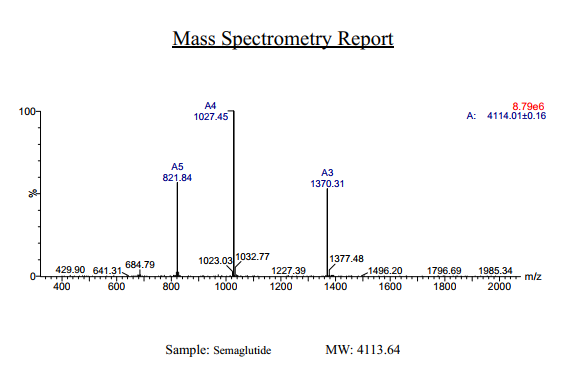
    • HPLC, MS

    Description

    Semaglutide Synthetic is a single, non-glycosylated polypeptide chain containing 31 amino acids, having a molecular mass of 4113 Dalton and a Molecular formula of C187H291N45O59.

    Formulation

    The protein was lyophilized with no additives.

    Purity

    Greater than 97.0% as determined by analysis by RP-HPLC.

    HPLC, MS

    Semaglutide hplc - Product image 1
    semaglutide mass spec - Product image 2

    More Info

    • Physical Appearance

      Sterile Filtered White lyophilized (freeze-dried) powder.

    • Stability

      Lyophilized Semaglutide although stable at room temperature for 3 weeks, should be stored desiccated below -18°C. Upon reconstitution Semaglutide should be stored at 4°C between 2-7 days and for future use below -18°C. For long term storage it is recommended to add a carrier protein (0.1% HSA or BSA). Please prevent freeze-thaw cycles.

    • Solubility

      It is recommended to reconstitute the lyophilized Semaglutide in sterile 18MΩ-cm H2O not less than 100 µg/ml, which can then be further diluted to other aqueous solutions.

    • Amino Acid Sequence

      H-His-Aib-Glu-Gly-Thr-Phe-Thr-Ser-Asp-Val-Ser-Ser-Tyr-Leu-Glu-Gly-Gln-Ala-Ala-Lys(AEEAc-AEEAc-γ-Glu-17-carboxyheptadecanoyl)-Glu-Phe-Ile-Ala-Trp-Leu-Val-Arg-Gly-Arg-Gly-OH.

    • Background

      Semaglutide, a glucagon-like peptide-1 receptor agonist (GLP-1 RA), has emerged as a breakthrough in the field of diabetes management and metabolic disorders. It is recognized for its potent glucose-lowering effects, weight management properties, and cardiovascular benefits. Beyond diabetes, semaglutide is under investigation for its potential applications in obesity treatment and other related conditions. This research aims to comprehensively explore semaglutide, shedding light on its multifaceted mechanisms of action and its broader therapeutic implications.

      The primary objective of this research is to elucidate the mechanisms underlying the glucose-lowering and metabolic effects of semaglutide. In vitro and in vivo experiments will be conducted to investigate how semaglutide interacts with GLP-1 receptors, influences insulin secretion, and modulates glucose homeostasis. Understanding these mechanisms is crucial for harnessing the full therapeutic potential of semaglutide.

      The second objective is to assess the clinical relevance of semaglutide in diabetes management. Clinical trials involving individuals with type 2 diabetes will be conducted to evaluate the efficacy, safety, and long-term outcomes of semaglutide treatment. These investigations may provide valuable insights into its use as a monotherapy or adjunct therapy in diabetes care.

      The third objective is to explore the potential applications of semaglutide beyond diabetes. Research will investigate its role in obesity treatment, cardiovascular risk reduction, and non-alcoholic fatty liver disease (NAFLD) management. Understanding the multifaceted properties of semaglutide may open new avenues for therapeutic interventions in various metabolic and cardiovascular conditions.

      By delving into the diverse functions of semaglutide, this research aims to expand our understanding of its therapeutic potential and clinical applications. The findings may contribute to improved treatment strategies for individuals affected by diabetes, obesity, and related metabolic disorders.

    ProSpec's products are furnished for LABORATORY RESEARCH USE ONLY. The product may not be used as drugs, agricultural or pesticidal products, food additives or household chemicals.

    Semaglutide
  • View Data Sheet

    Name :

    SDR16C5 Human

    Description:

    Short Chain Dehydrogenase/Reductase Family 16C, Member 5 Human Recombinant

    RDH#2, RDH-E2, RDHE2, Epidermal retinol dehydrogenase 2, EPHD-2, Retinal short-chain dehydrogenase reductase 2, retSDR2, Short-chain dehydrogenase/reductase family 16C member 5, SDR16C5.

    Product # :

    PRO-1385

    Price :

    Quantity :

    Shipping Method :

    Ice Icon

    Shipped with Ice Packs

    Add To Cart

    More Info

    • description
    • source
    • formulation
    • purity
    • More Info

    Description

    SDR16C5 Human Recombinant produced in E.Coli is a single, non-glycosylated polypeptide chain containing 261 amino acids (32-269 a.a.) and having a molecular mass of 28.3kDa. SDR16C5 is fused to a 23 amino acid His-tag at N-terminus & purified by proprietary chromatographic techniques.

    Source

    E.coli.

    Formulation

    SDR16C5 protein solution (1mg/ml) contains 20mM Tris-HCl buffer (pH 8.0), 0.15M NaCl, 10% glycerol and 1mM DTT.

    Purity

    Greater than 90% as determined by SDS-PAGE.

    More Info

    • Introduction

      Short chain dehydrogenase/reductase family 16C, member5 (SDR16C5) is active in the oxidative direction as well as in the reductive one. SDR16C5 oxidizes all-trans-retinol in all-trans-retinaldehyde. No activity was detected with 11-cis-retinol or 11-cis-retinaldehyde as substrates with either NAD+/NADH or NADP+/NADPH.

    • Synonyms

      RDH#2, RDH-E2, RDHE2, Epidermal retinol dehydrogenase 2, EPHD-2, Retinal short-chain dehydrogenase reductase 2, retSDR2, Short-chain dehydrogenase/reductase family 16C member 5, SDR16C5.

    • Physical Appearance

      Sterile Filtered colorless solution.

    • Stability

      Store at 4°C if entire vial will be used within 2-4 weeks. Store, frozen at -20°C for longer periods of time. For long term storage it is recommended to add a carrier protein (0.1% HSA or BSA).Avoid multiple freeze-thaw cycles.

    • Amino Acid Sequence

      MGSSHHHHHH SSGLVPRGSH MGSPKPRKNV AGEIVLITGA GSGLGRLLAL QFARLGSVLV LWDINKEGNE ETCKMAREAG ATRVHAYTCD CSQKEGVYRV ADQVKKEVGD VSILINNAGI VTGKKFLDCP DELMEKSFDV NFKAHLWTYK AFLPAMIAND HGHLVCISSS AGLSGVNGLA DYCASKFAAF GFAESVFVET FVQKQKGIKT TIVCPFFIKT GMFEGCTTGC PSLLPILEPK YAVEKIVEAI LQEKMYLYMP K.

    ProSpec's products are furnished for LABORATORY RESEARCH USE ONLY. The product may not be used as drugs, agricultural or pesticidal products, food additives or household chemicals.

    Sdr16C5 Human
  • View Data Sheet

    Name :

    NCALD Human

    Description:

    Neurocalcin Delta Recombinant Human

    Rocalcin Delta, MGC33870, MGC74858, Neurocalcin-Delta.

    Product # :

    PRO-093

    Price :

    Quantity :

    Shipping Method :

    Ice Icon

    Shipped with Ice Packs

    Add To Cart

    More Info

    • description
    • source
    • formulation
    • purity
    • More Info

    Description

    NCALD produced in E.Coli is a single, non-glycosylated polypeptide chain containing 213 amino acids (1-193.a.a) and having a molecular mass of 24.4kDa. NCALD is fused to a 20 amino acid His-tag at N-terminus & purified by proprietary chromatographic techniques.

    Source

    Escherichia Coli.

    Formulation

    The NCALD protein solution (0.5mg/1ml) is formulated in 20 mM Tris-HCl buffer (pH8.0), 100mM NaCl, 1mM DTT and 40% glycerol.

    Purity

    Greater than 90% as determined by SDS-PAGE.

    More Info

    • Introduction

      NCALD belongs to the neuronal calcium sensor (NCS) family. NCALD is cytosolic at inactive calcium levels; but, high intracellular calcium levels induce a conformational transformation which exposes the myristoyl group, causing protein association with membranes and partial co-localization with the perinuclear trans-golgi network. NCALD protein is a regulator of signal transduction by G protein-coupled receptor.

    • Synonyms

      Rocalcin Delta, MGC33870, MGC74858, Neurocalcin-Delta.

    • Physical Appearance

      Sterile Filtered clear solution.

    • Stability

      Store at 4°C if entire vial will be used within 2-4 weeks. Store, frozen at -20°C for longer periods of time.For long term storage it is recommended to add a carrier protein (0.1% HSA or BSA).Please avoid freeze thaw cycles.

    • Amino Acid Sequence

      MGSSHHHHHH SSGLVPRGSH MGKQNSKLRP EVMQDLLEST DFTEHEIQEW YKGFLRDCPS GHLSMEEFKK IYGNFFPYGD ASKFAEHVFR TFDANGDGTI DFREFIIALS VTSRGKLEQK LKWAFSMYDL DGNGYISKAE MLEIVQAIYK MVSSVMKMPE DESTPEKRTE KIFRQMDTNR DGKLSLEEFI RGAKSDPSIV RLLQCDPSSA GQF.

    ProSpec's products are furnished for LABORATORY RESEARCH USE ONLY. The product may not be used as drugs, agricultural or pesticidal products, food additives or household chemicals.

    Ncald Human
  • View Data Sheet

    Name :

    SIVA1 Human

    Description:

    SIVA1 Human Recombinant

    Apoptosis regulatory protein Siva isoform 1, Apoptosis regulatory protein Siva, CD27-binding protein, CD27BP, SIVA, SIVA1, Siva-1, Siva-2

    Product # :

    PRO-2652

    Price :

    Quantity :

    Shipping Method :

    Ice Icon

    Shipped with Ice Packs

    Add To Cart

    More Info

    • description
    • source
    • formulation
    • purity
    • More Info

    Description

    SIVA1 Human Recombinant produced in E.Coli is a single, non-glycosylated polypeptide chain containing 198 amino acids (1-175 a.a.) and having a molecular mass of 21.1 kDa. SIVA1 is fused to a 23 amino acid His tag at N-Terminus and purified by proprietary chromatographic techniques.

    Source

    Escherichia Coli.

    Formulation

    The SIVA1 solution (0.5mg/ml) contains 20mM Tris-HCl buffer (pH 8.0), 10% glycerol and 0.4M urea.

    Purity

    Greater than 85.0% as determined by SDS-PAGE.

    More Info

    • Introduction

      SIVA1, also referred to asApoptosis regulatory protein Siva isoform 1, is a death domain-containing proapoptotic protein. It is known as glucocorticoid-induced TNFR family-related gene, and also as an intracellular ligand of CD27, which are both members of the TNFR family expressed on lymphoid cells. There isn’t much known about the signalling pathway underlying the Siva-induced apoptosis.SIVA1 expression is modulated in multiple pathological processes.

    • Synonyms

      Apoptosis regulatory protein Siva isoform 1, Apoptosis regulatory protein Siva, CD27-binding protein, CD27BP, SIVA, SIVA1, Siva-1, Siva-2

    • Physical Appearance

      Sterile Filtered colorless solution.

    • Stability

      Store at 4°C if entire vial will be used within 2-4 weeks. Store, frozen at -20°C for longer periods of time. For long term storage it is recommended to add a carrier protein (0.1% HSA or BSA).Avoid multiple freeze-thaw cycles.

    • Amino Acid Sequence

      MGSSHHHHHH SSGLVPRGSH MGSMPKRSCP FADVAPLQLK VRVSQRELSR GVCAERYSQE VFEKTKRLLF LGAQAYLDHV WDEGCAVVHL PESPKPGPTG APRAARGQML IGPDGRLIRS LGQASEADPS GVASIACSSC VRAVDGKAVC GQCERALCGQ CVRTCWGCGS VACTLCGLVD CSDMYEKVLC TSCAMFET

    ProSpec's products are furnished for LABORATORY RESEARCH USE ONLY. The product may not be used as drugs, agricultural or pesticidal products, food additives or household chemicals.

    Siva1 Human
  • View Data Sheet

    Name :

    SNUPN Human

    Description:

    Snurportin 1 Human Recombinant

    KPNBL, RNUT1, Snurportin1, SPN1, RNA U transporter 1.

    Product # :

    PRO-866

    Price :

    Quantity :

    Shipping Method :

    Ice Icon

    Shipped with Ice Packs

    Add To Cart

    More Info

    • description
    • source
    • formulation
    • purity
    • More Info

    Description

    SNUPN Recombinant Human produced in E.Coli is a single, non-glycosylated polypeptide chain containing 380 amino acids (1-360 a.a.) and having a molecular mass of 43.3 kDa. The SNUPN is fused to 20 amino acid His-Tag at N-terminus and purified by proprietary chromatographic techniques.

    Source

    Escherichia Coli.

    Formulation

    SNUPN Human solution containing 20mM Tris pH-8, 2mM DTT, 0.1M NaCl, & 10% glycerol.

    Purity

    Greater than 90.0% as determined by SDS-PAGE.

    More Info

    • Introduction

      SNUPN is a nuclear import adaptor protein which is part of the Snurportin family.
      SNUPN is Localized to the cytoplasm and nucleus and contains an N-terminal IBB domain and a trimethylguanosine (m3G)-cap binding domain. SNUPN binds specifically the terminal 2,2,7-m3G-cap at the 5'' end of U snRNPs and is involved in transport of U snRNPs into the nucleus through an association with Importin β.

    • Synonyms

      KPNBL, RNUT1, Snurportin1, SPN1, RNA U transporter 1.

    • Physical Appearance

      Sterile filtered colorless solution.

    • Stability

      Store at 4°C if entire vial will be used within 2-4 weeks. Store, frozen at -20°C for longer periods of time. For long term storage it is recommended to add a carrier protein (0.1% HSA or BSA). Avoid multiple freeze-thaw cycles.

    • Amino Acid Sequence

      MGSSHHHHHH SSGLVPRGSH MEELSQALAS SFSVSQDLNS TAAPHPRLSQ YKSKYSSLEQ SERRRRLLEL QKSKRLDYVN HARRLAEDDW TGMESEEENK KDDEEMDIDT VKKLPKHYAN QLMLSEWLID VPSDLGQEWI VVVCPVGKRA LIVASRGSTS AYTKSGYCVN RFSSLLPGGN RRNSTAKDYT ILDCIYNEVN QTYYVLDVMC WRGHPFYDCQ TDFRFYWMHS KLPEEEGLGE KTKLNPFKFV GLKNFPCTPE SLCDVLSMDF PFEVDGLLFY HKQTHYSPGS TPLVGWLRPY MVSDVLGVAV PAGPLTTKPD YAGHQLQQIM EHKKSQKEGM KEKLTHKASE NGHYELEHLS
      TPKLKGSSHS PDHPGCLMEN.

    ProSpec's products are furnished for LABORATORY RESEARCH USE ONLY. The product may not be used as drugs, agricultural or pesticidal products, food additives or household chemicals.

    Snupn Human
  • View Data Sheet

    Name :

    STC 2 Human, His

    Description:

    Stanniocalcin-2 Human Recombinant, His Tag

    Stanniocalcin-2, STC, STC2, STCRP, STC-2, Stanniocalcin-related protein, STC-related protein.

    Product # :

    HOR-008

    Price :

    Quantity :

    Shipping Method :

    Ice Icon

    Shipped with Ice Packs

    Add To Cart

    More Info

    • description
    • source
    • formulation
    • purity
    • More Info

    Description

    STC 2 Human Recombinant produced in E.Coli is a single, non-glycosylated polypeptide chain containing 301 amino acids (25-302 a.a.) and having a molecular mass of 33kDa. STC 2 is fused to a 23 amino acid His-tag at N-terminus & purified by proprietary chromatographic techniques.

    Source

    Escherichia Coli.

    Formulation

    STC 2 protein solution (0.25mg/ml) containing 20mM Tris-HCl buffer (pH 8.0), 0.25M NaCl, 30% glycerol and 1mM DTT.

    Purity

    Greater than 90% as determined by SDS-PAGE.

    More Info

    • Introduction

      STC2 is a homodimeric glycoprotein that is expressed in a wide variety of tissues and may have autocrine or paracrine functions. The encoded protein has 10 of its 15 cysteine residues conserved among stanniocalcin family members and is phosphorylated by casein kinase 2 exclusively on its serine residues. Its C-terminus contains a cluster of histidine residues which may interact with metal ions. The protein may play a role in the regulation of renal and intestinal calcium and phosphate transport, cell metabolism, or cellular calcium/phosphate homeostasis. Constitutive over expression of human stanniocalcin 2 in mice resulted in pre- and postnatal growth restriction, reduced bone and skeletal muscle growth, and organomegaly. Expression of this gene is induced by estrogen and altered in some breast cancers.

    • Synonyms

      Stanniocalcin-2, STC, STC2, STCRP, STC-2, Stanniocalcin-related protein, STC-related protein.

    • Physical Appearance

      Sterile filtered colorless solution.

    • Stability

      Store at 4°C if entire vial will be used within 2-4 weeks. Store, frozen at -20°C for longer periods of time. For long term storage it is recommended to add a carrier protein (0.1% HSA or BSA).Avoid multiple freeze-thaw cycles.

    • Amino Acid Sequence

      MGSSHHHHHH SSGLVPRGSH MGSTDATNPP EGPQDRSSQQ KGRLSLQNTA EIQHCLVNAG DVGCGVFECF ENNSCEIRGL HGICMTFLHN AGKFDAQGKS FIKDALKCKA HALRHRFGCI SRKCPAIREM VSQLQRECYL KHDLCAAAQE NTRVIVEMIH FKDLLLHEPY VDLVNLLLTC GEEVKEAITH SVQVQCEQNW GSLCSILSFC TSAIQKPPTA PPERQPQVDR TKLSRAHHGE AGHHLPEPSS RETGRGAKGE RGSKSHPNAH ARGRVGGLGA QGPSGSSEWE DEQSEYSDIR R.

    ProSpec's products are furnished for LABORATORY RESEARCH USE ONLY. The product may not be used as drugs, agricultural or pesticidal products, food additives or household chemicals.

    Stc 2 Human His
  • View Data Sheet

    Name :

    CDKN2C Human

    Description:

    Cyclin-Dependent Kinase Inhibitor 2C Human Recombinant

    Cyclin-dependent kinase inhibitor 2C (p18 inhibits CDK4), cyclin-dependent kinase 4 inhibitor C, cyclin-dependent kinase 6 inhibitor p18, INK4C, p18, p18-INK6, p18-INK4C, CDK6 inhibitor p18, cyclin-dependent inhibitor, CDKN6, p18-INK4c.

    Product # :

    PKA-020

    Price :

    Quantity :

    Shipping Method :

    Ice Icon

    Shipped with Ice Packs

    Add To Cart

    More Info

    • description
    • source
    • formulation
    • purity
    • More Info

    Description

    CDKN2C Human Recombinant produced in E.coli is a single, non-glycosylated polypeptide chain containing 192 amino acids (1-168 and having a molecular mass of 20.7kDa.CDKN2C is fused to a 24 amino acid His-tag at N-terminus & purified by proprietary chromatographic techniques.

    Source

    E.coli.

    Formulation

    The CDKN2C solution (0.5mg/ml) contains 20mM Tris-HCl buffer (pH 8.0), 200mM NaCl,
    2mM DTT and 10% glycerol.

    Purity

    Greater than 95% as determined by SDS-PAGE.

    More Info

    • Introduction

      CDKN2C is a member of the CDKN2 cyclin-dependent kinase inhibitor family. CDKN2C cooperates with CDK4 or CDK6, and inhibits the activation of the CDK kinases, therefore acts as a cell growth regulator which regulates cell cycle G1 progression. CDKN2C suppresses the cell growth and proliferation with a correlated dependency on endogenous retinoblastoma protein RB. Studies in the knockout mice show CDKN2C takes part in regulating spermatogenesis, in addition to suppressing tumorigenesis.

    • Synonyms

      Cyclin-dependent kinase inhibitor 2C (p18 inhibits CDK4), cyclin-dependent kinase 4 inhibitor C, cyclin-dependent kinase 6 inhibitor p18, INK4C, p18, p18-INK6, p18-INK4C, CDK6 inhibitor p18, cyclin-dependent inhibitor, CDKN6, p18-INK4c.

    • Physical Appearance

      Sterile Filtered colorless solution.

    • Stability

      Store at 4°C if entire vial will be used within 2-4 weeks. Store, frozen at -20°C for longer periods of time. For long term storage it is recommended to add a carrier protein (0.1% HSA or BSA).Avoid multiple freeze-thaw cycles.

    • Amino Acid Sequence

      MGSSHHHHHH SSGLVPRGSH MGSHMAEPWG NELASAAARG DLEQLTSLLQ NNVNVNAQNG FGRTALQVMK LGNPEIARRL LLRGANPDLK DRTGFAVIHD AARAGFLDTL QTLLEFQADV NIEDNEGNLP LHLAAKEGHL RVVEFLVKHT ASNVGHRNHK GDTACDLARL YGRNEVVSLM QANGAGGATN LQ

    ProSpec's products are furnished for LABORATORY RESEARCH USE ONLY. The product may not be used as drugs, agricultural or pesticidal products, food additives or household chemicals.

    Cdkn2C Human
  • View Data Sheet

    Name :

    RCHY1 Human

    Description:

    Ring Finger & CHY Zinc Finger Domain Containing 1 Human Recombinant

    ARNIP, CHIMP, hARNIP, PIRH2, PIRH2E, PIRH2F, PRO1996, RNF199, ZNF363, RING finger and CHY zinc finger domain-containing protein 1, Androgen receptor N-terminal-interacting protein, CH-rich-interacting match with PLAG1, E3 ubiquitin-protein ligase Pirh2, RING finger protein 199, Zinc finger protein 363, p53-induced RING-H2 protein, hPirh2, RCHY1.

    Product # :

    PRO-1536

    Price :

    Quantity :

    Shipping Method :

    Ice Icon

    Shipped with Ice Packs

    Add To Cart

    More Info

    • description
    • source
    • formulation
    • purity
    • More Info

    Description

    RCHY1 Human Recombinant produced in E. coli is a single polypeptide chain containing 284 amino acids (1-261) and having a molecular mass of 32.5kDa. RCHY1 is fused to a 23 amino acid His-tag at N-terminus & purified by proprietary chromatographic techniques.

    Source

    Escherichia Coli.

    Formulation

    The RCHY1 solution (0.5mg/ml) contains 20mM Tris-HCl buffer (pH 8.0), 0.4M UREA and 10% glycerol.

    Purity

    Greater than 85% as determined by SDS-PAGE.

    More Info

    • Introduction

      Ring Finger & CHY Zinc Finger Domain Containing 1 (RCHY1) acts as an ubiquitin ligase. RCHY1 mediates E3-dependent ubiquitination and proteasomal degradation of target proteins which among them are TP53, HDAC1 and CDKN1B, consequently regulating their levels and cell cycle progression. RCHY1 is also increases AR transcription factor activity.

    • Synonyms

      ARNIP, CHIMP, hARNIP, PIRH2, PIRH2E, PIRH2F, PRO1996, RNF199, ZNF363, RING finger and CHY zinc finger domain-containing protein 1, Androgen receptor N-terminal-interacting protein, CH-rich-interacting match with PLAG1, E3 ubiquitin-protein ligase Pirh2, RING finger protein 199, Zinc finger protein 363, p53-induced RING-H2 protein, hPirh2, RCHY1.

    • Physical Appearance

      Sterile Filtered clear solution.

    • Stability

      Store at 4°C if entire vial will be used within 2-4 weeks. Store frozen at -20°C for longer periods of time. For long term storage it is recommended to add a carrier protein (0.1% HSA or BSA).Avoid multiple freeze-thaw cycles.

    • Amino Acid Sequence

      MGSSHHHHHH SSGLVPRGSH MGSMAATARE DGASGQERGQ RGCEHYDRGC LLKAPCCDKL YTCRLCHDNN EDHQLDRFKV KEVQCINCEK IQHAQQTCEE CSTLFGEYYC DICHLFDKDK KQYHCENCGI CRIGPKEDFF HCLKCNLCLA MNLQGRHKCI ENVSRQNCPI CLEDIHTSRV VAHVLPCGHL LHRTCYEEML KEGYRCPLCM HSALDMTRYW RQLDDEVAQT PMPSEYQNMT VDILCNDCNG RSTVQFHILG MKCKICESYN TAQAGGRRIS LDQQ.

    ProSpec's products are furnished for LABORATORY RESEARCH USE ONLY. The product may not be used as drugs, agricultural or pesticidal products, food additives or household chemicals.

    Rchy1 Human
  • View Data Sheet

    Name :

    YWHAH Human, His

    Description:

    Tyr-3/Trp-5 Monooxygenase Activation Protein ETA Human Recombinant, His Tag

    14-3-3 ETA, YWHAH, YWHA1, Protein AS1, Tyr-3/Trp-5 Monooxygenase Activation Protein ETA.

    Product # :

    PKA-347

    Price :

    Quantity :

    Shipping Method :

    Ice Icon

    Shipped with Ice Packs

    Add To Cart

    More Info

    • description
    • source
    • formulation
    • purity
    • More Info

    Description

    YWHAH Human Recombinant produced in E.Coli is a single, non-glycosylated, polypeptide chain containing 266 amino acids and having a molecular mass of 30.3 kDa. YWHAH is fused to an N-Terminal His Tag and purified by proprietary chromatographic techniques.

    Source

    Escherichia Coli.

    Formulation

    YWHAH solution containing 20mM Tris pH-8.

    Purity

    Greater than 95.0% as determined by SDS-PAGE.

    More Info

    • Introduction

      YWHAH belongs to the 14-3-3 family of proteins which mediate signal transduction by binding to phosphoserine-containing proteins. 14-3-3 ETA is found in plants and mammals, and there is 99% identity to the mouse, rat and bovine orthologs. YWHAH gene contains a 7 base pair repeat sequence in its 5' UTR, and changes in the number of this repeat has been associated with early-onset schizophrenia.
      14-3-3 eta is specific to the site of joint inflammation.
      14-3-3 proteins are colocalized with Lewy bodies in Parkinson disease, though there is no specific staining for the 14-3-3 eta subunit.
      There are 3 different isoforms types of 14-3-3: Beta, Gamma and ETA that are DAL-1/Protein 4.1B-binding proteins.

    • Synonyms

      14-3-3 ETA, YWHAH, YWHA1, Protein AS1, Tyr-3/Trp-5 Monooxygenase Activation Protein ETA.

    • Physical Appearance

      Sterile filtered colorless solution.

    • Stability

      Store at 4°C if entire vial will be used within 2-4 weeks. Store, frozen at -20°C for longer periods of time. For long term storage it is recommended to add a carrier protein (0.1% HSA or BSA).Avoid multiple freeze-thaw cycles.

    • Amino Acid Sequence

      MGSSHHHHHH SSGLVPRGSH MGDREQLLQR ARLAEQAERY DDMASAMKAV TELNEPLSNE DRNLLSVAYK NVVGARRSSW RVISSIEQKT MADGNEKKLE KVKAYREKIE KELETVCNDV LSLLDKFLIK NCNDFQYESK VFYLKMKGDY YRYLAEVASG EKKNSVVEAS EAAYKEAFEI SKEQMQPTHP IRLGLALNFS VFYYEIQNAP EQACLLAKQA FDDAIAELDT LNEDSYKDST LIMQLLRDNL TLWTSDQQDE EAGEGN.

    ProSpec's products are furnished for LABORATORY RESEARCH USE ONLY. The product may not be used as drugs, agricultural or pesticidal products, food additives or household chemicals.

    Ywhah Human
  • View Data Sheet

    Name :

    Adiponectin Human, HEK

    Description:

    Adiponectin Human Recombinant, HEK

    Acrp30, AdipoQ, GBP-28, APM-1, ACDC.

    Product # :

    CYT-434

    Price :

    Quantity :

    Shipping Method :

    Room Temp Icon

    Shipped at Room temp

    Add To Cart

    More Info

    • description
    • source
    • formulation
    • purity
    • biological activity
    • More Info
    • sds-page

    Description

    Acrp30 Human Recombinant produced in HEK cells is a glycosylated polypeptide chain containing 234 amino acids (19-244a.a.) and having a molecular mass of 25.5kDa. Acrp30 is expressed with a FLAG tag at C-Terminus and purified by proprietary chromatographic techniques.

    Source

    HEK293 (Human Embryonic Kidney cell line).

    Formulation

    Filtered (0.4µm) and lyophilized from 0.5mg/ml in 50mM phosphate Buffer, 75mM NaCl, pH 7.4.

    Purity

    Greater than 98% as determined by HPLC and SDS PAGE.

    Biological Activity

    In vitro gluconeogenesis assay in primary hepatocytes was performed, showing the Adiponectin human derived from mammalian cells can inhibit glucose production. The ED50 was ~6 µg/ml.

    sds-page

    adiponectin human HEK sds-page - Product image 1

    More Info

    • Introduction

      Adiponectin is a recently discovered 244 amino acid protein, the product of the apM1 gene, which is physiologically active and specifically and highly expressed in adipose cells (Adipokine). The protein belongs to the soluble defense collagen super family; it has a collagen-like domain structurally homologous with collagen VIII and X and complement factor C1q-like globular domain. APM-1 forms homotrimers, which are the building blocks for higher order complexes found circulating in serum.

    • Synonyms

      Acrp30, AdipoQ, GBP-28, APM-1, ACDC.

    • Physical Appearance

      White lyophilized (freeze-dried) powder.

    • Stability

      For long term, store lyophilized AdipoQ at -20°C. Aliquot the product after reconstitution to avoid repeated freezing/thawing cycles. Reconstituted protein can be stored at 4°C for a limited period of time; it does not show any change after two weeks at 4°C. The lyophilized protein remains stable for 24 months when stored at -20°C.

    • Solubility

      Add deionized water to prepare a working stock solution of approximately 0.5mg/ml and let the lyophilized pellet dissolve completely. Product not sterile! Please filter the product by an appropriate sterile filter before using it in cell culture.

    • Amino Acid Sequence

      ETTTQGPGVL LPLPKGACTG WMAGIPGHPG HNGAPGRDGR DGTPGEKGEK GDPGLIGPKG DIGETGVPGA EGPRGFPGIQ GRKGEPGEGA YVYRSAFSVG LETYVTIPNM PIRFTKIFYN QQNHYDGSTG KFHCNIPGLY YFAYHIVYMK DVKVSLFKKD KAMLFTYDQY QENNVDQASG SVLLHLEVGD QVWLQVYGEG ERNGLYADND NDSTFTGFLL YHDTNDYKDDDDK.

    • Background

      What is the molecular weight/Mw of adiponectin Protein?
      Adiponectin Protein has a total Mw of 25.5kDa.

      What is the source or expression system of adiponectin Protein?
      HEK293.

      What is the Purity of adiponectin Protein?
      adiponectin Protein is >98% pure as determined by SDS-PAGE.

      What is the Biological Activity of adiponectin Protein?
      In vitro gluconeogenesis assay in primary hepatocytes was performed, showing the Adiponectin human derived from mammalian cells can inhibit glucose production. The ED50 was ~6 µg/ml.

      What is the amino acid sequence of adiponectin Protein?
      ETTTQGPGVL LPLPKGACTG WMAGIPGHPG HNGAPGRDGR DGTPGEKGEK GDPGLIGPKG DIGETGVPGA EGPRGFPGIQ GRKGEPGEGA YVYRSAFSVG LETYVTIPNM PIRFTKIFYN QQNHYDGSTG KFHCNIPGLY YFAYHIVYMK DVKVSLFKKD KAMLFTYDQY QENNVDQASG SVLLHLEVGD QVWLQVYGEG ERNGLYADND NDSTFTGFLL YHDTNDYKDDDDK.

      What applications can adiponectin Protein be used in?
      adiponectin Protein can probably be used in western blot, ELISA and Lateral Flow.

      What is the endotoxin level for adiponectin Protein?
      The endotoxin level is minimal, adiponectin Protein was purified using conventional chromatography techniques.

    ProSpec's products are furnished for LABORATORY RESEARCH USE ONLY. The product may not be used as drugs, agricultural or pesticidal products, food additives or household chemicals.

    Adiponectin Human Hek
  • View Data Sheet

    Name :

    CIDEC Human

    Description:

    Cell Death-Inducing DFFA-Like Effector C Human Recombinant

    Cell Death-Inducing DFFA-Like Effector C, FSP27, CIDE3, FPLD5, Cell Death-Inducing DFFA-Like Effector Protein C, Fat-Specific Protein FSP27 Homolog, Cell Death Activator CIDE-3, Fat Specific Protein 27, CIDE-3, CIDEC.

    Product # :

    PRO-2026

    Price :

    Quantity :

    Shipping Method :

    Ice Icon

    Shipped with Ice Packs

    Add To Cart

    More Info

    • description
    • source
    • formulation
    • purity
    • More Info

    Description

    CIDEC Human Recombinant produced in E.Coli is a single, non-glycosylated, polypeptide chain (Glu2-Gln238) containing 247 amino acids including a 10 aa His tag at N-terminus. The total calculated molecular mass is 28kDa.

    Source

    Escherichia Coli.

    Formulation

    CIDEC filtered (0.4µm) solution at a concentration of 0.4mg/ml in 30mM acetate buffer and 10mM dithiothreitol, pH 4.

    Purity

    Greater than 95.0% as determined by SDS-PAGE.

    More Info

    • Introduction

      Cell Death-Inducing DFFA-Like Effector C (CIDEC) belongs to the cell death-inducing DNA fragmentation factor-like effector family, whose members have significant roles in apoptosis. CIDEC is expressed mainly in adipocytes, intestine, heart, stomach, and weakly in the brain, kidney and liver. CIDEC overexpression in preadipocytes induces apoptosis. CIDEC regulates enlargement of lipid droplets.

    • Synonyms

      Cell Death-Inducing DFFA-Like Effector C, FSP27, CIDE3, FPLD5, Cell Death-Inducing DFFA-Like Effector Protein C, Fat-Specific Protein FSP27 Homolog, Cell Death Activator CIDE-3, Fat Specific Protein 27, CIDE-3, CIDEC.

    • Physical Appearance

      Filtered colorless solution.

    • Stability

      Store at 4°C if entire vial will be used within 2-4 weeks. Store, frozen at -20°C for longer periods of time. For long term storage it is recommended to add a carrier protein (0.1% HSA or BSA).Avoid multiple freeze-thaw cycles.

    • Amino Acid Sequence

      MKHHHHHHASEYAMKSLSLL YPKSLSRHVS VRTSVVTQQL LSEPSPKAPR ARPCRVSTAD RSVRKGIMAY SLEDLLLKVR DTLMLADKPF FLVLEEDGTT VETEEYFQAL AGDTVFMVLQ KGQKWQPPSE QGTRHPLSLS HKPAKKIDVA RVTFDLYKLN PQDFIGCLNV KATFYDTYSL SYDLHCCGAK RIMKEAFRWA LFSMQATGHV LLGTSCYLQQ LLDATEEGQP PKGKASSLIP TCLKILQ.

    ProSpec's products are furnished for LABORATORY RESEARCH USE ONLY. The product may not be used as drugs, agricultural or pesticidal products, food additives or household chemicals.

    Cidec Human
  • View Data Sheet

    Name :

    SSR2 Human

    Description:

    Signal Sequence Receptor, Beta Human Recombinant

    HSD25, TLAP, TRAP-BETA, TRAPB, Translocon-associated protein subunit beta, Signal sequence receptor subunit beta, SSR-beta.

    Product # :

    PRO-1380

    Price :

    Quantity :

    Shipping Method :

    Ice Icon

    Shipped with Ice Packs

    Add To Cart

    More Info

    • description
    • source
    • formulation
    • purity
    • More Info

    Description

    SSR2 Human Recombinant produced in E.Coli is a single, non-glycosylated polypeptide chain containing 155 amino acids (18-149a.a) and having a molecular mass of 16.8kDa. SSR2 is fused to a 23 amino acid His-tag at N-terminus & purified by proprietary chromatographic techniques.

    Source

    E.coli.

    Formulation

    SSR2 protein solution (0.5mg/ml) containing 20mM Tris-HCl buffer (pH8.0), 10% glycerol and 0.1M NaCl.

    Purity

    Greater than 90% as determined by SDS-PAGE.

    More Info

    • Introduction

      The signal sequence receptor (SSR) is a glycosylated endoplasmic reticulum membrane receptor related with protein translocation across the ER membrane. The SSR consists of 2 subunits, a 34-kD glycoprotein (alpha-SSR or SSR1) and a 22-kD glycoprotein (beta-SSR or SSR2). The human beta-signal sequence receptor gene (SSR2) maps to chromosome bands 1q21-q23. Diseases correlated with SSR2 include calcaneonavicular coalition, and osteosarcoma, and among its related super-pathways are Viral mRNA Translation and Generic Transcription Pathway.

    • Synonyms

      HSD25, TLAP, TRAP-BETA, TRAPB, Translocon-associated protein subunit beta, Signal sequence receptor subunit beta, SSR-beta.

    • Physical Appearance

      Sterile Filtered colorless solution.

    • Stability

      Store at 4°C if entire vial will be used within 2-4 weeks. Store, frozen at -20°C for longer periods of time. For long term storage it is recommended to add a carrier protein (0.1% HSA or BSA).Avoid multiple freeze-thaw cycles.

    • Amino Acid Sequence

      MGSSHHHHHH SSGLVPRGSH MGSEEGARLL ASKSLLNRYA VEGRDLTLQY NIYNVGSSAA LDVELSDDSF PPEDFGIVSG MLNVKWDRIA PASNVSHTVV LRPLKAGYFN FTSATITYLA QEDGPVVIGS TSAPGQGGIL AQREFDRRFS PHFLD.

    ProSpec's products are furnished for LABORATORY RESEARCH USE ONLY. The product may not be used as drugs, agricultural or pesticidal products, food additives or household chemicals.

    Ssr2 Human
  • View Data Sheet

    Name :

    SULT2A1 Human

    Description:

    Sulfotransferase Family, Cytosolic, 2A, Member 1 Human Recombinant

    Sulfotransferase family cytosolic 2A dehydroepiandrosterone (DHEA)-preferring member 1, DHEA-ST, STD, HST, ST2, ST2A1, ST2A3, Alcohol/hydroxysteroid sulfotransferase, bile-salt sulfotranasferase 2A1, EC 2.8.2.14.

    Product # :

    ENZ-141

    Price :

    Quantity :

    Shipping Method :

    Ice Icon

    Shipped with Ice Packs

    Add To Cart

    More Info

    • description
    • source
    • formulation
    • purity
    • More Info

    Description

    SULT2A1 Human Recombinant produced in E.Coli is a single, non-glycosylated polypeptide chain containing 305 amino acids (1-285a.a) and having a molecular mass of 35.9kDa.SULT2A1 is fused to a 20 amino acid His-tag at N-terminus & purified by proprietary chromatographic techniques.

    Source

    Escherichia Coli.

    Formulation

    SULT2A1 protein solution (1mg/1ml) containing 20mM Tris-HCl buffer (pH8.0), 20% glycerol, 0.1M NaCl and 1mM DTT.

    Purity

    Greater than 95.0% as determined by SDS-PAGE.

    More Info

    • Introduction

      SULT2A1 is a member fo the sulfotransferase family. SULT2A1 is primarily expressed in liver and adrenal tissues, and to a lesser extent in kidney. SULT2A1 catalyzes the 3'-phosphoadenosine 5'-phosphosulfate-dependent sulfation of an extensive selection of steroids in human liver and adrenal tissues, and in addition is responsible for a larg number of the sulfation of bile acids in human liver.

    • Synonyms

      Sulfotransferase family cytosolic 2A dehydroepiandrosterone (DHEA)-preferring member 1, DHEA-ST, STD, HST, ST2, ST2A1, ST2A3, Alcohol/hydroxysteroid sulfotransferase, bile-salt sulfotranasferase 2A1, EC 2.8.2.14.

    • Physical Appearance

      Sterile Filtered clear solution.

    • Stability

      Store at 4°C if entire vial will be used within 2-4 weeks. Store, frozen at -20°C for longer periods of time. For long term storage it is recommended to add a carrier protein (0.1% HSA or BSA).Avoid multiple freeze-thaw cycles.

    • Amino Acid Sequence

      MGSSHHHHHH SSGLVPRGSH MSDDFLWFEG IAFPTMGFRS ETLRKVRDEF VIRDEDVIIL TYPKSGTNWL AEILCLMHSK GDAKWIQSVP IWERSPWVES EIGYTALSET ESPRLFSSHL PIQLFPKSFF SSKAKVIYLM RNPRDVLVSG YFFWKNMKFI KKPKSWEEYF EWFCQGTVLY GSWFDHIHGW MPMREEKNFL LLSYEELKQD TGRTIEKICQ FLGKTLEPEE LNLILKNSSF QSMKENKMSN YSLLSVDYVV DKAQLLRKGV SGDWKNHFTV AQAEDFDKLF QEKMADLPRE LFPWE

    ProSpec's products are furnished for LABORATORY RESEARCH USE ONLY. The product may not be used as drugs, agricultural or pesticidal products, food additives or household chemicals.

    Sult2A1 Human
  • View Data Sheet

    Name :

    CD105 Human, His

    Description:

    Endoglin Human Recombinant, His-Tag

    CD105, ENG, END, ORW, HHT1, ORW1, FLJ41744, Endoglin.

    Product # :

    CYT-823

    Price :

    Quantity :

    Shipping Method :

    Ice Icon

    Shipped with Ice Packs

    Add To Cart

    More Info

    • description
    • source
    • formulation
    • purity
    • More Info
    • sds-page

    Description

    Endoglin Human Recombinant produced in E.coli is a single, non-glycosylated polypeptide chain containing 594 amino acids (26-586) and having a molecular mass of 64.9 kDa. Endoglin is fused to a 36 amino acid His-tag at N-terminus.

    Source

    Escherichia Coli.

    Formulation

    The Endoglin solution (0.25mg/ml) contains 20mM Tris-HCl buffer (pH 8.0), 1mM DTT, 150mM NaCl and 10% glycerol.

    Purity

    Greater than 85% as determined by SDS-PAGE.

    sds-page

    CD105-sds-page - Product image 1

    More Info

    • Introduction

      Endoglin is a type I membrane glycoprotein located on cell surfaces and is part of the TGF beta receptor complex.The Endoglin protein consists of a homodimer of 180 kDA with disulfide links. Endoglin has been found on endothelial cells, activated macrophages, fibroblasts, and smooth muscle cells. Furthermore, Endoglin has been found to be part of the TGF-beta1 receptor complex. Endoglin thus may be involved in the binding of TGF-beta1, TGF-beta3, activin-A, BMP-2, and BMP-7. Beside TGF-beta signaling endoglin may have other functions. It has been postulated that endoglin is involved in the cytoskeletal organization affecting cell morphology and migration. Endoglin has a role in the development of the cardiovascular system and in vascular remodeling. Endoglin expression is regulated during heart development . Experimental mice without the endoglin gene die due to cardiovascular abnormalities.

    • Synonyms

      CD105, ENG, END, ORW, HHT1, ORW1, FLJ41744, Endoglin.

    • Physical Appearance

      Sterile Filtered clear solution.

    • Stability

      Store at 4°C if entire vial will be used within 2-4 weeks. Store, frozen at -20°C for longer periods of time. For long term storage it is recommended to add a carrier protein (0.1% HSA or BSA).Avoid multiple freeze-thaw cycles.

    • Amino Acid Sequence

      MRGSHHHHHH GMASMTGGQQ MGRDLYDDDD KDRWGSETVH CDLQPVGPER DEVTYTTSQV SKGCVAQAPN AILEVHVLFL EFPTGPSQLE LTLQASKQNG TWPREVLLVL SVNSSVFLHL QALGIPLHLA YNSSLVTFQE PPGVNTTELP SFPKTQILEW AAERGPITSA AELNDPQSIL LRLGQAQGSL SFCMLEASQD MGRTLEWRPR TPALVRGCHL EGVAGHKEAH ILRVLPGHSA GPRTVTVKVE LSCAPGDLDA VLILQGPPYV SWLIDANHNM QIWTTGEYSF KIFPEKNIRG FKLPDTPQGL LGEARMLNAS IVASFVELPL ASIVSLHASS CGGRLQTSPA PIQTTPPKDT CSPELLMSLI QTKCADDAMT LVLKKELVAH LKCTITGLTF WDPSCEAEDR GDKFVLRSAY SSCGMQVSAS MISNEAVVNI LSSSSPQRKK VHCLNMDSLS FQLGLYLSPH FLQASNTIEP GQQSFVQVRV SPSVSEFLLQ LDSCHLDLGP EGGTVELIQG RAAKGNCVSL LSPSPEGDPR FSFLLHFYTV PIPKTGTLSC TVALRPKTGS QDQEVHRTVF MRLNIISPDL SGCTSKG

    • Background

      What is the molecular weight/Mw of CD105 Protein?
      CD105 Protein has a total Mw of 64.9kDa.

      What is the source or expression system of CD105 Protein?
      Escherichia Coli.

      What is the Purity of CD105 Protein?
      CD105 Protein is >85% pure as determined by SDS-PAGE.

      What is the Biological Activity of CD105 Protein?
      The biological functionality of CD105 Protein will be determined in the future.

      What is the amino acid sequence of CD105 Protein?
      MRGSHHHHHH GMASMTGGQQ MGRDLYDDDD KDRWGSETVH CDLQPVGPER DEVTYTTSQV SKGCVAQAPN AILEVHVLFL EFPTGPSQLE LTLQASKQNG TWPREVLLVL SVNSSVFLHL QALGIPLHLA YNSSLVTFQE PPGVNTTELP SFPKTQILEW AAERGPITSA AELNDPQSIL LRLGQAQGSL SFCMLEASQD MGRTLEWRPR TPALVRGCHL EGVAGHKEAH ILRVLPGHSA GPRTVTVKVE LSCAPGDLDA VLILQGPPYV SWLIDANHNM QIWTTGEYSF KIFPEKNIRG FKLPDTPQGL LGEARMLNAS IVASFVELPL ASIVSLHASS CGGRLQTSPA PIQTTPPKDT CSPELLMSLI QTKCADDAMT LVLKKELVAH LKCTITGLTF WDPSCEAEDR GDKFVLRSAY SSCGMQVSAS MISNEAVVNI LSSSSPQRKK VHCLNMDSLS FQLGLYLSPH FLQASNTIEP GQQSFVQVRV SPSVSEFLLQ LDSCHLDLGP EGGTVELIQG RAAKGNCVSL LSPSPEGDPR FSFLLHFYTV PIPKTGTLSC TVALRPKTGS QDQEVHRTVF MRLNIISPDL SGCTSKG

      What applications can CD105 Protein be used in?
      CD105 Protein can probably be used in western blot, ELISA and Lateral Flow.

      What is the endotoxin level for CD105 Protein?
      The endotoxin level is minimal, CD105 Protein was purified using conventional chromatography techniques.

    ProSpec's products are furnished for LABORATORY RESEARCH USE ONLY. The product may not be used as drugs, agricultural or pesticidal products, food additives or household chemicals.

    Endoglin Human His
  • View Data Sheet

    Name :

    PRKACA Human, sf9

    Description:

    c-AMP dependant Protein Kinase A catalytic subunit alpha Human Recombinant, Sf9

    cAMP-dependent protein kinase alpha-catalytic subunit, EC 2.7.11.11, PKA C-alpha, PKACA, PRKACA,  MGC48865, MGC102831.

    Product # :

    PKA-093

    Price :

    Quantity :

    Shipping Method :

    Ice Icon

    Shipped with Ice Packs

    Add To Cart

    More Info

    • description
    • source
    • formulation
    • purity
    • More Info

    Description

    PRKACA Human Recombinant produced in Sf9 Baculovirus cells is a single, glycosylated polypeptide chain containing 578 amino acids (1-351 a.a.) and having a molecular mass of 67kDa (Migrates at 50-70kDa on SDS-PAGE under reducing conditions). PRKACA is expressed with a 227 amino acid GST Tag at N-Terminus and purified by proprietary chromatographic techniques.

    Source

    Sf9, Baculovirus cells.

    Formulation

    PRKACA protein solution (0.25mg/ml) contains Phosphate Buffered Saline (pH 7.4) and 10% glycerol.

    Purity

    Greater than 85% as determined by SDS-PAGE.

    More Info

    • Introduction

      cAMP-dependent protein kinase catalytic subunit alpha isoform Calpha1 (PRKACA) belongs to the Ser/Thr protein kinase family. PRKACA is responsible for phosphorylating other proteins and substrates, changing their activity. The PRKACA protein is a member of the AGC kinase family, and contributes to the regulation of cellular processes which include glucose metabolism, cell division, and contextual memory.

    • Synonyms

      cAMP-dependent protein kinase alpha-catalytic subunit, EC 2.7.11.11, PKA C-alpha, PKACA, PRKACA, MGC48865, MGC102831.

    • Physical Appearance

      Sterile Filtered colorless solution.

    • Stability

      Store at 4°C if entire vial will be used within 2-4 weeks. Store, frozen at -20°C for longer periods of time. For long term storage it is recommended to add a carrier protein (0.1% HSA or BSA).Avoid multiple freeze-thaw cycles.

    • Amino Acid Sequence

      MSPILGYWKI KGLVQPTRLL LEYLEEKYEE HLYERDEGDK WRNKKFELGL EFPNLPYYID GDVKLTQSMA IIRYIADKHN MLGGCPKERA EISMLEGAVL DIRYGVSRIA YSKDFETLKV DFLSKLPEML KMFEDRLCHK TYLNGDHVTH PDFMLYDALD VVLYMDPMCL DAFPKLVCFK KRIEAIPQID KYLKSSKYIA WPLQGWQATF GGGDHPPKSD LVPRGSHMGN AAAAKKGSEQ ESVKEFLAKA KEDFLKKWES PAQNTAHLDQ FERIKTLGTG SFGRVMLVKH KETGNHYAMK ILDKQKVVKL KQIEHTLNEK RILQAVNFPF LVKLEFSFKD NSNLYMVMEY VPGGEMFSHL RRIGRFSEPH ARFYAAQIVL TFEYLHSLDL IYRDLKPENL LIDQQGYIQV TDFGFAKRVK GRTWTLCGTP EYLAPEIILS KGYNKAVDWW ALGVLIYEMA AGYPPFFADQ PIQIYEKIVS GKVRFPSHFS SDLKDLLRNL LQVDLTKRFG NLKNGVNDIK NHKWFATTDW IAIYQRKVEA PFIPKFKGPG DTSNFDDYEE EEIRVSINEK CGKEFSEF.

    ProSpec's products are furnished for LABORATORY RESEARCH USE ONLY. The product may not be used as drugs, agricultural or pesticidal products, food additives or household chemicals.

    Prkaca Human Sf9
  • View Data Sheet

    Name :

    KRT18 Bovine

    Description:

    Cytokeratin-18 Bovine

    Keratin type I cytoskeletal 18, Cytokeratin-18, CK-18, Keratin-18, K18, KRT18,CYK18,Cell proliferation-inducing gene 46 protein.

    Product # :

    PRO-2785

    Price :

    Quantity :

    Shipping Method :

    Room Temp Icon

    Shipped at Room temp

    Add To Cart

    More Info

    • description
    • source
    • formulation
    • purity
    • More Info

    Description

    KRT18 Bovine having a calculated molecular mass of 45 kDa, pI-5.4.

    Source

    Bovine liver.

    Formulation

    KRT18 was lyophilized from a 1mg/ml solution containing 30mM Tris/HCI pH 8, 9M urea, 2mM EDTA, 2mM DTT and 10mM methylammonium chloride.

    Purity

    Greater than 95.0% as determined by SDS-PAGE.

    More Info

    • Synonyms

      Keratin type I cytoskeletal 18, Cytokeratin-18, CK-18, Keratin-18, K18, KRT18,CYK18,Cell proliferation-inducing gene 46 protein.

    • Physical Appearance

      Sterile Filtered White lyophilized (freeze-dried) powder.

    • Stability

      Store the lyophilized KRT18 between 2-8°C, do not freeze. Upon reconstitution KRT18 should be stored at -20°C.Please prevent freeze-thaw cycles.

    • Solubility

      It is recommended to reconstitute the lyophilized KRT18 in sterile 18MΩ-cm H2O not less than 100µg/ml, which can then be further diluted to other aqueous solutions.

    • Background

      Keratin-18 (K18) is an intermediate filament protein that plays a vital role in maintaining the structural integrity of epithelial cells. Extensive research has been conducted on K18 in human and murine models, shedding light on its functions and implications for various epithelial tissues.

      However, the study of K18 in bovine tissues is an emerging area with potential for advancing our understanding of epithelial cell biology and its applications in veterinary medicine and biotechnology. Bovine tissues, such as the liver and gastrointestinal tract, are of particular interest due to their relevance in cattle production and food safety.

      This research aims to provide a comprehensive exploration of K18 in bovine tissues, elucidating its functions, structural significance, and potential applications.
      The primary objective of this research is to elucidate the role of K18 in bovine tissues, particularly in maintaining the structural integrity of epithelial cells.

      In vitro and ex vivo experiments, utilizing bovine epithelial cell cultures and tissue specimens, will be conducted to investigate how K18 contributes to cellular morphology, cytoskeletal organization, and tissue resilience. Understanding these mechanisms is fundamental for deciphering the complexities of epithelial cell biology in bovine species.
      The second objective is to assess the relevance of bovine K18 in veterinary medicine and cattle production. Studies involving bovine models will be conducted to evaluate the impact of K18 mutations or variations on tissue health, disease susceptibility, and meat quality. These investigations may provide valuable insights into potential applications in cattle breeding and food safety.


      The third objective is to explore the potential biotechnological applications of bovine K18. Research will investigate the use of K18-expressing bovine cells as models for studying epithelial-related diseases and for developing tissue engineering approaches for veterinary medicine and biotechnology.
      By delving into the functions and roles of K18 in bovine tissues, this research aims to expand our knowledge of epithelial cell biology, its implications for veterinary medicine, and its potential applications in biotechnology and cattle production.

    ProSpec's products are furnished for LABORATORY RESEARCH USE ONLY. The product may not be used as drugs, agricultural or pesticidal products, food additives or household chemicals.

    Keratin 18 Bovine
  • View Data Sheet

    Name :

    HDAC8 Human

    Description:

    Histone Deacetylase 8 Human Recombinant

    Histone deacetylase 8, HD8, HDAC8, HDACL1, CDA07, RPD3.

    Product # :

    ENZ-210

    Price :

    Quantity :

    Shipping Method :

    Ice Icon

    Shipped with Ice Packs

    Add To Cart

    More Info

    • description
    • source
    • formulation
    • purity
    • More Info

    Description

    HDAC8 Human Recombinant produced in Sf9 Baculovirus cells, glycosylated polypeptide chain containing 383 amino acids (1-377) and having a molecular mass of 42.6kDa. HDAC8 is fused to a 6 amino acid His-tag at C-terminus & purified by proprietary chromatographic techniques.

    Source

    Sf9, Baculovirus cells.

    Formulation

    The HDAC8 solution (0.25mg/ml) contains 20mM Tris-HCl buffer (pH8.0), 20% glycerol, 0.1M NaCl and 1mM DTT.

    Purity

    Greater than 80% as determined by SDS-PAGE.

    More Info

    • Introduction

      Histone deacetylase 8 (HDAC8) is a member of the class 1 of the histone deacetylase/acuc/apha family. HDAC8 is biologically involved in skull morphogenesis and metabolic control of the ERR-alpha/PGC1-alpha transcriptional complex. Histones play a key role in transcriptional regulation, cell cycle progression, and developmental events. Histone acetylation/deacetylation modifies chromosome structure and affects transcription factor access to DNA.

    • Synonyms

      Histone deacetylase 8, HD8, HDAC8, HDACL1, CDA07, RPD3.

    • Physical Appearance

      Sterile Filtered clear solution.

    • Stability

      Store at 4°C if entire vial will be used within 2-4 weeks. Store, frozen at -20°C for longer periods of time. For long term storage it is recommended to add a carrier protein (0.1% HSA or BSA).Avoid multiple freeze-thaw cycles.

    • Amino Acid Sequence

      MEEPEEPADS GQSLVPVYIY SPEYVSMCDS LAKIPKRASM VHSLIEAYAL HKQMRIVKPK VASMEEMATF HTDAYLQHLQ KVSQEGDDDH PDSIEYGLGY DCPATEGIFD YAAAIGGATI TAAQCLIDGM CKVAINWSGG WHHAKKDEAS GFCYLNDAVL GILRLRRKFE RILYVDLDLH HGDGVEDAFS FTSKVMTVSL HKFSPGFFPG TGDVSDVGLG KGRYYSVNVP IQDGIQDEKY YQICESVLKE VYQAFNPKAV VLQLGADTIA GDPMCSFNMT PVGIGKCLKY ILQWQLATLI LGGGGYNLAN TARCWTYLTG VILGKTLSSE IPDHEFFTAY GPDYVLEITP SCRPDRNEPH RIQQILNYIK GNLKHVVHHH HHH.

    ProSpec's products are furnished for LABORATORY RESEARCH USE ONLY. The product may not be used as drugs, agricultural or pesticidal products, food additives or household chemicals.

    Hdac8 Human
  • View Data Sheet

    Name :

    DYNLT3 Human

    Description:

    Dynein, Light Chain, Tctex-Type 3 Human Recombinant

    Dynein light chain Tctex-type 3, t-complex-associated-testis-expressed 1-like, TCTE1XL, Protein 91/23, TCTEX1L, TCTE1L, RP3.

    Product # :

    PRO-1197

    Price :

    Quantity :

    Shipping Method :

    Ice Icon

    Shipped with Ice Packs

    Add To Cart

    More Info

    • description
    • source
    • formulation
    • purity
    • More Info

    Description

    DYNLT3 Human Recombinant produced in E. coli is a single polypeptide chain containing 139 amino acids (1-116) and having a molecular mass of 15.5 kDa.DYNLT3 is fused to a 23 amino acid His-tag at N-terminus & purified by proprietary chromatographic techniques.

    Source

    E.coli.

    Formulation

    The DYNLT3 solution (0.25mg/1ml) contains 20mM Tris-HCl buffer (pH 8.0), 0.15M NaCl and 10% glycerol.

    Purity

    Greater than 80% as determined by SDS-PAGE.

    More Info

    • Introduction

      DYNLT3 belongs to a subclass of dynein light chains. The DYNLT3 protein homodimerizes and forms the light chain component of the cytoplasmic dynein motor protein complex. DYNLT3 functions as one of several non-catalytic accessory components of the cytoplasmic dynein 1 complex which are believed to be involved in linking dynein to cargos and to adapter proteins that regulate dynein function. DYNLT3 may also work independently of dynein as a transcriptional modulator. DYNLT3 is required for the effective progression through mitosis.

    • Synonyms

      Dynein light chain Tctex-type 3, t-complex-associated-testis-expressed 1-like, TCTE1XL, Protein 91/23, TCTEX1L, TCTE1L, RP3.

    • Physical Appearance

      Sterile Filtered colorless solution.

    • Stability

      Store at 4°C if entire vial will be used within 2-4 weeks. Store, frozen at -20°C for longer periods of time. For long term storage it is recommended to add a carrier protein (0.1% HSA or BSA).Avoid multiple freeze-thaw cycles.

    • Amino Acid Sequence

      MGSSHHHHHH SSGLVPRGSH MGSMEEYHRH CDEVGFNAEE AHNIVKECVD GVLGGEDYNH NNINQWTASI VEQSLTHLVK LGKAYKYIVT CAVVQKSAYG FHTASSCFWD TTSDGTCTVR WENRTMNCIV NVFAIAIVL

    ProSpec's products are furnished for LABORATORY RESEARCH USE ONLY. The product may not be used as drugs, agricultural or pesticidal products, food additives or household chemicals.

    Dynlt3 Human
  • View Data Sheet

    Name :

    IDS Human

    Description:

    Iduronate 2-Sulfatase Human Recombinant

    Iduronate 2-Sulfatase, Alpha-L-Iduronate Sulfate Sulfatase, SIDS, Iduronate 2-Sulfatase 14 KDa Chain, Iduronate 2-Sulfatase 42 KDa Chain, Hunter Syndrome, EC 3.1.6.13, MPS2, Iduronate 2-sulfatase, Alpha-L-iduronate sulfate sulfatase.

    Product # :

    ENZ-1005

    Price :

    Quantity :

    Shipping Method :

    Ice Icon

    Shipped with Ice Packs

    Add To Cart

    More Info

    • description
    • source
    • formulation
    • purity
    • More Info

    Description

    IDS Human Recombinant produced in Sf9 Baculovirus cells is a single, glycosylated polypeptide chain containing 533 amino acids (26-550a.a) and having a molecular mass of 60.3kDa. (Molecular size on SDS-PAGE will appear at approximately 35-70kDa). IDS is fused to an 8 amino acid His-tag at C-terminus & purified by proprietary chromatographic techniques.

    Source

    Sf9, Baculovirus cells.

    Formulation

    IDS protein solution (0.25mg/ml) containing Phosphate Buffered Saline (pH 7.4) and 10% glycerol.

    Purity

    Greater than 90% as determined by SDS-PAGE.

    More Info

    • Introduction

      Iduronate 2-Sulfatase also known as IDS, belongs to the highly-conserved sulfatase family of enzymes which catalyze the hydrolysis of O-sulfate and N-salfate esters from a variety of substrates. IDS is essential for the lysosomal degradation of the glycosaminoglycans (GAG) heparan sulfate as well as dermatan sulfate. Furthermore, IDS hydrolyzes the 2-sulfate group of the IDS units of the GAG.

    • Synonyms

      Iduronate 2-Sulfatase, Alpha-L-Iduronate Sulfate Sulfatase, SIDS, Iduronate 2-Sulfatase 14 KDa Chain, Iduronate 2-Sulfatase 42 KDa Chain, Hunter Syndrome, EC 3.1.6.13, MPS2, Iduronate 2-sulfatase, Alpha-L-iduronate sulfate sulfatase.

    • Physical Appearance

      Sterile Filtered clear solution.

    • Stability

      Store at 4°C if entire vial will be used within 2-4 weeks. Store, frozen at -20°C for longer periods of time. For long term storage it is recommended to add a carrier protein (0.1% HSA or BSA).Avoid multiple freeze-thaw cycles.

    • Amino Acid Sequence

      SETQANSTTD ALNVLLIIVD DLRPSLGCYG DKLVRSPNID QLASHSLLFQ NAFAQQAVCA PSRVSFLTGR RPDTTRLYDF NSYWRVHAGN FSTIPQYFKE NGYVTMSVGK VFHPGISSNH TDDSPYSWSF PPYHPSSEKY ENTKTCRGPD GELHANLLCP VDVLDVPEGT LPDKQSTEQA IQLLEKMKTS ASPFFLAVGY HKPHIPFRYP KEFQKLYPLE NITLAPDPEV PDGLPPVAYN PWMDIRQRED VQALNISVPY GPIPVDFQRK IRQSYFASVS YLDTQVGRLL SALDDLQLAN STIIAFTSDH GWALGEHGEW AKYSNFDVAT HVPLIFYVPG RTASLPEAGE KLFPYLDPFD SASQLMEPGR QSMDLVELVS LFPTLAGLAG LQVPPRCPVP SFHVELCREG KNLLKHFRFR DLEEDPYLPG NPRELIAYSQ YPRPSDIPQW NSDKPSLKDI KIMGYSIRTI DYRYTVWVGF NPDEFLANFS DIHAGELYFV DSDPLQDHNM YNDSQGGDLF QLLMPLEHHH HHH.

    ProSpec's products are furnished for LABORATORY RESEARCH USE ONLY. The product may not be used as drugs, agricultural or pesticidal products, food additives or household chemicals.

    Ids Human
  • View Data Sheet

    Name :

    EDA2R Human, Sf9

    Description:

    Ectodysplasin A2 Receptor Human Recombinant, Sf9

    Tumor necrosis factor receptor superfamily member 27, X-linked ectodysplasin-A2 receptor, EDA-A2 receptor, Ectodysplasin A2 Receptor, X-Linked Ectodysplasin-A2 Receptor, EDA-A2 Receptor, TNFRSF27, XEDAR, Tumor Necrosis Factor Receptor Superfamily Member XEDAR, Tumor Necrosis Factor Receptor Superfamily Member 27, Ectodysplasin A2 Isoform Receptor, EDA-A2R, EDAA2R.

    Product # :

    PRO-2399

    Price :

    Quantity :

    Shipping Method :

    Ice Icon

    Shipped with Ice Packs

    Add To Cart

    More Info

    • description
    • source
    • formulation
    • purity
    • More Info

    Description

    EDA2R Human Recombinant produced in Sf9 Baculovirus cells is a single, glycosylated polypeptide chain containing 380 amino acids (1-138a.a.) and having a molecular mass of 42.5kDa (Molecular size on SDS-PAGE will appear at approximately 40-57kDa). EDA2R is expressed with a 242 amino acid hIgG-His tag at C-Terminus and purified by proprietary chromatographic techniques.

    Source

    Sf9, Baculovirus cells.

    Formulation

    EDA2R protein solution (0.5mg/ml) contains Phosphate Buffered Saline (pH 7.4), 20% glycerol and 1mM DTT.

    Purity

    Greater than 90.0% as determined by SDS-PAGE.

    More Info

    • Introduction

      EDA2R (ectodysplasin A2 receptor) mediates the activation of the NF-kappa-B and JNK pathways. Activation seems to be mediated through binding to TRAF3 and TRAF6. In addition, Mutations in EDA give rise to a clinical syndrome characterized by loss of hair, sweat glands, and teeth. EDA2R specifically binds to EDA-A2 isoform. This protein is a type III transmembrane protein of the TNFR (tumor necrosis factor receptor) superfamily, and contains 3 cysteine-rich repeats and a single transmembrane domain however it lacks an N-terminal signal peptide. Alternatively spliced transcript variants have been found for this gene. Among the diseases associated with EDA2R are ectodermal dysplasia 1, hypohidrotic, x-linked, and hypohidrotic ectodermal dysplasia.

    • Synonyms

      Tumor necrosis factor receptor superfamily member 27, X-linked ectodysplasin-A2 receptor, EDA-A2 receptor, Ectodysplasin A2 Receptor, X-Linked Ectodysplasin-A2 Receptor, EDA-A2 Receptor, TNFRSF27, XEDAR, Tumor Necrosis Factor Receptor Superfamily Member XEDAR, Tumor Necrosis Factor Receptor Superfamily Member 27, Ectodysplasin A2 Isoform Receptor, EDA-A2R, EDAA2R.

    • Physical Appearance

      Sterile Filtered clear solution.

    • Stability

      Store at 4°C if entire vial will be used within 2-4 weeks. Store, frozen at -20°C for longer periods of time.For long term storage it is recommended to add a carrier protein (0.1% HSA or BSA).Please avoid freeze thaw cycles.

    • Amino Acid Sequence

      ADPMDCQENE YWDQWGRCVT CQRCGPGQEL SKDCGYGEGG DAYCTACPPR RYKSSWGHHR CQSCITCAVI NRVQKVNCTA TSNAVCGDCL PRFYRKTRIG GLQDQECIPC TKQTPTSEVQ CAFQLSLVEA DAPTVPPQEA TLEPKSCDKT HTCPPCPAPE LLGGPSVFLF PPKPKDTLMI SRTPEVTCVV VDVSHEDPEV KFNWYVDGVE VHNAKTKPRE EQYNSTYRVV SVLTVLHQDW LNGKEYKCKV SNKALPAPIE KTISKAKGQP REPQVYTLPP SRDELTKNQV SLTCLVKGFY PSDIAVEWES NGQPENNYKT TPPVLDSDGS FFLYSKLTVD KSRWQQGNVF SCSVMHEALH NHYTQKSLSL SPGKHHHHHH.

    ProSpec's products are furnished for LABORATORY RESEARCH USE ONLY. The product may not be used as drugs, agricultural or pesticidal products, food additives or household chemicals.

    Eda2R Sf9
  • View Data Sheet

    Name :

    EDAR Human, Sf9

    Description:

    Ectodysplasin A Receptor Human Recombinant, Sf9

    Ectodysplasin A Receptor, Ectodysplasin 1, Anhidrotic Receptor, Anhidrotic Ectodysplasin Receptor 1, Ectodermal Dysplasia Receptor, Downless Homolog, EDA-A1 Receptor, DL, Tumor Necrosis Factor Receptor Superfamily Member EDAR, Downless, Mouse, Homolog Of, Ectodysplasin-A Receptor, ECTD10A, ECTD10B, EDA-A1R, EDA1R, ED1R, EDA3, HRM1, ED5, ED3.

    Product # :

    PRO-2510

    Price :

    Quantity :

    Shipping Method :

    Ice Icon

    Shipped with Ice Packs

    Add To Cart

    More Info

    • description
    • source
    • formulation
    • purity
    • More Info

    Description

    EDAR produced in Sf9 Baculovirus cells is a single, glycosylated polypeptide chain containing 413 amino acids (27-187a.a.) and having a molecular mass of 45.6kDa. (Molecular size on SDS-PAGE will appear at approximately 40-57kDa).EDAR is expressed with a 249 amino acid hIgG-His-tag at C-Terminus and purified by proprietary chromatographic techniques.

    Source

    Sf9, Baculovirus cells.

    Formulation

    EDAR protein solution (0.5mg/ml) contains 10% glycerol & Phosphate Buffered Saline (pH 7.4).

    Purity

    Greater than 90.0% as determined by SDS-PAGE.

    More Info

    • Introduction

      Ectodysplasin A Receptor, also known as EDAR belongs to the tumor necrosis factor receptor family. EDAR is a receptor for the soluble ligand ectodysplasin A, and is capable of activating the nuclear factor-kappaB, JNK, as well as caspase-independent cell death pathways. EDAR is necessary for the development of hair, teeth, and other ectodermal derivatives. Furthermore, mutations in EDAR resulted in autosomal dominant and recessive forms of hypohidrotic ectodermal dysplasia.

    • Synonyms

      Ectodysplasin A Receptor, Ectodysplasin 1, Anhidrotic Receptor, Anhidrotic Ectodysplasin Receptor 1, Ectodermal Dysplasia Receptor, Downless Homolog, EDA-A1 Receptor, DL, Tumor Necrosis Factor Receptor Superfamily Member EDAR, Downless, Mouse, Homolog Of, Ectodysplasin-A Receptor, ECTD10A, ECTD10B, EDA-A1R, EDA1R, ED1R, EDA3, HRM1, ED5, ED3.

    • Physical Appearance

      Sterile filtered colorless solution.

    • Stability

      Store at 4°C if entire vial will be used within 2-4 weeks. Store, frozen at -20°C for longer periods of time.For long term storage it is recommended to add a carrier protein (0.1% HSA or BSA).Please avoid freeze thaw cycles.

    • Amino Acid Sequence

      ADPEYSNCGE NEYYNQTTGL CQECPPCGPG EEPYLSCGYG TKDEDYGCVP CPAEKFSKGG YQICRRHKDC EGFFRATVLT PGDMENDAEC GPCLPGYYML ENRPRNIYGM VCYSCLLAPP NTKECVGATS GASANFPGTS GSSTLSPFQH AHKELSGQGH LATAAAAFES ACSLEPKSC DKTHTCPPCP APELLGGPSV FLFPPKPKDT LMISRTPEVT CVVVDVSHED PEVKFNWYVD GVEVHNAKTK PREEQYNSTY RVVSVLTVLH QDWLNGKEYK CKVSNKALPA PIEKTISKAK GQPREPQVYT LPPSRDELTK NQVSLTCLVK GFYPSDIAVE WESNGQPENN YKTTPPVLDS DGSFFLYSKL TVDKSRWQQG NVFSCSVMHE ALHNHYTQKS LSLSPGKHHH HHH.

    ProSpec's products are furnished for LABORATORY RESEARCH USE ONLY. The product may not be used as drugs, agricultural or pesticidal products, food additives or household chemicals.

    Edar Protein
  • 1
  • …
  • 6
  • 7
  • 8
  • 9
  • 10
  • …
  • 42
Your browser does not support the video tag.

Products

  • Cytokines
  • Growth Factors
  • Chemokines
  • CD Antigens
  • Neurotrophins
  • Hormones
  • Enzymes
  • Viral Antigens
  • Recombinant Proteins
  • Natural Proteins
  • Monoclonal Antibodies
  • Polyclonal Antibodies
  • Thermal Packaging

About

  • Company
  • Founder
  • Contribution
  • Contact Us
  • My Account

Ordering

  • Ordering Method
  • Ordering - Credit Card
  • Ordering PO
  • Shipping Fees
  • FAQ's

Legal

  • Terms & Conditions
  • Privacy
  • Site Map
  • info@prospecbio.com
  • Facebook
  • Instagram
  • Linkedin Profile

© 2026 ProSpec-Tany TechnoGene Ltd. All Rights Reserved.

  • Choosing a selection results in a full page refresh.
  • Opens in a new window.