Search results
1000 results found for “Reductase”
Name
Description
Product #
Price
Quantity
Shipping Method
- View Data Sheet
Name :
GLU-C S.aureusDescription:
Glutamyl endopeptidase Staphylococcal Recombinant
Glutamyl endopeptidase (EC:3.4.21.19), Endoproteinase Glu-C, Staphylococcal serine proteinase, V8 protease, V8 proteinase, sspA.
Product # :
ENZ-955Price :
Quantity :
Shipping Method :
Shipped at Room temp
More Info
- description
- source
- formulation
- purity
- More Info
Description
Recombinant Staphylococcal GLU-C produced in E.coli is a single, non-glycosylated polypeptide chain containing a total of 267 amino acids and having a molecular mass of 28.9kDa.
Source
Escherichia Coli.
Formulation
Lyophilized from a sterile (0.2µm) filtered aqueous solution containing 10mM sodium phosphate, pH 7.5.
Purity
Greater than 95% as determined by SDS-PAGE.
More Info
-
Introduction
Glutamyl endopeptidase (GLU-C) is an enzyme which cleaves peptide bonds on the carboxyl-terminal side of glutamic acid and, less frequently, aspartic acid (for example: Glu-|-Xaa, Asp-|-Xaa). GLU-C is a pathogenic factor involved in the adherence and colonization of human tissue. GLU-C preferentially cleaves peptide bonds on the carboxyl-terminal side of aspartate and glutamate. GLU-C is required for proteolytic maturation of thiol protease SspB and inactivation of SspC, an inhibitor of SspB. GLU-C is the most important protease for degradation of fibronectin-binding protein (FnBP) and surface protein A, which are involved in adherence to host cells. Furthermore, GLU-C protects bacteria against host defense mechanism by cleaving the immunoglobulin classes IgG, IgA and IgM. GLU-C may also be involved in the stability of secreted lipases.
-
Synonyms
Glutamyl endopeptidase (EC:3.4.21.19), Endoproteinase Glu-C, Staphylococcal serine proteinase, V8 protease, V8 proteinase, sspA.
-
Physical Appearance
Sterile Filtered lyophilized powder.
-
Stability
Lyophilized GLU-C although stable at room temperature for 3 weeks, should be stored desiccated below -18°C. Upon reconstitution GLU-C should be stored at 4°C between 2-7 days and for future use below -18°C.For long term storage it is recommended to add a carrier protein (0.1% HSA or BSA).Please prevent freeze-thaw cycles.
-
Solubility
It is recommended to reconstitute the lyophilized GLU-C in sterile 18M-cm H2O not less than 100µg/ml, which can then be further diluted to other aqueous solutions.
-
Amino Acid Sequence
MLPNNDRHQI TDTTNGHYAP VTYIQVEAPT GTFIASGVVV GKDTLLTNKH VVDATHGDPH ALKAFPSAIN QDNYPNGGFT AEQITKYSGE GDLAIVKFSP NEQNKHIGEV VKPATMSNNA ETQVNQNITV TGYPGDKPVA TMWESKGKIT YLKGEAMQYD LSTTGGNSGS PVFNEKNEVI GIHWGGVPNE FNGAVFINEN VRNFLKQNIE DIHFANDDQP NNPDNPDNPN NPDNPNNPDE PNNPDNPNNP DNPDNGDNNN SDNPDAA.
ProSpec's products are furnished for LABORATORY RESEARCH USE ONLY. The product may not be used as drugs, agricultural or pesticidal products, food additives or household chemicals.
- View Data Sheet
Name :
DsbCDescription:
Disulfide-Bond Isomerase Recombinant
Disulfide-bond isomerase C, dsbC, xprA, Disulfide-bond isomerase (DsbC) E.Coli, Thiol:disulfide interchange protein dsbC, Disulfide-bond isomerase C Thiol:disulfide interchange protein dsbC .
Product # :
ENZ-291Price :
Quantity :
Shipping Method :
Shipped with Ice Packs
More Info
- description
- source
- formulation
- purity
- More Info
Description
Disulfide-Bond Isomerase Recombinant produced in E.Coli is a single, non-glycosylated, polypeptide chain containing 217 amino acids (21-236) and having a molecular mass of 23.6 kDa.DsbC is purified by proprietary chromatographic techniques.
Source
Escherichia Coli.
Formulation
1 mg/ml solution containing 20mM Tris-HCl buffer pH 7.5 and 2mM EDTA.
Purity
Greater than 95.0% as determined by SDS-PAGE.
More Info
-
Introduction
Dsb proteins (DsbA, DsbB, DsbC, and DsbD) catalyze formation and isomerization of protein disulfide bonds in the periplasm of Escherichia coli. DsbC is periplasmic enzyme known as a disulfide isomerase and can convert aberrant disulfide bonds to correct ones.
-
Synonyms
Disulfide-bond isomerase C, dsbC, xprA, Disulfide-bond isomerase (DsbC) E.Coli, Thiol:disulfide interchange protein dsbC, Disulfide-bond isomerase C Thiol:disulfide interchange protein dsbC .
-
Physical Appearance
Sterile filtered colorless solution.
-
Stability
Store at 4°C if entire vial will be used within 2-4 weeks. Store, frozen at -20°C for longer periods of time. For long term storage it is recommended to add a carrier protein (0.1% HSA or BSA).Avoid multiple freeze-thaw cycles.
-
Amino Acid Sequence
MDDAAIQQTL AKMGIKSSDI QPAPVAGMKT VLTNSGVLYI TDDGKHIIQG PMYDVSGTAP VNVTNKMLLK QLNALEKEMI VYKAPQEKHV ITVFTDITCG YCHKLHEQMA DYNALGITVR YLAFPRQGLD SDAEKEMKAI WCAKDKNKAF DDVMAGKSVA PASCDVDIAD HYALGVQLGV SGTPAVVLSN GTLVPGYQPP KEMKEFLDEH QKMTSGK.
ProSpec's products are furnished for LABORATORY RESEARCH USE ONLY. The product may not be used as drugs, agricultural or pesticidal products, food additives or household chemicals.
- View Data Sheet
Name :
TALDO1 HumanDescription:
Transaldolase Human Recombinant
TAL, TAL-H, TALDOR, TALH, TALDO1.
Product # :
ENZ-255Price :
Quantity :
Shipping Method :
Shipped with Ice Packs
More Info
- description
- source
- formulation
- purity
- More Info
Description
TALDO1 Human Recombinant protein produced in E.Coli is a single, non-glycosylated, polypeptide chain containing 357 amino acids (1-337) and having a molecular mass of 39.7 kDa. TALDO1 is fused to 20 amino acid His Tag at N-terminus and is purified by proprietary chromatographic techniques.
Source
Escherichia Coli.
Formulation
TALDO1 1mg/ml protein solution contains 20 mM Tris-HCl buffer (pH 8.0) and 10% glycerol.
Purity
Greater than 90.0% as determined by SDS-PAGE.
More Info
-
Introduction
TALDO1 is a important enzyme of the non-oxidative pentose phosphate pathway supplying ribose-5-phosphate for nucleic acid synthesis and NADPH for lipid biosynthesis. TALDO1 delivers a dihydroxyacetone group from donor compounds (fructose 6-phosphate or sedoheptulose 7-phosphate) to aldehyde acceptor compounds. TALDO1 is expressed at selectively great levels in oligodendrocytes of the brain. TALDO1 Deficiency results in accumulation of erythritol, D-arabitol, and ribitol.
-
Synonyms
TAL, TAL-H, TALDOR, TALH, TALDO1.
-
Physical Appearance
Sterile filtered colorless solution.
-
Stability
Store at 4°C if entire vial will be used within 2-4 weeks. Store, frozen at -20°C for longer periods of time. For long term storage it is recommended to add a carrier protein (0.1% HSA or BSA).Avoid multiple freeze-thaw cycles.
-
Amino Acid Sequence
MGSSHHHHHH SSGLVPRGSH MSSSPVKRQR MESALDQLKQ FTTVVADTGD FHAIDEYKPQ DATTNPSLIL AAAQMPAYQE LVEEAIAYGR KLGGSQEDQI KNAIDKLFVL FGAEILKKIP GRVSTEVDAR LSFDKDAMVA RARRLIELYK EAGISKDRIL IKLSSTWEGI QAGKELEEQH GIHCNMTLLF SFAQAVACAE AGVTLISPFV GRILDWHVAN TDKKSYEPLE DPGVKSVTKI YNYYKKFSYK TIVMGASFRN TGEIKALAGC DFLTISPKLL GELLQDNAKL VPVLSAKAAQ ASDLEKIHLD EKSFRWLHNE DQMAVEKLSD GIRKFAADAV KLERMLTERM FNAENGK.
ProSpec's products are furnished for LABORATORY RESEARCH USE ONLY. The product may not be used as drugs, agricultural or pesticidal products, food additives or household chemicals.
- View Data Sheet
Name :
HADHB HumanDescription:
2-Enoyl-Coenzyme A (CoA) Hydratase, Beta Human Recombinant
Hydroxyacyl-CoA Dehydrogenase/3-Ketoacyl-CoA Thiolase/Enoyl-CoA Hydratase (Trifunctional Protein) Beta Subunit, Hydroxyacyl-Coenzyme A Dehydrogenase/3-Ketoacyl-Coenzyme A Thiolase/Enoyl-Coenzyme A Hydratase (Trifunctional Protein) Beta Subunit, TP-BETA, 3-Ketoacyl-Coenzyme A (CoA) Thiolase Of Mitochondrial Trifunctional Protein Beta Subunit, 2-Enoyl-Coenzyme A (CoA) Hydratase Beta Subunit, Trifunctional Enzyme Subunit Beta Mitochondrial, Mitochondrial Trifunctional Protein, Acetyl-CoA Acyltransferase, Beta-Ketothiolase, Beta Subunit, EC 2.3.1.16, EC 2.3.1, MSTP029, ECHB, MTPB.
Product # :
ENZ-845Price :
Quantity :
Shipping Method :
Shipped with Ice Packs
More Info
- description
- source
- formulation
- purity
- More Info
Description
HADHB Human Recombinant produced in E.Coli is a single, non-glycosylated polypeptide chain containing 464 amino acids (34-474 a.a) and having a molecular mass of 49.9kDa. HADHB is fused to a 23 amino acid His-tag at N-terminus & purified by proprietary chromatographic techniques.
Source
Escherichia Coli.
Formulation
HADHB protein solution (0. 5mg/ml) containing 20mM Tris-HCl (pH8.0) and 10% glycerol.
Purity
Greater than 90.0% as determined by SDS-PAGE.
More Info
-
Introduction
2-Enoyl-Coenzyme A (CoA) Hydratase, Beta (HADHB) is the beta subunit of the mitochondrial trifunctional protein, that catalyzes the last 3 phases of mitochondrial beta-oxidation of long chain fatty acids. HADHB binds RNA and reduces the stability of various mRNAs. Mutations in HADHB cause trifunctional protein deficiency.
-
Synonyms
Hydroxyacyl-CoA Dehydrogenase/3-Ketoacyl-CoA Thiolase/Enoyl-CoA Hydratase (Trifunctional Protein) Beta Subunit, Hydroxyacyl-Coenzyme A Dehydrogenase/3-Ketoacyl-Coenzyme A Thiolase/Enoyl-Coenzyme A Hydratase (Trifunctional Protein) Beta Subunit, TP-BETA, 3-Ketoacyl-Coenzyme A (CoA) Thiolase Of Mitochondrial Trifunctional Protein Beta Subunit, 2-Enoyl-Coenzyme A (CoA) Hydratase Beta Subunit, Trifunctional Enzyme Subunit Beta Mitochondrial, Mitochondrial Trifunctional Protein, Acetyl-CoA Acyltransferase, Beta-Ketothiolase, Beta Subunit, EC 2.3.1.16, EC 2.3.1, MSTP029, ECHB, MTPB.
-
Physical Appearance
Sterile Filtered clear solution.
-
Stability
Store at 4°C if entire vial will be used within 2-4 weeks. Store, frozen at -20°C for longer periods of time. For long term storage it is recommended to add a carrier protein (0.1% HSA or BSA).Avoid multiple freeze-thaw cycles.
-
Amino Acid Sequence
MGSSHHHHHH SSGLVPRGSH MGSAAPAVQT KTKKTLAKPN IRNVVVVDGV RTPFLLSGTS YKDLMPHDLA RAALTGLLHR TSVPKEVVDY IIFGTVIQEV KTSNVAREAA LGAGFSDKTP AHTVTMACIS ANQAMTTGVG LIASGQCDVI VAGGVELMSD VPIRHSRKMR KLMLDLNKAK SMGQRLSLIS KFRFNFLAPE LPAVSEFSTS ETMGHSADRL AAAFAVSRLE QDEYALRSHS LAKKAQDEGL LSDVVPFKVP GKDTVTKDNG IRPSSLEQMA KLKPAFIKPY GTVTAANSSF LTDGASAMLI MAEEKALAMG YKPKAYLRDF MYVSQDPKDQ LLLGPTYATP KVLEKAGLTM NDIDAFEFHE AFSGQILANF KAMDSDWFAE NYMGRKTKVG LPPLEKFNNW GGSLSLGHPF GATGCRLVMA AANRLRKEGG QYGLVAACAA GGQGHAMIVE AYPK.
ProSpec's products are furnished for LABORATORY RESEARCH USE ONLY. The product may not be used as drugs, agricultural or pesticidal products, food additives or household chemicals.
- View Data Sheet
Name :
ADH5 HumanDescription:
Alcohol Dehydrogenase 5 Human Recombinant
Alcohol dehydrogenase 5 (class III) chi polypeptide, Alcohol dehydrogenase class chi chain, Glutathione-dependent formaldehyde dehydrogenase, S-(hydroxymethyl) glutathione dehydrogenase, FDH, ADHX, ADH-3, FALDH, GSH-FDH, GSNOR, EC 1.1.1.1, EC 1.1.1.284.
Product # :
ENZ-595Price :
Quantity :
Shipping Method :
Shipped with Ice Packs
More Info
- description
- source
- formulation
- purity
- More Info
Description
ADH5 Recombinant produced in E. coli is a single polypeptide chain containing 398 amino acids (1-374) and having a molecular mass of 42.3kDa.ADH5 is fused to a 24 amino acid His-tag at N-terminus & purified by proprietary chromatographic techniques.
Source
E.coli.
Formulation
The ADH5 solution (1mg/ml) contains 20mM Tris-HCl buffer (pH 8.0), 100mM NaCl, 1mM DTT and 20% glycerol.
Purity
Greater than 90% as determined by SDS-PAGE.
More Info
-
Introduction
ADH5 belongs to the alcohol dehydrogenase family which metabolizes a large selection of substrates, such as retinol, ethanol, other aliphatic alcohols, hydroxysteroids, and lipid peroxidation products. ADH5 has practically no activity for ethanol oxidation, but displays high activity for oxidation of long-chain primary alcohols and for oxidation of S-hydroxymethyl-glutathione, a spontaneous adduct between glutathione and formaldehyde. ADH5 enzyme is a key factor of cellular metabolism for the removal of formaldehyde, a powerful aggravating and alerting mediator which causes pharyngitis, lacrymation, rhinitis and contact dermatitis.
-
Synonyms
Alcohol dehydrogenase 5 (class III) chi polypeptide, Alcohol dehydrogenase class chi chain, Glutathione-dependent formaldehyde dehydrogenase, S-(hydroxymethyl) glutathione dehydrogenase, FDH, ADHX, ADH-3, FALDH, GSH-FDH, GSNOR, EC 1.1.1.1, EC 1.1.1.284.
-
Physical Appearance
Sterile Filtered colorless solution.
-
Stability
Store at 4°C if entire vial will be used within 2-4 weeks. Store, frozen at -20°C for longer periods of time. For long term storage it is recommended to add a carrier protein (0.1% HSA or BSA).Avoid multiple freeze-thaw cycles.
-
Amino Acid Sequence
MGSSHHHHHH SSGLVPRGSH MGSHMANEVI KCKAAVAWEA GKPLSIEEIE VAPPKAHEVR IKIIATAVCH TDAYTLSGAD PEGCFPVILG HEGAGIVESV GEGVTKLKAG DTVIPLYIPQ CGECKFCLNP KTNLCQKIRV TQGKGLMPDG TSRFTCKGKT ILHYMGTSTF SEYTVVADIS VAKIDPLAPL DKVCLLGCGI STGYGAAVNT AKLEPGSVCA VFGLGGVGLA VIMGCKVAGA SRIIGVDINK DKFARAKEFG ATECINPQDF SKPIQEVLIE MTDGGVDYSF ECIGNVKVMR AALEACHKGW GVSVVVGVAA SGEEIATRPF QLVTGRTWKG TAFGGWKSVE SVPKLVSEYM SKKIKVDEFV THNLSFDEIN KAFELMHSGK SIRTVVKI
ProSpec's products are furnished for LABORATORY RESEARCH USE ONLY. The product may not be used as drugs, agricultural or pesticidal products, food additives or household chemicals.
- View Data Sheet
Name :
DUT HumanDescription:
Deoxyuridine Triphosphatase Human Recombinant
Deoxyuridine 5''-triphosphate nucleotidohydrolase mitochondrial, dUTPase, dUTP pyrophosphatase, Deoxyuridine Triphosphatase, DUT, FLJ20622.
Product # :
ENZ-568Price :
Quantity :
Shipping Method :
Shipped with Ice Packs
More Info
- description
- source
- formulation
- purity
- More Info
Description
DUT Human Recombinant fused with a 21 amino acid His tag at N-terminus produced in E.Coli is a single, non-glycosylated, polypeptide chain containing 204 amino acids (70-252 a.a.) and having a molecular mass of 21.6kDa. The DUT is purified by proprietary chromatographic techniques.
Source
Escherichia Coli.
Formulation
The DUT solution (1mg/ml) contains 20mM Tris-HCl buffer(pH 8.0), 10% glycerol, 1mM DTT and 0.1M NaCl.
Purity
Greater than 90.0% as determined by SDS-PAGE.
More Info
-
Introduction
Deoxyuridine Triphosphatase (DUT) is a ubiquitous enzyme that functions in nucleotide metabolism. Deoxyuridine Triphosphatase, in the presence of magnesium ions, is responsible for hydrolyzing dUTP to dUMP and diphosphate. This reaction is imperative for keeping the intracellular dUTP concentration low so that uracil does not become incorporated into DNA. Extensive integration of uracil into DNA can eventually lead to cell death. This suggests that DUT is crucial for cell viability, further implying that it is a prospective target for anticancer therapy.
-
Synonyms
Deoxyuridine 5''-triphosphate nucleotidohydrolase mitochondrial, dUTPase, dUTP pyrophosphatase, Deoxyuridine Triphosphatase, DUT, FLJ20622.
-
Physical Appearance
Sterile Filtered colorless solution.
-
Stability
Store at 4°C if entire vial will be used within 2-4 weeks. Store, frozen at -20°C for longer periods of time. For long term storage it is recommended to add a carrier protein (0.1% HSA or BSA). Please prevent freeze-thaw cycles.
-
Amino Acid Sequence
MGSSHHHHHH SSGLVPRGSH MASTVGAAGW KGELPKAGGS PAPGPETPAI SPSKRARPAE VGGMQLRFAR LSEHATAPTR GSARAAGYDL YSAYDYTIPP MEKAVVKTDI QIALPSGCYG RVAPRSGLAA KHFIDVGAGV IDEDYRGNVG VVLFNFGKEK FEVKKGDRIA QLICERIFYP EIEEVQALDD TERGSGGFGS TGKN.
ProSpec's products are furnished for LABORATORY RESEARCH USE ONLY. The product may not be used as drugs, agricultural or pesticidal products, food additives or household chemicals.
- View Data Sheet
Name :
SULT1E1 HumanDescription:
Estrogen Sulfotransferase Human Recombinant
EST, STE, EST-1, MGC34459, SULT1E1, Estrogen sulfotransferase, Sulfotransferase estrogen-preferring.
Product # :
ENZ-409Price :
Quantity :
Shipping Method :
Shipped with Ice Packs
More Info
- description
- source
- formulation
- purity
- More Info
Description
Recombinant Human SULT1E1 produced in E.Coli is a single, non-glycosylated polypeptide chain containing 302 amino acids (1-294 a.a.) and having a molecular mass of 36.1 kDa. SULT1E1 is fused to 6 amino acid His Tag at C-terminus and purified by conventional chromatography techniques.
Source
Escherichia Coli.
Formulation
The SULT1E1 protein solution contains 20mM Tris-HCl, pH-8 and 20% Glycerol.
Purity
Greater than 95.0% as determined by SDS-PAGE.
More Info
-
Introduction
SULT1E1 catalyzes the sulfate conjugation of many hormones, neurotransmitters, drugs, and xenobiotic compounds. These cytosolic enzymes are different in their tissue distributions and substrate specificities. Decreased SULT1E1 expression is linked with estrogen-dependent endometrial carcinomas. Altered cellular proliferation was detected in cells stably expressing SULT1E1.
-
Synonyms
EST, STE, EST-1, MGC34459, SULT1E1, Estrogen sulfotransferase, Sulfotransferase estrogen-preferring.
-
Physical Appearance
Sterile filtered colorless solution.
-
Stability
Store at 4°C if entire vial will be used within 2-4 weeks. Store, frozen at -20°C for longer periods of time. For long term storage it is recommended to add a carrier protein (0.1% HSA or BSA).Avoid multiple freeze-thaw cycles.
-
Amino Acid Sequence
MNSELDYYEK FEEVHGILMY KDFVKYWDNV EAFQARPDDL VIATYPKSGT TWVSEIVYMI YKEGDVEKCK EDVIFNRIPF LECRKENLMN GVKQLDEMNS PRIVKTHLPP ELLPASFWEK DCKIIYLCRN AKDVAVSFYY FFLMVAGHPN PGSLPEFVEK FMQGQVPYGS WYKHVKSWWE KGKSPRVLFL FYEDLKEDIR KEVIKLIHFL ERKPSEELVD RIIHHTSFQE MKNNPSTNYT TLPDEIMNQK LSPFMRKGIT GDWKNHFTVA LNEKFDKHYE QQMKESTLKF RTEILEHHHH HH.
ProSpec's products are furnished for LABORATORY RESEARCH USE ONLY. The product may not be used as drugs, agricultural or pesticidal products, food additives or household chemicals.
- View Data Sheet
Name :
NAT6 HumanDescription:
N-Acetyltransferase 6 Human Recombinant
Protein fusion-2, FUS2, FUS-2, NAT6, N-acetyltransferase 6, Protein fus-2.
Product # :
ENZ-410Price :
Quantity :
Shipping Method :
Shipped with Ice Packs
More Info
- description
- source
- formulation
- purity
- More Info
Description
Recombinant Human NAT6 produced in E.Coli is a single, non-glycosylated polypeptide chain containing 328 amino acids (1-308 a.a.) and having a molecular mass of 35.9 kDa. NAT6 is fused to a 20 amino acid His Tag at N-terminus and purified by conventional chromatography techniques.
Source
Escherichia Coli.
Formulation
The NAT6 protein solution contains 20mM Tris-HCl, pH-8, 100mM NaCl and 20% Glycerol.
Purity
Greater than 95.0% as determined by SDS-PAGE.
More Info
-
Introduction
NAT6 is an enzyme that catalyzes the transfer of acetyl groups from acetyl-CoA to acrylamines. NAT6 is located mainly in the cytoplasm and its activity has been recognized by its feasibility to acetylate the N-terminus of proteins using a ping-pong-like mechanism and by its substrate specificity. Given that the NAT6 gene maps to the chromosomal region 3p21.3, which includes at least one tumor suppressor gene, the function of NAT6 plays an important role in cancer.
-
Synonyms
Protein fusion-2, FUS2, FUS-2, NAT6, N-acetyltransferase 6, Protein fus-2.
-
Physical Appearance
Sterile filtered colorless solution.
-
Stability
Store at 4°C if entire vial will be used within 2-4 weeks. Store, frozen at -20°C for longer periods of time.For long term storage it is recommended to add a carrier protein (0.1% HSA or BSA).Avoid multiple freeze-thaw cycles.
-
Amino Acid Sequence
MGSSHHHHHH SSGLVPRGSH MQELTLSPGP AKLTPTLDPT HRMELILSTS PAELTLDPAC QPKLPLDSTC QPEMTFNPGP TELTLDPEHQ PEETPAPSLA ELTLEPVHRR PELLDACADL INDQWPRSRT SRLHSLGQSS DAFPLCLMLL SPHPTLEAAP VVVGHARLSR VLNQPQSLLV ETVVVARALR GRGFGRRLME GLEVFARARG FRKLHLTTHD QVHFYTHLGY QLGEPVQGLV FTSRRLPATL LNAFPTAPSP RPPRKAPNLT AQAAPRGPKG PPLPPPPPLP ECLTISPPVP SGPPSKSLLE TQYQNVRGRP IFWMEKDI.
ProSpec's products are furnished for LABORATORY RESEARCH USE ONLY. The product may not be used as drugs, agricultural or pesticidal products, food additives or household chemicals.
- View Data Sheet
Name :
ACADVL HumanDescription:
Acyl-CoA Dehydrogenase, Very Long Chain Human Recombinant
ACAD6, LCACD, VLCAD.
Product # :
ENZ-250Price :
Quantity :
Shipping Method :
Shipped with Ice Packs
More Info
- description
- source
- formulation
- purity
- More Info
Description
ACADVL Human Recombinant produced in E.Coli is a non-glycosylated, polypeptide chain containing 636 amino acids (41-655 a.a.) and having a molecular mass of 68.5 kda. ACADVL contains 21 amino acid His-Tag at the N-terminus and is purified by proprietary chromatographic techniques.
Source
Escherichia Coli.
Formulation
The 0.5mg/ml protein solution contains 20mM Tris-HCl buffer pH-8, 1mM DTT, 1mM EDTA, 10% glycerol and 100mM NaCl.
Purity
Greater than 90.0% as determined by SDS-PAGE.
More Info
-
Introduction
ACADVL is an inner mitochondrial membrane enzyme that is part of the family of acyl-CoA dehydrogenases. ACADVL protein participates in lipid metabolism and has catalytic activity toward esters of long chain and very long chain fatty acids such as palmitoyl-CoA and stearoyl-CoA, and is involved in the first step of the fatty acid β-oxidation pathway. ACADVL deficiency in reduces myocardial fatty acid beta-oxidation and is related with cardiomyopathy.
-
Synonyms
ACAD6, LCACD, VLCAD.
-
Physical Appearance
Sterile Filtered clear solution.
-
Stability
Store ACADVL at 4°C if entire vial will be used within 2-4 weeks. Store, frozen at -20°C for longer periods of time. For long term storage it is recommended to add a carrier protein (0.1% HSA or BSA). Avoid multiple freeze-thaw cycles.
-
Amino Acid Sequence
MGSSHHHHHH SSGLVPRGSH MAGGAAQLAL DKSDSHPSDA LTRKKPAKAE SKSFAVGMFK GQLTTDQVFP YPSVLNEEQT QFLKELVEPV SRFFEEVNDP AKNDALEMVE ETTWQGLKEL GAFGLQVPSE LGGVGLCNTQ YARLVEIVGM HDLGVGITLG AHQSIGFKGI LLFGTKAQKE KYLPKLASGE TVAAFCLTEP SSGSDAASIR TSAVPSPCGK YYTLNGSKLW ISNGGLADIF TVFAKTPVTD PATGAVKEKI TAFVVERGFG GITHGPPEKK MGIKASNTAE VFFDGVRVPS ENVLGEVGSG FKVAMHILNN GRFGMAAALA GTMRGIIAKA VDHATNRTQF GEKIHNFGLI QEKLARMVML QYVTESMAYM VSANMDQGAT DFQIEAAISK IFGSEAAWKV TDECIQIMGG MGFMKEPGVE RVLRDLRIFR IFEGTNDILR LFVALQGCMD KGKELSGLGS ALKNPFGNAG LLLGEAGKQL RRRAGLGSGL SLSGLVHPEL SRSGELAVRA LEQFATVVEA KLIKHKKGIV NEQFLLQRLA DGAIDLYAMV VVLSRASRSL SEGHPTAQHE KMLCDTWCIE AAARIREGMA ALQSDPWQQE LYRNFKSISK ALVERGGVVT SNPLGF.
ProSpec's products are furnished for LABORATORY RESEARCH USE ONLY. The product may not be used as drugs, agricultural or pesticidal products, food additives or household chemicals.
- View Data Sheet
Name :
CA10 HumanDescription:
Carbonic Anhydrase X Human Recombinant
Carbonic anhydrase-related protein 10, Carbonic anhydrase-related protein X, CA-RP X, CARP X, carbonic anhydrase X, Cerebral protein 15, hucep-15, epididymis secretory sperm binding protein, UNQ533/PRO1076.
Product # :
ENZ-1189Price :
Quantity :
Shipping Method :
Shipped with Ice Packs
More Info
- description
- source
- formulation
- purity
- biological activity
- More Info
Description
CA10 Human Recombinant is a single, glycosylated polypeptide chain containing 317 amino acids (22-328a.a) and having a molecular mass of 36.3kDa (calculated). CA10 is fused to a 6 amino acid His-tag at C-terminus and is purified by proprietary chromatographic techniques.
Source
HEK293 Cells.
Formulation
CA10 protein solution (0.5mg/ml) is filtered in Phosphate-Buffered Saline pH 7.4 and 10% (w/v) glycerol.
Purity
Greater than 95.0% as determined by SDS-PAGE.
Biological Activity
Specific activity is > 150 pmol/min/ug, and is defined as the amount of enzyme that hydrolyze 1pmole of pnitrophenyl acetate to p-nitrophenol per minute at pH8.0 at 37℃.
More Info
-
Synonyms
Carbonic anhydrase-related protein 10, Carbonic anhydrase-related protein X, CA-RP X, CARP X, carbonic anhydrase X, Cerebral protein 15, hucep-15, epididymis secretory sperm binding protein, UNQ533/PRO1076.
-
Physical Appearance
Sterile Filtered colorless solution.
-
Stability
Store at 4°C if entire vial will be used within 2-4 weeks. Store, frozen at -20°C for longer periods of time. Avoid multiple freeze-thaw cycles.
-
Amino Acid Sequence
DGSMQQNSPK IHEGWWAYKE VVQGSFVPVP SFWGLVNSAW NLCSVGKRQS PVNIETSHMI FDPFLTPLRI NTGGRKVSGT MYNTGRHVSL RLDKEHLVNI SGGPMTYSHR LEEIRLHFGS EDSQGSEHLL NGQAFSGEVQ LIHYNHELYT NVTEAAKSPN GLVVVSIFIK VSDSSNPFLN RMLNRDTITR ITYKNDAYLL QGLNIEELYP ETSSFITYDG SMTIPPCYET ASWIIMNKPV YITRMQMHSL RLLSQNQPSQ IFLSMSDNFR PVQPLNNRCI RTNINFSLQG KDCPNNRAQK LQYRVNEWLL KHHHHHH
-
Background
Carbonic anhydrases (CAs) are a family of enzymes that play a crucial role in regulating pH balance and carbon dioxide transport in various tissues and organs. Carbonic anhydrase X (CA10) is a less-studied member of this family, and this research aims to explore its structure, function, and implications in metabolism and disease. Understanding the molecular mechanisms and regulatory roles of CA10 can provide valuable insights into its potential as a therapeutic target for various disorders.
Structure and Expression of Carbonic Anhydrase X:
CA10, also known as mitochondrial carbonic anhydrase, is a membrane-associated protein predominantly found in the mitochondria of various tissues, including the liver, kidney, and brain. It possesses the characteristic zinc-binding catalytic domain found in other CAs. However, CA10 has distinct features, including a unique N-terminal mitochondrial targeting sequence, suggesting its specific role within mitochondria.
Role of Carbonic Anhydrase X in Metabolism:
CA10 is involved in the regulation of pH and bicarbonate concentrations within the mitochondrial matrix, impacting mitochondrial metabolism. It catalyzes the reversible hydration of carbon dioxide to bicarbonate, facilitating the exchange of carbon dioxide between the mitochondria and the cytoplasm. This process is vital for maintaining acid-base homeostasis and efficient energy production through oxidative phosphorylation.
Implications of Carbonic Anhydrase X in Disease:
Emerging evidence suggests that CA10 may be implicated in various pathological conditions. Alterations in CA10 expression or activity have been associated with metabolic disorders, including obesity and diabetes. Furthermore, dysregulation of mitochondrial function and pH homeostasis, in which CA10 plays a role, have been linked to neurodegenerative diseases, cancer, and cardiovascular disorders. Elucidating the precise contributions of CA10 in these pathologies is an area of active investigation.
Therapeutic Potential of Carbonic Anhydrase X:
The unique properties and expression patterns of CA10 make it an intriguing target for therapeutic interventions. Modulating CA10 activity or expression could have implications in metabolic disorders, where the manipulation of mitochondrial function and pH regulation could offer therapeutic benefits. Developing selective inhibitors or activators of CA10 could be explored to regulate its enzymatic activity and modulate mitochondrial metabolism.
Challenges and Future Directions:
Although CA10 shows promise as a therapeutic target, several challenges remain. The elucidation of the precise regulatory mechanisms and signaling pathways involving CA10 within mitochondria is necessary for a comprehensive understanding of its function. Additionally, the development of specific modulators that selectively target CA10 without affecting other CAs or disrupting physiological processes is a critical consideration.
Conclusion:
The study of CA10 protein provides valuable insights into its distinct role in mitochondrial metabolism and disease pathogenesis. Understanding the molecular mechanisms and functional implications of CA10 opens avenues for the development of targeted therapies for metabolic disorders, neurodegenerative diseases, cancer, and cardiovascular disorders. Further research on CA10, its interactions, and its modulation in pathological conditions will contribute to the development of novel therapeutic interventions to improve patient outcomes.
ProSpec's products are furnished for LABORATORY RESEARCH USE ONLY. The product may not be used as drugs, agricultural or pesticidal products, food additives or household chemicals.
- View Data Sheet
Name :
UreaseDescription:
Urease Recombinant
Product # :
ENZ-277Price :
Quantity :
Shipping Method :
Shipped at Room temp
More Info
- description
- source
- formulation
- purity
- biological activity
- More Info
Description
The mutant Urease from microorganism source, showing shifted substrate affinity to urea. It was designed wildtype coding gene from microorganism. The subunit structure is very similar to well known microbial urease. Please refer to published literature such as JBC 262, 5963-67 (1987). It is composed of multi-subunits and shows a bit complex protein structure (alpha 2 Beta 4 Gamma 4) as compared to plant urease rUrease is genetically designed unique mutant having shifted high Km to urea, which is suited material to kinetic urea assay with wide measurable range. The enzyme comprises of three different subunits to make complete fully active form, 60.3 kD a subunit, 11.7 kD b subunit and 11.1 kD g subunit respectively.
Source
Escherichia Coli.
Formulation
Each mg of protein contains 370µg Potassium Phosphate and 30µg EDTA Na2.
Purity
Greater than 90.0% as determined by SDS-PAGE.
Biological Activity
The activity was found to be 120U/mg powder.
More Info
-
Physical Appearance
Sterile Lyophilized Powder.
-
Stability
Urease although stable at 4°C for 3 weeks, should be stored desiccated below -18°C. Please prevent freeze-thaw cycles.
-
Solubility
It is recommended to reconstitute the lyophilized Urease in sterile 18MΩ-cm H2O.
-
Unit Definition
One Unit oxidizes one micromole of NADH per minute at 25°C, at pH 7.6.
ProSpec's products are furnished for LABORATORY RESEARCH USE ONLY. The product may not be used as drugs, agricultural or pesticidal products, food additives or household chemicals.
- View Data Sheet
Name :
HK3 HumanDescription:
Hexokinase-3 Human Recombinant
Hexokinase-3, EC 2.7.1.1, Hexokinase type III, HK III, HXK3, HK3.
Product # :
PKA-229Price :
Quantity :
Shipping Method :
Shipped with Ice Packs
More Info
- description
- source
- formulation
- purity
- More Info
Description
HK-3 Human Recombinant produced in E.Coli is a single, non-glycosylated, polypeptide chain fused to His tag at the N-terminal encoding the sequence of 943 amino acids and having a molecular mass of 101.1 kDa.HXK3 is purified by proprietary chromatographic techniques.
Source
Escherichia Coli.
Formulation
The protein (1mg/ml) contains 20mM Tris pH 8.0 and 10% glycerol.
Purity
Greater than 95.0% as determined by SDS-PAGE.
More Info
-
Introduction
Hexokinases phosphorylate glucose to produce glucose-6-phosphate, thus committing glucose to the glycolytic pathway. HK3 encodes hexokinase 3. Similar to hexokinases 1 and 2, this allosteric enzyme is inhibited by its product glucose-6-phosphate. Hexokinase3 lacks the hydrophobic N-terminal sequence critical for targeting to mitochondria. Hexpkinase3 may have anabolic functions, providing H6P for glycogen or lipid synthesis.
-
Synonyms
Hexokinase-3, EC 2.7.1.1, Hexokinase type III, HK III, HXK3, HK3.
-
Physical Appearance
Sterile filtered colorless solution.
-
Stability
Store at 4°C if entire vial will be used within 2-4 weeks.Store, frozen at -20°C for longer periods of time. For long term storage it is recommended to add a carrier protein (0.1% HSA or BSA). Please avoid freeze-thaw cycles.
-
Amino Acid Sequence
MGSSHHHHHH SSGLVPRGSH MDSIGSSGLR QGEETLSCSE EGLPGPSDSSE LVQECLQQFKVTRAQLQQI QASLLGSMEQ ALRGQASPAP AVRMLPTYVG STPHGTEQGD FVVLELGATG ASLRVLWVTL TGIEGHRVEP RSQEFVIPQE VMLGAGQQLF DFAAHCLSEF LDAQPVNKQGLQLGFSFSFP CHQTGLDRST LISWTKGFRC SGVEGQDVVQ LLRDAIRRQG AYNIDVVAVV NDTVGTMMGC EPGVRPCEVG LVVDTGTNAC YMEEARHVAV LDEDRGRVCV SVEWGSFSDD GALGPVLTTF DHTLDHESLN PGAQRFEKMI GGLYLGELVR LVLAHLARCG VLFGGCTSPA LLSQGSILLE HVAEMEDPST GAARVHAILQ DLGLSPGASD VELVQHVCAA VCTRAAQLCA AALAAVLSCL QHSREQQTLQ VAVATGGRVC ERHPRFCSVL QGTVMLLAPE CDVSLIPSVDGGGRGVAMVT AVAARLAAHR RLLEETLAPF RLNHDQLAAV QAQMRKAMAK GLRGEASSLR MLPTFVRATP DGSERGDFLA LDLGGTNFRV LLVRVTTGVQ ITSEIYSIPE TVAQGSGQQL FDHIVDCIVD FQQKQGLSGQ SLPLGFTFSF PCRQLGLDQG ILLNWTKGFK ASDCEGQDVV SLLREAITRR QAVELNVVAI VNDTVGTMMS CGYEDPRCEI GLIVGTGTNA CYMEELRNVAGVPGDSGRMC INMEWGAFGD DGSLAMLSTR FDASVDQASI NPGKQRFEKM ISGMYLGEIV RHILLHLTSL GVLFRGQQIQ RLQTRDIFKT KFLSEIESDS LALRQVRAIL EDLGLPLTSDDALMVLEVCQ AVSQRAAQLC GAGVAAVVEK IRENRGLEEL AVSVGVDGTL YKLHPRFSSL VAATVRELAP RCVVTFLQSE DGSGKGAALV TAVACRLAQL TRV.
ProSpec's products are furnished for LABORATORY RESEARCH USE ONLY. The product may not be used as drugs, agricultural or pesticidal products, food additives or household chemicals.
- View Data Sheet
Name :
ASS1 HumanDescription:
Argininosuccinate Synthase 1 Human Recombinant
ASS, CTLN1, EC 6.3.4.5, ASS1, Argininosuccinate Synthase 1.
Product # :
ENZ-548Price :
Quantity :
Shipping Method :
Shipped with Ice Packs
More Info
- description
- source
- formulation
- purity
- More Info
Description
ASS1 Recombinant Human produced in E.Coli is a single, non-glycosylated polypeptide chain containing 432 amino acids (1-412 a.a.) and having a molecular mass of 48.6 kDa. The ASS1 is fused to a 20 amino acids His-Tag at N-terminus and purified by proprietary chromatographic techniques.
Source
Escherichia Coli.
Formulation
ASS1 Human 0.5mg/ml solution containing 20mM Tris-HCl pH-8, 0.1M NaCl, 1mM DTT & 20% glycerol.
Purity
Greater than 90.0% as determined by SDS-PAGE.
More Info
-
Introduction
ASS1 is involved in the urea cycle, which is a sequence of chemical reactions that is localized in liver cells. The urea cycle processes excess nitrogen that is generated as the body uses proteins. The surplus nitrogen is used to create a molecule called urea, which is excreted from the body in urine.
-
Synonyms
ASS, CTLN1, EC 6.3.4.5, ASS1, Argininosuccinate Synthase 1.
-
Physical Appearance
Sterile filtered colorless solution.
-
Stability
Store at 4°C if entire vial will be used within 2-4 weeks. Store, frozen at -20°C for longer periods of time. For long term storage it is recommended to add a carrier protein (0.1% HSA or BSA).Avoid multiple freeze-thaw cycles.
-
Amino Acid Sequence
MGSSHHHHHH SSGLVPRGSH MSSKGSVVLA YSGGLDTSCI LVWLKEQGYD VIAYLANIGQ KEDFEEARKK ALKLGAKKVF IEDVSREFVE EFIWPAIQSS ALYEDRYLLG TSLARPCIAR KQVEIAQREG AKYVSHGATG KGNDQVRFEL SCYSLAPQIK VIAPWRMPEF YNRFKGRNDL MEYAKQHGIP IPVTPKNPWS MDENLMHISY EAGILENPKN QAPPGLYTKT QDPAKAPNTP DILEIEFKKG VPVKVTNVKD GTTHQTSLEL FMYLNEVAGK HGVGRIDIVE NRFIGMKSRG IYETPAGTIL YHAHLDIEAF TMDREVRKIK QGLGLKFAEL VYTGFWHSPE CEFVRHCIAK SQERVEGKVQ VSVLKGQVYI LGRESPLSLY NEELVSMNVQ GDYEPTDATG FININSLRLK EYHRLQSKVT AK.
ProSpec's products are furnished for LABORATORY RESEARCH USE ONLY. The product may not be used as drugs, agricultural or pesticidal products, food additives or household chemicals.
- View Data Sheet
Name :
PCBD1 HumanDescription:
Pterin-4-Alpha-Carbinolamine Dehydratase Human Recombinant
DCOH, PCBD, PCD, PHS.
Product # :
ENZ-552Price :
Quantity :
Shipping Method :
Shipped with Ice Packs
More Info
- description
- source
- formulation
- purity
- More Info
Description
PCBD1 produced in E.Coli is a single, non-glycosylated polypeptide chain containing 124 amino acids (1-104 a.a.) and having a molecular mass of 14.1kDa.PCBD1 is fused to a 20 amino acid His-tag at N-terminus & purified by proprietary chromatographic techniques.
Source
Escherichia Coli.
Formulation
The PCBD1 protein solution (1mg/ml) contains 20mM Tris-HCl buffer (pH-8), 1mM DTT, and 10% glycerol.
Purity
Greater than 95.0% as determined by SDS-PAGE.
More Info
-
Introduction
PCBD1 enzyme takes part in phenylalanine hydroxylation. PCBD1 deficiency results in hyperphenylalaninemia. PCBD1 enzyme controls the homodimerization of HNF1. PCBD1 takes part in tetrahydrobiopterin biosynthesis. PCBD1 prevents the formation of 7-pterins and accelerate the formation of quinonoid-BH2. PCBD1 is a coactivator for HNF1A-dependent transcription.
-
Synonyms
DCOH, PCBD, PCD, PHS.
-
Physical Appearance
Sterile filtered colorless solution.
-
Stability
Store at 4°C if entire vial will be used within 2-4 weeks. Store, frozen at -20°C for longer periods of time. For long term storage it is recommended to add a carrier protein (0.1% HSA or BSA).Avoid multiple freeze-thaw cycles.
-
Amino Acid Sequence
MGSSHHHHHH SSGLVPRGSH MAGKAHRLSA EERDQLLPNL RAVGWNELEG RDAIFKQFHF KDFNRAFGFM TRVALQAEKL DHHPEWFNVY
NKVHITLSTH ECAGLSERDI NLASFIEQVA VSMT.
ProSpec's products are furnished for LABORATORY RESEARCH USE ONLY. The product may not be used as drugs, agricultural or pesticidal products, food additives or household chemicals.
- View Data Sheet
Name :
DARS HumanDescription:
Aspartyl-tRNA Synthetase Human Recombinant
Aspartyl-tRNA synthetase, Cell proliferation-inducing gene 40 protein, AspRS, aspartate tRNA ligase 1 cytoplasmic, EC 6.1.1.12.
Product # :
ENZ-591Price :
Quantity :
Shipping Method :
Shipped with Ice Packs
More Info
- description
- source
- formulation
- purity
- More Info
Description
DARS Recombinant produced in E. coli is a single polypeptide chain containing 521 amino acids (1-501) and having a molecular mass of 59.3kDa.DARS is fused to a 20 amino acid His-tag at N-terminus & purified by proprietary chromatographic techniques.
Source
E.coli.
Formulation
The DARS solution (1mg/ml) contains 20mM Tris-HCl buffer (pH 8.0), 150mM Nacl, 1mM DTT and 40% glycerol.
Purity
Greater than 85% as determined by SDS-PAGE.
More Info
-
Introduction
DARS uses a 2 step reaction to catalyze the specific attachment of an amino acid to its cognate tRNA: the amino acid (AA) is first activated by ATP to form AA-AMP and then transferred to the acceptor end of the tRNA.
-
Synonyms
Aspartyl-tRNA synthetase, Cell proliferation-inducing gene 40 protein, AspRS, aspartate tRNA ligase 1 cytoplasmic, EC 6.1.1.12.
-
Physical Appearance
Sterile Filtered colorless solution.
-
Stability
Store at 4°C if entire vial will be used within 2-4 weeks. Store, frozen at -20°C for longer periods of time. For long term storage it is recommended to add a carrier protein (0.1% HSA or BSA).Avoid multiple freeze-thaw cycles.
-
Amino Acid Sequence
MGSSHHHHHH SSGLVPRGSH MPSASASRKS QEKPREIMDA AEDYAKERYG ISSMIQSQEK PDRVLVRVRD LTIQKADEVV WVRARVHTSR AKGKQCFLVL RQQQFNVQAL VAVGDHASKQ MVKFAANINK ESIVDVEGVV RKVNQKIGSC TQQDVELHVQ KIYVISLAEP RLPLQLDDAV RPEAEGEEEG RATVNQDTRL DNRVIDLRTS TSQAVFRLQS GICHLFRETL INKGFVEIQT PKIISAASEG GANVFTVSYF KNNAYLAQSP QLYKQMCICA DFEKVFSIGP VFRAEDSNTH RHLTEFVGLD IEMAFNYHYH EVMEEIADTM VQIFKGLQER FQTEIQTVNK QFPCEPFKFL EPTLRLEYCE ALAMLREAGV EMGDEDDLST PNEKLLGHLV KEKYDTDFYI LDKYPLAVRP FYTMPDPRNP KQSNSYDMFM RGEEILSGAQ RIHDPQLLTE RALHHGIDLE KIKAYIDSFR FGAPPHAGGG IGLERVTMLF LGLHNVRQTS MFPRDPKRLT P.
ProSpec's products are furnished for LABORATORY RESEARCH USE ONLY. The product may not be used as drugs, agricultural or pesticidal products, food additives or household chemicals.
- View Data Sheet
Name :
DCTD HumanDescription:
dCMP Deaminase Human Recombinant
Deoxycytidylate deaminase, EC 3.5.4.12, dCMP Deaminase, DCTD, MGC111062.
Product # :
ENZ-538Price :
Quantity :
Shipping Method :
Shipped with Ice Packs
More Info
- description
- source
- formulation
- purity
- More Info
Description
DCTD Recombinant Human produced in E.Coli is a single, non-glycosylated polypeptide chain containing 198 amino acids (1-178 a.a.) and having a molecular mass of 22.1 kDa. The DCTD is fused to a 20 amino acid His-Tag at N-terminus and purified by proprietary chromatographic techniques.
Source
Escherichia Coli.
Formulation
The DCTD solution (0.5mg/ml) contains 20mM Tris-HCl pH-8, 1mM DTT, 1mM EDTA & 20% glycerol.
Purity
Greater than 90.0% as determined by SDS-PAGE.
More Info
-
Introduction
DCTD is an allosteric enzyme that exists as a homohexamer and is part of the cytidine and deoxycytidylate deaminase protein family. DTCD uses zinc as a cofactor to catalyze the deamination of dCMP to dUMP, thus making the nucleotide substrate (dUMP) that is used by thymidylate synthase.
-
Synonyms
Deoxycytidylate deaminase, EC 3.5.4.12, dCMP Deaminase, DCTD, MGC111062.
-
Physical Appearance
Sterile filtered colorless solution.
-
Stability
Store at 4°C if entire vial will be used within 2-4 weeks. Store, frozen at -20°C for longer periods of time. For long term storage it is recommended to add a carrier protein (0.1% HSA or BSA).Avoid multiple freeze-thaw cycles.
-
Amino Acid Sequence
MGSSHHHHHH SSGLVPRGSH MSEVSCKKRD DYLEWPEYFM AVAFLSAQRS KDPNSQVGAC IVNSENKIVG IGYNGMPNGC SDDVLPWRRT AENKLDTKYP YVCHAELNAI MNKNSTDVKG CSMYVALFPC NECAKLIIQA GIKEVIFMSD KYHDSDEATA ARLLFNMAGV TFRKFIPKCS KIVIDFDSIN SRPSQKLQ.
ProSpec's products are furnished for LABORATORY RESEARCH USE ONLY. The product may not be used as drugs, agricultural or pesticidal products, food additives or household chemicals.
- View Data Sheet
Name :
LACTB E.Coli, His ActiveDescription:
Beta Lactamase E.Coli Recombinant, His Active
Beta-lactamase, Cephalosporinase, ampC, ampA, b4150, JW4111.
Product # :
ENZ-1033Price :
Quantity :
Shipping Method :
Shipped with Ice Packs
More Info
- description
- source
- formulation
- purity
- biological activity
- More Info
Description
LACTB produced in E.Coli is a single, non-glycosylated polypeptide chain containing 379 amino acids (20-377 a.a) and having a molecular mass of 41.8kDa. LACTB is fused to a 20 amino acid His-tag at N-terminus & purified by proprietary chromatographic techniques.
Source
Escherichia Coli.
Formulation
The LACTB solution (1mg/ml) contains 20mM Tris-HCl buffer (pH 8.0) and 10% glycerol.
Purity
Greater than 95.0% as determined by SDS-PAGE.
Biological Activity
Specific activity is >700 units/mg, in which One unit will hydrolyze 1.0umole of Nitrocefin per minute at pH 7.0 at 37°C.
More Info
-
Introduction
Beta-lactamase is a type of enzyme (EC 3.5.2.6) produced by some bacteria that is responsible for their resistance to beta-lactam antibiotics like penicillins, cephalosporins, cephamycins and carbapenems. These antibiotics have a common element in their molecular structure: a four-atom ring known as a beta-lactam. The lactamase enzyme breaks that ring open, deactivating the molecule's antibacterial properties.
-
Synonyms
Beta-lactamase, Cephalosporinase, ampC, ampA, b4150, JW4111.
-
Physical Appearance
Sterile Filtered colorless solution.
-
Stability
Store at 4°C if entire vial will be used within 2-4 weeks. Store, frozen at -20°C for longer periods of time. For long term storage it is recommended to add a carrier protein (0.1% HSA or BSA).Avoid multiple freeze-thaw cycles.
-
Amino Acid Sequence
MGSSHHHHHH SSGLVPRGSH MAPQQINDIV HRTITPLIEQ QKIPGMAVAV IYQGKPYYFT WGYADIAKKQ PVTQQTLFEL GSVSKTFTGV LGGDAIARGE IKLSDPTTKY WPELTAKQWN GITLLHLATY TAGGLPLQVP DEVKSSSDLL RFYQNWQPAW APGTQRLYAN SSIGLFGALA VKPSGLSFEQ AMQTRVFQPL KLNHTWINVP PAEEKNYAWG YREGKAVHVS PGALDAEAYG VKSTIEDMAR WVQSNLKPLD INEKTLQQGI QLAQSRYWQT GDMYQGLGWE MLDWPVNPDS IINGSDNKIA LAARPVKAIT PPTPAVRASW VHKTGATGGF GSYVAFIPEK ELGIVMLANK NYPNPARVDA AWQILNALQ.
ProSpec's products are furnished for LABORATORY RESEARCH USE ONLY. The product may not be used as drugs, agricultural or pesticidal products, food additives or household chemicals.
- View Data Sheet
Name :
ACADSB HumanDescription:
Acyl-CoA Dehydrogenase, Short Chain Human Recombinant
Short/branched chain specific acyl-CoA dehydrogenase mitochondrial, SBCAD, 2-methyl branched chain acyl-CoA dehydrogenase, 2-MEBCAD, 2-methylbutyryl-coenzyme A dehydrogenase, 2-methylbutyryl-CoA dehydrogenase, ACADSB, ACAD7, SBCAD, 2-MEBCAD.
Product # :
ENZ-643Price :
Quantity :
Shipping Method :
Shipped with Ice Packs
More Info
- description
- source
- formulation
- purity
- More Info
Description
ACADSB Human Recombinant produced in E.coli is a single, non-glycosylated polypeptide chain containing 424 amino acids (34-432) and having a molecular mass of 46.4kDa.ACADSB is fused to a 25 amino acid His-tag at N-terminus & purified by proprietary chromatographic techniques.
Source
Escherichia Coli.
Formulation
The ACADSB solution (0.5mg/ml) contains 20mM Tris-HCl buffer (pH 8.0), 0.1M NaCl, 10% glycerol and 1mM DTT.
Purity
Greater than 90.0% as determined by SDS-PAGE.
More Info
-
Introduction
Short/branched chain specific acyl-CoA dehydrogenase (ACADSB) belongs to the acyl-CoA dehydrogenase family of enzymes which catalyze the dehydrogenation of acyl-CoA derivatives in the metabolism of fatty acids or branch chained amino acids. ACADSB catalyzes the degradation of L-isoleucine while having the highest affinity for (s)-2-methylbutyryl-CoA, isobutyryl-CoA and 2-methylhexanoyl-CoA as substrates. ACADSB may use valproyl-CoA as substrate. ACADSB gene defects cause the short/branched-chain acyl-CoA dehydrogenase deficiency (SBCADD), which is an autosomal recessive disorder characterized by an increase of 2-methylbutyrylglycine and 2-methylbutyrylcarnitine in blood and urine.
-
Synonyms
Short/branched chain specific acyl-CoA dehydrogenase mitochondrial, SBCAD, 2-methyl branched chain acyl-CoA dehydrogenase, 2-MEBCAD, 2-methylbutyryl-coenzyme A dehydrogenase, 2-methylbutyryl-CoA dehydrogenase, ACADSB, ACAD7, SBCAD, 2-MEBCAD.
-
Physical Appearance
Sterile Filtered clear solution.
-
Stability
Store at 4°C if entire vial will be used within 2-4 weeks. Store, frozen at -20°C for longer periods of time. For long term storage it is recommended to add a carrier protein (0.1% HSA or BSA).Avoid multiple freeze-thaw cycles.
-
Amino Acid Sequence
MGSSHHHHHH SSGLVPRGSH MGSHMKSSQS EALLNITNNG IHFAPLQTFT DEEMMIKSSV KKFAQEQIAP LVSTMDENSK MEKSVIQGLF QQGLMGIEVD PEYGGTGASF LSTVLVIEEL AKVDASVAVF CEIQNTLINT LIRKHGTEEQ KATYLPQLTT EKVGSFCLSE AGAGSDSFAL KTRADKEGDY YVLNGSKMWI SSAEHAGLFL VMANVDPTIG YKGITSFLVD RDTPGLHIGK PENKLGLRAS STCPLTFENV KVPEANILGQ IGHGYKYAIG SLNEGRIGIA AQMLGLAQGC FDYTIPYIKE RIQFGKRLFD FQGLQHQVAH VATQLEAARL LTYNAARLLE AGKPFIKEAS MAKYYASEIA GQTTSKCIEW MGGVGYTKDY PVEKYFRDAK IGTIYEGASN IQLNTIAKHI DAEY.
ProSpec's products are furnished for LABORATORY RESEARCH USE ONLY. The product may not be used as drugs, agricultural or pesticidal products, food additives or household chemicals.
- View Data Sheet
Name :
NDUFA2 HumanDescription:
NADH Dehydrogenase 1 Alpha Subcomplex 2 Human Recombinant
NADH dehydrogenase [ubiquinone] 1 alpha subcomplex subunit 2, Complex I-B8, CI-B8, NADH-ubiquinone oxidoreductase B8 subunit, NDUFA2, CD14, CIB8.
Product # :
ENZ-660Price :
Quantity :
Shipping Method :
Shipped with Ice Packs
More Info
- description
- source
- formulation
- purity
- More Info
Description
NDUFA2 Human Recombinant produced in E.coli is a single, non-glycosylated polypeptide chain containing 122 amino acids (1-99) and having a molecular mass of 13.3kDa.NDUFA2 is fused to a 23 amino acid His-tag at N-terminus & purified by proprietary chromatographic techniques.
Source
Escherichia Coli.
Formulation
The NDUFA2 solution (1mg/ml) contains 20mM Tris-HCl buffer (pH 8.0), 0.15M NaCl, 10% glycerol and 1mM DTT.
Purity
Greater than 95.0% as determined by SDS-PAGE.
More Info
-
Introduction
NADH dehydrogenase [ubiquinone] 1 alpha subcomplex subunit 5 (NDUFA5) is a member of the complex I NDUFA5 subunit family. The human NDUFA5 gene codes for the B13 subunit of complex I of the respiratory chain that transfers electrons from NADH to ubiquinone. The NDUFA5 protein localizes to the inner mitochondrial membrane as part of the seven component-containing, water soluble 'iron-sulfur protein' (IP) fraction of complex I, even though its exact role is undetermined.
-
Synonyms
NADH dehydrogenase [ubiquinone] 1 alpha subcomplex subunit 2, Complex I-B8, CI-B8, NADH-ubiquinone oxidoreductase B8 subunit, NDUFA2, CD14, CIB8.
-
Physical Appearance
Sterile Filtered colorless solution.
-
Stability
Store at 4°C if entire vial will be used within 2-4 weeks.Store, frozen at -20°C for longer periods of time. For long term storage it is recommended to add a carrier protein (0.1% HSA or BSA).Avoid multiple freeze-thaw cycles.
-
Amino Acid Sequence
MGSSHHHHHH SSGLVPRGSH MGSMAAAAAS RGVGAKLGLR EIRIHLCQRS PGSQGVRDFI EKRYVELKKA NPDLPILIRE CSDVQPKLWA RYAFGQETNV PLNNFSADQV TRALENVLSG KA.
ProSpec's products are furnished for LABORATORY RESEARCH USE ONLY. The product may not be used as drugs, agricultural or pesticidal products, food additives or household chemicals.
- View Data Sheet
Name :
Ecotin E.ColiDescription:
Ecotin E.Coli Recombinant
E. coli serine protease inhibitor.
Product # :
ENZ-058Price :
Quantity :
Shipping Method :
Shipped with Ice Packs
More Info
- description
- source
- formulation
- purity
- More Info
Description
Ecotin produced in E.Coli is a single, non-glycosylated polypeptide chain containing 163 amino acids (21-162a.a.) and having a molecular mass of 18.3kDa.Ecotin is fused to a 20 amino acid His-tag at N-terminus & purified by proprietary chromatographic techniques.
Source
Escherichia Coli.
Formulation
The Ecotin protein solution (1mg/ml) is formulated in 20mM Tris-HCl buffer (pH8.0), 1mM DTT, 50mM NaCl and 10% glycerol.
Purity
Greater than 95% as determined by SDS-PAGE.
More Info
-
Introduction
Ecotin inhibits pancreatic serine proteases. Ecotin protein inhibits chymotrypsin, trypsin, elastases, factor X, kallikrein as well as a variety of other proteases. The power of inhibition is not linked to a specific protease specificity.
-
Synonyms
E. coli serine protease inhibitor.
-
Physical Appearance
Sterile Filtered clear solution.
-
Stability
Store at 4°C if entire vial will be used within 2-4 weeks. Store, frozen at -20°C for longer periods of time.Please avoid freeze thaw cycles.
-
Amino Acid Sequence
MGSSHHHHHH SSGLVPRGSH MAESVQPLEK IAPYPQAEKG MKRQVIQLTP QEDESTLKVE LLIGQTLEVD CNLHRLGGKL ENKTLEGWGY DYYVFDKVSS PVSTMMACPD GKKEKKFVTA YLGDAGMLRY NSKLPIVVYT PDNVDVKYRV WKAEEKIDNA VVR
ProSpec's products are furnished for LABORATORY RESEARCH USE ONLY. The product may not be used as drugs, agricultural or pesticidal products, food additives or household chemicals.
- View Data Sheet
Name :
ldhA E. coliDescription:
Fermentative D-lactate Dehydrogenase, NAD-Dependent E.Coli Recombinant
D-lactate dehydrogenase, D-LDH, Fermentative lactate dehydrogenase, ldhA, hslI, htpH, b1380, JW1375.
Product # :
ENZ-632Price :
Quantity :
Shipping Method :
Shipped with Ice Packs
More Info
- description
- source
- formulation
- purity
- More Info
Description
ldhA E.Coli Recombinant produced in E.coli is a single, non-glycosylated polypeptide chain containing 353 amino acids (1-329) and having a molecular mass of 39.1kDa.ldhA is fused to a 24 amino acid His-tag at N-terminus & purified by proprietary chromatographic techniques.
Source
E.coli.
Formulation
The ldhA solution (1mg/ml) contains 20mM Tris-HCl buffer, pH8.0, 10% glycerol and 100mM NaCl.
Purity
Greater than 95% as determined by SDS-PAGE.
More Info
-
Introduction
D-lactate dehydrogenase (ldha) is a member of the D-isomer specific 2-hydroxyacid dehydrogenase family. In enzymology, an ldha (cytochrome) is an enzyme which catalyzes the chemical reaction. Therefore, the 2 substrates of the ldha enzyme are (D)-lactate and ferricytochrome c, whereas its 2 products are pyruvate and ferrocytochrome c.
-
Synonyms
D-lactate dehydrogenase, D-LDH, Fermentative lactate dehydrogenase, ldhA, hslI, htpH, b1380, JW1375.
-
Physical Appearance
Sterile Filtered colorless solution.
-
Stability
Store at 4°C if entire vial will be used within 2-4 weeks. Store, frozen at -20°C for longer periods of time. For long term storage it is recommended to add a carrier protein (0.1% HSA or BSA).Avoid multiple freeze-thaw cycles.
-
Amino Acid Sequence
MGSSHHHHHH SSGLVPRGSH MGSHMKLAVY STKQYDKKYL QQVNESFGFE LEFFDFLLTE KTAKTANGCE AVCIFVNDDG SRPVLEELKK HGVKYIALRC AGFNNVDLDA AKELGLKVVR VPAYDPEAVA EHAIGMMMTL NRRIHRAYQR TRDANFSLEG LTGFTMYGKT AGVIGTGKIG VAMLRILKGF GMRLLAFDPY PSAAALELGV EYVDLPTLFS ESDVISLHCP LTPENYHLLN EAAFEQMKNG VMIVNTSRGA LIDSQAAIEA LKNQKIGSLG MDVYENERDL FFEDKSNDVI QDDVFRRLSA CHNVLFTGHQ AFLTAEALTS ISQTTLQNLS NLEKGETCPN ELV.
ProSpec's products are furnished for LABORATORY RESEARCH USE ONLY. The product may not be used as drugs, agricultural or pesticidal products, food additives or household chemicals.
- View Data Sheet
Name :
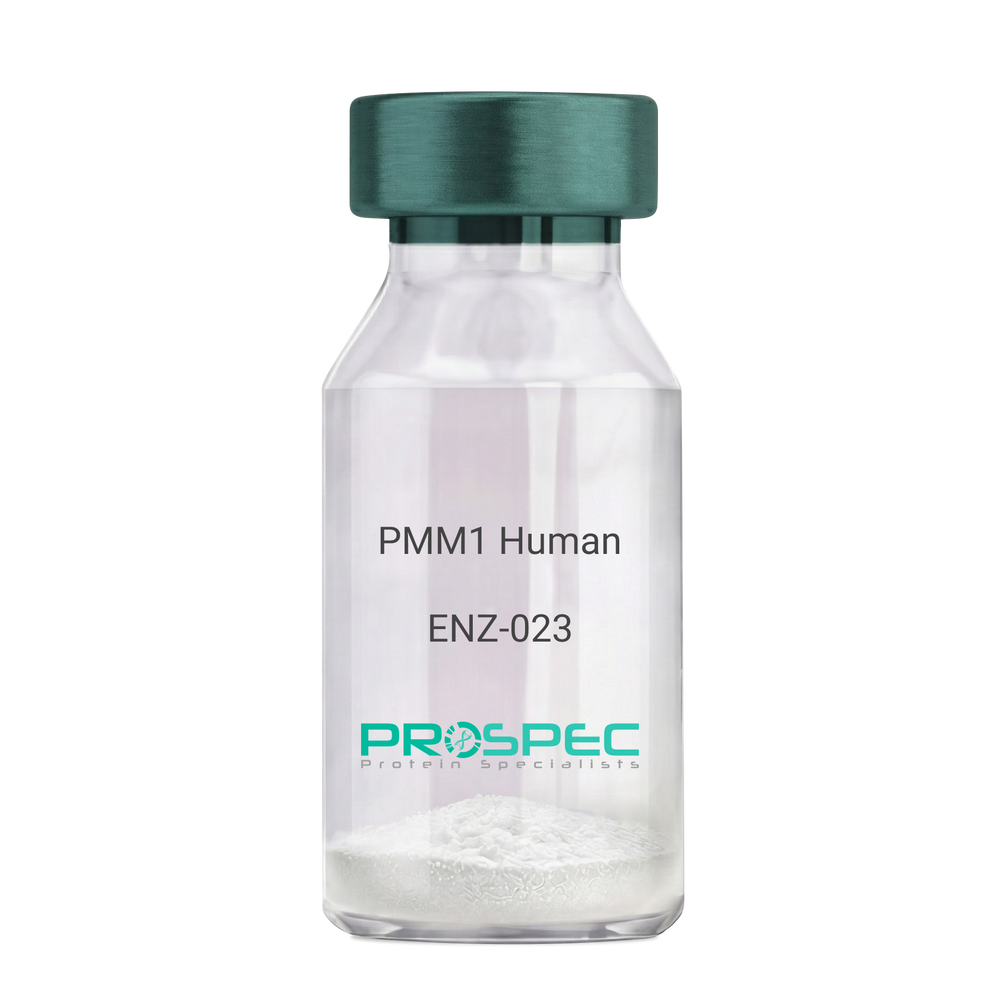
PMM1 HumanDescription:
Phosphomannomutase 1 Human Recombinant
Phosphomannomutase 1, PMM 1, PMMH-22, PMM1, PMMH22, Sec53.
Product # :
ENZ-023Price :
Quantity :
Shipping Method :
Shipped with Ice Packs
More Info
- description
- source
- formulation
- purity
- More Info
Description
PMM1 Human Recombinant fused with a 20 amino acid His tag at N-terminus produced in E.Coli is a single, non-glycosylated, polypeptide chain containing 282 amino acids (1-262 a.a.) and having a molecular mass of 31.9kDa. The PMM1 is purified by proprietary chromatographic techniques.
Source
Escherichia Coli.
Formulation
The PMM1 solution (0.5mg/ml) contains 20mM Tris-HCl buffer (pH8.0), 10% glycerol, 2mM DTT, 100mM NaCl and 0.1mM PMSF.
Purity
Greater than 90.0% as determined by SDS-PAGE.
More Info
-
Introduction
Phosphomannomutase 1 (PMM1) is an enzyme involved in the synthesis of the GDP-mannose and dolichol-phosphate-mannose required for a number of critical mannosyl transfer reactions. PMM1 catalyzes the conversion between D-mannose 6-phosphate and D-mannose 1-phosphate which is a substrate for GDP-mannose synthesis. GDP-mannose is used for the synthesis of dolichol-phosphate-mannose, which is crucial for N-linked glycosylation and accordingly the secretion of several glycoproteins as well as for the synthesis of glycosyl-phosphatidyl-inositol (GPI) anchored proteins. Additionally, PMM1 may be responsible for the degradation of glucose-1,6-bisphosphate in ischemic brain.
-
Synonyms
Phosphomannomutase 1, PMM 1, PMMH-22, PMM1, PMMH22, Sec53.
-
Physical Appearance
Sterile Filtered colorless solution.
-
Stability
Store at 4°C if entire vial will be used within 2-4 weeks. Store, frozen at -20°C for longer periods of time. For long term storage it is recommended to add a carrier protein (0.1% HSA or BSA).Avoid multiple freeze-thaw cycles.
-
Amino Acid Sequence
MGSSHHHHHH SSGLVPRGSH MAVTAQAARR KERVLCLFDV DGTLTPARQK IDPEVAAFLQ KLRSRVQIGV VGGSDYCKIA EQLGDGDEVI EKFDYVFAEN GTVQYKHGRL LSKQTIQNHL GEELLQDLIN FCLSYMALLR LPKKRGTFIE FRNGMLNISP IGRSCTLEER IEFSELDKKE KIREKFVEAL KTEFAGKGLR FSRGGMISFD VFPEGWDKRY CLDSLDQDSF DTIHFFGNET SPGGNDFEIF ADPRTVGHSV VSPQDTVQRC REIFFPETAH EA.
ProSpec's products are furnished for LABORATORY RESEARCH USE ONLY. The product may not be used as drugs, agricultural or pesticidal products, food additives or household chemicals.
- View Data Sheet
Name :
MMP 13 HumanDescription:
Matrix Metalloproteinase-13 Human Recombinant
CLG3, MANDP1, Matrix metalloproteinase-13, MMP-13, MMP13.
Product # :
ENZ-317Price :
Quantity :
Shipping Method :
Shipped with Ice Packs
More Info
- description
- source
- formulation
- purity
- More Info
Description
MMP-13 produced in E.Coli is a single, non-glycosylated polypeptide chain containing 391 amino acids (104-471 a.a.) and having a molecular mass of 44.7 kDa. MMP-13 is fused to a 23 amino acid His Tag at N-Terminus and purified by proprietary chromatographic techniques.
Source
Escherichia Coli.
Formulation
The MMP-13 solution (0.5mg/ml) contains 20mM Tris-HCl buffer (pH 8.0), 10% glycerol, 0.15M NaCl and 1mM DTT.
Purity
Greater than 85% as determined by SDS-PAGE.
More Info
-
Introduction
Matrix Metalloproteinase-13 (MMP-13) is an enzyme that is a member of the MMP extracellular protease family. Extracellular protease enzymes, by virtue of their broad substrate specificities1, play a role in both normal and disease states of tissue proliferation. Among the targets of MMP-13 are collagen, gelatin, entactin, pro-TNF-a, and chemokine SDF-11-4.
MMP-13 is found in its latent form as a 52-56 kDa glycosylated proenzyme. Upon cleavage the 22-46 kDa5 MMP-1 becomes active in extracellular matrix remodeling.
Because of the prominent role that MMP-1 plays in cell migration and metastasis, it is an important target for inhibition screening. -
Synonyms
CLG3, MANDP1, Matrix metalloproteinase-13, MMP-13, MMP13.
-
Physical Appearance
Sterile Filtered clear solution.
-
Stability
Store at 4°C if entire vial will be used within 2-4 weeks. Store, frozen at -20°C for longer periods of time. For long term storage it is recommended to add a carrier protein (0.1% HSA or BSA).Avoid multiple freeze-thaw cycles.
-
Amino Acid Sequence
MGSSHHHHHH SSGLVPRGSH MGSYNVFPRT LKWSKMNLTY RIVNYTPDMT HSEVEKAFKK AFKVWSDVTP LNFTRLHDGI ADIMISFGIK EHGDFYPFDG PSGLLAHAFP PGPNYGGDAH FDDDETWTSS SKGYNLFLVA AHEFGHSLGL DHSKDPGALM FPIYTYTGKS HFMLPDDDVQ GIQSLYGPGD EDPNPKHPKT PDKCDPSLSL DAITSLRGET MIFKDRFFWR LHPQQVDAEL FLTKSFWPEL PNRIDAAYEH PSHDLIFIFR GRKFWALNGY DILEGYPKKI SELGLPKEVK KISAAVHFED TGKTLLFSGN QVWRYDDTNH IMDKDYPRLI EEDFPGIGDK VDAVYEKNGY IYFFNGPIQF EYSIWSNRIV RVMPANSILW C.
ProSpec's products are furnished for LABORATORY RESEARCH USE ONLY. The product may not be used as drugs, agricultural or pesticidal products, food additives or household chemicals.
- View Data Sheet
Name :
AMPD2 HumanDescription:
AMPD2 Human Recombinant
(Isoform L), EC 3.5.4.6, SPG63, AMP Deaminase Isoform L, AMP Deaminase 2, AMPD Isoform L, AMPD, PCH9, AMP deaminase 2.
Product # :
ENZ-835Price :
Quantity :
Shipping Method :
Shipped with Ice Packs
More Info
- description
- source
- formulation
- purity
- More Info
Description
AMPD2 Human Recombinant produced in E.Coli is a single, non-glycosylated polypeptide chain containing 667 amino acids (236-879 a.a) and having a molecular mass of 77.0kDa. AMPD2 is fused to a 23 amino acid His-tag at N-terminus & purified by proprietary chromatographic techniques.
Source
Escherichia Coli.
Formulation
AMPD2 protein solution (0.25mg/ml) containing Phosphate buffered saline (pH7.4) and 10% glycerol.
Purity
Greater than 85% as determined by Analysis by SDS-PAGE.
More Info
-
Introduction
AMPD2 is significant in purine metabolism by converting AMP to IMP. AMPD2 which functions as a homotetramer, is one of the three AMP deaminases shown in mammals. More than a few transcript variants encoding differentisoforms have been discovered for AMPD2.
-
Synonyms
(Isoform L), EC 3.5.4.6, SPG63, AMP Deaminase Isoform L, AMP Deaminase 2, AMPD Isoform L, AMPD, PCH9, AMP deaminase 2.
-
Physical Appearance
Sterile filtered colorless solution.
-
Stability
Store at 4°C if entire vial will be used within 2-4 weeks. Store, frozen at -20°C for longer periods of time. For long term storage it is recommended to add a carrier protein (0.1% HSA or BSA). Avoid multiple freeze-thaw cycles.
-
Amino Acid Sequence
MGSSHHHHHH SSGLVPRGSH MGSDLLDAAK SVVRALFIRE KYMALSLQSF CPTTRRYLQQ LAEKPLETRT YEQGPDTPVS ADAPVHPPAL EQHPYEHCEP STMPGDLGLG LRMVRGVVHV YTRREPDEHC SEVELPYPDL QEFVADVNVL MALIINGPIK SFCYRRLQYL SSKFQMHVLL NEMKELAAQK KVPHRDFYNI RKVDTHIHAS SCMNQKHLLR FIKRAMKRHL EEIVHVEQGR EQTLREVFES MNLTAYDLSV DTLDVHADRN TFHRFDKFNA KYNPIGESVL REIFIKTDNR VSGKYFAHII KEVMSDLEES KYQNAELRLS IYGRSRDEWD KLARWAVMHR VHSPNVRWLV QVPRLFDVYR TKGQLANFQE MLENIFLPLF EATVHPASHP ELHLFLEHVD GFDSVDDESK PENHVFNLES PLPEAWVEED NPPYAYYLYY TFANMAMLNH LRRQRGFHTF VLRPHCGEAG PIHHLVSAFM LAENISHGLL LRKAPVLQYL YYLAQIGIAM SPLSNNSLFL SYHRNPLPEY LSRGLMVSLS TDDPLQFHFT KEPLMEEYSI ATQVWKLSSC DMCELARNSV LMSGFSHKVK SHWLGPNYTK EGPEGNDIRR TNVPDIRVGY RYETLCQELA LITQAVQSEM LETIPEEAGI TMSPGPQ.
ProSpec's products are furnished for LABORATORY RESEARCH USE ONLY. The product may not be used as drugs, agricultural or pesticidal products, food additives or household chemicals.