Search results
1000 results found for “RANK Ligand”
Name
Description
Product #
Price
Quantity
Shipping Method
- View Data Sheet
Name :
TNF a MouseDescription:
Tumor Necrosis Factor-Alpha Mouse Recombinant
TNF-alpha, Tumor necrosis factor ligand superfamily member 2, TNF-a, Cachectin, DIF, TNFA, TNFSF2.
Product # :
CYT-252Price :
Quantity :
Shipping Method :
Shipped at Room temp
More Info
- description
- source
- formulation
- purity
- biological activity
- More Info
Description
Tumor Necrosis Factor-a Mouse Recombinant produced in E. coli is a single, non glycosylated, polypeptide chain containing 157 amino acids and having a molecular mass of 17301.32 Dalton. The TNF-alpha is purified by standard chromatographic techniques.
Source
Escherichia Coli.
Formulation
Lyophilized from a 0.2µm filtered concentrated solution in PBS, pH 7.2.
Purity
Greater than 97.0% as determined by:
(a) Analysis by RP-HPLC.
(c) Analysis by SDS-PAGE.Biological Activity
The ED50 as determined by the cytolysis of murine L929 cells in the presence of Actinomycin D is < 0.1ng/ml, corresponding to a Specific Activity of 10,000,000 Units/mg.More Info
-
Introduction
Tumor necrosis factor is a cytokine involved in systemic inflammation and is a member of a group of cytokines that all stimulate the acute phase reaction. TNF is mainly secreted by macrophages.
TNF causes apoptotic cell death, cellular proliferation, differentiation, inflammation, tumorigenesis and viral replication, TNF is also involved in lipid metabolism, and coagulation. TNF's primary role is in the regulation of immune cells.
Dysregulation and, in particular, overproduction of TNF have been implicated in a variety of human diseases- autoimmune diseases, insulin resistance, and cancer. -
Synonyms
TNF-alpha, Tumor necrosis factor ligand superfamily member 2, TNF-a, Cachectin, DIF, TNFA, TNFSF2.
-
Physical Appearance
Sterile Filtered White lyophilized (freeze-dried) powder.
-
Stability
Lyophilized Tumor Necrosis Factor-a although stable at room temperature for 3 weeks, should be stored desiccated below -18°C. Upon reconstitution TNF-a should be stored at 4°C between 2-7 days and for future use below -18°C.For long term storage it is recommended to add a carrier protein (0.1% HSA or BSA).Please prevent freeze-thaw cycles.
-
Solubility
It is recommended to reconstitute the lyophilized Tumor Necrosis Factor-alpha in sterile 18M-cm H2O not less than 100µg/ml, which can then be further diluted to other aqueous solutions.
-
Amino Acid Sequence
MLRSSSQNSS DKPVAHVVAN HQVEEQLEWL SQRANALLAN GMDLKDNQLV VPADGLYLVY SQVLFKGQGC PDYVLLTHTV SRFAISYQEK VNLLSAVKSP CPKDTPEGAE LKPWYEPIYL GGVFQLEKGD QLSAEVNLPK YLDFAESGQV YFGVIAL
-
Background
Tumor Necrosis Factor-alpha (TNF-α) is a pro-inflammatory cytokine that plays a critical role in the regulation of immune responses, inflammation, and cell survival. It is primarily produced by activated macrophages, but can also be secreted by other immune cells, such as T cells, natural killer cells, and mast cells. TNF-α is involved in a wide range of physiological and pathological processes, including the defense against infections, the development of autoimmune diseases, and the progression of cancer.
TNF-α exerts its effects by binding to two distinct cell surface receptors, TNF receptor 1 (TNFR1) and TNF receptor 2 (TNFR2). Upon binding to its receptors, TNF-α activates multiple signaling pathways, including the nuclear factor-kappa B (NF-κB) pathway, the mitogen-activated protein kinase (MAPK) pathway, and the apoptotic pathway. These signaling pathways regulate various cellular processes, such as inflammation, cell proliferation, differentiation, and apoptosis.
In the context of infections, TNF-α plays a crucial role in the body's defense against pathogens. It promotes the recruitment and activation of immune cells, enhances the production of other pro-inflammatory cytokines, and stimulates the expression of adhesion molecules on endothelial cells, facilitating the migration of immune cells to the site of infection. TNF-α also helps to induce fever, which is an important component of the body's immune response to infections.
However, excessive or prolonged production of TNF-α can contribute to the development of chronic inflammatory diseases, such as rheumatoid arthritis, inflammatory bowel disease, and psoriasis. In these conditions, elevated levels of TNF-α promote the infiltration of immune cells into the affected tissues, leading to tissue damage and the perpetuation of inflammation. The central role of TNF-α in the pathogenesis of these diseases has led to the development of anti-TNF-α therapies, which have revolutionized the treatment of chronic inflammatory diseases. These therapies include monoclonal antibodies, such as infliximab and adalimumab, and soluble TNF receptor fusion proteins, such as etanercept. Anti-TNF-α therapies have been shown to be effective in reducing inflammation, improving symptoms, and slowing disease progression in patients with chronic inflammatory diseases.
In the context of cancer, TNF-α has complex and context-dependent effects on tumor development and progression. On one hand, TNF-α can promote anti-tumor immunity by activating immune cells and stimulating the production of other pro-inflammatory cytokines. On the other hand, chronic inflammation driven by TNF-α can promote tumor growth, angiogenesis, and metastasis. Therefore, the role of TNF-α in cancer is still an area of active research, and the development of TNF-α-targeted therapies for cancer remains a challenge.
In conclusion, TNF-α is a pro-inflammatory cytokine that plays a critical role in the regulation of immune responses, inflammation, and cell survival. Its involvement in various physiological and pathological processes has made it an important target for the development of therapies for chronic inflammatory diseases and cancer. Anti-TNF-α therapies have revolutionized the treatment of chronic inflammatory diseases, but the complex role of TNF-α in cancer remains an area of ongoing research. Understanding the precise mechanisms by which TNF-α contributes to disease pathogenesis will be crucial for the development of more effective and targeted therapies.
-
Protein content
Protein quantitation was carried out by two independent methods1. UV spectroscopy at 280 nm using the absorbency value of 1.24 as the extinction coefficient for a 0.1% (1mg/ml) solution. This value is calculated by the PC GENE computer analysis program of protein sequences (IntelliGenetics). 2. Analysis by RP-HPLC, using a calibrated solution of TNF-a as a Reference Standard.
ProSpec's products are furnished for LABORATORY RESEARCH USE ONLY. The product may not be used as drugs, agricultural or pesticidal products, food additives or household chemicals.
- View Data Sheet
Name :
LTA AntibodyDescription:
Lymphotoxin-alpha, Mouse Anti Human
Lymphotoxin-alpha, LT-alpha, TNF-beta, Tumor necrosis factor ligand superfamily member 1, LTA, TNFB, TNFSF1, LT.
Product # :
ANT-014Price :
Quantity :
Shipping Method :
Shipped with Ice Packs
More Info
- formulation
- More Info
Formulation
1mg/ml containing PBS, pH-7.4, & 0.1% Sodium Azide.
More Info
-
Introduction
Lymphotoxin-alpha (LT-alpha or LTA) belongs to the TNF ligand superfamily, which bind the same TNF receptor and mediate similar pleiotropic effect. LTA is a proinflammatory cytokine with important biological activity and immunomodulatory function and is known to influence a variety of cellular response. Furthermore, LTA mediates a large variety of inflammatory, immunostimulatory, and antiviral responses, is involved in the formation of secondary lymphoid organs during development and has a role in apoptosis. LTA is highly inducible, secreted, and forms heterotrimers with lymphotoxin-beta which anchors lymphotoxin-alpha to the cell surface. LTA, which is located within the MHC III region of chromosome 6, shows close relation to the HLA class I (HLA-B) and class II (HLA-DR) genes. Polymorphism in the LTA gene appears to contribute to infectious disease susceptibility and infection. Genetic variations in the LTA gene are linked to susceptibility to leprosy type 4 and psoriatic arthritis.
-
Synonyms
Lymphotoxin-alpha, LT-alpha, TNF-beta, Tumor necrosis factor ligand superfamily member 1, LTA, TNFB, TNFSF1, LT.
-
Physical Appearance
Sterile Filtered clear solution.
-
Immunogen
Anti-human LTA mAb, is derived from hybridization of mouse F0 myeloma cells with spleen cells from BALB/c mice immunized with recombinant human LTA amino acids 35-205 purified from E. coli.
-
Ig Subclass
Mouse IgG2b heavy chain and ? light chain.
-
Clone
PAT15A3AT.
-
Applications
LTA antibody has been tested by ELISA, Western blot and Immunofluorescence analysis to assure specificity and reactivity. Since application varies, however, each investigation should be titrated by the reagent to obtain optimal results. Recommended dilution range for Western blot analysis and Immunofluorescence is 1:250 ~ 500.
Recommended starting dilution is 1:250. -
Type
Mouse Anti Human Monoclonal.
-
Storage Procedures
For periods up to 1 month store at 4°C, for longer periods of time, store at -20°C. Prevent freeze thaw cycles.
-
Purification Method
LTA antibody was purified from mouse ascitic fluids by protein-G affinity chromatography.
ProSpec's products are furnished for LABORATORY RESEARCH USE ONLY. The product may not be used as drugs, agricultural or pesticidal products, food additives or household chemicals.
- View Data Sheet
Name :
SARS MERS RBDDescription:
SARS MERS Spike Receptor Binding Domain Recombinant
Middle East respiratory syndrome coronavirus, Human betacoronavirus 2c EMC/2012, MERS-CoV, MERS, MERSCoV RBD, MERS RBD, receptor binding domain, RBD, Spike RBD protein, Spike glycoprotein, S glycoprotein, E2, Peplomer protein
Product # :
SARS-054Price :
Quantity :
Shipping Method :
Shipped with Ice Packs
More Info
- description
- source
- formulation
- purity
- More Info
Description
SARS MERS RBD Recombinant produced in Sf9 Baculovirus cells is a single, glycosylated polypeptide chain containing 258 amino acids (358-606 aa) and having a molecular mass of 28.2kDa.SARS MERS RBD is fused to a 6 amino acid His-tag at C-terminus & purified by proprietary chromatographic techniques.
Source
Sf9, Baculovirus cells.
Formulation
The SARS MERS RBD solution (0.5mg/ml) contains 10% glycerol and Phosphate-Buffered Saline (pH 7.4).
Purity
Greater than 90.0% as determined by SDS-PAGE.
More Info
-
Introduction
Since April 2012, cases of the Middle East Respiratory Syndrome Coronavirus (MERS-CoV) have been identified in various countries. Coronaviruses are the cause of the common cold, SARS (severe acute respiratory syndrome) and other severe illnesses with high mortality rates, all are classified into coronavirus family. MERS-CoV is a new type of SARS found in the coronavirus family causing severe pneumonia with sudden and serious respiratory illness with high mortality rates as well. Since January 27th 2015, the WHO has reported 956 human cases, including 351 deaths. More cases of the new coronavirus strain are expected. Like in other coronaviruses, large surface spike glycoprotein is a central structural protein of this virus; it is located above the virion surface to bind and enter into the target cell. Spike protein has 2 domains- S1 and S2. The S1 domain is responsible for cellular tropism and interaction with target cell, while the S2 domain is responsible for membrane fusion. The C-terminal of S1 domain contains a receptor binding domain, and is also a potential target for vaccine development and an antigen for diagnosis.
-
Synonyms
Middle East respiratory syndrome coronavirus, Human betacoronavirus 2c EMC/2012, MERS-CoV, MERS, MERSCoV RBD, MERS RBD, receptor binding domain, RBD, Spike RBD protein, Spike glycoprotein, S glycoprotein, E2, Peplomer protein
-
Physical Appearance
Sterile filtered colorless solution.
-
Stability
Store at 4°C if entire vial will be used within 2-4 weeks.Store, frozen at -20°C for longer periods of time.For long term storage it is recommended to add a carrier protein (0.1% HSA or BSA).Avoid multiple freeze-thaw cycles.
-
Amino Acid Sequence
ADPSGVYSVS SFEAKPSGSV VEQAEGVECD FSPLLSGTPP QVYNFKRLVF TNCNYNLTKL LSLFSVNDFT CSQISPAAIA SNCYSSLILD YFSYPLSMKS DLSVSSAGPI SQFNYKQSFS NPTCLILATV PHNLTTITKP LKYSYINKCS RLLSDDRTEV PQLVNANQYS PCVSIVPSTV WEDGDYYRKQ LSPLEGGGWL VASGSTVAMT EQLQMGFGIT VQYGTDTNSV CPKLEFANDT KIASQLGNCV EYHHHHHH
ProSpec's products are furnished for LABORATORY RESEARCH USE ONLY. The product may not be used as drugs, agricultural or pesticidal products, food additives or household chemicals.
- View Data Sheet
Name :
CXCL1 HumanDescription:
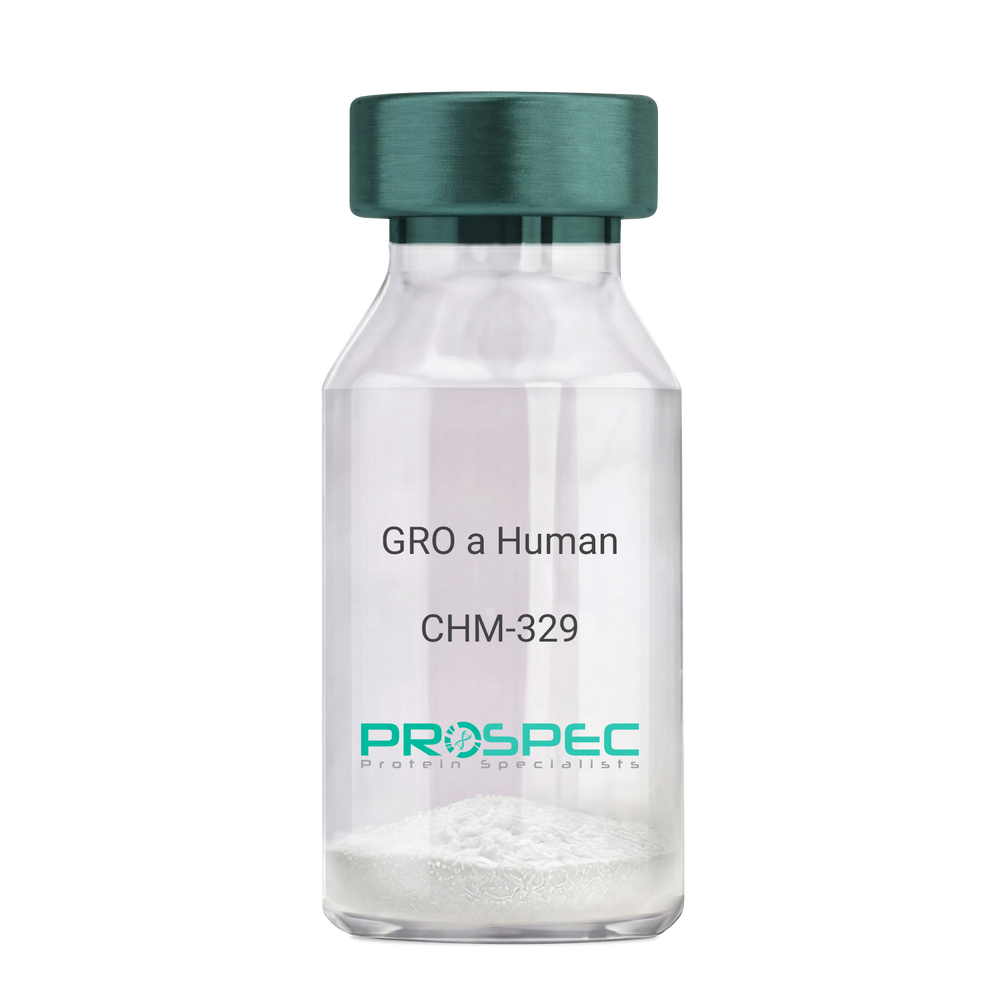
GRO-Alpha Human Recombinant (CXCL1)
Growth-regulated protein alpha, CXCL1, Melanoma growth stimulatory activity, MGSA, Neutrophil-activating protein 3, NAP-3, GRO-alpha (1-73), chemokine (C-X-C motif) ligand 1, GRO1, GROa, SCYB1, MGSA-a, MGSA alpha.
Product # :
CHM-329Price :
Quantity :
Shipping Method :
Shipped at Room temp
More Info
- description
- source
- formulation
- purity
- biological activity
- More Info
Description
GRO Alpha Human Recombinant produced in E.Coli is a single,non-glycosylated, polypeptide chain containing 73 amino acids and having a molecular mass of 7811 Dalton. The GRO-alpha is purified by proprietary chromatographic techniques.
Source
Escherichia Coli.
Formulation
Lyophilized from a 0.2µm filtered concentrated (1mg/ml) solution in 20mM PB, pH 7.4, 50mM NaCl.
Purity
Greater than 97.0% as determined by:
(a) Analysis by RP-HPLC.
(b) Analysis by SDS-PAGE.Biological Activity
Determined by its ability to chemoattract human peripheral blood neutrophils using a concentration range of 10.0-100.0 ng/ml.
More Info
-
Introduction
Chemokine (C-X-C motif) ligand 1 (CXCL1) is a small cytokine belonging to the CXC chemokine family that was previously called GRO1 oncogene, Neutrophil-activating protein 3 (NAP-3) and melanoma growth stimulating activity, alpha (MSGA-a). It is secreted by human melanoma cells, has mitogenic properties and is implicated in melanoma pathogenesis. CXCL1 is expressed by macrophages, neutrophilsand epithelial cells, and has neutrophil chemoattractant activity. CXCL1 plays a role in spinal cord development by inhibiting the migration of oligodendrocyte precursors and is involved in the processes of angiogenesis, inflammation, wound healing, and tumorigenesis. This chemokine elicits its effects by signaling through the chemokine receptor CXCR2. The gene for CXCL1 is located on human chromosome 4 amongst genes for other CXC chemokines.
-
Synonyms
Growth-regulated protein alpha, CXCL1, Melanoma growth stimulatory activity, MGSA, Neutrophil-activating protein 3, NAP-3, GRO-alpha (1-73), chemokine (C-X-C motif) ligand 1, GRO1, GROa, SCYB1, MGSA-a, MGSA alpha.
-
Physical Appearance
Sterile Filtered White lyophilized (freeze-dried) powder.
-
Stability
Lyophilized GRO-alpha although stable at room temperature for 3 weeks, should be stored desiccated below -18°C. Upon reconstitution CXCL1 should be stored at 4°C between 2-7 days and for future use below -18°C. For long term storage it is recommended to add a carrier protein (0.1% HSA or BSA).Please prevent freeze-thaw cycles.
-
Solubility
It is recommended to reconstitute the lyophilized CXCL1 in sterile 18MΩ-cm H2O not less than 100µg/ml, which can then be further diluted to other aqueous solutions.
-
Amino Acid Sequence
The sequence of the first five N-terminal amino acids was determined and was found to be Ala-Ser-Val-Ala-Thr.
-
Background
What is the molecular weight/Mw of CXCL1 HUMAN Protein?
CXCL1 HUMAN Protein has a total Mw of 7.81kDa.
What is the source or expression system of CXCL1 HUMAN Protein?
Escherichia Coli.
What is the Purity of CXCL1 HUMAN Protein?
CXCL1 HUMAN Protein is >97% pure as determined by SDS-PAGE.
What is the Biological Activity of CXCL1 HUMAN Protein?
Determined by its ability to chemoattract human peripheral blood neutrophils using a concentration range of 10.0-100.0 ng/ml.
What is the amino acid sequence of CXCL1 HUMAN Protein?
The sequence of the first five N-terminal amino acids was determined and was found to be Ala-Ser-Val-Ala-Thr.
What applications can CXCL1 HUMAN Protein be used in?
CXCL1 HUMAN Protein can probably be used in western blot, ELISA and Lateral Flow.
What is the endotoxin level for CXCL1 HUMAN Protein?
The endotoxin level is minimal, CXCL1 HUMAN Protein was purified using conventional chromatography techniques.
ProSpec's products are furnished for LABORATORY RESEARCH USE ONLY. The product may not be used as drugs, agricultural or pesticidal products, food additives or household chemicals.
- View Data Sheet
Name :
MAP2K1 HumanDescription:
Mitogen-Activated Protein Kinase Kinase 1 Human Recombinant
MAP2K1, MEK1, PRKMK1, MKK1, MAPKK 1, MAP kinase kinase 1.
Product # :
PKA-112Price :
Quantity :
Shipping Method :
Shipped with Ice Packs
More Info
- description
- source
- formulation
- purity
- More Info
Description
MAP2K1 produced in Sf9 Baculovirus cells is a single, glycosylated polypeptide chain containing 402 amino acids (1-393a.a.) and having a molecular mass of 44.5kDa. (Molecular size on SDS-PAGE will appear at approximately 40-57kDa).MAP2K1 is expressed with a 6 amino acid His tag at C-Terminus and purified by proprietary chromatographic techniques.
Source
Sf9, Baculovirus cells.
Formulation
MAP2K1 protein solution (0.25mg/ml) contains 10% glycerol & Phosphate Buffered Saline (pH 7.4).
Purity
Greater than 90.0% as determined by SDS-PAGE.
More Info
-
Introduction
The MAP2K1 protein is encoded by the MAP2K1 gene. This enzyme serves as a MAP (mitogen activated protein) kinase, it is a part of the dual specificity protein kinase family. Extracellular signal-regulated kinases such as MAP kinases has an important role in assimilation of various biochemical signals. MAP2K1 is located upstream to the MAP kinases and activates them by multiple intra and extracellular signals. The enzyme serves as a key factor in the signal transduction pathway of MAP kinase, therefore it takes part in the cell development (transcription regulation, proliferation, differentiation etc.).
-
Synonyms
MAP2K1, MEK1, PRKMK1, MKK1, MAPKK 1, MAP kinase kinase 1.
-
Physical Appearance
Sterile filtered colorless solution.
-
Stability
Store at 4°C if entire vial will be used within 2-4 weeks. Store, frozen at -20°C for longer periods of time. For long term storage it is recommended to add a carrier protein (0.1% HSA or BSA).Avoid multiple freeze-thaw cycles.
-
Amino Acid Sequence
ADPMPKKKPT PIQLNPAPDG SAVNGTSSAE TNLEALQKKL EELELDEQQR KRLEAFLTQK QKVGELKDDD FEKISELGAG NGGVVFKVSH KPSGLVMARK LIHLEIKPAI RNQIIRELQV LHECNSPYIV GFYGAFYSDG EISICMEHMD GGSLDQVLKK AGRIPEQILG KVSIAVIKGL TYLREKHKIM HRDVKPSNIL VNSRGEIKLC DFGVSGQLID SMANSFVGTR SYMSPERLQG THYSVQSDIW SMGLSLVEMA VGRYPIPPPD AKELELMFGC QVEGDAAETP PRPRTPGRPL SSYGMDSRPP MAIFELLDYI VNEPPPKLPS GVFSLEFQDF VNKCLIKNPA ERADLKQLMV HAFIKRSDAE EVDFAGWLCS TIGLNQPSTP THAAGVHHHH HH.
ProSpec's products are furnished for LABORATORY RESEARCH USE ONLY. The product may not be used as drugs, agricultural or pesticidal products, food additives or household chemicals.
- View Data Sheet
Name :
RB1 HumanDescription:
Retinoblastoma Associated Protein Human Recombinant
RB, OSRC, RB-1, RB1, p105-Rb, OSTEOSARCOMA, RETINOBLASTOMA-RELATED,PP110, Retinoblastoma-associated protein.
Product # :
PRO-584Price :
Quantity :
Shipping Method :
Shipped at Room temp
More Info
- description
- source
- formulation
- purity
- More Info
Description
Retinoblastoma Human Recombinant fused with 6X His tag produced in E.Coli is a single, non-glycosylated, polypeptide chain containing 146 amino acids and having a molecular mass of 16.5 kDa.The Retinoblastoma is purified by proprietary chromatographic techniques.
Source
Escherichia Coli.
Formulation
The RB1 was lyophilized from 1xPBS pH-7.4.
Purity
Greater than 95.0% as determined by:
(a) Analysis by RP-HPLC.
(b) Analysis by SDS-PAGE.More Info
-
Introduction
Retinoblastoma (RB) is an embryonic malignant neoplasm of retinal origin. It almost always presents in early childhood and is often bilateral. Spontaneous regression ('cure') occurs in some cases. Retinoblastoma acts as a regulator of other genes and forms a complex with adenovirus e1a and with sv40 large t antigen. Retinoblastoma acts as a tumor suppressor and modulats functionally certain cellular proteins with which t and e1a compete for pocket binding. Retinoblastoma is potent inhibitor of e2f-mediated trans-activation, recruits and targets histone methyltransferase suv39h1 leading to epigenetic transcriptional repression, inhibits the intrinsic kinase activity of taf1.
-
Synonyms
RB, OSRC, RB-1, RB1, p105-Rb, OSTEOSARCOMA, RETINOBLASTOMA-RELATED,PP110, Retinoblastoma-associated protein.
-
Physical Appearance
Sterile Filtered White lyophilized (freeze-dried) powder.
-
Stability
Lyophilized Retinoblastoma although stable at room temperature for 3 weeks, should be stored desiccated below -18°C. Upon reconstitution Retinoblastoma should be stored at 4°C between 2-7 days and for future use below -18°C.For long term storage it is recommended to add a carrier protein (0.1% HSA or BSA).Please prevent freeze-thaw cycles.
-
Solubility
It is recommended to reconstitute the lyophilized Retinoblastoma in sterile 18MΩ-cm H2O not less than 100 µg/ml, which can then be further diluted to other aqueous solutions.
-
Amino Acid Sequence
MASFPSSPLRIPGGNIYISPLKSPYKISEGLPTPTKMTPRSRILVSIGESFG
TSEKFQKINQMVCNSDRVLKRSAEGSNPPKPLKKLRFDIEGSDEADGSK
HLPGESKFQQKLAEMTSTRTRMQKQKMNDSMDTSNKEEKHHHHHH.
ProSpec's products are furnished for LABORATORY RESEARCH USE ONLY. The product may not be used as drugs, agricultural or pesticidal products, food additives or household chemicals.
- View Data Sheet
Name :
RXRA HumanDescription:
Retinoid X Receptor Alpha Human Recombinant
Retinoic acid receptor RXR-alpha, Retinoid X receptor alpha, Nuclear receptor subfamily 2 group B member 1, RXRA, NR2B1, FLJ00280, FLJ00318, FLJ16020, FLJ16733, MGC102720, RXR Alpha, RXR-a.
Product # :
PRO-437Price :
Quantity :
Shipping Method :
Shipped with Ice Packs
More Info
- description
- source
- formulation
- purity
- More Info
Description
RXRA Human Recombinant produced in E.Coli is a single, non-glycosylated polypeptide chain containing 119 amino acids (111-228) & having a molecular mass of 13.6 kDa.
Source
Escherichia Coli.
Formulation
The protein (1mg/ml) containing 20mM Tris-HCl pH7.5, 0.1M NaCl and 5mM ?-Mercaptoethanol.
Purity
Greater than 95.0% as determined by SDS-PAGE.
More Info
-
Introduction
The retinoid X receptor (RXR) is a pleiotropic nuclear receptor transcription factor that interacts with a variety of nuclear receptor dimeric partner. RXR binds cognate response elements as a homodimer in the presence of its ligand, 9-cis retinoic acid, or as a heterodimer with other members of the nuclear hormone receptor superfamily including retinoic acid receptors (RAR), thyroid hormone receptors (TR), vitamin D receptors and peroxisome proliferators-activated receptors (PPAR). The RXR family includes three different isoforms; RXR a, b, g . Human RXR a gene is localized on 9q34.9 and encodes two major isoforms (RXR a1, RXR a2). The DNA binding domain of RXR (111-228aa) was purified by using conventional column chromatography techniques.
-
Synonyms
Retinoic acid receptor RXR-alpha, Retinoid X receptor alpha, Nuclear receptor subfamily 2 group B member 1, RXRA, NR2B1, FLJ00280, FLJ00318, FLJ16020, FLJ16733, MGC102720, RXR Alpha, RXR-a.
-
Physical Appearance
Sterile filtered colorless solution.
-
Stability
Store at 4°C if entire vial will be used within 2-4 weeks. Store, frozen at -20°C for longer periods of time. For long term storage it is recommended to add a carrier protein (0.1% HSA or BSA).Avoid multiple freeze-thaw cycles.
-
Amino Acid Sequence
MLGLNGVLKV PAHPSGNMAS FTKHICAICG DRSSGKHYGV YSCEGCKGFF KRTVRKDLTY TCRDNKDCLI DKRQRNRCQY CRYQKCLAMG MKREAVQEER QRGKDRNENE VESTSSANE.
ProSpec's products are furnished for LABORATORY RESEARCH USE ONLY. The product may not be used as drugs, agricultural or pesticidal products, food additives or household chemicals.
- View Data Sheet
Name :
KLRC1 HumanDescription:
Killer Cell Lectin-Like Receptor Subfamily C, Member 1 Human Recombinant
NKG2-A/NKG2-B type II integral membrane protein isoform NKG2-A, KLRC1, Killer Cell Lectin-Like Receptor Subfamily C, Member 1, KLRC1, CD159A, NKG2, NKG2A, CD159 antigen-like family member A, NK cell receptor A, NKG2-A/B-activating NK receptor.
Product # :
PRO-2440Price :
Quantity :
Shipping Method :
Shipped with Ice Packs
More Info
- description
- source
- formulation
- purity
- More Info
Description
KLRC1 Human Recombinant produced in Sf9 Baculovirus cells is a single, glycosylated polypeptide chain containing 149 amino acids (94-233a.a.) and having a molecular mass of 17.1kDa. KLRC1 is expressed with a 9 amino acids His tag at C-Terminus and purified by proprietary chromatographic techniques.
Source
Sf9, Baculovirus cells.
Formulation
KLRC1 protein solution (0.25mg/ml) contains Phosphate Buffered Saline (pH 7.4) and 10% glycerol.
Purity
Greater than 90.0% as determined by SDS-PAGE.
More Info
-
Introduction
Killer Cell Lectin-Like Receptor Subfamily C, Member 1 (KLRC1) is a part of the killer cell lectin-like receptor family. KLRC1 functions as a receptor for the detection of MHC class I HLA-E molecules by NK cells and some cytotoxic T-cells. KLRC1 is also connects with CD94 and is expressed on NK cells and some activated T cell.
-
Synonyms
NKG2-A/NKG2-B type II integral membrane protein isoform NKG2-A, KLRC1, Killer Cell Lectin-Like Receptor Subfamily C, Member 1, KLRC1, CD159A, NKG2, NKG2A, CD159 antigen-like family member A, NK cell receptor A, NKG2-A/B-activating NK receptor.
-
Physical Appearance
Sterile Filtered colorless solution.
-
Stability
Store at 4°C if entire vial will be used within 2-4 weeks. Store, frozen at -20°C for longer periods of time. For long term storage it is recommended to add a carrier protein (0.1% HSA or BSA).Avoid multiple freeze-thaw cycles.
-
Amino Acid Sequence
ADPPSTLIQR HNNSSLNTRT QKARHCGHCP EEWITYSNSC YYIGKERRTW EESLLACTSK NSSLLSIDNE EEMKFLSIIS PSSWIGVFRN SSHHPWVTMN GLAFKHEIKD SDNAELNCAV LQVNRLKSAQ CGSSIIYHCK HKLHHHHHH
ProSpec's products are furnished for LABORATORY RESEARCH USE ONLY. The product may not be used as drugs, agricultural or pesticidal products, food additives or household chemicals.
- View Data Sheet
Name :
NAP 2 HumanDescription:
Neutrophil Activating Protein-2 Human Recombinant (CXCL7)
Platelet basic protein, PBP, Small inducible cytokine B7, CXCL7, Leukocyte-derived growth factor, LDGF, Macrophage-derived growth factor, MDGF, pro-platelet basic protein (chemokine (C-X-C motif) ligand 7), TC1, TC2, TGB, TGB1, B-TG1, CTAP3, NAP-2, SCYB7, THBGB, LA-PF4, THBGB1, Beta-TG, CTAPIII, CTAP-III.
Product # :
CHM-274Price :
Quantity :
Shipping Method :
Shipped at Room temp
More Info
- description
- source
- formulation
- purity
- biological activity
- More Info
Description
Neutrophil Activating Protein-2 Human Recombinant produced in E.Coli is a non-glycosylated, Polypeptide chain containing 70 amino acids and having a molecular mass of 7609 Dalton. The NAP-2 is purified by proprietary chromatographic techniques.
Source
Escherichia Coli.
Formulation
The CXCL7 protein was lyophilized from a concentrated (1mg/ml) sterile solution containing no additives.
Purity
Greater than 97% as determined by:
(a) Analysis by RP-HPLC.
(b) Analysis by SDS-PAGE.Biological Activity
The specific activity as determined by the ability of NAP2 to chemoattract human neurotrophils using a concentration of 1-10ng/ml corresponding to a Specific Activity of 100,000-1,000,000IU/mg.More Info
-
Introduction
Chemokine (C-X-C motif) ligand (CXCL7) is a small cytokine belonging to the CXC chemokine family. It is a protein that is released in large amounts from platelets following their activation. It stimulates various processes including mitogenesis, synthesis of extracellular matrix, glucose metabolism and synthesis of plasminogen activator.
-
Synonyms
Platelet basic protein, PBP, Small inducible cytokine B7, CXCL7, Leukocyte-derived growth factor, LDGF, Macrophage-derived growth factor, MDGF, pro-platelet basic protein (chemokine (C-X-C motif) ligand 7), TC1, TC2, TGB, TGB1, B-TG1, CTAP3, NAP-2, SCYB7, THBGB, LA-PF4, THBGB1, Beta-TG, CTAPIII, CTAP-III.
-
Physical Appearance
Sterile Filtered White lyophilized (freeze-dried) powder.
-
Stability
Lyophilized NAP-2 although stable at room temperature for 3 weeks, should be stored desiccated below -18°C. Upon reconstitution CXCL7should be stored at 4°C between 2-7 days and for future use below -18°C. For long term storage it is recommended to add a carrier protein (0.1% HSA or BSA).Please prevent freeze-thaw cycles.
-
Solubility
It is recommended to reconstitute the lyophilized Neutrophil Activating Protein-2in sterile 18MΩ-cm H2O not less than 100µg/ml, which can then be further diluted to other aqueous solutions.
-
Amino Acid Sequence
The sequence of the first five N-terminal amino acids was determined and was found to be Ala-Glu-Leu-Arg-Cys.
ProSpec's products are furnished for LABORATORY RESEARCH USE ONLY. The product may not be used as drugs, agricultural or pesticidal products, food additives or household chemicals.
- View Data Sheet
Name :
IL 1RA HorseDescription:
Interleukin-1 Receptor Antagonist Horse Recombinant
Interleukin-1 receptor antagonist protein, IL-1RN, IL-1ra, IRAP, IL1 inhibitor, IL1RN, IL1RA.
Product # :
CYT-010Price :
Quantity :
Shipping Method :
Shipped at Room temp
More Info
- description
- source
- formulation
- purity
- biological activity
- More Info
Description
Recombinant Horse Interleukin-1 Receptor Antagonist produced in E.coli cells is a single, non-glycosylated, polypeptide chain containing 152 amino acids and having a molecular mass of 17.4kDa. The IL-1RA is purified by proprietary chromatographic techniques.
Source
Escherichia Coli.
Formulation
The IL-1RA was lyophilized from a 0.2µm filtered concentrated solution in PBS, pH 7.4.
Purity
Greater than 95.0% as determined by:
(a) Analysis by RP-HPLC.
(b) Analysis by SDS-PAGE.Biological Activity
The ED50 as determined by inhibiting IL-1α-dependent proliferation of murine D10.G4.1 helper T cells is less than 3.0 μg/ml, corresponding to a specific activity of > 333 IU/mg in the presence of 50 pg/ml rHuIL-1α.More Info
-
Introduction
Interleukin-1 ra is a member of the interleukin 1 cytokine family. This protein inhibits the activities of interleukin 1, alpha (IL1A) and interleukin 1, beta (IL1B), and modulates a variety of interleukin 1 related immune and inflammatory responses. This gene and five other closely related cytokine genes form a gene cluster spanning approximately 400 kb on chromosome 2. A polymorphism of this gene is reported to be associated with increased risk of osteoporotic fractures and gastric cancer. Four alternatively spliced transcript variants encoding distinct isoforms have been reported.
-
Synonyms
Interleukin-1 receptor antagonist protein, IL-1RN, IL-1ra, IRAP, IL1 inhibitor, IL1RN, IL1RA.
-
Physical Appearance
Sterile Filtered White lyophilized (freeze-dried) powder.
-
Stability
Lyophilized IL-1RA although stable at room temperature for 3 weeks, should be stored desiccated below -18°C. Upon reconstitution IL-1RA should be stored at 4°C between 2-7 days and for future use below -18°C.For long term storage it is recommended to add a carrier protein (0.1% HSA or BSA).Please prevent freeze-thaw cycles.
-
Solubility
It is recommended to reconstitute the lyophilized IL-1RA in sterile water not less than 100µg/ml, which can then be further diluted to other aqueous solutions.
-
Amino Acid Sequence
HPLGKRPCKM QAFRIWDVNQ KTFYMRNNQL VAGYLQESNT KLQEKIDVVP IEPDALFLGL HGRKLCLACV KSGDEIRFQL EAVNITDLSK NKEENKRFTF IRSNSGPTTS FESAACPGWF LCTAQEADRP VSLTNKPKES FMVTKFYLQE DQ.
ProSpec's products are furnished for LABORATORY RESEARCH USE ONLY. The product may not be used as drugs, agricultural or pesticidal products, food additives or household chemicals.
- View Data Sheet
Name :
KLRC3 HumanDescription:
Killer Cell Lectin-Like Receptor Subfamily C, Member 3 Human Recombinant
Killer Cell Lectin-Like Receptor Subfamily C Member 3, NK Cell Receptor E, NKG2-E Type II Integral Membrane Protein, NKG2-E-Activating NK Receptor, NKG2E.
Product # :
PRO-1230Price :
Quantity :
Shipping Method :
Shipped with Ice Packs
More Info
- description
- source
- formulation
- purity
- More Info
Description
KLRC3 Human Recombinant produced in E. coli is a single polypeptide chain containing 171 amino acids (94-240) and having a molecular mass of 19.0 kDa.KLRC3 is fused to a 24 amino acid His-tag at N-terminus & purified by proprietary chromatographic techniques.
Source
E.coli.
Formulation
The KLRC3 solution (1mg/1ml) contains 20mM Tris-HCl buffer (pH 8.0), 0.4M NaCl and 10% glycerol.
Purity
Greater than 90% as determined by SDS-PAGE.
More Info
-
Introduction
KLRC3 belongs to the NKG2 group that can be found mostly in natural killer (NK) cells and encodes a family of transmembrane proteins known for their C-type lectin domain and their type II membrane orientation (extracellular C terminus). The NKG2 gene family is situated inside the NK complex, a region which has quite a few C-type lectin genes mostly expressed on NK cells.
-
Synonyms
Killer Cell Lectin-Like Receptor Subfamily C Member 3, NK Cell Receptor E, NKG2-E Type II Integral Membrane Protein, NKG2-E-Activating NK Receptor, NKG2E.
-
Physical Appearance
Sterile Filtered colorless solution.
-
Stability
Store at 4°C if entire vial will be used within 2-4 weeks. Store, frozen at -20°C for longer periods of time. For long term storage it is recommended to add a carrier protein (0.1% HSA or BSA).Avoid multiple freeze-thaw cycles.
-
Amino Acid Sequence
MGSSHHHHHH SSGLVPRGSH MGSMIPFLEQ NNSSPNTRTQ KARPCGHCPE EWITYSNSCY YIGKERRTWE ESLQACASKN SSSLLSIDNE EEMKFLASIL PSSWIGVFRN SSHHPWVTIN GLAFKHEIKD SDHAERNCAM LHVRGLISDQ CGSSRIIRRG FIMLTRLVLN S
ProSpec's products are furnished for LABORATORY RESEARCH USE ONLY. The product may not be used as drugs, agricultural or pesticidal products, food additives or household chemicals.
- View Data Sheet
Name :
CXCL3 Rat alphaDescription:
GRO-Gamma Rat Recombinant (CXCL3), CINC-2 alpha
Cytokine-induced neutrophil chemoattractant 2, CINC2, CINC-2, Macrophage inflammatory protein 2-alpha.
Product # :
CHM-258Price :
Quantity :
Shipping Method :
Shipped at Room temp
More Info
- description
- source
- formulation
- purity
- biological activity
- More Info
Description
GRO-g Rat Recombinant produced in E.Coli is a single,non-glycosylated, polypeptide chain containing 69 amino acids and having a molecular mass of 7.8kDa. The CXCL3 is purified by proprietary chromatographic techniques.
Source
Escherichia Coli.
Formulation
The Rat CXCL3 lyophilized from a 0.2µm filtered concentrated solution in 1×PBS, pH 7.4.
Purity
Greater than 98.0% as determined by:
(a) Analysis by RP-HPLC.
(b) Analysis by SDS-PAGE.Biological Activity
Determined by its ability to chemoattract 293 transfected CXCR2 cells using a concentration range of 10-100 ng/ml, corresponding to a specific activity of 10,000-100,000 units/mg.More Info
-
Introduction
Chemokine (C-X-C motif) ligand 3 (CXCL3) is a small cytokine belonging to the CXC chemokine family that is also known as GRO3 oncogene (GRO3), GRO protein gamma (GROg) and macrophage inflammatory protein-2-beta (MIP2b). CXCL3 controls migration and adhesion of monocytes and mediates it effects on its target cell by interacting with a cell surface chemokine receptor called CXCR2. The gene for CXCL3 is located on chromosome 4 in a cluster of other CXC chemokines.
-
Synonyms
Cytokine-induced neutrophil chemoattractant 2, CINC2, CINC-2, Macrophage inflammatory protein 2-alpha.
-
Physical Appearance
Sterile Filtered White lyophilized (freeze-dried) powder.
-
Stability
Lyophilized GRO-gamma although stable at room temperature for 3 weeks, should be stored desiccated below -18°C. Upon reconstitution CXCL3 should be stored at 4°C between 2-7 days and for future use below -18°C.For long term storage it is recommended to add a carrier protein (0.1% HSA or BSA).Please prevent freeze-thaw cycles.
-
Solubility
It is recommended to reconstitute the lyophilized GRO-gamma in sterile 18Mcm H2O not less than 100µg/ml, which can then be further diluted to other aqueous solutions.
-
Amino Acid Sequence
RELRCQCLKT LPRVDFENIQ SLTVTPPGPH CTQTEVIATL KDGQEVCLNP QAPRLQKIIQ KLLKSDKSS.
-
Background
What is the molecular weight/Mw of CXCL3 RAT ALPHA Protein?
CXCL3 RAT ALPHA Protein has a total Mw of 7.8kDa.
What is the source or expression system of CXCL3 RAT ALPHA Protein?
Escherichia Coli.
What is the Purity of CXCL3 RAT ALPHA Protein?
CXCL3 RAT ALPHA Protein is >98% pure as determined by SDS-PAGE.
What is the Biological Activity of CXCL3 RAT ALPHA Protein?
Determined by its ability to chemoattract 293 transfected CXCR2 cells using a concentration range of 10-100 ng/ml, corresponding to a specific activity of 10,000-100,000 units/mg.
What is the amino acid sequence of CXCL3 RAT ALPHA Protein?
RELRCQCLKT LPRVDFENIQ SLTVTPPGPH CTQTEVIATL KDGQEVCLNP QAPRLQKIIQ KLLKSDKSS.
What applications can CXCL3 RAT ALPHA Protein be used in?
CXCL3 RAT ALPHA Protein can probably be used in western blot, ELISA and Lateral Flow.
What is the endotoxin level for CXCL3 RAT ALPHA Protein?
The endotoxin level is minimal, CXCL3 RAT ALPHA Protein was purified using conventional chromatography techniques.
ProSpec's products are furnished for LABORATORY RESEARCH USE ONLY. The product may not be used as drugs, agricultural or pesticidal products, food additives or household chemicals.
- View Data Sheet
Name :
RAC2 HumanDescription:
RAC2 Human Recombinant
p21-Rac2, Small G protein, GX, RAC2, HSPC022, EN-7.
Product # :
PRO-619Price :
Quantity :
Shipping Method :
Shipped with Ice Packs
More Info
- description
- source
- formulation
- purity
- More Info
Description
Recombinant RAC2 produced in E.Coli is a single, non-glycosylated polypeptide chain containing 419 amino acids and having a molecular mass of 47 kDa. RAC2 is fused to GST and purified by conventional chromatography techniques.
Source
Escherichia Coli.
Formulation
The RAC2 protein solution (1mg/ml) contains 1x PBS pH-7.4.
Purity
Greater than 90.0% as determined by SDS-PAGE.
More Info
-
Introduction
RAC2 is a small signaling G protein/GTPase which is part of the RAS superfamily of small GTP-binding proteins which regulate cell growth, actin cytoskeletal organization, cell proliferation, survival, cell cycle progression, gene transcription rgulation and the activation of protein kinases. RAC2 cycles between an active gtp-bound and inactive gdp-bound state. In active state, RAC2 binds to a variety of effector proteins to regulate cellular responses, such as secretory processes, phagocytose of apoptotic cells and epithelial cell polarization. RAC2 is involved in the regulation of the nadph oxidase.
-
Synonyms
p21-Rac2, Small G protein, GX, RAC2, HSPC022, EN-7.
-
Physical Appearance
Sterile filtered colorless solution.
-
Stability
Store at 4°C if entire vial will be used within 2-4 weeks. Store, frozen at -20°C for longer periods of time. For long term storage it is recommended to add a carrier protein (0.1% HSA or BSA). Avoid multiple freeze-thaw cycles.
-
Amino Acid Sequence
MSPILGYWKI KGLVQPTRLL LEYLEEKYEE HLYERDEGDK WRNKKFELGL EFPNLPYYID GDVKLTQSMA IIRYIADKHN MLGGCPKERA EISMLEGAVL DIRYGVSRIA YSKDFETLKV DFLSKLPEML KMFEDRLCHK TYLNGDHVTH PDFMLYDALD VVLYMDPMCL DAFPKLVCFK KRIEAIPQID KYLKSSKYIA WPLQGWQATF GGGDHPPKSD LVPRGSHMQA IKCVVVGDGA VGKTCLLISY TTNAFPGEYI PTVFDNYSAN VMVDSKPVNL GLWDTAGQED YDRLRPLSYP QTDVFLICFS LVSPASYENV RAKWFPEVRH HCPSTPIILV GTKLDLRDDK DTIEKLKEKK
LAPITYPQGL ALAKEIDSVK YLECSALTQR GLKTVFDEAI RAV
LCPQPTR QQKRACSLL.
ProSpec's products are furnished for LABORATORY RESEARCH USE ONLY. The product may not be used as drugs, agricultural or pesticidal products, food additives or household chemicals.
- View Data Sheet
Name :
RND1 HumanDescription:
Rho Family GTPase 1 Human Recombinant
Rho family GTPase 1, GTP-binding protein, ras homolog gene family, member S, ARHS, RHOS, rho-related GTP-binding protein Rho6, RHO6, Rnd1, FLJ42294.
Product # :
PRO-893Price :
Quantity :
Shipping Method :
Shipped with Ice Packs
More Info
- description
- source
- formulation
- purity
- More Info
Description
RND1 Human Recombinant produced in E.coli is a single, non-glycosylated polypeptide chain containing 220 amino acids (1-200) and having a molecular mass of 24.5 kDa.The RND1 is fused to a 20 amino acid His-Tag at N-terminus and purified by proprietary chromatographic techniques.
Source
E.coli.
Formulation
The RND1 solution (0.5mg/ml) contains 20mM Tris-HCl buffer (pH 8.0), 1mM DTT, 0.1M NaCl and 30% glycerol.
Purity
Greater than 95% as determined by SDS-PAGE.
More Info
-
Introduction
RND1 is a Rho-related GTPases that form a separate branch of the Rho family, since they are different in charge, size, and biochemical properties. RND1 is found in the activated GTP-bound form and performs as a negative regulator of actin assembly and of cell adhesion. RND1 assists in regulation of the organization of the actin cytoskeleton as a reaction to extracellular growth factors.
-
Synonyms
Rho family GTPase 1, GTP-binding protein, ras homolog gene family, member S, ARHS, RHOS, rho-related GTP-binding protein Rho6, RHO6, Rnd1, FLJ42294.
-
Physical Appearance
Sterile Filtered colorless solution.
-
Stability
Store at 4°C if entire vial will be used within 2-4 weeks. Store, frozen at -20°C for longer periods of time. For long term storage it is recommended to add a carrier protein (0.1% HSA or BSA).Avoid multiple freeze-thaw cycles.
-
Amino Acid Sequence
MGSSHHHHHH SSGLVPRGSH MKERRAPQPV VARCKLVLVG DVQCGKTAML QVLAKDCYPE TYVPTVFENY TACLETEEQR VELSLWDTSG SPYYDNVRPL CYSDSDAVLL CFDISRPETV DSALKKWRTE ILDYCPSTRV LLIGCKTDLR TDLSTLMELS HQKQAPISYE QGCAIAKQLG AEIYLEGSAF TSEKSIHSIF RTASMLCLNK PSPLPQKSPV
ProSpec's products are furnished for LABORATORY RESEARCH USE ONLY. The product may not be used as drugs, agricultural or pesticidal products, food additives or household chemicals.
- View Data Sheet
Name :
RNMTL1 HumanDescription:
RNA Methyltransferase Like 1 Human Recombinant
RNA Methyltransferase Like 1, 16S RRNA (Guanosine(1370)-2-O)-Methyltransferase, 16S RRNA [Gm1370] 2-O-Methyltransferase, RNA Methyltransferase-Like Protein 1, HC90, MRM3, RRNA Methyltransferase 3, Mitochondrial, Putative RNA Methyltransferase, EC 2.1.1.-, EC 2.1.1, RMTL1, RNMTL1.
Product # :
ENZ-895Price :
Quantity :
Shipping Method :
Shipped with Ice Packs
More Info
- description
- source
- formulation
- purity
- More Info
Description
RNMTL1 Human Recombinant produced in E.Coli is a single, non-glycosylated polypeptide chain containing 443 amino acids (1-420 a.a) and having a molecular mass of 49.4kDa.RNMTL1 is fused to a 23 amino acid His-tag at N-terminus & purified by proprietary chromatographic techniques.
Source
Escherichia Coli.
Formulation
RNMTL1 protein solution (1mg/ml) containing 20mM Tris-HCl (pH 8.0) and 10% glycerol.
Purity
Greater than 85.0% as determined by SDS-PAGE.
More Info
-
Introduction
RNA methyltransferase-like protein 1, also known as RNMTL1 is a member of the RNA methyltransferase TrmH family. RNMTL1 is probable RNA methyltransferase and expressed at an equal level in normal liver and hepatocarcinoma.
-
Synonyms
RNA Methyltransferase Like 1, 16S RRNA (Guanosine(1370)-2-O)-Methyltransferase, 16S RRNA [Gm1370] 2-O-Methyltransferase, RNA Methyltransferase-Like Protein 1, HC90, MRM3, RRNA Methyltransferase 3, Mitochondrial, Putative RNA Methyltransferase, EC 2.1.1.-, EC 2.1.1, RMTL1, RNMTL1.
-
Physical Appearance
Sterile Filtered colorless solution.
-
Stability
Store at 4°C if entire vial will be used within 2-4 weeks. Store, frozen at -20°C for longer periods of time. For long term storage it is recommended to add a carrier protein (0.1% HSA or BSA).Avoid multiple freeze-thaw cycles.
-
Amino Acid Sequence
MGSSHHHHHH SSGLVPRGSH MGSMAALVRP ARFVVRPLLQ VVQAWDLDAR RWVRALRRSP VKVVFPSGEV VEQKRAPGKQ PRKAPSEASA QEQREKQPLE ESASRAPSTW EESGLRYDKA YPGDRRLSSV MTIVKSRPFR EKQGKILLEG RRLISDALKA GAVPKMFFFS RLEYLKELPV DKLKGVSLIK VKFEDIKDWS DLVTPQGIMG IFAKPDHVKM TYPKTQLQHS LPLLLICDNL RDPGNLGTIL RSAAGAGCSK VLLTKGCVDA WEPKVLRAGM GAHFRMPIIN NLEWETVPNY LPPDTRVYVA DNCGLYAQAE MSNKASDHGW VCDQRVMKFH KYEEEEDVET GASQDWLPHV EVQSYDSDWT EAPAAVVIGG ETYGVSLESL QLAESTGGKR LLIPVVPGVD SLNSAMAASI LLFEGKRQLR GRAEDLSRDR SYH
ProSpec's products are furnished for LABORATORY RESEARCH USE ONLY. The product may not be used as drugs, agricultural or pesticidal products, food additives or household chemicals.
- View Data Sheet
Name :
JNK2/SAPK1 HumanDescription:
JNK2/SAPK1 Human Recombinant
Mitogen-activated protein kinase 9, EC 2.7.11.24, Stress-activated protein kinase JNK2, c-Jun N-terminal kinase 2, JNK-55, JNK2, JNK2A, JNK2B, PRKM9, JNK2BETA, p54aSAPK, JNK2ALPHA, MAPK9, SAPK1.
Product # :
PKA-216Price :
Quantity :
Shipping Method :
Shipped with Ice Packs
More Info
- description
- source
- formulation
- purity
- More Info
Description
SAPK1/JNK2 Human Recombinant (stress-activated protein kinase/c-jun kinase) is a non-glycosilated polypeptide having a molecular mass of 49.5 kDa. SAPK1/JNK2 is purified by proprietary chromatographic techniques.
Source
Escherichia Coli.
Formulation
JNK2/SAPK1 (1.3 mg/ml) is supplied in 50mM Tris-HCl, 100mM NaCl, 1mM DTT, 50% glycerol, pH 8.
Purity
Greater than 95% as determined by SDS-PAGE.
More Info
-
Introduction
JUN N-terminal Kinase 2is a member of the MAP kinase family. MAP kinases act as an integration point for multiple biochemical signals, and are involved in a wide variety of cellular processes such as proliferation, differentiation, transcription regulation and development. This kinase targets specific transcription factors, and thus mediates immediate-early gene expression in response to various cell stimuli. It is most closely related to MAPK8, both of which are involved in UV radiation induced apoptosis, thought to be related to the cytochrome c-mediated cell death pathway. This gene and MAPK8 are also known as c-Jun N-terminal kinases. This kinase blocks the ubiquitination of tumor suppressor p53, and thus it increases the stability of p53 in nonstressed cells. Studies of this gene's mouse counterpart suggest a key role in T-cell differentiation. Four alternatively spliced transcript variants encoding distinct isoforms have been reported.
-
Synonyms
Mitogen-activated protein kinase 9, EC 2.7.11.24, Stress-activated protein kinase JNK2, c-Jun N-terminal kinase 2, JNK-55, JNK2, JNK2A, JNK2B, PRKM9, JNK2BETA, p54aSAPK, JNK2ALPHA, MAPK9, SAPK1.
-
Physical Appearance
Sterile Filtered clear solution.
-
Stability
Store at 4°C if entire vial will be used within 2-4 weeks. Store, frozen at -20°C for longer periods of time. Avoid multiple freeze-thaw cycles.
-
Unit Definition
No protease activity detectable, specific activity > 300 U*/mg (*1 U = 1 pmol/min transferred to c-jun (1-169) at 30°C). Autophosphorylation < 5%.
ProSpec's products are furnished for LABORATORY RESEARCH USE ONLY. The product may not be used as drugs, agricultural or pesticidal products, food additives or household chemicals.
- View Data Sheet
Name :
CXCL2 MouseDescription:
GRO-Beta Mouse Recombinant (CXCL2)
Macrophage inflammatory protein 2-alpha, MIP2-alpha, CXCL2, Growth- regulated protein beta, Gro-beta, chemokine (C-X-C motif) ligand 2, GRO2, GROb, MIP2, MIP2A, SCYB2, MGSA-b, MIP-2a, CINC-2a, MGSA beta.
Product # :
CHM-338Price :
Quantity :
Shipping Method :
Shipped at Room temp
More Info
- description
- source
- formulation
- purity
- biological activity
- More Info
Description
GRO-Beta Mouse Recombinant also caled mouse MIP-2 produced in E.Coli is a single,non-glycosylated, polypeptide chain containing 73 amino acids and having a molecular mass of 7849 Dalton. The CXCL2 is purified by proprietary chromatographic techniques.
Source
Escherichia Coli.
Formulation
The protein was lyophilized from a concentrated (1.0mg/ml) solution in 20mM PB, pH 7.4, 150mM NaCl.
Purity
Greater than 97.0% as determined by:
(a) Analysis by RP-HPLC.
(b) Analysis by SDS-PAGE.Biological Activity
The Biological activity was determined by its ability to chemoattract total human neutrophils using a concentration range of 1.0-10.0 ng/ml, corresponding to a specific activity of 105-106units/mg.More Info
-
Introduction
Chemokine (C-X-C motif) ligand 2 (CXCL2) is a small cytokine belonging to the CXC chemokine family that is also called macrophage inflammatory protein 2-alpha (MIP2-alpha), Growth-regulated protein beta (Gro-beta) and Gro oncogene-2 (Gro-2). CXCL2 is 90% identical in amino acid sequence as a related chemokine, CXCL1. This chemokine is secreted by monocytes and macrophages and is chemotactic for polymorphonuclear leukocytes and hematopoietic stem cells. The gene for CXCL2 is located on human chromosome 4 in a cluster of other CXC chemokines. CXCL2 mobilizes cells by interacting with a cell surface chemokine receptor called CXCR2.
-
Synonyms
Macrophage inflammatory protein 2-alpha, MIP2-alpha, CXCL2, Growth- regulated protein beta, Gro-beta, chemokine (C-X-C motif) ligand 2, GRO2, GROb, MIP2, MIP2A, SCYB2, MGSA-b, MIP-2a, CINC-2a, MGSA beta.
-
Physical Appearance
Sterile Filtered White lyophilized (freeze-dried) powder.
-
Stability
Lyophilized CXCL2 although stable at room temperature for 3 weeks, should be stored desiccated below -18°C. Upon reconstitution CXCL2 should be stored at 4°C between 2-7 days and for future use below -18°C. For long term storage it is recommended to add a carrier protein (0.1% HSA or BSA).Please prevent freeze-thaw cycles.
-
Solubility
It is recommended to reconstitute the lyophilized GRO-beta Mouse in sterile 18MΩ-cm H2O not less than 100µg/ml, which can then be further diluted to other aqueous solutions.
-
Amino Acid Sequence
AVVASELRCQ CLKTLPRVDF KNIQSLSVTP PGPHCAQTEV IATLKGGQKV CLDPEAPLVQ KIIQKILNKG KAN.
-
Background
What is the molecular weight/Mw of CXCL2 MOUSE Protein?
CXCL2 MOUSE Protein has a total Mw of 7.84kDa.
What is the source or expression system of CXCL2 MOUSE Protein?
Escherichia Coli.
What is the Purity of CXCL2 MOUSE Protein?
CXCL2 MOUSE Protein is >97% pure as determined by SDS-PAGE.
What is the Biological Activity of CXCL2 MOUSE Protein?
The Biological activity was determined by its ability to chemoattract total human neutrophils using a concentration range of 1.0-10.0 ng/ml, corresponding to a specific activity of 105-106units/mg.
What is the amino acid sequence of CXCL2 MOUSE Protein?
AVVASELRCQ CLKTLPRVDF KNIQSLSVTP PGPHCAQTEV IATLKGGQKV CLDPEAPLVQ KIIQKILNKG KAN.
What applications can CXCL2 MOUSE Protein be used in?
CXCL2 MOUSE Protein can probably be used in western blot, ELISA and Lateral Flow.
What is the endotoxin level for CXCL2 MOUSE Protein?
The endotoxin level is minimal, CXCL2 MOUSE Protein was purified using conventional chromatography techniques.
-
Protein content
Protein quantitation was carried out by two independent methods:1. UV spectroscopy at 280 nm using the absorbency value of 0.015 as the extinction coefficient for a 0.1% (1mg/ml) solution. This value is calculated by the PC GENE computer analysis program of protein sequences (IntelliGenetics). 2. Analysis by RP-HPLC, using a standard solution of GRO-b as a Reference Standard.
ProSpec's products are furnished for LABORATORY RESEARCH USE ONLY. The product may not be used as drugs, agricultural or pesticidal products, food additives or household chemicals.
- View Data Sheet
Name :
TNFRSF10B Human, Sf9Description:
TNF Ligand Receptor Superfamily Member 10B Human Recombinant, Sf9
TNFRSF10B, CD262, DR5, KILLER, KILLER/DR5, TRAIL-R2, TRAILR2, TRICK2, TRICK2A, TRICK2B, TRICKB, ZTNFR9, Death receptor 5, TNF-related apoptosis-inducing ligand receptor 2.
Product # :
CYT-1055Price :
Quantity :
Shipping Method :
Shipped with Ice Packs
More Info
- description
- source
- formulation
- purity
- biological activity
- More Info
Description
TNFRSF10B produced in Sf9 Baculovirus cells is a single, glycosylated polypeptide chain containing 394 amino acids (56-210a.a.) and having a molecular mass of 43.9kDa. (Molecular size on SDS-PAGE will appear at approximately 40-57kDa).TNFRSF10B is expressed with a 239 amino acid hIgG-His tag at C-Terminus and purified by proprietary chromatographic techniques.
Source
Sf9, Insect cells.
Formulation
TNFRSF10B protein solution (1mg/ml) contains Phosphate Buffered Saline (pH 7.4) and 10% glycerol.
Purity
Greater than 90% as determined by SDS-PAGE.
Biological Activity
Measured by its ability to inhibit cytotoxicity assay using Jurkat human T lymphocyte. The ED50 for this effect ≤ to 5ng/ml with TRAIL
.
More Info
-
Introduction
TRAIL Receptor-1 (DR4) and TRAIL Receptor-2(DR5) are members of the TNFR superfamily of transmembrane proteins and contain a cytoplasmic "death domain", which is capable of activating the cell's apoptotic machinery. These receptors are activated by binding to either membrane anchored or soluble TRAIL/Apo2L.
-
Synonyms
TNFRSF10B, CD262, DR5, KILLER, KILLER/DR5, TRAIL-R2, TRAILR2, TRICK2, TRICK2A, TRICK2B, TRICKB, ZTNFR9, Death receptor 5, TNF-related apoptosis-inducing ligand receptor 2.
-
Physical Appearance
Sterile Filtered colorless solution.
-
Stability
Store at 4°C if entire vial will be used within 2-4 weeks. Store, frozen at -20°C for longer periods of time. For long term storage it is recommended to add a carrier protein (0.1% HSA or BSA).Avoid multiple freeze-thaw cycles.
-
Amino Acid Sequence
ITQQDLAPQQ RAAPQQKRSS PSEGLCPPGH HISEDGRDCI SCKYGQDYST HWNDLLFCLR CTRCDSGEVE LSPCTTTRNT VCQCEEGTFR EEDSPEMCRK CRTGCPRGMV KVGDCTPWSD IECVHKESGT KHSGEVPAVE ETVTSSPGTP ASPCSLEPKS CDKTHTCPPC PAPELLGGPS
VFLFPPKPKD TLMISRTPEV TCVVVDVSHE DPEVKFNWYV DGVEVHNAKT KPREEQYNST YRVVSVLTVL HQDWLNGKEY KCKVSNKALP APIEKTISKA KGQPREPQVY TLPPSRDELT KNQVSLTCLV KGFYPSDIAV EWESNGQPEN NYKTTPPVLD SDGSFFLYSK LTVDKSRWQQ
GNVFSCSVMH EALHNHYTQK SLSLSPGKHH HHHH.
ProSpec's products are furnished for LABORATORY RESEARCH USE ONLY. The product may not be used as drugs, agricultural or pesticidal products, food additives or household chemicals.
- View Data Sheet
Name :
S100A10 MouseDescription:
Recombinant Mouse S100 Calcium Binding Protein A10
Protein S100-A10, Calpactin I light chain, Calpactin-1 light chain, Cellular ligand of, annexin II, S100 calcium-binding protein A10, p10 protein, p11, S100a10, Cal1l.
Product # :
PRO-2252Price :
Quantity :
Shipping Method :
Shipped with Ice Packs
More Info
- description
- source
- formulation
- purity
- More Info
Description
S100A10 Mouse Recombinant produced in E. coli is a single, non-glycosylated polypeptide chain containing 120 amino acids (1-97a.a) and having a molecular mass of 13.6kDa.S100A10 is fused to a 23 amino acid His-tag at N-terminus & purified by proprietary chromatographic techniques.
Source
Escherichia Coli.
Formulation
S100A10 protein solution (1mg/ml) containing phosphate buffered saline (pH 7.4) and 10% glycerol.
Purity
Greater than 90.0% as determined by SDS-PAGE.
More Info
-
Introduction
S100A10 is a member of the S100 family of proteins contains two EF-hand calcium-binding motifs and is thought to be involved in the regulation of a number of cellular processes including cell cycle progression and differentiation. S100 proteins are localized either in the cytoplasm or the nucleus of a wide range of cells. There are at least 13 members in the S100 gene family, which are located as a cluster on chromosome 1q21. S100A10 may function in exocytosis and endocytosis.
-
Synonyms
Protein S100-A10, Calpactin I light chain, Calpactin-1 light chain, Cellular ligand of, annexin II, S100 calcium-binding protein A10, p10 protein, p11, S100a10, Cal1l.
-
Physical Appearance
Sterile filtered colorless solution.
-
Stability
Store at 4°C if entire vial will be used within 2-4 weeks.Store, frozen at -20°C for longer periods of time. For long term storage it is recommended to add a carrier protein (0.1% HSA or BSA).Avoid multiple freeze-thaw cycles.
-
Amino Acid Sequence
MGSSHHHHHH SSGLVPRGSH MGSMPSQMEH AMETMMLTFH RFAGDKDHLT KEDLRVLMER EFPGFLENQK DPLAVDKIMK DLDQCRDGKV GFQSFLSLVA GLTIACNDYF VVNMKQKGKK.
ProSpec's products are furnished for LABORATORY RESEARCH USE ONLY. The product may not be used as drugs, agricultural or pesticidal products, food additives or household chemicals.
- View Data Sheet
Name :
TPO MouseDescription:
Thrombopoietin Mouse Recombinant
Megakaryocyte colony-stimulating factor, Myeloproliferative leukemia virus oncogene ligand, C-mpl ligand, ML, Megakaryocyte growth and development factor, MGDF, TPO, MKCSF, MPLLG, MGC163194, THPO.
Product # :
CYT-346Price :
Quantity :
Shipping Method :
Shipped at Room temp
More Info
- description
- source
- formulation
- purity
- biological activity
- More Info
Description
Thrombopoietin Mouse Recombinant produced in E.Coli is a single, non-glycosylated soluble polypeptide chain containing 174 amino acids and having a molecular mass of 18704 Dalton. The TPO is purified by proprietary chromatographic techniques.
Source
Escherichia Coli.
Formulation
Lyophilized from a concentrated (1mg/ml) solution in water containing no additives.
Purity
Greater than 95.0% as determined by SDS-PAGE.
Biological Activity
ED50 range is less than 0.8ng/ml as determined by the dose dependent stimulation of Mo7e cells.More Info
-
Introduction
Thrombopoietin is a glycoprotein hormone produced mainly by the liver and the kidneyt hat regulates the production of platelets by the bone marrow. It stimulates the production and differentiation of megakaryocytes, the bone marrow cells that fragment into large numbers of platelets.
-
Synonyms
Megakaryocyte colony-stimulating factor, Myeloproliferative leukemia virus oncogene ligand, C-mpl ligand, ML, Megakaryocyte growth and development factor, MGDF, TPO, MKCSF, MPLLG, MGC163194, THPO.
-
Physical Appearance
Sterile Filtered White lyophilized (freeze-dried) powder.
-
Stability
Lyophilized Thrombopoietin although stable at room temperature for 3 weeks, should be stored desiccated below -18°C. Upon reconstitution TPO Mouse should be stored at 4°C between 2-7 days and for future use below -18°C.For long term storage it is recommended to add a carrier protein (0.1% HSA or BSA).Please prevent freeze-thaw cycles.
-
Solubility
It is recommended to reconstitute the lyophilized Thrombopoietin in sterile 18MΩ-cm H2O not less than 100µg/ml, which can then be further diluted to other aqueous solutions.
-
Amino Acid Sequence
SPVAPACDPR LLNKLLRDSH LLHSRLSQCP DVDPLSIPVL LPAVDFSLGE WKTQTEQSKA QDILGAVSLL LEGVMAARGQ LEPSCLSSLL GQLSGQVRLL LGALQGLLGT QLPLQGRTTA HKDPNALFLS LQQLLRGKVR FLLLVEGPTL CVRRTLPTTA VPSSTSQLLT LNKF.
ProSpec's products are furnished for LABORATORY RESEARCH USE ONLY. The product may not be used as drugs, agricultural or pesticidal products, food additives or household chemicals.
- View Data Sheet
Name :
SCF MouseDescription:
Stem Cell Factor Mouse Recombinant
Kit ligand Precursor, C-kit ligand, SCF, Mast cell growth factor, MGF, SF, KL-1, Kitl, DKFZp686F2250, Hematopoietic growth factor KL, Steel factor.
Product # :
CYT-275Price :
Quantity :
Shipping Method :
Shipped at Room temp
More Info
- description
- source
- formulation
- purity
- biological activity
- More Info
Description
Stem Cell Factor Mouse Recombinant produced in E.Coli is a single, non-glycosylated polypeptide chain containing 165 amino acids and having a molecular mass of 18309 Dalton. The SCF is purified by proprietary chromatographic techniques.
Source
Escherichia Coli.
Formulation
Lyophilized from a concentrated (1mg/ml) solution in water containing 0.02% NaHCO3.
Purity
Greater than 98.0% as determined by:
(a) Analysis by SEC-HPLC.
(b) Analysis by SDS-PAGE.Biological Activity
The ED50 as determined by the dose-dependant stimulation of Human TF-1 cell line is < 10 ng/ml, corresponding to a Specific Activity of 1x10⁵ IU/mg.More Info
-
Introduction
Stem cell factor / KIT ligand (SCF) is a cytokine which binds CD117(c-Kit). SCF is also known as "steel factor" or "c-kit ligand". SCF exists in two forms, cell surface bound SCF and soluble (or free) SCF. Soluble SCF is produced by the cleavage of surface bound SCF by metalloproteases.
SCF is a growth factor important for the survival, proliferation, and differentiation of hematopoietic stem cells and other hematopoietic progenitor cells. One of its roles is to change the BFU-E (burst-forming unit-erythroid) cells, which are the earliest erythrocyte precursors in the erythrocytic series, into the CFU-E (colony-forming unit-erythroid). -
Synonyms
Kit ligand Precursor, C-kit ligand, SCF, Mast cell growth factor, MGF, SF, KL-1, Kitl, DKFZp686F2250, Hematopoietic growth factor KL, Steel factor.
-
Physical Appearance
Sterile Filtered White lyophilized (freeze-dried) powder.
-
Stability
Lyophilized KIT ligand although stable at room temperature for 3 weeks, should be stored desiccated below -18°C. Upon reconstitution SCF should be stored at 4°C between 2-7 days and for future use below -18°C.For long term storage it is recommended to add a carrier protein (0.1% HSA or BSA).Please prevent freeze-thaw cycles.
-
Solubility
It is recommended to reconstitute the lyophilized Stem Cell Factor in sterile 18MΩ-cm H2O not less than 100µg/ml, which can then be further diluted to other aqueous solutions.
-
Amino Acid Sequence
MKEICGNPVT DNVKDITKLV ANLPNDYMIT LNYVAGMDVL PSHCWLRDMV IQLSLSLTTL LDKFSNISEG LSNYSIIDKL GKIVDDLVLC MEENAPKNIK ESPKRPETRS FTPEEFFSIF NRSIDAFKDF MVASDTSDCV LSSTLGPEKD SRVSVTKPFM LPPVA.
-
Protein content
Protein quantitation was carried out by two independent methods:1. UV spectroscopy at 280 nm using the absorbency value of 0.52 as the extinction coefficient for a 0.1% (1mg/ml) solution. This value is calculated by the PC GENE computer analysis program of protein sequences (IntelliGenetics). 2. Analysis by RP-HPLC, using a standard solution of Stem Cell Factor as a Reference Standard.
ProSpec's products are furnished for LABORATORY RESEARCH USE ONLY. The product may not be used as drugs, agricultural or pesticidal products, food additives or household chemicals.
- View Data Sheet
Name :
AITRL HumanDescription:
AITRL Human Recombinant
Osteostat, TNFSF18, Activation-induced TNFR member Ligand, GITRL,TL6, AITRL, Glucocorticoid-induced TNF-related ligand, hGITRL, Tumor necrosis factor ligand superfamily member 18, MGC138237.
Product # :
CYT-076Price :
Quantity :
Shipping Method :
Shipped with Ice Packs
More Info
- description
- source
- formulation
- purity
- More Info
- sds-page
Description
AITRL Human Recombinant produced in E.coli is a single, non-glycosylated polypeptide chain containing 129 amino acids (72-199) and having a molecular mass of 14.6 kDa.AITRL is purified by proprietary chromatographic techniques.
Source
E.coli.
Formulation
The AITRL solution (0.5mg/ml) contains 10mM sodium citrate (pH 3.5), 1mMDTT and 10% glycerol
Purity
Greater than 90% as determined by SDS-PAGE.
sds-page
More Info
-
Synonyms
Osteostat, TNFSF18, Activation-induced TNFR member Ligand, GITRL,TL6, AITRL, Glucocorticoid-induced TNF-related ligand, hGITRL, Tumor necrosis factor ligand superfamily member 18, MGC138237.
-
Physical Appearance
Sterile Filtered colorless solution.
-
Stability
Store at 4°C if entire vial will be used within 2-4 weeks. Store, frozen at -20°C for longer periods of time. For long term storage it is recommended to add a carrier protein (0.1% HSA or BSA).Avoid multiple freeze-thaw cycles.
-
Amino Acid Sequence
MQLETAKEPC MAKFGPLPSK WQMASSEPPC VNKVSDWKLE ILQNGLYLIY GQVAPNANYN DVAPFEVRLY KNKDMIQTLT NKSKIQNVGG TYELHVGDTI DLIFNSEHQV LKNNTYWGII LLANPQFIS
-
Background
AITRL Human Recombinant: Unraveling its Significance in Immune Modulation and Therapeutic Implications
1. Abstract
This research paper provides a comprehensive examination of AITRL Human Recombinant, an essential protein involved in immune modulation. By exploring its structure, signaling mechanisms, biological functions, and implications in disease pathology, we shed light on the potential therapeutic applications of AITRL in immune-related disorders.
2. Introduction
AITRL, also known as TNFSF18, is a receptor protein belonging to the tumor necrosis factor superfamily. It plays a crucial role in immune regulation and has emerged as an intriguing target for therapeutic interventions in various immune-mediated conditions.
3. Structure and Signaling of AITRL
AITRL is a transmembrane protein with a conserved TNF domain. It interacts with its receptor, AITR (TNFRSF18), leading to downstream signaling events that modulate immune cell function. The binding of AITRL to AITR promotes immune cell activation and cytokine production.
4. Biological Functions of AITRL
AITRL is involved in the regulation of immune responses by influencing T-cell activation, proliferation, and differentiation. It can stimulate effector T-cell responses while also promoting the development and function of regulatory T cells, thus maintaining immune homeostasis.
5. AITRL in Disease Pathology
Dysregulation of AITRL signaling has been implicated in various immune-related disorders, including autoimmune diseases, allergic reactions, and cancer. AITRL's involvement in disease pathology highlights its significance as a potential therapeutic target.
6. Therapeutic Potential of AITRL
The unique role of AITRL in immune modulation presents opportunities for therapeutic interventions. Modulating AITRL signaling holds promise for manipulating immune responses in the context of autoimmune diseases, allergic disorders, and cancer immunotherapy.
7. Conclusion and Future Perspectives
While our understanding of AITRL and its functions has advanced significantly, further research is needed to unravel its complex signaling pathways and therapeutic potential fully. Continued investigations into AITRL biology will pave the way for the development of targeted therapies for immune-related disorders.
What is the molecular weight/Mw of AITRL Protein?
AITRL Protein has a total Mw of 15.6kDa.
What is the source or expression system of AITRL Protein?
Escherichia Coli.
What is the Purity of AITRL Protein?
AITRL Protein is >85% pure as determined by SDS-PAGE.
What is the Biological Activity of AITRL Protein?
The biological functionality of AITRL Protein will be determined in the future.
What is the amino acid sequence of AITRL Protein?
MQLETAKEPC MAKFGPLPSK WQMASSEPPC VNKVSDWKLE ILQNGLYLIY GQVAPNANYN DVAPFEVRLY KNKDMIQTLT NKSKIQNVGG TYELHVGDTI DLIFNSEHQV LKNNTYWGII LIANPQEISL EHHHHHH.
What applications can AITRL Protein be used in?
AITRL Protein can probably be used in western blot, ELISA and Lateral Flow.
What is the endotoxin level for AITRL Protein?
The endotoxin level is minimal, AITRL Protein was purified using conventional chromatography techniques.
ProSpec's products are furnished for LABORATORY RESEARCH USE ONLY. The product may not be used as drugs, agricultural or pesticidal products, food additives or household chemicals.
- View Data Sheet
Name :
Prolactin Ovine AntagonistDescription:
Prolactin Ovine Antagonsit Recombinant
Mammotropin, Luteotropic hormone, Luteotropin, PRL.
Product # :
CYT-311Price :
Quantity :
Shipping Method :
Shipped at Room temp
More Info
- description
- source
- formulation
- purity
- biological activity
- More Info
Description
Prolactin Ovine Antagonist Recombinant produced in E.Coli is a single, non-glycosylated polypeptide chain containing 199 amino acids and having a molecular mass of 23kDa. Ovine Prolactin Antagonist is purified by proprietary chromatographic techniques.
Source
Escherichia Coli.
Formulation
Ovine Prolactin was lyophilized from a concentrated (1mg/ml) solution with 0.02%-0.03% NaHCO3.
Purity
Greater than 99.0% as determined by SDS-PAGE.
Biological Activity
Ovine Prolactin Antagonist is devoid of agonistic activity and capable of inhibiting biological activity of Ovine Prolactin or other lactogenic hormones as evidenced by proliferation assay of Nb2 or other cells.More Info
-
Introduction
Prolactin is a lactogenic hormone secreted by the adenohypophysis .Besides its major action on lactation, in some species prolactin exerts effects on reproduction, maternal behavior, fat metabolism, immunomodulation and osmoregulation.Prolactin has been shown also to have cytokine-like activities and to have important immunoregulatory activities. It contributes to the development of lymphoid tissues and the maintenance of physiological immune function and also modulates a variety of T-cell immune responses. Prolactin has been reported to activate cellular proliferation in nonreproductive tissue, such as liver, spleen, and thymus. It induces significant proliferation in aortic smooth muscle cells and also enhances proliferation of these cells induced by PDGF . Prolactin also appears to be directly mitogenic for pancreatic beta cells. Prolactin is also mitogenic for cultured astrocytes.
-
Synonyms
Mammotropin, Luteotropic hormone, Luteotropin, PRL.
-
Physical Appearance
Sterile Filtered White lyophilized (freeze-dried) powder.
-
Stability
Lyophilized Ovine Prolactin Antagonist although stable at room temperature for 3 weeks, should be stored desiccated below -18°C. Upon reconstitution Ovine Prolactin Antagonist should be stored at 4°C between 2-7 days and for future use below -18°C.For long term storage it is recommended to add a carrier protein (0.1% HSA or BSA).Please prevent freeze-thaw cycles.
-
Solubility
It is recommended to reconstitute the lyophilized Ovine Prolactin Antagonist in sterile 18MΩ-cm H2O not less than 100µg/ml, which can then be further diluted to other aqueous solutions.
-
Amino Acid Sequence
The sequence of the first five N-terminal amino acids was determined and was found to be Ala-Thr-Pro-Val-Cys-Pro.
ProSpec's products are furnished for LABORATORY RESEARCH USE ONLY. The product may not be used as drugs, agricultural or pesticidal products, food additives or household chemicals.
- View Data Sheet
Name :
IL 1 alpha RatDescription:
Interleukin-1 alpha Rat Recombinant
Hematopoietin-1, Lymphocyte-activating factor (LAF), Endogenous Pyrogen (EP), Leukocyte Endogenous Mediator (LEM), Mononuclear Cell Factor (MCF), IL-1 alpha,IL1, IL-1A, IL1F1.
Product # :
CYT-381Price :
Quantity :
Shipping Method :
Shipped at Room temp
More Info
- description
- source
- formulation
- purity
- biological activity
- More Info
Description
Interleukin-1A Rat Recombinant produced in E.Coli is single, a non-glycosylated, Polypeptide chain containing 155 amino acids and having a molecular mass of 17703 Dalton. The IL-1A is purified by proprietary chromatographic techniques.
Source
Escherichia Coli.
Formulation
The protein was lyophilized from a concentrated (1mg/ml) sterile solution containing 50mM Tris-HCl, pH=8.
Purity
Greater than 98.0% as determined by:
(a) Analysis by RP-HPLC.
(b) Analysis by SDS-PAGE.Biological Activity
The ED50 as determined by the dose-dependant stimulation of murine D10S cells is < 0.005 ng/ml, corresponding to a Specific Activity of 200,000,000IU/mg.More Info
-
Introduction
Interleukin-1 alpha is a proinflammatory cytokine produced by a wide variety of cell types, including macrophages, osteoblasts, monocytes and hepatocytes. Circulating levels of are normally low and only rise after stimulation by agents such as those produced byinflammation, infection or microbial endotoxins. IL-1 alpha possesses a wide variety of biological activities and exerts its effects by binding to specific cell surface receptors.
-
Synonyms
Hematopoietin-1, Lymphocyte-activating factor (LAF), Endogenous Pyrogen (EP), Leukocyte Endogenous Mediator (LEM), Mononuclear Cell Factor (MCF), IL-1 alpha,IL1, IL-1A, IL1F1.
-
Physical Appearance
Sterile Filtered White lyophilized (freeze-dried) powder.
-
Stability
Lyophilized Interleukin-1a although stable at room temperature for 3 weeks, should be stored desiccated below -18°C. Upon reconstitution IL1A should be stored at 4°C between 2-7 days and for future use below -18°C. For long term storage it is recommended to add a carrier protein (0.1% HSA or BSA).Please prevent freeze-thaw cycles.
-
Solubility
It is recommended to reconstitute the lyophilized Interleukin 1a in sterile 18MΩ-cm H2O not less than 100µg/ml, which can then be further diluted to other aqueous solutions.
-
Amino Acid Sequence
The sequence of the first five N-terminal amino acids was determined and was found to be Ala-Pro-His-Ser-Phe.
ProSpec's products are furnished for LABORATORY RESEARCH USE ONLY. The product may not be used as drugs, agricultural or pesticidal products, food additives or household chemicals.