Skip to content

High-quality research proteins.

  • 1-800-805-6531

  • Mon - Sat 8.00-18.00, Sun - Closed

  • info@prospecbio.com

  • PO Box 6591 East Brunswick NJ 08816

  • Products
    • Cytokines
    • Growth factors
    • Chemokines
    • Cd antigens
    • Neurotrophins
    • Hormones
    • Enzymes
    • Viral antigens
    • Recombinant proteins
    • Natural proteins
    • Monoclonal antibodies
    • Polyclonal antibodies
    • Thermal Packaging
  • About
    • Company
    • Founder
    • Contribution
  • Customers
    • Eastern Asia
    • Eastern Europe
    • North America
    • South America
    • South East Asia
    • Southern Asia
    • Western Europe
  • Ordering
    • Ordering Method
    • Ordering - Credit Card
    • Ordering - PO
    • Shipping Fees
    • FAQs
  • Services
    • DNA Cloning
    • Protein Expression
    • Monoclonal Antibody
    • Fermentation
    • Technology License
  • Contact us
Log in

Country/region

  • USD $ | Albania
  • USD $ | Andorra
  • USD $ | Argentina
  • USD $ | Armenia
  • USD $ | Australia
  • USD $ | Austria
  • USD $ | Azerbaijan
  • USD $ | Belarus
  • USD $ | Belgium
  • USD $ | Bolivia
  • USD $ | Brazil
  • USD $ | Bulgaria
  • USD $ | Cambodia
  • USD $ | Canada
  • USD $ | Chile
  • USD $ | China
  • USD $ | Colombia
  • USD $ | Costa Rica
  • USD $ | Croatia
  • USD $ | Cyprus
  • USD $ | Czechia
  • USD $ | Denmark
  • USD $ | Estonia
  • USD $ | Finland
  • USD $ | France
  • USD $ | Georgia
  • USD $ | Germany
  • USD $ | Greece
  • USD $ | Hong Kong SAR
  • USD $ | Hungary
  • USD $ | Iceland
  • USD $ | India
  • USD $ | Ireland
  • USD $ | Israel
  • USD $ | Italy
  • USD $ | Japan
  • USD $ | Kazakhstan
  • USD $ | Latvia
  • USD $ | Liechtenstein
  • USD $ | Lithuania
  • USD $ | Madagascar
  • USD $ | Malta
  • USD $ | Mexico
  • USD $ | Moldova
  • USD $ | Monaco
  • USD $ | Netherlands
  • USD $ | New Zealand
  • USD $ | North Macedonia
  • USD $ | Norway
  • USD $ | Panama
  • USD $ | Paraguay
  • USD $ | Peru
  • USD $ | Philippines
  • USD $ | Poland
  • USD $ | Portugal
  • USD $ | Romania
  • USD $ | Singapore
  • USD $ | Slovakia
  • USD $ | Slovenia
  • USD $ | South Africa
  • USD $ | South Korea
  • USD $ | Spain
  • USD $ | Sri Lanka
  • USD $ | Sweden
  • USD $ | Switzerland
  • USD $ | Taiwan
  • USD $ | Thailand
  • USD $ | Türkiye
  • USD $ | Ukraine
  • USD $ | United Kingdom
  • USD $ | United States
  • USD $ | Uruguay
  • USD $ | Vatican City
  • USD $ | Venezuela
  • USD $ | Vietnam
  • Facebook
  • Instagram
logoProSpec - Recombinant Protein Manufacturer for academic and R&D industry
Become a distributor
Account Log in
Wishlist
Cart Cart(0)
  • Products
    +
    • Cytokines
    • Growth factors
    • Chemokines
    • Cd antigens
    • Neurotrophins
    • Hormones
    • Enzymes
    • Viral antigens
    • Recombinant proteins
    • Natural proteins
    • Monoclonal antibodies
    • Polyclonal antibodies
    • Thermal Packaging
  • About
    +
    • Company
    • Founder
    • Contribution
  • Customers
    +
    • Eastern Asia
    • Eastern Europe
    • North America
    • South America
    • South East Asia
    • Southern Asia
    • Western Europe
  • Ordering
    +
    • Ordering Method
    • Ordering - Credit Card
    • Ordering - PO
    • Shipping Fees
    • FAQs
  • Services
    +
    • DNA Cloning
    • Protein Expression
    • Monoclonal Antibody
    • Fermentation
    • Technology License
  • Contact us

Item added to your cart

View cart
View All
  • Cytokines
  • Growth factors
  • Chemokines
  • Cd antigens
  • Neurotrophins
  • Hormones
  • Enzymes
  • Viral antigens
  • Recombinant proteins
  • Natural proteins
  • Monoclonal antibodies
  • Polyclonal antibodies
  • Thermal Packaging
  • Tumor Necrosis Factor

    Tumor Necrosis Factor

    View All
  • 4-1BB

    4-1BB

    View All
  • Adiponectin

    Adiponectin

    View All
  • AIF1

    AIF1

    View All
  • Other Cytokines

    Other Cytokines

    View All
  • AITRL

    AITRL

    View All
  • Angiopoietin

    Angiopoietin

    View All
  • Apolipoprotein

    Apolipoprotein

    View All
  • B-Cell Activating Factor

    B-Cell Activating Factor

    View All
  • Beta Defensin

    Beta Defensin

    View All
  • Bone Morphogenetic Protein

    Bone Morphogenetic Protein

    View All
  • B type Natriuretic Peptide

    B type Natriuretic Peptide

    View All
  • BST

    BST

    View All
  • Betacellulin

    Betacellulin

    View All
  • Cardiotrophin

    Cardiotrophin

    View All
  • Activin

    Activin

    View All
  • Fibroblast Growth Factor

    Fibroblast Growth Factor

    View All
  • Other Growth Factors

    Other Growth Factors

    View All
  • CSF

    CSF

    View All
  • CTGF

    CTGF

    View All
  • IGFBP

    IGFBP

    View All
  • VEGF Protein

    VEGF Protein

    View All
  • EGF

    EGF

    View All
  • Epigen

    Epigen

    View All
  • Erythropoietin

    Erythropoietin

    View All
  • Insulin-Like Growth Factor

    Insulin-Like Growth Factor

    View All
  • Growth Hormone

    Growth Hormone

    View All
  • HDGF

    HDGF

    View All
  • Hepatocyte Growth Factor

    Hepatocyte Growth Factor

    View All
  • Insulin

    Insulin

    View All
  • BCA-1/ BLC (CXCL13)

    BCA-1/ BLC (CXCL13)

    View All
  • BRAK (CXCL14)

    BRAK (CXCL14)

    View All
  • C-10 (CCL6)

    C-10 (CCL6)

    View All
  • Other Chemokines

    Other Chemokines

    View All
  • MEC (CCL28)

    MEC (CCL28)

    View All
  • LD78-beta (CCL3L1)

    LD78-beta (CCL3L1)

    View All
  • CTACK (CCL27)

    CTACK (CCL27)

    View All
  • CXCL16

    CXCL16

    View All
  • CXCL17

    CXCL17

    View All
  • Platelet Factor-4 (CXCL4)

    Platelet Factor-4 (CXCL4)

    View All
  • ENA-78 (CXCL5)

    ENA-78 (CXCL5)

    View All
  • Eotaxin (CCL11,24,26)

    Eotaxin (CCL11,24,26)

    View All
  • Exodus-2 (CCL21)

    Exodus-2 (CCL21)

    View All
  • Fractalkine (CX3CL1)

    Fractalkine (CX3CL1)

    View All
  • CXCL6

    CXCL6

    View All
  • Other CD Antigens

    Other CD Antigens

    View All
  • CD14

    CD14

    View All
  • CD164

    CD164

    View All
  • CD1

    CD1

    View All
  • CD2

    CD2

    View All
  • CD200

    CD200

    View All
  • CD207

    CD207

    View All
  • CD226

    CD226

    View All
  • CD23

    CD23

    View All
  • CD244

    CD244

    View All
  • CD247

    CD247

    View All
  • CD27

    CD27

    View All
  • CD274

    CD274

    View All
  • CD300

    CD300

    View All
  • CD33

    CD33

    View All
  • Other Neurotrophins

    Other Neurotrophins

    View All
  • Beta-NGF

    Beta-NGF

    View All
  • BDNF

    BDNF

    View All
  • CDNF

    CDNF

    View All
  • CNTF

    CNTF

    View All
  • GDNF

    GDNF

    View All
  • Glia Maturation Factor

    Glia Maturation Factor

    View All
  • MANF

    MANF

    View All
  • Midkine

    Midkine

    View All
  • Neuroglobin

    Neuroglobin

    View All
  • Neurotrophic factors

    Neurotrophic factors

    View All
  • Neuregulin

    Neuregulin

    View All
  • Neuropilin

    Neuropilin

    View All
  • Pigment Epithelium-Derived Factor

    Pigment Epithelium-Derived Factor

    View All
  • Pleiotrophin

    Pleiotrophin

    View All
  • Peptide Hormones

    Peptide Hormones

    View All
  • Other Hormones

    Other Hormones

    View All
  • HCG

    HCG

    View All
  • Endothelin

    Endothelin

    View All
  • Exendin

    Exendin

    View All
  • FSH

    FSH

    View All
  • Glucagon

    Glucagon

    View All
  • GHRP

    GHRP

    View All
  • GLP

    GLP

    View All
  • Thyrostimulin

    Thyrostimulin

    View All
  • Inhibin A

    Inhibin A

    View All
  • LHRH

    LHRH

    View All
  • Melanotan

    Melanotan

    View All
  • Procalcitonin

    Procalcitonin

    View All
  • PTH

    PTH

    View All
  • Peroxiredoxin

    Peroxiredoxin

    View All
  • Peptidase

    Peptidase

    View All
  • Synthetase

    Synthetase

    View All
  • Transferase

    Transferase

    View All
  • Hydrolase

    Hydrolase

    View All
  • Dehydrogenase

    Dehydrogenase

    View All
  • ACE2

    ACE2

    View All
  • Esterase

    Esterase

    View All
  • Protein Kinases

    Protein Kinases

    View All
  • Other Enzymes

    Other Enzymes

    View All
  • Phosphatase

    Phosphatase

    View All
  • Deaminase

    Deaminase

    View All
  • Oxygenase

    Oxygenase

    View All
  • Adenylate Kinase

    Adenylate Kinase

    View All
  • Lyase

    Lyase

    View All
  • Chagas

    Chagas

    View All
  • SARS

    SARS

    View All
  • Influenza

    Influenza

    View All
  • ASFV

    ASFV

    View All
  • Astrovirus

    Astrovirus

    View All
  • Borrelia

    Borrelia

    View All
  • Helicobacter Pylori

    Helicobacter Pylori

    View All
  • Chikungunya

    Chikungunya

    View All
  • Chlamydia

    Chlamydia

    View All
  • Cytomegalo

    Cytomegalo

    View All
  • Dengue

    Dengue

    View All
  • EBV

    EBV

    View All
  • Ebola

    Ebola

    View All
  • Feline Leukemia Virus

    Feline Leukemia Virus

    View All
  • Hepatitis A

    Hepatitis A

    View All
  • Other

    Other

    View All
  • Actin

    Actin

    View All
  • ADAM

    ADAM

    View All
  • Complement Component

    Complement Component

    View All
  • Ag85

    Ag85

    View All
  • Eukaryotic Translation Initiation Factor

    Eukaryotic Translation Initiation Factor

    View All
  • Anterior Gradient Protein

    Anterior Gradient Protein

    View All
  • Heat Shock Protein

    Heat Shock Protein

    View All
  • Alpha-2-HS-Glycoprotein

    Alpha-2-HS-Glycoprotein

    View All
  • Hemoglobin

    Hemoglobin

    View All
  • Allergy

    Allergy

    View All
  • Anaplasma

    Anaplasma

    View All
  • Angiogenin

    Angiogenin

    View All
  • Ankyrin Repeat Domain

    Ankyrin Repeat Domain

    View All
  • Annexin

    Annexin

    View All
  • Other Natural Proteins

    Other Natural Proteins

    View All
  • Aprotinin

    Aprotinin

    View All
  • Transferrin

    Transferrin

    View All
  • Avidin

    Avidin

    View All
  • Anti Coagulation Factors

    Anti Coagulation Factors

    View All
  • Natural Albumin

    Natural Albumin

    View All
  • Natural Coagulation Factors

    Natural Coagulation Factors

    View All
  • Fibronectin

    Fibronectin

    View All
  • Thrombin

    Thrombin

    View All
  • Anti Human Enzyme

    Anti Human Enzyme

    View All
  • Other Monoclonal Antibodies

    Other Monoclonal Antibodies

    View All
  • Anti Human Cytokine

    Anti Human Cytokine

    View All
  • Anti Human Heat Shock Protein

    Anti Human Heat Shock Protein

    View All
  • Anti Mouse Lymphocyte

    Anti Mouse Lymphocyte

    View All
  • Anti Human Chemokine

    Anti Human Chemokine

    View All
  • Anti Human Lymphocyte

    Anti Human Lymphocyte

    View All
  • Anti Viral Monoclonal

    Anti Viral Monoclonal

    View All
  • Anti Mouse Cytokine

    Anti Mouse Cytokine

    View All
  • Anti-GST Monoclonal

    Anti-GST Monoclonal

    View All
  • Other Polyclonal Antibodies

    Other Polyclonal Antibodies

    View All
  • Anti Viral

    Anti Viral

    View All
  • Anti-GST Monoclonal

    Anti-GST Monoclonal

    View All
Back

Search results

1000 results found for “Processing Of Precursor”

Name

Description

Product #

Price

Quantity

Shipping Method

  • View Data Sheet

    Name :

    PCC

    Description:

    Prothrombin Complex

    PCC, Prothrombin Complex.

    Product # :

    PRO-439

    Price :

    Quantity :

    Shipping Method :

    Room Temp Icon

    Shipped at Room temp

    Add To Cart

    More Info

    • description
    • formulation
    • More Info

    Description

    Prothrombin complex is a double virus–inactivated concentrate, containing equal concentrations of Factors II, VIII, IX, X and Heparin.

    Formulation

    Lyophilized Powder from 0.1M sodium chloride and 10mM sodium citrate buffer.

    More Info

    • Introduction

      Prothrombin Complex Concentrate (PCC) is a combination of several blood clotting factors II, VII, IX and X. PCC is used in the treatment of the congenital bleeding disorders associated with Factors II, VII, IX, and X deficiencies. PCC reverses the effect of warfarin (a coumarin anti-coagulant) and is used in cases of significant bleeding in patients with a coagulopathy, for example, gastrointestinal haemorrhage or intracranial haemorrhage. The PCC is also extensively used in treating acquired coagulation abnormalities secondary to vitamin K deficiency, warfarin ingestion, and various types of liver disease.
      Hepatitis, anaphylaxis and thrombosis have been reported as complications of prothrombin complex concentrates administration.

    • Synonyms

      PCC, Prothrombin Complex.

    • Physical Appearance

      Sterile Filtered White lyophilized (freeze-dried) powder.

    • Stability

      Lyophilized Prothrombin-Complex although stable at room temperature for 3 weeks, should be stored desiccated below -18°C. Upon reconstitution Prothrombin-Complex should be stored at 4°C between 2-7 days and for future use below -18°C.For long term storage it is recommended to add a carrier protein (0.1% HSA or BSA).Please prevent freeze-thaw cycles.

    • Solubility

      It is recommended to reconstitute the lyophilized Prothrombin Complex in sterile 18MΩ-cm H2O.

    ProSpec's products are furnished for LABORATORY RESEARCH USE ONLY. The product may not be used as drugs, agricultural or pesticidal products, food additives or household chemicals.

    Prothrombin Complex
  • View Data Sheet

    Name :

    CHST3 Human

    Description:

    Carbohydrate Sulfotransferase 3 Human Recombinant

    Carbohydrate sulfotransferase 3, Chondroitin 6-O-sulfotransferase 1, C6ST-1, Chondroitin 6-sulfotransferase, GST-0, CHST3, CHST-3,C6ST1HSD.

    Product # :

    ENZ-1166

    Price :

    Quantity :

    Shipping Method :

    Ice Icon

    Shipped with Ice Packs

    Add To Cart

    More Info

    • description
    • source
    • formulation
    • purity
    • biological activity
    • More Info

    Description

    CHST3 produced in Sf9 Baculovirus cells is a single, glycosylated polypeptide chain containing 450 amino acids (39-479.a.a) and having a molecular mass of 51.3kDa. CHST3 is expressed with a 6 amino acid His tag at C-Terminus and purified by proprietary chromatographic techniques.

    Source

    Sf9, Baculovirus cells.

    Formulation

    CHST3 protein solution (0.25mg/ml) contains Phosphate buffered saline (pH7.4) and 10% glycerol.

    Purity

    Greater than 90.0% as determined by SDS-PAGE.

    Biological Activity

    Specific activity is greater than 1,000 pmol/min/ug, and is defined as the amount of enzyme that sulfate from PAPS to Chondroitin Sulfate per minute at pH 7.5, at 25C.

    More Info

    • Introduction

      Carbohydrate Sulfotransferase 3 (CHST3) belong to sulfotransferase 1 family which iincludes 14 enzymes that all members are Golgi-localized type II membrane proteins. These enzymes utilizes 3'-phospho-5'-adenylyl sulfate (PAPS) as sulfonate donor to catalyze the transfer of sulfate to position 6 of the N-acetylgalactosamine (GalNAc) residue of chondroitin. CHST3 can also sulfate Gal residues of keratan sulfate and Gal residues in sialyl N-acetyllactosamine (sialyl LacNAc) oligosaccharides. CHST3 is expressed in heart, placenta, skeletal muscle and pancreas. CHST3 takes part in maintenance of naive T-lymphocytes in the spleen.

    • Synonyms

      Carbohydrate sulfotransferase 3, Chondroitin 6-O-sulfotransferase 1, C6ST-1, Chondroitin 6-sulfotransferase, GST-0, CHST3, CHST-3,C6ST1HSD.

    • Physical Appearance

      Sterile filtered colorless solution.

    • Stability

      Store at 4°C if entire vial will be used within 2-4 weeks.Store, frozen at -20°C for longer periods of time.For long term storage it is recommended to add a carrier protein (0.1% HSA or BSA).Avoid multiple freeze-thaw cycles.

    • Amino Acid Sequence

      ADLEKENKII SRVSDKLKQI PQALADANST DPALILAENA SLLSLSELDS AFSQLQSRLR NLSLQLGVEP AMEAAGEEEE EQRKEEEPPR PAVAGPRRHV LLMATTRTGS SFVGEFFNQQ GNIFYLFEPL WHIERTVSFE PGGANAAGSA LVYRDVLKQL FLCDLYVLEH FITPLPEDHL TQFMFRRGSS RSLCEDPVCT PFVKKVFEKY HCKNRRCGPL NVTLAAEACR RKEHMALKAV RIRQLEFLQP LAEDPRLDLR VIQLVRDPRA VLASRMVAFA GKYKTWKKWL DDEGQDGLRE EEVQRLRGNC ESIRLSAELG LRQPAWLRGR YMLVRYEDVA RGPLQKAREM YRFAGIPLTP QVEDWIQKNT QAAHDGSGIY STQKNSSEQF EKWRFSMPFK LAQVVQAACG PAMRLFGYKL ARDAAALTNR SVSLLEERGT FWVTHHHHHH.

    ProSpec's products are furnished for LABORATORY RESEARCH USE ONLY. The product may not be used as drugs, agricultural or pesticidal products, food additives or household chemicals.

    Chst3 Human
  • View Data Sheet

    Name :

    GAPDH Human

    Description:

    Glyceraldehyde-3-Phosphate Dehydrogenase Human Recombinant

    G3PD, GAPD, MGC88685, GAPDH, Glyceraldehyde-3-Phosphate Dehydrogenase.

    Product # :

    ENZ-350

    Price :

    Quantity :

    Shipping Method :

    Ice Icon

    Shipped with Ice Packs

    Add To Cart

    More Info

    • description
    • source
    • formulation
    • purity
    • More Info

    Description

    GAPDH Human Recombinant produced in E.Coli is a single, non-glycosylated polypeptide chain containing 335 amino acids and having a molecular mass of 36kDa.The GAPDH is purified by proprietary chromatographic techniques.

    Source

    Escherichia Coli.

    Formulation

    The GAPDH protein (1 mg/ml) contains 20mM Tris-HCl buffer pH-8, 1mM EDTA, 1mM DTT and 20% glycerol.

    Purity

    Greater than 95.0% as determined by SDS-PAGE.

    More Info

    • Introduction

      GAPDH is a catalytic enzyme normally known to play a role in glycolysis. GAPDH exists as a tetramer composed of 36-kDa subunits and has a range of intracellular functions. GAPDH catalyzes the reversible reduction of 1,3-bisphosphoglycerate to glyceraldehyde 3-phosphophate in the presence of NADPH. Besides functioning as a glycolytic enzyme in cytoplasm, GAPDH has function in intracellular processes such as membrane fusion, microtubule bundling, phosphotransferase activity, nuclear RNA export, DNA replication and DNA repair. GAPDH catalyzes a vital energy-yielding step in carbohydrate metabolism, the reversible oxidative phosphorylation of glyceraldehyde-3-phosphate in the presence of inorganic phosphate and nicotinamide adenine dinucleotide (NAD). The enzyme exists as a tetramer of identical chains.

    • Synonyms

      G3PD, GAPD, MGC88685, GAPDH, Glyceraldehyde-3-Phosphate Dehydrogenase.

    • Physical Appearance

      Sterile filtered colorless solution.

    • Stability

      Store at 4°C if entire vial will be used within 2-4 weeks. Store, frozen at -20°C for longer periods of time. For long term storage it is recommended to add a carrier protein (0.1% HSA or BSA).Avoid multiple freeze-thaw cycles.

    • Amino Acid Sequence

      MGKVKVGVNG FGRIGRLVTR AAFNSGKVDI VAINDPFIDL NYMVYMFQYD STHGKFHGTV KAENGKLVIN GNPITIFQER DPSKIKWGDA GAEYVVESTG VFTTMEKAGA HLQGGAKRVI ISAPSADAPM FVMGVNHEKY DNSLKIISNA SCTTNCLAPL AKVIHDNFGI VEGLMTTVHA ITATQKTVDG PSGKLWRDGR GALQNIIPAS TGAAKAVGKV IPELNGKLTG MAFRVPTANV SVVDLTCRLE KPAKYDDIKK VVKQASEGPL KGILGYTEHQ VVSSDFNSDT HSSTFDAGAG IALNDHFVKL ISWYDNEFGY SNRVVDLMAH MASKE.

    ProSpec's products are furnished for LABORATORY RESEARCH USE ONLY. The product may not be used as drugs, agricultural or pesticidal products, food additives or household chemicals.

    Gapdh Human
  • View Data Sheet

    Name :

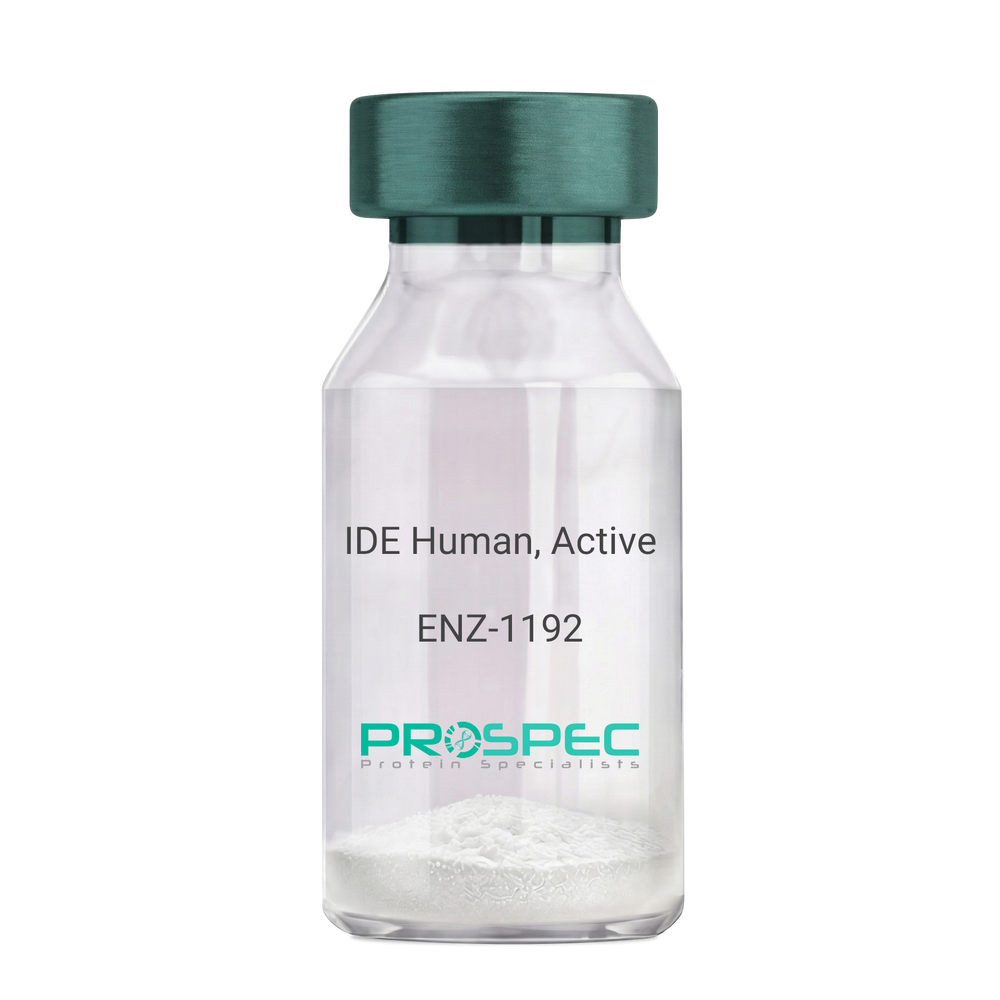
    IDE Human, Active

    Description:

    Insulin-Degrading Enzyme Human Recombinant

    Insulin-Degrading Enzyme, Abeta-Degrading Protease, Insulysin, EC 3.4.24.56, Insulinase, Insulin Protease, INSULYSIN, EC 3.4.24, IDE, insulin-degrading enzyme isoform 1. 

    Product # :

    ENZ-1192

    Price :

    Quantity :

    Shipping Method :

    Ice Icon

    Shipped with Ice Packs

    Add To Cart

    More Info

    • description
    • source
    • formulation
    • purity
    • biological activity
    • More Info

    Description

    IDE Human, Active Human Recombinant produced in E.Coli is a single, non-glycosylated, polypeptide chain (42-1019 a.a) containing a total of 984 amino acids, having a molecular mass of 114 kDa. IDE is fused to a 6 amino acid His-tag at C-terminus and is purified by proprietary chromatographic techniques.

    Source

    Escherichia Coli.

    Formulation

    The IDE solution (0.5mg/ml) contains 10% Glycerol, 100mM NaCl, 0.05% Brij35 and 20mM Tris-HCl buffer (pH 7.5).

    Purity

    Greater than 90.0% as determined by SDS-PAGE.

    Biological Activity

    Specific activity is greater than 3,000 pmol/min/ug in which 1 unit will convert 1.0 pmole of Mca-RPPGFSAFK(Dnp)-OH to MCA-Pro-Leu-OH per minute at pH 7.5 at 25°C.

    More Info

    • Synonyms

      Insulin-Degrading Enzyme, Abeta-Degrading Protease, Insulysin, EC 3.4.24.56, Insulinase, Insulin Protease, INSULYSIN, EC 3.4.24, IDE, insulin-degrading enzyme isoform 1.

    • Physical Appearance

      Filtered colorless solution.

    • Stability

      Store at 4°C if entire vial will be used within 2-4 weeks. Store, frozen at -20°C for longer periods of time. For long term storage it is recommended to add a carrier protein (0.1% HSA or BSA). Avoid multiple freeze-thaw cycles.

    • Amino Acid Sequence

      MNNPAIKRIG NHITKSPEDK REYRGLELAN GIKVLLISDP TTDKSSAALD VHIGSLSDPP NIAGLSHFCE HMLFLGTKKY PKENEYSQFL SEHAGSSNAF TSGEHTNYYF DVSHEHLEGA LDRFAQFFLC PLFDESCKDR EVNAVDSEHE KNVMNDAWRL FQLEKATGNP KHPFSKFGTG NKYTLETRPN QEGIDVRQEL LKFHSAYYSS NLMAVCVLGR ESLDDLTNLV VKLFSEVENK NVPLPEFPEH PFQEEHLKQL YKIVPIKDIR NLYVTFPIPD LQKYYKSNPG HYLGHLIGHE GPGSLLSELK SKGWVNTLVG GQKEGARGFM FFIINVDLTE EGLLHVEDII LHMFQYIQKL RAEGPQEWVF QECKDLNAVA FRFKDKERPR GYTSKIAGIL HYYPLEEVLT AEYLLEEFRP DLIEMVLDKL RPENVRVAIV SKSFEGKTDR TEEWYGTQYK QEAIPDEVIK KWQNADLNGK FKLPTKNEFI PTNFEILPLE KEATPYPALI KDTAMSKLWF KQDDKFFLPK ACLNFEFFSP FAYVDPLHCN MAYLYLELLK DSLNEYAYAA ELAGLSYDLQ NTIYGMYLSV KGYNDKQPIL LKKIIEKMAT FEIDEKRFEI IKEAYMRSLN NFRAEQPHQH AMYYLRLLMT EVAWTKDELK EALDDVTLPR LKAFIPQLLS RLHIEALLHG NITKQAALGI MQMVEDTLIE HAHTKPLLPS
      QLVRYREVQL PDRGWFVYQQ RNEVHNNCGI EIYYQTDMQS TSENMFLELF CQIISEPCFN TLRTKEQLGY IVFSGPRRAN GIQGLRFIIQ SEKPPHYLES RVEAFLITME KSIEDMTEEA FQKHIQALAI RRLDKPKKLS AECAKYWGEI ISQQYNFDRD NTEVAYLKTL TKEDIIKFYK EMLAVDAPRR HKVSVHVLAR EMDSCPVVGE FPCQNDINLS QAPALPQPEV IQNMTEFKRG LPLFPLVKPH INFMAAKLHH HHHH.

    • Background

      Insulin-degrading enzyme (IDE) is a crucial protease that plays a significant role in maintaining glucose homeostasis by degrading insulin and other bioactive peptides. Dysregulation of IDE has been implicated in various metabolic disorders, particularly type 2 diabetes mellitus. IDE is also associated with the clearance of amyloid-beta peptides in the brain, making it relevant to Alzheimer's disease pathology. Studying the recombinant form of IDE is fundamental to understanding its functional mechanisms and exploring potential avenues for therapeutic interventions.

      The primary goal of this research is to express and purify recombinant IDE using diverse expression systems. Recombinant DNA techniques will be employed to construct expression vectors containing the IDE gene, followed by expression in bacterial, yeast, or mammalian cell-based systems. The recombinant IDE will be purified using affinity chromatography or other appropriate methods, facilitating subsequent biochemical and biophysical characterization.

      The second objective is to investigate the substrate specificity and catalytic activity of the purified IDE. In vitro enzymatic assays will be conducted to analyse the ability of the recombinant IDE to degrade insulin and other potential substrates. The effects of various factors, such as pH, temperature, and potential modulators, on IDE activity will be evaluated. Additionally, the interactions between IDE and its substrates will be explored using binding assays.

      The third objective is to elucidate the three-dimensional structure of the IDE recombinant using techniques like X-ray crystallography or nuclear magnetic resonance (NMR) spectroscopy. Structural insights into the active site and binding pockets of IDE will provide valuable information for understanding its substrate recognition and catalytic mechanisms. This knowledge could be instrumental in designing targeted therapeutic compounds.

      By characterizing the IDE recombinant, this research aims to contribute to our understanding of its role in insulin metabolism, glucose regulation, and potential therapeutic applications. The findings from this study may have implications for the development of novel treatments for diabetes and other related disorders.

    ProSpec's products are furnished for LABORATORY RESEARCH USE ONLY. The product may not be used as drugs, agricultural or pesticidal products, food additives or household chemicals.

    Ide Human Active
  • View Data Sheet

    Name :

    DUSP3 Antibody

    Description:

    Dual Specificity Phosphatase 3, Mouse Anti Human

    Dual specificity phosphatase 3, VHR, Vaccinia virus phosphatase VH1-related, Dual specificity protein phosphatase VHR, Vaccinia H1-related phosphatase, serine/threonine specific protein phosphatase, DUSP3.

    Product # :

    ANT-594

    Price :

    Quantity :

    Shipping Method :

    Ice Icon

    Shipped with Ice Packs

    Add To Cart

    More Info

    • formulation
    • More Info

    Formulation

    1mg/ml containing PBS, pH-7.4, 10% Glycerol and 0.02% Sodium Azide.

    More Info

    • Introduction

      DUSP3 belongs to the dual specificity protein phosphatase subfamily which inactivates their target kinases by dephosphorylating both the phosphoserine/threonine and phosphotyrosine residues. DUSP3 negatively regulate members of the mitogen-activated protein kinase superfamily that are related to cellular proliferation and differentiation. DUSP3 is expressed in both breast and ovarian tissues and displays activity both for tyrosine-protein phosphate and serine-protein phosphate, but exhibits a strong preference toward phosphotyrosines, specifically dephosphorylates and inactivates ERK1 and ERK2.

    • Synonyms

      Dual specificity phosphatase 3, VHR, Vaccinia virus phosphatase VH1-related, Dual specificity protein phosphatase VHR, Vaccinia H1-related phosphatase, serine/threonine specific protein phosphatase, DUSP3.

    • Physical Appearance

      Sterile filtered colorless solution.

    • Immunogen

      Anti-human DUSP3 mAb, is derived from hybridization of mouse F0 myeloma cells with spleen cells from BALB/c mice immunized with recombinant human DUSP3 amino acids 1-185 purified from E. coli.

    • Ig Subclass

      Mouse IgG2b heavy chain and k light chain.

    • Clone

      PAT9E6AT.

    • Applications

      DUSP3 antibody has been tested by ELISA, Western blot analysis to assure specificity and reactivity. Since application varies, however, each investigation should be titrated by the reagent to obtain optimal results. Recommended starting dilution for Western blot analysis is 1:3000.

    • Type

      Mouse Anti Human Monoclonal.

    • Storage Procedures

      For periods up to 1 month store at 4°C, for longer periods of time, store at -20°C. Prevent freeze thaw cycles.

    • Purification Method

      DUSP3 antibody was purified from mouse ascitic fluids by protein-A affinity chromatography.

    ProSpec's products are furnished for LABORATORY RESEARCH USE ONLY. The product may not be used as drugs, agricultural or pesticidal products, food additives or household chemicals.

    Dusp3 Antibody
  • View Data Sheet

    Name :

    UNG

    Description:

    Uracil DNA Glycosilase

    Uracil DNA Glycosilase, Uracil DNA Glycosylase, UNG.

    Product # :

    ENZ-352

    Price :

    Quantity :

    Shipping Method :

    Ice Icon

    Shipped with Ice Packs

    Add To Cart

    More Info

    • description
    • source
    • formulation
    • More Info

    Description

    E.Coli Uracil DNA Glycosilase (UNG) catalyses the release of free Uracil from Uracil-containing DNA. UNG efficiently hydrolyzes uracil from signle-stranded or double-stranded DNA, but not from oligomers (6 fewer bases).

    Source

    Escherichia Coli strain that carries the UNG gene from E.coli.

    Formulation

    UNG solution in 10mM Tris-HCl (pH-7.4 at 25°C), 50mM KCl, 1mM DTT, 0.1mM EDTA, 0.1 mg/ml BSA and 50% glycerol.

    More Info

    • Synonyms

      Uracil DNA Glycosilase, Uracil DNA Glycosylase, UNG.

    • Physical Appearance

      Sterile Filtered colorless solution.

    • Stability

      Uracil DNA Glycosilase although stable at 15°C for 1 week, should be stored below -18°C. Please prevent freeze-thaw cycles.

    • Reaction Conditions

      1X UNG Reaction Buffer, incubate at 37°C.UNG is active over a broad pH rabge with an optimum at pH-8.0, doesn't require divalent cation, and is inhibited by high ionic strength (>200mM). The abasic sites formed in DNA by UNG may be cleaved by heat, alkali-treatment or endonucleases that cleave specifically at abasic sites.

    • Inactivation

      Inactivated by heating at 95°C for 10min. Enzyme activity is partially restored at temperatures lower than 55°C.

    • Unit Definition

      1 Unit of the enzyme catalyzes the release of 1 nanomole of uracil-containing DNA template in 60 min at 37°C.

    • Specific Activity

      The Specific Activity was found to be 5U/µl.

    ProSpec's products are furnished for LABORATORY RESEARCH USE ONLY. The product may not be used as drugs, agricultural or pesticidal products, food additives or household chemicals.

    Uracil Dna Glycosylase Enzyme
  • View Data Sheet

    Name :

    PCOLCE Human, Sf9

    Description:

    Procollagen C-Endopeptidase Enhancer Human Recombinant, Sf9

    Procollagen C-endopeptidase enhancer 1,  Procollagen COOH-terminal proteinase enhancer 1,  PCPE-1,  Procollagen C-proteinase enhancer 1,  Type 1 procollagen C-proteinase enhancer protein,  Type I procollagen COOH-terminal proteinase enhancer,  PCOLCE,  PCPE1,  Procollagen C-Endopeptidase Enhancer, Procollagen C-Proteinase, Enhancer 1, Procollagen, Type 1, COOH-Terminal Proteinase Enhancer, Type I Procollagen COOH-Terminal Proteinase Enhancer, Type 1 Procollagen C-Proteinase Enhancer Protein, Procollagen COOH-Terminal Proteinase Enhancer 1.

    Product # :

    ENZ-1075

    Price :

    Quantity :

    Shipping Method :

    Ice Icon

    Shipped with Ice Packs

    Add To Cart

    More Info

    • description
    • source
    • formulation
    • purity
    • More Info

    Description

    PCOLCE produced in Sf9 Insect cells is a single, glycosylated polypeptide chain containing 433 amino acids (26-449 a.a.) and having a molecular mass of 46.6kDa (Molecular size on SDS-PAGE will appear at approximately 40-57kDa). PCOLCE is expressed with an 9 amino acid His tag at C-Terminus and purified by proprietary chromatographic techniques.

    Source

    Sf9, Insect cells.

    Formulation

    PCOLCE protein solution (0.25mg/ml) contains 20mM Tris-HCl (pH 8.0), 10% glycerol and 0.1M NaCl.

    Purity

    Greater than 95.0% as determined by SDS-PAGE.

    More Info

    • Introduction

      Procollagen C-endopeptidase enhancer 1, also known as PCOLCE binds to the C-terminal propeptide of type I procollagen and enhances procollagen C-proteinase activity. In addition, C-terminal processed part of PCPE (CT-PCPE) has a metalloproteinase inhibitory activity. Among the diseases which are associated with PCOLCE: bone fracture & oculopharyngeal muscular dystrophy.

    • Synonyms

      Procollagen C-endopeptidase enhancer 1, Procollagen COOH-terminal proteinase enhancer 1, PCPE-1, Procollagen C-proteinase enhancer 1, Type 1 procollagen C-proteinase enhancer protein, Type I procollagen COOH-terminal proteinase enhancer, PCOLCE, PCPE1, Procollagen C-Endopeptidase Enhancer, Procollagen C-Proteinase, Enhancer 1, Procollagen, Type 1, COOH-Terminal Proteinase Enhancer, Type I Procollagen COOH-Terminal Proteinase Enhancer, Type 1 Procollagen C-Proteinase Enhancer Protein, Procollagen COOH-Terminal Proteinase Enhancer 1.

    • Physical Appearance

      Sterile filtered colorless solution.

    • Stability

      Store at 4°C if entire vial will be used within 2-4 weeks. Store, frozen at -20°C for longer periods of time. For long term storage it is recommended to add a carrier protein (0.1% HSA or BSA).Avoid multiple freeze-thaw cycles.

    • Amino Acid Sequence

      ADPQTPNYTR PVFLCGGDVK GESGYVASEG FPNLYPPNKE CIWTITVPEG QTVSLSFRVF DLELHPACRY DALEVFAGSG TSGQRLGRFC GTFRPAPLVA PGNQVTLRMT TDEGTGGRGF LLWYSGRATS GTEHQFCGGR LEKAQGTLTT PNWPESDYPP GISCSWHIIA PPDQVIALTF EKFDLEPDTY CRYDSVSVFN GAVSDDSRRL GKFCGDAVPG SISSEGNELL VQFVSDLSVT ADGFSASYKT LPRGTAKEGQ GPGPKRGTEP KVKLPPKSQP PEKTEESPSA PDAPTCPKQC RRTGTLQSNF CASSLVVTAT VKSMVREPGE GLAVTVSLIG AYKTGGLDLP SPPTGASLKF YVPCKQCPPM KKGVSYLLMG QVEENRGPVL PPESFVVLHR PNQDQILTNL SKRKCPSQPV RAAASQDHHH HHH.

    ProSpec's products are furnished for LABORATORY RESEARCH USE ONLY. The product may not be used as drugs, agricultural or pesticidal products, food additives or household chemicals.

    Pcolce Protein
  • View Data Sheet

    Name :

    S100A9 Human

    Description:

    S100 Calcium Binding Protein A9 Human Recombinant

    Calgranulin B, 60B8AG, CAGB, CFAG, CGLB, L1AG, LIAG, MAC387, MIF, MRP14, NIF, P14, Protein S100-A9, S100 calcium-binding protein A9.

    Product # :

    PRO-814

    Price :

    Quantity :

    Shipping Method :

    Ice Icon

    Shipped with Ice Packs

    Add To Cart

    More Info

    • description
    • source
    • formulation
    • purity
    • More Info

    Description

    S100A9 Human Recombinant produced in E.Coli is a single, non-glycosylated, polypeptide chain containing 122 amino acids (1-114 a.a.) and having a molecular mass of 14.3kDa. S100A9 protein is fused to an 8 amino acid His-Tag at C-terminus and purified by standard chromatography.

    Source

    Escherichia Coli.

    Formulation

    S100A9 Human solution containing 20mM Tris HCl pH-8, 0.1M NaCl and 10% glycerol.

    Purity

    Greater than 90% as determined by SDS-PAGE.

    More Info

    • Introduction

      S100A9 is part of the S100 family of proteins containing 2 EF-hand calcium-binding motifs. S100A9 protein is localized in the cytoplasm and/or nucleus of a wide range of cells, and participates in the regulation of several cellular processes such as cell cycle progression and differentiation. S100 genes include no less than 13 proteins which are localized as a cluster on chromosome 1q21. S100A9 is involved in the inhibition of casein kinase and altered expression of this protein is associated with the disease cystic fibrosis.

    • Synonyms

      Calgranulin B, 60B8AG, CAGB, CFAG, CGLB, L1AG, LIAG, MAC387, MIF, MRP14, NIF, P14, Protein S100-A9, S100 calcium-binding protein A9.

    • Physical Appearance

      Sterile filtered colorless solution.

    • Stability

      Store at 4°C if entire vial will be used within 2-4 weeks. Store, frozen at -20°C for longer periods of time. For long term storage it is recommended to add a carrier protein (0.1% HSA or BSA).Avoid multiple freeze-thaw cycles.

    • Amino Acid Sequence

      MTCKMSQLER NIETIINTFH QYSVKLGHPD TLNQGEFKEL VRKDLQNFLK KENKNEKVIE HIMEDLDTNA DKQLSFEEFI MLMARLTWAS HEKMHEGDEG PGHHHKPGLG EGTPLEHHHH HH.

    ProSpec's products are furnished for LABORATORY RESEARCH USE ONLY. The product may not be used as drugs, agricultural or pesticidal products, food additives or household chemicals.

    S100A9 Human
  • View Data Sheet

    Name :

    RP9 Human

    Description:

    Retinitis Pigmentosa 9 Human Recombinant

    Retinitis pigmentosa 9 protein, Pim-1-associated protein, PAP-1, RP9.

    Product # :

    PRO-1314

    Price :

    Quantity :

    Shipping Method :

    Ice Icon

    Shipped with Ice Packs

    Add To Cart

    More Info

    • description
    • source
    • formulation
    • purity
    • More Info

    Description

    RP9 Human Recombinant produced in E.Coli is a single, non-glycosylated polypeptide chain containing 178 amino acids (1-155 a.a.) and having a molecular mass of 20.7kDa.RP9 is fused to a 23 amino acid His-tag at N-terminus & purified by proprietary chromatographic techniques.

    Source

    Escherichia Coli.

    Formulation

    RP9 protein solution (0.5mg/ml) containing 20mM Tris-HCl buffer (pH 8.0), 0.2M NaCl, 20% glycerol and 1mM DTT.

    Purity

    Greater than 85.0% as determined by SDS-PAGE.

    More Info

    • Introduction

      Retinitis pigmentosa 9 (RP9) is assumed to be a target protein for the PIM1 kinase. The RP9 protein may have some roles in B-cell proliferation in association with PIM1. RP9 can be bound and phosphorylated by the protooncogene PIM1 product, a serine/threonine protein kinase. RP9 localizes in nuclear speckles containing the splicing factors, and has a part in pre-mRNA splicing. RP9 gene mutations result in autosomal dominant retinitis pigmentosa-9.

    • Synonyms

      Retinitis pigmentosa 9 protein, Pim-1-associated protein, PAP-1, RP9.

    • Physical Appearance

      Sterile Filtered colorless solution.

    • Stability

      Store at 4°C if entire vial will be used within 2-4 weeks. Store, frozen at -20°C for longer periods of time. For long term storage it is recommended to add a carrier protein (0.1% HSA or BSA).Avoid multiple freeze-thaw cycles.

    • Amino Acid Sequence

      MGSSHHHHHH SSGLVPRGSH MGSMSSRPGR EDVGAAGARR PREPPEQELQ RRREQKRRRH DAQQLQQLKH LESFYEKPPP GLIKEDETKP EDCIPDVPGN EHAREFLAHA PTKGLWMPLG KEVKVMQCWR CKRYGHRTGD KECPFFIKGN QKLEQFRVAH EDPMYDIIRD NKRHEKDV.

    ProSpec's products are furnished for LABORATORY RESEARCH USE ONLY. The product may not be used as drugs, agricultural or pesticidal products, food additives or household chemicals.

    Rp9 Human
  • View Data Sheet

    Name :

    TRAIL Human (114-281 a.a.)

    Description:

    TRAIL/APO 2 Ligand (114-281 a.a.) Human Recombinant

    Tumor necrosis factor ligand superfamily member 10, TNF-related apoptosis-inducing ligand, Protein TRAIL, Apo-2 ligand, Apo-2L, CD253 antigen, TL2, APO2L, TNFSF10.

    Product # :

    CYT-546

    Price :

    Quantity :

    Shipping Method :

    Ice Icon

    Shipped with Ice Packs

    Add To Cart

    More Info

    • description
    • source
    • formulation
    • purity
    • More Info

    Description

    Soluble TNF-related apoptosis-inducing ligand Human Recombinant produced in E.Coli is a single, non-glycosylated polypeptide chain containing 169 amino acids (114-281) and having a molecular mass of 19.6 kDa. The sTRAIL is purified by proprietary chromatographic techniques.

    Source

    Escherichia Coli.

    Formulation

    1mg/ml in 20mM Tris-HCl pH-7.5, 300mM NaCl, 0.1mM DTT & 10% glycerol.

    Purity

    Greater than 95.0% as determined by SDS-PAGE.

    More Info

    • Introduction

      TNF-related apoptosis-inducing ligand (TRAIL) is a ligand molecule which induces apoptosis. It is a type II transmembrane protein with homology to other members of the tumor necrosis factor family.
      In humans, the gene that encodes for TRAIL is located at chromosome 3q26.
      TRAIL binds to the death receptors, DR4 and DR5. The process of apoptosis is caspase-8-dependent. This protein preferentially induces apoptosis in transformed and tumor cells, but does not appear to kill normal cells although it is expressed at a significant level in most normal tissues.

    • Synonyms

      Tumor necrosis factor ligand superfamily member 10, TNF-related apoptosis-inducing ligand, Protein TRAIL, Apo-2 ligand, Apo-2L, CD253 antigen, TL2, APO2L, TNFSF10.

    • Physical Appearance

      Sterile Filtered colorless liquid.

    • Stability

      Store at 4°C if entire vial will be used within 2-4 weeks. Store, frozen at -20°C for longer periods of time. For long term storage it is recommended to add a carrier protein (0.1% HSA or BSA).Avoid multiple freeze-thaw cycles.

    • Amino Acid Sequence

      MVRERGPQRV AAHITGTRGR SNTLSSPNSK NEKALGRKIN SWESSRSGHS FLSNLHLRNGELVIHEKGFY YIYSQTYFRF QEEIKENTKN DKQMVQYIYK YTSYPDPILL MKSARNSCWSKDAEYGLYSI YQGGIFELKE NDRIFVSVTN EHLIDMDHEA SFFGAFLVG.

    ProSpec's products are furnished for LABORATORY RESEARCH USE ONLY. The product may not be used as drugs, agricultural or pesticidal products, food additives or household chemicals.

    Apo2L 114 281 Human
  • View Data Sheet

    Name :

    RNASE7 Human

    Description:

    Ribonuclease 7 Human Recombinant

    Ribonuclease, RNase A Family, 7, Skin-Derived Antimicrobial Protein 2, RNase 7, SAP-2, EC 3.1.27.5, EC 3.1.27., EC 3.1.27, Ribonuclease 7.

    Product # :

    ENZ-704

    Price :

    Quantity :

    Shipping Method :

    Ice Icon

    Shipped with Ice Packs

    Add To Cart

    More Info

    • description
    • source
    • formulation
    • purity
    • More Info

    Description

    RNASE7 Human Recombinant produced in E.Coli is a single, non-glycosylated polypeptide chain containing 151 amino acids (29-156 a.a) and having a molecular mass of 16.9kDa. RNASE7 is fused to a 23 amino acid His-tag at N-terminus & purified by proprietary chromatographic techniques.

    Source

    Escherichia Coli.

    Formulation

    RNASE7 protein solution (0.5mg/ml) containing 20mM Tris-HCl buffer (pH8.0) and 10% glycerol 1mM DTT.

    Purity

    Greater than 90% as determined by SDS-PAGE.

    More Info

    • Introduction

      Ribonuclease 7 (RNASE7) is one of the final RNase A superfamily ribonucleases. RNASE7 was isolated from skin-derived stratum corneum. RNASE7 protein demonstrated potent ribonuclease activity and hence may contribute to the well-known ribonuclease activity of human skin. RNASE7 has revealed a broad spectrum antimicrobial activity against many pathogenic microorganisms and extraordinarily potent activity.

    • Synonyms

      Ribonuclease, RNase A Family, 7, Skin-Derived Antimicrobial Protein 2, RNase 7, SAP-2, EC 3.1.27.5, EC 3.1.27., EC 3.1.27, Ribonuclease 7.

    • Physical Appearance

      Sterile Filtered colorless solution.

    • Stability

      Store at 4°C if entire vial will be used within 2-4 weeks. Store, frozen at -20°C for longer periods of time. For long term storage it is recommended to add a carrier protein (0.1% HSA or BSA). Avoid multiple freeze-thaw cycles.

    • Amino Acid Sequence

      MGSSHHHHHH SSGLVPRGSH MGSKPKGMTS SQWFKIQHMQ PSPQACNSAM KNINKHTKRC KDLNTFLHEP FSSVAATCQT PKIACKNGDK NCHQSHGPVS LTMCKLTSGK YPNCRYKEKR QNKSYVVACK PPQKKDSQQF HLVPVHLDRV L.

    ProSpec's products are furnished for LABORATORY RESEARCH USE ONLY. The product may not be used as drugs, agricultural or pesticidal products, food additives or household chemicals.

    Rnase7 Human
  • View Data Sheet

    Name :

    PCNP Human

    Description:

    PEST proteolytic Signal Containing Nuclear Protein Human Recombinant

    PEST proteolytic signal-containing nuclear protein, PCNP, PEST-containing nuclear protein.

    Product # :

    PRO-906

    Price :

    Quantity :

    Shipping Method :

    Ice Icon

    Shipped with Ice Packs

    Add To Cart

    More Info

    • description
    • source
    • formulation
    • purity
    • More Info

    Description

    PCNP Human Recombinant produced in E.Coli is a single, non-glycosylated polypeptide chain containing 202 amino acids (1-178 a.a.) and having a molecular mass of 21.5kDa.PCNP is fused to a 24 amino acid His-tag at N-terminus & purified by proprietary chromatographic techniques.

    Source

    Escherichia Coli.

    Formulation

    PCNP protein solution (1mg/ml) containing 20mM Tris-HCl buffer (pH 8.0) and 10% glycerol.

    Purity

    Greater than 95.0% as determined by SDS-PAGE.

    More Info

    • Introduction

      PEST proteolytic signal containing nuclear protein (PCNP) is a nuclear protein involved in cell cycle regulation and tumorigenesis. The PCNP protein is ubiquitinated post-translationally by NIRF (an ubiquitin ligase). The PCNP exists as 3 isoforms produced by alternative splicing events.

    • Synonyms

      PEST proteolytic signal-containing nuclear protein, PCNP, PEST-containing nuclear protein.

    • Physical Appearance

      Sterile Filtered clear solution.

    • Stability

      Store at 4°C if entire vial will be used within 2-4 weeks. Store, frozen at -20°C for longer periods of time. For long term storage it is recommended to add a carrier protein (0.1% HSA or BSA).Avoid multiple freeze-thaw cycles.

    • Amino Acid Sequence

      MGSSHHHHHH SSGLVPRGSH MGSHMADGKA GDEKPEKSQR AGAAGGPEEE AEKPVKTKTV SSSNGGESSS RSAEKRSAEE EAADLPTKPT KISKFGFAIG SQTTKKASAI SIKLGSSKPK ETVPTLAPKT LSVAAAFNED EDSEPEEMPP EAKMRMKNIG RDTPTSAGPN SFNKGKHGFS DNQKLWERNI KSHLGNVHDQ DN.

    ProSpec's products are furnished for LABORATORY RESEARCH USE ONLY. The product may not be used as drugs, agricultural or pesticidal products, food additives or household chemicals.

    Pcnp Human
  • View Data Sheet

    Name :

    CTDSP1 Human

    Description:

    CTD Small Phosphatase 1 Human Recombinant

    Carboxy-terminal domain RNA polymerase II polypeptide A small phosphatase 1, Nuclear LIM interactor-interacting factor 3, NLI-IF, NLI-interacting factor 3, Small C-terminal domain phosphatase 1, SCP1, Small CTD phosphatase 1, CTDSP1, NIF3, NLIIF.

    Product # :

    ENZ-110

    Price :

    Quantity :

    Shipping Method :

    Ice Icon

    Shipped with Ice Packs

    Add To Cart

    More Info

    • description
    • source
    • formulation
    • purity
    • More Info

    Description

    CTDSP1 produced in E.Coli is a single, non-glycosylated polypeptide chain containing 280 amino acids (1-260 a.a.) and having a molecular mass of 31.2kDa.CTDSP1 is fused to a 20 amino acid His-tag at N-terminus & purified by proprietary chromatographic techniques.

    Source

    Escherichia Coli.

    Formulation

    CTDSP1 solution (1mg/ml) containing 20mM Tris-HCl buffer (pH 8.0), 1mM DTT, 20% glycerol and 0.1M NaCl.

    Purity

    Greater than 90.0% as determined by SDS-PAGE.

    More Info

    • Introduction

      CTDSP1 is a class 2C phosphatase with activity dependent on the conserved DxD motif. CTDSP1 preferentially catalyzes the dephosphorylation of 'Ser-5' within the tandem 7 residues repeats in the C-terminal domain (CTD) of the largest RNA polymerase II subunit POLR2A. In addition, CTDSP1 negatively regulates RNA polymerase II transcription, possibly by controlling the transition from initiation/capping to processive transcript elongation.

    • Synonyms

      Carboxy-terminal domain RNA polymerase II polypeptide A small phosphatase 1, Nuclear LIM interactor-interacting factor 3, NLI-IF, NLI-interacting factor 3, Small C-terminal domain phosphatase 1, SCP1, Small CTD phosphatase 1, CTDSP1, NIF3, NLIIF.

    • Physical Appearance

      Sterile filtered colorless solution.

    • Stability

      Store at 4°C if entire vial will be used within 2-4 weeks. Store, frozen at -20°C for longer periods of time. For long term storage it is recommended to add a carrier protein (0.1% HSA or BSA).Avoid multiple freeze-thaw cycles.

    • Amino Acid Sequence

      MGSSHHHHHH SSGLVPRGSH MDSSAVITQI SKEEARGPLR GKGDQKSAAS QKPRSRGILH SLFCCVCRDD GEALPAHSGA PLLVEENGAI PKTPVQYLLP EAKAQDSDKI CVVIDLDETL VHSSFKPVNN ADFIIPVEID GVVHQVYVLK RPHVDEFLQR MGELFECVLF TASLAKYADP VADLLDKWGA FRARLFRESC VFHRGNYVKD LSRLGRDLRR VLILDNSPAS YVFHPDNAVP VASWFDNMSD TELHDLLPFF EQLSRVDDVY SVLRQPRPGS.

    ProSpec's products are furnished for LABORATORY RESEARCH USE ONLY. The product may not be used as drugs, agricultural or pesticidal products, food additives or household chemicals.

    Ctdsp1 Human
  • View Data Sheet

    Name :

    Eptifibatide Human

    Description:

    Eptifibatide Human

    Product # :

    PRO-358

    Price :

    Quantity :

    Shipping Method :

    Room Temp Icon

    Shipped at Room temp

    Add To Cart

    More Info

    • description
    • formulation
    • purity
    • More Info

    Description

    Synthetic Eptifibatide is a 6 amino acid peptide having a MW of 832.5 Dalton the following sequence Mpr-Har-Gly-Asp-Trp-Pro-Cys-NH2.

    Formulation

    Eptifibatide was lyophilized with no additives.

    Purity

    Greater than 98.0% as determined by:
    (a) Analysis by RP-HPLC.
    (b) Analysis by SDS-PAGE.

    More Info

    • Introduction

      Eptifibatide binds to the platelet receptor glycoprotein (GP) IIb/IIIa of human platelets and inhibits platelet aggregation. Eptifibatide is a cyclic peptide derived from a protein discovered in the venom of the southeastern pygmy rattlesnake (Sistrurus miliarus barbouri). Eptifibatide belongs to the arginin-glycin-aspartat-mimetics and reversibly binds to platelets.

    • Physical Appearance

      Sterile Filtered White lyophilized (freeze-dried) powder.

    • Stability

      Lyophilized Eptifibatide although stable at room temperature for 3 weeks, should be stored desiccated below -18°C. Upon reconstitution Eptifibatide should be stored at 4°C between 2-7 days and for future use below -18°C.For long term storage it is recommended to add a carrier protein (0.1% HSA or BSA).Please prevent freeze-thaw cycles.

    • Solubility

      It is recommended to reconstitute the lyophilized Eptifibatide in sterile 18MΩ-cm H2O not less than 100µg/ml, which can then be further diluted to other aqueous solutions.

    ProSpec's products are furnished for LABORATORY RESEARCH USE ONLY. The product may not be used as drugs, agricultural or pesticidal products, food additives or household chemicals.

    Eptifibatide
  • View Data Sheet

    Name :

    POR (43-677) Human

    Description:

    P450 Oxidoreductase Human Recombinant

    P450 (Cytochrome) Oxidoreductase, EC 1.6.2.4, CYPOR, P450R, CPR, NADPH-Dependent Cytochrome P450 Reductase, NADPH--Cytochrome P450 Reductase, NADPH--cytochrome P450 reductase.

    Product # :

    ENZ-1186

    Price :

    Quantity :

    Shipping Method :

    Ice Icon

    Shipped with Ice Packs

    Add To Cart

    More Info

    • description
    • source
    • formulation
    • purity
    • biological activity
    • More Info

    Description

    POR Human Recombinant produced in Sf9 Insect cells is a single, glycosylated, polypeptide chain (43-677 a.a) containing a total of 642 amino acids, having a molecular mass of 73.0 kDa. POR is fused to a 6 amino acid His-tag at C-terminus,and is purified by proprietary chromatographic techniques.

    Source

    Sf9, Baculovirus cells.

    Formulation

    POR protein solution (0.5mg/ml) contains 10% Glycerol and Phosphate-Buffered Saline (pH 7.4).

    Purity

    Greater than 95.0% as determined by SDS-PAGE.

    Biological Activity

    Specific activity is > 1,500 pmol/min/mg. Defined by the amount of enzyme that  reduction of 1 pmole cytochrome-C by NADPH/min. at pH-8 25C.

    More Info

    • Synonyms

      P450 (Cytochrome) Oxidoreductase, EC 1.6.2.4, CYPOR, P450R, CPR, NADPH-Dependent Cytochrome P450 Reductase, NADPH--Cytochrome P450 Reductase, NADPH--cytochrome P450 reductase.

    • Physical Appearance

      Sterile filtered colorless solution.

    • Stability

      Store at 4°C if entire vial will be used within 2-4 weeks. Store, frozen at -20°C for longer periods of time. For long term storage it is recommended to add a carrier protein (0.1% HSA or BSA).Avoid multiple freeze-thaw cycles.

    • Amino Acid Sequence

      MLFRKKKEEV PEFTKIQTLT SSVRESSFVE KMKKTGRNII VFYGSQTGTA EEFANRLSKD AHRYGMRGMS ADPEEYDLAD LSSLPEIDNA LVVFCMATYG EGDPTDNAQD FYDWLQETDV DLSGVKFAVF GLGNKTYEHF NAMGKYVDKR LEQLGAQRIF ELGLGDDDGN LEEDFITWRE QFWPAVCEHF GVEATGEESS IRQYELVVHT DIDAAKVYMG EMGRLKSYEN QKPPFDAKNP FLAAVTTNRK LNQGTERHLM HLELDISDSK IRYESGDHVA VYPANDSALV NQLGKILGAD LDVVMSLNNL DEESNKKHPF PCPTSYRTAL TYYLDITNPP RTNVLYELAQ YASEPSEQEL LRKMASSSGE GKELYLSWVV EARRHILAIL QDCPSLRPPI DHLCELLPRL QARYYSIASS SKVHPNSVHI CAVVVEYETK AGRINKGVAT NWLRAKEPAG ENGGRALVPM FVRKSQFRLP FKATTPVIMV GPGTGVAPFI GFIQERAWLR QQGKEVGETL LYYGCRRSDE DYLYREELAQ FHRDGALTQL NVAFSREQSH KVYVQHLLKQ DREHLWKLIE GGAHIYVCGD ARNMARDVQN TFYDIVAELG AMEHAQAVDY IKKLMTKGRY SLDVWSHHHH HH.

    • Background

      P450 Oxidoreductase (POR) is a vital enzyme that plays a crucial role in the electron transfer system, specifically in the cytochrome P450 (CYP) enzyme family. POR acts as an electron donor for various CYP enzymes involved in drug metabolism, steroid biosynthesis, and detoxification processes. This research aims to explore the function, regulation, and significance of POR protein in human cells, shedding light on its role in maintaining cellular homeostasis and drug metabolism.

      Function of POR Protein:

      POR protein serves as an essential component in the redox reactions of the CYP enzymes. It transfers electrons from NADPH to the CYP enzymes, allowing them to catalyze a wide range of reactions involved in the metabolism of endogenous compounds, drugs, and toxins. Through its electron transfer function, POR enables the activation or inactivation of substrates, contributing to the regulation of cellular processes such as hormone synthesis, drug clearance, and xenobiotic detoxification.

      Regulation of POR Protein:

      The expression and activity of POR protein are tightly regulated to ensure proper functioning of the CYP enzymes. Several factors influence POR expression, including genetic variations, environmental stimuli, and hormonal signals. Transcriptional regulation of POR involves binding of specific transcription factors to its promoter region. Additionally, post-translational modifications, such as phosphorylation and protein-protein interactions, modulate POR activity, influencing its electron transfer efficiency and interaction with CYP enzymes.

      Role of POR Protein in Drug Metabolism:

      One of the prominent functions of POR protein is its involvement in drug metabolism. POR collaborates with CYP enzymes in the biotransformation of a wide array of drugs, converting them into more soluble and easily excretable forms. The interplay between POR and CYP enzymes determines the pharmacokinetics and therapeutic efficacy of numerous drugs. Understanding the role of POR in drug metabolism is crucial for predicting drug-drug interactions, optimizing drug dosing, and minimizing the risk of adverse reactions.

      Significance of POR Protein in Disease States:

      Emerging evidence suggests that POR protein dysregulation can contribute to various disease states. Mutations in the POR gene have been linked to disorders such as Antley-Bixler syndrome and disordered steroidogenesis, highlighting the critical role of POR in development and endocrine function. Moreover, altered POR expression and activity have been implicated in drug resistance and toxicity, as well as in the pathogenesis of certain cancers.

      Conclusion:

      The investigation of P450 Oxidoreductase (POR) protein in human cells provides valuable insights into its function, regulation, and significance in various physiological and pathological processes. Understanding the interplay between POR and CYP enzymes is essential for deciphering drug metabolism pathways, predicting drug interactions, and developing personalized therapeutic strategies. Further research is warranted to unravel the intricate mechanisms governing POR activity and its potential as a therapeutic target.

    ProSpec's products are furnished for LABORATORY RESEARCH USE ONLY. The product may not be used as drugs, agricultural or pesticidal products, food additives or household chemicals.

    Por 43 677 Human
  • View Data Sheet

    Name :

    LYVE1 Mouse Sf9

    Description:

    Lymphatic Vessel Endothelial Hyaluronic Acid Receptor 1 Mouse Recombinant, Sf9

    Lymphatic vessel endothelial hyaluronic acid receptor 1 precursor, LYVE-1, Cell surface retention sequence-binding protein 1, CRSBP-1, Hyaluronic acid receptor, Extracellular link domain-containing protein.

    Product # :

    PKA-251

    Price :

    Quantity :

    Shipping Method :

    Room Temp Icon

    Shipped at Room temp

    Add To Cart

    More Info

    • description
    • source
    • formulation
    • purity
    • More Info

    Description

    Soluble LYVE1 Mouse Recombinant fused to a C-terminal His-tag (6xHis) produced in baculovirus is a monomeric, glycosylated, polypeptide containing 228 amino acids (Met-1 to Gly 228) and having a molecular mass of 25 kDa but as a result of glycosilation the Mw is 40 kDa. The LYVE-1 is purified by proprietary chromatographic techniques.

    Source

    Insect Cells.

    Formulation

    LYVE1 was lyophilized from a concentrated (1mg/ml) sterile solution containing no additives.

    Purity

    Greater than 95.0% as determined by:
    (a)Analysis by RP-HPLC.
    (b)Analysis by SDS-PAGE.

    More Info

    • Introduction

      LYVE-1 has been identified as a major receptor for HA (extracellular matrix glycosaminoglycan hyaluronan) on the lymph vessel wall. The deduced amino acid sequence of LYVE-1 predicts a 322-residue type I integral membrane polypeptide 41% similar to the CD44 HA receptor with a 212-residue extracellular domain containing a single Link module the prototypic HA binding domain of the Link protein superfamily. Like CD44, the LYVE-1 molecule binds both soluble and immobilized HA. However, unlike CD44, the LYVE-1 molecule colocalizes with HA on the luminal face of the lymph vessel wall and is completely absent from blood vessels. Hence, LYVE-1 is the first lymph-specific HA receptor to be characterized and is a uniquely powerful marker for lymph vessels themselves.

    • Synonyms

      Lymphatic vessel endothelial hyaluronic acid receptor 1 precursor, LYVE-1, Cell surface retention sequence-binding protein 1, CRSBP-1, Hyaluronic acid receptor, Extracellular link domain-containing protein.

    • Physical Appearance

      Sterile Filtered White lyophilized (freeze-dried) powder.

    • Stability

      Lyophilized sLYVE-1 although stable at room temperature for 3 weeks, should be stored desiccated below -18°C. Upon reconstitution sLYVE-1 should be stored at 4°C between 2-7 days and for future use below -18°C.For long term storage it is recommended to add a carrier protein (0.1% HSA or BSA).Please prevent freeze-thaw cycles.

    • Solubility

      It is recommended to reconstitute the lyophilized LYVE1 in sterile water not less than 100µg/ml, which can then be further diluted to other aqueous solutions.

    ProSpec's products are furnished for LABORATORY RESEARCH USE ONLY. The product may not be used as drugs, agricultural or pesticidal products, food additives or household chemicals.

    Lyve1 Mouse Sf9
  • View Data Sheet

    Name :

    IL17F Human

    Description:

    Interleukin 17F Human Recombinant

    Cytokine ML-1, IL-17F, Interleukin-17F precursor, IL17F, ML1, ML-1.

    Product # :

    CYT-587

    Price :

    Quantity :

    Shipping Method :

    Room Temp Icon

    Shipped at Room temp

    Add To Cart

    More Info

    • description
    • source
    • formulation
    • purity
    • More Info

    Description

    Interleukin-17F Human Recombinant produced in E.Coli is a homodimeric, cysteine linked, non-glycosylated polypeptide chain containing 2 x 134 amino acids and having a total molecular mass of 30.1 kDa.The IL-17F Human is purified by proprietary chromatographic techniques.

    Source

    Escherichia Coli.

    Formulation

    Lyophilized from a concentrated (1mg/ml) solution containing 10mM sodium citrate buffer pH-3.

    Purity

    Greater than 97.0% as determined by(a) Analysis by RP-HPLC.
    (b) Analysis by SDS-PAGE.

    More Info

    • Introduction

      IL-17F having an accession number of Q96PD4 is a cytokine that shares sequence similarity with IL17. IL-17F is expressed by activated T cells, and has been shown to stimulate the production of several other cytokines, including IL6, IL8, and CSF2/GM_CSF. IL-17F inhibits the angiogenesis of endothelial cells and induce endothelial cells to produce IL2, TGFB1/TGFB, and monocyte chemoattractant protein-1. IL-17F induces stromal cells to produce proinflammatory and hematopoietic cytokines. Intestinal IL17F gene expression is increased in active CD.
      IL-17A & IL-17F alleles influence the susceptibility to and pathophysiological features of ulcerative colitis independently. IL-17F and MIF gene polymorphisms are significantly associated with the development of functional dyspepsia.
      The initiation of IL-17F/IL-17R signaling pathway requires the receptor ubiquitination by TRAF6. IL-17F induces expression of IFN-gamma-inducible protein 10 (IP-10) by activating Raf1-mitogen-activated protein kinase 1/2-extracellular-regulated kinase 1/2-p90 ribosomal S6 kinase-cyclic AMP response element-binding protein signaling pathway.

    • Synonyms

      Cytokine ML-1, IL-17F, Interleukin-17F precursor, IL17F, ML1, ML-1.

    • Physical Appearance

      Sterile Filtered White lyophilized (freeze-dried) powder.

    • Stability

      Lyophilized Interleukin Human IL17F although stable at room temperature for 3 weeks, should be stored desiccated below -18°C. Upon reconstitution Human IL-17F should be stored at 4°C between 2-7 days and for future use below -18°C.For long term storage it is recommended to add a carrier protein (0.1% HSA or BSA).Please prevent freeze-thaw cycles.

    • Solubility

      It is recommended to reconstitute the lyophilized Interleukin Human IL17F in sterile water not more than 1mg/ml, which can then be further diluted to other aqueous solutions.

    • Amino Acid Sequence

      MRKIPKVGHT FFQKPESCPP VPGGSMKLDI GIINENQRVS MSRNIESRST SPWNYTVTWD PNRYPSEVVQ AQCRNLGCIN AQGKEDISMN SVPIQQETLV VRRKHQGCSV SFQLEKVLVT VGCTCVTPVI HHVQ.

    ProSpec's products are furnished for LABORATORY RESEARCH USE ONLY. The product may not be used as drugs, agricultural or pesticidal products, food additives or household chemicals.

    Il17F Human
  • View Data Sheet

    Name :

    CUEDC2 Human

    Description:

    CUE Domain Containing 2 Human Recombinant

    CUE domain-containing protein 2, CUEDC2, C10orf66, HOYS6, bA18I14.5.

    Product # :

    PRO-1680

    Price :

    Quantity :

    Shipping Method :

    Ice Icon

    Shipped with Ice Packs

    Add To Cart

    More Info

    • description
    • source
    • formulation
    • purity
    • More Info

    Description

    CUEDC2 Human Recombinant produced in E.coli is a single, non-glycosylated polypeptide chain containing 310 amino acids (1-287) and having a molecular mass of 34 kDa.CUEDC2 is fused to a 23 amino acid His-tag at N-terminus & purified by proprietary chromatographic techniques.

    Source

    Escherichia Coli.

    Formulation

    The CUEDC2 solution (1mg/ml) contains 20mM Tris-HCl buffer (pH 8.0), 0.15M NaCl, 20% glycerol and 1mM DTT.

    Purity

    Greater than 90.0% as determined by SDS-PAGE.

    More Info

    • Introduction

      CUE Domain Containing 2 also known as CUEDC2 is a part of the CUEDC2 family and contains 1 CUE domain. CUEDC2 down-regulates ESR1 protein levels through the ubiquitination-proteasome pathway and controls PGR protein levels through a parallel mechanism.

    • Synonyms

      CUE domain-containing protein 2, CUEDC2, C10orf66, HOYS6, bA18I14.5.

    • Physical Appearance

      Sterile Filtered colorless solution.

    • Stability

      Store at 4°C if entire vial will be used within 2-4 weeks. Store, frozen at -20°C for longer periods of time. For long term storage it is recommended to add a carrier protein (0.1% HSA or BSA).Avoid multiple freeze-thaw cycles.

    • Amino Acid Sequence

      MGSSHHHHHH SSGLVPRGSH MGSMELERIV SAALLAFVQT HLPEADLSGL DEVIFSYVLG VLEDLGPSGP SEENFDMEAF TEMMEAYVPG FAHIPRGTIG DMMQKLSGQL SDARNKENLQ PQSSGVQGQV PISPEPLQRP EMLKEETRSS AAAAADTQDE ATGAEEELLP GVDVLLEVFP TCSVEQAQWV LAKARGDLEE AVQMLVEGKE EGPAAWEGPN QDLPRRLRGP QKDELKSFIL QKYMMVDSAE DQKIHRPMAP KEAPKKLIRY IDNQVVSTKG ERFKDVRNPE AEEMKATYIN LKPARKYRFH.

    ProSpec's products are furnished for LABORATORY RESEARCH USE ONLY. The product may not be used as drugs, agricultural or pesticidal products, food additives or household chemicals.

    Cuedc2 Human
  • View Data Sheet

    Name :

    SKP1 Alpha Human

    Description:

    S-phase Kinase-Associated Protein 1 Isoform A Human Recombinant

    SKP-1, EMC19, MGC34403, OCP-II, OCP2, p19A, SKP1A, TCEB1L, S-phase kinase-associated protein 1, Cyclin-A/CDK2-associated protein p19, p19skp1, RNA polymerase II elongation factor-like protein, Organ of Corti protein 2, OCP-2, Organ of Corti protein II, Transcription elongation factor B, SIII, SKP1.

    Product # :

    PKA-356

    Price :

    Quantity :

    Shipping Method :

    Ice Icon

    Shipped with Ice Packs

    Add To Cart

    More Info

    • description
    • source
    • formulation
    • purity
    • More Info

    Description

    Recombinant Human SKP1 produced in E.Coli is a single, non-glycosylated polypeptide chain containing 160 amino acids (1-160 a.a.) and having a molecular mass of 18kDa.SKP1 is purified by proprietary chromatographic techniques.

    Source

    Escherichia Coli.

    Formulation

    The SKP1 protein solution contains 20mM Tris-HCl, pH-8, 10% glycerol and 50mM NaCl.

    Purity

    Greater than 90.0% as determined by(a) Analysis by RP-HPLC.
    (b) Analysis by SDS-PAGE.

    More Info

    • Introduction

      SKP1 is a F-box enzyme which functions as a substrate recognition component of the SCF ubiquitin ligase complex which controls the ubiquitination of proteins involved in cell cycle progression, signal transduction and transcription. SKP1 binds to proteins containing an F-box motif, such as cyclin F, S-phase kinase-associated protein 2, and other regulatory proteins involved in ubiquitin dependent proteolysis. SKP1 takes part in the control of beta-catenin levels and the activity of beta-catenin dependent TCF transcription factors. SKP1 serves as an adapter that links the F-box protein to CUL1 in the SCF complex.

    • Synonyms

      SKP-1, EMC19, MGC34403, OCP-II, OCP2, p19A, SKP1A, TCEB1L, S-phase kinase-associated protein 1, Cyclin-A/CDK2-associated protein p19, p19skp1, RNA polymerase II elongation factor-like protein, Organ of Corti protein 2, OCP-2, Organ of Corti protein II, Transcription elongation factor B, SIII, SKP1.

    • Physical Appearance

      Sterile filtered colorless solution.

    • Stability

      Store at 4°C if entire vial will be used within 2-4 weeks. Store, frozen at -20°C for longer periods of time. For long term storage it is recommended to add a carrier protein (0.1% HSA or BSA).Avoid multiple freeze-thaw cycles.

    • Amino Acid Sequence

      MPSIKLQSSD GEIFEVDVEI AKQSVTIKTM LEDLGMDDEG DDDPVPLPNV NAAILKKVIQ WCTHHKDDPP PPEDDENKEK RTDDIPVWDQ EFLKVDQGTL FELILAANYL DIKGLLDVTC KTVANMIKGK TPEEIRKTFN IKNDFTEEEE AQVGSTQFCL.

    ProSpec's products are furnished for LABORATORY RESEARCH USE ONLY. The product may not be used as drugs, agricultural or pesticidal products, food additives or household chemicals.

    Skp1 Human
  • View Data Sheet

    Name :

    PDCD6IP Human

    Description:

    Programmed Cell Death 6 Interacting Protein Human Recombinant

    AIP1, Alix, PDCD6-Interacting Protein, DRIP4, ALG-2 interacting protein 1, Programmed cell death 6-interacting protein, Hp95, PDCD6IP, KIAA1375, MGC17003.

    Product # :

    PRO-792

    Price :

    Quantity :

    Shipping Method :

    Ice Icon

    Shipped with Ice Packs

    Add To Cart

    More Info

    • description
    • source
    • formulation
    • purity
    • More Info

    Description

    PDCD6IP Human Recombinant produced in E.Coli is a single, non-glycosylated polypeptide chain containing 412 amino acids (1-392 a.a.) and having a molecular mass of 45.8 kDa. The PDCD6IP is fused to a 20 amino acid His-tag at N-terminus and purified by conventional chromatography.

    Source

    Escherichia Coli.

    Formulation

    The protein solution (1mg/ml) contains 20mM Tris-HCl pH-8, 1mM DTT and 10% glycerol.

    Purity

    Greater than 95.0% as determined by SDS-PAGE.

    More Info

    • Introduction

      PDCD6IP is a Class E VPS protein which participates in concentration and sorting of cargo proteins of the multivesicular body or incorporation into intralumenal vesicles that are generated by invagination and scission from the limiting membrane of the endosome. PDCD6IP binds to the phospholipid lysobisphosphatidic acid which is abundant in MVBs internal membranes. The MVB pathway appears to require the sequential function of ESCRT-O, -I,-II and -III complexes. PDCD6IP is an adapter for a subset of ESCRT-III proteins, such as CHMP4, to function at distinct membranes. PDCD6IP is mandatory for completion of cytokinesis. PDCD6IP takes part in HIV-1 virus budding. PDCD6IP replaces TSG101 in its function of supporting HIV-1 release. PDCD6IP takes part in the regulation of both apoptosis and cell proliferation. PDCD6IP is a cytoplasmic protein that cooperates with apoptosis-associated proteins (ALG-2 and PDCD6) and with the endocytosis-regulator CIN85. Overexpression of PDCD6IP and endophilin

    • Synonyms

      AIP1, Alix, PDCD6-Interacting Protein, DRIP4, ALG-2 interacting protein 1, Programmed cell death 6-interacting protein, Hp95, PDCD6IP, KIAA1375, MGC17003.

    • Physical Appearance

      Sterile Filtered colorless solution.

    • Stability

      Store at 4°C if entire vial will be used within 2-4 weeks. Store, frozen at -20°C for longer periods of time. For long term storage it is recommended to add a carrier protein (0.1% HSA or BSA).Avoid multiple freeze-thaw cycles.

    • Amino Acid Sequence

      MGSSHHHHHH SSGLVPRGSH MATFISVQLK KTSEVDLAKP LVKFIQQTYP SGGEEQAQYC RAAEELSKLR RAAVGRPLDK HEGALETLLR YYDQICSIEP KFPFSENQIC LTFTWKDAFD KGSLFGGSVK LALASLGYEK SCVLFNCAAL ASQIAAEQNL DNDEGLKIAA KHYQFASGAF LHIKETVLSA LSREPTVDIS PDTVGTLSLI MLAQAQEVFF LKATRDKMKD AIIAKLANQA ADYFGDAFKQ CQYKDTLPKE VFPVLAAKHC IMQANAEYHQ SILAKQQKKF GEEIARLQHA AELIKTVASR YDEYVNVKDF SDKINRALAA AKKDNDFIYH DRVPDLKDLD PIGKATLVKS TPVNVPISQK FTDLFEKMVP VSVQQSLAAY NQRKADLVNR SIAQMREATT LA.

    ProSpec's products are furnished for LABORATORY RESEARCH USE ONLY. The product may not be used as drugs, agricultural or pesticidal products, food additives or household chemicals.

    Pdcd6Ip Human
  • View Data Sheet

    Name :

    PRPS2 Human

    Description:

    Phosphoribosyl Pyrophosphate Synthetase 2 Human Recombinant

    Phosphoribosyl Pyrophosphate Synthetase 2, Phosphoribosyl Pyrophosphate Synthase II, Ribose-Phosphate Diphosphokinase 2, EC 2.7.6.1, PRS-II, Ribose-Phosphate Pyrophosphokinase 2, PPRibP Synthetase , PRS II, PPRibP, PRSII, Ribose-phosphate pyrophosphokinase 2.

    Product # :

    PKA-009

    Price :

    Quantity :

    Shipping Method :

    Ice Icon

    Shipped with Ice Packs

    Add To Cart

    More Info

    • description
    • source
    • formulation
    • purity
    • More Info

    Description

    PRPS2 Human Recombinant produced in E.Coli is a single, non-glycosylated polypeptide chain containing 344 amino acids (1-321 a.a) and having a molecular mass of 37.4kDa. PRPS2 is fused to a 23 amino acid His-tag at N-terminus & purified by proprietary chromatographic techniques.

    Source

    E.coli.

    Formulation

    PRPS2 protein solution (1mg/ml) containing Phosphate buffered saline (pH7.4), 10% glycerol and 1mM DTT.

    Purity

    Greater than 90% as determined by SDS-PAGE.

    More Info

    • Introduction

      Phosphoribosyl Pyrophosphate Synthetase 2, also known as PRPS2 is a member of the ribose-phosphate pyrophosphokinase family. PRPS2 catalyzes the synthesis of 5-phosphoribosyl 1-pyrophosphate from ATP and D-ribose 5-phosphate.

    • Synonyms

      Phosphoribosyl Pyrophosphate Synthetase 2, Phosphoribosyl Pyrophosphate Synthase II, Ribose-Phosphate Diphosphokinase 2, EC 2.7.6.1, PRS-II, Ribose-Phosphate Pyrophosphokinase 2, PPRibP Synthetase , PRS II, PPRibP, PRSII, Ribose-phosphate pyrophosphokinase 2.

    • Physical Appearance

      Sterile Filtered colorless solution.

    • Stability

      Store at 4°C if entire vial will be used within 2-4 weeks. Store, frozen at -20°C for longer periods of time. For long term storage it is recommended to add a carrier protein (0.1% HSA or BSA).Avoid multiple freeze-thaw cycles.

    • Amino Acid Sequence

      MGSSHHHHHH SSGLVPRGSH MGSMPNIVLF SGSSHQDLSQ RVADRLGLEL GKVVTKKFSN QETSVEIGES VRGEDVYIIQ SGCGEINDNL MELLIMINAC KIASSSRVTA VIPCFPYARQ DKKDKVGESR APISAKLVAN MLSVAGADHI ITMDLHASQI QGFFDIPVDN LYAEPAVLQW IRENIAEWKN CIIVSPDAGG AKRVTSIADR LNVEFALIHK ERKKANEVDR MVLVGDVKDR VAILVDDMAD TCGTICHAAD KLLSAGATKV YAILTHGIFS GPAISRINNA AFEAVVVTNT IPQEDKMKHC TKIQVIDISM ILAEAIRRTH NGESVSYLFS HVPL.

    ProSpec's products are furnished for LABORATORY RESEARCH USE ONLY. The product may not be used as drugs, agricultural or pesticidal products, food additives or household chemicals.

    Prps2 Human
  • View Data Sheet

    Name :

    CSTF1 Human

    Description:

    Cleavage Stimulation Factor 1 Human Recombinant

    Cleavage stimulation factor subunit 1, CF-1 50 kDa subunit, Cleavage stimulation factor 50 kDa subunit, CSTF 50 kDa subunit, CstF-50, CSTF1, CstFp50.

    Product # :

    PRO-1170

    Price :

    Quantity :

    Shipping Method :

    Ice Icon

    Shipped with Ice Packs

    Add To Cart

    More Info

    • description
    • source
    • formulation
    • purity
    • More Info

    Description

    CSTF1 Human Recombinant produced in E.Coli is a single, non-glycosylated polypeptide chain containing 439 amino acids (1-431 a.a) and having a molecular mass of 49.4kDa.CSTF1 is fused to an 8 amino acid His-tag at C-terminus & purified by proprietary chromatographic techniques.

    Source

    Escherichia Coli.

    Formulation

    CSTF1 protein solution (1mg/ml) containing 20mM Tris-HCl buffer (pH8.0), 20% glycerol, 0.1M NaCl and 2M urea.

    Purity

    Greater than 90% as determined by SDS-PAGE.

    More Info

    • Introduction

      Cleavage stimulation factor subunit 1 (CSTF1) is involved in the polyadenylation and 3'end cleavage of pre-mRNAs. The CSTF1 gene encodes one of three subunits which merge to produce cleavage stimulation factor (CSTF). Like the mammalian G protein beta subunits, CSTF1 contains transducin-like repeats. CSTF1 is one of the numerous factors necessary for polyadenylation and 3'-end cleavage of mammalian pre-mRNAs. CSTF1 is responsible for the interaction of CSTF with other factors to create a stable complex on the pre-mRNA.

    • Synonyms

      Cleavage stimulation factor subunit 1, CF-1 50 kDa subunit, Cleavage stimulation factor 50 kDa subunit, CSTF 50 kDa subunit, CstF-50, CSTF1, CstFp50.

    • Physical Appearance

      Sterile filtered colorless solution.

    • Stability

      Store at 4°C if entire vial will be used within 2-4 weeks. Store, frozen at -20°C for longer periods of time. For long term storage it is recommended to add a carrier protein (0.1% HSA or BSA).Avoid multiple freeze-thaw cycles.

    • Amino Acid Sequence

      MYRTKVGLKD RQQLYKLIIS QLLYDGYISI ANGLINEIKP QSVCAPSEQL LHLIKLGMEN DDTAVQYAIG RSDTVAPGTG IDLEFDADVQ TMSPEASEYE TCYVTSHKGP CRVATYSRDG QLIATGSADA SIKILDTERM LAKSAMPIEV MMNETAQQNM ENHPVIRTLY DHVDEVTCLA FHPTEQILAS GSRDYTLKLF DYSKPSAKRA FKYIQEAEML RSISFHPSGD FILVGTQHPT LRLYDINTFQ CFVSCNPQDQ HTDAICSVNY NSSANMYVTG SKDGCIKLWD GVSNRCITTF EKAHDGAEVC SAIFSKNSKY ILSSGKDSVA KLWEISTGRT LVRYTGAGLS GRQVHRTQAV FNHTEDYVLL PDERTISLCC WDSRTAERRN LLSLGHNNIV RCIVHSPTNP GFMTCSDDFR ARFWYRRSTT DVEHHHHHH.

    ProSpec's products are furnished for LABORATORY RESEARCH USE ONLY. The product may not be used as drugs, agricultural or pesticidal products, food additives or household chemicals.

    Cstf1 Human
  • View Data Sheet

    Name :

    SARS MERS S2

    Description:

    SARS MERS Spike S2 Recombinant

    Middle East respiratory syndrome coronavirus, Human betacoronavirus 2c EMC/2012, MERS-CoV, MERSCoV S2 P, Spike2 glycoprotein, S2 glycoprotein, S2, Spike S2 Subunit protein, S2 Subunit

    Product # :

    SARS-053

    Price :

    Quantity :

    Shipping Method :

    Ice Icon

    Shipped with Ice Packs

    Add To Cart

    More Info

    • description
    • source
    • formulation
    • purity
    • More Info

    Description

    SARS MERS S2 Recombinant produced in Sf9 Baculovirus cells is a single, glycosylated polypeptide chain containing 554 amino acids (752-1296aa) and having a molecular mass of 60.7kDa.SARS MERS S2 is fused to a 6 amino acid His-tag at C-terminus & purified by proprietary chromatographic techniques.

    Source

    Sf9, Baculovirus cells.

    Formulation

    The SARS MERS S2 solution (0.25mg/ml) contains 10% glycerol and Phosphate-Buffered Saline (pH 7.4).

    Purity

    Greater than 85.0% as determined by SDS-PAGE.

    More Info

    • Introduction

      Since April 2012, cases of the Middle East Respiratory Syndrome Coronavirus (MERS-CoV) have been identified in various countries. Coronaviruses are the cause of the common cold, SARS (severe acute respiratory syndrome) and other severe illnesses with high mortality rates, all are classified into coronavirus family. MERS-CoV is a new type of SARS found in the coronavirus family causing severe pneumonia with sudden and serious respiratory illness with high mortality rates as well. Since January 27th 2015, the WHO has reported 956 human cases, including 351 deaths. More cases of the new coronavirus strain are expected. Like in other coronaviruses, large surface spike glycoprotein is a central structural protein of this virus; it is located above the virion surface to bind and enter into the target cell. Spike protein has 2 domains- S1 and S2. The S1 domain is responsible for cellular tropism and interaction with target cell, while the S2 domain is responsible for membrane fusion. The C-terminal of S1 domain contains a receptor binding domain, and is also a potential target for vaccine development and an antigen for diagnosis.

    • Synonyms

      Middle East respiratory syndrome coronavirus, Human betacoronavirus 2c EMC/2012, MERS-CoV, MERSCoV S2 P, Spike2 glycoprotein, S2 glycoprotein, S2, Spike S2 Subunit protein, S2 Subunit

    • Physical Appearance

      Sterile filtered colorless solution.

    • Stability

      Store at 4°C if entire vial will be used within 2-4 weeks.Store, frozen at -20°C for longer periods of time.For long term storage it is recommended to add a carrier protein (0.1% HSA or BSA).Avoid multiple freeze-thaw cycles.

    • Amino Acid Sequence

      ADPSVPGEMR LASIAFNHPI QVDQLNSSYF KLSIPTNFSF GVTQEYIQTT IQKVTVDCKQ YVCNGFQKCE QLLREYGQFC SKINQALHGA NLRQDDSVRN LFASVKSSQS SPIIPGFGGD FNLTLLEPVS ISTGSRSARS AIEDLLFDKV TIADPGYMQG YDDCMQQGPA SARDLICAQY VAGYKVLPPL MDVNMEAAYT SSLLGSIAGV GWTAGLSSFA AIPFAQSIFY RLNGVGITQQ VLSENQKLIA NKFNQALGAM QTGFTTTNEA FQKVQDAVNN NAQALSKLAS ELSNTFGAIS ASIGDIIQRL DVLEQDAQID RLINGRLTTL NAFVAQQLVR SESAALSAQL AKDKVNECVK AQSKRSGFCG QGTHIVSFVV NAPNGLYFMH VGYYPSNHIE VVSAYGLCDA ANPTNCIAPV NGYFIKTNNT RIVDEWSYTG SSFYAPEPIT SLNTKYVAPQ VTYQNISTNL PPPLLGNSTG IDFQDELDEF FKNVSTSIPN FGSLTQINTT LLDLTYEMLS LQQVVKALNE SYIDLKELGN YTYYNKWPHH HHHH

    ProSpec's products are furnished for LABORATORY RESEARCH USE ONLY. The product may not be used as drugs, agricultural or pesticidal products, food additives or household chemicals.

    product_image.jpg
  • View Data Sheet

    Name :

    CHST5 Human

    Description:

    Carbohydrate Sulfotransferase 5 Human Recombinant

    Carbohydrate sulfotransferase 5, Galactose/N-acetylglucosamine/N-acetylglucosamine 6-O-sulfotransferase 4, GST4, Intestinal N-acetylglucosamine-6-O-sulfotransferase, I-GlcNAc6ST, Intestinal GlcNAc-6-sulfotransferase, mIGn6ST, N-acetylglucosamine 6-O-sulfotransferase 3, GlcNAc6ST-3, Gn6st-3, Chst5, Gst4.

    Product # :

    ENZ-1165

    Price :

    Quantity :

    Shipping Method :

    Ice Icon

    Shipped with Ice Packs

    Add To Cart

    More Info

    • description
    • source
    • formulation
    • purity
    • biological activity
    • More Info

    Description

    CHST5 Human produced in Sf9 Baculovirus cells is a single, glycosylated polypeptide chain containing 380 amino acids (27-395 a.a.) and having a molecular mass of 42.9kDa.CHST5 is expressed with a 6 amino acid His tag at C-Terminus and purified by proprietary chromatographic techniques.

    Source

    Sf9, Baculovirus cells.

    Formulation

    CHST5 protein solution (0.25mg/ml) containing 20% glycerol and Phosphate-Buffered Saline (pH 7.4).

    Purity

    Greater than 90.0% as determined by SDS-PAGE.

    Biological Activity

    Specific activity is greater than 10,000 pmol/min/ug, and is defined as the amount of enzyme that sulfate from PAPS to Nacetyl-D-glucosamine per minute at pH 7.5, at 37˚C.

    More Info

    • Introduction

      Carbohydrate Sulfotransferase 5 (CHST5) is a Golgi-embedded enzyme that is found in B cells, T cells and intestinal epithelium and is also mediates sulfation of keratan in cornea. CHST5 is a sulfotransferase that utilizes 3'-phospho-5'-adenylyl sulfate (PAPS) as sulfonate donor to catalyze the transfer of sulfate to position 6 of non-reducing N-acetylglucosamine residues of keratan. CHST5 works on the non-reducing terminal GlcNAc of short andlong carbohydrate substrates that have poly-N-acetyllactosamine structures.

    • Synonyms

      Carbohydrate sulfotransferase 5, Galactose/N-acetylglucosamine/N-acetylglucosamine 6-O-sulfotransferase 4, GST4, Intestinal N-acetylglucosamine-6-O-sulfotransferase, I-GlcNAc6ST, Intestinal GlcNAc-6-sulfotransferase, mIGn6ST, N-acetylglucosamine 6-O-sulfotransferase 3, GlcNAc6ST-3, Gn6st-3, Chst5, Gst4.

    • Physical Appearance

      Sterile filtered colorless solution.

    • Stability

      Store at 4°C if entire vial will be used within 2-4 weeks.Store, frozen at -20°C for longer periods of time.For long term storage it is recommended to add a carrier protein (0.1% HSA or BSA).Avoid multiple freeze-thaw cycles.

    • Amino Acid Sequence

      ADPEFSRQVP SSPAGLGERV HVLVLSSWRS GSSFVGQLFS QHPDVFYLME PAWHVWDTLS QGSAPALHMA VRDLIRSVFL CDMDVFDAYL PWRRNISDLF QWAVSRALCS PPVCEAFARG NISSEEVCKP LCATRPFGLA QEACSSYSHV VLKEVRFFNL QVLYPLLSDP ALNLRIVHLV RDPRAVLRSR EQTAKALARD NGIVLGTNGT WVEADPRLRV VNEVCRSHVR IAEAALHKPP PFLQDRYRLV RYEDLARDPL TVIRELYAFT GLGLTPQLQT WIHNITHGSG PGARREAFKT TSRDALSVSQ AWRHTLPFAK IRRVQELCGG ALQLLGYRSV HSELEQRDLS LDLLLPRGMD SFKWASSTEK QPESHHHHHH

    ProSpec's products are furnished for LABORATORY RESEARCH USE ONLY. The product may not be used as drugs, agricultural or pesticidal products, food additives or household chemicals.

    Chst5 Human
  • 1
  • …
  • 6
  • 7
  • 8
  • 9
  • 10
  • …
  • 42
Your browser does not support the video tag.

Products

  • Cytokines
  • Growth Factors
  • Chemokines
  • CD Antigens
  • Neurotrophins
  • Hormones
  • Enzymes
  • Viral Antigens
  • Recombinant Proteins
  • Natural Proteins
  • Monoclonal Antibodies
  • Polyclonal Antibodies
  • Thermal Packaging

About

  • Company
  • Founder
  • Contribution
  • Contact Us
  • My Account

Ordering

  • Ordering Method
  • Ordering - Credit Card
  • Ordering PO
  • Shipping Fees
  • FAQ's

Legal

  • Terms & Conditions
  • Privacy
  • Site Map
  • info@prospecbio.com
  • Facebook
  • Instagram
  • Linkedin Profile

© 2026 ProSpec-Tany TechnoGene Ltd. All Rights Reserved.

  • Choosing a selection results in a full page refresh.
  • Opens in a new window.