Skip to content

High-quality research proteins.

  • 1-800-805-6531

  • Mon - Sat 8.00-18.00, Sun - Closed

  • info@prospecbio.com

  • PO Box 6591 East Brunswick NJ 08816

  • Products
    • Cytokines
    • Growth factors
    • Chemokines
    • Cd antigens
    • Neurotrophins
    • Hormones
    • Enzymes
    • Viral antigens
    • Recombinant proteins
    • Natural proteins
    • Monoclonal antibodies
    • Polyclonal antibodies
    • Thermal Packaging
  • About
    • Company
    • Founder
    • Contribution
  • Customers
    • Eastern Asia
    • Eastern Europe
    • North America
    • South America
    • South East Asia
    • Southern Asia
    • Western Europe
  • Ordering
    • Ordering Method
    • Ordering - Credit Card
    • Ordering - PO
    • Shipping Fees
    • FAQs
  • Services
    • DNA Cloning
    • Protein Expression
    • Monoclonal Antibody
    • Fermentation
    • Technology License
  • Contact us
Log in

Country/region

  • USD $ | Albania
  • USD $ | Andorra
  • USD $ | Argentina
  • USD $ | Armenia
  • USD $ | Australia
  • USD $ | Austria
  • USD $ | Azerbaijan
  • USD $ | Belarus
  • USD $ | Belgium
  • USD $ | Bolivia
  • USD $ | Brazil
  • USD $ | Bulgaria
  • USD $ | Cambodia
  • USD $ | Canada
  • USD $ | Chile
  • USD $ | China
  • USD $ | Colombia
  • USD $ | Costa Rica
  • USD $ | Croatia
  • USD $ | Cyprus
  • USD $ | Czechia
  • USD $ | Denmark
  • USD $ | Estonia
  • USD $ | Finland
  • USD $ | France
  • USD $ | Georgia
  • USD $ | Germany
  • USD $ | Greece
  • USD $ | Hong Kong SAR
  • USD $ | Hungary
  • USD $ | Iceland
  • USD $ | India
  • USD $ | Ireland
  • USD $ | Israel
  • USD $ | Italy
  • USD $ | Japan
  • USD $ | Kazakhstan
  • USD $ | Latvia
  • USD $ | Liechtenstein
  • USD $ | Lithuania
  • USD $ | Madagascar
  • USD $ | Malta
  • USD $ | Mexico
  • USD $ | Moldova
  • USD $ | Monaco
  • USD $ | Netherlands
  • USD $ | New Zealand
  • USD $ | North Macedonia
  • USD $ | Norway
  • USD $ | Panama
  • USD $ | Paraguay
  • USD $ | Peru
  • USD $ | Philippines
  • USD $ | Poland
  • USD $ | Portugal
  • USD $ | Romania
  • USD $ | Singapore
  • USD $ | Slovakia
  • USD $ | Slovenia
  • USD $ | South Africa
  • USD $ | South Korea
  • USD $ | Spain
  • USD $ | Sri Lanka
  • USD $ | Sweden
  • USD $ | Switzerland
  • USD $ | Taiwan
  • USD $ | Thailand
  • USD $ | Türkiye
  • USD $ | Ukraine
  • USD $ | United Kingdom
  • USD $ | United States
  • USD $ | Uruguay
  • USD $ | Vatican City
  • USD $ | Venezuela
  • USD $ | Vietnam
  • Facebook
  • Instagram
logoProSpec - Recombinant Protein Manufacturer for academic and R&D industry
Become a distributor
Account Log in
Wishlist
Cart Cart(0)
  • Products
    +
    • Cytokines
    • Growth factors
    • Chemokines
    • Cd antigens
    • Neurotrophins
    • Hormones
    • Enzymes
    • Viral antigens
    • Recombinant proteins
    • Natural proteins
    • Monoclonal antibodies
    • Polyclonal antibodies
    • Thermal Packaging
  • About
    +
    • Company
    • Founder
    • Contribution
  • Customers
    +
    • Eastern Asia
    • Eastern Europe
    • North America
    • South America
    • South East Asia
    • Southern Asia
    • Western Europe
  • Ordering
    +
    • Ordering Method
    • Ordering - Credit Card
    • Ordering - PO
    • Shipping Fees
    • FAQs
  • Services
    +
    • DNA Cloning
    • Protein Expression
    • Monoclonal Antibody
    • Fermentation
    • Technology License
  • Contact us

Item added to your cart

View cart
View All
  • Cytokines
  • Growth factors
  • Chemokines
  • Cd antigens
  • Neurotrophins
  • Hormones
  • Enzymes
  • Viral antigens
  • Recombinant proteins
  • Natural proteins
  • Monoclonal antibodies
  • Polyclonal antibodies
  • Thermal Packaging
  • Tumor Necrosis Factor

    Tumor Necrosis Factor

    View All
  • 4-1BB

    4-1BB

    View All
  • Adiponectin

    Adiponectin

    View All
  • AIF1

    AIF1

    View All
  • Other Cytokines

    Other Cytokines

    View All
  • AITRL

    AITRL

    View All
  • Angiopoietin

    Angiopoietin

    View All
  • Apolipoprotein

    Apolipoprotein

    View All
  • B-Cell Activating Factor

    B-Cell Activating Factor

    View All
  • Beta Defensin

    Beta Defensin

    View All
  • Bone Morphogenetic Protein

    Bone Morphogenetic Protein

    View All
  • B type Natriuretic Peptide

    B type Natriuretic Peptide

    View All
  • BST

    BST

    View All
  • Betacellulin

    Betacellulin

    View All
  • Cardiotrophin

    Cardiotrophin

    View All
  • Activin

    Activin

    View All
  • Fibroblast Growth Factor

    Fibroblast Growth Factor

    View All
  • Other Growth Factors

    Other Growth Factors

    View All
  • CSF

    CSF

    View All
  • CTGF

    CTGF

    View All
  • IGFBP

    IGFBP

    View All
  • VEGF Protein

    VEGF Protein

    View All
  • EGF

    EGF

    View All
  • Epigen

    Epigen

    View All
  • Erythropoietin

    Erythropoietin

    View All
  • Insulin-Like Growth Factor

    Insulin-Like Growth Factor

    View All
  • Growth Hormone

    Growth Hormone

    View All
  • HDGF

    HDGF

    View All
  • Hepatocyte Growth Factor

    Hepatocyte Growth Factor

    View All
  • Insulin

    Insulin

    View All
  • BCA-1/ BLC (CXCL13)

    BCA-1/ BLC (CXCL13)

    View All
  • BRAK (CXCL14)

    BRAK (CXCL14)

    View All
  • C-10 (CCL6)

    C-10 (CCL6)

    View All
  • Other Chemokines

    Other Chemokines

    View All
  • MEC (CCL28)

    MEC (CCL28)

    View All
  • LD78-beta (CCL3L1)

    LD78-beta (CCL3L1)

    View All
  • CTACK (CCL27)

    CTACK (CCL27)

    View All
  • CXCL16

    CXCL16

    View All
  • CXCL17

    CXCL17

    View All
  • Platelet Factor-4 (CXCL4)

    Platelet Factor-4 (CXCL4)

    View All
  • ENA-78 (CXCL5)

    ENA-78 (CXCL5)

    View All
  • Eotaxin (CCL11,24,26)

    Eotaxin (CCL11,24,26)

    View All
  • Exodus-2 (CCL21)

    Exodus-2 (CCL21)

    View All
  • Fractalkine (CX3CL1)

    Fractalkine (CX3CL1)

    View All
  • CXCL6

    CXCL6

    View All
  • Other CD Antigens

    Other CD Antigens

    View All
  • CD14

    CD14

    View All
  • CD164

    CD164

    View All
  • CD1

    CD1

    View All
  • CD2

    CD2

    View All
  • CD200

    CD200

    View All
  • CD207

    CD207

    View All
  • CD226

    CD226

    View All
  • CD23

    CD23

    View All
  • CD244

    CD244

    View All
  • CD247

    CD247

    View All
  • CD27

    CD27

    View All
  • CD274

    CD274

    View All
  • CD300

    CD300

    View All
  • CD33

    CD33

    View All
  • Other Neurotrophins

    Other Neurotrophins

    View All
  • Beta-NGF

    Beta-NGF

    View All
  • BDNF

    BDNF

    View All
  • CDNF

    CDNF

    View All
  • CNTF

    CNTF

    View All
  • GDNF

    GDNF

    View All
  • Glia Maturation Factor

    Glia Maturation Factor

    View All
  • MANF

    MANF

    View All
  • Midkine

    Midkine

    View All
  • Neuroglobin

    Neuroglobin

    View All
  • Neurotrophic factors

    Neurotrophic factors

    View All
  • Neuregulin

    Neuregulin

    View All
  • Neuropilin

    Neuropilin

    View All
  • Pigment Epithelium-Derived Factor

    Pigment Epithelium-Derived Factor

    View All
  • Pleiotrophin

    Pleiotrophin

    View All
  • Peptide Hormones

    Peptide Hormones

    View All
  • Other Hormones

    Other Hormones

    View All
  • HCG

    HCG

    View All
  • Endothelin

    Endothelin

    View All
  • Exendin

    Exendin

    View All
  • FSH

    FSH

    View All
  • Glucagon

    Glucagon

    View All
  • GHRP

    GHRP

    View All
  • GLP

    GLP

    View All
  • Thyrostimulin

    Thyrostimulin

    View All
  • Inhibin A

    Inhibin A

    View All
  • LHRH

    LHRH

    View All
  • Melanotan

    Melanotan

    View All
  • Procalcitonin

    Procalcitonin

    View All
  • PTH

    PTH

    View All
  • Peroxiredoxin

    Peroxiredoxin

    View All
  • Peptidase

    Peptidase

    View All
  • Synthetase

    Synthetase

    View All
  • Transferase

    Transferase

    View All
  • Hydrolase

    Hydrolase

    View All
  • Dehydrogenase

    Dehydrogenase

    View All
  • ACE2

    ACE2

    View All
  • Esterase

    Esterase

    View All
  • Protein Kinases

    Protein Kinases

    View All
  • Other Enzymes

    Other Enzymes

    View All
  • Phosphatase

    Phosphatase

    View All
  • Deaminase

    Deaminase

    View All
  • Oxygenase

    Oxygenase

    View All
  • Adenylate Kinase

    Adenylate Kinase

    View All
  • Lyase

    Lyase

    View All
  • Chagas

    Chagas

    View All
  • SARS

    SARS

    View All
  • Influenza

    Influenza

    View All
  • ASFV

    ASFV

    View All
  • Astrovirus

    Astrovirus

    View All
  • Borrelia

    Borrelia

    View All
  • Helicobacter Pylori

    Helicobacter Pylori

    View All
  • Chikungunya

    Chikungunya

    View All
  • Chlamydia

    Chlamydia

    View All
  • Cytomegalo

    Cytomegalo

    View All
  • Dengue

    Dengue

    View All
  • EBV

    EBV

    View All
  • Ebola

    Ebola

    View All
  • Feline Leukemia Virus

    Feline Leukemia Virus

    View All
  • Hepatitis A

    Hepatitis A

    View All
  • Other

    Other

    View All
  • Actin

    Actin

    View All
  • ADAM

    ADAM

    View All
  • Complement Component

    Complement Component

    View All
  • Ag85

    Ag85

    View All
  • Eukaryotic Translation Initiation Factor

    Eukaryotic Translation Initiation Factor

    View All
  • Anterior Gradient Protein

    Anterior Gradient Protein

    View All
  • Heat Shock Protein

    Heat Shock Protein

    View All
  • Alpha-2-HS-Glycoprotein

    Alpha-2-HS-Glycoprotein

    View All
  • Hemoglobin

    Hemoglobin

    View All
  • Allergy

    Allergy

    View All
  • Anaplasma

    Anaplasma

    View All
  • Angiogenin

    Angiogenin

    View All
  • Ankyrin Repeat Domain

    Ankyrin Repeat Domain

    View All
  • Annexin

    Annexin

    View All
  • Other Natural Proteins

    Other Natural Proteins

    View All
  • Aprotinin

    Aprotinin

    View All
  • Transferrin

    Transferrin

    View All
  • Avidin

    Avidin

    View All
  • Anti Coagulation Factors

    Anti Coagulation Factors

    View All
  • Natural Albumin

    Natural Albumin

    View All
  • Natural Coagulation Factors

    Natural Coagulation Factors

    View All
  • Fibronectin

    Fibronectin

    View All
  • Thrombin

    Thrombin

    View All
  • Anti Human Enzyme

    Anti Human Enzyme

    View All
  • Other Monoclonal Antibodies

    Other Monoclonal Antibodies

    View All
  • Anti Human Cytokine

    Anti Human Cytokine

    View All
  • Anti Human Heat Shock Protein

    Anti Human Heat Shock Protein

    View All
  • Anti Mouse Lymphocyte

    Anti Mouse Lymphocyte

    View All
  • Anti Human Chemokine

    Anti Human Chemokine

    View All
  • Anti Human Lymphocyte

    Anti Human Lymphocyte

    View All
  • Anti Viral Monoclonal

    Anti Viral Monoclonal

    View All
  • Anti Mouse Cytokine

    Anti Mouse Cytokine

    View All
  • Anti-GST Monoclonal

    Anti-GST Monoclonal

    View All
  • Other Polyclonal Antibodies

    Other Polyclonal Antibodies

    View All
  • Anti Viral

    Anti Viral

    View All
  • Anti-GST Monoclonal

    Anti-GST Monoclonal

    View All
Back

Search results

1000 results found for “FABP”

Name

Description

Product #

Price

Quantity

Shipping Method

  • View Data Sheet

    Name :

    CFP Human, Native

    Description:

    Complement Factor Properdin Human

    Properdin, Complement factor P, CFP, PFC, Complement factor properdin, BFD, PFD, Properdin.

    Product # :

    PRO-2702

    Price :

    Quantity :

    Shipping Method :

    Ice Icon

    Shipped with Ice Packs

    Add To Cart

    More Info

    • description
    • source
    • formulation
    • purity
    • More Info

    Description

    CFP Human produced in Human plasma having a molecular weight of 53kDa.

    Source

    Human Plasma.

    Formulation

    CFP solution contains PBS, pH 7.2.

    Purity

    Greater than 95.0% as determined by SDS-PAGE.

    More Info

    • Introduction

      Complement Factor Properdin (CFP) which is a plasma glycoprotein, is a positive regulator of the alternative complement pathway of the innate immune system. CFP binds and stabilizes the C3- and C5-convertase enzyme complexes in a feedback loop that eventually ends with formation of the membrane attack complex and lysis of the target cell. Mutations in CFP lead to 2 forms of properdin deficiency that cause high susceptibility to meningococcal infections.

    • Synonyms

      Properdin, Complement factor P, CFP, PFC, Complement factor properdin, BFD, PFD, Properdin.

    • Physical Appearance

      Sterile filtered solution.

    • Stability

      CFP Human is stable at 4°C if entire vial will be used within 2-4 weeks.Store, frozen below -20°C for longer periods of time.For long term storage it is recommended to add a carrier protein (0.1% HSA or BSA).Avoid multiple freeze-thaw cycles.

    • Human Virus Test

      Plasma from each donor has been tested and found negative for antibody to HIV-1, HIV-2, HCV, HTLV-I &II, STS and HBSAG.

    ProSpec's products are furnished for LABORATORY RESEARCH USE ONLY. The product may not be used as drugs, agricultural or pesticidal products, food additives or household chemicals.

    Complement Factor Properdin
  • View Data Sheet

    Name :

    FSCN1 Antibody

    Description:

    Fascin Actin-Bundling Protein 1, Mouse Anti Human

    Strongylocentrotus Purpuratus, actin-bundling protein, FAN1, HSN, SNL.

    Product # :

    ANT-582

    Price :

    Quantity :

    Shipping Method :

    Ice Icon

    Shipped with Ice Packs

    Add To Cart

    More Info

    • formulation
    • More Info

    Formulation

    1mg/ml containing PBS, pH-7.4, 10% Glycerol and 0.02% Sodium Azide.

    More Info

    • Introduction

      FSCN1 is an actin-bundling protein that is responsible for rigidity to filopodial bundles to efficiently push the membrane forward during cytoskeleton remodeling and cell migration. FSCN1 takes part in the gathering of actin filament bundles present in microspikes, membrane ruffles, and stress fibers. FSCN1 is absent from most normal epithelia though is upregulated in multiple forms of human carcinoma, where its expression associates clinically with a poor prognosis. FSCN1 expression is abundantly found in neurons, glial cells, and endothelial cells.

    • Synonyms

      Strongylocentrotus Purpuratus, actin-bundling protein, FAN1, HSN, SNL.

    • Physical Appearance

      Sterile filtered colorless solution.

    • Immunogen

      Anti-human FSCN1 mAb, is derived from hybridization of mouse F0 myeloma cells with spleen cells from BALB/c mice immunized with a recombinant human FSCN1 protein 1-493 amino acids purified from E. coli.

    • Ig Subclass

      Mouse IgG2b heavy chain and k light chain.

    • Clone

      PAT13D2AT.

    • Applications

      FSCN1 antibody has been tested by ELISA, Western blot analysis, ICC/IF and Flow cytometry to assure specificity and reactivity. Since application varies, however, each investigation should be titrated by the reagent to obtain optimal results.

    • Type

      Mouse Anti Human Monoclonal.

    • Storage Procedures

      For periods up to 1 month store at 4°C, for longer periods of time, store at -20°C. Prevent freeze thaw cycles.

    • Purification Method

      FSCN1 antibody was purified from mouse ascitic fluids by protein-A affinity chromatography.

    ProSpec's products are furnished for LABORATORY RESEARCH USE ONLY. The product may not be used as drugs, agricultural or pesticidal products, food additives or household chemicals.

    Fscn1 Antibody
  • View Data Sheet

    Name :

    FGF 19 Human, His

    Description:

    Fibroblast Growth Factor-19 Human Recombinant, His Tag

    Fibroblast growth factor 19, FGF-19.

    Product # :

    CYT-279

    Price :

    Quantity :

    Shipping Method :

    Room Temp Icon

    Shipped at Room temp

    Add To Cart

    More Info

    • description
    • source
    • formulation
    • purity
    • More Info

    Description

    Fibroblast Growth Factor-19 Human Recombinant produced in E.Coli is a single, non-glycosylated, polypeptide chain containing 206 amino acids and having a molecular mass of 23 kDa. The amino acid sequence of the recombinant human FGF19 is 100% homologous to the amino acid sequence of the human FGF19 without signal sequence and contains his tag at N-terminal. The FGF-19 is purified by proprietary chromatographic techniques.

    Source

    Escherichia Coli.

    Formulation

    Filtered (0.4µm) and lyophilized from 0.5mg/ml in 20mM TRIS, 20mM NaCl, pH 7.5.

    Purity

    Greater than 95.0% as determined by SDS-PAGE.

    More Info

    • Introduction

      The FGFs are a family of more than 20 small (~17–26 kDa) secreted peptides. The initial characterization of these proteins focused on their ability to stimulate fibroblast proliferation. This mitogenic activity was mediated through FGF receptors (FGFRs) 1, 2, or 3. A fourth closely related tyrosine kinase receptor (FGFR4) was able to bind the FGFs but did not lead to a mitogenic response.
      FGFs modulate cellular activity via at least 5 distinct subfamilies of high-affinity FGF receptors (FGFRs): FGFR-1, -2, -3, and -4, all with intrinsic tyrosine kinase activity and, except for FGFR-4, multiple splice isoforms, and FGFR-5, which lacks an intracellular kinase domain. There is growing evidence that FGFRs can be important for regulation of glucose and lipid homeostasis. The overexpression of a dominant negative form of FGFR-1 in ? cells leads to diabetes in mice, which thus implies that proper FGF signaling is required for normal ? cell function and glycemia maintenance. FGFR-2 appears to be a key molecule during pancreatic development. Moreover, FGFR-4 has been implicated in cholesterol metabolism and bile acid synthesis.
      FGF-19, has been shown to cause resistance to diet-induced obesity and insulin desensitization and to improve insulin, glucose, and lipid profiles in diabetic rodents. Since these effects, at least in part, are mediated through the observed changes in metabolic rates, FGF-19 can be considered as a regulator of energy expenditure.
      FGF-21 is preferentially expressed in liver, but an exact knowledge of FGF-21 bioactivity and its mode of action have been lacking to date. FGF-21 is a potent activator of glucose uptake on adipocytes, protects animals from diet-induced obesity when overexpressed in transgenic mice, and lowers blood glucose and triglyceride levels when therapeutically administered to diabetic rodents.

    • Synonyms

      Fibroblast growth factor 19, FGF-19.

    • Physical Appearance

      Filtered white lyophilized powder.

    • Stability

      Lyophilized FGF-19 Human Recombinant although stable at room temperature for 3 weeks, should be stored desiccated below -18°C. Upon reconstitution Fibroblast Growth Factor-19 should be stored at 4°C between 2-7 days and for future use below -18°C.For long term storage it is recommended to add a carrier protein (0.1% HSA or BSA).Please prevent freeze-thaw cycles.

    • Solubility

      Add deionized water to a working concentration approximately 0.5mg/ml and let the lyophilized pellet dissolve completely. Product is not sterile! Please filter the product by appropriate sterile filter before using it in the cell culture.

    • Amino Acid Sequence

      MRGSHHHHHH GMASLAFSDA GPHVHYGWGD PIRLRHLYTS GPHGLSSCFL RIRADGVVDC ARGQSAHSLLEIKAVALRTV AIKGVHSVRY LCMGADGKMQ GLLQYSEEDC AFEEEIRPDG YNVYRSEKHR LPVSLSSAKQ RQLYKNRGFL PLSHFLPMLP MVPEEPEDLR GHLESDMFSS PLETDSMDPF GLVTGLEAVR SPSFEK.

    • Background

      What is the molecular weight/Mw of FGF19 HUMAN,HIS Protein?
      FGF19 HUMAN,HIS Protein has a total Mw of 23kDa.

      What is the source or expression system of FGF19 HUMAN,HIS Protein?
      Escherichia Coli.

      What is the Purity of FGF19 HUMAN,HIS Protein?
      FGF19 HUMAN,HIS Protein is >95% pure as determined by SDS-PAGE.

      What is the Biological Activity of FGF19 HUMAN,HIS Protein?
      The biological functionality of FGF19 HUMAN,HIS Protein will be determined in the future.

      What is the amino acid sequence of FGF19 HUMAN,HIS Protein?
      MRGSHHHHHH GMASLAFSDA GPHVHYGWGD PIRLRHLYTS GPHGLSSCFL RIRADGVVDC ARGQSAHSLLEIKAVALRTV AIKGVHSVRY LCMGADGKMQ GLLQYSEEDC AFEEEIRPDG YNVYRSEKHR LPVSLSSAKQ RQLYKNRGFL PLSHFLPMLP MVPEEPEDLR GHLESDMFSS PLETDSMDPF GLVTGLEAVR SPSFEK.

      What applications can FGF19 HUMAN,HIS Protein be used in?
      FGF19 HUMAN,HIS Protein can probably be used in western blot, ELISA and Lateral Flow.

      What is the endotoxin level for FGF19 HUMAN,HIS Protein?
      The endotoxin level is minimal, FGF19 HUMAN,HIS Protein was purified using conventional chromatography techniques.

    ProSpec's products are furnished for LABORATORY RESEARCH USE ONLY. The product may not be used as drugs, agricultural or pesticidal products, food additives or household chemicals.

    Fgf19 Human His
  • View Data Sheet

    Name :

    APMAP Human

    Description:

    Adipocyte Plasma Membrane Associated Protein Human Recombinant

    Adipocyte Plasma Membrane Associated Protein, Protein BSCv, C20orf3, Adipocyte Plasma Membrane-Associated Protein, Chromosome 20 Open Reading Frame 3, BSCv, APMAP.

    Product # :

    PRO-2170

    Price :

    Quantity :

    Shipping Method :

    Ice Icon

    Shipped with Ice Packs

    Add To Cart

    More Info

    • description
    • source
    • formulation
    • purity
    • More Info

    Description

    APMAP Human Recombinant produced in E.Coli is a single, non-glycosylated polypeptide chain containing 378 amino acids (62-416 a.a) and having a molecular mass of 42.2kDa.APMAP is fused to a 23 amino acid His-tag at N-terminus & purified by proprietary chromatographic techniques.

    Source

    E.coli.

    Formulation

    APMAP protein solution (1mg/ml) containing 20mM Tris-HCl(pH 8.0) and 10% glycerol.

    Purity

    Greater than 85% as determined by SDS-PAGE.

    More Info

    • Introduction

      Adipocyte plasma membrane-associated protein, also known as APMAP, is a member of the strictosidine synthase family. APMAP exhibits strong arylesterase activity with beta-naphthyl acetate in addition to phenyl acetate and takes part in adipocyte differentiation.

    • Synonyms

      Adipocyte Plasma Membrane Associated Protein, Protein BSCv, C20orf3, Adipocyte Plasma Membrane-Associated Protein, Chromosome 20 Open Reading Frame 3, BSCv, APMAP.

    • Physical Appearance

      Sterile Filtered colorless solution.

    • Stability

      Store at 4°C if entire vial will be used within 2-4 weeks. Store, frozen at -20°C for longer periods of time. For long term storage it is recommended to add a carrier protein (0.1% HSA or BSA).Avoid multiple freeze-thaw cycles.

    • Amino Acid Sequence

      MGSSHHHHHH SSGLVPRGSH MGSESPIDPQ PLSFKEPPLL LGVLHPNTKL RQAERLFENQ LVGPESIAHI GDVMFTGTAD GRVVKLENGE IETIARFGSG PCKTRDDEPV CGRPLGIRAG PNGTLFVADA YKGLFEVNPW KREVKLLLSS ETPIEGKNMS FVNDLTVTQD GRKIYFTDSS SKWQRRDYLL LVMEGTDDGR LLEYDTVTRE VKVLLDQLRF PNGVQLSPAE DFVLVAETTM ARIRRVYVSG LMKGGADLFV ENMPGFPDNI RPSSSGGYWV GMSTIRPNPG FSMLDFLSER PWIKRMIFKL FSQETVMKFV PRYSLVLELS DSGAFRRSLH DPDGLVATYI SEVHEHDGHL
      YLGSFRSPFL CRLSLQAV

    ProSpec's products are furnished for LABORATORY RESEARCH USE ONLY. The product may not be used as drugs, agricultural or pesticidal products, food additives or household chemicals.

    Apmap Human
  • View Data Sheet

    Name :

    FAS Human, His

    Description:

    sFas Receptor Human Recombinant, His Tag

    CD95, CD-95, Tumor necrosis factor receptor superfamily member 6, FASLG receptor, Apoptosis-mediating surface antigen FAS, Apo-1 antigen, CD95 antigen, FAS, APT1, FAS1, TNFRSF6, APO-1, FASTM, ALPS1A.

    Product # :

    PRO-594

    Price :

    Quantity :

    Shipping Method :

    Ice Icon

    Shipped with Ice Packs

    Add To Cart

    More Info

    • description
    • source
    • formulation
    • purity
    • More Info

    Description

    Recombinant FAS antigen/ CD95 purified from E. coli is a single non-glycosilated polypeptide chain containing amino acids 157-335 of Fas antigen. The recombinant CD95 is fused to C-terminal 6-histidine amino acids. The FAS antigen is purified by proprietary chromatographic techniques.

    Source

    Escherichia Coli.

    Formulation

    10mM Sodium Phosphate, pH 8.0.

    Purity

    Greater than 95% as determined by:
    (a) Analysis by RP-HPLC.
    (b) Analysis by SDS-PAGE.

    More Info

    • Introduction

      FAS / CD95 is a 36kDa transmembrane type I receptor, which belongs to the NF/NGF receptor super-family. It is a potent inducer of apoptosis in cells of the immune system upon interaction with its natural ligand, CD95L. Although the CD95/CD95L system could play a role in tumor regression, tumor cells seem to down-regulate CD95 expression as a mechanism of resistance to CD95L-induced killing by T lymphocytes and NK cells. The Fas antigen is expressed on the surface of various cell types, including activated T and B lymphocytes and T lymphoblastoid cell line. CD95 is also expressed in a broad panel of non-transformed cells outside the immune system.

    • Synonyms

      CD95, CD-95, Tumor necrosis factor receptor superfamily member 6, FASLG receptor, Apoptosis-mediating surface antigen FAS, Apo-1 antigen, CD95 antigen, FAS, APT1, FAS1, TNFRSF6, APO-1, FASTM, ALPS1A.

    • Physical Appearance

      Sterile liquid formulation.

    • Stability

      CD95 although stable at 10°C for 5 days, should be stored below -18°C. Please prevent freeze-thaw cycles.

    • Background

      What is the source or expression system of FAS Protein?
      Escherichia Coli.

      What is the Purity of FAS Protein?
      FAS Protein is >95% pure as determined by SDS-PAGE.

      What is the Biological Activity of FAS Protein?
      The biological functionality of FAS Protein will be determined in the future.

      What is the amino acid sequence of FAS Protein?
      FAS Protein is composed from 179 amino acids.

      What applications can FAS Protein be used in?
      FAS Protein can probably be used in western blot, ELISA and Lateral Flow.

      What is the endotoxin level for FAS Protein?
      The endotoxin level is minimal, FAS Protein was purified using conventional chromatography techniques.

    ProSpec's products are furnished for LABORATORY RESEARCH USE ONLY. The product may not be used as drugs, agricultural or pesticidal products, food additives or household chemicals.

    Cd95 Human His
  • View Data Sheet

    Name :

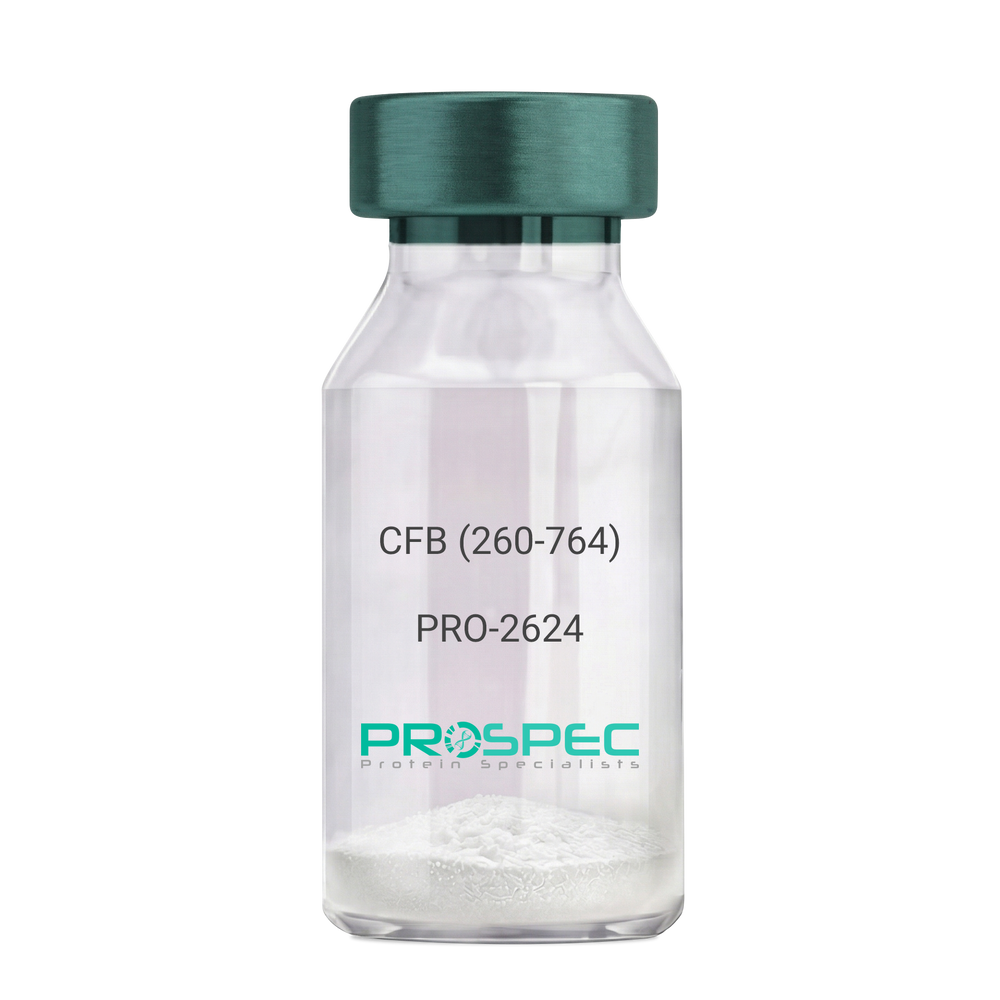
    CFB (260-764) Human, Sf9

    Description:

    Complement Factor B (260-764 a.a.) Human Recombinant, Sf9

    CFB, C3/C5 convertase, Glycine-rich beta glycoprotein, GBG, PBF2, Properdin factor B, BF, BFD, AHUS4, ARMD14, CFAB, CFBD, FB, FBI12, GBG, H2-Bf.

    Product # :

    PRO-2624

    Price :

    Quantity :

    Shipping Method :

    Ice Icon

    Shipped with Ice Packs

    Add To Cart

    More Info

    • description
    • source
    • formulation
    • purity
    • More Info

    Description

    CFB Human Recombinant produced in Sf9 Baculovirus cells is a single, glycosylated polypeptide chain containing 514 amino acids (260-764 a.a) and having a molecular mass of 58.1kDa.CFB is fused to an 9 amino acid His-tag at C-terminus & purified by proprietary chromatographic techniques.

    Source

    Sf9, Baculovirus cells.

    Formulation

    CFB protein solution (0.5mg/ml) containing Phosphate Buffered Saline (pH 7.4) and 20% glycerol.

    Purity

    Greater than 90.0% as determined by SDS-PAGE.

    More Info

    • Introduction

      Factor B is a protein, build from a single chain that circulates in the blood. Complement factor D cleaves and activates factor B, thus creating a catalytic subunit Bb and noncatalytic chain Ba. Subunit Bb is a serine protease that can bind to C3b and forms alternative pathway C3 convertase. Subunit Ba acts as an inhibitor for proliferation of lymphocytes, when Bb is part of the lymphocytes’ proliferation. The gene that codes for this protein is located on chromosome six.

    • Synonyms

      CFB, C3/C5 convertase, Glycine-rich beta glycoprotein, GBG, PBF2, Properdin factor B, BF, BFD, AHUS4, ARMD14, CFAB, CFBD, FB, FBI12, GBG, H2-Bf.

    • Physical Appearance

      Sterile Filtered colorless solution.

    • Stability

      Store at 4°C if entire vial will be used within 2-4 weeks. Store, frozen at -20°C for longer periods of time. For long term storage it is recommended to add a carrier protein (0.1% HSA or BSA).Avoid multiple freeze-thaw cycles.

    • Amino Acid Sequence

      ADPKIVLDPS GSMNIYLVLD GSDSIGASNF TGAKKCLVNL IEKVASYGVK PRYGLVTYAT
      YPKIWVKVSE ADSSNADWVT KQLNEINYED HKLKSGTNTK KALQAVYSMM SWPDDVPPEG
      WNRTRHVIIL MTDGLHNMGG DPITVIDEIR DLLYIGKDRK NPREDYLDVY VFGVGPLVNQ
      VNINALASKK DNEQHVFKVK DMENLEDVFY QMIDESQSLS LCGMVWEHRK GTDYHKQPWQ
      AKISVIRPSK GHESCMGAVV SEYFVLTAAH CFTVDDKEHS IKVSVGGEKR DLEIEVVLFH
      PNYNINGKKE AGIPEFYDYD VALIKLKNKL KYGQTIRPIC LPCTEGTTRA LRLPPTTTCQ
      QQKEELLPAQ DIKALFVSEE EKKLTRKEVY IKNGDKKGSC ERDAQYAPGY DKVKDISEVV
      TPRFLCTGGV SPYADPNTCR GDSGGPLIVH KRSRFIQVGV ISWGVVDVCK NQKRQKQVPA HARDFHINLF QVLPWLKEKL QDEDLGFLHH HHHH

    ProSpec's products are furnished for LABORATORY RESEARCH USE ONLY. The product may not be used as drugs, agricultural or pesticidal products, food additives or household chemicals.

    Complement Factor B
  • View Data Sheet

    Name :

    FAS Blocking Antibody

    Description:

    FAS Blocking Antibody (CD95), Mouse anti Human

    FASLG receptor, Apoptosis-mediating surface antigen FAS, Apo-1 antigen, CD95, Tumor necrosis factor receptor superfamily member 6 TNR6, APT1, FAS1, TNFRSF6.

    Product # :

    ANT-205

    Price :

    Quantity :

    Shipping Method :

    Room Temp Icon

    Shipped at Room temp

    Add To Cart

    More Info

    • More Info

    More Info

    • Introduction

      The Fas receptor (CD95) mediates apoptotic signaling by Fas-ligand expressed on the surface of other cells. The Fas-FasL interaction plays an important role in the immune system and lack of this system leads to autoimmunity, indicating that Fas-mediated apoptosis removes self-reactive lymphocytes. Fas signaling is also involved in immune surveillance to remove transformed cells and virus infected cells. Binding of FAS to oligimerized FasL on another cell activates apoptotic signaling through a cytoplasmic domain termed the death domain that interacts with signaling adaptors including FAF, FADD and DAX to activate the caspase proteolytic cascade. Caspase-8 and caspase-10 are first activated, to then cleave and activate downstream caspases, and a variety of cellular substrates that lead to cell death. Caspases cleave nuclear lamins, causing the nucleus to break down and lose its normal structure and another caspase substrate is DFF, inducing cleavage and degradation of the genome. Other caspase substrates are involved in cytoskeletal structure, cell cycle regulation and signaling pathways. Activation of JNK kinase, activation of Jun, and production of ceramide may also play roles in Fas-mediated apoptosis. Activation of fas-mediated apoptosis is opposed by I-FLICE and FAP. Viruses and tumors may escape immune surveillance in part through suppression of fas-mediated apoptosis using similar mechanisms.

    • Synonyms

      FASLG receptor, Apoptosis-mediating surface antigen FAS, Apo-1 antigen, CD95, Tumor necrosis factor receptor superfamily member 6 TNR6, APT1, FAS1, TNFRSF6.

    • Solubility

      Reconstitute with H20. Mix gently, wash the sides of the vial and wait 30-60 seconds before use.

    • Immunogen

      Recombinant Human FAS.

    • Ig Subclass

      mouse IgG1.

    • Clone

      NYRhFAS.

    • Note

      This is a BLOCKING antibody and will block FAS-mediated apoptosis.

    • Titer

      By direct ELISA, 1:10,000 dilution will yield 0.5 O.D using alkaline phosphatase conjugated rabbit anti-mouse Ig (Jackson Laboratories).

    • Shipping Conditions

      Antibody is shipped lyophilized at ambient temperature.

    • Type

      Mouse Anti Human Monoclonal.

    • Storage Procedures

      In lyophilized form, for long periods, store at 4°C in a dry environment. After reconstitution, if not intended for use within a month, aliquot and store at -20°C.

    • Purification Method

      Ion exchange column Protein concentration1 mg/ml in PBS (after reconstitution).

    ProSpec's products are furnished for LABORATORY RESEARCH USE ONLY. The product may not be used as drugs, agricultural or pesticidal products, food additives or household chemicals.

    Fas B Antibody
  • View Data Sheet

    Name :

    FGFR2 Human

    Description:

    Fibroblast Growth Factor Receptor 2 Fc Chimera Human Recombinant

    Keratinocyte growth factor receptor 2, CD332, FGFR2.

    Product # :

    PKA-231

    Price :

    Quantity :

    Shipping Method :

    Room Temp Icon

    Shipped at Room temp

    Add To Cart

    More Info

    • description
    • source
    • formulation
    • purity
    • biological activity
    • More Info

    Description

    Soluble FGFR-2a (IIIc) Fc Chimera Human Recombinant fused with Xa cleavage site with the Fc part of human IgG1 produced in baculovirus is a heterodimeric, glycosylated, Polypeptide chain containing 602 amino acids and having a molecular mass of 170 kDa. The FGFR2 is purified by proprietary chromatographic techniques.

    Source

    Insect Cells.

    Formulation

    CD332 was lyophilized from a concentrated (1 mg/ml) sterile solution containing no additives.

    Purity

    Greater than 90.0% as determined by SDS-PAGE.

    Biological Activity

    Determined by its ability to inhibit human FGF-2 dependent proliferation on HUVE cells. The ED50 for this effect is typically at 15 - 30ng/ml. 

    More Info

    • Introduction

      Fibroblast Growth Factors (FGFs) comprise a family of at least eighteen structurally realted proteins that are involved in a multitude of physiological and pathological cellular processes, including cell growth, differentation, angiogenesis, wound healing and tumorgenesis. The biological activities of the FGFs are mediated by a family if type I transmembrane tyrosine kinases which undergo dimerization and autophosphorylation after ligand binding. Four distinct genes encoding closely related FGF receptors, FGFR-1to -4 are known. Multiple forms of FGFR-1 to -3 are generated by alternative splicing of the mRNAs. A frequent splicing event involving FGFR-1 and -2 results in receptors containing all three Ig domains, referred to as the alpha isoform, or only IgII and IgIII, referred to as the ? isoform. Only the alpha isoform has been identified for FGFR-3 and FGFR-4. Additional splicing events for FGFR-1 to -3, involving the C-terminal half of the IgIII domain encoded by two mutually exclusive alternative exons, generate FGF receptors with alternative IgIII domains (IIIb and IIIc). A IIIa isoform which is a secreted FGF binding protein containing only the N-terminal half of the IgIII domain plus some intron sequences has also been reported for FGFR-1. Mutations in FGFR-1 to -3 have been found in patients with birth defects involving craniosynostosis.

    • Synonyms

      Keratinocyte growth factor receptor 2, CD332, FGFR2.

    • Physical Appearance

      Sterile Filtered White lyophilized (freeze-dried) powder.

    • Stability

      Lyophilized FGFR2A although stable at room temperature for 3 weeks, should be stored desiccated below -18°C. Upon reconstitution FGFR2 should be stored at 4°C between 2-7 days and for future use below -18°C. For long term storage it is recommended to add a carrier protein (0.1% HSA or BSA).Please prevent freeze-thaw cycles.

    • Solubility

      It is recommended to reconstitute the lyophilized FGFR-2 in sterile PBS not less than 100 µg/ml, which can then be further diluted to other aqueous solutions.

    • Amino Acid Sequence

      RPSFSLVEDTTLEPEEPPTKYQISQPEVYVAAPGESLEVRCLLKDAAVISWT KDGVHLGPNNRTVLIGEYLQIKGATPRDSGLYACTASRTVDSETWYFMVNVT DAISSGDDEDDTDGAEDFVSENSNNKRAPYWTNTEKMEKRLHAVPAANTVKF RCPAGGNPMPTMRWLKNGKEFKQEHRIGGYKVRNQHWSLIMESVVPSDKGNY TCVVENEYGSINHTYHLDVVERSPHRPILQAGLPANASTVVGGDVEFVCKVY SDAQPHIQWIKHVEKNGSKYGPDGLPYLKVLKAAGVNTTDKEIEVLYIRNVT FEDAGEYTCLAGNSIGISFHSAWLTVLPAPGREKEITASPDYLEDPRRASIE GRGDPEEPKSCDKTHTCPPCPAPELLGGPSVFLFPPKPKDTLMISRTPEVTC VVVDVSHEDPEVKFNWYVDGVEVHNAKTKPREEQYNSTYRVVSVLTVLHQDW LNGKEYKCKVSNKALPAPIEKTISKAKGQPREPQVYTLPPSRDELTKNQVSL TCLVKGFYPSDIAVEWESNGQPENNYKTTPPVLDSDGSFFLYSKLTVDKSRW QQGNVFSCSVMHEALHNHYTQKSLSLSPGK

    ProSpec's products are furnished for LABORATORY RESEARCH USE ONLY. The product may not be used as drugs, agricultural or pesticidal products, food additives or household chemicals.

    Fgfr2 Human
  • View Data Sheet

    Name :

    MYCBP Human

    Description:

    C-Myc Binding Protein Human Recombinant

    C-Myc-binding protein, Associate of Myc 1, AMY-1, MYCBP, AMY1, FLJ41056.

    Product # :

    PRO-942

    Price :

    Quantity :

    Shipping Method :

    Ice Icon

    Shipped with Ice Packs

    Add To Cart

    More Info

    • description
    • source
    • formulation
    • purity
    • More Info

    Description

    MYCBP Human Recombinant produced in E.Coli is a single, non-glycosylated polypeptide chain containing 123 amino acids (1-103 a.a.) and having a molecular mass of 14.1kDa.MYCBP is fused to a 20 amino acid His-tag at N-terminus & purified by proprietary chromatographic techniques.

    Source

    Escherichia Coli.

    Formulation

    MYCBP protein solution (1mg/ml) containing 20mM Tris-HCl buffer (pH8.0), 20% glycerol, 0.1M NaCl and 1mM DTT.

    Purity

    Greater than 95.0% as determined by SDS-PAGE.

    More Info

    • Introduction

      MYCBP is a member of the AMY1 family. MYCBP (c-Myc binding protein) binds to the transactivation domain of c-Myc and stimulates the activation of E-box-dependent transcription. MYCBP translocates from the cytoplasm to the nucleus during S phase when increased expression of c-Myc occurs. MYCBP also associates with AKAP 149 and AKAP 84 in mitochondria of somatic cells and sperm, suggesting a role for MYCBP in spermatogenesis. MYCBP is highly expressed in the heart, placenta, pancreas, skeletal muscle and kidney. It is also present at low levels in the lung.

    • Synonyms

      C-Myc-binding protein, Associate of Myc 1, AMY-1, MYCBP, AMY1, FLJ41056.

    • Physical Appearance

      Sterile Filtered colorless solution.

    • Stability

      Store at 4°C if entire vial will be used within 2-4 weeks. Store, frozen at -20°C for longer periods of time. For long term storage it is recommended to add a carrier protein (0.1% HSA or BSA).Avoid multiple freeze-thaw cycles.

    • Amino Acid Sequence

      MGSSHHHHHH SSGLVPRGSH MAHYKAADSK REQFRRYLEK SGVLDTLTKV LVALYEEPEK PNSALDFLKH HLGAATPENP EIELLRLELA EMKEKYEAIV EENKKLKAKL AQYEPPQEEK RAE.

    ProSpec's products are furnished for LABORATORY RESEARCH USE ONLY. The product may not be used as drugs, agricultural or pesticidal products, food additives or household chemicals.

    Mycbp Human
  • View Data Sheet

    Name :

    GABARAPL1 Human

    Description:

    GABA(A) Receptor-Associated Protein Like 1 Human Recombinant

    Gamma-aminobutyric acid receptor-associated protein-like 1, Early estrogen-regulated protein, GABA(A) receptor-associated protein-like 1, Glandular epithelial cell protein 1, GEC-1, GABARAPL1, GEC1, ATG8, APG8L, ATG8B, ATG8L, APG8-LIKE.

    Product # :

    PRO-048

    Price :

    Quantity :

    Shipping Method :

    Ice Icon

    Shipped with Ice Packs

    Add To Cart

    More Info

    • description
    • source
    • formulation
    • purity
    • More Info

    Description

    GABARAPL1 Human Recombinant fused with a 20 amino acid His tag at N-terminus produced in E.Coli is a single, non-glycosylated, polypeptide chain containing 137 amino acids (1-117 a.a.) and having a molecular mass of 16.2kDa (Molecular size on SDS-PAGE will appear higher). The GABARAPL1 is purified by proprietary chromatographic techniques.

    Source

    Escherichia Coli.

    Formulation

    The GABARAPL1 solution (1 mg/ml) contains 20mM Tris buffer (pH 8.0), 10% glycerol, 1mM DTT and 0.1M NaCl.

    Purity

    Greater than 85.0% as determined by SDS-PAGE.

    More Info

    • Introduction

      GABARAPL1 [Gamma-aminobutyric acid (GABA) receptor-associated protein-like 1] is a member of the MAP1 LC3 family. GABARAPL1 increases cell surface expression of kappa type opioid receptor through facilitating anterograde intracellular trafficking of the receptor.

    • Synonyms

      Gamma-aminobutyric acid receptor-associated protein-like 1, Early estrogen-regulated protein, GABA(A) receptor-associated protein-like 1, Glandular epithelial cell protein 1, GEC-1, GABARAPL1, GEC1, ATG8, APG8L, ATG8B, ATG8L, APG8-LIKE.

    • Physical Appearance

      Sterile Filtered colorless solution.

    • Stability

      Store at 4°C if entire vial will be used within 2-4 weeks. Store, frozen at -20°C for longer periods of time. For long term storage it is recommended to add a carrier protein (0.1% HSA or BSA).Avoid multiple freeze-thaw cycles.

    • Amino Acid Sequence

      MGSSHHHHHH SSGLVPRGSH MKFQYKEDHP FEYRKKEGEK IRKKYPDRVP VIVEKAPKAR VPDLDKRKYL VPSDLTVGQF YFLIRKRIHL RPEDALFFFV NNTIPPTSAT MGQLYEDNHE EDYFLYVAYS DESVYGK.

    ProSpec's products are furnished for LABORATORY RESEARCH USE ONLY. The product may not be used as drugs, agricultural or pesticidal products, food additives or household chemicals.

    Gabarapl1 Human
  • View Data Sheet

    Name :

    XPA Antibody

    Description:

    Xeroderma Pigmentosum Complementation Group A, Mouse Anti Human

    XP1, XPAC, DNA repair protein complementing XP-A cells.

    Product # :

    ANT-504

    Price :

    Quantity :

    Shipping Method :

    Ice Icon

    Shipped with Ice Packs

    Add To Cart

    More Info

    • formulation
    • More Info

    Formulation

    1mg/ml containing PBS, pH-7.4, 10% Glycerol and 0.02% Sodium Azide.

    More Info

    • Introduction

      DNA repair protein complementing XP-A cells, (XPA), is a member of the XPA family. XPA protein takes a part in DNA excision repair. It Inductees repair by binding to damaged sites with different affinities depending on the photoproduct and the transcriptional state of the region. Defects in XPA is the reason of xeroderma pigmentosum complementation group A (XP-A), which is infrequent human autosomal recessive disease which characterized by solar sensitivity, high predisposition for developing cancers on areas exposed to sunlight, also may cause to neurological abnormalities.

    • Synonyms

      XP1, XPAC, DNA repair protein complementing XP-A cells.

    • Physical Appearance

      Sterile filtered colorless solution.

    • Immunogen

      Anti-human XPA mAb, clone PAT71H3, is derived from hybridization of mouse F0 myeloma cells with spleen cells from BALB/c mice immunized with a recombinant human XPA protein 1-273 amino acids purified from E. coli.

    • Ig Subclass

      Mouse IgG1 heavy chain and k light chain.

    • Clone

      PAT71H3AT.

    • Applications

      The antibody has been tested by ELISA, Western blot analysis, ICC/IF to assure specificity and reactivity. Since application varies, however, each investigation should be titrated by the reagent to obtain optimal results.

    • Type

      Mouse Anti Human Monoclonal.

    • Storage Procedures

      For periods up to 1 month store at 4°C, for longer periods of time, store at -20°C. Prevent freeze thaw cycles.

    • Purification Method

      XPA antibody was purified from mouse ascitic fluids by protein-A affinity chromatography.

    ProSpec's products are furnished for LABORATORY RESEARCH USE ONLY. The product may not be used as drugs, agricultural or pesticidal products, food additives or household chemicals.

    Xpa Antibody
  • View Data Sheet

    Name :

    FGF 2 Human

    Description:

    Fibroblast Growth Factor-Basic Human Recombinant

    Prostatropin, FGF-basic, fgf2, Basic FGF, HBGF-2, FGF-2, FGF-b.

    Product # :

    CYT-218

    Price :

    Quantity :

    Shipping Method :

    Room Temp Icon

    Shipped at Room temp

    Add To Cart

    More Info

    • description
    • source
    • formulation
    • purity
    • biological activity
    • More Info

    Description

    Fibroblast Growth Factor-2 Human Recombinant (FGF-2) produced in E.Coli is a single, non-glycosylated, polypeptide chain containing 154 amino acids and having a molecular mass of 17.2kDa.The FGF-b is purified by proprietary chromatographic techniques.

    Source

    Escherichia Coli.

    Formulation

    The protein was lyophilized from a concentrated (1mg/ml) solution in 20mM Tris-HCl, pH7.4 and 1M NaCl.

    Purity

    Greater than 98.0% as determined by Analysis by SDS-PAGE.

    Biological Activity

    The ED50, calculated by the dose-dependant proliferation of murine balb/c 3T3 cells is <0.1ng/ml, corresponding to a specific activity of graeter than 1.0x10⁷ Units/mg.

    More Info

    • Introduction

      Basic fibroblast growth factor is a member of the fibroblast growth factor (FGF) family. FGF family members possess broad mitogenic and cell survival activities, and are involved in a variety of biological processes, including embryonic development, cell growth, morphogenesis, tissue repair, tumor growth and invasion. This protein functions as a modifier of endothelial cell migration and proliferation, as well as an angiogenic factor. It acts as a mitogen for a variety of mesoderm- and neuroectoderm-derived cells in vitro, thus is thought to be involved in organogenesis. Three alternatively spliced variants encoding different isoforms have been described. The HPR -binding growth factors are angiogenic agents in vivo and are potent mitogens for a variety of cell types in vitro. There are differences in the tissue distribution and concentration of these 2 growth factors.

    • Synonyms

      Prostatropin, FGF-basic, fgf2, Basic FGF, HBGF-2, FGF-2, FGF-b.

    • Physical Appearance

      Sterile Filtered White lyophilized (freeze-dried) powder.

    • Stability

      Lyophilized Fibroblast Growth Factor-2 although stable at room temperature for 3 weeks, should be stored desiccated below -18°C. Upon reconstitution FGF-b should be stored at 4°C between 2-7 days and for future use below -18°C.For long term storage it is recommended to add a carrier protein (0.1% HSA or BSA).Please prevent freeze-thaw cycles.

    • Solubility

      It is recommended to reconstitute the lyophilized Fibroblast Growth Factor Basic in sterile 18MΩ-cm H2O not less than 100µg/ml, which can then be further diluted to other aqueous solutions.

    • Amino Acid Sequence

      AAGSITTLPA LPEDGGSGAF PPGHFKDPKR LYCKNGGFFL RIHPDGRVDG VREKSDPHIK LQLQAEERGV VSIKGVCANR YLAMKEDGRL LASKCVTDEC FFFERLESNN YNTYRSRKYT SWYVALKRTG QYKLGSKTGP GQKAILFLPM SAKS.

    • Background

      FGF 2 HUMAN: Insights into Fibroblast Growth Factor-2

      Basic Fibroblast Growth Factor or FGF 2 HUMAN is a protein with crucial roles in cell growth, tissue repair, and embryonic development. This is part of the larger fibroblast growth factor family and is vital for various biological processes, including the modulation of cell survival activities.

      Production and Properties

      Produced in E. coli, FGF 2 is a non-glycosylated polypeptide chain possessing 154 amino acids with a molecular weight of about 17.2 kDa. It is purified through advanced chromatographic techniques, ensuring high purity and activity for laboratory use.

      Physical Characteristics and Preparation

      The physical form of FGF 2 HUMAN is a sterile, white lyophilized powder. For experimental use, it is reconstituted with sterile water to at least 100µg/ml. This reconstitution is crucial for maintaining the integrity and effectiveness of the protein in various research applications.

      Storage and Handling

      To maintain stability, lyophilized FGF 2 should be stored at -18°C and used within three weeks if kept at room temperature. Once reconstituted, it should be kept at 4°C and used within 2-7 days or stored at -18°C for longer-term storage.

      Proper handling and avoiding repeated freeze-thaw cycles are essential to preserve the protein's functionality.

      Purity and Biological Activity

      FGF 2 is characterized by a purity greater than 98%, verified by SDS-PAGE analysis. Its biological activity is primarily defined by its efficacy in promoting the proliferation of specific cell lines, with an effective dose (ED50) typically below 0.1 ng/ml.

      Research Applications and Impact

      In the research context, FGF 2 is used extensively to study its effects on cell migration, proliferation, and angiogenesis. Moreover, its role in disease models, particularly in cancer and tissue repair studies, makes it a valuable resource for developing new therapeutic approaches.

      Usage Guidelines

      FGF 2 HUMAN is strictly for laboratory research use and is not suitable for drug development, food production, or cosmetic applications. Researchers are advised to comply with safety and handling guidelines to ensure that experiments are conducted under optimal conditions.

      The Broad Impact on Development and Disease

      FGF-2 is known for its multifunctional role across numerous biological processes such as tissue repair, embryonic development, angiogenesis, and even tumorigenesis.

      This growth factor, existing in various synonymous forms such as Basic FGF, FGF-b, and HBGF-2, is essential in cellular processes that underpin both health and disease.

      Furthermore, FGF-2's ability to bind to cellular receptors triggers a cascade of signaling pathways, including PI3K/Akt, MAPK/ERK, and PLCγ, which in turn influence cell growth, migration, and survival.

      These pathways are pivotal in mediating the factor's diverse effects on cell behavior, contributing to its critical roles in wound healing, angiogenesis, and tissue remodeling.

      What is the molecular weight/Mw of FGF 2 Protein?
      FGF 2 Protein has a total Mw of 17.2kDa.

      What is the source or expression system of FGF 2 Protein?
      Escherichia Coli.

      What is the Purity of FGF 2 Protein?
      FGF 2 Protein is >98% pure as determined by SDS-PAGE.

      What is the Biological Activity of FGF 2 Protein?
      The ED50, calculated by the dose-dependant proliferation of murine balb/c 3T3 cells is <0.1ng/ml, corresponding to a specific activity of graeter than 1.0x10⁷ Units/mg.

      What is the amino acid sequence of FGF 2 Protein?
      AAGSITTLPA LPEDGGSGAF PPGHFKDPKR LYCKNGGFFL RIHPDGRVDG VREKSDPHIK LQLQAEERGV VSIKGVCANR YLAMKEDGRL LASKCVTDEC FFFERLESNN YNTYRSRKYT SWYVALKRTG QYKLGSKTGP GQKAILFLPM SAKS.

      What applications can FGF 2 Protein be used in?
      FGF 2 Protein can probably be used in western blot, ELISA and Lateral Flow.

      What is the endotoxin level for FGF 2 Protein?
      The endotoxin level is minimal, FGF 2 Protein was purified using conventional chromatography techniques.

    ProSpec's products are furnished for LABORATORY RESEARCH USE ONLY. The product may not be used as drugs, agricultural or pesticidal products, food additives or household chemicals.

    Fgf 2 Human
  • View Data Sheet

    Name :

    Darbepoetin

    Description:

    Darbepoetin-Alpha Human Recombinant

    Erythropoietin-Mutant, EPO-mutant, NESP, Novel Erythropoiesis Stimulating Protein, EPO Mutant.

    Product # :

    CYT-1263

    Price :

    Quantity :

    Shipping Method :

    Room Temp Icon

    Shipped at Room temp

    Add To Cart

    More Info

    • description
    • source
    • formulation
    • purity
    • biological activity
    • More Info

    Description

    Darbepoetin-alpha Human Recombinant is produced in Chinese hamster ovary (CHO) cells by recombinant DNA technology is a glycosylated polypeptide chain containing 165 amino acids and having a predicted molecular mass of 18,200 Dalton and apparent glycosylated molecular mass of 37-40kDa. Darbepoetin is purified by proprietary chromatographic techniques.

    Source

    Chinese Hamster Ovary Cells(CHO).

    Formulation

    Each mg of lyophilized Darbepoetin powder contains 20mM Phosphate Buffer, 0.15M NaCl pH-6.2 & 0.005% Tween-80.

    Purity

    Greater than 97.0% as determined by SDS-PAGE.

    Biological Activity

    The Specific Activity was measured by Normocyth -aemic mice and was found to be 1,000,000 IU/mg.

    More Info

    • Introduction

      Darbepoetin is a mutant recombinant human EPO-Alpha protein re-engineered, containing 5 amino acid changes at N30, T32, V87, N88, T90. Darbepoetin exhibits longer half-life stimulating red blood cell production than Erythropoietin. Darbepoetin maintains hemoglobin more effectively compared to EPO-Alpha.

    • Synonyms

      NESP, Novel Erythropoiesis Stimulating Protein, EPO Mutant.

    • Physical Appearance

      Sterile Filtered White lyophilized (freeze-dried) powder.

    • Stability

      Lyophilized Darbepoetin although stable at room temperature for 3 weeks, should be stored desiccated below -18°C. Upon reconstitution Darbepoetin should be stored at 4°C between 2-7 days and for future use below -18°C.For long term storage it is recommended to add a carrier protein (0.1% HSA or BSA).Please prevent freeze-thaw cycles.

    • Solubility

      It is recommended to reconstitute the lyophilized Darbepoetin in sterile 18MΩ-cm H2O not less than 100µg/ml, which can then be further diluted to other aqueous solutions.

    • Amino Acid Sequence

      APPRLICDSR VLERYLLEAK EAENITTGCN ETCSLNENIT VPDTKVNFYA WKRMEVGQQA VEVWQGLALL SEAVLRGQAL LVNSSQVNET LQLHVDKAVS GLRSLTTLLR ALGAQKEAIS PPDAASAAPL RTITADTFRK LFRVYSNFLR GKLKLYTGEA CRTGD.

    • Background

      What is the molecular weight/Mw of DARBEPOETIN Protein?
      DARBEPOETIN Protein has a total Mw of 38.5kDa.

      What is the source or expression system of DARBEPOETIN Protein?
      Chinese Hamster Ovary Cells(CHO).

      What is the Purity of DARBEPOETIN Protein?
      DARBEPOETIN Protein is >97% pure as determined by SDS-PAGE.

      What is the Biological Activity of DARBEPOETIN Protein?
      The Specific Activity was measured by Normocyth -aemic mice and was found to be 1,000,000 IU/mg.

      What is the amino acid sequence of DARBEPOETIN Protein?
      APPRLICDSR VLERYLLEAK EAENITTGCN ETCSLNENIT VPDTKVNFYA WKRMEVGQQA VEVWQGLALL SEAVLRGQAL LVNSSQVNET LQLHVDKAVS GLRSLTTLLR ALGAQKEAIS PPDAASAAPL RTITADTFRK LFRVYSNFLR GKLKLYTGEA CRTGD

      What applications can DARBEPOETIN Protein be used in?
      DARBEPOETIN Protein can probably be used in western blot, ELISA and Lateral Flow.

      What is the endotoxin level for DARBEPOETIN Protein?
      The endotoxin level is minimal, DARBEPOETIN Protein was purified using conventional chromatography techniques

    ProSpec's products are furnished for LABORATORY RESEARCH USE ONLY. The product may not be used as drugs, agricultural or pesticidal products, food additives or household chemicals.

    Darbepoetin
  • View Data Sheet

    Name :

    SERPINA1 Human, Active

    Description:

    Alpha-1 Antitrypsin, Active Human Recombinant

    Alpha-1-antitrypsin, Alpha-1 protease inhibitor, Alpha-1-antiproteinase, SERPINA1, A1AT, PI, A1A, AAT, PI1, MGC9222, PRO2275, MGC23330.

    Product # :

    PRO-907

    Price :

    Quantity :

    Shipping Method :

    Room Temp Icon

    Shipped at Room temp

    Add To Cart

    More Info

    • description
    • source
    • formulation
    • purity
    • biological activity
    • More Info

    Description

    SERPINA1 Human Recombinant produced in rice is a single, non-glycosylated polypeptide chain containing 384 amino acids and having a molecular mass of 43.1 kDa.The SERPINA1 protein is purified by proprietary chromatographic techniques.

    Source

    Rice Grain (Oryza Sativa).

    Formulation

    SERPINA1 was lyophilized from a concentrated solution containing recombinant Albumin.

    Purity

    Greater than 95% as determined by SDS-PAGE.

    Biological Activity

    3~5 mg SERPINA1 will inhibit 1 mg PPE with an activity of 10.8 units per mg protein

    More Info

    • Introduction

      SERPINA1 is secreted and is a serine protease inhibitor which its targets include elastase, plasmin, collagenase, leucocytic proteases, trypsin, chymotrypsin, and plasminogen activator. Defects in SERPINA1 gene can cause emphysema or liver disease. SERPINA1 is an endogenous inhibitor of serine proteases and inhibits the catalytic domain of human recombinant matriptase in vitro. Rise in SERPINA1 occurs as an acute phase response to tissue necrosis and inflammation. mutations in SERPINA1 and SLC11A1 genes change the balance between elastase produced by leukocytes during phagocytosis.

    • Synonyms

      Alpha-1-antitrypsin, Alpha-1 protease inhibitor, Alpha-1-antiproteinase, SERPINA1, A1AT, PI, A1A, AAT, PI1, MGC9222, PRO2275, MGC23330.

    • Physical Appearance

      Sterile Filtered White lyophilized (freeze-dried) powder.

    • Stability

      Lyophilized SERPINA1 although stable at room temperature for 3 weeks, should be stored desiccated below -18°C. Upon reconstitution SERPINA1 should be stored at 4°C between 2-7 days and for future use below -18°C.For long term storage it is recommended to add a carrier protein (0.1% HSA or BSA).Please prevent freeze-thaw cycles.

    • Solubility

      It is recommended to reconstitute the lyophilized SERPINA1 in sterile 18M-cm H2O not less than 100µg/ml, which can then be further diluted to other aqueous solutions.

    ProSpec's products are furnished for LABORATORY RESEARCH USE ONLY. The product may not be used as drugs, agricultural or pesticidal products, food additives or household chemicals.

    Serpina1 Human Active
  • View Data Sheet

    Name :

    IGFBP 1 Human

    Description:

    Insulin-Like Growth Factor Binding Protein-1 Human Recombinant

    IBP-1, IGF-Binding Protein 1, AFBP, PP12, IGF-BP25, hIGFBP-1, IGFBP-1.

    Product # :

    CYT-299

    Price :

    Quantity :

    Shipping Method :

    Room Temp Icon

    Shipped at Room temp

    Add To Cart

    More Info

    • description
    • source
    • formulation
    • purity
    • biological activity
    • More Info

    Description

    IGFBP-1 Human Recombinant (26-259 a.a.) produced in NS0 is a single, glycosylated, polypeptide chain containing 234 amino acids and having a molecular mass of 25kDa. The IGFBP1 is purified by proprietary chromatographic techniques.

    Source

    Mouse myeloma cell line, NS0.

    Formulation

    IGFBP-1 protein was lyophilized from a 0.2µm filtered concentrated solution in PBS.

    Purity

    Greater than 95.0% as determined by SDS-PAGE.

    Biological Activity

    The ED50, as determined by the inhibition of rHuIGF-I-induced proliferation of human MCF-7 cells, is less than 4µg/ml.

    More Info

    • Introduction

      IGFBP1 is a member of the insulin-like growth factor binding protein (IGFBP) family and encodes a protein with an IGFBP domain and a thyroglobulin type-I domain. The protein binds both insulin-like growth factors (IGFs) I and II and circulates in the plasma. Binding of this protein prolongs the half-life of the IGFs and alters their interaction with cell surface receptors. Alternate transcriptional splice variants, encoding different isoforms, have been characterized.

    • Synonyms

      IBP-1, IGF-Binding Protein 1, AFBP, PP12, IGF-BP25, hIGFBP-1, IGFBP-1.

    • Physical Appearance

      Sterile Filtered White lyophilized (freeze-dried) powder.

    • Stability

      Lyophilized IGFBP1 although stable at room temperature for 3 weeks, should be stored desiccated below -18°C. Upon reconstitution IGF-BP1 should be stored at 4°C between 2-7 days and for future use below -18°C.For long term storage it is recommended to add a carrier protein (0.1% HSA or BSA).Please prevent freeze-thaw cycles.

    • Solubility

      It is recommended to reconstitute the lyophilized IBP-1 in sterile 18MΩ-cm H2O not less than 100µg/ml, which can then be further diluted to other aqueous solutions.

    • Amino Acid Sequence

      APWQCAPCSA EKLALCPPVS ASCSEVTRSA GCGCCPMCAL PLGAACGVAT ARCARGLSCR ALPGEQQPLH ALTRGQGACV QESDASAPHA AEAGSPESPE STEITEEELL DNFHLMAPSE EDHSILWDAI STYDGSKALH VTNIKKWKEP CRIELYRVVE SLAKAQETSG EEISKFYLPN CNKNGFYHSR QCETSMDGEA GLCWCVYPWN GKRIPGSPEI RGDPNCQIYF NVQN.

    • Background

      What is the molecular weight/Mw of IGFBP1 HUMAN Protein?
      IGFBP1 HUMAN Protein has a total Mw of 25kDa.

      What is the source or expression system of IGFBP1 HUMAN Protein?
      Mouse myeloma cell line, NS0.

      What is the Purity of IGFBP1 HUMAN Protein?
      IGFBP1 HUMAN Protein is >95% pure as determined by SDS-PAGE.

      What is the Biological Activity of IGFBP1 HUMAN Protein?
      The ED50, as determined by the inhibition of rHuIGF-I-induced proliferation of human MCF-7 cells, is less than 4µg/ml.

      What is the amino acid sequence of IGFBP1 HUMAN Protein?
      APWQCAPCSA EKLALCPPVS ASCSEVTRSA GCGCCPMCAL PLGAACGVAT ARCARGLSCR ALPGEQQPLH ALTRGQGACV QESDASAPHA AEAGSPESPE STEITEEELL DNFHLMAPSE EDHSILWDAI STYDGSKALH VTNIKKWKEP CRIELYRVVE SLAKAQETSG EEISKFYLPN CNKNGFYHSR QCETSMDGEA GLCWCVYPWN GKRIPGSPEI RGDPNCQIYF NVQN.

      What applications can IGFBP1 HUMAN Protein be used in?
      IGFBP1 HUMAN Protein can probably be used in western blot, ELISA and Lateral Flow.

      What is the endotoxin level for IGFBP1 HUMAN Protein?
      The endotoxin level is minimal, IGFBP1 HUMAN Protein was purified using conventional chromatography techniques.


    ProSpec's products are furnished for LABORATORY RESEARCH USE ONLY. The product may not be used as drugs, agricultural or pesticidal products, food additives or household chemicals.

    Igfbp 1 Human
  • View Data Sheet

    Name :

    PABPN1 Human

    Description:

    Poly(A) Binding Protein, Nuclear 1 Human Recombinant

    Poly(A) Binding Protein Nuclear 1, Poly(A) Binding Protein 2, Polyadenylate-Binding Nuclear Protein 1, PABP-2, OPMD, PAB2, Nuclear Poly(A)-Binding Protein 1, PABII.

    Product # :

    PRO-1827

    Price :

    Quantity :

    Shipping Method :

    Ice Icon

    Shipped with Ice Packs

    Add To Cart

    More Info

    • description
    • source
    • formulation
    • purity
    • More Info

    Description

    PABPN1 Human Recombinant produced in E.coli is a single, non-glycosylated polypeptide chain containing 211 amino acids (119-306) and having a molecular mass of 23.8 kDa. PABPN1 is fused to a 23 amino acid His-tag at N-terminus.

    Source

    Escherichia Coli.

    Formulation

    The PABPN1 solution (1mg/ml) contains 20mM Tris-HCl buffer (pH 8.0), 0.4M Urea and 10% glycerol.

    Purity

    Greater than 95% as determined by SDS-PAGE.

    More Info

    • Introduction

      PABPN1 is an highly expressed nuclear protein which has high affinity to nascent poly(A) tails. PABPN1 is essential for progressive and efficient polymerization of poly(A) tails at the 3' ends of eukaryotic transcripts and regulates the length of the poly(A) tail to about 250 nt. In its steady-state, PABPN1 is restricted to the nucleus however there are different poly(A) binding proteins which can be found in the cytoplasm. PABPN1 has a GCG trinucleotide repeat at the 5' end of the coding region. Expansion of this repeat from the normal 6 copies to 8-13 copies results in autosomal dominant oculopharyngeal muscular dystrophy (OPMD) disease. Associated pseudogenes were located on chromosomes 19 and X. Additionally, there is a read-through transcription between PABPN1 gene and the adjacent upstream BCL2L2 (BCL2-like 2) gene.

    • Synonyms

      Poly(A) Binding Protein Nuclear 1, Poly(A) Binding Protein 2, Polyadenylate-Binding Nuclear Protein 1, PABP-2, OPMD, PAB2, Nuclear Poly(A)-Binding Protein 1, PABII.

    • Physical Appearance

      Sterile Filtered clear solution.

    • Stability

      Store at 4°C if entire vial will be used within 2-4 weeks. Store, frozen at -20°C for longer periods of time. For long term storage it is recommended to add a carrier protein (0.1% HSA or BSA).Avoid multiple freeze-thaw cycles.

    • Amino Acid Sequence

      MGSSHHHHHH SSGLVPRGSH MGSLEAIKAR VREMEEEAEK LKELQNEVEK QMNMSPPPGN AGPVIMSIEE KMEADARSIY VGNVDYGATA EELEAHFHGC GSVNRVTILC DKFSGHPKGF AYIEFSDKES VRTSLALDES LFRGRQIKVI PKRTNRPGIS TTDRGFPRAR YRARTTNYNS SRSRFYSGFN SRPRGRVYRG RARATSWYSP Y

    ProSpec's products are furnished for LABORATORY RESEARCH USE ONLY. The product may not be used as drugs, agricultural or pesticidal products, food additives or household chemicals.

    Pabpn1 Human
  • View Data Sheet

    Name :

    SFRP5 Human

    Description:

    Secreted Frizzled-Related Protein 5 Human Recombinant

    Secreted Frizzled-Related Protein 5, SARP3, Secreted Apoptosis Related Protein 3, Secreted Apoptosis-Related Protein 3, Frizzled-Related Protein 1b, FRP-1b, SARP-3, SFRP-5, FRP1B, SFRP5.

    Product # :

    PRO-2171

    Price :

    Quantity :

    Shipping Method :

    Ice Icon

    Shipped with Ice Packs

    Add To Cart

    More Info

    • description
    • source
    • formulation
    • purity
    • More Info

    Description

    SFRP5 Human Recombinant produced in E.Coli is a single, non-glycosylated polypeptide chain containing 311 amino acids (30-317 a.a) and having a molecular mass of 35kDa.SFRP5 is fused to a 23 amino acid His-tag at N-terminus & purified by proprietary chromatographic techniques.

    Source

    Escherichia Coli.

    Formulation

    SFRP5 protein solution (1mg/ml) containing 20mM Tris-HCl (pH 8.0) and 10% glycerol.

    Purity

    Greater than 85.0% as determined by SDS-PAGE.

    More Info

    • Introduction

      Secreted Frizzled-Related Protein 5, also known as SFRP5, belongs to the SFRP family which includes a cysteine-rich domain homologous to the putative Wnt-binding site of Frizzled proteins. SFRPs perform like soluble modulators of Wnt signaling. SFRP5 & SFRP1 are implicated in determining the polarity of photoreceptor cells in the retina. SFRP5 is highly expressed in the retinal pigment epithelium, as well as moderately expressed in the pancreas.

    • Synonyms

      Secreted Frizzled-Related Protein 5, SARP3, Secreted Apoptosis Related Protein 3, Secreted Apoptosis-Related Protein 3, Frizzled-Related Protein 1b, FRP-1b, SARP-3, SFRP-5, FRP1B, SFRP5.

    • Physical Appearance

      Sterile Filtered clear solution.

    • Stability

      Store at 4°C if entire vial will be used within 2-4 weeks. Store, frozen at -20°C for longer periods of time. For long term storage it is recommended to add a carrier protein (0.1% HSA or BSA).Avoid multiple freeze-thaw cycles.

    • Amino Acid Sequence

      MGSSHHHHHH SSGLVPRGSH MGSEEYDYYG WQAEPLHGRS YSKPPQCLDI PADLPLCHTV GYKRMRLPNL LEHESLAEVK QQASSWLPLL AKRCHSDTQV FLCSLFAPVC LDRPIYPCRS LCEAVRAGCA PLMEAYGFPW PEMLHCHKFP LDNDLCIAVQ FGHLPATAPP VTKICAQCEM EHSADGLMEQ MCSSDFVVKM RIKEIKIENG DRKLIGAQKK KKLLKPGPLK RKDTKRLVLH MKNGAGCPCP QLDSLAGSFL VMGRKVDGQL LLMAVYRWDK KNKEMKFAVK FMFSYPCSLY YPFFYGAAEP H.

    ProSpec's products are furnished for LABORATORY RESEARCH USE ONLY. The product may not be used as drugs, agricultural or pesticidal products, food additives or household chemicals.

    Sfrp5 Human
  • View Data Sheet

    Name :

    FGF 19 Human

    Description:

    Fibroblast Growth Factor-19 Human Recombinant

    Fibroblast growth factor 19, FGF-19, FGF19.

    Product # :

    CYT-700

    Price :

    Quantity :

    Shipping Method :

    Room Temp Icon

    Shipped at Room temp

    Add To Cart

    More Info

    • description
    • source
    • formulation
    • purity
    • biological activity
    • More Info

    Description

    FGF19 Human Recombinant produced in E.Coli is a single, non-glycosylated, polypeptide chain containing 195 amino acids and having a molecular mass of 21.8 kDa.The FGF-19 is purified by proprietary chromatographic techniques.

    Source

    Escherichia Coli.

    Formulation

    Filtered (0.2µm) and lyophilized from 1mg/ml in 1xPBS, pH 7.4.

    Purity

    Greater than 95.0% as determined by:
    (a) Analysis by RP-HPLC.
    (b) Analysis by SDS-PAGE.

    Biological Activity

    The ED50 as determined by the dose-dependent stimulation of the proliferation of balb/c 3T3 cells is 100-150ng/ml.

    More Info

    • Introduction

      The FGFs are a family of more than 20 small (~17–26 kDa) secreted peptides. The initial characterization of these proteins focused on their ability to stimulate fibroblast proliferation. This mitogenic activity was mediated through FGF receptors (FGFRs) 1, 2, or 3. A fourth closely related tyrosine kinase receptor (FGFR4) was able to bind the FGFs but did not lead to a mitogenic response.
      FGFs modulate cellular activity via at least 5 distinct subfamilies of high-affinity FGF receptors (FGFRs): FGFR-1, -2, -3, and -4, all with intrinsic tyrosine kinase activity and, except for FGFR-4, multiple splice isoforms, and FGFR-5, which lacks an intracellular kinase domain. There is growing evidence that FGFRs can be important for regulation of glucose and lipid homeostasis. The overexpression of a dominant negative form of FGFR-1 in ? cells leads to diabetes in mice, which thus implies that proper FGF signaling is required for normal ? cell function and glycemia maintenance. FGFR-2 appears to be a key molecule during pancreatic development. Moreover, FGFR-4 has been implicated in cholesterol metabolism and bile acid synthesis.
      FGF-19, has been shown to cause resistance to diet-induced obesity and INS desensitization and to improve INS, glucose, and lipid profiles in diabetic rodents. Since these effects, at least in part, are mediated through the observed changes in metabolic rates, FGF-19 can be considered as a regulator of energy expenditure.
      FGF-21 is preferentially expressed in liver, but an exact knowledge of FGF-21 bioactivity and its mode of action have been lacking to date. FGF-21 is a potent activator of glucose uptake on adipocytes, protects animals from diet-induced obesity when overexpressed in transgenic mice, and lowers blood glucose and triglyceride levels when therapeutically administered to diabetic rodents.

    • Synonyms

      Fibroblast growth factor 19, FGF-19, FGF19.

    • Physical Appearance

      Filtered white lyophilized powder.

    • Stability

      Lyophilized FGF-19 Human Recombinant although stable at room temperature for 3 weeks, should be stored desiccated below -18°C. Upon reconstitution Fibroblast Growth Factor-19 should be stored at 4°C between 2-7 days and for future use below -18°C.For long term storage it is recommended to add a carrier protein (0.1% HSA or BSA).Please prevent freeze-thaw cycles.

    • Solubility

      It is recommended to reconstitute the lyophilized FGF-19 in sterile 1X PBS not less than 100µg/ml, which can then be further diluted to other aqueous solutions.

    • Amino Acid Sequence

      MRPLAFSDAG PHVHYGWGDP IRLRHLYTSG PHGLSSCFLR IRADGVVDCA RGQSAHSLLE IKAVALRTVA IKGVHSVRYL CMGADGKMQG LLQYSEEDCA FEEEIRPDGY NVYRSEKHRL PVSLSSAKQR QLYKNRGFLP LSHFLPMLPM VPEEPEDLRG HLESDMFSSP LETDSMDPFG LVTGLEAVRS PSFEK.

    • Background

      What is the molecular weight/Mw of FGF19 Protein?
      FGF19 Protein has a total Mw of 21.8kDa.

      What is the source or expression system of FGF19 Protein?
      Escherichia Coli.

      What is the Purity of FGF19 Protein?
      FGF19 Protein is >95% pure as determined by SDS-PAGE.

      What is the Biological Activity of FGF19 Protein?
      The ED50 as determined by the dose-dependent stimulation of the proliferation of balb/c 3T3 cells is 100-150ng/ml.

      What is the amino acid sequence of FGF19 Protein?
      MRPLAFSDAG PHVHYGWGDP IRLRHLYTSG PHGLSSCFLR IRADGVVDCA RGQSAHSLLE IKAVALRTVA IKGVHSVRYL CMGADGKMQG LLQYSEEDCA FEEEIRPDGY NVYRSEKHRL PVSLSSAKQR QLYKNRGFLP LSHFLPMLPM VPEEPEDLRG HLESDMFSSP LETDSMDPFG LVTGLEAVRS PSFEK.

      What applications can FGF19 Protein be used in?
      FGF19 Protein can probably be used in western blot, ELISA and Lateral Flow.

      What is the endotoxin level for FGF19 Protein?
      The endotoxin level is minimal, FGF19 Protein was purified using conventional chromatography techniques.

    ProSpec's products are furnished for LABORATORY RESEARCH USE ONLY. The product may not be used as drugs, agricultural or pesticidal products, food additives or household chemicals.

    Fgf19 Human
  • View Data Sheet

    Name :

    Leptin Receptor Chicken

    Description:

    Leptin Receptor Chicken Recombinant

    OB Protein, Obesity Protein, OBS, Obesity factor, Leptin Receptor.

    Product # :

    CYT-509

    Price :

    Quantity :

    Shipping Method :

    Ice Icon

    Shipped with Ice Packs

    Add To Cart

    More Info

    • description
    • source
    • formulation
    • purity
    • More Info

    Description

    Leptin Binding Domain Chicken Recombinant also called Leptin Receptor produced in E.Coli is a single, non-glycosylated, polypeptide chain containing 208 amino acids and having a molecular mass of 24.5 kDa. Chicken Leptin Receptor consists of the cytokine binding domain of leptin receptor amino acids 420-626 of chicken leptin receptor.The Leptin Binding Domain is purified by proprietary chromatographic techniques.

    Source

    Escherichia Coli.

    Formulation

    The protein was filter sterilized and stored at 4°C (0.2 to 0.5 mg/ml) solution of Tris-HCl buffer, pH 9.0 with 150mM NaCl.

    Purity

    Greater than 99.0% as determined by:
    (a) Analysis by SEC-HPLC.
    (b) Analysis by SDS-PAGE.

    More Info

    • Introduction

      Leptin Receptor is a part of the gp130 family of cytokine receptors that stimulate gene transcription by activating cytosolic STAT proteins. Leptin Receptor plays a role in the regulation of fat metabolism and in novel hematopoietic pathway that is obligatory for normal lymphopoiesis. Leptin Receptorparticipates in the regulation of counter-regulatory response to hypoglycemia by inhibiting neurons of the parabrachial nucleus.Leptin Receptoraffectsspecifically on T lymphocyte responses.

    • Synonyms

      OB Protein, Obesity Protein, OBS, Obesity factor, Leptin Receptor.

    • Physical Appearance

      Sterile Filtered colorless solution at a concentration of 0.4 mg/ml.

    • Stability

      Sterile solutions at 0.5mg/ml or less are stable at 4°C for several months.

    • Amino Acid Sequence

      The sequence of the first six N-terminal amino acids was determined and was found to be Ala-Ile-Asp-Val-Asn-Ile Biological ActivityBiological Activity is evidenced by high affinity binding of mammalian leptins at 1:1 molar ratio.

    • Protein content

      Protein quantitation was carried out by two independent methods1. UV spectroscopy at 280 nm using the absorbency value of 2.45 as the extinction coefficient for a 0.1% (1mg/ml) solution. This value is calculated by the PC GENE computer analysis program of protein sequences (IntelliGenetics). 2. Analysis by RP-HPLC, using a calibrated solution of Leptin Binding Domain as a Reference Standard.

    ProSpec's products are furnished for LABORATORY RESEARCH USE ONLY. The product may not be used as drugs, agricultural or pesticidal products, food additives or household chemicals.

    Leptin Receptor Chicken
  • View Data Sheet

    Name :

    CREB3L2 Human

    Description:

    CAMP Responsive Element Binding Protein 3-Like 2 Human Recombinant

    CAMP Responsive Element Binding Protein 3-Like 2, BBF2H7, CAMP-Responsive Element-Binding Protein 3-Like Protein 2, BBF2 Human Homolog On Chromosome 7, Cyclic AMP-Responsive Element-Binding Protein 3-Like Protein 2, Basic Transcription Factor 2, B-ZIB Transcription Factor, FUS/BBF2H7 Protein, TCAG_1951439, Cyclic AMP-responsive element-binding protein 3-like protein 2, cAMP-responsive element-binding protein 3-like protein 2.

    Product # :

    PRO-2153

    Price :

    Quantity :

    Shipping Method :

    Ice Icon

    Shipped with Ice Packs

    Add To Cart

    More Info

    • description
    • source
    • formulation
    • purity
    • More Info

    Description

    CREB3L2 Human Recombinant produced in E.Coli is a single, non-glycosylated polypeptide chain containing 401 amino acids (1-378 a.a) and having a molecular mass of 44kDa. CREB3L2 is fused to a 23 amino acid His-tag at N-terminus & purified by proprietary chromatographic techniques.

    Source

    Escherichia Coli.

    Formulation

    CREB3L2 protein solution (0.25mg/ml) containing 20mM Tris-HCl buffer (pH 8.0), 0.2M NaCl, 50% glycerol and 1mM DTT.

    Purity

    Greater than 90% as determined by SDS-PAGE.

    More Info

    • Introduction

      CAMP Responsive Element Binding Protein 3-Like 2, also known as CREB3L2 belongs to the oasis bZIP transcription factor family. Members of this family are able to dimerize however from homodimers only. CREB3L2 is a transcriptional activator. Translocations between CREB3L2 on chromosome 7 and the gene fused in sarcoma on chromosome 16 can be found in some tumors. One disease which is associated with CREB3L2 is myxofibrosarcoma.

    • Synonyms

      CAMP Responsive Element Binding Protein 3-Like 2, BBF2H7, CAMP-Responsive Element-Binding Protein 3-Like Protein 2, BBF2 Human Homolog On Chromosome 7, Cyclic AMP-Responsive Element-Binding Protein 3-Like Protein 2, Basic Transcription Factor 2, B-ZIB Transcription Factor, FUS/BBF2H7 Protein, TCAG_1951439, Cyclic AMP-responsive element-binding protein 3-like protein 2, cAMP-responsive element-binding protein 3-like protein 2.

    • Physical Appearance

      Sterile filtered colorless solution.

    • Stability

      Store at 4°C if entire vial will be used within 2-4 weeks. Store, frozen at -20°C for longer periods of time. For long term storage it is recommended to add a carrier protein (0.1% HSA or BSA).Avoid multiple freeze-thaw cycles.

    • Amino Acid Sequence

      MGSSHHHHHH SSGLVPRGSH MGSMEVLESG EQGVLQWDRK LSELSEPGDG EALMYHTHFS ELLDEFSQNV LGQLLNDPFL SEKSVSMEVE PSPTSPAPLI QAEHSYSLCE EPRAQSPFTH ITSDSFNDDE VESEKWYLST DFPSTSIKTE PITDEPPPGL VPSVTLTITA ISTPLEKEEP PLEMNTGVDS SCQTIIPKIK LEPHEVDQFL NFSPKEAPVD HLHLPPTPPS SHGSDSEGSL SPNPRLHPFS LPQTHSPSRA APRAPSALSS SPLLTAPHKL QGSGPLVLTE EEKRTLIAEG YPIPTKLPLS KSEEKALKKI RRKIKNKISA QESRRKKKEY MDSLEKKVES CSTENLELRK KVEVLENTNR TLLQQLQKLQ TLVMGKVSRT CKLAGTQTGT C.

    ProSpec's products are furnished for LABORATORY RESEARCH USE ONLY. The product may not be used as drugs, agricultural or pesticidal products, food additives or household chemicals.

    Creb3L2 Human
  • View Data Sheet

    Name :

    HSA Fatty Acid free

    Description:

    Human Serum Albumin Recombinant, Fatty Acid Free

    Serum albumin, ALB, PRO0883, PRO0903, PRO1341, DKFZp779N1935, GIG20, GIG42,   PRO1708, PRO2044, PRO2619, PRO2675, UNQ696, SA, HSA.

    Product # :

    PRO-1917

    Price :

    Quantity :

    Shipping Method :

    Ice Icon

    Shipped with Ice Packs

    Add To Cart

    More Info

    • description
    • source
    • formulation
    • purity
    • More Info

    Description

    HSA Human Recombinant Fatty Acid reduced produced in Plant contains 585 amino acids having a molecular mass of 67 kDa. The recombinant Albumin is purified by proprietary chromatographic techniques.

    Source

    Rice Grain.

    Formulation

    solution containing no additives.

    Purity

    Greater than 97% as determined by SDS-PAGE.

    More Info

    • Introduction

      Albumin is synthesized in the liver as preproalbumin which has an N-terminal peptide that is removed before the nascent protein is released from the rough endoplasmic reticulum. The product, proalbumin, is in turn cleaved in the Golgi vesicles to produce the secreted albumin. Albumin is a soluble, monomeric protein which comprises about one-half of the blood serum protein. Albumin functions primarily as a carrier protein for steroids, fatty acids, and thyroid hormones and plays a role in stabilizing extracellular fluid volume. Mutations in this gene on chromosome 4 result in various anomalous proteins. Albumin is a globular unglycosylated serum protein of molecular weight 65,000. The human albumin gene is 16,961 nucleotides long from the putative 'cap' site to the first poly (A) addition site. It is split into 15 exons which are symmetrically placed within the 3 domains that are thought to have arisen by triplication of a single primordial domain.
      HSA is widely used to stabilize

    • Synonyms

      Serum albumin, ALB, PRO0883, PRO0903, PRO1341, DKFZp779N1935, GIG20, GIG42, PRO1708, PRO2044, PRO2619, PRO2675, UNQ696, SA, HSA.

    • Physical Appearance

      Sterile Filtered clear yellowish solution.

    • Stability

      Recombinant Albumin stable at room temperature for 2 weeks should be stored at 4°C.

    ProSpec's products are furnished for LABORATORY RESEARCH USE ONLY. The product may not be used as drugs, agricultural or pesticidal products, food additives or household chemicals.

    Hsa Lipid Free
  • View Data Sheet

    Name :

    FGF6 Human

    Description:

    Fibroblast Growth Factor-6 Human Recombinant

    Fibroblast Growth Factor 6, Heparin Secretory-Transforming Protein 2, Heparin-Binding Growth Factor 6, HBGF-6, HSTF-2, FGF-6, HST-2, HST2, HSTF2, FGF6.

    Product # :

    CYT-979

    Price :

    Quantity :

    Shipping Method :

    Room Temp Icon

    Shipped at Room temp

    Add To Cart

    More Info

    • description
    • source
    • formulation
    • purity
    • More Info

    Description

    FGF6 Human Recombinant produced in E.coli is a single, non-glycosylated polypeptide chain having containing 169 amino acids and having a molecular mass of 18.9kDa.The FGF-6 is purified by proprietary chromatographic techniques.

    Source

    Escherichia Coli.

    Formulation

    FGF-6 protein was lyophilized from a 0.2µm filtered solution in 10mM sodium phosphate and 50mM sodium chloride pH 7.5.

    Purity

    Greater than 95.0% as determined by SDS-PAGE.

    More Info

    • Introduction

      Fibroblast Growth Factor-6 (FGF6) belongs to the fibroblast growth factor (FGF) family. FGF family members possess extensive mitogenic and cell survival functions, and are involved in various biological processes, including embryonic development, cell growth, morphogenesis, tissue repair, tumor growth and invasion. The FGF6 gene displayes oncogenic transforming activity when transfected into mammalian cells. The mouse homolog of the FGF6 gene displays a restricted expression profile predominantly in the myogenic lineage, suggesting a role in muscle regeneration or differentiation.

    • Synonyms

      Fibroblast Growth Factor 6, Heparin Secretory-Transforming Protein 2, Heparin-Binding Growth Factor 6, HBGF-6, HSTF-2, FGF-6, HST-2, HST2, HSTF2, FGF6.

    • Physical Appearance

      Sterile Filtered White lyophilized (freeze-dried) powder.

    • Stability

      Lyophilized FGF6 although stable at room temperature for 3 weeks, should be stored desiccated below -18°C. Upon reconstitution FGF-6 should be stored at 4°C between 2-7 days and for future use below -18°C. For long term storage it is recommended to add a carrier protein (0.1% HSA or BSA). Please prevent freeze-thaw cycles.

    • Solubility

      It is recommended to reconstitute the lyophilized FGF6 in sterile 18M-cm H2O not less than 100µg/ml, which can then be further diluted to other aqueous solutions.

    • Amino Acid Sequence

      MGTRANNTLL DSRGWGTLLS RSRAGLAGEI AGVNWESGYL VGIKRQRRLY CNVGIGFHLQ VLPDGRISGT HEENPYSLLE ISTVERGVVS LFGVRSALFV AMNSKGRLYA TPSFQEECKF RETLLPNNYN AYESDLYQGT YIALSKYGRV KRGSKVSPIM TVTHFLPRI.

    • Background

      What is the molecular weight/Mw of FGF6 Protein?
      FGF6 Protein has a total Mw of 18.9kDa.

      What is the source or expression system of FGF6 Protein?
      Escherichia Coli.

      What is the Purity of FGF6 Protein?
      FGF6 Protein is >95% pure as determined by SDS-PAGE.

      What is the Biological Activity of FGF6 Protein?
      The biological functionality of FGF6 Protein will be determined in the future.

      What is the amino acid sequence of FGF6 Protein?
      MGTRANNTLL DSRGWGTLLS RSRAGLAGEI AGVNWESGYL VGIKRQRRLY CNVGIGFHLQ VLPDGRISGT HEENPYSLLE ISTVERGVVS LFGVRSALFV AMNSKGRLYA TPSFQEECKF RETLLPNNYN AYESDLYQGT YIALSKYGRV KRGSKVSPIM TVTHFLPRI.

      What applications can FGF6 Protein be used in?
      FGF6 Protein can probably be used in western blot, ELISA and Lateral Flow.

      What is the endotoxin level for FGF6 Protein?
      The endotoxin level is minimal, FGF6 Protein was purified using conventional chromatography techniques.

    ProSpec's products are furnished for LABORATORY RESEARCH USE ONLY. The product may not be used as drugs, agricultural or pesticidal products, food additives or household chemicals.

    Fgf6 Human
  • View Data Sheet

    Name :

    MFAP2 Human

    Description:

    Microfibrillar-associated Protein 2 Human Recombinant

    Microfibrillar-associated protein 2, MFAP-2, Microfibril-associated glycoprotein 1, MAGP, MAGP-1, MFAP2, MAGP1.

    Product # :

    PRO-1265

    Price :

    Quantity :

    Shipping Method :

    Ice Icon

    Shipped with Ice Packs

    Add To Cart

    More Info

    • description
    • source
    • formulation
    • purity
    • More Info

    Description

    MFAP2 Human Recombinant produced in E.Coli is a single, non-glycosylated polypeptide chain containing 190 amino acids (18-183 a.a) and having a molecular mass of 21.5kDa.MFAP2 is fused to a 24 amino acid His-tag at N-terminus & purified by proprietary chromatographic techniques.

    Source

    Escherichia Coli.

    Formulation

    MFAP2 protein solution (0.5mg/ml) containing 20mM Tris-HCl buffer (pH 8.0), 1M Urea and 20% glycerol.

    Purity

    Greater than 90.0% as determined by SDS-PAGE.

    More Info

    • Introduction

      Microfibrillar-associated protein 2 (MFAP2) is an O-glycosylated protein discharged to the extracellular space and the extracellular matrix. MFAP2 connects with biglycan and elastin in a ternary complex. MFAP2 plays a key role in the support and distensibility of the juxtacanalicular region of these collector channels. MFAP2 inhibits LTB-1 binding to fibrillin-1, promotes the phosphorylation of Smad2 thus mediating the consequent extracellular deposition of latent TGFbeta.

    • Synonyms

      Microfibrillar-associated protein 2, MFAP-2, Microfibril-associated glycoprotein 1, MAGP, MAGP-1, MFAP2, MAGP1.

    • Physical Appearance

      Sterile Filtered clear solution.

    • Stability

      Store at 4°C if entire vial will be used within 2-4 weeks. Store, frozen at -20°C for longer periods of time. For long term storage it is recommended to add a carrier protein (0.1% HSA or BSA).Avoid multiple freeze-thaw cycles.

    • Amino Acid Sequence

      MGSSHHHHHH SSGLVPRGSH MGSMQGQYDL DPLPPFPDHV QYTHYSDQID NPDYYDYQEV TPRPSEEQFQ FQSQQQVQQE VIPAPTPEPG NAELEPTEPG PLDCREEQYP CTRLYSIHRP CKQCLNEVCF YSLRRVYVIN KEICVRTVCA HEELLRADLC RDKFSKCGVM ASSGLCQSVA ASCARSCGSC.

    ProSpec's products are furnished for LABORATORY RESEARCH USE ONLY. The product may not be used as drugs, agricultural or pesticidal products, food additives or household chemicals.

    Mfap2 Human
  • View Data Sheet

    Name :

    Adiponectin Mouse, HEK

    Description:

    Adiponectin Mouse Recombinant, HEK

    Acrp30, AdipoQ, GBP-28, APM-1, ACDC.

    Product # :

    CYT-435

    Price :

    Quantity :

    Shipping Method :

    Room Temp Icon

    Shipped at Room temp

    Add To Cart

    More Info

    • description
    • source
    • formulation
    • purity
    • biological activity
    • More Info

    Description

    The Acrp30 Mouse Recombinant is fused with FLAG tag having a total Mw of 26kDa.

    Source

    HEK293 (Human embryonic kidney cell line).

    Formulation

    Filtered (0.4µm) and lyophilized from 0.5 mg/ml in 0.05M PBS buffer,0.075M NaCl, pH7.4.

    Purity

    Greater than 98.0% as determined by SDS-PAGE.

    Biological Activity

    Full-length adiponectin activates AMP-activated protein kinase in hepatocyte. Adiponectin also activates AMPK in HepG2 human hepatocytes at the concentration of 1.0 µg/ml.  An in vitro gluconeogenesis assay which was performed in primary rat hepatocytes showed the murine adiponectin derived from mammalian cells can inhibit glucose production.

    More Info

    • Introduction

      Adiponectin is an important negative regulator in hematopoiesis and immune systems. It may be involved in ending inflammatory responses through its inhibitory functions. Inhibits endothelial nf-kappa-b signaling through a camp-dependent pathway. Inhibits tnf-alpha- induced expression of endothelial adhesion molecules. Involved in the control of fat metabolism and insulin sensitivity.

    • Synonyms

      Acrp30, AdipoQ, GBP-28, APM-1, ACDC.

    • Stability

      Store lyophilized APM-1 at -20°C. Aliquot the product after reconstitution to avoid repeated freezing/thawing cycles. Reconstituted protein can be stored at 4°C for a limited period of time; it does not show any change after two weeks at 4°C.

    • Solubility

      It is recommended to reconstitute the lyophilized Acrp30 Mouse in sterile 18M-cm H2O at 0.5mg/ml, which can then be further diluted to other aqueous solutions.

    • Amino Acid Sequence

      EDDVTTTEEL APALVPPPKG TCAGWMAGIP GHPGHNGTPG RDGRDGTPGE KGEKGDAGLL GPKGETGDVG MTGAEGPRGF PGTPGRKGEP GEAAYMYRSA FSVGLETRVT VPNVPIRFTK IFYNQQNHYD GSTGKFYCNI PGLYYFSYHI TVYMKDVKVS LFKKDKAVLF TYDQYQEKNV DQASGSVLLH LEVGDQVWLQ VYGDGDHNGL YADNVNDSTF TGFLLYHDTN DYKDDDDK.

    • Background

      What is the molecular weight/Mw of ADIPONECTIN Protein?
      ADIPONECTIN Protein has a total Mw of 26kDa.

      What is the source or expression system of ADIPONECTIN Protein?
      HEK293.

      What is the Purity of ADIPONECTIN Protein?
      ADIPONECTIN Protein is >98% pure as determined by SDS-PAGE.

      What is the Biological Activity of ADIPONECTIN Protein?
      Full-length adiponectin activates AMP-activated protein kinase in hepatocyte. Adiponectin also activates AMPK in HepG2 human hepatocytes at the concentration of 1.0 µg/ml. An in vitro gluconeogenesis assay which was performed in primary rat hepatocytes showed the murine adiponectin derived from mammalian cells can inhibit glucose production.

      What is the amino acid sequence of ADIPONECTIN Protein?
      EDDVTTTEEL APALVPPPKG TCAGWMAGIP GHPGHNGTPG RDGRDGTPGE KGEKGDAGLL GPKGETGDVG MTGAEGPRGF PGTPGRKGEP GEAAYMYRSA FSVGLETRVT VPNVPIRFTK IFYNQQNHYD GSTGKFYCNI PGLYYFSYHI TVYMKDVKVS LFKKDKAVLF TYDQYQEKNV DQASGSVLLH LEVGDQVWLQ VYGDGDHNGL YADNVNDSTF TGFLLYHDTN DYKDDDDK.

      What applications can ADIPONECTIN Protein be used in?
      ADIPONECTIN Protein can probably be used in western blot, ELISA and Lateral Flow.

      What is the endotoxin level for ADIPONECTIN Protein?
      The endotoxin level is minimal, ADIPONECTIN Protein was purified using conventional chromatography techniques.

    ProSpec's products are furnished for LABORATORY RESEARCH USE ONLY. The product may not be used as drugs, agricultural or pesticidal products, food additives or household chemicals.

    Adiponectin Mouse Hek
  • 1
  • …
  • 6
  • 7
  • 8
  • 9
  • 10
  • …
  • 42
Your browser does not support the video tag.

Products

  • Cytokines
  • Growth Factors
  • Chemokines
  • CD Antigens
  • Neurotrophins
  • Hormones
  • Enzymes
  • Viral Antigens
  • Recombinant Proteins
  • Natural Proteins
  • Monoclonal Antibodies
  • Polyclonal Antibodies
  • Thermal Packaging

About

  • Company
  • Founder
  • Contribution
  • Contact Us
  • My Account

Ordering

  • Ordering Method
  • Ordering - Credit Card
  • Ordering PO
  • Shipping Fees
  • FAQ's

Legal

  • Terms & Conditions
  • Privacy
  • Site Map
  • info@prospecbio.com
  • Facebook
  • Instagram
  • Linkedin Profile

© 2026 ProSpec-Tany TechnoGene Ltd. All Rights Reserved.

  • Choosing a selection results in a full page refresh.
  • Opens in a new window.