Skip to content

High-quality research proteins.

  • 1-800-805-6531

  • Mon - Sat 8.00-18.00, Sun - Closed

  • info@prospecbio.com

  • PO Box 6591 East Brunswick NJ 08816

  • Products
    • Cytokines
    • Growth factors
    • Chemokines
    • Cd antigens
    • Neurotrophins
    • Hormones
    • Enzymes
    • Viral antigens
    • Recombinant proteins
    • Natural proteins
    • Monoclonal antibodies
    • Polyclonal antibodies
    • Thermal Packaging
  • About
    • Company
    • Founder
    • Contribution
  • Customers
    • Eastern Asia
    • Eastern Europe
    • North America
    • South America
    • South East Asia
    • Southern Asia
    • Western Europe
  • Ordering
    • Ordering Method
    • Ordering - Credit Card
    • Ordering - PO
    • Shipping Fees
    • FAQs
  • Services
    • DNA Cloning
    • Protein Expression
    • Monoclonal Antibody
    • Fermentation
    • Technology License
  • Contact us
Log in

Country/region

  • USD $ | Albania
  • USD $ | Andorra
  • USD $ | Argentina
  • USD $ | Armenia
  • USD $ | Australia
  • USD $ | Austria
  • USD $ | Azerbaijan
  • USD $ | Belarus
  • USD $ | Belgium
  • USD $ | Bolivia
  • USD $ | Brazil
  • USD $ | Bulgaria
  • USD $ | Cambodia
  • USD $ | Canada
  • USD $ | Chile
  • USD $ | China
  • USD $ | Colombia
  • USD $ | Costa Rica
  • USD $ | Croatia
  • USD $ | Cyprus
  • USD $ | Czechia
  • USD $ | Denmark
  • USD $ | Estonia
  • USD $ | Finland
  • USD $ | France
  • USD $ | Georgia
  • USD $ | Germany
  • USD $ | Greece
  • USD $ | Hong Kong SAR
  • USD $ | Hungary
  • USD $ | Iceland
  • USD $ | India
  • USD $ | Ireland
  • USD $ | Israel
  • USD $ | Italy
  • USD $ | Japan
  • USD $ | Kazakhstan
  • USD $ | Latvia
  • USD $ | Liechtenstein
  • USD $ | Lithuania
  • USD $ | Madagascar
  • USD $ | Malta
  • USD $ | Mexico
  • USD $ | Moldova
  • USD $ | Monaco
  • USD $ | Netherlands
  • USD $ | New Zealand
  • USD $ | North Macedonia
  • USD $ | Norway
  • USD $ | Panama
  • USD $ | Paraguay
  • USD $ | Peru
  • USD $ | Philippines
  • USD $ | Poland
  • USD $ | Portugal
  • USD $ | Romania
  • USD $ | Singapore
  • USD $ | Slovakia
  • USD $ | Slovenia
  • USD $ | South Africa
  • USD $ | South Korea
  • USD $ | Spain
  • USD $ | Sri Lanka
  • USD $ | Sweden
  • USD $ | Switzerland
  • USD $ | Taiwan
  • USD $ | Thailand
  • USD $ | Türkiye
  • USD $ | Ukraine
  • USD $ | United Kingdom
  • USD $ | United States
  • USD $ | Uruguay
  • USD $ | Vatican City
  • USD $ | Venezuela
  • USD $ | Vietnam
  • Facebook
  • Instagram
logoProSpec - Recombinant Protein Manufacturer for academic and R&D industry
Become a distributor
Account Log in
Wishlist
Cart Cart(0)
  • Products
    +
    • Cytokines
    • Growth factors
    • Chemokines
    • Cd antigens
    • Neurotrophins
    • Hormones
    • Enzymes
    • Viral antigens
    • Recombinant proteins
    • Natural proteins
    • Monoclonal antibodies
    • Polyclonal antibodies
    • Thermal Packaging
  • About
    +
    • Company
    • Founder
    • Contribution
  • Customers
    +
    • Eastern Asia
    • Eastern Europe
    • North America
    • South America
    • South East Asia
    • Southern Asia
    • Western Europe
  • Ordering
    +
    • Ordering Method
    • Ordering - Credit Card
    • Ordering - PO
    • Shipping Fees
    • FAQs
  • Services
    +
    • DNA Cloning
    • Protein Expression
    • Monoclonal Antibody
    • Fermentation
    • Technology License
  • Contact us

Item added to your cart

View cart
View All
  • Cytokines
  • Growth factors
  • Chemokines
  • Cd antigens
  • Neurotrophins
  • Hormones
  • Enzymes
  • Viral antigens
  • Recombinant proteins
  • Natural proteins
  • Monoclonal antibodies
  • Polyclonal antibodies
  • Thermal Packaging
  • Tumor Necrosis Factor

    Tumor Necrosis Factor

    View All
  • 4-1BB

    4-1BB

    View All
  • Adiponectin

    Adiponectin

    View All
  • AIF1

    AIF1

    View All
  • Other Cytokines

    Other Cytokines

    View All
  • AITRL

    AITRL

    View All
  • Angiopoietin

    Angiopoietin

    View All
  • Apolipoprotein

    Apolipoprotein

    View All
  • B-Cell Activating Factor

    B-Cell Activating Factor

    View All
  • Beta Defensin

    Beta Defensin

    View All
  • Bone Morphogenetic Protein

    Bone Morphogenetic Protein

    View All
  • B type Natriuretic Peptide

    B type Natriuretic Peptide

    View All
  • BST

    BST

    View All
  • Betacellulin

    Betacellulin

    View All
  • Cardiotrophin

    Cardiotrophin

    View All
  • Activin

    Activin

    View All
  • Fibroblast Growth Factor

    Fibroblast Growth Factor

    View All
  • Other Growth Factors

    Other Growth Factors

    View All
  • CSF

    CSF

    View All
  • CTGF

    CTGF

    View All
  • IGFBP

    IGFBP

    View All
  • VEGF Protein

    VEGF Protein

    View All
  • EGF

    EGF

    View All
  • Epigen

    Epigen

    View All
  • Erythropoietin

    Erythropoietin

    View All
  • Insulin-Like Growth Factor

    Insulin-Like Growth Factor

    View All
  • Growth Hormone

    Growth Hormone

    View All
  • HDGF

    HDGF

    View All
  • Hepatocyte Growth Factor

    Hepatocyte Growth Factor

    View All
  • Insulin

    Insulin

    View All
  • BCA-1/ BLC (CXCL13)

    BCA-1/ BLC (CXCL13)

    View All
  • BRAK (CXCL14)

    BRAK (CXCL14)

    View All
  • C-10 (CCL6)

    C-10 (CCL6)

    View All
  • Other Chemokines

    Other Chemokines

    View All
  • MEC (CCL28)

    MEC (CCL28)

    View All
  • LD78-beta (CCL3L1)

    LD78-beta (CCL3L1)

    View All
  • CTACK (CCL27)

    CTACK (CCL27)

    View All
  • CXCL16

    CXCL16

    View All
  • CXCL17

    CXCL17

    View All
  • Platelet Factor-4 (CXCL4)

    Platelet Factor-4 (CXCL4)

    View All
  • ENA-78 (CXCL5)

    ENA-78 (CXCL5)

    View All
  • Eotaxin (CCL11,24,26)

    Eotaxin (CCL11,24,26)

    View All
  • Exodus-2 (CCL21)

    Exodus-2 (CCL21)

    View All
  • Fractalkine (CX3CL1)

    Fractalkine (CX3CL1)

    View All
  • CXCL6

    CXCL6

    View All
  • Other CD Antigens

    Other CD Antigens

    View All
  • CD14

    CD14

    View All
  • CD164

    CD164

    View All
  • CD1

    CD1

    View All
  • CD2

    CD2

    View All
  • CD200

    CD200

    View All
  • CD207

    CD207

    View All
  • CD226

    CD226

    View All
  • CD23

    CD23

    View All
  • CD244

    CD244

    View All
  • CD247

    CD247

    View All
  • CD27

    CD27

    View All
  • CD274

    CD274

    View All
  • CD300

    CD300

    View All
  • CD33

    CD33

    View All
  • Other Neurotrophins

    Other Neurotrophins

    View All
  • Beta-NGF

    Beta-NGF

    View All
  • BDNF

    BDNF

    View All
  • CDNF

    CDNF

    View All
  • CNTF

    CNTF

    View All
  • GDNF

    GDNF

    View All
  • Glia Maturation Factor

    Glia Maturation Factor

    View All
  • MANF

    MANF

    View All
  • Midkine

    Midkine

    View All
  • Neuroglobin

    Neuroglobin

    View All
  • Neurotrophic factors

    Neurotrophic factors

    View All
  • Neuregulin

    Neuregulin

    View All
  • Neuropilin

    Neuropilin

    View All
  • Pigment Epithelium-Derived Factor

    Pigment Epithelium-Derived Factor

    View All
  • Pleiotrophin

    Pleiotrophin

    View All
  • Peptide Hormones

    Peptide Hormones

    View All
  • Other Hormones

    Other Hormones

    View All
  • HCG

    HCG

    View All
  • Endothelin

    Endothelin

    View All
  • Exendin

    Exendin

    View All
  • FSH

    FSH

    View All
  • Glucagon

    Glucagon

    View All
  • GHRP

    GHRP

    View All
  • GLP

    GLP

    View All
  • Thyrostimulin

    Thyrostimulin

    View All
  • Inhibin A

    Inhibin A

    View All
  • LHRH

    LHRH

    View All
  • Melanotan

    Melanotan

    View All
  • Procalcitonin

    Procalcitonin

    View All
  • PTH

    PTH

    View All
  • Peroxiredoxin

    Peroxiredoxin

    View All
  • Peptidase

    Peptidase

    View All
  • Synthetase

    Synthetase

    View All
  • Transferase

    Transferase

    View All
  • Hydrolase

    Hydrolase

    View All
  • Dehydrogenase

    Dehydrogenase

    View All
  • ACE2

    ACE2

    View All
  • Esterase

    Esterase

    View All
  • Protein Kinases

    Protein Kinases

    View All
  • Other Enzymes

    Other Enzymes

    View All
  • Phosphatase

    Phosphatase

    View All
  • Deaminase

    Deaminase

    View All
  • Oxygenase

    Oxygenase

    View All
  • Adenylate Kinase

    Adenylate Kinase

    View All
  • Lyase

    Lyase

    View All
  • Chagas

    Chagas

    View All
  • SARS

    SARS

    View All
  • Influenza

    Influenza

    View All
  • ASFV

    ASFV

    View All
  • Astrovirus

    Astrovirus

    View All
  • Borrelia

    Borrelia

    View All
  • Helicobacter Pylori

    Helicobacter Pylori

    View All
  • Chikungunya

    Chikungunya

    View All
  • Chlamydia

    Chlamydia

    View All
  • Cytomegalo

    Cytomegalo

    View All
  • Dengue

    Dengue

    View All
  • EBV

    EBV

    View All
  • Ebola

    Ebola

    View All
  • Feline Leukemia Virus

    Feline Leukemia Virus

    View All
  • Hepatitis A

    Hepatitis A

    View All
  • Other

    Other

    View All
  • Actin

    Actin

    View All
  • ADAM

    ADAM

    View All
  • Complement Component

    Complement Component

    View All
  • Ag85

    Ag85

    View All
  • Eukaryotic Translation Initiation Factor

    Eukaryotic Translation Initiation Factor

    View All
  • Anterior Gradient Protein

    Anterior Gradient Protein

    View All
  • Heat Shock Protein

    Heat Shock Protein

    View All
  • Alpha-2-HS-Glycoprotein

    Alpha-2-HS-Glycoprotein

    View All
  • Hemoglobin

    Hemoglobin

    View All
  • Allergy

    Allergy

    View All
  • Anaplasma

    Anaplasma

    View All
  • Angiogenin

    Angiogenin

    View All
  • Ankyrin Repeat Domain

    Ankyrin Repeat Domain

    View All
  • Annexin

    Annexin

    View All
  • Other Natural Proteins

    Other Natural Proteins

    View All
  • Aprotinin

    Aprotinin

    View All
  • Transferrin

    Transferrin

    View All
  • Avidin

    Avidin

    View All
  • Anti Coagulation Factors

    Anti Coagulation Factors

    View All
  • Natural Albumin

    Natural Albumin

    View All
  • Natural Coagulation Factors

    Natural Coagulation Factors

    View All
  • Fibronectin

    Fibronectin

    View All
  • Thrombin

    Thrombin

    View All
  • Anti Human Enzyme

    Anti Human Enzyme

    View All
  • Other Monoclonal Antibodies

    Other Monoclonal Antibodies

    View All
  • Anti Human Cytokine

    Anti Human Cytokine

    View All
  • Anti Human Heat Shock Protein

    Anti Human Heat Shock Protein

    View All
  • Anti Mouse Lymphocyte

    Anti Mouse Lymphocyte

    View All
  • Anti Human Chemokine

    Anti Human Chemokine

    View All
  • Anti Human Lymphocyte

    Anti Human Lymphocyte

    View All
  • Anti Viral Monoclonal

    Anti Viral Monoclonal

    View All
  • Anti Mouse Cytokine

    Anti Mouse Cytokine

    View All
  • Anti-GST Monoclonal

    Anti-GST Monoclonal

    View All
  • Other Polyclonal Antibodies

    Other Polyclonal Antibodies

    View All
  • Anti Viral

    Anti Viral

    View All
  • Anti-GST Monoclonal

    Anti-GST Monoclonal

    View All
Back

Search results

1000 results found for “Allergy”

Name

Description

Product #

Price

Quantity

Shipping Method

  • View Data Sheet

    Name :

    IL13RA1 Human

    Description:

    Interleukin 13 Receptor Alpha 1 Human Recombinant

    CD213A1, IL-13Ra, NR404235, Interleukin-13 receptor subunit alpha-1,IL-13R subunit alpha-1, IL-13R-alpha-1, IL-13RA1, Cancer/testis antigen 19, Cancer/testis antigen 19.

    Product # :

    CYT-829

    Price :

    Quantity :

    Shipping Method :

    Ice Icon

    Shipped with Ice Packs

    Add To Cart

    More Info

    • description
    • source
    • formulation
    • purity
    • More Info
    • Citations

    Description

    IL13RA1 Human Recombinant produced in E.Coli is a single, non-glycosylated polypeptide chain containing 328 amino acids (22-343 a.a) and having a molecular mass of 37.7kDa (Migrates at 40-57kDa on SDS–PAGE under reducing conditions).IL13RA1 is fused to a 6 amino acid His-tag at C-terminus & purified by proprietary chromatographic techniques.

    Source

    E.coli.

    Formulation

    IL13RA1 protein solution (0.5mg/ml) in Phosphate buffer saline (pH 7.4).

    Purity

    Greater than 90% as determined by SDS-PAGE.

    Citations

    More Info

    • Introduction

      Interleukin-13 receptor subunit alpha-1 (IL13RA1) is a subunit of the interleukin 13 receptor. The IL13RA1 subunit forms a receptor complex with IL4 receptor alpha, which is a subunit shared by IL13 and IL4 receptors. IL13RA1 binds tyrosine kinase TYK2, and thus may mediate the signaling processes which leads to the activation of JAK1, STAT3 and STAT6 induced by IL13 and IL4. IL13RA1 is vital for allergen-induced airway hyperactivity and mucus hypersecretion.

    • Synonyms

      CD213A1, IL-13Ra, NR404235, Interleukin-13 receptor subunit alpha-1,IL-13R subunit alpha-1, IL-13R-alpha-1, IL-13RA1, Cancer/testis antigen 19, Cancer/testis antigen 19.

    • Physical Appearance

      Sterile Filtered colorless solution.

    • Stability

      Store at 4°C if entire vial will be used within 2-4 weeks.Store, frozen at -20°C for longer periods of time. For long term storage it is recommended to add a carrier protein (0.1% HSA or BSA).Avoid multiple freeze-thaw cycles.

    • Amino Acid Sequence

      GGGGAAPTET QPPVTNLSVS VENLCTVIWT WNPPEGASSN CSLWYFSHFG DKQDKKIAPE TRRSIEVPLN ERICLQVGSQ CSTNESEKPS ILVEKCISPP EGDPESAVTE LQCIWHNLSY MKCSWLPGRN TSPDTNYTLY YWHRSLEKIH QCENIFREGQ YFGCSFDLTK VKDSSFEQHS VQIMVKDNAG KIKPSFNIVP LTSRVKPDPP HIKNLSFHND DLYVQWENPQ NFISRCLFYE VEVNNSQTET HNVFYVQEAK CENPEFERNV ENTSCFMVPG VLPDTLNTVR IRVKTNKLCY EDDKLWSNWS QEMSIGKKRN STHHHHHH.

    ProSpec's products are furnished for LABORATORY RESEARCH USE ONLY. The product may not be used as drugs, agricultural or pesticidal products, food additives or household chemicals.

    Il13Ra1 Human
  • View Data Sheet

    Name :

    MAGEA3 Human

    Description:

    Melanoma Antigen Family A, 3 Human Recombinant

    CT1.3, MAGE3, HYPD, Melanoma Antigen family A, 3, MAGE-3 antigen, MAGEA6, Antigen MZ2-D, Melanoma-Associated antigen 3.

    Product # :

    PRO-502

    Price :

    Quantity :

    Shipping Method :

    Ice Icon

    Shipped with Ice Packs

    Add To Cart

    More Info

    • description
    • source
    • formulation
    • purity
    • More Info
    • Citations

    Description

    MAGEA3 produced in E.Coli is a single, non-glycosylated polypeptide chain containing 337 amino acids (1-314 a.a.) and having a molecular mass of 37.1kDa.MAGEA3 is fused to a 23 amino acid His-tag at N-terminus & purified by proprietary chromatographic techniques.

    Source

    Escherichia Coli.

    Formulation

    The MAGEA3 protein solution (1mg/1ml) is formulated in 20mM Tris-HCl buffer (pH 8.0) 1mM DTT, 100mM NaCl and 10% glycerol.

    Purity

    Greater than 90% as determined by SDS-PAGE.

    Citations

    More Info

    • Introduction

      MAGE belongs to the MAGE gene family, that comprises 12 known genes, of which 6 are expressed in tumors. The Melanoma-associated antigen 3 genes were originally isolated from different kinds of tumors, and based on their virtually limited tumor-specific expression in adult tissues, they were used as targets for cancer immunotherapy. MAGEA3 is a tumor-specific antigen extensively expressed in solid and hematologic malignancies, but not in normal tissues, with the exclusion of testis and placenta. Consequently, MAGEA3 is an outstanding candidate tumor antigen.

    • Synonyms

      CT1.3, MAGE3, HYPD, Melanoma Antigen family A, 3, MAGE-3 antigen, MAGEA6, Antigen MZ2-D, Melanoma-Associated antigen 3.

    • Physical Appearance

      Sterile Filtered clear solution.

    • Stability

      Store at 4°C if entire vial will be used within 2-4 weeks.Store, frozen at -20°C for longer periods of time. For long term storage it is recommended to add a carrier protein (0.1% HSA or BSA).Avoid multiple freeze-thaw cycles.

    • Amino Acid Sequence

      MGSSHHHHHH SSGLVPRGSH MGSMPLEQRS QHCKPEEGLE ARGEALGLVG AQAPATEEQE AASSSSTLVE VTLGEVPAAE SPDPPQSPQG ASSLPTTMNY PLWSQSYEDS SNQEEEGPST FPDLESEFQA ALSRKVAELV HFLLLKYRAR EPVTKAEMLG SVVGNWQYFF PVIFSKASSS LQLVFGIELM EVDPIGHLYI FATCLGLSYD GLLGDNQIMP KAGLLIIVLA IIAREGDCAP EEKIWEELSV LEVFEGREDS ILGDPKKLLT QHFVQENYLE YRQVPGSDPA CYEFLWGPRA LVETSYVKVL HHMVKISGGP HISYPPLHEW VLREGEE

    ProSpec's products are furnished for LABORATORY RESEARCH USE ONLY. The product may not be used as drugs, agricultural or pesticidal products, food additives or household chemicals.

    Magea3 Human
  • View Data Sheet

    Name :

    MIP 1a Human

    Description:

    Macrophage Inflammatory Protein-1 Alpha Human Recombinant (CCL3)

    Small inducible cytokine A3, CCL3, Macrophage inflammatory protein 1-alpha, MIP-1-alpha, Tonsillar lymphocyte LD78 alpha protein, G0/G1 switch regulatory protein 19-1, G0S19-1 protein, SIS-beta, PAT 464.1, chemokine (C-C motif) ligand 3, MIP1A, SCYA3, G0S19-1, LD78ALPHA.

    Product # :

    CHM-233

    Price :

    Quantity :

    Shipping Method :

    Room Temp Icon

    Shipped at Room temp

    Add To Cart

    More Info

    • description
    • source
    • formulation
    • purity
    • biological activity
    • More Info
    • Citations

    Description

    Macrophage Inflammatory Protein-1 alpha Human Recombinant produced in E.Coli is a single, non-glycosylated, polypeptide chain containing 70 amino acids and having a molecular mass of 7820 Dalton. The MIP-1a is purified by proprietary chromatographic techniques.

    Source

    Escherichia Coli.

    Formulation

    The protein was lyophilized from 0.55 mg/ml solution containing no additives.

    Purity

    Greater than 98.0% as determined by:
    (a) Analysis by RP-HPLC.
    (b) Analysis by SDS-PAGE.

    Biological Activity

    The Activity is calculated by the ability of chemo-attraction of Human monocytes using 1-10ng/ml corresponding to a Specific Activity of 100,000-1,000,000IU/mg.

    Citations

    More Info

    • Introduction

      Macrophage Inflammatory Proteins (MIP) belong to the family of chemotactic cytokines known as chemokines. In humans, there are two major forms, MIP-1a and MIP-1b that are now officially named CCL3 and CCL4 respectively. Both are major factors produced by macrophages after they are stimulated with bacterial endotoxins. They activate human granulocytes (neutrophils, eosinophilsand basophils) which can lead to acute neutrophilic inflammation. They also induce the synthesis and release of other pro-inflammatory cytokines such as interleukin 1 (IL-1), IL-6 and TNF-a from fibroblasts and macrophages. The genes for CCL3 and CCL4 are both located on human chromosome 17.

    • Synonyms

      Small inducible cytokine A3, CCL3, Macrophage inflammatory protein 1-alpha, MIP-1-alpha, Tonsillar lymphocyte LD78 alpha protein, G0/G1 switch regulatory protein 19-1, G0S19-1 protein, SIS-beta, PAT 464.1, chemokine (C-C motif) ligand 3, MIP1A, SCYA3, G0S19-1, LD78ALPHA.

    • Physical Appearance

      Sterile Filtered White lyophilized (freeze-dried) powder.

    • Stability

      Lyophilized MIP-1a although stable at room temperature for 3 weeks, should be stored desiccated below -18°C. Upon reconstitution CCL3 should be stored at 4°C between 2-7 days and for future use below -18°C. For long term storage it is recommended to add a carrier protein (0.1% HSA or BSA).Please prevent freeze-thaw cycles.

    • Solubility

      It is recommended to reconstitute the lyophilized Macrophage Inflammatory Protein-1a in sterile 18MΩ-cm H2O not less than 100µg/ml, which can then be further diluted to other aqueous solutions.

    • Amino Acid Sequence

      The sequence of the first five N-terminal amino acids was determined and was found to be, Ala-Ser-Leu-Ala-Ala.

    • Background

      What is the molecular weight/Mw of MIP 1A HUMAN Protein?
      MIP 1A HUMAN Protein has a total Mw of 7.82kDa.

      What is the source or expression system of MIP 1A HUMAN Protein?
      Escherichia Coli.

      What is the Purity of MIP 1A HUMAN Protein?
      MIP 1A HUMAN Protein is >98% pure as determined by SDS-PAGE.

      What is the Biological Activity of MIP 1A HUMAN Protein?
      The Activity is calculated by the ability of chemo-attraction of Human monocytes using 1-10ng/ml corresponding to a Specific Activity of 100,000-1,000,000IU/mg.

      What is the amino acid sequence of MIP 1A HUMAN Protein?
      The sequence of the first five N-terminal amino acids was determined and was found to be, Ala-Ser-Leu-Ala-Ala.

      What applications can MIP 1A HUMAN Protein be used in?
      MIP 1A HUMAN Protein can probably be used in western blot, ELISA and Lateral Flow.

      What is the endotoxin level for MIP 1A HUMAN Protein?
      The endotoxin level is minimal, MIP 1A HUMAN Protein was purified using conventional chromatography techniques.


    ProSpec's products are furnished for LABORATORY RESEARCH USE ONLY. The product may not be used as drugs, agricultural or pesticidal products, food additives or household chemicals.

    Mip 1A Human
  • View Data Sheet

    Name :

    AHCY Human

    Description:

    Adenosylhomocysteinase Human Recombinant

    EC 3.3.1.1, SAHH, AdoHcyase, S-adenosyl-L-homocysteine hydrolase, Adenosylhomocysteinase.

    Product # :

    ENZ-532

    Price :

    Quantity :

    Shipping Method :

    Ice Icon

    Shipped with Ice Packs

    Add To Cart

    More Info

    • description
    • source
    • formulation
    • purity
    • More Info
    • Citations

    Description

    AHCY Recombinant Human produced in E.Coli is a single, non-glycosylated polypeptide chain containing 452 amino acids (1-432 a.a.) and having a molecular mass of 49.8 kDa. The AHCY is fused to a 20 amino acids His-Tag at N-terminus and purified by proprietary chromatographic techniques.

    Source

    Escherichia Coli.

    Formulation

    AHCY Human solution containing 20mM Tris pH-8, & 10% glycerol.

    Purity

    Greater than 95.0% as determined by SDS-PAGE.

    Citations

    More Info

    • Introduction

      AHCY is an enzyme that catalyzes the reversible hydrolysis of S-adenosylhomocysteine (AdoHcy) to adenosine (Ado) and L-homocysteine (Hcy). AHCY controls the intracellular S-adenosylhomocysteine (SAH) concentration that is crucial for transmethylation reactions. AHCY deficiency causes hypermethioninemia.

    • Synonyms

      EC 3.3.1.1, SAHH, AdoHcyase, S-adenosyl-L-homocysteine hydrolase, Adenosylhomocysteinase.

    • Physical Appearance

      Sterile filtered colorless solution.

    • Stability

      Store at 4°C if entire vial will be used within 2-4 weeks. Store, frozen at -20°C for longer periods of time. For long term storage it is recommended to add a carrier protein (0.1% HSA or BSA).Avoid multiple freeze-thaw cycles.

    • Amino Acid Sequence

      MGSSHHHHHH SSGLVPRGSH MSDKLPYKVA DIGLAAWGRK ALDIAENEMP GLMRMRERYS ASKPLKGARI AGCLHMTVET AVLIETLVTL GAEVQWSSCN IFSTQDHAAA AIAKAGIPVY AWKGETDEEY LWCIEQTLYF KDGPLNMILD DGGDLTNLIH TKYPQLLPGI RGISEETTTG VHNLYKMMAN GILKVPAINV NDSVTKSKFD NLYGCRESLI DGIKRATDVM IAGKVAVVAG YGDVGKGCAQ ALRGFGARVI ITEIDPINAL QAAMEGYEVT TMDEACQEGN IFVTTTGCID IILGRHFEQM KDDAIVCNIG HFDVEIDVKW LNENAVEKVN IKPQVDRYRL KNGRRIILLA EGRLVNLGCA MGHPSFVMSN SFTNQVMAQI ELWTHPDKYP VGVHFLPKKL DEAVAEAHLG KLNVKLTKLT EKQAQYLGMS CDGPFKPDHY RY.

    ProSpec's products are furnished for LABORATORY RESEARCH USE ONLY. The product may not be used as drugs, agricultural or pesticidal products, food additives or household chemicals.

    Ahcy Human
  • View Data Sheet

    Name :

    AHSG

    Description:

    Alpha-2-HS-Glycoprotein Human

    Alpha-2-HS-glycoprotein, Fetuin-A, Alpha-2-Z-globulin, Ba-alpha-2-glycoprotein, AHSG, FETUA, AHS, A2HS, HSGA, PRO2743.

    Product # :

    PRO-418

    Price :

    Quantity :

    Shipping Method :

    Room Temp Icon

    Shipped at Room temp

    Add To Cart

    More Info

    • description
    • source
    • formulation
    • purity
    • More Info
    • Citations

    Description

    The human Alpha-2-HS-Glycoprotein containing 349 a.a was purified from the human plasma. The total molecular mass is 37.3kDa (calculated without glycosylation).

    Source

    Purified from the human plasma.

    Formulation

    Filtered (0.4µm) and lyophilized from 0.5 mg/ml in 20Mm Tris buffer and 200mM NaCl, pH 8.0.

    Purity

    Greater than 95% as determined by SDS-PAGE.

    Citations

    More Info

    • Introduction

      Fetuin is a liver-produced negative acute phase protein composed of two subunits, the A and B chains.
      Fetuin homologs have been identified in several species including rat, sheep, pig, rabbit, guinea pig, cattle, mouse and human. Multiple physiological roles for these homologs have been suggested, including ability to bind to hydroxyapatite crystals and to specifically inhibit the tyrosine kinase (TK) activity of the insulin receptor (IR).
      Fetuin-A (alpha2-Heremans-Schmid glycoprotein; AHSG) is an important circulating inhibitor of calcification in vivo, and is downregulated during the acute-phase response.
      Sera from patients on long-term dialysis with low AHSG concentrations showed impaired ex-vivo capacity to inhibit CaxPO4 precipitation.
      Fetuin may influence the resolution of inflammation by modulating the phagocytosis of apoptotic cells by macrophages.
      ASHG blocks TGF-beta-dependent signaling in osteoblastic cells, and mice lacking ASHG display growth plate defects, increased bone formation with age, and enhanced cytokine-dependent osteogenesis.

    • Synonyms

      Alpha-2-HS-glycoprotein, Fetuin-A, Alpha-2-Z-globulin, Ba-alpha-2-glycoprotein, AHSG, FETUA, AHS, A2HS, HSGA, PRO2743.

    • Physical Appearance

      Filtered White lyophilized (freeze-dried) powder.

    • Stability

      Store the lyophilized protein at -20°C. Aliquot the product after reconstitution to avoid repeated freezing/thawing cycles. Reconstituted protein can be stored at 4°C for a limited period of time; it does not show any change after two weeks at 4°C.

    • Solubility

      It is recommended to add deionized water to prepare a working stock solution of approximately 0.5mg/ml and let the lyophilized pellet dissolve completely. Product is not sterile! Please filter the product by an appropriate sterile filter before using it in the cell culture.

    ProSpec's products are furnished for LABORATORY RESEARCH USE ONLY. The product may not be used as drugs, agricultural or pesticidal products, food additives or household chemicals.

    Human Ahsg
  • View Data Sheet

    Name :

    ICAM1 Human HEK

    Description:

    Intercellular Adhesion Molecule-1 Human Recombinant HEK

    Intercellular adhesion molecule 1, ICAM-1, Major group rhinovirus receptor, CD54 antigen, ICAM1, BB2, CD54, P3.58.

    Product # :

    PRO-1643

    Price :

    Quantity :

    Shipping Method :

    Room Temp Icon

    Shipped at Room temp

    Add To Cart

    More Info

    • description
    • source
    • formulation
    • purity
    • More Info
    • Citations

    Description

    ICAM1 Human Recombinant produced by mammalian expression system in human cells is a single polypeptide chain containing 461 amino acids (28-480). ICAM1 is fused to an 8 amino acid His-tag at C-terminus & purified by proprietary chromatographic techniques.

    Source

    HEK293 cells.

    Formulation

    ICAM1 was lyophilized from a 0.2 µM filtered solution of 20mM PB and 150mM NaCl, pH 7.2.

    Purity

    Greater than 95% as determined by SDS-PAGE.

    Citations

    More Info

    • Introduction

      ICAM-1 also called CD54 is a single chain membrane glycoprotein expressed on the surface of a variety of non-haematopoietic and haematopoietic cell types and has roles in signal transduction, cell signaling and lymphocyte adhesion. ICAM1 binds to integrins such as CD11a / CD18, or CD11b / CD18. ICAM1 is also used by Rhinovirus as a receptor. ICAM-1 is an intercellular adhesion molecule constantly present in low concentrations in the membranes of leukocytes and endothelial cells. When stimulated by cytokine the concentrations significantly increase. ICAM-1 can be stimulated by interleukin-1 (IL-1) and tumor necrosis factor alpha (TNFA) and is expressed by the vascular endothelium, macrophages and lymphocytes. ICAM-1 is a ligand for LFA-1 which is a receptor found on leukocytes. Upon activation, leukocytes bind to endothelial cells via ICAM-1/LFA-1 and then transmigrate into tissues.
      ICAM-1 is implicated in subarachnoid hemorrhage (SAH). Levels of ICAM-1 are shown to be notably elevated in patients with SAH.
      Soluble ICAM-1 is detectable in the plasma and is elevated in patients with various inflammatory conditions.

    • Synonyms

      Intercellular adhesion molecule 1, ICAM-1, Major group rhinovirus receptor, CD54 antigen, ICAM1, BB2, CD54, P3.58.

    • Physical Appearance

      Sterile Filtered White lyophilized (freeze-dried) powder.

    • Stability

      Lyophilized ICAM1 although stable at room temperature for 3 weeks, should be stored desiccated below -18°C. Upon reconstitution ICAM1 should be stored at 4°C between 2-7 days and for future use below -18°C. Please prevent freeze-thaw cycles.

    • Solubility

      It is recommended to reconstitute the lyophilized ICAM1 in 1xPBS to a concentration no less than 100 µg/ml, which can then be further diluted to other aqueous solutions.

    • Amino Acid Sequence

      QTSVSPSKVILPRGGSVLVTCSTSCDQPKLLGIETPLPKKELLLPGNNRKVYELSNVQE
      DSQPMCYSNCPDGQSTAKTFLTVYWTPERVELAPLPSWQPVGKNLTLRCQVEGGAPRANL
      TVVLLRGEKELKREPAVGEPAEVTTTVLVRRDHHGANFSCRTELDLRPQGLELFENTSAP
      YQLQTFVLPATPPQLVSPRVLEVDTQGTVVCSLDGLFPVSEAQVHLALGDQRLNPTVTYGN
      DSFSAKASVSVTAEDEGTQRLTCAVILGNQSQETLQTVTIYSFPAPNVILTKPEVSEGTEV
      TVKCEAHPRAKVTLNGVPAQPLGPRAQLLLKATPEDNGRSFSCSATLEVAGQLIHKNQTRELR
      VLYGPRLDERDCPGNWTWPENSQQTPMCQAWGNPLPELKCLKDGTFPLPIGESVTVTRDLEGTYL
      CRARSTQGEVTRKVTVNVLSPRYEVDHHHHHH.

    ProSpec's products are furnished for LABORATORY RESEARCH USE ONLY. The product may not be used as drugs, agricultural or pesticidal products, food additives or household chemicals.

    Icam1 Human Hek
  • View Data Sheet

    Name :

    EDA2R Human

    Description:

    Ectodysplasin A2 Receptor Human Recombinant

    Ectodysplasin A2 Receptor, XEDAR, TNFRSF27, EDA-A2 Receptor, X-Linked Ectodysplasin-A2 Receptor, EDAA2R, EDA-A2R, Tumor Necrosis Factor Receptor Superfamily Member 27, Tumor Necrosis Factor Receptor Superfamily Member XEDAR, EDAR2.

    Product # :

    PRO-1744

    Price :

    Quantity :

    Shipping Method :

    Ice Icon

    Shipped with Ice Packs

    Add To Cart

    More Info

    • description
    • source
    • formulation
    • purity
    • More Info
    • Citations

    Description

    EDA2R Human Recombinant produced in E.Coli is a single, non-glycosylated polypeptide chain containing 161 amino acids (1-138 a.a) and having a molecular mass of 17.7kDa.EDA2R is fused to a 23 amino acid His-tag at N-terminus & purified by proprietary chromatographic techniques.

    Source

    Escherichia Coli.

    Formulation

    EDA2R protein solution (1mg/ml) containing 20mM Tris-HCl buffer (pH 8.0), 0.4M urea and 10% glycerol.

    Purity

    Greater than 90.0% as determined by SDS-PAGE.

    Citations

    More Info

    • Introduction

      EDA2R (ectodysplasin A2 receptor) mediates the activation of the NF-kappa-B and JNK pathways. Activation seems to be mediated through binding to TRAF3 and TRAF6. In addition, Mutations in EDA give rise to a clinical syndrome characterized by loss of hair, sweat glands, and teeth. EDA2R specifically binds to EDA-A2 isoform. This protein is a type III transmembrane protein of the TNFR (tumor necrosis factor receptor) superfamily, and contains 3 cysteine-rich repeats and a single transmembrane domain however it lacks an N-terminal signal peptide. Alternatively spliced transcript variants have been found for this gene. Among the diseases associated with EDA2R are ectodermal dysplasia 1, hypohidrotic, x-linked, and hypohidrotic ectodermal dysplasia.

    • Synonyms

      Ectodysplasin A2 Receptor, XEDAR, TNFRSF27, EDA-A2 Receptor, X-Linked Ectodysplasin-A2 Receptor, EDAA2R, EDA-A2R, Tumor Necrosis Factor Receptor Superfamily Member 27, Tumor Necrosis Factor Receptor Superfamily Member XEDAR, EDAR2.

    • Physical Appearance

      Sterile Filtered clear solution.

    • Stability

      Store at 4°C if entire vial will be used within 2-4 weeks. Store, frozen at -20°C for longer periods of time.For long term storage it is recommended to add a carrier protein (0.1% HSA or BSA).Please avoid freeze thaw cycles.

    • Amino Acid Sequence

      MGSSHHHHHH SSGLVPRGSH MGSMDCQENE YWDQWGRCVT CQRCGPGQEL SKDCGYGEGG DAYCTACPPR RYKSSWGHHR CQSCITCAVI NRVQKVNCTA TSNAVCGDCL PRFYRKTRIG GLQDQECIPC TKQTPTSEVQ CAFQLSLVEA DAPTVPPQEA T

    ProSpec's products are furnished for LABORATORY RESEARCH USE ONLY. The product may not be used as drugs, agricultural or pesticidal products, food additives or household chemicals.

    Eda2R Human
  • View Data Sheet

    Name :

    EDAR Human

    Description:

    Ectodysplasin A Receptor Human Recombinant

    Ectodysplasin A Receptor, DL, Ectodysplasin 1, Anhidrotic Receptor, Anhidrotic Ectodysplasin Receptor 1, Ectodermal Dysplasia Receptor, Ectodysplasin-A Receptor, Downless Homolog, EDA-A1 Receptor, ECTD10A, ECTD10B, EDA3, HRM1, ED3, Tumor Necrosis Factor Receptor Superfamily Member EDAR, Downless, Mouse, Homolog Of, EDA-A1R, EDA1R, ED1R, ED5, Tumor necrosis factor receptor superfamily member EDAR.

    Product # :

    PRO-2092

    Price :

    Quantity :

    Shipping Method :

    Ice Icon

    Shipped with Ice Packs

    Add To Cart

    More Info

    • description
    • source
    • formulation
    • purity
    • More Info
    • Citations

    Description

    EDAR Human Recombinant produced in E.Coli is a single, non-glycosylated polypeptide chain containing 445 amino acids (27-448 a.a) and having a molecular mass of 48.2kDa. EDAR is fused to a 23 amino acid His-tag at N-terminus & purified by proprietary chromatographic techniques.

    Source

    Escherichia Coli.

    Formulation

    EDAR protein solution (0.25mg/ml) containing 20mM Tris-HCl (pH 8.0) and 10% glycerol.

    Purity

    Greater than 85.0% as determined by SDS-PAGE.

    Citations

    More Info

    • Introduction

      Ectodysplasin A Receptor, also known as EDAR belongs to the tumor necrosis factor receptor family. EDAR is a receptor for the soluble ligand ectodysplasin A, and is capable of activating the nuclear factor-kappaB, JNK, as well as caspase-independent cell death pathways. EDAR is necessary for the development of hair, teeth, and other ectodermal derivatives. Furthermore, mutations in EDAR resulted in autosomal dominant and recessive forms of hypohidrotic ectodermal dysplasia.

    • Synonyms

      Ectodysplasin A Receptor, DL, Ectodysplasin 1, Anhidrotic Receptor, Anhidrotic Ectodysplasin Receptor 1, Ectodermal Dysplasia Receptor, Ectodysplasin-A Receptor, Downless Homolog, EDA-A1 Receptor, ECTD10A, ECTD10B, EDA3, HRM1, ED3, Tumor Necrosis Factor Receptor Superfamily Member EDAR, Downless, Mouse, Homolog Of, EDA-A1R, EDA1R, ED1R, ED5, Tumor necrosis factor receptor superfamily member EDAR.

    • Physical Appearance

      Sterile Filtered clear solution.

    • Stability

      Store at 4°C if entire vial will be used within 2-4 weeks. Store, frozen at -20°C for longer periods of time.For long term storage it is recommended to add a carrier protein (0.1% HSA or BSA).Please avoid freeze thaw cycles.

    • Amino Acid Sequence

      MGSSHHHHHH SSGLVPRGSH MGSEYSNCGE NEYYNQTTGL CQECPPCGPG EEPYLSCGYG TKDEDYGCVP CPAEKFSKGG YQICRRHKDC EGFFRATVLT PGDMENDAEC GPCLPGYYML ENRPRNIYGM VCYSCLLAPP NTKECVGATS GASANFPGTS GSSTLSPFQH AHKELSGQGH LATALIIAMS TIFIMAIAIV LIIMFYILKT KPSAPACCTS HPGKSVEAQV SKDEEKKEAP DNVVMFSEKD EFEKLTATPA KPTKSENDAS SENEQLLSRS VDSDEEPAPD KQGSPELCLL SLVHLAREKS ATSNKSAGIQ SRRKKILDVY ANVCGVVEGL SPTELPFDCL EKTSRMLSST YNSEKAVVKT WRHLAESFGL KRDEIGGMTD GMQLFDRIST AGYSIPELLT KLVQIERLDA VESLCADILE WAGVVPPASQ PHAAS.

    ProSpec's products are furnished for LABORATORY RESEARCH USE ONLY. The product may not be used as drugs, agricultural or pesticidal products, food additives or household chemicals.

    Edar Human
  • View Data Sheet

    Name :

    IL1RA Mouse

    Description:

    Interleukin-1 Receptor Antagonist Mouse Recombinant

    IRAP, IL1F3, IL1RA, IL-1ra3, ICIL-1RA, IL1RN, IL1 inhibitor, IL-1ra, F630041P17Rik.

    Product # :

    CYT-658

    Price :

    Quantity :

    Shipping Method :

    Room Temp Icon

    Shipped at Room temp

    Add To Cart

    More Info

    • description
    • source
    • formulation
    • purity
    • biological activity
    • More Info
    • Citations

    Description

    IL1 ra Mouse Recombinant produced in E.Coli is a single, non-glycosylated polypeptide chain containing 153 amino acids and having a molecular mass of 17.4kDa. The IL1ra is purified by proprietary chromatographic techniques.

    Source

    Escherichia Coli.

    Formulation

    The protein was lyophilized from a concentrated (1mg/ml) solution in water containing NaHCO3.

    Purity

    Greater than 98.0% as determined by:
    (a) Analysis by Gel Filtration.
    (b) Analysis by SDS-PAGE.

    Biological Activity

    The mouse IL-1Ra is capable of inhibiting IL-1-alpha activity in helper T cell line D10.G4.1.

    Citations

    More Info

    • Introduction

      Interleukin-1 ra is a member of the interleukin 1 cytokine family. This protein inhibits the activities of interleukin 1, alpha (IL1A) and interleukin 1, beta (IL1B), and modulates a variety of interleukin 1 related immune and inflammatory responses. This gene and five other closely related cytokine genes form a gene cluster spanning approximately 400 kb on chromosome 2. A polymorphism of this gene is reported to be associated with increased risk of osteoporotic fractures and gastric cancer. Four alternatively spliced transcript variants encoding distinct isoforms have been reported.

    • Synonyms

      IRAP, IL1F3, IL1RA, IL-1ra3, ICIL-1RA, IL1RN, IL1 inhibitor, IL-1ra, F630041P17Rik.

    • Physical Appearance

      Sterile Filtered White lyophilized (freeze-dried) powder.

    • Stability

      Lyophilized Interleukin 1ra although stable at room temperature for 3 weeks, should be stored desiccated below -18°C. Upon reconstitution IL-1ra should be stored at 4°C between 2-7 days and for future use below -18°C.For long term storage it is recommended to add a carrier protein (0.1% HSA or BSA).Please prevent freeze-thaw cycles.

    • Solubility

      It is recommended to reconstitute the lyophilized Interleukin-1ra in sterile 18MΩ-cm H2O not less than 100µg/ml, which can then be further diluted to other aqueous solutions.

    • Amino Acid Sequence

      The sequence of the first six N-terminal amino acids was determined and was found to be Ala-Cys-Arg-Pro-Ser-Gly.

    • Background

      What is the molecular weight/Mw of IL1RA MOUSE Protein?
      IL1RA MOUSE Protein has a total Mw of 17.4kDa.

      What is the source or expression system of IL1RA MOUSE Protein?
      Escherichia Coli.

      What is the Purity of IL1RA MOUSE Protein?
      IL1RA MOUSE Protein is >98% pure as determined by SDS-PAGE.

      What is the Biological Activity of IL1RA MOUSE Protein?
      The mouse IL-1Ra is capable of inhibiting IL-1-alpha activity in helper T cell line D10.G4.1.

      What is the amino acid sequence of IL1RA MOUSE Protein?
      The sequence of the first six N-terminal amino acids was determined and was found to be Ala-Cys-Arg-Pro-Ser-Gly.

      What applications can IL1RA MOUSE Protein be used in?
      IL1RA MOUSE Protein can probably be used in western blot, ELISA and Lateral Flow.

      What is the endotoxin level for IL1RA MOUSE Protein?
      The endotoxin level is minimal, IL1RA MOUSE Protein was purified using conventional chromatography techniques.

      Who supplies recombinant IL1RA MOUSE that is in stock and available to order?
      ProSpec has the protein in stock and available for immediate delivery.

      Where can I order bulk mg quantities of IL1RA MOUSE?
      ProSpec supplies bulk mg quantities at affordable prices that meets research and academic budgets.

    • Protein content

      Protein quantitation was carried out by UV spectroscopy at 280 nm using the absorbency value of 0.91 as the extinction coefficient for a 0.1% (1mg/ml) solution. This value is calculated by the PC GENE computer analysis program of protein sequences (IntelliGenetics).

    ProSpec's products are furnished for LABORATORY RESEARCH USE ONLY. The product may not be used as drugs, agricultural or pesticidal products, food additives or household chemicals.

    Il 1Ra Mouse
  • View Data Sheet

    Name :

    IL13RA2 Human

    Description:

    Interleukin 13 Receptor, Alpha 2 Human Recombinant

    CD213A2, CT19, IL-13R, IL13BP, IL-13 receptor subunit alpha-2, IL-13R subunit alpha-2, CD_antigen=CD213a2, Interleukin-13-binding protein.

    Product # :

    CYT-757

    Price :

    Quantity :

    Shipping Method :

    Ice Icon

    Shipped with Ice Packs

    Add To Cart

    More Info

    • description
    • source
    • formulation
    • purity
    • More Info
    • Citations

    Description

    IL13RA2 Human Recombinant produced in E.Coli is a single, non-glycosylated polypeptide chain containing 340 amino acids (27-343 a.a.) and having a molecular mass of 39.5kDa.IL13RA2 is fused to a 23 amino acid His-tag at N-terminus & purified by proprietary chromatographic techniques.

    Source

    Escherichia Coli.

    Formulation

    IL13RA2 protein solution (1mg/ml) contains 20mM Tris-HCl buffer, (pH 8.0), 0.4M UREA and 10% glycerol.

    Purity

    Greater than 85.0% as determined by SDS-PAGE.

    Citations

    More Info

    • Introduction

      Interleukin 13 Receptor, Alpha 2 (IL13RA2) is a member of the type I cytokine receptor family, Type 5 subfamily. IL13RA2 is related to l13RA1, a subunit of the interleukin 13 receptor complex. IL13RA2 binds IL13 with high affinity, though lacking the cytoplasmic domain, and does not appear to function as a signal mediator. IL13RA2 plays a role in the internalization of IL13.

    • Synonyms

      CD213A2, CT19, IL-13R, IL13BP, IL-13 receptor subunit alpha-2, IL-13R subunit alpha-2, CD_antigen=CD213a2, Interleukin-13-binding protein.

    • Physical Appearance

      Sterile Filtered clear solution.

    • Stability

      Store at 4°C if entire vial will be used within 2-4 weeks. Store, frozen at -20°C for longer periods of time. For long term storage it is recommended to add a carrier protein (0.1% HSA or BSA).Avoid multiple freeze-thaw cycles.

    • Amino Acid Sequence

      MGSSHHHHHH SSGLVPRGSH MGSDTEIKVN PPQDFEIVDP GYLGYLYLQW QPPLSLDHFK ECTVEYELKY RNIGSETWKT IITKNLHYKD GFDLNKGIEA KIHTLLPWQC TNGSEVQSSW AETTYWISPQ GIPETKVQDM DCVYYNWQYL LCSWKPGIGV LLDTNYNLFY WYEGLDHALQ CVDYIKADGQ NIGCRFPYLE ASDYKDFYIC VNGSSENKPI RSSYFTFQLQ NIVKPLPPVY LTFTRESSCE IKLKWSIPLG PIPARCFDYE IEIREDDTTL VTATVENETY TLKTTNETRQ LCFVVRSKVN IYCSDDGIWS EWSDKQCWEG EDLSKKTLLR.

    ProSpec's products are furnished for LABORATORY RESEARCH USE ONLY. The product may not be used as drugs, agricultural or pesticidal products, food additives or household chemicals.

    Il13Ra2 Human
  • View Data Sheet

    Name :

    IL1RA Mouse, His Active

    Description:

    Interleukin-1 Receptor Antagonist Mouse Recombinant, Active His Tag

    IRAP, IL1F3, IL1RA, IL-1ra3, ICIL-1RA, IL1RN, IL1 inhibitor, IL-1ra, F630041P17Rik.

    Product # :

    CYT-1136

    Price :

    Quantity :

    Shipping Method :

    Ice Icon

    Shipped with Ice Packs

    Add To Cart

    More Info

    • description
    • source
    • formulation
    • purity
    • biological activity
    • More Info
    • Citations

    Description

    IL1RA Mouse Recombinant produced in E.Coli is a single, non-glycosylated polypeptide chain containing 177 amino acids (27-178 aa) and having a molecular mass of 20kDa.IL1RA is fused to a 25 amino acid His tag at N-terminus and purified by proprietary chromatographic techniques.

    Source

    Escherichia Coli.

    Formulation

    The IL1RA solution (1 mg/ml) contains 10% Glycerol, 20mM Tris-HCl buffer (pH 8.0) and 0.1M NaCl

    Purity

    Greater than 95.0% as determined by SDS-PAGE.

    Biological Activity

    Measured by the ability to inhibit proliferation using D10.G4.1 mouse helper T cells. ED50 for this effect is ≤ 60 ng/ml with Mouse IL-1 alpha.

    Citations

    More Info

    • Introduction

      Interleukin-1 ra is a member of the interleukin 1 cytokine family. IL1RAinhibits the activities of interleukin 1, alpha (IL1A) and interleukin 1, beta (IL1B), and modulates a variety of interleukin 1 related immune and inflammatory responses. IL1RAand five other closely related cytokine genes form a gene cluster spanning approximately 400 kb on chromosome 2. A polymorphism of this gene is reported to be associated with increased risk of osteoporotic fractures and gastric cancer.

    • Synonyms

      IRAP, IL1F3, IL1RA, IL-1ra3, ICIL-1RA, IL1RN, IL1 inhibitor, IL-1ra, F630041P17Rik.

    • Physical Appearance

      Sterile Filtered colorless solution.

    • Stability

      Store at 4°C if entire vial will be used within 2-4 weeks. Store, frozen at -20°C for longer periods of time. For long term storage it is recommended to add a carrier protein (0.1% HSA or BSA).Avoid multiple freeze-thaw cycles.

    • Amino Acid Sequence

      MGSSHHHHHH SSGLVPRGSH MGSHMRPSGK RPCKMQAFRI WDTNQKTFYL RNNQLIAGYL
      QGPNIKLEEK IDMVPIDLHS VFLGIHGGKL CLSCAKSGDD IKLQLEEVNI TDLSKNKEED
      KRFTFIRSEK GPTTSFESAA CPGWFLCTTL EADRPVSLTN TPEEPLIVTK FYFQEDQ

    • Background

      What is the molecular weight/Mw of IL1RA MOUSE, HIS ACTIVE Protein?
      IL1RA MOUSE, HIS ACTIVE Protein has a total Mw of 20kDa.

      What is the source or expression system of IL1RA MOUSE, HIS ACTIVE Protein?
      Escherichia Coli.

      What is the Purity of IL1RA MOUSE, HIS ACTIVE Protein?
      IL1RA MOUSE, HIS ACTIVE Protein is >95% pure as determined by SDS-PAGE.

      What is the Biological Activity of IL1RA MOUSE, HIS ACTIVE Protein?
      Measured by the ability to inhibit proliferation using D10.G4.1 mouse helper T cells. ED50 for this effect is ≤ 60 ng/ml with Mouse IL-1 alpha.

      What is the amino acid sequence of IL1RA MOUSE, HIS ACTIVE Protein?
      MGSSHHHHHH SSGLVPRGSH MGSHMRPSGK RPCKMQAFRI WDTNQKTFYL RNNQLIAGYL
      QGPNIKLEEK IDMVPIDLHS VFLGIHGGKL CLSCAKSGDD IKLQLEEVNI TDLSKNKEED
      KRFTFIRSEK GPTTSFESAA CPGWFLCTTL EADRPVSLTN TPEEPLIVTK FYFQEDQ

      What applications can IL1RA MOUSE, HIS ACTIVE Protein be used in?
      IL1RA MOUSE, HIS ACTIVE Protein can probably be used in western blot, ELISA and Lateral Flow.

      What is the endotoxin level for IL1RA MOUSE, HIS ACTIVE Protein?
      The endotoxin level is minimal, IL1RA MOUSE, HIS ACTIVE Protein was purified using conventional chromatography techniques.

      Who supplies recombinant IL1RA MOUSE, HIS ACTIVE that is in stock and available to order?
      ProSpec has the protein in stock and available for immediate delivery.

      Where can I order bulk mg quantities of IL1RA MOUSE, HIS ACTIVE?
      ProSpec supplies bulk mg quantities at affordable prices that meets research and academic budgets.

    ProSpec's products are furnished for LABORATORY RESEARCH USE ONLY. The product may not be used as drugs, agricultural or pesticidal products, food additives or household chemicals.

    Il1Ra Mouse
  • View Data Sheet

    Name :

    LAIR1 Human

    Description:

    Leukocyte-Associated Ig-Like Receptor 1 Human Recombinant

    Leukocyte-associated immunoglobulin-like receptor 1, LAIR-1, hLAIR1, CD305 antigen, LAIR1, CD305.

    Product # :

    PRO-431

    Price :

    Quantity :

    Shipping Method :

    Ice Icon

    Shipped with Ice Packs

    Add To Cart

    More Info

    • description
    • source
    • formulation
    • purity
    • More Info
    • Citations

    Description

    LAIR1 Recombinant produced in E.Coli is a single, non-glycosylated polypeptide chain containing amino acids 105 and having a molecular mass of 11.5 kDa. The extracellular domain of LAIR-1 (22-125aa) was overexpressed in E.coli, and purified by using conventional chromatography techniques.

    Source

    Escherichia Coli.

    Formulation

    The protein (1mg/ml) contains 20mM Tris-HCl (pH7.5) 50mM NaCl and 1mM EDTA.

    Purity

    Greater than 95.0% as determined by SDS-PAGE.

    Citations

    More Info

    • Introduction

      LAIR1 is a glycoprotein (~32kDa) expressed on the surface of the majority of human peripheral blood mononuclear leukocytes including T cells, B cells, NK cells, macrophages and dendritic cells. LAIR-1 functions as an inhibitory receptor in NK cells, T cells and B cells. Inhibitory receptors control the immune response to prevent lysis of cells recognized as self. Lair1 consists of a leader sequence, extracellular domain, transmembrane domain, cytoplasmic region.
      LAIR1 is a member of both the immunoglobulin superfamily and the leukocyte-associated inhibitory receptor family. LAIR1 maps to a region of 19q13.4 labeled the leukocyte receptor cluster, which contains at least 29 genes encoding leukocyte-expressed receptors of the immunoglobulin superfamily.

    • Synonyms

      Leukocyte-associated immunoglobulin-like receptor 1, LAIR-1, hLAIR1, CD305 antigen, LAIR1, CD305.

    • Physical Appearance

      Sterile filtered colorless solution.

    • Stability

      Store at 4°C if entire vial will be used within 2-4 weeks.Store, frozen at -20°C for longer periods of time. For long term storage it is recommended to add a carrier protein (0.1% HSA or BSA).Avoid multiple freeze-thaw cycles.

    • Amino Acid Sequence

      MQEEDLPRPS ISAEPGTVIP LGSHVTFVCR GPVGVQTFRL ERESRSTYND TEDVSQASPSESEARFRIDS VSEGNAGPYR CIYYKPPKWS EQSDYLELLV KETSG.

    ProSpec's products are furnished for LABORATORY RESEARCH USE ONLY. The product may not be used as drugs, agricultural or pesticidal products, food additives or household chemicals.

    Lair1 Human
  • View Data Sheet

    Name :

    LECT1 Human

    Description:

    Leukocyte Cell Derived Chemotaxin 1 Human Recombinant

    BRICD3, CHM-I, CHM1, MYETS1, Leukocyte cell-derived chemotaxin 1, Chondrosurfactant protein, CH-SP, Chondromodulin-1, ChM-I, LECT1.

    Product # :

    PRO-1846

    Price :

    Quantity :

    Shipping Method :

    Ice Icon

    Shipped with Ice Packs

    Add To Cart

    More Info

    • description
    • source
    • formulation
    • purity
    • More Info
    • Citations

    Description

    LECT1 Human Recombinant produced in E. coli is. a single polypeptide chain containing 144 amino acids (214-334) and having a molecular mass of 16.3kDa. LECT1 is fused to a 23 amino acid His-tag at N-terminus & purified by proprietary chromatographic techniques.

    Source

    Escherichia Coli.

    Formulation

    The LECT1 solution (1mg/ml) contains 20mM Tris-HCl buffer (pH 8.0), 0.4M UREA and 10% glycerol.

    Purity

    Greater than 90% as determined by SDS-PAGE.

    Citations

    More Info

    • Introduction

      Leukocyte Cell Derived Chemotaxin 1, also known as LECT1, is a glycosylated transmembrane protein which is cleaved to form a mature, secreted protein. The mature protein encourages chondrocyte growth and inhibits angiogenesis. The mature protein takes part in endochondral bone development by permitting cartilaginous anlagen to be vascularized and replaced by bone. LECT1 is expressed in the avascular area of prehypertrophic cartilage and its expression reduces during vascular invasion and chondrocyte hypertrophy.

    • Synonyms

      BRICD3, CHM-I, CHM1, MYETS1, Leukocyte cell-derived chemotaxin 1, Chondrosurfactant protein, CH-SP, Chondromodulin-1, ChM-I, LECT1.

    • Physical Appearance

      Sterile Filtered clear solution.

    • Stability

      Store at 4°C if entire vial will be used within 2-4 weeks. Store frozen at -20°C for longer periods of time. For long term storage it is recommended to add a carrier protein (0.1% HSA or BSA).Avoid multiple freeze-thaw cycles.

    • Amino Acid Sequence

      MGSSHHHHHH SSGLVPRGSH MGSREVVRKI VPTTTKRPHS GPRSNPGAGR LNNETRPSVQ EDSQAFNPDN PYHQQEGESM TFDPRLDHEG ICCIECRRSY THCQKICEPL GGYYPWPYNY QGCRSACRVI MPCSWWVARI LGMV.

    ProSpec's products are furnished for LABORATORY RESEARCH USE ONLY. The product may not be used as drugs, agricultural or pesticidal products, food additives or household chemicals.

    Lect1 Human
  • View Data Sheet

    Name :

    CXCL15 Mouse

    Description:

    Lungkine (CXCL15) Mouse Recombinant

    C-X-C motif chemokine 15, Lungkine, Small-inducible cytokine B15, Cxcl15, Scyb15.

    Product # :

    CHM-286

    Price :

    Quantity :

    Shipping Method :

    Room Temp Icon

    Shipped at Room temp

    Add To Cart

    More Info

    • description
    • source
    • formulation
    • purity
    • biological activity
    • More Info
    • Citations

    Description

    Recombinant Mouse Lungkine produced in E.Coli is a single, non-glycosylated, polypeptide chain containing 142 amino acids and having a molecular mass of 16.4kDa.The CXCL15 is purified by proprietary chromatographic techniques.

    Source

    Escherichia Coli.

    Formulation

    The Lungkine protein was lyophilized from a 0.2µm filtered concentrated solution in PBS pH 7.4 and 0.02% Tween-20.

    Purity

    Greater than 95.0% as determined by:
    (a) Analysis by RP-HPLC.
    (b) Analysis by SDS-PAGE.

    Biological Activity

    The biological activity determined by a chemotaxis bioassay using human neutrophils is in a concentration of 20-100 ng/ml.

    Citations

    More Info

    • Introduction

      Mouse Lungkine/CXCL15 (WECHE) belongs to the ELR motif-containing CXC chemokines. The mouse Lungkine gene has been mapped to chromosome 5. The cDNA of mouse Lungkine encodes a 166 amino acids (aa) protein with a 25 aa predicted signal peptide and a 141 aa mature protein with an exceptionally long C-terminal tail which extends beyond beyond the chemokine fold. Lungkine protein is secreted into bronchoalveolar space and is involved in lung-specific neutrophils trafficking. Furthermore, studies in Lungkine knockout mice propose that Lungkine is an imperative mediator of neutrophil migration from the lung parenchyma into the airspace. In addition, Lungkine is chemotactic for bone marrow progenitor cells and modulates hematopoietic cell differentiation. By Northern blot analysis and in-situ hybridization, Lungkine transcripts have only been specifically detected in the adult and fetal lung, and its expression is up-regulated under inflammatory conditions. There is a 35% aa sequence similarity between the mouse Lungkine and the human ENA-78 and a 31% similarity with the human IL-8.

    • Synonyms

      C-X-C motif chemokine 15, Lungkine, Small-inducible cytokine B15, Cxcl15, Scyb15.

    • Physical Appearance

      Sterile Filtered White lyophilized (freeze-dried) powder.

    • Stability

      Lyophilized Lungkine although stable at room temperature for 3 weeks, should be stored desiccated below -18°C. Upon reconstitution CXCL15 should be stored at 4°C between 2-7 days and for future use below -18°C. For long term storage it is recommended to add a carrier protein (0.1% HSA or BSA). Please prevent freeze-thaw cycles.

    • Solubility

      It is recommended to reconstitute the lyophilized Lungkine in sterile 18M-cm H2O not less than 100µg/ml, which can then be further diluted to other aqueous solutions.

    • Amino Acid Sequence

      QELRCLCIQE HSEFIPLKLI KNIMVIFETI YCNRKEVIAV PKNGSMICLD PDAPWVKATV GPITNRFLPE DLKQKEFPPA MKLLYSVEHE KPLYLSFGRP ENKRIFPFPI RETSRHFADL AHNSDRNFLR DSSEVSLTGS DA.

    • Background

      What is the molecular weight/Mw of CXCL15 MOUSE Protein?
      CXCL15 MOUSE Protein has a total Mw of 16.4kDa.

      What is the source or expression system of CXCL15 MOUSE Protein?
      Escherichia Coli.

      What is the Purity of CXCL15 MOUSE Protein?
      CXCL15 MOUSE Protein is >95% pure as determined by SDS-PAGE.

      What is the Biological Activity of CXCL15 MOUSE Protein?
      The biological activity determined by a chemotaxis bioassay using human neutrophils is in a concentration of 20-100 ng/ml.

      What is the amino acid sequence of CXCL15 MOUSE Protein?
      QELRCLCIQE HSEFIPLKLI KNIMVIFETI YCNRKEVIAV PKNGSMICLD PDAPWVKATV GPITNRFLPE DLKQKEFPPA MKLLYSVEHE KPLYLSFGRP ENKRIFPFPI RETSRHFADL AHNSDRNFLR DSSEVSLTGS DA.

      What applications can CXCL15 MOUSE Protein be used in?
      CXCL15 MOUSE Protein can probably be used in western blot, ELISA and Lateral Flow.

      What is the endotoxin level for CXCL15 MOUSE Protein?
      The endotoxin level is minimal, CXCL15 MOUSE Protein was purified using conventional chromatography techniques.

      Who supplies recombinant CXCL15 MOUSE that is in stock and available to order?
      ProSpec has the protein in stock and available for immediate delivery.

      Where can I order bulk mg quantities of CXCL15 MOUSE?
      ProSpec supplies bulk mg quantities at affordable prices that meets research and academic budgets.

    ProSpec's products are furnished for LABORATORY RESEARCH USE ONLY. The product may not be used as drugs, agricultural or pesticidal products, food additives or household chemicals.

    Lungkine Mouse
  • View Data Sheet

    Name :

    CXCL1 Human

    Description:

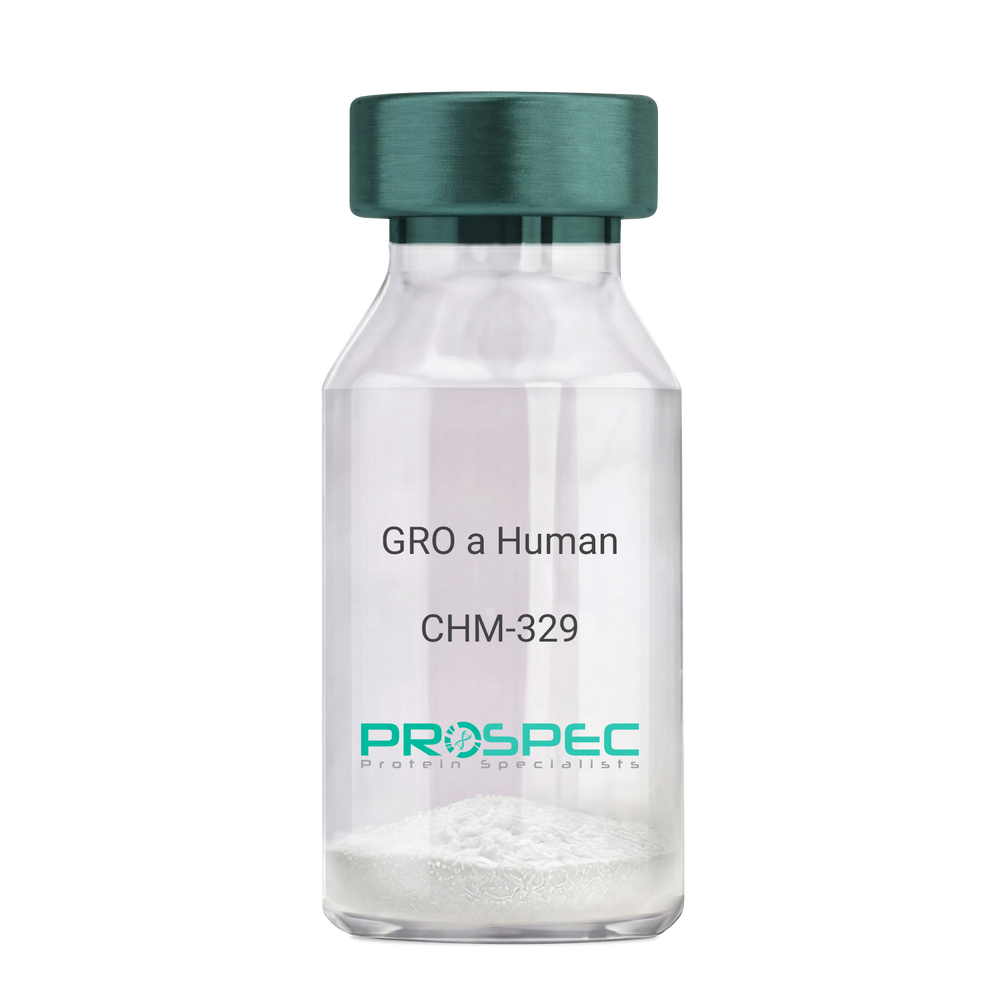
    GRO-Alpha Human Recombinant (CXCL1)

    Growth-regulated protein alpha, CXCL1, Melanoma growth stimulatory activity, MGSA, Neutrophil-activating protein 3, NAP-3, GRO-alpha (1-73), chemokine (C-X-C motif) ligand 1, GRO1, GROa, SCYB1, MGSA-a, MGSA alpha.

    Product # :

    CHM-329

    Price :

    Quantity :

    Shipping Method :

    Room Temp Icon

    Shipped at Room temp

    Add To Cart

    More Info

    • description
    • source
    • formulation
    • purity
    • biological activity
    • More Info
    • sds-page
    • Citations

    Description

    GRO Alpha Human Recombinant produced in E.Coli is a single,non-glycosylated, polypeptide chain containing 73 amino acids and having a molecular mass of 7811 Dalton. The GRO-alpha is purified by proprietary chromatographic techniques.

    Source

    Escherichia Coli.

    Formulation

    Lyophilized from a 0.2µm filtered concentrated (1mg/ml) solution in 20mM PB, pH 7.4, 50mM NaCl.

    Purity

    Greater than 97.0% as determined by:
    (a) Analysis by RP-HPLC.
    (b) Analysis by SDS-PAGE.

    Biological Activity

    Determined by its ability to chemoattract human peripheral blood neutrophils using a concentration range of 10.0-100.0 ng/ml.

    sds-page

    CXCL1 Human SDS-PAGE - Product image 1

    Citations

    More Info

    • Introduction

      Chemokine (C-X-C motif) ligand 1 (CXCL1) is a small cytokine belonging to the CXC chemokine family that was previously called GRO1 oncogene, Neutrophil-activating protein 3 (NAP-3) and melanoma growth stimulating activity, alpha (MSGA-a). It is secreted by human melanoma cells, has mitogenic properties and is implicated in melanoma pathogenesis. CXCL1 is expressed by macrophages, neutrophilsand epithelial cells, and has neutrophil chemoattractant activity. CXCL1 plays a role in spinal cord development by inhibiting the migration of oligodendrocyte precursors and is involved in the processes of angiogenesis, inflammation, wound healing, and tumorigenesis. This chemokine elicits its effects by signaling through the chemokine receptor CXCR2. The gene for CXCL1 is located on human chromosome 4 amongst genes for other CXC chemokines.

    • Synonyms

      Growth-regulated protein alpha, CXCL1, Melanoma growth stimulatory activity, MGSA, Neutrophil-activating protein 3, NAP-3, GRO-alpha (1-73), chemokine (C-X-C motif) ligand 1, GRO1, GROa, SCYB1, MGSA-a, MGSA alpha.

    • Physical Appearance

      Sterile Filtered White lyophilized (freeze-dried) powder.

    • Stability

      Lyophilized GRO-alpha although stable at room temperature for 3 weeks, should be stored desiccated below -18°C. Upon reconstitution CXCL1 should be stored at 4°C between 2-7 days and for future use below -18°C. For long term storage it is recommended to add a carrier protein (0.1% HSA or BSA).Please prevent freeze-thaw cycles.

    • Solubility

      It is recommended to reconstitute the lyophilized CXCL1 in sterile 18MΩ-cm H2O not less than 100µg/ml, which can then be further diluted to other aqueous solutions.

    • Amino Acid Sequence

      The sequence of the first five N-terminal amino acids was determined and was found to be Ala-Ser-Val-Ala-Thr.

    • Background

      What is the molecular weight/Mw of CXCL1 HUMAN Protein?
      CXCL1 HUMAN Protein has a total Mw of 7.81kDa.

      What is the source or expression system of CXCL1 HUMAN Protein?
      Escherichia Coli.

      What is the Purity of CXCL1 HUMAN Protein?
      CXCL1 HUMAN Protein is >97% pure as determined by SDS-PAGE.

      What is the Biological Activity of CXCL1 HUMAN Protein?
      Determined by its ability to chemoattract human peripheral blood neutrophils using a concentration range of 10.0-100.0 ng/ml.

      What is the amino acid sequence of CXCL1 HUMAN Protein?
      The sequence of the first five N-terminal amino acids was determined and was found to be Ala-Ser-Val-Ala-Thr.

      What applications can CXCL1 HUMAN Protein be used in?
      CXCL1 HUMAN Protein can probably be used in western blot, ELISA and Lateral Flow.

      What is the endotoxin level for CXCL1 HUMAN Protein?
      The endotoxin level is minimal, CXCL1 HUMAN Protein was purified using conventional chromatography techniques.

      Who supplies recombinant CXCL1 HUMAN that is in stock and available to order?
      ProSpec has the protein in stock and available for immediate delivery.

      Where can I order bulk mg quantities of CXCL1 HUMAN?
      ProSpec supplies bulk mg quantities at affordable prices that meets research and academic budgets.

    ProSpec's products are furnished for LABORATORY RESEARCH USE ONLY. The product may not be used as drugs, agricultural or pesticidal products, food additives or household chemicals.

    Gro A Human
  • View Data Sheet

    Name :

    Ag85A

    Description:

    Mycobacterium Tuberculosis major secretory protein Antigen 85A Recombinant

    Ronectin-binding protein A, Mycolyl transferase 85A.

    Product # :

    PRO-1076

    Price :

    Quantity :

    Shipping Method :

    Ice Icon

    Shipped with Ice Packs

    Add To Cart

    More Info

    • description
    • source
    • formulation
    • purity
    • More Info
    • Citations

    Description

    Recombinant Mycobacterium tuberculosis Ag85A (43-338 a.a) produced in Hi-5 cells is a single, glycosylated polypeptide chain having a molecular mass of 32.8kDa (305 a.a in total).Antigen 85A is fused to a 6 amino acid His tag at C-terminus and purified by conventional chromatographic techniques.

    Source

    Baculovirus

    Formulation

    The Ag85A solution (0.5mg/1ml) contains 20mM Tris-HCl buffer (pH 8.0) and 10% glycerol.

    Purity

    Greater than 95% as determined by SDS-PAGE.

    Citations

    More Info

    • Introduction

      Antigen 85A is a member of the antigen 85 complex (Antigen 85A, B, C). The enzymes of the antigen 85 complex have mycolyltransferase activity and catalyze the synthesis of the very rich glycolipid of the mycobacterial cell wall, the cord factor (trehalose 6,6'-dimycolate, TDM). The cord factor is vital for the integrity of the mycobacterial cell wall and pathogenesis of the bacillus. TDM is synthesized from two molecules of trehalose-6'-monomycolate (TMM) by Antigen 85A.

    • Synonyms

      Ronectin-binding protein A, Mycolyl transferase 85A.

    • Physical Appearance

      Sterile Filtered colorless solution.

    • Stability

      Store at 4°C if entire vial will be used within 2-4 weeks. Store, frozen at -20°C for longer periods of time. For long term storage it is recommended to add a carrier protein (0.1% HSA or BSA).Avoid multiple freeze-thaw cycles.

    • Amino Acid Sequence

      ADPAFSRPGL PVEYLQVPSP SMGRDIKVQF QSGGANSPAL YLLDGLRAQD DFSGWDINTP AFEWYDQSGL SVVMPVGGQS SFYSDWYQPA CGKAGCQTYK WETFLTSELP GWLQANRHVK PTGSAVVGLS MAASSALTLA IYHPQQFVYA GAMSGLLDPS QAMGPTLIGL AMGDAGGYKA SDMWGPKEDP AWQRNDPLLN VGKLIANNTR VWVYCGNGKP SDLGGNNLPA KFLEGFVRTS NIKFQDAYNA GGGHNGVFDF PDSGTHSWEY WGAQLNAMKP DLQRALGATP NTGPAPQGAH HHHHH.

    ProSpec's products are furnished for LABORATORY RESEARCH USE ONLY. The product may not be used as drugs, agricultural or pesticidal products, food additives or household chemicals.

    Ag85A
  • View Data Sheet

    Name :

    AURKA Human

    Description:

    Aurora Kinase A Human Recombinant

    Serine/threonine-protein kinase 6, Aurora kinase A, Serine/threonine kinase 15, Aurora/IPL1-related kinase 1, Breast tumor-amplified kinase, Aurora-A, Aurora-related kinase 1, hARK1, AURKA, AIK, ARK1, AURA, BTAK, STK15, STK6, STK7, STK15, AURORA2, MGC34538.

    Product # :

    PKA-350

    Price :

    Quantity :

    Shipping Method :

    Ice Icon

    Shipped with Ice Packs

    Add To Cart

    More Info

    • description
    • source
    • formulation
    • purity
    • More Info
    • Citations

    Description

    AURKA Human Recombinant produced in E.Coli is a single, non-glycosylated, polypeptide chain containing 423 amino acids (1-403) and having a molecular mass of 47.9kDa. AURKA is fused to 20 a.a. His-Tag at N-terminus and purified by proprietary chromatographic techniques.

    Source

    Escherichia Coli.

    Formulation

    The AURKA solution containing 20mM Tris-HCl buffer (pH 8.0), 0.5mM DTT, 100mM NaCl, 0.1mM EDTA, 0.1mM EGTA, 0.1mM PMSF and 20% glycerol.

    Purity

    Greater than 95.0% as determined by SDS-PAGE.

    Citations

    More Info

    • Introduction

      AURKA (Aurora Kinase A) belongs to the mitotic serine/threonine kinases family. AURKA is a cell cycle-regulated kinase which may be involved in microtubule formation and/or stabilization at the spindle pole during chromosome segregation. AURKA is found at the centrosome in interphase cells and at the spindle poles in mitosis. Since the AURKA expression is cell-cycle regulated, it is low in G1/S, it accumulates during G2/M, and it decreases rapidly after. AURKA is involved in important processes during mitosis and meiosis whose proper function is essential for healthy cell proliferation. In addition, AURKA plays an essential role in tumourigenesis and is overexpressed in various types of cancers. AURKA is strongly expressed in the testis, colon, ovarian, prostate, neuroblastoma, breast and cervical cancer cell lines and weakly in skeletal muscle, thymus and spleen. AURKA interacts with its substrates BORA and ARHGEF2, as well as with TACC1 and CPEB1.
      Defects in the AURKA gene cause numerical centrosome aberrations including aneuploidy. AURKA overexpression has been linked to chromosomal instability in colorectal cancer. AURKA expression may have a prognostic significance in ovarian carcinoma.

    • Synonyms

      Serine/threonine-protein kinase 6, Aurora kinase A, Serine/threonine kinase 15, Aurora/IPL1-related kinase 1, Breast tumor-amplified kinase, Aurora-A, Aurora-related kinase 1, hARK1, AURKA, AIK, ARK1, AURA, BTAK, STK15, STK6, STK7, STK15, AURORA2, MGC34538.

    • Physical Appearance

      Sterile filtered colorless solution.

    • Stability

      AURKA although stable at 4°C for 1 week, should be stored below -18°C. For long term storage it is recommended to add a carrier protein (0.1% HSA or BSA).Please prevent freeze thaw cycles.

    • Amino Acid Sequence

      MGSSHHHHHH SSGLVPRGSH MDRSKENCIS GPVKATAPVG GPKRVLVTQQ FPCQNPLPVN SGQAQRVLCP SNSSQRIPLQ AQKLVSSHKP VQNQKQKQLQ ATSVPHPVSR PLNNTQKSKQ PLPSAPENNP EEELASKQKN EESKKRQWAL EDFEIGRPLG KGKFGNVYLA REKQSKFILALKVLFKAQLE KAGVEHQLRR EVEIQSHLRH PNILRLYGYF HDATRVYLIL EYAPLGTVYR ELQKLSKFDE QRTATYITEL ANALSYCHSK RVIHRDIKPE NLLLGSAGEL KIADFGWSVH APSSRRTTLC GTLDYLPPEM IEGRMHDEKV DLWSLGVLCY EFLVGKPPFE ANTYQETYKRISRVEFTFPD FVTEGARDLI SRLLKHNPSQ RPMLREVLEH PWITANSSKP SNCQNKESAS KQS.

    ProSpec's products are furnished for LABORATORY RESEARCH USE ONLY. The product may not be used as drugs, agricultural or pesticidal products, food additives or household chemicals.

    Aurka Human
  • View Data Sheet

    Name :

    IL5RA Mouse

    Description:

    Interleukin-5 Receptor Alpha Mouse Recombinant

    Interleukin-5 receptor subunit alpha, IL-5 receptor subunit alpha, IL-5R subunit alpha, IL-5R-alpha, IL-5RA, CD125.

    Product # :

    CYT-955

    Price :

    Quantity :

    Shipping Method :

    Ice Icon

    Shipped with Ice Packs

    Add To Cart

    More Info

    • description
    • source
    • formulation
    • purity
    • More Info
    • SDS-PAGE
    • Citations

    Description

    IL5RA Mouse Recombinant produced in Sf9 Baculovirus cells is a single, glycosylated polypeptide chain containing 330 amino acids (18-339a.a.) and having a molecular mass of 37.8kDa (Molecular size on SDS-PAGE will appear at approximately 40-57kDa). IL5RA is expressed with an 8 amino acid His tag at C-Terminus and purified by proprietary chromatographic techniques.

    Source

    Sf9, Baculovirus cells.

    Formulation

    IL5RA protein solution (0.5mg/ml) containing Phosphate Buffered Saline (pH 7.4) and 10% glycerol.

    Purity

    Greater than 90.0% as determined by SDS-PAGE.

    SDS-PAGE

    IL 5 RA Mouse - Product image 1

    Citations

    More Info

    • Introduction

      Interleukin-5 receptor subunit alpha (Il5ra) regulates the development and function of eosinophils. The Il5ra protein is a therapeutic target for hypereosinophilic diseases including allergic inflammations and asthma. Oct2 enhances antibody-secreting cell differentiation via regulation of Il5ra chain expression on activated B cells.

    • Synonyms

      Interleukin-5 receptor subunit alpha, IL-5 receptor subunit alpha, IL-5R subunit alpha, IL-5R-alpha, IL-5RA, CD125.

    • Physical Appearance

      Sterile filtered colorless solution.

    • Stability

      Store at 4°C if entire vial will be used within 2-4 weeks. Store, frozen at -20°C for longer periods of time. For long term storage it is recommended to add a carrier protein (0.1% HSA or BSA).Avoid multiple freeze-thaw cycles.

    • Amino Acid Sequence

      DLLNHKKFLL LPPVNFTIKA TGLAQVLLHW DPNPDQEQRH VDLEYHVKIN APQEDEYDTR KTESKCVTPL HEGFAASVRT ILKSSHTTLA SSWVSAELKA PPGSPGTSVT NLTCTTHTVV SSHTHLRPYQ VSLRCTWLVG KDAPEDTQYF LYYRFGVLTE KCQEYSRDAL NRNTACWFPR TFINSKGFEQ LAVHINGSSK RAAIKPFDQL FSPLAIDQVN PPRNVTVEIE SNSLYIQWEK PLSAFPDHCF NYELKIYNTK NGHIQKEKLI ANKFISKIDD VSTYSIQVRA AVSSPCRMPG RWGEWSQPIY VGKERKSLVE WHLEHHHHHH.

    • Background

      What is the molecular weight/Mw of IL 5 RA MOUSE Protein?
      IL 5 RA MOUSE Protein has a total Mw of 37.8kDa.

      What is the source or expression system of IL 5 RA MOUSE Protein?
      Sf9, Baculovirus cells.

      What is the Purity of IL 5 RA MOUSE Protein?
      IL 5 RA MOUSE Protein is >90% pure as determined by SDS-PAGE.

      What is the Biological Activity of IL 5 RA MOUSE Protein?
      The biological functionality of IL 5 RA MOUSE Protein will be determined in the future.

      What is the amino acid sequence of IL 5 RA MOUSE Protein?
      DLLNHKKFLL LPPVNFTIKA TGLAQVLLHW DPNPDQEQRH VDLEYHVKIN APQEDEYDTR KTESKCVTPL HEGFAASVRT ILKSSHTTLA SSWVSAELKA PPGSPGTSVT NLTCTTHTVV SSHTHLRPYQ VSLRCTWLVG KDAPEDTQYF LYYRFGVLTE KCQEYSRDAL NRNTACWFPR TFINSKGFEQ LAVHINGSSK RAAIKPFDQL FSPLAIDQVN PPRNVTVEIE SNSLYIQWEK PLSAFPDHCF NYELKIYNTK NGHIQKEKLI ANKFISKIDD VSTYSIQVRA AVSSPCRMPG RWGEWSQPIY VGKERKSLVE WHLEHHHHHH.

      What applications can IL 5 RA MOUSE Protein be used in?
      IL 5 RA MOUSE Protein can probably be used in western blot, ELISA and Lateral Flow.

      What is the endotoxin level for IL 5 RA MOUSE Protein?
      The endotoxin level is minimal, IL 5 RA MOUSE Protein was purified using conventional chromatography techniques.

      Who supplies recombinant IL 5 RA MOUSE that is in stock and available to order?
      ProSpec has the protein in stock and available for immediate delivery.

      Where can I order bulk mg quantities of IL 5 RA MOUSE?
      ProSpec supplies bulk mg quantities at affordable prices that meets research and academic budgets.

    ProSpec's products are furnished for LABORATORY RESEARCH USE ONLY. The product may not be used as drugs, agricultural or pesticidal products, food additives or household chemicals.

    Il5Ra Mouse
  • View Data Sheet

    Name :

    CECR1 Human

    Description:

    Cat Eye Syndrome Chromosome Region Candidate 1 Human Recombinant

    Cat Eye Syndrome Chromosome Region, Candidate 1, Cat Eye Syndrome Critical Region Protein 1, IDGFL, ADA2, ADGF, Adenosine Deaminase 2, EC 3.5.4.4, SNEDS, PAN, CECR1.

    Product # :

    PRO-2323

    Price :

    Quantity :

    Shipping Method :

    Ice Icon

    Shipped with Ice Packs

    Add To Cart

    More Info

    • description
    • source
    • formulation
    • purity
    • More Info
    • Citations

    Description

    CECR1 Human Recombinant produced in Sf9 Baculovirus cells is a single, glycosylated polypeptide chain containing 490 amino acids (30-511a.a.) and having a molecular mass of 56.9kDa (Molecular size on SDS-PAGE will appear at approximately 50-70kDa).CECR1 is expressed with an 8 amino acid His tag at C-Terminus and purified by proprietary chromatographic techniques.

    Source

    Insect Cell.

    Formulation

    CECR1 protein solution (0.5mg/ml) containing Phosphate Buffered Saline (pH 7.4) and 10% glycerol.

    Purity

    Greater than 90.0% as determined by SDS-PAGE.

    Citations

    More Info

    • Introduction

      Adenosine deaminase CECR1 isoform (CECR1) belongs to a family of adenosine deaminase-related growth factors. Adenosine deaminase is a key enzyme of purine nucleotide metabolism. CECR1 is a secreted protein, which is expressed in various tissues, with the highest expression in the lymphoblasts, heart, lung, and the placenta.

    • Synonyms

      Cat Eye Syndrome Chromosome Region, Candidate 1, Cat Eye Syndrome Critical Region Protein 1, IDGFL, ADA2, ADGF, Adenosine Deaminase 2, EC 3.5.4.4, SNEDS, PAN, CECR1.

    • Physical Appearance

      Sterile filtered colorless solution.

    • Stability

      Store at 4°C if entire vial will be used within 2-4 weeks.Store, frozen at -20°C for longer periods of time. For long term storage it is recommended to add a carrier protein (0.1% HSA or BSA).Avoid multiple freeze-thaw cycles.

    • Amino Acid Sequence

      IDETRAHLLL KEKMMRLGGR LVLNTKEELA NERLMTLKIA EMKEAMRTLI FPPSMHFFQA KHLIERSQVF NILRMMPKGA ALHLHDIGIV TMDWLVRNVT YRPHCHICFT PRGIMQFRFA HPTPRPSEKC SKWILLEDYR KRVQNVTEFD DSLLRNFTLV TQHPEVIYTN QNVVWSKFET IFFTISGLIH YAPVFRDYVF RSMQEFYEDN VLYMEIRARL LPVYELSGEH HDEEWSVKTY QEVAQKFVET HPEFIGIKII YSDHRSKDVA VIAESIRMAM GLRIKFPTVV AGFDLVGHED TGHSLHDYKE ALMIPAKDGV KLPYFFHAGE TDWQGTSIDR NILDALMLNT TRIGHGFALS KHPAVRTYSW KKDIPIEVCP ISNQVLKLVS DLRNHPVATL MATGHPMVIS SDDPAMFGAK GLSYDFYEVF MGIGGMKADL RTLKQLAMNS IKYSTLLESE KNTFMEIWKK RWDKFIADVA TKLEHHHHHH

    ProSpec's products are furnished for LABORATORY RESEARCH USE ONLY. The product may not be used as drugs, agricultural or pesticidal products, food additives or household chemicals.

    Cecr1 Human
  • View Data Sheet

    Name :

    S100A9 Human

    Description:

    S100 Calcium Binding Protein A9 Human Recombinant

    Calgranulin B, 60B8AG, CAGB, CFAG, CGLB, L1AG, LIAG, MAC387, MIF, MRP14, NIF, P14, Protein S100-A9, S100 calcium-binding protein A9.

    Product # :

    PRO-814

    Price :

    Quantity :

    Shipping Method :

    Ice Icon

    Shipped with Ice Packs

    Add To Cart

    More Info

    • description
    • source
    • formulation
    • purity
    • More Info
    • Citations

    Description

    S100A9 Human Recombinant produced in E.Coli is a single, non-glycosylated, polypeptide chain containing 122 amino acids (1-114 a.a.) and having a molecular mass of 14.3kDa. S100A9 protein is fused to an 8 amino acid His-Tag at C-terminus and purified by standard chromatography.

    Source

    Escherichia Coli.

    Formulation

    S100A9 Human solution containing 20mM Tris HCl pH-8, 0.1M NaCl and 10% glycerol.

    Purity

    Greater than 90% as determined by SDS-PAGE.

    Citations

    More Info

    • Introduction

      S100A9 is part of the S100 family of proteins containing 2 EF-hand calcium-binding motifs. S100A9 protein is localized in the cytoplasm and/or nucleus of a wide range of cells, and participates in the regulation of several cellular processes such as cell cycle progression and differentiation. S100 genes include no less than 13 proteins which are localized as a cluster on chromosome 1q21. S100A9 is involved in the inhibition of casein kinase and altered expression of this protein is associated with the disease cystic fibrosis.

    • Synonyms

      Calgranulin B, 60B8AG, CAGB, CFAG, CGLB, L1AG, LIAG, MAC387, MIF, MRP14, NIF, P14, Protein S100-A9, S100 calcium-binding protein A9.

    • Physical Appearance

      Sterile filtered colorless solution.

    • Stability

      Store at 4°C if entire vial will be used within 2-4 weeks. Store, frozen at -20°C for longer periods of time. For long term storage it is recommended to add a carrier protein (0.1% HSA or BSA).Avoid multiple freeze-thaw cycles.

    • Amino Acid Sequence

      MTCKMSQLER NIETIINTFH QYSVKLGHPD TLNQGEFKEL VRKDLQNFLK KENKNEKVIE HIMEDLDTNA DKQLSFEEFI MLMARLTWAS HEKMHEGDEG PGHHHKPGLG EGTPLEHHHH HH.

    ProSpec's products are furnished for LABORATORY RESEARCH USE ONLY. The product may not be used as drugs, agricultural or pesticidal products, food additives or household chemicals.

    S100A9 Human
  • View Data Sheet

    Name :

    NHEJ1 Human

    Description:

    Nonhomologous End-Joining Factor 1 Human Recombinant

    Nonhomologous end-joining factor 1, Protein cernunnos, XRCC4-like factor, Cernunnos, XLF, FLJ12610.

    Product # :

    PRO-1193

    Price :

    Quantity :

    Shipping Method :

    Ice Icon

    Shipped with Ice Packs

    Add To Cart

    More Info

    • description
    • source
    • formulation
    • purity
    • More Info
    • Citations

    Description

    NHEJ1 Human Recombinant produced in E. coli is a single polypeptide chain containing 247 amino acids (1-224) and having a molecular mass of 27.8 kDa.NHEJ1 is fused to a 23 amino acid His-tag at N-terminus & purified by proprietary chromatographic techniques.

    Source

    E.coli.

    Formulation

    The NHEJ1 solution (0.5mg/1ml) contains 20mM Tris-HCl buffer (pH 8.0), 0.1M NaCl, 1mM DTT and 20% glycerol.

    Purity

    Greater than 90% as determined by SDS-PAGE.

    Citations

    More Info

    • Introduction

      Non-homologous end-joining factor 1 (NHEJ1) is a member of the XLF family. NHEJ1 is a DNA repair factor vital for the nonhomologous end-joining pathway, which preferentially mediates repair of double-stranded breaks. NHEJ1 gene mutations cause different kinds of severe combined immunodeficiency disorders. NHEJ1 was initially detected as the protein mutated in five patients with growth retardation, microcephaly, and immunodeficiency. In addition, patients with NHEJ1 mutations have immunodeficiency caused by a defect in V(D)J recombination, which employs NHEJ to promote immune system diversity.

    • Synonyms

      Nonhomologous end-joining factor 1, Protein cernunnos, XRCC4-like factor, Cernunnos, XLF, FLJ12610.

    • Physical Appearance

      Sterile Filtered colorless solution.

    • Stability

      Store at 4°C if entire vial will be used within 2-4 weeks. Store, frozen at -20°C for longer periods of time. For long term storage it is recommended to add a carrier protein (0.1% HSA or BSA).Avoid multiple freeze-thaw cycles.

    • Amino Acid Sequence

      MGSSHHHHHH SSGLVPRGSH MGS MEELEQG LLMQPWAWLQ LAENSLLAKV FITKQGYALL VSDLQQVWHE QVDTSVVSQR AKELNKRLTA PPAAFLCHLD NLLRPLLKDA AHPSEATFSC DCVADALILR VRSELSGLPF YWNFHCMLAS PSLVSQHLIR PLMGMSLALQ CQVRELATLL HMKDLEIQDY QESGATLIRD RLKTEPFEEN SFLEQFMIEK LPEACSIGDG KPFVMNLQDL YMAVTTQ

    ProSpec's products are furnished for LABORATORY RESEARCH USE ONLY. The product may not be used as drugs, agricultural or pesticidal products, food additives or household chemicals.

    Nhej1 Human
  • View Data Sheet

    Name :

    XAGE1A Human

    Description:

    X Antigen Family, Member 1A Human Recombinant

    X antigen family member 1, XAGE-1, Cancer/testis antigen 12.1, CT12.1, G antigen family D member 2, XAGE1A, GAGED2, XAGE1, CTP9, CT12.1C.

    Product # :

    PRO-1256

    Price :

    Quantity :

    Shipping Method :

    Ice Icon

    Shipped with Ice Packs

    Add To Cart

    More Info

    • description
    • source
    • formulation
    • purity
    • More Info
    • Citations

    Description

    XAGE1A Human Recombinant produced in E.Coli is a single, non-glycosylated polypeptide chain containing 104 amino acids (1-81 a.a) and having a molecular mass of 11.5kDa.XAGE1A is fused to a 23 amino acid His-tag at N-terminus & purified by proprietary chromatographic techniques.

    Source

    Escherichia Coli.

    Formulation

    XAGE1A protein solution (0.25mg/ml) containing 20mM Tris-HCl buffer (pH 8.0), 0.2M NaCl, 20% glycerol and 2mM DTT.

    Purity

    Greater than 85.0% as determined by SDS-PAGE.

    Citations

    More Info

    • Introduction

      G antigen family D member 2 (XAGE1A) belongs to the XAGE subfamily, which is a member of the GAGE family. The GAGE genes are expressed various tumors and in a number of fetal and reproductive tissues. XAGE1A contains a nuclear localization signal and shares a sequence similarity with other GAGE/PAGE proteins. XAGE1A is strongly expressed in Ewing's sarcoma, alveolar rhabdomyosarcoma and normal testis. Due to the expression pattern and the sequence similarity, the XAGE1A protein is also a member of a family of CT (cancer-testis) antigens.

    • Synonyms

      X antigen family member 1, XAGE-1, Cancer/testis antigen 12.1, CT12.1, G antigen family D member 2, XAGE1A, GAGED2, XAGE1, CTP9, CT12.1C.

    • Physical Appearance

      Sterile Filtered colorless solution.

    • Stability

      Store at 4°C if entire vial will be used within 2-4 weeks. Store, frozen at -20°C for longer periods of time. For long term storage it is recommended to add a carrier protein (0.1% HSA or BSA).Avoid multiple freeze-thaw cycles.

    • Amino Acid Sequence

      MGSSHHHHHH SSGLVPRGSH MGSMESPKKK NQQLKVGILH LGSRQKKIRI QLRSQCATWK VICKSCISQT PGINLDLGSG VKVKIIPKEE HCKMPEAGEE QPQV.

    ProSpec's products are furnished for LABORATORY RESEARCH USE ONLY. The product may not be used as drugs, agricultural or pesticidal products, food additives or household chemicals.

    Xage1A Human
  • View Data Sheet

    Name :

    CRYAB Human, His

    Description:

    Crystallin Alpha B Human Recombinant, His Tag

    CRYA2, CTPP2, HSPB5, Crystallin Alpha B, CRYAB.

    Product # :

    HSP-088

    Price :

    Quantity :

    Shipping Method :

    Ice Icon

    Shipped with Ice Packs

    Add To Cart

    More Info

    • description
    • source
    • formulation
    • purity
    • More Info
    • Citations

    Description

    CRYAB Human Recombinant produced in E.coli is a single, non-glycosylated polypeptide chain containing 183 amino acids (1-175) and having a molecular mass of 21.2kDa. CRYAB is fused to an 8 a.a his-Tag at C-terminus and is purified by proprietary chromatographic techniques.

    Source

    Escherichia Coli.

    Formulation

    The CRYAB solution (1mg/ml) contains 10% glycerol & Phosphate-Buffered Saline (pH 7.4).

    Purity

    Greater than 90% as determined by SDS-PAGE.

    Citations

    More Info

    • Synonyms

      CRYA2, CTPP2, HSPB5, Crystallin Alpha B, CRYAB.

    • Physical Appearance

      Sterile filtered colorless solution.

    • Stability

      Store at 4°C if entire vial will be used within 2-4 weeks. Store, frozen at -20°C for longer periods of time. For long term storage it is recommended to add a carrier protein (0.1% HSA or BSA). Avoid multiple freeze-thaw cycles.

    • Amino Acid Sequence

      MDIAIHHPWI RRPFFPFHSP SRLFDQFFGE HLLESDLFPT STSLSPFYLR PPSFLRAPSW FDTGLSEMRL EKDRFSVNLD VKHFSPEELK VKVLGDVIEV HGKHEERQDE HGFISREFHR KYRIPADVDP LTITSSLSSD GVLTVNGPRK QVSGPERTIP ITREEKPAVT AAPKKLEHHH HHH.

    • Background

      Alpha-B crystallin (CRYAB), a small heat shock protein, stands as a multifaceted molecular chaperone integral to cellular homeostasis and stress response. In its human recombinant form, CRYAB becomes a focal point in biomedical research, offering a controlled platform to explore its structural intricacies, cellular functions, and potential therapeutic applications. This research embarks on a comprehensive journey to unveil the diverse roles of CRYAB Human Recombinant, shedding light on its structural attributes, cellular interactions, and its implications in health and disease. By delving into the properties of CRYAB, scientists aim to deepen our understanding of cellular proteostasis and explore novel avenues in the treatment of protein misfolding disorders.

      Structural Insights into CRYAB Human Recombinant:

      CRYAB, forming oligomeric complexes, possesses a dynamic structural configuration crucial for its chaperone function. The human recombinant form, designed for controlled study, provides a unique window into the three-dimensional intricacies of CRYAB. Understanding its structure is fundamental for deciphering how CRYAB engages with client proteins, preventing their aggregation and maintaining cellular proteostasis.

      Cellular Functions in Proteostasis:

      As a molecular chaperone, CRYAB plays a pivotal role in preserving cellular proteostasis by preventing the aggregation of misfolded proteins. Beyond its chaperone function, CRYAB is implicated in diverse cellular processes, including modulation of apoptosis, regulation of cytoskeletal dynamics, and participation in cell signaling pathways. Elucidating the multifaceted functions of CRYAB Human Recombinant provides insights into its roles in health and disease.

      Implications in Neurodegenerative Disorders:

      CRYAB has garnered attention in the context of neurodegenerative disorders, where protein misfolding and aggregation are central pathological features. Studies involving CRYAB Human Recombinant have revealed its neuroprotective properties, suggesting its potential as a therapeutic target for conditions like Alzheimer's and Parkinson's diseases. Understanding the mechanisms by which CRYAB mitigates protein aggregation in neuronal cells holds promise for developing targeted interventions.

      CRYAB in Cardiovascular Health:

      The chaperone function of CRYAB extends to the cardiovascular system, where it safeguards against protein aggregation in cardiomyocytes. CRYAB Human Recombinant studies have illuminated its protective role in cardiac tissues, positioning it as a potential therapeutic avenue for heart diseases characterized by protein misfolding.

      Challenges and Future Directions:

      While the potential of CRYAB Human Recombinant in therapeutics is evident, challenges persist. Fine-tuning its applications, understanding its interactions with diverse client proteins, and exploring the intricacies of its roles in different cellular contexts are critical for translational success. Additionally, deciphering the specific mechanisms by which CRYAB contributes to the alleviation of protein misfolding disorders remains an active area of investigation.

      CRYAB Human Recombinant emerges as a linchpin in the cellular orchestra, orchestrating a symphony of functions vital for proteostasis. Its structural insights, diverse cellular functions, and therapeutic implications position it at the forefront of biomedical research. As researchers continue to unravel the molecular nuances of CRYAB, they not only deepen our understanding of cellular proteostasis but also pave the way for innovative treatments in neurodegenerative and cardiovascular disorders, shaping the future of precision medicine and protein folding therapeutics.

    ProSpec's products are furnished for LABORATORY RESEARCH USE ONLY. The product may not be used as drugs, agricultural or pesticidal products, food additives or household chemicals.

    Cryab Human His
  • View Data Sheet

    Name :

    Haptoglobin

    Description:

    Haptoglobin Human Recombinant

    Haptoglobin, HP, BP, HPA1S, MGC111141, HP2-ALPHA-2.

    Product # :

    PRO-567

    Price :

    Quantity :

    Shipping Method :

    Room Temp Icon

    Shipped at Room temp

    Add To Cart

    More Info

    • description
    • source
    • formulation
    • purity
    • More Info
    • Citations

    Description

    Haptoglobin Human Recombinant produced in E.Coli is a single, non-glycosylated, polypeptide chain containing fusion protein with His tag and having a total Mw of 33 kDa (4 kDa His-tag).

    Source

    Escherichia Coli.

    Formulation

    Each mg was lyophilized with 1xPBS, 0.4% SDS and 4mM DTT.

    Purity

    Greater than 90.0% as determined by SDS-PAGE.

    Citations

    More Info

    • Introduction

      Haptoglobin is a glycoprotein which is synthesized in the liver and circulates in the blood. Haptoglobin is produced typically by hepatocytes but also by other tissues: e.g. skin, lung, and kidney. It is a positive acute phase protein that binds free hemoglobin and removes it from the circulation to prevent kidney injury, and iron loss following hemolysis. The haptoglobin-hemoglobin complex is subsequently removed by the reticuloendothelial system (generally the spleen). As the reticuloendothelial system removes the haptoglobin-hemoglobin complex from the body, haptoglobin levels are reduced in hemolytic anaemias. In the course of binding hemoglobin, haptoglobin sequesters the iron inside hemoglobin, preventing iron-utilizing bacteria from benefitting from hemolysis.
      Haptoglobin consists of two A- and two B-chains, connected by disulfide bonds. Three major haptoglobin phenotypes are known to exist (Hp 1-1, Hp 2-1, and Hp 2-2). Hp 1-1 is biologically the most effective in binding free hemoglobin and suppressing inflammatory responses associated with free hemoglobin. Hp 2-2 is biologically the least active, and Hp 2-1 is moderately active. Haptoglobin’s molecular mass ranges from 8-200 kDa.
      Reduced levels can be seen in haemolysis and impaired liver function. High levels are a marker for acute or chronic inflammation. Ahaptoglobinemia or hypohaptoglobinemia are caused by mutations in the haptoglobin gene and/or its regulatory regions. Haptoglobin is also linked to diabetic nephropathy, the incidence of coronary artery disease in type 1 diabetes, Crohn's disease, inflammatory disease behavior, primary sclerosing cholangitis, susceptibility to idiopathic Parkinson's disease, and a reduced incidence of Plasmodium falciparum malaria.

    • Synonyms

      Haptoglobin, HP, BP, HPA1S, MGC111141, HP2-ALPHA-2.

    • Physical Appearance

      Sterile Filtered White lyophilized (freeze-dried) powder.

    • Stability

      Lyophilized Haptoglobin although stable at room temperature for 3 weeks, should be stored desiccated below -18°C. Upon reconstitution Haptoglobin should be stored at 4°C between 2-7 days and for future use below -18°C.For long term storage it is recommended to add a carrier protein (0.1% HSA or BSA).Please prevent freeze-thaw cycles.

    • Solubility

      It is recommended to reconstitute the lyophilized Haptoglobin in sterile 18MΩ-cm H2O not less than 100µg/ml, which can then be further diluted to other aqueous solutions.

    • Amino Acid Sequence

      L ILGGHLDAKG SFPWQAKMVS HHNLTTGATL INEQWLLTTA KNLFLNHSEN ATAKDIAPTL TLYVGKKQLV EIEKVVLHPN YSQVDIGLIK LKQKVSVNER VMPICLPSKD YAEVGRVGYV SGWGRNANFK FTDHLKYVML PVADQDQCIR HYEGSTVPEK KTPKSPVGVQ PILNEHTFCA GMSKYQEDTC YGDAGSAFAV HDLEEDTWYA TGILSFDKSC AVAEYGVYVK VTSIQDWVQK TIAEN

    ProSpec's products are furnished for LABORATORY RESEARCH USE ONLY. The product may not be used as drugs, agricultural or pesticidal products, food additives or household chemicals.

    Haptoglobin Human Recombinant
  • 1
  • …
  • 6
  • 7
  • 8
  • 9
  • 10
  • …
  • 42
Your browser does not support the video tag.

Products

  • Cytokines
  • Growth Factors
  • Chemokines
  • CD Antigens
  • Neurotrophins
  • Hormones
  • Enzymes
  • Viral Antigens
  • Recombinant Proteins
  • Natural Proteins
  • Monoclonal Antibodies
  • Polyclonal Antibodies
  • Thermal Packaging

About

  • Company
  • Founder
  • Contribution
  • Contact Us
  • My Account

Ordering

  • Ordering Method
  • Ordering - Credit Card
  • Ordering PO
  • Shipping Fees
  • FAQ's

Legal

  • Terms & Conditions
  • Privacy
  • Site Map
  • info@prospecbio.com
  • Facebook
  • Instagram
  • Linkedin Profile

© 2026 ProSpec-Tany TechnoGene Ltd. All Rights Reserved.

  • Choosing a selection results in a full page refresh.
  • Opens in a new window.