Skip to content

High-quality research proteins.

  • 1-800-805-6531

  • Mon - Sat 8.00-18.00, Sun - Closed

  • info@prospecbio.com

  • PO Box 6591 East Brunswick NJ 08816

  • Products
    • Cytokines
    • Growth factors
    • Chemokines
    • Cd antigens
    • Neurotrophins
    • Hormones
    • Enzymes
    • Viral antigens
    • Recombinant proteins
    • Natural proteins
    • Monoclonal antibodies
    • Polyclonal antibodies
    • Thermal Packaging
  • About
    • Company
    • Founder
    • Contribution
  • Customers
    • Eastern Asia
    • Eastern Europe
    • North America
    • South America
    • South East Asia
    • Southern Asia
    • Western Europe
  • Ordering
    • Ordering Method
    • Ordering - Credit Card
    • Ordering - PO
    • Shipping Fees
    • FAQs
  • Services
    • DNA Cloning
    • Protein Expression
    • Monoclonal Antibody
    • Fermentation
    • Technology License
  • Contact us
Log in

Country/region

  • USD $ | Albania
  • USD $ | Andorra
  • USD $ | Argentina
  • USD $ | Armenia
  • USD $ | Australia
  • USD $ | Austria
  • USD $ | Azerbaijan
  • USD $ | Belarus
  • USD $ | Belgium
  • USD $ | Bolivia
  • USD $ | Brazil
  • USD $ | Bulgaria
  • USD $ | Cambodia
  • USD $ | Canada
  • USD $ | Chile
  • USD $ | China
  • USD $ | Colombia
  • USD $ | Costa Rica
  • USD $ | Croatia
  • USD $ | Cyprus
  • USD $ | Czechia
  • USD $ | Denmark
  • USD $ | Estonia
  • USD $ | Finland
  • USD $ | France
  • USD $ | Georgia
  • USD $ | Germany
  • USD $ | Greece
  • USD $ | Hong Kong SAR
  • USD $ | Hungary
  • USD $ | Iceland
  • USD $ | India
  • USD $ | Ireland
  • USD $ | Israel
  • USD $ | Italy
  • USD $ | Japan
  • USD $ | Kazakhstan
  • USD $ | Latvia
  • USD $ | Liechtenstein
  • USD $ | Lithuania
  • USD $ | Madagascar
  • USD $ | Malta
  • USD $ | Mexico
  • USD $ | Moldova
  • USD $ | Monaco
  • USD $ | Netherlands
  • USD $ | New Zealand
  • USD $ | North Macedonia
  • USD $ | Norway
  • USD $ | Panama
  • USD $ | Paraguay
  • USD $ | Peru
  • USD $ | Philippines
  • USD $ | Poland
  • USD $ | Portugal
  • USD $ | Romania
  • USD $ | Singapore
  • USD $ | Slovakia
  • USD $ | Slovenia
  • USD $ | South Africa
  • USD $ | South Korea
  • USD $ | Spain
  • USD $ | Sri Lanka
  • USD $ | Sweden
  • USD $ | Switzerland
  • USD $ | Taiwan
  • USD $ | Thailand
  • USD $ | Türkiye
  • USD $ | Ukraine
  • USD $ | United Kingdom
  • USD $ | United States
  • USD $ | Uruguay
  • USD $ | Vatican City
  • USD $ | Venezuela
  • USD $ | Vietnam
  • Facebook
  • Instagram
logoProSpec - Recombinant Protein Manufacturer for academic and R&D industry
Become a distributor
Account Log in
Wishlist
Cart Cart(0)
  • Products
    +
    • Cytokines
    • Growth factors
    • Chemokines
    • Cd antigens
    • Neurotrophins
    • Hormones
    • Enzymes
    • Viral antigens
    • Recombinant proteins
    • Natural proteins
    • Monoclonal antibodies
    • Polyclonal antibodies
    • Thermal Packaging
  • About
    +
    • Company
    • Founder
    • Contribution
  • Customers
    +
    • Eastern Asia
    • Eastern Europe
    • North America
    • South America
    • South East Asia
    • Southern Asia
    • Western Europe
  • Ordering
    +
    • Ordering Method
    • Ordering - Credit Card
    • Ordering - PO
    • Shipping Fees
    • FAQs
  • Services
    +
    • DNA Cloning
    • Protein Expression
    • Monoclonal Antibody
    • Fermentation
    • Technology License
  • Contact us

Item added to your cart

View cart
View All
  • Cytokines
  • Growth factors
  • Chemokines
  • Cd antigens
  • Neurotrophins
  • Hormones
  • Enzymes
  • Viral antigens
  • Recombinant proteins
  • Natural proteins
  • Monoclonal antibodies
  • Polyclonal antibodies
  • Thermal Packaging
  • Tumor Necrosis Factor

    Tumor Necrosis Factor

    View All
  • 4-1BB

    4-1BB

    View All
  • Adiponectin

    Adiponectin

    View All
  • AIF1

    AIF1

    View All
  • Other Cytokines

    Other Cytokines

    View All
  • AITRL

    AITRL

    View All
  • Angiopoietin

    Angiopoietin

    View All
  • Apolipoprotein

    Apolipoprotein

    View All
  • B-Cell Activating Factor

    B-Cell Activating Factor

    View All
  • Beta Defensin

    Beta Defensin

    View All
  • Bone Morphogenetic Protein

    Bone Morphogenetic Protein

    View All
  • B type Natriuretic Peptide

    B type Natriuretic Peptide

    View All
  • BST

    BST

    View All
  • Betacellulin

    Betacellulin

    View All
  • Cardiotrophin

    Cardiotrophin

    View All
  • Activin

    Activin

    View All
  • Fibroblast Growth Factor

    Fibroblast Growth Factor

    View All
  • Other Growth Factors

    Other Growth Factors

    View All
  • CSF

    CSF

    View All
  • CTGF

    CTGF

    View All
  • IGFBP

    IGFBP

    View All
  • VEGF Protein

    VEGF Protein

    View All
  • EGF

    EGF

    View All
  • Epigen

    Epigen

    View All
  • Erythropoietin

    Erythropoietin

    View All
  • Insulin-Like Growth Factor

    Insulin-Like Growth Factor

    View All
  • Growth Hormone

    Growth Hormone

    View All
  • HDGF

    HDGF

    View All
  • Hepatocyte Growth Factor

    Hepatocyte Growth Factor

    View All
  • Insulin

    Insulin

    View All
  • BCA-1/ BLC (CXCL13)

    BCA-1/ BLC (CXCL13)

    View All
  • BRAK (CXCL14)

    BRAK (CXCL14)

    View All
  • C-10 (CCL6)

    C-10 (CCL6)

    View All
  • Other Chemokines

    Other Chemokines

    View All
  • MEC (CCL28)

    MEC (CCL28)

    View All
  • LD78-beta (CCL3L1)

    LD78-beta (CCL3L1)

    View All
  • CTACK (CCL27)

    CTACK (CCL27)

    View All
  • CXCL16

    CXCL16

    View All
  • CXCL17

    CXCL17

    View All
  • Platelet Factor-4 (CXCL4)

    Platelet Factor-4 (CXCL4)

    View All
  • ENA-78 (CXCL5)

    ENA-78 (CXCL5)

    View All
  • Eotaxin (CCL11,24,26)

    Eotaxin (CCL11,24,26)

    View All
  • Exodus-2 (CCL21)

    Exodus-2 (CCL21)

    View All
  • Fractalkine (CX3CL1)

    Fractalkine (CX3CL1)

    View All
  • CXCL6

    CXCL6

    View All
  • Other CD Antigens

    Other CD Antigens

    View All
  • CD14

    CD14

    View All
  • CD164

    CD164

    View All
  • CD1

    CD1

    View All
  • CD2

    CD2

    View All
  • CD200

    CD200

    View All
  • CD207

    CD207

    View All
  • CD226

    CD226

    View All
  • CD23

    CD23

    View All
  • CD244

    CD244

    View All
  • CD247

    CD247

    View All
  • CD27

    CD27

    View All
  • CD274

    CD274

    View All
  • CD300

    CD300

    View All
  • CD33

    CD33

    View All
  • Other Neurotrophins

    Other Neurotrophins

    View All
  • Beta-NGF

    Beta-NGF

    View All
  • BDNF

    BDNF

    View All
  • CDNF

    CDNF

    View All
  • CNTF

    CNTF

    View All
  • GDNF

    GDNF

    View All
  • Glia Maturation Factor

    Glia Maturation Factor

    View All
  • MANF

    MANF

    View All
  • Midkine

    Midkine

    View All
  • Neuroglobin

    Neuroglobin

    View All
  • Neurotrophic factors

    Neurotrophic factors

    View All
  • Neuregulin

    Neuregulin

    View All
  • Neuropilin

    Neuropilin

    View All
  • Pigment Epithelium-Derived Factor

    Pigment Epithelium-Derived Factor

    View All
  • Pleiotrophin

    Pleiotrophin

    View All
  • Peptide Hormones

    Peptide Hormones

    View All
  • Other Hormones

    Other Hormones

    View All
  • HCG

    HCG

    View All
  • Endothelin

    Endothelin

    View All
  • Exendin

    Exendin

    View All
  • FSH

    FSH

    View All
  • Glucagon

    Glucagon

    View All
  • GHRP

    GHRP

    View All
  • GLP

    GLP

    View All
  • Thyrostimulin

    Thyrostimulin

    View All
  • Inhibin A

    Inhibin A

    View All
  • LHRH

    LHRH

    View All
  • Melanotan

    Melanotan

    View All
  • Procalcitonin

    Procalcitonin

    View All
  • PTH

    PTH

    View All
  • Peroxiredoxin

    Peroxiredoxin

    View All
  • Peptidase

    Peptidase

    View All
  • Synthetase

    Synthetase

    View All
  • Transferase

    Transferase

    View All
  • Hydrolase

    Hydrolase

    View All
  • Dehydrogenase

    Dehydrogenase

    View All
  • ACE2

    ACE2

    View All
  • Esterase

    Esterase

    View All
  • Protein Kinases

    Protein Kinases

    View All
  • Other Enzymes

    Other Enzymes

    View All
  • Phosphatase

    Phosphatase

    View All
  • Deaminase

    Deaminase

    View All
  • Oxygenase

    Oxygenase

    View All
  • Adenylate Kinase

    Adenylate Kinase

    View All
  • Lyase

    Lyase

    View All
  • Chagas

    Chagas

    View All
  • SARS

    SARS

    View All
  • Influenza

    Influenza

    View All
  • ASFV

    ASFV

    View All
  • Astrovirus

    Astrovirus

    View All
  • Borrelia

    Borrelia

    View All
  • Helicobacter Pylori

    Helicobacter Pylori

    View All
  • Chikungunya

    Chikungunya

    View All
  • Chlamydia

    Chlamydia

    View All
  • Cytomegalo

    Cytomegalo

    View All
  • Dengue

    Dengue

    View All
  • EBV

    EBV

    View All
  • Ebola

    Ebola

    View All
  • Feline Leukemia Virus

    Feline Leukemia Virus

    View All
  • Hepatitis A

    Hepatitis A

    View All
  • Other

    Other

    View All
  • Actin

    Actin

    View All
  • ADAM

    ADAM

    View All
  • Complement Component

    Complement Component

    View All
  • Ag85

    Ag85

    View All
  • Eukaryotic Translation Initiation Factor

    Eukaryotic Translation Initiation Factor

    View All
  • Anterior Gradient Protein

    Anterior Gradient Protein

    View All
  • Heat Shock Protein

    Heat Shock Protein

    View All
  • Alpha-2-HS-Glycoprotein

    Alpha-2-HS-Glycoprotein

    View All
  • Hemoglobin

    Hemoglobin

    View All
  • Allergy

    Allergy

    View All
  • Anaplasma

    Anaplasma

    View All
  • Angiogenin

    Angiogenin

    View All
  • Ankyrin Repeat Domain

    Ankyrin Repeat Domain

    View All
  • Annexin

    Annexin

    View All
  • Other Natural Proteins

    Other Natural Proteins

    View All
  • Aprotinin

    Aprotinin

    View All
  • Transferrin

    Transferrin

    View All
  • Avidin

    Avidin

    View All
  • Anti Coagulation Factors

    Anti Coagulation Factors

    View All
  • Natural Albumin

    Natural Albumin

    View All
  • Natural Coagulation Factors

    Natural Coagulation Factors

    View All
  • Fibronectin

    Fibronectin

    View All
  • Thrombin

    Thrombin

    View All
  • Anti Human Enzyme

    Anti Human Enzyme

    View All
  • Other Monoclonal Antibodies

    Other Monoclonal Antibodies

    View All
  • Anti Human Cytokine

    Anti Human Cytokine

    View All
  • Anti Human Heat Shock Protein

    Anti Human Heat Shock Protein

    View All
  • Anti Mouse Lymphocyte

    Anti Mouse Lymphocyte

    View All
  • Anti Human Chemokine

    Anti Human Chemokine

    View All
  • Anti Human Lymphocyte

    Anti Human Lymphocyte

    View All
  • Anti Viral Monoclonal

    Anti Viral Monoclonal

    View All
  • Anti Mouse Cytokine

    Anti Mouse Cytokine

    View All
  • Anti-GST Monoclonal

    Anti-GST Monoclonal

    View All
  • Other Polyclonal Antibodies

    Other Polyclonal Antibodies

    View All
  • Anti Viral

    Anti Viral

    View All
  • Anti-GST Monoclonal

    Anti-GST Monoclonal

    View All
Back

Search results

1000 results found for “troponin”

Name

Description

Product #

Price

Quantity

Shipping Method

  • View Data Sheet

    Name :

    TNF a Mouse

    Description:

    Tumor Necrosis Factor-Alpha Mouse Recombinant

    TNF-alpha, Tumor necrosis factor ligand superfamily member 2, TNF-a, Cachectin, DIF, TNFA, TNFSF2.

    Product # :

    CYT-252

    Price :

    Quantity :

    Shipping Method :

    Room Temp Icon

    Shipped at Room temp

    Add To Cart

    More Info

    • description
    • source
    • formulation
    • purity
    • biological activity
    • More Info

    Description

    Tumor Necrosis Factor-a Mouse Recombinant produced in E. coli is a single, non glycosylated, polypeptide chain containing 157 amino acids and having a molecular mass of 17301.32 Dalton. The TNF-alpha is purified by standard chromatographic techniques.

    Source

    Escherichia Coli.

    Formulation

    Lyophilized from a 0.2µm filtered concentrated solution in PBS, pH 7.2.

    Purity

    Greater than 97.0% as determined by:
    (a) Analysis by RP-HPLC.
    (c) Analysis by SDS-PAGE.

    Biological Activity

    The ED50 as determined by the cytolysis of murine L929 cells in the presence of Actinomycin D is < 0.1ng/ml, corresponding to a Specific Activity of 10,000,000 Units/mg.

    More Info

    • Introduction

      Tumor necrosis factor is a cytokine involved in systemic inflammation and is a member of a group of cytokines that all stimulate the acute phase reaction. TNF is mainly secreted by macrophages.
      TNF causes apoptotic cell death, cellular proliferation, differentiation, inflammation, tumorigenesis and viral replication, TNF is also involved in lipid metabolism, and coagulation. TNF's primary role is in the regulation of immune cells.
      Dysregulation and, in particular, overproduction of TNF have been implicated in a variety of human diseases- autoimmune diseases, insulin resistance, and cancer.

    • Synonyms

      TNF-alpha, Tumor necrosis factor ligand superfamily member 2, TNF-a, Cachectin, DIF, TNFA, TNFSF2.

    • Physical Appearance

      Sterile Filtered White lyophilized (freeze-dried) powder.

    • Stability

      Lyophilized Tumor Necrosis Factor-a although stable at room temperature for 3 weeks, should be stored desiccated below -18°C. Upon reconstitution TNF-a should be stored at 4°C between 2-7 days and for future use below -18°C.For long term storage it is recommended to add a carrier protein (0.1% HSA or BSA).Please prevent freeze-thaw cycles.

    • Solubility

      It is recommended to reconstitute the lyophilized Tumor Necrosis Factor-alpha in sterile 18M-cm H2O not less than 100µg/ml, which can then be further diluted to other aqueous solutions.

    • Amino Acid Sequence

      MLRSSSQNSS DKPVAHVVAN HQVEEQLEWL SQRANALLAN GMDLKDNQLV VPADGLYLVY SQVLFKGQGC PDYVLLTHTV SRFAISYQEK VNLLSAVKSP CPKDTPEGAE LKPWYEPIYL GGVFQLEKGD QLSAEVNLPK YLDFAESGQV YFGVIAL

    • Background

      Tumor Necrosis Factor-alpha (TNF-α) is a pro-inflammatory cytokine that plays a critical role in the regulation of immune responses, inflammation, and cell survival. It is primarily produced by activated macrophages, but can also be secreted by other immune cells, such as T cells, natural killer cells, and mast cells. TNF-α is involved in a wide range of physiological and pathological processes, including the defense against infections, the development of autoimmune diseases, and the progression of cancer.

      TNF-α exerts its effects by binding to two distinct cell surface receptors, TNF receptor 1 (TNFR1) and TNF receptor 2 (TNFR2). Upon binding to its receptors, TNF-α activates multiple signaling pathways, including the nuclear factor-kappa B (NF-κB) pathway, the mitogen-activated protein kinase (MAPK) pathway, and the apoptotic pathway. These signaling pathways regulate various cellular processes, such as inflammation, cell proliferation, differentiation, and apoptosis.

      In the context of infections, TNF-α plays a crucial role in the body's defense against pathogens. It promotes the recruitment and activation of immune cells, enhances the production of other pro-inflammatory cytokines, and stimulates the expression of adhesion molecules on endothelial cells, facilitating the migration of immune cells to the site of infection. TNF-α also helps to induce fever, which is an important component of the body's immune response to infections.

      However, excessive or prolonged production of TNF-α can contribute to the development of chronic inflammatory diseases, such as rheumatoid arthritis, inflammatory bowel disease, and psoriasis. In these conditions, elevated levels of TNF-α promote the infiltration of immune cells into the affected tissues, leading to tissue damage and the perpetuation of inflammation. The central role of TNF-α in the pathogenesis of these diseases has led to the development of anti-TNF-α therapies, which have revolutionized the treatment of chronic inflammatory diseases. These therapies include monoclonal antibodies, such as infliximab and adalimumab, and soluble TNF receptor fusion proteins, such as etanercept. Anti-TNF-α therapies have been shown to be effective in reducing inflammation, improving symptoms, and slowing disease progression in patients with chronic inflammatory diseases.

      In the context of cancer, TNF-α has complex and context-dependent effects on tumor development and progression. On one hand, TNF-α can promote anti-tumor immunity by activating immune cells and stimulating the production of other pro-inflammatory cytokines. On the other hand, chronic inflammation driven by TNF-α can promote tumor growth, angiogenesis, and metastasis. Therefore, the role of TNF-α in cancer is still an area of active research, and the development of TNF-α-targeted therapies for cancer remains a challenge.

      In conclusion, TNF-α is a pro-inflammatory cytokine that plays a critical role in the regulation of immune responses, inflammation, and cell survival. Its involvement in various physiological and pathological processes has made it an important target for the development of therapies for chronic inflammatory diseases and cancer. Anti-TNF-α therapies have revolutionized the treatment of chronic inflammatory diseases, but the complex role of TNF-α in cancer remains an area of ongoing research. Understanding the precise mechanisms by which TNF-α contributes to disease pathogenesis will be crucial for the development of more effective and targeted therapies.

    • Protein content

      Protein quantitation was carried out by two independent methods1. UV spectroscopy at 280 nm using the absorbency value of 1.24 as the extinction coefficient for a 0.1% (1mg/ml) solution. This value is calculated by the PC GENE computer analysis program of protein sequences (IntelliGenetics). 2. Analysis by RP-HPLC, using a calibrated solution of TNF-a as a Reference Standard.

    ProSpec's products are furnished for LABORATORY RESEARCH USE ONLY. The product may not be used as drugs, agricultural or pesticidal products, food additives or household chemicals.

    Tnf Alpha Mouse
  • View Data Sheet

    Name :

    Treponema p47 47.7kDa

    Description:

    Treponema pallidum p47 47.7kDa Recombinant

    Product # :

    TRP-253

    Price :

    Quantity :

    Shipping Method :

    Ice Icon

    Shipped with Ice Packs

    Add To Cart

    More Info

    • description
    • source
    • formulation
    • purity
    • More Info

    Description

    Recombinant Treponema pallidum p47 derived from full length TPN47 gene is fused to a 6xHis tag at C-terminus. The total Mw is 47kDa and the pI is 5.86, was purified by proprietary chromatographic techniques.

    Source

    Escherichia Coli.

    Formulation

    Treponema p47 protein solution contains PBS and 25mM Potassium carbonate.

    Purity

    Greater than 95.0% as determined by SDS-PAGE.

    More Info

    • Introduction

      Treponema pallidum is a gram-negative spirochaete bacterium and is considered to be metabolically crippled. There are at least four known subspecies: T. pallidum pallidum, T. pallidum pertenue, T. pallidum carateum and T. pallidum endemicum. The helical structure of T. pallidum pallidum allows it to move in a corkscrew motion through viscous mediums such as mucus. Treponema pallidum sub sp. pallidum has one of the smallest bacterial genomes at 1.14 million base pairs (Mb) and has limited metabolic capabilities, reflecting its adaptation through genome reduction to the rich environment of mammalian tissue.

    • Physical Appearance

      Sterile Filtered solution.

    • Stability

      Treponema p47 47.7kDa protein although stable at 4°C for 1 week, should be stored below -18°C. Please prevent freeze thaw cycles.

    ProSpec's products are furnished for LABORATORY RESEARCH USE ONLY. The product may not be used as drugs, agricultural or pesticidal products, food additives or household chemicals.

    Treponema P47 477Kda
  • View Data Sheet

    Name :

    Myoglobin Human

    Description:

    Myoglobin Human Recombinant

    Myoglobin, MB, PVALB, MGC13548.

    Product # :

    PRO-336

    Price :

    Quantity :

    Shipping Method :

    Ice Icon

    Shipped with Ice Packs

    Add To Cart

    More Info

    • description
    • source
    • formulation
    • purity
    • More Info

    Description

    Myoglobin Human Recombinant produced in E.Coli is a non-glycosylated polypeptide chain having a molecular mass of 17.67 kDa. The Myoglobin is purified by proprietary chromatographic techniques.

    Source

    Escherichia Coli.

    Formulation

    The sterile solution contains phosphate-buffered saline (pH 7.4) and 0.05% NaN3.

    Purity

    Greater than 95.0% as determined by SDS-PAGE.

    More Info

    • Introduction

      Myoglobin is a member of the globin superfamily and can be found in skeletal and cardiac muscles. It is a haemoprotein that contributs to intracellular oxygen storage and transcellular facilitated diffusion of oxygen. Myoglobin has a single-chain globular structure of 153 amino acids, containing a heme prosthetic group (iron-containing porphyrin) in the core around which the remaining apoprotein folds. Myoglobin has 8 alpha helices and a hydrophobic core. Myoglobin’s molecular weight is 16.7 kDa, and it is the primary oxygen-carrying pigment of muscle tissues. The binding of oxygen in myoglobin is different from the cooperative oxygen binding in hemoglobin, since positive collaboration is a property of multimeric/oligomeric proteins only. Instead, the binding of oxygen by myoglobin is uninfluenced by the oxygen pressure in the surrounding tissue. Myoglobin is frequently referred to as having an "instant binding tenacity" to oxygen given its hyperbolic oxygen dissociation curve. Different organisms are able to hold their breaths longer due to high concentrations of myoglobin in their muscle cells. Myoglobin is responsible for the pigments that make meat red. The color of the meat is partly determined by the charge of the iron atom in myoglobin and the oxygen attached to it. Myoglobin is found in Type I muscle, Type II A and Type II B, but it is mostly deemed that myoglobin is not found in smooth muscle. Myoglobin is discharged from damaged muscle tissue (rhabdomyolysis), which contains very high concentrations of myoglobin. Even though the released myoglobin is filtered by the kidneys, it is toxic to the renal tubular epithelium and thus may cause acute renal failure.

    • Synonyms

      Myoglobin, MB, PVALB, MGC13548.

    • Physical Appearance

      Sterile Filtered brownish solution.

    • Stability

      Myoglobin should be stored at 4°C. For long term storage it is recommended to add a carrier protein (0.1% HSA or BSA).Please do not freeze.

    ProSpec's products are furnished for LABORATORY RESEARCH USE ONLY. The product may not be used as drugs, agricultural or pesticidal products, food additives or household chemicals.

    Myoglobin Human Recombinant
  • View Data Sheet

    Name :

    CKMBITII Human

    Description:

    Creatine Kinase MB Isoenzyme Type-II Human Recombinant

    Creatine Kinase MB Isoenzyme Type-II, CKMBITII, CKMBI, CKMB.

    Product # :

    CKI-270

    Price :

    Quantity :

    Shipping Method :

    Ice Icon

    Shipped with Ice Packs

    Add To Cart

    More Info

    • description
    • source
    • formulation
    • biological activity
    • More Info

    Description

    CKMBITII Human Recombinant produced in Pichia Pastoris reacts with polyclonal antibodies to MB Isoenzyme in ELISA.

    Source

    Pichia Pastoris.

    Formulation

    Each mg of protein contains 10mM Tris-HCl, pH-6.8, 0.5mM EDTA and 0.5mM DTT, 50% (v/v) glycerol.

    Biological Activity

    The enzyme activity measured by kinetic assay at 340nm was 650 IU/mg at 37 degrees.

    More Info

    • Introduction

      CK-MB Type II possesses the naturally occurring carboxy-terminal amino acid lysine.
      This occurs during a myocardial infarct (MI or heart attack) when CK-MB Type II is released from damaged heart muscle, and the C-terminal lysine is cleaved in the blood stream, thus creating CK-MB Type I. This difference can be exploited in diagnosis of an MI.

    • Synonyms

      Creatine Kinase MB Isoenzyme Type-II, CKMBITII, CKMBI, CKMB.

    • Physical Appearance

      Sterile Filtered colourless liquid formulation.

    • Stability

      CKMBITII although stable at 15°C for 7 days, should be stored below -18°C. Please prevent freeze-thaw cycles.

    ProSpec's products are furnished for LABORATORY RESEARCH USE ONLY. The product may not be used as drugs, agricultural or pesticidal products, food additives or household chemicals.

    Ckmbitii Human
  • View Data Sheet

    Name :

    Streptavidin-NC

    Description:

    Streptavidin-NC Recombinant

    Product # :

    PRO-338

    Price :

    Quantity :

    Shipping Method :

    Ice Icon

    Shipped with Ice Packs

    Add To Cart

    More Info

    • description
    • source
    • formulation
    • purity
    • More Info

    Description

    Recombinant Streptavidin-NC produced in E.Coli is a single, non-glycosylated, polypeptide chain having a molecular mass of 24kDa. Streptavidin-NC is engineered to bind to nitrocellulose.

    Source

    Escherichia Coli.

    Formulation

    The sterile solution contains 10mM K2HPO4-KH2PO4, pH 7.3.

    Purity

    Greater than 93.0% as determined by SDS-PAGE.

    More Info

    • Introduction

      Streptavidin is a tetrameric protein secreted by Streptomyces avidinii which binds firmly to biotin. Streptavidin is wilyde used in molecular biology through its unique high affinity for the vitamin biotin. The dissociation constant (Kd) of the biotin-streptavidin complex is about ~10-15 mol/L. The strong affinity recognition of biotin and biotinylated molecules has made streptavidin one of the most important components in diagnostics and laboratory kits. The streptavidin/biotin system has one of the biggest free energies of association of yet observed for noncovalent binding of a protein and small ligand in aqueous solution (K_assoc = 10**14). The complexes are also extremely stable over a wide range of temperature and pH.

    • Physical Appearance

      Sterile Liquid formulation.

    • Stability

      Streptavidin-NC although stable at 4°C for 3 weeks, should be stored below -18°C. Please prevent freeze thaw cycles.

    ProSpec's products are furnished for LABORATORY RESEARCH USE ONLY. The product may not be used as drugs, agricultural or pesticidal products, food additives or household chemicals.

    Streptavidin Nc
  • View Data Sheet

    Name :

    MYLPF Human

    Description:

    Myosin Light chain, Phosphorylatable, Fast Skeletal Muscle Human Recombinant

    Myosin regulatory light chain 2 skeletal muscle isoform, Fast skeletal myosin light chain 2, MLC2B, MYLPF, MRLC2, MYL11, HUMMLC2B.

    Product # :

    PRO-243

    Price :

    Quantity :

    Shipping Method :

    Ice Icon

    Shipped with Ice Packs

    Add To Cart

    More Info

    • description
    • source
    • formulation
    • purity
    • More Info

    Description

    MYLPF produced in E.Coli is a single, non-glycosylated polypeptide chain containing 189 amino acids (1-169 a.a) and having a molecular mass of 21.2kDa.MYLPF is fused to a 20 amino acid His-tag at N-terminus & purified by proprietary chromatographic techniques.

    Source

    Escherichia Coli.

    Formulation

    MYLPF protein solution (0.25mg/ml) containing 20mM Tris-HCl buffer (pH 8.0), 1mM DTT, 10% glycerol and 100mM NaCl.

    Purity

    Greater than 85.0% as determined by SDS-PAGE.

    More Info

    • Introduction

      Myosin regulatory light chains, including MRCL3, MYLPF and MYL9, regulate contraction in smooth muscle and non-muscle cells via phosphorylation by MLCK (myosin light chain kinase). Phosphorylation of myosin regulatory light chains, catalyzed by MLCK in the presence of calcium and calmodulin, increases the actin-activated myosin ATPase activity, thus regulating the contractile activity. MYLPF is vital for fast and slow skeletal muscle development.

    • Synonyms

      Myosin regulatory light chain 2 skeletal muscle isoform, Fast skeletal myosin light chain 2, MLC2B, MYLPF, MRLC2, MYL11, HUMMLC2B.

    • Physical Appearance

      Sterile Filtered colorless solution.

    • Stability

      Store at 4°C if entire vial will be used within 2-4 weeks. Store, frozen at -20°C for longer periods of time. For long term storage it is recommended to add a carrier protein (0.1% HSA or BSA).Avoid multiple freeze-thaw cycles.

    • Amino Acid Sequence

      MGSSHHHHHH SSGLVPRGSH MAPKRAKRRT VEGGSSSVFS MFDQTQIQEF KEAFTVIDQN RDGIIDKEDL RDTFAAMGRL NVKNEELDAM MKEASGPINF TVFLTMFGEK LKGADPEDVI TGAFKVLDPE GKGTIKKKFL EELLTTQCDR FSQEEIKNMW AAFPPDVGGN VDYKNICYVI THGDAKDQE.

    ProSpec's products are furnished for LABORATORY RESEARCH USE ONLY. The product may not be used as drugs, agricultural or pesticidal products, food additives or household chemicals.

    Mylpf Human
  • View Data Sheet

    Name :

    TREM2 Human

    Description:

    Triggering Receptor Expressed on Myeloid Cells 2 Human Recombinant

    Triggering receptor expressed on myeloid cells 2, Triggering receptor expressed on monocytes 2, TREM-2, TREM2, Trem2a, Trem2b, Trem2c.

    Product # :

    PRO-1794

    Price :

    Quantity :

    Shipping Method :

    Ice Icon

    Shipped with Ice Packs

    Add To Cart

    More Info

    • description
    • source
    • formulation
    • purity
    • More Info

    Description

    TREM2 Human Recombinant produced in E.Coli is a single, non-glycosylated polypeptide chain containing 181 amino acids (19-161 a.a) and having a molecular mass of 20.4kDa.TREM2 is fused to a 38 amino acid His-tag at N-terminus & purified by proprietary chromatographic techniques.

    Source

    Escherichia Coli.

    Formulation

    TREM2 protein solution (0.25mg/ml) contains 20mM Tris-HCl buffer (pH 8.0), 0.15M NaCl, 10% glycerol and 1mM DTT.

    Purity

    Greater than 90.0% as determined by SDS-PAGE.

    More Info

    • Introduction

      TREM2 is a membrane protein that forms a receptor signaling complex with TYROBP. TREM2 may be involved in chronic inflammation by triggering the production of constitutive inflammatory cytokines. Defects in the TREM2 gene are a source of polycystic lipomembranous osteodysplasia with sclerosing leukoencephalopathy (PLOSL).

    • Synonyms

      Triggering receptor expressed on myeloid cells 2, Triggering receptor expressed on monocytes 2, TREM-2, TREM2, Trem2a, Trem2b, Trem2c.

    • Physical Appearance

      Sterile Filtered colorless solution.

    • Stability

      Store at 4°C if entire vial will be used within 2-4 weeks. Store, frozen at -20°C for longer periods of time. For long term storage it is recommended to add a carrier protein (0.1% HSA or BSA).Avoid multiple freeze-thaw cycles.

    • Amino Acid Sequence

      MRGSHHHHHH GMASMTGGQQ MGRDLYDDDD KDRWGSHMHN TTVFQGVAGQ SLQVSCPYDS MKHWGRRKAW CRQLGEKGPC QRVVSTHNLW LLSFLRRWNG STAITDDTLG GTLTITLRNL QPHDAGLYQC QSLHGSEADT LRKVLVEVLA DPLDHRDAGD LWFPGESESF EDAHVEHSIS R.

    ProSpec's products are furnished for LABORATORY RESEARCH USE ONLY. The product may not be used as drugs, agricultural or pesticidal products, food additives or household chemicals.

    Trem2 Human
  • View Data Sheet

    Name :

    T.pallidum p15 (Partial)

    Description:

    Treponema pallidum p15 (Partial) Recombinant

    Product # :

    TRP-275

    Price :

    Quantity :

    Shipping Method :

    Ice Icon

    Shipped with Ice Packs

    Add To Cart

    More Info

    • description
    • source
    • formulation
    • purity
    • More Info

    Description

    The E.Coli derived recombinant protein is fused at N-terminus with GST tag and contains the Trp. Pallidum p15 immunodominant regions.

    Source

    Escherichia Coli.

    Formulation

    70mM Tris-HCl pH-8, 84mM NaCl, 14mM Glutathione, 30% Glycerol & 0.2% Sarcosil.

    Purity

    Treponema Pallidum protein is >95% pure as determined by 10% PAGE (coomassie staining).

    More Info

    • Introduction

      Treponema pallidum is a gram-negative spirochaete bacterium and is considered to be metabolically crippled. There are at least four known subspecies: T. pallidum pallidum, T. pallidum pertenue, T. pallidum carateum and T. pallidum endemicum. The helical structure of T. pallidum pallidum allows it to move in a corkscrew motion through viscous mediums such as mucus. Treponema pallidum sub sp. pallidum has one of the smallest bacterial genomes at 1.14 million base pairs (Mb) and has limited metabolic capabilities, reflecting its adaptation through genome reduction to the rich environment of mammalian tissue.

    • Stability

      Treponema Pallidum protein although stable at 4°C for 1 week, should be stored below -18°C. Please prevent freeze thaw cycles.

    • Applications

      Treponema Pallidum protein is suitable for ELISA and Western blots, excellent antigen for detection of Trp. Pallidum with minimal specificity problems.

    • Specificity

      Immunoreactive with sera of Trp. Pallidum infected individuals.

    • Purification Method

      Treponema Pallidum protein was purified by proprietary chromatographic technique.

    ProSpec's products are furnished for LABORATORY RESEARCH USE ONLY. The product may not be used as drugs, agricultural or pesticidal products, food additives or household chemicals.

    Tpallidum P15 Partial
  • View Data Sheet

    Name :

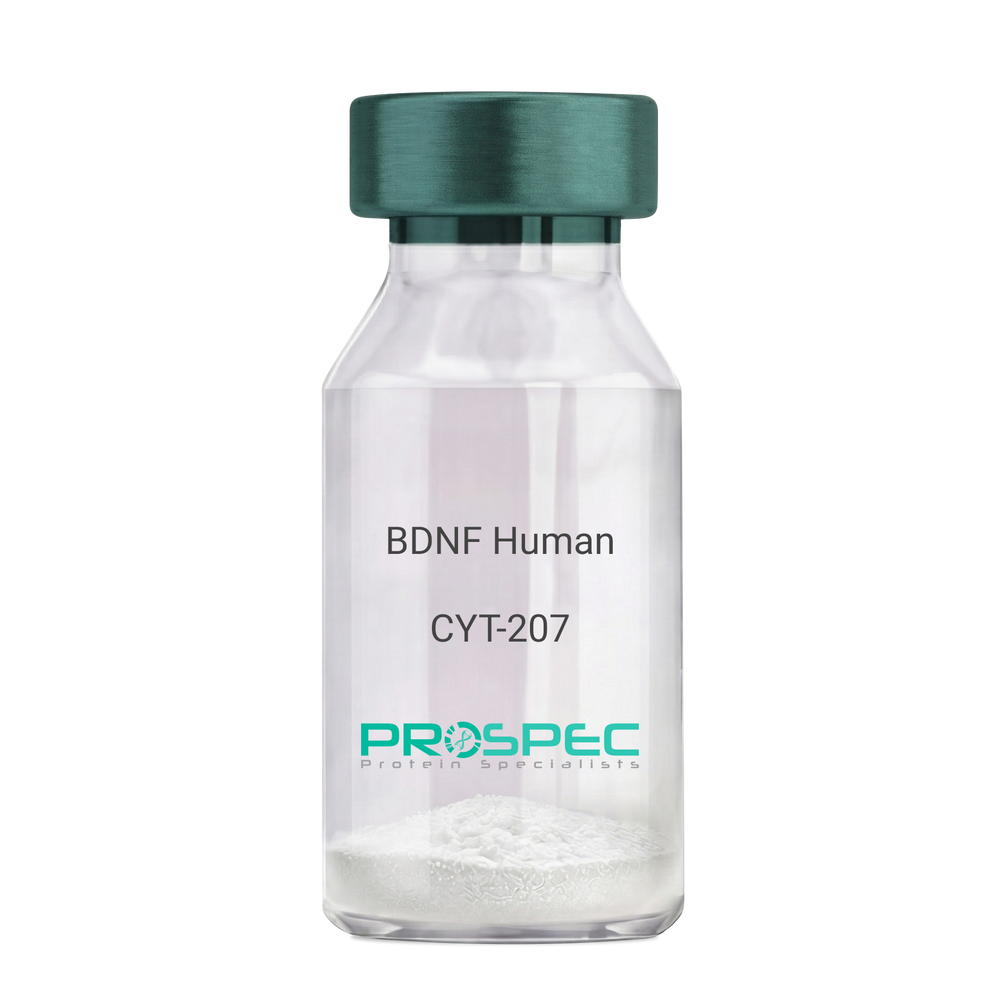
    BDNF Human

    Description:

    Brain-Derived Neurotrophic Factor Human Recombinant

    Brain-Derived Neurotrophic Factor, BDNF, MGC34632.

    Product # :

    CYT-207

    Price :

    Quantity :

    Shipping Method :

    Room Temp Icon

    Shipped at Room temp

    Add To Cart

    More Info

    • description
    • source
    • formulation
    • purity
    • biological activity
    • More Info
    • Activity

    Description

    BDNF Human Recombinant produced in E.Coli is a homodimer, non-glycosylated, polypeptide chain containing 2 x 119 amino acids (and an N-terminal Met) and having a total molecular mass of 28kDa. BDNF Human Recombinant is purified by proprietary chromatographic techniques.

    Source

    Escherichia Coli.

    Formulation

    The protein was lyophilized with 20mM PB and 400mM NaCl, pH 7.2.

    Purity

    BDNF is greater than 950% as determined SDS-PAGE.

    Biological Activity

    The activity was determined using Immobilized Human TrkB-His tag protein 2ug/ml (100 μl/well) for its binding to NHS-Biotin BDNF. The ED50 of was found to be ≤20ng/mL

    Activity

    bdnf activity - Product image 1

    More Info

    • Introduction

      BDNF promotes the survival of neuronal populations that are all located either in the central nervous system or directly connected to it. BDNF is a major regulator of synaptic transmission and plasticity at adult synapses in many regions of the cns. The versatility of BDNF is emphasized by its contribution to a range of adaptive neuronal responses including long-term potentiation (ltp), long-term depression (ltd), certain forms of short-term synaptic plasticity, as well as homeostatic regulation of intrinsic neuronal excitability.

    • Synonyms

      Brain-Derived Neurotrophic Factor, BDNF, MGC34632.

    • Physical Appearance

      Sterile Filtered White lyophilized (freeze-dried) powder.

    • Stability

      Lyophilized BDNF although stable at room temperature for 3 weeks, should be stored desiccated below -18°C. Upon reconstitution BDNF should be stored at 4°C between 2-7 days and for future use below -18°C.For long term storage it is recommended to add a carrier protein (0.1% HSA or BSA).Please prevent freeze-thaw cycles.

    • Solubility

      It is recommended to reconstitute the lyophilized BDNF in sterile 18M-cm H2O not less than 100µg/ml, which can then be further diluted to other aqueous solutions.

    • Amino Acid Sequence

      HSDPARRGE LSVCDSISEW VTAADKKTAV DMSGGTVTVL EKVPVSKGQL KQYFYETKCN PMGYTKEGCR GIDKRHWNSQ CRTTQSYVRA LTMDSKKRIG WRFIRIDTSC VCTLTIKRGR.

    • Background

      Final Thoughts

      Although more research is needed on the safety and effectiveness of BDNF human recombinant, trials suggest that this laboratory-produced protein may be effective in managing and treating several neurological and psychiatric disorders. It's important for experts to stay up to date on the latest developments and research to learn more about potential risks and benefits.

      What is the molecular weight/Mw of BDNF Protein?
      BDNF Protein has a total Mw of 27kDa.

      What is the source or expression system of BDNF Protein?
      Escherichia Coli.

      What is the Purity of BDNF Protein?
      BDNF Protein is >97% pure as determined by SDS-PAGE.

      What is the Biological Activity of BDNF Protein?
      The ED50, as determined by the dose-dependent induction of C6 cells proliferation, is 1.3-2µg/ml.

      What is the amino acid sequence of BDNF Protein?
      MHSDPARRGE LSVCDSISEW VTAADKKTAV DMSGGTVTVL EKVPVSKGQL KQYFYETKCN PMGYTKEGCR GIDKRHWNSQ CRTTQSYVRA LTMDSKKRIG WRFIRIDTSC VCTLTIKRGR.

      What applications can BDNF Protein be used in?
      BDNF Protein can probably be used in western blot, ELISA and Lateral Flow.

      What is the endotoxin level for BDNF Protein?
      The endotoxin level is minimal, BDNF Protein was purified using conventional chromatography techniques.

    • Protein content

      BDNF quantitation was carried out by two independent methods:1. UV spectroscopy at 280 nm using the absorbency value of 1.6 as the extinction coefficient for a 0.1% (1mg/ml) solution. This value is calculated by the PC GENE computer analysis program of protein sequences (IntelliGenetics). 2. Analysis by RP-HPLC, using a standard solution of Brain-derived Neurotrophic Factor as a Reference Standard.

    ProSpec's products are furnished for LABORATORY RESEARCH USE ONLY. The product may not be used as drugs, agricultural or pesticidal products, food additives or household chemicals.

    Bdnf Human
  • View Data Sheet

    Name :

    T.pallidum p17

    Description:

    Treponema pallidum p17 Recombinant

    Product # :

    TRP-241

    Price :

    Quantity :

    Shipping Method :

    Ice Icon

    Shipped with Ice Packs

    Add To Cart

    More Info

    • description
    • source
    • formulation
    • purity
    • More Info

    Description

    The E.Coli derived recombinant protein contains the T. Pallidum p17 immunodominant regions. The protein contains beta- galactosidase (114 kDa) fused at the N- terminus.

    Source

    Escherichia Coli.

    Formulation

    8M urea, 20mM Tris-HCl pH-8 and10mM B-ME.

    Purity

    Treponema Pallidum protein protein is >90% pure as determined by 10% PAGE (coomassie staining).

    More Info

    • Introduction

      Treponema pallidum is a gram-negative spirochaete bacterium and is considered to be metabolically crippled. There are at least four known subspecies: T. pallidum pallidum, T. pallidum pertenue, T. pallidum carateum and T. pallidum endemicum. The helical structure of T. pallidum pallidum allows it to move in a corkscrew motion through viscous mediums such as mucus. Treponema pallidum sub sp. pallidum has one of the smallest bacterial genomes at 1.14 million base pairs (Mb) and has limited metabolic capabilities, reflecting its adaptation through genome reduction to the rich environment of mammalian tissue.

    • Stability

      Treponema Pallidum protein although stable at 4°C for 1 week, should be stored below -18°C. Please prevent freeze thaw cycles.

    • Applications

      Treponema Pallidum protein is suitable for ELISA and Western blots, excellent antigen for detection of Trp. Pallidum with minimal specificity problems.

    • Specificity

      Immunoreactive with sera of Trp. Pallidum infected individuals.

    • Purification Method

      Treponema Pallidum protein was purified by proprietary chromatographic technique.

    ProSpec's products are furnished for LABORATORY RESEARCH USE ONLY. The product may not be used as drugs, agricultural or pesticidal products, food additives or household chemicals.

    Tpallidum P17
  • View Data Sheet

    Name :

    TPO Human, CHO

    Description:

    Thrombopoietin Human Recombinant, CHO

    MPL Ligand, THCYT1, MPLLG, TPO, ML, Thrombopoietin Nirs Variant 1, MKCSF, Thrombopoietin, Myeloproliferative Leukemia Virus Oncogene Ligand, Megakaryocyte Growth and Development Factor, Megakaryocyte Colony-Stimulating Factor, C-Mpl Ligand, MGDF, Megakaryocyte Stimulating Factor, Prepro-Thrombopoietin.

    Product # :

    CYT-1070

    Price :

    Quantity :

    Shipping Method :

    Ice Icon

    Shipped with Ice Packs

    Add To Cart

    More Info

    • description
    • source
    • formulation
    • purity
    • biological activity
    • More Info

    Description

    Thrombopoietin Human Recombinant produced in CHO cells has a molecular weight range of 80-90kDa due to glycosylation. The TPO is purified by proprietary chromatographic techniques.

    Source

    Chinese Hamster Ovary Cells.

    Formulation

    TPO protein solution contains phosphate buffered saline (pH7.4) and 2% albumin.

    Purity

    Greater than 98% as determined by SDS-PAGE.

    Biological Activity

    The ED50 as determined by the dose-dependent stimulation of MO7e cells corresponding to a specific activity of 3x10⁵ units/mg.

    More Info

    • Introduction

      Thrombopoietin is a glycoprotein hormone produced mainly by the liver and the kidney which regulates the production of platelets by the bone marrow. TPO stimulates the production as well as differentiation of megakaryocytes, the bone marrow cells which fragment into large numbers of platelets.

    • Synonyms

      MPL Ligand, THCYT1, MPLLG, TPO, ML, Thrombopoietin Nirs Variant 1, MKCSF, Thrombopoietin, Myeloproliferative Leukemia Virus Oncogene Ligand, Megakaryocyte Growth and Development Factor, Megakaryocyte Colony-Stimulating Factor, C-Mpl Ligand, MGDF, Megakaryocyte Stimulating Factor, Prepro-Thrombopoietin.

    • Physical Appearance

      Sterile Filtered clear solution.

    • Stability

      Thrombopoietin although stable at room temperature for 1 week, should be stored between 2-8°C.

    ProSpec's products are furnished for LABORATORY RESEARCH USE ONLY. The product may not be used as drugs, agricultural or pesticidal products, food additives or household chemicals.

    Thrombopoietin
  • View Data Sheet

    Name :

    MTPN Human

    Description:

    Myotrophin Human Recombinant

    Protein V-1, GCDP, Myotrophin, FLJ31098, FLJ99857.

    Product # :

    CYT-723

    Price :

    Quantity :

    Shipping Method :

    Ice Icon

    Shipped with Ice Packs

    Add To Cart

    More Info

    • description
    • source
    • formulation
    • purity
    • More Info

    Description

    MTPN Recombinant Human produced in E.Coli is a single, non-glycosylated polypeptide chain containing 138 amino acids (1-118 a.a.) and having a molecular mass of 15 kDa. The MTPN is fused to 20 amino acid His-Tag at N-terminus and purified by proprietary chromatographic techniques.

    Source

    Escherichia Coli.

    Formulation

    MTPN Human solution containing 20mM Tris-HCl pH-8 and 10% glycerol.

    Purity

    Greater than 90.0% as determined by SDS-PAGE.

    More Info

    • Introduction

      MTPN is an ankyrin repeat protein, that stimulates protein synthesis and cardiomyocyte growth to commence cardiac hypertrophy by activating the NF-kappaB signaling cascade. Myotrophin participates in cerebellar morphogenesis and takes part in differentiation of cerebellar neurons, particularly of granule cells. High levels of MTPN are expressed in human dilated cardiomyopathic and ischemic hearts.

    • Synonyms

      Protein V-1, GCDP, Myotrophin, FLJ31098, FLJ99857.

    • Physical Appearance

      Sterile filtered colorless solution.

    • Stability

      Store at 4°C if entire vial will be used within 2-4 weeks. Store, frozen at -20°C for longer periods of time. For long term storage it is recommended to add a carrier protein (0.1% HSA or BSA).Avoid multiple freeze-thaw cycles.

    • Amino Acid Sequence

      MGSSHHHHHH SSGLVPRGSH MCDKEFMWAL KNGDLDEVKD YVAKGEDVNR TLEGGRKPLH YAADCGQLEI LEFLLLKGAD INAPDKHHIT PLLSAVYEGH VSCVKLLLSK GADKTVKGPD GLTAFEATDN QAIKALLQ.

    ProSpec's products are furnished for LABORATORY RESEARCH USE ONLY. The product may not be used as drugs, agricultural or pesticidal products, food additives or household chemicals.

    Mtpn Human
  • View Data Sheet

    Name :

    YWHAB Human

    Description:

    Tyr-3/Trp- 5 Monooxygenase Activation Protein Beta Human Recombinant

    14-3-3 protein beta/alpha, Protein kinase C inhibitor protein 1, Protein 1054, YWHAB, HS1, GW128, KCIP-1, Tyr-3/Trp- 5 Monooxygenase Activation Protein Beta, 14-3-3 Beta.

    Product # :

    PKA-348

    Price :

    Quantity :

    Shipping Method :

    Ice Icon

    Shipped with Ice Packs

    Add To Cart

    More Info

    • description
    • source
    • formulation
    • purity
    • More Info

    Description

    YWHAB Human Recombinant produced in E.Coli is a single, non-glycosylated, polypeptide chain containing 246 amino acids (1-246) and having a molecular mass of 28kDa. YWHAB is purified by proprietary chromatographic techniques.

    Source

    Escherichia Coli.

    Formulation

    The YWHAB protein solution (1mg/ml) containing 20mM Tris-HCl pH-8, 1mM EDTA & 50mM NaCl.

    Purity

    Greater than 90.0% as determined by SDS-PAGE.

    More Info

    • Introduction

      YWHAB belongs to the 14-3-3 family of proteins which are in charge for signal transduction by binding to phosphoserine-containing proteins. YWHAB is found in both plants and mammals. YWHAB protein interacts with RAF1 and CDC25 phosphatases,thus linking mitogenic signaling and the cell cycle machinery. YWHAB is an adapter protein involved in the regulation of a large spectrum of both general and specialized signaling pathway. YWHAB binds to a large number of proteins by recognition of a phosphoserine or phosphothreonine motif. Binding generally results in the modulation of the activity of the binding partner.

    • Synonyms

      14-3-3 protein beta/alpha, Protein kinase C inhibitor protein 1, Protein 1054, YWHAB, HS1, GW128, KCIP-1, Tyr-3/Trp- 5 Monooxygenase Activation Protein Beta, 14-3-3 Beta.

    • Physical Appearance

      Sterile filtered colorless solution.

    • Stability

      Store at 4°C if entire vial will be used within 2-4 weeks. Store, frozen at -20°C for longer periods of time. For long term storage it is recommended to add a carrier protein (0.1% HSA or BSA).Avoid multiple freeze-thaw cycles.

    • Amino Acid Sequence

      MTMDKSELVQ KAKLAEQAER YDDMAAAMKA VTEQGHELSN EERNLLSVAY KNVVGARRSS WRVISSIEQK TERNEKKQQM GKEYREKIEA ELQDICNDVL ELLDKYLIPN ATQPESKVFY LKMKGDYFRY LSEVASGDNK QTTVSNSQQA YQEAFEISKK EMQPTHPIRL GLALNFSVFY YEILNSPEKA CSLAKTAFDE AIAELDTLNE ESYKDSTLIM QLLRDNLTLW TSENQGDEGD
      AGEGEN.

    ProSpec's products are furnished for LABORATORY RESEARCH USE ONLY. The product may not be used as drugs, agricultural or pesticidal products, food additives or household chemicals.

    Ywhab Human
  • View Data Sheet

    Name :

    Adiponectin Mouse, His

    Description:

    Adiponectin Mouse Recombinant, His Tag

    Acrp30, AdipoQ, GBP-28, APM-1, ACDC.

    Product # :

    CYT-537

    Price :

    Quantity :

    Shipping Method :

    Ice Icon

    Shipped with Ice Packs

    Add To Cart

    More Info

    • description
    • source
    • formulation
    • purity
    • More Info
    • sds-page

    Description

    The Adiponectin Mouse is created as a recombinant protein with a 21 a.a N-terminal fusion of His Tag. The Adiponectin His-Tagged Fusion Protein, produced in E. coli, is a 27.2kDa protein containing 251 amino acid residues of the Acrp30 Mouse, 18-247 amino acids.

    Source

    Escherichia Coli.

    Formulation

    Acrp30 Mouse is a sterile filtered liquid formulation containing (1mg/ml) 20mM Tris-HCl pH-8, 1mM DTT and 10% Glycerol.

    Purity

    Acrp30 Mouse purity is greater than 90% as determined by SDS-PAGE.

    sds-page

    Adiponectin-sds-page - Product image 1

    More Info

    • Introduction

      Adiponectin is an adipocyte specific secreted protein that circulates in the plasma. It is induced during adipocyte differentiation and its secretion is stimulated by insulin. Mouse adiponectin shares about 83% amino acid identity with that human. Adiponectin plays a role in various physiological processes such as energy homeostasis and obesity. Adiponectin is reduced in obese humans, and decreased level is associated with insulin resistance and hyperinsulinemia.

    • Synonyms

      Acrp30, AdipoQ, GBP-28, APM-1, ACDC.

    • Stability

      Store at 4°C if entire vial will be used within 2-4 weeks. Store, frozen at -20°C for longer periods of time. For long term storage it is recommended to add a carrier protein (0.1% HSA or BSA).Avoid multiple freeze-thaw cycles.

    • Amino Acid Sequence

      MGSSHHHHHH SSGLVPRGSH MEDDVTTTEE LAPALVPPPK GTCAGWMAGI PGHPGHNGTP GRDGRDGTPG EKGEKGDAGL LGPKGETGDV GMTGAEGPRG FPGTPGRKGE PGEAAYVYRS AFSVGLETRV TVPNVPIRFT KIFYNQQNHY DGSTGKFYCN IPGLYYFSYH ITVYMKDVKV SLFKKDKAVL FTYDQYQEKN VDQASGSVLL HLEVGDQVWL QVYGDGDHNG LYADNVNDST FTGFLLYHDT N.

    • Background

      What is the molecular weight/Mw of ADIPONECTIN Protein?
      ADIPONECTIN Protein has a total Mw of 27.2kDa.

      What is the source or expression system of ADIPONECTIN Protein?
      Escherichia Coli.

      What is the Purity of ADIPONECTIN Protein?
      ADIPONECTIN Protein is >90% pure as determined by SDS-PAGE.

      What is the Biological Activity of ADIPONECTIN Protein?
      The biological functionality of ADIPONECTIN Protein will be determined in the future.

      What is the amino acid sequence of ADIPONECTIN Protein?
      MGSSHHHHHH SSGLVPRGSH MEDDVTTTEE LAPALVPPPK GTCAGWMAGI PGHPGHNGTP GRDGRDGTPG EKGEKGDAGL LGPKGETGDV GMTGAEGPRG FPGTPGRKGE PGEAAYVYRS AFSVGLETRV TVPNVPIRFT KIFYNQQNHY DGSTGKFYCN IPGLYYFSYH ITVYMKDVKV SLFKKDKAVL FTYDQYQEKN VDQASGSVLL HLEVGDQVWL QVYGDGDHNG LYADNVNDST FTGFLLYHDT N.

      What applications can ADIPONECTIN Protein be used in?
      ADIPONECTIN Protein can probably be used in western blot, ELISA and Lateral Flow.

      What is the endotoxin level for ADIPONECTIN Protein?
      The endotoxin level is minimal, ADIPONECTIN Protein was purified using conventional chromatography techniques.

    ProSpec's products are furnished for LABORATORY RESEARCH USE ONLY. The product may not be used as drugs, agricultural or pesticidal products, food additives or household chemicals.

    Acrp30 Mouse His
  • View Data Sheet

    Name :

    DCN Mouse

    Description:

    Decorin Mouse Recombinant

    Decorin, Bone proteoglycan II, PG-S2, PG40, DCN.

    Product # :

    PRO-2234

    Price :

    Quantity :

    Shipping Method :

    Ice Icon

    Shipped with Ice Packs

    Add To Cart

    More Info

    • description
    • source
    • formulation
    • purity
    • More Info

    Description

    DCN produced in Sf9 Baculovirus cells is a single, glycosylated polypeptide chain (17-354 a.a.) and fused to a 6 aa His Tag at C-terminus containing a total of 344 amino acids and having a molecular mass of 38.8kDa.DCN shows multiple bands between 40-57kDa on SDS-PAGE, reducing conditions and purified by proprietary chromatographic techniques.

    Source

    Sf9, Baculovirus cells.

    Formulation

    DCN protein solution (0.25mg/ml) contains Phosphate buffered saline (pH7.4), 30% glycerol and 0.1mM PMSF.

    Purity

    Greater than 90.0% as determined by SDS-PAGE.

    More Info

    • Introduction

      Decorin (DCN) is a small cellular or pericellular matrix proteoglycan which is closely related in structure to biglycan protein. Decorin is a secreted protein which binds to collagen and fibronectin in extracellular matrix. Decorin appears in different glycoforms, substituted with chondroitin sulfate or dermatan sulfate consistent with the original tissue. DCN contains one attached glycosaminoglycan chain. Decorin influences the rate of fibril formation. Decorin is capable of suppressing the growth of various tumor cell lines. DCN gene defects cause corneal dystrophy. The DCN gene is a candidate gene for Marfan syndrome.

    • Synonyms

      Decorin, Bone proteoglycan II, PG-S2, PG40, DCN.

    • Physical Appearance

      Sterile filtered colorless solution.

    • Stability

      Store at 4°C if entire vial will be used within 2-4 weeks. Store, frozen at -20°C for longer periods of time. For long term storage it is recommended to add a carrier protein (0.1% HSA or BSA).Avoid multiple freeze-thaw cycles.

    • Amino Acid Sequence

      GPFEQRGLFD FMLEDEASGI IPYDPDNPLI SMCPYRCQCH LRVVQCSDLG LDKVPWDFPP DTTLLDLQNN KITEIKEGAF KNLKDLHTLI LVNNKISKIS PEAFKPLVKL ERLYLSKNQL KELPEKMPRT LQELRVHENE ITKLRKSDFN GLNNVLVIEL GGNPLKNSGI ENGAFQGLKS LSYIRISDTN ITAIPQGLPT SLTEVHLDGN KITKVDAPSL KGLINLSKLG LSFNSITVME NGSLANVPHL RELHLDNNKL LRVPAGLAQH KYIQVVYLHN NNISAVGQND FCRAGHPSRK ASYSAVSLYG NPVRYWEIFP NTFRCVYVRS AIQLGNYKHH HHHH

    ProSpec's products are furnished for LABORATORY RESEARCH USE ONLY. The product may not be used as drugs, agricultural or pesticidal products, food additives or household chemicals.

    Dcn Mouse
  • View Data Sheet

    Name :

    TBPL1 Human

    Description:

    TBP-Like 1 Human Recombinant

    TATA box-binding protein-like protein 1, TBP-like protein 1, 21 kDa TBP-like protein, Second TBP of unique DNA protein, STUD, TATA box-binding protein-related factor 2, TBP-related factor 2, TBP-like factor, TBP-related protein, TBPL1, TLF, TLP, TLP21, TRF2, TRP, MGC:8389, MGC:9620.

    Product # :

    PRO-736

    Price :

    Quantity :

    Shipping Method :

    Ice Icon

    Shipped with Ice Packs

    Add To Cart

    More Info

    • description
    • source
    • formulation
    • purity
    • More Info

    Description

    TBPL1 Human Recombinant produced in E.Coli is a single, non-glycosylated polypeptide chain containing 209 amino acids (1-186 a.a) and having a molecular mass of 23.3kDa.TBPL1 is fused to a 23 amino acid His-tag at N-terminus & purified by proprietary chromatographic techniques.

    Source

    Escherichia Coli.

    Formulation

    TBPL1 protein solution (0.25mg/ml) containing 20mM Tris-HCl buffer (pH 8.0), 0.2M NaCl, 50% glycerol, 2mM DTT and 1mM EDTA.

    Purity

    Greater than 90.0% as determined by SDS-PAGE.

    More Info

    • Introduction

      TBP-Like 1 (TBPL1) is a member of the TBP family. The TATA box-binding protein (TBP) is an indispensable component of the basal transcriptional machinery. TBPL1 is crucial for spermiogenesis and supposed to be significant in expression of developmentally regulated genes.

    • Synonyms

      TATA box-binding protein-like protein 1, TBP-like protein 1, 21 kDa TBP-like protein, Second TBP of unique DNA protein, STUD, TATA box-binding protein-related factor 2, TBP-related factor 2, TBP-like factor, TBP-related protein, TBPL1, TLF, TLP, TLP21, TRF2, TRP, MGC:8389, MGC:9620.

    • Physical Appearance

      Sterile Filtered colorless solution.

    • Stability

      Store at 4°C if entire vial will be used within 2-4 weeks. Store, frozen at -20°C for longer periods of time. For long term storage it is recommended to add a carrier protein (0.1% HSA or BSA).Avoid multiple freeze-thaw cycles.

    • Amino Acid Sequence

      MGSSHHHHHH SSGLVPRGSH MGSMDADSDV ALDILITNVV CVFRTRCHLN LRKIALEGAN VIYKRDVGKV LMKLRKPRIT ATIWSSGKII CTGATSEEEA KFGARRLARS LQKLGFQVIF TDFKVVNVLA VCNMPFEIRL PEFTKNNRPH ASYEPELHPA VCYRIKSLRA TLQIFSTGSI TVTGPNVKAV ATAVEQIYPF VFESRKEIL.

    ProSpec's products are furnished for LABORATORY RESEARCH USE ONLY. The product may not be used as drugs, agricultural or pesticidal products, food additives or household chemicals.

    Tbpl1 Human
  • View Data Sheet

    Name :

    TPO Mouse, HEK

    Description:

    Thrombopoietin Mouse Recombinant, HEK

    Thpo, C-mpl ligand,ML, Megakaryocyte colony-stimulating factor, Megakaryocyte growth and development factor, MGDF, Myeloproliferative leukemia virus oncogene ligand, Mgdf, Ml, Mpllg, Tpo, thrombopoietin isoform 1.

    Product # :

    CYT-1157

    Price :

    Quantity :

    Shipping Method :

    Ice Icon

    Shipped with Ice Packs

    Add To Cart

    More Info

    • description
    • source
    • formulation
    • purity
    • biological activity
    • More Info

    Description

    TPO Mouse Recombinant produced in HEK293 cells is a single, non-glycosylated polypeptide chain containing 341 amino acids ( 22-356 a.a) and having a molecular mass of 36.4kDa. TPO is fused to a 6 amino acid His-tag at C-terminus & purified by proprietary chromatographic techniques.

    Source

    HEK293.

    Formulation

    TPO protein (0.5mg/ml) contains Phosphate-Buffered Saline (pH 7.4) and 10% glycerol.

    Purity

    Measured in a cell proliferation assay using MO7e human megakaryocytic leukemic cells. The ED50 range ≤4ng/ml.

    Biological Activity

    Measured by its ability to agglutinate human red blood cells. The ED50 for this effect is ≥ 25ug/ml. 

    More Info

    • Introduction

      Thrombopoietin or TPO or MGDF, is a protein (glycoprotein hormone) that can be found in the liver and kidney tissues. TPO regulates the creation of platelets. The protein enhances the production & differentiation of cells such as megakaryocytes that are part of the bone marrow cells that secretes a wide number of platelets. The cellular development process that ends up in the production of platelet calls (Megakaryocytopoiesis). Humoral growth factor is needed for the megakaryocyte proliferation & maturation of megakaryocyte, not apart from thrombopoiesis.

    • Synonyms

      Thpo, C-mpl ligand,ML, Megakaryocyte colony-stimulating factor, Megakaryocyte growth and development factor, MGDF, Myeloproliferative leukemia virus oncogene ligand, Mgdf, Ml, Mpllg, Tpo, thrombopoietin isoform 1.

    • Physical Appearance

      Sterile Filtered colorless solution.

    • Stability

      Store at 4°C if entire vial will be used within 2-4 weeks. Store, frozen at -20°C for longer periods of time. For long term storage it is recommended to add a carrier protein (0.1% HSA or BSA).Avoid multiple freeze-thaw cycles.

    • Amino Acid Sequence

      SPVAPACDPR LLNKLLRDSH LLHSRLSQCP DVDPLSIPVL LPAVDFSLGE WKTQTEQSKA QDILGAVSLL LEGVMAARGQ LEPSCLSSLL GQLSGQVRLL LGALQGLLGT QLPLQGRTTA HKDPNALFLS LQQLLRGKVR FLLLVEGPTL CVRRTLPTTA VPSSTSQLLT LNKFPNRTSG LLETNFSVTA RTAGPGLLSR LQGFRVKITP GQLNQTSRSP VQISGYLNRT HGPVNGTHGL FAGTSLQTLE ASDISPGAFN KGSLAFNLQG GLPPSPSLAP DGHTPFPPSP ALPTTHGSPP QLHPLFPDPS TTMPNSTAPH PVTMYPHPRN LSQETHHHHH H.

    ProSpec's products are furnished for LABORATORY RESEARCH USE ONLY. The product may not be used as drugs, agricultural or pesticidal products, food additives or household chemicals.

    Thrombopoietin Mouse
  • View Data Sheet

    Name :

    TCL1A Human

    Description:

    T-cell Leukemia/Lymphoma 1A Human Recombinant

    T-cell leukemia/lymphoma protein 1A, Protein p14 TCL1, Oncogene TCL-1, Oncogene TCL1, TCL1A, TCL1.

    Product # :

    PRO-726

    Price :

    Quantity :

    Shipping Method :

    Ice Icon

    Shipped with Ice Packs

    Add To Cart

    More Info

    • description
    • source
    • formulation
    • purity
    • More Info

    Description

    TCL1A Human Recombinant produced in E.Coli is a single, non-glycosylated, polypeptide chain containing 114 amino acids (1-114 a.a.) and having a molecular mass of 13.4kDa.The TCL1A is purified by proprietary chromatographic techniques.

    Source

    Escherichia Coli.

    Formulation

    The TCL1A protein solution contains 50mM Tris-HCl buffer (pH7.5) and 10% glycerol.

    Purity

    Greater than 90.0% as determined by SDS-PAGE.

    More Info

    • Introduction

      TCL1A (T-cell leukemia/lymphoma 1A) is a protein with a possible role in intracellular regulation of T cell signaling. TCL1A enhances cell proliferation, stabilizes mitochondrial membrane potential and promotes cell survival. TCL1A is restricted in the T-cell lineage to immature thymocytes and activated peripheral lymphocytes. TCL1A is preferentially expressed early in T and B-lymphocyte differentiation. Chromosomal anomalies activating TCL1A are found in chronic T-cell leukemias (T-CLL).
      TCL1A enhances the phosphorylation and activation of AKT1, AKT2 and AKT3. TCL1A promotes nuclear translocation of AKT1. TCL1A binds to the pleckstrin homology domain of Akt (protein kinase B) family proteins, which facilitates Akt dimerization and activity. By increasing Akt activity, TCL1A can enhance the serine/threonine phosphorylation of major Akt signaling substrates, for example Ikk complex, mTOR, BAD, p70S6 kinase, FOXO transcription factors and GSK3b. These substrates regulate cellular differentiation, growth, survival, and metabolism.

    • Synonyms

      T-cell leukemia/lymphoma protein 1A, Protein p14 TCL1, Oncogene TCL-1, Oncogene TCL1, TCL1A, TCL1.

    • Physical Appearance

      Sterile Filtered colorless solution.

    • Stability

      Store at 4°C if entire vial will be used within 2-4 weeks. Store, frozen at -20°C for longer periods of time. For long term storage it is recommended to add a carrier protein (0.1% HSA or BSA).Avoid multiple freeze-thaw cycles.

    • Amino Acid Sequence

      MAECPTLGEA VTDHPDRLWA WEKFVYLDEK QHAWLPLTIE IKDRLQLRVL LRREDVVLGR PMTPTQIGPS LLPIMWQLYP DGRYRSSDSS FWRLVYHIKI DGVEDMLLEL LPDD.

    ProSpec's products are furnished for LABORATORY RESEARCH USE ONLY. The product may not be used as drugs, agricultural or pesticidal products, food additives or household chemicals.

    Tcl1A Human
  • View Data Sheet

    Name :

    TXN2 Human

    Description:

    Thioredoxin-2 Human Recombinant

    Thioredoxin mitochondrial, Thioredoxin-2, TXN2, MTRX, TRX2, MT-TRX, TRX-2, TXN-2.

    Product # :

    PRO-625

    Price :

    Quantity :

    Shipping Method :

    Ice Icon

    Shipped with Ice Packs

    Add To Cart

    More Info

    • description
    • source
    • formulation
    • purity
    • biological activity
    • More Info

    Description

    MTRX Recombinant produced in E.Coli is a single, non-glycosylated polypeptide chain containing 108 amino acids and having a molecular mass of 11 kDa.

    Source

    Escherichia Coli.

    Formulation

    TXN2 protein solution contains 1x PBS pH-7.4.

    Purity

    Greater than 95.0% as determined by:
    (a) Analysis by RP-HPLC.
    (b) Analysis by SDS-PAGE.

    Biological Activity

    Specific activity is 3-4 A650/min/mg, obtained by measuring the increase of INS precipitation in absorbance at 650 nm resulting from the reduction of INS.

    More Info

    • Introduction

      Thioredoxin-2 is a low molecular weight redox protein. TRX2 contains a redox active disulfide/dithiol group within the conserved Cys-Gly-Pro-Cys active site. The TXN2 is involved in the regulation of the mitochondrial membrane potential and in protection against oxidant-induced apoptosis. Upon stimulation of Fas, TXN2 mediates denitrosylation of mitochondria-associated caspase-3, a process required for caspase-3 activation, and promoted apoptosis.
      TRX2 is important at low oxidative stress conditions.
      MTRX is involved in the regulation of the mitochondrial membrane potential and cell death. Mitochondrial thioredoxin plays an important roles in protection against oxidant-induced apoptosis. Thioredoxin1 and thioredoxin2 have opposed regulatory functions on hypoxia-inducible factor-1alpha.

    • Synonyms

      Thioredoxin mitochondrial, Thioredoxin-2, TXN2, MTRX, TRX2, MT-TRX, TRX-2, TXN-2.

    • Physical Appearance

      Sterile Filtered colorless solution.

    • Stability

      Store at 4°C if entire vial will be used within 2-4 weeks. Store, frozen at -20°C for longer periods of time. For long term storage it is recommended to add a carrier protein (0.1% HSA or BSA).Avoid multiple freeze-thaw cycles.

    • Amino Acid Sequence

      MTTFNIQDGP DFQDRVVNSE TPVVVDFHAQ WCGPCKILGP RLEKMVAKQH GKVVMAKVDI DDHTDLAIEY EVSAVPTVLA MKNGDVVDKF VGIKDEDQLE AFLKKLIG.

    ProSpec's products are furnished for LABORATORY RESEARCH USE ONLY. The product may not be used as drugs, agricultural or pesticidal products, food additives or household chemicals.

    Txn2 Human
  • View Data Sheet

    Name :

    Transferrin Human

    Description:

    Transferrin Human Recombinant

    Serotransferrin, Transferrin, Siderophilin, Beta-1-metal-binding globulin, TF, PRO1557, PRO2086, DKFZp781D0156, HTF.

    Product # :

    PRO-747

    Price :

    Quantity :

    Shipping Method :

    Room Temp Icon

    Shipped at Room temp

    Add To Cart

    More Info

    • description
    • source
    • formulation
    • purity
    • biological activity
    • More Info

    Description

    Recombinant Human Transferrin produced in Plant is a non-glycosylated, polypeptide chain containing 679 amino acids and having a molecular mass of 76 kDa. The Recombinant Human Transferrin is purified by proprietary chromatographic techniques.

    Source

    Oryza sativa (rice).

    Formulation

    The protein (1mg/ml) was lyophilized with no additives.

    Purity

    Purity as determined by SDS-PAGE is 97%.

    Biological Activity

    One mg of Recombinant Human Transferrin will bind to approximately 2 micrograms of Fe.

    More Info

    • Introduction

      Transferrin is the iron-transport protein of vertebrate serum and donates iron to cells through interaction with a specific membrane receptor, CD71. Transferrin appears to be indispensable for most cells growing in tissue culture.
      It is referred to frequently as a growth factor because, in analogy to other growth factor-receptor interactions, proliferating cells express high numbers of transferrin receptors, and the binding of transferrin to their receptors is needed for cells to initiate and maintain their DNA synthesis. Apart from its role as an iron transport protein transferrin acts as a cytokine and has functions that may not be related to its iron-carrying capacity.

    • Synonyms

      Serotransferrin, Transferrin, Siderophilin, Beta-1-metal-binding globulin, TF, PRO1557, PRO2086, DKFZp781D0156, HTF.

    • Physical Appearance

      Sterile Filtered lyophilized (freeze-dried) powder.

    • Stability

      Lyophilized Transferrin although stable at room temperature for 3 weeks, should be stored desiccated below -18°C. Upon reconstitution Transferrin Human Recombinant should be stored at 4°C between 2-7 days and for future use below -18°C.For long term storage it is recommended to add a carrier protein (0.1% HSA or BSA).Please prevent freeze-thaw cycles.

    • Solubility

      Stock solutions can be prepared by dissolving gently into PBS for several minutes. Recommended stock concentrations are 5mg/ml to 20 mg/ml in PBS, though others can be used as well. Please try to avoid the formation of bubbles when dissolving the protein. Sterile filter through 0.2µm filter.

    ProSpec's products are furnished for LABORATORY RESEARCH USE ONLY. The product may not be used as drugs, agricultural or pesticidal products, food additives or household chemicals.

    Transferrin Human
  • View Data Sheet

    Name :

    METRN Mouse

    Description:

    Meteorin Mouse Recombinant

    Meteorin, Hypoxia/reoxygenation regulatory factor, Metrn, 1810034B16Rik, Hyrac.

    Product # :

    PRO-2241

    Price :

    Quantity :

    Shipping Method :

    Ice Icon

    Shipped with Ice Packs

    Add To Cart

    More Info

    • description
    • source
    • formulation
    • purity
    • More Info

    Description

    METRN produced in Sf9 Baculovirus cells is a single, glycosylated polypeptide chain containing 276 amino acids (22-291 a.a.) and having a molecular mass of 30.2kDa (Migrates at 28-40kDa on SDS-PAGE under reducing conditions). METRN is expressed with a 6 amino acid His tag at C-Terminus and purified by proprietary chromatographic techniques.

    Source

    Sf9, Baculovirus cells.

    Formulation

    METRN protein solution (0.25mg/ml) contains Phosphate Buffered Saline (pH 7.4) and 10% glycerol.

    Purity

    Greater than 90.0% as determined by SDS-PAGE.

    More Info

    • Introduction

      Meteorin (METRN) is involved in both glial cell differentiation and axonal network formation during neurogenesis. METRN promotes astrocyte differentiation and transforms cerebellar astrocytes into radial glia. Moreover, the METRN protein stimulates axonal extension in small and intermediate neurons of sensory ganglia by activating nearby satellite glia.

    • Synonyms

      Meteorin, Hypoxia/reoxygenation regulatory factor, Metrn, 1810034B16Rik, Hyrac.

    • Physical Appearance

      Sterile Filtered colorless solution.

    • Stability

      Store at 4°C if entire vial will be used within 2-4 weeks. Store, frozen at -20°C for longer periods of time. For long term storage it is recommended to add a carrier protein (0.1% HSA or BSA). Avoid multiple freeze-thaw cycles.

    • Amino Acid Sequence

      GYSEDRCSWR GSGLTQEPGS VGQLTLDCTE GAIEWLYPAG ALRLTLGGPD PGTRPSIVCL RPERPFAGAQ VFAERMTGNL ELLLAEGPDL AGGRCMRWGP RERRALFLQA TPHRDISRRV AAFRFELHED QRAEMSPQAQ GLGVDGACRP CSDAELLLAA CTSDFVIHGT IHGVAHDTEL QESVITVVVA RVIRQTLPLF KEGSSEGQGR ASIRTLLRCG VRPGPGSFLF MGWSRFGEAW LGCAPRFQEF SRVYSAALTT HLNPCEMALD HHHHHH.

    ProSpec's products are furnished for LABORATORY RESEARCH USE ONLY. The product may not be used as drugs, agricultural or pesticidal products, food additives or household chemicals.

    Metrn Mouse
  • View Data Sheet

    Name :

    TRAIL Mouse

    Description:

    TNF-Related Apoptosis Inducing Ligand/Apo2L Mouse Recombinant

    Tumor necrosis factor ligand superfamily member 10, TNF-related apoptosis-inducing ligand, Protein TRAIL, Apo-2 ligand, Apo-2L, CD253 antigen, TL2, APO2L, TNFSF10. 

    Product # :

    CYT-806

    Price :

    Quantity :

    Shipping Method :

    Room Temp Icon

    Shipped at Room temp

    Add To Cart

    More Info

    • description
    • source
    • formulation
    • purity
    • biological activity
    • More Info

    Description

    TRAIL Recombinant Mouse produced in E.coli is a single, non-glycosylated polypeptide chain containing 175 amino acids and having a molecular mass of 20.2kDa.

    Source

    Escherichia Coli.

    Formulation

    The protein was lyophilized containing PBS, pH 7.4, and 3mM DTT.

    Purity

    Greater than 95.0% as determined by:(a) Analysis by RP-HPLC.(b) Analysis by SDS-PAGE.

    Biological Activity

    Fully biologically active when compared to standard. The ED50 as determined by a cytotoxicity assay using murine L929 cells is less than 0.5 ng/ml, corresponding to a specific activity of > 2,000,000 IU/mg in the presence of actinomycin D.

    More Info

    • Introduction

      TNF-related apoptosis-inducing ligand (TRAIL) is a ligand molecule which induces apoptosis. It is a type II transmembrane protein with homology to other members of the tumor necrosis factor family.In humans, the gene that encodes for TRAIL is located at chromosome 3q26. TRAIL binds to the death receptors, DR4 and DR5. The process of apoptosis is caspase-8-dependent. This protein preferentially induces apoptosis in transformed and tumor cells, but does not appear to kill normal cells although it is expressed at a significant level in most normal tissues.

    • Synonyms

      Tumor necrosis factor ligand superfamily member 10, TNF-related apoptosis-inducing ligand, Protein TRAIL, Apo-2 ligand, Apo-2L, CD253 antigen, TL2, APO2L, TNFSF10.

    • Physical Appearance

      Sterile Filtered White lyophilized (freeze-dried) powder.

    • Stability

      Lyophilized TRAIL although stable at room temperature for 3 weeks, should be stored desiccated below -18C. Upon reconstitution TRAIL recombinant should be stored at 4C between 2-7 days and for future use below -18C.For long term storage it is recommended to add a carrier protein (0.1% HSA or BSA).Please prevent freeze-thaw cycles.

    • Solubility

      It is recommended to reconstitute the lyophilized TRAIL Mouse Recombinant in sterile 18MΩ-cm H2O not less than 100 µg/ml, which can then be further diluted to other aqueous solutions.

    • Amino Acid Sequence

      MPRGGRPQKV AAHITGITRR SNSALIPISK DGKTLGQKIE SWESSRKGHS FLNHVLFRNG ELVIEQEGLY YIYSQTYFRF QEAEDASKMV SKDKVRTKQL VQYIYKYTSY PDPIVLMKSA RNSCWSRDAE YGLYSIYQGG LFELKKNDRI FVSVTNEHLM DLDQEASFFG AFLIN

    ProSpec's products are furnished for LABORATORY RESEARCH USE ONLY. The product may not be used as drugs, agricultural or pesticidal products, food additives or household chemicals.

    Trail Mouse
  • View Data Sheet

    Name :

    TRAPPC4 Human

    Description:

    Trafficking Protein Particle Complex 4 Human Recombinant

    Trafficking protein particle complex subunit 4, TRS23 homolog, Synbindin, Hematopoietic stem/progenitor cell protein 172.

    Product # :

    PRO-1273

    Price :

    Quantity :

    Shipping Method :

    Ice Icon

    Shipped with Ice Packs

    Add To Cart

    More Info

    • description
    • source
    • formulation
    • purity
    • More Info

    Description

    TRAPPC4 Human Recombinant produced in E.coli is a single, non-glycosylated polypeptide chain containing 242 amino acids (1-219) and having a molecular mass of 26.7kDa. TRAPPC4 is fused to a 23 amino acid His-tag at N-terminus & purified by proprietary chromatographic techniques.

    Source

    Escherichia Coli.

    Formulation

    TRAPPC4 protein solution (0.25mg/ml) containing 20mM Tris-HCl buffer (pH 8.0), 0.2M NaCl, 20% glycerol and 1mM DTT.

    Purity

    Greater than 90.0% as determined by SDS-PAGE.

    More Info

    • Introduction

      Trafficking protein particle complex 4 (TRAPPC4) is part of the multisubunit TRAPP (transport protein particle) complex and interacts with SDC2. TRAPPC4 has a role in vesicular transport from endoplasmic reticulum to Golgi.

    • Synonyms

      Trafficking protein particle complex subunit 4, TRS23 homolog, Synbindin, Hematopoietic stem/progenitor cell protein 172.

    • Physical Appearance

      Sterile Filtered colorless solution.

    • Stability

      Store at 4°C if entire vial will be used within 2-4 weeks. Store, frozen at -20°C for longer periods of time. For long term storage it is recommended to add a carrier protein (0.1% HSA or BSA).Avoid multiple freeze-thaw cycles.

    • Amino Acid Sequence

      MGSSHHHHHH SSGLVPRGSH MGSMAIFSVY VVNKAGGLIY QLDSYAPRAE AEKTFSYPLD LLLKLHDERV LVAFGQRDGI RVGHAVLAIN GMDVNGRYTA DGKEVLEYLG NPANYPVSIR FGRPRLTSNE KLMLASMFHS LFAIGSQLSP EQGSSGIEML ETDTFKLHCY QTLTGIKFVV LADPRQAGID SLLRKIYEIY SDFALKNPFY SLEMPIRCEL FDQNLKLALE VAEKAGTFGP GS.

    ProSpec's products are furnished for LABORATORY RESEARCH USE ONLY. The product may not be used as drugs, agricultural or pesticidal products, food additives or household chemicals.

    Trappc4 Human
  • View Data Sheet

    Name :

    CTF1 Mouse

    Description:

    Cardiotrophin-1 Mouse Recombinant

    CTF1, CT1, CT-1, Cardiophin 1.

    Product # :

    CYT-151

    Price :

    Quantity :

    Shipping Method :

    Room Temp Icon

    Shipped at Room temp

    Add To Cart

    More Info

    • description
    • source
    • formulation
    • purity
    • biological activity
    • More Info

    Description

    CTF1 Mouse Recombinant produced in E.Coli is a single, non-glycosylated, polypeptide chain containing 202 amino acids and having a molecular mass of 21.3kDa.The CTF1 Mouse is purified by proprietary chromatographic techniques.

    Source

    Escherichia Coli.

    Formulation

    Lyophilized from a 0.2µm filtered concentrated solution in PBS, pH 7.4.

    Purity

    Greater than 98.0% as determined by SDS-PAGE.

    Biological Activity

    The ED50 as determined by the dose-dependent proliferation of TF-1 cells was < 1.0ng/ml, corresponding to a specific activity of > 1,000,000units/mg.

    More Info

    • Introduction

      Cardiotrophin 1 (CT-1) is a 201 amino acid member of the interleukin-6 superfamily. It was identified by its ability to induce hypertrophic response in cardiac myocytes. CT-1 mRNA levels were found both in cardiac myocytes and in cardiac nonmyocytes. CT 1 was also detected in abundance in normal adult human lung and was expressed in both fetal and adult airway smooth muscle cells. CT 1 activates gp130 dependent signaling and stimulates the Janus kinase/signal transducers and activators of transcription (JAK/STAT) pathway to transduce hypertrophic and cytoprotective signals in cardiac myocytes.
      CT 1 has also a neurotrophic function. CTF1 deficiency causes increased motoneuron cell death in spinal cord and brainstem nuclei of mice during a period between embryonic day 14 and the first postnatal week. Moreover, CT-1 is a hepatocyte survival factor that efficiently reduces hepatocellular damage in animal models of acute liver injury. Cardiotrophin 1 expression is augmented after hypoxic stimulation and it can protect cardiac cells when added either prior to simulated ischaemia or at the time of reoxygenation following simulated ischaemia. Cardiotrophin 1 can induce expression of the protective heat shock proteins (hsps) in cardiac cells.
      Cardiotrophin-1 increased ventricular expression of ANP, brain natriuretic peptide (BNP) and angiotensinogen mRNA.
      Cardiophin 1 levels were significantly elevated in patients with heart failure, patients with dilatative cardiomyopathy, moderate/severe mitral regurgitation, stable and unstable angina and after acute myocardial infarction.

    • Synonyms

      CTF1, CT1, CT-1, Cardiophin 1.

    • Physical Appearance

      Sterile Filtered White lyophilized (freeze-dried) powder.

    • Stability

      Lyophilized CTF1 although stable at room temperature for 3 weeks, should be stored desiccated below -18°C. Upon reconstitution CTF1 should be stored at 4°C between 2-7 days and for future use below -18°C.Please prevent freeze-thaw cycles.

    • Solubility

      It is recommended to reconstitute the lyophilized CTF1 in sterile 4mM HCl to a concentration of 0.1-0.5 mg/ml. Stock solutions should be apportioned into working aliquots and stored at <-200C. Further dilutions should be made in appropriate buffered solutions.

    • Amino Acid Sequence

      SQREGSLEDH QTDSSISFLP HLEAKIRQTH NLARLLTKYA EQLLEEYVQQ QGEPFGLPGF SPPRLPLAGL SGPAPSHAGL PVSERLRQDA AALSVLPALL DAVRRRQAEL NPRAPRLLRS LEDAARQVRA LGAAVETVLA ALGAAARGPG PEPVTVATLF TANSTAGIFS AKVLGFHVCG LYGEWVSRTE GDLGQLVPGG VA

    • Background

      What is the molecular weight/Mw of CTF1 Protein?
      CTF1 Protein has a total Mw of 21.3kDa.

      What is the source or expression system of CTF1 Protein?
      Escherichia Coli.

      What is the Purity of CTF1 Protein?
      CTF1 Protein is >98% pure as determined by SDS-PAGE.

      What is the Biological Activity of CTF1 Protein?
      The ED50 as determined by the dose-dependent proliferation of TF-1 cells was < 1.0ng/ml, corresponding to a specific activity of > 1,000,000units/mg.

      What is the amino acid sequence of CTF1 Protein?
      SQREGSLEDH QTDSSISFLP HLEAKIRQTH NLARLLTKYA EQLLEEYVQQ QGEPFGLPGF SPPRLPLAGL SGPAPSHAGL PVSERLRQDA AALSVLPALL DAVRRRQAEL NPRAPRLLRS LEDAARQVRA LGAAVETVLA ALGAAARGPG PEPVTVATLF TANSTAGIFS AKVLGFHVCG LYGEWVSRTE GDLGQLVPGG VA

      What applications can CTF1 Protein be used in?
      CTF1 Protein can probably be used in western blot, ELISA and Lateral Flow.

      What is the endotoxin level for CTF1 Protein?
      The endotoxin level is minimal, CTF1 Protein was purified using conventional chromatography techniques.

    ProSpec's products are furnished for LABORATORY RESEARCH USE ONLY. The product may not be used as drugs, agricultural or pesticidal products, food additives or household chemicals.

    Ct 1 Mouse
  • 1
  • …
  • 5
  • 6
  • 7
  • 8
  • 9
  • …
  • 42
Your browser does not support the video tag.

Products

  • Cytokines
  • Growth Factors
  • Chemokines
  • CD Antigens
  • Neurotrophins
  • Hormones
  • Enzymes
  • Viral Antigens
  • Recombinant Proteins
  • Natural Proteins
  • Monoclonal Antibodies
  • Polyclonal Antibodies
  • Thermal Packaging

About

  • Company
  • Founder
  • Contribution
  • Contact Us
  • My Account

Ordering

  • Ordering Method
  • Ordering - Credit Card
  • Ordering PO
  • Shipping Fees
  • FAQ's

Legal

  • Terms & Conditions
  • Privacy
  • Site Map
  • info@prospecbio.com
  • Facebook
  • Instagram
  • Linkedin Profile

© 2026 ProSpec-Tany TechnoGene Ltd. All Rights Reserved.

  • Choosing a selection results in a full page refresh.
  • Opens in a new window.