Search results
339 results found for “neuronal calcium sensor”
Name
Description
Product #
Price
Quantity
Shipping Method
- View Data Sheet
Name :
CALR3 HumanDescription:
Calreticulin 3 Human Recombinant
CRT2, FLJ25355, MGC26577, Calreticulin-3, Calreticulin-2, Calsperin, CALR3.
Product # :
PRO-1879Price :
Quantity :
Shipping Method :
Shipped with Ice Packs
More Info
- description
- source
- formulation
- purity
- More Info
Description
CALR3 Human Recombinant produced in E.Coli is a single, non-glycosylated polypeptide chain containing 366 amino acids (20-384 a.a) and having a molecular mass of 43kDa. CALR3 is purified by proprietary chromatographic techniques.
Source
Escherichia Coli.
Formulation
CALR3 protein solution (1mg/ml) containing 20mM Tris-HCl buffer (pH 8.0), 0.4M Urea, and 10% glycerol.
Purity
Greater than 90.0% as determined by SDS-PAGE.
More Info
-
Introduction
Calreticulin 3 (CALR3) belongs to the calreticulin (CRT) family which consists of calcium binding chaperones that are localized to the endoplasmic reticulum or sarcoplasmic reticulum in eukaryotes. CALR3, which is expressed mainly in testis, takes part in protein-folding, oligomeric assembly and quality control in the ER. CALR3 plays an important role as a cancer-testis antigen due to its frequent expression in many cancers.
-
Synonyms
CRT2, FLJ25355, MGC26577, Calreticulin-3, Calreticulin-2, Calsperin, CALR3.
-
Physical Appearance
Sterile Filtered colorless solution.
-
Stability
Store at 4°C if entire vial will be used within 2-4 weeks. Store, frozen at -20°C for longer periods of time. For long term storage it is recommended to add a carrier protein (0.1% HSA or BSA).Avoid multiple freeze-thaw cycles.
-
Amino Acid Sequence
MTVYFQEEFL DGEHWRNRWL QSTNDSRFGH FRLSSGKFYG HKEKDKGLQT TQNGRFYAIS ARFKPFSNKG KTLVIQYTVK HEQKMDCGGG YIKVFPADID QKNLNGKSQY YIMFGPDICG FDIKKVHVIL HFKNKYHENK KLIRCKVDGF THLYTLILRP DLSYDVKIDG QSIESGSIEY DWNLTSLKKE TSPAESKDWE QTKDNKAQDW EKHFLDASTS KQSDWNGDLD GDWPAPMLQK PPYQDGLKPE GIHKDVWLHR KMKNTDYLTQ YDLSEFENIG AIGLELWQVR SGTIFDNFLI TDDEEYADNF GKATWGETKG PEREMDAIQA KEEMKKAREE EEEELLSGKI NRHEHYFNQF HRRNEL.
ProSpec's products are furnished for LABORATORY RESEARCH USE ONLY. The product may not be used as drugs, agricultural or pesticidal products, food additives or household chemicals.
- View Data Sheet
Name :
CAV1 AntibodyDescription:
Caveolin-1, Mouse Anti Human
Caveolin-1, CAV1, CAV, CGL3, BSCL3, VIP21, MSTP085.
Product # :
ANT-027Price :
Quantity :
Shipping Method :
Shipped with Ice Packs
More Info
- formulation
- More Info
Formulation
1mg/ml containing PBS, pH-7.4, & 0.1% Sodium Azide.
More Info
-
Introduction
The scaffolding protein encoded by the CAV1 gene is the key component of the caveolae plasma membranes found in most cell types. Cholesterol is vital for caveolae formation and maintenance, and caveolae structure is highly sensitive to cholesterol depletion or treatment with cholesterol binding drugs. CAV1 can tightly and specifically bind free cholesterol and artificial cholesterol containing vesicles. Caveolin 1 links integrin subunits to the tyrosine kinase FYN, which is an initiating step in coupling integrins to the Ras-ERK pathway and promoting cell cycle progression. CAV1 is a tumor suppressor gene candidate and a negative regulator of the Ras-p42/44 mitogen-activated kinase. Caveolin 1 and caveolin 2 are positioned next to each other on chromosome 7 and express co-localizing proteins which form a stable hetero-oligomeric complex cascade. Mutations in the CAV1 gene are linked to Berardinelli-Seip congenital lipodystrophy.
-
Synonyms
Caveolin-1, CAV1, CAV, CGL3, BSCL3, VIP21, MSTP085.
-
Physical Appearance
Sterile Filtered clear solution.
-
Immunogen
Anti-human CAV1 mAb, is derived from hybridization of mouse FO myeloma cells with spleen cells from BALB/c mice immunized with recombinant human CAV1 amino acids 1-104 purified from E. coli.
-
Ig Subclass
Mouse IgG2b heavy chain and k light chain.
-
Clone
PAT4C1AT.
-
Applications
CAV1 antibody has been tested by ELISA, Western blot to assure specificity and reactivity. Since application varies, however, each investigation should be titrated by the reagent to obtain optimal results. Recommended dilution range for Western blot analysis is 1:250 ~ 1000.
Recommended starting dilution is 1:500. -
Type
Mouse Anti Human Monoclonal.
-
Storage Procedures
For periods up to 1 month store at 4°C, for longer periods of time, store at -20°C. Prevent freeze thaw cycles.
-
Purification Method
CAV1 antibody was purified from mouse ascitic fluids by protein-G affinity chromatography.
ProSpec's products are furnished for LABORATORY RESEARCH USE ONLY. The product may not be used as drugs, agricultural or pesticidal products, food additives or household chemicals.
- View Data Sheet
Name :
ANXA2Description:
Annexin A2 Human Recombinant
ANX2, ANX2L4, CAL1H, LIP2, LPC2, LPC2D, P36, PAP-IV, ANXA2, Annexin A2, Annexin-2, Annexin II, Lipocortin II, Calpactin-1 heavy chain, Calpactin I heavy chain, Chromobindin-8, p36, Protein I, Placental anticoagulant protein IV.
Product # :
PRO-777Price :
Quantity :
Shipping Method :
Shipped with Ice Packs
More Info
- description
- source
- formulation
- purity
- More Info
Description
ANXA2 Human Recombinant produced in E.Coli is a single, non-glycosylated, polypeptide chain containing 376 amino acids (1-339a.a.) and having a molecular mass of 42.8 kDa. ANXA2 is fused to a 37 amino acid His-Tag at N-Terminus and purified by proprietary chromatographic techniques.
Source
Escherichia Coli.
Formulation
ANXA2 (0.5mg/ml) solution containing 20mM Tris-HCl pH-8, 0.1M NaCl and 20% glycerol.
Purity
Greater than 95% as determined by SDS-PAGE.
More Info
-
Introduction
ANXA2 is part of the annexin family and is involved in the regulation of cellular growth and in signal transduction pathways. ANXA2 protein functions as an autocrine factor which increases osteoclast formation and bone resorption. ANXA2 is associated with sickle cell osteonecrosis. Reduced ANXA2 expression is associated with osteosarcoma metastases. ANXA2 is part of the putative cell surface vitamin D binding protein binding site complex and functions to mediate the chemotactic cofactor effect. ANXA2 is involved in dysferlin deficiency and in muscular dystrophies. Human colon adenocarcinoma cell differentiation is related with an up-regulation of ANXA2.
-
Synonyms
ANX2, ANX2L4, CAL1H, LIP2, LPC2, LPC2D, P36, PAP-IV, ANXA2, Annexin A2, Annexin-2, Annexin II, Lipocortin II, Calpactin-1 heavy chain, Calpactin I heavy chain, Chromobindin-8, p36, Protein I, Placental anticoagulant protein IV.
-
Physical Appearance
Sterile filtered colorless solution.
-
Stability
Store at 4°C if entire vial will be used within 2-4 weeks. Store, frozen at -20°C for longer periods of time. For long term storage it is recommended to add a carrier protein (0.1% HSA or BSA).Avoid multiple freeze-thaw cycles.
-
Amino Acid Sequence
MRGSHHHHHH GMASMTGGQQ MGRDLYDDDD KDRWGSHMST VHEILCKLSL EGDHSTPPSA YGSVKAYTNF DAERDALNIE TAIKTKGVDE VTIVNILTNR SNAQRQDIAF AYQRRTKKEL ASALKSALSG HLETVILGLL KTPAQYDASE LKASMKGLGT DEDSLIEIIC SRTNQELQEI NRVYKEMYKT DLEKDIISDT SGDFRKLMVA LAKGRRAEDG SVIDYELIDQ DARDLYDAGV KRKGTDVPKW ISIMTERSVP HLQKVFDRYK SYSPYDMLES IRKEVKGDLE NAFLNLVQCI QNKPLYFADR LYDSMKGKGT RDKVLIRIMV SRSEVDMLKI RSEFKRKYGK SLYYYIQQDT KGDYQKALLY LCGGDD.
ProSpec's products are furnished for LABORATORY RESEARCH USE ONLY. The product may not be used as drugs, agricultural or pesticidal products, food additives or household chemicals.
- View Data Sheet
Name :
CALR HumanDescription:
Calreticulin Human Recombinant
cC1qR, CRT, FLJ26680, RO, SSA, CRP55, Calreticulin, ERp60, CRTC, CALR.
Product # :
PRO-813Price :
Quantity :
Shipping Method :
Shipped with Ice Packs
More Info
- description
- source
- formulation
- purity
- More Info
Description
CALR Human Recombinant produced in E.Coli is a single, non-glycosylated, polypeptide chain containing 421 amino acids (18-417 a.a.) and having a molecular mass of 48.7 kDa. CALR protein is fused to a 21 amino acid His-Tag at N-terminus and purified by standard chromatography.
Source
Escherichia Coli.
Formulation
CALR Human solution containing 20mM Tris-HCl pH-8, 1mM DTT, 0.1M NaCl and 10% glycerol.
Purity
Greater than 85% as determined by SDS-PAGE.
More Info
-
Introduction
CALR is a multifunctional protein that acts as a main Ca(2+)-binding (storage) protein in the lumen of the endoplasmic reticulum. Calreticulin is localized in the nucleus, and participates in transcription regulation. Calreticulin binds to the synthetic peptide KLGFFKR, which is nearly identical to an amino acid sequence in the DNA-binding domain of the superfamily of nuclear receptors. CALR binds to antibodies in specific sera of systemic lupus and Sjogren patients which have anti-Ro/SSA antibodies, it is well conserved among species, and it is positioned in the endoplasmic and sarcoplasmic reticulum where it binds calcium. The amino terminus of CALR interacts with the DNA-binding domain of the glucocorticoid receptor and prevents the receptor from binding to its specific glucocorticoid response element. CALR reduces the binding of androgen receptor to its hormone-responsive DNA element and inhibits androgen receptor and retinoic acid receptor transcriptional activities in vivo, as well as retinoic acid-induced neuronal differentiation. Therefore, CALR acts as a significant modulator of the regulation of gene transcription by nuclear hormone receptors.
-
Synonyms
cC1qR, CRT, FLJ26680, RO, SSA, CRP55, Calreticulin, ERp60, CRTC, CALR.
-
Physical Appearance
Sterile filtered colorless solution.
-
Stability
Store at 4°C if entire vial will be used within 2-4 weeks. Store, frozen at -20°C for longer periods of time. For long term storage it is recommended to add a carrier protein (0.1% HSA or BSA).Avoid multiple freeze-thaw cycles.
-
Amino Acid Sequence
MGSSHHHHHH SSGLVPRGSH MEPAVYFKEQ FLDGDGWTSR WIESKHKSDF GKFVLSSGKF YGDEEKDKGL QTSQDARFYA LSASFEPFSN KGQTLVVQFT VKHEQNIDCG GGYVKLFPNS LDQTDMHGDS EYNIMFGPDI CGPGTKKVHV IFNYKGKNVL INKDIRCKDD EFTHLYTLIV RPDNTYEVKI DNSQVESGSL EDDWDFLPPK KIKDPDASKP EDWDERAKID DPTDSKPEDW DKPEHIPDPD AKKPEDWDEE MDGEWEPPVI QNPEYKGEWK PRQIDNPDYK GTWIHPEIDN PEYSPDPSIY AYDNFGVLGL DLWQVKSGTI FDNFLITNDE AYAEEFGNET WGVTKAAEKQ MKDKQDEEQR LKEEEEDKKR KEEEEAEDKE DDEDKDEDEE DEEDKEEDEE EDVPGQAKDE L.
ProSpec's products are furnished for LABORATORY RESEARCH USE ONLY. The product may not be used as drugs, agricultural or pesticidal products, food additives or household chemicals.
- View Data Sheet
Name :
CASQ2 AntibodyDescription:
Calsequestrin-2, Mouse Anti Human
PDIB2, CASQ2, Calsequestrin-2, Calsequestrin cardiac muscle isoform, FLJ26321, FLJ93514.
Product # :
ANT-045Price :
Quantity :
Shipping Method :
Shipped with Ice Packs
More Info
- formulation
- More Info
Formulation
1mg/ml containing PBS, pH-7.4, & 0.02% Sodium Azide and 10% Glycerol.
More Info
-
Introduction
CASQ2 belongs to the calsequestrin family and is localized to the sarcoplasmic reticulum in cardiac and slow skeletal muscle cells. CASQ2 is a calcium binding protein that stores calcium for muscle function. The discharge of calcium bound to CASQ2 through a calcium release channel activates muscle contraction. CASQ2 binds 40 to 50 moles of calcium. CASQ2 mutations result in stress-induced polymorphic ventricular tachycardia, also called catecholaminergic polymorphic ventricular tachycardia 2 which is known fir its bidirectional ventricular tachycardia that causes cardiac arrest.
-
Synonyms
PDIB2, CASQ2, Calsequestrin-2, Calsequestrin cardiac muscle isoform, FLJ26321, FLJ93514.
-
Immunogen
Anti-human CASQ2 mAb, is derived from hybridization of mouse FO myeloma cells with spleen cells from BALB/c mice immunized with recombinant human CASQ2 amino acids 20-399 purified from E. coli.
-
Ig Subclass
Mouse IgG1 heavy chain and k light chain.
-
Clone
PAT4E10AT.
-
Applications
CASQ2 antibody has been tested by ELISA and Western blot analysis to assure specificity and reactivity. Since application varies, however, each investigation should be titrated by the reagent to obtain optimal results. Recommended dilution range for Western blot analysis is 1:1000.
Recommended starting dilution is 1:1000. -
Type
Mouse Anti Human Monoclonal.
-
Storage Procedures
For periods up to 1 month store at 4°C, for longer periods of time, store at -20°C. Prevent freeze thaw cycles.
-
Purification Method
CASQ2 antibody was purified from mouse ascitic fluids by protein-G affinity chromatography.
ProSpec's products are furnished for LABORATORY RESEARCH USE ONLY. The product may not be used as drugs, agricultural or pesticidal products, food additives or household chemicals.
- View Data Sheet
Name :
STX1A HumanDescription:
Syntaxin-1A Human Recombinant
STX1, HPC-1, p35-1, Syntaxin-1A, Neuron-specific antigen HPC-1, STX-1A, STX1A.
Product # :
PRO-574Price :
Quantity :
Shipping Method :
Shipped with Ice Packs
More Info
- description
- source
- formulation
- purity
- More Info
Description
Syntaxin-1A Human Recombinant fused to N-terminal His-Tag produced in E.Coli is a single, non-glycosylated polypeptide chain containing 226 amino acids (1-226) and having a molecular mass of 26.1 kDa.Recombinant Human STX1A contains N-terminal domain (Habc) and t_SNARE domain (H3 domain).
Source
Escherichia Coli.
Formulation
The protein solution contains 20mM Tris-HCl pH7.5, 10% glycerol, and 1mM DTT.
Purity
Greater than 95.0% as determined by Analysis by SDS-PAGE.
More Info
-
Introduction
Syntaxin is membrane integrated Q-SNARE protein participating in exocytosis. Syntaxin is composed of an N-terminal regulatory domain (Habc), a SNARE domain (known as H3), and a single C-terminal transmembrane domain. The SNARE (H3) domain binds to both synaptobrevin and SNAP-25 forming the core SNARE complex. Synaptic vesicles store neurotransmitters that are released during calcium-regulated exocytosis. The specificity of neurotransmitter release requires the localization of both synaptic vesicles and calcium channels to the presynaptic active zone. Syntaxins function in this vesicle fusion process. Syntaxins also serve as a substrate for botulinum neurotoxin type C, a metalloprotease that blocks exocytosis and has high affinity for a molecular complex that includes the alpha-latrotoxin receptor which produces exocytosis.
-
Synonyms
STX1, HPC-1, p35-1, Syntaxin-1A, Neuron-specific antigen HPC-1, STX-1A, STX1A.
-
Physical Appearance
Sterile Filtered colorless solution.
-
Stability
Store at 4°C if entire vial will be used within 2-4 weeks.Store, frozen at -20°C for longer periods of time. For long term storage it is recommended to add a carrier protein (0.1% HSA or BSA).Avoid multiple freeze-thaw cycles.
-
Amino Acid Sequence
MKDRTQELRT AKDSDDDDDV AVTVDRDRFM DEFFEQVEEI RGFIDKIAEN VEEVKRKHSA ILASPNPDEK TKEELEELMS DIKKTANKVR SKLKSIEQSI EQEEGLNRSS ADLRIRKTQH STLSRKFVEV MSEYNATQSD YRERCKGRIQ RQLEITGRTT TSEELEDMLE SGNPAIFASG IIMDSSISKQ ALSEIETRHS EIIKLENSIR ELHDMFMDMA MLVESQ.
ProSpec's products are furnished for LABORATORY RESEARCH USE ONLY. The product may not be used as drugs, agricultural or pesticidal products, food additives or household chemicals.
- View Data Sheet
Name :
IMPAD1 MouseDescription:
Inositol Monophosphatase Domain Containing 1 Mouse Recombinant
Inositol monophosphatase 3, IMP 3, IMPase 3, Golgi 3-prime phosphoadenosine 5-prime phosphate 3-prime phosphatase, Golgi-resident PAP phosphatase, gPAPP, Inositol monophosphatase domain-containing protein 1, Inositol-1(or 4)-monophosphatase 3 Myo-inositol monophosphatase A3, Impad1, Impa3.
Product # :
PRO-2314Price :
Quantity :
Shipping Method :
Shipped with Ice Packs
More Info
- description
- source
- formulation
- purity
- More Info
Description
IMPAD1 produced in Sf9 Insect cells is a single, glycosylated polypeptide chain containing 332 amino acids (34-356aa) and having a molecular mass of 36.2kDa (Molecular size on SDS-PAGE will appear at approximately 28-40kDa).IMPAD1 is expressed with a 6 amino acid His tag at C-Terminus and purified by proprietary chromatographic techniques.
Source
Sf9 Insect cells.
Formulation
IMPAD1 protein solution (0.5mg/ml) contains Phosphate Buffered Saline (pH 7.4) and 10% glycerol.
Purity
Greater than 95.0% as determined by SDS-PAGE.
More Info
-
Introduction
Inositol monophosphatase 3 (IMPAD1) belongs to the inositol monophosphatase family. IMPAD1 is restricted to the Golgi apparatus and catalyzes the hydrolysis of phosphoadenosine phosphate (PAP) to adenosine monophosphate (AMP). IMPAD1 gene mutations cause the GRAPP type chondrodysplasia with joint dislocations, and a pseudogene of the IMPAD1 gene is located on the long arm of chromosome 1.
-
Synonyms
Inositol monophosphatase 3, IMP 3, IMPase 3, Golgi 3-prime phosphoadenosine 5-prime phosphate 3-prime phosphatase, Golgi-resident PAP phosphatase, gPAPP, Inositol monophosphatase domain-containing protein 1, Inositol-1(or 4)-monophosphatase 3 Myo-inositol monophosphatase A3, Impad1, Impa3.
-
Physical Appearance
Sterile Filtered colorless solution.
-
Stability
Store at 4°C if entire vial will be used within 2-4 weeks. Store, frozen at -20°C for longer periods of time. For long term storage it is recommended to add a carrier protein (0.1% HSA or BSA).Avoid multiple freeze-thaw cycles.
-
Amino Acid Sequence
ADPGRFSLFG LGSEPAAGEA EVASDGGTVD LREMLAVAVL AAERGGDEVR RVRESNVLHE KSKGKTREGA DDKMTSGDVL SNRKMFYLLK TAFPNVQINT EEHVDASDKE VIVWNRKIPE DILKEIAAPK EVPAESVTVW IDPLDATQEY TEDLRKYVTT MVCVAVNGKP VLGVIHKPFS EYTAWAMVDG GSNVKARSSY NEKTPKIIVS RSHAGMVKQV ALQTFGNQTS IIPAGGAGYK VLALLDVPDM TQEKADLYIH VTYIKKWDIC AGNAILKALG GHMTTLNGEE ISYTGSDGIE GGLLASIRMN HQALVRKLPD LEKSGHHHHH HH.
ProSpec's products are furnished for LABORATORY RESEARCH USE ONLY. The product may not be used as drugs, agricultural or pesticidal products, food additives or household chemicals.
- View Data Sheet
Name :
GLP1R HumanDescription:
Glucagon Like Peptide 1 Receptor Human Recombinant
GLP1, GLP2, GRPP
Product # :
HOR-027Price :
Quantity :
Shipping Method :
Shipped at Room temp
More Info
- description
- source
- formulation
- purity
- More Info
Description
GLP1R Human Recombinant produced in E.Coli is a single, non-glycosylated, polypeptide chain (aa 24-145) containing 132 amino acids including a 10 a.a N-terminal His tag. The total molecular mass is 15.55 kDa (calculated).
Source
Escherichia Coli.
Formulation
GLP1R filtered (0.4 µm) and lyophilized from 0.5mg/ml in 50mM Acetate Buffer, pH 4.0.
Purity
Greater than 90.0% as determined by SDS-PAGE.
More Info
-
Introduction
The glucagon-like peptide-1 receptor, also known as GLP1R, is a receptor protein found on brain neurons and beta cells of the pancreas. GLP1R activates a signalling cascade that leads to the initiation of adenylyl cyclase and increased intracellular cAMP levels. In humans, GLP1R is synthesized by GLP1R gene, which is present on chromosome 6.
GLP1R takes part in the control of blood sugar level by enhancing insulin secretion. GLP1R is a part of the glucagon receptor family of G protein-coupled receptors. GLP1R consists of two domains, one transmembrane (TMD) domain, that binds the N-terminal region of GLP-1. And one extracellular (ECD) which binds the C-terminal helix of GLP-1. The TMD domain contains a fulcrum of polar residues that controls the biased signaling of the receptor, while the transmembrane helical boundaries and extracellular surface are a trigger for biased agonism. -
Synonyms
GLP1, GLP2, GRPP
-
Physical Appearance
Filtered White lyophilized (freeze-dried) powder.
-
Stability
Store lyophilized protein at -20°C. Aliquot the product after reconstitution to avoid repeated freezing/thawing cycles. Reconstituted protein can be stored at 4°C for a limited period of time; it does not show any change after two weeks at 4°C.
-
Solubility
It is recommended to reconstitute the lyophilized Hepatocyte Growth Factor in 100mM Acetate buffer to a working concentration approximately 0.5mg/ml. Further dilutions should be made using buffer containing protein.
-
Amino Acid Sequence
MKHHHHHHAS RPQGATVSLW ETVQKWREYR RQCQRSLTED PPPATDLFCN RTFDEYACWP DGEPGSFVNV SCPWYLPWAS SVPQGHVYRF CTAEGLWLQK DNSSLPWRDL SECEESKRGE RSSPEEQLLF LY
ProSpec's products are furnished for LABORATORY RESEARCH USE ONLY. The product may not be used as drugs, agricultural or pesticidal products, food additives or household chemicals.
- View Data Sheet
Name :
DDX39A HumanDescription:
DEAD Box Protein 39A Human Recombinant
DEAD (Asp-Glu-Ala-Asp) box polypeptide 39A, BAT1, BAT1L, DDX39, DDXL, URH49, ATP-dependent RNA helicase DDX39A, DEAD box protein 39, Nuclear RNA helicase URH49, DDX39A.
Product # :
PRO-1990Price :
Quantity :
Shipping Method :
Shipped with Ice Packs
More Info
- description
- source
- formulation
- purity
- More Info
Description
DDX39A Human Recombinant produced in E.Coli is a single, non-glycosylated polypeptide chain containing 274 amino acids (1-249 a.a) and having a molecular mass of 31kDa. DDX39A is fused to a 25 amino acid His-tag at N-terminus & purified by proprietary chromatographic techniques.
Source
Escherichia Coli.
Formulation
DDX39A protein solution (1mg/ml) containing 20mM Tris-HCl buffer (pH 8.0), 10% glycerol and 0.4M Urea.
Purity
Greater than 80.0% as determined by SDS-PAGE.
More Info
-
Introduction
DDX39A which is a part of the DEAD box protein family is characterized by the conserved motif Asp-Glu-Ala-Asp. This pattern is implicated in a various cellular processes involving alteration of RNA secondary structure, nuclear and mitochondrial splicing, and ribosome and spliceosome assembly. Several members of the DEAD box protein family are taking part in embryogenesis, spermatogenesis, and cellular growth and division.
-
Synonyms
DEAD (Asp-Glu-Ala-Asp) box polypeptide 39A, BAT1, BAT1L, DDX39, DDXL, URH49, ATP-dependent RNA helicase DDX39A, DEAD box protein 39, Nuclear RNA helicase URH49, DDX39A.
-
Physical Appearance
Sterile Filtered colorless solution.
-
Stability
Store at 4°C if entire vial will be used within 2-4 weeks. Store, frozen at -20°C for longer periods of time. For long term storage it is recommended to add a carrier protein (0.1% HSA or BSA).Avoid multiple freeze-thaw cycles.
-
Amino Acid Sequence
MGSSHHHHHH SSGLVPRGSH MGSEFMAEQD VENDLLDYDE EEEPQAPQES TPAPPKKDIK GSYVSIHSSG FRDFLLKPEL LRAIVDCGFE HPSEVQHECI PQAILGMDVL CQAKSGMGKT AVFVLATLQQ IEPVNGQVTV LVMCHTRELA FQISKEYERF SKYMPSVKVS VFFGGLSIKK DEEVLKKNCP HVVVGTPGRI LALVRNRSFS LKNVKHFVLD ECDKMLEQLD MRRDVQEIFR LTPHEKQCMM FSATLSKDIR PVCRKFMQDP MEVF.
ProSpec's products are furnished for LABORATORY RESEARCH USE ONLY. The product may not be used as drugs, agricultural or pesticidal products, food additives or household chemicals.
- View Data Sheet
Name :
I TAC MouseDescription:
I-TAC (CXCL11) Mouse Recombinant
C-X-C motif chemokine 11, I-TAC, Small-inducible cytokine B11, Cxcl11, Scyb11.
Product # :
CHM-026Price :
Quantity :
Shipping Method :
Shipped at Room temp
More Info
- description
- source
- formulation
- purity
- biological activity
- More Info
Description
I TAC Mouse Recombinant produced in E.Coli is a single, non-glycosylated, polypeptide chain containing 79 amino acids and having a molecular mass of 9.1kDa.
Source
Escherichia Coli.
Formulation
I TAC protein was lyophilized from a 0.2 µm filtered concentrated solution in 10 mM Sodium Citrate, pH 4.0, with 600 mM NaCl.
Purity
Greater than 98.0% as determined by:
(a) Analysis by RP-HPLC.
(b) Analysis by SDS-PAGE.Biological Activity
Fully biologically active when compared to standard. The biological activity determined by a chemotaxis bioassay using murine CXCR3 transfected 293 cells is in a concentration of 10-100 ng/ml corresponding to a specific activity of 10,000-100,000 IU/mg.More Info
-
Introduction
Chemokine (C-X-C motif) ligand 11 (CXCL11) is a small cytokine belonging to the CXC chemokinen family. I-TAC is highly expressed in peripheral blood leukocytes, pancreas and liver, with moderate levels in thymus, spleen and lung and low expression levels were in small intestine, placenta and prostate. Gene expression of CXCL11 is strongly induced by IFN-g and IFN-b, and weakly induced by IFN-a. The I-TACchemokine elicits its effects on its target cells by interacting with the cell surface chemokine receptor CXCR3, with a higher affinity than do the other ligands for this receptor, CXCL9 and CXCL10. I-TAC is chemotactic for activated T cells.The CXCL11 gene is located on human chromosome 4 along with many other members of the CXC chemokine family.
-
Synonyms
C-X-C motif chemokine 11, I-TAC, Small-inducible cytokine B11, Cxcl11, Scyb11.
-
Physical Appearance
Sterile Filtered White lyophilized (freeze-dried) powder.
-
Stability
Lyophilized I TAC although stable at room temperature for 3 weeks, should be stored desiccated below -18°C. Upon reconstitution I TAC should be stored at 4°C between 2-7 days and for future use below -18°C. For long term storage it is recommended to add a carrier protein (0.1% HSA or BSA). Please prevent freeze-thaw cycles.
-
Solubility
It is recommended to reconstitute the lyophilized I TAC in sterile 18M-cm H2O not less than 100µg/ml, which can then be further diluted to other aqueous solutions.
-
Amino Acid Sequence
FLMFKQGRCL CIGPGMKAVK MAEIEKASVI YPSNGCDKVE VIVTMKAHKR QRCLDPRSKQ ARLIMQAIEK KNFLRRQNM.
ProSpec's products are furnished for LABORATORY RESEARCH USE ONLY. The product may not be used as drugs, agricultural or pesticidal products, food additives or household chemicals.
- View Data Sheet
Name :
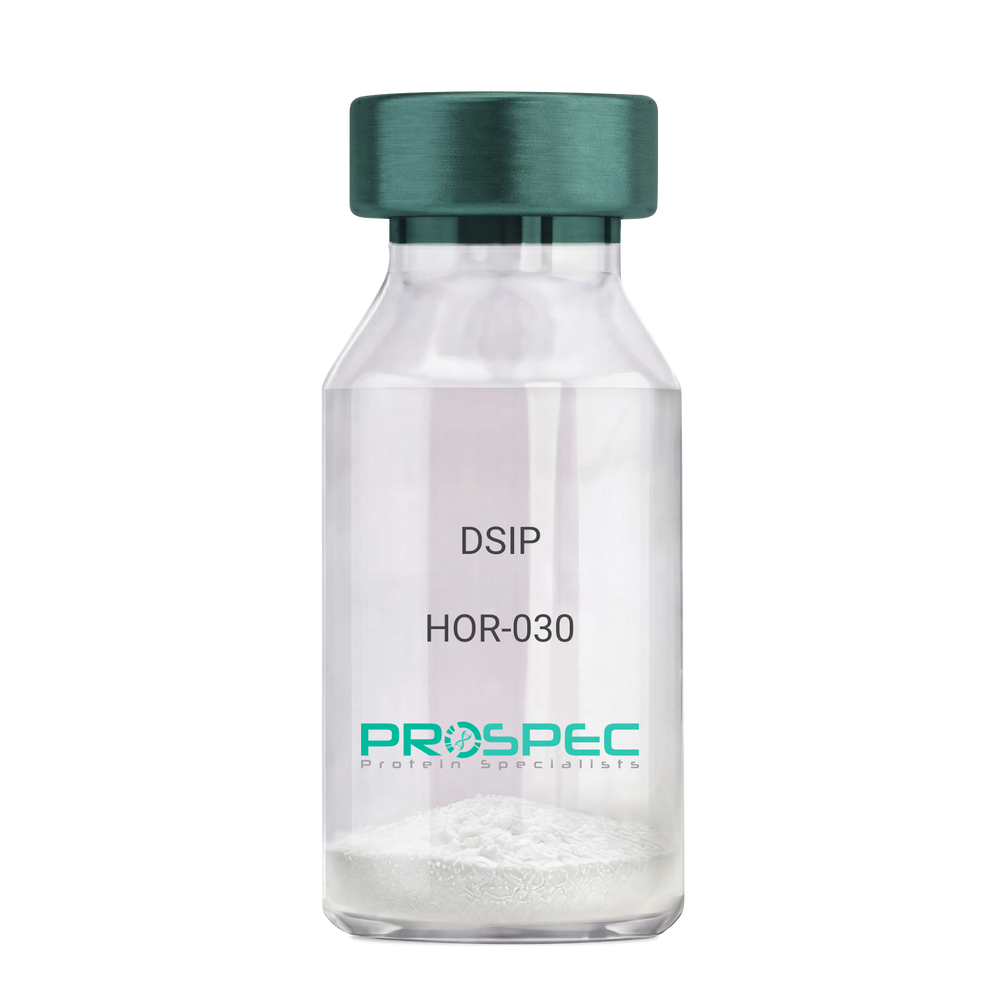
DSIPDescription:
Delta Sleep Inducing Peptide
Product # :
HOR-030Price :
Quantity :
Shipping Method :
Shipped at Room temp
More Info
- description
- formulation
- purity
- More Info
Description
DSIP Synthetic is a single, non-glycosylated polypeptide chain containing 15 amino acids, having a molecular mass of 1419.55 Dalton and a Molecular formula of C62H98N16O22.
Formulation
The protein was lyophilized with no additives.
Purity
Greater than 97.0% as determined by analysis by RP-HPLC.
More Info
-
Physical Appearance
Sterile Filtered White lyophilized (freeze-dried) powder.
-
Stability
Lyophilized DSIP although stable at room temperature for 3 weeks, should be stored desiccated below -18°C. Upon reconstitution DSIP should be stored at 4°C between 2-7 days and for future use below -18°C. For long term storage it is recommended to add a carrier protein (0.1% HSA or BSA). Please prevent freeze-thaw cycles.
-
Solubility
It is recommended to reconstitute the lyophilized DSIP in sterile 18MΩ-cm H2O not less than 100 µg/ml, which can then be further diluted to other aqueous solutions.
-
Amino Acid Sequence
H-Gly-Glu-Pro-Pro-Pro-Gly-Lys-Pro-Ala-Asp-Asp-Ala-Gly-Leu-Val-OH
-
Background
Delta Sleep-Inducing Peptide (DSIP), also known as Sleep-Promoting Peptide, is a neuropeptide that has been the subject of extensive research due to its potential role in sleep regulation, stress response, and neuroprotection. This nonapeptide, first isolated from the cerebral venous blood of rabbits during sleep, has been shown to induce slow-wave sleep, modulate pain perception, and exhibit potential antioxidant and immunomodulatory properties.
DSIP's primary function is its interaction with the sleep regulatory system. By modulating the release of certain neurotransmitters, DSIP can influence sleep patterns, particularly promoting slow-wave sleep, the most restorative stage of sleep. Studies by Kovalzon et al. (2011) have demonstrated that DSIP can enhance sleep quality in rats, suggesting potential applications in sleep disorders and the promotion of healthy sleep patterns.
In addition to its sleep-inducing effects, DSIP has been shown to possess neuroprotective properties. Research by Zolotarev et al. (2014) found that DSIP could protect neurons from oxidative stress, suggesting potential applications in the treatment of neurodegenerative diseases such as Alzheimer's and Parkinson's disease.
Given its sleep-inducing and neuroprotective effects, DSIP has been proposed as a potential therapeutic agent for a variety of conditions, including sleep disorders, chronic pain, and neurodegenerative diseases. For instance, a study by Spong et al. (2016) found that DSIP could improve sleep quality in patients with chronic insomnia, indicating its potential as a therapeutic agent in the treatment of sleep disorders.
While research on DSIP is promising, it is important to note that most studies have been conducted in animals or in vitro. More research is needed to fully understand the potential effects and applications of DSIP in humans. However, the existing body of research suggests that DSIP could be a promising tool in the treatment of sleep disorders, chronic pain, and neurodegenerative diseases.
ProSpec's products are furnished for LABORATORY RESEARCH USE ONLY. The product may not be used as drugs, agricultural or pesticidal products, food additives or household chemicals.
- View Data Sheet
Name :
HAND1 HumanDescription:
Heart and Neural Crest Derivatives Expressed 1 Human Recombinant
Heart- And Neural Crest Derivatives-Expressed Protein 1, Extraembryonic Tissues Heart Autonomic Nervous System And Neural Crest Derivatives-Expressed Protein 1, Class A Basic Helix-Loop-Helix Protein 27, BHLHa27, EHAND, Thing1, Hxt.
Product # :
PRO-1231Price :
Quantity :
Shipping Method :
Shipped with Ice Packs
More Info
- description
- source
- formulation
- purity
- More Info
Description
HAND1 Human Recombinant produced in E. coli is a single polypeptide chain containing 238 amino acids (1-215) and having a molecular mass of 26.0 kDa.HAND1 is fused to a 23 amino acid His-tag at N-terminus & purified by proprietary chromatographic techniques.
Source
E.coli.
Formulation
The HAND1 solution (1mg/1ml) contains 20mM Tris-HCl buffer (pH 8.0), 0.4M urea and 10% glycerol.
Purity
Greater than 90% as determined by SDS-PAGE.
More Info
-
Introduction
HAND1 is a member of the basic helix-loop-helix family of transcription factors. HAND1 is one of two HAND proteins, two closely related family members that are irregularly expressed in the emerging ventricular chambers and have a key part in cardiac morphogenesis. Operating in a complementary manner, they work in the development of the right ventricle and aortic arch arteries, implicating them as mediators of congenital heart disease. Furthermore, HAND1 is obligatory for early trophoblast differentiation.
-
Synonyms
Heart- And Neural Crest Derivatives-Expressed Protein 1, Extraembryonic Tissues Heart Autonomic Nervous System And Neural Crest Derivatives-Expressed Protein 1, Class A Basic Helix-Loop-Helix Protein 27, BHLHa27, EHAND, Thing1, Hxt.
-
Physical Appearance
Sterile Filtered colorless solution.
-
Stability
Store at 4°C if entire vial will be used within 2-4 weeks. Store, frozen at -20°C for longer periods of time. For long term storage it is recommended to add a carrier protein (0.1% HSA or BSA).Avoid multiple freeze-thaw cycles.
-
Amino Acid Sequence
MGSSHHHHHH SSGLVPRGSH MGSMNLVGSY AHHHHHHHPH PAHPMLHEPF LFGPASRCHQ ERPYFQSWLL SPADAAPDFP AGGPPPAAAA AATAYGPDAR PGQSPGRLEA LGGRLGRRKG SGPKKERRRT ESINSAFAEL RECIPNVPAD TKLSKIKTLR LATSYIAYLM DVLAKDAQSG DPEAFKAELK KADGGRESKR KRELQQHEGF PPALGPVEKR IKGRTGWPQQ VWALELNQ
ProSpec's products are furnished for LABORATORY RESEARCH USE ONLY. The product may not be used as drugs, agricultural or pesticidal products, food additives or household chemicals.
- View Data Sheet
Name :
CDH2 HumanDescription:
Cadherin 2 Human Recombinant
Cadherin 2, Cadherin 2, Type 1, N-Cadherin (Neuronal), Neural Cadherin, N-Cadherin, CDw325, NCAD, CDHN, Calcium-Dependent Adhesion Protein, Neuronal, CD325 Antigen, N-Cadherin 1, Cadherin-2, CD325.
Product # :
PRO-2455Price :
Quantity :
Shipping Method :
Shipped with Ice Packs
More Info
- description
- source
- formulation
- purity
- More Info
Description
CDH2 Human Recombinant produced in Sf9 Baculovirus cells is a single, glycosylated polypeptide chain containing 574 amino acids (160-724a.a.) and having a molecular mass of 62.9kDa (Molecular size on SDS-PAGE will appear at approximately 70-100kDa).CDH2 is expressed with a 6 amino acids His tag at C-Terminus and purified by proprietary chromatographic techniques.
Source
Sf9, Baculovirus cells.
Formulation
CDH2 protein solution (0.5mg/ml) contains Phosphate Buffered Saline (pH 7.4) and 20% glycerol.
Purity
Greater than 90.0% as determined by SDS-PAGE.
More Info
-
Introduction
Cadherin-2 isoform 1, also known as CDH2 is a transmembrane, homophilic glycoprotein which belongs to the calcium-dependent cell adhesion molecule family. CDH2 takes part in neurons and later on was discovered to participate in cardiac muscle and in cancer metastasis as well. The CDH2 loss promotes tumorigenesis through releasing membrane-bound β-catenin, and so stimulating Wnt signaling. Furthermore, CDH2 appears to be implicated in tumor development, however this discovery is limited in adrenocortical tumors-ACTs.
-
Synonyms
Cadherin 2, Cadherin 2, Type 1, N-Cadherin (Neuronal), Neural Cadherin, N-Cadherin, CDw325, NCAD, CDHN, Calcium-Dependent Adhesion Protein, Neuronal, CD325 Antigen, N-Cadherin 1, Cadherin-2, CD325.
-
Physical Appearance
Sterile Filtered colorless solution.
-
Stability
Store at 4°C if entire vial will be used within 2-4 weeks. Store, frozen at -20°C for longer periods of time. For long term storage it is recommended to add a carrier protein (0.1% HSA or BSA).Avoid multiple freeze-thaw cycles.
-
Amino Acid Sequence
ADPDWVIPPI NLPENSRGPF PQELVRIRSD RDKNLSLRYS VTGPGADQPP TGIFIINPIS GQLSVTKPLD REQIARFHLR AHAVDINGNQ VENPIDIVIN VIDMNDNRPE FLHQVWNGTV PEGSKPGTYV MTVTAIDADD PNALNGMLRY RIVSQAPSTP SPNMFTINNE TGDIITVAAG LDREKVQQYT LIIQATDMEG NPTYGLSNTA TAVITVTDVN DNPPEFTAMT FYGEVPENRV DIIVANLTVT DKDQPHTPAW NAVYRISGGD PTGRFAIQTD PNSNDGLVTV VKPIDFETNR MFVLTVAAEN QVPLAKGIQH PPQSTATVSV TVIDVNENPY FAPNPKIIRQ EEGLHAGTML TTFTAQDPDR YMQQNIRYTK LSDPANWLKI DPVNGQITTI AVLDRESPNV KNNIYNATFL ASDNGIPPMS GTGTLQIYLL DINDNAPQVL PQEAETCETP DPNSINITAL DYDIDPNAGP FAFDLPLSPV TIKRNWTITR LNGDFAQLNL KIKFLEAGIY EVPIIITDSG NPPKSNISIL RVKVCQCDSN GDCTDVDRIV GAGLGTGAHH HHHH.
ProSpec's products are furnished for LABORATORY RESEARCH USE ONLY. The product may not be used as drugs, agricultural or pesticidal products, food additives or household chemicals.
- View Data Sheet
Name :
ELAVL2 HumanDescription:
ELAV Like Neuron-Specific RNA Binding Protein 2 Human Recombinant
ELAV Like Neuron-Specific RNA Binding Protein 2, HUB, ELAV (Embryonic Lethal, Abnormal Vision, Drosophila)-Like 2 (Hu Antigen B), Nervous System-Specific RNA-Binding Protein Hel-N1, Hu-Antigen B, HELN1, ELAV (Embryonic Lethal, Abnormal Vision, Drosophila)-Like 2, ELAV-Like Neuronal Protein 1 Isoform Hel-N2, ELAV-Like Neuronal Protein 1, ELAV-Like Protein 2, Hu Antigen B, HEL-N1, ELAV-like protein 2, ELAV-like neuronal protein 1, Hu-antigen B.
Product # :
PRO-2155Price :
Quantity :
Shipping Method :
Shipped with Ice Packs
More Info
- description
- source
- formulation
- purity
- More Info
Description
ELAVL2 Human Recombinant produced in E.Coli is a single, non-glycosylated polypeptide chain containing 369 amino acids (1-346 a.a) and having a molecular mass of 40.4kDa. ELAVL2 is fused to a 23 amino acid His-tag at N-terminus & purified by proprietary chromatographic techniques.
Source
Escherichia Coli.
Formulation
ELAVL2 protein solution (0.5mg/ml) containing Phosphate buffered saline (pH7.4), 30% glycerol and 1mM DTT.
Purity
Greater than 85% as determined by SDS-PAGE.
More Info
-
Introduction
ELAV Like Neuron-Specific RNA Binding Protein 2, also known as ELAVL2 is a neural-specific RNA-binding protein which is recognized with his ability to bind to several 3' UTRs, as well as its own and in addition those of FOS and ID. ELAVL2 identify a GAAA motif in the RNA. One of the diseases associated with ELAVL2 is contagious pustular dermatitis.
-
Synonyms
ELAV Like Neuron-Specific RNA Binding Protein 2, HUB, ELAV (Embryonic Lethal, Abnormal Vision, Drosophila)-Like 2 (Hu Antigen B), Nervous System-Specific RNA-Binding Protein Hel-N1, Hu-Antigen B, HELN1, ELAV (Embryonic Lethal, Abnormal Vision, Drosophila)-Like 2, ELAV-Like Neuronal Protein 1 Isoform Hel-N2, ELAV-Like Neuronal Protein 1, ELAV-Like Protein 2, Hu Antigen B, HEL-N1, ELAV-like protein 2, ELAV-like neuronal protein 1, Hu-antigen B.
-
Physical Appearance
Sterile filtered colorless solution.
-
Stability
Store at 4°C if entire vial will be used within 2-4 weeks. Store, frozen at -20°C for longer periods of time. For long term storage it is recommended to add a carrier protein (0.1% HSA or BSA).Avoid multiple freeze-thaw cycles.
-
Amino Acid Sequence
MGSSHHHHHH SSGLVPRGSH MGSMETQLSN GPTCNNTANG PTTINNNCSS PVDSGNTEDS KTNLIVNYLP QNMTQEELKS LFGSIGEIES CKLVRDKITG QSLGYGFVNY IDPKDAEKAI NTLNGLRLQT KTIKVSYARP SSASIRDANL YVSGLPKTMT QKELEQLFSQ YGRIITSRIL VDQVTGISRG VGFIRFDKRI EAEEAIKGLN GQKPPGATEP ITVKFANNPS QKTNQAILSQ LYQSPNRRYP GPLAQQAQRF RFSPMTIDGM TSLAGINIPG HPGTGWCIFV YNLAPDADES ILWQMFGPFG AVTNVKVIRD FNTNKCKGFG FVTMTNYDEA AMAIASLNGY RLGDRVLQVS FKTNKTHKA.
ProSpec's products are furnished for LABORATORY RESEARCH USE ONLY. The product may not be used as drugs, agricultural or pesticidal products, food additives or household chemicals.
- View Data Sheet
Name :
FLT1 D7 MouseDescription:
Vascular Endothelial Growth Factor Receptor-1 D1-7 Mouse Recombinant
FLT-1, FLT1, Tyrosine-protein kinase receptor FLT, Flt-1, Tyrosine-protein kinase FRT, Fms-like tyrosine kinase 1, VEGFR-1.
Product # :
PKA-312Price :
Quantity :
Shipping Method :
Shipped at Room temp
More Info
- description
- source
- formulation
- purity
- biological activity
- More Info
Description
Soluble FLT1 Mouse Recombinant fused with the Fc part of human IgG1 produced in baculovirus is disulfide-linked homodimeric , polypeptide containing 965 amino acids. The monomers have a molecular mass of 130 kDa. The soluble receptor protein contains all 7 extracellular domains (Tyr23-Asn757), which contain all the information necessary for high affinity ligand binding.
Source
Insect Cells.
Formulation
FLT1 D1-7 was lyophilized from a concentrated (1 mg/ml) sterile solution containing PBS Buffer.
Purity
Greater than 95.0% as determined by SDS-PAGE.
Biological Activity
The activity of sVEGFR-1/Fc was determined by its ability to inhibit the VEGF-dependent proliferation of human umbilical vein endothelial cells.More Info
-
Introduction
Endothelial cells express three different vascular endothelial growth factor (VEGF) receptors, belonging to the family of receptor tyrosine kinases (RTKs). They are named VEGFR-1 (Flt-1), VEGFR-2 (KDR/Flk-1), and VEGFR-3 (Flt-4). Their expression is almost exclusively restricted to endothelial cells, but VEGFR-1 can also be found on monocytes. All VEGF-receptors have seven immunoglobulin-like extracellular domains, a single transmembrane region and an intracellular split tyrosine kinase domain. VEGFR-2 has a lower affinity for VEGF than the Flt-1 receptor, but a higher signalling activity. Mitogenic activity in endothelial cells is mainly mediated by VEGFR-2 leading to their proliferation. Differential splicing of the flt-1 gene leads to the formation of a secreted, soluble variant of VEGFR-1 (sVEGFR-1). No naturally occurring, secreted forms of VEGFR-2 have so far been reported. The binding of VEGF165 to VEGFR-2 is dependent on heparin.
-
Synonyms
FLT-1, FLT1, Tyrosine-protein kinase receptor FLT, Flt-1, Tyrosine-protein kinase FRT, Fms-like tyrosine kinase 1, VEGFR-1.
-
Physical Appearance
Sterile Filtered White lyophilized (freeze-dried) powder.
-
Stability
Lyophilized FLT-1 although stable at room temperature for 3 weeks, should be stored desiccated below -18C. Upon reconstitution FLT1 should be stored at 4C between 2-7 days and for future use below -18C. For long term storage it is recommended to add a carrier protein (0.1% HSA or BSA). Please prevent freeze-thaw cycles.
-
Solubility
It is recommended to reconstitute the lyophilized FLT1 Fc/Chimera in PBS not less than 50µg/ml, which can then be further diluted to other aqueous solutions.
-
Amino Acid Sequence
YGSGSKLKVP ELSLKGTQHV MQAGQTLFLK CRGEAAHSWS LPTTVSQEDK RLSITPPSAC GRDNRQFCST LTLDTAQANH TGLYTCRYLP TSTSKKKKAE SSIYIFVSDA GSPFIEMHTD IPKLVHMTEG RQLIIPCRVT SPNVTVTLKK FPFDTLTPDG QRITWDSRRG FIIANATYKE IGLLNCEATV NGHLYQTNYL THRQTNTILD VQIRPPSPVR LLHGQTLVLN CTATTELNTR VQMSWNYPGK ATKRASIRQR IDRSHSHNNV FHSVLKINNV ESRDKGLYTC RVKSGSSFQS FNTSVHVYEK GFISVKHRKQ PVQETTAGRR SYRLSMKVKA FPSPEIVWLK DGSPATLKSA RYLVHGYSLI IKDVTTEDAG DYTILLGIKQ SRLFKNLTAT LIVNVKPQIY EKSVSSLPSP PLYPLGSRQV LTCTVYGIPR PTITWLWHPC HHNHSKERYD FCTENEESFI LDPSSNLGNR IESISQRMTV IEGTNKTVST LVVADSQTPG IYSCRAFNKI GTVERNIKFY VTDVPNGFHV SLEKMPAEGE DLKLSCVVNK FLYRDITWIL LRTVNNRTMH HSISKQKMAT TQDYSITLNL VIKNVSLEDS GTYACRARNI YTGEDILRKT EVLVRDSEAP HLLQNLSDYE VSISGSTTLD CQARGVPAPQ ITWFKNNHKI QQEPGIILGP GNSTLFIERV TEEDEGVYRC RATNQKGAVE SAAYLTVQGT SDKSNAASDK THTCPPCPAP ELLGGPSVFL FPPKPKDTLM ISRTPEVTCV VVDVSHEDPE VKFNWYVDGV EVHNAKTKPR EEQYNSTYRV VSVLTVLHQD WLNGKEYKCK VSNKALPAPI EKTISKAKGQ PREPQVYTLP PSREEMTKNQ VSLTCLVKGF YPSDIAVEWE SNGQPENNYK TTPPMLDSDG SFFLYSKLTV DKSRWQQGNV FSCSVMHEAL HNHYTQKSLS LSPGK
ProSpec's products are furnished for LABORATORY RESEARCH USE ONLY. The product may not be used as drugs, agricultural or pesticidal products, food additives or household chemicals.
- View Data Sheet
Name :
ANXA2 HumanDescription:
Annexin A2 Human
ANX2, ANX2L4, CAL1H, LIP2, LPC2, LPC2D, P36, PAP-IV, ANXA2, Annexin A2, Annexin-2, Annexin II, Lipocortin II, Calpactin-1 heavy chain, Calpactin I heavy chain, Chromobindin-8, p36, Protein I, Placental anticoagulant protein IV.
Product # :
PRO-1573Price :
Quantity :
Shipping Method :
Shipped at Room temp
More Info
- description
- source
- formulation
- purity
- More Info
Description
The Human Annexin A2 produced from Human Adipose Tissue has a molecular mass of 38.472kDa (calculated without glycosylation) containing 338 amino acid residues.
Source
Human Adipose Tissue.
Formulation
ANXA2 protein filtered (0.4µm) and lyophilized in 0.5mg/ml in 0.05M phosphate buffer, 0.075M NaCl and pH 6.5.
Purity
Greater than 90.0% as determined by SDS-PAGE.
More Info
-
Introduction
ANXA2 is part of the annexin family and is involved in the regulation of cellular growth and in signal transduction pathways. ANXA2 protein functions as an autocrine factor which increases osteoclast formation and bone resorption. ANXA2 is associated with sickle cell osteonecrosis. Reduced ANXA2 expression is associated with osteosarcoma metastases. ANXA2 is part of the putative cell surface vitamin D binding protein binding site complex and functions to mediate the chemotactic cofactor effect. ANXA2 is involved in dysferlin deficiency and in muscular dystrophies. Human colon adenocarcinoma cell differentiation is related with an up-regulation of ANXA2.
-
Synonyms
ANX2, ANX2L4, CAL1H, LIP2, LPC2, LPC2D, P36, PAP-IV, ANXA2, Annexin A2, Annexin-2, Annexin II, Lipocortin II, Calpactin-1 heavy chain, Calpactin I heavy chain, Chromobindin-8, p36, Protein I, Placental anticoagulant protein IV.
-
Physical Appearance
Filtered White lyophilized (freeze-dried) powder.
-
Stability
Store lyophilized protein at -20°C. Aliquot the product after reconstitution to avoid repeated freezing/thawing cycles. Reconstituted protein can be stored at 4°C for a limited period of time; it does not show any change after two weeks at 4°C.
-
Solubility
It is recommended to add deionized water to prepare a working stock solution of approximately 0.5 mg/ml and let the lyophilized pellet dissolve completely. Product is not sterile! Please filter the product by an appropriate sterile filter before using it in the cell culture.
-
Amino Acid Sequence
STVHEILCKL SLEGDHSTPP SAYGSVKAYT NFDAERDALN IETAIKTKGV DEVTIVNILT NRSNAQRQDI AFAYQRRTKK ELASALKSAL SGHLETVILG LLKTPAQYDA SELKASMKGL GTDEDSLIEI ICSRTNQELQ EINRVYKEMY KTDLEKDIIS DTSGDFRKLM VALAKGRRAE DGSVIDYELI DQDARDLYDA GVKRKGTDVP KWISIMTERS VPHLQKVFDR YKSYSPYDML ESIRKEVKGD LENAFLNLVQ CIQNKPLYFA DRLYDSMKGK GTRDKVLIRI MVSRSEVDML KIRSEFKRKY GKSLYYYIQQ DTKGDYQKAL LYLCGGDD.
ProSpec's products are furnished for LABORATORY RESEARCH USE ONLY. The product may not be used as drugs, agricultural or pesticidal products, food additives or household chemicals.
- View Data Sheet
Name :
NRG1 B1 HumanDescription:
Neuregulin-1/Heregulin-b1 Human Recombinant
Neuregulin-1, Heregulin-b1, NRG1-B1, NRG1 B1.
Product # :
CYT-733Price :
Quantity :
Shipping Method :
Shipped at Room temp
More Info
- description
- source
- formulation
- purity
- biological activity
- More Info
Description
Recombinant Human Neuregulin-1/Heregulin-b1 produced in E.Coli is a single, non-glycosylated, polypeptide chain (a.a 177-241) containing 65 amino acids and having a total molecular mass of 7.5kDa. NRG1-B1 is purified by proprietary chromatographic techniques.
Source
Escherichia Coli.
Formulation
Lyophilized from a 0.2µm filtered solution in 1×PBS, pH 7.4 and 5% trehalose.
Purity
Greater than 97.0% as determined by:
(a) Analysis by RP-HPLC.
(b) Analysis by SDS-PAGE.Biological Activity
The ED50 was determined by the dose-dependent stimulation of the proliferation of human MCF-7 cells is less than 0.5ng/ml, corresponding to a specific activity of >2.0×10⁶ units/mg.More Info
-
Introduction
Neuregulin/Heregulin is a family of structurally related polypeptide growth factors which are stemmed from alternatively spliced genes (NRG1, NRG2, NRG3 and NRG4). Thus far, there are more than 14 soluble and transmembrane proteins derived from the NRG1 gene. Proteolytic processing of the extracellular domain of the transmembrane NRG1 isoforms release soluble growth factors. HRG1-b1 is comprised of an Ig domain and an EGF-like domain which is necessary for direct binding to receptor tyrosine kinases erb3 and erb4. This binding stimulates erb3 and erb4 heterodimerization with erb2, promoting intrinsic kinase activity, which results in tyrosine phosphorylation. Even though HRG1-b1 biological effects are still unclear, it has been discovered to advance motility and invasiveness of breast cancer cells which in addition might entail up-regulation of expression and function of the autocrine motility-promoting factor (AMF).
-
Synonyms
Neuregulin-1, Heregulin-b1, NRG1-B1, NRG1 B1.
-
Physical Appearance
Sterile Filtered White lyophilized (freeze-dried) powder.
-
Stability
Lyophilized NRG1-B1 although stable at room temperature for 3 weeks, should be stored desiccated below -18°C. Upon reconstitution NRG1-B1 should be stored at 4°C between 2-7 days and for future use below -18°C. Please prevent freeze-thaw cycles.
-
Solubility
It is recommended to reconstitute the lyophilized NRG1-B1 in sterile 18M-cm H2O not less than 100µg/ml, which can then be further diluted to other aqueous solutions.
-
Amino Acid Sequence
SHLVKCAEKE KTFCVNGGEC FMVKDLSNPS RYLCKCPNEF TGDRCQNYVM ASFYKHLGIE FMEAE.
ProSpec's products are furnished for LABORATORY RESEARCH USE ONLY. The product may not be used as drugs, agricultural or pesticidal products, food additives or household chemicals.
- View Data Sheet
Name :
SEPT3 HumanDescription:
Septin-3 Human Recombinant
Septin 3, SEP3, Neuronal-Specific Septin 3, Neuronal-Specific Septin-3, BK250D10.3, Neuronal-specific septin-3.
Product # :
PRO-2152Price :
Quantity :
Shipping Method :
Shipped with Ice Packs
More Info
- description
- source
- formulation
- purity
- More Info
Description
SEPT3 Human Recombinant produced in E.Coli is a single, non-glycosylated polypeptide chain containing 381 amino acids (1-358 a.a) and having a molecular mass of 43.1kDa. SEPT3 is fused to a 23 amino acid His-tag at N-terminus & purified by proprietary chromatographic techniques.
Source
Escherichia Coli.
Formulation
SEPT3 protein solution (1mg/ml) containing Phosphate buffered saline (pH7.4), 10% glycerol and 1mM DTT.
Purity
Greater than 95% as determined by SDS-PAGE.
More Info
-
Introduction
Septin-3, also known as SEPT3 is a member of the septin family of GTPases. Members of this family are essential for cytokinesis. Furthermore, expression is up regulated by retinoic acid in a human teratocarcinoma cell line. The exact role of SEPT3 has not been determined yet. In addition, among its related pathways are Bacterial invasion of epithelial cells.
-
Synonyms
Septin 3, SEP3, Neuronal-Specific Septin 3, Neuronal-Specific Septin-3, BK250D10.3, Neuronal-specific septin-3.
-
Physical Appearance
Sterile filtered colorless solution.
-
Stability
Store at 4°C if entire vial will be used within 2-4 weeks. Store, frozen at -20°C for longer periods of time. For long term storage it is recommended to add a carrier protein (0.1% HSA or BSA).Avoid multiple freeze-thaw cycles.
-
Amino Acid Sequence
MGSSHHHHHH SSGLVPRGSH MGSMSKGLPE TRTDAAMSEL VPEPRPKPAV PMKPMSINSN LLGYIGIDTI IEQMRKKTMK TGFDFNIMVV GQSGLGKSTL VNTLFKSQVS RKASSWNREE KIPKTVEIKA IGHVIEEGGV KMKLTVIDTP GFGDQINNEN CWEPIEKYIN EQYEKFLKEE VNIARKKRIP DTRVHCCLYF ISPTGHSLRP LDLEFMKHLS KVVNIIPVIA KADTMTLEEK SEFKQRVRKE LEVNGIEFYP QKEFDEDLED KTENDKIRQE SMPFAVVGSD KEYQVNGKRV LGRKTPWGII EVENLNHCEF ALLRDFVIRT HLQDLKEVTH NIHYETYRAK RLNDNGGLPP GEGLLGTVLP PVPATPCPTA E.
ProSpec's products are furnished for LABORATORY RESEARCH USE ONLY. The product may not be used as drugs, agricultural or pesticidal products, food additives or household chemicals.
- View Data Sheet
Name :
CEND1 HumanDescription:
Cell Cycle Exit And Neuronal Differentiation 1 Human Recombinant
Cell Cycle Exit And Neuronal Differentiation 1, BM88, BM88 Antigen, Cell Cycle Exit And Neuronal Differentiation Protein 1.
Product # :
PRO-1823Price :
Quantity :
Shipping Method :
Shipped with Ice Packs
More Info
- description
- source
- formulation
- purity
- More Info
Description
CEND1 Human Recombinant produced in E.Coli is a single, non-glycosylated polypeptide chain containing 148 amino acids (1-125 a.a) and having a molecular mass of 15.0kDa (molecular size on SDS-PAGE will appear higher).CEND1 is fused to a 23 amino acid His-tag at N-terminus & purified by proprietary chromatographic techniques.
Source
Escherichia Coli.
Formulation
CEND1 protein solution (1mg/ml) containing 20mM Tris-HCl buffer (pH8.0) and 10% glycerol.
Purity
Greater than 85% as determined by SDS-PAGE.
More Info
-
Introduction
Cell Cycle Exit And Neuronal Differentiation 1, also known as CEND1, is a neuron-specific protein. CEND1 take part in cell cycle control and neuronal differentiation mechanisms during neonatal SVZ neurogenesis and turn out to be crucial for the transition from neuroblasts to mature neurons when reaching high levels. The similar protein in pig enhances neuroblastoma cell differentiation in vitro and involved in neuronal differentiation in vivo. Multiple pseudogenes have been reported for this gene. The disease neuroblastoma has been associated with CEND1.
-
Synonyms
Cell Cycle Exit And Neuronal Differentiation 1, BM88, BM88 Antigen, Cell Cycle Exit And Neuronal Differentiation Protein 1.
-
Physical Appearance
Sterile Filtered clear solution.
-
Stability
Store at 4°C if entire vial will be used within 2-4 weeks. Store, frozen at -20°C for longer periods of time.For long term storage it is recommended to add a carrier protein (0.1% HSA or BSA).Please avoid freeze thaw cycles.
-
Amino Acid Sequence
MGSSHHHHHH SSGLVPRGSH MGSMESRGKS ASSPKPDTKV PQVTTEAKVP PAADGKAPLT KPSKKEAPAE KQQPPAAPTT APAKKTSAKA DPALLNNHSN LKPAPTVPSS PDATPEPKGP GDGAEEDEAA SGGPGGRGPW SCENFNPL
ProSpec's products are furnished for LABORATORY RESEARCH USE ONLY. The product may not be used as drugs, agricultural or pesticidal products, food additives or household chemicals.
- View Data Sheet
Name :
LINGO1 HumanDescription:
Leucine Rich Repeat And Ig Domain Containing 1 Human Recombinant
Leucine Rich Repeat And Ig Domain Containing 1, LRRN6A, Leucine-Rich Repeat And Immunoglobulin Domain-Containing Protein 1, Leucine-Rich Repeat Neuronal Protein 1, Leucine Rich Repeat Neuronal 6A, LERN1, Leucine-Rich Repeat And Immunoglobulin-Like Domain-Containing Nogo Receptor-Interacting Protein 1, Leucine-Rich Repeat Neuronal Protein 6A, UNQ201, LERN1, Leucine-rich repeat and immunoglobulin-like domain-containing nogo receptor-interacting protein 1.
Product # :
PRO-2187Price :
Quantity :
Shipping Method :
Shipped with Ice Packs
More Info
- description
- source
- formulation
- purity
- More Info
Description
LINGO1 Human Recombinant produced in E.Coli is a single, non-glycosylated polypeptide chain containing 133 amino acids (241-337 a.a) and having a molecular mass of 15.1kDa. LINGO1 is fused to a 36 amino acid His-tag at N-terminus & purified by proprietary chromatographic techniques.
Source
Escherichia Coli.
Formulation
LINGO1 protein solution (1mg/ml) containing 20mM Tris-HCl buffer (pH 8.0) and 10% glycerol.
Purity
Greater than 90.0% as determined by SDS-PAGE.
More Info
-
Introduction
Leucine Rich Repeat And Ig Domain Containing 1, also known as Lingo1 is primarily expressed in neuronal tissue, and most abundantly in the cortex. In addition, Lingo 1 is involved in the inhibition of axon regeneration all the way through a ternary complex formed with NgR1 (ligand-binding subunit) and p75 (signal transducing subunit). The inhibitory action is accomplished through RhoA-GTP upregulation in response to the presence of MOG, MAG or Nogo-66 in the central nervous system. Furthermore, LINGO-1 inhibits oligodendrocyte precursor differentiation as well as myelination, by a mechanism which also involves activation of RhoA, however it appears that it does not require 75 or NgR1.
-
Synonyms
Leucine Rich Repeat And Ig Domain Containing 1, LRRN6A, Leucine-Rich Repeat And Immunoglobulin Domain-Containing Protein 1, Leucine-Rich Repeat Neuronal Protein 1, Leucine Rich Repeat Neuronal 6A, LERN1, Leucine-Rich Repeat And Immunoglobulin-Like Domain-Containing Nogo Receptor-Interacting Protein 1, Leucine-Rich Repeat Neuronal Protein 6A, UNQ201, LERN1, Leucine-rich repeat and immunoglobulin-like domain-containing nogo receptor-interacting protein 1.
-
Physical Appearance
Sterile Filtered colorless solution.
-
Stability
Store at 4°C if entire vial will be used within 2-4 weeks. Store, frozen at -20°C for longer periods of time. For long term storage it is recommended to add a carrier protein (0.1% HSA or BSA).Avoid multiple freeze-thaw cycles.
-
Amino Acid Sequence
MRGSHHHHHH GMASMTGGQQ MGRDLYDDDD KDRWGSLKVL EISHWPYLDT MTPNCLYGLN LTSLSITHCN LTAVPYLAVR HLVYLRFLNL SYNPISTIEG SMLHELLRLQ EIQLVGGQLA VVEPYAFRGL NYL.
ProSpec's products are furnished for LABORATORY RESEARCH USE ONLY. The product may not be used as drugs, agricultural or pesticidal products, food additives or household chemicals.
- View Data Sheet
Name :
UCHL1 Mouse, ActiveDescription:
Ubiquitin Carboxyl-Terminal Esterase L1 Mouse Recombinant, Active
Ubiquitin carboxyl-terminal hydrolase isozyme L1, UCH-L1, Neuron cytoplasmic protein 9.5, PGP 9.5, PGP9.5, Ubiquitin thioesterase L1.
Product # :
PRO-2424Price :
Quantity :
Shipping Method :
Shipped with Ice Packs
More Info
- description
- source
- formulation
- purity
- biological activity
- More Info
Description
UCHL1 Mouse Recombinant produced in E.Coli is a single, non-glycosylated polypeptide chain containing 246 amino acids (1-223 a.a) and having a molecular mass of 27.2kDa. UCHL1 is fused to a 23 amino acid His-tag at N-terminus & purified by proprietary chromatographic techniques.
Source
Escherichia Coli.
Formulation
UCHL1 protein solution (1mg/ml) containing Phosphate buffered saline (pH7.4), 10% glycerol and 1mM DTT.
Purity
Greater than 90.0% as determined by SDS-PAGE.
Biological Activity
Specific activity is > 70 pmol/min/ug, and is defined as the amount of enzyme that hydrolysis 1.0 pmole of ubiquitin-AMC per minute at pH 7.5, at 37°C.
More Info
-
Introduction
Ubiquitin Carboxyl-Terminal Esterase L1 (UCHL1) is a part of a family whose products hydrolyze small C-terminal adducts of ubiquitin to create the ubiquitin monomer. UCHL1 is a part of the ubiquitin system, which regulates many biological activities. UCHL1 is a thiol protease that distinguishes and hydrolyzes a peptide bond at the C-terminal glycine of ubiquitin. UCHL1 binds to free monoubiquitin and avoids its degradation in lysosomes.
-
Synonyms
Ubiquitin carboxyl-terminal hydrolase isozyme L1, UCH-L1, Neuron cytoplasmic protein 9.5, PGP 9.5, PGP9.5, Ubiquitin thioesterase L1.
-
Physical Appearance
Sterile Filtered colorless solution.
-
Stability
Store at 4°C if entire vial will be used within 2-4 weeks. Store, frozen at -20°C for longer periods of time. For long term storage it is recommended to add a carrier protein (0.1% HSA or BSA).Avoid multiple freeze-thaw cycles.
-
Amino Acid Sequence
MGSSHHHHHH SSGLVPRGSH MGSMQLKPME INPEMLNKVL AKLGVAGQWR FADVLGLEEE TLGSVPSPAC ALLLLFPLTA QHENFRKKQI EELKGQEVSP KVYFMKQTIG NSCGTIGLIH AVANNQDKLE FEDGSVLKQF LSETEKLSPE DRAKCFEKNE AIQAAHDSVA QEGQCRVDDK VNFHFILFNN VDGHLYELDG RMPFPVNHGA SSEDSLLQDA AKVCREFTER EQGEVRFSAV ALCKAA.
ProSpec's products are furnished for LABORATORY RESEARCH USE ONLY. The product may not be used as drugs, agricultural or pesticidal products, food additives or household chemicals.
- View Data Sheet
Name :
NREP HumanDescription:
Neuronal Regeneration Related Protein Human Recombinant
Neuronal regeneration-related protein, Neuronal protein 3.1, Protein p311, NREP, C5orf13, P311, PTZ17, Chromosome 5 Open Reading Frame 13, Neuronal Regeneration Related Protein Homolog (Rat), D4S114, PRO1873, SEZ17, Neuronal Regeneration Related Protein Homolog, Neuronal Regeneration-Related Protein.
Product # :
PRO-1780Price :
Quantity :
Shipping Method :
Shipped with Ice Packs
More Info
- description
- source
- formulation
- purity
- More Info
Description
NREP Human Recombinant produced in E.coli is a single, non-glycosylated polypeptide chain containing 91 amino acids (1-68) and having a molecular mass of 10.3kDa.NREP is fused to a 23 amino acid His-tag at N-terminus & purified by proprietary chromatographic techniques.
Source
Escherichia Coli.
Formulation
The NREP solution (0.5mg/ml) contains 20mM Tris-HCl buffer (pH8.0), 10% glycerol and 0.1M NaCl.
Purity
Greater than 85.0% as determined by SDS-PAGE.
More Info
-
Introduction
Neuronal Regeneration Related Protein (NREP) has roles in neural function. NREP promotes axonal regeneration. In addition, NREP has functions in cellular differentiation. NREP protein induces differentiation of fibroblast into myofibroblast and increases retinoic-acid regulation of lipid-droplet biogenesis. NREP down-regulates the expression of TGFB1 and TGFB2 but not of TGFB3. NREP has a role in the regulation of alveolar generation.
-
Synonyms
Neuronal regeneration-related protein, Neuronal protein 3.1, Protein p311, NREP, C5orf13, P311, PTZ17, Chromosome 5 Open Reading Frame 13, Neuronal Regeneration Related Protein Homolog (Rat), D4S114, PRO1873, SEZ17, Neuronal Regeneration Related Protein Homolog, Neuronal Regeneration-Related Protein.
-
Physical Appearance
Sterile Filtered colorless solution.
-
Stability
Store at 4°C if entire vial will be used within 2-4 weeks. Store, frozen at -20°C for longer periods of time. For long term storage it is recommended to add a carrier protein (0.1% HSA or BSA).Avoid multiple freeze-thaw cycles.
-
Amino Acid Sequence
MGSSHHHHHH SSGLVPRGSH MGSMVYYPEL FVWVSQEPFP NKDMEGRLPK GRLPVPKEVN RKKNDETNAA SLTPLGSSEL RSPRISYLHF F.
ProSpec's products are furnished for LABORATORY RESEARCH USE ONLY. The product may not be used as drugs, agricultural or pesticidal products, food additives or household chemicals.
- View Data Sheet
Name :
ENO2 Human, HisDescription:
Enolase-2 Human Recombinant, His Tag
Gamma-enolase, EC 4.2.1.11, 2-phospho-D-glycerate hydro-lyase, Neural enolase, Neuron-specific enolase, NSE, Enolase 2, ENO2.
Product # :
ENZ-298Price :
Quantity :
Shipping Method :
Shipped with Ice Packs
More Info
- description
- source
- formulation
- purity
- More Info
Description
Neuron Specific Enolase Human Recombinant is expressed in E. coli containing 433 amino acids 2-434 fused to an amino terminal hexahistidine tag.The NSE is purified by proprietary chromatographic techniques.
Source
Escherichia Coli.
Formulation
Enolase 2 is supplied in 10mM Tris-HCl (pH 8), 250mM NaCl, 0.5mM DTT, 1.5mM Cysteine, and 50% Glycerol.
Purity
Greater than 95% as determined by SDS-PAGE.
Single band on Western Blot.More Info
-
Introduction
NSE is the ?? isoform of the glycolytic enzyme enolase and is expressed primarily in neurons, in normal and neoplastic neuroendocrine cells. NSE is a highly soluble cytoplasmic protein that is readily secreted into the CSF and serum following tissue damage. NSE shows neurotrophic and neuroprotective properties on a broad spectrum of central nervous system (CNS) neurons and binds in a calcium-dependent manner to cultured neocortical neurons promoting cell survival.
-
Synonyms
Gamma-enolase, EC 4.2.1.11, 2-phospho-D-glycerate hydro-lyase, Neural enolase, Neuron-specific enolase, NSE, Enolase 2, ENO2.
-
Physical Appearance
Sterile Filtered clear solution.
-
Stability
Store at 4°C if entire vial will be used within 1-2 weeks. Store, frozen at -20°C for longer periods of time. Please prevent freeze-thaw cycles.
ProSpec's products are furnished for LABORATORY RESEARCH USE ONLY. The product may not be used as drugs, agricultural or pesticidal products, food additives or household chemicals.
- View Data Sheet
Name :
UCHL1 MouseDescription:
Ubiquitin Carboxyl-Terminal Esterase L1 Mouse Recombinant
Ubiquitin carboxyl-terminal hydrolase isozyme L1, UCH-L1, Neuron cytoplasmic protein 9.5, PGP 9.5, PGP9.5, Ubiquitin thioesterase L1.
Product # :
PRO-2235Price :
Quantity :
Shipping Method :
Shipped with Ice Packs
More Info
- description
- source
- formulation
- purity
- More Info
Description
UCHL1 Mouse Recombinant produced in E.Coli is a single, non-glycosylated polypeptide chain containing 246 amino acids (1-223a.a) and having a molecular mass of 27.2kDa. UCHL1 is fused to a 23 amino acid His-tag at N-terminus & purified by proprietary chromatographic techniques.
Source
Escherichia Coli.
Formulation
UCHL1 protein solution (1mg/ml) containing Phosphate buffered saline, 10% glycerol and 1mM DTT.
Purity
Greater than 90.0% as determined by SDS-PAGE.
More Info
-
Introduction
Ubiquitin Carboxyl-Terminal Esterase L1 (UCHL1) is a part of a family whose products hydrolyze small C-terminal adducts of ubiquitin to create the ubiquitin monomer. UCHL1 is a part of the ubiquitin system, which regulates many biological activities. UCHL1 is a thiol protease that distinguishes and hydrolyzes a peptide bond at the C-terminal glycine of ubiquitin. UCHL1 binds to free monoubiquitin and avoids its degradation in lysosomes.
-
Synonyms
Ubiquitin carboxyl-terminal hydrolase isozyme L1, UCH-L1, Neuron cytoplasmic protein 9.5, PGP 9.5, PGP9.5, Ubiquitin thioesterase L1.
-
Physical Appearance
Sterile Filtered colorless solution.
-
Stability
Store at 4°C if entire vial will be used within 2-4 weeks. Store, frozen at -20°C for longer periods of time. For long term storage it is recommended to add a carrier protein (0.1% HSA or BSA).Avoid multiple freeze-thaw cycles.
-
Amino Acid Sequence
MGSSHHHHHH SSGLVPRGSH MGSMQLKPME INPEMLNKVL AKLGVAGQWR FADVLGLEEE TLGSVPSPAC ALLLLFPLTA QHENFRKKQI EELKGQEVSP KVYFMKQTIG NSCGTIGLIH AVANNQDKLE FEDGSVLKQF LSETEKLSPE DRAKCFEKNE AIQAAHDSVA QEGQCRVDDK VNFHFILFNN VDGHLYELDG RMPFPVNHGA SSEDSLLQDA AKVCREFTER EQGEVRFSAV ALCKAA.
ProSpec's products are furnished for LABORATORY RESEARCH USE ONLY. The product may not be used as drugs, agricultural or pesticidal products, food additives or household chemicals.