Search results
1000 results found for “neuritin”
Name
Description
Product #
Price
Quantity
Shipping Method
- View Data Sheet
Name :
RAET1E MouseDescription:
Retinoic Acid Early Transcript 1E Mouse Recombinant
RAE-1-epsilon, Retinoic acid early-inducible protein 1-epsilon, Raet1e.
Product # :
PRO-2362Price :
Quantity :
Shipping Method :
Shipped with Ice Packs
More Info
- description
- source
- formulation
- purity
- More Info
Description
RAET1E produced in Sf9 Insect cells is a single, glycosylated polypeptide chain containing 207 amino acids (29-227a.a.) and having a molecular mass of 23.5kDa (Molecular size on SDS-PAGE will appear at approximately 28-40kDa).RAET1E is expressed with an 8 amino acid His tag at C-Terminus and purified by proprietary chromatographic techniques.
Source
Sf9, Insect cells.
Formulation
RAET1E protein solution (0.5mg/ml) contains Phosphate Buffered Saline (pH 7.4) and 10% glycerol.
Purity
Greater than 95.0% as determined by SDS-PAGE.
More Info
-
Introduction
RAET1E is a member of the MHC class I family. MHC class I family contains main histocompatibility complex (MHC) class I-related genes positioned in a cluster on chromosome 6q24.2-q25.3. RAET1E and RAET1G protein are different from other RAET1 proteins since they have type I membrane-spanning sequences at their C termini instead glycosylphosphatidylinositol anchor sequences.RAET1E acts as a ligand for NKG2D receptor, expressed on the surface of numerous types of immune cells, involves in innate adaptive immune reactions.RAET1E delivers signals to NK cells and advances tumor immune surveillance by inducing the growth of anti-tumor cytotoxic lymphocyte.
-
Synonyms
RAE-1-epsilon, Retinoic acid early-inducible protein 1-epsilon, Raet1e.
-
Physical Appearance
Sterile Filtered clear solution.
-
Stability
Store at 4°C if entire vial will be used within 2-4 weeks. Store, frozen at -20°C for longer periods of time. For long term storage it is recommended to add a carrier protein (0.1% HSA or BSA).Avoid multiple freeze-thaw cycles.
-
Amino Acid Sequence
LDDAHSLRCN LTIKDPTSAD LPWCDVKCSV DEITILHLNN INKTMTSGDP GKMANATGKC LTQPLNDLCQ ELRDKVSNTK VDTHKTNGYP HLQVTMIYPQ SQGQTPSATW EFNISDSYFF TFYTENMSWR SANDESGVIM NKWKDDGDLV QQLKYFIPQC RQKIDEFLKQ SKEKPRSTSR SPSITQLTST SPLPPPSHSL EHHHHHH.
ProSpec's products are furnished for LABORATORY RESEARCH USE ONLY. The product may not be used as drugs, agricultural or pesticidal products, food additives or household chemicals.
- View Data Sheet
Name :
STX1A HumanDescription:
Syntaxin-1A Human Recombinant
STX1, HPC-1, p35-1, Syntaxin-1A, Neuron-specific antigen HPC-1, STX-1A, STX1A.
Product # :
PRO-574Price :
Quantity :
Shipping Method :
Shipped with Ice Packs
More Info
- description
- source
- formulation
- purity
- More Info
Description
Syntaxin-1A Human Recombinant fused to N-terminal His-Tag produced in E.Coli is a single, non-glycosylated polypeptide chain containing 226 amino acids (1-226) and having a molecular mass of 26.1 kDa.Recombinant Human STX1A contains N-terminal domain (Habc) and t_SNARE domain (H3 domain).
Source
Escherichia Coli.
Formulation
The protein solution contains 20mM Tris-HCl pH7.5, 10% glycerol, and 1mM DTT.
Purity
Greater than 95.0% as determined by Analysis by SDS-PAGE.
More Info
-
Introduction
Syntaxin is membrane integrated Q-SNARE protein participating in exocytosis. Syntaxin is composed of an N-terminal regulatory domain (Habc), a SNARE domain (known as H3), and a single C-terminal transmembrane domain. The SNARE (H3) domain binds to both synaptobrevin and SNAP-25 forming the core SNARE complex. Synaptic vesicles store neurotransmitters that are released during calcium-regulated exocytosis. The specificity of neurotransmitter release requires the localization of both synaptic vesicles and calcium channels to the presynaptic active zone. Syntaxins function in this vesicle fusion process. Syntaxins also serve as a substrate for botulinum neurotoxin type C, a metalloprotease that blocks exocytosis and has high affinity for a molecular complex that includes the alpha-latrotoxin receptor which produces exocytosis.
-
Synonyms
STX1, HPC-1, p35-1, Syntaxin-1A, Neuron-specific antigen HPC-1, STX-1A, STX1A.
-
Physical Appearance
Sterile Filtered colorless solution.
-
Stability
Store at 4°C if entire vial will be used within 2-4 weeks.Store, frozen at -20°C for longer periods of time. For long term storage it is recommended to add a carrier protein (0.1% HSA or BSA).Avoid multiple freeze-thaw cycles.
-
Amino Acid Sequence
MKDRTQELRT AKDSDDDDDV AVTVDRDRFM DEFFEQVEEI RGFIDKIAEN VEEVKRKHSA ILASPNPDEK TKEELEELMS DIKKTANKVR SKLKSIEQSI EQEEGLNRSS ADLRIRKTQH STLSRKFVEV MSEYNATQSD YRERCKGRIQ RQLEITGRTT TSEELEDMLE SGNPAIFASG IIMDSSISKQ ALSEIETRHS EIIKLENSIR ELHDMFMDMA MLVESQ.
ProSpec's products are furnished for LABORATORY RESEARCH USE ONLY. The product may not be used as drugs, agricultural or pesticidal products, food additives or household chemicals.
- View Data Sheet
Name :
CIAPIN1 HumanDescription:
Cytokine Induced Apoptosis Inhibitor 1 Human Recombinant
DRE2, PRO0915, Anamorsin, Cytokine-induced apoptosis inhibitor 1, Fe-S cluster assembly protein DRE2 homolog, CIAPIN1.
Product # :
PRO-024Price :
Quantity :
Shipping Method :
Shipped with Ice Packs
More Info
- description
- source
- formulation
- purity
- More Info
Description
CIAPIN1 Human Recombinant produced in E.Coli is a single, non-glycosylated polypeptide chain containing 335 amino acids (1-312 a.a.) and having a molecular mass of 36kDa.CIAPIN1 is fused to a 23 amino acid His-tag at N-terminus & purified by proprietary chromatographic techniques.
Source
Escherichia Coli.
Formulation
CIAPIN1 protein solution (1mg/ml) contains 20mM Tris-HCl buffer (pH 8.0), 0.4M Urea and 10% glycerol.
Purity
Greater than 90.0% as determined by SDS-PAGE.
More Info
-
Introduction
Anamorsin, ( CIAPIN) is a member of anamorsin family. CIAPIN mainly expressed in the cytoplasm of liver, pancreas and heart tissue cells and does not show any homology to known apoptosis regulatory molecules of the Bcl-2 or CASP families, or to signal transduction molecules. CIAPIN1 Expression is reliant on growth factor stimulation. It is a ubiquitously expressed protein, and when it is overexpressed, it grants apoptotic resistance.
-
Synonyms
DRE2, PRO0915, Anamorsin, Cytokine-induced apoptosis inhibitor 1, Fe-S cluster assembly protein DRE2 homolog, CIAPIN1.
-
Physical Appearance
Sterile Filtered clear solution.
-
Stability
Store at 4°C if entire vial will be used within 2-4 weeks. Store, frozen at -20°C for longer periods of time. For long term storage it is recommended to add a carrier protein (0.1% HSA or BSA).Avoid multiple freeze-thaw cycles.
-
Amino Acid Sequence
MGSSHHHHHH SSGLVPRGSH MGSMADFGIS AGQFVAVVWD KSSPVEALKG LVDKLQALTG NEGRVSVENI KQLLQSAHKE SSFDIILSGL VPGSTTLHSA EILAEIARIL RPGGCLFLKE PVETAVDNNS KVKTASKLCS ALTLSGLVEV KELQREPLTP EEVQSVREHL GHESDNLLFV QITGKKPNFE VGSSRQLKLS ITKKSSPSVK PAVDPAAAKL WTLSANDMED DSMDLIDSDE LLDPEDLKKP DPASLRAASC GEGKKRKACK NCTCGLAEEL EKEKSREQMS SQPKSACGNC YLGDAFRCAS CPYLGMPAFK PGEKVLLSDS NLHDA.
ProSpec's products are furnished for LABORATORY RESEARCH USE ONLY. The product may not be used as drugs, agricultural or pesticidal products, food additives or household chemicals.
- View Data Sheet
Name :
CNTFR HumanDescription:
Ciliary Neurotrophic Factor Receptor Human Recombinant
Ciliary Neurotrophic Factor Receptor, CNTF Receptor Subunit Alpha, CNTFR-Alpha, Ciliary Neurotrophic Factor Receptor Subunit Alpha, Ciliary neurotrophic factor receptor subunit alpha, CNTF receptor subunit alpha, CNTFR-alpha.
Product # :
CYT-883Price :
Quantity :
Shipping Method :
Shipped with Ice Packs
More Info
- description
- source
- formulation
- purity
- More Info
- sds-page
Description
CNTFR Human Recombinant produced in E.Coli is a single, non-glycosylated polypeptide chain containing 341 amino acids (23-342 a.a) and having a molecular mass of 38.1kDa. CNTFR is fused to a 21 amino acid His-tag at N-terminus & purified by proprietary chromatographic techniques.
Source
Escherichia Coli.
Formulation
CNTFR protein solution (1mg/ml) containing 20mM Tris-HCl buffer (pH 8.0) and 10% glycerol.
Purity
Greater than 85.0% as determined by SDS-PAGE.
sds-page
More Info
-
Introduction
Ciliary Neurotrophic Factor Receptor, also known as CNTFR is a member of the type I cytokine receptor family. CNTFR binds to CNTF. The alpha subunit provides the receptor specificity. Sole nucleotide polymorphisms in CNTFR has been associated with variations in muscle strength, in addition to early onset of eating disorders.
-
Synonyms
Ciliary Neurotrophic Factor Receptor, CNTF Receptor Subunit Alpha, CNTFR-Alpha, Ciliary Neurotrophic Factor Receptor Subunit Alpha, Ciliary neurotrophic factor receptor subunit alpha, CNTF receptor subunit alpha, CNTFR-alpha.
-
Physical Appearance
Sterile Filtered colorless clear solution.
-
Stability
Store at 4°C if entire vial will be used within 2-4 weeks. Store, frozen at -20°C for longer periods of time. For long term storage it is recommended to add a carrier protein (0.1% HSA or BSA).Avoid multiple freeze-thaw cycles.
-
Amino Acid Sequence
MGSSHHHHHH SSGLVPRGSH MQRHSPQEAP HVQYERLGSD VTLPCGTANW DAAVTWRVNG TDLAPDLLNG SQLVLHGLEL GHSGLYACFH RDSWHLRHQV LLHVGLPPRE PVLSCRSNTY PKGFYCSWHL PTPTYIPNTF NVTVLHGSKI MVCEKDPALK NRCHIRYMHL FSTIKYKVSI SVSNALGHNA TAITFDEFTI VKPDPPENVV ARPVPSNPRR LEVTWQTPST WPDPESFPLK FFLRYRPLIL DQWQHVELSD GTAHTITDAY AGKEYIIQVA AKDNEIGTWS DWSVAAHATP WTEEPRHLTT EAQAAETTTS TTSSLAPPPT TKICDPGELG S.
-
Background
Unveiling the Potential of Human Recombinant Ciliary Neurotrophic Factor Receptor: Insights and Applications
Abstract:
The Ciliary Neurotrophic Factor Receptor (CNTFR) holds a crucial role in mediating the effects of ciliary neurotrophic factor (CNTF) on neuronal survival and growth. This paper discusses the significance of Human Recombinant CNTFR, its production methods, and its potential applications in neurobiology and therapeutic interventions. The review sheds light on the pivotal role of CNTFR in neuroprotection and neuroregeneration research.
Introduction:
CNTFR, a transmembrane protein, plays a pivotal role in transmitting CNTF-mediated signals to the cell. The availability of Human Recombinant CNTFR allows researchers to investigate its role in neuronal function and develop targeted therapies for neurodegenerative disorders. CNTFR's involvement in modulating neuronal health and promoting regeneration makes it an essential component in neurobiology.
Role in CNTF Signaling:
CNTFR forms a receptor complex with other proteins, including gp130 and LIFRβ, to bind CNTF and initiate downstream signaling pathways. Activation of intracellular signaling cascades, such as JAK/STAT and MAPK, contributes to the neuroprotective and growth-promoting effects of CNTF.
Production Methods:
Human Recombinant CNTFR is produced through gene expression in suitable host cells, often employing bacterial or mammalian systems. Ensuring proper folding and post-translational modifications is essential to maintain its functionality and binding affinity for CNTF.
Therapeutic Applications:
The availability of Human Recombinant CNTFR offers potential therapeutic applications in neurodegenerative diseases like amyotrophic lateral sclerosis (ALS), multiple sclerosis, and retinal degeneration. Manipulating CNTFR-mediated signaling presents opportunities to enhance neuronal survival and regeneration, ultimately improving patient outcomes.
Challenges and Future Directions:
While promising, challenges include optimizing the interaction between CNTFR and CNTF, ensuring efficient delivery to target tissues, and understanding potential off-target effects. Ongoing research is essential to unravel the complete mechanisms of CNTFR-mediated signaling and its implications for therapy.
Conclusion:
Human Recombinant Ciliary Neurotrophic Factor Receptor serves as a crucial tool in advancing our understanding of neuroprotection and regeneration. Its potential to modulate CNTF-mediated effects opens avenues for innovative therapeutic strategies targeting neurodegenerative disorders, exemplifying the intersection of molecular biology and clinical application.
What is the molecular weight/Mw of CNTF Protein?
CNTF Protein has a total Mw of 38.1kDa.
What is the source or expression system of CNTF Protein?
Escherichia Coli.
What is the Purity of CNTF Protein?
CNTF Protein is >85% pure as determined by SDS-PAGE.
What is the Biological Activity of CNTF Protein?
The biological functionality of CNTF Protein will be determined in the future.
What is the amino acid sequence of CNTF Protein?
MGSSHHHHHH SSGLVPRGSH MQRHSPQEAP HVQYERLGSD VTLPCGTANW DAAVTWRVNG TDLAPDLLNG SQLVLHGLEL GHSGLYACFH RDSWHLRHQV LLHVGLPPRE PVLSCRSNTY PKGFYCSWHL PTPTYIPNTF NVTVLHGSKI MVCEKDPALK NRCHIRYMHL FSTIKYKVSI SVSNALGHNA TAITFDEFTI VKPDPPENVV ARPVPSNPRR LEVTWQTPST WPDPESFPLK FFLRYRPLIL DQWQHVELSD GTAHTITDAY AGKEYIIQVA AKDNEIGTWS DWSVAAHATP WTEEPRHLTT EAQAAETTTS TTSSLAPPPT TKICDPGELG S.
What applications can CNTF Protein be used in?
CNTF Protein can probably be used in western blot, ELISA and Lateral Flow.
What is the endotoxin level for CNTF Protein?
The endotoxin level is minimal, CNTF Protein was purified using conventional chromatography tech
ProSpec's products are furnished for LABORATORY RESEARCH USE ONLY. The product may not be used as drugs, agricultural or pesticidal products, food additives or household chemicals.
- View Data Sheet
Name :
NRG1 (HRG-beta3) AntibodyDescription:
Neuregulin1 isoform HRG-beta3, Mouse Anti Human
Product # :
ANT-458Price :
Quantity :
Shipping Method :
Shipped with Ice Packs
More Info
- formulation
- More Info
Formulation
1mg/ml containing PBS, pH-7.4, & 0.1% Sodium Azide.
More Info
-
Introduction
NRG1 is one of 4 proteins in the neuregulin family which act on the EGFR family of receptors. NRG1 was initially identified as a 44kDa glycoprotein that interacts with the ERBB2 receptor tyrosine kinase to increase its phosphorylation on tyrosine residues. In various brain areas, NRG1 is expressed at synaptic regions and its processing can be regulated by neuronal activity. The HRG-beta3variant of NRG1, along with HRG-alpha, beta1 and beta2 variants, was identified in various normal tissues and cancer cell lines.
-
Immunogen
Anti-human NRG1 mAb is derived from hybridization of mouse F0 myeloma cells with spleen cells from BALB/c mice immunized with recombinant human NRG1 amino acids 20-241 purified from E. coli.
-
Ig Subclass
Mouse IgG1 heavy chain and κ light chain.
-
Clone
Pk1G13AT.
-
Applications
NRG1 antibody has been tested by ELISA and Western blot analysis to assure specificity and reactivity. Since application varies, however, each investigation should be titrated by the reagent to obtain optimal results. Recommended dilution range for Western blot analysis is 1:1,000 ~ 2,000. Recommended starting dilution is 1:1,000.
-
Type
Mouse Anti Human Monoclonal.
-
Storage Procedures
For periods up to 1 month store at 4°C, for longer periods of time, store at -20°C. Prevent freeze thaw cycles.
-
Purification Method
NRG1 antibody was purified from mouse ascitic fluids by protein-G affinity chromatography.
ProSpec's products are furnished for LABORATORY RESEARCH USE ONLY. The product may not be used as drugs, agricultural or pesticidal products, food additives or household chemicals.
- View Data Sheet
Name :
PramlintideDescription:
Pramlintide
Product # :
HOR-300Price :
Quantity :
Shipping Method :
Shipped at Room temp
More Info
- description
- formulation
- purity
- More Info
Description
Pramlintide Synthetic is a single, non-glycosylated polypeptide chain containing 37 amino acids, having a molecular mass of 3949.4 Dalton and a Molecular formula of C171H267N51O53S2.
Formulation
The protein was lyophilized with no additives.
Purity
Greater than 98.0% as determined by:
(a) Analysis by RP-HPLC.
(b) Analysis by SDS-PAGE.More Info
-
Introduction
Pramlintide acetate is a hormone that is released into the bloodstream, in a similar pattern as insulin. Pramlintide aids in the absorption of glucose by slowing gastric emptying, promoting satiety, and inhibiting inappropriate secretion of glucagon, a catabolic hormone that opposes the effects of insulin.
-
Physical Appearance
Sterile Filtered White lyophilized (freeze-dried) powder.
-
Stability
Lyophilized Pramlintide although stable at room temperature for 3 weeks, should be stored desiccated below -18°C. Upon reconstitution Pramlintide should be stored at 4°C between 2-7 days and for future use below -18°C.For long term storage it is recommended to add a carrier protein (0.1% HSA or BSA).Please prevent freeze-thaw cycles.
-
Solubility
It is recommended to reconstitute the lyophilized Pramlintide in sterile 18MΩ-cm H2O not less than 100 µg/ml, which can then be further diluted to other aqueous solutions. The Pramlintide is also soluble in 1% Acetic Acid.
-
Amino Acid Sequence
KCNTATCATNRLANFLVHSSNNFGPILPPTNVGSNTY-NH2.
ProSpec's products are furnished for LABORATORY RESEARCH USE ONLY. The product may not be used as drugs, agricultural or pesticidal products, food additives or household chemicals.
- View Data Sheet
Name :
NECAP2 HumanDescription:
NECAP Endocytosis Associated 2 Human Recombinant
NECAP endocytosis-associated protein 2, NECAP-2, FLJ10420, Adaptin ear-binding coat-associated protein 2.
Product # :
PRO-180Price :
Quantity :
Shipping Method :
Shipped with Ice Packs
More Info
- description
- source
- formulation
- purity
- More Info
Description
NECAP2 produced in E.Coli is a single, non-glycosylated polypeptide chain containing 283 amino acids (1-263a.a.) and having a molecular mass of 30.5 kDa. NECAP2 is fused to a 20 amino acid His-tag at N-terminus & purified by proprietary chromatographic techniques.
Source
Escherichia Coli.
Formulation
The NECAP2 protein solution (1mg/1ml) is formulated in 20mM Tris-HCl buffer (pH8.0), 100mM NaCl, 2mM DTT and 10% glycerol.
Purity
Greater than 85% as determined by SDS-PAGE.
More Info
-
Introduction
NECAP2 which is involved in endocytosis, is a vital protein paralogues for clathrin-mediated membrane trafficking which are enhanced in CCV layers. NECAP2 protein colocalizes with AP-2 at the plasma membrane by binding AP-2s ?-ear domain, and interacts with AP-1, AP-2 and several GAE domain proteins termed GGA1, GGA2 and GGA3.
-
Synonyms
NECAP endocytosis-associated protein 2, NECAP-2, FLJ10420, Adaptin ear-binding coat-associated protein 2.
-
Physical Appearance
Sterile Filtered clear solution.
-
Stability
Store at 4°C if entire vial will be used within 2-4 weeks. Store, frozen at -20°C for longer periods of time. For long term storage it is recommended to add a carrier protein (0.1% HSA or BSA).Avoid multiple freeze-thaw cycles.
-
Amino Acid Sequence
MGSSHHHHHH SSGLVPRGSH MEESGYESVL CVKPDVHVYR IPPRATNRGY RAAEWQLDQP SWSGRLRITA KGQMAYIKLE DRTSGELFAQ APVDQFPGTA VESVTDSSRY FVIRIEDGNG RRAFIGIGFG DRGDAFDFNV ALQDHFKWVK QQCEFAKQAQ NPDQGPKLDL GFKEGQTIKL NIANMKKKEG AAGNPRVRPA STGGLSLLPP PPGGKTSTLI PPPGEQLAVG GSLVQPAVAP SSGGAPVPWP QPNPATADIW GDFTKSTGST SSQTQPGTGW VQF
ProSpec's products are furnished for LABORATORY RESEARCH USE ONLY. The product may not be used as drugs, agricultural or pesticidal products, food additives or household chemicals.
- View Data Sheet
Name :
Noggin HumanDescription:
Noggin Human Recombinant
SYM1, SYNS1, NOG.
Product # :
CYT-475Price :
Quantity :
Shipping Method :
Shipped at Room temp
More Info
- description
- source
- formulation
- purity
- biological activity
- More Info
Description
Noggin Human Recombinant produced in E.Coli is a non-glycosylated, non-disulfide-linked homodimer consisting of two 206 amino acid polypeptide chains, having a total molecular mass of approximately 46.3kDa. Noggin is purified by proprietary chromatographic techniques.
Source
Escherichia Coli.
Formulation
Lyophilized from a 0.2μm filtered solution in 30% CH3CN, 0.1% TFA.
Purity
Greater than 95.0% as determined by SDS-PAGE.
Biological Activity
The ED50 was determined by its ability to inhibit 5.0ng/ml of BMP-4 induced alkaline phosphatase production by murine ATDC-5 cells. The expected ED50 for this effect is < 3ng/ml of Noggin, corresponding to a Specific Activity of 3.3x10⁵units/mg.
More Info
-
Introduction
The secreted polypeptide noggin, encoded by the NOG gene, binds and inactivates members of the transforming growth factor-beta (TGF-beta) superfamily signaling proteins, such as bone morphogenetic protein-4 (BMP4). By diffusing through extracellular matrices more efficiently than members of the TGF-beta superfamily, noggin may have a principal role in creating morphogenic gradients. Noggin appears to have pleiotropic effect, both early in development as well as in later stages. It was originally isolated from Xenopus based on its ability to restore normal dorsal-ventral body axis in embryos that had been artificially ventralized by UV treatment. The results of the mouse knockout of noggin suggest that it is involved in numerous developmental processes, such as neural tube fusion and joint formation. Recently, several dominant human NOG mutations in unrelated families with proximal symphalangism (SYM1) and multiple synostoses syndrome (SYNS1) were identified; both SYM1 and SYNS1 have multiple joint fusion as their principal feature, and map to the same region (17q22) as NOG. All NOG mutations altered evolutionarily conserved amino acid residues. The amino acid sequence of human noggin is highly homologous to that of Xenopus, rat and mouse.
-
Synonyms
SYM1, SYNS1, NOG.
-
Physical Appearance
Sterile Filtered White lyophilized (freeze-dried) powder.
-
Stability
Lyophilized Noggin although stable at room temperature for 3 weeks, should be stored desiccated below -18°C. Upon reconstitution Noggin should be stored at 4°C between 2-7 days and for future use below -18°C.For long term storage it is recommended to add a carrier protein (0.1% HSA or BSA).Please prevent freeze-thaw cycles.
-
Solubility
It is recommended to be briefly centrifuged prior to opening to bring the contents to the bottom. Reconstitute in 10mM HCl to a concentration of 0.1-1.0 mg/ml. Further dilutions should be made in appropriate buffered solutions.
-
Amino Acid Sequence
MQHYLHIRPAPSDNLPLVDLIEHPDPIFDPKEKDLNETLLRSLLGGHYDPGFMATSPP
EDRPGGGGGAAGGAEDLAELDQLLRQRPSGAMPSEIKGLEFSEGLAQGKKQRLSKKLR
RKLQMWLWSQTFCPVLYAWNDLGSRFWPRYVKVGSCFSKRSCSVPEGMVCKPSKSVHL
TVLRWRCQRRGGQRCGWIPIQYPIISECKCSC. -
Background
Recombinant Human Noggin Growth Beta Factor: A Potent Inhibitor of Bone Morphogenetic Protein Signaling.
Abstract:
Recombinant human Noggin Growth Beta Factor (Noggin) is a highly conserved protein that acts as a potent antagonist of the Bone Morphogenetic Protein (BMP) signaling pathway.
Noggin plays a critical role in embryonic development, tissue homeostasis, and disease processes.
This research paper provides a comprehensive analysis of the molecular characteristics, signaling mechanisms, and diverse physiological functions of recombinant human Noggin.
Additionally, it explores the therapeutic implications of Noggin in various disorders. Synonyms such as SYM1, SYNS1, and NOG associated with Noggin are discussed throughout the paper to highlight their relevance in scientific literature.
Introduction:
- Recombinant human Noggin Growth Beta Factor (Noggin) is a protein with multifaceted roles in development, tissue homeostasis, and disease. This section introduces Noggin and its synonyms, including SYM1, SYNS1, and NOG, emphasizing their significance and relevance in scientific research.
Molecular Characteristics of Noggin :
- This section explores the molecular characteristics of Noggin, including its primary amino acid sequence, protein structure, and post-translational modifications. The interactions of Noggin with BMPs and other regulatory molecules are also discussed, highlighting the importance of these interactions in modulating BMP signaling.
Inhibition of BMP Signaling by Noggin:
- Noggin acts as a potent inhibitor of BMP signaling by binding to BMP ligands and preventing their interaction with BMP receptors. This section delves into the mechanisms through which Noggin interferes with BMP signaling, including competition for receptor binding and sequestration of BMPs in extracellular spaces. The implications of Noggin-mediated inhibition of BMP signaling in development and tissue homeostasis are also discussed.
Physiological Functions of Noggin:
- Noggin plays critical roles in various physiological processes, including embryonic development, neurogenesis, skeletal development, and joint formation. This section provides an in-depth analysis of Noggin's contributions to these processes, highlighting its role in maintaining proper tissue patterning, cell fate determination, and morphogenesis.
Therapeutic Implications of Noggin:
- The unique inhibitory properties of Noggin make it an attractive therapeutic candidate for various disorders. This section discusses the potential applications of Noggin in bone and joint diseases, neurological disorders, and cancer. Additionally, it explores the challenges and future prospects of utilizing Noggin as a therapeutic agent.
Clinical Studies and Translational Research:
- This section reviews clinical studies and translational research involving Noggin, emphasizing its potential in regenerative medicine and tissue engineering. It highlights ongoing efforts to develop Noggin-based therapeutics and discusses the promising results observed in preclinical and clinical studies.
ProSpec's products are furnished for LABORATORY RESEARCH USE ONLY. The product may not be used as drugs, agricultural or pesticidal products, food additives or household chemicals.
- View Data Sheet
Name :
Calumenin Human, HisDescription:
Calumenin Human Recombinant, His Tag
CALU, Crocalbin, IEF SSP 9302, FLJ90608, Calumenin.
Product # :
PRO-696Price :
Quantity :
Shipping Method :
Shipped with Ice Packs
More Info
- description
- source
- formulation
- purity
- More Info
Description
Recombinant Human Calumenin produced in E.Coli is a single, non-glycosylated polypeptide chain containing 317 amino acids (20-315 a.a) and having a molecular mass of 37.2 kDa. Calumenin is fused to a 20 amino acid His Tag at N-terminus and purified by proprietary chromatographic techniques.
Source
Escherichia Coli.
Formulation
The Calumenin protein contains 20mM Tris-HCl buffer pH-8 and 10% glycerol.
Purity
Greater than 90% as determined by Analysis by SDS-PAGE.
More Info
-
Introduction
Calumenin is a calcium-binding protein located in the endoplasmic reticulum (ER) and sarcoplasmic reticulum (SR) of mammalian tissues which plays a role in ER functions as protein folding and sorting. Calumenin belongs to a family of multiple EF-hand proteins (CERC) that include reticulocalbin, ERC-55, and Cab45 and the product of this gene. Calumenin binds 7 calcium ions having low affinity and takes part in such ER functions as protein folding and sorting.
-
Synonyms
CALU, Crocalbin, IEF SSP 9302, FLJ90608, Calumenin.
-
Physical Appearance
Sterile filtered colorless solution.
-
Stability
Store at 4°C if entire vial will be used within 2-4 weeks. Store, frozen at -20°C for longer periods of time. For long term storage it is recommended to add a carrier protein (0.1% HSA or BSA). Avoid multiple freeze-thaw cycles.
-
Amino Acid Sequence
MGSSHHHHHH SSGLVPRGSH MKPTEKKDRV HHEPQLSDKV HNDAQSFDYD HDAFLGAEEA KTFDQLTPEE SKERLGKIVS KIDGDKDGFV TVDELKDWIK FAQKRWIYED VERQWKGHDL NEDGLVSWEE YKNATYGYVL DDPDPDDGFN YKQMMVRDER RFKMADKDGD LIATKEEFTA FLHPEEYDYM KDIVVQETME DIDKNADGFI DLEEYIGDMY SHDGNTDEPE WVKTEREQFV EFRDKNRDGK MDKEETKDWI LPSDYDHAEA EARHLVYESD QNKDGKLTKE EIVDKYDLFV GSQATDFGEA LVRHDEF.
ProSpec's products are furnished for LABORATORY RESEARCH USE ONLY. The product may not be used as drugs, agricultural or pesticidal products, food additives or household chemicals.
- View Data Sheet
Name :
CHRNA3 HumanDescription:
Cholinergic Receptor Nicotinic Alpha 3 Human Recombinant
Cholinergic Receptor, Nicotinic, Alpha 3 (Neuronal), Cholinergic Receptor, Nicotinic, Alpha Polypeptide 3, NACHRA3, LNCR2, PAOD2, Neuronal Nicotinic Acetylcholine Receptor, Alpha3 Subunit, Neuronal Acetylcholine Receptor Subunit Alpha-3, Acetylcholine Receptor, Alpha 3 (Neuronal), Nicotinic, Neuronal acetylcholine receptor subunit alpha-3.
Product # :
PRO-2216Price :
Quantity :
Shipping Method :
Shipped with Ice Packs
More Info
- description
- source
- formulation
- purity
- More Info
Description
CHRNA3 Human Recombinant produced in E.Coli is a single, non-glycosylated polypeptide chain containing 232 amino acids (32-240 a.a) and having a molecular mass of 27kDa. CHRNA3 is fused to a 23 amino acid His-tag at N-terminus & purified by proprietary chromatographic techniques.
Source
Escherichia Coli.
Formulation
CHRNA3 protein solution (1mg/ml) containing 20mM Tris-HCl buffer (pH8.0) and 10% glycerol.
Purity
Greater than 80.0% as determined by SDS-PAGE.
More Info
-
Introduction
Cholinergic Receptor Nicotinic Alpha 3, also known as CHRNA3 is part of the nicotinic acetylcholine receptor family. Proteins of this family form pentameric complexes comprised of both alpha & beta subunits. Furthermore, CHRNA3 is ligand-gated ions channel which prticipates in neurotransmission. CHRNA3 has been associated with an increased risk of smoking initiation as well as an increased susceptibility to lung cancer.
-
Synonyms
Cholinergic Receptor, Nicotinic, Alpha 3 (Neuronal), Cholinergic Receptor, Nicotinic, Alpha Polypeptide 3, NACHRA3, LNCR2, PAOD2, Neuronal Nicotinic Acetylcholine Receptor, Alpha3 Subunit, Neuronal Acetylcholine Receptor Subunit Alpha-3, Acetylcholine Receptor, Alpha 3 (Neuronal), Nicotinic, Neuronal acetylcholine receptor subunit alpha-3.
-
Physical Appearance
Sterile Filtered clear solution.
-
Stability
Store at 4°C if entire vial will be used within 2-4 weeks. Store, frozen at -20°C for longer periods of time. For long term storage it is recommended to add a carrier protein (0.1% HSA or BSA).Avoid multiple freeze-thaw cycles.
-
Amino Acid Sequence
MGSSHHHHHH SSGLVPRGSH MGSSEAEHRL FERLFEDYNE IIRPVANVSD PVIIHFEVSM SQLVKVDEVN QIMETNLWLK QIWNDYKLKW NPSDYGGAEF MRVPAQKIWK PDIVLYNNAV GDFQVDDKTK ALLKYTGEVT WIPPAIFKSS CKIDVTYFPF DYQNCTMKFG SWSYDKAKID LVLIGSSMNL KDYWESGEWA IIKAPGYKHD IKYNCCEEIY PDITYSLYIR RL.
ProSpec's products are furnished for LABORATORY RESEARCH USE ONLY. The product may not be used as drugs, agricultural or pesticidal products, food additives or household chemicals.
- View Data Sheet
Name :
TerlipressinDescription:
Terlipressin
Product # :
HOR-287Price :
Quantity :
Shipping Method :
Shipped at Room temp
More Info
- description
- formulation
- purity
- More Info
Description
Terlipressin contains 12 amino acids Gly-Gly-Gly-c[Cys-Tyr-Phe-Gln-Asn-Cys]-Pro-Lys-Gly-NH2 and having a molecular weight of 1227.37 Dalton.
Formulation
The protein (1 mg/ml) was lyophilized with no additives.
Purity
Greater than 98.0% as determined by:
(a) Analysis by RP-HPLC.
(b) Analysis by SDS-PAGE.More Info
-
Introduction
Terlipressin is similar to a naturally occurring hormone present in the body, known as antidiuretic hormone (ADH) or vasopressin. ADH has two main effects in the body. Firstly, it causes narrowing of blood vessels (vasoconstriction), thereby limiting blood flow to a particular area of the body. It also acts on receptors in the kidney to retain water in the body, which helps to prevent excessive loss of water in the urine. Terlipressin is commonly used to stop bleeding of varices in the food pipe (oesophagus). Varices are fragile distended veins that can occur in various parts of the body such as the oesophagus. This is caused by an increase in blood pressure in certain diseases such as severe liver disease. These fragile varices can rupture and lead to life threatening bleeding. Terlipressin is therefore given to narrow blood vessels, and so restricting blood flow to the varices and stopping the bleeding.
-
Physical Appearance
Sterile Filtered White lyophilized (freeze-dried) powder.
-
Stability
Lyophilized Terlipressin although stable at room temperature for 3 weeks, should be stored desiccated below -18°C. Upon reconstitution Terlipressin should be stored at 4°C between 2-7 days and for future use below -18°C.For long term storage it is recommended to add a carrier protein (0.1% HSA or BSA).Please prevent freeze-thaw cycles.
-
Solubility
It is recommended to reconstitute the lyophilized Terlipressin18MΩ-cm H2O not less than 100 µg/ml, which can then be further diluted to other aqueous solutions.
ProSpec's products are furnished for LABORATORY RESEARCH USE ONLY. The product may not be used as drugs, agricultural or pesticidal products, food additives or household chemicals.
- View Data Sheet
Name :
NEDD8 HumanDescription:
Neural Precursor Cell Expressed Developmentally Down-Regulated 8 Human Recombinant
Nedd-8, FLJ43224, MGC104393, MGC125896, MGC125897, NEDD8, Ubiquitin-like protein Nedd8, Neddylin, Neural precursor cell expressed developmentally down-regulated protein 8.
Product # :
ENZ-396Price :
Quantity :
Shipping Method :
Shipped with Ice Packs
More Info
- description
- source
- formulation
- purity
- More Info
Description
NEDD8 Human Recombinant fused with 37 amino acid His tag at N-terminus produced in E.Coli is a single, non-glycosylated, polypeptide chain containing 113 amino acids (1-76 a.a.) and having a molecular mass of 12.8 kDa.The NEDD8 is purified by proprietary chromatographic techniques.
Source
Escherichia Coli.
Formulation
The NEDD8 solution contains 20mM Tris pH 8.0, 50mM NaCl, 0.5mM DTT & 10% glycerol.
Purity
Greater than 95.0% as determined by SDS-PAGE.
More Info
-
Introduction
NEDD8 is part of the ubiquitin family. Human NEDD8 shares 60% amino acid sequence homology to ubiquitin. The NEDD8 system is essential for the regulation of protein degradation pathways involved in cell cycle progression, morphogenesis and tumorigenesis. NEDD8 is involved in cell cycle control and embryogenesis. Covalent attachment to its substrates requires prior activation by the E-1 complex UbE1c- appbp1 and linkage to the E-2 enzyme UbE2m. Attachment of NEDD8 to cullins activates their associated E-3 ubiquitin ligase activity, and thus promotes polyubiquitination and proteasomal degradation of cyclins and other regulatory proteins.
-
Synonyms
Nedd-8, FLJ43224, MGC104393, MGC125896, MGC125897, NEDD8, Ubiquitin-like protein Nedd8, Neddylin, Neural precursor cell expressed developmentally down-regulated protein 8.
-
Physical Appearance
Sterile Filtered colorless solution.
-
Stability
Store at 4°C if entire vial will be used within 2-4 weeks. Store, frozen at -20°C for longer periods of time. For long term storage it is recommended to add a carrier protein (0.1% HSA or BSA).Avoid multiple freeze-thaw cycles.
-
Amino Acid Sequence
MHHHHHHMKI EEGKLVIWIN GDKGYNGLAE VGKKFEKDTG IKVTVEHPDK LEEKFPQVAA TGDGPDIIFW AHDRFGGYAQ SGLLAEITPD KAFQDKLYPF TWDAVRYNGK LIAYPIAVEA LSLIYNKDLL PNPPKTWEEI PALDKELKAK GKSALMFNLQ EPYFTWPLIA ADGGYAFKYE NGKYDIKDVG VDNAGAKAGL TFLVDLIKNK HMNADTDYSI AEAAFNKGET AMTINGPWAW SNIDTSKVNY GVTVLPTFKG QPSKPFVGVL SAGINAASPN KELAKEFLEN YLLTDEGLEA
VNKDKPLGAV ALKSYEEELA KDPRIAATME NAQKGEIMPN IPQMSAFWYA VRTAVINAAS GRQTVDEALK DAQTNSSSNN NNNNNNNNLG IEGRGSHMAA AEAANCIMEV SCGQAESSEK PNAEDMTSKD YYFDSYAHFG IHEEMLKDEV RTLTYRNSMF HNRHLFKDKV VLDVGSGTGILCMFAAKAGA RKVIGIECSS ISDYAVKIVK ANKLDHVVTI IKGKVEEVEL PVEKVDIIIS EWMGYCLFYE SMLNTVLHAR DKWLAPDGLI FPDRATLYVT AIEDRQYKDY KIHWWENVYG
FDMSCIKDVA IKEPLVDVVD PKQLVTNACL IKEVDIYTVK VEDLTFTSPF CLQVKRNDYVHALVAYFNIE FTRCHKRTGF STSPESPYTH WKQTVFYMED YLTVKTGEEI FGTIGMRPNA KNNRDLDFTI DLDFKGQLCE LSCSTDYRMR.
ProSpec's products are furnished for LABORATORY RESEARCH USE ONLY. The product may not be used as drugs, agricultural or pesticidal products, food additives or household chemicals.
- View Data Sheet
Name :
VAMP2 HumanDescription:
Synaptobrevin-2 Human Recombinant
Vesicle-associated membrane protein 2, SYB2, VAMP-2, Synaptobrevin-2, VAMP2, FLJ11460.
Product # :
PRO-578Price :
Quantity :
Shipping Method :
Shipped with Ice Packs
More Info
- description
- source
- formulation
- purity
- More Info
Description
VAMP2 Human Recombinant produced in E.Coli is a single, non-glycosylated polypeptide chain containing 126 amino acids (1-89) and having a molecular mass of 13.8 kDa. The VAMP contains 37 amino acids His-Tag fused at N-terminus and purified by standard chromatography techniques.
Source
Escherichia Coli.
Formulation
The protein solution (1mg/ml) contains 1X PBS pH 7.4 and 1mM EDTA.
Purity
Greater than 95.0% as dtermined by SDS-PAGE.
More Info
-
Introduction
Synaptobrevin 2 which is an 18 kDa integral membrane protein localized to the cytoplasmic surface of synaptic vesicle, consists of a proline-rich N-terminal region, a highly conserved hydrophilic domain, followed by a transmembrane anchor and a C-terminal. Synaptobrevin 2 is predominantly expressed in Langerhans islets and glomerular cells. The N-terminal domain of the protein (residues 1-89) forms a specific SNARE complex with the target membrane-associated t- or Q-SNAREs syntaxin 1 and SNAP-25.
-
Synonyms
Vesicle-associated membrane protein 2, SYB2, VAMP-2, Synaptobrevin-2, VAMP2, FLJ11460.
-
Physical Appearance
Sterile Filtered colorless solution.
-
Stability
Store at 4°C if entire vial will be used within 2-4 weeks. Store, frozen at -20°C for longer periods of time. For long term storage it is recommended to add a carrier protein (0.1% HSA or BSA).Avoid multiple freeze-thaw cycles.
-
Amino Acid Sequence
MRGSHHHHHH GMASMTGGQQ MGRDLYDDDD KDRWGSHMSA TAATAPPAAP AGEGGPPAPP PNLTSNRRLQ QTQAQVDEVV DIMRVNVDKV LERDQKLSEL DDRADALQAG ASQFETSAAK LKRKYW.
ProSpec's products are furnished for LABORATORY RESEARCH USE ONLY. The product may not be used as drugs, agricultural or pesticidal products, food additives or household chemicals.
- View Data Sheet
Name :
PMSGDescription:
Pregnant Mare Serum Gonadotropin
Product # :
HOR-272Price :
Quantity :
Shipping Method :
Shipped at Room temp
More Info
- description
- source
- formulation
- More Info
Description
PMSG is a complex glycoprotein obtained from the serum of pregnant mares. This 43-63 kda protein is capable of supplementing and being substituted for the follicle stimulating and interstitial cell-stimulating hormone of the anterior pituitary gland in both the male and female. Thus PMSG-Intervet stimulates development of the ovarian follicle in the female.
Source
Serum of pregnant mares.
Formulation
The PMSG was lyophilized with no additives.
More Info
-
Introduction
PMSG Hormone is a well know used hormone together with progestogen to increase ovulation just before to artificial insemination. PMSG hormone is a placental glycoprotein produced from the serum of pregnant mares. PMSG comprises of an alfa subunit and a beta subunit. PMSG hormone is secreted from endometrial cups within the pregnant mare uterus aging from 40 to 130 days into their maturation, and once extracted, it can been used to promote artificially estrus in female animals. These assemblies produce PMSG hormone to induce mare's ovarian and repsouctive structures. PMSG can induce the growth of follicles by ovaries and results in ovulatation. PMSG hormone has an about a 4 day half-life of bioactivity in species other than horses. The extended biological activity can cause ovarian stimulation and ovulation. However, PMSG use alone often causes cystic ovarian disease because of the unrestrained ovarian stimulation and due to the sugar molecules which decrease clearance of the hormone. PMSG is more likely to be used than other pituitary hormones due to the extended circulatory half-life. PMSG solely exhibits luteinizing hormone like activity, however in other animal classes it has FSH & LH like activity.
-
Physical Appearance
Sterile Filtered White lyophilized (freeze-dried) powder.
-
Stability
Lyophilized PMSG although stable at room temperature for 3 weeks, should be stored between 2-8°C.
-
Solubility
It is recommended to reconstitute the lyophilized PMSG in sterile 18M-cm H2O at a concentration of 1000 IU/ml, which can then be further diluted to other aqueous solutions.
ProSpec's products are furnished for LABORATORY RESEARCH USE ONLY. The product may not be used as drugs, agricultural or pesticidal products, food additives or household chemicals.
- View Data Sheet
Name :
SEMA7A HumanDescription:
Semaphorin 7A Human Recombinant
Semaphorin-7A, CDw108, JMH blood group antigen, John-Milton-Hargen human blood group Ag, Semaphorin-K1, Sema K1, Semaphorin-L, Sema L, CD108.
Product # :
PRO-2506Price :
Quantity :
Shipping Method :
Shipped with Ice Packs
More Info
- description
- source
- formulation
- purity
- More Info
Description
SEMA7A produced in Sf9 Insect cells is a single, glycosylated polypeptide chain containing 846 amino acids (45-648 a.a.) and having a molecular mass of 95.7kDa (Molecular size on SDS-PAGE will appear at approximately 70-100kDa).SEMA7A is expressed with an 242 amino acid hIgG-His tag at C-Terminus and purified by proprietary chromatographic techniques.
Source
Sf9, Insect cells.
Formulation
SEMA7A protein solution (0.25mg/ml) contains Phosphate Buffered Saline (pH 7.4) and 10% glycerol.
Purity
Greater than 90.0% as determined by SDS-PAGE.
More Info
-
Introduction
SEMA7A (semaphorin-7A isoform 1), is a membrane-bound semaphorin which is linked with cell surfaces via a glycosylphosphatidylinositol (GPI) linkage. SEMA7A encourages formation of focal adhesion complexes, activation of the protein kinase PTK2/FAK1 and subsequent phosphorylation of MAPK3 & MAPK1. SEMA7A takes a vital part in integrin-mediated signaling and functions in regulating cell migration as well as immune responses. In addition, SEMA7A promotes the production of proinflammatory cytokines by macrophages & monocytes.
-
Synonyms
Semaphorin-7A, CDw108, JMH blood group antigen, John-Milton-Hargen human blood group Ag, Semaphorin-K1, Sema K1, Semaphorin-L, Sema L, CD108.
-
Physical Appearance
Sterile filtered colorless solution.
-
Stability
Store at 4°C if entire vial will be used within 2-4 weeks. Store, frozen at -20°C for longer periods of time. For long term storage it is recommended to add a carrier protein (0.1% HSA or BSA).Avoid multiple freeze-thaw cycles.
-
Amino Acid Sequence
ADPQGHLRSG PRIFAVWKGH VGQDRVDFGQ TEPHTVLFHE PGSSSVWVGG RGKVYLFDFP EGKNASVRTV NIGSTKGSCL DKRDCENYIT LLERRSEGLL ACGTNARHPS CWNLVNGTVV PLGEMRGYAP FSPDENSLVL FEGDEVYSTI RKQEYNGKIP RFRRIRGESE LYTSDTVMQN PQFIKATIVH QDQAYDDKIY YFFREDNPDK NPEAPLNVSR VAQLCRGDQG GESSLSVSKW NTFLKAMLVC SDAATNKNFN RLQDVFLLPD PSGQWRDTRV YGVFSNPWNY SAVCVYSLGD IDKVFRTSSL KGYHSSLPNP RPGKCLPDQQ PIPTETFQVA DRHPEVAQRV EPMGPLKTPL FHSKYHYQKV AVHRMQASHG ETFHVLYLTT DRGTIHKVVE PGEQEHSFAF NIMEIQPFRR AAAIQTMSLD AERRKLYVSS QWEVSQVPLD LCEVYGGGCH GCLMSRDPYC GWDQGRCISI YSSERSVLQS INPAEPHKEC PNPKPDKAPL QKVSLAPNSR YYLSCPMESR HATYSWRHKE NVEQSCEPGH QSPNCILFIE NLTAQQYGHY FCEAQEGSYF REAQHWQLLP EDGIMAEHLL GHACALALEP KSCDKTHTCP PCPAPELLGG PSVFLFPPKP KDTLMISRTP EVTCVVVDVS HEDPEVKFNW YVDGVEVHNA KTKPREEQYN STYRVVSVLT VLHQDWLNGK EYKCKVSNKA LPAPIEKTIS KAKGQPREPQ VYTLPPSRDE LTKNQVSLTC LVKGFYPSDI AVEWESNGQP ENNYKTTPPV LDSDGSFFLY SKLTVDKSRW QQGNVFSCSV MHEALHNHYT QKSLSLSPGK HHHHHH.
ProSpec's products are furnished for LABORATORY RESEARCH USE ONLY. The product may not be used as drugs, agricultural or pesticidal products, food additives or household chemicals.
- View Data Sheet
Name :
AREG HumanDescription:
Amphiregulin Human Recombinant
Schwannoma-derived growth factor, Colorectum cell-derived growth factor, AR, CRDGF, SDGF, AREGB, MGC13647.
Product # :
CYT-041Price :
Quantity :
Shipping Method :
Shipped at Room temp
More Info
- description
- source
- formulation
- purity
- biological activity
- More Info
Description
Amphiregulin (AREG) Human Recombinant produced in E.Coli is a single, non-glycosylated, polypeptide chain containing 98 amino acids and having a molecular mass of 11.3 KDa.The AREG is purified by proprietary chromatographic techniques.
Source
Escherichia Coli.
Formulation
Lyophilized from a 0.2µm filtered concentrated solution in PBS, pH7.4.
Purity
Greater than 95.0% as determined by:
(a) Analysis by HPLC.
(b) Analysis by SDS-PAGE.Biological Activity
Determined by its ability to stimulate the proliferation of mouse Balb/c 3T3 cells. The expected ED50 for this effect is 5-10 ng/ml, corresponding to a specific activity of 100,000-200,000units/mg.More Info
-
Synonyms
Schwannoma-derived growth factor, Colorectum cell-derived growth factor, AR, CRDGF, SDGF, AREGB, MGC13647.
-
Physical Appearance
Sterile Filtered White lyophilized (freeze-dried) powder.
-
Stability
Lyophilized AREG although stable at room temperature for 3 weeks, should be stored desiccated below -18°C. Upon reconstitution AREG should be stored at 4°C between 2-7 days and for future use below -18°C.For long term storage it is recommended to add a carrier protein (0.1% HSA or BSA).Please prevent freeze-thaw cycles.
-
Solubility
It is recommended to reconstitute the lyophilized AREG in sterile 18M-cm H2O not less than 100µg/ml, which can then be further diluted to other aqueous solutions.
-
Amino Acid Sequence
SVRVEQVVKP PQNKTESENT SDKPKRKKKG GKNGKNRRNR KKKNPCNAEF QNFCIHGECK YIEHLEAVTC KCQQEYFGER CGEKSMKTHS MIDSSLSK.
-
Background
Amphiregulin Human Recombinant: Exploring its Role in Cancer Biology and Therapeutic Applications
Abstract:
Amphiregulin, a member of the epidermal growth factor (EGF) family, has gained significant attention in cancer research. This research paper provides an overview of Amphiregulin human recombinant, highlighting its molecular characteristics, signaling pathways, and therapeutic potential. Understanding the multifaceted role of Amphiregulin opens avenues for targeted cancer therapies. This article provides a concise analysis of Amphiregulin, emphasizing its impact on cancer biology and its therapeutic applications.Introduction:
Cancer continues to be a significant health challenge worldwide, necessitating novel therapeutic approaches. Amphiregulin, an EGF family member, has emerged as a promising target in cancer research. This paper provides an overview of Amphiregulin, shedding light on its structure, function, and therapeutic potential.Amphiregulin Signaling and Mechanisms:
Amphiregulin exerts its effects through the binding and activation of the EGF receptor (EGFR). Upon activation, a cascade of intracellular signaling pathways is triggered, including the MAPK and PI3K/AKT pathways. These pathways regulate critical cellular processes such as cell proliferation, survival, migration, and angiogenesis.Amphiregulin in Cancer Biology:
Amphiregulin has been implicated in various aspects of cancer biology, including tumor growth, metastasis, and resistance to therapy. Its overexpression is observed in several cancer types, and its role in promoting tumor growth and metastasis has been demonstrated in preclinical studies. Targeting Amphiregulin signaling shows promise in inhibiting cancer progression and overcoming therapy resistance.Therapeutic Potential of Amphiregulin Human Recombinant:
Amphiregulin human recombinant holds significant therapeutic potential in cancer treatment. Strategies aimed at blocking Amphiregulin-EGFR interactions or inhibiting downstream signaling pathways are being explored as potential therapeutic interventions. Additionally, Amphiregulin could serve as a predictive biomarker to identify patients who are more likely to respond to targeted therapies.Challenges and Future Directions:
While the therapeutic targeting of Amphiregulin shows promise, several challenges need to be addressed. Further research is required to fully understand the complex interplay between Amphiregulin and other molecular pathways in cancer biology. Additionally, the development of specific and potent inhibitors and the identification of patient selection criteria are important considerations for successful clinical translation.Conclusion:
Amphiregulin human recombinant represents a promising avenue for targeted cancer therapy. Understanding the molecular mechanisms and functional implications of Amphiregulin in cancer biology offers new opportunities for developing innovative treatments. Continued research in this field has the potential to improve patient outcomes and contribute to the advancement of personalized medicine.What is the molecular weight/Mw of AREG Protein?
AREG Protein has a total Mw of 11.3kDa.
What is the source or expression system of AREG Protein?
Escherichia Coli.
What is the Purity of AREG Protein?
AREG Protein is >95% pure as determined by SDS-PAGE.
What is the Biological Activity of AREG Protein?
Determined by its ability to stimulate the proliferation of mouse Balb/c 3T3 cells. The expected ED50 for this effect is 5-10 ng/ml, corresponding to a specific activity of 100,000-200,000units/mg.
What is the amino acid sequence of AREG Protein?
SVRVEQVVKP PQNKTESENT SDKPKRKKKG GKNGKNRRNR KKKNPCNAEF QNFCIHGECK YIEHLEAVTC KCQQEYFGER CGEKSMKTHS MIDSSLSK.
What applications can AREG Protein be used in?
AREG Protein can probably be used in western blot, ELISA and Lateral Flow.
What is the endotoxin level for AREG Protein?
The endotoxin level is minimal, AREG Protein was purified using conventional chromatography techniques.
ProSpec's products are furnished for LABORATORY RESEARCH USE ONLY. The product may not be used as drugs, agricultural or pesticidal products, food additives or household chemicals.
- View Data Sheet
Name :
OrnipressinDescription:
Ornipressin
Product # :
HOR-036Price :
Quantity :
Shipping Method :
Shipped at Room temp
More Info
- description
- formulation
- purity
- More Info
Description
Ornipressin Synthetic is a single, non-glycosylated polypeptide chain containing 9 amino acids, having a molecular mass of 1042.19 Dalton and a Molecular formula of C45H63N13O12 S2.
Formulation
The protein was lyophilized with no additives.
Purity
Greater than 97.0% as determined by analysis by RP-HPLC.
More Info
-
Physical Appearance
Sterile Filtered White lyophilized (freeze-dried) powder.
-
Stability
Lyophilized Ornipressin although stable at room temperature for 3 weeks, should be stored desiccated below -18°C. Upon reconstitution Ornipressin should be stored at 4°C between 2-7 days and for future use below -18°C. For long term storage it is recommended to add a carrier protein (0.1% HSA or BSA). Please prevent freeze-thaw cycles.
-
Solubility
It is recommended to reconstitute the lyophilized Ornipressin in sterile 18MΩ-cm H2O not less than 100 µg/ml, which can then be further diluted to other aqueous solutions.
-
Amino Acid Sequence
H-Cys-Tyr-Phe-Gln-Asn-Cys-Pro-Orn-Gly-NH2.
-
Background
Ornipressin, a naturally occurring non-mammalian vasopressin analogue, has been recognized for its role in vasoconstriction and antidiuresis, making it an invaluable agent in certain clinical settings (Holmes et al., 2003). This paper aims to comprehensively review ornipressin's biochemical properties, its clinical applications, and potential future directions for therapeutic use.
Ornipressin is characterized by its strong vasopressin V1 receptor agonist activity, resulting in intense vasoconstriction. It also exhibits antidiuretic properties through the activation of V2 receptors in the renal collecting ducts, albeit to a lesser extent compared to vasopressin (Evans & Davidson, 1964).
Clinical applications of ornipressin are mainly driven by its potent vasoconstrictor activity. It has shown promise in managing esophageal variceal bleeding, where its vasoconstrictive properties help achieve hemostasis (Bosch et al., 2004).
Furthermore, it has been used as a rescue therapy in vasodilatory shock, where traditional vasoconstrictors may have limited effect (Morelli et al., 2005).
As our understanding of ornipressin continues to expand, future research is directed toward fine-tuning its application in various clinical scenarios and exploring potential new therapeutic roles. Current research is investigating the possible neuroprotective role of ornipressin in conditions such as cerebral ischemia (Uchida et al., 2010).Ornipressin, with its robust vasoconstrictor and antidiuretic properties, plays a crucial role in managing certain clinical situations. As we continue to explore this intriguing compound, its therapeutic potential appears to be far-reaching, warranting continued research in this field
ProSpec's products are furnished for LABORATORY RESEARCH USE ONLY. The product may not be used as drugs, agricultural or pesticidal products, food additives or household chemicals.
- View Data Sheet
Name :
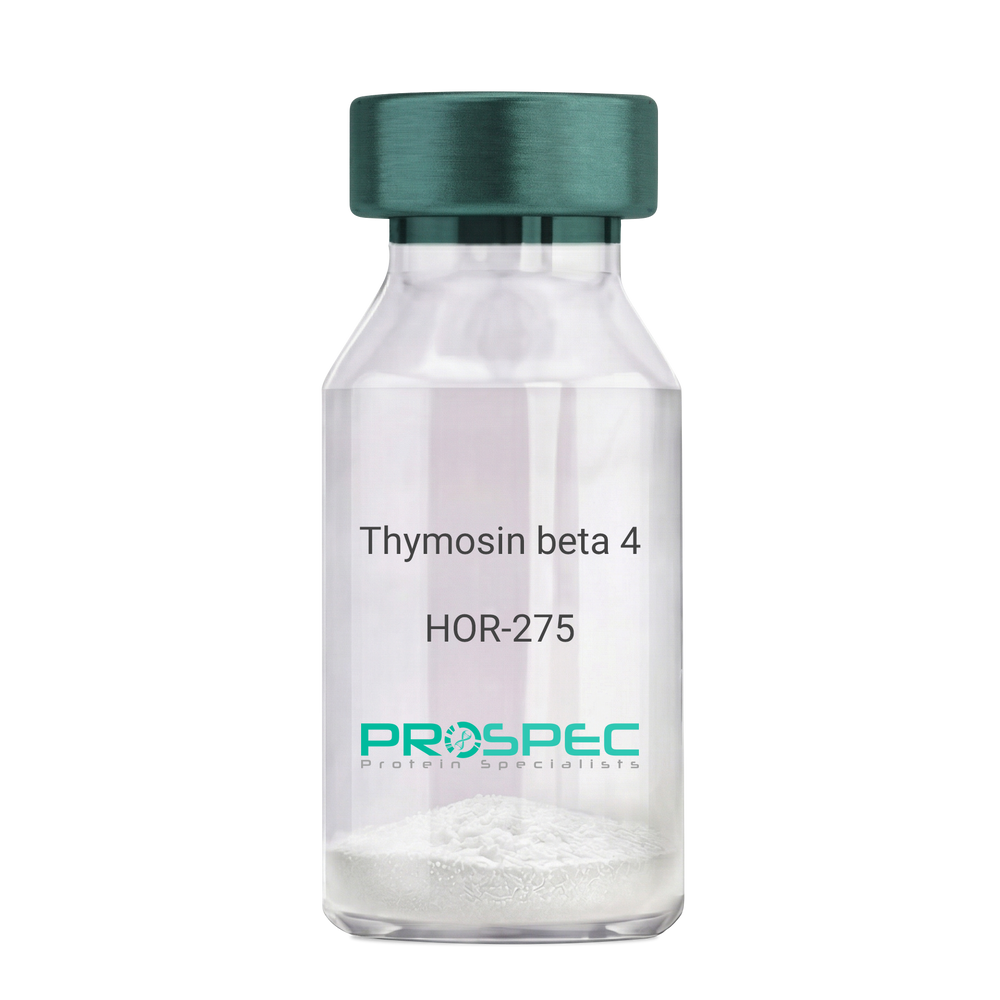
Thymosin beta 4Description:
Thymosin β4
Thymosin beta-4. TB500, TB-500
Product # :
HOR-275Price :
Quantity :
Shipping Method :
Shipped at Room temp
More Info
- description
- formulation
- purity
- More Info
Description
Thymosin b4 is a 43 amino acid peptide which is regarded as the main intracellular G-actin sequestering peptide. It has a molecular weight of 4963.55 Da, and its molecular formula is: C212H350N56O78S1. Extracellular Thymosin b4 may contribute to physiological processes such as angiogenesis, wound healing, and regulation of inflammation.
Formulation
The protein (1mg/ml) was lyophilized with no additives.
Purity
Greater than 98.0% as determined by RP-HPLC.
More Info
-
Introduction
Thymosin is a hormone secreted from the thymus. Its primary function is to stimulate the production of T cells, which are an important part of the immune system. Thymosin also assists in the development of B cells to plasma cells to produce antibodies. The predominant form of thymosin, thymosin b4, is a member of a highly conserved family of actin monomer-sequestering proteins. b-thymosins are the primary regulators of unpolymerized actin, and are essential for maintaining the small cytoplasmic pool of free G-actin monomers required for rapid filament elongation and allowing for the flux of monomers between the thymosin-bound pool and F-actin.
-
Synonyms
Thymosin beta-4. TB500, TB-500
-
Physical Appearance
Sterile Filtered White lyophilized (freeze-dried) powder.
-
Stability
Lyophilized Thymosin b4 although stable at room temperature for 3 weeks, should be stored desiccated below -18°C. Upon reconstitution T beta 4 should be stored at 4°C between 2-7 days and for future use below -18°C.For long term storage it is recommended to add a carrier protein (0.1% HSA or BSA).Please prevent freeze-thaw cycles.
-
Solubility
It is recommended to reconstitute the lyophilized Thymosin beta-4 in sterile 18MΩ-cm H2O not less than 100 µg/ml, which can then be further diluted to other aqueous solutions.
-
Amino Acid Sequence
Thymosin b4 has an a.a. sequence of Ac-Ser-Asp-Lys-Pro-Asp-Met-Ala-Glu-Ile-Glu-Lys-Phe-Asp-Lys-Ser-Lys-Leu-Lys-Lys-Thr-Glu-Thr-Gln-Glu-Lys-Asn-Pro-Leu-Pro-Ser-Lys-Glu-Thr-Ile-Glu-Gln-Glu-Lys-Gln-Ala-Gly-Glu-Ser-OH.
ProSpec's products are furnished for LABORATORY RESEARCH USE ONLY. The product may not be used as drugs, agricultural or pesticidal products, food additives or household chemicals.
- View Data Sheet
Name :
TRIM21 Human BiotinDescription:
Tripartite Motif Containing 21 (RO52) Human Recombinant, Biotinylated
52 kDa Ro protein, Sjoegren syndrome type A antigen, SS-A, Ro(SS-A), 52 kDa ribonucleoprotein autoantigen Ro/SS-A, Tripartite motif-containing protein 21, RING finger protein 81, TRIM21, RNF81, RO52, SSA1, SSA, RO-52.
Product # :
PRO-2559Price :
Quantity :
Shipping Method :
Shipped with Ice Packs
More Info
- description
- source
- formulation
- purity
- More Info
Description
TRIM21 Human Recombinant, Biotin produced in SF9 is a glycosylated, polypeptide chain having a calculated molecular mass of 52kDa. TRIM21 is expressed with a -6x His tag at N-terminus and purified by proprietary chromatographic techniques.
Source
Sf9 insect cells.
Formulation
TRIM21 solution is supplied in 20mM HEPES pH-7.6, 0.01mM EDTA and 0.02% SDS.
Purity
Greater than 80% as determined by SDS-PAGE.
More Info
-
Introduction
TRIM21 is a member of the tripartite motif (TRIM) family. The TRIM motif includes three zinc-binding domains, a RING, a B-box type 1 and a B-box type 2, and a coiled-coil region. The 52 kDa Ro protein is part of the RoSSA ribonucleoprotein, which includes a single polypeptide and one of four small RNA molecules. The RoSSA particle localizes to both the cytoplasm and the nucleus. Ro/SSA interacts with autoantigens in patients with Sjogren syndrome and systemic lupus erythematosus. Ribonucleoprotein particle is composed of a single polypeptide and one of four small RNA molecules. The RoSSA is present in all mammalian cells studied but has no known function. At least 2 isoforms are present in nucleated and red blood cells, and tissue specific differences in Ro/SSA proteins were identified.
-
Synonyms
52 kDa Ro protein, Sjoegren syndrome type A antigen, SS-A, Ro(SS-A), 52 kDa ribonucleoprotein autoantigen Ro/SS-A, Tripartite motif-containing protein 21, RING finger protein 81, TRIM21, RNF81, RO52, SSA1, SSA, RO-52.
-
Physical Appearance
Sterile Filtered clear solution.
-
Stability
Store at 4°C if entire vial will be used within 2-4 weeks. Store, frozen at -20°C for longer periods of time. Avoid multiple freeze-thaw cycles.
-
Immunological Functions
1. Binds IgG type human auto antibodies.2. Functional Streptavidin based ELISA test (analysis of positive/negative samples.)
ProSpec's products are furnished for LABORATORY RESEARCH USE ONLY. The product may not be used as drugs, agricultural or pesticidal products, food additives or household chemicals.
- View Data Sheet
Name :
CNTF Human, HisDescription:
Ciliary Neurotrophic Factor Human Recombinant, His Tag
HCNTF, CNTF, Ciliary Neurotrophic Factor.
Product # :
CYT-573Price :
Quantity :
Shipping Method :
Shipped with Ice Packs
More Info
- description
- source
- formulation
- purity
- More Info
Description
Ciliary Neurotrophic Factor Recombinant Human produced in E.Coli is a single, non-glycosylated polypeptide chain (aa 1-200) containing a total of 220 amino acids and having a molecular mass of 25kDa. The CNTF protein is fused to a 20 aa His Tag at N-terminus and purified by proprietary chromatographic techniques.
Source
Escherichia Coli.
Formulation
CNTF protein solution (1mg/ml) contains 20mM Tris-HCl buffer pH-8 and 1mM DTT.
Purity
Greater than 95.0% as determined by SDS-PAGE.
More Info
-
Introduction
CNTF is a polypeptide hormone whose actions appear to be restricted to the nervous system where it promotes neurotransmitter synthesis and neurite outgrowth in certain neuronal populations. The protein is a potent survival factor for neurons and oligodendrocytes and may be relevant in reducing tissue destruction during inflammatory attacks. A mutation in this gene, which results in aberrant splicing, leads to ciliary neurotrophic factor deficiency, but this phenotype is not causally related to neurologic disease. In addition to the predominant monocistronic transcript originating from this locus, the gene is also co-transcribed with the upstream ZFP91 gene. Co-transcription from the two loci results in a transcript that contains a complete coding region for the zinc finger protein but lacks a complete coding region for ciliary neurotrophic factor.
CNTF is a survival factor for various neuronal cell types. Seems to prevent the degeneration of motor axons after axotomy. -
Synonyms
HCNTF, CNTF, Ciliary Neurotrophic Factor.
-
Physical Appearance
Sterile Filtered colorless clear solution.
-
Stability
Store at 4°C if entire vial will be used within 2-4 weeks. Store, frozen at -20°C for longer periods of time. For long term storage it is recommended to add a carrier protein (0.1% HSA or BSA).Avoid multiple freeze-thaw cycles.
-
Amino Acid Sequence
MGSSHHHHHH SSGLVPRGSH MAFTEHSPLT PHRRDLCSRS IWLARKIRSDLTALTESYVK HQGLNKNINL DSADGMPVAS TDQWSELTEA ERLQENLQAY RTFHVLLARL LEDQQVHFTP TEGDFHQAIH TLLLQVAAFA YQIEELMILL EYKIPRNEAD GMPINVGDGG LFEKKLWGLK VLQELSQWTV RSIHDLRFIS SHQTGIPARG SHYIANNKKM.
-
Background
What is the molecular weight/Mw of CNTF Protein?
CNTF Protein has a total Mw of 25kDa.
What is the source or expression system of CNTF Protein?
Escherichia Coli.
What is the Purity of CNTF Protein?
CNTF Protein is >95% pure as determined by SDS-PAGE.
What is the Biological Activity of CNTF Protein?
The biological functionality of CNTF Protein will be determined in the future.
What is the amino acid sequence of CNTF Protein?
MGSSHHHHHH SSGLVPRGSH MAFTEHSPLT PHRRDLCSRS IWLARKIRSDLTALTESYVK HQGLNKNINL DSADGMPVAS TDQWSELTEA ERLQENLQAY RTFHVLLARL LEDQQVHFTP TEGDFHQAIH TLLLQVAAFA YQIEELMILL EYKIPRNEAD GMPINVGDGG LFEKKLWGLK VLQELSQWTV RSIHDLRFIS SHQTGIPARG SHYIANNKKM.
What applications can CNTF Protein be used in?
CNTF Protein can probably be used in western blot, ELISA and Lateral Flow.
What is the endotoxin level for CNTF Protein?
The endotoxin level is minimal, CNTF Protein was purified using conventional chromatography techniques.
ProSpec's products are furnished for LABORATORY RESEARCH USE ONLY. The product may not be used as drugs, agricultural or pesticidal products, food additives or household chemicals.
- View Data Sheet
Name :
E Selectin HumanDescription:
E-selectin Human Recombinant
E-selectin, Endothelial leukocyte adhesion molecule 1, ELAM-1, Leukocyte-endothelial cell adhesion molecule 2, LECAM2, CD62E antigen, SELE, ELAM1, ELAM, ESEL, CD62E.
Product # :
PRO-380Price :
Quantity :
Shipping Method :
Shipped with Ice Packs
More Info
- description
- source
- formulation
- purity
- More Info
Description
E-Selectin Human Recombinant is expressed in E. coli containing amino acids 179-557 fused to an amino terminal hexahistidine tag, having a total molecular weight of 45.22 kDa.
Source
Escherichia Coli.
Formulation
E-Selectin is supplied in 1x PBS and 50% Glycerol.
Purity
Greater than 95% as determined by SDS-PAGE.
Single band on Western Blot.More Info
-
Introduction
E-selectin which is also called Endothelial leukocyte adhesion molecule 1, ELAM1, ELAM belongs to a family of divalent cation-dependent carbohydrate-binding glycoproteins or adhesion molecules. Eselectin is expressed on the surface of endothelial cells and mediates the interaction of leukocytes and platelets with endothelial cells during an inflammatory response. E-selectin is present in single copy in the human genome and contains 14 exons spanning about 13 kb of DNA.
-
Synonyms
E-selectin, Endothelial leukocyte adhesion molecule 1, ELAM-1, Leukocyte-endothelial cell adhesion molecule 2, LECAM2, CD62E antigen, SELE, ELAM1, ELAM, ESEL, CD62E.
-
Physical Appearance
Sterile Filtered liquid formulation.
-
Stability
Store at 4°C if entire vial will be used within 1-2 weeks. Store, frozen at -20°C for longer periods of time. Avoid multiple freeze-thaw cycles.
ProSpec's products are furnished for LABORATORY RESEARCH USE ONLY. The product may not be used as drugs, agricultural or pesticidal products, food additives or household chemicals.
- View Data Sheet
Name :
Periostin HumanDescription:
Periostin Human Recombinant
OSF-2, Periostin, Osteoblast Specific Factor 2, PN OSF-2, PDLPOSTN, POSTN, MGC119510, MGC119511, PN, RP11-412K4.1.
Product # :
CYT-452Price :
Quantity :
Shipping Method :
Shipped at Room temp
More Info
- description
- source
- formulation
- purity
- More Info
Description
The OSF2 His-Tagged Fusion Protein Human is produced in E. coli, and its molecular weight is 75 kDa protein containing 648 amino acid residues of the human OSF-2 and 23 additional amino acid residues - HisTag, Xa - cleavage site.
Source
Escherichia Coli.
Formulation
Filtered (0.4 µm) and lyophilized from 0.5 mg/ml in 0.05M Acetate buffer pH-4.
Purity
Greater than 90% as determined by SDS-PAGE.
More Info
-
Introduction
Periostin is a disulfide linked 90 kDa, 811 amino acid protein originally isolated as a osteoblast-specific factor that functions as a cell adhesion molecule for preosteoblasts and is thought to be involved in osteoblast recruitment, attachment and spreading. Additionally, periostin expression has previously been shown to be significantly increased by both transforming growth factor beta-1(TGFbeta1) and bone morphogenetic protein (BMP-2). OSF-2 has a typical signal sequence, followed by a cysteine-rich domain, a fourfold repeated domain and a C-terminal domain. The fourfold repeated domain of OSF-2 shows homology with the insect protein fasciclin
Periostin mRNA is expressed in the developing mouse embryonic and fetal heart, and that it is localized to the endocardial cushions that ultimately divide the primitive heart tube into a four-chambered heart. -
Synonyms
OSF-2, Periostin, Osteoblast Specific Factor 2, PN OSF-2, PDLPOSTN, POSTN, MGC119510, MGC119511, PN, RP11-412K4.1.
-
Physical Appearance
Filtered White lyophilized (freeze-dried) powder.
-
Stability
Store lyophilized protein at -20°C. Aliquot the product after reconstitution to avoid repeated freezing/thawing cycles. Reconstituted protein can be stored at 4°C for a limited period of time; it does not show any change after two weeks at 4°C.
-
Solubility
It is recommended to add 0.1M Acetate buffer pH4 to prepare a working stock solution of approximately 0.5 mg/ml and let the lyophilized pellet dissolve completely. For conversion into higher pH value, we recommend intensive dilution by relevant buffer to a concentration of 10µg/ml. In higher concentrations the solubility of this antigen is limited. Product is not sterile! Please filter the product by an appropriate sterile filter before using it in the cell culture.
-
Amino Acid Sequence
MGHHHHHHHH HHSSGHIEGR HMRNNHYDKI LAHSRIRGRD QGPNVCALQQ ILGTKKKYFS TCKNWYKKSI CGQKTTVLYE CCPGYMRMEG MKGCPAVLPI DHVYGTLGIV GATTTQRYSD ASKLREEIEG KGSFTYFAPS NEAWDNLDSD IRRGLESNVN VELLNALHSH MINKRMLTKD LKNGMIIPSM YNNLGLFINH YPNGVVTVNC ARIIHGNQIA TNGVVHVIDR VLTQIGTSIQ DFIEAEDDLS SFRAAAITSD ILEALGRDGH FTLFAPTNEA FEKLPRGVLE RFMGDKVASEALMKYHILNT LQCSESIMGG AVFETLEGNT IEIGCDGDSI TVNGIKMVNK KDIVTNNGVI HLIDQVLIPD SAKQVIELAG KQQTTFTDLV AQLGLASALR PDGEYTLLAP VNNAFSDDTL SMVQRLLKLI LQNHILKVKV GLNELYNGQI LETIGGKQLR VFVYRTAVCI ENSCMEKGSK QGRNGAIHIF REIIKPAEKS LHEKLKQDKR FSTFLSLLEA ADLKELLTQP GDWTLFVPTN DAFKGMTSEE KEILIRDKNA LQNIILYHLT PGVFIGKGFE PGVTNILKTT QGSKIFLKEV NDTLLVNELK SKESDIMTTN GVIHVVDKLL YPADTPVGND QLLEILNKLI KYIQIKFVRG STFKEIPVTV Y.
ProSpec's products are furnished for LABORATORY RESEARCH USE ONLY. The product may not be used as drugs, agricultural or pesticidal products, food additives or household chemicals.
- View Data Sheet
Name :
a-ActininDescription:
Actinin Alpha
Alpha-actinin-1, Alpha-actinin cytoskeletal isoform, Non-muscle alpha-actinin-1, F-actin cross-linking protein, ACTN1.
Product # :
PRO-518Price :
Quantity :
Shipping Method :
Shipped at Room temp
More Info
- description
- source
- formulation
- purity
- More Info
Description
Ultra pure Alpha Actinin having a Molecular mass of 95,000 Dalton.
Source
Chicken Gizzard.
Formulation
The protein was lyophilized from a 1mg/ml solution containing 10mM Tris acetate buffer pH 7.6, 0.1mM EDTA, 2mM DTT, and 20mM NaCl.
Purity
Greater than 95.0% as determined by analysis by SDS-PAGE.
More Info
-
Introduction
ACTN1 encodes a nonmuscle, cytoskeletal, alpha actinin isoform and maps to the same site as the structurally similar erythroid beta spectrin gene. Alpha actinins belong to the spectrin gene superfamily which represents a diverse group of cytoskeletal proteins, including the alpha and beta spectrins and dystrophins. Alpha actinin is an actin-binding protein with multiple roles in different cell types. In nonmuscle cells, the cytoskeletal isoform is found along microfilament bundles and adherens-type junctions, where it is involved in binding actin to the membrane. In contrast, skeletal, cardiac, and smooth muscle isoforms are localized to the Z-disc and analogous dense bodies, where they help anchor the myofibrillar actin filaments.
-
Synonyms
Alpha-actinin-1, Alpha-actinin cytoskeletal isoform, Non-muscle alpha-actinin-1, F-actin cross-linking protein, ACTN1.
-
Physical Appearance
Sterile Filtered White lyophilized (freeze-dried) powder.
-
Stability
Lyophilized a-Actinin although stable at room temperature for 3 weeks, should be stored desiccated below -18°C. Upon reconstitution a-Actinin should be stored at 4°C between 2-7 days and for future use below -18°C. For long term storage it is recommended to add a carrier protein (0.1% HSA or BSA).Please prevent freeze-thaw cycles.
-
Solubility
It is recommended to reconstitute the lyophilized a-Actinin in sterile 18MΩ-cm H2O not less than 100µg/ml, which can then be further diluted to other aqueous solutions.
-
Applications
Protein standard in 1D and 2D SDS gelelectrophoresis
Immunoassays
Immunization.
ProSpec's products are furnished for LABORATORY RESEARCH USE ONLY. The product may not be used as drugs, agricultural or pesticidal products, food additives or household chemicals.
- View Data Sheet
Name :
Pleiotrophin Human, HisDescription:
Pleiotrophin Human Recombinant, His Tag
PTN, Heparin Affin Regulatory Protein, HARP, Heparin-binding growth factor-8, HBGF-8, Osteoblast-Specific Factor-1, OSF-1, Heparin-binding growth-associated molecule, HB-GAM, HBNF-1 Heparin-binding brain mitogen, Heparin-binding neurite outgrowth-promoting factor 1, HBBM, NEGF1.
Product # :
CYT-451Price :
Quantity :
Shipping Method :
Shipped at Room temp
More Info
- description
- source
- formulation
- purity
- More Info
Description
Pleiotrophin Human Recombinant contains His-Tagged Fusion Protein, produced in E. coli, its molecular weight is 17.3 kDa protein containing 136 amino acid residues of the OSF-1 human and 16 additional amino acid residues - HisTag, thrombin cleavage site (underlined).
Source
Escherichia Coli.
Formulation
Filtered and lyophilized from 0.5 mg/ml in 0.1M phosphate buffer and 0.1M NaCl, pH 7.2.
Purity
Greater than 95% as determined by SDS-PAGE.
More Info
-
Introduction
Pleiotrophin (Osteoblast-Specific Factor-1, OSF-1) contains 136 amino acid residues. The sequence is very rich in cationic amino acids (24% of the residues); lysine cluster sequences are found in the N-terminal and C-terminal ends of the structure.
The OSF-1 gene was shown by Northern blotting analysis to be expressed in mouse calvarial osteoblast-enriched cells and in mouse brain tissues, but not in thymus, spleen, kidney, liver, lung, testis or heart. Pleiotrophin has the ability to promote adhesion, migration, expansion, and differentiation of human osteoprogenitor cells. In addition to certain types of cancer, the embryonic growth and differentiation factor pleiotrophin is found also in adults in inflammatory diseases. In osteoarthritis, pleiotrophin is especially expressed in early stages, and its concentrations in the synovial fluid could serve as a marker for the progress of the disease. Pleitrophin might be involved in cartilage repair in osteoarthritis, in particular, in earlier stages. -
Synonyms
PTN, Heparin Affin Regulatory Protein, HARP, Heparin-binding growth factor-8, HBGF-8, Osteoblast-Specific Factor-1, OSF-1, Heparin-binding growth-associated molecule, HB-GAM, HBNF-1 Heparin-binding brain mitogen, Heparin-binding neurite outgrowth-promoting factor 1, HBBM, NEGF1.
-
Physical Appearance
Filtered White lyophilized (freeze-dried) powder.
-
Stability
Store lyophilized protein at -20°C. Aliquot the product after reconstitution to avoid repeated freezing/thawing cycles. Reconstituted protein can be stored at 4°C for a limited period of time; it does not show any change after two weeks at 4°C.
-
Solubility
Add PBS pH 7.2 and let the lyophilized pellet dissolve completely.
-
Amino Acid Sequence
MKHHHHHHHM LVPRGSGKKE KPEKKVKKSD CGEWQWSVCV PTSGDCGLGT REGTRTGAEC KQTMKTQRCK IPCNWKKQFG AECKYQFQAW GECDLNTALK TRTGSLKRAL HNAECQKTVT ISKPCGKLTK PKPQAESKKK KKEGKKQEKM LD.
ProSpec's products are furnished for LABORATORY RESEARCH USE ONLY. The product may not be used as drugs, agricultural or pesticidal products, food additives or household chemicals.