Skip to content

High-quality research proteins.

  • 1-800-805-6531

  • Mon - Sat 8.00-18.00, Sun - Closed

  • info@prospecbio.com

  • PO Box 6591 East Brunswick NJ 08816

  • Products
    • Cytokines
    • Growth factors
    • Chemokines
    • Cd antigens
    • Neurotrophins
    • Hormones
    • Enzymes
    • Viral antigens
    • Recombinant proteins
    • Natural proteins
    • Monoclonal antibodies
    • Polyclonal antibodies
    • Thermal Packaging
  • About
    • Company
    • Founder
    • Contribution
  • Customers
    • Eastern Asia
    • Eastern Europe
    • North America
    • South America
    • South East Asia
    • Southern Asia
    • Western Europe
  • Ordering
    • Ordering Method
    • Ordering - Credit Card
    • Ordering - PO
    • Shipping Fees
    • FAQs
  • Services
    • DNA Cloning
    • Protein Expression
    • Monoclonal Antibody
    • Fermentation
    • Technology License
  • Contact us
Log in

Country/region

  • USD $ | Albania
  • USD $ | Andorra
  • USD $ | Argentina
  • USD $ | Armenia
  • USD $ | Australia
  • USD $ | Austria
  • USD $ | Azerbaijan
  • USD $ | Belarus
  • USD $ | Belgium
  • USD $ | Bolivia
  • USD $ | Brazil
  • USD $ | Bulgaria
  • USD $ | Cambodia
  • USD $ | Canada
  • USD $ | Chile
  • USD $ | China
  • USD $ | Colombia
  • USD $ | Costa Rica
  • USD $ | Croatia
  • USD $ | Cyprus
  • USD $ | Czechia
  • USD $ | Denmark
  • USD $ | Estonia
  • USD $ | Finland
  • USD $ | France
  • USD $ | Georgia
  • USD $ | Germany
  • USD $ | Greece
  • USD $ | Hong Kong SAR
  • USD $ | Hungary
  • USD $ | Iceland
  • USD $ | India
  • USD $ | Ireland
  • USD $ | Israel
  • USD $ | Italy
  • USD $ | Japan
  • USD $ | Kazakhstan
  • USD $ | Latvia
  • USD $ | Liechtenstein
  • USD $ | Lithuania
  • USD $ | Madagascar
  • USD $ | Malta
  • USD $ | Mexico
  • USD $ | Moldova
  • USD $ | Monaco
  • USD $ | Netherlands
  • USD $ | New Zealand
  • USD $ | North Macedonia
  • USD $ | Norway
  • USD $ | Panama
  • USD $ | Paraguay
  • USD $ | Peru
  • USD $ | Philippines
  • USD $ | Poland
  • USD $ | Portugal
  • USD $ | Romania
  • USD $ | Singapore
  • USD $ | Slovakia
  • USD $ | Slovenia
  • USD $ | South Africa
  • USD $ | South Korea
  • USD $ | Spain
  • USD $ | Sri Lanka
  • USD $ | Sweden
  • USD $ | Switzerland
  • USD $ | Taiwan
  • USD $ | Thailand
  • USD $ | Türkiye
  • USD $ | Ukraine
  • USD $ | United Kingdom
  • USD $ | United States
  • USD $ | Uruguay
  • USD $ | Vatican City
  • USD $ | Venezuela
  • USD $ | Vietnam
  • Facebook
  • Instagram
logoProSpec - Recombinant Protein Manufacturer for academic and R&D industry
Become a distributor
Account Log in
Wishlist
Cart Cart(0)
  • Products
    +
    • Cytokines
    • Growth factors
    • Chemokines
    • Cd antigens
    • Neurotrophins
    • Hormones
    • Enzymes
    • Viral antigens
    • Recombinant proteins
    • Natural proteins
    • Monoclonal antibodies
    • Polyclonal antibodies
    • Thermal Packaging
  • About
    +
    • Company
    • Founder
    • Contribution
  • Customers
    +
    • Eastern Asia
    • Eastern Europe
    • North America
    • South America
    • South East Asia
    • Southern Asia
    • Western Europe
  • Ordering
    +
    • Ordering Method
    • Ordering - Credit Card
    • Ordering - PO
    • Shipping Fees
    • FAQs
  • Services
    +
    • DNA Cloning
    • Protein Expression
    • Monoclonal Antibody
    • Fermentation
    • Technology License
  • Contact us

Item added to your cart

View cart
View All
  • Cytokines
  • Growth factors
  • Chemokines
  • Cd antigens
  • Neurotrophins
  • Hormones
  • Enzymes
  • Viral antigens
  • Recombinant proteins
  • Natural proteins
  • Monoclonal antibodies
  • Polyclonal antibodies
  • Thermal Packaging
  • Tumor Necrosis Factor

    Tumor Necrosis Factor

    View All
  • 4-1BB

    4-1BB

    View All
  • Adiponectin

    Adiponectin

    View All
  • AIF1

    AIF1

    View All
  • Other Cytokines

    Other Cytokines

    View All
  • AITRL

    AITRL

    View All
  • Angiopoietin

    Angiopoietin

    View All
  • Apolipoprotein

    Apolipoprotein

    View All
  • B-Cell Activating Factor

    B-Cell Activating Factor

    View All
  • Beta Defensin

    Beta Defensin

    View All
  • Bone Morphogenetic Protein

    Bone Morphogenetic Protein

    View All
  • B type Natriuretic Peptide

    B type Natriuretic Peptide

    View All
  • BST

    BST

    View All
  • Betacellulin

    Betacellulin

    View All
  • Cardiotrophin

    Cardiotrophin

    View All
  • Activin

    Activin

    View All
  • Fibroblast Growth Factor

    Fibroblast Growth Factor

    View All
  • Other Growth Factors

    Other Growth Factors

    View All
  • CSF

    CSF

    View All
  • CTGF

    CTGF

    View All
  • IGFBP

    IGFBP

    View All
  • VEGF Protein

    VEGF Protein

    View All
  • EGF

    EGF

    View All
  • Epigen

    Epigen

    View All
  • Erythropoietin

    Erythropoietin

    View All
  • Insulin-Like Growth Factor

    Insulin-Like Growth Factor

    View All
  • Growth Hormone

    Growth Hormone

    View All
  • HDGF

    HDGF

    View All
  • Hepatocyte Growth Factor

    Hepatocyte Growth Factor

    View All
  • Insulin

    Insulin

    View All
  • BCA-1/ BLC (CXCL13)

    BCA-1/ BLC (CXCL13)

    View All
  • BRAK (CXCL14)

    BRAK (CXCL14)

    View All
  • C-10 (CCL6)

    C-10 (CCL6)

    View All
  • Other Chemokines

    Other Chemokines

    View All
  • MEC (CCL28)

    MEC (CCL28)

    View All
  • LD78-beta (CCL3L1)

    LD78-beta (CCL3L1)

    View All
  • CTACK (CCL27)

    CTACK (CCL27)

    View All
  • CXCL16

    CXCL16

    View All
  • CXCL17

    CXCL17

    View All
  • Platelet Factor-4 (CXCL4)

    Platelet Factor-4 (CXCL4)

    View All
  • ENA-78 (CXCL5)

    ENA-78 (CXCL5)

    View All
  • Eotaxin (CCL11,24,26)

    Eotaxin (CCL11,24,26)

    View All
  • Exodus-2 (CCL21)

    Exodus-2 (CCL21)

    View All
  • Fractalkine (CX3CL1)

    Fractalkine (CX3CL1)

    View All
  • CXCL6

    CXCL6

    View All
  • Other CD Antigens

    Other CD Antigens

    View All
  • CD14

    CD14

    View All
  • CD164

    CD164

    View All
  • CD1

    CD1

    View All
  • CD2

    CD2

    View All
  • CD200

    CD200

    View All
  • CD207

    CD207

    View All
  • CD226

    CD226

    View All
  • CD23

    CD23

    View All
  • CD244

    CD244

    View All
  • CD247

    CD247

    View All
  • CD27

    CD27

    View All
  • CD274

    CD274

    View All
  • CD300

    CD300

    View All
  • CD33

    CD33

    View All
  • Other Neurotrophins

    Other Neurotrophins

    View All
  • Beta-NGF

    Beta-NGF

    View All
  • BDNF

    BDNF

    View All
  • CDNF

    CDNF

    View All
  • CNTF

    CNTF

    View All
  • GDNF

    GDNF

    View All
  • Glia Maturation Factor

    Glia Maturation Factor

    View All
  • MANF

    MANF

    View All
  • Midkine

    Midkine

    View All
  • Neuroglobin

    Neuroglobin

    View All
  • Neurotrophic factors

    Neurotrophic factors

    View All
  • Neuregulin

    Neuregulin

    View All
  • Neuropilin

    Neuropilin

    View All
  • Pigment Epithelium-Derived Factor

    Pigment Epithelium-Derived Factor

    View All
  • Pleiotrophin

    Pleiotrophin

    View All
  • Peptide Hormones

    Peptide Hormones

    View All
  • Other Hormones

    Other Hormones

    View All
  • HCG

    HCG

    View All
  • Endothelin

    Endothelin

    View All
  • Exendin

    Exendin

    View All
  • FSH

    FSH

    View All
  • Glucagon

    Glucagon

    View All
  • GHRP

    GHRP

    View All
  • GLP

    GLP

    View All
  • Thyrostimulin

    Thyrostimulin

    View All
  • Inhibin A

    Inhibin A

    View All
  • LHRH

    LHRH

    View All
  • Melanotan

    Melanotan

    View All
  • Procalcitonin

    Procalcitonin

    View All
  • PTH

    PTH

    View All
  • Peroxiredoxin

    Peroxiredoxin

    View All
  • Peptidase

    Peptidase

    View All
  • Synthetase

    Synthetase

    View All
  • Transferase

    Transferase

    View All
  • Hydrolase

    Hydrolase

    View All
  • Dehydrogenase

    Dehydrogenase

    View All
  • ACE2

    ACE2

    View All
  • Esterase

    Esterase

    View All
  • Protein Kinases

    Protein Kinases

    View All
  • Other Enzymes

    Other Enzymes

    View All
  • Phosphatase

    Phosphatase

    View All
  • Deaminase

    Deaminase

    View All
  • Oxygenase

    Oxygenase

    View All
  • Adenylate Kinase

    Adenylate Kinase

    View All
  • Lyase

    Lyase

    View All
  • Chagas

    Chagas

    View All
  • SARS

    SARS

    View All
  • Influenza

    Influenza

    View All
  • ASFV

    ASFV

    View All
  • Astrovirus

    Astrovirus

    View All
  • Borrelia

    Borrelia

    View All
  • Helicobacter Pylori

    Helicobacter Pylori

    View All
  • Chikungunya

    Chikungunya

    View All
  • Chlamydia

    Chlamydia

    View All
  • Cytomegalo

    Cytomegalo

    View All
  • Dengue

    Dengue

    View All
  • EBV

    EBV

    View All
  • Ebola

    Ebola

    View All
  • Feline Leukemia Virus

    Feline Leukemia Virus

    View All
  • Hepatitis A

    Hepatitis A

    View All
  • Other

    Other

    View All
  • Actin

    Actin

    View All
  • ADAM

    ADAM

    View All
  • Complement Component

    Complement Component

    View All
  • Ag85

    Ag85

    View All
  • Eukaryotic Translation Initiation Factor

    Eukaryotic Translation Initiation Factor

    View All
  • Anterior Gradient Protein

    Anterior Gradient Protein

    View All
  • Heat Shock Protein

    Heat Shock Protein

    View All
  • Alpha-2-HS-Glycoprotein

    Alpha-2-HS-Glycoprotein

    View All
  • Hemoglobin

    Hemoglobin

    View All
  • Allergy

    Allergy

    View All
  • Anaplasma

    Anaplasma

    View All
  • Angiogenin

    Angiogenin

    View All
  • Ankyrin Repeat Domain

    Ankyrin Repeat Domain

    View All
  • Annexin

    Annexin

    View All
  • Other Natural Proteins

    Other Natural Proteins

    View All
  • Aprotinin

    Aprotinin

    View All
  • Transferrin

    Transferrin

    View All
  • Avidin

    Avidin

    View All
  • Anti Coagulation Factors

    Anti Coagulation Factors

    View All
  • Natural Albumin

    Natural Albumin

    View All
  • Natural Coagulation Factors

    Natural Coagulation Factors

    View All
  • Fibronectin

    Fibronectin

    View All
  • Thrombin

    Thrombin

    View All
  • Anti Human Enzyme

    Anti Human Enzyme

    View All
  • Other Monoclonal Antibodies

    Other Monoclonal Antibodies

    View All
  • Anti Human Cytokine

    Anti Human Cytokine

    View All
  • Anti Human Heat Shock Protein

    Anti Human Heat Shock Protein

    View All
  • Anti Mouse Lymphocyte

    Anti Mouse Lymphocyte

    View All
  • Anti Human Chemokine

    Anti Human Chemokine

    View All
  • Anti Human Lymphocyte

    Anti Human Lymphocyte

    View All
  • Anti Viral Monoclonal

    Anti Viral Monoclonal

    View All
  • Anti Mouse Cytokine

    Anti Mouse Cytokine

    View All
  • Anti-GST Monoclonal

    Anti-GST Monoclonal

    View All
  • Other Polyclonal Antibodies

    Other Polyclonal Antibodies

    View All
  • Anti Viral

    Anti Viral

    View All
  • Anti-GST Monoclonal

    Anti-GST Monoclonal

    View All
Back

Search results

677 results found for “nanog”

Name

Description

Product #

Price

Quantity

Shipping Method

  • View Data Sheet

    Name :

    GAGE12F Human

    Description:

    G Antigen 12F Human Recombinant

    G Antigen 12F, GAGE-12F, G Antigen 12F/G/I.

    Product # :

    PRO-1736

    Price :

    Quantity :

    Shipping Method :

    Ice Icon

    Shipped with Ice Packs

    Add To Cart

    More Info

    • description
    • source
    • formulation
    • purity
    • More Info

    Description

    GAGE12F Human Recombinant produced in E.Coli is a single, non-glycosylated polypeptide chain containing 140 amino acids (1-117aa) and having a molecular mass of 15.4kDa.GAGE12F is fused to a 23 amino acid His-tag at N-terminus & purified by proprietary chromatographic techniques.

    Source

    Escherichia Coli.

    Formulation

    GAGE12F protein solution (0.25mg/ml) containing 20mM Tris-HCl buffer (pH 8.0), 0.15M NaCl and 10% glycerol.

    Purity

    Greater than 85.0% as determined by SDS-PAGE.

    More Info

    • Introduction

      GAGE12F is a member of the GAGE multigene family expressed in a large range of tumors whereas in normal tissues, his expression is restricted to germ cells. These genes are organized in clustered repeats, and have a high degree of forecasted sequence identity, however differ by scattered single nucleotide substitution. Their sequences contain either the antigenic peptide YYWPRPRRY or YRPRPRRY which is recognized by cytotoxic T-cells.

    • Synonyms

      G Antigen 12F, GAGE-12F, G Antigen 12F/G/I.

    • Physical Appearance

      Sterile Filtered clear solution.

    • Stability

      Store at 4°C if entire vial will be used within 2-4 weeks. Store, frozen at -20°C for longer periods of time. For long term storage it is recommended to add a carrier protein (0.1% HSA or BSA).Avoid multiple freeze-thaw cycles.

    • Amino Acid Sequence

      MGSSHHHHHH SSGLVPRGSH MGSMSWRGRS TYYWPRPRRY VQPPEMIGPM RPEQFSDEVE PATPEEGEPA TQRQDPAAAQ EGEDEGASAG QGPKPEAHSQ EQGHPQTGCE CEDGPDGQEM DPPNPEEVKT PEEGEKQSQC

    ProSpec's products are furnished for LABORATORY RESEARCH USE ONLY. The product may not be used as drugs, agricultural or pesticidal products, food additives or household chemicals.

    Gage12F Human
  • View Data Sheet

    Name :

    GNAI3 Human

    Description:

    Guanine Nucleotide Binding Protein Alpha Inhibiting Activity 3 Human Recombinant

    Guanine nucleotide binding protein (G protein) alpha inhibiting activity polypeptide 3, G(i) alpha-3, 87U6.

    Product # :

    PRO-1074

    Price :

    Quantity :

    Shipping Method :

    Ice Icon

    Shipped with Ice Packs

    Add To Cart

    More Info

    • description
    • source
    • formulation
    • purity
    • More Info

    Description

    GNAI3 Human Recombinant produced in E. coli is a single polypeptide chain containing 377 amino acids (1-354) and having a molecular mass of 43.0kDa.GNAI3 is fused to a 23 amino acid His-tag at N-terminus & purified by proprietary chromatographic techniques.

    Source

    E.coli.

    Formulation

    The GNAI3 solution (0.5mg/1ml) contains 20mM Tris-HCl buffer (pH 8.0), 0.1M NaCl, 2mM DTT and 20% glycerol.

    Purity

    Greater than 90% as determined by SDS-PAGE.

    More Info

    • Introduction

      GNAI3 is a member of the G-alpha family and G (i/o/t/z) subfamily which act as modulators or transducers in several transmembrane signaling systems. G(k) is the stimulatory G protein of receptor-regulated K+ channels. The active GTP-bound form inhibits the connotation of RGS14 with centrosomes and is essential for the translocation of RGS14 from the cytoplasm to the plasma membrane. GNAI3 takes part in cell division and is known to cooperate with RIC8A, S1PR1, RGS5, RGS10, RGS12, RGS14, RGS16, RGS18, and RGS19.

    • Synonyms

      Guanine nucleotide binding protein (G protein) alpha inhibiting activity polypeptide 3, G(i) alpha-3, 87U6.

    • Physical Appearance

      Sterile Filtered colorless solution.

    • Stability

      Store at 4°C if entire vial will be used within 2-4 weeks. Store, frozen at -20°C for longer periods of time. For long term storage it is recommended to add a carrier protein (0.1% HSA or BSA).Avoid multiple freeze-thaw cycles.

    • Amino Acid Sequence

      MGSSHHHHHH SSGLVPRGSH MGSMGCTLSA EDKAAVERSK MIDRNLREDG EKAAKEVKLL LLGAGESGKS TIVKQMKIIH EDGYSEDECK QYKVVVYSNT IQSIIAIIRA MGRLKIDFGE AARADDARQL FVLAGSAEEG VMTPELAGVI KRLWRDGGVQ ACFSRSREYQ LNDSASYYLN DLDRISQSNY IPTQQDVLRT RVKTTGIVET HFTFKDLYFK MFDVGGQRSE RKKWIHCFEG VTAIIFCVAL SDYDLVLAED EEMNRMHESM KLFDSICNNK WFTETSIILF LNKKDLFEEK IKRSPLTICY PEYTGSNTYE EAAAYIQCQF EDLNRRKDTK EIYTHFTCAT DTKNVQFVFD AVTDVIIKNN LKECGLY

    ProSpec's products are furnished for LABORATORY RESEARCH USE ONLY. The product may not be used as drugs, agricultural or pesticidal products, food additives or household chemicals.

    Gnai3 Human
  • View Data Sheet

    Name :

    TNF a Rat

    Description:

    Tumor Necrosis Factor-Alpha Rat Recombinant

    TNF-alpha, Tumor necrosis factor ligand superfamily member 2, TNF-a, Cachectin, DIF, TNFA, TNFSF2.

    Product # :

    CYT-393

    Price :

    Quantity :

    Shipping Method :

    Room Temp Icon

    Shipped at Room temp

    Add To Cart

    More Info

    • description
    • source
    • formulation
    • purity
    • biological activity
    • More Info

    Description

    Tumor Necrosis Factor-a Rat Recombinant produced in E.Coli is a single, non-glycosylated, polypeptide chain containing 157 amino acids and having a molecular mass of 17339.44 Dalton. The TNF-alpha is purified by standard chromatographic techniques.

    Source

    Escherichia Coli.

    Formulation

    The concentrated protein solution (1mg/ml) was lyophilized from 20mM phosphate buffer and 0.1M NaCl.

    Purity

    Greater than 95.0% as determined by:
    (a) Analysis by RP-HPLC.
    (b) Analysis by SDS-PAGE.

    Biological Activity

    The ED50 as determined by the cytolysis of murine L929 cells in the presence of Actinomycin D is < 0.05ng/ml, corresponding to a Specific Activity of 20,000,000 IU/mg.

    More Info

    • Introduction

      Tumor necrosis factor is a cytokine involved in systemic inflammation and is a member of a group of cytokines that all stimulate the acute phase reaction. TNF is mainly secreted by macrophages.
      TNF causes apoptotic cell death, cellular proliferation, differentiation, inflammation, tumorigenesis and viral replication, TNF is also involved in lipid metabolism, and coagulation. TNF's primary role is in the regulation of immune cells.
      Dysregulation and, in particular, overproduction of TNF have been implicated in a variety of human diseases- autoimmune diseases, and cancer.

    • Synonyms

      TNF-alpha, Tumor necrosis factor ligand superfamily member 2, TNF-a, Cachectin, DIF, TNFA, TNFSF2.

    • Physical Appearance

      Sterile Filtered White lyophilized (freeze-dried) powder.

    • Stability

      Lyophilized Tumor Necrosis Factor-a although stable at room temperature for 3 weeks, should be stored desiccated below -18°C. Upon reconstitution TNF-a should be stored at 4°C between 2-7 days and for future use below -18°C.For long term storage it is recommended to add a carrier protein (0.1% HSA or BSA).Please prevent freeze-thaw cycles.

    • Solubility

      It is recommended to reconstitute the lyophilized Tumor Necrosis Factor-alpha in sterile 18M-cm H2O not less than 100µg/ml, which can then be further diluted to other aqueous solutions.

    • Amino Acid Sequence

      MLRSSSQNSS DKPVVHVVAN HQAEEQLEWL SQRANALLAN GMDLKDNQLV VPADGLYLIY SQVLFKGQGC PDYVLLTHTV SRFATSYQEK VSLLSAIKSP CPKDTPEGAE LKPWYEPMYL GGVSQLEKGD LLSAEVNLPK YLDITESGQV YFGVIAL.

    ProSpec's products are furnished for LABORATORY RESEARCH USE ONLY. The product may not be used as drugs, agricultural or pesticidal products, food additives or household chemicals.

    Tnf Alpha Rat
  • View Data Sheet

    Name :

    MAFG Human

    Description:

    V-maf Musculoaponeurotic Fibrosarcoma Oncogene G Human Recombinant

    Transcription factor MafG, V-maf musculoaponeurotic fibrosarcoma oncogene homolog G, hMAF, MAFG, hMAF.

    Product # :

    PRO-968

    Price :

    Quantity :

    Shipping Method :

    Ice Icon

    Shipped with Ice Packs

    Add To Cart

    More Info

    • description
    • source
    • formulation
    • purity
    • More Info

    Description

    MAFG Human Recombinant produced in E.coli is a single, non-glycosylated polypeptide chain containing 182 amino acids (1-162) and having a molecular mass of 20kDa.MAFG is fused to a 20 amino acid His-tag at N-terminus & purified by proprietary chromatographic techniques.

    Source

    Escherichia Coli.

    Formulation

    The MAFG solution (0.25mg/ml) contains 20mM Tris-HCl buffer (pH8.0), 40% glycerol, 0.15M NaCl and 1mM DTT.

    Purity

    Greater than 90% as determined by SDS-PAGE.

    More Info

    • Introduction

      Transcription factor MafG (MAFG) is a member of the Maf family. Given that they lack a putative transactivation domain, the small Mafs act as transcriptional repressors when they dimerize amongst themselves. Nevertheless, they seem to function as transcriptional activators by dimerizing with other (generally larger) basic-zipper proteins and engaging them to specific DNA-binding sites. Small Maf proteins heterodimerize with Fos and may function as competitive repressors of the NF-E2 transcription factor.

    • Synonyms

      Transcription factor MafG, V-maf musculoaponeurotic fibrosarcoma oncogene homolog G, hMAF, MAFG, hMAF.

    • Physical Appearance

      Sterile filtered colorless solution.

    • Stability

      Store at 4°C if entire vial will be used within 2-4 weeks. Store, frozen at -20°C for longer periods of time. For long term storage it is recommended to add a carrier protein (0.1% HSA or BSA).Avoid multiple freeze-thaw cycles.

    • Amino Acid Sequence

      MGSSHHHHHH SSGLVPRGSH MTTPNKGNKA LKVKREPGEN GTSLTDEELV TMSVRELNQH LRGLSKEEIV QLKQRRRTLK NRGYAASCRV KRVTQKEELE KQKAELQQEV EKLASENASM KLELDALRSK YEALQTFART VARSPVAPAR GPLAAGLGPL VPGKVAATSV ITIVKSKTDA RS.

    ProSpec's products are furnished for LABORATORY RESEARCH USE ONLY. The product may not be used as drugs, agricultural or pesticidal products, food additives or household chemicals.

    Mafg Human
  • View Data Sheet

    Name :

    BNP Protein

    Description:

    B-type Natriuretic Peptide Human Recombinant

    NPPB, Natriuretic Peptide Precursor B, BNP, B-type Natriuretic Peptide.

    Product # :

    CYT-327

    Price :

    Quantity :

    Shipping Method :

    Room Temp Icon

    Shipped at Room temp

    Add To Cart

    More Info

    • description
    • source
    • formulation
    • purity
    • More Info

    Description

    B-type Natriuretic Peptide Recombinant Human produced in E.Coli is a single, non-glycosylated, polypeptide chain containing 32 amino acids and having a molecular mass of 3,500 Dalton. NPPB is purified by proprietary chromatographic techniques.

    Source

    Escherichia Coli.

    Formulation

    Natriuretic Peptide Precursor B was lyophilized from a 0.2 µm filtered concentrated solution in PBS, pH 7.4.

    Purity

    Greater than 97.0% as determined by:
    (a) Analysis by RP-HPLC.
    (b) Analysis by SDS-PAGE.

    More Info

    • Introduction

      Natriuretic Peptide Precursor B acts as a cardiac hormone with a variety of biological actions including natriuresis, diuresis, vasorelaxation, and inhibition of renin and aldosterone secretion. It is thought to play a key role in cardiovascular homeostasis. Helps restore the body's salt and water balance. Improves heart function.

    • Synonyms

      NPPB, Natriuretic Peptide Precursor B, BNP, B-type Natriuretic Peptide.

    • Physical Appearance

      Sterile Filtered White lyophilized (freeze-dried) powder.

    • Stability

      Lyophilized B-type Natriuretic Peptide although stable at room temperature for 3 weeks, should be stored desiccated below -18°C. Upon reconstitution NPPB should be stored at 4°C between 2-7 days and for future use below -18°C.For long term storage it is recommended to add a carrier protein (0.1% HSA or BSA).Please prevent freeze-thaw cycles.

    • Solubility

      It is recommended to reconstitute the lyophilized B-type Natriuretic Peptide in sterile 18MΩ-cm H2O not less than 100µg/ml, which can then be further diluted to other aqueous solutions.

    • Amino Acid Sequence

      SPKMVQGSGCFGRKMDRISSSSGLGCKVLRRH.

    • Background

      What is the molecular weight / Mw of BNP Protein?
      BNP Protein has a total Mw of 3.5kDa.

      What is the source or expression system of BNP Protein?

      Escherichia Coli.

      What is the Purity of BNP Protein?
      BNP Protein is >97% pure as determined by SDS-PAGE.

      What is the Biological Activity of BNP Protein?
      The biological functionality of BNP Protein will be determined in the future.

      What is the amino acid sequence of BNP Protein?

      SPKMVQGSGCFGRKMDRISSSSGLGCKVLRRH.

      What applications can BNP Protein Protein be used in?
      BNP Protein can probably be used in western blot, ELISA and Lateral Flow.

      What is the endotoxin level for BNP Protein?

      The endotoxin level is minimal, BNP Protein was purified using conventional chromatography techniques.

    ProSpec's products are furnished for LABORATORY RESEARCH USE ONLY. The product may not be used as drugs, agricultural or pesticidal products, food additives or household chemicals.

    Nppb Human Recombinant
  • View Data Sheet

    Name :

    GNG4 Human

    Description:

    Guanine Nucleotide Binding Protein Gamma 4 Human Recombinant

    Guanine Nucleotide Binding Protein (G Protein) Gamma 4, Guanine Nucleotide-Binding Protein G(I)/G(S)/G(O) Subunit Gamma-4, GNGT4.

    Product # :

    PRO-1842

    Price :

    Quantity :

    Shipping Method :

    Ice Icon

    Shipped with Ice Packs

    Add To Cart

    More Info

    • description
    • source
    • formulation
    • purity
    • More Info

    Description

    GNG4 Human Recombinant produced in E.coli is a single, non-glycosylated polypeptide chain containing 95 amino acids (1-72) and having a molecular mass of 10.4 kDa. GNG4 is fused to a 23 amino acid His-tag at N-terminus.

    Source

    Escherichia Coli.

    Formulation

    The GNG4 solution (0.5mg/ml) contains 20mM Tris-HCl buffer (pH 8.0), 0.4M Urea and 10% glycerol.

    Purity

    Greater than 85% as determined by SDS-PAGE.

    More Info

    • Introduction

      GNG4 belongs to a multigene family and is involved in defining the specificity of receptor-G protein interaction. In mammals, G protein alpha, beta and gamma polypeptides are encoded by no less than 16, 4 and 7 genes, respectively. It is a well-known fact that different G protein complexes expressed in different tissues carry structurally distinct members of the alpha beta and gamma subunits and that privileged connotation between members of subunit families rise G protein functional diversity.

    • Synonyms

      Guanine Nucleotide Binding Protein (G Protein) Gamma 4, Guanine Nucleotide-Binding Protein G(I)/G(S)/G(O) Subunit Gamma-4, GNGT4.

    • Physical Appearance

      Sterile Filtered clear solution.

    • Stability

      Store at 4°C if entire vial will be used within 2-4 weeks. Store, frozen at -20°C for longer periods of time. For long term storage it is recommended to add a carrier protein (0.1% HSA or BSA).Avoid multiple freeze-thaw cycles.

    • Amino Acid Sequence

      MGSSHHHHHH SSGLVPRGSH MGSMKEGMSN NSTTSISQAR KAVEQLKMEA CMDRVKVSQA AADLLAYCEA HVREDPLIIP VPASENPFRE KKFFC

    ProSpec's products are furnished for LABORATORY RESEARCH USE ONLY. The product may not be used as drugs, agricultural or pesticidal products, food additives or household chemicals.

    Gng4 Human
  • View Data Sheet

    Name :

    NPM1 Human

    Description:

    Nucleophosmin Human Recombinant

    Nucleophosmin, NPM, Nucleolar phosphoprotein B23, Nucleolar protein NO38, Numatrin, NPM1, NPM, B23.

    Product # :

    PRO-1120

    Price :

    Quantity :

    Shipping Method :

    Ice Icon

    Shipped with Ice Packs

    Add To Cart

    More Info

    • description
    • source
    • formulation
    • purity
    • More Info

    Description

    NPM1 Human Recombinant produced in E.Coli is a single, non-glycosylated polypeptide chain containing 314 amino acids (1-294 a.a) and having a molecular mass of 34.7kDa.NPM1 is fused to a 20 amino acid His-tag at N-terminus & purified by proprietary chromatographic techniques.

    Source

    Escherichia Coli.

    Formulation

    NPM1 protein solution (0.5mg/ml) containing 20mM Tris-HCl buffer (pH8.0), 10% glycerol, 0.15M NaCl and 1mM DTT.

    Purity

    Greater than 85.0% as determined by SDS-PAGE.

    More Info

    • Introduction

      Nucleophosmin (NPM1) is a phosphoprotein which shuffles between the nucleus and the cytoplasm. NPM1 is assumed to be involved in a number of processes including regulation of the ARF/p53 pathway. Several genes fusion partners have been described, particularly the anaplastic lymphoma kinase gene on chromosome 2. NPM1 gene mutations are linked with acute myeloid leukemia.

    • Synonyms

      Nucleophosmin, NPM, Nucleolar phosphoprotein B23, Nucleolar protein NO38, Numatrin, NPM1, NPM, B23.

    • Physical Appearance

      Sterile Filtered colorless solution.

    • Stability

      Store at 4°C if entire vial will be used within 2-4 weeks. Store, frozen at -20°C for longer periods of time. For long term storage it is recommended to add a carrier protein (0.1% HSA or BSA).Avoid multiple freeze-thaw cycles.

    • Amino Acid Sequence

      MGSSHHHHHH SSGLVPRGSH MEDSMDMDMS PLRPQNYLFG CELKADKDYH FKVDNDENEH QLSLRTVSLG AGAKDELHIV EAEAMNYEGS PIKVTLATLK MSVQPTVSLG GFEITPPVVL RLKCGSGPVH ISGQHLVAVE EDAESEDEEE EDVKLLSISG KRSAPGGGSK VPQKKVKLAA
      DEDDDDDDEE DDDEDDDDDD FDDEEAEEKA PVKKSIRDTP AKNAQKSNQN GKDSKPSSTP RSKGQESFKK QEKTPKTPKG PSSVEDIKAK MQASIEKGGS LPKVEAKFIN YVKNCFRMTD QEAIQDLWQW RKSL.

    ProSpec's products are furnished for LABORATORY RESEARCH USE ONLY. The product may not be used as drugs, agricultural or pesticidal products, food additives or household chemicals.

    Npm1 Human
  • View Data Sheet

    Name :

    Glucagon Human, His

    Description:

    Glucagon Human Recombinant, His Tag

    Glucagon, GCG, GLP1, GLP2, GRPP.

    Product # :

    HOR-301

    Price :

    Quantity :

    Shipping Method :

    Ice Icon

    Shipped with Ice Packs

    Add To Cart

    More Info

    • description
    • source
    • formulation
    • purity
    • More Info

    Description

    Glucagon Human Recombinant produced in E.Coli is a single, non-glycosylated polypeptide chain containing 112 amino acids (90-180 a.a.) and having a molecular mass of 12.8kDa.Glucagon is fused to a 21 amino acid His-tag at N-terminus & purified by proprietary chromatographic techniques.

    Source

    Escherichia Coli.

    Formulation

    Glucagon protein solution (0.5mg/ml) containing 20mM Tris-HCl buffer (pH 8.0), 1mM DTT, 50% glycerol and 0.2M NaCl.

    Purity

    Greater than 95.0% as determined by SDS-PAGE.

    More Info

    • Introduction

      Glucagon is an important hormone involved in carbohydrate metabolism. The hormone is synthesized and secreted from alpha cells (a-cells) of the islets of Langerhans, which are located in the endocrine portion of the pancreas. Glucagon is released when the glucose level in the blood is low (hypoglycemia), causing the liver to convert stored glycogen into glucose and release it into the bloodstream. The action of glucagon is thus opposite to that of insulin, which instructs the body's cells to take in glucose from the blood in times of satiation.
      Glucagon is beneficial for the culture of some cell types. It has been used in some biochemical regulation studies of glycogenolysis in hepatocytes. It has been also been found to induce DNA replication in primary cultures of adult rat hepatocytes when used in combinations with EGF and Insulin. Glucagon increases the blood glucose concentration by promoting rapid breakdown of liver glycogen, and also acts to relax smooth muscle such as the gastrointestinal tract.

    • Synonyms

      Glucagon, GCG, GLP1, GLP2, GRPP.

    • Physical Appearance

      Sterile filtered colorless solution.

    • Stability

      Store at 4°C if entire vial will be used within 2-4 weeks. Store, frozen at -20°C for longer periods of time. For long term storage it is recommended to add a carrier protein (0.1% HSA or BSA).Avoid multiple freeze-thaw cycles.

    • Amino Acid Sequence

      MGSSHHHHHH SSGLVPRGSH MKRHDEFERH AEGTFTSDVS SYLEGQAAKE FIAWLVKGRG RRDFPEEVAI VEELGRRHAD GSFSDEMNTI LDNLAARDFI NWLIQTKITD RK.

    ProSpec's products are furnished for LABORATORY RESEARCH USE ONLY. The product may not be used as drugs, agricultural or pesticidal products, food additives or household chemicals.

    Glucagon Human His
  • View Data Sheet

    Name :

    GNGT1 Human

    Description:

    Guanine Nucleotide Binding Protein Gamma Transducing 1 Human Recombinant

    Guanine Nucleotide Binding Protein (G Protein), Gamma Transducing Activity Polypeptide 1, Transducin Gamma Chain, Guanine Nucleotide-Binding Protein G(T) Subunit Gamma-T1, GNG1, Guanine nucleotide-binding protein G(T) subunit gamma-T1.

    Product # :

    PRO-2084

    Price :

    Quantity :

    Shipping Method :

    Ice Icon

    Shipped with Ice Packs

    Add To Cart

    More Info

    • description
    • source
    • formulation
    • purity
    • More Info

    Description

    GNGT1 Human Recombinant produced in E.Coli is a single, non-glycosylated polypeptide chain containing 94 amino acids (1-71 a.a) and having a molecular mass of 10.6kDa. GNGT1 is fused to a 23 amino acid His-tag at N-terminus & purified by proprietary chromatographic techniques.

    Source

    Escherichia Coli.

    Formulation

    GNGT1 protein solution (1mg/ml) containing 20mM Tris-HCl buffer (pH8.0), 10% glycerol, 0.1M NaCl and 1mM EDTA.

    Purity

    Greater than 95.0% as determined by SDS-PAGE.

    More Info

    • Introduction

      Guanine Nucleotide Binding Protein Gamma Transducing 1, also known as GNGT1 is amember of the G protein gamma family. GNGT1 is implicated in various transmembrane signaling systems as a modulator or transducer. In addition GNGT1 (beta & gamma chains) is required for the GTPase activity, for replacement of GDP by GTP, and for G protein- effector interaction.

    • Synonyms

      Guanine Nucleotide Binding Protein (G Protein), Gamma Transducing Activity Polypeptide 1, Transducin Gamma Chain, Guanine Nucleotide-Binding Protein G(T) Subunit Gamma-T1, GNG1, Guanine nucleotide-binding protein G(T) subunit gamma-T1.

    • Physical Appearance

      Sterile Filtered colorless solution.

    • Stability

      Store at 4°C if entire vial will be used within 2-4 weeks. Store, frozen at -20°C for longer periods of time. For long term storage it is recommended to add a carrier protein (0.1% HSA or BSA).Avoid multiple freeze-thaw cycles.

    • Amino Acid Sequence

      MGSSHHHHHH SSGLVPRGSH MGSMPVINIE DLTEKDKLKM EVDQLKKEVT LERMLVSKCC EEVRDYVEER SGEDPLVKGI PEDKNPFKEL KGGC.

    ProSpec's products are furnished for LABORATORY RESEARCH USE ONLY. The product may not be used as drugs, agricultural or pesticidal products, food additives or household chemicals.

    Gngt1 Human
  • View Data Sheet

    Name :

    CHRNA6 Human

    Description:

    Cholinergic Receptor Nicotinic, Alpha 6 Human Recombinant

    CHNRA6, Neuronal acetylcholine receptor subunit alpha-6, CHRNA6.

    Product # :

    PRO-1878

    Price :

    Quantity :

    Shipping Method :

    Ice Icon

    Shipped with Ice Packs

    Add To Cart

    More Info

    • description
    • source
    • formulation
    • purity
    • More Info

    Description

    CHRNA6 Human Recombinant produced in E.Coli is a single, non-glycosylated polypeptide chain containing 250 amino acids (26-239 a.a) and having a molecular mass of 29.3kDa. CHRNA6 is fused to a 36 amino acid His-tag at N-terminus & purified by proprietary chromatographic techniques.

    Source

    Escherichia Coli.

    Formulation

    CHRNA6 protein solution (1mg/ml) containing 20mM Tris-HCl buffer (pH 8.0), 0.4M Urea and 10% glycerol.

    Purity

    Greater than 85.0% as determined by SDS-PAGE.

    More Info

    • Introduction

      Cholinergic Receptor Nicotinic, Alpha 6 (CHRNA6) is a part of the nicotinic acetylcholine receptors (nAChRs) family. nAChRs are heteropentameric ligand-gated ion channels generating from the assembly of alpha and beta protein subunits. After binding acetylcholine, the AChRs respond by a major change in conformation which affects all subunits and leads to opening of an ion-conducting channel across the plasma membrane. CHRNA6 receptors have a rather selective localization to the nigrostriatal pathway.

    • Synonyms

      CHNRA6, Neuronal acetylcholine receptor subunit alpha-6, CHRNA6.

    • Physical Appearance

      Sterile Filtered colorless solution.

    • Stability

      Store at 4°C if entire vial will be used within 2-4 weeks. Store, frozen at -20°C for longer periods of time. For long term storage it is recommended to add a carrier protein (0.1% HSA or BSA).Avoid multiple freeze-thaw cycles.

    • Amino Acid Sequence

      MRGSHHHHHH GMASMTGGQQ MGRDLYDDDD KDRWGSKGCV GCATEERLFH KLFSHYNQFI RPVENVSDPV TVHFEVAITQ LANVDEVNQI METNLWLRHI WNDYKLRWDP MEYDGIETLR VPADKIWKPD IVLYNNAVGD FQVEGKTKAL LKYNGMITWT PPAIFKSSCP MDITFFPFDH QNCSLKFGSW TYDKAEIDLL IIGSKVDMND FWENSEWEII DASGYKHDIK YNCCEEIYTD ITYSFYIRRL.

    ProSpec's products are furnished for LABORATORY RESEARCH USE ONLY. The product may not be used as drugs, agricultural or pesticidal products, food additives or household chemicals.

    Chrna6 Human
  • View Data Sheet

    Name :

    AGO2 (1-200) Human

    Description:

    Argonaute 2 (1-200 a.a.) Human Recombinant

    Protein argonaute-2, Argonaute2, hAgo2, Argonaute RISC catalytic component 2, Eukaryotic translation initiation factor 2C 2, eIF-2C 2, eIF2C 2, PAZ Piwi domain protein, PPD, AGO2, EIF2C2, Protein slicer.

    Product # :

    PRO-2578

    Price :

    Quantity :

    Shipping Method :

    Room Temp Icon

    Shipped at Room temp

    Add To Cart

    More Info

    • description
    • source
    • formulation
    • purity
    • More Info

    Description

    AGO2 (1-200) Human Recombinant is a single, non-glycosylated, polypeptide chain containing 210 amino acids (1-200 a.a) and having a molecular mass of 23.7kDa (calculated). AGO2 (1-200) is fused to a 10 a.a His tag at N-terminal.

    Source

    Escherichia Coli.

    Formulation

    AGO2 (1-200) filtered (0.4 µm) and lyophilized from 0.5mg/ml in 50mM acetate buffer, pH 4.

    Purity

    Greater than 90.0% as determined by SDS-PAGE.

    More Info

    • Introduction

      The Argonaute protein is part of the RISC or RNA-induced silencing complex, as so, the protein has a key part in the slicing processes of RNA. The RNA interference (RNAi) is being held by RISC. Small non-coding RNA fragments bond to the Argonaute proteins, through base pairing, eventually leads to the cleavage of messenger RNA or translation suppression.

    • Synonyms

      Protein argonaute-2, Argonaute2, hAgo2, Argonaute RISC catalytic component 2, Eukaryotic translation initiation factor 2C 2, eIF-2C 2, eIF2C 2, PAZ Piwi domain protein, PPD, AGO2, EIF2C2, Protein slicer.

    • Physical Appearance

      Filtered White lyophilized (freeze-dried) powder.

    • Stability

      Store lyophilized protein at -20°C. Aliquot the product after reconstitution to avoid repeated freezing/thawing cycles. Reconstituted protein can be stored at 4°C for a limited period of time; it does not show any change after two weeks at 4°C.

    • Solubility

      It is recommended to add 0.1M acetate buffer, pH 4 to prepare a working stock solution of approximately 0.5mg/ml and let the lyophilized pellet dissolve completely. AGO2 (1-200) is not sterile! Please filter the product by an appropriate sterile filter before using it in the cell culture.

    • Amino Acid Sequence

      MKHHHHHHAS MYSGAGPALA PPAPPPPIQG YAFKPPPRPD FGTSGRTIKL QANFFEMDIP KIDIYHYELD IKPEKCPRRV NREIVEHMVQ HFKTQIFGDR KPVFDGRKNL YTAMPLPIGR DKVELEVTLP GEGKDRIFKV SIKWVSCVSL QALHDALSGR LPSVPFETIQ ALDVVMRHLP SMRYTPVGRS FFTASEGCSN PLGGGREVW.

    ProSpec's products are furnished for LABORATORY RESEARCH USE ONLY. The product may not be used as drugs, agricultural or pesticidal products, food additives or household chemicals.

    Argonaute 2
  • View Data Sheet

    Name :

    TIGIT Human

    Description:

    T-Cell Immunoreceptor With Ig And ITIM Domains Human Recombinant

    VSIG9, VSTM3, WUCAM, V-set and immunoglobulin domain-containing protein 9, V-set and transmembrane domain-containing protein 3.

    Product # :

    PRO-2498

    Price :

    Quantity :

    Shipping Method :

    Ice Icon

    Shipped with Ice Packs

    Add To Cart

    More Info

    • description
    • source
    • formulation
    • purity
    • More Info

    Description

    TIGIT produced in Sf9 Baculovirus cells is a single, glycosylated polypeptide chain containing 359 amino acids (22-141a.a.) and having a molecular mass of 40.0kDa. (Molecular size on SDS-PAGE will appear at approximately 40-57kDa).TIGIT is expressed with a 239 amino acid hlgG-His tag at C-Terminus and purified by proprietary chromatographic techniques.

    Source

    Sf9, Baculovirus cells.

    Formulation

    TIGIT protein solution (0.5mg/ml) contains phosphate buffered saline (pH7.4) and 10% glycerol.

    Purity

    Greater than 90.0% as determined by SDS-PAGE.

    More Info

    • Introduction

      T cell immunoreceptor with Ig and ITIM domains or TIGIT, is an immune receptor located on part of T cells and Natural Killer Cells(NK). TIGIT is also known as Vstm3 and WUCAM. The receptor can bind with high affinity to dendritic cells(DCs), CD155(PVR) on macrophages, etc., and it can bind with lower affinity to CD112(PVRL2). TIGIT can inhibit the cytotoxicity of Natural Killer Cells through its ITIM domain via antibodies against the interaction with PVR and the activity is directed. It has been show on research that TIGIT-Fc fusion molecule can have interaction with PVR on dendritic cells and elevate its IL-10 secretion level or lower the secretion on IL-12 under the stimulation of LPS, moreover, it can inhibit the activation of T cell in vivo.

    • Synonyms

      VSIG9, VSTM3, WUCAM, V-set and immunoglobulin domain-containing protein 9, V-set and transmembrane domain-containing protein 3.

    • Physical Appearance

      Sterile Filtered colorless solution.

    • Stability

      Store at 4°C if entire vial will be used within 2-4 weeks. Store, frozen at -20°C for longer periods of time. For long term storage it is recommended to add a carrier protein (0.1% HSA or BSA).Avoid multiple freeze-thaw cycles.

    • Amino Acid Sequence

      MMTGTIETTG NISAEKGGSI ILQCHLSSTT AQVTQVNWEQ QDQLLAICNA DLGWHISPSF KDRVAPGPGL GLTLQSLTVN DTGEYFCIYH TYPDGTYTGR IFLEVLESSV AEHGARFQIP LEPKSCDKTH TCPPCPAPEL LGGPSVFLFP PKPKDTLMIS RTPEVTCVVV DVSHEDPEVK FNWYVDGVEV HNAKTKPREE QYNSTYRVVS VLTVLHQDWL NGKEYKCKVS NKALPAPIEK TISKAKGQPR EPQVYTLPPS RDELTKNQVS LTCLVKGFYP SDIAVEWESN GQPENNYKTT PPVLDSDGSF FLYSKLTVDK SRWQQGNVFS CSVMHEALHN HYTQKSLSLS PGKHHHHHH.

    ProSpec's products are furnished for LABORATORY RESEARCH USE ONLY. The product may not be used as drugs, agricultural or pesticidal products, food additives or household chemicals.

    Tigit Human
  • View Data Sheet

    Name :

    VNN1 Human

    Description:

    Vanin 1 Human Recombinant

    Vanin 1, Vascular Non-Inflammatory Molecule 1, Pantetheine Hydrolase, EC 3.5.1.92, Vanin-1, HDLCQ8, Tiff66, Pantetheinase, Vannin 1, EC 3.5.1, VNN1.

    Product # :

    PRO-2047

    Price :

    Quantity :

    Shipping Method :

    Room Temp Icon

    Shipped at Room temp

    Add To Cart

    More Info

    • description
    • source
    • formulation
    • purity
    • More Info

    Description

    VNN1 Human Recombinant produced in E.Coli is a single, non-glycosylated, polypeptide chain (Gln22-Gly491) containing 480 amino acids including a 10 aa His tag at N-terminus. The total calculated molecular mass is 53.5kDa.

    Source

    Escherichia Coli.

    Formulation

    VNN1 was filtered (0.4 µm) and lyophilized in 20mM Tris buffer, 50mM NaCl and 0.1% amisoft CS-22, pH 7.5.

    Purity

    Greater than 95.0% as determined by SDS-PAGE.

    More Info

    • Introduction

      Vanin 1 (VNN1) belongs to the vanin family of proteins, which share extensive sequence similarity with each other, and also with biotinidase. This family includes secreted and membrane-associated proteins, a few of which have been described to participate in hematopoietic cell trafficking. No biotinidase activity has been established for any of the vanin proteins; nevertheless, they possess pantetheinase activity, which may have a role in oxidative-stress response. VNN1 protein, like its mouse homolog, is probably a GPI-anchored cell surface molecule. The mouse VNN1 protein is expressed by the perivascular thymic stromal cells and regulates migration of T-cell progenitors to the thymus. VNN1 is an amidohydrolase which hydrolyzes specifically one of the carboamide linkages in D-pantetheine thus recycling pantothenic acid (vitamin B5).

    • Synonyms

      Vanin 1, Vascular Non-Inflammatory Molecule 1, Pantetheine Hydrolase, EC 3.5.1.92, Vanin-1, HDLCQ8, Tiff66, Pantetheinase, Vannin 1, EC 3.5.1, VNN1.

    • Physical Appearance

      Filtered White lyophilized (freeze-dried) powder.

    • Stability

      Store lyophilized protein at -20°C. Aliquot the product after reconstitution to avoid repeated freezing/thawing cycles. Reconstituted protein can be stored at 4°C for a limited period of time; it does not show any change after two weeks at 4°C.

    • Solubility

      It is recommended to add deionized water to prepare a working stock solution of approximately 0.5mg/ml and let the lyophilized pellet dissolve completely. VNN1 is not sterile! Please filter the product by an appropriate sterile filter before using it in the cell culture.

    • Amino Acid Sequence

      MKHHHHHHASQDTFTAAVYE HAAILPNATL TPVSREEALA LMNRNLDILE GAITSAADQG AHIIVTPEDA IYGWNFNRDS LYPYLEDIPD PEVNWIPCNN RNRFGQTPVQ ERLSCLAKNN SIYVVANIGD KKPCDTSDPQ CPPDGRYQYN TDVVFDSQGK LVARYHKQNL FMGENQFNVP KEPEIVTFNT TFGSFGIFTC FDILFHDPAV TLVKDFHVDT IVFPTAWMNV LPHLSAVEFH SAWAMGMRVN FLASNIHYPS KKMTGSGIYA PNSSRAFHYD MKTEEGKLLL SQLDSHPSHS AVVNWTSYAS SIEALSSGNK EFKGTVFFDE FTFVKLTGVA GNYTVCQKDL CCHLSYKMSE NIPNEVYALG AFDGLHTVEG RYYLQICTLL KCKTTNLNTC GDSAETASTR FEMFSLSGTF GTQYVFPEVL LSENQLAPGE FQVSTDGRLF SLKPTSGPVL TVTLFGRLYE KDWASNASSG.

    ProSpec's products are furnished for LABORATORY RESEARCH USE ONLY. The product may not be used as drugs, agricultural or pesticidal products, food additives or household chemicals.

    Vnn1 Human
  • View Data Sheet

    Name :

    CRYGN Human

    Description:

    Crystallin, Gamma N Human Recombinant

    Gamma-crystallin N, Gamma-N-crystallin, CRYGN.

    Product # :

    PRO-1152

    Price :

    Quantity :

    Shipping Method :

    Ice Icon

    Shipped with Ice Packs

    Add To Cart

    More Info

    • description
    • source
    • formulation
    • purity
    • More Info

    Description

    CRYGN Human Recombinant produced in E.Coli is a single, non-glycosylated polypeptide chain containing 206 amino acids (1-182 a.a) and having a molecular mass of 23.1kDa.CRYGN is fused to a 24 amino acid His-tag at N-terminus & purified by proprietary chromatographic techniques.

    Source

    E.coli.

    Formulation

    CRYGN protein solution (1mg/ml) containing 20mM Tris-HCl buffer (pH 8.0), 0.4M Urea and 10% glycerol.

    Purity

    Greater than 90% as determined by SDS-PAGE.

    More Info

    • Introduction

      Crystallin gamma N (CRYGN) is a member of the Crystallins family. Crystallins are the main proteins of the vertebrate eye lens, where they preserve the transparency and refractive index of the lens. CRYGN is unique in the way that it has both beta and gamma crystallin protein motifs. The CRYGN is differentially controlled after early development, and is involved in cataract creation due to either age-related protein degradation or genetic mutation.

    • Synonyms

      Gamma-crystallin N, Gamma-N-crystallin, CRYGN.

    • Physical Appearance

      Sterile Filtered colorless solution.

    • Stability

      Store at 4°C if entire vial will be used within 2-4 weeks. Store, frozen at -20°C for longer periods of time. For long term storage it is recommended to add a carrier protein (0.1% HSA or BSA).Avoid multiple freeze-thaw cycles.

    • Amino Acid Sequence

      MGSSHHHHHH SSGLVPRGSH MGSHMAQRSG KITLYEGKHF TGQKLEVFGD CDNFQDRGFM NRVNSIHVES GAWVCFNHPD FRGQQFILEH GDYPDFFRWN SHSDHMGSCR PVGMHGEHFR LEIFEGCNFT GQCLEFLEDS PFLQSRGWVK NCVNTIKVYG DGAAWSPRSF GAEDFQLSSS LQSDQGPEEA TTKPATTQPP FLTANL.

    ProSpec's products are furnished for LABORATORY RESEARCH USE ONLY. The product may not be used as drugs, agricultural or pesticidal products, food additives or household chemicals.

    Crygn Human
  • View Data Sheet

    Name :

    RAPSN Mouse

    Description:

    Receptor-Associated Protein Of The Synapse Mouse Recombinant

    Receptor-Associated Protein Of The Synapse, 43 KDa Postsynaptic Protein, Acetylcholine Receptor-Associated 43 KDa Protein, RNF205, RING Finger Protein 205, rapsyn, Receptor-Associated Protein Of The Synapse, 43Kd, 43 KDa Receptor-Associated Protein Of The Synapse, RAPSYN, RAPsyn, CMS1D, CMS1E.

    Product # :

    PRO-1751

    Price :

    Quantity :

    Shipping Method :

    Ice Icon

    Shipped with Ice Packs

    Add To Cart

    More Info

    • description
    • source
    • formulation
    • purity
    • More Info

    Description

    RAPSN Mouse Recombinant produced in E.Coli is a single, non-glycosylated polypeptide chain containing 435 amino acids (1-412aa) and having a molecular mass of 48.8kDa.RAPSN is fused to a 23 amino acid His-tag at N-terminus & purified by proprietary chromatographic techniques.

    Source

    Escherichia Coli.

    Formulation

    RAPSN protein solution (0.5mg/ml) containing 20mM Tris-HCl buffer (pH 8.0), 0.4M Urea and 10% glycerol.

    Purity

    Greater than 85% as determined by SDS-PAGE.

    More Info

    • Introduction

      43 kDa receptor-associated protein of the synapse (RAPSN), is expressed in the postsynaptic membrane of skeletal muscle. RAPSN is essential for the clustering of nicotinic acetylcholine receptors (nAChR). In addition RAPSN self-associates via at least two of its seven tetra-tricopeptide repeats (TPRs). RAPSN interacts with the large intracellular domain of the nAChR a subunit all the way through the hydrophobic surface of the coiled-coil domain. RAPSN modifies trafficking of AChR within the cell. Overexpression inhibits agrin-induced AChR clustering pathway. RAPSN also plays a role in postsynaptic congenital myasthenic syndromes.

    • Synonyms

      Receptor-Associated Protein Of The Synapse, 43 KDa Postsynaptic Protein, Acetylcholine Receptor-Associated 43 KDa Protein, RNF205, RING Finger Protein 205, rapsyn, Receptor-Associated Protein Of The Synapse, 43Kd, 43 KDa Receptor-Associated Protein Of The Synapse, RAPSYN, RAPsyn, CMS1D, CMS1E.

    • Physical Appearance

      Sterile Filtered clear solution.

    • Stability

      Store at 4°C if entire vial will be used within 2-4 weeks. Store, frozen at -20°C for longer periods of time.For long term storage it is recommended to add a carrier protein (0.1% HSA or BSA).Please avoid freeze thaw cycles.

    • Amino Acid Sequence

      MGSSHHHHHH SSGLVPRGSH MGSMGQDQTK QQIEKGLQLY QSNQTEKALQ VWMKVLEKGS DLVGRFRVLG CLVTAHSEMG RYKEMLKFAV VQIDTARGLE DADFLLESYL NLARSNEKLC EFHKTISYCK TCLGLPGTRA GAQLGGQVSL SMGNAFLGLS LFQKALESFE KALRYAHNND DTMLECRVCC SLGSFYAQVK DYEKALFFPC KAAELVNDYG KGWSLKYRAM SQYHMAVAYR LLGHLGSAME CCEESMKIAL QHGDRPLQAL CLLCFADIHR SRGDLETAFP RYDSAMSIMT EIGNRLGQVH VLLGVAKCWM ARKVQDKALD AIEKAQDLAE EVGNKLSQLK LHCLSESIYR SKGLQRELRT HVVRFHECVE ETELYCGLCG ESIGERNSRL QALPCSHIFH LRCLQNNGTR SCPNCRRSSM KPGFV

    ProSpec's products are furnished for LABORATORY RESEARCH USE ONLY. The product may not be used as drugs, agricultural or pesticidal products, food additives or household chemicals.

    Rapsn Mouse
  • View Data Sheet

    Name :

    CoV-2 N-Mosaic

    Description:

    Coronavirus 2019 Nucleocapsid Mosaic Recombinant

    Product # :

    SARS-015

    Price :

    Quantity :

    Shipping Method :

    Ice Icon

    Shipped with Ice Packs

    Add To Cart

    More Info

    • description
    • source
    • formulation
    • purity
    • More Info

    Description

    The E.Coli derived recombinant protein contains the Coronavirus 2019 full length nuclepocapsid Mosaic immunodominant regions [ full length N-antigen ], fused to 6xHis tag at C-terminal.

    Source

    Escherichia Coli.

    Formulation

    CoV 2019 Nucleocapsid-Mosaic Protein solution is supplied in 1x PBS.

    Purity

    CoV 2019 Nucleocapsid-Mosaic Protein ein is >90% pure as determined SDS-PAGE.

    More Info

    • Introduction

      A human infecting coronavirus (viral pneumonia) called 2019 novel coronavirus, 2019-nCoV was found in the fish market at the city of Wuhan, Hubei province of China on December 2019.

      The 2019-nCoV shares an 87% identity to the 2 bat-derived severe acute respiratory syndrome 2018 SARS-CoV-2 located in Zhoushan of eastern China. 2019-nCoV has an analogous receptor-BD-structure to that of 2018 SARS-CoV, even though there is a.a. diversity so thus the 2019-nCoV might bind to ACE2 receptor protein (angiotensin-converting enzyme 2) in humans.

      While bats are possibly the host of 2019-nCoV, researchers suspect that animal from the ocean sold at the seafood market was an intermediate host. RSCU analysis proposes that the 2019-nCoV is a recombinant within the viral spike glycoprotein between the bat coronavirus and an unknown coronavirus.

    • Physical Appearance

      Sterile Filtered clear solution.

    • Stability

      CoV 2019 Nucleocapsid-Mosaic Protein is shipped on ice packs. Upon arrival, Store at -20°C.

    • Specificity

      Reactivity with SARS infected individuals not tested.

    ProSpec's products are furnished for LABORATORY RESEARCH USE ONLY. The product may not be used as drugs, agricultural or pesticidal products, food additives or household chemicals.

    product_image.jpg
  • View Data Sheet

    Name :

    LMNA Rat

    Description:

    Lamin A/C Rat Recombinant

    Prelamin-A/C, Lamin-A/C, 70 kDa lamin, LMNA, LMN1, Renal carcinoma antigen NY-REN-32, Progerin.

    Product # :

    PRO-2667

    Price :

    Quantity :

    Shipping Method :

    Ice Icon

    Shipped with Ice Packs

    Add To Cart

    More Info

    • description
    • source
    • formulation
    • purity
    • More Info

    Description

    LMNA Rat Recombinant fused with a His tag produced in E.Coli is a single, non-glycosylated, polypeptide chain containing 614 amino acids and having a molecular mass of 68.0kDa. The LMNA is purified by proprietary chromatographic techniques.

    Source

    Escherichia Coli.

    Formulation

    The LMNA solution contains 20mM Tris-HCl pH 7.5, 1mM DTT, 0.3M NaCl, 1.5mM EDTA and 10%(v/v) glycerol.

    Purity

    Greater than 90.0% as determined by SDS-PAGE.

    More Info

    • Introduction

      Lamin-A is a major component of the nuclear lamina, a dynamic meshwork located just under the nuclear envelope and it is encoded by lamin A/C gene (LMNA).
      Lamin-A is synthesized as Prelamin A, a longer precursor that in vivo goes through a serial post-translational modifications that lead to mature Lamin A.
      Diverse mutations in the Lamin A/C gene are associated with different diseases that are collectively called laminophaties, including Emery-Dreifuss muscular dystrophy, familiar partial lipodystrophy, limb girdle muscular dystrophy, dilated cardiomyopathy, Charcot-Marie-Tooth disease, and Hutchinson-Gilford progeria syndrome.

    • Synonyms

      Prelamin-A/C, Lamin-A/C, 70 kDa lamin, LMNA, LMN1, Renal carcinoma antigen NY-REN-32, Progerin.

    • Physical Appearance

      Sterile filtered colorless solution.

    • Stability

      Store at 4°C if entire vial will be used within 2-4 weeks.Store, frozen at -20°C for longer periods of time.For long term storage it is recommended to add a carrier protein (0.1% HSA or BSA).Avoid multiple freeze-thaw cycles.

    • Amino Acid Sequence

      METPSQRRAT RSGAQASSTP LSPTRITRLQ EKEDLQELND RLAVYIDRVR SLETENAGLR LRITESEEVV SREVSGIKAA YEAELGDARK TLDSVAKERA RLQLELSKVR EEFKELKARN TKKEGDLLAA QARLKDLEAL LNSKEAALST ALSEKRTLEG ELHDLRGQVA KLEAALGEAK KQLQDEMLRR VDAENRLQTL KEELDFQKNI YSEELRETKR RHETRLVEID NGKQREFESR LADALQELRA QHEDQVEQYK KELEKTYSAK LDNARQSAER NSNLVGAAHE ELQQSRIRID SLSAQLSQLQ KQLAAKEAKL RDLEDSLARE RDTSRRLLAE KEREMAEMRA RMQQQLDEYQ ELLDIKLALD MEIHAYRKLL EGEEERLRLS PSPTSQRSRG RASSHSSQSQ GGGSVTKKRK LESSESRSSF SQHARTSGRV AVEEVDEEGK FVRLRNKSNE DQSMGNWQIR RQNGDDPLMT YRFPPKFTLK AGQVVTIWAS GAGATHSPPT DLVWKAQNTW GCGSSLRTAL INATGEEVAM RKLVRSLTMV EDDEDEDGDD LLHHHHGSHC SSSGDPAEYN LRSRTVLCGT CGQPADKASA SGSGAQVSSQ NCSIM

    ProSpec's products are furnished for LABORATORY RESEARCH USE ONLY. The product may not be used as drugs, agricultural or pesticidal products, food additives or household chemicals.

    Lmna Rat
  • View Data Sheet

    Name :

    CCN1 (275-381)

    Description:

    Cysteine-Rich Angiogenic Inducer 61 (275-381 a.a.) Human Recombinant

    CYR61, Protein CYR61, Cysteine-rich angiogenic inducer 61, IGF-binding protein 10, IGFBP-10, IBP-10, Protein GIG1, CCN family member 1, CCN1, GIG1, IGFBP10.

    Product # :

    CYT-1235

    Price :

    Quantity :

    Shipping Method :

    Room Temp Icon

    Shipped at Room temp

    Add To Cart

    More Info

    • description
    • source
    • formulation
    • purity
    • More Info

    Description

    The CYR61Human is created as a recombinant protein with a 4kda N-terminal fusion of His Tag. The CYR61His-Tagged Fusion Protein, produced in E. coli, is a 17kDa protein containing 107 amino acid residues of the CYR61Human, 275-381 amino acids.

    Source

    Escherichia Coli.

    Formulation

    Each mg was lyophilized with 1xPBS, 0.4% SDS and 4mM DTT.

    Purity

    Greater than 90% as determined by SDS-PAGE.

    More Info

    • Synonyms

      CYR61, Protein CYR61, Cysteine-rich angiogenic inducer 61, IGF-binding protein 10, IGFBP-10, IBP-10, Protein GIG1, CCN family member 1, CCN1, GIG1, IGFBP10.

    • Physical Appearance

      Filtered White lyophilized (freeze-dried) powder.

    • Stability

      Store lyophilized CYR61at -20°C. Aliquot the product after reconstitution to avoid repeated freezing/thawing cycles. Reconstituted protein can be stored at 4°C for a limited period of time; it does not show any change after two weeks at 4°C.

    • Solubility

      It is recommended to add deionized water to prepare a working stock solution of approximately 0.5mg/ml and let the lyophilized pellet dissolve completely. Product is not sterile! Please filter the product by an appropriate sterile filter before using it on cell culture.

    • Background

      Cysteine-Rich Angiogenic Inducer 61 also known as CYR61 is a growth factor-inducible, immediate-early gene which has many activities in various cancers. CYR61 is a part of to the CCN family a group of secreted extracellular matrix-associated proteins which regulate diverse biological processes including cell adhesion, proliferation, migration, survival and angiogenesis. CYR61 plays a significant role in development, tissue repair, wound healing, and various pathological conditions such as cancer and fibrosis. CYR61 is encoded by a growth factor-inducible immediate-early gene. CYR61 promotes the adhesion of endothelial cells by interaction with integrin and enhances growth factor-induced DNA synthesis in the same cell type.

      What is the molecular weight/Mw of CCN1 Protein?
      CCN1 Protein has a total Mw of 17kDa.

      What is the source or expression system of CCN1 Protein?
      Escherichia Coli.

      What is the Purity of CCN1 Protein?
      CCN1 Protein is >90% pure as determined by SDS-PAGE.

      What is the Biological Activity of CCN1 Protein?
      The biological functionality of CCN1 Protein will be determined in the future.

      What is the amino acid sequence of CCN1 Protein?
      CCN1 Protein is composed from 107 amino acids.

      What applications can CCN1 Protein be used in?
      CCN1 Protein can probably be used in western blot, ELISA and Lateral Flow.

      What is the endotoxin level for CCN1 Protein?
      The endotoxin level is minimal, CCN1 Protein was purified using conventional chromatography techniques.

    ProSpec's products are furnished for LABORATORY RESEARCH USE ONLY. The product may not be used as drugs, agricultural or pesticidal products, food additives or household chemicals.

    Cyr61 Protein
  • View Data Sheet

    Name :

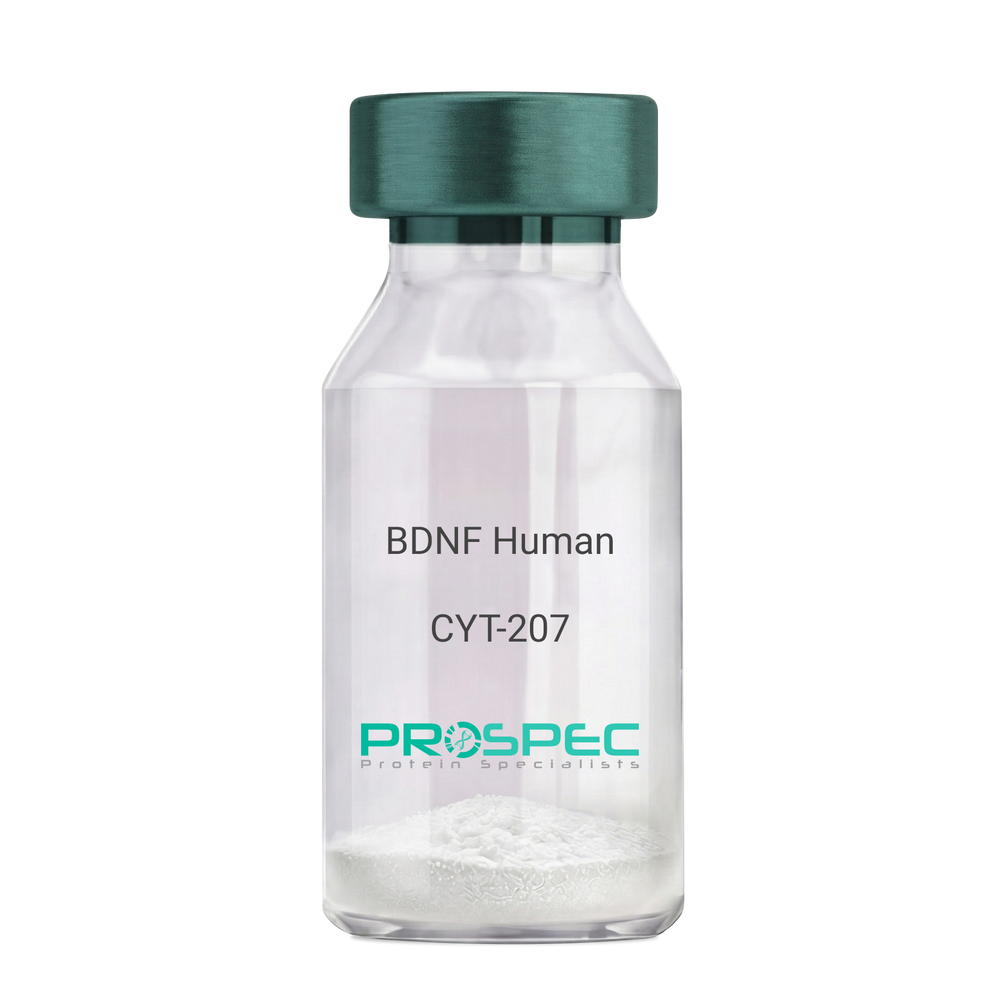
    BDNF Human

    Description:

    Brain-Derived Neurotrophic Factor Human Recombinant

    Brain-Derived Neurotrophic Factor, BDNF, MGC34632.

    Product # :

    CYT-207

    Price :

    Quantity :

    Shipping Method :

    Room Temp Icon

    Shipped at Room temp

    Add To Cart

    More Info

    • description
    • source
    • formulation
    • purity
    • biological activity
    • More Info
    • Activity

    Description

    BDNF Human Recombinant produced in E.Coli is a homodimer, non-glycosylated, polypeptide chain containing 2 x 119 amino acids (and an N-terminal Met) and having a total molecular mass of 28kDa. BDNF Human Recombinant is purified by proprietary chromatographic techniques.

    Source

    Escherichia Coli.

    Formulation

    The protein was lyophilized with 20mM PB and 400mM NaCl, pH 7.2.

    Purity

    BDNF is greater than 950% as determined SDS-PAGE.

    Biological Activity

    The activity was determined using Immobilized Human TrkB-His tag protein 2ug/ml (100 μl/well) for its binding to NHS-Biotin BDNF. The ED50 of was found to be ≤20ng/mL

    Activity

    bdnf activity - Product image 1

    More Info

    • Introduction

      BDNF promotes the survival of neuronal populations that are all located either in the central nervous system or directly connected to it. BDNF is a major regulator of synaptic transmission and plasticity at adult synapses in many regions of the cns. The versatility of BDNF is emphasized by its contribution to a range of adaptive neuronal responses including long-term potentiation (ltp), long-term depression (ltd), certain forms of short-term synaptic plasticity, as well as homeostatic regulation of intrinsic neuronal excitability.

    • Synonyms

      Brain-Derived Neurotrophic Factor, BDNF, MGC34632.

    • Physical Appearance

      Sterile Filtered White lyophilized (freeze-dried) powder.

    • Stability

      Lyophilized BDNF although stable at room temperature for 3 weeks, should be stored desiccated below -18°C. Upon reconstitution BDNF should be stored at 4°C between 2-7 days and for future use below -18°C.For long term storage it is recommended to add a carrier protein (0.1% HSA or BSA).Please prevent freeze-thaw cycles.

    • Solubility

      It is recommended to reconstitute the lyophilized BDNF in sterile 18M-cm H2O not less than 100µg/ml, which can then be further diluted to other aqueous solutions.

    • Amino Acid Sequence

      HSDPARRGE LSVCDSISEW VTAADKKTAV DMSGGTVTVL EKVPVSKGQL KQYFYETKCN PMGYTKEGCR GIDKRHWNSQ CRTTQSYVRA LTMDSKKRIG WRFIRIDTSC VCTLTIKRGR.

    • Background

      Final Thoughts

      Although more research is needed on the safety and effectiveness of BDNF human recombinant, trials suggest that this laboratory-produced protein may be effective in managing and treating several neurological and psychiatric disorders. It's important for experts to stay up to date on the latest developments and research to learn more about potential risks and benefits.

      What is the molecular weight/Mw of BDNF Protein?
      BDNF Protein has a total Mw of 27kDa.

      What is the source or expression system of BDNF Protein?
      Escherichia Coli.

      What is the Purity of BDNF Protein?
      BDNF Protein is >97% pure as determined by SDS-PAGE.

      What is the Biological Activity of BDNF Protein?
      The ED50, as determined by the dose-dependent induction of C6 cells proliferation, is 1.3-2µg/ml.

      What is the amino acid sequence of BDNF Protein?
      MHSDPARRGE LSVCDSISEW VTAADKKTAV DMSGGTVTVL EKVPVSKGQL KQYFYETKCN PMGYTKEGCR GIDKRHWNSQ CRTTQSYVRA LTMDSKKRIG WRFIRIDTSC VCTLTIKRGR.

      What applications can BDNF Protein be used in?
      BDNF Protein can probably be used in western blot, ELISA and Lateral Flow.

      What is the endotoxin level for BDNF Protein?
      The endotoxin level is minimal, BDNF Protein was purified using conventional chromatography techniques.

    • Protein content

      BDNF quantitation was carried out by two independent methods:1. UV spectroscopy at 280 nm using the absorbency value of 1.6 as the extinction coefficient for a 0.1% (1mg/ml) solution. This value is calculated by the PC GENE computer analysis program of protein sequences (IntelliGenetics). 2. Analysis by RP-HPLC, using a standard solution of Brain-derived Neurotrophic Factor as a Reference Standard.

    ProSpec's products are furnished for LABORATORY RESEARCH USE ONLY. The product may not be used as drugs, agricultural or pesticidal products, food additives or household chemicals.

    Bdnf Human
  • View Data Sheet

    Name :

    Dengue NS1

    Description:

    Dengue Virus NS1 Recombinant

    Product # :

    DEN-004

    Price :

    Quantity :

    Shipping Method :

    Ice Icon

    Shipped with Ice Packs

    Add To Cart

    More Info

    • description
    • source
    • formulation
    • purity
    • More Info

    Description

    The E.Coli derived recombinant protein contains the NS1 Dengue Virus full length Type-2 immunodominant regions, having an Mw of 45kDa.The dengue protein is fused to 6xHis tag at C-terminus and purified by proprietary chromatographic technique.

    Source

    Escherichia Coli.

    Formulation

    PBS and 25mM K2CO3.

    Purity

    Protein is >85% pure as determined by 10% SDS-PAGE (coomassie staining).

    More Info

    • Introduction

      Caused by one of four closely related virus serotypes of the genus Flavivirus, family Flaviviridae, each serotype is sufficiently different that there is no cross-protection and epidemics caused by multiple serotypes (hyperendemicity) can occur. In cell culture experiments and mice Morpholino antisense oligos have shown specific activity against Dengue virus.

    • Stability

      Dengue NS1 although stable at 4°C for 1 week, should be stored below -18°C. Please prevent freeze thaw cycles.

    • Amino Acid Sequence

      DSGCVVSWKNKELKCGSGIFITDNVHTWTEQYKFQPESPSKLASAIQKAHEEGICGIRSVTRLENLMW
      KQITPELNHILSENEVKLTIMTGDIKGIMQAGKRSLQPQPTELKYSWKTWGKAKMLSTESHNQTFLID
      GPETAECPNTNRAWNSLEVEDYGFGVFTTNIWLKLREKQDVFCDSKLMSAAIKDNRAVHADMGYWIES
      ALNDTWKIEKASFIEVKSCHWPKSHTLWSNGVLESEMIIPKNFAGPVSQHNYRPGYHTQTAGPWHLGK
      LEMDFDFCEGTTVVVTEDCGNRGPSLRTTTASGKLITEWCCRSCTLPPLRYRGEDGCWYGMEIRPLKE
      KEENLVNSLVTA

    • Applications

      Immunoassay.

    ProSpec's products are furnished for LABORATORY RESEARCH USE ONLY. The product may not be used as drugs, agricultural or pesticidal products, food additives or household chemicals.

    Dengue Ns1
  • View Data Sheet

    Name :

    DNAJB4 Human

    Description:

    DnaJ (Hsp40) Homolog, Subfamily B, Member 4 Human Recombinant

    DnaJ homolog subfamily B member 4, Heat shock 40 kDa protein 1 homolog, HSP40 homolog, Heat shock protein 40 homolog, Human liver DnaJ-like protein, DNAJB4, DNAJW, HLJ1, DjB4.

    Product # :

    HSP-054

    Price :

    Quantity :

    Shipping Method :

    Ice Icon

    Shipped with Ice Packs

    Add To Cart

    More Info

    • description
    • source
    • formulation
    • purity
    • More Info

    Description

    DNAJB4 Human Recombinant produced in E.Coli is a single, non-glycosylated polypeptide chain containing 360 amino acids (1-337 a.a.) and having a molecular mass of 40kDa.DNAJB4 is fused to a 23 amino acid His-tag at N-terminus & purified by proprietary chromatographic techniques.

    Source

    Escherichia Coli.

    Formulation

    DNAJB4 protein solution (0.25mg/ml) contains 20mM Tris-HCl buffer (pH 7.5), 0.2M NaCl, 30% glycerol and 1mM DTT.

    Purity

    Greater than 90% as determined by SDS-PAGE.

    More Info

    • Introduction

      DnaJ (Hsp40) Homolog, Subfamily B, Member 4 (DNAJB4) is a member of the evolutionarily conserved DNAJ/HSP40 protein family. DNAJB4 subunit configuration is homodimer. DNAJB4 possibly functions as a chaperone. DNAJB4 C-terminal section interacts with the C-terminal tail of OPRM1. DNAJB4 also has an interaction with SDIM1. DNAJB4 is expressed in the heart, pancreas and skeletal muscle, and to a lesser extent in the brain, placenta and liver.

    • Synonyms

      DnaJ homolog subfamily B member 4, Heat shock 40 kDa protein 1 homolog, HSP40 homolog, Heat shock protein 40 homolog, Human liver DnaJ-like protein, DNAJB4, DNAJW, HLJ1, DjB4.

    • Physical Appearance

      Sterile Filtered colorless solution.

    • Stability

      Store at 4°C if entire vial will be used within 2-4 weeks. Store, frozen at -20°C for longer periods of time. For long term storage it is recommended to add a carrier protein (0.1% HSA or BSA).Avoid multiple freeze-thaw cycles.

    • Amino Acid Sequence

      MGSSHHHHHH SSGLVPRGSH MGSMGKDYYC ILGIEKGASD EDIKKAYRKQ ALKFHPDKNK SPQAEEKFKE VAEAYEVLSD PKKREIYDQF GEEGLKGGAG GTDGQGGTFR YTFHGDPHAT FAAFFGGSNP FEIFFGRRMG GGRDSEEMEI DGDPFSAFGF SMNGYPRDRN SVGPSRLKQD PPVIHELRVS LEEIYSGCTK RMKISRKRLN ADGRSYRSED KILTIEIKKG WKEGTKITFP REGDETPNSI PADIVFIIKD KDHPKFKRDG SNIIYTAKIS LREALCGCSI NVPTLDGRNI PMSVNDIVKP GMRRRIIGYG LPFPKNPDQR GDLLIEFEVS FPDTISSSSK EVLRKHLPAS.

    ProSpec's products are furnished for LABORATORY RESEARCH USE ONLY. The product may not be used as drugs, agricultural or pesticidal products, food additives or household chemicals.

    Dnajb4 Human
  • View Data Sheet

    Name :

    sRAGE Human

    Description:

    Advanced Glycosylation End Product-Specific Receptor Human Recombinant

    Advanced glycosylation end product-specific receptor, Receptor for advanced glycosylation end products, AGER, SRAGE, RAGE, MGC22357.

    Product # :

    PRO-600

    Price :

    Quantity :

    Shipping Method :

    Room Temp Icon

    Shipped at Room temp

    Add To Cart

    More Info

    • description
    • source
    • formulation
    • purity
    • More Info

    Description

    sRAGE Human Recombinant produced in E.Coli is a single, non-glycosylated, polypeptide chain containing 339 amino acids and having a molecular mass of 36.5 kDa. The Human sRAGE is fused to a 14 a.a. His tag at N-Terminus.The Human sRAGE is purified by proprietary chromatographic techniques.

    Source

    Escherichia Coli.

    Formulation

    The sterile filtered (0.4 µm) concentrated (0.5mg/ml) protein solution was lyophilized with 30mM acetate buffer pH-4.

    Purity

    Greater than 95% as determined by SDS-PAGE.

    More Info

    • Introduction

      sRAGE is a member of the immunoglobulin superfamily of cell surface molecules. sRAGE is a receptor for various molecules, including the amyloidogenic form of serum amyloid A, amyloid-beta protein, members of the S100/calgranulin superfamily and advanced glycation end products. sRAGE lies within the major histocompatibility complex (MHC) class III region on chromosome 6. Alternative splicing results in two transcript variants encoding different isoforms. sRAGE mediates interactions of nonenzymatic glycosylated proteins which accumulate in vascular tissue during aging & at an increasing rate in diabetes. sRAGE is a receptor for amyloid beta peptide.

    • Synonyms

      Advanced glycosylation end product-specific receptor, Receptor for advanced glycosylation end products, AGER, SRAGE, RAGE, MGC22357.

    • Physical Appearance

      Sterile Filtered White lyophilized (freeze-dried) powder.

    • Stability

      Store lyophilized protein at -20°C. Aliquot the product after reconstitution to avoid repeated freezing/thawing cycles. Reconstituted protein can be stored at 4°C for a limited period of time.

    • Solubility

      Add 0.1M Acetate buffer pH4 to a working concentration of 0.5mg/ml and let the lyophilized pellet dissolve completely.

    • Amino Acid Sequence

      MRGSHHHHHH GMASAQNITA RIGEPLVLKC KGAPKKPPQR LEWKLNTGRT EAWKVLSPQG GGPWDSVARV LPNGSLFLPAV GIQDEGIFRCQ AMNRNGKETKS NYRVRVYQIP GKPEIVDSASE LTAGVPNKVG TCVSEGSYPA GTLSWHLDGKPL VPNEKGVSVK EQTRRHPETG LFTLQSELMV TPARGGDPRP TFSCSFSPGL PRHRALRTAP IQPRVWEPVPL EEVQLVVEPE GGAVAPGGTV TLTCEVPAQP SPQIHWMKDGVP LPLPPSPVLI LPEIGPQDQG TYSCVATHSS HGPQESRAVS ISIIEPGEEG PTAGEGFDKV REAEDSPQHM

    ProSpec's products are furnished for LABORATORY RESEARCH USE ONLY. The product may not be used as drugs, agricultural or pesticidal products, food additives or household chemicals.

    Srage Human
  • View Data Sheet

    Name :

    WIBG Human

    Description:

    within BCGN Homolog Human Recombinant

    PYM, Partner of Y14 and mago, MGC13064, WIBG, BCGN Homolog, Protein wibg homolog.

    Product # :

    PRO-864

    Price :

    Quantity :

    Shipping Method :

    Ice Icon

    Shipped with Ice Packs

    Add To Cart

    More Info

    • description
    • source
    • formulation
    • purity
    • More Info

    Description

    WIBG Recombinant Human produced in E.Coli is a single, non-glycosylated polypeptide chain containing 212 amino acids (1-204 a.a.) and having a molecular mass of 23.7 kDa. The WIBG is fused to 8 amino acid His-Tag at C-terminus and purified by proprietary chromatographic techniques.

    Source

    Escherichia Coli.

    Formulation

    WIBG Human solution containing 20mM Tris pH-8, 0.1M NaCl & 10% glycerol.

    Purity

    Greater than 85.0% as determined by SDS-PAGE.

    More Info

    • Introduction

      WIBG is a cooperateing partner of Mago-Y14. The Mago-Y14 heterodimer is a key protein of the EJC(exon junction complex) that is deposited on mRNAs as a consequence of splicing and influences postsplicing mRNA metabolism. WIBG is a cytoplasmic RNA-binding protein that is excluded from the nucleus by Crm1. WIBG relates directly with Mago-Y14 by means of its N-terminal domain.

    • Synonyms

      PYM, Partner of Y14 and mago, MGC13064, WIBG, BCGN Homolog, Protein wibg homolog.

    • Physical Appearance

      Sterile filtered colorless solution.

    • Stability

      Store at 4°C if entire vial will be used within 2-4 weeks. Store, frozen at -20°C for longer periods of time. For long term storage it is recommended to add a carrier protein (0.1% HSA or BSA).Avoid multiple freeze-thaw cycles.

    • Amino Acid Sequence

      MEAAGSPAAT ETGKYIASTQ RPDGTWRKQR RVKEGYVPQE EVPVYENKYV KFFKSKPELP PGLSPEATAP VTPSRPEGGE PGLSKTAKRN LKRKEKRRQQ QEKGEAEALS RTLDKVSLEE TAQLPSAPQG SRAAPTAASD QPDSAATTEK AKKIKNLKKK LRQVEELQQR IQAGEVSQPS KEQLEKLARR RALEEELEDL ELGLLEHHHH HH.

    ProSpec's products are furnished for LABORATORY RESEARCH USE ONLY. The product may not be used as drugs, agricultural or pesticidal products, food additives or household chemicals.

    Wibg Human
  • View Data Sheet

    Name :

    Agrin Rat

    Description:

    Agrin Rat Recombinant

    Agrin, Agrn, C90, C22, Agrin N-terminal 110 kDa subunit, Agrin C-terminal 110 kDa subunit, Agrin C-terminal 90 kDa fragment, Agrin C-terminal 22 kDa fragment, AGR

    Product # :

    PRO-2627

    Price :

    Quantity :

    Shipping Method :

    Ice Icon

    Shipped with Ice Packs

    Add To Cart

    More Info

    • description
    • source
    • formulation
    • purity
    • More Info

    Description

    Agrin Rat produced in Sf9 Baculovirus cells is a single, glycosylated polypeptide chain containing 766 amino acids (997-1753 a.a.) and having a molecular mass of 82.5kDa.Agrin is fused to a 9 amino acid His tag at C-Terminus and purified by proprietary chromatographic techniques.

    Source

    Sf9, Baculovirus cells.

    Formulation

    The Agrin solution (0.5mg/ml) contains 10% Glycerol in Phosphate-Buffered Saline (pH 7.4).

    Purity

    Greater than 90.0% as determined by SDS-PAGE.

    More Info

    • Introduction

      Agrin or AGRN is a large protein (proteoglycan) that has a crucial part in the development of neuromuscular junction amid embryogenesis. The protein has an involvement in the collection and aggregation of acetylcholine receptors through synaptogenesis. The agrin gene can be found and expressed in rat embryonic nervous system andmuscle tissue. This Agrin protein is aggregated in the synapses, there it can take part in regeneration & development. The protein binds to receptors on the surface of skeletal muscle.

    • Synonyms

      Agrin, Agrn, C90, C22, Agrin N-terminal 110 kDa subunit, Agrin C-terminal 110 kDa subunit, Agrin C-terminal 90 kDa fragment, Agrin C-terminal 22 kDa fragment, AGR

    • Physical Appearance

      Sterile Filtered colorless solution.

    • Stability

      Store at 4°C if entire vial will be used within 2-4 weeks. Store, frozen at -20°C for longer periods of time. For long term storage it is recommended to add a carrier protein (0.1% HSA or BSA).Avoid multiple freeze-thaw cycles.

    • Amino Acid Sequence

      ADPSCYNSPL GCCSDGKTPS LDSEGSNCPA TKAFQGVLEL EGVEGQELFY TPEMADPKSE LFGETARSIE STLDDLFRNS DVKKDFWSVR LRELGPGKLV RAIVDVHFDP TTAFQASDVG QALLRQIQVS RPWALAVRRP LQEHVRFLDF DWFPTFFTGA ATGTTAAMAT ARATTVSRLP ASSVTPRVYP SHTSRPVGRT TAPPTTRRPP TTATNMDRPR TPGHQQPSKS CDSQPCLHGG
      TCQDQDSGKG FTCSCTAGRG GSVCEKVQPP SMPAFKGHSF LAFPTLRAYH TLRLALEFRA LETEGLLLYN GNARGKDFLA LALLDGRVQF RFDTGSGPAV LTSLVPVEPG RWHRLELSRH WRQGTLSVDG ETPVVGESPS GTDGLNLDTN LYVGGIPEEQ VAMVLDRTSV GVGLKGCIRM LDINNQQLEL SDWQRAAVQS SGVGECGDHP CLPNPCHGGA LCQALEAGMF LCQCPPGRFG PTCADEKSPC QPNPCHGAAP CRVLSSGGAK CECPLGRSGT FCQTVLETAG SRPFLADFNG FSYLELKGLH TFERDLGEKM ALEMVFLARG PSGLLLYNGQ KTDGKGDFVS LALHNRHLEF CYDLGKGAAV IRSKEPIALG TWVRVFLERN GRKGALQVGD GPRVLGESPK SRKVPHTMLN LKEPLYIGGA PDFSKLARGA AVSSGFSGVI QLVSLRGHQL LTQEHVLRAV DVSPFADHPC TQALGNPCLN GGSCVPREAT YECLCPGGFS GLHCEKGLVE HHHHHH

    ProSpec's products are furnished for LABORATORY RESEARCH USE ONLY. The product may not be used as drugs, agricultural or pesticidal products, food additives or household chemicals.

    Agrin Protein Rat
  • 1
  • …
  • 5
  • 6
  • 7
  • 8
  • 9
  • …
  • 29
Your browser does not support the video tag.

Products

  • Cytokines
  • Growth Factors
  • Chemokines
  • CD Antigens
  • Neurotrophins
  • Hormones
  • Enzymes
  • Viral Antigens
  • Recombinant Proteins
  • Natural Proteins
  • Monoclonal Antibodies
  • Polyclonal Antibodies
  • Thermal Packaging

About

  • Company
  • Founder
  • Contribution
  • Contact Us
  • My Account

Ordering

  • Ordering Method
  • Ordering - Credit Card
  • Ordering PO
  • Shipping Fees
  • FAQ's

Legal

  • Terms & Conditions
  • Privacy
  • Site Map
  • info@prospecbio.com
  • Facebook
  • Instagram
  • Linkedin Profile

© 2026 ProSpec-Tany TechnoGene Ltd. All Rights Reserved.

  • Choosing a selection results in a full page refresh.
  • Opens in a new window.