Skip to content

High-quality research proteins.

  • 1-800-805-6531

  • Mon - Sat 8.00-18.00, Sun - Closed

  • info@prospecbio.com

  • PO Box 6591 East Brunswick NJ 08816

  • Products
    • Cytokines
    • Growth factors
    • Chemokines
    • Cd antigens
    • Neurotrophins
    • Hormones
    • Enzymes
    • Viral antigens
    • Recombinant proteins
    • Natural proteins
    • Monoclonal antibodies
    • Polyclonal antibodies
    • Thermal Packaging
  • About
    • Company
    • Founder
    • Contribution
  • Customers
    • Eastern Asia
    • Eastern Europe
    • North America
    • South America
    • South East Asia
    • Southern Asia
    • Western Europe
  • Ordering
    • Ordering Method
    • Ordering - Credit Card
    • Ordering - PO
    • Shipping Fees
    • FAQs
  • Services
    • DNA Cloning
    • Protein Expression
    • Monoclonal Antibody
    • Fermentation
    • Technology License
  • Contact us
Log in

Country/region

  • USD $ | Albania
  • USD $ | Andorra
  • USD $ | Argentina
  • USD $ | Armenia
  • USD $ | Australia
  • USD $ | Austria
  • USD $ | Azerbaijan
  • USD $ | Belarus
  • USD $ | Belgium
  • USD $ | Bolivia
  • USD $ | Brazil
  • USD $ | Bulgaria
  • USD $ | Cambodia
  • USD $ | Canada
  • USD $ | Chile
  • USD $ | China
  • USD $ | Colombia
  • USD $ | Costa Rica
  • USD $ | Croatia
  • USD $ | Cyprus
  • USD $ | Czechia
  • USD $ | Denmark
  • USD $ | Estonia
  • USD $ | Finland
  • USD $ | France
  • USD $ | Georgia
  • USD $ | Germany
  • USD $ | Greece
  • USD $ | Hong Kong SAR
  • USD $ | Hungary
  • USD $ | Iceland
  • USD $ | India
  • USD $ | Ireland
  • USD $ | Israel
  • USD $ | Italy
  • USD $ | Japan
  • USD $ | Kazakhstan
  • USD $ | Latvia
  • USD $ | Liechtenstein
  • USD $ | Lithuania
  • USD $ | Madagascar
  • USD $ | Malta
  • USD $ | Mexico
  • USD $ | Moldova
  • USD $ | Monaco
  • USD $ | Netherlands
  • USD $ | New Zealand
  • USD $ | North Macedonia
  • USD $ | Norway
  • USD $ | Panama
  • USD $ | Paraguay
  • USD $ | Peru
  • USD $ | Philippines
  • USD $ | Poland
  • USD $ | Portugal
  • USD $ | Romania
  • USD $ | Singapore
  • USD $ | Slovakia
  • USD $ | Slovenia
  • USD $ | South Africa
  • USD $ | South Korea
  • USD $ | Spain
  • USD $ | Sri Lanka
  • USD $ | Sweden
  • USD $ | Switzerland
  • USD $ | Taiwan
  • USD $ | Thailand
  • USD $ | Türkiye
  • USD $ | Ukraine
  • USD $ | United Kingdom
  • USD $ | United States
  • USD $ | Uruguay
  • USD $ | Vatican City
  • USD $ | Venezuela
  • USD $ | Vietnam
  • Facebook
  • Instagram
logoProSpec - Recombinant Protein Manufacturer for academic and R&D industry
Become a distributor
Account Log in
Wishlist
Cart Cart(0)
  • Products
    +
    • Cytokines
    • Growth factors
    • Chemokines
    • Cd antigens
    • Neurotrophins
    • Hormones
    • Enzymes
    • Viral antigens
    • Recombinant proteins
    • Natural proteins
    • Monoclonal antibodies
    • Polyclonal antibodies
    • Thermal Packaging
  • About
    +
    • Company
    • Founder
    • Contribution
  • Customers
    +
    • Eastern Asia
    • Eastern Europe
    • North America
    • South America
    • South East Asia
    • Southern Asia
    • Western Europe
  • Ordering
    +
    • Ordering Method
    • Ordering - Credit Card
    • Ordering - PO
    • Shipping Fees
    • FAQs
  • Services
    +
    • DNA Cloning
    • Protein Expression
    • Monoclonal Antibody
    • Fermentation
    • Technology License
  • Contact us

Item added to your cart

View cart
View All
  • Cytokines
  • Growth factors
  • Chemokines
  • Cd antigens
  • Neurotrophins
  • Hormones
  • Enzymes
  • Viral antigens
  • Recombinant proteins
  • Natural proteins
  • Monoclonal antibodies
  • Polyclonal antibodies
  • Thermal Packaging
  • Tumor Necrosis Factor

    Tumor Necrosis Factor

    View All
  • 4-1BB

    4-1BB

    View All
  • Adiponectin

    Adiponectin

    View All
  • AIF1

    AIF1

    View All
  • Other Cytokines

    Other Cytokines

    View All
  • AITRL

    AITRL

    View All
  • Angiopoietin

    Angiopoietin

    View All
  • Apolipoprotein

    Apolipoprotein

    View All
  • B-Cell Activating Factor

    B-Cell Activating Factor

    View All
  • Beta Defensin

    Beta Defensin

    View All
  • Bone Morphogenetic Protein

    Bone Morphogenetic Protein

    View All
  • B type Natriuretic Peptide

    B type Natriuretic Peptide

    View All
  • BST

    BST

    View All
  • Betacellulin

    Betacellulin

    View All
  • Cardiotrophin

    Cardiotrophin

    View All
  • Activin

    Activin

    View All
  • Fibroblast Growth Factor

    Fibroblast Growth Factor

    View All
  • Other Growth Factors

    Other Growth Factors

    View All
  • CSF

    CSF

    View All
  • CTGF

    CTGF

    View All
  • IGFBP

    IGFBP

    View All
  • VEGF Protein

    VEGF Protein

    View All
  • EGF

    EGF

    View All
  • Epigen

    Epigen

    View All
  • Erythropoietin

    Erythropoietin

    View All
  • Insulin-Like Growth Factor

    Insulin-Like Growth Factor

    View All
  • Growth Hormone

    Growth Hormone

    View All
  • HDGF

    HDGF

    View All
  • Hepatocyte Growth Factor

    Hepatocyte Growth Factor

    View All
  • Insulin

    Insulin

    View All
  • BCA-1/ BLC (CXCL13)

    BCA-1/ BLC (CXCL13)

    View All
  • BRAK (CXCL14)

    BRAK (CXCL14)

    View All
  • C-10 (CCL6)

    C-10 (CCL6)

    View All
  • Other Chemokines

    Other Chemokines

    View All
  • MEC (CCL28)

    MEC (CCL28)

    View All
  • LD78-beta (CCL3L1)

    LD78-beta (CCL3L1)

    View All
  • CTACK (CCL27)

    CTACK (CCL27)

    View All
  • CXCL16

    CXCL16

    View All
  • CXCL17

    CXCL17

    View All
  • Platelet Factor-4 (CXCL4)

    Platelet Factor-4 (CXCL4)

    View All
  • ENA-78 (CXCL5)

    ENA-78 (CXCL5)

    View All
  • Eotaxin (CCL11,24,26)

    Eotaxin (CCL11,24,26)

    View All
  • Exodus-2 (CCL21)

    Exodus-2 (CCL21)

    View All
  • Fractalkine (CX3CL1)

    Fractalkine (CX3CL1)

    View All
  • CXCL6

    CXCL6

    View All
  • Other CD Antigens

    Other CD Antigens

    View All
  • CD14

    CD14

    View All
  • CD164

    CD164

    View All
  • CD1

    CD1

    View All
  • CD2

    CD2

    View All
  • CD200

    CD200

    View All
  • CD207

    CD207

    View All
  • CD226

    CD226

    View All
  • CD23

    CD23

    View All
  • CD244

    CD244

    View All
  • CD247

    CD247

    View All
  • CD27

    CD27

    View All
  • CD274

    CD274

    View All
  • CD300

    CD300

    View All
  • CD33

    CD33

    View All
  • Other Neurotrophins

    Other Neurotrophins

    View All
  • Beta-NGF

    Beta-NGF

    View All
  • BDNF

    BDNF

    View All
  • CDNF

    CDNF

    View All
  • CNTF

    CNTF

    View All
  • GDNF

    GDNF

    View All
  • Glia Maturation Factor

    Glia Maturation Factor

    View All
  • MANF

    MANF

    View All
  • Midkine

    Midkine

    View All
  • Neuroglobin

    Neuroglobin

    View All
  • Neurotrophic factors

    Neurotrophic factors

    View All
  • Neuregulin

    Neuregulin

    View All
  • Neuropilin

    Neuropilin

    View All
  • Pigment Epithelium-Derived Factor

    Pigment Epithelium-Derived Factor

    View All
  • Pleiotrophin

    Pleiotrophin

    View All
  • Peptide Hormones

    Peptide Hormones

    View All
  • Other Hormones

    Other Hormones

    View All
  • HCG

    HCG

    View All
  • Endothelin

    Endothelin

    View All
  • Exendin

    Exendin

    View All
  • FSH

    FSH

    View All
  • Glucagon

    Glucagon

    View All
  • GHRP

    GHRP

    View All
  • GLP

    GLP

    View All
  • Thyrostimulin

    Thyrostimulin

    View All
  • Inhibin A

    Inhibin A

    View All
  • LHRH

    LHRH

    View All
  • Melanotan

    Melanotan

    View All
  • Procalcitonin

    Procalcitonin

    View All
  • PTH

    PTH

    View All
  • Peroxiredoxin

    Peroxiredoxin

    View All
  • Peptidase

    Peptidase

    View All
  • Synthetase

    Synthetase

    View All
  • Transferase

    Transferase

    View All
  • Hydrolase

    Hydrolase

    View All
  • Dehydrogenase

    Dehydrogenase

    View All
  • ACE2

    ACE2

    View All
  • Esterase

    Esterase

    View All
  • Protein Kinases

    Protein Kinases

    View All
  • Other Enzymes

    Other Enzymes

    View All
  • Phosphatase

    Phosphatase

    View All
  • Deaminase

    Deaminase

    View All
  • Oxygenase

    Oxygenase

    View All
  • Adenylate Kinase

    Adenylate Kinase

    View All
  • Lyase

    Lyase

    View All
  • Chagas

    Chagas

    View All
  • SARS

    SARS

    View All
  • Influenza

    Influenza

    View All
  • ASFV

    ASFV

    View All
  • Astrovirus

    Astrovirus

    View All
  • Borrelia

    Borrelia

    View All
  • Helicobacter Pylori

    Helicobacter Pylori

    View All
  • Chikungunya

    Chikungunya

    View All
  • Chlamydia

    Chlamydia

    View All
  • Cytomegalo

    Cytomegalo

    View All
  • Dengue

    Dengue

    View All
  • EBV

    EBV

    View All
  • Ebola

    Ebola

    View All
  • Feline Leukemia Virus

    Feline Leukemia Virus

    View All
  • Hepatitis A

    Hepatitis A

    View All
  • Other

    Other

    View All
  • Actin

    Actin

    View All
  • ADAM

    ADAM

    View All
  • Complement Component

    Complement Component

    View All
  • Ag85

    Ag85

    View All
  • Eukaryotic Translation Initiation Factor

    Eukaryotic Translation Initiation Factor

    View All
  • Anterior Gradient Protein

    Anterior Gradient Protein

    View All
  • Heat Shock Protein

    Heat Shock Protein

    View All
  • Alpha-2-HS-Glycoprotein

    Alpha-2-HS-Glycoprotein

    View All
  • Hemoglobin

    Hemoglobin

    View All
  • Allergy

    Allergy

    View All
  • Anaplasma

    Anaplasma

    View All
  • Angiogenin

    Angiogenin

    View All
  • Ankyrin Repeat Domain

    Ankyrin Repeat Domain

    View All
  • Annexin

    Annexin

    View All
  • Other Natural Proteins

    Other Natural Proteins

    View All
  • Aprotinin

    Aprotinin

    View All
  • Transferrin

    Transferrin

    View All
  • Avidin

    Avidin

    View All
  • Anti Coagulation Factors

    Anti Coagulation Factors

    View All
  • Natural Albumin

    Natural Albumin

    View All
  • Natural Coagulation Factors

    Natural Coagulation Factors

    View All
  • Fibronectin

    Fibronectin

    View All
  • Thrombin

    Thrombin

    View All
  • Anti Human Enzyme

    Anti Human Enzyme

    View All
  • Other Monoclonal Antibodies

    Other Monoclonal Antibodies

    View All
  • Anti Human Cytokine

    Anti Human Cytokine

    View All
  • Anti Human Heat Shock Protein

    Anti Human Heat Shock Protein

    View All
  • Anti Mouse Lymphocyte

    Anti Mouse Lymphocyte

    View All
  • Anti Human Chemokine

    Anti Human Chemokine

    View All
  • Anti Human Lymphocyte

    Anti Human Lymphocyte

    View All
  • Anti Viral Monoclonal

    Anti Viral Monoclonal

    View All
  • Anti Mouse Cytokine

    Anti Mouse Cytokine

    View All
  • Anti-GST Monoclonal

    Anti-GST Monoclonal

    View All
  • Other Polyclonal Antibodies

    Other Polyclonal Antibodies

    View All
  • Anti Viral

    Anti Viral

    View All
  • Anti-GST Monoclonal

    Anti-GST Monoclonal

    View All
Back

Search results

1000 results found for “keratinocyte growth factor”

Name

Description

Product #

Price

Quantity

Shipping Method

  • View Data Sheet

    Name :

    IGFBP1 Human, HEK

    Description:

    Insulin-Like Growth Factor Binding Protein-1 Human Recombinant, HEK

    IBP-1, IGF-Binding Protein 1, AFBP, PP12, IGF-BP25, hIGFBP-1, IGFBP-1.

    Product # :

    CYT-1214

    Price :

    Quantity :

    Shipping Method :

    Ice Icon

    Shipped with Ice Packs

    Add To Cart

    More Info

    • description
    • source
    • formulation
    • purity
    • biological activity
    • More Info

    Description

    IGFBP1 Human Recombinant is a single, glycosylated, polypeptide chain (26-259 a.a) containing a total of 234 amino acids, having a molecular mass of 25.2 kDa. IGFBP1 is purified by proprietary chromatographic techniques.

    Source

    HEK293 Cells.

    Formulation

    The IGFBP1 solution (0.5mg/ml) contains 10% Glycerol and Phosphate-Buffered Saline (pH 7.4).

    Purity

    Greater than 95.0% as determined by SDS-PAGE.

    Biological Activity

    The ED50 is ≤3 ug/ml, measured by its ability to inhibit proliferation using MCF-7 human breast cancer cells in the presence of Human IGF-1. 

    More Info

    • Synonyms

      IBP-1, IGF-Binding Protein 1, AFBP, PP12, IGF-BP25, hIGFBP-1, IGFBP-1.

    • Physical Appearance

      Sterile Filtered colorless solution.

    • Stability

      Store at 4°C if entire vial will be used within 2-4 weeks. Store, frozen at -20°C for longer periods of time. For long term storage it is recommended to add a carrier protein (0.1% HSA or BSA).Avoid multiple freeze-thaw cycles.

    • Amino Acid Sequence

      APWQCAPCSA EKLALCPPVS ASCSEVTRSA GCGCCPMCAL PLGAACGVAT ARCARGLSCR ALPGEQQPLH ALTRGQGACV QESDASAPHA AEAGSPESPE STEITEEELL DNFHLMAPSE EDHSILWDAI STYDGSKALH VTNIKKWKEP CRIELYRVVE SLAKAQETSG EEISKFYLPN CNKNGFYHSR QCETSMDGEA GLCWCVYPWN GKRIPGSPEI RGDPNCQIYF NVQN.

    • Background

      IGFBP-1 (Insulin-like Growth Factor Binding Protein-1) is a vital protein that regulates the actions of insulin-like growth factors (IGFs) in various physiological processes. This research paper aims to investigate the structure, function, and potential therapeutic applications of IGFBP-1, shedding light on its diverse roles in growth regulation and its therapeutic potential.

      IGFBP-1 belongs to the IGFBP family and is primarily synthesized and secreted by the liver. It acts as a carrier protein, binding to IGFs in the bloodstream and modulating their availability and distribution to target tissues. By binding to IGFs, IGFBP-1 regulates IGF signaling pathways, influencing cellular growth, differentiation, and metabolism.

      The structure of IGFBP-1 comprises an N-terminal domain responsible for IGF binding, followed by linker regions and a C-terminal domain involved in protein-protein interactions. Post-translational modifications, including phosphorylation and glycosylation, further regulate the activity and stability of IGFBP-1.

      IGFBP-1 plays a pivotal role in modulating IGF actions in various tissues and physiological contexts. It is involved in fetal development, skeletal growth, and tissue repair. Additionally, IGFBP-1 has been implicated in metabolic regulation, insulin sensitivity, and the pathogenesis of metabolic disorders such as diabetes and obesity.

      Therapeutically, IGFBP-1 holds significant promise. Its ability to modulate IGF activity opens avenues for targeted therapies in conditions associated with dysregulated IGF signaling, including cancer. The dysregulation of the IGF pathway is frequently observed in cancer, making IGFBP-1 an attractive candidate for novel therapeutic approaches. Manipulating IGFBP-1 levels or developing IGFBP-1-derived peptides may offer innovative strategies for inhibiting tumor growth or enhancing the effectiveness of existing cancer therapies.

      The availability of IGFBP-1 human recombinant proteins has greatly facilitated research and development endeavors. Recombinant IGFBP-1 proteins provide invaluable tools for investigating the interactions between IGFBP-1, IGFs, and other regulatory molecules. They enable detailed exploration of the molecular mechanisms underlying IGFBP-1 function and offer opportunities to unlock its full therapeutic potential.

    ProSpec's products are furnished for LABORATORY RESEARCH USE ONLY. The product may not be used as drugs, agricultural or pesticidal products, food additives or household chemicals.

    Igfbp1 Human Hek
  • View Data Sheet

    Name :

    CTGF Human, His

    Description:

    Connective Tissue Growth Factor Human Recombinant, His Tag

    CCN2, NOV2, HCS24, IGFBP8, MGC102839, CTGF, Connective Tissue Growth Factor.

    Product # :

    CYT-438

    Price :

    Quantity :

    Shipping Method :

    Ice Icon

    Shipped with Ice Packs

    Add To Cart

    More Info

    • description
    • source
    • formulation
    • purity
    • More Info
    • sds-page

    Description

    CTGF Human Recombinant produced in E.coli is a single, non-glycosylated polypeptide chain containing 344 amino acids (27-349) and having a molecular mass of 37.7kDa.The CTGF is fused to a 21 amino acid His-Tag at N-terminus and purified by proprietary chromatographic techniques.

    Source

    Escherichia Coli.

    Formulation

    CTGF protein (1mg/ml) is supplied in 20mM Tris-HCl, pH-8 and 10% Glycerol.

    Purity

    Greater than 85.0% as determined by Analysis by SDS-PAGE.

    sds-page

    CTGF-sds-page - Product image 1

    More Info

    • Introduction

      Connective Tissue Growth Factor belongs to the CCN family of proteins. The CCN family presently consists of six members in human also known as: Cyr61 (Cystein rich 61), CTGF (Connective Tissue Growth Factor), Nov (Nephroblastoma Overexpressed gene), WISP-1, 2 and 3 (Wnt-1 Induced Secreted Proteins). The CCN genes encode secreted proteins associated with the Extracellular Matrix (ECM) and cell membrane. CCN proteins are matricellular proteins which are involved in the regulation of various cellular functions including: proliferation, differentiation, survival, adhesion and migration. They are expressed in derivatives of the three embryonic sheets and are implicated in the development of kidney, nervous system, muscle, bone marrow, cartilage and bone. During adulthood, they are implicated in wound healing, bone fracture repair, and pathologies such as: fibrosis, vascular ailments and tumorigenesis.
      Full length secreted CCN proteins can show an antiproliferative activity, whereas truncated isoforms are likely to stimulate proliferation and behave as oncogenes. The full length protein consists of four modulesModule I shares partial identity with the N-terminal part of the Insulin-like Growth Factor Binding Proteins (IGFBPs).
      Module II includes a stretch of 70amino acid residues – which shares sequence identity with the Von Willebrand Factor Type C repeat (VWC).
      Module III contains sequences sharing identity with the Thrombospondin type 1 repeat (TSP1) (WSXCSXXCG), which is thought to be implicated in the binding of sulfated glycoconjugates and to be important for cell adhesion. Module IV, also designated CT, is encoded by exon5. It is the leasts conserved one of the four domains at the level of nucleotide sequence, but it appears to be critical for several of the biological functions attributed to the CCN proteins. Module IV resembles the CT domain of several extracellular protein including, Von Willebrand's factor and mucins. Sequence similarities to heparin-binding motifs are also found within this domain.
      Proteolysis of the secreted full-length CCN proteins that has been reported in the case of CCN2 and CCN3 might result in the production of CCN-derived peptides with high affinity for ligands that full-length CNN proteins bind only poorly. Amino-truncated CCN2 isoforms were biologically active whereas no specific biological activity has been attributed to the truncated CCN3. Although the molecular processes underlying the production of these secreted isoforms is presently unknown, it is important to note that proteolysis occur at the same amino acid residues in both CCN2 and CCN3. An elevated expression of CCN2 has also been detected by Northern blotting in human invasive mammary ductal carcinomas, dermatofibromas, pyogenic granuloma, endothelial cells of angiolipomas and angioleiomyomas, and in pancreatic tumors. A study performed with chondrosarcomas representative of various histological grades established that CCN2 expression was closely correlated with increasing levels of malignancy. In agreement with CCN2 playing a role in brain tumor angiogenesis, immunocytochemistry studies indicated that both glioblastoma tumor cells and proliferating endothelial cells stained positive for CCN2. In astrocytomas, CCN2 expression was particularly elevated in high grade tumors, with a marked effect of CCN2 on cell proliferation. Downregulation of CCN2 expression in these cells was associated with a growth arrest at the G1/S transition while over-expression of CCN2 induced a two-fold increase of the number of cells in the G1 phase. Gene profiling analysis allowed to identify a set of about 50 genes whose expression might account for the proliferative activity of CCN2 in these cells. CCN2 was seen in a higher proportion of mononuclear cells of patients with acute lymphoblastic leukemia.

    • Synonyms

      CCN2, NOV2, HCS24, IGFBP8, MGC102839, CTGF, Connective Tissue Growth Factor.

    • Physical Appearance

      Sterile Filtered clear solution.

    • Stability

      Store at 4°C if entire vial will be used within 2-4 weeks. Store, frozen at -20°C for longer periods of time. For long term storage it is recommended to add a carrier protein (0.1% HSA or BSA).Avoid multiple freeze-thaw cycles.

    • Amino Acid Sequence

      MGSSHHHHHH SSGLVPRGSH MQNCSGPCRC PDEPAPRCPA GVSLVLDGCG CCRVCAKQLG ELCTERDPCD PHKGLFCDFG SPANRKIGVC TAKDGAPCIF GGTVYRSGES FQSSCKYQCT CLDGAVGCMP LCSMDVRLPS PDCPFPRRVK LPGKCCEEWV CDEPKDQTVV GPALAAYRLE DTFGPDPTMI RANCLVQTTE WSACSKTCGM GISTRVTNDN ASCRLEKQSR LCMVRPCEAD LEENIKKGKK CIRTPKISKP IKFELSGCTS MKTYRAKFCG VCTDGRCCTP HRTTTLPVEF KCPDGEVMKK NMMFIKTCAC HYNCPGDNDI FESLYYRKMY GDMA.

    • Background

      What is the molecular weight/Mw of CTGF Protein?
      CTGF Protein has a total Mw of 37.7kDa.

      What is the source or expression system of CTGF Protein?
      Escherichia Coli.

      What is the Purity of CTGF Protein?
      CTGF Protein is >85% pure as determined by SDS-PAGE.

      What is the Biological Activity of CTGF Protein?
      The biological functionality of CTGF Protein will be determined in the future.

      What is the amino acid sequence of CTGF Protein?
      MGSSHHHHHH SSGLVPRGSH MQNCSGPCRC PDEPAPRCPA GVSLVLDGCG CCRVCAKQLG ELCTERDPCD PHKGLFCDFG SPANRKIGVC TAKDGAPCIF GGTVYRSGES FQSSCKYQCT CLDGAVGCMP LCSMDVRLPS PDCPFPRRVK LPGKCCEEWV CDEPKDQTVV GPALAAYRLE DTFGPDPTMI RANCLVQTTE WSACSKTCGM GISTRVTNDN ASCRLEKQSR LCMVRPCEAD LEENIKKGKK CIRTPKISKP IKFELSGCTS MKTYRAKFCG VCTDGRCCTP HRTTTLPVEF KCPDGEVMKK NMMFIKTCAC HYNCPGDNDI FESLYYRKMY GDMA.

      What applications can CTGF Protein be used in?
      CTGF Protein can probably be used in western blot, ELISA and Lateral Flow.

      What is the endotoxin level for CTGF Protein?
      The endotoxin level is minimal, CTGF Protein was purified using conventional chromatography techniques.

    ProSpec's products are furnished for LABORATORY RESEARCH USE ONLY. The product may not be used as drugs, agricultural or pesticidal products, food additives or household chemicals.

    Ctgf Human His
  • View Data Sheet

    Name :

    VEGF Human, Baculovirus

    Description:

    Vascular Endothelial Growth Factor Human Recombinant, Baculovirus

    Vascular Endothelial Growth Factor A, VEGF, Vascular Permeability Factor, MVCD1, VPF, Vascular Endothelial Growth Factor, VEGF-A, Vascular endothelial growth factor A.

    Product # :

    CYT-849

    Price :

    Quantity :

    Shipping Method :

    Ice Icon

    Shipped with Ice Packs

    Add To Cart

    More Info

    • description
    • source
    • formulation
    • purity
    • More Info

    Description

    VEGF produced in Sf9 Baculovirus cells is a single, glycosylated polypeptide chain containing 171 amino acids (27-191 a.a.) and having a molecular mass of 19.9 kDa. VEGF is expressed with a 6 amino acid His tag at C-Terminus and purified by proprietary chromatographic techniques.

    Source

    Sf9, Baculovirus cells.

    Formulation

    VEGF protein solution (0.25mg/ml) contains Phosphate buffered saline (pH7.4), 30% glycerol, 1mM DTT and 0.1mM PMSF.

    Purity

    Greater than 85.0% as determined by SDS-PAGE.

    More Info

    • Introduction

      Vascular endothelial growth factor is an important signaling protein involved in both vasculogenesis and angiogenesis. As its name implies, VEGF activity has been mostly studied on cells of the vascular endothelium, although it does have effects on a number of other cell types (e.g. stimulation monocyte/ macrophagemigration, neurons, cancer cells, kidney epithelial cells ).VEGF mediates increased vascular permeability, induces angiogenesis, vasculogenesis and endothelial cell growth, promotes cell migration, and inhibits apoptosis. In vitro, VEGF has been shown to stimulate endothelial cell mitogenesisand cell migration. VEGF is also a vasodilator and increases microvascular permeability and was originally referred to as vascular permeability factor. Elevated levels of this protein are linked to POEMS syndrome, also known as Crow-Fukase syndrome. Mutations in this gene have been associated with proliferative and nonproliferative diabetic retinopathy.

    • Synonyms

      Vascular Endothelial Growth Factor A, VEGF, Vascular Permeability Factor, MVCD1, VPF, Vascular Endothelial Growth Factor, VEGF-A, Vascular endothelial growth factor A.

    • Physical Appearance

      Sterile filtered colorless solution.

    • Stability

      Store at 4°C if entire vial will be used within 2-4 weeks. Store, frozen at -20°C for longer periods of time. For long term storage it is recommended to add a carrier protein (0.1% HSA or BSA). Avoid multiple freeze-thaw cycles.

    • Amino Acid Sequence

      APMAEGGGQN HHEVVKFMDV YQRSYCHPIE TLVDIFQEYP DEIEYIFKPS CVPLMRCGGC CNDEGLECVP TEESNITMQI MRIKPHQGQH IGEMSFLQHN KCECRPKKDR ARQENPCGPC SERRKHLFVQ DPQTCKCSCK NTDSRCKARQ LELNERTCRC DKPRRHHHHH H.

    ProSpec's products are furnished for LABORATORY RESEARCH USE ONLY. The product may not be used as drugs, agricultural or pesticidal products, food additives or household chemicals.

    Vegf Human Baculovirus
  • View Data Sheet

    Name :

    IGF1 E3R Human

    Description:

    Insulin Like Growth Factor-1, Mutant E3R Human Recombinant

    Insulin-Like Growth Factor-1.

    Product # :

    CYT-1217

    Price :

    Quantity :

    Shipping Method :

    Room Temp Icon

    Shipped at Room temp

    Add To Cart

    More Info

    • description
    • source
    • formulation
    • purity
    • More Info

    Description

    IGF1 E3R Human Recombinant produced in E.Coli is a single, non-glycosylated polypeptide chain containing 77 amino acids (Gly49-Ala118) and having a molecular mass of 8.6kDa. IGF1 E3R Human is fused to a 6 a.a his tag at C-Terminus and is purified by proprietary chromatographic techniques.

    Source

    Escherichia Coli.

    Formulation

    The filtered (0.4µm) concentrated protein solution was lyophilized from 0.5mg/ml solution in 50 mM NaCl, 20 mM Tris and 5% (w/v) trehalose, pH 8.0.

    Purity

    Greater than 95% as determined by SDS-PAGE.

    More Info

    • Synonyms

      Insulin-Like Growth Factor-1.

    • Physical Appearance

      Sterile Filtered White lyophilized (freeze-dried) powder.

    • Stability

      Store lyophilized protein at -20°C. Aliquot the product after reconstitution to avoid repeated freezing/thawing cycles. Reconstituted protein can be stored at 4°C for a limited period of time.

    • Solubility

      It is recommended to add deionized water to prepare a working stock solution of approximately 0.5mg/ml and let the lyophilized pellet dissolve completely. IGF1 E3R is not sterile! Please filter the product by an appropriate sterile filter before using it in the cell culture.

    • Amino Acid Sequence

      MGPRTLCGAE LVDALQFVCG DRGFYFNKPT GYGSSSRRAP QTGIVDECCF RSCDLRRLEM YCAPLKPAKS AHHHHHH.

    • Background

      Insulin-like Growth Factor 1 (IGF-1) is a critical peptide hormone that plays a central role in regulating growth and development. Genetic mutations in the IGF-1 gene can result in altered IGF-1 variants, leading to various physiological consequences. Understanding these IGF-1 mutants is of paramount importance as they offer insights into growth disorders, metabolic regulation, and potential therapeutic avenues. This research delves into the world of IGF-1 mutants, shedding light on their diverse functions and implications for human health.

      The primary objective of this research is to elucidate the impact of IGF-1 mutations on growth regulation. In vitro and in vivo experiments will be conducted to investigate how these mutants interact with IGF-1 receptors, influence downstream signaling pathways, and modulate growth plate dynamics. Understanding these mechanisms is crucial for unraveling the complexities of growth disorders associated with IGF-1 mutations.

      The second objective is to assess the clinical relevance of IGF-1 mutants in growth-related conditions. Clinical studies involving individuals with growth hormone deficiencies or growth disorders linked to IGF-1 mutations will be conducted to evaluate the effects of these mutants on stature and overall health. These investigations may provide valuable insights into potential therapeutic strategies for individuals affected by growth-related disorders.

      The third objective is to explore the broader implications of IGF-1 mutants in metabolic regulation and age-related conditions. Research will investigate their roles in metabolic homeostasis, longevity, and susceptibility to age-related diseases. Understanding the multifaceted properties of IGF-1 mutants may open new avenues for therapeutic interventions in various health and aging-related conditions.

      By delving into the diverse functions of IGF-1 mutants, this research aims to expand our understanding of their physiological roles and clinical applications. The findings may contribute to the development of targeted interventions for growth disorders, metabolic conditions, and age-related diseases.

    ProSpec's products are furnished for LABORATORY RESEARCH USE ONLY. The product may not be used as drugs, agricultural or pesticidal products, food additives or household chemicals.

    Igf1 Mutant
  • View Data Sheet

    Name :

    M CSF Human, Sf9 His

    Description:

    Macrophage Colony Stimulating Factor Human Recombinant, Sf9

    Macrophage colony-stimulating factor 1, CSF-1, M-CSF, MCSF, Lanimostim.  

    Product # :

    CYT-1015

    Price :

    Quantity :

    Shipping Method :

    Ice Icon

    Shipped with Ice Packs

    Add To Cart

    More Info

    • description
    • source
    • formulation
    • purity
    • biological activity
    • More Info

    Description

    MCSF produced in Sf9 Insect cells is a single, glycosylated polypeptide chain containing 231 amino acids (33-255 a.a.) and having a molecular mass of 26.1kDa (Molecular size on SDS-PAGE will appear at approximately 28-40kDa).MCSF is expressed with an 8 amino acid His tag at C-Terminus and purified by proprietary chromatographic techniques.

    Source

    Sf9, Insect cells.

    Formulation

    MCSF protein solution (0.25mg/ml) contains Phosphate Buffered Saline (pH 7.4) and 10% glycerol.

    Purity

    Greater than 95.0% as determined by SDS-PAGE.

    Biological Activity

    Measured in a cell proliferation assay using M-NFS-60 mouse myelogenous leukemia lymphoblast cell. The ED50 for this effect is less or equal to 3 ng/ml.

    More Info

    • Introduction

      Granulocyte/Macrophage Colony-Stimulating Factors are cytokines that act in hematopoiesis by controlling the production, differentiation, and function of 2 related white cell populations of the blood, the granulocytes and the monocytes-macrophages. MCSF induces cells of the monocyte/macrophage lineage. MCSF plays a role in immunological defenses, bone metabolism, lipoproteins clearance, fertility and pregnancy.

    • Synonyms

      Macrophage colony-stimulating factor 1, CSF-1, M-CSF, MCSF, Lanimostim.

    • Physical Appearance

      Sterile filtered colorless solution.

    • Stability

      Store at 4°C if entire vial will be used within 2-4 weeks. Store, frozen at -20°C for longer periods of time. For long term storage it is recommended to add a carrier protein (0.1% HSA or BSA).Avoid multiple freeze-thaw cycles.

    • Amino Acid Sequence

      EEVSEYCSHM IGSGHLQSLQ RLIDSQMETS CQITFEFVDQ EQLKDPVCYL KKAFLLVQDI MEDTMRFRDN TPNAIAIVQL QELSLRLKSC FTKDYEEHDK ACVRTFYETP LQLLEKVKNV FNETKNLLDK DWNIFSKNCN NSFAECSSQD VVTKPDCNCL YPKAIPSSDP ASVSPHQPLA PSMAPVAGLT WEDSEGTEGS SLLPGEQPLH TVDPGSAKQR PPRLEHHHHH H.

    ProSpec's products are furnished for LABORATORY RESEARCH USE ONLY. The product may not be used as drugs, agricultural or pesticidal products, food additives or household chemicals.

    Mcsf Human Sf9 His
  • View Data Sheet

    Name :

    FGF 2 Human, sf9

    Description:

    Fibroblast Growth Factor-Basic Human Recombinant, Sf9

    Prostatropin, HBGH-2, HBGF-2, FGF-2, FGF-b.

    Product # :

    CYT-365

    Price :

    Quantity :

    Shipping Method :

    Ice Icon

    Shipped with Ice Packs

    Add To Cart

    More Info

    • description
    • source
    • formulation
    • purity
    • biological activity
    • More Info

    Description

    Fibroblast Growth Factor-2 Human Recombinant (FGF-2) produced in Sf9 insect cells is a single, glycosylated, polypeptide chain containing 155 amino acids and having a molecular mass of 17353 Dalton.The FGF-basic is purified by proprietary chromatographic techniques.

    Source

    Baculovirus.

    Formulation

    The sterile protein solution (0.5mg/ml) contains 20mM Tris pH=7.9, 100mM KCl, 1mM DTT and 20% glycerol.

    Purity

    Greater than 98.0% as determined by(a) Analysis by RP-HPLC.
    (b) Analysis by SDS-PAGE.

    Biological Activity

    The ED50, calculated by the dose-dependant proliferation of BAF3 cells expressing FGF receptors (measured by 3H-thymidine uptake) is <0.5 ng/ml, corresponding to a specific activity of 2MU/mg.

    More Info

    • Introduction

      Basic fibroblast growth factor is a member of the fibroblast growth factor (FGF) family. FGF family members possess broad mitogenic and cell survival activities, and are involved in a variety of biological processes, including embryonic development, cell growth, morphogenesis, tissue repair, tumor growth and invasion. This protein functions as a modifier of endothelial cell migration and proliferation, as well as an angiogenic factor. It acts as a mitogen for a variety of mesoderm- and neuroectoderm-derived cells in vitro, thus is thought to be involved in organogenesis. Three alternatively spliced variants encoding different isoforms have been described. The heparin-binding growth factors are angiogenic agents in vivo and are potent mitogens for a variety of cell types in vitro. There are differences in the tissue distribution and concentration of these 2 growth factors.

    • Synonyms

      Prostatropin, HBGH-2, HBGF-2, FGF-2, FGF-b.

    • Physical Appearance

      Sterile Filtered liquid formulation.

    • Stability

      Store at 4°C if entire vial will be used within 2-4 weeks. Store, frozen at -20°C for longer periods of time. For long term storage it is recommended to add a carrier protein (0.1% HSA or BSA).Avoid multiple freeze-thaw cycles.

    • Amino Acid Sequence

      The sequence of the first five N-terminal amino acids was determined and was found to be Ala-Ala-Gly-Ser-Ile.

    • Background

      What is the molecular weight/Mw of FGF 2 Protein?
      FGF 2 Protein has a total Mw of 17.3kDa.

      What is the source or expression system of FGF 2 Protein?
      Baculovirus.

      What is the Purity of FGF 2 Protein?
      FGF 2 Protein is >98% pure as determined by SDS-PAGE.

      What is the Biological Activity of FGF 2 Protein?
      The ED50, calculated by the dose-dependant proliferation of BAF3 cells expressing FGF receptors (measured by 3H-thymidine uptake) is <0.5 ng/ml, corresponding to a specific activity of 2MU/mg.

      What is the amino acid sequence of FGF 2 Protein?
      FGF 2 Protein is composed from155 amino acids.

      What applications can FGF 2 Protein be used in?
      FGF 2 Protein can probably be used in western blot, ELISA and Lateral Flow.

      What is the endotoxin level for FGF 2 Protein?
      The endotoxin level is minimal, FGF 2 Protein was purified using conventional chromatography techniques.

    ProSpec's products are furnished for LABORATORY RESEARCH USE ONLY. The product may not be used as drugs, agricultural or pesticidal products, food additives or household chemicals.

    Fgf 2 Human Sf9
  • View Data Sheet

    Name :

    VEGF Mouse, His

    Description:

    Vascular Endothelial Growth Factor Mouse Recombinant, His Tag

    Vascular endothelial growth factor A, VEGF-A, Vascular permeability factor, VPF, VEGF, Vegf120, Vegf164, Vegf188, Vegfa.

    Product # :

    CYT-680

    Price :

    Quantity :

    Shipping Method :

    Ice Icon

    Shipped with Ice Packs

    Add To Cart

    More Info

    • description
    • source
    • formulation
    • purity
    • biological activity
    • More Info

    Description

    VEGF Mouse Recombinant produced in E.Coli is a single, non-glycosylated, polypeptide chain containing 141 amino acids (205-324 a.a.) and having a total molecular mass of 16.3kDa. Mouse VEGF is fused to 20 amino acid His Tag at N-terminus and purified by proprietary chromatographic techniques.

    Source

    Escherichia Coli.

    Formulation

    The Mouse VEGF contains 20mM Tris-HCl buffer (pH8.0) and 10% glycerol.

    Purity

    Greater than 90.0% as determined by SDS-PAGE.

    Biological Activity

    Measured in a cell proliferation assay using NIH-3T3 mouse embryonic fibroblast. The ED50 for this effect is 0.5-1.5ng/ml.

    More Info

    • Introduction

      Vascular endothelial growth factor is an important signaling protein involved in both vasculogenesis and angiogenesis. As its name implies, VEGF activity has been mostly studied on cells of the vascular endothelium, although it does have effects on a number of other cell types (e.g. stimulation monocyte/macrophage migration, neurons, cancer cells, kidney epithelial cells ).VEGF mediates increased vascular permeability, induces angiogenesis, vasculogenesis and endothelial cell growth, promotes cell migration, and inhibits apoptosis. In vitro, VEGF has been shown to stimulate endothelial cell mitogenesis and cell migration. VEGF is also a vasodilator and increases microvascular permeability and was originally referred to as vascular permeability factor.
      Elevated levels of this protein is linked to POEMS syndrome, also known as Crow-Fukase syndrome. Mutations in this gene have been associated with proliferative and nonproliferative diabetic retinopathy.

    • Synonyms

      Vascular endothelial growth factor A, VEGF-A, Vascular permeability factor, VPF, VEGF, Vegf120, Vegf164, Vegf188, Vegfa.

    • Physical Appearance

      Sterile Filtered colorless solution.

    • Stability

      Store at 4°C if entire vial will be used within 2-4 weeks. Store, frozen at -20°C for longer periods of time. For long term storage it is recommended to add a carrier protein (0.1% HSA or BSA).Avoid multiple freeze-thaw cycles.

    • Amino Acid Sequence

      MGSSHHHHHH SSGLVPRGSH MAPTTEGEQK SHEVIKFMDV YQRSYCRPIE TLVDIFQEYP DEIEYIFKPS CVPLMRCAGC CNDEALECVP TSESNITMQI MRIKPHQSQH IGEMSFLQHS RCECRPKKDR TKPEKCDKPR R.

    ProSpec's products are furnished for LABORATORY RESEARCH USE ONLY. The product may not be used as drugs, agricultural or pesticidal products, food additives or household chemicals.

    Vegf Mouse His
  • View Data Sheet

    Name :

    FGF 19 Human

    Description:

    Fibroblast Growth Factor-19 Human Recombinant

    Fibroblast growth factor 19, FGF-19, FGF19.

    Product # :

    CYT-700

    Price :

    Quantity :

    Shipping Method :

    Room Temp Icon

    Shipped at Room temp

    Add To Cart

    More Info

    • description
    • source
    • formulation
    • purity
    • biological activity
    • More Info

    Description

    FGF19 Human Recombinant produced in E.Coli is a single, non-glycosylated, polypeptide chain containing 195 amino acids and having a molecular mass of 21.8 kDa.The FGF-19 is purified by proprietary chromatographic techniques.

    Source

    Escherichia Coli.

    Formulation

    Filtered (0.2µm) and lyophilized from 1mg/ml in 1xPBS, pH 7.4.

    Purity

    Greater than 95.0% as determined by:
    (a) Analysis by RP-HPLC.
    (b) Analysis by SDS-PAGE.

    Biological Activity

    The ED50 as determined by the dose-dependent stimulation of the proliferation of balb/c 3T3 cells is 100-150ng/ml.

    More Info

    • Introduction

      The FGFs are a family of more than 20 small (~17–26 kDa) secreted peptides. The initial characterization of these proteins focused on their ability to stimulate fibroblast proliferation. This mitogenic activity was mediated through FGF receptors (FGFRs) 1, 2, or 3. A fourth closely related tyrosine kinase receptor (FGFR4) was able to bind the FGFs but did not lead to a mitogenic response.
      FGFs modulate cellular activity via at least 5 distinct subfamilies of high-affinity FGF receptors (FGFRs): FGFR-1, -2, -3, and -4, all with intrinsic tyrosine kinase activity and, except for FGFR-4, multiple splice isoforms, and FGFR-5, which lacks an intracellular kinase domain. There is growing evidence that FGFRs can be important for regulation of glucose and lipid homeostasis. The overexpression of a dominant negative form of FGFR-1 in ? cells leads to diabetes in mice, which thus implies that proper FGF signaling is required for normal ? cell function and glycemia maintenance. FGFR-2 appears to be a key molecule during pancreatic development. Moreover, FGFR-4 has been implicated in cholesterol metabolism and bile acid synthesis.
      FGF-19, has been shown to cause resistance to diet-induced obesity and INS desensitization and to improve INS, glucose, and lipid profiles in diabetic rodents. Since these effects, at least in part, are mediated through the observed changes in metabolic rates, FGF-19 can be considered as a regulator of energy expenditure.
      FGF-21 is preferentially expressed in liver, but an exact knowledge of FGF-21 bioactivity and its mode of action have been lacking to date. FGF-21 is a potent activator of glucose uptake on adipocytes, protects animals from diet-induced obesity when overexpressed in transgenic mice, and lowers blood glucose and triglyceride levels when therapeutically administered to diabetic rodents.

    • Synonyms

      Fibroblast growth factor 19, FGF-19, FGF19.

    • Physical Appearance

      Filtered white lyophilized powder.

    • Stability

      Lyophilized FGF-19 Human Recombinant although stable at room temperature for 3 weeks, should be stored desiccated below -18°C. Upon reconstitution Fibroblast Growth Factor-19 should be stored at 4°C between 2-7 days and for future use below -18°C.For long term storage it is recommended to add a carrier protein (0.1% HSA or BSA).Please prevent freeze-thaw cycles.

    • Solubility

      It is recommended to reconstitute the lyophilized FGF-19 in sterile 1X PBS not less than 100µg/ml, which can then be further diluted to other aqueous solutions.

    • Amino Acid Sequence

      MRPLAFSDAG PHVHYGWGDP IRLRHLYTSG PHGLSSCFLR IRADGVVDCA RGQSAHSLLE IKAVALRTVA IKGVHSVRYL CMGADGKMQG LLQYSEEDCA FEEEIRPDGY NVYRSEKHRL PVSLSSAKQR QLYKNRGFLP LSHFLPMLPM VPEEPEDLRG HLESDMFSSP LETDSMDPFG LVTGLEAVRS PSFEK.

    • Background

      What is the molecular weight/Mw of FGF19 Protein?
      FGF19 Protein has a total Mw of 21.8kDa.

      What is the source or expression system of FGF19 Protein?
      Escherichia Coli.

      What is the Purity of FGF19 Protein?
      FGF19 Protein is >95% pure as determined by SDS-PAGE.

      What is the Biological Activity of FGF19 Protein?
      The ED50 as determined by the dose-dependent stimulation of the proliferation of balb/c 3T3 cells is 100-150ng/ml.

      What is the amino acid sequence of FGF19 Protein?
      MRPLAFSDAG PHVHYGWGDP IRLRHLYTSG PHGLSSCFLR IRADGVVDCA RGQSAHSLLE IKAVALRTVA IKGVHSVRYL CMGADGKMQG LLQYSEEDCA FEEEIRPDGY NVYRSEKHRL PVSLSSAKQR QLYKNRGFLP LSHFLPMLPM VPEEPEDLRG HLESDMFSSP LETDSMDPFG LVTGLEAVRS PSFEK.

      What applications can FGF19 Protein be used in?
      FGF19 Protein can probably be used in western blot, ELISA and Lateral Flow.

      What is the endotoxin level for FGF19 Protein?
      The endotoxin level is minimal, FGF19 Protein was purified using conventional chromatography techniques.

    ProSpec's products are furnished for LABORATORY RESEARCH USE ONLY. The product may not be used as drugs, agricultural or pesticidal products, food additives or household chemicals.

    Fgf19 Human
  • View Data Sheet

    Name :

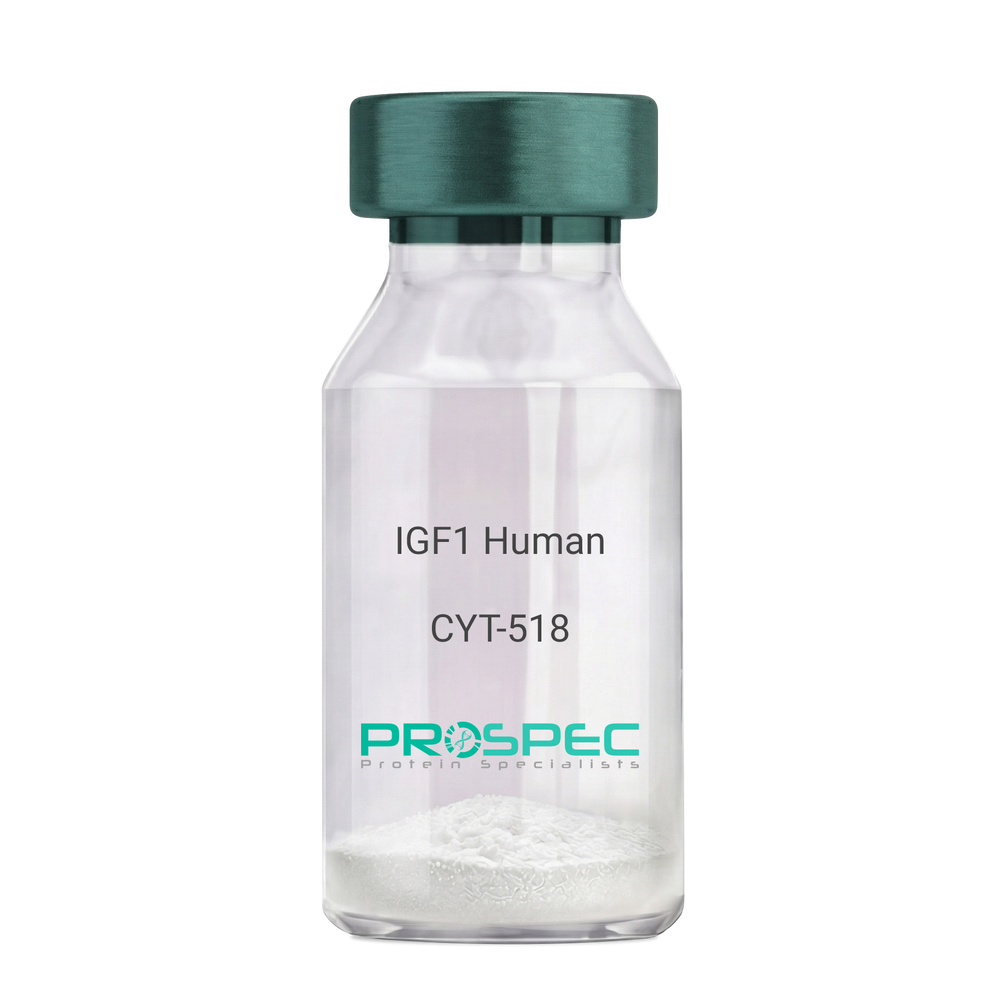
    IGF1 Human Des1-3

    Description:

    Insulin-Like Growth Factor 1 Des (1-3) Human Recombinant

    Somatomedin C, IGF-I, IGFI, IGF1, IGF-IA, Mechano growth factor, MGF, Des(1-3), Des1-3, Des 1-3, Des (1-3), IGF-1 (4-70).

    Product # :

    CYT-518

    Price :

    Quantity :

    Shipping Method :

    Room Temp Icon

    Shipped at Room temp

    Add To Cart

    More Info

    • description
    • source
    • formulation
    • purity
    • biological activity
    • More Info

    Description

    IGF-I Des(1-3) Human Recombinant produced in E.Coli is a single, non-glycosylated, polypeptide chain containing 67 amino acids (aa 4-70) and having a molecular mass of 7368.5 Dalton. IGF-1 Des1-3 is purified by proprietary chromatographic techniques.

    Source

    Escherichia Coli.

    Formulation

    The protein (1mg/ml) was lyophilized was lyophilized from a 0.2µm filtered concentrated solution in 20mM PBS, pH 7.0.

    Purity

    Greater than 97.0% as determined by:
    (a) Analysis by RP-HPLC.
    (b) Analysis by SDS-PAGE.

    Biological Activity

    The ED50 as determined by a cell proliferation assay using FDC-P1 cells is less than 2.0 ng/ml, corresponding to a specific activity of > 5×10⁵ units/mg.

    More Info

    • Introduction

      The somatomedins, or insulin-like growth factors (IGFs), comprise a family of peptides that play important roles in mammalian growth and development. IGF1 mediates many of the growth-promoting effects of growth hormone (GH; MIM 139250). Early studies showed that growth hormone did not directly stimulate the incorporation of sulfate into cartilage, but rather acted through a serum factor, termed 'sulfation factor,' which later became known as 'somatomedin' (Daughaday et al., 1972). Three main somatomedins have been characterized: somatomedin C (IGF1), somatomedin A (IGF2; MIM 147470), and somatomedin B (MIM 193190) (Rotwein, 1986; Rosenfeld, 2003).

    • Synonyms

      Somatomedin C, IGF-I, IGFI, IGF1, IGF-IA, Mechano growth factor, MGF, Des(1-3), Des1-3, Des 1-3, Des (1-3), IGF-1 (4-70).

    • Physical Appearance

      Sterile Filtered White lyophilized (freeze-dried) powder.

    • Stability

      Lyophilized IGF-I des(1-3) although stable at room temperature for 3 weeks, should be stored desiccated below -18°C. Upon reconstitution IGF1 des-1-3 should be stored at 4°C between 2-7 days and for future use below -18°C.For long term storage it is recommended to add a carrier protein (0.1% HSA or BSA).Please prevent freeze-thaw cycles.

    • Solubility

      It is recommended to reconstitute the IGF-I des(1-3) in sterile 18M-cm H2O not less than 100µg/ml, which can then be further diluted to other aqueous solutions.

    • Amino Acid Sequence

      TLCGAELVDA LQFVCGDRGF YFNKPTGYGS SSRRAPQTGI VDECCFRSCD LRRLEMYCAP LKPAKSA.

    ProSpec's products are furnished for LABORATORY RESEARCH USE ONLY. The product may not be used as drugs, agricultural or pesticidal products, food additives or household chemicals.

    Igf I Des1 3 Human
  • View Data Sheet

    Name :

    CTGF Antibody

    Description:

    Mouse Anti Human Connective Tissue Growth Factor

    CCN2, NOV2, HCS24, IGFBP8, MGC102839, CTGF, Connective Tissue Growth Factor.

    Product # :

    ANT-699

    Price :

    Quantity :

    Shipping Method :

    Ice Icon

    Shipped with Ice Packs

    Add To Cart

    More Info

    • formulation
    • More Info

    Formulation

    1mg/ml containing PBS, pH-7.4, 10% Glycerol and 0.02% Sodium Azide.

    More Info

    • Introduction

      Connective Tissue Growth Factor belongs to the CCN family of proteins. The CCN family presently consists of six members in human also known as: Cyr61 (Cystein rich 61), CTGF (Connective Tissue Growth Factor), Nov (Nephroblastoma Overexpressed gene), WISP-1, 2 and 3 (Wnt-1 Induced Secreted Proteins). The CCN genes encode secreted proteins associated with the Extracellular Matrix (ECM) and cell membrane.
      CCN proteins are matricellular proteins which are involved in the regulation of various cellular functions including: proliferation, differentiation, survival, adhesion and migration. They are expressed in derivatives of the three embryonic sheets and are implicated in the development of kidney, nervous system, muscle, bone marrow, cartilage and bone. During adulthood, they are implicated in wound healing, bone fracture repair, and pathologies such as: fibrosis, vascular ailments and tumorigenesis.
      Full length secreted CCN proteins can show an antiproliferative activity, whereas truncated isoforms are likely to stimulate proliferation and behave as oncogenes.
      The full length protein consists of four modulesModule I shares partial identity with the N-terminal part of the Insulin-like Growth Factor Binding Proteins (IGFBPs).
      Module II includes a stretch of 70amino acid residues – which shares sequence identity with the Von Willebrand Factor Type C repeat (VWC).
      Module III contains sequences sharing identity with the Thrombospondin type 1 repeat (TSP1) (WSXCSXXCG), which is thought to be implicated in the binding of sulfated glycoconjugates and to be important for cell adhesion.
      Module IV, also designated CT, is encoded by exon5. It is the leasts conserved one of the four domains at the level of nucleotide sequence, but it appears to be critical for several of the biological functions attributed to the CCN proteins. Module IV resembles the CT domain of several extracellular protein including, Von Willebrand's factor and mucins. Sequence similarities to heparin-binding motifs are also found within this domain.
      Proteolysis of the secreted full-length CCN proteins that has been reported in the case of CCN2 and CCN3 might result in the production of CCN-derived peptides with high affinity for ligands that full-length CNN proteins bind only poorly. Amino-truncated CCN2 isoforms were biologically active whereas no specific biological activity has been attributed to the truncated CCN3. Although the molecular processes underlying the production of these secreted isoforms is presently unknown, it is important to note that proteolysis occur at the same amino acid residues in both CCN2 and CCN3. An elevated expression of CCN2 has also been detected by Northern blotting in human invasive mammary ductal carcinomas, dermatofibromas, pyogenic granuloma, endothelial cells of angiolipomas and angioleiomyomas, and in pancreatic tumors. A study performed with chondrosarcomas representative of various histological grades established that CCN2 expression was closely correlated with increasing levels of malignancy.
      In agreement with CCN2 playing a role in brain tumor angiogenesis, immunocytochemistry studies indicated that both glioblastoma tumor cells and proliferating endothelial cells stained positive for CCN2. In astrocytomas, CCN2 expression was particularly elevated in high grade tumors, with a marked effect of CCN2 on cell proliferation. Downregulation of CCN2 expression in these cells was associated with a growth arrest at the G1/S transition while over-expression of CCN2 induced a two-fold increase of the number of cells in the G1 phase. Gene profiling analysis allowed to identify a set of about 50 genes whose expression might account for the proliferative activity of CCN2 in these cells.
      CCN2 was seen in a higher proportion of mononuclear cells of patients with acute lymphoblastic leukemia.

    • Synonyms

      CCN2, NOV2, HCS24, IGFBP8, MGC102839, CTGF, Connective Tissue Growth Factor.

    • Physical Appearance

      Sterile filtered colorless solution.

    • Immunogen

      Anti-human CTGF mAb, is derived from hybridization of mouse F0 myeloma cells with spleen cells from BALB/c mice immunized with a recombinant human CTGF protein 27-349 amino acids purified from E. coli.

    • Ig Subclass

      Mouse IgG2a heavy chain and κ light chain.

    • Clone

      PAT18E7AT.

    • Applications

      CTGF antibody has been tested by ELISA, Western blot analysis and ICC/IF to assure specificity and reactivity. Since application varies, however, each investigation should be titrated by the reagent to obtain optimal results.

    • Type

      Mouse Anti Human Monoclonal.

    • Storage Procedures

      For periods up to 1 month store at 4°C, for longer periods of time, store at -20°C. Prevent freeze thaw cycles.

    • Purification Method

      CTGF antibody was purified by protein-A affinity chromatography.

    ProSpec's products are furnished for LABORATORY RESEARCH USE ONLY. The product may not be used as drugs, agricultural or pesticidal products, food additives or household chemicals.

    Ctgf Antibody
  • View Data Sheet

    Name :

    IGF1 Rabbit

    Description:

    Insulin-Like Growth Factor 1 Rabbit Recombinant

    Somatomedin C, IGF-I, IGFI, IGF1, IGF-IA, Mechano growth factor, MGF.

    Product # :

    CYT-427

    Price :

    Quantity :

    Shipping Method :

    Room Temp Icon

    Shipped at Room temp

    Add To Cart

    More Info

    • description
    • source
    • formulation
    • purity
    • biological activity
    • More Info

    Description

    Insulin-Like Growth Factor-I Rabbit Recombinant produced in E.Coli is a single, non-glycosylated, polypeptide chain containing 71 amino acids and having a molecular mass of 7639 Dalton.

    Source

    Escherichia Coli.

    Formulation

    The protein was lyophilized from a concentrated (0.5mg/ml) solution with 0.02% NaHCO3.

    Purity

    Greater than 98.0% as determined by:(a) Gel-filtration chromatography under non denaturing conditions.(b) Analysis by SDS-PAGE.

    Biological Activity

    IGF-I is biologically active when compared to human IGF-1. The ED50, calculated by the dose -dependent proliferation of human MCF/7 cells is 5 to 25ng/ml in the cell culture mixture dependent on culture conditions. Its activity consists of 30-40 % compared to human IGF-1.

    More Info

    • Introduction

      The IGFs comprise a family of peptides that play important roles in mammalian growth and development. IGF1 mediates many of the growth-promoting effects of growth hormone. Early studies showed that growth hormone did not directly stimulate the incorporation of sulfate into cartilage, but rather acted through a serum factor, termed 'sulfation factor,' which later became known as 'somatomedin'. Three main somatomedins have been characterized: somatomedin C (IGF1), somatomedin A, and somatomedin B. IGF-1 is a small protein secreted mostly but not exclusively by the liver and circulating in blood mostly as a complex with several IGF binding proteins. It has growth-regulating, insulin-like, and mitogenic functions and it is secreted in response to growth hormone stimulation.

    • Synonyms

      Somatomedin C, IGF-I, IGFI, IGF1, IGF-IA, Mechano growth factor, MGF.

    • Physical Appearance

      Sterile Filtered White lyophilized (freeze-dried) powder.

    • Stability

      Lyophilized Insulin-Like Growth Factor-1 although stable at room temperature for 3 weeks, should be stored desiccated below -18°C. Upon reconstitution IGF1 should be stored at 4°C between 2-7 days and for future use below -18°C.For long term storage it is recommended to add a carrier protein (0.1% HSA or BSA).Please prevent freeze-thaw cycles.

    • Solubility

      It is recommended to reconstitute the lyophilized rbIGF-I in sterile 0.4% NaHCO3 adjusted to ph 8-9, not less than 100µg/ml, which can then be further diluted to other aqueous solutions.

    • Amino Acid Sequence

      MTAGPETLCG AELVDALQFV CGDRGFYFNK PTGYGSSSRR APQTGIVDEC CFRSCDLRRL EMYCAPLKP

    ProSpec's products are furnished for LABORATORY RESEARCH USE ONLY. The product may not be used as drugs, agricultural or pesticidal products, food additives or household chemicals.

    Igf1 Rabbit
  • View Data Sheet

    Name :

    FGF13 Human

    Description:

    Fibroblast Growth Factor 13 Human Recombinant

    Fibroblast growth factor 13, FGF-13, Fibroblast growth factor homologous factor 2, FHF-2, FGF13, FHF2.

    Product # :

    CYT-121

    Price :

    Quantity :

    Shipping Method :

    Room Temp Icon

    Shipped at Room temp

    Add To Cart

    More Info

    • description
    • source
    • formulation
    • purity
    • More Info

    Description

    FGF13 Human Recombinant produced in E.coli is a single, non-glycosylated polypeptide chain containing 245 amino acids and having a molecular mass of 27.6kDa.The FGF-13 is purified by proprietary chromatographic techniques.

    Source

    Escherichia Coli.

    Formulation

    FGF13 protein was lyophilized from a 0.2µm filtered concentrated solution in 20mM PB, 0.5M NaCl, pH 7.4.

    Purity

    Greater than 95.0% as determined by:
    (a) Analysis by RP-HPLC.
    (b) Analysis by SDS-PAGE.

    More Info

    • Introduction

      Fibroblast growth factor 13 (FGF-13) is a member of the large FGF family which has at least 23 members. Most of its members are binding growth factors with a core 120 amino acid (aa) FGF domain which allows for a mutual tertiary structure. Human and mouse FGF13 are 245 aa proteins which arise from genes that show N-terminal alternative splicing. Transcripts for 245 aa, 199 aa, 226 aa, 192 aa and 255 aa have been identified in human and mouse, with almost complete cross-species aa identity among all splice forms (greater than 98%). FGF13 is identified in the fetal ependyma, dorsal root and cranial ganglia, both atrial and ventricular myocardium, and in renal collecting duct-associated mesenchyme.

    • Synonyms

      Fibroblast growth factor 13, FGF-13, Fibroblast growth factor homologous factor 2, FHF-2, FGF13, FHF2.

    • Physical Appearance

      Sterile Filtered White lyophilized (freeze-dried) powder.

    • Stability

      Lyophilized FGF13 although stable at room temperature for 3 weeks, should be stored desiccated below -18°C. Upon reconstitution FGF-13 should be stored at 4°C between 2-7 days and for future use below -18°C. For long term storage it is recommended to add a carrier protein (0.1% HSA or BSA). Please prevent freeze-thaw cycles.

    • Solubility

      It is recommended to reconstitute the lyophilized FGF-13 in sterile 18M-cm H2O not less than 100µg/ml, which can then be further diluted to other aqueous solutions.

    • Amino Acid Sequence

      MAAAIASSLI RQKRQARERE KSNACKCVSS PSKGKTSCDK NKLNVFSRVK LFGSKKRRRR RPEPQLKGIV TKLYSRQGYH LQLQADGTID GTKDEDSTYT LFNLIPVGLR VVAIQGVQTK LYLAMNSEGY LYTSELFTPE CKFKESVFEN YYVTYSSMIY RQQQSGRGWY LGLNKEGEIM KGNHVKKNKP AAHFLPKPLK VAMYKEPSLH DLTEFSRSGS GTPTKSRSVS GVLNGGKSMS HNEST.

    • Background

      What is the molecular weight/Mw of FGF13 Protein?
      FGF13 Protein has a total Mw of 27.6kDa.

      What is the source or expression system of FGF13 Protein?
      Escherichia Coli.

      What is the Purity of FGF13 Protein?
      FGF13 Protein is >95% pure as determined by SDS-PAGE.

      What is the Biological Activity of FGF13 Protein?
      The biological functionality of FGF13 Protein will be determined in the future.

      What is the amino acid sequence of FGF13 Protein?
      MAAAIASSLI RQKRQARERE KSNACKCVSS PSKGKTSCDK NKLNVFSRVK LFGSKKRRRR RPEPQLKGIV TKLYSRQGYH LQLQADGTID GTKDEDSTYT LFNLIPVGLR VVAIQGVQTK LYLAMNSEGY LYTSELFTPE CKFKESVFEN YYVTYSSMIY RQQQSGRGWY LGLNKEGEIM KGNHVKKNKP AAHFLPKPLK VAMYKEPSLH DLTEFSRSGS GTPTKSRSVS GVLNGGKSMS HNEST.

      What applications can FGF13 Protein be used in?
      FGF13 Protein can probably be used in western blot, ELISA and Lateral Flow.

      What is the endotoxin level for FGF13 Protein?
      The endotoxin level is minimal, FGF13 Protein was purified using conventional chromatography techniques.

    ProSpec's products are furnished for LABORATORY RESEARCH USE ONLY. The product may not be used as drugs, agricultural or pesticidal products, food additives or household chemicals.

    Fgf13 Human
  • View Data Sheet

    Name :

    FGF 21 Human, His

    Description:

    Fibroblast Growth Factor-21 Human Recombinant, His Tag

    Fibroblast growth factor 21, FGF-21.

    Product # :

    CYT-281

    Price :

    Quantity :

    Shipping Method :

    Ice Icon

    Shipped with Ice Packs

    Add To Cart

    More Info

    • description
    • source
    • formulation
    • purity
    • More Info

    Description

    Fibroblast Growth Factor -21 Human Recombinant produced in E.Coli is a single, non-glycosylated, polypeptide chain containing 202 amino acids (29-209) and having a molecular mass of 21.6 kDa (molecular weight on SDS-PAGE will appear higher). The FGF-21 is fused to a 20 amino acid His Tag at N-terminus and purified by proprietary chromatographic techniques.

    Source

    Escherichia Coli.

    Formulation

    The FGF-21 His tag protein (1mg/ml) solution in 20mM Tris-HCl buffer pH-8 and 10% glycerol.

    Purity

    Greater than 90.0% as determined by SDS-PAGE.

    More Info

    • Introduction

      The FGFs are a family of more than 20 small (~17–26 kDa) secreted peptides. The initial characterization of these proteins focused on their ability to stimulate fibroblast proliferation. This mitogenic activity was mediated through FGF receptors (FGFRs) 1, 2, or 3. A fourth closely related tyrosine kinase receptor (FGFR4) was able to bind the FGFs but did not lead to a mitogenic response.
      FGFs modulate cellular activity via at least 5 distinct subfamilies of high-affinity FGF receptors (FGFRs): FGFR-1, -2, -3, and -4, all with intrinsic tyrosine kinase activity and, except for FGFR-4, multiple splice isoforms, and FGFR-5, which lacks an intracellular kinase domain. There is growing evidence that FGFRs can be important for regulation of glucose and lipid homeostasis. The overexpression of a dominant negative form of FGFR-1 in ? cells leads to diabetes in mice, which thus implies that proper FGF signaling is required for normal ? cell function and glycemia maintenance. FGFR-2 appears to be a key molecule during pancreatic development. Moreover, FGFR-4 has been implicated in cholesterol metabolism and bile acid synthesis.
      FGF-19, has been shown to cause resistance to diet-induced obesity and insulin desensitization and to improve insulin, glucose, and lipid profiles in diabetic rodents. Since these effects, at least in part, are mediated through the observed changes in metabolic rates, FGF-19 can be considered as a regulator of energy expenditure.
      FGF-21 is preferentially expressed in liver, but an exact knowledge of FGF-21 bioactivity and its mode of action have been lacking to date. FGF-21 is a potent activator of glucose uptake on adipocytes, protects animals from diet-induced obesity when overexpressed in transgenic mice, and lowers blood glucose and triglyceride levels when therapeutically administered to diabetic rodents.

    • Synonyms

      Fibroblast growth factor 21, FGF-21.

    • Physical Appearance

      Sterile Filtered colorless clear solution.

    • Stability

      Store at 4°C if entire vial will be used within 2-4 weeks. Store, frozen at -20°C for longer periods of time. For long term storage it is recommended to add a carrier protein (0.1% HSA or BSA).Please avoid freeze thaw cycles.

    • Amino Acid Sequence

      MGSSHHHHHH SSGLVPRGSH MHPIPDSSPL LQFGGQVRQR YLYTDDAQQT EAHLEIREDG TVGGAADQSP ESLLQLKALK PGVIQILGVKTSRFLCQRPD GALYGSLHFD PEACSFRELL LEDGYNVYQS EAHGLPLHLP GNKSPHRDPA PRGPARFLPL PGLPPAPPEP PGILAPQPPD VGSSDPLSMV GPSQGRSPSY AS.

    • Background

      What is the molecular weight/Mw of FGF21,HIS Protein?
      FGF21,HIS Protein has a total Mw of 21.6kDa.

      What is the source or expression system of FGF21,HIS Protein?
      Escherichia Coli.

      What is the Purity of FGF21,HIS Protein?
      FGF21,HIS Protein is >90% pure as determined by SDS-PAGE.

      What is the Biological Activity of FGF21,HIS Protein?
      The biological functionality of FGF21,HIS Protein will be determined in the future.

      What is the amino acid sequence of FGF21,HIS Protein?
      MGSSHHHHHH SSGLVPRGSH MHPIPDSSPL LQFGGQVRQR YLYTDDAQQT EAHLEIREDG TVGGAADQSP ESLLQLKALK PGVIQILGVKTSRFLCQRPD GALYGSLHFD PEACSFRELL LEDGYNVYQS EAHGLPLHLP GNKSPHRDPA PRGPARFLPL PGLPPAPPEP PGILAPQPPD VGSSDPLSMV GPSQGRSPSY AS.

      What applications can FGF21,HIS Protein be used in?
      FGF21,HIS Protein can probably be used in western blot, ELISA and Lateral Flow.

      What is the endotoxin level for FGF21,HIS Protein?
      The endotoxin level is minimal, FGF21,HIS Protein was purified using conventional chromatography techniques.

    ProSpec's products are furnished for LABORATORY RESEARCH USE ONLY. The product may not be used as drugs, agricultural or pesticidal products, food additives or household chemicals.

    Fgf21 Human His
  • View Data Sheet

    Name :

    VEGF Antibody

    Description:

    Vascular Endothelial Cell Growth Factor, Mouse Anti-Human

    Vascular endothelial growth factor A, VEGF-A, Vascular permeability factor, VPF, VEGF, MGC70609.

    Product # :

    ANT-125

    Price :

    Quantity :

    Shipping Method :

    Room Temp Icon

    Shipped at Room temp

    Add To Cart

    More Info

    • More Info

    More Info

    • Introduction

      Vascular endothelial growth factoris an important signaling proteininvolved in both vasculogenesisand angiogenesis. As its name implies, VEGF activity has been mostly studied on cells of the vascular endothelium, although it does have effects on a number of other cell types (e.g. stimulation monocyte/macrophagemigration, neurons, cancer cells, kidney epithelial cells ).VEGF mediates increased vascular permeability, induces angiogenesis, vasculogenesis and endothelial cell growth, promotes cell migration, and inhibits apoptosis. In vitro, VEGF has been shown to stimulate endothelial cell mitogenesisand cell migration. VEGF is also a vasodilator and increases microvascular permeability and was originally referred to as vascular permeability factor.
      Elevated levels of this protein is linked to POEMS syndrome, also known as Crow-Fukase syndrome. Mutations in this gene have been associated with proliferative and nonproliferative diabetic retinopathy.

    • Synonyms

      Vascular endothelial growth factor A, VEGF-A, Vascular permeability factor, VPF, VEGF, MGC70609.

    • Solubility

      Reconstitute with sterile H20. Mix gently, wash the sides of the vial and wait 30-60 seconds before use.

    • Immunogen

      r.HumanVEGF.

    • Ig Subclass

      Mouse IgM.

    • Clone

      NYRhVEGF.

    • Applications

      Direct ELISA, Western Blot, Immuneprecipitation.

    • Titer

      By direct ELISA, 1:10,000 dilution will yield 0.15 O.D using alkaline phosphatase conjugated rabbit anti-mouse Ig (Jackson Laboratories).

    • Shipping Conditions

      Antibody is shipped lyophilized at ambient temperature.

    • Type

      Mouse Anti Human Monoclonal.

    • Storage Procedures

      In lyophilized form, for long periods, store at 4oC in a dry environment. After reconstitution, if not intended for use within a month, aliquot and store at -20oC.

    • Purification Method

      Boric acid precipitation Protein concentration1mg/ml in PBS (after reconstitution).

    ProSpec's products are furnished for LABORATORY RESEARCH USE ONLY. The product may not be used as drugs, agricultural or pesticidal products, food additives or household chemicals.

    Vegf Antibody
  • View Data Sheet

    Name :

    OSM Human

    Description:

    Oncostatin-M Human Recombinant

    OSM, MGC20461.

    Product # :

    CYT-231

    Price :

    Quantity :

    Shipping Method :

    Room Temp Icon

    Shipped at Room temp

    Add To Cart

    More Info

    • description
    • source
    • formulation
    • purity
    • biological activity
    • More Info

    Description

    Oncostatin-M Human Recombinant produced in E.Coli is a single, non-glycosylated polypeptide chain containing 227 amino acids and having a molecular mass of 26kDa. The OSM is purified by proprietary chromatographic techniques.

    Source

    Escherichia Coli.

    Formulation

    Lyophilized from a concentrated (1mg/ml) solution containing PBS pH-7.4.

    Purity

    Greater than 95.0% as determined by
    (a) Analysis by RP-HPLC.
    (b) Analysis by SDS-PAGE.

    Biological Activity

    The ED50 as determined by the dose-dependant stimulation of Human TF-1 cells is < 2 ng/ml, corresponding to a Specific Activity of 500,000IU/mg.

    More Info

    • Introduction

      Oncostatin M is a member of a cytokine family that includes leukemia-inhibitory factor, granulocyte colony-stimulating factor, and interleukin 6. This gene encodes a growth regulator which inhibits the proliferation of a number of tumor cell lines. It regulates cytokine production, including IL-6, G-CSF and GM-CSF from endothelial cells.

    • Synonyms

      OSM, MGC20461.

    • Physical Appearance

      Sterile Filtered White lyophilized (freeze-dried) powder.

    • Stability

      Lyophilized Oncostatin M although stable at room temperature for 3 weeks, should be stored desiccated below -18°C. Upon reconstitution Oncostatin should be stored at 4°C between 2-7 days and for future use below -18°C.For long term storage it is recommended to add a carrier protein (0.1% HSA or BSA).Please prevent freeze-thaw cycles.

    • Solubility

      It is recommended to reconstitute the lyophilized Oncostatin M in sterile 18MΩ-cm H2O not less than 100µg/ml, which can then be further diluted to other aqueous solutions.

    • Amino Acid Sequence

      AAIGSCSKEY RVLLGQLQKQ TDLMQDTSRL LDPYIRIQGL DVPKLREHCR
      ERPGAFPSEE TLRGLGRRGF LQTLNATLGC VLHRLADLEQ RLPKAQDLER
      SGLNIEDLEK LQMARPNILG LRNNIYCMAQ LLDNSDTAEP TKAGRGASQP
      PTPTPASDAF QRKLEGCRFL HGYHRFMHSV GRVFSKWGES PNRSRRHSPH
      QALRKGVRRT RPSRKGKRLM TRGQLPR.

    • Protein content

      Protein quantitation was carried out by two independent methods1. UV spectroscopy at 280 nm using the absorbency value of 0.45 as the extinction coefficient for a 0.1% (1mg/ml) solution. This value is calculated by the PC GENE computer analysis program of protein sequences (IntelliGenetics). 2. Analysis by RP-HPLC, using standard solution of Oncostatin as Reference.

    ProSpec's products are furnished for LABORATORY RESEARCH USE ONLY. The product may not be used as drugs, agricultural or pesticidal products, food additives or household chemicals.

    Oncostatin M Human
  • View Data Sheet

    Name :

    VEGF Rat

    Description:

    Vascular Endothelial Growth Factor Rat Recombinant

    Vascular endothelial growth factor A, VEGF-A, Vascular permeability factor, VPF, VEGF, MGC70609.

    Product # :

    CYT-392

    Price :

    Quantity :

    Shipping Method :

    Room Temp Icon

    Shipped at Room temp

    Add To Cart

    More Info

    • description
    • source
    • formulation
    • purity
    • biological activity
    • More Info

    Description

    Vascular Endothelial Growth Factor Rat Recombinant produced in E.Coli is a double, non-glycosylated, polypeptide chain containing 165 amino acids and having a molecular mass of 38,750 Dalton. The VEGF is purified by proprietary chromatographic techniques.

    Source

    Escherichia Coli.

    Formulation

    The protein was lyophilized from 10mM NaP, pH 7.5.

    Purity

    Greater than 97.0% as determined by:
    (a) Analysis by RP-HPLC.
    (b) Analysis by SDS-PAGE.

    Biological Activity

    Determined by the dose-dependent stimulation of the proliferation of human umbilical vein endothelial cells (HUVEC) using a concentration range of 4.0-8.0 ng/ml.

    More Info

    • Introduction

      Vascular endothelial growth factor is an important signaling protein involved in both vasculogenesis and angiogenesis. As its name implies, VEGF activity has been mostly studied on cells of the vascular endothelium, although it does have effects on a number of other cell types (e.g. stimulation monocyte/ macrophagemigration, neurons, cancer cells, kidney epithelial cells ).VEGF mediates increased vascular permeability, induces angiogenesis, vasculogenesis and endothelial cell growth, promotes cell migration, and inhibits apoptosis. In vitro, VEGF has been shown to stimulate endothelial cell mitogenesisand cell migration. VEGF is also a vasodilator and increases microvascular permeability and was originally referred to as vascular permeability factor.
      Elevated levels of this protein are linked to POEMS syndrome, also known as Crow-Fukase syndrome. Mutations in this gene have been associated with proliferative and nonproliferative diabetic retinopathy.

    • Synonyms

      Vascular endothelial growth factor A, VEGF-A, Vascular permeability factor, VPF, VEGF, MGC70609.

    • Physical Appearance

      Sterile Filtered White lyophilized (freeze-dried) powder.

    • Stability

      Lyophilized Vascular Endothelial Growth Factor although stable at room temperature for 3 weeks, should be stored desiccated below -18°C. Upon reconstitution VEGF should be stored at 4°C between 2-7 days and for future use below -18°C.For long term storage it is recommended to add a carrier protein (0.1% HSA or BSA).Please prevent freeze-thaw cycles.

    • Solubility

      It is recommended to reconstitute the lyophilized Vascular Endothelial Growth Factor in sterile 18MΩ-cm H2O not less than 100µg/ml, which can then be further diluted to other aqueous solutions.

    • Amino Acid Sequence

      MAPTTEGEQK AHEVVKFMDV YQRSYCRPIE TLVDIFQEYP DEIEYIFKPS CVPLMRCAGC CNDEALECVP TSESNVTMQI MRIKPHQSQH IGEMSFLQHS RCECRPKKDR TKPEKHCEPC SERRKHLFVQ DPQTCKCSCK NTDSRCKARQ LELNERTCRC DKPRR.

    ProSpec's products are furnished for LABORATORY RESEARCH USE ONLY. The product may not be used as drugs, agricultural or pesticidal products, food additives or household chemicals.

    Vegf Rat
  • View Data Sheet

    Name :

    FGF16 Mouse

    Description:

    Fibroblast Growth Factor 16 Mouse Recombinant

    Fibroblast Growth Factor 16, FGF-16, FGF16.

    Product # :

    CYT-947

    Price :

    Quantity :

    Shipping Method :

    Ice Icon

    Shipped with Ice Packs

    Add To Cart

    More Info

    • description
    • source
    • formulation
    • purity
    • More Info

    Description

    FGF16 Mouse Recombinant produced in E.Coli is a single, non-glycosylated, polypeptide chain containing 207 amino acids and having a molecular mass of 23.8kDa.The FGF-16 is purified by proprietary chromatographic techniques.

    Source

    Escherichia Coli.

    Formulation

    FGF-16 0.2µm filtered solution containing 20mM Tris-HCl, pH 9.0, 1M NaCl, 0.02% Tween-20 and 10% Glycerol.

    Purity

    Greater than 98.0% as determined by:
    (a) Analysis by RP-HPLC.
    (b) Analysis by SDS-PAGE.

    More Info

    • Introduction

      Fibroblast growth factor 16 (FGF16) is a member of the large FGF family, whose members are heparin-binding growth factors with a core 120 amino acid (a.a.) FGF domain which allows for a common tertiary structure. Human FGF16 cDNA is a 207 aa precursor protein with one N-linked glycosylation site. FGF16 though lacking a typical signal peptide, is efficiently produced by mechanisms other than the classical protein secretion pathway. FGF16 is expressed in cardiac cells and is required for proper heart development. FGF16 gene mutation was also observed in individuals with metacarpal 4-5 fusion. FGF16 has an imperative role in the regulation of embryonic development, cell proliferation and cell differentiation, and is required for normal cardiomyocyte proliferation and heart development.

    • Synonyms

      Fibroblast Growth Factor 16, FGF-16, FGF16.

    • Physical Appearance

      Sterile Filtered colorless clear solution.

    • Stability

      Store at 4°C if entire vial will be used within 2-4 weeks. Store, frozen at -20°C for longer periods of time. For long term storage it is recommended to add a carrier protein (0.1% HSA or BSA).Please avoid freeze thaw cycles.

    • Amino Acid Sequence

      MAEVGGVFAS LDWDLHGFSS SLGNVPLADS PGFLNERLGQ IEGKLQRGSP TDFAHLKGIL RRRQLYCRTG FHLEIFPNGT VHGTRHDHSR FGILEFISLA VGLISIRGVD SGLYLGMNER GELYGSKKLT RECVFREQFE ENWYNTYAST LYKHSDSERQ YYVALNKDGS PREGYRTKRH QKFTHFLPRP VDPSKLPSMS RDLFRYR.

    • Background

      What is the molecular weight/Mw of FGF16 MOUSE Protein?
      FGF16 MOUSE Protein has a total Mw of 23.8kDa.

      What is the source or expression system of FGF16 MOUSE Protein?
      Escherichia Coli.

      What is the Purity of FGF16 MOUSE Protein?
      FGF16 MOUSE Protein is >98% pure as determined by SDS-PAGE.

      What is the Biological Activity of FGF16 MOUSE Protein?
      The biological functionality of FGF16 MOUSE Protein will be determined in the future.

      What is the amino acid sequence of FGF16 MOUSE Protein?
      MAEVGGVFAS LDWDLHGFSS SLGNVPLADS PGFLNERLGQ IEGKLQRGSP TDFAHLKGIL RRRQLYCRTG FHLEIFPNGT VHGTRHDHSR FGILEFISLA VGLISIRGVD SGLYLGMNER GELYGSKKLT RECVFREQFE ENWYNTYAST LYKHSDSERQ YYVALNKDGS PREGYRTKRH QKFTHFLPRP VDPSKLPSMS RDLFRYR.

      What applications can FGF16 MOUSE Protein be used in?
      FGF16 MOUSE Protein can probably be used in western blot, ELISA and Lateral Flow.

      What is the endotoxin level for FGF16 MOUSE Protein?
      The endotoxin level is minimal, FGF16 MOUSE Protein was purified using conventional chromatography techniques.

    ProSpec's products are furnished for LABORATORY RESEARCH USE ONLY. The product may not be used as drugs, agricultural or pesticidal products, food additives or household chemicals.

    Fgf16 Mouse
  • View Data Sheet

    Name :

    VEGF Human, HEK

    Description:

    Vascular Endothelial Growth Factor Human Recombinant, HEK

    Vascular endothelial growth factor A, VEGF-A, Vascular permeability factor, VPF, VEGF, MGC70609.

    Product # :

    CYT-225

    Price :

    Quantity :

    Shipping Method :

    Room Temp Icon

    Shipped at Room temp

    Add To Cart

    More Info

    • description
    • source
    • formulation
    • purity
    • biological activity
    • More Info

    Description

    Vascular Endothelial Growth Factor Human Recombinant produced in HEK293 cells is a double, glycosylated, polypeptide chain containing 165 amino acids (27-191) and having a molecular mass of 40 kDa. The VEGF is purified by proprietary chromatographic techniques.

    Source

    HEK293 (Human Embryonic Kidney cell line).

    Formulation

    The protein was lyophilized from a 0.2µM filtered solution of 20mM PB, 150mM NaCl, pH 7.2.

    Purity

    Greater than 95.0% as determined by SDS-PAGE.

    Biological Activity

    Determined by the dose-dependent stimulation of the proliferation of human umbilical vein endothelial cells (HUVEC) using a concentration range of 4.0ng/ml, corresponding to a specific activity of 2.5 x 10⁵ Units/mg.

    More Info

    • Introduction

      Vascular endothelial growth factor is an important signaling protein involved in both vasculogenesis and angiogenesis. As its name implies, VEGF activity has been mostly studied on cells of the vascular endothelium, although it does have effects on a number of other cell types (e.g. stimulation monocyte/ macrophagemigration, neurons, cancer cells, kidney epithelial cells ).VEGF mediates increased vascular permeability, induces angiogenesis, vasculogenesis and endothelial cell growth, promotes cell migration, and inhibits apoptosis. In vitro, VEGF has been shown to stimulate endothelial cell mitogenesisand cell migration. VEGF is also a vasodilator and increases microvascular permeability and was originally referred to as vascular permeability factor.
      Elevated levels of this protein are linked to POEMS syndrome, also known as Crow-Fukase syndrome. Mutations in this gene have been associated with proliferative and nonproliferative diabetic retinopathy.

    • Synonyms

      Vascular endothelial growth factor A, VEGF-A, Vascular permeability factor, VPF, VEGF, MGC70609.

    • Physical Appearance

      Sterile Filtered White lyophilized (freeze-dried) powder.

    • Stability

      Lyophilized Vascular Endothelial Growth Factor HEK although stable at room temperature for 3 weeks, should be stored desiccated below -18°C. Upon reconstitution VEGF HEK should be stored at 4°C between 2-7 days and for future use below -18°C. For long term storage it is recommended to add a carrier protein (0.1% HSA or BSA). Please prevent freeze-thaw cycles.

    • Solubility

      It is recommended to reconstitute the lyophilized Vascular Endothelial Growth Factor-HEK in sterile 18M-cm H2O not less than 100µg/ml, which can then be further diluted to other aqueous solutions.

    • Amino Acid Sequence

      APMAEGGGQN HHEVVKFMDV YQRSYCHPIE TLVDIFQEYP DEIEYIFKPS CVPLMRCGGC CNDEGLECVP TEESNITMQI MRIKPHQGQH IGEMSFLQHN KCECRPKKDR ARQENPCGPC SERRKHLFVQ DPQTCKCSCK NTDSRCKARQ LELNERTCRC DKPRR.

    ProSpec's products are furnished for LABORATORY RESEARCH USE ONLY. The product may not be used as drugs, agricultural or pesticidal products, food additives or household chemicals.

    Vegf Human Hek
  • View Data Sheet

    Name :

    TGFB3 Human, Plant

    Description:

    Transforming Growth Factor-Beta 3 Human Recombinant, Plant

    Transforming Growth Factor-beta3, TGFB3, ARVD, FLJ16571, TGF-beta3.

    Product # :

    CYT-588

    Price :

    Quantity :

    Shipping Method :

    Room Temp Icon

    Shipped at Room temp

    Add To Cart

    More Info

    • description
    • source
    • formulation
    • purity
    • biological activity
    • More Info

    Description

    TGFB3 Human Recombinant produced in plant is a disulfide-linked homodimeric, glycosylated, polypeptide chain containing 118 amino acids and having a molecular mass of 27.2kDa. The TGFB3 is fused to 6xHis tag at N-terminus and purified by standard chromatographic techniques.

    Source

    Nicotiana benthamiana.

    Formulation

    Lyophilized from a concentrated (1mg/ml) solution containing 50mM Tris-HCl pH-7.4.

    Purity

    Greater than 95.0% as determined by SDS-PAGE.

    Biological Activity

    The biological activity of TGFB3 is measured in culture by its ability to inhibit the mink lung epithelial (Mv1Lu) cells proliferation. ED50 ? 40ng/ml corresponding to a specific activity of 25,000 Units/mg.

    More Info

    • Introduction

      Transforming growth factor betas (TGF Betas) mediate many cell-cell interactions that occur during embryonic development. Three TGF Betas have been identified in mammals. TGF Beta 1, TGF Beta 2 and TGF Beta 3 are each synthesized as precursor proteins that are very similar in that each is cleaved to yield a 112 amino acid polypeptide that remains associated with the latent portion of the molecule.

    • Synonyms

      Transforming Growth Factor-beta3, TGFB3, ARVD, FLJ16571, TGF-beta3.

    • Physical Appearance

      Sterile Filtered White lyophilized (freeze-dried) powder.

    • Stability

      Lyophilized TGFB3 although stable at room temperature for 3 weeks, should be stored desiccated below -18°C. Upon reconstitution TGFB3 Human should be stored at 4°C between 2-7 days and for future use below -18°C. For long term storage it is recommended to add a carrier protein (0.1% HSA or BSA). Please prevent freeze-thaw cycles.

    • Solubility

      It is recommended to reconstitute the lyophilized TGFB3 in sterile 5mM HCl & 50ug/ml BSA at a concentration of 0.05mg/ml, which can then be further diluted to other aqueous solutions.

    • Amino Acid Sequence

      HHHHHALDTNYCFRNLEENCCVRPLYIDFRQDLGWKWVHEPKG
      YYANFCSGPCPYLRSADTTHSTVLGLY
      NTLNPEASASP
      CCVPQDLEPLTILYYVGRTPKVEQLSNMVVKSCKCS.

    ProSpec's products are furnished for LABORATORY RESEARCH USE ONLY. The product may not be used as drugs, agricultural or pesticidal products, food additives or household chemicals.

    Tgfb3 Human Plant
  • View Data Sheet

    Name :

    VEGF (121a.a.) Human, HEK

    Description:

    Vascular Endothelial Growth Factor (121) Human Recombinant, HEK

    Vascular endothelial growth factor A, VEGF-A, Vascular permeability factor, VPF, VEGF, MGC70609.

    Product # :

    CYT-116

    Price :

    Quantity :

    Shipping Method :

    Room Temp Icon

    Shipped at Room temp

    Add To Cart

    More Info

    • description
    • source
    • formulation
    • purity
    • biological activity
    • More Info

    Description

    Recombinant Human VEGF 121 amino acids, produced in HEK cells is a glycosylated 37kDa homodimer and 50kDa homotrimer.The VEGF is purified by proprietary chromatographic techniques.

    Source

    HEK.

    Formulation

    VEGF was lyophilized from a 0.2µm filtered solution containing 1xPBS.

    Purity

    Greater than 95% as obsereved by SDS-PAGE.

    Biological Activity

    The specific activity was determined by the dose-dependent stimulation of the proliferation of HUVEC cells (Human Umbilical Vein Endothelial Cells), the ED50 is 3ng/ml.

    More Info

    • Introduction

      Vascular endothelial growth factor is an important signaling protein involved in both vasculogenesis and angiogenesis. As its name implies, VEGF activity has been mostly studied on cells of the vascular endothelium, although it does have effects on a number of other cell types (e.g. stimulation monocyte/ macrophagemigration, neurons, cancer cells, kidney epithelial cells ).VEGF mediates increased vascular permeability, induces angiogenesis, vasculogenesis and endothelial cell growth, promotes cell migration, and inhibits apoptosis. In vitro, VEGF has been shown to stimulate endothelial cell mitogenesisand cell migration. VEGF is also a vasodilator and increases microvascular permeability and was originally referred to as vascular permeability factor.
      Elevated levels of this protein are linked to POEMS syndrome, also known as Crow-Fukase syndrome. Mutations in this gene have been associated with proliferative and nonproliferative diabetic retinopathy.

    • Synonyms

      Vascular endothelial growth factor A, VEGF-A, Vascular permeability factor, VPF, VEGF, MGC70609.

    • Physical Appearance

      Sterile Filtered White lyophilized (freeze-dried) powder.

    • Stability

      Lyophilized VEGF although stable at room temperature for 3 weeks, should be stored desiccated below -18°C. Upon reconstitution VEGF should be stored at 4°C between 2-7 days and for future use below -18°C.For long term storage it is recommended to add a carrier protein (0.1% HSA or BSA).Please prevent freeze-thaw cycles.

    • Solubility

      It is recommended to reconstitute the lyophilized VEGF in sterile PBS containing 0.1% endotoxin-free recombinant HSA.

    ProSpec's products are furnished for LABORATORY RESEARCH USE ONLY. The product may not be used as drugs, agricultural or pesticidal products, food additives or household chemicals.

    Vegf121 Human Hek
  • View Data Sheet

    Name :

    FGF 21 Bovine

    Description:

    Fibroblast Growth Factor-21 Bovine Recombinant

    Fibroblast growth factor 21, FGF-21, FGF21.

    Product # :

    CYT-657

    Price :

    Quantity :

    Shipping Method :

    Room Temp Icon

    Shipped at Room temp

    Add To Cart

    More Info

    • description
    • source
    • formulation
    • purity
    • More Info

    Description

    Fibroblast Growth Factor -21 Bovine Recombinant produced in E.Coli is a single, non-glycosylated, polypeptide chain containing 182 amino acids, having a molecular weight of 19.5 kDa.The FGF-21 is purified by proprietary chromatographic techniques.

    Source

    Escherichia Coli.

    Formulation

    The protein was lyophilized from a concentrated (0.8 mg/ml) solution with 0.4 mg/ml of NaHCO3, pH 8.

    Purity

    Greater than 98.0% as determined by:
    (a) Analysis by Gel Filtration.
    (b) Analysis by SDS-PAGE.

    More Info

    • Introduction

      The FGFs are a family of more than 20 small (~17–26 kDa) secreted peptides. The initial characterization of these proteins focused on their ability to stimulate fibroblast proliferation. This mitogenic activity was mediated through FGF receptors (FGFRs) 1, 2, or 3. A fourth closely related tyrosine kinase receptor (FGFR4) was able to bind the FGFs but did not lead to a mitogenic response.
      FGFs modulate cellular activity via at least 5 distinct subfamilies of high-affinity FGF receptors (FGFRs): FGFR-1, -2, -3, and -4, all with intrinsic tyrosine kinase activity and, except for FGFR-4, multiple splice isoforms, and FGFR-5, which lacks an intracellular kinase domain. There is growing evidence that FGFRs can be important for regulation of glucose and lipid homeostasis. The overexpression of a dominant negative form of FGFR-1 in ? cells leads to diabetes in mice, which thus implies that proper FGF signaling is required for normal ? cell function and glycemia maintenance. FGFR-2 appears to be a key molecule during pancreatic development. Moreover, FGFR-4 has been implicated in cholesterol metabolism and bile acid synthesis.
      FGF-19, has been shown to cause resistance to diet-induced obesity and desensitization and to improve, glucose, and lipid profiles in diabetic rodents. Since these effects, at least in part, are mediated through the observed changes in metabolic rates, FGF-19 can be considered as a regulator of energy expenditure.
      FGF-21 is preferentially expressed in liver, but an exact knowledge of FGF-21 bioactivity and its mode of action have been lacking to date. FGF-21 is a potent activator of glucose uptake on adipocytes, protects animals from diet-induced obesity when overexpressed in transgenic mice, and lowers blood glucose and triglyceride levels when therapeutically administered to diabetic rodents.

    • Synonyms

      Fibroblast growth factor 21, FGF-21, FGF21.

    • Physical Appearance

      Sterile Filtered white lyophilized powder.

    • Stability

      Lyophilized FGF-21 Bovine Recombinant although stable at room temperature for 3 weeks, should be stored desiccated below -18°C. Upon reconstitution Fibroblast Growth Factor 21 should be stored at 4°C between 2-7 days and for future use below -18°C.For long term storage it is recommended to add a carrier protein (0.1% HSA or BSA).Please prevent freeze-thaw cycles.

    • Solubility

      It is recommended to reconstitute the lyophilized Bovine FGF-21 in sterile water or 0.4% NaHCO3, not less than 100µg/ml, which can then be further diluted to other aqueous solutions, preferably in presence of carrier protein.

    • Amino Acid Sequence

      The sequence of the first five N-terminal amino acids was determined and was found to be Ala-His-Pro-Ile-Pro.

    • Background

      What is the molecular weight/Mw of FGF 21 BOVINE Protein?
      FGF 21 BOVINE Protein has a total Mw of 19.5kDa.

      What is the source or expression system of FGF 21 BOVINE Protein?
      Escherichia Coli.

      What is the Purity of FGF 21 BOVINE Protein?
      FGF 21 BOVINE Protein is >98% pure as determined by SDS-PAGE.

      What is the Biological Activity of FGF 21 BOVINE Protein?
      The biological functionality of FGF 21 BOVINE Protein will be determined in the future.

      What is the amino acid sequence of FGF 21 BOVINE Protein?
      The sequence of the first five N-terminal amino acids was determined and was found to be Ala-His-Pro-Ile-Pro.

      What applications can FGF 21 BOVINE Protein be used in?
      FGF 21 BOVINE Protein can probably be used in western blot, ELISA and Lateral Flow.

      What is the endotoxin level for FGF 21 BOVINE Protein?
      The endotoxin level is minimal, FGF 21 BOVINE Protein was purified using conventional chromatography techniques.

    • Protein content

      Bovine FGF-21 quantitation was carried out by two independent methods1. UV spectroscopy at 280 nm using the absorbency value of 0.47 as the extinction coefficient for a 0.1% (1mg/ml) solution. This value is calculated by the PC GENE computer analysis program of protein sequences (IntelliGenetics). 2. Analysis by RP-HPLC, using a standard solution of FGF-21 Recombinant as a Reference Standard.

    ProSpec's products are furnished for LABORATORY RESEARCH USE ONLY. The product may not be used as drugs, agricultural or pesticidal products, food additives or household chemicals.

    Fgf21 Bovine
  • View Data Sheet

    Name :

    Epigen Human

    Description:

    Epigen Human Recombinant

    EPG, Epigen, PRO9904, ALGV3072, FLJ75542, EPGN, Epithelial mitogen.

    Product # :

    CYT-601

    Price :

    Quantity :

    Shipping Method :

    Room Temp Icon

    Shipped at Room temp

    Add To Cart

    More Info

    • description
    • source
    • formulation
    • purity
    • biological activity
    • More Info

    Description

    Epigen Recombinant Human produced in E.Coli is a single, non-glycosylated, polypeptide chain containing 72 amino acids and having a molecular mass of 7.9 kDa. Epigen is purified by proprietary chromatographic techniques.

    Source

    Escherichia Coli.

    Formulation

    EPGN was lyophilized from 20mM PBS buffer pH-7.4 .

    Purity

    Greater than 98.0% as determined by:
    (a) Analysis by RP-HPLC.
    (b) Analysis by SDS-PAGE.

    Biological Activity

    Determined by the dose-dependent stimulation of the proliferation of murine Balb/3T3 cells. The expected ED50 for this effect is less than 300 ng/ml, corresponding to a specific activity of > 3.3 ×10³ IU/mg.

    More Info

    • Introduction

      EPGN is an EGF-related polypeptide growth factor that signals through the ErbB receptor-1. EPGN is produced in numerous tissues, including the testis, liver, heart and in certain tumor cells. EPGN is mitogenic for fibroblasts and epithelial cells. Human EPGN is originally synthesized as a glycosylated 14.7 kDa transmembrane precursor protein, which is processed by proteolytic cleavage to produce a mature soluble sequence.

    • Synonyms

      EPG, Epigen, PRO9904, ALGV3072, FLJ75542, EPGN, Epithelial mitogen.

    • Physical Appearance

      Sterile Filtered White lyophilized (freeze-dried) powder.

    • Stability

      Lyophilized Epigen although stable at room temperature for 3 weeks, should be stored desiccated below -18°C. Upon reconstitution EPGN should be stored at 4°C between 2-7 days and for future use below -18°C.For long term storage it is recommended to add a carrier protein (0.1% HSA or BSA).Please prevent freeze-thaw cycles.

    • Solubility

      It is recommended to reconstitute the lyophilized Epigen in sterile 18MΩ-cm H2O not less than 100µg/ml, which can then be further diluted to other aqueous solutions.

    • Amino Acid Sequence

      AVTVTPPITA QQADNIEGPI ALKFSHLCLE DHNSYCINGA CAFHHELEKA ICRCFTGYTG ERCEHLTLTS YA

    • Background

      What is the molecular weight/Mw of EPIGEN Protein?
      EPIGEN Protein has a total Mw of 7.9kDa.

      What is the source or expression system of EPIGEN Protein?
      Escherichia Coli.

      What is the Purity of EPIGEN Protein?
      EPIGEN Protein is >98% pure as determined by SDS-PAGE.

      What is the Biological Activity of EPIGEN Protein?
      Determined by the dose-dependent stimulation of the proliferation of murine Balb/3T3 cells. The expected ED50 for this effect is less than 300 ng/ml, corresponding to a specific activity of > 3.3 ×10³ IU/mg.

      What is the amino acid sequence of EPIGEN Protein?
      AVTVTPPITA QQADNIEGPI ALKFSHLCLE DHNSYCINGA CAFHHELEKA ICRCFTGYTG ERCEHLTLTS YA

      What applications can EPIGEN Protein be used in?
      EPIGEN Protein can probably be used in western blot, ELISA and Lateral Flow.

      What is the endotoxin level for EPIGEN Protein?
      The endotoxin level is minimal, EPIGEN Protein was purified using conventional chromatography techniques.

    ProSpec's products are furnished for LABORATORY RESEARCH USE ONLY. The product may not be used as drugs, agricultural or pesticidal products, food additives or household chemicals.

    Epgn Human
  • View Data Sheet

    Name :

    FGF 2 Human, Plant

    Description:

    Fibroblast Growth Factor-Basic Human Recombinant, Plant

    Prostatropin, HBGH-2, HBGF-2, FGF-2, FGF-b, Fibroblast growth factor 2, Basic fibroblast growth factor, Heparin-binding growth factor 2.

    Product # :

    CYT-123

    Price :

    Quantity :

    Shipping Method :

    Room Temp Icon

    Shipped at Room temp

    Add To Cart

    More Info

    • description
    • source
    • formulation
    • purity
    • biological activity
    • More Info

    Description

    FGF-2 Human Recombinant produced in rice is a single, non-glycosylated polypeptide chain containing 146 amino acids and having a molecular mass of ~17kDa.The FGF-b protein is purified by proprietary chromatographic techniques.

    Source

    Rice Grain (Oryza Sativa).

    Formulation

    FGF-b was lyophilized from a concentrated solution without any additives.

    Purity

    Greater than 95.0% as determined by SDS-PAGE.

    Biological Activity

    The ED50, as calculated by the dose-dependent proliferation of Balb/c 3T3 cells expressing FGF receptors is <1 ng/ml, corresponding to a specific activity of >1 x10⁶ Units/mg.

    More Info

    • Introduction

      Basic fibroblast growth factor is a member of the fibroblast growth factor (FGF) family. FGF family members possess broad mitogenic and cell survival activities, and are involved in a variety of biological processes, including embryonic development, cell growth, morphogenesis, tissue repair, tumor growth and invasion. This protein functions as a modifier of endothelial cell migration and proliferation, as well as an angiogenic factor. It acts as a mitogen for a variety of mesoderm- and neuroectoderm-derived cells in vitro, thus is thought to be involved in organogenesis. Three alternatively spliced variants encoding different isoforms have been described. The heparin-binding growth factors are angiogenic agents in vivo and are potent mitogens for a variety of cell types in vitro. There are differences in the tissue distribution and concentration of these 2 growth factors.

    • Synonyms

      Prostatropin, HBGH-2, HBGF-2, FGF-2, FGF-b, Fibroblast growth factor 2, Basic fibroblast growth factor, Heparin-binding growth factor 2.

    • Physical Appearance

      Sterile Filtered White lyophilized (freeze-dried) powder.

    • Stability

      Lyophilized Fibroblast Growth Factor-2 although stable at room temperature for 3 weeks, should be stored desiccated below -18°C. Upon reconstitution FGF-b should be stored at 4°C between 2-7 days and for future use below -18°C.For long term storage it is recommended to add a carrier protein (0.1% HSA or BSA).Please prevent freeze-thaw cycles.

    • Solubility

      It is recommended to reconstitute the lyophilized Fibroblast Growth Factor Basic in sterile 18MΩ-cm H2O at 100µg/ml, which can then be further diluted to other aqueous solutions.

    • Background

      What is the molecular weight/Mw of FGF 2 HUMAN, PLANT Protein?
      FGF 2 HUMAN, PLANT Protein has a total Mw of 17kDa.

      What is the source or expression system of FGF 2 HUMAN, PLANT Protein?
      Rice Grain (Oryza Sativa).

      What is the Purity of FGF 2 HUMAN, PLANT Protein?
      FGF 2 HUMAN, PLANT Protein is >95% pure as determined by SDS-PAGE.

      What is the Biological Activity of FGF 2 HUMAN, PLANT Protein?
      The ED50, as calculated by the dose-dependent proliferation of Balb/c 3T3 cells expressing FGF receptors is <1 ng/ml, corresponding to a specific activity of >1 x10⁶ Units/mg.

      What is the amino acid sequence of FGF 2 HUMAN, PLANT Protein?
      FGF 2 HUMAN, PLANT Protein is composed from 146 amino acids.

      What applications can FGF 2 HUMAN, PLANT Protein be used in?
      FGF 2 HUMAN, PLANT Protein can probably be used in western blot, ELISA and Lateral Flow.

      What is the endotoxin level for FGF 2 HUMAN, PLANT Protein?
      The endotoxin level is minimal, FGF 2 HUMAN, PLANT Protein was purified using conventional chromatography techniques.

    ProSpec's products are furnished for LABORATORY RESEARCH USE ONLY. The product may not be used as drugs, agricultural or pesticidal products, food additives or household chemicals.

    Bfgf Human Plant
  • View Data Sheet

    Name :

    VEGF (121 a.a.) Human, Sf9

    Description:

    Vascular Endothelial Growth Factor (121 a.a.) Human Recombinant, Sf9

    Vascular endothelial growth factor A, VEGF-A, Vascular permeability factor, VPF, VEGF, MGC70609.

    Product # :

    CYT-200

    Price :

    Quantity :

    Shipping Method :

    Room Temp Icon

    Shipped at Room temp

    Add To Cart

    More Info

    • description
    • source
    • formulation
    • purity
    • biological activity
    • More Info

    Description

    Vascular Endothelial Growth Factor-121 Human Recombinant produced in insect cells as an 18kDa homodimer, is a glycosylated, polypeptide chain containing 121 amino acids and having a molecular mass of approximately 36kDa.VEGF121 circulates more freely than other VEGF forms, which bind more tightly with vascular heparin sulfates.The VEGF-121 is purified by proprietary chromatographic techniques.

    Source

    Sf9, Insect Cells.

    Formulation

    The protein was lyophilized from a solution containing 50mM acetic acid.

    Purity

    Greater than 95.0% as determined by SDS-PAGE.

    Biological Activity

    Measured in a cell proliferation assay using primary HUVECs. The ED50 for this effect is typically 2-10ng/ml.

    More Info

    • Introduction

      Vascular endothelial growth factor is an important signaling protein involved in both vasculogenesis and angiogenesis. As its name implies, VEGF activity has been mostly studied on cells of the vascular endothelium, although it does have effects on a number of other cell types (e.g. stimulation monocyte/ macrophagemigration, neurons, cancer cells, kidney epithelial cells ).VEGF mediates increased vascular permeability, induces angiogenesis, vasculogenesis and endothelial cell growth, promotes cell migration, and inhibits apoptosis. In vitro, VEGF has been shown to stimulate endothelial cell mitogenesisand cell migration. VEGF is also a vasodilator and increases microvascular permeability and was originally referred to as vascular permeability factor.
      Elevated levels of this protein are linked to POEMS syndrome, also known as Crow-Fukase syndrome. Mutations in this gene have been associated with proliferative and nonproliferative diabetic retinopathy.

    • Synonyms

      Vascular endothelial growth factor A, VEGF-A, Vascular permeability factor, VPF, VEGF, MGC70609.

    • Physical Appearance

      Sterile Filtered White lyophilized (freeze-dried) powder.

    • Stability

      Lyophilized Vascular Endothelial Growth Factor 121 although stable at room temperature for 3 weeks, should be stored desiccated below -18°C. Upon reconstitution VEGF-121 should be stored at 4°C between 2-7 days and for future use below -18°C.For long term storage it is recommended to add a carrier protein (0.1% HSA or BSA).Please prevent freeze-thaw cycles.

    • Solubility

      The lyophilized VEGF121 should be reconstituted in 50mM acetic acid to a concentration not lower than 50µg/ml.

    • Amino Acid Sequence

      APMAEGGGQNHHEVVKFMDVYQRSYCHPIETLVDIFQEYPDEIEYIFKPS CVPLMRCGGCCNDEGLECVPTEESNITMQIMRIKPHQGQHIGEMSFLQHN KCECRPKKDRARQEKCDKPRR.

    ProSpec's products are furnished for LABORATORY RESEARCH USE ONLY. The product may not be used as drugs, agricultural or pesticidal products, food additives or household chemicals.

    Vegf121 Human Sf9
  • 1
  • …
  • 5
  • 6
  • 7
  • 8
  • 9
  • …
  • 42
Your browser does not support the video tag.

Products

  • Cytokines
  • Growth Factors
  • Chemokines
  • CD Antigens
  • Neurotrophins
  • Hormones
  • Enzymes
  • Viral Antigens
  • Recombinant Proteins
  • Natural Proteins
  • Monoclonal Antibodies
  • Polyclonal Antibodies
  • Thermal Packaging

About

  • Company
  • Founder
  • Contribution
  • Contact Us
  • My Account

Ordering

  • Ordering Method
  • Ordering - Credit Card
  • Ordering PO
  • Shipping Fees
  • FAQ's

Legal

  • Terms & Conditions
  • Privacy
  • Site Map
  • info@prospecbio.com
  • Facebook
  • Instagram
  • Linkedin Profile

© 2026 ProSpec-Tany TechnoGene Ltd. All Rights Reserved.

  • Choosing a selection results in a full page refresh.
  • Opens in a new window.