Skip to content

High-quality research proteins.

  • 1-800-805-6531

  • Mon - Sat 8.00-18.00, Sun - Closed

  • info@prospecbio.com

  • PO Box 6591 East Brunswick NJ 08816

  • Products
    • Cytokines
    • Growth factors
    • Chemokines
    • Cd antigens
    • Neurotrophins
    • Hormones
    • Enzymes
    • Viral antigens
    • Recombinant proteins
    • Natural proteins
    • Monoclonal antibodies
    • Polyclonal antibodies
    • Thermal Packaging
  • About
    • Company
    • Founder
    • Contribution
  • Customers
    • Eastern Asia
    • Eastern Europe
    • North America
    • South America
    • South East Asia
    • Southern Asia
    • Western Europe
  • Ordering
    • Ordering Method
    • Ordering - Credit Card
    • Ordering - PO
    • Shipping Fees
    • FAQs
  • Services
    • DNA Cloning
    • Protein Expression
    • Monoclonal Antibody
    • Fermentation
    • Technology License
  • Contact us
Log in

Country/region

  • USD $ | Albania
  • USD $ | Andorra
  • USD $ | Argentina
  • USD $ | Armenia
  • USD $ | Australia
  • USD $ | Austria
  • USD $ | Azerbaijan
  • USD $ | Belarus
  • USD $ | Belgium
  • USD $ | Bolivia
  • USD $ | Brazil
  • USD $ | Bulgaria
  • USD $ | Cambodia
  • USD $ | Canada
  • USD $ | Chile
  • USD $ | China
  • USD $ | Colombia
  • USD $ | Costa Rica
  • USD $ | Croatia
  • USD $ | Cyprus
  • USD $ | Czechia
  • USD $ | Denmark
  • USD $ | Estonia
  • USD $ | Finland
  • USD $ | France
  • USD $ | Georgia
  • USD $ | Germany
  • USD $ | Greece
  • USD $ | Hong Kong SAR
  • USD $ | Hungary
  • USD $ | Iceland
  • USD $ | India
  • USD $ | Ireland
  • USD $ | Israel
  • USD $ | Italy
  • USD $ | Japan
  • USD $ | Kazakhstan
  • USD $ | Latvia
  • USD $ | Liechtenstein
  • USD $ | Lithuania
  • USD $ | Madagascar
  • USD $ | Malta
  • USD $ | Mexico
  • USD $ | Moldova
  • USD $ | Monaco
  • USD $ | Netherlands
  • USD $ | New Zealand
  • USD $ | North Macedonia
  • USD $ | Norway
  • USD $ | Panama
  • USD $ | Paraguay
  • USD $ | Peru
  • USD $ | Philippines
  • USD $ | Poland
  • USD $ | Portugal
  • USD $ | Romania
  • USD $ | Singapore
  • USD $ | Slovakia
  • USD $ | Slovenia
  • USD $ | South Africa
  • USD $ | South Korea
  • USD $ | Spain
  • USD $ | Sri Lanka
  • USD $ | Sweden
  • USD $ | Switzerland
  • USD $ | Taiwan
  • USD $ | Thailand
  • USD $ | Türkiye
  • USD $ | Ukraine
  • USD $ | United Kingdom
  • USD $ | United States
  • USD $ | Uruguay
  • USD $ | Vatican City
  • USD $ | Venezuela
  • USD $ | Vietnam
  • Facebook
  • Instagram
logoProSpec - Recombinant Protein Manufacturer for academic and R&D industry
Become a distributor
Account Log in
Wishlist
Cart Cart(0)
  • Products
    +
    • Cytokines
    • Growth factors
    • Chemokines
    • Cd antigens
    • Neurotrophins
    • Hormones
    • Enzymes
    • Viral antigens
    • Recombinant proteins
    • Natural proteins
    • Monoclonal antibodies
    • Polyclonal antibodies
    • Thermal Packaging
  • About
    +
    • Company
    • Founder
    • Contribution
  • Customers
    +
    • Eastern Asia
    • Eastern Europe
    • North America
    • South America
    • South East Asia
    • Southern Asia
    • Western Europe
  • Ordering
    +
    • Ordering Method
    • Ordering - Credit Card
    • Ordering - PO
    • Shipping Fees
    • FAQs
  • Services
    +
    • DNA Cloning
    • Protein Expression
    • Monoclonal Antibody
    • Fermentation
    • Technology License
  • Contact us

Item added to your cart

View cart
View All
  • Cytokines
  • Growth factors
  • Chemokines
  • Cd antigens
  • Neurotrophins
  • Hormones
  • Enzymes
  • Viral antigens
  • Recombinant proteins
  • Natural proteins
  • Monoclonal antibodies
  • Polyclonal antibodies
  • Thermal Packaging
  • Tumor Necrosis Factor

    Tumor Necrosis Factor

    View All
  • 4-1BB

    4-1BB

    View All
  • Adiponectin

    Adiponectin

    View All
  • AIF1

    AIF1

    View All
  • Other Cytokines

    Other Cytokines

    View All
  • AITRL

    AITRL

    View All
  • Angiopoietin

    Angiopoietin

    View All
  • Apolipoprotein

    Apolipoprotein

    View All
  • B-Cell Activating Factor

    B-Cell Activating Factor

    View All
  • Beta Defensin

    Beta Defensin

    View All
  • Bone Morphogenetic Protein

    Bone Morphogenetic Protein

    View All
  • B type Natriuretic Peptide

    B type Natriuretic Peptide

    View All
  • BST

    BST

    View All
  • Betacellulin

    Betacellulin

    View All
  • Cardiotrophin

    Cardiotrophin

    View All
  • Activin

    Activin

    View All
  • Fibroblast Growth Factor

    Fibroblast Growth Factor

    View All
  • Other Growth Factors

    Other Growth Factors

    View All
  • CSF

    CSF

    View All
  • CTGF

    CTGF

    View All
  • IGFBP

    IGFBP

    View All
  • VEGF Protein

    VEGF Protein

    View All
  • EGF

    EGF

    View All
  • Epigen

    Epigen

    View All
  • Erythropoietin

    Erythropoietin

    View All
  • Insulin-Like Growth Factor

    Insulin-Like Growth Factor

    View All
  • Growth Hormone

    Growth Hormone

    View All
  • HDGF

    HDGF

    View All
  • Hepatocyte Growth Factor

    Hepatocyte Growth Factor

    View All
  • Insulin

    Insulin

    View All
  • BCA-1/ BLC (CXCL13)

    BCA-1/ BLC (CXCL13)

    View All
  • BRAK (CXCL14)

    BRAK (CXCL14)

    View All
  • C-10 (CCL6)

    C-10 (CCL6)

    View All
  • Other Chemokines

    Other Chemokines

    View All
  • MEC (CCL28)

    MEC (CCL28)

    View All
  • LD78-beta (CCL3L1)

    LD78-beta (CCL3L1)

    View All
  • CTACK (CCL27)

    CTACK (CCL27)

    View All
  • CXCL16

    CXCL16

    View All
  • CXCL17

    CXCL17

    View All
  • Platelet Factor-4 (CXCL4)

    Platelet Factor-4 (CXCL4)

    View All
  • ENA-78 (CXCL5)

    ENA-78 (CXCL5)

    View All
  • Eotaxin (CCL11,24,26)

    Eotaxin (CCL11,24,26)

    View All
  • Exodus-2 (CCL21)

    Exodus-2 (CCL21)

    View All
  • Fractalkine (CX3CL1)

    Fractalkine (CX3CL1)

    View All
  • CXCL6

    CXCL6

    View All
  • Other CD Antigens

    Other CD Antigens

    View All
  • CD14

    CD14

    View All
  • CD164

    CD164

    View All
  • CD1

    CD1

    View All
  • CD2

    CD2

    View All
  • CD200

    CD200

    View All
  • CD207

    CD207

    View All
  • CD226

    CD226

    View All
  • CD23

    CD23

    View All
  • CD244

    CD244

    View All
  • CD247

    CD247

    View All
  • CD27

    CD27

    View All
  • CD274

    CD274

    View All
  • CD300

    CD300

    View All
  • CD33

    CD33

    View All
  • Other Neurotrophins

    Other Neurotrophins

    View All
  • Beta-NGF

    Beta-NGF

    View All
  • BDNF

    BDNF

    View All
  • CDNF

    CDNF

    View All
  • CNTF

    CNTF

    View All
  • GDNF

    GDNF

    View All
  • Glia Maturation Factor

    Glia Maturation Factor

    View All
  • MANF

    MANF

    View All
  • Midkine

    Midkine

    View All
  • Neuroglobin

    Neuroglobin

    View All
  • Neurotrophic factors

    Neurotrophic factors

    View All
  • Neuregulin

    Neuregulin

    View All
  • Neuropilin

    Neuropilin

    View All
  • Pigment Epithelium-Derived Factor

    Pigment Epithelium-Derived Factor

    View All
  • Pleiotrophin

    Pleiotrophin

    View All
  • Peptide Hormones

    Peptide Hormones

    View All
  • Other Hormones

    Other Hormones

    View All
  • HCG

    HCG

    View All
  • Endothelin

    Endothelin

    View All
  • Exendin

    Exendin

    View All
  • FSH

    FSH

    View All
  • Glucagon

    Glucagon

    View All
  • GHRP

    GHRP

    View All
  • GLP

    GLP

    View All
  • Thyrostimulin

    Thyrostimulin

    View All
  • Inhibin A

    Inhibin A

    View All
  • LHRH

    LHRH

    View All
  • Melanotan

    Melanotan

    View All
  • Procalcitonin

    Procalcitonin

    View All
  • PTH

    PTH

    View All
  • Peroxiredoxin

    Peroxiredoxin

    View All
  • Peptidase

    Peptidase

    View All
  • Synthetase

    Synthetase

    View All
  • Transferase

    Transferase

    View All
  • Hydrolase

    Hydrolase

    View All
  • Dehydrogenase

    Dehydrogenase

    View All
  • ACE2

    ACE2

    View All
  • Esterase

    Esterase

    View All
  • Protein Kinases

    Protein Kinases

    View All
  • Other Enzymes

    Other Enzymes

    View All
  • Phosphatase

    Phosphatase

    View All
  • Deaminase

    Deaminase

    View All
  • Oxygenase

    Oxygenase

    View All
  • Adenylate Kinase

    Adenylate Kinase

    View All
  • Lyase

    Lyase

    View All
  • Chagas

    Chagas

    View All
  • SARS

    SARS

    View All
  • Influenza

    Influenza

    View All
  • ASFV

    ASFV

    View All
  • Astrovirus

    Astrovirus

    View All
  • Borrelia

    Borrelia

    View All
  • Helicobacter Pylori

    Helicobacter Pylori

    View All
  • Chikungunya

    Chikungunya

    View All
  • Chlamydia

    Chlamydia

    View All
  • Cytomegalo

    Cytomegalo

    View All
  • Dengue

    Dengue

    View All
  • EBV

    EBV

    View All
  • Ebola

    Ebola

    View All
  • Feline Leukemia Virus

    Feline Leukemia Virus

    View All
  • Hepatitis A

    Hepatitis A

    View All
  • Other

    Other

    View All
  • Actin

    Actin

    View All
  • ADAM

    ADAM

    View All
  • Complement Component

    Complement Component

    View All
  • Ag85

    Ag85

    View All
  • Eukaryotic Translation Initiation Factor

    Eukaryotic Translation Initiation Factor

    View All
  • Anterior Gradient Protein

    Anterior Gradient Protein

    View All
  • Heat Shock Protein

    Heat Shock Protein

    View All
  • Alpha-2-HS-Glycoprotein

    Alpha-2-HS-Glycoprotein

    View All
  • Hemoglobin

    Hemoglobin

    View All
  • Allergy

    Allergy

    View All
  • Anaplasma

    Anaplasma

    View All
  • Angiogenin

    Angiogenin

    View All
  • Ankyrin Repeat Domain

    Ankyrin Repeat Domain

    View All
  • Annexin

    Annexin

    View All
  • Other Natural Proteins

    Other Natural Proteins

    View All
  • Aprotinin

    Aprotinin

    View All
  • Transferrin

    Transferrin

    View All
  • Avidin

    Avidin

    View All
  • Anti Coagulation Factors

    Anti Coagulation Factors

    View All
  • Natural Albumin

    Natural Albumin

    View All
  • Natural Coagulation Factors

    Natural Coagulation Factors

    View All
  • Fibronectin

    Fibronectin

    View All
  • Thrombin

    Thrombin

    View All
  • Anti Human Enzyme

    Anti Human Enzyme

    View All
  • Other Monoclonal Antibodies

    Other Monoclonal Antibodies

    View All
  • Anti Human Cytokine

    Anti Human Cytokine

    View All
  • Anti Human Heat Shock Protein

    Anti Human Heat Shock Protein

    View All
  • Anti Mouse Lymphocyte

    Anti Mouse Lymphocyte

    View All
  • Anti Human Chemokine

    Anti Human Chemokine

    View All
  • Anti Human Lymphocyte

    Anti Human Lymphocyte

    View All
  • Anti Viral Monoclonal

    Anti Viral Monoclonal

    View All
  • Anti Mouse Cytokine

    Anti Mouse Cytokine

    View All
  • Anti-GST Monoclonal

    Anti-GST Monoclonal

    View All
  • Other Polyclonal Antibodies

    Other Polyclonal Antibodies

    View All
  • Anti Viral

    Anti Viral

    View All
  • Anti-GST Monoclonal

    Anti-GST Monoclonal

    View All
Back

Search results

1000 results found for “Jun Proto-Oncogene”

Name

Description

Product #

Price

Quantity

Shipping Method

  • View Data Sheet

    Name :

    CCL6 Mouse

    Description:

    C-10 Mouse Recombinant (CCL6)

    Small inducible cytokine A6, CCL6, C10 protein, c10, MRP-1, Scya6, chemokine (C-C motif) ligand 6.

    Product # :

    CHM-307

    Price :

    Quantity :

    Shipping Method :

    Room Temp Icon

    Shipped at Room temp

    Add To Cart

    More Info

    • description
    • source
    • formulation
    • purity
    • biological activity
    • More Info

    Description

    C-10 Mouse Recombinant produced in E.Coli is a single,non-glycosylated, polypeptide chain containing 95 amino acids and having a molecular mass of 10.7kDa.The CCL6 is purified by proprietary chromatographic techniques.

    Source

    Escherichia Coli.

    Formulation

    CCL6 Mouse was lyophilized from a 0.2µm filtered concentrated solution in 1×PBS, pH 7.4.

    Purity

    Greater than 95.0% as determined by:
    (a) Analysis by RP-HPLC.
    (b) Analysis by SDS-PAGE.

    Biological Activity

    The Biological activity was determined by its ability to chemoattract human CCR1 transfected BaF3 mouse proB cells using a concentration range of 0.05-0.25µg/ml.

    More Info

    • Introduction

      Chemokine (C-C motif) ligand 6 (CCL6) is a small cytokine belonging to the CC chemokine family that has only been identified in rodents.
      In mice, CCL6 is expressed in cells from neutrophil and macrophage lineages, and can be greatly induced under conditions suitable for myeloid cell differentiation. It is highly expressed in bone marrow cultures that have been stimulated with the cytokine GM-CSF. Some low levels of gene expression also occur in certain cell lines of myeloid origin (e.g. the immature myeloid cell lines DA3 and 32D cl3, and the macrophage cell line P388D) that can also be greatly induced in culture with GM-CSF. However, in activated T cell lines, expression of CCL6 is greatly reduced. CCL6 can also be induced in the mouse lung by the cytokine interleukin 13. Mouse CCL6 is located on chromosome 11. The cell surface receptor for CCL6 is believed to be the chemokine receptor CCR1.

    • Synonyms

      Small inducible cytokine A6, CCL6, C10 protein, c10, MRP-1, Scya6, chemokine (C-C motif) ligand 6.

    • Physical Appearance

      Sterile Filtered White lyophilized (freeze-dried) powder.

    • Stability

      Lyophilized C10 protein although stable at room temperature for 3 weeks, should be stored desiccated below -18°C. Upon reconstitution CCL6 should be stored at 4°C between 2-7 days and for future use below -18°C. For long term storage it is recommended to add a carrier protein (0.1% HSA or BSA).Please prevent freeze-thaw cycles.

    • Solubility

      It is recommended to reconstitute the lyophilized C10 protein in sterile 18MΩ-cm H2O not less than 100µg/ml, which can then be further diluted to other aqueous solutions.

    • Amino Acid Sequence

      GLIQEIEKED RRYNPPIIHQ GFQDTSSDCC FSYATQIPCK RFIYYFPTSG GCIKPGIIFI SRRGTQVCAD PSDRRVQRCL STLKQGPRSG NKVIA.

    • Background

      What is the molecular weight/Mw of CCL6 MOUSE Protein?
      CCL6 MOUSE Protein has a total Mw of 10.7kDa.

      What is the source or expression system of CCL6 MOUSE Protein?
      Escherichia Coli.

      What is the Purity of CCL6 MOUSE Protein?
      CCL6 MOUSE Protein is >95% pure as determined by SDS-PAGE.

      What is the Biological Activity of CCL6 MOUSE Protein?
      The Biological activity was determined by its ability to chemoattract human CCR1 transfected BaF3 mouse proB cells using a concentration range of 0.05-0.25µg/ml.

      What is the amino acid sequence of CCL6 MOUSE Protein?
      GLIQEIEKED RRYNPPIIHQ GFQDTSSDCC FSYATQIPCK RFIYYFPTSG GCIKPGIIFI SRRGTQVCAD PSDRRVQRCL STLKQGPRSG NKVIA.

      What applications can CCL6 MOUSE Protein be used in?
      CCL6 MOUSE Protein can probably be used in western blot, ELISA and Lateral Flow.

      What is the endotoxin level for CCL6 MOUSE Protein?
      The endotoxin level is minimal, CCL6 MOUSE Protein was purified using conventional chromatography techniques.


    ProSpec's products are furnished for LABORATORY RESEARCH USE ONLY. The product may not be used as drugs, agricultural or pesticidal products, food additives or household chemicals.

    C 10 Mouse
  • View Data Sheet

    Name :

    POU6F1 Human

    Description:

    POU Class 6 Homeobox 1 Human Recombinant

    BRN5, MPOU, TCFB1, Brain-5, Brn-5, mPOU homeobox protein, Brain-specific homeobox/POU domain protein 5.

    Product # :

    PRO-1484

    Price :

    Quantity :

    Shipping Method :

    Ice Icon

    Shipped with Ice Packs

    Add To Cart

    More Info

    • description
    • source
    • formulation
    • purity
    • More Info

    Description

    POU6F1 Human Recombinant produced in E.Coli is a single, non-glycosylated polypeptide chain containing 324 amino acids (1-301 a.a.) and having a molecular mass of 35kDa.POU6F1 is fused to a 23 amino acid His-tag at N-terminus & purified by proprietary chromatographic techniques.

    Source

    Escherichia Coli.

    Formulation

    The POU5F1 solution contains 20mM Tris-HCl buffer (pH 8.0), 0.4M Urea and 10% glycerol.

    Purity

    Greater than 85% as determined by SDS-PAGE.

    More Info

    • Introduction

      POU6F1 is a member of the POU transcription factor family. POU6F1 is transcription factor that binds favorably to a variant of the octamer motif (5'-ATGATAAT-3'). POU6F1 is exclusively expressed in the embryo in the developing brain, however in the adult its expression is confined to the brain, heart, skeletal muscle and lung. In the brain, the highest expression levels are found in specific cell layers of the cortex, the olfactory bulb, the hippocampus and the cerebellum.

    • Synonyms

      BRN5, MPOU, TCFB1, Brain-5, Brn-5, mPOU homeobox protein, Brain-specific homeobox/POU domain protein 5.

    • Physical Appearance

      Sterile filtered colorless solution.

    • Stability

      Store at 4°C if entire vial will be used within 2-4 weeks. Store, frozen at -20°C for longer periods of time. For long term storage it is recommended to add a carrier protein (0.1% HSA or BSA).Avoid multiple freeze-thaw cycles.

    • Amino Acid Sequence

      MGSSHHHHHH SSGLVPRGSH MGSMPGISSQ ILTNAQGQVI GTLPWVVNSA SVAAPAPAQS LQVQAVTPQL LLNAQGQVIA TLASSPLPPP VAVRKPSTPE SPAKSEVQPI QPTPTVPQPA VVIASPAPAA KPSASAPIPI TCSETPTVSQ LVSKPHTPSL DEDGINLEEI REFAKNFKIR RLSLGLTQTQ VGQALTATEG PAYSQSAICR FEKLDITPKS AQKLKPVLEK WLNEAELRNQ EGQQNLMEFV GGEPSKKRKR RTSFTPQAIE ALNAYFEKNP LPTGQEITEI AKELNYDREV VRVWFCNRRQ TLKNTSKLNV FQIP.

    ProSpec's products are furnished for LABORATORY RESEARCH USE ONLY. The product may not be used as drugs, agricultural or pesticidal products, food additives or household chemicals.

    Pou6F1 Human
  • View Data Sheet

    Name :

    S100A6 Mouse

    Description:

    S100 Calcium Binding Protein A6 Mouse Recombinant

    Protein S100-A6, S100 calcium-binding protein A6, Calcyclin, Prolactin receptor-associated protein, 5B10, S100a6, Cacy, 2A9, PRA.

    Product # :

    PRO-240

    Price :

    Quantity :

    Shipping Method :

    Ice Icon

    Shipped with Ice Packs

    Add To Cart

    More Info

    • description
    • source
    • formulation
    • purity
    • More Info

    Description

    S100A6 produced in E.Coli is a single, non-glycosylated polypeptide chain containing 109 amino acids (1-89 a.a) and having a molecular mass of 12.2kDa.S100A6 is fused to a 20 amino acid His-tag at N-terminus & purified by proprietary chromatographic techniques.

    Source

    Escherichia Coli.

    Formulation

    S100A6 protein solution (0.5mg/ml) containing 20mM Tris-HCl buffer (pH 8.0), 1mM DTT, 30% glycerol and 100mM NaCl.

    Purity

    Greater than 95.0% as determined by SDS-PAGE.

    More Info

    • Introduction

      S100A6 is a member of the S100 family of proteins containing 2 EF-hand calcium-binding motifs. S100 proteins are localized either in the cytoplasm or the nucleus of a wide range of cells. S100 proteins are involved in the regulation of a number of cellular processes such as cell cycle progression and differentiation. There are at least 13 members in the S100 gene family, which are located as a cluster on chromosome 1q21.
      S100A6 may function in stimulation prolactin secretion, and exocytosis. Chromosomal rearrangements and altered expression of the S100A6 gene are implicated in melanoma.

    • Synonyms

      Protein S100-A6, S100 calcium-binding protein A6, Calcyclin, Prolactin receptor-associated protein, 5B10, S100a6, Cacy, 2A9, PRA.

    • Physical Appearance

      Sterile Filtered clear solution.

    • Stability

      Store at 4°C if entire vial will be used within 2-4 weeks. Store, frozen at -20°C for longer periods of time. For long term storage it is recommended to add a carrier protein (0.1% HSA or BSA).Avoid multiple freeze-thaw cycles.

    • Amino Acid Sequence

      MGSSHHHHHH SSGLVPRGSH MACPLDQAIG LLVAIFHKYS GKEGDKHTLS KKELKELIQK ELTIGSKLQD AEIARLMDDL DRNKDQEVNF QEYVAFLGAL ALIYNEALK.

    ProSpec's products are furnished for LABORATORY RESEARCH USE ONLY. The product may not be used as drugs, agricultural or pesticidal products, food additives or household chemicals.

    S100A6 Mouse
  • View Data Sheet

    Name :

    SIX6 Human

    Description:

    SIX Homeobox 6 Human Recombinant

    Homeobox protein SIX6, Homeodomain protein OPTX2, Optic homeobox 2, Sine oculis homeobox homolog 6, SIX6, OPTX2, SIX9, OPTX2, MCOPCT2.

    Product # :

    PRO-1253

    Price :

    Quantity :

    Shipping Method :

    Ice Icon

    Shipped with Ice Packs

    Add To Cart

    More Info

    • description
    • source
    • formulation
    • purity
    • More Info

    Description

    SIX6 Human Recombinant produced in E.Coli is a single, non-glycosylated polypeptide chain containing 269 amino acids (1-246 a.a) and having a molecular mass of 30.1kDa.SIX6 is fused to a 23 amino acid His-tag at N-terminus & purified by proprietary chromatographic techniques.

    Source

    Escherichia Coli.

    Formulation

    SIX6 protein solution (0.5mg/ml) containing 20mM Tris-HCl buffer (pH 8.0), 0.2M NaCl, 40% glycerol, 5mM DTT and 2mM EDTA.

    Purity

    Greater than 90.0% as determined by SDS-PAGE.

    More Info

    • Introduction

      SIX Homeobox 6 (SIX6) is a member of the SIX/Sine oculis homeobox family contains 1 homeobox DNA-binding domain. The SIX6 protein is essential in embryonic development by providing necessary instructions for the formation of the forebrain and eye development. SIX6 is expressed in the developing and adult retina, hypothalamic and the pituitary regions. SIX6 gene defects are the cause of microphthalmia isolated with cataract type 2.

    • Synonyms

      Homeobox protein SIX6, Homeodomain protein OPTX2, Optic homeobox 2, Sine oculis homeobox homolog 6, SIX6, OPTX2, SIX9, OPTX2, MCOPCT2.

    • Physical Appearance

      Sterile Filtered colorless solution.

    • Stability

      Store at 4°C if entire vial will be used within 2-4 weeks. Store, frozen at -20°C for longer periods of time. For long term storage it is recommended to add a carrier protein (0.1% HSA or BSA).Avoid multiple freeze-thaw cycles.

    • Amino Acid Sequence

      MGSSHHHHHH SSGLVPRGSH MGSMFQLPIL NFSPQQVAGV CETLEESGDV ERLGRFLWSL PVAPAACEAL NKNESVLRAR AIVAFHGGNY RELYHILENH KFTKESHAKL QALWLEAHYQ EAEKLRGRPL GPVDKYRVRK KFPLPRTIWD GEQKTHCFKE RTRNLLREWY LQDPYPNPSK KRELAQATGL TPTQVGNWFK NRRQRDRAAA AKNRLQQQVL SQGSGRALRA EGDGTPEVLG VATSPAASLS SKAATSAISI TSSDSECDI.

    ProSpec's products are furnished for LABORATORY RESEARCH USE ONLY. The product may not be used as drugs, agricultural or pesticidal products, food additives or household chemicals.

    Six6 Human
  • View Data Sheet

    Name :

    PSMD10 Antibody

    Description:

    Gankyrin, Mouse Anti Human

    26S proteasome non-ATPase regulatory subunit 10, 26S proteasome regulatory subunit p28, Gankyrin, PSMD10, p28, dJ889N15.2.

    Product # :

    ANT-609

    Price :

    Quantity :

    Shipping Method :

    Ice Icon

    Shipped with Ice Packs

    Add To Cart

    More Info

    • formulation
    • More Info

    Formulation

    1mg/ml containing PBS, pH-7.4, 10% Glycerol and 0.02% Sodium Azide.

    More Info

    • Introduction

      Gankyrin (proteasome 26S subunit) is a multicatalytic proteinase oncoprotein commonly overexpressed in most hepatocellular carcinomas. Proteasomes are found throughout eukaryotic cells at a high concentrations and cleave peptides in an ATP/ubiquitin-dependent process in a non-lysosomal pathway. Gankyrin interacts with S6 ATPase of the 19S regulatory particle of the 26S proteasome. Gankyrin is involved in theregulation of the phosphorylation of the retinoblastoma protein by CDK4, and to enhance the ubiquitinylation of p53 by MDM2. Gankyrin consists of 7 ankyrin repeats and is structurally similar to I kappa Bs. Gankyrin acts as a regulatory subunit of the 26s proteasome which is involved in the atp-dependent degradation of ubiquitinated proteins. Gankyrin is involved in progression of esophageal squamous cell carcinoma. gankyrin plays an oncogenic role especially in early stages of human epatocarcinogenesis. Gankyrin binds to NF-kappaB and suppresses its activity at the transcription level by modulating acetylation through SIRT1. Structural comparison between Gankyrin & p16(INK4A) identified numerous residues of gankyrin that are potentially important for CDK4 binding.

    • Synonyms

      26S proteasome non-ATPase regulatory subunit 10, 26S proteasome regulatory subunit p28, Gankyrin, PSMD10, p28, dJ889N15.2.

    • Physical Appearance

      Sterile filtered colorless solution.

    • Immunogen

      Anti-human PSMD10 mAb, is derived from hybridization of mouse F0 myeloma cells with spleen cells from BALB/c mice immunized with a recombinant human PSMD10 protein 1-226 amino acids purified from E.coli.

    • Ig Subclass

      Mouse IgG1 heavy chain and k light chain.

    • Clone

      PAT1F4AT.

    • Applications

      PSMD10 antibody has been tested by ELISA, Western blot analysis, Flow cytometry and ICC/IF to assure specificity and reactivity. Since application varies, however, each investigation should be titrated by the reagent to obtain optimal results.

    • Type

      Mouse Anti Human Monoclonal.

    • Storage Procedures

      For periods up to 1 month store at 4°C, for longer periods of time, store at -20°C. Prevent freeze thaw cycles.

    • Purification Method

      PSMD10 antibody was purified from mouse ascitic fluids by protein-A affinity chromatography.

    ProSpec's products are furnished for LABORATORY RESEARCH USE ONLY. The product may not be used as drugs, agricultural or pesticidal products, food additives or household chemicals.

    Psmd10 Antibody
  • View Data Sheet

    Name :

    STXBP6 Human

    Description:

    Syntaxin Binding Protein 6 Human Recombinant

    Syntaxin-binding protein 6, Amisyn, STXBP6, HSPC156, Syntaxin Binding Protein 6.

    Product # :

    PRO-2056

    Price :

    Quantity :

    Shipping Method :

    Ice Icon

    Shipped with Ice Packs

    Add To Cart

    More Info

    • description
    • source
    • formulation
    • purity
    • More Info

    Description

    STXBP6 Human Recombinant produced in E.Coli is a single, non-glycosylated polypeptide chain containing 233 amino acids (1-210 a.a.) and having a molecular mass of 25.9kDa.STXBP6 is fused to a 23 amino acid His-tag at N-terminus & purified by proprietary chromatographic techniques.

    Source

    Escherichia Coli.

    Formulation

    STXBP6 protein solution (0.5mg/ml) containing 20mM Tris-HCl buffer (pH8.0), 10% glycerol, 0.15M NaCl and 1mM DTT.

    Purity

    Greater than 90% as determined by SDS-PAGE.

    More Info

    • Introduction

      Syntaxin-binding protein 6 (STXBP6) binds components of the SNARE complex and takes part in regulating SNARE complex configuration. STXBP6 forms non-fusogenic complexes with SNAP25 and STX1A and modulates the formation of SNARE complexes and exocytosis.

    • Synonyms

      Syntaxin-binding protein 6, Amisyn, STXBP6, HSPC156, Syntaxin Binding Protein 6.

    • Physical Appearance

      Sterile Filtered clear solution.

    • Stability

      Store at 4°C if entire vial will be used within 2-4 weeks. Store, frozen at -20°C for longer periods of time.For long term storage it is recommended to add a carrier protein (0.1% HSA or BSA).Please avoid freeze thaw cycles.

    • Amino Acid Sequence

      MGSSHHHHHH SSGLVPRGSH MGSMSAKSAI SKEIFAPLDE RMLGAVQVKR RTKKKIPFLA TGGQGEYLTY ICLSVTNKKP TQASITKVKQ FEGSTSFVRR SQWMLEQLRQ VNGIDPNGDS AEFDLLFENA FDQWVASTAS EKCTFFQILH HTCQRYLTDR KPEFINCQSK IMGGNSILHS AADSVTSAVQ KASQALNERG ERLGRAEEKT EDLKNSAQQF AETAHKLAMK HKC.

    ProSpec's products are furnished for LABORATORY RESEARCH USE ONLY. The product may not be used as drugs, agricultural or pesticidal products, food additives or household chemicals.

    Stxbp6 Human
  • View Data Sheet

    Name :

    CCL6 Rat

    Description:

    C-10 Rat Recombinant (CCL6)

    Small inducible cytokine A6, CCL6, C10 protein, c10, MRP-1, Scya6, chemokine (C-C motif) ligand 6.

    Product # :

    CHM-268

    Price :

    Quantity :

    Shipping Method :

    Room Temp Icon

    Shipped at Room temp

    Add To Cart

    More Info

    • description
    • source
    • formulation
    • purity
    • biological activity
    • More Info

    Description

    C-10 Rat Recombinant produced in E.Coli is a signle, non-glycosylated, polypeptide chain containing 94 amino acids and having a total molecular mass of 10.4kDa. C-10 is purified by proprietary chromatographic techniques.

    Source

    Escherichia Coli.

    Formulation

    Lyophilized from a 0.2µm filtered concentrated (1.0mg/ml) solution in 1×PBS, pH 7.4.

    Purity

    Greater than 95.0% as determined by
    (a) Analysis by RP-HPLC.
    (b) Analysis by SDS-PAGE.

    Biological Activity

    Determined by its ability to chemoattract human CCR1 transfected BaF3 mouse proB cells using a concentration range of 0.05-0.25 ug/ml.

    More Info

    • Introduction

      Chemokine (C-C motif) ligand 6 (CCL6) is a small cytokine belonging to the CC chemokine family that has only been identified in rodents.
      In mice, CCL6 is expressed in cells from neutrophil and macrophage lineages, and can be greatly induced under conditions suitable for myeloid cell differentiation. It is highly expressed in bone marrow cultures that have been stimulated with the cytokine GM-CSF. Some low levels of gene expression also occur in certain cell lines of myeloid origin (e.g. the immature myeloid cell lines DA3 and 32D cl3, and the macrophage cell line P388D) that can also be greatly induced in culture with GM-CSF. However, in activated T cell lines, expression of CCL6 is greatly reduced. CCL6 can also be induced in the mouse lung by the cytokine interleukin 13. Mouse CCL6 is located on chromosome 11. The cell surface receptor for CCL6 is believed to be the chemokine receptor CCR1.

    • Synonyms

      Small inducible cytokine A6, CCL6, C10 protein, c10, MRP-1, Scya6, chemokine (C-C motif) ligand 6.

    • Physical Appearance

      Sterile Filtered White lyophilized (freeze-dried) powder.

    • Stability

      Lyophilized C-10 although stable at room temperature for 3 weeks, should be stored desiccated below -18C. Upon reconstitution C-10 should be stored at 4C between 2-7 days and for future use below -18C.For long term storage it is recommended to add a carrier protein (0.1% HSA or BSA).Please prevent freeze-thaw cycles.

    • Solubility

      It is recommended to reconstitute the lyophilized C-10 in sterile 18M-cm H2O not less than 100µg/ml, which can then be further diluted to other aqueous solutions.

    • Amino Acid Sequence

      GLIQDTVKED RPFNPTIIHQ GFQDSSDCCF SYASQIPCSR FIYYFPTSGG CTKPGIIFVT RKRKRVCANP SDQRVQTCIS TLKLGPRSGN SAIA.

    • Background

      What is the molecular weight/Mw of CCL6 RAT Protein?
      CCL6 RAT Protein has a total Mw of 10.4kDa.

      What is the source or expression system of CCL6 RAT Protein?
      Escherichia Coli.

      What is the Purity of CCL6 RAT Protein?
      CCL6 RAT Protein is >95% pure as determined by SDS-PAGE.

      What is the Biological Activity of CCL6 RAT Protein?
      Determined by its ability to chemoattract human CCR1 transfected BaF3 mouse proB cells using a concentration range of 0.05-0.25 ug/ml.

      What is the amino acid sequence of CCL6 RAT Protein?
      GLIQDTVKED RPFNPTIIHQ GFQDSSDCCF SYASQIPCSR FIYYFPTSGG CTKPGIIFVT RKRKRVCANP SDQRVQTCIS TLKLGPRSGN SAIA.

      What applications can CCL6 RAT Protein be used in?
      CCL6 RAT Protein can probably be used in western blot, ELISA and Lateral Flow.

      What is the endotoxin level for CCL6 RAT Protein?
      The endotoxin level is minimal, CCL6 RAT Protein was purified using conventional chromatography techniques.


    ProSpec's products are furnished for LABORATORY RESEARCH USE ONLY. The product may not be used as drugs, agricultural or pesticidal products, food additives or household chemicals.

    C 10 Rat
  • View Data Sheet

    Name :

    MYL6 Human

    Description:

    Myosin Light Chain 6 Human Recombinant

    Myosin light polypeptide 6, 17 kDa myosin light chain, LC17, Myosin light chain 3, MLC-3, Myosin light chain alkali 3, Myosin light chain A3, Smooth muscle and nonmuscle myosin light chain alkali 6, MYL6, ESMLC, LC17A, LC17B, MLC1SM, MLC3NM, MLC3SM, LC17-GI, LC17-NM.

    Product # :

    PRO-171

    Price :

    Quantity :

    Shipping Method :

    Ice Icon

    Shipped with Ice Packs

    Add To Cart

    More Info

    • description
    • source
    • formulation
    • purity
    • More Info

    Description

    MYL6 Human Recombinant fused with a 20 amino acid His tag at N-terminus produced in E.Coli is a single, non-glycosylated, polypeptide chain containing 171 amino acids (1-151 a.a.) and having a molecular mass of 19.1kDa. The MYL6 is purified by proprietary chromatographic techniques.

    Source

    Escherichia Coli.

    Formulation

    The MYL6 solution (0.5 mg/ml) contains 20mM Tris-HCl buffer (pH 8.0), 1mM DTT and 10% glycerol.

    Purity

    Greater than 90.0% as determined by SDS-PAGE.

    More Info

    • Introduction

      Myosin light polypeptide 6 (MYL6) is a hexameric ATPase cellular motor protein. MYL6 is composed of 2 heavy chains, 2 nonphosphorylatable alkali light chains, and 2o phosphorylatable regulatory light chains. MYL6 is a myosin alkali light chain which is expressed in smooth muscle and non-muscle tissues. MYL6 partakes in generating the force for cellular movements, thus having an imperative role in overall cellular function.

    • Synonyms

      Myosin light polypeptide 6, 17 kDa myosin light chain, LC17, Myosin light chain 3, MLC-3, Myosin light chain alkali 3, Myosin light chain A3, Smooth muscle and nonmuscle myosin light chain alkali 6, MYL6, ESMLC, LC17A, LC17B, MLC1SM, MLC3NM, MLC3SM, LC17-GI, LC17-NM.

    • Physical Appearance

      Sterile Filtered colorless solution.

    • Stability

      Store at 4°C if entire vial will be used within 2-4 weeks. Store, frozen at -20°C for longer periods of time. For long term storage it is recommended to add a carrier protein (0.1% HSA or BSA).Avoid multiple freeze-thaw cycles.

    • Amino Acid Sequence

      MGSSHHHHHH SSGLVPRGSH MCDFTEDQTA EFKEAFQLFD RTGDGKILYS QCGDVMRALG QNPTNAEVLK VLGNPKSDEM NVKVLDFEHF LPMLQTVAKN KDQGTYEDYV EGLRVFDKEG NGTVMGAEIR HVLVTLGEKM TEEEVEMLVA GHEDSNGCIN YEELVRMVLN G.

    ProSpec's products are furnished for LABORATORY RESEARCH USE ONLY. The product may not be used as drugs, agricultural or pesticidal products, food additives or household chemicals.

    Myl6 Human
  • View Data Sheet

    Name :

    JAM3 Human

    Description:

    Junctional Adhesion Molecule 3 Human Recombinant

    Junctional Adhesion Molecule 3, Junctional Adhesion Molecule C, JAM-C, JAM-2, JAM-3.

    Product # :

    PRO-1223

    Price :

    Quantity :

    Shipping Method :

    Ice Icon

    Shipped with Ice Packs

    Add To Cart

    More Info

    • description
    • source
    • formulation
    • purity
    • More Info

    Description

    JAM3 Human Recombinant produced in E. coli is a single polypeptide chain containing 234 amino acids (32-241) and having a molecular mass of 26.0 kDa.JAM3 is fused to a 24 amino acid His-tag at N-terminus & purified by proprietary chromatographic techniques.

    Source

    E.coli.

    Formulation

    The JAM3 solution contains 20mM Tris-HCl buffer (pH 8.0), 0.2M NaCl, 2mM EDTA, 5mM DTT and 50% glycerol.

    Purity

    Greater than 90% as determined by SDS-PAGE.

    More Info

    • Introduction

      JAM3 belongs to the junctional adhesion molecule protein family and functions as a receptor for another member of this family. JAM3 plays a part in cell-cell adhesion. The soluble form of JAM3 is a mediator of angiogenesis. JAM3 is a counter-receptor for ITGAM, mediating leukocyte-platelet interactions and is involved in the regulation of transepithelial migration of polymorphonuclear neutrophils (PMN). A mutation in an intron of the JAM3 gene is linked with hemorrhagic destruction of the brain, subependymal calcification, and congenital cataracts.

    • Synonyms

      Junctional Adhesion Molecule 3, Junctional Adhesion Molecule C, JAM-C, JAM-2, JAM-3.

    • Physical Appearance

      Sterile Filtered colorless solution.

    • Stability

      Store at 4°C if entire vial will be used within 2-4 weeks. Store, frozen at -20°C for longer periods of time. For long term storage it is recommended to add a carrier protein (0.1% HSA or BSA).Avoid multiple freeze-thaw cycles.

    • Amino Acid Sequence

      MGSSHHHHHH SSGLVPRGSH MGSMVNLKSS NRTPVVQEFE SVELSCIITD SQTSDPRIEW KKIQDEQTTY VFFDNKIQGD LAGRAEILGK TSLKIWNVTR RDSALYRCEV VARNDRKEID EIVIELTVQV KPVTPVCRVP KAVPVGKMAT LHCQESEGHP RPHYSWYRND VPLPTDSRAN PRFRNSSFHL NSETGTLVFT AVHKDDSGQY YCIASNDAGS ARCEEQEMEV YDLN

    ProSpec's products are furnished for LABORATORY RESEARCH USE ONLY. The product may not be used as drugs, agricultural or pesticidal products, food additives or household chemicals.

    Jam3 Human
  • View Data Sheet

    Name :

    MAGEA6 Human

    Description:

    Melanoma Antigen Family A, 6 Human Recombinant

    Melanoma-associated antigen 6, Cancer/testis antigen 1.6, CT1.6, MAGE-6 antigen, MAGE3B antigen, MAGEA6, MAGE6, MAGE3B, MAGE-3b.

    Product # :

    PRO-1113

    Price :

    Quantity :

    Shipping Method :

    Ice Icon

    Shipped with Ice Packs

    Add To Cart

    More Info

    • description
    • source
    • formulation
    • purity
    • More Info

    Description

    MAGEA6 Human Recombinant produced in E.Coli is a single, non-glycosylated polypeptide chain containing 322 amino acids (1-314 a.a) and having a molecular mass of 35.9kDa.MAGEA6 is fused to an 8 amino acid His-tag at C-terminus & purified by proprietary chromatographic techniques.

    Source

    E.coli.

    Formulation

    MAGEA6 protein solution (1mg/ml) containing 20mM Tris-HCl buffer (pH 8.0), 0.1M NaCl, 10% glycerol and 1mM DTT.

    Purity

    Greater than 90% as determined by SDS-PAGE.

    More Info

    • Introduction

      MAGEA6 belongs to the MAGEA family, which directs the expression of tumor antigens which are seen on a human melanoma by autologous cytolytic T lymphocytes (CTL). Members of the MAGEA family encode proteins with 50 to 80% sequence identity to each other. The MAGE genes, which are clustered at chromosomal location Xq28, were originally isolated from separate kinds of tumors, and based on their practically exclusive tumor-specific expression in adult tissues; they are objects for cancer immunotherapy. MAGEA genes’ promoters and first exons exhibit substantial variability, implying that the existence of the MAGEA gene family enables the same function to be expressed under different transcriptional controls. MAGEA genes are implicated in several hereditary disorders, such as dyskeratosis congenita.

    • Synonyms

      Melanoma-associated antigen 6, Cancer/testis antigen 1.6, CT1.6, MAGE-6 antigen, MAGE3B antigen, MAGEA6, MAGE6, MAGE3B, MAGE-3b.

    • Physical Appearance

      Sterile Filtered colorless solution.

    • Stability

      Store at 4°C if entire vial will be used within 2-4 weeks. Store, frozen at -20°C for longer periods of time. For long term storage it is recommended to add a carrier protein (0.1% HSA or BSA).Avoid multiple freeze-thaw cycles.

    • Amino Acid Sequence

      MPLEQRSQHC KPEEGLEARG EALGLVGAQA PATEEQEAAS SSSTLVEVTL GEVPAAESPD PPQSPQGASS LPTTMNYPLW SQSYEDSSNQ EEEGPSTFPD LESEFQAALS RKVAKLVHFL LLKYRAREPV TKAEMLGSVV GNWQYFFPVI FSKASDSLQL VFGIELMEVD PIGHVYIFAT
      CLGLSYDGLL GDNQIMPKTG FLIIILAIIA KEGDCAPEEK IWEELSVLEV FEGREDSIFG DPKKLLTQYF VQENYLEYRQ VPGSDPACYE FLWGPRALIE TSYVKVLHHM VKISGGPRIS YPLLHEWALR EGEELEHHHH HH.

    ProSpec's products are furnished for LABORATORY RESEARCH USE ONLY. The product may not be used as drugs, agricultural or pesticidal products, food additives or household chemicals.

    Magea6 Human
  • View Data Sheet

    Name :

    WNT7A Human

    Description:

    Wingless-Type MMTV Integration Site Family, Member 7A Human Recombinant

    Wingless-Type MMTV Integration Site Family, Member 7A, Proto-Oncogene Wnt7a Protein, Protein Wnt-7a.

    Product # :

    CYT-795

    Price :

    Quantity :

    Shipping Method :

    Ice Icon

    Shipped with Ice Packs

    Add To Cart

    More Info

    • description
    • source
    • formulation
    • purity
    • More Info

    Description

    WNT7A Human Recombinant produced in E.Coli is a single, non-glycosylated polypeptide chain containing 341 amino acids (32-349 a.a) and having a molecular mass of 38kDa.WNT7A is fused to a 23 amino acid His-tag at N-terminus & purified by proprietary chromatographic techniques.

    Source

    Escherichia Coli.

    Formulation

    WNT7A protein solution (1mg/ml) containing 20mM Tris-HCl buffer (pH8.0), 10% glycerol and 0.4M Urea.

    Purity

    Greater than 85.0% as determined by SDS-PAGE.

    More Info

    • Introduction

      Wingless-Type MMTV Integration Site Family, Member 7A also known as WNT7A belongs to the WNT gene family, this family consists of structurally related genes which encode secreted signaling proteins. These proteins have been implicated in oncogenesis and in several developmental processes, including regulation of cell fate and patterning during embryogenesis. WNT7A is involved in the development of the anterior-posterior axis in the female reproductive tract, and also plays an essential role in uterine smooth muscle pattering and maintenance of adult uterine function. In addition, Mutations in WNT7A have been associated with Fuhrmann and Al-Awadi Raas-Rothschild Schinzel phocomelia syndromes.

    • Synonyms

      Wingless-Type MMTV Integration Site Family, Member 7A, Proto-Oncogene Wnt7a Protein, Protein Wnt-7a.

    • Physical Appearance

      Sterile filtered colorless solution.

    • Stability

      Store at 4°C if entire vial will be used within 2-4 weeks. Store, frozen at -20°C for longer periods of time. For long term storage it is recommended to add a carrier protein (0.1% HSA or BSA).Avoid multiple freeze-thaw cycles.

    • Amino Acid Sequence

      MGSSHHHHHH SSGLVPRGSH MGSLGASIIC NKIPGLAPRQ RAICQSRPDA IIVIGEGSQM GLDECQFQFR NGRWNCSALG ERTVFGKELK VGSREAAFTY AIIAAGVAHA ITAACTQGNL SDCGCDKEKQ GQYHRDEGWK WGGCSADIRY GIGFAKVFVD AREIKQNART LMNLHNNEAG RKILEENMKL ECKCHGVSGS CTTKTCWTTL PQFRELGYVL KDKYNEAVHV EPVRASRNKR PTFLKIKKPL SYRKPMDTDL VYIEKSPNYC EEDPVTGSVG TQGRACNKTA PQASGCDLMC CGRGYNTHQY ARVWQCNCKF HWCCYVKCNT CSERTEMYTC K.

    ProSpec's products are furnished for LABORATORY RESEARCH USE ONLY. The product may not be used as drugs, agricultural or pesticidal products, food additives or household chemicals.

    Wnt7A Human
  • View Data Sheet

    Name :

    OSM Human, 209 a.a

    Description:

    Oncostatin M Human Recombinant (209 a.a.)

    OSM, MGC20461, Oncostatin M.

    Product # :

    CYT-639

    Price :

    Quantity :

    Shipping Method :

    Room Temp Icon

    Shipped at Room temp

    Add To Cart

    More Info

    • description
    • source
    • formulation
    • purity
    • biological activity
    • More Info

    Description

    Oncostatin-M (209 a.a.) Human Recombinant produced in E.Coli is a single, non-glycosylated polypeptide chain containing 209 amino acids and having a molecular mass of 23.9kDa. The Oncostatin-M (209 a.a.) is purified by proprietary chromatographic techniques.

    Source

    Escherichia Coli.

    Formulation

    Oncostatin-M (209 a.a.) was lyophilized from a concentrated (1mg/ml) solution containing 1x PBS pH-7.4.

    Purity

    Greater than 97.0% as determined by(a) Analysis by RP-HPLC.
    (b) Analysis by SDS-PAGE.

    Biological Activity

    The ED50 as determined by the dose-dependant stimulation of Human TF-1 cells is < 2 ng/ml, corresponding to a Specific Activity of 500,000 IU/mg.

    More Info

    • Introduction

      Oncostatin M is a member of a cytokine family that includes leukemia-inhibitory factor, granulocyte colony-stimulating factor, and interleukin 6. This gene encodes a growth regulator which inhibits the proliferation of a number of tumor cell lines. It regulates cytokine production, including IL-6, G-CSF and GM-CSF from endothelial cells.

    • Synonyms

      OSM, MGC20461, Oncostatin M.

    • Physical Appearance

      Sterile Filtered White lyophilized (freeze-dried) powder.

    • Stability

      Lyophilized Oncostatin-M (209 a.a.) although stable at room temperature for 3 weeks, should be stored desiccated below -18°C. Upon reconstitution Oncostatin-M (209 a.a.) should be stored at 4°C between 2-7 days and for future use below -18°C.For long term storage it is recommended to add a carrier protein (0.1% HSA or BSA).Please prevent freeze-thaw cycles.

    • Solubility

      It is recommended to reconstitute the lyophilized Oncostatin-M (209 a.a.) in sterile 18MΩ-cm H2O not less than 100µg/ml, which can then be further diluted to other aqueous solutions.

    • Amino Acid Sequence

      AAIGSCSKEYRVLLGQLQKQTDLMQDTSRLLDPYIRIQGLDVPKLREHCRERPG
      AFPSEETLRGLGRRGFLQTLNATLGCVLHRLADLEQRLPKAQDLERSGLNIEDL
      EKLQMARPNILGLRNNIYCMAQLLDNSDTAEPTKAGRGASQPPTPTPASDAFQ
      RKLEGCRFLHGYHRFMHSVGRVFKWGESPNRSRRHSPHQALRKGVRR.

    ProSpec's products are furnished for LABORATORY RESEARCH USE ONLY. The product may not be used as drugs, agricultural or pesticidal products, food additives or household chemicals.

    Oncostatin M Human 209 Aa
  • View Data Sheet

    Name :

    NHEJ1 Human

    Description:

    Nonhomologous End-Joining Factor 1 Human Recombinant

    Nonhomologous end-joining factor 1, Protein cernunnos, XRCC4-like factor, Cernunnos, XLF, FLJ12610.

    Product # :

    PRO-1193

    Price :

    Quantity :

    Shipping Method :

    Ice Icon

    Shipped with Ice Packs

    Add To Cart

    More Info

    • description
    • source
    • formulation
    • purity
    • More Info

    Description

    NHEJ1 Human Recombinant produced in E. coli is a single polypeptide chain containing 247 amino acids (1-224) and having a molecular mass of 27.8 kDa.NHEJ1 is fused to a 23 amino acid His-tag at N-terminus & purified by proprietary chromatographic techniques.

    Source

    E.coli.

    Formulation

    The NHEJ1 solution (0.5mg/1ml) contains 20mM Tris-HCl buffer (pH 8.0), 0.1M NaCl, 1mM DTT and 20% glycerol.

    Purity

    Greater than 90% as determined by SDS-PAGE.

    More Info

    • Introduction

      Non-homologous end-joining factor 1 (NHEJ1) is a member of the XLF family. NHEJ1 is a DNA repair factor vital for the nonhomologous end-joining pathway, which preferentially mediates repair of double-stranded breaks. NHEJ1 gene mutations cause different kinds of severe combined immunodeficiency disorders. NHEJ1 was initially detected as the protein mutated in five patients with growth retardation, microcephaly, and immunodeficiency. In addition, patients with NHEJ1 mutations have immunodeficiency caused by a defect in V(D)J recombination, which employs NHEJ to promote immune system diversity.

    • Synonyms

      Nonhomologous end-joining factor 1, Protein cernunnos, XRCC4-like factor, Cernunnos, XLF, FLJ12610.

    • Physical Appearance

      Sterile Filtered colorless solution.

    • Stability

      Store at 4°C if entire vial will be used within 2-4 weeks. Store, frozen at -20°C for longer periods of time. For long term storage it is recommended to add a carrier protein (0.1% HSA or BSA).Avoid multiple freeze-thaw cycles.

    • Amino Acid Sequence

      MGSSHHHHHH SSGLVPRGSH MGS MEELEQG LLMQPWAWLQ LAENSLLAKV FITKQGYALL VSDLQQVWHE QVDTSVVSQR AKELNKRLTA PPAAFLCHLD NLLRPLLKDA AHPSEATFSC DCVADALILR VRSELSGLPF YWNFHCMLAS PSLVSQHLIR PLMGMSLALQ CQVRELATLL HMKDLEIQDY QESGATLIRD RLKTEPFEEN SFLEQFMIEK LPEACSIGDG KPFVMNLQDL YMAVTTQ

    ProSpec's products are furnished for LABORATORY RESEARCH USE ONLY. The product may not be used as drugs, agricultural or pesticidal products, food additives or household chemicals.

    Nhej1 Human
  • View Data Sheet

    Name :

    NKp46 Antibody

    Description:

    Natural Cytotoxicity Receptor NKp46, Mouse Anti Human

    Natural cytotoxicity triggering receptor 1, Natural killer cell p46-related protein, hNKp46, NK-p46, NKp46, NK cell-activating receptor, Lymphocyte antigen 94 homolog, CD335 antigen, NCR1, LY94, NCRNKp46, CD335.

    Product # :

    ANT-303

    Price :

    Quantity :

    Shipping Method :

    Ice Icon

    Shipped with Ice Packs

    Add To Cart

    More Info

    • formulation
    • More Info

    Formulation

    1mg/ml containing PBS, pH-7.4, & 0.1% Sodium Azide.

    More Info

    • Introduction

      A natural cytotoxicity receptor (NCR) NKp46 has been shown to represent a novel NK cell-specific molecule involved in human NK cell activation. The natural cytotoxicity receptors (NCRs) are a recently characterized family of Ig-like activation receptors that appear to be major triggering receptors in tumor cell recognition. The three known NCRs include NKp46 and NKp30, which are expressed on circulating NKcells, and NKp44, which is expressed only on activating NK cells. NKp46 has been implicated in NK cell-mediated lysis of several autologous tumor cells, pathogen-infected cell lines and mononuclear phagocytes infected with an intracellular bacterium. The Lysis of tumor cells by NK-cells involves recognition by NKp46 of heparan sulfate moieties of membrane heparan sulfate proteoglycans. Furthermore, NKp46 is a surface receptor involved in NK-cell cell death by apoptosis. NKp46 has two extracellular Ig-like domains followed by a ~40 residue stalk region, a type I transmembrane domain, and a short cytoplasmic tail. The extracellular Ig-like domain of NKp46 (22-255aa) is purified by FPLC gel-filtration chromatography, after refolding of the isolated inclusion bodies in a redox buffer. In addition, engagement of the antigen with the monoclonal antibody stimulates intracellular calcium levels and the synthesis of cytokines. CD59 is an NKp46 coreceptor (by physical association) together they activate cytotoxicity of human NK-cells, their engagement results in tyrosine phosphorylation of CD3-zeta chains associated with NKp46. Reduced cell surface expression of NKp46 and other NK-cell receptors is linked to the impaired NK-cell cytolytic function in viremic HIV-1 infection.

    • Synonyms

      Natural cytotoxicity triggering receptor 1, Natural killer cell p46-related protein, hNKp46, NK-p46, NKp46, NK cell-activating receptor, Lymphocyte antigen 94 homolog, CD335 antigen, NCR1, LY94, NCRNKp46, CD335.

    • Physical Appearance

      Sterile Filtered colorless solution.

    • Immunogen

      Anti-human NKp46 mAb, is derived from hybridization of mouse SP2/0 myeloma cells with spleen cells from BALB/c mice immunized with recombinant human NKp46 amino acids 22-255 purified from E. coli.

    • Ig Subclass

      Mouse IgG1 heavy chain and κ light chain.

    • Clone

      Pn1D9AT.

    • Applications

      NKp46 antibody has been tested by immunofluorescent staining with flow cytometric analysis and by Western blot analysis to assure specificity and reactivity. Since application varies, however, each investigation should be titrated by the reagent to obtain optimal results.

    • Type

      Mouse Anti Human Monoclonal.

    • Storage Procedures

      For periods up to 1 month store at 4°C, for longer periods of time, store at -20°C. Prevent freeze thaw cycles.

    • Purification Method

      NKp46 antibody was purified from mouse ascitic fluids by protein-G affinity chromatography.

    ProSpec's products are furnished for LABORATORY RESEARCH USE ONLY. The product may not be used as drugs, agricultural or pesticidal products, food additives or household chemicals.

    Nkp46 Antibody
  • View Data Sheet

    Name :

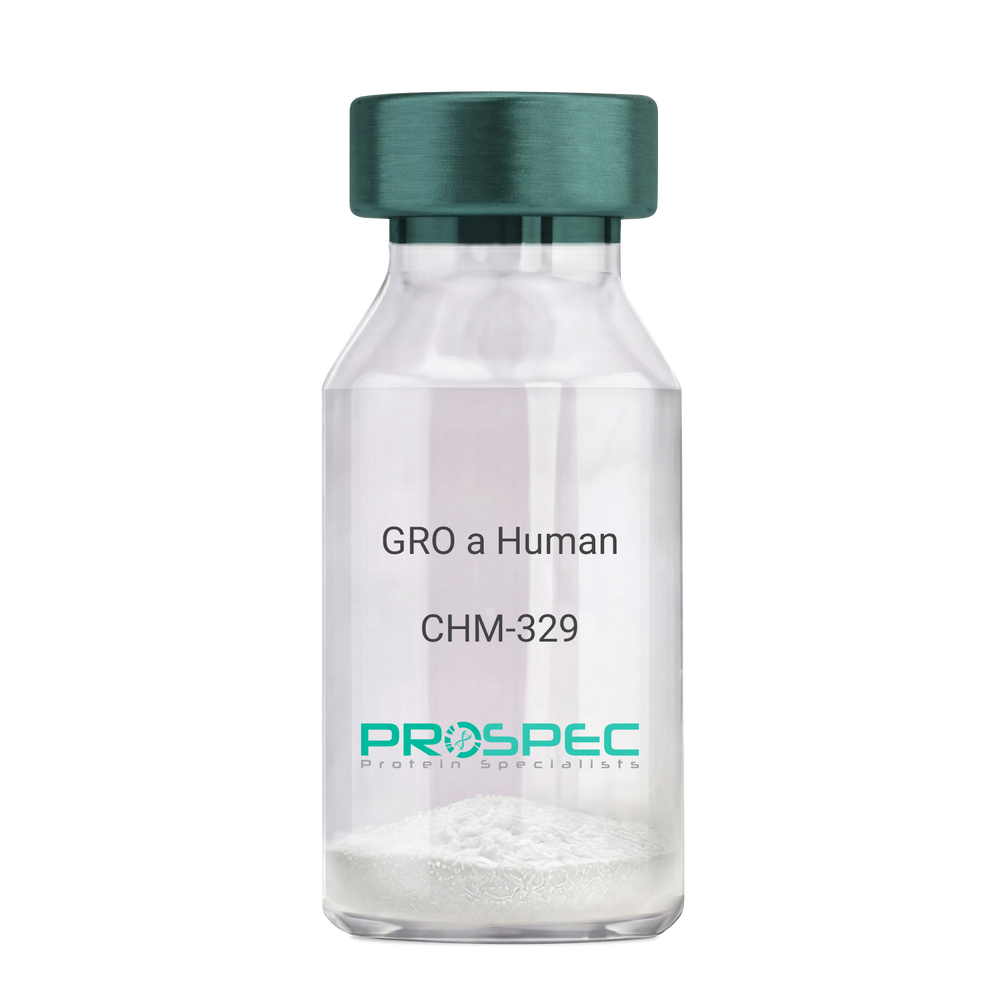
    CXCL1 Human

    Description:

    GRO-Alpha Human Recombinant (CXCL1)

    Growth-regulated protein alpha, CXCL1, Melanoma growth stimulatory activity, MGSA, Neutrophil-activating protein 3, NAP-3, GRO-alpha (1-73), chemokine (C-X-C motif) ligand 1, GRO1, GROa, SCYB1, MGSA-a, MGSA alpha.

    Product # :

    CHM-329

    Price :

    Quantity :

    Shipping Method :

    Room Temp Icon

    Shipped at Room temp

    Add To Cart

    More Info

    • description
    • source
    • formulation
    • purity
    • biological activity
    • More Info

    Description

    GRO Alpha Human Recombinant produced in E.Coli is a single,non-glycosylated, polypeptide chain containing 73 amino acids and having a molecular mass of 7811 Dalton. The GRO-alpha is purified by proprietary chromatographic techniques.

    Source

    Escherichia Coli.

    Formulation

    Lyophilized from a 0.2µm filtered concentrated (1mg/ml) solution in 20mM PB, pH 7.4, 50mM NaCl.

    Purity

    Greater than 97.0% as determined by:
    (a) Analysis by RP-HPLC.
    (b) Analysis by SDS-PAGE.

    Biological Activity

    Determined by its ability to chemoattract human peripheral blood neutrophils using a concentration range of 10.0-100.0 ng/ml.

    More Info

    • Introduction

      Chemokine (C-X-C motif) ligand 1 (CXCL1) is a small cytokine belonging to the CXC chemokine family that was previously called GRO1 oncogene, Neutrophil-activating protein 3 (NAP-3) and melanoma growth stimulating activity, alpha (MSGA-a). It is secreted by human melanoma cells, has mitogenic properties and is implicated in melanoma pathogenesis. CXCL1 is expressed by macrophages, neutrophilsand epithelial cells, and has neutrophil chemoattractant activity. CXCL1 plays a role in spinal cord development by inhibiting the migration of oligodendrocyte precursors and is involved in the processes of angiogenesis, inflammation, wound healing, and tumorigenesis. This chemokine elicits its effects by signaling through the chemokine receptor CXCR2. The gene for CXCL1 is located on human chromosome 4 amongst genes for other CXC chemokines.

    • Synonyms

      Growth-regulated protein alpha, CXCL1, Melanoma growth stimulatory activity, MGSA, Neutrophil-activating protein 3, NAP-3, GRO-alpha (1-73), chemokine (C-X-C motif) ligand 1, GRO1, GROa, SCYB1, MGSA-a, MGSA alpha.

    • Physical Appearance

      Sterile Filtered White lyophilized (freeze-dried) powder.

    • Stability

      Lyophilized GRO-alpha although stable at room temperature for 3 weeks, should be stored desiccated below -18°C. Upon reconstitution CXCL1 should be stored at 4°C between 2-7 days and for future use below -18°C. For long term storage it is recommended to add a carrier protein (0.1% HSA or BSA).Please prevent freeze-thaw cycles.

    • Solubility

      It is recommended to reconstitute the lyophilized CXCL1 in sterile 18MΩ-cm H2O not less than 100µg/ml, which can then be further diluted to other aqueous solutions.

    • Amino Acid Sequence

      The sequence of the first five N-terminal amino acids was determined and was found to be Ala-Ser-Val-Ala-Thr.

    • Background

      What is the molecular weight/Mw of CXCL1 HUMAN Protein?
      CXCL1 HUMAN Protein has a total Mw of 7.81kDa.

      What is the source or expression system of CXCL1 HUMAN Protein?
      Escherichia Coli.

      What is the Purity of CXCL1 HUMAN Protein?
      CXCL1 HUMAN Protein is >97% pure as determined by SDS-PAGE.

      What is the Biological Activity of CXCL1 HUMAN Protein?
      Determined by its ability to chemoattract human peripheral blood neutrophils using a concentration range of 10.0-100.0 ng/ml.

      What is the amino acid sequence of CXCL1 HUMAN Protein?
      The sequence of the first five N-terminal amino acids was determined and was found to be Ala-Ser-Val-Ala-Thr.

      What applications can CXCL1 HUMAN Protein be used in?
      CXCL1 HUMAN Protein can probably be used in western blot, ELISA and Lateral Flow.

      What is the endotoxin level for CXCL1 HUMAN Protein?
      The endotoxin level is minimal, CXCL1 HUMAN Protein was purified using conventional chromatography techniques.


    ProSpec's products are furnished for LABORATORY RESEARCH USE ONLY. The product may not be used as drugs, agricultural or pesticidal products, food additives or household chemicals.

    Gro A Human
  • View Data Sheet

    Name :

    TSG101 Human

    Description:

    Tumor Susceptibility Gene 101 Human Recombinant

    TSG10, VPS23, TSG101, ESCRT-I complex subunit TSG101, Tumor susceptibility gene 101 protein.

    Product # :

    PRO-805

    Price :

    Quantity :

    Shipping Method :

    Ice Icon

    Shipped with Ice Packs

    Add To Cart

    More Info

    • description
    • source
    • formulation
    • purity
    • More Info

    Description

    TSG101 Human Recombinant produced in E.Coli is a single, non-glycosylated, polypeptide chain containing 181 amino acids (1-145 a.a.) and having a molecular mass of 20.7 kDa. TSG101 protein is fused to a 36 amino acid His-Tag at N-terminus and purified by standard chromatography.

    Source

    Escherichia Coli.

    Formulation

    TSG101 protein solution (0.5mg/ml) containing 20mM Tris-HCl pH-8, 1mM DTT and 10% glycerol.

    Purity

    Greater than 90% as determined by SDS-PAGE.

    More Info

    • Introduction

      TSG101 is a member of apparently inactive homologs of ubiquitin-conjugating enzymes. TSG101 contains a coiled-coil domain that interacts with stathmin, a cytosolic phosphoprotein implicated in tumorigenesis. TSG101 is involved in cell growth and differentiation and acts as a negative growth regulator. TSG101 in vitro steady-state expression is important for maintenance of genomic stability and cell cycle regulation. TSG101 mutations and alternative splicing occur in high rate in breast cancer and implicate that defects occur during breast cancer tumorigenesis and/or progression. TSG101 is a factor of the ESCRT-I complex, a monitor of vesicular trafficking process. TSG101 binds to ubiquitinated cargo proteins and is needed for the sorting of endocytic ubiquitinated cargos into multivesicular bodies. TSG101 is needed for completion of cytokinesis and is involved in cell growth and differentiation.

    • Synonyms

      TSG10, VPS23, TSG101, ESCRT-I complex subunit TSG101, Tumor susceptibility gene 101 protein.

    • Physical Appearance

      Sterile filtered colorless solution.

    • Stability

      Store at 4°C if entire vial will be used within 2-4 weeks. Store, frozen at -20°C for longer periods of time. For long term storage it is recommended to add a carrier protein (0.1% HSA or BSA).Avoid multiple freeze-thaw cycles.

    • Amino Acid Sequence

      MRGSHHHHHH GMASMTGGQQ MGRDLYDDDD KDRWGSMAVS ESQLKKMVSK YKYRDLTVRE TVNVITLYKD LKPVLDSYVF NDGSSRELMN LTGTIPVPYR GNTYNIPICL WLLDTYPYNP PICFVKPTSS MTIKTGKHVD ANGKIYLPYL HEWKHPQSDL LGLIQVMIVV FGDEPPVFSR P.

    ProSpec's products are furnished for LABORATORY RESEARCH USE ONLY. The product may not be used as drugs, agricultural or pesticidal products, food additives or household chemicals.

    Tsg101 Human
  • View Data Sheet

    Name :

    GADD45GIP1 Human

    Description:

    Growth Arrest and DNA-Damage-Inducible Gamma Interacting Protein 1 Human Recombinant

    Growth arrest and DNA-damage-inducible gamma interacting protein 1, PRG6, CRIF1, PLINP-1, KBBP2, Plinp1, Papillomavirus L2-interacting nuclear protein 1, CKII beta-associating protein, CR6-interacting factor 1, p53-responsive gene 6 protein, CKII beta binding protein 2, growth arrest and DNA damage-inducible proteins-interacting protein 1, papillomavirus L2 interacting nuclear protein 1, PLINP1.

    Product # :

    PRO-972

    Price :

    Quantity :

    Shipping Method :

    Ice Icon

    Shipped with Ice Packs

    Add To Cart

    More Info

    • description
    • source
    • formulation
    • purity
    • More Info

    Description

    GADD45GIP1 Human Recombinant produced in E.coli is a single, non-glycosylated polypeptide chain containing 196 amino acids (48-222) and having a molecular mass of 22.6 kDa.GADD45GIP1 is fused to a 21 amino acid His-tag at N-terminus & purified by proprietary chromatographic techniques.

    Source

    E.coli.

    Formulation

    The GADD45GIP1 solution (0.25mg/ml) contains 20mM Tris-HCl buffer (pH 8.0), 2mM DTT, 0.2M NaCl and 40% glycerol.

    Purity

    Greater than 90% as determined by SDS-PAGE.

    More Info

    • Introduction

      GADD45GIP1 is a nuclear protein which takes part in apoptosis control. GADD45GIP1 is expressed in several tissues, such as heart, thyroid, trachea, kidney, ovary, pancreas, testis and stomach and acts as a negative regulator of G1 to S phase cell cycle production by collaborating with GADD45 proteins to inhibit the activity of cyclin-dependent kinases.

    • Synonyms

      Growth arrest and DNA-damage-inducible gamma interacting protein 1, PRG6, CRIF1, PLINP-1, KBBP2, Plinp1, Papillomavirus L2-interacting nuclear protein 1, CKII beta-associating protein, CR6-interacting factor 1, p53-responsive gene 6 protein, CKII beta binding protein 2, growth arrest and DNA damage-inducible proteins-interacting protein 1, papillomavirus L2 interacting nuclear protein 1, PLINP1.

    • Physical Appearance

      Sterile Filtered colorless solution.

    • Stability

      Store at 4°C if entire vial will be used within 2-4 weeks. Store, frozen at -20°C for longer periods of time. For long term storage it is recommended to add a carrier protein (0.1% HSA or BSA).Avoid multiple freeze-thaw cycles.

    • Amino Acid Sequence

      MGSSHHHHHH SSGLVPRGSH MPRWQLGPRY AAKQFARYGA ASGVVPGSLW PSPEQLRELE AEEREWYPSL ATMQESLRVK QLAEEQKRRE REQHIAECMA KMPQMIVNWQ QQQRENWEKA QADKERRARL QAEAQELLGY QVDPRSARFQ ELLQDLEKKE RKRLKEEKQK RKKEARAAAL AAAVAQDPAA SGAPSS

    ProSpec's products are furnished for LABORATORY RESEARCH USE ONLY. The product may not be used as drugs, agricultural or pesticidal products, food additives or household chemicals.

    Gadd45Gip1 Human
  • View Data Sheet

    Name :

    IL36RN Human, His

    Description:

    Interleukin-36 Receptor Antagonist Human Recombinant, His Tag

    Interleukin 36 receptor antagonist, FIL1, FIL1(DELTA), FIL1D, IL1F5, IL1HY1, IL1L1, IL1RP3, IL36RA, PSORP, FIL1 delta, Interleukin-1 HY1, IL-1 delta, Interleukin-1 receptor antagonist homolog 1, Interleukin-1-like protein 1, UNQ1896/PRO4342.

    Product # :

    CYT-844

    Price :

    Quantity :

    Shipping Method :

    Ice Icon

    Shipped with Ice Packs

    Add To Cart

    More Info

    • description
    • source
    • formulation
    • purity
    • More Info

    Description

    IL36RN Human Recombinant produced in E.Coli is a single, non-glycosylated polypeptide chain containing 175 amino acids (1-155 a.a) and having a molecular mass of 19.1kDa.IL36RN is fused to a 20 amino acid His-tag at N-terminus & purified by proprietary chromatographic techniques.

    Source

    Escherichia Coli.

    Formulation

    IL36RN protein solution (0.5mg/ml) containing Phosphate buffered saline (pH7.4) and 10% glycerol.

    Purity

    Greater than 95% as determined by SDS-PAGE.

    More Info

    • Introduction

      Human interleukin family 1, member 5 (IL-1F5 / FIL1-delta) belongs to the interleukin 1 cytokine family. IL1F5 is expressed by a variety of cells including monocytes, Bcells, dendritic cells/Langerhans cells, keratinocytes,and gastric fundus Parietal and Chief cells. IL1F5 is an antagonist of IL1F9; however IL1F5 activity related to receptor binding remains unclear. Human and mouse IL1F5 share 90% amino acid sequence identity.

    • Synonyms

      Interleukin 36 receptor antagonist, FIL1, FIL1(DELTA), FIL1D, IL1F5, IL1HY1, IL1L1, IL1RP3, IL36RA, PSORP, FIL1 delta, Interleukin-1 HY1, IL-1 delta, Interleukin-1 receptor antagonist homolog 1, Interleukin-1-like protein 1, UNQ1896/PRO4342.

    • Physical Appearance

      Sterile filtered colorless solution.

    • Stability

      Store at 4°C if entire vial will be used within 2-4 weeks. Store, frozen at -20°C for longer periods of time. For long term storage it is recommended to add a carrier protein (0.1% HSA or BSA).Avoid multiple freeze-thaw cycles.

    • Amino Acid Sequence

      MGSSHHHHHH SSGLVPRGSH MVLSGALCFR MKDSALKVLY LHNNQLLAGG LHAGKVIKGE EISVVPNRWL DASLSPVILG VQGGSQCLSC GVGQEPTLTL EPVNIMELYL GAKESKSFTF YRRDMGLTSS FESAAYPGWF LCTVPEADQP VRLTQLPENG GWNAPITDFY FQQCD.

    ProSpec's products are furnished for LABORATORY RESEARCH USE ONLY. The product may not be used as drugs, agricultural or pesticidal products, food additives or household chemicals.

    Il36Rn Human His
  • View Data Sheet

    Name :

    TNFRSF8 Mouse

    Description:

    CD30 Ligand Receptor Mouse Recombinant

    Tumor Necrosis Factor Receptor Superfamily, Member 8, Lymphocyte Activation Antigen CD30, CD30L Receptor, Ki-1 Antigen, D1S166E, CD30, Cytokine Receptor CD30, CD30 Antigen, Ki-1

    Product # :

    CYT-1165

    Price :

    Quantity :

    Shipping Method :

    Ice Icon

    Shipped with Ice Packs

    Add To Cart

    More Info

    • description
    • source
    • formulation
    • purity
    • More Info

    Description

    TNFRSF8 Mouse Recombinant produced in Baculovirus is a single glycosylated polypeptide chain containing 479 amino acids (19-258 aa) and having a molecular mass of 52.2kDa.TNFRSF8 is fused to a 239 amino acid hIgG-His tag at C-terminus and purified by proprietary chromatographic techniques.

    Source

    Sf9, Baculovirus cells.

    Formulation

    TNFRSF8 protein (1mg/ml) contains 10% glycerol and Phosphate-Buffered Saline (pH 7.4).

    Purity

    Greater than 90.0% as determined by SDS-PAGE.

    More Info

    • Introduction

      Tumor necrosis factor receptor superfamily member 8 (TNFRSF8) is a receptor for TNFSF8/CD30L. TNFRSF8 has a role in the regulation of cellular growth and transformation of activated lymphoblasts. In addition, the TNFRSF8 protein regulates gene expression via activation of NF-kappa-B. TNFRSF8 being a regulator of apoptosis, induces cell death or proliferation, depending on the cell type.

    • Synonyms

      Tumor Necrosis Factor Receptor Superfamily, Member 8, Lymphocyte Activation Antigen CD30, CD30L Receptor, Ki-1 Antigen, D1S166E, CD30, Cytokine Receptor CD30, CD30 Antigen, Ki-1

    • Physical Appearance

      Sterile Filtered colorless solution.

    • Stability

      Store at 4°C if entire vial will be used within 2-4 weeks. Store, frozen at -20°C for longer periods of time. For long term storage it is recommended to add a carrier protein (0.1% HSA or BSA).Avoid multiple freeze-thaw cycles.

    • Amino Acid Sequence

      FPTDRPLKTT CAGDLSHYPG EAARNCCYQC PSGLSPTQPC PRGPAHCRKQ CAPDYYVNED GKCTACVTCL PGLVEKAPCS GNSPRICECQ PGMHCCTPAV NSCARCKLHC SGEEVVKSPG TAKKDTICEL PSSGSGPNCS NPGDRKTLTS HATPQAMPTL ESPANDSARS LLPMRVTNLV QEDATELVKV PESSSSKARE PSPDPGNAEK NMTLELPSPG TLPDISTSEN SKEPASTAST LEPKSCDKTH TCPPCPAPEL LGGPSVFLFP PKPKDTLMIS RTPEVTCVVV DVSHEDPEVK FNWYVDGVEV HNAKTKPREE QYNSTYRVVS VLTVLHQDWL NGKEYKCKVS NKALPAPIEK TISKAKGQPR EPQVYTLPPS RDELTKNQVS LTCLVKGFYP SDIAVEWESN GQPENNYKTT PPVLDSDGSF FLYSKLTVDK SRWQQGNVFS CSVMHEALHN HYTQKSLSLS PGKHHHHHH

    ProSpec's products are furnished for LABORATORY RESEARCH USE ONLY. The product may not be used as drugs, agricultural or pesticidal products, food additives or household chemicals.

    Cd30 Mouse
  • View Data Sheet

    Name :

    ErbB4 Human

    Description:

    Tyrosine Kinase ErbB-4 Human Recombinant

    Receptor tyrosine-protein kinase erbB-4, Proto-oncogene-like protein c-ErbB-4, Tyrosine kinase-type cell surface receptor HER4, p180erbB4, 4ICD, E4ICD, s80HER4, ERBB4, HER4, receptor tyrosine-protein kinase erbB-4 isoform JM-a/CVT-1, receptor tyrosine-protein kinase erbB-4, tyrosine kinase-type cell surface receptor HER4, avian erythroblastic leukemia viral (v-erb-b2) oncogene homolog 4, proto-oncogene-like protein c-ErbB-4, ALS19, v-erb-a erythroblastic leukemia viral oncogene homolog 4, v-erb-b2 avian erythroblastic leukemia viral oncogene homolog 4, human epidermal growth factor receptor 4.

    Product # :

    PKA-128

    Price :

    Quantity :

    Shipping Method :

    Ice Icon

    Shipped with Ice Packs

    Add To Cart

    More Info

    • description
    • source
    • formulation
    • purity
    • biological activity
    • More Info

    Description

    ErbB4 Human Recombinant produced in HEK293 Cells is a single, glycosylated polypeptide chain containing 863 amino acids (26-649 a.a) and having a molecular mass of 96.6 kDa.ErbB4 is fused to a 239 amino acid hIgG-His-Tag at C-terminus & purified by proprietary chromatographic techniques.

    Source

    HEK293 Cells.

    Formulation

    The ErbB4 solution (0.25mg/ml) contains phosphate buffered saline (pH7.4) and 10% glycerol.

    Purity

    Greater than 90.0% as determined by SDS-PAGE.

    Biological Activity

    Measured by its binding ability in a functional ELISA with Human NRG1(CAT# cyt-1186). The ED50 range ≤ 0.2 ug/ml.

    More Info

    • Introduction

      Tyrosine Kinase ErbB-4 (ErbB4) is a receptor tyrosine kinase that is a member of the epidermal growth factor receptor family whose members play a role as receptors for the EGF family of growth factors. ErbB4is a single-pass type I transmembrane protein with multiple furin-like cysteine rich domains,PDZ domain binding motif, a tyrosine kinase domain and a phosphotidylinositol-3 kinase binding site. ErbB4binds its ligands with low affinity and is expressed in normal skeletal muscle, heart, pituitary, brain and some breast carcinomas. Monomeric ErbB4 takes part in neuronal development and development of the heart and cancer.

    • Synonyms

      Receptor tyrosine-protein kinase erbB-4, Proto-oncogene-like protein c-ErbB-4, Tyrosine kinase-type cell surface receptor HER4, p180erbB4, 4ICD, E4ICD, s80HER4, ERBB4, HER4, receptor tyrosine-protein kinase erbB-4 isoform JM-a/CVT-1, receptor tyrosine-protein kinase erbB-4, tyrosine kinase-type cell surface receptor HER4, avian erythroblastic leukemia viral (v-erb-b2) oncogene homolog 4, proto-oncogene-like protein c-ErbB-4, ALS19, v-erb-a erythroblastic leukemia viral oncogene homolog 4, v-erb-b2 avian erythroblastic leukemia viral oncogene homolog 4, human epidermal growth factor receptor 4.

    • Physical Appearance

      Sterile filtered colorless solution.

    • Stability

      Store at 4°C if entire vial will be used within 2-4 weeks.Store, frozen at -20°C for longer periods of time.For long term storage it is recommended to add a carrier protein (0.1% HSA or BSA).Avoid multiple freeze-thaw cycles.

    • Amino Acid Sequence

      QSVCAGTENK LSSLSDLEQQ YRALRKYYEN CEVVMGNLEI TSIEHNRDLS FLRSVREVTG YVLVALNQFR YLPLENLRII RGTKLYEDRY ALAIFLNYRK DGNFGLQELG LKNLTEILNG GVYVDQNKFL CYADTIHWQD IVRNPWPSNL TLVSTNGSSG CGRCHKSCTG RCWGPTENHC QTLTRTVCAE QCDGRCYGPY VSDCCHRECA GGCSGPKDTD CFACMNFNDS GACVTQCPQT FVYNPTTFQL EHNFNAKYTY GAFCVKKCPH NFVVDSSSCV RACPSSKMEV EENGIKMCKP CTDICPKACD GIGTGSLMSA QTVDSSNIDK FINCTKINGN LIFLVTGIHG DPYNAIEAID PEKLNVFRTV REITGFLNIQ SWPPNMTDFS VFSNLVTIGG RVLYSGLSLL ILKQQGITSL QFQSLKEISA GNIYITDNSN LCYYHTINWT TLFSTINQRI VIRDNRKAEN CTAEGMVCNH LCSSDGCWGP GPDQCLSCRR FSRGRICIES CNLYDGEFRE FENGSICVEC DPQCEKMEDG LLTCHGPGPD NCTKCSHFKD GPNCVEKCPD GLQGANSFIF KYADPDRECH PCHPNCTQGC NGPTSHDCIY YPWTGHSTLP QHARLEPKSC DKTHTCPPCP APELLGGPSV FLFPPKPKDT LMISRTPEVT CVVVDVSHED PEVKFNWYVD GVEVHNAKTK PREEQYNSTY RVVSVLTVLH QDWLNGKEYK CKVSNKALPA PIEKTISKAK GQPREPQVYT LPPSRDELTK NQVSLTCLVK GFYPSDIAVE WESNGQPENN YKTTPPVLDS DGSFFLYSKL TVDKSRWQQG NVFSCSVMHE ALHNHYTQKS LSLSPGKHHH HHH

    ProSpec's products are furnished for LABORATORY RESEARCH USE ONLY. The product may not be used as drugs, agricultural or pesticidal products, food additives or household chemicals.

    Erbb4 Human
  • View Data Sheet

    Name :

    SPI1 Human

    Description:

    Spi-1 Proto-Oncogene Human Recombinant

    Transcription factor PU.1, 31 kDa-transforming protein, Transcription factor PU.1 isoform 1, SPI1, OF, PU.1, SFPI1, SPI-1, SPI-A.

    Product # :

    PRO-2174

    Price :

    Quantity :

    Shipping Method :

    Ice Icon

    Shipped with Ice Packs

    Add To Cart

    More Info

    • description
    • source
    • formulation
    • purity
    • More Info

    Description

    SPI1 Human Recombinant produced in E. coli is a single polypeptide chain containing 294 amino acids (1-271) and having a molecular mass of 33.6kDa.SPI1 is fused to a 23 amino acid His-tag at N-terminus & purified by proprietary chromatographic techniques.

    Source

    Escherichia Coli.

    Formulation

    The SPI1 solution (0.25mg/1ml) contains 20mM Tris-HCl buffer (pH 8.0) and 10% glycerol.

    Purity

    Greater than 85.0% as determined by SDS-PAGE.

    More Info

    • Introduction

      Spi-1 Proto-Oncogene, also known as SPI1, owns ETS-domain transcription factor which activates gene expression during myeloid and Blymphoid cell development. SPI1 binds to a purine-rich sequence called the PU-box which is located near the promoters of target genes, and regulates their expression. SPI1 binds RNA and modulate pre-mRNA splicing. SPI1 is also regulates alternative splicing of target genes.

    • Synonyms

      Transcription factor PU.1, 31 kDa-transforming protein, Transcription factor PU.1 isoform 1, SPI1, OF, PU.1, SFPI1, SPI-1, SPI-A.

    • Physical Appearance

      Sterile Filtered clear solution.

    • Stability

      Store at 4°C if entire vial will be used within 2-4 weeks. Store, frozen at -20°C for longer periods of time. For long term storage it is recommended to add a carrier protein (0.1% HSA or BSA).Avoid multiple freeze-thaw cycles.

    • Amino Acid Sequence

      MGSSHHHHHH SSGLVPRGSH MGSMLQACKM EGFPLVPPQP SEDLVPYDTD LYQRQTHEYY PYLSSDGESH SDHYWDFHPH HVHSEFESFA ENNFTELQSV QPPQLQQLYR HMELEQMHVL DTPMVPPHPS LGHQVSYLPR MCLQYPSLSP AQPSSDEEEG ERQSPPLEVS DGEADGLEPG PGLLPGETGS KKKIRLYQFL LDLLRSGDMK DSIWWVDKDK GTFQFSSKHK EALAHRWGIQ KGNRKKMTYQ KMARALRNYG KTGEVKKVKK KLTYQFSGEV LGRGGLAERR HPPH.

    ProSpec's products are furnished for LABORATORY RESEARCH USE ONLY. The product may not be used as drugs, agricultural or pesticidal products, food additives or household chemicals.

    Spi1 Human
  • View Data Sheet

    Name :

    OSM Mouse

    Description:

    Oncostatin-M Mouse Recombinant

    Oncostatin-M, OSM, OncoM.

    Product # :

    CYT-168

    Price :

    Quantity :

    Shipping Method :

    Room Temp Icon

    Shipped at Room temp

    Add To Cart

    More Info

    • description
    • source
    • formulation
    • purity
    • biological activity
    • More Info

    Description

    OSM Mouse Recombinant produced in E.coli is a single, non-glycosylated polypeptide chain containing 181 amino acids and having a molecular mass of 20.4kDa.The OSM is purified by proprietary chromatographic techniques.

    Source

    Escherichia Coli.

    Formulation

    OSM protein was lyophilized from a 0.2µm filtered concentrated solution in 1xPBS, pH 7.4.

    Purity

    Greater than 95.0% as determined by:
    (a) Analysis by RP-HPLC.
    (b) Analysis by SDS-PAGE.

    Biological Activity

    The ED50 as determined by the dose-dependent stimulation of the proliferation of NIH-3T3 mouse embryonic fibroblast cells is < 1 ng/ml, corresponding to a specific activity of > 1.0×10⁶ units/mg.

    More Info

    • Introduction

      Oncostatin M is a member of a cytokine family that includes leukemia-inhibitory factor, granulocyte colony-stimulating factor, and interleukin 6. This gene encodes a growth regulator which inhibits the proliferation of a number of tumor cell lines. It regulates cytokine production, including IL-6, G-CSF and GM-CSF from endothelial cells.

    • Synonyms

      Oncostatin-M, OSM, OncoM.

    • Physical Appearance

      Sterile Filtered White lyophilized (freeze-dried) powder.

    • Stability

      Lyophilized Oncostatin M although stable at room temperature for 3 weeks, should be stored desiccated below -18°C. Upon reconstitution Oncostatin should be stored at 4°C between 2-7 days and for future use below -18°C.For long term storage it is recommended to add a carrier protein (0.1% HSA or BSA).Please prevent freeze-thaw cycles.

    • Solubility

      It is recommended to reconstitute the lyophilized Oncostatin M in sterile 18MΩ-cm H2O not less than 100µg/ml, which can then be further diluted to other aqueous solutions.

    • Amino Acid Sequence

      NRGCSNSSSQ LLSQLQNQAN LTGNTESLLE PYIRLQNLNT PDLRAACTQH SVAFPSEDTL RQLSKPHFLS TVYTTLDRVL YQLDALRQKF LKTPAFPKLD SARHNILGIR NNVFCMARLL NHSLEIPEPT QTDSGASRST TTPDVFNTKI GSCGFLWGYH RFMGSVGRVF REWDDGSTRS R.

    ProSpec's products are furnished for LABORATORY RESEARCH USE ONLY. The product may not be used as drugs, agricultural or pesticidal products, food additives or household chemicals.

    Osm Mouse
  • View Data Sheet

    Name :

    RHOV Human

    Description:

    Ras Homolog Gene Family Member V Human Recombinant

    Ras homolog family member V, Rho GTPase-like protein ARHV, Wnt-1 responsive Cdc42 homolog 2, WRCH1-related GTPase, GTP-binding protein-like 2, WRCH-2, ARHV, CDC42-like GTPase 2, CHP.

    Product # :

    PRO-1199

    Price :

    Quantity :

    Shipping Method :

    Ice Icon

    Shipped with Ice Packs

    Add To Cart

    More Info

    • description
    • source
    • formulation
    • purity
    • More Info

    Description

    RHOV Human Recombinant produced in E. coli is a single polypeptide chain containing 259 amino acids (1-236) and having a molecular mass of 28.6 kDa.RHOV is fused to a 23 amino acid His-tag at N-terminus & purified by proprietary chromatographic techniques.

    Source

    E.coli.

    Formulation

    The RHOV solution (1mg/1ml) contains 20mM Tris-HCl buffer (pH 8.0), 0.1M NaCl, 2M Urea, 1mM DTT and 20% glycerol.

    Purity

    Greater than 85% as determined by SDS-PAGE.

    More Info

    • Introduction

      RHOV belongs to the Rho family and to the small GTPase superfamily. RHOV is a 236 aa protein which regulates the actin cytoskeleton by activating the JNK pathway. RHOV is expressed in placenta, pancreas and fetal brain and operates as a lipid anchor at the cytoplasmic side of the cell membrane.

    • Synonyms

      Ras homolog family member V, Rho GTPase-like protein ARHV, Wnt-1 responsive Cdc42 homolog 2, WRCH1-related GTPase, GTP-binding protein-like 2, WRCH-2, ARHV, CDC42-like GTPase 2, CHP.

    • Physical Appearance

      Sterile Filtered colorless solution.

    • Stability

      Store at 4°C if entire vial will be used within 2-4 weeks. Store, frozen at -20°C for longer periods of time. For long term storage it is recommended to add a carrier protein (0.1% HSA or BSA).Avoid multiple freeze-thaw cycles.

    • Amino Acid Sequence

      MGSSHHHHHH SSGLVPRGSH MGSMPPRELS EAEPPPLRAP TPPPRRRSAP PELGIKCVLV GDGAVGKSSL IVSYTCNGYP ARYRPTALDT FSVQVLVDGA PVRIELWDTA GQEDFDRLRS LCYPDTDVFL ACFSVVQPSS FQNITEKWLP EIRTHNPQAP VLLVGTQADL RDDVNVLIQL DQGGREGPVP QPQAQGLAEK IRACCYLECS ALTQKNLKEV FDSAILSAIE HKARLEKKLN AKGVRTLSRC RWKKFFCFV

    ProSpec's products are furnished for LABORATORY RESEARCH USE ONLY. The product may not be used as drugs, agricultural or pesticidal products, food additives or household chemicals.

    Rhov Human
  • View Data Sheet

    Name :

    ZNF689 Human

    Description:

    Zinc Finger Protein 689 Human Recombinant

    Zinc Finger Protein 689, Transcription-Involved Protein Upregulated in HCC 1, TIPUH1.

    Product # :

    PRO-1737

    Price :

    Quantity :

    Shipping Method :

    Ice Icon

    Shipped with Ice Packs

    Add To Cart

    More Info

    • description
    • source
    • formulation
    • purity
    • More Info

    Description

    ZNF689 Human Recombinant produced in E. coli is a single, non-glycosylated polypeptide chain containing 523 amino acids (1-500a.a) and having a molecular mass of 59.3kDa.ZNF689 is fused to a 23 amino acid His-tag at N-terminus & purified by proprietary chromatographic techniques.

    Source

    Escherichia Coli.

    Formulation

    ZNF689 protein solution (1.0mg/ml) containing 20mM Tris-HCl buffer (pH 8.0), 10% glycerol and 0.4M Urea.

    Purity

    Greater than 85.0% as determined by SDS-PAGE.

    More Info

    • Introduction

      Zinc Finger Protein 689 (ZNF689) is a member of the krueppel C2H2-type zinc-finger protein family. The ZNF689 protein contains 12 C2H2-type zinc fingers and 1 KRAB domain. ZNF689 may be involved in transcriptional regulation.

    • Synonyms

      Zinc Finger Protein 689, Transcription-Involved Protein Upregulated in HCC 1, TIPUH1.

    • Physical Appearance

      Sterile filtered colorless solution.

    • Stability

      Store at 4°C if entire vial will be used within 2-4 weeks.Store, frozen at -20°C for longer periods of time. For long term storage it is recommended to add a carrier protein (0.1% HSA or BSA).Avoid multiple freeze-thaw cycles.

    • Amino Acid Sequence

      MGSSHHHHHH SSGLVPRGSH MGSMAPPSAP LPAQGPGKAR PSRKRGRRPR ALKFVDVAVY FSPEEWGCLR PAQRALYRDV MRETYGHLGA LGCAGPKPAL ISWLERNTDD WEPAALDPQE YPRGLTVQRK SRTRKKNGEK EVFPPKEAPR KGKRGRRPSK PRLIPRQTSG GPICPDCGCT FPDHQALESH KCAQNLKKPY PCPDCGRRFS YPSLLVSHRR AHSGECPYVC DQCGKRFSQR KNLSQHQVIH TGEKPYHCPD CGRCFRRSRS LANHRTTHTG EKPHQCPSCG RRFAYPSLLA IHQRTHTGEK PYTCLECNRR FRQRTALVIH QRIHTGEKPY PCPDCERRFS SSSRLVSHRR VHSGERPYAC EHCEARFSQR STLLQHQLLH TGEKPYPCPD CGRAFRRSGS LAIHRSTHTE EKLHACDDCG RRFAYPSLLA SHRRVHSGER PYACDLCSKR FAQWSHLAQH QLLHTGEKPF PCLECGRCFR QRWSLAVHKC SPKAPNCSPR SAIGGSSQRG NAH.

    ProSpec's products are furnished for LABORATORY RESEARCH USE ONLY. The product may not be used as drugs, agricultural or pesticidal products, food additives or household chemicals.

    Znf689 Human
  • 1
  • …
  • 5
  • 6
  • 7
  • 8
  • 9
  • …
  • 42
Your browser does not support the video tag.

Products

  • Cytokines
  • Growth Factors
  • Chemokines
  • CD Antigens
  • Neurotrophins
  • Hormones
  • Enzymes
  • Viral Antigens
  • Recombinant Proteins
  • Natural Proteins
  • Monoclonal Antibodies
  • Polyclonal Antibodies
  • Thermal Packaging

About

  • Company
  • Founder
  • Contribution
  • Contact Us
  • My Account

Ordering

  • Ordering Method
  • Ordering - Credit Card
  • Ordering PO
  • Shipping Fees
  • FAQ's

Legal

  • Terms & Conditions
  • Privacy
  • Site Map
  • info@prospecbio.com
  • Facebook
  • Instagram
  • Linkedin Profile

© 2026 ProSpec-Tany TechnoGene Ltd. All Rights Reserved.

  • Choosing a selection results in a full page refresh.
  • Opens in a new window.