Skip to content

High-quality research proteins.

  • 1-800-805-6531

  • Mon - Sat 8.00-18.00, Sun - Closed

  • info@prospecbio.com

  • PO Box 6591 East Brunswick NJ 08816

  • Products
    • Cytokines
    • Growth factors
    • Chemokines
    • Cd antigens
    • Neurotrophins
    • Hormones
    • Enzymes
    • Viral antigens
    • Recombinant proteins
    • Natural proteins
    • Monoclonal antibodies
    • Polyclonal antibodies
    • Thermal Packaging
  • About
    • Company
    • Founder
    • Contribution
  • Customers
    • Eastern Asia
    • Eastern Europe
    • North America
    • South America
    • South East Asia
    • Southern Asia
    • Western Europe
  • Ordering
    • Ordering Method
    • Ordering - Credit Card
    • Ordering - PO
    • Shipping Fees
    • FAQs
  • Services
    • DNA Cloning
    • Protein Expression
    • Monoclonal Antibody
    • Fermentation
    • Technology License
  • Contact us
Log in

Country/region

  • USD $ | Albania
  • USD $ | Andorra
  • USD $ | Argentina
  • USD $ | Armenia
  • USD $ | Australia
  • USD $ | Austria
  • USD $ | Azerbaijan
  • USD $ | Belarus
  • USD $ | Belgium
  • USD $ | Bolivia
  • USD $ | Brazil
  • USD $ | Bulgaria
  • USD $ | Cambodia
  • USD $ | Canada
  • USD $ | Chile
  • USD $ | China
  • USD $ | Colombia
  • USD $ | Costa Rica
  • USD $ | Croatia
  • USD $ | Cyprus
  • USD $ | Czechia
  • USD $ | Denmark
  • USD $ | Estonia
  • USD $ | Finland
  • USD $ | France
  • USD $ | Georgia
  • USD $ | Germany
  • USD $ | Greece
  • USD $ | Hong Kong SAR
  • USD $ | Hungary
  • USD $ | Iceland
  • USD $ | India
  • USD $ | Ireland
  • USD $ | Israel
  • USD $ | Italy
  • USD $ | Japan
  • USD $ | Kazakhstan
  • USD $ | Latvia
  • USD $ | Liechtenstein
  • USD $ | Lithuania
  • USD $ | Madagascar
  • USD $ | Malta
  • USD $ | Mexico
  • USD $ | Moldova
  • USD $ | Monaco
  • USD $ | Netherlands
  • USD $ | New Zealand
  • USD $ | North Macedonia
  • USD $ | Norway
  • USD $ | Panama
  • USD $ | Paraguay
  • USD $ | Peru
  • USD $ | Philippines
  • USD $ | Poland
  • USD $ | Portugal
  • USD $ | Romania
  • USD $ | Singapore
  • USD $ | Slovakia
  • USD $ | Slovenia
  • USD $ | South Africa
  • USD $ | South Korea
  • USD $ | Spain
  • USD $ | Sri Lanka
  • USD $ | Sweden
  • USD $ | Switzerland
  • USD $ | Taiwan
  • USD $ | Thailand
  • USD $ | Türkiye
  • USD $ | Ukraine
  • USD $ | United Kingdom
  • USD $ | United States
  • USD $ | Uruguay
  • USD $ | Vatican City
  • USD $ | Venezuela
  • USD $ | Vietnam
  • Facebook
  • Instagram
logoProSpec - Recombinant Protein Manufacturer for academic and R&D industry
Become a distributor
Account Log in
Wishlist
Cart Cart(0)
  • Products
    +
    • Cytokines
    • Growth factors
    • Chemokines
    • Cd antigens
    • Neurotrophins
    • Hormones
    • Enzymes
    • Viral antigens
    • Recombinant proteins
    • Natural proteins
    • Monoclonal antibodies
    • Polyclonal antibodies
    • Thermal Packaging
  • About
    +
    • Company
    • Founder
    • Contribution
  • Customers
    +
    • Eastern Asia
    • Eastern Europe
    • North America
    • South America
    • South East Asia
    • Southern Asia
    • Western Europe
  • Ordering
    +
    • Ordering Method
    • Ordering - Credit Card
    • Ordering - PO
    • Shipping Fees
    • FAQs
  • Services
    +
    • DNA Cloning
    • Protein Expression
    • Monoclonal Antibody
    • Fermentation
    • Technology License
  • Contact us

Item added to your cart

View cart
View All
  • Cytokines
  • Growth factors
  • Chemokines
  • Cd antigens
  • Neurotrophins
  • Hormones
  • Enzymes
  • Viral antigens
  • Recombinant proteins
  • Natural proteins
  • Monoclonal antibodies
  • Polyclonal antibodies
  • Thermal Packaging
  • Tumor Necrosis Factor

    Tumor Necrosis Factor

    View All
  • 4-1BB

    4-1BB

    View All
  • Adiponectin

    Adiponectin

    View All
  • AIF1

    AIF1

    View All
  • Other Cytokines

    Other Cytokines

    View All
  • AITRL

    AITRL

    View All
  • Angiopoietin

    Angiopoietin

    View All
  • Apolipoprotein

    Apolipoprotein

    View All
  • B-Cell Activating Factor

    B-Cell Activating Factor

    View All
  • Beta Defensin

    Beta Defensin

    View All
  • Bone Morphogenetic Protein

    Bone Morphogenetic Protein

    View All
  • B type Natriuretic Peptide

    B type Natriuretic Peptide

    View All
  • BST

    BST

    View All
  • Betacellulin

    Betacellulin

    View All
  • Cardiotrophin

    Cardiotrophin

    View All
  • Activin

    Activin

    View All
  • Fibroblast Growth Factor

    Fibroblast Growth Factor

    View All
  • Other Growth Factors

    Other Growth Factors

    View All
  • CSF

    CSF

    View All
  • CTGF

    CTGF

    View All
  • IGFBP

    IGFBP

    View All
  • VEGF Protein

    VEGF Protein

    View All
  • EGF

    EGF

    View All
  • Epigen

    Epigen

    View All
  • Erythropoietin

    Erythropoietin

    View All
  • Insulin-Like Growth Factor

    Insulin-Like Growth Factor

    View All
  • Growth Hormone

    Growth Hormone

    View All
  • HDGF

    HDGF

    View All
  • Hepatocyte Growth Factor

    Hepatocyte Growth Factor

    View All
  • Insulin

    Insulin

    View All
  • BCA-1/ BLC (CXCL13)

    BCA-1/ BLC (CXCL13)

    View All
  • BRAK (CXCL14)

    BRAK (CXCL14)

    View All
  • C-10 (CCL6)

    C-10 (CCL6)

    View All
  • Other Chemokines

    Other Chemokines

    View All
  • MEC (CCL28)

    MEC (CCL28)

    View All
  • LD78-beta (CCL3L1)

    LD78-beta (CCL3L1)

    View All
  • CTACK (CCL27)

    CTACK (CCL27)

    View All
  • CXCL16

    CXCL16

    View All
  • CXCL17

    CXCL17

    View All
  • Platelet Factor-4 (CXCL4)

    Platelet Factor-4 (CXCL4)

    View All
  • ENA-78 (CXCL5)

    ENA-78 (CXCL5)

    View All
  • Eotaxin (CCL11,24,26)

    Eotaxin (CCL11,24,26)

    View All
  • Exodus-2 (CCL21)

    Exodus-2 (CCL21)

    View All
  • Fractalkine (CX3CL1)

    Fractalkine (CX3CL1)

    View All
  • CXCL6

    CXCL6

    View All
  • Other CD Antigens

    Other CD Antigens

    View All
  • CD14

    CD14

    View All
  • CD164

    CD164

    View All
  • CD1

    CD1

    View All
  • CD2

    CD2

    View All
  • CD200

    CD200

    View All
  • CD207

    CD207

    View All
  • CD226

    CD226

    View All
  • CD23

    CD23

    View All
  • CD244

    CD244

    View All
  • CD247

    CD247

    View All
  • CD27

    CD27

    View All
  • CD274

    CD274

    View All
  • CD300

    CD300

    View All
  • CD33

    CD33

    View All
  • Other Neurotrophins

    Other Neurotrophins

    View All
  • Beta-NGF

    Beta-NGF

    View All
  • BDNF

    BDNF

    View All
  • CDNF

    CDNF

    View All
  • CNTF

    CNTF

    View All
  • GDNF

    GDNF

    View All
  • Glia Maturation Factor

    Glia Maturation Factor

    View All
  • MANF

    MANF

    View All
  • Midkine

    Midkine

    View All
  • Neuroglobin

    Neuroglobin

    View All
  • Neurotrophic factors

    Neurotrophic factors

    View All
  • Neuregulin

    Neuregulin

    View All
  • Neuropilin

    Neuropilin

    View All
  • Pigment Epithelium-Derived Factor

    Pigment Epithelium-Derived Factor

    View All
  • Pleiotrophin

    Pleiotrophin

    View All
  • Peptide Hormones

    Peptide Hormones

    View All
  • Other Hormones

    Other Hormones

    View All
  • HCG

    HCG

    View All
  • Endothelin

    Endothelin

    View All
  • Exendin

    Exendin

    View All
  • FSH

    FSH

    View All
  • Glucagon

    Glucagon

    View All
  • GHRP

    GHRP

    View All
  • GLP

    GLP

    View All
  • Thyrostimulin

    Thyrostimulin

    View All
  • Inhibin A

    Inhibin A

    View All
  • LHRH

    LHRH

    View All
  • Melanotan

    Melanotan

    View All
  • Procalcitonin

    Procalcitonin

    View All
  • PTH

    PTH

    View All
  • Peroxiredoxin

    Peroxiredoxin

    View All
  • Peptidase

    Peptidase

    View All
  • Synthetase

    Synthetase

    View All
  • Transferase

    Transferase

    View All
  • Hydrolase

    Hydrolase

    View All
  • Dehydrogenase

    Dehydrogenase

    View All
  • ACE2

    ACE2

    View All
  • Esterase

    Esterase

    View All
  • Protein Kinases

    Protein Kinases

    View All
  • Other Enzymes

    Other Enzymes

    View All
  • Phosphatase

    Phosphatase

    View All
  • Deaminase

    Deaminase

    View All
  • Oxygenase

    Oxygenase

    View All
  • Adenylate Kinase

    Adenylate Kinase

    View All
  • Lyase

    Lyase

    View All
  • Chagas

    Chagas

    View All
  • SARS

    SARS

    View All
  • Influenza

    Influenza

    View All
  • ASFV

    ASFV

    View All
  • Astrovirus

    Astrovirus

    View All
  • Borrelia

    Borrelia

    View All
  • Helicobacter Pylori

    Helicobacter Pylori

    View All
  • Chikungunya

    Chikungunya

    View All
  • Chlamydia

    Chlamydia

    View All
  • Cytomegalo

    Cytomegalo

    View All
  • Dengue

    Dengue

    View All
  • EBV

    EBV

    View All
  • Ebola

    Ebola

    View All
  • Feline Leukemia Virus

    Feline Leukemia Virus

    View All
  • Hepatitis A

    Hepatitis A

    View All
  • Other

    Other

    View All
  • Actin

    Actin

    View All
  • ADAM

    ADAM

    View All
  • Complement Component

    Complement Component

    View All
  • Ag85

    Ag85

    View All
  • Eukaryotic Translation Initiation Factor

    Eukaryotic Translation Initiation Factor

    View All
  • Anterior Gradient Protein

    Anterior Gradient Protein

    View All
  • Heat Shock Protein

    Heat Shock Protein

    View All
  • Alpha-2-HS-Glycoprotein

    Alpha-2-HS-Glycoprotein

    View All
  • Hemoglobin

    Hemoglobin

    View All
  • Allergy

    Allergy

    View All
  • Anaplasma

    Anaplasma

    View All
  • Angiogenin

    Angiogenin

    View All
  • Ankyrin Repeat Domain

    Ankyrin Repeat Domain

    View All
  • Annexin

    Annexin

    View All
  • Other Natural Proteins

    Other Natural Proteins

    View All
  • Aprotinin

    Aprotinin

    View All
  • Transferrin

    Transferrin

    View All
  • Avidin

    Avidin

    View All
  • Anti Coagulation Factors

    Anti Coagulation Factors

    View All
  • Natural Albumin

    Natural Albumin

    View All
  • Natural Coagulation Factors

    Natural Coagulation Factors

    View All
  • Fibronectin

    Fibronectin

    View All
  • Thrombin

    Thrombin

    View All
  • Anti Human Enzyme

    Anti Human Enzyme

    View All
  • Other Monoclonal Antibodies

    Other Monoclonal Antibodies

    View All
  • Anti Human Cytokine

    Anti Human Cytokine

    View All
  • Anti Human Heat Shock Protein

    Anti Human Heat Shock Protein

    View All
  • Anti Mouse Lymphocyte

    Anti Mouse Lymphocyte

    View All
  • Anti Human Chemokine

    Anti Human Chemokine

    View All
  • Anti Human Lymphocyte

    Anti Human Lymphocyte

    View All
  • Anti Viral Monoclonal

    Anti Viral Monoclonal

    View All
  • Anti Mouse Cytokine

    Anti Mouse Cytokine

    View All
  • Anti-GST Monoclonal

    Anti-GST Monoclonal

    View All
  • Other Polyclonal Antibodies

    Other Polyclonal Antibodies

    View All
  • Anti Viral

    Anti Viral

    View All
  • Anti-GST Monoclonal

    Anti-GST Monoclonal

    View All
Back

Search results

1000 results found for “Isomerase”

Name

Description

Product #

Price

Quantity

Shipping Method

  • View Data Sheet

    Name :

    Alkaline Phosphatase Bovine

    Description:

    Alkaline Phosphatase Bovine Intestinal

    EC 3.1.3.1, IAP, AP, ALPI, Intestinal-type alkaline phosphatase, Intestinal alkaline phosphatase.

    Product # :

    ENZ-322

    Price :

    Quantity :

    Shipping Method :

    Ice Icon

    Shipped with Ice Packs

    Add To Cart

    More Info

    • description
    • source
    • formulation
    • purity
    • biological activity
    • More Info

    Description

    The Alkaline Phosphatase is purified by affinity chromatography, which results in an enzyme of high specific activity and purity. Alkaline Phosphatase is Dimeric protein having a molecular weight of 140 kDa, one Zn++ ion is tightly bound to each subunit, and another less tightly bound is involved in the catalytic reaction. Mg++ stimulates the catalysis. The binding site for Mg++ is different to that of Zn++, but will be occupied by excess Zn++ followed by loss of enzyme activity.

    Source

    Calf Intestine.

    Formulation

    50% glycerol, 5mM MgCl2, 0.1mM ZnCl2 and 5mM TRIS, pH 7.0.

    Purity

    95% pure by Gel Filtration.

    Biological Activity

    >1500 U/mg (pH 9.6), 25°C and 0.025M glycin, 10% glycerol as buffer.

    More Info

    • Synonyms

      EC 3.1.3.1, IAP, AP, ALPI, Intestinal-type alkaline phosphatase, Intestinal alkaline phosphatase.

    • Physical Appearance

      Sterile Filtered clear colorless solution.

    • Stability

      AP should be stored at 4°C. Please Do-Not freeze.

    ProSpec's products are furnished for LABORATORY RESEARCH USE ONLY. The product may not be used as drugs, agricultural or pesticidal products, food additives or household chemicals.

    Alkaline Phosphatase
  • View Data Sheet

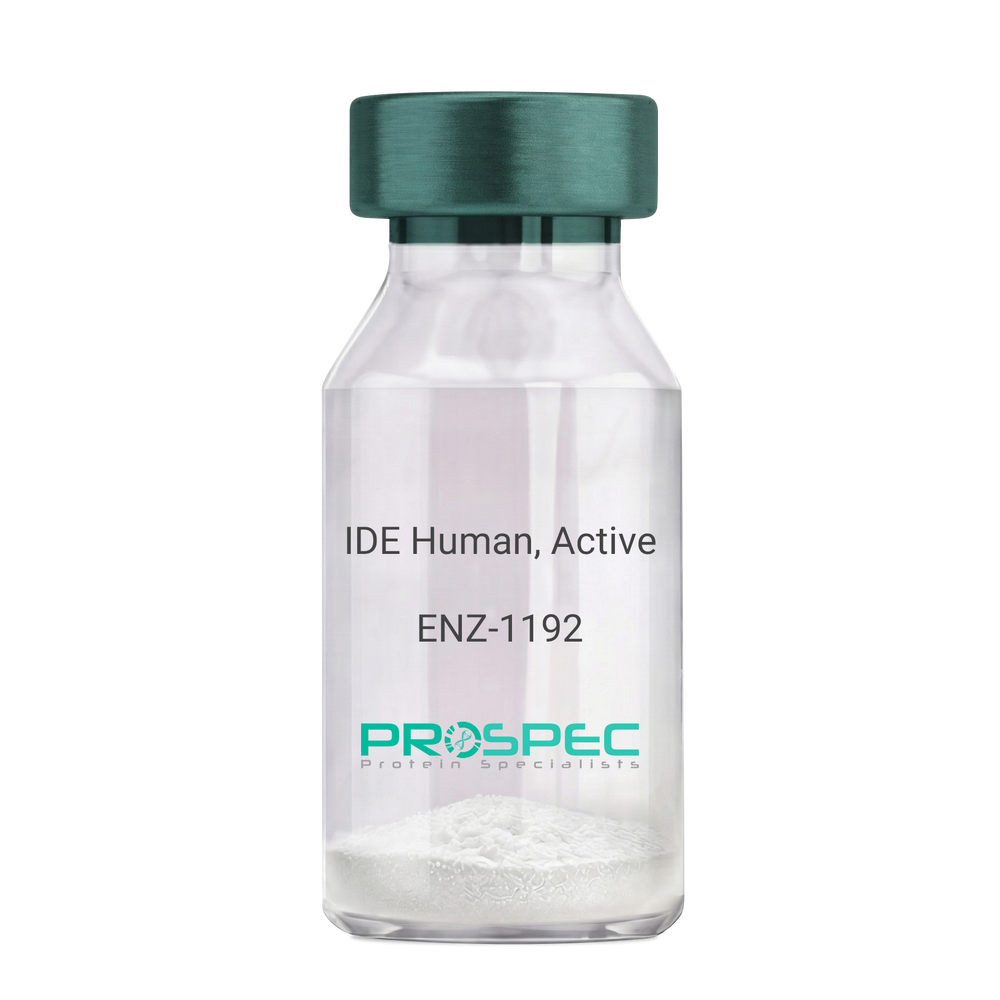
    Name :

    IDE Human, Active

    Description:

    Insulin-Degrading Enzyme Human Recombinant

    Insulin-Degrading Enzyme, Abeta-Degrading Protease, Insulysin, EC 3.4.24.56, Insulinase, Insulin Protease, INSULYSIN, EC 3.4.24, IDE, insulin-degrading enzyme isoform 1. 

    Product # :

    ENZ-1192

    Price :

    Quantity :

    Shipping Method :

    Ice Icon

    Shipped with Ice Packs

    Add To Cart

    More Info

    • description
    • source
    • formulation
    • purity
    • biological activity
    • More Info

    Description

    IDE Human, Active Human Recombinant produced in E.Coli is a single, non-glycosylated, polypeptide chain (42-1019 a.a) containing a total of 984 amino acids, having a molecular mass of 114 kDa. IDE is fused to a 6 amino acid His-tag at C-terminus and is purified by proprietary chromatographic techniques.

    Source

    Escherichia Coli.

    Formulation

    The IDE solution (0.5mg/ml) contains 10% Glycerol, 100mM NaCl, 0.05% Brij35 and 20mM Tris-HCl buffer (pH 7.5).

    Purity

    Greater than 90.0% as determined by SDS-PAGE.

    Biological Activity

    Specific activity is greater than 3,000 pmol/min/ug in which 1 unit will convert 1.0 pmole of Mca-RPPGFSAFK(Dnp)-OH to MCA-Pro-Leu-OH per minute at pH 7.5 at 25°C.

    More Info

    • Synonyms

      Insulin-Degrading Enzyme, Abeta-Degrading Protease, Insulysin, EC 3.4.24.56, Insulinase, Insulin Protease, INSULYSIN, EC 3.4.24, IDE, insulin-degrading enzyme isoform 1.

    • Physical Appearance

      Filtered colorless solution.

    • Stability

      Store at 4°C if entire vial will be used within 2-4 weeks. Store, frozen at -20°C for longer periods of time. For long term storage it is recommended to add a carrier protein (0.1% HSA or BSA). Avoid multiple freeze-thaw cycles.

    • Amino Acid Sequence

      MNNPAIKRIG NHITKSPEDK REYRGLELAN GIKVLLISDP TTDKSSAALD VHIGSLSDPP NIAGLSHFCE HMLFLGTKKY PKENEYSQFL SEHAGSSNAF TSGEHTNYYF DVSHEHLEGA LDRFAQFFLC PLFDESCKDR EVNAVDSEHE KNVMNDAWRL FQLEKATGNP KHPFSKFGTG NKYTLETRPN QEGIDVRQEL LKFHSAYYSS NLMAVCVLGR ESLDDLTNLV VKLFSEVENK NVPLPEFPEH PFQEEHLKQL YKIVPIKDIR NLYVTFPIPD LQKYYKSNPG HYLGHLIGHE GPGSLLSELK SKGWVNTLVG GQKEGARGFM FFIINVDLTE EGLLHVEDII LHMFQYIQKL RAEGPQEWVF QECKDLNAVA FRFKDKERPR GYTSKIAGIL HYYPLEEVLT AEYLLEEFRP DLIEMVLDKL RPENVRVAIV SKSFEGKTDR TEEWYGTQYK QEAIPDEVIK KWQNADLNGK FKLPTKNEFI PTNFEILPLE KEATPYPALI KDTAMSKLWF KQDDKFFLPK ACLNFEFFSP FAYVDPLHCN MAYLYLELLK DSLNEYAYAA ELAGLSYDLQ NTIYGMYLSV KGYNDKQPIL LKKIIEKMAT FEIDEKRFEI IKEAYMRSLN NFRAEQPHQH AMYYLRLLMT EVAWTKDELK EALDDVTLPR LKAFIPQLLS RLHIEALLHG NITKQAALGI MQMVEDTLIE HAHTKPLLPS
      QLVRYREVQL PDRGWFVYQQ RNEVHNNCGI EIYYQTDMQS TSENMFLELF CQIISEPCFN TLRTKEQLGY IVFSGPRRAN GIQGLRFIIQ SEKPPHYLES RVEAFLITME KSIEDMTEEA FQKHIQALAI RRLDKPKKLS AECAKYWGEI ISQQYNFDRD NTEVAYLKTL TKEDIIKFYK EMLAVDAPRR HKVSVHVLAR EMDSCPVVGE FPCQNDINLS QAPALPQPEV IQNMTEFKRG LPLFPLVKPH INFMAAKLHH HHHH.

    • Background

      Insulin-degrading enzyme (IDE) is a crucial protease that plays a significant role in maintaining glucose homeostasis by degrading insulin and other bioactive peptides. Dysregulation of IDE has been implicated in various metabolic disorders, particularly type 2 diabetes mellitus. IDE is also associated with the clearance of amyloid-beta peptides in the brain, making it relevant to Alzheimer's disease pathology. Studying the recombinant form of IDE is fundamental to understanding its functional mechanisms and exploring potential avenues for therapeutic interventions.

      The primary goal of this research is to express and purify recombinant IDE using diverse expression systems. Recombinant DNA techniques will be employed to construct expression vectors containing the IDE gene, followed by expression in bacterial, yeast, or mammalian cell-based systems. The recombinant IDE will be purified using affinity chromatography or other appropriate methods, facilitating subsequent biochemical and biophysical characterization.

      The second objective is to investigate the substrate specificity and catalytic activity of the purified IDE. In vitro enzymatic assays will be conducted to analyse the ability of the recombinant IDE to degrade insulin and other potential substrates. The effects of various factors, such as pH, temperature, and potential modulators, on IDE activity will be evaluated. Additionally, the interactions between IDE and its substrates will be explored using binding assays.

      The third objective is to elucidate the three-dimensional structure of the IDE recombinant using techniques like X-ray crystallography or nuclear magnetic resonance (NMR) spectroscopy. Structural insights into the active site and binding pockets of IDE will provide valuable information for understanding its substrate recognition and catalytic mechanisms. This knowledge could be instrumental in designing targeted therapeutic compounds.

      By characterizing the IDE recombinant, this research aims to contribute to our understanding of its role in insulin metabolism, glucose regulation, and potential therapeutic applications. The findings from this study may have implications for the development of novel treatments for diabetes and other related disorders.

    ProSpec's products are furnished for LABORATORY RESEARCH USE ONLY. The product may not be used as drugs, agricultural or pesticidal products, food additives or household chemicals.

    Ide Human Active
  • View Data Sheet

    Name :

    PKLR Human

    Description:

    Pyruvate Kinase, Liver and RBC Human Recombinant

    PK1, PKL, RPK, pyruvate kinase isozyme R/L, Red cell/liver pyruvate kinase, PKRL

    Product # :

    PKA-307

    Price :

    Quantity :

    Shipping Method :

    Ice Icon

    Shipped with Ice Packs

    Add To Cart

    More Info

    • description
    • source
    • formulation
    • purity
    • biological activity
    • More Info

    Description

    PKLR Human Recombinant produced in E.Coli is a single, non-glycosylated polypeptide chain containing 549 amino acids (47-574a.a.) and having a molecular wieght of 59.2kDa. The PKLR is fused to 21a.a. His-Tag at N-terminus and purified by proprietary chromatographic techniques.

    Source

    Escherichia Coli.

    Formulation

    The PKLR protein solution (1mg/1ml) contains 20mM Tris-HCl buffer (pH8.0), 1mM DTT 0.2M NaCl and 10% glycerol.

    Purity

    Greater than 90.0% as determined by SDS-PAGE.

    Biological Activity

    Specific activity: >0.1 unit/mg. One unit will form 1.0 umol of phospho(enol)pyruvate to pyruvate per minute at pH 7.5 at 37C.

    More Info

    • Introduction

      PKLR is a pyruvate kinase which catalyzes the transphosphorylation of phohsphoenolpyruvate into pyruvate and ATP. That is the rate-limiting step of glycolysis. PKLR gene encodes the L- and R-type isoenzymes through alternate splicing events controlled by different promoters. L-type isoform can also appear as a tetramer and is upregulated by glucose with implications in maturity-onset diabetes of the young.

    • Synonyms

      PK1, PKL, RPK, pyruvate kinase isozyme R/L, Red cell/liver pyruvate kinase, PKRL

    • Physical Appearance

      Sterile filtered colorless solution.

    • Stability

      Store at 4°C if entire vial will be used within 2-4 weeks. Store, frozen at -20°C for longer periods of time. For long term storage it is recommended to add a carrier protein (0.1% HSA or BSA). Avoid multiple freeze-thaw cycles.

    • Amino Acid Sequence

      MGSSHHHHHH SSGLVPRGSH MLTQELGTAF FQQQQLPAAM ADTFLEHLCL LDIDSEPVAA RSTSIIATIG PASRSVERLK EMIKAGMNIA RLNFSHGSHE YHAESIANVR EAVESFAGSP LSYRPVAIAL DTKGPEIRTG ILQGGPESEV ELVKGSQVLV TVDPAFRTRG NANTVWVDYP NIVRVVPVGG RIYIDDGLIS LVVQKIGPEG LVTQVENGGV LGSRKGVNLP GAQVDLPGLS EQDVRDLRFG VEHGVDIVFA SFVRKASDVA AVRAALGPEG HGIKIISKIE NHEGVKRFDE ILEVSDGIMV ARGDLGIEIP AEKVFLAQKM MIGRCNLAGK PVVCATQMLE SMITKPRPTR AETSDVANAV LDGADCIMLS GETAKGNFPV EAVKMQHAIA REAEAAVYHR QLFEELRRAA PLSRDPTEVT AIGAVEAAFK CCAAAIIVLT TTGRSAQLLS RYRPRAAVIA VTRSAQAARQ VHLCRGVFPL LYREPPEAIW ADDVDRRVQF GIESGKLRGF LRVGDLVIVV TGWRPGSGYT NIMRVLSIS.

    ProSpec's products are furnished for LABORATORY RESEARCH USE ONLY. The product may not be used as drugs, agricultural or pesticidal products, food additives or household chemicals.

    Pklr Human
  • View Data Sheet

    Name :

    ADAT1 Human

    Description:

    Adenosine Deaminase tRNA-Specific 1 Human Recombinant

    tRNA-specific adenosine deaminase 1, hADAT1, tRNA-specific adenosine- 37 deaminase, ADAT1, ADAT-1.

    Product # :

    ENZ-307

    Price :

    Quantity :

    Shipping Method :

    Ice Icon

    Shipped with Ice Packs

    Add To Cart

    More Info

    • description
    • source
    • formulation
    • purity
    • More Info

    Description

    Adenosine Deaminase tRNA-Specific 1 Human Recombinant produced in E.Coli is a non-glycosylated, polypeptide chain containing amino acids 1-502 and having a total molecular mass of 57.7 kda. ADAT-1 contains T7 tag at N-terminus. ADAT1 is purified by proprietary chromatographic techniques.

    Source

    Escherichia Coli.

    Formulation

    Adenosine Deaminase tRNA-Specific-1 at 0.1mg/ml, 10mM Tris, pH 8.0, 0.1% Triton X-100, 0.002% NaN3.

    Purity

    Greater than 95.0% as determined by SDS-PAGE.

    More Info

    • Introduction

      This gene is a member of the ADAR (adenosine deaminase acting on RNA) family. Using site-specific adenosine modification, proteins encoded by these genes participate in the pre-mRNA editing of nuclear transcripts. The protein encoded by this gene, tRNA-specific adenosine deaminase 1, is responsible for the deamination of adenosine 37 to inosine in eukaryotic tRNA.

    • Synonyms

      tRNA-specific adenosine deaminase 1, hADAT1, tRNA-specific adenosine- 37 deaminase, ADAT1, ADAT-1.

    • Physical Appearance

      Sterile Filtered clear solution.

    • Stability

      Store at 4°C if entire vial will be used within 2-4 weeks. Store, frozen at -20°C for longer periods of time. For long term storage it is recommended to add a carrier protein (0.1% HSA or BSA).Avoid multiple freeze-thaw cycles.

    ProSpec's products are furnished for LABORATORY RESEARCH USE ONLY. The product may not be used as drugs, agricultural or pesticidal products, food additives or household chemicals.

    Adat1 Human
  • View Data Sheet

    Name :

    C1GALT1 Human

    Description:

    Core 1 Beta3-Gal-T1 Human Recombinant

    Core 1 Synthase, Glycoprotein-N-Acetylgalactosamine 3-Beta-Galactosyltransferase 1, Core 1 Beta3-Gal-T1, Core 1 O-Glycan T-Synthase, Core 1 UDP-Galactose:N-Acetylgalactosamine-Alpha-R Beta 1,3 Galactosyltransferase 1, B3Gal-T8, EC 2.4.1.122, Core 1 Beta3-Gal-T, C1GALT, T-synthase, Glycoprotein-N-Acetylgalactosamine 3-Beta-Galactosyltransferase 1, Beta-1,3-galactosyltransferase, C1GalT1, Core 1 Beta1,3-Galactosyltransferase 1.

    Product # :

    ENZ-721

    Price :

    Quantity :

    Shipping Method :

    Ice Icon

    Shipped with Ice Packs

    Add To Cart

    More Info

    • description
    • source
    • formulation
    • purity
    • More Info

    Description

    C1GALT1 Human Recombinant produced in E.Coli is a single, non-glycosylated polypeptide chain containing 357 amino acids (30-363 a.a) and having a molecular mass of 41.4kDa.C1GALT1 is fused to a 23 amino acid His-tag at N-terminus & purified by proprietary chromatographic techniques.

    Source

    Escherichia Coli.

    Formulation

    C1GALT1 protein solution (0.5mg/ml) containing 20mM Tris-HCl buffer (pH 8.0), 0.15M NaCl, 20% glycerol and 1mM DTT.

    Purity

    Greater than 80.0% as determined by SDS-PAGE.

    More Info

    • Introduction

      Core 1 Beta3-Gal-T1 also known as,C1GALT1 creates the common core 1 O-glycan structure, Gal-beta-1-3GalNAc-R, by the transfer of Gal from UDP-Gal to GalNAc-alpha-1-R. Core 1 is a precursor for lots of extended mucin-type O-glycans on cell surface and secreted glycoproteins. Studies in mice have shown that this gene takes a main role in angiogenesis, thrombopoiesis and kidney homeostasis.

    • Synonyms

      Core 1 Synthase, Glycoprotein-N-Acetylgalactosamine 3-Beta-Galactosyltransferase 1, Core 1 Beta3-Gal-T1, Core 1 O-Glycan T-Synthase, Core 1 UDP-Galactose:N-Acetylgalactosamine-Alpha-R Beta 1,3 Galactosyltransferase 1, B3Gal-T8, EC 2.4.1.122, Core 1 Beta3-Gal-T, C1GALT, T-synthase, Glycoprotein-N-Acetylgalactosamine 3-Beta-Galactosyltransferase 1, Beta-1,3-galactosyltransferase, C1GalT1, Core 1 Beta1,3-Galactosyltransferase 1.

    • Physical Appearance

      Sterile Filtered clear solution.

    • Stability

      Store at 4°C if entire vial will be used within 2-4 weeks. Store, frozen at -20°C for longer periods of time. For long term storage it is recommended to add a carrier protein (0.1% HSA or BSA).Avoid multiple freeze-thaw cycles.

    • Amino Acid Sequence

      MGSSHHHHHH SSGLVPRGSH MGSLLGEKVD TQPNVLHNDP HARHSDDNGQ NHLEGQMNFN ADSSQHKDEN TDIAENLYQK VRILCWVMTG PQNLEKKAKH VKATWAQRCN KVLFMSSEEN KDFPAVGLKT KEGRDQLYWK TIKAFQYVHE HYLEDADWFL KADDDTYVIL DNLRWLLSKY DPEEPIYFGR RFKPYVKQGY MSGGAGYVLS KEALKRFVDA FKTDKCTHSS SIEDLALGRC MEIMNVEAGD SRDTIGKETF HPFVPEHHLI KGYLPRTFWY WNYNYYPPVE GPGCCSDLAV SFHYVDSTTM YELEYLVYHL RPYGYLYRYQ PTLPERILKE ISQANKNEDT KVKLGNP.

    ProSpec's products are furnished for LABORATORY RESEARCH USE ONLY. The product may not be used as drugs, agricultural or pesticidal products, food additives or household chemicals.

    C1Galt1 Human
  • View Data Sheet

    Name :

    UBE2I Human His

    Description:

    Ubiquitin-Conjugating Enzyme E2I Human Recombinant, His Tag

    SUMO-conjugating enzyme UBC9, EC 6.3.2.-, SUMO-protein ligase, Ubiquitin-conjugating enzyme E2 I, Ubiquitin-protein ligase I, Ubiquitin carrier protein I, Ubiquitin carrier protein 9, p18, UBC9, C358B7.1.

    Product # :

    ENZ-274

    Price :

    Quantity :

    Shipping Method :

    Room Temp Icon

    Shipped at Room temp

    Add To Cart

    More Info

    • description
    • source
    • formulation
    • purity
    • More Info

    Description

    Ubiquitin-Conjugating Enzyme E2I Human Recombinant produced in E.coli is a 19.5 kDa protein containing 171 amino acids.The UBE2I protein contains 6xHis tag and is purified by proprietary chromatographic techniques.

    Source

    Escherichia Coli.

    Formulation

    Lyophilized from a 0.2μm filtered concentrated (1mg/ml) solution in 1X PBS and 1mM DTT, pH 7.5.

    Purity

    Greater than 95.0% as determined by(a) Analysis by RP-HPLC.
    (b) Analysis by SDS-PAGE.

    More Info

    • Introduction

      Human Ubquitin Conjugating Enzyme 9 (Ubc9) is a member of the E2 family and is specific for the conjugation of SUMO to a variety of target proteins. SUMO conjugation to target proteins is mediated by a different, but analogous, pathway to ubiquitinylation. This E2 is unusual in that it interacts directly with protein substrates that are modified by sumolyation, and may play a role in substrate recognition. Ubc9 can mediate the conjugation of SUMO-1 to a variety of proteins including RanGAP1, I?B?, and PML without the requirement of an E3 ligase.

    • Synonyms

      SUMO-conjugating enzyme UBC9, EC 6.3.2.-, SUMO-protein ligase, Ubiquitin-conjugating enzyme E2 I, Ubiquitin-protein ligase I, Ubiquitin carrier protein I, Ubiquitin carrier protein 9, p18, UBC9, C358B7.1.

    • Physical Appearance

      Sterile Filtered white lyophilized powder.

    • Stability

      Lyophilized UBE2I although stable at room temperature for 3 weeks, should be stored desiccated below -18°C. Upon reconstitution UBE2I should be stored at 4°C between 2-7 days and for future use below -18°C.For long term storage it is recommended to add a carrier protein (0.1% HSA or BSA).Please prevent freeze-thaw cycles.

    • Solubility

      It is recommended to reconstitute the lyophilized UBE2I in sterile water not less than 100µg/ml, which can then be further diluted to other aqueous solutions.

    • Amino Acid Sequence

      MHHHHHHAMGTLNMSGIALSRLAQERKAWRKDHPFGFVAVPTKNPDGT
      MNLMNWECAIPGKKGTPWEGGLFKLRMLFKDDYPSSPPKCKFEPPLFH
      PNVYPSGTVCLSILEEDKDWRPAITIKQILLGIQELLNEPNIQDPAQAEAYTI
      YCQNRVEYEKRVRAQAKKFAPS.

    ProSpec's products are furnished for LABORATORY RESEARCH USE ONLY. The product may not be used as drugs, agricultural or pesticidal products, food additives or household chemicals.

    Ube2I Human His
  • View Data Sheet

    Name :

    ASPA Human, His

    Description:

    Aspartoacylase Human Recombinant, His Tag

    Aspartoacylase, Aminoacylase-2, ACY-2, ASPA, ACY2, ASP.

    Product # :

    ENZ-572

    Price :

    Quantity :

    Shipping Method :

    Ice Icon

    Shipped with Ice Packs

    Add To Cart

    More Info

    • description
    • source
    • formulation
    • purity
    • More Info

    Description

    ASPA Human Recombinant produced in E.coli is a single, non-glycosylated polypeptide chain containing 336 amino acids (1-313) and having a molecular mass of 38.1kDa.ASPA is fused to a 23 amino acid His-tag at N-terminus & purified by proprietary chromatographic techniques.

    Source

    Escherichia Coli.

    Formulation

    The ASPA solution (0.5mg/ml) contains 20mM Tris-HCl buffer (pH8.0), 20% glycerol, 1mM DTT, 0.1M NaCl and 0.1mM PMSF.

    Purity

    Greater than 90% as determined by SDS-PAGE.

    More Info

    • Introduction

      Aspartoacylase is a homodimer which catalyzes the deacetylation of N-acetylaspartic acid (NAA) (a protein whose hydrolysis is crucial to maintenance of intact white matter) to generate acetate and L-aspartate. Aspartoacylase (ASPA) is expressed in the liver, lung and kidney tissue, as well as in the skeletal muscle and in cerebral white matter. NAA is ample in the brain where hydrolysis by aspartoacylase is believed to aid maintain white matter. In other tissues ASPA functions as a scavenger of NAA from body fluids. ASPA gene mutations cause Canavan disease (CAND or spongy degeneration of the brain).

    • Synonyms

      Aspartoacylase, Aminoacylase-2, ACY-2, ASPA, ACY2, ASP.

    • Physical Appearance

      Sterile Filtered clear solution.

    • Stability

      Store at 4°C if entire vial will be used within 2-4 weeks. Store, frozen at -20°C for longer periods of time. For long term storage it is recommended to add a carrier protein (0.1% HSA or BSA).Avoid multiple freeze-thaw cycles.

    • Amino Acid Sequence

      MGSSHHHHHH SSGLVPRGSH MGSMTSCHIA EEHIQKVAIF GGTHGNELTG VFLVKHWLEN GAEIQRTGLE VKPFITNPRA VKKCTRYIDC DLNRIFDLEN LGKKMSEDLP YEVRRAQEIN HLFGPKDSED SYDIIFDLHN TTSNMGCTLI LEDSRNNFLI QMFHYIKTSL APLPCYVYLI
      EHPSLKYATT RSIAKYPVGI EVGPQPQGVL RADILDQMRK MIKHALDFIH HFNEGKEFPP CAIEVYKIIE KVDYPRDENG EIAAIIHPNL QDQDWKPLHP GDPMFLTLDG KTIPLGGDCT VYPVFVNEAA YYEKKEAFAK TTKLTLNAKS IRCCLH.

    ProSpec's products are furnished for LABORATORY RESEARCH USE ONLY. The product may not be used as drugs, agricultural or pesticidal products, food additives or household chemicals.

    Aspa Human
  • View Data Sheet

    Name :

    MUTM E.Coli

    Description:

    Formamidopyrimidine-DNA Glycosylase E.Coli Recombinant

    Formamidopyrimidine-DNA glycosylase, FPG.

    Product # :

    ENZ-589

    Price :

    Quantity :

    Shipping Method :

    Ice Icon

    Shipped with Ice Packs

    Add To Cart

    More Info

    • description
    • source
    • formulation
    • purity
    • More Info

    Description

    MUTM Recombinant produced in E. coli is a single polypeptide chain containing 289 amino acids (1-269) and having a molecular mass of 32.4kDa.MUTM is fused to a 20 amino acid His-tag at N-terminus & purified by proprietary chromatographic techniques.

    Source

    E.coli.

    Formulation

    The MUTM solution (0.5mg/ml) contains 20mM Tris-HCl buffer (pH 8.0), 100mM Nacl, 1mM DTT and 20% glycerol.

    Purity

    Greater than 90% as determined by SDS-PAGE.

    More Info

    • Introduction

      MUTM is a base excision repair enzyme that identifies and eliminates a large variety of oxidized purines from correspondingly impaired DNA. MUTM is nondismissable and essential to remove quickly its substrate lesions on the chromosome. MUTM, additionally, mends a large number of the lesions recognized by Endo III, signifying that MUTM takes a prominent part in the overall repair of both purine damage and pyrimidine damage in vivo.

    • Synonyms

      Formamidopyrimidine-DNA glycosylase, FPG.

    • Physical Appearance

      Sterile Filtered colorless solution.

    • Stability

      Store at 4°C if entire vial will be used within 2-4 weeks. Store, frozen at -20°C for longer periods of time. For long term storage it is recommended to add a carrier protein (0.1% HSA or BSA).Avoid multiple freeze-thaw cycles.

    • Amino Acid Sequence

      MGSSHHHHHH SSGLVPRGSH MPELPEVETS RRGIEPHLVG ATILHAVVRN GRLRWPVSEE IYRLSDQPVL SVQRRAKYLL LELPEGWIII HLGMSGSLRI LPEELPPEKH DHVDLVMSNG KVLRYTDPRR FGAWLWTKEL EGHNVLTHLG PEPLSDDFNG EYLHQKCAKK KTAIKPWLMD NKLVVGVGNI YASESLFAAG IHPDRLASSL SLAECELLAR VIKAVLLRSI EQGGTTLKDF LQSDGKPGYF AQELQVYGRK GEPCRVCGTP IVATKHAQRA TFYCRQCQK

    ProSpec's products are furnished for LABORATORY RESEARCH USE ONLY. The product may not be used as drugs, agricultural or pesticidal products, food additives or household chemicals.

    Mutm
  • View Data Sheet

    Name :

    KDSR Human

    Description:

    3-Ketodihydrosphingosine Reductase Human Recombinant

    3-ketodihydrosphingosine reductase, KDS reductase, 3-dehydrosphinganine reductase, Follicular variant translocation protein 1, FVT-1, KDSR, FVT1, DHSR, SDR35C1, FLJ36555, FLJ92680.

    Product # :

    ENZ-092

    Price :

    Quantity :

    Shipping Method :

    Ice Icon

    Shipped with Ice Packs

    Add To Cart

    More Info

    • description
    • source
    • formulation
    • purity
    • More Info

    Description

    KDSR Human Recombinant fused with a 21 amino acid His tag at N-terminus produced in E.Coli is a single, non-glycosylated, polypeptide chain containing 266 amino acids (26-270 a.a.) and having a molecular mass of 29kDa. The KDSR is purified by proprietary chromatographic techniques.

    Source

    Escherichia Coli.

    Formulation

    The KDSR solution (0.5 mg/ml) contains 20mM Tris-HCl buffer (pH 8.0), 1mM DTT, 10% glycerol, 0.1M NaCl and 0.1mM PMSF.

    Purity

    KDSR purity was found to be greater than 90.0% as determined by SDS-PAGE.

    More Info

    • Introduction

      3-ketodihydrosphingosine reductase (KDSR) is a 332 amino acid multi-pass membrane protein which localizes to the ER and is a member of the short-chain dehydrogenases/reductases (SDR) family. KDSR is a secreted protein that is weakly expressed in hematopoietic tissue. Furthermore, KDSR catalyzes the reduction of 3-ketodihydrosphingosine (KDS) to dihydrosphingosine (DHS). The putative active site residues of KDSR are found on the cytosolic side of the endoplasmic reticulum membrane. Chromosomal rearrangement in the KDSR gene is a cause of follicular lymphoma, aka type II chronic lymphatic leukemia.

    • Synonyms

      3-ketodihydrosphingosine reductase, KDS reductase, 3-dehydrosphinganine reductase, Follicular variant translocation protein 1, FVT-1, KDSR, FVT1, DHSR, SDR35C1, FLJ36555, FLJ92680.

    • Physical Appearance

      The KDSR is supplied as a sterile filtered colorless solution.

    • Stability

      Store at 4°C if entire vial will be used within 2-4 weeks. Store, frozen at -20°C for longer periods of time. For long term storage it is recommended to add a carrier protein (0.1% HSA or BSA).Avoid multiple freeze-thaw cycles.

    • Amino Acid Sequence

      MGSSHHHHHH SSGLVPRGSH MKPLALPGAH VVVTGGSSGI GKCIAIECYK QGAFITLVAR NEDKLLQAKK EIEMHSINDK QVVLCISVDV SQDYNQVENV IKQAQEKLGP VDMLVNCAGM AVSGKFEDLE VSTFERLMSI NYLGSVYPSR AVITTMKERR VGRIVFVSSQ AGQLGLFGFT AYSASKFAIR GLAEALQMEV KPYNVYITVA YPPDTDTPGF AEENRTKPLE TRLISETTSV CKPEQVAKQI VKDAIQGNFN SSLGSD.

    ProSpec's products are furnished for LABORATORY RESEARCH USE ONLY. The product may not be used as drugs, agricultural or pesticidal products, food additives or household chemicals.

    Kdsr Human
  • View Data Sheet

    Name :

    T7 RNAP

    Description:

    T7 RNA Polymerase Recombinant

    T7 RNAP.

    Product # :

    ENZ-1180

    Price :

    Quantity :

    Shipping Method :

    Ice Icon

    Shipped with Ice Packs

    Add To Cart

    More Info

    • description
    • source
    • formulation
    • purity
    • More Info

    Description

    T7 RNA polymerase Recombinant protein is produced by bacteriophage T7 DNA which is expressed in recombinant E. coli bacterial system T7 RNA Polymerase is a DNA-dependent 5'→ 3' RNA polymerase which specifically recognizes T7 promoter sequences.

    Source

    T7 Bacteriophage RNA Polymerase gene

    Formulation

    Transcription Buffer 40mM Tris-HCl (25°C, pH-8), 20mM MgCl2, 2.5mM TCEP & 2mM spermidine.

    Purity

    Greater than 95% as visualized by SDS-PAGE

    More Info

    • Introduction

      T7 RNA polymerase active enzyme synthesizes RNA at an increasing degree of that of E. coli RNA polymerase and it terminates transcription often. T7 RNA polymerase is very selective for initiation at its own promoter sequences and is resistant to antibiotics that inhibit E. coli RNA polymerase. In-vitro transcription of mRNA is achieved via bacteriophage T7 RNA polymerase using its ability to produce full-length RNA transcripts with high reliability, thoughT7 RNAP can manufacture as well immunostimulatory by products for example dsRNA which affect protein expression.

    • Synonyms

      T7 RNAP.

    • Physical Appearance

      Sterile Filtered clear solution.

    • Stability

      Two years when stored at -20°C, 2 weeks at 4°C. DO NOT STORE AT -70C.

    • Applications

      Synthesis of :

      • ssRNAs.
      • Labeled or unlabeled highly specific RNA probes.
      • Capped mRNA using cap analogues.
    • Unit Definition

      1U is defined as the amount of enzyme required to incorporate 1nmol of [3H] ATP into acid-insoluble precipitates within 1 hour at 37℃, pH-8.

    ProSpec's products are furnished for LABORATORY RESEARCH USE ONLY. The product may not be used as drugs, agricultural or pesticidal products, food additives or household chemicals.

    T7 Rnap
  • View Data Sheet

    Name :

    UMPS Human, Sf9

    Description:

    Uridine Monophosphate Synthetase Human Recombinant, Sf9

    Uridine Monophosphate Synthetase, UMP Synthase, Orotate Phosphoribosyl Transferase And Orotidine-5-Decarboxylase, Orotidine 5-Phosphate Decarboxylase, Orotate Phosphoribosyltransferase, Uridine 5-Monophosphate Synthase, OMPdecase, OPRTase, OPRT, Uridine 5'-monophosphate synthase, UMP synthase, Orotate phosphoribosyltransferase, Orotidine 5'-phosphate decarboxylase, ODC.

    Product # :

    ENZ-1057

    Price :

    Quantity :

    Shipping Method :

    Ice Icon

    Shipped with Ice Packs

    Add To Cart

    More Info

    • description
    • source
    • formulation
    • purity
    • More Info

    Description

    UMPS Human Recombinant produced in Sf9 Baculovirus cells is a single, glycosylated polypeptide chain containing 486 amino acids (1-480 a.a.) and having a molecular mass of 53kDa (Molecular size on SDS-PAGE will appear at approximately 50-70kDa). UMPS is expressed with a 6 amino acid His tag at C-Terminus and purified by proprietary chromatographic techniques.

    Source

    Sf9, Baculovirus cells.

    Formulation

    UMPS protein solution (0.25mg/ml) contains Phosphate Buffered Saline (pH 7.4) and 30% glycerol.

    Purity

    Greater than 95.0% as determined by SDS-PAGE.

    More Info

    • Introduction

      Uridine 5'-monophosphate synthase (UMPS), is a bifunctional enzyme that catalyzes the ultimate two steps of the de novo pyrimidine biosynthetic pathway. UMPS in eukaryotes links the orotate phosphoribosyltransferase and the orotidine-5’-monophosphate (OMP) decarboxylase activities into a single protein. The harmony of these 2 enzymes is assumed to be stabilized the catalytic centers as a result of the low molar concentration of the protein in mammalian cells. Mutations in UMPS are the reason of inherited orotic aciduria disease.

    • Synonyms

      Uridine Monophosphate Synthetase, UMP Synthase, Orotate Phosphoribosyl Transferase And Orotidine-5-Decarboxylase, Orotidine 5-Phosphate Decarboxylase, Orotate Phosphoribosyltransferase, Uridine 5-Monophosphate Synthase, OMPdecase, OPRTase, OPRT, Uridine 5'-monophosphate synthase, UMP synthase, Orotate phosphoribosyltransferase, Orotidine 5'-phosphate decarboxylase, ODC.

    • Physical Appearance

      Sterile Filtered clear solution.

    • Stability

      Store at 4°C if entire vial will be used within 2-4 weeks. Store, frozen at -20°C for longer periods of time. For long term storage it is recommended to add a carrier protein (0.1% HSA or BSA).Avoid multiple freeze-thaw cycles.

    • Amino Acid Sequence

      MAVARAALGP LVTGLYDVQA FKFGDFVLKS GLSSPIYIDL RGIVSRPRLL SQVADILFQT AQNAGISFDT VCGVPYTALP LATVICSTNQ IPMLIRRKET KDYGTKRLVE GTINPGETCL IIEDVVTSGS SVLETVEVLQ KEGLKVTDAI VLLDREQGGK DKLQAHGIRL HSVCTLSKML EILEQQKKVD AETVGRVKRF IQENVFVAAN HNGSPLSIKE APKELSFGAR AELPRIHPVA SKLLRLMQKK ETNLCLSADV SLARELLQLA DALGPSICML KTHVDILNDF TLDVMKELIT LAKCHEFLIF EDRKFADIGN TVKKQYEGGI FKIASWADLV NAHVVPGSGV VKGLQEVGLP LHRGCLLIAE MSSTGSLATG DYTRAAVRMA EEHSEFVVGF ISGSRVSMKP EFLHLTPGVQ LEAGGDNLGQ QYNSPQEVIG KRGSDIIIVG RGIISAADRL EAAEMYRKAA WEAYLSRLGV HHHHHH.

    ProSpec's products are furnished for LABORATORY RESEARCH USE ONLY. The product may not be used as drugs, agricultural or pesticidal products, food additives or household chemicals.

    Umps Enzyme
  • View Data Sheet

    Name :

    IMPAD1 Human

    Description:

    Inositol Monophosphatase Domain Containing 1 Human Recombinant

    Inositol monophosphatase 3, IMP 3, IMPase 3, EC 3.1.3.25, EC 3.1.3.7, Golgi 3-prime phosphoadenosine 5-prime phosphate 3-prime phosphatase, Golgi-resident PAP phosphatase, gPAPP, Inositol monophosphatase domain-containing protein 1, Inositol-1(or 4)-monophosphatase 3, Myo-inositol monophosphatase A3, IMPAD1, IMPA3, GPAPP, IMP-3.

    Product # :

    PRO-1346

    Price :

    Quantity :

    Shipping Method :

    Ice Icon

    Shipped with Ice Packs

    Add To Cart

    More Info

    • description
    • source
    • formulation
    • purity
    • More Info

    Description

    IMPAD1 Human Recombinant produced in E.Coli is a single, non-glycosylated polypeptide chain containing 349 amino acids (34-359 a.a) and having a molecular mass of 37.6kDa.IMPAD1 is fused to a 23 amino acid His-tag at N-terminus & purified by proprietary chromatographic techniques.

    Source

    Escherichia Coli.

    Formulation

    IMPAD1 protein solution (1mg/ml) containing 20mM Tris-HCl buffer (pH 8.0), 2M Urea and 20% glycerol.

    Purity

    Greater than 90.0% as determined by SDS-PAGE.

    More Info

    • Introduction

      Inositol monophosphatase 3 (IMPAD1) belongs to the inositol monophosphatase family. IMPAD1 is restricted to the Golgi apparatus and catalyzes the hydrolysis of phosphoadenosine phosphate (PAP) to adenosine monophosphate (AMP). IMPAD1 gene mutations cause the GRAPP type chondrodysplasia with joint dislocations, and a pseudogene of the IMPAD1 gene is located on the long arm of chromosome 1.

    • Synonyms

      Inositol monophosphatase 3, IMP 3, IMPase 3, EC 3.1.3.25, EC 3.1.3.7, Golgi 3-prime phosphoadenosine 5-prime phosphate 3-prime phosphatase, Golgi-resident PAP phosphatase, gPAPP, Inositol monophosphatase domain-containing protein 1, Inositol-1(or 4)-monophosphatase 3, Myo-inositol monophosphatase A3, IMPAD1, IMPA3, GPAPP, IMP-3.

    • Physical Appearance

      Sterile Filtered colorless solution.

    • Stability

      Store at 4°C if entire vial will be used within 2-4 weeks. Store, frozen at -20°C for longer periods of time. For long term storage it is recommended to add a carrier protein (0.1% HSA or BSA).Avoid multiple freeze-thaw cycles.

    • Amino Acid Sequence

      MGSSHHHHHH SSGLVPRGSH MGSGRFSLFG LGGEPGGGAA GPAAAADGGT VDLREMLAVS VLAAVRGGDE VRRVRESNVL HEKSKGKTRE GAEDKMTSGD VLSNRKMFYL LKTAFPSVQI NTEEHVDAAD QEVILWDHKI PEDILKEVTT PKEVPAESVT VWIDPLDATQ EYTEDLRKYV TTMVCVAVNG KPMLGVIHKP FSEYTAWAMV DGGSNVKARS SYNEKTPRIV VSRSHSGMVK QVALQTFGNQ TTIIPAGGAG YKVLALLDVP DKSQEKADLY IHVTYIKKWD ICAGNAILKA LGGHMTTLSG EEISYTGSDG IEGGLLASIR MNHQALVRKL PDLEKTGHK.

    ProSpec's products are furnished for LABORATORY RESEARCH USE ONLY. The product may not be used as drugs, agricultural or pesticidal products, food additives or household chemicals.

    Impad1 Human
  • View Data Sheet

    Name :

    melA E. coli

    Description:

    Alpha-Galactosidase E.coli Recombinant

    Mel-7, Alpha-galactosidase, b4119, JW4080.

    Product # :

    ENZ-609

    Price :

    Quantity :

    Shipping Method :

    Ice Icon

    Shipped with Ice Packs

    Add To Cart

    More Info

    • description
    • source
    • formulation
    • purity
    • More Info

    Description

    melA E. coli Recombinant produced in E. coli is a single polypeptide chain containing 474 amino acids (1-451) and having a molecular mass of 53.0kDa.melA is fused to a 23 amino acid His-tag at N-terminus & purified by proprietary chromatographic techniques.

    Source

    E.coli.

    Formulation

    The melA solution (1mg/1ml) contains 20mM Tris-HCl buffer (pH 8.0), 1mM DTT, 0.1M NaCl and 10% glycerol.

    Purity

    Greater than 90% as determined by SDS-PAGE.

    More Info

    • Introduction

      melA is a member of the glycosyl hydrolase 4 family. melA catalyze the hydrolysis of saccharides containing o-1,6,-galactoside bonds. melA catalyze the same reaction in E.coli, human and yeast but is found in different cellular sections: The E.coli melA is a cytoplasmic protein and the human and yeast melA are secretory proteins. Thus, even though the active enzyme from all three species has almost an equal molecular weight, structural resemblances, as well as dissimilarities, are probable.

    • Synonyms

      Mel-7, Alpha-galactosidase, b4119, JW4080.

    • Physical Appearance

      Sterile Filtered colorless solution.

    • Stability

      Store at 4°C if entire vial will be used within 2-4 weeks. Store, frozen at -20°C for longer periods of time. For long term storage it is recommended to add a carrier protein (0.1% HSA or BSA).Avoid multiple freeze-thaw cycles.

    • Amino Acid Sequence

      MGSSHHHHHH SSGLVPRGSH MGSMMSAPKI TFIGAGSTIF VKNILGDVFH REALKTAHIA LMDIDPTRLE ESHIVVRKLM DSAGASGKIT CHTQQKEALE DADFVVVAFQ IGGYEPCTVT DFEVCKRHGL EQTIADTLGP GGIMRALRTI PHLWQICEDM TEVCPDATML NYVNPMAMNT WAMYARYPHI KQVGLCHSVQ GTAEELARDL NIDPATLRYR CAGINHMAFY LELERKTADG SYVNLYPELL AAYEAGQAPK PNIHGNTRCQ NIVRYEMFKK LGYFVTESSE HFAEYTPWFI KPGREDLIER YKVPLDEYPK RCVEQLANWH KELEEYKKAS RIDIKPSREY ASTIMNAIWT GEPSVIYGNV RNDGLIDNLP QGCCVEVACL VDANGIQPTK VGTLPSHLAA LMQTNINVQT LLTEAILTEN RDRVYHAAMM DPHTAAVLGI DEIYALVDDL IAAHGDWLPG WLHR.

    ProSpec's products are furnished for LABORATORY RESEARCH USE ONLY. The product may not be used as drugs, agricultural or pesticidal products, food additives or household chemicals.

    melA E. coli
  • View Data Sheet

    Name :

    PYGL Human

    Description:

    Phosphorylase, Glycogen, Liver Human Recombinant

    GSD6, Glycogen phosphorylase, liver form.

    Product # :

    ENZ-675

    Price :

    Quantity :

    Shipping Method :

    Ice Icon

    Shipped with Ice Packs

    Add To Cart

    More Info

    • description
    • source
    • formulation
    • purity
    • More Info

    Description

    PYGL Human Recombinant produced in E.Coli is a single, non-glycosylated polypeptide chain containing 879 amino acids (1-847 a.a) and having a molecular mass of 100.7kDa.PYGL is fused to a 32 amino acid His-tag at N-terminus & purified by proprietary chromatographic techniques.

    Source

    Escherichia Coli.

    Formulation

    PYGL protein solution (0.25mg/ml) in phosphate buffered saline (pH7.4), 30% glycerol and 1mM DTT.

    Purity

    Greater than 80.0% as determined by SDS-PAGE.

    More Info

    • Introduction

      Glycogen phosphorylase (PYGL) converts from inactive phosphorylase B to active phosphorylase A by phosphorylation of serine residue 15. Activity of the PYGL enzyme is further regulated by numerous allosteric effectors and hormonal controls. The liver isozyme supplies the glycemic demands of the body in general whereas the brain and muscle isozymes supply just those tissues.

    • Synonyms

      GSD6, Glycogen phosphorylase, liver form.

    • Physical Appearance

      Sterile Filtered colorless solution.

    • Stability

      Store at 4°C if entire vial will be used within 2-4 weeks. Store, frozen at -20°C for longer periods of time. For long term storage it is recommended to add a carrier protein (0.1% HSA or BSA).Avoid multiple freeze-thaw cycles.

    • Amino Acid Sequence

      MGSSHHHHHH SSGLVPRGSH MGSEFELRRQ ASMAKPLTDQ EKRRQISIRG IVGVENVAEL KKSFNRHLHF TLVKDRNVAT TRDYYFALAH TVRDHLVGRW IRTQQHYYDK CPKRVYYLSL EFYMGRTLQN TMINLGLQNA CDEAIYQLGL DIEELEEIEE DAGLGNGGLG RLAACFLDSM ATLGLAAYGY GIRYEYGIFN QKIRDGWQVE EADDWLRYGN PWEKSRPEFM LPVHFYGKVE HTNTGTKWID TQVVLALPYD TPVPGYMNNT VNTMRLWSAR APNDFNLRDF NVGDYIQAVL DRNLAENISR VLYPNDNFFE GKELRLKQEY FVVAATLQDI IRRFKASKFG STRGAGTVFD AFPDQVAIQL NDTHPALAIP ELMRIFVDIE KLPWSKAWEL TQKTFAYTNH TVLPEALERW PVDLVEKLLP RHLEIIYEIN QKHLDRIVAL FPKDVDRLRR MSLIEEEGSK RINMAHLCIV GSHAVNGVAK IHSDIVKTKV FKDFSELEPD KFQNKTNGIT PRRWLLLCNP GLAELIAEKI GEDYVKDLSQ LTKLHSFLGD DVFLRELAKV KQENKLKFSQ FLETEYKVKI NPSSMFDVQV KRIHEYKRQL LNCLHVITMY NRIKKDPKKL FVPRTVIIGG KAAPGYHMAK MIIKLITSVA DVVNNDPMVG SKLKVIFLEN YRVSLAEKVI PATDLSEQIS TAGTEASGTG NMKFMLNGAL TIGTMDGANV EMAEEAGEEN LFIFGMRIDD VAALDKKGYE AKEYYEALPE LKLVIDQIDN GFFSPKQPDL FKDIINMLFY HDRFKVFADY EAYVKCQDKV SQLYMNPKAW NTMVLKNIAA SGKFSSDRTI KEYAQNIWNV EPSDLKISLS NESNKVNGN.

    ProSpec's products are furnished for LABORATORY RESEARCH USE ONLY. The product may not be used as drugs, agricultural or pesticidal products, food additives or household chemicals.

    Pygl Human
  • View Data Sheet

    Name :

    IMPAD1 Mouse

    Description:

    Inositol Monophosphatase Domain Containing 1 Mouse Recombinant

    Inositol monophosphatase 3, IMP 3, IMPase 3, Golgi 3-prime phosphoadenosine 5-prime phosphate 3-prime phosphatase, Golgi-resident PAP phosphatase, gPAPP, Inositol monophosphatase domain-containing protein 1, Inositol-1(or 4)-monophosphatase 3 Myo-inositol monophosphatase A3, Impad1, Impa3.

    Product # :

    PRO-2314

    Price :

    Quantity :

    Shipping Method :

    Ice Icon

    Shipped with Ice Packs

    Add To Cart

    More Info

    • description
    • source
    • formulation
    • purity
    • More Info

    Description

    IMPAD1 produced in Sf9 Insect cells is a single, glycosylated polypeptide chain containing 332 amino acids (34-356aa) and having a molecular mass of 36.2kDa (Molecular size on SDS-PAGE will appear at approximately 28-40kDa).IMPAD1 is expressed with a 6 amino acid His tag at C-Terminus and purified by proprietary chromatographic techniques.

    Source

    Sf9 Insect cells.

    Formulation

    IMPAD1 protein solution (0.5mg/ml) contains Phosphate Buffered Saline (pH 7.4) and 10% glycerol.

    Purity

    Greater than 95.0% as determined by SDS-PAGE.

    More Info

    • Introduction

      Inositol monophosphatase 3 (IMPAD1) belongs to the inositol monophosphatase family. IMPAD1 is restricted to the Golgi apparatus and catalyzes the hydrolysis of phosphoadenosine phosphate (PAP) to adenosine monophosphate (AMP). IMPAD1 gene mutations cause the GRAPP type chondrodysplasia with joint dislocations, and a pseudogene of the IMPAD1 gene is located on the long arm of chromosome 1.

    • Synonyms

      Inositol monophosphatase 3, IMP 3, IMPase 3, Golgi 3-prime phosphoadenosine 5-prime phosphate 3-prime phosphatase, Golgi-resident PAP phosphatase, gPAPP, Inositol monophosphatase domain-containing protein 1, Inositol-1(or 4)-monophosphatase 3 Myo-inositol monophosphatase A3, Impad1, Impa3.

    • Physical Appearance

      Sterile Filtered colorless solution.

    • Stability

      Store at 4°C if entire vial will be used within 2-4 weeks. Store, frozen at -20°C for longer periods of time. For long term storage it is recommended to add a carrier protein (0.1% HSA or BSA).Avoid multiple freeze-thaw cycles.

    • Amino Acid Sequence

      ADPGRFSLFG LGSEPAAGEA EVASDGGTVD LREMLAVAVL AAERGGDEVR RVRESNVLHE KSKGKTREGA DDKMTSGDVL SNRKMFYLLK TAFPNVQINT EEHVDASDKE VIVWNRKIPE DILKEIAAPK EVPAESVTVW IDPLDATQEY TEDLRKYVTT MVCVAVNGKP VLGVIHKPFS EYTAWAMVDG GSNVKARSSY NEKTPKIIVS RSHAGMVKQV ALQTFGNQTS IIPAGGAGYK VLALLDVPDM TQEKADLYIH VTYIKKWDIC AGNAILKALG GHMTTLNGEE ISYTGSDGIE GGLLASIRMN HQALVRKLPD LEKSGHHHHH HH.

    ProSpec's products are furnished for LABORATORY RESEARCH USE ONLY. The product may not be used as drugs, agricultural or pesticidal products, food additives or household chemicals.

    Impad1 Mouse
  • View Data Sheet

    Name :

    DESI1 Human

    Description:

    Desumoylating Isopeptidase 1 Human Recombinant

    Desumoylating Isopeptidase 1, Family With Sequence Similarity 152 Member B, PPPDE Peptidase Domain-Containing Protein 2, Desumoylating Isopeptidase 2, FAM152B, PPPDE2, DeSI-1, D15Wsu75e, DESI2, DJ347H13.4, EC 3.4.-.-.

    Product # :

    ENZ-734

    Price :

    Quantity :

    Shipping Method :

    Ice Icon

    Shipped with Ice Packs

    Add To Cart

    More Info

    • description
    • source
    • formulation
    • purity
    • More Info

    Description

    DESI1 Human Recombinant produced in E.coli is a single, non-glycosylated polypeptide chain containing 191 amino acids (1-168) and having a molecular mass of 20.7kDa.DESI1 is fused to a 23 amino acid His-tag at N-terminus & purified by proprietary chromatographic techniques.

    Source

    Escherichia Coli.

    Formulation

    The DESI1 solution contains 20mM Tris-HCl buffer (pH 8.0), 0.1M NaCl, 1mM DTT and 10% glycerol.

    Purity

    Greater than 85% as determined by SDS-PAGE.

    More Info

    • Introduction

      DESI1 belongs to the DeSI family and contains 1 PPPDE peptidase domain. This protein is a protease which deconjugates SUMO1, SUMO2 and SUMO3 from some substrate proteins and has isopeptidase but not SUMO-processing activity. DESI1 desumoylates ZBTB46.

    • Synonyms

      Desumoylating Isopeptidase 1, Family With Sequence Similarity 152 Member B, PPPDE Peptidase Domain-Containing Protein 2, Desumoylating Isopeptidase 2, FAM152B, PPPDE2, DeSI-1, D15Wsu75e, DESI2, DJ347H13.4, EC 3.4.-.-.

    • Physical Appearance

      Sterile filtered colorless solution.

    • Stability

      Store at 4°C if entire vial will be used within 2-4 weeks. Store, frozen at -20°C for longer periods of time. For long term storage it is recommended to add a carrier protein (0.1% HSA or BSA).Avoid multiple freeze-thaw cycles.

    • Amino Acid Sequence

      MGSSHHHHHH SSGLVPRGSH MGSMEPPNLY PVKLYVYDLS KGLARRLSPI MLGKQLEGIW HTSIVVHKDE FFFGSGGISS CPPGGTLLGP PDSVVDVGST EVTEEIFLEY LSSLGESLFR GEAYNLFEHN CNTFSNEVAQ FLTGRKIPSY ITDLPSEVLS TPFGQALRPL LDSIQIQPPG GSSVGRPNGQ S

    ProSpec's products are furnished for LABORATORY RESEARCH USE ONLY. The product may not be used as drugs, agricultural or pesticidal products, food additives or household chemicals.

    Desi1 Human
  • View Data Sheet

    Name :

    PMM2 Human

    Description:

    Phosphomannomutase 2 Human Recombinant

    Phosphomannomutase 2, PMM 2, PMM2, CDG1, CDGS, CDG1a.

    Product # :

    ENZ-002

    Price :

    Quantity :

    Shipping Method :

    Ice Icon

    Shipped with Ice Packs

    Add To Cart

    More Info

    • description
    • source
    • formulation
    • purity
    • More Info

    Description

    PMM2 Human Recombinant fused with a 20 amino acid His tag at N-terminus produced in E.Coli is a single, non-glycosylated, polypeptide chain containing 266 amino acids (1-246 a.a.) and having a molecular mass of 30.2kDa. The PMM2 is purified by proprietary chromatographic techniques.

    Source

    Escherichia Coli.

    Formulation

    The PMM2 solution (1 mg/ml) contains 20mM Tris-HCl buffer(pH 8.0), 10% glycerol,
    1mM DTT and 0.1M NaCl.

    Purity

    Greater than 95.0% as determined by SDS-PAGE.

    More Info

    • Introduction

      Phosphomannomutase 2 (PMM2) is a member of the eukaryotic PMM family. Phosphomannomutase 2 is involved in the synthesis of the GDP-mannose and dolichol-phosphate-mannose required for a number of critical mannosyl transfer reactions. PMM2 catalyzes the isomerization of mannose 6-phosphate to mannose 1-phosphate. PMM2 mutations are linked to congenital disorders of glycosylation (CDG)-Ia, an autosomal recessive disorder characterized by central nervous system dysfunction and multiorgan failure.

    • Synonyms

      Phosphomannomutase 2, PMM 2, PMM2, CDG1, CDGS, CDG1a.

    • Physical Appearance

      Sterile Filtered colorless solution.

    • Stability

      Store at 4°C if entire vial will be used within 2-4 weeks. Store, frozen at -20°C for longer periods of time. For long term storage it is recommended to add a carrier protein (0.1% HSA or BSA).Avoid multiple freeze-thaw cycles.

    • Amino Acid Sequence

      MGSSHHHHHH SSGLVPRGSH MAAPGPALCL FDVDGTLTAP RQKITKEMDD FLQKLRQKIK IGVVGGSDFE KVQEQLGNDV VEKYDYVFPE NGLVAYKDGK LLCRQNIQSH LGEALIQDLI NYCLSYIAKI KLPKKRGTFI EFRNGMLNVS PIGRSCSQEE RIEFYELDKK ENIRQKFVAD LRKEFAGKGL TFSIGGQISF DVFPDGWDKR YCLRHVENDG YKTIYFFGDK TMPGGNDHEI FTDPRTMGYS VTAPEDTRRI CELLFS.

    ProSpec's products are furnished for LABORATORY RESEARCH USE ONLY. The product may not be used as drugs, agricultural or pesticidal products, food additives or household chemicals.

    Pmm2 Human
  • View Data Sheet

    Name :

    Lysozyme Human

    Description:

    Lysozyme Human Recombinant

    EC 3.2.1.17, LYZ, Lysozyme.

    Product # :

    ENZ-1159

    Price :

    Quantity :

    Shipping Method :

    Room Temp Icon

    Shipped at Room temp

    Add To Cart

    More Info

    • description
    • source
    • formulation
    • purity
    • biological activity
    • More Info

    Description

    Recombinant Human Lysozyme produced in Plant is a non-glycosylated, polypeptide chain containing 130 amino acids and having a molecular mass of 14.7kDa. The Recombinant Human Lysozyme is purified by proprietary chromatographic techniques.

    Source

    Oryza sativa (rice).

    Formulation

    The protein (1mg/ml) was lyophilized with no additives.

    Purity

    Purity as determined by SDS-PAGE is greater than 90%.

    Biological Activity

    1.6x10⁵ U/mg.

    More Info

    • Introduction

      Lysozymeis an antimicrobial enzyme produced by animals that are part of the innate immune system. Lysozyme is a glycoside hydrolase that catalyzes the hydrolysis of 1,4-beta-linkages between N-acetylmuramic acid and N-acetyl-D-glucosamine residues in peptidoglycan, which is the major component of gram-positive bacterial cell wall.Lysozymes have primarily a bacteriolytic function - those in tissues and body fluids are associated with the monocyte-macrophage system and enhance the activity of immunoagents.

    • Synonyms

      EC 3.2.1.17, LYZ, Lysozyme.

    • Physical Appearance

      Sterile Filtered lyophilized (freeze-dried) off white powder.

    • Stability

      Store the lyophilized Lysozyme between 2-8°C, do not freeze. Upon reconstitution Lysozyme should be stored at 4°C between 2-7 days and for future use below -18°C. Please prevent freeze-thaw cycles.

    • Solubility

      Stock solutions can be prepared by dissolving gently into PBS for several minutes. Recommended stock concentrations are 1mg/ml in PBS.

    ProSpec's products are furnished for LABORATORY RESEARCH USE ONLY. The product may not be used as drugs, agricultural or pesticidal products, food additives or household chemicals.

    Lysozyme Human
  • View Data Sheet

    Name :

    ALDOC Mouse

    Description:

    Aldolase C Fructose-Bisphosphate Mouse Recombinant

    Aldolase 3, Brain-type aldolase, Scrapie-responsive protein 2, Zebrin II, Aldo3, Scrg2, Fructose-bisphosphate aldolase C, ALDOC.

    Product # :

    ENZ-868

    Price :

    Quantity :

    Shipping Method :

    Ice Icon

    Shipped with Ice Packs

    Add To Cart

    More Info

    • description
    • source
    • formulation
    • purity
    • More Info

    Description

    ALDOC Mouse Recombinant produced in E.Coli is a single, non-glycosylated polypeptide chain containing 387 amino acids (1-363 a.a) and having a molecular mass of 41.9kDa.ALDOC is fused to a 24 amino acid His-tag at N-terminus & purified by proprietary chromatographic techniques.

    Source

    Escherichia Coli.

    Formulation

    The ALDOC solution (1mg/ml) containing Phosphate buffered saline (pH7.4), 20% glycerol and 1mM DTT.

    Purity

    Greater than 95.0% as determined by SDS-PAGE.

    More Info

    • Introduction

      Aldolase C Fructose-Bisphosphate (ALDOC) belongs to the class I fructose-bisphosphate aldolase family. ALDOC is a glycolytic enzyme which catalyzes the reversible aldol cleavage of fructose-1,6-biphosphate and fructose 1-phosphate to dihydroxyacetone phosphate and either glyceraldehyde-3-phosphate or glyceraldehydes respectively. ALDOC is expressed exclusively in the hippocampus and Purkinje cells of the brain.

    • Synonyms

      Aldolase 3, Brain-type aldolase, Scrapie-responsive protein 2, Zebrin II, Aldo3, Scrg2, Fructose-bisphosphate aldolase C, ALDOC.

    • Physical Appearance

      Sterile Filtered clear colorless solution.

    • Stability

      Store at 4°C if entire vial will be used within 2-4 weeks.Store, frozen at -20°C for longer periods of time. For long term storage it is recommended to add a carrier protein (0.1% HSA or BSA).Avoid multiple freeze-thaw cycles.

    • Amino Acid Sequence

      MGSSHHHHHH SSGLVPRGSH MGSHMPHSYP ALSAEQKKEL SDIALRIVTP GKGILAADES VGSMAKRLSQ IGVENTEENR RLYRQVLFSA DDRVKKCIGG VIFFHETLYQ KDDNGVPFVR TIQDKGILVG IKVDKGVVPL AGTDGETTTQ GLDGLLERCA QYKKDGADFA KWRCVLKISD RTPSALAILE NANVLARYAS ICQQNGIVPI VEPEILPDGD HDLKRCQYVT EKVLAAVYKA LSDHHVYLEG TLLKPNMVTP GHACPIKYSP EEIAMATVTA LRRTVPPAVP GVTFLSGGQS EEEASLNLNA INRCPLPRPW ALTFSYGRAL QASALNAWRG QRDNAGAATE EFIKRAEMNG LAAQGRYEGS GDGGAAAQSL YIANHAY

    ProSpec's products are furnished for LABORATORY RESEARCH USE ONLY. The product may not be used as drugs, agricultural or pesticidal products, food additives or household chemicals.

    Aldoc Mouse
  • View Data Sheet

    Name :

    CKMBITII Human

    Description:

    Creatine Kinase MB Isoenzyme Type-II Human Recombinant

    Creatine Kinase MB Isoenzyme Type-II, CKMBITII, CKMBI, CKMB.

    Product # :

    CKI-270

    Price :

    Quantity :

    Shipping Method :

    Ice Icon

    Shipped with Ice Packs

    Add To Cart

    More Info

    • description
    • source
    • formulation
    • biological activity
    • More Info

    Description

    CKMBITII Human Recombinant produced in Pichia Pastoris reacts with polyclonal antibodies to MB Isoenzyme in ELISA.

    Source

    Pichia Pastoris.

    Formulation

    Each mg of protein contains 10mM Tris-HCl, pH-6.8, 0.5mM EDTA and 0.5mM DTT, 50% (v/v) glycerol.

    Biological Activity

    The enzyme activity measured by kinetic assay at 340nm was 650 IU/mg at 37 degrees.

    More Info

    • Introduction

      CK-MB Type II possesses the naturally occurring carboxy-terminal amino acid lysine.
      This occurs during a myocardial infarct (MI or heart attack) when CK-MB Type II is released from damaged heart muscle, and the C-terminal lysine is cleaved in the blood stream, thus creating CK-MB Type I. This difference can be exploited in diagnosis of an MI.

    • Synonyms

      Creatine Kinase MB Isoenzyme Type-II, CKMBITII, CKMBI, CKMB.

    • Physical Appearance

      Sterile Filtered colourless liquid formulation.

    • Stability

      CKMBITII although stable at 15°C for 7 days, should be stored below -18°C. Please prevent freeze-thaw cycles.

    ProSpec's products are furnished for LABORATORY RESEARCH USE ONLY. The product may not be used as drugs, agricultural or pesticidal products, food additives or household chemicals.

    Ckmbitii Human
  • View Data Sheet

    Name :

    FUCA1 Human

    Description:

    Fucosidase Alpha-L- 1 Plasma Human Recombinant

    Fucosidase, Alpha-L- 1, Tissue, Alpha-L-Fucoside Fucohydrolase 1, Alpha-L-Fucosidase 1, Alpha-L-Fucosidase I, EC 3.2.1.51, Tissue Alpha-L-Fucosidase, EC 3.2.1, FUCA, Tissue alpha-L-fucosidase.

    Product # :

    ENZ-921

    Price :

    Quantity :

    Shipping Method :

    Ice Icon

    Shipped with Ice Packs

    Add To Cart

    More Info

    • description
    • source
    • formulation
    • purity
    • More Info

    Description

    FUCA1 produced in Sf9 Baculovirus cells is a single, glycosylated polypeptide chain containing 445 amino acids (28-466a.a.) and having a molecular mass of 51.7kDa. (Molecular size on SDS-PAGE will appear at approximately 50-70kDa). FUCA1 is expressed with a 6 amino acid His tag at C-Terminus and purified by proprietary chromatographic techniques.

    Source

    Sf9, Baculovirus cells.

    Formulation

    FUCA1 protein solution (0.5mg/ml) contains Phosphate Buffered Saline (pH 7.4) and 10% glycerol.

    Purity

    Greater than 90% as determined by SDS-PAGE.

    More Info

    • Introduction

      Fucosidase Alpha-L- 1 Plasma, also known as FUCA1 is a member of the glycosyl hydrolase 29 family which is responsible for hydrolyzing the alpha-1,6-linked fucose joined to the reducing-end N-acetylglucosamine of the carbohydrate moieties of glycoproteins. Fucosidosis is an autosomal recessive lysosomal storage disease caused by the absence of alpha-L-fucosidase activity.

    • Synonyms

      Fucosidase, Alpha-L- 1, Tissue, Alpha-L-Fucoside Fucohydrolase 1, Alpha-L-Fucosidase 1, Alpha-L-Fucosidase I, EC 3.2.1.51, Tissue Alpha-L-Fucosidase, EC 3.2.1, FUCA, Tissue alpha-L-fucosidase.

    • Physical Appearance

      Sterile Filtered colorless solution.

    • Stability

      Store at 4°C if entire vial will be used within 2-4 weeks. Store, frozen at -20°C for longer periods of time. For long term storage it is recommended to add a carrier protein (0.1% HSA or BSA).Avoid multiple freeze-thaw cycles.

    • Amino Acid Sequence

      VRRAQPPRRY TPDWPSLDSR PLPAWFDEAK FGVFIHWGVF SVPAWGSEWF WWHWQGEGRP QYQRFMRDNY PPGFSYADFG PQFTARFFHP EEWADLFQAA GAKYVVLTTK HHEGFTNWPS PVSWNWNSKD VGPHRDLVGE LGTALRKRNI RYGLYHSLLE WFHPLYLLDK KNGFKTQHFV SAKTMPELYD LVNSYKPDLI WSDGEWECPD TYWNSTNFLS WLYNDSPVKD EVVVNDRWGQ NCSCHHGGYY NCEDKFKPQS LPDHKWEMCT SIDKFSWGYR RDMALSDVTE ESEIISELVQ TVSLGGNYLL NIGPTKDGLI VPIFQERLLA VGKWLSINGE AIYASKPWRV QWEKNTTSVW YTSKGSAVYA IFLHWPENGV LNLESPITTS TTKITMLGIQ GDLKWSTDPD KGLFISLPQL PPSAVPAEFA WTIKLTGVKH HHHHH.

    ProSpec's products are furnished for LABORATORY RESEARCH USE ONLY. The product may not be used as drugs, agricultural or pesticidal products, food additives or household chemicals.

    Fuca1 Human
  • View Data Sheet

    Name :

    DCTD Human

    Description:

    dCMP Deaminase Human Recombinant

    Deoxycytidylate deaminase, EC 3.5.4.12, dCMP Deaminase, DCTD, MGC111062.

    Product # :

    ENZ-538

    Price :

    Quantity :

    Shipping Method :

    Ice Icon

    Shipped with Ice Packs

    Add To Cart

    More Info

    • description
    • source
    • formulation
    • purity
    • More Info

    Description

    DCTD Recombinant Human produced in E.Coli is a single, non-glycosylated polypeptide chain containing 198 amino acids (1-178 a.a.) and having a molecular mass of 22.1 kDa. The DCTD is fused to a 20 amino acid His-Tag at N-terminus and purified by proprietary chromatographic techniques.

    Source

    Escherichia Coli.

    Formulation

    The DCTD solution (0.5mg/ml) contains 20mM Tris-HCl pH-8, 1mM DTT, 1mM EDTA & 20% glycerol.

    Purity

    Greater than 90.0% as determined by SDS-PAGE.

    More Info

    • Introduction

      DCTD is an allosteric enzyme that exists as a homohexamer and is part of the cytidine and deoxycytidylate deaminase protein family. DTCD uses zinc as a cofactor to catalyze the deamination of dCMP to dUMP, thus making the nucleotide substrate (dUMP) that is used by thymidylate synthase.

    • Synonyms

      Deoxycytidylate deaminase, EC 3.5.4.12, dCMP Deaminase, DCTD, MGC111062.

    • Physical Appearance

      Sterile filtered colorless solution.

    • Stability

      Store at 4°C if entire vial will be used within 2-4 weeks. Store, frozen at -20°C for longer periods of time. For long term storage it is recommended to add a carrier protein (0.1% HSA or BSA).Avoid multiple freeze-thaw cycles.

    • Amino Acid Sequence

      MGSSHHHHHH SSGLVPRGSH MSEVSCKKRD DYLEWPEYFM AVAFLSAQRS KDPNSQVGAC IVNSENKIVG IGYNGMPNGC SDDVLPWRRT AENKLDTKYP YVCHAELNAI MNKNSTDVKG CSMYVALFPC NECAKLIIQA GIKEVIFMSD KYHDSDEATA ARLLFNMAGV TFRKFIPKCS KIVIDFDSIN SRPSQKLQ.

    ProSpec's products are furnished for LABORATORY RESEARCH USE ONLY. The product may not be used as drugs, agricultural or pesticidal products, food additives or household chemicals.

    Dctd Human
  • View Data Sheet

    Name :

    SDSL Human

    Description:

    Serine Dehydratase-Like Human Recombinant

    Serine dehydratase-like, SDS-RS1, Serine dehydratase 2, TDH, L-serine dehydratase/L-threonine deaminase, SDH 2, serine dehydratase related sequence 1, EC 4.3.1.17, EC 4.3.1.19.

    Product # :

    ENZ-180

    Price :

    Quantity :

    Shipping Method :

    Ice Icon

    Shipped with Ice Packs

    Add To Cart

    More Info

    • description
    • source
    • formulation
    • purity
    • More Info

    Description

    SDSL Human Recombinant produced in E.coli is a single, non-glycosylated polypeptide chain containing 353 amino acids (1-329) and having a molecular mass of 37.3 kDa.SDSL is fused to a 20 amino acid His-tag at N-terminus & purified by proprietary chromatographic techniques.

    Source

    E.coli.

    Formulation

    The SDSL solution (0.5mg/ml) contains 20mM Tris-HCl buffer (pH 8.0), 2mM DTT, 0.1M NaCl and 10% glycerol.

    Purity

    Greater than 90% as determined by SDS-PAGE.

    More Info

    • Introduction

      SDSL belongs to the serine/threonine dehydratase family and function as a serinespecific dehydratase. SDSL utilizes pyridoxal phosphate and is one of three key enzymes which take part in the metabolism of Glycine and serine.

    • Synonyms

      Serine dehydratase-like, SDS-RS1, Serine dehydratase 2, TDH, L-serine dehydratase/L-threonine deaminase, SDH 2, serine dehydratase related sequence 1, EC 4.3.1.17, EC 4.3.1.19.

    • Physical Appearance

      Sterile Filtered colorless solution.

    • Stability

      Store at 4°C if entire vial will be used within 2-4 weeks. Store, frozen at -20°C for longer periods of time. For long term storage it is recommended to add a carrier protein (0.1% HSA or BSA).Avoid multiple freeze-thaw cycles.

    • Amino Acid Sequence

      MGSSHHHHHH SSGLVPRGSH MGSHMDGPVA EHAKQEPFHV VTPLLESWAL SQVAGMPVFL KCENVQPSGS FKIRGIGHFC QEMAKKGCRH LVCSSGGNAG IAAAYAARKL GIPATIVLPE STSLQVVQRL QGEGAEVQLT GKVWDEANLR AQELAKRDGW ENVPPFDHPL IWKGHASLVQ ELKAVLRTPP GALVLAVGGG GLLAGVVAGL LEVGWQHVPI IAMETHGAHC FNAAITAGKL VTLPDITSVA KSLGAKTVAA RALECMQVCK IHSEVVEDTE AVSAVQQLLD DERMLVEPAC GAALAAIYSG LLRRLQAEGC LPPSLTSVVV IVCGGNNINS RELQALKTHL GQV.

    ProSpec's products are furnished for LABORATORY RESEARCH USE ONLY. The product may not be used as drugs, agricultural or pesticidal products, food additives or household chemicals.

    Sdsl Human
  • View Data Sheet

    Name :

    IDNK E.Coli, Active

    Description:

    Thermosensitive Gluconokinase E.Coli Recombinant, BioActive

    Thermosensitive gluconokinase, Gluconate kinase 1, idnK, D-gluconate kinase thermosensitive, D-gluconate kinase, thermosensitive, ECK4261, gntV, JW4225, b4268

    Product # :

    PKA-122

    Price :

    Quantity :

    Shipping Method :

    Ice Icon

    Shipped with Ice Packs

    Add To Cart

    More Info

    • description
    • source
    • formulation
    • purity
    • biological activity
    • More Info

    Description

    IDNK Recombinant produced in E.Coli is a single, non-glycosylated polypeptide chain containing 210 amino acids (1-187) and having a molecular mass of 23.4 kDa.IDNK is fused to a 23 amino acid His-Tag at N-terminus and purified by proprietary chromatographic techniques.

    Source

    Escherichia Coli.

    Formulation

    The IDNK solution (1 mg/ml) contains 10% Glycerol, 1mM DTT, 0.15M NaCl and 20mM Tris-HCl buffer (pH 8.0).

    Purity

    Greater than 90.0% as determined by SDS-PAGE.

    Biological Activity

    Specific activity is >  80unit/mg. One unit will convert 1.0 umole of D-gluconate to 6-phospho-Dgluconate per minute at pH 8.0 at 37˚C.

    More Info

    • Introduction

      D-gluconate kinase or idnk is a thermosensitive protein, consists of 187 a.a and part of the gluconokinase gntK/gntV protein family. Idnk enhances the conversion of ATP + D-gluconate => ADP + 6-phospho-D-gluconate. Idnk has a crucial part in determination of gender, removal of a certain portion of 9p may result in the making of male to female (reversal of sex), that leads to a female that has the genotype of male X, Y.

    • Synonyms

      Thermosensitive gluconokinase, Gluconate kinase 1, idnK, D-gluconate kinase thermosensitive, D-gluconate kinase, thermosensitive, ECK4261, gntV, JW4225, b4268

    • Physical Appearance

      Sterile Filtered colorless solution.

    • Stability

      Store at 4°C if entire vial will be used within 2-4 weeks. Store, frozen at -20°C for longer periods of time. For long term storage it is recommended to add a carrier protein (0.1% HSA or BSA).Avoid multiple freeze-thaw cycles.

    • Amino Acid Sequence

      MGSSHHHHHH SSGLVPRGSH MGSMAGESFI LMGVSGSGKT LIGSKVAALL SAKFIDGDDL HPAKNIDKMS QGIPLSDEDR LPWLERLNDA SYSLYKKNET GFIVCSSLKK QYRDILRKGS PHVHFLWLDG DYETILARMQ RRAGHFMPVA LLKSQFEALE RPQADEQDIV RIDINHDIAN VTEQCRQAVL AIRQNRICAK EGSASDQRCE

    ProSpec's products are furnished for LABORATORY RESEARCH USE ONLY. The product may not be used as drugs, agricultural or pesticidal products, food additives or household chemicals.

    Idnk Enzyme
  • 1
  • …
  • 5
  • 6
  • 7
  • 8
  • 9
  • …
  • 42
Your browser does not support the video tag.

Products

  • Cytokines
  • Growth Factors
  • Chemokines
  • CD Antigens
  • Neurotrophins
  • Hormones
  • Enzymes
  • Viral Antigens
  • Recombinant Proteins
  • Natural Proteins
  • Monoclonal Antibodies
  • Polyclonal Antibodies
  • Thermal Packaging

About

  • Company
  • Founder
  • Contribution
  • Contact Us
  • My Account

Ordering

  • Ordering Method
  • Ordering - Credit Card
  • Ordering PO
  • Shipping Fees
  • FAQ's

Legal

  • Terms & Conditions
  • Privacy
  • Site Map
  • info@prospecbio.com
  • Facebook
  • Instagram
  • Linkedin Profile

© 2026 ProSpec-Tany TechnoGene Ltd. All Rights Reserved.

  • Choosing a selection results in a full page refresh.
  • Opens in a new window.