Skip to content

High-quality research proteins.

  • 1-800-805-6531

  • Mon - Sat 8.00-18.00, Sun - Closed

  • info@prospecbio.com

  • PO Box 6591 East Brunswick NJ 08816

  • Products
    • Cytokines
    • Growth factors
    • Chemokines
    • Cd antigens
    • Neurotrophins
    • Hormones
    • Enzymes
    • Viral antigens
    • Recombinant proteins
    • Natural proteins
    • Monoclonal antibodies
    • Polyclonal antibodies
    • Thermal Packaging
  • About
    • Company
    • Founder
    • Contribution
  • Customers
    • Eastern Asia
    • Eastern Europe
    • North America
    • South America
    • South East Asia
    • Southern Asia
    • Western Europe
  • Ordering
    • Ordering Method
    • Ordering - Credit Card
    • Ordering - PO
    • Shipping Fees
    • FAQs
  • Services
    • DNA Cloning
    • Protein Expression
    • Monoclonal Antibody
    • Fermentation
    • Technology License
  • Contact us
Log in

Country/region

  • USD $ | Albania
  • USD $ | Andorra
  • USD $ | Argentina
  • USD $ | Armenia
  • USD $ | Australia
  • USD $ | Austria
  • USD $ | Azerbaijan
  • USD $ | Belarus
  • USD $ | Belgium
  • USD $ | Bolivia
  • USD $ | Brazil
  • USD $ | Bulgaria
  • USD $ | Cambodia
  • USD $ | Canada
  • USD $ | Chile
  • USD $ | China
  • USD $ | Colombia
  • USD $ | Costa Rica
  • USD $ | Croatia
  • USD $ | Cyprus
  • USD $ | Czechia
  • USD $ | Denmark
  • USD $ | Estonia
  • USD $ | Finland
  • USD $ | France
  • USD $ | Georgia
  • USD $ | Germany
  • USD $ | Greece
  • USD $ | Hong Kong SAR
  • USD $ | Hungary
  • USD $ | Iceland
  • USD $ | India
  • USD $ | Ireland
  • USD $ | Israel
  • USD $ | Italy
  • USD $ | Japan
  • USD $ | Kazakhstan
  • USD $ | Latvia
  • USD $ | Liechtenstein
  • USD $ | Lithuania
  • USD $ | Madagascar
  • USD $ | Malta
  • USD $ | Mexico
  • USD $ | Moldova
  • USD $ | Monaco
  • USD $ | Netherlands
  • USD $ | New Zealand
  • USD $ | North Macedonia
  • USD $ | Norway
  • USD $ | Panama
  • USD $ | Paraguay
  • USD $ | Peru
  • USD $ | Philippines
  • USD $ | Poland
  • USD $ | Portugal
  • USD $ | Romania
  • USD $ | Singapore
  • USD $ | Slovakia
  • USD $ | Slovenia
  • USD $ | South Africa
  • USD $ | South Korea
  • USD $ | Spain
  • USD $ | Sri Lanka
  • USD $ | Sweden
  • USD $ | Switzerland
  • USD $ | Taiwan
  • USD $ | Thailand
  • USD $ | Türkiye
  • USD $ | Ukraine
  • USD $ | United Kingdom
  • USD $ | United States
  • USD $ | Uruguay
  • USD $ | Vatican City
  • USD $ | Venezuela
  • USD $ | Vietnam
  • Facebook
  • Instagram
logoProSpec - Recombinant Protein Manufacturer for academic and R&D industry
Become a distributor
Account Log in
Wishlist
Cart Cart(0)
  • Products
    +
    • Cytokines
    • Growth factors
    • Chemokines
    • Cd antigens
    • Neurotrophins
    • Hormones
    • Enzymes
    • Viral antigens
    • Recombinant proteins
    • Natural proteins
    • Monoclonal antibodies
    • Polyclonal antibodies
    • Thermal Packaging
  • About
    +
    • Company
    • Founder
    • Contribution
  • Customers
    +
    • Eastern Asia
    • Eastern Europe
    • North America
    • South America
    • South East Asia
    • Southern Asia
    • Western Europe
  • Ordering
    +
    • Ordering Method
    • Ordering - Credit Card
    • Ordering - PO
    • Shipping Fees
    • FAQs
  • Services
    +
    • DNA Cloning
    • Protein Expression
    • Monoclonal Antibody
    • Fermentation
    • Technology License
  • Contact us

Item added to your cart

View cart
View All
  • Cytokines
  • Growth factors
  • Chemokines
  • Cd antigens
  • Neurotrophins
  • Hormones
  • Enzymes
  • Viral antigens
  • Recombinant proteins
  • Natural proteins
  • Monoclonal antibodies
  • Polyclonal antibodies
  • Thermal Packaging
  • Tumor Necrosis Factor

    Tumor Necrosis Factor

    View All
  • 4-1BB

    4-1BB

    View All
  • Adiponectin

    Adiponectin

    View All
  • AIF1

    AIF1

    View All
  • Other Cytokines

    Other Cytokines

    View All
  • AITRL

    AITRL

    View All
  • Angiopoietin

    Angiopoietin

    View All
  • Apolipoprotein

    Apolipoprotein

    View All
  • B-Cell Activating Factor

    B-Cell Activating Factor

    View All
  • Beta Defensin

    Beta Defensin

    View All
  • Bone Morphogenetic Protein

    Bone Morphogenetic Protein

    View All
  • B type Natriuretic Peptide

    B type Natriuretic Peptide

    View All
  • BST

    BST

    View All
  • Betacellulin

    Betacellulin

    View All
  • Cardiotrophin

    Cardiotrophin

    View All
  • Activin

    Activin

    View All
  • Fibroblast Growth Factor

    Fibroblast Growth Factor

    View All
  • Other Growth Factors

    Other Growth Factors

    View All
  • CSF

    CSF

    View All
  • CTGF

    CTGF

    View All
  • IGFBP

    IGFBP

    View All
  • VEGF Protein

    VEGF Protein

    View All
  • EGF

    EGF

    View All
  • Epigen

    Epigen

    View All
  • Erythropoietin

    Erythropoietin

    View All
  • Insulin-Like Growth Factor

    Insulin-Like Growth Factor

    View All
  • Growth Hormone

    Growth Hormone

    View All
  • HDGF

    HDGF

    View All
  • Hepatocyte Growth Factor

    Hepatocyte Growth Factor

    View All
  • Insulin

    Insulin

    View All
  • BCA-1/ BLC (CXCL13)

    BCA-1/ BLC (CXCL13)

    View All
  • BRAK (CXCL14)

    BRAK (CXCL14)

    View All
  • C-10 (CCL6)

    C-10 (CCL6)

    View All
  • Other Chemokines

    Other Chemokines

    View All
  • MEC (CCL28)

    MEC (CCL28)

    View All
  • LD78-beta (CCL3L1)

    LD78-beta (CCL3L1)

    View All
  • CTACK (CCL27)

    CTACK (CCL27)

    View All
  • CXCL16

    CXCL16

    View All
  • CXCL17

    CXCL17

    View All
  • Platelet Factor-4 (CXCL4)

    Platelet Factor-4 (CXCL4)

    View All
  • ENA-78 (CXCL5)

    ENA-78 (CXCL5)

    View All
  • Eotaxin (CCL11,24,26)

    Eotaxin (CCL11,24,26)

    View All
  • Exodus-2 (CCL21)

    Exodus-2 (CCL21)

    View All
  • Fractalkine (CX3CL1)

    Fractalkine (CX3CL1)

    View All
  • CXCL6

    CXCL6

    View All
  • Other CD Antigens

    Other CD Antigens

    View All
  • CD14

    CD14

    View All
  • CD164

    CD164

    View All
  • CD1

    CD1

    View All
  • CD2

    CD2

    View All
  • CD200

    CD200

    View All
  • CD207

    CD207

    View All
  • CD226

    CD226

    View All
  • CD23

    CD23

    View All
  • CD244

    CD244

    View All
  • CD247

    CD247

    View All
  • CD27

    CD27

    View All
  • CD274

    CD274

    View All
  • CD300

    CD300

    View All
  • CD33

    CD33

    View All
  • Other Neurotrophins

    Other Neurotrophins

    View All
  • Beta-NGF

    Beta-NGF

    View All
  • BDNF

    BDNF

    View All
  • CDNF

    CDNF

    View All
  • CNTF

    CNTF

    View All
  • GDNF

    GDNF

    View All
  • Glia Maturation Factor

    Glia Maturation Factor

    View All
  • MANF

    MANF

    View All
  • Midkine

    Midkine

    View All
  • Neuroglobin

    Neuroglobin

    View All
  • Neurotrophic factors

    Neurotrophic factors

    View All
  • Neuregulin

    Neuregulin

    View All
  • Neuropilin

    Neuropilin

    View All
  • Pigment Epithelium-Derived Factor

    Pigment Epithelium-Derived Factor

    View All
  • Pleiotrophin

    Pleiotrophin

    View All
  • Peptide Hormones

    Peptide Hormones

    View All
  • Other Hormones

    Other Hormones

    View All
  • HCG

    HCG

    View All
  • Endothelin

    Endothelin

    View All
  • Exendin

    Exendin

    View All
  • FSH

    FSH

    View All
  • Glucagon

    Glucagon

    View All
  • GHRP

    GHRP

    View All
  • GLP

    GLP

    View All
  • Thyrostimulin

    Thyrostimulin

    View All
  • Inhibin A

    Inhibin A

    View All
  • LHRH

    LHRH

    View All
  • Melanotan

    Melanotan

    View All
  • Procalcitonin

    Procalcitonin

    View All
  • PTH

    PTH

    View All
  • Peroxiredoxin

    Peroxiredoxin

    View All
  • Peptidase

    Peptidase

    View All
  • Synthetase

    Synthetase

    View All
  • Transferase

    Transferase

    View All
  • Hydrolase

    Hydrolase

    View All
  • Dehydrogenase

    Dehydrogenase

    View All
  • ACE2

    ACE2

    View All
  • Esterase

    Esterase

    View All
  • Protein Kinases

    Protein Kinases

    View All
  • Other Enzymes

    Other Enzymes

    View All
  • Phosphatase

    Phosphatase

    View All
  • Deaminase

    Deaminase

    View All
  • Oxygenase

    Oxygenase

    View All
  • Adenylate Kinase

    Adenylate Kinase

    View All
  • Lyase

    Lyase

    View All
  • Chagas

    Chagas

    View All
  • SARS

    SARS

    View All
  • Influenza

    Influenza

    View All
  • ASFV

    ASFV

    View All
  • Astrovirus

    Astrovirus

    View All
  • Borrelia

    Borrelia

    View All
  • Helicobacter Pylori

    Helicobacter Pylori

    View All
  • Chikungunya

    Chikungunya

    View All
  • Chlamydia

    Chlamydia

    View All
  • Cytomegalo

    Cytomegalo

    View All
  • Dengue

    Dengue

    View All
  • EBV

    EBV

    View All
  • Ebola

    Ebola

    View All
  • Feline Leukemia Virus

    Feline Leukemia Virus

    View All
  • Hepatitis A

    Hepatitis A

    View All
  • Other

    Other

    View All
  • Actin

    Actin

    View All
  • ADAM

    ADAM

    View All
  • Complement Component

    Complement Component

    View All
  • Ag85

    Ag85

    View All
  • Eukaryotic Translation Initiation Factor

    Eukaryotic Translation Initiation Factor

    View All
  • Anterior Gradient Protein

    Anterior Gradient Protein

    View All
  • Heat Shock Protein

    Heat Shock Protein

    View All
  • Alpha-2-HS-Glycoprotein

    Alpha-2-HS-Glycoprotein

    View All
  • Hemoglobin

    Hemoglobin

    View All
  • Allergy

    Allergy

    View All
  • Anaplasma

    Anaplasma

    View All
  • Angiogenin

    Angiogenin

    View All
  • Ankyrin Repeat Domain

    Ankyrin Repeat Domain

    View All
  • Annexin

    Annexin

    View All
  • Other Natural Proteins

    Other Natural Proteins

    View All
  • Aprotinin

    Aprotinin

    View All
  • Transferrin

    Transferrin

    View All
  • Avidin

    Avidin

    View All
  • Anti Coagulation Factors

    Anti Coagulation Factors

    View All
  • Natural Albumin

    Natural Albumin

    View All
  • Natural Coagulation Factors

    Natural Coagulation Factors

    View All
  • Fibronectin

    Fibronectin

    View All
  • Thrombin

    Thrombin

    View All
  • Anti Human Enzyme

    Anti Human Enzyme

    View All
  • Other Monoclonal Antibodies

    Other Monoclonal Antibodies

    View All
  • Anti Human Cytokine

    Anti Human Cytokine

    View All
  • Anti Human Heat Shock Protein

    Anti Human Heat Shock Protein

    View All
  • Anti Mouse Lymphocyte

    Anti Mouse Lymphocyte

    View All
  • Anti Human Chemokine

    Anti Human Chemokine

    View All
  • Anti Human Lymphocyte

    Anti Human Lymphocyte

    View All
  • Anti Viral Monoclonal

    Anti Viral Monoclonal

    View All
  • Anti Mouse Cytokine

    Anti Mouse Cytokine

    View All
  • Anti-GST Monoclonal

    Anti-GST Monoclonal

    View All
  • Other Polyclonal Antibodies

    Other Polyclonal Antibodies

    View All
  • Anti Viral

    Anti Viral

    View All
  • Anti-GST Monoclonal

    Anti-GST Monoclonal

    View All
Back

Search results

1000 results found for “HNRNP”

Name

Description

Product #

Price

Quantity

Shipping Method

  • View Data Sheet

    Name :

    TNNI2 Human, His

    Description:

    Troponin I Type 2 Human Recombinant, His Tag

    AMCD2B, DA2B, FSSV, fsTnI, Troponin I, fast skeletal muscle, Troponin I, fast-twitch isoform.

    Product # :

    PRO-1283

    Price :

    Quantity :

    Shipping Method :

    Ice Icon

    Shipped with Ice Packs

    Add To Cart

    More Info

    • description
    • source
    • formulation
    • purity
    • More Info

    Description

    TNNI2 Human Recombinant produced in E. coli is a single polypeptide chain containing 202 amino acids (1-182) and having a molecular mass of 23.5 kDa. TNNI2 is fused to 20 amino acid His-tag at N-terminus & purified by proprietary chromatographic techniques.

    Source

    E.coli.

    Formulation

    The TNNI2 solution (0.25mg/1ml) contains 20mM Tris-HCl buffer (pH 8.0), 2M Urea, 20% glycerol and 0.2M NaCl.

    Purity

    Greater than 90% as determined by SDS-PAGE.

    More Info

    • Introduction

      Troponin I, fast skeletal muscle (TNNI2), belongs to the troponin I gene family, and a part of the troponin complex including troponin T, troponin C and troponin I subunits. The troponin complex, along with tropomyosin, is responsible for the calcium-dependent regulation of striated muscle contraction. TNNI2 is also suppresses tumor growth in human ovarian carcinoma. Mutations in TNNI2 cause myopathy and distal arthrogryposis type 2B.

    • Synonyms

      AMCD2B, DA2B, FSSV, fsTnI, Troponin I, fast skeletal muscle, Troponin I, fast-twitch isoform.

    • Physical Appearance

      Sterile Filtered colorless solution.

    • Stability

      Store at 4°C if entire vial will be used within 2-4 weeks. Store, frozen at -20°C for longer periods of time. For long term storage it is recommended to add a carrier protein (0.1% HSA or BSA).Avoid multiple freeze-thaw cycles.

    • Amino Acid Sequence

      MGSSHHHHHH SSGLVPRGSH MGDEEKRNRA ITARRQHLKS VMLQIAATEL EKEESRREAE KQNYLAEHCP PLHIPGSMSE VQELCKQLHA KIDAAEEEKY DMEVRVQKTS KELEDMNQKL FDLRGKFKRP PLRRVRMSAD AMLKALLGSK HKVCMDLRAN LKQVKKEDTE KERDLRDVGD WRKNIEEKSG MEGRKKMFES ES.

    ProSpec's products are furnished for LABORATORY RESEARCH USE ONLY. The product may not be used as drugs, agricultural or pesticidal products, food additives or household chemicals.

    Tnni2
  • View Data Sheet

    Name :

    POMC Human

    Description:

    Proopiomelanocortin Human Recombinant

    Pro-opiomelanocortin, POMC, LPH, MSH, NPP, POC, ACTH, CLIP.

    Product # :

    PRO-236

    Price :

    Quantity :

    Shipping Method :

    Ice Icon

    Shipped with Ice Packs

    Add To Cart

    More Info

    • description
    • source
    • formulation
    • purity
    • More Info

    Description

    POMC produced in E.Coli is a single, non-glycosylated polypeptide chain containing 262 amino acids (27-267 a.a) and having a molecular mass of 28.9kDa (molecular weight on SDS-PAGE will appear higher).POMC is fused to a 21 amino acid His-tag at N-terminus & purified by proprietary chromatographic techniques.

    Source

    Escherichia Coli.

    Formulation

    POMC protein solution (0.25mg/ml) containing 20mM Tris-HCl buffer (pH 8.5), 1mM DTT, 50% glycerol, 0.1mM PMSF, 0.1M Imidazole and 0.2M NaCl.

    Purity

    Greater than 85.0% as determined by SDS-PAGE.

    More Info

    • Introduction

      Pro-opiomelanocortin preproprotein (POMC) is a polypeptide hormone precursor which experiences extensive, tissue-specific, post-translational processing via cleavage by subtilisin-like enzymes known as prohormone convertases. POMC regulates the corticosteroid production in the adrenal cortex. Furthermore, POMC is cleaved into ten hormone chains named NPP, g-MSH, ACTH, a-MSH, CLIP, Lipotropin b, Lipotropin g, b-MSH,b endorphin and Met-enkephalin. POMC gene defects are the cause of POMC deficiency, which is characterized by red hair and adrenal insufficiency.

    • Synonyms

      Pro-opiomelanocortin, POMC, LPH, MSH, NPP, POC, ACTH, CLIP.

    • Physical Appearance

      Sterile Filtered colorless solution.

    • Stability

      Store at 4°C if entire vial will be used within 2-4 weeks. Store, frozen at -20°C for longer periods of time. For long term storage it is recommended to add a carrier protein (0.1% HSA or BSA).Avoid multiple freeze-thaw cycles.

    • Amino Acid Sequence

      MGSSHHHHHH SSGLVPRGSH MWCLESSQCQ DLTTESNLLE CIRACKPDLS AETPMFPGNG DEQPLTENPR KYVMGHFRWD RFGRRNSSSS GSSGAGQKRE DVSAGEDCGP LPEGGPEPRS DGAKPGPREG KRSYSMEHFR WGKPVGKKRR PVKVYPNGAE DESAEAFPLE FKRELTGQRL
      REGDGPDGPA DDGAGAQADL EHSLLVAAEK KDEGPYRMEH FRWGSPPKDK RYGGFMTSEK SQTPLVTLFK NAIIKNAYKK GE.

    ProSpec's products are furnished for LABORATORY RESEARCH USE ONLY. The product may not be used as drugs, agricultural or pesticidal products, food additives or household chemicals.

    Pomc Human
  • View Data Sheet

    Name :

    HBG1 Human

    Description:

    Hemoglobin Gamma A Human Recombinant

    HBGA, HBGR, HSGGL1, PRO2979, Hemoglobin subunit gamma-1, Gamma-1-globin, Hb F Agamma, Hemoglobin gamma-1 chain, Hemoglobin gamma-A chain, HBG1.

    Product # :

    PRO-1502

    Price :

    Quantity :

    Shipping Method :

    Ice Icon

    Shipped with Ice Packs

    Add To Cart

    More Info

    • description
    • source
    • formulation
    • purity
    • More Info

    Description

    HBG1 Human Recombinant produced in E. coli is a single polypeptide chain containing 170 amino acids (1-147) and having a molecular mass of 18kDa. HBG1 is fused to a 23 amino acid His-tag at N-terminus & purified by proprietary chromatographic techniques.

    Source

    Escherichia Coli.

    Formulation

    The HBG1 solution (0.25mg/ml) contains 20mM Tris-HCl buffer (pH 8.0), 0.15M NaCl and 10% glycerol.

    Purity

    Greater than 85% as determined by SDS-PAGE.

    More Info

    • Introduction

      The gamma globin genes which are HBG1 and HBG2, usually expressed in the fetal liver, spleen and bone marrow. 2 gamma chains together along with 2 alpha chains comprise fetal hemoglobin (HbF) which is normally replaced by mature hemoglobin (HbA) at birth. Gamma chain production continues into adulthood in several beta-thalassemias and linked situations. The two types of gamma chains differ at residue 136 where glycine is found in the G-gamma product (HBG2) and alanine is found in the A-gamma product (HBG1). The former is predominant at birth.

    • Synonyms

      HBGA, HBGR, HSGGL1, PRO2979, Hemoglobin subunit gamma-1, Gamma-1-globin, Hb F Agamma, Hemoglobin gamma-1 chain, Hemoglobin gamma-A chain, HBG1.

    • Physical Appearance

      Sterile Filtered clear solution.

    • Stability

      Store at 4°C if entire vial will be used within 2-4 weeks. Store, frozen at -20°C for longer periods of time. For long term storage it is recommended to add a carrier protein (0.1% HSA or BSA).Avoid multiple freeze-thaw cycles.

    • Amino Acid Sequence

      MGSSHHHHHH SSGLVPRGSH MGSMGHFTEE DKATITSLWG KVNVEDAGGE TLGRLLVVYP WTQRFFDSFG NLSSASAIMG NPKVKAHGKK VLTSLGDATK HLDDLKGTFA QLSELHCDKL HVDPENFKLL GNVLVTVLAI HFGKEFTPEV QASWQKMVTA VASALSSRYH.

    ProSpec's products are furnished for LABORATORY RESEARCH USE ONLY. The product may not be used as drugs, agricultural or pesticidal products, food additives or household chemicals.

    Hbg1 Human
  • View Data Sheet

    Name :

    NMNAT1 Human

    Description:

    Nicotinamide Nucleotide Adenylyltransferase 1 Human Recombinant

    NMNAT, NMNAT1, PNAT1, Nicotinamide mononucleotide adenylyltransferase 1, NMN adenylyltransferase 1, Nicotinate-nucleotide adenylyltransferase 1, NaMN adenylyltransferase 1, EC=2.7.7.1, EC=2.7.7.18.

    Product # :

    ENZ-384

    Price :

    Quantity :

    Shipping Method :

    Ice Icon

    Shipped with Ice Packs

    Add To Cart

    More Info

    • description
    • source
    • formulation
    • purity
    • More Info

    Description

    NMNAT1 Recombinant Human produced in E.Coli is a single, non-glycosylated polypeptide chain containing 315 amino acids (1-279 a.a.) and having a molecular mass of 36 kDa. The NMNAT1 is fused to a 36 amino acid His-Tag at N-terminus and purified by proprietary chromatographic techniques.

    Source

    Escherichia Coli.

    Formulation

    NMNAT1 Human solution containing 20mM Tris pH-8, 0.1M NaCl, 1mM DTT, 1mM EDTA & 20% glycerol.

    Purity

    Greater than 95.0% as determined by SDS-PAGE.

    More Info

    • Introduction

      NMNAT1 enzyme is vital for NAD biosynthesis, catalyzing the condensation of nicotinamide mononucleotide (NMN) or nicotinic acid mononucleotide (NaMN) with the AMP moiety of ATP to form NAD or NaAD. NMNAT1 is widely expressed with high levels in skeletal muscle, heart, liver and kidney. This protein appears to have the ability to protect against axonal degeneration following mechanical or toxic insults.

    • Synonyms

      NMNAT, NMNAT1, PNAT1, Nicotinamide mononucleotide adenylyltransferase 1, NMN adenylyltransferase 1, Nicotinate-nucleotide adenylyltransferase 1, NaMN adenylyltransferase 1, EC=2.7.7.1, EC=2.7.7.18.

    • Physical Appearance

      Sterile filtered colorless solution.

    • Stability

      Store at 4°C if entire vial will be used within 2-4 weeks.Store, frozen at -20°C for longer periods of time. For long term storage it is recommended to add a carrier protein (0.1% HSA or BSA).Avoid multiple freeze-thaw cycles.

    • Amino Acid Sequence

      MRGSHHHHHH GMASMTGGQQ MGRDLYDDDD KDRWGSMENS EKTEVVLLAC GSFNPITNMH LRLFELAKDY MNGTGRYTVV KGIISPVGDA YKKKGLIPAY HRVIMAELAT KNSKWVEVDT WESLQKEWKE TLKVLRHHQE KLEASDCDHQ QNSPTLERPG RKRKWTETQD SSQKKSLEPK TKAVPKVKLL CGADLLESFA VPNLWKSEDI TQIVANYGLI CVTRAGNDAQ KFIYESDVLW KHRSNIHVVN EWIANDISST KIRRALRRGQSIRYLVPDLV QEYIEKHNLY SSESEDRNAG VILAPLQRNT AEAKT.

    ProSpec's products are furnished for LABORATORY RESEARCH USE ONLY. The product may not be used as drugs, agricultural or pesticidal products, food additives or household chemicals.

    Nmnat1 Human
  • View Data Sheet

    Name :

    NOB1 Human

    Description:

    NIN1/RPN12 Binding Protein 1 Human Recombinant

    NIN1/RPN12 Binding Protein 1 Homolog, PSMD8BP1, PSMD8 Binding Protein 1, Nin One Binding Protein, Phosphorylation Regulatory Protein HP-10, Protein ART-4, RNA-Binding Protein NOB1, Adenocarcinoma Antigen Recognized By T Lymphocytes 4, NOB1P, MST158.

    Product # :

    PRO-1701

    Price :

    Quantity :

    Shipping Method :

    Ice Icon

    Shipped with Ice Packs

    Add To Cart

    More Info

    • description
    • source
    • formulation
    • purity
    • More Info

    Description

    NOB1 Human Recombinant produced in E.coli is a single, non-glycosylated polypeptide chain containing 435 amino acids (1-412) and having a molecular mass of 49.1kDa.NOB1 is fused to a 23 amino acid His-tag at N-terminus & purified by proprietary chromatographic techniques.

    Source

    Escherichia Coli.

    Formulation

    The NOB1 solution (1mg/ml) contains 20mM Tris-HCl buffer (pH 8.0), 0.4M Urea and 10% glycerol.

    Purity

    Greater than 80.0% as determined by SDS-PAGE.

    More Info

    • Introduction

      Nob1 takes part in pre-rRNA processing and cleaves in a late cytoplasmic processing step a 20S rRNA intermediate at cleavage site D to create the mature 18S rRNA. In yeast, more than 200 protein and RNA cofactors are essential for ribosome assembly, and these are mostly conserved in eukaryotes. These factors oversee alteration and cleavage of the initial 35S precursor rRNA transcript into the mature 18S, 5.8S, and 25S rRNAs, folding of the rRNA, and binding of ribosomal proteins and 5S RNA.

    • Synonyms

      NIN1/RPN12 Binding Protein 1 Homolog, PSMD8BP1, PSMD8 Binding Protein 1, Nin One Binding Protein, Phosphorylation Regulatory Protein HP-10, Protein ART-4, RNA-Binding Protein NOB1, Adenocarcinoma Antigen Recognized By T Lymphocytes 4, NOB1P, MST158.

    • Physical Appearance

      Sterile Filtered clear solution.

    • Stability

      Store at 4°C if entire vial will be used within 2-4 weeks. Store, frozen at -20°C for longer periods of time. For long term storage it is recommended to add a carrier protein (0.1% HSA or BSA).Avoid multiple freeze-thaw cycles.

    • Amino Acid Sequence

      MGSSHHHHHH SSGLVPRGSH MGSMAPVEHV VADAGAFLRH AALQDIGKNI YTIREVVTEI RDKATRRRLA VLPYELRFKE PLPEYVRLVT EFSKKTGDYP SLSATDIQVL ALTYQLEAEF VGVSHLKQEP QKVKVSSSIQ HPETPLHISG FHLPYKPKPP QETEKGHSAC EPENLEFSSF MFWRNPLPNI DHELQELLID RGEDVPSEEE EEEENGFEDR KDDSDDDGGG WITPSNIKQI QQELEQCDVP EDVRVGCLTT DFAMQNVLLQ MGLHVLAVNG MLIREARSYI LRCHGCFKTT SDMSRVFCSH CGNKTLKKVS VTVSDDGTLH MHFSRNPKVL NPRGLRYSLP TPKGGKYAIN PHLTEDQRFP QLRLSQKARQ KTNVFAPDYI AGVSPFVEND ISSRSATLQV RDSTLGAGRR RLNPNASRKK FVKKR

    ProSpec's products are furnished for LABORATORY RESEARCH USE ONLY. The product may not be used as drugs, agricultural or pesticidal products, food additives or household chemicals.

    Nob1 Human
  • View Data Sheet

    Name :

    TNNT2 Human, His

    Description:

    Cardiac Muscle Troponin T Human Recombinant, His Tag

    CMH2, RCM3, TnTC, cTnT, CMPD2, MGC3889, TNNT2, Troponin T- cardiac muscle, Cardiac muscle troponin T, troponin T type 2 (cardiac).

    Product # :

    PRO-703

    Price :

    Quantity :

    Shipping Method :

    Ice Icon

    Shipped with Ice Packs

    Add To Cart

    More Info

    • description
    • source
    • formulation
    • purity
    • More Info

    Description

    TNNT2 Human Recombinant produced in E.Coli is a single, non-glycosylated, polypeptide chain containing 305 amino acids (1-285 a.a.) and having a molecular mass of 36.4 kDa. The TNNT2 is fused to a 20 amino acid His Tag at N-terminus and purified by proprietary chromatographic techniques.

    Source

    Escherichia Coli.

    Formulation

    The TNNT2 solution contains 20mM Tris pH-8.0, 50% glycerol, 0.1mM PMSF, 0.5M NaCl, 1mM DTT and 100mM imidazole.

    Purity

    Greater than 90.0% as determined by SDS-PAGE.

    More Info

    • Introduction

      TNNT2 is the tropomyosin-binding subunit of the troponin complex, which is situated on the thin filament of striated muscles and regulates muscle contraction in response to alterations in intracellular calcium ion concentration. Mutations in TNNT2 gene are related with familial hypertrophic cardiomyopathy as well as with dilated cardiomyopathy. TNNT2 mutation takes part in hypertrophic cardiomyopathy.

    • Synonyms

      CMH2, RCM3, TnTC, cTnT, CMPD2, MGC3889, TNNT2, Troponin T- cardiac muscle, Cardiac muscle troponin T, troponin T type 2 (cardiac).

    • Physical Appearance

      Sterile Filtered colorless solution.

    • Stability

      Store at 4°C if entire vial will be used within 2-4 weeks. Store, frozen at -20°C for longer periods of time. For long term storage it is recommended to add a carrier protein (0.1% HSA or BSA).Please prevent freeze-thaw cycles.

    • Amino Acid Sequence

      MGSSHHHHHH SSGLVPRGSH MSDIEEVVEE YEEEEQEEAA VEEQEEAAEE DAEAEAETEE TRAEEDEEEE EAKEAEDGPM EESKPKPRSF MPNLVPPKIP DGERVDFDDI HRKRMEKDLN ELQALIEAHF ENRKKEEEEL VSLKDRIERR RAERAEQQRI RNEREKERQN RLAEERARRE EEENRRKAED EARKKKALSN MMHFGGYIQK TERKSGKRQT EREKKKKILA ERRKVLAIDH LNEDQLREKA KELWQSIYNL EAEKFDLQEK FKQQKYEINV LRNRINDNQK VSKTRGKAKV TGRWK.

    ProSpec's products are furnished for LABORATORY RESEARCH USE ONLY. The product may not be used as drugs, agricultural or pesticidal products, food additives or household chemicals.

    Tnnt2 Human
  • View Data Sheet

    Name :

    LCN2 Human, His

    Description:

    Neutrophil Gelatinase Associated Lipocalin/Lipocalin-2 Human Recombinant, His Tag

    Neutrophil gelatinase-associated lipocalin, NGAL, p25, 25 kDa alpha-2-microglobulin-related subunit of MMP-9, Lipocalin-2, Oncogene 24p3, LCN2.

    Product # :

    ENZ-297

    Price :

    Quantity :

    Shipping Method :

    Ice Icon

    Shipped with Ice Packs

    Add To Cart

    More Info

    • description
    • source
    • formulation
    • purity
    • More Info

    Description

    Neutrophil Gelatinase Associated Lipocalin Human Recombinant is expressed in E. coli having a molecular weight of 28.1 kDa fused to an amino terminal hexahistidine tag.The LCN2 is purified by proprietary chromatographic techniques.

    Source

    Escherichia Coli.

    Formulation

    Lipocalin-2 is supplied in PBS, 50% glycerol.

    Purity

    Greater than 95% as determined by SDS-PAGE.
    Single band on Western Blot.

    More Info

    • Introduction

      Recombinant Human Lipocalin-2 also called Neutrophil Gelatinase Associated Lipocalin (NGAL) belongs to a family of lipocans which include 25 proteins (including a1-microglobulin and b-lactoglobulin), which are characterized by their ability to bind small lipophilic substances in their hydrophobic core.
      They thereby serve as transporters of substances like retinal, biliverdins & prostaglandins. There are indications that NGAL is involved in modulation of the inflammatory response and is found in the plasma of patients after stroke.

    • Synonyms

      Neutrophil gelatinase-associated lipocalin, NGAL, p25, 25 kDa alpha-2-microglobulin-related subunit of MMP-9, Lipocalin-2, Oncogene 24p3, LCN2.

    • Physical Appearance

      Sterile Filtered clear solution.

    • Stability

      Store at 4°C if entire vial will be used within 1-2 weeks. Store, frozen at -20°C for longer periods of time. Avoid multiple freeze-thaw cycles.

    ProSpec's products are furnished for LABORATORY RESEARCH USE ONLY. The product may not be used as drugs, agricultural or pesticidal products, food additives or household chemicals.

    Lcn2 Human
  • View Data Sheet

    Name :

    RPN2 Human

    Description:

    Ribophorin II Human Recombinant

    Dolichyl-diphosphooligosaccharide--protein glycosyltransferase subunit 2, Dolichyl-diphosphooligosaccharide--protein glycosyltransferase 63 kDa subunit, RIBIIR, Ribophorin II, RPN-II, Ribophorin-2, RPN2, SWP1, RPNII.

    Product # :

    ENZ-349

    Price :

    Quantity :

    Shipping Method :

    Ice Icon

    Shipped with Ice Packs

    Add To Cart

    More Info

    • description
    • source
    • formulation
    • purity
    • More Info

    Description

    RPN2 Human Recombinant produced in E.coli is a single, non-glycosylated polypeptide chain containing 539 amino acids (23-540) and having a molecular mass of 59.2kDa.RPN2 is fused to a 21 amino acid His-tag at N-terminus & purified by proprietary chromatographic techniques.

    Source

    Escherichia Coli.

    Formulation

    The RPN2 solution (1mg/ml) contains 20mM Tris-HCl buffer (pH8.0), 10% glycerol and 0.1M NaCl.

    Purity

    Greater than 90.0% as determined by SDS-PAGE.

    More Info

    • Introduction

      Ribophorin 2 (RPN2) is a dolichyl-diphosphooligosaccharide protein glycosyltransferase subunit 2. The Ribophorin 2 protein is part of an N-oligosaccharyl transferase complex which links high mannose oligosaccharides to asparagine residues found in the Asn-X-Ser/Thr consensus motif of nascent polypeptide chains. RPN2 is analogous in sequence to the yeast oligosaccharyl transferase subunit SWP1.

    • Synonyms

      Dolichyl-diphosphooligosaccharide--protein glycosyltransferase subunit 2, Dolichyl-diphosphooligosaccharide--protein glycosyltransferase 63 kDa subunit, RIBIIR, Ribophorin II, RPN-II, Ribophorin-2, RPN2, SWP1, RPNII.

    • Physical Appearance

      Sterile filtered colorless solution.

    • Stability

      Store at 4°C if entire vial will be used within 2-4 weeks. Store, frozen at -20°C for longer periods of time. For long term storage it is recommended to add a carrier protein (0.1% HSA or BSA).Avoid multiple freeze-thaw cycles.

    • Amino Acid Sequence

      MGSSHHHHHH SSGLVPRGSH MLTPTHYLTK HDVERLKASL DRPFTNLESA FYSIVGLSSL GAQVPDAKKA CTYIRSNLDP SNVDSLFYAA QASQALSGCE ISISNETKDL LLAAVSEDSS VTQIYHAVAA LSGFGLPLAS QEALSALTAR LSKEETVLAT VQALQTASHL SQQADLRSIV
      EEIEDLVARL DELGGVYLQF EEGLETTALF VAATYKLMDH VGTEPSIKED QVIQLMNAIF SKKNFESLSE AFSVASAAAV LSHNRYHVPV VVVPEGSASD THEQAILRLQ VTNVLSQPLT QATVKLEHAK SVASRATVLQ KTSFTPVGDV FELNFMNVKF SSGYYDFLVE VEGDNRYIAN
      TVELRVKIST EVGITNVDLS TVDKDQSIAP KTTRVTYPAK AKGTFIADSH QNFALFFQLV DVNTGAELTP HQTFVRLHNQ KTGQEVVFVA EPDNKNVYKF ELDTSERKIE FDSASGTYTL YLIIGDATLK NPILWNVADV VIKFPEEEAP STVLSQNLFT PKQEIQHLFR EPEKRPPTV.

    ProSpec's products are furnished for LABORATORY RESEARCH USE ONLY. The product may not be used as drugs, agricultural or pesticidal products, food additives or household chemicals.

    Rpn2 Human
  • View Data Sheet

    Name :

    TXNDC12 Human

    Description:

    Thioredoxin Domain Containing 12 Human Recombinant

    Thioredoxin domain containing 12 (endoplasmic reticulum), Endoplasmic reticulum resident protein 18, Endoplasmic reticulum resident protein 19, endoplasmic reticulum thioredoxin superfamily member 18 kDa, thioredoxin domain-containing protein 12, protein disulfide isomerase family A member 16, endoplasmic reticulum protein ERp19, anterior gradient homolog 1, Thioredoxin-like protein p19, ER protein 18, ERP18, ER protein 19, ERP19, ERP16, TLP19, AGR1, PDIA16, hAG-1, EC 1.8.4.2.

    Product # :

    PRO-1133

    Price :

    Quantity :

    Shipping Method :

    Ice Icon

    Shipped with Ice Packs

    Add To Cart

    More Info

    • description
    • source
    • formulation
    • purity
    • More Info

    Description

    TXNDC12 Human Recombinant produced in E. coli is a single polypeptide chain containing 184 amino acids (27-172) and having a molecular mass of 20.8 kDa.TXNDC12 is fused to a 38 amino acid His-tag at N-terminus & purified by proprietary chromatographic techniques.

    Source

    E.coli.

    Formulation

    The TXNDC12 solution (0.25mg/ml) contains 20mM Tris-HCl buffer (pH 8.0), 0.15M NaCl and 10% glycerol.

    Purity

    Greater than 90% as determined by SDS-PAGE.

    More Info

    • Introduction

      TXNDC12 is a member of the thioredoxin super family. This Family members have a thioredoxin fold with a consensus active-site sequence (CxxC) and take part in redox regulation, protection against oxidative stress, refolding of disulfide-containing proteins, and regulation of transcription factors.

    • Synonyms

      Thioredoxin domain containing 12 (endoplasmic reticulum), Endoplasmic reticulum resident protein 18, Endoplasmic reticulum resident protein 19, endoplasmic reticulum thioredoxin superfamily member 18 kDa, thioredoxin domain-containing protein 12, protein disulfide isomerase family A member 16, endoplasmic reticulum protein ERp19, anterior gradient homolog 1, Thioredoxin-like protein p19, ER protein 18, ERP18, ER protein 19, ERP19, ERP16, TLP19, AGR1, PDIA16, hAG-1, EC 1.8.4.2.

    • Physical Appearance

      Sterile Filtered colorless solution.

    • Stability

      Store at 4°C if entire vial will be used within 2-4 weeks. Store, frozen at -20°C for longer periods of time. For long term storage it is recommended to add a carrier protein (0.1% HSA or BSA).Avoid multiple freeze-thaw cycles.

    • Amino Acid Sequence

      MRGSHHHHHH GMASMTGGQQ MGRDLYDDDD KDRWGSHMHN GLGKGFGDHI HWRTLEDGKK EAAASGLPLM VIIHKSWCGA CKALKPKFAE STEISELSHN FVMVNLEDEE EPKDEDFSPD GGYIPRILFL DPSGKVHPEI INENGNPSYK YFYVSAEQVV QGMKEAQERL TGDAFRKKHL EDEL

    ProSpec's products are furnished for LABORATORY RESEARCH USE ONLY. The product may not be used as drugs, agricultural or pesticidal products, food additives or household chemicals.

    Txndc12 Human
  • View Data Sheet

    Name :

    GDNF Human

    Description:

    Glial-Derived Neurotrophic Factor Human Recombinant

    ATF1, ATF2, HFB1-GDNF, GDNF.

    Product # :

    CYT-305

    Price :

    Quantity :

    Shipping Method :

    Room Temp Icon

    Shipped at Room temp

    Add To Cart

    More Info

    • description
    • source
    • formulation
    • purity
    • biological activity
    • More Info
    • sds-page

    Description

    Glial derived Neurotrophic Factor Human Recombinant produced in E.Coli is a non-glycosylated disulfide-linked homodimer containing 2 x 135 amino acids and having a total molecular mass of approximately 30kDa. GDNF is purified by proprietary chromatographic techniques.

    Source

    Escherichia Coli.

    Formulation

    GDNF was lyophilized from a 0.2µm filtered concentrated solution in 1×PBS, pH 7.4 and 5% Trehalose.

    Purity

    Greater than 95.0% as determined by analysis by SDS-PAGE.

    Biological Activity

    The ED50 was determined by the proliferation of rat C6 cells is < 0.1 ng/ml, corresponding to a specific activity of > 1.0x10⁷ units/mg.

    sds-page

    GDNF sds-page - Product image 1

    More Info

    • Introduction

      GDNF promotes the survival and differentiation of minergic neurons in culture, and is able to prevent apoptosis of motor neurons induced by axotomy. The encoded protein is processed to a mature secreted form that exists as a homodimer. The mature form of the protein is a ligand for the product of the RET (rearranged during transfection) protooncogene. In addition to the transcript encoding GDNF, two additional alternative transcripts encoding distinct proteins, referred to as astrocyte-derived trophic factors, have also been described. Mutations in this gene may be associated with Hirschsprung disease.
      GDNF enhances survival and morphological differentiation of minergic neurons and increases their high-affinity uptake.

    • Synonyms

      ATF1, ATF2, HFB1-GDNF, GDNF.

    • Physical Appearance

      Sterile Filtered White lyophilized (freeze-dried) powder.

    • Stability

      Lyophilized Glial-derived Neurotrophic Factor although stable at room temperature for 3 weeks, should be stored desiccated below -18°C. Upon reconstitution GDNF should be stored at 4°C between 2-7 days and for future use below -18°C.For long term storage it is recommended to add a carrier protein (0.1% HSA or BSA).Please prevent freeze-thaw cycles.

    • Solubility

      It is recommended to reconstitute the lyophilized Glial Derived Neurotrophic Factor in sterile 18MΩ-cm H2O not less than 100µg/ml, which can then be further diluted to other aqueous solutions.

    • Amino Acid Sequence

      SPDKQMAVLP RRERNRQAAA ANPENSRGKG RRGQRGKNRG CVLTAIHLNV TDLGLGYETK EELIFRYCSG SCDAAETTYD KILKNLSRNR RLVSDKVGQA CCRPIAFDDD LSFLDDNLVY HILRKHSAKR CGCI.

    • Background

      What is the molecular weight/Mw of GDNF HUMAN Protein?
      GDNF HUMAN Protein has a total Mw of 30kDa.

      What is the source or expression system of GDNF HUMAN Protein?
      Escherichia Coli.

      What is the Purity of GDNF HUMAN Protein?
      GDNF HUMAN Protein is >95% pure as determined by SDS-PAGE.

      What is the Biological Activity of GDNF HUMAN Protein?
      The ED50 was determined by the proliferation of rat C6 cells is < 0.1 ng/ml, corresponding to a specific activity of > 1.0x10⁷ units/mg.

      What is the amino acid sequence of GDNF HUMAN Protein?
      SPDKQMAVLP RRERNRQAAA ANPENSRGKG RRGQRGKNRG CVLTAIHLNV TDLGLGYETK EELIFRYCSG SCDAAETTYD KILKNLSRNR RLVSDKVGQA CCRPIAFDDD LSFLDDNLVY HILRKHSAKR CGCI.
      What applications can GDNF HUMAN Protein be used in?
      GDNF HUMAN Protein can probably be used in western blot, ELISA and Lateral Flow.

      What is the endotoxin level for GDNF HUMAN Protein?
      The endotoxin level is minimal, GDNF HUMAN Protein was purified using conventional chromatography techniques.


    ProSpec's products are furnished for LABORATORY RESEARCH USE ONLY. The product may not be used as drugs, agricultural or pesticidal products, food additives or household chemicals.

    Gdnf Human
  • View Data Sheet

    Name :

    TNNI3 Human, His

    Description:

    Cardiac Troponin-I Human Recombinant, His Tag

    Troponin I cardiac muscle, Cardiac troponin I, TNNI3, TNNC1, CMH7, RCM1, cTnI, CMD2A, MGC116817.

    Product # :

    PRO-2266

    Price :

    Quantity :

    Shipping Method :

    Ice Icon

    Shipped with Ice Packs

    Add To Cart

    More Info

    • description
    • source
    • formulation
    • purity
    • More Info

    Description

    Recombinant Human TNNI3 protein produced in E.Coli is a full length protein containing a total of 260 amino acids and fused to a 6 His Tag at C-terminus, migrating as a 27kDa band on SDS-PAGE.Purified by proprietary chromatographic technique.

    Source

    Escherichia Coli.

    Formulation

    TNNI3 protein solution in PBS and 25mM arginine.

    Purity

    Protein is >95% pure as determined by 12% PAGE (coomassie staining).

    More Info

    • Introduction

      Troponin I (TnI), troponin T (TnT) and troponin C (TnC) form the troponin complex of the thin filaments of striated muscle. TnI is acts as the inhibitory subunit by blocking actin-myosin interactions and thereby mediating striated muscle relaxation. The TnI subfamily contains 3 genes: TnI-skeletal-fast-twitch, TnI-skeletal-slow-twitch, and TnI-cardiac. The TNNI3 gene encodes the TnI-cardiac protein and is exclusively expressed in cardiac muscle tissues. Mutations in the TNNI3 gene cause familial hypertrophic cardiomyopathy type 7 (CMH7) and familial restrictive cardiomyopathy (RCM).

    • Synonyms

      Troponin I cardiac muscle, Cardiac troponin I, TNNI3, TNNC1, CMH7, RCM1, cTnI, CMD2A, MGC116817.

    • Physical Appearance

      Sterile Filtered clear solution.

    • Stability

      TNNI3 although stable at 4°C for 1 week, should be stored below -18°C. Please prevent freeze thaw cycles.

    ProSpec's products are furnished for LABORATORY RESEARCH USE ONLY. The product may not be used as drugs, agricultural or pesticidal products, food additives or household chemicals.

    Tnni3 Human His
  • View Data Sheet

    Name :

    LHRH Human

    Description:

    Luteinizing Hormone Releasing Hormone Human

    Progonadoliberin-1, Progonadoliberin I, LHRH, GRH, GNRH, LNRH.

    Product # :

    HOR-261

    Price :

    Quantity :

    Shipping Method :

    Room Temp Icon

    Shipped at Room temp

    Add To Cart

    More Info

    • description
    • formulation
    • purity
    • More Info

    Description

    Lutenizing Hormone Releasing Hormone Human Synthetic is a single, non-glycosylated, polypeptide chain containing 10 amino acids and having a molecular mass of 1182.2 Dalton. The molecular formula is C55H75N17O13.C2H4O2. The CAS Number is 71447-49-9.

    Formulation

    The LHRH was lyophilized from a concentrated (1 mg/ml) solution with no additives.

    Purity

    Greater than 98.0% as determined by RP-HPLC.

    More Info

    • Introduction

      Gonadotropin-releasing hormone 1 (GNRH1), also known as Luteinising-hormone releasing hormone (LHRH), is a peptide hormone responsible for the release of FSH and LH from the anterior pituitary. GNRH1 is synthesized and released by the hypothalamus.
      At the pituitary, GNRH1 stimulates the synthesis and secretion of the gonadotropins follicle-stimulating hormone (FSH) and luteinizing hormone (LH). These processes are controlled by the size and frequency of GNRH1 pulses, as well as by feedback from androgens and estrogens. Low requency GNRH1 pulses lead to FSH release, whereas high frequency GNRH1 pulses stimulate LH release.
      There are differences in GNRH1 secretion between males and females. In males, GNRH1 is secreted in pulses at a constant frequency, but in females the frequency of the pulses varies during the menstrual cycle and there is a large surge of GNRH1 just before ovulation.
      GNRH1 secretion is pulsatile in all vertebrates, and is necessary for correct reproductive function. Thus, a single hormone, GNRH1, controls a complex process of follicular growth, ovulation, and corpus luteum maintenance in the female, and spermatogenesis in the male.

    • Synonyms

      Progonadoliberin-1, Progonadoliberin I, LHRH, GRH, GNRH, LNRH.

    • Physical Appearance

      Sterile Filtered White lyophilized (freeze-dried) powder.

    • Stability

      Lyophilized LHRH although stable at room temperature for 3 weeks, should be stored desiccated below -18°C. Upon reconstitution LNRH should be stored at 4°C between 2-7 days and for future use below -18°C.For long term storage it is recommended to add a carrier protein (0.1% HSA or BSA).Please prevent freeze-thaw cycles.

    • Solubility

      It is recommended to reconstitute the lyophilized LHRH in sterile 18MΩ-cm H2O not less than 100µg/ml, which can then be further diluted to other aqueous solutions. The LHRH is also soluble in a 1% glacial acetic acid.

    • Amino Acid Sequence

      Pyr-His-Trp-Ser-Tyr-Gly-Leu-Arg-Pro-Gly-NH2.

    ProSpec's products are furnished for LABORATORY RESEARCH USE ONLY. The product may not be used as drugs, agricultural or pesticidal products, food additives or household chemicals.

    Lhrh Human
  • View Data Sheet

    Name :

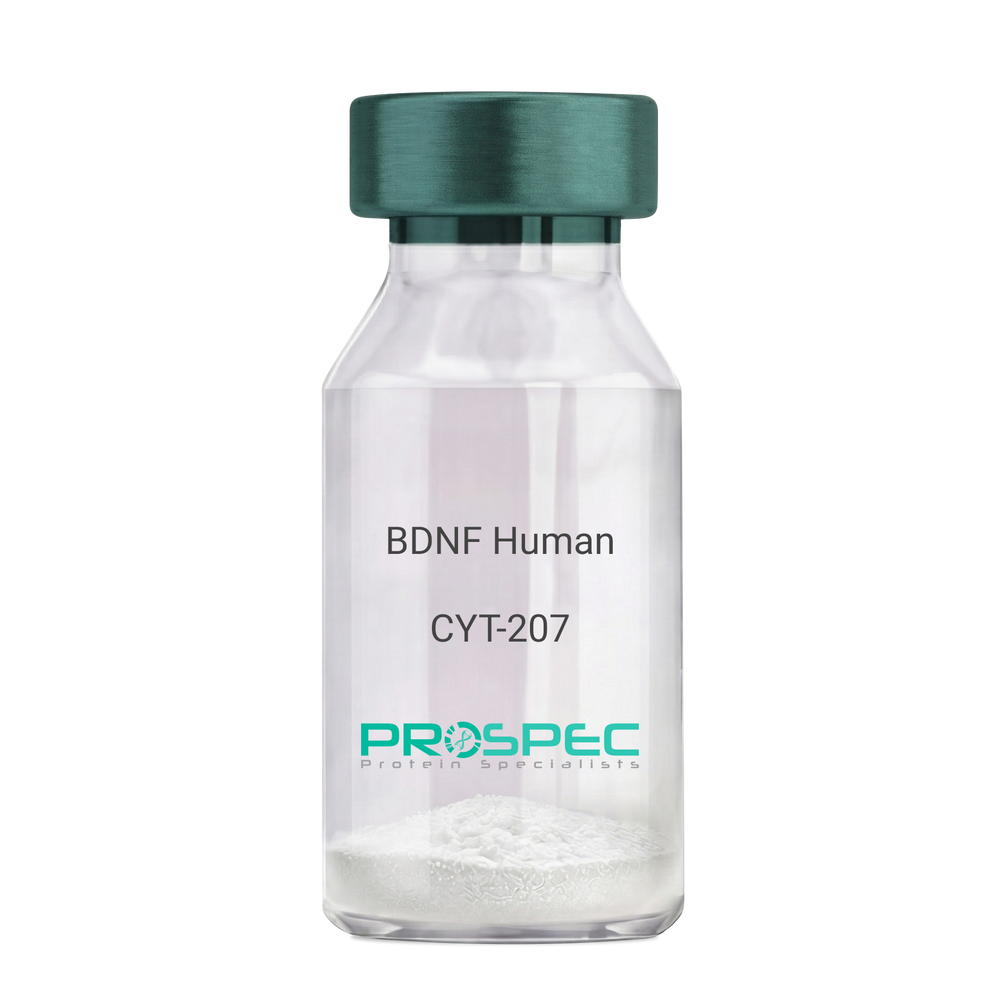
    BDNF Human

    Description:

    Brain-Derived Neurotrophic Factor Human Recombinant

    Brain-Derived Neurotrophic Factor, BDNF, MGC34632.

    Product # :

    CYT-207

    Price :

    Quantity :

    Shipping Method :

    Room Temp Icon

    Shipped at Room temp

    Add To Cart

    More Info

    • description
    • source
    • formulation
    • purity
    • biological activity
    • More Info
    • Activity

    Description

    BDNF Human Recombinant produced in E.Coli is a homodimer, non-glycosylated, polypeptide chain containing 2 x 119 amino acids (and an N-terminal Met) and having a total molecular mass of 28kDa. BDNF Human Recombinant is purified by proprietary chromatographic techniques.

    Source

    Escherichia Coli.

    Formulation

    The protein was lyophilized with 20mM PB and 400mM NaCl, pH 7.2.

    Purity

    BDNF is greater than 950% as determined SDS-PAGE.

    Biological Activity

    The activity was determined using Immobilized Human TrkB-His tag protein 2ug/ml (100 μl/well) for its binding to NHS-Biotin BDNF. The ED50 of was found to be ≤20ng/mL

    Activity

    bdnf activity - Product image 1

    More Info

    • Introduction

      BDNF promotes the survival of neuronal populations that are all located either in the central nervous system or directly connected to it. BDNF is a major regulator of synaptic transmission and plasticity at adult synapses in many regions of the cns. The versatility of BDNF is emphasized by its contribution to a range of adaptive neuronal responses including long-term potentiation (ltp), long-term depression (ltd), certain forms of short-term synaptic plasticity, as well as homeostatic regulation of intrinsic neuronal excitability.

    • Synonyms

      Brain-Derived Neurotrophic Factor, BDNF, MGC34632.

    • Physical Appearance

      Sterile Filtered White lyophilized (freeze-dried) powder.

    • Stability

      Lyophilized BDNF although stable at room temperature for 3 weeks, should be stored desiccated below -18°C. Upon reconstitution BDNF should be stored at 4°C between 2-7 days and for future use below -18°C.For long term storage it is recommended to add a carrier protein (0.1% HSA or BSA).Please prevent freeze-thaw cycles.

    • Solubility

      It is recommended to reconstitute the lyophilized BDNF in sterile 18M-cm H2O not less than 100µg/ml, which can then be further diluted to other aqueous solutions.

    • Amino Acid Sequence

      HSDPARRGE LSVCDSISEW VTAADKKTAV DMSGGTVTVL EKVPVSKGQL KQYFYETKCN PMGYTKEGCR GIDKRHWNSQ CRTTQSYVRA LTMDSKKRIG WRFIRIDTSC VCTLTIKRGR.

    • Background

      Final Thoughts

      Although more research is needed on the safety and effectiveness of BDNF human recombinant, trials suggest that this laboratory-produced protein may be effective in managing and treating several neurological and psychiatric disorders. It's important for experts to stay up to date on the latest developments and research to learn more about potential risks and benefits.

      What is the molecular weight/Mw of BDNF Protein?
      BDNF Protein has a total Mw of 27kDa.

      What is the source or expression system of BDNF Protein?
      Escherichia Coli.

      What is the Purity of BDNF Protein?
      BDNF Protein is >97% pure as determined by SDS-PAGE.

      What is the Biological Activity of BDNF Protein?
      The ED50, as determined by the dose-dependent induction of C6 cells proliferation, is 1.3-2µg/ml.

      What is the amino acid sequence of BDNF Protein?
      MHSDPARRGE LSVCDSISEW VTAADKKTAV DMSGGTVTVL EKVPVSKGQL KQYFYETKCN PMGYTKEGCR GIDKRHWNSQ CRTTQSYVRA LTMDSKKRIG WRFIRIDTSC VCTLTIKRGR.

      What applications can BDNF Protein be used in?
      BDNF Protein can probably be used in western blot, ELISA and Lateral Flow.

      What is the endotoxin level for BDNF Protein?
      The endotoxin level is minimal, BDNF Protein was purified using conventional chromatography techniques.

    • Protein content

      BDNF quantitation was carried out by two independent methods:1. UV spectroscopy at 280 nm using the absorbency value of 1.6 as the extinction coefficient for a 0.1% (1mg/ml) solution. This value is calculated by the PC GENE computer analysis program of protein sequences (IntelliGenetics). 2. Analysis by RP-HPLC, using a standard solution of Brain-derived Neurotrophic Factor as a Reference Standard.

    ProSpec's products are furnished for LABORATORY RESEARCH USE ONLY. The product may not be used as drugs, agricultural or pesticidal products, food additives or household chemicals.

    Bdnf Human
  • View Data Sheet

    Name :

    PSPN Mouse

    Description:

    Persephin Mouse Recombinant

    Persephin, PSPN.

    Product # :

    CYT-802

    Price :

    Quantity :

    Shipping Method :

    Room Temp Icon

    Shipped at Room temp

    Add To Cart

    More Info

    • description
    • source
    • formulation
    • purity
    • biological activity
    • More Info

    Description

    PSPN Mouse Recombinant produced in E.Coli is a disulfide-linked homodimer containing 2x96 amino acids and having a molecular mass of 20.7kDa. The PSPN is purified by proprietary chromatographic techniques.

    Source

    Escherichia Coli.

    Formulation

    Lyophilized from a 0.2?m filtered concentrated solution in 30 %ACN, 0.1 %TFA, 150mM NaCl.

    Purity

    Greater than 95.0% as determined by:
    (a) Analysis by RP-HPLC.
    (b) Analysis by SDS-PAGE.

    Biological Activity

    Fully biologically active when compared to standard. The ED50 as determined by a cell proliferation assay using human TT medullary thyroid cancer cells is less than 0.1ng/ml, corresponding to a specific activity of > 1.0 × 10,000,000 IU/mg. 

    More Info

    • Introduction

      Persephin is a member of the GDNF ligand subfamily of the TGF-beta superfamily. PSPN encourages the existence and growth of key dopaminergic and motor neurons, as well as taking part in kidney development. Nonetheless, persephin does not support existence of peripheral neurons.

    • Synonyms

      Persephin, PSPN.

    • Physical Appearance

      Sterile Filtered White lyophilized (freeze-dried) powder.

    • Stability

      Lyophilized PSPN although stable at room temperature for 3 weeks, should be stored desiccated below -18°C. Upon reconstitution PSPN should be stored at 4°C between 2-7 days and for future use below -18°C. For long term storage it is recommended to add a carrier protein (0.1% HSA or BSA). Please prevent freeze-thaw cycles.

    • Solubility

      It is recommended to reconstitute the lyophilized PSPN in sterile 18MΩ-cm H2O not less than 100µg/ml, which can then be further diluted to other aqueous solutions.

    • Amino Acid Sequence

      ALAGSCRLWS LTLPVAELGL GYASEEKVIF RYCAGSCPQE ARTQHSLVLA RLRGRGRAHG RPCCQPTSYA DVTFLDDQHH WQQLPQLSAA ACGCGG

    ProSpec's products are furnished for LABORATORY RESEARCH USE ONLY. The product may not be used as drugs, agricultural or pesticidal products, food additives or household chemicals.

    Pspn Mouse
  • View Data Sheet

    Name :

    SRP54 Human

    Description:

    Signal Recognition Particle 54kDa Human Recombinant

    Signal Recognition Particle 54 kDa protein

    Product # :

    PRO-113

    Price :

    Quantity :

    Shipping Method :

    Ice Icon

    Shipped with Ice Packs

    Add To Cart

    More Info

    • description
    • source
    • formulation
    • purity
    • More Info

    Description

    SRP54 is a full-length cDNA coding for the human SRP54 protein having a molecular mass of 62kDa (pH 8.9). SRP54 protein is fused to a hexa-histidine purification tag.

    Source

    Sf9 insect cells.

    Formulation

    SRP54 is supplied in 16mM HEPES buffer pH-8.0, 320mM NaCl, 5mM DTT, 1mM EDTA, 0.16mM GDP and 20% glycerol.

    Purity

    Greater than 80% as determined by SDS-PAGE.

    More Info

    • Introduction

      SRP54 is a 54-kDa subunit of the signal recognition particle (SRP), a cytoplasmic ribonucleoprotein complex which leads the translocation of newly synthesized secretory proteins from the polysome to the endoplasmic reticulum. SRP is composed of six polypeptides and a tRNA-like molecule known as 7SL RNA. SRP54 is a GTP-binding protein that directly binds the signal sequences of nascent secretory and membrane proteins. Anti-SRP autoantibodies take place in patients with an autoimmune chronic muscle inflammation called polymyositis. These auto-antibodies predominantly recognize the SRP54 subunit and in addition are able to immunoprecipitate several of the SRP subunits and the RNA component. Nearly 5% of myositis patients are positive for anti-SRP autoantibodies, increasing to 18% in the subgroup of Jo-1 autoantibody-negative patients. The classic 'anti-SRP syndrome' is a severe form of polymyositis in which the myositic inflammation is acute and aggressive onset, with common myalgias and cardiac involvement. Normally there is a poor reaction to therapy with a 5-year survival rate of about 25%.

    • Synonyms

      Signal Recognition Particle 54 kDa protein

    • Stability

      Store at 4°C if entire vial will be used within 2-4 weeks. Store, frozen at -20°C for longer periods of time. Avoid multiple freeze-thaw cycles.

    • Immunological Functions

      1. Binds IgG-type human auto-antibodies. 2. Standard ELISA test (checkerboard analysis of positive/negative sera panels); immunodot test with positive/negative sera panels.

    • coating concentration

      0.5-0.9 µg/ml (depending on the type of ELISA plate and coating buffer). Suitable for biotinylation and iodination.

    • Applications

      Western blot with myositis sera or monoclonal anti-hexa-His-tag antibody.

    ProSpec's products are furnished for LABORATORY RESEARCH USE ONLY. The product may not be used as drugs, agricultural or pesticidal products, food additives or household chemicals.

    Srp54 Human
  • View Data Sheet

    Name :

    MMP 1 Human, HEK

    Description:

    Matrix Metalloproteinase-1 Human Recombinant, HEK

    Interstitial collagenase, Fibroblast collagenase, Matrix metalloproteinase-1, MMP-1, MMP1, CLG, CLGN.

    Product # :

    ENZ-099

    Price :

    Quantity :

    Shipping Method :

    Ice Icon

    Shipped with Ice Packs

    Add To Cart

    More Info

    • description
    • source
    • formulation
    • purity
    • biological activity
    • More Info
    • sds-page

    Description

    MMP-1 Human Recombinant produced in HEK293 cells is a proform of the Human MMP1 (Met1-Asn469) and fused with a ployhistide tag at the C-terminus, having an Mw of 52kDa. MMP-1 is purified by proprietary chromatographic techniques.

    Source

    HEK293 cells.

    Formulation

    The MMP-1 is supplied as a 0.2µm filtered solution in MES, NaCl, Glycerol and Brij35.

    Purity

    Greater than 95% as determined by SDS-PAGE.

    Biological Activity

    The activity was measured by its ability to cleave fluorogenic peptide substrate, Mca-KPLGL-Dpa-AR-NH2, The specific activity is > 400 pmoles/min/µg.
    Recombinant Human MMP-1 protein pro form needs to be activated with p-aminophenylmercuric acetate (APMA).
    Activation Protocol:
    1. Dilute MMP1 to 50µg/ml in the Assay Buffer: 50mM Tris, 10mM CaCl2, 150mM NaCl, 0.05% (w/v) and Brij 35, pH 7.5.
    2. Activate MMP1 by adding APMA to a final concentration of 1mM. (Sigma, Catalog # A9563) and 100mM stock in DMSO.
    3. Incubate at 37°C for 2 hours.

    sds-page

    mmp1 human hek sds-page - Product image 1

    More Info

    • Introduction

      MMP-1 (interstitial collagenase) can break down a wide range of substrates including types I, II, III, VII, VIII, and X collagens as well as L-Selectin, pro-TNF, IL-1?, IGFBP-3, IGFBP-5, casein, gelatin, ?1 antitrypsin, myelin basic protein, pro-MMP2 and pro-MMP9. A significant function of MMP-1 is the degradation of fibrillar collagens in extracellular matrix remodeling. MMP-1 is expressed in fibroblasts, keratinocytes, endothelial cells, monocytes and macrophages. MMP1 can be divided into a number of distinct domains: a prodomain which is cleaved on activation, a catalytic domain containing the zinc binding site and a short hinge region with a carboxyl terminal domain. MMP1 is part of a cluster of MMP genes which localize to chromosome 11q22.3.

    • Synonyms

      Interstitial collagenase, Fibroblast collagenase, Matrix metalloproteinase-1, MMP-1, MMP1, CLG, CLGN.

    • Physical Appearance

      Sterile Filtered colorless solution.

    • Stability

      Store at 4°C if entire vial will be used within 2-4 weeks. Store, frozen at -20°C for longer periods of time.Avoid multiple freeze-thaw cycles.

    ProSpec's products are furnished for LABORATORY RESEARCH USE ONLY. The product may not be used as drugs, agricultural or pesticidal products, food additives or household chemicals.

    Mmp 1 Human
  • View Data Sheet

    Name :

    HTNV (1-200 a.a.)

    Description:

    Hantavirus Recombinant (1-200 a.a.)

    HTNV, Hantaan Virus, Hantanvirus.

    Product # :

    HTV-002

    Price :

    Quantity :

    Shipping Method :

    Ice Icon

    Shipped with Ice Packs

    Add To Cart

    More Info

    • description
    • source
    • formulation
    • purity
    • More Info

    Description

    The Hantavirus Recombinant (1-200 a.a.) protein is expressed in E. coli and is fused to a Six histidine tag at C-terminus and has a MW of 23.8kDa (pI 7.96).

    Source

    E.Coli

    Formulation

    HTNV is formulated in 1XPBS.

    Purity

    HTNV protein is >90% pure as determined by SDS PAGE.

    More Info

    • Synonyms

      HTNV, Hantaan Virus, Hantanvirus.

    • Physical Appearance

      Sterile filtered colorless solution.

    • Stability

      Upon arrival, Store at -20°C. Please avoid multiple freeze/thaw cycles.

    • Background

      What is the source or expression system of Hantavirus- Nucleocapsid Protein?
      Escherichia Coli.

      What is the Purity of Hantavirus- Nucleocapsid Protein?
      Hantavirus- Nucleocapsid Protein is >90% pure as determined by SDS-PAGE.

      What is the molecular weight / Mw of Hantavirus- Nucleocapsid Protein?
      Hantavirus- Nucleocapsid Protein having a total Mw of 23.8kDa.

      Is Hantavirus- Nucleocapsid conjugated to a Tag?
      Hantavirus- Nucleocapsid is fused to 6xHis Tag at N-terminal.

      What is the Biological Activity of Hantavirus- Nucleocapsid Protein?
      The biological functionality of Hantavirus- Nucleocapsid Protein will be determined in the future.

      What is the endotoxin level for Hantavirus- Nucleocapsid Protein?
      The endotoxin level is minimal, Hantavirus- Nucleocapsid Protein was purified using conventional chromatography techniques.

      What is the amino acid sequence of Hantavirus- Nucleocapsid Protein?
      Hantavirus- Nucleocapsid Protein is composed from 1-200 amino acids.

      What applications can Hantavirus- Nucleocapsid Protein be used in?
      Hantavirus-Nucleocapsid Protein can probably be used in western blot, ELISA and Lateral Flow.

      What is the function of the hantavirus nucleocapsid (N) protein?
      The hantavirus nucleocapsid (N) protein surrounds the viral RNA binding site and protects it during viral replication and assembly.

      Why is hantavirus nucleocapsid protein commonly used in ELISA assays?
      The hantavirus N protein is highly immunogenic, conserved and widely expressed and induces a strong antibody response in infected individuals.

      Does hantavirus N protein bind RNA?
      Hantavirus N protein contains RNA-binding domains that specifically interact with viral genomic

      Is the hantavirus nucleocapsid protein suitable for antibody production?
      Resulting from high immunogenicity, recombinant hantavirus N protein is highly used as an immunogen for generating both polyclonal and monoclonal antibodies.

    • Purification Method

      Purified by proprietary chromatographic technique.

    ProSpec's products are furnished for LABORATORY RESEARCH USE ONLY. The product may not be used as drugs, agricultural or pesticidal products, food additives or household chemicals.

    hantavirus nucleocapsid
  • View Data Sheet

    Name :

    Adiponectin Mouse, His

    Description:

    Adiponectin Mouse Recombinant, His Tag

    Acrp30, AdipoQ, GBP-28, APM-1, ACDC.

    Product # :

    CYT-537

    Price :

    Quantity :

    Shipping Method :

    Ice Icon

    Shipped with Ice Packs

    Add To Cart

    More Info

    • description
    • source
    • formulation
    • purity
    • More Info
    • sds-page

    Description

    The Adiponectin Mouse is created as a recombinant protein with a 21 a.a N-terminal fusion of His Tag. The Adiponectin His-Tagged Fusion Protein, produced in E. coli, is a 27.2kDa protein containing 251 amino acid residues of the Acrp30 Mouse, 18-247 amino acids.

    Source

    Escherichia Coli.

    Formulation

    Acrp30 Mouse is a sterile filtered liquid formulation containing (1mg/ml) 20mM Tris-HCl pH-8, 1mM DTT and 10% Glycerol.

    Purity

    Acrp30 Mouse purity is greater than 90% as determined by SDS-PAGE.

    sds-page

    Adiponectin-sds-page - Product image 1

    More Info

    • Introduction

      Adiponectin is an adipocyte specific secreted protein that circulates in the plasma. It is induced during adipocyte differentiation and its secretion is stimulated by insulin. Mouse adiponectin shares about 83% amino acid identity with that human. Adiponectin plays a role in various physiological processes such as energy homeostasis and obesity. Adiponectin is reduced in obese humans, and decreased level is associated with insulin resistance and hyperinsulinemia.

    • Synonyms

      Acrp30, AdipoQ, GBP-28, APM-1, ACDC.

    • Stability

      Store at 4°C if entire vial will be used within 2-4 weeks. Store, frozen at -20°C for longer periods of time. For long term storage it is recommended to add a carrier protein (0.1% HSA or BSA).Avoid multiple freeze-thaw cycles.

    • Amino Acid Sequence

      MGSSHHHHHH SSGLVPRGSH MEDDVTTTEE LAPALVPPPK GTCAGWMAGI PGHPGHNGTP GRDGRDGTPG EKGEKGDAGL LGPKGETGDV GMTGAEGPRG FPGTPGRKGE PGEAAYVYRS AFSVGLETRV TVPNVPIRFT KIFYNQQNHY DGSTGKFYCN IPGLYYFSYH ITVYMKDVKV SLFKKDKAVL FTYDQYQEKN VDQASGSVLL HLEVGDQVWL QVYGDGDHNG LYADNVNDST FTGFLLYHDT N.

    • Background

      What is the molecular weight/Mw of ADIPONECTIN Protein?
      ADIPONECTIN Protein has a total Mw of 27.2kDa.

      What is the source or expression system of ADIPONECTIN Protein?
      Escherichia Coli.

      What is the Purity of ADIPONECTIN Protein?
      ADIPONECTIN Protein is >90% pure as determined by SDS-PAGE.

      What is the Biological Activity of ADIPONECTIN Protein?
      The biological functionality of ADIPONECTIN Protein will be determined in the future.

      What is the amino acid sequence of ADIPONECTIN Protein?
      MGSSHHHHHH SSGLVPRGSH MEDDVTTTEE LAPALVPPPK GTCAGWMAGI PGHPGHNGTP GRDGRDGTPG EKGEKGDAGL LGPKGETGDV GMTGAEGPRG FPGTPGRKGE PGEAAYVYRS AFSVGLETRV TVPNVPIRFT KIFYNQQNHY DGSTGKFYCN IPGLYYFSYH ITVYMKDVKV SLFKKDKAVL FTYDQYQEKN VDQASGSVLL HLEVGDQVWL QVYGDGDHNG LYADNVNDST FTGFLLYHDT N.

      What applications can ADIPONECTIN Protein be used in?
      ADIPONECTIN Protein can probably be used in western blot, ELISA and Lateral Flow.

      What is the endotoxin level for ADIPONECTIN Protein?
      The endotoxin level is minimal, ADIPONECTIN Protein was purified using conventional chromatography techniques.

    ProSpec's products are furnished for LABORATORY RESEARCH USE ONLY. The product may not be used as drugs, agricultural or pesticidal products, food additives or household chemicals.

    Acrp30 Mouse His
  • View Data Sheet

    Name :

    DNAL1 Human

    Description:

    Dynein Axonemal Light Chain 1 Human Recombinant

    Dynein light chain 1, axonemal, C14orf168, CILD16, DNAL1.

    Product # :

    PRO-1357

    Price :

    Quantity :

    Shipping Method :

    Ice Icon

    Shipped with Ice Packs

    Add To Cart

    More Info

    • description
    • source
    • formulation
    • purity
    • More Info

    Description

    DNAL1 Human Recombinant produced in E. coli is a single polypeptide chain containing 213 amino acids (1-190) and having a molecular mass of 23.9 kDa. DNAL1 is fused to a 23 amino acid His-tag at N-terminus & purified by proprietary chromatographic techniques.

    Source

    E.coli.

    Formulation

    The DNAL1 solution (1mg/1ml) contains 20mM Tris-HCl buffer (pH 8.0), 0.4M Urea and 10% glycerol.

    Purity

    Greater than 90% as determined by SDS-PAGE.

    More Info

    • Introduction

      Dynein Axonemal Light Chain 1 (DNAL1) functions as a component of the outer dynein arms complex. DNAL1 acts as the molecular motor which supplies the force to move cilia in an ATP-dependent manner. DNAL1 is expressed in tissues with motile cilia or flagella and takes part in the movement of sperm flagella. Alternate splicing results in numerous transcript variants.

    • Synonyms

      Dynein light chain 1, axonemal, C14orf168, CILD16, DNAL1.

    • Physical Appearance

      Sterile Filtered colorless solution.

    • Stability

      Store at 4°C if entire vial will be used within 2-4 weeks. Store, frozen at -20°C for longer periods of time. For long term storage it is recommended to add a carrier protein (0.1% HSA or BSA).Avoid multiple freeze-thaw cycles.

    • Amino Acid Sequence

      MGSSHHHHHH SSGLVPRGSH MGSMAKATTI KEALARWEEK TGQRPSEAKE IKLYAQIPPI EKMDASLSML ANCEKLSLST NCIEKIANLN GLKNLRILSL GRNNIKNLNG LEAVGDTLEE LWISYNFIEK LKGIHIMKKL KILYMSNNLV KDWAEFVKLA ELPCLEDLVF VGNPLEEKHS AENNWIEEAT KRVPKLKKLD GTPVIKGDEE EDN.

    ProSpec's products are furnished for LABORATORY RESEARCH USE ONLY. The product may not be used as drugs, agricultural or pesticidal products, food additives or household chemicals.

    Dnal1 Human
  • View Data Sheet

    Name :

    CBX3 Human

    Description:

    Chromobox Homolog 3 Human Recombinant

    Chromobox homolog 3 (Drosophila HP1 gamma), Heterochromatin protein 1 homolog gamma, Modifier 2 protein, HP1 gamma homolog, HECH, HP1Hs-gamma.

    Product # :

    PRO-1057

    Price :

    Quantity :

    Shipping Method :

    Ice Icon

    Shipped with Ice Packs

    Add To Cart

    More Info

    • description
    • source
    • formulation
    • purity
    • More Info

    Description

    CBX3 Human Recombinant produced in E. coli is a single polypeptide chain containing 207 amino acids (1-183) and having a molecular mass of 23.4kDa.CBX3 is fused to a 24 amino acid His-tag at N-terminus & purified by proprietary chromatographic techniques.

    Source

    E.coli.

    Formulation

    The CBX3 solution (1mg/ml) contains 20mM Tris-HCl buffer (pH 8.0), 100mM Nacl, 1mM DTT and 20% glycerol.

    Purity

    Greater than 90% as determined by SDS-PAGE.

    More Info

    • Introduction

      CBX3 takes part in transcriptional silencing in heterochromatin-like complexes. CBX3 identifies and binds histone H3 tails methylated at 'Lys-9', thereby create an epigenetic repression. Additionally, CBX3 takes part in the formation of functional kinetochore by interacting with MIS12 complex proteins.

    • Synonyms

      Chromobox homolog 3 (Drosophila HP1 gamma), Heterochromatin protein 1 homolog gamma, Modifier 2 protein, HP1 gamma homolog, HECH, HP1Hs-gamma.

    • Physical Appearance

      Sterile Filtered colorless solution.

    • Stability

      Store at 4°C if entire vial will be used within 2-4 weeks. Store, frozen at -20°C for longer periods of time. For long term storage it is recommended to add a carrier protein (0.1% HSA or BSA).Avoid multiple freeze-thaw cycles.

    • Amino Acid Sequence

      MGSSHHHHHH SSGLVPRGSH MGSHMASNKT TLQKMGKKQN GKSKKVEEAE PEEFVVEKVL DRRVVNGKVE YFLKWKGFTD ADNTWEPEEN LDCPELIEAF LNSQKAGKEK DGTKRKSLSD SESDDSKSKK KRDAADKPRG FARGLDPERI IGATDSSGEL MFLMKWKDSD EADLVLAKEA NMKCPQIVIA FYEERLTWHS CPEDEAQ.

    ProSpec's products are furnished for LABORATORY RESEARCH USE ONLY. The product may not be used as drugs, agricultural or pesticidal products, food additives or household chemicals.

    Cbx3 Human
  • View Data Sheet

    Name :

    POLR2D Human

    Description:

    Polymerase II Polypeptide D Human Recombinant

    HSRBP4, HSRPB4, RBP4, RPB16, DNA-directed RNA polymerase II subunit RPB4, RNA polymerase II subunit B4, DNA-directed RNA polymerase II subunit D, RNA polymerase II 16 kDa subunit, POLR2D.

    Product # :

    ENZ-739

    Price :

    Quantity :

    Shipping Method :

    Ice Icon

    Shipped with Ice Packs

    Add To Cart

    More Info

    • description
    • source
    • formulation
    • purity
    • More Info

    Description

    POLR2D Human Recombinant produced in E.coli is a single, non-glycosylated polypeptide chain containing 165 amino acids (1-142) and having a molecular mass of 18.7kDa.POLR2D is fused to a 23 amino acid His-tag at N-terminus & purified by proprietary chromatographic techniques.

    Source

    E.coli.

    Formulation

    The POLR2D solution (1mg/ml) contains 20mM Tris-HCl buffer (pH 8.0), 0.4M Urea and 10% glycerol.

    Purity

    Greater than 90% as determined by SDS-PAGE.

    More Info

    • Introduction

      Polymerase II Polypeptide D (POLR2D) is a member of the eukaryotic RPB4 RNA polymerase subunit family. POLR2D is the fourth largest subunit of RNA polymerase II. Pol II is the main element of the basal RNA polymerase II transcription machinery. polymerase is responsible forsynthesizing messenger RNA in eukaryotes. In yeast, POLR2D subunit is connected with the polymeraseunder suboptimal growth conditions and might have a stress protective role. POLR2D catalyzes the transcription of DNA into RNA by the 4 ribonucleoside triphosphates as substrates.

    • Synonyms

      HSRBP4, HSRPB4, RBP4, RPB16, DNA-directed RNA polymerase II subunit RPB4, RNA polymerase II subunit B4, DNA-directed RNA polymerase II subunit D, RNA polymerase II 16 kDa subunit, POLR2D.

    • Physical Appearance

      Sterile Filtered colorless solution.

    • Stability

      Store at 4°C if entire vial will be used within 2-4 weeks. Store, frozen at -20°C for longer periods of time. For long term storage it is recommended to add a carrier protein (0.1% HSA or BSA).Avoid multiple freeze-thaw cycles.

    • Amino Acid Sequence

      MGSSHHHHHH SSGLVPRGSH MGSMAAGGSD PRAGDVEEDA SQLIFPKEFE TAETLLNSEV HMLLEHRKQQ NESAEDEQEL SEVFMKTLNY TARFSRFKNR ETIASVRSLL LQKKLHKFEL ACLANLCPET AEESKALIPS LEGRFEDEEL QQILDDIQTK RSFQY.

    ProSpec's products are furnished for LABORATORY RESEARCH USE ONLY. The product may not be used as drugs, agricultural or pesticidal products, food additives or household chemicals.

    Polr2D Human
  • View Data Sheet

    Name :

    GHRL Human

    Description:

    Ghrelin Human Recombinant

    Appetite-regulating hormone precursor, Growth hormone secretagogue, Growth hormone-releasing peptide, GHRP, Motilin-related peptide, M46 protein, Ghrelin, Obestatin, MTLRP.

    Product # :

    HOR-294

    Price :

    Quantity :

    Shipping Method :

    Ice Icon

    Shipped with Ice Packs

    Add To Cart

    More Info

    • description
    • source
    • formulation
    • purity
    • More Info

    Description

    Ghrelin Human Recombinant contains 115 amino acids (24-117 a.a.) and a total molecular mass of 12.8 kDa. The GHRL is fused to a 20 amino acid His Tag at N-terminus and purified by proprietary chromatographic techniques.

    Source

    Escherichia Coli.

    Formulation

    The Ghrelin protein solution contains 20mM Tris-HCl, pH-8 & 10% glycerol.

    Purity

    Greater than 90.0% as determined by SDS-PAGE.

    More Info

    • Introduction

      Obestatin is a hormone that is produced in the cells lining the stomach and small intestine of several mammals including humans; it drastically reduces appetite in mice and is expected to do the same in humans. Obestatin is a peptide hormone - a relatively small protein. It is encoded by the same gene that also encodes ghrelin, a peptide hormone that increases appetite. The protein produced by that gene breaks into two smaller peptides, ghrelin and obestatin. Ghrelin is an endogenous ligand for the growth hormone secretagogue receptor and is involved in regulating growth hormone release. Ghrelin is derived from a preprohormone called preproghrelin, which also generates a second peptide called obestatin. Ghrelin is an endogenous ligand for the orphan G protein-coupled receptor GPR39 and is involved in satiety and decreased food intake.

    • Synonyms

      Appetite-regulating hormone precursor, Growth hormone secretagogue, Growth hormone-releasing peptide, GHRP, Motilin-related peptide, M46 protein, Ghrelin, Obestatin, MTLRP.

    • Physical Appearance

      Sterile filtered colorless solution.

    • Stability

      Store at 4°C if entire vial will be used within 2-4 weeks. Store, frozen at -20°C for longer periods of time. For long term storage it is recommended to add a carrier protein (0.1% HSA or BSA). Avoid multiple freeze-thaw cycles.

    • Amino Acid Sequence

      MGSSHHHHHH SSGLVPRGSH MGSSFLSPEH QRVQQRKESK KPPAKLQPRA LAGWLRPEDG GQAEGAEDEM EVRFNAPFDV GIKLSGVQYQ QHSQALGKFL QDILWEEAKE APADK.

    • Background

      What is the molecular weight/Mw of GHRELIN HUMAN Protein?
      GHRELIN HUMAN Protein has a total Mw of 12.8kDa.

      What is the source or expression system of GHRELIN HUMAN Protein?
      Escherichia Coli.

      What is the Purity of GHRELIN HUMAN Protein?
      GHRELIN HUMAN Protein is >90% pure as determined by SDS-PAGE.

      What is the Biological Activity of GHRELIN HUMAN Protein?
      The biological functionality of GHRELIN HUMAN Protein will be determined in the future.

      What is the amino acid sequence of GHRELIN HUMAN Protein?
      MGSSHHHHHH SSGLVPRGSH MGSSFLSPEH QRVQQRKESK KPPAKLQPRA LAGWLRPEDG GQAEGAEDEM EVRFNAPFDV GIKLSGVQYQ QHSQALGKFL QDILWEEAKE APADK.

      What applications can GHRELIN HUMAN Protein be used in?
      GHRELIN HUMAN Protein can probably be used in western blot, ELISA and Lateral Flow.

      What is the endotoxin level for GHRELIN HUMAN Protein?
      The endotoxin level is minimal, GHRELIN HUMAN Protein was purified using conventional chromatography techniques.


    ProSpec's products are furnished for LABORATORY RESEARCH USE ONLY. The product may not be used as drugs, agricultural or pesticidal products, food additives or household chemicals.

    Ghrl Human
  • View Data Sheet

    Name :

    Y.Enterocolitica (O:9) YopN

    Description:

    Yersinia Enterocolitica (O:9) YopN Recombinant

    Product # :

    PRO-2274

    Price :

    Quantity :

    Shipping Method :

    Ice Icon

    Shipped with Ice Packs

    Add To Cart

    More Info

    • description
    • source
    • formulation
    • purity
    • More Info

    Description

    Recombinant Yersinia Enterocolitica (O:9) YopN produced in E.coli is a non-glycosylated, polypeptide chain having a calculated molecular mass of 34,296 Dalton. Y.Enterocolitica (O:9) YopN is expressed with a 10xHis tag at N-terminus and purified by proprietary chromatographic techniques.

    Source

    Escherichia Coli.

    Formulation

    Y.Enterocolitica (O:9) YopN is supplied in 20mM HEPES buffer pH-7.6, 250mM NaCl and 20% glycerol.

    Purity

    Greater than 80.0% as determined by SDS-PAGE.

    More Info

    • Introduction

      Yersinia enterocolitica is a Gram-negative bacillus-shaped bacterium, which is a member of the Enterobacteriaceae family. Y.Enterocolitica is motile at temperatures between 22-29°C, however becomes non-motile at normal human body temperature. Y. Enterocolitica infection causes the yersiniosis disease, which is an animal-borne disease occurring in humans, as well as in a various groups of animals such as cattle, deer, pigs, and birds. Yersinia enterocolitica is a heterogeneous group of strains, which are conventionally classified by bio-typing into six bio-groups on the basis of phenotypic characteristics, and by serotyping into more than 57 “O” serogroups, on the basis of their O (lipopolysaccharide or LPS) surface antigen. Five of the six biogroups (1B and 2–5) are considered as pathogens. Nevertheless, only a few of these serogroups have been linked with disease in either humans or animals. Strains which belong to serogroups O:3 (biogroup 4), O:5,27 (biogroups 2 and 3), O:8 (biogroup 1B), and O:9 (biogroup 2) are most frequently isolated worldwide from human samples. Still, the main Y. enterocolitica serogroup in many European countries is serogroup O:3 followed by O:9, whereas the serogroup O:8 is mostly detected in the United States.

    • Physical Appearance

      Sterile Filtered clear solution.

    • Stability

      Store at 4°C if entire vial will be used within 2-4 weeks. Store, frozen at -20°C for longer periods of time. Avoid multiple freeze-thaw cycles.

    • Immunological Functions

      1. Binds IgG- and IgM- and IgA-type human antibodies.2. Immunodot test with positive/negative sera panels.

    ProSpec's products are furnished for LABORATORY RESEARCH USE ONLY. The product may not be used as drugs, agricultural or pesticidal products, food additives or household chemicals.

    Yenterocolitica O 9 Yopn
  • View Data Sheet

    Name :

    GNG13 Human

    Description:

    Guanine Nucleotide Binding Protein Gamma 13 Human Recombinant

    Guanine Nucleotide Binding Protein (G Protein), Gamma 13, Clone:H2-35, G Gamma Subunit, G(gamma)13, Guanine Nucleotide Binding Protein 13, Gamma, Guanine Nucleotide-Binding Protein G(I)/G(S)/G(O) Subunit Gamma-13 h2-35, G Gamma Subunit, clone:h2-35, GNG13.

    Product # :

    PRO-2063

    Price :

    Quantity :

    Shipping Method :

    Ice Icon

    Shipped with Ice Packs

    Add To Cart

    More Info

    • description
    • source
    • formulation
    • purity
    • More Info

    Description

    GNG13 Human Recombinant produced in E.Coli is a single, non-glycosylated polypeptide chain containing 87 amino acids (1-64 a.a) and having a molecular mass of 10.0 kDa. GNG13 is fused to a 23 amino acid His-tag at N-terminus & purified by proprietary chromatographic techniques.

    Source

    Escherichia Coli.

    Formulation

    GNG13 protein solution (0.25 mg/ml) containing 20mM Tris-HCl buffer (pH 8.0), 0.2M NaCl, 40% glycerol, 2mM DTT and 0.1mM PMSF.

    Purity

    Greater than 80.0% as determined by SDS-PAGE.

    More Info

    • Introduction

      Guanine Nucleotide Binding Protein Gamma 13, also known as GNG13 is a member of the G protein gamma family. Heterotrimeric G proteins, which consist of alpha, beta, and gamma subunits, function as signal transducers for the 7-transmembrane-helix G protein-coupled receptors. GNG13 is the gamma subunit which is expressed in taste, retinal, and neuronal tissues and takes a central part in taste transduction.

    • Synonyms

      Guanine Nucleotide Binding Protein (G Protein), Gamma 13, Clone:H2-35, G Gamma Subunit, G(gamma)13, Guanine Nucleotide Binding Protein 13, Gamma, Guanine Nucleotide-Binding Protein G(I)/G(S)/G(O) Subunit Gamma-13 h2-35, G Gamma Subunit, clone:h2-35, GNG13.

    • Physical Appearance

      Sterile Filtered colorless solution.

    • Stability

      Store at 4°C if entire vial will be used within 2-4 weeks. Store, frozen at -20°C for longer periods of time. For long term storage it is recommended to add a carrier protein (0.1% HSA or BSA).Avoid multiple freeze-thaw cycles.

    • Amino Acid Sequence

      MGSSHHHHHH SSGLVPRGSH MGSMEEWDVP QMKKEVESLK YQLAFQREMA SKTIPELLKW IEDGIPKDPF LNPDLMKNNP WVEKGKC.

    ProSpec's products are furnished for LABORATORY RESEARCH USE ONLY. The product may not be used as drugs, agricultural or pesticidal products, food additives or household chemicals.

    Gng13 Human
  • 1
  • …
  • 5
  • 6
  • 7
  • 8
  • 9
  • …
  • 42
Your browser does not support the video tag.

Products

  • Cytokines
  • Growth Factors
  • Chemokines
  • CD Antigens
  • Neurotrophins
  • Hormones
  • Enzymes
  • Viral Antigens
  • Recombinant Proteins
  • Natural Proteins
  • Monoclonal Antibodies
  • Polyclonal Antibodies
  • Thermal Packaging

About

  • Company
  • Founder
  • Contribution
  • Contact Us
  • My Account

Ordering

  • Ordering Method
  • Ordering - Credit Card
  • Ordering PO
  • Shipping Fees
  • FAQ's

Legal

  • Terms & Conditions
  • Privacy
  • Site Map
  • info@prospecbio.com
  • Facebook
  • Instagram
  • Linkedin Profile

© 2026 ProSpec-Tany TechnoGene Ltd. All Rights Reserved.

  • Choosing a selection results in a full page refresh.
  • Opens in a new window.