Search results
1000 results found for “Ephrin”
Name
Description
Product #
Price
Quantity
Shipping Method
- View Data Sheet
Name :
FLRT3 Human, HEKDescription:
Fibronectin Leucine Rich Transmembrane Protein 3 Human Recombinant, HEK
Fibronectin Leucine Rich Transmembrane Protein 3, Fibronectin-Like Domain, Containing Leucine-Rich Transmembrane Protein 3, HH21, Leucine-Rich Repeat, Transmembrane Protein FLRT3, KIAA1469.
Product # :
PRO-2805Price :
Quantity :
Shipping Method :
Shipped with Ice Packs
More Info
- description
- source
- formulation
- purity
- biological activity
- More Info
Description
FLRT3 Human Recombinant is a single, glycosylated, polypeptide chain (29-528 a.a) containing a total of 506 amino acids and having a molecular mass of 57.3 kDa. FLRT3 is fused to a 6 a.a his-Tag at C-terminus and is purified by proprietary chromatographic techniques.
Source
HEK293 Cells.
Formulation
FLRT3 protein solution (0.25mg/ml) contains Phosphate Buffered Saline (pH 7.4) and 10% glycerol.
Purity
Greater than 95.0% as determined by SDS-PAGE.
Biological Activity
>40%. Measured by the ability of the immobilized protein to support the adhesion of Neuro-2a neuroblast cells. When cells are added to human FLRT3 coated plates 5 ug/ml.
More Info
-
Synonyms
Fibronectin Leucine Rich Transmembrane Protein 3, Fibronectin-Like Domain, Containing Leucine-Rich Transmembrane Protein 3, HH21, Leucine-Rich Repeat, Transmembrane Protein FLRT3, KIAA1469.
-
Physical Appearance
Sterile filtered colorless solution.
-
Stability
Store at 4°C if entire vial will be used within 2-4 weeks.Store, frozen at -20°C for longer periods of time. For long term storage it is recommended to add a carrier protein (0.1% HSA or BSA).Avoid multiple freeze-thaw cycles.
-
Amino Acid Sequence
KSCPSVCRCD AGFIYCNDRF LTSIPTGIPE DATTLYLQNN QINNAGIPSD LKNLLKVERI YLYHNSLDEF PTNLPKYVKE LHLQENNIRT ITYDSLSKIP YLEELHLDDN SVSAVSIEEG AFRDSNYLRL LFLSRNHLST IPWGLPRTIE ELRLDDNRIS TISSPSLQGL TSLKRLVLDG NLLNNHGLGD KVFFNLVNLT ELSLVRNSLT AAPVNLPGTN LRKLYLQDNH INRVPPNAFS
YLRQLYRLDM SNNNLSNLPQ GIFDDLDNIT QLILRNNPWY CGCKMKWVRD WLQSLPVKVN VRGLMCQAPE KVRGMAIKDL NAELFDCKDS GIVSTIQITT AIPNTVYPAQ GQWPAPVTKQ PDIKNPKLTK DHQTTGSPSR KTITITVKSV TSDTIHISWK LALPMTALRL SWLKLGHSPA FGSITETIVT GERSEYLVTA LEPDSPYKVC MVPMETSNLY LFDETPVCIE TETAPLRMYN
PTTTLNREQE KEPYKNPNLP HHHHHH. -
Background
Fibronectin leucine-rich transmembrane protein 3, commonly known as FLRT3, stands as a molecular architect in the intricate landscape of neural development. Its roles, initially discovered in the embryonic nervous system, have expanded to encompass various physiological and pathological processes in both the brain and beyond. This research endeavors to unravel the enigma of FLRT3 protein, exploring its structural intricacies, physiological functions, and its far-reaching implications in neurobiology, embryogenesis, and disease. By delving into FLRT3's multifaceted roles, scientists aim to decipher the underlying mechanisms that govern its diverse functions and explore potential therapeutic avenues in the realms of neuroscience and beyond.
Structural Complexities of FLRT3:
FLRT3 belongs to the FLRT family, characterized by extracellular leucine-rich repeats (LRRs) and a transmembrane domain. These structural motifs enable FLRT3 to participate in a myriad of interactions, including binding with cell adhesion molecules and guidance cues. Understanding the three-dimensional architecture of FLRT3 is fundamental for unraveling its molecular partnerships, biological activities, and its contributions to cell adhesion and signaling.
Physiological Functions in Neural Development:
In the developing nervous system, FLRT3 acts as a guidance molecule, steering growing axons and dendrites to their precise destinations. Through interactions with other cell surface receptors and ligands, FLRT3 modulates axon pathfinding, synapse formation, and neuronal migration. Its presence in growth cones and developing neural circuits underscores its significance in sculpting the intricate neural networks essential for proper brain function.
Beyond Neural Development:
Beyond its canonical roles in neurodevelopment, FLRT3 has emerged as a versatile player in various physiological processes. It participates in tissue morphogenesis, modulates cell adhesion, and influences immune responses. Recent studies have also implicated FLRT3 in cancer progression, highlighting its involvement in pathological conditions and making it a potential target for therapeutic interventions in cancer therapy.
FLRT3 as a Therapeutic Target:
The diverse roles of FLRT3 in neural development and diseases position it as an attractive target for therapeutic interventions. Modulating FLRT3 interactions offers novel avenues for neurological disorder treatments, including neurodevelopmental disorders and neurodegenerative diseases. Moreover, understanding FLRT3's involvement in cancer biology opens doors for innovative cancer therapies, making it a promising target for precision medicine approaches.
FLRT3, with its intricate structural features and diverse functional roles, stands as a linchpin in the realms of neuroscience, embryogenesis, and disease. Its multifaceted contributions to neural development, tissue morphogenesis, and disease pathogenesis underscore its significance in both health and pathology. As researchers continue to unravel FLRT3’s complexities, they not only deepen our understanding of fundamental biological processes but also pave the way for groundbreaking discoveries in neuroscience and therapeutic interventions, ultimately shaping the future landscape of medicine and scientific inquiry.
ProSpec's products are furnished for LABORATORY RESEARCH USE ONLY. The product may not be used as drugs, agricultural or pesticidal products, food additives or household chemicals.
- View Data Sheet
Name :
EIF4E HumanDescription:
Eukaryotic Translation Initiation Factor 4E Human Recombinant
CBP, EIF4E1, EIF4EL1, EIF4F.
Product # :
PRO-530Price :
Quantity :
Shipping Method :
Shipped with Ice Packs
More Info
- description
- source
- formulation
- purity
- More Info
Description
EIF4E Human Recombinant produced in E.Coli is a single, non-glycosylated polypeptide chain containing 237 amino acids (1-217 a.a.) and having a molecular weight of 27.2kDa. The EIF4E is fused to a 20 aa His-Tag at N-terminus and purified by proprietary chromatographic techniques.
Source
Escherichia Coli.
Formulation
The EIF4E 0.5mg/ml protein solution contains 20mM Tris-HCl, pH-8, and 10% glycerol.
Purity
Greater than 85.0% as determined by SDS-PAGE.
More Info
-
Introduction
EIF4E is part of the eukaryotic initiation factor 4 families, controls translation of maternal mRNAs in early embryos before the onset of zygotic transcription. EIF4E identifies and binds to the 7 methyl GTP cap structure of eukaryotic mRNAs, thus modulates the initiation of translation. EIF4E enables ribosome binding by inducing the unwinding of the mRNAs secondary structures.
-
Synonyms
CBP, EIF4E1, EIF4EL1, EIF4F.
-
Physical Appearance
Sterile filtered colorless solution.
-
Stability
Store at 4°C if entire vial will be used within 2-4 weeks. Store, frozen at -20°C for longer periods of time. For long term storage it is recommended to add a carrier protein (0.1% HSA or BSA). Avoid multiple freeze-thaw cycles.
-
Amino Acid Sequence
MGSSHHHHHH SSGLVPRGSH MATVEPETTP TPNPPTTEEE KTESNQEVAN PEHYIKHPLQ NRWALWFFKN DKSKTWQANL RLISKFDTVE
DFWALYNHIQ LSSNLMPGCD YSLFKDGIEP MWEDEKNKRG GRWLITLNKQ QRRSDLDRFW LETLLCLIGE SFDDYSDDVC GAVVNVRAKG
DKIAIWTTEC ENREAVTHIG RVYKERLGLP PKIVIGYQSH ADTATKSGST TKNRFVV.
ProSpec's products are furnished for LABORATORY RESEARCH USE ONLY. The product may not be used as drugs, agricultural or pesticidal products, food additives or household chemicals.
- View Data Sheet
Name :
EDAR HumanDescription:
Ectodysplasin A Receptor Human Recombinant
Ectodysplasin A Receptor, DL, Ectodysplasin 1, Anhidrotic Receptor, Anhidrotic Ectodysplasin Receptor 1, Ectodermal Dysplasia Receptor, Ectodysplasin-A Receptor, Downless Homolog, EDA-A1 Receptor, ECTD10A, ECTD10B, EDA3, HRM1, ED3, Tumor Necrosis Factor Receptor Superfamily Member EDAR, Downless, Mouse, Homolog Of, EDA-A1R, EDA1R, ED1R, ED5, Tumor necrosis factor receptor superfamily member EDAR.
Product # :
PRO-2092Price :
Quantity :
Shipping Method :
Shipped with Ice Packs
More Info
- description
- source
- formulation
- purity
- More Info
Description
EDAR Human Recombinant produced in E.Coli is a single, non-glycosylated polypeptide chain containing 445 amino acids (27-448 a.a) and having a molecular mass of 48.2kDa. EDAR is fused to a 23 amino acid His-tag at N-terminus & purified by proprietary chromatographic techniques.
Source
Escherichia Coli.
Formulation
EDAR protein solution (0.25mg/ml) containing 20mM Tris-HCl (pH 8.0) and 10% glycerol.
Purity
Greater than 85.0% as determined by SDS-PAGE.
More Info
-
Introduction
Ectodysplasin A Receptor, also known as EDAR belongs to the tumor necrosis factor receptor family. EDAR is a receptor for the soluble ligand ectodysplasin A, and is capable of activating the nuclear factor-kappaB, JNK, as well as caspase-independent cell death pathways. EDAR is necessary for the development of hair, teeth, and other ectodermal derivatives. Furthermore, mutations in EDAR resulted in autosomal dominant and recessive forms of hypohidrotic ectodermal dysplasia.
-
Synonyms
Ectodysplasin A Receptor, DL, Ectodysplasin 1, Anhidrotic Receptor, Anhidrotic Ectodysplasin Receptor 1, Ectodermal Dysplasia Receptor, Ectodysplasin-A Receptor, Downless Homolog, EDA-A1 Receptor, ECTD10A, ECTD10B, EDA3, HRM1, ED3, Tumor Necrosis Factor Receptor Superfamily Member EDAR, Downless, Mouse, Homolog Of, EDA-A1R, EDA1R, ED1R, ED5, Tumor necrosis factor receptor superfamily member EDAR.
-
Physical Appearance
Sterile Filtered clear solution.
-
Stability
Store at 4°C if entire vial will be used within 2-4 weeks. Store, frozen at -20°C for longer periods of time.For long term storage it is recommended to add a carrier protein (0.1% HSA or BSA).Please avoid freeze thaw cycles.
-
Amino Acid Sequence
MGSSHHHHHH SSGLVPRGSH MGSEYSNCGE NEYYNQTTGL CQECPPCGPG EEPYLSCGYG TKDEDYGCVP CPAEKFSKGG YQICRRHKDC EGFFRATVLT PGDMENDAEC GPCLPGYYML ENRPRNIYGM VCYSCLLAPP NTKECVGATS GASANFPGTS GSSTLSPFQH AHKELSGQGH LATALIIAMS TIFIMAIAIV LIIMFYILKT KPSAPACCTS HPGKSVEAQV SKDEEKKEAP DNVVMFSEKD EFEKLTATPA KPTKSENDAS SENEQLLSRS VDSDEEPAPD KQGSPELCLL SLVHLAREKS ATSNKSAGIQ SRRKKILDVY ANVCGVVEGL SPTELPFDCL EKTSRMLSST YNSEKAVVKT WRHLAESFGL KRDEIGGMTD GMQLFDRIST AGYSIPELLT KLVQIERLDA VESLCADILE WAGVVPPASQ PHAAS.
ProSpec's products are furnished for LABORATORY RESEARCH USE ONLY. The product may not be used as drugs, agricultural or pesticidal products, food additives or household chemicals.
- View Data Sheet
Name :
EIF3F HumanDescription:
Eukaryotic Translation Initiation Factor 3F Human Recombinant
Eukaryotic Translation Initiation Factor 3, Subunit F, EIF3S5 , Eukaryotic Translation Initiation Factor 3, Subunit 5 (Epsilon, 47kD), EC 3.4.19.12, Deubiquitinating Enzyme EIF3f, eIF3f, eIF-3-epsilon, EIF3 P47, Eukaryotic Translation Initiation Factor 3 Subunit 5, eIF3-p47, Eukaryotic Translation Initiation Factor 3, Subunit 5 Epsilon, 47kDa.
Product # :
PRO-1722Price :
Quantity :
Shipping Method :
Shipped with Ice Packs
More Info
- description
- source
- formulation
- purity
- More Info
Description
EIF3F Human Recombinant produced in E.Coli is a single, non-glycosylated polypeptide chain containing 380 amino acids (1-357 a.a) and having a molecular mass of 40kDa. EIF3F is fused to a 23 amino acid His-tag at N-terminus & purified by proprietary chromatographic techniques.
Source
Escherichia Coli.
Formulation
EIF3F protein solution (1mg/ml) containing 20mM Tris-HCl buffer (pH8.0), 10% glycerol, and 0.4M urea.
Purity
Greater than 90.0% as determined by SDS-PAGE.
More Info
-
Introduction
Eukaryotic Translation Initiation Factor 3F, also known as EIF3F belongs to the eIF-3 subunit F family. EIF3F is a component of the eukaryotic translation initiation factor 3 (eIF-3) complex, which isessential for several steps in the initiation of protein synthesis. The eIF-3 complex associates with the 40S ribosomeand facilitates the recruitment of eIF-1, eIF-1A, eIF 2: GTP: methionyl-tRNAi and eIF-5 to form the 43S preinitiationcomplex (43S PIC). In addition, the eIF-3 complex stimulates mRNA recruitment to the 43S PIC and scanning of the mRNA forAUG recognition. The eIF-3 complex is also necessary for disassembly and recycling of post termination ribosomalcomplexes and subsequently prevents premature union of the 40S and 60S ribosomal subunits prior to initiation. Among the diseases associated with EIF3F are intrahepatic cholangiocarcinoma, and cholangiocarcinoma.
-
Synonyms
Eukaryotic Translation Initiation Factor 3, Subunit F, EIF3S5 , Eukaryotic Translation Initiation Factor 3, Subunit 5 (Epsilon, 47kD), EC 3.4.19.12, Deubiquitinating Enzyme EIF3f, eIF3f, eIF-3-epsilon, EIF3 P47, Eukaryotic Translation Initiation Factor 3 Subunit 5, eIF3-p47, Eukaryotic Translation Initiation Factor 3, Subunit 5 Epsilon, 47kDa.
-
Physical Appearance
Sterile Filtered colorless solution.
-
Stability
Store at 4°C if entire vial will be used within 2-4 weeks. Store, frozen at -20°C for longer periods of time. For long term storage it is recommended to add a carrier protein (0.1% HSA or BSA).Avoid multiple freeze-thaw cycles.
-
Amino Acid Sequence
MGSSHHHHHH SSGLVPRGSH MGSMATPAVP VSAPPATPTP VPAAAPASVP APTPAPAAAP VPAAAPASSS DPAAAAAATA APGQTPASAQ APAQTPAPAL PGPALPGPFP GGRVVRLHPV ILASIVDSYE RRNEGAARVI GTLLGTVDKH SVEVTNCFSV PHNESEDEVA VDMEFAKNMY ELHKKVSPNE LILGWYATGH DITEHSVLIH EYYSREAPNP IHLTVDTSLQ NGRMSIKAYV STLMGVPGRT MGVMFTPLTV KYAYYDTERI GVDLIMKTCF SPNRVIGLSS DLQQVGGASA RIQDALSTVL QYAEDVLSGK VSADNTVGRF LMSLVNQVPK IVPDDFETML NSNINDLLMV TYLANLTQSQ IALNEKLVNL.
ProSpec's products are furnished for LABORATORY RESEARCH USE ONLY. The product may not be used as drugs, agricultural or pesticidal products, food additives or household chemicals.
- View Data Sheet
Name :
PLEKHF2 HumanDescription:
Pleckstrin Homology Domain Containing Family F Member 2 Human Recombinant
EAPF, PHAFIN2, ZFYVE18, Pleckstrin homology domain-containing family F member 2, PH domain-containing family F member 2, Endoplasmic reticulum-associated apoptosis-involved protein containing PH and FYVE domains, PH and FYVE domain-containing protein 2, Zinc finger FYVE domain-containing protein 18, PLEKHF2.
Product # :
PRO-1874Price :
Quantity :
Shipping Method :
Shipped with Ice Packs
More Info
- description
- source
- formulation
- purity
- More Info
Description
PLEKHF2 Human Recombinant produced in E.Coli is a single, non-glycosylated polypeptide chain containing 272 amino acids (1-249 a.a) and having a molecular mass of 30.2kDa. PLEKHF2 is fused to a 23 amino acid His-tag at N-terminus & purified by proprietary chromatographic techniques.
Source
Escherichia Coli.
Formulation
PLEKHF2 protein solution (0.25mg/ml) containing 20mM Tris-HCl buffer (pH 8.0), 0.15M NaCl, 10% glycerol and 1mM DTT.
Purity
Greater than 95.0% as determined by SDS-PAGE.
More Info
-
Introduction
Pleckstrin Homology Domain Containing Family F Member 2, also known as PLEKHF2, contains 1 FYVE-type zinc finger and 1 PH domain. PLEKHF2 takes part in early endosome fusion upstream of RAB5, regulates receptor trafficking and fluid-phase transport. PLEKHF2 increases cellular sensitivity to TNF-induced apoptosis.
-
Synonyms
EAPF, PHAFIN2, ZFYVE18, Pleckstrin homology domain-containing family F member 2, PH domain-containing family F member 2, Endoplasmic reticulum-associated apoptosis-involved protein containing PH and FYVE domains, PH and FYVE domain-containing protein 2, Zinc finger FYVE domain-containing protein 18, PLEKHF2.
-
Physical Appearance
Sterile Filtered colorless solution.
-
Stability
Store at 4°C if entire vial will be used within 2-4 weeks. Store, frozen at -20°C for longer periods of time. For long term storage it is recommended to add a carrier protein (0.1% HSA or BSA).Avoid multiple freeze-thaw cycles.
-
Amino Acid Sequence
MGSSHHHHHH SSGLVPRGSH MGSMVDRLAN SEANTRRISI VENCFGAAGQ PLTIPGRVLI GEGVLTKLCR KKPKARQFFL FNDILVYGNI VIQKKKYNKQ HIIPLENVTI DSIKDEGDLR NGWLIKTPTK SFAVYAATAT EKSEWMNHIN KCVTDLLSKS GKTPSNEHAA VWVPDSEATV CMRCQKAKFT PVNRRHHCRK CGFVVCGPCS EKRFLLPSQS SKPVRICDFC YDLLSAGDMA TCQPARSDSY SQSLKSPLND MSDDDDDDDS SD.
ProSpec's products are furnished for LABORATORY RESEARCH USE ONLY. The product may not be used as drugs, agricultural or pesticidal products, food additives or household chemicals.
- View Data Sheet
Name :
APOM Human, HEKDescription:
Apolipoprotein-M Human Recombinant, HEK
G3a, HSPC336, NG20, Apolipoprotein M, APOM, Apo-M, MGC22400.
Product # :
CYT-026Price :
Quantity :
Shipping Method :
Shipped at Room temp
More Info
- description
- source
- formulation
- purity
- More Info
Description
APOM HEK Human Recombinant Protein is 20 kDa protein containing 179 amino acid residues of the APOM Human and 13 additional amino acid residues of flag Tag.
Source
HEK293.
Formulation
APOM Human was filtered (0.4µm) and lyophilized from 0.5 mg/ml supplied in 20mM TRIS and 50mM NaCl, pH 7.5.
Purity
Greater than 90% as determined by SDS-PAGE.
More Info
-
Introduction
APOM is belongs to the lipocalin protein family and is associated with high density lipoproteins and to a lesser extent with low density lipoproteins and triglyceride-rich lipoproteins. APOM is secreted through the plasma membrane but remains membrane-bound, where it takes part in lipid transport.
-
Synonyms
G3a, HSPC336, NG20, Apolipoprotein M, APOM, Apo-M, MGC22400.
-
Physical Appearance
White lyophilized (freeze-dried) powder.
-
Stability
Store lyophilized APOM Human at -20°C. Aliquot the product after reconstitution to avoid repeated freezing/thawing cycles. Reconstituted APOM Human can be stored at 4°C for a limited period of time; it does not show any change after two weeks at 4°C.
-
Solubility
It is recommended to add deionized water to prepare a working stock solution of approximately 0.5mg/ml and let the lyophilized pellet dissolve completely. Product is not sterile! Please filter the product by an appropriate sterile filter before using it on cell culture.
-
Amino Acid Sequence
HVDYKDDDDK PAGCPEHSQL TTLGVDGKEF PEVHLGQWYF IAGAAPTKEE LATFDPVDNI VFNMAAGSAP MQLHLRATIR MKDGLCVPRK WIYHLTEGST DLRTEGRPDM KTELFSSSCP GGIMLNETGQ GYQRFLLYNR SPHPPEKCVE EFKSLTSCLD SKAFLLTPRN QEACELSNN
-
Applications
Cell culture and/or animal studies, ELISA and Western blotting.
-
Background
What is the molecular weight/Mw of APOM Protein?
APOM Protein has a total Mw of 20kDa.
What is the source or expression system of APOM Protein?
HEK293.
What is the Purity of APOM Protein?
APOM Protein is >90% pure as determined by SDS-PAGE.
What is the Biological Activity of APOM Protein?
The biological functionality of APOM Protein will be determined in the future.
What is the amino acid sequence of APOM Protein?
HVDYKDDDDK PAGCPEHSQL TTLGVDGKEF PEVHLGQWYF IAGAAPTKEE LATFDPVDNI VFNMAAGSAP MQLHLRATIR MKDGLCVPRK WIYHLTEGST DLRTEGRPDM KTELFSSSCP GGIMLNETGQ GYQRFLLYNR SPHPPEKCVE EFKSLTSCLD SKAFLLTPRN QEACELSNN
What applications can APOM Protein be used in?
APOM Protein can probably be used in western blot, ELISA and Lateral Flow.
What is the endotoxin level for APOM Protein?
The endotoxin level is minimal, APOM Protein was purified using conventional chromatography techniques.
ProSpec's products are furnished for LABORATORY RESEARCH USE ONLY. The product may not be used as drugs, agricultural or pesticidal products, food additives or household chemicals.
- View Data Sheet
Name :
GDI2 HumanDescription:
GDP Dissociation Inhibitor 2 Human Recombinant
GDP Dissociation Inhibitor 2, GDI2, RABGDIB, Guanosine Diphosphate Dissociation Inhibitor 2 , Rab GDI Beta , GDI-2, Epididymis Secretory Sperm Binding Protein Li 46e, Rab GDP Dissociation Inhibitor Beta , Rab GDP-Dissociation , HEL-S-46e.
Product # :
PRO-1948Price :
Quantity :
Shipping Method :
Shipped with Ice Packs
More Info
- description
- source
- formulation
- purity
- More Info
Description
GDI2 Human Recombinant produced in E.coli is a single, non-glycosylated polypeptide chain containing 468 amino acids (1-445) and having a molecular mass of 53.1 kDa.GDI2 is fused to a 23 amino acid His-tag at N-terminus & purified by proprietary chromatographic techniques.
Source
Escherichia Coli.
Formulation
The GDI2 solution (0.5mg/ml) contains 20mM Tris-HCl buffer (pH 8.0), 0.1M NaCl, 10% glycerol and 1mM DTT.
Purity
Greater than 85.0% as determined by SDS-PAGE.
More Info
-
Introduction
Rab GDP dissociation inhibitor beta isoform 1 (GDI2) is a member of the GDP dissociation inhibitors (GDIs) family. GDI proteins can bind and release GDP-bound Rab proteins from membranes. GDI1 interacts with virtually all of the Rab proteins, whereas GDI2 interacts with Rabll but not Rab3A. GDI2 distributes ubiquitously, presenting a membrane bound location in perinuclear regions of cells.
-
Synonyms
GDP Dissociation Inhibitor 2, GDI2, RABGDIB, Guanosine Diphosphate Dissociation Inhibitor 2 , Rab GDI Beta , GDI-2, Epididymis Secretory Sperm Binding Protein Li 46e, Rab GDP Dissociation Inhibitor Beta , Rab GDP-Dissociation , HEL-S-46e.
-
Physical Appearance
Sterile Filtered clear solution.
-
Stability
Store at 4°C if entire vial will be used within 2-4 weeks. Store, frozen at -20°C for longer periods of time. For long term storage it is recommended to add a carrier protein (0.1% HSA or BSA).Avoid multiple freeze-thaw cycles.
-
Amino Acid Sequence
MGSSHHHHHH SSGLVPRGSH MGSMNEEYDV IVLGTGLTEC ILSGIMSVNG KKVLHMDRNP YYGGESASIT PLEDLYKRFK IPGSPPESMG RGRDWNVDLI PKFLMANGQL VKMLLYTEVT RYLDFKVTEG SFVYKGGKIY KVPSTEAEAL ASSLMGLFEK RRFRKFLVYV ANFDEKDPRT FEGIDPKKTT MRDVYKKFDL GQDVIDFTGH ALALYRTDDY LDQPCYETIN RIKLYSESLA RYGKSPYLYP LYGLGELPQG FARLSAIYGG TYMLNKPIEE IIVQNGKVIG VKSEGEIARC KQLICDPSYV KDRVEKVGQV IRVICILSHP IKNTNDANSC QIIIPQNQVN RKSDIYVCMI SFAHNVAAQG KYIAIVSTTV ETKEPEKEIR PALELLEPIE QKFVSISDLL VPKDLGTESQ IFISRTYDAT THFETTCDDI KNIYKRMTGS EFDFEEMKRK KNDIYGED.
ProSpec's products are furnished for LABORATORY RESEARCH USE ONLY. The product may not be used as drugs, agricultural or pesticidal products, food additives or household chemicals.
- View Data Sheet
Name :
DDAVPDescription:
Desmopressin
Product # :
HOR-270Price :
Quantity :
Shipping Method :
Shipped at Room temp
More Info
- description
- formulation
- purity
- More Info
Description
Desmopressin also called ADH (Anti-Diuretic Hormone) has a molecular formula of C46H64N14O12S2 , Mpr-Tyr-Phe-Gln-Asn-Cys-Pro-D-Arg-Gly-NH2 having a Mw of 1069.23 Dalton.
Formulation
The Desmopressin peptide was lyophilized with no additives.
Purity
Greater than 98.0% as determined by:
(a) Analysis by RP-HPLC.
(b) Analysis by SDS-PAGE.More Info
-
Introduction
Desmopressin is the first vasopressin analog with a very high and very specific antidiuretic effect, has been widely used for different therapeutic purposes and is believed to be partly responsible for the formation of memories learning and memory processes. Desmopressin increases urine concentration and decreases urine production. Desmopressin is used to prevent and control excessive thirst, urination, and dehydration.
-
Physical Appearance
Sterile Filtered White lyophilized (freeze-dried) powder.
-
Stability
Lyophilized Desmopressin although stable at room temperature for 3 weeks, should be stored desiccated below -18°C. Upon reconstitution DDAVP should be stored at 4°C between 2-7 days and for future use below -18°C. For long term storage it is recommended to add a carrier protein (0.1% HSA or BSA).Please prevent freeze-thaw cycles.
-
Solubility
It is recommended to reconstitute the lyophilized DDAVP in sterile 18MΩ-cm H2O not less than 100 µg/ml, which can then be further diluted to other aqueous solutions.
ProSpec's products are furnished for LABORATORY RESEARCH USE ONLY. The product may not be used as drugs, agricultural or pesticidal products, food additives or household chemicals.
- View Data Sheet
Name :
EIF2S1 AntibodyDescription:
Eukaryotic Translation Initiation Factor 2 Subunit 1 Alpha, Mouse Anti Human
Eukaryotic translation initiation factor 2 subunit 1, Eukaryotic translation initiation factor 2 subunit alpha, eIF-2-alpha, EIF-2alpha, EIF-2A, EIF2, EIF-2, EIF2A, EIF-2A.
Product # :
ANT-059Price :
Quantity :
Shipping Method :
Shipped with Ice Packs
More Info
- formulation
- More Info
Formulation
1mg/ml containing PBS, pH-7.4, & 0.1% Sodium Azide.
More Info
-
Introduction
EIF2S1 participates in the premature steps of protein synthesis by forming a ternary complex with GTP and initiator tRNA which binds to a 40S ribosomal subunit, followed by mRNA binding to create a 43S pre-initiation complex. Junction of the 60S ribosomal subunit to form the 80S initiation complex is preceded by hydrolysis of the GTP bound to eIF-2 and release of an eIF-2-GDP binary complex. In order for eIF-2 to recycle and catalyze another round of initiation, the GDP bound to eIF-2 should exchange with GTP by way of a reaction catalyzed by eIF-2B.
-
Synonyms
Eukaryotic translation initiation factor 2 subunit 1, Eukaryotic translation initiation factor 2 subunit alpha, eIF-2-alpha, EIF-2alpha, EIF-2A, EIF2, EIF-2, EIF2A, EIF-2A.
-
Immunogen
Anti-human EIF2S1 mAb, is derived from hybridization of mouse FO myeloma cells with spleen cells from BALB/c mice immunized with recombinant human EIF2S1 amino acids 1-315 purified from E. coli.
-
Ig Subclass
Mouse IgG2b heavy chain and kappa light chain.
-
Clone
PEIF2S1AT.
-
Applications
EIF2S1 antibody has been tested by ELISA and Western blot analysis to assure specificity and reactivity. Since application varies, however, each investigation should be titrated by the reagent to obtain optimal results.
Recommended dilution range for Western blot analysis is 1:1,000. -
Type
Mouse Anti Human Monoclonal.
-
Storage Procedures
For periods up to 1 month store at 4°C, for longer periods of time, store at -20°C. Prevent freeze thaw cycles.
-
Purification Method
EIF2S1 antibody was purified from mouse ascitic fluids by protein-G affinity chromatography.
ProSpec's products are furnished for LABORATORY RESEARCH USE ONLY. The product may not be used as drugs, agricultural or pesticidal products, food additives or household chemicals.
- View Data Sheet
Name :
EMC2 HumanDescription:
ER Membrane Protein Complex Subunit 2 Human Recombinant
ER Membrane Protein Complex Subunit 2, KIAA0103, Tetratricopeptide Repeat Domain 35, Tetratricopeptide Repeat Protein 35, TPR Repeat Protein 35, TTC35.
Product # :
PRO-1613Price :
Quantity :
Shipping Method :
Shipped with Ice Packs
More Info
- description
- source
- formulation
- purity
- More Info
Description
EMC2 Human Recombinant produced in E.coli is a single, non-glycosylated polypeptide chain containing 320 amino acids (1-297) and having a molecular mass of 37.2kDa.EMC2 is fused to a 23 amino acid His-tag at N-terminus & purified by proprietary chromatographic techniques.
Source
Escherichia Coli.
Formulation
The EMC2 solution contains 20mM Tris-HCl buffer (pH 8.0), 0.15M NaCl, 2mM DTT and 40% glycerol.
Purity
Greater than 90% as determined by SDS-PAGE.
More Info
-
Introduction
EMC2 is an element of the ER membrane protein complex. EMC2 is a member of the EMC2 family and holds 3 TPR repeats.
-
Synonyms
ER Membrane Protein Complex Subunit 2, KIAA0103, Tetratricopeptide Repeat Domain 35, Tetratricopeptide Repeat Protein 35, TPR Repeat Protein 35, TTC35.
-
Physical Appearance
Sterile filtered colorless solution.
-
Stability
Store at 4°C if entire vial will be used within 2-4 weeks. Store, frozen at -20°C for longer periods of time. For long term storage it is recommended to add a carrier protein (0.1% HSA or BSA).Avoid multiple freeze-thaw cycles.
-
Amino Acid Sequence
MGSSHHHHHH SSGLVPRGSH MGSMAKVSEL YDVTWEEMRD KMRKWREENS RNSEQIVEVG EELINEYASK LGDDIWIIYE QVMIAALDYG RDDLALFCLQ ELRRQFPGSH RVKRLTGMRF EAMERYDDAI QLYDRILQED PTNTAARKRK IAIRKAQGKN VEAIRELNEY LEQFVGDQEA WHELAELYIN EHDYAKAAFC LEELMMTNPH NHLYCQQYAE VKYTQGGLEN LELSRKYFAQ ALKLNNRNMR ALFGLYMSAS HIASNPKASA KTKKDNMKYA SWAASQINRA YQFAGRSKKE TKYSLKAVED MLETLQITQS.
ProSpec's products are furnished for LABORATORY RESEARCH USE ONLY. The product may not be used as drugs, agricultural or pesticidal products, food additives or household chemicals.
- View Data Sheet
Name :
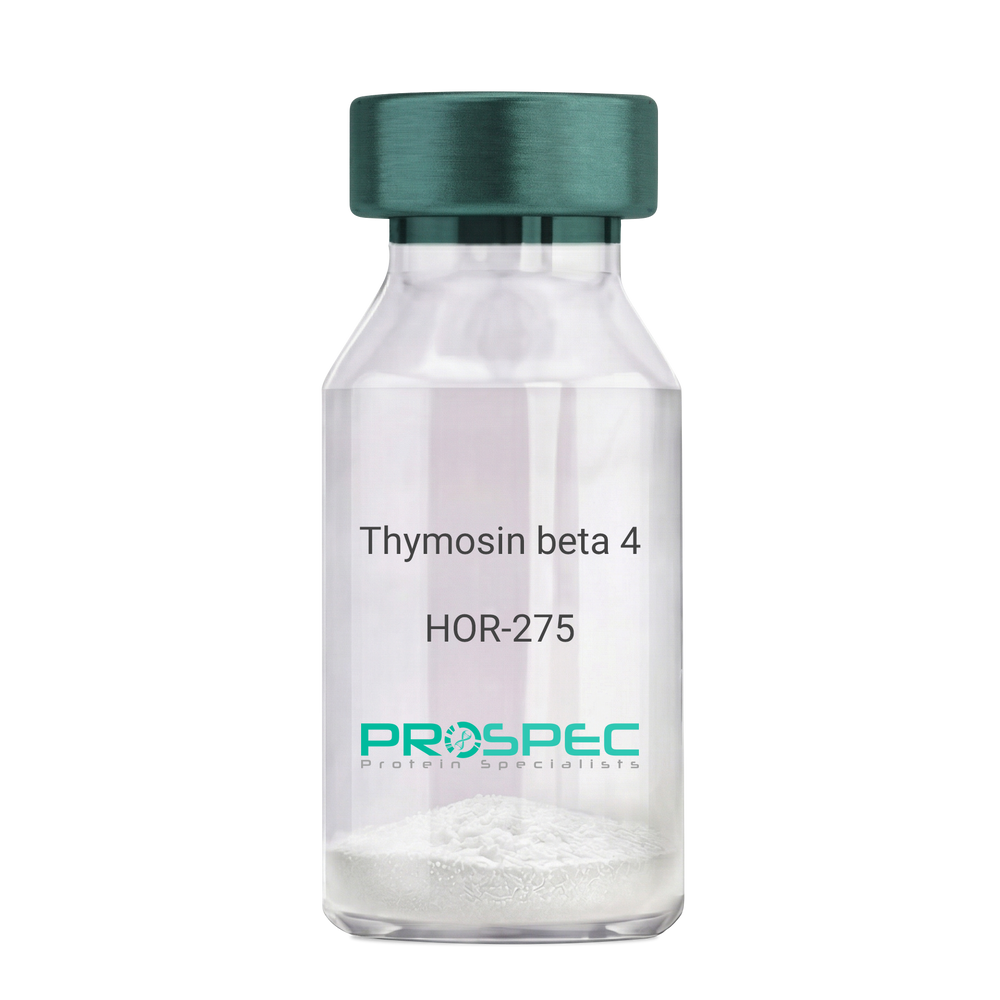
Thymosin beta 4Description:
Thymosin β4
Thymosin beta-4. TB500, TB-500
Product # :
HOR-275Price :
Quantity :
Shipping Method :
Shipped at Room temp
More Info
- description
- formulation
- purity
- More Info
Description
Thymosin b4 is a 43 amino acid peptide which is regarded as the main intracellular G-actin sequestering peptide. It has a molecular weight of 4963.55 Da, and its molecular formula is: C212H350N56O78S1. Extracellular Thymosin b4 may contribute to physiological processes such as angiogenesis, wound healing, and regulation of inflammation.
Formulation
The protein (1mg/ml) was lyophilized with no additives.
Purity
Greater than 98.0% as determined by RP-HPLC.
More Info
-
Introduction
Thymosin is a hormone secreted from the thymus. Its primary function is to stimulate the production of T cells, which are an important part of the immune system. Thymosin also assists in the development of B cells to plasma cells to produce antibodies. The predominant form of thymosin, thymosin b4, is a member of a highly conserved family of actin monomer-sequestering proteins. b-thymosins are the primary regulators of unpolymerized actin, and are essential for maintaining the small cytoplasmic pool of free G-actin monomers required for rapid filament elongation and allowing for the flux of monomers between the thymosin-bound pool and F-actin.
-
Synonyms
Thymosin beta-4. TB500, TB-500
-
Physical Appearance
Sterile Filtered White lyophilized (freeze-dried) powder.
-
Stability
Lyophilized Thymosin b4 although stable at room temperature for 3 weeks, should be stored desiccated below -18°C. Upon reconstitution T beta 4 should be stored at 4°C between 2-7 days and for future use below -18°C.For long term storage it is recommended to add a carrier protein (0.1% HSA or BSA).Please prevent freeze-thaw cycles.
-
Solubility
It is recommended to reconstitute the lyophilized Thymosin beta-4 in sterile 18MΩ-cm H2O not less than 100 µg/ml, which can then be further diluted to other aqueous solutions.
-
Amino Acid Sequence
Thymosin b4 has an a.a. sequence of Ac-Ser-Asp-Lys-Pro-Asp-Met-Ala-Glu-Ile-Glu-Lys-Phe-Asp-Lys-Ser-Lys-Leu-Lys-Lys-Thr-Glu-Thr-Gln-Glu-Lys-Asn-Pro-Leu-Pro-Ser-Lys-Glu-Thr-Ile-Glu-Gln-Glu-Lys-Gln-Ala-Gly-Glu-Ser-OH.
ProSpec's products are furnished for LABORATORY RESEARCH USE ONLY. The product may not be used as drugs, agricultural or pesticidal products, food additives or household chemicals.
- View Data Sheet
Name :
Erythropoietin Human, ActiveDescription:
Erythropoietin Receptor Human Recombinant, Active
EPO-R, EPOR, Erythropoietin Receptor.
Product # :
CYT-997Price :
Quantity :
Shipping Method :
Shipped with Ice Packs
More Info
- description
- source
- formulation
- purity
- biological activity
- More Info
Description
EPOR produced in Sf9 Baculovirus cells is a single, glycosylated polypeptide chain containing 232 amino acids (25-250a.a.) and having a molecular mass of 25.6kDa (Molecular size on SDS-PAGE will appear at approximately 28-40kDa).EPOR is expressed with a 6 amino acid His-tag at C-Terminus and purified by proprietary chromatographic techniques.
Source
Sf9, Baculovirus cells.
Formulation
EPOR protein solution (0.5mg/ml) contains Phosphate Buffered Saline (pH 7.4) and 10% glycerol.
Purity
Greater than 95.0% as determined by analysis by SDS-PAGE.
Biological Activity
Measured by its ability to inhibit EPO dependent proliferation assay using TF-1 human erythroleukemic cells. The ED50 for this effect less or equal to 70ng/ml.More Info
-
Introduction
Erythropoietin receptor, also known as EPOR arbitrates erythropoietin-induced erythroblast proliferation as well as differentiation. During EPO binding, EPOR activates Jak2 tyrosine kinase which activates various intracellular pathways including: Ras/MAP kinase, phosphatidylinositol 3-kinase and STAT transcription factors. Furthermore, stimulated EPOR has a function in erythroid cell survival. Mutations in EPOR may possibly produce erythroleukemia and familial erythrocytosis. In addition, dysregulation of EPOR can affect on the growth of selected tumors.
-
Synonyms
EPO-R, EPOR, Erythropoietin Receptor.
-
Physical Appearance
Sterile Filtered clear solution.
-
Stability
Store at 4°C if entire vial will be used within 2-4 weeks. Store, frozen at -20°C for longer periods of time. For long term storage it is recommended to add a carrier protein (0.1% HSA or BSA).Avoid multiple freeze-thaw cycles.
-
Amino Acid Sequence
APPPNLPDPK FESKAALLAA RGPEELLCFT ERLEDLVCFW EEAASAGVGP GNYSFSYQLE DEPWKLCRLH QAPTARGAVR FWCSLPTADT SSFVPLELRV TAASGAPRYH RVIHINEVVL LDAPVGLVAR LADESGHVVL RWLPPPETPM TSHIRYEVDV SAGNGAGSVQ RVEILEGRTE CVLSNLRGRT RYTFAVRARM AEPSFGGFWS AWSEPVSLLT PSDLDPHHHH HH.
-
Background
What is the molecular weight/Mw of ERYTHROPOIETIN Protein?
ERYTHROPOIETIN Protein has a total Mw of 25.6kDa.
What is the source or expression system of ERYTHROPOIETIN Protein?
Sf9, Baculovirus cells.
What is the Purity of ERYTHROPOIETIN Protein?
ERYTHROPOIETIN Protein is >95% pure as determined by SDS-PAGE.
What is the Biological Activity of ERYTHROPOIETIN Protein?
Measured by its ability to inhibit EPO dependent proliferation assay using TF-1 human erythroleukemic cells. The ED50 for this effect less or equal to 70ng/ml.
What is the amino acid sequence of ERYTHROPOIETIN Protein?
APPPNLPDPK FESKAALLAA RGPEELLCFT ERLEDLVCFW EEAASAGVGP GNYSFSYQLE DEPWKLCRLH QAPTARGAVR FWCSLPTADT SSFVPLELRV TAASGAPRYH RVIHINEVVL LDAPVGLVAR LADESGHVVL RWLPPPETPM TSHIRYEVDV SAGNGAGSVQ RVEILEGRTE CVLSNLRGRT RYTFAVRARM AEPSFGGFWS AWSEPVSLLT PSDLDPHHHH HH.
What applications can ERYTHROPOIETIN Protein be used in?
ERYTHROPOIETIN Protein can probably be used in western blot, ELISA and Lateral Flow.
What is the endotoxin level for ERYTHROPOIETIN Protein?
The endotoxin level is minimal, ERYTHROPOIETIN Protein was purified using conventional chromatography techniques.
ProSpec's products are furnished for LABORATORY RESEARCH USE ONLY. The product may not be used as drugs, agricultural or pesticidal products, food additives or household chemicals.
- View Data Sheet
Name :
TEF HumanDescription:
Thyrotrophic Embryonic Factor Human Recombinant
Thyrotroph embryonic factor, TEF, Thyrotroph embryonic factor isoform 1.FBG2, FBS2, FBX6, Fbx6b, F-box only protein 6, F-box protein that recognizes sugar chains 2, F-box/G-domain protein 2, FBXO6.
Product # :
PRO-1523Price :
Quantity :
Shipping Method :
Shipped with Ice Packs
More Info
- description
- source
- formulation
- purity
- More Info
Description
TEF Human Recombinant produced in E. coli is a single polypeptide chain containing 326 amino acids (1-303) and having a molecular mass of 35.6kDa.TEF is fused to a 23 amino acid His-tag at N-terminus & purified by proprietary chromatographic techniques.
Source
Escherichia Coli.
Formulation
The TEF solution (0.25mg/ml) contains 20mM Tris-HCl buffer (pH 8.0) and 10% glycerol.
Purity
Greater than 85% as determined by SDS-PAGE.
More Info
-
Introduction
Thyrotroph embryonic factor (TEF) is a nuclear transcription factor which is a part of the bZIP (basic region/leucine zipper) family and PAR subfamily. TEF binds DNA as either a homodimer or heterodimer, and is known to transactivate the TSH beta promoter. TEF accumulates according to a robust circadian rhythm and is also inhibits cell growth by down-regulating beta chain expression of cytokine receptors.
-
Synonyms
Thyrotroph embryonic factor, TEF, Thyrotroph embryonic factor isoform 1.FBG2, FBS2, FBX6, Fbx6b, F-box only protein 6, F-box protein that recognizes sugar chains 2, F-box/G-domain protein 2, FBXO6.
-
Physical Appearance
Sterile Filtered clear solution.
-
Stability
Store at 4°C if entire vial will be used within 2-4 weeks. Store, frozen at -20°C for longer periods of time. For long term storage it is recommended to add a carrier protein (0.1% HSA or BSA).Avoid multiple freeze-thaw cycles.
-
Amino Acid Sequence
MGSSHHHHHH SSGLVPRGSH MGSMSDAGGG KKPPVDPQAG PGPGPGRAAG ERGLSGSFPL VLKKLMENPP REARLDKEKG KEKLEEDEAA AASTMAVSAS LMPPIWDKTI PYDGESFHLE YMDLDEFLLE NGIPASPTHL AHNLLLPVAE LEGKESASSS TASPPSSSTA IFQPSETVSS
TESSLEKERE TPSPIDPNCV EVDVNFNPDP ADLVLSSVPG GELFNPRKHK FAEEDLKPQP MIKKAKKVFV PDEQKDEKYW TRRKKNNVAA KRSRDARRLK ENQITIRAAF LEKENTALRT EVAELRKEVG KCKTIVSKYE TKYGPL.
ProSpec's products are furnished for LABORATORY RESEARCH USE ONLY. The product may not be used as drugs, agricultural or pesticidal products, food additives or household chemicals.
- View Data Sheet
Name :
Holo Transferrin HumanDescription:
Holo Transferrin Human Recombinant
Serotransferrin, Transferrin, Siderophilin, Beta-1-metal-binding globulin, TF, PRO1557, PRO2086, DKFZp781D0156, HTF.
Product # :
PRO-2844Price :
Quantity :
Shipping Method :
Shipped at Room temp
More Info
- description
- source
- formulation
- purity
- biological activity
- More Info
- sds-page, activity
Description
Human Holo Transferrin Recombinant produced in HEK Cells is a glycosylated polypeptide containing 679 amino acids and having a Mw of of 76 kDa.
Source
HEK Cells
Formulation
The protein was lyophilized from 1x PBS pH-7.4.
Purity
Protein is >98% pure as determined by 10% PAGE (coomassie staining).
Biological Activity
The activity of Recombinant Holo Transferrin was determined by the proliferation assay using MDCK cells stimulated with recombinant human Holo Transferrin. The protein was found biologically activesds-page, activity
More Info
-
Introduction
Recombinant Human Holo Transferrin is an iron-delivery signaling protein which functions in the delivery of Fe³⁺ iron to cells using transferrin receptor-1 (TfR1/CD71).
Holo-transferrin binds TfR1, undergoes receptor-mediated endocytosis and the iron is released intracellularly. Transferrin Human Recombinant is crucial for brain and the nervous system, neuronal mitochondrial metabolism, neurotransmitter synthesis, oligodendrocyte myelination and synaptic activity. Recombinant holo-transferrin can be used in cell therapy, stem-cell expansion, CHO production, or drug-delivery platforms.
-
Synonyms
Serotransferrin, Transferrin, Siderophilin, Beta-1-metal-binding globulin, TF, PRO1557, PRO2086, DKFZp781D0156, HTF.
-
Physical Appearance
Sterile Filtered lyophilized (freeze-dried) powder.
-
Stability
Store the lyophilized Holo Transferrin recombinant between 2-8°C, do not freeze.
Upon reconstitution Holo Transferrin should be stored at 4°C between 2-7 days and for future use below -18°C. Please prevent freeze-thaw cycles.
-
Solubility
It is recommended to reconstitute the lyophilized Holo Transferrin recombinant in sterile 18MΩ-cm H2O at 1mg/ml, which can then be further diluted to other aqueous solutions.
-
Amino Acid Sequence
VPDKTVRWCA VSEHEATKCQ SFRDHMKSVI PSDGPSVACV KKASYLDCIR AIAANEADAV TLDAGLVYDA YLAPNNLKPV VAEFYGSKED PQTFYYAVAV VKKDSGFQMN QLRGKKSCHT GLGRSAGWNI PIGLLYCDLP EPRKPLEKAV ANFFSGSCAP CADGTDFPQL CQLCPGCGCS TLNQYFGYSG AFKCLKDGAG DVAFVKHSTI FENLANKADR DQYELLCLDN TRKPVDEYKD CHLAQVPSHT VVARSMGGKE DLIWELLNQA QEHFGKDKSK EFQLFSSPHG KDLLFKDSAH GFLKVPPRMD AKMYLGYEYV TAIRNLREGT CPEAPTDECK PVKWCALSHH ERLKCDEWSV NSVGKIECVS AETTEDCIAK IMNGEADAMS LDGGFVYIAG KCGLVPVLAE NYNKSDNCED TPEAGYFAVA VVKKSASDLT WDNLKGKKSC HTAVGRTAGW NIPMGLLYNK INHCRFDEFF SEGCAPGSKK DSSLCKLCMG SGLNLCEPNN KEGYYGYTGA FRCLVEKGDV AFVKHQTVPQ NTGGKNPDPW AKNLNEKDYE LLCLDGTRKP VEEYANCHLA RAPNHAVVTR KDKEACVHKI LRQQQHLFGS NVTDCSGNFC LFRSETKDLL FRDDTVCLAK LHDRNTYEKY LGEEYVKAVG NLRKCSTSSL LEACTFRRP.
ProSpec's products are furnished for LABORATORY RESEARCH USE ONLY. The product may not be used as drugs, agricultural or pesticidal products, food additives or household chemicals.
- View Data Sheet
Name :
Transferrin Human, CHODescription:
Transferrin Human Recombinant, CHO
Serotransferrin, Transferrin, Siderophilin, Beta-1-metal-binding globulin, TF, PRO1557, PRO2086, DKFZp781D0156, HTF.
Product # :
PRO-2782Price :
Quantity :
Shipping Method :
Shipped at Room temp
More Info
- description
- source
- formulation
- purity
- More Info
Description
Recombinant Human Transferrin produced in CHO cells is a glycosylated, polypeptide chain containing having a molecular mass of 76 kDa. Human Transferrin has homologous C and N-terminal domains, each of which binds one ion of ferric iron.
Source
Chinese Hamster Ovary cells.
Formulation
Transferrin solution contains 0.05% NaN3 and PBS.
Purity
Protein is >95% pure as determined by 10% PAGE (coomassie staining).
More Info
-
Synonyms
Serotransferrin, Transferrin, Siderophilin, Beta-1-metal-binding globulin, TF, PRO1557, PRO2086, DKFZp781D0156, HTF.
-
Physical Appearance
Sterile Filtered clear solution.
-
Stability
Store at 4°C if entire vial will be used within 2-4 weeks. Store, frozen at -20°C for longer periods of time. For long term storage it is recommended to add a carrier protein (0.1% HSA or BSA). Avoid multiple freeze-thaw cycles.
-
Applications
Immunoassay, cell culture.
-
Background
Human recombinant transferrin, a glycoprotein responsible for iron transport in the body, has gained increasing attention in the fields of biomedicine and health sciences. This multifaceted protein serves as an essential carrier of iron and is crucial for cellular growth, immunity, and various physiological processes. Its recombinant form, produced through advanced biotechnological methods, offers several advantages for therapeutic and research purposes. This study aims to provide a comprehensive exploration of human recombinant transferrin, shedding light on its various functions and potential applications in health and biomedicine.
The primary objective of this research is to elucidate the essential role of transferrin in iron homeostasis and its significance for human health. In vitro and in vivo experiments will be conducted to investigate how recombinant transferrin interacts with cellular receptors, regulates iron uptake, and influences cellular proliferation. Understanding these mechanisms is fundamental for deciphering the complexities of iron metabolism and its impact on health and disease.
The second objective is to assess the clinical relevance of human recombinant transferrin in medical interventions. Clinical trials and studies involving individuals with iron-related disorders, such as iron-deficiency anemia, will be conducted to evaluate the efficacy and safety of recombinant transferrin supplementation. These investigations may provide insights into the use of recombinant transferrin as a therapeutic agent in various clinical settings.
The third objective is to explore the broader implications of human recombinant transferrin in biomedicine and research. Research will investigate its potential roles in areas beyond iron transport, such as drug delivery, tissue engineering, and cell culture. Understanding the multifaceted properties of recombinant transferrin may open new avenues for innovative approaches in various medical specialties and scientific research.
By delving into the diverse functions of human recombinant transferrin, this research aims to expand our understanding of its physiological roles and clinical applications. The findings may contribute to the development of innovative strategies for the treatment of iron-related disorders and the advancement of biomedicine and scientific research.
ProSpec's products are furnished for LABORATORY RESEARCH USE ONLY. The product may not be used as drugs, agricultural or pesticidal products, food additives or household chemicals.
- View Data Sheet
Name :
IFIH1 HumanDescription:
Interferon Induced With Helicase C Domain 1 Human Recombinant
Interferon-induced helicase C domain-containing protein 1, Clinically amyopathic dermatomyositis autoantigen 140 kDa, CADM-140 autoantigen, Helicase with 2 CARD domains, Helicard, Interferon-induced with helicase C domain protein 1, Melanoma differentiation-associated protein 5, MDA-5, Murabutide down-regulated protein, RIG-I-like receptor 2, RLR-2, RNA helicase-DEAD box protein 116, IFIH1, MDA5, RH116, Hlcd, IDDM19.
Product # :
PRO-1505Price :
Quantity :
Shipping Method :
Shipped with Ice Packs
More Info
- description
- source
- formulation
- purity
- More Info
Description
IFIH1 Human Recombinant produced in SF9 is a glycosylated, polypeptide chain having a calculated molecular mass of 152,000 Dalton. IFIH1 is expressed with a -10xHis tag at N-terminus and purified by proprietary chromatographic techniques.
Source
Sf9 Insect Cells.
Formulation
IFIH1 is supplied in 20mM HEPES buffer pH-7.9, 550mM NaCl and 6M Urea.
Purity
Greater than 93.0% as determined by SDS-PAGE.
More Info
-
Introduction
IFIH1 is a DEAD box protein which is upregulated in response to treatment with beta-interferon and a protein kinase C-activating compound, mezerein. Irreversible reprogramming of melanomas can be attained by therapy with both these agents; treatment with either agent alone only achieves reversible differentiation. DEAD box proteins are implicated in several cellular processes involving alteration of RNA secondary structure such as translation initiation, nuclear and mitochondrial splicing, and ribosome and spliceosome assembly.
-
Synonyms
Interferon-induced helicase C domain-containing protein 1, Clinically amyopathic dermatomyositis autoantigen 140 kDa, CADM-140 autoantigen, Helicase with 2 CARD domains, Helicard, Interferon-induced with helicase C domain protein 1, Melanoma differentiation-associated protein 5, MDA-5, Murabutide down-regulated protein, RIG-I-like receptor 2, RLR-2, RNA helicase-DEAD box protein 116, IFIH1, MDA5, RH116, Hlcd, IDDM19.
-
Physical Appearance
Sterile Filtered clear solution.
-
Stability
Store at 4°C if entire vial will be used within 2-4 weeks. Store, frozen at -20°C for longer periods of time. Avoid multiple freeze-thaw cycles.
ProSpec's products are furnished for LABORATORY RESEARCH USE ONLY. The product may not be used as drugs, agricultural or pesticidal products, food additives or household chemicals.
- View Data Sheet
Name :
OrnipressinDescription:
Ornipressin
Product # :
HOR-036Price :
Quantity :
Shipping Method :
Shipped at Room temp
More Info
- description
- formulation
- purity
- More Info
Description
Ornipressin Synthetic is a single, non-glycosylated polypeptide chain containing 9 amino acids, having a molecular mass of 1042.19 Dalton and a Molecular formula of C45H63N13O12 S2.
Formulation
The protein was lyophilized with no additives.
Purity
Greater than 97.0% as determined by analysis by RP-HPLC.
More Info
-
Physical Appearance
Sterile Filtered White lyophilized (freeze-dried) powder.
-
Stability
Lyophilized Ornipressin although stable at room temperature for 3 weeks, should be stored desiccated below -18°C. Upon reconstitution Ornipressin should be stored at 4°C between 2-7 days and for future use below -18°C. For long term storage it is recommended to add a carrier protein (0.1% HSA or BSA). Please prevent freeze-thaw cycles.
-
Solubility
It is recommended to reconstitute the lyophilized Ornipressin in sterile 18MΩ-cm H2O not less than 100 µg/ml, which can then be further diluted to other aqueous solutions.
-
Amino Acid Sequence
H-Cys-Tyr-Phe-Gln-Asn-Cys-Pro-Orn-Gly-NH2.
-
Background
Ornipressin, a naturally occurring non-mammalian vasopressin analogue, has been recognized for its role in vasoconstriction and antidiuresis, making it an invaluable agent in certain clinical settings (Holmes et al., 2003). This paper aims to comprehensively review ornipressin's biochemical properties, its clinical applications, and potential future directions for therapeutic use.
Ornipressin is characterized by its strong vasopressin V1 receptor agonist activity, resulting in intense vasoconstriction. It also exhibits antidiuretic properties through the activation of V2 receptors in the renal collecting ducts, albeit to a lesser extent compared to vasopressin (Evans & Davidson, 1964).
Clinical applications of ornipressin are mainly driven by its potent vasoconstrictor activity. It has shown promise in managing esophageal variceal bleeding, where its vasoconstrictive properties help achieve hemostasis (Bosch et al., 2004).
Furthermore, it has been used as a rescue therapy in vasodilatory shock, where traditional vasoconstrictors may have limited effect (Morelli et al., 2005).
As our understanding of ornipressin continues to expand, future research is directed toward fine-tuning its application in various clinical scenarios and exploring potential new therapeutic roles. Current research is investigating the possible neuroprotective role of ornipressin in conditions such as cerebral ischemia (Uchida et al., 2010).Ornipressin, with its robust vasoconstrictor and antidiuretic properties, plays a crucial role in managing certain clinical situations. As we continue to explore this intriguing compound, its therapeutic potential appears to be far-reaching, warranting continued research in this field
ProSpec's products are furnished for LABORATORY RESEARCH USE ONLY. The product may not be used as drugs, agricultural or pesticidal products, food additives or household chemicals.
- View Data Sheet
Name :
HistrelinDescription:
Histrelin
Product # :
HOR-244Price :
Quantity :
Shipping Method :
Shipped at Room temp
More Info
- description
- formulation
- purity
- More Info
Description
Histrelin has a molecular formula of C66H86N18O12, a.a. sequence of Pyr-His-Trp-Ser-Tyr-D-His(Bzl)-Leu-Arg-Pro-NHEt and having a Mw of 1323.32 Dalton.
Formulation
The Histrelin peptide was lyophilized with no additives.
Purity
Greater than 99.0% as determined by(a) Analysis by RP-HPLC.
(b) Analysis by SDS-PAGE.More Info
-
Introduction
Histrelin is a hormone similar to one normally released from the hypothalamus gland in the brain. Histrelin works by decreasing the amount of estrogen and testosterone in the blood. Suppressing estrogen can cause thinning of the bones or slowing of their growth. Histrelin acetate is a potent LHRH agonist which stimulates LH and FSH release and inhibits the actions of sex steroids on the male and female reproductive tracts. After a transient increase, continuous administration results in down regulation of LH and FSH levels followed by a suppression of ovarian and testicular steroid biosynthesis. Histrelin potency in vivo and in vitro is similar to that of the D-Trp6-containing analog. Especially because of its high water solubility and greater lipophilic character, it appears promising for clinical application.
-
Physical Appearance
Sterile Filtered White lyophilized (freeze-dried) powder.
-
Stability
Lyophilized Histrelin although stable at room temperature for 3 weeks, should be stored desiccated below -18°C. Upon reconstitution Histrelin should be stored at 4°C between 2-7 days and for future use below -18°C. For long term storage it is recommended to add a carrier protein (0.1% HSA or BSA).Please prevent freeze-thaw cycles.
-
Solubility
It is recommended to reconstitute the lyophilized Histrelin in sterile 18MΩ-cm H2O not less than 100 µg/ml, which can then be further diluted to other aqueous solutions.
ProSpec's products are furnished for LABORATORY RESEARCH USE ONLY. The product may not be used as drugs, agricultural or pesticidal products, food additives or household chemicals.
- View Data Sheet
Name :
PSMD10 AntibodyDescription:
Gankyrin, Mouse Anti Human
26S proteasome non-ATPase regulatory subunit 10, 26S proteasome regulatory subunit p28, Gankyrin, PSMD10, p28, dJ889N15.2.
Product # :
ANT-609Price :
Quantity :
Shipping Method :
Shipped with Ice Packs
More Info
- formulation
- More Info
Formulation
1mg/ml containing PBS, pH-7.4, 10% Glycerol and 0.02% Sodium Azide.
More Info
-
Introduction
Gankyrin (proteasome 26S subunit) is a multicatalytic proteinase oncoprotein commonly overexpressed in most hepatocellular carcinomas. Proteasomes are found throughout eukaryotic cells at a high concentrations and cleave peptides in an ATP/ubiquitin-dependent process in a non-lysosomal pathway. Gankyrin interacts with S6 ATPase of the 19S regulatory particle of the 26S proteasome. Gankyrin is involved in theregulation of the phosphorylation of the retinoblastoma protein by CDK4, and to enhance the ubiquitinylation of p53 by MDM2. Gankyrin consists of 7 ankyrin repeats and is structurally similar to I kappa Bs. Gankyrin acts as a regulatory subunit of the 26s proteasome which is involved in the atp-dependent degradation of ubiquitinated proteins. Gankyrin is involved in progression of esophageal squamous cell carcinoma. gankyrin plays an oncogenic role especially in early stages of human epatocarcinogenesis. Gankyrin binds to NF-kappaB and suppresses its activity at the transcription level by modulating acetylation through SIRT1. Structural comparison between Gankyrin & p16(INK4A) identified numerous residues of gankyrin that are potentially important for CDK4 binding.
-
Synonyms
26S proteasome non-ATPase regulatory subunit 10, 26S proteasome regulatory subunit p28, Gankyrin, PSMD10, p28, dJ889N15.2.
-
Physical Appearance
Sterile filtered colorless solution.
-
Immunogen
Anti-human PSMD10 mAb, is derived from hybridization of mouse F0 myeloma cells with spleen cells from BALB/c mice immunized with a recombinant human PSMD10 protein 1-226 amino acids purified from E.coli.
-
Ig Subclass
Mouse IgG1 heavy chain and k light chain.
-
Clone
PAT1F4AT.
-
Applications
PSMD10 antibody has been tested by ELISA, Western blot analysis, Flow cytometry and ICC/IF to assure specificity and reactivity. Since application varies, however, each investigation should be titrated by the reagent to obtain optimal results.
-
Type
Mouse Anti Human Monoclonal.
-
Storage Procedures
For periods up to 1 month store at 4°C, for longer periods of time, store at -20°C. Prevent freeze thaw cycles.
-
Purification Method
PSMD10 antibody was purified from mouse ascitic fluids by protein-A affinity chromatography.
ProSpec's products are furnished for LABORATORY RESEARCH USE ONLY. The product may not be used as drugs, agricultural or pesticidal products, food additives or household chemicals.
- View Data Sheet
Name :
EGF (1-51), HumanDescription:
Epidermal Growth Factor (1-51 a.a.)Human Recombinant
Urogastrone, URG, EGF.
Product # :
CYT-1115Price :
Quantity :
Shipping Method :
Shipped at Room temp
More Info
- description
- source
- formulation
- purity
- biological activity
- More Info
Description
Epidermal Growth Factor (1-51 a.a.) Human Recombinant produced in yeast is a single, glycosylated polypeptide chain containing 51 amino acids and having a molecular mass of 6.0kDa. The EGF is purified by proprietary chromatographic techniques.
Source
Saccharomyces cerevisiae
Formulation
Lyophilized from a 0.2μm filtered concentrated solution in PBS, pH 7.4.
Purity
Greater than 98.0% as determined by:
(a) Analysis by RP-HPLC.
(b) Analysis by SDS-PAGE.Biological Activity
The ED50 is determined by a cell proliferation assay using murine Balb/c 3T3 cells and is < than 0.1 ng/ml, corresponding to a specific activity of > 1.0 × 10⁷ IU/mg.
More Info
-
Introduction
Epidermal growth factor has a profound effect on the differentiation of specific cells in vivo and is a potent mitogenic factor for a variety of cultured cells of both ectodermal and mesodermal origin. The EGF precursor is believed to exist as a membrane-bound molecule which is proteolytically cleaved to generate the 53-amino acid peptide hormone that stimulates cells to divide. EGF stimulates the growth of several epidermal and epithelial tissues in vivo and in vitro and of some fibroblasts in cell culture.
-
Synonyms
Urogastrone, URG, EGF.
-
Physical Appearance
Sterile Filtered White lyophilized (freeze-dried) powder.
-
Stability
Lyophilized EGF although stable at room temperature for 3 weeks, should be stored desiccated below -18°C. Upon reconstitution Epidermal Growth Factor should be stored at 4°C between 2-7 days and for future use below -18°C.Please prevent freeze-thaw cycles.
-
Solubility
It is recommended to reconstitute the lyophilized Epidermal Growth Factor in sterile 18MΩ-cm H2O not less than 100µg/ml, which can then be further diluted to other aqueous solutions.
-
Amino Acid Sequence
NSDSECPLSH DGYCLHDGVC MYIEALDKYA CNCVVGYIGE RCQYRDLKWW E.
-
Background
Exploring the Potential of Epidermal Growth Factor (1-51 a.a.) Human Recombinant: Novel Insights and Therapeutic Prospects
Abstract:
Epidermal Growth Factor (EGF) stands as a pivotal cytokine orchestrating essential cellular processes. This concise research paper delves into the unique realm of Epidermal Growth Factor (1-51 a.a.) Human Recombinant, unveiling its intricate molecular dynamics, signaling cascades, and therapeutic promise. Employing cutting-edge methodologies encompassing in vitro assays and animal models, this study elucidates the multifaceted cellular responses sparked by this truncated EGF variant, paving the way for potential clinical applications.
Introduction:
The truncated form of EGF, spanning amino acids 1 to 51 (a.a.), carries distinct attributes that set it apart from the full-length counterpart. This paper centers on exploring the intriguing dimensions of Epidermal Growth Factor (1-51 a.a.) Human Recombinant, offering new insights into its interactions and potential utility.
Molecular Insights and Signaling Dynamics:
At the heart of its function lies the interplay between EGF (1-51 a.a.) and the epidermal growth factor receptor (EGFR). High-resolution structural analyses unveil the nuances of their binding interface, initiating a cascade of phosphorylation events that trigger canonical and non-canonical signaling pathways. The MAPK pathway and the PI3K/Akt pathway, intricately modulated by EGF (1-51 a.a.), propel cellular processes like proliferation, migration, and evasion of apoptosis.
In Vitro Profiling and Cellular Responses:
In dissecting the cellular responses, diverse in vitro assays have been employed. These encompass cell viability assays, wound healing assays, and intricate fluorescence resonance energy transfer (FRET) studies. These assays converge to illuminate the dynamic orchestration of EGF-induced cellular behaviors, showcasing its role in promoting cellular migration, division, and wound closure.
In Vivo Implications and Therapeutic Horizons:
Translating these insights into tangible therapeutic possibilities, in vivo studies present a compelling narrative. In animal models, EGF (1-51 a.a.) emerges as a potent player in cutaneous wound healing, fostering accelerated tissue regeneration. Moreover, its potential extends to oncology, as it not only influences tumor microenvironments but also demonstrates anti-apoptotic effects, hinting at its role in tailored cancer interventions.
Future Prospects and Challenges:
While these discoveries hold immense promise, challenges persist. The intricate network of signaling events demands further scrutiny, considering potential cross-talk and off-target effects. Refining delivery mechanisms and dosing regimens is essential for realizing the clinical potential of EGF (1-51 a.a.).
Conclusion:
In a synthesis of complex molecular insights and tangible therapeutic potential, Epidermal Growth Factor (1-51 a.a.) Human Recombinant emerges as a captivating subject. Its truncated structure and distinctive signaling cascades paint a canvas of cellular orchestration. As research advances, harnessing its therapeutic benefits could usher in novel interventions for wound healing and cancer therapy.
What is the molecular weight/Mw of EGF Protein?
EGF Protein has a total Mw of 6kDa.
What is the source or expression system of EGF Protein?
Saccharomyces cerevisiae
What is the Purity of EGF Protein?
EGF Protein is >98% pure as determined by SDS-PAGE.
What is the Biological Activity of EGF Protein?
The ED50 is determined by a cell proliferation assay using murine Balb/c 3T3 cells and is < than 0.1 ng/ml, corresponding to a specific activity of > 1.0 × 10⁷ IU/mg.
What is the amino acid sequence of EGF Protein?
NSDSECPLSH DGYCLHDGVC MYIEALDKYA CNCVVGYIGE RCQYRDLKWW E.
What applications can EGF Protein be used in?
EGF Protein can probably be used in western blot, ELISA and Lateral Flow.
What is the endotoxin level for EGF Protein?
The endotoxin level is minimal, EGF Protein was purified using conventional chromatography techniques.
ProSpec's products are furnished for LABORATORY RESEARCH USE ONLY. The product may not be used as drugs, agricultural or pesticidal products, food additives or household chemicals.
- View Data Sheet
Name :
LypressinDescription:
Lypressin
Product # :
HOR-278Price :
Quantity :
Shipping Method :
Shipped at Room temp
More Info
- description
- formulation
- purity
- More Info
Description
Lypressin is a hormone used to prevent or control the frequent urination, increased thirst, and loss of water associated with diabetes insipidus (water diabetes). Its molecular weight is 1056.2 Dalton having an amino acid sequence of Cys-Tyr-Phe-Gln-Asn-Cys-Pro-Lys-Gly-NH2. The Molecular Formula is: C46H65N13O12S2. The CAS Number is: 50-57-7.
Formulation
The protein (1mg/ml) was lyophilized with no additives.
Purity
Greater than 99.0% as determined by RP-HPLC.
More Info
-
Physical Appearance
Sterile Filtered White lyophilized (freeze-dried) powder.
-
Stability
Store the lyophilized Lypressin between 2-8°C, do not freeze. Upon reconstitution Lypressin should be stored at 4°C between 2-7 days and for future use below -18°C. Please prevent freeze-thaw cycles.
-
Solubility
It is recommended to reconstitute the lyophilized Lypressin in sterile 18MΩ-cm H2O not less than 100 µg/ml, which can then be further diluted to other aqueous solutions.
Lypressin is also soluble in 1% Acetic Acid.
ProSpec's products are furnished for LABORATORY RESEARCH USE ONLY. The product may not be used as drugs, agricultural or pesticidal products, food additives or household chemicals.
- View Data Sheet
Name :
REN Human, HEKDescription:
Renin Human Recombinant, HEK
Renin, Angiotensinogenase, EC 3.4.23.15, HNFJ2, Angiotensin-Forming Enzyme, Renin Precursor Renal, EC 3.4.23.
Product # :
PRO-2044Price :
Quantity :
Shipping Method :
Shipped at Room temp
More Info
- description
- source
- formulation
- purity
- More Info
Description
Renin Human Recombinant produced in HEK cells is a single, glycosylated, polypeptide chain (Leu24-Arg406) containing a total of 393 amino acids, having a calculated molecular mass of 43.7kDa and fused to a 10 aa His tag at C-Terminus.
Source
HEK 293.
Formulation
REN was filtered (0.4µm) and lyophilized from 0.5mg/ml solution in phosphate buffered saline and 5% (w/v) trehalose.
Purity
Greater than 95.0% as determined by SDS-PAGE.
More Info
-
Introduction
Renin is a highly specific endopeptidase which generates angiotensin I from angiotensinogen in the plasma. angiotensin I is an important regulator of blood pressure and electrolyte balance. Renin initiates a cascade of reactions that produce an elevation of blood pressure and increased sodium retention by the kidney.
-
Synonyms
Renin, Angiotensinogenase, EC 3.4.23.15, HNFJ2, Angiotensin-Forming Enzyme, Renin Precursor Renal, EC 3.4.23.
-
Physical Appearance
Filtered White lyophilized (freeze-dried) powder.
-
Stability
Store lyophilized protein at -20°C. Aliquot the product after reconstitution to avoid repeated freezing/thawing cycles. Reconstituted protein can be stored at 4°C for a limited period of time; it does not show any change after two weeks at 4°C.
-
Solubility
It is recommended to add deionized water to prepare a working stock solution of approximately 0.5 mg/ml and let the lyophilized pellet dissolve completely. REN is not sterile! Please filter the product by an appropriate sterile filter before using it in the cell culture.
-
Amino Acid Sequence
LPTDTTTFKR IFLKRMPSIR ESLKERGVDM ARLGPEWSQP MKRLTLGNTT SSVILTNYMD TQYYGEIGIG TPPQTFKVVF DTGSSNVWVP SSKCSRLYTA CVYHKLFDAS DSSSYKHNGT ELTLRYSTGT VSGFLSQDII TVGGITVTQM FGEVTEMPAL PFMLAEFDGV VGMGFIEQAI GRVTPIFDNI ISQGVLKEDV FSFYYNRDSE NSQSLGGQIV LGGSDPQHYE GNFHYINLIK TGVWQIQMKG VSVGSSTLLC EDGCLALVDT GASYISGSTS SIEKLMEALG AKKRLFDYVV KCNEGPTLPD ISFHLGGKEY TLTSADYVFQ ESYSSKKLCT LAIHAMDIPP PTGPTWALGA TFIRKFYTEF DRRNNRIGFA LAR HHHHHHH HHH.
ProSpec's products are furnished for LABORATORY RESEARCH USE ONLY. The product may not be used as drugs, agricultural or pesticidal products, food additives or household chemicals.
- View Data Sheet
Name :
Adiponectin Human, HisDescription:
Adiponectin Human Recombinant, His tag
Acrp30, AdipoQ, GBP-28, APM-1, ACDC.
Product # :
CYT-433Price :
Quantity :
Shipping Method :
Shipped at Room temp
More Info
- description
- source
- formulation
- purity
- More Info
Description
The Acrp30 Human is created as a recombinant protein with N-terminal fusion of His Tag. The Adiponectin His-Tagged Fusion Protein, produced in E. coli, is 26.4 kDa protein containing 230 amino acid residues of the Acrp30 Human and 12 additional amino acid residues - HisTag (underlined).
Source
Escherichia Coli.
Formulation
Acrp30 Human was filtered (0.4µm) and lyophilized from 0.5 mg/ml in 0.02M Tris buffer pH7.5, 0.15M NaCl.
Purity
Acrp30 Human purity is greater than 95% as determined by SDS-PAGE.
More Info
-
Introduction
Adiponectin, also referred to as Acrp30, AdipoQ and GBP-28, is a recently discovered 244 amino acid protein, the product of the apM1 gene, which is physiologically active and specifically and highly expressed in adipose cells (Adipokine). The protein belongs to the soluble defense collagen super family; it has a collagen-like domain structurally homologous with collagen VIII and X and complement factor C1q-like globular domain. APM-1 forms homotrimers, which are the building blocks for higher order complexes found circulating in serum.
-
Synonyms
Acrp30, AdipoQ, GBP-28, APM-1, ACDC.
-
Physical Appearance
Filtered White lyophilized (freeze-dried) powder.
-
Stability
Store lyophilized Acrp30 Human at -20°C. Aliquot the product after reconstitution to avoid repeated freezing/thawing cycles. Reconstituted Acrp30 Human can be stored at 4°C for a limited period of time; it does not show any change after two weeks at 4°C.
-
Solubility
It is recommended to add deionized water to prepare a working stock solution of approximately 0.5mg/ml and let the lyophilized pellet dissolve completely. Product is not sterile! Please filter the product by an appropriate sterile filter before using it on cell culture.
-
Amino Acid Sequence
MRGSHHHHHHGSGHDQETTT QGPGVLLPLP KGACTGWMAG IPGHPGHNGA PGRDGRDGTP GEKGEKGDPG LIGPKGDIGE TGVPGAEGPR GFPGIQGRKG EPGEGAYVYR SAFSVGLETY VTIPNMPIRF TKIFYNQQNH YDGSTGKFHC NIPGLYYFAY HITVYMKDVK VSLFKKDKAM LFTYDQYQEN NVDQASGSVL LHLEVGDQVW LQVYGEGERN GLYADNDNDS TFTGFLLYHD TN.
-
Background
What is the molecular weight / Mw of ADIPONECTIN Protein?
ADIPONECTIN Protein has a total Mw of 26.4kDa.
What is the source or expression system of ADIPONECTIN Protein?
Escherichia Coli.
What is the Purity of ADIPONECTIN Protein?
ADIPONECTIN Protein is >95% pure as determined by SDS-PAGE.
What is the Biological Activity of ADIPONECTIN Protein?
The biological functionality of ADIPONECTIN Protein will be determined in the future.
What is the amino acid sequence of ADIPONECTIN Protein?
MRGSHHHHHHGSGHDQETTT QGPGVLLPLP KGACTGWMAG IPGHPGHNGA PGRDGRDGTP GEKGEKGDPG LIGPKGDIGE TGVPGAEGPR GFPGIQGRKG EPGEGAYVYR SAFSVGLETY VTIPNMPIRF TKIFYNQQNH YDGSTGKFHC NIPGLYYFAY HITVYMKDVK VSLFKKDKAM LFTYDQYQEN NVDQASGSVL LHLEVGDQVW LQVYGEGERN GLYADNDNDS TFTGFLLYHD TN.
What applications can ADIPONECTIN Protein be used in?
ADIPONECTIN Protein can probably be used in western blot, ELISA and Lateral Flow.
What is the endotoxin level for ADIPONECTIN Protein?
The endotoxin level is minimal, ADIPONECTIN Protein was purified using conventional chromatography techniques
ProSpec's products are furnished for LABORATORY RESEARCH USE ONLY. The product may not be used as drugs, agricultural or pesticidal products, food additives or household chemicals.
- View Data Sheet
Name :
EEF1A1 HumanDescription:
Eukaryotic Translation Elongation Factor 1 Alpha 1 Human Recombinant
Eukaryotic Translation Elongation Factor 1 Alpha 1, EF1A, EEF1A, LENG7, Leukocyte Receptor Cluster (LRC) Member 7, Elongation Factor Tu, Eukaryotic Elongation Factor 1 A-1, Leukocyte Receptor Cluster Member 7, EF-1-alpha-1, EF-Tu, eEF1A-1, CCS-3, CCS3, EE1A1, EEF-1, GRAF-1EF, HNGC:16303, PTI1, Cervical Cancer Suppressor 3, CTCL Tumor Antigen, EF1a-Like Protein, Elongation Factor 1 Alpha Subunit, Elongation Factor 1-Alpha 1, Eukaryotic Translation Elongation Factor 1 Alpha 1-Like 14, Glucocorticoid Receptor AF-1 Specific Elongation Factor, Prostate Tumor-Inducing Protein 1, Translation Elongation Factor 1 Alpha 1-Like 14.
Product # :
PRO-1910Price :
Quantity :
Shipping Method :
Shipped with Ice Packs
More Info
- description
- source
- formulation
- purity
- More Info
Description
EEF1A1 Human Recombinant produced in E.Coli is a single, non-glycosylated polypeptide chain containing 462 amino acids (1-462 a.a) and having a molecular mass of 50kDa.
Source
Escherichia Coli.
Formulation
EEF1A1 protein solution (1mg/ml) containing 20mM Tris-HCl buffer (pH 8.0), 0.4M Urea and 10% glycerol.
Purity
Greater than 90.0% as determined by SDS-PAGE.
More Info
-
Introduction
EEF1A1 is an isoform of the alpha subunit of the elongation factor-1 complex, which is responsible forthe enzymatic release of aminoacyl tRNAs to the ribosome. EEF1A1 is expressed in brain, placenta, lung, liver, kidney, and pancreas, and the other isoform (alpha 2) is expressed in brain, heart and skeletal muscle. EEF1A1 is recognized as an autoantigen in 66% of patients with Felty syndrome. EEF1A1 has multiple copies on numerous chromosomes, part of them, if not all, symbolize different pseudogenes. Among the diseases associated with EEF1A1 are tinea nigra and andcervical cancer.
-
Synonyms
Eukaryotic Translation Elongation Factor 1 Alpha 1, EF1A, EEF1A, LENG7, Leukocyte Receptor Cluster (LRC) Member 7, Elongation Factor Tu, Eukaryotic Elongation Factor 1 A-1, Leukocyte Receptor Cluster Member 7, EF-1-alpha-1, EF-Tu, eEF1A-1, CCS-3, CCS3, EE1A1, EEF-1, GRAF-1EF, HNGC:16303, PTI1, Cervical Cancer Suppressor 3, CTCL Tumor Antigen, EF1a-Like Protein, Elongation Factor 1 Alpha Subunit, Elongation Factor 1-Alpha 1, Eukaryotic Translation Elongation Factor 1 Alpha 1-Like 14, Glucocorticoid Receptor AF-1 Specific Elongation Factor, Prostate Tumor-Inducing Protein 1, Translation Elongation Factor 1 Alpha 1-Like 14.
-
Physical Appearance
Sterile Filtered clear solution.
-
Stability
Store at 4°C if entire vial will be used within 2-4 weeks. Store, frozen at -20°C for longer periods of time.For long term storage it is recommended to add a carrier protein (0.1% HSA or BSA).Please avoid freeze thaw cycles.
-
Amino Acid Sequence
MGKEKTHINI VVIGHVDSGK STTTGHLIYK CGGIDKRTIE KFEKEAAEMG KGSFKYAWVL DKLKAERERG ITIDISLWKF ETSKYYVTII DAPGHRDFIK NMITGTSQAD CAVLIVAAGV GEFEAGISKN GQTREHALLA YTLGVKQLIV GVNKMDSTEP PYSQKRYEEI VKEVSTYIKK IGYNPDTVAF VPISGWNGDN MLEPSANMPW FKGWKVTRKD GNASGTTLLE ALDCILPPTR PTDKPLRLPL QDVYKIGGIG TVPVGRVETG VLKPGMVVTF APVNVTTEVK SVEMHHEALS EALPGDNVGF NVKNVSVKDV RRGNVAGDSK NDPPMEAAGF TAQVIILNHP GQISAGYAPV LDCHTAHIAC KFAELKEKID RRSGKKLEDG PKFLKSGDAA IVDMVPGKPM CVESFSDYPP LGRFAVRDMR QTVAVGVIKA VDKKAAGAGK ITKSAQKAQK AK
ProSpec's products are furnished for LABORATORY RESEARCH USE ONLY. The product may not be used as drugs, agricultural or pesticidal products, food additives or household chemicals.