Skip to content

High-quality research proteins.

  • 1-800-805-6531

  • Mon - Sat 8.00-18.00, Sun - Closed

  • info@prospecbio.com

  • PO Box 6591 East Brunswick NJ 08816

  • Products
    • Cytokines
    • Growth factors
    • Chemokines
    • Cd antigens
    • Neurotrophins
    • Hormones
    • Enzymes
    • Viral antigens
    • Recombinant proteins
    • Natural proteins
    • Monoclonal antibodies
    • Polyclonal antibodies
    • Thermal Packaging
  • About
    • Company
    • Founder
    • Contribution
  • Customers
    • Eastern Asia
    • Eastern Europe
    • North America
    • South America
    • South East Asia
    • Southern Asia
    • Western Europe
  • Ordering
    • Ordering Method
    • Ordering - Credit Card
    • Ordering - PO
    • Shipping Fees
    • FAQs
  • Services
    • DNA Cloning
    • Protein Expression
    • Monoclonal Antibody
    • Fermentation
    • Technology License
  • Contact us
Log in

Country/region

  • USD $ | Albania
  • USD $ | Andorra
  • USD $ | Argentina
  • USD $ | Armenia
  • USD $ | Australia
  • USD $ | Austria
  • USD $ | Azerbaijan
  • USD $ | Belarus
  • USD $ | Belgium
  • USD $ | Bolivia
  • USD $ | Brazil
  • USD $ | Bulgaria
  • USD $ | Cambodia
  • USD $ | Canada
  • USD $ | Chile
  • USD $ | China
  • USD $ | Colombia
  • USD $ | Costa Rica
  • USD $ | Croatia
  • USD $ | Cyprus
  • USD $ | Czechia
  • USD $ | Denmark
  • USD $ | Estonia
  • USD $ | Finland
  • USD $ | France
  • USD $ | Georgia
  • USD $ | Germany
  • USD $ | Greece
  • USD $ | Hong Kong SAR
  • USD $ | Hungary
  • USD $ | Iceland
  • USD $ | India
  • USD $ | Ireland
  • USD $ | Israel
  • USD $ | Italy
  • USD $ | Japan
  • USD $ | Kazakhstan
  • USD $ | Latvia
  • USD $ | Liechtenstein
  • USD $ | Lithuania
  • USD $ | Madagascar
  • USD $ | Malta
  • USD $ | Mexico
  • USD $ | Moldova
  • USD $ | Monaco
  • USD $ | Netherlands
  • USD $ | New Zealand
  • USD $ | North Macedonia
  • USD $ | Norway
  • USD $ | Panama
  • USD $ | Paraguay
  • USD $ | Peru
  • USD $ | Philippines
  • USD $ | Poland
  • USD $ | Portugal
  • USD $ | Romania
  • USD $ | Singapore
  • USD $ | Slovakia
  • USD $ | Slovenia
  • USD $ | South Africa
  • USD $ | South Korea
  • USD $ | Spain
  • USD $ | Sri Lanka
  • USD $ | Sweden
  • USD $ | Switzerland
  • USD $ | Taiwan
  • USD $ | Thailand
  • USD $ | Türkiye
  • USD $ | Ukraine
  • USD $ | United Kingdom
  • USD $ | United States
  • USD $ | Uruguay
  • USD $ | Vatican City
  • USD $ | Venezuela
  • USD $ | Vietnam
  • Facebook
  • Instagram
logoProSpec - Recombinant Protein Manufacturer for academic and R&D industry
Become a distributor
Account Log in
Wishlist
Cart Cart(0)
  • Products
    +
    • Cytokines
    • Growth factors
    • Chemokines
    • Cd antigens
    • Neurotrophins
    • Hormones
    • Enzymes
    • Viral antigens
    • Recombinant proteins
    • Natural proteins
    • Monoclonal antibodies
    • Polyclonal antibodies
    • Thermal Packaging
  • About
    +
    • Company
    • Founder
    • Contribution
  • Customers
    +
    • Eastern Asia
    • Eastern Europe
    • North America
    • South America
    • South East Asia
    • Southern Asia
    • Western Europe
  • Ordering
    +
    • Ordering Method
    • Ordering - Credit Card
    • Ordering - PO
    • Shipping Fees
    • FAQs
  • Services
    +
    • DNA Cloning
    • Protein Expression
    • Monoclonal Antibody
    • Fermentation
    • Technology License
  • Contact us

Item added to your cart

View cart
View All
  • Cytokines
  • Growth factors
  • Chemokines
  • Cd antigens
  • Neurotrophins
  • Hormones
  • Enzymes
  • Viral antigens
  • Recombinant proteins
  • Natural proteins
  • Monoclonal antibodies
  • Polyclonal antibodies
  • Thermal Packaging
  • Tumor Necrosis Factor

    Tumor Necrosis Factor

    View All
  • 4-1BB

    4-1BB

    View All
  • Adiponectin

    Adiponectin

    View All
  • AIF1

    AIF1

    View All
  • Other Cytokines

    Other Cytokines

    View All
  • AITRL

    AITRL

    View All
  • Angiopoietin

    Angiopoietin

    View All
  • Apolipoprotein

    Apolipoprotein

    View All
  • B-Cell Activating Factor

    B-Cell Activating Factor

    View All
  • Beta Defensin

    Beta Defensin

    View All
  • Bone Morphogenetic Protein

    Bone Morphogenetic Protein

    View All
  • B type Natriuretic Peptide

    B type Natriuretic Peptide

    View All
  • BST

    BST

    View All
  • Betacellulin

    Betacellulin

    View All
  • Cardiotrophin

    Cardiotrophin

    View All
  • Activin

    Activin

    View All
  • Fibroblast Growth Factor

    Fibroblast Growth Factor

    View All
  • Other Growth Factors

    Other Growth Factors

    View All
  • CSF

    CSF

    View All
  • CTGF

    CTGF

    View All
  • IGFBP

    IGFBP

    View All
  • VEGF Protein

    VEGF Protein

    View All
  • EGF

    EGF

    View All
  • Epigen

    Epigen

    View All
  • Erythropoietin

    Erythropoietin

    View All
  • Insulin-Like Growth Factor

    Insulin-Like Growth Factor

    View All
  • Growth Hormone

    Growth Hormone

    View All
  • HDGF

    HDGF

    View All
  • Hepatocyte Growth Factor

    Hepatocyte Growth Factor

    View All
  • Insulin

    Insulin

    View All
  • BCA-1/ BLC (CXCL13)

    BCA-1/ BLC (CXCL13)

    View All
  • BRAK (CXCL14)

    BRAK (CXCL14)

    View All
  • C-10 (CCL6)

    C-10 (CCL6)

    View All
  • Other Chemokines

    Other Chemokines

    View All
  • MEC (CCL28)

    MEC (CCL28)

    View All
  • LD78-beta (CCL3L1)

    LD78-beta (CCL3L1)

    View All
  • CTACK (CCL27)

    CTACK (CCL27)

    View All
  • CXCL16

    CXCL16

    View All
  • CXCL17

    CXCL17

    View All
  • Platelet Factor-4 (CXCL4)

    Platelet Factor-4 (CXCL4)

    View All
  • ENA-78 (CXCL5)

    ENA-78 (CXCL5)

    View All
  • Eotaxin (CCL11,24,26)

    Eotaxin (CCL11,24,26)

    View All
  • Exodus-2 (CCL21)

    Exodus-2 (CCL21)

    View All
  • Fractalkine (CX3CL1)

    Fractalkine (CX3CL1)

    View All
  • CXCL6

    CXCL6

    View All
  • Other CD Antigens

    Other CD Antigens

    View All
  • CD14

    CD14

    View All
  • CD164

    CD164

    View All
  • CD1

    CD1

    View All
  • CD2

    CD2

    View All
  • CD200

    CD200

    View All
  • CD207

    CD207

    View All
  • CD226

    CD226

    View All
  • CD23

    CD23

    View All
  • CD244

    CD244

    View All
  • CD247

    CD247

    View All
  • CD27

    CD27

    View All
  • CD274

    CD274

    View All
  • CD300

    CD300

    View All
  • CD33

    CD33

    View All
  • Other Neurotrophins

    Other Neurotrophins

    View All
  • Beta-NGF

    Beta-NGF

    View All
  • BDNF

    BDNF

    View All
  • CDNF

    CDNF

    View All
  • CNTF

    CNTF

    View All
  • GDNF

    GDNF

    View All
  • Glia Maturation Factor

    Glia Maturation Factor

    View All
  • MANF

    MANF

    View All
  • Midkine

    Midkine

    View All
  • Neuroglobin

    Neuroglobin

    View All
  • Neurotrophic factors

    Neurotrophic factors

    View All
  • Neuregulin

    Neuregulin

    View All
  • Neuropilin

    Neuropilin

    View All
  • Pigment Epithelium-Derived Factor

    Pigment Epithelium-Derived Factor

    View All
  • Pleiotrophin

    Pleiotrophin

    View All
  • Peptide Hormones

    Peptide Hormones

    View All
  • Other Hormones

    Other Hormones

    View All
  • HCG

    HCG

    View All
  • Endothelin

    Endothelin

    View All
  • Exendin

    Exendin

    View All
  • FSH

    FSH

    View All
  • Glucagon

    Glucagon

    View All
  • GHRP

    GHRP

    View All
  • GLP

    GLP

    View All
  • Thyrostimulin

    Thyrostimulin

    View All
  • Inhibin A

    Inhibin A

    View All
  • LHRH

    LHRH

    View All
  • Melanotan

    Melanotan

    View All
  • Procalcitonin

    Procalcitonin

    View All
  • PTH

    PTH

    View All
  • Peroxiredoxin

    Peroxiredoxin

    View All
  • Peptidase

    Peptidase

    View All
  • Synthetase

    Synthetase

    View All
  • Transferase

    Transferase

    View All
  • Hydrolase

    Hydrolase

    View All
  • Dehydrogenase

    Dehydrogenase

    View All
  • ACE2

    ACE2

    View All
  • Esterase

    Esterase

    View All
  • Protein Kinases

    Protein Kinases

    View All
  • Other Enzymes

    Other Enzymes

    View All
  • Phosphatase

    Phosphatase

    View All
  • Deaminase

    Deaminase

    View All
  • Oxygenase

    Oxygenase

    View All
  • Adenylate Kinase

    Adenylate Kinase

    View All
  • Lyase

    Lyase

    View All
  • Chagas

    Chagas

    View All
  • SARS

    SARS

    View All
  • Influenza

    Influenza

    View All
  • ASFV

    ASFV

    View All
  • Astrovirus

    Astrovirus

    View All
  • Borrelia

    Borrelia

    View All
  • Helicobacter Pylori

    Helicobacter Pylori

    View All
  • Chikungunya

    Chikungunya

    View All
  • Chlamydia

    Chlamydia

    View All
  • Cytomegalo

    Cytomegalo

    View All
  • Dengue

    Dengue

    View All
  • EBV

    EBV

    View All
  • Ebola

    Ebola

    View All
  • Feline Leukemia Virus

    Feline Leukemia Virus

    View All
  • Hepatitis A

    Hepatitis A

    View All
  • Other

    Other

    View All
  • Actin

    Actin

    View All
  • ADAM

    ADAM

    View All
  • Complement Component

    Complement Component

    View All
  • Ag85

    Ag85

    View All
  • Eukaryotic Translation Initiation Factor

    Eukaryotic Translation Initiation Factor

    View All
  • Anterior Gradient Protein

    Anterior Gradient Protein

    View All
  • Heat Shock Protein

    Heat Shock Protein

    View All
  • Alpha-2-HS-Glycoprotein

    Alpha-2-HS-Glycoprotein

    View All
  • Hemoglobin

    Hemoglobin

    View All
  • Allergy

    Allergy

    View All
  • Anaplasma

    Anaplasma

    View All
  • Angiogenin

    Angiogenin

    View All
  • Ankyrin Repeat Domain

    Ankyrin Repeat Domain

    View All
  • Annexin

    Annexin

    View All
  • Other Natural Proteins

    Other Natural Proteins

    View All
  • Aprotinin

    Aprotinin

    View All
  • Transferrin

    Transferrin

    View All
  • Avidin

    Avidin

    View All
  • Anti Coagulation Factors

    Anti Coagulation Factors

    View All
  • Natural Albumin

    Natural Albumin

    View All
  • Natural Coagulation Factors

    Natural Coagulation Factors

    View All
  • Fibronectin

    Fibronectin

    View All
  • Thrombin

    Thrombin

    View All
  • Anti Human Enzyme

    Anti Human Enzyme

    View All
  • Other Monoclonal Antibodies

    Other Monoclonal Antibodies

    View All
  • Anti Human Cytokine

    Anti Human Cytokine

    View All
  • Anti Human Heat Shock Protein

    Anti Human Heat Shock Protein

    View All
  • Anti Mouse Lymphocyte

    Anti Mouse Lymphocyte

    View All
  • Anti Human Chemokine

    Anti Human Chemokine

    View All
  • Anti Human Lymphocyte

    Anti Human Lymphocyte

    View All
  • Anti Viral Monoclonal

    Anti Viral Monoclonal

    View All
  • Anti Mouse Cytokine

    Anti Mouse Cytokine

    View All
  • Anti-GST Monoclonal

    Anti-GST Monoclonal

    View All
  • Other Polyclonal Antibodies

    Other Polyclonal Antibodies

    View All
  • Anti Viral

    Anti Viral

    View All
  • Anti-GST Monoclonal

    Anti-GST Monoclonal

    View All
Back

Search results

1000 results found for “Calbindin”

Name

Description

Product #

Price

Quantity

Shipping Method

  • View Data Sheet

    Name :

    VAMP3 Human

    Description:

    Synaptobrevin-3 Human Recombinant

    VAMP3, VAMP-3, Cellubrevin, Vesicle-Associated Membrane Protein 3, Synaptobrevin-3, CEB, SYB3.

    Product # :

    PRO-652

    Price :

    Quantity :

    Shipping Method :

    Ice Icon

    Shipped with Ice Packs

    Add To Cart

    More Info

    • description
    • source
    • formulation
    • purity
    • More Info

    Description

    VAMP3 Human Recombinant produced in E.Coli is a single, non-glycosylated polypeptide chain containing 77 amino acids and having a molecular mass of 8.7 kDa.

    Source

    Escherichia Coli.

    Formulation

    The VAMP3 protein solution contains 20mM Tris pH-7.5 and 10% glycerol.

    Purity

    Greater than 95.0% as determined by:
    (a) Analysis by RP-HPLC.
    (b) Analysis by SDS-PAGE.

    More Info

    • Introduction

      VAMP3 is present in recycling endosomes and endosome-derived vesicles. VAMP3 has been implicated in recycling of transferrin receptors to the plasma membrane, secretion of alpha-granules in platelets, recycling of T-cell receptors to the immunological synapses, and membrane trafficking during cell migration. VAMP-3 is present in human platelets and necessary for granule secretion. Synaptobrevins are the main components of a protein complex involved in the docking and/or fusion of synaptic vesicles with the presynaptic membrane. VAMP3 high homology to other VAMPs in its broad tissue distribution and subcellular localization is shown to be the human equivalent of the rodent cellubrevin. In platelets the protein resides on a compartment that is not mobilized to the plasma membrane on calcium or thrombin stimulation.

    • Synonyms

      VAMP3, VAMP-3, Cellubrevin, Vesicle-Associated Membrane Protein 3, Synaptobrevin-3, CEB, SYB3.

    • Physical Appearance

      Sterile Filtered colorless solution.

    • Stability

      Store at 4°C if entire vial will be used within 2-4 weeks. Store, frozen at -20°C for longer periods of time. For long term storage it is recommended to add a carrier protein (0.1% HSA or BSA).Avoid multiple freeze-thaw cycles.

    • Amino Acid Sequence

      MSTGPTAATG SNRRLQQTQN QVDEVVDIMR VNVDKVLERD QKLSELDDRA DALQAGASQF ETSAAKLKRK YWWKNCK.

    ProSpec's products are furnished for LABORATORY RESEARCH USE ONLY. The product may not be used as drugs, agricultural or pesticidal products, food additives or household chemicals.

    Vamp3 Human
  • View Data Sheet

    Name :

    Follistatin Human, Sf9

    Description:

    Follistatin Human Recombinant, Sf9

    Follistatin, FS, Activin-Binding Protein, Follistatin Isoform FST317, FST.

    Product # :

    CYT-865

    Price :

    Quantity :

    Shipping Method :

    Ice Icon

    Shipped with Ice Packs

    Add To Cart

    More Info

    • description
    • source
    • formulation
    • purity
    • More Info
    • sds-page

    Description

    FST produced in Sf9 Baculovirus cells is a single, glycosylated polypeptide chain containing 295 amino acids (30-317a.a.) and having a molecular mass of 32.5kDa.FST is expressed with a 7 amino acid His tag at C-Terminus and purified by proprietary chromatographic techniques.

    Source

    Sf9, Baculovirus cells.

    Formulation

    FST protein solution (0.25mg/ml) contains Phosphate buffered saline (pH7.4) and 10% glycerol.

    Purity

    Greater than 90.0% as determined by SDS-PAGE.

    sds-page

    Follistatin Human, Sf9-sds-page - Product image 1

    More Info

    • Introduction

      Follistatin is a single-chain gonadal protein that specifically inhibits follicle-stimulating hormone release. The single FST gene encodes two isoforms, FST317 and FST344 containing 317 and 344 amino acids respectively, resulting from alternative splicing of the precursor mRNA. In a study in which 37 candidate genes were tested for linkage and association with polycystic ovary syndrome (PCOS) or hyperandrogenemia in 150 families, evidence was found for linkage between PCOS and follistatin. Follistatin binds directly to activin and functions as an activin antagonist. specific inhibitor of the biosynthesis and secretion of pituitary follicle stimulating hormone (fsh).

    • Synonyms

      Follistatin, FS, Activin-Binding Protein, Follistatin Isoform FST317, FST.

    • Physical Appearance

      Sterile filtered colorless solution.

    • Stability

      Store at 4°C if entire vial will be used within 2-4 weeks. Store, frozen at -20°C for longer periods of time. For long term storage it is recommended to add a carrier protein (0.1% HSA or BSA).Avoid multiple freeze-thaw cycles.

    • Amino Acid Sequence

      MGNCWLRQAK NGRCQVLYKT ELSKEECCST GRLSTSWTEE DVNDNTLFKW MIFNGGAPNC IPCKETCENV DCGPGKKCRM NKKNKPRCVC APDCSNITWK GPVCGLDGKT YRNECALLKA RCKEQPELEV QYQGRCKKTC RDVFCPGSST CVVDQTNNAY CVTCNRICPE PASSEQYLCG NDGVTYSSAC HLRKATCLLG RSIGLAYEGK CIKAKSCEDI QCTGGKKCLW DFKVGRGRCS LCDELCPDSK SDEPVCASDN ATYASECAMK EAACSSGVLL EVKHSGSCNH HHHHH

    • Background

      What is the molecular weight/Mw of FOLLISTATIN HUMAN, SF9 Protein?
      FOLLISTATIN HUMAN, SF9 Protein has a total Mw of 32.5kDa.

      What is the source or expression system of FOLLISTATIN HUMAN, SF9 Protein?
      Sf9, Baculovirus cells.
      What is the Purity of FOLLISTATIN HUMAN, SF9 Protein?
      FOLLISTATIN HUMAN, SF9 Protein is >90% pure as determined by SDS-PAGE.

      What is the Biological Activity of FOLLISTATIN HUMAN, SF9 Protein?
      The biological functionality of FOLLISTATIN HUMAN, SF9 Protein will be determined in the future.

      What is the amino acid sequence of FOLLISTATIN HUMAN, SF9 Protein?
      MGNCWLRQAK NGRCQVLYKT ELSKEECCST GRLSTSWTEE DVNDNTLFKW MIFNGGAPNC IPCKETCENV DCGPGKKCRM NKKNKPRCVC APDCSNITWK GPVCGLDGKT YRNECALLKA RCKEQPELEV QYQGRCKKTC RDVFCPGSST CVVDQTNNAY CVTCNRICPE PASSEQYLCG NDGVTYSSAC HLRKATCLLG RSIGLAYEGK CIKAKSCEDI QCTGGKKCLW DFKVGRGRCS LCDELCPDSK SDEPVCASDN ATYASECAMK EAACSSGVLL EVKHSGSCNH HHHHH.

      What applications can FOLLISTATIN HUMAN, SF9 Protein be used in?
      FOLLISTATIN HUMAN, SF9 Protein can probably be used in western blot, ELISA and Lateral Flow.

      What is the endotoxin level for FOLLISTATIN HUMAN, SF9 Protein?
      The endotoxin level is minimal, FOLLISTATIN HUMAN, SF9 Protein was purified using conventional chromatography techniques.

    ProSpec's products are furnished for LABORATORY RESEARCH USE ONLY. The product may not be used as drugs, agricultural or pesticidal products, food additives or household chemicals.

    Fst Human Sf9
  • View Data Sheet

    Name :

    S100A4 Mouse

    Description:

    S100 Calcium Binding Protein A4 Mouse Recombinant

    Protein S100-A4, S100 calcium-binding protein A4, Metastasin, Protein Mts1, Placental calcium-binding protein, Calvasculin, S100A4, CAPL, MTS1, 42A, 18A2, FSP1, P9KA, PEL98.

    Product # :

    PRO-229

    Price :

    Quantity :

    Shipping Method :

    Ice Icon

    Shipped with Ice Packs

    Add To Cart

    More Info

    • description
    • source
    • formulation
    • purity
    • More Info

    Description

    S100A4 Mouse Recombinant produced in E.Coli is a single, non-glycosylated polypeptide chain containing 121 amino acids (1-101 a.a) and having a molecular mass of 13.9kDa.S100A4 is fused to a 20 amino acid His-tag at N-terminus & purified by proprietary chromatographic techniques.

    Source

    Escherichia Coli.

    Formulation

    S100A4 protein solution (1mg/1ml) containing 20mM Tris-HCl buffer (pH8.0), 20% glycerol, 0.1M NaCl and 2mM DTT.

    Purity

    Greater than 90.0% as determined by SDS-PAGE.

    More Info

    • Introduction

      S100A4 is a member of the S100 family of proteins containing 2 EF-hand calcium-binding motifs. S100 belongs to the family of calcium binding proteins such as calmodulin and troponin C. S100A is composed of an alpha and beta chain whereas S100B is composed of two beta chains. S100 protein is also expressed in the antigen presenting cells such as the Langerhans cells in skin and interdigitating reticulum cells in the paracortex of lymph nodes. S100 proteins are localized either in the cytoplasm or the nucleus of a wide range of cells. S100 proteins are involved in the regulation of a number of cellular processes such as cell cycle progression and differentiation. S100A4 may function in motility, invasion, and tubulin polymerization. There are at least 13 members in the S100 gene family, which are located as a cluster on chromosome 1q21. Chromosomal rearrangements and altered expression of the S100A4 gene have been implicated in tumor metastasis.

    • Synonyms

      Protein S100-A4, S100 calcium-binding protein A4, Metastasin, Protein Mts1, Placental calcium-binding protein, Calvasculin, S100A4, CAPL, MTS1, 42A, 18A2, FSP1, P9KA, PEL98.

    • Physical Appearance

      Sterile Filtered clear solution.

    • Stability

      Store at 4°C if entire vial will be used within 2-4 weeks. Store, frozen at -20°C for longer periods of time. For long term storage it is recommended to add a carrier protein (0.1% HSA or BSA).Avoid multiple freeze-thaw cycles.

    • Amino Acid Sequence

      MGSSHHHHHH SSGLVPRGSH MARPLEEALD VIVSTFHKYS GKEGDKFKLN KTELKELLTR ELPSFLGKRT DEAAFQKVMS NLDSNRDNEV DFQEYCVFLS CIAMMCNEFF EGCPDKEPRK K.

    ProSpec's products are furnished for LABORATORY RESEARCH USE ONLY. The product may not be used as drugs, agricultural or pesticidal products, food additives or household chemicals.

    S100A4 Mouse
  • View Data Sheet

    Name :

    Adipsin Human

    Description:

    Complement Factor D Human Recombinant

    Complement factor D, EC 3.4.21.46, Adipsin, C3 convertase activator, Properdin factor D, CFD, DF, PFD, ADN.

    Product # :

    PRO-1360

    Price :

    Quantity :

    Shipping Method :

    Ice Icon

    Shipped with Ice Packs

    Add To Cart

    More Info

    • description
    • source
    • formulation
    • purity
    • More Info

    Description

    Adipsin Human Recombinant produced in E.Coli is a single, non-glycosylated polypeptide chain containing 249 amino acids (26-253 a.a) and having a molecular mass of 26.6kDa.Adipsin is fused to a 21 amino acid His-tag at N-terminus.

    Source

    Escherichia Coli.

    Formulation

    Adipsin protein solution (1mg/ml) containing 20mM Tris-HCl buffer (pH8.0), 10% glycerol and 0.4M Urea.

    Purity

    Greater than 85.0% as determined by SDS-PAGE.

    More Info

    • Introduction

      Complement Factor D (Adipsin), which belongs to the trypsin family of peptidases, is involved in the alternative complement pathway of the complement system where it cleaves factor B. In the alternative complement pathway, Adipsin is best known for its role in humoral suppression of infectious agents. In addition, Adipsin is a serine protease which is secreted by adipocytes into the bloodstream. Ultimately, Adipsin has a high level of expression in fat, proposing a role for adipose tissue in immune system biology.

    • Synonyms

      Complement factor D, EC 3.4.21.46, Adipsin, C3 convertase activator, Properdin factor D, CFD, DF, PFD, ADN.

    • Physical Appearance

      Sterile Filtered colorless solution.

    • Stability

      Store at 4°C if entire vial will be used within 2-4 weeks. Store, frozen at -20°C for longer periods of time. For long term storage it is recommended to add a carrier protein (0.1% HSA or BSA).Avoid multiple freeze-thaw cycles.

    • Amino Acid Sequence

      MGSSHHHHHH SSGLVPRGSH MILGGREAEA HARPYMASVQ LNGAHLCGGV LVAEQWVLSA AHCLEDAADG KVQVLLGAHS LSQPEPSKRL YDVLRAVPHP DSQPDTIDHD LLLLQLSEKA TLGPAVRPLP WQRVDRDVAP GTLCDVAGWG IVNHAGRRPD SLQHVLLPVL DRATCNRRTH HDGAITERLM CAESNRRDSC KGDSGGPLVC GGVLEGVVTS GSRVCGNRKK PGIYTRVASY AAWIDSVLA.

    ProSpec's products are furnished for LABORATORY RESEARCH USE ONLY. The product may not be used as drugs, agricultural or pesticidal products, food additives or household chemicals.

    Adipsin Human
  • View Data Sheet

    Name :

    ACVRL1 Human

    Description:

    Activin A Receptor Type II-Like 1 Human Recombinant

    Activin A Receptor Type II-Like 1, ACVRLK1, ALK1, TGF-B Superfamily Receptor Type I EC 2.7.11.30, TSR-I, ALK-1, HHT2, SKR3 Serine/Threonine-Protein Kinase Receptor R3 Activin A Receptor, Type II-Like Kinase 1, Activin Receptor-Like Kinase 1, EC 2.7.11, ORW2, HHT.

    Product # :

    CYT-920

    Price :

    Quantity :

    Shipping Method :

    Ice Icon

    Shipped with Ice Packs

    Add To Cart

    More Info

    • description
    • source
    • formulation
    • purity
    • More Info

    Description

    ACVRL1 produced in Sf9 Insect cells is a single, glycosylated polypeptide chain containing 103 amino acids (22-118a.a.) and having a molecular mass of 11.5kDa. (Molecular size on SDS-PAGE will appear at approximately 18-28kDa).ACVRL1 is expressed with a 6 amino acid His tag at C-Terminus and purified by proprietary chromatographic techniques.

    Source

    Sf9, Insect cells.

    Formulation

    ACVRL1 protein solution (0.25mg/ml) contains phosphate buffered saline (pH7.4) and 10% glycerol.

    Purity

    Greater than 95.0% as determined by SDS-PAGE.

    More Info

    • Synonyms

      Activin A Receptor Type II-Like 1, ACVRLK1, ALK1, TGF-B Superfamily Receptor Type I EC 2.7.11.30, TSR-I, ALK-1, HHT2, SKR3 Serine/Threonine-Protein Kinase Receptor R3 Activin A Receptor, Type II-Like Kinase 1, Activin Receptor-Like Kinase 1, EC 2.7.11, ORW2, HHT.

    • Physical Appearance

      Sterile filtered colorless solution.

    • Stability

      Store at 4°C if entire vial will be used within 2-4 weeks.Store, frozen at -20°C for longer periods of time. For long term storage it is recommended to add a carrier protein (0.1% HSA or BSA).Avoid multiple freeze-thaw cycles.

    • Amino Acid Sequence

      DPVKPSRGPL VTCTCESPHC KGPTCRGAWC TVVLVREEGR HPQEHRGCGN LHRELCRGRP TEFVNHYCCD SHLCNHNVSL VLEATQPPSEQPGTDGQHHH HHH.

    • Background

      The Physiological Implications and Therapeutic Potential of Activin A Receptor Type II-Like 1 Human Recombinant

      1. Abstract

      This research paper investigates the Activin A Receptor Type II-Like 1 Human Recombinant (ACVRL1), a significant protein involved in the TGF-beta superfamily signaling pathway. We provide an extensive understanding of ACVRL1’s structure, signaling mechanism, biological functions, and implications in disease pathology. Additionally, we explore the therapeutic potential of ACVRL1 in various pathological conditions.

      2. Introduction

      ACVRL1, also known as ALK1, plays an essential role in the TGF-beta signaling pathway, which has implications in cellular proliferation, differentiation, and apoptosis. Understanding ACVRL1 and its signaling mechanisms could provide insights into its potential therapeutic applications in various diseases.

      3. Structure and Signaling of ACVRL1

      ACVRL1 is a type I receptor protein involved in the TGF-beta signaling pathway. It is a transmembrane protein that consists of a ligand-binding extracellular domain and an intracellular domain responsible for signal transduction. Binding of ligands to ACVRL1 triggers phosphorylation events that activate downstream signaling pathways.

      4. Biological Functions of ACVRL1

      ACVRL1 plays pivotal roles in multiple biological processes, including vascular development, angiogenesis, and maintenance of vascular integrity. It is known to influence cellular processes such as proliferation, differentiation, and apoptosis, thereby implicating it in organogenesis and homeostasis.

      5. ACVRL1 in Disease Pathology

      Mutations in the ACVRL1 gene have been associated with hereditary hemorrhagic telangiectasia (HHT), a genetic disorder characterized by abnormal blood vessel formation. This link underscores the critical role of ACVRL1 in vascular biology and disease.

      6. Therapeutic Potential of ACVRL1

      Given its crucial role in vascular biology and its link to HHT, ACVRL1 presents a promising target for therapeutic interventions. Modulation of ACVRL1 signaling could potentially provide treatment options for pathological conditions related to abnormal blood vessel formation and function.

      7. Conclusion and Future Perspectives

      Our understanding of ACVRL1 and its functions has grown significantly in recent years, but there is much yet to be discovered. Continued research into ACVRL1's precise molecular mechanisms and its roles in disease will undoubtedly open new doors for therapeutic developmen

      What is the molecular weight / Mw of ACVRL1 Protein?
      ACVRL1 Protein has a total Mw of 11.5kDa.

      What is the source or expression system of ACVRL1 Protein?
      Sf9, Insect cells.

      What is the Purity of ACVRL1 Protein?
      ACVRL1 Protein is >95% pure as determined by SDS-PAGE.

      What is the Biological Activity of ACVRL1 Protein?
      The biological functionality of ACVRL1 Protein will be determined in the future.

      What is the amino acid sequence of ACVRL1 Protein?
      DPVKPSRGPL VTCTCESPHC KGPTCRGAWC TVVLVREEGR HPQEHRGCGN LHRELCRGRP TEFVNHYCCD SHLCNHNVSL VLEATQPPSEQPGTDGQHHH HHH.

      What applications can ACVRL1 Protein be used in?
      ACVRL1 Protein can probably be used in western blot, ELISA and Lateral Flow.

      What is the endotoxin level for ACVRL1 Protein?
      The endotoxin level is minimal, ACVRL1 Protein was purified using conventional chromatography techniques.

    ProSpec's products are furnished for LABORATORY RESEARCH USE ONLY. The product may not be used as drugs, agricultural or pesticidal products, food additives or household chemicals.

    Acvrl1 Human
  • View Data Sheet

    Name :

    THBD Human

    Description:

    Thrombomodulin Human Recombinant

    THBD, Thrombomodulin, TM, Fetomodulin, CD141, CD141 antigen, THRM, BDCA-3, BDCA3, blood dendritic cell antigen 3, AHUS6, THPH12.

    Product # :

    PRO-2697

    Price :

    Quantity :

    Shipping Method :

    Ice Icon

    Shipped with Ice Packs

    Add To Cart

    More Info

    • description
    • source
    • formulation
    • purity
    • More Info

    Description

    THBD Human Recombinant produced in Sf9 Baculovirus cells is a single, glycosylated polypeptide chain containing 500 amino acids (22-515a.a) and having a molecular mass of 52.6kDa.THBD is fused to an 6 amino acid His-tag at C-terminus & purified by proprietary chromatographic techniques.

    Source

    Sf9, Baculovirus cells.

    Formulation

    THBD protein solution (0.5mg/ml) contains Phosphate-Buffered Saline (pH 7.4) and 10% glycerol.

    Purity

    Greater than 90.0% as determined by SDS-PAGE.

    More Info

    • Introduction

      Thrombomodulin, also referred to THBD, is an endothelial cell-expressed, transmembrane glycoprotein that can form a complex with the coagulation factor, thrombin. This complex increasethe activation of protein C in the anticoagulant pathway by forming a 1:1 stoichiometric complex with thrombin. Thrombomodulinbound thrombin has procoagulant effect at the same time by inhibiting fibrinolysis by cleaving thrombinactivatable fibrinolysis inhibitor (TAFI) into its active form. Reduced levels of thrombomodulin or increased serum levels of THBD can correlate with pathogenesis of certain cardiovascular diseases, such as atherosclerosis and thrombosis. Furthermore, it associated with, diabetes mellitus, liver cirrhosis, cerebral & myocardial infarction, and multiple sclerosis.

    • Synonyms

      THBD, Thrombomodulin, TM, Fetomodulin, CD141, CD141 antigen, THRM, BDCA-3, BDCA3, blood dendritic cell antigen 3, AHUS6, THPH12.

    • Physical Appearance

      Sterile Filtered colorless solution.

    • Stability

      Store at 4°C if entire vial will be used within 2-4 weeks. Store, frozen at -20°C for longer periods of time. For long term storage it is recommended to add a carrier protein (0.1% HSA or BSA).Avoid multiple freeze-thaw cycles.

    • Amino Acid Sequence

      EPQPGGSQCV EHDCFALYPG PATFLNASQI CDGLRGHLMT VRSSVAADVI SLLLNGDGGV GRRRLWIGLQ LPPGCGDPKR LGPLRGFQWV TGDNNTSYSR WARLDLNGAP LCGPLCVAVS AAEATVPSEP IWEEQQCEVK ADGFLCEFHF PATCRPLAVE PGAAAAAVSI TYGTPFAARG ADFQALPVGS SAAVAPLGLQ LMCTAPPGAV QGHWAREAPG AWDCSVENGG CEHACNAIPG
      APRCQCPAGA ALQADGRSCT ASATQSCNDL CEHFCVPNPD QPGSYSCMCE TGYRLAADQH RCEDVDDCIL EPSPCPQRCV NTQGGFECHC YPNYDLVDGE CVEPVDPCFR ANCEYQCQPL NQTSYLCVCA EGFAPIPHEP HRCQMFCNQT ACPADCDPNT QASCECPEGY ILDDGFICTD IDECENGGFC SGVCHNLPGT FECICGPDSA LARHIGTDCD SGKVDGGDSG SGEPPPSPTP
      GSTLTPPAVG LVHSHHHHHH

    ProSpec's products are furnished for LABORATORY RESEARCH USE ONLY. The product may not be used as drugs, agricultural or pesticidal products, food additives or household chemicals.

    Thbd Human
  • View Data Sheet

    Name :

    GAL Human

    Description:

    Galanin Prepropeptide Human Recombinant

    GALN, GLNN, GMAP, GAL, GAL1.

    Product # :

    PRO-1433

    Price :

    Quantity :

    Shipping Method :

    Ice Icon

    Shipped with Ice Packs

    Add To Cart

    More Info

    • description
    • source
    • formulation
    • purity
    • More Info

    Description

    GAL Human Recombinant produced in E. coli is a single polypeptide chain containing 127 amino acids (20-123) and having a molecular mass of 13.9kDa. GAL is fused to a 23 amino acid His-tag at N-terminus & purified by proprietary chromatographic techniques.

    Source

    E.coli.

    Formulation

    The GAL solution (0.25mg/ml) contains 20mM Tris-HCl buffer (pH 8.0), 0.2M NaCl, 50% glycerol and 2mM DTT.

    Purity

    Greater than 90% as determined by SDS-PAGE.

    More Info

    • Introduction

      Galanin Prepropeptide (GAL) which is localized in brain pathways is involved in both cognition and affect, and also inhibits learning and memory by inhibiting neurotransmitter release and neuronal firing rate. GAL is a part of the galanin family and modulates a variety of physiological processed including cognition/memory, sensory/pain processing, neurotransmitter/hormone secretion, and feeding behavior. Galanin Prepropeptide is upregulated in primary afferent and sympathetic neurones and is required for the development of sympathetic perineuronal baskets subsequent to nerve injury.

    • Synonyms

      GALN, GLNN, GMAP, GAL, GAL1.

    • Physical Appearance

      Sterile Filtered colorless solution.

    • Stability

      Store at 4°C if entire vial will be used within 2-4 weeks. Store, frozen at -20°C for longer periods of time. For long term storage it is recommended to add a carrier protein (0.1% HSA or BSA).Avoid multiple freeze-thaw cycles.

    • Amino Acid Sequence

      MGSSHHHHHH SSGLVPRGSH MGSASAGLWS PAKEKRGWTL NSAGYLLGPH AVGNHRSFSD KNGLTSKREL RPEDDMKPGS FDRSIPENNI MRTIIEFLSF LHLKEAGALD RLLDLPAAASSEDIERS.

    ProSpec's products are furnished for LABORATORY RESEARCH USE ONLY. The product may not be used as drugs, agricultural or pesticidal products, food additives or household chemicals.

    Gal Human
  • View Data Sheet

    Name :

    SPINK1 Human

    Description:

    Serine Peptidase Inhibitor Kazal Type 1 Human Recombinant

    Serine Peptidase Inhibitor Kazal Type 1, Pancreatic Secretory Trypsin Inhibitor, Tumor-Associated Trypsin Inhibitor, PCTT, TATI, Spink3, Serine Protease Inhibitor Kazal Type 1, TCP, PSTI.

    Product # :

    ENZ-724

    Price :

    Quantity :

    Shipping Method :

    Ice Icon

    Shipped with Ice Packs

    Add To Cart

    More Info

    • description
    • source
    • formulation
    • purity
    • More Info

    Description

    SPINK1 Human Recombinant produced in E.coli is a single, non-glycosylated polypeptide chain containing 79 amino acids (24-79) and having a molecular mass of 8.6kDa.SPINK1 is fused to a 23 amino acid His-tag at N-terminus & purified by proprietary chromatographic techniques.

    Source

    Escherichia Coli.

    Formulation

    The SPINK1 solution (0.5mg/ml) contains 20mM Tris-HCl buffer (pH 8.0), 0.15M NaCl, 1mM DTT and 20% glycerol.

    Purity

    Greater than 90% as determined by SDS-PAGE.

    More Info

    • Introduction

      Trypsin inhibitor SPINK1 is secreted from pancreatic acinar cells into pancreatic fluid. SPINK1 has a role in inhibition of trypsin-catalyzed premature initiation of zymogens in the pancreas and the pancreatic duct. Alterations in SPINK1 gene are the cause for tropical calcific and pancreatitis hereditary pancreatitis.

    • Synonyms

      Serine Peptidase Inhibitor Kazal Type 1, Pancreatic Secretory Trypsin Inhibitor, Tumor-Associated Trypsin Inhibitor, PCTT, TATI, Spink3, Serine Protease Inhibitor Kazal Type 1, TCP, PSTI.

    • Physical Appearance

      Sterile Filtered clear solution.

    • Stability

      Store at 4°C if entire vial will be used within 2-4 weeks. Store, frozen at -20°C for longer periods of time. For long term storage it is recommended to add a carrier protein (0.1% HSA or BSA).Avoid multiple freeze-thaw cycles.

    • Amino Acid Sequence

      MGSSHHHHHH SSGLVPRGSH MGSDSLGREA KCYNELNGCT KIYDPVCGTD GNTYPNECVL CFENRKRQTS ILIQKSGPC.

    ProSpec's products are furnished for LABORATORY RESEARCH USE ONLY. The product may not be used as drugs, agricultural or pesticidal products, food additives or household chemicals.

    Spink1 Human
  • View Data Sheet

    Name :

    SERPINA1 Human, Active

    Description:

    Alpha-1 Antitrypsin, Active Human Recombinant

    Alpha-1-antitrypsin, Alpha-1 protease inhibitor, Alpha-1-antiproteinase, SERPINA1, A1AT, PI, A1A, AAT, PI1, MGC9222, PRO2275, MGC23330.

    Product # :

    PRO-907

    Price :

    Quantity :

    Shipping Method :

    Room Temp Icon

    Shipped at Room temp

    Add To Cart

    More Info

    • description
    • source
    • formulation
    • purity
    • biological activity
    • More Info

    Description

    SERPINA1 Human Recombinant produced in rice is a single, non-glycosylated polypeptide chain containing 384 amino acids and having a molecular mass of 43.1 kDa.The SERPINA1 protein is purified by proprietary chromatographic techniques.

    Source

    Rice Grain (Oryza Sativa).

    Formulation

    SERPINA1 was lyophilized from a concentrated solution containing recombinant Albumin.

    Purity

    Greater than 95% as determined by SDS-PAGE.

    Biological Activity

    3~5 mg SERPINA1 will inhibit 1 mg PPE with an activity of 10.8 units per mg protein

    More Info

    • Introduction

      SERPINA1 is secreted and is a serine protease inhibitor which its targets include elastase, plasmin, collagenase, leucocytic proteases, trypsin, chymotrypsin, and plasminogen activator. Defects in SERPINA1 gene can cause emphysema or liver disease. SERPINA1 is an endogenous inhibitor of serine proteases and inhibits the catalytic domain of human recombinant matriptase in vitro. Rise in SERPINA1 occurs as an acute phase response to tissue necrosis and inflammation. mutations in SERPINA1 and SLC11A1 genes change the balance between elastase produced by leukocytes during phagocytosis.

    • Synonyms

      Alpha-1-antitrypsin, Alpha-1 protease inhibitor, Alpha-1-antiproteinase, SERPINA1, A1AT, PI, A1A, AAT, PI1, MGC9222, PRO2275, MGC23330.

    • Physical Appearance

      Sterile Filtered White lyophilized (freeze-dried) powder.

    • Stability

      Lyophilized SERPINA1 although stable at room temperature for 3 weeks, should be stored desiccated below -18°C. Upon reconstitution SERPINA1 should be stored at 4°C between 2-7 days and for future use below -18°C.For long term storage it is recommended to add a carrier protein (0.1% HSA or BSA).Please prevent freeze-thaw cycles.

    • Solubility

      It is recommended to reconstitute the lyophilized SERPINA1 in sterile 18M-cm H2O not less than 100µg/ml, which can then be further diluted to other aqueous solutions.

    ProSpec's products are furnished for LABORATORY RESEARCH USE ONLY. The product may not be used as drugs, agricultural or pesticidal products, food additives or household chemicals.

    Serpina1 Human Active
  • View Data Sheet

    Name :

    S100A10 Mouse

    Description:

    Recombinant Mouse S100 Calcium Binding Protein A10

    Protein S100-A10, Calpactin I light chain, Calpactin-1 light chain, Cellular ligand of, annexin II, S100 calcium-binding protein A10, p10 protein, p11, S100a10, Cal1l.

    Product # :

    PRO-2252

    Price :

    Quantity :

    Shipping Method :

    Ice Icon

    Shipped with Ice Packs

    Add To Cart

    More Info

    • description
    • source
    • formulation
    • purity
    • More Info

    Description

    S100A10 Mouse Recombinant produced in E. coli is a single, non-glycosylated polypeptide chain containing 120 amino acids (1-97a.a) and having a molecular mass of 13.6kDa.S100A10 is fused to a 23 amino acid His-tag at N-terminus & purified by proprietary chromatographic techniques.

    Source

    Escherichia Coli.

    Formulation

    S100A10 protein solution (1mg/ml) containing phosphate buffered saline (pH 7.4) and 10% glycerol.

    Purity

    Greater than 90.0% as determined by SDS-PAGE.

    More Info

    • Introduction

      S100A10 is a member of the S100 family of proteins contains two EF-hand calcium-binding motifs and is thought to be involved in the regulation of a number of cellular processes including cell cycle progression and differentiation. S100 proteins are localized either in the cytoplasm or the nucleus of a wide range of cells. There are at least 13 members in the S100 gene family, which are located as a cluster on chromosome 1q21. S100A10 may function in exocytosis and endocytosis.

    • Synonyms

      Protein S100-A10, Calpactin I light chain, Calpactin-1 light chain, Cellular ligand of, annexin II, S100 calcium-binding protein A10, p10 protein, p11, S100a10, Cal1l.

    • Physical Appearance

      Sterile filtered colorless solution.

    • Stability

      Store at 4°C if entire vial will be used within 2-4 weeks.Store, frozen at -20°C for longer periods of time. For long term storage it is recommended to add a carrier protein (0.1% HSA or BSA).Avoid multiple freeze-thaw cycles.

    • Amino Acid Sequence

      MGSSHHHHHH SSGLVPRGSH MGSMPSQMEH AMETMMLTFH RFAGDKDHLT KEDLRVLMER EFPGFLENQK DPLAVDKIMK DLDQCRDGKV GFQSFLSLVA GLTIACNDYF VVNMKQKGKK.

    ProSpec's products are furnished for LABORATORY RESEARCH USE ONLY. The product may not be used as drugs, agricultural or pesticidal products, food additives or household chemicals.

    S100A10 Mouse
  • View Data Sheet

    Name :

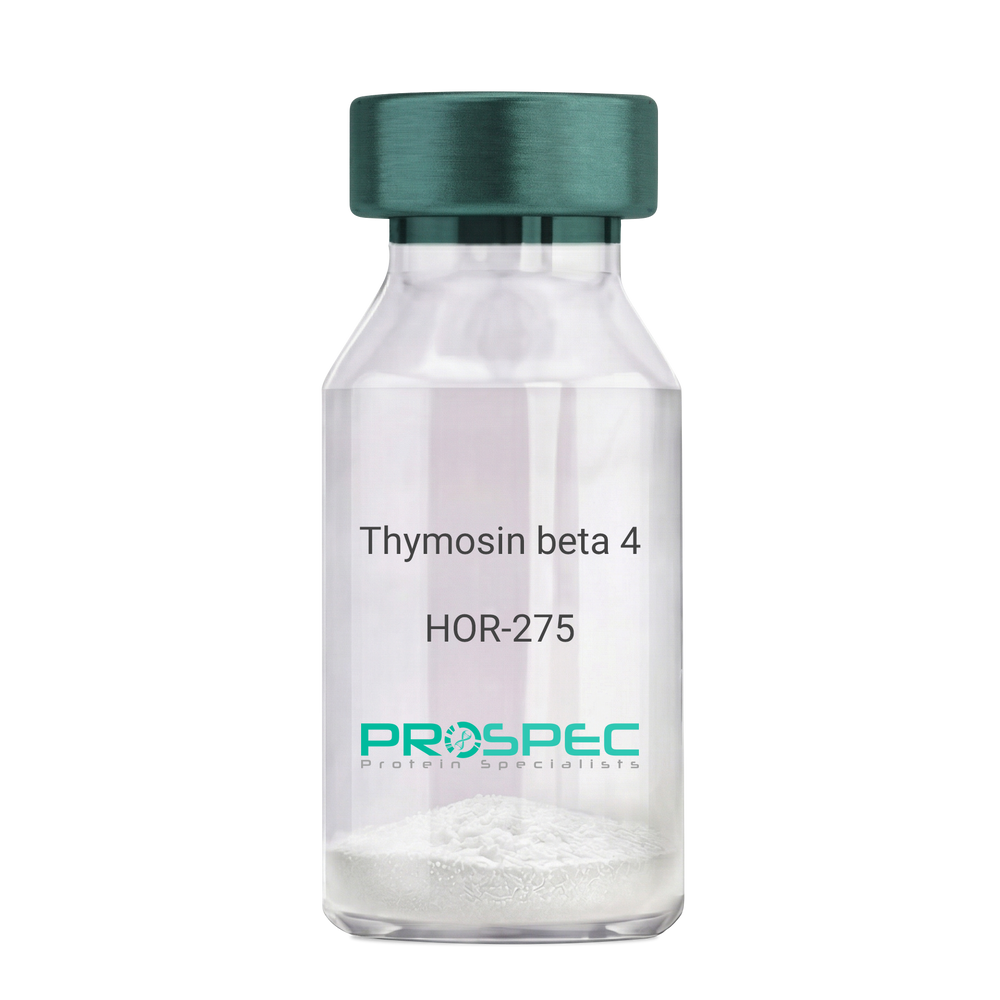
    Thymosin beta 4

    Description:

    Thymosin β4

    Thymosin beta-4. TB500, TB-500

    Product # :

    HOR-275

    Price :

    Quantity :

    Shipping Method :

    Room Temp Icon

    Shipped at Room temp

    Add To Cart

    More Info

    • description
    • formulation
    • purity
    • More Info

    Description

    Thymosin b4 is a 43 amino acid peptide which is regarded as the main intracellular G-actin sequestering peptide. It has a molecular weight of 4963.55 Da, and its molecular formula is: C212H350N56O78S1. Extracellular Thymosin b4 may contribute to physiological processes such as angiogenesis, wound healing, and regulation of inflammation.

    Formulation

    The protein (1mg/ml) was lyophilized with no additives.

    Purity

    Greater than 98.0% as determined by RP-HPLC.

    More Info

    • Introduction

      Thymosin is a hormone secreted from the thymus. Its primary function is to stimulate the production of T cells, which are an important part of the immune system. Thymosin also assists in the development of B cells to plasma cells to produce antibodies. The predominant form of thymosin, thymosin b4, is a member of a highly conserved family of actin monomer-sequestering proteins. b-thymosins are the primary regulators of unpolymerized actin, and are essential for maintaining the small cytoplasmic pool of free G-actin monomers required for rapid filament elongation and allowing for the flux of monomers between the thymosin-bound pool and F-actin.

    • Synonyms

      Thymosin beta-4. TB500, TB-500

    • Physical Appearance

      Sterile Filtered White lyophilized (freeze-dried) powder.

    • Stability

      Lyophilized Thymosin b4 although stable at room temperature for 3 weeks, should be stored desiccated below -18°C. Upon reconstitution T beta 4 should be stored at 4°C between 2-7 days and for future use below -18°C.For long term storage it is recommended to add a carrier protein (0.1% HSA or BSA).Please prevent freeze-thaw cycles.

    • Solubility

      It is recommended to reconstitute the lyophilized Thymosin beta-4 in sterile 18MΩ-cm H2O not less than 100 µg/ml, which can then be further diluted to other aqueous solutions.

    • Amino Acid Sequence

      Thymosin b4 has an a.a. sequence of Ac-Ser-Asp-Lys-Pro-Asp-Met-Ala-Glu-Ile-Glu-Lys-Phe-Asp-Lys-Ser-Lys-Leu-Lys-Lys-Thr-Glu-Thr-Gln-Glu-Lys-Asn-Pro-Leu-Pro-Ser-Lys-Glu-Thr-Ile-Glu-Gln-Glu-Lys-Gln-Ala-Gly-Glu-Ser-OH.

    ProSpec's products are furnished for LABORATORY RESEARCH USE ONLY. The product may not be used as drugs, agricultural or pesticidal products, food additives or household chemicals.

    Thymosin Beta 4
  • View Data Sheet

    Name :

    PMSG

    Description:

    Pregnant Mare Serum Gonadotropin

    Product # :

    HOR-272

    Price :

    Quantity :

    Shipping Method :

    Room Temp Icon

    Shipped at Room temp

    Add To Cart

    More Info

    • description
    • source
    • formulation
    • More Info

    Description

    PMSG is a complex glycoprotein obtained from the serum of pregnant mares. This 43-63 kda protein is capable of supplementing and being substituted for the follicle stimulating and interstitial cell-stimulating hormone of the anterior pituitary gland in both the male and female. Thus PMSG-Intervet stimulates development of the ovarian follicle in the female.

    Source

    Serum of pregnant mares.

    Formulation

    The PMSG was lyophilized with no additives.

    More Info

    • Introduction

      PMSG Hormone is a well know used hormone together with progestogen to increase ovulation just before to artificial insemination. PMSG hormone is a placental glycoprotein produced from the serum of pregnant mares. PMSG comprises of an alfa subunit and a beta subunit. PMSG hormone is secreted from endometrial cups within the pregnant mare uterus aging from 40 to 130 days into their maturation, and once extracted, it can been used to promote artificially estrus in female animals. These assemblies produce PMSG hormone to induce mare's ovarian and repsouctive structures. PMSG can induce the growth of follicles by ovaries and results in ovulatation. PMSG hormone has an about a 4 day half-life of bioactivity in species other than horses. The extended biological activity can cause ovarian stimulation and ovulation. However, PMSG use alone often causes cystic ovarian disease because of the unrestrained ovarian stimulation and due to the sugar molecules which decrease clearance of the hormone. PMSG is more likely to be used than other pituitary hormones due to the extended circulatory half-life. PMSG solely exhibits luteinizing hormone like activity, however in other animal classes it has FSH & LH like activity.

    • Physical Appearance

      Sterile Filtered White lyophilized (freeze-dried) powder.

    • Stability

      Lyophilized PMSG although stable at room temperature for 3 weeks, should be stored between 2-8°C.

    • Solubility

      It is recommended to reconstitute the lyophilized PMSG in sterile 18M-cm H2O at a concentration of 1000 IU/ml, which can then be further diluted to other aqueous solutions.

    ProSpec's products are furnished for LABORATORY RESEARCH USE ONLY. The product may not be used as drugs, agricultural or pesticidal products, food additives or household chemicals.

    Pmsg
  • View Data Sheet

    Name :

    CMBL Antibody

    Description:

    Carboxymethylenebutenolidase, Mouse Anti Human

    Carboxymethylenebutenolidase homolog, CMBL, JS-1.

    Product # :

    ANT-093

    Price :

    Quantity :

    Shipping Method :

    Ice Icon

    Shipped with Ice Packs

    Add To Cart

    More Info

    • formulation
    • More Info

    Formulation

    1mg/ml containing PBS, pH-7.4, & 0.1% Sodium Azide.

    More Info

    • Introduction

      Carboxymethylenebutenolidase homolog (CMBL) is a cysteine hydrolase of the dienelactone hydrolase family which is highly expressed in the liver cytosol. CMBL is the human homolog of Pseudomonas dienelactone hydrolase, which is a protein that participates in the bacterial halocatechol degradation pathway. CMBL which preferentially cleaves cyclic esters activates medoxomil-ester prodrugs in which the medoxomil moiety is coupled with an oxygen atom. CMBL is inhibited by PCMB (p-chloromercuribenzoate) and is encoded by a gene which maps to human chromosome 5p15.2. Furthermore, CMBL converts the prodrug olmesartan medoxomil into its pharmacologically active metabolite olmerstatan, which is an angiotensin receptor blocker, in the liver and intestine. CMBL can also activate beta-lactam antibiotics faropenem medoxomil and lenampicillin. CMBL is widely expressed, with the highest levels in the liver, followed by the kidney, small intestine and the colon.

    • Synonyms

      Carboxymethylenebutenolidase homolog, CMBL, JS-1.

    • Physical Appearance

      Sterile Filtered colorless solution.

    • Immunogen

      Anti-human CMBL mAb is derived from hybridization of mouse F0 myeloma cells with spleen cells from BALB/c mice immunized with recombinant human CMBL 1-245 amino acids purified from E. coli.

    • Ig Subclass

      Mouse IgG2a heavy chain and lambda light chain.

    • Clone

      PAT2B11AT.

    • Applications

      CMBL antibody has been tested by ELISA, Western blot analysis to assure specificity and reactivity. Since application varies, however, each investigation should be titrated by the reagent to obtain optimal results. Recommended dilution range for Western blot analysis is 1:500 ~ 1:5000. Recommended starting dilution is 1:500.

    • Type

      Mouse Anti Human Monoclonal.

    • Storage Procedures

      For periods up to 1 month store at 4°C, for longer periods of time, store at -20°C. Prevent freeze thaw cycles.

    • Purification Method

      CMBL antibody was purified from mouse ascitic fluids by protein-G affinity chromatography.

    ProSpec's products are furnished for LABORATORY RESEARCH USE ONLY. The product may not be used as drugs, agricultural or pesticidal products, food additives or household chemicals.

    Cmbl Antibody
  • View Data Sheet

    Name :

    Vimentin Antibody, Biotin

    Description:

    Vimentin, Mouse Anti Human Antibody, Biotin

    Product # :

    ANT-246

    Price :

    Quantity :

    Shipping Method :

    Room Temp Icon

    Shipped at Room temp

    Add To Cart

    More Info

    • formulation
    • More Info

    Formulation

    1mg/ml in PBS (after reconstitution).

    More Info

    • Introduction

      Vimentin expression in human malignant glioma cells depends on cellular density, algorithms of drug delivery and chemo/radio treatment. Vimentin and detyrosinated microtubules provide structural support for the extensive microtentacles observed in detached tumor cells and a mechanism to promote successful metastatic spread. Primary colorectal carcinomas display aberrant expression of vimentin, and have activated Notch and TGFbeta signaling pathways. Vimentin is a strong arterial substrate for transglutaminases. Transglutaminase-mediated vimentin dimerization results in a novel unifying pathway by which vasodilatory and remodeling responses may be regulated. Ablation of vimentin expression inhibits migration and invasion of colon and breast cancer cell lines.

    • Solubility

      Reconstitute with H20. Mix gently, wash the sides of the vial and wait 30-60 seconds before use.

    • Immunogen

      Purified Human Vimentin.

    • Ig Subclass

      mouse IgG1.

    • Clone

      hVimentin.

    • Applications

      Immunohistochemistry.

    • Cross reactivity

      Vimentin antibody will recognize most mammalian Vimentin except mouse and rat.

    • Titer

      For intra-cellular staining, use 5-10µl/1,000,000 cells. Wash twice with PBS/Azide before adding the appropriate amount of secondary fluorescent reagent.

    • Shipping Conditions

      Antibody is shipped lyophilized at ambient temperature.

    • Available Conjugates

      This antibody is also available conjugated to FITC and non conjugate form.

    • Type

      Mouse Anti Human Monoclonal Antibody.

    • Storage Procedures

      In lyophilized form, for long periods, store at 4°C in a dry environment. After reconstitution, if not intended for use within a month, aliquot and store at -20°C.

    • Purification Method

      Ion exchange column.

    ProSpec's products are furnished for LABORATORY RESEARCH USE ONLY. The product may not be used as drugs, agricultural or pesticidal products, food additives or household chemicals.

    Vimentin Antibody Biotin
  • View Data Sheet

    Name :

    MBP E.Coli, His

    Description:

    Maltose Binding Protein E.coli Recombinant, His Tag

    Maltose-binding periplasmic protein, MBP, MMBP, Maltodextrin-binding protein, malE, b4034, JW3994.

    Product # :

    PRO-2322

    Price :

    Quantity :

    Shipping Method :

    Ice Icon

    Shipped with Ice Packs

    Add To Cart

    More Info

    • description
    • source
    • formulation
    • purity
    • More Info

    Description

    Recombinant E.Coli MBP produced in E.Coli is a single, non-glycosylated polypeptide chain containing 410 amino acids (27-392 a.a) and having a molecular mass of 44.9kDa. MBP is fused to a 24 amino acid His-tag at N-terminus & purified by proprietary chromatographic techniques.

    Source

    Escherichia Coli.

    Formulation

    MBP protein solution (0.5mg/ml) containing 20mM Tris-HCl buffer (pH 8.0), 0.1M NaCl and 10% glycerol.

    Purity

    Greater than 95.0% as determined by SDS-PAGE.

    More Info

    • Introduction

      Maltose Binding Protein is a member of the maltose/maltodextrin system of E.Coli, which is accountable for the uptake and efficient catabolism of maltodextrins. The maltose/maltodextrin is a complex regulatory and transport system involving many proteins and protein complexes.
      MBP elevates the yield of its fusion partner in many cases and is often able to promote the solubility of polypeptides to which it is fused.

    • Synonyms

      Maltose-binding periplasmic protein, MBP, MMBP, Maltodextrin-binding protein, malE, b4034, JW3994.

    • Physical Appearance

      Sterile Filtered colorless solution.

    • Stability

      Store at 4°C if entire vial will be used within 2-4 weeks. Store, frozen at -20°C for longer periods of time. For long term storage it is recommended to add a carrier protein (0.1% HSA or BSA).Avoid multiple freeze-thaw cycles.

    • Amino Acid Sequence

      MGSSHHHHHH SSGLVPRGSH MGSMKIEEGK LVIWINGDKG YNGLAEVGKK FEKDTGIKVT VEHPDKLEEK FPQVAATGDG PDIIFWAHDR FGGYAQSGLL AEITPDKAFQ DKLYPFTWDA VRYNGKLIAY PIAVEALSLI YNKDLLPNPP KTWEEIPALD KELKAKGKSA LMFNLQEPYF TWPLIAADGG YAFKYENGKY DIKDVGVDNA GAKAGLTFLV DLIKNKHMNA DTDYSIAEAA FNKGETAMTI NGPWAWSNID TSKVNYGVTV LPTFKGQPSK PFVGVLSAGI NAASPNKELA KEFLENYLLT DEGLEAVNKD KPLGAVALKS YEEELAKDPR IAATMENAQK GEIMPNIPQM SAFWYAVRTA VINAASGRQT VDEALKDAQT NSSSNNNNNN NNNNLGIEGR.

    ProSpec's products are furnished for LABORATORY RESEARCH USE ONLY. The product may not be used as drugs, agricultural or pesticidal products, food additives or household chemicals.

    Mbp Ecoli His
  • View Data Sheet

    Name :

    Gliadin Native

    Description:

    Gliadin Triticum Aestivum Grain Native

    Product # :

    PRO-2675

    Price :

    Quantity :

    Shipping Method :

    Ice Icon

    Shipped with Ice Packs

    Add To Cart

    More Info

    • description
    • formulation
    • purity
    • More Info

    Description

    The native Gliadin Triticum Aestivum Grain is purified from wheat by protein chemical methods.

    Formulation

    Gliadin is supplied in 20mM HEPES buffer pH-7.4 and 6M Urea.

    Purity

    Greater than 95.0% as determined by SDS-PAGE.

    More Info

    • Introduction

      Gliadin is a common substrate of transglutaminase, which generates neo-epitopes by deamidation of glutamine side chains. In the past, serologic tests for gliadin antibodies usually were not very precise and were not enough for accurate diagnosis due to missing deamidated epitopes within the authentic gliadin fraction traditionally used in diagnostic test kits. ProSpec's deamidated Gliadin isoform matches to the deamidated neo-epitopes, which in the natural antigen are formed by transglutaminase-mediated glutamine side chain deamidation.

    • Physical Appearance

      Sterile Filtered clear solution.

    • Stability

      Store at 4°C if entire vial will be used within 2-4 weeks. Store, frozen at -20°C for longer periods of time. Avoid multiple freeze-thaw cycles.

    • Immunological Functions

      1. Binds IgG and IgA-type human auto antibodies in sera of patients diagnosed with celiac disease.2. Immunodot analysis with positive/negative samples.

    • Applications

      Western blot with patient sample.

    ProSpec's products are furnished for LABORATORY RESEARCH USE ONLY. The product may not be used as drugs, agricultural or pesticidal products, food additives or household chemicals.

    Gliadin Protein
  • View Data Sheet

    Name :

    Hirudin

    Description:

    Hirudin Recombinant

    Product # :

    PRO-362

    Price :

    Quantity :

    Shipping Method :

    Room Temp Icon

    Shipped at Room temp

    Add To Cart

    More Info

    • description
    • source
    • formulation
    • purity
    • biological activity
    • More Info

    Description

    Recombinant Hirudin is derived from yeast and the polypeptide chain contains 65 amino acids and its Mw is 6979.5 Dalton which is identical to natural Hirudin except for the substitution of leucine for isoleucine at the N-terminal end of the molecule and the absence of a sulfate group on the tyrosine at position 63.The Recombinant Hirudin is purified by proprietary chromatographic techniques.

    Source

    Pichia Pastoris.

    Formulation

    Each mg of protein was lyophilized from a sterile solution containing 20mM PBS pH-7 and 2% mannitol.

    Purity

    Greater than 98.0% as determined by:
    (a) Analysis by RP-HPLC.
    (b) Analysis by SDS-PAGE.

    Biological Activity

    The specific activity was found to be >14,000ATU/mg.

    More Info

    • Introduction

      Recombinant Hirudin is a potent thrombin inhibitor originally derived from the medicinal leech. Hirudin acts directly on thrombin rather than through other clotting factors. The mechanism of Hirudin-thrombin appears to be unique. The conversion of fibrinogen into fibrin by the serine protease enzyme thrombin is a major event in the final stages of blood coagulation. In the final stages of coagulation prothrombinase converts prothrombin into thrombin. Fibrin is subsequently cross linked by factor XIII to form a blood clot. The primary inhibitor of thrombin in normal blood circulation is antithrombin III. The anticoagulatant activity of hirudin is derived from its ability to inhibit the pro-coagulant activity of thrombin (similar to antithrombin III activity). Hirudin is the strongest natural inhibitor of thrombin. Hirudin binds to and inhibits only the activity of thrombin forms with a specific activity on fibrinogen contrasting to antithrombin III activity. Therefore, hirudin has a thrombolytic activity since it prevents or dissolves the formation of clots and thrombi. Hirudin also has therapeutic significance in blood coagulation disorders, in the treatment of skin hematomas and of superficial varicose veins. Hirudin does not hinder with the biological activity of other serum proteins and can also act on complexed thrombin, thus having an advantage over more common anticoagulants and thrombolytics. It is complicated to extract large quantities of hirudin from natural sources; therefore a method for producing and purifying hirudin using recombinant biotechnology has been developed.

    • Physical Appearance

      Sterile Filtered White lyophilized (freeze-dried) powder.

    • Stability

      Lyophilized Hirudin although stable at room temperature for 3 weeks, should be stored desiccated below -18°C. Upon reconstitution Hirudin should be stored at 4°C between 2-7 days and for future use below -18°C.For long term storage it is recommended to add a carrier protein (0.1% HSA or BSA).Please prevent freeze-thaw cycles.

    • Solubility

      It is recommended to reconstitute the lyophilized Hirudin in sterile 18MΩ-cm H2O not less than 100µg/ml, which can then be further diluted to other aqueous solutions.

    ProSpec's products are furnished for LABORATORY RESEARCH USE ONLY. The product may not be used as drugs, agricultural or pesticidal products, food additives or household chemicals.

    Hirudin
  • View Data Sheet

    Name :

    Follistatin Mouse

    Description:

    Follistatin Mouse Recombinant

    Follistatin, FST, FS, Activin-binding protein, AL033346.

    Product # :

    CYT-124

    Price :

    Quantity :

    Shipping Method :

    Room Temp Icon

    Shipped at Room temp

    Add To Cart

    More Info

    • description
    • source
    • formulation
    • purity
    • biological activity
    • More Info

    Description

    Follistatin Mouse Recombinant produced in E.Coli is a single, non-glycosylated polypeptide chain containing 289 amino acids and having a total molecular mass of 31.6kDa.The FST is purified by proprietary chromatographic techniques.

    Source

    Escherichia Coli.

    Formulation

    The Mouse Follistatin is lyophilized from 10mM Na2PO4 and 50mM NaCl, pH 7.5.

    Purity

    Greater than 90.0% as determined by SDS-PAGE.

    Biological Activity

    The ED50, determined by the dose-dependent neutralization of 7.5ng/ml human Activin-A on MCP-11 cells, is 0.13-0.19µg/ml.

    More Info

    • Introduction

      Follistatin is a single-chain gonadal protein that specifically inhibits follicle-stimulating hormone release. The single FST gene encodes two isoforms, FST317 and FST344 containing 317 and 344 amino acids respectively, resulting from alternative splicing of the precursor mRNA. In a study in which 37 candidate genes were tested for linkage and association with polycystic ovary syndrome (PCOS) or hyperandrogenemia in 150 families, evidence was found for linkage between PCOS and follistatin. Follistatin binds directly to activin and functions as an activin antagonist. specific inhibitor of the biosynthesis and secretion of pituitary follicle stimulating hormone (fsh).

    • Synonyms

      Follistatin, FST, FS, Activin-binding protein, AL033346.

    • Physical Appearance

      Sterile Filtered White lyophilized (freeze-dried) powder.

    • Stability

      Lyophilized Follistatin although stable at room temperature for 3 weeks, should be stored desiccated below -18°C. Upon reconstitution FST should be stored at 4°C between 2-7 days and for future use below -18°C.For long term storage it is recommended to add a carrier protein (0.1% HSA or BSA).Please prevent freeze-thaw cycles.

    • Solubility

      It is recommended to reconstitute the lyophilized Follistatin in sterile 18MΩ-cm H2O not less than 100µg/ml, which can then be further diluted to other aqueous solutions.

    • Amino Acid Sequence

      MGNCWLRQAK NGRCQVLTKT ELSKEECCST GRLSTSWTEE DVNDNTLFKW MIFNGGAPNC IPCKETCENV DCGPGKKCRM NKKNKPRCVC APDCSNITWK GPVCGLDGKT YRNECALLKA RCKEQPELEV QYQGRCKKTC RDVFCPGSST CVVDQTNNAY CVTCNRICPE PASSEQYLCG NDGVTYSSAC HLRKATCLLG RSIGLAYEGK CIKAKSCEDI QCTGGKKCLW DS.

    • Background

      What is the molecular weight/Mw of FOLLISTATIN MOUSE Protein?
      FOLLISTATIN MOUSE Protein has a total Mw of 31.6kDa.

      What is the source or expression system of FOLLISTATIN MOUSE Protein?
      Escherichia Coli.

      What is the Purity of FOLLISTATIN MOUSE Protein?
      FOLLISTATIN MOUSE Protein is >90% pure as determined by SDS-PAGE.

      What is the Biological Activity of FOLLISTATIN MOUSE Protein?
      The ED50, determined by the dose-dependent neutralization of 7.5ng/ml human Activin-A on MCP-11 cells, is 0.13-0.19µg/ml.

      What is the amino acid sequence of FOLLISTATIN MOUSE Protein?
      MGNCWLRQAK NGRCQVLTKT ELSKEECCST GRLSTSWTEE DVNDNTLFKW MIFNGGAPNC IPCKETCENV DCGPGKKCRM NKKNKPRCVC APDCSNITWK GPVCGLDGKT YRNECALLKA RCKEQPELEV QYQGRCKKTC RDVFCPGSST CVVDQTNNAY CVTCNRICPE PASSEQYLCG NDGVTYSSAC HLRKATCLLG RSIGLAYEGK CIKAKSCEDI QCTGGKKCLW DS.

      What applications can FOLLISTATIN MOUSE Protein be used in?
      FOLLISTATIN MOUSE Protein can probably be used in western blot, ELISA and Lateral Flow.

      What is the endotoxin level for FOLLISTATIN MOUSE Protein?
      The endotoxin level is minimal, FOLLISTATIN MOUSE Protein was purified using conventional chromatography techniques.

    ProSpec's products are furnished for LABORATORY RESEARCH USE ONLY. The product may not be used as drugs, agricultural or pesticidal products, food additives or household chemicals.

    Follistatin Mouse
  • View Data Sheet

    Name :

    GHBP Ovine

    Description:

    Growth Hormone Binding Protein Ovine Recombinant

    GHR, GHBP, GH receptor, Somatotropin receptor.

    Product # :

    CYT-470

    Price :

    Quantity :

    Shipping Method :

    Room Temp Icon

    Shipped at Room temp

    Add To Cart

    More Info

    • description
    • source
    • formulation
    • purity
    • biological activity
    • More Info

    Description

    Growth Hormone Binding Protein Ovine Recombinant produced in E.Coli is a single, non-glycosylated, polypeptide chain containing 244 amino acids and having a molecular mass of 28 kDa. GHBP is purified by proprietary chromatographic techniques.

    Source

    Escherichia Coli.

    Formulation

    GHBP was lyophilized from a concentrated (1mg/ml) solution with 0.0045mM NaHCO3.

    Purity

    Greater than 98.0% as determined by:
    (a) Gel filtration analysis.
    (b) Analysis by SDS-PAGE.

    Biological Activity

    fully biologically active as evidenced by its ability of forming 2:1 complex with Human GH.

    More Info

    • Introduction

      GHBP is a transmembrane receptor for growth hormone. Binding of growth hormone to the receptor leads to receptor dimerization and the activation of an intra- and intercellular signal transduction pathway leading to growth. A common alternate allele of this gene, called GHRd3, lacks exon three and has been well-characterized. Mutations in this gene have been associated with Laron syndrome, also known as the growth hormone insensitivity syndrome (GHIS), a disorder characterized by short stature. Other splice variants, including one encoding a soluble form of the protein (GHRtr), have been observed but have not been thoroughly characterized.

    • Synonyms

      GHR, GHBP, GH receptor, Somatotropin receptor.

    • Physical Appearance

      Sterile Filtered White lyophilized (freeze-dried) powder.

    • Stability

      Lyophilized Growth Hormone Binding Protein although stable at room temperature for 3 weeks, should be stored desiccated below -18°C. Upon reconstitution GHBP should be stored at 4°C between 2-7 days and for future use below -18°C.For long term storage it is recommended to add a carrier protein (0.1% HSA or BSA).Please prevent freeze-thaw cycles.

    • Solubility

      It is recommended to reconstitute the lyophilized GHBP Ovine in DDW or sterile 0.4% NaHCO3 adjusted to pH 10, not less than 100µg/ml, which can then be further diluted to other aqueous solutions preferably in presence of carrier proteins such as BSA or HSA.

    • Amino Acid Sequence

      The sequence of the first five N-terminal amino acids was determined and was found to be Ala-Phe-Ser-Gly-Ser.

    ProSpec's products are furnished for LABORATORY RESEARCH USE ONLY. The product may not be used as drugs, agricultural or pesticidal products, food additives or household chemicals.

    Ghbp Ovine
  • View Data Sheet

    Name :

    SYNJ2BP Human

    Description:

    Synaptojanin 2 Binding Protein Human Recombinant

    Synaptojanin 2 binding protein, ARIP2, OMP25, Synaptojanin-2-binding protein, Mitochondrial outer membrane protein 25, SYNJ2BP.

    Product # :

    PRO-1876

    Price :

    Quantity :

    Shipping Method :

    Ice Icon

    Shipped with Ice Packs

    Add To Cart

    More Info

    • description
    • source
    • formulation
    • purity
    • More Info

    Description

    SYNJ2BP Human Recombinant produced in E.Coli is a single, non-glycosylated polypeptide chain containing 140 amino acids (1-117 a.a) and having a molecular mass of 15.0kDa. SYNJ2BP is fused to a 23 amino acid His-tag at N-terminus & purified by proprietary chromatographic techniques.

    Source

    Escherichia Coli.

    Formulation

    SYNJ2BP protein solution (1mg/ml) containing 20mM Tris-HCl buffer (pH 8.0), 0.15M NaCl, 20% glycerol and 1mM DTT.

    Purity

    Greater than 95.0% as determined by SDS-PAGE.

    More Info

    • Introduction

      Synaptojanin 2 Binding Protein (SYNJ2BP) contains 1 PDZ (DHR) domain which binds to isoform 2A of SYNJ2 (through the unique motif in the C-terminus) and interacts with MAPK12.

    • Synonyms

      Synaptojanin 2 binding protein, ARIP2, OMP25, Synaptojanin-2-binding protein, Mitochondrial outer membrane protein 25, SYNJ2BP.

    • Physical Appearance

      Sterile Filtered colorless solution.

    • Stability

      Store at 4°C if entire vial will be used within 2-4 weeks. Store, frozen at -20°C for longer periods of time. For long term storage it is recommended to add a carrier protein (0.1% HSA or BSA).Avoid multiple freeze-thaw cycles.

    • Amino Acid Sequence

      MGSSHHHHHH SSGLVPRGSH MGSMNGRVDY LVTEEEINLT RGPSGLGFNI VGGTDQQYVS NDSGIYVSRI KENGAAALDG RLQEGDKILS VNGQDLKNLL HQDAVDLFRN AGYAVSLRVQ HRLQVQNGPI GHRGEGDPSG.

    ProSpec's products are furnished for LABORATORY RESEARCH USE ONLY. The product may not be used as drugs, agricultural or pesticidal products, food additives or household chemicals.

    Synj2Bp Human
  • View Data Sheet

    Name :

    CEBPB Antibody

    Description:

    CCAAT/enhancer-binding protein beta, Mouse Anti Human

    CCAAT/enhancer-binding protein beta, C/EBP beta, Liver activator protein, Nuclear factor NF-IL6, Transcription factor 5, TCF-5, CEBPB, LAP, TCF5, CRP2, IL6DBP, MGC32080.

    Product # :

    ANT-406

    Price :

    Quantity :

    Shipping Method :

    Ice Icon

    Shipped with Ice Packs

    Add To Cart

    More Info

    • formulation
    • More Info

    Formulation

    1mg/ml containing PBS, pH-7.4, & 0.1% Sodium Azide.

    More Info

    • Introduction

      CEBPB is an intronless gene and its protein is a bZIP transcription factor which can bind as a homodimer to certain DNA regulatory regions. CEBPB can also form heterodimers with the related proteins CEBP-alpha, CEBP-delta, and CEBP-gamma. CEBPB is important in the regulation of genes involved in immune and inflammatory responses and has been shown to bind to the IL-1 response element in the IL-6 gene, as well as to regulatory regions of several acute-phase and cytokine genes. In addition, CEBPB can bind the promoter and upstream element and stimulate the expression of the collagen type I gene.

    • Synonyms

      CCAAT/enhancer-binding protein beta, C/EBP beta, Liver activator protein, Nuclear factor NF-IL6, Transcription factor 5, TCF-5, CEBPB, LAP, TCF5, CRP2, IL6DBP, MGC32080.

    • Immunogen

      Anti-human CEBPB mAb, is derived from hybridization of mouse SP2/O myeloma cells with spleen cells from BALB/c mice immunized with recombinant human CEBPB amino acids 1-271 purified from E. coli.

    • Ig Subclass

      Mouse IgG1 heavy chain and κ light chain.

    • Clone

      P47A1AT.

    • Applications

      CEBPB antibody has been tested by ELISA and Western blot analysis to assure specificity and reactivity. Since application varies, however, each investigation should be titrated by the reagent to obtain optimal results. Recommended dilution range for Western blot analysis is 1:500 ~ 2,000. Recommended starting dilution is 1:1,000.

    • Type

      Mouse Anti Human Monoclonal.

    • Storage Procedures

      For periods up to 1 month store at 4°C, for longer periods of time, store at -20°C. Prevent freeze thaw cycles.

    • Purification Method

      CEBPB antibody was purified from mouse ascitic fluids by protein-G affinity chromatography.

    ProSpec's products are furnished for LABORATORY RESEARCH USE ONLY. The product may not be used as drugs, agricultural or pesticidal products, food additives or household chemicals.

    Cebpb Antibody
  • View Data Sheet

    Name :

    S100A13 Human

    Description:

    S100 Calcium Binding Protein A13 Human Recombinant

    Protein S100-A13, S100 calcium-binding protein A13, S100A13.

    Product # :

    PRO-153

    Price :

    Quantity :

    Shipping Method :

    Ice Icon

    Shipped with Ice Packs

    Add To Cart

    More Info

    • description
    • source
    • formulation
    • purity
    • More Info

    Description

    S100A13 Human Recombinant produced in E.coli is a single, non-glycosylated polypeptide chain containing 118 amino acids (1-98) and having a molecular mass of 13.6 kDa.The S100A13 is fused to a 20 amino acid His-Tag at N-terminus and purified by proprietary chromatographic techniques.

    Source

    Escherichia Coli.

    Formulation

    S100A13 protein at 1mg/ml in 20mM Tris-HCL, pH-8, 50mM NaCl and 20% Glycerol.

    Purity

    Greater than 95.0% as determined by SDS-PAGE.

    More Info

    • Introduction

      S100A13 is a member of the S100 family of proteins containing 2 EF-hand calcium-binding motifs. S100 family members are localized in the cytoplasm and/or nucleus of a wide range of cells, and are involved in the regulation of a number of cellular processes such as cell cycle progression and differentiation. S100A13 is extensively expressed in various types of tissues with an elevated expression level in the thyroid gland. In smooth muscle cells, S100A13 co-expresses with other family members in the nucleus and in stress fibers, suggesting diverse functions in signal transduction.

    • Synonyms

      Protein S100-A13, S100 calcium-binding protein A13, S100A13.

    • Physical Appearance

      Sterile Filtered clear solution.

    • Stability

      Store at 4°C if entire vial will be used within 2-4 weeks. Store, frozen at -20°C for longer periods of time. For long term storage it is recommended to add a carrier protein (0.1% HSA or BSA).Avoid multiple freeze-thaw cycles.

    • Amino Acid Sequence

      MGSSHHHHHH SSGLVPRGSH MAAEPLTELE ESIETVVTTF FTFARQEGRK DSLSVNEFKE LVTQQLPHLL KDVGSLDEKM KSLDVNQDSE LKFNEYWRLI GELAKEIRKK KDLKIRKK

    ProSpec's products are furnished for LABORATORY RESEARCH USE ONLY. The product may not be used as drugs, agricultural or pesticidal products, food additives or household chemicals.

    S100A13 Human
  • View Data Sheet

    Name :

    SOST Human, HEK

    Description:

    Sclerostin Human Recombinant, HEK

    Sclerostin, SOST, CDD, VBCH.

    Product # :

    PRO-2481

    Price :

    Quantity :

    Shipping Method :

    Room Temp Icon

    Shipped at Room temp

    Add To Cart

    More Info

    • description
    • source
    • formulation
    • purity
    • More Info

    Description

    SOST Human Recombinant produced in HEK293 cells is a single, glycosylated polypeptide chain (a.a 24-213) containing 196 amino acids including a 6 a.a C-terminal His tag. The total molecular mass is 22.4kDa (calculated).

    Source

    HEK293 Cells.

    Formulation

    SOST filtered (0.4 µm) and lyophilized from 0.5mg/ml in PBS and 5 % (w/v) trehalose, pH 7.4.

    Purity

    Greater than 95.0% as determined by SDS-PAGE.

    More Info

    • Introduction

      Sclerostin (SOST) is a secreted glycoprotein with a C-terminal cysteine knot-like (CTCK) domain and sequence similarity to the DAN (differential screening-selected gene aberrative in neuroblastoma) family of bone morphogenetic protein (BMP) antagonists. Sclerostin functions as a negative regulator of bone growth, by inhibiting bone formation. SOST is widely expressed at low levels, with highest levels in the bone, cartilage, kidney, liver, bone marrow and primary osteoblasts differentiated for 21 days. SOST gene defects cause sclerosteosis and bone dysplasia.

    • Synonyms

      Sclerostin, SOST, CDD, VBCH.

    • Physical Appearance

      Filtered White lyophilized (freeze-dried) powder.

    • Stability

      Store lyophilized protein at -20°C. Aliquot the product after reconstitution to avoid repeated freezing/thawing cycles. Reconstituted protein can be stored at 4°C for a limited period of time; it does not show any change after one week at 4°C.

    • Solubility

      It is recommended to add deionized water to prepare a working stock solution of approximately 0.5mg/ml and let the lyophilized pellet dissolve completely. SOST is not sterile! Please filter the product by an appropriate sterile filter before using it in the cell culture.

    • Amino Acid Sequence

      QGWQAFKNDA TEIIPELGEY PEPPPELENN KTMNRAENGG RPPHHPFETK DVSEYSCREL HFTRYVTDGP CRSAKPVTEL VCSGQCGPAR LLPNAIGRGK WWRPSGPDFR CIPDRYRAQR VQLLCPGGEA PRARKVRLVA SCKCKRLTRF HNQSELKDFG TEAARPQKGR KPRPRARSAK ANQAELENAY HHHHHH.

    ProSpec's products are furnished for LABORATORY RESEARCH USE ONLY. The product may not be used as drugs, agricultural or pesticidal products, food additives or household chemicals.

    Sost Protein
  • View Data Sheet

    Name :

    CRABP1 Human

    Description:

    Cellular Retinoic Acid binding Protein 1 Human Recombinant

    Cellular retinoic acid-binding protein 1, Cellular retinoic acid-binding protein I, CRABP-I, CRABP1, RBP5, CRABP, CRABPI.

    Product # :

    PRO-710

    Price :

    Quantity :

    Shipping Method :

    Ice Icon

    Shipped with Ice Packs

    Add To Cart

    More Info

    • description
    • source
    • formulation
    • purity
    • More Info

    Description

    CRABP1 Human Recombinant produced in E.Coli is a single, non-glycosylated polypeptide chain containing 137 amino acids and having a molecular mass of 15.5kDa. The CRABP1 is purified by proprietary chromatographic techniques.

    Source

    Escherichia Coli.

    Formulation

    The CRABP1 (1mg/ml) protein solution contains 20mM Tris-HCl buffer (pH8.0) and 10% glycerol.

    Purity

    Greater than 95.0% as determined by SDS-PAGE.

    More Info

    • Introduction

      CRABP1 is a member of special carrier proteins for members of the vitamin A family. It is believed that CRABP1 has an essential role in retinoic acid-mediated differentiation and proliferation processes. Though, CRABP1 is structurally similar to the cellular retinol-binding proteins, it binds only retinoic acid at specific sites within the nucleus, which may contribute to vitamin A-directed differentiation in epithelial tissue. CRABP1 is constitutively expressed and is thought to have different functions in the cell than the related CRABP2. CRABP1 forms a beta-barrel structure which accommodates hydrophobic ligands in its interior.
      Loss of CRABP1 function as a result of hypermethylation of its promoter leads to pathogenesis of papillary thyroid carcinoma. Furthermore, frequent methylation-associated silencing of CRABP1 is linked to esophageal squamous-cell carcinoma.

    • Synonyms

      Cellular retinoic acid-binding protein 1, Cellular retinoic acid-binding protein I, CRABP-I, CRABP1, RBP5, CRABP, CRABPI.

    • Physical Appearance

      Sterile Filtered colorless solution.

    • Stability

      Store at 4°C if entire vial will be used within 2-4 weeks. Store, frozen at -20°C for longer periods of time. For long term storage it is recommended to add a carrier protein (0.1% HSA or BSA).Avoid multiple freeze-thaw cycles.

    • Amino Acid Sequence

      MPNFAGTWKM RSSENFDELL KALGVNAMLR KVAVAAASKP HVEIRQDGDQ FYIKTSTTVR TTEINFKVGE GFEEETVDGR KCRSLATWEN ENKIHCTQTL LEGDGPKTYW TRELANDELI LTFGADDVVC TRIYVRE.

    ProSpec's products are furnished for LABORATORY RESEARCH USE ONLY. The product may not be used as drugs, agricultural or pesticidal products, food additives or household chemicals.

    Crabp1 Human
  • 1
  • …
  • 5
  • 6
  • 7
  • 8
  • 9
  • …
  • 42
Your browser does not support the video tag.

Products

  • Cytokines
  • Growth Factors
  • Chemokines
  • CD Antigens
  • Neurotrophins
  • Hormones
  • Enzymes
  • Viral Antigens
  • Recombinant Proteins
  • Natural Proteins
  • Monoclonal Antibodies
  • Polyclonal Antibodies
  • Thermal Packaging

About

  • Company
  • Founder
  • Contribution
  • Contact Us
  • My Account

Ordering

  • Ordering Method
  • Ordering - Credit Card
  • Ordering PO
  • Shipping Fees
  • FAQ's

Legal

  • Terms & Conditions
  • Privacy
  • Site Map
  • info@prospecbio.com
  • Facebook
  • Instagram
  • Linkedin Profile

© 2026 ProSpec-Tany TechnoGene Ltd. All Rights Reserved.

  • Choosing a selection results in a full page refresh.
  • Opens in a new window.