Search results
1000 results found for “Prefoldin”
Name
Description
Product #
Price
Quantity
Shipping Method
- View Data Sheet
Name :
BIN1 HumanDescription:
Bridging Integrator 1 Human Recombinant
AMPH2, AMPHL, MGC10367, SH3P9, Amphiphysin II.
Product # :
PRO-546Price :
Quantity :
Shipping Method :
Shipped with Ice Packs
More Info
- description
- source
- formulation
- purity
- More Info
Description
BIN1 Recombinant Human produced in E.Coli is a single, non-glycosylated polypeptide chain containing 459 amino acids (1-439 a.a) and having a molecular mass of 50.4 kDa. The BIN1 is fused to a 20 amino acid His-Tag at N-terminus and purified by proprietary chromatographic techniques.
Source
Escherichia Coli.
Formulation
BIN1 protein solution (1mg/ml) containing 20mM Tris buffer pH-8, 1mM DTT & 10% glycerol.
Purity
Greater than 90.0% as determined by SDS-PAGE.
More Info
-
Introduction
BIN1 is a nucleocytoplasmic adaptor protein, one of which was primarily identified as MYC-interacting protein having the characteristics of a tumor suppressor. BIN1 protein interacts with and inhibits the oncogenic activity of the myc oncoprotein that is a key player in many human cancers. The absence of Bin1 contributes to growth deregulation in cancer cells in carcinoma of the breast, colon, lung, cervix, prostate and liver.
-
Synonyms
AMPH2, AMPHL, MGC10367, SH3P9, Amphiphysin II.
-
Physical Appearance
Sterile filtered colorless solution.
-
Stability
Store at 4°C if entire vial will be used within 2-4 weeks. Store, frozen at -20°C for longer periods of time. For long term storage it is recommended to add a carrier protein (0.1% HSA or BSA).Avoid multiple freeze-thaw cycles.
-
Amino Acid Sequence
MGSSHHHHHH SSGLVPRGSH MAEMGSKGVT AGKIASNVQK KLTRAQEKVL QKLGKADETK DEQFEQCVQN FNKQLTEGTR LQKDLRTYLA SVKAMHEASK KLNECLQEVY EPDWPGRDEA NKIAENNDLL WMDYHQKLVD QALLTMDTYL GQFPDIKSRI AKRGRKLVDY DSARHHYESL QTAKKKDEAK IAKAEEELIK AQKVFEEMNV DLQEELPSLW NSRVGFYVNT FQSIAGLEEN FHKEMSKLNQ NLNDVLVGLE KQHGSNTFTV KAQPSDNAPA KGNKSPSPPD GSPAATPEIR VNHEPEPAGG ATPGATLPKS PSQPAEASEV AGGTQPAAGA QEPGETAASE AASSSLPAVV VETFPATVNG TVEGGSGAGR LDLPPGFMFK VQAQHDYTAT DTDELQLRAG DVVLVIPFQN PEEQDEGWLM GVKESDWNQH KELEKCRGVF PENFTERVP.
ProSpec's products are furnished for LABORATORY RESEARCH USE ONLY. The product may not be used as drugs, agricultural or pesticidal products, food additives or household chemicals.
- View Data Sheet
Name :
Aprotinin ProteinDescription:
Aprotinin
Pancreatic trypsin inhibitor, Basic protease inhibitor, BPI, BPTI, Aprotinin, AP.
Product # :
PRO-285Price :
Quantity :
Shipping Method :
Shipped at Room temp
More Info
- description
- source
- formulation
- More Info
Description
Aprotinin is a natural proteinase inhibitor polypeptide consisting of fifty-eight amino acids {C284H432N84O79S7} arranged in a single polypeptide chain, cross-linked by three disulfide bridges and having a molecular mass of 6512.
Source
Bovine Lung.
Formulation
The protein (1mg/ml) was lyophilized with no additives.
More Info
-
Introduction
Aprotinin inhibits the activity of several proteolytic enzymes such as chymotrypsin, kallikrein, plasmin and trypsin. Aprotinin is present in blood and in most tissues, with a high concentration in lung. Aprotinin inhibits pro-inflammatory cytokine release and maintains glycoprotein homeostasis. In platelets, aprotinin reduces glycoprotein loss (e.g., GpIb, GpIIb/IIIa), while in granulocytes it prevents the expression of pro-inflammatory adhesive glycoproteins (e.g., CD11b).
-
Synonyms
Pancreatic trypsin inhibitor, Basic protease inhibitor, BPI, BPTI, Aprotinin, AP.
-
Physical Appearance
Sterile Filtered White lyophilized (freeze-dried) powder.
-
Stability
Lyophilized Aprotinin although stable at room temperature for 3 weeks, should be stored desiccated below -18°C. Upon reconstitution Aprotinin should be stored at 4°C between 2-7 days and for future use below -18°C.For long term storage it is recommended to add a carrier protein (0.1% HSA or BSA).Please prevent freeze-thaw cycles.
-
Solubility
It is recommended to reconstitute the lyophilized Aprotinin in sterile 18MΩ-cm H2O not less than 100µg/ml, which can then be further diluted to other aqueous solutions.
-
Specific Activity
5,940 KIU (Kallikrein Inactivator Units) per mg, 3.3 pH.Eur.U/mg.
ProSpec's products are furnished for LABORATORY RESEARCH USE ONLY. The product may not be used as drugs, agricultural or pesticidal products, food additives or household chemicals.
- View Data Sheet
Name :
R-Spondin-1 HumanDescription:
R-Spondin-1 Human Recombinant
R-spondin-1, Cristin-3, mCristin-3, Roof plate-specific spondin-1, Rspo1, RSPO, R-spondin 1, R-spondin, Rspondin, CRISTIN3.
Product # :
PRO-2593Price :
Quantity :
Shipping Method :
Shipped at Room temp
More Info
- description
- source
- formulation
- purity
- biological activity
- More Info
Description
R-Spondin-1 Human Recombinant produced in CHO cells is a glycosylated monomer chain containing 243 amino acids and having a total molecular mass of 25.6kDa. RSPO1 is purified by proprietary chromatographic techniques.
Source
CHO cells.
Formulation
The protein was lyophilized from a sterile (0.2µm) filtered solution containing PBS.
Purity
Greater than 95.0% as determined by SDS-PAGE.
Biological Activity
The ED50, as calculated by the Luciferase induction in HEK-293 STF cells in the presence of Murine Wnt-3a is 47.99ng/ml corresponding to a specific activity of 2.1 x 10^4 units/mg.
More Info
-
Introduction
R-Spondin-1 (Rspo1) is a part of the Rspondin family. Rspo1 plays a role as an activator of the canonical Wnt signaling pathway by acting as a ligand for LGR4-6 receptors. Rspo1 induces the onset of crypt cell proliferation and increases intestinal epithelial healing effect. Rspo1 is negatively regulating the TGF-beta pathway.
-
Synonyms
R-spondin-1, Cristin-3, mCristin-3, Roof plate-specific spondin-1, Rspo1, RSPO, R-spondin 1, R-spondin, Rspondin, CRISTIN3.
-
Physical Appearance
Sterile Filtered White lyophilized (freeze-dried) powder.
-
Stability
Lyophilized RSPO1 although stable at room temperature for 3 weeks, should be stored desiccated below -18°C. Upon reconstitution RSPO1 should be stored at 4°C between 2-7 days and for future use below -18°C. Please prevent freeze-thaw cycles.
-
Solubility
It is recommended to reconstitute the lyophilized RSPO1in sterile 18MΩ-cm H2O not less than 100µg/ml, which can then be further diluted to other aqueous solutions.
-
Amino Acid Sequence
SRGIKGKRQR RISAEGSQAC AKGCELCSEV NGCLKCSPKL FILLERNDIR QVGVCLPSCP PGYFDARNPD MNKCIKCKIE HCEACFSHNF CTKCKEGLYL HKGRCYPACP EGSSAANGTM ECSSPAQCEM SEWSPWGPCS KKQQLCGFRR GSEERTRRVL HAPVGDHAAC SDTKETRRCT VRRVPCPEGQ KRRKGGQGRR ENANRNLARK ESKEAGAGSR RRKGQQQQQQ QGTVGPLTSA GPA.
ProSpec's products are furnished for LABORATORY RESEARCH USE ONLY. The product may not be used as drugs, agricultural or pesticidal products, food additives or household chemicals.
- View Data Sheet
Name :
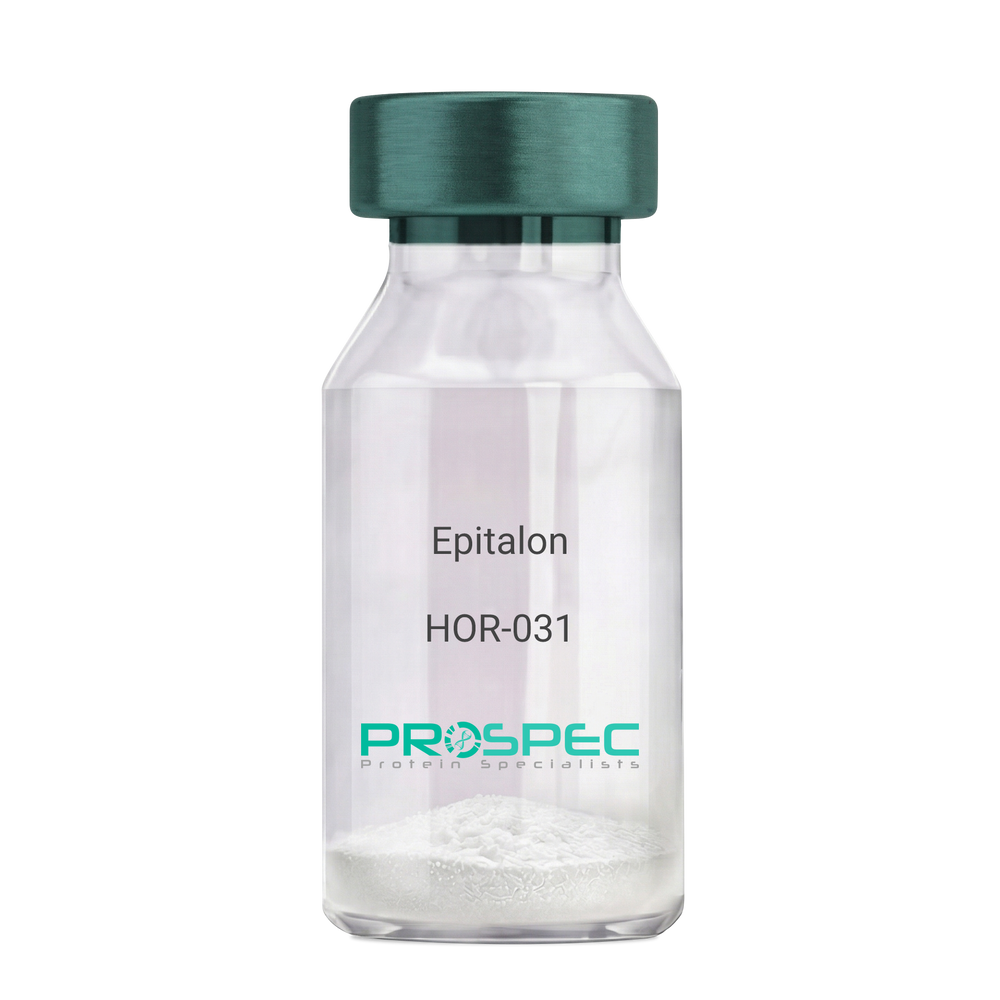
EpitalonDescription:
Epitalon
Product # :
HOR-031Price :
Quantity :
Shipping Method :
Shipped at Room temp
More Info
- description
- formulation
- purity
- More Info
Description
Epithalon Synthetic is a single, non-glycosylated polypeptide chain containing 4 amino acids, having a molecular mass of 390.35 Dalton and a Molecular formula of C14H22N4O9.
Formulation
The protein was lyophilized with no additives.
Purity
Greater than 97.0% as determined by analysis by RP-HPLC.
More Info
-
Physical Appearance
Sterile Filtered White lyophilized (freeze-dried) powder.
-
Stability
Lyophilized Epithalon although stable at room temperature for 3 weeks, should be stored desiccated below -18°C. Upon reconstitution Epithalon should be stored at 4°C between 2-7 days and for future use below -18°C.For long term storage it is recommended to add a carrier protein (0.1% HSA or BSA). Please prevent freeze-thaw cycles.
-
Solubility
It is recommended to reconstitute the lyophilized Epithalon in sterile 18MΩ-cm H2O not less than 100 µg/ml, which can then be further diluted to other aqueous solutions.
-
Amino Acid Sequence
H-Ala-Glu-Asp-Gly-OH .
-
Background
Epitalon, also known as Epithalon, is a synthetic tetrapeptide that has been a focal point in the field of aging and longevity research. This peptide, consisting of four amino acids, is derived from the pineal gland and has been associated with a variety of biological effects, most notably its potential role in extending the lifespan of cells.
Epitalon's primary function is its interaction with telomeres, the protective caps at the ends of chromosomes that shorten as cells divide. By stimulating the production of telomerase, an enzyme that can repair and lengthen telomeres, Epitalon may slow down the aging process at a cellular level.
Numerous studies have explored the potential of Epitalon in extending the lifespan of organisms. For instance, Khavinson and colleagues (2003) found that Epitalon increased the lifespan of fruit flies, while Anisimov et al. (2003) reported similar results in mice. These findings suggest that Epitalon could potentially have similar effects in humans.
Epitalon has also been studied for its role in regulating circadian rhythms. Korkushko et al. (2011) found that Epitalon could restore disrupted circadian rhythms in elderly people, suggesting potential applications in sleep disorders and other conditions related to circadian rhythm disruption.
Beyond its potential role in aging and longevity, Epitalon has been explored for its potential therapeutic applications. Anisimov et al. (2011) found that Epitalon could reduce the incidence of spontaneous tumors in mice, suggesting potential applications in cancer prevention.
While research on Epitalon is promising, it is important to note that most studies have been conducted in animals or in vitro. More research is needed to fully understand the potential effects and applications of Epitalon in humans. However, the existing body of research suggests that Epitalon could be a promising tool in the fight against aging and age-related diseases.
ProSpec's products are furnished for LABORATORY RESEARCH USE ONLY. The product may not be used as drugs, agricultural or pesticidal products, food additives or household chemicals.
- View Data Sheet
Name :
HirudinDescription:
Hirudin Recombinant
Product # :
PRO-362Price :
Quantity :
Shipping Method :
Shipped at Room temp
More Info
- description
- source
- formulation
- purity
- biological activity
- More Info
Description
Recombinant Hirudin is derived from yeast and the polypeptide chain contains 65 amino acids and its Mw is 6979.5 Dalton which is identical to natural Hirudin except for the substitution of leucine for isoleucine at the N-terminal end of the molecule and the absence of a sulfate group on the tyrosine at position 63.The Recombinant Hirudin is purified by proprietary chromatographic techniques.
Source
Pichia Pastoris.
Formulation
Each mg of protein was lyophilized from a sterile solution containing 20mM PBS pH-7 and 2% mannitol.
Purity
Greater than 98.0% as determined by:
(a) Analysis by RP-HPLC.
(b) Analysis by SDS-PAGE.Biological Activity
The specific activity was found to be >14,000ATU/mg.More Info
-
Introduction
Recombinant Hirudin is a potent thrombin inhibitor originally derived from the medicinal leech. Hirudin acts directly on thrombin rather than through other clotting factors. The mechanism of Hirudin-thrombin appears to be unique. The conversion of fibrinogen into fibrin by the serine protease enzyme thrombin is a major event in the final stages of blood coagulation. In the final stages of coagulation prothrombinase converts prothrombin into thrombin. Fibrin is subsequently cross linked by factor XIII to form a blood clot. The primary inhibitor of thrombin in normal blood circulation is antithrombin III. The anticoagulatant activity of hirudin is derived from its ability to inhibit the pro-coagulant activity of thrombin (similar to antithrombin III activity). Hirudin is the strongest natural inhibitor of thrombin. Hirudin binds to and inhibits only the activity of thrombin forms with a specific activity on fibrinogen contrasting to antithrombin III activity. Therefore, hirudin has a thrombolytic activity since it prevents or dissolves the formation of clots and thrombi. Hirudin also has therapeutic significance in blood coagulation disorders, in the treatment of skin hematomas and of superficial varicose veins. Hirudin does not hinder with the biological activity of other serum proteins and can also act on complexed thrombin, thus having an advantage over more common anticoagulants and thrombolytics. It is complicated to extract large quantities of hirudin from natural sources; therefore a method for producing and purifying hirudin using recombinant biotechnology has been developed.
-
Physical Appearance
Sterile Filtered White lyophilized (freeze-dried) powder.
-
Stability
Lyophilized Hirudin although stable at room temperature for 3 weeks, should be stored desiccated below -18°C. Upon reconstitution Hirudin should be stored at 4°C between 2-7 days and for future use below -18°C.For long term storage it is recommended to add a carrier protein (0.1% HSA or BSA).Please prevent freeze-thaw cycles.
-
Solubility
It is recommended to reconstitute the lyophilized Hirudin in sterile 18MΩ-cm H2O not less than 100µg/ml, which can then be further diluted to other aqueous solutions.
ProSpec's products are furnished for LABORATORY RESEARCH USE ONLY. The product may not be used as drugs, agricultural or pesticidal products, food additives or household chemicals.
- View Data Sheet
Name :
DsbCDescription:
Disulfide-Bond Isomerase Recombinant
Disulfide-bond isomerase C, dsbC, xprA, Disulfide-bond isomerase (DsbC) E.Coli, Thiol:disulfide interchange protein dsbC, Disulfide-bond isomerase C Thiol:disulfide interchange protein dsbC .
Product # :
ENZ-291Price :
Quantity :
Shipping Method :
Shipped with Ice Packs
More Info
- description
- source
- formulation
- purity
- More Info
Description
Disulfide-Bond Isomerase Recombinant produced in E.Coli is a single, non-glycosylated, polypeptide chain containing 217 amino acids (21-236) and having a molecular mass of 23.6 kDa.DsbC is purified by proprietary chromatographic techniques.
Source
Escherichia Coli.
Formulation
1 mg/ml solution containing 20mM Tris-HCl buffer pH 7.5 and 2mM EDTA.
Purity
Greater than 95.0% as determined by SDS-PAGE.
More Info
-
Introduction
Dsb proteins (DsbA, DsbB, DsbC, and DsbD) catalyze formation and isomerization of protein disulfide bonds in the periplasm of Escherichia coli. DsbC is periplasmic enzyme known as a disulfide isomerase and can convert aberrant disulfide bonds to correct ones.
-
Synonyms
Disulfide-bond isomerase C, dsbC, xprA, Disulfide-bond isomerase (DsbC) E.Coli, Thiol:disulfide interchange protein dsbC, Disulfide-bond isomerase C Thiol:disulfide interchange protein dsbC .
-
Physical Appearance
Sterile filtered colorless solution.
-
Stability
Store at 4°C if entire vial will be used within 2-4 weeks. Store, frozen at -20°C for longer periods of time. For long term storage it is recommended to add a carrier protein (0.1% HSA or BSA).Avoid multiple freeze-thaw cycles.
-
Amino Acid Sequence
MDDAAIQQTL AKMGIKSSDI QPAPVAGMKT VLTNSGVLYI TDDGKHIIQG PMYDVSGTAP VNVTNKMLLK QLNALEKEMI VYKAPQEKHV ITVFTDITCG YCHKLHEQMA DYNALGITVR YLAFPRQGLD SDAEKEMKAI WCAKDKNKAF DDVMAGKSVA PASCDVDIAD HYALGVQLGV SGTPAVVLSN GTLVPGYQPP KEMKEFLDEH QKMTSGK.
ProSpec's products are furnished for LABORATORY RESEARCH USE ONLY. The product may not be used as drugs, agricultural or pesticidal products, food additives or household chemicals.
- View Data Sheet
Name :
POP4 HumanDescription:
Processing Of Precursor 4 Human Recombinant
RPP29, Ribonuclease P protein subunit p29, hPOP4.
Product # :
PRO-1407Price :
Quantity :
Shipping Method :
Shipped with Ice Packs
More Info
- description
- source
- formulation
- purity
- More Info
Description
POP4 Human Recombinant produced in E.Coli is a single, non-glycosylated polypeptide chain containing 243 amino acids (1-220 a.a.) and having a molecular mass of 27.8kDa.POP4 is fused to a 23 amino acid His-tag at N-terminus & purified by proprietary chromatographic techniques.
Source
Escherichia Coli.
Formulation
POP4 protein solution (1mg/ml) contains 20mM Tris-HCl buffer, (pH 8.0), 0.4M UREA and 10% glycerol.
Purity
Greater than 85.0% as determined by SDS-PAGE.
More Info
-
Introduction
Processing of Precursor 4 (POP4) is a member of the eukaryotic/archaeal RNase P protein component 1 family. POP4 is one of the protein subunits of the small nucleolar ribonucleoprotein complexes: the endoribonuclease for mitochondrial RNA processing complex and the ribonuclease P complex. POP4 is confined to the nucleus and associates promptly with the RNA component of this complexes.POP4 is participating in processing of precursor RNAs.
-
Synonyms
RPP29, Ribonuclease P protein subunit p29, hPOP4.
-
Physical Appearance
Sterile Filtered clear solution.
-
Stability
Store at 4°C if entire vial will be used within 2-4 weeks. Store, frozen at -20°C for longer periods of time. For long term storage it is recommended to add a carrier protein (0.1% HSA or BSA).Avoid multiple freeze-thaw cycles.
-
Amino Acid Sequence
MGSSHHHHHH SSGLVPRGSH MGSMKSVIYH ALSQKEANDS DVQPSGAQRA EAFVRAFLKR STPRMSPQAR EDQLQRKAVV LEYFTRHKRK EKKKKAKGLS ARQRRELRLF DIKPEQQRYS LFLPLHELWK QYIRDLCSGL KPDTQPQMIQ AKLLKADLHG AIISVTKSKC PSYVGITGIL LQETKHIFKI ITKEDRLKVI PKLNCVFTVE TDGFISYIYG SKFQLRSSER SAKKFKAKGT IDL.
ProSpec's products are furnished for LABORATORY RESEARCH USE ONLY. The product may not be used as drugs, agricultural or pesticidal products, food additives or household chemicals.
- View Data Sheet
Name :
RPRD1B HumanDescription:
Regulation Of Nuclear Pre-MRNA Domain Containing 1B Human Recombinant
Regulation of nuclear pre-mRNA domain-containing protein 1B, C20orf77, CREPT, dJ1057B20.2, NET60.
Product # :
PRO-2205Price :
Quantity :
Shipping Method :
Shipped with Ice Packs
More Info
- description
- source
- formulation
- purity
- More Info
Description
RPRD1B Human Recombinant produced in E.Coli is a single, non-glycosylated polypeptide chain containing 349 amino acids (1-326 a.a) and having a molecular mass of 39.3kDa.RPRD1B is fused to a 23 amino acid His-tag at N-terminus & purified by proprietary chromatographic techniques.
Source
Escherichia Coli.
Formulation
RPRD1B protein solution (1mg/ml) in Phosphate buffered saline (pH7.4), 20% glycerol and 1mM DTT.
Purity
Greater than 90.0% as determined by SDS-PAGE.
More Info
-
Introduction
Regulation of nuclear pre-mRNA domain-containing protein 1B (RPRD1B) interacts with phosphorylated C-terminal heptapeptide repeat domain (CTD) of the largest RNA polymerase II subunit POLR2A, and participates in dephosphorylation of the CTD. RPRD1B stimulates binding of RNA polymerase II to the CCDN1 promoter and to the termination region before the poly-A site but decreases its binding after the poly-A site. RPRD1B inhibits RNA polymerase II from reading through the 3' end termination site and may allow it to be drafted back to the promoter through promotion of the formation of a chromatin loop. In addition, RPRD1B enhances the transcription of several other cell cycle-related genes including CDK2, CDK4, CDK6 and cyclin-E but not CDKN1A, CDKN1B or cyclin-A. RPRD1B also promotes cell proliferation.
-
Synonyms
Regulation of nuclear pre-mRNA domain-containing protein 1B, C20orf77, CREPT, dJ1057B20.2, NET60.
-
Physical Appearance
Sterile Filtered clear solution.
-
Stability
Store at 4°C if entire vial will be used within 2-4 weeks. Store, frozen at -20°C for longer periods of time. For long term storage it is recommended to add a carrier protein (0.1% HSA or BSA).Avoid multiple freeze-thaw cycles.
-
Amino Acid Sequence
MGSSHHHHHH SSGLVPRGSH MGSMSSFSES ALEKKLSELS NSQQSVQTLS LWLIHHRKHA GPIVSVWHRE LRKAKSNRKL TFLYLANDVI QNSKRKGPEF TREFESVLVD AFSHVAREAD EGCKKPLERL LNIWQERSVY GGEFIQQLKL SMEDSKSPPP KATEEKKSLK RTFQQIQEEE DDDYPGSYSP QDPSAGPLLT EELIKALQDL ENAASGDATV RQKIASLPQE VQDVSLLEKI TDKEAAERLS KTVDEACLLL AEYNGRLAAE LEDRRQLARM LVEYTQNQKD VLSEKEKKLE EYKQKLARVT QVRKELKSHI QSLPDLSLLP NVTGGLAPLP SAGDLFSTD.
ProSpec's products are furnished for LABORATORY RESEARCH USE ONLY. The product may not be used as drugs, agricultural or pesticidal products, food additives or household chemicals.
- View Data Sheet
Name :
TAGLN HumanDescription:
Transgelin Human Recombinant
SM22, SMCC, TAGLN1, WS3-10, Transgelin, Smooth muscle protein 22-alpha, SM22-alpha, TAGLN, DKFZp686B01212, DKFZp686P11128.
Product # :
PRO-851Price :
Quantity :
Shipping Method :
Shipped with Ice Packs
More Info
- description
- source
- formulation
- purity
- More Info
Description
TAGLN Recombinant E.coli produced in E.Coli is a single, non-glycosylated polypeptide chain containing 221 amino acids (1-201 a.a.) and having a molecular mass of 24.8 kDa. The TAGLN is fused to a 20 amino acid His-Tag at N-terminus and purified by proprietary chromatographic techniques.
Source
Escherichia Coli.
Formulation
TAGLN Human solution containing 20mM Tris-HCl pH-7.5, 1mM DTT & 20% glycerol.
Purity
Greater than 85.0% as determined by SDS-PAGE.
More Info
-
Introduction
TAGLN is a transformation and form-change responsive actin cross-linking/gelling protein that is part of the calponin family. TAGLN is expressed abundantly in fibroblasts and smooth muscle. TAGLN participates in calcium interactions and contractile properties of the cell that contribute to replicative senescence. Throughout embryogenesis, TAGLN is expressed in smooth, cardiac and skeletal muscle, but is limited during late fetal growth and adulthood to all vascular and visceral smooth muscle cells and low levels of expression in heart. TAGLN is downregulated in several transformed cell lines, showing that a decrease of TAGLN expression is an premature indicator of the onset of transformation.
-
Synonyms
SM22, SMCC, TAGLN1, WS3-10, Transgelin, Smooth muscle protein 22-alpha, SM22-alpha, TAGLN, DKFZp686B01212, DKFZp686P11128.
-
Physical Appearance
Sterile filtered colorless solution.
-
Stability
Store at 4°C if entire vial will be used within 2-4 weeks.Store, frozen at -20°C for longer periods of time. For long term storage it is recommended to add a carrier protein (0.1% HSA or BSA).Avoid multiple freeze-thaw cycles.
-
Amino Acid Sequence
MGSSHHHHHH SSGLVPRGSH MANKGPSYGM SREVQSKIEK KYDEELEERL VEWIIVQCGP DVGRPDRGRL GFQVWLKNGV ILSKLVNSLY PDGSKPVKVP ENPPSMVFKQ MEQVAQFLKA AEDYGVIKTD MFQTVDLFEG KDMAAVQRTL MALGSLAVTK NDGHYRGDPN WFMKKAQEHK REFTESQLQE GKHVIGLQMG SNRGASQAGM TGYGRPRQII S.
ProSpec's products are furnished for LABORATORY RESEARCH USE ONLY. The product may not be used as drugs, agricultural or pesticidal products, food additives or household chemicals.
- View Data Sheet
Name :
FGF2 Human, ThermostableDescription:
Fibroblast Growth Factor-basic Human Recombinant, Thermostable
HBGH-2, HBGF-2, FGF-2, FGF-b, HBGH2, HBGF2, FGF2, FGFb, FGF2 Thermostable, FGF-2 Thermostable.
Product # :
CYT-943Price :
Quantity :
Shipping Method :
Shipped at Room temp
More Info
- description
- source
- formulation
- purity
- biological activity
- More Info
Description
FGF2 Thermostable is a stabilized form of FGF2 growth factor which enables a novel method to produce FGF2-dependent cell cultures more efficiently, having less media changes. FGF2 Thermostable can maintain its biological activity even after five days at 37°C. The increase in the stability of FGF2 in cell-culture enables a more homogenous, undifferentiated stem cell culture, while saving scientists crucial time and money, as frequent supplementation of FGF-basic and the everyday medium change is not necessary. Thermostable FGF-2 is a hyperstable protein. The Thermal stability of the protein is increased by 15°C compared to the wild-type FGF-2. Thermostable FGF-2 is more than 5-times prolonged half-life in human cell culture incubated at 37°C. The FGF-2 Thermostable protein is engineered with fully retained biological function and has no harmful stabilizing additives.Thermostable FGF2 Human Recombinant produced in E.Coli is a single, non-glycosylated, polypeptide chain containing 154 amino acids and having a total calculated molecular mass is 17.2kDa.
Source
Escherichia Coli.
Formulation
FGF Basic Thermostable was lyophilized from 20mM Tris-HCl, 150mM NaCl & 5% Trehalose, pH-7.6.
Purity
Purity is greater than 95% as determined by SDS-PAGE.
Biological Activity
The ED50 as calculated by the dose-dependent proliferation of murine balb/c 3T3 cells is less than 0.05ng/ml, corresponding to a specific activity of >20,000,000 units/mgMore Info
-
Synonyms
FGF2 Thermostable, FGF-basic Thermostable.
-
Physical Appearance
Filtered White lyophilized (freeze-dried) powder.
-
Stability
Lyophilized Thermostable FGF2 although stable at room temperature for 3 weeks, should be stored desiccated below -18°C. Upon reconstitution FGF2 Thermostable should be stored at 4°C between 2-7 days and for future use below -18°C.For long term storage it is recommended to add a carrier protein (0.1% HSA or BSA).Please prevent freeze-thaw cycles.
-
Solubility
It is recommended to reconstitute the lyophilized FGF2 thermostable protein in sterile 18MΩ-cm H2O not less than 100µg/ml, which can then be further diluted to other aqueous solutions.
-
Amino Acid Sequence
AAGSITTLPA LPEDGGSGAF PPGHFKDPKL LYCKNGGFFL RIHPDGRVDG TRDKSDPFIK LQLQAEERGV VSIKGVCANR YLAMKEDGRL YAIKNVTDEC FFFERLEENN YNTYRSRKYP SWYVALKRTG QYKLGSKTGP GQKAILFLPM SAKS
-
Background
Why Choose FGF2 Thermostable?
FGF2 can lose much of its activity after 1-2 days at 37°C due to unfolding and degradation. Thermostable FGF2 is engineered with amino acid substitutions that increase structural stability without significantly altering receptor binding or biological function.What are the advantages of FGF2 Protein?
*Better maintenance of pluripotency markers
*Higher colony quality
*Faster expansion rates
*Reduced spontaneous differentiation
*Greater viability after passagingWhat is the source or expression system of FGF2 Protein?
Escherichia Coli.
What is the Purity of FGF2 Protein?
FGF2 Protein is >95% pure as determined by SDS-PAGE.
What is the molecular weight / Mw of FGF2 Protein?
FGF2 Protein having a total Mw of 17.2kDa.
What is the Biological Activity of FGF2 Protein?
The ED50 as calculated by the dose-dependent proliferation of murine balb/c 3T3 cells is less than 0.05ng/ml, corresponding to a specific activity of >20,000,000 units/mg.
What is the endotoxin level for FGF2 Protein?
The endotoxin level is minimal, FGF2 Protein was purified using conventional chromatography techniques.
What is the amino acid sequence of FGF2 Protein?
AAGSITTLPA LPEDGGSGAF PPGHFKDPKL LYCKNGGFFL RIHPDGRVDG TRDKSDPFIK LQLQAEERGV VSIKGVCANR YLAMKEDGRL YAIKNVTDEC FFFERLEENN YNTYRSRKYP SWYVALKRTG QYKLGSKTGP GQKAILFLPM SAKS
Is FGF2 Protein conjugated to a Tag?
FGF2 Protein is not conjugated to a tag.
What applications can FGF2 Protein be used in?
FGF2 Protein can probably be used in western blot, ELISA and Lateral Flow.
ProSpec's products are furnished for LABORATORY RESEARCH USE ONLY. The product may not be used as drugs, agricultural or pesticidal products, food additives or household chemicals.
- View Data Sheet
Name :
TFF1 Human, HisDescription:
Trefoil Factor-1 Human Recombinant, His Tag
TFF-1, TFF1, pS2, BCEI, HPS, HP1.A, pNR-2, D21S21, pS2 protein, Trefoil factor 1, Breast cancer estrogen-inducible protein.
Product # :
CYT-610Price :
Quantity :
Shipping Method :
Shipped at Room temp
More Info
- description
- source
- formulation
- purity
- More Info
Description
TFF-1 Human Recombinant produced in E.Coli is a single, non-glycosylated, polypeptide chain containing 70 amino acids (25-84) which includes a 10 amino acid His Tag and having a total molecular mass of 7.9 kDa. TFF-1 Human Recombinant is purified by proprietary chromatographic techniques.
Source
Escherichia Coli.
Formulation
The TFF1 His Tag protein was lyophilized from 0.4μm filtered solution at a concentration of 0.5mg/ml containing 20mM Tris pH-7.5 and 20mM NaCl.
Purity
Greater than 95.0% as determined by SDS-PAGE.
More Info
-
Introduction
The Trefoil Factor peptides (TFF1, TFF2 and TFF3) are stable secretory proteins expressed in the gastrointestinal tract (gastric mucosa), and are involved in intestinal mucosal defense and repair. TFF1 is an essential protein for normal differentiation of the antral and pyloric gastric mucosa and functions as a gastric-specific tumor suppressor gene. TFF1 is a stabilizer of the mucous gel overlying the gastrointestinal mucosa that provides a physical barrier against various noxious agents. TFF1 protects the mucosa from isults, stabilizes the mucus layer, & affects healing of the epithelium. TFF1 is commonly expressed in tumors. TFF1 is related with the cell membrane of MCF-7 cells. High levels of TFF1 and TFF2 are found in serum from inflammatory bowel disease.
-
Synonyms
TFF-1, TFF1, pS2, BCEI, HPS, HP1.A, pNR-2, D21S21, pS2 protein, Trefoil factor 1, Breast cancer estrogen-inducible protein.
-
Physical Appearance
Filtered White lyophilized (freeze-dried) powder.
-
Stability
Lyophilized TFF1 His Tag although stable at room temperature for 3 weeks, should be stored desiccated below -18°C. Upon reconstitution TFF1 His Tag should be stored at 4°C between 2-7 days and for future use below -18°C.For long term storage it is recommended to add a carrier protein (0.1% HSA or BSA).Please prevent freeze-thaw cycles.
-
Solubility
It is recommended to add deionized water to prepare a working stock solution of approximately 0.5mg/ml and let the lyophilized pellet dissolve completely. Product is not sterile! Please filter the product by an appropriate sterile filter before using it in the cell culture.
-
Amino Acid Sequence
MKHHHHHHAS EAQTETCTVA PRERQNCGFP GVTPSQCANK GCCFDDTVRG VPWCFYPNTI DVPPEEECEF.
ProSpec's products are furnished for LABORATORY RESEARCH USE ONLY. The product may not be used as drugs, agricultural or pesticidal products, food additives or household chemicals.
- View Data Sheet
Name :
CD207 HumanDescription:
CD207 Human Recombinant
C-type lectin domain family 4 member K, CLEC4K, Langerin, CD207.
Product # :
PRO-2204Price :
Quantity :
Shipping Method :
Shipped with Ice Packs
More Info
- description
- source
- formulation
- purity
- More Info
Description
CD207 Human Recombinant produced in E.Coli is a single, non-glycosylated polypeptide chain containing 287 amino acids (65-328 a.a) and having a molecular mass of 32.2kDa.CD207 is fused to a 23 amino acid His-tag at N-terminus & purified by proprietary chromatographic techniques.
Source
Escherichia Coli.
Formulation
CD207 protein solution (1mg/ml) containing 20mM Tris 8.0 and 10% glycerol.
Purity
Greater than 85.0% as determined by SDS-PAGE.
More Info
-
Introduction
CD207 (C-type lectin domain family 4 member K) is expressed in Langerhans cells which are immature dendritic cells of the epidermis and mucosa. Moreover, CD207 is expressed in several other dendritic cell types including dermal CD103+ DCs and splenic CD8+ DCs. Langerin is localized in the Birbeck granules, the organelles present in the cytoplasm of Langerhans cells and comprised of superimposed and zippered membranes. CD207 is a C-type lectin with mannose binding specificity, and it has been suggested that mannose binding by the CD207 protein leads to internalization of antigen into Birbeck granules thus providing access to a nonclassical antigen-processing pathway.
-
Synonyms
C-type lectin domain family 4 member K, CLEC4K, Langerin, CD207.
-
Physical Appearance
Sterile Filtered clear solution.
-
Stability
Store at 4°C if entire vial will be used within 2-4 weeks. Store, frozen at -20°C for longer periods of time. For long term storage it is recommended to add a carrier protein (0.1% HSA or BSA).Avoid multiple freeze-thaw cycles.
-
Amino Acid Sequence
MGSSHHHHHH SSGLVPRGSH MGSPRFMGTI SDVKTNVQLL KGRVDNISTL DSEIKKNSDG MEAAGVQIQM VNESLGYVRS QFLKLKTSVE KANAQIQILT RSWEEVSTLN AQIPELKSDL EKASALNTKI RALQGSLENM SKLLKRQNDI LQVVSQGWKY FKGNFYYFSL IPKTWYSAEQ FCVSRNSHLT SVTSESEQEF LYKTAGGLIY WIGLTKAGME GDWSWVDDTP FNKVQSARFW IPGEPNNAGN NEHCGNIKAP SLQAWNDAPC DKTFLFICKR PYVPSEP.
ProSpec's products are furnished for LABORATORY RESEARCH USE ONLY. The product may not be used as drugs, agricultural or pesticidal products, food additives or household chemicals.
- View Data Sheet
Name :
TSN HumanDescription:
Translin Human Recombinant
Translin, TRSLN, BCLF-1, REHF-1, RCHF1, TBRBP, Recombination Hotspot-binding Protein, Recombination Hotspot Associated factor.
Product # :
PRO-271Price :
Quantity :
Shipping Method :
Shipped with Ice Packs
More Info
- description
- source
- formulation
- purity
- More Info
Description
TSN produced in E.Coli is a single, non-glycosylated polypeptide chain containing 228 amino acids (1-228a.a.) and having a molecular mass of 26.1kDa. TSN is purified by proprietary chromatographic techniques.
Source
Escherichia Coli.
Formulation
The TSN protein solution (1mg/1ml) is formulated in 20mM Tris-HCl buffer (pH 8.0), 1mM DTT, 100mM NaCl, and 10% glycerol.
Purity
Greater than 90% as determined by SDS-PAGE.
More Info
-
Introduction
Translin is a DNA and RNA binding protein that identifies specifically preserved target sequences at the breakpoint junction of chromosomal translocations. TSN forms a ring-shaped configuration, that is in charge of DNA binding, and in addition has a leucine zipper motif, which is believed to assist TSN to form dimers. TSN exports specific mRNAs out of the nucleus, reinforced by its localization in both the nuclei and cytoplasm of neurons, and regulates their translation.
-
Synonyms
Translin, TRSLN, BCLF-1, REHF-1, RCHF1, TBRBP, Recombination Hotspot-binding Protein, Recombination Hotspot Associated factor.
-
Physical Appearance
Sterile Filtered clear solution.
-
Stability
Store at 4°C if entire vial will be used within 2-4 weeks. Store, frozen at -20°C for longer periods of time.For long term storage it is recommended to add a carrier protein (0.1% HSA or BSA).Please avoid freeze thaw cycles
-
Amino Acid Sequence
MSVSEIFVEL QGFLAAEQDI REEIRKVVQS LEQTAREILT LLQGVHQGAG FQDIPKRCLK AREHFGTVKT HLTSLKTKFP AEQYYRFHEH WRFVLQRLVF LAAFVVYLET ETLVTREAVT EILGIEPDRE KGFHLDVEDY LSGVLILASE LSRLSVNSVT AGDYSRPLHI STFINELDSG FRLLNLKNDS LRKRYDGLKY DVKKVEEVVY DLSIRGFNKE TAAACVEK.
ProSpec's products are furnished for LABORATORY RESEARCH USE ONLY. The product may not be used as drugs, agricultural or pesticidal products, food additives or household chemicals.
- View Data Sheet
Name :
UROD HumanDescription:
Uroporphyrinogen Decarboxylase Human Recombinant
UPD, PCT, EC 4.1.1.37, URO-D, UROD, Uroporphyrinogen Decarboxylase.
Product # :
ENZ-536Price :
Quantity :
Shipping Method :
Shipped with Ice Packs
More Info
- description
- source
- formulation
- purity
- More Info
Description
UROD Recombinant Human produced in E.Coli is a single, non-glycosylated polypeptide chain containing 387 amino acids (1-367 a.a.) and having a molecular mass of 43 kDa. The UROD is fused to 20 amino acid His-Tag at N-terminus and purified by proprietary chromatographic techniques.
Source
Escherichia Coli.
Formulation
UROD Human solution containing 20mM Tris pH-8, 1mM DTT, 0.1M NaCl, 1mM EDTA & 20% glycerol.
Purity
Greater than 95.0% as determined by SDS-PAGE.
More Info
-
Introduction
UROD is the fifth enzyme in the human heme biosynthetic pathway and is in charge for the transfer of uroporphyrinogen to coproporphyrinogen through the deletion of four carboxymethyl side chains. UROD Mutations and deficiency result in 3 autosomal disorders in humans: familial porphyria cutanea tarda (f-PCT), sporadic porphyria cutanea tarda (s-PCT) and hepatoerythropoietic porphyria (HEP).
-
Synonyms
UPD, PCT, EC 4.1.1.37, URO-D, UROD, Uroporphyrinogen Decarboxylase.
-
Physical Appearance
Sterile filtered colorless solution.
-
Stability
Store at 4°C if entire vial will be used within 2-4 weeks. Store, frozen at -20°C for longer periods of time. For long term storage it is recommended to add a carrier protein (0.1% HSA or BSA).Avoid multiple freeze-thaw cycles.
-
Amino Acid Sequence
MGSSHHHHHH SSGLVPRGSH MEANGLGPQG FPELKNDTFL RAAWGEETDY TPVWCMRQAG RYLPEFRETR AAQDFFSTCR SPEACCELTL QPLRRFPLDA AIIFSDILVV PQALGMEVTM VPGKGPSFPE PLREEQDLER LRDPEVVASE LGYVFQAITL TRQRLAGRVP LIGFAGAPWT LMTYMVEGGG SSTMAQAKRW LYQRPQASHQ LLRILTDALV PYLVGQVVAG AQALQLFESH AGHLGPQLFN KFALPYIRDV AKQVKARLRE AGLAPVPMII FAKDGHFALE ELAQAGYEVV GLDWTVAPKK ARECVGKTVT LQVNLDPCAL YASEEEIGQL VKQMLDDFGP HRYIANLGHG LYPDMDPEHV GAFVDAVHKH SRLLRQN.
ProSpec's products are furnished for LABORATORY RESEARCH USE ONLY. The product may not be used as drugs, agricultural or pesticidal products, food additives or household chemicals.
- View Data Sheet
Name :
Leptin-B TilapiaDescription:
Leptin-B Tilapia Recombinant
Product # :
CYT-1110Price :
Quantity :
Shipping Method :
Shipped at Room temp
More Info
- description
- source
- formulation
- purity
- biological activity
- More Info
Description
Leptin-B Tilapia Recombinant produced in E.Coli is a single, non-glycosylated polypeptide chain containing 152 amino acids and having a molecular mass of 15,243 Dalton. The Leptin-B Tilapia is purified by proprietary chromatographic techniques.
Source
Escherichia Coli.
Formulation
Lyophilized from a concentrated (1mg/ml) solution containing NaHCO3 at 1:2 salt: protein ratio.
Purity
Greater than 95.0% as determined by:
(a) Gel filtration analysis.
(b) Analysis by SDS-PAGE.Biological Activity
Tilapia leptins were found to be biologically active in promoting proliferation of BAF/3 cells stably transfected with the long form of human leptin receptor, but their activity was lower than that of mammalian leptin. Furthermore, the Tilapia leptins were biologically active in promoting STAT‐LUC activation in COS7 cells transfected with Tilapia leptin receptor but not in cells transfected with human leptin receptor. Tilapia Leptin A was more active than Tilapia Leptin B.
More Info
-
Introduction
Leptin is a protein hormone. It is mainly produced in adipose cells that regulate energy homeostasis by restraining hunger. Leptin ties to nuclear receptors in the hypothalamus (arcuate nucleus). Similar to insulin resistance in type II diabetes, in obesity there is a decrease in the sensitivity towards leptin, ending in a failure to identify satiety, even in high levels of energy stores or leptin itself. Full-length cDNA encoding 2 leptin sequences (tLepA and tLepB) and 1 leptin receptor sequence (tLepR) exists in tilapia (Oreochromis niloticus). The full-length cDNA of tLepR is 3423 bp, encoding a protein of 1140 amino acid which contained all functionally important domains conserved among vertebrate leptin receptors. The cDNAs of tLepA and tLepB are 486 bp and 459 bp in length, encoding proteins of 161 aa and 152 aa, respectively. The three-dimensional structures of tLepA and tLepB demonstrates strong conservation of tertiary structure with that of human leptin comprised of 4 helixes.
-
Physical Appearance
Sterile Filtered White lyophilized (freeze-dried) powder.
-
Stability
Lyophilized Leptin-B Tilapia although stable at room temperature for 3 weeks, should be stored desiccated below -18°C. Upon reconstitution Leptin-B Tilapia should be stored at 4°C between 2-7 days and for future use below -18°C. For long term storage it is recommended to add a carrier protein (0.1% HSA or BSA). Please prevent freeze-thaw cycles.
-
Solubility
It is recommended to reconstitute the lyophilized Leptin-B Tilapia in sterile water or 0.4% NaHCO3 adjusted to pH 8-9, not less than 100µg/ml, which can then be further diluted to other aqueous solutions.
-
Amino Acid Sequence
The first six N-terminal amino acids of recombinant Tilapia leptin B are Ala-Leu-Leu-Thr-Lys-Gly.
-
Protein content
Protein quantitation was carried out by UV spectroscopy at 280 nm using the absorbency value of 0.19 for 1 mg/ml Leptin-B Tilapia as the extinction coefficient for a 0.1% (1mg/ml) solution at pH 8.0. This value is calculated by the DNAman computer analysis program of protein sequences.
ProSpec's products are furnished for LABORATORY RESEARCH USE ONLY. The product may not be used as drugs, agricultural or pesticidal products, food additives or household chemicals.
- View Data Sheet
Name :
ARFIP1 HumanDescription:
ADP-Ribosylation Factor Interacting Protein 1 Human Recombinant
HSU52521, Arfaptin-1, ADP-ribosylation factor-interacting protein 1.
Product # :
PRO-2088Price :
Quantity :
Shipping Method :
Shipped with Ice Packs
More Info
- description
- source
- formulation
- purity
- More Info
Description
ARFIP1 Human Recombinant produced in E.Coli is a single, non-glycosylated polypeptide chain containing 396 amino acids (1-373 a.a) and having a molecular mass of 44.1kDa.ARFIP1 is fused to a 23 amino acid His-tag at N-terminus & purified by proprietary chromatographic techniques.
Source
Escherichia Coli.
Formulation
ARFIP1 protein solution (0.25mg/ml) containing Phosphate buffered saline (pH7.4), 20% glycerol and 1mM DTT.
Purity
Greater than 90.0% as determined by SDS-PAGE.
More Info
-
Introduction
ADP-Ribosylation Factor Interacting Protein 1 (ARFIP1) contains 1 AH domain and is a putative target protein of ADP-ribosylation factor.
-
Synonyms
HSU52521, Arfaptin-1, ADP-ribosylation factor-interacting protein 1.
-
Physical Appearance
Sterile Filtered clear solution.
-
Stability
Store at 4°C if entire vial will be used within 2-4 weeks. Store, frozen at -20°C for longer periods of time. For long term storage it is recommended to add a carrier protein (0.1% HSA or BSA).Avoid multiple freeze-thaw cycles.
-
Amino Acid Sequence
MGSSHHHHHH SSGLVPRGSH MGSMAQESPK NSAAEIPVTS NGEVDDSREH SFNRDLKHSL PSGLGLSETQ ITSHGFDNTK EGVIEAGAFQ GSPAPPLPSV MSPSRVAASR LAQQGSDLIV PAGGQRTQTK SGPVILADEI KNPAMEKLEL VRKWSLNTYK CTRQIISEKL GRGSRTVDLE LEAQIDILRD NKKKYENILK LAQTLSTQLF QMVHTQRQLG DAFADLSLKS LELHEEFGYN ADTQKLLAKN GETLLGAINF FIASVNTLVN KTIEDTLMTV KQYESARIEY DAYRTDLEEL NLGPRDANTL PKIEQSQHLF QAHKEKYDKM RNDVSVKLKF LEENKVKVLH NQLVLFHNAI AAYFAGNQKQ LEQTLKQFHI KLKTPGVDAP SWLEEQ.
ProSpec's products are furnished for LABORATORY RESEARCH USE ONLY. The product may not be used as drugs, agricultural or pesticidal products, food additives or household chemicals.
- View Data Sheet
Name :
FGF1 Human, 154 a.a.Description:
Fibroblast Growth Factor-acidic (154 a.a.) Human Recombinant
HBGF-1, ECGF-beta, FIBP, FGFIBP, FIBP-1, ECGF, ECGFA, GLIO703, FGF1, FGF-a.
Product # :
CYT-1112Price :
Quantity :
Shipping Method :
Shipped at Room temp
More Info
- description
- source
- formulation
- purity
- biological activity
- More Info
Description
Fibroblast Growth Factor-acidic Human Recombinant produced in E.Coli is a single, non-glycosylated polypeptide chain containing 154 amino acids and having a molecular mass of 17.3kDa. The FGF1 is purified by proprietary chromatographic techniques.
Source
Escherichia Coli.
Formulation
Lyophilized from a 0.2μm filtered concentrated solution in PBS, pH 7.4, with 0.5mM DTT, 2mM EDTA, and 5 % Trehalose.
Purity
Greater than 97.0% as determined by:
(a) Analysis by RP-HPLC.
(b) Analysis by SDS-PAGE.
Biological Activity
The ED50 as determined by a cell proliferation assay using murine balb/c 3T3 cells is < than 0.5 ng/ml, corresponding to a specific activity of > 2.0 ×10⁶ IU/mg in the presence of 10µg/ml Heparin.
More Info
-
Introduction
Acidic fibroblast growth factor is a member of the fibroblast growth factor (FGF) family. FGF family members possess broad mitogenic and cell survival activities, and are involved in a variety of biological processes, including embryonic development, cell growth, morphogenesis, tissue repair, tumor growth and invasion. FGF1 functions as a modifier of endothelial cell migration and proliferation, as well as an angiogenic factor.FGF1 acts as a mitogen for a variety of mesoderm- and neuroectoderm-derived cells in vitro, thus is thought to be involved in organogenesis. Three alternatively spliced variants encoding different isoforms have been described. The binding growth factors are angiogenic agents in vivo and are potent mitogens for a variety of cell types in vitro. There are differences in the tissue distribution and concentration of these 2 growth factors.
-
Synonyms
HBGF-1, ECGF-beta, FIBP, FGFIBP, FIBP-1, ECGF, ECGFA, GLIO703, FGF1, FGF-a.
-
Physical Appearance
Sterile Filtered White lyophilized (freeze-dried) powder.
-
Stability
Lyophilized FGF1 although stable at room temperature for 3 weeks, should be stored desiccated below -18°C. Upon reconstitution Fibroblast Growth Factor-acidic should be stored at 4°C between 2-7 days and for future use below -18°C. Please prevent freeze-thaw cycles.
-
Solubility
It is recommended to reconstitute the lyophilized Fibroblast Growth Factor-acidic Recombinant in sterile 18MΩ-cm H2O not less than 100µg/ml, which can then be further diluted to other aqueous solutions.
-
Amino Acid Sequence
AEGEITTFTA LTEKFNLPPG NYKKPKLLYC SNGGHFLRIL PDGTVDGTRD RSDQHIQLQL SAESVGEVYI KSTETGQYLA MDTDGLLYGS QTPNEECLFL ERLEENHYNT YISKKHAEKN WFVGLKKNGS CKRGPRTHYG QKAILFLPLP VSSD.
-
Background
What is the molecular weight/Mw of FGF 1 Protein?
FGF 1 Protein has a total Mw of 17.3kDa.
What is the source or expression system of FGF 1 Protein?
Escherichia Coli.
What is the Purity of FGF 1 Protein?
FGF 1 Protein is >97% pure as determined by SDS-PAGE.
What is the Biological Activity of FGF 1 Protein?
The ED50 as determined by a cell proliferation assay using murine balb/c 3T3 cells is < than 0.5 ng/ml, corresponding to a specific activity of > 2.0 ×10⁶ IU/mg in the presence of 10µg/ml Heparin.
What is the amino acid sequence of FGF 1 Protein?
AEGEITTFTA LTEKFNLPPG NYKKPKLLYC SNGGHFLRIL PDGTVDGTRD RSDQHIQLQL SAESVGEVYI KSTETGQYLA MDTDGLLYGS QTPNEECLFL ERLEENHYNT YISKKHAEKN WFVGLKKNGS CKRGPRTHYG QKAILFLPLP VSSD.
What applications can FGF 1 Protein be used in?
FGF 1 Protein can probably be used in western blot, ELISA and Lateral Flow.
What is the endotoxin level for FGF 1 Protein?
The endotoxin level is minimal, FGF 1 Protein was purified using conventional chromatography techniques.
ProSpec's products are furnished for LABORATORY RESEARCH USE ONLY. The product may not be used as drugs, agricultural or pesticidal products, food additives or household chemicals.
- View Data Sheet
Name :
Omentin HumanDescription:
Omentin Human Recombinant
Intelectin-1, HL1, LFR, HL-1, INTL, ITLN, hIntL.
Product # :
CYT-301Price :
Quantity :
Shipping Method :
Shipped at Room temp
More Info
- description
- source
- formulation
- purity
- More Info
Description
Omentin Human Recombinant is produced in E.Coli by recombinant DNA technology is a single, polypeptide chain containing 313 amino acids and having a molecular mass of 35 kDa. Intelectin is purified by proprietary chromatographic techniques.
Source
E.Coli.
Formulation
Each mg of lyophilized powder contains 10mM NaP, pH-7.5 and 5:1 mannitol to protein.
Purity
Greater than 95.0% as determined by SDS-PAGE.
More Info
-
Introduction
Omentin is a recently recognized gene highly localized to the mental tissue (visceral adipose tissue). Omentin is present in the stromal vascular cells in the adipose tissue rather than in the adipocytes. Omentin is predominantly expressed in the visceral adipose tissue than the subcutaneous tissue, with the omentin mRNA being 150 times higher in the visceral adipose tissue. Omentin has also been detected in human blood using western blot analysis, and seems to increase INSstimulated glucose uptake in 3T3-L1 adipocytes in mice. Omentin seems to increase Akt phosphorylation irrespective of INS presence. Its role in glucose metabolism and obesity remains to be described; an INS-sensitizing action is possible.Differences in Omentin expression has been noted in adipose tissue from normals and patients with inflammatory bowel disease although its significance is unknown.
-
Synonyms
Intelectin-1, HL1, LFR, HL-1, INTL, ITLN, hIntL.
-
Physical Appearance
Sterile Filtered White lyophilized (freeze-dried) powder.
-
Stability
Lyophilized Intelectin although stable at room temperature for 3 weeks, should be stored desiccated below -18°C. Upon reconstitution Intelectin should be stored at 4°C between 2-7 days and for future use below -18°C.For long term storage it is recommended to add a carrier protein (0.1% HSA or BSA).Please prevent freeze-thaw cycles.
-
Solubility
It is recommended to reconstitute the lyophilized Omentin in sterile 18MΩ-cm H2O not less than 100µg/ml, which can then be further diluted to other aqueous solutions.
-
Amino Acid Sequence
MNQLSFLLFL IATTRGWSTD EANTYFKEWTCSSSPSLPRS CKEIKDECPS AFDGLYFLRT ENGVIYQTFC DMTSGGGGWT LVASVHENDM RGKCTVGDRW SSQQGSKADY PEGDGNWANY NTFGSAEAAT SDDYKNPGYY DIQAKDLGIW HVPNKSPMQH WRNSSLLRYR TDTGFLQTLG HNLFGIYQKY PVKYGEGKCW TDNGPVIPVV YDFGDAQKTA SYYSPYGQRE FNNERAANAL CAGMRVTGCN TEHHCIGGGG YFPEASPQQC GDFSGFDWSG YGTHVGYSSS REITEAAVLLFYR.
ProSpec's products are furnished for LABORATORY RESEARCH USE ONLY. The product may not be used as drugs, agricultural or pesticidal products, food additives or household chemicals.
- View Data Sheet
Name :
OSM Human, 209 a.aDescription:
Oncostatin M Human Recombinant (209 a.a.)
OSM, MGC20461, Oncostatin M.
Product # :
CYT-639Price :
Quantity :
Shipping Method :
Shipped at Room temp
More Info
- description
- source
- formulation
- purity
- biological activity
- More Info
Description
Oncostatin-M (209 a.a.) Human Recombinant produced in E.Coli is a single, non-glycosylated polypeptide chain containing 209 amino acids and having a molecular mass of 23.9kDa. The Oncostatin-M (209 a.a.) is purified by proprietary chromatographic techniques.
Source
Escherichia Coli.
Formulation
Oncostatin-M (209 a.a.) was lyophilized from a concentrated (1mg/ml) solution containing 1x PBS pH-7.4.
Purity
Greater than 97.0% as determined by(a) Analysis by RP-HPLC.
(b) Analysis by SDS-PAGE.Biological Activity
The ED50 as determined by the dose-dependant stimulation of Human TF-1 cells is < 2 ng/ml, corresponding to a Specific Activity of 500,000 IU/mg.More Info
-
Introduction
Oncostatin M is a member of a cytokine family that includes leukemia-inhibitory factor, granulocyte colony-stimulating factor, and interleukin 6. This gene encodes a growth regulator which inhibits the proliferation of a number of tumor cell lines. It regulates cytokine production, including IL-6, G-CSF and GM-CSF from endothelial cells.
-
Synonyms
OSM, MGC20461, Oncostatin M.
-
Physical Appearance
Sterile Filtered White lyophilized (freeze-dried) powder.
-
Stability
Lyophilized Oncostatin-M (209 a.a.) although stable at room temperature for 3 weeks, should be stored desiccated below -18°C. Upon reconstitution Oncostatin-M (209 a.a.) should be stored at 4°C between 2-7 days and for future use below -18°C.For long term storage it is recommended to add a carrier protein (0.1% HSA or BSA).Please prevent freeze-thaw cycles.
-
Solubility
It is recommended to reconstitute the lyophilized Oncostatin-M (209 a.a.) in sterile 18MΩ-cm H2O not less than 100µg/ml, which can then be further diluted to other aqueous solutions.
-
Amino Acid Sequence
AAIGSCSKEYRVLLGQLQKQTDLMQDTSRLLDPYIRIQGLDVPKLREHCRERPG
AFPSEETLRGLGRRGFLQTLNATLGCVLHRLADLEQRLPKAQDLERSGLNIEDL
EKLQMARPNILGLRNNIYCMAQLLDNSDTAEPTKAGRGASQPPTPTPASDAFQ
RKLEGCRFLHGYHRFMHSVGRVFKWGESPNRSRRHSPHQALRKGVRR.
ProSpec's products are furnished for LABORATORY RESEARCH USE ONLY. The product may not be used as drugs, agricultural or pesticidal products, food additives or household chemicals.
- View Data Sheet
Description:
Placental Lactogen Human Recombinant, Sf9
Chorionic Somatomammotropin Hormone 1, CSH1, Choriomammotropin, Lactogen, CSH2, PL, CSA, CSMT, FLJ75407
Product # :
CYT-1164Price :
Quantity :
Shipping Method :
Shipped with Ice Packs
More Info
- description
- source
- formulation
- purity
- biological activity
- More Info
Description
Placental Lactogen Human produced in Sf9 Baculovirus cells is a single, glycosylated polypeptide chain containing 197 amino acids (27-217 aa) and having a molecular mass of 23.1kDa.Placental Lactogen is fused to a 6 amino acid His tag at C-terminus and purified by proprietary chromatographic techniques.
Source
Sf9, Baculovirus cells.
Formulation
The Placental Lactogen solution (0.25mg/ml) contains 30% Glycerol and Phosphate-Buffered Saline (pH 7.4).
Purity
Greater than 90.0% as determined by SDS-PAGE.
Biological Activity
Determined by cell proliferation assay using Nb2-11 Rat lymphoma cells. ED50 range for this effect is ≤ 0.8 ng/ml.
More Info
-
Introduction
Placental Lactogen is a polypeptide hormone that is produced by the Syncytiotrophoblasts of the Placenta.Placental Lactogen has both GH and Prolactin activities on growth, lactation, and luteal steroid production. In women, placental lactogen secretion begins soon after implantation and increases to 1 g or more a day in late pregnancy. Placental Lactogen Bovine is also capable of activating human and other heterologous GH receptors.
-
Synonyms
Chorionic Somatomammotropin Hormone 1, CSH1, Choriomammotropin, Lactogen, CSH2, PL, CSA, CSMT, FLJ75407
-
Physical Appearance
Sterile Filtered colorless solution.
-
Stability
Store at 4°C if entire vial will be used within 2-4 weeks. Store, frozen at -20°C for longer periods of time. For long term storage it is recommended to add a carrier protein (0.1% HSA or BSA).Avoid multiple freeze-thaw cycles.
-
Amino Acid Sequence
VQTVPLSRLF DHAMLQAHRA HQLAIDTYQE FEETYIPKDQ KYSFLHDSQT SFCFSDSIPT PSNMEETQQK SNLELLRISL LLIESWLEPV RFLRSMFANN LVYDTSDSDD YHLLKDLEEG IQTLMGRLED GSRRTGQILK QTYSKFDTNS HNHDALLKNY GLLYCFRKDM DKVETFLRMV QCRSVEGSCG FHHHHHH
ProSpec's products are furnished for LABORATORY RESEARCH USE ONLY. The product may not be used as drugs, agricultural or pesticidal products, food additives or household chemicals.
- View Data Sheet
Name :
Clusterin CanineDescription:
Clusterin Canine Recombinant
CLI, AAG4, KUB1, SGP2, SGP-2, SP-40, TRPM2, MGC24903, Glycoprotein 80, Gp80, CLU, Clusterin, Apolipoprotein J, Apo-J.
Product # :
CYT-549Price :
Quantity :
Shipping Method :
Shipped at Room temp
More Info
- description
- source
- formulation
- purity
- More Info
- sds-page
Description
Apolipoprotein-J canine Recombinant produced in E.Coli is a single, non-glycosylated, Polypeptide chain (Asn227~Glu445) and having a molecular mass of 30 kDa.
The protein is fused to His tag at N-Terminus.
The Apolipoprotein-J canine is purified by proprietary chromatographic techniques.Source
Escherichia Coli.
Formulation
Canine Clusterin was lyophilized from 20mM Tris, 150mM NaCl, pH8.0, 0.01% skl and 5%Trehalose.
Purity
Greater than 90% as determined by SDS PAGE.
sds-page
More Info
-
Introduction
Clusterin also named Apolipoprotein J (APO-J) is a 75-80 kD disulfide-linked heterodimeric protein containing about 30% of N-linked carbohydrate rich in sialic acid but truncated forms targeted to the nucleus have also been identified.
The precursor polypeptide chain is cleaved proteolytically to remove the 22-mer secretory signal peptide and subsequently between residues 227/228 to generate the a and b chains. These are assembled in anti-parallel to give a heterodimeric molecule in which the cysteine-rich centers are linked by five disulfide bridges and are flanked by two predicted coiled-coil a-helices and three predicted amphipathic a-helices.
Across a broad range of species clusterin shows a high degree of sequence homology ranging from 70% to 80%. It is nearly ubiquitously expressed in most mammalian tissues and can be found in plasma, milk, urine, cerebrospinal fluid and semen.
It is able to bind and form complexes with numerous partners such as immunoglobulins, lipids, heparin, bacteria, complement components, paraoxonase, beta amyloid, leptin and others. Clusterin has been ascribed a plethora of functions such as phagocyte recruitment, aggregation induction, complement attack prevention, apoptosis inhibition, membrane remodeling, lipid transport, hormone transport and/or scavenging, matrix metalloproteinase inhibition.
A genuine function of clusterin has not been defined. One tempting hypothesis says that clusterin is an extracellular chaperone protecting cells from stress induced insults caused by degraded and misfolded protein precipitates.
Clusterin is up- or down regulated on the mRNA or protein level in many pathological and clinically relevant situations including cancer, organ regeneration, infection, Alzheimer disease, retinitis pigmentosa, myocardial infarction, renal tubular damage, autoimmunity and others. -
Synonyms
CLI, AAG4, KUB1, SGP2, SGP-2, SP-40, TRPM2, MGC24903, Glycoprotein 80, Gp80, CLU, Clusterin, Apolipoprotein J, Apo-J.
-
Physical Appearance
Sterile Filtered White lyophilized (freeze-dried) powder.
-
Stability
Store lyophilized protein at -20°C. Aliquot the product after reconstitution to avoid repeated freezing/thawing cycles. Reconstituted protein can be stored at 4°C for a limited period of time; it does not show any change after two weeks at 4°C.
-
Solubility
Reconstitute in 20mM Tris and 150mM NaCl (pH8.0) to a concentration of 0.1-1.0 mg/mL and let the lyophilized pellet dissolve completely.
-
Amino Acid Sequence
NIIPFP RFQPLNFHDM FQPFFDMIHQ AQQAMDVNLH RIPYHFPIEF PEEDNRTVCK EIRHNSTGCL KMKDQCEKCQ EILSVDCSSN NPAQVQLRQE LSNSLQIAEK FTKLYDELLQ SYQEKMFNTS SLLKQLNEQF SWVSQLANLT QSEDPFYLQV TTVGSQTSDS NVPVGFTKVV VKLFDSDPIT VMIPEAVSRN NPKFMETVAE KALQEYRQKHREE.
-
Background
What is the molecular weight/Mw of CLUSTERIN Protein?
CLUSTERIN Protein has a total Mw of 30kDa.
What is the source or expression system of CLUSTERIN Protein?
Escherichia Coli.
What is the Purity of CLUSTERIN Protein?
CLUSTERIN Protein is >90% pure as determined by SDS-PAGE.
What is the Biological Activity of CLUSTERIN Protein?
The biological functionality of CLUSTERIN Protein will be determined in the future.
What is the amino acid sequence of CLUSTERIN Protein?
NIIPFP RFQPLNFHDM FQPFFDMIHQ AQQAMDVNLH RIPYHFPIEF PEEDNRTVCK EIRHNSTGCL KMKDQCEKCQ EILSVDCSSN NPAQVQLRQE LSNSLQIAEK FTKLYDELLQ SYQEKMFNTS SLLKQLNEQF SWVSQLANLT QSEDPFYLQV TTVGSQTSDS NVPVGFTKVV VKLFDSDPIT VMIPEAVSRN NPKFMETVAE KALQEYRQKHREE.
What applications can CLUSTERIN Protein be used in?
CLUSTERIN Protein can probably be used in western blot, ELISA and Lateral Flow.
What is the endotoxin level for CLUSTERIN Protein?
The endotoxin level is minimal, CLUSTERIN Protein was purified using conventional chromatography techniques
ProSpec's products are furnished for LABORATORY RESEARCH USE ONLY. The product may not be used as drugs, agricultural or pesticidal products, food additives or household chemicals.
- View Data Sheet
Name :
CSNK2A1 HumanDescription:
Casein Kinase 2 alpha 1 Human Recombinant
Casein kinase II subunit alpha, EC 2.7.11.1, CK II, CK2A1, CKII alpha, CSNK2A1, PKCK2, CSK21.
Product # :
PKA-208Price :
Quantity :
Shipping Method :
Shipped with Ice Packs
More Info
- description
- source
- formulation
- purity
- More Info
Description
Casein Kinase 2 alpha 1 Human Recombinant is a non-glycosylated polypeptide having a molecular mass of 45.1 kDa. Casein Kinase 2 is purified by proprietary chromatographic techniques.
Source
Escherichia Coli.
Formulation
CSNK2A1 is supplied in 25mM Tris-HCl, 500mM NaCl, 1mM DTT, 500μm PMSF, 50% glycerol, pH 8.5.
Purity
Greater than 99% as determined by SDS-PAGE.
More Info
-
Introduction
The Casein kinase 2 (EC2.7.11.1) is a serine/threonine-selective protein kinasethat is a tetramer of two alpha subunits and two beta subunits. The alpha subunits have the catalytic kinase domain. Casein kinase 2 has been implicated in cell cyclecontrol, DNA repair, regulation of the circadian rhythmand other cellular processes. Casein kinase 2 activity has been reported to be activated following Wnt signaling pathwayactivation. A Pertussis toxin-sensitive G proteinand Disheveled appear to be an intermediary between Wnt-mediated activation of the Frizzled receptor and activation of casein kinase 2.
Mice that lack casein kinase 2 alpha prime have a defect in the morphology of developing sperm. -
Synonyms
Casein kinase II subunit alpha, EC 2.7.11.1, CK II, CK2A1, CKII alpha, CSNK2A1, PKCK2, CSK21.
-
Physical Appearance
Sterile Filtered clear solution.
-
Stability
Store at 4°C if entire vial will be used within 2-4 weeks. Store, frozen at -20°C for longer periods of time. Avoid multiple freeze-thaw cycles.
-
Unit Definition
No protease activity detectable, specific activity > 1.320 U/mg (1U = 1µmol/min at 37 degree C) using the synthetic peptide RRRDDDSDDD.
ProSpec's products are furnished for LABORATORY RESEARCH USE ONLY. The product may not be used as drugs, agricultural or pesticidal products, food additives or household chemicals.
- View Data Sheet
Name :
EREG HumanDescription:
Epiregulin Human Recombinant
EREG, Epiregulin, ER.
Product # :
CYT-609Price :
Quantity :
Shipping Method :
Shipped at Room temp
More Info
- description
- source
- formulation
- purity
- biological activity
- More Info
Description
Epiregulin Human Recombinant produced in E.Coli is a single, non-glycosylated, polypeptide chain containing 49 amino acids and having a molecular mass of 5.6 kDa. Epiregulin is purified by proprietary chromatographic techniques.
Source
Escherichia Coli.
Formulation
Epiregulin was lyophilized from 0.5mg/ml solution ciontaing 20mM PBS buffer pH-7.4 containing 20mM sodium chloride.
Purity
Greater than 97.0% as determined by:
(a) Analysis by RP-HPLC.
(b) Analysis by SDS-PAGE.Biological Activity
The ED50 was determined by the dose-dependent stimulation of the proliferation of murine Balb/3T3 cells is < 2.0 ng/ml, corresponding to a specific activity of > 500,000 units/mg.More Info
-
Introduction
Epiregulin is part of the EGF family. Epiregulin functions as a ligand of EGFR, as well as a ligand of most members of the ERBB (v-erb-b2 oncogene homolog) family of tyrosine-kinase receptors.Epiregulin is expressed mostly in the placenta and peripheral blood leukocytes and in specific carcinomas of the bladder, lung, kidney and colon. Epiregulin stimulates the proliferation of keratinocytes, hepatocytes, fibroblasts and vascular smooth muscle cells. Epiregulin inhibits the growth of several tumor-derived epithelial cell lines. Human Epiregulin is initially synthesized as a glycosylated 19.0 kDa transmembrane precursor protein, which is processed by proteolytic cleavage to produce a 6.0 kDa mature secreted sequence.
-
Synonyms
EREG, Epiregulin, ER.
-
Physical Appearance
Sterile Filtered White lyophilized (freeze-dried) powder.
-
Stability
Lyophilized Epiregulin although stable at room temperature for 3 weeks, should be stored desiccated below -18°C. Upon reconstitution Epiregulin should be stored at 4°C between 2-7 days and for future use below -18°C.For long term storage it is recommended to add a carrier protein (0.1% HSA or BSA).Please prevent freeze-thaw cycles.
-
Solubility
It is recommended to reconstitute the lyophilized Epiregulin in sterile 18MΩ-cm H2O not less than 100µg/ml, which can then be further diluted to other aqueous solutions.
-
Amino Acid Sequence
VAQVSITKC SSDMNGYCLH GQCIYLVDMS QNYCRCEVGY TGVRCEHFFL.
-
Background
What is the molecular weight/Mw of EREG Protein?
EREG Protein has a total Mw of 5.6kDa.
What is the source or expression system of EREG Protein?
Escherichia Coli.
What is the Purity of EREG Protein?
EREG Protein is >97% pure as determined by SDS-PAGE.
What is the Biological Activity of EREG Protein?
The ED50 was determined by the dose-dependent stimulation of the proliferation of murine Balb/3T3 cells is < 2.0 ng/ml, corresponding to a specific activity of > 500,000 units/mg.
What is the amino acid sequence of EREG Protein?
VAQVSITKC SSDMNGYCLH GQCIYLVDMS QNYCRCEVGY TGVRCEHFFL.
What applications can EREG Protein be used in?
EREG Protein can probably be used in western blot, ELISA and Lateral Flow.
What is the endotoxin level for EREG Protein?
The endotoxin level is minimal, EREG Protein was purified using conventional chromatography techniques.
ProSpec's products are furnished for LABORATORY RESEARCH USE ONLY. The product may not be used as drugs, agricultural or pesticidal products, food additives or household chemicals.
- View Data Sheet
Name :
DBNDD2 HumanDescription:
Dysbindin (Dystrobrevin Binding Protein 1) Domain Containing 2 Human Recombinant
Dysbindin domain-containing protein 2, Casein kinase-1 binding protein, CK1BP, HSMNP1, DBNDD2, C20orf35.
Product # :
PRO-1167Price :
Quantity :
Shipping Method :
Shipped with Ice Packs
More Info
- description
- source
- formulation
- purity
- More Info
Description
DBNDD2 Human Recombinant produced in E.Coli is a single, non-glycosylated polypeptide chain containing 185 amino acids (1-161 a.a) and having a molecular mass of 20.1kDa (Molecular weight on SDS-PAGE will appear higher).DBNDD2 is fused to a 24 amino acid His-tag at N-terminus & purified by proprietary chromatographic techniques.
Source
Escherichia Coli.
Formulation
DBNDD2 protein solution (0.5mg/ml) containing 20mM Tris-HCl buffer (pH8.0), 20% glycerol, 0.1M NaCl and 1mM DTT.
Purity
Greater than 90% as determined by SDS-PAGE.
More Info
-
Introduction
Dysbindin domain-containing protein 2 (DBNDD2) is a member of the dysbindin family. DBNDD2 regulates the activity of casein kinase-1 and inhibits CSNK1D autophosphorylation (in vitro). DBNDD2 also interacts with CSNK1D and CSNK1E. DBNDD2 is detected in brain.
-
Synonyms
Dysbindin domain-containing protein 2, Casein kinase-1 binding protein, CK1BP, HSMNP1, DBNDD2, C20orf35.
-
Physical Appearance
Sterile filtered colorless solution.
-
Stability
Store at 4°C if entire vial will be used within 2-4 weeks. Store, frozen at -20°C for longer periods of time. For long term storage it is recommended to add a carrier protein (0.1% HSA or BSA).Avoid multiple freeze-thaw cycles.
-
Amino Acid Sequence
MGSSHHHHHH SSGLVPRGSH MGSHMDPNPR AALERQQLRL RERQKFFEDI LQPETEFVFP LSHLHLESQR PPIGSISSME VNVDTLEQVE LIDLGDPDAA DVFLPCEDPP PTPQSSGMDN HLEELSLPVP TSDRTTSRTS SSSSSDSSTN LHSPNPSDDG ADTPLAQSDE EEERGDGGAE PGACS.
ProSpec's products are furnished for LABORATORY RESEARCH USE ONLY. The product may not be used as drugs, agricultural or pesticidal products, food additives or household chemicals.