Search results
273 results found for “PDZ Domain Containing”
Name
Description
Product #
Price
Quantity
Shipping Method
- View Data Sheet
Name :
TXNDC17 HumanDescription:
Thioredoxin Domain Containing 17 Human Recombinant
Thioredoxin domain containing 17, Thioredoxin-like protein 5, Protein 42-9-9, thioredoxin (Trx)-related protein 14 kDa, TRP14, TXNL5, MGC14353.
Product # :
PRO-1055Price :
Quantity :
Shipping Method :
Shipped with Ice Packs
More Info
- description
- source
- formulation
- purity
- More Info
- Citations
Description
TXNDC17 Human Recombinant produced in E. coli is a single polypeptide chain containing 147 amino acids (1-123) and having a molecular mass of 16.5kDa.TXNDC17 is fused to a 24 amino acid His-tag at N-terminus & purified by proprietary chromatographic techniques.
Source
E.coli.
Formulation
The TXNDC17 solution (1mg/ml) contains 20mM Tris-HCl buffer (pH 8.0), 50mM Nacl and 10% glycerol.
Purity
Greater than 95% as determined by SDS-PAGE.
Citations
More Info
-
Introduction
TXNDC17 is a disulfide reductase that takes part in several redox reactions using the reversible oxidation of its active center dithiol to a disulfide and catalyzes dithiol-disulfide exchange reactions. TXNDC17 has peroxidase activity and assists to eliminate cellular hydrogen peroxide.
-
Synonyms
Thioredoxin domain containing 17, Thioredoxin-like protein 5, Protein 42-9-9, thioredoxin (Trx)-related protein 14 kDa, TRP14, TXNL5, MGC14353.
-
Physical Appearance
Sterile Filtered colorless solution.
-
Stability
Store at 4°C if entire vial will be used within 2-4 weeks. Store, frozen at -20°C for longer periods of time. For long term storage it is recommended to add a carrier protein (0.1% HSA or BSA).Avoid multiple freeze-thaw cycles.
-
Amino Acid Sequence
MGSSHHHHHH SSGLVPRGSH MGSHMARYEE VSVSGFEEFH RAVEQHNGKT IFAYFTGSKD AGGKSWCPDC VQAEPVVREG LKHISEGCVF IYCQVGEKPY WKDPNNDFRK NLKVTAVPTL LKYGTPQKLV ESECLQANLV EMLFSED
ProSpec's products are furnished for LABORATORY RESEARCH USE ONLY. The product may not be used as drugs, agricultural or pesticidal products, food additives or household chemicals.
- View Data Sheet
Name :
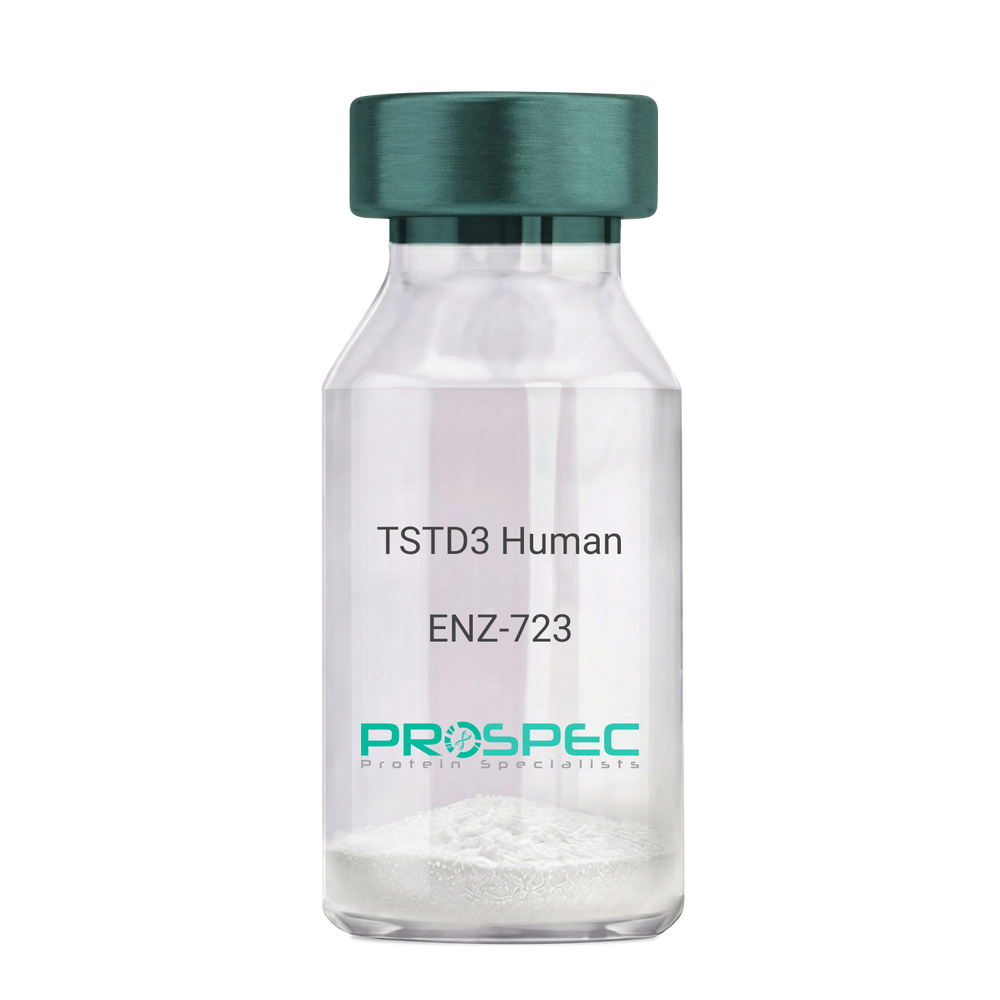
TSTD3 HumanDescription:
Thiosulfate Sulfurtransferase Like Domain Containing 3 Human Recombinant
Thiosulfate Sulfurtransferase (Rhodanese)-Like Domain Containing 3, Rhodanese Domain-Containing Protein 3, Thiosulfate Sulfurtransferase/Rhodanese-Like Domain-Containing Protein 3.
Product # :
ENZ-723Price :
Quantity :
Shipping Method :
Shipped with Ice Packs
More Info
- description
- source
- formulation
- purity
- More Info
- Citations
Description
TSTD3 Human Recombinant produced in E.Coli is a single, non-glycosylated polypeptide chain containing 120 amino acids (1-97 a.a) and having a molecular mass of 13.7kDa.TSTD3 is fused to a 23 amino acid His-tag at N-terminus & purified by proprietary chromatographic techniques.
Source
Escherichia Coli.
Formulation
TSTD3 protein solution (1mg/ml) containing 20mM Tris-HCl buffer (pH 8.0), 0.15M NaCl, 10% glycerol and 1mM DTT.
Purity
Greater than 90.0% as determined by SDS-PAGE.
Citations
More Info
-
Introduction
Thiosulfate Sulfurtransferase Like Domain Containing 3, also known as TSTD3 contains 1 rhodanese domain which is characterized by an active site cysteine residue that has the ability to bind sulfane sulfur and catalyse sulfur transfer.
-
Synonyms
Thiosulfate Sulfurtransferase (Rhodanese)-Like Domain Containing 3, Rhodanese Domain-Containing Protein 3, Thiosulfate Sulfurtransferase/Rhodanese-Like Domain-Containing Protein 3.
-
Physical Appearance
Sterile Filtered clear solution.
-
Stability
Store at 4°C if entire vial will be used within 2-4 weeks. Store, frozen at -20°C for longer periods of time. For long term storage it is recommended to add a carrier protein (0.1% HSA or BSA).Avoid multiple freeze-thaw cycles.
-
Amino Acid Sequence
MGSSHHHHHH SSGLVPRGSH MGSMKIEKCG WSEGLTSIKG NCHNFYTAIS KDVTYKELKN LLNSKNIMLI DVREIWEILE YQKIPESINV PLDEVGEALQ MNPRDFKEKY NEVKPSKSDS
ProSpec's products are furnished for LABORATORY RESEARCH USE ONLY. The product may not be used as drugs, agricultural or pesticidal products, food additives or household chemicals.
- View Data Sheet
Name :
CD207 HumanDescription:
CD207 Human Recombinant
C-type lectin domain family 4 member K, CLEC4K, Langerin, CD207.
Product # :
PRO-2204Price :
Quantity :
Shipping Method :
Shipped with Ice Packs
More Info
- description
- source
- formulation
- purity
- More Info
- Citations
Description
CD207 Human Recombinant produced in E.Coli is a single, non-glycosylated polypeptide chain containing 287 amino acids (65-328 a.a) and having a molecular mass of 32.2kDa.CD207 is fused to a 23 amino acid His-tag at N-terminus & purified by proprietary chromatographic techniques.
Source
Escherichia Coli.
Formulation
CD207 protein solution (1mg/ml) containing 20mM Tris 8.0 and 10% glycerol.
Purity
Greater than 85.0% as determined by SDS-PAGE.
Citations
More Info
-
Introduction
CD207 (C-type lectin domain family 4 member K) is expressed in Langerhans cells which are immature dendritic cells of the epidermis and mucosa. Moreover, CD207 is expressed in several other dendritic cell types including dermal CD103+ DCs and splenic CD8+ DCs. Langerin is localized in the Birbeck granules, the organelles present in the cytoplasm of Langerhans cells and comprised of superimposed and zippered membranes. CD207 is a C-type lectin with mannose binding specificity, and it has been suggested that mannose binding by the CD207 protein leads to internalization of antigen into Birbeck granules thus providing access to a nonclassical antigen-processing pathway.
-
Synonyms
C-type lectin domain family 4 member K, CLEC4K, Langerin, CD207.
-
Physical Appearance
Sterile Filtered clear solution.
-
Stability
Store at 4°C if entire vial will be used within 2-4 weeks. Store, frozen at -20°C for longer periods of time. For long term storage it is recommended to add a carrier protein (0.1% HSA or BSA).Avoid multiple freeze-thaw cycles.
-
Amino Acid Sequence
MGSSHHHHHH SSGLVPRGSH MGSPRFMGTI SDVKTNVQLL KGRVDNISTL DSEIKKNSDG MEAAGVQIQM VNESLGYVRS QFLKLKTSVE KANAQIQILT RSWEEVSTLN AQIPELKSDL EKASALNTKI RALQGSLENM SKLLKRQNDI LQVVSQGWKY FKGNFYYFSL IPKTWYSAEQ FCVSRNSHLT SVTSESEQEF LYKTAGGLIY WIGLTKAGME GDWSWVDDTP FNKVQSARFW IPGEPNNAGN NEHCGNIKAP SLQAWNDAPC DKTFLFICKR PYVPSEP.
ProSpec's products are furnished for LABORATORY RESEARCH USE ONLY. The product may not be used as drugs, agricultural or pesticidal products, food additives or household chemicals.
- View Data Sheet
Name :
TATDN3 HumanDescription:
TatD DNase Domain Containing 3 Human Recombinant
TatD DNase domain containing 3, putative deoxyribonuclease TATDN3, EC 3.1.21.
Product # :
ENZ-611Price :
Quantity :
Shipping Method :
Shipped with Ice Packs
More Info
- description
- source
- formulation
- purity
- More Info
- Citations
Description
SULT1B1 Human Recombinant produced in E. coli is a single polypeptide chain containing 320 amino acids (1-296) and having a molecular mass of 37.4kDa.SULT1B1 is fused to a 24 amino acid His-tag at N-terminus & purified by proprietary chromatographic techniques.
Source
E.coli.
Formulation
The TATDN3 solution (0.5mg/1ml) contains 20mM Tris-HCl buffer (pH 8.0), 1mM DTT, 200mM NaCl and 20% glycerol.
Purity
Greater than 90% as determined by SDS-PAGE.
Citations
More Info
-
Introduction
TATDN3 is a member of the great superfamily of metalloenzymes. TATDN3 binds 2 divalent metal cations per subunit.
-
Synonyms
TatD DNase domain containing 3, putative deoxyribonuclease TATDN3, EC 3.1.21.
-
Physical Appearance
Sterile Filtered colorless solution.
-
Stability
Store at 4°C if entire vial will be used within 2-4 weeks. Store, frozen at -20°C for longer periods of time. For long term storage it is recommended to add a carrier protein (0.1% HSA or BSA).Avoid multiple freeze-thaw cycles.
-
Amino Acid Sequence
MGSSHHHHHH SSGLVPRGSH MGSHMRAAGV GLVDCHCHLS APDFDRDLDD VLEKAKKANV VALVAVAEHS GEFEKIMQLS ERYNGFVLPC LGVHPVQGLP PEDQRSVTLK DLDVALPIIE NYKDRLLAIG EVGLDFSPRF AGTGEQKEEQ RQVLIRQIQL AKRLNLPVNV HSRSAGRPTI NLLQEQGAEK VLLHAFDGRP SVAMEGVRAG YFFSIPPSII RSGQKQKLVK QLPLTSICLE TDSPALGPEK QVRNEPWNIS ISAEYIAQVK GISVEEVIEV TTQNALKLFP KLRHLLQK
ProSpec's products are furnished for LABORATORY RESEARCH USE ONLY. The product may not be used as drugs, agricultural or pesticidal products, food additives or household chemicals.
- View Data Sheet
Name :
CLEC10A HumanDescription:
C-Type Lectin Domain Family 10, Member A Human Recombinant
C-Type Lectin Domain Containing 10A, C-Type Lectin Domain Family 10 Member A, C-Type (Calcium Dependent, Carbohydrate-Recognition Domain) Lectin, Superfamily Member 14 (Macrophage-Derived), Macrophage Lectin 2 (Calcium Dependent), CLECSF13, CLECSF14, HML, C-Type (Calcium Dependent, Carbohydrate-Recognition Domain) Lectin, Superfamily Member 13 (Macrophage-Derived), C-Type Lectin Domain Family 10, Member A, C-Type Lectin Superfamily Member 14, Macrophage Lectin 2, CD301 Antigen, CD301, HML2, MGL.
Product # :
PRO-2425Price :
Quantity :
Shipping Method :
Shipped with Ice Packs
More Info
- description
- source
- formulation
- purity
- More Info
- Citations
Description
CLEC10A Human Recombinant produced in Sf9 Insect cells is a single, glycosylated polypeptide chain containing 241 amino acids (61-292a.a.) and having a molecular mass of 27.3kDa. (Molecular size on SDS-PAGE under reducing conditions 28-40kDa).CLEC10A is expressed with a 9 amino acids His tag at C-Terminus and purified by proprietary chromatographic techniques.
Source
Sf9, Insect cells.
Formulation
CLEC10A protein solution (0.5mg/ml) contains Phosphate Buffered Saline (pH 7.4).
Purity
Greater than 90.0% as determined by SDS-PAGE.
Citations
More Info
-
Introduction
C-Type Lectin Domain Family 10, Member A (CLEC10A) is a part of the C-type lectin superfamily. CLEC10A is expressed in immature myeloid dendritic cells and alternatively activated macrophages. CLEC10A takes part in regulating adaptive and innate immune responses and also binds in a calcium dependent way to terminal galactose and N-acetylgalactosamine, linked to serine or threonine.
-
Synonyms
C-Type Lectin Domain Containing 10A, C-Type Lectin Domain Family 10 Member A, C-Type (Calcium Dependent, Carbohydrate-Recognition Domain) Lectin, Superfamily Member 14 (Macrophage-Derived), Macrophage Lectin 2 (Calcium Dependent), CLECSF13, CLECSF14, HML, C-Type (Calcium Dependent, Carbohydrate-Recognition Domain) Lectin, Superfamily Member 13 (Macrophage-Derived), C-Type Lectin Domain Family 10, Member A, C-Type Lectin Superfamily Member 14, Macrophage Lectin 2, CD301 Antigen, CD301, HML2, MGL.
-
Physical Appearance
Sterile Filtered colorless solution.
-
Stability
Store at 4°C if entire vial will be used within 2-4 weeks. Store, frozen at -20°C for longer periods of time. For long term storage it is recommended to add a carrier protein (0.1% HSA or BSA).Avoid multiple freeze-thaw cycles.
-
Amino Acid Sequence
ADPQNSKFQR DLVTLRTDFS NFTSNTVAEI QALTSQGSSL EETIASLKAE VEGFKQERQA VHSEMLLRVQ QLVQDLKKLT CQVATLNNNG EEASTEGTCC PVNWVEHQDS CYWFSHSGMS WAEAEKYCQL KNAHLVVINS REEQNFVQKY LGSAYTWMGL SDPEGAWKWV DGTDYATGFQ NWKPGQPDDW QGHGLGGGED CAHFHPDGRW NDDVCQRPYH WVCEAGLGQT SQESHHHHHH H.
ProSpec's products are furnished for LABORATORY RESEARCH USE ONLY. The product may not be used as drugs, agricultural or pesticidal products, food additives or household chemicals.
- View Data Sheet
Name :
SPSB2 HumanDescription:
SPRY Domain-Containing SOCS Cox Protein 2 Human Recombinant
SPRY domain-containing SOCS box protein 2, SSB-2, Gene-rich cluster protein C9, SPSB2, GRCC9, SSB2, GRCC9.
Product # :
PRO-1264Price :
Quantity :
Shipping Method :
Shipped with Ice Packs
More Info
- description
- source
- formulation
- purity
- More Info
- Citations
Description
SPSB2 Human Recombinant produced in E.Coli is a single, non-glycosylated polypeptide chain containing 287 amino acids (1-263 a.a) and having a molecular mass of 31.2kDa.SPSB2 is fused to a 24 amino acid His-tag at N-terminus & purified by proprietary chromatographic techniques.
Source
Escherichia Coli.
Formulation
SPSB2 protein solution (0.5mg/ml) containing 20mM Tris-HCl buffer (pH 8.0), 0.15M NaCl, 20% glycerol and 1mM DTT.
Purity
Greater than 85.0% as determined by SDS-PAGE.
Citations
More Info
-
Introduction
SPRY Domain-Containing SOCS Cox Protein 2 (SPSB2) belongs to a suppressor of cytokine signaling (SOCS) family, and is a member of the subfamily of proteins containing a central SPRY (repeats in splA and RyR) domain and a C-terminal SOCS box. SPSB2 is present in a gene-rich cluster on chromosome 12p13 in the vicinity of the CD4 antigen and triosephosphate isomerase genes. SPSB2 is apparent substrate recognition component of a SCF-like ECS (Elongin BC-CUL2/5-SOCS-box protein) E3 ubiquitin-protein ligase complex that mediates the ubiquitination and ensuing proteasomal degradation of target proteins.
-
Synonyms
SPRY domain-containing SOCS box protein 2, SSB-2, Gene-rich cluster protein C9, SPSB2, GRCC9, SSB2, GRCC9.
-
Physical Appearance
Sterile Filtered colorless solution.
-
Stability
Store at 4°C if entire vial will be used within 2-4 weeks.Store, frozen at -20°C for longer periods of time. For long term storage it is recommended to add a carrier protein (0.1% HSA or BSA).Avoid multiple freeze-thaw cycles.
-
Amino Acid Sequence
MGSSHHHHHH SSGLVPRGSH MGSHMGQTAL AGGSSSTPTP QALYPDLSCP EGLEELLSAP PPDLGAQRRH GWNPKDCSEN IEVKEGGLYF ERRPVAQSTD GARGKRGYSR GLHAWEISWP LEQRGTHAVV GVATALAPLQ TDHYAALLGS NSESWGWDIG RGKLYHQSKG PGAPQYPAGT QGEQLEVPER LLVVLDMEEG TLGYAIGGTY LGPAFRGLKG RTLYPAVSAV WGQCQVRIRY LGERRAEPHS LLHLSRLCVR HNLGDTRLGQ VSALPLPPAM KRYLLYQ.
ProSpec's products are furnished for LABORATORY RESEARCH USE ONLY. The product may not be used as drugs, agricultural or pesticidal products, food additives or household chemicals.
- View Data Sheet
Name :
Adiponectin RatDescription:
Adiponectin Rat Recombinant
Adipocyte C1q and collagen domain-containing protein, Adipocyte complement-related 30kDa protein, Adipose most abundant gene transcript 1 protein, gelatin-binding protein, Acrp30, AdipoQ, GBP-28, APM-1, ACDC.
Product # :
CYT-831Price :
Quantity :
Shipping Method :
Shipped at Room temp
More Info
- description
- source
- formulation
- purity
- More Info
- Citations
Description
ACRP30 Rat Recombinant produced in 293 cell line is a polypeptide chain containing 238 amino acids and having a total molecular mass of 25.7 kDa. ACRP30 contains a C-Terminal linker (3 AA residue) and a C-Terminal Flag- tag (8 AA residue).
Source
HEK293 cell line.
Formulation
Filtered (0.4 µm) and lyophilized in 20 mM Tris buffer, 50 mM NaCl, pH 7.5.
Purity
Greater than 90.0% as determined by SDS-PAGE.
Citations
More Info
-
Introduction
Adiponectin, also referred to as Acrp30, AdipoQ and GBP-28, is a recently discovered 244 amino acid protein, the product of the apM1 gene, which is physiologically active and specifically and highly expressed in adipose cells (Adipokine). The protein belongs to the soluble defense collagen super family; it has a collagen-like domain structurally homologous with collagen VIII and X and complement factor C1q-like globular domain. APM-1 forms homotrimers, which are the building blocks for higher order complexes found circulating in serum.
-
Synonyms
Adipocyte C1q and collagen domain-containing protein, Adipocyte complement-related 30kDa protein, Adipose most abundant gene transcript 1 protein, gelatin-binding protein, Acrp30, AdipoQ, GBP-28, APM-1, ACDC.
-
Physical Appearance
White lyophilized (freeze-dried) powder.
-
Stability
Lyophilized ACRP30 although stable at room temperature for 3 weeks, should be stored desiccated below -18°C. Upon reconstitution ACRP30 should be stored at 4°C between 2-7 days and for future use below -18°C.For long term storage it is recommended to add a carrier protein (0.1% HSA or BSA).Please prevent freeze-thaw cycles.
-
Solubility
Add deionized water to a working concentration approximately 0.5 mg/ml and let the lyophilized pellet dissolve completely. Product is not sterile! Please filter the product by appropriate sterile filter before using it in the cell culture.
-
Amino Acid Sequence
GITATEGPGA LVPPPKETCA GWMAGIPGYP GHNGIPGRDG RDGTPGEKGE KGDAGVLGPK GDPGDAGMTG AEGPRGFPGT PGRKGEPGEA AYMYHSAFSV GLETRVTVPN VPIRFTKIFY NQQNHYDGST GKFHCNIPGL YYFSYHITVY MKDVKVSLFK KDKAVLFTYD QYQEKNVDQA SGSMLLHLEV GDQVWLQVYG EGDNNGLYAD NVNDSTFTGF LLYHDTNAAADYKDDDDK
-
Background
What is the molecular weight/Mw of ADIPONECTIN Protein?
ADIPONECTIN Protein has a total Mw of 25.7kDa.
What is the source or expression system of ADIPONECTIN Protein?
HEK293 cell line.
What is the Purity of ADIPONECTIN Protein?
ADIPONECTIN Protein is >90% pure as determined by SDS-PAGE.
What is the Biological Activity of ADIPONECTIN Protein?
The biological functionality of ADIPONECTIN Protein will be determined in the future.
What is the amino acid sequence of ADIPONECTIN Protein?
GITATEGPGA LVPPPKETCA GWMAGIPGYP GHNGIPGRDG RDGTPGEKGE KGDAGVLGPK GDPGDAGMTG AEGPRGFPGT PGRKGEPGEA AYMYHSAFSV GLETRVTVPN VPIRFTKIFY NQQNHYDGST GKFHCNIPGL YYFSYHITVY MKDVKVSLFK KDKAVLFTYD QYQEKNVDQA SGSMLLHLEV GDQVWLQVYG EGDNNGLYAD NVNDSTFTGF LLYHDTNAAADYKDDDDK.
What applications can ADIPONECTIN Protein be used in?
ADIPONECTIN Protein can probably be used in western blot, ELISA and Lateral Flow.
What is the endotoxin level for ADIPONECTIN Protein?
The endotoxin level is minimal, ADIPONECTIN Protein was purified using conventional chromatography techniques.
ProSpec's products are furnished for LABORATORY RESEARCH USE ONLY. The product may not be used as drugs, agricultural or pesticidal products, food additives or household chemicals.
- View Data Sheet
Name :
B9D2 HumanDescription:
B9 Protein Domain 2 Human Recombinant
B9 Protein Domain 2, B9D2, B9 domain-containing protein 2, MKS1-related protein 2, MKSR2, ICIS-1, MKS10.
Product # :
PRO-2051Price :
Quantity :
Shipping Method :
Shipped with Ice Packs
More Info
- description
- source
- formulation
- purity
- More Info
- Citations
Description
B9D2 Human Recombinant produced in E.coli is a single, non-glycosylated polypeptide chain containing 198 amino acids (1-175) and having a molecular mass of 21.6 kDa.B9D2 is fused to a 23 amino acid His-tag at N-terminus & purified by proprietary chromatographic techniques.
Source
E.coli.
Formulation
The B9D2 solution (0.25mg/ml) contains 20mM Tris-HCl buffer (pH 8.0), 0.2M NaCl, 50% glycerol, 2mM DTT and 1mM EDTA.
Purity
Greater than 85% as determined by SDS-PAGE.
Citations
More Info
-
Introduction
B9 Protein Domain 2 (B9D2) is a component of the tectonic-like complex which acts as a barrier that prevents diffusion of transmembrane proteins between the cilia and plasma membranes. B9D2 contains a B9 domain protein, which is found solely in ciliated organisms. B9D2 is upregulated throughout mucociliary differentiation.
-
Synonyms
B9 Protein Domain 2, B9D2, B9 domain-containing protein 2, MKS1-related protein 2, MKSR2, ICIS-1, MKS10.
-
Physical Appearance
Sterile Filtered colorless solution.
-
Stability
Store at 4°C if entire vial will be used within 2-4 weeks. Store, frozen at -20°C for longer periods of time. For long term storage it is recommended to add a carrier protein (0.1% HSA or BSA).Avoid multiple freeze-thaw cycles.
-
Amino Acid Sequence
MGSSHHHHHH SSGLVPRGSH MGSMAEVHVI GQIIGASGFS ESSLFCKWGI HTGAAWKLLS GVREGQTQVD TPQIGDMAYW SHPIDLHFAT KGLQGWPRLH FQVWSQDSFG RCQLAGYGFC HVPSSPGTHQ LACPTWRPLG SWREQLARAF VGGGPQLLHG DTIYSGADRY RLHTAAGGTV HLEIGLLLRN FDRYGVEC.
ProSpec's products are furnished for LABORATORY RESEARCH USE ONLY. The product may not be used as drugs, agricultural or pesticidal products, food additives or household chemicals.
- View Data Sheet
Name :
COMMD9 HumanDescription:
COMM Domain Containing 9 Human Recombinant
COMM Domain Containing Protein 9, FLJ31106, HSPC166, COMM9.
Product # :
PRO-1244Price :
Quantity :
Shipping Method :
Shipped with Ice Packs
More Info
- description
- source
- formulation
- purity
- More Info
- Citations
Description
COMMD9 Human Recombinant produced in E. coli is a single polypeptide chain containing 221 amino acids (1-198) and having a molecular mass of 24.2 kDa. COMMD9 is fused to a 23 amino acid His-tag at N-terminus & purified by proprietary chromatographic techniques.
Source
E.coli.
Formulation
The COMMD9 solution (1mg/1ml) contains 20mM Tris-HCl buffer (pH 8.0), 0.15M NaCl, 1mM DTT and 10% glycerol.
Purity
Greater than 95% as determined by SDS-PAGE.
Citations
More Info
-
Introduction
COMM domain-containing protein 9 (COMMD9), is a part of the COMMD family. The COMMD family is a group of evolutionary conserved proteins that share a common COMM domain at their extreme C-terminus, which provides an interface for protein-protein interactions. COMMD9 is a 198 amino acid ubiquitously expressed protein which contains one COMM domain and involved in signaling events all over the cell.
-
Synonyms
COMM Domain Containing Protein 9, FLJ31106, HSPC166, COMM9.
-
Physical Appearance
Sterile Filtered colorless solution.
-
Stability
Store at 4°C if entire vial will be used within 2-4 weeks. Store, frozen at -20°C for longer periods of time. For long term storage it is recommended to add a carrier protein (0.1% HSA or BSA).Avoid multiple freeze-thaw cycles.
-
Amino Acid Sequence
MGSSHHHHHH SSGLVPRGSH MGSMAALTAE HFAALQSLLK ASSKDVVRQL CQESFSSSAL GLKKLLDVTC SSLSVTQEEA EELLQALHRL TRLVAFRDLS SAEAILALFP ENFHQNLKNL LTKIILEHVS TWRTEAQANQ ISLPRLVDLD WRVDIKTSSD SISRMAVPTC LLQMKIQEDP SLCGDKPSIS AVTVELSKET LDTMLDGLGR IRDQLSAVAS K.
ProSpec's products are furnished for LABORATORY RESEARCH USE ONLY. The product may not be used as drugs, agricultural or pesticidal products, food additives or household chemicals.
- View Data Sheet
Name :
BD 4 HumanDescription:
Beta Defensin-4 Human Recombinant
HBD-4, DEFB-4, HBD4, DEFB104B, Beta-defensin 4, BD-4.
Product # :
CYT-599Price :
Quantity :
Shipping Method :
Shipped at Room temp
More Info
- description
- source
- formulation
- purity
- biological activity
- More Info
- Citations
Description
Beta Defensin-4 Human Recombinant produced in E.Coli is a single, non-glycosylated polypeptide chain containing 50 amino acids and having a molecular mass of 6 kDa. The BD-4 is purified by proprietary chromatographic techniques.
Source
Escherichia Coli.
Formulation
The DEFB4 (1mg/ml) was lyophilized with 20mM sodium Phosphate buffer pH-7.4 and 130mM NaCl.
Purity
Greater than 98.0% as determined by:
(a) Analysis by RP-HPLC.
(b) Analysis by SDS-PAGE.Biological Activity
Determined by its ability to chemoattract human monocytes using a concentration range of 0.1-50 ng/ml, corresponding to a specific activity of 20,000-10,000,000 units/mg.Citations
More Info
-
Introduction
Defensins are cationic peptides with a large spectrum of antimicrobial activity that comprise an important arm of the innate immune system. The Alpha defensins are differentiated from the Beta-defensins by the pairing of their 3 disulfide bonds.
4 human Beta-defensins have been identified to date; BD-1, BD-2, BD-3 and BD-4.
Beta-defensins are expressed on some leukocytes and at epithelial surfaces.
In addition to their direct antimicrobial activities, they are chemoattractant towards immature dendritic cells and memory T cells. The beta-defensin proteins are expressed as the C-terminal portion of precursors and are released by proteolytic cleavage of a signal sequence and, in the case of BD-1 (36 a.a.), a propeptide region. Beta-defensins contain a six-cysteine motif that forms three intra-molecular disulfide bonds. Beta-Defensins are 3-5 kDa peptides ranging in size from 33-47 amino acid residues. -
Synonyms
HBD-4, DEFB-4, HBD4, DEFB104B, Beta-defensin 4, BD-4.
-
Physical Appearance
Sterile Filtered White lyophilized (freeze-dried) powder.
-
Stability
Lyophilized Beta Defensin-4 Recombinant although stable at room temperature for 3 weeks, should be stored desiccated below -18°C. Upon reconstitution BD-3 should be stored at 4°C between 2-7 days and for future use below -18°C.Please prevent freeze-thaw cycles.
-
Solubility
It is recommended to reconstitute the lyophilized Beta Defensin-4 in sterile 18MΩ-cm H2O not less than 100µg/ml, which can then be further diluted to other aqueous solutions.
-
Amino Acid Sequence
EFELDRICGY GTARCRKKCR SQEYRIGRCP NTYACCLRKW DESLLNRTKP.
-
Background
Beta Defensin-4 Human Recombinant: Exploring the Potential of a Novel Antimicrobial Peptide
Abstract:
Beta Defensin-4 (hBD-4) human recombinant is a promising antimicrobial peptide with unique properties and potential therapeutic applications. This research paper provides an in-depth analysis of hBD-4, including its characteristics, mode of action, and potential uses. Furthermore, novel methodologies for the production and optimization of hBD-4 human recombinant are proposed, shedding light on its future implications in the field of infectious disease management.
Introduction:
In the face of increasing drug-resistant infections, alternative therapeutic strategies are crucial. Antimicrobial peptides, such as hBD-4, have gained attention due to their broad-spectrum activity against pathogens. This paper aims to explore the distinctive features of hBD-4 and propose innovative approaches for its production and optimization.
Characteristics and Mode of Action:
hBD-4 is a cationic peptide comprising 50 amino acids and is characterized by a unique structure that contributes to its antimicrobial properties. The mechanism of action involves the disruption of microbial membranes and subsequent cell death. Additionally, hBD-4 exhibits immunomodulatory effects, including the stimulation of chemotaxis and modulation of the inflammatory response.
Production of hBD-4 Human Recombinant:
Efficient production methodologies for hBD-4 human recombinant are essential for its therapeutic applications. Various expression systems, such as bacterial, yeast, and mammalian cell-based platforms, have been explored. Each system presents advantages and challenges, necessitating careful selection for high yields and protein quality. Optimization strategies, including codon optimization, fusion protein tags, and growth conditions, have been employed to enhance production efficiency. Purification techniques, such as chromatography and ultrafiltration, have been optimized to isolate high-quality hBD-4 recombinant.
Potential Applications:
hBD-4 human recombinant demonstrates potential therapeutic applications in combating drug-resistant pathogens. Its broad-spectrum antimicrobial activity against bacteria, viruses, and fungi positions it as a promising candidate for infectious disease management. Moreover, hBD-4 shows promise in wound healing and tissue regeneration due to its ability to promote angiogenesis and stimulate cell migration. Exploring its potential in combination with drug delivery systems for targeted therapy is an exciting avenue for future research.
Conclusion:
hBD-4 human recombinant represents a novel antimicrobial peptide with diverse potential applications. Optimizing production methodologies and elucidating its mechanisms of action will further enhance its clinical utility. With its broad-spectrum antimicrobial activity and potential implications in wound healing and targeted therapy, hBD-4 human recombinant holds promise as an innovative therapeutic agent.
What is the molecular weight/Mw of BD4 Protein?
BD4 Protein has a total Mw of 6kDa.
What is the source or expression system of BD4 Protein?
Escherichia Coli.
What is the Purity of BD4 Protein?
BD4 Protein is >98% pure as determined by SDS-PAGE.
What is the Biological Activity of BD4 Protein?
Determined by its ability to chemoattract human monocytes using a concentration range of 0.1-50 ng/ml, corresponding to a specific activity of 20,000-10,000,000 units/mg.
What is the amino acid sequence of BD4 Protein?
EFELDRICGY GTARCRKKCR SQEYRIGRCP NTYACCLRKW DESLLNRTKP.
What applications can BD4 Protein be used in?
BD4 Protein can probably be used in western blot, ELISA and Lateral Flow.
What is the endotoxin level for BD4 Protein?
The endotoxin level is minimal, BD4 Protein was purified using conventional chromatography techniques.
ProSpec's products are furnished for LABORATORY RESEARCH USE ONLY. The product may not be used as drugs, agricultural or pesticidal products, food additives or household chemicals.
- View Data Sheet
Name :
FANK1 HumanDescription:
Fibronectin Type III And Ankyrin Repeat Domains 1 Human Recombinant
Fibronectin Type 3 And Ankyrin Repeat Domains 1, 1700007B22Rik.
Product # :
PRO-1768Price :
Quantity :
Shipping Method :
Shipped with Ice Packs
More Info
- description
- source
- formulation
- purity
- More Info
- Citations
Description
FANK1 Human Recombinant produced in E.Coli is a single, non-glycosylated polypeptide chain containing 368 amino acids (1-345 a.a) and having a molecular mass of 40.7kDa.FANK1 is fused to a 23 amino acid His-tag at N-terminus & purified by proprietary chromatographic techniques.
Source
Escherichia Coli.
Formulation
FANK1 protein solution (1mg/ml) containing 20mM Tris-HCl buffer (pH8.0), 0.15M NaCl, 1mM DTT, 0.1mM PMSF and 20% glycerol.
Purity
Greater than 90.0% as determined by SDS-PAGE.
Citations
More Info
-
Introduction
FANK1 was localized in the nuclei of identical cells in the seminiferous epithelium. Depending on its nuclear localization, a gene ontology analysis proposes that FANK1 has a DNA binding activity therefor operates as a transcription factor. The extremely controlled expression of FANK1, suggests that it takes part in regulating gene expression in the transition from the meiotic phase to the haploid phase throughout spermatogenesis.
-
Synonyms
Fibronectin Type 3 And Ankyrin Repeat Domains 1, 1700007B22Rik.
-
Physical Appearance
Sterile Filtered clear solution.
-
Stability
Store at 4°C if entire vial will be used within 2-4 weeks. Store, frozen at -20°C for longer periods of time.For long term storage it is recommended to add a carrier protein (0.1% HSA or BSA).Please avoid freeze thaw cycles.
-
Amino Acid Sequence
MGSSHHHHHH SSGLVPRGSH MGSMEPQKIM PPSKPHPPVV GKVTHHSIEL YWDLEKKAKR QGPQEQWFRF SIEEEDPKMH TYGIIYTGYA TKHVVEGLEP RTLYRFRLKV TSPSGECEYS PLVSVSTTRE PISSEHLHRA VSVNDEDLLV RILQGGRVKV DVPNKFGFTA LMVAAQKGYT RLVKILVSNG TDVNLKNGSG KDSLMLACYA GHLDVVKYLR RHGASWQARD LGGCTALHWA ADGGHCSVIE WMIKDGCEVD VVDTGSGWTP LMRVSAVSGN QRVASLLIDA GANVNVKDRN GKTPLMVAVL NNHEELVQLL LDKGADASVK NEFGKGVLEM ARVFDRQSVV SLLEERKKKQ RPKKSCVC
ProSpec's products are furnished for LABORATORY RESEARCH USE ONLY. The product may not be used as drugs, agricultural or pesticidal products, food additives or household chemicals.
- View Data Sheet
Name :
TSTD1 HumanDescription:
Thiosulfate Sulfurtransferase Like Domain Containing 1 Human Recombinant
Thiosulfate sulfurtransferase/rhodanese-like domain-containing protein 1, TSTD1, KAT.
Product # :
ENZ-094Price :
Quantity :
Shipping Method :
Shipped with Ice Packs
More Info
- description
- source
- formulation
- purity
- More Info
- Citations
Description
TSTD1 Human Recombinant produced in E.Coli is a single, non-glycosylated, polypeptide chain containing 135 amino acids (1-115 a.a.) and having a molecular mass of 14.6kDa.TSTD1 is fused to a 20 amino acid His tag at N-terminus and purified by proprietary chromatographic techniques.
Source
Escherichia Coli.
Formulation
The TSTD1 solution (1 mg/ml) contains 20mM Tris-HCl buffer (pH 8.0), 1mM DTT, 10% glycerol and 100mM NaCl.
Purity
Greater than 95.0% as determined by SDS-PAGE.
Citations
More Info
-
Introduction
Thiosulfate sulfurtransferase like domain containing 1 (TSTD1) is a member of a family of transferases, specifically the sulfurtransferases, which transfer sulfur-containing groups. TSTD1 is localized around the nuclear membranes. TSTD1 is expressed in a number of human tissues, including the kidney, liver, skeletal muscle, heart, colon, thymus, spleen, placenta and lung. TSTD1 may participate in cyanide detoxification, the formation of iron-sulfur proteins, and the modification of sulfur-containing enzymes.
-
Synonyms
Thiosulfate sulfurtransferase/rhodanese-like domain-containing protein 1, TSTD1, KAT.
-
Physical Appearance
Sterile Filtered colorless solution.
-
Stability
Store at 4°C if entire vial will be used within 2-4 weeks. Store, frozen at -20°C for longer periods of time. For long term storage it is recommended to add a carrier protein (0.1% HSA or BSA).Avoid multiple freeze-thaw cycles.
-
Amino Acid Sequence
MGSSHHHHHH SSGLVPRGSH MAGAPTVSLP ELRSLLASGR ARLFDVRSRE EAAAGTIPGA LNIPVSELES ALQMEPAAFQ ALYSAEKPKL EDEHLVFFCQ MGKRGLQATQ LARSLGYTGA RNYAGAYREW LEKES.
ProSpec's products are furnished for LABORATORY RESEARCH USE ONLY. The product may not be used as drugs, agricultural or pesticidal products, food additives or household chemicals.
- View Data Sheet
Name :
HDHD2 HumanDescription:
Haloacid Dehalogenase-Like Hydrolase Domain Containing 2 Human Recombinant
Haloacid Dehalogenase-like Hydrolase Domain Containing 2, DKFZP564D1378, 3110052N05Rik, DKFZp564D1378.
Product # :
ENZ-038Price :
Quantity :
Shipping Method :
Shipped with Ice Packs
More Info
- description
- source
- formulation
- purity
- More Info
- Citations
Description
HDHD2 produced in E.Coli is a single, non-glycosylated polypeptide chain containing 279 amino acids (1-259a.a.) and having a molecular mass of 30.6kDa.HDHD2 is fused to a 20 amino acid His-tag at N-terminus & purified by proprietary chromatographic techniques.
Source
Escherichia Coli.
Formulation
The HDHD2 protein solution (1mg/1ml) is formulated in 20mM Tris-HCl buffer (pH 8.0), 0.1M NaCl, 1mM DTT, and 10% glycerol.
Purity
Greater than 95% as determined by SDS-PAGE.
Citations
More Info
-
Introduction
HDHD2 is a member of the HAD-like hydrolase superfamily which includes L-2-haloacid dehalogenase, epoxide hydrolases and phosphatases. There are two active sites in HDHD2 - an L-2-haloacid dehalogenase and a carboxylate group. The L-2-haloacid dehalogenase active site catalyzes the hydrolytic dehalogenation of D- and L-2-haloalkanoic acids, producing L- and D-2-hydroxyalkanoic acids.
-
Synonyms
Haloacid Dehalogenase-like Hydrolase Domain Containing 2, DKFZP564D1378, 3110052N05Rik, DKFZp564D1378.
-
Physical Appearance
Sterile Filtered clear solution.
-
Stability
Store at 4°C if entire vial will be used within 2-4 weeks. Store, frozen at -20°C for longer periods of time. For long term storage it is recommended to add a carrier protein (0.1% HSA or BSA).Avoid multiple freeze-thaw cycles.
-
Amino Acid Sequence
MGSSHHHHHH SSGLVPRGSH MAACRALKAV LVDLSGTLHI EDAAVPGAQE ALKRLRGASV IIRFVTNTTK ESKQDLLERL RKLEFDISED EIFTSLTAAR SLLERKQVRP MLLVDDRALP DFKGIQTSDP NAVVMGLAPE HFHYQILNQA FRLLLDGAPL IAIHKARYYK RKDGLALGPG PFVTALEYAT DTKATVVGKP EKTFFLEALR GTGCEPEEAV MIGDDCRDDV GGAQDVGMLG ILVKTGKYRA SDEEKINPPP YLTCESFPHA VDHILQHLL
ProSpec's products are furnished for LABORATORY RESEARCH USE ONLY. The product may not be used as drugs, agricultural or pesticidal products, food additives or household chemicals.
- View Data Sheet
Name :
A2LD1 HumanDescription:
AIG2-Like Domain 1 Human Recombinant
Gamma-glutamylaminecyclotransferase, GGACT, AIG2-like domain-containing protein 1, A2LD1.
Product # :
PRO-172Price :
Quantity :
Shipping Method :
Shipped with Ice Packs
More Info
- description
- source
- formulation
- purity
- More Info
- Citations
Description
A2LD1 Human Recombinant fused with a 20 amino acid His tag at N-terminus produced in E.Coli is a single, non-glycosylated, polypeptide chain containing 173 amino acids (1-153 a.a.) and having a molecular mass of 19.4kDa. The A2LD1 is purified by proprietary chromatographic techniques.
Source
Escherichia Coli.
Formulation
The A2LD1 solution (1 mg/ml) contains 20mM Tris-HCl buffer (pH8.0), 10% glycerol and 0.1M NaCl.
Purity
Greater than 95.0% as determined by SDS-PAGE.
Citations
More Info
-
Introduction
Gamma-glutamylaminecyclotransferase (A2LD1) is an enzyme which converts gamma-glutamylamines to free amines and 5-oxoproline. A2LD1 demonstrates high activity toward gamma-glutamyl-epsilon-lysine, derived from the breakdown of fibrin and other proteins cross-linked by transglutaminases. A2LD1 assists in the proteolytic degradation of crosslinked fibrin by breaking down isodipeptide L-gamma-glutamyl-L-epsilon-lysine, which is a byproduct of fibrin degradation. The reaction catalyzed by the A2LD1 produces 5-oxo-L-proline and a free alkylamine.
-
Synonyms
Gamma-glutamylaminecyclotransferase, GGACT, AIG2-like domain-containing protein 1, A2LD1.
-
Physical Appearance
Sterile Filtered colorless solution.
-
Stability
Store at 4°C if entire vial will be used within 2-4 weeks. Store, frozen at -20°C for longer periods of time. For long term storage it is recommended to add a carrier protein (0.1% HSA or BSA).Avoid multiple freeze-thaw cycles.
-
Amino Acid Sequence
MGSSHHHHHH SSGLVPRGSH MALVFVYGTL KRGQPNHRVL RDGAHGSAAF RARGRTLEPY PLVIAGEHNI PWLLHLPGSG RLVEGEVYAV DERMLRFLDD FESCPALYQR TVLRVQLLED RAPGAEEPPA PTAVQCFVYS RATFPPEWAQ LPHHDSYDSE GPHGLRYNPR ENR.
ProSpec's products are furnished for LABORATORY RESEARCH USE ONLY. The product may not be used as drugs, agricultural or pesticidal products, food additives or household chemicals.
- View Data Sheet
Name :
CLEC1B HumanDescription:
C-type Lectin Domain Family 1, Member B Human Recombinant
C-Type Lectin Domain Family 1, Member B, CLEC2, C-Type Lectin-Like Receptor 2, CLEC2B, CLEC-2, C-Type Lectin Domain Family 1 Member B, C-Type Lectin-Like Receptor-2, 1810061I13Rik, PRO1384, QDED721, C-type lectin domain family 1 member B, C-type lectin-like receptor 2.
Product # :
PRO-2185Price :
Quantity :
Shipping Method :
Shipped with Ice Packs
More Info
- description
- source
- formulation
- purity
- More Info
- Citations
Description
CLEC1B Human Recombinant produced in E.Coli is a single, non-glycosylated polypeptide chain containing 198 amino acids (55-229 a.a) and having a molecular mass of 23.1kDa. CLEC1B is fused to a 23 amino acid His-tag at N-terminus & purified by proprietary chromatographic techniques.
Source
Escherichia Coli.
Formulation
CLEC1B protein solution (1mg/ml) containing 20mM Tris, PH 8.0 and 10% glycerol.
Purity
Greater than 90.0% as determined by SDS-PAGE.
Citations
More Info
-
Introduction
C-type Lectin Domain Family 1 Member B, also known as CLEC1B. NK-Natural killer cells express multiple calcium-dependent (C-type) lectin-like receptors, for instance CD94 (KLRD1; MIM 602894) and NKG2D (KLRC4; MIM 602893), which interact with major histocompatibility complex class I molecules and either inhibit or else activate cytotoxicity and cytokine secretion. CLEC1B is a C-type lectin-like receptor which is expressed in myeloid cells as well as in NK cells.
-
Synonyms
C-Type Lectin Domain Family 1, Member B, CLEC2, C-Type Lectin-Like Receptor 2, CLEC2B, CLEC-2, C-Type Lectin Domain Family 1 Member B, C-Type Lectin-Like Receptor-2, 1810061I13Rik, PRO1384, QDED721, C-type lectin domain family 1 member B, C-type lectin-like receptor 2.
-
Physical Appearance
Sterile Filtered colorless solution.
-
Stability
Store at 4°C if entire vial will be used within 2-4 weeks. Store, frozen at -20°C for longer periods of time. For long term storage it is recommended to add a carrier protein (0.1% HSA or BSA).Avoid multiple freeze-thaw cycles.
-
Amino Acid Sequence
MGSSHHHHHH SSGLVPRGSH MGSSVMQRNY LQGENENRTG TLQQLAKRFC QYVVKQSELK GTFKGHKCSP CDTNWRYYGD SCYGFFRHNL TWEESKQYCT DMNATLLKID NRNIVEYIKA RTHLIRWVGL SRQKSNEVWK WEDGSVISEN MFEFLEDGKG NMNCAYFHNG KMHPTFCENK HYLMCERKAG MTKVDQLP.
ProSpec's products are furnished for LABORATORY RESEARCH USE ONLY. The product may not be used as drugs, agricultural or pesticidal products, food additives or household chemicals.
- View Data Sheet
Name :
PARK7 AntibodyDescription:
Parkinson Disease Protein 7, Mouse Anti Human
Protein DJ-1, Oncogene DJ1, Parkinson disease protein 7, PARK7, DJ1, DJ-1, FLJ27376.
Product # :
ANT-317Price :
Quantity :
Shipping Method :
Shipped with Ice Packs
More Info
- formulation
- More Info
- Citations
Formulation
1mg/ml containing PBS, pH-7.4, 0.02% Sodium Azide and 10% Glycerol.
Citations
More Info
-
Introduction
The PARK7 is a ubiquitously expressed protein involved in various cellular processes including spermatogenesis and fertilization, cancer, RNA-binding, androgen-receptor signaling and oxidative stress. Mutations in the PARK7 are the cause of autosomal recessive early-onset Parkinson’s disease 7 (Park7).
-
Synonyms
Protein DJ-1, Oncogene DJ1, Parkinson disease protein 7, PARK7, DJ1, DJ-1, FLJ27376.
-
Immunogen
Anti-human PARK7 mAb is derived from hybridization of mouse SP2/O myeloma cells with spleen cells from BALB/c mice immunized with recombinant human PARK7 amino acids 1-189 purified from E. coli.
-
Ig Subclass
Mouse IgG1 heavy chain and κ light chain.
-
Clone
P1B11AT.
-
Applications
PARK7 antibody has been tested by ELISA and Western blot analysis to assure specificity and reactivity. Since application varies, however, each investigation should be titrated by the reagent to obtain optimal results. Recommended dilution range for Western blot analysis is 1:500 ~ 2,000. Recommended starting dilution is 1:1,000.
-
Type
Mouse Anti Human Monoclonal.
-
Storage Procedures
For periods up to 1 month store at 4°C, for longer periods of time, store at -20°C. Prevent freeze thaw cycles.
-
Purification Method
PARK7 antibody was purified from mouse ascitic fluids by protein-G affinity chromatography.
ProSpec's products are furnished for LABORATORY RESEARCH USE ONLY. The product may not be used as drugs, agricultural or pesticidal products, food additives or household chemicals.
- View Data Sheet
Name :
BD 3 HumanDescription:
Beta Defensin-3 Human Recombinant
HBD3, HBP3, DEFB3, HBD-3, HBP-3, DEFB103.
Product # :
CYT-461Price :
Quantity :
Shipping Method :
Shipped at Room temp
More Info
- description
- source
- formulation
- purity
- More Info
- Citations
Description
Beta Defensin-3 Human Recombinant produced in E.Coli is a single, non-glycosylated polypeptide chain containing 45 amino acids and having a molecular mass of 5161.2 Dalton. The BD-3 is purified by proprietary chromatographic techniques.
Source
Escherichia Coli.
Formulation
The HBD-3 was lyophilized without additives.
Purity
Greater than 95.0% as determined by(a) Analysis by RP-HPLC.
(b) Analysis by SDS-PAGE.Citations
More Info
-
Introduction
Defensins form a family of microbicidal and cytotoxic peptides made by neutrophils. Members of the defensin family are highly similar in protein sequence. This gene encodes defensin, beta 103A, which has broad spectrum antimicrobial activity and may play an important role in innate epithelial defense.
-
Synonyms
HBD3, HBP3, DEFB3, HBD-3, HBP-3, DEFB103.
-
Physical Appearance
Sterile Filtered lyophilized (freeze-dried) powder.
-
Stability
Lyophilized Beta Defensin-3 Recombinant although stable at room temperature for 3 weeks, should be stored desiccated below -18°C. Upon reconstitution BD-3 should be stored at 4°C between 2-7 days and for future use below -18°C.Please prevent freeze-thaw cycles.
-
Solubility
It is recommended to reconstitute the lyophilized Beta Defensin-3 in sterile 18MΩ-cm H2O not less than 100µg/ml, which can then be further diluted to other aqueous solutions.
-
Amino Acid Sequence
GIINTLQKYY CRVRGGRCAV LSCLPKEEQI GKCSTRGRKC CRRKK.
-
Background
Beta Defensin-3 Human Recombinant: Advancements in Antimicrobial Peptide Therapy
Abstract:
Beta Defensin-3 (hBD-3) human recombinant is a promising antimicrobial peptide with broad-spectrum activity against bacteria, viruses, and fungi. This research paper provides an overview of hBD-3, including its properties, mode of action, and potential applications. Additionally, novel methodologies for the production and optimization of hBD-3 human recombinant are discussed, highlighting its future implications in the field of infectious disease management.Introduction:
The rise of drug-resistant pathogens necessitates exploring alternative therapeutic approaches, such as antimicrobial peptides. Beta Defensin-3 (hBD-3) human recombinant has emerged as a potent candidate due to its broad-spectrum antimicrobial activity. This paper aims to examine the unique features of hBD-3 and propose innovative methodologies for its production and optimization.Properties and Mode of Action:
hBD-3 possesses a distinct structural composition consisting of 45 amino acids, including an N-terminal loop, three antiparallel β-strands, and a C-terminal α-helix. These structural elements contribute to its ability to disrupt microbial membranes and target selectivity. The mode of action involves electrostatic interactions with negatively charged microbial membranes, leading to membrane disruption and subsequent cell death. Furthermore, hBD-3 exhibits immunomodulatory functions by promoting chemotaxis, enhancing phagocytic activity, and modulating the release of pro-inflammatory cytokines.Production of hBD-3 Human Recombinant:
Various expression systems, such as bacterial, yeast, and mammalian cell-based platforms, have been explored for the efficient production of hBD-3 human recombinant. Each system offers distinct advantages and challenges, requiring careful selection to achieve high yields and desired protein quality. Optimization strategies, including codon optimization, fusion protein tags, and appropriate growth conditions, have been employed to enhance production efficiency. Purification techniques, such as chromatography and ultrafiltration, have been optimized to isolate high-quality hBD-3 recombinant.Applications and Future Perspectives:
hBD-3 human recombinant exhibits significant therapeutic potential against drug-resistant pathogens, making it a promising alternative to conventional antibiotics. It also demonstrates promise in wound healing and tissue regeneration by stimulating angiogenesis, extracellular matrix production, and keratinocyte migration. Moreover, the unique physicochemical properties of hBD-3 open avenues for its utilization in nanomedicine, enabling targeted therapy and improved drug delivery.Conclusion:
hBD-3 human recombinant represents a potent antimicrobial peptide with broad-spectrum activity against diverse pathogens. The optimization of production methodologies and further exploration of its mechanisms of action will contribute to its clinical utility. With its potential applications in infectious disease management, wound healing, and nanomedicine, hBD-3 human recombinant holds promise as a versatile therapeutic agent.What is the molecular weight/Mw of BD3 Protein?
BD3 Protein has a total Mw of 5.1kDa.
What is the source or expression system of BD3 Protein?
Escherichia Coli.
What is the Purity of BD3 Protein?
BD3 Protein is >95% pure as determined by SDS-PAGE.
What is the Biological Activity of BD3 Protein?
The biological functionality of BD3 Protein will be determined in the future.
What is the amino acid sequence of BD3 Protein?
GIINTLQKYY CRVRGGRCAV LSCLPKEEQI GKCSTRGRKC CRRKK.
What applications can BD3 Protein be used in?
BD3 Protein can probably be used in western blot, ELISA and Lateral Flow.
What is the endotoxin level for BD3 Protein?
The endotoxin level is minimal, BD3 Protein was purified using conventional chromatography techniques.
ProSpec's products are furnished for LABORATORY RESEARCH USE ONLY. The product may not be used as drugs, agricultural or pesticidal products, food additives or household chemicals.
- View Data Sheet
Name :
SAMSN1 HumanDescription:
SAM Domain SH3 Domain and Nuclear Localization Signal 1 Human Recombinant
HACS1, NASH1, SASH2, SH3D6B, SLy2, SAM domain-containing protein SAMSN-1, Hematopoietic adaptor containing SH3 and SAM domains 1, Nash1, SAM domain, SH3 domain and nuclear localization signals protein 1, SH3-SAM adaptor protein, SAMSN1.
Product # :
PRO-1995Price :
Quantity :
Shipping Method :
Shipped with Ice Packs
More Info
- description
- source
- formulation
- purity
- More Info
- Citations
Description
SAMSN1 Human Recombinant produced in E.Coli is a single, non-glycosylated polypeptide chain containing 396 amino acids (1-373a.a) and having a molecular mass of 44.1kDa. SAMSN1 is fused to a 23 amino acid His-tag at N-terminus & purified by proprietary chromatographic techniques.
Source
Escherichia Coli.
Formulation
SAMSN1 protein solution (0.25mg/ml) containing 20mM Tris-HCl buffer (pH8.0), 30% glycerol 0.1M NaCl and 1mM DTT.
Purity
Greater than 80.0% as determined by SDS-PAGE.
Citations
More Info
-
Introduction
SAM Domain SH3 Domain and Nuclear Localization Signal 1 (SAMSN1) is a member of a known adaptors and scaffold proteins containing SH3 and SAM (sterile alpha motif) domains. SAMSN1 is a negative regulator of B-cell activation and is down-regulates cell proliferation. SAMSN1 is up-regulated by IL-4 in activated B cells and expressed mainly in dendritic cells. SAMSN1 owns a function which is similar to other adaptor proteins that link signaling molecules in signal transduction cascades.
-
Synonyms
HACS1, NASH1, SASH2, SH3D6B, SLy2, SAM domain-containing protein SAMSN-1, Hematopoietic adaptor containing SH3 and SAM domains 1, Nash1, SAM domain, SH3 domain and nuclear localization signals protein 1, SH3-SAM adaptor protein, SAMSN1.
-
Physical Appearance
Sterile Filtered colorless solution.
-
Stability
Store at 4°C if entire vial will be used within 2-4 weeks. Store, frozen at -20°C for longer periods of time. For long term storage it is recommended to add a carrier protein (0.1% HSA or BSA).Avoid multiple freeze-thaw cycles.
-
Amino Acid Sequence
MGSSHHHHHH SSGLVPRGSH MGSMLKRKPS NVSEKEKHQK PKRSSSFGNF DRFRNNSLSK PDDSTEAHEG DPTNGSGEQS KTSNNGGGLG KKMRAISWTM KKKVGKKYIK ALSEEKDEED GENAHPYRNS DPVIGTHTEK VSLKASDSMD SLYSGQSSSS GITSCSDGTS NRDSFRLDDD GPYSGPFCGR ARVHTDFTPS PYDTDSLKIK KGDIIDIICK TPMGMWTGML NNKVGNFKFI YVDVISEEEA APKKIKANRR SNSKKSKTLQ EFLERIHLQE YTSTLLLNGY ETLEDLKDIK ESHLIELNIE NPDDRRRLLS AAENFLEEEI IQEQENEPEP LSLSSDISLN KSQLDDCPRD SGCYISSGNS DNGKEDLESE NLSDMVHKII ITEPSD.
ProSpec's products are furnished for LABORATORY RESEARCH USE ONLY. The product may not be used as drugs, agricultural or pesticidal products, food additives or household chemicals.
- View Data Sheet
Name :
IL36RN Human, HisDescription:
Interleukin-36 Receptor Antagonist Human Recombinant, His Tag
Interleukin 36 receptor antagonist, FIL1, FIL1(DELTA), FIL1D, IL1F5, IL1HY1, IL1L1, IL1RP3, IL36RA, PSORP, FIL1 delta, Interleukin-1 HY1, IL-1 delta, Interleukin-1 receptor antagonist homolog 1, Interleukin-1-like protein 1, UNQ1896/PRO4342.
Product # :
CYT-844Price :
Quantity :
Shipping Method :
Shipped with Ice Packs
More Info
- description
- source
- formulation
- purity
- More Info
- Citations
Description
IL36RN Human Recombinant produced in E.Coli is a single, non-glycosylated polypeptide chain containing 175 amino acids (1-155 a.a) and having a molecular mass of 19.1kDa.IL36RN is fused to a 20 amino acid His-tag at N-terminus & purified by proprietary chromatographic techniques.
Source
Escherichia Coli.
Formulation
IL36RN protein solution (0.5mg/ml) containing Phosphate buffered saline (pH7.4) and 10% glycerol.
Purity
Greater than 95% as determined by SDS-PAGE.
Citations
More Info
-
Introduction
Human interleukin family 1, member 5 (IL-1F5 / FIL1-delta) belongs to the interleukin 1 cytokine family. IL1F5 is expressed by a variety of cells including monocytes, Bcells, dendritic cells/Langerhans cells, keratinocytes,and gastric fundus Parietal and Chief cells. IL1F5 is an antagonist of IL1F9; however IL1F5 activity related to receptor binding remains unclear. Human and mouse IL1F5 share 90% amino acid sequence identity.
-
Synonyms
Interleukin 36 receptor antagonist, FIL1, FIL1(DELTA), FIL1D, IL1F5, IL1HY1, IL1L1, IL1RP3, IL36RA, PSORP, FIL1 delta, Interleukin-1 HY1, IL-1 delta, Interleukin-1 receptor antagonist homolog 1, Interleukin-1-like protein 1, UNQ1896/PRO4342.
-
Physical Appearance
Sterile filtered colorless solution.
-
Stability
Store at 4°C if entire vial will be used within 2-4 weeks. Store, frozen at -20°C for longer periods of time. For long term storage it is recommended to add a carrier protein (0.1% HSA or BSA).Avoid multiple freeze-thaw cycles.
-
Amino Acid Sequence
MGSSHHHHHH SSGLVPRGSH MVLSGALCFR MKDSALKVLY LHNNQLLAGG LHAGKVIKGE EISVVPNRWL DASLSPVILG VQGGSQCLSC GVGQEPTLTL EPVNIMELYL GAKESKSFTF YRRDMGLTSS FESAAYPGWF LCTVPEADQP VRLTQLPENG GWNAPITDFY FQQCD.
ProSpec's products are furnished for LABORATORY RESEARCH USE ONLY. The product may not be used as drugs, agricultural or pesticidal products, food additives or household chemicals.
- View Data Sheet
Name :
C4a HumanDescription:
Complement C4a Human
Complement C4-A, Acidic complement C4, C3 and PZP-like alpha-2-macroglobulin domain-containing protein 2, C4A, CO4, CPAMD2.
Product # :
PRO-2689Price :
Quantity :
Shipping Method :
Shipped with Ice Packs
More Info
- description
- source
- formulation
- purity
- More Info
- Citations
Description
Human Complement C4a produced in Human plasma having a molecular mass of 8,759 Dalton.
Source
Human Plasma.
Formulation
C4a protein solution contains 10mM HEPES buffered saline and 120mM NaCl, pH 7.2.
Purity
Greater than 95.0% as determined by SDS-PAGE.
Citations
More Info
-
Introduction
Natural human C4a is created by cleavage of human C4 by human C1s. C4a is produced during activation of both lectin and the classical pathways of complement. C4a is a non glycosylated polypeptide containing 77 amino acids. C4a is a member of the anaphylatoxin family of 3 proteins (C3a, C4a and C5a) produced by the activation of complement.
-
Synonyms
Complement C4-A, Acidic complement C4, C3 and PZP-like alpha-2-macroglobulin domain-containing protein 2, C4A, CO4, CPAMD2.
-
Physical Appearance
Sterile filtered solution.
-
Stability
C4a Human is stable at 4°C if entire vial will be used within 2-4 weeks.Store, frozen below -20°C for longer periods of time.For long term storage it is recommended to add a carrier protein (0.1% HSA or BSA).Avoid multiple freeze-thaw cycles.
-
Human Virus Test
Plasma from each donor has been tested and found negative for antibody to HIV-1,HIV-2, HCV, HTLV-I &II, STS and HBSAG.
ProSpec's products are furnished for LABORATORY RESEARCH USE ONLY. The product may not be used as drugs, agricultural or pesticidal products, food additives or household chemicals.
- View Data Sheet
Name :
LZIC HumanDescription:
Leucine Zipper And CTNNBIP1 Domain Containing Human Recombinant
WAP Four-Disulfide Core Domain 12, Putative Protease Inhibitor WAP12, Whey Acidic Protein 2, Chromosome 20 Open Reading Frame 122, Protease Inhibitor WAP2, Single WAP Motif Protein 2, WAP Four-Disulfide Core Domain Protein 12, dJ211D12.4, C20orf122, SWAM2, WAP2.
Product # :
PRO-1831Price :
Quantity :
Shipping Method :
Shipped with Ice Packs
More Info
- description
- source
- formulation
- purity
- More Info
- Citations
Description
LZIC Human Recombinant produced in E.coli is a single, non-glycosylated polypeptide chain containing 111 amino acids (24-111) and having a molecular mass of 12.1 kDa. LZIC is fused to a 23 amino acid His-tag at N-terminus.
Source
Escherichia Coli.
Formulation
The LZIC solution (1mg/ml) contains 20mM Tris-HCl buffer (pH 8.0), 1mM DTT and 10% glycerol.
Purity
Greater than 85% as determined by SDS-PAGE.
Citations
More Info
-
Introduction
LZIC is a member of the CTNNBIP1 family. LZIC protein is universally expressed, with largest levels in kidney and up-regulated in various cases of gastric cancers. LZIC has no interaction with CTNNB1.
-
Synonyms
WAP Four-Disulfide Core Domain 12, Putative Protease Inhibitor WAP12, Whey Acidic Protein 2, Chromosome 20 Open Reading Frame 122, Protease Inhibitor WAP2, Single WAP Motif Protein 2, WAP Four-Disulfide Core Domain Protein 12, dJ211D12.4, C20orf122, SWAM2, WAP2.
-
Physical Appearance
Sterile Filtered clear solution.
-
Stability
Store at 4°C if entire vial will be used within 2-4 weeks. Store, frozen at -20°C for longer periods of time. For long term storage it is recommended to add a carrier protein (0.1% HSA or BSA).Avoid multiple freeze-thaw cycles.
-
Amino Acid Sequence
MGSSHHHHHH SSGLVPRGSH MGSMASRGKT ETSKLKQNLE EQLDRLMQQL QDLEECREEL DTDEYEETKK ETLEQLSEFN DSLKKIMSGN MTLVDELSGM QLAIQAAISQ AFKTPEVIRL FAKKQPGQLR TRLAEMDRDL MVGKLERDLY TQQKVEILTA LRKLGEKLTA DDEAFLSANA GAILSQFEKV STDLGSGDKI LALASFEVEK TKK.
ProSpec's products are furnished for LABORATORY RESEARCH USE ONLY. The product may not be used as drugs, agricultural or pesticidal products, food additives or household chemicals.
- View Data Sheet
Name :
EGFL6 HumanDescription:
EGF Like Domain Multiple 6 Human Recombinant
EGF Like Domain Multiple 6, MAM and EGF Domains-Containing Gene Protein, MAM and EGF Domain Containing, EGF-Like Protein 6, MAEG, EGF Repeat-Containing Protein 6, W80, EGFL6.
Product # :
CYT-974Price :
Quantity :
Shipping Method :
Shipped at Room temp
More Info
- description
- source
- formulation
- purity
- biological activity
- More Info
- Citations
Description
EGF Like Domain Multiple 6 Human Recombinant produced in HEK cells is a polypeptide chain starting at amino acid Asn at position 22 to amino acid Arg at position 363, fused to an FC, 6 x His-tag at C-terminus, containing a total of 348 amino acids and having a predicted molecular mass of 40-55kDa. The EGFL6 is purified by proprietary chromatographic techniques.
Source
HEK (Human embryonic kidney cells).
Formulation
The EGFL6 protein was lyophilized from a 0.2µm filtered solution in 20mM MES and 500mM NaCl, pH 6.0 with 5% Trehalose.
Purity
Greater than 95.0% as determined by SDS-PAGE.
Biological Activity
EGFL6 activity is determined by its ability of the immobilized protein to support the adhesion of NIH-3T3 mouse embryonic fibroblast cells. The expected ED50 for this effect is 1-5 μg/ml.
Citations
More Info
-
Introduction
Epidermal Growth Factorlike Domain Multiple 6 (EGFL6) belongs to the EGF repeat superfamily of proteins, whose members are involved in the regulation of cell cycle, proliferation, and developmental processes. EGFL6 gene product contains a signal peptide, suggesting that EGFL6 is secreted; an EGF repeat region consisting of four complete EGF-like repeats and 1 partial EGF-like repeat, 3 of which have a calcium-binding consensus sequence; an arg-gly-asp integrin association motif; and a MAM domain, which is assumed to have an adhesive function. Within shared regions, human EGFL6 shares 75% and 78% amino acid sequence identity with the mouse and rat orthologs, respectively. EGFL6 is expressed in various fetal tissues during early development such as the lung, heart, liver, spleen, cochlea and the placenta, as well as meningioma tumors.
-
Synonyms
EGF Like Domain Multiple 6, MAM and EGF Domains-Containing Gene Protein, MAM and EGF Domain Containing, EGF-Like Protein 6, MAEG, EGF Repeat-Containing Protein 6, W80, EGFL6.
-
Physical Appearance
Sterile Filtered White lyophilized (freeze-dried) powder.
-
Stability
Lyophilized EGFL6 although stable at room temperature for 3 weeks, should be stored desiccated below -18°C. Upon reconstitution EGFL6 should be stored at 4°C between 2-7 days and for future use below -18°C.For long term storage it is recommended to add a carrier protein (0.1% HSA or BSA).Please prevent freeze-thaw cycles.
-
Solubility
It is recommended to reconstitute the lyophilized EGFL6 in sterile PBS at 500µg/ml, which can then be further diluted to other aqueous solutions.
-
Background
Illuminating Epidermal Growth Factor Rat Recombinant: Deciphering Cellular Signaling and Therapeutic Potential
Abstract:
This research paper delves into the enigmatic realm of Epidermal Growth Factor Rat Recombinant (EGF-RR), unraveling its intricate molecular attributes, signaling cascades, and therapeutic prospects. By employing cutting-edge methodologies encompassing protein expression, receptor binding assays, and bioinformatics analyses, this study sheds light on the multifaceted interplay between EGF-RR and cellular responses, offering novel avenues for therapeutic interventions.
Introduction:
Epidermal Growth Factor (EGF) is pivotal in cellular regulation. This paper navigates the complexities of Epidermal Growth Factor Rat Recombinant (EGF-RR), focusing on its unique molecular properties and potential therapeutic applications.
Protein Expression and Purification:
The study embarks on precise gene optimization to enhance EGF-RR expression. Purification techniques like affinity chromatography yield purified EGF-RR, primed for subsequent analyses.
Receptor Binding Assays and Ligand Interaction:
Employing advanced receptor binding assays, the paper deciphers EGF-RR's engagement with its cognate receptor. Quantitative assessments uncover binding kinetics, shedding light on the intricacies of EGF-RR's molecular interaction.
Cellular Signaling Pathways and Responses:
In vitro cellular assays unveil the signaling cascades ignited by EGF-RR. Through quantitative phosphoproteomic profiling, the study unravels phosphorylation events triggered by EGF-RR, delineating its role in cellular proliferation, migration, and differentiation.
Bioinformatics Insights and Structural Modeling:
Bioinformatics tools facilitate molecular dynamics simulations, offering insights into EGF-RR's receptor interactions and downstream signaling pathways. Structural modeling captures EGF-RR's conformational changes during signaling cascades.
Therapeutic Implications and Future Prospects:
EGF-RR's intricate signaling dynamics open avenues for therapeutic exploration. Harnessing its potential in wound healing, tissue regeneration, and cancer modulation emerges as a promising avenue for precision medicine.
Challenges and Future Directions:
Challenges, including context-specific responses, beckon further investigation. Future research should delve into cross-talk between signaling pathways and EGF-RR's contributions to diverse disease contexts.
Conclusion:
A fusion of advanced methodologies and visionary insights unveils Epidermal Growth Factor Rat Recombinant as an intriguing subject. Its molecular intricacies and complex cellular interplay ignite prospects for therapeutic breakthroughs, ushering in a new era of precision medicine.
What is the molecular weight/Mw of EGFL6 HUMAN Protein?
EGFL6 HUMAN Protein has a total Mw of 40-55kDa.
What is the source or expression system of EGFL6 HUMAN Protein?
HEK (Human embryonic kidney cells).
What is the Purity of EGFL6 HUMAN Protein?
EGFL6 HUMAN Protein is >95% pure as determined by SDS-PAGE.
What is the Biological Activity of EGFL6 HUMAN Protein?
EGFL6 activity is determined by its ability of the immobilized protein to support the adhesion of NIH-3T3 mouse embryonic fibroblast cells. The expected ED50 for this effect is 1-5 μg/ml.
What is the amino acid sequence of EGFL6 HUMAN Protein?
EGFL6 HUMAN Protein is composed from 348 amino acids.
What applications can EGFL6 HUMAN Protein be used in?
EGFL6 HUMAN Protein can probably be used in western blot, ELISA and Lateral Flow.
What is the endotoxin level for EGFL6 HUMAN Protein?
The endotoxin level is minimal, EGFL6 HUMAN Protein was purified using conventional chromatography techniques.
ProSpec's products are furnished for LABORATORY RESEARCH USE ONLY. The product may not be used as drugs, agricultural or pesticidal products, food additives or household chemicals.
- View Data Sheet
Name :
CRADD HumanDescription:
Caspase and RIP Adapter with Death Domain Human Recombinant
RAIDD, MGC9163, CRADD, Death domain-containing protein CRADD, Caspase and RIP adapter with death domain, RIP-associated protein with a death domain, CASP2 and RIPK1 domain containing adaptor with death domain.
Product # :
PRO-465Price :
Quantity :
Shipping Method :
Shipped with Ice Packs
More Info
- description
- source
- formulation
- purity
- More Info
- Citations
Description
CRADD Human Recombinant produced in E.Coli is a single, non-glycosylated polypeptide chain containing 219 amino acids (1-199) and having a molecular mass of 24.9 kDa. CRADD is fused to a 20 amino acids His-Tag at N-terminus.
Source
Escherichia Coli.
Formulation
The CRADD protein solution (1mg/ml) contains 20mM Tris-HCl pH-8 and 20% glycerol.
Purity
Greater than 95.0% as determined by SDS-PAGE.
Citations
More Info
-
Introduction
CRADD is a 22kDa, widely-expressed cytosolic adaptor/signaling protein that induces cell apoptosis/cell death in numerous tissues. CRADD is a death domain (CARD) that recruits, caspase 2/ICH1 to the cell death signal transduction complex that includes TNFR1A, RIPK1/RIP kinase, and numbers of other CARD domain-containing proteins.
-
Synonyms
RAIDD, MGC9163, CRADD, Death domain-containing protein CRADD, Caspase and RIP adapter with death domain, RIP-associated protein with a death domain, CASP2 and RIPK1 domain containing adaptor with death domain.
-
Physical Appearance
Sterile Filtered colorless solution.
-
Stability
Store at 4°C if entire vial will be used within 2-4 weeks. Store, frozen at -20°C for longer periods of time. For long term storage it is recommended to add a carrier protein (0.1% HSA or BSA).Avoid multiple freeze-thaw cycles.
-
Amino Acid Sequence
MGSSHHHHHH SSGLVPRGSH MEARDKQVLR SLRLELGAEV LVEGLVLQYL YQEGILTENH IQEINAQTTG LRKTMLMLDI LPSRGPKAFD TFLDSLQEFP WVREKLKKAR EEAMTDLPAG DRLTGIPSHI LNSSPSDRQI NQLAQRLGPE WEPMVLSLGL SQTDIYRCKA NHPHNVQSQV VEAFIRWRQR FGKQATFQSL HNGLRAVEVD PSLLLHMLE.
ProSpec's products are furnished for LABORATORY RESEARCH USE ONLY. The product may not be used as drugs, agricultural or pesticidal products, food additives or household chemicals.
- View Data Sheet
Name :
DCUN1D2 HumanDescription:
DCN1 Defective in Cullin Neddylation 1 Domain Containing 2 Human Recombinant
DCN1-like protein 2, DCUN1 domain-containing protein 2, Defective in cullin neddylation protein 1-like protein 2, DCUN1D2, C13orf17, DCUN1L2.
Product # :
PRO-899Price :
Quantity :
Shipping Method :
Shipped with Ice Packs
More Info
- description
- source
- formulation
- purity
- More Info
- Citations
Description
DCUN1D2 Human Recombinant produced in E.Coli is a single, non-glycosylated polypeptide chain containing 279 amino acids (1-259 a.a.) and having a molecular mass of 32.3kDa.DCUN1D2 is fused to a 20 amino acid His-tag at N-terminus & purified by proprietary chromatographic techniques.
Source
Escherichia Coli.
Formulation
DCUN1D2 protein solution (1mg/ml) containing 20mM Tris-HCl buffer (pH 8.0), 1mM DTT, 30% glycerol and 0.1M NaCl.
Purity
Greater than 95.0% as determined by SDS-PAGE.
Citations
More Info
-
Introduction
DCN1-like protein 2 (DCUN1D2) which contains one DCUN1 domain and 1 UBA-like domain, may have a role in the neddylation of cullins which regulate SCF-type ubiquitin ligase complexes. The gene encoding Dcun1D2 is located on human chromosome 13. Chromosome 13 contains major tumor suppressor genes, including BRCA2 and RB1, which are linked with breast cancer susceptibility and retinoblastoma, respectively.
-
Synonyms
DCN1-like protein 2, DCUN1 domain-containing protein 2, Defective in cullin neddylation protein 1-like protein 2, DCUN1D2, C13orf17, DCUN1L2.
-
Physical Appearance
Sterile Filtered clear solution.
-
Stability
Store at 4°C if entire vial will be used within 2-4 weeks. Store, frozen at -20°C for longer periods of time. For long term storage it is recommended to add a carrier protein (0.1% HSA or BSA).Avoid multiple freeze-thaw cycles.
-
Amino Acid Sequence
MGSSHHHHHH SSGLVPRGSH MHKLKSSQKD KVRQFMACTQ AGERTAIYCL TQNEWRLDEA TDSFFQNPDS LHRESMRNAV DKKKLERLYG RYKDPQDENK IGVDGIQQFC DDLSLDPASI SVLVIAWKFR AATQCEFSRK EFLDGMTELG CDSMEKLKAL LPRLEQELKD TAKFKDFYQF
TFTFAKNPGQ KGLDLEMAVA YWKLVLSGRF KFLDLWNTFL MEHHKRSIPR DTWNLLLDFG NMIADDMSNY DEEGAWPVLI DDFVEYARPV VTGGKRSLF.
ProSpec's products are furnished for LABORATORY RESEARCH USE ONLY. The product may not be used as drugs, agricultural or pesticidal products, food additives or household chemicals.