Skip to content

High-quality research proteins.

  • 1-800-805-6531

  • Mon - Sat 8.00-18.00, Sun - Closed

  • info@prospecbio.com

  • PO Box 6591 East Brunswick NJ 08816

  • Products
    • Cytokines
    • Growth factors
    • Chemokines
    • Cd antigens
    • Neurotrophins
    • Hormones
    • Enzymes
    • Viral antigens
    • Recombinant proteins
    • Natural proteins
    • Monoclonal antibodies
    • Polyclonal antibodies
    • Thermal Packaging
  • About
    • Company
    • Founder
    • Contribution
  • Customers
    • Eastern Asia
    • Eastern Europe
    • North America
    • South America
    • South East Asia
    • Southern Asia
    • Western Europe
  • Ordering
    • Ordering Method
    • Ordering - Credit Card
    • Ordering - PO
    • Shipping Fees
    • FAQs
  • Services
    • DNA Cloning
    • Protein Expression
    • Monoclonal Antibody
    • Fermentation
    • Technology License
  • Contact us
Log in

Country/region

  • USD $ | Albania
  • USD $ | Andorra
  • USD $ | Argentina
  • USD $ | Armenia
  • USD $ | Australia
  • USD $ | Austria
  • USD $ | Azerbaijan
  • USD $ | Belarus
  • USD $ | Belgium
  • USD $ | Bolivia
  • USD $ | Brazil
  • USD $ | Bulgaria
  • USD $ | Cambodia
  • USD $ | Canada
  • USD $ | Chile
  • USD $ | China
  • USD $ | Colombia
  • USD $ | Costa Rica
  • USD $ | Croatia
  • USD $ | Cyprus
  • USD $ | Czechia
  • USD $ | Denmark
  • USD $ | Estonia
  • USD $ | Finland
  • USD $ | France
  • USD $ | Georgia
  • USD $ | Germany
  • USD $ | Greece
  • USD $ | Hong Kong SAR
  • USD $ | Hungary
  • USD $ | Iceland
  • USD $ | India
  • USD $ | Ireland
  • USD $ | Israel
  • USD $ | Italy
  • USD $ | Japan
  • USD $ | Kazakhstan
  • USD $ | Latvia
  • USD $ | Liechtenstein
  • USD $ | Lithuania
  • USD $ | Madagascar
  • USD $ | Malta
  • USD $ | Mexico
  • USD $ | Moldova
  • USD $ | Monaco
  • USD $ | Netherlands
  • USD $ | New Zealand
  • USD $ | North Macedonia
  • USD $ | Norway
  • USD $ | Panama
  • USD $ | Paraguay
  • USD $ | Peru
  • USD $ | Philippines
  • USD $ | Poland
  • USD $ | Portugal
  • USD $ | Romania
  • USD $ | Singapore
  • USD $ | Slovakia
  • USD $ | Slovenia
  • USD $ | South Africa
  • USD $ | South Korea
  • USD $ | Spain
  • USD $ | Sri Lanka
  • USD $ | Sweden
  • USD $ | Switzerland
  • USD $ | Taiwan
  • USD $ | Thailand
  • USD $ | Türkiye
  • USD $ | Ukraine
  • USD $ | United Kingdom
  • USD $ | United States
  • USD $ | Uruguay
  • USD $ | Vatican City
  • USD $ | Venezuela
  • USD $ | Vietnam
  • Facebook
  • Instagram
logoProSpec - Recombinant Protein Manufacturer for academic and R&D industry
Become a distributor
Account Log in
Wishlist
Cart Cart(0)
  • Products
    +
    • Cytokines
    • Growth factors
    • Chemokines
    • Cd antigens
    • Neurotrophins
    • Hormones
    • Enzymes
    • Viral antigens
    • Recombinant proteins
    • Natural proteins
    • Monoclonal antibodies
    • Polyclonal antibodies
    • Thermal Packaging
  • About
    +
    • Company
    • Founder
    • Contribution
  • Customers
    +
    • Eastern Asia
    • Eastern Europe
    • North America
    • South America
    • South East Asia
    • Southern Asia
    • Western Europe
  • Ordering
    +
    • Ordering Method
    • Ordering - Credit Card
    • Ordering - PO
    • Shipping Fees
    • FAQs
  • Services
    +
    • DNA Cloning
    • Protein Expression
    • Monoclonal Antibody
    • Fermentation
    • Technology License
  • Contact us

Item added to your cart

View cart
View All
  • Cytokines
  • Growth factors
  • Chemokines
  • Cd antigens
  • Neurotrophins
  • Hormones
  • Enzymes
  • Viral antigens
  • Recombinant proteins
  • Natural proteins
  • Monoclonal antibodies
  • Polyclonal antibodies
  • Thermal Packaging
  • Tumor Necrosis Factor

    Tumor Necrosis Factor

    View All
  • 4-1BB

    4-1BB

    View All
  • Adiponectin

    Adiponectin

    View All
  • AIF1

    AIF1

    View All
  • Other Cytokines

    Other Cytokines

    View All
  • AITRL

    AITRL

    View All
  • Angiopoietin

    Angiopoietin

    View All
  • Apolipoprotein

    Apolipoprotein

    View All
  • B-Cell Activating Factor

    B-Cell Activating Factor

    View All
  • Beta Defensin

    Beta Defensin

    View All
  • Bone Morphogenetic Protein

    Bone Morphogenetic Protein

    View All
  • B type Natriuretic Peptide

    B type Natriuretic Peptide

    View All
  • BST

    BST

    View All
  • Betacellulin

    Betacellulin

    View All
  • Cardiotrophin

    Cardiotrophin

    View All
  • Activin

    Activin

    View All
  • Fibroblast Growth Factor

    Fibroblast Growth Factor

    View All
  • Other Growth Factors

    Other Growth Factors

    View All
  • CSF

    CSF

    View All
  • CTGF

    CTGF

    View All
  • IGFBP

    IGFBP

    View All
  • VEGF Protein

    VEGF Protein

    View All
  • EGF

    EGF

    View All
  • Epigen

    Epigen

    View All
  • Erythropoietin

    Erythropoietin

    View All
  • Insulin-Like Growth Factor

    Insulin-Like Growth Factor

    View All
  • Growth Hormone

    Growth Hormone

    View All
  • HDGF

    HDGF

    View All
  • Hepatocyte Growth Factor

    Hepatocyte Growth Factor

    View All
  • Insulin

    Insulin

    View All
  • BCA-1/ BLC (CXCL13)

    BCA-1/ BLC (CXCL13)

    View All
  • BRAK (CXCL14)

    BRAK (CXCL14)

    View All
  • C-10 (CCL6)

    C-10 (CCL6)

    View All
  • Other Chemokines

    Other Chemokines

    View All
  • MEC (CCL28)

    MEC (CCL28)

    View All
  • LD78-beta (CCL3L1)

    LD78-beta (CCL3L1)

    View All
  • CTACK (CCL27)

    CTACK (CCL27)

    View All
  • CXCL16

    CXCL16

    View All
  • CXCL17

    CXCL17

    View All
  • Platelet Factor-4 (CXCL4)

    Platelet Factor-4 (CXCL4)

    View All
  • ENA-78 (CXCL5)

    ENA-78 (CXCL5)

    View All
  • Eotaxin (CCL11,24,26)

    Eotaxin (CCL11,24,26)

    View All
  • Exodus-2 (CCL21)

    Exodus-2 (CCL21)

    View All
  • Fractalkine (CX3CL1)

    Fractalkine (CX3CL1)

    View All
  • CXCL6

    CXCL6

    View All
  • Other CD Antigens

    Other CD Antigens

    View All
  • CD14

    CD14

    View All
  • CD164

    CD164

    View All
  • CD1

    CD1

    View All
  • CD2

    CD2

    View All
  • CD200

    CD200

    View All
  • CD207

    CD207

    View All
  • CD226

    CD226

    View All
  • CD23

    CD23

    View All
  • CD244

    CD244

    View All
  • CD247

    CD247

    View All
  • CD27

    CD27

    View All
  • CD274

    CD274

    View All
  • CD300

    CD300

    View All
  • CD33

    CD33

    View All
  • Other Neurotrophins

    Other Neurotrophins

    View All
  • Beta-NGF

    Beta-NGF

    View All
  • BDNF

    BDNF

    View All
  • CDNF

    CDNF

    View All
  • CNTF

    CNTF

    View All
  • GDNF

    GDNF

    View All
  • Glia Maturation Factor

    Glia Maturation Factor

    View All
  • MANF

    MANF

    View All
  • Midkine

    Midkine

    View All
  • Neuroglobin

    Neuroglobin

    View All
  • Neurotrophic factors

    Neurotrophic factors

    View All
  • Neuregulin

    Neuregulin

    View All
  • Neuropilin

    Neuropilin

    View All
  • Pigment Epithelium-Derived Factor

    Pigment Epithelium-Derived Factor

    View All
  • Pleiotrophin

    Pleiotrophin

    View All
  • Peptide Hormones

    Peptide Hormones

    View All
  • Other Hormones

    Other Hormones

    View All
  • HCG

    HCG

    View All
  • Endothelin

    Endothelin

    View All
  • Exendin

    Exendin

    View All
  • FSH

    FSH

    View All
  • Glucagon

    Glucagon

    View All
  • GHRP

    GHRP

    View All
  • GLP

    GLP

    View All
  • Thyrostimulin

    Thyrostimulin

    View All
  • Inhibin A

    Inhibin A

    View All
  • LHRH

    LHRH

    View All
  • Melanotan

    Melanotan

    View All
  • Procalcitonin

    Procalcitonin

    View All
  • PTH

    PTH

    View All
  • Peroxiredoxin

    Peroxiredoxin

    View All
  • Peptidase

    Peptidase

    View All
  • Synthetase

    Synthetase

    View All
  • Transferase

    Transferase

    View All
  • Hydrolase

    Hydrolase

    View All
  • Dehydrogenase

    Dehydrogenase

    View All
  • ACE2

    ACE2

    View All
  • Esterase

    Esterase

    View All
  • Protein Kinases

    Protein Kinases

    View All
  • Other Enzymes

    Other Enzymes

    View All
  • Phosphatase

    Phosphatase

    View All
  • Deaminase

    Deaminase

    View All
  • Oxygenase

    Oxygenase

    View All
  • Adenylate Kinase

    Adenylate Kinase

    View All
  • Lyase

    Lyase

    View All
  • Chagas

    Chagas

    View All
  • SARS

    SARS

    View All
  • Influenza

    Influenza

    View All
  • ASFV

    ASFV

    View All
  • Astrovirus

    Astrovirus

    View All
  • Borrelia

    Borrelia

    View All
  • Helicobacter Pylori

    Helicobacter Pylori

    View All
  • Chikungunya

    Chikungunya

    View All
  • Chlamydia

    Chlamydia

    View All
  • Cytomegalo

    Cytomegalo

    View All
  • Dengue

    Dengue

    View All
  • EBV

    EBV

    View All
  • Ebola

    Ebola

    View All
  • Feline Leukemia Virus

    Feline Leukemia Virus

    View All
  • Hepatitis A

    Hepatitis A

    View All
  • Other

    Other

    View All
  • Actin

    Actin

    View All
  • ADAM

    ADAM

    View All
  • Complement Component

    Complement Component

    View All
  • Ag85

    Ag85

    View All
  • Eukaryotic Translation Initiation Factor

    Eukaryotic Translation Initiation Factor

    View All
  • Anterior Gradient Protein

    Anterior Gradient Protein

    View All
  • Heat Shock Protein

    Heat Shock Protein

    View All
  • Alpha-2-HS-Glycoprotein

    Alpha-2-HS-Glycoprotein

    View All
  • Hemoglobin

    Hemoglobin

    View All
  • Allergy

    Allergy

    View All
  • Anaplasma

    Anaplasma

    View All
  • Angiogenin

    Angiogenin

    View All
  • Ankyrin Repeat Domain

    Ankyrin Repeat Domain

    View All
  • Annexin

    Annexin

    View All
  • Other Natural Proteins

    Other Natural Proteins

    View All
  • Aprotinin

    Aprotinin

    View All
  • Transferrin

    Transferrin

    View All
  • Avidin

    Avidin

    View All
  • Anti Coagulation Factors

    Anti Coagulation Factors

    View All
  • Natural Albumin

    Natural Albumin

    View All
  • Natural Coagulation Factors

    Natural Coagulation Factors

    View All
  • Fibronectin

    Fibronectin

    View All
  • Thrombin

    Thrombin

    View All
  • Anti Human Enzyme

    Anti Human Enzyme

    View All
  • Other Monoclonal Antibodies

    Other Monoclonal Antibodies

    View All
  • Anti Human Cytokine

    Anti Human Cytokine

    View All
  • Anti Human Heat Shock Protein

    Anti Human Heat Shock Protein

    View All
  • Anti Mouse Lymphocyte

    Anti Mouse Lymphocyte

    View All
  • Anti Human Chemokine

    Anti Human Chemokine

    View All
  • Anti Human Lymphocyte

    Anti Human Lymphocyte

    View All
  • Anti Viral Monoclonal

    Anti Viral Monoclonal

    View All
  • Anti Mouse Cytokine

    Anti Mouse Cytokine

    View All
  • Anti-GST Monoclonal

    Anti-GST Monoclonal

    View All
  • Other Polyclonal Antibodies

    Other Polyclonal Antibodies

    View All
  • Anti Viral

    Anti Viral

    View All
  • Anti-GST Monoclonal

    Anti-GST Monoclonal

    View All
Back

Search results

1000 results found for “Hemoglobin”

Name

Description

Product #

Price

Quantity

Shipping Method

  • View Data Sheet

    Name :

    PDPN Human

    Description:

    Podoplanin Human Recombinant

    Podoplanin, Glycoprotein 36, PA2.26 antigen, T1A, GP36, GP40, Gp38, OTS8, T1A2, HT1A-1, PA2.26, T1-alpha, PDPN.

    Product # :

    PRO-626

    Price :

    Quantity :

    Shipping Method :

    Ice Icon

    Shipped with Ice Packs

    Add To Cart

    More Info

    • description
    • source
    • formulation
    • purity
    • More Info

    Description

    PDPN Human Recombinant produced in E.Coli is a single, non-glycosylated polypeptide chain containing 130 amino acids (99-207 a.a) and having a molecular mass of 13.4kDa. PDPN is fused to a 21 amino acid His-tag at N-terminus & purified by proprietary chromatographic techniques.

    Source

    Escherichia Coli.

    Formulation

    The protein solution contains 20mM Tris-HCl pH7.5 & 0.1M NaCl.

    Purity

    Greater than 95.0% as determined by SDS-PAGE.

    More Info

    • Introduction

      Podoplanin is a small mucin-like type-1 transmembrane protein, typically expressed in various specialized cell types throughout the body. Podoplanin is a type-I integral membrane glycoprotein with diverse distribution in human tissues. PDPN physiological function is related to its mucin-type character. The homologous protein in other species has been described as a differentiation antigen and influenza-virus receptor.
      PDPN is expressed in lymphatic progenitor cells and afterwards during mouse development in lymphatic endothelial cells. Podoplanin is a specific marker for lymph vessel endothelial cells. Over-expression of podoplanin significantly elevates endothelial cell adhesion, migration, and tube formation. Inhibition of Podoplanin expression decreases cell adhesion in human dermal lymphatic endothelial cells. Podoplanin is used as a specific marker for lymphatic endothelium in histopathology.
      Podoplanin expression is increased in nearly all human colon, rectum, and small intestine tumors. AGGRUS may serve as a diagnostic marker that distinguishes seminomas, the majority of which over express the protein, from embryonal carcinoma in testicular germ cell tumors.

    • Synonyms

      Podoplanin, Glycoprotein 36, PA2.26 antigen, T1A, GP36, GP40, Gp38, OTS8, T1A2, HT1A-1, PA2.26, T1-alpha, PDPN.

    • Physical Appearance

      Sterile Filtered colorless solution.

    • Stability

      Store at 4°C if entire vial will be used within 2-4 weeks. Store, frozen at -20°C for longer periods of time. For long term storage it is recommended to add a carrier protein (0.1% HSA or BSA).Avoid multiple freeze-thaw cycles.

    • Amino Acid Sequence

      MGSSHHHHHH SSGLVPRGSH MASTGQPEDD TETTGLEGGV AMPGAEDDVV TPGTSEDRYK SGLTTLVATS VNSVTGIRIE DLPTSESTVH AQEQSPSATA SNVATSHSTE KVDGDTQTTV EKDGLSTVTL.

    ProSpec's products are furnished for LABORATORY RESEARCH USE ONLY. The product may not be used as drugs, agricultural or pesticidal products, food additives or household chemicals.

    Pdpn Human
  • View Data Sheet

    Name :

    FGB Human

    Description:

    Fibrinogen Beta Chain Human Recombinant

    Fibrinogen beta chain, Fibrinopeptide B, Fibrinogen, B Beta Polypeptide, Epididymis Secretory Sperm Binding Protein Li 78p, HEL-S-78p.

    Product # :

    PRO-2210

    Price :

    Quantity :

    Shipping Method :

    Ice Icon

    Shipped with Ice Packs

    Add To Cart

    More Info

    • description
    • source
    • formulation
    • purity
    • More Info

    Description

    FGB Human Recombinant produced in E.Coli is a single, non-glycosylated polypeptide chain containing 351 amino acids (164-491a.a) and having a molecular mass of 40kDa. FGB is fused to a 23 amino acid His-tag at N-terminus & purified by proprietary chromatographic techniques.

    Source

    Escherichia Coli.

    Formulation

    FGB protein solution (1mg/ml) containing 20mM Tris-HCl buffer (pH8.0) and 10% glycerol.

    Purity

    Greater than 85.0% as determined by SDS-PAGE.

    More Info

    • Introduction

      Fibrinogen Beta Chain 9 (FGB) is the beta component of fibrinogen, a blood-borne glycoprotein composed of 3 pairs of nonidentical polypeptide chains. When vascular injury accrues, fibrinogen is cleaved by thrombin to form fibrin which is found in abundance in blood clots.

    • Synonyms

      Fibrinogen beta chain, Fibrinopeptide B, Fibrinogen, B Beta Polypeptide, Epididymis Secretory Sperm Binding Protein Li 78p, HEL-S-78p.

    • Physical Appearance

      Sterile Filtered colorless solution.

    • Stability

      Store at 4°C if entire vial will be used within 2-4 weeks. Store, frozen at -20°C for longer periods of time. For long term storage it is recommended to add a carrier protein (0.1% HSA or BSA). Avoid multiple freeze-thaw cycles.

    • Amino Acid Sequence

      MGSSHHHHHH SSGLVPRGSH MGSDNENVVN EYSSELEKHQ LYIDETVNSN IPTNLRVLRS ILENLRSKIQ KLESDVSAQM EYCRTPCTVS CNIPVVSGKE CEEIIRKGGE TSEMYLIQPD SSVKPYRVYC DMNTENGGWT VIQNRQDGSV DFGRKWDPYK QGFGNVATNT DGKNYCGLPG EYWLGNDKIS QLTRMGPTEL LIEMEDWKGD KVKAHYGGFT VQNEANKYQI SVNKYRGTAG NALMDGASQL MGENRTMTIH NGMFFSTYDR DNDGWLTSDP RKQCSKEDGG GWWYNRCHAA NPNGRYYWGG QYTWDMAKHG TDDGVVWMNW KGSWYSMRKM SMKIRPFFPQ Q.

    ProSpec's products are furnished for LABORATORY RESEARCH USE ONLY. The product may not be used as drugs, agricultural or pesticidal products, food additives or household chemicals.

    Fgb Human
  • View Data Sheet

    Name :

    PHB2 Human

    Description:

    Prohibitin 2 Human Recombinant

    BAP, Bap37, BCAP37, p22, PNAS-141, REA, Prohibitin-2, B-cell receptor-associated protein BAP37, D-prohibitin, Repressor of estrogen receptor activity, PHB2.

    Product # :

    PRO-1533

    Price :

    Quantity :

    Shipping Method :

    Ice Icon

    Shipped with Ice Packs

    Add To Cart

    More Info

    • description
    • source
    • formulation
    • purity
    • More Info

    Description

    PHB2 Human Recombinant produced in E. coli is a single polypeptide chain containing 322 amino acids (1-299) and having a molecular mass of 35.7kDa. PHB2 is fused to a 23 amino acid His-tag at N-terminus & purified by proprietary chromatographic techniques.

    Source

    Escherichia Coli.

    Formulation

    The PHB2 solution (1mg/ml) contains 20mM Tris-HCl buffer (pH 8.0), 0.4M UREA and 10% glycerol.

    Purity

    Greater than 85% as determined by SDS-PAGE.

    More Info

    • Introduction

      Prohibitin 2, also known as PHB2, mediates transcriptional repression by nuclear hormone receptors via recruitment of histone deacetylases by similarity. PHB2 functions as an estrogen receptor (ER)-selective coregulator which potentiates the inhibitory activities of antiestrogens and represses the activity of estrogens. PHB2 which is involved in regulating mitochondrial respiration activity and in aging, competes with NCOA1 for modulation of ER transcriptional activity.

    • Synonyms

      BAP, Bap37, BCAP37, p22, PNAS-141, REA, Prohibitin-2, B-cell receptor-associated protein BAP37, D-prohibitin, Repressor of estrogen receptor activity, PHB2.

    • Physical Appearance

      Sterile Filtered clear solution.

    • Stability

      Store at 4°C if entire vial will be used within 2-4 weeks. Store frozen at -20°C for longer periods of time. For long term storage it is recommended to add a carrier protein (0.1% HSA or BSA).Avoid multiple freeze-thaw cycles.

    • Amino Acid Sequence

      MGSSHHHHHH SSGLVPRGSH MGSMAQNLKD LAGRLPAGPR GMGTALKLLL GAGAVAYGVR ESVFTVEGGH RAIFFNRIGG VQQDTILAEG LHFRIPWFQY PIIYDIRARP RKISSPTGSK DLQMVNISLR VLSRPNAQEL PSMYQRLGLD YEERVLPSIV NEVLKSVVAK FNASQLITQR AQVSLLIRRE LTERAKDFSL ILDDVAITEL SFSREYTAAV EAKQVAQQEA QRAQFLVEKA KQEQRQKIVQ AEGEAEAAKM LGEALSKNPG YIKLRKIRAA QNISKTIATS QNRIYLTADN LVLNLQDESF TRGSDSLIKG KK.

    ProSpec's products are furnished for LABORATORY RESEARCH USE ONLY. The product may not be used as drugs, agricultural or pesticidal products, food additives or household chemicals.

    Phb2 Human
  • View Data Sheet

    Name :

    GH Human

    Description:

    Growth Hormone Human Recombinant

    GH1, GH, GHN, GH-N, hGH-N,Pituitary growth hormone, Growth hormone 1, Somatotropin.

    Product # :

    CYT-202

    Price :

    Quantity :

    Shipping Method :

    Room Temp Icon

    Shipped at Room temp

    Add To Cart

    More Info

    • description
    • source
    • formulation
    • purity
    • biological activity
    • More Info

    Description

    GH Human Recombinant produced in E.Coli is a single, non-glycosylated, polypeptide chain containing 191 amino acids and having a molecular mass of 22kDa. Growth Hormone is purified by proprietary chromatographic techniques.

    Source

    Escherichia Coli.

    Formulation

    GH protein lyophilized from a 0.2µm filtered concentrated solution containing mannitol, and glycine.

    Purity

    Greater than 96.0% as determined by SDS-PAGE.

    Biological Activity

    The ED50 was determined by the proliferation assay of rat lymphoma NB2-11 cells and was found to be less than 0.1ng/ml.

    More Info

    • Introduction

      GH is a member of the somatotropin/prolactin family of hormones which play an important role in growth control. The gene, along with four other related genes, is located at the growth hormone locus on chromosome 17 where they are interspersed in the same transcriptional orientation; an arrangement which is thought to have evolved by a series of gene duplications. The five genes share a remarkably high degree of sequence identity. Alternative splicing generates additional isoforms of each of the five growth hormones, leading to further diversity and potential for specialization. This particular family member is expressed in the pituitary but not in placental tissue as is the case for the other four genes in the growth hormone locus. Mutations in or deletions of the gene lead to growth hormone deficiency and short stature.

    • Synonyms

      GH1, GH, GHN, GH-N, hGH-N,Pituitary growth hormone, Growth hormone 1, Somatotropin.

    • Physical Appearance

      Sterile Filtered White lyophilized (freeze-dried) powder.

    • Stability

      Lyophilized GH although stable at room temperature for 3 weeks, should be stored desiccated below -18°C. Upon reconstitution HGH should be stored at 4°C between 2-7 days and for future use below -18°C.For long term storage it is recommended to add a carrier protein (0.1% HSA or BSA).Please prevent freeze-thaw cycles.

    • Solubility

      It is recommended to reconstitute the lyophilized HGH in sterile 18MΩ-cm H2O not less than 100µg/ml, which can then be further diluted to other aqueous solutions.

    • Amino Acid Sequence

      FPTIPLSRLF DNAMLRAHRL HQLAFDTYQE FEEAYIPKEQ KYSFLQNPQT SLCFSESIPT PSNREETQQK SNLELLRISL LLIQSWLEPV QFLRSVFANS LVYGASDSNV YDLLKDLEEG IQTLMGRLED GSPRTGQIFK QTYSKFDTNS HNDDALLKNY GLLYCFRKDM DKVETFLRIV QCRSVEGSCG F.

    ProSpec's products are furnished for LABORATORY RESEARCH USE ONLY. The product may not be used as drugs, agricultural or pesticidal products, food additives or household chemicals.

    Growth Hormone Human
  • View Data Sheet

    Name :

    HDGFL1 Human

    Description:

    Hepatoma Derived Growth Factor-Like 1 Human Recombinant

    Hepatoma-derived growth factor-like protein 1, DJ309H15.1, PWWP1, PWWP domain-containing protein 1.

    Product # :

    CYT-850

    Price :

    Quantity :

    Shipping Method :

    Ice Icon

    Shipped with Ice Packs

    Add To Cart

    More Info

    • description
    • source
    • formulation
    • purity
    • More Info

    Description

    HDGFL1 Human Recombinant produced in E.Coli is a single, non-glycosylated polypeptide chain containing 274 amino acids (1-251 a.a) and having a molecular mass of 29.6kDa.HDGFL1 is fused to a 23 amino acid His-tag at N-terminus & purified by proprietary chromatographic techniques.

    Source

    Escherichia Coli.

    Formulation

    HDGFL1 protein solution (0.25mg/ml) containing Phosphate buffered saline, (pH7.4) and 10% glycerol.

    Purity

    Greater than 95.0% as determined by SDS-PAGE.

    More Info

    • Introduction

      Hepatoma Derived Growth Factor-Like 1 (HDGFL1) is a member of the HDGF family and contains 1 PWWP domain.

    • Synonyms

      Hepatoma-derived growth factor-like protein 1, DJ309H15.1, PWWP1, PWWP domain-containing protein 1.

    • Physical Appearance

      Sterile Filtered clear solution.

    • Stability

      Store at 4°C if entire vial will be used within 2-4 weeks. Store, frozen at -20°C for longer periods of time. For long term storage it is recommended to add a carrier protein (0.1% HSA or BSA).Avoid multiple freeze-thaw cycles.

    • Amino Acid Sequence

      MGSSHHHHHH SSGLVPRGSH MGSMSAYGMP MYKSGDLVFA KLKGYAHWPA RIEHMTQPNR YQVFFFGTHE TAFLSPKRLF PYKECKEKFG KPNKRRGFSA GLWEIENNPT VQASDCPLAS EKGSGDGPWP EPEAAEGDED KPTHAGGGGD ELGKPDDDKP TEEEKGPLKR SAGDPPEDAP KRPKEAAPDQ EEEAEAERAA EAERAAAAAA ATAVDEESPF LVAVENGSAP SEPGLVCEPP QPEEEELREE EVADEEASQE WHAEAPGGGD RDSL.

    • Background

      What is the molecular weight/Mw of HDGFL1 HUMAN Protein?
      HDGFL1 HUMAN Protein has a total Mw of 29.6kDa.

      What is the source or expression system of HDGFL1 HUMAN Protein?
      Escherichia Coli.

      What is the Purity of HDGFL1 HUMAN Protein?
      HDGFL1 HUMAN Protein is >95% pure as determined by SDS-PAGE.

      What is the Biological Activity of HDGFL1 HUMAN Protein?
      The biological functionality of HDGFL1 HUMAN Protein will be determined in the future.

      What is the amino acid sequence of HDGFL1 HUMAN Protein?
      MGSSHHHHHH SSGLVPRGSH MGSMSAYGMP MYKSGDLVFA KLKGYAHWPA RIEHMTQPNR YQVFFFGTHE TAFLSPKRLF PYKECKEKFG KPNKRRGFSA GLWEIENNPT VQASDCPLAS EKGSGDGPWP EPEAAEGDED KPTHAGGGGD ELGKPDDDKP TEEEKGPLKR SAGDPPEDAP KRPKEAAPDQ EEEAEAERAA EAERAAAAAA ATAVDEESPF LVAVENGSAP SEPGLVCEPP QPEEEELREE EVADEEASQE WHAEAPGGGD RDSL.

      What applications can HDGFL1 HUMAN Protein be used in?
      HDGFL1 HUMAN Protein can probably be used in western blot, ELISA and Lateral Flow.

      What is the endotoxin level for HDGFL1 HUMAN Protein?
      The endotoxin level is minimal, HDGFL1 HUMAN Protein was purified using conventional chromatography techniques.


    ProSpec's products are furnished for LABORATORY RESEARCH USE ONLY. The product may not be used as drugs, agricultural or pesticidal products, food additives or household chemicals.

    Hdgfl1 Human
  • View Data Sheet

    Name :

    Hepsin Human

    Description:

    Hepsin Human Recombinant

    HPN, TMPRSS1, Serine protease hepsin, Transmembrane protease serine 1.

    Product # :

    PRO-2846

    Price :

    Quantity :

    Shipping Method :

    Room Temp Icon

    Shipped at Room temp

    Add To Cart

    More Info

    • description
    • source
    • formulation
    • purity
    • biological activity
    • More Info

    Description

    Hepsin Human Recombinant produced in Cho cells is a covalently-linked heterodimer having a total molecular mass of 43.0kDa. Hepsin is fused to a 6 amino acid His-tag at C-terminus & purified by proprietary chromatographic techniques.

    Source

    CHO cells.

    Formulation

    The Hepsin protein was Lyophilized from a 0.2µm filtered concentrated solution in 20mM Tris and 150mM NaCl, pH 8.0.

    Purity

    Greater than 95.0% as determined by SDS-PAGE.

    Biological Activity

    The specific activity is >20,000 pmol/min/μg and was measured by its ability to cleave tert-butoxycarbonyl-Gln-Arg-Arg-7-amino-4-methylcoumarin (Boc-QRR-AMC).

    More Info

    • Synonyms

      HPN, TMPRSS1, Serine protease hepsin, Transmembrane protease serine 1.

    • Physical Appearance

      Filtered White lyophilized (freeze-dried) powder.

    • Stability

      Lyophilized Hepsin Active although stable at room temperature for 3 weeks, should be stored desiccated below -18°C. Upon reconstitution Hepsin Active should be stored at 4°C between 2-7 days and for future use below -18°C.
      Please prevent freeze-thaw cycles.

    • Solubility

      It is recommended to reconstitute the lyophilized Hepsin in sterile 18MΩ-cm H2O not less than 100µg/ml, which can then be further diluted to other aqueous solutions.

    • Amino Acid Sequence

      Light Chain (Non-catalytic Chain)
      RSDQEPLYPV QVSSADARLM VFDKTEGTWR LLCSSRSNAR VAGLSCEEMG FLRALTHSEL DVRTAGANGT SGFFCVDEGR LPHTQRLLE VISVCDCPRGR FLAAICQDCG RRKLPVDR.

      Heavy Chain (Catalytic Chain)
      IVGGRDTSLG RWPWQVSLRY DGAHLCGGSL LSGDWVLTAA HCFPERNRVL SRWRVFAGAV AQASPHGLQL GVQAVVYHGG YLPFRDPNSE ENSNDIALVH LSSPLPLTEY IQPVCLPAAG QALVDGKICT VTGWGNTQYY GQQAGVLQEA RVPIISNDVC NGADFYGNQI KPKMFCAGYP EGGIDACQGD SGGPFVCEDS ISRTPRWRLC GIVSWGTGCA LAQKPGVYTK VSDFREWIFQ AIKTHSEASG MVTQLHHHHH H.

    • Background

      Hepsin is a type II transmembrane serine protease expressed primarily on epithelial cells, it takes part in extracellular proteolysis by activating precursor proteins such as pro-HGF and contributes to tissue remodeling, cell signaling, and normal epithelial function. Recombinant Hepsin is used to study prostate cancer, extracellular matrix remodelling, protease signalling pathways, tumor invasion, metastasis, HGF/MET signaling, and for screening inhibitors that target serine proteases

      What is the molecular weight / Mw of Hepsin Protein?
      Hepsin Protein has a total Mw of 43kDa.

      What is the source or expression system of Hepsin Protein?
      CHO Cells

      What is the Purity of Hepsin Protein?
      Hepsin Protein is >95% pure as determined by SDS-PAGE.

      What is the Biological Activity of Hepsin Protein?
      The enzymatic activity was measured by its ability to cleave tert-butoxycarbonyl-Gln-Arg-Arg-7-amino-4-methylcoumarin (Boc-QRR-AMC). The specific activity is >20,000 pmol/min/μg.

      What is the amino acid sequence of Hepsin Protein?
      Light Chain (Non-catalytic Chain)
      RSDQEPLYPV QVSSADARLM VFDKTEGTWR LLCSSRSNAR VAGLSCEEMG FLRALTHSEL DVRTAGANGT SGFFCVDEGR LPHTQRLLE VISVCDCPRGR FLAAICQDCG RRKLPVDR
      Heavy Chain (Catalytic Chain)
      IVGGRDTSLG RWPWQVSLRY DGAHLCGGSL LSGDWVLTAA HCFPERNRVL SRWRVFAGAV AQASPHGLQL GVQAVVYHGG YLPFRDPNSE ENSNDIALVH LSSPLPLTEY IQPVCLPAAG QALVDGKICT VTGWGNTQYY GQQAGVLQEA RVPIISNDVC NGADFYGNQI KPKMFCAGYP EGGIDACQGD SGGPFVCEDS ISRTPRWRLC GIVSWGTGCA LAQKPGVYTK VSDFREWIFQ AIKTHSEASG MVTQLHHHHH H

      What applications can Hepsin Protein be used in?
      Hepsin Protein can probably be used in western blot, ELISA and Lateral Flow.

      What is the endotoxin level for Hepsin Protein?
      The endotoxin level is minimal, Hepsin Protein was purified using conventional chromatography techniques.

    ProSpec's products are furnished for LABORATORY RESEARCH USE ONLY. The product may not be used as drugs, agricultural or pesticidal products, food additives or household chemicals.

    Hepsin Human
  • View Data Sheet

    Name :

    HIV-1 p24, HRP

    Description:

    HIV-1 p24 Recombinant, HRP Labeled

    Product # :

    HIV-109

    Price :

    Quantity :

    Shipping Method :

    Ice Icon

    Shipped with Ice Packs

    Add To Cart

    More Info

    • description
    • source
    • formulation
    • purity
    • More Info

    Description

    The E.coli derived HRP recombinant protein is a non-glycosylated polypeptide chain, containing the HIV-1 p24 immunodominant regions and fused to a GST tag at N-terminus.

    Source

    Escherichia Coli.

    Formulation

    1.5M urea, 25mM Tris-HCl pH-8.0 and 50% Glycerol.

    Purity

    Greater than 90.0% as determined by HPLC analysis and SDS-PAGE.

    More Info

    • Introduction

      Human immunodeficiency virus (HIV) is a retrovirusthat can lead to a condition in which the immune systembegins to fail, leading to opportunistic infections. HIV primarily infects vital cells in the humanimmune systemsuch as helper T cells(specifically CD4+ T cells), macrophagesand dendritic cells. HIV infection leads to low levels of CD4+ T cells through three main mechanisms: firstly, direct viral killing of infected cells; secondly, increased rates of apoptosisin infected cells; and thirdly, killing of infected CD4+ T cells by CD8 cytotoxic lymphocytesthat recognize infected cells. When CD4+ T cell numbers decline below a critical level, cell-mediated immunityis lost, and the body becomes progressively more susceptible to opportunistic infections. HIV was classified as a member of the genus Lentivirus, part of the family of Retroviridae. Lentiviruses have many common morphologies and biological properties. Many species are infected by lentiviruses, which are characteristically responsible for long-duration illnesses with a long incubation period. Lentiviruses are transmitted as single-stranded, positive-sense, enveloped RNA viruses. Upon entry of the target cell, the viral RNA genomeis converted to double-stranded DNAby a virally encoded reverse transcriptasethat is present in the virus particle. This viral DNA is then integrated into the cellular DNA by a virally encoded integraseso that the genome can be transcribed. Once the virus has infected the cell, two pathways are possible: either the virus becomes latentand the infected cell continues to function, or the virus becomes active and replicates, and a large number of virus particles are liberated that can then infect other cells.

    • Physical Appearance

      Sterile filtered colorless clear solution.

    • Stability

      HIV-1 p24 although stable at 4°C for 1 week, should be stored below -18°C. Please prevent freeze thaw cycles.

    • Applications

      ELISA, Western blots, Flow-through.

    ProSpec's products are furnished for LABORATORY RESEARCH USE ONLY. The product may not be used as drugs, agricultural or pesticidal products, food additives or household chemicals.

    Hiv 1 P24 Hrp
  • View Data Sheet

    Name :

    POGLUT1 Human

    Description:

    Protein O-Glucosyltransferase 1 Human Recombinant

    POGLUT1, C3orf9, CLP46, hCLP46, KDELCL1, KTELC1, Protein O-glucosyltransferase 1, CAP10-like 46 kDa protein, KTEL motif-containing protein 1, Myelodysplastic syndromes relative protein, O-glucosyltransferase Rumi homolog, hRumi, Protein O-xylosyltransferase, MDSRP.

    Product # :

    ENZ-956

    Price :

    Quantity :

    Shipping Method :

    Ice Icon

    Shipped with Ice Packs

    Add To Cart

    More Info

    • description
    • source
    • formulation
    • purity
    • More Info

    Description

    POGLUT1 Human Recombinant produced in in Sf9 Baculovirus cells is a single, non-glycosylated polypeptide chain containing 377 amino acids (24-392a.a) and having a molecular mass of 44.5kDa (Migrates at 40-57kDa on SDS-PAGE under reducing conditions). POGLUT1 is fused to a 8 amino acid His-tag at C-Terminus and purified by proprietary chromatographic techniques.

    Source

    Sf9, Baculovirus cells.

    Formulation

    The POGLUT1 solution (0.25mg/ml) contains Phosphate Buffered Saline (pH 7.4) and 10% glycerol.

    Purity

    Greater than 90% as determined by SDS-PAGE.

    More Info

    • Introduction

      POGLUT1 is a homologue of Rumi from Drosophila, an endoplasmic reticulum (ER)-retaining glucosyltransferase which catalyzes the transfer of glucose and xylose from UDP-glucose and UDP-xylose, respectively, to EGF repeats on the consensus sequence C-X-S-X-P-C. POGLUT1 positively regulates Notch signaling without affecting Notch ligand binding.

    • Synonyms

      POGLUT1, C3orf9, CLP46, hCLP46, KDELCL1, KTELC1, Protein O-glucosyltransferase 1, CAP10-like 46 kDa protein, KTEL motif-containing protein 1, Myelodysplastic syndromes relative protein, O-glucosyltransferase Rumi homolog, hRumi, Protein O-xylosyltransferase, MDSRP.

    • Physical Appearance

      Sterile Filtered colorless solution.

    • Stability

      Store at 4°C if entire vial will be used within 2-4 weeks. Store, frozen at -20°C for longer periods of time. For long term storage it is recommended to add a carrier protein (0.1% HSA or BSA). Avoid multiple freeze-thaw cycles.

    • Amino Acid Sequence

      RQKESGSKWK VFIDQINRSL ENYEPCSSQN CSCYHGVIEE DLTPFRGGIS RKMMAEVVRR KLGTHYQITK NRLYRENDCM FPSRCSGVEH FILEVIGRLP DMEMVINVRD YPQVPKWMEP AIPVFSFSKT SEYHDIMYPA WTFWEGGPAV WPIYPTGLGR WDLFREDLVR SAAQWPWKKK NSTAYFRGSR TSPERDPLIL LSRKNPKLVD AEYTKNQAWK SMKDTLGKPA AKDVHLVDHC KYKYLFNFRG VAASFRFKHL FLCGSLVFHV GDEWLEFFYP QLKPWVHYIP VKTDLSNVQE LLQFVKANDD VAQEIAERGS QFIRNHLQMD DITCYWENLL SEYSKFLSYN VTRRKGYDQI IPKMLKTELL EHHHHHH.

    ProSpec's products are furnished for LABORATORY RESEARCH USE ONLY. The product may not be used as drugs, agricultural or pesticidal products, food additives or household chemicals.

    Poglut1 Human
  • View Data Sheet

    Name :

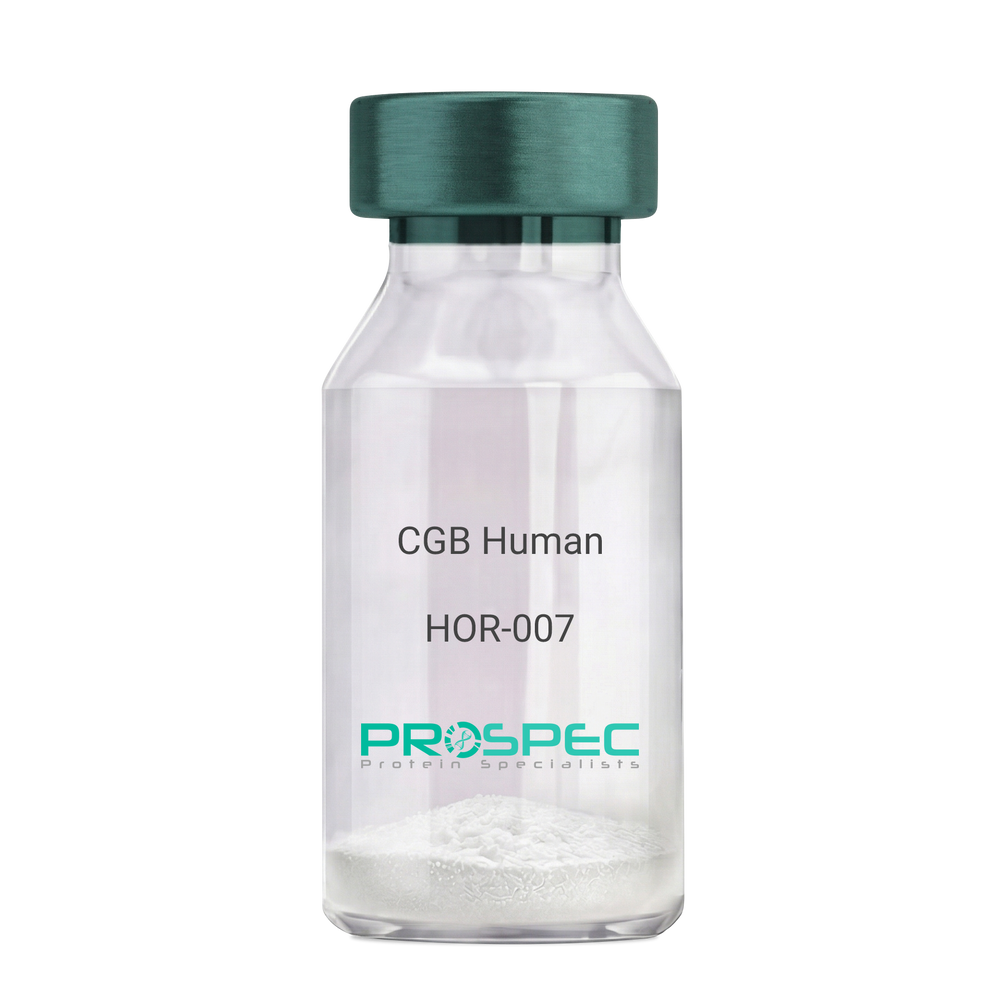
    CGB Human

    Description:

    CGB Human Recombinant

    CGB3, CGB5, CGB7, CGB8, hCGB,  CG-beta, CGB.

    Product # :

    HOR-007

    Price :

    Quantity :

    Shipping Method :

    Ice Icon

    Shipped with Ice Packs

    Add To Cart

    More Info

    • description
    • source
    • formulation
    • purity
    • More Info

    Description

    CGB Human Recombinant produced in E.Coli is a single, non-glycosylated polypeptide chain containing 168 amino acids (21-165 a.a.) and having a molecular mass of 17.9kDa. CGB is fused to a 23 amino acid His-tag at N-terminus & purified by proprietary chromatographic techniques.

    Source

    Escherichia Coli.

    Formulation

    CGB protein solution (0.5mg/ml) containing 20mM Tris-HCl buffer (pH 8.0), 0.4M Urea and 10% glycerol.

    Purity

    Greater than 85.0% as determined by SDS-PAGE.

    More Info

    • Introduction

      Glycoprotein hormones are heterodimers consisting of a common alpha subunit and a unique beta subunit which confers biological specificity. CGB is a member of the glycoprotein hormone beta chain family and is the beta 3 subunit of (CG). CG is produced by the trophoblastic cells of the placenta and stimulates the ovaries. The beta subunit of CG is encoded by 6 genes which are arranged in tandem and inverted pairs on chromosome 19q13.3 and contiguous with the luteinizing hormone beta subunit gene.

    • Synonyms

      CGB3, CGB5, CGB7, CGB8, hCGB, CG-beta, CGB.

    • Physical Appearance

      Sterile filtered colorless solution.

    • Stability

      Store at 4°C if entire vial will be used within 2-4 weeks. Store, frozen at -20°C for longer periods of time. For long term storage it is recommended to add a carrier protein (0.1% HSA or BSA).Avoid multiple freeze-thaw cycles.

    • Amino Acid Sequence

      MGSSHHHHHH SSGLVPRGSH MGSSKEPLRP RCRPINATLA VEKEGCPVCI TVNTTICAGY CPTMTRVLQG VLPALPQVVC NYRDVRFESI RLPGCPRGVN PVVSYAVALS CQCALCRRST TDCGGPKDHP LTCDDPRFQD SSSSKAPPPS LPSPSRLPGP SDTPILPQ.

    ProSpec's products are furnished for LABORATORY RESEARCH USE ONLY. The product may not be used as drugs, agricultural or pesticidal products, food additives or household chemicals.

    Cgb Human
  • View Data Sheet

    Name :

    A2M Human

    Description:

    Macroglobulin Alpha-2 Human

    Alpha-2-macroglobulin, Alpha-2-M, A2M, CPAMD5, FWP007, S863-7, alpha 2M, DKFZp779B086.

    Product # :

    PRO-551

    Price :

    Quantity :

    Shipping Method :

    Room Temp Icon

    Shipped at Room temp

    Add To Cart

    More Info

    • description
    • source
    • formulation
    • purity
    • More Info

    Description

    Human Alpha-2 Macroglobulin is a tetrameric glycoprotein, produced in Human plasma and having a molecular mass of 725 kDa.

    Source

    Human Plasma.

    Formulation

    Lyophilized from a concentrated solution containing 5mM potassium phosphate buffer, pH 6.5 and 1:1 ratio (w/w) of Glycine.

    Purity

    Greater than 95.0%.

    More Info

    • Introduction

      Alpha-2 Macroglobulin is a serine proteases inhibitor, which inhibits coagulation by inactivating thrombin and Kallikrein, it inhibits fibrinolysis by inactivating plasmin and involved in transport. Alpha-2-Macroglobulin is a large plasma protein, which is produced by the liver, it’s composed of 4 identical subunits bound together by -S-S- bonds. A2M is able to inactivate many kinds of proteinases (including serine-, cysteine-, aspartic- and metalloproteinases). A2M has a 35 amino acid "bait" region in its structure. Proteinases bind and cleave the “bait” region become bound to A2M. Macrophage receptors recognize the proteinase-A2M complex and clear it from the system. A2M binds to and removes MMP-2 and MMP-9 (active forms of the gelatinase) from the circulation using scavenger receptors on the phagocytes. The levels of Alpha-2-macroglobulin are increased in nephrotic syndrome which is a condition where the kidneys start to leak out some of the smaller blood proteins. Due to its large size, A2-macroglobulin is retained in the bloodstream. Increased production of all proteins causes A2-macroglobulin concentration to increase. Chronic renal failure might lead to amyloid by alpha-2-macroglobulin. A2M is raised in cirrhosis, pregnancy and diabetes.

    • Synonyms

      Alpha-2-macroglobulin, Alpha-2-M, A2M, CPAMD5, FWP007, S863-7, alpha 2M, DKFZp779B086.

    • Physical Appearance

      Sterile Filtered White lyophilized (freeze-dried) powder.

    • Stability

      Lyophilized A2M protein although stable at room temperature for 3 weeks, should be stored desiccated below -18°C. Upon reconstitution and filter sterilization A2M can be stored at 4°C for up to 4 weeks. For long term storage and more diluted solutions it is recommended to add a carrier protein (0.1% HSA or BSA). Please prevent freeze-thaw cycles.

    • Solubility

      It is recommended to reconstitute the lyophilized A2M in sterile 18MΩ-cm H2O.

    • Human Virus Test

      Serum from each donor has been tested and found negative for antibody to HIV-1, HIV-2, HCV and HBV.

    ProSpec's products are furnished for LABORATORY RESEARCH USE ONLY. The product may not be used as drugs, agricultural or pesticidal products, food additives or household chemicals.

    Macroglobulin Alpha 2 Human
  • View Data Sheet

    Name :

    HDGF2 Human

    Description:

    Hepatoma-Derived Growth Factor-2 Human Recombinant

    Hepatoma-derived growth factor-related protein 3, HRP-3, Hepatoma-derived growth factor 2, HDGF-2, HDGFRP3, HDGF2, CGI-142.

    Product # :

    CYT-132

    Price :

    Quantity :

    Shipping Method :

    Ice Icon

    Shipped with Ice Packs

    Add To Cart

    More Info

    • description
    • source
    • formulation
    • purity
    • More Info
    • SDS-PAGE

    Description

    HDGF2 Human Recombinant produced in E.Coli is a single, non-glycosylated polypeptide chain containing 227 amino acids (1-203 a.a.) and having a molecular mass of 25.1kDa (Molecular weight on SDS-PAGE will appear higher). HDGF2 is fused to a 24 amino acid His-tag at N-terminus & purified by proprietary chromatographic techniques.

    Source

    Escherichia Coli.

    Formulation

    HDGF2 protein solution (0.5mg/ml) containing 20mM Tris-HCl buffer (pH 8.0), 1mM DTT, 10% glycerol and 0.1M NaCl.

    Purity

    Greater than 90% as determined by SDS-PAGE.

    SDS-PAGE

    HDGF2 Human - Product image 1

    More Info

    • Introduction

      Hepatoma-derived growth factor, related protein 3 (HDGFRP3/HDGF2) is the original member of a family of polypeptides labeled HDGF related proteins (HRPs). The HDGF2 protein augments DNA synthesis and may play a part in cell proliferation. HDGF2 is expressed primarily in the testis and the brain, to an intermediate extent in the heart, and to a slight extent in the ovaries, kidneys, spleen, and liver in humans.

    • Synonyms

      Hepatoma-derived growth factor-related protein 3, HRP-3, Hepatoma-derived growth factor 2, HDGF-2, HDGFRP3, HDGF2, CGI-142.

    • Physical Appearance

      Sterile Filtered clear solution.

    • Stability

      Store at 4°C if entire vial will be used within 2-4 weeks. Store, frozen at -20°C for longer periods of time. For long term storage it is recommended to add a carrier protein (0.1% HSA or BSA).Avoid multiple freeze-thaw cycles.

    • Amino Acid Sequence

      MGSSHHHHHH SSGLVPRGSH MGSHMARPRP REYKAGDLVF AKMKGYPHWP ARIDELPEGA VKPPANKYPI FFFGTHETAF LGPKDLFPYK EYKDKFGKSN KRKGFNEGLW EIENNPGVKF TGYQAIQQQS SSETEGEGGN TADASSEEEG DRVEEDGKGK RKNEKAGSKR KKSYTSKKSS
      KQSRKSPGDE DDKDCKEEEN KSSSEGGDAG NDTRNTTSDL QKTSEGT.

    • Background

      What is the molecular weight/Mw of HDGF2 HUMAN Protein?
      HDGF2 HUMAN Protein has a total Mw of 25.1kDa.

      What is the source or expression system of HDGF2 HUMAN Protein?
      Escherichia Coli.

      What is the Purity of HDGF2 HUMAN Protein?
      HDGF2 HUMAN Protein is >90% pure as determined by SDS-PAGE.

      What is the Biological Activity of HDGF2 HUMAN Protein?
      The biological functionality of HDGF2 HUMAN Protein will be determined in the future.

      What is the amino acid sequence of HDGF2 HUMAN Protein?
      MGSSHHHHHH SSGLVPRGSH MGSHMARPRP REYKAGDLVF AKMKGYPHWP ARIDELPEGA VKPPANKYPI FFFGTHETAF LGPKDLFPYK EYKDKFGKSN KRKGFNEGLW EIENNPGVKF TGYQAIQQQS SSETEGEGGN TADASSEEEG DRVEEDGKGK RKNEKAGSKR KKSYTSKKSS
      KQSRKSPGDE DDKDCKEEEN KSSSEGGDAG NDTRNTTSDL QKTSEGT.

      What applications can HDGF2 HUMAN Protein be used in?
      HDGF2 HUMAN Protein can probably be used in western blot, ELISA and Lateral Flow.

      What is the endotoxin level for HDGF2 HUMAN Protein?
      The endotoxin level is minimal, HDGF2 HUMAN Protein was purified using conventional chromatography techniques.

    ProSpec's products are furnished for LABORATORY RESEARCH USE ONLY. The product may not be used as drugs, agricultural or pesticidal products, food additives or household chemicals.

    Hdgf2 Human
  • View Data Sheet

    Name :

    AMBP

    Description:

    Alpha-1 Microglobulin Human Recombinant

    Alpha-1-microglobulin/bikunin precursor, HCP, ITIL, ITI, EDC1, HI30, IATIL, ITILC, UTI, A1M, bikunin, complex-forming glycoprotein heterogeneous in charge, growth-inhibiting protein 19, inter-alpha-trypsin inhibitor light chain, protein AMBP, protein HC, trypstatin, uristatin, uronic-acid-rich protein.

    Product # :

    PRO-957

    Price :

    Quantity :

    Shipping Method :

    Ice Icon

    Shipped with Ice Packs

    Add To Cart

    More Info

    • description
    • source
    • formulation
    • purity
    • More Info

    Description

    AMBP Human Recombinant produced in E.coli is a single, non-glycosylated polypeptide chain containing 205 amino acids (20-203) and having a molecular mass of 23.1 kDa.AMBP is fused to a 21 amino acid His-tag at N-terminus & purified by proprietary chromatographic techniques.

    Source

    E.coli.

    Formulation

    The AMBP solution (0.5mg/ml) contains 20mM Tris-HCl buffer (pH 8.0), 1mM DTT, 0.1M NaCl and 10% glycerol.

    Purity

    Greater than 90% as determined by SDS-PAGE.

    More Info

    • Introduction

      Alpha 1-microglobulin (A1M) is a lipocalin superfamily member (kernal lipocalins). A1M is a low molecular weight protein component of plasma. A1M is distributed in plasma and extravascular compartments of all organs. Alpha-1 Microglobulin is found in mammals, birds, amphibians and fish. The primary sites of A1M synthesis are the liver and the kidney. Around the opening of the lipocalin pocket three lysyl residues are situated; those residues carry yellow-brown modification derived from the binding and degradation of heme and kynurenin (a tryptophan metabolite). A1-Microglobulin’s reductase and dehydrogenase have broad biological substrate specificity properties due to its’ free cysteine side-chain which is located in a flexible loop. Alpha-1-microglobulin is glycosylated by three separate carbohydrate chains: two complex carbohydrates which are N-linked to asparagines at residues 17 and 96, and the other simple carbohydrate which is O-linked to threonine at position 5. The carbohydrates comprise 22% of the total molecular mass of the protein. The glycosylation varies between species.
      A1M exists in two forms- a free form and complexed to other macromolecules: in humans- complexed to immunoglobulin A (IgA), in rat- complexed to alpha-1-inhibitor-3. Free A1M is exceptionally heterogeneous in charge (therefore also known as protein HC), and is found tightly linked to a chromophore. The free Alpha-1-microglobulin is a monomeric protein composed of one 188 residue polypeptide and contains three cysteines, two of which (residues 75 and 173) form a conserved intra-molecular disulphide link. The chromophoric group is covalently bound to the free cysteine residue at position 34. A1M binds retinol as a major ligand, but this is probably distinct from its covalent chromophore.
      Half of all human plasma A1M (approximately 0.03mg/ml) forms a 1:1 complex with about 5% of plasma immunoglobulin A. The resulting macromolecular complexes’ molecular weight is 200000, and a plasma concentration of 0.3mg/ml. The complex can exhibit both antibody activity and affect many of the biological actions of free Alpha-1-microglobulin.
      Alpha-1-microglobulin was first discovered in pathological human urine.
      It was suggested that A1M might be involved in tissue defense against reactive oxygen species, oxidation by heme and kynurenin. Evidence also suggests that A1M functions in the regulation of the immune system. Other functions include inhibition of stimulation of cultured lymphocytes by protein antigens; induction of cell division of lymphocytes, a mitogenic effect that can either be enhanced or inhibited by the action of other plasma components; inhibition of neutrophil granulocyte migration in vitro; and inhibition of chemotaxis.

    • Synonyms

      Alpha-1-microglobulin/bikunin precursor, HCP, ITIL, ITI, EDC1, HI30, IATIL, ITILC, UTI, A1M, bikunin, complex-forming glycoprotein heterogeneous in charge, growth-inhibiting protein 19, inter-alpha-trypsin inhibitor light chain, protein AMBP, protein HC, trypstatin, uristatin,
      uronic-acid-rich protein.

    • Physical Appearance

      Sterile Filtered colorless solution.

    • Stability

      Store at 4°C if entire vial will be used within 2-4 weeks. Store, frozen at -20°C for longer periods of time. For long term storage it is recommended to add a carrier protein (0.1% HSA or BSA).Avoid multiple freeze-thaw cycles.

    • Amino Acid Sequence

      MGSSHHHHHH SSGLVPRGSH MGPVPTPPDN IQVQENFNIS RIYGKWYNLA IGSTCPWLKK IMDRMTVSTL VLGEGATEAE ISMTSTRWRK GVCEETSGAY EKTDTDGKFL YHKSKWNITM ESYVVHTNYD EYAIFLTKKF SRHHGPTITA KLYGRAPQLR ETLLQDFRVV AQGVGIPEDS IFTMADRGEC VPGEQEPEPI LIPRV.

    ProSpec's products are furnished for LABORATORY RESEARCH USE ONLY. The product may not be used as drugs, agricultural or pesticidal products, food additives or household chemicals.

    Ambp Human
  • View Data Sheet

    Name :

    HAPLN1 Human

    Description:

    Hyaluronan And Proteoglycan Link Protein 1 Human Recombinant

    Hyaluronan and proteoglycan link protein 1 precursor, CRTL1, Cartilage-linking protein 1, Cartilage-link protein, Proteoglycan link protein, HAPLN1.

    Product # :

    PRO-2012

    Price :

    Quantity :

    Shipping Method :

    Ice Icon

    Shipped with Ice Packs

    Add To Cart

    More Info

    • description
    • source
    • formulation
    • purity
    • More Info

    Description

    HAPLN1 Human Recombinant produced in E.Coli is a single, non-glycosylated polypeptide chain containing 362 amino acids (16-354 a.a.) and having a molecular mass of 40.9kDa.HAPLN1 is fused to a 23 amino acid His-tag at N-terminus & purified by proprietary chromatographic techniques.

    Source

    Escherichia Coli.

    Formulation

    HAPLN1 protein solution (1mg/ml) containing 20mM Tris-HCl buffer (pH 8.0), 0.4M Urea and 10% glycerol.

    Purity

    Greater than 80.0% as determined by SDS-PAGE.

    More Info

    • Introduction

      Hyaluronan And Proteoglycan Link Protein 1, which is also known as HAPLN1 is a part of the HAPLN family.HAPLN1 contains one Ig-like V-type domain and two Link domains. In the extracellular cartilage matrix, HAPLN1 stabilizes the aggregates of proteoglycan monomers by means of hyaluronic acid .

    • Synonyms

      Hyaluronan and proteoglycan link protein 1 precursor, CRTL1, Cartilage-linking protein 1, Cartilage-link protein, Proteoglycan link protein, HAPLN1.

    • Physical Appearance

      Sterile Filtered colorless solution.

    • Stability

      Store at 4°C if entire vial will be used within 2-4 weeks. Store, frozen at -20°C for longer periods of time. For long term storage it is recommended to add a carrier protein (0.1% HSA or BSA).Avoid multiple freeze-thaw cycles.

    • Amino Acid Sequence

      MGSSHHHHHH SSGLVPRGSH MGSDHLSDNY TLDHDRAIHI QAENGPHLLV EAEQAKVFSH RGGNVTLPCK FYRDPTAFGS GIHKIRIKWT KLTSDYLKEV DVFVSMGYHK KTYGGYQGRV FLKGGSDSDA SLVITDLTLE DYGRYKCEVI EGLEDDTVVV ALDLQGVVFP YFPRLGRYNL NFHEAQQACL DQDAVIASFD QLYDAWRGGL DWCNAGWLSD GSVQYPITKP REPCGGQNTV PGVRNYGFWD KDKSRYDVFC FTSNFNGRFY YLIHPTKLTY DEAVQACLND GAQIAKVGQI FAAWKILGYD RCDAGWLADG SVRYPISRPR RRCSPTEAAV RFVGFPDKKH KLYGVYCFRA YN.

    ProSpec's products are furnished for LABORATORY RESEARCH USE ONLY. The product may not be used as drugs, agricultural or pesticidal products, food additives or household chemicals.

    Hapln1 Human
  • View Data Sheet

    Name :

    ICAM1 Human HEK

    Description:

    Intercellular Adhesion Molecule-1 Human Recombinant HEK

    Intercellular adhesion molecule 1, ICAM-1, Major group rhinovirus receptor, CD54 antigen, ICAM1, BB2, CD54, P3.58.

    Product # :

    PRO-1643

    Price :

    Quantity :

    Shipping Method :

    Room Temp Icon

    Shipped at Room temp

    Add To Cart

    More Info

    • description
    • source
    • formulation
    • purity
    • More Info

    Description

    ICAM1 Human Recombinant produced by mammalian expression system in human cells is a single polypeptide chain containing 461 amino acids (28-480). ICAM1 is fused to an 8 amino acid His-tag at C-terminus & purified by proprietary chromatographic techniques.

    Source

    HEK293 cells.

    Formulation

    ICAM1 was lyophilized from a 0.2 µM filtered solution of 20mM PB and 150mM NaCl, pH 7.2.

    Purity

    Greater than 95% as determined by SDS-PAGE.

    More Info

    • Introduction

      ICAM-1 also called CD54 is a single chain membrane glycoprotein expressed on the surface of a variety of non-haematopoietic and haematopoietic cell types and has roles in signal transduction, cell signaling and lymphocyte adhesion. ICAM1 binds to integrins such as CD11a / CD18, or CD11b / CD18. ICAM1 is also used by Rhinovirus as a receptor. ICAM-1 is an intercellular adhesion molecule constantly present in low concentrations in the membranes of leukocytes and endothelial cells. When stimulated by cytokine the concentrations significantly increase. ICAM-1 can be stimulated by interleukin-1 (IL-1) and tumor necrosis factor alpha (TNFA) and is expressed by the vascular endothelium, macrophages and lymphocytes. ICAM-1 is a ligand for LFA-1 which is a receptor found on leukocytes. Upon activation, leukocytes bind to endothelial cells via ICAM-1/LFA-1 and then transmigrate into tissues.
      ICAM-1 is implicated in subarachnoid hemorrhage (SAH). Levels of ICAM-1 are shown to be notably elevated in patients with SAH.
      Soluble ICAM-1 is detectable in the plasma and is elevated in patients with various inflammatory conditions.

    • Synonyms

      Intercellular adhesion molecule 1, ICAM-1, Major group rhinovirus receptor, CD54 antigen, ICAM1, BB2, CD54, P3.58.

    • Physical Appearance

      Sterile Filtered White lyophilized (freeze-dried) powder.

    • Stability

      Lyophilized ICAM1 although stable at room temperature for 3 weeks, should be stored desiccated below -18°C. Upon reconstitution ICAM1 should be stored at 4°C between 2-7 days and for future use below -18°C. Please prevent freeze-thaw cycles.

    • Solubility

      It is recommended to reconstitute the lyophilized ICAM1 in 1xPBS to a concentration no less than 100 µg/ml, which can then be further diluted to other aqueous solutions.

    • Amino Acid Sequence

      QTSVSPSKVILPRGGSVLVTCSTSCDQPKLLGIETPLPKKELLLPGNNRKVYELSNVQE
      DSQPMCYSNCPDGQSTAKTFLTVYWTPERVELAPLPSWQPVGKNLTLRCQVEGGAPRANL
      TVVLLRGEKELKREPAVGEPAEVTTTVLVRRDHHGANFSCRTELDLRPQGLELFENTSAP
      YQLQTFVLPATPPQLVSPRVLEVDTQGTVVCSLDGLFPVSEAQVHLALGDQRLNPTVTYGN
      DSFSAKASVSVTAEDEGTQRLTCAVILGNQSQETLQTVTIYSFPAPNVILTKPEVSEGTEV
      TVKCEAHPRAKVTLNGVPAQPLGPRAQLLLKATPEDNGRSFSCSATLEVAGQLIHKNQTRELR
      VLYGPRLDERDCPGNWTWPENSQQTPMCQAWGNPLPELKCLKDGTFPLPIGESVTVTRDLEGTYL
      CRARSTQGEVTRKVTVNVLSPRYEVDHHHHHH.

    ProSpec's products are furnished for LABORATORY RESEARCH USE ONLY. The product may not be used as drugs, agricultural or pesticidal products, food additives or household chemicals.

    Icam1 Human Hek
  • View Data Sheet

    Name :

    STAMBP Human

    Description:

    STAM Binding Protein Human Recombinant

    STAM-binding protein, Associated molecule with the SH3 domain of STAM, Endosome-associated ubiquitin isopeptidase, AMSH, EC 3.1.2.15, EC 3.4.19, MICCAP.

    Product # :

    PRO-017

    Price :

    Quantity :

    Shipping Method :

    Ice Icon

    Shipped with Ice Packs

    Add To Cart

    More Info

    • description
    • source
    • formulation
    • purity
    • More Info

    Description

    STAMBP Human Recombinant produced in E.coli is a single, non-glycosylated polypeptide chain containing 447 amino acids (1-424) and having a molecular mass of 50kDa. STAMBP is fused to a 23 amino acid His-tag at N-terminus & purified by proprietary chromatographic techniques.

    Source

    Escherichia Coli.

    Formulation

    STAMBP protein solution (1mg/ml) containing 20mM Tris-HCl buffer (pH 8.0), 0.15M NaCl, 10% glycerol and 1mM DTT.

    Purity

    Greater than 85% as determined by SDS-PAGE..

    More Info

    • Introduction

      STAM Binding Protein (STAMBP) is a zinc metalloprotease which specifically cleaves Lys-63-linked polyubiquitin chains, however it doesn’t cleave Lys-48-linked polyubiquitin chains. STAMBP has a role in signal transduction for cell growth and MYC induction mediated by IL-2 and GM-CSF. In addition, STAMBP potentiates BMP signaling by antagonizing the inhibitory action of SMAD6 and SMAD7. STAMBP also has a major role in regulation of cell surface receptor-mediated endocytosis and ubiquitin-dependent sorting of receptors to lysosomes. Endosomal localization of STAMBP is essential for efficient EGFR degradation but not for its internalization. STAMBP is also involved in the negative regulation of PI3K-AKT-mTOR and RAS-MAP signaling pathways.

    • Synonyms

      STAM-binding protein, Associated molecule with the SH3 domain of STAM, Endosome-associated ubiquitin isopeptidase, AMSH, EC 3.1.2.15, EC 3.4.19, MICCAP.

    • Physical Appearance

      Sterile Filtered colorless solution.

    • Stability

      Store at 4°C if entire vial will be used within 2-4 weeks. Store, frozen at -20°C for longer periods of time. For long term storage it is recommended to add a carrier protein (0.1% HSA or BSA).Avoid multiple freeze-thaw cycles.

    • Amino Acid Sequence

      MGSSHHHHHH SSGLVPRGSH MGSMSDHGDV SLPPEDRVRA LSQLGSAVEV NEDIPPRRYF RSGVEIIRMA SIYSEEGNIE HAFILYNKYI TLFIEKLPKH RDYKSAVIPE KKDTVKKLKE IAFPKAEELK AELLKRYTKE YTEYNEEKKK EAEELARNMA IQQELEKEKQ RVAQQKQQQL EQEQFHAFEE MIRNQELEKE RLKIVQEFGK VDPGLGGPLV PDLEKPSLDV FPTLTVSSIQ PSDCHTTVRP AKPPVVDRSL KPGALSNSES IPTIDGLRHV VVPGRLCPQF LQLASANTAR GVETCGILCG KLMRNEFTIT HVLIPKQSAG SDYCNTENEE ELFLIQDQQG LITLGWIHTH PTQTAFLSSV DLHTHCSYQM MLPESVAIVC SPKFQETGFF KLTDHGLEEI SSCRQKGFHP HSKDPPLFCS CSHVTVVDRA VTITDLR.

    ProSpec's products are furnished for LABORATORY RESEARCH USE ONLY. The product may not be used as drugs, agricultural or pesticidal products, food additives or household chemicals.

    Stambp Human
  • View Data Sheet

    Name :

    BMF Human

    Description:

    Bcl2 Modifying Factor, Isoform 3 Human Recombinant

    Bcl-2-modifying factor, FLJ00065, BMF.

    Product # :

    PRO-700

    Price :

    Quantity :

    Shipping Method :

    Ice Icon

    Shipped with Ice Packs

    Add To Cart

    More Info

    • description
    • source
    • formulation
    • purity
    • More Info

    Description

    Bcl2 modifying factor Human Recombinant produced in E.Coli is a single, non-glycosylated, polypeptide chain containing 144 amino acids (1-129 a.a.) and having a molecular mass of 15.6 kDa.The Bcl2 modifying factor is fused to 15 amino acid His Tag at Nterminus and purified by proprietary chromatographic techniques.

    Source

    Escherichia Coli.

    Formulation

    The Bcl2 modifying factor solution contains 20mM Tris pH-7.5, 1mM DTT & 10% glycerol.

    Purity

    Greater than 90.0% as determined by SDS-PAGE.

    More Info

    • Introduction

      Bcl2 modifying factor, is a member of the Bcl2 protein family of apoptosis mediators. Bcl2 modifying factor is widely expressed in many tissues.
      Bcl2 modifying factor contains a single Bcl2 homology domain 3 (BH3), and binds Bcl2 proteins and functions as an apoptotic activator. Also, Bcl2 modifying factor is important for histone deacetylase (HDAC) inhibitors which alters the balance between acetylation and deacetylation, significantly increasing histone acetylation, while strongly inducing apoptosis in a variety of cancer cell types. Bcl2 modifying factor supports Bim in regulating cell death processes in response to many stimuli. A synergistic role for bim and Bcl2 modifying factor in an apoptotic pathway leading to the clearance of Neisseria gonorrhoeae -infected cells.

    • Synonyms

      Bcl-2-modifying factor, FLJ00065, BMF.

    • Physical Appearance

      Sterile Filtered colorless solution.

    • Stability

      Store at 4°C if entire vial will be used within 2-4 weeks. Store, frozen at -20°C for longer periods of time. For long term storage it is recommended to add a carrier protein (0.1% HSA or BSA).Avoid multiple freeze-thaw cycles.

    • Amino Acid Sequence

      MASMTGGQQM GRGSHMEPSQ CVEELEDDVF QPEDGEPVTQ PGSLLSADLF AQSLLDCPLS RLQLFPLTHC CGPGLRPTSQ EDKATQTLSPASPSQGVMLP CGVTEEPQRL FYAPAEPKSC VVADPPLPAQ PCFEWRREQE RGRP.

    ProSpec's products are furnished for LABORATORY RESEARCH USE ONLY. The product may not be used as drugs, agricultural or pesticidal products, food additives or household chemicals.

    Bcl2 Modifying Factor Human
  • View Data Sheet

    Name :

    CCDC104 Human

    Description:

    Coiled-Coil Domain Containing 104 Human Recombinant

    Coiled-Coil Domain Containing 104, Coiled-CoilDomain- Protein104, CCDC104.

    Product # :

    PRO-1728

    Price :

    Quantity :

    Shipping Method :

    Ice Icon

    Shipped with Ice Packs

    Add To Cart

    More Info

    • description
    • source
    • formulation
    • purity
    • More Info

    Description

    CCDC104 Human Recombinant produced in E.Coli is a single, non-glycosylated polypeptide chain containing 365 amino acids (1-342 a.a) and having a molecular mass of 41.8kDa.CCDC104 is fused to a 23 amino acid His-tag at N-terminus & purified by proprietary chromatographic techniques.

    Source

    Escherichia Coli.

    Formulation

    CCDC104 protein solution (1mg/ml) containing 20mM Tris-HCl buffer (pH 8.0) and 10% glycerol.

    Purity

    Greater than 90.0% as determined by SDS-PAGE.

    More Info

    • Introduction

      CCDC104 also known as coiled-coil domain-containing protein 104 is a 342 amino acid protein that exists as two alternatively spliced isoforms. CCDC104 undergoes post-translational phosphorylation following DNA damage, most likely by either ATR or ATM. Among the diseases associated with CCDC104 are pancreatic cancer, and pancreatitis.

    • Synonyms

      Coiled-Coil Domain Containing 104, Coiled-CoilDomain- Protein104, CCDC104.

    • Physical Appearance

      Sterile Filtered clear solution.

    • Stability

      Store at 4°C if entire vial will be used within 2-4 weeks. Store, frozen at -20°C for longer periods of time. For long term storage it is recommended to add a carrier protein (0.1% HSA or BSA).Avoid multiple freeze-thaw cycles.

    • Amino Acid Sequence

      MGSSHHHHHH SSGLVPRGSH MGSMAAEEED EVEWVVESIA GFLRGPDWSI PILDFVEQKC EVFDDEEESK LTYTEIHQEY KELVEKLLEG YLKEIGINED QFQEACTSPL AKTHTSQAIL QPVLAAEDFT IFKAMMVQKN IEMQLQAIRI IQERNGVLPD CLTDGSDVVS DLEHEEMKIL REVLRKSKEE YDQEEERKRK KQLSEAKTEE PTVHSSEAAI MNNSQGDGEH FAHPPSEVKM HFANQSIEPL GRKVERSETS SLPQKDLKIP GLEHASIEGP IANLSVLGTE ELRQREHYLK QKRDKLMSMR KDMRTKQIQN MEQKGKPTGE VEEMTEKPEM TAEEKQTLLK RRLLAEKLKE EVINK

    ProSpec's products are furnished for LABORATORY RESEARCH USE ONLY. The product may not be used as drugs, agricultural or pesticidal products, food additives or household chemicals.

    Ccdc104 Human
  • View Data Sheet

    Name :

    LHRH Protein

    Description:

    Luteinizing Hormone Releasing Hormone Human Recombinant

    LHRH, GRH, GNRH, LNRH.

    Product # :

    HOR-268

    Price :

    Quantity :

    Shipping Method :

    Ice Icon

    Shipped with Ice Packs

    Add To Cart

    More Info

    • description
    • source
    • formulation
    • purity
    • More Info

    Description

    LHRH Human Recombinant produced in E.Coli is a single, non-glycosylated polypeptide chain containing 92 amino acids (24-92 a.a.) and having a molecular mass of 10.3kDa.LHRH is fused to a 23 amino acid His-tag at N-terminus & purified by proprietary chromatographic techniques.

    Source

    Escherichia Coli.

    Formulation

    LHRH protein solution (0.5mg/ml) containing 20mM Tris-HCl buffer (pH 8.0), 0.15M NaCl, 20% glycerol and 1mM DTT.

    Purity

    Greater than 90.0% as determined by SDS-PAGE.

    More Info

    • Introduction

      GNRH1 also known as Luteinising-hormone releasing hormone (LHRH), is a peptide hormone responsible for the release of FSH and LH from the anterior pituitary. GNRH1 is synthesized and released by the hypothalamus.
      At the pituitary, GNRH1 stimulates the synthesis and secretion of the follicle-stimulating hormone (FSH) and luteinizing hormone (LH). These processes are controlled by the size and frequency of GNRH1 pulses, as well as by feedback from androgens and estrogens. Low requency GNRH1 pulses lead to FSH release, whereas high frequency GNRH1 pulses stimulate LH release.
      There are differences in GNRH1 secretion between males and females. In males, GNRH1 is secreted in pulses at a constant frequency, but in females the frequency of the pulses varies during the menstrual cycle and there is a large surge of GNRH1 just before ovulation.
      GNRH1 secretion is pulsatile in all vertebrates, and is necessary for correct reproductive function. Thus, a single hormone, GNRH1, controls a complex process of follicular growth, ovulation, and corpus luteum maintenance in the female, and spermatogenesis in the male.

    • Synonyms

      LHRH, GRH, GNRH, LNRH.

    • Physical Appearance

      Sterile filtered colorless solution.

    • Stability

      Store at 4°C if entire vial will be used within 2-4 weeks. Store, frozen at -20°C for longer periods of time. For long term storage it is recommended to add a carrier protein (0.1% HSA or BSA).Avoid multiple freeze-thaw cycles.

    • Amino Acid Sequence

      MGSSHHHHHH SSGLVPRGSH MGSQHWSYGL RPGGKRDAEN LIDSFQEIVK EVGQLAETQR FECTTHQPRS PLRDLKGALE SLIEEETGQK KI.

    ProSpec's products are furnished for LABORATORY RESEARCH USE ONLY. The product may not be used as drugs, agricultural or pesticidal products, food additives or household chemicals.

    Lhrh Human Recombinant
  • View Data Sheet

    Name :

    APP Human, HEK

    Description:

    Amyloid beta (A4) Precursor Protein Human Recombinant, HEK

    ABPP, APPI, Alzheimer disease amyloid A4 protein homolog, Alzheimer disease amyloid protein, Amyloid precursor protein, Amyloid-beta precursor protein, Amyloid-beta A4 protein, Cerebral vascular amyloid peptide, CVAP, PreA4, Protease nexin-II, PN-II, A4, AD1, beta-amyloid peptide, beta-amyloid precursor protein, testicular tissue protein Li 2, AAA, ABETA, alpha-sApp, CTF gamma, PN2.

    Product # :

    PRO-2777

    Price :

    Quantity :

    Shipping Method :

    Ice Icon

    Shipped with Ice Packs

    Add To Cart

    More Info

    • description
    • source
    • formulation
    • purity
    • biological activity
    • More Info

    Description

    APP Human Recombinant is a single, glycosylated, polypeptide chain (18-701 a.a) containing a total of 690 amino acids, having a molecular mass of 78.2 kDa. APP is fused to a 6 amino acid His-tag at C-terminus and is purified by proprietary chromatographic techniques.

    Source

    HEK293 Cells.

    Formulation

    The APP solution (0.5mg/ml) contains 10% Glycerol and Phosphate-Buffered Saline (pH 7.4).

    Purity

    > 90% by SDS-PAGE.

    Biological Activity

    The inhibitory function of APP on activity of trypsin was measured by a fluorometric

    assay using Mca-RPKPVE-Nval-WRK(Dnp)-NH2 at pH 7.5 at 37C.  The IC50 ≤ 1 nM.

    More Info

    • Synonyms

      ABPP, APPI, Alzheimer disease amyloid A4 protein homolog, Alzheimer disease amyloid protein, Amyloid precursor protein, Amyloid-beta precursor protein, Amyloid-beta A4 protein, Cerebral vascular amyloid peptide, CVAP, PreA4, Protease nexin-II, PN-II, A4, AD1, beta-amyloid peptide, beta-amyloid precursor protein, testicular tissue protein Li 2, AAA, ABETA, alpha-sApp, CTF gamma, PN2.

    • Physical Appearance

      Sterile Filtered colorless solution.

    • Stability

      Store at 4°C if entire vial will be used within 2-4 weeks. Store, frozen at -20°C for longer periods of time. For long term storage it is recommended to add a carrier protein (0.1% HSA or BSA). Avoid multiple freeze-thaw cycles.

    • Amino Acid Sequence

      LEVPTDGNAG LLAEPQIAMF CGRLNMHMNV QNGKWDSDPS GTKTCIDTKE GILQYCQEVY PELQITNVVE ANQPVTIQNW CKRGRKQCKT HPHFVIPYRC LVGEFVSDAL LVPDKCKFLH QERMDVCETH LHWHTVAKET CSEKSTNLHD YGMLLPCGID KFRGVEFVCC PLAEESDNVD SADAEEDDSD VWWGGADTDY ADGSEDKVVE VAEEEEVAEV EEEEADDDED DEDGDEVEEE AEEPYEEATE RTTSIATTTT TTTESVEEVV REVCSEQAET GPCRAMISRW YFDVTEGKCA PFFYGGCGGN RNNFDTEEYC MAVCGSAMSQ SLLKTTQEPL ARDPVKLPTT AASTPDAVDK YLETPGDENE HAHFQKAKER LEAKHRERMS QVMREWEEAE RQAKNLPKAD KKAVIQHFQE KVESLEQEAA NERQQLVETH MARVEAMLND RRRLALENYI TALQAVPPRP RHVFNMLKKY VRAEQKDRQH TLKHFEHVRM VDPKKAAQIR SQVMTHLRVI YERMNQSLSL LYNVPAVAEE IQDEVDELLQ KEQNYSDDVL ANMISEPRIS YGNDALMPSL TETKTTVELL PVNGEFSLDD LQPWHSFGAD SVPANTENEV EPVDARPAAD RGLTTRPGSG LTNIKTEEIS EVKMDAEFRH DSGYEVHHQK LVFFAEDVGS NKGA HHHHHH.

    • Background

      Alzheimer's disease (AD) is a neurodegenerative disorder characterized by the accumulation of amyloid plaques and neurofibrillary tangles in the brain, leading to cognitive decline and memory loss. The amyloid beta (Aβ) peptide, derived from the amyloid beta (A4) precursor protein, has been identified as a key player in the pathogenesis of AD. This research aims to explore the significance of the amyloid beta precursor protein, its processing, and the implications it holds for understanding and treating Alzheimer's disease.
      The amyloid beta precursor protein (APP) is a transmembrane protein widely expressed in various tissues, with higher concentrations found in the brain. APP undergoes sequential proteolytic processing by enzymes known as secretases, leading to the generation of Aβ peptides of different lengths. Of particular importance is the production of the Aβ42 peptide, which has a propensity to aggregate and form the characteristic amyloid plaques in AD.
      Understanding the processing and metabolism of APP is crucial for unraveling the mechanisms underlying AD pathology. Mutations in the APP gene and dysregulation of its processing have been associated with familial forms of AD, highlighting the pivotal role of APP in disease development. Investigating the function of APP and its proteolytic fragments can provide valuable insights into the molecular events leading to AD and potentially lead to the identification of therapeutic targets.
      This research will delve into the processing of the amyloid beta precursor protein, shedding light on the different cleavage pathways mediated by α-, β-, and γ-secretases. The paper will discuss the impact of these proteolytic events on the generation of Aβ peptides and how alterations in these pathways contribute to AD pathogenesis. Furthermore, it will explore the aggregation properties of Aβ peptides and their role in the formation of amyloid plaques, as well as their impact on neuronal function and viability.
      The study will also examine the potential of APP and Aβ as biomarkers for AD diagnosis and progression monitoring. Investigating the levels of APP and Aβ peptides in biological fluids and utilizing imaging techniques to detect amyloid plaques could enhance early diagnosis and facilitate the development of novel therapeutic interventions.
      By elucidating the molecular mechanisms involving APP and Aβ in AD, this research aims to contribute to the understanding of the disease pathogenesis and identify potential therapeutic targets. Additionally, it underscores the importance of ongoing research in this field to develop effective strategies for early diagnosis, disease modification, and improved patient outcomes.

    ProSpec's products are furnished for LABORATORY RESEARCH USE ONLY. The product may not be used as drugs, agricultural or pesticidal products, food additives or household chemicals.

    App Protein
  • View Data Sheet

    Name :

    APOA5 Human, HEK

    Description:

    Apolipoprotein A-V Human Recombinant, HEK

    Apolipoprotein A-V, Apo-AV, ApoA-V, Apolipoprotein A5, Regeneration-associated protein 3, APOA5, RAP3, APOAV.

    Product # :

    CYT-025

    Price :

    Quantity :

    Shipping Method :

    Room Temp Icon

    Shipped at Room temp

    Add To Cart

    More Info

    • description
    • source
    • formulation
    • purity
    • More Info

    Description

    APOA5 Human Recombinant Flag-Tagged Fusion Protein is 40.1 kDa protein containing 354 amino acid residues of the APOA5 Human and 11 additional amino acid residues of flagTag.

    Source

    HEK293

    Formulation

    APOA5 Human was filtered (0.4µm) and lyophilized from 0.5 mg/ml supplied in 20mM TRIS and 50mM NaCl, pH 7.5

    Purity

    Greater than 90% as determined by SDS-PAGE.

    More Info

    • Introduction

      ApoA5 is an important regulator of serum triglyceride concentrations. An ApoA5 mouse nock-out model produced an approximately four fold increase in serum triglycerides, whereas a knock-in model human ApoA5 produced 50-70% lower concentrations of mouse serum triglycerides. Furthermore, peroxisome proliferators-activated receptoragonists, which are used clinically to lower serum triglyceride concentrations, cause increased ApoA5 mRNA expression. There is very little known about ApoA5 protein in human serum. Lately, it was established that ApoA5 is present in the human serum and it can be detected by polyclonal antibodies against both the HN2 and COOH termini, but at much lower concentration than other apolipoproteins.

    • Synonyms

      Apolipoprotein A-V, Apo-AV, ApoA-V, Apolipoprotein A5, Regeneration-associated protein 3, APOA5, RAP3, APOAV.

    • Physical Appearance

      Filtered White lyophilized (freeze-dried) powder.

    • Stability

      Store lyophilized APOA5 Human at -20°C. Aliquot the product after reconstitution to avoid repeated freezing/thawing cycles. Reconstituted APOA5 Human can be stored at 4°C for a limited period of time; it does not show any change after two weeks at 4°C.

    • Solubility

      It is recommended to add deionized water to prepare a working stock solution of approximately 0.5mg/ml and let the lyophilized pellet dissolve completely. Product is not sterile! Please filter the product by an appropriate sterile filter before using it on cell culture.

    • Amino Acid Sequence

      RKGFWDYFSQ TSGDKGRVEQ IHQQKMAREP ATLKDSLEQD LNNMNKFLEK LRPLSGSEAP RLPQDPVGMR RQLQEELEEV KARLQPYMAE AHELVGWNLE GLRQQLKPYT MDLMEQVALR VQELQEQLRV VGEDTKAQLL GGVDEAWALL QGLQSRVVHH TGRFKELFHP YAESLVSGIG RHVQELHRSV APHAPASPAR LSRCVQVLSR KLTLKAKALH ARIQQNLDQL REELSRAFAG TGTEEGAGPD PQMLSEEVRQ RLQAFRQDTY LQIAAFTRAI DQETEEVQQQ LAPPPPGHSA FAPEFQQTDS GKVLSKLQAR LDDLWEDITH SLHDQGHSHL GDPAAADYKD DDDK

    • Background

      What is the molecular weight/Mw of APOA5 Protein?
      APOA5 Protein has a total Mw of 40.1kDa.

      What is the source or expression system of APOA5 Protein?
      HEK293
      What is the Purity of APOA5 Protein?
      APOA5 Protein is >90% pure as determined by SDS-PAGE.

      What is the Biological Activity of APOA5 Protein?
      The biological functionality of APOA5 Protein will be determined in the future.

      What is the amino acid sequence of APOA5 Protein?
      RKGFWDYFSQ TSGDKGRVEQ IHQQKMAREP ATLKDSLEQD LNNMNKFLEK LRPLSGSEAP RLPQDPVGMR RQLQEELEEV KARLQPYMAE AHELVGWNLE GLRQQLKPYT MDLMEQVALR VQELQEQLRV VGEDTKAQLL GGVDEAWALL QGLQSRVVHH TGRFKELFHP YAESLVSGIG RHVQELHRSV APHAPASPAR LSRCVQVLSR KLTLKAKALH ARIQQNLDQL REELSRAFAG TGTEEGAGPD PQMLSEEVRQ RLQAFRQDTY LQIAAFTRAI DQETEEVQQQ LAPPPPGHSA FAPEFQQTDS GKVLSKLQAR LDDLWEDITH SLHDQGHSHL GDPAAADYKD DDDK
      What applications can APOA5 Protein be used in?
      APOA5 Protein can probably be used in western blot, ELISA and Lateral Flow.

      What is the endotoxin level for APOA5 Protein?
      The endotoxin level is minimal, APOA5 Protein was purified using conventional chromatography techniques.

    ProSpec's products are furnished for LABORATORY RESEARCH USE ONLY. The product may not be used as drugs, agricultural or pesticidal products, food additives or household chemicals.

    Apoa5 Human
  • View Data Sheet

    Name :

    ESM1 Human, HEK

    Description:

    Endothelial Cell-Specific Molecule 1 Human Recombinant, HEK

    Endothelial cell-specific molecule 1, ESM-1, ESM1, endocan. 

    Product # :

    PRO-2476

    Price :

    Quantity :

    Shipping Method :

    Room Temp Icon

    Shipped at Room temp

    Add To Cart

    More Info

    • description
    • source
    • formulation
    • purity
    • More Info

    Description

    ESM1 Human Recombinant produced in HEK293 cells is a single, glycosylated polypeptide chain (a.a 20-184) containing 175 amino acids including a 10 a.a C-terminal His tag. The total molecular mass is 19.5kDa (calculated).

    Source

    HEK293 cells.

    Formulation

    ESM1 filtered (0.4 µm) and lyophilized from 0.5mg/ml in phosphate buffered saline.

    Purity

    Greater than 95.0% as determined by SDS-PAGE.

    More Info

    • Introduction

      Endothelial cell-specific molecule 1 (ESM1) is a proteoglycan secreted by endothelial cells (mostly in the human lung and kidney tissues) and its mRNA expression is regulated by inflammatory cytokines. ESM1 has potent implications in lung endothelial cell-leukocyte interactions. In addition, ESM1 expression is detected in various epithelia and in adipocytes. ESM1 is involved in angiogenesis and it also promotes angiogenic sprouting. ESM1 expression is upregulated by TNF alpha, IL1 beta, or lipopolysaccharide and downregulated by IFN gamma. Genetically engineered cells overexpressing ESM1 induce tumor formation, implying that ESM1 might be involved in the pathophysiology of tumor growth in vivo.

    • Synonyms

      Endothelial cell-specific molecule 1, ESM-1, ESM1, endocan.

    • Physical Appearance

      Filtered White lyophilized (freeze-dried) powder.

    • Stability

      Store lyophilized protein at -20°C. Aliquot the product after reconstitution to avoid repeated freezing/thawing cycles. Reconstituted protein can be stored at 4°C for a limited period of time; it does not show any change after two weeks at 4°C.

    • Solubility

      It is recommended to add deionized water to prepare a working stock solution of approximately 0.5mg/ml and let the lyophilized pellet dissolve completely. ESM1 is not sterile! Please filter the product by an appropriate sterile filter before using it in the cell culture.

    • Amino Acid Sequence

      WSNNYAVDCP QHCDSSECKS SPRCKRTVLD DCGCCRVCAA GRGETCYRTV SGMDGMKCGP GLRCQPSNGE DPFGEEFGIC KDCPYGTFGM DCRETCNCQS GICDRGTGKC LKFPFFQYSV TKSSNRFVSL TEHDMASGDG NIVREEVVKE NAAGSPVMRK WLNPR HHHHH HHHHH.

    ProSpec's products are furnished for LABORATORY RESEARCH USE ONLY. The product may not be used as drugs, agricultural or pesticidal products, food additives or household chemicals.

    Esm1 Protein
  • View Data Sheet

    Name :

    HAVCR1 Human

    Description:

    Hepatitis A Virus Cellular Receptor 1 Human Recombinant

    Hepatitis A Virus Cellular Receptor 1, T-Cell Immunoglobulin Mucin Family Member 1, T-Cell Immunoglobulin Mucin Receptor 1, T-Cell Membrane Protein 1, Kidney Injury Molecule 1, HAVCR-1, TIMD-1, HAVCR, KIM-1, TIM-1, TIMD1, TIM1, KIM1, TIM, T-Cell Immunoglobulin And Mucin Domain-Containing Protein 1, T Cell Immunoglobin Domain And Mucin Domain Protein 1, HAVCR1.

    Product # :

    HAV-222

    Price :

    Quantity :

    Shipping Method :

    Ice Icon

    Shipped with Ice Packs

    Add To Cart

    More Info

    • description
    • source
    • formulation
    • purity
    • More Info

    Description

    HAVCR1 Human Recombinant produced in E. coli is a single polypeptide chain containing 298 amino acids (21-295aa) and having a molecular mass of 31.9kDa.HAVCR1 is fused to a 23 amino acid His-tag at N-terminus & purified by proprietary chromatographic techniques.

    Source

    Escherichia Coli.

    Formulation

    The HAVCR1 solution (1mg/ml) contains 20mM Tris-HCl (pH 8.0) and 10% glycerol.

    Purity

    Greater than 85% as determined by SDS-PAGE.

    More Info

    • Introduction

      Hepatitis A virus cellular receptor 1 (HAVCR1) is a membrane receptor for both human hepatitis A virus (HHAV) and TIMD4. HAVCR1 is a type I trans-membrane structural glycoprotein located in the renal proximal tubule epithelial cells. HAVCR1 protein may be involved in the control of asthma and allergic diseases. The reference genome represents an allele which retains a MTTVP amino acid segment that presents defense against atopy in HHAV seropositive individuals.

    • Synonyms

      Hepatitis A Virus Cellular Receptor 1, T-Cell Immunoglobulin Mucin Family Member 1, T-Cell Immunoglobulin Mucin Receptor 1, T-Cell Membrane Protein 1, Kidney Injury Molecule 1, HAVCR-1, TIMD-1, HAVCR, KIM-1, TIM-1, TIMD1, TIM1, KIM1, TIM, T-Cell Immunoglobulin And Mucin Domain-Containing Protein 1, T Cell Immunoglobin Domain And Mucin Domain Protein 1, HAVCR1.

    • Physical Appearance

      Sterile filtered colorless solution.

    • Stability

      Store at 4°C if entire vial will be used within 2-4 weeks. Store, frozen at -20°C for longer periods of time. For long term storage it is recommended to add a carrier protein (0.1% HSA or BSA).Avoid multiple freeze-thaw cycles.

    • Amino Acid Sequence

      MGSSHHHHHH SSGLVPRGSH MGSSVKVGGE AGPSVTLPCH YSGAVTSMCW NRGSCSLFTC QNGIVWTNGT HVTYRKDTRY KLLGDLSRRD VSLTIENTAV SDSGVYCCRV EHRGWFNDMK ITVSLEIVPP KVTTTPIVTT VPTVTTVRTS TTVPTTTTVP MTTVPTTTVP TTMSIPTTTT VLTTMTVSTT TSVPTTTSIP TTTSVPVTTT VSTFVPPMPL PRQNHEPVAT SPSSPQPAET HPTTLQGAIR REPTSSPLYS YTTDGNDTVT ESSDGLWNNN QTQLFLEHSL LTANTTKG

    ProSpec's products are furnished for LABORATORY RESEARCH USE ONLY. The product may not be used as drugs, agricultural or pesticidal products, food additives or household chemicals.

    Havcr1 Human
  • View Data Sheet

    Name :

    HOXB13 Human

    Description:

    Homeobox B13 Human Recombinant

    Homeobox B13, Homeobox Protein Hox-B13, PSGD.

    Product # :

    PRO-1765

    Price :

    Quantity :

    Shipping Method :

    Ice Icon

    Shipped with Ice Packs

    Add To Cart

    More Info

    • description
    • source
    • formulation
    • purity
    • More Info

    Description

    HOXB13 Human Recombinant produced in E.Coli is a single, non-glycosylated polypeptide chain containing 307 amino acids (1-284 a.a) and having a molecular mass of 33.1kDa.HOXB13 is fused to a 23 amino acid His-tag at N-terminus & purified by proprietary chromatographic techniques.

    Source

    Escherichia Coli.

    Formulation

    HOXB13 protein solution (0.5mg/ml) containing 20mM Tris-HCl buffer (pH8.0), 0.4M Urea and 10% glycerol.

    Purity

    Greater than 85.0% as determined by SDS-PAGE.

    More Info

    • Introduction

      HOXB13 is a transcription factor and a member of the homeobox gene family which are extremely conserved in vertebrates and vital for vertebrate embryonic development. HOXB13 is involved in fetal skin development and cutaneous regeneration. In mice, a similar gene displayed temporal and spatial colinearity in the main body axis of the embryo, however it was not expressed in the secondary axes, implying that it has a roles in body patterning along the axis.

    • Synonyms

      Homeobox B13, Homeobox Protein Hox-B13, PSGD.

    • Physical Appearance

      Sterile Filtered clear solution.

    • Stability

      Store at 4°C if entire vial will be used within 2-4 weeks. Store, frozen at -20°C for longer periods of time.For long term storage it is recommended to add a carrier protein (0.1% HSA or BSA).Please avoid freeze thaw cycles.

    • Amino Acid Sequence

      MGSSHHHHHH SSGLVPRGSH MGSMEPGNYA TLDGAKDIEG LLGAGGGRNL VAHSPLTSHP AAPTLMPAVN YAPLDLPGSA EPPKQCHPCP GVPQGTSPAP VPYGYFGGGY YSCRVSRSSL KPCAQAATLA AYPAETPTAG EEYPSRPTEF AFYPGYPGTY QPMASYLDVS VVQTLGAPGE PRHDSLLPVD SYQSWALAGG WNSQMCCQGE QNPPGPFWKA AFADSSGQHP PDACAFRRGR KKRIPYSKGQ LRELEREYAA NKFITKDKRR KISAATSLSE RQITIWFQNR RVKEKKVLAK VKNSATP

    ProSpec's products are furnished for LABORATORY RESEARCH USE ONLY. The product may not be used as drugs, agricultural or pesticidal products, food additives or household chemicals.

    Hoxb13 Human
  • View Data Sheet

    Name :

    ARHGEF39 Human

    Description:

    Rho Guanine Nucleotide Exchange Factor 39 Human Recombinant

    Rho guanine nucleotide exchange factor 39, ARHGEF39, C9orf100, RP11-331F9.7.

    Product # :

    PRO-2101

    Price :

    Quantity :

    Shipping Method :

    Ice Icon

    Shipped with Ice Packs

    Add To Cart

    More Info

    • description
    • source
    • formulation
    • purity
    • More Info

    Description

    ARHGEF39 Human Recombinant produced in E.Coli is a single, non-glycosylated polypeptide chain containing 358 amino acids (1-335 a.a) and having a molecular mass of 40.7kDa.ARHGEF39 is fused to a 23 amino acid His-tag at N-terminus & purified by proprietary chromatographic techniques.

    Source

    Escherichia Coli.

    Formulation

    ARHGEF39 protein solution (1mg/ml) containing 20mM Tris-HCl buffer (pH 8.0) and 10% glycerol.

    Purity

    Greater than 85.0% as determined by SDS-PAGE.

    More Info

    • Introduction

      Rho Guanine Nucleotide Exchange Factor 39, also known as ARHGEF39, is a protein coding gene which owns one DH (DBL-homology) domain and one PH domain. ARHGEF39 encourages cell proliferation.

    • Synonyms

      Rho guanine nucleotide exchange factor 39, ARHGEF39, C9orf100, RP11-331F9.7.

    • Physical Appearance

      Sterile Filtered clear solution.

    • Stability

      Store at 4°C if entire vial will be used within 2-4 weeks. Store, frozen at -20°C for longer periods of time. For long term storage it is recommended to add a carrier protein (0.1% HSA or BSA).Avoid multiple freeze-thaw cycles.

    • Amino Acid Sequence

      MGSSHHHHHH SSGLVPRGSH MGSMELSCPG SRCPVQEQRA RWERKRACTA RELLETERRY QEQLGLVATY FLGILKAKGT LRPPERQALF GSWELIYGAS QELLPYLEGG CWGQGLEGFC RHLELYNQFA ANSERSQTTL QEQLKKNKGF RRFVRLQEGR PEFGGLQLQD LLPLPLQRLQ QYENLVVALA ENTGPNSPDH QQLTRAARLI SETAQRVHTI GQKQKNDQHL RRVQALLSGR QAKGLTSGRW FLRQGWLLVV PPHGEPRPRM FFLFTDVLLM AKPRPPLHLL RSGTFACKAL YPMAQCHLSR VFGHSGGPCG GLLSLSFPHE KLLLMSTDQE ELSRWYHSLT WAISSQKN.

    ProSpec's products are furnished for LABORATORY RESEARCH USE ONLY. The product may not be used as drugs, agricultural or pesticidal products, food additives or household chemicals.

    Arhgef39 Human
  • 1
  • …
  • 4
  • 5
  • 6
  • 7
  • 8
  • …
  • 42
Your browser does not support the video tag.

Products

  • Cytokines
  • Growth Factors
  • Chemokines
  • CD Antigens
  • Neurotrophins
  • Hormones
  • Enzymes
  • Viral Antigens
  • Recombinant Proteins
  • Natural Proteins
  • Monoclonal Antibodies
  • Polyclonal Antibodies
  • Thermal Packaging

About

  • Company
  • Founder
  • Contribution
  • Contact Us
  • My Account

Ordering

  • Ordering Method
  • Ordering - Credit Card
  • Ordering PO
  • Shipping Fees
  • FAQ's

Legal

  • Terms & Conditions
  • Privacy
  • Site Map
  • info@prospecbio.com
  • Facebook
  • Instagram
  • Linkedin Profile

© 2026 ProSpec-Tany TechnoGene Ltd. All Rights Reserved.

  • Choosing a selection results in a full page refresh.
  • Opens in a new window.