Search results
1000 results found for “Dynactin”
Name
Description
Product #
Price
Quantity
Shipping Method
- View Data Sheet
Name :
STC 2 Human, HisDescription:
Stanniocalcin-2 Human Recombinant, His Tag
Stanniocalcin-2, STC, STC2, STCRP, STC-2, Stanniocalcin-related protein, STC-related protein.
Product # :
HOR-008Price :
Quantity :
Shipping Method :
Shipped with Ice Packs
More Info
- description
- source
- formulation
- purity
- More Info
Description
STC 2 Human Recombinant produced in E.Coli is a single, non-glycosylated polypeptide chain containing 301 amino acids (25-302 a.a.) and having a molecular mass of 33kDa. STC 2 is fused to a 23 amino acid His-tag at N-terminus & purified by proprietary chromatographic techniques.
Source
Escherichia Coli.
Formulation
STC 2 protein solution (0.25mg/ml) containing 20mM Tris-HCl buffer (pH 8.0), 0.25M NaCl, 30% glycerol and 1mM DTT.
Purity
Greater than 90% as determined by SDS-PAGE.
More Info
-
Introduction
STC2 is a homodimeric glycoprotein that is expressed in a wide variety of tissues and may have autocrine or paracrine functions. The encoded protein has 10 of its 15 cysteine residues conserved among stanniocalcin family members and is phosphorylated by casein kinase 2 exclusively on its serine residues. Its C-terminus contains a cluster of histidine residues which may interact with metal ions. The protein may play a role in the regulation of renal and intestinal calcium and phosphate transport, cell metabolism, or cellular calcium/phosphate homeostasis. Constitutive over expression of human stanniocalcin 2 in mice resulted in pre- and postnatal growth restriction, reduced bone and skeletal muscle growth, and organomegaly. Expression of this gene is induced by estrogen and altered in some breast cancers.
-
Synonyms
Stanniocalcin-2, STC, STC2, STCRP, STC-2, Stanniocalcin-related protein, STC-related protein.
-
Physical Appearance
Sterile filtered colorless solution.
-
Stability
Store at 4°C if entire vial will be used within 2-4 weeks. Store, frozen at -20°C for longer periods of time. For long term storage it is recommended to add a carrier protein (0.1% HSA or BSA).Avoid multiple freeze-thaw cycles.
-
Amino Acid Sequence
MGSSHHHHHH SSGLVPRGSH MGSTDATNPP EGPQDRSSQQ KGRLSLQNTA EIQHCLVNAG DVGCGVFECF ENNSCEIRGL HGICMTFLHN AGKFDAQGKS FIKDALKCKA HALRHRFGCI SRKCPAIREM VSQLQRECYL KHDLCAAAQE NTRVIVEMIH FKDLLLHEPY VDLVNLLLTC GEEVKEAITH SVQVQCEQNW GSLCSILSFC TSAIQKPPTA PPERQPQVDR TKLSRAHHGE AGHHLPEPSS RETGRGAKGE RGSKSHPNAH ARGRVGGLGA QGPSGSSEWE DEQSEYSDIR R.
ProSpec's products are furnished for LABORATORY RESEARCH USE ONLY. The product may not be used as drugs, agricultural or pesticidal products, food additives or household chemicals.
- View Data Sheet
Name :
STX3 HumanDescription:
Syntaxin-3 Human Recombinant
Syntaxin-3, STX3, STX3A.
Product # :
PRO-1082Price :
Quantity :
Shipping Method :
Shipped with Ice Packs
More Info
- description
- source
- formulation
- purity
- More Info
Description
STX3 Human Recombinant produced in E.Coli is a single, non-glycosylated polypeptide chain containing 288 amino acids (1-263 a.a) and having a molecular mass of 33.2kDa.STX3 is fused to a 25 amino acid His-tag at N-terminus & purified by proprietary chromatographic techniques.
Source
E.coli.
Formulation
STX3 protein solution (1mg/ml) containing 20mM Tris-HCl buffer (pH 8.0), 2mM DTT, 10% glycerol and 100mM NaCl.
Purity
Greater than 95% as determined by SDS-PAGE.
More Info
-
Introduction
Syntaxin 3 (STX3) is a member of the syntaxin family. The syntaxin family members are cellular receptors for transport vesicles which participate in exocytosis in neutrophils. STX3 has a significant role in the growth of neurites and functions as a direct target for omega-6 arachidonic acid. STX3 is steered to the apical membrane of epithelial cells where it forms clusters and is vital in establishing and maintaining polarity required for protein trafficking involving vesicle fusion and exocytosis.
-
Synonyms
Syntaxin-3, STX3, STX3A.
-
Physical Appearance
Sterile Filtered colorless solution.
-
Stability
Store at 4°C if entire vial will be used within 2-4 weeks. Store, frozen at -20°C for longer periods of time. For long term storage it is recommended to add a carrier protein (0.1% HSA or BSA).Avoid multiple freeze-thaw cycles.
-
Amino Acid Sequence
MGSSHHHHHH SSGLVPRGSH MGSHMMKDRL EQLKAKQLTQ DDDTDAVEIA IDNTAFMDEF FSEIEETRLN IDKISEHVEE AKKLYSIILS APIPEPKTKD DLEQLTTEIK KRANNVRNKL KSMEKHIEED EVRSSADLRI RKSQHSVLSR KFVEVMTKYN EAQVDFRERS KGRIQRQLEI TGKKTTDEEL EEMLESGNPA IFTSGIIDSQ ISKQALSEIE GRHKDIVRLE SSIKELHDMF MDIAMLVENQ GEMLDNIELN VMHTVDHVEK ARDETKKAVK YQSQARKK.
ProSpec's products are furnished for LABORATORY RESEARCH USE ONLY. The product may not be used as drugs, agricultural or pesticidal products, food additives or household chemicals.
- View Data Sheet
Name :
TIMM8A HumanDescription:
Translocase of Inner Mitochondrial Membrane 8 Homolog A Human Recombinant
Mitochondrial import inner membrane translocase subunit Tim8 A, TIMM8A, Translocase of Inner Mitochondrial Membrane 8 Homolog A, DDP, DDP1, DFN1, MTS, TIM8, Deafness dystonia protein 1, X-linked deafness dystonia protein.
Product # :
PRO-1818Price :
Quantity :
Shipping Method :
Shipped with Ice Packs
More Info
- description
- source
- formulation
- purity
- More Info
Description
TIMM8A Human Recombinant produced in E.coli is a single, non-glycosylated polypeptide chain containing 120 amino acids (1-97) and having a molecular mass of 13.4 kDa.TIMM8A is fused to a 23 amino acid His-Tag at N-terminus and purified by proprietary chromatographic techniques.
Source
Escherichia Coli.
Formulation
The TIMM8A solution (0.25mg/ml) contains 20mM Tris-HCl buffer (pH 8.0), 0.15M NaCl, 30% glycerol and 1mM DTT.
Purity
Greater than 90.0% as determined by SDS-PAGE.
More Info
-
Introduction
Translocase of Inner Mitochondrial Membrane 8 Homolog A (TIMM8A) takes part in the import and insertion of hydrophobic membrane proteins from the cytoplasm into the mitochondrial. TIMM8A plays a role as a chaperone-like protein which protects the hydrophobic precursors from aggregation and leads them through the mitochondrial intermembrane space. TIMM8A is essential for the transfer of beta-barrel precursors from the TOM complex to the sorting and assembly machinery (SAM complex) of the outer membrane. Defects in TIMM8A cause Jensen syndrome. TIMM8A and TIMM13, forms a 70 kDa heterohexamer.
-
Synonyms
Mitochondrial import inner membrane translocase subunit Tim8 A, TIMM8A, Translocase of Inner Mitochondrial Membrane 8 Homolog A, DDP, DDP1, DFN1, MTS, TIM8, Deafness dystonia protein 1, X-linked deafness dystonia protein.
-
Physical Appearance
Sterile Filtered colorless solution.
-
Stability
Store at 4°C if entire vial will be used within 2-4 weeks. Store, frozen at -20°C for longer periods of time. For long term storage it is recommended to add a carrier protein (0.1% HSA or BSA).Avoid multiple freeze-thaw cycles.
-
Amino Acid Sequence
MGSSHHHHHH SSGLVPRGSH MGSMDSSSSS SAAGLGAVDP QLQHFIEVET QKQRFQQLVH QMTELCWEKC MDKPGPKLDS RAEACFVNCV ERFIDTSQFI LNRLEQTQKS KPVFSESLSD.
ProSpec's products are furnished for LABORATORY RESEARCH USE ONLY. The product may not be used as drugs, agricultural or pesticidal products, food additives or household chemicals.
- View Data Sheet
Name :
ANXA1 HumanDescription:
Annexin A1 Human Recombinant
ANX1, LPC1, ANXA1, Lipocortin I, Calpactin II, Chrombindin-9, p35, Annexin-1, Phospholipase A2 inhibitory protein, Annexin I, Annexin A1.
Product # :
PRO-679Price :
Quantity :
Shipping Method :
Shipped with Ice Packs
More Info
- description
- source
- formulation
- purity
- More Info
Description
ANXA1 produced in E.Coli is a single, non-glycosylated polypeptide chain containing 346 amino acids (1-346 a.a.) and having a molecular mass of 38.7 kDa.ANXA1 is purified by proprietary chromatographic techniques.
Source
Escherichia Coli.
Formulation
The ANXA1 protein solution contains 20mM Tris-HCl, pH-8, 100mM NaCl, 1mM DTT and 10% glycerol.
Purity
Greater than 90.0% as determined by SDS-PAGE.
More Info
-
Introduction
ANXA1 is part of the family of Ca(2+)-dependent phospholipid binding proteins which have a Mw between 35kDa-40kDa and are situated on the cytosolic face of the plasma membrane. ANXA1 protein has a Mw of 40kDa, with phospholipase A2 inhibitory activity to bind from two to four calcium ions with high affinity. Since phospholipase A2 is necessary for the biosynthesis of the potent mediators of inflammation, prostaglandins and leukotrienes, ANXA1 might have potential anti-inflammatory activity. ANXA1 promotes membrane fusion and iplays a role in exocytosis. The recognition of ANXA1 protein by immunocytochemical leads a simple, highly sensitive and specific assay for diagnosis of hairy cell leukemia.
-
Synonyms
ANX1, LPC1, ANXA1, Lipocortin I, Calpactin II, Chrombindin-9, p35, Annexin-1, Phospholipase A2 inhibitory protein, Annexin I, Annexin A1.
-
Physical Appearance
Sterile filtered colorless solution.
-
Stability
Store at 4°C if entire vial will be used within 2-4 weeks. Store, frozen at -20°C for longer periods of time. For long term storage it is recommended to add a carrier protein (0.1% HSA or BSA).Avoid multiple freeze-thaw cycles.
-
Amino Acid Sequence
MAMVSEFLKQ AWFIENEEQE YVQTVKSSKG GPGSAVSPYP TFNPSSDVAA LHKAIMVKGV DEATIIDILT KRNNAQRQQI KAAYLQETGK
PLDETLKKAL TGHLEEVVLA LLKTPAQFDA DELRAAMKGL GTDEDTLIEI LASRTNKEIR DINRVYREEL KRDLAKDITS DTSGDFRNAL
LSLAKGDRSE DFGVNEDLAD SDARALYEAG ERRKGTDVNV FNTILTTRSY PQLRRVFQKY TKYSKHDMNK VLDLELKGDI EKCLTAIVKCATSKPAFFAE KLHQAMKGVG TRHKALIRIM VSRSEIDMND IKAFYQKMYG ISLCQAILDE TKGDYEKILV ALCGGN.
ProSpec's products are furnished for LABORATORY RESEARCH USE ONLY. The product may not be used as drugs, agricultural or pesticidal products, food additives or household chemicals.
- View Data Sheet
Name :
DGCR6L HumanDescription:
DiGeorge Syndrome Critical Region Gene 6-Like Human Recombinant
Protein DGCR6L, DiGeorge syndrome critical region 6-like protein, DGCR6L.
Product # :
PRO-1454Price :
Quantity :
Shipping Method :
Shipped with Ice Packs
More Info
- description
- source
- formulation
- purity
- More Info
Description
DGCR6L Human Recombinant produced in E.Coli is a single, non-glycosylated polypeptide chain containing 243 amino acids (1-220 a.a) and having a molecular mass of 27.3kDa.DGCR6L is fused to a 23 amino acid His-tag at N-terminus & purified by proprietary chromatographic techniques.
Source
Escherichia Coli.
Formulation
DGCR6L protein solution (0.5mg/ml) containing 20mM Tris-HCl buffer (pH 8.0), 0.2M NaCl, 50% glycerol, 1mM DTT and 250mM Imidazole.
Purity
Greater than 85.0% as determined by SDS-PAGE.
More Info
-
Introduction
DiGeorge syndrome critical region 6-like protein (DGCR6L) shares homology with the Drosophila gonadal protein, it is expressed in gonadal tissues and germ cells, and with the human laminin gamma-1 chain which functions in cell attachment and migration. DGCR6L is located in a region of chromosome 22 involved in the DiGeorge syndrome, one aspect of a wider collection of anomalies referred to as the CATCH 22 syndrome. Moreover, it is one of two functional genes encoding nearly identical proteins which have analogous expression patterns.
-
Synonyms
Protein DGCR6L, DiGeorge syndrome critical region 6-like protein, DGCR6L.
-
Physical Appearance
Sterile Filtered colorless solution.
-
Stability
Store at 4°C if entire vial will be used within 2-4 weeks. Store, frozen at -20°C for longer periods of time. For long term storage it is recommended to add a carrier protein (0.1% HSA or BSA).Avoid multiple freeze-thaw cycles.
-
Amino Acid Sequence
MGSSHHHHHH SSGLVPRGSH MGSMERYAAA LEEVADGARQ QERHYQLLSA LQSLVKELPS SFQQRLSYTT LSDLALALLD GTVFEIVQGL LEIQHLTEKS LYNQRLRLQN EHRVLRQALR QKHQEAQQAC RPHNLPVVQA AQQRELEAVE HRIREEQRAM DQKIILELDR KVADQQSTLE KAGVAGFYVT TNPQELMLQM NLLELIRKLQ QRGCRAGNAA LGLGGPWQSP AAQCDQKGSP VPP.
ProSpec's products are furnished for LABORATORY RESEARCH USE ONLY. The product may not be used as drugs, agricultural or pesticidal products, food additives or household chemicals.
- View Data Sheet
Name :
BGN Human, Sf9Description:
Biglycan Human Recombinant, Sf9
BGN, DSPG1, MRLS, PG-S1, PGI, SEMDX, SLRR1A, Biglycan, Bone/cartilage proteoglycan I, Biglycan Proteoglycan, MRLS.
Product # :
PRO-2536Price :
Quantity :
Shipping Method :
Shipped with Ice Packs
More Info
- description
- source
- formulation
- purity
- biological activity
- More Info
Description
BGN produced in Sf9 Insect cells is a single, glycosylated polypeptide chain containing 340 amino acids (38-368 a.a.) and having a molecular mass of 38.3kDa (Molecular size on SDS-PAGE will appear at approximately 40-57kDa). BGN is expressed with a 9 amino acid His tag at C-Terminus and purified by proprietary chromatographic techniques.
Source
Sf9, Insect cells.
Formulation
The BGN solution (0.5mg/ml) contains Phosphate Buffered Saline (pH 7.4) and 10% glycerol.
Purity
Greater than 90.0% as determined by SDS-PAGE.
Biological Activity
The ED50 for this effect is ≤ 20 ug/ml. The specific activity is measured by inhibiting the cell growth using 3T3‑ L1 mouse embryonic fibroblast adipose-like cells.
More Info
-
Introduction
Biglycan (BGN) is a small cellular or pericellular matrix proteoglycan which takes part in assembly of collagen fibrils and muscle regeneration. BGN is closely correlated in structure to two other small proteoglycans, decorin and fibromodulin. BGN interacts with several proteins involved in muscular dystrophy, including alpha-dystroglycan, alpha- and gamma-sarcoglycan and collagen VI. BGN is also critical for the assembly of the dystrophin-associated protein complex.
-
Synonyms
BGN, DSPG1, MRLS, PG-S1, PGI, SEMDX, SLRR1A, Biglycan, Bone/cartilage proteoglycan I, Biglycan Proteoglycan, MRLS.
-
Physical Appearance
Sterile filtered colorless solution.
-
Stability
Store at 4°C if entire vial will be used within 2-4 weeks. Store, frozen at -20°C for longer periods of time. For long term storage it is recommended to add a carrier protein (0.1% HSA or BSA).Avoid multiple freeze-thaw cycles.
-
Amino Acid Sequence
ADPDEEASGA DTSGVLDPDS VTPTYSAMCP FGCHCHLRVV QCSDLGLKSV PKEISPDTTL LDLQNNDISE LRKDDFKGLQ HLYALVLVNN KISKIHEKAF SPLRKLQKLY ISKNHLVEIP PNLPSSLVEL RIHDNRIRKV PKGVFSGLRN MNCIEMGGNP LENSGFEPGA FDGLKLNYLR ISEAKLTGIP KDLPETLNEL HLDHNKIQAI ELEDLLRYSK LYRLGLGHNQ IRMIENGSLS FLPTLRELHL DNNKLARVPS GLPDLKLLQV VYLHSNNITK VGVNDFCPMG FGVKRAYYNG ISLFNNPVPY WEVQPATFRC VTDRLAIQFG NYKKHHHHHH.
ProSpec's products are furnished for LABORATORY RESEARCH USE ONLY. The product may not be used as drugs, agricultural or pesticidal products, food additives or household chemicals.
- View Data Sheet
Name :
STX12 HumanDescription:
Syntaxin-12 Human Recombinant
Syntaxin 12, STX13, STX14.
Product # :
PRO-1099Price :
Quantity :
Shipping Method :
Shipped with Ice Packs
More Info
- description
- source
- formulation
- purity
- More Info
Description
STX12 Human Recombinant produced in E. coli is a single polypeptide chain containing 272 amino acids (1-248) and having a molecular mass of 31.0kDa.STX12 is fused to a 24 amino acid His-tag at N-terminus & purified by proprietary chromatographic techniques.
Source
E.coli.
Formulation
The STX12 solution (0.5mg/1ml) contains 20mM Tris-HCl buffer (pH 8.0), 200mM NaCl, 1mM DTT and 20% glycerol.
Purity
Greater than 85% as determined by SDS-PAGE.
More Info
-
Introduction
STX12 is a member of the syntaxin family which are cellular receptors for transport of vesicles that take part in exocytosis in neutrophils. STX12 regulates protein transport from late endosomes and the trans-Golgi network and back. Additionally, STX12 cooperates with ABC1 (ATP-binding cassette transporter A1), which enables cellular release of cholesterol and choline-phospholipids to apoA-I (apolipoprotein A-I).
-
Synonyms
Syntaxin 12, STX13, STX14.
-
Physical Appearance
Sterile Filtered colorless solution.
-
Stability
Store at 4°C if entire vial will be used within 2-4 weeks. Store, frozen at -20°C for longer periods of time. For long term storage it is recommended to add a carrier protein (0.1% HSA or BSA).Avoid multiple freeze-thaw cycles.
-
Amino Acid Sequence
MGSSHHHHHH SSGLVPRGSH MGSHMSYGPL DMYRNPGPSG PQLRDFSSII QTCSGNIQRI SQATAQIKNL MSQLGTKQDS SKLQENLQQL QHSTNQLAKE TNELLKELGS LPLPLSTSEQ RQQRLQKERL MNDFSAALNN FQAVQRRVSE KEKESIARAR AGSRLSAEER QREEQLVSFD SHEEWNQMQS QEDEVAITEQ DLELIKERET AIRQLEADIL DVNQIFKDLA MMIHDQGDLI DSIEANVESS EVHVERATEQ LQRAAYYQKK SR
ProSpec's products are furnished for LABORATORY RESEARCH USE ONLY. The product may not be used as drugs, agricultural or pesticidal products, food additives or household chemicals.
- View Data Sheet
Name :
Myostatin Human, HisDescription:
Myostatin Human Recombinant, His Tag
GDF-8, MSTN, Growth/Differentiation Factor 8,MSTN Muscle Hypertrophy.
Product # :
CYT-445Price :
Quantity :
Shipping Method :
Shipped at Room temp
More Info
- description
- source
- formulation
- purity
- More Info
Description
Total 152AA. M.W. 16.7kDa (calculated). N-terminal His-tag and spacer (43AA – highlighted). The AA sequence of the human myostatin part of the fusion protein is corresponding to the UniProtKB/Swiss-Prot entry O14793.
Source
Escherichia Coli.
Formulation
Filtered (0.4µm) and lyophilized from 0.5mg/ml in 0.05M acetate buffer, pH 4.5.
Purity
Greater than 95% as determined by SDS-PAGE.
More Info
-
Introduction
Myostatin (GDF-8) is expressed uniquely in human skeletal muscle as a 12 kDa mature glycoprotein consisting of 113 amino acid residues and secreted into plasma. Myostatin is a member of the transforming growth factor ? superfamily of secreted growth and differentiation factors that is essential for proper regulation of skeletal muscle mass. Studies have shown that myostatin could play an important role in cardiac development and physiology.
-
Synonyms
GDF-8, MSTN, Growth/Differentiation Factor 8,MSTN Muscle Hypertrophy.
-
Physical Appearance
Filtered white lyophilized (freeze-dried) powder.
-
Stability
Store lyophilized protein at -20°C. Aliquot the product after reconstitution to avoid repeated freezing/thawing cycles. Reconstituted protein can be stored at 4°C for a limited period of time; it does not show any change after two weeks at 4°C.
-
Solubility
Add 0.1M Acetate buffer pH-4 to prepare a working stock solution of approximately 0.5 mg/mL and let the lyophilized pellet dissolve completely. For conversion into higher pH value, we recommend intensive dilution by relevant buffer to a concentration of 10μg/ml. In higher concentrations the solubility of this antigen is limited.
-
Amino Acid Sequence
MRGSHHHHHH GMASMTGGQQ MGRDLYDDDD KDPSSRSAVR SRRDFGLDCD EHSTESRCCR YPLTVDFEAFGWDWIIAPKR YKANYCSGEC EFVFLQKYPH THLVHQANPR GSAGPCCTPT KMSPINMLYF NGKEQIIYGKIPAMVVDRCG CS.
ProSpec's products are furnished for LABORATORY RESEARCH USE ONLY. The product may not be used as drugs, agricultural or pesticidal products, food additives or household chemicals.
- View Data Sheet
Name :
EledoisinDescription:
Eledoisin
Product # :
PRO-281Price :
Quantity :
Shipping Method :
Shipped at Room temp
More Info
- description
- formulation
- purity
- More Info
Description
Eledoisin’s molecular weight is 1188.4 having an amino acid sequence of Glp-Pro-Ser-Lys-Asp-Ala-Phe-Ile-Gly-Leu-Met-NH2 and a molecular formula of C54H85N13O15S.
Formulation
The protein (1mg/ml) was lyophilized with no additives.
Purity
Greater than 98.0% as determined by:
(a) Analysis by RP-HPLC.
(b) Analysis by SDS-PAGE.More Info
-
Introduction
Eledoisin is an undecapeptide formed in the venom gland of several species of octopuses and is used as a vasodilator and a contraction agent of extravascular smooth muscle.
-
Physical Appearance
Sterile Filtered White lyophilized (freeze-dried) powder.
-
Stability
Lyophilized Eledoisin although stable at room temperature for 3 weeks, should be stored desiccated below -18°C. Upon reconstitution Eledoisin should be stored at 4°C between 2-7 days and for future use below -18°C.For long term storage it is recommended to add a carrier protein (0.1% HSA or BSA).Please prevent freeze-thaw cycles.
-
Solubility
It is recommended to reconstitute the lyophilized Eledoisin in sterile 18MΩ-cm H2O not less than 100µg/ml, which can then be further diluted to other aqueous solutions.
ProSpec's products are furnished for LABORATORY RESEARCH USE ONLY. The product may not be used as drugs, agricultural or pesticidal products, food additives or household chemicals.
- View Data Sheet
Name :
Y.Enterocolitica (O:9) YopNDescription:
Yersinia Enterocolitica (O:9) YopN Recombinant
Product # :
PRO-2274Price :
Quantity :
Shipping Method :
Shipped with Ice Packs
More Info
- description
- source
- formulation
- purity
- More Info
Description
Recombinant Yersinia Enterocolitica (O:9) YopN produced in E.coli is a non-glycosylated, polypeptide chain having a calculated molecular mass of 34,296 Dalton. Y.Enterocolitica (O:9) YopN is expressed with a 10xHis tag at N-terminus and purified by proprietary chromatographic techniques.
Source
Escherichia Coli.
Formulation
Y.Enterocolitica (O:9) YopN is supplied in 20mM HEPES buffer pH-7.6, 250mM NaCl and 20% glycerol.
Purity
Greater than 80.0% as determined by SDS-PAGE.
More Info
-
Introduction
Yersinia enterocolitica is a Gram-negative bacillus-shaped bacterium, which is a member of the Enterobacteriaceae family. Y.Enterocolitica is motile at temperatures between 22-29°C, however becomes non-motile at normal human body temperature. Y. Enterocolitica infection causes the yersiniosis disease, which is an animal-borne disease occurring in humans, as well as in a various groups of animals such as cattle, deer, pigs, and birds. Yersinia enterocolitica is a heterogeneous group of strains, which are conventionally classified by bio-typing into six bio-groups on the basis of phenotypic characteristics, and by serotyping into more than 57 “O” serogroups, on the basis of their O (lipopolysaccharide or LPS) surface antigen. Five of the six biogroups (1B and 2–5) are considered as pathogens. Nevertheless, only a few of these serogroups have been linked with disease in either humans or animals. Strains which belong to serogroups O:3 (biogroup 4), O:5,27 (biogroups 2 and 3), O:8 (biogroup 1B), and O:9 (biogroup 2) are most frequently isolated worldwide from human samples. Still, the main Y. enterocolitica serogroup in many European countries is serogroup O:3 followed by O:9, whereas the serogroup O:8 is mostly detected in the United States.
-
Physical Appearance
Sterile Filtered clear solution.
-
Stability
Store at 4°C if entire vial will be used within 2-4 weeks. Store, frozen at -20°C for longer periods of time. Avoid multiple freeze-thaw cycles.
-
Immunological Functions
1. Binds IgG- and IgM- and IgA-type human antibodies.2. Immunodot test with positive/negative sera panels.
ProSpec's products are furnished for LABORATORY RESEARCH USE ONLY. The product may not be used as drugs, agricultural or pesticidal products, food additives or household chemicals.
- View Data Sheet
Name :
Prolactin Human, PEGDescription:
Prolactin Pegylated Human Recombinant
Mammotropin, Luteotropic hormone, Luteotropin, PRL.
Product # :
CYT-1063Price :
Quantity :
Shipping Method :
Shipped at Room temp
More Info
- description
- source
- formulation
- purity
- biological activity
- More Info
Description
Prolactin Human Recombinant Pegylated produced in E.Coli is a single, non-glycosylated polypeptide chain containing 199 amino acids + an additional Ala at n-terminal. Pegylated Prolactin is mono-pegylated having a molecular mass of ~ 39 kDa, however under non-denaturing conditions it behaves as 220 kDa protein due to its increased hydrodynamic volume. The Pegylated Prolactin protein is purified by proprietary chromatographic techniques.
Source
Escherichia Coli.
Formulation
The protein was lyophilized from a concentrated (1mg/ml) solution with 0.02-0.03% NaHCO3
Purity
Greater than 99.0% as determined by:
(a) Analysis by Gel filtration.
(b) Analysis by SDS-PAGE.Biological Activity
Pegylated Human Prolactin was tested for its biological functionality in-vitro by inducing proliferation of Nb2 cells or Baf/3 cells that were stably transfected with Human Prolactin receptors, though its activity is lower than human Prolactin. However, it is anticipated that its biological activity in vivo will be higher than human Prolactin due to prolonged persistence in circulation.
More Info
-
Introduction
Prolactin is a neuroendocrine hormone synthesized primarily by the pituitary gland but also a variety of other cell types including the placenta, brain and uterus. Prolactin is secreted when eating, nursing, mating, estrogen treatment and during ovulation. Prolactin's primary role is to promote and maintain lactation but also plays a role in breast cancer development, regulation of reproductive function and immunoregulation.
-
Synonyms
Mammotropin, Luteotropic hormone, Luteotropin, PRL.
-
Physical Appearance
Sterile Filtered White lyophilized (freeze-dried) powder.
-
Stability
Lyophilized Prolactin although stable at room temperature for 3 weeks, should be stored desiccated below -18°C. Upon reconstitution Prolactin should be stored at 4°C between 2-7 days and for future use below -18°C. For long term storage it is recommended to add a carrier protein (0.1% HSA or BSA). Please prevent freeze-thaw cycles.
-
Solubility
It is recommended to reconstitute the lyophilized Prolactin in sterile 0.4% NaHCO3 pH-8-9, not less than 100µg/ml, which can then be further diluted to other aqueous solutions.
ProSpec's products are furnished for LABORATORY RESEARCH USE ONLY. The product may not be used as drugs, agricultural or pesticidal products, food additives or household chemicals.
- View Data Sheet
Name :
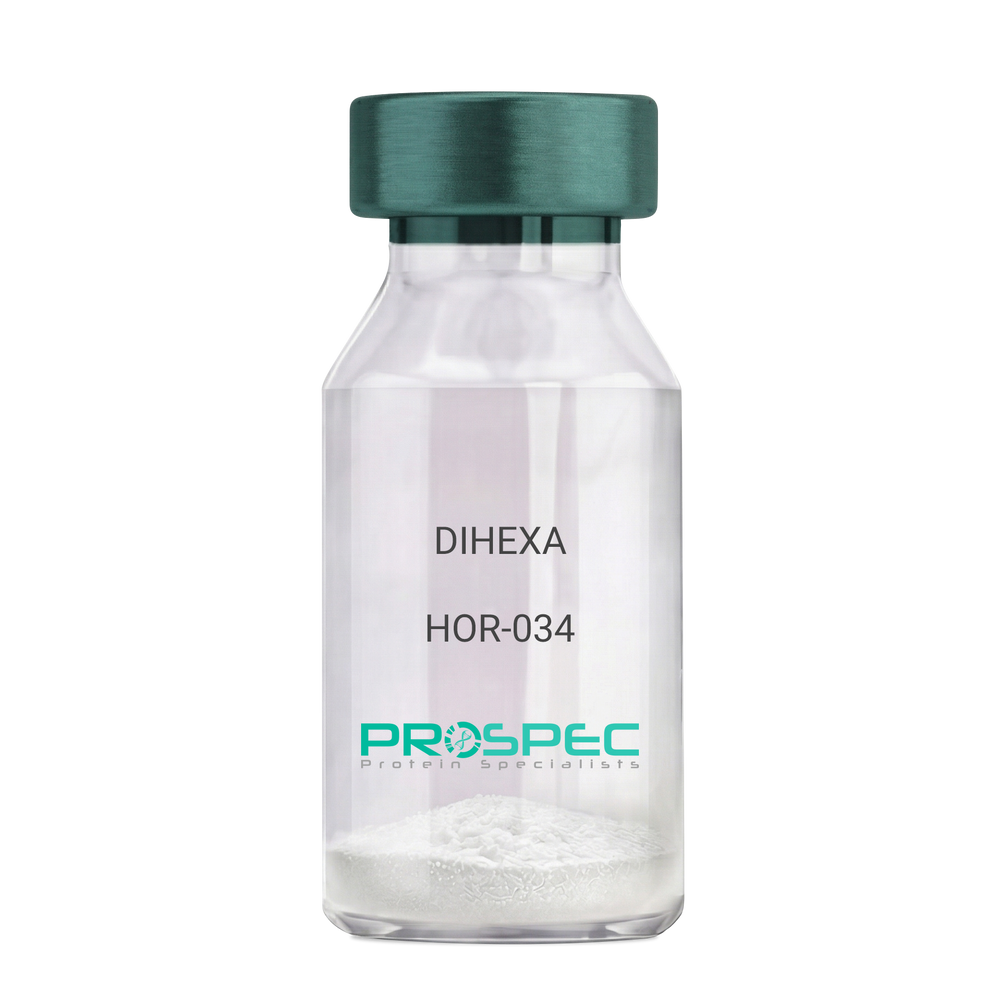
DIHEXADescription:
DIHEXA
Product # :
HOR-034Price :
Quantity :
Shipping Method :
Shipped at Room temp
More Info
- description
- formulation
- purity
- More Info
Description
DIHEXA Synthetic is a single, non-glycosylated polypeptide chain containing 3 amino acids, having a molecular mass of 504.28 Dalton and a Molecular formula of C27H44N4O5.
Formulation
The protein was lyophilized with no additives.
Purity
Greater than 97.0% as determined by analysis by RP-HPLC.
More Info
-
Physical Appearance
Sterile Filtered White lyophilized (freeze-dried) powder.
-
Stability
Lyophilized DIHEXA although stable at room temperature for 3 weeks, should be stored desiccated below -18°C. Upon reconstitution DIHEXA should be stored at 4°C between 2-7 days and for future use below -18°C. For long term storage it is recommended to add a carrier protein (0.1% HSA or BSA). Please prevent freeze-thaw cycles.
-
Solubility
It is recommended to reconstitute the lyophilized DIHEXA in sterile 18MΩ-cm H2O not less than 100 µg/ml, which can then be further diluted to other aqueous solutions.
-
Amino Acid Sequence
Hexanoyl-Tyr-Ile-Ahx-NH2.
-
Background
Dihexa, also known as N-hexanoic-Tyr-Ile-(6) aminohexanoic amide, is a potent and orally active small peptide that has been the focus of significant research due to its potential neurogenic and neuroprotective effects. This compound, derived from angiotensin IV, has been shown to possess a wide range of biological activities, including enhancing cognitive function, promoting neurogenesis, and potentially mitigating the effects of neurodegenerative diseases.
Dihexa's primary mechanism of action involves its interaction with hepatocyte growth factor (HGF) and its receptor, c-Met. By mimicking the effects of HGF, Dihexa can stimulate the c-Met receptor, leading to a cascade of events that promote neurogenesis and synaptic plasticity. Studies by Benoist et al. (2014) have demonstrated that Dihexa can enhance cognitive function in rats, suggesting potential applications in cognitive enhancement and the treatment of cognitive disorders.
In addition to its neurogenic effects, Dihexa has been shown to possess neuroprotective properties. Research by Kawas et al. (2017) found that Dihexa could protect neurons from apoptosis, suggesting potential applications in the treatment of neurodegenerative diseases such as Alzheimer's and Parkinson's disease.
Given its neurogenic and neuroprotective effects, Dihexa has been proposed as a potential therapeutic agent for a variety of conditions, including cognitive disorders, neurodegenerative diseases, and stroke. For instance, a study by Harding et al. (2018) found that Dihexa could improve outcomes in animal models of stroke, indicating its potential as a therapeutic agent in stroke recovery.
While research on Dihexa is promising, it is important to note that most studies have been conducted in animals or in vitro. More research is needed to fully understand the potential effects and applications of Dihexa in humans. However, the existing body of research suggests that Dihexa could be a promising tool in the treatment of cognitive disorders and neurodegenerative diseases.
ProSpec's products are furnished for LABORATORY RESEARCH USE ONLY. The product may not be used as drugs, agricultural or pesticidal products, food additives or household chemicals.
- View Data Sheet
Name :
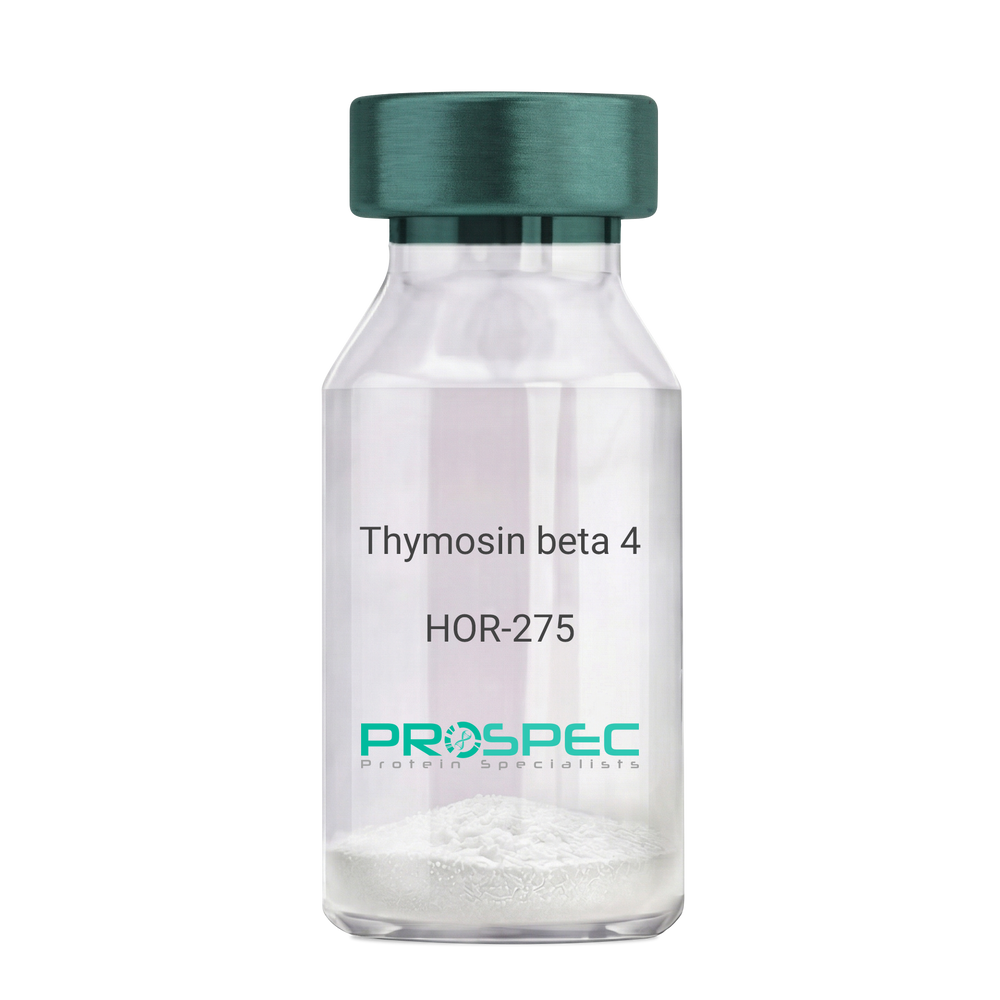
Thymosin beta 4Description:
Thymosin β4
Thymosin beta-4. TB500, TB-500
Product # :
HOR-275Price :
Quantity :
Shipping Method :
Shipped at Room temp
More Info
- description
- formulation
- purity
- More Info
Description
Thymosin b4 is a 43 amino acid peptide which is regarded as the main intracellular G-actin sequestering peptide. It has a molecular weight of 4963.55 Da, and its molecular formula is: C212H350N56O78S1. Extracellular Thymosin b4 may contribute to physiological processes such as angiogenesis, wound healing, and regulation of inflammation.
Formulation
The protein (1mg/ml) was lyophilized with no additives.
Purity
Greater than 98.0% as determined by RP-HPLC.
More Info
-
Introduction
Thymosin is a hormone secreted from the thymus. Its primary function is to stimulate the production of T cells, which are an important part of the immune system. Thymosin also assists in the development of B cells to plasma cells to produce antibodies. The predominant form of thymosin, thymosin b4, is a member of a highly conserved family of actin monomer-sequestering proteins. b-thymosins are the primary regulators of unpolymerized actin, and are essential for maintaining the small cytoplasmic pool of free G-actin monomers required for rapid filament elongation and allowing for the flux of monomers between the thymosin-bound pool and F-actin.
-
Synonyms
Thymosin beta-4. TB500, TB-500
-
Physical Appearance
Sterile Filtered White lyophilized (freeze-dried) powder.
-
Stability
Lyophilized Thymosin b4 although stable at room temperature for 3 weeks, should be stored desiccated below -18°C. Upon reconstitution T beta 4 should be stored at 4°C between 2-7 days and for future use below -18°C.For long term storage it is recommended to add a carrier protein (0.1% HSA or BSA).Please prevent freeze-thaw cycles.
-
Solubility
It is recommended to reconstitute the lyophilized Thymosin beta-4 in sterile 18MΩ-cm H2O not less than 100 µg/ml, which can then be further diluted to other aqueous solutions.
-
Amino Acid Sequence
Thymosin b4 has an a.a. sequence of Ac-Ser-Asp-Lys-Pro-Asp-Met-Ala-Glu-Ile-Glu-Lys-Phe-Asp-Lys-Ser-Lys-Leu-Lys-Lys-Thr-Glu-Thr-Gln-Glu-Lys-Asn-Pro-Leu-Pro-Ser-Lys-Glu-Thr-Ile-Glu-Gln-Glu-Lys-Gln-Ala-Gly-Glu-Ser-OH.
ProSpec's products are furnished for LABORATORY RESEARCH USE ONLY. The product may not be used as drugs, agricultural or pesticidal products, food additives or household chemicals.
- View Data Sheet
Name :
Y.Enterocolitica (O:9) YopMDescription:
Yersinia Enterocolitica (O:9) YopM Recombinant
Product # :
PRO-2273Price :
Quantity :
Shipping Method :
Shipped with Ice Packs
More Info
- description
- source
- formulation
- purity
- More Info
Description
Recombinant Yersinia Enterocolitica (O:9) YopM produced in E.coli is a non-glycosylated, polypeptide chain having a calculated molecular mass of 42,703 Dalton. Y.Enterocolitica (O:9) YopM is expressed with a 10xHis tag at N-terminus and purified by proprietary chromatographic techniques.
Source
Escherichia Coli.
Formulation
Y.Enterocolitica (O:9) YopM is supplied in 20mM HEPES buffer pH-7.6, 250mM NaCl and 20% glycerol.
Purity
Greater than 80.0% as determined by SDS-PAGE.
More Info
-
Introduction
Yersinia enterocolitica is a Gram-negative bacillus-shaped bacterium, which is a member of the Enterobacteriaceae family. Y.Enterocolitica is motile at temperatures between 22-29°C, however becomes non-motile at normal human body temperature. Y. Enterocolitica infection causes the yersiniosis disease, which is an animal-borne disease occurring in humans, as well as in a various groups of animals such as cattle, deer, pigs, and birds. Yersinia enterocolitica is a heterogeneous group of strains, which are conventionally classified by bio-typing into six bio-groups on the basis of phenotypic characteristics, and by serotyping into more than 57 “O” serogroups, on the basis of their O (lipopolysaccharide or LPS) surface antigen. Five of the six biogroups (1B and 2–5) are considered as pathogens. Nevertheless, only a few of these serogroups have been linked with disease in either humans or animals. Strains which belong to serogroups O:3 (biogroup 4), O:5,27 (biogroups 2 and 3), O:8 (biogroup 1B), and O:9 (biogroup 2) are most frequently isolated worldwide from human samples. Still, the main Y. enterocolitica serogroup in many European countries is serogroup O:3 followed by O:9, whereas the serogroup O:8 is mostly detected in the United States.
-
Physical Appearance
Sterile Filtered clear solution.
-
Stability
Store at 4°C if entire vial will be used within 2-4 weeks. Store, frozen at -20°C for longer periods of time. Avoid multiple freeze-thaw cycles.
-
Immunological Functions
1. Binds IgG- and IgM- and IgA-type human antibodies.2. Immunodot test with positive/negative sera panels.
ProSpec's products are furnished for LABORATORY RESEARCH USE ONLY. The product may not be used as drugs, agricultural or pesticidal products, food additives or household chemicals.
- View Data Sheet
Name :
DDAVPDescription:
Desmopressin
Product # :
HOR-270Price :
Quantity :
Shipping Method :
Shipped at Room temp
More Info
- description
- formulation
- purity
- More Info
Description
Desmopressin also called ADH (Anti-Diuretic Hormone) has a molecular formula of C46H64N14O12S2 , Mpr-Tyr-Phe-Gln-Asn-Cys-Pro-D-Arg-Gly-NH2 having a Mw of 1069.23 Dalton.
Formulation
The Desmopressin peptide was lyophilized with no additives.
Purity
Greater than 98.0% as determined by:
(a) Analysis by RP-HPLC.
(b) Analysis by SDS-PAGE.More Info
-
Introduction
Desmopressin is the first vasopressin analog with a very high and very specific antidiuretic effect, has been widely used for different therapeutic purposes and is believed to be partly responsible for the formation of memories learning and memory processes. Desmopressin increases urine concentration and decreases urine production. Desmopressin is used to prevent and control excessive thirst, urination, and dehydration.
-
Physical Appearance
Sterile Filtered White lyophilized (freeze-dried) powder.
-
Stability
Lyophilized Desmopressin although stable at room temperature for 3 weeks, should be stored desiccated below -18°C. Upon reconstitution DDAVP should be stored at 4°C between 2-7 days and for future use below -18°C. For long term storage it is recommended to add a carrier protein (0.1% HSA or BSA).Please prevent freeze-thaw cycles.
-
Solubility
It is recommended to reconstitute the lyophilized DDAVP in sterile 18MΩ-cm H2O not less than 100 µg/ml, which can then be further diluted to other aqueous solutions.
ProSpec's products are furnished for LABORATORY RESEARCH USE ONLY. The product may not be used as drugs, agricultural or pesticidal products, food additives or household chemicals.
- View Data Sheet
Name :
Adiponectin MouseDescription:
Adiponectin Mouse Recombinant
Acrp30, AdipoQ, GBP-28, APM-1, ACDC.
Product # :
CYT-1168Price :
Quantity :
Shipping Method :
Shipped at Room temp
More Info
- description
- source
- formulation
- purity
- biological activity
- More Info
Description
Acrp30 Mouse Recombinant is a single, glycosylated polypeptide chain containing 230 amino acids (18-247a.a) and having a molecular mass of 24.9kDa (calculated).
Source
HEK293 cells.
Formulation
Acrp30 filtered (0.4 µm) and lyophilized from 0.5mg/ml in 20mM Tris 50mM NaCl and 1mM CaCl2, pH 7.5.
Purity
Greater than 90.0% as determined by SDS-PAGE.
Biological Activity
Measured by its ability to inhibit proliferation of mouse 3T3 fibroblasts stimulated by PDGF. The ED50 for the effect is typically 5-15 μg/mL.
More Info
-
Introduction
Adiponectin, also known as Acrp30, AdipoQ and GBP-28, is a 244 amino acid protein, the product of the apM1 gene, which is physiologically active and specifically and highly expressed in adipose cells (Adipokine). Adiponectin is a part of the soluble defense collagen super family; it has a collagen-like domain structurally homologous with collagen VIII and X and complement factor C1q-like globular domain. APM-1 forms homotrimers, which are the building blocks for higher order complexes found circulating in serum.
-
Synonyms
Acrp30, AdipoQ, GBP-28, APM-1, ACDC.
-
Physical Appearance
Filtered White lyophilized (freeze-dried) powder.
-
Stability
Store lyophilized protein at -20°C. Aliquot the product after reconstitution to avoid repeated freezing/thawing cycles. Reconstituted protein can be stored at 4°C for a limited period of time; it does not show any change after two weeks at 4°C.
-
Solubility
It is recommended to add deionized water to prepare a working stock solution of approximately 0.5mg/ml and let the lyophilized pellet dissolve completely.
-
Amino Acid Sequence
EDDVTTTEEL APALVPPPKG TCAGWMAGIP GHPGHNGTPG RDGRDGTPGE KGEKGDAGLL GPKGETGDVG MTGAEGPRGF PGTPGRKGEP GEAAYVYRSA FSVGLETRVT VPNVPIRFTK IFYNQQNHYD GSTGKFYCNI PGLYYFSYHI TVYMKDVKVS LFKKDKAVLF TYDQYQEKNV DQASGSVLLH LEVGDQVWLQ VYGDGDHNGL YADNVNDSTF TGFLLYHDTN.
-
Background
What is the molecular weight/Mw of ADIPONECTIN Protein?
ADIPONECTIN Protein has a total Mw of 24.9kDa.
What is the source or expression system of ADIPONECTIN Protein?
HEK293 cells.
What is the Purity of ADIPONECTIN Protein?
ADIPONECTIN Protein is >90% pure as determined by SDS-PAGE.
What is the Biological Activity of ADIPONECTIN Protein?
The biological activity Measured by its ability to inhibit proliferation of mouse 3T3 fibroblasts stimulated by PDGF. The ED50 for the effect is typically 5-15 μg/mL.
What is the amino acid sequence of ADIPONECTIN Protein?
EDDVTTTEEL APALVPPPKG TCAGWMAGIP GHPGHNGTPG RDGRDGTPGE KGEKGDAGLL GPKGETGDVG MTGAEGPRGF PGTPGRKGEP GEAAYVYRSA FSVGLETRVT VPNVPIRFTK IFYNQQNHYD GSTGKFYCNI PGLYYFSYHI TVYMKDVKVS LFKKDKAVLF TYDQYQEKNV DQASGSVLLH LEVGDQVWLQ VYGDGDHNGL YADNVNDSTF TGFLLYHDTN.
What applications can ADIPONECTIN Protein be used in?
ADIPONECTIN Protein can probably be used in western blot, ELISA and Lateral Flow.
What is the endotoxin level for ADIPONECTIN Protein?
The endotoxin level is minimal, ADIPONECTIN Protein was purified using conventional chromatography techniques.
ProSpec's products are furnished for LABORATORY RESEARCH USE ONLY. The product may not be used as drugs, agricultural or pesticidal products, food additives or household chemicals.
- View Data Sheet
Name :
Y.Enterocolitica (O:9) YopEDescription:
Yersinia Enterocolitica (O:9) YopE Recombinant
Outer membrane virulence protein YopE, yopE, yop25.
Product # :
PRO-2576Price :
Quantity :
Shipping Method :
Shipped with Ice Packs
More Info
- description
- source
- formulation
- purity
- More Info
Description
Recombinant Yersinia Enterocolitica (O:9) YopE in E.coli is a non-glycosylated, polypeptide chain having a calculated molecular mass of 24kDa. Y.Enterocolitica (O:9) YopE is expressed with a -10x His tag at N-terminus and purified by proprietary chromatographic techniques.
Source
Escherichia Coli.
Formulation
Y.Enterocolitica (O:9) YopE is supplied in 20mM HEPES buffer pH-7.6, 250mM NaCl and 20% glycerol.
Purity
Greater than 80.0% as determined by SDS-PAGE.
More Info
-
Introduction
A main factor of pathogenic Yersinia enterocolitica strains is a plasmid-encoded type 3 secretion system, through which Yersinia outer proteins (Yops) are injected into the host cell. Yop E is a GTPase activation protein which controls pore formation by activating small Rho GTPase, causing inhibition of actin polymerization.
-
Synonyms
Outer membrane virulence protein YopE, yopE, yop25.
-
Physical Appearance
Sterile Filtered clear solution.
-
Stability
Store at 4°C if entire vial will be used within 2-4 weeks. Store, frozen at -20°C for longer periods of time. Avoid multiple freeze-thaw cycles.
-
Immunological Activity
Binds IgG- and IgM-type human antibodies.
ProSpec's products are furnished for LABORATORY RESEARCH USE ONLY. The product may not be used as drugs, agricultural or pesticidal products, food additives or household chemicals.
- View Data Sheet
Name :
CST6 Human, ActiveDescription:
Cystatin E/M, BioActive Human Recombinant
Cystatin E/M, cystatin 6, Cystatin M, Cystatin-E, Cysteine proteinase inhibitor.
Product # :
PRO-2633Price :
Quantity :
Shipping Method :
Shipped with Ice Packs
More Info
- description
- source
- formulation
- purity
- biological activity
- More Info
Description
CST6 Human Recombinant produced in E.Coli is a single, non-glycosylated polypeptide chain containing 142 amino acids (29-149 a.a.) and having a molecular mass of 15.9kDa.CST6 is fused to a 21 amino acid His tag at N-Terminus and purified by proprietary chromatographic techniques.
Source
E.coli.
Formulation
The CST6 solution (0.5mg/1ml) contains 10% glycerol, 20mM Tris-HCl buffer (pH 8.0), 0.1M NaCl and 1mM DTT.
Purity
Greater than 90.0% as determined by SDS-PAGE.
Biological Activity
The IC50 value is < 10nM. The inhibitory function of Cystatin 6 on protease activity of papain was measured by a fluorometric assay using Z-FR-AMC at pH 7.5 at 25˚C.
More Info
-
Introduction
Cystatin E/M or CST6 is part of the cystatin type 2 family. Part of the cystatin type 2 family members can act as cysteine protease inhibitors, whereas cystatin E/M regulates cathepsin B inhibitors and not cathepsin C. cystatin E/M is a protein the when secreted, has an effect on osteogenesis and bone resorption, insulin regulation, response to systemic inflammation & hepatocyte growth factor receptors.
-
Synonyms
Cystatin E/M, cystatin 6, Cystatin M, Cystatin-E, Cysteine proteinase inhibitor.
-
Physical Appearance
Sterile Filtered colorless solution.
-
Stability
Store at 4°C if entire vial will be used within 2-4 weeks. Store, frozen at -20°C for longer periods of time. For long term storage it is recommended to add a carrier protein (0.1% HSA or BSA).Avoid multiple freeze-thaw cycles.
-
Amino Acid Sequence
MGSSHHHHHH SSGLVPRGSH MRPQERMVGE LRDLSPDDPQ VQKAAQAAVA SYNMGSNSIY YFRDTHIIKA QSQLVAGIKY FLTMEMGSTD CRKTRVTGDH VDLTTCPLAA GAQQEKLRCD FEVLVVPWQN SSQLLKHNCV QM
ProSpec's products are furnished for LABORATORY RESEARCH USE ONLY. The product may not be used as drugs, agricultural or pesticidal products, food additives or household chemicals.
- View Data Sheet
Name :
Prolactin RabbitDescription:
Prolactin Rabbit Recombinant
Mammotropin, Luteotropic hormone, Luteotropin, PRL.
Product # :
CYT-513Price :
Quantity :
Shipping Method :
Shipped at Room temp
More Info
- description
- source
- formulation
- purity
- biological activity
- More Info
Description
Prolactin Rabbit Recombinant produced in E.Coli is a single, non-glycosylated polypeptide chain containing 200 amino acids and having a molecular mass of 23007 Dalton. The Porlactin is purified by proprietary chromatographic techniques.
Source
Escherichia Coli.
Formulation
The protein was lyophilized from a concentrated (1mg/ml) solution with 0.0045mM NaHCO3.
Purity
Greater than 98.0% as determined by:
(a) Analysis by SEC-HPLC.
(b) Analysis by SDS-PAGE.Biological Activity
The ED50 as determined by the dose-dependant stimulation of the proliferation of rat lymphoma, Nb2-11 was found to be < 0.065ng/ml.More Info
-
Introduction
Prolactin is a neuroendocrine hormone synthesized primarily by the pituitary gland but also a variety of other cell types including the placenta, brain and uterus. Its primary function is to promote and maintain lactation but has also been shown to have a role in breast cancer development, regulation of reproductive function and immunoregulation.
-
Synonyms
Mammotropin, Luteotropic hormone, Luteotropin, PRL.
-
Physical Appearance
Sterile Filtered White lyophilized (freeze-dried) powder.
-
Stability
Lyophilized Prolactin although stable at room temperature for 3 weeks, should be stored desiccated below -18°C. Upon reconstitution Prl should be stored at 4°C between 2-7 days and for future use below -18°C.For long term storage it is recommended to add a carrier protein (0.1% HSA or BSA).Please prevent freeze-thaw cycles.
-
Solubility
It is recommended to reconstitute the lyophilized Prolactin in sterile 18MΩ-cm H2O not less than 100µg/ml, which can then be further diluted to other aqueous solutions.
-
Amino Acid Sequence
The sequence of the first five N-terminal amino acids was determined and was found to be Ala-Leu-Pro-Ile-Cys.
-
Protein content
Protein quantitation was carried out by two independent methods1. UV spectroscopy at 280 nm using the absorbency value of 0.87 as the extinction coefficient for a 0.1% (1mg/ml) solution. This value is calculated by the PC GENE computer analysis program of protein sequences (IntelliGenetics). 2. Analysis by RP-HPLC, using a calibrated solution of Prolactinl as a Reference Standard.
ProSpec's products are furnished for LABORATORY RESEARCH USE ONLY. The product may not be used as drugs, agricultural or pesticidal products, food additives or household chemicals.
- View Data Sheet
Name :
SNCA A53T HumanDescription:
Alpha Synuclein A53T Human Recombinant
Alpha-synuclein, Non-A beta component of AD amyloid, Non-A4 component of amyloid precursor, NACP, PD1, PARK1, PARK4, MGC110988, a-Synuclein, SNCA.
Product # :
PRO-159Price :
Quantity :
Shipping Method :
Shipped with Ice Packs
More Info
- description
- source
- formulation
- purity
- More Info
Description
A-Synuclein A53T Human Recombinant which is a Parkinson’s disease-related point mutant, produced in E.Coli is a single, non-glycosylated polypeptide chain of 140 amino acids having a molecular mass of 14.4kDa (molecular size on SDS-PAGE will appear higher). The Recombinant Human a-Synuclein A53T is purified by proprietary chromatographic techniques.
Source
Escherichia Coli.
Formulation
The protein (1mg/ml) contains 20mM Tris-HCl buffer (pH 7.5) and 0.1M NaCl.
Purity
Greater than 95.0% as determined by SDS-PAGE.
More Info
-
Introduction
a-Synuclein (amino acids 1-140), an acidic neuronal protein of 140 amino acids, is extremely heat-resistant and is natively unfolded with an extended structure primarily composed of random coils. a-synuclein has been suggested to be implicated in the pathogenesis of Parkinson’s disease and related neurodegenerative disorders, and more recently, to be an important regulatory component of vesicular transport in neuronal cells. Moreover, recent studies have shown that a-synuclein has chaperone activity and that this activity is lost upon removing its C-terminal acidic tail (amino acids 96-140).
-
Synonyms
Alpha-synuclein, Non-A beta component of AD amyloid, Non-A4 component of amyloid precursor, NACP, PD1, PARK1, PARK4, MGC110988, a-Synuclein, SNCA.
-
Physical Appearance
Sterile filtered colorless solution.
-
Stability
Store at 4°C if entire vial will be used within 2-4 weeks. Store, frozen at -20°C for longer periods of time. For long term storage it is recommended to add a carrier protein (0.1% HSA or BSA). Avoid multiple freeze-thaw cycles.
-
Amino Acid Sequence
MDVFMKGLSK AKEGVVAAAE KTKQGVAEAA GKTKEGVLYV GSKTKEGVVH GVTTVAEKTK EQVTNVGGAV VTGVTAVAQK TVEGAGSIAA ATGFVKKDQL GKNEEGAPQE GILEDMPVDP DNEAYEMPSE EGYQDYEPEA.
ProSpec's products are furnished for LABORATORY RESEARCH USE ONLY. The product may not be used as drugs, agricultural or pesticidal products, food additives or household chemicals.
- View Data Sheet
Name :
VTN HumanDescription:
Vitronectin Human Recombinant
Vitronectin precursor, V75, VN, VNT, Vitronectin, VTN, S-protein, Serum-spreading factor, Vitronectin V65 subunit, Vitronectin V10 subunit, Somatomedin-B.
Product # :
PRO-2008Price :
Quantity :
Shipping Method :
Shipped with Ice Packs
More Info
- description
- source
- formulation
- purity
- More Info
Description
VTN Human Recombinant produced in E.Coli is a single, non-glycosylated polypeptide chain containing 482 amino acids (20-478 a.a) and having a molecular mass of 54.7kDa. VTN is fused to a 23 amino acid His-tag at N-terminus & purified by proprietary chromatographic techniques.
Source
Escherichia Coli.
Formulation
VTN protein solution (0.5mg/ml) containing 20mM Tris-HCl buffer (pH 8.0), 10% glycerol and 0.4M Urea.
Purity
Greater than 90.0% as determined by SDS-PAGE.
More Info
-
Introduction
Vitronectin (VTN) which is a part of the pexin family is a cell adhesion and spreading factor found in serum and tissues. VTN interacts with glycosaminoglycans and proteoglycans. VTN inhibits the membrane-damaging effect of the terminal cytolytic complement pathway and binds to numerous serpin serine protease inhibitors. Scientists have been noticed an over expression of VTN, integrins and plasminogen in migrating cells during wound healing.
-
Synonyms
Vitronectin precursor, V75, VN, VNT, Vitronectin, VTN, S-protein, Serum-spreading factor, Vitronectin V65 subunit, Vitronectin V10 subunit, Somatomedin-B.
-
Physical Appearance
Sterile Filtered colorless solution.
-
Stability
Store at 4°C if entire vial will be used within 2-4 weeks. Store, frozen at -20°C for longer periods of time. For long term storage it is recommended to add a carrier protein (0.1% HSA or BSA).Avoid multiple freeze-thaw cycles.
-
Amino Acid Sequence
MGSSHHHHHH SSGLVPRGSH MGSDQESCKG RCTEGFNVDK KCQCDELCSY YQSCCTDYTA ECKPQVTRGD VFTMPEDEYT VYDDGEEKNN ATVHEQVGGP SLTSDLQAQS KGNPEQTPVL KPEEEAPAPE VGASKPEGID SRPETLHPGR PQPPAEEELC SGKPFDAFTD LKNGSLFAFR GQYCYELDEK AVRPGYPKLI RDVWGIEGPI DAAFTRINCQ GKTYLFKGSQ YWRFEDGVLD PDYPRNISDG FDGIPDNVDA ALALPAHSYS GRERVYFFKG KQYWEYQFQH QPSQEECEGS SLSAVFEHFA MMQRDSWEDI FELLFWGRTS AGTRQPQFIS RDWHGVPGQV DAAMAGRIYI SGMAPRPSLA KKQRFRHRNR KGYRSQRGHS RGRNQNSRRP SRATWLSLFS SEESNLGANN YDDYRMDWLV PATCEPIQSV FFFSGDKYYR VNLRTRRVDT VDPPYPRSIA QYWLGCPAPG HL.
ProSpec's products are furnished for LABORATORY RESEARCH USE ONLY. The product may not be used as drugs, agricultural or pesticidal products, food additives or household chemicals.
- View Data Sheet
Name :
Follistatin Human, HisDescription:
Follistatin Human Recombinant, His Tag
FST, FS, Activin-binding protein.
Product # :
CYT-029Price :
Quantity :
Shipping Method :
Shipped at Room temp
More Info
- description
- source
- formulation
- More Info
Description
FST His Protein is 36.0 kDa protein containing 325 amino acid residues of the FST His and the 10 aa N-Terminal His-tag.
Source
E. coli.
Formulation
FST His Tag was filtered (0.4µm) and lyophilized from 0.5mg/ml supplied in 20mM TRIS and 20mM NaCl, pH 7.5.
More Info
-
Introduction
Follistatin is a single-chain gonadal protein that specifically inhibits follicle-stimulating hormone release. The single FST gene encodes two isoforms, FST317 and FST344 containing 317 and 344 amino acids respectively, resulting from alternative splicing of the precursor mRNA. In a study in which 37 candidate genes were tested for linkage and association with polycystic ovary syndrome (PCOS) or hyperandrogenemia in 150 families, evidence was found for linkage between PCOS and follistatin. Follistatin binds directly to activin and functions as an activin antagonist. specific inhibitor of the biosynthesis and secretion of pituitary follicle stimulating hormone (fsh).
-
Synonyms
FST, FS, Activin-binding protein.
-
Stability
Store lyophilized FST His at -20°C. Aliquot the product after reconstitution to avoid repeated freezing/thawing cycles. Reconstituted FST His can be stored at 4°C for a limited period of time; it does not show any change after two weeks at 4°C.
-
Solubility
It is recommended to add deionized water to prepare a working stock solution of approximately 0.5mg/ml and let the lyophilized pellet dissolve completely. Product is not sterile! Please filter the product by an appropriate sterile filter before using it on cell culture.
-
Amino Acid Sequence
MKHHHHHHAS GNCWLRQAKN GRCQVLYKTE LSKEECCSTG RLSTSWTEED VNDNTLFKWM IFNGGAPNCI PCKETCENVD CGPGKKCRMN KKNKPRCVCA PDCSNITWKG PVCGLDGKTY RNECALLKAR CKEQPELEVQ YQGRCKKTCR DVFCPGSSTC VVDQTNNAYC VTCNRICPEP ASSEQYLCGN DGVTYSSACH LRKATCLLGR SIGLAYEGKC IKAKSCEDIQ CTGGKKCLWD FKVGRGRCSL CDELCPDSKS DEPVCASDNA TYASECAMKE AACSSGVLLE VKHSGSCNSI SEDTEEEEED EDQDYSFPIS SILEW.
-
Background
What is the molecular weight/Mw of FOLLISTATIN HUMAN, HIS Protein?
FOLLISTATIN HUMAN, HIS Protein has a total Mw of 36kDa.
What is the source or expression system of FOLLISTATIN HUMAN, HIS Protein?
Escherichia Coli.
What is the Biological Activity of FOLLISTATIN HUMAN, HIS Protein?
The biological functionality of FOLLISTATIN HUMAN, HIS Protein will be determined in the future.
What is the amino acid sequence of FOLLISTATIN HUMAN, HIS Protein?
MKHHHHHHAS GNCWLRQAKN GRCQVLYKTE LSKEECCSTG RLSTSWTEED VNDNTLFKWM IFNGGAPNCI PCKETCENVD CGPGKKCRMN KKNKPRCVCA PDCSNITWKG PVCGLDGKTY RNECALLKAR CKEQPELEVQ YQGRCKKTCR DVFCPGSSTC VVDQTNNAYC VTCNRICPEP ASSEQYLCGN DGVTYSSACH LRKATCLLGR SIGLAYEGKC IKAKSCEDIQ CTGGKKCLWD FKVGRGRCSL CDELCPDSKS DEPVCASDNA TYASECAMKE AACSSGVLLE VKHSGSCNSI SEDTEEEEED EDQDYSFPIS SILEW.
What applications can FOLLISTATIN HUMAN, HIS Protein be used in?
FOLLISTATIN HUMAN, HIS Protein can probably be used in western blot, ELISA and Lateral Flow.
What is the endotoxin level for FOLLISTATIN HUMAN, HIS Protein?
The endotoxin level is minimal, FOLLISTATIN HUMAN, HIS Protein was purified using conventional chromatography techniques.
ProSpec's products are furnished for LABORATORY RESEARCH USE ONLY. The product may not be used as drugs, agricultural or pesticidal products, food additives or household chemicals.
- View Data Sheet
Name :
SNCA NACP112 HumanDescription:
Alpha Synuclein NACP112 Human Recombinant
Alpha-synuclein, Non-A beta component of AD amyloid, Non-A4 component of amyloid precursor, NACP, PD1, PARK1, PARK4, MGC110988, a-Synuclein, SNCA.
Product # :
PRO-162Price :
Quantity :
Shipping Method :
Shipped with Ice Packs
More Info
- description
- source
- formulation
- purity
- More Info
Description
A-Synuclein NACP112 Human Recombinant which is an alternatively spliced (103-129) form of a-Synuclein, produced in E.Coli is a single, non-glycosylated polypeptide chain of 112 amino acids having a molecular mass of 11.3kDa. The Recombinant Human a-Synuclein NACP112 is purified by proprietary chromatographic techniques.
Source
Escherichia Coli.
Formulation
The SNCA NACP112 protein solution (1mg/ml) contains 20mM Tris-HCl buffer pH 7.5 and 100mM NaCl.
Purity
Greater than 95.0% as determined by SDS-PAGE.
More Info
-
Introduction
a-Synuclein (amino acids 1-140), an acidic neuronal protein of 140 amino acids, is extremely heat-resistant and is natively unfolded with an extended structure primarily composed of random coils. a-synuclein has been suggested to be implicated in the pathogenesis of Parkinson’s disease and related neurodegenerative disorders, and more recently, to be an important regulatory component of vesicular transport in neuronal cells. Moreover, recent studies have shown that a-synuclein has chaperone activity and that this activity is lost upon removing its C-terminal acidic tail (amino acids 96-140).
-
Synonyms
Alpha-synuclein, Non-A beta component of AD amyloid, Non-A4 component of amyloid precursor, NACP, PD1, PARK1, PARK4, MGC110988, a-Synuclein, SNCA.
-
Physical Appearance
Sterile filtered colorless solution.
-
Stability
Store at 4°C if entire vial will be used within 2-4 weeks. Store, frozen at -20°C for longer periods of time. For long term storage it is recommended to add a carrier protein (0.1% HSA or BSA). Avoid multiple freeze-thaw cycles.
-
Amino Acid Sequence
MDVFMKGLSK AKEGVVAAAE KTKQGVAEAA GKTKEGVLYV GSKTKEGVVH GVATVAEKTK EQVTNVGGAV VTGVTAVAQK TVEGAGSIAA ATGFVKKDQL GKEGYQDYEP EA.
ProSpec's products are furnished for LABORATORY RESEARCH USE ONLY. The product may not be used as drugs, agricultural or pesticidal products, food additives or household chemicals.
- View Data Sheet
Name :
Adiponectin Mouse, HEKDescription:
Adiponectin Mouse Recombinant, HEK
Acrp30, AdipoQ, GBP-28, APM-1, ACDC.
Product # :
CYT-435Price :
Quantity :
Shipping Method :
Shipped at Room temp
More Info
- description
- source
- formulation
- purity
- biological activity
- More Info
Description
The Acrp30 Mouse Recombinant is fused with FLAG tag having a total Mw of 26kDa.
Source
HEK293 (Human embryonic kidney cell line).
Formulation
Filtered (0.4µm) and lyophilized from 0.5 mg/ml in 0.05M PBS buffer,0.075M NaCl, pH7.4.
Purity
Greater than 98.0% as determined by SDS-PAGE.
Biological Activity
Full-length adiponectin activates AMP-activated protein kinase in hepatocyte. Adiponectin also activates AMPK in HepG2 human hepatocytes at the concentration of 1.0 µg/ml. An in vitro gluconeogenesis assay which was performed in primary rat hepatocytes showed the murine adiponectin derived from mammalian cells can inhibit glucose production.
More Info
-
Introduction
Adiponectin is an important negative regulator in hematopoiesis and immune systems. It may be involved in ending inflammatory responses through its inhibitory functions. Inhibits endothelial nf-kappa-b signaling through a camp-dependent pathway. Inhibits tnf-alpha- induced expression of endothelial adhesion molecules. Involved in the control of fat metabolism and insulin sensitivity.
-
Synonyms
Acrp30, AdipoQ, GBP-28, APM-1, ACDC.
-
Stability
Store lyophilized APM-1 at -20°C. Aliquot the product after reconstitution to avoid repeated freezing/thawing cycles. Reconstituted protein can be stored at 4°C for a limited period of time; it does not show any change after two weeks at 4°C.
-
Solubility
It is recommended to reconstitute the lyophilized Acrp30 Mouse in sterile 18M-cm H2O at 0.5mg/ml, which can then be further diluted to other aqueous solutions.
-
Amino Acid Sequence
EDDVTTTEEL APALVPPPKG TCAGWMAGIP GHPGHNGTPG RDGRDGTPGE KGEKGDAGLL GPKGETGDVG MTGAEGPRGF PGTPGRKGEP GEAAYMYRSA FSVGLETRVT VPNVPIRFTK IFYNQQNHYD GSTGKFYCNI PGLYYFSYHI TVYMKDVKVS LFKKDKAVLF TYDQYQEKNV DQASGSVLLH LEVGDQVWLQ VYGDGDHNGL YADNVNDSTF TGFLLYHDTN DYKDDDDK.
-
Background
What is the molecular weight/Mw of ADIPONECTIN Protein?
ADIPONECTIN Protein has a total Mw of 26kDa.
What is the source or expression system of ADIPONECTIN Protein?
HEK293.
What is the Purity of ADIPONECTIN Protein?
ADIPONECTIN Protein is >98% pure as determined by SDS-PAGE.
What is the Biological Activity of ADIPONECTIN Protein?
Full-length adiponectin activates AMP-activated protein kinase in hepatocyte. Adiponectin also activates AMPK in HepG2 human hepatocytes at the concentration of 1.0 µg/ml. An in vitro gluconeogenesis assay which was performed in primary rat hepatocytes showed the murine adiponectin derived from mammalian cells can inhibit glucose production.
What is the amino acid sequence of ADIPONECTIN Protein?
EDDVTTTEEL APALVPPPKG TCAGWMAGIP GHPGHNGTPG RDGRDGTPGE KGEKGDAGLL GPKGETGDVG MTGAEGPRGF PGTPGRKGEP GEAAYMYRSA FSVGLETRVT VPNVPIRFTK IFYNQQNHYD GSTGKFYCNI PGLYYFSYHI TVYMKDVKVS LFKKDKAVLF TYDQYQEKNV DQASGSVLLH LEVGDQVWLQ VYGDGDHNGL YADNVNDSTF TGFLLYHDTN DYKDDDDK.
What applications can ADIPONECTIN Protein be used in?
ADIPONECTIN Protein can probably be used in western blot, ELISA and Lateral Flow.
What is the endotoxin level for ADIPONECTIN Protein?
The endotoxin level is minimal, ADIPONECTIN Protein was purified using conventional chromatography techniques.
ProSpec's products are furnished for LABORATORY RESEARCH USE ONLY. The product may not be used as drugs, agricultural or pesticidal products, food additives or household chemicals.