Skip to content

High-quality research proteins.

  • 1-800-805-6531

  • Mon - Sat 8.00-18.00, Sun - Closed

  • info@prospecbio.com

  • PO Box 6591 East Brunswick NJ 08816

  • Products
    • Cytokines
    • Growth factors
    • Chemokines
    • Cd antigens
    • Neurotrophins
    • Hormones
    • Enzymes
    • Viral antigens
    • Recombinant proteins
    • Natural proteins
    • Monoclonal antibodies
    • Polyclonal antibodies
    • Thermal Packaging
  • About
    • Company
    • Founder
    • Contribution
  • Customers
    • Eastern Asia
    • Eastern Europe
    • North America
    • South America
    • South East Asia
    • Southern Asia
    • Western Europe
  • Ordering
    • Ordering Method
    • Ordering - Credit Card
    • Ordering - PO
    • Shipping Fees
    • FAQs
  • Services
    • DNA Cloning
    • Protein Expression
    • Monoclonal Antibody
    • Fermentation
    • Technology License
  • Contact us
Log in

Country/region

  • USD $ | Albania
  • USD $ | Andorra
  • USD $ | Argentina
  • USD $ | Armenia
  • USD $ | Australia
  • USD $ | Austria
  • USD $ | Azerbaijan
  • USD $ | Belarus
  • USD $ | Belgium
  • USD $ | Bolivia
  • USD $ | Brazil
  • USD $ | Bulgaria
  • USD $ | Cambodia
  • USD $ | Canada
  • USD $ | Chile
  • USD $ | China
  • USD $ | Colombia
  • USD $ | Costa Rica
  • USD $ | Croatia
  • USD $ | Cyprus
  • USD $ | Czechia
  • USD $ | Denmark
  • USD $ | Estonia
  • USD $ | Finland
  • USD $ | France
  • USD $ | Georgia
  • USD $ | Germany
  • USD $ | Greece
  • USD $ | Hong Kong SAR
  • USD $ | Hungary
  • USD $ | Iceland
  • USD $ | India
  • USD $ | Ireland
  • USD $ | Israel
  • USD $ | Italy
  • USD $ | Japan
  • USD $ | Kazakhstan
  • USD $ | Latvia
  • USD $ | Liechtenstein
  • USD $ | Lithuania
  • USD $ | Madagascar
  • USD $ | Malta
  • USD $ | Mexico
  • USD $ | Moldova
  • USD $ | Monaco
  • USD $ | Netherlands
  • USD $ | New Zealand
  • USD $ | North Macedonia
  • USD $ | Norway
  • USD $ | Panama
  • USD $ | Paraguay
  • USD $ | Peru
  • USD $ | Philippines
  • USD $ | Poland
  • USD $ | Portugal
  • USD $ | Romania
  • USD $ | Singapore
  • USD $ | Slovakia
  • USD $ | Slovenia
  • USD $ | South Africa
  • USD $ | South Korea
  • USD $ | Spain
  • USD $ | Sri Lanka
  • USD $ | Sweden
  • USD $ | Switzerland
  • USD $ | Taiwan
  • USD $ | Thailand
  • USD $ | Türkiye
  • USD $ | Ukraine
  • USD $ | United Kingdom
  • USD $ | United States
  • USD $ | Uruguay
  • USD $ | Vatican City
  • USD $ | Venezuela
  • USD $ | Vietnam
  • Facebook
  • Instagram
logoProSpec - Recombinant Protein Manufacturer for academic and R&D industry
Become a distributor
Account Log in
Wishlist
Cart Cart(0)
  • Products
    +
    • Cytokines
    • Growth factors
    • Chemokines
    • Cd antigens
    • Neurotrophins
    • Hormones
    • Enzymes
    • Viral antigens
    • Recombinant proteins
    • Natural proteins
    • Monoclonal antibodies
    • Polyclonal antibodies
    • Thermal Packaging
  • About
    +
    • Company
    • Founder
    • Contribution
  • Customers
    +
    • Eastern Asia
    • Eastern Europe
    • North America
    • South America
    • South East Asia
    • Southern Asia
    • Western Europe
  • Ordering
    +
    • Ordering Method
    • Ordering - Credit Card
    • Ordering - PO
    • Shipping Fees
    • FAQs
  • Services
    +
    • DNA Cloning
    • Protein Expression
    • Monoclonal Antibody
    • Fermentation
    • Technology License
  • Contact us

Item added to your cart

View cart
View All
  • Cytokines
  • Growth factors
  • Chemokines
  • Cd antigens
  • Neurotrophins
  • Hormones
  • Enzymes
  • Viral antigens
  • Recombinant proteins
  • Natural proteins
  • Monoclonal antibodies
  • Polyclonal antibodies
  • Thermal Packaging
  • Tumor Necrosis Factor

    Tumor Necrosis Factor

    View All
  • 4-1BB

    4-1BB

    View All
  • Adiponectin

    Adiponectin

    View All
  • AIF1

    AIF1

    View All
  • Other Cytokines

    Other Cytokines

    View All
  • AITRL

    AITRL

    View All
  • Angiopoietin

    Angiopoietin

    View All
  • Apolipoprotein

    Apolipoprotein

    View All
  • B-Cell Activating Factor

    B-Cell Activating Factor

    View All
  • Beta Defensin

    Beta Defensin

    View All
  • Bone Morphogenetic Protein

    Bone Morphogenetic Protein

    View All
  • B type Natriuretic Peptide

    B type Natriuretic Peptide

    View All
  • BST

    BST

    View All
  • Betacellulin

    Betacellulin

    View All
  • Cardiotrophin

    Cardiotrophin

    View All
  • Activin

    Activin

    View All
  • Fibroblast Growth Factor

    Fibroblast Growth Factor

    View All
  • Other Growth Factors

    Other Growth Factors

    View All
  • CSF

    CSF

    View All
  • CTGF

    CTGF

    View All
  • IGFBP

    IGFBP

    View All
  • VEGF Protein

    VEGF Protein

    View All
  • EGF

    EGF

    View All
  • Epigen

    Epigen

    View All
  • Erythropoietin

    Erythropoietin

    View All
  • Insulin-Like Growth Factor

    Insulin-Like Growth Factor

    View All
  • Growth Hormone

    Growth Hormone

    View All
  • HDGF

    HDGF

    View All
  • Hepatocyte Growth Factor

    Hepatocyte Growth Factor

    View All
  • Insulin

    Insulin

    View All
  • BCA-1/ BLC (CXCL13)

    BCA-1/ BLC (CXCL13)

    View All
  • BRAK (CXCL14)

    BRAK (CXCL14)

    View All
  • C-10 (CCL6)

    C-10 (CCL6)

    View All
  • Other Chemokines

    Other Chemokines

    View All
  • MEC (CCL28)

    MEC (CCL28)

    View All
  • LD78-beta (CCL3L1)

    LD78-beta (CCL3L1)

    View All
  • CTACK (CCL27)

    CTACK (CCL27)

    View All
  • CXCL16

    CXCL16

    View All
  • CXCL17

    CXCL17

    View All
  • Platelet Factor-4 (CXCL4)

    Platelet Factor-4 (CXCL4)

    View All
  • ENA-78 (CXCL5)

    ENA-78 (CXCL5)

    View All
  • Eotaxin (CCL11,24,26)

    Eotaxin (CCL11,24,26)

    View All
  • Exodus-2 (CCL21)

    Exodus-2 (CCL21)

    View All
  • Fractalkine (CX3CL1)

    Fractalkine (CX3CL1)

    View All
  • CXCL6

    CXCL6

    View All
  • Other CD Antigens

    Other CD Antigens

    View All
  • CD14

    CD14

    View All
  • CD164

    CD164

    View All
  • CD1

    CD1

    View All
  • CD2

    CD2

    View All
  • CD200

    CD200

    View All
  • CD207

    CD207

    View All
  • CD226

    CD226

    View All
  • CD23

    CD23

    View All
  • CD244

    CD244

    View All
  • CD247

    CD247

    View All
  • CD27

    CD27

    View All
  • CD274

    CD274

    View All
  • CD300

    CD300

    View All
  • CD33

    CD33

    View All
  • Other Neurotrophins

    Other Neurotrophins

    View All
  • Beta-NGF

    Beta-NGF

    View All
  • BDNF

    BDNF

    View All
  • CDNF

    CDNF

    View All
  • CNTF

    CNTF

    View All
  • GDNF

    GDNF

    View All
  • Glia Maturation Factor

    Glia Maturation Factor

    View All
  • MANF

    MANF

    View All
  • Midkine

    Midkine

    View All
  • Neuroglobin

    Neuroglobin

    View All
  • Neurotrophic factors

    Neurotrophic factors

    View All
  • Neuregulin

    Neuregulin

    View All
  • Neuropilin

    Neuropilin

    View All
  • Pigment Epithelium-Derived Factor

    Pigment Epithelium-Derived Factor

    View All
  • Pleiotrophin

    Pleiotrophin

    View All
  • Peptide Hormones

    Peptide Hormones

    View All
  • Other Hormones

    Other Hormones

    View All
  • HCG

    HCG

    View All
  • Endothelin

    Endothelin

    View All
  • Exendin

    Exendin

    View All
  • FSH

    FSH

    View All
  • Glucagon

    Glucagon

    View All
  • GHRP

    GHRP

    View All
  • GLP

    GLP

    View All
  • Thyrostimulin

    Thyrostimulin

    View All
  • Inhibin A

    Inhibin A

    View All
  • LHRH

    LHRH

    View All
  • Melanotan

    Melanotan

    View All
  • Procalcitonin

    Procalcitonin

    View All
  • PTH

    PTH

    View All
  • Peroxiredoxin

    Peroxiredoxin

    View All
  • Peptidase

    Peptidase

    View All
  • Synthetase

    Synthetase

    View All
  • Transferase

    Transferase

    View All
  • Hydrolase

    Hydrolase

    View All
  • Dehydrogenase

    Dehydrogenase

    View All
  • ACE2

    ACE2

    View All
  • Esterase

    Esterase

    View All
  • Protein Kinases

    Protein Kinases

    View All
  • Other Enzymes

    Other Enzymes

    View All
  • Phosphatase

    Phosphatase

    View All
  • Deaminase

    Deaminase

    View All
  • Oxygenase

    Oxygenase

    View All
  • Adenylate Kinase

    Adenylate Kinase

    View All
  • Lyase

    Lyase

    View All
  • Chagas

    Chagas

    View All
  • SARS

    SARS

    View All
  • Influenza

    Influenza

    View All
  • ASFV

    ASFV

    View All
  • Astrovirus

    Astrovirus

    View All
  • Borrelia

    Borrelia

    View All
  • Helicobacter Pylori

    Helicobacter Pylori

    View All
  • Chikungunya

    Chikungunya

    View All
  • Chlamydia

    Chlamydia

    View All
  • Cytomegalo

    Cytomegalo

    View All
  • Dengue

    Dengue

    View All
  • EBV

    EBV

    View All
  • Ebola

    Ebola

    View All
  • Feline Leukemia Virus

    Feline Leukemia Virus

    View All
  • Hepatitis A

    Hepatitis A

    View All
  • Other

    Other

    View All
  • Actin

    Actin

    View All
  • ADAM

    ADAM

    View All
  • Complement Component

    Complement Component

    View All
  • Ag85

    Ag85

    View All
  • Eukaryotic Translation Initiation Factor

    Eukaryotic Translation Initiation Factor

    View All
  • Anterior Gradient Protein

    Anterior Gradient Protein

    View All
  • Heat Shock Protein

    Heat Shock Protein

    View All
  • Alpha-2-HS-Glycoprotein

    Alpha-2-HS-Glycoprotein

    View All
  • Hemoglobin

    Hemoglobin

    View All
  • Allergy

    Allergy

    View All
  • Anaplasma

    Anaplasma

    View All
  • Angiogenin

    Angiogenin

    View All
  • Ankyrin Repeat Domain

    Ankyrin Repeat Domain

    View All
  • Annexin

    Annexin

    View All
  • Other Natural Proteins

    Other Natural Proteins

    View All
  • Aprotinin

    Aprotinin

    View All
  • Transferrin

    Transferrin

    View All
  • Avidin

    Avidin

    View All
  • Anti Coagulation Factors

    Anti Coagulation Factors

    View All
  • Natural Albumin

    Natural Albumin

    View All
  • Natural Coagulation Factors

    Natural Coagulation Factors

    View All
  • Fibronectin

    Fibronectin

    View All
  • Thrombin

    Thrombin

    View All
  • Anti Human Enzyme

    Anti Human Enzyme

    View All
  • Other Monoclonal Antibodies

    Other Monoclonal Antibodies

    View All
  • Anti Human Cytokine

    Anti Human Cytokine

    View All
  • Anti Human Heat Shock Protein

    Anti Human Heat Shock Protein

    View All
  • Anti Mouse Lymphocyte

    Anti Mouse Lymphocyte

    View All
  • Anti Human Chemokine

    Anti Human Chemokine

    View All
  • Anti Human Lymphocyte

    Anti Human Lymphocyte

    View All
  • Anti Viral Monoclonal

    Anti Viral Monoclonal

    View All
  • Anti Mouse Cytokine

    Anti Mouse Cytokine

    View All
  • Anti-GST Monoclonal

    Anti-GST Monoclonal

    View All
  • Other Polyclonal Antibodies

    Other Polyclonal Antibodies

    View All
  • Anti Viral

    Anti Viral

    View All
  • Anti-GST Monoclonal

    Anti-GST Monoclonal

    View All
Back

Search results

1000 results found for “zinc finger”

Name

Description

Product #

Price

Quantity

Shipping Method

  • View Data Sheet

    Name :

    PIN1 Mouse

    Description:

    Peptidyl-Prolyl Cis/Trans Isomerase NIMA-Interacting 1 Mouse Recombinant

    Peptidyl-prolyl cis-trans isomerase NIMA-interacting 1 (EC:5.2.1.8), Peptidyl-prolyl cis-trans isomerase Pin1, PPIase Pin1, Pin1, PIN1.

    Product # :

    ENZ-1045

    Price :

    Quantity :

    Shipping Method :

    Ice Icon

    Shipped with Ice Packs

    Add To Cart

    More Info

    • description
    • source
    • formulation
    • purity
    • biological activity
    • More Info

    Description

    PIN1 Mouse Recombinant produced in E.Coli is a single, non-glycosylated polypeptide chain containing 188 amino acids (1-165 a.a) and having a molecular mass of 20.8kDa. PIN1 is fused to a 23 amino acid His-tag at N-terminus & purified by proprietary chromatographic techniques.

    Source

    Escherichia Coli.

    Formulation

    PIN1 protein solution (1mg/ml) containing Phosphate buffered saline (pH7.4) and 10% glycerol.

    Purity

    Greater than 95.0% as determined by SDS-PAGE.

    Biological Activity

    Specific activity is > 1,200 nmol/min/mg, and is defined as the amount of enzyme that cleaves 1nmole of suc-AAFP-PNA per minute at 37°C in Tris-HCl pH 8.0 using chymotrypsin.

    More Info

    • Introduction

      Pin 1 is a peptidyl-prolyl cis/trans isomerase (PPIase) which interacts with NIMA and essential for cell cycle regulation Pin1 is nuclear PPIase containing a WW protein interaction domain, and is structurally and functionally related to Ess1/Ptf1, an essential protein in budding yeast. PPIase activity is necessary for Ess1/Pin1 function in yeast. Pin1 is thus an essential PPIase that regulates mitosis presumably by interacting with NIMA and attenuating its mitosis-promoting activity. Substrates of Pin1 include the mitotic regulators (Cdc25 phosphatase and NIMA, PLK I, Wee, and Myt1 kinases), several transcription factors like b-Catenin, c-Jun, and the tumor suppressor protein p53, and some specific proteins like the RNA Pol II, the cytoskeleton protein tau, and the G1/S protein Cyclin D1.

    • Synonyms

      Peptidyl-prolyl cis-trans isomerase NIMA-interacting 1 (EC:5.2.1.8), Peptidyl-prolyl cis-trans isomerase Pin1, PPIase Pin1, Pin1, PIN1.

    • Physical Appearance

      Sterile Filtered clear solution.

    • Stability

      Store at 4°C if entire vial will be used within 2-4 weeks. Store, frozen at -20°C for longer periods of time. For long term storage it is recommended to add a carrier protein (0.1% HSA or BSA).Avoid multiple freeze-thaw cycles.

    • Amino Acid Sequence

      MGSSHHHHHH SSGLVPRGSH MGSMADEEKL PPGWEKRMSR SSGRVYYFNH ITNASQWERP SGGSTVGGSS KNGQGEPAKV RCSHLLVKHS QSRRPSSWRQ EKITRSKEEA LELINGYIQK IKSGEEDFES LASQFSDCSS AKARGDLGPF SRGQMQKPFE DASFALRTGE MSGPVFTDSG IHIILRTE.

    ProSpec's products are furnished for LABORATORY RESEARCH USE ONLY. The product may not be used as drugs, agricultural or pesticidal products, food additives or household chemicals.

    Pin1 Mouse
  • View Data Sheet

    Name :

    M CSF Mouse

    Description:

    Macrophage-Colony Stimulating Factor Mouse Recombinant

    CSF-1, Lanimostim, MCSF, M-CSF.

    Product # :

    CYT-439

    Price :

    Quantity :

    Shipping Method :

    Room Temp Icon

    Shipped at Room temp

    Add To Cart

    More Info

    • description
    • source
    • formulation
    • purity
    • biological activity
    • More Info

    Description

    Macrophage Colony Stimulating Factor Mouse Recombinant produced in E.coli is a disulfide linked homodimer, non-glycosylated, polypeptide chain containing 2 x 156 amino acids and having a total molecular mass of 36.4 KD.MCSF is purified by proprietary chromatographic techniques.

    Source

    Escherichia Coli.

    Formulation

    The protein was lyophilized from a sterile (0.2µm) filtered solution containing 10mM sodium phosphate, 50mM sodium chloride, pH 7.5.

    Purity

    Greater than 95.0% as determined by SDS-PAGE.

    Biological Activity

    The ED50, as calculated by the dose-dependant stimulation of the proliferation of murine M-NFS-60 indicator cells is 1.33ng/ml corresponding to a specific activity of 7.5x10⁵ units/mg.

    More Info

    • Introduction

      Granulocyte/Macrophage Colony-Stimulating Factors are cytokines that act in hematopoiesis by controlling the production, differentiation, and function of 2 related white cell populations of the blood, the granulocytes and the monocytes-macrophages. CSF-1 induces cells of the monocyte/macrophage lineage. It plays a role in immunological defenses, bone metabolism, lipoproteins clearance, fertility and pregnancy.

    • Synonyms

      CSF-1, Lanimostim, MCSF, M-CSF.

    • Physical Appearance

      Sterile Filtered White lyophilized (freeze-dried) powder.

    • Stability

      Lyophilized M-CSF although stable at room temperature for 3 weeks, should be stored desiccated below -18°C. Upon reconstitution MCSF should be stored at 4°C between 2-7 days and for future use below -18°C.Please prevent freeze-thaw cycles.

    • Solubility

      It is recommended to reconstitute the lyophilized M-CSF in sterile 18MΩ-cm H2O not less than 100µg/ml, which can then be further diluted to other aqueous solutions.

    • Amino Acid Sequence

      MKEVSEHCSH MIGNGHLKVL QQLIDSQMET SCQIAFEFVD QEQLDDPVCY LKKAFFLVQD IIDETMRFKD NTPNANATER LQELSNNLNS CFTKDYEEQN KACVRTFHET PLQLLEKIKN FFNETKNLLE KDWNIFTKNC NNSFAKCSSR DVVTKP.

    • Background

      Macrophage-Colony Stimulating Factor Mouse Recombinant: An In-Depth Analysis

      Abstract:

      Macrophage-Colony Stimulating Factor (M-CSF) is a crucial cytokine involved in the regulation of macrophage biology, including their differentiation, survival, and function. This research paper provides an in-depth analysis of M-CSF Mouse Recombinant, focusing on its structure, signaling pathways, and diverse functions in the context of human research. Additionally, the paper explores the therapeutic potential of M-CSF modulation in various diseases.

      Introduction:

      M-CSF plays a vital role in the development and maintenance of macrophages, key immune cells involved in innate immunity and tissue homeostasis. This paper aims to provide a comprehensive analysis of M-CSF Mouse Recombinant, highlighting its importance in human macrophage biology and its potential therapeutic applications.

      Structure and Function of M-CSF:

      M-CSF is a homodimeric protein that binds to its receptor, CSF-1R, leading to the activation of downstream signaling pathways. It regulates the proliferation, survival, and activation of macrophages, influencing immune responses and tissue remodeling processes.

      Signaling Pathways:

      Upon binding to CSF-1R, M-CSF triggers various intracellular signaling pathways, including the MAPK pathway, PI3K/Akt pathway, and JAK/STAT pathway. These pathways regulate gene expression and mediate cellular responses, impacting macrophage functions.

      Role in Macrophage Development and Function:

      M-CSF is essential for the differentiation and maturation of macrophages from hematopoietic progenitor cells. It promotes the survival, proliferation, and activation of macrophages, enhancing their phagocytic activity, cytokine production, and antigen presentation capabilities.

      Therapeutic Potential:

      Given its crucial role in macrophage biology, M-CSF modulation has emerged as a potential therapeutic strategy. M-CSF inhibitors and CSF-1R antagonists have shown promise in the treatment of inflammatory and autoimmune diseases, as well as certain cancers. Targeting M-CSF signaling can modulate immune responses and affect disease progression.

      Clinical Applications and Future Directions:

      The therapeutic potential of M-CSF modulation is being explored in various clinical settings. Clinical trials investigating M-CSF inhibitors as monotherapy or combination therapy are underway in diseases such as rheumatoid arthritis and cancer. Future research should focus on understanding the intricate mechanisms of M-CSF signaling, optimizing therapeutic strategies, and developing personalized treatment approaches.

    ProSpec's products are furnished for LABORATORY RESEARCH USE ONLY. The product may not be used as drugs, agricultural or pesticidal products, food additives or household chemicals.

    M Csf Mouse
  • View Data Sheet

    Name :

    IFNAR2 Human

    Description:

    Interferon Alpha And Beta Receptor Subunit 2 Human Recombinant

    Interferon alpha/beta receptor 2, IFNAR2, IFN-alpha binding protein, Interferon alpha binding protein, Type I interferon receptor 2, interferon alpha/beta receptor 2 isoform a, IFN-R-2, IFNABR, IFNARB, IFN-alpha-REC, IFN-R, IMD45.

    Product # :

    CYT-1167

    Price :

    Quantity :

    Shipping Method :

    Ice Icon

    Shipped with Ice Packs

    Add To Cart

    More Info

    • description
    • source
    • formulation
    • purity
    • biological activity
    • More Info
    • SDS-PAGE

    Description

    IFNAR2 Human Recombinant produced in Baculovirus is a single glycosylated polypeptide chain containing 456 amino acids (27-243 a.a.) and having a molecular mass of 51.7kDa. IFNAR2 is fused to an 239 amino acid hIgG-His tag at C-terminus and purified by proprietary chromatographic techniques.

    Source

    Sf9, Baculovirus cells.

    Formulation

    IFNAR2 protein (0.25mg/ml) contains 10% glycerol and Phosphate-Buffered Saline (pH 7.4).

    Purity

    Greater than 90.0% as determined by SDS-PAGE.

    Biological Activity

    The ED50 range ≤ 500 ng/ml and is measured by its binding ability in a functional ELISA with Human IFN-alpha 2 in the presence of Human IFN-alpha/beta R1.

    SDS-PAGE

    IFNAR2 Human - Product image 1

    More Info

    • Introduction

      Interferon Alpha and Beta Receptor Subunit 2 or IFNAR2 is a protein, part of the class II cytokine receptor family. When different innate immune signaling transduction are activated, there is a rapid induction of type I IFNs because it has an intronless gene source. IFNAR2 is the main ligand and binds to the receptor. Once bind, stabilization occurs and a signaling compelx recptor is formed. IFNAR2 also takes part in the activation process of STAT proteins.

    • Synonyms

      Interferon alpha/beta receptor 2, IFNAR2, IFN-alpha binding protein, Interferon alpha binding protein, Type I interferon receptor 2, interferon alpha/beta receptor 2 isoform a, IFN-R-2, IFNABR, IFNARB, IFN-alpha-REC, IFN-R, IMD45.

    • Physical Appearance

      Sterile Filtered colorless solution.

    • Stability

      Store at 4°C if entire vial will be used within 2-4 weeks. Store, frozen at -20°C for longer periods of time. For long term storage it is recommended to add a carrier protein (0.1% HSA or BSA).Avoid multiple freeze-thaw cycles.

    • Amino Acid Sequence

      ISYDSPDYTD ESCTFKISLR NFRSILSWEL KNHSIVPTHY TLLYTIMSKP EDLKVVKNCA NTTRSFCDLT DEWRSTHEAY VTVLEGFSGN TTLFSCSHNF WLAIDMSFEP PEFEIVGFTN HINVMVKFPS IVEEELQFDL SLVIEEQSEG IVKKHKPEIK GNMSGNFTYI IDKLIPNTNY CVSVYLEHSD EQAVIKSPLK CTLLPPGQES ESAESAKLEP KSCDKTHTCP PCPAPELLGG PSVFLFPPKP KDTLMISRTP EVTCVVVDVS HEDPEVKFNW YVDGVEVHNA KTKPREEQYN STYRVVSVLT VLHQDWLNGK EYKCKVSNKA LPAPIEKTIS KAKGQPREPQ VYTLPPSRDE LTKNQVSLTC LVKGFYPSDI AVEWESNGQP ENNYKTTPPV LDSDGSFFLY SKLTVDKSRW QQGNVFSCSV MHEALHNHYT QKSLSLSPGK HHHHHH.

    • Background

      What is the molecular weight/Mw of IFNAR2 HUMAN Protein?
      IFNAR2 HUMAN Protein has a total Mw of 51.7kDa.

      What is the source or expression system of IFNAR2 HUMAN Protein?
      Sf9, Baculovirus cells.

      What is the Purity of IFNAR2 HUMAN Protein?
      IFNAR2 HUMAN Protein is >90% pure as determined by SDS-PAGE.

      What is the Biological Activity of IFNAR2 HUMAN Protein?
      The ED50 range ≤ 500 ng/ml and is measured by its binding ability in a functional ELISA with Human IFN-alpha 2 in the presence of Human IFN-alpha/beta R1.

      What is the amino acid sequence of IFNAR2 HUMAN Protein?
      ISYDSPDYTD ESCTFKISLR NFRSILSWEL KNHSIVPTHY TLLYTIMSKP EDLKVVKNCA NTTRSFCDLT DEWRSTHEAY VTVLEGFSGN TTLFSCSHNF WLAIDMSFEP PEFEIVGFTN HINVMVKFPS IVEEELQFDL SLVIEEQSEG IVKKHKPEIK GNMSGNFTYI IDKLIPNTNY CVSVYLEHSD EQAVIKSPLK CTLLPPGQES ESAESAKLEP KSCDKTHTCP PCPAPELLGG PSVFLFPPKP KDTLMISRTP EVTCVVVDVS HEDPEVKFNW YVDGVEVHNA KTKPREEQYN STYRVVSVLT VLHQDWLNGK EYKCKVSNKA LPAPIEKTIS KAKGQPREPQ VYTLPPSRDE LTKNQVSLTC LVKGFYPSDI AVEWESNGQP ENNYKTTPPV LDSDGSFFLY SKLTVDKSRW QQGNVFSCSV MHEALHNHYT QKSLSLSPGK HHHHHH.
      What applications can IFNAR2 HUMAN Protein be used in?
      IFNAR2 HUMAN Protein can probably be used in western blot, ELISA and Lateral Flow.

      What is the endotoxin level for IFNAR2 HUMAN Protein?
      The endotoxin level is minimal, IFNAR2 HUMAN Protein was purified using conventional chromatography techniques.

    ProSpec's products are furnished for LABORATORY RESEARCH USE ONLY. The product may not be used as drugs, agricultural or pesticidal products, food additives or household chemicals.

    Ifnar2 Human
  • View Data Sheet

    Name :

    CHGA Human

    Description:

    Chromogranin-A Human Recombinant

    CGA, CHGA, Vasostatin-2, Pituitary secretory protein I, SP-I.

    Product # :

    PRO-692

    Price :

    Quantity :

    Shipping Method :

    Ice Icon

    Shipped with Ice Packs

    Add To Cart

    More Info

    • description
    • source
    • formulation
    • purity
    • More Info

    Description

    Recombinant Human CHGA produced in E.Coli is a single, non-glycosylated polypeptide chain containing 114 amino acids (19-131 a.a) and having a molecular mass of 12.8 kDa. Chromgranin-A is purified by proprietary chromatographic techniques.

    Source

    Escherichia Coli.

    Formulation

    The CHGA protein contains 20mM Tris-HCl buffer pH-8, and 10% glycerol.

    Purity

    Greater than 95.0% as determined by analysis by SDS-PAGE.

    More Info

    • Introduction

      Chromgranin-A is part of the neuroendocrine secretory protein family. CHGA is located in secretory vesicles of neurons and endocrine cells. Chromgranin-A is a precursor to three biologically active peptides; vasostatin, pancreastatin, and parastatin. These peptides act as autocrine or paracrine negative modulators of the neuroendocrine system. Other peptides, including chromostatin, beta-granin, WE-14 and GE-25, are also derived from the full-length protein. Chromgranin-A has numerous biological activities on some tissues and organs and exerts a large spectrum of homeostatic actions, including antifungal and antimicrobial effect, modulation of cell adhesion, and inhibition of parathyroid hormone secretion.

    • Synonyms

      CGA, CHGA, Vasostatin-2, Pituitary secretory protein I, SP-I.

    • Physical Appearance

      Sterile filtered colorless solution.

    • Stability

      Store at 4°C if entire vial will be used within 2-4 weeks. Store, frozen at -20°C for longer periods of time. For long term storage it is recommended to add a carrier protein (0.1% HSA or BSA). Avoid multiple freeze-thaw cycles.

    • Amino Acid Sequence

      MLPVNSPMNK GDTEVMKCIV EVISDTLSKP SPMPVSQECF ETLRGDERIL SILRHQNLLK ELQDLALQGA KERAHQQKKH SGFEDELSEV LENQSSQAEL KEAVEEPSSK DVME.

    ProSpec's products are furnished for LABORATORY RESEARCH USE ONLY. The product may not be used as drugs, agricultural or pesticidal products, food additives or household chemicals.

    Chromogranin A Human
  • View Data Sheet

    Name :

    CHGA Human, Sf9

    Description:

    Chromogranin A Human Recombinant, Sf9

    CHGA, CGA, Chromogranin-A, Vasostatin I, SP-I, Pituitary secretory protein I.

    Product # :

    PRO-2513

    Price :

    Quantity :

    Shipping Method :

    Ice Icon

    Shipped with Ice Packs

    Add To Cart

    More Info

    • description
    • source
    • formulation
    • purity
    • More Info

    Description

    CHGA produced in Sf9 Baculovirus cells is a single, glycosylated polypeptide chain (19-457 a.a.) and fused to a 6 aa His Tag at C-terminus containing a total of 448 amino acids and having a molecular mass of 50kDa.CHGA shows multiple bands between 50-70kDa on SDS-PAGE, reducing conditions and purified by proprietary chromatographic techniques.

    Source

    Sf9, Baculovirus cells.

    Formulation

    CHGA protein solution (0.25mg/ml) contains Phosphate Buffered Saline (pH 7.4), 20% glycerol & 0.1mM PMSF.

    Purity

    Greater than 85.0% as determined by SDS-PAGE.

    More Info

    • Introduction

      Chromogranin-A Isoform 1 Preproprotein or CHGA is part of the neuroendocrine secretory proteins of the chromogranin/secretogranin family. CHGA is a precursor of numerus enzymes such as pancreastatin, catestatin, vasostatin-1,vasostatin-2, and parastatin. The protein acts as a negative regulator the neuroendocrine activity of autocrine or nearby cells (paracrine). CHGA causes further production of secretory granules that contains insulin in pancreatic islet beta cells.

    • Synonyms

      CHGA, CGA, Chromogranin-A, Vasostatin I, SP-I, Pituitary secretory protein I.

    • Physical Appearance

      Sterile Filtered colorless solution.

    • Stability

      Store at 4°C if entire vial will be used within 2-4 weeks. Store, frozen at -20°C for longer periods of time. For long term storage it is recommended to add a carrier protein (0.1% HSA or BSA). Avoid multiple freeze-thaw cycles.

    • Amino Acid Sequence

      ADLLPVNSPM NKGDTEVMKC IVEVISDTLS KPSPMPVSQE CFETLRGDER ILSILRHQNL LKELQDLALQ GAKERAHQQK KHSGFEDELS EVLENQSSQA ELKEAVEEPS SKDVMEKRED SKEAEKSGEA TDGARPQALP EPMQESKAEG NNQAPGEEEE EEEEATNTHP PASLPSQKYP GPQAEGDSEG LSQGLVDREK GLSAEPGWQA KREEEEEEEE EAEAGEEAVP EEEGPTVVLN PHPSLGYKEI RKGESRSEAL AVDGAGKPGA EEAQDPEGKG EQEHSQQKEE EEEMAVVPQG LFRGGKSGEL EQEEERLSKE WEDSKRWSKM DQLAKELTAE KRLEGQEEEE DNRDSSMKLS FRARAYGFRG PGPQLRRGWR PSSREDSLEA GLPLQVRGYP EEKKEEEGSA NRRPEDQELE SLSAIEAELE KVAHQLQALR RGHHHHHH.

    ProSpec's products are furnished for LABORATORY RESEARCH USE ONLY. The product may not be used as drugs, agricultural or pesticidal products, food additives or household chemicals.

    Chromogranin A
  • View Data Sheet

    Name :

    TNFRSF14 Human, His

    Description:

    HVEM Human Recombinant, His Tag

    Tumor Necrosis Factor Receptor Superfamily Member 14, HVEM, TR2, Herpes Virus Entry Mediator A, Tumor Necrosis Factor Receptor-Like 2, Herpesvirus Entry Mediator, HVEA, ATAR, CD270, LIGHTR, CD40-Like Protein, Tumor Necrosis Factor Receptor-Like Gene2.

    Product # :

    CYT-800

    Price :

    Quantity :

    Shipping Method :

    Ice Icon

    Shipped with Ice Packs

    Add To Cart

    More Info

    • description
    • source
    • formulation
    • purity
    • More Info

    Description

    TNFRSF14 Human Recombinant produced in E. Coli is a single, glycosylated polypeptide chain containing 187 amino acids (39-202) and having a molecular mass of 19.7kDa.TNFRSF14 is fused to a 23 amino acid His-tag at N-terminus & purified by proprietary chromatographic techniques.

    Source

    E.coli.

    Formulation

    The TNFRSF14 solution (0.5mg/ml) containing 20mM Tris-HCl (pH 8.0), 0.1M NaCl and 10% glycerol.

    Purity

    Greater than 85% as determined by SDS-PAGE.

    More Info

    • Introduction

      TNFRSF14, a member of the TNF receptor superfamily, is a type I transmembrane protein. TNFRSF14 is expressed in peripheral blood T cells, B cells, monocytes and in various tissues enriched in lymphoid cells. TNFRSF14 operates as a co-stimulatory factor for the activation of lymphoid cells and as a deterrent to infection by herpesvirus. Additionally, TNFRSF14 encourages the proliferation of T cells, and triggers apoptosis of various tumor cells.

    • Synonyms

      Tumor Necrosis Factor Receptor Superfamily Member 14, HVEM, TR2, Herpes Virus Entry Mediator A, Tumor Necrosis Factor Receptor-Like 2, Herpesvirus Entry Mediator, HVEA, ATAR, CD270, LIGHTR, CD40-Like Protein, Tumor Necrosis Factor Receptor-Like Gene2.

    • Physical Appearance

      Sterile filtered colorless solution.

    • Stability

      Store at 4°C if entire vial will be used within 2-4 weeks. Store, frozen at -20°C for longer periods of time. For long term storage it is recommended to add a carrier protein (0.1% HSA or BSA).Avoid multiple freeze-thaw cycles.

    • Amino Acid Sequence

      MGSSHHHHHH SSGLVPRGSH MGSLPSCKED EYPVGSECCP KCSPGYRVKE ACGELTGTVC EPCPPGTYIA HLNGLSKCLQ CQMCDPAMGL RASRNCSRTE NAVCGCSPGH FCIVQDGDHC AACRAYATSS PGQRVQKGGT ESQDTLCQNC PPGTFSPNGT LEECQHQTKC SWLVTKAGAG TSSSHWV.

    ProSpec's products are furnished for LABORATORY RESEARCH USE ONLY. The product may not be used as drugs, agricultural or pesticidal products, food additives or household chemicals.

    Tnfrsf14 Human His
  • View Data Sheet

    Name :

    RAPSN Mouse

    Description:

    Receptor-Associated Protein Of The Synapse Mouse Recombinant

    Receptor-Associated Protein Of The Synapse, 43 KDa Postsynaptic Protein, Acetylcholine Receptor-Associated 43 KDa Protein, RNF205, RING Finger Protein 205, rapsyn, Receptor-Associated Protein Of The Synapse, 43Kd, 43 KDa Receptor-Associated Protein Of The Synapse, RAPSYN, RAPsyn, CMS1D, CMS1E.

    Product # :

    PRO-1751

    Price :

    Quantity :

    Shipping Method :

    Ice Icon

    Shipped with Ice Packs

    Add To Cart

    More Info

    • description
    • source
    • formulation
    • purity
    • More Info

    Description

    RAPSN Mouse Recombinant produced in E.Coli is a single, non-glycosylated polypeptide chain containing 435 amino acids (1-412aa) and having a molecular mass of 48.8kDa.RAPSN is fused to a 23 amino acid His-tag at N-terminus & purified by proprietary chromatographic techniques.

    Source

    Escherichia Coli.

    Formulation

    RAPSN protein solution (0.5mg/ml) containing 20mM Tris-HCl buffer (pH 8.0), 0.4M Urea and 10% glycerol.

    Purity

    Greater than 85% as determined by SDS-PAGE.

    More Info

    • Introduction

      43 kDa receptor-associated protein of the synapse (RAPSN), is expressed in the postsynaptic membrane of skeletal muscle. RAPSN is essential for the clustering of nicotinic acetylcholine receptors (nAChR). In addition RAPSN self-associates via at least two of its seven tetra-tricopeptide repeats (TPRs). RAPSN interacts with the large intracellular domain of the nAChR a subunit all the way through the hydrophobic surface of the coiled-coil domain. RAPSN modifies trafficking of AChR within the cell. Overexpression inhibits agrin-induced AChR clustering pathway. RAPSN also plays a role in postsynaptic congenital myasthenic syndromes.

    • Synonyms

      Receptor-Associated Protein Of The Synapse, 43 KDa Postsynaptic Protein, Acetylcholine Receptor-Associated 43 KDa Protein, RNF205, RING Finger Protein 205, rapsyn, Receptor-Associated Protein Of The Synapse, 43Kd, 43 KDa Receptor-Associated Protein Of The Synapse, RAPSYN, RAPsyn, CMS1D, CMS1E.

    • Physical Appearance

      Sterile Filtered clear solution.

    • Stability

      Store at 4°C if entire vial will be used within 2-4 weeks. Store, frozen at -20°C for longer periods of time.For long term storage it is recommended to add a carrier protein (0.1% HSA or BSA).Please avoid freeze thaw cycles.

    • Amino Acid Sequence

      MGSSHHHHHH SSGLVPRGSH MGSMGQDQTK QQIEKGLQLY QSNQTEKALQ VWMKVLEKGS DLVGRFRVLG CLVTAHSEMG RYKEMLKFAV VQIDTARGLE DADFLLESYL NLARSNEKLC EFHKTISYCK TCLGLPGTRA GAQLGGQVSL SMGNAFLGLS LFQKALESFE KALRYAHNND DTMLECRVCC SLGSFYAQVK DYEKALFFPC KAAELVNDYG KGWSLKYRAM SQYHMAVAYR LLGHLGSAME CCEESMKIAL QHGDRPLQAL CLLCFADIHR SRGDLETAFP RYDSAMSIMT EIGNRLGQVH VLLGVAKCWM ARKVQDKALD AIEKAQDLAE EVGNKLSQLK LHCLSESIYR SKGLQRELRT HVVRFHECVE ETELYCGLCG ESIGERNSRL QALPCSHIFH LRCLQNNGTR SCPNCRRSSM KPGFV

    ProSpec's products are furnished for LABORATORY RESEARCH USE ONLY. The product may not be used as drugs, agricultural or pesticidal products, food additives or household chemicals.

    Rapsn Mouse
  • View Data Sheet

    Name :

    HCV NS3, Biotin

    Description:

    Hepatitis C Virus NS3, Biotin Recombinant

    Product # :

    HCV-244

    Price :

    Quantity :

    Shipping Method :

    Ice Icon

    Shipped with Ice Packs

    Add To Cart

    More Info

    • description
    • formulation
    • purity
    • More Info

    Description

    The E.coli derived recombinant Biotin Labeled protein contains the HCV NS3 immunodominant regions, a.a. 1450-1643, 22 kDa. The Biotin labeled protein is fused with a 6xHis-Tag at N-terminus.

    Formulation

    (1mg/ml) 1.5M urea, 20mM Tris-HCl pH 8.0 and 10mM β-mercaptoethanol.

    Purity

    HCV NS3 Biotin labeled protein is >95% pure as determined by 10% PAGE (coomassie staining).

    More Info

    • Introduction

      HCV is a small 50nm, enveloped, single-stranded, positive sense RNAvirus in the family Flaviviridae.
      HCV has a high rate of replication with approximately one trillion particles produced each day in an infected individual. Due to lack of proofreading by the HCV RNA polymerase, the HCV has an exceptionally high mutation rate, a factor that may help it elude the host's immune response. Hepatitis C virus is classified into six genotypes(1-6) with several subtypes within each genotype. The preponderance and distribution of HCV genotypes varies globally. Genotype is clinically important in determining potential response to interferon-based therapy and the required duration of such therapy. Genotypes 1 and 4 are less responsive to interferon-based treatment than are the other genotypes (2, 3, 5 and 6).

    • Stability

      HCV NS3 Biotin although stable at 4°C for 1 week, should be stored below -18°C. Please prevent freeze thaw cycles.

    • Applications

      HCV NS3 Biotin labeled antigen is suitable for ELISA and Western blots, excellent antigen for detection of HCV with minimal specificity problems.

    • Specificity

      Reactivity with human HCV positive serum undetermined.

    • Purification Method

      HCV NS3 Biotin labeled protein was purified by proprietary chromatographic technique.

    ProSpec's products are furnished for LABORATORY RESEARCH USE ONLY. The product may not be used as drugs, agricultural or pesticidal products, food additives or household chemicals.

    Hcv Ns3 Biotin
  • View Data Sheet

    Name :

    VZV ORF9

    Description:

    Varicella Zoster Virus ORF9 Recombinant

    Product # :

    VZV-232

    Price :

    Quantity :

    Shipping Method :

    Ice Icon

    Shipped with Ice Packs

    Add To Cart

    More Info

    • description
    • formulation
    • purity
    • More Info

    Description

    The E.Coli derived recombinant protein contains the VZV ORF9 immunodominant regions, amino acids 6-28, 76-100.

    Formulation

    25mM Tris-Hcl pH 8.0, 1mM EDTA and 50% glycerol.

    Purity

    Varicella protein is >95% pure as determined by 10% PAGE (coomassie staining).

    More Info

    • Introduction

      VZV is closely related to the herpes simplex viruses(HSV), sharing much genomehomology. The known envelope glycoproteins (gB, gC, gE, gH, gI, gK, gL) correspond with those in HSV, however there is no equivalent of HSV gD. VZV virons are spherical and 150-200 nm in diameter. Their lipidenvelope encloses the nucleocapsid of 162 capsomeres arranged in a hexagonalform. Its DNAis a single, linear, double-stranded molecule, 125,000 nt long. The virus is very susceptible to disinfectants, notably sodium hypochlorite. Within the body it can be treated by a number of drugs and therapeutic agents including aciclovir, zoster-immune globulin(ZIG), and vidarabine.

    • Stability

      Varicella protein although stable at 4°C for 1 week, should be stored below -18°C. Please prevent freeze thaw cycles.

    • Specificity

      Immunoreactive with sera of VZV-infected individuals.

    • Purification Method

      Varicella was purified by proprietary chromatographic technique.

    ProSpec's products are furnished for LABORATORY RESEARCH USE ONLY. The product may not be used as drugs, agricultural or pesticidal products, food additives or household chemicals.

    Vzv Orf9
  • View Data Sheet

    Name :

    PI16 Human

    Description:

    Peptidase Inhibitor 16 Human Recombinant

    Peptidase inhibitor 16, PI-16, Cysteine-rich secretory protein 9, CRISP-9, PSP94-binding protein, PI16, CRISP9, PSPBP, MSMBBP, MGC45378, DKFZp586B1817.

    Product # :

    ENZ-113

    Price :

    Quantity :

    Shipping Method :

    Room Temp Icon

    Shipped at Room temp

    Add To Cart

    More Info

    • description
    • source
    • formulation
    • purity
    • More Info

    Description

    The Peptidase Inhibitor 16 Human Recombinant is produced in HEK293 cells and fused with a C-terminal Flag Tag (11 amino acids). The PI16 Flag Tagged Fusion Protein is 45.7kDa protein containing a total of 426 amino acid residues and purified by proprietary chromatographic techniques.

    Source

    HEK293 (Human Embryonic Kidney cell line).

    Formulation

    PI16 was filtered (0.4µm) and lyophilized from 0.5mg/ml in 20mM Tris and 50mM NaCl, pH 7.5.

    Purity

    Greater than 95.0% as determined by SDS-PAGE.

    More Info

    • Introduction

      Peptidase Inhibitor 16 (PI16) which a member of the CRISP family, is a putative serine protease inhibitor. PI16 interacts with PSP94/MSMB. PI16 is expressed in the prostate, testis, ovary and intestine. It also concentrates in prostate cancer patient's sera. PI16 may serve as a marker following prostatectomy for prostate cancer.

    • Synonyms

      Peptidase inhibitor 16, PI-16, Cysteine-rich secretory protein 9, CRISP-9, PSP94-binding protein, PI16, CRISP9, PSPBP, MSMBBP, MGC45378, DKFZp586B1817.

    • Physical Appearance

      Filtered White lyophilized (freeze-dried) powder.

    • Stability

      Store lyophilized PI16 Human recombinant at -20°C. Aliquot the product after reconstitution to avoid repeated freezing/thawing cycles. Reconstituted protein can be stored at 4°C for a limited period of time; it does not show any change after two weeks at 4°C.

    • Solubility

      It is recommended to add deionized water to prepare a working stock solution of 0.5mg/ml and let the lyophilized pellet dissolve completely. Product is not sterile! Please filter the product by an appropriate sterile filter before using it in the cell culture.

    • Amino Acid Sequence

      LTDEEKRLMV ELHNLYRAQV SPPASDMLHM RWDEELAAFA KAYARQCVWG HNKERGRRGE NLFAITDEGM DVPLAMEEWH HEREHYNLSA ATCSPGQMCG HYTQVVWAKT ERIGCGSHFC EKLQGVEETN IELLVCNYEP PGNVKGKRPY QEGTPCSQCP SGYHCKNSLC EPIGSPEDAQ DLPYLVTEAP SFRATEASDS RKMGTPSSLA TGIPAFLVTE VSGSLATKAL PAVETQAPTS LATKDPPSMA TEAPPCVTTE VPSILAAHSL PSLDEEPVTF PKSTHVPIPK SADKVTDKTK VPSRSPENSL DPKMSLTGAR ELLPHAQEEA EAEAELPPSS EVLASVFPAQ DKPGELQATL DHTGHTSSKS LPNFPNTSAT ANATGGRALA LQSSLPGAEG PDKPSVVSGL NSGPGAAADYKDDDDK.

    ProSpec's products are furnished for LABORATORY RESEARCH USE ONLY. The product may not be used as drugs, agricultural or pesticidal products, food additives or household chemicals.

    Pi16 Human
  • View Data Sheet

    Name :

    TNFRSF4 Mouse

    Description:

    TNF Receptor Superfamily Member 4 Mouse Recombinant

    Tumor necrosis factor receptor superfamily member 4, OX40 antigen, OX40L receptor, Txgp1, Tnfrsf4, tax-transcriptionally activated glycoprotein 1 receptor, TXGP1L, ACT35, Txgp, Ly-70, ACT3, OX4, CD134.

    Product # :

    CYT-1179

    Price :

    Quantity :

    Shipping Method :

    Ice Icon

    Shipped with Ice Packs

    Add To Cart

    More Info

    • description
    • source
    • formulation
    • purity
    • biological activity
    • More Info

    Description

    TNFRSF4 Mouse Recombinant produced in HEK293 cells is a single, glycosylated polypeptide chain (a.a 20-211) containing 435 amino acids and having a molecular mass of 48.6kDa.TNFRSF4 is fused to a 243 amino acid hIgG-His tag at C-terminus and purified by proprietary chromatographic techniques.

    Source

    HEK293 cells.

    Formulation

    TNFRSF4 protein (0.25mg/ml) contains Phosphate-Buffered Saline (pH 7.4) and 10% glycerol.

    Purity

    Greater than 95.0% as determined by SDS-PAGE.

    Biological Activity

    The ED50 range is ≤ 0.4 ug/ml which measured by its binding ability in a functional ELISA with Mouse OX40 Ligand/TNFSF4.

    More Info

    • Introduction

      TNFRSF4, also known as TNF Receptor Superfamily Member 4, is a T cell co-stimulatory molecule which belongs to the TNF receptor superfamily. TNFRSF4 coordinates with other co-stimulatory substances such as CD28, CD40, CD30, CD27 and 4-1BB to control the activation of the immune response. TNFRSF4 takes a vital part in antigen-specific T cell expansion as well as survival. TNFRSF4 is up-regulated on CD4+ and CD8+ T cells upon engagement of the TCR by antigen presenting cells along with co-stimulation by CD40-CD40 Ligand and CD28-B7. In addition, TNFRSF4 regulates cytokine production from T cells, antigen presenting cells, natural killer cells and natural killer cells. TNFRSF4 regulates cytokine receptor signaling.

    • Synonyms

      Tumor necrosis factor receptor superfamily member 4, OX40 antigen, OX40L receptor, Txgp1, Tnfrsf4, tax-transcriptionally activated glycoprotein 1 receptor, TXGP1L, ACT35, Txgp, Ly-70, ACT3, OX4, CD134.

    • Physical Appearance

      Sterile Filtered colorless solution.

    • Stability

      Store at 4°C if entire vial will be used within 2-4 weeks. Store, frozen at -20°C for longer periods of time. For long term storage it is recommended to add a carrier protein (0.1% HSA or BSA).Avoid multiple freeze-thaw cycles.

    • Amino Acid Sequence

      DGSMVTARRL NCVKHTYPSG HKCCRECQPG HGMVSRCDHT RDTLCHPCET GFYNEAVNYD TCKQCTQCNH RSGSELKQNC TPTQDTVCRC RPGTQPRQDS GYKLGVDCVP CPPGHFSPGN NQACKPWTNC TLSGKQTRHP ASDSLDAVCE DRSLLATLLW ETQRPTFRPT TVQSTTVWPR TSELPSPPTL VTPEGPLEPK SCDKTHTCPP CPAPELLGGP SVFLFPPKPK DTLMISRTPE VTCVVVDVSH EDPEVKFNWY VDGVEVHNAK TKPREEQYNS TYRVVSVLTV LHQDWLNGKE YKCKVSNKAL PAPIEKTISK AKGQPREPQV YTLPPSRDEL TKNQVSLTCL VKGFYPSDIA VEWESNGQPE NNYKTTPPVL DSDGSFFLYS KLTVDKSRWQ QGNVFSCSVM HEALHNHYTQ KSLSLSPGKH HHHHH

    ProSpec's products are furnished for LABORATORY RESEARCH USE ONLY. The product may not be used as drugs, agricultural or pesticidal products, food additives or household chemicals.

    Tnfrsf4 Mouse
  • View Data Sheet

    Name :

    ZWILCH Human

    Description:

    Zwilch Kinetochore Protein Human Recombinant

    hZwilch, KNTC1AP, Protein zwilch homolog, ZWILCH.

    Product # :

    PRO-1984

    Price :

    Quantity :

    Shipping Method :

    Ice Icon

    Shipped with Ice Packs

    Add To Cart

    More Info

    • description
    • source
    • formulation
    • purity
    • More Info

    Description

    ZWILCH Human Recombinant produced in E.Coli is a single, non-glycosylated polypeptide chain containing 614 amino acids (1-591 a.a) and having a molecular mass of 69.6kDa. ZWILCH is fused to a 23 amino acid His-tag at N-terminus & purified by proprietary chromatographic techniques.

    Source

    Escherichia Coli.

    Formulation

    ZWILCH protein solution (0.25mg/ml) containing 20mM Tris-HCl buffer (pH 8.0), 0.1M NaCl, 20% glycerol and 1mM DTT.

    Purity

    Greater than 85.0% as determined by SDS-PAGE.

    More Info

    • Introduction

      Zwilch Kinetochore Protein which is also known as ZWILCH is a part of the ZWILCH family. ZWILCH is a vital part of the mitotic checkpoint. ZWILCH prevents the cells from exiting mitosis prematurely. ZWILCH is also necessary for the assembly of the dyneindynactin and MAD1-MAD2 complexes onto kinetochores.

    • Synonyms

      hZwilch, KNTC1AP, Protein zwilch homolog, ZWILCH.

    • Physical Appearance

      Sterile Filtered colorless solution.

    • Stability

      Store at 4°C if entire vial will be used within 2-4 weeks. Store, frozen at -20°C for longer periods of time. For long term storage it is recommended to add a carrier protein (0.1% HSA or BSA).Avoid multiple freeze-thaw cycles.

    • Amino Acid Sequence

      MGSSHHHHHH SSGLVPRGSH MGSMWERLNC AAEDFYSRLL QKFNEEKKGI RKDPFLYEAD VQVQLISKGQ PNPLKNILNE NDIVFIVEKV PLEKEETSHI EELQSEETAI SDFSTGENVG PLALPVGKAR QLIGLYTMAH NPNMTHLKIN LPVTALPPLW VRCDSSDPEG TCWLGAELIT TNNSITGIVL YVVSCKADKN YSVNLENLKN LHKKRHHLST VTSKGFAQYE LFKSSALDDT ITASQTAIAL DISWSPVDEI LQIPPLSSTA TLNIKVESGE PRGPLNHLYR ELKFLLVLAD GLRTGVTEWL EPLEAKSAVE LVQEFLNDLN KLDGFGDSTK KDTEVETLKH DTAAVDRSVK RLFKVRSDLD FAEQLWCKMS SSVISYQDLV KCFTLIIQSL QRGDIQPWLH SGSNSLLSKL IHQSYHGTMD TVSLSGTIPV QMLLEIGLDK LKKDYISFFI GQELASLNHL EYFIAPSVDI QEQVYRVQKL HHILEILVSC MPFIKSQHEL LFSLTQICIK YYKQNPLDEQ HIFQLPVRPT AVKNLYQSEK PQKWRVEIYS GQKKIKTVWQ LSDSSPIDHL NFHKPDFSEL TLNGSLEERI FFTNMVTCSQ VHFK.

    ProSpec's products are furnished for LABORATORY RESEARCH USE ONLY. The product may not be used as drugs, agricultural or pesticidal products, food additives or household chemicals.

    AOD-9604
  • View Data Sheet

    Name :

    SNCA Mouse

    Description:

    Alpha-Synuclein Mouse Recombinant

    Alpha-synuclein, Non-A beta component of AD amyloid, Non-A4 component of amyloid precursor, NACP, PD1, PARK1, PARK4, MGC110988, α-Synuclein, SNCA, Syn, SNCA.

    Product # :

    PRO-858

    Price :

    Quantity :

    Shipping Method :

    Ice Icon

    Shipped with Ice Packs

    Add To Cart

    More Info

    • description
    • source
    • formulation
    • purity
    • More Info

    Description

    SNCA Recombinant Mouse produced in E.Coli is a single, non-glycosylated polypeptide chain containing 140 amino acids (1-140 a.a.) and having a molecular mass of 14.4 kDa. The SNCA is purified by proprietary chromatographic techniques.

    Source

    Escherichia Coli.

    Formulation

    The SNCA protein contains 20mM Tris-HCl buffer (pH 7.5) and 10% glycerol.

    Purity

    Greater than 95.0% as determined by SDS-PAGE.

    More Info

    • Introduction

      a-Synuclein (amino acids 1-140), an acidic neuronal protein of 140 amino acids, is extremely heat-resistant and is natively unfolded with an extended structure primarily composed of random coils. a-synuclein has been suggested to be implicated in the pathogenesis of Parkinson’s disease and related neurodegenerative disorders, and more recently, to be an important regulatory component of vesicular transport in neuronal cells. Moreover, recent studies have shown that a-synuclein has chaperone activity and that this activity is lost upon removing its C-terminal acidic tail (amino acids 96-140).

    • Synonyms

      Alpha-synuclein, Non-A beta component of AD amyloid, Non-A4 component of amyloid precursor, NACP, PD1, PARK1, PARK4, MGC110988, α-Synuclein, SNCA, Syn, SNCA.

    • Physical Appearance

      Sterile filtered colorless solution.

    • Stability

      Store at 4°C if entire vial will be used within 2-4 weeks. Store, frozen at -20°C for longer periods of time. For long term storage it is recommended to add a carrier protein (0.1% HSA or BSA). Avoid multiple freeze-thaw cycles.

    • Amino Acid Sequence

      MDVFMKGLSK AKEGVVAAAE KTKQGVAEAA GKTKEGVLYV GSKTKEGVVH GVTTVAEKTK EQVTNVGGAV VTGVTAVAQK TVEGAGNIAA ATGFVKKDQM GKGEEGYPQE GILEDMPVDP GSEAYEMPSE EGYQDYEPEA.

    ProSpec's products are furnished for LABORATORY RESEARCH USE ONLY. The product may not be used as drugs, agricultural or pesticidal products, food additives or household chemicals.

    Snca Mouse
  • View Data Sheet

    Name :

    KLK2 Human, sf9

    Description:

    Kallikrein-2 Human Recombinant, sf9

    hK2, KLK2A2, Kallikrein-2, Glandular kallikrein-1, hGK-1, issue kallikrein-2, KLK2.

    Product # :

    ENZ-971

    Price :

    Quantity :

    Shipping Method :

    Ice Icon

    Shipped with Ice Packs

    Add To Cart

    More Info

    • description
    • source
    • formulation
    • purity
    • More Info

    Description

    KLK2 Human Recombinant produced in Sf9 Baculovirus cells is a single, glycosylated polypeptide chain containing 246 amino acids (25-261 aa) and having a molecular mass of 27.2kDa (Migrates at 28-40kDa on SDS-PAGE under reducing conditions).KLK2 is expressed with a 6 amino acid His tag at C-Terminus and purified by proprietary chromatographic techniques.

    Source

    Sf9, Baculovirus cells.

    Formulation

    KLK2 protein solution (0.25mg/ml) containing Phosphate Buffered Saline (pH 7.4) and 10% glycerol.

    Purity

    Greater than 90.0% as determined by SDS-PAGE.

    More Info

    • Introduction

      KLK2 is a part of the grandular kallikrein protein family whose Members are engaged in a diverse array of biological functions. Kallikreins are a subgroup of serine proteases which are clustered on chromosome 19. KLK2 is a highly active trypsin-like serine protease which selectively cleaves at arginine remains. KLK2 is mostly expressed in prostatic tissue and is accountable for cleaving pro-prostate-specific antigen into its enzymatically active form. KLK2 is greatly expressed in prostate tumor cells and may possibly be a prognostic maker for prostate cancer risk.

    • Synonyms

      hK2, KLK2A2, Kallikrein-2, Glandular kallikrein-1, hGK-1, issue kallikrein-2, KLK2.

    • Physical Appearance

      Sterile Filtered colorless solution.

    • Stability

      Store at 4°C if entire vial will be used within 2-4 weeks. Store, frozen at -20°C for longer periods of time. For long term storage it is recommended to add a carrier protein (0.1% HSA or BSA).Avoid multiple freeze-thaw cycles.

    • Amino Acid Sequence

      ADPIVGGWEC EKHSQPWQVA VYSHGWAHCG GVLVHPQWVL TAAHCLKKNS QVWLGRHNLF EPEDTGQRVP VSHSFPHPLY NMSLLKHQSL RPDEDSSHDL MLLRLSEPAK ITDVVKVLGL PTQEPALGTT CYASGWGSIE PEEFLRPRSL QCVSLHLLSN DMCARAYSEK VTEFMLCAGL WTGGKDTCGG DSGGPLVCNG VLQGITSWGP EPCALPEKPA VYTKVVHYRK WIKDTIAANP HHHHHH

    ProSpec's products are furnished for LABORATORY RESEARCH USE ONLY. The product may not be used as drugs, agricultural or pesticidal products, food additives or household chemicals.

    Klk2 Human Sf9
  • View Data Sheet

    Name :

    TACI Human, His

    Description:

    Tumor Necrosis Factor Receptor 13B Human Recombinant, His Tag

    CD267, CVID, CVID2, TACI, TNFRSF14B, Tumor necrosis factor receptor superfamily, member 13B, Tumor necrosis factor receptor superfamily, member 13B, isoform CRA_a, TNFRSF13B.

    Product # :

    CYT-032

    Price :

    Quantity :

    Shipping Method :

    Ice Icon

    Shipped with Ice Packs

    Add To Cart

    More Info

    • description
    • source
    • formulation
    • purity
    • More Info

    Description

    TACI Human Recombinant fused with a 23 amino acid His tag at N-terminus produced in E.Coli is a single, non-glycosylated, polypeptide chain containing 188 amino acids (1- 165a.a.) and having a molecular mass of 20.9kDa. The TACI is purified by proprietary chromatographic techniques.

    Source

    E.coli.

    Formulation

    The TACI solution (1mg/1ml) contains 20mM Tris-HCl buffer (pH8.0), 10% glycerol and 0.4M Urea.

    Purity

    Greater than 90% as determined by SDS-PAGE.

    More Info

    • Introduction

      TNFRSF13B (TACI) is a transmembrane receptor protein found predominantly on the surface of B cells (a significant part of the immune system). TACI was at first discovered owing to its ability to interact with calcium-modulator and cyclophilin ligand (CAML). Later on, it was found that TACI plays a key role in humoral immunity by interacting with two members of the TNF family. Also, TACI controls T cell-independent B cell antibody responses, isotype switching, and B cell homeostasis.

    • Synonyms

      CD267, CVID, CVID2, TACI, TNFRSF14B, Tumor necrosis factor receptor superfamily, member 13B, Tumor necrosis factor receptor superfamily, member 13B, isoform CRA_a, TNFRSF13B.

    • Physical Appearance

      Sterile Filtered colorless solution.

    • Stability

      Store at 4°C if entire vial will be used within 2-4 weeks. Store, frozen at -20°C for longer periods of time. For long term storage it is recommended to add a carrier protein (0.1% HSA or BSA).Avoid multiple freeze-thaw cycles.

    • Amino Acid Sequence

      MGSSHHHHHH SSGLVPRGSH MGSMSGLGRS RRGGRSRVDQ EERFPQGLWT GVAMRSCPEE QYWDPLLGTC MSCKTICNHQ SQRTCAAFCR SLSCRKEQGK FYDHLLRDCI SCASICGQHP KQCAYFCENK LRSPVNLPPE LRRQRSGEVE NNSDNSGRYQ GLEHRGSEAS PALPGLKLSA DQVALVYS.

    ProSpec's products are furnished for LABORATORY RESEARCH USE ONLY. The product may not be used as drugs, agricultural or pesticidal products, food additives or household chemicals.

    Taci Human
  • View Data Sheet

    Name :

    TNFRSF8 Mouse

    Description:

    CD30 Ligand Receptor Mouse Recombinant

    Tumor Necrosis Factor Receptor Superfamily, Member 8, Lymphocyte Activation Antigen CD30, CD30L Receptor, Ki-1 Antigen, D1S166E, CD30, Cytokine Receptor CD30, CD30 Antigen, Ki-1

    Product # :

    CYT-1165

    Price :

    Quantity :

    Shipping Method :

    Ice Icon

    Shipped with Ice Packs

    Add To Cart

    More Info

    • description
    • source
    • formulation
    • purity
    • More Info

    Description

    TNFRSF8 Mouse Recombinant produced in Baculovirus is a single glycosylated polypeptide chain containing 479 amino acids (19-258 aa) and having a molecular mass of 52.2kDa.TNFRSF8 is fused to a 239 amino acid hIgG-His tag at C-terminus and purified by proprietary chromatographic techniques.

    Source

    Sf9, Baculovirus cells.

    Formulation

    TNFRSF8 protein (1mg/ml) contains 10% glycerol and Phosphate-Buffered Saline (pH 7.4).

    Purity

    Greater than 90.0% as determined by SDS-PAGE.

    More Info

    • Introduction

      Tumor necrosis factor receptor superfamily member 8 (TNFRSF8) is a receptor for TNFSF8/CD30L. TNFRSF8 has a role in the regulation of cellular growth and transformation of activated lymphoblasts. In addition, the TNFRSF8 protein regulates gene expression via activation of NF-kappa-B. TNFRSF8 being a regulator of apoptosis, induces cell death or proliferation, depending on the cell type.

    • Synonyms

      Tumor Necrosis Factor Receptor Superfamily, Member 8, Lymphocyte Activation Antigen CD30, CD30L Receptor, Ki-1 Antigen, D1S166E, CD30, Cytokine Receptor CD30, CD30 Antigen, Ki-1

    • Physical Appearance

      Sterile Filtered colorless solution.

    • Stability

      Store at 4°C if entire vial will be used within 2-4 weeks. Store, frozen at -20°C for longer periods of time. For long term storage it is recommended to add a carrier protein (0.1% HSA or BSA).Avoid multiple freeze-thaw cycles.

    • Amino Acid Sequence

      FPTDRPLKTT CAGDLSHYPG EAARNCCYQC PSGLSPTQPC PRGPAHCRKQ CAPDYYVNED GKCTACVTCL PGLVEKAPCS GNSPRICECQ PGMHCCTPAV NSCARCKLHC SGEEVVKSPG TAKKDTICEL PSSGSGPNCS NPGDRKTLTS HATPQAMPTL ESPANDSARS LLPMRVTNLV QEDATELVKV PESSSSKARE PSPDPGNAEK NMTLELPSPG TLPDISTSEN SKEPASTAST LEPKSCDKTH TCPPCPAPEL LGGPSVFLFP PKPKDTLMIS RTPEVTCVVV DVSHEDPEVK FNWYVDGVEV HNAKTKPREE QYNSTYRVVS VLTVLHQDWL NGKEYKCKVS NKALPAPIEK TISKAKGQPR EPQVYTLPPS RDELTKNQVS LTCLVKGFYP SDIAVEWESN GQPENNYKTT PPVLDSDGSF FLYSKLTVDK SRWQQGNVFS CSVMHEALHN HYTQKSLSLS PGKHHHHHH

    ProSpec's products are furnished for LABORATORY RESEARCH USE ONLY. The product may not be used as drugs, agricultural or pesticidal products, food additives or household chemicals.

    Cd30 Mouse
  • View Data Sheet

    Name :

    TNFAIP8 Human

    Description:

    Tumor Necrosis Factor, Alpha-Induced Protein 8 Human Recombinant

    GG2-1; MDC-3.13, SCC-S2, SCCS2, Tumor necrosis factor alpha-induced protein 8, TNF alpha-induced protein 8, Head and neck tumor and metastasis-related protein, NF-kappa-B-inducible DED-containing protein, NDED, TNF-induced protein GG2-1, TNFAIP8.

    Product # :

    CYT-759

    Price :

    Quantity :

    Shipping Method :

    Ice Icon

    Shipped with Ice Packs

    Add To Cart

    More Info

    • description
    • source
    • formulation
    • purity
    • More Info

    Description

    TNFAIP8 Human Recombinant produced in E.Coli is a single, non-glycosylated polypeptide chain containing 221 amino acids (1-198a.a.) and having a molecular mass of 25kDa. TNFAIP8 is fused to a 23 amino acid His-tag at N-terminus & purified by proprietary chromatographic techniques.

    Source

    Escherichia Coli.

    Formulation

    TNFAIP8 protein solution (0.25mg/ml) contains 20mM Tris-HCl buffer (pH 8.0), 0.15M NaCl, 10% glycerol and 1mM DTT.

    Purity

    Greater than 90% as determined by SDS-PAGE.

    More Info

    • Introduction

      TNFAIP8 which is a part of the TNFAIP8 family acts as a negative mediator of apoptosis and takes part in tumor progression. TNFAIP8 suppresses the TNF-mediated apoptosis by inhibiting caspase-8 activity but not the processing of procaspase-8, resulting in inhibition of BID cleavage and activation of caspase-3.

    • Synonyms

      GG2-1; MDC-3.13, SCC-S2, SCCS2, Tumor necrosis factor alpha-induced protein 8, TNF alpha-induced protein 8, Head and neck tumor and metastasis-related protein, NF-kappa-B-inducible DED-containing protein, NDED, TNF-induced protein GG2-1, TNFAIP8.

    • Physical Appearance

      Sterile filtered colorless solution.

    • Stability

      Store at 4°C if entire vial will be used within 2-4 weeks. Store, frozen at -20°C for longer periods of time. For long term storage it is recommended to add a carrier protein (0.1% HSA or BSA).Avoid multiple freeze-thaw cycles.

    • Amino Acid Sequence

      MGSSHHHHHH SSGLVPRGSH MGSMHSEAEE SKEVATDVFN SKNLAVQAQK KILGKMVSKS IATTLIDDTS SEVLDELYRV TREYTQNKKE AEKIIKNLIK TVIKLAILYR NNQFNQDELA LMEKFKKKVH QLAMTVVSFH QVDYTFDRNV LSRLLNECRE MLHQIIQRHL TAKSHGRVNN VFDHFSDCEF LAALYNPFGN FKPHLQKLCD GINKMLDEEN I.

    ProSpec's products are furnished for LABORATORY RESEARCH USE ONLY. The product may not be used as drugs, agricultural or pesticidal products, food additives or household chemicals.

    Tnfaip8 Human
  • View Data Sheet

    Name :

    IFN tau Ovine

    Description:

    IFN-Tau Ovine Recombinant

    IFN-tau1, Trophoblast protein 1, TP-1, Trophoblastin, Antiluteolysin, Trophoblast antiluteolytic protein, IFN-tau, IFN tau-1.

    Product # :

    CYT-377

    Price :

    Quantity :

    Shipping Method :

    Room Temp Icon

    Shipped at Room temp

    Add To Cart

    More Info

    • description
    • source
    • formulation
    • purity
    • biological activity
    • More Info

    Description

    IFN-Tau Ovine Recombinant produced in E.Coli is a single, non-glycosylated, polypeptide chain containing 172 amino acids and having a molecular mass of 19914.7 Dalton.The IFN-Tau is purified by proprietary chromatographic techniques.

    Source

    Escherichia Coli.

    Formulation

    Lyophilized from (1mg/ml) solution containing PBS pH-7.4.

    Purity

    Greater than 95.0% as determined by both:
    (a) Analysis by RP-HPLC.
    (b) Analysis by SDS-PAGE.

    Biological Activity

    The specific activity as determined in a viral resistance assay using bovine kidney MDBK cells was found to be 10,000,000IU/mg.

    More Info

    • Introduction

      IFN-tau is also known as TP-1 (trophoblast protein-1) is a new class of type I IFN that is secreted by the trophoblast and is the signal for maternal recognition of pregnancy in sheep. IFN- tau has potent immunosuppressive and antiviral activities similar to other type I IFN but is less cytotoxic than IFN-alpha and IFN-beta. The current investigation concerns the effect of recombinant ovine IFN- tau (rOIFN- tau) on the modulation of MHC class I and II expression on cloned mouse cerebrovascular endothelial (CVE) cells.
      IFN-tau induced tyrosine phosphorylation of Stat1 and upregulated the expression of MHC class I on CVE. One proposed action by which type I IFN reduces the relapse rate in MS is via interference with IFN-?-induced MHC class II expression. IFN- tau was shown to downregulate IFN-?-induced MHC class II expression on CVE and, hence, may be of potential therapeutic value in downregulating inflammation in the central nervous system (CNS). IFN- tau did not upregulate the expression of MHC class II on CVE. IFN- tau also inhibited the replication of Theiler's virus in CVE.

    • Synonyms

      IFN-tau1, Trophoblast protein 1, TP-1, Trophoblastin, Antiluteolysin, Trophoblast antiluteolytic protein, IFN-tau, IFN tau-1.

    • Physical Appearance

      Sterile Filtered White lyophilized (freeze-dried) powder.

    • Stability

      Lyophilized IFN-Tau although stable at room temperature for 3 weeks, should be stored desiccated below -18°C. Upon reconstitution IFN-Tau should be stored at 4°C between 2-7 days and for future use below -18°C.For long term storage it is recommended to add a carrier protein (0.1% HSA or BSA).Please prevent freeze-thaw cycles.

    • Solubility

      It is recommended to reconstitute the lyophilized IFN Tau in sterile 18MΩ-cm H2O not less than 100µg/ml, which can then be further diluted to other aqueous solutions.

    • Amino Acid Sequence

      The sequence of the first five N-terminal amino acids was determined and was found to be Cys-Tyr-Leu-Ser-Arg.

    • Background

      What is the molecular weight/Mw of IFN TAU OVINE Protein?
      IFN TAU OVINE Protein has a total Mw of 19.9kDa.

      What is the source or expression system of IFN TAU OVINE Protein?
      Escherichia Coli.

      What is the Purity of IFN TAU OVINE Protein?
      IFN TAU OVINE Protein is >95% pure as determined by SDS-PAGE.

      What is the Biological Activity of IFN TAU OVINE Protein?
      The specific activity as determined in a viral resistance assay using bovine kidney MDBK cells was found to be 10,000,000IU/mg.

      What is the amino acid sequence of IFN TAU OVINE Protein?
      The sequence of the first five N-terminal amino acids was determined and was found to be Cys-Tyr-Leu-Ser-Arg.

      What applications can IFN TAU OVINE Protein be used in?
      IFN TAU OVINE Protein can probably be used in western blot, ELISA and Lateral Flow.

      What is the endotoxin level for IFN TAU OVINE Protein?
      The endotoxin level is minimal, IFN TAU OVINE Protein was purified using conventional chromatography techniques.


    ProSpec's products are furnished for LABORATORY RESEARCH USE ONLY. The product may not be used as drugs, agricultural or pesticidal products, food additives or household chemicals.

    Interferon Tau Ovine
  • View Data Sheet

    Name :

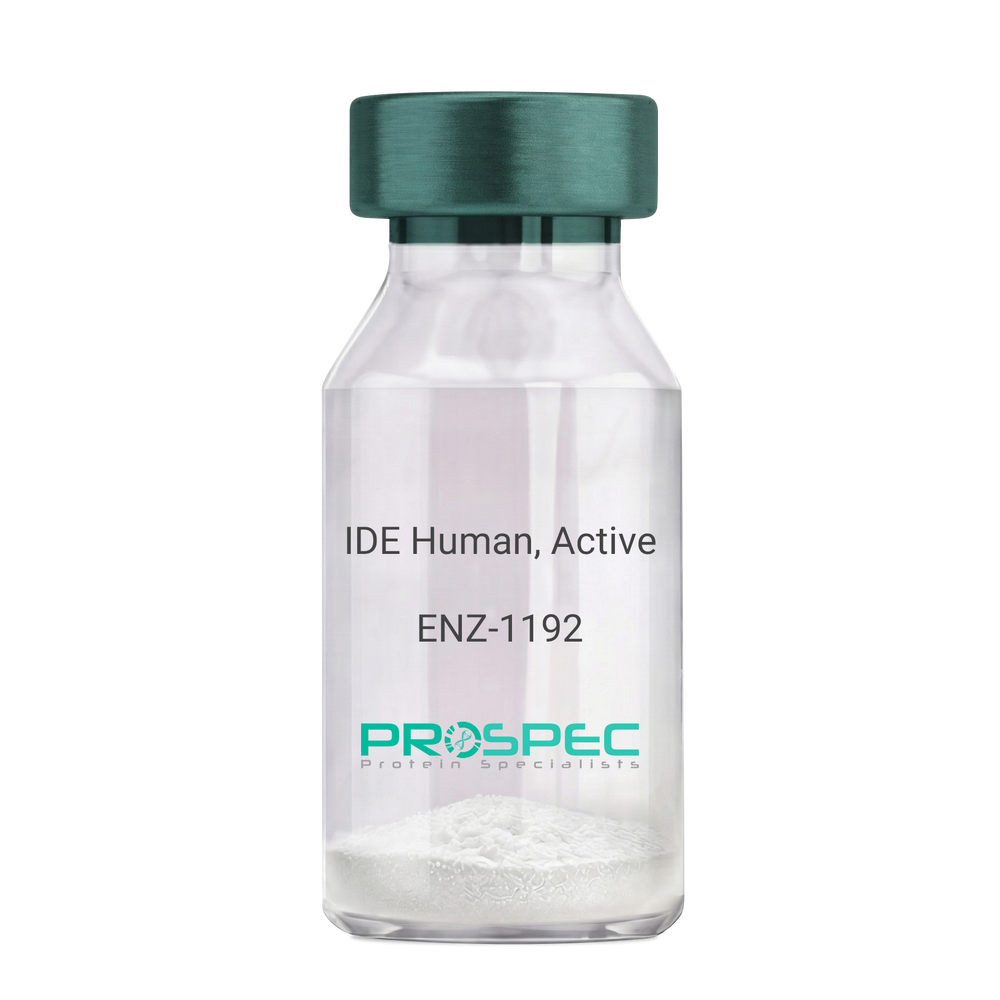
    IDE Human, Active

    Description:

    Insulin-Degrading Enzyme Human Recombinant

    Insulin-Degrading Enzyme, Abeta-Degrading Protease, Insulysin, EC 3.4.24.56, Insulinase, Insulin Protease, INSULYSIN, EC 3.4.24, IDE, insulin-degrading enzyme isoform 1. 

    Product # :

    ENZ-1192

    Price :

    Quantity :

    Shipping Method :

    Ice Icon

    Shipped with Ice Packs

    Add To Cart

    More Info

    • description
    • source
    • formulation
    • purity
    • biological activity
    • More Info

    Description

    IDE Human, Active Human Recombinant produced in E.Coli is a single, non-glycosylated, polypeptide chain (42-1019 a.a) containing a total of 984 amino acids, having a molecular mass of 114 kDa. IDE is fused to a 6 amino acid His-tag at C-terminus and is purified by proprietary chromatographic techniques.

    Source

    Escherichia Coli.

    Formulation

    The IDE solution (0.5mg/ml) contains 10% Glycerol, 100mM NaCl, 0.05% Brij35 and 20mM Tris-HCl buffer (pH 7.5).

    Purity

    Greater than 90.0% as determined by SDS-PAGE.

    Biological Activity

    Specific activity is greater than 3,000 pmol/min/ug in which 1 unit will convert 1.0 pmole of Mca-RPPGFSAFK(Dnp)-OH to MCA-Pro-Leu-OH per minute at pH 7.5 at 25°C.

    More Info

    • Synonyms

      Insulin-Degrading Enzyme, Abeta-Degrading Protease, Insulysin, EC 3.4.24.56, Insulinase, Insulin Protease, INSULYSIN, EC 3.4.24, IDE, insulin-degrading enzyme isoform 1.

    • Physical Appearance

      Filtered colorless solution.

    • Stability

      Store at 4°C if entire vial will be used within 2-4 weeks. Store, frozen at -20°C for longer periods of time. For long term storage it is recommended to add a carrier protein (0.1% HSA or BSA). Avoid multiple freeze-thaw cycles.

    • Amino Acid Sequence

      MNNPAIKRIG NHITKSPEDK REYRGLELAN GIKVLLISDP TTDKSSAALD VHIGSLSDPP NIAGLSHFCE HMLFLGTKKY PKENEYSQFL SEHAGSSNAF TSGEHTNYYF DVSHEHLEGA LDRFAQFFLC PLFDESCKDR EVNAVDSEHE KNVMNDAWRL FQLEKATGNP KHPFSKFGTG NKYTLETRPN QEGIDVRQEL LKFHSAYYSS NLMAVCVLGR ESLDDLTNLV VKLFSEVENK NVPLPEFPEH PFQEEHLKQL YKIVPIKDIR NLYVTFPIPD LQKYYKSNPG HYLGHLIGHE GPGSLLSELK SKGWVNTLVG GQKEGARGFM FFIINVDLTE EGLLHVEDII LHMFQYIQKL RAEGPQEWVF QECKDLNAVA FRFKDKERPR GYTSKIAGIL HYYPLEEVLT AEYLLEEFRP DLIEMVLDKL RPENVRVAIV SKSFEGKTDR TEEWYGTQYK QEAIPDEVIK KWQNADLNGK FKLPTKNEFI PTNFEILPLE KEATPYPALI KDTAMSKLWF KQDDKFFLPK ACLNFEFFSP FAYVDPLHCN MAYLYLELLK DSLNEYAYAA ELAGLSYDLQ NTIYGMYLSV KGYNDKQPIL LKKIIEKMAT FEIDEKRFEI IKEAYMRSLN NFRAEQPHQH AMYYLRLLMT EVAWTKDELK EALDDVTLPR LKAFIPQLLS RLHIEALLHG NITKQAALGI MQMVEDTLIE HAHTKPLLPS
      QLVRYREVQL PDRGWFVYQQ RNEVHNNCGI EIYYQTDMQS TSENMFLELF CQIISEPCFN TLRTKEQLGY IVFSGPRRAN GIQGLRFIIQ SEKPPHYLES RVEAFLITME KSIEDMTEEA FQKHIQALAI RRLDKPKKLS AECAKYWGEI ISQQYNFDRD NTEVAYLKTL TKEDIIKFYK EMLAVDAPRR HKVSVHVLAR EMDSCPVVGE FPCQNDINLS QAPALPQPEV IQNMTEFKRG LPLFPLVKPH INFMAAKLHH HHHH.

    • Background

      Insulin-degrading enzyme (IDE) is a crucial protease that plays a significant role in maintaining glucose homeostasis by degrading insulin and other bioactive peptides. Dysregulation of IDE has been implicated in various metabolic disorders, particularly type 2 diabetes mellitus. IDE is also associated with the clearance of amyloid-beta peptides in the brain, making it relevant to Alzheimer's disease pathology. Studying the recombinant form of IDE is fundamental to understanding its functional mechanisms and exploring potential avenues for therapeutic interventions.

      The primary goal of this research is to express and purify recombinant IDE using diverse expression systems. Recombinant DNA techniques will be employed to construct expression vectors containing the IDE gene, followed by expression in bacterial, yeast, or mammalian cell-based systems. The recombinant IDE will be purified using affinity chromatography or other appropriate methods, facilitating subsequent biochemical and biophysical characterization.

      The second objective is to investigate the substrate specificity and catalytic activity of the purified IDE. In vitro enzymatic assays will be conducted to analyse the ability of the recombinant IDE to degrade insulin and other potential substrates. The effects of various factors, such as pH, temperature, and potential modulators, on IDE activity will be evaluated. Additionally, the interactions between IDE and its substrates will be explored using binding assays.

      The third objective is to elucidate the three-dimensional structure of the IDE recombinant using techniques like X-ray crystallography or nuclear magnetic resonance (NMR) spectroscopy. Structural insights into the active site and binding pockets of IDE will provide valuable information for understanding its substrate recognition and catalytic mechanisms. This knowledge could be instrumental in designing targeted therapeutic compounds.

      By characterizing the IDE recombinant, this research aims to contribute to our understanding of its role in insulin metabolism, glucose regulation, and potential therapeutic applications. The findings from this study may have implications for the development of novel treatments for diabetes and other related disorders.

    ProSpec's products are furnished for LABORATORY RESEARCH USE ONLY. The product may not be used as drugs, agricultural or pesticidal products, food additives or household chemicals.

    Ide Human Active
  • View Data Sheet

    Name :

    CHGA Human, HEK

    Description:

    Chromogranin A Human Recombinant, HEK

    CHGA, CGA, Chromogranin-A, Vasostatin I, SP-I, Pituitary secretory protein I.

    Product # :

    PRO-2664

    Price :

    Quantity :

    Shipping Method :

    Room Temp Icon

    Shipped at Room temp

    Add To Cart

    More Info

    • description
    • source
    • formulation
    • purity
    • More Info

    Description

    CHGA Human Recombinant is a single, glycosylated polypeptide chain containing 445 amino acids (19-457a.a) and having a molecular mass of 49.7kDa (calculated). CHGA is fused to a 6 a.a His tag at C-terminal.

    Source

    HEK293 cells.

    Formulation

    CHGA filtered (0.4 µm) and lyophilized from 0.5mg/ml in PBS, pH 7.0.

    Purity

    Greater than 95.0% as determined by SDS-PAGE.

    More Info

    • Introduction

      Chromogranin A is a 439 amino acid protein which is encoded on chromosome 14 and is present in neuroendocrine cells throughout the body, including the neuroendocrine cells of the large and small intestine, adrenal medulla and pancreatic islets. It is an excellent marker for carcinoid tumors, phenochromocytomas, paragangliomas, and other neuroendocrine tumors.
      Coexpression of chromogranin A and neuron specific enolase (NSE) is common in neuroendocrine neoplasms.

    • Synonyms

      CHGA, CGA, Chromogranin-A, Vasostatin I, SP-I, Pituitary secretory protein I.

    • Physical Appearance

      Filtered White lyophilized (freeze-dried) powder.

    • Stability

      Store lyophilized protein at -20°C. Aliquot the product after reconstitution to avoid repeated freezing/thawing cycles. Reconstituted protein can be stored at 4°C for a limited period of time; it does not show any change after two weeks at 4°C.

    • Solubility

      It is recommended to add deionized water to prepare a working stock solution of approximately 0.5mg/ml and let the lyophilized pellet dissolve completely.

    • Amino Acid Sequence

      LPVNSPMNKG DTEVMKCIVE VISDTLSKPS PMPVSQECFE TLRGDERILS ILRHQNLLKE LQDLALQGAK ERAHQQKKHS GFEDELSEVL ENQSSQAELK EAVEEPSSKD VMEKREDSKE AEKSGEATDG ARPQALPEPM QESKAEGNNQ APGEEEEEEE EATNTHPPAS LPSQKYPGPQ AEGDSEGLSQ GLVDREKGLS AEPGWQAKRE EEEEEEEEAE AGEEAVPEEE GPTVVLNPHP SLGYKEIRKG ESRSEALAVD GAGKPGAEEA QDPEGKGEQE HSQQKEEEEE MAVVPQGLFR GGKSGELEQE EERLSKEWED SKRWSKMDQL AKELTAEKRL EGQEEEEDNR DSSMKLSFRA RAYGFRGPGP QLRRGWRPSS REDSLEAGLP LQVRGYPEEK KEEEGSANRR PEDQELESLS AIEAELEKVA HQLQALRRGH HHHHH

    ProSpec's products are furnished for LABORATORY RESEARCH USE ONLY. The product may not be used as drugs, agricultural or pesticidal products, food additives or household chemicals.

    Chga Human
  • View Data Sheet

    Name :

    IFNG Rat

    Description:

    IFN-Gamma Rat Recombinant

    Immune IFN, type II IFN, T cell IFN, MAF, IFNG, IFG, IFI, IFN-gamma.

    Product # :

    CYT-359

    Price :

    Quantity :

    Shipping Method :

    Room Temp Icon

    Shipped at Room temp

    Add To Cart

    More Info

    • description
    • source
    • formulation
    • purity
    • biological activity
    • More Info

    Description

    IFN-gamma Rat Recombinant produced in E.Coli is a single, non-glycosylated, polypeptide chain containing 135 amino acids and having a molecular mass of 15609 Dalton.The IFN-gamma is purified by proprietary chromatographic techniques.

    Source

    Escherichia Coli.

    Formulation

    Lyophilized from a 0.2μm filtered concentrated (1mg/ml) solution in PBS, pH 7.4.

    Purity

    Greater than 95.0% as determined by:
    (a) Analysis by RP-HPLC.
    (b) Analysis by SDS-PAGE.

    Biological Activity

    The specific activity as determined by the cytopathic affect inhibition assay with murine L929 cells chalenged with EMC virus was < 0.1 ng/ml, corresponding to a specific activity of 10,000,000units/mg.

    More Info

    • Introduction

      IFN-gamma produced by lymphocytes activated by specific antigens or mitogens.
      IFN-gamma, in addition to having antiviral activity, has important immunoregulatory functions, it is a potent activator of macrophages, and has antiproliferative effects on transformed cells and it can potentiate the antiviral and antitumor effects of the type I IFNs.

    • Synonyms

      Immune IFN, type II IFN, T cell IFN, MAF, IFNG, IFG, IFI, IFN-gamma.

    • Physical Appearance

      Sterile Filtered White lyophilized (freeze-dried) powder.

    • Stability

      Lyophilized IFN-gamma although stable at room temperature for 3 weeks, should be stored desiccated below -18°C. Upon reconstitution IFN-gamma should be stored at 4°C between 2-7 days and for future use below -18°C.For long term storage it is recommended to add a carrier protein (0.1% HSA or BSA).Please prevent freeze-thaw cycles.

    • Solubility

      It is recommended to reconstitute the lyophilized IFN-gamma in sterile 18MΩ-cm H2O not less than 100µg/ml, which can then be further diluted to other aqueous solutions.

    • Amino Acid Sequence

      The sequence of the first five N-terminal amino acids was determined and was found to be Met-Gln-Gly-Tyr-Leu.

    • Background

      What is the molecular weight/Mw of IFNG RAT Protein?
      IFNG RAT Protein has a total Mw of 15.6kDa.

      What is the source or expression system of IFNG RAT Protein?
      Escherichia Coli.

      What is the Purity of IFNG RAT Protein?
      IFNG RAT Protein is >95% pure as determined by SDS-PAGE.

      What is the Biological Activity of IFNG RAT Protein?
      The specific activity as determined by the cytopathic affect inhibition assay with murine L929 cells chalenged with EMC virus was < 0.1 ng/ml, corresponding to a specific activity of 10,000,000units/mg.

      What is the amino acid sequence of IFNG RAT Protein?
      he sequence of the first five N-terminal amino acids was determined and was found to be Met-Gln-Gly-Tyr-Leu.

      What applications can IFNG RAT Protein be used in?
      IFNG RAT Protein can probably be used in western blot, ELISA and Lateral Flow.

      What is the endotoxin level for IFNG RAT Protein?
      The endotoxin level is minimal, IFNG RAT Protein was purified using conventional chromatography techniques.


    ProSpec's products are furnished for LABORATORY RESEARCH USE ONLY. The product may not be used as drugs, agricultural or pesticidal products, food additives or household chemicals.

    Interferon Gamma Rat
  • View Data Sheet

    Name :

    SNCG Mouse

    Description:

    Gamma-Synuclein Mouse Recombinant

    Gamma-synuclein, Persyn.

    Product # :

    PRO-2490

    Price :

    Quantity :

    Shipping Method :

    Ice Icon

    Shipped with Ice Packs

    Add To Cart

    More Info

    • description
    • source
    • formulation
    • purity
    • More Info

    Description

    SNCG Mouse Recombinant produced in E.Coli is a single, non-glycosylated polypeptide chain containing 146 amino acids (1-123 a.a) and having a molecular mass of 15.5kDa.SNCG is fused to a 23 amino acid His-tag at N-terminus & purified by proprietary chromatographic techniques.

    Source

    Escherichia Coli.

    Formulation

    SNCG protein solution (1mg/ml) containing 20mM Tris-HCl(pH8.0) and 0.1M NaCl.

    Purity

    Greater than 95.0% as determined by SDS-PAGE.

    More Info

    • Introduction

      g-synuclein(Originally known as a breast cancer specific gene product, BCSG1) is an acidic neuronal protein of 127 amino acids. Gamma-Synuclein is a member of the Synuclein protein family, which is believed to be involved in the pathogenesis of neurodegenerative diseases. High levels of Gamma-Synuclein have been found in advanced breast carcinomas suggesting a correlation between overexpression of SNCG and breast tumor development. Synuclein-Gamma is found mostly in the peripheral nervous system (in primary sensory neurons, sympathetic neurons, and motor neurons) and retina. SNCG is also identified in the brain, ovarian tumors, and in the olfactory epithelium. SNCG expression in breast tumors is a marker for tumor progression. A modification in the expression of gamma-synuclein has been detected in the retina of Alzheimer's patients.

    • Synonyms

      Gamma-synuclein, Persyn.

    • Physical Appearance

      Sterile filtered colorless solution.

    • Stability

      Store at 4°C if entire vial will be used within 2-4 weeks. Store, frozen at -20°C for longer periods of time.For long term storage it is recommended to add a carrier protein (0.1% HSA or BSA). Avoid multiple freeze-thaw cycles.

    • Amino Acid Sequence

      MGSSHHHHHH SSGLVPRGSH MGSMDVFKKG FSIAKEGVVG AVEKTKQGVT EAAEKTKEGV MYVGTKTKEN VVQSVTSVAE KTKEQANAVS AVVSSVNTV ANKTVEEAEN IVVTTGVVRK EDLEPPAQDQ EAKEQEENEE AKSGED.

    ProSpec's products are furnished for LABORATORY RESEARCH USE ONLY. The product may not be used as drugs, agricultural or pesticidal products, food additives or household chemicals.

    Sncg Mouse
  • View Data Sheet

    Name :

    TNF alpha human

    Description:

    Tumor Necrosis Factor-Alpha Human Recombinant

    TNF-alpha, Tumor necrosis factor ligand superfamily member 2, TNF-a, Cachectin, DIF, TNFA, TNFSF2.

    Product # :

    CYT-223

    Price :

    Quantity :

    Shipping Method :

    Room Temp Icon

    Shipped at Room temp

    Add To Cart

    More Info

    • description
    • source
    • formulation
    • purity
    • biological activity
    • More Info

    Description

    Tumor Necrosis Factor-a Human Recombinant produced in E.Coli is a single, non-glycosylated, polypeptide chain containing 158 amino acids (157 a.a. of the mature human TNF-alpha and an N-terminal methionine) and having a molecular mass of 17.5kDa. The TNF-alpha is purified by standard chromatographic techniques.

    Source

    Escherichia Coli.

    Formulation

    TNF-a Human was lyophilized from a concentrated 1mg/ml solution containing 20mM PB, pH-7.2, and 100mM NaCl.

    Purity

    Greater than 95.0% as determined by:
    (a) Analysis by RP-HPLC.
    (b) Analysis by SDS-PAGE.

    Biological Activity

    The Specific Activity is >5.0×10⁷ IU/mg as determined by the cytolysis of murine L929 cells in the presence of Actinomycin D.

    More Info

    • Introduction

      Tumor necrosis factor is a cytokine involved in systemic inflammation and is a member of a group of cytokines that all stimulate the acute phase reaction. TNF is mainly secreted by macrophages.
      TNF causes apoptotic cell death, cellular proliferation, differentiation, inflammation, tumorigenesis and viral replication, TNF is also involved in lipid metabolism, and coagulation. TNF's primary role is in the regulation of immune cells.
      Dysregulation and, in particular, overproduction of TNF have been implicated in a variety of human diseases- autoimmune diseases, INS resistance, and cancer.

    • Synonyms

      TNF-alpha, Tumor necrosis factor ligand superfamily member 2, TNF-a, Cachectin, DIF, TNFA, TNFSF2.

    • Physical Appearance

      Sterile Filtered White lyophilized (freeze-dried) powder.

    • Stability

      Lyophilized Tumor Necrosis Factor-a although stable at room temperature for 3 weeks, should be stored desiccated below -18°C. Upon reconstitution TNF-a should be stored at 4°C between 2-7 days and for future use below -18°C.For long term storage it is recommended to add a carrier protein (0.1% HSA or BSA).Please prevent freeze-thaw cycles.

    • Solubility

      It is recommended to reconstitute the lyophilized Tumor Necrosis Factor-alpha in sterile 18MΩ-cm H2O not less than 100µg/ml, which can then be further diluted to other aqueous solutions.

    • Amino Acid Sequence

      MVRSSSRTPS DKPVAHVVAN PQAEGQLQWL NRRANALLAN GVELRDNQLV VPSEGLYLIY SQVLFKGQGC PSTHVLLTHT ISRIAVSYQT KVNLLSAIKS PCQRETPEGA E AKPWYEPIY LGGVFQLEKG DRLSAEINRP DYLDFAESGQ VYFGIIAL.

    • Background

      TNF Alpha Human: An Overview of Its Role and Importance in Immunology

      TNF alpha human, also known as Tumor Necrosis Factor-alpha, is a critical cytokine in the immune system. Macrophages mainly produce this protein, and it plays a key role in inflammation and the acute phase reaction.

      This protein is involved in various cellular functions, including cell death, differentiation, proliferation, and immune regulation.

      Production and Properties

      Tumor Necrosis Factor-alpha is produced recombinantly in E. coli and consists of a single, non-glycosylated polypeptide chain. It includes 157 amino acids of the mature human TNF-alpha and an N-terminal methionine, resulting in a molecular mass of approximately 17.5 kDa.

      Furthermore, the protein is purified through standard chromatographic techniques to ensure high purity and biological activity.

      Solubility and Usage

      The lyophilized form of TNF appears as a sterile, white powder. It is recommended to reconstitute this powder in sterile water to achieve a solution of no less than 100µg/ml.

      This solution can then be further diluted for various experimental applications. TNF alpha is used extensively in research, particularly for studying its effects on cell signaling and immune response.

      Storage and Stability

      For long-term storage, TNF should be kept desiccated below -18°C. Once reconstituted, it should be used within a week if stored at 4°C or kept below -18°C for future use. Avoiding freeze-thaw cycles is crucial to maintain the protein's functionality.

      Biological Role and Implications

      TNF alpha human is involved in the regulation of immune cells and is known for its role in inflammatory processes.

      Dysregulation of TNF alpha production is linked to various diseases, such as autoimmune disorders, insulin resistance, and cancer. It is also a target for therapeutic interventions, particularly in conditions like rheumatoid arthritis and inflammatory bowel disease.

      Mechanism of Action

      TNF alpha can induce fever, apoptotic cell death, and can inhibit tumorigenesis and viral replication. Moreover, it is a potent mediator of the acute phase reaction, which influences the activity of various cells involved in systemic inflammation.

      Research and Clinical Importance

      Scientific research on TNF has provided insights into its complex role in disease mechanisms. Its interaction with receptors such as TNFRSF1A underscores its multifaceted effects across different organ systems, from liver function to brain activity.

      Ongoing studies continue to explore its therapeutic potential, especially how it can be modulated to treat diseases without harmful side effects.

      In essence, TNF alpha human is a versatile and powerful component of the immune system, important for both health and disease. Understanding its pathways and functions helps scientists develop better treatments for various inflammatory and autoimmune diseases.


    ProSpec's products are furnished for LABORATORY RESEARCH USE ONLY. The product may not be used as drugs, agricultural or pesticidal products, food additives or household chemicals.

    Tnf Alpha Human
  • View Data Sheet

    Name :

    IFNG Human, His Active

    Description:

    Interferon-gamma Human Recombinant, His Tag Active

    Immune Interferon, type II interferon, T cell interferon, MAF, IFNG, IFG, IFI, IFN-gamma.

    Product # :

    CYT-1053

    Price :

    Quantity :

    Shipping Method :

    Ice Icon

    Shipped with Ice Packs

    Add To Cart

    More Info

    • description
    • source
    • formulation
    • purity
    • biological activity
    • More Info
    • SDS-PAGE

    Description

    IFNG Human Recombinant produced in E.Coli is a single, non-glycosylated polypeptide chain containing 159 amino acids (24-161 a.a) and having a molecular mass of 18.4kDa. IFNG is fused to a 21 amino acid His-tag at N-terminus & purified by proprietary chromatographic techniques.

    Source

    Escherichia Coli.

    Formulation

    IFNG protein solution (1mg/ml) containing Phosphate buffered saline (pH 7.4) and 20% glycerol.

    Purity

    Greater than 90.0% as determined by SDS-PAGE.

    Biological Activity

    Measured in a cytotoxicity assay using WiDr cells. The ED50 for this effect is ≤ 5 ng/ml.

    SDS-PAGE

    IFNG Human, His Active - Product image 1

    More Info

    • Introduction

      IFN-gamma produced by lymphocytes activated by specific antigens or mitogens.
      IFN-gamma, in addition to having antiviral activity, has important immunoregulatory functions, it is a potent activator of macrophages, and has antiproliferative effects on transformed cells and it can potentiate the antiviral and antitumor effects of the type I interferons.

    • Synonyms

      Immune Interferon, type II interferon, T cell interferon, MAF, IFNG, IFG, IFI, IFN-gamma.

    • Physical Appearance

      Sterile Filtered colorless liquid.

    • Stability

      Store at 4°C if entire vial will be used within 2-4 weeks. Store, frozen at -20°C for longer periods of time. For long term storage it is recommended to add a carrier protein (0.1% HSA or BSA).Avoid multiple freeze-thaw cycles.

    • Amino Acid Sequence

      MGSSHHHHHH SSGLVPRGSH MQDPYVKEAE NLKKYFNAGH SDVADNGTLF LGILKNWKEE SDRKIMQSQI VSFYFKLFKN FKDDQSIQKS VETIKEDMNV KFFNSNKKKR DDFEKLTNYS VTDLNVQRKA IHELIQVMAE LSPAAKTGKR KRSQMLFRG.

    • Background

      What is the molecular weight/Mw of IFNG HUMAN, HIS ACTIVE Protein?
      IFNG HUMAN, HIS ACTIVE Protein has a total Mw of 18.4kDa.

      What is the source or expression system of IFNG HUMAN, HIS ACTIVE Protein?
      Escherichia Coli.

      What is the Purity of IFNG HUMAN, HIS ACTIVE Protein?
      IFNG HUMAN, HIS ACTIVE Protein is >90% pure as determined by SDS-PAGE.

      What is the Biological Activity of IFNG HUMAN, HIS ACTIVE Protein?
      Measured in a cytotoxicity assay using WiDr cells. The ED50 for this effect is ≤ 5 ng/ml.

      What is the amino acid sequence of IFNG HUMAN, HIS ACTIVE Protein?
      MGSSHHHHHH SSGLVPRGSH MQDPYVKEAE NLKKYFNAGH SDVADNGTLF LGILKNWKEE SDRKIMQSQI VSFYFKLFKN FKDDQSIQKS VETIKEDMNV KFFNSNKKKR DDFEKLTNYS VTDLNVQRKA IHELIQVMAE LSPAAKTGKR KRSQMLFRG.

      What applications can IFNG HUMAN, HIS ACTIVE Protein be used in?
      IFNG HUMAN, HIS ACTIVE Protein can probably be used in western blot, ELISA and Lateral Flow.

      What is the endotoxin level for IFNG HUMAN, HIS ACTIVE Protein?
      The endotoxin level is minimal, IFNG HUMAN, HIS ACTIVE Protein was purified using conventional chromatography techniques.


    ProSpec's products are furnished for LABORATORY RESEARCH USE ONLY. The product may not be used as drugs, agricultural or pesticidal products, food additives or household chemicals.

    Ifn Gamma
  • 1
  • …
  • 3
  • 4
  • 5
  • 6
  • 7
  • …
  • 42
Your browser does not support the video tag.

Products

  • Cytokines
  • Growth Factors
  • Chemokines
  • CD Antigens
  • Neurotrophins
  • Hormones
  • Enzymes
  • Viral Antigens
  • Recombinant Proteins
  • Natural Proteins
  • Monoclonal Antibodies
  • Polyclonal Antibodies
  • Thermal Packaging

About

  • Company
  • Founder
  • Contribution
  • Contact Us
  • My Account

Ordering

  • Ordering Method
  • Ordering - Credit Card
  • Ordering PO
  • Shipping Fees
  • FAQ's

Legal

  • Terms & Conditions
  • Privacy
  • Site Map
  • info@prospecbio.com
  • Facebook
  • Instagram
  • Linkedin Profile

© 2026 ProSpec-Tany TechnoGene Ltd. All Rights Reserved.

  • Choosing a selection results in a full page refresh.
  • Opens in a new window.