Search results
1000 results found for “trypsin”
Name
Description
Product #
Price
Quantity
Shipping Method
- View Data Sheet
Name :
MMP 9 HumanDescription:
Matrix Metalloproteinase-9 Human Recombinant
Matrix metalloproteinase-9, MMP-9, 92 kDa gelatinase, Gelatinase B, GELB, MMP9, CLG4B.
Product # :
ENZ-438Price :
Quantity :
Shipping Method :
Shipped with Ice Packs
More Info
- description
- source
- formulation
- purity
- More Info
Description
MMP-9 Human Recombinant produced in E.Coli is single, a non-glycosylated, Polypeptide chain containing 338 amino acids fragment (113-450) corresponding to the catalytic domain of the protein, having a total molecular mass of 42.03kDa and fused with a 4.5kDa amino-terminal hexahistidine tag. The MMP-9 is purified by proprietary chromatographic techniques.
Source
Escherichia Coli.
Formulation
MMP-9 protein is supplied in 20mM Tris-HCl pH 8.0 and 50% glycerol.
Purity
Greater than 95.0% as determined by SDS-PAGE.
More Info
-
Introduction
Matrix metalloproteinases are a family of zinc and calcium-dependent endopeptidases that break down extracellular matrix proteins. The MMP9 is secreted as a 92kDa zymogen. Cleavage of ProMMP-9 results in the active enzyme, having a molecular weight of approximately 82kDa. MMP9 is composed of the following domains: a gelatin-binding domain consisting of three fibronectin type II units, a catalytic domain containing the zinc-binding site, a proline-rich type V collagen-homologous domain and a hemopexin-like domain. MMP9 is produced by the several cell types: monocytes, macrophages, neutrophils, keratinocytes, fibroblasts, osteoclasts and endothelial cells. MMP9 is involved in inflammatory responses, tissue remodeling, wound healing, tumor growth and metastasis. MMP9 may also play an important part in local proteolysis of the extracellular matrix and in leukocyte migration, as well as in bone osteoclastic resorption. MMP9 cleaves type IV and type V collagens into large C-terminal three quarter fragments and shorter N-terminal one quarter fragments. MMP9 can also degrade fibronectin but not laminin or Pz-peptide.
MMP9 defects may be a cause of susceptibility to intervertebral disc disease (IDD), also known as lumbar disk herniation (LDH). -
Synonyms
Matrix metalloproteinase-9, MMP-9, 92 kDa gelatinase, Gelatinase B, GELB, MMP9, CLG4B.
-
Physical Appearance
Sterile Filtered clear solution.
-
Stability
Store at 4°C if entire vial will be used within 2-4 weeks. Store, frozen at -20°C for longer periods of time. Please avoid freeze thaw cycles.
-
Amino Acid Sequence
4.5kDa His Tag-DLKWHHHNITYWIQNYSEDLPRAVIDDAFARAFALWSAVTPLTFTRVYSRDAD
IVIQFGVAEHGDGYPFDGKDGLLAHAFPPGPGIQGDAHFDDDELWSLGKGVVVPTRFGNADGAACHFP
FIFEGRSYSACTTDGRSDGLPWCSTTANYDTDDRFGFCPSERLYTRDGNADGKPCQFPFIFQGQSYSA
CTTDGRSDGYRWCATTANYDRDKLFGFCPTRADSTVMGGNSAGELCVFPFTFLGKEYSTCTSEGRGDG
RLWCATTSNFDSDKKWGFCPDQGYSLFLVAAHEFGHALGLDHSSVPEALMYPMYRFTEGPPLHKDDVN
GIRHLYGP.
ProSpec's products are furnished for LABORATORY RESEARCH USE ONLY. The product may not be used as drugs, agricultural or pesticidal products, food additives or household chemicals.
- View Data Sheet
Name :
Gliadin NativeDescription:
Gliadin Triticum Aestivum Grain Native
Product # :
PRO-2675Price :
Quantity :
Shipping Method :
Shipped with Ice Packs
More Info
- description
- formulation
- purity
- More Info
Description
The native Gliadin Triticum Aestivum Grain is purified from wheat by protein chemical methods.
Formulation
Gliadin is supplied in 20mM HEPES buffer pH-7.4 and 6M Urea.
Purity
Greater than 95.0% as determined by SDS-PAGE.
More Info
-
Introduction
Gliadin is a common substrate of transglutaminase, which generates neo-epitopes by deamidation of glutamine side chains. In the past, serologic tests for gliadin antibodies usually were not very precise and were not enough for accurate diagnosis due to missing deamidated epitopes within the authentic gliadin fraction traditionally used in diagnostic test kits. ProSpec's deamidated Gliadin isoform matches to the deamidated neo-epitopes, which in the natural antigen are formed by transglutaminase-mediated glutamine side chain deamidation.
-
Physical Appearance
Sterile Filtered clear solution.
-
Stability
Store at 4°C if entire vial will be used within 2-4 weeks. Store, frozen at -20°C for longer periods of time. Avoid multiple freeze-thaw cycles.
-
Immunological Functions
1. Binds IgG and IgA-type human auto antibodies in sera of patients diagnosed with celiac disease.2. Immunodot analysis with positive/negative samples.
-
Applications
Western blot with patient sample.
ProSpec's products are furnished for LABORATORY RESEARCH USE ONLY. The product may not be used as drugs, agricultural or pesticidal products, food additives or household chemicals.
- View Data Sheet
Name :
PTPRN HumanDescription:
Protein Tyrosine Phosphatase Receptor Type N Human Recombinant
Receptor-type tyrosine-protein phosphatase-like N, R-PTP-N, Islet cell antigen 512, ICA 512, Islet cell autoantigen 3, PTP IA-2, PTPRN, ICA3, ICA512.
Product # :
ENZ-1162Price :
Quantity :
Shipping Method :
Shipped with Ice Packs
More Info
- description
- source
- formulation
- purity
- More Info
Description
Recombinant Human Protein Tyrosine Phosphatase Receptor Type N produced in SF9 is a glycosylated, polypeptide chain having a calculated molecular mass of 46kDa. PTPRN is expressed with a 6xHis tag and purified by proprietary chromatographic techniques.
Source
Sf9 insect cells.
Formulation
PTPRN is supplied in 50mM Sodium phosphate (pH 8.0) and 20% Glycerol.
Purity
Greater than 95.0% as determined by SDS-PAGE.
More Info
-
Introduction
Protein Tyrosine Phosphatase Receptor Type N (PTPRN) is a catalytically inactive protein and a major target of autoimmune response in diabetes mellitus. The long C-terminal intracellular tail covers the majority of autoantibody epitopes. PTPRN is expressed in neural, neuroendocrine and pancreatic islet cells.
-
Synonyms
Receptor-type tyrosine-protein phosphatase-like N, R-PTP-N, Islet cell antigen 512, ICA 512, Islet cell autoantigen 3, PTP IA-2, PTPRN, ICA3, ICA512.
-
Physical Appearance
Sterile Filtered colorless solution.
-
Stability
Store at 4°C if entire vial will be used within 2-4 weeks. Store, frozen at -20°C for longer periods of time. Avoid multiple freeze-thaw cycles.
ProSpec's products are furnished for LABORATORY RESEARCH USE ONLY. The product may not be used as drugs, agricultural or pesticidal products, food additives or household chemicals.
- View Data Sheet
Name :
TNNI1 Human NativeDescription:
Troponin I Skeletal Muscle Human
DKFZp451O223, SSTNI, TNN1, Troponin I, slow skeletal muscle, Troponin I, slow-twitch isoform.
Product # :
PRO-2789Price :
Quantity :
Shipping Method :
Shipped at Room temp
More Info
- description
- source
- formulation
- purity
- More Info
Description
TNNI1 Native produced in Human skeletal is Immunological identity confirmed by reaction with monoclonal antibody that is specific for the Human Troponin I Skeletal Muscle. TNNI1 Native is purified by proprietary chromatographic technique.
Source
Human skeletal muscle.
Formulation
TNNI1 was lyophilized from 0.01M HCl.
Purity
Greater than 95.0% as determined by SDS-PAGE.
More Info
-
Synonyms
DKFZp451O223, SSTNI, TNN1, Troponin I, slow skeletal muscle, Troponin I, slow-twitch isoform.
-
Physical Appearance
Sterile Filtered White lyophilized (freeze-dried) powder.
-
Stability
Lyophilized Troponin I Skeletal Muscle although stable at room temperature for 3 weeks, should be stored desiccated below -18°C. Upon reconstitution TNNI1 should be stored at 4°C between 2-7 days and for future use below -18°C. For long term storage it is recommended to add a carrier protein (0.1% HSA or BSA). Please prevent freeze-thaw cycles.
-
Solubility
It is recommended to reconstitute the lyophilized TNNI1 in Tris/urea buffer (20mM Tris, pH 7.5, 7M urea, 5mM EDTA, 15mM 2-mercaptoethanol) not less than 100µg/ml, which can then be further diluted to other aqueous solutions.
-
Background
Troponin I, specifically the skeletal muscle isoform encoded by the TNNI1 gene, is a crucial regulator of muscle contraction. It functions as part of the troponin complex, which controls the interaction between actin and myosin filaments during muscle contraction. While extensive research has been conducted on troponin I in the context of cardiac muscle and cardiac diseases, the study of native human skeletal muscle troponin I remains an important but relatively understudied area. This research aims to provide a comprehensive exploration of native human skeletal muscle troponin I (TNNI1), elucidating its functions, structural significance, and potential applications in musculoskeletal research and clinical medicine.
The primary objective of this research is to elucidate the physiological role of native human skeletal muscle TNNI1 in muscle contraction. Experiments involving human skeletal muscle tissue samples and isolated muscle fibers will be conducted to investigate how TNNI1 interacts with other components of the troponin complex and influences calcium-mediated muscle contraction. Understanding these mechanisms is fundamental for deciphering the complexities of skeletal muscle physiology and its implications for musculoskeletal health.
The second objective is to assess the clinical relevance of native TNNI1 in muscle-related diseases. Clinical studies involving patients with various neuromuscular and muscle-wasting conditions will be conducted to evaluate the diagnostic and prognostic value of TNNI1 as a biomarker. These investigations may provide valuable insights into the use of native TNNI1 in the early detection and management of muscle disorders.
The third objective is to explore the potential applications of native TNNI1 in musculoskeletal research and therapeutic development. Research will investigate the use of native TNNI1-expressing cells and tissues as models for studying muscle disorders and for developing novel therapeutic interventions targeting the troponin complex.
By delving into the functions and roles of native human skeletal muscle TNNI1, this research aims to expand our knowledge of skeletal muscle physiology, its implications for muscle-related diseases, and its potential applications in musculoskeletal research and clinical medicine.
ProSpec's products are furnished for LABORATORY RESEARCH USE ONLY. The product may not be used as drugs, agricultural or pesticidal products, food additives or household chemicals.
- View Data Sheet
Name :
TNC RabbitDescription:
Skeletal Muscle Troponin-C Rabbit
Troponin C skeletal muscle, TNNC2, TNC.
Product # :
PRO-323Price :
Quantity :
Shipping Method :
Shipped with Ice Packs
More Info
- description
- source
- formulation
- purity
- More Info
Description
Rabbit Skeletal Muscle Troponin-C is a single, glycosylated, polypeptide chain having a molecular mass of 18kDa. Troponin-C is one of three subunits that form the Troponin complex of striated muscle thin filaments. Skeletal muscle Troponin-C is purified using a combination of ion-exchange and affinity chromatography steps.
Source
Rabbit Skeletal Muscle.
Formulation
The Troponin C Rabbit protein solution contains 150mM sodium chloride, 10mM sodium phosphate and 0.05% sodium azide, pH-7.2.
Purity
Greater than 95.0% as determined by SDS-PAGE.
More Info
-
Synonyms
Troponin C skeletal muscle, TNNC2, TNC.
-
Physical Appearance
Sterile filtered colorless solution.
-
Stability
Store at 4°C if entire vial will be used within 2-4 weeks. Store, frozen at -20°C for longer periods of time. Avoid multiple freeze-thaw cycles.
ProSpec's products are furnished for LABORATORY RESEARCH USE ONLY. The product may not be used as drugs, agricultural or pesticidal products, food additives or household chemicals.
- View Data Sheet
Name :
TNNI3 Human NativeDescription:
Cardiac Troponin-I Human
Troponin I cardiac muscle, Cardiac troponin I, TNNI3, TNNC1, CMH7, RCM1, cTnI, CMD2A, MGC116817.
Product # :
PRO-2788Price :
Quantity :
Shipping Method :
Shipped at Room temp
More Info
- description
- source
- formulation
- purity
- More Info
Description
TNNI3 Native produced in Human heart tissue is a full length protein which has an additional amino acid residues on its N terminus that are not present on the skeletal form, making this protein a promising analyte for indicating cardiac specificity.TNNI3 Native is purified by proprietary chromatographic technique.
Source
Human heart tissue.
Formulation
TNNI3 was lyophilized from 0.01M HCl.
Purity
Greater than 98.0% as determined by SDS-PAGE.
More Info
-
Synonyms
Troponin I cardiac muscle, Cardiac troponin I, TNNI3, TNNC1, CMH7, RCM1, cTnI, CMD2A, MGC116817.
-
Physical Appearance
Sterile Filtered White lyophilized (freeze-dried) powder.
-
Stability
Lyophilized Cardiac Troponin-I although stable at room temperature for 3 weeks, should be stored desiccated below -18°C. Upon reconstitution TNNI3 should be stored at 4°C between 2-7 days and for future use below -18°C.For long term storage it is recommended to add a carrier protein (0.1% HSA or BSA).Please prevent freeze-thaw cycles.
-
Solubility
It is recommended to reconstitute the lyophilized TNNI3 in Tris/urea buffer (20mM Tris, pH 7.5, 7M urea, 5mM EDTA, 15mM 2-mercaptoethanol) not less than 100µg/ml, which can then be further diluted to other aqueous solutions.
-
Background
Troponin I, encoded by the TNNI3 gene, is a critical component of the troponin complex in cardiac muscle cells. It plays a central role in the regulation of cardiac muscle contraction by modulating the interaction between actin and myosin filaments.
While extensive research has been conducted on troponin I in the context of cardiac diseases, there is a growing need to investigate native human troponin I (TNNI3) in its unmodified form to gain a deeper understanding of its functions, structural significance, and implications for heart health. This research aims to provide a comprehensive exploration of TNNI3 in its native state, shedding light on its various roles and potential applications in cardiology and biomedical research.
The primary objective of this research is to elucidate the physiological role of native human TNNI3 in cardiac muscle contraction. Experiments involving human cardiac tissue samples and isolated myocytes will be conducted to investigate how TNNI3 interacts with other components of the troponin complex and influences calcium-mediated muscle contraction. Understanding these mechanisms is fundamental for deciphering the complexities of cardiac muscle physiology and its implications for heart health.
The second objective is to assess the clinical relevance of native TNNI3 in cardiac diseases. Clinical studies involving patients with various cardiac conditions will be conducted to evaluate the diagnostic and prognostic value of TNNI3 as a biomarker. These investigations may provide valuable insights into the use of native TNNI3 in the early detection and management of heart diseases.
The third objective is to explore the potential applications of native TNNI3 in biomedical research and drug development. Research will investigate the use of native TNNI3-expressing cells as models for studying cardiac disorders and for developing novel therapeutic interventions targeting the troponin complex.
By delving into the functions and roles of native human TNNI3, this research aims to expand our knowledge of cardiac muscle physiology, its implications for cardiac diseases, and its potential applications in cardiology and biomedical research.
ProSpec's products are furnished for LABORATORY RESEARCH USE ONLY. The product may not be used as drugs, agricultural or pesticidal products, food additives or household chemicals.
- View Data Sheet
Name :
Prealbumin HumanDescription:
Transthyretin Human
TTHY, TTR, ATTR, TBPA, Transthyretin, Prealbumin, PALB, HsT2651TTHY, TTR, ATTR, TBPA, Transthyretin, Prealbumin, PALB, HsT2651.
Product # :
PRO-2740Price :
Quantity :
Shipping Method :
Shipped at Room temp
More Info
- description
- source
- formulation
- purity
- More Info
Description
Human Transthyretin dimer protein produced in Human plasma having a molecular mass of 30kD. Under certain conditions it may be shown as a monomer (15kD) or a tetramer (60kD).
Source
Human serum.
Formulation
The protein was lyophilized (0.2 µm filtered) from 20mM NH4HCO3.
Purity
Greater than 96.0%.
More Info
-
Introduction
Prealbumin is a thyroid hormone-binding protein that transports thyroxine from the bloodstream to the brain. Prealbumin is a carrier protein which transports thyroid hormones in the plasma and cerebrospinal fluid, and also transports retinol (vitamin A) in the plasma. Transthyretin consists of a tetramer of identical subunits and is dominantly produced in the liver. Mutations in Prealbumin are related to amyloid deposition, affecting predominantly peripheral nerve and/or the heart. The diseases caused by mutations include amyloidotic polyneuropathy, euthyroid hyperthyroxinaemia, amyloidotic vitreous opacities, cardiomyopathy, oculoleptomeningeal amyloidosis, meningocerebrovascular amyloidosis, and carpal tunnel syndrome. Prealbumin is an indicator of protein-energy malnutrition since it has a circulating half life of 2 days and reacts swiftly to changes in nutritional status.
-
Synonyms
TTHY, TTR, ATTR, TBPA, Transthyretin, Prealbumin, PALB, HsT2651TTHY, TTR, ATTR, TBPA, Transthyretin, Prealbumin, PALB, HsT2651.
-
Physical Appearance
Sterile Filtered White lyophilized (freeze-dried) powder.
-
Stability
Prealbumin Human although stable at room temperature for 3 weeks, should be stored between 2-8°C.
-
Solubility
It is recommended to reconstitute the lyophilized Prealbumin Human in phosphate buffer pH > 7 containing 0.15M NaCl.
-
Human Virus Test
Starting material donor has been tested and certified negative for antibodies to HIV-1, HIV-2, HCV, HBSAG, Parvovirus B19, Syphilis and HIV/HBV/HCV (PCR).
ProSpec's products are furnished for LABORATORY RESEARCH USE ONLY. The product may not be used as drugs, agricultural or pesticidal products, food additives or household chemicals.
- View Data Sheet
Name :
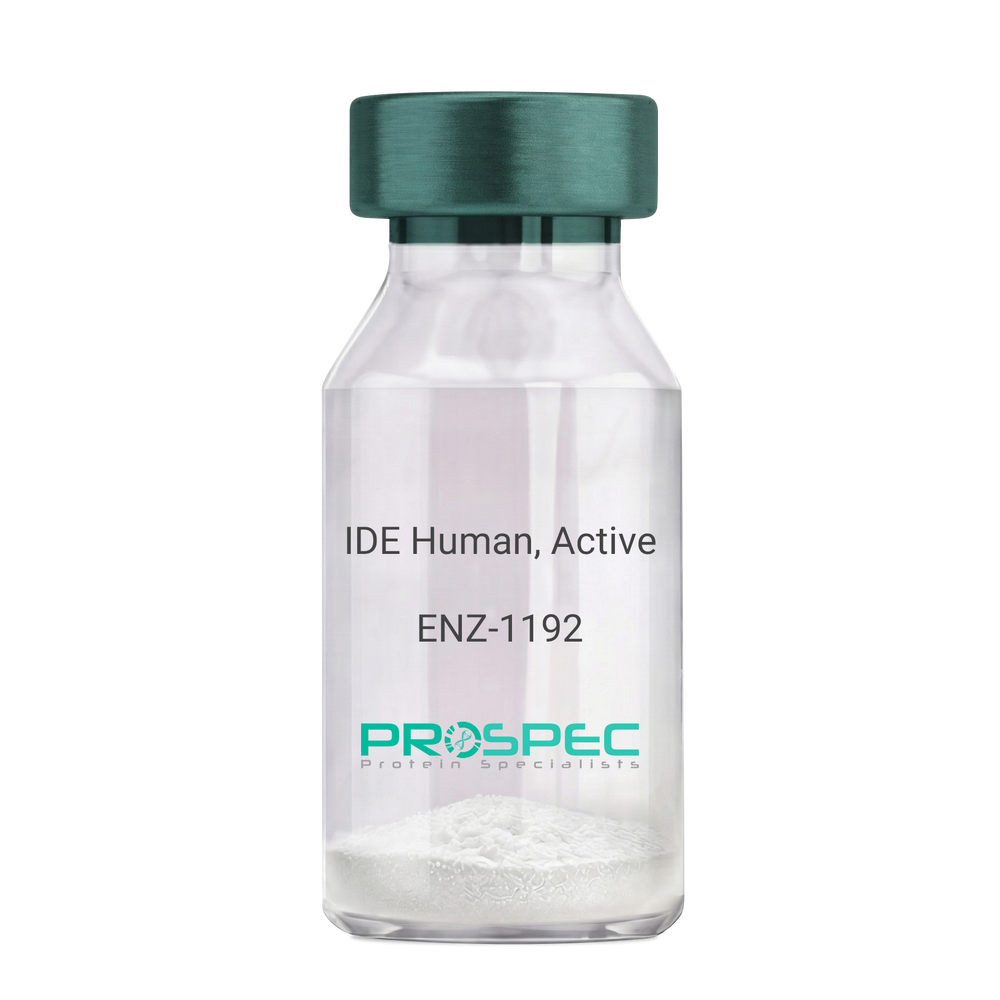
IDE Human, ActiveDescription:
Insulin-Degrading Enzyme Human Recombinant
Insulin-Degrading Enzyme, Abeta-Degrading Protease, Insulysin, EC 3.4.24.56, Insulinase, Insulin Protease, INSULYSIN, EC 3.4.24, IDE, insulin-degrading enzyme isoform 1.
Product # :
ENZ-1192Price :
Quantity :
Shipping Method :
Shipped with Ice Packs
More Info
- description
- source
- formulation
- purity
- biological activity
- More Info
Description
IDE Human, Active Human Recombinant produced in E.Coli is a single, non-glycosylated, polypeptide chain (42-1019 a.a) containing a total of 984 amino acids, having a molecular mass of 114 kDa. IDE is fused to a 6 amino acid His-tag at C-terminus and is purified by proprietary chromatographic techniques.
Source
Escherichia Coli.
Formulation
The IDE solution (0.5mg/ml) contains 10% Glycerol, 100mM NaCl, 0.05% Brij35 and 20mM Tris-HCl buffer (pH 7.5).
Purity
Greater than 90.0% as determined by SDS-PAGE.
Biological Activity
Specific activity is greater than 3,000 pmol/min/ug in which 1 unit will convert 1.0 pmole of Mca-RPPGFSAFK(Dnp)-OH to MCA-Pro-Leu-OH per minute at pH 7.5 at 25°C.
More Info
-
Synonyms
Insulin-Degrading Enzyme, Abeta-Degrading Protease, Insulysin, EC 3.4.24.56, Insulinase, Insulin Protease, INSULYSIN, EC 3.4.24, IDE, insulin-degrading enzyme isoform 1.
-
Physical Appearance
Filtered colorless solution.
-
Stability
Store at 4°C if entire vial will be used within 2-4 weeks. Store, frozen at -20°C for longer periods of time. For long term storage it is recommended to add a carrier protein (0.1% HSA or BSA). Avoid multiple freeze-thaw cycles.
-
Amino Acid Sequence
MNNPAIKRIG NHITKSPEDK REYRGLELAN GIKVLLISDP TTDKSSAALD VHIGSLSDPP NIAGLSHFCE HMLFLGTKKY PKENEYSQFL SEHAGSSNAF TSGEHTNYYF DVSHEHLEGA LDRFAQFFLC PLFDESCKDR EVNAVDSEHE KNVMNDAWRL FQLEKATGNP KHPFSKFGTG NKYTLETRPN QEGIDVRQEL LKFHSAYYSS NLMAVCVLGR ESLDDLTNLV VKLFSEVENK NVPLPEFPEH PFQEEHLKQL YKIVPIKDIR NLYVTFPIPD LQKYYKSNPG HYLGHLIGHE GPGSLLSELK SKGWVNTLVG GQKEGARGFM FFIINVDLTE EGLLHVEDII LHMFQYIQKL RAEGPQEWVF QECKDLNAVA FRFKDKERPR GYTSKIAGIL HYYPLEEVLT AEYLLEEFRP DLIEMVLDKL RPENVRVAIV SKSFEGKTDR TEEWYGTQYK QEAIPDEVIK KWQNADLNGK FKLPTKNEFI PTNFEILPLE KEATPYPALI KDTAMSKLWF KQDDKFFLPK ACLNFEFFSP FAYVDPLHCN MAYLYLELLK DSLNEYAYAA ELAGLSYDLQ NTIYGMYLSV KGYNDKQPIL LKKIIEKMAT FEIDEKRFEI IKEAYMRSLN NFRAEQPHQH AMYYLRLLMT EVAWTKDELK EALDDVTLPR LKAFIPQLLS RLHIEALLHG NITKQAALGI MQMVEDTLIE HAHTKPLLPS
QLVRYREVQL PDRGWFVYQQ RNEVHNNCGI EIYYQTDMQS TSENMFLELF CQIISEPCFN TLRTKEQLGY IVFSGPRRAN GIQGLRFIIQ SEKPPHYLES RVEAFLITME KSIEDMTEEA FQKHIQALAI RRLDKPKKLS AECAKYWGEI ISQQYNFDRD NTEVAYLKTL TKEDIIKFYK EMLAVDAPRR HKVSVHVLAR EMDSCPVVGE FPCQNDINLS QAPALPQPEV IQNMTEFKRG LPLFPLVKPH INFMAAKLHH HHHH. -
Background
Insulin-degrading enzyme (IDE) is a crucial protease that plays a significant role in maintaining glucose homeostasis by degrading insulin and other bioactive peptides. Dysregulation of IDE has been implicated in various metabolic disorders, particularly type 2 diabetes mellitus. IDE is also associated with the clearance of amyloid-beta peptides in the brain, making it relevant to Alzheimer's disease pathology. Studying the recombinant form of IDE is fundamental to understanding its functional mechanisms and exploring potential avenues for therapeutic interventions.
The primary goal of this research is to express and purify recombinant IDE using diverse expression systems. Recombinant DNA techniques will be employed to construct expression vectors containing the IDE gene, followed by expression in bacterial, yeast, or mammalian cell-based systems. The recombinant IDE will be purified using affinity chromatography or other appropriate methods, facilitating subsequent biochemical and biophysical characterization.
The second objective is to investigate the substrate specificity and catalytic activity of the purified IDE. In vitro enzymatic assays will be conducted to analyse the ability of the recombinant IDE to degrade insulin and other potential substrates. The effects of various factors, such as pH, temperature, and potential modulators, on IDE activity will be evaluated. Additionally, the interactions between IDE and its substrates will be explored using binding assays.
The third objective is to elucidate the three-dimensional structure of the IDE recombinant using techniques like X-ray crystallography or nuclear magnetic resonance (NMR) spectroscopy. Structural insights into the active site and binding pockets of IDE will provide valuable information for understanding its substrate recognition and catalytic mechanisms. This knowledge could be instrumental in designing targeted therapeutic compounds.
By characterizing the IDE recombinant, this research aims to contribute to our understanding of its role in insulin metabolism, glucose regulation, and potential therapeutic applications. The findings from this study may have implications for the development of novel treatments for diabetes and other related disorders.
ProSpec's products are furnished for LABORATORY RESEARCH USE ONLY. The product may not be used as drugs, agricultural or pesticidal products, food additives or household chemicals.
- View Data Sheet
Name :
CTSB MouseDescription:
Cathepsin-B Mouse Recombinant
Cathepsin B, Cathepsin B1, CTSB.
Product # :
PRO-2304Price :
Quantity :
Shipping Method :
Shipped with Ice Packs
More Info
- description
- source
- formulation
- purity
- More Info
Description
CTSB Mouse Recombinant produced in Sf9 Baculovirus cells is a single, glycosylated polypeptide chain containing 330 amino acids (18-339a.a.) and having a molecular mass of 36.4kDa (Molecular size on SDS-PAGE will appear at approximately 28-40kDa). CTSB is expressed with an 8 amino acid His tag at C-Terminus and purified by proprietary chromatographic techniques.
Source
Sf9, Baculovirus cells.
Formulation
CTSB protein solution (0.5mg/ml) containing Phosphate Buffered Saline (pH 7.4) and 10% glycerol.
Purity
Greater than 90% as determined by SDS-PAGE.
More Info
-
Introduction
Cathepsin B preproprotein (CTSB) is a papain-family cysteine protease which is normally located in lysosomes. CTSB is able to degrade several extracellular matrix components at both neutral and acidic pH and has been implicated in the progression of some human and rodent tumors progression and arthritis.
-
Synonyms
Cathepsin B, Cathepsin B1, CTSB.
-
Physical Appearance
Sterile Filtered clear solution.
-
Stability
Store at 4°C if entire vial will be used within 2-4 weeks. Store, frozen at -20°C for longer periods of time.For long term storage it is recommended to add a carrier protein (0.1% HSA or BSA).Please avoid freeze thaw cycles.
-
Amino Acid Sequence
HDKPSFHPLS DDLINYINKQ NTTWQAGRNF YNVDISYLKK LCGTVLGGPK LPGRVAFGED IDLPETFDAR EQWSNCPTIG QIRDQGSCGS CWAFGAVEAI SDRTCIHTNG RVNVEVSAED LLTCCGIQCG DGCNGGYPSG AWSFWTKKGL VSGGVYNSHV GCLPYTIPPC EHHVNGSRPP CTGEGDTPRC NKSCEAGYSP SYKEDKHFGY TSYSVSNSVK EIMAEIYKNG PVEGAFTVFS DFLTYKSGVY KHEAGDMMGG HAIRILGWGV ENGVPYWLAA NSWNLDWGDN GFFKILRGEN HCGIESEIVA GIPRTDQYWG RFLEHHHHHH.
ProSpec's products are furnished for LABORATORY RESEARCH USE ONLY. The product may not be used as drugs, agricultural or pesticidal products, food additives or household chemicals.
- View Data Sheet
Name :
TPST2 HumanDescription:
Tyrosylprotein Sulfotransferase 2 Human Recombinant
Protein-tyrosine sulfotransferase 2, EC 2.8.2.20, Tyrosylprotein sulfotransferase 2, TPST-2, TPST2, TANGO13B.
Product # :
ENZ-707Price :
Quantity :
Shipping Method :
Shipped with Ice Packs
More Info
- description
- source
- formulation
- purity
- More Info
Description
TPST2 Human Recombinant produced in E.coli is a single, non-glycosylated polypeptide chain containing 375 amino acids (26-377) and having a molecular mass of 41kDa.TPST2 is fused to a 23 amino acid His-tag at N-terminus & purified by proprietary chromatographic techniques.
Source
Escherichia Coli.
Formulation
The TPST2 solution (0.5mg/ml) contains 20mM Tris-HCl buffer (pH 8.0), 0.4M Urea and 10% glycerol.
Purity
Greater than 90.0% as determined by SDS-PAGE.
More Info
-
Introduction
Tyrosylprotein Sulfotransferase 2 (TPST2) is a member of the protein sulfotransferase family. TPST2 is a widely expressed protein, which catalyzes the O-sulfation of tyrosine residues within acidic regions of proteins. The TPST2 protein is a type II integral membrane protein located in the Golgi body.
-
Synonyms
Protein-tyrosine sulfotransferase 2, EC 2.8.2.20, Tyrosylprotein sulfotransferase 2, TPST-2, TPST2, TANGO13B.
-
Physical Appearance
Sterile filtered colorless solution.
-
Stability
Store at 4°C if entire vial will be used within 2-4 weeks. Store, frozen at -20°C for longer periods of time. For long term storage it is recommended to add a carrier protein (0.1% HSA or BSA).Avoid multiple freeze-thaw cycles.
-
Amino Acid Sequence
MGSSHHHHHH SSGLVPRGSH MGSQQVLECR AVLAGLRSPR GAMRPEQEEL VMVGTNHVEY RYGKAMPLIF VGGVPRSGTT LMRAMLDAHP EVRCGEETRI IPRVLAMRQA WSKSGREKLR LDEAGVTDEV LDAAMQAFIL EVIAKHGEPA RVLCNKDPFT LKSSVYLSRL FPNSKFLLMV RDGRASVHSM ITRKVTIAGF DLSSYRDCLT KWNKAIEVMY AQCMEVGKEK CLPVYYEQLV LHPRRSLKLI LDFLGIAWSD AVLHHEDLIG KPGGVSLSKI ERSTDQVIKP VNLEALSKWT GHIPGDVVRD MAQIAPMLAQ LGYDPYANPP NYGNPDPFVI NNTQRVLKGD YKTPANLKGY FQVNQNSTSS HLGSS.
ProSpec's products are furnished for LABORATORY RESEARCH USE ONLY. The product may not be used as drugs, agricultural or pesticidal products, food additives or household chemicals.
- View Data Sheet
Name :
PRTN3 HumanDescription:
Proteinase-3 Human
AGP7, P29, PR-3, ACPA, C-ANCA, MBT, MBN, Leukocyte proteinase 3, Neutrophil proteinase 4, Wegener granulomatosis autoantigen, Azurophil granule protein 7, myeloblastin, Serine proteinase neutrophil.
Product # :
ENZ-075Price :
Quantity :
Shipping Method :
Shipped with Ice Packs
More Info
- description
- source
- formulation
- purity
- More Info
Description
PRTN3 is a natural antigen having a molecular mass of 25kDa. PRTN3 is isolated from human peripheral blood leukocytes.
Source
Native.
Formulation
PRTN3 is supplied in 20mM Sodium Phosphate pH-6.2, 300mM NaCl, and 0.02% Lubrol.
Purity
Greater than 95% in the sum of different glycosylation isoforms according to following section as determined by SDS-PAGE and capillary electrophoresis.
More Info
-
Introduction
PRTN3 is a polymorphonuclear leukocyte serine protease which degrades elastin, fibronectin, laminin, vitronectin, and collagen types I, III, and IV (in vitro) and causes emphysema once managed by tracheal insufflation to hamsters.
-
Synonyms
AGP7, P29, PR-3, ACPA, C-ANCA, MBT, MBN, Leukocyte proteinase 3, Neutrophil proteinase 4, Wegener granulomatosis autoantigen, Azurophil granule protein 7, myeloblastin, Serine proteinase neutrophil.
-
Stability
Store at 4°C if entire vial will be used within 2-4 weeks. Store, frozen at -20°C for longer periods of time. Avoid multiple freeze-thaw cycles.
-
Immunological Functions
1. Binds IgG-type human auto-antibodies. Auto-antibodies to PR3 recognize conformation-dependent epitopes. 2. Standard ELISA test (checker-board analysis of positive/negative samples), immunodot analysis with positive/negative samples.
-
coating concentration
0.5-1.0 µg/ml (depending on the type of ELISA plate and coating buffer). Suitable for labeling of functional groups.
-
Applications
Western blot with rabbit anti-PR3 antisera and mouse anti-PR3 monoclonal antibodies.
ProSpec's products are furnished for LABORATORY RESEARCH USE ONLY. The product may not be used as drugs, agricultural or pesticidal products, food additives or household chemicals.
- View Data Sheet
Name :
YARS HumanDescription:
Tyrosyl-tRNA Synthetase Human Recombinant
Tyrosyl-tRNA synthetase cytoplasmic, Tyrosyl--tRNA ligase, TyrRS, YARS, YRS, YTS, CMTDIC.
Product # :
ENZ-134Price :
Quantity :
Shipping Method :
Shipped with Ice Packs
More Info
- description
- source
- formulation
- purity
- More Info
Description
YARS produced in E.Coli is a single, non-glycosylated polypeptide chain containing 548 amino acids (1-528 a.a.) and having a molecular mass of 61.3kDa.YARS is fused to a 20 amino acid His-tag at N-terminus & purified by proprietary chromatographic techniques.
Source
Escherichia Coli.
Formulation
YARS protein solution (1mg/ml) containing 20mM Tris-HCl buffer (pH 8.0), 1mM DTT, 10% glycerol and 0.1M NaCl.
Purity
Greater than 90.0% as determined by SDS-PAGE.
More Info
-
Introduction
Tyrosyl-tRNA synthetase (YARS) is a member of the class I tRNA synthetase family. YARS is a vital enzyme which catalyzes the aminoacylation of tRNATrp with tryptophan, a critical function of the cell’s protein synthesis machinery. Expression of YARS is highly stimulated in human cells by the addition of IFN-gamma.
-
Synonyms
Tyrosyl-tRNA synthetase cytoplasmic, Tyrosyl--tRNA ligase, TyrRS, YARS, YRS, YTS, CMTDIC.
-
Physical Appearance
Sterile Filtered colorless solution.
-
Stability
Store at 4°C if entire vial will be used within 2-4 weeks. Store, frozen at -20°C for longer periods of time. For long term storage it is recommended to add a carrier protein (0.1% HSA or BSA).Avoid multiple freeze-thaw cycles.
-
Amino Acid Sequence
MGSSHHHHHH SSGLVPRGSH MGDAPSPEEK LHLITRNLQE VLGEEKLKEI LKERELKIYW GTATTGKPHV AYFVPMSKIA DFLKAGCEVT ILFADLHAYL DNMKAPWELL ELRVSYYENV IKAMLESIGV PLEKLKFIKG TDYQLSKEYT LDVYRLSSVV TQHDSKKAGA EVVKQVEHPL LSGLLYPGLQ ALDEEYLKVD AQFGGIDQRK IFTFAEKYLP ALGYSKRVHL MNPMVPGLTG SKMSSSEEES KIDLLDRKED VKKKLKKAFC EPGNVENNGV LSFIKHVLFP LKSEFVILRD EKWGGNKTYT AYVDLEKDFA AEVVHPGDLK NSVEVALNKL LDPIREKFNT PALKKLASAA YPDPSKQKPM AKGPAKNSEP EEVIPSRLDI RVGKIITVEK HPDADSLYVE KIDVGEAEPR TVVSGLVQFV PKEELQDRLV VVLCNLKPQK MRGVESQGML LCASIEGINR QVEPLDPPAG SAPGEHVFVK GYEKGQPDEE LKPKKKVFEK LQADFKISEE CIAQWKQTNF MTKLGSISCK SLKGGNIS.
ProSpec's products are furnished for LABORATORY RESEARCH USE ONLY. The product may not be used as drugs, agricultural or pesticidal products, food additives or household chemicals.
- View Data Sheet
Name :
LAP3 HumanDescription:
Leucine Aminopeptidase 3 Human Recombinant
Leucine Aminopeptidase 3, Peptidase S, PEPS, Proline Aminopeptidase, Leucyl Aminopeptidase, Prolyl Aminopeptidase, EC 3.4.11.1, LAP-3, LAPEP, Epididymis Secretory Protein Li 106, Cytosol Aminopeptidase, EC 3.4.11.5, HEL-S-106, EC 3.4.11, LAP, Cytosol aminopeptidase, Leucine aminopeptidase 3, Leucyl aminopeptidase, Proline aminopeptidase, Prolyl aminopeptidase.
Product # :
ENZ-889Price :
Quantity :
Shipping Method :
Shipped with Ice Packs
More Info
- description
- source
- formulation
- purity
- More Info
Description
LAP3 Human Recombinant produced in E.Coli is a single, non-glycosylated polypeptide chain containing 539 amino acids (1-519 a.a) and having a molecular mass of 58.3kDa. LAP3 is fused to a 20 amino acid His-tag at N-terminus & purified by proprietary chromatographic techniques.
Source
Escherichia Coli.
Formulation
LAP3 protein solution (0.5mg/ml) containing 20mM Tris-HCl(pH8.5), 50% glycerol, 5mM DTT and 1mM EDTA.
Purity
Greater than 85% as determined by SDS-PAGE.
More Info
-
Introduction
Leucine Aminopeptidase 3 also known as LAP3 is a member of the peptidase M17 family. LAP3 is implicated in the processing as well as regular turnover of intracellular proteins. LAP3 catalyzes the removal of unsubstituted N-terminal amino acids from different peptides. LAP3 is responsible of releasing an N-terminal amino acid, Xaa-|-Yaa-, in which Xaa is preferably Leu, but could be other amino acids including Pro although not Arg or Lys, and Yaa may be Pro. Amino acid amides and methyl esters are as well readily hydrolyzed; however rates on arylamides are exceedingly low.
-
Synonyms
Leucine Aminopeptidase 3, Peptidase S, PEPS, Proline Aminopeptidase, Leucyl Aminopeptidase, Prolyl Aminopeptidase, EC 3.4.11.1, LAP-3, LAPEP, Epididymis Secretory Protein Li 106, Cytosol Aminopeptidase, EC 3.4.11.5, HEL-S-106, EC 3.4.11, LAP, Cytosol aminopeptidase, Leucine aminopeptidase 3, Leucyl aminopeptidase, Proline aminopeptidase, Prolyl aminopeptidase.
-
Physical Appearance
Sterile Filtered colorless solution.
-
Stability
Store at 4°C if entire vial will be used within 2-4 weeks. Store, frozen at -20°C for longer periods of time. For long term storage it is recommended to add a carrier protein (0.1% HSA or BSA).Avoid multiple freeze-thaw cycles.
-
Amino Acid Sequence
MGSSHHHHHH SSGLVPRGSH MFLLPLPAAG RVVVRRLAVR RFGSRSLSTA DMTKGLVLGI YSKEKEDDVP QFTSAGENFD KLLAGKLRET LNISGPPLKA GKTRTFYGLH QDFPSVVLVG LGKKAAGIDE QENWHEGKEN IRAAVAAGCR QIQDLELSSV EVDPCGDAQA AAEGAVLGLY EYDDLKQKKK MAVSAKLYGS GDQEAWQKGV LFASGQNLAR QLMETPANEM TPTRFAEIIE KNLKSASSKT EVHIRPKSWI EEQAMGSFLS VAKGSDEPPV FLEIHYKGSP NANEPPLVFV GKGITFDSGG ISIKASANMD LMRADMGGAA TICSAIVSAA KLNLPINIIG LAPLCENMPS GKANKPGDVV RAKNGKTIQV DNTDAEGRLI LADALCYAHT FNPKVILNAA TLTGAMDVAL GSGATGVFTN SSWLWNKLFE ASIETGDRVW RMPLFEHYTR QVVDCQLADV NNIGKYRSAG ACTAAAFLKE FVTHPKWAHL DIAGVMTNKD EVPYLRKGMT GRPTRTLIEF LLRFSQDNA.
ProSpec's products are furnished for LABORATORY RESEARCH USE ONLY. The product may not be used as drugs, agricultural or pesticidal products, food additives or household chemicals.
- View Data Sheet
Name :
FAP HumanDescription:
Fibroblast Activation Protein Alpha Human Recombinant
Prolyl endopeptidase FAP, 170 kDa melanoma membrane-bound gelatinase, Dipeptidyl peptidase FAP, Fibroblast activation protein alpha, FAPalpha, Gelatine degradation protease FAP, Integral membrane serine protease, Post-proline cleaving enzyme, Serine integral membrane protease, Surface-expressed protease, Seprase, SIMP, FAP
Product # :
ENZ-1160Price :
Quantity :
Shipping Method :
Shipped with Ice Packs
More Info
- description
- source
- formulation
- purity
- biological activity
- More Info
Description
FAP Human produced in Sf9 Baculovirus cells is a single, glycosylated polypeptide chain containing 744 amino acids (26-760aa) and having a molecular mass of 86.1 kDa.FAP is fused to a 6 amino acid His tag at C-terminus and purified by proprietary chromatographic techniques.
Source
Sf9, Baculovirus cells.
Formulation
The FAP solution (0.25mg/ml) contains 20% Glycerol and Phosphate-Buffered Saline (pH 7.4).
Purity
Greater than 90.0% as determined by SDS-PAGE.
Biological Activity
Specific activity > 5,000 pmol/min/ug. It is defined by the amount of enzyme that hydrolyzes 1.0 pmole of ZGP-AMC per minute at pH 7.5, at 37˚C.
More Info
-
Introduction
DPP4 also called adenosine deaminase complexing protein-2, and T-cell activation antigen CD26 is a serine exopeptidase and complex enzyme that is expressed on the surface of most cell types. DPPIV is an intrinsic membrane glycoprotein and a serine exopeptidase that cleaves X-proline dipeptides from the N-terminus of polypeptides. DPP4 plays a role in t-cell activation. DPP4 is associated with intracellular signal transduction, apoptosis and involved in tumor biology. There are at least 63 substrates which can bind specifically to DPP4 enzyme including growth factors, chemokines, neuro peptides. Furthermore, DPP4 plays a major role in glucose metabolism by cleaving incretins such as glucose-dependent insulinotropic polypeptide (GIP) and GLP-1.
-
Synonyms
Prolyl endopeptidase FAP, 170 kDa melanoma membrane-bound gelatinase, Dipeptidyl peptidase FAP, Fibroblast activation protein alpha, FAPalpha, Gelatine degradation protease FAP, Integral membrane serine protease, Post-proline cleaving enzyme, Serine integral membrane protease, Surface-expressed protease, Seprase, SIMP, FAP
-
Physical Appearance
Sterile Filtered colorless solution.
-
Stability
Store at 4°C if entire vial will be used within 2-4 weeks. Store, frozen at -20°C for longer periods of time. For long term storage it is recommended to add a carrier protein (0.1% HSA or BSA).Avoid multiple freeze-thaw cycles.
-
Amino Acid Sequence
ADPLRPSRVH NSEENTMRAL TLKDILNGTF SYKTFFPNWI SGQEYLHQSA DNNIVLYNIE TGQSYTILSN RTMKSVNASN YGLSPDRQFV YLESDYSKLW RYSYTATYYI YDLSNGEFVR GNELPRPIQY LCWSPVGSKL AYVYQNNIYL KQRPGDPPFQ ITFNGRENKI FNGIPDWVYE EEMLATKYAL WWSPNGKFLA YAEFNDTDIP VIAYSYYGDE QYPRTINIPY PKAGAKNPVV RIFIIDTTYP AYVGPQEVPV PAMIASSDYY FSWLTWVTDE RVCLQWLKRV QNVSVLSICD FREDWQTWDC PKTQEHIEES RTGWAGGFFV STPVFSYDAI SYYKIFSDKD GYKHIHYIKD TVENAIQITS GKWEAINIFR VTQDSLFYSS NEFEEYPGRR NIYRISIGSY PPSKKCVTCH LRKERCQYYT ASFSDYAKYY ALVCYGPGIP ISTLHDGRTD QEIKILEENK ELENALKNIQ LPKEEIKKLE VDEITLWYKM ILPPQFDRSK KYPLLIQVYG GPCSQSVRSV FAVNWISYLA SKEGMVIALV DGRGTAFQGD KLLYAVYRKL GVYEVEDQIT AVRKFIEMGF IDEKRIAIWG WSYGGYVSSL ALASGTGLFK CGIAVAPVSS WEYYASVYTE RFMGLPTKDD NLEHYKNSTV MARAEYFRNV DYLLIHGTAD DNVHFQNSAQ IAKALVNAQV DFQAMWYSDQ NHGLSGLSTN HLYTHMTHFL KQCFSLSDHH HHHH
ProSpec's products are furnished for LABORATORY RESEARCH USE ONLY. The product may not be used as drugs, agricultural or pesticidal products, food additives or household chemicals.
- View Data Sheet
Name :
G3BP1 HumanDescription:
GTPase Activating Protein (SH3 domain) Binding Protein 1 Human Recombinant
Ras GTPase-activating protein-binding protein 1, G3BP-1, ATP-dependent DNA helicase VIII, hDH VIII, GAP SH3 domain-binding protein 1, G3BP1, G3BP, HDH-VIII, MGC111040.
Product # :
ENZ-048Price :
Quantity :
Shipping Method :
Shipped with Ice Packs
More Info
- description
- source
- formulation
- purity
- More Info
Description
G3BP1 Human Recombinant fused with an 8 amino acid His tag at C-terminus produced in E.Coli is a single, non-glycosylated, polypeptide chain containing 474 amino acids (1-466 a.a.) and having a molecular mass of 53.2kDa.The G3BP1 is purified by proprietary chromatographic techniques.
Source
Escherichia Coli.
Formulation
The G3BP1 solution (0.5 mg/ml) contains 20mM Tris-HCl buffer (pH8.0), 10% glycerol, 2mM DTT and 100mM NaCl.
Purity
Greater than 85.0% as determined by SDS-PAGE.
More Info
-
Introduction
G3BP1 belongs to the heterogeneous nuclear RNA-binding proteins and is also an element of the Ras signal transduction pathway. G3BP1 is one of the DNA-unwinding enzymes that favors partially unwound 3'-tailed substrates and is also able to unwind partial RNA/DNA and RNA/RNA duplexes in an ATP-dependent fashion. G3BP1 binds specifically to the Ras-GTPase-activating protein by associating with its SH3 domain. In addition, G3BP1 cleaves exclusively between cytosine and adenine and cleaves MYC mRNA preferentially at the 3'-UTR.
-
Synonyms
Ras GTPase-activating protein-binding protein 1, G3BP-1, ATP-dependent DNA helicase VIII, hDH VIII, GAP SH3 domain-binding protein 1, G3BP1, G3BP, HDH-VIII, MGC111040.
-
Physical Appearance
Sterile Filtered colorless solution.
-
Stability
Store at 4°C if entire vial will be used within 2-4 weeks. Store, frozen at -20°C for longer periods of time. For long term storage it is recommended to add a carrier protein (0.1% HSA or BSA).Avoid multiple freeze-thaw cycles.
-
Amino Acid Sequence
MVMEKPSPLL VGREFVRQYY TLLNQAPDML HRFYGKNSSY VHGGLDSNGK PADAVYGQKE IHRKVMSQNF TNCHTKIRHV DAHATLNDGV VVQVMGLLSN NNQALRRFMQ TFVLAPEGSV ANKFYVHNDI FRYQDEVFGG FVTEPQEESE EEVEEPEERQ QTPEVVPDDS GTFYDQAVVS NDMEEHLEEP VAEPEPDPEP EPEQEPVSEI QEEKPEPVLE ETAPEDAQKS SSPAPADIAQ TVQEDLRTFS WASVTSKNLP PSGAVPVTGI PPHVVKVPAS QPRPESKPES QIPPQRPQRD QRVREQRINI PPQRGPRPIR EAGEQGDIEP RRMVRHPDSH QLFIGNLPHE VDKSELKDFF QSYGNVVELR INSGGKLPNF GFVVFDDSEP VQKVLSNRPI MFRGEVRLNV EEKKTRAARE GDRRDNRLRG PGGPRGGLGG GMRGPPRGGM VQKPGFGVGR GLAPRQVEHH HHHH.
ProSpec's products are furnished for LABORATORY RESEARCH USE ONLY. The product may not be used as drugs, agricultural or pesticidal products, food additives or household chemicals.
- View Data Sheet
Name :
CLPP HumanDescription:
ClpP Caseinolytic Peptidase Human Recombinant
Putative ATP-dependent Clp protease proteolytic subunit mitochondrial, Endopeptidase Clp, CLPP.
Product # :
ENZ-115Price :
Quantity :
Shipping Method :
Shipped with Ice Packs
More Info
- description
- source
- formulation
- purity
- More Info
Description
CLPP produced in E.Coli is a single, non-glycosylated polypeptide chain containing 222 amino acids (57-277 a.a.) and having a molecular mass of 24.2kDa.CLPP is purified by proprietary chromatographic techniques.
Source
Escherichia Coli.
Formulation
CLPP solution (0.5mg/ml) containing 20mM Tris-HCl buffer (pH 7.5), 2mM DTT, 20% glycerol and 100mM NaCl.
Purity
Greater than 90.0% as determined by SDS-PAGE.
More Info
-
Introduction
ATP-dependent Clp protease proteolytic subunit (CLPP) is a member of the peptidase family S14. CLPP cleaves peptides in a variety of proteins in a manner which requires ATP hydrolysis. CLPP being the catalytic core of the Clp proteolytic complex is commonly involved in many cellular processes via the regulation of intracellular protein quality. CLPP is responsible for a somewhat general and central housekeeping function rather than for the degradation of specific substrates.
-
Synonyms
Putative ATP-dependent Clp protease proteolytic subunit mitochondrial, Endopeptidase Clp, CLPP.
-
Physical Appearance
Sterile filtered colorless solution.
-
Stability
Store at 4°C if entire vial will be used within 2-4 weeks. Store, frozen at -20°C for longer periods of time. For long term storage it is recommended to add a carrier protein (0.1% HSA or BSA).Avoid multiple freeze-thaw cycles.
-
Amino Acid Sequence
MPLIPIVVEQ TGRGERAYDI YSRLLRERIV CVMGPIDDSV ASLVIAQLLF LQSESNKKPI HMYINSPGGV VTAGLAIYDT MQYILNPICT WCVGQAASMG SLLLAAGTPG MRHSLPNSRI MIHQPSGGAR GQATDIAIQA EEIMKLKKQL YNIYAKHTKQ SLQVIESAME RDRYMSPMEA QEFGILDKVL VHPPQDGEDE PTLVQKEPVE AAPAAEPVPA ST.
ProSpec's products are furnished for LABORATORY RESEARCH USE ONLY. The product may not be used as drugs, agricultural or pesticidal products, food additives or household chemicals.
- View Data Sheet
Name :
SENP8 HumanDescription:
Sentrin Specific Peptidase Family Member 8 Human Recombinant
SUMO/sentrin specific peptidase family member 8, DEN1, NEDP1, Protease cysteine 2 (NEDD8 specific), PRSC2, NEDD8-specific protease 1, HsT17512, Deneddylase-1, NEDD8 specific-protease cysteine 2, Sentrin/SUMO-specific protease SENP8.
Product # :
ENZ-146Price :
Quantity :
Shipping Method :
Shipped with Ice Packs
More Info
- description
- source
- formulation
- purity
- More Info
Description
SENP8 Human Recombinant produced in E.coli is a single, non-glycosylated polypeptide chain containing 232 amino acids (1-212) and having a molecular mass of 26.2 kDa.The SENP8 is fused to a 20 amino acid His-Tag at N-terminus and purified by proprietary chromatographic techniques.
Source
Escherichia Coli.
Formulation
SENP8 protein 1mg/ml is supplied in 20mM Tris-HCL, pH-8, 0.1M NaCl, 1mM DTT and 10% Glycerol.
Purity
Greater than 95.0% as determined by SDS-PAGE.
More Info
-
Introduction
SENP8 is a cysteine protease which belongs to the sentrin-specific protease family. SENP8 takes part in processing and deconjugation of the ubiquitin-like protein labeled, neural precursor cell expressed developmentally downregulated 8(NEDD8).
-
Synonyms
SUMO/sentrin specific peptidase family member 8, DEN1, NEDP1, Protease cysteine 2
(NEDD8 specific), PRSC2, NEDD8-specific protease 1, HsT17512, Deneddylase-1, NEDD8 specific-protease cysteine 2, Sentrin/SUMO-specific protease SENP8. -
Physical Appearance
SENP8 is supplied as a sterile filtered clear solution.
-
Stability
Store at 4°C if entire vial will be used within 2-4 weeks. Store, frozen at -20°C for longer periods of time. For long term storage it is recommended to add a carrier protein (0.1% HSA or BSA).Avoid multiple freeze-thaw cycles.
-
Amino Acid Sequence
MGSSHHHHHH SSGLVPRGSH MDPVVLSYMD SLLRQSDVSL LDPPSWLNDH IIGFAFEYFA NSQFHDCSDH VSFISPEVTQ FIKCTSNPAE IAMFLEPLDL PNKRVVFLAI NDNSNQAAGG THWSLLVYLQ DKNSFFHYDS HSRSNSVHAK QVAEKLEAFL GRKGDKLAFV EEKAPAQQNS YDCGMYVICN TEALCQNFFR QQTESLLQLL TPAYITKKRG EWKDLITTLA KK
ProSpec's products are furnished for LABORATORY RESEARCH USE ONLY. The product may not be used as drugs, agricultural or pesticidal products, food additives or household chemicals.
- View Data Sheet
Name :
SERPINI1 HumanDescription:
Serpin Peptidase Inhibitor, Clade I Member 1 Human Recombinant
Neuroserpin, Peptidase inhibitor 12, PI-12, Serpin I1, SERPINI1, PI12.
Product # :
PRO-213Price :
Quantity :
Shipping Method :
Shipped at Room temp
More Info
- description
- source
- formulation
- purity
- biological activity
- More Info
Description
SERPINI1 Human Recombinant produced in E.coli is a single, non-glycosylated polypeptide chain containing 394 amino acids and having a total molecular mass of 44.7kDa. SERPINI1 is purified by proprietary chromatographic techniques.
Source
Escherichia Coli.
Formulation
The protein was Lyophilized from a 0.2µm filtered concentrated solution in 1×PBS, pH 7.4.
Purity
Greater than 95.0% as determined by
(a) Analysis by HPLC.
(b) Analysis by SDS-PAGE.Biological Activity
Determined by the dose-dependent stimulation of the proliferation of rat C6 cells which is less than 0.5µg/ml, corresponding to a specific activity of >2000IU/mg.More Info
-
Introduction
SERPINI1 (Neuroserpin) is an inhibitory serpin which is expressed primarily in the central nervous system. Even though the physiological target of SERPINI1 is still vague, amassed evidence suggest that SERPINI1 has an imperative role in controlling proteolytic degradation of extracellular matrix (ECM) during synaptogenesis and the subsequent development of neuronal plasticity. The neuroprotective role of SERPINI1 has been demonstrated in transgenic mice lacking SERPINI1 expression. The deficiency of SERPINI1 in these mice is linked with motor neuron disease characterized by axonal degradation. In humans, defects in SERPINI1, caused by point mutations in the neuroserpin gene, trigger a hereditary disorder known as the familial encephalopathy with neuroserpin inclusion bodies (FENIB).
-
Synonyms
Neuroserpin, Peptidase inhibitor 12, PI-12, Serpin I1, SERPINI1, PI12.
-
Physical Appearance
Sterile Filtered White lyophilized (freeze-dried) powder.
-
Stability
Lyophilized SERPINI1 although stable at room temperature for 3 weeks, should be stored desiccated below -18°C. Upon reconstitution SERPINI1 should be stored at 4°C between 2-7 days and for future use below -18°C.Please prevent freeze-thaw cycles.
-
Solubility
It is recommended to reconstitute the lyophilized SERPINI1 in sterile 18M-cm H2O not less than 100µg/ml, which can then be further diluted to other aqueous solutions.
-
Amino Acid Sequence
TGATFPEEAI ADLSVNMYNR LRATGEDENI LFSPLSIALA MGMMELGAQG
STQKEIRHSM GYDSLKNGEE FSFLKEFSNM VTAKESQYVM KIANSLFVQN
GFHVNEEFLQ MMKKYFNAAV NHVDFSQNVA VANYINKWVE NNTNNLVKDL
VSPRDFDAAT YLALINAVYF KGNWKSQFRP ENTRTFSFTK DDESEVQIPM
MYQQGEFYYG EFSDGSNEAG GIYQVLEIPY EGDEISMMLV LSRQEVPLAT
LEPLVKAQLV EEWANSVKKQ KVEVYLPRFT VEQEIDLKDV LKALGITEIF
IKDANLTGLS DNKEIFLSKA IHKSFLEVNE EGSEAAAVSG MIAISRMAVL
YPQVIVDHPF FFLIRNRRTG TILFMGRVMH PETMNTSGHD FEEL.
ProSpec's products are furnished for LABORATORY RESEARCH USE ONLY. The product may not be used as drugs, agricultural or pesticidal products, food additives or household chemicals.
- View Data Sheet
Name :
SRGN HumanDescription:
Serglycin Human Recombinant
Serglycin, PRG, PRG1, PPG, Proteoglycan 1 secretory granule, Hematopoetic proteoglycan core protein, Platelet proteoglycan core protein, proteoglycan protein core for mast cell secretory granule.
Product # :
PRO-965Price :
Quantity :
Shipping Method :
Shipped with Ice Packs
More Info
- description
- source
- formulation
- purity
- More Info
Description
SRGN Human Recombinant produced in E.coli is a single, non-glycosylated polypeptide chain containing 156 amino acids (28-158) and having a molecular mass of 17.4 kDa (Molecular weight on SDS-PAGE will appear higher).SRGN is fused to a 25 amino acid His-tag at N-terminus & purified by proprietary chromatographic techniques.
Source
E.coli.
Formulation
The SRGN solution (1mg/ml) contains 20mM Tris-HCl buffer (pH 8.0), 2mM DTT, 0.15M NaCl and 10% glycerol.
Purity
Greater than 90% as determined by SDS-PAGE.
More Info
-
Introduction
SRGN is identified as a hematopoietic cell granule proteoglycan. Proteoglycans stored in the secretory granules of various hematopoietic cells also hold a protease-resistant peptide core, and is vital for neutralizing hydrolytic enzymes. SRGN is related to the macromolecular complex of granzymes and perforin that acts as a intermediary of granule-mediated apoptosis.
-
Synonyms
Serglycin, PRG, PRG1, PPG, Proteoglycan 1 secretory granule, Hematopoetic proteoglycan core protein, Platelet proteoglycan core protein, proteoglycan protein core for mast cell secretory granule.
-
Physical Appearance
Sterile Filtered colorless solution.
-
Stability
Store at 4°C if entire vial will be used within 2-4 weeks. Store, frozen at -20°C for longer periods of time. For long term storage it is recommended to add a carrier protein (0.1% HSA or BSA).Avoid multiple freeze-thaw cycles.
-
Amino Acid Sequence
MGSSHHHHHH SSGLVPRGSH MGSHMYPTRR ARYQWVRCNP DSNSANCLEE KGPMFELLPG ESNKIPRLRT DLFPKTRIQD LNRIFPLSED YSGSGFGSGS GSGSGSGSGF LTEMEQDYQL VDESDAFHDN LRSLDRNLPS DSQDLGQHGL EEDFML.
ProSpec's products are furnished for LABORATORY RESEARCH USE ONLY. The product may not be used as drugs, agricultural or pesticidal products, food additives or household chemicals.
- View Data Sheet
Name :
PGPEP1 HumanDescription:
Pyroglutamyl-Peptidase I Human Recombinant
Pyroglutamyl-peptidase 1, EC 3.4.19.3, 5-oxoprolyl-peptidase, Pyroglutamyl aminopeptidase I, PAP-I, Pyroglutamyl-peptidase I, PGP-I, Pyrrolidone-carboxylate peptidase, PGPEP1, PGPI, PGP, Pcp.
Product # :
ENZ-672Price :
Quantity :
Shipping Method :
Shipped with Ice Packs
More Info
- description
- source
- formulation
- purity
- More Info
Description
PGPEP1 Human Recombinant produced in E.coli is a single, non-glycosylated polypeptide chain containing 232 amino acids (1-209) and having a molecular mass of 25.5kDa.PGPEP1 is fused to a 23 amino acid His-tag at N-terminus & purified by proprietary chromatographic techniques.
Source
Escherichia Coli.
Formulation
The PGPEP1 solution (1mg/ml) contains 20mM Tris-HCl buffer (pH 8.0), 0.15M NaCl, 20% glycerol and 1mM DTT.
Purity
Greater than 95.0% as determined by SDS-PAGE.
More Info
-
Introduction
Pyroglutamyl-Peptidase I (PGPEP1) is an omega peptidase which detaches pyroglutamyl residues from the amino termini of peptides and proteins. PGPEP1 is a cytosolic cysteine peptidase which is expressed in most cell types. PGPEP1 enzyme has need of s a thiol-reducing agent for activity. PGPEP1 is possibly involved in the inactivation of biologically active peptides which have an amino terminal pyroglutamyl group, for instance peptides as neurotensin, luteinizing hormone releasing hormone, and thyrotropinreleasing hormone.
-
Synonyms
Pyroglutamyl-peptidase 1, EC 3.4.19.3, 5-oxoprolyl-peptidase, Pyroglutamyl aminopeptidase I, PAP-I, Pyroglutamyl-peptidase I, PGP-I, Pyrrolidone-carboxylate peptidase, PGPEP1, PGPI, PGP, Pcp.
-
Physical Appearance
Sterile filtered colorless solution.
-
Stability
Store at 4°C if entire vial will be used within 2-4 weeks. Store, frozen at -20°C for longer periods of time. For long term storage it is recommended to add a carrier protein (0.1% HSA or BSA).Avoid multiple freeze-thaw cycles.
-
Amino Acid Sequence
MGSSHHHHHH SSGLVPRGSH MGSMEQPRKA VVVTGFGPFG EHTVNASWIA VQELEKLGLG DSVDLHVYEI PVEYQTVQRL IPALWEKHSP QLVVHVGVSG MATTVTLEKC GHNKGYKGLD NCRFCPGSQC CVEDGPESID SIIDMDAVCK RVTTLGLDVS VTISQDAGRY LCDFTYYTSL YQSHGRSAFV HVPPLGKPYN ADQLGRALRA IIEEMLDLLE QSEGKINYCH KH.
ProSpec's products are furnished for LABORATORY RESEARCH USE ONLY. The product may not be used as drugs, agricultural or pesticidal products, food additives or household chemicals.
- View Data Sheet
Name :
Troponin-C ProteinDescription:
Cardiac Troponin-C Human
Troponin C slow skeletal and cardiac muscles, TN-C, TNNC1, TNNC, TNC, CMD1Z.
Product # :
PRO-2571Price :
Quantity :
Shipping Method :
Shipped with Ice Packs
More Info
- description
- source
- formulation
- purity
- More Info
Description
Troponin-C Human produced from Human Cardiac Tissue, having a molecular mass of 18kDa. The Troponin-C is purified using a combination of ion-exchange and affinity chromatography steps.
Source
Human cardiac tissue
Formulation
The protein solution contains 150 mM NaCl, 10 mM sodium phosphate and 0.05% NaN3, (pH 7.0).
Purity
Greater than 95% as determined by SDS-PAGE.
More Info
-
Introduction
Troponin is a fundamental regulatory protein of striated muscle contraction, and together with tropomyosin, is positioned on the actin filament. Troponin has 3 subunits: TnI- the inhibitor of actomyosin ATPase; TnT- contains the binding site for tropomyosin; and TnC- the protein encoded by the TNNC1 gene. The binding of calcium to TnC stops the inhibitory action of TnI, consequently allowing the interaction of actin with myosin, the hydrolysis of ATP, and the generation of tension. Mutations in the TNNC1 gene are linked to cardiomyopathy dilated type 1Z.
-
Synonyms
Troponin C slow skeletal and cardiac muscles, TN-C, TNNC1, TNNC, TNC, CMD1Z.
-
Physical Appearance
Sterile Filtered colorless solution.
-
Stability
Store at 4°C if entire vial will be used within 2-4 weeks. Store, frozen at -20°C for longer periods of time. For long term storage it is recommended to add a carrier protein (0.1% HSA or BSA).Avoid multiple freeze-thaw cycles.
ProSpec's products are furnished for LABORATORY RESEARCH USE ONLY. The product may not be used as drugs, agricultural or pesticidal products, food additives or household chemicals.
- View Data Sheet
Name :
CNDP2 HumanDescription:
CNDP Dipeptidase 2 Human Recombinant
Cytosolic non-specific dipeptidase, CNDP dipeptidase 2, CN2, CPGL, HsT2298, PEPA, Glutamate carboxypeptidase-like protein 1, Peptidase A.
Product # :
ENZ-681Price :
Quantity :
Shipping Method :
Shipped with Ice Packs
More Info
- description
- source
- formulation
- purity
- More Info
Description
CNDP2 Human Recombinant produced in E. coli is a single polypeptide chain containing 498 amino acids (1-475) and having a molecular mass of 55.3 kDa. CNDP2 is fused to a 23 amino acid His-tag at N-terminus & purified by proprietary chromatographic techniques.
Source
Escherichia Coli.
Formulation
The CNDP2 solution (1mg/1ml) contains 20mM Tris-HCl buffer (pH 8.0), 0.1M NaCl, 10% glycerol and 1mM DTT.
Purity
Greater than 90% as determined by SDS-PAGE.
More Info
-
Introduction
CNDP Dipeptidase 2 (CNDP2), is a cytosolic, non-specific dipeptidase which is a part of the peptidase M20A protein family. CNDP2 is a secreted peptidase homologous to M20 peptidases. CNDP2 expresses through all adult and fetal tissue, though, an isoform missing exons 3 and 4 expresses in all fetal tissue in adult liver. Over expression of CPGL-B in hepatocellular carcinoma cells results in significant inhibition of HC cell viability, colony formation, cell invasiveness and tumor configuration.
-
Synonyms
Cytosolic non-specific dipeptidase, CNDP dipeptidase 2, CN2, CPGL, HsT2298, PEPA, Glutamate carboxypeptidase-like protein 1, Peptidase A.
-
Physical Appearance
Sterile Filtered colorless solution.
-
Stability
Store at 4°C if entire vial will be used within 2-4 weeks. Store, frozen at -20°C for longer periods of time. For long term storage it is recommended to add a carrier protein (0.1% HSA or BSA).Avoid multiple freeze-thaw cycles.
-
Amino Acid Sequence
MGSSHHHHHH SSGLVPRGSH MGSMAALTTL FKYIDENQDR YIKKLAKWVA IQSVSAWPEK RGEIRRMMEV AAADVKQLGG SVELVDIGKQ KLPDGSEIPL PPILLGRLGS DPQKKTVCIY GHLDVQPAAL EDGWDSEPFT LVERDGKLYG RGSTDDKGPV AGWINALEAY QKTGQEIPVN VRFCLEGMEE SGSEGLDELI FARKDTFFKD VDYVCISDNY WLGKKKPCIT YGLRGICYFF IEVECSNKDL HSGVYGGSVH EAMTDLILLM GSLVDKRGNI LIPGINEAVA AVTEEEHKLY DDIDFDIEEF AKDVGAQILL HSHKKDILMH RWRYPSLSLH GIEGAFSGSG AKTVIPRKVV GKFSIRLVPN MTPEVVGEQV TSYLTKKFAE LRSPNEFKVY MGHGGKPWVS DFSHPHYLAG RRAMKTVFGV EPDLTREGGS IPVTLTFQEA TGKNVMLLPV GSADDGAHSQ NEKLNRYNYI EGTKMLAAYL YEVSQLKD.
ProSpec's products are furnished for LABORATORY RESEARCH USE ONLY. The product may not be used as drugs, agricultural or pesticidal products, food additives or household chemicals.
- View Data Sheet
Name :
DESI1 HumanDescription:
Desumoylating Isopeptidase 1 Human Recombinant
Desumoylating Isopeptidase 1, Family With Sequence Similarity 152 Member B, PPPDE Peptidase Domain-Containing Protein 2, Desumoylating Isopeptidase 2, FAM152B, PPPDE2, DeSI-1, D15Wsu75e, DESI2, DJ347H13.4, EC 3.4.-.-.
Product # :
ENZ-734Price :
Quantity :
Shipping Method :
Shipped with Ice Packs
More Info
- description
- source
- formulation
- purity
- More Info
Description
DESI1 Human Recombinant produced in E.coli is a single, non-glycosylated polypeptide chain containing 191 amino acids (1-168) and having a molecular mass of 20.7kDa.DESI1 is fused to a 23 amino acid His-tag at N-terminus & purified by proprietary chromatographic techniques.
Source
Escherichia Coli.
Formulation
The DESI1 solution contains 20mM Tris-HCl buffer (pH 8.0), 0.1M NaCl, 1mM DTT and 10% glycerol.
Purity
Greater than 85% as determined by SDS-PAGE.
More Info
-
Introduction
DESI1 belongs to the DeSI family and contains 1 PPPDE peptidase domain. This protein is a protease which deconjugates SUMO1, SUMO2 and SUMO3 from some substrate proteins and has isopeptidase but not SUMO-processing activity. DESI1 desumoylates ZBTB46.
-
Synonyms
Desumoylating Isopeptidase 1, Family With Sequence Similarity 152 Member B, PPPDE Peptidase Domain-Containing Protein 2, Desumoylating Isopeptidase 2, FAM152B, PPPDE2, DeSI-1, D15Wsu75e, DESI2, DJ347H13.4, EC 3.4.-.-.
-
Physical Appearance
Sterile filtered colorless solution.
-
Stability
Store at 4°C if entire vial will be used within 2-4 weeks. Store, frozen at -20°C for longer periods of time. For long term storage it is recommended to add a carrier protein (0.1% HSA or BSA).Avoid multiple freeze-thaw cycles.
-
Amino Acid Sequence
MGSSHHHHHH SSGLVPRGSH MGSMEPPNLY PVKLYVYDLS KGLARRLSPI MLGKQLEGIW HTSIVVHKDE FFFGSGGISS CPPGGTLLGP PDSVVDVGST EVTEEIFLEY LSSLGESLFR GEAYNLFEHN CNTFSNEVAQ FLTGRKIPSY ITDLPSEVLS TPFGQALRPL LDSIQIQPPG GSSVGRPNGQ S
ProSpec's products are furnished for LABORATORY RESEARCH USE ONLY. The product may not be used as drugs, agricultural or pesticidal products, food additives or household chemicals.
- View Data Sheet
Name :
PRSS28 MouseDescription:
Protease Serine 28 Mouse Recombinant
Serine protease 28, Implantation serine proteinase 1, ISP-1, Strypsin, Tryptase-like proteinase.
Product # :
ENZ-987Price :
Quantity :
Shipping Method :
Shipped with Ice Packs
More Info
- description
- source
- formulation
- purity
- More Info
Description
PRSS28 Mouse Recombinant produced in Sf9 Baculovirus cells is a single, glycosylated polypeptide chain containing 256 amino acids (27-274a.a.) and having a molecular mass of 28.7kDa (Molecular size on SDS-PAGE will appear at approximately 28-40kDa). PRSS28 is expressed with an 8 amino acid His tag at C-Terminus and purified by proprietary chromatographic techniques.
Source
Sf9, Baculovirus cells.
Formulation
PRSS28 protein solution (0.25mg/ml) containing Phosphate Buffered Saline (pH 7.4) and 10% glycerol.
Purity
Greater than 90.0% as determined by SDS-PAGE.
More Info
-
Introduction
Serine protease 28, also known as Prss28, is a member of the S1 serine proteinase family with a conserved Histidine-Aspartic Acid-Serine catalytic triad. Prss28 shows mixed substrate specificity which silences signaling through proteinase-activated receptors. Furthermore, Prss28 is involved with embryo hatching and its activity is vital for successful implantation.
-
Synonyms
Serine protease 28, Implantation serine proteinase 1, ISP-1, Strypsin, Tryptase-like proteinase.
-
Physical Appearance
Sterile filtered colorless solution.
-
Stability
Store at 4°C if entire vial will be used within 2-4 weeks.Store, frozen at -20°C for longer periods of time. For long term storage it is recommended to add a carrier protein (0.1% HSA or BSA).Avoid multiple freeze-thaw cycles.
-
Amino Acid Sequence
KPVGIVGGQC TPPGKWPWQV SLRMYSYEVN SWVHICGGSI IHPQWILTAA HCIQSQDADP AVYRVQVGEV YLYKEQELLN ISRIIIHPDY NDVSKRFDLA LMQLTALLVT STNVSPVSLP KDSSTFDSTD QCWLVGWGNL LQRVPLQPPY QLHEVKIPIQ DNKSCKRAYR KKSSDEHKAV AIFDDMLCAG TSGRGPCFGD SGGPLVCWKS NKWIQVGVVS KGIDCSNNLP SIFSRVQSSL AWIHQHIQLE HHHHHH.
ProSpec's products are furnished for LABORATORY RESEARCH USE ONLY. The product may not be used as drugs, agricultural or pesticidal products, food additives or household chemicals.