Skip to content

High-quality research proteins.

  • 1-800-805-6531

  • Mon - Sat 8.00-18.00, Sun - Closed

  • info@prospecbio.com

  • PO Box 6591 East Brunswick NJ 08816

  • Products
    • Cytokines
    • Growth factors
    • Chemokines
    • Cd antigens
    • Neurotrophins
    • Hormones
    • Enzymes
    • Viral antigens
    • Recombinant proteins
    • Natural proteins
    • Monoclonal antibodies
    • Polyclonal antibodies
    • Thermal Packaging
  • About
    • Company
    • Founder
    • Contribution
  • Customers
    • Eastern Asia
    • Eastern Europe
    • North America
    • South America
    • South East Asia
    • Southern Asia
    • Western Europe
  • Ordering
    • Ordering Method
    • Ordering - Credit Card
    • Ordering - PO
    • Shipping Fees
    • FAQs
  • Services
    • DNA Cloning
    • Protein Expression
    • Monoclonal Antibody
    • Fermentation
    • Technology License
  • Contact us
Log in

Country/region

  • USD $ | Albania
  • USD $ | Andorra
  • USD $ | Argentina
  • USD $ | Armenia
  • USD $ | Australia
  • USD $ | Austria
  • USD $ | Azerbaijan
  • USD $ | Belarus
  • USD $ | Belgium
  • USD $ | Bolivia
  • USD $ | Brazil
  • USD $ | Bulgaria
  • USD $ | Cambodia
  • USD $ | Canada
  • USD $ | Chile
  • USD $ | China
  • USD $ | Colombia
  • USD $ | Costa Rica
  • USD $ | Croatia
  • USD $ | Cyprus
  • USD $ | Czechia
  • USD $ | Denmark
  • USD $ | Estonia
  • USD $ | Finland
  • USD $ | France
  • USD $ | Georgia
  • USD $ | Germany
  • USD $ | Greece
  • USD $ | Hong Kong SAR
  • USD $ | Hungary
  • USD $ | Iceland
  • USD $ | India
  • USD $ | Ireland
  • USD $ | Israel
  • USD $ | Italy
  • USD $ | Japan
  • USD $ | Kazakhstan
  • USD $ | Latvia
  • USD $ | Liechtenstein
  • USD $ | Lithuania
  • USD $ | Madagascar
  • USD $ | Malta
  • USD $ | Mexico
  • USD $ | Moldova
  • USD $ | Monaco
  • USD $ | Netherlands
  • USD $ | New Zealand
  • USD $ | North Macedonia
  • USD $ | Norway
  • USD $ | Panama
  • USD $ | Paraguay
  • USD $ | Peru
  • USD $ | Philippines
  • USD $ | Poland
  • USD $ | Portugal
  • USD $ | Romania
  • USD $ | Singapore
  • USD $ | Slovakia
  • USD $ | Slovenia
  • USD $ | South Africa
  • USD $ | South Korea
  • USD $ | Spain
  • USD $ | Sri Lanka
  • USD $ | Sweden
  • USD $ | Switzerland
  • USD $ | Taiwan
  • USD $ | Thailand
  • USD $ | Türkiye
  • USD $ | Ukraine
  • USD $ | United Kingdom
  • USD $ | United States
  • USD $ | Uruguay
  • USD $ | Vatican City
  • USD $ | Venezuela
  • USD $ | Vietnam
  • Facebook
  • Instagram
logoProSpec - Recombinant Protein Manufacturer for academic and R&D industry
Become a distributor
Account Log in
Wishlist
Cart Cart(0)
  • Products
    +
    • Cytokines
    • Growth factors
    • Chemokines
    • Cd antigens
    • Neurotrophins
    • Hormones
    • Enzymes
    • Viral antigens
    • Recombinant proteins
    • Natural proteins
    • Monoclonal antibodies
    • Polyclonal antibodies
    • Thermal Packaging
  • About
    +
    • Company
    • Founder
    • Contribution
  • Customers
    +
    • Eastern Asia
    • Eastern Europe
    • North America
    • South America
    • South East Asia
    • Southern Asia
    • Western Europe
  • Ordering
    +
    • Ordering Method
    • Ordering - Credit Card
    • Ordering - PO
    • Shipping Fees
    • FAQs
  • Services
    +
    • DNA Cloning
    • Protein Expression
    • Monoclonal Antibody
    • Fermentation
    • Technology License
  • Contact us

Item added to your cart

View cart
View All
  • Cytokines
  • Growth factors
  • Chemokines
  • Cd antigens
  • Neurotrophins
  • Hormones
  • Enzymes
  • Viral antigens
  • Recombinant proteins
  • Natural proteins
  • Monoclonal antibodies
  • Polyclonal antibodies
  • Thermal Packaging
  • Tumor Necrosis Factor

    Tumor Necrosis Factor

    View All
  • 4-1BB

    4-1BB

    View All
  • Adiponectin

    Adiponectin

    View All
  • AIF1

    AIF1

    View All
  • Other Cytokines

    Other Cytokines

    View All
  • AITRL

    AITRL

    View All
  • Angiopoietin

    Angiopoietin

    View All
  • Apolipoprotein

    Apolipoprotein

    View All
  • B-Cell Activating Factor

    B-Cell Activating Factor

    View All
  • Beta Defensin

    Beta Defensin

    View All
  • Bone Morphogenetic Protein

    Bone Morphogenetic Protein

    View All
  • B type Natriuretic Peptide

    B type Natriuretic Peptide

    View All
  • BST

    BST

    View All
  • Betacellulin

    Betacellulin

    View All
  • Cardiotrophin

    Cardiotrophin

    View All
  • Activin

    Activin

    View All
  • Fibroblast Growth Factor

    Fibroblast Growth Factor

    View All
  • Other Growth Factors

    Other Growth Factors

    View All
  • CSF

    CSF

    View All
  • CTGF

    CTGF

    View All
  • IGFBP

    IGFBP

    View All
  • VEGF Protein

    VEGF Protein

    View All
  • EGF

    EGF

    View All
  • Epigen

    Epigen

    View All
  • Erythropoietin

    Erythropoietin

    View All
  • Insulin-Like Growth Factor

    Insulin-Like Growth Factor

    View All
  • Growth Hormone

    Growth Hormone

    View All
  • HDGF

    HDGF

    View All
  • Hepatocyte Growth Factor

    Hepatocyte Growth Factor

    View All
  • Insulin

    Insulin

    View All
  • BCA-1/ BLC (CXCL13)

    BCA-1/ BLC (CXCL13)

    View All
  • BRAK (CXCL14)

    BRAK (CXCL14)

    View All
  • C-10 (CCL6)

    C-10 (CCL6)

    View All
  • Other Chemokines

    Other Chemokines

    View All
  • MEC (CCL28)

    MEC (CCL28)

    View All
  • LD78-beta (CCL3L1)

    LD78-beta (CCL3L1)

    View All
  • CTACK (CCL27)

    CTACK (CCL27)

    View All
  • CXCL16

    CXCL16

    View All
  • CXCL17

    CXCL17

    View All
  • Platelet Factor-4 (CXCL4)

    Platelet Factor-4 (CXCL4)

    View All
  • ENA-78 (CXCL5)

    ENA-78 (CXCL5)

    View All
  • Eotaxin (CCL11,24,26)

    Eotaxin (CCL11,24,26)

    View All
  • Exodus-2 (CCL21)

    Exodus-2 (CCL21)

    View All
  • Fractalkine (CX3CL1)

    Fractalkine (CX3CL1)

    View All
  • CXCL6

    CXCL6

    View All
  • Other CD Antigens

    Other CD Antigens

    View All
  • CD14

    CD14

    View All
  • CD164

    CD164

    View All
  • CD1

    CD1

    View All
  • CD2

    CD2

    View All
  • CD200

    CD200

    View All
  • CD207

    CD207

    View All
  • CD226

    CD226

    View All
  • CD23

    CD23

    View All
  • CD244

    CD244

    View All
  • CD247

    CD247

    View All
  • CD27

    CD27

    View All
  • CD274

    CD274

    View All
  • CD300

    CD300

    View All
  • CD33

    CD33

    View All
  • Other Neurotrophins

    Other Neurotrophins

    View All
  • Beta-NGF

    Beta-NGF

    View All
  • BDNF

    BDNF

    View All
  • CDNF

    CDNF

    View All
  • CNTF

    CNTF

    View All
  • GDNF

    GDNF

    View All
  • Glia Maturation Factor

    Glia Maturation Factor

    View All
  • MANF

    MANF

    View All
  • Midkine

    Midkine

    View All
  • Neuroglobin

    Neuroglobin

    View All
  • Neurotrophic factors

    Neurotrophic factors

    View All
  • Neuregulin

    Neuregulin

    View All
  • Neuropilin

    Neuropilin

    View All
  • Pigment Epithelium-Derived Factor

    Pigment Epithelium-Derived Factor

    View All
  • Pleiotrophin

    Pleiotrophin

    View All
  • Peptide Hormones

    Peptide Hormones

    View All
  • Other Hormones

    Other Hormones

    View All
  • HCG

    HCG

    View All
  • Endothelin

    Endothelin

    View All
  • Exendin

    Exendin

    View All
  • FSH

    FSH

    View All
  • Glucagon

    Glucagon

    View All
  • GHRP

    GHRP

    View All
  • GLP

    GLP

    View All
  • Thyrostimulin

    Thyrostimulin

    View All
  • Inhibin A

    Inhibin A

    View All
  • LHRH

    LHRH

    View All
  • Melanotan

    Melanotan

    View All
  • Procalcitonin

    Procalcitonin

    View All
  • PTH

    PTH

    View All
  • Peroxiredoxin

    Peroxiredoxin

    View All
  • Peptidase

    Peptidase

    View All
  • Synthetase

    Synthetase

    View All
  • Transferase

    Transferase

    View All
  • Hydrolase

    Hydrolase

    View All
  • Dehydrogenase

    Dehydrogenase

    View All
  • ACE2

    ACE2

    View All
  • Esterase

    Esterase

    View All
  • Protein Kinases

    Protein Kinases

    View All
  • Other Enzymes

    Other Enzymes

    View All
  • Phosphatase

    Phosphatase

    View All
  • Deaminase

    Deaminase

    View All
  • Oxygenase

    Oxygenase

    View All
  • Adenylate Kinase

    Adenylate Kinase

    View All
  • Lyase

    Lyase

    View All
  • Chagas

    Chagas

    View All
  • SARS

    SARS

    View All
  • Influenza

    Influenza

    View All
  • ASFV

    ASFV

    View All
  • Astrovirus

    Astrovirus

    View All
  • Borrelia

    Borrelia

    View All
  • Helicobacter Pylori

    Helicobacter Pylori

    View All
  • Chikungunya

    Chikungunya

    View All
  • Chlamydia

    Chlamydia

    View All
  • Cytomegalo

    Cytomegalo

    View All
  • Dengue

    Dengue

    View All
  • EBV

    EBV

    View All
  • Ebola

    Ebola

    View All
  • Feline Leukemia Virus

    Feline Leukemia Virus

    View All
  • Hepatitis A

    Hepatitis A

    View All
  • Other

    Other

    View All
  • Actin

    Actin

    View All
  • ADAM

    ADAM

    View All
  • Complement Component

    Complement Component

    View All
  • Ag85

    Ag85

    View All
  • Eukaryotic Translation Initiation Factor

    Eukaryotic Translation Initiation Factor

    View All
  • Anterior Gradient Protein

    Anterior Gradient Protein

    View All
  • Heat Shock Protein

    Heat Shock Protein

    View All
  • Alpha-2-HS-Glycoprotein

    Alpha-2-HS-Glycoprotein

    View All
  • Hemoglobin

    Hemoglobin

    View All
  • Allergy

    Allergy

    View All
  • Anaplasma

    Anaplasma

    View All
  • Angiogenin

    Angiogenin

    View All
  • Ankyrin Repeat Domain

    Ankyrin Repeat Domain

    View All
  • Annexin

    Annexin

    View All
  • Other Natural Proteins

    Other Natural Proteins

    View All
  • Aprotinin

    Aprotinin

    View All
  • Transferrin

    Transferrin

    View All
  • Avidin

    Avidin

    View All
  • Anti Coagulation Factors

    Anti Coagulation Factors

    View All
  • Natural Albumin

    Natural Albumin

    View All
  • Natural Coagulation Factors

    Natural Coagulation Factors

    View All
  • Fibronectin

    Fibronectin

    View All
  • Thrombin

    Thrombin

    View All
  • Anti Human Enzyme

    Anti Human Enzyme

    View All
  • Other Monoclonal Antibodies

    Other Monoclonal Antibodies

    View All
  • Anti Human Cytokine

    Anti Human Cytokine

    View All
  • Anti Human Heat Shock Protein

    Anti Human Heat Shock Protein

    View All
  • Anti Mouse Lymphocyte

    Anti Mouse Lymphocyte

    View All
  • Anti Human Chemokine

    Anti Human Chemokine

    View All
  • Anti Human Lymphocyte

    Anti Human Lymphocyte

    View All
  • Anti Viral Monoclonal

    Anti Viral Monoclonal

    View All
  • Anti Mouse Cytokine

    Anti Mouse Cytokine

    View All
  • Anti-GST Monoclonal

    Anti-GST Monoclonal

    View All
  • Other Polyclonal Antibodies

    Other Polyclonal Antibodies

    View All
  • Anti Viral

    Anti Viral

    View All
  • Anti-GST Monoclonal

    Anti-GST Monoclonal

    View All
Back

Search results

1000 results found for “lipocalin”

Name

Description

Product #

Price

Quantity

Shipping Method

  • View Data Sheet

    Name :

    LGALS3 Mouse

    Description:

    Galectin-3 Mouse Recombinant

    CBP35, GAL3, GALBP, GALIG, LGALS2, MAC2, Galectin-3, Lectin, galactose binding, soluble 3, Lectin, galactose binding, soluble 3, isoform CRA_a, Lectin, galactose binding, soluble 3, isoform CRA_d, Lgals3.

    Product # :

    CYT-188

    Price :

    Quantity :

    Shipping Method :

    Ice Icon

    Shipped with Ice Packs

    Add To Cart

    More Info

    • description
    • source
    • formulation
    • purity
    • More Info
    • sds-page

    Description

    LGALS3 Mouse Recombinant produced in E. coli is a single polypeptide chain containing 287 amino acids (1-264) and having a molecular mass of 29.8 kDa. LGALS3 is fused to a 23 amino acid His-tag at N-terminus & purified by proprietary chromatographic techniques.

    Source

    E.coli.

    Formulation

    The LGALS3 solution (0.5mg/1ml) contains 20mM Tris-HCl buffer (pH 8.0), 0.15M NaCl, 50% glycerol, 1mM DTT and 2mM EDTA.

    Purity

    Greater than 95% as determined by SDS-PAGE.

    sds-page

    LGALS3-sds-page - Product image 1

    More Info

    • Introduction

      Galectin-3 mediates with the alpha-3, beta-1 integrin the stimulation by cspg4 of endothelial cells migration. Galectin-3 plays an necessary part during the acquisition of vasculogenic mimicry and angiogenic properties associated with melanoma progression. LGALS3 overexpression is highly expressed in early stages of papillary carcinoma, and its expression intensity declines during tumor progression. Serum levels of LGALS3 are high in patients with thyroid malignancy but there is considerable overlap in serum LGALS3 concentrations between those with benign and malignant nodular thyroid disease. LGLAS3 takes part as an immune regulator to inhibit T-cell immune responses and promote tumor growth, as a result providing a new mechanism for tumor immune tolerance.

    • Synonyms

      CBP35, GAL3, GALBP, GALIG, LGALS2, MAC2, Galectin-3, Lectin, galactose binding, soluble 3, Lectin, galactose binding, soluble 3, isoform CRA_a, Lectin, galactose binding, soluble 3, isoform CRA_d, Lgals3.

    • Physical Appearance

      Sterile Filtered colorless solution.

    • Stability

      Store at 4°C if entire vial will be used within 2-4 weeks. Store, frozen at -20°C for longer periods of time. For long term storage it is recommended to add a carrier protein (0.1% HSA or BSA).Avoid multiple freeze-thaw cycles.

    • Amino Acid Sequence

      MGSSHHHHHH SSGLVPRGSH MGSMADSFSL NDALAGSGNP NPQGYPGAWG NQPGAGGYPG AAYPGAYPGQ APPGAYPGQA PPGAYPGQAP PSAYPGPTAP GAYPGPTAPG AYPGSTAPGA FPGQPGAPGA YPSAPGGYPA AGPYGVPAGP LTVPYDLPLP GGVMPRMLIT IMGTVKPNAN RIVLDFRRGN DVAFHFNPRF NENNRRVIVC NTKQDNNWGK EERQSAFPFE SGKPFKIQVL VEADHFKVAV NDAHLLQYNH RMKNLREISQ LGISGDITLT SANHAMI.

    • Background

      What is the molecular weight/Mw of LGALS3 Protein?
      LGALS3 Protein has a total Mw of 29.8kDa.

      What is the source or expression system of LGALS3 Protein?
      Escherichia Coli.

      What is the Purity of LGALS3 Protein?
      LGALS3 Protein is >95% pure as determined by SDS-PAGE.

      What is the Biological Activity of LGALS3 Protein?
      The biological functionality of LGALS3 Protein will be determined in the future.

      What is the amino acid sequence of LGALS3 Protein?
      MGSSHHHHHH SSGLVPRGSH MGSMADSFSL NDALAGSGNP NPQGYPGAWG NQPGAGGYPG AAYPGAYPGQ APPGAYPGQA PPGAYPGQAP PSAYPGPTAP GAYPGPTAPG AYPGSTAPGA FPGQPGAPGA YPSAPGGYPA AGPYGVPAGP LTVPYDLPLP GGVMPRMLIT IMGTVKPNAN RIVLDFRRGN DVAFHFNPRF NENNRRVIVC NTKQDNNWGK EERQSAFPFE SGKPFKIQVL VEADHFKVAV NDAHLLQYNH RMKNLREISQ LGISGDITLT SANHAMI.

      What applications can LGALS3 Protein be used in?
      LGALS3 Protein can probably be used in western blot, ELISA and Lateral Flow.

      What is the endotoxin level for LGALS3 Protein?
      The endotoxin level is minimal, LGALS3 Protein was purified using conventional chromatography techniques.

    ProSpec's products are furnished for LABORATORY RESEARCH USE ONLY. The product may not be used as drugs, agricultural or pesticidal products, food additives or household chemicals.

    Lgals3 Mouse
  • View Data Sheet

    Name :

    STC 1 Human

    Description:

    Stanniocalcin-1 Human Recombinant

    Stanniocalcin-1, STC, STC-1.

    Product # :

    HOR-259

    Price :

    Quantity :

    Shipping Method :

    Room Temp Icon

    Shipped at Room temp

    Add To Cart

    More Info

    • description
    • source
    • formulation
    • purity
    • More Info

    Description

    Stanniocalcin-1 Human Recombinant produced in 293 cell line is a single, glycosylated, polypeptide chain containing 240 amino acids and having a total molecular mass of 25.9 kDa. The Stanniocalcin contains 10 residues form the C-Terminal Flag- tag. Stanniocalcin is purified by proprietary chromatographic techniques.

    Source

    293 cell line (Human embryonic kidney).

    Formulation

    Filtered (0.4µm) and lyophilized in 0.5mg/ml in 20mM Tris buffer, 50mM NaCl, pH 7.5.

    Purity

    Greater than 95.0% as determined by SDS-PAGE.

    More Info

    • Introduction

      Stanniocalcin 1 (STC1) is the mammalian homologue of STC, which was originally identified as a calcium/phosphate-regulating hormone in bony fishes. In contrast, STC1 may play an autocrine and paracrine role with pleiotropic effects in mammals. It is expressed in a wide variety of tissues, but unexpectedly is not detected in the circulation under normal circumstances, which is possibly caused by its attaching to soluble and tethered forms of a high-affinity binding protein. STC-1 can affect calcium homeostasis, bone and muscle mass and structure, and angiogenesis through effects on osteoblasts, osteoclasts, myoblasts/myocytes, and endothelial cells in mouse model. Differential regulation of myocardial STC1 protein expression was reported in heart failure. In addition, STC1 may regulate calcium currents in cardiomyocytes and may contribute to the alterations in calcium homeostasis of the failing heart. STC1 was found to be a selective modulator of hepatocyte growth factor (HGF)-induced endothelial migration and morphogenesis, an inhibitor of macrophage chemotaxis and chemokinesis, suppressor of progesterone and luteinization inhibitor. Together with STC-2, it may play important roles in the processes of implantation and decidualization in the rat. In terminally differentiated adipocytes, it may function as a "survival factor", which contributes to the maintenance of the integrity of mature adipose tissue. In context with its possible role in gestation, a Big STC, a three highermolecular- mass variant has been described. STC1 was identified as one of hypoxia-responsive genes coupled to hypoxia-driven angiogenesis.
      Current research indicates that STC-1 might be a useful molecular marker to detect tumor cells in blood and bone marrow from patients with various types of malignancies.

    • Synonyms

      Stanniocalcin-1, STC, STC-1.

    • Physical Appearance

      White lyophilized (freeze-dried) powder.

    • Stability

      Lyophilized STC-1 although stable at room temperature for 3 weeks, should be stored desiccated below -18°C. Upon reconstitution Stanniocalcin should be stored at 4°C between 2-7 days and for future use below -18°C.For long term storage it is recommended to add a carrier protein (0.1% HSA or BSA).Please prevent freeze-thaw cycles.

    • Solubility

      Add deionized water to a working concentration approximately 0.5mg/ml and let the lyophilized pellet dissolve completely. Product is not sterile! Please filter the product by appropriate sterile filter before using it in the cell culture.

    • Amino Acid Sequence

      THEAEQNDSV SPRKSRVAAQ NSAEVVRCLN SALQVGCGAF ACLENSTCDT DGMYDICKSF LYSAAKFDTQ GKAFVKESLK CIANGVTSKV FLAIRRCSTF QRMIAEVQEE CYSKLNVCSI AKRNPEAITE VVQLPNHFSN RYYNRLVRSL LECDEDTVST IRDSLMEKIG PNMASLFHIL QTDHCAQTHP RADFNRRRTN EPQKLKVLLR NLRGEEDSPS HIKRTSHESA ASDYKDDDDK.

    ProSpec's products are furnished for LABORATORY RESEARCH USE ONLY. The product may not be used as drugs, agricultural or pesticidal products, food additives or household chemicals.

    Stc 1 Human
  • View Data Sheet

    Name :

    LXN Mouse

    Description:

    Latexin Mouse Recombinant

    Latexin, Endogenous carboxypeptidase inhibitor, ECI, Tissue carboxypeptidase inhibitor, TCI.

    Product # :

    PRO-2218

    Price :

    Quantity :

    Shipping Method :

    Ice Icon

    Shipped with Ice Packs

    Add To Cart

    More Info

    • description
    • source
    • formulation
    • purity
    • More Info

    Description

    LXN Mouse Recombinant produced in E.Coli is a single, non-glycosylated polypeptide chain containing 245 amino acids (1-222 a.a) and having a molecular mass of 27.9kDa. LXN is fused to a 23 amino acid His-tag at N-terminus & purified by proprietary chromatographic techniques.

    Source

    Escherichia Coli.

    Formulation

    LXN protein solution (1mg/ml) containing Phosphate Buffer Saline (pH7.4), 30% glycerol and 1mM DTT.

    Purity

    Greater than 95.0% as determined by SDS-PAGE.

    More Info

    • Introduction

      Lxn also known as Latexin is a member of the protease inhibitor I47 (latexin) family. Lxn's function is hardly reversible, non-competitive, as well as potent inhibitor of CPA1, CPA2 and CPA4. Furthermore, Lxn plays a role in inflammation. Among the diseases associated with LXN are endocervicitis and listeriosis.

    • Synonyms

      Latexin, Endogenous carboxypeptidase inhibitor, ECI, Tissue carboxypeptidase inhibitor, TCI.

    • Physical Appearance

      Sterile Filtered colorless solution.

    • Stability

      Store at 4°C if entire vial will be used within 2-4 weeks. Store, frozen at -20°C for longer periods of time. For long term storage it is recommended to add a carrier protein (0.1% HSA or BSA).Avoid multiple freeze-thaw cycles.

    • Amino Acid Sequence

      MGSSHHHHHH SSGLVPRGSH MGSMEIPPTH YAASRAASVA ENCINYQQGT PHKLFLVQTV QQASKEDIPG RGHKYHLKFS VEEIIQKQVT VNCTAEVLYP QMGQGSAPEV NFTFEGEIGK NPDEEDNTFY QSLMSLKRPL EAQDIPDNFG NVSPQMKPVQ HLAWVACGYV MWQNSTEDTW YKMLKIQTVK QVQRNDDFIE LDYTILLHDI ASQEIIPWQM QVLWHPQYGT KVKHNSRLPK EGQAE.

    ProSpec's products are furnished for LABORATORY RESEARCH USE ONLY. The product may not be used as drugs, agricultural or pesticidal products, food additives or household chemicals.

    Lxn Mouse
  • View Data Sheet

    Name :

    Procalcitonin Rhesus

    Description:

    Procalcitonin Rhesus Recombinant

    Calcitonin.

    Product # :

    HOR-016

    Price :

    Quantity :

    Shipping Method :

    Room Temp Icon

    Shipped at Room temp

    Add To Cart

    More Info

    • description
    • source
    • formulation
    • purity
    • More Info

    Description

    Procalcitonin Rhesus Recombinant produced in E.Coli is a single, non-glycosylated, polypeptide chain (Ala26-Asn140) containing 125 amino acids including a 10 aa His tag at N-terminus. The total calculated molecular mass is 14kDa.

    Source

    Escherichia Coli.

    Formulation

    Procalcitonin was filtered (0.4µm) and lyophilized from 0.5mg/ml solution in 20mM Tris buffer and 50mM NaCl, pH 7.5.

    Purity

    Greater than 95.0% as determined by SDS-PAGE.

    More Info

    • Introduction

      Procalcitonin is a peptide hormone mainly produced by the C cells of the thyroid and certain endocrine cells of the lung. Under normal expression conditions, procalcitonin is immediately cleaved into three specific fragments, an N terminal residue, calcitonin and katacalcin. Levels of unprocessed procalcitonin rise significantly after bacterial infection, trauma or shock.

    • Synonyms

      Calcitonin.

    • Physical Appearance

      Filtered White lyophilized (freeze-dried) powder.

    • Stability

      Store lyophilized protein at -20°C. Aliquot the product after reconstitution to avoid repeated freezing/thawing cycles. Reconstituted protein can be stored at 4°C for a limited period of time; it does not show any change after two weeks at 4°C.

    • Solubility

      It is recommended to add deionized water to prepare a working stock solution of approximately 0.5 mg/ml and let the lyophilized pellet dissolve completely. Procalcitonin is not sterile! Please filter the product by an appropriate sterile filter before using it in the cell culture.

    • Amino Acid Sequence

      MKHHHHHHASAPFRSALESS PDPATLSEEE ARLLLAALVQ DYVQMKASEL EQEQETEGSS LDSPRSKRCG NLSTCMLGTY TQDFNKFHTF PQTAIGVGAP GKKRDMSSDL ERNRRRYVSM PQDAN.

    ProSpec's products are furnished for LABORATORY RESEARCH USE ONLY. The product may not be used as drugs, agricultural or pesticidal products, food additives or household chemicals.

    Procalcitonin Rhesus
  • View Data Sheet

    Name :

    Lymphotactin Mouse

    Description:

    Lymphotactin (XCL1) Mouse Recombinant

    XCL1, Cytokine SCM-1, ATAC, Lymphotaxin, SCM-1-alpha, Small inducible cytokine C1, XC chemokine ligand 1, LTN, LPTN, SCM1, SCM-1, SCYC1, SCM-1a.

    Product # :

    CHM-037

    Price :

    Quantity :

    Shipping Method :

    Room Temp Icon

    Shipped at Room temp

    Add To Cart

    More Info

    • description
    • source
    • formulation
    • purity
    • biological activity
    • More Info

    Description

    Lymphotactin (XCL1) Mouse Recombinant produced in E.Coli is a non-glycosylated polypeptide chain containing 93 amino acids and having a molecular mass of approximately 10.1kDa.Lymphotactin is purified by proprietary chromatographic techniques.

    Source

    Escherichia Coli.

    Formulation

    Lyophilized from a 0.2μm filtered concentrated solution in PBS, pH 7.4.

    Purity

    reater than 97.0% as determined by:
    (a) Analysis by RP-HPLC.
    (b) Analysis by SDS-PAGE.

    Biological Activity

    The ED50 as determined by a chemotaxis bioassay using human XCR1 transfected murine BaF3 cells is < 100 ng/ml, corresponding to a specific activity of > 1.0 × 10⁴ IU/mg.

    More Info

    • Introduction

      XCL1 is a small cytokine belongs to the XC chemokine family that is also known as lymphotactin. XCL1 is found in high levels in spleen, thymus, intestine and peripheral blood leukocytes, and at lower levels in lung, prostate gland and ovary. Cellular sources for XCL1 include activated thymic and peripheral blood CD8+ T cells. This chemokine attracts T cells. In humans, XCL1 is closely related to XCL2, whose gene is found at the same locus on chromosome 1. XCL1 induces it chemotactic function by binding to a chemokine receptor called XCR1.

    • Synonyms

      XCL1, Cytokine SCM-1, ATAC, Lymphotaxin, SCM-1-alpha, Small inducible cytokine C1, XC chemokine ligand 1, LTN, LPTN, SCM1, SCM-1, SCYC1, SCM-1a.

    • Physical Appearance

      Sterile Filtered White lyophilized (freeze-dried) powder.

    • Stability

      Lyophilized XCL1 although stable at room temperature for 3 weeks, should be stored desiccated below -18°C. Upon reconstitution Lymphotactin should be stored at 4°C between 2-7 days and for future use below -18°C.Please prevent freeze-thaw cycles.

    • Solubility

      It is recommended to reconstitute the lyophilized Lymphotactin in sterile 18MΩ-cm H2O not less than 100µg/ml, which can then be further diluted to other aqueous solutions.

    • Amino Acid Sequence

      VGTEVLEESS CVNLQTQRLP VQKIKTYIIW EGAMRAVIFV TKRGLKICAD PEAKWVKAAI KTVDGRASTR KNMAETVPTG AQRSTSTAIT LTG.

    ProSpec's products are furnished for LABORATORY RESEARCH USE ONLY. The product may not be used as drugs, agricultural or pesticidal products, food additives or household chemicals.

    Lymphotactin Mouse
  • View Data Sheet

    Name :

    Osteocrin Human

    Description:

    Osteocrin Human Recombinant

    Osteocrin, Musclin, OSTN.

    Product # :

    PRO-420

    Price :

    Quantity :

    Shipping Method :

    Room Temp Icon

    Shipped at Room temp

    Add To Cart

    More Info

    • description
    • source
    • formulation
    • purity
    • More Info

    Description

    The recombinant Human Osteocrin is produced with N-terminal fusion of His Tag. The Human Osteocrin His-Tagged Fusion Protein is 13.6 kDa containing 106 amino acid residues of the human Osteocrin and 16 additional amino acid residues – His Tag (underlined).

    Source

    Escherichia Coli.

    Formulation

    Filtered (0.4µm) and lyophilized from 0.5 mg/ml in 0.05M Acetate buffer, pH 4.0.

    Purity

    Greater than 90% as determined by SDS-PAGE.

    More Info

    • Introduction

      Osteocrin is a recently identified secreted protein expression of which was only detected in bone, peaking just after birth and decreasing markedly with age. A 1280-bp mRNA encodes osteocrin producing a mature protein of 103 amino acids with a molecular mass of 11.4 kDa. In primary osteoblastic cell cultures osteocrin expression coincided with matrix formation then decreased in very mature cultures. Treatment of cultures with 1,25-dihydroxyvitamin D3 resulted in a rapid dose- dependent down-regulation of osteocrin expression, suggesting direct regulation. Chronic treatment of primary cultures with osteocrin-conditioned media inhibited mineralization and reduced osteocalcin and alkaline phosphatase expression. These results suggest that osteocrin represents a novel, unique vitamin D-regulated bone-specific protein that appears to act as a soluble osteoblast regulator.

    • Synonyms

      Osteocrin, Musclin, OSTN.

    • Physical Appearance

      Filtered White lyophilized (freeze-dried) powder.

    • Stability

      Store lyophilized protein at -20°C. Aliquot the product after reconstitution to avoid repeated freezing/thawing cycles. Reconstituted protein can be stored at 4°C for a limited period of time; it does not show any change after two weeks at 4°C.

    • Solubility

      It is recommended to add 0.1M Acetate buffer pH4 to prepare a working stock solution of approximately 0.5 mg/mL and let the lyophilized pellet dissolve completely. For conversion into higher pH value, we recommend intensive dilution by relevant buffer to a concentration of 10μg/ml. In higher concentrations the solubility of this antigen is limited. Product is not sterile! Please filter the product by an appropriate sterile filter before using it in the cell culture.

    • Amino Acid Sequence

      MRGSHHHHHH GMASHMVDVT TTEAFDSGVI DVQSTPTVRE EKSATDLTAK LLLLDELVSL ENDVIETKKK RSFSGFGSPL DRLSAGSVDH KGKQRKVVDH PKRRFGIPMD RIGRNRLSNS RG.

    ProSpec's products are furnished for LABORATORY RESEARCH USE ONLY. The product may not be used as drugs, agricultural or pesticidal products, food additives or household chemicals.

    Musclin Human
  • View Data Sheet

    Name :

    Leptin qA Mouse, PEG

    Description:

    Leptin Quadruple Antagonist Pegylated Mouse Recombinant

    Product # :

    CYT-1244

    Price :

    Quantity :

    Shipping Method :

    Room Temp Icon

    Shipped at Room temp

    Add To Cart

    More Info

    • description
    • source
    • formulation
    • purity
    • biological activity
    • More Info

    Description

    Leptin Antagonist Quadruple Mutant Mouse Recombinant is a single non-glycosilated polypeptide chain containing 146 amino acids and additional Ala at N-terminus. The Mouse Leptin antagonist was mutated, resulting in D23L/L39A/D40A/F41A mutant. The Mouse Leptin antagonist is bound to 20 kDa mono-PEG at N-terminus, resulting in 35.6 kDa. The Mouse Leptin Quadruple anatagonist Pegylated runs as a 55 kDa due to enlarged hydrodymanic volume. Leptin Antagonist Quadruple Mutant Mouse Recombinant was purified by proprietary chromatographic techniques.

    Source

    Escherichia coli.

    Formulation

    The Mouse Leptin Quadruple anatagonist was lyophilized from a concentrated (0.65mg/ml) solution with 0.003mM NaHCO3.

    Purity

    Greater than 95.0% as determined by:

    (a) Gel filtration analysis.

    (b) Analysis by SDS-PAGE.

    Biological Activity

    Pegylated Mouse Leptin Quadruple Antagonist inhibits leptin-induced proliferation of BAF/3 cells stably transfected with the long form of human leptin receptor.  Pegylated recombinant mouse leptin antagonist in vitro activity is 6-8 fold lower than the non-pegylated recombinant super mouse leptin antagonist but in vivo it has profound weight gain effect, resulting mainly from increased food intake. Its in vivo activity compared to that of PEG-MLA is 9-27 fold higher.

    More Info

    • Physical Appearance

      White lyophilized (freeze-dried) powder.

    • Stability

      Lyophilized Leptin Antagonist Quadruple Mutant Mouse Recombinant although stable at room temperature for several weeks, should be stored desiccated below -18°C. Upon reconstitution at > 0.1 mg/ml and up to 2mM and filter sterilization LEP mutant can be stored at 4°C or even room temperature for several weeks making it suitable for long term infusion studies using osmotic pumps. At lower concentration addition of a carrier protein (0.1% HSA or BSA) is suggested. Please prevent freeze-thaw cycles.

    • Solubility

      It is recommended to reconstitute the lyophilized Leptin Antagonist Quadruple Mutant Mouse Recombinant in sterile water or sterile 0.4% NaHCO3adjusted to pH 8-9, not less than 100µg/ml, which can then be further diluted with other aqueous solutions.

    • Background

      Leptin produced mainly by adipocytes. Leptin mostly regulate long-term energy balance. Leptin is encoded by the LEP gene. Leptin receptors are expressed by various brain and peripheral cell types. leptin levels influence satiety, appetite and triggers behaviors which lead to energy savings. High leptin levels are interpreted by the brain that energy reserves are high, whereas low leptin levels means that energy reserves are low, in the process adapting the organism to starvation through a variety of metabolic, neurobiochemical, endocrine and behavioral change.

    • Protein content

      Protein quantization was carried out by UV spectroscopy at 280 nm using the absorbency value of 0.2 as the extinction coefficient for a 0.1% (1mg/ml) solution at pH 8.0. This value is calculated by the PC GENE computer analysis program of protein sequences (IntelliGenetics).

    ProSpec's products are furnished for LABORATORY RESEARCH USE ONLY. The product may not be used as drugs, agricultural or pesticidal products, food additives or household chemicals.

    Leptin Mouse Ta Peg
  • View Data Sheet

    Name :

    Adiponectin Mouse, HEK

    Description:

    Adiponectin Mouse Recombinant, HEK

    Acrp30, AdipoQ, GBP-28, APM-1, ACDC.

    Product # :

    CYT-435

    Price :

    Quantity :

    Shipping Method :

    Room Temp Icon

    Shipped at Room temp

    Add To Cart

    More Info

    • description
    • source
    • formulation
    • purity
    • biological activity
    • More Info

    Description

    The Acrp30 Mouse Recombinant is fused with FLAG tag having a total Mw of 26kDa.

    Source

    HEK293 (Human embryonic kidney cell line).

    Formulation

    Filtered (0.4µm) and lyophilized from 0.5 mg/ml in 0.05M PBS buffer,0.075M NaCl, pH7.4.

    Purity

    Greater than 98.0% as determined by SDS-PAGE.

    Biological Activity

    Full-length adiponectin activates AMP-activated protein kinase in hepatocyte. Adiponectin also activates AMPK in HepG2 human hepatocytes at the concentration of 1.0 µg/ml.  An in vitro gluconeogenesis assay which was performed in primary rat hepatocytes showed the murine adiponectin derived from mammalian cells can inhibit glucose production.

    More Info

    • Introduction

      Adiponectin is an important negative regulator in hematopoiesis and immune systems. It may be involved in ending inflammatory responses through its inhibitory functions. Inhibits endothelial nf-kappa-b signaling through a camp-dependent pathway. Inhibits tnf-alpha- induced expression of endothelial adhesion molecules. Involved in the control of fat metabolism and insulin sensitivity.

    • Synonyms

      Acrp30, AdipoQ, GBP-28, APM-1, ACDC.

    • Stability

      Store lyophilized APM-1 at -20°C. Aliquot the product after reconstitution to avoid repeated freezing/thawing cycles. Reconstituted protein can be stored at 4°C for a limited period of time; it does not show any change after two weeks at 4°C.

    • Solubility

      It is recommended to reconstitute the lyophilized Acrp30 Mouse in sterile 18M-cm H2O at 0.5mg/ml, which can then be further diluted to other aqueous solutions.

    • Amino Acid Sequence

      EDDVTTTEEL APALVPPPKG TCAGWMAGIP GHPGHNGTPG RDGRDGTPGE KGEKGDAGLL GPKGETGDVG MTGAEGPRGF PGTPGRKGEP GEAAYMYRSA FSVGLETRVT VPNVPIRFTK IFYNQQNHYD GSTGKFYCNI PGLYYFSYHI TVYMKDVKVS LFKKDKAVLF TYDQYQEKNV DQASGSVLLH LEVGDQVWLQ VYGDGDHNGL YADNVNDSTF TGFLLYHDTN DYKDDDDK.

    • Background

      What is the molecular weight/Mw of ADIPONECTIN Protein?
      ADIPONECTIN Protein has a total Mw of 26kDa.

      What is the source or expression system of ADIPONECTIN Protein?
      HEK293.

      What is the Purity of ADIPONECTIN Protein?
      ADIPONECTIN Protein is >98% pure as determined by SDS-PAGE.

      What is the Biological Activity of ADIPONECTIN Protein?
      Full-length adiponectin activates AMP-activated protein kinase in hepatocyte. Adiponectin also activates AMPK in HepG2 human hepatocytes at the concentration of 1.0 µg/ml. An in vitro gluconeogenesis assay which was performed in primary rat hepatocytes showed the murine adiponectin derived from mammalian cells can inhibit glucose production.

      What is the amino acid sequence of ADIPONECTIN Protein?
      EDDVTTTEEL APALVPPPKG TCAGWMAGIP GHPGHNGTPG RDGRDGTPGE KGEKGDAGLL GPKGETGDVG MTGAEGPRGF PGTPGRKGEP GEAAYMYRSA FSVGLETRVT VPNVPIRFTK IFYNQQNHYD GSTGKFYCNI PGLYYFSYHI TVYMKDVKVS LFKKDKAVLF TYDQYQEKNV DQASGSVLLH LEVGDQVWLQ VYGDGDHNGL YADNVNDSTF TGFLLYHDTN DYKDDDDK.

      What applications can ADIPONECTIN Protein be used in?
      ADIPONECTIN Protein can probably be used in western blot, ELISA and Lateral Flow.

      What is the endotoxin level for ADIPONECTIN Protein?
      The endotoxin level is minimal, ADIPONECTIN Protein was purified using conventional chromatography techniques.

    ProSpec's products are furnished for LABORATORY RESEARCH USE ONLY. The product may not be used as drugs, agricultural or pesticidal products, food additives or household chemicals.

    Adiponectin Mouse Hek
  • View Data Sheet

    Name :

    LGALS4 Mouse

    Description:

    Galectin-4 Mouse Recombinant

    gal-4 , Galectin-4, Lactose-binding lectin 4, lectin galactoside-binding soluble 4.

    Product # :

    CYT-187

    Price :

    Quantity :

    Shipping Method :

    Ice Icon

    Shipped with Ice Packs

    Add To Cart

    More Info

    • description
    • source
    • formulation
    • purity
    • biological activity
    • More Info
    • SDS-PAGE

    Description

    LGALS4 Mouse Recombinant produced in E.Coli is a single, non-glycosylated polypeptide chain containing 349 amino acids (1-326a.a) and having a molecular mass of 38.8kDa.LGALS4 is fused to a 23 amino acid His-tag at N-terminus & purified by proprietary chromatographic techniques.

    Source

    Escherichia Coli.

    Formulation

    LGALS4 protein solution (0.5mg/ml) containing 20mM Tris-HCl buffer (pH 8.0), 0.1M NaCl, 10% glycerol and 1mM DTT.

    Purity

    Greater than 90.0% as determined by SDS-PAGE.

    Biological Activity

    The ED50 was measured by its ability to agglutinate human red blood cells and was found to be <5 ug/ml.

    SDS-PAGE

    LGALS4 Mouse-SDS-PAGE - Product image 1

    More Info

    • Introduction

      Galectin-4 is a member of the subfamily of galectins composed of two carbohydrate recognition domains having similar peptide chains. The galectins are a family of beta-galactoside-binding proteins having a role in modulating cell-cell and cell-matrix interactions, which inhibits chronic inflammations, GVHD, and allergic responses. LGALS4 expression is limited to small intestine, colon, and rectum, and it is underexpressed in colorectal cancer. LGALS4 binds as an endogenous ligand to glycosphingolipids having 3-O-sulfated Gal residues and bind as well to cholesterol-3-sulfate. LGALS4 takes part in cell adhesion. LGALS4 plays a role in crosslinking the lateral cell membranes of the surface-lining epithelial cells, thus supporting epithelial integrity against mechanical stress exerted by the bowel lume. LGALS4 is in charge of intestinal inflammation via selective regulation of peripheral and mucosal T-cell cell cycle, in addition to cell death by apoptosis of T-cells by a pathway independent of the activation of caspases. LGALS4 blockade decreases TNF-alpha inhibitor induced T-cell death. LGALS4 decreases pro-inflammatory cytokine secretion including IL-6 & IL-17.

    • Synonyms

      gal-4 , Galectin-4, Lactose-binding lectin 4, lectin galactoside-binding soluble 4.

    • Physical Appearance

      Sterile filtered colorless solution.

    • Stability

      Store at 4°C if entire vial will be used within 2-4 weeks. Store, frozen at -20°C for longer periods of time. For long term storage it is recommended to add a carrier protein (0.1% HSA or BSA).Avoid multiple freeze-thaw cycles.

    • Amino Acid Sequence

      MGSSHHHHHH SSGLVPRGSH MGSMAYVPAP GYQPTYNPTL PYKRPIPGGL SVGMSVYIQG MAKENMRRFH VNFAVGQDDG ADVAFHFNPR FDGWDKVVFN TMQSGQWGKE EKKKSMPFQK GKHFELVFMV MPEHYKVVVN GNSFYEYGHR LPVQMVTHLQ VDGDLELQSI NFLGGQPAAA PYPGAMTIPA YPAGSPGYNP PQMNTLPVMT GPPVFNPRVP YVGALQGGLT VRRTIIIKGY VLPTARNFVI NFKVGSSGDI ALHLNPRIGD SVVRNSFMNG SWGAEERKVA YNPFGPGQFF DLSIRCGMDR FKVFANGQHL FDFSHRFQAF QMVDTLEING DITLSYVQI.

    • Background

      What is the molecular weight/Mw of LGALS4 MOUSE Protein?
      LGALS4 MOUSE Protein has a total Mw of 38.8kDa.

      What is the source or expression system of LGALS4 MOUSE Protein?
      Escherichia Coli.

      What is the Purity of LGALS4 MOUSE Protein?
      LGALS4 MOUSE Protein is >90% pure as determined by SDS-PAGE.

      What is the Biological Activity of LGALS4 MOUSE Protein?
      The ED50 was measured by its ability to agglutinate human red blood cells and was found to be <5 ug/ml.

      What is the amino acid sequence of LGALS4 MOUSE Protein?
      MGSSHHHHHH SSGLVPRGSH MGSMAYVPAP GYQPTYNPTL PYKRPIPGGL SVGMSVYIQG MAKENMRRFH VNFAVGQDDG ADVAFHFNPR FDGWDKVVFN TMQSGQWGKE EKKKSMPFQK GKHFELVFMV MPEHYKVVVN GNSFYEYGHR LPVQMVTHLQ VDGDLELQSI NFLGGQPAAA PYPGAMTIPA YPAGSPGYNP PQMNTLPVMT GPPVFNPRVP YVGALQGGLT VRRTIIIKGY VLPTARNFVI NFKVGSSGDI ALHLNPRIGD SVVRNSFMNG SWGAEERKVA YNPFGPGQFF DLSIRCGMDR FKVFANGQHL FDFSHRFQAF QMVDTLEING DITLSYVQI.

      What applications can LGALS4 MOUSE Protein be used in?
      LGALS4 MOUSE Protein can probably be used in western blot, ELISA and Lateral Flow.

      What is the endotoxin level for LGALS4 MOUSE Protein?
      The endotoxin level is minimal, LGALS4 MOUSE Protein was purified using conventional chromatography techniques.


    ProSpec's products are furnished for LABORATORY RESEARCH USE ONLY. The product may not be used as drugs, agricultural or pesticidal products, food additives or household chemicals.

    Lgals4 Mouse
  • View Data Sheet

    Name :

    SIGLEC5 Human

    Description:

    Sialic Acid Binding Ig Like Lectin 5 Human Recombinant

    Sialic Acid Binding Ig Like Lectin 5, Obesity-Binding Protein 2, OB-Binding Protein 2, CD33 Antigen-Like 2, SIGLEC-5, CD33L2, OB-BP2, OBBP2, Sialic Acid-Binding Immunoglobulin-Like Lectin 5, Sialic Acid Binding Ig-Like Lectin 5, Sialic Acid-Binding Ig-Like Lectin 5, CD170 Antigen, CD170, Sialic acid-binding Ig-like lectin 5, Siglec-5, CD33 antigen-like 2, Obesity-binding protein 2, OB-BP2, OB-binding protein 2, CD170.

    Product # :

    PRO-2432

    Price :

    Quantity :

    Shipping Method :

    Ice Icon

    Shipped with Ice Packs

    Add To Cart

    More Info

    • description
    • source
    • formulation
    • purity
    • More Info

    Description

    SIGLEC5 Human Recombinant produced in Sf9 Baculovirus cells is a single, glycosylated polypeptide chain containing 667 amino acids (17-441a.a.) and having a molecular mass of 74.2kDa (Molecular size on SDS-PAGE will appear at approximately 70-100kDa). SIGLEC5 is expressed with a 239 amino acid hIgG-His Tag at C-Terminus and purified by proprietary chromatographic techniques.

    Source

    Sf9, Baculovirus cells.

    Formulation

    SIGLEC5 protein solution (0.25mg/ml) contains Phosphate Buffered Saline (pH 7.4).

    Purity

    Greater than 90.0% as determined by SDS-PAGE.

    More Info

    • Introduction

      Sialic Acid Binding Ig Like Lectin 5, also known as SIGLEC5 is a member of the immunoglobulin superfamily and SIGLEC family. SIGLEC5 contains of 2 Ig-like C2-type domains and 1 Ig-like V-type domain. In addition, SIGLEC5 is expressed by monocytic/myeloid lineage cells. SIGLEC5 is expressed at high levels in peripheral blood leukocytes, spleen, and at lower levels in lymph node, appendix, pancreas, lung, and thymus.

    • Synonyms

      Sialic Acid Binding Ig Like Lectin 5, Obesity-Binding Protein 2, OB-Binding Protein 2, CD33 Antigen-Like 2, SIGLEC-5, CD33L2, OB-BP2, OBBP2, Sialic Acid-Binding Immunoglobulin-Like Lectin 5, Sialic Acid Binding Ig-Like Lectin 5, Sialic Acid-Binding Ig-Like Lectin 5, CD170 Antigen, CD170, Sialic acid-binding Ig-like lectin 5, Siglec-5, CD33 antigen-like 2, Obesity-binding protein 2, OB-BP2, OB-binding protein 2, CD170.

    • Physical Appearance

      Sterile Filtered colorless solution.

    • Stability

      Store at 4°C if entire vial will be used within 2-4 weeks. Store, frozen at -20°C for longer periods of time. For long term storage it is recommended to add a carrier protein (0.1% HSA or BSA).Avoid multiple freeze-thaw cycles.

    • Amino Acid Sequence

      ADLEKPVYEL QVQKSVTVQE GLCVLVPCSF SYPWRSWYSS PPLYVYWFRD GEIPYYAEVV ATNNPDRRVK PETQGRFRLL GDVQKKNCSL SIGDARMEDT GSYFFRVERG RDVKYSYQQN KLNLEVTALI EKPDIHFLEP LESGRPTRLS CSLPGSCEAG PPLTFSWTGN ALSPLDPETT RSSELTLTPR PEDHGTNLTC QMKRQGAQVT TERTVQLNVS YAPQTITIFR NGIALEILQN TSYLPVLEGQ ALRLLCDAPS NPPAHLSWFQ GSPALNATPI SNTGILELRR VRSAEEGGFT CRAQHPLGFL QIFLNLSVYS LPQLLGPSCS WEAEGLHCRC SFRARPAPSL CWRLEEKPLE GNSSQGSFKV NSSSAGPWAN SSLILHGGLS SDLKVSCKAW NIYGSQSGSV LLLQGRSNLG TGVVPAALLE PKSCDKTHTC PPCPAPELLG GPSVFLFPPK PKDTLMISRT PEVTCVVVDV SHEDPEVKFN WYVDGVEVHN AKTKPREEQY NSTYRVVSVL TVLHQDWLNG KEYKCKVSNK ALPAPIEKTI SKAKGQPREP QVYTLPPSRD ELTKNQVSLT CLVKGFYPSD IAVEWESNGQ PENNYKTTPP VLDSDGSFFL YSKLTVDKSR WQQGNVFSCS VMHEALHNHY TQKSLSLSPG KHHHHHH.

    ProSpec's products are furnished for LABORATORY RESEARCH USE ONLY. The product may not be used as drugs, agricultural or pesticidal products, food additives or household chemicals.

    Siglec5 Human
  • View Data Sheet

    Name :

    LPCAT1 Human

    Description:

    Lysophosphatidylcholine Acyltransferase Human Recombinant

    AYTL2, lpcat, PFAAP3, Lysophosphatidylcholine acyltransferase 1, LPC acyltransferase 1, LPCAT-1, LysoPC acyltransferase 1, 1-acylglycerophosphocholine O-acyltransferase, 1-alkylglycerophosphocholine O-acetyltransferase, Acetyl-CoA:lyso-platelet-activating factor acetyltransferase, Acetyl-CoA:lyso-PAF acetyltransferase, Lyso-PAF acetyltransferase, LysoPAFAT, Acyltransferase-like 2, Phosphonoformate immuno-associated protein 3.

    Product # :

    ENZ-695

    Price :

    Quantity :

    Shipping Method :

    Ice Icon

    Shipped with Ice Packs

    Add To Cart

    More Info

    • description
    • source
    • formulation
    • purity
    • More Info

    Description

    LPCAT1 Human Recombinant produced in E.coli is a single, non-glycosylated polypeptide chain containing 479 amino acids (79-534a.a) and having a molecular mass of 53.4kDa. LPCAT1 is fused to a 23 amino acid His-tag at N-terminus & purified by proprietary chromatographic techniques.

    Source

    Escherichia Coli.

    Formulation

    The LPCAT1 solution (0.25mg/ml) contains 20mM Tris-HCl buffer (pH 8.0), 1M Urea and 10% glycerol.

    Purity

    Greater than 90.0% as determined by SDS-PAGE.

    More Info

    • Introduction

      Lysophosphatidylcholine acyltransferase 1 (LPCAT1) is a part of the 1-acyl-sn-glycerol-3-phosphate acyltransferase family. LPCAT1 is a key enzyme for remodeling phospholipids, including phosphatidylcholine. LPCAT1 possesses both acyltransferase and acetyltransferase activities and also mediates the conversion of 1-acyl-sn-glycero-3-phosphocholine (LPC) into phosphatidylcholine (PC). LPCAT1 presents a clear preference for saturated fatty acyl-CoAs, and 1-myristoyl or 1-palmitoyl LPC as acyl donors and acceptors, respectively. LPCAT1 synthesizes phosphatidylcholine in pulmonary surfactant and therefore playing an important role in respiratory physiology.

    • Synonyms

      AYTL2, lpcat, PFAAP3, Lysophosphatidylcholine acyltransferase 1, LPC acyltransferase 1, LPCAT-1, LysoPC acyltransferase 1, 1-acylglycerophosphocholine O-acyltransferase, 1-alkylglycerophosphocholine O-acetyltransferase, Acetyl-CoA:lyso-platelet-activating factor acetyltransferase, Acetyl-CoA:lyso-PAF acetyltransferase, Lyso-PAF acetyltransferase, LysoPAFAT, Acyltransferase-like 2, Phosphonoformate immuno-associated protein 3.

    • Physical Appearance

      Sterile Filtered colorless solution.

    • Stability

      Store at 4°C if entire vial will be used within 2-4 weeks. Store, frozen at -20°C for longer periods of time. For long term storage it is recommended to add a carrier protein (0.1% HSA or BSA).Avoid multiple freeze-thaw cycles.

    • Amino Acid Sequence

      MGSSHHHHHH SSGLVPRGSH MGSSAEKEPE QPPALWRKVV DFLLKAIMRT MWFAGGFHRV AVKGRQALPT EAAILTLAPH SSYFDAIPVT MTMSSIVMKA ESRDIPIWGT LIQYIRPVFV SRSDQDSRRK TVEEIKRRAQ SNGKWPQIMI FPEGTCTNRT CLITFKPGAF IPGAPVQPVV LRYPNKLDTI TWTWQGPGAL EILWLTLCQF HNQVEIEFLP VYSPSEEEKR NPALYASNVR RVMAEALGVS VTDYTFEDCQ LALAEGQLRL PADTCLLEFA RLVRGLGLKP EKLEKDLDRY SERARMKGGE KIGIAEFAAS LEVPVSDLLE DMFSLFDESG SGEVDLRECV VALSVVCRPA RTLDTIQLAF KMYGAQEDGS VGEGDLSCIL KTALGVAELT VTDLFRAIDQ EEKGKITFAD FHRFAEMYPA FAEEYLYPDQ THFESCAETS PAPIPNGFCA DFSPENSDAG RKPVRKKLD.

    ProSpec's products are furnished for LABORATORY RESEARCH USE ONLY. The product may not be used as drugs, agricultural or pesticidal products, food additives or household chemicals.

    Lpcat1 Human
  • View Data Sheet

    Name :

    CX3CL1 Human, Sf9

    Description:

    Fractalkine (CX3CL1) Human Recombinant, Sf9

    Fractalkine, CX3CL1, Neurotactin, CX3C membrane-anchored chemokine, Small inducible cytokine D1, NTN, NTT, CXC3, CXC3C, SCYD1, ABCD-3, C3Xkine.

    Product # :

    CHM-042

    Price :

    Quantity :

    Shipping Method :

    Ice Icon

    Shipped with Ice Packs

    Add To Cart

    More Info

    • description
    • source
    • formulation
    • purity
    • More Info
    • SDS-PAGE

    Description

    Fractalkine Human Recombinant produced in Sf9 Baculovirus cells is a single, glycosylated polypeptide chain containing 323 amino acids (25-339aa) and having a molecular mass of 34.3kDa.Fractalkine is fused to a 8 amino acid His tag at C-terminus and purified by proprietary chromatographic techniques.

    Source

    Sf9, Baculovirus cells.

    Formulation

    The Fractalkine solution (1 mg/ml) contains 10% Glycerol and Phosphate Buffered Saline (pH 7.4).

    Purity

    Greater than 90.0% as determined by SDS-PAGE.

    SDS-PAGE

    CX3CL1 Human, Sf9-SDS-PAGE - Product image 1

    More Info

    • Introduction

      Fractalkine soluble form is chemotactic for t-cells and monocytes, but not for neutrophils. Fractalkine membrane-bound form promotes adhesion of those leukocytes to endothelial cells. Fractalkine regulates leukocyte adhesion and migration processes at the endothelium and binds to CX3CR1. Fractalkine gene is located on human chromosome 16 along with some CC chemokines known as CCL17 and CCL22.

    • Synonyms

      Fractalkine, CX3CL1, Neurotactin, CX3C membrane-anchored chemokine, Small inducible cytokine D1, NTN, NTT, CXC3, CXC3C, SCYD1, ABCD-3, C3Xkine.

    • Physical Appearance

      Sterile Filtered colorless solution.

    • Stability

      Store at 4°C if entire vial will be used within 2-4 weeks. Store, frozen at -20°C for longer periods of time. For long term storage it is recommended to add a carrier protein (0.1% HSA or BSA).Avoid multiple freeze-thaw cycles.

    • Amino Acid Sequence

      QHHGVTKCNI TCSKMTSKIP VALLIHYQQN QASCGKRAII LETRQHRLFC ADPKEQWVKD
      AMQHLDRQAA ALTRNGGTFE KQIGEVKPRT TPAAGGMDES VVLEPEATGE SSSLEPTPSS
      QEAQRALGTS PELPTGVTGS SGTRLPPTPK AQDGGPVGTE LFRVPPVSTA ATWQSSAPHQ
      PGPSLWAEAK TSEAPSTQDP STQASTASSP APEENAPSEG QRVWGQGQSP RPENSLEREE
      MGPVPAHTDA FQDWGPGSMA HVSVVPVSSE GTPSREPVAS GSWTPKAEEP IHATMDPQRL GVLITPVPDA QAATRLEHHH HHH

    • Background

      What is the molecular weight/Mw of CX3CL1 HUMAN, SF9 Protein?
      CX3CL1 HUMAN, SF9 Protein has a total Mw of 34.3kDa.

      What is the source or expression system of CX3CL1 HUMAN, SF9 Protein?
      Sf9, Baculovirus cells.

      What is the Purity of CX3CL1 HUMAN, SF9 Protein?
      CX3CL1 HUMAN, SF9 Protein is >90% pure as determined by SDS-PAGE.

      What is the Biological Activity of CX3CL1 HUMAN, SF9 Protein?
      The biological functionality of CX3CL1 HUMAN, SF9 Protein will be determined in the future.

      What is the amino acid sequence of CX3CL1 HUMAN, SF9 Protein?
      QHHGVTKCNI TCSKMTSKIP VALLIHYQQN QASCGKRAII LETRQHRLFC ADPKEQWVKD
      AMQHLDRQAA ALTRNGGTFE KQIGEVKPRT TPAAGGMDES VVLEPEATGE SSSLEPTPSS
      QEAQRALGTS PELPTGVTGS SGTRLPPTPK AQDGGPVGTE LFRVPPVSTA ATWQSSAPHQ
      PGPSLWAEAK TSEAPSTQDP STQASTASSP APEENAPSEG QRVWGQGQSP RPENSLEREE
      MGPVPAHTDA FQDWGPGSMA HVSVVPVSSE GTPSREPVAS GSWTPKAEEP IHATMDPQRL GVLITPVPDA QAATRLEHHH HHH

      What applications can CX3CL1 HUMAN, SF9 Protein be used in?
      CX3CL1 HUMAN, SF9 Protein can probably be used in western blot, ELISA and Lateral Flow.

      What is the endotoxin level for CX3CL1 HUMAN, SF9 Protein?
      The endotoxin level is minimal, CX3CL1 HUMAN, SF9 Protein was purified using conventional chromatography techniques.


    ProSpec's products are furnished for LABORATORY RESEARCH USE ONLY. The product may not be used as drugs, agricultural or pesticidal products, food additives or household chemicals.

    Cx3Cl1 Human
  • View Data Sheet

    Name :

    LTF Apo Human

    Description:

    Lactoferrin Apo Human Recombinant

    Lactotransferrin, Lactoferrin, Growth-inhibiting protein 12, Talalactoferrin, LTF, GIG12, LF, HLF2, Neutrophil Lactoferrin.

    Product # :

    PRO-2771

    Price :

    Quantity :

    Shipping Method :

    Room Temp Icon

    Shipped at Room temp

    Add To Cart

    More Info

    • description
    • source
    • formulation
    • purity
    • More Info

    Description

    Recombinant Human Apo Lactoferrin produced in Plant is a glycosylated mature polypeptide sequence having an approximate molecular mass of 80 kDa.The Human Apo Lactoferrin is purified by proprietary chromatographic techniques.

    Source

    Rice Flour.

    Formulation

    The Human Apo lactoferrin was lyophilized with no additives.

    Purity

    Greater than 95% as determined by SDS-PAGE.

    More Info

    • Introduction

      Lactoferrin is a glycoprotein that belongs to the transferrin family of iron binding proteins. It is found in human breast milk as well as most epithelial surface secretions including tears, nasogastric, saliva, and bronchial. Lactoferrin binds 2 molecules of iron with very high affinity. Lactoferrin inhibits bacterial growth by withholding iron, its N-terminal region is an antimicrobial peptide. Lactotransferrin acts synergistically with lysozyme to potentiate the activity of both proteins. The multifunctional protein lactoferrin has many physiological possible roles. It is often referred to as an innate defense protein and frequently serves as the first line of defense in protection against pathogens. It has been shown to have the ability to bind iron, it is a natural anti-bacterial, anti-fungal and anti-viral, it is an antioxidant and it also has immunomodulatory properties. It has many beneficial properties, which make it a good candidate for a number of product applications. Considerable research is currently going on to explain the various suggested biological functions of lactoferrin.

    • Synonyms

      Lactotransferrin, Lactoferrin, Growth-inhibiting protein 12, Talalactoferrin, LTF, GIG12, LF, HLF2, Neutrophil Lactoferrin.

    • Physical Appearance

      Pink lyophilized powder.

    • Stability

      Recombinant Apo Lactoferrin although stable at room temperature for 3 weeks, should be stored 2-8°C.

    • Solubility

      It is recommended to reconstitute the lyophilized LTF Apo Human in sterile water at 10mg/ml, which can then be further diluted to other aqueous solutions.

    ProSpec's products are furnished for LABORATORY RESEARCH USE ONLY. The product may not be used as drugs, agricultural or pesticidal products, food additives or household chemicals.

    Lactoferrin Apo
  • View Data Sheet

    Name :

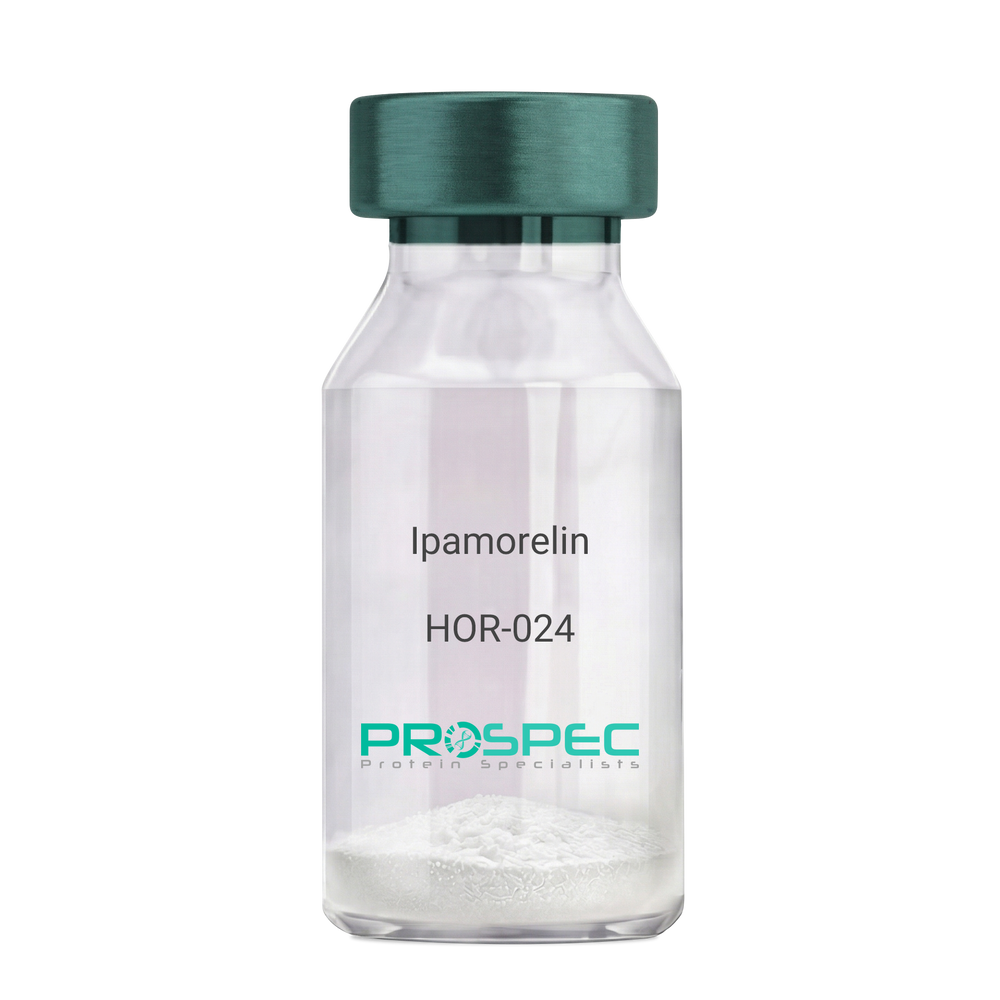
    Ipamorelin

    Description:

    Ipamorelin

    Ipamorelin

    Product # :

    HOR-024

    Price :

    Quantity :

    Shipping Method :

    Room Temp Icon

    Shipped at Room temp

    Add To Cart

    More Info

    • description
    • formulation
    • purity
    • More Info

    Description

    Ipamorelin Synthetic is a single, non-glycosylated polypeptide chain containing 4 amino acids, having a molecular mass of 711.85 Dalton and a Molecular formula of C38H49N9O5.

    Formulation

    The protein was lyophilized with no additives.

    Purity

    Greater than 97.0% as determined by analysis by RP-HPLC.

    More Info

    • Introduction

      Ipamorelin is a peptide selective agonist of the ghrelin/growth hormone secretagogue receptor and a growth hormone secretagogue. Ipamorelin is a pentapeptide that was derived from GHRP1. Ipamorelin significantly increases plasma growth hormone levels in both animals and humans. Like pralmorelin and GHRP-6, ipamorelin does not affect prolactin, FSH, LH or TSH levels. However, unlike GHRP2 and GHRP6, but as growth hormone-releasing hormone (GHRH), ipamorelin does not stimulate the secretion of adrenocorticotropic hormone (ACTH) or cortisol, and is highly selective for inducing the secretion only of GH.

    • Synonyms

      Ipamorelin

    • Physical Appearance

      Sterile Filtered White lyophilized (freeze-dried) powder.

    • Stability

      Lyophilized Ipamorelin although stable at room temperature for 3 weeks, should be stored desiccated below -18°C. Upon reconstitution Ipamorelin should be stored at 4°C between 2-7 days and for future use below -18°C. For long term storage it is recommended to add a carrier protein (0.1% HSA or BSA). Please prevent freeze-thaw cycles.

    • Solubility

      It is recommended to reconstitute the lyophilized Ipamorelin in sterile 18MΩ-cm H2O not less than 100 µg/ml, which can then be further diluted to other aqueous solutions.

    • Amino Acid Sequence

      Aib-His-D-2-Nal-D-Phe-Lys-NH2.

    ProSpec's products are furnished for LABORATORY RESEARCH USE ONLY. The product may not be used as drugs, agricultural or pesticidal products, food additives or household chemicals.

    Ipamorelin
  • View Data Sheet

    Name :

    GAL Human

    Description:

    Galanin Prepropeptide Human Recombinant

    GALN, GLNN, GMAP, GAL, GAL1.

    Product # :

    PRO-1433

    Price :

    Quantity :

    Shipping Method :

    Ice Icon

    Shipped with Ice Packs

    Add To Cart

    More Info

    • description
    • source
    • formulation
    • purity
    • More Info

    Description

    GAL Human Recombinant produced in E. coli is a single polypeptide chain containing 127 amino acids (20-123) and having a molecular mass of 13.9kDa. GAL is fused to a 23 amino acid His-tag at N-terminus & purified by proprietary chromatographic techniques.

    Source

    E.coli.

    Formulation

    The GAL solution (0.25mg/ml) contains 20mM Tris-HCl buffer (pH 8.0), 0.2M NaCl, 50% glycerol and 2mM DTT.

    Purity

    Greater than 90% as determined by SDS-PAGE.

    More Info

    • Introduction

      Galanin Prepropeptide (GAL) which is localized in brain pathways is involved in both cognition and affect, and also inhibits learning and memory by inhibiting neurotransmitter release and neuronal firing rate. GAL is a part of the galanin family and modulates a variety of physiological processed including cognition/memory, sensory/pain processing, neurotransmitter/hormone secretion, and feeding behavior. Galanin Prepropeptide is upregulated in primary afferent and sympathetic neurones and is required for the development of sympathetic perineuronal baskets subsequent to nerve injury.

    • Synonyms

      GALN, GLNN, GMAP, GAL, GAL1.

    • Physical Appearance

      Sterile Filtered colorless solution.

    • Stability

      Store at 4°C if entire vial will be used within 2-4 weeks. Store, frozen at -20°C for longer periods of time. For long term storage it is recommended to add a carrier protein (0.1% HSA or BSA).Avoid multiple freeze-thaw cycles.

    • Amino Acid Sequence

      MGSSHHHHHH SSGLVPRGSH MGSASAGLWS PAKEKRGWTL NSAGYLLGPH AVGNHRSFSD KNGLTSKREL RPEDDMKPGS FDRSIPENNI MRTIIEFLSF LHLKEAGALD RLLDLPAAASSEDIERS.

    ProSpec's products are furnished for LABORATORY RESEARCH USE ONLY. The product may not be used as drugs, agricultural or pesticidal products, food additives or household chemicals.

    Gal Human
  • View Data Sheet

    Name :

    LGALS13 Human

    Description:

    Galectin-13 Human Recombinant

    Galactoside-binding soluble lectin 13, Galectin-13, Gal-13, Placental tissue protein 13, PP13, Placental protein 13, LGALS13, PLAC8, GAL13.

    Product # :

    CYT-004

    Price :

    Quantity :

    Shipping Method :

    Ice Icon

    Shipped with Ice Packs

    Add To Cart

    More Info

    • description
    • source
    • formulation
    • purity
    • More Info

    Description

    Recombinant Human LGALS13 produced in E.Coli is a single, non-glycosylated polypeptide chain having a molecular mass of 16kDa. The LGALS13 also might appear as a homodimer, having a total Mw of 32kDa. LGALS13 is fused to a 6xHis tag at n-terminal and purified using standard chromatography techniques.

    Source

    Escherichia Coli.

    Formulation

    LGALS13 protein solution (0.5mg/ml) is formulated in 1xPBS buffer pH 7.4.

    Purity

    Greater than 90.0% as determined by SDS-PAGE.

    More Info

    • Introduction

      Recombinant Galectin-13 is an E. coli expressed peptide, this protein is one of human placenta specific galectins, like all galectin family, it contains a carbohydrate recognition domain (CRD) as well. Increased blood concentration was found highly asscoaited with preeclampsia and HELLP syndrome in pregnant women. The molecular weight of galectin-13 is 16kDa.

    • Synonyms

      Galactoside-binding soluble lectin 13, Galectin-13, Gal-13, Placental tissue protein 13, PP13, Placental protein 13, LGALS13, PLAC8, GAL13.

    • Physical Appearance

      Sterile Filtered colorless solution.

    • Stability

      Store at 4°C if entire vial will be used within 2-4 weeks.Store, frozen at -20°C for longer periods of time. For long term storage it is recommended to add a carrier protein (0.1% HSA or BSA). Avoid multiple freeze-thaw cycles.

    • Amino Acid Sequence

      MSSLPVPYKLPVSLSVGSCVIIKGTPIHSFINDPQLQVDFYTDM DEDSDIAFRFRVHFGNHVVMNRREFGIWMLEETTDYVPFEDGK

      QFELCIYVHYNEYEIKVNGIRIYGFVHRIPPSFVKMVQVSRDISLTSVCVCN

    • Background

      What is the molecular weight/Mw of LGALS13 HUMAN Protein?
      LGALS13 HUMAN Protein has a total Mw of 32kDa.

      What is the source or expression system of LGALS13 HUMAN Protein?
      Escherichia Coli.

      What is the Purity of LGALS13 HUMAN Protein?
      LGALS13 HUMAN Protein is >90% pure as determined by SDS-PAGE.

      What is the Biological Activity of LGALS13 HUMAN Protein?
      The biological functionality of LGALS13 HUMAN Protein will be determined in the future.

      What is the amino acid sequence of LGALS13 HUMAN Protein?
      MSSLPVPYKLPVSLSVGSCVIIKGTPIHSFINDPQLQVDFYTDM DEDSDIAFRFRVHFGNHVVMNRREFGIWMLEETTDYVPFEDGK
      QFELCIYVHYNEYEIKVNGIRIYGFVHRIPPSFVKMVQVSRDISLTSVCVCN

      What applications can LGALS13 HUMAN Protein be used in?
      LGALS13 HUMAN Protein can probably be used in western blot, ELISA and Lateral Flow.

      What is the endotoxin level for LGALS13 HUMAN Protein?
      The endotoxin level is minimal, LGALS13 HUMAN Protein was purified using conventional chromatography techniques.


    ProSpec's products are furnished for LABORATORY RESEARCH USE ONLY. The product may not be used as drugs, agricultural or pesticidal products, food additives or household chemicals.

    Lgals13 Human
  • View Data Sheet

    Name :

    Leptin qA Rat, PEG

    Description:

    Leptin Quadruple Antagonist, Pegylated Rat Recombinant

    OB Protein, Obesity Protein, OBS, Obesity factor.

    Product # :

    CYT-1241

    Price :

    Quantity :

    Shipping Method :

    Room Temp Icon

    Shipped at Room temp

    Add To Cart

    More Info

    • description
    • source
    • formulation
    • purity
    • biological activity
    • More Info

    Description

    Leptin Pegylated Quadruple Antagonist Rat Recombinant is a single non-glycosilated polypeptide chain containing 146 amino and additional Ala at N-terminus acids. The Rat Leptin antagonist is bound to 20 kDa mono-PEG at N-terminus, resulting in 35.6 kDa. The Rat Leptin Pegylated Quadruple Antagonist was mutated, resulting in D23L/L39A/D40A/F41A that was purified by proprietary chromatographic techniques.

    Source

    Escherichia coli.

    Formulation

    The Rat Leptin Pegylated Quadruple Antagonist was lyophilized from a concentrated (0.65mg/ml) solution with 0.003mM NaHCO3.

    Purity

    Greater than 98.0% as determined by:

    (a) Gel filtration analysis.

    (b) Analysis by SDS-PAGE.

    Biological Activity

    Rat Leptin Pegylated Quadruple Antagonist inhibits leptin-induced proliferation of BAF/3 cells stably transfected with the long form of human leptin receptor. Its in vitro.

    More Info

    • Synonyms

      OB Protein, Obesity Protein, OBS, Obesity factor.

    • Physical Appearance

      White lyophilized (freeze-dried) powder.

    • Stability

      Lyophilized Rat Leptin Pegylated Quadruple Antagonist although stable at room temperature for several weeks, should be stored desiccated below -18°C. Upon reconstitution at > 0.1 and up to 2mM of rat pegylated leptin antagonist and filter sterilization rat pegylated leptin antagonist can be stored at 4°C or even room temperature for several weeks making it suitable for long term infusion studies using osmotic pumps. At lower concentration addition of a carrier protein (0.1% HSA or BSA) is suggested. Please prevent freeze-thaw cycles.

    • Solubility

      It is recommended to reconstitute the lyophilized Rat Leptin Pegylated Quadruple Antagonist in sterile water or sterile 0.4% NaHCO3adjusted to pH 8-9, not less than 100µg/ml, which can then be further diluted with other aqueous solutions.

    • Background

      Leptin is a hormone which mainly produced by adipocytes. Leptin’s main part is to regulate long-term energy balance. Leptin is encoded by the LEP gene. Leptin receptors are expressed by various brain and peripheral cell types. leptin levels influence satiety, appetite and triggers behaviors which lead to energy savings. High leptin levels are interpreted by the brain that energy reserves are high, whereas low leptin levels means that energy reserves are low, in the process adapting the organism to starvation through a variety of metabolic, neurobiochemical, endocrine and behavioral change.

    ProSpec's products are furnished for LABORATORY RESEARCH USE ONLY. The product may not be used as drugs, agricultural or pesticidal products, food additives or household chemicals.

    Leptin Rat Peg Qa
  • View Data Sheet

    Name :

    Leptin Mouse, PEG

    Description:

    Pegylated Mouse Leptin Recombinant

    OB Protein, Obesity Protein, OBS, Obesity factor.

    Product # :

    CYT-591

    Price :

    Quantity :

    Shipping Method :

    Room Temp Icon

    Shipped at Room temp

    Add To Cart

    More Info

    • description
    • source
    • formulation
    • purity
    • biological activity
    • More Info

    Description

    Leptin Mono-Pegylated Mouse Recombinant produced in E.Coli is a single, non-glycosylated, polypeptide chain containing 146 amino acids and an additional Ala at N-terminus. Pegylated Mouse Leptin contains PEG 20 kDa at its N-terminus and having a molecular mass of 35.6 kDa as determined by mass spectrometry. Since its enlarged hydrodymanic volume Pegylated Leptin runs on SDS-PAGE as A 48 kDa protein and in gel-filtration on Superdex 200 as over 100 kDa protein. Pegylated Mouse Leptin half-life in circulation after SC injection was over 20 hours. Mouse Leptin was purified by proprietary chromatographic techniques according to Salomon et al (2006) Protein Expression and Purification 47, 128–136 and then pegylated.

    Source

    Escherichia Coli.

    Formulation

    The mouse Leptin was lyophilized from a concentrated (0.65mg/ml) solution containing 0.003mM NaHCO3.

    Purity

    Greater than 99.0% as determined by:
    (a) Analysis by Gel-Filtration.
    (b) Analysis by SDS-PAGE.

    Biological Activity

    Pegylated mouse Leptin is capable of stimulatng proliferation of BAF/3 cells stably transfected with the long form of human leptin receptor. Pegylated mouse Leptin in vitro activity is only slightly lower than the non-pegylated antagonist but in vivo it has profound weight reducing effect (as compared to the non-pegylated leptin), resulting mainly from reduced food intake.

    More Info

    • Introduction

      A 16-kDa peptide hormone secreted from white adipocytes and implicated in the regulation of food intake and energy balance. Leptin provides the key afferent signal from fat cells in the feedback system that controls body fat stores.

    • Synonyms

      OB Protein, Obesity Protein, OBS, Obesity factor.

    • Physical Appearance

      Sterile Filtered White lyophilized (freeze-dried) powder.

    • Stability

      Lyophilized Leptin although stable at room temperature for 3 weeks, should be stored desiccated below -18°C. Upon reconstitution Leptin should be stored at 4°C between 2-7 days and for future use below -18°C.For long term storage it is recommended to add a carrier protein (0.1% HSA or BSA).Please prevent freeze-thaw cycles.

    • Solubility

      It is recommended to reconstitute the lyophilized Leptin in sterile 0.4% NaHCO3 adjusted to pH-8.5 not less than 100µg/ml, which can then be further diluted to other aqueous solutions.

    ProSpec's products are furnished for LABORATORY RESEARCH USE ONLY. The product may not be used as drugs, agricultural or pesticidal products, food additives or household chemicals.

    Leptin Mouse Pegylated
  • View Data Sheet

    Name :

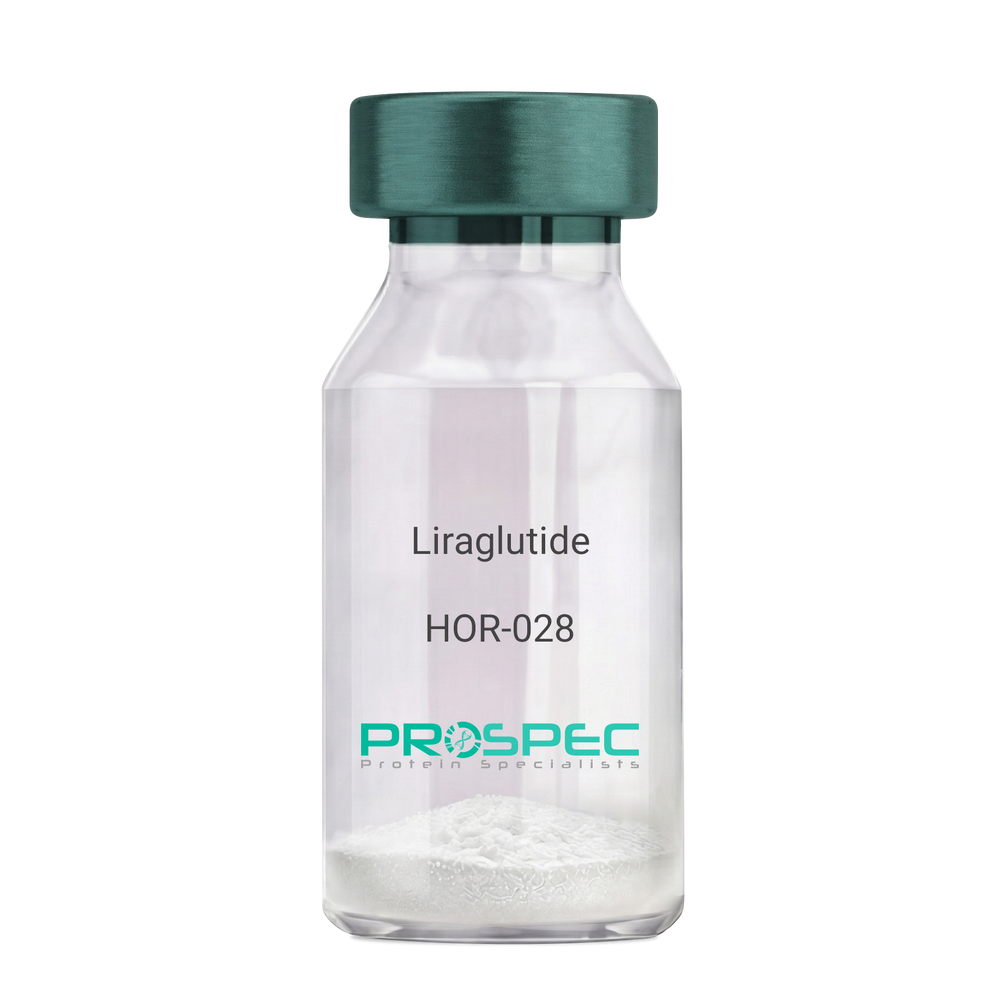
    Liraglutide

    Description:

    Liraglutide

    Product # :

    HOR-028

    Price :

    Quantity :

    Shipping Method :

    Room Temp Icon

    Shipped at Room temp

    Add To Cart

    More Info

    • description
    • formulation
    • purity
    • More Info
    • HPLC, MS

    Description

    Liraglutide peptide is a single, non-glycosylated polypeptide chain containing 31 amino acids, having a molecular mass of 3751 Dalton and a Molecular formula of C172H265N43O51.

    Formulation

    The protein (1mg/ml) was lyophilized with no additives.

    Purity

    Greater than 97% as determined by RP-HPLC.

    HPLC, MS

    liraglutide hplc - Product image 1
    liraglutide mass spec - Product image 2

    More Info

    • Introduction

      Liraglutide is a long-acting GLP1 analogue sharing 97% a.a. homology to human GLP1. Liraglutide differs from GLP1 by the substitution of arginine for lysine at position 34. While GLP1 is degraded swiftly by DPP4 resulting in short life of insulin, Liraglutide contains a fatty acid that binds to albumin and prolongs the half-life of the structure. liraglutide causes insulin to secret in the presence of increasing glucose levels. Due toits receptor site, liraglutide inhibits glucagon secretion and delays gastric emptying.

    • Physical Appearance

      Sterile Filtered White lyophilized (freeze-dried) powder.

    • Stability

      Store the lyophilized Liraglutide between 2-8°C, do not freeze. Upon reconstitution Lypressin should be stored at 4°C between 2-7 days and for future use below -18°C. Please prevent freeze-thaw cycles.

    • Solubility

      It is recommended to reconstitute the lyophilized Liraglutide in sterile 18MΩ-cm H2O not less than 100 µg/ml, which can then be further diluted to other aqueous solutions.
      Lypressin is also soluble in 1% Acetic Acid.

    • Amino Acid Sequence

      H-His-Ala-Glu-Gly-Thr-Phe-Thr-Ser-Asp-Val-Ser-Ser-Tyr-Leu-Glu-Gly-Gln-Ala-Ala-Lys(γ-Glu-palmitoyl)-Glu-Phe-Ile-Ala-Trp-Leu-Val-Arg-Gly-Arg-Gly-OH

    ProSpec's products are furnished for LABORATORY RESEARCH USE ONLY. The product may not be used as drugs, agricultural or pesticidal products, food additives or household chemicals.

    Liraglutide
  • View Data Sheet

    Name :

    P Selectin Human

    Description:

    P-selectin Human Recombinant

    P-selectin, Granule membrane protein 140, GMP-140, PADGEM, Leukocyte-endothelial cell adhesion molecule 3, LECAM3, CD62 antigen-like family member P, CD62P antigen, SELP, GMRP, GRMP, CD62, PSEL, CD62P, GMP140, FLJ45155.

    Product # :

    PRO-382

    Price :

    Quantity :

    Shipping Method :

    Ice Icon

    Shipped with Ice Packs

    Add To Cart

    More Info

    • description
    • source
    • formulation
    • purity
    • More Info

    Description

    P-Selectin Human Recombinant is expressed in E. coli containing 566 amino acids 197-761 fused to an amino terminal hexahistidine tag.

    Source

    Escherichia Coli.

    Formulation

    P-Selectin is supplied in 50% Glycerol.

    Purity

    Greater than 95% as determined by SDS-PAGE.
    Single band on Western Blot.

    More Info

    • Introduction

      P-Selectin also called Platelet Alpha-Granule Membrane Protein, CD62, and Granulocyte Membrane Protein GRMP belongs to a family of divalent cation-dependent carbohydrate-binding glycoproteins or adhesion molecules. Pselectin is expressed transiently on the surface of activated platelets and endothelial cells. P-Selectin is a 140 kDa protein which is stored in the alpha-granules of platelets and Weibel-Palade bodies of endothelial cells. Secreted P-selectin is thought to play a key role in the adhesion of platelets to monocytes and neutrophils during an inflammatory response. P-Selectin is a calcium-dependent receptor that binds to sialylated forms of Lewis blood group carbohydrate antigens on neutrophils and monocytes. Levels of P-Selectin may be elevated in a number of pathological conditions.

    • Synonyms

      P-selectin, Granule membrane protein 140, GMP-140, PADGEM, Leukocyte-endothelial cell adhesion molecule 3, LECAM3, CD62 antigen-like family member P, CD62P antigen, SELP, GMRP, GRMP, CD62, PSEL, CD62P, GMP140, FLJ45155.

    • Physical Appearance

      Sterile Filtered liquid formulation.

    • Stability

      Store at 4°C if entire vial will be used within 1-2 weeks. Store, frozen at -20°C for longer periods of time. Avoid multiple freeze-thaw cycles.

    • Applications

      P-Selectin can be used directly as a positive control in Western blotting, ELISA, immunoprecipitation and other immunological experiments.
      The biological activity of this product has not yet been tested.

    ProSpec's products are furnished for LABORATORY RESEARCH USE ONLY. The product may not be used as drugs, agricultural or pesticidal products, food additives or household chemicals.

    P Selectin Human
  • View Data Sheet

    Name :

    Follistatin Human, Sf9

    Description:

    Follistatin Human Recombinant, Sf9

    Follistatin, FS, Activin-Binding Protein, Follistatin Isoform FST317, FST.

    Product # :

    CYT-865

    Price :

    Quantity :

    Shipping Method :

    Ice Icon

    Shipped with Ice Packs

    Add To Cart

    More Info

    • description
    • source
    • formulation
    • purity
    • More Info
    • sds-page

    Description

    FST produced in Sf9 Baculovirus cells is a single, glycosylated polypeptide chain containing 295 amino acids (30-317a.a.) and having a molecular mass of 32.5kDa.FST is expressed with a 7 amino acid His tag at C-Terminus and purified by proprietary chromatographic techniques.

    Source

    Sf9, Baculovirus cells.

    Formulation

    FST protein solution (0.25mg/ml) contains Phosphate buffered saline (pH7.4) and 10% glycerol.

    Purity

    Greater than 90.0% as determined by SDS-PAGE.

    sds-page

    Follistatin Human, Sf9-sds-page - Product image 1

    More Info

    • Introduction

      Follistatin is a single-chain gonadal protein that specifically inhibits follicle-stimulating hormone release. The single FST gene encodes two isoforms, FST317 and FST344 containing 317 and 344 amino acids respectively, resulting from alternative splicing of the precursor mRNA. In a study in which 37 candidate genes were tested for linkage and association with polycystic ovary syndrome (PCOS) or hyperandrogenemia in 150 families, evidence was found for linkage between PCOS and follistatin. Follistatin binds directly to activin and functions as an activin antagonist. specific inhibitor of the biosynthesis and secretion of pituitary follicle stimulating hormone (fsh).

    • Synonyms

      Follistatin, FS, Activin-Binding Protein, Follistatin Isoform FST317, FST.

    • Physical Appearance

      Sterile filtered colorless solution.

    • Stability

      Store at 4°C if entire vial will be used within 2-4 weeks. Store, frozen at -20°C for longer periods of time. For long term storage it is recommended to add a carrier protein (0.1% HSA or BSA).Avoid multiple freeze-thaw cycles.

    • Amino Acid Sequence

      MGNCWLRQAK NGRCQVLYKT ELSKEECCST GRLSTSWTEE DVNDNTLFKW MIFNGGAPNC IPCKETCENV DCGPGKKCRM NKKNKPRCVC APDCSNITWK GPVCGLDGKT YRNECALLKA RCKEQPELEV QYQGRCKKTC RDVFCPGSST CVVDQTNNAY CVTCNRICPE PASSEQYLCG NDGVTYSSAC HLRKATCLLG RSIGLAYEGK CIKAKSCEDI QCTGGKKCLW DFKVGRGRCS LCDELCPDSK SDEPVCASDN ATYASECAMK EAACSSGVLL EVKHSGSCNH HHHHH

    • Background

      What is the molecular weight/Mw of FOLLISTATIN HUMAN, SF9 Protein?
      FOLLISTATIN HUMAN, SF9 Protein has a total Mw of 32.5kDa.

      What is the source or expression system of FOLLISTATIN HUMAN, SF9 Protein?
      Sf9, Baculovirus cells.
      What is the Purity of FOLLISTATIN HUMAN, SF9 Protein?
      FOLLISTATIN HUMAN, SF9 Protein is >90% pure as determined by SDS-PAGE.

      What is the Biological Activity of FOLLISTATIN HUMAN, SF9 Protein?
      The biological functionality of FOLLISTATIN HUMAN, SF9 Protein will be determined in the future.

      What is the amino acid sequence of FOLLISTATIN HUMAN, SF9 Protein?
      MGNCWLRQAK NGRCQVLYKT ELSKEECCST GRLSTSWTEE DVNDNTLFKW MIFNGGAPNC IPCKETCENV DCGPGKKCRM NKKNKPRCVC APDCSNITWK GPVCGLDGKT YRNECALLKA RCKEQPELEV QYQGRCKKTC RDVFCPGSST CVVDQTNNAY CVTCNRICPE PASSEQYLCG NDGVTYSSAC HLRKATCLLG RSIGLAYEGK CIKAKSCEDI QCTGGKKCLW DFKVGRGRCS LCDELCPDSK SDEPVCASDN ATYASECAMK EAACSSGVLL EVKHSGSCNH HHHHH.

      What applications can FOLLISTATIN HUMAN, SF9 Protein be used in?
      FOLLISTATIN HUMAN, SF9 Protein can probably be used in western blot, ELISA and Lateral Flow.

      What is the endotoxin level for FOLLISTATIN HUMAN, SF9 Protein?
      The endotoxin level is minimal, FOLLISTATIN HUMAN, SF9 Protein was purified using conventional chromatography techniques.

    ProSpec's products are furnished for LABORATORY RESEARCH USE ONLY. The product may not be used as drugs, agricultural or pesticidal products, food additives or household chemicals.

    Fst Human Sf9
  • View Data Sheet

    Name :

    a-Actinin

    Description:

    Actinin Alpha

    Alpha-actinin-1, Alpha-actinin cytoskeletal isoform, Non-muscle alpha-actinin-1, F-actin cross-linking protein, ACTN1.

    Product # :

    PRO-518

    Price :

    Quantity :

    Shipping Method :

    Room Temp Icon

    Shipped at Room temp

    Add To Cart

    More Info

    • description
    • source
    • formulation
    • purity
    • More Info

    Description

    Ultra pure Alpha Actinin having a Molecular mass of 95,000 Dalton.

    Source

    Chicken Gizzard.

    Formulation

    The protein was lyophilized from a 1mg/ml solution containing 10mM Tris acetate buffer pH 7.6, 0.1mM EDTA, 2mM DTT, and 20mM NaCl.

    Purity

    Greater than 95.0% as determined by analysis by SDS-PAGE.

    More Info

    • Introduction

      ACTN1 encodes a nonmuscle, cytoskeletal, alpha actinin isoform and maps to the same site as the structurally similar erythroid beta spectrin gene. Alpha actinins belong to the spectrin gene superfamily which represents a diverse group of cytoskeletal proteins, including the alpha and beta spectrins and dystrophins. Alpha actinin is an actin-binding protein with multiple roles in different cell types. In nonmuscle cells, the cytoskeletal isoform is found along microfilament bundles and adherens-type junctions, where it is involved in binding actin to the membrane. In contrast, skeletal, cardiac, and smooth muscle isoforms are localized to the Z-disc and analogous dense bodies, where they help anchor the myofibrillar actin filaments.

    • Synonyms

      Alpha-actinin-1, Alpha-actinin cytoskeletal isoform, Non-muscle alpha-actinin-1, F-actin cross-linking protein, ACTN1.

    • Physical Appearance

      Sterile Filtered White lyophilized (freeze-dried) powder.

    • Stability

      Lyophilized a-Actinin although stable at room temperature for 3 weeks, should be stored desiccated below -18°C. Upon reconstitution a-Actinin should be stored at 4°C between 2-7 days and for future use below -18°C. For long term storage it is recommended to add a carrier protein (0.1% HSA or BSA).Please prevent freeze-thaw cycles.

    • Solubility

      It is recommended to reconstitute the lyophilized a-Actinin in sterile 18MΩ-cm H2O not less than 100µg/ml, which can then be further diluted to other aqueous solutions.

    • Applications

      Protein standard in 1D and 2D SDS gelelectrophoresis
      Immunoassays
      Immunization.

    ProSpec's products are furnished for LABORATORY RESEARCH USE ONLY. The product may not be used as drugs, agricultural or pesticidal products, food additives or household chemicals.

    Alpha Actinin
  • View Data Sheet

    Name :

    LRPAP1 Mouse

    Description:

    Low Density Lipoprotein Receptor Related Protein Associated Protein 1 Mouse Recombinant

    Low density lipoprotein-related protein-associated protein 1 (alpha-2-macroglobulin receptor-associated protein 1), A2MRAP, HBP44, RAP, A2RAP, Alpha-2-MRAP.

    Product # :

    PRO-2224

    Price :

    Quantity :

    Shipping Method :

    Ice Icon

    Shipped with Ice Packs

    Add To Cart

    More Info

    • description
    • source
    • formulation
    • purity
    • More Info

    Description

    LRPAP1 Mouse Recombinant produced in E.Coli is a single, non-glycosylated polypeptide chain containing 355 amino acids (29-360 a.a) and having a molecular mass of 41.4kDa. LRPAP1 is fused to a 23 amino acid His-tag at N-terminus & purified by proprietary chromatographic techniques.

    Source

    Escherichia Coli.

    Formulation

    LRPAP1 protein solution (1mg/ml) containing Phosphate buffered saline (pH7.4) and 10% glycerol.

    Purity

    Greater than 90.0% as determined by SDS-PAGE.

    More Info

    • Introduction

      LRPAP1 is a member of the alpha-2-MRAP family. LRPAP1 cooperates with LRP1/alpha-2-macroglobulin receptor and glycoprotein 330. LRPAP1, located on the cell surface, creates a complex with the alpha 2 macroglobulin receptor light and heavy chains and has part in the pathogenesis of membrane glomerular nephritis.

    • Synonyms

      Low density lipoprotein-related protein-associated protein 1 (alpha-2-macroglobulin receptor-associated protein 1), A2MRAP, HBP44, RAP, A2RAP, Alpha-2-MRAP.

    • Physical Appearance

      Sterile Filtered colorless solution.

    • Stability

      Store at 4°C if entire vial will be used within 2-4 weeks. Store, frozen at -20°C for longer periods of time. For long term storage it is recommended to add a carrier protein (0.1% HSA or BSA).Avoid multiple freeze-thaw cycles.

    • Amino Acid Sequence

      MGSSHHHHHH SSGLVPRGSH MGSQPIAGHG GKYSREKNEP EMAAKRESGE EFRMEKLNQL WEKAKRLHLS PVRLAELHSD LKIQERDELN WKKLKVEGLD KDGEKEAKLI HNLNVILARY GLDGRKDAQM VHSNALNEDT QDELGDPRLE KLWHKAKTSG KFSSEELDKL WREFLHYKEK IQEYNVLLDT LSRAEEGYEN LLSPSDMAHI KSDTLISKHS ELKDRLRSIN QGLDRLRKVS HQGYGSTTEF EEPRVIDLWD LAQSANFTEK ELESFREELK HFEAKIEKHN HYQKQLEISH QKLKHVESIG DPEHISRNKE KYVLLEEKTK ELGYKVKKHL QDLSSRVSRA RHNEL.

    ProSpec's products are furnished for LABORATORY RESEARCH USE ONLY. The product may not be used as drugs, agricultural or pesticidal products, food additives or household chemicals.

    Lrpap1 Mouse
  • View Data Sheet

    Name :

    LGALS4 Human

    Description:

    Galectin-4 Human Recombinant

    Galectin-4, Gal-4, Lactose-binding lectin 4, L-36 lactose-binding protein, L36LBP, Antigen NY-CO-27, LGALS4, lectin galactoside-binding soluble 4, GAL4.

    Product # :

    CYT-686

    Price :

    Quantity :

    Shipping Method :

    Ice Icon

    Shipped with Ice Packs

    Add To Cart

    More Info

    • description
    • source
    • formulation
    • purity
    • More Info
    • sds-page

    Description

    Galectin-4 produced in E.Coli is a single, non-glycosylated polypeptide chain containing 343 amino acids (1-323 a.a.) and having a molecular mass of 38.1kDa.Galectin-4 is fused to 20 amino acid His-Tag at N-terminus and purified by proprietary chromatographic techniques.

    Source

    Escherichia Coli.

    Formulation

    The LGALS4 protein solution contains 20mM Tris-HCl, pH-8, 1mM DTT and 10% glycerol.

    Purity

    Greater than 95.0% as determined by SDS-PAGE.

    sds-page

    LGALS4 Human-SDS-PAGE - Product image 1

    More Info

    • Introduction

      Galectin-4 is a member of the subfamily of galectins composed of two carbohydrate recognition domains having similar peptide chains. The galectins are a family of beta-galactoside-binding proteins having a role in modulating cell-cell and cell-matrix interactions, which inhibits chronic inflammations, GVHD, and allergic responses. LGALS4 expression is limited to small intestine, colon, and rectum, and it is underexpressed in colorectal cancer. LGALS4 binds as an endogenous ligand to glycosphingolipids having 3-O-sulfated Gal residues and bind as well to cholesterol-3-sulfate. LGALS4 takes part in cell adhesion. LGALS4 plays a role in crosslinking the lateral cell membranes of the surface-lining epithelial cells, thus supporting epithelial integrity against mechanical stress exerted by the bowel lume. LGALS4 is in charge of intestinal inflammation via selective regulation of peripheral and mucosal T-cell cell cycle, in addition to cell death by apoptosis of T-cells by a pathway independent of the activation of caspases. LGALS4 blockade decreases TNF-alpha inhibitor induced T-cell death. LGALS4 decreases pro-inflammatory cytokine secretion including IL-6 & IL-17.

    • Synonyms

      Galectin-4, Gal-4, Lactose-binding lectin 4, L-36 lactose-binding protein, L36LBP, Antigen NY-CO-27, LGALS4, lectin galactoside-binding soluble 4, GAL4.

    • Physical Appearance

      Sterile filtered colorless solution.

    • Stability

      Store at 4°C if entire vial will be used within 2-4 weeks. Store, frozen at -20°C for longer periods of time. For long term storage it is recommended to add a carrier protein (0.1% HSA or BSA).Avoid multiple freeze-thaw cycles.

    • Amino Acid Sequence

      MGSSHHHHHH SSGLVPRGSH MAYVPAPGYQ PTYNPTLPYY QPIPGGLNVG MSVYIQGVAS EHMKRFFVNF VVGQDPGSDV AFHFNPRFDG WDKVVFNTLQ GGKWGSEERK RSMPFKKGAA FELVFIVLAE HYKVVVNGNP FYEYGHRLPL QMVTHLQVDG DLQLQSINFI GGQPLRPQGP PMMPPYPGPG HCHQQLNSLP TMEGPPTFNP PVPYFGRLQG GLTARRTIII KGYVPPTGKS FAINFKVGSS GDIALHINPR MGNGTVVRNS LLNGSWGSEE KKITHNPFGP GQFFDLSIRC GLDRFKVYAN GQHLFDFAHR LSAFQRVDTL EIQGDVTLSY VQI.

    • Background

      What is the molecular weight/Mw of LGALS4 HUMAN Protein?
      LGALS4 HUMAN Protein has a total Mw of 38.1kDa.

      What is the source or expression system of LGALS4 HUMAN Protein?
      Escherichia Coli.

      What is the Purity of LGALS4 HUMAN Protein?
      LGALS4 HUMAN Protein is >95% pure as determined by SDS-PAGE.

      What is the Biological Activity of LGALS4 HUMAN Protein?
      The biological functionality of LGALS4 HUMAN Protein will be determined in the future.

      What is the amino acid sequence of LGALS4 HUMAN Protein?
      MGSSHHHHHH SSGLVPRGSH MAYVPAPGYQ PTYNPTLPYY QPIPGGLNVG MSVYIQGVAS EHMKRFFVNF VVGQDPGSDV AFHFNPRFDG WDKVVFNTLQ GGKWGSEERK RSMPFKKGAA FELVFIVLAE HYKVVVNGNP FYEYGHRLPL QMVTHLQVDG DLQLQSINFI GGQPLRPQGP PMMPPYPGPG HCHQQLNSLP TMEGPPTFNP PVPYFGRLQG GLTARRTIII KGYVPPTGKS FAINFKVGSS GDIALHINPR MGNGTVVRNS LLNGSWGSEE KKITHNPFGP GQFFDLSIRC GLDRFKVYAN GQHLFDFAHR LSAFQRVDTL EIQGDVTLSY VQI.

      What applications can LGALS4 HUMAN Protein be used in?
      LGALS4 HUMAN Protein can probably be used in western blot, ELISA and Lateral Flow.

      What is the endotoxin level for LGALS4 HUMAN Protein?
      The endotoxin level is minimal, LGALS4 HUMAN Protein was purified using conventional chromatography techniques.


    ProSpec's products are furnished for LABORATORY RESEARCH USE ONLY. The product may not be used as drugs, agricultural or pesticidal products, food additives or household chemicals.

    Lgals4 Human
  • 1
  • …
  • 3
  • 4
  • 5
  • 6
  • 7
  • …
  • 42
Your browser does not support the video tag.

Products

  • Cytokines
  • Growth Factors
  • Chemokines
  • CD Antigens
  • Neurotrophins
  • Hormones
  • Enzymes
  • Viral Antigens
  • Recombinant Proteins
  • Natural Proteins
  • Monoclonal Antibodies
  • Polyclonal Antibodies
  • Thermal Packaging

About

  • Company
  • Founder
  • Contribution
  • Contact Us
  • My Account

Ordering

  • Ordering Method
  • Ordering - Credit Card
  • Ordering PO
  • Shipping Fees
  • FAQ's

Legal

  • Terms & Conditions
  • Privacy
  • Site Map
  • info@prospecbio.com
  • Facebook
  • Instagram
  • Linkedin Profile

© 2026 ProSpec-Tany TechnoGene Ltd. All Rights Reserved.

  • Choosing a selection results in a full page refresh.
  • Opens in a new window.