Search results
1000 results found for “kctd”
Name
Description
Product #
Price
Quantity
Shipping Method
- View Data Sheet
Name :
CTGF Human, HEKDescription:
Connective Tissue Growth Factor Human Recombinant , HEK
CCN2, NOV2, HCS24, IGFBP8, MGC102839, CTGF.
Product # :
CYT-687Price :
Quantity :
Shipping Method :
Shipped with Ice Packs
More Info
- description
- source
- formulation
- purity
- More Info
Description
The CTGF Human Recombinant produced in HEK293 cells, is 36kDa protein containing a total of 329 amino acid residues (aa 27-349) including a C-terminal 6×His tag.
Source
HEK293 cells.
Formulation
CTGF filtered (0.2µm) solution in 0.1M Citrate buffer pH 4.7 and 20% (w/v) glycerol.
Purity
Greater than 90.0% as determined by SDS-PAGE.
More Info
-
Introduction
Connective Tissue Growth Factor belongs to the CCN family of proteins. The CCN family presently consists of six members in human also known as: Cyr61 (Cystein rich 61), CTGF (Connective Tissue Growth Factor), Nov (Nephroblastoma Overexpressed gene), WISP-1, 2 and 3 (Wnt-1 Induced Secreted Proteins). The CCN genes encode secreted proteins associated with the Extracellular Matrix (ECM) and cell membrane.
CCN proteins are matricellular proteins which are involved in the regulation of various cellular functions including: proliferation, differentiation, survival, adhesion and migration. They are expressed in derivatives of the three embryonic sheets and are implicated in the development of kidney, nervous system, muscle, bone marrow, cartilage and bone. During adulthood, they are implicated in wound healing, bone fracture repair, and pathologies such as: fibrosis, vascular ailments and tumorigenesis.
Full length secreted CCN proteins can show an antiproliferative activity, whereas truncated isoforms are likely to stimulate proliferation and behave as oncogenes.
The full length protein consists of four modules: Module I shares partial identity with the N-terminal part of the Insulin-like Growth Factor Binding Proteins (IGFBPs).
Module II includes a stretch of 70amino acid residues – which shares sequence identity with the Von Willebrand Factor Type C repeat (VWC).
Module III contains sequences sharing identity with the Thrombospondin type 1 repeat (TSP1) (WSXCSXXCG), which is thought to be implicated in the binding of sulfated glycoconjugates and to be important for cell adhesion.
Module IV, also designated CT, is encoded by exon5. It is the leasts conserved one of the four domains at the level of nucleotide sequence, but it appears to be critical for several of the biological functions attributed to the CCN proteins. Module IV resembles the CT domain of several extracellular protein including, Von Willebrand's factor and mucins. Sequence similarities to heparin-binding motifs are also found within this domain.
Proteolysis of the secreted full-length CCN proteins that has been reported in the case of CCN2 and CCN3 might result in the production of CCN-derived peptides with high affinity for ligands that full-length CNN proteins bind only poorly. Amino-truncated CCN2 isoforms were biologically active whereas no specific biological activity has been attributed to the truncated CCN3. Although the molecular processes underlying the production of these secreted isoforms is presently unknown, it is important to note that proteolysis occur at the same amino acid residues in both CCN2 and CCN3. An elevated expression of CCN2 has also been detected by Northern blotting in human invasive mammary ductal carcinomas, dermatofibromas, pyogenic granuloma, endothelial cells of angiolipomas and angioleiomyomas, and in pancreatic tumors. A study performed with chondrosarcomas representative of various histological grades established that CCN2 expression was closely correlated with increasing levels of malignancy.
In agreement with CCN2 playing a role in brain tumor angiogenesis, immunocytochemistry studies indicated that both glioblastoma tumor cells and proliferating endothelial cells stained positive for CCN2. In astrocytomas, CCN2 expression was particularly elevated in high grade tumors, with a marked effect of CCN2 on cell proliferation. Downregulation of CCN2 expression in these cells was associated with a growth arrest at the G1/S transition while over-expression of CCN2 induced a two-fold increase of the number of cells in the G1 phase. Gene profiling analysis allowed to identify a set of about 50 genes whose expression might account for the proliferative activity of CCN2 in these cells.
CCN2 was seen in a higher proportion of mononuclear cells of patients with acute lymphoblastic leukemia. -
Synonyms
CCN2, NOV2, HCS24, IGFBP8, MGC102839, CTGF.
-
Physical Appearance
Filtered colorless solution.
-
Stability
Store at 4°C if entire vial will be used within 2-4 weeks. Store, frozen at -20°C for longer periods of time. For long term storage it is recommended to add a carrier protein (0.1% HSA or BSA).Avoid multiple freeze-thaw cycles.
-
Amino Acid Sequence
QNCSGPCRCP DEPAPRCPAG VSLVLDGCGC CRVCAKQLGE LCTERDPCDP HKGLFCHFGS PANRKIGVCT AKDGAPCIFG GTVYRSGESF QSSCKYQCTC LDGAVGCMPL CSMDVRLPSP DCPFPRRVKL PGKCCEEWVC DEPKDQTVVG PALAAYRLED TFGPDPTMIR ANCLVQTTEW SACSKTCGMG ISTRVTNDNA SCRLEKQSRL CMVRPCEADL EENIKKGKKC IRTPKISKPI KFELSGCTSM KTYRAKFCGV CTDGRCCTPH RTTTLPVEFK CPDGEVMKKN MMFIKTCACH YNCPGDNDIF ESLYYRKMYG DMA HHHHHH.
-
Background
What is the molecular weight/Mw of CTGF Protein?
CTGF Protein has a total Mw of 36kDa.
What is the source or expression system of CTGF Protein?
HEK293 cells.
What is the Purity of CTGF Protein?
CTGF Protein is >90% pure as determined by SDS-PAGE.
What is the Biological Activity of CTGF Protein?
The biological functionality of CTGF Protein will be determined in the future.
What is the amino acid sequence of CTGF Protein?
QNCSGPCRCP DEPAPRCPAG VSLVLDGCGC CRVCAKQLGE LCTERDPCDP HKGLFCHFGS PANRKIGVCT AKDGAPCIFG GTVYRSGESF QSSCKYQCTC LDGAVGCMPL CSMDVRLPSP DCPFPRRVKL PGKCCEEWVC DEPKDQTVVG PALAAYRLED TFGPDPTMIR ANCLVQTTEW SACSKTCGMG ISTRVTNDNA SCRLEKQSRL CMVRPCEADL EENIKKGKKC IRTPKISKPI KFELSGCTSM KTYRAKFCGV CTDGRCCTPH RTTTLPVEFK CPDGEVMKKN MMFIKTCACH YNCPGDNDIF ESLYYRKMYG DMA HHHHHH.
What applications can CTGF Protein be used in?
CTGF Protein can probably be used in western blot, ELISA and Lateral Flow.
What is the endotoxin level for CTGF Protein?
The endotoxin level is minimal, CTGF Protein was purified using conventional chromatography techniques.
ProSpec's products are furnished for LABORATORY RESEARCH USE ONLY. The product may not be used as drugs, agricultural or pesticidal products, food additives or household chemicals.
- View Data Sheet
Name :
STK16 HumanDescription:
Serine/Threonine Kinase 16 Human Recombinant
Serine/threonine-protein kinase 16, Myristoylated and palmitoylated serine/threonine-protein kinase, MPSK, Protein kinase PKL12, TGF-beta-stimulated factor 1, TSF-1, Tyrosine-protein kinase STK16, hPSK, STK16, MPSK1, PKL12, TSF1, KRCT.
Product # :
PKA-032Price :
Quantity :
Shipping Method :
Shipped with Ice Packs
More Info
- description
- source
- formulation
- purity
- More Info
Description
STK16 Human Recombinant produced in E.Coli is a single, non-glycosylated polypeptide chain containing 329 amino acids (1-305 a.a) and having a molecular mass of 37.2kDa.STK16 is fused to a 24 amino acid His-tag at N-terminus & purified by proprietary chromatographic techniques.
Source
Escherichia Coli.
Formulation
STK16 protein solution (1mg/ml) containing 20mM Tris-HCl buffer (pH8.0), 20% glycerol, 0.1M NaCl and 1mM DTT.
Purity
Greater than 90.0% as determined by SDS-PAGE.
More Info
-
Introduction
Serine/threonine-protein kinase 16 (STK16) is a membrane-associated protein kinase which phosphorylates on serine and threonine residues. STK16 is involved in secretory vesicle trafficking or intracellular signaling. Furthermore, the STK16 protein may have a role in regulating stromal-epithelial interactions which occur during ductal morphogenesis in the mammary gland. STK16 can autophosphorylate on Tyr residue; it is however unclear whether STK16 has tyrosine-protein kinase toward other proteins. STK16 may also be involved in TGF-beta signaling.
-
Synonyms
Serine/threonine-protein kinase 16, Myristoylated and palmitoylated serine/threonine-protein kinase, MPSK, Protein kinase PKL12, TGF-beta-stimulated factor 1, TSF-1, Tyrosine-protein kinase STK16, hPSK, STK16, MPSK1, PKL12, TSF1, KRCT.
-
Physical Appearance
Sterile Filtered colorless solution.
-
Stability
Store at 4°C if entire vial will be used within 2-4 weeks. Store, frozen at -20°C for longer periods of time. For long term storage it is recommended to add a carrier protein (0.1% HSA or BSA).Avoid multiple freeze-thaw cycles.
-
Amino Acid Sequence
MGSSHHHHHH SSGLVPRGSH MGSHMGHALC VCSRGTVIID NKRYLFIQKL GEGGFSYVDL VEGLHDGHFY ALKRILCHEQ QDREEAQREA DMHRLFNHPN ILRLVAYCLR ERGAKHEAWL LLPFFKRGTL WNEIERLKDK GNFLTEDQIL WLLLGICRGL EAIHAKGYAH RDLKPTNILL GDEGQPVLMD LGSMNQACIH VEGSRQALTL QDWAAQRCTI SYRAPELFSV QSHCVIDERT DVWSLGCVLY AMMFGEGPYD MVFQKGDSVA LAVQNQLSIP QSPRHSSALR QLLNSMMTVD PHQRPHIPLL LSQLEALQPP APGQHTTQI.
ProSpec's products are furnished for LABORATORY RESEARCH USE ONLY. The product may not be used as drugs, agricultural or pesticidal products, food additives or household chemicals.
- View Data Sheet
Name :
TTC32 HumanDescription:
Tetratricopeptide Repeat Domain 32 Human Recombinant
Tetratricopeptide Repeat Domain 32, Tetratricopeptide Repeat Protein 32, TPR Repeat Protein 32.
Product # :
PRO-1246Price :
Quantity :
Shipping Method :
Shipped with Ice Packs
More Info
- description
- source
- formulation
- purity
- More Info
Description
TTC32 Human Recombinant produced in E. coli is a single polypeptide chain containing 174 amino acids (1-151) and having a molecular mass of 19.7 kDa. TTC32 is fused to a 23 amino acid His-tag at N-terminus & purified by proprietary chromatographic techniques.
Source
E.coli.
Formulation
The TTC32 solution (0.5mg/1ml) contains 20mM Tris-HCl buffer (pH 8.0), 0.15M NaCl, 2mM DTT and 20% glycerol.
Purity
Greater than 90% as determined by SDS-PAGE.
More Info
-
Introduction
TTC32 contains 3 TPR repeats. The tetratricopeptide repeat (TPR) is a structural motif. TPR is observed in organized 3–16 motifs, which form scaffolds to mediate protein–protein interactions and frequently the assembly of multiprotein complexes. TPR-containing proteins include the anaphase-promoting complex subunits cdc16, cdc23 and cdc27, the NADPH oxidase subunit p67-phox, hsp90-binding immunophilins, transcription factors, the major receptor for peroxisomal matrix protein import PEX5, the PKR protein kinase inhibitor and mitochondrial import proteins.
-
Synonyms
Tetratricopeptide Repeat Domain 32, Tetratricopeptide Repeat Protein 32, TPR Repeat Protein 32.
-
Physical Appearance
Sterile Filtered colorless solution.
-
Stability
Store at 4°C if entire vial will be used within 2-4 weeks. Store, frozen at -20°C for longer periods of time. For long term storage it is recommended to add a carrier protein (0.1% HSA or BSA).Avoid multiple freeze-thaw cycles.
-
Amino Acid Sequence
MGSSHHHHHH SSGLVPRGSH MGSMEGQRQE SHATLTLAQA HFNNGEYAEA EALYSAYIRR CACAASSDES PGSKCSPEDL ATAYNNRGQI KYFRVDFYEA MDDYTSAIEV QPNFEVPYYN RGLILYRLGY FDDALEDFKK VLDLNPGFQD ATLSLKQTIL DKEEKQRRNV AKNY.
ProSpec's products are furnished for LABORATORY RESEARCH USE ONLY. The product may not be used as drugs, agricultural or pesticidal products, food additives or household chemicals.
- View Data Sheet
Name :
PPCDC HumanDescription:
Phosphopantothenoylcysteine Decarboxylase Human Recombinant
FLJ14585, PPC-DC, MDS018, COAC, CoaC, Phosphopantothenoylcysteine Decarboxylase.
Product # :
ENZ-011Price :
Quantity :
Shipping Method :
Shipped with Ice Packs
More Info
- description
- source
- formulation
- purity
- More Info
Description
PPCDC produced in E.Coli is a single, non-glycosylated polypeptide chain containing 224 amino acids (1-204a.a.) and having a molecular mass of 24.6kDa.PPCDC is fused to a 20 amino acid His-tag at N-terminus & purified by proprietary chromatographic techniques.
Source
Escherichia Coli.
Formulation
The PPCDC protein solution (1mg/1ml) is formulated in 20mM Tris-HCl buffer(pH 8.0), 1mM DTT, 0.1M NaCl and 10% glycerol.
Purity
Greater than 95% as determined by SDS-PAGE.
More Info
-
Introduction
PPCDC is a member of the HFCD (homo oligomeric flavin containing Cys decarboxylase) superfamily which takes a part in the biosynthesis of coenzyme A (CoA) from pantothenate (Vitamin B). The biosynthesis of CoA from pantothenate needs several steps: the phosphorylation of pantothenate, the conversion of 4’-hosphopantothenate to 4''-phosphopantetheine, the adenylation by phosphopantetheine adenylyltransferase to form dephospho-CoA and the phosphorylation by dephospho-CoA kinase to form CoA. PPCDC is a key player in this pathway. PPCDC converts 4''-phosphopantothenate into 4''-phosphopantetheine.
-
Synonyms
FLJ14585, PPC-DC, MDS018, COAC, CoaC, Phosphopantothenoylcysteine Decarboxylase.
-
Physical Appearance
Sterile Filtered clear solution.
-
Stability
Store at 4°C if entire vial will be used within 2-4 weeks. Store, frozen at -20°C for longer periods of time.Please avoid freeze thaw cycles.
-
Amino Acid Sequence
MGSSHHHHHH SSGLVPRGSH MEPKASCPAA APLMERKFHV LVGVTGSVAA LKLPLLVSKL LDIPGLEVAV VTTERAKHFY SPQDIPVTLY SDADEWEMWK SRSDPVLHID LRRWADLLLV APLDANTLGK VASGICDNLL TCVMRAWDRS KPLLFCPAMN TAMWEHPITA QQVDQLKAFG YVEIPCVAKK LVCGDEGLGA MAEVGTIVDK VKEVLFQHSG FQQS
ProSpec's products are furnished for LABORATORY RESEARCH USE ONLY. The product may not be used as drugs, agricultural or pesticidal products, food additives or household chemicals.
- View Data Sheet
Name :
AKR1C4 Human, HisDescription:
Aldo-Keto Reductase Family 1 Member C4 Human Recombinant, His Tag
Aldo-keto reductase family 1 member C4 (chlordecone reductase 3-alpha hydroxysteroid dehydrogenase type I dihydrodiol dehydrogenase 4), 3-alpha-hydroxysteroid dehydrogenase type I, MGC22581, HAKRA, 3 alpha-hydroxysteroid dehydrogenase/dihydrodiol dehydrogenase 4, CDR, DD4, CHDR, 3-alpha-HSD1, C11.
Product # :
ENZ-145Price :
Quantity :
Shipping Method :
Shipped with Ice Packs
More Info
- description
- source
- formulation
- purity
- biological activity
- More Info
Description
AKR1C4 Human Recombinant produced in E.coli is a single, non-glycosylated polypeptide chain containing 343 amino acids (1-323) and having a molecular mass of 39.2 kDa.The AKR1C4 is fused to a 20 amino acid His-Tag at N-terminus and purified by proprietary chromatographic techniques.
Source
Escherichia Coli.
Formulation
AKR1C4 protein 1mg/ml is supplied in 20mM Tris-HCl, pH-8, 0.1M NaCl, 1mM DTT and 20% Glycerol.
Purity
Greater than 90.0% as determined by SDS-PAGE.
Biological Activity
Specific activity is > 700 pmol/min/ug, and is defined as the amount of enzyme that catalyze the oxidation of 1.0 pmole 1-Acenaphthenol in the presence of NADP per minute at pH 8.8 at 25°C.More Info
-
Introduction
AKR1C4 is a member of the aldo/keto reductase superfamily that has over 40 known enzymes and proteins. AKR1C4 enables the conversion of aldehydes and ketones to their corresponding alcohols by using NADH and/or NADPH as cofactors. AKR1C4 takes part in the bioreduction of chlordecone, a toxic organochlorine pesticide, to chlordecone alcohol in liver.
-
Synonyms
Aldo-keto reductase family 1 member C4 (chlordecone reductase 3-alpha hydroxysteroid dehydrogenase type I dihydrodiol dehydrogenase 4), 3-alpha-hydroxysteroid dehydrogenase type I, MGC22581, HAKRA, 3 alpha-hydroxysteroid dehydrogenase/dihydrodiol dehydrogenase 4, CDR, DD4, CHDR, 3-alpha-HSD1, C11.
-
Physical Appearance
AKR1C4 is supplied as a sterile filtered clear solution.
-
Stability
Store at 4°C if entire vial will be used within 2-4 weeks. Store, frozen at -20°C for longer periods of time. For long term storage it is recommended to add a carrier protein (0.1% HSA or BSA).Avoid multiple freeze-thaw cycles.
-
Amino Acid Sequence
MGSSHHHHHH SSGLVPRGSH MDPKYQRVEL NDGHFMPVLG FGTYAPPEVP RNRAVEVTKL AIEAGFRHID SAYLYNNEEQ VGLAIRSKIA DGSVKREDIF YTSKLWCTFF QPQMVQPALE SSLKKLQLDY VDLYLLHFPM ALKPGETPLP KDENGKVIFD TVDLSATWEV MEKCKDAGLA
KSIGVSNFNC RQLEMILNKP GLKYKPVCNQ VECHPYLNQS KLLDFCKSKD IVLVAHSALG TQRHKLWVDP NSPVLLEDPV LCALAKKHKR TPALIALRYQ LQRGVVVLAK SYNEQRIREN IQVFEFQLTS EDMKVLDGLN RNYRYVVMDF LMDHPDYPFS DEY.
ProSpec's products are furnished for LABORATORY RESEARCH USE ONLY. The product may not be used as drugs, agricultural or pesticidal products, food additives or household chemicals.
- View Data Sheet
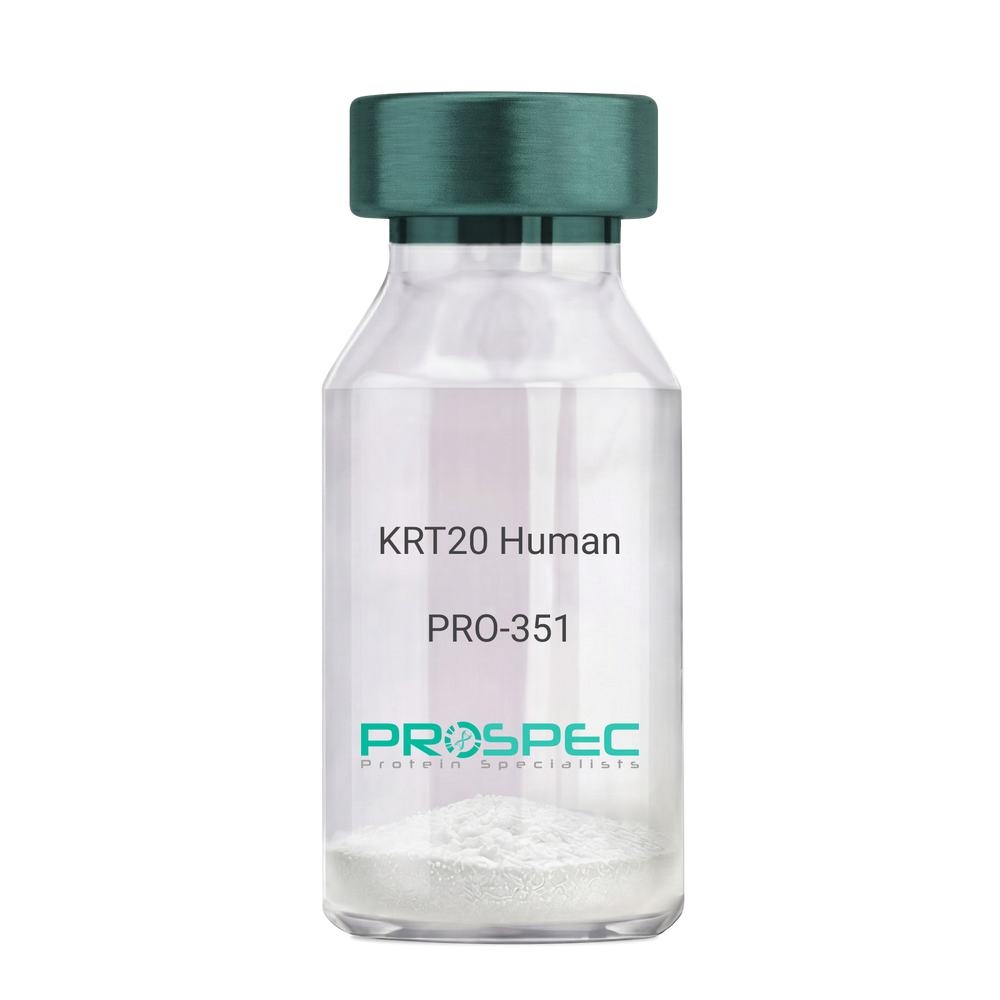
Name :
KRT20 HumanDescription:
Cytokeratin 20 Human Recombinant
Keratin type I cytoskeletal 20, Cytokeratin-20, CK-20, Keratin-20, K20, Protein IT, KRT20, CD20, CK20, KRT21, MGC35423.
Product # :
PRO-351Price :
Quantity :
Shipping Method :
Shipped at Room temp
More Info
- description
- source
- formulation
- purity
- More Info
Description
Cytokeratin 20 Human Recombinant produced in E.Coli is a single,non-glycosylated polypeptide chain having a molecular mass of 48,553 Dalton. The KRT20 is purified by proprietary chromatographic techniques.
Source
Escherichia Coli.
Formulation
The protein (1mg/1ml) was lyophilized after from a sterile solution containing 30mM Tris-HCL pH-8, 9.5M urea, 2mM DDT, 2mM EDTA and 10mM methylammonium chloride.
Purity
Greater than 95.0% as determined by SDS-PAGE.
More Info
-
Introduction
KRT20 is a member of the keratin family. The keratins are intermediate filament proteins responsible for the structural integrity of epithelial cells and are subdivided into cytokeratins and hair keratins. The type I cytokeratins consist of acidic proteins which are arranged in pairs of heterotypic keratin chains. This cytokeratin is a major cellular protein of mature enterocytes and goblet cells and is specifically expressed in the gastric and intestinal mucosa. The type I cytokeratin genes are clustered in a region of chromosome 17q12-q21.
-
Synonyms
Keratin type I cytoskeletal 20, Cytokeratin-20, CK-20, Keratin-20, K20, Protein IT, KRT20, CD20, CK20, KRT21, MGC35423.
-
Physical Appearance
Sterile Filtered White lyophilized (freeze-dried) powder.
-
Stability
Lyophilized KRT20 although stable at room temperature for 3 weeks, should be stored desiccated below -18°C. Upon reconstitution KRT20 should be stored at 4°C between 2-7 days and for future use below -18°C.For long term storage it is recommended to add a carrier protein (0.1% HSA or BSA).Please prevent freeze-thaw cycles.
-
Solubility
It is recommended to reconstitute the lyophilized KRT20 in sterile 18MΩ-cm H2O not less than 100µg/ml, which can then be further diluted to other aqueous solutions.
-
Reconstitution to filaments
Performed by mixing equimolar amounts of cytokeratins of type I and type II at concentrations of approx. 0.5 mg/ml, both dissolved in 9.5 M urea buffer (see above). Protofilaments and filament complexes are obtained by dialyzing the resulting polypeptide solution stepwise to a concentration of 4 M urea and then to low salt condition (50 mM NaCI, 2 mM dithiothreitol, 10 mM Tris-HCI, pH 7.4). For immunization purposes, the solution can be further dialyzed against PBS (phosphate buffered saline, e.g. Dulbecco's PBS).
ProSpec's products are furnished for LABORATORY RESEARCH USE ONLY. The product may not be used as drugs, agricultural or pesticidal products, food additives or household chemicals.
- View Data Sheet
Name :
KRT8 Human, HisDescription:
Cytokeratin 8 Human Recombinant, His Tag
Keratin type II cytoskeletal 8, Cytokeratin-8, CK-8, Keratin-8, K8, KRT8, CYK8, KO, CK8, K2C8, CARD2.
Product # :
PRO-1567Price :
Quantity :
Shipping Method :
Shipped with Ice Packs
More Info
- description
- source
- formulation
- purity
- More Info
Description
KRT8 Human Recombinant produced in E.Coli is a single, non-glycosylated polypeptide chain containing 506 amino acids (1-483 a.a) and having a molecular mass of 56kDa. KRT8 is fused to a 23 amino acid His-tag at N-terminus & purified by proprietary chromatographic techniques.
Source
Escherichia Coli.
Formulation
KRT8 protein solution (1mg/ml) containing 20mM Tris-HCl buffer (pH 8.0), 0.4M Urea and 10% glycerol.
Purity
Greater than 90.0% as determined by SDS-PAGE.
More Info
-
Introduction
Cytokeratin 8 (KRT8) belongs to the type II keratin family clustered on the long arm of chromosome 12. Type I and type II keratins heteropolymerize to form intermediate-sized filaments in the cytoplasm of epithelial cells. KRT8 typically dimerizes with keratin 18 to form an intermediate filament in simple single-layered epithelial cells. KRT8 has a role in retaining cellular structural integrity and also functions in signal transduction and cellular differentiation. KRT8 gene mutations cause cryptogenic cirrhosis.
-
Synonyms
Keratin type II cytoskeletal 8, Cytokeratin-8, CK-8, Keratin-8, K8, KRT8, CYK8, KO, CK8, K2C8, CARD2.
-
Physical Appearance
Sterile Filtered colorless solution.
-
Stability
Store at 4°C if entire vial will be used within 2-4 weeks. Store, frozen at -20°C for longer periods of time.For long term storage it is recommended to add a carrier protein (0.1% HSA or BSA).Avoid multiple freeze-thaw cycles.
-
Amino Acid Sequence
MGSSHHHHHH SSGLVPRGSH MGSMSIRVTQ KSYKVSTSGP RAFSSRSYTS GPGSRISSSS FSRVGSSNFR GGLGGGYGGA SGMGGITAVT VNQSLLSPLV LEVDPNIQAV RTQEKEQIKT LNNKFASFID KVRFLEQQNK MLETKWSLLQ QQKTARSNMD NMFESYINNL RRQLETLGQE KLKLEAELGN MQGLVEDFKN KYEDEINKRT EMENEFVLIK KDVDEAYMNK VELESRLEGL TDEINFLRQL YEEEIRELQS QISDTSVVLS MDNSRSLDMD SIIAEVKAQY EDIANRSRAE AESMYQIKYE ELQSLAGKHG DDLRRTKTEI SEMNRNISRL QAEIEGLKGQ RASLEAAIAD AEQRGELAIK DANAKLSELE AALQRAKQDM ARQLREYQEL MNVKLALDIE IATYRKLLEG EESRLESGMQ NMSIHTKTTS GYAGGLSSAY GGLTSPGLSY SLGSSFGSGA GSSSFSRTSS SRAVVVKKIE TRDGKLVSES SDVLPK.
ProSpec's products are furnished for LABORATORY RESEARCH USE ONLY. The product may not be used as drugs, agricultural or pesticidal products, food additives or household chemicals.
- View Data Sheet
Name :
Ku P70/P80 HumanDescription:
Ku P70/P80 Human Recombinant
ATP-dependent DNA helicase 2 subunit 1, ATP-dependent DNA helicase II 70 kDa subunit, Lupus Ku autoantigen protein p70, Ku70, 70 kDa subunit of Ku antigen, Thyroid-lupus autoantigen, TLAA, CTC box-binding factor 75 kDa subunit, CTCBF, CTC75, DNA-repair protein XRCC6, G22P1, XRCC6, ML8.
Product # :
PRO-397Price :
Quantity :
Shipping Method :
Shipped with Ice Packs
More Info
- description
- source
- formulation
- purity
- More Info
Description
KuP70/P80 Human Recombinant produced in SF9 insect cells is a glycosylated, polypeptide chain having a molecular mass of 70,638 Dalton for the p70 subunit and 83,528 Dalton for the p80 subunit. Ku (P70/P80) is expressed with a -6xHis tag and purified by proprietary chromatographic techniques.
Source
Sf9 insect cells.
Formulation
KuP70/P80is supplied in 16mM HEPES buffer pH-8, 160mM NaCl, and 20% glycerol.
Purity
Greater than 95% as determined by SDS-PAGE.
More Info
-
Introduction
Ku antigen consists of two polypeptides (70 kDa and 80 kDa; the p80 subunit is occasionally called p86). The Ku heterodimer provides DNA-binding and regulatory functions to DNA-dependent protein kinase which is a central enzyme for DNA recombination processes in eucaryotic cells. The Ku protein plays important roles in multiple nuclear processes including DNA repair, V(D)J recombination, telomere maintenance, and the regulation of specific gene transcription.
Antibodies to Ku were originally reported in scleroderma-polymyositis overlap syndrome (up to 20% of patients) but have also been detectable in about 20 % of patients with primary pulmonary hypertension (as a complication of overlap), in 5-10 % of SLE and MCTD patients, and in up to 20 % of patients with primary Sj?gren's syndrome.
In IIF using HEp-2 cells, Ku-positive sera yield a dense, fine granular pattern with nucleolar staining that is typical but not specific for anti-Ku. Detection of Ku antibodies by Western blot may bear false-negative results since the main reactive epitope on the p70/p80 heterodimer is conformation-dependent. -
Synonyms
ATP-dependent DNA helicase 2 subunit 1, ATP-dependent DNA helicase II 70 kDa subunit, Lupus Ku autoantigen protein p70, Ku70, 70 kDa subunit of Ku antigen, Thyroid-lupus autoantigen, TLAA, CTC box-binding factor 75 kDa subunit, CTCBF, CTC75, DNA-repair protein XRCC6, G22P1, XRCC6, ML8.
-
Physical Appearance
Sterile Filtered clear solution.
-
Stability
Store at 4°C if entire vial will be used within 2-4 weeks. Store, frozen at -20°C for longer periods of time. Avoid multiple freeze-thaw cycles.
-
Immunological Functions
1. Binds IgG-type human auto-antibodies.2. Standard ELISA test (checker-board analysis of positive/negative sera panels including CDC international reference sera).
-
coating concentration
0.2-0.6 µg/ml (depending on the type of ELISA plate and coating buffer).Suitable for biotinylation and iodination.
ProSpec's products are furnished for LABORATORY RESEARCH USE ONLY. The product may not be used as drugs, agricultural or pesticidal products, food additives or household chemicals.
- View Data Sheet
Name :
CDKN1A Human (20-149)Description:
Cyclin-Dependent Kinase Inhibitor 1A (20-149 a.a.) Human Recombinant
Cyclin-Dependent Kinase Inhibitor 1A (P21, Cip1), Melanoma Differentiation Associated Protein 6, Wild-Type P53-Activated Fragment 1, CDK-Interaction Protein 1, DNA Synthesis Inhibitor, CDK-Interacting Protein 1, CDKN1, P21Cip1/Waf1, MDA6, P21CIP1, CAP20, WAF1, CIP1, PIC1, P21, SDI1.
Product # :
PKA-137Price :
Quantity :
Shipping Method :
Shipped at Room temp
More Info
- description
- source
- formulation
- purity
- More Info
Description
The CDKN1A Human is created as a recombinant protein with a 4kda N-terminal fusion of His Tag. The CDKN1A His-Tagged Fusion Protein, produced in E. coli, is a 20kDa protein containing 130 amino acid residues of the CDKN1A Human, 20-149 amino acids.
Source
Escherichia Coli.
Formulation
Each mg was lyophilized with 1xPBS, 0.4% SDS and 4mM DTT.
Purity
Greater than 90% as determined by SDS-PAGE.
More Info
-
Synonyms
Cyclin-Dependent Kinase Inhibitor 1A (P21, Cip1), Melanoma Differentiation Associated Protein 6, Wild-Type P53-Activated Fragment 1, CDK-Interaction Protein 1, DNA Synthesis Inhibitor, CDK-Interacting Protein 1, CDKN1, P21Cip1/Waf1, MDA6, P21CIP1, CAP20, WAF1, CIP1, PIC1, P21, SDI1.
-
Physical Appearance
Filtered White lyophilized (freeze-dried) powder.
-
Stability
Store lyophilized CDKN1A at -20°C. Aliquot the product after reconstitution to avoid repeated freezing/thawing cycles. Reconstituted protein can be stored at 4°C for a limited period of time; it does not show any change after two weeks at 4°C.
-
Solubility
It is recommended to add deionized water to prepare a working stock solution of approximately 0.5mg/ml and let the lyophilized pellet dissolve completely. Product is not sterile! Please filter the product by an appropriate sterile filter before using it on cell culture.
-
Amino Acid Sequence
LFGPVDSEQL SRDCDALMAG CIQEARERWN FDFVTETPLEGDFAWERVRG LGLPKLYLPT GPRRGRDELG GGRRPGTSPA LLQGTAEEDH VDLSLSCTLVPRSGEQAEGS PGGPGDSQGR KRRQTSMTDF
-
Background
CDKN1A gene in humans plays an important role in maintaining genomic stability which is critical to cancer prevention and proper function of regular cellular processes. CDKN1A plays a main role in the cellular response to DNA mutation. CDKN1A overexpression causes cell cycle to stop. CDKN1A, along with CDK2 complexes aids to prevent kinase activity and inhibits progression through G1/S. CDKN1A can additionally increase assembly and activity in complexes of CDK4 or CDK6 and cyclin D.
ProSpec's products are furnished for LABORATORY RESEARCH USE ONLY. The product may not be used as drugs, agricultural or pesticidal products, food additives or household chemicals.
- View Data Sheet
Name :
TBCC HumanDescription:
Tubulin Folding Cofactor C Human Recombinant
Tubulin folding cofactor C, tubulin-specific chaperone c, Tubulin-folding cofactor C, CFC.
Product # :
PRO-1180Price :
Quantity :
Shipping Method :
Shipped with Ice Packs
More Info
- description
- source
- formulation
- purity
- More Info
Description
TBCC Human Recombinant produced in E. coli is a single polypeptide chain containing 369 amino acids (1-346) and having a molecular mass of 41.7 kDa.TBCC is fused to a 23 amino acid His-tag at N-terminus & purified by proprietary chromatographic techniques.
Source
E.coli.
Formulation
The TBCC solution (0.5mg/1ml) contains 20mM Tris-HCl buffer (pH 8.0), 100mM NaCl, 1mM DTT and 10% glycerol.
Purity
Greater than 85% as determined by SDS-PAGE.
More Info
-
Introduction
Tubulin folding cofactor C (TBCC) is a member of the TBCC family. TBCC has a role in the control of centrosome and Golgi apparatus positioning, with effects on cell shape and cell migration. Cofactor C is 1 of 4 proteins (cofactors A,D,E and C) engaged in the pathway leading to properly folded b-tubulin from folding intermediates. Cofactor E attaches to the cofactor D/beta-tubulin complex; their interaction with cofactor C subsequently causes the release of beta-tubulin polypeptides which are bound to the native state.
-
Synonyms
Tubulin folding cofactor C, tubulin-specific chaperone c, Tubulin-folding cofactor C, CFC.
-
Physical Appearance
Sterile Filtered colorless solution.
-
Stability
Store at 4°C if entire vial will be used within 2-4 weeks. Store, frozen at -20°C for longer periods of time. For long term storage it is recommended to add a carrier protein (0.1% HSA or BSA).Avoid multiple freeze-thaw cycles.
-
Amino Acid Sequence
MGSSHHHHHH SSGLVPRGSH MGSMESVSCS AAAVRTGDME SQRDLSLVPE RLQRREQERQ LEVERRKQKR QNQEVEKENS HFFVATFARE RAAVEELLER AESVERLEEA ASRLQGLQKL INDSVFFLAA YDLRQGQEAL ARLQAALAER RRGLQPKKRF AFKTRGKDAA SSTKVDAAPG IPPAVESIQD SPLPKKAEGD LGPSWVCGFS NLESQVLEKR ASELHQRDVL LTELSNCTVR LYGNPNTLRL TKAHSCKLLC GPVSTSVFLE DCSDCVLAVA CQQLRIHSTK DTRIFLQVTS RAIVEDCSGI QFAPYTWSYP EIDKDFESSG LDRSKNNWND VDDFNWLARD MASPNWSILP EEERNIQWD
ProSpec's products are furnished for LABORATORY RESEARCH USE ONLY. The product may not be used as drugs, agricultural or pesticidal products, food additives or household chemicals.
- View Data Sheet
Name :
HCV Core 22kDa, FLSCNDescription:
Hepatitis C Virus Core 22kDa, FLSCN Recombinant
Product # :
HCV-261Price :
Quantity :
Shipping Method :
Shipped with Ice Packs
More Info
- description
- formulation
- purity
- More Info
Description
The E.coli derived recombinant protein contains the HCV core nucleocapsid immunodominant regions, amino acids 2-192. The FLSCN labeled protein is fused with b-galactosidase (114 kDa) at N-terminus.
Formulation
20mM Tris-Hcl pH 8, 8M urea and 10mM B-ME.
Purity
HCV-Core protein is >95% pure as determined by 10% PAGE (coomassie staining).
More Info
-
Introduction
HCV is a small 50nm, enveloped, single-stranded, positive sense RNAvirus in the family Flaviviridae.
HCV has a high rate of replication with approximately one trillion particles produced each day in an infected individual. Due to lack of proofreading by the HCV RNA polymerase, the HCV has an exceptionally high mutation rate, a factor that may help it elude the host's immune response. Hepatitis C virus is classified into six genotypes(1-6) with several subtypes within each genotype. The preponderance and distribution of HCV genotypes varies globally. Genotype is clinically important in determining potential response to interferon-based therapy and the required duration of such therapy. Genotypes 1 and 4 are less responsive to interferon-based treatment than are the other genotypes (2, 3, 5 and 6). -
Stability
HCV-Core although stable at 4°C for 1 week, should be stored below -18°C. Please prevent freeze thaw cycles.
-
Applications
HCV-Core antigen is suitable for ELISA and Western blots, excellent antigen for detection of HCV with minimal specificity problems.
-
Specificity
Immunoreactive with sera of HCV-infected individuals.
-
Purification Method
HCV-Core protein was purified by proprietary chromatographic technique.
ProSpec's products are furnished for LABORATORY RESEARCH USE ONLY. The product may not be used as drugs, agricultural or pesticidal products, food additives or household chemicals.
- View Data Sheet
Name :
OTC HumanDescription:
Ornithine Carbamoyltransferase Human Recombinant
Ornithine carbamoyltransferase mitochondrial, Ornithine transcarbamylase, OTCase, OCTD, EC 2.1.3.3.
Product # :
ENZ-596Price :
Quantity :
Shipping Method :
Shipped with Ice Packs
More Info
- description
- source
- formulation
- purity
- More Info
Description
OTC Recombinant produced in E. coli is a single polypeptide chain containing 347 amino acids (33-354) and having a molecular mass of 38.9kDa.OTC is fused to a 25 amino acid His-tag at N-terminus & purified by proprietary chromatographic techniques.
Source
E.coli.
Formulation
The OTC solution (0.5mg/ml) contains 20mM MES buffer (pH 6.0), 100mM Nacl, 2mM DTT and 10% glycerol.
Purity
Greater than 90% as determined by SDS-PAGE.
More Info
-
Introduction
OTC is a member of the ATCase/OTCase family. OTC has a key part in the urea cycle, catalyzing the second step in this pathway: the transformation of L-orthinine and carbamoyl phosphate to L-citrulline. In humans, the urea cycle is a vital pathway to detoxification of ammonia. Alterations in the gene encoding OTC are linked to the X-linked disorder OTCD (ornithine carbamoyltransferase deficiency). OTCD disorder of the urea cycle is characterized by hyperammonemia.
-
Synonyms
Ornithine carbamoyltransferase mitochondrial, Ornithine transcarbamylase, OTCase, OCTD, EC 2.1.3.3.
-
Physical Appearance
Sterile Filtered colorless solution.
-
Stability
Store at 4°C if entire vial will be used within 2-4 weeks. Store, frozen at -20°C for longer periods of time. For long term storage it is recommended to add a carrier protein (0.1% HSA or BSA).Avoid multiple freeze-thaw cycles.
-
Amino Acid Sequence
MGSSHHHHHH SSGLVPRGSH MGSHMNKVQL KGRDLLTLKN FTGEEIKYML WLSADLKFRI KQKGEYLPLL QGKSLGMIFE KRSTRTRLST ETGFALLGGH PCFLTTQDIH LGVNESLTDT ARVLSSMADA VLARVYKQSD LDTLAKEASI PIINGLSDLY HPIQILADYL TLQEHYSSLK GLTLSWIGDG NNILHSIMMS AAKFGMHLQA ATPKGYEPDA SVTKLAEQYA KENGTKLLLT NDPLEAAHGG NVLITDTWIS MGQEEEKKKR LQAFQGYQVT MKTAKVAASD WTFLHCLPRK PEEVDDEVFY SPRSLVFPEA ENRKWTIMAV MVSLLTDYSP QLQKPKF.
ProSpec's products are furnished for LABORATORY RESEARCH USE ONLY. The product may not be used as drugs, agricultural or pesticidal products, food additives or household chemicals.
- View Data Sheet
Name :
KIR2DL5A HumanDescription:
Killer Cell Immunoglobulin-Like Receptor, 2 Domains Long Cytoplasmic Tail 5A Human Recombinant
Killer Cell Immunoglobulin Like Receptor, Two Ig Domains And Long Cytoplasmic Tail 5A, Killer Cell Immunoglobulin-Like Receptor, Two Domains, Long Cytoplasmic Tail 5A, KIR2DL5, CD158F, Killer Cell Immunoglobulin-Like Receptor, Two Domains, Long Cytoplasmic Tail, 5, Killer Cell Immunoglobulin-Like Receptor KIR2DL5A, Killer Cell Immunoglobulin-Like Receptor 2DL5A, CD158f1 Antigen, KIR2DL5.1, KIR2DL5.3, CD158F1, KIR2DL5A.
Product # :
PRO-2448Price :
Quantity :
Shipping Method :
Shipped with Ice Packs
More Info
- description
- source
- formulation
- purity
- More Info
Description
KIR2DL5A Human Recombinant produced in Sf9 Baculovirus cells is a single, glycosylated polypeptide chain containing 459 amino acids (22-238a.a.) and having a molecular mass of 50.5kDa (Molecular size on SDS-PAGE will appear at approximately 50-70kDa). KIR2DL5A is expressed with a 239 amino acids hIgG-His tag at C-Terminus and purified by proprietary chromatographic techniques.
Source
Sf9, Baculovirus cells.
Formulation
KIR2DL5A protein solution (0.25mg/ml) contains Phosphate Buffered Saline (pH 7.4) and 10% glycerol.
Purity
Greater than 90.0% as determined by SDS-PAGE.
More Info
-
Introduction
Killer cell immunoglobulin-like receptor 2DL5A (KIR2DL5A) is a type I transmembrane glycoprotein which is a member of the killer cell Ig-like receptor (KIR) family.KIR2DL5A is detected on the cell surface as a monomer which, upon tyrosine phosphorylation, recruits the Src homology region 2-containing protein tyrosine phosphatase-2. Therefore, KIR2DL5A is an inhibitory receptor gathering a combination of genetic, structural, and functional features unique among KIR, suggesting that KIR2DL5A plays a specialized role in innate immunity.
-
Synonyms
Killer Cell Immunoglobulin Like Receptor, Two Ig Domains And Long Cytoplasmic Tail 5A, Killer Cell Immunoglobulin-Like Receptor, Two Domains, Long Cytoplasmic Tail 5A, KIR2DL5, CD158F, Killer Cell Immunoglobulin-Like Receptor, Two Domains, Long Cytoplasmic Tail, 5, Killer Cell Immunoglobulin-Like Receptor KIR2DL5A, Killer Cell Immunoglobulin-Like Receptor 2DL5A, CD158f1 Antigen, KIR2DL5.1, KIR2DL5.3, CD158F1, KIR2DL5A.
-
Physical Appearance
Sterile filtered colorless solution.
-
Stability
Store at 4°C if entire vial will be used within 2-4 weeks. Store, frozen at -20°C for longer periods of time. For long term storage it is recommended to add a carrier protein (0.1% HSA or BSA).Avoid multiple freeze-thaw cycles.
-
Amino Acid Sequence
ADPHEGGQDK PLLSAWPSAV VPRGGHVTLL CRSRLGFTIF SLYKEDGVPV PELYNKIFWK SILMGPVTPA HAGTYRCRGS HPRSPIEWSA PSNPLVIVVT GLFGKPSLSA QPGPTVRTGE NVTLSCSSRS SFDMYHLSRE GRAHEPRLPA VPSVNGTFQA DFPLGPATHG GTYTCFGSLH DSPYEWSDPS DPLLVSVTGN SSSSSSSPTE PSSKTGIRRH VEPKSCDKTH TCPPCPAPEL LGGPSVFLFP PKPKDTLMIS RTPEVTCVVV DVSHEDPEVK FNWYVDGVEV HNAKTKPREE QYNSTYRVVS VLTVLHQDWL NGKEYKCKVS NKALPAPIEK TISKAKGQPR EPQVYTLPPS RDELTKNQVS LTCLVKGFYP SDIAVEWESN GQPENNYKTT PPVLDSDGSF FLYSKLTVDK SRWQQGNVFS CSVMHEALHN HYTQKSLSLS PGKHHHHHH.
ProSpec's products are furnished for LABORATORY RESEARCH USE ONLY. The product may not be used as drugs, agricultural or pesticidal products, food additives or household chemicals.
- View Data Sheet
Name :
TK1 HumanDescription:
Thymidine Kinase 1 Human Recombinant
Thymidine kinase 1 soluble, thymidine kinase cytosolic, TK2, EC 2.7.1.21.
Product # :
PKA-036Price :
Quantity :
Shipping Method :
Shipped with Ice Packs
More Info
- description
- source
- formulation
- purity
- More Info
Description
TK1 Human Recombinant produced in E. coli is a single polypeptide chain containing 258 amino acids (1-234) and having a molecular mass of 28.0 kDa.TK1 is fused to a 24 amino acid His-tag at N-terminus & purified by proprietary chromatographic techniques.
Source
E.coli.
Formulation
The TK1 solution (1mg/1ml) contains 20mM Tris-HCl buffer (pH 8.0), 100mM NaCl, 1mM DTT and 20% glycerol.
Purity
Greater than 90% as determined by SDS-PAGE.
More Info
-
Introduction
Thymidine Kinase 1 (TK1) is a phosphotransferase (a kinase): 2'-deoxythymidine kinase, ATP-thymidine 5'-phosphotransferase. TK1 is present in 2 forms in mammalian cells, TK1 and TK2. Thymidine kinases hold a main function in the synthesis of DNA and thus in cell division, as they are part of the distinctive reaction chain to introduce deoxythymidine (present in the body fluids as a result of degradation of DNA from food and from dead cells) into the DNA. Thymidine kinase is necessary for the action of many antiviral drugs. Thymidine kinase is used to select hybridoma cell lines in production of monoclonal antibodies.
-
Synonyms
Thymidine kinase 1 soluble, thymidine kinase cytosolic, TK2, EC 2.7.1.21.
-
Physical Appearance
Sterile Filtered colorless solution.
-
Stability
Store at 4°C if entire vial will be used within 2-4 weeks. Store, frozen at -20°C for longer periods of time. For long term storage it is recommended to add a carrier protein (0.1% HSA or BSA).Avoid multiple freeze-thaw cycles.
-
Amino Acid Sequence
MGSSHHHHHH SSGLVPRGSH MGSHMSCINL PTVLPGSPSK TRGQIQVILG PMFSGKSTEL MRRVRRFQIA QYKCLVIKYA KDTRYSSSFC THDRNTMEAL PACLLRDVAQ EALGVAVIGI DEGQFFPDIV EFCEAMANAG KTVIVAALDG TFQRKPFGAI LNLVPLAESV VKLTAVCMEC FREAAYTKRL GTEKEVEVIG GADKYHSVCR LCYFKKASGQ PAGPDNKENC PVPGKPGEAV AARKLFAPQQ ILQCSPAN.
ProSpec's products are furnished for LABORATORY RESEARCH USE ONLY. The product may not be used as drugs, agricultural or pesticidal products, food additives or household chemicals.
- View Data Sheet
Name :
CD300C HumanDescription:
CD300C Human Recombinant
CLM-6, CMRF-35, CMRF-35A, CMRF35, CMRF35-A1, CMRF35A, CMRF35A1, IGSF16, LIR, CMRF35-like molecule 6, CD300 antigen-like family member C, Immunoglobulin superfamily member 16.
Product # :
PRO-273Price :
Quantity :
Shipping Method :
Shipped with Ice Packs
More Info
- description
- source
- formulation
- purity
- More Info
Description
CD300C Human Recombinant produced in E.Coli is a single, non-glycosylated polypeptide chain containing 186 amino acids (21-183a.a.) and having a molecular mass of 20.2kDa. CD300C is fused to a 23 amino acid His-tag at N-terminus & purified by proprietary chromatographic techniques.
Source
Escherichia Coli.
Formulation
CD300C protein solution (1mg/ml) containing 20mM Tris-HCl buffer (pH 8.0), 0.4M urea and 10% glycerol.
Purity
Greater than 85.0% as determined by SDS-PAGE.
More Info
-
Introduction
CMRF35-like molecule 6 (CD300C), is a member of the CD300 family. The CMRF35 antigen was identified by reactivity with a monoclonal antibody and present on monocytes, neutrophils, and some T and B lymphocytes.
-
Synonyms
CLM-6, CMRF-35, CMRF-35A, CMRF35, CMRF35-A1, CMRF35A, CMRF35A1, IGSF16, LIR, CMRF35-like molecule 6, CD300 antigen-like family member C, Immunoglobulin superfamily member 16.
-
Physical Appearance
Sterile Filtered clear solution.
-
Stability
Store at 4°C if entire vial will be used within 2-4 weeks. Store, frozen at -20°C for longer periods of time. For long term storage it is recommended to add a carrier protein (0.1% HSA or BSA).Avoid multiple freeze-thaw cycles.
-
Amino Acid Sequence
MGSSHHHHHH SSGLVPRGSH MGSGYFPLSH PMTVAGPVGG SLSVQCRYEK EHRTLNKFWC RPPQILRCDK IVETKGSAGK RNGRVSIRDS PANLSFTVTL ENLTEEDAGT YWCGVDTPWL RDFHDPIVEV EVSVFPAGTT TASSPQSSMG TSGPPTKLPV HTWPSVTRKD SPEPSPHPGS
LFSNVR.
ProSpec's products are furnished for LABORATORY RESEARCH USE ONLY. The product may not be used as drugs, agricultural or pesticidal products, food additives or household chemicals.
- View Data Sheet
Name :
KRT14 Human, HisDescription:
Cytokeratin 14 Human Recombinant, His Tag
Keratin, type I cytoskeletal 14, Cytokeratin-14, CK-14, Keratin-14, K14, KRT14, NFJ, CK14, EBS3, EBS4.
Product # :
PRO-941Price :
Quantity :
Shipping Method :
Shipped with Ice Packs
More Info
- description
- source
- formulation
- purity
- More Info
Description
KRT14 Human Recombinant produced in E.Coli is a single, non-glycosylated polypeptide chain containing 492 amino acids (1-472 a.a.) and having a molecular mass of 53.8kDa.KRT14 is fused to a 20 amino acid His-tag at N-terminus & purified by proprietary chromatographic techniques.
Source
Escherichia Coli.
Formulation
KRT14 protein solution (1mg/ml) containing 20mM Tris-HCl buffer (pH8.0), 10% glycerol and 0.4M Urea.
Purity
Greater than 90.0% as determined by SDS-PAGE.
More Info
-
Introduction
Cytokeratin 14 is a member of the keratin family, the most diverse group of intermediate filaments. Cytokeratin 14 is a type I keratin, is usually found as a heterotetramer with two keratin 5 molecules, a type II keratin. Together they form the cytoskeleton of epithelial cells. Mutations in the genes for these keratins are associated with epidermolysis bullosa simplex. At least one pseudogene has been identified at 17p12-p11.
-
Synonyms
Keratin, type I cytoskeletal 14, Cytokeratin-14, CK-14, Keratin-14, K14, KRT14, NFJ, CK14, EBS3, EBS4.
-
Physical Appearance
Sterile Filtered colorless solution.
-
Stability
Store at 4°C if entire vial will be used within 2-4 weeks. Store, frozen at -20°C for longer periods of time.For long term storage it is recommended to add a carrier protein (0.1% HSA or BSA).Avoid multiple freeze-thaw cycles.
-
Amino Acid Sequence
MGSSHHHHHH SSGLVPRGSH MTTCSRQFTS SSSMKGSCGI GGGIGGGSSR ISSVLAGGSC RAPSTYGGGL SVSSSRFSSG GAYGLGGGYG GGFSSSSSSF GSGFGGGYGG GLGTGLGGGF GGGFAGGDGL LVGSEKVTMQ NLNDRLASYL DKVRALEEAN ADLEVKIRDW YQRQRPAEIK
DYSPYFKTIE DLRNKILTAT VDNANVLLQI DNARLAADDF RTKYETELNL RMSVEADING LRRVLDELTL ARADLEMQIE SLKEELAYLK KNHEEEMNAL RGQVGGDVNV EMDAAPGVDL SRILNEMRDQ YEKMAEKNRK DAEEWFFTKT EELNREVATN SELVQSGKSE ISELRRTMQN
LEIELQSQLS MKASLENSLE ETKGRYCMQL AQIQEMIGSV EEQLAQLRCE MEQQNQEYKI LLDVKTRLEQ EIATYRRLLE GEDAHLSSSQ FSSGSQSSRD VTSSSRQIRT KVMDVHDGKV VSTHEQVLRT KN.
ProSpec's products are furnished for LABORATORY RESEARCH USE ONLY. The product may not be used as drugs, agricultural or pesticidal products, food additives or household chemicals.
- View Data Sheet
Name :
TXNDC17 HumanDescription:
Thioredoxin Domain Containing 17 Human Recombinant
Thioredoxin domain containing 17, Thioredoxin-like protein 5, Protein 42-9-9, thioredoxin (Trx)-related protein 14 kDa, TRP14, TXNL5, MGC14353.
Product # :
PRO-1055Price :
Quantity :
Shipping Method :
Shipped with Ice Packs
More Info
- description
- source
- formulation
- purity
- More Info
Description
TXNDC17 Human Recombinant produced in E. coli is a single polypeptide chain containing 147 amino acids (1-123) and having a molecular mass of 16.5kDa.TXNDC17 is fused to a 24 amino acid His-tag at N-terminus & purified by proprietary chromatographic techniques.
Source
E.coli.
Formulation
The TXNDC17 solution (1mg/ml) contains 20mM Tris-HCl buffer (pH 8.0), 50mM Nacl and 10% glycerol.
Purity
Greater than 95% as determined by SDS-PAGE.
More Info
-
Introduction
TXNDC17 is a disulfide reductase that takes part in several redox reactions using the reversible oxidation of its active center dithiol to a disulfide and catalyzes dithiol-disulfide exchange reactions. TXNDC17 has peroxidase activity and assists to eliminate cellular hydrogen peroxide.
-
Synonyms
Thioredoxin domain containing 17, Thioredoxin-like protein 5, Protein 42-9-9, thioredoxin (Trx)-related protein 14 kDa, TRP14, TXNL5, MGC14353.
-
Physical Appearance
Sterile Filtered colorless solution.
-
Stability
Store at 4°C if entire vial will be used within 2-4 weeks. Store, frozen at -20°C for longer periods of time. For long term storage it is recommended to add a carrier protein (0.1% HSA or BSA).Avoid multiple freeze-thaw cycles.
-
Amino Acid Sequence
MGSSHHHHHH SSGLVPRGSH MGSHMARYEE VSVSGFEEFH RAVEQHNGKT IFAYFTGSKD AGGKSWCPDC VQAEPVVREG LKHISEGCVF IYCQVGEKPY WKDPNNDFRK NLKVTAVPTL LKYGTPQKLV ESECLQANLV EMLFSED
ProSpec's products are furnished for LABORATORY RESEARCH USE ONLY. The product may not be used as drugs, agricultural or pesticidal products, food additives or household chemicals.
- View Data Sheet
Name :
VCPKMT HumanDescription:
Valosin Containing Protein Lysine Methyltransferase Human Recombinant
Valosin Containing Protein Lysine (K) Methyltransferase, Methyltransferase-Like Protein 21D, VCP Lysine Methyltransferase, Protein-Lysine Methyltransferase METTL21D, Chromosome 14 Open Reading Frame 138, C14orf138, METTL21D, VCP-KMT, EC 2.1.1.- .
Product # :
PRO-2145Price :
Quantity :
Shipping Method :
Shipped with Ice Packs
More Info
- description
- source
- formulation
- purity
- More Info
Description
VCPKMT Human Recombinant produced in E.Coli is a single, non-glycosylated polypeptide chain containing 252 amino acids (1-229 a.a.) and having a molecular mass of 28.2kDa.VCPKMT is fused to a 23 amino acid His-tag at N-terminus & purified by proprietary chromatographic techniques.
Source
Escherichia Coli.
Formulation
VCPKMT protein solution (1mg/ml) containing 20mM Phosphate buffer saline (pH 8.0), 1mM DTT and 10% glycerol.
Purity
Greater than 95.0% as determined by SDS-PAGE.
More Info
-
Introduction
VCPKMT is a member of the methyltransferase superfamily. VCPKMT is a protein-lysine N-methyltransferase which specifically trimethylates 'Lys-315' of VCP/p97; this alteration reduces VCP ATPase activity.
-
Synonyms
Valosin Containing Protein Lysine (K) Methyltransferase, Methyltransferase-Like Protein 21D, VCP Lysine Methyltransferase, Protein-Lysine Methyltransferase METTL21D, Chromosome 14 Open Reading Frame 138, C14orf138, METTL21D, VCP-KMT, EC 2.1.1.- .
-
Physical Appearance
Sterile Filtered colorless solution.
-
Stability
Store at 4°C if entire vial will be used within 2-4 weeks. Store, frozen at -20°C for longer periods of time. For long term storage it is recommended to add a carrier protein (0.1% HSA or BSA).Avoid multiple freeze-thaw cycles.
-
Amino Acid Sequence
MGSSHHHHHH SSGLVPRGSH MGSMADTLES SLEDPLRSFV RVLEKRDGTV LRLQQYSSGG VGCVVWDAAI VLSKYLETPE FSGDGAHALS RRSVLELGSG TGAVGLMAAT LGADVVVTDL EELQDLLKMN INMNKHLVTG SVQAKVLKWG EEIEGFPSPP DFILMADCIY YEESLEPLLK TLKDISGFET CIICCYEQRT MGKNPEIEKK YFELLQLDFD FEKIPLEKHD EEYRSEDIHI IYIRKKKSKF PS
ProSpec's products are furnished for LABORATORY RESEARCH USE ONLY. The product may not be used as drugs, agricultural or pesticidal products, food additives or household chemicals.
- View Data Sheet
Name :
TTC33 HumanDescription:
Tetratricopeptide Repeat Domain 33 Human Recombinant
Tetratricopeptide Repeat Domain 33, Osmosis-Responsive Factor, Tetratricopeptide Repeat Protein 33, TPR Repeat Protein 33, OSRF.
Product # :
PRO-1217Price :
Quantity :
Shipping Method :
Shipped with Ice Packs
More Info
- description
- source
- formulation
- purity
- More Info
Description
TTC33 Human Recombinant produced in E. coli is a single polypeptide chain containing 285 amino acids (1-262) and having a molecular mass of 31.8 kDa.TTC33 is fused to a 23 amino acid His-tag at N-terminus & purified by proprietary chromatographic techniques.
Source
E.coli.
Formulation
The TTC33 solution (1mg/1ml) contains 20mM Tris-HCl buffer (pH 8.0), 0.1M NaCl and 10% glycerol.
Purity
Greater than 85% as determined by SDS-PAGE.
More Info
-
Introduction
Tetratricopeptide repeat protein 33 (TTC33) is comprised of 3 TPR repeats.
-
Synonyms
Tetratricopeptide Repeat Domain 33, Osmosis-Responsive Factor, Tetratricopeptide Repeat Protein 33, TPR Repeat Protein 33, OSRF.
-
Physical Appearance
Sterile Filtered colorless solution.
-
Stability
Store at 4°C if entire vial will be used within 2-4 weeks. Store, frozen at -20°C for longer periods of time. For long term storage it is recommended to add a carrier protein (0.1% HSA or BSA).Avoid multiple freeze-thaw cycles.
-
Amino Acid Sequence
MGSSHHHHHH SSGLVPRGSH MGS MASFGWK RKIGEKVSKV TSQQFEAEAA DEKDVVDNDE GNWLHAIKRR KEILLEGCAE KSKQLKDEGA SLAENKRYRE AIQKWDEALQ LTPNDATLYE MKSQVLMSLH EMFPAVHAAE MAVQQNPHSW ESWQTLGRAQ LGLGEIILAI RSFQVALHIY
PMNPEIWKED LSWARTLQEQ QKVAQRIKKS EAPAEVTHFS PKSIPDYDFE SDEIVAVCAA IAEKEKTVSA NKTMVIVSAS GAIETVTEKE DGATPPDGSV FIKAR
ProSpec's products are furnished for LABORATORY RESEARCH USE ONLY. The product may not be used as drugs, agricultural or pesticidal products, food additives or household chemicals.
- View Data Sheet
Name :
CD93 HumanDescription:
CD93 Human Recombinant
CD93 Molecule, CD93 Antigen, Complement Component 1, Q Subcomponent, Receptor 1, Complement Component 1 Q Subcomponent Receptor 1, Matrix-Remodeling-Associated Protein 4, Matrix-Remodelling Associated 4, C1q/MBL/SPA Receptor, C1qR(P), C1Qrp, C1QR1, MXRA4, CDw93, C1qR, C1q Receptor 1, DJ737E23.1, ECSM3.
Product # :
PRO-2336Price :
Quantity :
Shipping Method :
Shipped with Ice Packs
More Info
- description
- source
- formulation
- purity
- More Info
Description
CD93 Human Recombinant produced in Sf9 Baculovirus cells is a single, glycosylated polypeptide chain containing 567 amino acids (22-580 aa) and having a molecular mass of 59.3kDa (Migrates at 70-100kDa on SDS-PAGE under reducing conditions).CD93 is expressed with an 8 amino acid His tag at C-Terminus and purified by proprietary chromatographic techniques.
Source
Sf9, Baculovirus cells.
Formulation
CD93 protein solution (0.5mg/ml) containing Phosphate Buffered Saline (pH 7.4) and 10% glycerol.
Purity
Greater than 90.0% as determined by SDS-PAGE.
More Info
-
Introduction
CD93, is a receptor or else an element of a larger receptor complex for C1q, MBL2-mannose-binding lectin and SPA-pulmonary surfactant protein A. CD93 mediates the enhancement of phagocytosis in monocytes as well as macrophages upon interaction with soluble defense collagens. CD93 takes part in the intercellular adhesion. Furthermore, CD93 was expressed on (pre) plasmablasts/plasma cells, including long-lived plasma cells which demonstrated decreased cell cycle activity, high levels of isotype-switched Ig secretion, as well as modification of the transcriptional network. CD93 is vital for the maintenance of plasma cells in bone marrow niches.
-
Synonyms
CD93 Molecule, CD93 Antigen, Complement Component 1, Q Subcomponent, Receptor 1, Complement Component 1 Q Subcomponent Receptor 1, Matrix-Remodeling-Associated Protein 4, Matrix-Remodelling Associated 4, C1q/MBL/SPA Receptor, C1qR(P), C1Qrp, C1QR1, MXRA4, CDw93, C1qR, C1q Receptor 1, DJ737E23.1, ECSM3.
-
Physical Appearance
Sterile filtered colorless solution.
-
Stability
Store at 4°C if entire vial will be used within 2-4 weeks. Store, frozen at -20°C for longer periods of time. For long term storage it is recommended to add a carrier protein (0.1% HSA or BSA).Avoid multiple freeze-thaw cycles.
-
Amino Acid Sequence
TGADTEAVVC VGTACYTAHS GKLSAAEAQN HCNQNGGNLA TVKSKEEAQH VQRVLAQLLR REAALTARMS KFWIGLQREK GKCLDPSLPL KGFSWVGGGE DTPYSNWHKE LRNSCISKRC VSLLLDLSQP LLPSRLPKWS EGPCGSPGSP GSNIEGFVCK FSFKGMCRPL ALGGPGQVTY TTPFQTTSSS LEAVPFASAA NVACGEGDKD ETQSHYFLCK EKAPDVFDWG SSGPLCVSPK YGCNFNNGGC HQDCFEGGDG SFLCGCRPGF RLLDDLVTCA SRNPCSSSPC RGGATCVLGP HGKNYTCRCP QGYQLDSSQL DCVDVDECQD SPCAQECVNT PGGFRCECWV GYEPGGPGEG ACQDVDECAL GRSPCAQGCT NTDGSFHCSC EEGYVLAGED GTQCQDVDEC VGPGGPLCDS LCFNTQGSFH CGCLPGWVLA PNGVSCTMGP VSLGPPSGPP DEEDKGEKEG STVPRAATAS PTRGPEGTPK ATPTTSRPSL SSDAPITSAP LKMLAPSGSP GVWREPSIHH ATAASGPQEP AGGDSSVATQ NNDGTDGQKV EHHHHHH
ProSpec's products are furnished for LABORATORY RESEARCH USE ONLY. The product may not be used as drugs, agricultural or pesticidal products, food additives or household chemicals.
- View Data Sheet
Name :
CTF1 RatDescription:
Cardiotrophin-1 Rat Recombinant
Cardiotrophin-1, CT-1, Ctf1.
Product # :
CYT-199Price :
Quantity :
Shipping Method :
Shipped at Room temp
More Info
- description
- source
- formulation
- purity
- biological activity
- More Info
Description
Cardiotrophin-1 Rat Recombinant produced in E.Coli is a single, non-glycosylated, polypeptide chain containing 203 amino acids and having a molecular mass of 21.4kDa.The CTF1 Rat is purified by proprietary chromatographic techniques.
Source
Escherichia Coli.
Formulation
Lyophilized from a 0.2µm filtered concentrated solution in PBS, pH 7.4.
Purity
Greater than 95.0% as determined by SDS-PAGE and HPLC analyses.
Biological Activity
The ED50 as determined by the dose-dependent proliferation of TF-1 cells was found to be < 0.5ng/ml, corresponding to a specific activity of > 2.0×10⁶ units/mg.More Info
-
Introduction
Cardiotrophin 1 (CT-1) is a 201 amino acid member of the interleukin-6 superfamily. It was identified by its ability to induce hypertrophic response in cardiac myocytes. CT-1 mRNA levels were found both in cardiac myocytes and in cardiac nonmyocytes. CT 1 was also detected in abundance in normal adult human lung and was expressed in both fetal and adult airway smooth muscle cells. CT 1 activates gp130 dependent signaling and stimulates the Janus kinase/signal transducers and activators of transcription (JAK/STAT) pathway to transduce hypertrophic and cytoprotective signals in cardiac myocytes.
CT 1 has also a neurotrophic function. CTF1 deficiency causes increased motoneuron cell death in spinal cord and brainstem nuclei of mice during a period between embryonic day 14 and the first postnatal week. Moreover, CT-1 is a hepatocyte survival factor that efficiently reduces hepatocellular damage in animal models of acute liver injury. Cardiotrophin 1 expression is augmented after hypoxic stimulation and it can protect cardiac cells when added either prior to simulated ischaemia or at the time of reoxygenation following simulated ischaemia. Cardiotrophin 1 can induce expression of the protective heat shock proteins (hsps) in cardiac cells.
Cardiotrophin-1 increased ventricular expression of ANP, brain natriuretic peptide (BNP) and angiotensinogen mRNA.
Cardiophin 1 levels were significantly elevated in patients with heart failure, patients with dilatative cardiomyopathy, moderate/severe mitral regurgitation, stable and unstable angina and after acute myocardial infarction. -
Synonyms
Cardiotrophin-1, CT-1, Ctf1.
-
Physical Appearance
Sterile Filtered White lyophilized (freeze-dried) powder.
-
Stability
Lyophilized Cardiotrophin-1 Rat although stable at room temperature for 3 weeks, should be stored desiccated below -18°C. Upon reconstitution CTF1 Rat should be stored at 4°C between 2-7 days and for future use below -18°C.Please prevent freeze-thaw cycles.
-
Solubility
It is recommended to reconstitute the lyophilized CTF1 in sterile 4mM HCl not less than 100µg/ml, which can then be further diluted to other aqueous solutions.
-
Amino Acid Sequence
MSQREGSLED HQTDSSFSFL PHLEAKIRQT HNLARLLTKY ADQLLEEYVQ QQGEPFGLPG FSPPRLPLAG LSGPAPSHAG LPVSERLRQD AAALSALPAL LDAVRRRQAE LNPRAPRLLR SLEDAARQVR ALGAAVETVL AALGAAARGP VPEPVATSAL FTSNSAAGVF SAKVLGLHVC GLYGEWVSRT EGDLGQLVPG GVA.
-
Background
What is the molecular weight/Mw of CTF1 Protein?
CTF1 Protein has a total Mw of 21.4kDa.
What is the source or expression system of CTF1 Protein?
Escherichia Coli.
What is the Purity of CTF1 Protein?
CTF1 Protein is >95% pure as determined by SDS-PAGE.
What is the Biological Activity of CTF1 Protein?
The ED50 as determined by the dose-dependent proliferation of TF-1 cells was found to be < 0.5ng/ml, corresponding to a specific activity of > 2.0×10⁶ units/mg.
What is the amino acid sequence of CTF1 Protein?
MSQREGSLED HQTDSSFSFL PHLEAKIRQT HNLARLLTKY ADQLLEEYVQ QQGEPFGLPG FSPPRLPLAG LSGPAPSHAG LPVSERLRQD AAALSALPAL LDAVRRRQAE LNPRAPRLLR SLEDAARQVR ALGAAVETVL AALGAAARGP VPEPVATSAL FTSNSAAGVF SAKVLGLHVC GLYGEWVSRT EGDLGQLVPG GVA.
What applications can CTF1 Protein be used in?
CTF1 Protein can probably be used in western blot, ELISA and Lateral Flow.
What is the endotoxin level for CTF1 Protein?
The endotoxin level is minimal, CTF1 Protein was purified using conventional chromatography techniques.
ProSpec's products are furnished for LABORATORY RESEARCH USE ONLY. The product may not be used as drugs, agricultural or pesticidal products, food additives or household chemicals.
- View Data Sheet
Name :
Ketohexokinase HumanDescription:
Ketohexokinase Human Recombinant
KHK, Hepatic Fructokinase, Ketohexokinase, Fructokinase.
Product # :
PKA-359Price :
Quantity :
Shipping Method :
Shipped with Ice Packs
More Info
- description
- source
- formulation
- purity
- More Info
Description
Ketohexokinase Human Recombinant produced in E.Coli is a single, non-glycosylated polypeptide chain containing 298 amino acids and having a molecular mass of 32.7 kDa.
Source
Escherichia Coli.
Formulation
The protein solution contains 1xPBS, pH 7.4 and 10% glycerol.
Purity
Greater than 90.0% as determined by SDS-PAGE.
More Info
-
Introduction
Ketohexokinase catalyzes the phosphorylation of fructose to produce fructose-1-phosphate, resulting in the utilization of ATP and creation of AMP. Ketohexokinase commences initial step in the metabolism of dietary fructose and is a significant regulator of hepatic glucose metabolism. Ketohexokinase is found in liver, renal cortex, and small intestine. Its deficiency causes the benign hereditary metabolic disorder essential fructosuria, leading to fructose being excreted in the urine. Ketohexokinase-dependent metabolism of fructose induces proinflammatory mediators in proximal tubular cells. ketohexokinase plays an unknown physiologic function that remains intact in essential fructosuria. Ketohexokinase expression is reduceed in human clear cell type of renal cell carcinoma.
-
Synonyms
KHK, Hepatic Fructokinase, Ketohexokinase, Fructokinase.
-
Physical Appearance
Sterile filtered colorless solution.
-
Stability
Store at 4°C if entire vial will be used within 2-4 weeks. Store, frozen at -20°C for longer periods of time. For long term storage it is recommended to add a carrier protein (0.1% HSA or BSA). Avoid multiple freeze-thaw cycles.
-
Amino Acid Sequence
MEEKQILCVG LVVLDVISLV DKYPKEDSEI RCLSQRWQRG GNASNSCTIL SLLGAPCAFM GSMAPGHVAD FVLDDLRRYS VDLRYTVFQT TGSVPIATVI INEASGSRTI LYYDRSLPDV SATDFEKVDL TQFKWIHIEG RNASEQVKML QRIDAHNTRQ PPEQKIRVSV EVEKPREELF QLFGYGDVVF VSKDVAKHLG FQSAEEALRG LYGRVRKGAV LVCAWAEEGA DALGPDGKLL HSDAFPPPRV VDTLGAGDTF NASVIFSLSQ GRSVQEALRF GCQVAGKKCG LQGFDGIV.
ProSpec's products are furnished for LABORATORY RESEARCH USE ONLY. The product may not be used as drugs, agricultural or pesticidal products, food additives or household chemicals.
- View Data Sheet
Name :
CD93 MouseDescription:
CD93 Mouse Recombinant
C1q/MBL/SPA receptor, C1qR(p), C1qRp, Cell surface antigen AA4, Complement, component 1 q subcomponent receptor 1, Lymphocyte antigen 68, Ly-68, CD93, Cd93.
Product # :
PRO-2255Price :
Quantity :
Shipping Method :
Shipped with Ice Packs
More Info
- description
- source
- formulation
- purity
- More Info
Description
CD93 produced in Sf9 Insect cells is a single, glycosylated polypeptide chain containing 558 amino acids (23-572a.a.) and having a molecular mass of 60.1kDa. (Molecular size on SDS-PAGE will appear at approximately 70-100kDa). CD93 is expressed with an 8 amino acid His tag at C-Terminus and purified by proprietary chromatographic techniques.
Source
Sf9, Baculovirus cells.
Formulation
CD93 protein solution (0.5mg/ml) contains Phosphate Buffered Saline (pH 7.4) and 10% glycerol.
Purity
Greater than 95.0% as determined by SDS-PAGE.
More Info
-
Introduction
CD93, is a receptor or else an element of a larger receptor complex for C1q, MBL2-mannose-binding lectin and SPA-pulmonary surfactant protein A. CD93 mediates the enhancement of phagocytosis in monocytes as well as macrophages upon interaction with soluble defense collagens. CD93 takes part in the intercellular adhesion. Furthermore, CD93 was expressed on (pre) plasmablasts/plasma cells, including long-lived plasma cells which demonstrated decreased cell cycle activity, high levels of isotype-switched Ig secretion, as well as modification of the transcriptional network. CD93 is vital for the maintenance of plasma cells in bone marrow niches.
-
Synonyms
C1q/MBL/SPA receptor, C1qR(p), C1qRp, Cell surface antigen AA4, Complement, component 1 q subcomponent receptor 1, Lymphocyte antigen 68, Ly-68, CD93, Cd93.
-
Physical Appearance
Sterile filtered colorless solution.
-
Stability
Store at 4°C if entire vial will be used within 2-4 weeks.Store, frozen at -20°C for longer periods of time. For long term storage it is recommended to add a carrier protein (0.1% HSA or BSA).Avoid multiple freeze-thaw cycles.
-
Amino Acid Sequence
ADSQAVVCEG TACYTAHWGK LSAAEAQHRC NENGGNLATV KSEEEARHVQ QALTQLLKTK APLEAKMGKF WIGLQREKGN CTYHDLPMRG FSWVGGGEDT AYSNWYKASK SSCIFKRCVS LILDLSLTPH PSHLPKWHES PCGTPEAPGN SIEGFLCKFN FKGMCRPLAL GGPGRVTYTT PFQATTSSLE AVPFASVANV ACGDEAKSET HYFLCNEKTP GIFHWGSSGP LCVSPKFGCS FNNGGCQQDC FEGGDGSFRC GCRPGFRLLD DLVTCASRNP CSSNPCTGGG MCHSVPLSEN YTCRCPSGYQ LDSSQVHCVD IDECQDSPCA QDCVNTLGSF HCECWVGYQP SGPKEEACED VDECAAANSP CAQGCINTDG SFYCSCKEGY IVSGEDSTQC EDIDECSDAR GNPCDSLCFN TDGSFRCGCP PGWELAPNGV FCSRGTVFSE LPARPPQKED NDDRKESTMP PTEMPSSPSG SKDVSNRAQT TGLFVQSDIP TASVPLEIEI PSEVSDVWFE LGTYLPTTSG HSKPTHEDSV SAHSDTDGQN LEHHHHHH.
ProSpec's products are furnished for LABORATORY RESEARCH USE ONLY. The product may not be used as drugs, agricultural or pesticidal products, food additives or household chemicals.
- View Data Sheet
Name :
PDCD5 HumanDescription:
Programmed Cell Death-5 Human Recombinant
Programmed cell death protein 5, TF-1 cell apoptosis-related protein 19, Protein TFAR19, PDCD5, TFAR19, MGC9294.
Product # :
PRO-624Price :
Quantity :
Shipping Method :
Shipped with Ice Packs
More Info
- description
- source
- formulation
- purity
- More Info
Description
PDCD5 Recombinant produced in E.Coli is a single, non-glycosylated polypeptide chain containing 125 amino acids and having a molecular mass of 14 kDa.
Source
Escherichia Coli.
Formulation
PDCD5 protein solution contains 1x PBS pH-7.4.
Purity
Greater than 95.0% as determined by SDS-PAGE.
More Info
-
Introduction
PDCD5 is expressed in tumor cells during apoptosis independent of the apoptosis-inducing stimuli. Prior to apoptosis induction, PDCD5 is distributed in both the nucleus and cytoplasm. Once apoptosis is induced, the amount of PDCD5 increases and by relocation from the cytoplasm, it accumulates in the nucleus.PDCD5 protein has a stable helical core conformation consisting of a triple-helix bundle and two dissociated terminal regions. PDCD5 is an important novel protein that regulates both apoptotic and non-apoptotic programmed cell death. PDCD5 functions in the process of apoptosis.
PDCD5 plays an important role in regulation of apoptotic processes in gastric cancer cells and gastric tumors.
PDCD5 plays a role in the pathogenesis of rheumatoid arthritis.
-27G/-11A SNP is associated with reduced PDCD5 promoter activity and increased susceptibility to chronic myelogenous leukemia.
PDCD5 gene may be a target gene under the control of some important apoptosis-related transcriptional factors during the cell apoptosis. -
Synonyms
Programmed cell death protein 5, TF-1 cell apoptosis-related protein 19, Protein TFAR19, PDCD5, TFAR19, MGC9294.
-
Physical Appearance
Sterile Filtered colorless solution.
-
Stability
Store at 4°C if entire vial will be used within 2-4 weeks. Store, frozen at -20°C for longer periods of time. For long term storage it is recommended to add a carrier protein (0.1% HSA or BSA).Avoid multiple freeze-thaw cycles.
-
Amino Acid Sequence
MADEELEALR RQRLAELQAK HGDPGDAAQQ EAKHRGAEMR NSILAQVLDQ SARARLSNLA LVKPEKTKAV ENYLIQMARY GQLSEKVSEQ GLIEILKKVS QQTEKTTTVK LNRRKVMDSD EDDDY.
ProSpec's products are furnished for LABORATORY RESEARCH USE ONLY. The product may not be used as drugs, agricultural or pesticidal products, food additives or household chemicals.