Skip to content

High-quality research proteins.

  • 1-800-805-6531

  • Mon - Sat 8.00-18.00, Sun - Closed

  • info@prospecbio.com

  • PO Box 6591 East Brunswick NJ 08816

  • Products
    • Cytokines
    • Growth factors
    • Chemokines
    • Cd antigens
    • Neurotrophins
    • Hormones
    • Enzymes
    • Viral antigens
    • Recombinant proteins
    • Natural proteins
    • Monoclonal antibodies
    • Polyclonal antibodies
    • Thermal Packaging
  • About
    • Company
    • Founder
    • Contribution
  • Customers
    • Eastern Asia
    • Eastern Europe
    • North America
    • South America
    • South East Asia
    • Southern Asia
    • Western Europe
  • Ordering
    • Ordering Method
    • Ordering - Credit Card
    • Ordering - PO
    • Shipping Fees
    • FAQs
  • Services
    • DNA Cloning
    • Protein Expression
    • Monoclonal Antibody
    • Fermentation
    • Technology License
  • Contact us
Log in

Country/region

  • USD $ | Albania
  • USD $ | Andorra
  • USD $ | Argentina
  • USD $ | Armenia
  • USD $ | Australia
  • USD $ | Austria
  • USD $ | Azerbaijan
  • USD $ | Belarus
  • USD $ | Belgium
  • USD $ | Bolivia
  • USD $ | Brazil
  • USD $ | Bulgaria
  • USD $ | Cambodia
  • USD $ | Canada
  • USD $ | Chile
  • USD $ | China
  • USD $ | Colombia
  • USD $ | Costa Rica
  • USD $ | Croatia
  • USD $ | Cyprus
  • USD $ | Czechia
  • USD $ | Denmark
  • USD $ | Estonia
  • USD $ | Finland
  • USD $ | France
  • USD $ | Georgia
  • USD $ | Germany
  • USD $ | Greece
  • USD $ | Hong Kong SAR
  • USD $ | Hungary
  • USD $ | Iceland
  • USD $ | India
  • USD $ | Ireland
  • USD $ | Israel
  • USD $ | Italy
  • USD $ | Japan
  • USD $ | Kazakhstan
  • USD $ | Latvia
  • USD $ | Liechtenstein
  • USD $ | Lithuania
  • USD $ | Madagascar
  • USD $ | Malta
  • USD $ | Mexico
  • USD $ | Moldova
  • USD $ | Monaco
  • USD $ | Netherlands
  • USD $ | New Zealand
  • USD $ | North Macedonia
  • USD $ | Norway
  • USD $ | Panama
  • USD $ | Paraguay
  • USD $ | Peru
  • USD $ | Philippines
  • USD $ | Poland
  • USD $ | Portugal
  • USD $ | Romania
  • USD $ | Singapore
  • USD $ | Slovakia
  • USD $ | Slovenia
  • USD $ | South Africa
  • USD $ | South Korea
  • USD $ | Spain
  • USD $ | Sri Lanka
  • USD $ | Sweden
  • USD $ | Switzerland
  • USD $ | Taiwan
  • USD $ | Thailand
  • USD $ | Türkiye
  • USD $ | Ukraine
  • USD $ | United Kingdom
  • USD $ | United States
  • USD $ | Uruguay
  • USD $ | Vatican City
  • USD $ | Venezuela
  • USD $ | Vietnam
  • Facebook
  • Instagram
logoProSpec - Recombinant Protein Manufacturer for academic and R&D industry
Become a distributor
Account Log in
Wishlist
Cart Cart(0)
  • Products
    +
    • Cytokines
    • Growth factors
    • Chemokines
    • Cd antigens
    • Neurotrophins
    • Hormones
    • Enzymes
    • Viral antigens
    • Recombinant proteins
    • Natural proteins
    • Monoclonal antibodies
    • Polyclonal antibodies
    • Thermal Packaging
  • About
    +
    • Company
    • Founder
    • Contribution
  • Customers
    +
    • Eastern Asia
    • Eastern Europe
    • North America
    • South America
    • South East Asia
    • Southern Asia
    • Western Europe
  • Ordering
    +
    • Ordering Method
    • Ordering - Credit Card
    • Ordering - PO
    • Shipping Fees
    • FAQs
  • Services
    +
    • DNA Cloning
    • Protein Expression
    • Monoclonal Antibody
    • Fermentation
    • Technology License
  • Contact us

Item added to your cart

View cart
View All
  • Cytokines
  • Growth factors
  • Chemokines
  • Cd antigens
  • Neurotrophins
  • Hormones
  • Enzymes
  • Viral antigens
  • Recombinant proteins
  • Natural proteins
  • Monoclonal antibodies
  • Polyclonal antibodies
  • Thermal Packaging
  • Tumor Necrosis Factor

    Tumor Necrosis Factor

    View All
  • 4-1BB

    4-1BB

    View All
  • Adiponectin

    Adiponectin

    View All
  • AIF1

    AIF1

    View All
  • Other Cytokines

    Other Cytokines

    View All
  • AITRL

    AITRL

    View All
  • Angiopoietin

    Angiopoietin

    View All
  • Apolipoprotein

    Apolipoprotein

    View All
  • B-Cell Activating Factor

    B-Cell Activating Factor

    View All
  • Beta Defensin

    Beta Defensin

    View All
  • Bone Morphogenetic Protein

    Bone Morphogenetic Protein

    View All
  • B type Natriuretic Peptide

    B type Natriuretic Peptide

    View All
  • BST

    BST

    View All
  • Betacellulin

    Betacellulin

    View All
  • Cardiotrophin

    Cardiotrophin

    View All
  • Activin

    Activin

    View All
  • Fibroblast Growth Factor

    Fibroblast Growth Factor

    View All
  • Other Growth Factors

    Other Growth Factors

    View All
  • CSF

    CSF

    View All
  • CTGF

    CTGF

    View All
  • IGFBP

    IGFBP

    View All
  • VEGF Protein

    VEGF Protein

    View All
  • EGF

    EGF

    View All
  • Epigen

    Epigen

    View All
  • Erythropoietin

    Erythropoietin

    View All
  • Insulin-Like Growth Factor

    Insulin-Like Growth Factor

    View All
  • Growth Hormone

    Growth Hormone

    View All
  • HDGF

    HDGF

    View All
  • Hepatocyte Growth Factor

    Hepatocyte Growth Factor

    View All
  • Insulin

    Insulin

    View All
  • BCA-1/ BLC (CXCL13)

    BCA-1/ BLC (CXCL13)

    View All
  • BRAK (CXCL14)

    BRAK (CXCL14)

    View All
  • C-10 (CCL6)

    C-10 (CCL6)

    View All
  • Other Chemokines

    Other Chemokines

    View All
  • MEC (CCL28)

    MEC (CCL28)

    View All
  • LD78-beta (CCL3L1)

    LD78-beta (CCL3L1)

    View All
  • CTACK (CCL27)

    CTACK (CCL27)

    View All
  • CXCL16

    CXCL16

    View All
  • CXCL17

    CXCL17

    View All
  • Platelet Factor-4 (CXCL4)

    Platelet Factor-4 (CXCL4)

    View All
  • ENA-78 (CXCL5)

    ENA-78 (CXCL5)

    View All
  • Eotaxin (CCL11,24,26)

    Eotaxin (CCL11,24,26)

    View All
  • Exodus-2 (CCL21)

    Exodus-2 (CCL21)

    View All
  • Fractalkine (CX3CL1)

    Fractalkine (CX3CL1)

    View All
  • CXCL6

    CXCL6

    View All
  • Other CD Antigens

    Other CD Antigens

    View All
  • CD14

    CD14

    View All
  • CD164

    CD164

    View All
  • CD1

    CD1

    View All
  • CD2

    CD2

    View All
  • CD200

    CD200

    View All
  • CD207

    CD207

    View All
  • CD226

    CD226

    View All
  • CD23

    CD23

    View All
  • CD244

    CD244

    View All
  • CD247

    CD247

    View All
  • CD27

    CD27

    View All
  • CD274

    CD274

    View All
  • CD300

    CD300

    View All
  • CD33

    CD33

    View All
  • Other Neurotrophins

    Other Neurotrophins

    View All
  • Beta-NGF

    Beta-NGF

    View All
  • BDNF

    BDNF

    View All
  • CDNF

    CDNF

    View All
  • CNTF

    CNTF

    View All
  • GDNF

    GDNF

    View All
  • Glia Maturation Factor

    Glia Maturation Factor

    View All
  • MANF

    MANF

    View All
  • Midkine

    Midkine

    View All
  • Neuroglobin

    Neuroglobin

    View All
  • Neurotrophic factors

    Neurotrophic factors

    View All
  • Neuregulin

    Neuregulin

    View All
  • Neuropilin

    Neuropilin

    View All
  • Pigment Epithelium-Derived Factor

    Pigment Epithelium-Derived Factor

    View All
  • Pleiotrophin

    Pleiotrophin

    View All
  • Peptide Hormones

    Peptide Hormones

    View All
  • Other Hormones

    Other Hormones

    View All
  • HCG

    HCG

    View All
  • Endothelin

    Endothelin

    View All
  • Exendin

    Exendin

    View All
  • FSH

    FSH

    View All
  • Glucagon

    Glucagon

    View All
  • GHRP

    GHRP

    View All
  • GLP

    GLP

    View All
  • Thyrostimulin

    Thyrostimulin

    View All
  • Inhibin A

    Inhibin A

    View All
  • LHRH

    LHRH

    View All
  • Melanotan

    Melanotan

    View All
  • Procalcitonin

    Procalcitonin

    View All
  • PTH

    PTH

    View All
  • Peroxiredoxin

    Peroxiredoxin

    View All
  • Peptidase

    Peptidase

    View All
  • Synthetase

    Synthetase

    View All
  • Transferase

    Transferase

    View All
  • Hydrolase

    Hydrolase

    View All
  • Dehydrogenase

    Dehydrogenase

    View All
  • ACE2

    ACE2

    View All
  • Esterase

    Esterase

    View All
  • Protein Kinases

    Protein Kinases

    View All
  • Other Enzymes

    Other Enzymes

    View All
  • Phosphatase

    Phosphatase

    View All
  • Deaminase

    Deaminase

    View All
  • Oxygenase

    Oxygenase

    View All
  • Adenylate Kinase

    Adenylate Kinase

    View All
  • Lyase

    Lyase

    View All
  • Chagas

    Chagas

    View All
  • SARS

    SARS

    View All
  • Influenza

    Influenza

    View All
  • ASFV

    ASFV

    View All
  • Astrovirus

    Astrovirus

    View All
  • Borrelia

    Borrelia

    View All
  • Helicobacter Pylori

    Helicobacter Pylori

    View All
  • Chikungunya

    Chikungunya

    View All
  • Chlamydia

    Chlamydia

    View All
  • Cytomegalo

    Cytomegalo

    View All
  • Dengue

    Dengue

    View All
  • EBV

    EBV

    View All
  • Ebola

    Ebola

    View All
  • Feline Leukemia Virus

    Feline Leukemia Virus

    View All
  • Hepatitis A

    Hepatitis A

    View All
  • Other

    Other

    View All
  • Actin

    Actin

    View All
  • ADAM

    ADAM

    View All
  • Complement Component

    Complement Component

    View All
  • Ag85

    Ag85

    View All
  • Eukaryotic Translation Initiation Factor

    Eukaryotic Translation Initiation Factor

    View All
  • Anterior Gradient Protein

    Anterior Gradient Protein

    View All
  • Heat Shock Protein

    Heat Shock Protein

    View All
  • Alpha-2-HS-Glycoprotein

    Alpha-2-HS-Glycoprotein

    View All
  • Hemoglobin

    Hemoglobin

    View All
  • Allergy

    Allergy

    View All
  • Anaplasma

    Anaplasma

    View All
  • Angiogenin

    Angiogenin

    View All
  • Ankyrin Repeat Domain

    Ankyrin Repeat Domain

    View All
  • Annexin

    Annexin

    View All
  • Other Natural Proteins

    Other Natural Proteins

    View All
  • Aprotinin

    Aprotinin

    View All
  • Transferrin

    Transferrin

    View All
  • Avidin

    Avidin

    View All
  • Anti Coagulation Factors

    Anti Coagulation Factors

    View All
  • Natural Albumin

    Natural Albumin

    View All
  • Natural Coagulation Factors

    Natural Coagulation Factors

    View All
  • Fibronectin

    Fibronectin

    View All
  • Thrombin

    Thrombin

    View All
  • Anti Human Enzyme

    Anti Human Enzyme

    View All
  • Other Monoclonal Antibodies

    Other Monoclonal Antibodies

    View All
  • Anti Human Cytokine

    Anti Human Cytokine

    View All
  • Anti Human Heat Shock Protein

    Anti Human Heat Shock Protein

    View All
  • Anti Mouse Lymphocyte

    Anti Mouse Lymphocyte

    View All
  • Anti Human Chemokine

    Anti Human Chemokine

    View All
  • Anti Human Lymphocyte

    Anti Human Lymphocyte

    View All
  • Anti Viral Monoclonal

    Anti Viral Monoclonal

    View All
  • Anti Mouse Cytokine

    Anti Mouse Cytokine

    View All
  • Anti-GST Monoclonal

    Anti-GST Monoclonal

    View All
  • Other Polyclonal Antibodies

    Other Polyclonal Antibodies

    View All
  • Anti Viral

    Anti Viral

    View All
  • Anti-GST Monoclonal

    Anti-GST Monoclonal

    View All
Back

Search results

1000 results found for “isomerase”

Name

Description

Product #

Price

Quantity

Shipping Method

  • View Data Sheet

    Name :

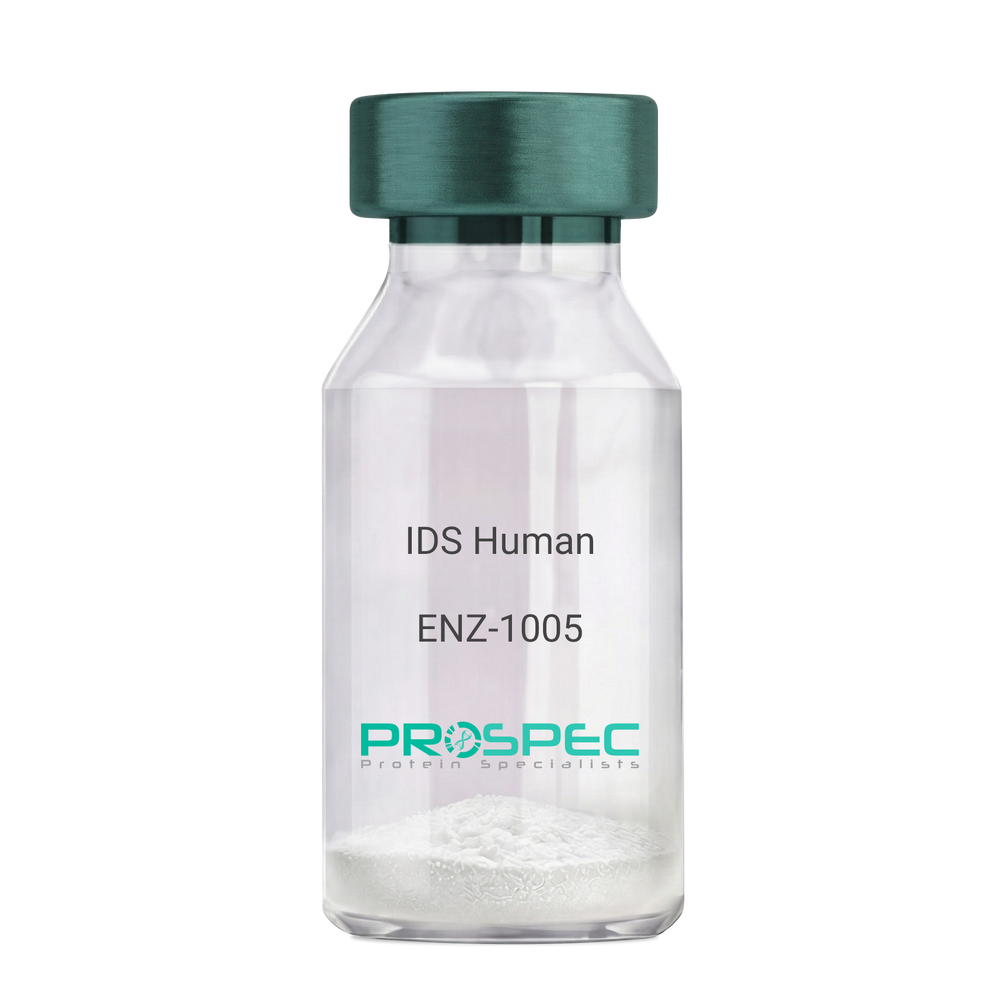
    IDS Human

    Description:

    Iduronate 2-Sulfatase Human Recombinant

    Iduronate 2-Sulfatase, Alpha-L-Iduronate Sulfate Sulfatase, SIDS, Iduronate 2-Sulfatase 14 KDa Chain, Iduronate 2-Sulfatase 42 KDa Chain, Hunter Syndrome, EC 3.1.6.13, MPS2, Iduronate 2-sulfatase, Alpha-L-iduronate sulfate sulfatase.

    Product # :

    ENZ-1005

    Price :

    Quantity :

    Shipping Method :

    Ice Icon

    Shipped with Ice Packs

    Add To Cart

    More Info

    • description
    • source
    • formulation
    • purity
    • More Info

    Description

    IDS Human Recombinant produced in Sf9 Baculovirus cells is a single, glycosylated polypeptide chain containing 533 amino acids (26-550a.a) and having a molecular mass of 60.3kDa. (Molecular size on SDS-PAGE will appear at approximately 35-70kDa). IDS is fused to an 8 amino acid His-tag at C-terminus & purified by proprietary chromatographic techniques.

    Source

    Sf9, Baculovirus cells.

    Formulation

    IDS protein solution (0.25mg/ml) containing Phosphate Buffered Saline (pH 7.4) and 10% glycerol.

    Purity

    Greater than 90% as determined by SDS-PAGE.

    More Info

    • Introduction

      Iduronate 2-Sulfatase also known as IDS, belongs to the highly-conserved sulfatase family of enzymes which catalyze the hydrolysis of O-sulfate and N-salfate esters from a variety of substrates. IDS is essential for the lysosomal degradation of the glycosaminoglycans (GAG) heparan sulfate as well as dermatan sulfate. Furthermore, IDS hydrolyzes the 2-sulfate group of the IDS units of the GAG.

    • Synonyms

      Iduronate 2-Sulfatase, Alpha-L-Iduronate Sulfate Sulfatase, SIDS, Iduronate 2-Sulfatase 14 KDa Chain, Iduronate 2-Sulfatase 42 KDa Chain, Hunter Syndrome, EC 3.1.6.13, MPS2, Iduronate 2-sulfatase, Alpha-L-iduronate sulfate sulfatase.

    • Physical Appearance

      Sterile Filtered clear solution.

    • Stability

      Store at 4°C if entire vial will be used within 2-4 weeks. Store, frozen at -20°C for longer periods of time. For long term storage it is recommended to add a carrier protein (0.1% HSA or BSA).Avoid multiple freeze-thaw cycles.

    • Amino Acid Sequence

      SETQANSTTD ALNVLLIIVD DLRPSLGCYG DKLVRSPNID QLASHSLLFQ NAFAQQAVCA PSRVSFLTGR RPDTTRLYDF NSYWRVHAGN FSTIPQYFKE NGYVTMSVGK VFHPGISSNH TDDSPYSWSF PPYHPSSEKY ENTKTCRGPD GELHANLLCP VDVLDVPEGT LPDKQSTEQA IQLLEKMKTS ASPFFLAVGY HKPHIPFRYP KEFQKLYPLE NITLAPDPEV PDGLPPVAYN PWMDIRQRED VQALNISVPY GPIPVDFQRK IRQSYFASVS YLDTQVGRLL SALDDLQLAN STIIAFTSDH GWALGEHGEW AKYSNFDVAT HVPLIFYVPG RTASLPEAGE KLFPYLDPFD SASQLMEPGR QSMDLVELVS LFPTLAGLAG LQVPPRCPVP SFHVELCREG KNLLKHFRFR DLEEDPYLPG NPRELIAYSQ YPRPSDIPQW NSDKPSLKDI KIMGYSIRTI DYRYTVWVGF NPDEFLANFS DIHAGELYFV DSDPLQDHNM YNDSQGGDLF QLLMPLEHHH HHH.

    ProSpec's products are furnished for LABORATORY RESEARCH USE ONLY. The product may not be used as drugs, agricultural or pesticidal products, food additives or household chemicals.

    Ids Human
  • View Data Sheet

    Name :

    GST S. Japonicum

    Description:

    Glutathione S-Transferase Schistosoma Japonicum Recombinant

    Glutathione S-Transferase class-mu 26 kDa isozyme, Sj26 antigen, SjGST, Glutathione S-Transferase class-mu 26 kDa isozyme Glutathione S Transferase.

    Product # :

    ENZ-1147

    Price :

    Quantity :

    Shipping Method :

    Ice Icon

    Shipped with Ice Packs

    Add To Cart

    More Info

    • description
    • source
    • formulation
    • purity
    • biological activity
    • More Info

    Description

    GST S. Japonicum Recombinant produced in E.Coli is a single, non-glycosylated polypeptide chain containing 218 amino acids (1-218) and having a molecular mass of 25.4 kDa.

    Source

    Escherichia Coli.

    Formulation

    GST S. Japonicum protein solution (1mg/ml) contains Phosphate-Buffered Saline (pH 7.4) and 10% glycerol.

    Purity

    Greater than 90.0% as determined by SDS-PAGE.

    Biological Activity

    Specific activity is > 30unit/mg, and is defined as the amount of enzyme that conjugate 1.0 umole of 1-chloro2,4-dinitrobenzene (CDNB) with reduced glutathione per minute at pH 6.5 at 25C.

    More Info

    • Introduction

      Glutathione S-transferase, also known as GST, is an antioxidant enzyme. It is the primary defense mechanism from reactive oxygen in the cell. The enzyme GST reduces hydroperoxides of lipids via a Se-independent glutathione peroxidase actions. GST detoxifies peroxidation of lipids bi-products, for example 4-hydroxynonenal.

    • Synonyms

      Glutathione S-Transferase class-mu 26 kDa isozyme, Sj26 antigen, SjGST, Glutathione S-Transferase class-mu 26 kDa isozyme Glutathione S Transferase.

    • Physical Appearance

      Sterile Filtered colorless solution.

    • Stability

      Store at 4°C if entire vial will be used within 2-4 weeks. Store, frozen at -20°C for longer periods of time. For long term storage it is recommended to add a carrier protein (0.1% HSA or BSA).Avoid multiple freeze-thaw cycles.

    • Amino Acid Sequence

      MSPILGYWKI KGLVQPTRLL LEYLEEKYEE HLYERDEGDK WRNKKFELGL EFPNLPYYID GDVKLTQSMA IIRYIADKHN MLGGCPKERA EISMLEGAVL DIRYGVSRIA YSKDFETLKV DFLSKLPEML KMFEDRLCHK TYLNGDHVTH PDFMLYDALD VVLYMDPMCL DAFPKLVCFK KRIEAIPQID KYLKSSKYIA WPLQGWQATF GGGDHPPK

    ProSpec's products are furnished for LABORATORY RESEARCH USE ONLY. The product may not be used as drugs, agricultural or pesticidal products, food additives or household chemicals.

    Gst Japonicum
  • View Data Sheet

    Name :

    DNase Human

    Description:

    Deoxyribonuclease I Human Recombinant

    EC 3.1.21.1, Deoxyribonuclease I, DNase I, DNL1, DRNI, FLJ38093, DNASE1.

    Product # :

    ENZ-319

    Price :

    Quantity :

    Shipping Method :

    Ice Icon

    Shipped with Ice Packs

    Add To Cart

    More Info

    • description
    • source
    • formulation
    • More Info

    Description

    Deoxyribonuclease I Human Recombinant produced in CHO is a glycosylated, polypeptide chain containing 260 amino acids and having a total molecular mass of 37,000 Dalton with a molecular formula of C1321H1999N339O396S9. DNase is purified by proprietary chromatographic techniques.

    Source

    Chinese Hamster Ovary Cells.

    Formulation

    Each mg contains 150 µg calcium chloride dehydrate and 8.77 mg NaCl.

    More Info

    • Introduction

      Deoxyribonuclease I Human Recombinant (rhDNase), an enzyme which selectively cleaves DNA. Recombinant Human Dnase is an endonuclease enzyme which splits phosphodiester linkages within polynucleotides, acting primarely on single stranded DNA (ssDNA), double stranded DNA (ddDNA) and chromatin. Dnase is activated by bivalent metals such as Mg+2 and Ca+2 .
      Dnase enzymes are common reagents used in biochemical methods requiring diestion of DNA and recovery of RNA, or where DNA is to be removed without affecting structural proteins or enzymes. Dnase enzymes are also used in tissue culture to digest DNA from damaged cells, resulting in reduced viscosity, and for removal of membrane-bound DNA fragments.

    • Synonyms

      EC 3.1.21.1, Deoxyribonuclease I, DNase I, DNL1, DRNI, FLJ38093, DNASE1.

    • Physical Appearance

      Sterile liquid colorless solution at a concentration of 1mg/ml.

    • Stability

      2 years when stored at 4°C, three weeks at 15°C, pH-6.3.

    • Unit Definition

      Dnase is generally assayed according to the photometric method developed by Kunitz. One Dnase unit results in an increase in absorbance at 260nm of 0.001/minute at 25°C when acting upon highly polymerized solution of DNA at pH-5. Also 0.005 Kunitz unit digests 1µgof lambda phage DNA in 10 minutes at 37°C in50mM Tris, 1mMMg++, pH 7.8 in a 50ul reaction.

    • Specific Activity

      1000IU/1mg.

    ProSpec's products are furnished for LABORATORY RESEARCH USE ONLY. The product may not be used as drugs, agricultural or pesticidal products, food additives or household chemicals.

    Dnase I Human
  • View Data Sheet

    Name :

    CKMB1 Human

    Description:

    Creatine Kinase MB Isoenzyme Type-1 Human Recombinant

    Creatine Kinase MB 1, CKMB1

    Product # :

    CKI-269

    Price :

    Quantity :

    Shipping Method :

    Ice Icon

    Shipped with Ice Packs

    Add To Cart

    More Info

    • description
    • source
    • formulation
    • purity
    • biological activity
    • More Info

    Description

    CKMB1 Human Recombinant produced in E.Coli is a non covalently linked heterodimer that consists of 381 a.a. and having a total Mw of ~85.6kDa. The CKMB1 is purified by proprietary chromatographic techniques.

    Source

    E.Coli

    Formulation

    CKMB1 was lyophilized a concentrated solution containing 20mM Tris, 150mM NaCl, pH-8.

    Purity

    Greater than 95.0% as determined by SDS-PAGE.

    Biological Activity

    CKMB1 activity was measured kinetically by the CK-NAC assay at 37°C which was found to be between 500-600 units/mg. 1U converts 1µmole of creatine phosphate to creatine/min at 37˚C

    More Info

    • Introduction

      The three isoenzymes (MM, MB, and BB) are found in muscle, cardiac and brain tissues. These recombinant proteins are ideal for calibrating diagnostic instruments and researching neuromuscular diseases. Creatine Kinases can be used for indications in many neuromuscular applications. These disorders include cardiac disease, mitochondrial disorders, inflammatory myopathies, myasthenia, polymyositis, McArdle's disease, NMJ disorders, muscular dystrophy, ALS, hypo and hyperthyroid disorders, central core disease, acid maltase deficiency, myoglobinuria, rhabdomyolysis, motor neuron diseases, rheumatic diseases, and other that create elevated or reduced levels of Creatine Kinases.

    • Synonyms

      Creatine Kinase MB Isoenzyme Type-1, CK MB1

    • Physical Appearance

      Sterile Filtered white lyophilized powder.

    • Stability

      Lyophilized CKMB1 although stable at room temperature for 3 weeks, should be stored desiccated below -18°C. Upon reconstitution MCSF should be stored at 4°C between 2-7 days and for future use below -18°C.Please prevent freeze-thaw cycles.

    • Solubility

      It is recommended to reconstitute the lyophilized CKMB1 in sterile 18MΩ-cm H2O at 0.1 mg/ml, which can then be further diluted to other aqueous solutions.

    • Amino Acid Sequence

      CKM1
      MPFGNTHNKF KLNYKPEEEY PDLSKHNNHM AKVLTLELYK KLRDKETPSG FTVDDVIQTG VDNPGHPFIM TVGCVAGDEE SYEVFKELFD PIISDRHGGY KPTDKHKTDL NHENLKGGDD LDPNYVLSSR VRTGRSIKGY TLPPHCSRGE RRAVEKLSVE ALNSLTGEFK GKYYPLKSMT EKEQQQLIDD HFLFDKPVSP LLLASGMARD WPDARGIWHN DNKSFLVWVN EEDHLRVISM EKGGNMKEVF RRFCVGLQKI EEIFKKAGHP FMWNQHLGYV LTCPSNLGTG LRGGVHVKLA HLSKHPKFEE ILTRLRLQKR GTGGVDTAAV GSVFDVSNAD RLGSSEVEQV QLVVDGVKLM VEMEKKLEKG QSIDDMIPAQ

      CKB
      MPFSNSHNAL KLRFPAEDEF PDLSAHNNHM AKVLTPELYA ELRAKSTPSG FTLDDVIQTG VDNPGHPYIM TVGCVAGDEE SYEVFKDLFD PIIEDRHGGY KPSDEHKTDL NPDNLQGGDD LDPNYVLSSR VRTGRSIRGF CLPPHCSRGE RRAIEKLAVE ALSSLDGDLA GRYYALKSMT EAEQQQLIDD HFLFDKPVSP LLLASGMARD WPDARGIWHN DNKTFLVWVN EEDHLRVISM QKGGNMKEVF TRFCTGLTQI ETLFKSKDYE FMWNPHLGYI LTCPSNLGTG LRAGVHIKLP NLGKHEKFSE VLKRLRLQKR GTGGVDTAAV GGVFDVSNAD RLGFSEVELV QMVVDGVKLL IEMEQRLEQG QAIDDLMPAQ K

    • Background

      What is the molecular weight / Mw of CKMB1 Protein?
      CKMB1 Protein is a non covalently heterodimer having a total Mw of 85.6

      What is the source or expression system of CKMB1 Protein?
      Escherichia Coli.

      What is the Purity of CKMB1 Protein?
      CKMB1 Protein is >95% pure as determined by SDS-PAGE.

      What is the Biological Activity of CKMB1 Protein?
      The activity was determined kinetically by the CK-NAC assay at 37°C which ranges between 500-600 U/mg.

      What is the amino acid sequence of CKMB1 Protein?
      CKM1
      MPFGNTHNKF KLNYKPEEEY PDLSKHNNHM AKVLTLELYK KLRDKETPSG FTVDDVIQTG VDNPGHPFIM TVGCVAGDEE SYEVFKELFD PIISDRHGGY KPTDKHKTDL NHENLKGGDD LDPNYVLSSR VRTGRSIKGY TLPPHCSRGE RRAVEKLSVE ALNSLTGEFK GKYYPLKSMT EKEQQQLIDD HFLFDKPVSP LLLASGMARD WPDARGIWHN DNKSFLVWVN EEDHLRVISM EKGGNMKEVF RRFCVGLQKI EEIFKKAGHP FMWNQHLGYV LTCPSNLGTG LRGGVHVKLA HLSKHPKFEE ILTRLRLQKR GTGGVDTAAV GSVFDVSNAD RLGSSEVEQV QLVVDGVKLM VEMEKKLEKG QSIDDMIPAQ
      CKB
      MPFSNSHNAL KLRFPAEDEF PDLSAHNNHM AKVLTPELYA ELRAKSTPSG FTLDDVIQTG VDNPGHPYIM TVGCVAGDEE SYEVFKDLFD PIIEDRHGGY KPSDEHKTDL NPDNLQGGDD LDPNYVLSSR VRTGRSIRGF CLPPHCSRGE RRAIEKLAVE ALSSLDGDLA GRYYALKSMT EAEQQQLIDD HFLFDKPVSP LLLASGMARD WPDARGIWHN DNKTFLVWVN EEDHLRVISM QKGGNMKEVF TRFCTGLTQI ETLFKSKDYE FMWNPHLGYI LTCPSNLGTG LRAGVHIKLP NLGKHEKFSE VLKRLRLQKR GTGGVDTAAV GGVFDVSNAD RLGFSEVELV QMVVDGVKLL IEMEQRLEQG QAIDDLMPAQ K

      What applications can CKMB1 Protein be used in?
      CKMB1 Protein can probably be used in western blot, ELISA and Lateral Flow.

      What is the endotoxin level for CKMB1 Protein?
      The endotoxin level is minimal, CKMB1 Protein was purified using conventional chromatography techniques.

    ProSpec's products are furnished for LABORATORY RESEARCH USE ONLY. The product may not be used as drugs, agricultural or pesticidal products, food additives or household chemicals.

    Ckmbi Human
  • View Data Sheet

    Name :

    TXNDC12 Human

    Description:

    Thioredoxin Domain Containing 12 Human Recombinant

    Thioredoxin domain containing 12 (endoplasmic reticulum), Endoplasmic reticulum resident protein 18, Endoplasmic reticulum resident protein 19, endoplasmic reticulum thioredoxin superfamily member 18 kDa, thioredoxin domain-containing protein 12, protein disulfide isomerase family A member 16, endoplasmic reticulum protein ERp19, anterior gradient homolog 1, Thioredoxin-like protein p19, ER protein 18, ERP18, ER protein 19, ERP19, ERP16, TLP19, AGR1, PDIA16, hAG-1, EC 1.8.4.2.

    Product # :

    PRO-1133

    Price :

    Quantity :

    Shipping Method :

    Ice Icon

    Shipped with Ice Packs

    Add To Cart

    More Info

    • description
    • source
    • formulation
    • purity
    • More Info

    Description

    TXNDC12 Human Recombinant produced in E. coli is a single polypeptide chain containing 184 amino acids (27-172) and having a molecular mass of 20.8 kDa.TXNDC12 is fused to a 38 amino acid His-tag at N-terminus & purified by proprietary chromatographic techniques.

    Source

    E.coli.

    Formulation

    The TXNDC12 solution (0.25mg/ml) contains 20mM Tris-HCl buffer (pH 8.0), 0.15M NaCl and 10% glycerol.

    Purity

    Greater than 90% as determined by SDS-PAGE.

    More Info

    • Introduction

      TXNDC12 is a member of the thioredoxin super family. This Family members have a thioredoxin fold with a consensus active-site sequence (CxxC) and take part in redox regulation, protection against oxidative stress, refolding of disulfide-containing proteins, and regulation of transcription factors.

    • Synonyms

      Thioredoxin domain containing 12 (endoplasmic reticulum), Endoplasmic reticulum resident protein 18, Endoplasmic reticulum resident protein 19, endoplasmic reticulum thioredoxin superfamily member 18 kDa, thioredoxin domain-containing protein 12, protein disulfide isomerase family A member 16, endoplasmic reticulum protein ERp19, anterior gradient homolog 1, Thioredoxin-like protein p19, ER protein 18, ERP18, ER protein 19, ERP19, ERP16, TLP19, AGR1, PDIA16, hAG-1, EC 1.8.4.2.

    • Physical Appearance

      Sterile Filtered colorless solution.

    • Stability

      Store at 4°C if entire vial will be used within 2-4 weeks. Store, frozen at -20°C for longer periods of time. For long term storage it is recommended to add a carrier protein (0.1% HSA or BSA).Avoid multiple freeze-thaw cycles.

    • Amino Acid Sequence

      MRGSHHHHHH GMASMTGGQQ MGRDLYDDDD KDRWGSHMHN GLGKGFGDHI HWRTLEDGKK EAAASGLPLM VIIHKSWCGA CKALKPKFAE STEISELSHN FVMVNLEDEE EPKDEDFSPD GGYIPRILFL DPSGKVHPEI INENGNPSYK YFYVSAEQVV QGMKEAQERL TGDAFRKKHL EDEL

    ProSpec's products are furnished for LABORATORY RESEARCH USE ONLY. The product may not be used as drugs, agricultural or pesticidal products, food additives or household chemicals.

    Txndc12 Human
  • View Data Sheet

    Name :

    PON1 Human (170-232)

    Description:

    Paraoxonase-1 (170-232) Human Recombinant

    Serum paraoxonase, arylesterase 1, EC 3.1.1.2, EC 3.1.8.1, PON 1.

    Product # :

    ENZ-1198

    Price :

    Quantity :

    Shipping Method :

    Room Temp Icon

    Shipped at Room temp

    Add To Cart

    More Info

    • description
    • source
    • formulation
    • purity
    • More Info

    Description

    The PON1 Human is created as a recombinant protein with a 4kda N-terminal fusion of His Tag. The PON1 His-Tagged Fusion Protein, produced in E. coli, is a 13kDa protein containing 63 amino acid residues of the PON1 Human, 170-232 amino acids.

    Source

    Escherichia Coli.

    Formulation

    Each mg was lyophilized with 1xPBS, 0.4% SDS and 4mM DTT.

    Purity

    Greater than 90% as determined by SDS-PAGE.

    More Info

    • Synonyms

      Serum paraoxonase, arylesterase 1, EC 3.1.1.2, EC 3.1.8.1, PON 1.

    • Physical Appearance

      Filtered White lyophilized (freeze-dried) powder.

    • Stability

      Store lyophilized PON1 at -20°C. Aliquot the product after reconstitution to avoid repeated freezing/thawing cycles. Reconstituted protein can be stored at 4°C for a limited period of time; it does not show any change after two weeks at 4°C.

    • Solubility

      It is recommended to add deionized water to prepare a working stock solution of approximately 0.5mg/ml and let the lyophilized pellet dissolve completely. Product is not sterile!

      Please filter the product by an appropriate sterile filter before using it on cell culture.

    • Background

      PON1takes part in the detoxification of organophosphate insecticides such as parathion.

      PON1 is related to high-density lipoprotein (HDL) in the plasma and takes an important part in lipid metabolism and antioxidant defense.

      PON1 was first known for its ability to protect against oxidative stress and hydrolyze organophosphates.

      PON1 reduces oxidative stress by preventing the oxidation of lipids in LDL particles, which is extremely important in mitigating atherosclerosis and other cardiovascular diseases.

      PON1 has anti-inflammatory effects which help reduce inflammatory markers in different disease states.

      PON1 takes part in cholesterol metabolism, influencing the stability and formation of HDL particles, which are vital for lipid transport and reverse cholesterol efflux.

    ProSpec's products are furnished for LABORATORY RESEARCH USE ONLY. The product may not be used as drugs, agricultural or pesticidal products, food additives or household chemicals.

    Paraoxonase 1 Human
  • View Data Sheet

    Name :

    MCEE Human

    Description:

    Methylmalonyl CoA Epimerase Human Recombinant

    GLOD2, Methylmalonyl CoA Epimerase, Glyoxalase Domain Containing 2, DL-methylmalonyl-CoA Racemase.

    Product # :

    ENZ-013

    Price :

    Quantity :

    Shipping Method :

    Ice Icon

    Shipped with Ice Packs

    Add To Cart

    More Info

    • description
    • source
    • formulation
    • purity
    • More Info

    Description

    MCEE produced in E.Coli is a single, non-glycosylated polypeptide chain containing 161 amino acids (37-176a.a.) and having a molecular mass of 17.3kDa.MCEE is fused to a 21 amino acid His-tag at N-terminus & purified by proprietary chromatographic techniques.

    Source

    Escherichia Coli.

    Formulation

    The MCEE protein solution (1mg/1ml) is formulated in 20mM Tris-HCl buffer (pH8.0), 0.2M NaCl, 1mM DTT, 0.1mM PMSF and 10% glycerol.

    Purity

    Greater than 90% as determined by SDS-PAGE.

    More Info

    • Introduction

      MCEE catalyzes the interconversion of D- and L-methylmalonyl-CoA throughout the degradation of branched chain amino acids, odd chain-length fatty acids, and other metabolites. MCEE protein deficiency is an autosomal recessive inborn error of amino acid metabolism, involving valine, threonine, isoleucine and methionine. This organic aciduria can appear in the neonatal period with life-threatening metabolic acidosis, hyperammonemia, feeding difficulties, pancytopenia and coma.

    • Synonyms

      GLOD2, Methylmalonyl CoA Epimerase, Glyoxalase Domain Containing 2, DL-methylmalonyl-CoA Racemase.

    • Physical Appearance

      Sterile Filtered clear solution.

    • Stability

      Store at 4°C if entire vial will be used within 2-4 weeks. Store, frozen at -20°C for longer periods of time. For long term storage it is recommended to add a carrier protein (0.1% HSA or BSA).Avoid multiple freeze-thaw cycles.

    • Amino Acid Sequence

      MGSSHHHHHH SSGLVPRGSH MQVTGSVWNL GRLNHVAIAV PDLEKAAAFY KNILGAQVSE AVPLPEHGVS VVFVNLGNTK MELLHPLGRD SPIAGFLQKN KAGGMHHICI EVDNINAAVM DLKKKKIRSL SEEVKIGAHG KPVIFLHPKD CGGVLVELEQ A

    ProSpec's products are furnished for LABORATORY RESEARCH USE ONLY. The product may not be used as drugs, agricultural or pesticidal products, food additives or household chemicals.

    Mcee Human
  • View Data Sheet

    Name :

    GALM Human

    Description:

    Galactose Mutarotase Human Recombinant

    Aldose 1-epimerase, BLOCK25, IBD1, EC=5.1.3.3, GALM, galactose mutarotase.

    Product # :

    ENZ-541

    Price :

    Quantity :

    Shipping Method :

    Ice Icon

    Shipped with Ice Packs

    Add To Cart

    More Info

    • description
    • source
    • formulation
    • purity
    • More Info

    Description

    GALM Human Recombinant produced in E.Coli is a single, non-glycosylated polypeptide chain containing 362 amino acids (1-342 a.a.) and having a molecular mass of 39.9 kDa. The GALM is fused to a 20 amino acid His-Tag at N-terminus and purified by proprietary chromatographic techniques.

    Source

    Escherichia Coli.

    Formulation

    GALM solution (1mg/ml) contains 20mM Tris-HCl (pH 8.0) and 10% glycerol.

    Purity

    Greater than 95.0% as determined by SDS-PAGE.

    More Info

    • Introduction

      GALM is a main enzyme of carbohydrate metabolism catalysing the translation of beta-D-galactose to alpha-D-galactose. GALM is needed for normal galactose metabolism by preserveing the equilibrium of alpha and beta anomers of galactose. GALM is required for the production of complex oligosaccharides.

    • Synonyms

      Aldose 1-epimerase, BLOCK25, IBD1, EC=5.1.3.3, GALM, galactose mutarotase.

    • Physical Appearance

      Sterile filtered colorless solution.

    • Stability

      Store at 4°C if entire vial will be used within 2-4 weeks. Store, frozen at -20°C for longer periods of time. For long term storage it is recommended to add a carrier protein (0.1% HSA or BSA).Avoid multiple freeze-thaw cycles.

    • Amino Acid Sequence

      MGSSHHHHHH SSGLVPRGSH MASVTRAVFG ELPSGGGTVE KFQLQSDLLR VDIISWGCTI TALEVKDRQG RASDVVLGFA ELEGYLQKQP YFGAVIGRVA NRIAKGTFKV DGKEYHLAIN KEPNSLHGGV RGFDKVLWTP RVLSNGVQFS RISPDGEEGY PGELKVWVTY TLDGGELIVN YRAQASQATP VNLTNHSYFN LAGQASPNIN DHEVTIEADT YLPVDETLIP TGEVAPVQGT AFDLRKPVEL GKHLQDFHLN GFDHNFCLKG SKEKHFCARV HHAASGRVLE VYTTQPGVQF YTGNFLDGTL KGKNGAVYPK HSGFCLETQN WPDAVNQPRF PPVLLRPGEE YDHTTWFKFS VA.

    ProSpec's products are furnished for LABORATORY RESEARCH USE ONLY. The product may not be used as drugs, agricultural or pesticidal products, food additives or household chemicals.

    Galm Human
  • View Data Sheet

    Name :

    HIBCH Human

    Description:

    3-Hydroxyisobutyryl-CoA Hydrolase Human Recombinant

    3-hydroxyisobutyryl-coenzyme A hydrolase mitochondrial, HIBYL-CoA-H, HIB-CoA hydrolase, EC 3.1.2.4

    Product # :

    ENZ-594

    Price :

    Quantity :

    Shipping Method :

    Ice Icon

    Shipped with Ice Packs

    Add To Cart

    More Info

    • description
    • source
    • formulation
    • purity
    • More Info

    Description

    HIBCH Recombinant produced in E. coli is a single polypeptide chain containing 379 amino acids (33-386) and having a molecular mass of 42.1kDa.HIBCH is fused to a 25 amino acid His-tag at N-terminus & purified by proprietary chromatographic techniques.

    Source

    E.coli.

    Formulation

    The HIBCH solution (1mg/ml) contains 20mM Tris-HCl buffer (pH 8.0), 200mM NaCl, 1mM DTT and 10% glycerol.

    Purity

    Greater than 90% as determined by SDS-PAGE.

    More Info

    • Introduction

      HIBCH enzyme is in charge of hydrolysis of both HIBYL-CoA and beta-hydroxypropionyl-CoA. Damages in the HIBCH gene linked to 3-hyroxyisobutyryl-CoA hydrolase deficiency. Multiple transcript variants exist as a result of alternative splicing.

    • Synonyms

      3-hydroxyisobutyryl-coenzyme A hydrolase mitochondrial, HIBYL-CoA-H, HIB-CoA hydrolase, EC 3.1.2.4

    • Physical Appearance

      Sterile Filtered colorless solution.

    • Stability

      Store at 4°C if entire vial will be used within 2-4 weeks. Store, frozen at -20°C for longer periods of time. For long term storage it is recommended to add a carrier protein (0.1% HSA or BSA).Avoid multiple freeze-thaw cycles.

    • Amino Acid Sequence

      MGSSHHHHHH SSGLVPRGSH MGSHMDAAEE VLLEKKGCTG VITLNRPKFL NALTLNMIRQ IYPQLKKWEQ DPETFLIIIK GAGGKAFCAG GDIRVISEAE KAKQKIAPVF FREEYMLNNA VGSCQKPYVA LIHGITMGGG VGLSVHGQFR VATEKCLFAM PETAIGLFPD VGGGYFLPRL QGKLGYFLAL TGFRLKGRDV YRAGIATHFV DSEKLAMLEE DLLALKSPSK ENIASVLENY HTESKIDRDK SFILEEHMDK INSCFSANTV EEIIENLQQD GSSFALEQLK VINKMSPTSL KITLRQLMEG SSKTLQEVLT MEYRLSQACM RGHDFHEGVR AVLIDKDQSP KWKPADLKEV TEEDLNNHFK SLGSSDLKF.

    ProSpec's products are furnished for LABORATORY RESEARCH USE ONLY. The product may not be used as drugs, agricultural or pesticidal products, food additives or household chemicals.

    Hibch Human
  • View Data Sheet

    Name :

    IMPDH1 Human

    Description:

    IMP Dehydrogenase 1 Human Recombinant

    EC 1.1.1.205, IMP (inosine monophosphate) dehydrogenase 1, LCA11, RP10, IMPDH 1, IMPD 1, IMPDH-I, SwSS2608, DKFZp781N0678.

    Product # :

    ENZ-525

    Price :

    Quantity :

    Shipping Method :

    Ice Icon

    Shipped with Ice Packs

    Add To Cart

    More Info

    • description
    • source
    • formulation
    • purity
    • More Info

    Description

    IMPDH1 Recombinant Human produced in E.Coli is a single, non-glycosylated polypeptide chain containing 534 amino acids (1-514 a.a.) and having a molecular mass of 57.5 kDa. The IMPDH1 is fused to 20 amino acid His-Tag at N-terminus and purified by proprietary chromatographic techniques.

    Source

    Escherichia Coli.

    Formulation

    IMPDH1 Human solution containing 20mM Tris-HCl pH-8, 1mM DTT & 20% glycerol.

    Purity

    Greater than 95.0% as determined by SDS-PAGE.

    More Info

    • Introduction

      IMPDH1 is a rate limiting enzyme in the de novo synthesis of guanine nucleotides and consequently participates in the regulation of cell growth. IMPDH1 takes part in the development of malignancy and the growth progression of some tumors. IMPDH1 performs as a homotetramer to regulate cell growth. IMPDH1 catalyzes the synthesis of xanthine monophosphate (XMP) from inosine-5''-monophosphate (IMP). Defects in this gene are a cause of retinitis pigmentosa type 10 (RP10).

    • Synonyms

      EC 1.1.1.205, IMP (inosine monophosphate) dehydrogenase 1, LCA11, RP10, IMPDH 1, IMPD 1, IMPDH-I, SwSS2608, DKFZp781N0678.

    • Physical Appearance

      Sterile filtered colorless solution.

    • Stability

      Store at 4°C if entire vial will be used within 2-4 weeks. Store, frozen at -20°C for longer periods of time. For long term storage it is recommended to add a carrier protein (0.1% HSA or BSA).Avoid multiple freeze-thaw cycles.

    • Amino Acid Sequence

      MGSSHHHHHH SSGLVPRGSH MADYLISGGT GYVPEDGLTA QQLFASADGL TYNDFLILPG FIDFIADEVD LTSALTRKIT LKTPLISSPM DTVTEADMAI AMALMGGIGF IHHNCTPEFQ ANEVRKVKKF EQGFITDPVV LSPSHTVGDV LEAKMRHGFS GIPITETGTM GSKLVGIVTS RDIDFLAEKD HTTLLSEVMT PRIELVVAPA GVTLKEANEI LQRSKKGKLP IVNDCDELVA IIARTDLKKN RDYPLASKDS QKQLLCGAAV GTREDDKYRL DLLTQAGVDV IVLDSSQGNS VYQIAMVHYI KQKYPHLQVI GGNVVTAAQA KNLIDAGVDG LRVGMGCGSI CITQEVMACG RPQGTAVYKV AEYARRFGVP IIADGGIQTV GHVVKALALG ASTVMMGSLL AATTEAPGEY FFSDGVRLKK YRGMGSLDAM EKSSSSQKRY FSEGDKVKIA QGVSGSIQDK GSIQKFVPYL IAGIQHGCQD IGARSLSVLR SMMYSGELKF EKRTMSAQIE GGVHGLHSYE KRLY.

    ProSpec's products are furnished for LABORATORY RESEARCH USE ONLY. The product may not be used as drugs, agricultural or pesticidal products, food additives or household chemicals.

    Impdh1 Human
  • View Data Sheet

    Name :

    Fumarase Human

    Description:

    Fumarate Hydratase Human Recombinant

    MCL, LRCC, HLRCC, MCUL1, FH, Fumarate hydratase, Fumarase.

    Product # :

    ENZ-395

    Price :

    Quantity :

    Shipping Method :

    Ice Icon

    Shipped with Ice Packs

    Add To Cart

    More Info

    • description
    • source
    • formulation
    • purity
    • biological activity
    • More Info

    Description

    Fumarase Human Recombinant produced in E.Coli is a single, non-glycosylated polypeptide chain containing 467 amino acids (44-510) and having a molecular mass of 50.2 kDa. Fumarate Hydratase is purified by proprietary chromatographic techniques.

    Source

    Escherichia Coli.

    Formulation

    The Fumarase protein solution (1mg/ml) contains 20mM Tris-HCl, pH-8.

    Purity

    Greater than 95.0% as determined by SDS-PAGE.

    Biological Activity

    Specific activity is > 25 unit/mg, and is defined as the amount of enzyme that cleaves 1umole of L-Malate to Fumarate per minute at pH 7.5 at 37°C.

    More Info

    • Introduction

      Fumarase is an enzymatic factor of Krebs cycle, which catalyzes the formation of L-malate from fumarate. Fumarase exists in both a cytosolic form and an N-terminal extended form, differing only in the translation start site used. The N-terminal extended form is aimed to the mitochondrion, where the removal of the extension results in the same form as in the cytoplasm. Fumarase is similar to a number of thermostable Class-2 fumarases and functions as a homotetramer. Mutations in the Fumarase gene causes fumarase deficiency and leads to progressive encephalopathy, cerebral atrophy and developmental delay. Fumarase enzyme is also thought to act as a tumor suppressor. Leydig cell tumors are caused by Fumarase mutations and represents one of the first reports of germline mutations in any type of adult testicular tumor.

    • Synonyms

      MCL, LRCC, HLRCC, MCUL1, FH, Fumarate hydratase, Fumarase.

    • Physical Appearance

      Sterile filtered colorless solution.

    • Stability

      Store at 4°C if entire vial will be used within 2-4 weeks. Store, frozen at -20°C for longer periods of time. For long term storage it is recommended to add a carrier protein (0.1% HSA or BSA). Avoid multiple freeze-thaw cycles.

    • Amino Acid Sequence

      MASQNSFRIE YDTFGELKVP NDKYYGAQTV RSTMNFKIGG VTERMPTPVI KAFGILKRAA AEVNQDYGLD PKIANAIMKA ADEVAEGKLN DHFPLVVWQT GSGTQTNMNV NEVISNRAIE MLGGELGSKI PVHPNDHVNK SQSSNDTFPT AMHIAAAIEV HEVLLPGLQK LHDALDAKSK EFAQIIKIGR THTQDAVPLT LGQEFSGYVQ QVKYAMTRIK AAMPRIYELA AGGTAVGTGL NTRIGFAEKV AAKVAALTGL PFVTAPNKFE ALAAHDALVE LSGAMNTTAC SLMKIANDIR FLGSGPRSGL GELILPENEP GSSIMPGKVN PTQCEAMTMV AAQVMGNHVA VTVGGSNGHF ELNVFKPMMI KNVLHSARLL GDASVSFTEN CVVGIQANTE RINKLMNESL MLVTALNPHI GYDKAAKIAK TAHKNGSTLK ETAIELGYLT AEQFDEWVKP KDMLGPK.

    ProSpec's products are furnished for LABORATORY RESEARCH USE ONLY. The product may not be used as drugs, agricultural or pesticidal products, food additives or household chemicals.

    Fumarase Human
  • View Data Sheet

    Name :

    IMPA1 Antibody

    Description:

    Inositol Monophosphatase 1, Mouse Anti Human

    Inositol monophosphatase 1, IMP 1, IMPase 1, Inositol-1(or 4)-monophosphatase 1, Lithium-sensitive myo-inositol monophosphatase A1, IMPA1, IMPA, IMP.

    Product # :

    ANT-625

    Price :

    Quantity :

    Shipping Method :

    Ice Icon

    Shipped with Ice Packs

    Add To Cart

    More Info

    • formulation
    • More Info

    Formulation

    1mg/ml containing PBS, pH-7.4, 10% Glycerol and 0.02% Sodium Azide.

    More Info

    • Introduction

      Inositol monophosphatase1 (IMPA1) is responsible for the provision of inositol essential for synthesis of phosphatidylinositol and polyphosphoinositides. IMPA1 has a central role in the phosphatidylinositol signaling pathway by catalyzing the hydrolysis of inositol monophosphates. IMPA1 has been recognized as the pharmacological target for lithium action in the brain. The IMPA1 enzyme has a magnesium-dependent phosphatase activity and is inhibited by therapeutic concentrations of lithium. Inhibition of inositol monophosphate hydroylosis and ensuing depletion of inositol for phosphatidylinositol synthesis may perhaps explain the anti-manic and anti-depressive effects of lithium administered to treat bipolar disorder.

    • Synonyms

      Inositol monophosphatase 1, IMP 1, IMPase 1, Inositol-1(or 4)-monophosphatase 1, Lithium-sensitive myo-inositol monophosphatase A1, IMPA1, IMPA, IMP.

    • Physical Appearance

      Sterile filtered colorless solution.

    • Immunogen

      Anti-human IMPA1 mAb, is derived from hybridization of mouse F0 myeloma cells with spleen cells from BALB/c mice immunized with a recombinant human IMPA1 protein 1-277amino acids purified from E. coli.

    • Ig Subclass

      Mouse IgG1 heavy chain and k light chain.

    • Clone

      PAT2G5AT.

    • Applications

      The antibody has been tested by ELISA, Western blot analysis, Flow cytometry and ICC/IF to assure specificity and reactivity. Since application varies, however, each investigation should be titrated by the reagent to obtain optimal results.

    • Type

      Mouse Anti Human Monoclonal.

    • Storage Procedures

      For periods up to 1 month store at 4°C, for longer periods of time, store at -20°C. Prevent freeze thaw cycles.

    • Purification Method

      IMPA1 antibody was purified from mouse ascitic fluids by protein-A affinity chromatography.

    ProSpec's products are furnished for LABORATORY RESEARCH USE ONLY. The product may not be used as drugs, agricultural or pesticidal products, food additives or household chemicals.

    Impa1 Antibody
  • View Data Sheet

    Name :

    KDSR Human

    Description:

    3-Ketodihydrosphingosine Reductase Human Recombinant

    3-ketodihydrosphingosine reductase, KDS reductase, 3-dehydrosphinganine reductase, Follicular variant translocation protein 1, FVT-1, KDSR, FVT1, DHSR, SDR35C1, FLJ36555, FLJ92680.

    Product # :

    ENZ-092

    Price :

    Quantity :

    Shipping Method :

    Ice Icon

    Shipped with Ice Packs

    Add To Cart

    More Info

    • description
    • source
    • formulation
    • purity
    • More Info

    Description

    KDSR Human Recombinant fused with a 21 amino acid His tag at N-terminus produced in E.Coli is a single, non-glycosylated, polypeptide chain containing 266 amino acids (26-270 a.a.) and having a molecular mass of 29kDa. The KDSR is purified by proprietary chromatographic techniques.

    Source

    Escherichia Coli.

    Formulation

    The KDSR solution (0.5 mg/ml) contains 20mM Tris-HCl buffer (pH 8.0), 1mM DTT, 10% glycerol, 0.1M NaCl and 0.1mM PMSF.

    Purity

    KDSR purity was found to be greater than 90.0% as determined by SDS-PAGE.

    More Info

    • Introduction

      3-ketodihydrosphingosine reductase (KDSR) is a 332 amino acid multi-pass membrane protein which localizes to the ER and is a member of the short-chain dehydrogenases/reductases (SDR) family. KDSR is a secreted protein that is weakly expressed in hematopoietic tissue. Furthermore, KDSR catalyzes the reduction of 3-ketodihydrosphingosine (KDS) to dihydrosphingosine (DHS). The putative active site residues of KDSR are found on the cytosolic side of the endoplasmic reticulum membrane. Chromosomal rearrangement in the KDSR gene is a cause of follicular lymphoma, aka type II chronic lymphatic leukemia.

    • Synonyms

      3-ketodihydrosphingosine reductase, KDS reductase, 3-dehydrosphinganine reductase, Follicular variant translocation protein 1, FVT-1, KDSR, FVT1, DHSR, SDR35C1, FLJ36555, FLJ92680.

    • Physical Appearance

      The KDSR is supplied as a sterile filtered colorless solution.

    • Stability

      Store at 4°C if entire vial will be used within 2-4 weeks. Store, frozen at -20°C for longer periods of time. For long term storage it is recommended to add a carrier protein (0.1% HSA or BSA).Avoid multiple freeze-thaw cycles.

    • Amino Acid Sequence

      MGSSHHHHHH SSGLVPRGSH MKPLALPGAH VVVTGGSSGI GKCIAIECYK QGAFITLVAR NEDKLLQAKK EIEMHSINDK QVVLCISVDV SQDYNQVENV IKQAQEKLGP VDMLVNCAGM AVSGKFEDLE VSTFERLMSI NYLGSVYPSR AVITTMKERR VGRIVFVSSQ AGQLGLFGFT AYSASKFAIR GLAEALQMEV KPYNVYITVA YPPDTDTPGF AEENRTKPLE TRLISETTSV CKPEQVAKQI VKDAIQGNFN SSLGSD.

    ProSpec's products are furnished for LABORATORY RESEARCH USE ONLY. The product may not be used as drugs, agricultural or pesticidal products, food additives or household chemicals.

    Kdsr Human
  • View Data Sheet

    Name :

    PON1 Human (68-124)

    Description:

    Paraoxonase-1 (68-124) Human Recombinant

    Serum paraoxonase, arylesterase 1, EC 3.1.1.2, EC 3.1.8.1, PON 1.

    Product # :

    ENZ-1197

    Price :

    Quantity :

    Shipping Method :

    Room Temp Icon

    Shipped at Room temp

    Add To Cart

    More Info

    • description
    • source
    • formulation
    • purity
    • More Info

    Description

    The PON1 Human is created as a recombinant protein with a 4kda N-terminal fusion of His Tag. The PON1 His-Tagged Fusion Protein, produced in E. coli, is a 12kDa protein containing 57 amino acid residues of the PON1 Human, 68-124 amino acids.

    Source

    Escherichia Coli.

    Formulation

    Each mg was lyophilized with 1xPBS, 0.4% SDS and 4mM DTT.

    Purity

    Greater than 90% as determined by SDS-PAGE.

    More Info

    • Synonyms

      Serum paraoxonase, arylesterase 1, EC 3.1.1.2, EC 3.1.8.1, PON 1.

    • Physical Appearance

      Filtered White lyophilized (freeze-dried) powder.

    • Stability

      Store lyophilized PON1 at -20°C. Aliquot the product after reconstitution to avoid repeated freezing/thawing cycles. Reconstituted protein can be stored at 4°C for a limited period of time; it does not show any change after two weeks at 4°C.

    • Solubility

      It is recommended to add deionized water to prepare a working stock solution of approximately 0.5mg/ml and let the lyophilized pellet dissolve completely. Product is not sterile!

      Please filter the product by an appropriate sterile filter before using it on cell culture.

    • Background

      Paraoxonase 1 also known as PON1takes part in the detoxification of organophosphate insecticides such as parathion.

      PON1 is related to high-density lipoprotein (HDL) in the plasma and takes an important part in lipid metabolism and antioxidant defense.

      PON1 was first known for its ability to hydrolyze organophosphates and protect against oxidative stress.

      PON1 reduces oxidative stress by preventing the oxidation of lipids in LDL particles, which is extremely important in mitigating atherosclerosis and other cardiovascular diseases.

      PON1 has an anti-inflammatory effects which help reduce inflammatory markers in different disease states.

      PON1 takes part in cholesterol metabolism, influencing the stability and formation of HDL particles, which are vital for lipid transport and reverse cholesterol efflux.

    ProSpec's products are furnished for LABORATORY RESEARCH USE ONLY. The product may not be used as drugs, agricultural or pesticidal products, food additives or household chemicals.

    Pon1 Protein
  • View Data Sheet

    Name :

    PGAM1 Human

    Description:

    Phosphoglycerate Mutase 1 Human Recombinant

    Phosphoglycerate mutase isozyme B, PGAM-B, PGAMA.

    Product # :

    ENZ-337

    Price :

    Quantity :

    Shipping Method :

    Ice Icon

    Shipped with Ice Packs

    Add To Cart

    More Info

    • description
    • source
    • formulation
    • purity
    • More Info

    Description

    PGAM1 Human Recombinant produced in E.Coli is a single, non-glycosylated, polypeptide chain containing 274 amino acids (1-254 a.a.) and having a molecular mass of 30.9 kDa. The PGAM1 is fused to a 20 amino acid His Tag at N-Terminus and purified by proprietary chromatographic techniques.

    Source

    Escherichia Coli.

    Formulation

    The PGAM1 1mg/ml protein solution contains 20mM Tris-HCl pH-8, 1mM DTT, and 10% glycerol.

    Purity

    Greater than 90% as determined by SDS-PAGE.

    More Info

    • Introduction

      PGAM1 is part of the phosphoglycerate mutase family. PGAM1 is an essential component of glucose and 2,3-BPGA (2,3-bisphosphoglycerate) metabolism and catalyzes the reversible reaction of 3-phosphoglycerate (3-PGA) to 2-phosphoglycerate (2-PGA) in the glycolytic pathway. PGAM1 is a dimeric enzyme containing, in different tissues, different proportions of a slow-migrating muscle (MM) isozyme, a fast-migrating brain (BB) isozyme, and a hybrid form (MB). PGAM1 mutations lead to muscle phosphoglycerate mutase deficiency, a.k.a. glycogen storage disease X.

    • Synonyms

      Phosphoglycerate mutase isozyme B, PGAM-B, PGAMA.

    • Physical Appearance

      Sterile Filtered clear colorless solution.

    • Stability

      Store at 4°C if entire vial will be used within 2-4 weeks. Store, frozen at -20°C for longer periods of time. For long term storage it is recommended to add a carrier protein (0.1% HSA or BSA).Avoid multiple freeze-thaw cycles.

    • Amino Acid Sequence

      MGSSHHHHHH SSGLVPRGSH MAAYKLVLIR HGESAWNLEN RFSGWYDADL SPAGHEEAKR GGQALRDAGY EFDICFTSVQ KRAIRTLWTV LDAIDQMWLP VVRTWRLNER HYGGLTGLNK AETAAKHGEA QVKIWRRSYD VPPPPMEPDH PFYSNISKDR RYADLTEDQL PSCESLKDTI ARALPFWNEE IVPQIKEGKR VLIAAHGNSL RGIVKHLEGL SEEAIMELNL PTGIPIVYEL DKNLKPIKPM QFLGDEETVR KAMEAVAAQG KAKK.

    ProSpec's products are furnished for LABORATORY RESEARCH USE ONLY. The product may not be used as drugs, agricultural or pesticidal products, food additives or household chemicals.

    Pgam1 Human
  • View Data Sheet

    Name :

    CES1G Mouse

    Description:

    Carboxylesterase 1G Mouse Recombinant

    Liver carboxylesterase 1, Acyl-coenzyme A:cholesterol acyltransferase, Carboxylesterase 1G, ES-x, CES1G.

    Product # :

    ENZ-947

    Price :

    Quantity :

    Shipping Method :

    Ice Icon

    Shipped with Ice Packs

    Add To Cart

    More Info

    • description
    • source
    • formulation
    • purity
    • biological activity
    • More Info

    Description

    CES1G produced in Sf9 Baculovirus cells is a single, glycosylated polypeptide chain containing 556 amino acids (19-565 a.a.) and having a molecular mass of 61.9kDa (Migrates at 50-70kDa on SDS-PAGE under reducing conditions). CES1G is expressed with a 6 amino acid His tag at C-Terminus and purified by proprietary chromatographic techniques.

    Source

    Sf9, Baculovirus cells.

    Formulation

    CES1G protein solution (0.5mg/ml) containing Phosphate Buffered Saline (pH 7.4) and 10% glycerol.

    Purity

    Greater than 90.0% as determined by SDS-PAGE.

    Biological Activity

    Specific activity is > 2,000 pmol/min/ug and is defined as the amount of enzyme that hydrolyze 1pmole of p-nitrophenyl acetate to p-nitrophenol per minute at pH 7.5 at 37C.

    More Info

    • Introduction

      Carboxylesterase 1 (CES1G) belongs to a large family of carboxylesterases that are liable for the hydrolysis of ester and amide bonds. CES1G is also participates in the detoxification of xenobiotics prodrugs. CES1G shares the serine hydrolase fold observed in other esterases. CES1G found in rats and mice and is expressed mainly in liver, but also in kidney and lung.

    • Synonyms

      Liver carboxylesterase 1, Acyl-coenzyme A:cholesterol acyltransferase, Carboxylesterase 1G, ES-x, CES1G.

    • Physical Appearance

      Sterile Filtered colorless solution.

    • Stability

      Store at 4°C if entire vial will be used within 2-4 weeks. Store, frozen at -20°C for longer periods of time. For long term storage it is recommended to add a carrier protein (0.1% HSA or BSA). Avoid multiple freeze-thaw cycles.

    • Amino Acid Sequence

      ADPHPSLPPV VHTVHGKVLG KYVTLEGFSQ PVAVFLGVPF AKPPLGSLRF APPEPAEPWS FVKHTTSYPP LCYQNPEAAL RLAELFTNQR KIIPHKFSED CLYLNIYTPA DLTQNSRLPV MVWIHGGGLV IDGASTYDGV PLAVHENVVV VVIQYRLGIW GFFSTEDEHS RGNWGHLDQV AALHWVQDNI ANFGGNPGSV TIFGESAGGE SVSVLVLSPL AKNLFHRAIA QSSVIFNPCL FGRAARPLAK KIAALAGCKT TTSAAMVHCL RQKTEDELLE VSLKMKFGTV DFLGDPRESY PFLPTVIDGV LLPKAPEEIL AEKSFNTVPY MVGINKHEFG WIIPMFLDFP LSERKLDQKT AASILWQAYP ILNISEKLIP AAIEKYLGGT EDPATMTDLF LDLIGDIMFG VPSVIVSRSH RDAGAPTYMY EYQYRPSFVS DDRPQELLGD HADELFSVWG APFLKEGASE EEINLSKMVM KFWANFARNG NPNGEGLPHW PEYDQKEGYL QIGVPAQAAH RLKDKEVDFW TELRAKETAE RSSHREHVEL HHHHHH.

    ProSpec's products are furnished for LABORATORY RESEARCH USE ONLY. The product may not be used as drugs, agricultural or pesticidal products, food additives or household chemicals.

    Ces1 Mouse
  • View Data Sheet

    Name :

    PAICS Human

    Description:

    Phosphoribosylaminoimidazole Carboxylase Human Recombinant

    PAICS, Phosphoribosylaminoimidazole Carboxylase Phosphoribosylaminoimidazole, Succinocarboxamide Synthetase, PAIS, AIRC, ADE2, ADE2H1, AIR Carboxylase, Multifunctional Protein ADE2, Multifunctional Protein ADE2H1, SAICAR Synthetase.

    Product # :

    ENZ-786

    Price :

    Quantity :

    Shipping Method :

    Ice Icon

    Shipped with Ice Packs

    Add To Cart

    More Info

    • description
    • source
    • formulation
    • purity
    • More Info

    Description

    PAICS Human Recombinant produced in E.coli is a single, non-glycosylated polypeptide chain containing 448 amino acids (1-425) and having a molecular mass of 49.5kDa.PAICS is fused to a 23 amino acid His-tag at N-terminus & purified by proprietary chromatographic techniques.

    Source

    E.coli.

    Formulation

    The PAICS solution (0.25mg/ml) contains 20mM Tris-HCl buffer (pH8.0), 20% glycerol, 0.1M NaCl and 1mM DTT.

    Purity

    Greater than 90% as determined by SDS-PAGE.

    More Info

    • Introduction

      Phosphoribosylaminoimidazole Carboxylase (PAICS) is an enzyme involved in nucleotide biosynthesis and particularly in purine biosynthesis. PAICS is a bifunctional enzyme containing phosphoribosylaminoimidazole carboxylase activity at its N-terminal region and phosphoribosylaminoimidazole succinocarboxamide synthetase at its C-terminal region. PAICS catalyzes the conversion of 5'-phosphoribosyl-5-aminoimidazole(AIR) into 5'-phosphoribosyl-4-carboxy-5-aminoimidazole (CAIR) as described in the reaction. PAICS catalyzes steps six and seven of purine biosynthesis.

    • Synonyms

      PAICS, Phosphoribosylaminoimidazole Carboxylase Phosphoribosylaminoimidazole, Succinocarboxamide Synthetase, PAIS, AIRC, ADE2, ADE2H1, AIR Carboxylase, Multifunctional Protein ADE2, Multifunctional Protein ADE2H1, SAICAR Synthetase.

    • Physical Appearance

      Sterile Filtered colorless solution.

    • Stability

      Store at 4°C if entire vial will be used within 2-4 weeks. Store, frozen at -20°C for longer periods of time. For long term storage it is recommended to add a carrier protein (0.1% HSA or BSA).Avoid multiple freeze-thaw cycles.

    • Amino Acid Sequence

      MGSSHHHHHH SSGLVPRGSH MGSMATAEVL NIGKKLYEGK TKEVYELLDS PGKVLLQSKD QITAGNAARK NHLEGKAAIS NKITSCIFQL LQEAGIKTAF TRKCGETAFI APQCEMIPIE WVCRRIATGS FLKRNPGVKE GYKFYPPKVE LFFKDDANND PQWSEEQLIA AKFCFAGLLI GQTEVDIMSH ATQAIFEILE KSWLPQNCTL VDMKIEFGVD VTTKEIVLAD VIDNDSWRLW PSGDRSQQKD KQSYRDLKEV TPEGLQMVKK NFEWVAERVE LLLKSESQCR VVVLMGSTSD LGHCEKIKKA CGNFGIPCEL RVTSAHKGPD ETLRIKAEYE GDGIPTVFVA VAGRSNGLGP VMSGNTAYPV ISCPPLTPDW GVQDVWSSLR LPSGLGCSTV LSPEGSAQFA AQIFGLSNHL VWSKLRASIL NTWISLKQAD KKIRECNL.

    ProSpec's products are furnished for LABORATORY RESEARCH USE ONLY. The product may not be used as drugs, agricultural or pesticidal products, food additives or household chemicals.

    Paics Human
  • View Data Sheet

    Name :

    Pfu DNA Polymerase

    Description:

    Pfu-DNA Polymerase Recombinant

    DNA polymerase, EC 2.7.7.7, Pfu polymerase, Pfu-DNA Polymerase.

    Product # :

    ENZ-265

    Price :

    Quantity :

    Shipping Method :

    Ice Icon

    Shipped with Ice Packs

    Add To Cart

    More Info

    • description
    • source
    • formulation
    • More Info

    Description

    Pfu DNA Polymerase is a thermo-stable enzyme having a Mw of about 90kDa. Pfu DNA Polymerase is derived from E. coli that and cloned from Pyrococcus furiosus strain Vc1 DSM3638. Pfu DNA Polymerase replicates DNA at 75°C, catalyzing the polymerization of nucleotides into duplex DNA in the 5´ to 3´ direction in the existence of magnesium. Pfu DNA Polymerase possesses 3´ to 5´ exonuclease (proofreading) activity. Base misinsertions that take place during polymerization are swiftly removed by the proofreading activity of the polymerase. Therefore, Pfu DNA Polymerase is suggested for use in PCR and primer extension reactions that require high-fidelity synthesis. Pfu DNA Polymerase-generated PCR fragments are blunt-ended.

    Source

    Escherichia Coli.

    Formulation

    50mM Tris-HCl, pH 8.2, 1mM DTT, 0.1mM EDTA, 0.05% CHAPS and 50% glycerol.

    More Info

    • Introduction

      Pfu DNA polymeraseenzyme is found in the hyperthermophilic archaeonPyrococcus furiosus, where it functions in vivoto replicate the organism's DNA. In vitro, Pfu is used to swiftly amplify DNAin the Polymerase Chain Reaction, where the enzyme serves the central function of copying a new strand of DNA during each extension step. Pfu DNA polymerase has superior thermostability and 'proofreading' properties compared to other thermostable polymerases. Unlike Taq DNA polymerase, Pfu DNA polymerase possesses 3' to 5' exonuclease proof reading activity, meaning that it works its way along the DNA from the 5' endto the 3' endand corrects nucleotidemisin corporation errors. Pfu DNA polymerase-generated PCRfragments will have fewer errors than Taq-generated PCR inserts. As a result, Pfu is more commonly used for molecular cloning of PCR fragments than the historically popular Taq. Pfu DNA polymerase is superior for techniques that require high-fidelity DNA synthesis, but can also be used in conjunction with Taq polymerase to obtain the fidelity of Pfu with the speed of Taq polymerase activity.

    • Synonyms

      DNA polymerase, EC 2.7.7.7, Pfu polymerase, Pfu-DNA Polymerase.

    • Physical Appearance

      Sterile liquid formulation.

    • Stability

      Pfu DNA Polymerase although stable at 10°C for 5 days, should be stored below -18°C.Please prevent freeze-thaw cycles.

    • Applications

      1. Ideal for high-fidelity amplification.
      2. 3'-5' exonuclease activity provides a low error rate.
      3. One of the most thermostable DNA polymerases known.
      4. Lack of extendase activity means no unwanted 3’ overhangs.
      5. Optimal for blunt-end PCR cloning.
      6. Optimum temperature near 75°C.
      7. 95% active after 1-hour incubation at 98°C.

    • PCR Protocol

      Add the following components to amplify 1kb DNA template: 0.2µl Pfu-DNA Polymerase.4µl 2.5mM dNTPs.5µl 10x buffer with MgSO4. 1µl Primers mix (10µM each).1µl Template.38µl ddH2O. Amplify using the following cycling parameters: Heat Soak: 1 cycle at 94°C/4 min.Denaturation: 30 cycles at 94°C/30 sec.Annealing: 30 cycles at 55°C /30 sec.Extension: 30 cycles at 72°C /90 sec. Final: 1 cycle at 72°C /5 min.

    • Unit Definition

      1U of enzyme catalyzes the incorporation of 10nmol of dNTP into acid-insoluble product in 30 minutes at 75°C.

    ProSpec's products are furnished for LABORATORY RESEARCH USE ONLY. The product may not be used as drugs, agricultural or pesticidal products, food additives or household chemicals.

    Pfu Dna Polymerase
  • View Data Sheet

    Name :

    ACOT13 Human

    Description:

    Acyl-CoA Thioesterase 13 Human Recombinant

    Acyl-coenzyme A thioesterase 13, Acyl-CoA thioesterase 13, Thioesterase superfamily member 2, ACOT13, THEM2, HT012, MGC4961, PNAS-27, ACOT13.

    Product # :

    ENZ-004

    Price :

    Quantity :

    Shipping Method :

    Ice Icon

    Shipped with Ice Packs

    Add To Cart

    More Info

    • description
    • source
    • formulation
    • purity
    • More Info

    Description

    ACOT13 Human Recombinant fused with a 20 amino acid His tag at N-terminus produced in E.Coli is a single, non-glycosylated, polypeptide chain containing 160 amino acids (1-140 a.a.) and having a molecular mass of 17.1kDa. The ACOT13 is purified by proprietary chromatographic techniques.

    Source

    Escherichia Coli.

    Formulation

    The ACOT13 solution (1mg/ml) contains 20mM Tris-HCl buffer (pH 8.0), 1mM DTT and 10% glycerol.

    Purity

    Greater than 95.0% as determined by SDS-PAGE.

    More Info

    • Introduction

      Acyl-coenzyme A thioesterase 13 (ACOT13) belongs to the thioesterase subfamily of esterase family. ACOT13 is highly expressed in the kidney with moderate expression in the brain, liver and intestines. ACOT13 contains a hotdog-fold and is thought to co-localize with microtubules, possibly having a role in cellular proliferation events. Deletion of a segment of the q arm of chromosome 6 is linked to early onset intestinal cancer, suggesting the presence of a cancer susceptibility locus.

    • Synonyms

      Acyl-coenzyme A thioesterase 13, Acyl-CoA thioesterase 13, Thioesterase superfamily member 2, ACOT13, THEM2, HT012, MGC4961, PNAS-27, ACOT13.

    • Physical Appearance

      Sterile Filtered colorless solution.

    • Stability

      Store at 4°C if entire vial will be used within 2-4 weeks. Store, frozen at -20°C for longer periods of time. For long term storage it is recommended to add a carrier protein (0.1% HSA or BSA).Avoid multiple freeze-thaw cycles.

    • Amino Acid Sequence

      MGSSHHHHHH SSGLVPRGSH MTSMTQSLRE VIKAMTKARN FERVLGKITL VSAAPGKVIC EMKVEEEHTN AIGTLHGGLT ATLVDNISTM ALLCTERGAP GVSVDMNITY MSPAKLGEDI VITAHVLKQG KTLAFTSVDL TNKATGKLIA QGRHTKHLGN.

    ProSpec's products are furnished for LABORATORY RESEARCH USE ONLY. The product may not be used as drugs, agricultural or pesticidal products, food additives or household chemicals.

    Acot13 Human
  • View Data Sheet

    Name :

    PGAM2 Human, Active

    Description:

    Phosphoglycerate Mutase 2 Human Recombinant, Active

    Phosphoglycerate mutase 2, BPG-dependent PGAM 2, Muscle-specific phosphoglycerate mutase, Phosphoglycerate mutase isozyme M, PGAM-M, PGAM2, PGAMM, GSD10.

    Product # :

    ENZ-981

    Price :

    Quantity :

    Shipping Method :

    Ice Icon

    Shipped with Ice Packs

    Add To Cart

    More Info

    • description
    • source
    • formulation
    • purity
    • biological activity
    • More Info

    Description

    PGAM2 Human Recombinant produced in E.coli is a single, non-glycosylated polypeptide chain containing 273 amino acids (1-253) and having a molecular mass of 30.9kDa.PGAM2 is fused to a 20 amino acid His-tag at N-terminus & purified by proprietary chromatographic techniques.

    Source

    Escherichia Coli.

    Formulation

    The PGAM2 solution (1mg/ml) contains 20mM Tris-HCl buffer (pH8.0), 20% glycerol, 0.1M NaCl and 1mM DTT.

    Purity

    Greater than 95.0% as determined by SDS-PAGE.

    Biological Activity

    Specific activity is > 100units/mg, in which One unit will convert 1.0 umole of 3-phosphoglycerate to 2-phosphoglcerate per minute at pH 7.6 at 37C.

    More Info

    • Introduction

      Phosphoglycerate mutase 2 (PGAM2) is a member of the phosphoglycerate mutase family. PGAM is a dimeric enzyme which contains in separate tissues, different proportions of a slow-migrating muscle (MM) isozyme, a fast-migrating brain (BB) isozyme, and a hybrid form (MB). PGAM (Phosphoglycerate mutase) catalyzes the reversible reaction of 3-phosphoglycerate (3-PGA) to 2-phosphoglycerate (2-PGA) in the glycolytic pathway. PGAM2 gene mutations cause muscle phosphoglycerate mutase efficiency, otherwise known as glycogen storage disease X.

    • Synonyms

      Phosphoglycerate mutase 2, BPG-dependent PGAM 2, Muscle-specific phosphoglycerate mutase, Phosphoglycerate mutase isozyme M, PGAM-M, PGAM2, PGAMM, GSD10.

    • Physical Appearance

      Sterile Filtered colorless solution.

    • Stability

      Store at 4°C if entire vial will be used within 2-4 weeks. Store, frozen at -20°C for longer periods of time. For long term storage it is recommended to add a carrier protein (0.1% HSA or BSA).Avoid multiple freeze-thaw cycles.

    • Amino Acid Sequence

      MGSSHHHHHH SSGLVPRGSH MATHRLVMVR HGESTWNQEN RFCGWFDAEL SEKGTEEAKR GAKAIKDAKM EFDICYTSVL KRAIRTLWAI LDGTDQMWLP VVRTWRLNER HYGGLTGLNK AETAAKHGEE QVKIWRRSFD IPPPPMDEKH PYYNSISKER RYAGLKPGEL PTCESLKDTI ARALPFWNEE IVPQIKAGKR VLIAAHGNSL RGIVKHLEGM SDQAIMELNL PTGIPIVYEL NKELKPTKPM QFLGDEETVR KAMEAVAAQG KAK.

    ProSpec's products are furnished for LABORATORY RESEARCH USE ONLY. The product may not be used as drugs, agricultural or pesticidal products, food additives or household chemicals.

    Pgam2 Human Active
  • View Data Sheet

    Name :

    MMP 9 Rabbit

    Description:

    Matrix Metalloproteinase-9 Rabbit Recombinant

    Matrix metalloproteinase-9, MMP-9, 92 kDa type IV collagenase, 92 kDa gelatinase, Gelatinase B, GELB, MMP9, CLG4B.

    Product # :

    ENZ-121

    Price :

    Quantity :

    Shipping Method :

    Ice Icon

    Shipped with Ice Packs

    Add To Cart

    More Info

    • description
    • source
    • formulation
    • purity
    • More Info

    Description

    MMP-9 Rabbit Recombinant is a full length secreted protein (688 amino acids - a.a. 20-707). The MMP-9 is expressed in insect cells and fused to a 30 aa C-terminal Myc-His tag, having a total MW of 79.94kDa. Purified MMP9 protein appears at 95kDa on SDS-PAGE gel due to protein modification.

    Source

    Baculovirus system, insect cells.

    Formulation

    The MMP-9 solution (0.3mg/ml) contains 50mM Tris, 150mM NaCl, 10% Glycerol, pH 7.5.

    Purity

    Greater than 85.0% as determined by SDS-PAGE.

    More Info

    • Introduction

      Matrix metalloproteinases are a family of zinc and calcium-dependent endopeptidases that break down extracellular matrix proteins. The MMP9 is secreted as a 92kDa zymogen. Cleavage of ProMMP-9 results in the active enzyme, having a molecular weight of approximately 82kDa. MMP9 is composed of the following domains: a gelatin-binding domain consisting of three fibronectin type II units, a catalytic domain containing the zinc-binding site, a proline-rich type V collagen-homologous domain and a hemopexin-like domain. MMP9 is produced by the several cell types: monocytes, macrophages, neutrophils, keratinocytes, fibroblasts, osteoclasts and endothelial cells. MMP9 is involved in inflammatory responses, tissue remodeling, wound healing, tumor growth and metastasis. MMP9 may also play an important part in local proteolysis of the extracellular matrix and in leukocyte migration, as well as in bone osteoclastic resorption. MMP9 cleaves type IV and type V collagens into large C-terminal three qu

    • Synonyms

      Matrix metalloproteinase-9, MMP-9, 92 kDa type IV collagenase, 92 kDa gelatinase, Gelatinase B, GELB, MMP9, CLG4B.

    • Physical Appearance

      Sterile Filtered clear solution.

    • Stability

      Store at 4°C if entire vial will be used within 2-4 weeks. Store, frozen at -20°C for longer periods of time. For long term storage it is recommended to add a carrier protein (0.1% HSA or BSA).Avoid multiple freeze-thaw cycles.

    • Amino Acid Sequence

      APRRRQPTLVVFPGELRTRLTDRQLAEEYLFRYGYTRVASMHGDSQSLRLPLLLLQK
      HLSLPETGELDNATLEAMRAPRCGVPDVGKFQTFEGDLKWHHHNITYWIQNYSEDLP
      RDVIDDAFARAFALWSAVTPLTFTRVYSRDADIVIQFGVAEHGDGYPFDGKDGLLAHA
      FPPGPGIQGDAHFDDEELWSLGKGVVVPTYFGNADGAPCHFPFTFEGRSYTACTTD
      GRSDGMAWCSTTADYDTDRRFGFCPSERLYTQDGNADGKPCEFPFIFQGRTYSACT
      TDGRSDGHRWCATTASYDKDKLYGFCPTRADSTVVGGNSAGELCVFPFVFLGKEYS
      SCTSEGRRDGRLWCATTSNFDSDKKWGFCPDKGYSLFLVAAHEFGHALGLDHSSVP
      ERLMYPMYRYLEGSPLHEDDVRGIQHLYGPNPNPQPPATTTPEPQPTAPPTACPTWP
      ATVRPSEHPTTSPTGAPSAGPTGPPTASPSAAPTASLDPAEDVCNVNVFDAIAEIGNK
      LHVFKDGRYWRFSEGSGRRPQGPFLIADTWPALPAKLDSAFEEPLTKKLFFFSGRQV
      WVYTGASVLGPRRLDKLGLGPEVPHVTGALPRAGGKVLLFGAQRFWRFDVKTQTVD
      SRSGAPVDQMFPGVPLNTHDVFQYREKAYFCQDRFFWRVSTRNEVNLVDQVGYVS
      FDILHCPEDENLYFQGLEEQKLISEEDLNSAVDHHHHHH.

    ProSpec's products are furnished for LABORATORY RESEARCH USE ONLY. The product may not be used as drugs, agricultural or pesticidal products, food additives or household chemicals.

    Mmp 9 Rabbit
  • View Data Sheet

    Name :

    UBE2I Human His

    Description:

    Ubiquitin-Conjugating Enzyme E2I Human Recombinant, His Tag

    SUMO-conjugating enzyme UBC9, EC 6.3.2.-, SUMO-protein ligase, Ubiquitin-conjugating enzyme E2 I, Ubiquitin-protein ligase I, Ubiquitin carrier protein I, Ubiquitin carrier protein 9, p18, UBC9, C358B7.1.

    Product # :

    ENZ-274

    Price :

    Quantity :

    Shipping Method :

    Room Temp Icon

    Shipped at Room temp

    Add To Cart

    More Info

    • description
    • source
    • formulation
    • purity
    • More Info

    Description

    Ubiquitin-Conjugating Enzyme E2I Human Recombinant produced in E.coli is a 19.5 kDa protein containing 171 amino acids.The UBE2I protein contains 6xHis tag and is purified by proprietary chromatographic techniques.

    Source

    Escherichia Coli.

    Formulation

    Lyophilized from a 0.2μm filtered concentrated (1mg/ml) solution in 1X PBS and 1mM DTT, pH 7.5.

    Purity

    Greater than 95.0% as determined by(a) Analysis by RP-HPLC.
    (b) Analysis by SDS-PAGE.

    More Info

    • Introduction

      Human Ubquitin Conjugating Enzyme 9 (Ubc9) is a member of the E2 family and is specific for the conjugation of SUMO to a variety of target proteins. SUMO conjugation to target proteins is mediated by a different, but analogous, pathway to ubiquitinylation. This E2 is unusual in that it interacts directly with protein substrates that are modified by sumolyation, and may play a role in substrate recognition. Ubc9 can mediate the conjugation of SUMO-1 to a variety of proteins including RanGAP1, I?B?, and PML without the requirement of an E3 ligase.

    • Synonyms

      SUMO-conjugating enzyme UBC9, EC 6.3.2.-, SUMO-protein ligase, Ubiquitin-conjugating enzyme E2 I, Ubiquitin-protein ligase I, Ubiquitin carrier protein I, Ubiquitin carrier protein 9, p18, UBC9, C358B7.1.

    • Physical Appearance

      Sterile Filtered white lyophilized powder.

    • Stability

      Lyophilized UBE2I although stable at room temperature for 3 weeks, should be stored desiccated below -18°C. Upon reconstitution UBE2I should be stored at 4°C between 2-7 days and for future use below -18°C.For long term storage it is recommended to add a carrier protein (0.1% HSA or BSA).Please prevent freeze-thaw cycles.

    • Solubility

      It is recommended to reconstitute the lyophilized UBE2I in sterile water not less than 100µg/ml, which can then be further diluted to other aqueous solutions.

    • Amino Acid Sequence

      MHHHHHHAMGTLNMSGIALSRLAQERKAWRKDHPFGFVAVPTKNPDGT
      MNLMNWECAIPGKKGTPWEGGLFKLRMLFKDDYPSSPPKCKFEPPLFH
      PNVYPSGTVCLSILEEDKDWRPAITIKQILLGIQELLNEPNIQDPAQAEAYTI
      YCQNRVEYEKRVRAQAKKFAPS.

    ProSpec's products are furnished for LABORATORY RESEARCH USE ONLY. The product may not be used as drugs, agricultural or pesticidal products, food additives or household chemicals.

    Ube2I Human His
  • View Data Sheet

    Name :

    DIMT1 Human

    Description:

    DIM1 Dimethyladenosine Transferase 1 Human Recombinant

    Probable dimethyladenosine transferase, DIM1 dimethyladenosine transferase 1 homolog, DIM1 dimethyladenosine transferase 1-like, Probable 18S rRNA (adenine(1779)-N(6)/adenine(1780)-N(6))-dimethyltransferase, Probable 18S rRNA dimethylase, Probable S-adenosylmethionine-6-N',N'-adenosyl(rRNA) dimethyltransferase, DIMT1, DIMT1L, HUSSY-05, HSA9761.

    Product # :

    ENZ-628

    Price :

    Quantity :

    Shipping Method :

    Ice Icon

    Shipped with Ice Packs

    Add To Cart

    More Info

    • description
    • source
    • formulation
    • purity
    • More Info

    Description

    DIMT1 Human Recombinant produced in E.coli is a single, non-glycosylated polypeptide chain containing 334 amino acids (1-313) and having a molecular mass of 37.5kDa.DIMT1 is fused to a 21 amino acid His-tag at N-terminus & purified by proprietary chromatographic techniques.

    Source

    Escherichia Coli.

    Formulation

    The DIMT1 solution (0.25mg/ml) contains 20mM Tris-HCl buffer, pH8.0, 30% glycerol, 2mM DTT, 200mM NaCl and 2mM EDTA.

    Purity

    Greater than 90.0% as determined by SDS-PAGE.

    More Info

    • Introduction

      DIM1 dimethyladenosine transferase 1 homolog (DIMT1) is a member of the methyltransferase superfamily. The DIMT1 enzyme specifically dimethylates 2 adjacent adenosines in the loop of a conserved hairpin near the 3'-end of 18S rRNA in the 40S particle. DIMT1 is restricted to the nucleolus.

    • Synonyms

      Probable dimethyladenosine transferase, DIM1 dimethyladenosine transferase 1 homolog, DIM1 dimethyladenosine transferase 1-like, Probable 18S rRNA (adenine(1779)-N(6)/adenine(1780)-N(6))-dimethyltransferase, Probable 18S rRNA dimethylase, Probable S-adenosylmethionine-6-N',N'-adenosyl(rRNA) dimethyltransferase, DIMT1, DIMT1L, HUSSY-05, HSA9761.

    • Physical Appearance

      Sterile Filtered colorless solution.

    • Stability

      Store at 4°C if entire vial will be used within 2-4 weeks. Store, frozen at -20°C for longer periods of time. For long term storage it is recommended to add a carrier protein (0.1% HSA or BSA).Avoid multiple freeze-thaw cycles.

    • Amino Acid Sequence

      MGSSHHHHHH SSGLVPRGSH MMPKVKSGAI GRRRGRQEQR RELKSAGGLM FNTGIGQHIL KNPLIINSII DKAALRPTDV VLEVGPGTGN MTVKLLEKAK KVVACELDPR LVAELHKRVQ GTPVASKLQV LVGDVLKTDL PFFDTCVANL PYQISSPFVF KLLLHRPFFR CAILMFQREF ALRLVAKPGD KLYCRLSINT QLLARVDHLM KVGKNNFRPP PKVESSVVRI EPKNPPPPIN FQEWDGLVRI TFVRKNKTLS AAFKSSAVQQ LLEKNYRIHC SVHNIIIPED FSIADKIQQI LTSTGFSDKR ARSMDIDDFI RLLHGFNAEG IHFS.

    ProSpec's products are furnished for LABORATORY RESEARCH USE ONLY. The product may not be used as drugs, agricultural or pesticidal products, food additives or household chemicals.

    Dimt1 Human
  • View Data Sheet

    Name :

    IYD Human

    Description:

    Iodotyrosine Deiodinase Human Recombinant

    Iodotyrosine dehalogenase 1, IYD-1, Iodotyrosine Deiodinase, IYD, C6orf71, DEHAL1, iodotyrosine dehalogenase 1 isoform 3, dJ422F24.1, TDH4.

    Product # :

    ENZ-779

    Price :

    Quantity :

    Shipping Method :

    Ice Icon

    Shipped with Ice Packs

    Add To Cart

    More Info

    • description
    • source
    • formulation
    • purity
    • More Info

    Description

    IYD Human Recombinant produced in E.Coli is a single, non-glycosylated polypeptide chain containing 214 amino acids (24-214 a.a) and having a molecular mass of 25.1kDa.IYD is fused to a 23 amino acid His-tag at N-terminus & purified by proprietary chromatographic techniques.

    Source

    Escherichia Coli.

    Formulation

    IYD protein solution (1mg/ml) containing 20mM Tris-HCl buffer (pH 8.0), 0.4M UREA and 10% glycerol.

    Purity

    Greater than 90.0% as determined by SDS-PAGE.

    More Info

    • Introduction

      IYD is an enzyme that catalyzes the oxidative NADPH-dependent deiodination of both mono- and diiodotyrosine although acts more efficiently on monoiodotyrosine. The N-terminus of Iodotyrosine Deiodinase , also known as IYD, plays a role as a membrane anchor. IYD acts during the hydrolysis of thyroglobulin to liberate iodide, which then reenter the hormone-producing pathways.

    • Synonyms

      Iodotyrosine dehalogenase 1, IYD-1, Iodotyrosine Deiodinase, IYD, C6orf71, DEHAL1, iodotyrosine dehalogenase 1 isoform 3, dJ422F24.1, TDH4.

    • Physical Appearance

      Sterile Filtered colorless solution.

    • Stability

      Store at 4°C if entire vial will be used within 2-4 weeks. Store, frozen at -20°C for longer periods of time. For long term storage it is recommended to add a carrier protein (0.1% HSA or BSA).Avoid multiple freeze-thaw cycles.

    • Amino Acid Sequence

      MGSSHHHHHH SSGLVPRGSH MGSDRSMEKK KGEPRTRAEA RPWVDEDLKD SSDLHQAEED ADEWQESEEN VEHIPFSHNH YPEKEMVKRS QEFYELLNKR RSVRFISNEQ VPMEVIDNVI RTAGTAPSGA HTEPWTFVVV KDPDVKHKIR KIIEEEEEIN YMKRMGHRWV TDLKKLRTNW IKEYLDTAPI LILIFKQVHG FAANGKKKVH YYNE.

    ProSpec's products are furnished for LABORATORY RESEARCH USE ONLY. The product may not be used as drugs, agricultural or pesticidal products, food additives or household chemicals.

    Iyd Human
  • 1
  • …
  • 3
  • 4
  • 5
  • 6
  • 7
  • …
  • 42
Your browser does not support the video tag.

Products

  • Cytokines
  • Growth Factors
  • Chemokines
  • CD Antigens
  • Neurotrophins
  • Hormones
  • Enzymes
  • Viral Antigens
  • Recombinant Proteins
  • Natural Proteins
  • Monoclonal Antibodies
  • Polyclonal Antibodies
  • Thermal Packaging

About

  • Company
  • Founder
  • Contribution
  • Contact Us
  • My Account

Ordering

  • Ordering Method
  • Ordering - Credit Card
  • Ordering PO
  • Shipping Fees
  • FAQ's

Legal

  • Terms & Conditions
  • Privacy
  • Site Map
  • info@prospecbio.com
  • Facebook
  • Instagram
  • Linkedin Profile

© 2026 ProSpec-Tany TechnoGene Ltd. All Rights Reserved.

  • Choosing a selection results in a full page refresh.
  • Opens in a new window.