Skip to content

High-quality research proteins.

  • 1-800-805-6531

  • Mon - Sat 8.00-18.00, Sun - Closed

  • info@prospecbio.com

  • PO Box 6591 East Brunswick NJ 08816

  • Products
    • Cytokines
    • Growth factors
    • Chemokines
    • Cd antigens
    • Neurotrophins
    • Hormones
    • Enzymes
    • Viral antigens
    • Recombinant proteins
    • Natural proteins
    • Monoclonal antibodies
    • Polyclonal antibodies
    • Thermal Packaging
  • About
    • Company
    • Founder
    • Contribution
  • Customers
    • Eastern Asia
    • Eastern Europe
    • North America
    • South America
    • South East Asia
    • Southern Asia
    • Western Europe
  • Ordering
    • Ordering Method
    • Ordering - Credit Card
    • Ordering - PO
    • Shipping Fees
    • FAQs
  • Services
    • DNA Cloning
    • Protein Expression
    • Monoclonal Antibody
    • Fermentation
    • Technology License
  • Contact us
Log in

Country/region

  • USD $ | Albania
  • USD $ | Andorra
  • USD $ | Argentina
  • USD $ | Armenia
  • USD $ | Australia
  • USD $ | Austria
  • USD $ | Azerbaijan
  • USD $ | Belarus
  • USD $ | Belgium
  • USD $ | Bolivia
  • USD $ | Brazil
  • USD $ | Bulgaria
  • USD $ | Cambodia
  • USD $ | Canada
  • USD $ | Chile
  • USD $ | China
  • USD $ | Colombia
  • USD $ | Costa Rica
  • USD $ | Croatia
  • USD $ | Cyprus
  • USD $ | Czechia
  • USD $ | Denmark
  • USD $ | Estonia
  • USD $ | Finland
  • USD $ | France
  • USD $ | Georgia
  • USD $ | Germany
  • USD $ | Greece
  • USD $ | Hong Kong SAR
  • USD $ | Hungary
  • USD $ | Iceland
  • USD $ | India
  • USD $ | Ireland
  • USD $ | Israel
  • USD $ | Italy
  • USD $ | Japan
  • USD $ | Kazakhstan
  • USD $ | Latvia
  • USD $ | Liechtenstein
  • USD $ | Lithuania
  • USD $ | Madagascar
  • USD $ | Malta
  • USD $ | Mexico
  • USD $ | Moldova
  • USD $ | Monaco
  • USD $ | Netherlands
  • USD $ | New Zealand
  • USD $ | North Macedonia
  • USD $ | Norway
  • USD $ | Panama
  • USD $ | Paraguay
  • USD $ | Peru
  • USD $ | Philippines
  • USD $ | Poland
  • USD $ | Portugal
  • USD $ | Romania
  • USD $ | Singapore
  • USD $ | Slovakia
  • USD $ | Slovenia
  • USD $ | South Africa
  • USD $ | South Korea
  • USD $ | Spain
  • USD $ | Sri Lanka
  • USD $ | Sweden
  • USD $ | Switzerland
  • USD $ | Taiwan
  • USD $ | Thailand
  • USD $ | Türkiye
  • USD $ | Ukraine
  • USD $ | United Kingdom
  • USD $ | United States
  • USD $ | Uruguay
  • USD $ | Vatican City
  • USD $ | Venezuela
  • USD $ | Vietnam
  • Facebook
  • Instagram
logoProSpec - Recombinant Protein Manufacturer for academic and R&D industry
Become a distributor
Account Log in
Wishlist
Cart Cart(0)
  • Products
    +
    • Cytokines
    • Growth factors
    • Chemokines
    • Cd antigens
    • Neurotrophins
    • Hormones
    • Enzymes
    • Viral antigens
    • Recombinant proteins
    • Natural proteins
    • Monoclonal antibodies
    • Polyclonal antibodies
    • Thermal Packaging
  • About
    +
    • Company
    • Founder
    • Contribution
  • Customers
    +
    • Eastern Asia
    • Eastern Europe
    • North America
    • South America
    • South East Asia
    • Southern Asia
    • Western Europe
  • Ordering
    +
    • Ordering Method
    • Ordering - Credit Card
    • Ordering - PO
    • Shipping Fees
    • FAQs
  • Services
    +
    • DNA Cloning
    • Protein Expression
    • Monoclonal Antibody
    • Fermentation
    • Technology License
  • Contact us

Item added to your cart

View cart
View All
  • Cytokines
  • Growth factors
  • Chemokines
  • Cd antigens
  • Neurotrophins
  • Hormones
  • Enzymes
  • Viral antigens
  • Recombinant proteins
  • Natural proteins
  • Monoclonal antibodies
  • Polyclonal antibodies
  • Thermal Packaging
  • Tumor Necrosis Factor

    Tumor Necrosis Factor

    View All
  • 4-1BB

    4-1BB

    View All
  • Adiponectin

    Adiponectin

    View All
  • AIF1

    AIF1

    View All
  • Other Cytokines

    Other Cytokines

    View All
  • AITRL

    AITRL

    View All
  • Angiopoietin

    Angiopoietin

    View All
  • Apolipoprotein

    Apolipoprotein

    View All
  • B-Cell Activating Factor

    B-Cell Activating Factor

    View All
  • Beta Defensin

    Beta Defensin

    View All
  • Bone Morphogenetic Protein

    Bone Morphogenetic Protein

    View All
  • B type Natriuretic Peptide

    B type Natriuretic Peptide

    View All
  • BST

    BST

    View All
  • Betacellulin

    Betacellulin

    View All
  • Cardiotrophin

    Cardiotrophin

    View All
  • Activin

    Activin

    View All
  • Fibroblast Growth Factor

    Fibroblast Growth Factor

    View All
  • Other Growth Factors

    Other Growth Factors

    View All
  • CSF

    CSF

    View All
  • CTGF

    CTGF

    View All
  • IGFBP

    IGFBP

    View All
  • VEGF Protein

    VEGF Protein

    View All
  • EGF

    EGF

    View All
  • Epigen

    Epigen

    View All
  • Erythropoietin

    Erythropoietin

    View All
  • Insulin-Like Growth Factor

    Insulin-Like Growth Factor

    View All
  • Growth Hormone

    Growth Hormone

    View All
  • HDGF

    HDGF

    View All
  • Hepatocyte Growth Factor

    Hepatocyte Growth Factor

    View All
  • Insulin

    Insulin

    View All
  • BCA-1/ BLC (CXCL13)

    BCA-1/ BLC (CXCL13)

    View All
  • BRAK (CXCL14)

    BRAK (CXCL14)

    View All
  • C-10 (CCL6)

    C-10 (CCL6)

    View All
  • Other Chemokines

    Other Chemokines

    View All
  • MEC (CCL28)

    MEC (CCL28)

    View All
  • LD78-beta (CCL3L1)

    LD78-beta (CCL3L1)

    View All
  • CTACK (CCL27)

    CTACK (CCL27)

    View All
  • CXCL16

    CXCL16

    View All
  • CXCL17

    CXCL17

    View All
  • Platelet Factor-4 (CXCL4)

    Platelet Factor-4 (CXCL4)

    View All
  • ENA-78 (CXCL5)

    ENA-78 (CXCL5)

    View All
  • Eotaxin (CCL11,24,26)

    Eotaxin (CCL11,24,26)

    View All
  • Exodus-2 (CCL21)

    Exodus-2 (CCL21)

    View All
  • Fractalkine (CX3CL1)

    Fractalkine (CX3CL1)

    View All
  • CXCL6

    CXCL6

    View All
  • Other CD Antigens

    Other CD Antigens

    View All
  • CD14

    CD14

    View All
  • CD164

    CD164

    View All
  • CD1

    CD1

    View All
  • CD2

    CD2

    View All
  • CD200

    CD200

    View All
  • CD207

    CD207

    View All
  • CD226

    CD226

    View All
  • CD23

    CD23

    View All
  • CD244

    CD244

    View All
  • CD247

    CD247

    View All
  • CD27

    CD27

    View All
  • CD274

    CD274

    View All
  • CD300

    CD300

    View All
  • CD33

    CD33

    View All
  • Other Neurotrophins

    Other Neurotrophins

    View All
  • Beta-NGF

    Beta-NGF

    View All
  • BDNF

    BDNF

    View All
  • CDNF

    CDNF

    View All
  • CNTF

    CNTF

    View All
  • GDNF

    GDNF

    View All
  • Glia Maturation Factor

    Glia Maturation Factor

    View All
  • MANF

    MANF

    View All
  • Midkine

    Midkine

    View All
  • Neuroglobin

    Neuroglobin

    View All
  • Neurotrophic factors

    Neurotrophic factors

    View All
  • Neuregulin

    Neuregulin

    View All
  • Neuropilin

    Neuropilin

    View All
  • Pigment Epithelium-Derived Factor

    Pigment Epithelium-Derived Factor

    View All
  • Pleiotrophin

    Pleiotrophin

    View All
  • Peptide Hormones

    Peptide Hormones

    View All
  • Other Hormones

    Other Hormones

    View All
  • HCG

    HCG

    View All
  • Endothelin

    Endothelin

    View All
  • Exendin

    Exendin

    View All
  • FSH

    FSH

    View All
  • Glucagon

    Glucagon

    View All
  • GHRP

    GHRP

    View All
  • GLP

    GLP

    View All
  • Thyrostimulin

    Thyrostimulin

    View All
  • Inhibin A

    Inhibin A

    View All
  • LHRH

    LHRH

    View All
  • Melanotan

    Melanotan

    View All
  • Procalcitonin

    Procalcitonin

    View All
  • PTH

    PTH

    View All
  • Peroxiredoxin

    Peroxiredoxin

    View All
  • Peptidase

    Peptidase

    View All
  • Synthetase

    Synthetase

    View All
  • Transferase

    Transferase

    View All
  • Hydrolase

    Hydrolase

    View All
  • Dehydrogenase

    Dehydrogenase

    View All
  • ACE2

    ACE2

    View All
  • Esterase

    Esterase

    View All
  • Protein Kinases

    Protein Kinases

    View All
  • Other Enzymes

    Other Enzymes

    View All
  • Phosphatase

    Phosphatase

    View All
  • Deaminase

    Deaminase

    View All
  • Oxygenase

    Oxygenase

    View All
  • Adenylate Kinase

    Adenylate Kinase

    View All
  • Lyase

    Lyase

    View All
  • Chagas

    Chagas

    View All
  • SARS

    SARS

    View All
  • Influenza

    Influenza

    View All
  • ASFV

    ASFV

    View All
  • Astrovirus

    Astrovirus

    View All
  • Borrelia

    Borrelia

    View All
  • Helicobacter Pylori

    Helicobacter Pylori

    View All
  • Chikungunya

    Chikungunya

    View All
  • Chlamydia

    Chlamydia

    View All
  • Cytomegalo

    Cytomegalo

    View All
  • Dengue

    Dengue

    View All
  • EBV

    EBV

    View All
  • Ebola

    Ebola

    View All
  • Feline Leukemia Virus

    Feline Leukemia Virus

    View All
  • Hepatitis A

    Hepatitis A

    View All
  • Other

    Other

    View All
  • Actin

    Actin

    View All
  • ADAM

    ADAM

    View All
  • Complement Component

    Complement Component

    View All
  • Ag85

    Ag85

    View All
  • Eukaryotic Translation Initiation Factor

    Eukaryotic Translation Initiation Factor

    View All
  • Anterior Gradient Protein

    Anterior Gradient Protein

    View All
  • Heat Shock Protein

    Heat Shock Protein

    View All
  • Alpha-2-HS-Glycoprotein

    Alpha-2-HS-Glycoprotein

    View All
  • Hemoglobin

    Hemoglobin

    View All
  • Allergy

    Allergy

    View All
  • Anaplasma

    Anaplasma

    View All
  • Angiogenin

    Angiogenin

    View All
  • Ankyrin Repeat Domain

    Ankyrin Repeat Domain

    View All
  • Annexin

    Annexin

    View All
  • Other Natural Proteins

    Other Natural Proteins

    View All
  • Aprotinin

    Aprotinin

    View All
  • Transferrin

    Transferrin

    View All
  • Avidin

    Avidin

    View All
  • Anti Coagulation Factors

    Anti Coagulation Factors

    View All
  • Natural Albumin

    Natural Albumin

    View All
  • Natural Coagulation Factors

    Natural Coagulation Factors

    View All
  • Fibronectin

    Fibronectin

    View All
  • Thrombin

    Thrombin

    View All
  • Anti Human Enzyme

    Anti Human Enzyme

    View All
  • Other Monoclonal Antibodies

    Other Monoclonal Antibodies

    View All
  • Anti Human Cytokine

    Anti Human Cytokine

    View All
  • Anti Human Heat Shock Protein

    Anti Human Heat Shock Protein

    View All
  • Anti Mouse Lymphocyte

    Anti Mouse Lymphocyte

    View All
  • Anti Human Chemokine

    Anti Human Chemokine

    View All
  • Anti Human Lymphocyte

    Anti Human Lymphocyte

    View All
  • Anti Viral Monoclonal

    Anti Viral Monoclonal

    View All
  • Anti Mouse Cytokine

    Anti Mouse Cytokine

    View All
  • Anti-GST Monoclonal

    Anti-GST Monoclonal

    View All
  • Other Polyclonal Antibodies

    Other Polyclonal Antibodies

    View All
  • Anti Viral

    Anti Viral

    View All
  • Anti-GST Monoclonal

    Anti-GST Monoclonal

    View All
Back

Search results

477 results found for “MIP (CCL3,4,9,15)”

Name

Description

Product #

Price

Quantity

Shipping Method

  • View Data Sheet

    Name :

    FCGR3A Human, Sf9

    Description:

    CD16a Human Recombinant, Sf9

    Low affinity immunoglobulin gamma Fc region receptor III-A, CD16a antigen, Fc-gamma, RIII-alpha, Fc-gamma RIII, Fc-gamma RIIIa, FcRIII, FcRIIIa, FcR-10, IgG Fc receptor III-2, CD16a, FCGR3A, FCG3, FCGR3, IGFR3, CD16, FCGRIII.

    Product # :

    PRO-2360

    Price :

    Quantity :

    Shipping Method :

    Ice Icon

    Shipped with Ice Packs

    Add To Cart

    More Info

    • description
    • source
    • formulation
    • purity
    • More Info
    • Citations

    Description

    FCGR3A Human Recombinant produced in Sf9 Baculovirus cells is a single, glycosylated polypeptide chain containing 200 amino acids (18-208 a.a.) and having a molecular mass of 22.8kDa (Molecular size on SDS-PAGE will appear at approximately 28-40kDa).FCGR3A is fused with a 6 amino acids His tag at C-Terminus and purified by proprietary chromatographic techniques.

    Source

    Sf9, Baculovirus cells.

    Formulation

    FCGR3A protein solution (0.25mg/ml) contains Phosphate buffered saline (pH7.4) and 10% glycerol.

    Purity

    Greater than 95.0% as determined by SDS-PAGE.

    Citations

    More Info

    • Introduction

      Low affinity immunoglobulin gamma Fc region receptor III-A (FCGR3A) is a receptor for the Fc portion of immunoglobulin G, and is involved in the elimination of antigen-antibody complexes from the circulation, as well as other antibody-dependent responses. FCGR3A needs to associate with the gamma subunit of Fc epsilon. The FCGR3A receptor is expressed on natural killer (NK) cells as an integral membrane glycoprotein anchored through a transmembrane peptide, while FCGR3B is expressed on polymorphonuclear neutrophils (PMN) where the receptor is anchored through a phosphatidylinositol (PI) linkage. In addition, FCGR3A is expressed on macrophages, subpopulation of T-cells, immature thymocytes and placental trophoblasts. FCGR3A mediates antibody-dependent cellular cytotoxicity (ADCC) and other antibody-dependent responses, such as phagocytosis. FCGR3A gene mutations are linked with susceptibility to recurrent viral infections, susceptibility to systemic lupus erythematosus, and alloimmune neonatal neutropenia.

    • Synonyms

      Low affinity immunoglobulin gamma Fc region receptor III-A, CD16a antigen, Fc-gamma, RIII-alpha, Fc-gamma RIII, Fc-gamma RIIIa, FcRIII, FcRIIIa, FcR-10, IgG Fc receptor III-2, CD16a, FCGR3A, FCG3, FCGR3, IGFR3, CD16, FCGRIII.

    • Physical Appearance

      Sterile filtered colorless solution.

    • Stability

      Store at 4°C if entire vial will be used within 2-4 weeks. Store, frozen at -20°C for longer periods of time. For long term storage it is recommended to add a carrier protein (0.1% HSA or BSA).Avoid multiple freeze-thaw cycles.

    • Amino Acid Sequence

      ADPMRTEDLP KAVVFLEPQW YRVLEKDSVT LKCQGAYSPE DNSTQWFHNE SLISSQASSY FIDAATVDDS GEYRCQTNLS TLSDPVQLEV HIGWLLLQAP RWVFKEEDPI HLRCHSWKNT ALHKVTYLQN GKGRKYFHHN SDFYIPKATL KDSGSYFCRG LFGSKNVSSE TVNITITQGL AVSTISSFFP PGYQHHHHHH.

    • Background

      CD16A, also known as Fc gamma receptor IIIA (FcγRIIIA), is a key receptor involved in immune responses and antibody-dependent cell-mediated cytotoxicity (ADCC). This research paper aims to explore the structure, function, and therapeutic implications of CD16A, shedding light on its diverse roles in immune regulation and targeted therapies.

      CD16A is a transmembrane protein expressed primarily on natural killer (NK) cells, macrophages, and a subset of activated neutrophils. It interacts with the Fc portion of immunoglobulin G (IgG) antibodies, thereby mediating ADCC. Upon binding to IgG-coated target cells, CD16A triggers intracellular signaling cascades that initiate immune effector functions, leading to target cell destruction.

      The structure of CD16A consists of an extracellular domain responsible for IgG binding, a transmembrane domain, and an intracellular domain involved in signal transduction. Genetic polymorphisms in CD16A have been identified, leading to variations in its affinity for IgG subclasses and influencing immune responses and disease susceptibility.

      The function of CD16A extends beyond its role in ADCC. It also participates in immune cell activation, cytokine production, and regulation of immune responses. CD16A engagement on NK cells can trigger cytotoxicity and cytokine release, contributing to antiviral and antitumor immune responses. Moreover, CD16A-mediated cross-talk between immune cells modulates immune surveillance and inflammation.

      Therapeutically, CD16A has emerged as a potential target for immunotherapy. Monoclonal antibodies designed to enhance CD16A-mediated ADCC have shown promising results in the treatment of cancer. By engaging CD16A on immune effector cells, these antibodies facilitate targeted cell killing and tumor eradication. Additionally, CD16A-based immunotherapies have been explored in infectious diseases and autoimmune disorders.

      The availability of CD16A human recombinant proteins has facilitated extensive research and drug development efforts. Recombinant CD16A proteins serve as valuable tools for studying CD16A interactions, optimizing immunotherapeutic strategies, and evaluating the efficacy of novel therapeutic agents.

    ProSpec's products are furnished for LABORATORY RESEARCH USE ONLY. The product may not be used as drugs, agricultural or pesticidal products, food additives or household chemicals.

    Fcgr3A Human Sf9
  • View Data Sheet

    Name :

    PPIH Human

    Description:

    Cyclophilin-H Human Recombinant

    Oeptidylprolyl Isomerase H, PPIH, CYPH, CYP20, SnuCyp-20, Peptidyl-prolyl cis-trans isomerase H, PPIase H, Rotamase H, U-snRNP-associated cyclophilin SnuCyp-20, USA-CYP, Small nuclear ribonucleoprotein particle-specific cyclophilin H, peptidylprolyl isomerase H, CYP-20, MGC5016, Cyclophilin-H.

    Product # :

    ENZ-379

    Price :

    Quantity :

    Shipping Method :

    Ice Icon

    Shipped with Ice Packs

    Add To Cart

    More Info

    • description
    • source
    • formulation
    • purity
    • biological activity
    • More Info
    • Citations

    Description

    PPIH Human Recombinant produced in E.Coli is a single, non-glycosylated, polypeptide chain containing 177 amino acids (1-177) and having a molecular mass of 19.2 kDa. PPIH is purified by proprietary chromatographic techniques.

    Source

    Escherichia Coli.

    Formulation

    1 mg/ml solution containing 1x PBS pH-7.4 10% glycerol.

    Purity

    Greater than 95.0% as determined by:
    (a) Analysis by RP-HPLC.
    (b) Analysis by SDS-PAGE.

    Biological Activity

    Specific activity is > 220 nmoles/min/mg, and is defined as the amount of enzyme that cleaves 1umole of suc-AAFP-pNA per minute at 25C in Tris-Hcl pH8.0 using chymotrypsin.

    Citations

    More Info

    • Introduction

      PPIH is a part of the peptidyl-prolyl cis-trans isomerase (PPIase) family. PPIases catalyze the cis-trans isomerization of proline imidic peptide bonds in oligopeptides and increase protein folding. PPIH enzyme is a precise factor of the complex that comprises pre-mRNA processing factors PRPF3, PRPF4, and PRPF18, as well as U4/U5/U6 tri-snRNP. PPIH possess PPIase activity and acts as a protein chaperone that mediates the interactions between different proteins inside the spliceosome.

    • Synonyms

      Oeptidylprolyl Isomerase H, PPIH, CYPH, CYP20, SnuCyp-20, Peptidyl-prolyl cis-trans isomerase H, PPIase H, Rotamase H, U-snRNP-associated cyclophilin SnuCyp-20, USA-CYP, Small nuclear ribonucleoprotein particle-specific cyclophilin H, peptidylprolyl isomerase H, CYP-20, MGC5016, Cyclophilin-H.

    • Physical Appearance

      Sterile filtered colorless solution.

    • Stability

      Store at 4°C if entire vial will be used within 2-4 weeks. Store, frozen at -20°C for longer periods of time. For long term storage it is recommended to add a carrier protein (0.1% HSA or BSA).Please prevent freeze thaw cycles.

    • Amino Acid Sequence

      MAVANSSPVN PVVFFDVSIG GQEVGRMKIE LFADVVPKTA ENFRQFCTGEFRKDGVPIGY KGSTFHRVIK DFMIQGGDFV NGDGTGVASI YRGPFADENF KLRHSAPGLL SMANSGPSTN GCQFFITCSK CDWLDGKHVV FGKIIDGLLV MRKIENVPTG PNNKPKLPVV ISQCGEM.

    ProSpec's products are furnished for LABORATORY RESEARCH USE ONLY. The product may not be used as drugs, agricultural or pesticidal products, food additives or household chemicals.

    Ppih Human
  • View Data Sheet

    Name :

    KRT23 Antibody

    Description:

    Cytokeratin 23, Mouse Anti Human

    Keratin, type I cytoskeletal 23, Cytokeratin-23, CK-23, Keratin-23, K23, KRT23, CK23, HAIK1.

    Product # :

    ANT-081

    Price :

    Quantity :

    Shipping Method :

    Ice Icon

    Shipped with Ice Packs

    Add To Cart

    More Info

    • formulation
    • More Info
    • Citations

    Formulation

    1mg/ml containing PBS, pH-7.4, & 0.1% Sodium Azide.

    Citations

    More Info

    • Introduction

      Cytokeratin 23 (KRT23) is a 422 amino acid intermediate filament protein. The human KRT23 gene is found on chromosome 17q21.2. Type I cytokeratins consist of acidic proteins which are organized in pairs of heterotypic keratin chains. The cytokeratin proteins have an essential role in differentiation, plus tissue specialization and function, and epithelial cells structure maintenance. Cytokeratins are portrayed to be differentiation markers in a number of epithelial cancers.

    • Synonyms

      Keratin, type I cytoskeletal 23, Cytokeratin-23, CK-23, Keratin-23, K23, KRT23, CK23, HAIK1.

    • Immunogen

      Anti-human KRT23 mAb, is derived from hybridization of mouse FO myeloma cells with spleen cells from BALB/c mice immunized with recombinant human KRT23 amino acids 271-422 purified from E. coli.

    • Ig Subclass

      Mouse IgG1 heavy chain and k light chain.

    • Clone

      PAT2F6AT.

    • Applications

      KRT23 antibody has been tested by ELISA, Western blot analysis to assure specificity and reactivity. Since application varies, however, each investigation should be titrated by the reagent to obtain optimal results. Recommended dilution range for Western blot analysis is 1:500 ~ 1:3000.

    • Type

      Mouse Anti Human Monoclonal.

    • Storage Procedures

      For periods up to 1 month store at 4°C, for longer periods of time, store at -20°C. Prevent freeze thaw cycles.

    • Purification Method

      KRT23 antibody was purified from mouse ascitic fluids by protein-G affinity chromatography.

    ProSpec's products are furnished for LABORATORY RESEARCH USE ONLY. The product may not be used as drugs, agricultural or pesticidal products, food additives or household chemicals.

    Krt23 Antibody
  • View Data Sheet

    Name :

    LCN2 Human

    Description:

    Neutrophil Gelatinase Associated Lipocalin/Lipocalin-2 Human Recombinant

    Neutrophil gelatinase-associated lipocalin, NGAL, p25, 25 kDa alpha-2-microglobulin-related subunit of MMP-9, Lipocalin-2, Oncogene 24p3, LCN2.

    Product # :

    ENZ-783

    Price :

    Quantity :

    Shipping Method :

    Room Temp Icon

    Shipped at Room temp

    Add To Cart

    More Info

    • description
    • source
    • formulation
    • purity
    • biological activity
    • More Info
    • Citations

    Description

    LCN2 Human Recombinant produced in E.Coli is a homodimeric non-glycosylated polypeptide chains consisting of two 178 amino acids and having a molecular mass of 41.0kDa.

    Source

    Escherichia Coli.

    Formulation

    LCN2 protein was lyophilized from a 0.2 µm filtered concentrated solution in PBS, pH 7.4, with 0.05 % Tween-20.

    Purity

    Greater than 95.0% as determined by: (a) Analysis by RP-HPLC.(b) Analysis by SDS-PAGE.

    Biological Activity

    The ED50 as determined by a cell proliferation assay using human TF-1 cells is less than 0.5ng/ml, corresponding to a specific activity of > 2.0 × 1,000,000 IU/mg.

    Citations

    More Info

    • Introduction

      Recombinant Human Lipocalin-2 also called Neutrophil Gelatinase Associated Lipocalin (NGAL) belongs to a family of lipocans which include 25 proteins (including a1-microglobulin and b-lactoglobulin), which are characterized by their ability to bind small lipophilic substances in their hydrophobic core.
      They thereby serve as transporters of substances like retinal, biliverdins & prostaglandins. There are indications that NGAL is involved in modulation of the inflammatory response and is found in the plasma of patients after stroke.

    • Synonyms

      Neutrophil gelatinase-associated lipocalin, NGAL, p25, 25 kDa alpha-2-microglobulin-related subunit of MMP-9, Lipocalin-2, Oncogene 24p3, LCN2.

    • Physical Appearance

      Sterile Filtered White lyophilized (freeze-dried) powder.

    • Stability

      Lyophilized LCN2 although stable at room temperature for 3 weeks, should be stored desiccated below -18°C. Upon reconstitution LCN2 should be stored at 4°C between 2-7 days and for future use below -18°C. For long term storage it is recommended to add a carrier protein (0.1% HSA or BSA). Please prevent freeze-thaw cycles.

    • Amino Acid Sequence

      QDSTSDLIPA PPLSKVPLQQ NFQDNQFQGK WYVVGLAGNA ILREDKDPQK MYATIYELKE DKSYNVTSVL FRKKKCDYWI RTFVPGCQPG EFTLGNIKSY PGLTSYLVRV VSTNYNQHAM VFFKKVSQNR EYFKITLYGR TKELTSELKE NFIRFSKSLG LPENHIVFPV PIDQCIDG

    ProSpec's products are furnished for LABORATORY RESEARCH USE ONLY. The product may not be used as drugs, agricultural or pesticidal products, food additives or household chemicals.

    Human Lcn2
  • View Data Sheet

    Name :

    IL15 Human, HEK

    Description:

    Interleukin-15 Human Recombinant, HEK

    IL-15, IL15, Interleukin-15, MGC9721.

    Product # :

    CYT-967

    Price :

    Quantity :

    Shipping Method :

    Room Temp Icon

    Shipped at Room temp

    Add To Cart

    More Info

    • description
    • source
    • formulation
    • purity
    • biological activity
    • More Info
    • Citations

    Description

    Interleukin-15 Human Recombinant produced in HEK cells is a glycosylated monomer, having a molecular weight of 12.8kDa.The IL15 is purified by proprietary chromatographic techniques.

    Source

    HEK.

    Formulation

    The IL-15 protein was lyophilized from 1842µl filtered (0.2µm) solution in PBS, pH 7.4 and 10% Trehalose.

    Purity

    Greater than 95.0% as determined by SDS-PAGE.

    Biological Activity

    The biological activity was determined by the dose dependent stimulation of the proliferation of CTLL-2 cells, the ED50 is typically less than 0.5ng/ml, corresponding to a specific activity of >2 x 10⁶ Unit/mg.

    Citations

    More Info

    • Introduction

      The protein encoded by this gene is a cytokine that regulates T and natural killer cell activation and proliferation. This cytokine and interleukine 2 share many biological activities. They are found to bind common hematopoietin receptor subunits, and may compete for the same receptor, and thus negatively regulate each other's activity. The number of CD8+ memory cells is shown to be controlled by a balance between this cytokine and IL2. This cytokine induces the activation of JAK kinases, as well as the phosphorylation and activation of transcription activators STAT3, STAT5, and STAT6. Studies of the mouse counterpart suggested that this cytokine may increase the expression of apoptosis inhibitor BCL2L1/BCL-x(L), possibly through the transcription activation activity of STAT6, and thus prevent apoptosis. Two alternatively spliced transcript variants of this gene encoding the same protein have been reported.

    • Synonyms

      IL-15, IL15, Interleukin-15, MGC9721.

    • Physical Appearance

      Sterile Filtered White lyophilized (freeze-dried) powder.

    • Stability

      Lyophilized IL-15 although stable at room temperature for 3 weeks, should be stored desiccated below -18°C. Upon reconstitution IL15 should be stored at 4°C between 2-7 days and for future use below -18°C.For long term storage it is recommended to add a carrier protein (0.1% HSA or BSA).Please prevent freeze-thaw cycles.

    • Solubility

      It is recommended to reconstitute the lyophilized IL15 with 2500µl PBS to a stock solution of 400µg/ml.

    ProSpec's products are furnished for LABORATORY RESEARCH USE ONLY. The product may not be used as drugs, agricultural or pesticidal products, food additives or household chemicals.

    Il15 Human Hek
  • View Data Sheet

    Name :

    HIBCH Human

    Description:

    3-Hydroxyisobutyryl-CoA Hydrolase Human Recombinant

    3-hydroxyisobutyryl-coenzyme A hydrolase mitochondrial, HIBYL-CoA-H, HIB-CoA hydrolase, EC 3.1.2.4

    Product # :

    ENZ-594

    Price :

    Quantity :

    Shipping Method :

    Ice Icon

    Shipped with Ice Packs

    Add To Cart

    More Info

    • description
    • source
    • formulation
    • purity
    • More Info
    • Citations

    Description

    HIBCH Recombinant produced in E. coli is a single polypeptide chain containing 379 amino acids (33-386) and having a molecular mass of 42.1kDa.HIBCH is fused to a 25 amino acid His-tag at N-terminus & purified by proprietary chromatographic techniques.

    Source

    E.coli.

    Formulation

    The HIBCH solution (1mg/ml) contains 20mM Tris-HCl buffer (pH 8.0), 200mM NaCl, 1mM DTT and 10% glycerol.

    Purity

    Greater than 90% as determined by SDS-PAGE.

    Citations

    More Info

    • Introduction

      HIBCH enzyme is in charge of hydrolysis of both HIBYL-CoA and beta-hydroxypropionyl-CoA. Damages in the HIBCH gene linked to 3-hyroxyisobutyryl-CoA hydrolase deficiency. Multiple transcript variants exist as a result of alternative splicing.

    • Synonyms

      3-hydroxyisobutyryl-coenzyme A hydrolase mitochondrial, HIBYL-CoA-H, HIB-CoA hydrolase, EC 3.1.2.4

    • Physical Appearance

      Sterile Filtered colorless solution.

    • Stability

      Store at 4°C if entire vial will be used within 2-4 weeks. Store, frozen at -20°C for longer periods of time. For long term storage it is recommended to add a carrier protein (0.1% HSA or BSA).Avoid multiple freeze-thaw cycles.

    • Amino Acid Sequence

      MGSSHHHHHH SSGLVPRGSH MGSHMDAAEE VLLEKKGCTG VITLNRPKFL NALTLNMIRQ IYPQLKKWEQ DPETFLIIIK GAGGKAFCAG GDIRVISEAE KAKQKIAPVF FREEYMLNNA VGSCQKPYVA LIHGITMGGG VGLSVHGQFR VATEKCLFAM PETAIGLFPD VGGGYFLPRL QGKLGYFLAL TGFRLKGRDV YRAGIATHFV DSEKLAMLEE DLLALKSPSK ENIASVLENY HTESKIDRDK SFILEEHMDK INSCFSANTV EEIIENLQQD GSSFALEQLK VINKMSPTSL KITLRQLMEG SSKTLQEVLT MEYRLSQACM RGHDFHEGVR AVLIDKDQSP KWKPADLKEV TEEDLNNHFK SLGSSDLKF.

    ProSpec's products are furnished for LABORATORY RESEARCH USE ONLY. The product may not be used as drugs, agricultural or pesticidal products, food additives or household chemicals.

    Hibch Human
  • View Data Sheet

    Name :

    TIMP2 Human, Sf9

    Description:

    Tissue Inhibitor of Metalloprotease 2 Human Recombinant, Sf9

    TIMP Metallopeptidase Inhibitor 2, Tissue Inhibitor Of Metalloproteinases 2, CSC-21K, Tissue Inhibitor Of Metalloproteinase 2, TIMP-2, DDC8, Metalloproteinase inhibitor 2.

    Product # :

    ENZ-936

    Price :

    Quantity :

    Shipping Method :

    Ice Icon

    Shipped with Ice Packs

    Add To Cart

    More Info

    • description
    • source
    • formulation
    • purity
    • More Info
    • Citations

    Description

    TIMP2 produced in Sf9 Baculovirus cells is a single, glycosylated polypeptide chain containing 200 amino acids (27-220a.a.) and having a molecular mass of 22.5kDa. (Molecular size on SDS-PAGE will appear at approximately 18-28kDa). TIMP2 is expressed with a 6 amino acid His tag at C-Terminus and purified by proprietary chromatographic techniques.

    Source

    Sf9, Baculovirus cells.

    Formulation

    TIMP2 protein solution (0.25mg/ml) contains Phosphate Buffered Saline (pH 7.4) and 10% glycerol.

    Purity

    Greater than 95.0% as determined by SDS-PAGE.

    Citations

    More Info

    • Introduction

      TIMP2 belongs to the TIMP gene family. The proteins encoded by this gene family are natural inhibitors of the matrix metalloproteinases, a group of peptidases that take part in degradation of the extracellular matrix. Besides having an inhibitory role against metalloproteinases, the encoded protein has a exclusive part among TIMP family members in its capability to directly suppress the proliferation of endothelial cells. Consequently, the encoded protein is crucial to the conservation of tissue homeostasis by suppressing the production of quiescent tissues as an answer to angiogenic factors, and by inhibiting protease activity in tissues undergoing renovation of the extracellular matrix.

    • Synonyms

      TIMP Metallopeptidase Inhibitor 2, Tissue Inhibitor Of Metalloproteinases 2, CSC-21K, Tissue Inhibitor Of Metalloproteinase 2, TIMP-2, DDC8, Metalloproteinase inhibitor 2.

    • Physical Appearance

      Sterile Filtered clear solution.

    • Stability

      Store at 4°C if entire vial will be used within 2-4 weeks. Store, frozen at -20°C for longer periods of time.For long term storage it is recommended to add a carrier protein (0.1% HSA or BSA). Avoid multiple freeze-thaw cycles.

    • Amino Acid Sequence

      CSCSPVHPQQ AFCNADVVIR AKAVSEKEVD SGNDIYGNPI KRIQYEIKQI KMFKGPEKDI EFIYTAPSSA VCGVSLDVGG KKEYLIAGKA EGDGKMHITL CDFIVPWDTL STTQKKSLNH RYQMGCECKI TRCPMIPCYI SSPDECLWMD WVTEKNINGH QAKFFACIKR SDGSCAWYRG AAPPKQEFLD IEDPHHHHHH.

    ProSpec's products are furnished for LABORATORY RESEARCH USE ONLY. The product may not be used as drugs, agricultural or pesticidal products, food additives or household chemicals.

    Timp2 Human Sf9
  • View Data Sheet

    Name :

    IMPAD1 Mouse Bioactive

    Description:

    Inositol Monophosphatase Domain Containing 1 Mouse Recombinant Bioactive

    Inositol monophosphatase 3, IMP 3, IMPase 3, Golgi 3-prime phosphoadenosine 5-prime phosphate 3-prime phosphatase, Golgi-resident PAP phosphatase, gPAPP, Inositol monophosphatase domain-containing protein 1, Inositol-1(or 4)-monophosphatase 3, Myo-inositol monophosphatase A3.

    Product # :

    PRO-2380

    Price :

    Quantity :

    Shipping Method :

    Ice Icon

    Shipped with Ice Packs

    Add To Cart

    More Info

    • description
    • source
    • formulation
    • purity
    • biological activity
    • More Info
    • Citations

    Description

    IMPAD1 Mouse Recombinant produced in Sf9 Baculovirus cells is a single, glycosylated polypeptide chain containing 332 amino acids (34-356a.a.) and having a molecular mass of 36.2kDa. (Molecular size on SDS-PAGE will appear at approximately 28-40kDa). IMPAD1 is expressed with a 6 amino acid His tag at C-Terminus and purified by proprietary chromatographic techniques.

    Source

    Sf9, Baculovirus cells.

    Formulation

    IMPAD1 protein solution (0.5mg/ml) containing Phosphate Buffered Saline (pH 7.4) and 10% glycerol.

    Purity

    Greater than 95.0% as determined by SDS-PAGE.

    Biological Activity

    Specific activity is > 5,000 pmol/min/ug and is defined as the amount of enzyme that hydrolyze Adenosine 3, 5-diphosphate per minute at pH 7.5 at 25C.

    Citations

    More Info

    • Introduction

      Inositol monophosphatase 3 (IMPAD1) belongs to the inositol monophosphatase family. IMPAD1 is restricted to the Golgi apparatus and catalyzes the hydrolysis of phosphoadenosine phosphate (PAP) to adenosine monophosphate (AMP). IMPAD1 gene mutations cause the GRAPP type chondrodysplasia with joint dislocations, and a pseudogene of the IMPAD1 gene is located on the long arm of chromosome 1.

    • Synonyms

      Inositol monophosphatase 3, IMP 3, IMPase 3, Golgi 3-prime phosphoadenosine 5-prime phosphate 3-prime phosphatase, Golgi-resident PAP phosphatase, gPAPP, Inositol monophosphatase domain-containing protein 1, Inositol-1(or 4)-monophosphatase 3, Myo-inositol monophosphatase A3.

    • Physical Appearance

      Sterile Filtered colorless solution.

    • Stability

      Store at 4°C if entire vial will be used within 2-4 weeks. Store, frozen at -20°C for longer periods of time. For long term storage it is recommended to add a carrier protein (0.1% HSA or BSA).Avoid multiple freeze-thaw cycles.

    • Amino Acid Sequence

      ADPGRFSLFG LGSEPAAGEA EVASDGGTVD LREMLAVAVL AAERGGDEVR RVRESNVLHE KSKGKTREGA DDKMTSGDVL SNRKMFYLLK TAFPNVQINT EEHVDASDKE VIVWNRKIPE DILKEIAAPK EVPAESVTVW IDPLDATQEY TEDLRKYVTT MVCVAVNGKP VLGVIHKPFS EYTAWAMVDG GSNVKARSSY NEKTPKIIVS RSHAGMVKQV ALQTFGNQTS IIPAGGAGYK VLALLDVPDM TQEKADLYIH VTYIKKWDIC AGNAILKALG GHMTTLNGEE ISYTGSDGIE GGLLASIRMN HQALVRKLPD LEKSGHHHHH HH.

    ProSpec's products are furnished for LABORATORY RESEARCH USE ONLY. The product may not be used as drugs, agricultural or pesticidal products, food additives or household chemicals.

    Impad1 Mouse Bioactive
  • View Data Sheet

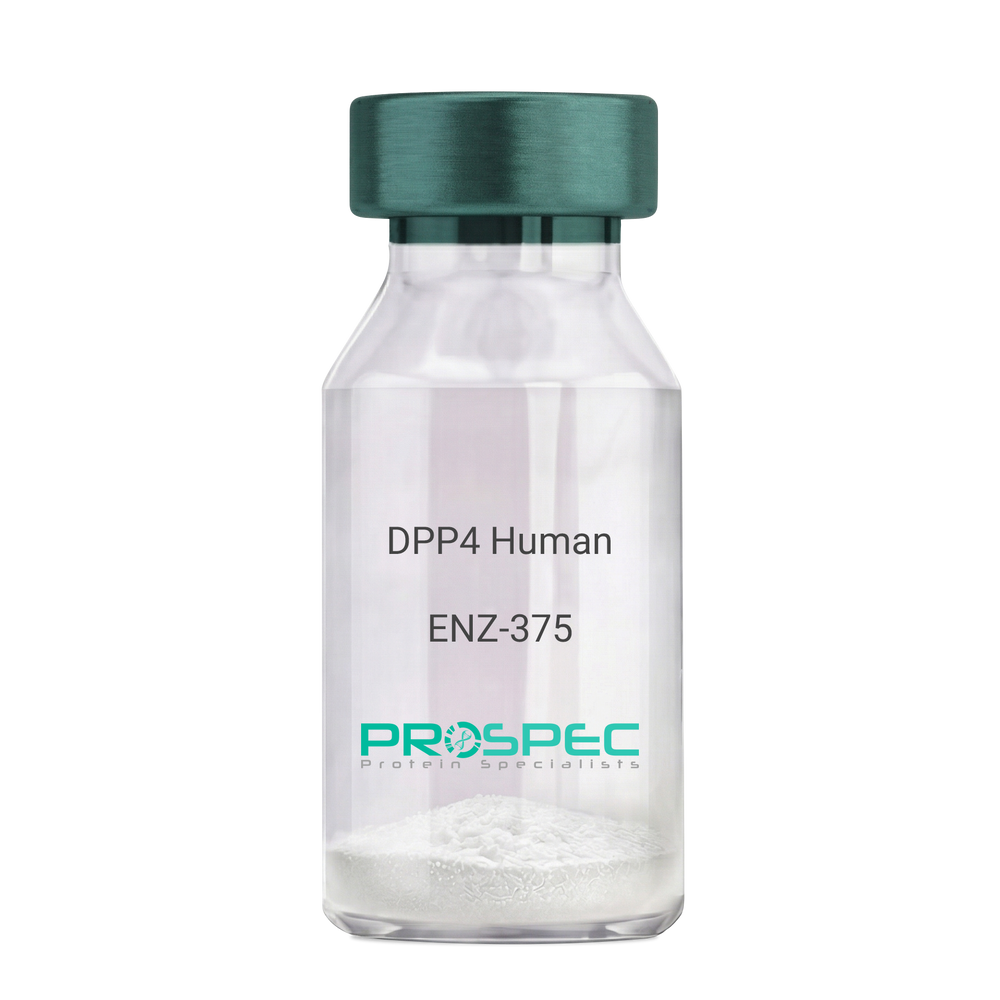
    Name :

    DPP4 Human

    Description:

    Dipeptidyl-Peptidase 4 Human Recombinant

    CD26, ADABP, ADCP2, DPPIV, TP103, DPP4, Dipeptidyl peptidase 4, Dipeptidyl peptidase IV, DPP IV, T-cell activation antigen CD26, Adenosine deaminase complexing protein 2, CD26 antigen.

    Product # :

    ENZ-375

    Price :

    Quantity :

    Shipping Method :

    Ice Icon

    Shipped with Ice Packs

    Add To Cart

    More Info

    • description
    • source
    • formulation
    • purity
    • biological activity
    • More Info
    • Citations

    Description

    DPPIV Human Recombinant produced in Insect cells is a single, glycosylated polypeptide chain containing 737 amino acids (39-766) and having a molecular mass of 85.4kDa.DPPIV is fused to a 6 His Tag at C-terminus and purified using conventional chromatography techniques.

    Source

    Insect cells.

    Formulation

    DPP4 is formulated in 20mM Tris-HCl buffer pH-8, 100mM NaCl, 1mM EDTA and 10% glycerol.

    Purity

    Greater than 95.0% as determined by Analysis by SDS-PAGE.

    Biological Activity

    >200 Units/mg.

    Citations

    More Info

    • Introduction

      DPP4 also called adenosine deaminase complexing protein-2, and T-cell activation antigen CD26 is a serine exopeptidase and complex enzyme that is expressed on the surface of most cell types. DPPIV is an intrinsic membrane glycoprotein and a serine exopeptidase that cleaves X-proline dipeptides from the N-terminus of polypeptides. DPP4 plays a role in t-cell activation. DPP4 is associated with intracellular signal transduction, apoptosis and involved in tumor biology. There are at least 63 substrates which can bind specifically to DPP4 enzyme including growth factors, chemokines, neuro peptides. Furthermore, DPP4 plays a major role in glucose metabolism by cleaving incretins such as glucose-dependent insulinotropic polypeptide (GIP) and GLP-1.

    • Synonyms

      CD26, ADABP, ADCP2, DPPIV, TP103, DPP4, Dipeptidyl peptidase 4, Dipeptidyl peptidase IV, DPP IV, T-cell activation antigen CD26, Adenosine deaminase complexing protein 2, CD26 antigen.

    • Physical Appearance

      Sterile Filtered colorless solution.

    • Stability

      Store at 4°C if entire vial will be used within 2-4 weeks. Store, frozen at -20°C for longer periods of time. For long term storage it is recommended to add a carrier protein (0.1% HSA or BSA).Avoid multiple freeze-thaw cycles.

    • Amino Acid Sequence

      ADPSRKTYTL TDYLKNTYRL KLYSLRWISD HEYLYKQENN ILVFNAEYGN SSVFLENSTF DEFGHSINDY SISPDGQFIL LEYNYVKQWR HSYTASYDIY DLNKRQLITE ERIPNNTQWV TWSPVGHKLA YVWNNDIYVK IEPNLPSYRI TWTGKEDIIY NGITDWVYEE EVFSAYSALW WSPNGTFLAY AQFNDTEVPL IEYSFYSDES LQYPKTVRVP YPKAGAVNPT VKFFVVNTDS LSSVTNATSI QITAPASMLI GDHYLCDVTW ATQERISLQW LRRIQNYSVM DICDYDESSG RWNCLVARQH IEMSTTGWVG RFRPSEPHFT LDGNSFYKII SNEEGYRHIC YFQIDKKDCT FITKGTWEVI GIEALTSDYL YYISNEYKGM PGGRNLYKIQ LSDYTKVTCL SCELNPERCQ YYSVSFSKEA KYYQLRCSGP GLPLYTLHSS VNDKGLRVLE DNSALDKMLQ NVQMPSKKLD FIILNETKFW YQMILPPHFD KSKKYPLLLD VYAGPCSQKA DTVFRLNWAT YLASTENIIV ASFDGRGSGY QGDKIMHAIN RRLGTFEVED QIEAARQFSK MGFVDNKRIA IWGWSYGGYV TSMVLGSGSG VFKCGIAVAP VSRWEYYDSV YTERYMGLPT PEDNLDHYRN STVMSRAENF KQVEYLLIHG TADDNVHFQQ SAQISKALVD VGVDFQAMWY TDEDHGIASS TAHQHIYTHM SHFIKQCFSL PHHHHHH.

    • Unit Definition

      One unit will hydrolyze 1 umole of p-nitroaniline per minute at pH8.0 at 37°C using 1mM of Gly-Pro p-nitroanilde as a substrate.

    ProSpec's products are furnished for LABORATORY RESEARCH USE ONLY. The product may not be used as drugs, agricultural or pesticidal products, food additives or household chemicals.

    Dpp4 Human
  • View Data Sheet

    Name :

    SPINK7 Human

    Description:

    Serine Peptidase Inhibitor Kazal Type 7 Human Recombinant

    Serine peptidase inhibitor Kazal type 7, ECG2, ECRG2, Serine protease inhibitor Kazal-type 7, Esophagus cancer-related gene 2 protein, ECRG-2, SPINK7.

    Product # :

    PRO-1507

    Price :

    Quantity :

    Shipping Method :

    Ice Icon

    Shipped with Ice Packs

    Add To Cart

    More Info

    • description
    • source
    • formulation
    • purity
    • More Info
    • Citations

    Description

    SPINK7 Human Recombinant produced in E.coli is a single, non-glycosylated polypeptide chain containing 89 amino acids (20-85) and having a molecular mass of 9.6 kDa.SPINK7 is fused to a 23 amino acid His-tag at N-terminus & purified by proprietary chromatographic techniques.

    Source

    Escherichia Coli.

    Formulation

    The SPINK7 solution (0.25mg/ml) contains 20mM Tris-HCl buffer (pH 8.0), 0.2M NaCl, 40% glycerol and 2mM DTT.

    Purity

    Greater than 85.0% as determined by SDS-PAGE.

    Citations

    More Info

    • Introduction

      Serine peptidase inhibitor Kazal type 7 (SPINK7) which includes one Kazal-like domain is most likely serine protease inhibitor. Diseases linked with SPINK7 include esophageal cancer, and oral squamous cell carcinoma

    • Synonyms

      Serine peptidase inhibitor Kazal type 7, ECG2, ECRG2, Serine protease inhibitor Kazal-type 7, Esophagus cancer-related gene 2 protein, ECRG-2, SPINK7.

    • Physical Appearance

      Sterile Filtered colorless solution.

    • Stability

      Store at 4°C if entire vial will be used within 2-4 weeks. Store, frozen at -20°C for longer periods of time. For long term storage it is recommended to add a carrier protein (0.1% HSA or BSA).Avoid multiple freeze-thaw cycles.

    • Amino Acid Sequence

      MGSSHHHHHH SSGLVPRGSH MGSSEAASLS PKKVDCSIYK KYPVVAIPCP ITYLPVCGSD YITYGNECHL CTESLKSNGR VQFLHDGSC.

    ProSpec's products are furnished for LABORATORY RESEARCH USE ONLY. The product may not be used as drugs, agricultural or pesticidal products, food additives or household chemicals.

    Spink7 Human
  • View Data Sheet

    Name :

    IL4 Mouse

    Description:

    Interleukin-4 Mouse Recombinant

    BCGF, BCDF, B cell stimulating factor, BSF-1, Lymphocyte stimulatory factor 1, IL-4, MGC79402, Binetrakin, Pitrakinra.

    Product # :

    CYT-282

    Price :

    Quantity :

    Shipping Method :

    Room Temp Icon

    Shipped at Room temp

    Add To Cart

    More Info

    • description
    • source
    • formulation
    • purity
    • biological activity
    • More Info
    • Citations

    Description

    Interleukin-4 Mouse Recombinant produced in E.Coli is a single, non-glycosylated polypeptide chain containing 120 amino acids and having a molecular mass of 13500 Dalton. The IL-4 is purified by proprietary chromatographic techniques.

    Source

    Escherichia Coli.

    Formulation

    Lyophilized from a 0.2µm concentrated (1mg/ml) solution in PBS pH 7.4.

    Purity

    Greater than 96.0% as determined by:
    (a) Analysis by RP-HPLC.
    (b) Analysis by SDS-PAGE.

    Biological Activity

    The ED50 as determined by the dose-dependant induction of HT-2 cell proliferation is less than 2 ng/ml corresponding to a Specific Activity of 500,000IU/mg.

    Citations

    More Info

    • Introduction

      Interleukin-4 is a pleiotropic cytokine produced primarily by activated T lymphocytes, basophils and mast cells. Multiple immune response-modulating functions are performed by IL-4 on a variety of cell types and it has an important role in the regulator of isotype switching, induction of IgE production in B lymphocytes and differentiation of precursor T helper cells. IL-4 binds to both membrane-bound and secreted soluble IL-4 receptors.

    • Synonyms

      BCGF, BCDF, B cell stimulating factor, BSF-1, Lymphocyte stimulatory factor 1, IL-4, MGC79402, Binetrakin, Pitrakinra.

    • Physical Appearance

      Sterile Filtered White lyophilized (freeze-dried) powder.

    • Stability

      Lyophilized Interleukin-4 although stable at room temperature for 3 weeks, should be stored desiccated below -18°C. Upon reconstitution IL4 should be stored at 4°C between 2-7 days and for future use below -18°C.For long term storage it is recommended to add a carrier protein (0.1% HSA or BSA).Please prevent freeze-thaw cycles.

    • Solubility

      It is recommended to reconstitute the lyophilized Interleukin 4 in sterile 10mM HAc not less than 100µg/ml, which can then be further diluted to other aqueous solutions.

    • Amino Acid Sequence

      MHIHGCDKNH LREIIGILNE VTGEGTPCTE MDVPNVLTAT KNTTESELVC RASKVLRIFY LKHGKTPCLK KNSSVLMELQ RLFRAFRCLD SSISCTMNES KSTSLKDFLE SLKSIMQMDY S.

    • Background

      What is the molecular weight/Mw of IL 4 MOUSE Protein?
      IL 4 MOUSE Protein has a total Mw of 13.5kDa.

      What is the source or expression system of IL 4 MOUSE Protein?
      Escherichia Coli.

      What is the Purity of IL 4 MOUSE Protein?
      IL 4 MOUSE Protein is >96% pure as determined by SDS-PAGE.

      What is the Biological Activity of IL 4 MOUSE Protein?
      The ED50 as determined by the dose-dependant induction of HT-2 cell proliferation is less than 2 ng/ml corresponding to a Specific Activity of 500,000IU/mg.

      What is the amino acid sequence of IL 4 MOUSE Protein?
      MHIHGCDKNH LREIIGILNE VTGEGTPCTE MDVPNVLTAT KNTTESELVC RASKVLRIFY LKHGKTPCLK KNSSVLMELQ RLFRAFRCLD SSISCTMNES KSTSLKDFLE SLKSIMQMDY S.

      What applications can IL 4 MOUSE Protein be used in?
      IL 4 MOUSE Protein can probably be used in western blot, ELISA and Lateral Flow.

      What is the endotoxin level for IL 4 MOUSE Protein?
      The endotoxin level is minimal, IL 4 MOUSE Protein was purified using conventional chromatography techniques.

      Who supplies recombinant IL 4 MOUSE that is in stock and available to order?
      ProSpec has the protein in stock and available for immediate delivery.

      Where can I order bulk mg quantities of IL 4 MOUSE?
      ProSpec supplies bulk mg quantities at affordable prices that meets research and academic budgets.

    ProSpec's products are furnished for LABORATORY RESEARCH USE ONLY. The product may not be used as drugs, agricultural or pesticidal products, food additives or household chemicals.

    Il 4 Mouse
  • View Data Sheet

    Name :

    PDIA3 Mouse

    Description:

    Protein Disulfide Isomerase A3 Mouse Recombinant

    ERp57, ERp60, ERp61, GRP57, GRP58, HsT17083, P58, PI-PLC, ER60, Protein disulfide-isomerase A3, Disulfide isomerase ER-60, Endoplasmic reticulum resident protein 60, ER protein 60, 58 kDa microsomal protein, Endoplasmic reticulum resident protein 57, ER protein 57, 58 kDa glucose-regulated protein, PDIA3.

    Product # :

    ENZ-1051

    Price :

    Quantity :

    Shipping Method :

    Ice Icon

    Shipped with Ice Packs

    Add To Cart

    More Info

    • description
    • source
    • formulation
    • purity
    • biological activity
    • More Info
    • Citations

    Description

    PDIA3 Mouse Recombinant produced in E.Coli is a single, non-glycosylated polypeptide chain containing 505 amino acids (25-505 a.a) and having a molecular mass of 56.8kDa. PDIA3 is fused to a 23 amino acid His-tag at N-terminus & purified by proprietary chromatographic techniques.

    Source

    Escherichia Coli.

    Formulation

    PDIA3 protein solution (1mg/ml) containing 20 mM Tris-HCl buffer (pH8.0), 1mM DTT, 0.1M NaCl and 10% glycerol .

    Purity

    Greater than 95.0% as determined by SDS-PAGE.

    Biological Activity

    Specific activity is >15 A650/cm/min/mg,obtained by measuring the increase of insulin precipitation in absorbance at 650nm resulting from the reduction of insulin.

    Citations

    More Info

    • Introduction

      PDIA3 is an enzyme that belongs to the endoplasmic reticulum and interacts with lectin chaperones calreticulin and calnexin to modulate folding of newly synthesized glycoproteins. PDIA3 has protein disulfide isomerase activity. Complexes of lectins and PDIA3 mediate protein folding by promoting formation of disulfide bonds in their glycoprotein substrates. PDIA3 is expressed in the lumbar spinal cord from rats submitted to peripheral lesion during neonatal period. PDIA3 interacts with thiazide-sensitive sodium-chloride cotransporter in the kidney and is induced by glucose deprivation. PDIA3 is part of the major histocompatibility complex (MHC) class I peptide-loading complex (TAP1), which is important for formation of the final antigen conformation and export from the endoplasmic reticulum to the cell surface.

    • Synonyms

      ERp57, ERp60, ERp61, GRP57, GRP58, HsT17083, P58, PI-PLC, ER60, Protein disulfide-isomerase A3, Disulfide isomerase ER-60, Endoplasmic reticulum resident protein 60, ER protein 60, 58 kDa microsomal protein, Endoplasmic reticulum resident protein 57, ER protein 57, 58 kDa glucose-regulated protein, PDIA3.

    • Physical Appearance

      Sterile filtered colourless solution.

    • Stability

      Store at 4°C if entire vial will be used within 2-4 weeks.Store, frozen at -20°C for longer periods of time. For long term storage it is recommended to add a carrier protein (0.1% HSA or BSA).Avoid multiple freeze-thaw cycles.

    • Amino Acid Sequence

      MGSSHHHHHH SSGLVPRGSH MGSMSDVLEL TDENFESRVS DTGSAGLMLV EFFAPWCGHC KRLAPEYEAA ATRLKGIVPL AKVDCTANTN TCNKYGVSGY PTLKIFRDGE EAGAYDGPRT ADGIVSHLKK QAGPASVPLR TEEEFKKFIS DKDASVVGFF RDLFSDGHSE FLKAASNLRD NYRFAHTNIE SLVKEYDDNG EGITIFRPLH LANKFEDKTV AYTEKKMTSG KIKKFIQDSI FGLCPHMTED NKDLIQGKDL LTAYYDVDYE KNAKGSNYWR NRVMMVAKKF LDAGHKLNFA VASRKTFSHE LSDFGLESTT GEVPVVAIRT AKGEKFVMQE EFSRDGKALE QFLQEYFDGN LKRYLKSEPI PESNEGPVKV VVAENFDDIV NEEDKDVLIE FYAPWCGHCK NLEPKYKELG EKLSKDPNIV IAKMDATAND VPSPYEVKGF PTIYFSPANK KLTPKKYEGG RELNDFISYL QREATNPPII QEEKPKKKKK AQEDL.

    ProSpec's products are furnished for LABORATORY RESEARCH USE ONLY. The product may not be used as drugs, agricultural or pesticidal products, food additives or household chemicals.

    Pdia3 Mouse
  • View Data Sheet

    Name :

    AIFM1 Antibody

    Description:

    Apoptosis-Inducing Factor Mitochondrion-Associated 1, Mouse Anti Human

    Apoptosis-inducing factor 1, mitochondrial, Programmed cell death protein 8, AIFM1, AIF, PDCD8, CMTX4, COWCK, COXPD6, isoform 2 precursor, Apoptosis-Inducing Factor, Mitochondrion-Associated, 1.

    Product # :

    ANT-634

    Price :

    Quantity :

    Shipping Method :

    Ice Icon

    Shipped with Ice Packs

    Add To Cart

    More Info

    • formulation
    • More Info
    • Citations

    Formulation

    1mg/ml containing PBS, pH-7.4, 10% Glycerol and 0.02% Sodium Azide.

    Citations

    More Info

    • Introduction

      Apoptosis-Inducing Factor, Mitochondrion-Associated, 1 (AIFM1) is a mitochondrial protein which translocates to the nucleus once apoptosis has been initiated. AIFM1 causes DNA fragmentation and chromatin condensation and also triggers the release of cytochrome c and caspase-9 from mitochondria. Bcl-2 overexpression prevents the release of AIFM1 from mitochondria, but doesn’t block its apoptogenic activity.

    • Synonyms

      Apoptosis-inducing factor 1, mitochondrial, Programmed cell death protein 8, AIFM1, AIF, PDCD8, CMTX4, COWCK, COXPD6, isoform 2 precursor, Apoptosis-Inducing Factor, Mitochondrion-Associated, 1.

    • Physical Appearance

      Sterile filtered colorless solution.

    • Immunogen

      Anti-human AIFM1 mAb, is derived from hybridization of mouse F0 myeloma cells with spleen cells from BALB/c mice immunized with a recombinant human AIFM1 protein 98-609 amino acids purified from E. coli.

    • Ig Subclass

      Mouse IgG2a heavy chain and k light chain.

    • Clone

      PAT22E9AT.

    • Applications

      The antibody has been tested by ELISA, Western blot analysis, Flow cytometry and ICC/IF to assure specificity and reactivity. Since application varies, however, each investigation should be titrated by the reagent to obtain optimal results.

    • Type

      Mouse Anti Human Monoclonal.

    • Storage Procedures

      For periods up to 1 month store at 4°C, for longer periods of time, store at -20°C. Prevent freeze thaw cycles.

    • Purification Method

      AIFM1 antibody was purified from mouse ascitic fluids by protein-A affinity chromatography.

    ProSpec's products are furnished for LABORATORY RESEARCH USE ONLY. The product may not be used as drugs, agricultural or pesticidal products, food additives or household chemicals.

    Aifm1 Antibody
  • View Data Sheet

    Name :

    TINAGL1 Human

    Description:

    Tubulointerstitial Nephritis Antigen Like 1 Human Recombinant

    Tubulointerstitial nephritis antigen-like isoform 1, TINAGL1, Tubulointerstitial nephritis antigen-like, Glucocorticoid-inducible protein 5, Oxidized LDL-responsive gene 2 protein, OLRG-2, Tubulointerstitial nephritis antigen-related protein, TIN Ag-related protein, TIN-Ag-RP, GIS5, LCN7, OLRG2, TINAGL, PP6614, PSEC0088, UNQ204/PRO230.

    Product # :

    PRO-1675

    Price :

    Quantity :

    Shipping Method :

    Ice Icon

    Shipped with Ice Packs

    Add To Cart

    More Info

    • description
    • source
    • formulation
    • purity
    • More Info
    • Citations

    Description

    800x600 TINAGL1 Human Recombinant produced in E.coli is a single, non-glycosylated polypeptide chain containing 469 amino acids (22-467) and having a molecular mass of 52.5 kDa.TINAGL1 is fused to a 23 amino acid His-tag at N-terminus & purified by proprietary chromatographic techniques.

    Source

    Escherichia Coli.

    Formulation

    The TINAGL1 solution (0.25mg/ml) contains 20mM Tris-HCl buffer (pH 8.0), 0.4M Urea and 10% glycerol.

    Purity

    Greater than 85.0% as determined by SDS-PAGE.

    Citations

    More Info

    • Introduction

      Tubulointerstitial Nephritis Antigen Like 1 also known as TINAGL1 is similar in sequence to tubulointerstitial nephritis antigen, a secreted glycoprotein which is identified by antibodies in several types of immune-related tubulointerstitial nephritis. Three transcript variants encoding different isoforms are known for TINAGL1.

    • Synonyms

      Tubulointerstitial nephritis antigen-like isoform 1, TINAGL1, Tubulointerstitial nephritis antigen-like, Glucocorticoid-inducible protein 5, Oxidized LDL-responsive gene 2 protein, OLRG-2, Tubulointerstitial nephritis antigen-related protein, TIN Ag-related protein, TIN-Ag-RP, GIS5, LCN7, OLRG2, TINAGL, PP6614, PSEC0088, UNQ204/PRO230.

    • Physical Appearance

      Sterile Filtered colorless solution.

    • Stability

      Store at 4°C if entire vial will be used within 2-4 weeks. Store, frozen at -20°C for longer periods of time. For long term storage it is recommended to add a carrier protein (0.1% HSA or BSA).Avoid multiple freeze-thaw cycles.

    • Amino Acid Sequence

      MGSSHHHHHH SSGLVPRGSH MGSAQQGRGR RELAPGLHLR GIRDAGGRYC QEQDLCCRGR ADDCALPYLG AICYCDLFCN RTVSDCCPDF WDFCLGVPPP FPPIQGCMHG GRIYPVLGTY WDNCNRCTCQ ENRQWQCDQE PCLVDPDMIK AINQGNYGWQ AGNHSAFWGM TLDEGIRYRL GTIRPSSSVM NMHEIYTVLN PGEVLPTAFE ASEKWPNLIH EPLDQGNCAG SWAFSTAAVA SDRVSIHSLG HMTPVLSPQN LLSCDTHQQQ GCRGGRLDGA WWFLRRRGVV SDHCYPFSGR ERDEAGPAPP CMMHSRAMGR GKRQATAHCP NSYVNNNDIY QVTPVYRLGS NDKEIMKELM ENGPVQALME VHEDFFLYKG GIYSHTPVSL GRPERYRRHG THSVKITGWG EETLPDGRTL KYWTAANSWG PAWGERGHFR IVRGVNECDI ESFVLGVWGR VGMEDMGHH.

    ProSpec's products are furnished for LABORATORY RESEARCH USE ONLY. The product may not be used as drugs, agricultural or pesticidal products, food additives or household chemicals.

    Tinagl1 Human
  • View Data Sheet

    Name :

    SERPINE2 Mouse

    Description:

    Plasminogen Activator Inhibitor-2 Mouse Recombinant

    Serpnie2, B230326M24Rik, PAI-1, PI-7, PI7, PN-1, Spi4, Glia-derived nexin, GDN,Peptidase inhibitor 7, Protease nexin 1, Protease nexin I, Serine protease-inhibitor 4, Serpin E2.

    Product # :

    ENZ-972

    Price :

    Quantity :

    Shipping Method :

    Ice Icon

    Shipped with Ice Packs

    Add To Cart

    More Info

    • description
    • source
    • formulation
    • purity
    • More Info
    • Citations

    Description

    SERPINE2 produced in Sf9 Baculovirus cells is a single, glycosylated polypeptide chain containing 386 amino acids (20-397a.a.) and having a molecular mass of 42.9kDa. SERPINE2 is expressed with a 8 amino acid His tag at C-Terminus and purified by proprietary chromatographic techniques.

    Source

    Sf9, Baculovirus cells.

    Formulation

    SERPINE2 protein solution (0.5mg/ml) contains Phosphate Buffered Saline (pH 7.4) and 10% glycerol.

    Purity

    Greater than 95.0% as determined by SDS-PAGE.

    Citations

    More Info

    • Introduction

      Plasminogen Activator Inhibitor-2 (Serpine2) which inhibits thrombin, plasmin and plasminogen activators is a part of the Serpin superfamily of the serine protease inhibitors. Serpine2 is able to transform human embryonic kidney cells into neuron-like cells. Furthermore, Serpine2's over expression in mice leads to progressive neuronal and motor dysfunction.

    • Synonyms

      Serpnie2, B230326M24Rik, PAI-1, PI-7, PI7, PN-1, Spi4, Glia-derived nexin, GDN,Peptidase inhibitor 7, Protease nexin 1, Protease nexin I, Serine protease-inhibitor 4, Serpin E2.

    • Physical Appearance

      Sterile Filtered colorless solution.

    • Stability

      Store at 4°C if entire vial will be used within 2-4 weeks. Store, frozen at -20°C for longer periods of time. For long term storage it is recommended to add a carrier protein (0.1% HSA or BSA). Avoid multiple freeze-thaw cycles.

    • Amino Acid Sequence

      SQFNSLSLEE LGSNTGIQVF NQIIKSRPHE NVVVSPHGIA SILGMLQLGA DGKTKKQLST VMRYNVNGVG KVLKKINKAI VSKKNKDIVT VANAVFLRNG FKMEVPFAVR NKDVFQCEVQ NVNFQDPASA SESINFWVKN ETRGMIDNLL SPNLIDGALT RLVLVNAVYF KGLWKSRFQP ESTKKRTFVA GDGKSYQVPM LAQLSVFRSG STRTPNGLWY NFIELPYHGE SISMLIALPT ESSTPLSAII PHITTKTIDS WMNTMVPKRM QLVLPKFTAV AQTDLKEPLK ALGITEMFEP SKANFTKITR SESLHVSHIL QKAKIEVSED GTKASAATTA ILIARSSPPW FIVDRPFLFS IRHNPTGAIL FLGQVNKPLE HHHHHH.

    ProSpec's products are furnished for LABORATORY RESEARCH USE ONLY. The product may not be used as drugs, agricultural or pesticidal products, food additives or household chemicals.

    Serpine2 Mouse
  • View Data Sheet

    Name :

    PCBD1 Human

    Description:

    Pterin-4-Alpha-Carbinolamine Dehydratase Human Recombinant

    DCOH, PCBD, PCD, PHS.

    Product # :

    ENZ-552

    Price :

    Quantity :

    Shipping Method :

    Ice Icon

    Shipped with Ice Packs

    Add To Cart

    More Info

    • description
    • source
    • formulation
    • purity
    • More Info
    • Citations

    Description

    PCBD1 produced in E.Coli is a single, non-glycosylated polypeptide chain containing 124 amino acids (1-104 a.a.) and having a molecular mass of 14.1kDa.PCBD1 is fused to a 20 amino acid His-tag at N-terminus & purified by proprietary chromatographic techniques.

    Source

    Escherichia Coli.

    Formulation

    The PCBD1 protein solution (1mg/ml) contains 20mM Tris-HCl buffer (pH-8), 1mM DTT, and 10% glycerol.

    Purity

    Greater than 95.0% as determined by SDS-PAGE.

    Citations

    More Info

    • Introduction

      PCBD1 enzyme takes part in phenylalanine hydroxylation. PCBD1 deficiency results in hyperphenylalaninemia. PCBD1 enzyme controls the homodimerization of HNF1. PCBD1 takes part in tetrahydrobiopterin biosynthesis. PCBD1 prevents the formation of 7-pterins and accelerate the formation of quinonoid-BH2. PCBD1 is a coactivator for HNF1A-dependent transcription.

    • Synonyms

      DCOH, PCBD, PCD, PHS.

    • Physical Appearance

      Sterile filtered colorless solution.

    • Stability

      Store at 4°C if entire vial will be used within 2-4 weeks. Store, frozen at -20°C for longer periods of time. For long term storage it is recommended to add a carrier protein (0.1% HSA or BSA).Avoid multiple freeze-thaw cycles.

    • Amino Acid Sequence

      MGSSHHHHHH SSGLVPRGSH MAGKAHRLSA EERDQLLPNL RAVGWNELEG RDAIFKQFHF KDFNRAFGFM TRVALQAEKL DHHPEWFNVY
      NKVHITLSTH ECAGLSERDI NLASFIEQVA VSMT.

    ProSpec's products are furnished for LABORATORY RESEARCH USE ONLY. The product may not be used as drugs, agricultural or pesticidal products, food additives or household chemicals.

    Pcbd1 Human
  • View Data Sheet

    Name :

    SMAD3 Human

    Description:

    Mothers Against Decapentaplegic Homolog 3 Human Recombinant

    MADH3, JV15-2, HSPC193, HsT17436, MGC60396, DKFZp586N0721, DKFZp686J10186, SMAD3, Mothers against decapentaplegic homolog 3, Mothers against DPP homolog 3, MAD homolog 3, Mad3, hMAD-3, SMAD family member 3, SMAD 3, hSMAD3.

    Product # :

    PRO-751

    Price :

    Quantity :

    Shipping Method :

    Ice Icon

    Shipped with Ice Packs

    Add To Cart

    More Info

    • description
    • source
    • formulation
    • purity
    • More Info
    • Citations

    Description

    SMAD3 Human Recombinant produced in E.Coli is a single, non-glycosylated polypeptide chain containing 445 amino acids (1-425) and having a molecular mass of 50.2 kDa. SMAD3 is fused to a 20 amino acid His-Tag at N-Terminus and purified by standard chromatography techniques.

    Source

    Escherichia Coli.

    Formulation

    The SMAD3 protein solution contains 20mM Tris-HCl pH-8, 0.1M NaCl, 0.1mM DTT and 20% glycerol.

    Purity

    Greater than 90.0% as determined by SDS-PAGE.

    Citations

    More Info

    • Introduction

      SMAD3 is part of the SMAD family of proteins that mediate signal transduction by the TGF-beta/activin/BMP-2/4 cytokine superfamily from receptor Ser/Thr protein kinases at the cell surface to the nucleus. SMAD3 has a role as a transcriptional modulator activated by TGF-Beta and is involved in the regulation of carcinogenesis. SMAD3 mutations are related with the pathogenesis of human osteoarthritis. SMAD3 expression take part in tumor suppression in the premature stages of gastric carcinogenesis. SMAD3 is involved in nuclear translocation of beta-catenin.

    • Synonyms

      MADH3, JV15-2, HSPC193, HsT17436, MGC60396, DKFZp586N0721, DKFZp686J10186, SMAD3, Mothers against decapentaplegic homolog 3, Mothers against DPP homolog 3, MAD homolog 3, Mad3, hMAD-3, SMAD family member 3, SMAD 3, hSMAD3.

    • Physical Appearance

      Sterile Filtered colorless solution.

    • Stability

      Store at 4°C if entire vial will be used within 2-4 weeks. Store, frozen at -20°C for longer periods of time. For long term storage it is recommended to add a carrier protein (0.1% HSA or BSA).Avoid multiple freeze-thaw cycles.

    • Amino Acid Sequence

      MGSSHHHHHH SSGLVPRGSH MSSILPFTPP IVKRLLGWKK GEQNGQEEKW CEKAVKSLVK KLKKTGQLDE LEKAITTQNV NTKCITIPRS LDGRLQVSHR KGLPHVIYCR LWRWPDLHSH HELRAMELCE FAFNMKKDEV CVNPYHYQRV ETPVLPPVLV PRHTEIPAEF PPLDDYSHSI PENTNFPAGI EPQSNIPETP PPGYLSEDGE TSDHQMNHSM DAGSPNLSPN PMSPAHNNLD LQPVTYCEPA FWCSISYYEL NQRVGETFHA SQPSMTVDGF TDPSNSERFC LGLLSNVNRN AAVELTRRHI GRGVRLYYIG GEVFAECLSD SAIFVQSPNC NQRYGWHPAT VCKIPPGCNL KIFNNQEFAA LLAQSVNQGF EAVYQLTRMC TIRMSFVKGW GAEYRRQTVT STPCWIELHL NGPLQWLDKV LTQMGSPSIR CSSVS.

    ProSpec's products are furnished for LABORATORY RESEARCH USE ONLY. The product may not be used as drugs, agricultural or pesticidal products, food additives or household chemicals.

    Smad3 Human
  • View Data Sheet

    Name :

    HMGA1 Human

    Description:

    High Mobility Group AT-Hook 1 Human Recombinant

    High mobility group protein HMG-I/HMG-Y, HMG-I(Y), High mobility group AT-hook protein 1, High mobility group protein A1, High mobility group protein R , HMGA1, HMGIY, HMG-R, HMGA1A.

    Product # :

    PRO-887

    Price :

    Quantity :

    Shipping Method :

    Ice Icon

    Shipped with Ice Packs

    Add To Cart

    More Info

    • description
    • source
    • formulation
    • purity
    • More Info
    • Citations

    Description

    HMGA1 Human Recombinant produced in E.Coli is a single, non-glycosylated polypeptide chain containing 115 amino acids (1-107 a.a.) and having a molecular mass of 12.7kDa (Molecular weight on SDS-PAGE will appear higher).HMGA1 is fused to an 8 amino acid His-tag at C-terminus & purified by proprietary chromatographic techniques.

    Source

    Escherichia Coli.

    Formulation

    HMGA1 protein solution (0.25mg/ml) containing 20mM Tris-HCl buffer (pH 8.0), 1mM DTT, 50% glycerol and 0.2M NaCl.

    Purity

    Greater than 90.0% as determined by SDS-PAGE.

    Citations

    More Info

    • Introduction

      High mobility group protein HMG-I/HMG-Y (HMGA1) belongs to the non-histone chromosomal high mobility group protein (HMG) family. HMGA1 is composed of a highly conserved AT-hook DNA-binding domain which mediates binding to AT-rich sequences in the minor groove of chromosomal DNA. HMGA1 functions as an architectural chromatin-binding transcription factor modifying the conformation of DNA by modulating nuclear protein-DNA complexes. Furthermore, HMGA1 is involved in numerous cellular processes including growth regulation, viral induction of beta-IFN gene and regulation of inducible gene transcription.

    • Synonyms

      High mobility group protein HMG-I/HMG-Y, HMG-I(Y), High mobility group AT-hook protein 1, High mobility group protein A1, High mobility group protein R , HMGA1, HMGIY, HMG-R, HMGA1A.

    • Physical Appearance

      Sterile filtered colorless solution.

    • Stability

      Store at 4°C if entire vial will be used within 2-4 weeks. Store, frozen at -20°C for longer periods of time. For long term storage it is recommended to add a carrier protein (0.1% HSA or BSA).Avoid multiple freeze-thaw cycles.

    • Amino Acid Sequence

      MSESSSKSSQ PLASKQEKDG TEKRGRGRPR KQPPVSPGTA LVGSQKEPSE VPTPKRPRGR PKGSKNKGAA KTRKTTTTPG RKPRGRPKKL EKEEEEGISQ ESSEEEQLEH HHHHH.

    ProSpec's products are furnished for LABORATORY RESEARCH USE ONLY. The product may not be used as drugs, agricultural or pesticidal products, food additives or household chemicals.

    Hmga1 Human
  • View Data Sheet

    Name :

    TSLPR Human, Sf9

    Description:

    Thymic Stromal Lymphopoietin Receptor Human Recombinant, Sf9

    Cytokine receptor-like factor 2, CRLF2, Cytokine receptor-like factor 2, Cytokine receptor-like 2, IL-XR, Thymic stromal lymphopoietin protein receptor, TSLP receptor, CRL2, ILXR, TSLPR, Cytokine receptor-like factor 2 isoform 1, CRLF2Y.

    Product # :

    CYT-995

    Price :

    Quantity :

    Shipping Method :

    Ice Icon

    Shipped with Ice Packs

    Add To Cart

    More Info

    • description
    • source
    • formulation
    • purity
    • More Info
    • Citations

    Description

    TSLPR Human Recombinant produced in Sf9 Baculovirus cells is a single, glycosylated polypeptide chain containing 218 amino acids (23-231) and having a molecular mass of 25.2kDa (Molecular size on SDS-PAGE will appear at approximately 28-40kDa).TSLPR is fused to a 6 amino acid His-Tag at C-terminus and purified by proprietary chromatographic techniques.

    Source

    Sf9, Baculovirus cells.

    Formulation

    TSLPR protein solution (1mg/ml) containing Phosphate Buffered Saline (pH 7.4) and 10% glycerol.

    Purity

    Greater than 95.0% as determined by SDS-PAGE.

    Citations

    More Info

    • Introduction

      Thymic Stromal Lymphopoietin Receptor (TSLPR) is a member of the type I cytokine receptor family. TSLPR alongside the interleukin 7 receptor (IL7R) activate STAT3, STAT5, and JAK2 pathways, which is regulated processes such as cell proliferation and development of the hematopoietic system. Two transcript variants encoding dissimilar isoforms have been found for this gene. TSLPR is expressed in heart, skeletal muscle, kidney and adult and fetal liver.

    • Synonyms

      Cytokine receptor-like factor 2, CRLF2, Cytokine receptor-like factor 2, Cytokine receptor-like 2, IL-XR, Thymic stromal lymphopoietin protein receptor, TSLP receptor, CRL2, ILXR, TSLPR, Cytokine receptor-like factor 2 isoform 1, CRLF2Y.

    • Physical Appearance

      Sterile Filtered clear solution.

    • Stability

      Store at 4°C if entire vial will be used within 2-4 weeks. Store, frozen at -20°C for longer periods of time. For long term storage it is recommended to add a carrier protein (0.1% HSA or BSA).Avoid multiple freeze-thaw cycles.

    • Amino Acid Sequence

      ADPQGGAAEG VQIQIIYFNL ETVQVTWNAS KYSRTNLTFH YRFNGDEAYD QCTNYLLQEG HTSGCLLDAE QRDDILYFSI RNGTHPVFTA SRWMVYYLKP SSPKHVRFSW HQDAVTVTCS DLSYGDLLYE VQYRSPFDTE WQSKQENTCN VTIEGLDAEK CYSFWVRVKA MEDVYGPDTY PSDWSEVTCW QRGEIRDACA ETPTPPKPKL SKHHHHHH.

    ProSpec's products are furnished for LABORATORY RESEARCH USE ONLY. The product may not be used as drugs, agricultural or pesticidal products, food additives or household chemicals.

    Tslpr Human Sf9
  • View Data Sheet

    Name :

    HCV NS3 2b

    Description:

    Hepatitis C Virus NS3 Genotype-2b, (1356-1459 a.a.) Recombinant

    Product # :

    HCV-250

    Price :

    Quantity :

    Shipping Method :

    Ice Icon

    Shipped with Ice Packs

    Add To Cart

    More Info

    • description
    • formulation
    • purity
    • More Info
    • Citations

    Description

    The E.coli derived recombinant protein contains the HCV NS3 immunodominant regions, amino acids 1356-1459. The protein is fused to a GST tag at N-Terminus.

    Formulation

    1.5M urea, 25mM Tris-HCl pH-8, 0.2% Triton-X & 50% Glycerol.

    Purity

    HCV NS3 Genotype-2b protein is >95% pure as determined by 10% PAGE (coomassie staining).

    Citations

    More Info

    • Introduction

      HCV is a small 50nm, enveloped, single-stranded, positive sense RNAvirus in the family Flaviviridae.
      HCV has a high rate of replication with approximately one trillion particles produced each day in an infected individual. Due to lack of proofreading by the HCV RNA polymerase, the HCV has an exceptionally high mutation rate, a factor that may help it elude the host's immune response. Hepatitis C virus is classified into six genotypes(1-6) with several subtypes within each genotype. The preponderance and distribution of HCV genotypes varies globally. Genotype is clinically important in determining potential response to interferon-based therapy and the required duration of such therapy. Genotypes 1 and 4 are less responsive to interferon-based treatment than are the other genotypes (2, 3, 5 and 6).

    • Stability

      HCV NS3 Genotype-2b although stable at 4°C for 1 week, should be stored below -18°C. Please prevent freeze thaw cycles.

    • Applications

      HCV NS3 Genotype-2b antigen is suitable for ELISA and Western blots, excellent antigen for detection of HCV with minimal specificity problems.

    • Specificity

      Immunoreactive with sera of HCV-infected individuals.

    • Purification Method

      HCV NS3 Genotype-2b protein was Purified by proprietary chromatographic technique.

    ProSpec's products are furnished for LABORATORY RESEARCH USE ONLY. The product may not be used as drugs, agricultural or pesticidal products, food additives or household chemicals.

    Hcv Ns3 Genotype 2B 1356 1459
  • View Data Sheet

    Name :

    Streptavidin Antibody

    Description:

    Streptavidin, Mouse Antibody

    Product # :

    ANT-345

    Price :

    Quantity :

    Shipping Method :

    Ice Icon

    Shipped with Ice Packs

    Add To Cart

    More Info

    • formulation
    • More Info
    • Citations

    Formulation

    1mg/ml containing PBS, pH-7.4, 0.02% Sodium Azide and 10% glycerol.

    Citations

    More Info

    • Introduction

      Streptavidin is a tetrameric protein secreted by Streptomyces avidinii which binds firmly to biotin. Streptavidin is wilyde used in molecular biology through its unique high affinity for the vitamin biotin. The dissociation constant (Kd) of the biotin-streptavidin complex is about ~10-15 mol/L. The strong affinity recognition of biotin and biotinylated molecules has made streptavidin one of the most important components in diagnostics and laboratory kits. The streptavidin/biotin system has one of the biggest free energies of association of yet observed for noncovalent binding of a protein and small ligand in aqueous solution (K_assoc = 10**14). The complexes are also extremely stable over a wide range of temperature and pH.

    • Physical Appearance

      Sterile Filtered clear solution.

    • Immunogen

      Anti Streptavidin mAb is derived from hybridization of mouse F0 myeloma cells with spleen cells from BALB/c mice immunized with recombinant Streptavidin amino acids 25-183 purified from E. coli.

    • Ig Subclass

      Mouse IgG2b heavy chain and κ light chain.

    • Clone

      P1C2AT.

    • Applications

      Streptavidin antibody has been tested by ELISA and Western blot analysis to assure specificity and reactivity. Since application varies, however, each investigation should be titrated by the reagent to obtain optimal results.

    • Type

      Mouse Antibody Monoclonal.

    • Storage Procedures

      For periods up to 1 month store at 4°C, for longer periods of time, store at -20°C. Prevent freeze thaw cycles.

    • Purification Method

      Streptavidin antibody was purified from mouse ascitic fluids by protein-G affinity chromatography.

    ProSpec's products are furnished for LABORATORY RESEARCH USE ONLY. The product may not be used as drugs, agricultural or pesticidal products, food additives or household chemicals.

    Streptavidin Antibody
  • View Data Sheet

    Name :

    CNTF Human

    Description:

    Ciliary-Neurotrophic Factor Human Recombinant

    HCNTF, CNTF, Ciliary Neurotrophic Factor.

    Product # :

    CYT-272

    Price :

    Quantity :

    Shipping Method :

    Room Temp Icon

    Shipped at Room temp

    Add To Cart

    More Info

    • description
    • source
    • formulation
    • purity
    • biological activity
    • More Info
    • Citations

    Description

    Ciliary Neurotrophic Factor Recombinant Human produced in E.Coli is a single, non-glycosylated polypeptide chain containing 199 amino acids and having a molecular mass of 22706 Dalton. The CNTF is purified by proprietary chromatographic techniques.

    Source

    Escherichia Coli.

    Formulation

    Lyophilized from a concentrated (1mg/ml) solution in water containing 5mM sodium Phosphate buffer pH=7.5 and 5mM sodium chloride.

    Purity

    Greater than 98.0% as determined by(a) Analysis by RP-HPLC.
    (b) Analysis by SDS-PAGE.

    Biological Activity

    The ED50 as determined by the dose-dependant stimulation of TF-1 cells is < 2 ng/ml, corresponding to a Specific Activity of 500,000IU/mg.

    Citations

    More Info

    • Introduction

      CNTF is a polypeptide hormone whose actions appear to be restricted to the nervous system where it promotes neurotransmitter synthesis and neurite outgrowth in certain neuronal populations. The protein is a potent survival factor for neurons and oligodendrocytes and may be relevant in reducing tissue destruction during inflammatory attacks. A mutation in this gene, which results in aberrant splicing, leads to ciliary neurotrophic factor deficiency, but this phenotype is not causally related to neurologic disease. In addition to the predominant monocistronic transcript originating from this locus, the gene is also co-transcribed with the upstream ZFP91 gene. Co-transcription from the two loci results in a transcript that contains a complete coding region for the zinc finger protein but lacks a complete coding region for ciliary neurotrophic factor.
      CNTF is a survival factor for various neuronal cell types. Seems to prevent the degeneration of motor axons after axotomy.

    • Synonyms

      HCNTF, CNTF, Ciliary Neurotrophic Factor.

    • Physical Appearance

      Sterile Filtered White lyophilized (freeze-dried) powder.

    • Stability

      Lyophilized Ciliary Neurotrophic Factor although stable at room temperature for 3 weeks, should be stored desiccated below -18°C. Upon reconstitution CNTF should be stored at 4°C between 2-7 days and for future use below -18°C.Please prevent freeze-thaw cycles.

    • Solubility

      It is recommended to reconstitute the lyophilized HCNTF in sterile 18MΩ-cm H2O not less than 100µg/ml, which can then be further diluted to other aqueous solutions.

    • Amino Acid Sequence

      The sequence of the first five N-terminal amino acids was determined and was found to be Met-Ala-Phe-Thr-Glu.

    • Background

      Exploring the Potential of Human Recombinant Ciliary-Neurotrophic Factor: Implications and Applications

      Abstract:

      Ciliary-Neurotrophic Factor (CNTF) holds remarkable promise in neurobiology and therapeutic development due to its neuroprotective and regenerative properties. This paper delves into the significance of Human Recombinant CNTF, its production methodologies, and its potential applications in treating neurodegenerative disorders. The review sheds light on the therapeutic potential of CNTF and its role in advancing neuroregeneration research.

      Introduction:

      CNTF, a neurotrophic cytokine, is known for its pivotal role in neuronal survival and growth. The availability of Human Recombinant CNTF allows researchers to investigate its therapeutic potential and explore avenues for developing novel treatments for neurodegenerative diseases. CNTF's ability to support neuronal health and promote regeneration makes it a promising candidate for medical interventions.

      Mechanisms of Action:

      CNTF interacts with specific receptor complexes, activating various downstream signaling pathways, including Janus kinase (JAK) and Signal Transducer and Activator of Transcription (STAT) pathways. These pathways contribute to cell survival, differentiation, and axonal growth, forming the foundation for CNTF's neuroprotective effects.

      Production Methods:

      Human Recombinant CNTF is produced by introducing the CNTF gene into suitable expression systems, often employing bacterial or mammalian cells. Ensuring proper post-translational modifications is essential for maintaining the protein's biological activity and therapeutic potential.

      Therapeutic Applications:

      CNTF's neuroprotective and regenerative effects offer potential therapeutic applications in neurodegenerative disorders, such as amyotrophic lateral sclerosis (ALS), retinal degeneration, and Parkinson's disease. It holds promise for preserving and restoring neuronal function, thereby improving the quality of life for affected individuals.

      Challenges and Future Directions:

      While Human Recombinant CNTF shows great potential, challenges include precise dosing, delivery methods, and potential side effects. Further research is needed to optimize CNTF-based therapies and assess their long-term safety and efficacy in clinical settings.

      Conclusion:

      Human Recombinant Ciliary-Neurotrophic Factor emerges as a critical tool in advancing our understanding of neuroprotection and neuroregeneration. Its potential in treating neurodegenerative disorders highlights the ongoing quest for innovative therapeutic approaches that harness the body's inherent ability to heal and regenerate.

      What is the molecular weight/Mw of CNTF Protein?
      CNTF Protein has a total Mw of 22kDa.

      What is the source or expression system of CNTF Protein?
      Escherichia Coli.

      What is the Purity of CNTF Protein?
      CNTF Protein is >98% pure as determined by SDS-PAGE.

      What is the Biological Activity of CNTF Protein?
      The ED50 as determined by the dose-dependant stimulation of TF-1 cells is < 2 ng/ml, corresponding to a Specific Activity of 500,000IU/mg.

      What is the amino acid sequence of CNTF Protein?
      CNTF Protein is composed from 199 amino acids.

      What applications can CNTF Protein be used in?
      CNTF Protein can probably be used in western blot, ELISA and Lateral Flow.

      What is the endotoxin level for CNTF Protein?
      The endotoxin level is minimal, CNTF Protein was purified using conventional chromatography techniques.

    • Protein content

      CNTF quantitation was carried out by two independent methods1. UV spectroscopy at 280 nm using the absorbency value of 1.28 as the extinction coefficient for a 0.1% (1mg/ml) solution. This value is calculated by the PC GENE computer analysis program of protein sequences (IntelliGenetics). 2. Analysis by RP-HPLC, using a standard solution of CNTF Recombinant as a Reference Standard.

    ProSpec's products are furnished for LABORATORY RESEARCH USE ONLY. The product may not be used as drugs, agricultural or pesticidal products, food additives or household chemicals.

    Cntf Human
  • View Data Sheet

    Name :

    IL 4 Antibody

    Description:

    Interleukin-4, Rat Anti-Mouse

    BCGF, BCDF, B cell stimulating factor, BSF-1, Lymphocyte stimulatory factor 1, IL-4, MGC79402, Binetrakin, Pitrakinra.

    Product # :

    ANT-108

    Price :

    Quantity :

    Shipping Method :

    Room Temp Icon

    Shipped at Room temp

    Add To Cart

    More Info

    • formulation
    • More Info
    • Citations

    Formulation

    1mg/ml in PBS (after reconstitution).

    Citations

    More Info

    • Introduction

      IL4 is a pleiotropic cytokine produced by activated T cells. IL4 is a ligand for interleukin 4 receptor. The interleukin 4 receptor also binds to IL13, which may contribute to many overlapping functions of this cytokine and IL13. STAT6, a signal transducer and activator of transcription, has been shown to play a central role in mediating the immune regulatory signal of this cytokine. This gene, IL3, IL5, IL13, and CSF2 form a cytokine gene cluster on chromosome 5q, with this gene particularly close to IL13. IL4, IL13 and IL5 are found to be regulated coordinately by several long-range regulatory elements in an over 120 kilobase range on the chromosome. Two alternatively spliced transcript variants of this gene encoding distinct isoforms have been reported.

    • Synonyms

      BCGF, BCDF, B cell stimulating factor, BSF-1, Lymphocyte stimulatory factor 1, IL-4, MGC79402, Binetrakin, Pitrakinra.

    • Solubility

      Reconstitute with sterile H20. Mix gently, wash the sides of the vial and wait 30-60 seconds before use.

    • Immunogen

      r.Murine IL-4.

    • Ig Subclass

      Rat IgG1.

    • Clone

      NYRmIL-4.

    • Applications

      Direct ELISA, Western Blot, Immuneprecipitation, Immunohistochemistry, Intracellular staining.

    • Titer

      By direct ELISA, 1:5,000 dilution will yield 0.4 O.D using alkaline phosphatase conjugated rabbit anti-mouse Ig (Jackson Laboratories).

    • Shipping Conditions

      Antibody is shipped lyophilized at ambient temperature.

    • Type

      Rat Anti Mouse Monoclonal.

    • Storage Procedures

      In lyophilized form, for long periods, store at 4oC in a dry environment. After reconstitution, if not intended for use within a month, aliquot and store at -20oC.

    • Purification Method

      Ion exchange.

    ProSpec's products are furnished for LABORATORY RESEARCH USE ONLY. The product may not be used as drugs, agricultural or pesticidal products, food additives or household chemicals.

    Il 4 Mouse Antibody
  • View Data Sheet

    Name :

    CD33 Human

    Description:

    CD33 Human Recombinant

    CD33Molecule, CD33Antigen (Gp67), Sialic Acid Binding Ig-Like Lectin 3, Sialic Acid-Binding Ig-Like Lectin 3, SIGLEC3, gp67, SIGLEC-3, Myeloid Cell Surface AntigenCD33, p67, Siglec-3, CD33Antigen.

    Product # :

    PRO-1887

    Price :

    Quantity :

    Shipping Method :

    Ice Icon

    Shipped with Ice Packs

    Add To Cart

    More Info

    • description
    • source
    • formulation
    • purity
    • More Info
    • Citations

    Description

    CD33 Human Recombinant produced in E.Coli is a single, non-glycosylated polypeptide chain containing 265 amino acids (18-259 a.a) and having a molecular mass of 29.1kDa.CD33 is fused to a 23 amino acid His-tag at N-terminus & purified by proprietary chromatographic techniques.

    Source

    Escherichia Coli.

    Formulation

    CD33 protein solution (1mg/ml) containing 20mM Tris-HCl buffer (pH 8.0), 0.4M Urea, and 10% glycerol.

    Purity

    Greater than 90% as determined by SDS-PAGE.

    Citations

    More Info

    • Introduction

      CD33 is putative adhesion molecule of myelomonocytic-derived cells which mediates sialic-acid dependent binding to cells. CD33 prefers to bind to alpha-2,6-linked sialic acid. The sialic acid recognition site is masked by cis interactions with sialic acids on the same cell surface. In the immune response, CD33 perform as an inhibitory receptor upon ligand induced tyrosine phosphorylation by recruiting cytoplasmic phosphatases through their SH2 domains which block signal transduction through dephosphorylation of signaling molecules. In addition, CD33 induces apoptosis in acute myeloid leukemia.

    • Synonyms

      CD33Molecule, CD33Antigen (Gp67), Sialic Acid Binding Ig-Like Lectin 3, Sialic Acid-Binding Ig-Like Lectin 3, SIGLEC3, gp67, SIGLEC-3, Myeloid Cell Surface AntigenCD33, p67, Siglec-3, CD33Antigen.

    • Physical Appearance

      Sterile Filtered clear solution.

    • Stability

      Store at 4°C if entire vial will be used within 2-4 weeks. Store, frozen at -20°C for longer periods of time.For long term storage it is recommended to add a carrier protein (0.1% HSA or BSA).Please avoid freeze thaw cycles.

    • Amino Acid Sequence

      MGSSHHHHHH SSGLVPRGSH MGSDPNFWLQ VQESVTVQEG LCVLVPCTFF HPIPYYDKNS PVHGYWFREG AIISGDSPVA TNKLDQEVQE ETQGRFRLLG DPSRNNCSLS IVDARRRDNG SYFFRMERGS TKYSYKSPQL SVHVTDLTHR PKILIPGTLE PGHSKNLTCS VSWACEQGTP PIFSWLSAAP TSLGPRTTHS SVLIITPRPQ DHGTNLTCQV KFAGAGVTTE RTIQLNVTYV PQNPTTGIFP GDGSGKQETR AGVVH.

    ProSpec's products are furnished for LABORATORY RESEARCH USE ONLY. The product may not be used as drugs, agricultural or pesticidal products, food additives or household chemicals.

    Cd33 Human
  • 1
  • …
  • 3
  • 4
  • 5
  • 6
  • 7
  • …
  • 20
Your browser does not support the video tag.

Products

  • Cytokines
  • Growth Factors
  • Chemokines
  • CD Antigens
  • Neurotrophins
  • Hormones
  • Enzymes
  • Viral Antigens
  • Recombinant Proteins
  • Natural Proteins
  • Monoclonal Antibodies
  • Polyclonal Antibodies
  • Thermal Packaging

About

  • Company
  • Founder
  • Contribution
  • Contact Us
  • My Account

Ordering

  • Ordering Method
  • Ordering - Credit Card
  • Ordering PO
  • Shipping Fees
  • FAQ's

Legal

  • Terms & Conditions
  • Privacy
  • Site Map
  • info@prospecbio.com
  • Facebook
  • Instagram
  • Linkedin Profile

© 2026 ProSpec-Tany TechnoGene Ltd. All Rights Reserved.

  • Choosing a selection results in a full page refresh.
  • Opens in a new window.