Skip to content

High-quality research proteins.

  • 1-800-805-6531

  • Mon - Sat 8.00-18.00, Sun - Closed

  • info@prospecbio.com

  • PO Box 6591 East Brunswick NJ 08816

  • Products
    • Cytokines
    • Growth factors
    • Chemokines
    • Cd antigens
    • Neurotrophins
    • Hormones
    • Enzymes
    • Viral antigens
    • Recombinant proteins
    • Natural proteins
    • Monoclonal antibodies
    • Polyclonal antibodies
    • Thermal Packaging
  • About
    • Company
    • Founder
    • Contribution
  • Customers
    • Eastern Asia
    • Eastern Europe
    • North America
    • South America
    • South East Asia
    • Southern Asia
    • Western Europe
  • Ordering
    • Ordering Method
    • Ordering - Credit Card
    • Ordering - PO
    • Shipping Fees
    • FAQs
  • Services
    • DNA Cloning
    • Protein Expression
    • Monoclonal Antibody
    • Fermentation
    • Technology License
  • Contact us
Log in

Country/region

  • USD $ | Albania
  • USD $ | Andorra
  • USD $ | Argentina
  • USD $ | Armenia
  • USD $ | Australia
  • USD $ | Austria
  • USD $ | Azerbaijan
  • USD $ | Belarus
  • USD $ | Belgium
  • USD $ | Bolivia
  • USD $ | Brazil
  • USD $ | Bulgaria
  • USD $ | Cambodia
  • USD $ | Canada
  • USD $ | Chile
  • USD $ | China
  • USD $ | Colombia
  • USD $ | Costa Rica
  • USD $ | Croatia
  • USD $ | Cyprus
  • USD $ | Czechia
  • USD $ | Denmark
  • USD $ | Estonia
  • USD $ | Finland
  • USD $ | France
  • USD $ | Georgia
  • USD $ | Germany
  • USD $ | Greece
  • USD $ | Hong Kong SAR
  • USD $ | Hungary
  • USD $ | Iceland
  • USD $ | India
  • USD $ | Ireland
  • USD $ | Israel
  • USD $ | Italy
  • USD $ | Japan
  • USD $ | Kazakhstan
  • USD $ | Latvia
  • USD $ | Liechtenstein
  • USD $ | Lithuania
  • USD $ | Madagascar
  • USD $ | Malta
  • USD $ | Mexico
  • USD $ | Moldova
  • USD $ | Monaco
  • USD $ | Netherlands
  • USD $ | New Zealand
  • USD $ | North Macedonia
  • USD $ | Norway
  • USD $ | Panama
  • USD $ | Paraguay
  • USD $ | Peru
  • USD $ | Philippines
  • USD $ | Poland
  • USD $ | Portugal
  • USD $ | Romania
  • USD $ | Singapore
  • USD $ | Slovakia
  • USD $ | Slovenia
  • USD $ | South Africa
  • USD $ | South Korea
  • USD $ | Spain
  • USD $ | Sri Lanka
  • USD $ | Sweden
  • USD $ | Switzerland
  • USD $ | Taiwan
  • USD $ | Thailand
  • USD $ | Türkiye
  • USD $ | Ukraine
  • USD $ | United Kingdom
  • USD $ | United States
  • USD $ | Uruguay
  • USD $ | Vatican City
  • USD $ | Venezuela
  • USD $ | Vietnam
  • Facebook
  • Instagram
logoProSpec - Recombinant Protein Manufacturer for academic and R&D industry
Become a distributor
Account Log in
Wishlist
Cart Cart(0)
  • Products
    +
    • Cytokines
    • Growth factors
    • Chemokines
    • Cd antigens
    • Neurotrophins
    • Hormones
    • Enzymes
    • Viral antigens
    • Recombinant proteins
    • Natural proteins
    • Monoclonal antibodies
    • Polyclonal antibodies
    • Thermal Packaging
  • About
    +
    • Company
    • Founder
    • Contribution
  • Customers
    +
    • Eastern Asia
    • Eastern Europe
    • North America
    • South America
    • South East Asia
    • Southern Asia
    • Western Europe
  • Ordering
    +
    • Ordering Method
    • Ordering - Credit Card
    • Ordering - PO
    • Shipping Fees
    • FAQs
  • Services
    +
    • DNA Cloning
    • Protein Expression
    • Monoclonal Antibody
    • Fermentation
    • Technology License
  • Contact us

Item added to your cart

View cart
View All
  • Cytokines
  • Growth factors
  • Chemokines
  • Cd antigens
  • Neurotrophins
  • Hormones
  • Enzymes
  • Viral antigens
  • Recombinant proteins
  • Natural proteins
  • Monoclonal antibodies
  • Polyclonal antibodies
  • Thermal Packaging
  • Tumor Necrosis Factor

    Tumor Necrosis Factor

    View All
  • 4-1BB

    4-1BB

    View All
  • Adiponectin

    Adiponectin

    View All
  • AIF1

    AIF1

    View All
  • Other Cytokines

    Other Cytokines

    View All
  • AITRL

    AITRL

    View All
  • Angiopoietin

    Angiopoietin

    View All
  • Apolipoprotein

    Apolipoprotein

    View All
  • B-Cell Activating Factor

    B-Cell Activating Factor

    View All
  • Beta Defensin

    Beta Defensin

    View All
  • Bone Morphogenetic Protein

    Bone Morphogenetic Protein

    View All
  • B type Natriuretic Peptide

    B type Natriuretic Peptide

    View All
  • BST

    BST

    View All
  • Betacellulin

    Betacellulin

    View All
  • Cardiotrophin

    Cardiotrophin

    View All
  • Activin

    Activin

    View All
  • Fibroblast Growth Factor

    Fibroblast Growth Factor

    View All
  • Other Growth Factors

    Other Growth Factors

    View All
  • CSF

    CSF

    View All
  • CTGF

    CTGF

    View All
  • IGFBP

    IGFBP

    View All
  • VEGF Protein

    VEGF Protein

    View All
  • EGF

    EGF

    View All
  • Epigen

    Epigen

    View All
  • Erythropoietin

    Erythropoietin

    View All
  • Insulin-Like Growth Factor

    Insulin-Like Growth Factor

    View All
  • Growth Hormone

    Growth Hormone

    View All
  • HDGF

    HDGF

    View All
  • Hepatocyte Growth Factor

    Hepatocyte Growth Factor

    View All
  • Insulin

    Insulin

    View All
  • BCA-1/ BLC (CXCL13)

    BCA-1/ BLC (CXCL13)

    View All
  • BRAK (CXCL14)

    BRAK (CXCL14)

    View All
  • C-10 (CCL6)

    C-10 (CCL6)

    View All
  • Other Chemokines

    Other Chemokines

    View All
  • MEC (CCL28)

    MEC (CCL28)

    View All
  • LD78-beta (CCL3L1)

    LD78-beta (CCL3L1)

    View All
  • CTACK (CCL27)

    CTACK (CCL27)

    View All
  • CXCL16

    CXCL16

    View All
  • CXCL17

    CXCL17

    View All
  • Platelet Factor-4 (CXCL4)

    Platelet Factor-4 (CXCL4)

    View All
  • ENA-78 (CXCL5)

    ENA-78 (CXCL5)

    View All
  • Eotaxin (CCL11,24,26)

    Eotaxin (CCL11,24,26)

    View All
  • Exodus-2 (CCL21)

    Exodus-2 (CCL21)

    View All
  • Fractalkine (CX3CL1)

    Fractalkine (CX3CL1)

    View All
  • CXCL6

    CXCL6

    View All
  • Other CD Antigens

    Other CD Antigens

    View All
  • CD14

    CD14

    View All
  • CD164

    CD164

    View All
  • CD1

    CD1

    View All
  • CD2

    CD2

    View All
  • CD200

    CD200

    View All
  • CD207

    CD207

    View All
  • CD226

    CD226

    View All
  • CD23

    CD23

    View All
  • CD244

    CD244

    View All
  • CD247

    CD247

    View All
  • CD27

    CD27

    View All
  • CD274

    CD274

    View All
  • CD300

    CD300

    View All
  • CD33

    CD33

    View All
  • Other Neurotrophins

    Other Neurotrophins

    View All
  • Beta-NGF

    Beta-NGF

    View All
  • BDNF

    BDNF

    View All
  • CDNF

    CDNF

    View All
  • CNTF

    CNTF

    View All
  • GDNF

    GDNF

    View All
  • Glia Maturation Factor

    Glia Maturation Factor

    View All
  • MANF

    MANF

    View All
  • Midkine

    Midkine

    View All
  • Neuroglobin

    Neuroglobin

    View All
  • Neurotrophic factors

    Neurotrophic factors

    View All
  • Neuregulin

    Neuregulin

    View All
  • Neuropilin

    Neuropilin

    View All
  • Pigment Epithelium-Derived Factor

    Pigment Epithelium-Derived Factor

    View All
  • Pleiotrophin

    Pleiotrophin

    View All
  • Peptide Hormones

    Peptide Hormones

    View All
  • Other Hormones

    Other Hormones

    View All
  • HCG

    HCG

    View All
  • Endothelin

    Endothelin

    View All
  • Exendin

    Exendin

    View All
  • FSH

    FSH

    View All
  • Glucagon

    Glucagon

    View All
  • GHRP

    GHRP

    View All
  • GLP

    GLP

    View All
  • Thyrostimulin

    Thyrostimulin

    View All
  • Inhibin A

    Inhibin A

    View All
  • LHRH

    LHRH

    View All
  • Melanotan

    Melanotan

    View All
  • Procalcitonin

    Procalcitonin

    View All
  • PTH

    PTH

    View All
  • Peroxiredoxin

    Peroxiredoxin

    View All
  • Peptidase

    Peptidase

    View All
  • Synthetase

    Synthetase

    View All
  • Transferase

    Transferase

    View All
  • Hydrolase

    Hydrolase

    View All
  • Dehydrogenase

    Dehydrogenase

    View All
  • ACE2

    ACE2

    View All
  • Esterase

    Esterase

    View All
  • Protein Kinases

    Protein Kinases

    View All
  • Other Enzymes

    Other Enzymes

    View All
  • Phosphatase

    Phosphatase

    View All
  • Deaminase

    Deaminase

    View All
  • Oxygenase

    Oxygenase

    View All
  • Adenylate Kinase

    Adenylate Kinase

    View All
  • Lyase

    Lyase

    View All
  • Chagas

    Chagas

    View All
  • SARS

    SARS

    View All
  • Influenza

    Influenza

    View All
  • ASFV

    ASFV

    View All
  • Astrovirus

    Astrovirus

    View All
  • Borrelia

    Borrelia

    View All
  • Helicobacter Pylori

    Helicobacter Pylori

    View All
  • Chikungunya

    Chikungunya

    View All
  • Chlamydia

    Chlamydia

    View All
  • Cytomegalo

    Cytomegalo

    View All
  • Dengue

    Dengue

    View All
  • EBV

    EBV

    View All
  • Ebola

    Ebola

    View All
  • Feline Leukemia Virus

    Feline Leukemia Virus

    View All
  • Hepatitis A

    Hepatitis A

    View All
  • Other

    Other

    View All
  • Actin

    Actin

    View All
  • ADAM

    ADAM

    View All
  • Complement Component

    Complement Component

    View All
  • Ag85

    Ag85

    View All
  • Eukaryotic Translation Initiation Factor

    Eukaryotic Translation Initiation Factor

    View All
  • Anterior Gradient Protein

    Anterior Gradient Protein

    View All
  • Heat Shock Protein

    Heat Shock Protein

    View All
  • Alpha-2-HS-Glycoprotein

    Alpha-2-HS-Glycoprotein

    View All
  • Hemoglobin

    Hemoglobin

    View All
  • Allergy

    Allergy

    View All
  • Anaplasma

    Anaplasma

    View All
  • Angiogenin

    Angiogenin

    View All
  • Ankyrin Repeat Domain

    Ankyrin Repeat Domain

    View All
  • Annexin

    Annexin

    View All
  • Other Natural Proteins

    Other Natural Proteins

    View All
  • Aprotinin

    Aprotinin

    View All
  • Transferrin

    Transferrin

    View All
  • Avidin

    Avidin

    View All
  • Anti Coagulation Factors

    Anti Coagulation Factors

    View All
  • Natural Albumin

    Natural Albumin

    View All
  • Natural Coagulation Factors

    Natural Coagulation Factors

    View All
  • Fibronectin

    Fibronectin

    View All
  • Thrombin

    Thrombin

    View All
  • Anti Human Enzyme

    Anti Human Enzyme

    View All
  • Other Monoclonal Antibodies

    Other Monoclonal Antibodies

    View All
  • Anti Human Cytokine

    Anti Human Cytokine

    View All
  • Anti Human Heat Shock Protein

    Anti Human Heat Shock Protein

    View All
  • Anti Mouse Lymphocyte

    Anti Mouse Lymphocyte

    View All
  • Anti Human Chemokine

    Anti Human Chemokine

    View All
  • Anti Human Lymphocyte

    Anti Human Lymphocyte

    View All
  • Anti Viral Monoclonal

    Anti Viral Monoclonal

    View All
  • Anti Mouse Cytokine

    Anti Mouse Cytokine

    View All
  • Anti-GST Monoclonal

    Anti-GST Monoclonal

    View All
  • Other Polyclonal Antibodies

    Other Polyclonal Antibodies

    View All
  • Anti Viral

    Anti Viral

    View All
  • Anti-GST Monoclonal

    Anti-GST Monoclonal

    View All
Back

Search results

1000 results found for “Insulin”

Name

Description

Product #

Price

Quantity

Shipping Method

  • View Data Sheet

    Name :

    INHBC Human

    Description:

    Inhibin-Beta C Chain Human Recombinant

    Inhibin Beta C, Actv Beta-C Chain, IHBC, Inhibin Beta C Chain.

    Product # :

    HOR-010

    Price :

    Quantity :

    Shipping Method :

    Ice Icon

    Shipped with Ice Packs

    Add To Cart

    More Info

    • description
    • source
    • formulation
    • purity
    • More Info

    Description

    INHBC Human Recombinant produced in E.coli is a single, non-glycosylated polypeptide chain containing 139 amino acids (237-352) and having a molecular mass of 14.9kDa.INHBC is fused to a 23 amino acid His-tag at N-terminus & purified by proprietary chromatographic techniques.

    Source

    E.coli.

    Formulation

    The INHBC solution (0.5mg/ml) contains 20mM Tris-HCl buffer (pH 8.0), 0.15M NaCl, 1mM DTT and 10% glycerol.

    Purity

    Greater than 85% as determined by SDS-PAGE.

    More Info

    • Introduction

      INHBC, the beta C chain of inhibin, belongs to the TGF-beta superfamily. INHBC formulates heterodimers with beta A and beta B subunits. Other members of the TGF-beta superfamily are Actv's and Inhibins, hormones with contradictory roles which take part in pituitary, hypothalamic, and gonadal hormone secretion, as well as differentiation and growth of numerous cell types.

    • Synonyms

      Inhibin Beta C, Actv Beta-C Chain, IHBC, Inhibin Beta C Chain.

    • Physical Appearance

      Sterile Filtered colorless solution.

    • Stability

      Store at 4°C if entire vial will be used within 2-4 weeks. Store, frozen at -20°C for longer periods of time. For long term storage it is recommended to add a carrier protein (0.1% HSA or BSA).Avoid multiple freeze-thaw cycles.

    • Amino Acid Sequence

      MGSSHHHHHH SSGLVPRGSH MGSGIDCQGG SRMCCRQEFF VDFREIGWHD WIIQPEGYAM NFCIGQCPLH IAGMPGIAAS FHTAVLNLLK ANTAAGTTGG GSCCVPTARR PLSLLYYDRD SNIVKTDIPD MVVEACGCS

    ProSpec's products are furnished for LABORATORY RESEARCH USE ONLY. The product may not be used as drugs, agricultural or pesticidal products, food additives or household chemicals.

    Inhbc Human
  • View Data Sheet

    Name :

    IFN A Neut Antibody

    Description:

    Interferon-alpha Neutralizing, Mouse Anti-Human

    Product # :

    ANT-122

    Price :

    Quantity :

    Shipping Method :

    Room Temp Icon

    Shipped at Room temp

    Add To Cart

    More Info

    • formulation
    • More Info

    Formulation

    1mg/ml in PBS (after reconstitution).

    More Info

    • Introduction

      IFN-alpha is produced by macrophages, IFN-alpha has antiviral activities and stimulates the production of two enzymes: a protein kinase and an oligoadenylate synthetase.

    • Solubility

      Reconstitute with sterile H20. Mix gently, wash the sides of the vial and wait 30-60 seconds before use.

    • Immunogen

      r.Human IFN Alpha.

    • Ig Subclass

      Mouse IgG1.

    • Clone

      NYRhIFN-A (neut).

    • Applications

      Direct ELISA (Does not work in Western Blotting). This is a Neutralizing antibody.

    • Note

      The antibody can be used for Capture ELISA together with ProSpec’s Mouse Anti Human IFN-alpha Western Blot antibody.

    • Titer

      By direct ELISA, 1:10,000 dilution will yield 0.5 O.D using alkaline phosphatase conjugated rabbit anti-mouse Ig (Jackson Laboratories).

    • Shipping Conditions

      Antibody is shipped lyophilized at ambient temperature.

    • Type

      Mouse Anti Human Monoclonal.

    • Storage Procedures

      In lyophilized form, for long periods, store at 4°C in a dry environment. After reconstitution, if not intended for use within a month, aliquot and store at -20°C.

    • Purification Method

      Ion exchange.

    ProSpec's products are furnished for LABORATORY RESEARCH USE ONLY. The product may not be used as drugs, agricultural or pesticidal products, food additives or household chemicals.

    Interferon Alpha Neutralizing Antibody
  • View Data Sheet

    Name :

    IAV-NP

    Description:

    Influenza A Virus Nucleoprotein Recombinant

    Product # :

    IHA-035

    Price :

    Quantity :

    Shipping Method :

    Ice Icon

    Shipped with Ice Packs

    Add To Cart

    More Info

    • description
    • source
    • formulation
    • purity
    • More Info
    • sds-page

    Description

    Recombinant Influenza A Virus Nucleoprotein produced in E. coli having a Mw of 66.6kDa. IAV-NP is fused to a 6xHis tag at its C terminal is and purified by proprietary chromatographic technique.

    Source

    E. coli.

    Formulation

    IAV-NP protein solution contains 0.25% sodium azide, 10mM K2CO3 and PBS.

    Purity

    Protein is >90% pure as determined by 10% PAGE (coomassie staining).

    sds-page

    influenza-a NP 66kda sds-page - Product image 1

    More Info

    • Physical Appearance

      Sterile Filtered clear solution.

    • Stability

      Store at 4°C if entire vial will be used within 2-4 weeks. Store, frozen at -20°C for longer periods of time. For long term storage it is recommended to add a carrier protein (0.1% HSA or BSA). Avoid multiple freeze-thaw cycles.

    • Amino Acid Sequence

      MASQGTKRSYEQMETDGERQNATEIRASVGKMIDGIGRFYIQMCTELKLSDYEGR LIQNSLTIERMVLSAFDERRNRYLEEHPSAGKDPKKTGGPIYKRVDGKWMRELVL YDKEEIRRIWR QANNGDDATRGLTHMMIWHSNLNDTTYQRTRALVRTGMDPRMC SLMQGSTLPRRSGAAGAAVKGIGTMVMELIRMIKRGINDRNFWRGENGRKTRSAY ERMCNILKGKFQTAAQRAMMDQVRESRNPGNAEIEDLIFSARSALILRGSVAHKS CLPACVYGPAVSSGYDFEKEGYSLVGIDPFKLLQNSQVYSLIRPNENPAHKSQLVWM ACHSAAFEDLRLLSFIRGTKVCPRGKLSTRGVQIASNENMDNMESSTLELRSRYWAIR TRSGGNTNQQRASAGQISVQPTFSVQRNLPFEKSTVMAAFTGNTEGRTSDMRAEIIRMM

    • Background

      Influenza A virus, notorious for its ability to cause seasonal epidemics and occasional pandemics, poses a significant threat to global public health. The pursuit of effective countermeasures has led to the exploration of Influenza A Virus Nucleoprotein Recombinant as a key molecular protagonist in our defense against this elusive virus. This research endeavors to unravel the intricacies of the Nucleoprotein Recombinant, shedding light on its structural features, immunogenic prowess, and applications in vaccine development and antiviral therapies. By dissecting the properties of the Nucleoprotein Recombinant, scientists aim to fortify our defenses against Influenza A, potentially paving the way for a new era in influenza prevention and control.

      Structural Insights into Nucleoprotein Recombinant:

      The Influenza A Virus Nucleoprotein Recombinant, engineered to mirror crucial viral components, serves as a versatile tool for studying the virus's genetic material. A nuanced understanding of its three-dimensional structure and conformational intricacies is pivotal, not only for deciphering the virus's replication mechanisms but also for designing targeted interventions, such as vaccines and antiviral drugs.

      Immunogenic Potential and Vaccine Development:

      The quest for an effective influenza vaccine has been fueled by the virus's notorious mutability. Nucleoprotein Recombinant, designed to elicit strong immune responses, stands as a promising candidate for vaccine development. By presenting conserved viral elements to the immune system, the recombinant protein aims to induce robust and lasting immunity, thwarting the influenza virus's ability to evade immune detection through antigenic drift.

      Application in Antiviral Therapies:

      Beyond vaccination, Influenza A Virus Nucleoprotein Recombinant holds promise in the realm of antiviral therapies. The recombinant protein's ability to stimulate immune responses can be harnessed in the development of immunotherapies. Monoclonal antibodies derived from the Nucleoprotein Recombinant may offer targeted treatments, neutralizing the virus and potentially shortening the duration and severity of influenza infections.

      Challenges and Future Directions:

      While the Nucleoprotein Recombinant stands at the forefront of influenza research, challenges persist. The virus's ability to rapidly mutate demands ongoing vigilance and adaptability in recombinant strategies. Furthermore, considerations of vaccine safety, efficacy, and public acceptance necessitate continuous exploration to optimize the translational success of Nucleoprotein Recombinant-based interventions.

      Influenza A Virus Nucleoprotein Recombinant emerges as a sentinel in the scientific arsenal against influenza, epitomizing the quest for innovative solutions in the face of viral challenges. Its structural insights, immunogenic potential, and applications in vaccine development and antiviral therapies position it as a pivotal player. As researchers continue to decipher the molecular intricacies of Nucleoprotein Recombinant, they not only fortify our defenses against influenza but potentially pave the way for a paradigm shift in our approach to influenza prevention and control, shaping the landscape of global health security.

    ProSpec's products are furnished for LABORATORY RESEARCH USE ONLY. The product may not be used as drugs, agricultural or pesticidal products, food additives or household chemicals.

    Iav Nuceloprotein
  • View Data Sheet

    Name :

    Thymosin α1

    Description:

    Thymosin a1 Acetate

    Product # :

    HOR-243

    Price :

    Quantity :

    Shipping Method :

    Room Temp Icon

    Shipped at Room temp

    Add To Cart

    More Info

    • description
    • formulation
    • purity
    • More Info

    Description

    Thymosin a1 acetate, also known as thymalfasin has immunoregulatory properties enhancing immune functions. Thymosin a1 has a molecular formula of C129H215N33O55 a.a. sequence of Ac-Ser-Asp-Ala-Ala-Val-Asp-Thr-Ser-Ser-Glu-Ile-Thr-Thr-Lys-Asp-Leu-Lys-Glu-Lys-Lys-Glu-Val-Val-Glu-Glu-Ala-Glu-Asn-OH and having a Mw of 3108.32 Dalton.

    Formulation

    The protein (1mg/ml) was lyophilized with no additives.

    Purity

    Greater than 99.0% as determined by:
    (a) Analysis by RP-HPLC.
    (b) Analysis by SDS-PAGE.

    More Info

    • Introduction

      Thymalfasin is a synthetic analogue of thymosin-alpha-1, a 28-amino acid protein derived from the precursor protein prothymosin-alpha. Exhibiting a variety of immunoregulating properties, thymosin-alpha-1 induces differentiation of murine T-cell precursors and human thymocytes and the terminal differentiation of functionally immature cord blood lymphocytes and induces production of IL-2, high affinity IL-2 receptors, and B-cell growth factors by peripheral blood mononuclear cells. T-helper and cytotoxic/suppressor T-cell populations are targets of thymosin activity. Thymosin-alpha-1 has been shown to increase the efficiency of antigen presentation by macrophages and to be an endogenous modulator of alpha-thrombin activity.

    • Physical Appearance

      Sterile Filtered White lyophilized (freeze-dried) powder.

    • Stability

      Lyophilized Thymosin a1 although stable at room temperature for 3 weeks, should be stored desiccated below -18°C. Upon reconstitution Thymalfasin should be stored at 4°C between 2-7 days and for future use below -18°C.For long term storage it is recommended to add a carrier protein (0.1% HSA or BSA).Please prevent freeze-thaw cycles.

    • Solubility

      It is recommended to reconstitute the lyophilized Thymosin a1 in sterile 18MΩ-cm H2O not less than 100 µg/ml, which can then be further diluted to other aqueous solutions.

    ProSpec's products are furnished for LABORATORY RESEARCH USE ONLY. The product may not be used as drugs, agricultural or pesticidal products, food additives or household chemicals.

    Thymosin Alpha 1
  • View Data Sheet

    Name :

    IFNG Human, His

    Description:

    Interferon-Gamma Human Recombinant, His Tag

    Immune Interferon, type II interferon, T cell interferon, MAF, IFNG, IFG, IFI, IFN-gamma.

    Product # :

    CYT-478

    Price :

    Quantity :

    Shipping Method :

    Ice Icon

    Shipped with Ice Packs

    Add To Cart

    More Info

    • description
    • source
    • formulation
    • purity
    • More Info
    • SDS-PAGE

    Description

    IFN-Gamma Human Recombinant produced in E.Coli is a single, glycosylated polypeptide chain containing 159 amino acids (24-161 a.a) without cysteine residues and having a molecular mass of 18.5kDa (confirmed by MALDI-TOF). IFN-Gamma is fused to a 21 amino acid His-tag at N-terminus & purified by proprietary chromatographic techniques.

    Source

    Escherichia Coli.

    Formulation

    Interferon-g is supplied in phosphate-buffered Saline (pH 7.4).

    Purity

    Greater than 90.0% as determined by analysis by SDS-PAGE.

    SDS-PAGE

    IFNG  Human - Product image 1

    More Info

    • Introduction

      IFN-gamma produced by lymphocytes activated by specific antigens or mitogens.
      IFN-gamma, in addition to having antiviral activity, has important immunoregulatory functions, it is a potent activator of macrophages, and has antiproliferative effects on transformed cells and it can potentiate the antiviral and antitumor effects of the type I interferons.

    • Synonyms

      Immune Interferon, type II interferon, T cell interferon, MAF, IFNG, IFG, IFI, IFN-gamma.

    • Physical Appearance

      Sterile Filtered clear solution.

    • Stability

      Store at 4°C if entire vial will be used within 2-4 weeks. Store, frozen at -20°C for longer periods of time. Please avoid freeze thaw cycles.

    • Amino Acid Sequence

      MGSSHHHHHH SSGLVPRGSH MQDPYVKEAE NLKKYFNAGH SDVADNGTLF LGILKNWKEE SDRKIMQSQI VSFYFKLFKN FKDDQSIQKS VETIKEDMNV KFFNSNKKKR DDFEKLTNYS VTDLNVQRKA IHELIQVMAE LSPAAKTGKR KRSQMLFRG.

    • Background

      What is the molecular weight/Mw of IFNG HUMAN, HIS Protein?
      IFNG HUMAN, HIS Protein has a total Mw of 18.5kDa.

      What is the source or expression system of IFNG HUMAN, HIS Protein?
      Escherichia Coli.

      What is the Purity of IFNG HUMAN, HIS Protein?
      IFNG HUMAN, HIS Protein is >90% pure as determined by SDS-PAGE.

      What is the Biological Activity of IFNG HUMAN, HIS Protein?
      The biological functionality of IFNG HUMAN, HIS Protein will be determined in the future.

      What is the amino acid sequence of IFNG HUMAN, HIS Protein?
      MGSSHHHHHH SSGLVPRGSH MQDPYVKEAE NLKKYFNAGH SDVADNGTLF LGILKNWKEE SDRKIMQSQI VSFYFKLFKN FKDDQSIQKS VETIKEDMNV KFFNSNKKKR DDFEKLTNYS VTDLNVQRKA IHELIQVMAE LSPAAKTGKR KRSQMLFRG.

      What applications can IFNG HUMAN, HIS Protein be used in?
      IFNG HUMAN, HIS Protein can probably be used in western blot, ELISA and Lateral Flow.

      What is the endotoxin level for IFNG HUMAN, HIS Protein?
      The endotoxin level is minimal, IFNG HUMAN, HIS Protein was purified using conventional chromatography techniques.

    ProSpec's products are furnished for LABORATORY RESEARCH USE ONLY. The product may not be used as drugs, agricultural or pesticidal products, food additives or household chemicals.

    Interferon Gamma Human His
  • View Data Sheet

    Name :

    Histrelin

    Description:

    Histrelin

    Product # :

    HOR-244

    Price :

    Quantity :

    Shipping Method :

    Room Temp Icon

    Shipped at Room temp

    Add To Cart

    More Info

    • description
    • formulation
    • purity
    • More Info

    Description

    Histrelin has a molecular formula of C66H86N18O12, a.a. sequence of Pyr-His-Trp-Ser-Tyr-D-His(Bzl)-Leu-Arg-Pro-NHEt and having a Mw of 1323.32 Dalton.

    Formulation

    The Histrelin peptide was lyophilized with no additives.

    Purity

    Greater than 99.0% as determined by(a) Analysis by RP-HPLC.
    (b) Analysis by SDS-PAGE.

    More Info

    • Introduction

      Histrelin is a hormone similar to one normally released from the hypothalamus gland in the brain. Histrelin works by decreasing the amount of estrogen and testosterone in the blood. Suppressing estrogen can cause thinning of the bones or slowing of their growth. Histrelin acetate is a potent LHRH agonist which stimulates LH and FSH release and inhibits the actions of sex steroids on the male and female reproductive tracts. After a transient increase, continuous administration results in down regulation of LH and FSH levels followed by a suppression of ovarian and testicular steroid biosynthesis. Histrelin potency in vivo and in vitro is similar to that of the D-Trp6-containing analog. Especially because of its high water solubility and greater lipophilic character, it appears promising for clinical application.

    • Physical Appearance

      Sterile Filtered White lyophilized (freeze-dried) powder.

    • Stability

      Lyophilized Histrelin although stable at room temperature for 3 weeks, should be stored desiccated below -18°C. Upon reconstitution Histrelin should be stored at 4°C between 2-7 days and for future use below -18°C. For long term storage it is recommended to add a carrier protein (0.1% HSA or BSA).Please prevent freeze-thaw cycles.

    • Solubility

      It is recommended to reconstitute the lyophilized Histrelin in sterile 18MΩ-cm H2O not less than 100 µg/ml, which can then be further diluted to other aqueous solutions.

    ProSpec's products are furnished for LABORATORY RESEARCH USE ONLY. The product may not be used as drugs, agricultural or pesticidal products, food additives or household chemicals.

    Histrelin
  • View Data Sheet

    Name :

    Adiponectin Human, His

    Description:

    Adiponectin Human Recombinant, His tag

    Acrp30, AdipoQ, GBP-28, APM-1, ACDC.

    Product # :

    CYT-433

    Price :

    Quantity :

    Shipping Method :

    Room Temp Icon

    Shipped at Room temp

    Add To Cart

    More Info

    • description
    • source
    • formulation
    • purity
    • More Info

    Description

    The Acrp30 Human is created as a recombinant protein with N-terminal fusion of His Tag. The Adiponectin His-Tagged Fusion Protein, produced in E. coli, is 26.4 kDa protein containing 230 amino acid residues of the Acrp30 Human and 12 additional amino acid residues - HisTag (underlined).

    Source

    Escherichia Coli.

    Formulation

    Acrp30 Human was filtered (0.4µm) and lyophilized from 0.5 mg/ml in 0.02M Tris buffer pH7.5, 0.15M NaCl.

    Purity

    Acrp30 Human purity is greater than 95% as determined by SDS-PAGE.

    More Info

    • Introduction

      Adiponectin, also referred to as Acrp30, AdipoQ and GBP-28, is a recently discovered 244 amino acid protein, the product of the apM1 gene, which is physiologically active and specifically and highly expressed in adipose cells (Adipokine). The protein belongs to the soluble defense collagen super family; it has a collagen-like domain structurally homologous with collagen VIII and X and complement factor C1q-like globular domain. APM-1 forms homotrimers, which are the building blocks for higher order complexes found circulating in serum.

    • Synonyms

      Acrp30, AdipoQ, GBP-28, APM-1, ACDC.

    • Physical Appearance

      Filtered White lyophilized (freeze-dried) powder.

    • Stability

      Store lyophilized Acrp30 Human at -20°C. Aliquot the product after reconstitution to avoid repeated freezing/thawing cycles. Reconstituted Acrp30 Human can be stored at 4°C for a limited period of time; it does not show any change after two weeks at 4°C.

    • Solubility

      It is recommended to add deionized water to prepare a working stock solution of approximately 0.5mg/ml and let the lyophilized pellet dissolve completely. Product is not sterile! Please filter the product by an appropriate sterile filter before using it on cell culture.

    • Amino Acid Sequence

      MRGSHHHHHHGSGHDQETTT QGPGVLLPLP KGACTGWMAG IPGHPGHNGA PGRDGRDGTP GEKGEKGDPG LIGPKGDIGE TGVPGAEGPR GFPGIQGRKG EPGEGAYVYR SAFSVGLETY VTIPNMPIRF TKIFYNQQNH YDGSTGKFHC NIPGLYYFAY HITVYMKDVK VSLFKKDKAM LFTYDQYQEN NVDQASGSVL LHLEVGDQVW LQVYGEGERN GLYADNDNDS TFTGFLLYHD TN.

    • Background

      What is the molecular weight / Mw of ADIPONECTIN Protein?
      ADIPONECTIN Protein has a total Mw of 26.4kDa.
      What is the source or expression system of ADIPONECTIN Protein?
      Escherichia Coli.

      What is the Purity of ADIPONECTIN Protein?
      ADIPONECTIN Protein is >95% pure as determined by SDS-PAGE.

      What is the Biological Activity of ADIPONECTIN Protein?
      The biological functionality of ADIPONECTIN Protein will be determined in the future.

      What is the amino acid sequence of ADIPONECTIN Protein?
      MRGSHHHHHHGSGHDQETTT QGPGVLLPLP KGACTGWMAG IPGHPGHNGA PGRDGRDGTP GEKGEKGDPG LIGPKGDIGE TGVPGAEGPR GFPGIQGRKG EPGEGAYVYR SAFSVGLETY VTIPNMPIRF TKIFYNQQNH YDGSTGKFHC NIPGLYYFAY HITVYMKDVK VSLFKKDKAM LFTYDQYQEN NVDQASGSVL LHLEVGDQVW LQVYGEGERN GLYADNDNDS TFTGFLLYHD TN.

      What applications can ADIPONECTIN Protein be used in?
      ADIPONECTIN Protein can probably be used in western blot, ELISA and Lateral Flow.

      What is the endotoxin level for ADIPONECTIN Protein?
      The endotoxin level is minimal, ADIPONECTIN Protein was purified using conventional chromatography techniques

    ProSpec's products are furnished for LABORATORY RESEARCH USE ONLY. The product may not be used as drugs, agricultural or pesticidal products, food additives or household chemicals.

    Adiponectin Human His
  • View Data Sheet

    Name :

    GLP1R Human

    Description:

    Glucagon Like Peptide 1 Receptor Human Recombinant

    GLP1, GLP2, GRPP

    Product # :

    HOR-027

    Price :

    Quantity :

    Shipping Method :

    Room Temp Icon

    Shipped at Room temp

    Add To Cart

    More Info

    • description
    • source
    • formulation
    • purity
    • More Info

    Description

    GLP1R Human Recombinant produced in E.Coli is a single, non-glycosylated, polypeptide chain (aa 24-145) containing 132 amino acids including a 10 a.a N-terminal His tag. The total molecular mass is 15.55 kDa (calculated).

    Source

    Escherichia Coli.

    Formulation

    GLP1R filtered (0.4 µm) and lyophilized from 0.5mg/ml in 50mM Acetate Buffer, pH 4.0.

    Purity

    Greater than 90.0% as determined by SDS-PAGE.

    More Info

    • Introduction

      The glucagon-like peptide-1 receptor, also known as GLP1R, is a receptor protein found on brain neurons and beta cells of the pancreas. GLP1R activates a signalling cascade that leads to the initiation of adenylyl cyclase and increased intracellular cAMP levels. In humans, GLP1R is synthesized by GLP1R gene, which is present on chromosome 6.
      GLP1R takes part in the control of blood sugar level by enhancing insulin secretion. GLP1R is a part of the glucagon receptor family of G protein-coupled receptors. GLP1R consists of two domains, one transmembrane (TMD) domain, that binds the N-terminal region of GLP-1. And one extracellular (ECD) which binds the C-terminal helix of GLP-1. The TMD domain contains a fulcrum of polar residues that controls the biased signaling of the receptor, while the transmembrane helical boundaries and extracellular surface are a trigger for biased agonism.

    • Synonyms

      GLP1, GLP2, GRPP

    • Physical Appearance

      Filtered White lyophilized (freeze-dried) powder.

    • Stability

      Store lyophilized protein at -20°C. Aliquot the product after reconstitution to avoid repeated freezing/thawing cycles. Reconstituted protein can be stored at 4°C for a limited period of time; it does not show any change after two weeks at 4°C.

    • Solubility

      It is recommended to reconstitute the lyophilized Hepatocyte Growth Factor in 100mM Acetate buffer to a working concentration approximately 0.5mg/ml. Further dilutions should be made using buffer containing protein.

    • Amino Acid Sequence

      MKHHHHHHAS RPQGATVSLW ETVQKWREYR RQCQRSLTED PPPATDLFCN RTFDEYACWP DGEPGSFVNV SCPWYLPWAS SVPQGHVYRF CTAEGLWLQK DNSSLPWRDL SECEESKRGE RSSPEEQLLF LY

    ProSpec's products are furnished for LABORATORY RESEARCH USE ONLY. The product may not be used as drugs, agricultural or pesticidal products, food additives or household chemicals.

    Glp1R Human
  • View Data Sheet

    Name :

    IFNG Human

    Description:

    IFN-Gamma Human Recombinant

    Immune IFN, type II IFN, T cell IFN, MAF, IFNG, IFG, IFI, IFN-gamma.

    Product # :

    CYT-206

    Price :

    Quantity :

    Shipping Method :

    Room Temp Icon

    Shipped at Room temp

    Add To Cart

    More Info

    • description
    • source
    • formulation
    • purity
    • biological activity
    • More Info
    • sds-page

    Description

    IFN-gamma Human Recombinant produced in E.Coli is a single, non-glycosylated, polypeptide chain containing 144 amino acids and having a molecular mass of 17kDa.The IFN-gamma is purified by proprietary chromatographic techniques.

    Source

    Escherichia Coli.

    Formulation

    The protein was lyophilized from a 0.2µm filtered concentrated solution in PBS pH 4.6.

    Purity

    Greater than 98.0% as determined by:
    (a) Analysis by RP-HPLC.
    (b) Analysis by SDS-PAGE.

    Biological Activity

    The specific activity as determined in a viral resistance assay is < 0.05 ng/ml, corresponding to a specific activity of 2.0 x 10,000,000 IU/mg.

    sds-page

    IFN-Gamma Human SDS-PAGE - Product image 1

    More Info

    • Introduction

      IFN-gamma produced by lymphocytes activated by specific antigens or mitogens.
      IFN-gamma, in addition to having antiviral activity, has important immunoregulatory functions, it is a potent activator of macrophages, and has antiproliferative effects on transformed cells and it can potentiate the antiviral and antitumor effects of the type I IFNs.

    • Synonyms

      Immune IFN, type II IFN, T cell IFN, MAF, IFNG, IFG, IFI, IFN-gamma.

    • Physical Appearance

      Sterile Filtered White lyophilized (freeze-dried) powder.

    • Stability

      Lyophilized IFN gamma although stable at room temperature for 3 weeks, should be stored desiccated below -18°C. Upon reconstitution IFN-gamma should be stored at 4°C between 2-7 days and for future use below -18°C.For long term storage it is recommended to add a carrier protein (0.1% HSA or BSA).Please prevent freeze-thaw cycles.

    • Solubility

      It is recommended to reconstitute the lyophilized IFN-gamma in sterile distilled water or 20mM AcOH not less than 100µg/ml, which can then be further diluted to other aqueous solutions.

    • Amino Acid Sequence

      MQDPYVKEAE NLKKYFNAGH SDVADNGTLF LGILKNWKEE SDRKIMQSQI VSFYFKLFKN FKDDQSIQKS VETIKEDMNV KFFNSNKKKR DDFEKLTNYS VTDLNVQRKA IHELIQVMAE LSPAAKTGKR KRSQMLFQGR RASQ.

    • Background

      IFN-gamma Human

      About IFN-gamma Human:

      IFN-gamma, often known as interferon gamma (and originally known as immune interferon), is a soluble, dimerized cytokine that is the only interferon in the type II class. Besides its primary function in preventing the spread of the vesicular stomatitis virus, interferon gamma release assays are extensively employed in the diagnosis of tuberculosis. IFN-gamma, encoded by the IFNG gene in humans, controls immunological responses by cell signaling, particularly through the JAK-STAT pathway. Subsequently, interferon gamma plays a crucial role in cancer immunotherapy by preventing tumor growth, managing immune defenses against pathogens and monitoring cells activity. In this article we will delve into the science behind IFN-gamma and explain its significance in biomedical research.


      Description:

      IFN-gamma Human Recombinant is a single non-glycosylated, polypeptide chain containing 144 amino acids and having a molecular mass of 17kDa that its original source is Escherichia Coli. This product appears as a sterile-filtered white lyophilized powder, ensuring purity and stability. Its formulation involves lyophilization from a filtered concentrated solution in PBS (pH 4.6). Its purity is determined both by analysis by RP-HPLC and SDS-PAGE and is therefore greater than 98%. In terms of stability, lyophilized IFN gamma is stable at room temperature for three weeks. However, it is preferable to store it desiccated below -18°C. In any case, you should prevent freeze thaw cycles. Additionally, reconstitution of IFN-gamma is recommended in sterile distilled water or 20mM AcOH, maintaining a concentration of at least 100µg/ml.

      Protein Function:

      Interferon gamma is a key player in immune control. It is a protein that plays a major role in complex cell signaling networks. The JAK-STAT pathway, which is essential for immunological regulation, is triggered by IFN-gamma through its interaction with the heterodimeric receptor. IFN-gamma's ability to regulate inflammation, apoptosis, cytokine signaling, and cell proliferation through protein mediated signaling skills is crucial for maintaining immune vigilance and response mechanisms. The incorporation of IFN-gamma into our product is validated by protein quantitation using two independent methods: UV spectroscopy and RP-HPLC.

      Applications and Usage:

      IFN-gamma Human is tailored for laboratory research, serving as a vital tool in elucidating immune mechanisms, exploring antiviral features, and unraveling tumor suppressor functions.

      Safety Information:

      IFN-gamma Human is only intended to be used in laboratory research, in line with safety protocols. It emphasizes adherence to ethical and regulatory norms and is not designed for use as household chemicals, pharmaceuticals, agricultural goods, or food additives.

      What is the molecular weight/Mw of IFNG HUMAN Protein?
      IFNG HUMAN Protein has a total Mw of 17kDa.

      What is the source or expression system of IFNG HUMAN Protein?
      Escherichia Coli.

      What is the Purity of IFNG HUMAN Protein?
      IFNG HUMAN Protein is >98% pure as determined by SDS-PAGE.

      What is the Biological Activity of IFNG HUMAN Protein?
      The specific activity as determined in a viral resistance assay is < 0.05 ng/ml, corresponding to a specific activity of 2.0 x 10,000,000 IU/mg.

      What is the amino acid sequence of IFNG HUMAN Protein?
      MQDPYVKEAE NLKKYFNAGH SDVADNGTLF LGILKNWKEE SDRKIMQSQI VSFYFKLFKN FKDDQSIQKS VETIKEDMNV KFFNSNKKKR DDFEKLTNYS VTDLNVQRKA IHELIQVMAE LSPAAKTGKR KRSQMLFQGR RASQ.

      What applications can IFNG HUMAN Protein be used in?
      IFNG HUMAN Protein can probably be used in western blot, ELISA and Lateral Flow.

      What is the endotoxin level for IFNG HUMAN Protein?
      The endotoxin level is minimal, IFNG HUMAN Protein was purified using conventional chromatography techniques.


    • Protein content

      Protein quantitation was carried out by two independent methods: 1. UV spectroscopy at 280 nm using the absorbency value of 0.640 as the extinction coefficient for a 0.1% (1mg/ml) solution. This value is calculated by the PC GENE computer analysis program of protein sequences (IntelliGenetics). 2. Analysis by RP-HPLC, using a calibrated solution of IFN-g as a Reference Standard.

    ProSpec's products are furnished for LABORATORY RESEARCH USE ONLY. The product may not be used as drugs, agricultural or pesticidal products, food additives or household chemicals.

    Interferon Gamma Human
  • View Data Sheet

    Name :

    MOTS-C

    Description:

    MOTS-C

    Product # :

    HOR-032

    Price :

    Quantity :

    Shipping Method :

    Room Temp Icon

    Shipped at Room temp

    Add To Cart

    More Info

    • description
    • formulation
    • purity
    • More Info

    Description

    MOTS-C Synthetic is a single, non-glycosylated polypeptide chain containing 16 amino acids, having a molecular mass of 2174.59 Dalton and a Molecular formula of C10H152N280O22 S2.

    Formulation

    The protein was lyophilized with no additives.

    Purity

    Greater than 97.0% as determined by analysis by RP-HPLC.

    More Info

    • Physical Appearance

      Sterile Filtered White lyophilized (freeze-dried) powder.

    • Stability

      Lyophilized MOTS-C although stable at room temperature for 3 weeks, should be stored desiccated below -18°C. Upon reconstitution MOTS-C should be stored at 4°C between 2-7 days and for future use below -18°C. For long term storage it is recommended to add a carrier protein (0.1% HSA or BSA). Please prevent freeze-thaw cycles.

    • Solubility

      It is recommended to reconstitute the lyophilized MOTS-C in sterile 18MΩ-cm H2O not less than 100 µg/ml, which can then be further diluted to other aqueous solutions.

    • Amino Acid Sequence

      H-Met-Arg-Trp-Gln-Glu-Met-Gly-Tyr-Ile-Phe-Tyr-Pro-Arg-Lys-Leu-Arg-OH.

    • Background

      Mitochondrial-derived peptide (MOTS-c) is a novel bioactive peptide that has recently emerged as a significant player in the field of metabolic regulation and longevity research. Also known as Humanin-like 13 (HN13), this peptide is encoded within the mitochondrial genome and has been associated with a variety of metabolic processes, including glucose metabolism, insulin sensitivity, and physical endurance.

      MOTS-c is unique in that it is one of the few known peptides encoded by the mitochondrial genome. This peptide has been shown to target the skeletal muscle and enhance insulin sensitivity, thereby playing a crucial role in glucose metabolism. Research by Lee et al. (2015) demonstrated that MOTS-c administration in mice led to improved metabolic profiles, including reduced weight gain and enhanced insulin sensitivity.

      The role of MOTS-c extends beyond metabolic regulation. Recent studies have suggested a potential role in aging and longevity. Kim et al. (2018) found that MOTS-c levels decrease with age in humans, suggesting that this peptide may play a role in the aging process. Furthermore, the same study found that MOTS-c supplementation could extend the lifespan of mice, indicating its potential as a longevity-promoting agent.

      Given its role in metabolic regulation and potential effects on lifespan, MOTS-c has been proposed as a potential therapeutic target for a variety of conditions, including metabolic disorders, age-related diseases, and even cancer. For instance, a study by Lu et al. (2020) suggested that MOTS-c could suppress the growth of colorectal cancer cells, indicating its potential as a therapeutic agent in cancer treatment.:

      While the research on MOTS-c is still in its early stages, the findings so far are promising. This mitochondrial-derived peptide could revolutionize our understanding of metabolic regulation and aging. However, more research is needed to fully elucidate the mechanisms of action of MOTS-c and to translate these findings into therapeutic applications.

    ProSpec's products are furnished for LABORATORY RESEARCH USE ONLY. The product may not be used as drugs, agricultural or pesticidal products, food additives or household chemicals.

    Mots C
  • View Data Sheet

    Name :

    TRH Human

    Description:

    Thyrotropin Releasing Hormone Human

    Thyroliberin, TRH, MGC125964, MGC125965, Protirelin, TRF.

    Product # :

    HOR-264

    Price :

    Quantity :

    Shipping Method :

    Room Temp Icon

    Shipped at Room temp

    Add To Cart

    More Info

    • description
    • formulation
    • purity
    • More Info

    Description

    Thyrotropin Releasing Hormone Human C16H22N6O4 has a molecular mass of 362.4 Dalton.The TRH is purified by proprietary chromatographic techniques.

    Formulation

    The TRH was lyophilized with no additives.

    Purity

    Greater than 98.2% as determined by analysis by RP-HPLC.

    More Info

    • Introduction

      Thyrotropin-releasing hormone (TRH), also called thyrotropin-releasing factor (TRF), thyroliberin or protirelin, is a tripeptide hormonethat stimulates the release of thyroid-stimulating hormoneand prolactinby the anterior pituitary.
      TRH is produced by the hypothalamus, near the paraventricular nucleus.
      It travels across the median eminenceto the pituitary via the hypophyseal portal system. It is released from cells called thyrotropes.
      In addition to the brain, TRH can also be detected in other areas of the body including the gastrointestinal systemand pancreatic islets.
      Protirelin stimulates the secretion of pituitary thyroid stimulating hormone from the anterior pituitary and has been shown that protirelin increases secretion of prolactin. Protirelin is identified as 5-oxo-L-prolyl-L-histidyl-L-proline amide. It is a synthetic tripeptide that is believed to be structurally identical to the naturally-occurring thyrotropin-releasing hormone produced by the hypothalamus.

    • Synonyms

      Thyroliberin, TRH, MGC125964, MGC125965, Protirelin, TRF.

    • Physical Appearance

      Sterile Filtered White lyophilized (freeze-dried) powder.

    • Stability

      Lyophilized Protirelin although stable at room temperature for 3 weeks, should be stored desiccated below -18°C. Upon reconstitution TRH should be stored at 4°C between 2-7 days and for future use below -18°C.For long term storage it is recommended to add a carrier protein (0.1% HSA or BSA).Please prevent freeze-thaw cycles.

    • Solubility

      It is recommended to reconstitute the lyophilized Thyroliberin in sterile 18MΩ-cm H2O not less than 100 µg/ml, which can then be further diluted to other aqueous solutions.

    • Amino Acid Sequence

      Pyr-His-Pro-NH2.

    • Background

      What is the molecular weight/Mw of TRH HUMAN Protein?
      TRH HUMAN Protein has a total Mw of 0.36kDa.

      What is the Purity of TRH HUMAN Protein?
      TRH HUMAN Protein is >98.2% pure as determined by SDS-PAGE.

      What is the Biological Activity of TRH HUMAN Protein?
      The biological functionality of TRH HUMAN Protein will be determined in the future.

      What is the amino acid sequence of TRH HUMAN Protein?
      Pyr-His-Pro-NH2.

      What applications can TRH HUMAN Protein be used in?
      TRH HUMAN Protein can probably be used in western blot, ELISA and Lateral Flow.

      What is the endotoxin level for TRH HUMAN Protein?
      The endotoxin level is minimal, TRH HUMAN Protein was purified using conventional chromatography techniques.


    ProSpec's products are furnished for LABORATORY RESEARCH USE ONLY. The product may not be used as drugs, agricultural or pesticidal products, food additives or household chemicals.

    Trh Human
  • View Data Sheet

    Name :

    Cagrilintide

    Description:

    Cagrilintide

    Product # :

    HOR-059

    Price :

    Quantity :

    Shipping Method :

    Room Temp Icon

    Shipped at Room temp

    Add To Cart

    More Info

    • description
    • formulation
    • purity
    • More Info

    Description

    Cagrilintide is a synthetic single, non-glycosylated polypeptide chain containing 37 amino acids, having a molecular mass of 4409 Dalton and a Molecular formula of C194H312N54O59.

    Formulation

    The protein was lyophilized with no additives.

    Purity

    Greater than 97.0% as determined by analysis by RP-HPLC.

    More Info

    • Physical Appearance

      Sterile Filtered White lyophilized (freeze-dried) powder.

    • Stability

      Lyophilized Cagrilintide although stable at room temperature for 3 weeks, should be stored desiccated below -18°C. Upon reconstitution Cagrilintide should be stored at 4°C between 2-7 days and for future use below -18°C.
      For long term storage it is recommended to add a carrier protein (0.1% HSA or BSA).
      Please prevent freeze-thaw cycles.

    • Solubility

      It is recommended to reconstitute the lyophilized Cagrilintide in sterile 18MΩ-cm H2O not less than 100 µg/ml, which can then be further diluted to other aqueous solutions.

    • Amino Acid Sequence

      (Eicosanedioic acid-γ-Glu)-Lys-CysAsn-Thr-Ala-Thr-Cys-Ala-Thr-Gln-Arg-Leu-Ala-Glu-Phe-Leu-Arg-HisSer-Ser-Asn-Asn-Phe-Gly-Pro-Ile-Leu-Pro-Pro-Thr-Asn-Val-Gly-SerAsn-Thr-Pro-NH2 (Disulfide bridge:Cys3-Cys8).

    • Background

      Cagrilintide plays a role as a pioneering long-acting amylin analogue and integrates into the fixed-dose combination CagriSema (Cagrilintide + Semaglutide). Unlike GLP-1 agonists, Cagrilintide mimics amylin, a hormone co-secreted with insulin takes part in regulating satiety and slows gastric emptying through brainstem pathways.

    ProSpec's products are furnished for LABORATORY RESEARCH USE ONLY. The product may not be used as drugs, agricultural or pesticidal products, food additives or household chemicals.

    Cagrilintide
  • View Data Sheet

    Name :

    Leuprorelin Human

    Description:

    Leuprolide Human

    Leuprolide, Leuprorelin.

    Product # :

    HOR-260

    Price :

    Quantity :

    Shipping Method :

    Room Temp Icon

    Shipped at Room temp

    Add To Cart

    More Info

    • description
    • formulation
    • purity
    • More Info

    Description

    Leuprolide Human Synthetic is a single, non-glycosylated, polypeptide chain containing 9 amino acids and having a molecular mass of 1209 Dalton. The molecular formula is C59H84N16O12.

    Formulation

    The Leuprorelin was lyophilized from a concentrated (1mg/ml) solution with no additives.

    Purity

    Greater than 98.0% as determined by RP-HPLC.

    More Info

    • Introduction

      Leuprorelin (INN) or leuprolide acetate (USAN) is a gonadotropin-releasing hormone agonist (GnRH agonist).
      By causing constant stimulation of the pituitaryGnRH receptors, it initially causes stimulation (flare), but thereafter decreases pituitary secretion (downregulation) of gonadotropins luteinizing hormone(LH) and follicle-stimulating hormone(FSH).
      Like other GnRH agonists, leuprolide may be used in the treatment of hormone-responsive cancers such as prostate canceror breast cancer, estrogen-dependent conditions (such as endometriosisor uterine fibroids), to treat precocious puberty, and to control ovarian stimulation in IVF.

    • Synonyms

      Leuprolide, Leuprorelin.

    • Physical Appearance

      Sterile Filtered White lyophilized (freeze-dried) powder.

    • Stability

      Lyophilized Leoprolide although stable at room temperature for 3 weeks, should be stored desiccated below -18°C. Upon reconstitution Leuprorelin should be stored at 4°C between 2-7 days and for future use below -18°C.For long term storage it is recommended to add a carrier protein (0.1% HSA or BSA).Please prevent freeze-thaw cycles.

    • Solubility

      It is recommended to reconstitute the lyophilized Leoprolide in sterile 18MΩ-cm H2O not less than 100µg/ml, which can then be further diluted to other aqueous solutions.

    • Amino Acid Sequence

      pGlu-His-Trp-Ser-Tyr-D-Leu-Leu-Arg-Pro-NHEt.

    ProSpec's products are furnished for LABORATORY RESEARCH USE ONLY. The product may not be used as drugs, agricultural or pesticidal products, food additives or household chemicals.

    Leuprolide Human
  • View Data Sheet

    Name :

    IFN b Mouse, His

    Description:

    IFN Beta Mouse Recombinant, His Tag

    Leukocyte IFN, B cell IFN, Type I IFN, IFNB1, IFB, IFF, IFNB, IFN-b 1b, MGC96956.

    Product # :

    CYT-651

    Price :

    Quantity :

    Shipping Method :

    Ice Icon

    Shipped with Ice Packs

    Add To Cart

    More Info

    • description
    • source
    • formulation
    • purity
    • More Info
    • SDS-PAGE

    Description

    IFN beta Mouse Recombinant produced in E.Coli is a single, non-glycosylated polypeptide chain containing 182 amino acids (22-182 a.a.) and having a molecular mass of 22 kDa. Mouse IFN beta is fused to 21 amino acid at N-terminus and purified by proprietary chromatographic techniques.

    Source

    Escherichia Coli.

    Formulation

    The IFN-Beta (0.25mg/ml) contains 20mM HEPES (pH6.0), 0.5M NaCl, 10% glycerol.

    Purity

    Greater than 95% as determined by Analysis by SDS-PAGE.

    SDS-PAGE

    IFN b Mouse, His - Product image 1

    More Info

    • Introduction

      IFN-beta 1b has antiviral, antibacterial and anticancer activities.
      Influenza A viruses not only inhibit IFN-beta gene induction but also supress Type-I IFN signaling via mechanism involving induction of the SOCS-3 protein.
      Intracellular bacteria and cytosolic poly (dA-dT) trigger IFN-beta responses in different human cells without requiring human ZBP1.

    • Synonyms

      Leukocyte IFN, B cell IFN, Type I IFN, IFNB1, IFB, IFF, IFNB, IFN-b 1b, MGC96956.

    • Physical Appearance

      Sterile filtered colorless solution.

    • Stability

      Store at 4°C if entire vial will be used within 2-4 weeks. Store, frozen at -20°C for longer periods of time. For long term storage it is recommended to add a carrier protein (0.1% HSA or BSA). Avoid multiple freeze-thaw cycles.

    • Amino Acid Sequence

      MGSSHHHHHH SSGLVPRGSH MINYKQLQLQ ERTNIRKCQE LLEQLNGKIN LTYRADFKIP MEMTEKMQKS YTAFAIQEML QNVFLVFRNN FSSTGWNETI VVRLLDELHQ QTVFLKTVLE EKQEERLTWE MSSTALHLKS YYWRVQRYLK LMKYNSYAWM VVRAEIFRNF LIIRRLTRNF QN.

    • Background

      What is the molecular weight/Mw of IFN B MOUSE, HIS Protein?
      IFN B MOUSE, HIS Protein has a total Mw of 22kDa.

      What is the source or expression system of IFN B MOUSE, HIS Protein?
      Escherichia Coli.

      What is the Purity of IFN B MOUSE, HIS Protein?
      IFN B MOUSE, HIS Protein is >95% pure as determined by SDS-PAGE.

      What is the Biological Activity of IFN B MOUSE, HIS Protein?
      The biological functionality of IFN B MOUSE, HIS Protein will be determined in the future.

      What is the amino acid sequence of IFN B MOUSE, HIS Protein?
      MGSSHHHHHH SSGLVPRGSH MINYKQLQLQ ERTNIRKCQE LLEQLNGKIN LTYRADFKIP MEMTEKMQKS YTAFAIQEML QNVFLVFRNN FSSTGWNETI VVRLLDELHQ QTVFLKTVLE EKQEERLTWE MSSTALHLKS YYWRVQRYLK LMKYNSYAWM VVRAEIFRNF LIIRRLTRNF QN.

      What applications can IFN B MOUSE, HIS Protein be used in?
      IFN B MOUSE, HIS Protein can probably be used in western blot, ELISA and Lateral Flow.

      What is the endotoxin level for IFN B MOUSE, HIS Protein?
      The endotoxin level is minimal, IFN B MOUSE, HIS Protein was purified using conventional chromatography techniques.


    ProSpec's products are furnished for LABORATORY RESEARCH USE ONLY. The product may not be used as drugs, agricultural or pesticidal products, food additives or household chemicals.

    Ifn B Mouse His
  • View Data Sheet

    Name :

    Adipotide

    Description:

    Adipotide

    Product # :

    HOR-060

    Price :

    Quantity :

    Shipping Method :

    Room Temp Icon

    Shipped at Room temp

    Add To Cart

    More Info

    • description
    • formulation
    • purity
    • More Info

    Description

    Adipotide is a synthetic single, non-glycosylated polypeptide chain containing 25 amino acids, having a molecular mass of 2555 Dalton and a Molecular formula of C111H204N36O28S2.

    Formulation

    The protein was lyophilized with no additives.

    Purity

    Greater than 97.0% as determined by analysis by RP-HPLC.

    More Info

    • Physical Appearance

      Sterile Filtered White lyophilized (freeze-dried) powder.

    • Stability

      Lyophilized Adipotide although stable at room temperature for 3 weeks, should be stored desiccated below -18°C. Upon reconstitution Adipotide should be stored at 4°C between 2-7 days and for future use below -18°C.
      For long term storage it is recommended to add a carrier protein (0.1% HSA or BSA).
      Please prevent freeze-thaw cycles.

    • Solubility

      It is recommended to reconstitute the lyophilized Adipotide in sterile 18MΩ-cm H2O not less than 100 µg/ml, which can then be further diluted to other aqueous solutions.

    • Amino Acid Sequence

      H-Cys-Lys-Gly-Gly-Arg-Ala-Lys-AspCys-Gly-Gly-d-Lys-d-Leu-d-Ala-d-Lys-d-Leu-d-Ala-d-Lys-d-Lys-d-Leud-Ala-d-Lys-d-Leu-d-Ala-d-Lys-OH (disulfide bond).

    • Background

      Adipotide is a proapoptotic peptidomimetic which selectively destroy the blood vessels supplying white adipose tissue. Adipotide plays a main role in translational metabolic research. Adipotide is the most potent proof-of-concept for non-hormonal, vascular-targeted fat reduction.

    ProSpec's products are furnished for LABORATORY RESEARCH USE ONLY. The product may not be used as drugs, agricultural or pesticidal products, food additives or household chemicals.

    Adipotide
  • View Data Sheet

    Name :

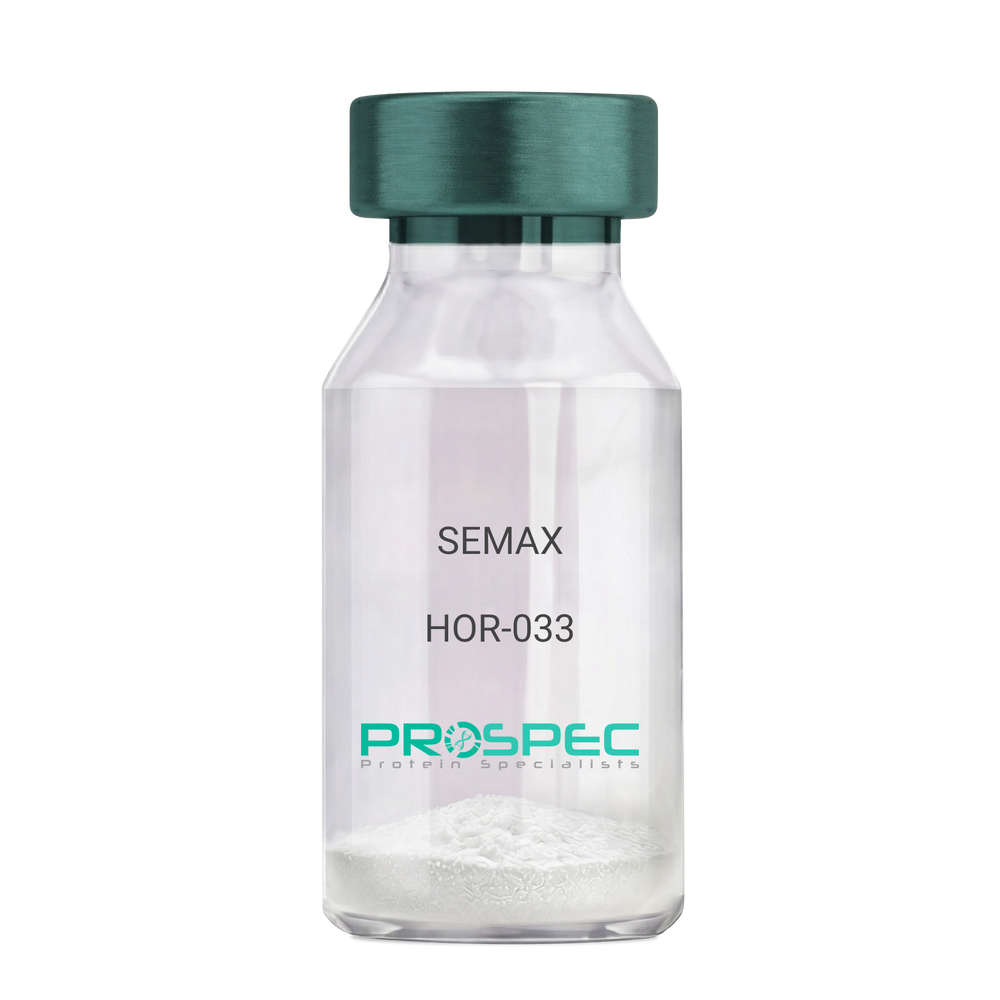
    SEMAX

    Description:

    SEMAX

    Product # :

    HOR-033

    Price :

    Quantity :

    Shipping Method :

    Room Temp Icon

    Shipped at Room temp

    Add To Cart

    More Info

    • description
    • formulation
    • purity
    • More Info

    Description

    SEMAX Synthetic is a single, non-glycosylated polypeptide chain containing 7 amino acids, having a molecular mass of 813.92 Dalton and a Molecular formula of C37H51N19O1S.

    Formulation

    The protein was lyophilized with no additives.

    Purity

    Greater than 97.0% as determined by analysis by RP-HPLC.

    More Info

    • Physical Appearance

      Sterile Filtered White lyophilized (freeze-dried) powder.

    • Stability

      Lyophilized SEMAX although stable at room temperature for 3 weeks, should be stored desiccated below -18°C. Upon reconstitution SEMAX should be stored at 4°C between 2-7 days and for future use below -18°C. For long term storage it is recommended to add a carrier protein (0.1% HSA or BSA). Please prevent freeze-thaw cycles.

    • Solubility

      It is recommended to reconstitute the lyophilized SEMAX in sterile 18MΩ-cm H2O not less than 100 µg/ml, which can then be further diluted to other aqueous solutions.

    • Amino Acid Sequence

      H-Met-Glu-His-Phe-Pro-Gly-Pro-OH.

    • Background

      Semax, also known as ACTH(4-10) Pro-Gly-Pro, is a synthetic peptide that has been the subject of extensive research due to its potential neuroprotective and nootropic effects. This heptapeptide, derived from the adrenocorticotropic hormone (ACTH), has been shown to possess a wide range of biological activities, including enhancing memory, learning, and neurogenesis.

      Semax is unique in its ability to cross the blood-brain barrier and exert its effects directly on the central nervous system. It has been shown to stimulate the release of brain-derived neurotrophic factor (BDNF), a protein that plays a crucial role in the survival of neurons and the growth of new neurons and synapses. Studies by Dolotov et al. (2006) have demonstrated that Semax can enhance memory and learning in rats, suggesting potential applications in cognitive enhancement and the treatment of cognitive disorders.

      In addition to its nootropic effects, Semax has been shown to possess neuroprotective properties. Research by Stavchansky et al. (2008) found that Semax could protect neurons from oxidative stress and apoptosis, suggesting potential applications in the treatment of neurodegenerative diseases such as Alzheimer's and Parkinson's disease.

      Given its nootropic and neuroprotective effects, Semax has been proposed as a potential therapeutic agent for a variety of conditions, including cognitive disorders, stroke, and optic nerve disease. For instance, a study by Myasoedov et al. (2010) found that Semax could improve outcomes in patients with ischemic stroke, indicating its potential as a therapeutic agent in stroke recovery.

      While research on Semax is promising, it is important to note that most studies have been conducted in animals or in vitro. More research is needed to fully understand the potential effects and applications of Semax in humans. However, the existing body of research suggests that Semax could be a promising tool in the treatment of cognitive disorders and neurodegenerative diseases.

    ProSpec's products are furnished for LABORATORY RESEARCH USE ONLY. The product may not be used as drugs, agricultural or pesticidal products, food additives or household chemicals.

    Semax
  • View Data Sheet

    Name :

    ITGB4 Human

    Description:

    Integrin Beta 4 Human Recombinant

    Integrin beta-4, GP150, CD104, ITGB4, Integrin Subunit Beta 4, CD104 Antigen, Integrin, Beta 4, Integrin Beta-4.

    Product # :

    PRO-2528

    Price :

    Quantity :

    Shipping Method :

    Ice Icon

    Shipped with Ice Packs

    Add To Cart

    More Info

    • description
    • source
    • formulation
    • purity
    • More Info

    Description

    ITGB4 produced in Sf9 Baculovirus cells is a single, glycosylated polypeptide chain containing 691 amino acids (28-710a.a.) and having a molecular mass of 77.5kDa. (Molecular size on SDS-PAGE will appear at approximately 70-100kDa). ITGB4 is expressed with an 8 amino acid His tag at C-Terminus and purified by proprietary chromatographic techniques.

    Source

    Sf9, Baculovirus cells.

    Formulation

    ITGB4 protein solution (0.5mg/ml) contains Phosphate Buffered Saline (pH 7.4) & 10% glycerol.

    Purity

    Greater than 90.0% as determined by SDS-PAGE.

    More Info

    • Introduction

      ITGB4 (integrin beta-4 isoform 1) belongs to the Integrin beta family. ITGB4 forms noncovalent heterodimers with Integrin alpha 6 and takes part in the formation of epithelial hemidesmosomes. ITGB4 has a vital structural role in the hemidesmosome of epithelial cells and is needed for the regulation of keratinocyte motility & polarity. ITGB4 leans towards the association with alpha 6 subunit and is expected to take a key role in the biology of invasive carcinoma.

    • Synonyms

      Integrin beta-4, GP150, CD104, ITGB4, Integrin Subunit Beta 4, CD104 Antigen, Integrin, Beta 4, Integrin Beta-4.

    • Physical Appearance

      Sterile Filtered colorless solution.

    • Stability

      Store at 4°C if entire vial will be used within 2-4 weeks. Store, frozen at -20°C for longer periods of time. For long term storage it is recommended to add a carrier protein (0.1% HSA or BSA). Avoid multiple freeze-thaw cycles.

    • Amino Acid Sequence

      NRCKKAPVKS CTECVRVDKD CAYCTDEMFR DRRCNTQAEL LAAGCQRESI VVMESSFQIT EETQIDTTLR RSQMSPQGLR VRLRPGEERH FELEVFEPLE SPVDLYILMD FSNSMSDDLD NLKKMGQNLA RVLSQLTSDY TIGFGKFVDK VSVPQTDMRP EKLKEPWPNS DPPFSFKNVI SLTEDVDEFR NKLQGERISG NLDAPEGGFD AILQTAVCTR DIGWRPDSTH LLVFSTESAF HYEADGANVL AGIMSRNDER CHLDTTGTYT QYRTQDYPSV PTLVRLLAKH NIIPIFAVTN YSYSYYEKLH TYFPVSSLGV LQEDSSNIVE LLEEAFNRIR SNLDIRALDS PRGLRTEVTS KMFQKTRTGS FHIRRGEVGI YQVQLRALEH VDGTHVCQLP EDQKGNIHLK PSFSDGLKMD AGIICDVCTC ELQKEVRSAR CSFNGDFVCG QCVCSEGWSG QTCNCSTGSL SDIQPCLREG EDKPCSGRGE CQCGHCVCYG EGRYEGQFCE YDNFQCPRTS GFLCNDRGRC SMGQCVCEPG WTGPSCDCPL SNATCIDSNG GICNGRGHCE CGRCHCHQQS LYTDTICEIN YSAIHPGLCE DLRSCVQCQA WGTGEKKGRT CEECNFKVKM VDELKRAEEV VVRCSFRDED DDCTYSYTME GDGAPGPNST VLVHKKKDCP PGSLEHHHHH H

    ProSpec's products are furnished for LABORATORY RESEARCH USE ONLY. The product may not be used as drugs, agricultural or pesticidal products, food additives or household chemicals.

    Itgb4 Human
  • View Data Sheet

    Name :

    IFN a 2a Human, Plant

    Description:

    Interferon Alpha 2a Human Recombinant, Tobacco

    Leukocyte interferon, B cell interferon, Type I interferon, IFNA2, IFN-a 2a.

    Product # :

    CYT-543

    Price :

    Quantity :

    Shipping Method :

    Room Temp Icon

    Shipped at Room temp

    Add To Cart

    More Info

    • description
    • source
    • formulation
    • purity
    • biological activity
    • More Info

    Description

    Interferon Alpha Human 2a Recombinant produced in Plant is a single, glycosylated, polypeptide chain containing 165 amino acids and having a molecular mass of 19 kDa.The Interferon-a 2a contains affinity 6xHis tag on C-terminus.The IFN-A 2a is purified by proprietary chromatographic techniques.

    Source

    Nicotiana Sp.Plant.

    Formulation

    Lyophilized, containing 50% SDS.

    Purity

    Greater than 99.0% as determined by both:
    (a) Analysis by RP-HPLC.
    (b) Analysis by SDS-PAGE.

    Biological Activity

    The specific activity was determined by a quantitative gene report bioassay using human Type I interferon-sensitive cells. Compared with bacterial derived recombinant IFN-a 2a, assayed in the same conditions, plant derived IFN-alpha 2a showed 6.1 × 10⁸ Units/mg in reference to a viral resistance assay using bovine kidney MDBK cells.

    More Info

    • Introduction

      IFN-alpha is produced by macrophages and has antiviral activities. Interferon stimulates the production of two enzymes: protein kinase and an oligoadenylate synthetase.

    • Synonyms

      Leukocyte interferon, B cell interferon, Type I interferon, IFNA2, IFN-a 2a.

    • Physical Appearance

      Sterile Filtered White lyophilized (freeze-dried) powder.

    • Stability

      Lyophilized Interferon alpha 2a although stable at room temperature for 3 weeks, should be stored desiccated below -18°C. Upon reconstitution IFN-alpha 2a should be stored at 4°C between 2-7 days and for future use below -18°C.For long term storage it is recommended to add a carrier protein (0.1% HSA or BSA).Please prevent freeze-thaw cycles.

    • Solubility

      It is recommended to reconstitute the lyophilized Interferon-alpha 2a in sterile 18MΩ-cm H2O not less than 100µg/ml, which can then be further diluted to other aqueous solutions.

    • Amino Acid Sequence

      The sequence of the first twelve N-terminal amino acids was determined and was found to be Cys-Asp-Leu-Pro-Gln-Thr-His-Ser-Leu-Gly-Ser-Arg.

    • Background

      What is the molecular weight/Mw of IFN A 2A HUMAN, PLANT Protein?
      IFN A 2A HUMAN, PLANT Protein has a total Mw of 19kDa.

      What is the source or expression system of IFN A 2A HUMAN, PLANT Protein?
      Nicotiana Sp.Plant.
      What is the Purity of IFN A 2A HUMAN, PLANT Protein?
      IFN A 2A HUMAN, PLANT Protein is >99% pure as determined by SDS-PAGE.

      What is the Biological Activity of IFN A 2A HUMAN, PLANT Protein?
      The specific activity was determined by a quantitative gene report bioassay using human Type I interferon-sensitive cells. Compared with bacterial derived recombinant IFN-a 2a, assayed in the same conditions, plant derived IFN-alpha 2a showed 6.1 × 10⁸ Units/mg in reference to a viral resistance assay using bovine kidney MDBK cells.

      What is the amino acid sequence of IFN A 2A HUMAN, PLANT Protein?
      The sequence of the first twelve N-terminal amino acids was determined and was found to be Cys-Asp-Leu-Pro-Gln-Thr-His-Ser-Leu-Gly-Ser-Arg.

      What applications can IFN A 2A HUMAN, PLANT Protein be used in?
      IFN A 2A HUMAN, PLANT Protein can probably be used in western blot, ELISA and Lateral Flow.

      What is the endotoxin level for IFN A 2A HUMAN, PLANT Protein?
      The endotoxin level is minimal, IFN A 2A HUMAN, PLANT Protein was purified using conventional chromatography techniques.

    ProSpec's products are furnished for LABORATORY RESEARCH USE ONLY. The product may not be used as drugs, agricultural or pesticidal products, food additives or household chemicals.

    Interferon Alpha 2A Plant
  • View Data Sheet

    Name :

    IFN a 1b Human

    Description:

    Interferon-Alpha 1b Human Recombinant

    Product # :

    CYT-283

    Price :

    Quantity :

    Shipping Method :

    Room Temp Icon

    Shipped at Room temp

    Add To Cart

    More Info

    • description
    • source
    • formulation
    • purity
    • biological activity
    • More Info

    Description

    Interferon-alpha 1b Human Recombinant produced in E.Coli is a single, non-glycosylated, polypeptide chain containing 167 amino acids and having a molecular mass of 19.5 kDa. The Interferon-alpha 1b gene was obtained from human leukocytes. The IFN-a 1b is purified by proprietary chromatographic techniques.

    Source

    Escherichia Coli.

    Formulation

    Lyophilized from a 0.2µm filtered solution (50ug/ml) in PBS, pH 7.4, containing 4% mannitol and 1% HSA.

    Purity

    Greater than 96.0% as determined by:
    (a) Analysis by RP-HPLC.
    (b) Analysis by SDS-PAGE.

    Biological Activity

    The specific activity as determined in a viral resistance assay using bovine kidney MDBK cells was found to be 1 x 10⁸ IU/ mg.

    More Info

    • Introduction

      IFN-alpha 1b is produced by macrophages, IFN-alpha 1b has antiviral activities and stimulates the production of two enzymes: a protein kinase and an oligoadenylate synthetase.

    • Physical Appearance

      Sterile Filtered White lyophilized (freeze-dried) powder.

    • Stability

      Lyophilized Interferon alpha 1b although stable at room temperature for 3 weeks, should be stored desiccated below -18°C. Upon reconstitution IFN-alpha 1b should be stored at 4°C between 2-7 days and for future use below -18°C.For long term storage it is recommended to add a carrier protein (0.1% HSA or BSA).Please prevent freeze-thaw cycles.

    • Solubility

      It is recommended to reconstitute the lyophilized IFN alpha 1b in sterile 18MΩ-cm H2O not less than 100µg/ml, which can then be further diluted to other aqueous solutions.

    • Amino Acid Sequence

      The sequence of the first five N-terminal amino acids was determined and was found to be Cys-Asp-Leu-Pro-Glu.

    • Background

      What is the molecular weight/Mw of IFNA1 B Protein?
      IFNA1 B Protein has a total Mw of 19.5kDa.

      What is the source or expression system of IFNA1 B Protein?
      Escherichia Coli.

      What is the Purity of IFNA1 B Protein?
      IFNA1 B Protein is >96% pure as determined by SDS-PAGE.

      What is the Biological Activity of IFNA1 B Protein?
      The specific activity as determined in a viral resistance assay using bovine kidney MDBK cells was found to be 1 x 10⁸ IU/ mg.


      What is the amino acid sequence of IFNA1 B Protein?
      The sequence of the first five N-terminal amino acids was determined and was found to be Cys-Asp-Leu-Pro-Glu.
      What applications can IFNA1 B Protein be used in?
      IFNA1 B Protein can probably be used in western blot, ELISA and Lateral Flow.

      What is the endotoxin level for IFNA1 B Protein?
      The endotoxin level is minimal, IFNA1 B Protein was purified using conventional chromatography techniques.


    ProSpec's products are furnished for LABORATORY RESEARCH USE ONLY. The product may not be used as drugs, agricultural or pesticidal products, food additives or household chemicals.

    Interferon Alpha 1B Human
  • View Data Sheet

    Name :

    Atosiban

    Description:

    Atosiban

    Product # :

    HOR-239

    Price :

    Quantity :

    Shipping Method :

    Room Temp Icon

    Shipped at Room temp

    Add To Cart

    More Info

    • description
    • formulation
    • purity
    • More Info
    • HPLC, MS

    Description

    Atosiban also called ADH (Anti-Diuretic Hormone) has a molecular formula of C43H67N11O12S2, 3-Mercaptopropionyl-D-Tyr(ET)-Ile-Thr-Asn-Cys-Pro-Orn-Gly-NH2 having a Mw of 994.2 Dalton.

    Formulation

    The Atosiban peptide was lyophilized with no additives.

    Purity

    Greater than 98.0% as determined by analysis by RP-HPLC.

    HPLC, MS

    atosiban hplc - Product image 1
    atosiban hplc - Product image 2

    More Info

    • Introduction

      Atosiban is the first oxytocin antagonist to be specifically developed for the treatment of preterm labor. Atosiban has a specific mode of action, inhibiting oxytocin-induced uterine contractions by blocking oxytocin receptors in the uterus. Extensive clinical investigations have shown Atosiban to be at least as effective as current tocolytic agents. In addition, due to its novel and specific mode of action, Atosiban has a markedly improved maternal side effects profile compared with conventional therapies.

    • Physical Appearance

      Sterile Filtered White lyophilized (freeze-dried) powder.

    • Stability

      Lyophilized Atosiban although stable at room temperature for 3 weeks, should be stored desiccated below -18°C. Upon reconstitution Atosiban should be stored at 4°C between 2-7 days and for future use below -18°C. For long term storage it is recommended to add a carrier protein (0.1% HSA or BSA).Please prevent freeze-thaw cycles.

    • Solubility

      It is recommended to reconstitute the lyophilized Atosiban in sterile 18MΩ-cm H2O not less than 100µg/ml, which can then be further diluted to other aqueous solutions.

    ProSpec's products are furnished for LABORATORY RESEARCH USE ONLY. The product may not be used as drugs, agricultural or pesticidal products, food additives or household chemicals.

    Atosiban
  • View Data Sheet

    Name :

    ID2 Human

    Description:

    Inhibitor of DNA Binding 2 Human Recombinant

    DNA-binding protein inhibitor ID-2, bHLHb26, GIG8, ID2A, ID2H, MGC26389, Class B basic helix-loop-helix protein 26, Inhibitor of DNA binding 2.

    Product # :

    PRO-1383

    Price :

    Quantity :

    Shipping Method :

    Ice Icon

    Shipped with Ice Packs

    Add To Cart

    More Info

    • description
    • source
    • formulation
    • purity
    • More Info

    Description

    ID2 Human Recombinant produced in E.Coli is a single, non-glycosylated polypeptide chain containing 154 amino acids (1-134 a.a.) and having a molecular mass of 17kDa. ID2 is fused to a 20 amino acid His-tag at N-terminus & purified by proprietary chromatographic techniques.

    Source

    E.coli.

    Formulation

    ID2 protein solution (1mg/ml) contains 20mM Tris-HCl buffer (pH8.0), 10% glycerol and 0.4M Urea.

    Purity

    Greater than 85% as determined by SDS-PAGE.

    More Info

    • Introduction

      Inhibitor of DNA Binding 2 (ID2) is a part of the inhibitor of DNA binding family, whose members are transcriptional regulators that contain a helix-loop-helix (HLH) domain but not a basic domain. Members of the ID family inhibit the functions of basic helix-loop-helix transcription factors in a dominant-negative way by suppressing their heterodimerization partners through the HLH domains. ID2 play a role in negatively regulating cell differentiation and may be an inhibitor of tissue-specific gene expression.

    • Synonyms

      DNA-binding protein inhibitor ID-2, bHLHb26, GIG8, ID2A, ID2H, MGC26389, Class B basic helix-loop-helix protein 26, Inhibitor of DNA binding 2.

    • Physical Appearance

      Sterile Filtered colorless solution.

    • Stability

      Store at 4°C if entire vial will be used within 2-4 weeks. Store, frozen at -20°C for longer periods of time. For long term storage it is recommended to add a carrier protein (0.1% HSA or BSA).Avoid multiple freeze-thaw cycles.

    • Amino Acid Sequence

      MGSSHHHHHH SSGLVPRGSH MKAFSPVRSV RKNSLSDHSL GISRSKTPVD DPMSLLYNMN DCYSKLKELV PSIPQNKKVS KMEILQHVID YILDLQIALD SHPTIVSLHH QRPGQNQASR TPLTTLNTDI SILSLQASEF PSELMSNDSK ALCG.

    ProSpec's products are furnished for LABORATORY RESEARCH USE ONLY. The product may not be used as drugs, agricultural or pesticidal products, food additives or household chemicals.

    Id2 Human
  • View Data Sheet

    Name :

    IGLL1 Human

    Description:

    Immunoglobulin Lambda-Like Polypeptide 1 Human Recombinant

    14.1, AGM2, CD179b, IGL1, IGL5, IGLJ14.1, IGLL, IGO, IGVPB, VPREB2, Immunoglobulin lambda-like polypeptide 1, CD179 antigen-like family member B, Ig lambda-5, Immunoglobulin omega polypeptide, Immunoglobulin-related protein 14.1, IGLL1.

    Product # :

    PRO-1390

    Price :

    Quantity :

    Shipping Method :

    Ice Icon

    Shipped with Ice Packs

    Add To Cart

    More Info

    • description
    • source
    • formulation
    • purity
    • More Info

    Description

    IGLL1 Human Recombinant produced in E.Coli is a single, non-glycosylated polypeptide chain containing 199 amino acids (38-213a.a.) and having a molecular mass of 21.5kDa. IGLL1 is fused to a 23 amino acid His-tag at N-terminus & purified by proprietary chromatographic techniques.

    Source

    E.coli.

    Formulation

    IGLL1 protein solution (1mg/ml) containing 20mM Tris-HCl buffer (pH 8.0), 0.4M urea and 10% glycerol.

    Purity

    Greater than 85% as determined by SDS-PAGE.

    More Info

    • Introduction

      Immunoglobulin Lambda-Like Polypeptide 1 (IGLL1) is one of the substitute light chain subunits and is a part of the immunoglobulin gene superfamily which does not undergo rearrangement. Two transcript variants encoding diverse isoforms have been found for IGLL1. Mutations in IGLL1 can bring about B cell deficiency and agammaglobulinemia, an autosomal recessive disease in which few or no gamma globulins or antibodies are made.

    • Synonyms

      14.1, AGM2, CD179b, IGL1, IGL5, IGLJ14.1, IGLL, IGO, IGVPB, VPREB2, Immunoglobulin lambda-like polypeptide 1, CD179 antigen-like family member B, Ig lambda-5, Immunoglobulin omega polypeptide, Immunoglobulin-related protein 14.1, IGLL1.

    • Physical Appearance

      Sterile Filtered colorless solution.

    • Stability

      Store at 4°C if entire vial will be used within 2-4 weeks. Store, frozen at -20°C for longer periods of time. For long term storage it is recommended to add a carrier protein (0.1% HSA or BSA).Avoid multiple freeze-thaw cycles.

    • Amino Acid Sequence

      MGSSHHHHHH SSGLVPRGSH MGSLLRPTAA SQSRALGPGA PGGSSRSSLR SRWGRFLLQR GSWTGPRCWP RGFQSKHNSV THVFGSGTQL TVLSQPKATP SVTLFPPSSE ELQANKATLV CLMNDFYPGI LTVTWKADGT PITQGVEMTT PSKQSNNKYA ASSYLSLTPE QWRSRRSYSC QVMHEGSTVE KTVAPAECS.

    ProSpec's products are furnished for LABORATORY RESEARCH USE ONLY. The product may not be used as drugs, agricultural or pesticidal products, food additives or household chemicals.

    Igll1 Human
  • View Data Sheet

    Name :

    Thymosin β4

    Description:

    Thymosin-b4 Human Recombinant

    Thymosin beta-4, T beta 4, Fx , TB4X, PTMB4, TMSB4.

    Product # :

    HOR-003

    Price :

    Quantity :

    Shipping Method :

    Room Temp Icon

    Shipped at Room temp

    Add To Cart

    More Info

    • description
    • source
    • formulation
    • purity
    • More Info

    Description

    Thymosin b4 Human Recombinant produced in E.Coli is a single, non-glycosylated, polypeptide chain containing 43 amino acids and having a molecular mass of 4.9kDa.The Thymosin b4 Human is purified by proprietary chromatographic techniques.

    Source

    Escherichia Coli.

    Formulation

    Lyophilized from a 0.2um filtered concentrated solution in 1xPBS, pH 7.4.

    Purity

    Greater than 95.0% as determined by SDS-PAGE and HPLC analyses.

    More Info

    • Introduction

      CB1 cannabinoid receptor-interacting protein 1 (CNRIP1) is a 164 amino acid protein and G-protein coupled receptor which is a member of the CNRIP family. The CNRIP1 interacts with the C-terminal tail of cannabinoid receptor 1. CNRIP1 is expressed in the brain tissue and, at low levels, in the testis. CNRIP1 is involved in appetite, synaptic plasticity, neuroprotection and analgesia.

    • Synonyms

      Thymosin beta-4, T beta 4, Fx , TB4X, PTMB4, TMSB4.

    • Physical Appearance

      Sterile Filtered White lyophilized (freeze-dried) powder.

    • Stability

      Lyophilized Thymosin B4 Human although stable at room temperature for 3 weeks, should be stored desiccated below -18°C. Upon reconstitution Thymosin B4 Human should be stored at 4°C between 2-7 days and for future use below -18°C. Please prevent freeze-thaw cycles.

    • Solubility

      It is recommended to reconstitute the lyophilized Thymosin B4 in sterile 18M-cm H2O not less than 100µg/ml, which can then be further diluted to other aqueous solutions.

    • Amino Acid Sequence

      SDKPDMAEIE KFDKSKLKKT ETQEKNPLPS KETIEQEKQA GES

    ProSpec's products are furnished for LABORATORY RESEARCH USE ONLY. The product may not be used as drugs, agricultural or pesticidal products, food additives or household chemicals.

    Thymosin B4
  • View Data Sheet

    Name :

    Latexin Human

    Description:

    Latexin Human Recombinant

    LXN, TCI, ECI, Latexin, Endogenous carboxypeptidase inhibitor, Tissue carboxypeptidase inhibitor, MUM.

    Product # :

    ENZ-407

    Price :

    Quantity :

    Shipping Method :

    Ice Icon

    Shipped with Ice Packs

    Add To Cart

    More Info

    • description
    • source
    • formulation
    • purity
    • More Info

    Description

    Recombinant Human Latexin produced in E.Coli is a single, non-glycosylated polypeptide chain containing 222 amino acids and having a molecular mass of 25.7kDa. Latexin is purified by conventional chromatography techniques.

    Source

    Escherichia Coli.

    Formulation

    The Latexin protein solution contains 20mM Tris-HCl, pH-7.5, 50mM NaCl and 10% Glycerol.

    Purity

    Greater than 95.0% as determined by SDS-PAGE.

    More Info

    • Introduction

      Latexin enzyme is a carboxypeptidase A inhibitor that is highly expressed in the heart, prostate, ovary, kidney, pancrease, brain and colon. Latexin has no noticeable sequence resemblance with plant and parasite inhibitors, however it is related to a human putative tumor suppressor protein, TIG1. Latexin is down-regulated in the presenilin-1-deficient mouse brain, thus putatively playing a role in Alzheimer's disease.

    • Synonyms

      LXN, TCI, ECI, Latexin, Endogenous carboxypeptidase inhibitor, Tissue carboxypeptidase inhibitor, MUM.

    • Physical Appearance

      Sterile filtered colorless solution.

    • Stability

      Store at 4°C if entire vial will be used within 2-4 weeks. Store, frozen at -20°C for longer periods of time. For long term storage it is recommended to add a carrier protein (0.1% HSA or BSA). Avoid multiple freeze-thaw cycles.

    • Amino Acid Sequence

      MEIPPTNYPA SRAALVAQNY INYQQGTPHR VFEVQKVKQA SMEDIPGRGH KYRLKFAVEE IIQKQVKVNC TAEVLYPSTG QETAPEVNFTFEGETGKNPD EEDNTFYQRL KSMKEPLEAQ NIPDNFGNVS PEMTLVLHLA WVACGYIIWQ NSTEDTWYKM VKIQTVKQVQ RNDDFIELDYTILLHNIASQ EIIPWQMQVL WHPQYGTKVK HNSRLPKEVQ LE.

    ProSpec's products are furnished for LABORATORY RESEARCH USE ONLY. The product may not be used as drugs, agricultural or pesticidal products, food additives or household chemicals.

    Latexin Human
  • 1
  • …
  • 3
  • 4
  • 5
  • 6
  • 7
  • …
  • 42
Your browser does not support the video tag.

Products

  • Cytokines
  • Growth Factors
  • Chemokines
  • CD Antigens
  • Neurotrophins
  • Hormones
  • Enzymes
  • Viral Antigens
  • Recombinant Proteins
  • Natural Proteins
  • Monoclonal Antibodies
  • Polyclonal Antibodies
  • Thermal Packaging

About

  • Company
  • Founder
  • Contribution
  • Contact Us
  • My Account

Ordering

  • Ordering Method
  • Ordering - Credit Card
  • Ordering PO
  • Shipping Fees
  • FAQ's

Legal

  • Terms & Conditions
  • Privacy
  • Site Map
  • info@prospecbio.com
  • Facebook
  • Instagram
  • Linkedin Profile

© 2026 ProSpec-Tany TechnoGene Ltd. All Rights Reserved.

  • Choosing a selection results in a full page refresh.
  • Opens in a new window.