Skip to content

High-quality research proteins.

  • 1-800-805-6531

  • Mon - Sat 8.00-18.00, Sun - Closed

  • info@prospecbio.com

  • PO Box 6591 East Brunswick NJ 08816

  • Products
    • Cytokines
    • Growth factors
    • Chemokines
    • Cd antigens
    • Neurotrophins
    • Hormones
    • Enzymes
    • Viral antigens
    • Recombinant proteins
    • Natural proteins
    • Monoclonal antibodies
    • Polyclonal antibodies
    • Thermal Packaging
  • About
    • Company
    • Founder
    • Contribution
  • Customers
    • Eastern Asia
    • Eastern Europe
    • North America
    • South America
    • South East Asia
    • Southern Asia
    • Western Europe
  • Ordering
    • Ordering Method
    • Ordering - Credit Card
    • Ordering - PO
    • Shipping Fees
    • FAQs
  • Services
    • DNA Cloning
    • Protein Expression
    • Monoclonal Antibody
    • Fermentation
    • Technology License
  • Contact us
Log in

Country/region

  • USD $ | Albania
  • USD $ | Andorra
  • USD $ | Argentina
  • USD $ | Armenia
  • USD $ | Australia
  • USD $ | Austria
  • USD $ | Azerbaijan
  • USD $ | Belarus
  • USD $ | Belgium
  • USD $ | Bolivia
  • USD $ | Brazil
  • USD $ | Bulgaria
  • USD $ | Cambodia
  • USD $ | Canada
  • USD $ | Chile
  • USD $ | China
  • USD $ | Colombia
  • USD $ | Costa Rica
  • USD $ | Croatia
  • USD $ | Cyprus
  • USD $ | Czechia
  • USD $ | Denmark
  • USD $ | Estonia
  • USD $ | Finland
  • USD $ | France
  • USD $ | Georgia
  • USD $ | Germany
  • USD $ | Greece
  • USD $ | Hong Kong SAR
  • USD $ | Hungary
  • USD $ | Iceland
  • USD $ | India
  • USD $ | Ireland
  • USD $ | Israel
  • USD $ | Italy
  • USD $ | Japan
  • USD $ | Kazakhstan
  • USD $ | Latvia
  • USD $ | Liechtenstein
  • USD $ | Lithuania
  • USD $ | Madagascar
  • USD $ | Malta
  • USD $ | Mexico
  • USD $ | Moldova
  • USD $ | Monaco
  • USD $ | Netherlands
  • USD $ | New Zealand
  • USD $ | North Macedonia
  • USD $ | Norway
  • USD $ | Panama
  • USD $ | Paraguay
  • USD $ | Peru
  • USD $ | Philippines
  • USD $ | Poland
  • USD $ | Portugal
  • USD $ | Romania
  • USD $ | Singapore
  • USD $ | Slovakia
  • USD $ | Slovenia
  • USD $ | South Africa
  • USD $ | South Korea
  • USD $ | Spain
  • USD $ | Sri Lanka
  • USD $ | Sweden
  • USD $ | Switzerland
  • USD $ | Taiwan
  • USD $ | Thailand
  • USD $ | Türkiye
  • USD $ | Ukraine
  • USD $ | United Kingdom
  • USD $ | United States
  • USD $ | Uruguay
  • USD $ | Vatican City
  • USD $ | Venezuela
  • USD $ | Vietnam
  • Facebook
  • Instagram
logoProSpec - Recombinant Protein Manufacturer for academic and R&D industry
Become a distributor
Account Log in
Wishlist
Cart Cart(0)
  • Products
    +
    • Cytokines
    • Growth factors
    • Chemokines
    • Cd antigens
    • Neurotrophins
    • Hormones
    • Enzymes
    • Viral antigens
    • Recombinant proteins
    • Natural proteins
    • Monoclonal antibodies
    • Polyclonal antibodies
    • Thermal Packaging
  • About
    +
    • Company
    • Founder
    • Contribution
  • Customers
    +
    • Eastern Asia
    • Eastern Europe
    • North America
    • South America
    • South East Asia
    • Southern Asia
    • Western Europe
  • Ordering
    +
    • Ordering Method
    • Ordering - Credit Card
    • Ordering - PO
    • Shipping Fees
    • FAQs
  • Services
    +
    • DNA Cloning
    • Protein Expression
    • Monoclonal Antibody
    • Fermentation
    • Technology License
  • Contact us

Item added to your cart

View cart
View All
  • Cytokines
  • Growth factors
  • Chemokines
  • Cd antigens
  • Neurotrophins
  • Hormones
  • Enzymes
  • Viral antigens
  • Recombinant proteins
  • Natural proteins
  • Monoclonal antibodies
  • Polyclonal antibodies
  • Thermal Packaging
  • Tumor Necrosis Factor

    Tumor Necrosis Factor

    View All
  • 4-1BB

    4-1BB

    View All
  • Adiponectin

    Adiponectin

    View All
  • AIF1

    AIF1

    View All
  • Other Cytokines

    Other Cytokines

    View All
  • AITRL

    AITRL

    View All
  • Angiopoietin

    Angiopoietin

    View All
  • Apolipoprotein

    Apolipoprotein

    View All
  • B-Cell Activating Factor

    B-Cell Activating Factor

    View All
  • Beta Defensin

    Beta Defensin

    View All
  • Bone Morphogenetic Protein

    Bone Morphogenetic Protein

    View All
  • B type Natriuretic Peptide

    B type Natriuretic Peptide

    View All
  • BST

    BST

    View All
  • Betacellulin

    Betacellulin

    View All
  • Cardiotrophin

    Cardiotrophin

    View All
  • Activin

    Activin

    View All
  • Fibroblast Growth Factor

    Fibroblast Growth Factor

    View All
  • Other Growth Factors

    Other Growth Factors

    View All
  • CSF

    CSF

    View All
  • CTGF

    CTGF

    View All
  • IGFBP

    IGFBP

    View All
  • VEGF Protein

    VEGF Protein

    View All
  • EGF

    EGF

    View All
  • Epigen

    Epigen

    View All
  • Erythropoietin

    Erythropoietin

    View All
  • Insulin-Like Growth Factor

    Insulin-Like Growth Factor

    View All
  • Growth Hormone

    Growth Hormone

    View All
  • HDGF

    HDGF

    View All
  • Hepatocyte Growth Factor

    Hepatocyte Growth Factor

    View All
  • Insulin

    Insulin

    View All
  • BCA-1/ BLC (CXCL13)

    BCA-1/ BLC (CXCL13)

    View All
  • BRAK (CXCL14)

    BRAK (CXCL14)

    View All
  • C-10 (CCL6)

    C-10 (CCL6)

    View All
  • Other Chemokines

    Other Chemokines

    View All
  • MEC (CCL28)

    MEC (CCL28)

    View All
  • LD78-beta (CCL3L1)

    LD78-beta (CCL3L1)

    View All
  • CTACK (CCL27)

    CTACK (CCL27)

    View All
  • CXCL16

    CXCL16

    View All
  • CXCL17

    CXCL17

    View All
  • Platelet Factor-4 (CXCL4)

    Platelet Factor-4 (CXCL4)

    View All
  • ENA-78 (CXCL5)

    ENA-78 (CXCL5)

    View All
  • Eotaxin (CCL11,24,26)

    Eotaxin (CCL11,24,26)

    View All
  • Exodus-2 (CCL21)

    Exodus-2 (CCL21)

    View All
  • Fractalkine (CX3CL1)

    Fractalkine (CX3CL1)

    View All
  • CXCL6

    CXCL6

    View All
  • Other CD Antigens

    Other CD Antigens

    View All
  • CD14

    CD14

    View All
  • CD164

    CD164

    View All
  • CD1

    CD1

    View All
  • CD2

    CD2

    View All
  • CD200

    CD200

    View All
  • CD207

    CD207

    View All
  • CD226

    CD226

    View All
  • CD23

    CD23

    View All
  • CD244

    CD244

    View All
  • CD247

    CD247

    View All
  • CD27

    CD27

    View All
  • CD274

    CD274

    View All
  • CD300

    CD300

    View All
  • CD33

    CD33

    View All
  • Other Neurotrophins

    Other Neurotrophins

    View All
  • Beta-NGF

    Beta-NGF

    View All
  • BDNF

    BDNF

    View All
  • CDNF

    CDNF

    View All
  • CNTF

    CNTF

    View All
  • GDNF

    GDNF

    View All
  • Glia Maturation Factor

    Glia Maturation Factor

    View All
  • MANF

    MANF

    View All
  • Midkine

    Midkine

    View All
  • Neuroglobin

    Neuroglobin

    View All
  • Neurotrophic factors

    Neurotrophic factors

    View All
  • Neuregulin

    Neuregulin

    View All
  • Neuropilin

    Neuropilin

    View All
  • Pigment Epithelium-Derived Factor

    Pigment Epithelium-Derived Factor

    View All
  • Pleiotrophin

    Pleiotrophin

    View All
  • Peptide Hormones

    Peptide Hormones

    View All
  • Other Hormones

    Other Hormones

    View All
  • HCG

    HCG

    View All
  • Endothelin

    Endothelin

    View All
  • Exendin

    Exendin

    View All
  • FSH

    FSH

    View All
  • Glucagon

    Glucagon

    View All
  • GHRP

    GHRP

    View All
  • GLP

    GLP

    View All
  • Thyrostimulin

    Thyrostimulin

    View All
  • Inhibin A

    Inhibin A

    View All
  • LHRH

    LHRH

    View All
  • Melanotan

    Melanotan

    View All
  • Procalcitonin

    Procalcitonin

    View All
  • PTH

    PTH

    View All
  • Peroxiredoxin

    Peroxiredoxin

    View All
  • Peptidase

    Peptidase

    View All
  • Synthetase

    Synthetase

    View All
  • Transferase

    Transferase

    View All
  • Hydrolase

    Hydrolase

    View All
  • Dehydrogenase

    Dehydrogenase

    View All
  • ACE2

    ACE2

    View All
  • Esterase

    Esterase

    View All
  • Protein Kinases

    Protein Kinases

    View All
  • Other Enzymes

    Other Enzymes

    View All
  • Phosphatase

    Phosphatase

    View All
  • Deaminase

    Deaminase

    View All
  • Oxygenase

    Oxygenase

    View All
  • Adenylate Kinase

    Adenylate Kinase

    View All
  • Lyase

    Lyase

    View All
  • Chagas

    Chagas

    View All
  • SARS

    SARS

    View All
  • Influenza

    Influenza

    View All
  • ASFV

    ASFV

    View All
  • Astrovirus

    Astrovirus

    View All
  • Borrelia

    Borrelia

    View All
  • Helicobacter Pylori

    Helicobacter Pylori

    View All
  • Chikungunya

    Chikungunya

    View All
  • Chlamydia

    Chlamydia

    View All
  • Cytomegalo

    Cytomegalo

    View All
  • Dengue

    Dengue

    View All
  • EBV

    EBV

    View All
  • Ebola

    Ebola

    View All
  • Feline Leukemia Virus

    Feline Leukemia Virus

    View All
  • Hepatitis A

    Hepatitis A

    View All
  • Other

    Other

    View All
  • Actin

    Actin

    View All
  • ADAM

    ADAM

    View All
  • Complement Component

    Complement Component

    View All
  • Ag85

    Ag85

    View All
  • Eukaryotic Translation Initiation Factor

    Eukaryotic Translation Initiation Factor

    View All
  • Anterior Gradient Protein

    Anterior Gradient Protein

    View All
  • Heat Shock Protein

    Heat Shock Protein

    View All
  • Alpha-2-HS-Glycoprotein

    Alpha-2-HS-Glycoprotein

    View All
  • Hemoglobin

    Hemoglobin

    View All
  • Allergy

    Allergy

    View All
  • Anaplasma

    Anaplasma

    View All
  • Angiogenin

    Angiogenin

    View All
  • Ankyrin Repeat Domain

    Ankyrin Repeat Domain

    View All
  • Annexin

    Annexin

    View All
  • Other Natural Proteins

    Other Natural Proteins

    View All
  • Aprotinin

    Aprotinin

    View All
  • Transferrin

    Transferrin

    View All
  • Avidin

    Avidin

    View All
  • Anti Coagulation Factors

    Anti Coagulation Factors

    View All
  • Natural Albumin

    Natural Albumin

    View All
  • Natural Coagulation Factors

    Natural Coagulation Factors

    View All
  • Fibronectin

    Fibronectin

    View All
  • Thrombin

    Thrombin

    View All
  • Anti Human Enzyme

    Anti Human Enzyme

    View All
  • Other Monoclonal Antibodies

    Other Monoclonal Antibodies

    View All
  • Anti Human Cytokine

    Anti Human Cytokine

    View All
  • Anti Human Heat Shock Protein

    Anti Human Heat Shock Protein

    View All
  • Anti Mouse Lymphocyte

    Anti Mouse Lymphocyte

    View All
  • Anti Human Chemokine

    Anti Human Chemokine

    View All
  • Anti Human Lymphocyte

    Anti Human Lymphocyte

    View All
  • Anti Viral Monoclonal

    Anti Viral Monoclonal

    View All
  • Anti Mouse Cytokine

    Anti Mouse Cytokine

    View All
  • Anti-GST Monoclonal

    Anti-GST Monoclonal

    View All
  • Other Polyclonal Antibodies

    Other Polyclonal Antibodies

    View All
  • Anti Viral

    Anti Viral

    View All
  • Anti-GST Monoclonal

    Anti-GST Monoclonal

    View All
Back

Search results

1000 results found for “GHRP”

Name

Description

Product #

Price

Quantity

Shipping Method

  • View Data Sheet

    Name :

    Prolactin Human

    Description:

    Prolactin Human Recombinant

    Mammotropin, Luteotropic hormone, Luteotropin, PRL.

    Product # :

    CYT-267

    Price :

    Quantity :

    Shipping Method :

    Room Temp Icon

    Shipped at Room temp

    Add To Cart

    More Info

    • description
    • source
    • formulation
    • purity
    • biological activity
    • More Info
    • Citations

    Description

    Prolactin Human Recombinant produced in E.Coli is a single, non-glycosylated polypeptide chain containing 200 amino acids and having a molecular mass of 23007 Dalton. The Prolactin is purified by proprietary chromatographic techniques.

    Source

    Escherichia Coli.

    Formulation

    The protein was lyophilized from a concentrated (1mg/ml) solution with 10mM sodium Phosphate buffer pH=8 and 50mM Nacl.

    Purity

    Greater than 95.0% as determined by:
    (a) Analysis by SEC-HPLC.
    (b) Analysis by SDS-PAGE.

    Biological Activity

    The ED50 as determined by the dose-dependant stimulation of the proliferation of rat lymphoma, Nb2-11 was found to be < 0.065ng/ml corresponding to a Specific Activity of 15,385,000IU/mg.

    Citations

    More Info

    • Introduction

      Prolactin is a neuroendocrine hormone synthesized primarily by the pituitary gland but also a variety of other cell types including the placenta, brain and uterus. Its primary function is to promote and maintain lactation but has also been shown to have a role in breast cancer development, regulation of reproductive function and immunoregulation.

    • Synonyms

      Mammotropin, Luteotropic hormone, Luteotropin, PRL.

    • Physical Appearance

      Sterile Filtered White lyophilized (freeze-dried) powder.

    • Stability

      Lyophilized Prolactin although stable at room temperature for 3 weeks, should be stored desiccated below -18°C. Upon reconstitution Prolactin should be stored at 4°C between 2-7 days and for future use below -18°C.For long term storage it is recommended to add a carrier protein (0.1% HSA or BSA).Please prevent freeze-thaw cycles.

    • Solubility

      It is recommended to reconstitute the lyophilized Prolactin in sterile 18MΩ-cm H2O not less than 100µg/ml, which can then be further diluted to other aqueous solutions.

    • Amino Acid Sequence

      The sequence of the first five N-terminal amino acids was determined and was found to be Met-Leu-Pro-Ile-Cys.

    ProSpec's products are furnished for LABORATORY RESEARCH USE ONLY. The product may not be used as drugs, agricultural or pesticidal products, food additives or household chemicals.

    Prolactin Human
  • View Data Sheet

    Name :

    MAX Human

    Description:

    MYC Associated Factor X Human Recombinant

    bHLHd4, bHLHd5, bHLHd6, bHLHd7, bHLHd8, MYC Associated Factor X, Class D basic helix-loop-helix protein 4, orf1, MGC10775, MGC11225, MGC18164, MGC34679, MGC36767, MAX Protein.

    Product # :

    PRO-811

    Price :

    Quantity :

    Shipping Method :

    Ice Icon

    Shipped with Ice Packs

    Add To Cart

    More Info

    • description
    • source
    • formulation
    • purity
    • More Info
    • Citations

    Description

    MAX Human Recombinant produced in E.Coli is a single, non-glycosylated, polypeptide chain containing 168 amino acids (1-160 a.a.) and having a molecular mass of 19.3kDa. MAX protein is fused to an 8 amino acid His-Tag at C-terminus and purified by standard chromatography.

    Source

    Escherichia Coli.

    Formulation

    MAX Human solution containing 20mM Tris-HCl pH-8, 1mM DTT and 10% glycerol.

    Purity

    Greater than 90% as determined by SDS-PAGE.

    Citations

    More Info

    • Introduction

      MAX protein is part of the basic helix-loop-helix leucine zipper (bHLHZ) family of transcription factors. MAX forms homodimers and heterodimers with Mad, Mxi1 and Myc. Myc is an oncoprotein implicated in cell proliferation, differentiation and apoptosis. The homodimers and heterodimers compete for a common DNA target site (the E box) and rearrangement among these dimer forms offers a complex system of transcriptional regulation. In contrast to Myc, which is exceedingly regulated throughout progression during the cell cycle, Max is very stable and is much more abundant than Myc.

    • Synonyms

      bHLHd4, bHLHd5, bHLHd6, bHLHd7, bHLHd8, MYC Associated Factor X, Class D basic helix-loop-helix protein 4, orf1, MGC10775, MGC11225, MGC18164, MGC34679, MGC36767, MAX Protein.

    • Physical Appearance

      Sterile filtered colorless solution.

    • Stability

      Store at 4°C if entire vial will be used within 2-4 weeks. Store, frozen at -20°C for longer periods of time. For long term storage it is recommended to add a carrier protein (0.1% HSA or BSA).Avoid multiple freeze-thaw cycles.

    • Amino Acid Sequence

      MSDNDDIEVE SDEEQPRFQS AADKRAHHNA LERKRRDHIK DSFHSLRDSV PSLQGEKASR AQILDKATEY IQYMRRKNHT HQQDIDDLKR QNALLEQQVR ALEKARSSAQ LQTNYPSSDN SLYTNAKGST ISAFDGGSDS SSESEPEEPQ SRKKLRMEAS LEHHHHHH.

    ProSpec's products are furnished for LABORATORY RESEARCH USE ONLY. The product may not be used as drugs, agricultural or pesticidal products, food additives or household chemicals.

    Max Human
  • View Data Sheet

    Name :

    Cetrorelix

    Description:

    Cetrorelix

    Product # :

    HOR-277

    Price :

    Quantity :

    Shipping Method :

    Room Temp Icon

    Shipped at Room temp

    Add To Cart

    More Info

    • description
    • formulation
    • purity
    • More Info
    • Citations

    Description

    Cetrorelix acetate is a synthetic decapeptide with gonadotropin-releasing hormone (GnRH) antagonistic activity. Cetrorelix acetate is an analog of native GnRH with substitutions of amino acids at positions 1, 2, 3, 6, and 10. The molecular formula is C70H92CIN17O14 (Ac-D-Nal1-D-Cpa2-D-Pal3-Ser4-Tyr5- D-Cit6-Leu7-Arg8-Pro9-D -Ala10-NH2), and the molecular weight is 1431 Dalton, calculated as the anhydrous free base.

    Formulation

    The Cetrorelix peptide was lyophilized with no additives.

    Purity

    Greater than 98.0% as determined by:
    (a) Analysis by RP-HPLC.
    (b) Analysis by SDS-PAGE.

    Citations

    More Info

    • Physical Appearance

      Sterile Filtered White lyophilized (freeze-dried) powder.

    • Stability

      Lyophilized Cetrorelix although stable at room temperature for 3 weeks, should be stored desiccated below -18°C. Upon reconstitution Cetrorelix should be stored at 4°C between 2-7 days and for future use below -18°C. For long term storage it is recommended to add a carrier protein (0.1% HSA or BSA).Please prevent freeze-thaw cycles.

    • Solubility

      It is recommended to reconstitute the lyophilized Cetrorelix in sterile 18MΩ-cm H2O not less than 100 µg/ml, which can then be further diluted to other aqueous solutions.

    ProSpec's products are furnished for LABORATORY RESEARCH USE ONLY. The product may not be used as drugs, agricultural or pesticidal products, food additives or household chemicals.

    Cetrorelix
  • View Data Sheet

    Name :

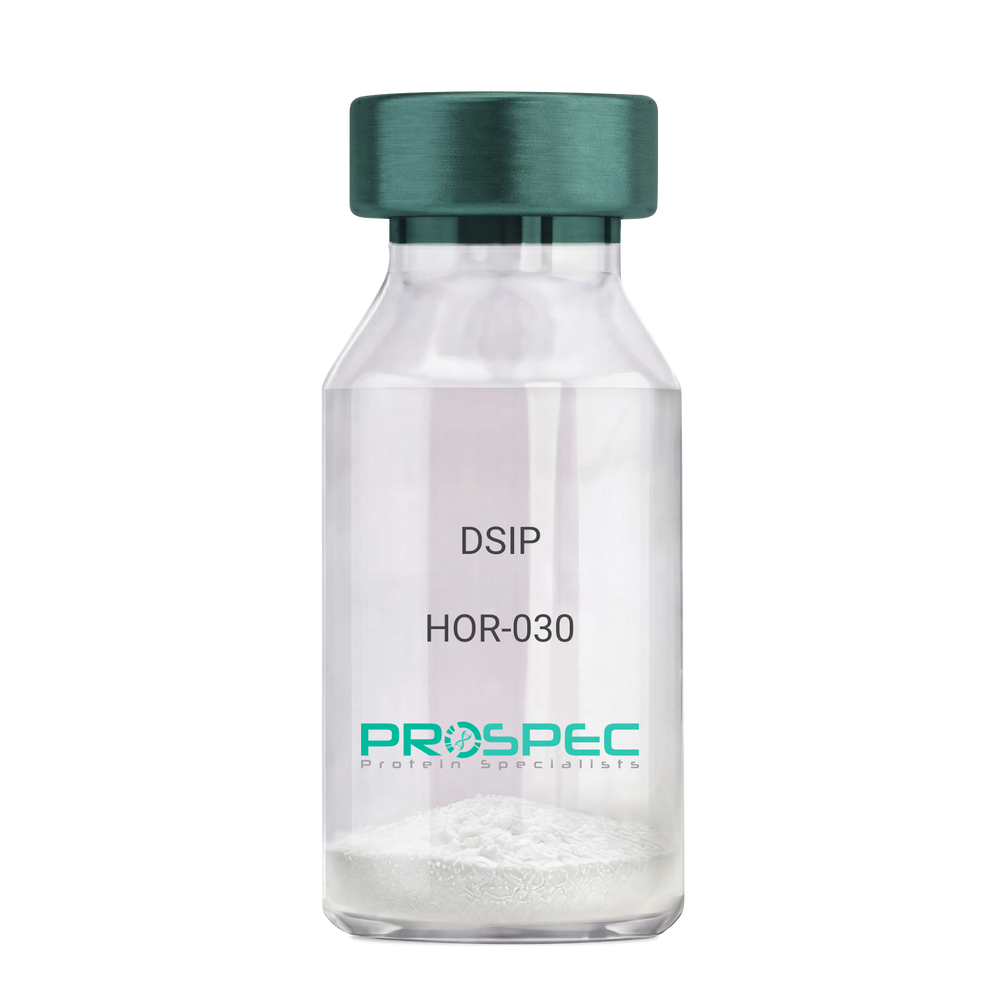
    DSIP

    Description:

    Delta Sleep Inducing Peptide

    Product # :

    HOR-030

    Price :

    Quantity :

    Shipping Method :

    Room Temp Icon

    Shipped at Room temp

    Add To Cart

    More Info

    • description
    • formulation
    • purity
    • More Info
    • Citations

    Description

    DSIP Synthetic is a single, non-glycosylated polypeptide chain containing 15 amino acids, having a molecular mass of 1419.55 Dalton and a Molecular formula of C62H98N16O22.

    Formulation

    The protein was lyophilized with no additives.

    Purity

    Greater than 97.0% as determined by analysis by RP-HPLC.

    Citations

    More Info

    • Physical Appearance

      Sterile Filtered White lyophilized (freeze-dried) powder.

    • Stability

      Lyophilized DSIP although stable at room temperature for 3 weeks, should be stored desiccated below -18°C. Upon reconstitution DSIP should be stored at 4°C between 2-7 days and for future use below -18°C. For long term storage it is recommended to add a carrier protein (0.1% HSA or BSA). Please prevent freeze-thaw cycles.

    • Solubility

      It is recommended to reconstitute the lyophilized DSIP in sterile 18MΩ-cm H2O not less than 100 µg/ml, which can then be further diluted to other aqueous solutions.

    • Amino Acid Sequence

      H-Gly-Glu-Pro-Pro-Pro-Gly-Lys-Pro-Ala-Asp-Asp-Ala-Gly-Leu-Val-OH

    • Background

      Delta Sleep-Inducing Peptide (DSIP), also known as Sleep-Promoting Peptide, is a neuropeptide that has been the subject of extensive research due to its potential role in sleep regulation, stress response, and neuroprotection. This nonapeptide, first isolated from the cerebral venous blood of rabbits during sleep, has been shown to induce slow-wave sleep, modulate pain perception, and exhibit potential antioxidant and immunomodulatory properties.

      DSIP's primary function is its interaction with the sleep regulatory system. By modulating the release of certain neurotransmitters, DSIP can influence sleep patterns, particularly promoting slow-wave sleep, the most restorative stage of sleep. Studies by Kovalzon et al. (2011) have demonstrated that DSIP can enhance sleep quality in rats, suggesting potential applications in sleep disorders and the promotion of healthy sleep patterns.

      In addition to its sleep-inducing effects, DSIP has been shown to possess neuroprotective properties. Research by Zolotarev et al. (2014) found that DSIP could protect neurons from oxidative stress, suggesting potential applications in the treatment of neurodegenerative diseases such as Alzheimer's and Parkinson's disease.

      Given its sleep-inducing and neuroprotective effects, DSIP has been proposed as a potential therapeutic agent for a variety of conditions, including sleep disorders, chronic pain, and neurodegenerative diseases. For instance, a study by Spong et al. (2016) found that DSIP could improve sleep quality in patients with chronic insomnia, indicating its potential as a therapeutic agent in the treatment of sleep disorders.

      While research on DSIP is promising, it is important to note that most studies have been conducted in animals or in vitro. More research is needed to fully understand the potential effects and applications of DSIP in humans. However, the existing body of research suggests that DSIP could be a promising tool in the treatment of sleep disorders, chronic pain, and neurodegenerative diseases.

    ProSpec's products are furnished for LABORATORY RESEARCH USE ONLY. The product may not be used as drugs, agricultural or pesticidal products, food additives or household chemicals.

    Dsip
  • View Data Sheet

    Name :

    HPR Human

    Description:

    Haptoglobin-Related Protein Human Recombinant

    Haptoglobin-Related Protein, A-259H10.2, Haptoglobin-Related Locus, HP.

    Product # :

    PRO-1884

    Price :

    Quantity :

    Shipping Method :

    Ice Icon

    Shipped with Ice Packs

    Add To Cart

    More Info

    • description
    • source
    • formulation
    • purity
    • More Info
    • Citations

    Description

    HPR Human Recombinant produced in E.Coli is a single, non-glycosylated polypeptide chain containing 352 amino acids (20-348 a.a) and having a molecular mass of 39.3kDa.HPR is fused to a 23 amino acid His-tag at N-terminus & purified by proprietary chromatographic techniques.

    Source

    Escherichia Coli.

    Formulation

    HPR protein solution (0.5mg/ml) containing 20mM Tris-HCl buffer (pH8.5), 20% glycerol 1mM DTT and 0.15M NaCl.

    Purity

    Greater than 85% as determined by SDS-PAGE.

    Citations

    More Info

    • Introduction

      Haptoglobin-Related Protein also known as HPR, is a primate-specific plasma protein related with apolipoprotein L-I (apoL-I)-containing high-density lipoprotein (HDL) particles which shown to be a part of the innate immune defense. HPR-bound hemoglobin might contribute to the biologic activity of the circulating apoL-I/Hprcontaining HDL particles. HPR is a clinically significant forecaster of recurrence of breast cancer.

    • Synonyms

      Haptoglobin-Related Protein, A-259H10.2, Haptoglobin-Related Locus, HP.

    • Physical Appearance

      Sterile Filtered clear solution.

    • Stability

      Store at 4°C if entire vial will be used within 2-4 weeks. Store, frozen at -20°C for longer periods of time.For long term storage it is recommended to add a carrier protein (0.1% HSA or BSA).Please avoid freeze thaw cycles.

    • Amino Acid Sequence

      MGSSHHHHHH SSGLVPRGSH MGSLYSGNDV TDISDDRFPK PPEIANGYVE HLFRYQCKNY YRLRTEGDGV YTLNDKKQWI NKAVGDKLPE CEAVCGKPKN PANPVQRILG GHLDAKGSFP WQAKMVSHHN LTTGATLINE QWLLTTAKNL FLNHSENATA KDIAPTLTLY VGKKQLVEIE KVVLHPNYHQ VDIGLIKLKQ KVLVNERVMP ICLPSKNYAE VGRVGYVSGW GQSDNFKLTD HLKYVMLPVA DQYDCITHYE GSTCPKWKAP KSPVGVQPIL NEHTFCVGMS KYQEDTCYGD AGSAFAVHDL EEDTWYAAGI LSFDKSCAVA EYGVYVKVTS IQHWVQKTIA EN

    ProSpec's products are furnished for LABORATORY RESEARCH USE ONLY. The product may not be used as drugs, agricultural or pesticidal products, food additives or household chemicals.

    Hpr Human
  • View Data Sheet

    Name :

    CHGA Human, His

    Description:

    Chromogranin-A Human Recombinant, His Tag

    CGA, CHGA, Vasostatin-2, Pituitary secretory protein I, SP-I.

    Product # :

    PRO-699

    Price :

    Quantity :

    Shipping Method :

    Ice Icon

    Shipped with Ice Packs

    Add To Cart

    More Info

    • description
    • source
    • formulation
    • purity
    • More Info
    • Citations

    Description

    Recombinant Human CHGA produced in E.Coli is a single, non-glycosylated polypeptide chain containing 460 amino acids (19-457 a.a) and having a molecular mass of 51.2kDa (Molecular weight on SDS-PAGE will appear higher). Chromgranin-A is fused to 21 amino acid His Tag at N-terminus and purified by proprietary chromatographic techniques.

    Source

    Escherichia Coli.

    Formulation

    The CHGA protein (0.5mg/ml) contains 20mM Tris-HCl buffer pH-7.5, 2mM EDTA, 0.1mM PMSF and 10% glycerol.

    Purity

    Greater than 80.0% as determined by Analysis by SDS-PAGE.

    Citations

    More Info

    • Introduction

      Chromgranin-A is part of the neuroendocrine secretory protein family. CHGA is located in secretory vesicles of neurons and endocrine cells. Chromgranin-A is a precursor to three biologically active peptides; vasostatin, pancreastatin, and parastatin. These peptides act as autocrine or paracrine negative modulators of the neuroendocrine system. Other peptides, including chromostatin, beta-granin, WE-14 and GE-25, are also derived from the full-length protein. Chromgranin-A has numerous biological activities on some tissues and organs and exerts a large spectrum of homeostatic actions, including antifungal and antimicrobial effect, modulation of cell adhesion, and inhibition of parathyroid hormone secretion.

    • Synonyms

      CGA, CHGA, Vasostatin-2, Pituitary secretory protein I, SP-I.

    • Physical Appearance

      Sterile filtered colorless solution.

    • Stability

      Store at 4°C if entire vial will be used within 2-4 weeks. Store, frozen at -20°C for longer periods of time. For long term storage it is recommended to add a carrier protein (0.1% HSA or BSA). Avoid multiple freeze-thaw cycles.

    • Amino Acid Sequence

      MGSSHHHHHH SSGLVPRGSH MLPVNSPMNK GDTEVMKCIV EVISDTLSKP SPMPVSQECF ETLRGDERIL SILRHQNLLK ELQDLALQGA KERAHQQKKH SGFEDELSEV LENQSSQAEL KEAVEEPSSK DVMEKREDSK EAEKSGEATD GARPQALPEP MQESKAEGNN QAPGEEEEEE EEATNTHPPA SLPSQKYPGP QAEGDSEGLS QGLVDREKGL SAEPGWQAKR EEEEEEEEEA EAGEEAVPEE EGPTVVLNPH PSLGYKEIRK GESRSEALAV DGAGKPGAEE AQDPEGKGEQ EHSQQKEEEE EMAVVPQGLF RGGKSGELEQ EEERLSKEWE DSKRWSKMDQ LAKELTAEKR LEGQEEEEDN RDSSMKLSFR ARAYGFRGPG PQLRRGWRPS SREDSLEAGL PLQVRGYPEE KKEEEGSANR RPEDQELESL SAIEAELEKV AHQLQALRRG.

    ProSpec's products are furnished for LABORATORY RESEARCH USE ONLY. The product may not be used as drugs, agricultural or pesticidal products, food additives or household chemicals.

    Chromogranin A Human His
  • View Data Sheet

    Name :

    ARHGDIA Human

    Description:

    Rho GDP dissociation inhibitor (GDI) alpha Human Recombinant

    Rho GDP-dissociation inhibitor 1, Rho GDI 1, Rho-GDI alpha, ARHGDIA, GDIA1, RHOGDI, RHOGDI-1, MGC117248.

    Product # :

    PRO-002

    Price :

    Quantity :

    Shipping Method :

    Ice Icon

    Shipped with Ice Packs

    Add To Cart

    More Info

    • description
    • source
    • formulation
    • purity
    • More Info
    • Citations

    Description

    ARHGDIA Human Recombinant fused with a 21 amino acid His tag at N-terminus produced in E.Coli is a single, non-glycosylated, polypeptide chain containing 202 amino acids (24-204 a.a.) and having a molecular mass of 22.9kDa. The ARHGDIA is purified by proprietary chromatographic techniques.

    Source

    Escherichia Coli.

    Formulation

    The ARHGDIA solution (1 mg/ml) contains 20mM Tris-HCl buffer (pH 8.0), 1mM DTT and 10% glycerol.

    Purity

    Greater than 95.0% as determined by SDS-PAGE.

    Citations

    More Info

    • Introduction

      Rho GDP-dissociation inhibitor 1 (ARHGDIA) is a member of the RAS gene superfamily, which encodes small guanine nucleotide exchange (GTP/GDP) factors. ARHGDIA, which is localized to the cytoplasm, inhibits the dissociation of GDP from Rho proteins, thus preventing GTP from binding to and consequently activating Rho proteins. In humans, the ARHGDIA can be phosphorylated at Ser 101 by p21-activated kinase, an event that inhibits its activity and may result in positive feedback regulation of several ARHGDIA target proteins.

    • Synonyms

      Rho GDP-dissociation inhibitor 1, Rho GDI 1, Rho-GDI alpha, ARHGDIA, GDIA1, RHOGDI, RHOGDI-1, MGC117248.

    • Physical Appearance

      Sterile Filtered colorless solution.

    • Stability

      Store at 4°C if entire vial will be used within 2-4 weeks. Store, frozen at -20°C for longer periods of time. For long term storage it is recommended to add a carrier protein (0.1% HSA or BSA).Avoid multiple freeze-thaw cycles.

    • Amino Acid Sequence

      MGSSHHHHHH SSGLVPRGSH MSVNYKPPAQ KSIQEIQELD KDDESLRKYK EALLGRVAVS ADPNVPNVVV TGLTLVCSSA PGPLELDLTG DLESFKKQSF VLKEGVEYRI KISFRVNREI VSGMKYIQHT YRKGVKIDKT DYMVGSYGPR AEEYEFLTPV EEAPKGMLAR GSYSIKSRFT DDDKTDHLSW EWNLTIKKDW KD.

    ProSpec's products are furnished for LABORATORY RESEARCH USE ONLY. The product may not be used as drugs, agricultural or pesticidal products, food additives or household chemicals.

    Arhgdia Human
  • View Data Sheet

    Name :

    GRB2 Human

    Description:

    Growth Factor Receptor-Bound Protein 2 Human Recombinant

    ASH, Grb3-3, MST084, MSTP084, EGFRBP-GRB2, GRB2, Growth factor receptor-bound protein 2, Adapter protein GRB2, SH2/SH3 adapter GRB2, Protein Ash.

    Product # :

    PRO-678

    Price :

    Quantity :

    Shipping Method :

    Ice Icon

    Shipped with Ice Packs

    Add To Cart

    More Info

    • description
    • source
    • formulation
    • purity
    • More Info
    • Citations

    Description

    GRB2 produced in E.Coli is a single, non-glycosylated polypeptide chain containing 237 amino acids (1-217 a.a.) and having a molecular mass of 27 kDa.GRB2 is expressed with a 20 amino acid His tag at N-Terminus and purified by proprietary chromatographic techniques.

    Source

    Escherichia Coli.

    Formulation

    The GRB2 protein solution contains 20mM Tris-HCl, pH-8 and 30% glycerol.

    Purity

    Greater than 95.0% as determined by SDS-PAGE.

    Citations

    More Info

    • Introduction

      GRB2 is widely expressed and binds the EGFR and contains one SH2 domain and two SH3 domains which form a complex formation with proline-rich regions of other proteins, and its SH2 domain binds tyrosine phosphorylated sequences. GRB2 is related to the Sem5 gene of C.elegans, which is takes part in the signal transduction pathway. GRB2 is an adaptor protein that provides an important link between cell surface growth factor receptors and the Ras signaling pathway. Inhibition of GRB2 activity damages developmental processes in a variety of organisms and blocks transformation and proliferation of different cell types.

    • Synonyms

      ASH, Grb3-3, MST084, MSTP084, EGFRBP-GRB2, GRB2, Growth factor receptor-bound protein 2, Adapter protein GRB2, SH2/SH3 adapter GRB2, Protein Ash.

    • Physical Appearance

      Sterile filtered colorless solution.

    • Stability

      Store at 4°C if entire vial will be used within 2-4 weeks. Store, frozen at -20°C for longer periods of time. For long term storage it is recommended to add a carrier protein (0.1% HSA or BSA). Avoid multiple freeze-thaw cycles.

    • Amino Acid Sequence

      MGSSHHHHHH SSGLVPRGSH MEAIAKYDFK ATADDELSFK RGDILKVLNE ECDQNWYKAE LNGKDGFIPK NYIEMKPHPW FFGKIPRAKA EEMLSKQRHD GAFLIRESES APGDFSLSVK FGNDVQHFKV LRDGAGKYFL WVVKFNSLNE LVDYHRSTSV SRNQQIFLRD IEQVPQQPTY VQALFDFDPQ EDGELGFRRG DFIHVMDNSD PNWWKGACHG QTGMFPRNYV TPVNRNV.

    ProSpec's products are furnished for LABORATORY RESEARCH USE ONLY. The product may not be used as drugs, agricultural or pesticidal products, food additives or household chemicals.

    Grb2 Human
  • View Data Sheet

    Name :

    BDNF Human

    Description:

    Brain-Derived Neurotrophic Factor Human Recombinant

    Brain-Derived Neurotrophic Factor, BDNF, MGC34632.

    Product # :

    CYT-207

    Price :

    Quantity :

    Shipping Method :

    Room Temp Icon

    Shipped at Room temp

    Add To Cart

    More Info

    • description
    • source
    • formulation
    • purity
    • biological activity
    • More Info
    • Activity
    • Citations

    Description

    BDNF Human Recombinant produced in E.Coli is a homodimer, non-glycosylated, polypeptide chain containing 2 x 119 amino acids (and an N-terminal Met) and having a total molecular mass of 28kDa. BDNF Human Recombinant is purified by proprietary chromatographic techniques.

    Source

    Escherichia Coli.

    Formulation

    The protein was lyophilized with 20mM PB and 400mM NaCl, pH 7.2.

    Purity

    BDNF is greater than 950% as determined SDS-PAGE.

    Biological Activity

    The activity was determined using Immobilized Human TrkB-His tag protein 2ug/ml (100 μl/well) for its binding to NHS-Biotin BDNF. The ED50 of was found to be ≤20ng/mL

    Activity

    bdnf activity - Product image 1

    Citations

    More Info

    • Introduction

      BDNF promotes the survival of neuronal populations that are all located either in the central nervous system or directly connected to it. BDNF is a major regulator of synaptic transmission and plasticity at adult synapses in many regions of the cns. The versatility of BDNF is emphasized by its contribution to a range of adaptive neuronal responses including long-term potentiation (ltp), long-term depression (ltd), certain forms of short-term synaptic plasticity, as well as homeostatic regulation of intrinsic neuronal excitability.

    • Synonyms

      Brain-Derived Neurotrophic Factor, BDNF, MGC34632.

    • Physical Appearance

      Sterile Filtered White lyophilized (freeze-dried) powder.

    • Stability

      Lyophilized BDNF although stable at room temperature for 3 weeks, should be stored desiccated below -18°C. Upon reconstitution BDNF should be stored at 4°C between 2-7 days and for future use below -18°C.For long term storage it is recommended to add a carrier protein (0.1% HSA or BSA).Please prevent freeze-thaw cycles.

    • Solubility

      It is recommended to reconstitute the lyophilized BDNF in sterile 18M-cm H2O not less than 100µg/ml, which can then be further diluted to other aqueous solutions.

    • Amino Acid Sequence

      HSDPARRGE LSVCDSISEW VTAADKKTAV DMSGGTVTVL EKVPVSKGQL KQYFYETKCN PMGYTKEGCR GIDKRHWNSQ CRTTQSYVRA LTMDSKKRIG WRFIRIDTSC VCTLTIKRGR.

    • Background

      Final Thoughts

      Although more research is needed on the safety and effectiveness of BDNF human recombinant, trials suggest that this laboratory-produced protein may be effective in managing and treating several neurological and psychiatric disorders. It's important for experts to stay up to date on the latest developments and research to learn more about potential risks and benefits.

      What is the molecular weight/Mw of BDNF Protein?
      BDNF Protein has a total Mw of 27kDa.

      What is the source or expression system of BDNF Protein?
      Escherichia Coli.

      What is the Purity of BDNF Protein?
      BDNF Protein is >97% pure as determined by SDS-PAGE.

      What is the Biological Activity of BDNF Protein?
      The ED50, as determined by the dose-dependent induction of C6 cells proliferation, is 1.3-2µg/ml.

      What is the amino acid sequence of BDNF Protein?
      MHSDPARRGE LSVCDSISEW VTAADKKTAV DMSGGTVTVL EKVPVSKGQL KQYFYETKCN PMGYTKEGCR GIDKRHWNSQ CRTTQSYVRA LTMDSKKRIG WRFIRIDTSC VCTLTIKRGR.

      What applications can BDNF Protein be used in?
      BDNF Protein can probably be used in western blot, ELISA and Lateral Flow.

      What is the endotoxin level for BDNF Protein?
      The endotoxin level is minimal, BDNF Protein was purified using conventional chromatography techniques.

    • Protein content

      BDNF quantitation was carried out by two independent methods:1. UV spectroscopy at 280 nm using the absorbency value of 1.6 as the extinction coefficient for a 0.1% (1mg/ml) solution. This value is calculated by the PC GENE computer analysis program of protein sequences (IntelliGenetics). 2. Analysis by RP-HPLC, using a standard solution of Brain-derived Neurotrophic Factor as a Reference Standard.

    ProSpec's products are furnished for LABORATORY RESEARCH USE ONLY. The product may not be used as drugs, agricultural or pesticidal products, food additives or household chemicals.

    Bdnf Human
  • View Data Sheet

    Name :

    NRG1 Human

    Description:

    Heregulin-B2 Human Recombinant

    Neuregulin-1, NRG1, GGF, HGL, HRGA, NDF, SMDF, HRG, ARIA, GGF2, HRG1.

    Product # :

    CYT-407

    Price :

    Quantity :

    Shipping Method :

    Room Temp Icon

    Shipped at Room temp

    Add To Cart

    More Info

    • description
    • source
    • formulation
    • purity
    • biological activity
    • More Info
    • Citations

    Description

    Recombinant Human Neuregulin-1 beta 2 produced in E.Coli is a single, non-glycosylated, polypeptide chain containing 61 amino acids and having a total molecular mass of 7.0kDa. NRG-1 is purified by proprietary chromatographic techniques.

    Source

    Escherichia Coli.

    Formulation

    Lyophilized from a 0.2µm filtered solution in PBS, pH 7.4.

    Purity

    Greater than 96.0% as determined by:
    (a) Analysis by RP-HPLC.
    (b) Analysis by SDS-PAGE.

    Biological Activity

    The ED50 as determined by a cell proliferation assay using serum free human MCF-7 cells is less than 5ng/ml, corresponding to a specific activity of > 2.0 × 10⁵ U/mg.

    Citations

    More Info

    • Introduction

      Neuregulin is a signaling protein for ErbB2/ErbB4 receptor heterodimers on the cardiac muscle cells, playing an important role in heart structure and function through inducing ErbB2/ErbB4 receptor phosphorylation and cardiomyocyte differentiation. Research on molecular level discovered that neuregulin recombinant could make disturbed myocardial cell structure into order and strengthen the connection between myocardial cells by intercalated discs re-organization. Pharmacodynamic experiments in animals showed that neuregulin (NRG1) recombinant can reduce the degree of damage on myocardial cells caused by ischemia, hypoxia and viral infection.

    • Synonyms

      Neuregulin-1, NRG1, GGF, HGL, HRGA, NDF, SMDF, HRG, ARIA, GGF2, HRG1.

    • Physical Appearance

      Sterile Filtered White lyophilized (freeze-dried) powder.

    • Stability

      Lyophilized NRG1 although stable at room temperature for 3 weeks, should be stored desiccated below -18°C. Upon reconstitution Heregulin should be stored at 4°C between 2-7 days and for future use below -18°C.Please prevent freeze-thaw cycles.

    • Solubility

      It is recommended to reconstitute the lyophilized NRG1 in sterile 18MΩ-cm H2O not less than 100µg/ml, which can then be further diluted to other aqueous solutions.

    • Amino Acid Sequence

      SHLVKCAEKEKTFCVNGGECFMVKDLSNPSRYLCKCPNEFTGDRCQNYVMASFYKAEELYQ.

    ProSpec's products are furnished for LABORATORY RESEARCH USE ONLY. The product may not be used as drugs, agricultural or pesticidal products, food additives or household chemicals.

    Neuregulin Human
  • View Data Sheet

    Name :

    pGH 22kDa Human

    Description:

    Growth Hormone Placental 22kDa Human Recombinant

    GHL, GHV, GH-V, hGH-V, PGH.

    Product # :

    CYT-235

    Price :

    Quantity :

    Shipping Method :

    Room Temp Icon

    Shipped at Room temp

    Add To Cart

    More Info

    • description
    • source
    • formulation
    • purity
    • More Info
    • Citations

    Description

    Placental HGH 22kDa Recombinant produced in E.Coli is a single, non-glycosylated, polypeptide chain containing 192 amino acids and having a molecular mass of 22367 Dalton. Predicted pI=7.80. Placental Growth Hormone has dimished lactogenic (prolactin receptor mediated) activity characteristic to pituitary GHs. GH Placental Human Recombinant is purified by proprietary chromatographic techniques.

    Source

    Escherichia Coli.

    Formulation

    The protein was lyophilized from a concentrated (1mg/ml) solution with 0.0045mM NaHCO3 previously adjusted pH 8-9.

    Purity

    Greater than 98.0% as determined by:
    (a) Analysis by SEC-HPLC.
    (b) Analysis by SDS-PAGE.

    Citations

    More Info

    • Introduction

      GH is a member of the somatotropin/prolactin family of hormones which play an important role in growth control. The gene, along with four other related genes, is located at the growth hormone locus on chromosome 17 where they are interspersed in the same transcriptional orientation; an arrangement which is thought to have evolved by a series of gene duplications. The five genes share a remarkably high degree of sequence identity. Alternative splicing generates additional isoforms of each of the five growth hormones, leading to further diversity and potential for specialization. This particular family member is expressed in the pituitary but not in placental tissue as is the case for the other four genes in the growth hormone locus. Mutations in or deletions of the gene lead to growth hormone deficiency and short stature.

    • Synonyms

      GHL, GHV, GH-V, hGH-V, PGH.

    • Physical Appearance

      Sterile Filtered White lyophilized (freeze-dried) powder.

    • Stability

      Lyophilized GH placental although stable at room temperature for 3 weeks, should be stored desiccated below -18°C. Upon reconstitution and filter sterilization HGH placental can be stored at 4°C for up to 4 weeks. For long term storage and more diluted solutions it is recommended to add a carrier protein (0.1% HSA or BSA). Please prevent freeze-thaw cycles.

    • Solubility

      It is recommended to reconstitute the lyophilized Placental HGH in 0.4% NaHCO3or water adjusted to pH 9, not less than 100 µg/ml, which can then be further diluted to other aqueous solutions.

    • Amino Acid Sequence

      The sequence of the first five N-terminal amino acids was determined and was found to be Ala-Phe-Pro-Thr-Ile.

    • Protein content

      Protein quantitation was carried out by two independent methods1. UV spectroscopy at 280 nm using the absorbency value of 1.18 as the extinction coefficient for a 0.1% (1mg/ml) solution. This value is calculated by the PC GENE computer analysis program of protein sequences (IntelliGenetics). 2. Analysis by RP-HPLC, using a calibrated solution of GH-22K-placental as a Reference Standard.

    ProSpec's products are furnished for LABORATORY RESEARCH USE ONLY. The product may not be used as drugs, agricultural or pesticidal products, food additives or household chemicals.

    Placental Gh 22K Human
  • View Data Sheet

    Name :

    GH1 Antibody

    Description:

    Growth Hormone-1, Mouse Anti Human

    GH1, GH, GHN, GH-N, hGH-N, Pituitary growth hormone, Growth hormone 1, Somatotropin.

    Product # :

    ANT-230

    Price :

    Quantity :

    Shipping Method :

    Ice Icon

    Shipped with Ice Packs

    Add To Cart

    More Info

    • formulation
    • More Info
    • Citations

    Formulation

    1mg/ml containing PBS, pH-7.4, & 0.1% sodium azide.

    Citations

    More Info

    • Introduction

      GH is a member of the somatotropin/prolactin family of hormones which play an important role in growth control. The gene, along with four other related genes, is located at the growth hormone locus on chromosome 17 where they are interspersed in the same transcriptional orientation; an arrangement which is thought to have evolved by a series of gene duplications. The five genes share a remarkably high degree of sequence identity. Alternative splicing generates additional isoforms of each of the five growth hormones, leading to further diversity and potential for specialization. This particular family member is expressed in the pituitary but not in placental tissue as is the case for the other four genes in the growth hormone locus. Mutations in or deletions of the gene lead to growth hormone deficiency and short stature.

    • Synonyms

      GH1, GH, GHN, GH-N, hGH-N, Pituitary growth hormone, Growth hormone 1, Somatotropin.

    • Physical Appearance

      Sterile Filtered solution.

    • Immunogen

      GH Antibody is derived from hybridization of mouse SP2/O myeloma cells with spleen cells from BALB/c mice immunized with recombinant Growth hormone.

    • Ig Subclass

      Mouse IgG2b heavy chain and k light chain.

    • Clone

      PG3H5AT.

    • Applications

      The GH antibody has been tested by ELISA and by Western blot analysis to assure specificity and reactivity. Since application vary, however, each investigation should titrate the reagent to obtain optimal results. Recommended dilution range for Western blot analysis: 1:500 ~ 1:1000. Recommended starting dilution: 1:500.

    • Type

      Mouse Anti Human Monoclonal.

    • Storage Procedures

      For periods up to 1 month store at 4 C, for longer periods of time, store at -20 C. Prevent freeze thaw cycles.

    • Purification Method

      GH antibody was purified from mouse ascitic fluids by protein-G affinity chromatography.

    ProSpec's products are furnished for LABORATORY RESEARCH USE ONLY. The product may not be used as drugs, agricultural or pesticidal products, food additives or household chemicals.

    Growth Hormone Igg2B Antibody
  • View Data Sheet

    Name :

    Humanin

    Description:

    Humanin

    Product # :

    HOR-042

    Price :

    Quantity :

    Shipping Method :

    Room Temp Icon

    Shipped at Room temp

    Add To Cart

    More Info

    • description
    • formulation
    • purity
    • More Info
    • Citations

    Description

    Humanin Synthetic is a single, non-glycosylated polypeptide chain containing 24 amino acids, having a molecular mass of 2687 Dalton and a Molecular formula of C119H204N34O32S2 .

    Formulation

    The protein was lyophilized with no additives.

    Purity

    Greater than 97.0% as determined by analysis by RP-HPLC.

    Citations

    More Info

    • Physical Appearance

      Sterile Filtered White lyophilized (freeze-dried) powder.

    • Stability

      Lyophilized Humanin although stable at room temperature for 3 weeks, should be stored desiccated below -18°C. Upon reconstitution Humanin should be stored at 4°C between 2-7 days and for future use below -18°C. For long term storage it is recommended to add a carrier protein (0.1% HSA or BSA). Please prevent freeze-thaw cycles.

    • Solubility

      It is recommended to reconstitute the lyophilized Humanin in sterile 18MΩ-cm H2O not less than 100 µg/ml, which can then be further diluted to other aqueous solutions.

    • Amino Acid Sequence

      H-Met-Ala-Pro-Arg-Gly-Phe-Ser-Cys-Leu-Leu-Leu-Leu-Thr-Ser-Glu-Ile-Asp-Leu-Pro-Val-Lys-Arg-Arg-Ala-OH.

    • Background

      Humanin, a small peptide derived from the mitochondrial genome, has emerged as a remarkable molecule with diverse cellular protective functions. This research paper aims to provide a comprehensive analysis of Humanin, exploring its biochemical properties, mechanisms of action, and potential therapeutic applications in various disease contexts.

      Humanin, initially discovered for its role in neuroprotection, has since garnered interest for its broad spectrum of cytoprotective effects. Derived from the mitochondrial 16S ribosomal RNA, this small peptide plays a critical role in safeguarding cells from various stressors (Harvey, 2008). This paper delves into the complexities of Humanin, uncovering its multifaceted nature and potential clinical applications.

      Humanin is a 24-amino acid peptide with a unique secondary structure that contributes to its cellular protective functions. It localizes to both the cytoplasm and mitochondria, where it interacts with various proteins involved in apoptotic and oxidative stress pathways (Hoang et al., 2019). Additionally, Humanin can undergo post-translational modifications, further diversifying its actions.

      Humanin exerts its protective effects through multiple mechanisms. It interacts with the pro-apoptotic protein Bax, inhibiting its translocation to the mitochondria and preventing the release of cytochrome c (Hashimoto et al., 2001). Humanin also modulates the activities of caspases, key mediators of cell death pathways, thereby promoting cell survival in stressful conditions (Nakagawa et al., 2002).

      Beyond its initial recognition as a neuroprotective agent, Humanin has demonstrated cytoprotective effects in various cell types, including cardiomyocytes, neurons, and endothelial cells (Chai et al., 2019). It attenuates oxidative stress, reduces mitochondrial dysfunction, and promotes cell viability, thereby safeguarding cells from a multitude of insults.

      The multifaceted protective functions of Humanin offer promising therapeutic potential in various disease contexts. Research has shown its efficacy in mitigating neurodegenerative disorders, cardiovascular diseases, and age-related pathologies (Muzumdar et al., 2009). Furthermore, Humanin's ability to attenuate inflammation and promote tissue repair opens new avenues for therapeutic interventions.

    ProSpec's products are furnished for LABORATORY RESEARCH USE ONLY. The product may not be used as drugs, agricultural or pesticidal products, food additives or household chemicals.

    Humanin
  • View Data Sheet

    Name :

    RGS10 Human

    Description:

    Regulator of G-Protein Signaling 10 Human Recombinant

    Regulator Of G-Protein Signaling 10, RGS10.

    Product # :

    PRO-890

    Price :

    Quantity :

    Shipping Method :

    Ice Icon

    Shipped with Ice Packs

    Add To Cart

    More Info

    • description
    • source
    • formulation
    • purity
    • More Info
    • Citations

    Description

    RGS10 Human Recombinant produced in E.coli is a single, non-glycosylated polypeptide chain containing 205 amino acids (1-181) and having a molecular mass of 23.7 kDa.The RGS10 is fused to a 24 amino acid His-Tag at N-terminus and purified by proprietary chromatographic techniques.

    Source

    E.coli.

    Formulation

    The RGS10 solution (1mg/ml) contains 20mM Tris-HCl buffer (pH 8.0), 1mM DTT, 0.1M NaCl and 10% glycerol.

    Purity

    Greater than 90% as determined by SDS-PAGE.

    Citations

    More Info

    • Introduction

      RGS10 is a member of the RGS family that regulate molecules which perform as GTPase activating proteins (GAPs) for G alpha subunits of heterotrimeric G proteins. RGS proteins can disengage G protein subunits of the Gi alpha, Go alpha and Gq alpha subtypes. They drive G proteins into their inactive GDP-bound forms. All RGS proteins share a conserved 120-amino acid sequence termed the RGS domain. The nucleus localized RGS10 is associates specifically with the activated forms of the two related G-protein subunits, G-alphai3 and G-alphaz but is unable to cooperate with the structurally and functionally distinct G-alpha subunits.

    • Synonyms

      Regulator Of G-Protein Signaling 10, RGS10.

    • Physical Appearance

      Sterile Filtered colorless solution.

    • Stability

      Store at 4°C if entire vial will be used within 2-4 weeks. Store, frozen at -20°C for longer periods of time. For long term storage it is recommended to add a carrier protein (0.1% HSA or BSA).Avoid multiple freeze-thaw cycles.

    • Amino Acid Sequence

      MGSSHHHHHH SSGLVPRGSH MGSHMFNRAV SRLSRKRPPS DIHDSDGSSS SSHQSLKSTA KWAASLENLL EDPEGVKRFR EFLKKEFSEE NVLFWLACED FKKMQDKTQM QEKAKEIYMT FLSSKASSQV NVEGQSRLNE KILEEPHPLM FQKLQDQIFN LMKYDSYSRF LKSDLFLKHK RTEEEEEDLP DAQTAAKRAS RIYNT

    ProSpec's products are furnished for LABORATORY RESEARCH USE ONLY. The product may not be used as drugs, agricultural or pesticidal products, food additives or household chemicals.

    Rgs10 Human
  • View Data Sheet

    Name :

    PRL R Human

    Description:

    Prolactin Soluble Receptor Human Recombinant

    PRL-R, hPRLrI.

    Product # :

    CYT-595

    Price :

    Quantity :

    Shipping Method :

    Room Temp Icon

    Shipped at Room temp

    Add To Cart

    More Info

    • description
    • source
    • formulation
    • purity
    • biological activity
    • More Info
    • Citations

    Description

    Extra Cellular Domain Prolactin Receptor Human Recombinant produced in E.Coli is a non-glycosylated, Polypeptide chain containsing 210 amino acids and having a molecular mass of 23.97 kDa. The Prolactin Receptor is purified by proprietary chromatographic techniques according to Bignon et al. (1994) JBC 269; 3318-24 and tested according to Gertler et al. (1996) JBC 271; 24482-91.

    Source

    Escherichia Coli.

    Formulation

    The Prolactin Receptor was lyophilized from a concentrated (0.4mg/ml) solution with 0.0045mM NaHCO3.

    Purity

    Greater than 97.0% as determined by:
    (a) Analysis by SEC-HPLC.
    (b) Analysis by SDS-PAGE.
    (c) Gel filtration at pH 8 under non denaturative conditions.

    Biological Activity

    Activity is determined by the dose-dependant inhibition of Prolactin stimuled proliferation of Nb2 cells and by high affinity binding of ovine Prolactin and other lactogenic hormones in 1:1 molar ratio.

    Citations

    More Info

    • Introduction

      Prolactin is a pituitary hormone that plays a role in the stimulation of milk production, salt and water regulation, growth, development and reproduction. The primary step in its action is the binding to a specific membrane receptor (prolactin receptor) which belongs to the superfamily of class 1 cytokine receptors. Prolactin is a hormone involved in a range of significant functions including ion transport and osmoregulation, stimulation of milk, protein synthesis as well as the regulation of numerous reproductive functions. Prolactin exerts its influence on different cell types through a signal transduction pathway which begins with the binding of the hormone to a transmembrane Prolactin receptor. PRLR varies in size (short and long forms) with tissue source and species, from ~40 kDa to 100 kDa. The PRL-R consists of at least 3 separate domains: an extracellular region with 5 cysteines which contains the prolactin binding site, a single transmembrane domain and a cytoplasmic region, the length of which appears to influence ligand binding and regulate cellular function.

    • Synonyms

      PRL-R, hPRLrI.

    • Physical Appearance

      Sterile filtered white lyophilized powder.

    • Stability

      Lyophilized PRL-R although stable at room temperature for 1-2 weeks, should be stored desiccated below -18°C or preferably even at -80°C to prevent dimer formation. Upon reconstitution PRL-R should be stored sterile at 4°C between 2-7 days and for future use below -18°C. For long term storage at 4°C it is recommended to add a carrier protein (0.1% HSA or BSA). Please prevent freeze-thaw cycles as they cause oligomerization of the protein.

    • Solubility

      It is recommended to reconstitute the lyophilized PRLR in sterile 18M-cm H2O not less than 100µg/ml and not more than 1 mg/ml, which can then be further diluted to other aqueous solutions.

    • Amino Acid Sequence

      AGKPEIFKCRSPNKETFTCWWRPGTDGGLPTNYSLTYHREGETLMHECPDYITGGPNSCH
      FGKQYTSMWRTYIMMVNATNQMGSSFSDELYVDVTYIVQPDPPLELAVEVKQPEDRKPYL
      WIKWSPPTLIDLKTGWFTLLYEIRLKPEKAAEWEIHFAGQQTEFKILSLHPGQKYLVQVR
      CKPDHGYWSAWSPATFIQIPSDFTMNDTTVW.

    • Protein content

      UV spectroscopy at 280 nm using the absorbency value of 2.63 as the extinction coefficient for a 0.1% (1mg/ml) solution. This value is calculated by the PC GENE computer analysis program of protein sequences (IntelliGenetics).

    ProSpec's products are furnished for LABORATORY RESEARCH USE ONLY. The product may not be used as drugs, agricultural or pesticidal products, food additives or household chemicals.

    Prlr Human
  • View Data Sheet

    Name :

    GPN1 Human

    Description:

    GPN-loop GTPase 1 Human Recombinant

    GPN-loop GTPase 1, XPA binding protein 1 GTPase, RNA polymerase II associated protein 4, MBD2-interacting protein, MBDin, ATP(GTP)-binding protein, XAB1, ATPBD1A, NTPBP, RPAP4.

    Product # :

    PRO-1140

    Price :

    Quantity :

    Shipping Method :

    Ice Icon

    Shipped with Ice Packs

    Add To Cart

    More Info

    • description
    • source
    • formulation
    • purity
    • More Info
    • Citations

    Description

    GPN1 Human Recombinant produced in E. coli is a single polypeptide chain containing 398 amino acids (1-374) and having a molecular mass of 44.3 kDa.GPN1 is fused to a 24 amino acid His-tag at N-terminus & purified by proprietary chromatographic techniques.

    Source

    E.coli.

    Formulation

    The GPN1 solution (1mg/1ml) contains 20mM Tris-HCl buffer (pH 8.0), 50mM NaCl, 1mM DTT and 10% glycerol.

    Purity

    Greater than 90% as determined by SDS-PAGE.

    Citations

    More Info

    • Introduction

      GPN-loop GTPase 1 (GPN1) is a member of the GPN-loop GTPase family. GPN1 is a guanosine triphosphatase enzyme which has a role in DNA repair and may function in activation of transcription. Small GTPases, which share a biochemical mechanism, act as binary molecular switches and function in the cell is nucleocytoplasmic transport of both proteins and RNA. In addition, GPN1 establishs an interface between the RNA polymerase II enzyme and chaperone/scaffolding protein, proposing that it is essential to connect RNA polymerase II to regulators of protein complex formation. GPN1 may also be involved in nuclear localization of XPA.

    • Synonyms

      GPN-loop GTPase 1, XPA binding protein 1 GTPase, RNA polymerase II associated protein 4, MBD2-interacting protein, MBDin, ATP(GTP)-binding protein, XAB1, ATPBD1A, NTPBP, RPAP4.

    • Physical Appearance

      Sterile Filtered colorless solution.

    • Stability

      Store at 4°C if entire vial will be used within 2-4 weeks. Store, frozen at -20°C for longer periods of time. For long term storage it is recommended to add a carrier protein (0.1% HSA or BSA).Avoid multiple freeze-thaw cycles.

    • Amino Acid Sequence

      MGSSHHHHHH SSGLVPRGSH MGSHMAASAA AAELQASGGP RHPVCLLVLG MAGSGKTTFV QRLTGHLHAQ GTPPYVINLD PAVHEVPFPA NIDIRDTVKY KEVMKQYGLG PNGGIVTSLN LFATRFDQVM KFIEKAQNMS KYVLIDTPGQ IEVFTWSASG TIITEALASS FPTVVIYVMD TSRSTNPVTF MSNMLYACSI LYKTKLPFIV VMNKTDIIDH SFAVEWMQDF EAFQDALNQE TTYVSNLTRS MSLVLDEFYS SLRVVGVSAV LGTGLDELFV QVTSAAEEYE REYRPEYERL KKSLANAESQ QQREQLERLR KDMGSVALDA GTAKDSLSPV LHPSDLILTR GTLDEEDEEA DSDTDDIDHR VTEESHEEPA FQNFMQESMA QYWKRNNK

    ProSpec's products are furnished for LABORATORY RESEARCH USE ONLY. The product may not be used as drugs, agricultural or pesticidal products, food additives or household chemicals.

    Gpn1 Human
  • View Data Sheet

    Name :

    HRSP12 Human

    Description:

    Heat-Responsive Protein 12 Human Recombinant

    Ribonuclease UK114, 14.5 kDa translational inhibitor protein, p14.5, Heat-responsive protein 12, UK114 antigen homolog, HRSP12, PSP.

    Product # :

    PRO-052

    Price :

    Quantity :

    Shipping Method :

    Ice Icon

    Shipped with Ice Packs

    Add To Cart

    More Info

    • description
    • source
    • formulation
    • purity
    • More Info
    • Citations

    Description

    HRSP12 Human Recombinant fused with a 20 amino acid His tag at N-terminus produced in E.Coli is a single, non-glycosylated, polypeptide chain containing 157 amino acids (1-137 a.a.) and having a molecular mass of 16.6kDa. The HRSP12 is purified by proprietary chromatographic techniques.

    Source

    Escherichia Coli.

    Formulation

    The HRSP12 solution (1 mg/ml) contains 20mM Tris-HCl buffer (pH8.0), 10% glycerol, 0.1M NaCl and 1mM DTT.

    Purity

    Greater than 95.0% as determined by SDS-PAGE.

    Citations

    More Info

    • Introduction

      HRSP12 (UK114) is an endoribonuclease found mainly in the human adult kidney and liver, and which is responsible for inhibiting translation by cleaving mRNA. HRSP12 cleaves phosphodiester bonds only in single-stranded RNA. HRSP12 may be an important biomarker for heptatic carcinoma.

    • Synonyms

      Ribonuclease UK114, 14.5 kDa translational inhibitor protein, p14.5, Heat-responsive protein 12, UK114 antigen homolog, HRSP12, PSP.

    • Physical Appearance

      Sterile Filtered colorless solution.

    • Stability

      Store at 4°C if entire vial will be used within 2-4 weeks. Store, frozen at -20°C for longer periods of time. For long term storage it is recommended to add a carrier protein (0.1% HSA or BSA).Avoid multiple freeze-thaw cycles.

    • Amino Acid Sequence

      MGSSHHHHHH SSGLVPRGSH MSSLIRRVIS TAKAPGAIGP YSQAVLVDRT IYISGQIGMD PSSGQLVSGG VAEEAKQALK NMGEILKAAG CDFTNVVKTT VLLADINDFN TVNEIYKQYF KSNFPARAAY QVAALPKGSR IEIEAVAIQG PLTTASL.

    ProSpec's products are furnished for LABORATORY RESEARCH USE ONLY. The product may not be used as drugs, agricultural or pesticidal products, food additives or household chemicals.

    Hrsp12 Human
  • View Data Sheet

    Name :

    RERG Human

    Description:

    RAS-like, Estrogen-Regulated, Growth Inhibitor Human Recombinant

    Ras-related and estrogen-regulated growth inhibitor, RERG, MGC15754.

    Product # :

    PRO-106

    Price :

    Quantity :

    Shipping Method :

    Ice Icon

    Shipped with Ice Packs

    Add To Cart

    More Info

    • description
    • source
    • formulation
    • purity
    • More Info
    • Citations

    Description

    RERG Human Recombinant fused with a 20 amino acid His tag at N-terminus produced in E.Coli is a single, non-glycosylated, polypeptide chain containing 219 amino acids (1-199 a.a.) and having a molecular mass of 24.7kDa (Molecular size on SDS-PAGE will appear higher). The RERG is purified by proprietary chromatographic techniques.

    Source

    Escherichia Coli.

    Formulation

    The RERG solution (0.25 mg/ml) contains 20mM Tris-HCl buffer (pH8.0), 0.2M NaCl, 5mM DTT and 50% glycerol.

    Purity

    Greater than 85.0% as determined by SDS-PAGE.

    Citations

    More Info

    • Introduction

      RERG is a 199 amino acid protein which localizes in the cytoplasm and is a member of the Ras subfamily of small GTPases. RERG is expressed in the pancreas, liver, skin, lung, brain, kidney and heart tissue. RERG is a vital mediator of diverse cell signaling pathways, including those leading to cell proliferation, cytoskeletal organization and secretion.

    • Synonyms

      Ras-related and estrogen-regulated growth inhibitor, RERG, MGC15754.

    • Physical Appearance

      Sterile Filtered colorless solution.

    • Stability

      Store at 4°C if entire vial will be used within 2-4 weeks. Store, frozen at -20°C for longer periods of time. For long term storage it is recommended to add a carrier protein (0.1% HSA or BSA). Avoid multiple freeze-thaw cycles.

    • Amino Acid Sequence

      MGSSHHHHHH SSGLVPRGSH MAKSAEVKLA IFGRAGVGKS ALVVRFLTKR FIWEYDPTLE STYRHQATID DEVVSMEILD TAGQEDTIQR EGHMRWGEGF VLVYDITDRG SFEEVLPLKN ILDEIKKPKN VTLILVGNKA DLDHSRQVST EEGEKLATEL ACAFYECSAC TGEGNITEIF YELCREVRRR RMVQGKTRRR SSTTHVKQAI NKMLTKISS.

    ProSpec's products are furnished for LABORATORY RESEARCH USE ONLY. The product may not be used as drugs, agricultural or pesticidal products, food additives or household chemicals.

    Rerg Human
  • View Data Sheet

    Name :

    GFAP Human

    Description:

    Glial Fibrillary Acidic Protein Human Recombinant

    Glial fibrillary acidic protein, GFAP

    Product # :

    PRO-2802

    Price :

    Quantity :

    Shipping Method :

    Room Temp Icon

    Shipped at Room temp

    Add To Cart

    More Info

    • description
    • source
    • formulation
    • purity
    • More Info
    • Citations

    Description

    GFAP Human produced in E.coli is a single, non-glycosylated polypeptide chain (60-383 a.a.) and having a molecular mass of 37906 Dalton.

    Source

    Escherichia Coli.

    Formulation

    GFAP was lyophilized from 50mM Tris-HCl pH-7.5, 4M Urea 150mM NaCl.

    Purity

    Greater than 90.0% as determined by SDS-PAGE.

    Citations

    More Info

    • Synonyms

      Glial fibrillary acidic protein, GFAP

    • Physical Appearance

      Sterile Filtered White lyophilized (freeze-dried) powder.

    • Stability

      Lyophilized GFAP although stable at room temperature for 3 weeks, should be stored desiccated below -18°C. Upon reconstitution Glial Fibrillary Acidic Protein should be stored at 4°C between 2-7 days and for future use below -18°C. For long term storage it is recommended to add a carrier protein (0.1% HSA or BSA). Please prevent freeze-thaw cycles.

    • Solubility

      It is recommended to reconstitute the lyophilized GFAP in sterile 18MΩ-cm H2O not less than 100µg/ml, which can then be further diluted to other aqueous solutions.

    • Background

      Glial Fibrillary Acidic Protein (GFAP), a key intermediate filament protein predominantly found in astrocytes, plays a fundamental role in the central nervous system. Initially recognized for its structural functions, GFAP has emerged as a multifaceted molecule with implications in neural development, synaptic plasticity, and various neurological disorders. This research delves into the realm of GFAP human recombinant protein, shedding light on its structural properties, physiological significance, and its diverse roles in both health and disease.

      Structural Complexity of GFAP:

      GFAP belongs to the family of intermediate filament proteins, conferring structural support to astrocytes. Its unique structure comprises a central α-helical rod domain flanked by non-helical head and tail domains. This structural complexity allows GFAP to form stable filaments, providing structural integrity to astrocytes and contributing to the architecture of the central nervous system.

      Physiological Functions in Glial Cells:

      Beyond its structural role, GFAP participates in various physiological processes within glial cells. It is involved in the regulation of astrocyte morphology, motility, and migration, crucial for their interactions with neurons and blood vessels. Additionally, GFAP contributes to the formation and maintenance of the blood-brain barrier, highlighting its significance in the brain's homeostasis.

      Implications in Neurological Disorders:

      Aberrant GFAP expression and aggregation are associated with several neurological disorders. In Alexander disease, a rare neurodegenerative disorder, mutations in the GFAP gene lead to the formation of GFAP aggregates, contributing to disease pathology. Moreover, elevated levels of GFAP in cerebrospinal fluid serve as a biomarker for various neurological conditions, including traumatic brain injury, Alzheimer's disease, and multiple sclerosis, indicating its involvement in the brain's response to injury and neuroinflammation.

      GFAP in Neural Regeneration:

      Recent studies have unveiled GFAP’s role in neural regeneration and repair processes. In response to brain injury, GFAP-expressing astrocytes become reactive, forming a glial scar that isolates damaged areas. While this scar formation initially limits tissue damage, persistent scar formation can impede neural regeneration. Understanding the dynamics of GFAP expression in reactive astrocytes is crucial for developing therapies that promote neural regeneration following brain injuries or neurodegenerative diseases.

      GFAP human recombinant protein, once thought of as a structural element in astrocytes, has proven to be a pivotal player in the complex landscape of glial biology and neurological disorders. Its intricate functions extend beyond providing structural support, encompassing roles in neural development, disease pathology, and tissue repair. As research continues to uncover the nuances of GFAP’s involvement in health and disease, it offers promising avenues for developing targeted therapies and diagnostic tools, emphasizing its significance in the intricate workings of the central nervous system.

    ProSpec's products are furnished for LABORATORY RESEARCH USE ONLY. The product may not be used as drugs, agricultural or pesticidal products, food additives or household chemicals.

    Gfap Human
  • View Data Sheet

    Name :

    pGH 20kDa Human

    Description:

    Growth Hormone Placental 20kDa Human Recombinant

    GHL, GHV, GH-V, hGH-V, PGH.

    Product # :

    CYT-337

    Price :

    Quantity :

    Shipping Method :

    Room Temp Icon

    Shipped at Room temp

    Add To Cart

    More Info

    • description
    • source
    • formulation
    • purity
    • More Info
    • Citations

    Description

    Growth Hormone Placental 20kDa Human Recombinant produced in E.Coli is a single, non-glycosylated, polypeptide chain containing 177 amino acids and having a molecular mass of 20498 Dalton. Predicted pI=8.20. Growth Hormone 20K placental is devoid of lactogenic (prolactin receptor mediated) activity characteristic to pituitary GHs. GH 20K placental is purified by proprietary chromatographic techniques.

    Source

    Escherichia Coli.

    Formulation

    pGH 20kDa was lyophilized from a concentrated (1mg/ml) solution with0.0045mM NaHCO3 previously adjusted pH 11.

    Purity

    Greater than 98.0% as determined by:
    (a) Analysis by SEC-HPLC.
    (b) Analysis by SDS-PAGE.

    Citations

    More Info

    • Introduction

      GH is a member of the somatotropin/prolactin family of hormones which play an important role in growth control. The gene, along with four other related genes, is located at the growth hormone locus on chromosome 17 where they are interspersed in the same transcriptional orientation; an arrangement which is thought to have evolved by a series of gene duplications. The five genes share a remarkably high degree of sequence identity. Alternative splicing generates additional isoforms of each of the five growth hormones, leading to further diversity and potential for specialization. This particular family member is expressed in the pituitary but not in placental tissue as is the case for the other four genes in the growth hormone locus. Mutations in or deletions of the gene lead to growth hormone deficiency and short stature.

    • Synonyms

      GHL, GHV, GH-V, hGH-V, PGH.

    • Physical Appearance

      Sterile Filtered White lyophilized (freeze-dried) powder.

    • Stability

      Lyophilized Growth Hormone 20K Placental although stable at room temperature for 3 weeks, should be stored desiccated below -18°C. Upon reconstitution and filter sterilization GH 20K pl can be stored at 4°C for up to 4 weeks. For long term storage and more diluted solutions it is recommended to add a carrier protein (0.1% HSA or BSA). Please prevent freeze-thaw cycles.

    • Solubility

      It is recommended to reconstitute the lyophilized Placental Growth Hormone in 0.4% NaHCO3or water adjusted to pH 11, not less than 100µg/ml, which can then be further diluted to other aqueous solutions.

    • Amino Acid Sequence

      AFPTI PLSRLFDNAM LRARRLYQLA YDTYQEFNPQ TSLCFSESIP TPSNRVKTQQ KSNLELLRIS LLLIQSWLEP VQLLRSVFAN SLVYGASDSN VYRHLKDLEE GIQTLMWRLE DGSPRTGQIF NQSYSKFDTK SHNDDALLKN YGLLYCFRKD MDKVETFLRI VQCRSVEGSC GF

    ProSpec's products are furnished for LABORATORY RESEARCH USE ONLY. The product may not be used as drugs, agricultural or pesticidal products, food additives or household chemicals.

    Placental Gh 20K Human
  • View Data Sheet

    Name :

    CRH Human (13-87)

    Description:

    Corticotropin Releasing Hormone (13-87 a.a.) Human Recombinant

    CRF, Corticotropin-Releasing Factor.

    Product # :

    HOR-054

    Price :

    Quantity :

    Shipping Method :

    Room Temp Icon

    Shipped at Room temp

    Add To Cart

    More Info

    • description
    • source
    • formulation
    • purity
    • More Info
    • Citations

    Description

    The CRH Human is created as a recombinant protein with a 4kda N-terminal fusion of His Tag. The CRH His-Tagged Fusion Protein, produced in E. coli, is a 15kDa protein containing 75 amino acid residues of the CRH Human, 13-87 amino acids.

    Source

    Escherichia Coli.

    Formulation

    Each mg was lyophilized with 1xPBS, 0.4% SDS and 4mM DTT.

    Purity

    Greater than 90% as determined by SDS-PAGE.

    Citations

    More Info

    • Synonyms

      CRF, Corticotropin-Releasing Factor.

    • Physical Appearance

      Filtered White lyophilized (freeze-dried) powder.

    • Stability

      Store lyophilized CRH at -20°C. Aliquot the product after reconstitution to avoid repeated freezing/thawing cycles. Reconstituted protein can be stored at 4°C for a limited period of time; it does not show any change after two weeks at 4°C.

    • Solubility

      It is recommended to add deionized water to prepare a working stock solution of approximately 0.5mg/ml and let the lyophilized pellet dissolve completely. Product is not sterile! Please filter the product by an appropriate sterile filter before using it on cell culture.

    • Background

      CRH is a neuropeptide which regulates body's response to stress. CRH stimulates the release of ACTH from the pituitary gland which triggers the adrenal glands to produce cortisol. CRH takes part in the hypothalamic-pituitary-adrenal axis which controls the production of cortisol and other glucocorticoids. CRH is synthesized in different tissues such as the brainstem, hypothalamus and peripheral organs. In Pregnancy, CRH regulates parturition and fetal development.

    ProSpec's products are furnished for LABORATORY RESEARCH USE ONLY. The product may not be used as drugs, agricultural or pesticidal products, food additives or household chemicals.

    Crh Protein
  • View Data Sheet

    Name :

    THRSP Human

    Description:

    Thyroid Hormone Responsive Human Recombinant

    Lpgp, LPGP1, S14, SPOT14, THRP, Spot 14 protein.

    Product # :

    PRO-1485

    Price :

    Quantity :

    Shipping Method :

    Ice Icon

    Shipped with Ice Packs

    Add To Cart

    More Info

    • description
    • source
    • formulation
    • purity
    • More Info
    • Citations

    Description

    THRSP Human Recombinant produced in E.Coli is a single, non-glycosylated polypeptide chain containing 169 amino acids (1-146 a.a.) and having a molecular mass of 18.9kDa.THRSP is fused to a 23 amino acid His-tag at N-terminus & purified by proprietary chromatographic techniques.

    Source

    Escherichia Coli.

    Formulation

    THRSP protein solution (1mg/ml) contains 20mM Tris-HCl buffer, (pH 8.0), 0.15M NaCl and 10% glycerol.

    Purity

    Greater than 90.0% as determined by SDS-PAGE.

    Citations

    More Info

    • Introduction

      Thyroid Hormone Responsive (THRSP) is a member of the SPOT14 family. THRSP is similar to the gene product of S14, a rat gene whose expression is limited to liver and adipose tissue and is controlled by nutritional and hormonal factors. THRSP is expressed in liver and adipocytes, specifically in lipomatous modules. In addition It is expressed in lipogenic breast cancers, which suggests a role in controlling tumor lipid metabolism.

    • Synonyms

      Lpgp, LPGP1, S14, SPOT14, THRP, Spot 14 protein.

    • Physical Appearance

      Sterile Filtered clear solution.

    • Stability

      Store at 4°C if entire vial will be used within 2-4 weeks. Store, frozen at -20°C for longer periods of time. For long term storage it is recommended to add a carrier protein (0.1% HSA or BSA).Avoid multiple freeze-thaw cycles.

    • Amino Acid Sequence

      MGSSHHHHHH SSGLVPRGSH MGSMQVLTKR YPKNCLLTVM DRYAAEVHNM EQVVMIPSLL RDVQLSGPGG QAQAEAPDLY TYFTMLKAIC VDVDHGLLPR EEWQAKVAGS EENGTAETEE VEDESASGEL DLEAQFHLHF SSLHHILMHL TEKAQEVTRK YQEMTGQVW.

    ProSpec's products are furnished for LABORATORY RESEARCH USE ONLY. The product may not be used as drugs, agricultural or pesticidal products, food additives or household chemicals.

    Thrsp Human
  • View Data Sheet

    Name :

    RGS16 Human

    Description:

    Regulator of G-Protein Signaling 16 Human Recombinant

    A28-RGS14, A28-RGS14P, RGS-R, Regulator of G-protein signaling 16, RGS16, Retinally abundant regulator of G-protein signaling, Retinal-specific RGS, hRGS-r, RGSR.

    Product # :

    PRO-798

    Price :

    Quantity :

    Shipping Method :

    Ice Icon

    Shipped with Ice Packs

    Add To Cart

    More Info

    • description
    • source
    • formulation
    • purity
    • More Info
    • Citations

    Description

    RGS16 Human Recombinant produced in E.Coli is a single, non-glycosylated, polypeptide chain containing 222 amino acids (1-202 a.a.) and having a molecular mass of 24.9 kDa. The RGS16 is fused to a 20 amino acid His Tag at N-terminal and purified by proprietary chromatographic techniques.

    Source

    Escherichia Coli.

    Formulation

    The RGS16 solution (0.5mg/ml) contains Phosphate Buffered Saline (pH7.4), 0.1M NaCl and 20% glycerol.

    Purity

    Greater than 90% as determined by SDS-PAGE.

    Citations

    More Info

    • Introduction

      RGS16 is part of the ''regulator of G protein signaling'' family. RGS16 inhibits signal transduction by increasing the GTPase activity of G protein alpha subunits thereby driving them into their inactive GDP-bound form. RGS16 Binds to G(i)-alpha and G(o)-alpha, but not to G(s)-alpha. RGS16 regulates the kinetics of signaling in the phototransduction cascade.

    • Synonyms

      A28-RGS14, A28-RGS14P, RGS-R, Regulator of G-protein signaling 16, RGS16, Retinally abundant regulator of G-protein signaling, Retinal-specific RGS, hRGS-r, RGSR.

    • Physical Appearance

      Sterile Filtered clear colorless solution.

    • Stability

      Store at 4°C if entire vial will be used within 2-4 weeks. Store, frozen at -20°C for longer periods of time. For long term storage it is recommended to add a carrier protein (0.1% HSA or BSA). Avoid multiple freeze-thaw cycles.

    • Amino Acid Sequence

      MGSSHHHHHH SSGLVPRGSH MCRTLAAFPT TCLERAKEFK TRLGIFLHKS ELGCDTGSTG KFEWGSKHSK ENRNFSEDVL GWRESFDLLL SSKNGVAAFH AFLKTEFSEE NLEFWLACEE FKKIRSATKL ASRAHQIFEE FICSEAPKEV NIDHETRELT RMNLQTATAT CFDAAQGKTR TLMEKDSYPR FLKSPAYRDL AAQASAASAT LSSCSLDEPS HT.

    ProSpec's products are furnished for LABORATORY RESEARCH USE ONLY. The product may not be used as drugs, agricultural or pesticidal products, food additives or household chemicals.

    Rgs16 Human
  • View Data Sheet

    Name :

    HSP90B1 Human

    Description:

    Heat Shock Protein 90kDa Beta (GRP94) Member 1 Human Recombinant

    ECGP, GP96, TRA1, GRP94, HSP90B1, Endoplasmin, Heat shock protein 90 kDa beta member 1, 94 kDa glucose-regulated protein, gp96 homolog, Tumor rejection antigen 1.

    Product # :

    HSP-091

    Price :

    Quantity :

    Shipping Method :

    Ice Icon

    Shipped with Ice Packs

    Add To Cart

    More Info

    • description
    • source
    • formulation
    • purity
    • More Info
    • Citations

    Description

    HSP90B1 produced in E.Coli is a single, non-glycosylated polypeptide chain containing 819 amino acids (22-803 a.a.) and having a molecular mass of 94.4 kDa.HSP90B1 is expressed with a 36 amino acid His tag at N-Terminus and purified by proprietary chromatographic techniques.

    Source

    Escherichia Coli.

    Formulation

    The GRP94 protein solution (1mg/ml) contains 20mM Tris-HCl, pH-8, 1mM EDTA, 0.1M NaCl, 1mM DTT and 10% Glycerol.

    Purity

    Greater than 90.0% as determined by SDS-PAGE.

    Citations

    More Info

    • Introduction

      HSP90B1 is an abundant molecular chaperone resident endoplasmic reticulum (ER) lumenal stress protein which is part of the Hsp90 family. HSP90B1 is involved in maintaining protein homeostasis in the secretory pathway as well as functioning in the intracellular trafficking of peptides from the extracellular space to the MHC class I antigen processing pathway of antigen presentation cells. HSP90B1 has key roles in signal transduction, protein folding, protein degradation, and morphologic evolution. HSP90B1 protein associates with numerous cochaperones and involved in folding of newly synthesized proteins or stabilizing and refolding denatured proteins after stress. HSP90B1 is highly expressed in human gastric carcinoma BGC-823 cells during the whole cell cycle.

    • Synonyms

      ECGP, GP96, TRA1, GRP94, HSP90B1, Endoplasmin, Heat shock protein 90 kDa beta member 1, 94 kDa glucose-regulated protein, gp96 homolog, Tumor rejection antigen 1.

    • Physical Appearance

      Sterile filtered colorless solution.

    • Stability

      Store at 4°C if entire vial will be used within 2-4 weeks. Store, frozen at -20°C for longer periods of time. For long term storage it is recommended to add a carrier protein (0.1% HSA or BSA).Avoid multiple freeze-thaw cycles.

    • Amino Acid Sequence

      MRGSHHHHHH GMASMTGGQQ MGRDLYDDDD KDRWGSMDDE VDVDGTVEED LGKSREGSRT DDEVVQREEE AIQLDGLNAS QIRELREKSE KFAFQAEVNR MMKLIINSLY KNKEIFLREL ISNASDALDK IRLISLTDEN ALSGNEELTV KIKCDKEKNL LHVTDTGVGM TREELVKNLG TIAKSGTSEF LNKMTEAQED GQSTSELIGQ FGVGFYSAFL VADKVIVTSK HNNDTQHIWE SDSNEFSVIA DPRGNTLGRG TTITLVLKEE ASDYLELDTI KNLVKKYSQF INFPIYVWSS KTETVEEPME EEEAAKEEKE ESDDEAAVEE EEEEKKPKTK KVEKTVWDWE LMNDIKPIWQ RPSKEVEEDE YKAFYKSFSK ESDDPMAYIH FTAEGEVTFK SILFVPTSAP RGLFDEYGSK KSDYIKLYVR RVFITDDFHD MMPKYLNFVK GVVDSDDLPL NVSRETLQQH KLLKVIRKKL VRKTLDMIKK IADDKYNDTF WKEFGTNIKL GVIEDHSNRT RLAKLLRFQS SHHPTDITSL DQYVERMKEK QDKIYFMAGS SRKEAESSPF VERLLKKGYE VIYLTEPVDE YCIQALPEFD GKRFQNVAKE GVKFDESEKT KESREAVEKE FEPLLNWMKD KALKDKIEKA VVSQRLTESP CALVASQYGW SGNMERIMKA QAYQTGKDIS TNYYASQKKT FEINPRHPLI RDMLRRIKED EDDKTVLDLA VVLFETATLR SGYLLPDTKA YGDRIERMLR LSLNIDPDAK VEEEPEEEPE ETAEDTTEDT EQDEDEEMDV GTDEEEETAK ESTAEKDEL.

    ProSpec's products are furnished for LABORATORY RESEARCH USE ONLY. The product may not be used as drugs, agricultural or pesticidal products, food additives or household chemicals.

    Hsp90B1 Human
  • 1
  • …
  • 3
  • 4
  • 5
  • 6
  • 7
  • …
  • 42
Your browser does not support the video tag.

Products

  • Cytokines
  • Growth Factors
  • Chemokines
  • CD Antigens
  • Neurotrophins
  • Hormones
  • Enzymes
  • Viral Antigens
  • Recombinant Proteins
  • Natural Proteins
  • Monoclonal Antibodies
  • Polyclonal Antibodies
  • Thermal Packaging

About

  • Company
  • Founder
  • Contribution
  • Contact Us
  • My Account

Ordering

  • Ordering Method
  • Ordering - Credit Card
  • Ordering PO
  • Shipping Fees
  • FAQ's

Legal

  • Terms & Conditions
  • Privacy
  • Site Map
  • info@prospecbio.com
  • Facebook
  • Instagram
  • Linkedin Profile

© 2026 ProSpec-Tany TechnoGene Ltd. All Rights Reserved.

  • Choosing a selection results in a full page refresh.
  • Opens in a new window.