Skip to content

High-quality research proteins.

  • 1-800-805-6531

  • Mon - Sat 8.00-18.00, Sun - Closed

  • info@prospecbio.com

  • PO Box 6591 East Brunswick NJ 08816

  • Products
    • Cytokines
    • Growth factors
    • Chemokines
    • Cd antigens
    • Neurotrophins
    • Hormones
    • Enzymes
    • Viral antigens
    • Recombinant proteins
    • Natural proteins
    • Monoclonal antibodies
    • Polyclonal antibodies
    • Thermal Packaging
  • About
    • Company
    • Founder
    • Contribution
  • Customers
    • Eastern Asia
    • Eastern Europe
    • North America
    • South America
    • South East Asia
    • Southern Asia
    • Western Europe
  • Ordering
    • Ordering Method
    • Ordering - Credit Card
    • Ordering - PO
    • Shipping Fees
    • FAQs
  • Services
    • DNA Cloning
    • Protein Expression
    • Monoclonal Antibody
    • Fermentation
    • Technology License
  • Contact us
Log in

Country/region

  • USD $ | Albania
  • USD $ | Andorra
  • USD $ | Argentina
  • USD $ | Armenia
  • USD $ | Australia
  • USD $ | Austria
  • USD $ | Azerbaijan
  • USD $ | Belarus
  • USD $ | Belgium
  • USD $ | Bolivia
  • USD $ | Brazil
  • USD $ | Bulgaria
  • USD $ | Cambodia
  • USD $ | Canada
  • USD $ | Chile
  • USD $ | China
  • USD $ | Colombia
  • USD $ | Costa Rica
  • USD $ | Croatia
  • USD $ | Cyprus
  • USD $ | Czechia
  • USD $ | Denmark
  • USD $ | Estonia
  • USD $ | Finland
  • USD $ | France
  • USD $ | Georgia
  • USD $ | Germany
  • USD $ | Greece
  • USD $ | Hong Kong SAR
  • USD $ | Hungary
  • USD $ | Iceland
  • USD $ | India
  • USD $ | Ireland
  • USD $ | Israel
  • USD $ | Italy
  • USD $ | Japan
  • USD $ | Kazakhstan
  • USD $ | Latvia
  • USD $ | Liechtenstein
  • USD $ | Lithuania
  • USD $ | Madagascar
  • USD $ | Malta
  • USD $ | Mexico
  • USD $ | Moldova
  • USD $ | Monaco
  • USD $ | Netherlands
  • USD $ | New Zealand
  • USD $ | North Macedonia
  • USD $ | Norway
  • USD $ | Panama
  • USD $ | Paraguay
  • USD $ | Peru
  • USD $ | Philippines
  • USD $ | Poland
  • USD $ | Portugal
  • USD $ | Romania
  • USD $ | Singapore
  • USD $ | Slovakia
  • USD $ | Slovenia
  • USD $ | South Africa
  • USD $ | South Korea
  • USD $ | Spain
  • USD $ | Sri Lanka
  • USD $ | Sweden
  • USD $ | Switzerland
  • USD $ | Taiwan
  • USD $ | Thailand
  • USD $ | Türkiye
  • USD $ | Ukraine
  • USD $ | United Kingdom
  • USD $ | United States
  • USD $ | Uruguay
  • USD $ | Vatican City
  • USD $ | Venezuela
  • USD $ | Vietnam
  • Facebook
  • Instagram
logoProSpec - Recombinant Protein Manufacturer for academic and R&D industry
Become a distributor
Account Log in
Wishlist
Cart Cart(0)
  • Products
    +
    • Cytokines
    • Growth factors
    • Chemokines
    • Cd antigens
    • Neurotrophins
    • Hormones
    • Enzymes
    • Viral antigens
    • Recombinant proteins
    • Natural proteins
    • Monoclonal antibodies
    • Polyclonal antibodies
    • Thermal Packaging
  • About
    +
    • Company
    • Founder
    • Contribution
  • Customers
    +
    • Eastern Asia
    • Eastern Europe
    • North America
    • South America
    • South East Asia
    • Southern Asia
    • Western Europe
  • Ordering
    +
    • Ordering Method
    • Ordering - Credit Card
    • Ordering - PO
    • Shipping Fees
    • FAQs
  • Services
    +
    • DNA Cloning
    • Protein Expression
    • Monoclonal Antibody
    • Fermentation
    • Technology License
  • Contact us

Item added to your cart

View cart
View All
  • Cytokines
  • Growth factors
  • Chemokines
  • Cd antigens
  • Neurotrophins
  • Hormones
  • Enzymes
  • Viral antigens
  • Recombinant proteins
  • Natural proteins
  • Monoclonal antibodies
  • Polyclonal antibodies
  • Thermal Packaging
  • Tumor Necrosis Factor

    Tumor Necrosis Factor

    View All
  • 4-1BB

    4-1BB

    View All
  • Adiponectin

    Adiponectin

    View All
  • AIF1

    AIF1

    View All
  • Other Cytokines

    Other Cytokines

    View All
  • AITRL

    AITRL

    View All
  • Angiopoietin

    Angiopoietin

    View All
  • Apolipoprotein

    Apolipoprotein

    View All
  • B-Cell Activating Factor

    B-Cell Activating Factor

    View All
  • Beta Defensin

    Beta Defensin

    View All
  • Bone Morphogenetic Protein

    Bone Morphogenetic Protein

    View All
  • B type Natriuretic Peptide

    B type Natriuretic Peptide

    View All
  • BST

    BST

    View All
  • Betacellulin

    Betacellulin

    View All
  • Cardiotrophin

    Cardiotrophin

    View All
  • Activin

    Activin

    View All
  • Fibroblast Growth Factor

    Fibroblast Growth Factor

    View All
  • Other Growth Factors

    Other Growth Factors

    View All
  • CSF

    CSF

    View All
  • CTGF

    CTGF

    View All
  • IGFBP

    IGFBP

    View All
  • VEGF Protein

    VEGF Protein

    View All
  • EGF

    EGF

    View All
  • Epigen

    Epigen

    View All
  • Erythropoietin

    Erythropoietin

    View All
  • Insulin-Like Growth Factor

    Insulin-Like Growth Factor

    View All
  • Growth Hormone

    Growth Hormone

    View All
  • HDGF

    HDGF

    View All
  • Hepatocyte Growth Factor

    Hepatocyte Growth Factor

    View All
  • Insulin

    Insulin

    View All
  • BCA-1/ BLC (CXCL13)

    BCA-1/ BLC (CXCL13)

    View All
  • BRAK (CXCL14)

    BRAK (CXCL14)

    View All
  • C-10 (CCL6)

    C-10 (CCL6)

    View All
  • Other Chemokines

    Other Chemokines

    View All
  • MEC (CCL28)

    MEC (CCL28)

    View All
  • LD78-beta (CCL3L1)

    LD78-beta (CCL3L1)

    View All
  • CTACK (CCL27)

    CTACK (CCL27)

    View All
  • CXCL16

    CXCL16

    View All
  • CXCL17

    CXCL17

    View All
  • Platelet Factor-4 (CXCL4)

    Platelet Factor-4 (CXCL4)

    View All
  • ENA-78 (CXCL5)

    ENA-78 (CXCL5)

    View All
  • Eotaxin (CCL11,24,26)

    Eotaxin (CCL11,24,26)

    View All
  • Exodus-2 (CCL21)

    Exodus-2 (CCL21)

    View All
  • Fractalkine (CX3CL1)

    Fractalkine (CX3CL1)

    View All
  • CXCL6

    CXCL6

    View All
  • Other CD Antigens

    Other CD Antigens

    View All
  • CD14

    CD14

    View All
  • CD164

    CD164

    View All
  • CD1

    CD1

    View All
  • CD2

    CD2

    View All
  • CD200

    CD200

    View All
  • CD207

    CD207

    View All
  • CD226

    CD226

    View All
  • CD23

    CD23

    View All
  • CD244

    CD244

    View All
  • CD247

    CD247

    View All
  • CD27

    CD27

    View All
  • CD274

    CD274

    View All
  • CD300

    CD300

    View All
  • CD33

    CD33

    View All
  • Other Neurotrophins

    Other Neurotrophins

    View All
  • Beta-NGF

    Beta-NGF

    View All
  • BDNF

    BDNF

    View All
  • CDNF

    CDNF

    View All
  • CNTF

    CNTF

    View All
  • GDNF

    GDNF

    View All
  • Glia Maturation Factor

    Glia Maturation Factor

    View All
  • MANF

    MANF

    View All
  • Midkine

    Midkine

    View All
  • Neuroglobin

    Neuroglobin

    View All
  • Neurotrophic factors

    Neurotrophic factors

    View All
  • Neuregulin

    Neuregulin

    View All
  • Neuropilin

    Neuropilin

    View All
  • Pigment Epithelium-Derived Factor

    Pigment Epithelium-Derived Factor

    View All
  • Pleiotrophin

    Pleiotrophin

    View All
  • Peptide Hormones

    Peptide Hormones

    View All
  • Other Hormones

    Other Hormones

    View All
  • HCG

    HCG

    View All
  • Endothelin

    Endothelin

    View All
  • Exendin

    Exendin

    View All
  • FSH

    FSH

    View All
  • Glucagon

    Glucagon

    View All
  • GHRP

    GHRP

    View All
  • GLP

    GLP

    View All
  • Thyrostimulin

    Thyrostimulin

    View All
  • Inhibin A

    Inhibin A

    View All
  • LHRH

    LHRH

    View All
  • Melanotan

    Melanotan

    View All
  • Procalcitonin

    Procalcitonin

    View All
  • PTH

    PTH

    View All
  • Peroxiredoxin

    Peroxiredoxin

    View All
  • Peptidase

    Peptidase

    View All
  • Synthetase

    Synthetase

    View All
  • Transferase

    Transferase

    View All
  • Hydrolase

    Hydrolase

    View All
  • Dehydrogenase

    Dehydrogenase

    View All
  • ACE2

    ACE2

    View All
  • Esterase

    Esterase

    View All
  • Protein Kinases

    Protein Kinases

    View All
  • Other Enzymes

    Other Enzymes

    View All
  • Phosphatase

    Phosphatase

    View All
  • Deaminase

    Deaminase

    View All
  • Oxygenase

    Oxygenase

    View All
  • Adenylate Kinase

    Adenylate Kinase

    View All
  • Lyase

    Lyase

    View All
  • Chagas

    Chagas

    View All
  • SARS

    SARS

    View All
  • Influenza

    Influenza

    View All
  • ASFV

    ASFV

    View All
  • Astrovirus

    Astrovirus

    View All
  • Borrelia

    Borrelia

    View All
  • Helicobacter Pylori

    Helicobacter Pylori

    View All
  • Chikungunya

    Chikungunya

    View All
  • Chlamydia

    Chlamydia

    View All
  • Cytomegalo

    Cytomegalo

    View All
  • Dengue

    Dengue

    View All
  • EBV

    EBV

    View All
  • Ebola

    Ebola

    View All
  • Feline Leukemia Virus

    Feline Leukemia Virus

    View All
  • Hepatitis A

    Hepatitis A

    View All
  • Other

    Other

    View All
  • Actin

    Actin

    View All
  • ADAM

    ADAM

    View All
  • Complement Component

    Complement Component

    View All
  • Ag85

    Ag85

    View All
  • Eukaryotic Translation Initiation Factor

    Eukaryotic Translation Initiation Factor

    View All
  • Anterior Gradient Protein

    Anterior Gradient Protein

    View All
  • Heat Shock Protein

    Heat Shock Protein

    View All
  • Alpha-2-HS-Glycoprotein

    Alpha-2-HS-Glycoprotein

    View All
  • Hemoglobin

    Hemoglobin

    View All
  • Allergy

    Allergy

    View All
  • Anaplasma

    Anaplasma

    View All
  • Angiogenin

    Angiogenin

    View All
  • Ankyrin Repeat Domain

    Ankyrin Repeat Domain

    View All
  • Annexin

    Annexin

    View All
  • Other Natural Proteins

    Other Natural Proteins

    View All
  • Aprotinin

    Aprotinin

    View All
  • Transferrin

    Transferrin

    View All
  • Avidin

    Avidin

    View All
  • Anti Coagulation Factors

    Anti Coagulation Factors

    View All
  • Natural Albumin

    Natural Albumin

    View All
  • Natural Coagulation Factors

    Natural Coagulation Factors

    View All
  • Fibronectin

    Fibronectin

    View All
  • Thrombin

    Thrombin

    View All
  • Anti Human Enzyme

    Anti Human Enzyme

    View All
  • Other Monoclonal Antibodies

    Other Monoclonal Antibodies

    View All
  • Anti Human Cytokine

    Anti Human Cytokine

    View All
  • Anti Human Heat Shock Protein

    Anti Human Heat Shock Protein

    View All
  • Anti Mouse Lymphocyte

    Anti Mouse Lymphocyte

    View All
  • Anti Human Chemokine

    Anti Human Chemokine

    View All
  • Anti Human Lymphocyte

    Anti Human Lymphocyte

    View All
  • Anti Viral Monoclonal

    Anti Viral Monoclonal

    View All
  • Anti Mouse Cytokine

    Anti Mouse Cytokine

    View All
  • Anti-GST Monoclonal

    Anti-GST Monoclonal

    View All
  • Other Polyclonal Antibodies

    Other Polyclonal Antibodies

    View All
  • Anti Viral

    Anti Viral

    View All
  • Anti-GST Monoclonal

    Anti-GST Monoclonal

    View All
Back

Search results

1000 results found for “ERCC”

Name

Description

Product #

Price

Quantity

Shipping Method

  • View Data Sheet

    Name :

    TFRC Native

    Description:

    Transferrin Receptor Human

    Transferrin receptor protein 1, TR, TfR, TfR1, Trfr, T9, p90, CD_antigen: CD71, Transferrin receptor, serum form, sTfR, TFRC, CD71

    Product # :

    PRO-2742

    Price :

    Quantity :

    Shipping Method :

    Ice Icon

    Shipped with Ice Packs

    Add To Cart

    More Info

    • description
    • source
    • formulation
    • More Info

    Description

    Human Transferrin Receptor Protein produced in human serum tissue having a molecular mass of 85kDa.

    Source

    Human serum.

    Formulation

    TFRC Native solution (0.2µm filtered) contains 250mM TRIS-HCl buffer, 0.15M NaCl, 0.09% NaN3, pH 8.0.

    More Info

    • Introduction

      Transferrin receptor protein 1 (TFRC) is required for iron delivery from transferring to cells. The TFRC protein is a transmembrane glycoprotein comprised of 2 disulfide-linked monomers joined by 2 disulfide bonds. Each monomer will bind one holo-transferrin molecule producing an iron-Tf-TfR complex which enters the cell by endocytosis.

    • Synonyms

      Transferrin receptor protein 1, TR, TfR, TfR1, Trfr, T9, p90, CD_antigen: CD71, Transferrin receptor, serum form, sTfR, TFRC, CD71

    • Physical Appearance

      Sterile Filtered brown solution.

    • Stability

      Store at 4°C if entire vial will be used within 2-4 weeks. Store, frozen at -20°C for longer periods of time. For long term storage it is recommended to add a carrier protein (0.1% HSA or BSA). Avoid multiple freeze-thaw cycles.

    • Human Virus Test

      Starting material donor has been tested and certified negative for antibodies to HIV-1, HIV-2, HCV, HBSAG, Parvovirus B19, Syphilis and HIV/HBV/HCV (PCR).

    ProSpec's products are furnished for LABORATORY RESEARCH USE ONLY. The product may not be used as drugs, agricultural or pesticidal products, food additives or household chemicals.

    Transferrin Receptor Tfrc
  • View Data Sheet

    Name :

    SERPINC1 Human

    Description:

    Serpin Peptidase Inhibitor, Clade C Member 1 Human Recombinant

    AT3, AT3D, ATIII, THPH7, Antithrombin-III, Serpin C1, SERPINC1.

    Product # :

    PRO-1877

    Price :

    Quantity :

    Shipping Method :

    Ice Icon

    Shipped with Ice Packs

    Add To Cart

    More Info

    • description
    • source
    • formulation
    • purity
    • More Info

    Description

    SERPINC1 Human Recombinant produced in E.Coli is a single, non-glycosylated polypeptide chain containing 455 amino acids (33-464 a.a) and having a molecular mass of 51.4kDa. SERPINC1 is fused to a 23 amino acid His-tag at N-terminus & purified by proprietary chromatographic techniques.

    Source

    Escherichia Coli.

    Formulation

    SERPINC1 protein solution (0.5mg/ml) containing 20mM Tris-HCl buffer (pH 8.0), 0.4M Urea and 10% glycerol.

    Purity

    Greater than 85.0% as determined by SDS-PAGE.

    More Info

    • Introduction

      Serpin Peptidase Inhibitor, Clade C Member 1 (SERPINC1), which is a part of the serpin superfamily, is a plasma protease inhibitor. SERPINC1 inhibits thrombin and other activated serine proteases of the coagulation system, and regulates the blood coagulation cascade. SERPINC1 also inhibits Thrombin and Factors IXa, Xa and XIa. Deficiencies in SERPINC1 can cause ATIII deficiency, an autosomal dominant disease which might lead to a hereditary thrombophilia.

    • Synonyms

      AT3, AT3D, ATIII, THPH7, Antithrombin-III, Serpin C1, SERPINC1.

    • Physical Appearance

      Sterile Filtered colorless solution.

    • Stability

      Store at 4°C if entire vial will be used within 2-4 weeks. Store, frozen at -20°C for longer periods of time. For long term storage it is recommended to add a carrier protein (0.1% HSA or BSA).Avoid multiple freeze-thaw cycles.

    • Amino Acid Sequence

      MGSSHHHHHH SSGLVPRGSH MGSHGSPVDI CTAKPRDIPM NPMCIYRSPE KKATEDEGSE QKIPEATNRR VWELSKANSR FATTFYQHLA DSKNDNDNIF LSPLSISTAF AMTKLGACND TLQQLMEVFK FDTISEKTSD QIHFFFAKLN CRLYRKANKS SKLVSANRLF GDKSLTFNET YQDISELVYG AKLQPLDFKE NAEQSRAAIN KWVSNKTEGR ITDVIPSEAI NELTVLVLVN TIYFKGLWKS KFSPENTRKE LFYKADGESC SASMMYQEGK FRYRRVAEGT QVLELPFKGD DITMVLILPK PEKSLAKVEK ELTPEVLQEW LDELEEMMLV VHMPRFRIED GFSLKEQLQD MGLVDLFSPE KSKLPGIVAE GRDDLYVSDA FHKAFLEVNE EGSEAAASTA VVIAGRSLNP NRVTFKANRP FLVFIREVPL NTIIFMGRVA NPCVK.

    ProSpec's products are furnished for LABORATORY RESEARCH USE ONLY. The product may not be used as drugs, agricultural or pesticidal products, food additives or household chemicals.

    Serpinc1 Human
  • View Data Sheet

    Name :

    CCDC25 Human

    Description:

    Coiled-Coil Domain Containing 25 Human Recombinant

    Coiled-coil domain-containing protein 25, CCDC25.

    Product # :

    PRO-1655

    Price :

    Quantity :

    Shipping Method :

    Ice Icon

    Shipped with Ice Packs

    Add To Cart

    More Info

    • description
    • source
    • formulation
    • purity
    • More Info

    Description

    CCDC25 Human Recombinant produced in E.Coli is a single, non-glycosylated polypeptide chain containing 231 amino acids (1-208 a.a) and having a molecular mass of 26.9kDa.CCDC25 is fused to a 23 amino acid His-tag at N-terminus & purified by proprietary chromatographic techniques.

    Source

    E.coli.

    Formulation

    CCDC25 protein solution (1mg/ml) contains 20mM Tris-HCl buffer (pH 8.0), 0.15M NaCl, 20% glycerol and 1mM DTT.

    Purity

    Greater than 90% as determined by SDS-PAGE.

    More Info

    • Introduction

      Coiled-Coil Domain Containing 25 (CCDC25) is a 208 amino acid protein belonging to the CCDC25 family.

    • Synonyms

      Coiled-coil domain-containing protein 25, CCDC25.

    • Physical Appearance

      Sterile Filtered colorless solution.

    • Stability

      Store at 4°C if entire vial will be used within 2-4 weeks. Store, frozen at -20°C for longer periods of time. For long term storage it is recommended to add a carrier protein (0.1% HSA or BSA).Avoid multiple freeze-thaw cycles.

    • Amino Acid Sequence

      MGSSHHHHHH SSGLVPRGSH MGSMVFYFTS SSVNSSAYTI YMGKDKYENE DLIKHGWPED IWFHVDKLSS AHVYLRLHKG ENIEDIPKEV LMDCAHLVKA NSIQGCKMNN VNVVYTPWSN LKKTADMDVG QIGFHRQKDV KIVTVEKKVN EILNRLEKTK VERFPDLAAE KECRDREERN EKKAQIQEMK KREKEEMKKK REMDELRSYS SLMKVENMSS NQDGNDSDEF M.

    ProSpec's products are furnished for LABORATORY RESEARCH USE ONLY. The product may not be used as drugs, agricultural or pesticidal products, food additives or household chemicals.

    Ccdc25 Human
  • View Data Sheet

    Name :

    TTC1 Human

    Description:

    Tetratricopeptide Repeat Domain 1 Human Recombinant

    Tetratricopeptide repeat protein 1, TPR repeat protein 1, TTC1, TPR1.

    Product # :

    PRO-1160

    Price :

    Quantity :

    Shipping Method :

    Ice Icon

    Shipped with Ice Packs

    Add To Cart

    More Info

    • description
    • source
    • formulation
    • purity
    • More Info

    Description

    TTC1 Human Recombinant produced in E.Coli is a single, non-glycosylated polypeptide chain containing 316 amino acids (1-292 a.a) and having a molecular mass of 36.1kDa (Molecular weight on SDS-PAGE will appear higher).TTC1 is fused to a 24 amino acid His-tag at N-terminus & purified by proprietary chromatographic techniques.

    Source

    Escherichia Coli.

    Formulation

    TTC1 protein solution (1mg/ml) containing 20mM Tris-HCl buffer (pH8.0), 20% glycerol, 0.1M NaCl and 1mM DTT.

    Purity

    Greater than 85% as determined by SDS-PAGE.

    More Info

    • Introduction

      Tetratricopeptide repeat protein 1 (TTC1) is comprised of 292 amino acids with 3 TPR motifs, such as a Galpha16-binding protein. This interaction is confirmed both in vitro and in transfected mammalian cells, where TTC1 also binds to a number of other Galpha proteins. TTC1 interacts with Ha-Ras especially in its active form. TTC1 also interacts with the GAP domain of NF1.

    • Synonyms

      Tetratricopeptide repeat protein 1, TPR repeat protein 1, TTC1, TPR1.

    • Physical Appearance

      Sterile filtered colorless solution.

    • Stability

      Store at 4°C if entire vial will be used within 2-4 weeks. Store, frozen at -20°C for longer periods of time. For long term storage it is recommended to add a carrier protein (0.1% HSA or BSA).Avoid multiple freeze-thaw cycles.

    • Amino Acid Sequence

      MGSSHHHHHH SSGLVPRGSH MGSHMGEKSE NCGVPEDLLN GLKVTDTQEA ECAGPPVPDP KNQHSQSKLL RDDEAHLQED QGEEECFHDC SASFEEEPGA DKVENKSNED VNSSELDEEY LIELEKNMSD EEKQKRREES TRLKEEGNEQ FKKGDYIEAE SSYSRALEMC PSCFQKERSI LFSNRAAARM KQDKKEMAIN DCSKAIQLNP SYIRAILRRA ELYEKTDKLD EALEDYKSIL EKDPSIHQAR EACMRLPKQI EERNERLKEE MLGKLKDLGN LVLRPFGLST ENFQIKQDSS TGSYSINFVQ NPNNNR.

    ProSpec's products are furnished for LABORATORY RESEARCH USE ONLY. The product may not be used as drugs, agricultural or pesticidal products, food additives or household chemicals.

    Ttc1 Human
  • View Data Sheet

    Name :

    ORC6 Human

    Description:

    Origin Recognition Complex, Subunit 6 Human Recombinant

    Origin Recognition Complex Subunit 6, Origin Recognition Complex Subunit 6 Homolog-Like (Yeast), ORC6L.

    Product # :

    PRO-1716

    Price :

    Quantity :

    Shipping Method :

    Ice Icon

    Shipped with Ice Packs

    Add To Cart

    More Info

    • description
    • source
    • formulation
    • purity
    • More Info

    Description

    ORC6 Human Recombinant produced in E.coli is a single, non-glycosylated polypeptide chain containing 275 amino acids (1-252) and having a molecular mass of 30.5kDa.ORC6 is fused to a 23 amino acid His-tag at N-terminus & purified by proprietary chromatographic techniques.

    Source

    Escherichia Coli.

    Formulation

    The ORC6 solution (0.25mg/ml) contains 20mM Tris-HCl buffer (pH8.0), 0.2M NaCl, 2mM DTT and 40% glycerol.

    Purity

    Greater than 90.0% as determined by SDS-PAGE.

    More Info

    • Introduction

      ORC6 is a member of the origin recognition complex (ORC) which is a highly conserved heterohexameric protein complex. ORC contacts to DNA at or near sites of initiation of DNA replication and all of its six subunits are vital for initiation of DNA replication. Additionally, ORC takes part in regulation of gene expression in response to stress. ORC6 is regularly expressed throughout the cell cycle. ORC2, ORC3, ORC4 and ORC5 form a primary complex at which point ORC6 and ORC1 assemble.

    • Synonyms

      Origin Recognition Complex Subunit 6, Origin Recognition Complex Subunit 6 Homolog-Like (Yeast), ORC6L.

    • Physical Appearance

      Sterile Filtered clear solution.

    • Stability

      Store at 4°C if entire vial will be used within 2-4 weeks. Store, frozen at -20°C for longer periods of time. For long term storage it is recommended to add a carrier protein (0.1% HSA or BSA).Avoid multiple freeze-thaw cycles.

    • Amino Acid Sequence

      MGSSHHHHHH SSGLVPRGSH MGSMGSELIG RLAPRLGLAE PDMLRKAEEY LRLSRVKCVG LSARTTETSS AVMCLDLAAS WMKCPLDRAY LIKLSGLNKE TYQSCLKSFE CLLGLNSNIG IRDLAVQFSC IEAVNMASKI LKSYESSLPQ TQQVDLDLSR PLFTSAALLS ACKILKLKVD KNKMVATSGV KKAIFDRLCK QLEKIGQQVD REPGDVATPP RKRKKIVVEA PAKEMEKVEE MPHKPQKDED LTQDYEEWKR KILENAASAQ KATAE

    ProSpec's products are furnished for LABORATORY RESEARCH USE ONLY. The product may not be used as drugs, agricultural or pesticidal products, food additives or household chemicals.

    Orc6 Human
  • View Data Sheet

    Name :

    E Selectin Human

    Description:

    E-selectin Human Recombinant

    E-selectin, Endothelial leukocyte adhesion molecule 1, ELAM-1, Leukocyte-endothelial cell adhesion molecule 2, LECAM2, CD62E antigen, SELE, ELAM1, ELAM, ESEL, CD62E.

    Product # :

    PRO-380

    Price :

    Quantity :

    Shipping Method :

    Ice Icon

    Shipped with Ice Packs

    Add To Cart

    More Info

    • description
    • source
    • formulation
    • purity
    • More Info

    Description

    E-Selectin Human Recombinant is expressed in E. coli containing amino acids 179-557 fused to an amino terminal hexahistidine tag, having a total molecular weight of 45.22 kDa.

    Source

    Escherichia Coli.

    Formulation

    E-Selectin is supplied in 1x PBS and 50% Glycerol.

    Purity

    Greater than 95% as determined by SDS-PAGE.
    Single band on Western Blot.

    More Info

    • Introduction

      E-selectin which is also called Endothelial leukocyte adhesion molecule 1, ELAM1, ELAM belongs to a family of divalent cation-dependent carbohydrate-binding glycoproteins or adhesion molecules. Eselectin is expressed on the surface of endothelial cells and mediates the interaction of leukocytes and platelets with endothelial cells during an inflammatory response. E-selectin is present in single copy in the human genome and contains 14 exons spanning about 13 kb of DNA.

    • Synonyms

      E-selectin, Endothelial leukocyte adhesion molecule 1, ELAM-1, Leukocyte-endothelial cell adhesion molecule 2, LECAM2, CD62E antigen, SELE, ELAM1, ELAM, ESEL, CD62E.

    • Physical Appearance

      Sterile Filtered liquid formulation.

    • Stability

      Store at 4°C if entire vial will be used within 1-2 weeks. Store, frozen at -20°C for longer periods of time. Avoid multiple freeze-thaw cycles.

    ProSpec's products are furnished for LABORATORY RESEARCH USE ONLY. The product may not be used as drugs, agricultural or pesticidal products, food additives or household chemicals.

    E Selectin Human
  • View Data Sheet

    Name :

    EXOSC8 Human

    Description:

    Exosome Component 8 Human Recombinant

    Exosome Component 8, EXOSC8, OIP2, RRP43, CBP-Interacting Protein 3, Opa Interacting Protein 2, Opa-Interacting Protein 2, Ribosomal RNA-Processing Protein 43, OIP-2, p9, CIP3, EAP2, Rrp43p, bA421P11.3, Exosome Complex Component RRP43, Exosome Complex Exonuclease RRP43.

    Product # :

    PRO-483

    Price :

    Quantity :

    Shipping Method :

    Ice Icon

    Shipped with Ice Packs

    Add To Cart

    More Info

    • description
    • source
    • formulation
    • purity
    • More Info

    Description

    EXOSC8 Human Recombinant produced in E.coli is a single, non-glycosylated polypeptide chain containing 299 amino acids (1-276) and having a molecular mass of 32.4 kDa.EXOSC8 is fused to a 23 amino acid His-tag at N-terminus & purified by proprietary chromatographic techniques.

    Source

    Escherichia Coli.

    Formulation

    The EXOSC8 solution (0.25mg/ml) contains 20mM Tris-HCl buffer (pH8.0), 50% glycerol, 0.2M NaCl and 1mM DTT.

    Purity

    Greater than 90% as determined by SDS-PAGE.

    More Info

    • Introduction

      Exosome component 8 and transcription factor 4 (EXOSC8) is a part of the exosome complex. In the cytoplasm, the RNA exosome complex is engaged in general mRNA turnover and specifically degrades naturally unstable mRNAs containing AU-rich elements (AREs) within their 3' untranslated regions, and in RNA inspection pathways, preventing translation of aberrant mRNAs. EXOSC8 appears to be involved in degradation of histone mRNA. EXOSC8 attaches to ARE-containing RNAs. The EXOSC8 gene encodes a 3'-5' exoribonuclease, which specifically interacts with mRNAs containing AU-rich elements. The EXOSC8 protein is part of the exosome complex, which is significant for the degradation of many RNA species.

    • Synonyms

      Exosome Component 8, EXOSC8, OIP2, RRP43, CBP-Interacting Protein 3, Opa Interacting Protein 2, Opa-Interacting Protein 2, Ribosomal RNA-Processing Protein 43, OIP-2, p9, CIP3, EAP2, Rrp43p, bA421P11.3, Exosome Complex Component RRP43, Exosome Complex Exonuclease RRP43.

    • Physical Appearance

      Sterile Filtered colorless solution.

    • Stability

      Store at 4°C if entire vial will be used within 2-4 weeks. Store, frozen at -20°C for longer periods of time. For long term storage it is recommended to add a carrier protein (0.1% HSA or BSA).Avoid multiple freeze-thaw cycles.

    • Amino Acid Sequence

      MGSSHHHHHH SSGLVPRGSH MGSMAAGFKT VEPLEYYRRF LKENCRPDGR ELGEFRTTTV NIGSISTADG SALVKLGNTT VICGVKAEFA APSTDAPDKG YVVPNVDLPP LCSSRFRSGP PGEEAQVASQ FIADVIENSQ IIQKEDLCIS PGKLVWVLYC DLICLDYDGN ILDACTFALL AALKNVQLPE VTINEETALA EVNLKKKSYL NIRTHPVATS FAVFDDTLLI VDPTGEEEHL ATGTLTIVMD EEGKLCCLHK PGGSGLTGAK LQDCMSRAVT RHKEVKKLMD EVIKSMKPK.

    ProSpec's products are furnished for LABORATORY RESEARCH USE ONLY. The product may not be used as drugs, agricultural or pesticidal products, food additives or household chemicals.

    Exosc8 Human
  • View Data Sheet

    Name :

    EGF Rat

    Description:

    Epidermal Growth Factor Rat Recombinant

    Urogastrone, URG, EGF.

    Product # :

    CYT-669

    Price :

    Quantity :

    Shipping Method :

    Room Temp Icon

    Shipped at Room temp

    Add To Cart

    More Info

    • description
    • source
    • formulation
    • purity
    • biological activity
    • More Info

    Description

    Epidermal Growth Factor Rat Recombinant produced in E.Coli is a single, non-glycosylated, polypeptide chain containing 53 amino acids and having a molecular mass of 6151 Dalton. The Rat EGF is purified by proprietary chromatographic techniques.

    Source

    Escherichia Coli.

    Formulation

    Rat EGF was lyophilized from a 0.2µm filtered concentrated (1.0mg/ml) solution in PBS, pH 7.4.

    Purity

    Greater than 98.0% as determined by(a) Analysis by RP-HPLC.
    (b) Analysis by SDS-PAGE.

    Biological Activity

    The ED50 as calculated by the dose-dependant proliferation of murine BALB/c 3T3 cells is less than 0.1ng/ml, corresponding to a specific activity of > 10,000,000 units/mg.

    More Info

    • Introduction

      Epidermal growth factor has a profound effect on the differentiation of specific cells in vivo and is a potent mitogenic factor for a variety of cultured cells of both ectodermal and mesodermal origin. The EGF precursor is believed to exist as a membrane-bound molecule which is proteolytically cleaved to generate the 53-amino acid peptide hormone that stimulates cells to divide.
      EGF stimulates the growth of various epidermal and epithelial tissues in vivo and in vitro and of some fibroblasts in cell culture.

    • Synonyms

      Urogastrone, URG, EGF.

    • Physical Appearance

      Sterile Filtered White lyophilized (freeze-dried) powder.

    • Stability

      Lyophilized Rat EGF although stable at room temperature for 3 weeks, should be stored desiccated below -18°C. Upon reconstitution Rat EGF should be stored at 4°C between 2-7 days and for future use below -18°C. For long term storage it is recommended to add a carrier protein (0.1% HSA or BSA).Please prevent freeze-thaw cycles.

    • Solubility

      It is recommended to reconstitute the lyophilized Rat EGF in sterile water not less than 100µg/ml, which can then be further diluted to other aqueous solutions.

    • Amino Acid Sequence

      NSNTGCPPSY DGYCLNGGVC MYVESVDRYV CNCVIGYIGE RCQHRDLRWW KLR.

    • Background

      Pioneering Insights into Epidermal Growth Factor Rat Recombinant: Unraveling Signaling Dynamics and Therapeutic Implications

      Abstract:

      This research paper delves into the unexplored landscape of Epidermal Growth Factor Rat Recombinant (EGF-RR), delving into its intricate molecular attributes, signaling pathways, and potential therapeutic applications. By employing advanced methodologies encompassing protein expression, receptor binding assays, and bioinformatics analyses, this study sheds light on the complex interplay between EGF-RR and cellular responses, offering a new perspective for therapeutic interventions.

      Introduction:

      Epidermal Growth Factor (EGF) holds a key role in cellular regulation. This paper navigates the intricacies of Epidermal Growth Factor Rat Recombinant (EGF-RR), focusing on its unique molecular properties and its potential therapeutic implications.

      Protein Expression and Purification:

      The paper delves into the meticulous engineering of EGF-RR, involving gene optimization for enhanced expression. Protein purification strategies, such as affinity chromatography, are employed to obtain highly purified EGF-RR for subsequent analyses.

      Receptor Binding Assays and Ligand Interaction:

      Advanced receptor binding assays elucidate the interaction of EGF-RR with its cognate receptor. By quantifying binding affinities and kinetic rates, the study unveils the nuances of EGF-RR's engagement with its receptor, shedding light on potential structural determinants.

      Cellular Signaling Pathways and Functional Responses:

      Through in vitro cellular assays, the study unravels the intricate signaling pathways initiated by EGF-RR. Quantitative phosphoproteomic analyses expose the dynamic phosphorylation events triggered by EGF-RR, providing insights into its role in cellular proliferation, migration, and differentiation.

      Bioinformatics Insights and Molecular Modeling:

      Utilizing advanced bioinformatics tools, molecular dynamics simulations provide a deeper understanding of EGF-RR's interactions with its receptor and potential downstream effectors. Structural modeling unveils the conformational changes driving signaling cascades.

      Therapeutic Prospects and Novel Avenues:

      The molecular insights into EGF-RR's signaling dynamics open avenues for therapeutic exploration. Targeted interventions harnessing EGF-RR's potential in wound healing and tissue regeneration, as well as its role in modulating cancer microenvironments, emerge as promising prospects.

      Challenges and Future Directions:

      Despite progress, challenges such as deciphering context-dependent signaling responses remain. Future research should focus on unraveling the intricate cross-talk between different signaling pathways and exploring EGF-RR's role in specific disease contexts.

      Conclusion:

      In a convergence of advanced methodologies and visionary insights, Epidermal Growth Factor Rat Recombinant emerges as a captivating subject. Its distinctive molecular attributes and complex cellular interplay offer potential avenues for therapeutic interventions, ushering in a new era of precision medicine.

      What is the molecular weight/Mw of EGF RAT Protein?
      EGF RAT Protein has a total Mw of 6.1kDa.

      What is the source or expression system of EGF RAT Protein?
      Escherichia Coli.

      What is the Purity of EGF RAT Protein?
      EGF RAT Protein is >98% pure as determined by SDS-PAGE.

      What is the Biological Activity of EGF RAT Protein?
      The ED50 as calculated by the dose-dependant proliferation of murine BALB/c 3T3 cells is less than 0.1ng/ml, corresponding to a specific activity of > 10,000,000 units/mg.

      What is the amino acid sequence of EGF RAT Protein?
      NSNTGCPPSY DGYCLNGGVC MYVESVDRYV CNCVIGYIGE RCQHRDLRWW KLR.

      What applications can EGF RAT Protein be used in?
      EGF RAT Protein can probably be used in western blot, ELISA and Lateral Flow.

      What is the endotoxin level for EGF RAT Protein?
      The endotoxin level is minimal, EGF RAT Protein was purified using conventional chromatography techniques.

    ProSpec's products are furnished for LABORATORY RESEARCH USE ONLY. The product may not be used as drugs, agricultural or pesticidal products, food additives or household chemicals.

    Egf Rat Recombinant
  • View Data Sheet

    Name :

    CUTC Human

    Description:

    cutC Copper Transporter Homolog Human Recombinant

    Copper homeostasis protein cutC homolog, CUTC, CGI-32, RP11-483F11.3.

    Product # :

    PRO-911

    Price :

    Quantity :

    Shipping Method :

    Ice Icon

    Shipped with Ice Packs

    Add To Cart

    More Info

    • description
    • source
    • formulation
    • purity
    • More Info

    Description

    CUTC Human Recombinant produced in E.Coli is a single, non-glycosylated polypeptide chain containing 293 amino acids (1-273 a.a) and having a molecular mass of 31.5kDa.CUTC is fused to a 20 amino acid His-tag at N-terminus & purified by proprietary chromatographic techniques.

    Source

    Escherichia Coli.

    Formulation

    CUTC protein solution (0.5mg/ml) containing 20mM Tris-HCl buffer (pH 8.0), 5mM DTT, 10% glycerol and 200mM NaCl.

    Purity

    Greater than 95.0% as determined by SDS-PAGE.

    More Info

    • Introduction

      CUTC belongs to the Cut family and may be involved in efflux trafficking of cuprous ion. The Cut family is linked with the copper homeostasis and involved in several vital metabolisms, such as uptake, storage, delivery, and efflux of copper. Copper which is an essential heavy metal trace element has an imperative role in cell physiology.

    • Synonyms

      Copper homeostasis protein cutC homolog, CUTC, CGI-32, RP11-483F11.3.

    • Physical Appearance

      Sterile filtered colorless solution.

    • Stability

      Store at 4°C if entire vial will be used within 2-4 weeks. Store, frozen at -20°C for longer periods of time. For long term storage it is recommended to add a carrier protein (0.1% HSA or BSA).Avoid multiple freeze-thaw cycles.

    • Amino Acid Sequence

      MGSSHHHHHH SSGLVPRGSH MKRQGASSER KRARIPSGKA GAANGFLMEV CVDSVESAVN AERGGADRIE LCSGLSEGGT TPSMGVLQVV KQSVQIPVFV MIRPRGGDFL YSDREIEVMK ADIRLAKLYG ADGLVFGALT EDGHIDKELC MSLMAICRPL PVTFHRAFDM VHDPMAALET LLTLGFERVL TSGCDSSALE GLPLIKRLIE QAKGRIVVMP GGGITDRNLQ RILEGSGATE FHCSARSTRD SGMKFRNSSV AMGASLSCSE YSLKVTDVTK VRTLNAIAKN ILV.

    ProSpec's products are furnished for LABORATORY RESEARCH USE ONLY. The product may not be used as drugs, agricultural or pesticidal products, food additives or household chemicals.

    Cutc Human
  • View Data Sheet

    Name :

    ELP4 Human

    Description:

    Elongator Acetyltransferase Complex Subunit 4 Human Recombinant

    Elongator complex protein 4, ELP4, Elongator Acetyltransferase Complex Subunit 4, hELP4, PAX6 neighbor gene protein, C11orf19, PAXNEB, dJ68P15A.1, PAX6NEB.

    Product # :

    PRO-2102

    Price :

    Quantity :

    Shipping Method :

    Ice Icon

    Shipped with Ice Packs

    Add To Cart

    More Info

    • description
    • source
    • formulation
    • purity
    • More Info

    Description

    ELP4 Human Recombinant produced in E.Coli is a single, non-glycosylated polypeptide chain containing 447 amino acids (1-424 a.a.) and having a molecular mass of 49kDa.ELP4 is fused to a 23 amino acid His-tag at N-terminus & purified by proprietary chromatographic techniques.

    Source

    Escherichia Coli.

    Formulation

    ELP4 protein solution (1mg/ml) containing 20mM Tris-HCl buffer (pH 8.0) and 10% glycerol.

    Purity

    Greater than 80.0% as determined by SDS-PAGE.

    More Info

    • Introduction

      Elongator Acetyltransferase Complex Subunit 4, also known as ELP4 is a protein coding gene which is a subunit of the RNA polymerase II elongator complex. ELP4 complements phenotypes of yeast ELP4 deletion mutants and is related to Rolandic epilepsy.

    • Synonyms

      Elongator complex protein 4, ELP4, Elongator Acetyltransferase Complex Subunit 4, hELP4, PAX6 neighbor gene protein, C11orf19, PAXNEB, dJ68P15A.1, PAX6NEB.

    • Physical Appearance

      Sterile Filtered clear solution.

    • Stability

      Store at 4°C if entire vial will be used within 2-4 weeks. Store, frozen at -20°C for longer periods of time. For long term storage it is recommended to add a carrier protein (0.1% HSA or BSA).Avoid multiple freeze-thaw cycles.

    • Amino Acid Sequence

      MGSSHHHHHH SSGLVPRGSH MGSMAAVATC GSVAASTGSA VATASKSNVT SFQRRGPRAS VTNDSGPRLV SIAGTRPSVR NGQLLVSTGL PALDQLLGGG LAVGTVLLIE EDKYNIYSPL LFKYFLAEGI VNGHTLLVAS AKEDPANILQ ELPAPLLDDK CKKEFDEDVY NHKTPESNIK MKIAWRYQLL PKMEIGPVSS SRFGHYYDAS KRMPQELIEA SNWHGFFLPE KISSTLKVEP CSLTPGYTKL LQFIQNIIYE EGFDGSNPQK KQRNILRIGI QNLGSPLWGD DICCAENGGN SHSLTKFLYV LRGLLRTSLS ACIITMPTHL IQNKAIIARV TTLSDVVVGL ESFIGSERET NPLYKDYHGL IHIRQIPRLN NLICDESDVK DLAFKLKRKL FTIERLHLPP DLSDTVSRSS KMDLAESAKR LGPGCGMMAG GKKHLDF.

    ProSpec's products are furnished for LABORATORY RESEARCH USE ONLY. The product may not be used as drugs, agricultural or pesticidal products, food additives or household chemicals.

    Elp4 Human
  • View Data Sheet

    Name :

    CDC42 Human

    Description:

    Cell Division Cycle 42 Human Recombinant

    Cell division control protein 42 homolog, G25K GTP-binding protein, CDC42, G25K, CDC42Hs.

    Product # :

    PRO-727

    Price :

    Quantity :

    Shipping Method :

    Ice Icon

    Shipped with Ice Packs

    Add To Cart

    More Info

    • description
    • source
    • formulation
    • purity
    • More Info

    Description

    CDC42 Human Recombinant fused with a 15 amino acid T7 tag at N-terminus produced in E.Coli is a single, non-glycosylated, polypeptide chain containing 203 amino acids (1-188 a.a.) and having a molecular mass of 22.4kDa.The CDC42 is purified by proprietary chromatographic techniques.

    Source

    Escherichia Coli.

    Formulation

    The CDC42 solution contains 20mM Tris-HCl buffer (pH8.0), 1mM DTT, 10% glycerol and 2mM EDTA.

    Purity

    Greater than 95.0% as determined by SDS-PAGE.

    More Info

    • Introduction

      CDC42 (Cell division cycle 42 isoform 1) is a small GTPase of the Rho-subfamily that regulates signaling pathways which control various cellular functions including cell morphology, migration, endocytosis and cell cycle progression. CDC42 is a plasma membrane-associated small GTPase which cycles between an active GTP-bound and an inactive GDP-bound state. In the active state, CDC42 binds to a variety of effector proteins to regulate cellular responses. CDC42 is involved in epithelial cell polarization processes. CDC42 causes the formation of thin, actin-rich surface projections called filopodia. Also, CDC42 regulates actin polymerization through its direct binding to N-WASP (Neural Wiskott-Aldrich syndrome protein), which subsequently activates Arp2/3 complex.
      Loss of CDC42 function raises endocytotic uptake of apical proteins, as well as apical polarity factors such as Crumbs. The product of oncogene Dbl was described to specifically catalyze the dissociation of GDP from CDC42 protein.

    • Synonyms

      Cell division control protein 42 homolog, G25K GTP-binding protein, CDC42, G25K, CDC42Hs.

    • Physical Appearance

      Sterile Filtered colorless solution.

    • Stability

      Store at 4°C if entire vial will be used within 2-4 weeks. Store, frozen at -20°C for longer periods of time. For long term storage it is recommended to add a carrier protein (0.1% HSA or BSA).Avoid multiple freeze-thaw cycles.

    • Amino Acid Sequence

      MASMTGGQQM GRGSHMQTIK CVVVGDGAVG KTCLLISYTT NKFPSEYVPT VFDNYAVTVM IGGEPYTLGL FDTAGQEDYD RLRPLSYPQT DVFLVCFSVV SPSSFENVKE KWVPEITHHC PKTPFLLVGT QIDLRDDPST IEKLAKNKQK PITPETAEKL ARDLKAVKYV ECSALTQKGL KNVFDEAILA ALEPPEPKKS RRC.

    ProSpec's products are furnished for LABORATORY RESEARCH USE ONLY. The product may not be used as drugs, agricultural or pesticidal products, food additives or household chemicals.

    Cdc42 Human
  • View Data Sheet

    Name :

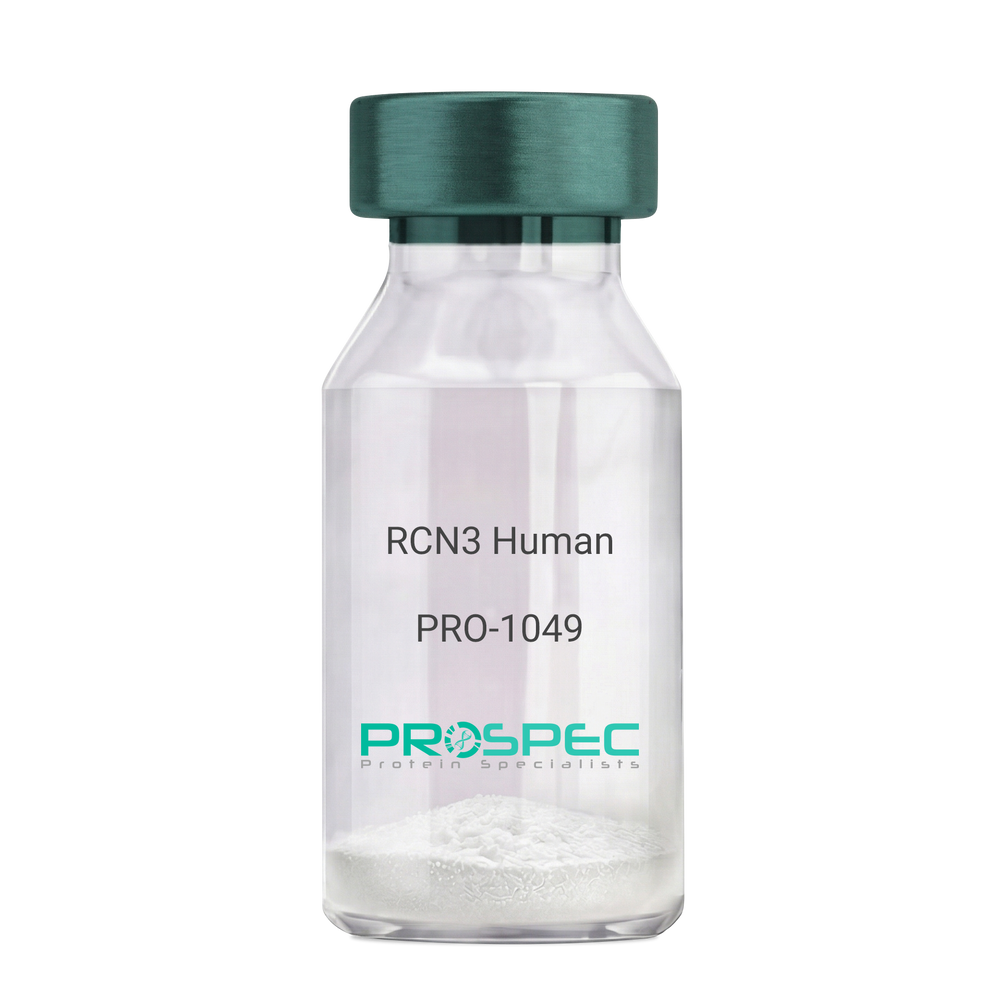
    RCN3 Human

    Description:

    Reticulocalbin 3 Human Recombinant

    Reticulocalbin-3, EF-hand calcium-binding protein RLP49, RCN3, RLP49.

    Product # :

    PRO-1049

    Price :

    Quantity :

    Shipping Method :

    Ice Icon

    Shipped with Ice Packs

    Add To Cart

    More Info

    • description
    • source
    • formulation
    • purity
    • More Info

    Description

    RCN3 Human Recombinant produced in E.Coli is a single, non-glycosylated polypeptide chain containing 333 amino acids (21-328 a.a) and having a molecular mass of 37.9kDa.RCN3 is fused to a 25 amino acid His-tag at N-terminus & purified by proprietary chromatographic techniques.

    Source

    Escherichia Coli.

    Formulation

    RCN3 protein solution (1mg/ml) containing 20mM Tris-HCl buffer (pH 8.0), 1mM DTT, 10% glycerol and 0.1M NaCl.

    Purity

    Greater than 95.0% as determined by SDS-PAGE.

    More Info

    • Introduction

      Reticulocalbin 3 (RCN3) belongs to the CREC (cab45/reticulocalbin/ ERC45/calumenin) family. RCN3 contains 5 Arg-Xaa-Xaa-Arg motifs, which function as target sequences of SPCs (subtilisin-like proprotein convertases), which is a family of serine endoproteases that proteolytically activate proproteins. The synthesis of PACE4 is induced by association and coexpression with RCN3.

    • Synonyms

      Reticulocalbin-3, EF-hand calcium-binding protein RLP49, RCN3, RLP49.

    • Physical Appearance

      Sterile Filtered colorless solution.

    • Stability

      Store at 4°C if entire vial will be used within 2-4 weeks. Store, frozen at -20°C for longer periods of time. For long term storage it is recommended to add a carrier protein (0.1% HSA or BSA).Avoid multiple freeze-thaw cycles.

    • Amino Acid Sequence

      MGSSHHHHHH SSGLVPRGSH MGSHMKPSPD AGPHGQGRVH QAAPLSDAPH DDAHGNFQYD HEAFLGREVA KEFDQLTPEE SQARLGRIVD RMDRAGDGDG WVSLAELRAW IAHTQQRHIR DSVSAAWDTY DTDRDGRVGW EELRNATYGH YAPGEEFHDV EDAETYKKML ARDERRFRVA DQDGDSMATR EELTAFLHPE EFPHMRDIVI AETLEDLDRN KDGYVQVEEY IADLYSAEPG EEEPAWVQTE RQQFRDFRDL NKDGHLDGSE VGHWVLPPAQ DQPLVEANHL LHESDTDKDG RLSKAEILGN WNMFVGSQAT NYGEDLTRHH DEL.

    ProSpec's products are furnished for LABORATORY RESEARCH USE ONLY. The product may not be used as drugs, agricultural or pesticidal products, food additives or household chemicals.

    Rcn3 Human
  • View Data Sheet

    Name :

    MORC3 Human

    Description:

    MORC Family CW-Type Zinc Finger 3 Human Recombinant

    MORC family CW-type zinc finger protein 3, Nuclear matrix protein 2, Zinc finger CW-type coiled-coil domain protein 3, MORC3, KIAA0136, NXP2, ZCWCC3.

    Product # :

    PRO-2674

    Price :

    Quantity :

    Shipping Method :

    Ice Icon

    Shipped with Ice Packs

    Add To Cart

    More Info

    • description
    • source
    • formulation
    • purity
    • More Info

    Description

    Recombinant Human MORC Family CW-Type Zinc Finger 3 produced in SF9 is a glycosylated, polypeptide chain having a calculated molecular mass of 122kDa. MORC3 is expressed with a 10xHis tag and purified by proprietary chromatographic techniques.

    Source

    Sf9 insect cells.

    Formulation

    MORC3 is supplied in 20mM Sodium phosphate, pH 7.6, 500mM NaCl and 20% glycerol.

    Purity

    Greater than 80.0% as determined by SDS-PAGE.

    More Info

    • Introduction

      MORC Family CW-Type Zinc Finger 3 (MORC3) localizes to the nuclear matrix. MORC3 takes part in the regulation of the tumor suppressor protein p53. MORC3may indicate on dermatomyositis (DM) as autoantibodies against this protein have been found in patients.

    • Synonyms

      MORC family CW-type zinc finger protein 3, Nuclear matrix protein 2, Zinc finger CW-type coiled-coil domain protein 3, MORC3, KIAA0136, NXP2, ZCWCC3.

    • Physical Appearance

      Sterile Filtered clear solution.

    • Stability

      Store at 4°C if entire vial will be used within 2-4 weeks. Store, frozen at -20°C for longer periods of time. Avoid multiple freeze-thaw cycles.

    • Immunological Functions

      1. Binds IgG-type human auto-antibodies.2. immunodot test with positive/negative samples.

    • Applications

      Western blot with patient sample.

    ProSpec's products are furnished for LABORATORY RESEARCH USE ONLY. The product may not be used as drugs, agricultural or pesticidal products, food additives or household chemicals.

    Morc3 Human
  • View Data Sheet

    Name :

    CEACAM3 Human, Sf9

    Description:

    Carcinoembryonic Antigen-Related Cell Adhesion Molecule 3 Human Recombinant, Sf9

    Carcinoembryonic Antigen-Related Cell Adhesion Molecule 3, Carcinoembryonic Antigen CGM1, CD66d Antigen , CD66D, CGM1, Carcinoembryonic Antigen Gene Family Member 1, Nonspecific Cross-Reacting Antigen, W264, W282, CEA, CEACAM3.

    Product # :

    PRO-2443

    Price :

    Quantity :

    Shipping Method :

    Ice Icon

    Shipped with Ice Packs

    Add To Cart

    More Info

    • description
    • source
    • formulation
    • purity
    • More Info

    Description

    CEACAM3 Human Recombinant produced in Sf9 Baculovirus cells is a single, glycosylated polypeptide chain containing 130 amino acids (35-155a.a.) and having a molecular mass of 14.2kDa (Molecular size on SDS-PAGE will appear at approximately 13.5-18kDa).CEACAM3 is expressed with a 6 amino acids His tag at C-Terminus and purified by proprietary chromatographic techniques.

    Source

    Sf9, Baculovirus cells.

    Formulation

    CEACAM3 protein solution (1mg/ml) contains Phosphate Buffered Saline (pH 7.4) and 10% glycerol.

    Purity

    Greater than 95.0% as determined by SDS-PAGE.

    More Info

    • Introduction

      Carcinoembryonic Antigen-Related Cell Adhesion Molecule 3, also known as CEACAM3, is a member of the immunoglobulin super family. The genes in this family encode cell adhesion proteins, which are expressed at higher levels in tumorous tissues rather than in normal tissues. CEACAM3 plays a significant part in the clearance of pathogens through the innate immune system. In addition, CEACAM3 is accountable for RAC1 stimulation in the course of pathogen phagocytosis.

    • Synonyms

      Carcinoembryonic Antigen-Related Cell Adhesion Molecule 3, Carcinoembryonic Antigen CGM1, CD66d Antigen , CD66D, CGM1, Carcinoembryonic Antigen Gene Family Member 1, Nonspecific Cross-Reacting Antigen, W264, W282, CEA, CEACAM3.

    • Physical Appearance

      Sterile Filtered colorless solution.

    • Stability

      Store at 4°C if entire vial will be used within 2-4 weeks. Store, frozen at -20°C for longer periods of time. For long term storage it is recommended to add a carrier protein (0.1% HSA or BSA). Avoid multiple freeze-thaw cycles.

    • Amino Acid Sequence

      ADPKLTIESM PLSVAEGKEV LLLVHNLPQH LFGYSWYKGE RVDGNSLIVG YVIGTQQATP GAAYSGRETI YTNASLLIQN VTQNDIGFYT LQVIKSDLVN EEATGQFHVY QENAPGLPVG AVAGHHHHHH.

    ProSpec's products are furnished for LABORATORY RESEARCH USE ONLY. The product may not be used as drugs, agricultural or pesticidal products, food additives or household chemicals.

    Ceacam3 Protein
  • View Data Sheet

    Name :

    sCD23 Human

    Description:

    Soluble CD23 Human Recombinant

    Low affinity immunoglobulin epsilon Fc receptor, Lymphocyte IgE receptor, Fc-epsilon-RII, BLAST-2, Immunoglobulin E-binding factor, CD23 antigen, FCER2, CD23, FCE2, CD23A, IGEBF, CLEC4J.

    Product # :

    PRO-1789

    Price :

    Quantity :

    Shipping Method :

    Room Temp Icon

    Shipped at Room temp

    Add To Cart

    More Info

    • description
    • source
    • formulation
    • purity
    • biological activity
    • More Info

    Description

    sCD23 Human Recombinant produced in E.Coli is a single, non-glycosylated, polypeptide chain containing 172 amino acids and having a molecular mass of 19.2kDa.The sCD23 is purified by proprietary chromatographic techniques.

    Source

    Escherichia Coli.

    Formulation

    Lyophilized from a 0.2µm filtered concentrated solution in PBS, pH 7.4.

    Purity

    Greater than 97.0% as determined by:
    (a) Analysis by RP-HPLC.
    (b) Analysis by SDS-PAGE.

    Biological Activity

    The ED50 is determined by its ability to induce TNF-alpha production by human PBMCs. 

    More Info

    • Introduction

      CD23 is a 45kDa glycoprotein, which is present on a subpopulation of freshly isolated peripheral blood and tonsil B cells and strongly expressed on EBV-transformed B lymphoblasts. The CD23 molecule is identical to the low affinity IgE receptor found on B cells. Expression of CD23 has been detected in neoplastic cells from cases of B cell chronic lymphocyctic leukaemia and some cases of centroblastic/centrocytic lymphoma.

    • Synonyms

      Low affinity immunoglobulin epsilon Fc receptor, Lymphocyte IgE receptor, Fc-epsilon-RII, BLAST-2, Immunoglobulin E-binding factor, CD23 antigen, FCER2, CD23, FCE2, CD23A, IGEBF, CLEC4J.

    • Physical Appearance

      Sterile Filtered White lyophilized (freeze-dried) powder.

    • Stability

      Lyophilized sCD23 although stable at room temperature for 3 weeks, should be stored desiccated below -18°C. Upon reconstitution sCD23 should be stored at 4°C between 2-7 days and for future use below -18°C. For long term storage it is recommended to add a carrier protein (0.1% HSA or BSA). Please prevent freeze-thaw cycles.

    • Solubility

      It is recommended to reconstitute the lyophilized sCD23 in sterile 18M-cm H2O not less than 100µg/ml, which can then be further diluted to other aqueous solutions.

    • Amino Acid Sequence

      MELQVSSGFV CNTCPEKWIN FQRKCYYFGK GTKQWVHARY ACDDMEGQLV SIHSPEEQDF LTKHASHTGS WIGLRNLDLK GEFIWVDGSH VDYSNWAPGE PTSRSQGEDC VMMRGSGRWN DAFCDRKLGA WVCDRLATCT PPASEGSAES MGPDSRPDPD GRLPTPSAPL HS

    ProSpec's products are furnished for LABORATORY RESEARCH USE ONLY. The product may not be used as drugs, agricultural or pesticidal products, food additives or household chemicals.

    Scd23 Human
  • View Data Sheet

    Name :

    ERLIN2 Human

    Description:

    ER Lipid Raft Associated 2 Protein Human Recombinant

    Erlin-2, Endoplasmic reticulum lipid raft-associated protein 2, Stomatin-prohibitin-flotillin-HflC/K domain-containing protein 2, SPFH domain-containing protein 2,ERLIN2, C8orf2, SPFH2, UNQ2441, PRO5003, PRO9924, NET32, SPG18.

    Product # :

    PRO-1266

    Price :

    Quantity :

    Shipping Method :

    Ice Icon

    Shipped with Ice Packs

    Add To Cart

    More Info

    • description
    • source
    • formulation
    • purity
    • More Info

    Description

    ERLIN2 Human Recombinant produced in E.Coli is a single, non-glycosylated polypeptide chain containing 338 amino acids (25-339 a.a) and having a molecular mass of 37.8 kDa.ERLIN2 is fused to a 23 amino acid His-tag at N-terminus & purified by proprietary chromatographic techniques.

    Source

    Escherichia Coli.

    Formulation

    ERLIN2 protein solution (1mg/ml) containing 20mM Tris-HCl buffer (pH 8.0), 2M Urea and 20% glycerol.

    Purity

    Greater than 95.0% as determined by SDS-PAGE.

    More Info

    • Introduction

      ER Lipid Raft Associated 2 (ERLIN2) is a domain-containing protein which is a member of the band 7/mec-2 family. ERLIN2 is a ubiquitously expressed 339 amino acid protein.ERLIN2 which is localized to the lipid raft-like domains in the membrane of the endoplasmic reticulum (ER), plays a key role in the ER-associated degradation (ERAD) pathway that eliminates metabolically regulated and abnormal proteins from the ER.

    • Synonyms

      Erlin-2, Endoplasmic reticulum lipid raft-associated protein 2, Stomatin-prohibitin-flotillin-HflC/K domain-containing protein 2, SPFH domain-containing protein 2,ERLIN2, C8orf2, SPFH2, UNQ2441, PRO5003, PRO9924, NET32, SPG18.

    • Physical Appearance

      Sterile Filtered clear solution.

    • Stability

      Store at 4°C if entire vial will be used within 2-4 weeks. Store, frozen at -20°C for longer periods of time. For long term storage it is recommended to add a carrier protein (0.1% HSA or BSA).Avoid multiple freeze-thaw cycles.

    • Amino Acid Sequence

      MGSSHHHHHH SSGLVPRGSH MGSKIEEGHI GVYYRGGALL TSTSGPGFHL MLPFITSYKS VQTTLQTDEV KNVPCGTSGG VMIYFDRIEV VNFLVPNAVY DIVKNYTADY DKALIFNKIH HELNQFCSVH TLQEVYIELF DQIDENLKLA LQQDLTSMAP GLVIQAVRVT KPNIPEAIRR NYELMESEKT KLLIAAQKQK VVEKEAETER KKALIEAEKV AQVAEITYGQ KVMEKETEKK ISEIEDAAFL AREKAKADAE CYTAMKIAEA NKLKLTPEYL QLMKYKAIAS NSKIYFGKDI PNMFMDSAGS VSKQFEGLAD KLSFGLEDEP LETATKEN.

    ProSpec's products are furnished for LABORATORY RESEARCH USE ONLY. The product may not be used as drugs, agricultural or pesticidal products, food additives or household chemicals.

    Erlin2 Human
  • View Data Sheet

    Name :

    PA2G4 Human

    Description:

    Proliferation-associated protein 2G4 Human Recombinant

    Proliferation-associated protein 2G4, Cell cycle protein p38-2G4 homolog, hG4-1, ErbB3-binding protein 1, PA2G4, EBP1, p38-2G4.

    Product # :

    PRO-782

    Price :

    Quantity :

    Shipping Method :

    Ice Icon

    Shipped with Ice Packs

    Add To Cart

    More Info

    • description
    • source
    • formulation
    • purity
    • More Info

    Description

    PA2G4 produced in E.Coli is a single, non-glycosylated polypeptide chain containing 402 amino acids (1-394 a.a.) and having a molecular mass of 44.8kDa. PA2G4 is fused to 8 amino acids His Tag at C-terminus and purified by proprietary chromatographic techniques.

    Source

    Escherichia Coli.

    Formulation

    The PA2G4 protein solution contains 20mM Tris-HCl buffer (pH8.0) and 10% glycerol.

    Purity

    Greater than 95.0% as determined by SDS-PAGE.

    More Info

    • Introduction

      PA2G4 belongs to the peptidase M24C family and functions as an RNA-binding protein involved in cellular proliferation and differentiation processes. PA2G4 is a component of pre-ribosomal ribonucleoprotein complexes, participating in ribosome assembly and regulating the later steps of rRNA processing. Also, PA2G4 interacts with ErbB-3 and may function as a modulator of the ErbB-3 mediated signal transduction pathway by regulating the effects of Neuregulin-1. Furthermore, PA2G4 is a transcriptional co-repressor of androgen receptor-regulated genes and other cell cycle regulatory genes through its interactions with histone deacetylases. PA2G4 is implicated in growth inhibition and the induction of differentiation of human cancer cells. In addition, PA2G4 mediates cap-independent translation of specific viral IRESs (internal ribosomal entry site). PA2G4 associates with 28S, 18S and 5.8S mature rRNAs, several rRNA precursors and probably U3 small nucleolar RNA.

    • Synonyms

      Proliferation-associated protein 2G4, Cell cycle protein p38-2G4 homolog, hG4-1, ErbB3-binding protein 1, PA2G4, EBP1, p38-2G4.

    • Physical Appearance

      Sterile filtered colorless solution.

    • Stability

      Store at 4°C if entire vial will be used within 2-4 weeks. Store, frozen at -20°C for longer periods of time. For long term storage it is recommended to add a carrier protein (0.1% HSA or BSA). Avoid multiple freeze-thaw cycles.

    • Amino Acid Sequence

      MSGEDEQQEQ TIAEDLVVTK YKMGGDIANR VLRSLVEASS SGVSVLSLCE KGDAMIMEET GKIFKKEKEM KKGIAFPTSI SVNNCVCHFS PLKSDQDYIL KEGDLVKIDL GVHVDGFIAN VAHTFVVDVA QGTQVTGRKA DVIKAAHLCA EAALRLVKPG NQNTQVTEAW NKVAHSFNCT PIEGMLSHQL KQHVIDGEKT IIQNPTDQQK KDHEKAEFEV HEVYAVDVLV SSGEGKAKDA GQRTTIYKRD PSKQYGLKMK TSRAFFSEVE RRFDAMPFTL RAFEDEKKAR MGVVECAKHE LLQPFNVLYE KEGEFVAQFK FTVLLMPNGP MRITSGPFEP DLYKSEMEVQ DAELKALLQS SASRKTQKKK KKKASKTAEN ATSGETLEEN EAGDLEHHHH HH.

    ProSpec's products are furnished for LABORATORY RESEARCH USE ONLY. The product may not be used as drugs, agricultural or pesticidal products, food additives or household chemicals.

    Pa2G4 Human
  • View Data Sheet

    Name :

    CMC1 Human

    Description:

    COX Assembly Mitochondrial Protein 1 Human Recombinant

    C3orf68, Cmc1p, COX assembly mitochondrial protein homolog.

    Product # :

    PRO-1651

    Price :

    Quantity :

    Shipping Method :

    Ice Icon

    Shipped with Ice Packs

    Add To Cart

    More Info

    • description
    • source
    • formulation
    • purity
    • More Info

    Description

    CMC1 Human Recombinant produced in E.Coli is a single, non-glycosylated polypeptide chain containing 129 amino acids (1-106 a.a.) and having a molecular mass of 14.9kDa.CMC1 is fused to a 23 amino acid His-tag at N-terminus & purified by proprietary chromatographic techniques.

    Source

    Escherichia Coli.

    Formulation

    CMC1 protein solution (0.5mg/ml) contains 20mM Tris-HCl buffer, (pH 8.0), 0.4M UREA and 10% glycerol.

    Purity

    Greater than 85.0% as determined by SDS-PAGE.

    More Info

    • Introduction

      COX Assembly Mitochondrial Protein 1(CMC1) is a member of the CMC family. CMC1 is required for mitochondrial cytochrome c oxidase (COX) assembly and respiration. CMC1 attaches copper and might be involved in copper trafficking and distribution to COX and SOD1.

    • Synonyms

      C3orf68, Cmc1p, COX assembly mitochondrial protein homolog.

    • Physical Appearance

      Sterile Filtered clear solution.

    • Stability

      Store at 4°C if entire vial will be used within 2-4 weeks. Store, frozen at -20°C for longer periods of time. For long term storage it is recommended to add a carrier protein (0.1% HSA or BSA).Avoid multiple freeze-thaw cycles.

    • Amino Acid Sequence

      MGSSHHHHHH SSGLVPRGSH MGSMALDPAD QHLRHVEKDV LIPKIMREKA KERCSEQVQD FTKCCKNSGV LMVVKCRKEN SALKECLTAY YNDPAFYEEC KMEYLKEREE FRKTGIPTKK RLQKLPTSM.

    ProSpec's products are furnished for LABORATORY RESEARCH USE ONLY. The product may not be used as drugs, agricultural or pesticidal products, food additives or household chemicals.

    Cmc1 Human
  • View Data Sheet

    Name :

    NUDC Human

    Description:

    NudC Nuclear Distribution Protein Human Recombinant

    Nuclear Distribution C Dynein Complex Regulator, NudC Nuclear Distribution Protein, Nuclear Distribution Protein C Homolog, Nuclear Distribution Gene C Homolog, Nuclear Distribution C Homolog, Nuclear Migration Protein NudC, NPD011, HNUDC, MNUDC, NUDC.

    Product # :

    PRO-2347

    Price :

    Quantity :

    Shipping Method :

    Ice Icon

    Shipped with Ice Packs

    Add To Cart

    More Info

    • description
    • source
    • formulation
    • purity
    • More Info

    Description

    NUDC Human Recombinant produced in E.Coli is a single, non-glycosylated polypeptide chain containing 354 amino acids (1-331 a.a) and having a molecular mass of 40.6kDa. NUDC is fused to a 23 amino acid His-tag at N-terminus & purified by proprietary chromatographic techniques.

    Source

    Escherichia Coli.

    Formulation

    NUDC protein solution (1mg/ml) containing 20mM Tris-HCl (pH 8.0), 10% glycerol and 1mM DTT.

    Purity

    Greater than 90.0% as determined by SDS-PAGE.

    More Info

    • Introduction

      Nuclear distribution gene C homolog (NUDC) is a nuclear distribution protein. The NUDC protein has a key role in mitosis and cytokinesis. NUDC is involved in spindle formation during mitosis and in microtubule organization during cytokinesis. NUDC is required for correct formation of mitotic spindles and chromosome separation during mitosis, as well as cell proliferation. NUDC also has a role in neurogenesis and neuronal migration.

    • Synonyms

      Nuclear Distribution C Dynein Complex Regulator, NudC Nuclear Distribution Protein, Nuclear Distribution Protein C Homolog, Nuclear Distribution Gene C Homolog, Nuclear Distribution C Homolog, Nuclear Migration Protein NudC, NPD011, HNUDC, MNUDC, NUDC.

    • Physical Appearance

      Sterile Filtered colorless solution.

    • Stability

      Store at 4°C if entire vial will be used within 2-4 weeks. Store, frozen at -20°C for longer periods of time. For long term storage it is recommended to add a carrier protein (0.1% HSA or BSA).Avoid multiple freeze-thaw cycles.

    • Amino Acid Sequence

      MGSSHHHHHH SSGLVPRGSH MGSMGGEQEE ERFDGMLLAM AQQHEGGVQE LVNTFFSFLR RKTDFFIGGE EGMAEKLITQ TFSHHNQLAQ KTRREKRARQ EAERREKAER AARLAKEAKS ETSGPQIKEL TDEEAERLQL EIDQKKDAEN HEAQLKNGSL DSPGKQDTEE DEEEDEKDKG KLKPNLGNGA DLPNYRWTQT LSELDLAVPF CVNFRLKGKD MVVDIQRRHL RVGLKGQPAI IDGELYNEVK VEESSWLIED GKVVTVHLEK INKMEWWSRL VSSDPEINTK KINPENSKLS DLDSETRSMV EKMMYDQRQK SMGLPTSDEQ KKQEILKKFM DQHPEMDFSK AKFN.

    ProSpec's products are furnished for LABORATORY RESEARCH USE ONLY. The product may not be used as drugs, agricultural or pesticidal products, food additives or household chemicals.

    Nudc Human
  • View Data Sheet

    Name :

    EXOSC3 Human

    Description:

    Exosome Component 3 Human Recombinant

    bA3J10.7, CGI-102, hRrp-40, p10, PCH1B, RP11-3J10.8, RRP40, Rrp40p, Exosome complex component RRP40, Exosome component 3, Ribosomal RNA-processing protein 40, EXOSC3.

    Product # :

    PRO-1981

    Price :

    Quantity :

    Shipping Method :

    Ice Icon

    Shipped with Ice Packs

    Add To Cart

    More Info

    • description
    • source
    • formulation
    • purity
    • More Info

    Description

    EXOSC3 Human Recombinant produced in E.Coli is a single, non-glycosylated polypeptide chain containing 298 amino acids (1-275 a.a) and having a molecular mass of 32.0kDa. EXOSC3 is fused to a 23 amino acid His-tag at N-terminus & purified by proprietary chromatographic techniques.

    Source

    Escherichia Coli.

    Formulation

    EXOSC3 protein solution (0.5mg/ml) containing 20mM Tris-HCl buffer (pH 7.5), 0.15M NaCl, 30% glycerol and 1mM DTT.

    Purity

    Greater than 85.0% as determined by SDS-PAGE.

    More Info

    • Introduction

      Exosome Component 3 (EXOSC3) is a non-catalytic component of the human exosome, a complex with 3'-5' exoribonuclease activity. EXOSC3 takes part in various RNA processing and degradation activities including degradation of histone mRNA. Linked pseudogenes of EXOSC3 are located on chromosome 19 and 21.

    • Synonyms

      bA3J10.7, CGI-102, hRrp-40, p10, PCH1B, RP11-3J10.8, RRP40, Rrp40p, Exosome complex component RRP40, Exosome component 3, Ribosomal RNA-processing protein 40, EXOSC3.

    • Physical Appearance

      Sterile Filtered colorless solution.

    • Stability

      Store at 4°C if entire vial will be used within 2-4 weeks. Store, frozen at -20°C for longer periods of time. For long term storage it is recommended to add a carrier protein (0.1% HSA or BSA).Avoid multiple freeze-thaw cycles.

    • Amino Acid Sequence

      MGSSHHHHHH SSGLVPRGSH MGSMAEPASV AAESLAGSRA RAARTVLGQV VLPGEELLLP EQEDAEGPGG AVERPLSLNA RACSRVRVVC GPGLRRCGDR LLVTKCGRLR HKEPGSGSGG GVYWVDSQQK RYVPVKGDHV IGIVTAKSGD IFKVDVGGSE PASLSYLSFE GATKRNRPNV QVGDLIYGQF VVANKDMEPE MVCIDSCGRA NGMGVIGQDG LLFKVTLGLI RKLLAPDCEI IQEVGKLYPL EIVFGMNGRI WVKAKTIQQT LILANILEAC EHMTSDQRKQ IFSRLAES.

    ProSpec's products are furnished for LABORATORY RESEARCH USE ONLY. The product may not be used as drugs, agricultural or pesticidal products, food additives or household chemicals.

    Exosc3 Human
  • View Data Sheet

    Name :

    EGF (Leu 21) Human

    Description:

    Epidermal Growth Factor (Leu-21) Human Recombinant

    Urogastrone, URG, EGF.

    Product # :

    CYT-466

    Price :

    Quantity :

    Shipping Method :

    Room Temp Icon

    Shipped at Room temp

    Add To Cart

    More Info

    • description
    • source
    • formulation
    • purity
    • biological activity
    • More Info

    Description

    EGF 21-Leu Human Recombinant produced in E.Coli is a single, non-glycosylated, polypeptide chain containing 53 amino acids and having a molecular mass of 6205 Dalton.The EGF 21-Leu is purified by proprietary chromatographic techniques.

    Source

    Escherichia Coli.

    Formulation

    The protein was lyophilized from a concentrated (1mg/ml) solution with no additives.

    Purity

    Greater than 98.0% as determined by(a) Analysis by RP-HPLC.
    (b) Analysis by SDS-PAGE.

    Biological Activity

    The ED50, calculated by the dose-dependant proliferation of MDCK cells is < 10ng/ml concentration corresponding to a Specific Activity of 100,000IU/mg.

    More Info

    • Introduction

      Epidermal growth factor has a profound effect on the differentiation of specific cells in vivo and is a potent mitogenic factor for a variety of cultured cells of both ectodermal and mesodermal origin. The EGF precursor is believed to exist as a membrane-bound molecule which is proteolytically cleaved to generate the 53-amino acid peptide hormone that stimulates cells to divide. EGF stimulates the growth of various epidermal and epithelial tissues in vivo and in vitro and of some fibroblasts in cell culture.

    • Synonyms

      Urogastrone, URG, EGF.

    • Physical Appearance

      Sterile Filtered White lyophilized (freeze-dried) powder.

    • Stability

      Lyophilized Epidermal Growth Factor 21 Leu although stable at room temperature for 3 weeks, should be stored desiccated below -18°C. Upon reconstitution EGF 21-Leu should be stored at 4°C between 2-7 days and for future use below -18°C.For long term storage it is recommended to add a carrier protein (0.1% HSA or BSA).Please prevent freeze-thaw cycles.

    • Solubility

      It is recommended to reconstitute the lyophilized Epidermal Growth Factor 21-Leu in sterile 18MΩ-cm H2O not less than 100µg/ml, which can then be further diluted to other aqueous solutions.

    • Amino Acid Sequence

      The sequence of the first five N-terminal amino acids was determined and was found to be Asn-Ser-Asp-Ser-Glu.

    • Background

      Deciphering the Potential of Epidermal Growth Factor (Leu-21) Human Recombinant: Unveiling Novel Insights and Therapeutic Implications

      Abstract:

      This concise research paper delves into the enigmatic landscape of Epidermal Growth Factor (Leu-21) Human Recombinant, illuminating its intricate molecular characteristics, signaling pathways, and promising therapeutic avenues. Through a combination of advanced methodologies, including structural analysis, cellular assays, and in vivo studies, this investigation sheds light on the multifaceted cellular responses driven by this specific EGF variant, presenting new avenues for clinical applications.

      Introduction:

      Central to cellular processes, Epidermal Growth Factor (EGF) stands as a pivotal cytokine. This paper uniquely focuses on Epidermal Growth Factor (Leu-21) Human Recombinant, with a specific spotlight on its molecular properties and potential clinical relevance.

      Molecular Insights and Signaling Dynamics:

      The crux of its functionality lies in the interaction between Epidermal Growth Factor (Leu-21) and its cognate receptor, initiating a cascade of intracellular events. Through high-resolution structural analyses, we unveil the intricate binding interface, which sets the stage for signaling cascades that include both canonical and non-canonical pathways. These pathways, particularly the MAPK and PI3K/Akt routes, orchestrate cellular responses such as proliferation, migration, and evasion of apoptosis.

      Experimental Profiling and Cellular Responses:

      In decoding the cellular ramifications, a repertoire of in vitro assays has been meticulously employed. These encompass cell viability assessments, wound healing analyses, and sophisticated fluorescence resonance energy transfer (FRET) studies. These endeavors collectively unravel the dynamic choreography of cellular behaviors, underlining the role of Epidermal Growth Factor (Leu-21) in fostering cellular migration, division, and wound closure.

      In Vivo Implications and Therapeutic Prospects:

      Translating these in vitro insights to clinical potential, in vivo investigations present a compelling narrative. Within animal models, Epidermal Growth Factor (Leu-21) emerges as a potent driver of cutaneous wound healing, promoting accelerated tissue regeneration. Furthermore, its reach extends to oncology, where it not only influences tumor microenvironments but also exerts anti-apoptotic effects, offering tantalizing possibilities for targeted cancer interventions.

      Future Challenges and Prospects:

      While these discoveries hold immense promise, challenges linger. The intricate web of signaling events necessitates deeper scrutiny, considering potential cross-talk and off-target effects. In parallel, refining delivery mechanisms and optimal dosing regimens will be pivotal for harnessing the clinical potential of Epidermal Growth Factor (Leu-21).

      Conclusion:

      In a symphony of complex molecular insights and tangible therapeutic potential, Epidermal Growth Factor (Leu-21) Human Recombinant emerges as a captivating enigma. Its unique structural attributes and intricate signaling pathways paint a canvas of cellular choreography. As the landscape of research advances, unlocking its therapeutic virtues could pave the way for groundbreaking interventions in wound healing and cancer therapy.

      What is the molecular weight/Mw of EGF Protein?
      EGF Protein has a total Mw of 6.2kDa.

      What is the source or expression system of EGF Protein?
      Escherichia Coli.

      What is the Purity of EGF Protein?
      EGF Protein is >98% pure as determined by SDS-PAGE.

      What is the Biological Activity of EGF Protein?
      The ED50, calculated by the dose-dependant proliferation of MDCK cells is < 10ng/ml concentration corresponding to a Specific Activity of 100,000IU/mg.

      What is the amino acid sequence of EGF Protein?
      EGF Protein is composed from 53 amino acids.

      What applications can EGF Protein be used in?
      EGF Protein can probably be used in western blot, ELISA and Lateral Flow.

      What is the endotoxin level for EGF Protein?
      The endotoxin level is minimal, EGF Protein was purified using conventional chromatography techniques.

    ProSpec's products are furnished for LABORATORY RESEARCH USE ONLY. The product may not be used as drugs, agricultural or pesticidal products, food additives or household chemicals.

    Egf 21 Leu Human
  • View Data Sheet

    Name :

    CSDC2 Human

    Description:

    Cold Shock Domain Containing C2 Human Recombinant

    Cold shock domain-containing protein C2, RNA-binding protein PIPPin, PIPPIN, DJ347H13.2.

    Product # :

    PRO-1439

    Price :

    Quantity :

    Shipping Method :

    Ice Icon

    Shipped with Ice Packs

    Add To Cart

    More Info

    • description
    • source
    • formulation
    • purity
    • More Info

    Description

    CSDC2 Human Recombinant produced in E.coli is a single, non-glycosylated polypeptide chain containing 176 amino acids (1-153) and having a molecular mass of 19.2kDa. CSDC2 is fused to a 23 amino acid His-tag at N-terminus.

    Source

    Escherichia Coli.

    Formulation

    The CSDC2 solution (0.5mg/ml) contains 20mM Tris-HCl buffer (pH8.0), 10% glycerol and 0.1M NaCl.

    Purity

    Greater than 90.0% as determined by SDS-PAGE.

    More Info

    • Introduction

      Cold shock domain-containing protein C2 (CSDC2) is RNA-binding factor that binds specifically to the very 3'-UTR ends of both histone H1 and H3. 3 mRNAs encompass the polyadenylation signal. The CSDPs (cold shock domain containing proteins) are one group of the evolutionarily conserved nucleic acid-binding proteins extensively distributed in bacteria, plants, animals, and involved in a variety of cellular processes, including adaptation to low temperature, cellular growth, nutrient stress and stationary phase. CSDC2 has a central role in the negative regulation of histone variant synthesis in the developing brain.

    • Synonyms

      Cold shock domain-containing protein C2, RNA-binding protein PIPPin, PIPPIN, DJ347H13.2.

    • Physical Appearance

      Sterile Filtered colorless solution.

    • Stability

      Store at 4°C if entire vial will be used within 2-4 weeks. Store, frozen at -20°C for longer periods of time. For long term storage it is recommended to add a carrier protein (0.1% HSA or BSA).Avoid multiple freeze-thaw cycles.

    • Amino Acid Sequence

      MGSSHHHHHH SSGLVPRGSH MGSMTSESTS PPVVPPLHSP KSPVWPTFPF HREGSRVWER GGVPPRDLPS PLPTKRTRTY SATARASAGP VFKGVCKQFS RSQGHGFITP ENGSEDIFVH VSDIEGEYVP VEGDEVTYKM CPIPPKNQKF QAVEVVLTQL APHTPHETWS GQVVGS.

    ProSpec's products are furnished for LABORATORY RESEARCH USE ONLY. The product may not be used as drugs, agricultural or pesticidal products, food additives or household chemicals.

    Csdc2 Human
  • View Data Sheet

    Name :

    DCN Mouse

    Description:

    Decorin Mouse Recombinant

    Decorin, Bone proteoglycan II, PG-S2, PG40, DCN.

    Product # :

    PRO-2234

    Price :

    Quantity :

    Shipping Method :

    Ice Icon

    Shipped with Ice Packs

    Add To Cart

    More Info

    • description
    • source
    • formulation
    • purity
    • More Info

    Description

    DCN produced in Sf9 Baculovirus cells is a single, glycosylated polypeptide chain (17-354 a.a.) and fused to a 6 aa His Tag at C-terminus containing a total of 344 amino acids and having a molecular mass of 38.8kDa.DCN shows multiple bands between 40-57kDa on SDS-PAGE, reducing conditions and purified by proprietary chromatographic techniques.

    Source

    Sf9, Baculovirus cells.

    Formulation

    DCN protein solution (0.25mg/ml) contains Phosphate buffered saline (pH7.4), 30% glycerol and 0.1mM PMSF.

    Purity

    Greater than 90.0% as determined by SDS-PAGE.

    More Info

    • Introduction

      Decorin (DCN) is a small cellular or pericellular matrix proteoglycan which is closely related in structure to biglycan protein. Decorin is a secreted protein which binds to collagen and fibronectin in extracellular matrix. Decorin appears in different glycoforms, substituted with chondroitin sulfate or dermatan sulfate consistent with the original tissue. DCN contains one attached glycosaminoglycan chain. Decorin influences the rate of fibril formation. Decorin is capable of suppressing the growth of various tumor cell lines. DCN gene defects cause corneal dystrophy. The DCN gene is a candidate gene for Marfan syndrome.

    • Synonyms

      Decorin, Bone proteoglycan II, PG-S2, PG40, DCN.

    • Physical Appearance

      Sterile filtered colorless solution.

    • Stability

      Store at 4°C if entire vial will be used within 2-4 weeks. Store, frozen at -20°C for longer periods of time. For long term storage it is recommended to add a carrier protein (0.1% HSA or BSA).Avoid multiple freeze-thaw cycles.

    • Amino Acid Sequence

      GPFEQRGLFD FMLEDEASGI IPYDPDNPLI SMCPYRCQCH LRVVQCSDLG LDKVPWDFPP DTTLLDLQNN KITEIKEGAF KNLKDLHTLI LVNNKISKIS PEAFKPLVKL ERLYLSKNQL KELPEKMPRT LQELRVHENE ITKLRKSDFN GLNNVLVIEL GGNPLKNSGI ENGAFQGLKS LSYIRISDTN ITAIPQGLPT SLTEVHLDGN KITKVDAPSL KGLINLSKLG LSFNSITVME NGSLANVPHL RELHLDNNKL LRVPAGLAQH KYIQVVYLHN NNISAVGQND FCRAGHPSRK ASYSAVSLYG NPVRYWEIFP NTFRCVYVRS AIQLGNYKHH HHHH

    ProSpec's products are furnished for LABORATORY RESEARCH USE ONLY. The product may not be used as drugs, agricultural or pesticidal products, food additives or household chemicals.

    Dcn Mouse
  • View Data Sheet

    Name :

    BCAM Human

    Description:

    Basal Cell Adhesion Molecule (CD239) Human Recombinant

    Basal cell adhesion molecule isoform 1, BCAM, AU, CD239, LU, MSK19, Auberger B antigen, B-CAM cell surface glycoprotein, F8/G253 antigen, Lutheran antigen, Lutheran blood group glycoprotein, CD_antigen: CD239, LU, MSK19.

    Product # :

    PRO-2429

    Price :

    Quantity :

    Shipping Method :

    Ice Icon

    Shipped with Ice Packs

    Add To Cart

    More Info

    • description
    • source
    • formulation
    • purity
    • More Info

    Description

    BCAM produced in Sf9 Baculovirus cells is a single, glycosylated polypeptide chain containing 755 amino acids (32-547a.a.) and having a molecular mass of 83.2kDa. (Molecular size on SDS-PAGE will appear at approximately 70-100kDa). BCAM is expressed with a 239 amino acid hIgG-His tag at C-Terminus and purified by proprietary chromatographic techniques.

    Source

    Sf9, Baculovirus cells.

    Formulation

    BCAM protein solution (0.5mg/ml) containing Phosphate Buffered Saline (pH 7.4), and 10% glycerol.

    Purity

    Greater than 90% as determined by SDS-PAGE.

    More Info

    • Introduction

      Basal Cell Adhesion Molecule (BCAM) which is a product of alternate splicing of the Lutheran blood group molecule is a part of the immunoglobulin superfamily. BCAM contains five extracellular immunoglobulin domains, a single transmembrane domain, and a short C-terminal cytoplasmic tail. BCAM protein is upregulated following malignant transformation of some cell types in vivo and in vitro. Furthermore, BCAM interacts with integrin in sickle red cells, and participates in vasoocclusive episodes.

    • Synonyms

      Basal cell adhesion molecule isoform 1, BCAM, AU, CD239, LU, MSK19, Auberger B antigen, B-CAM cell surface glycoprotein, F8/G253 antigen, Lutheran antigen, Lutheran blood group glycoprotein, CD_antigen: CD239, LU, MSK19.

    • Physical Appearance

      Sterile Filtered colorless solution.

    • Stability

      Store at 4°C if entire vial will be used within 2-4 weeks. Store, frozen at -20°C for longer periods of time. For long term storage it is recommended to add a carrier protein (0.1% HSA or BSA).Avoid multiple freeze-thaw cycles.

    • Amino Acid Sequence

      EVRLSVPPLV EVMRGKSVIL DCTPTGTHDH YMLEWFLTDR SGARPRLASA EMQGSELQVT MHDTRGRSPP YQLDSQGRLV LAEAQVGDER DYVCVVRAGA AGTAEATARL NVFAKPEATE VSPNKGTLSV MEDSAQEIAT CNSRNGNPAP KITWYRNGQR LEVPVEMNPE GYMTSRTVRE ASGLLSLTST LYLRLRKDDR DASFHCAAHY SLPEGRHGRL DSPTFHLTLH YPTEHVQFWV GSPSTPAGWV REGDTVQLLC RGDGSPSPEY TLFRLQDEQE EVLNVNLEGN LTLEGVTRGQ SGTYGCRVED YDAADDVQLS KTLELRVAYL DPLELSEGKV LSLPLNSSAV VNCSVHGLPT PALRWTKDST PLGDGPMLSL SSITFDSNGT YVCEASLPTV PVLSRTQNFT LLVQGSPELK TAEIEPKADG SWREGDEVTL ICSARGHPDP KLSWSQLGGS PAEPIPGRQG WVSSSLTLKV TSALSRDGIS CEASNPHGNK RHVFHFGTVS PQTSQAVEPK SCDKTHTCPP CPAPELLGGP SVFLFPPKPK DTLMISRTPE VTCVVVDVSH EDPEVKFNWY VDGVEVHNAK TKPREEQYNS TYRVVSVLTV LHQDWLNGKE YKCKVSNKAL PAPIEKTISK AKGQPREPQV YTLPPSRDEL TKNQVSLTCL VKGFYPSDIA VEWESNGQPE NNYKTTPPVL DSDGSFFLYS KLTVDKSRWQ QGNVFSCSVM HEALHNHYTQ KSLSLSPGKH HHHHH.

    ProSpec's products are furnished for LABORATORY RESEARCH USE ONLY. The product may not be used as drugs, agricultural or pesticidal products, food additives or household chemicals.

    Bcam Human
  • 1
  • …
  • 3
  • 4
  • 5
  • 6
  • 7
  • …
  • 42
Your browser does not support the video tag.

Products

  • Cytokines
  • Growth Factors
  • Chemokines
  • CD Antigens
  • Neurotrophins
  • Hormones
  • Enzymes
  • Viral Antigens
  • Recombinant Proteins
  • Natural Proteins
  • Monoclonal Antibodies
  • Polyclonal Antibodies
  • Thermal Packaging

About

  • Company
  • Founder
  • Contribution
  • Contact Us
  • My Account

Ordering

  • Ordering Method
  • Ordering - Credit Card
  • Ordering PO
  • Shipping Fees
  • FAQ's

Legal

  • Terms & Conditions
  • Privacy
  • Site Map
  • info@prospecbio.com
  • Facebook
  • Instagram
  • Linkedin Profile

© 2026 ProSpec-Tany TechnoGene Ltd. All Rights Reserved.

  • Choosing a selection results in a full page refresh.
  • Opens in a new window.