Skip to content

High-quality research proteins.

  • 1-800-805-6531

  • Mon - Sat 8.00-18.00, Sun - Closed

  • info@prospecbio.com

  • PO Box 6591 East Brunswick NJ 08816

  • Products
    • Cytokines
    • Growth factors
    • Chemokines
    • Cd antigens
    • Neurotrophins
    • Hormones
    • Enzymes
    • Viral antigens
    • Recombinant proteins
    • Natural proteins
    • Monoclonal antibodies
    • Polyclonal antibodies
    • Thermal Packaging
  • About
    • Company
    • Founder
    • Contribution
  • Customers
    • Eastern Asia
    • Eastern Europe
    • North America
    • South America
    • South East Asia
    • Southern Asia
    • Western Europe
  • Ordering
    • Ordering Method
    • Ordering - Credit Card
    • Ordering - PO
    • Shipping Fees
    • FAQs
  • Services
    • DNA Cloning
    • Protein Expression
    • Monoclonal Antibody
    • Fermentation
    • Technology License
  • Contact us
Log in

Country/region

  • USD $ | Albania
  • USD $ | Andorra
  • USD $ | Argentina
  • USD $ | Armenia
  • USD $ | Australia
  • USD $ | Austria
  • USD $ | Azerbaijan
  • USD $ | Belarus
  • USD $ | Belgium
  • USD $ | Bolivia
  • USD $ | Brazil
  • USD $ | Bulgaria
  • USD $ | Cambodia
  • USD $ | Canada
  • USD $ | Chile
  • USD $ | China
  • USD $ | Colombia
  • USD $ | Costa Rica
  • USD $ | Croatia
  • USD $ | Cyprus
  • USD $ | Czechia
  • USD $ | Denmark
  • USD $ | Estonia
  • USD $ | Finland
  • USD $ | France
  • USD $ | Georgia
  • USD $ | Germany
  • USD $ | Greece
  • USD $ | Hong Kong SAR
  • USD $ | Hungary
  • USD $ | Iceland
  • USD $ | India
  • USD $ | Ireland
  • USD $ | Israel
  • USD $ | Italy
  • USD $ | Japan
  • USD $ | Kazakhstan
  • USD $ | Latvia
  • USD $ | Liechtenstein
  • USD $ | Lithuania
  • USD $ | Madagascar
  • USD $ | Malta
  • USD $ | Mexico
  • USD $ | Moldova
  • USD $ | Monaco
  • USD $ | Netherlands
  • USD $ | New Zealand
  • USD $ | North Macedonia
  • USD $ | Norway
  • USD $ | Panama
  • USD $ | Paraguay
  • USD $ | Peru
  • USD $ | Philippines
  • USD $ | Poland
  • USD $ | Portugal
  • USD $ | Romania
  • USD $ | Singapore
  • USD $ | Slovakia
  • USD $ | Slovenia
  • USD $ | South Africa
  • USD $ | South Korea
  • USD $ | Spain
  • USD $ | Sri Lanka
  • USD $ | Sweden
  • USD $ | Switzerland
  • USD $ | Taiwan
  • USD $ | Thailand
  • USD $ | Türkiye
  • USD $ | Ukraine
  • USD $ | United Kingdom
  • USD $ | United States
  • USD $ | Uruguay
  • USD $ | Vatican City
  • USD $ | Venezuela
  • USD $ | Vietnam
  • Facebook
  • Instagram
logoProSpec - Recombinant Protein Manufacturer for academic and R&D industry
Become a distributor
Account Log in
Wishlist
Cart Cart(0)
  • Products
    +
    • Cytokines
    • Growth factors
    • Chemokines
    • Cd antigens
    • Neurotrophins
    • Hormones
    • Enzymes
    • Viral antigens
    • Recombinant proteins
    • Natural proteins
    • Monoclonal antibodies
    • Polyclonal antibodies
    • Thermal Packaging
  • About
    +
    • Company
    • Founder
    • Contribution
  • Customers
    +
    • Eastern Asia
    • Eastern Europe
    • North America
    • South America
    • South East Asia
    • Southern Asia
    • Western Europe
  • Ordering
    +
    • Ordering Method
    • Ordering - Credit Card
    • Ordering - PO
    • Shipping Fees
    • FAQs
  • Services
    +
    • DNA Cloning
    • Protein Expression
    • Monoclonal Antibody
    • Fermentation
    • Technology License
  • Contact us

Item added to your cart

View cart
View All
  • Cytokines
  • Growth factors
  • Chemokines
  • Cd antigens
  • Neurotrophins
  • Hormones
  • Enzymes
  • Viral antigens
  • Recombinant proteins
  • Natural proteins
  • Monoclonal antibodies
  • Polyclonal antibodies
  • Thermal Packaging
  • Tumor Necrosis Factor

    Tumor Necrosis Factor

    View All
  • 4-1BB

    4-1BB

    View All
  • Adiponectin

    Adiponectin

    View All
  • AIF1

    AIF1

    View All
  • Other Cytokines

    Other Cytokines

    View All
  • AITRL

    AITRL

    View All
  • Angiopoietin

    Angiopoietin

    View All
  • Apolipoprotein

    Apolipoprotein

    View All
  • B-Cell Activating Factor

    B-Cell Activating Factor

    View All
  • Beta Defensin

    Beta Defensin

    View All
  • Bone Morphogenetic Protein

    Bone Morphogenetic Protein

    View All
  • B type Natriuretic Peptide

    B type Natriuretic Peptide

    View All
  • BST

    BST

    View All
  • Betacellulin

    Betacellulin

    View All
  • Cardiotrophin

    Cardiotrophin

    View All
  • Activin

    Activin

    View All
  • Fibroblast Growth Factor

    Fibroblast Growth Factor

    View All
  • Other Growth Factors

    Other Growth Factors

    View All
  • CSF

    CSF

    View All
  • CTGF

    CTGF

    View All
  • IGFBP

    IGFBP

    View All
  • VEGF Protein

    VEGF Protein

    View All
  • EGF

    EGF

    View All
  • Epigen

    Epigen

    View All
  • Erythropoietin

    Erythropoietin

    View All
  • Insulin-Like Growth Factor

    Insulin-Like Growth Factor

    View All
  • Growth Hormone

    Growth Hormone

    View All
  • HDGF

    HDGF

    View All
  • Hepatocyte Growth Factor

    Hepatocyte Growth Factor

    View All
  • Insulin

    Insulin

    View All
  • BCA-1/ BLC (CXCL13)

    BCA-1/ BLC (CXCL13)

    View All
  • BRAK (CXCL14)

    BRAK (CXCL14)

    View All
  • C-10 (CCL6)

    C-10 (CCL6)

    View All
  • Other Chemokines

    Other Chemokines

    View All
  • MEC (CCL28)

    MEC (CCL28)

    View All
  • LD78-beta (CCL3L1)

    LD78-beta (CCL3L1)

    View All
  • CTACK (CCL27)

    CTACK (CCL27)

    View All
  • CXCL16

    CXCL16

    View All
  • CXCL17

    CXCL17

    View All
  • Platelet Factor-4 (CXCL4)

    Platelet Factor-4 (CXCL4)

    View All
  • ENA-78 (CXCL5)

    ENA-78 (CXCL5)

    View All
  • Eotaxin (CCL11,24,26)

    Eotaxin (CCL11,24,26)

    View All
  • Exodus-2 (CCL21)

    Exodus-2 (CCL21)

    View All
  • Fractalkine (CX3CL1)

    Fractalkine (CX3CL1)

    View All
  • CXCL6

    CXCL6

    View All
  • Other CD Antigens

    Other CD Antigens

    View All
  • CD14

    CD14

    View All
  • CD164

    CD164

    View All
  • CD1

    CD1

    View All
  • CD2

    CD2

    View All
  • CD200

    CD200

    View All
  • CD207

    CD207

    View All
  • CD226

    CD226

    View All
  • CD23

    CD23

    View All
  • CD244

    CD244

    View All
  • CD247

    CD247

    View All
  • CD27

    CD27

    View All
  • CD274

    CD274

    View All
  • CD300

    CD300

    View All
  • CD33

    CD33

    View All
  • Other Neurotrophins

    Other Neurotrophins

    View All
  • Beta-NGF

    Beta-NGF

    View All
  • BDNF

    BDNF

    View All
  • CDNF

    CDNF

    View All
  • CNTF

    CNTF

    View All
  • GDNF

    GDNF

    View All
  • Glia Maturation Factor

    Glia Maturation Factor

    View All
  • MANF

    MANF

    View All
  • Midkine

    Midkine

    View All
  • Neuroglobin

    Neuroglobin

    View All
  • Neurotrophic factors

    Neurotrophic factors

    View All
  • Neuregulin

    Neuregulin

    View All
  • Neuropilin

    Neuropilin

    View All
  • Pigment Epithelium-Derived Factor

    Pigment Epithelium-Derived Factor

    View All
  • Pleiotrophin

    Pleiotrophin

    View All
  • Peptide Hormones

    Peptide Hormones

    View All
  • Other Hormones

    Other Hormones

    View All
  • HCG

    HCG

    View All
  • Endothelin

    Endothelin

    View All
  • Exendin

    Exendin

    View All
  • FSH

    FSH

    View All
  • Glucagon

    Glucagon

    View All
  • GHRP

    GHRP

    View All
  • GLP

    GLP

    View All
  • Thyrostimulin

    Thyrostimulin

    View All
  • Inhibin A

    Inhibin A

    View All
  • LHRH

    LHRH

    View All
  • Melanotan

    Melanotan

    View All
  • Procalcitonin

    Procalcitonin

    View All
  • PTH

    PTH

    View All
  • Peroxiredoxin

    Peroxiredoxin

    View All
  • Peptidase

    Peptidase

    View All
  • Synthetase

    Synthetase

    View All
  • Transferase

    Transferase

    View All
  • Hydrolase

    Hydrolase

    View All
  • Dehydrogenase

    Dehydrogenase

    View All
  • ACE2

    ACE2

    View All
  • Esterase

    Esterase

    View All
  • Protein Kinases

    Protein Kinases

    View All
  • Other Enzymes

    Other Enzymes

    View All
  • Phosphatase

    Phosphatase

    View All
  • Deaminase

    Deaminase

    View All
  • Oxygenase

    Oxygenase

    View All
  • Adenylate Kinase

    Adenylate Kinase

    View All
  • Lyase

    Lyase

    View All
  • Chagas

    Chagas

    View All
  • SARS

    SARS

    View All
  • Influenza

    Influenza

    View All
  • ASFV

    ASFV

    View All
  • Astrovirus

    Astrovirus

    View All
  • Borrelia

    Borrelia

    View All
  • Helicobacter Pylori

    Helicobacter Pylori

    View All
  • Chikungunya

    Chikungunya

    View All
  • Chlamydia

    Chlamydia

    View All
  • Cytomegalo

    Cytomegalo

    View All
  • Dengue

    Dengue

    View All
  • EBV

    EBV

    View All
  • Ebola

    Ebola

    View All
  • Feline Leukemia Virus

    Feline Leukemia Virus

    View All
  • Hepatitis A

    Hepatitis A

    View All
  • Other

    Other

    View All
  • Actin

    Actin

    View All
  • ADAM

    ADAM

    View All
  • Complement Component

    Complement Component

    View All
  • Ag85

    Ag85

    View All
  • Eukaryotic Translation Initiation Factor

    Eukaryotic Translation Initiation Factor

    View All
  • Anterior Gradient Protein

    Anterior Gradient Protein

    View All
  • Heat Shock Protein

    Heat Shock Protein

    View All
  • Alpha-2-HS-Glycoprotein

    Alpha-2-HS-Glycoprotein

    View All
  • Hemoglobin

    Hemoglobin

    View All
  • Allergy

    Allergy

    View All
  • Anaplasma

    Anaplasma

    View All
  • Angiogenin

    Angiogenin

    View All
  • Ankyrin Repeat Domain

    Ankyrin Repeat Domain

    View All
  • Annexin

    Annexin

    View All
  • Other Natural Proteins

    Other Natural Proteins

    View All
  • Aprotinin

    Aprotinin

    View All
  • Transferrin

    Transferrin

    View All
  • Avidin

    Avidin

    View All
  • Anti Coagulation Factors

    Anti Coagulation Factors

    View All
  • Natural Albumin

    Natural Albumin

    View All
  • Natural Coagulation Factors

    Natural Coagulation Factors

    View All
  • Fibronectin

    Fibronectin

    View All
  • Thrombin

    Thrombin

    View All
  • Anti Human Enzyme

    Anti Human Enzyme

    View All
  • Other Monoclonal Antibodies

    Other Monoclonal Antibodies

    View All
  • Anti Human Cytokine

    Anti Human Cytokine

    View All
  • Anti Human Heat Shock Protein

    Anti Human Heat Shock Protein

    View All
  • Anti Mouse Lymphocyte

    Anti Mouse Lymphocyte

    View All
  • Anti Human Chemokine

    Anti Human Chemokine

    View All
  • Anti Human Lymphocyte

    Anti Human Lymphocyte

    View All
  • Anti Viral Monoclonal

    Anti Viral Monoclonal

    View All
  • Anti Mouse Cytokine

    Anti Mouse Cytokine

    View All
  • Anti-GST Monoclonal

    Anti-GST Monoclonal

    View All
  • Other Polyclonal Antibodies

    Other Polyclonal Antibodies

    View All
  • Anti Viral

    Anti Viral

    View All
  • Anti-GST Monoclonal

    Anti-GST Monoclonal

    View All
Back

Search results

1000 results found for “melanotan”

Name

Description

Product #

Price

Quantity

Shipping Method

  • View Data Sheet

    Name :

    HLA-DOA Human

    Description:

    Major Histocompatibility Complex Class II DO Alpha Human Recombinant

    HLA-DNA, HLA-DZA, HLADZ, HLA class II histocompatibility antigen, DO alpha chain, MHC DN-alpha, MHC DZ alpha, MHC class II antigen DOA, HLA-DOA.

    Product # :

    PRO-1535

    Price :

    Quantity :

    Shipping Method :

    Ice Icon

    Shipped with Ice Packs

    Add To Cart

    More Info

    • description
    • source
    • formulation
    • purity
    • More Info
    • Citations

    Description

    HLA-DOA Human Recombinant produced in E. coli is a single polypeptide chain containing 215 amino acids (26-217) and having a molecular mass of 24.1kDa. HLA-DOA is fused to a 23 amino acid His-tag at N-terminus & purified by proprietary chromatographic techniques.

    Source

    Escherichia Coli.

    Formulation

    The HLA-DOA solution (1mg/ml) contains 20mM Tris-HCl buffer (pH 8.0), 0.4M UREA and 10% glycerol.

    Purity

    Greater than 90% as determined by SDS-PAGE.

    Citations

    More Info

    • Introduction

      Major Histocompatibility Complex Class II DO Alpha (HLA-DOA) is a significant modulator in the HLA class II restricted antigen presentation pathway by interaction with the HLA-DM molecule in B-cells. HLA-DOA forms a heterodimer along with HLA-DOB. The heterodimer is located in lysosomes in B cells and regulates HLA-DM-mediated peptide loading on MHC class II molecules. HLA-DOA exhibits very little sequence variation, particularly at the protein level.

    • Synonyms

      HLA-DNA, HLA-DZA, HLADZ, HLA class II histocompatibility antigen, DO alpha chain, MHC DN-alpha, MHC DZ alpha, MHC class II antigen DOA, HLA-DOA.

    • Physical Appearance

      Sterile Filtered clear solution.

    • Stability

      Store at 4°C if entire vial will be used within 2-4 weeks. Store frozen at -20°C for longer periods of time. For long term storage it is recommended to add a carrier protein (0.1% HSA or BSA).Avoid multiple freeze-thaw cycles.

    • Amino Acid Sequence

      MGSSHHHHHH SSGLVPRGSH MGSTKADHMG SYGPAFYQSY GASGQFTHEF DEEQLFSVDL KKSEAVWRLP EFGDFARFDP QGGLAGIAAI KAHLDILVER SNRSRAINVP PRVTVLPKSR VELGQPNILI CIVDNIFPPV INITWLRNGQ TVTEGVAQTS FYSQPDHLFR KFHYLPFVPS AEDVYDCQVE HWGLDAPLLR HWELQVPIPP PDAME.

    ProSpec's products are furnished for LABORATORY RESEARCH USE ONLY. The product may not be used as drugs, agricultural or pesticidal products, food additives or household chemicals.

    Hla Doa Human
  • View Data Sheet

    Name :

    MYL5 Human

    Description:

    Myosin Light Chain 5 Human Recombinant

    Myosin light chain 5, Myosin regulatory light chain 5, Superfast myosin regulatory light chain 2, MYLC2, MyLC-2, MYL5.

    Product # :

    PRO-916

    Price :

    Quantity :

    Shipping Method :

    Ice Icon

    Shipped with Ice Packs

    Add To Cart

    More Info

    • description
    • source
    • formulation
    • purity
    • More Info
    • Citations

    Description

    MYL5 Human Recombinant produced in E.Coli is a single, non-glycosylated polypeptide chain containing 156 amino acids (1-132 a.a.) and having a molecular mass of 17.4kDa.MYL5 is fused to a 24 amino acid His-tag at N-terminus & purified by proprietary chromatographic techniques.

    Source

    Escherichia Coli.

    Formulation

    MYL5 protein solution (0.5mg/ml) containing 20mM Tris-HCl buffer (pH 8.0) containing 1mM DTT, 30% glycerol and 0.1M NaCl.

    Purity

    Greater than 90.0% as determined by SDS-PAGE.

    Citations

    More Info

    • Introduction

      Myosin regulatory light chain 5 (MYL5) is a hexameric ATPase cellular motor protein. Myosin is comprised of 2 heavy chains, 2 nonphosphorylatable alkali light chains, and 2 phosphorylatable regulatory light chains. MYL5 is a regulatory light chain and is expressed in the fetal muscle and in the adult retina, cerebellum, and basal ganglia. The reconstitution of myosin with MYL5 or alkali light chain increases filament velocity to intermediate rates, and the re-addition of both classes of light chains fully reinstates the original sliding pace.

    • Synonyms

      Myosin light chain 5, Myosin regulatory light chain 5, Superfast myosin regulatory light chain 2, MYLC2, MyLC-2, MYL5.

    • Physical Appearance

      Sterile Filtered colorless solution.

    • Stability

      Store at 4°C if entire vial will be used within 2-4 weeks. Store, frozen at -20°C for longer periods of time. For long term storage it is recommended to add a carrier protein (0.1% HSA or BSA).Avoid multiple freeze-thaw cycles.

    • Amino Acid Sequence

      MGSSHHHHHH SSGLVPRGSH MGSHMDQNRD GFIDKEDLKD TYASLGKTNV KDDELDAMLK EASGPINFTM FLNLFGEKLS GTDAEETILN AFKMLDPDGK GKINKEYIKR LLMSQADKMT AEEVDQMFQF ASIDVAGNLD YKALSYVITH GEEKEE.

    ProSpec's products are furnished for LABORATORY RESEARCH USE ONLY. The product may not be used as drugs, agricultural or pesticidal products, food additives or household chemicals.

    Myl5 Human
  • View Data Sheet

    Name :

    SERPINA3

    Description:

    Alpha-1 AntiChymotrypsin Human Recombinant

    Alpha-1-antichymotrypsin, ACT, Cell growth-inhibiting gene 24/25 protein, SERPINA3, AACT, A1ACT, GIG24, GIG25, MGC88254.

    Product # :

    PRO-750

    Price :

    Quantity :

    Shipping Method :

    Ice Icon

    Shipped with Ice Packs

    Add To Cart

    More Info

    • description
    • source
    • formulation
    • purity
    • More Info
    • Citations

    Description

    SERPINA3 Human Recombinant fused with a 20 amino acid His tag at N-terminus produced in E.Coli is a single, non-glycosylated, polypeptide chain containing 421 amino acids (24-423 a.a.) and having a molecular mass of 47.6 kDa.The SERPINA3 is purified by proprietary chromatographic techniques.

    Source

    Escherichia Coli.

    Formulation

    The SERPINA3 solution contains 20mM Tris-HCl buffer pH-8, 1mM DTT, and 10% glycerol.

    Purity

    Greater than 95.0% as determined by SDS-PAGE.

    Citations

    More Info

    • Introduction

      Alpha 1 ACT is an early-stage acute-phase plasma protein and a serpin that preferentially inactivates chymotrypsin, cathepsin G, and chymase. Alpha-1-ACT, a serine protease inhibitor, is tightly associated with amyloid plaques in Alzheimer's disease (AD) and in normal aged human and monkey brain.
      Regulation of the serine proteases and serine protease inhibitors plays an important role in neuromuscular differentiation. Prostate specific antigen (PSA), a chymotrypsin-like serine protease, is predominantly complexed to Alpha-1-ACT.

    • Synonyms

      Alpha-1-antichymotrypsin, ACT, Cell growth-inhibiting gene 24/25 protein, SERPINA3, AACT, A1ACT, GIG24, GIG25, MGC88254.

    • Physical Appearance

      Sterile Filtered colorless solution.

    • Stability

      Store at 4°C if entire vial will be used within 2-4 weeks. Store, frozen at -20°C for longer periods of time. For long term storage it is recommended to add a carrier protein (0.1% HSA or BSA).Avoid multiple freeze-thaw cycles.

    • Amino Acid Sequence

      MGSSHHHHHH SSGLVPRGSH MHPNSPLDEE NLTQENQDRG THVDLGLASA NVDFAFSLYK QLVLKAPDKN VIFSPLSIST ALAFLSLGAH NTTLTEILKG LKFNLTETSE AEIHQSFQHL LRTLNQSSDE LQLSMGNAMF VKEQLSLLDR FTEDAKRLYG SEAFATDFQD SAAAKKLIND YVKNGTRGKI TDLIKDLDSQ TMMVLVNYIF FKAKWEMPFD PQDTHQSRFY LSKKKWVMVP MMSLHHLTIP YFRDEELSCT VVELKYTGNA SALFILPDQD KMEEVEAMLL PETLKRWRDS LEFREIGELY LPKFSISRDY NLNDILLQLG IEEAFTSKAD LSGITGARNL AVSQVVHKAV LDVFEEGTEA SAATAVKITL LSALVETRTI VRFNRPFLMI IVPTDTQNIF FMSKVTNPKQ A.

    ProSpec's products are furnished for LABORATORY RESEARCH USE ONLY. The product may not be used as drugs, agricultural or pesticidal products, food additives or household chemicals.

    Serpina3 Human Recombinant
  • View Data Sheet

    Name :

    ANGPT1 Human

    Description:

    Angiopoietin-1 Human Recombinant

    Angiopoietin 1, KIAA0003, ANG-1, AGP1, AGPT.

    Product # :

    CYT-074

    Price :

    Quantity :

    Shipping Method :

    Ice Icon

    Shipped with Ice Packs

    Add To Cart

    More Info

    • description
    • source
    • formulation
    • purity
    • More Info
    • sds-page
    • Citations

    Description

    ANGPT1 Human Recombinant produced in E.coli is a single, non-glycosylated polypeptide chain containing 480 amino acids (20-498) and having a molecular mass of 55.6 kDa.The ANGPT1 is purified by proprietary chromatographic techniques.

    Source

    E.coli.

    Formulation

    The ANGPT1 solution (1mg/ml) contains 20mM Tris-HCl buffer (pH 8.0), 1M Urea and 5% glycerol.

    Purity

    Greater than 85% as determined by SDS-PAGE.

    sds-page

    ANGPT1-sds-page - Product image 1

    Citations

    More Info

    • Introduction

      ANGPT1 is an angiogenic factor which intervenes in blood vessel maturation and takes part in endothelial development. ANGPT1 is a secreted ligand for Tie-2, a cell surface receptor tyrosine kinase expressed in endothelial and hemopoietic cells. The glycosylated ANGPT1 protein has a coiled-coil region in the amino terminus and a fibrinogen-like domain at the carboxy terminus.

    • Synonyms

      Angiopoietin 1, KIAA0003, ANG-1, AGP1, AGPT.

    • Physical Appearance

      Sterile Filtered colorless solution.

    • Stability

      Store at 4°C if entire vial will be used within 2-4 weeks. Store, frozen at -20°C for longer periods of time. For long term storage it is recommended to add a carrier protein (0.1% HSA or BSA).Avoid multiple freeze-thaw cycles.

    • Amino Acid Sequence

      MSNQRRSPEN SGRRYNRIQH GQCAYTFILP EHDGNCREST TDQYNTNALQ RDAPHVEPDF SSQKLQHLEH VMENYTQWLQ KLENYIVENM KSEMAQIQQN AVQNHTATML EIGTSLLSQT AEQTRKLTDV ETQVLNQTSR LEIQLLENSL STYKLEKQLL QQTNEILKIH EKNSLLEHKI LEMEGKHKEE LDTLKEEKEN LQGLVTRQTY IIQELEKQLN RATTNNSVLQ KQQLELMDTV HNLVNLCTKE GVLLKGGKRE EEKPFRDCAD VYQAGFNKSG IYTIYINNMP EPKKVFCNMD VNGGGWTVIQ HREDGSLDFQ RGWKEYKMGF GNPSGEYWLG NEFIFAITSQ RQYMLRIELM DWEGNRAYSQ YDRFHIGNEK QNYRLYLKGH TGTAGKQSSL ILHGADFSTK DADNDNCMCK CALMLTGGWW FDACGPSNLN GMFYTAGQNH GKLNGIKWHY FKGPSYSLRS TTMMIRPLDF

    • Background

      This factor was found in the conditioned medium of the human neuroepithelioma cell line SHEP1 and the mouse myoblast cell line C2C12ras. The cDNA encoding a protein of 498 amino acids was isolated by using a secretion-trap expression cloning procedure exploiting the presence of a signal sequence present in growth factors that are secreted by producer cells (Davis et al, 1996). Murine and human factors show 97 % identity at the amino acid level. For a related factor see: CDT6. The human gene has been mapped to chromosome 8q22.3-q23 (Cheung et al, 1998).

      The expression of angiopoietin-1 mRNA is downregulated by PDGF, EGF, IL1-beta, and TGF-beta (Enholm et al, 1997).

      Angiopoietin-1 is a ligand for the receptor-like tyrosine kinase designated TIE-2 (Davis et al, 1996). Binding of Angiopoietin-1 to its receptor induces tyrosine phosphorylation of the cytoplasmic receptor domain. A naturally occuring antagonist of Angiopoietin-1 binding to TIE-2 is Angiopoietin-2. Angiopoietin-1 also binds to the TIE-1 receptor and this interaction appears to be critical for the development of the right-hand side venous system. It is dispensable for the left-hand side venous system, suggesting that right-hand and left-hand side vascular networks are established early before asymmetrical features of the network become morphologically discernible Loughna and Sato, 2001).

      Angiopoietin-1 does not directly promote the growth of cultured endothelial cells. Angiopoietin-1 is chemotactic for endothelial cells (Witzenbichler et al, 1998). Excess soluble TIE-2 receptors abolish the chemotactic response of endothelial cells toward angiopoietin-1. Angiopoietin-1 has been shown to counteract cell death by apoptosis in cultured endothelial cells (Holash et al, 1999). Angiopoietin-1 also acts as an apoptosis survival factor for endothelial cells and this effect is augmented by the presence of VEGF (Kwak et al, 1999).

      Angiopoietin-2 dose-dependently blocks directed migration toward Angiopoietin-1. Carlson et al (2001) have shown that Ang-1 binds rather selectively to vitronectin and that Ang-1 can directly support adhesion of human umbilical vein endothelial cells and fibroblasts in a process mediated by integrins.

      The physiologic roles of Angiopoietin-1 and its receptor are limited to angiogenic processes that occur subsequent to the earlier vasculogenic and angiogenic actions of the VEGF family and their receptors. However, it is unlike most of the known angiogenesis factors such as VEGF and other classical endothelial cell growth factors in that addition of the factor to cultures of endothelial cells does not directly promote cell growth even though the TIE-2 receptor becomes activated. Angiopoietin-1 also appears to be incapable of inducing the formation of tubules by endothelial cells.

      Angiopoietins can potentiate the effects of other angiogenic cytokines. An investigation of the impact of angiopoietins on neovascularization in vivo in the cornea micropocket assay of neovascularization demonstrates that neither Angiopoietin-1 nor Angiopoietin-2 alone promote neovascularization. Holash et al (1999) have shown that a subset of tumors initially grows by coopting existing host vessels. Regression of these vessels via a process that involves disruption of interactions between endothelial cells and smooth muscle cells as well as cell death by apoptosis of endothelial cells first causes loss of tumour cells before angiogenesis begins at the tumor margin and the tumor is rescued under the influence of VEGF, Angiopoietin-1, and probably other angiogenic stimuli.

      The embryonic expression pattern of Angiopoietin-1 suggests that it plays a particularly important role in the developing heart. Angiopoietin-1 is expressed highly in the myocardial wall surrounding the endocardium expressing TIE-2. Expression of Angiopoietin-1 becomes much more widespread later in development.

      ANGPT1 Protein has a total Mw of 55.6kDa.

      What is the source or expression system of ANGPT1 Protein?
      Escherichia Coli.

      What is the Purity of ANGPT1 Protein?
      ANGPT1 Protein is >85% pure as determined by SDS-PAGE.

      What is the Biological Activity of ANGPT1 Protein?
      The biological functionality of ANGPT1 Protein will be determined in the future.

      What is the amino acid sequence of ANGPT1 Protein?
      MSNQRRSPEN SGRRYNRIQH GQCAYTFILP EHDGNCREST TDQYNTNALQ RDAPHVEPDF SSQKLQHLEH VMENYTQWLQ KLENYIVENM KSEMAQIQQN AVQNHTATML EIGTSLLSQT AEQTRKLTDV ETQVLNQTSR LEIQLLENSL STYKLEKQLL QQTNEILKIH EKNSLLEHKI LEMEGKHKEE LDTLKEEKEN LQGLVTRQTY IIQELEKQLN RATTNNSVLQ KQQLELMDTV HNLVNLCTKE GVLLKGGKRE EEKPFRDCAD VYQAGFNKSG IYTIYINNMP EPKKVFCNMD VNGGGWTVIQ HREDGSLDFQ RGWKEYKMGF GNPSGEYWLG NEFIFAITSQ RQYMLRIELM DWEGNRAYSQ YDRFHIGNEK QNYRLYLKGH TGTAGKQSSL ILHGADFSTK DADNDNCMCK CALMLTGGWW FDACGPSNLN GMFYTAGQNH GKLNGIKWHY FKGPSYSLRS TTMMIRPLDF

      What applications can ANGPT1 Protein be used in?
      ANGPT1 Protein can probably be used in western blot, ELISA and Lateral Flow.

      What is the endotoxin level for ANGPT1 Protein?
      The endotoxin level is minimal, ANGPT1 Protein was purified using conventional chromatography techniques.

    ProSpec's products are furnished for LABORATORY RESEARCH USE ONLY. The product may not be used as drugs, agricultural or pesticidal products, food additives or household chemicals.

    Angpt1 Human
  • View Data Sheet

    Name :

    DENR Human

    Description:

    Density-Regulated Protein Human Recombinant

    Density-regulated protein, DRP, Protein DRP1, Smooth muscle cell-associated protein 3, SMAP-3.

    Product # :

    PRO-926

    Price :

    Quantity :

    Shipping Method :

    Ice Icon

    Shipped with Ice Packs

    Add To Cart

    More Info

    • description
    • source
    • formulation
    • purity
    • More Info
    • Citations

    Description

    DENR Human Recombinant produced in E.coli is a single, non-glycosylated polypeptide chain containing 218 amino acids (1-198) and having a molecular mass of 24.3 kDa.The DENR is fused to a 20 amino acid His-Tag at N-terminus and purified by proprietary chromatographic techniques.

    Source

    E.coli.

    Formulation

    The DENR solution (0.5mg/ml) contains 20mM Tris-HCl buffer (pH 8.0), 0.15M NaCl, 2mM DTT and 20% glycerol.

    Purity

    Greater than 85% as determined by SDS-PAGE.

    Citations

    More Info

    • Introduction

      DENR takes part in the translation of target mRNAs by scanning and recognizing the initiation codon. DENR protein is involved in the intonation of the translational profile of a subset of cancer-related mRNAs when engaged to the translational initiation complex by the oncogene MCTS1.

    • Synonyms

      Density-regulated protein, DRP, Protein DRP1, Smooth muscle cell-associated protein 3,
      SMAP-3.

    • Physical Appearance

      Sterile Filtered colorless solution.

    • Stability

      Store at 4°C if entire vial will be used within 2-4 weeks. Store, frozen at -20°C for longer periods of time. For long term storage it is recommended to add a carrier protein (0.1% HSA or BSA).Avoid multiple freeze-thaw cycles.

    • Amino Acid Sequence

      MGSSHHHHHH SSGLVPRGSH MAADISESSG ADCKGDPRNS AKLDADYPLR VLYCGVCSLP TEYCEYMPDV AKCRQWLEKN FPNEFAKLTV ENSPKQEAGI SEGQGTAGEE EEKKKQKRGG RGQIKQKKKT VPQKVTIAKI PRAKKKYVTR VCGLATFEID LKEAQRFFAQ KFSCGASVTG EDEIIIQGDF TDDIIDVIQE KWPEVDDDSI EDLGEVKK

    ProSpec's products are furnished for LABORATORY RESEARCH USE ONLY. The product may not be used as drugs, agricultural or pesticidal products, food additives or household chemicals.

    Denr Human
  • View Data Sheet

    Name :

    NAPG Human

    Description:

    N-ethylmaleimide-Sensitive Factor Attachment Protein, Gamma Human Recombinant

    Gamma-soluble NSF attachment protein, SNAP-gamma, N-ethylmaleimide-sensitive factor attachment protein gamma, NAPG, SNAPG, GAMMASNAP.

    Product # :

    PRO-944

    Price :

    Quantity :

    Shipping Method :

    Ice Icon

    Shipped with Ice Packs

    Add To Cart

    More Info

    • description
    • source
    • formulation
    • purity
    • More Info
    • Citations

    Description

    NAPG Human Recombinant produced in E.Coli is a single, non-glycosylated polypeptide chain containing 336 amino acids (1-312 a.a.) and having a molecular mass of 37.3kDa.NAPG is fused to a 24 amino acid His-tag at N-terminus & purified by proprietary chromatographic techniques.

    Source

    Escherichia Coli.

    Formulation

    NAPG protein solution (1mg/ml) containing 20mM Tris-HCl buffer (pH8.0), 10% glycerol, 0.1M NaCl and 1mM DTT.

    Purity

    Greater than 95.0% as determined by SDS-PAGE.

    Citations

    More Info

    • Introduction

      Gamma-SNAP (NAPG) is a cytoplasmic protein which binds to a membrane receptor complex composed of VAMP, SNAP25 and syntaxin. NAPG mediates the membrane binding of NSF, which is crucial for membrane fusion reactions. NSF and SNAPs seem to be general components of the intracellular membrane fusion system, and their action at specific sites of fusion needs be controlled by SNAP receptors specific to the membranes being fused. NAPG mediates platelet exocytosis and controls the membrane fusion events of this process.

    • Synonyms

      Gamma-soluble NSF attachment protein, SNAP-gamma, N-ethylmaleimide-sensitive factor attachment protein gamma, NAPG, SNAPG, GAMMASNAP.

    • Physical Appearance

      Sterile Filtered colorless solution.

    • Stability

      Store at 4°C if entire vial will be used within 2-4 weeks. Store, frozen at -20°C for longer periods of time. For long term storage it is recommended to add a carrier protein (0.1% HSA or BSA).Avoid multiple freeze-thaw cycles.

    • Amino Acid Sequence

      MGSSHHHHHH SSGLVPRGSH MGSHMAAQKI NEGLEHLAKA EKYLKTGFLK WKPDYDSAAS EYGKAAVAFK NAKQFEQAKD ACLREAVAHE NNRALFHAAK AYEQAGMMLK EMQKLPEAVQ LIEKASMMYL ENGTPDTAAM ALERAGKLIE NVDPEKAVQL YQQTANVFEN EERLRQAVEL LGKASRLLVR GRRFDEAALS IQKEKNIYKE IENYPTCYKK TIAQVLVHLH RNDYVAAERC VRESYSIPGF NGSEDCAALE QLLEGYDQQD QDQVSDVCNS PLFKYMDNDY AKLGLSLVVP GGGIKKKSPA TPQAKPDGVT ATAADEEEDE YSGGLC.

    ProSpec's products are furnished for LABORATORY RESEARCH USE ONLY. The product may not be used as drugs, agricultural or pesticidal products, food additives or household chemicals.

    Napg Human
  • View Data Sheet

    Name :

    APP Human

    Description:

    Amyloid beta (A4) Precursor Protein Human Recombinant

    Amyloid beta A4 protein, ABPP, APPI, APP, Alzheimer disease amyloid protein, Cerebral vascular amyloid peptide, CVAP, PreA4, Protease nexin-II, PN-II, APP, A4, AD1, AAA, PN2, ABETA, CTFgamma.

    Product # :

    PRO-1080

    Price :

    Quantity :

    Shipping Method :

    Ice Icon

    Shipped with Ice Packs

    Add To Cart

    More Info

    • description
    • source
    • formulation
    • purity
    • More Info
    • Citations

    Description

    APP Human Recombinant produced in E.Coli is a single, non-glycosylated polypeptide chain containing 308 amino acids (18-289 a.a) and having a molecular mass of 34.7kDa (Molecular size on SDS-PAGE will appear higher).APP is fused to a 36 amino acid His-tag at N-terminus & purified by proprietary chromatographic techniques.

    Source

    Escherichia Coli.

    Formulation

    APP protein solution (0.5mg/ml) containing 20mM Tris-HCl buffer (pH8.0), 20% glycerol, 0.1M NaCl and 1mM DTT.

    Purity

    Greater than 85.0% as determined by SDS-PAGE.

    Citations

    More Info

    • Introduction

      Amyloid beta A4 protein (APP) functions as a cell surface receptor and transmembrane precursor protein which is cleaved by secretases to form a number of peptides. A number of these peptides are secreted and can bind to the acetyltransferase complex APBB1/TIP60 to stimulate transcriptional activation, whereas others form the protein basis of the amyloid plaques found in the brains of patients with Alzheimer disease. APP gene mutations are implicated in autosomal dominant Alzheimer disease and cerebroarterial amyloidosis (cerebral amyloid angiopathy).

    • Synonyms

      Amyloid beta A4 protein, ABPP, APPI, APP, Alzheimer disease amyloid protein, Cerebral vascular amyloid peptide, CVAP, PreA4, Protease nexin-II, PN-II, APP, A4, AD1, AAA, PN2, ABETA, CTFgamma.

    • Physical Appearance

      Sterile Filtered colorless solution.

    • Stability

      Store at 4°C if entire vial will be used within 2-4 weeks. Store, frozen at -20°C for longer periods of time. For long term storage it is recommended to add a carrier protein (0.1% HSA or BSA).Avoid multiple freeze-thaw cycles.

    • Amino Acid Sequence

      MRGSHHHHHH GMASMTGGQQ MGRDLYDDDD KDRWGSLEVP TDGNAGLLAE PQIAMFCGRL NMHMNVQNGK WDSDPSGTKT CIDTKEGILQ YCQEVYPELQ ITNVVEANQP VTIQNWCKRG RKQCKTHPHF VIPYRCLVGE FVSDALLVPD KCKFLHQERM DVCETHLHWH TVAKETCSEK STNLHDYGML LPCGIDKFRG VEFVCCPLAE ESDNVDSADA EEDDSDVWWG GADTDYADGS EDKVVEVAEE EEVAEVEEEE ADDDEDDEDG DEVEEEAEEP YEEATERTTS IATTTTTTTE SVEEVVRE.

    ProSpec's products are furnished for LABORATORY RESEARCH USE ONLY. The product may not be used as drugs, agricultural or pesticidal products, food additives or household chemicals.

    App Human
  • View Data Sheet

    Name :

    NEDD8 Human

    Description:

    Neural Precursor Cell Expressed Developmentally Down-Regulated 8 Human Recombinant

    Nedd-8, FLJ43224, MGC104393, MGC125896, MGC125897, NEDD8, Ubiquitin-like protein Nedd8, Neddylin, Neural precursor cell expressed developmentally down-regulated protein 8.

    Product # :

    ENZ-396

    Price :

    Quantity :

    Shipping Method :

    Ice Icon

    Shipped with Ice Packs

    Add To Cart

    More Info

    • description
    • source
    • formulation
    • purity
    • More Info
    • Citations

    Description

    NEDD8 Human Recombinant fused with 37 amino acid His tag at N-terminus produced in E.Coli is a single, non-glycosylated, polypeptide chain containing 113 amino acids (1-76 a.a.) and having a molecular mass of 12.8 kDa.The NEDD8 is purified by proprietary chromatographic techniques.

    Source

    Escherichia Coli.

    Formulation

    The NEDD8 solution contains 20mM Tris pH 8.0, 50mM NaCl, 0.5mM DTT & 10% glycerol.

    Purity

    Greater than 95.0% as determined by SDS-PAGE.

    Citations

    More Info

    • Introduction

      NEDD8 is part of the ubiquitin family. Human NEDD8 shares 60% amino acid sequence homology to ubiquitin. The NEDD8 system is essential for the regulation of protein degradation pathways involved in cell cycle progression, morphogenesis and tumorigenesis. NEDD8 is involved in cell cycle control and embryogenesis. Covalent attachment to its substrates requires prior activation by the E-1 complex UbE1c- appbp1 and linkage to the E-2 enzyme UbE2m. Attachment of NEDD8 to cullins activates their associated E-3 ubiquitin ligase activity, and thus promotes polyubiquitination and proteasomal degradation of cyclins and other regulatory proteins.

    • Synonyms

      Nedd-8, FLJ43224, MGC104393, MGC125896, MGC125897, NEDD8, Ubiquitin-like protein Nedd8, Neddylin, Neural precursor cell expressed developmentally down-regulated protein 8.

    • Physical Appearance

      Sterile Filtered colorless solution.

    • Stability

      Store at 4°C if entire vial will be used within 2-4 weeks. Store, frozen at -20°C for longer periods of time. For long term storage it is recommended to add a carrier protein (0.1% HSA or BSA).Avoid multiple freeze-thaw cycles.

    • Amino Acid Sequence

      MHHHHHHMKI EEGKLVIWIN GDKGYNGLAE VGKKFEKDTG IKVTVEHPDK LEEKFPQVAA TGDGPDIIFW AHDRFGGYAQ SGLLAEITPD KAFQDKLYPF TWDAVRYNGK LIAYPIAVEA LSLIYNKDLL PNPPKTWEEI PALDKELKAK GKSALMFNLQ EPYFTWPLIA ADGGYAFKYE NGKYDIKDVG VDNAGAKAGL TFLVDLIKNK HMNADTDYSI AEAAFNKGET AMTINGPWAW SNIDTSKVNY GVTVLPTFKG QPSKPFVGVL SAGINAASPN KELAKEFLEN YLLTDEGLEA
      VNKDKPLGAV ALKSYEEELA KDPRIAATME NAQKGEIMPN IPQMSAFWYA VRTAVINAAS GRQTVDEALK DAQTNSSSNN NNNNNNNNLG IEGRGSHMAA AEAANCIMEV SCGQAESSEK PNAEDMTSKD YYFDSYAHFG IHEEMLKDEV RTLTYRNSMF HNRHLFKDKV VLDVGSGTGILCMFAAKAGA RKVIGIECSS ISDYAVKIVK ANKLDHVVTI IKGKVEEVEL PVEKVDIIIS EWMGYCLFYE SMLNTVLHAR DKWLAPDGLI FPDRATLYVT AIEDRQYKDY KIHWWENVYG
      FDMSCIKDVA IKEPLVDVVD PKQLVTNACL IKEVDIYTVK VEDLTFTSPF CLQVKRNDYVHALVAYFNIE FTRCHKRTGF STSPESPYTH WKQTVFYMED YLTVKTGEEI FGTIGMRPNA KNNRDLDFTI DLDFKGQLCE LSCSTDYRMR.

    ProSpec's products are furnished for LABORATORY RESEARCH USE ONLY. The product may not be used as drugs, agricultural or pesticidal products, food additives or household chemicals.

    Nedd8 Human
  • View Data Sheet

    Name :

    SNCA 1-60 Human

    Description:

    Alpha Synuclein 1-60 Human Recombinant

    Alpha-synuclein, Non-A beta component of AD amyloid, Non-A4 component of amyloid precursor, NACP, PD1, PARK1, PARK4, MGC110988, a-Synuclein, SNCA.

    Product # :

    PRO-165

    Price :

    Quantity :

    Shipping Method :

    Ice Icon

    Shipped with Ice Packs

    Add To Cart

    More Info

    • description
    • source
    • formulation
    • purity
    • More Info
    • Citations

    Description

    A-Synuclein 1-60 Human Recombinant which is a deletion mutant of the a-synuclein amino acids 1-60 and contains the N-terminal amphipathic domain, produced in E.Coli is a single, non-glycosylated polypeptide chain of 60 amino acids having a molecular mass of 6.1kDa. The Recombinant Human a-Synuclein 1-60 is purified by proprietary chromatographic techniques.

    Source

    Escherichia Coli.

    Formulation

    The SNCA 1-60 protein solution (1mg/ml) contains 20mM Tris-HCl buffer pH 7.5 and 100mM NaCl.

    Purity

    Greater than 95.0% as determined by SDS-PAGE.

    Citations

    More Info

    • Introduction

      a-Synuclein (amino acids 1-140), an acidic neuronal protein of 140 amino acids, is extremely heat-resistant and is natively unfolded with an extended structure primarily composed of random coils. a-synuclein has been suggested to be implicated in the pathogenesis of Parkinson’s disease and related neurodegenerative disorders, and more recently, to be an important regulatory component of vesicular transport in neuronal cells. Moreover, recent studies have shown that a-synuclein has chaperone activity and that this activity is lost upon removing its C-terminal acidic tail (amino acids 96-140).

    • Synonyms

      Alpha-synuclein, Non-A beta component of AD amyloid, Non-A4 component of amyloid precursor, NACP, PD1, PARK1, PARK4, MGC110988, a-Synuclein, SNCA.

    • Physical Appearance

      Sterile filtered colorless solution.

    • Stability

      Store at 4°C if entire vial will be used within 2-4 weeks. Store, frozen at -20°C for longer periods of time. For long term storage it is recommended to add a carrier protein (0.1% HSA or BSA). Avoid multiple freeze-thaw cycles.

    • Amino Acid Sequence

      MDVFMKGLSK AKEGVVAAAE KTKQGVAEAA GKTKEGVLYV GSKTKEGVVH GVATVAEKTK.

    ProSpec's products are furnished for LABORATORY RESEARCH USE ONLY. The product may not be used as drugs, agricultural or pesticidal products, food additives or household chemicals.

    Snca 1 60 Human
  • View Data Sheet

    Name :

    ATG10 Human

    Description:

    Autophagy Related 10 Human Recombinant

    Autophagy Related Protein 10, ATG10 Autophagy Related 10 Homolog (S. Cerevisiae), Ubiquitin-Like-Conjugating Enzyme ATG10, APG10 Autophagy 10-Like (S. Cerevisiae), APG10-Like, APG10L, Pp12616, DKFZP586I0418, FLJ13954, EC 6.3.2.-.

    Product # :

    PRO-1234

    Price :

    Quantity :

    Shipping Method :

    Ice Icon

    Shipped with Ice Packs

    Add To Cart

    More Info

    • description
    • source
    • formulation
    • purity
    • More Info
    • Citations

    Description

    ATG10 Human Recombinant produced in E. coli is a single polypeptide chain containing 243 amino acids (1-220) and having a molecular mass of 27.7 kDa.ATG10 is fused to a 23 amino acid His-tag at N-terminus & purified by proprietary chromatographic techniques.

    Source

    E.coli.

    Formulation

    The ATG10 solution (1mg/1ml) contains 20mM Tris-HCl buffer (pH 8.0), 0.1M NaCl, 1mM DTT and 10% glycerol.

    Purity

    Greater than 95% as determined by SDS-PAGE.

    Citations

    More Info

    • Introduction

      Ubiquitin-like-conjugating enzyme ATG10 (ATG10) is a 220 amino acid protein which localizes to the cytoplasm and has a role in autophagy, specifically acting as an E2-like enzyme providing Atg recognition sites during autophagosome synthesis. ATG10 functions as an E2-like enzyme which catalyzes the conjugation of ATG12 to ATG5, which is required for autophagy. In addition, ATG10 interacts with ATG12 in human embryonic kidney cells in the presence of ATG7. ATG10 probably serves as an ATG5-recognition molecule. Furthermore, ATG10 has a role in adenovirus-mediated cell lysis.

    • Synonyms

      Autophagy Related Protein 10, ATG10 Autophagy Related 10 Homolog (S. Cerevisiae), Ubiquitin-Like-Conjugating Enzyme ATG10, APG10 Autophagy 10-Like (S. Cerevisiae), APG10-Like, APG10L, Pp12616, DKFZP586I0418, FLJ13954, EC 6.3.2.-.

    • Physical Appearance

      Sterile Filtered colorless solution.

    • Stability

      Store at 4°C if entire vial will be used within 2-4 weeks. Store, frozen at -20°C for longer periods of time. For long term storage it is recommended to add a carrier protein (0.1% HSA or BSA).Avoid multiple freeze-thaw cycles.

    • Amino Acid Sequence

      MGSSHHHHHH SSGLVPRGSH MGSMEEDEFI GEKTFQRYCA EFIKHSQQIG DSWEWRPSKD CSDGYMCKIH FQIKNGSVMS HLGASTHGQT CLPMEEAFEL PLDDCEVIET AAASEVIKYE YHVLYSCSYQ VPVLYFRASF LDGRPLTLKD IWEGVHECYK MRLLQGPWDT ITQQEHPILG QPFFVLHPCK TNEFMTPVLK NSQKINKNVN YITSWLSIVG PVVGLNLPLS YAKATSQDER NVP

    ProSpec's products are furnished for LABORATORY RESEARCH USE ONLY. The product may not be used as drugs, agricultural or pesticidal products, food additives or household chemicals.

    Atg10 Human
  • View Data Sheet

    Name :

    NNMT Human

    Description:

    Nicotinamide N-Methyltransferase Human Recombinant

    Nicotineamide N-methyltransferase, NNMT.

    Product # :

    ENZ-418

    Price :

    Quantity :

    Shipping Method :

    Ice Icon

    Shipped with Ice Packs

    Add To Cart

    More Info

    • description
    • source
    • formulation
    • purity
    • More Info
    • Citations

    Description

    NNMT Human Recombinant fused with a 20 amino acid His-Tag tag at N-terminus produced in E.Coli is a single, non-glycosylated, polypeptide chain containing a total of 284 amino acids (1-264 a.a.) and having a molecular mass of 31.7 kDa.The NNMT is purified by proprietary chromatographic techniques.

    Source

    Escherichia Coli.

    Formulation

    The NNMT solution contains 20mM Tris pH 8.0 & 20% glycerol.

    Purity

    Greater than 95.0% as determined by SDS-PAGE.

    Citations

    More Info

    • Introduction

      NNMT is part of the family of transferases, especially those transferring one-carbon group methyltransferases. NNMT is mostly expressed in the liver, and a lower expression is seen in the kidney, lung, skeletal muscle, placenta and heart. NNMT catalyzes the N-methylation of nicotinamide and other pyridines to form pyridinium ions. This activity is significant for biotransformation of many drugs and xenobiotic compounds. NNMT is accountable for the enzymatic activity which uses S-adenosyl methionine as the methyl donor. NNMT expression is related with tumor stage and DFS time in hepatocellular carcinoma cases. NNMT is a good candidate as a tumor marker of various kinds of cancers. NNMT serum levels have significance in the premature detection and in the management of patients with colorectal cancer.

    • Synonyms

      Nicotineamide N-methyltransferase, NNMT.

    • Physical Appearance

      Sterile Filtered colorless solution.

    • Stability

      Store at 4°C if entire vial will be used within 2-4 weeks. Store, frozen at -20°C for longer periods of time. For long term storage it is recommended to add a carrier protein (0.1% HSA or BSA). Avoid multiple freeze-thaw cycles.

    • Amino Acid Sequence

      MGSSHHHHHH SSGLVPRGSH MESGFTSKDT YLSHFNPRDY LEKYYKFGSR HSAESQILKH LLKNLFKIFC LDGVKGDLLI DIGSGPTIYQLLSACESFKE IVVTDYSDQN LQELEKWLKK EPEAFDWSPV VTYVCDLEGN RVKGPEKEEK LRQAVKQVLK CDVTQSQPLG AVPLPPADCV LSTLCLDAAC PDLPTYCRAL RNLGSLLKPG GFLVIMDALK SSYYMIGEQK FSSLPLGREA VEAAVKEAGY TIEWFEVISQ SYSSTMANNEGLFSLVARKL SRPL.

    ProSpec's products are furnished for LABORATORY RESEARCH USE ONLY. The product may not be used as drugs, agricultural or pesticidal products, food additives or household chemicals.

    Nnmt Human
  • View Data Sheet

    Name :

    EFNB2 Human

    Description:

    Ephrin- B2 Human Recombinant

    Ephrin-B2, EPH-related receptor tyrosine kinase ligand 5, LERK-5, HTK ligand, HTK-L, EFNB2, EPLG5, HTKL, LERK5, MGC126226, MGC126227, MGC126228.

    Product # :

    PRO-937

    Price :

    Quantity :

    Shipping Method :

    Ice Icon

    Shipped with Ice Packs

    Add To Cart

    More Info

    • description
    • source
    • formulation
    • purity
    • More Info
    • Citations

    Description

    EFNB2 Human Recombinant produced in E.Coli is a single, non-glycosylated polypeptide chain containing 227 amino acids (28-229 a.a.) and having a molecular mass of 24.9kDa.EFNB2 is fused to a 25 amino acid His-tag at N-terminus & purified by proprietary chromatographic techniques.

    Source

    E.coli.

    Formulation

    EFNB2 protein solution (0.5mg/ml) containing 20mM Tris-HCl buffer (pH 8.0), 2mM DTT, 20% glycerol and 200mM NaCl.

    Purity

    Greater than 85% as determined by SDS-PAGE.

    Citations

    More Info

    • Introduction

      Ephrin-B2 belongs to the ephrin (EPH) family. The ephrins and EPH-related receptors contain the largest subfamily of receptor protein-tyrosine kinases and have been associated with mediating developmental events, particularly in the nervous system and in erythropoiesis. Based upon their structures and sequence relationships, ephrins are allocated into the ephrin-A (EFNA) class, which are anchored to the membrane by a glycosylphosphatidylinositol linkage, and the ephrin-B (EFNB) class, which are transmembrane proteins. Ephrin-B2 binds to the EPHB4 and EPHA3 receptors.

    • Synonyms

      Ephrin-B2, EPH-related receptor tyrosine kinase ligand 5, LERK-5, HTK ligand, HTK-L, EFNB2, EPLG5, HTKL, LERK5, MGC126226, MGC126227, MGC126228.

    • Physical Appearance

      Sterile Filtered colorless solution.

    • Stability

      Store at 4°C if entire vial will be used within 2-4 weeks. Store, frozen at -20°C for longer periods of time. For long term storage it is recommended to add a carrier protein (0.1% HSA or BSA).Avoid multiple freeze-thaw cycles.

    • Amino Acid Sequence

      MGSSHHHHHH SSGLVPRGSH MGSHMIVLEP IYWNSSNSKF LPGQGLVLYP QIGDKLDIIC PKVDSKTVGQ YEYYKVYMVD KDQADRCTIK KENTPLLNCA KPDQDIKFTI KFQEFSPNLW GLEFQKNKDY YIISTSNGSL EGLDNQEGGV CQTRAMKILM KVGQDASSAG STRNKDPTRR PELEAGTNGR SSTTSPFVKP NPGSSTDGNS AGHSGNNILG SEVALFA.

    ProSpec's products are furnished for LABORATORY RESEARCH USE ONLY. The product may not be used as drugs, agricultural or pesticidal products, food additives or household chemicals.

    Efnb2 Human
  • View Data Sheet

    Name :

    EFNB3 Human

    Description:

    Ephrin- B3 Human Recombinant

    Ephrin-B3, EPH-related receptor transmembrane ligand ELK-L3, EPH-related receptor tyrosine kinase ligand 8, LERK-8, EFNB3, EPLG8, LERK8, EFL6.

    Product # :

    PRO-1169

    Price :

    Quantity :

    Shipping Method :

    Ice Icon

    Shipped with Ice Packs

    Add To Cart

    More Info

    • description
    • source
    • formulation
    • purity
    • More Info
    • Citations

    Description

    EFNB3 Human Recombinant produced in E.Coli is a single, non-glycosylated polypeptide chain containing 224 amino acids (28-226 a.a) and having a molecular mass of 24.6kDa.EFNB3 is fused to a 25 amino acid His-tag at N-terminus & purified by proprietary chromatographic techniques.

    Source

    E.coli.

    Formulation

    EFNB3 protein solution (1mg/ml) containing 20mM Tris-HCl buffer (pH8.0), 20% glycerol, 0.1M NaCl and 2M urea.

    Purity

    Greater than 90% as determined by SDS-PAGE.

    Citations

    More Info

    • Introduction

      Ephrin-B3 (EFNB3) which belongs to the ephrin gene family is essential in brain development as well as in its maintenance. EFNB3 binds to, and induces the collapse of, commissural axons/growth cones in vitro. EFNB3 loosely binds Eph receptors located on bordering cells, leading to contact-dependent bidirectional signaling into neighboring cells. The EPH and EPH-related receptors comprise the largest subfamily of receptor protein-tyrosine kinases and are implicated in mediating developmental events, mostly in the nervous system.

    • Synonyms

      Ephrin-B3, EPH-related receptor transmembrane ligand ELK-L3, EPH-related receptor tyrosine kinase ligand 8, LERK-8, EFNB3, EPLG8, LERK8, EFL6.

    • Physical Appearance

      Sterile Filtered colorless solution.

    • Stability

      Store at 4°C if entire vial will be used within 2-4 weeks. Store, frozen at -20°C for longer periods of time. For long term storage it is recommended to add a carrier protein (0.1% HSA or BSA).Avoid multiple freeze-thaw cycles.

    • Amino Acid Sequence

      MGSSHHHHHH SSGLVPRGSH MGSHMLSLEP VYWNSANKRF QAEGGYVLYP QIGDRLDLLC PRARPPGPHS SPNYEFYKLY LVGGAQGRRC EAPPAPNLLL TCDRPDLDLR FTIKFQEYSP NLWGHEFRSH HDYYIIATSD GTREGLESLQ GGVCLTRGMK VLLRVGQSPR GGAVPRKPVS EMPMERDRGA AHSLEPGKEN LPGDPTSNAT SRGAEGPLPP PSMP.

    ProSpec's products are furnished for LABORATORY RESEARCH USE ONLY. The product may not be used as drugs, agricultural or pesticidal products, food additives or household chemicals.

    Efnb3 Human
  • View Data Sheet

    Name :

    IFNW1 Human, HEK

    Description:

    Interferon-Omega 1 Human Recombinant, HEK

    IFN omega-1, IFN alpha-II-1, IFNW1.

    Product # :

    CYT-1225

    Price :

    Quantity :

    Shipping Method :

    Ice Icon

    Shipped with Ice Packs

    Add To Cart

    More Info

    • description
    • source
    • formulation
    • purity
    • biological activity
    • More Info
    • Citations

    Description

    IFNW1 Human Recombinant is a single, glycosylated, polypeptide chain (22-195 a.a) containing a total of 180 amino acids and having a molecular mass of 20.9 kDa. IFNW1 is fused to a 6 a.a his-Tag at C-terminus and is purified by proprietary chromatographic techniques.

    Source

    HEK293 Cells.

    Formulation

    The IFNW1 solution (1mg/ml) contains 10% Glycerol and Phosphate-Buffered Saline (pH 7.4).

    Purity

    Greater than 95.0% as determined by SDS-PAGE.

    Biological Activity

    The ED50 is ≤0.07 ng/ml, measured  in a cytotoxicity assay using TF-1 human erythroleukemic cells .

    Citations

    More Info

    • Synonyms

      IFN omega-1, IFN alpha-II-1, IFNW1.

    • Physical Appearance

      Sterile Filtered colorless solution.

    • Stability

      Store at 4°C if entire vial will be used within 2-4 weeks. Store, frozen at -20°C for longer periods of time. For long term storage it is recommended to add a carrier protein (0.1% HSA or BSA).Avoid multiple freeze-thaw cycles.

    • Amino Acid Sequence

      LGCDLPQNHG LLSRNTLVLL HQMRRISPFL CLKDRRDFRF PQEMVKGSQL QKAHVMSVLH EMLQQIFSLF HTERSSAAWN MTLLDQLHTG LHQQLQHLET CLLQVVGEGE SAGAISSPAL TLRRYFQGIR VYLKEKKYSD CAWEVVRMEI MKSLFLSTNM QERLRSKDRD LGSSHHHHHH.

    • Background

      Interferons, a family of signaling proteins, play a pivotal role in the immune system’s defense against viral infections and other threats. Among these, Interferon W1 (IFNW1), a member of the Type I interferon family, has emerged as a key player in orchestrating antiviral responses and modulating immune reactions. This research embarks on a detailed exploration of the IFNW1 protein, unveiling its structural intricacies, signaling pathways, and its broader implications in immune regulation and disease. By delving into IFNW1, scientists aim to comprehend the nuances of its functions, decipher its interactions within the complex interferon network, and explore its potential applications in therapeutic interventions and beyond.

      Structural Insights into IFNW1:

      IFNW1, like other Type I interferons, exhibits a unique tertiary structure that enables it to interact with specific cell surface receptors. This interaction triggers a cascade of events, leading to the activation of various antiviral genes and immune modulatory pathways. Understanding the structural basis of IFNW1 is crucial for elucidating its binding affinities, biological activities, and its significance in immune responses.

      Signaling Pathways and Antiviral Defense:

      IFNW1 engages with its cognate receptors, initiating Janus kinase (JAK)-Signal Transducer and Activator of Transcription (STAT) signaling pathways. This activation leads to the transcription of interferon-stimulated genes (ISGs) with potent antiviral properties. IFNW1’s ability to induce an antiviral state in infected and neighboring cells is fundamental for restricting viral replication and curtailing the spread of infections. Additionally, IFNW1 plays a role in modulating adaptive immune responses, contributing to the broader immune defense mechanisms.

      IFNW1 in Immunomodulation and Disease:

      Beyond its antiviral functions, IFNW1 is implicated in immunomodulation and disease pathogenesis. Dysregulation of IFNW1 signaling is associated with autoimmune disorders, including lupus and rheumatoid arthritis, highlighting its involvement in immune-related diseases. Moreover, IFNW1 is being explored in cancer immunotherapy, where its ability to modulate the tumor microenvironment and enhance immune surveillance presents opportunities for novel treatment strategies.

      Therapeutic Potential and Future Prospects:

      The unique properties of IFNW1, particularly its role in immune regulation and antiviral defense, position it as a potential therapeutic target. Research efforts are directed towards harnessing its immunomodulatory functions for developing therapies against infectious diseases, autoimmune disorders, and certain cancers. Additionally, understanding IFNW1’s interactions with other components of the immune system opens avenues for innovative approaches in personalized medicine and targeted immunotherapies.

      IFNW1 Protein, as an integral component of the interferon network, stands as a sentinel in the body’s defense against viral invasions and immune dysregulations. Its multifaceted roles in antiviral defense, immune modulation, and disease pathogenesis underscore its significance in biology and medicine. As researchers delve deeper into the intricacies of IFNW1, they pave the way for innovative therapies, immunomodulatory interventions, and a deeper understanding of immune responses. This research not only illuminates the pivotal role of IFNW1 but also holds the promise of transformative advancements in medicine, shaping the future of immunology and disease therapeutics.

      What is the molecular weight/Mw of IFNW1 HUMAN, HEK Protein?
      IFNW1 HUMAN, HEK Protein has a total Mw of 20.9kDa.

      What is the source or expression system of IFNW1 HUMAN, HEK Protein?
      HEK293 Cells.

      What is the Purity of IFNW1 HUMAN, HEK Protein?
      IFNW1 HUMAN, HEK Protein is >95% pure as determined by SDS-PAGE.

      What is the Biological Activity of IFNW1 HUMAN, HEK Protein?
      The ED50 is ≤0.07 ng/ml, measured in a cytotoxicity assay using TF-1 human erythroleukemic cells .

      What is the amino acid sequence of IFNW1 HUMAN, HEK Protein?
      LGCDLPQNHG LLSRNTLVLL HQMRRISPFL CLKDRRDFRF PQEMVKGSQL QKAHVMSVLH EMLQQIFSLF HTERSSAAWN MTLLDQLHTG LHQQLQHLET CLLQVVGEGE SAGAISSPAL TLRRYFQGIR VYLKEKKYSD CAWEVVRMEI MKSLFLSTNM QERLRSKDRD LGSSHHHHHH.

      What applications can IFNW1 HUMAN, HEK Protein be used in?
      IFNW1 HUMAN, HEK Protein can probably be used in western blot, ELISA and Lateral Flow.

      What is the endotoxin level for IFNW1 HUMAN, HEK Protein?
      The endotoxin level is minimal, IFNW1 HUMAN, HEK Protein was purified using conventional chromatography techniques.


    ProSpec's products are furnished for LABORATORY RESEARCH USE ONLY. The product may not be used as drugs, agricultural or pesticidal products, food additives or household chemicals.

    Ifn Omega Human
  • View Data Sheet

    Name :

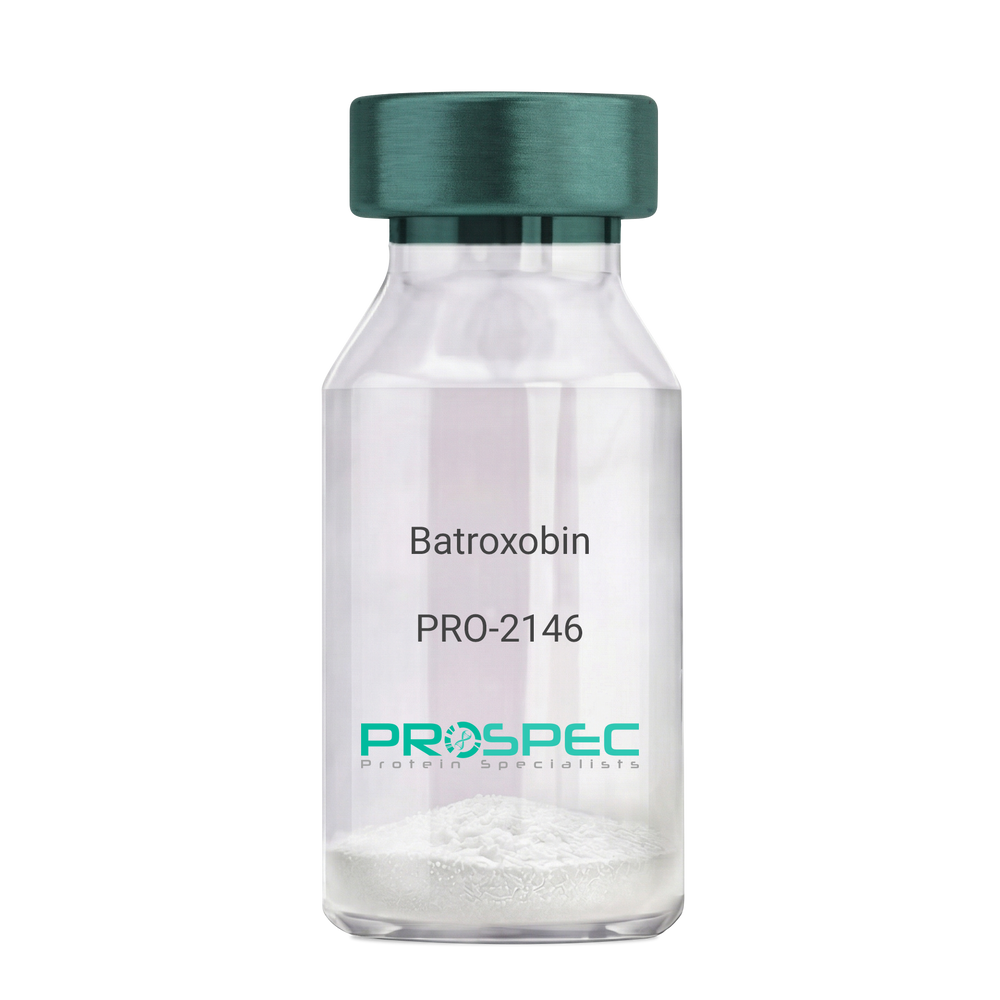
    Batroxobin

    Description:

    Batroxobin

    Thrombin-like enzyme batroxobin, EC 3.4.21.74, BX, Bothrops atrox serine proteinase, Venombin-A, Batroxobin.

    Product # :

    PRO-2146

    Price :

    Quantity :

    Shipping Method :

    Room Temp Icon

    Shipped at Room temp

    Add To Cart

    More Info

    • description
    • formulation
    • More Info
    • Citations

    Description

    Batroxobin, isolated from Bothrops atrox snake venom, has an Mw of approximately 43kDa.

    Formulation

    The Batroxobin protein was lyophilized from a concentrated (1mg/ml) solution with no additives.

    Citations

    More Info

    • Introduction

      Batroxobin is a serin protease that reduces fibronogen levels and is originally extracted from snake venom of Bothrops Atrox. Batroxobin is used in defibrinogenation and thrombolysis and also has an effect on c-fos gene and growth factor.
      Batroxobin can efficiently restrain proliferation of VSMCs, by blocking the release and uptake of Ca2+, thus influencing [Ca2+]i.
      Batroxobin converts fibrinogen to fibrin through the restricted release of fibrinopeptide-A from fibrinogen to promote blood to clot. Unlike thrombin, it is not affected by heparin and hirudin.

    • Synonyms

      Thrombin-like enzyme batroxobin, EC 3.4.21.74, BX, Bothrops atrox serine proteinase, Venombin-A, Batroxobin.

    • Physical Appearance

      Sterile Filtered white lyophilized powder.

    • Stability

      Store the lyophilized Batroxobin between 2-8°C. Do not freeze!

    • Solubility

      It is recommended to reconstitute the lyophilized Batroxobin in sterile 18MΩ-cm H2O not less than 100µg/ml or more than 10mg/ml solutions.

    • Unit Definition

      100BU [Batroxobin Units]=1mg.

    ProSpec's products are furnished for LABORATORY RESEARCH USE ONLY. The product may not be used as drugs, agricultural or pesticidal products, food additives or household chemicals.

    Batroxobin Native
  • View Data Sheet

    Name :

    SPARC Mouse

    Description:

    Secreted Protein Acidic & Rich in Cysteine Mouse Recombinant

    Osteonectin, ON, Basement-membrane protein 40, BM-40, SPARC, Secreted Protein acidic and Rich in Cysteine

    Product # :

    PRO-2658

    Price :

    Quantity :

    Shipping Method :

    Ice Icon

    Shipped with Ice Packs

    Add To Cart

    More Info

    • description
    • source
    • formulation
    • purity
    • More Info
    • Citations

    Description

    SPARC Mouse Recombinant produced in Sf9 Baculovirus cells is a single, glycosylated polypeptide chain containing 291 amino acids (18-302a.a) and having a molecular mass of 33.3kDa.SPARC is fused to a 6 amino acid His-tag at C-terminus & purified by proprietary chromatographic techniques.

    Source

    Sf9, Baculovirus cells.

    Formulation

    The SPARC solution (0.25mg/ml) contains Phosphate-Buffered Saline (pH 7.4) and 10% glycerol.

    Purity

    Greater than 95.0% as determined by SDS-PAGE.

    Citations

    More Info

    • Introduction

      Secreted Protein Acidic & Rich in Cysteine (SPARC) protein is coded by the SPARC gene in humans. SPARC is a glycoprotein located in bones that binds to calcium. SPARC is produced by fibroblasts, capillary endothelial cells, platelets and macrophages, mainly in areas of tissue morphogenesis and remodelling. Asides from calcium, SPARC can also bind to collagen.

    • Synonyms

      Osteonectin, ON, Basement-membrane protein 40, BM-40, SPARC, Secreted Protein acidic and Rich in Cysteine

    • Physical Appearance

      Sterile Filtered colorless solution.

    • Stability

      Store at 4°C if entire vial will be used within 2-4 weeks. Store, frozen at -20°C for longer periods of time. For long term storage it is recommended to add a carrier protein (0.1% HSA or BSA).Avoid multiple freeze-thaw cycles.

    • Amino Acid Sequence

      APQQTEVAEE IVEEETVVEE TGVPVGANPV QVEMGEFEDG AEETVEEVVA DNPCQNHHCK HGKVCELDES NTPMCVCQDP TSCPAPIGEF EKVCSNDNKT FDSSCHFFAT KCTLEGTKKG HKLHLDYIGP CKYIAPCLDS ELTEFPLRMR DWLKNVLVTL YERDEGNNLL TEKQKLRVKK IHENEKRLEA GDHPVELLAR DFEKNYNMYI FPVHWQFGQL DQHPIDGYLS HTELAPLRAP LIPMEHCTTR FFETCDLDND KYIALEEWAG CFGIKEQDIN KDLVIHHHHH H

    ProSpec's products are furnished for LABORATORY RESEARCH USE ONLY. The product may not be used as drugs, agricultural or pesticidal products, food additives or household chemicals.

    Sparc Mouse
  • View Data Sheet

    Name :

    EMAP II Human

    Description:

    Endothelial-Monocyte Activating Polypeptide II Human Recombinant

    AIMP1, EMAP2, EMAP-2, EMAPII, SCYE1, Multisynthetase complex auxiliary component p43, Endothelial monocyte-activating polypeptide 2, EMAP-II, p43.

    Product # :

    CYT-607

    Price :

    Quantity :

    Shipping Method :

    Room Temp Icon

    Shipped at Room temp

    Add To Cart

    More Info

    • description
    • source
    • formulation
    • purity
    • biological activity
    • More Info
    • Citations

    Description

    EMAP-II Recombinant Human produced in E.Coli is a single, non-glycosylated polypeptide chain containing 166 amino acids and having a molecular mass of 18.3 kDa. The EMAP-II is purified by proprietary chromatographic techniques.

    Source

    Escherichia Coli.

    Formulation

    Lyophilized from a concentrated (1mg/ml) solution in water containing 20mM sodium Phosphate buffer pH=7.5 and 130mM sodium chloride.

    Purity

    Greater than 98.0% as determined by(a) Analysis by RP-HPLC.
    (b) Analysis by SDS-PAGE.

    Biological Activity

    Determined by the apoptotic effect on MCF-7 cells using a concentration of 20-30 ng/ml.

    Citations

    More Info

    • Introduction

      EMAP-II also called SCYE1 is a tumor derived cytokine that plays a role in a wide variety of activities on endothelial cells, monocytes and neutrophils. EMAP-II inhibits endothelial cell proliferation, vasculogenesis, neovessel formation, and can induce apoptosis. It is also chemotactic towards neutrophils and monocytes and induces myeloperoxidase activity from neutrophils. EMAP-II clinical value is inhibiting angiogenesis of vascular beds and suppressing the growth of primary and secondary tumors with no affect to normal tissues. SCYE1is specifically induced by apoptosis, and it is involved in the control of angiogenesis, inflammation, and wound healing. The release of this SCYE1 renders the tumor-associated vasculature sensitive to tumor necrosis factor. The precursor protein is identical to the p43 subunit, which is associated with the multi-tRNA synthetase complex, and it modulates aminoacylation activity of tRNA synthetase in normal cells. EMAP-2 plays a role in in the stimulation of inflammatory responses after proteolytic cleavage in tumor cells.

    • Synonyms

      AIMP1, EMAP2, EMAP-2, EMAPII, SCYE1, Multisynthetase complex auxiliary component p43, Endothelial monocyte-activating polypeptide 2, EMAP-II, p43.

    • Physical Appearance

      Sterile Filtered White lyophilized (freeze-dried) powder.

    • Stability

      Lyophilized EMAP-II although stable at room temperature for 3 weeks, should be stored desiccated below -18°C. Upon reconstitution EMAP-II should be stored at 4°C between 2-7 days and for future use below -18°C.Please prevent freeze-thaw cycles.

    • Solubility

      It is recommended to reconstitute the lyophilized EMAP-II in sterile 18MΩ-cm H2O not less than 100µg/ml, which can then be further diluted to other aqueous solutions.

    • Amino Acid Sequence

      SKPIDVSRLD LRIGCIITAR KHPDADSLYV EEVDVGEIAP RTVVSGLVNH VPLEQM QNRM VILLCNLKPA KMRGVLSQAM VMCASSPEKI EILAPPNGSV PGDRITFDAF PGEPDKELNP KKKIWEQIQP DLHTNDECVA TYKGVPFEVK GKGVCRAQTM SNSGIK.

    • Background

      What is the molecular weight/Mw of EMAP II HUMAN Protein?
      EMAP II HUMAN Protein has a total Mw of 18.3kDa.

      What is the source or expression system of EMAP II HUMAN Protein?
      Escherichia Coli.

      What is the Purity of EMAP II HUMAN Protein?
      EMAP II HUMAN Protein is >98% pure as determined by SDS-PAGE.

      What is the Biological Activity of EMAP II HUMAN Protein?
      Determined by the apoptotic effect on MCF-7 cells using a concentration of 20-30 ng/ml.

      What is the amino acid sequence of EMAP II HUMAN Protein?
      SKPIDVSRLD LRIGCIITAR KHPDADSLYV EEVDVGEIAP RTVVSGLVNH VPLEQM QNRM VILLCNLKPA KMRGVLSQAM VMCASSPEKI EILAPPNGSV PGDRITFDAF PGEPDKELNP KKKIWEQIQP DLHTNDECVA TYKGVPFEVK GKGVCRAQTM SNSGIK.

      What applications can EMAP II HUMAN Protein be used in?
      EMAP II HUMAN Protein can probably be used in western blot, ELISA and Lateral Flow.

      What is the endotoxin level for EMAP II HUMAN Protein?
      The endotoxin level is minimal, EMAP II HUMAN Protein was purified using conventional chromatography techniques

    ProSpec's products are furnished for LABORATORY RESEARCH USE ONLY. The product may not be used as drugs, agricultural or pesticidal products, food additives or household chemicals.

    Emap Ii
  • View Data Sheet

    Name :

    CCL24 Human

    Description:

    Eotaxin-2 Human Recombinant (CCL24)

    C-C motif chemokine 24, Small-inducible cytokine A24, Myeloid progenitor inhibitory factor 2, CK-beta-6, Eosinophil chemotactic protein 2, Eotaxin-2, CCL24, Ckb-6, MPIF2, MPIF-2, SCYA24, Eotaxin2, CCL-24.

    Product # :

    CHM-238

    Price :

    Quantity :

    Shipping Method :

    Room Temp Icon

    Shipped at Room temp

    Add To Cart

    More Info

    • description
    • source
    • formulation
    • purity
    • biological activity
    • More Info
    • Citations

    Description

    CCL24 Human Recombinant produced in E.Coli is a single, non-glycosylated polypeptide chain containing 78 amino acids and having a molecular mass of 8.8 kDa. The CCL24 is purified by proprietary chromatographic techniques.

    Source

    Escherichia Coli.

    Formulation

    The CCL24 protein was lyophilized from a concentrated (1mg/ml) sterile solution containing 20mM PBS pH-7.4 and 0.15M sodium chloride.

    Purity

    Greater than 97.0% as determined by(a) Analysis by RP-HPLC.
    (b) Analysis by SDS-PAGE.

    Biological Activity

    The activity is determined by the chemoattract of human PBE (peripheral blood eosinophils) at a concentration between 50-100 ng/ml corresponding to a Specific Activity of 10,000-20,000IU/mg.

    Citations

    More Info

    • Introduction

      Eotaxin-2, also called MPIF2 & Ckb6, is a novel CC chemokine produced by activated monocytes and T lymphocytes. Eotaxin-2 selectively chemoattracts cells expressing CCR3 including eosinophils, basophils, Th2 T cells, mast cells, and certain subsets of dendritic cells. Furthermore, Eotaxin-2 inhibits the proliferation of multipotential hematopoietic progenitor cells. The mature protein, which includes C-terminal truncation, contains 78 amino acids (92 amino acids for the mouse homolog, without C-terminal truncation).
      CCL24 functions as a chemotactic chemokine for resting t-lymphocytes, and eosinophils. CCL24 has lower chemotactic activity for neutrophils but none for monocytes and activated lymphocytes. CCL24 is a strong suppressor of colony formation by a multipotential hematopoietic progenitor cell line and binds to CCR3.

    • Synonyms

      C-C motif chemokine 24, Small-inducible cytokine A24, Myeloid progenitor inhibitory factor 2, CK-beta-6, Eosinophil chemotactic protein 2, Eotaxin-2, CCL24, Ckb-6, MPIF2, MPIF-2, SCYA24, Eotaxin2, CCL-24.

    • Physical Appearance

      Sterile Filtered White lyophilized (freeze-dried) powder.

    • Stability

      Lyophilized Eotaxin-2 although stable at room temperature for 3 weeks, should be stored desiccated below -18°C. Upon reconstitution CCL24 should be stored at 4°C between 2-7 days and for future use below -18°C. For long term storage it is recommended to add a carrier protein (0.1% HSA or BSA).Please prevent freeze-thaw cycles.

    • Solubility

      It is recommended to reconstitute the lyophilized CCL24 Human Recombinant in sterile 18MΩ-cm H2O not less than 100µg/ml, which can then be further diluted to other aqueous solutions.

    • Amino Acid Sequence

      VVIPSPCCMFFVSKRIPENRVVSYQLSSRSTCLKGGVIFTTKKGQQFCG
      DPKQEWV QRYMKNLDAKQKKASPRARAVA.

    • Background

      What is the molecular weight/Mw of CCL24 HUMAN Protein?
      CCL24 HUMAN Protein has a total Mw of 8.8kDa.

      What is the source or expression system of CCL24 HUMAN Protein?
      Escherichia Coli.

      What is the Purity of CCL24 HUMAN Protein?
      CCL24 HUMAN Protein is >97% pure as determined by SDS-PAGE.

      What is the Biological Activity of CCL24 HUMAN Protein?
      The activity is determined by the chemoattract of human PBE (peripheral blood eosinophils) at a concentration between 50-100 ng/ml corresponding to a Specific Activity of 10,000-20,000IU/mg.

      What is the amino acid sequence of CCL24 HUMAN Protein?
      VVIPSPCCMFFVSKRIPENRVVSYQLSSRSTCLKGGVIFTTKKGQQFCG
      DPKQEWV QRYMKNLDAKQKKASPRARAVA.

      What applications can CCL24 HUMAN Protein be used in?
      CCL24 HUMAN Protein can probably be used in western blot, ELISA and Lateral Flow.

      What is the endotoxin level for CCL24 HUMAN Protein?
      The endotoxin level is minimal, CCL24 HUMAN Protein was purified using conventional chromatography techniques.

      Who supplies recombinant CCL24 HUMAN that is in stock and available to order?
      ProSpec has the protein in stock and available for immediate delivery.

      Where can I order bulk mg quantities of CCL24 HUMAN?
      ProSpec supplies bulk mg quantities at affordable prices that meets research and academic budgets.

    ProSpec's products are furnished for LABORATORY RESEARCH USE ONLY. The product may not be used as drugs, agricultural or pesticidal products, food additives or household chemicals.

    Ccl24 Human
  • View Data Sheet

    Name :

    Epigen Human, His

    Description:

    Epigen Human Recombinant, His Tag

    EPG, Epigen, PRO9904, ALGV3072, FLJ75542, EPGN, Epithelial mitogen.

    Product # :

    CYT-794

    Price :

    Quantity :

    Shipping Method :

    Ice Icon

    Shipped with Ice Packs

    Add To Cart

    More Info

    • description
    • source
    • formulation
    • purity
    • More Info
    • Citations

    Description

    EPGN Human Recombinant produced in E.Coli is a single, non-glycosylated polypeptide chain containing 111 amino acids (23-110 a.a) and having a molecular mass of 12.1kDa.EPGN is fused to a 23 amino acid His-tag at N-terminus & purified by proprietary chromatographic techniques.

    Source

    Escherichia Coli.

    Formulation

    EPGN protein solution (1mg/ml) containing 20mM Tris-HCl buffer (pH8.0), 10% glycerol and 0.4M Urea.

    Purity

    Greater than 90.0% as determined by SDS-PAGE.

    Citations

    More Info

    • Introduction

      EPGN is an EGF-related polypeptide growth factor that signals through the ErbB receptor-1. EPGN is produced in numerous tissues, including the testis, liver, heart and in certain tumor cells. EPGN is mitogenic for fibroblasts and epithelial cells. Human EPGN is originally synthesized as a glycosylated 14.7 kDa transmembrane precursor protein, which is processed by proteolytic cleavage to produce a mature soluble sequence.

    • Synonyms

      EPG, Epigen, PRO9904, ALGV3072, FLJ75542, EPGN, Epithelial mitogen.

    • Physical Appearance

      Sterile Filtered clear solution.

    • Stability

      Store at 4°C if entire vial will be used within 2-4 weeks. Store, frozen at -20°C for longer periods of time. For long term storage it is recommended to add a carrier protein (0.1% HSA or BSA).Avoid multiple freeze-thaw cycles.

    • Amino Acid Sequence

      MGSSHHHHHH SSGLVPRGSH MGSAAVTVTP PITAQQGNWT VNKTEADNIE GPIALKFSHL CLEDHNSYCI NGACAFHHEL EKAICRCFTG YTGERCEHLT LTSYAVDSYE K

    • Background

      What is the molecular weight/Mw of EPIGEN Protein?
      EPIGEN Protein has a total Mw of 12.1kDa.

      What is the source or expression system of EPIGEN Protein?
      Escherichia Coli.

      What is the Purity of EPIGEN Protein?
      EPIGEN Protein is >90% pure as determined by SDS-PAGE.

      What is the Biological Activity of EPIGEN Protein?
      The biological functionality of EPIGEN Protein will be determined in the future.

      What is the amino acid sequence of EPIGEN Protein?
      MGSSHHHHHH SSGLVPRGSH MGSAAVTVTP PITAQQGNWT VNKTEADNIE GPIALKFSHL CLEDHNSYCI NGACAFHHEL EKAICRCFTG YTGERCEHLT LTSYAVDSYE K

      What applications can EPIGEN Protein be used in?
      EPIGEN Protein can probably be used in western blot, ELISA and Lateral Flow.

      What is the endotoxin level for EPIGEN Protein?
      The endotoxin level is minimal, EPIGEN Protein was purified using conventional chromatography techniques.

    ProSpec's products are furnished for LABORATORY RESEARCH USE ONLY. The product may not be used as drugs, agricultural or pesticidal products, food additives or household chemicals.

    Epgn Human His
  • View Data Sheet

    Name :

    BMP 7 Human, His

    Description:

    Bone Morphogenetic Protein-7 Human Recombinant, His Tag

    Osteogenic Protein 1, OP-1, BMP-7, Bone morphogenetic protein 7, BMP7, OP1.

    Product # :

    CYT-629

    Price :

    Quantity :

    Shipping Method :

    Ice Icon

    Shipped with Ice Packs

    Add To Cart

    More Info

    • description
    • source
    • formulation
    • purity
    • More Info
    • sds-page
    • Citations

    Description

    BMP7 Human Recombinant produced in E.Coli is a monomeric, non-glycosylated, polypeptide chain containing 148 amino acids (293-431) and having a molecular mass of 16.8 kDa. The BMP-7 is fused to 8 amino acid His Tag at C-terminus & purified by proprietary chromatographic techniques.

    Source

    Escherichia Coli.

    Formulation

    BMP-7 protein (0.5mg/ml) solution contains 10mM sodium citrate pH3.5 and 10% glycerol.

    Purity

    Greater than 95.0% as determined by SDS-PAGE.

    sds-page

    BMP7-sds-page - Product image 1

    Citations

    More Info

    • Introduction

      The bone morphogenetic proteins (BMPs) are a family of secreted signaling molecules that can induce ectopic bone growth. Many BMPs are part of the transforming growth factor-beta (TGFB) superfamily. BMPs were originally identified by an ability of demineralized bone extract to induce endochondral osteogenesis in vivo in an extraskeletal site. Based on its expression early in embryogenesis, the BMP encoded by this gene has a proposed role in early development. In addition, the fact that this BMP is closely related to BMP5 and BMP7 has lead to speculation of possible bone inductive activity.

    • Synonyms

      Osteogenic Protein 1, OP-1, BMP-7, Bone morphogenetic protein 7, BMP7, OP1.

    • Physical Appearance

      Sterile Filtered colorless solution.

    • Stability

      Store at 4°C if entire vial will be used within 2-4 weeks. Store, frozen at -20°C for longer periods of time.For long term storage it is recommended to add a carrier protein (0.1% HSA or BSA).Please avoid freeze thaw cycles.

    • Amino Acid Sequence

      MSTGSKQRSQ NRSKTPKNQE ALRMANVAEN SSSDQRQACK KHELYVSFRD LGWQDWIIAP EGYAAYYCEG ECAFPLNSYM NATNHAIVQTLVHFINPETV PKPCCAPTQL NAISVLYFDD SSNVILKKYR NMVVRACGCH LEHHHHHH.

    • Background

      Research Paper on Bone Morphogenetic Protein-7 Human Recombinant, His Tag, Monomer, HEK

      Abstract:

      Step into the fascinating world of Bone Morphogenetic Protein-7 Human Recombinant, His Tag, Monomer (BMP-7 HR) in Human Embryonic Kidney Cells (HEK). In this research paper, we embark on an exciting journey to uncover the wonders of BMP-7 HR and its significance in cellular differentiation. As a pivotal member of the transforming growth factor-beta (TGF-β) superfamily, BMP-7 HR holds immense potential in tissue regeneration and development. Join us as we delve into the intricate molecular mechanisms of BMP-7 HR signaling in HEK cells while also exploring its friendly interactions with key cytokines, including Tumor Necrosis Factor-alpha (TNF-α) and Tumor Necrosis Factor-alpha Superfamily Member 2 (TNFα SF2 or TNFSF2).

      Introduction:

      Welcome to the world of BMP-7 HR! In this section, we introduce the remarkable BMP-7 HR and its essential role in guiding cellular differentiation. Let's get to know our loyal companion, Human Embryonic Kidney Cells (HEK), as they help us unveil the secrets of BMP-7 HR signaling.

      BMP-7 HR Signaling in HEK Cells:

      Be amazed by the graceful dance of BMP-7 HR signaling within HEK cells! Uncover the captivating process of ligands binding to specific receptors, setting the stage for both the canonical SMAD-dependent and non-canonical SMAD-independent pathways. This harmonious interplay orchestrates various cellular processes, including gene transcription, cell proliferation, and differentiation.

      Influential Role in Cellular Differentiation:

      Watch in awe as BMP-7 HR takes center stage as a master conductor of cellular differentiation within HEK cells. Marvel at its ability to promote osteogenic differentiation, leading to the expression of vital osteogenic markers like RUNX2 and Osteocalcin. But that's not all! Join us in exploring BMP-7 HR's versatile nature, influencing other forms of differentiation, such as chondrogenic and adipogenic pathways.

      Interplay with Key Cytokines:

      Uncover the intriguing interactions between BMP-7 HR and key cytokines like TNF-α and TNFSF2. Witness how BMP-7 HR modulates the expression and activity of these cytokines, hinting at potential cross-talk between BMP-7 HR and inflammatory pathways, fostering a harmonious cellular environment.

      Therapeutic Implications and Tissue Regeneration:

      The therapeutic potential of BMP-7 HR in tissue regeneration comes to the forefront. Together, we explore the exciting possibilities of utilizing BMP-7 HR in regenerative medicine, offering hope for healing and tissue repair. As we navigate this path, we also address challenges, such as optimal dosage, innovative delivery methods, and safety considerations, ensuring the best outcomes.

      Conclusion:

      As we conclude our exploration of BMP-7 HR in HEK cells, we stand in awe of its role in guiding cellular differentiation and tissue regeneration. Equipped with this knowledge, we look forward to a future where BMP-7 HR opens doors to innovative applications in regenerative medicine, making a positive impact on human health and well-being.

      What is the molecular weight/Mw of BMP7 Protein?
      BMP7 Protein has a total Mw of 16.8kDa.

      What is the source or expression system of BMP7 Protein?
      Escherichia Coli.

      What is the Purity of BMP7 Protein?
      BMP7 Protein is >95% pure as determined by SDS-PAGE.

      What is the Biological Activity of BMP7 Protein?
      The biological functionality of BMP7 Protein will be determined in the future.

      What is the amino acid sequence of BMP7 Protein?
      MSTGSKQRSQ NRSKTPKNQE ALRMANVAEN SSSDQRQACK KHELYVSFRD LGWQDWIIAP EGYAAYYCEG ECAFPLNSYM NATNHAIVQTLVHFINPETV PKPCCAPTQL NAISVLYFDD SSNVILKKYR NMVVRACGCH LEHHHHHH.

      What applications can BMP7 Protein be used in?
      BMP7 Protein can probably be used in western blot, ELISA and Lateral Flow.

      What is the endotoxin level for BMP7 Protein?
      The endotoxin level is minimal, BMP7 Protein was purified using conventional chromatography techniques.

    ProSpec's products are furnished for LABORATORY RESEARCH USE ONLY. The product may not be used as drugs, agricultural or pesticidal products, food additives or household chemicals.

    Bmp 7 Human His
  • View Data Sheet

    Name :

    ERLIN2 Human

    Description:

    ER Lipid Raft Associated 2 Protein Human Recombinant

    Erlin-2, Endoplasmic reticulum lipid raft-associated protein 2, Stomatin-prohibitin-flotillin-HflC/K domain-containing protein 2, SPFH domain-containing protein 2,ERLIN2, C8orf2, SPFH2, UNQ2441, PRO5003, PRO9924, NET32, SPG18.

    Product # :

    PRO-1266

    Price :

    Quantity :

    Shipping Method :

    Ice Icon

    Shipped with Ice Packs

    Add To Cart

    More Info

    • description
    • source
    • formulation
    • purity
    • More Info
    • Citations

    Description

    ERLIN2 Human Recombinant produced in E.Coli is a single, non-glycosylated polypeptide chain containing 338 amino acids (25-339 a.a) and having a molecular mass of 37.8 kDa.ERLIN2 is fused to a 23 amino acid His-tag at N-terminus & purified by proprietary chromatographic techniques.

    Source

    Escherichia Coli.

    Formulation

    ERLIN2 protein solution (1mg/ml) containing 20mM Tris-HCl buffer (pH 8.0), 2M Urea and 20% glycerol.

    Purity

    Greater than 95.0% as determined by SDS-PAGE.

    Citations

    More Info

    • Introduction

      ER Lipid Raft Associated 2 (ERLIN2) is a domain-containing protein which is a member of the band 7/mec-2 family. ERLIN2 is a ubiquitously expressed 339 amino acid protein.ERLIN2 which is localized to the lipid raft-like domains in the membrane of the endoplasmic reticulum (ER), plays a key role in the ER-associated degradation (ERAD) pathway that eliminates metabolically regulated and abnormal proteins from the ER.

    • Synonyms

      Erlin-2, Endoplasmic reticulum lipid raft-associated protein 2, Stomatin-prohibitin-flotillin-HflC/K domain-containing protein 2, SPFH domain-containing protein 2,ERLIN2, C8orf2, SPFH2, UNQ2441, PRO5003, PRO9924, NET32, SPG18.

    • Physical Appearance

      Sterile Filtered clear solution.

    • Stability

      Store at 4°C if entire vial will be used within 2-4 weeks. Store, frozen at -20°C for longer periods of time. For long term storage it is recommended to add a carrier protein (0.1% HSA or BSA).Avoid multiple freeze-thaw cycles.

    • Amino Acid Sequence

      MGSSHHHHHH SSGLVPRGSH MGSKIEEGHI GVYYRGGALL TSTSGPGFHL MLPFITSYKS VQTTLQTDEV KNVPCGTSGG VMIYFDRIEV VNFLVPNAVY DIVKNYTADY DKALIFNKIH HELNQFCSVH TLQEVYIELF DQIDENLKLA LQQDLTSMAP GLVIQAVRVT KPNIPEAIRR NYELMESEKT KLLIAAQKQK VVEKEAETER KKALIEAEKV AQVAEITYGQ KVMEKETEKK ISEIEDAAFL AREKAKADAE CYTAMKIAEA NKLKLTPEYL QLMKYKAIAS NSKIYFGKDI PNMFMDSAGS VSKQFEGLAD KLSFGLEDEP LETATKEN.

    ProSpec's products are furnished for LABORATORY RESEARCH USE ONLY. The product may not be used as drugs, agricultural or pesticidal products, food additives or household chemicals.

    Erlin2 Human
  • View Data Sheet

    Name :

    SULT1E1 Human

    Description:

    Estrogen Sulfotransferase Human Recombinant

    EST, STE, EST-1, MGC34459, SULT1E1, Estrogen sulfotransferase, Sulfotransferase estrogen-preferring.

    Product # :

    ENZ-409

    Price :

    Quantity :

    Shipping Method :

    Ice Icon

    Shipped with Ice Packs

    Add To Cart

    More Info

    • description
    • source
    • formulation
    • purity
    • More Info
    • Citations

    Description

    Recombinant Human SULT1E1 produced in E.Coli is a single, non-glycosylated polypeptide chain containing 302 amino acids (1-294 a.a.) and having a molecular mass of 36.1 kDa. SULT1E1 is fused to 6 amino acid His Tag at C-terminus and purified by conventional chromatography techniques.

    Source

    Escherichia Coli.

    Formulation

    The SULT1E1 protein solution contains 20mM Tris-HCl, pH-8 and 20% Glycerol.

    Purity

    Greater than 95.0% as determined by SDS-PAGE.

    Citations

    More Info

    • Introduction

      SULT1E1 catalyzes the sulfate conjugation of many hormones, neurotransmitters, drugs, and xenobiotic compounds. These cytosolic enzymes are different in their tissue distributions and substrate specificities. Decreased SULT1E1 expression is linked with estrogen-dependent endometrial carcinomas. Altered cellular proliferation was detected in cells stably expressing SULT1E1.

    • Synonyms

      EST, STE, EST-1, MGC34459, SULT1E1, Estrogen sulfotransferase, Sulfotransferase estrogen-preferring.

    • Physical Appearance

      Sterile filtered colorless solution.

    • Stability

      Store at 4°C if entire vial will be used within 2-4 weeks. Store, frozen at -20°C for longer periods of time. For long term storage it is recommended to add a carrier protein (0.1% HSA or BSA).Avoid multiple freeze-thaw cycles.

    • Amino Acid Sequence

      MNSELDYYEK FEEVHGILMY KDFVKYWDNV EAFQARPDDL VIATYPKSGT TWVSEIVYMI YKEGDVEKCK EDVIFNRIPF LECRKENLMN GVKQLDEMNS PRIVKTHLPP ELLPASFWEK DCKIIYLCRN AKDVAVSFYY FFLMVAGHPN PGSLPEFVEK FMQGQVPYGS WYKHVKSWWE KGKSPRVLFL FYEDLKEDIR KEVIKLIHFL ERKPSEELVD RIIHHTSFQE MKNNPSTNYT TLPDEIMNQK LSPFMRKGIT GDWKNHFTVA LNEKFDKHYE QQMKESTLKF RTEILEHHHH HH.

    ProSpec's products are furnished for LABORATORY RESEARCH USE ONLY. The product may not be used as drugs, agricultural or pesticidal products, food additives or household chemicals.

    Sult1E1 Human
  • View Data Sheet

    Name :

    PARK2 Human

    Description:

    Parkinson Disease Protein 2 Human Recombinant

    Parkin RBR E3 Ubiquitin Protein Ligase, Parkinson Juvenile Disease Protein 2, Parkinson Protein 2 E3 Ubiquitin Protein Ligase (Parkin), Parkinson Disease (Autosomal Recessive, Juvenile) 2 Parkin, PRKN, AR-JP, PDJ, E3 Ubiquitin Ligase, LPRS2, EC 6.3.2.-.

    Product # :

    PRO-1840

    Price :

    Quantity :

    Shipping Method :

    Ice Icon

    Shipped with Ice Packs

    Add To Cart

    More Info

    • description
    • source
    • formulation
    • purity
    • More Info
    • Citations

    Description

    PARK2 Human Recombinant produced in E.coli is a single, non-glycosylated polypeptide chain containing 485 amino acids (1-465) and having a molecular mass of 53.8 kDa. PARK2 is fused to a 20 amino acid His-tag at N-terminus.

    Source

    Escherichia Coli.

    Formulation

    The PARK2 solution (1mg/ml) contains 20mM Tris-HCl buffer (pH 8.0), 0.4M Urea and 10% glycerol.

    Purity

    Greater than 80% as determined by SDS-PAGE.

    Citations

    More Info

    • Introduction

      PARK2 is an element in a multiprotein E3 ubiquitin ligase complex which mediates the targeting of substrate proteins for proteasomal degradation. PARK2 alterations can result in Parkinson disease and autosomal recessive juvenile Parkinson disease. Alternative splicing creates multiple transcript variants encoding distinct isoforms.

    • Synonyms

      Parkin RBR E3 Ubiquitin Protein Ligase, Parkinson Juvenile Disease Protein 2, Parkinson Protein 2 E3 Ubiquitin Protein Ligase (Parkin), Parkinson Disease (Autosomal Recessive, Juvenile) 2 Parkin, PRKN, AR-JP, PDJ, E3 Ubiquitin Ligase, LPRS2, EC 6.3.2.-.

    • Physical Appearance

      Sterile Filtered clear solution.

    • Stability

      Store at 4°C if entire vial will be used within 2-4 weeks. Store, frozen at -20°C for longer periods of time. For long term storage it is recommended to add a carrier protein (0.1% HSA or BSA).Avoid multiple freeze-thaw cycles.

    • Amino Acid Sequence

      MGSSHHHHHH SSGLVPRGSH MIVFVRFNSS HGFPVEVDSD TSIFQLKEVV AKRQGVPADQ LRVIFAGKEL RNDWTVQNCD LDQQSIVHIV QRPWRKGQEM NATGGDDPRN AAGGCEREPQ SLTRVDLSSS VLPGDSVGLA VILHTDSRKD SPPAGSPAGR SIYNSFYVYC KGPCQRVQPG KLRVQCSTCR QATLTLTQGP SCWDDVLIPN RMSGECQSPH CPGTSAEFFF KCGAHPTSDK ETSVALHLIA TNSRNITCIT CTDVRSPVLV FQCNSRHVIC LDCFHLYCVT RLNDRQFVHD PQLGYSLPCV AGCPNSLIKE LHHFRILGEE QYNRYQQYGA EECVLQMGGV LCPRPGCGAG LLPEPDQRKV TCEGGNGLGC GFAFCRECKE AYHEGECSAV FEASGTTTQA YRVDERAAEQ ARWEAASKET IKKTTKPCPR CHVPVEKNGG CMHMKCPQPQ CRLEWCWNCG CEWNRVCMGD HWFDV

    ProSpec's products are furnished for LABORATORY RESEARCH USE ONLY. The product may not be used as drugs, agricultural or pesticidal products, food additives or household chemicals.

    Park2 Human
  • View Data Sheet

    Name :

    PCMT1 Human

    Description:

    Protein-L-Isoaspartate O-Methyltransferase Human Recombinant

    EC 2.1.1.77, PIMT, PCMT1, Protein-beta-aspartate methyltransferase, Protein L-isoaspartyl/D-aspartyl methyltransferase, L-isoaspartyl protein carboxyl methyltransferase.

    Product # :

    ENZ-522

    Price :

    Quantity :

    Shipping Method :

    Ice Icon

    Shipped with Ice Packs

    Add To Cart

    More Info

    • description
    • source
    • formulation
    • purity
    • More Info
    • Citations

    Description

    PCMT1 Recombinant Human produced in E.Coli is a single, non-glycosylated polypeptide chain containing 263 amino acids (1-227 a.a.) and having a molecular mass of 28.8 kDa. The PCMT1 is fused to a 36 amino acids His-Tag at N-terminus and purified by proprietary chromatographic techniques.

    Source

    Escherichia Coli.

    Formulation

    PCMT1 Human solution containing 20mM Tris-HCl pH-8, 0.1M NaCl, & 10% glycerol.

    Purity

    Greater than 95.0% as determined by SDS-PAGE.

    Citations

    More Info

    • Introduction

      PCMT1 enzyme catalyses the methyl esterification of L-isoaspartyl and D-aspartyl residues in peptides and proteins that result from spontaneous decomposition of normal L-aspartyl and L-asparaginyl residues. PCMT1 is involved in the repair and/or degradation of damaged proteins.

    • Synonyms

      EC 2.1.1.77, PIMT, PCMT1, Protein-beta-aspartate methyltransferase, Protein L-isoaspartyl/D-aspartyl methyltransferase, L-isoaspartyl protein carboxyl methyltransferase.

    • Physical Appearance

      Sterile filtered colorless solution.

    • Stability

      Store at 4°C if entire vial will be used within 2-4 weeks. Store, frozen at -20°C for longer periods of time. For long term storage it is recommended to add a carrier protein (0.1% HSA or BSA).Avoid multiple freeze-thaw cycles.

    • Amino Acid Sequence

      RGSHHHHHH GMASMTGGQQ MGRDLYDDDD KDRWGSMAWK SGGASHSELI HNLRKNGIIK TDKVFEVMLA TDRSHYAKCN PYMDSPQSIG FQATISAPHM HAYALELLFD QLHEGAKALD VGSGSGILTA CFARMVGCTG KVIGIDHIKE LVDDSINNVR KDDPTLLSSG RVQLVVGDGR MGYAEEAPYD AIHVGAAAPV VPQALIDQLK PGGRLILPVG PAGGNQMLEQ YDKLQDGSIK MKPLMGVIYV PLTDKEKQWS RWK.

    ProSpec's products are furnished for LABORATORY RESEARCH USE ONLY. The product may not be used as drugs, agricultural or pesticidal products, food additives or household chemicals.

    Pcmt1 Human
  • 1
  • …
  • 40
  • 41
  • 42
Your browser does not support the video tag.

Products

  • Cytokines
  • Growth Factors
  • Chemokines
  • CD Antigens
  • Neurotrophins
  • Hormones
  • Enzymes
  • Viral Antigens
  • Recombinant Proteins
  • Natural Proteins
  • Monoclonal Antibodies
  • Polyclonal Antibodies
  • Thermal Packaging

About

  • Company
  • Founder
  • Contribution
  • Contact Us
  • My Account

Ordering

  • Ordering Method
  • Ordering - Credit Card
  • Ordering PO
  • Shipping Fees
  • FAQ's

Legal

  • Terms & Conditions
  • Privacy
  • Site Map
  • info@prospecbio.com
  • Facebook
  • Instagram
  • Linkedin Profile

© 2026 ProSpec-Tany TechnoGene Ltd. All Rights Reserved.

  • Choosing a selection results in a full page refresh.
  • Opens in a new window.