Skip to content

High-quality research proteins.

  • 1-800-805-6531

  • Mon - Sat 8.00-18.00, Sun - Closed

  • info@prospecbio.com

  • PO Box 6591 East Brunswick NJ 08816

  • Products
    • Cytokines
    • Growth factors
    • Chemokines
    • Cd antigens
    • Neurotrophins
    • Hormones
    • Enzymes
    • Viral antigens
    • Recombinant proteins
    • Natural proteins
    • Monoclonal antibodies
    • Polyclonal antibodies
    • Thermal Packaging
  • About
    • Company
    • Founder
    • Contribution
  • Customers
    • Eastern Asia
    • Eastern Europe
    • North America
    • South America
    • South East Asia
    • Southern Asia
    • Western Europe
  • Ordering
    • Ordering Method
    • Ordering - Credit Card
    • Ordering - PO
    • Shipping Fees
    • FAQs
  • Services
    • DNA Cloning
    • Protein Expression
    • Monoclonal Antibody
    • Fermentation
    • Technology License
  • Contact us
Log in

Country/region

  • USD $ | Albania
  • USD $ | Andorra
  • USD $ | Argentina
  • USD $ | Armenia
  • USD $ | Australia
  • USD $ | Austria
  • USD $ | Azerbaijan
  • USD $ | Belarus
  • USD $ | Belgium
  • USD $ | Bolivia
  • USD $ | Brazil
  • USD $ | Bulgaria
  • USD $ | Cambodia
  • USD $ | Canada
  • USD $ | Chile
  • USD $ | China
  • USD $ | Colombia
  • USD $ | Costa Rica
  • USD $ | Croatia
  • USD $ | Cyprus
  • USD $ | Czechia
  • USD $ | Denmark
  • USD $ | Estonia
  • USD $ | Finland
  • USD $ | France
  • USD $ | Georgia
  • USD $ | Germany
  • USD $ | Greece
  • USD $ | Hong Kong SAR
  • USD $ | Hungary
  • USD $ | Iceland
  • USD $ | India
  • USD $ | Ireland
  • USD $ | Israel
  • USD $ | Italy
  • USD $ | Japan
  • USD $ | Kazakhstan
  • USD $ | Latvia
  • USD $ | Liechtenstein
  • USD $ | Lithuania
  • USD $ | Madagascar
  • USD $ | Malta
  • USD $ | Mexico
  • USD $ | Moldova
  • USD $ | Monaco
  • USD $ | Netherlands
  • USD $ | New Zealand
  • USD $ | North Macedonia
  • USD $ | Norway
  • USD $ | Panama
  • USD $ | Paraguay
  • USD $ | Peru
  • USD $ | Philippines
  • USD $ | Poland
  • USD $ | Portugal
  • USD $ | Romania
  • USD $ | Singapore
  • USD $ | Slovakia
  • USD $ | Slovenia
  • USD $ | South Africa
  • USD $ | South Korea
  • USD $ | Spain
  • USD $ | Sri Lanka
  • USD $ | Sweden
  • USD $ | Switzerland
  • USD $ | Taiwan
  • USD $ | Thailand
  • USD $ | Türkiye
  • USD $ | Ukraine
  • USD $ | United Kingdom
  • USD $ | United States
  • USD $ | Uruguay
  • USD $ | Vatican City
  • USD $ | Venezuela
  • USD $ | Vietnam
  • Facebook
  • Instagram
logoProSpec - Recombinant Protein Manufacturer for academic and R&D industry
Become a distributor
Account Log in
Wishlist
Cart Cart(0)
  • Products
    +
    • Cytokines
    • Growth factors
    • Chemokines
    • Cd antigens
    • Neurotrophins
    • Hormones
    • Enzymes
    • Viral antigens
    • Recombinant proteins
    • Natural proteins
    • Monoclonal antibodies
    • Polyclonal antibodies
    • Thermal Packaging
  • About
    +
    • Company
    • Founder
    • Contribution
  • Customers
    +
    • Eastern Asia
    • Eastern Europe
    • North America
    • South America
    • South East Asia
    • Southern Asia
    • Western Europe
  • Ordering
    +
    • Ordering Method
    • Ordering - Credit Card
    • Ordering - PO
    • Shipping Fees
    • FAQs
  • Services
    +
    • DNA Cloning
    • Protein Expression
    • Monoclonal Antibody
    • Fermentation
    • Technology License
  • Contact us

Item added to your cart

View cart
View All
  • Cytokines
  • Growth factors
  • Chemokines
  • Cd antigens
  • Neurotrophins
  • Hormones
  • Enzymes
  • Viral antigens
  • Recombinant proteins
  • Natural proteins
  • Monoclonal antibodies
  • Polyclonal antibodies
  • Thermal Packaging
  • Tumor Necrosis Factor

    Tumor Necrosis Factor

    View All
  • 4-1BB

    4-1BB

    View All
  • Adiponectin

    Adiponectin

    View All
  • AIF1

    AIF1

    View All
  • Other Cytokines

    Other Cytokines

    View All
  • AITRL

    AITRL

    View All
  • Angiopoietin

    Angiopoietin

    View All
  • Apolipoprotein

    Apolipoprotein

    View All
  • B-Cell Activating Factor

    B-Cell Activating Factor

    View All
  • Beta Defensin

    Beta Defensin

    View All
  • Bone Morphogenetic Protein

    Bone Morphogenetic Protein

    View All
  • B type Natriuretic Peptide

    B type Natriuretic Peptide

    View All
  • BST

    BST

    View All
  • Betacellulin

    Betacellulin

    View All
  • Cardiotrophin

    Cardiotrophin

    View All
  • Activin

    Activin

    View All
  • Fibroblast Growth Factor

    Fibroblast Growth Factor

    View All
  • Other Growth Factors

    Other Growth Factors

    View All
  • CSF

    CSF

    View All
  • CTGF

    CTGF

    View All
  • IGFBP

    IGFBP

    View All
  • VEGF Protein

    VEGF Protein

    View All
  • EGF

    EGF

    View All
  • Epigen

    Epigen

    View All
  • Erythropoietin

    Erythropoietin

    View All
  • Insulin-Like Growth Factor

    Insulin-Like Growth Factor

    View All
  • Growth Hormone

    Growth Hormone

    View All
  • HDGF

    HDGF

    View All
  • Hepatocyte Growth Factor

    Hepatocyte Growth Factor

    View All
  • Insulin

    Insulin

    View All
  • BCA-1/ BLC (CXCL13)

    BCA-1/ BLC (CXCL13)

    View All
  • BRAK (CXCL14)

    BRAK (CXCL14)

    View All
  • C-10 (CCL6)

    C-10 (CCL6)

    View All
  • Other Chemokines

    Other Chemokines

    View All
  • MEC (CCL28)

    MEC (CCL28)

    View All
  • LD78-beta (CCL3L1)

    LD78-beta (CCL3L1)

    View All
  • CTACK (CCL27)

    CTACK (CCL27)

    View All
  • CXCL16

    CXCL16

    View All
  • CXCL17

    CXCL17

    View All
  • Platelet Factor-4 (CXCL4)

    Platelet Factor-4 (CXCL4)

    View All
  • ENA-78 (CXCL5)

    ENA-78 (CXCL5)

    View All
  • Eotaxin (CCL11,24,26)

    Eotaxin (CCL11,24,26)

    View All
  • Exodus-2 (CCL21)

    Exodus-2 (CCL21)

    View All
  • Fractalkine (CX3CL1)

    Fractalkine (CX3CL1)

    View All
  • CXCL6

    CXCL6

    View All
  • Other CD Antigens

    Other CD Antigens

    View All
  • CD14

    CD14

    View All
  • CD164

    CD164

    View All
  • CD1

    CD1

    View All
  • CD2

    CD2

    View All
  • CD200

    CD200

    View All
  • CD207

    CD207

    View All
  • CD226

    CD226

    View All
  • CD23

    CD23

    View All
  • CD244

    CD244

    View All
  • CD247

    CD247

    View All
  • CD27

    CD27

    View All
  • CD274

    CD274

    View All
  • CD300

    CD300

    View All
  • CD33

    CD33

    View All
  • Other Neurotrophins

    Other Neurotrophins

    View All
  • Beta-NGF

    Beta-NGF

    View All
  • BDNF

    BDNF

    View All
  • CDNF

    CDNF

    View All
  • CNTF

    CNTF

    View All
  • GDNF

    GDNF

    View All
  • Glia Maturation Factor

    Glia Maturation Factor

    View All
  • MANF

    MANF

    View All
  • Midkine

    Midkine

    View All
  • Neuroglobin

    Neuroglobin

    View All
  • Neurotrophic factors

    Neurotrophic factors

    View All
  • Neuregulin

    Neuregulin

    View All
  • Neuropilin

    Neuropilin

    View All
  • Pigment Epithelium-Derived Factor

    Pigment Epithelium-Derived Factor

    View All
  • Pleiotrophin

    Pleiotrophin

    View All
  • Peptide Hormones

    Peptide Hormones

    View All
  • Other Hormones

    Other Hormones

    View All
  • HCG

    HCG

    View All
  • Endothelin

    Endothelin

    View All
  • Exendin

    Exendin

    View All
  • FSH

    FSH

    View All
  • Glucagon

    Glucagon

    View All
  • GHRP

    GHRP

    View All
  • GLP

    GLP

    View All
  • Thyrostimulin

    Thyrostimulin

    View All
  • Inhibin A

    Inhibin A

    View All
  • LHRH

    LHRH

    View All
  • Melanotan

    Melanotan

    View All
  • Procalcitonin

    Procalcitonin

    View All
  • PTH

    PTH

    View All
  • Peroxiredoxin

    Peroxiredoxin

    View All
  • Peptidase

    Peptidase

    View All
  • Synthetase

    Synthetase

    View All
  • Transferase

    Transferase

    View All
  • Hydrolase

    Hydrolase

    View All
  • Dehydrogenase

    Dehydrogenase

    View All
  • ACE2

    ACE2

    View All
  • Esterase

    Esterase

    View All
  • Protein Kinases

    Protein Kinases

    View All
  • Other Enzymes

    Other Enzymes

    View All
  • Phosphatase

    Phosphatase

    View All
  • Deaminase

    Deaminase

    View All
  • Oxygenase

    Oxygenase

    View All
  • Adenylate Kinase

    Adenylate Kinase

    View All
  • Lyase

    Lyase

    View All
  • Chagas

    Chagas

    View All
  • SARS

    SARS

    View All
  • Influenza

    Influenza

    View All
  • ASFV

    ASFV

    View All
  • Astrovirus

    Astrovirus

    View All
  • Borrelia

    Borrelia

    View All
  • Helicobacter Pylori

    Helicobacter Pylori

    View All
  • Chikungunya

    Chikungunya

    View All
  • Chlamydia

    Chlamydia

    View All
  • Cytomegalo

    Cytomegalo

    View All
  • Dengue

    Dengue

    View All
  • EBV

    EBV

    View All
  • Ebola

    Ebola

    View All
  • Feline Leukemia Virus

    Feline Leukemia Virus

    View All
  • Hepatitis A

    Hepatitis A

    View All
  • Other

    Other

    View All
  • Actin

    Actin

    View All
  • ADAM

    ADAM

    View All
  • Complement Component

    Complement Component

    View All
  • Ag85

    Ag85

    View All
  • Eukaryotic Translation Initiation Factor

    Eukaryotic Translation Initiation Factor

    View All
  • Anterior Gradient Protein

    Anterior Gradient Protein

    View All
  • Heat Shock Protein

    Heat Shock Protein

    View All
  • Alpha-2-HS-Glycoprotein

    Alpha-2-HS-Glycoprotein

    View All
  • Hemoglobin

    Hemoglobin

    View All
  • Allergy

    Allergy

    View All
  • Anaplasma

    Anaplasma

    View All
  • Angiogenin

    Angiogenin

    View All
  • Ankyrin Repeat Domain

    Ankyrin Repeat Domain

    View All
  • Annexin

    Annexin

    View All
  • Other Natural Proteins

    Other Natural Proteins

    View All
  • Aprotinin

    Aprotinin

    View All
  • Transferrin

    Transferrin

    View All
  • Avidin

    Avidin

    View All
  • Anti Coagulation Factors

    Anti Coagulation Factors

    View All
  • Natural Albumin

    Natural Albumin

    View All
  • Natural Coagulation Factors

    Natural Coagulation Factors

    View All
  • Fibronectin

    Fibronectin

    View All
  • Thrombin

    Thrombin

    View All
  • Anti Human Enzyme

    Anti Human Enzyme

    View All
  • Other Monoclonal Antibodies

    Other Monoclonal Antibodies

    View All
  • Anti Human Cytokine

    Anti Human Cytokine

    View All
  • Anti Human Heat Shock Protein

    Anti Human Heat Shock Protein

    View All
  • Anti Mouse Lymphocyte

    Anti Mouse Lymphocyte

    View All
  • Anti Human Chemokine

    Anti Human Chemokine

    View All
  • Anti Human Lymphocyte

    Anti Human Lymphocyte

    View All
  • Anti Viral Monoclonal

    Anti Viral Monoclonal

    View All
  • Anti Mouse Cytokine

    Anti Mouse Cytokine

    View All
  • Anti-GST Monoclonal

    Anti-GST Monoclonal

    View All
  • Other Polyclonal Antibodies

    Other Polyclonal Antibodies

    View All
  • Anti Viral

    Anti Viral

    View All
  • Anti-GST Monoclonal

    Anti-GST Monoclonal

    View All
Back

Search results

1000 results found for “gaba(a) receptor-associated protein”

Name

Description

Product #

Price

Quantity

Shipping Method

  • View Data Sheet

    Name :

    PSMA6 Human

    Description:

    Proteasome Subunit Alpha Type 6 Human Recombinant

    Proteasome (prosome, macropain) subunit alpha type 6, PROS27, p27K, IOTA, Macropain iota chain, Multicatalytic endopeptidase complex iota chain, Proteasome iota chain, 27 kDa prosomal protein.

    Product # :

    ENZ-198

    Price :

    Quantity :

    Shipping Method :

    Ice Icon

    Shipped with Ice Packs

    Add To Cart

    More Info

    • description
    • source
    • formulation
    • purity
    • More Info

    Description

    PSMA6 Human Recombinant produced in E.Coli is a single, non-glycosylated polypeptide chain containing 270 amino acids (1-246 a.a.) and having a molecular mass of 29.9kDa.PSMA6 is fused to a 24 amino acid His-tag at N-terminus & purified by proprietary chromatographic techniques.

    Source

    Escherichia Coli.

    Formulation

    PSMA6 protein solution (0.25mg/ml) containing 20mM Tris-HCl buffer (pH8.0), 100mM NaCl, 1mM DTT and 40% glycerol.

    Purity

    Greater than 90.0% as determined by SDS-PAGE.

    More Info

    • Introduction

      PSMA6 belongs to the peptidase T1A family, which is a 20S core alpha subunit. The proteasome is a multicatalytic proteinase complex with an extremely organized ring-shaped 20S core structure. The core structure consists of 4 rings of 28 non-identical subunits; 2 rings consist of 7 alpha subunits and 2 rings consist of 7 beta subunits. PSMA6 is spread all over eukaryotic cells in large quantities and cleave peptides in an ATP/ubiquitin-dependent procedure in a non-lysosomal pathway.

    • Synonyms

      Proteasome (prosome, macropain) subunit alpha type 6, PROS27, p27K, IOTA, Macropain iota chain, Multicatalytic endopeptidase complex iota chain, Proteasome iota chain, 27 kDa prosomal protein.

    • Physical Appearance

      Sterile Filtered colorless solution.

    • Stability

      Store at 4°C if entire vial will be used within 2-4 weeks. Store, frozen at -20°C for longer periods of time. For long term storage it is recommended to add a carrier protein (0.1% HSA or BSA).Avoid multiple freeze-thaw cycles.

    • Amino Acid Sequence

      MGSSHHHHHH SSGLVPRGSH MGSHMSRGSS AGFDRHITIF SPEGRLYQVE YAFKAINQGG LTSVAVRGKD CAVIVTQKKV PDKLLDSSTVTHLFKITENI GCVMTGMTAD SRSQVQRARY EAANWKYKYG YEIPVDMLCK RIADISQVYT QNAEMRPLGC CMILIGIDEE QGPQVYKCDP AGYYCGFKAT AAGVKQTEST SFLEKKVKKK FDWTFEQTVE TAITCLSTVL SIDFKPSEIE VGVVTVENPK FRILTEAEID AHLVALAERD

    ProSpec's products are furnished for LABORATORY RESEARCH USE ONLY. The product may not be used as drugs, agricultural or pesticidal products, food additives or household chemicals.

    Psma6 Human
  • View Data Sheet

    Name :

    AHSG Human

    Description:

    Alpha-2-HS-Glycoprotein Human Recombinant

    PRO2743, A2HS, AHS, FETUA, HSGA, Alpha-2-HS-glycoprotein, Alpha-2-Z-globulin, Ba-alpha-2-glycoprotein, Fetuin-A.

    Product # :

    PRO-1450

    Price :

    Quantity :

    Shipping Method :

    Ice Icon

    Shipped with Ice Packs

    Add To Cart

    More Info

    • description
    • source
    • formulation
    • purity
    • More Info

    Description

    AHSG Human Recombinant produced in E.Coli is a single, non-glycosylated polypeptide chain containing 372 amino acids (19-367 a.a) and having a molecular mass of 39.7kDa (Molecular size on SDS-PAGE will appear higher).AHSG is fused to a 23 amino acid His-tag at N-terminus & purified by proprietary chromatographic techniques.

    Source

    Escherichia Coli.

    Formulation

    AHSG protein solution (0.5mg/ml) containing 20mM Tris-HCl buffer (pH8.0), 10% glycerol 0.1M NaCl and 1mM DTT.

    Purity

    Greater than 90.0% as determined by SDS-PAGE.

    More Info

    • Introduction

      AHSG (fetuin-A) which is a glycoprotein present in the serum, is synthesized by hepatocytes. AHSG is one of the fetuin class of plasma binding proteins. It is involved in a number of functions, such as endocytosis, brain development and the formation of bone tissue. It is usually present in the cortical plate of the immature cerebral cortex and bone marrow hemopoietic matrix, hence it has been postulated that it participates in the development of the tissues. Yet, its exact significance is still vague. AHSG promotes endocytosis, hold opsonic properties and influences the mineral phase of the bone. Affinity for calcium and barium ions has been shown.

    • Synonyms

      PRO2743, A2HS, AHS, FETUA, HSGA, Alpha-2-HS-glycoprotein, Alpha-2-Z-globulin, Ba-alpha-2-glycoprotein, Fetuin-A.

    • Physical Appearance

      Sterile Filtered colorless solution.

    • Stability

      Store at 4°C if entire vial will be used within 2-4 weeks. Store, frozen at -20°C for longer periods of time. For long term storage it is recommended to add a carrier protein (0.1% HSA or BSA).Avoid multiple freeze-thaw cycles.

    • Amino Acid Sequence

      MGSSHHHHHH SSGLVPRGSH MGSAPHGPGL IYRQPNCDDP ETEEAALVAI DYINQNLPWG YKHTLNQIDE VKVWPQQPSG ELFEIEIDTL ETTCHVLDPT PVARCSVRQL KEHAVEGDCD FQLLKLDGKF SVVYAKCDSS PDSAEDVRKV CQDCPLLAPL NDTRVVHAAK AALAAFNAQN NGSNFQLEEI SRAQLVPLPP STYVEFTVSG TDCVAKEATE AAKCNLLAEK QYGFCKATLS EKLGGAEVAV TCTVFQTQPV TSQPQPEGAN EAVPTPVVDP DAPPSPPLGA PGLPPAGSPP DSHVLLAAPP GHQLHRAHYD LRHTFMGVVS LGSPSGEVSH PRKTRTVVQP SVGAAAGPVV PPCPGRIRHF KV.

    ProSpec's products are furnished for LABORATORY RESEARCH USE ONLY. The product may not be used as drugs, agricultural or pesticidal products, food additives or household chemicals.

    Ahsg Human
  • View Data Sheet

    Name :

    C6 Human

    Description:

    Complement C6 Human

    Complement component C6, C6.

    Product # :

    PRO-2693

    Price :

    Quantity :

    Shipping Method :

    Ice Icon

    Shipped with Ice Packs

    Add To Cart

    More Info

    • description
    • source
    • formulation
    • purity
    • More Info

    Description

    Human Complement C6 produced in Human plasma having a molecular mass of 105 kDa.

    Source

    Human Plasma.

    Formulation

    C6 protein solution contains phosphate buffer saline, pH 7.2.

    Purity

    Greater than 90.0% as determined by SDS-PAGE.

    More Info

    • Introduction

      C6 is necessary for membrane attack complex formation and is activated by binding to recently-formed C5b at the cell membrane.Each pathway of complement activation generates proteolytic enzyme complexes which are bound to the target surface. These enzymes cleave a peptide bond in the larger alpha chain of C5 releasing C5a and activating C5b. Although C5b is unstable it remains bound to the activating complex for a few minutes during which it binds a single C6 from the surrounding fluid or it decays and is no longer capable of forming MAC. The C5b,6 complex may also remain connected to the C3/C5 convertase where the binding of a single C7 exposes a membrane-binding region and C5b,6,7 can enter into the bilipid layer of the target cell.

    • Synonyms

      Complement component C6, C6.

    • Physical Appearance

      Sterile filtered solution.

    • Stability

      C6 Human is stable at 4°C if entire vial will be used within 2-4 weeks.Store, frozen below -20°C for longer periods of time.For long term storage it is recommended to add a carrier protein (0.1% HSA or BSA).Avoid multiple freeze-thaw cycles.

    • Human Virus Test

      Plasma from each donor has been tested and found negative for antibody to HIV-1, HIV-2, HCV and HBSAG.

    ProSpec's products are furnished for LABORATORY RESEARCH USE ONLY. The product may not be used as drugs, agricultural or pesticidal products, food additives or household chemicals.

    C6 Human
  • View Data Sheet

    Name :

    MFAP2 Human

    Description:

    Microfibrillar-associated Protein 2 Human Recombinant

    Microfibrillar-associated protein 2, MFAP-2, Microfibril-associated glycoprotein 1, MAGP, MAGP-1, MFAP2, MAGP1.

    Product # :

    PRO-1265

    Price :

    Quantity :

    Shipping Method :

    Ice Icon

    Shipped with Ice Packs

    Add To Cart

    More Info

    • description
    • source
    • formulation
    • purity
    • More Info

    Description

    MFAP2 Human Recombinant produced in E.Coli is a single, non-glycosylated polypeptide chain containing 190 amino acids (18-183 a.a) and having a molecular mass of 21.5kDa.MFAP2 is fused to a 24 amino acid His-tag at N-terminus & purified by proprietary chromatographic techniques.

    Source

    Escherichia Coli.

    Formulation

    MFAP2 protein solution (0.5mg/ml) containing 20mM Tris-HCl buffer (pH 8.0), 1M Urea and 20% glycerol.

    Purity

    Greater than 90.0% as determined by SDS-PAGE.

    More Info

    • Introduction

      Microfibrillar-associated protein 2 (MFAP2) is an O-glycosylated protein discharged to the extracellular space and the extracellular matrix. MFAP2 connects with biglycan and elastin in a ternary complex. MFAP2 plays a key role in the support and distensibility of the juxtacanalicular region of these collector channels. MFAP2 inhibits LTB-1 binding to fibrillin-1, promotes the phosphorylation of Smad2 thus mediating the consequent extracellular deposition of latent TGFbeta.

    • Synonyms

      Microfibrillar-associated protein 2, MFAP-2, Microfibril-associated glycoprotein 1, MAGP, MAGP-1, MFAP2, MAGP1.

    • Physical Appearance

      Sterile Filtered clear solution.

    • Stability

      Store at 4°C if entire vial will be used within 2-4 weeks. Store, frozen at -20°C for longer periods of time. For long term storage it is recommended to add a carrier protein (0.1% HSA or BSA).Avoid multiple freeze-thaw cycles.

    • Amino Acid Sequence

      MGSSHHHHHH SSGLVPRGSH MGSMQGQYDL DPLPPFPDHV QYTHYSDQID NPDYYDYQEV TPRPSEEQFQ FQSQQQVQQE VIPAPTPEPG NAELEPTEPG PLDCREEQYP CTRLYSIHRP CKQCLNEVCF YSLRRVYVIN KEICVRTVCA HEELLRADLC RDKFSKCGVM ASSGLCQSVA ASCARSCGSC.

    ProSpec's products are furnished for LABORATORY RESEARCH USE ONLY. The product may not be used as drugs, agricultural or pesticidal products, food additives or household chemicals.

    Mfap2 Human
  • View Data Sheet

    Name :

    F11R Human

    Description:

    F11 Receptor Human Recombinant

    Junctional adhesion molecule A, JAM-A, Junctional adhesion molecule 1, JAM-1, Platelet F11 receptor, Platelet adhesion molecule 1, PAM-1, CD321, F11R, JAM1, JCAM, JAM, KAT, JAMA.

    Product # :

    PRO-1112

    Price :

    Quantity :

    Shipping Method :

    Ice Icon

    Shipped with Ice Packs

    Add To Cart

    More Info

    • description
    • source
    • formulation
    • purity
    • More Info

    Description

    F11R Human Recombinant produced in E.Coli is a single, non-glycosylated polypeptide chain containing 238 amino acids (26-238 a.a) and having a molecular mass of 25.8kDa.F11R is fused to a 25 amino acid His-tag at N-terminus & purified by proprietary chromatographic techniques.

    Source

    Escherichia Coli.

    Formulation

    F11R protein solution (1mg/ml) containing 20mM Tris-HCl buffer (pH8.0), 10% glycerol, 0.15M NaCl and 1mM DTT.

    Purity

    Greater than 90.0% as determined by SDS-PAGE.

    More Info

    • Introduction

      F11R (CD321) is a member of the immunoglobulin superfamily. F11R has a role in epithelial tight junction formation. Tight junctions exemplify one type of cell-to-cell adhesion in epithelial or endothelial cell sheets, establishing continuous seals around cells and acting as a physical barrier to thwart solutes and water from passing easily through the paracellular space. F11R protein can function as a receptor for reovirus, or as a ligand for the integrin LFA1, involved in leukocyte transmigration, or a platelet receptor.

    • Synonyms

      Junctional adhesion molecule A, JAM-A, Junctional adhesion molecule 1, JAM-1, Platelet F11 receptor, Platelet adhesion molecule 1, PAM-1, CD321, F11R, JAM1, JCAM, JAM, KAT, JAMA.

    • Physical Appearance

      Sterile Filtered colorless solution.

    • Stability

      Store at 4°C if entire vial will be used within 2-4 weeks. Store, frozen at -20°C for longer periods of time. For long term storage it is recommended to add a carrier protein (0.1% HSA or BSA).Avoid multiple freeze-thaw cycles.

    • Amino Acid Sequence

      MGSSHHHHHH SSGLVPRGSH MGSHMLGSVT VHSSEPEVRI PENNPVKLSC AYSGFSSPRV EWKFDQGDTT RLVCYNNKIT ASYEDRVTFL PTGITFKSVT REDTGTYTCM VSEEGGNSYG EVKVKLIVLV PPSKPTVNIP SSATIGNRAV LTCSEQDGSP PSEYTWFKDG IVMPTNPKST
      RAFSNSSYVL NPTTGELVFD PLSASDTGEY SCEARNGYGT PMTSNAVRME AVERNVGV.

    ProSpec's products are furnished for LABORATORY RESEARCH USE ONLY. The product may not be used as drugs, agricultural or pesticidal products, food additives or household chemicals.

    F11R Human
  • View Data Sheet

    Name :

    BID Human

    Description:

    BH3 Interacting Domain Death Agonist Human Recombinant

    BH3-interacting domain death agonist, p22 BID, BID, FP497, MGC15319, MGC42355.

    Product # :

    PRO-627

    Price :

    Quantity :

    Shipping Method :

    Ice Icon

    Shipped with Ice Packs

    Add To Cart

    More Info

    • description
    • source
    • formulation
    • purity
    • More Info

    Description

    BID Human Recombinant produced in E.Coli is a single, non-glycosylated polypeptide chain containing 195 amino acids and having a molecular mass of 21.9 kDa.

    Source

    Escherichia Coli.

    Formulation

    The protein solution contains 20mM Tris-HCl pH-8 & 20% NaCl.

    Purity

    Greater than 95.0% as determined by:
    (a) Analysis by RP-HPLC.
    (b) Analysis by SDS-PAGE.

    More Info

    • Introduction

      BID accession number NP_001187 is a pro-apoptotic Bcl-2 protein having only the BH3 domain. In reaction to apoptotic signaling, BID interacts with another Bcl-2 family of cell death regulators, called Bax, they form a heterodimer resulting to the insertion of Bax into the outer mitochondrial membrane. Bax induces the opening of the mitochondrial voltage-dependent anion channel which lead to the release of cytochrome c and other pro-apoptotic factors from the mitochondria resulting in activation of caspases. BID is a mediator of mitochondrial damage induced by caspase-8 (CASP8). CASP8 cleaves BID, and the COOH-terminal part translocates to mitochondria where it triggers cytochrome c release. The major proteolytic product p15 BID releasea cytochrome c. Isoform 1, Isoform 2 and Isoform 4 induce ice-like proteases and apoptosis while Isoform 3 does not induce apoptosis.

    • Synonyms

      BH3-interacting domain death agonist, p22 BID, BID, FP497, MGC15319, MGC42355.

    • Physical Appearance

      Sterile Filtered colorless solution.

    • Stability

      Store at 4°C if entire vial will be used within 2-4 weeks. Store, frozen at -20°C for longer periods of time. For long term storage it is recommended to add a carrier protein (0.1% HSA or BSA).Avoid multiple freeze-thaw cycles.

    • Amino Acid Sequence

      MDCEVNNGSS LRDECITNLL VFGFLQSCSD NSFRRELDAL GHELPVLAPQ WEGYDELQTD GNRSSHSRLG RIEADSESQE
      DIIRNIARHL AQVGDSMDRS IPPGLVNGLA LQLRNTSRSE EDRNRDLATA LEQLLQAYPR DMEKEKTMLV LALLLAKKVA SHTPSLLRDV FHTTVNFINQ NLRTYVRSLA RNGMD.

    ProSpec's products are furnished for LABORATORY RESEARCH USE ONLY. The product may not be used as drugs, agricultural or pesticidal products, food additives or household chemicals.

    Bid Human
  • View Data Sheet

    Name :

    PTX3 Human

    Description:

    Pentraxin-3 Human Recombinant

    TSG-14, TNFAIP5, PTX3, Pentraxin-related protein PTX3, Pentaxin-related protein PTX3, Tumor necrosis factor-inducible gene 14 protein, TSG14, pentraxin-related gene rapidly induced by IL-1 beta.

    Product # :

    PRO-694

    Price :

    Quantity :

    Shipping Method :

    Ice Icon

    Shipped with Ice Packs

    Add To Cart

    More Info

    • description
    • source
    • formulation
    • purity
    • More Info

    Description

    Recombinant Human PTX3 produced in E.Coli is a single, non-glycosylated polypeptide chain containing 401 amino acids (18-381 a.a) and having a molecular mass of 44.4 kDa. PTX3 is fused to a 37 amino acid His Tag at N-terminus and purified by proprietary chromatographic techniques.

    Source

    Escherichia Coli.

    Formulation

    The PTX3 protein contains 20mM Tris-HCl buffer pH-8, 1mM DTT and 10% glycerol.

    Purity

    Greater than 90% as determined by Analysis by SDS-PAGE.

    More Info

    • Introduction

      PTX3 is part of the pentraxin family sharing the C-terminal domain with short pentraxins and containing a unique N-terminal domain. PTX3 is produced and released at inflammatory sites by various cell types including monocytes/macrophages, endothelial cells, vascular smooth muscle cells, fibroblasts, and adipocytes. PTX3 is involved in the regulation of innate resistance to pathogens, inflammatory reactions, possibly clearance of self-components and female fertility. PTX3 is used as a marker for disease activity of psoriasis. High serum PTX3 levels are associated with the disease severity of systemic sclerosis. Elevated serum PTX3 is associated with pulmonary fungal infections.

    • Synonyms

      TSG-14, TNFAIP5, PTX3, Pentraxin-related protein PTX3, Pentaxin-related protein PTX3, Tumor necrosis factor-inducible gene 14 protein, TSG14, pentraxin-related gene rapidly induced by IL-1 beta.

    • Physical Appearance

      Sterile filtered colorless solution.

    • Stability

      Store at 4°C if entire vial will be used within 2-4 weeks. Store, frozen at -20°C for longer periods of time. For long term storage it is recommended to add a carrier protein (0.1% HSA or BSA). Avoid multiple freeze-thaw cycles.

    • Amino Acid Sequence

      MRGSHHHHHH GMASMTGGQQ MGRDLYDDDD KDRWGSMENS DDYDLMYVNL DNEIDNGLHP TEDPTPCDCG QEHSEWDKLF IMLENSQMRE RMLLQATDDV LRGELQRLRE ELGRLAESLA RPCAPGAPAE ARLTSALDEL LQATRDAGRR LARMEGAEAQ RPEEAGRALA AVLEELRQTR ADLHAVQGWA ARSWLPAGCE TAILFPMRSK KIFGSVHPVR PMRLESFSAC IWVKATDVLN KTILFSYGTK RNPYEIQLYL SYQSIVFVVG GEENKLVAEA MVSLGRWTHL CGTWNSEEGL TSLWVNGELA ATTVEMATGH IVPEGGILQI GQEKNGCCVG GGFDETLAFS GRLTGFNIWD SVLSNEEIRE TGGAESCHIR GNIVGWGVTE IQPHGGAQYV S.

    ProSpec's products are furnished for LABORATORY RESEARCH USE ONLY. The product may not be used as drugs, agricultural or pesticidal products, food additives or household chemicals.

    Ptx3 Human
  • View Data Sheet

    Name :

    PRKACA Human, sf9

    Description:

    c-AMP dependant Protein Kinase A catalytic subunit alpha Human Recombinant, Sf9

    cAMP-dependent protein kinase alpha-catalytic subunit, EC 2.7.11.11, PKA C-alpha, PKACA, PRKACA,  MGC48865, MGC102831.

    Product # :

    PKA-093

    Price :

    Quantity :

    Shipping Method :

    Ice Icon

    Shipped with Ice Packs

    Add To Cart

    More Info

    • description
    • source
    • formulation
    • purity
    • More Info

    Description

    PRKACA Human Recombinant produced in Sf9 Baculovirus cells is a single, glycosylated polypeptide chain containing 578 amino acids (1-351 a.a.) and having a molecular mass of 67kDa (Migrates at 50-70kDa on SDS-PAGE under reducing conditions). PRKACA is expressed with a 227 amino acid GST Tag at N-Terminus and purified by proprietary chromatographic techniques.

    Source

    Sf9, Baculovirus cells.

    Formulation

    PRKACA protein solution (0.25mg/ml) contains Phosphate Buffered Saline (pH 7.4) and 10% glycerol.

    Purity

    Greater than 85% as determined by SDS-PAGE.

    More Info

    • Introduction

      cAMP-dependent protein kinase catalytic subunit alpha isoform Calpha1 (PRKACA) belongs to the Ser/Thr protein kinase family. PRKACA is responsible for phosphorylating other proteins and substrates, changing their activity. The PRKACA protein is a member of the AGC kinase family, and contributes to the regulation of cellular processes which include glucose metabolism, cell division, and contextual memory.

    • Synonyms

      cAMP-dependent protein kinase alpha-catalytic subunit, EC 2.7.11.11, PKA C-alpha, PKACA, PRKACA, MGC48865, MGC102831.

    • Physical Appearance

      Sterile Filtered colorless solution.

    • Stability

      Store at 4°C if entire vial will be used within 2-4 weeks. Store, frozen at -20°C for longer periods of time. For long term storage it is recommended to add a carrier protein (0.1% HSA or BSA).Avoid multiple freeze-thaw cycles.

    • Amino Acid Sequence

      MSPILGYWKI KGLVQPTRLL LEYLEEKYEE HLYERDEGDK WRNKKFELGL EFPNLPYYID GDVKLTQSMA IIRYIADKHN MLGGCPKERA EISMLEGAVL DIRYGVSRIA YSKDFETLKV DFLSKLPEML KMFEDRLCHK TYLNGDHVTH PDFMLYDALD VVLYMDPMCL DAFPKLVCFK KRIEAIPQID KYLKSSKYIA WPLQGWQATF GGGDHPPKSD LVPRGSHMGN AAAAKKGSEQ ESVKEFLAKA KEDFLKKWES PAQNTAHLDQ FERIKTLGTG SFGRVMLVKH KETGNHYAMK ILDKQKVVKL KQIEHTLNEK RILQAVNFPF LVKLEFSFKD NSNLYMVMEY VPGGEMFSHL RRIGRFSEPH ARFYAAQIVL TFEYLHSLDL IYRDLKPENL LIDQQGYIQV TDFGFAKRVK GRTWTLCGTP EYLAPEIILS KGYNKAVDWW ALGVLIYEMA AGYPPFFADQ PIQIYEKIVS GKVRFPSHFS SDLKDLLRNL LQVDLTKRFG NLKNGVNDIK NHKWFATTDW IAIYQRKVEA PFIPKFKGPG DTSNFDDYEE EEIRVSINEK CGKEFSEF.

    ProSpec's products are furnished for LABORATORY RESEARCH USE ONLY. The product may not be used as drugs, agricultural or pesticidal products, food additives or household chemicals.

    Prkaca Human Sf9
  • View Data Sheet

    Name :

    Rantes Rat

    Description:

    Rantes Rat Recombinant (CCL5)

    Small inducible cytokine A5, CCL5, T-cell-specific RANTES protein, SIS-delta, T cell- specific protein P228, TCP228, chemokine (C-C motif) ligand 5, SISd, SCYA5, RANTES, D17S136E, MGC17164.

    Product # :

    CHM-352

    Price :

    Quantity :

    Shipping Method :

    Room Temp Icon

    Shipped at Room temp

    Add To Cart

    More Info

    • description
    • source
    • formulation
    • purity
    • biological activity
    • More Info

    Description

    Rantes Rat Recombinant produced in E.Coli is a single, non-glycosylated polypeptide chain containing 68 amino acids and having a molecular mass of 7876 Dalton. The Rat Rantes is purified by proprietary chromatographic techniques.

    Source

    Escherichia Coli.

    Formulation

    Lyophilized from a concentrated (1mg/ml) solution in water containing no additives.

    Purity

    Greater than 95.0% as determined by:
    (a) Analysis by RP-HPLC.
    (b) Analysis by SDS-PAGE.

    Biological Activity

    The activity is determined by the ability to chemoattract total human lymphocytes and murine T-cells at a concentration between 1-10ng/ml corresponding to a Specific Activity of 100,000-1,000,000IU/mg.

    More Info

    • Introduction

      Regulated upon Activation, Normal T-cell Expressed, and Secreted or RANTES is an 8 kDa protein classified as a chemotactic cytokine or chemokine. It has recently been renamed CCL5. RANTES is chemotactic for T cells, eosinophils and basophils and plays an active role in recruiting leukocytes into inflammatory sites. With the help of particular cytokines (i.e. IL-2 and IFN-?) that are released by T cells, RANTES also induces the proliferation and activation of certain natural killer (NK) cells to form CHAK (CC-Chemokine-activated killer) cells. It is also a HIV-suppressive factor released from CD8+ T cells. This chemokine has been localized to chromosome 17 in humans.

    • Synonyms

      Small inducible cytokine A5, CCL5, T-cell-specific RANTES protein, SIS-delta, T cell- specific protein P228, TCP228, chemokine (C-C motif) ligand 5, SISd, SCYA5, RANTES, D17S136E, MGC17164.

    • Physical Appearance

      Sterile Filtered White lyophilized (freeze-dried) powder.

    • Stability

      Lyophilized Rat Rantes although stable at room temperature for 3 weeks, should be stored desiccated below -18°C. Upon reconstitution Rat CCL5 should be stored at 4°C between 2-7 days and for future use below -18°C.For long term storage it is recommended to add a carrier protein (0.1% HSA or BSA).Please prevent freeze-thaw cycles.

    • Solubility

      It is recommended to reconstitute the lyophilized Rantes in sterile 18MΩ-cm H2O not less than 100µg/ml, which can then be further diluted to other aqueous solutions.

    • Amino Acid Sequence

      SPYGSDTTPC CFAYLSLALP RAHVKEYFYT SSKCSNLAVV FVTRRNRQVC ANPEKKWVQE YINYLEMS.

    ProSpec's products are furnished for LABORATORY RESEARCH USE ONLY. The product may not be used as drugs, agricultural or pesticidal products, food additives or household chemicals.

    Rantes Rat
  • View Data Sheet

    Name :

    FAM3D Human

    Description:

    Family with Sequence Similarity 3, Member D Human Recombinant

    Protein FAM3D, FAM3D, EF7, OIT1.

    Product # :

    PRO-1585

    Price :

    Quantity :

    Shipping Method :

    Room Temp Icon

    Shipped at Room temp

    Add To Cart

    More Info

    • description
    • source
    • formulation
    • purity
    • More Info

    Description

    FAM3D Human Recombinant produced in E.Coli is a single, non-glycosylated, polypeptide chain (a.a 26-224) containing 209 amino acids including a 10 a.a N-terminal His tag. The total molecular mass is 23.3kDa (calculated).

    Source

    Escherichia Coli.

    Formulation

    FAM3D filtered (0.4 µm) and lyophilized from 0.5mg/ml in 0.05M Acetate buffer pH-4.0.

    Purity

    Greater than 90.0% as determined by SDS-PAGE.

    More Info

    • Introduction

      Family with Sequence Similarity 3, Member D (FAM3D) is a member of the FAM3 family. The FAM3D gene is linked to narcolepsy and diabetes mellitus in pancreatic adenocarcinoma, however FAM3D function of remains vague. FAM3D is amply expressed in the placenta and weakly expressed in the small intestine.

    • Synonyms

      Protein FAM3D, FAM3D, EF7, OIT1.

    • Physical Appearance

      Filtered White lyophilized (freeze-dried) powder.

    • Stability

      Store lyophilized protein at -20°C. Aliquot the product after reconstitution to avoid repeated freezing/thawing cycles. Reconstituted protein can be stored at 4°C for a limited period of time; it does not show any change after two weeks at 4°C.

    • Solubility

      It is recommended to add 0.1M Acetate buffer pH-4 to prepare a working stock solution of approximately 0.5mg/ml and let the lyophilized pellet dissolve completely at 37°C. For conversion into higher pH value, we recommend intensive dilution by relevant buffer to a concentration of 10µg/ml. In higher concentrations the solubility of this antigen is limited. FAM3D is not sterile! Please filter the product by an appropriate sterile filter before using it in the cell culture.

    • Amino Acid Sequence

      MKHHHHHHASYMSFSMKTIR LPRWLAASPT KEIQVKKYKC GLIKPCPANY FAFKICSGAA NVVGPTMCFE DRMIMSPVKN NVGRGLNIAL VNGTTGAVLG QKAFDMYSGD VMHLVKFLKE IPGGALVLVA SYDDPGTKMN DESRKLFSDL GSSYAKQLGF RDSWVFIGAK DLRGKSPFEQ FLKNSPDTNK YEGWPELLEM EGCMPPKPF.

    ProSpec's products are furnished for LABORATORY RESEARCH USE ONLY. The product may not be used as drugs, agricultural or pesticidal products, food additives or household chemicals.

    Fam3D Human
  • View Data Sheet

    Name :

    AKT1 Human, Sf9

    Description:

    Protein Kinase B Alpha Human Recombinant, Sf9

    V-Akt Murine Thymoma Viral Oncogene Homolog 1, Protein Kinase B Alpha, Proto-Oncogene C-Akt, RAC-PK-Alpha, EC 2.7.11.1, PKB Alpha, CWS6, PKB, RAC, RAC-Alpha Serine/Threonine-Protein Kinase, Rac Protein Kinase Alpha, Protein Kinase B, PKB-ALPHA, RAC-ALPHA, EC 2.7.11, AKT1m, PRKBA, AKT, RAC-alpha serine/threonine-protein kinase.

    Product # :

    PKA-069

    Price :

    Quantity :

    Shipping Method :

    Ice Icon

    Shipped with Ice Packs

    Add To Cart

    More Info

    • description
    • source
    • formulation
    • purity
    • More Info

    Description

    AKT1 produced in Sf9 Baculovirus cells is a single, glycosylated polypeptide chain containing 488 amino acids (1-480a.a.) and having a molecular mass of 56.7kDa. (Molecular size on SDS-PAGE will appear at approximately 50-70kDa). AKT1 is expressed with an 8 amino acid His tag at C-Terminus and purified by proprietary chromatographic techniques.

    Source

    Sf9, Baculovirus cells.

    Formulation

    AKT1 protein solution (0. 5mg/ml) contains phosphate buffered saline (pH7.4) and 20% glycerol.

    Purity

    Greater than 90.0% as determined by SDS-PAGE.

    More Info

    • Introduction

      Akt1, also known as Akt or else protein kinase B (PKB) is an important molecule in mammaliancellular signaling. In humans, there are three genes in the "Akt family": Akt1, Akt2, and Akt3. Moreover, these enzymes are members of the serine/threonine-specific protein kinase family (EC2.7.11.1). Akt1 is involved in cellular survival pathways, by inhibiting apoptoticprocesses. Akt1 is also able to induce protein synthesis pathways, and is therefore a key signaling protein in the cellular pathways which lead to skeletal muscle hypertrophy, and general tissue growth. Since it can block apoptosis, and thereby promote cell survival, Akt1 has been implicated as a most important factor in numerous types of cancer. Akt (now also called Akt1) was at first identified as the oncogenein the transforming retrovirus, AKT8.

    • Synonyms

      V-Akt Murine Thymoma Viral Oncogene Homolog 1, Protein Kinase B Alpha, Proto-Oncogene C-Akt, RAC-PK-Alpha, EC 2.7.11.1, PKB Alpha, CWS6, PKB, RAC, RAC-Alpha Serine/Threonine-Protein Kinase, Rac Protein Kinase Alpha, Protein Kinase B, PKB-ALPHA, RAC-ALPHA, EC 2.7.11, AKT1m, PRKBA, AKT, RAC-alpha serine/threonine-protein kinase.

    • Physical Appearance

      Sterile filtered colorless solution.

    • Stability

      Store at 4°C if entire vial will be used within 2-4 weeks. Store, frozen at -20°C for longer periods of time. For long term storage it is recommended to add a carrier protein (0.1% HSA or BSA).Avoid multiple freeze-thaw cycles.

    • Amino Acid Sequence

      MSDVAIVKEG WLHKRGEYIK TWRPRYFLLK NDGTFIGYKE RPQDVDQREA PLNNFSVAQC QLMKTERPRP NTFIIRCLQW TTVIERTFHV ETPEEREEWT TAIQTVADGL KKQEEEEMDF RSGSPSDNSG AEEMEVSLAK PKHRVTMNEF EYLKLLGKGT FGKVILVKEK ATGRYYAMKI LKKEVIVAKD EVAHTLTENR VLQNSRHPFL TALKYSFQTH DRLCFVMEYA NGGELFFHLS RERVFSEDRA RFYGAEIVSA LDYLHSEKNV VYRDLKLENL MLDKDGHIKI TDFGLCKEGI KDGATMKTFC GTPEYLAPEV LEDNDYGRAV DWWGLGVVMY EMMCGRLPFY NQDHEKLFEL ILMEEIRFPR TLGPEAKSLL SGLLKKDPKQ RLGGGSEDAK EIMQHRFFAG IVWQHVYEKK LSPPFKPQVT SETDTRYFDE EFTAQMITIT PPDQDDSMEC VDSERRPHFP QFSYSASGTA LEHHHHHH.

    ProSpec's products are furnished for LABORATORY RESEARCH USE ONLY. The product may not be used as drugs, agricultural or pesticidal products, food additives or household chemicals.

    Akt1 Human Sf9
  • View Data Sheet

    Name :

    COMMD1 Human

    Description:

    Copper Metabolism Domain Containing 1 Human Recombinant

    MURR1, C2orf5, COMMD1, Copper Metabolism Domain Containing 1, MGC27155.

    Product # :

    PRO-862

    Price :

    Quantity :

    Shipping Method :

    Ice Icon

    Shipped with Ice Packs

    Add To Cart

    More Info

    • description
    • source
    • formulation
    • purity
    • More Info

    Description

    COMMD1 Recombinant Human produced in E.Coli is a single, non-glycosylated polypeptide chain containing 210 amino acids (1-190 a.a.) and having a molecular mass of 23.3 kDa. The COMMD1 is fused to 20 amino acid His-Tag at N-terminus and purified by proprietary chromatographic techniques.

    Source

    Escherichia Coli.

    Formulation

    COMMD1 Human solution containing 20mM Tris pH-8, 0.1M NaCl & 20% glycerol.

    Purity

    Greater than 90.0% as determined by SDS-PAGE.

    More Info

    • Introduction

      COMMD1 is accountable for inhibition of TNF-induced NFκB p50 and n facilitats of biliary copper excretion within hepatocytes. High expression of COMMD1 is localized in liver tissue, with lower expressions in lung, heart, kidney and brain tissue. COMMD1 interacts directly with COMMD6 and ATP7B, and indirectly with IκB-β and COMMD7.

    • Synonyms

      MURR1, C2orf5, COMMD1, Copper Metabolism Domain Containing 1, MGC27155.

    • Physical Appearance

      Sterile filtered colorless solution.

    • Stability

      Store at 4°C if entire vial will be used within 2-4 weeks. Store, frozen at -20°C for longer periods of time. For long term storage it is recommended to add a carrier protein (0.1% HSA or BSA).Avoid multiple freeze-thaw cycles.

    • Amino Acid Sequence

      MGSSHHHHHH SSGLVPRGSH MAAGELEGGK PLSGLLNALA QDTFHGYPGI TEELLRSQLY PEVPPEEFRP FLAKMRGILK SIASADMDFN QLEAFLTAQT KKQGGITSDQ AAVISKFWKS HKTKIRESLM NQSRWNSGLR GLSWRVDGKS QSRHSAQIHT PVAIIELELG KYGQESEFLC LEFDEVKVNQ ILKTLSEVEE SISTLISQPN.

    ProSpec's products are furnished for LABORATORY RESEARCH USE ONLY. The product may not be used as drugs, agricultural or pesticidal products, food additives or household chemicals.

    Commd1 Human
  • View Data Sheet

    Name :

    NEFL Bovine

    Description:

    Neurofilament Light Bovine

    Neurofilament light polypeptide, NF-L, NEFL, NF68, NFL, 68 kDa neurofilament protein.

    Product # :

    PRO-2786

    Price :

    Quantity :

    Shipping Method :

    Room Temp Icon

    Shipped at Room temp

    Add To Cart

    More Info

    • description
    • source
    • formulation
    • purity
    • More Info

    Description

    NEFL Bovine having a calculated molecular mass of 68 kDa, pI-5.0.

    Source

    Bovine spinal cord.

    Formulation

    NEFL was lyophilized from a 1mg/ml solution containing 10mM sodium phosphate buffer pH 7.5, 6M urea, 1mM EDTA, 2mM DTT and 10mM methylammonium chloride.

    Purity

    Greater than 95.0% as determined by SDS-PAGE.

    More Info

    • Synonyms

      Neurofilament light polypeptide, NF-L, NEFL, NF68, NFL, 68 kDa neurofilament protein.

    • Physical Appearance

      Filtered White lyophilized (freeze-dried) powder.

    • Stability

      Store the lyophilized NEFL between 2-8°C, do not freeze. Upon reconstitution NEFL should be stored at -20°C.Please prevent freeze-thaw cycles.

    • Solubility

      It is recommended to reconstitute the lyophilized NEFL in sterile 18MΩ-cm H2O not less than 100µg/ml, which can then be further diluted to other aqueous solutions.

    • Background

      Neurofilament light chain (NEFL) is a critical component of the neuronal cytoskeleton, primarily found in neurons of the central and peripheral nervous systems. While extensive research has been conducted on NEFL in human and rodent models, the study of NEFL in bovine nervous tissues is an emerging area with potential for advancing our understanding of neuronal biology in larger mammals and its applications in veterinary medicine and neurobiology.

      Bovine nervous tissues, such as the brain and spinal cord, are of particular interest due to their relevance in cattle health and the food industry. This research aims to provide a comprehensive exploration of NEFL in bovine nervous tissues, elucidating its functions, structural significance, and potential applications.

      The primary objective of this research is to elucidate the role of NEFL in bovine nervous tissues, particularly in maintaining the structural integrity of neurons and axons. In vitro and ex vivo experiments, utilizing bovine neuronal cell cultures and tissue specimens, will be conducted to investigate how NEFL contributes to neuronal morphology, axonal transport, and neuronal resilience. Understanding these mechanisms is fundamental for deciphering the complexities of neuronal biology in bovine species.

      The second objective is to assess the relevance of bovine NEFL in veterinary medicine. Studies involving bovine models will be conducted to evaluate the impact of NEFL mutations or variations on neuronal health, disease susceptibility, and neurodegenerative conditions. These investigations may provide valuable insights into potential applications in cattle health and the development of diagnostic tools for neurological disorders.

      The third objective is to explore the potential applications of bovine NEFL in neurobiology and biotechnology. Research will investigate the use of bovine NEFL-expressing cells as models for studying neuronal-related diseases and for developing tissue engineering approaches for veterinary medicine and biotechnology.

      By delving into the functions and roles of NEFL in bovine nervous tissues, this research aims to expand our knowledge of neuronal biology, its implications for veterinary medicine, and its potential applications in neurobiology and cattle health

    ProSpec's products are furnished for LABORATORY RESEARCH USE ONLY. The product may not be used as drugs, agricultural or pesticidal products, food additives or household chemicals.

    Nefl Bovine
  • View Data Sheet

    Name :

    AMIGO2 Human

    Description:

    Adhesion Molecule with Ig-Like Domain 2 Human Recombinant

    Adhesion Molecule with Ig-Like Domain 2, Differentially Expressed in Gastric, Adenocarcinomas, AMIGO-2, ALI1, DEGA, Differentially Expressed in Gastric, Adenocarcinoma, Amphoterin-Induced Gene and Open Reading Frame 2, Transmembrane Protein AMIGO2, Amphoterin Induced Gene, Alivin 1, Alivin-1.

    Product # :

    PRO-2254

    Price :

    Quantity :

    Shipping Method :

    Ice Icon

    Shipped with Ice Packs

    Add To Cart

    More Info

    • description
    • source
    • formulation
    • purity
    • More Info

    Description

    AMIGO2 produced in Sf9 Insect cells is a single, glycosylated polypeptide chain containing 367 amino acids (40-398a.a.) and having a molecular mass of 41.9kDa (Molecular size on SDS-PAGE will appear at approximately 40-57kDa).AMIGO2 is expressed with an 8 amino acid His tag at C-Terminus and purified by proprietary chromatographic techniques.

    Source

    Sf9, Insect cells.

    Formulation

    AMIGO2 protein solution (0.5mg/ml) contains Phosphate Buffered Saline (pH 7.4) and 10% glycerol.

    Purity

    Greater than 95.0% as determined by SDS-PAGE.

    More Info

    • Introduction

      Adhesion Molecule with Ig-Like Domain 2, also known as AMIGO2 is a member of the leucine-rich repeat family. AMIGO2 arbitrates homophilic in addition to heterophilic cell-cell interaction with AMIGO1 or AMIGO3. Furthermore, AMIGO2 contributes to signal transduction via its intracellular domain and is also essential for tumorigenesis of a subset of gastric adenocarcinomas.

    • Synonyms

      Adhesion Molecule with Ig-Like Domain 2, Differentially Expressed in Gastric, Adenocarcinomas, AMIGO-2, ALI1, DEGA, Differentially Expressed in Gastric, Adenocarcinoma, Amphoterin-Induced Gene and Open Reading Frame 2, Transmembrane Protein AMIGO2, Amphoterin Induced Gene, Alivin 1, Alivin-1.

    • Physical Appearance

      Sterile filtered colorless solution.

    • Stability

      Store at 4°C if entire vial will be used within 2-4 weeks.Store, frozen at -20°C for longer periods of time. For long term storage it is recommended to add a carrier protein (0.1% HSA or BSA).Avoid multiple freeze-thaw cycles.

    • Amino Acid Sequence

      VCPTACICAT DIVSCTNKNL SKVPGNLFRL IKRLDLSYNR IGLLDSEWIP VSFAKLNTLI
      LRHNNITSIS TGSFSTTPNL KCLDLSSNKL KTVKNAVFQE LKVLEVLLLY NNHISYLDPS AFGGLSQLQK LYLSGNFLTQ FPMDLYVGRF KLAELMFLDV SYNRIPSMPM HHINLVPGKQ LRGIYLHGNP FVCDCSLYSL LVFWYRRHFS SVMDFKNDYT CRLWSDSRHS RQVLLLQDSF MNCSDSIING SFRALGFIHE AQVGERLMVH CDSKTGNANT DFIWVGPDNR LLEPDKEMEN FYVFHNGSLV IESPRFEDAG VYSCIAMNKQ RLLNETVDVT INVSNFTVSR SHAHEAFNTL EHHHHHH.

    ProSpec's products are furnished for LABORATORY RESEARCH USE ONLY. The product may not be used as drugs, agricultural or pesticidal products, food additives or household chemicals.

    Amigo2 Human
  • View Data Sheet

    Name :

    S100A4 Mouse

    Description:

    S100 Calcium Binding Protein A4 Mouse Recombinant

    Protein S100-A4, S100 calcium-binding protein A4, Metastasin, Protein Mts1, Placental calcium-binding protein, Calvasculin, S100A4, CAPL, MTS1, 42A, 18A2, FSP1, P9KA, PEL98.

    Product # :

    PRO-229

    Price :

    Quantity :

    Shipping Method :

    Ice Icon

    Shipped with Ice Packs

    Add To Cart

    More Info

    • description
    • source
    • formulation
    • purity
    • More Info

    Description

    S100A4 Mouse Recombinant produced in E.Coli is a single, non-glycosylated polypeptide chain containing 121 amino acids (1-101 a.a) and having a molecular mass of 13.9kDa.S100A4 is fused to a 20 amino acid His-tag at N-terminus & purified by proprietary chromatographic techniques.

    Source

    Escherichia Coli.

    Formulation

    S100A4 protein solution (1mg/1ml) containing 20mM Tris-HCl buffer (pH8.0), 20% glycerol, 0.1M NaCl and 2mM DTT.

    Purity

    Greater than 90.0% as determined by SDS-PAGE.

    More Info

    • Introduction

      S100A4 is a member of the S100 family of proteins containing 2 EF-hand calcium-binding motifs. S100 belongs to the family of calcium binding proteins such as calmodulin and troponin C. S100A is composed of an alpha and beta chain whereas S100B is composed of two beta chains. S100 protein is also expressed in the antigen presenting cells such as the Langerhans cells in skin and interdigitating reticulum cells in the paracortex of lymph nodes. S100 proteins are localized either in the cytoplasm or the nucleus of a wide range of cells. S100 proteins are involved in the regulation of a number of cellular processes such as cell cycle progression and differentiation. S100A4 may function in motility, invasion, and tubulin polymerization. There are at least 13 members in the S100 gene family, which are located as a cluster on chromosome 1q21. Chromosomal rearrangements and altered expression of the S100A4 gene have been implicated in tumor metastasis.

    • Synonyms

      Protein S100-A4, S100 calcium-binding protein A4, Metastasin, Protein Mts1, Placental calcium-binding protein, Calvasculin, S100A4, CAPL, MTS1, 42A, 18A2, FSP1, P9KA, PEL98.

    • Physical Appearance

      Sterile Filtered clear solution.

    • Stability

      Store at 4°C if entire vial will be used within 2-4 weeks. Store, frozen at -20°C for longer periods of time. For long term storage it is recommended to add a carrier protein (0.1% HSA or BSA).Avoid multiple freeze-thaw cycles.

    • Amino Acid Sequence

      MGSSHHHHHH SSGLVPRGSH MARPLEEALD VIVSTFHKYS GKEGDKFKLN KTELKELLTR ELPSFLGKRT DEAAFQKVMS NLDSNRDNEV DFQEYCVFLS CIAMMCNEFF EGCPDKEPRK K.

    ProSpec's products are furnished for LABORATORY RESEARCH USE ONLY. The product may not be used as drugs, agricultural or pesticidal products, food additives or household chemicals.

    S100A4 Mouse
  • View Data Sheet

    Name :

    MFAP4 Human

    Description:

    Microfibrillar-associated Protein 4 Human Recombinant

    Microfibrillar-Associated Protein 4, Microfibril-Associated Glycoprotein 4.

    Product # :

    PRO-1210

    Price :

    Quantity :

    Shipping Method :

    Ice Icon

    Shipped with Ice Packs

    Add To Cart

    More Info

    • description
    • source
    • formulation
    • purity
    • More Info

    Description

    MFAP4 Human Recombinant produced in E. coli is a single polypeptide chain containing 259 amino acids (22-255) and having a molecular mass of 29.2 kDa.MFAP4 is fused to a 25 amino acid His-tag at N-terminus & purified by proprietary chromatographic techniques.

    Source

    E.coli.

    Formulation

    The MFAP4 solution (1mg/1ml) contains 20mM Tris-HCl buffer (pH 8.0), 0.4M Urea and 10% glycerol.

    Purity

    Greater than 90% as determined by SDS-PAGE.

    More Info

    • Introduction

      Microfibrillar-associated protein 4 (MFAP4) is a member of Fibrinogen protein family and contains 1 fibrinogen C-terminal domain. The MFAP4 protein has similarity to a bovine microfibril-associated protein. MFAP4 has binding specificities for both collagen and carbohydrate. MFAP4 is believed to be an extracellular matrix protein that is involved in cell adhesion or intercellular interactions. MFAP4 deletion was found in 30 of 31 Smith-Magenis syndrome (SMS) patients.

    • Synonyms

      Microfibrillar-Associated Protein 4, Microfibril-Associated Glycoprotein 4.

    • Physical Appearance

      Sterile Filtered colorless solution.

    • Stability

      Store at 4°C if entire vial will be used within 2-4 weeks. Store, frozen at -20°C for longer periods of time. For long term storage it is recommended to add a carrier protein (0.1% HSA or BSA).Avoid multiple freeze-thaw cycles.

    • Amino Acid Sequence

      MGSSHHHHHH SSGLVPRGSH MGSHMVSGIR GDALERFCLQ QPLDCDDIYA QGYQSDGVYL IYPSGPSVPV PVFCDMTTEG GKWTVFQKRF NGSVSFFRGW NDYKLGFGRA DGEYWLGLQN MHLLTLKQKY ELRVDLEDFE NNTAYAKYAD FSISPNAVSA EEDGYTLFVA GFEDGGAGDS LSYHSGQKFS TFDRDQDLFV QNCAALSSGA FWFRSCHFAN LNGFYLGGSH LSYANGINWA QWKGFYYSLK RTEMKIRRA

    ProSpec's products are furnished for LABORATORY RESEARCH USE ONLY. The product may not be used as drugs, agricultural or pesticidal products, food additives or household chemicals.

    Mfap4 Human
  • View Data Sheet

    Name :

    UBA3 Human

    Description:

    Ubiquitin-Like Modifier Activating Enzyme 3 Human Recombinant

    NEDD8-activating enzyme E1 catalytic subunit, NEDD8-activating enzyme E1C, Ubiquitin-activating enzyme E1C, Ubiquitin-like modifier-activating enzyme 3, Ubiquitin-activating enzyme 3, UBA3, UBE1C, hUBA3.

    Product # :

    ENZ-576

    Price :

    Quantity :

    Shipping Method :

    Ice Icon

    Shipped with Ice Packs

    Add To Cart

    More Info

    • description
    • source
    • formulation
    • purity
    • More Info

    Description

    UBA3 Human Recombinant produced in E.coli is a single, non-glycosylated polypeptide chain containing 487 amino acids (1-463) and having a molecular mass of 54.4kDa.UBA3 is fused to a 24 amino acid His-tag at N-terminus & purified by proprietary chromatographic techniques.

    Source

    Escherichia Coli.

    Formulation

    The UBA3 solution (1mg/ml) contains 20mM Tris-HCl buffer (pH8.0), 20% glycerol and 1mM DTT.

    Purity

    Greater than 90.0% as determined by SDS-PAGE.

    More Info

    • Introduction

      NEDD8-activating enzyme E1 catalytic subunit (UBA3) is the catalytic subunit of the dimeric UBA3-NAE1 E1 enzyme, which belongs to the E1 ubiquitin-activating enzyme family. E1 activates NEDD8 by initially adenylating its C-terminal glycine residue with ATP, afterwards linking this residue to the side chain of the catalytic cysteine, generating a NEDD8-UBA3 thioester and free AMP. E1 at last transfers NEDD8 to the catalytic cysteine of UBE2M. The UBA3 enzyme connects with AppBp1, an amyloid beta precursor protein binding protein, to form a heterodimer, and at that point the enzyme complex activates NEDD8, a ubiquitin-like protein, which controls cell division, signaling and embryogenesis.

    • Synonyms

      NEDD8-activating enzyme E1 catalytic subunit, NEDD8-activating enzyme E1C, Ubiquitin-activating enzyme E1C, Ubiquitin-like modifier-activating enzyme 3, Ubiquitin-activating enzyme 3, UBA3, UBE1C, hUBA3.

    • Physical Appearance

      Sterile filtered colorless solution.

    • Stability

      Store at 4°C if entire vial will be used within 2-4 weeks. Store, frozen at -20°C for longer periods of time. For long term storage it is recommended to add a carrier protein (0.1% HSA or BSA).Avoid multiple freeze-thaw cycles.

    • Amino Acid Sequence

      MGSSHHHHHH SSGLVPRGSH MGSHMADGEE PERKRRRIEE LLAEKMAVDG GCGDTGDWEG RWNHVKKFLE RSGPFTHPDF EPSTESLQFL LDTCKVLVIG AGGLGCELLK NLALSGFRQI HVIDMDTIDV SNLNRQFLFR PKDIGRPKAE VAAEFLNDRV PNCNVVPHFN KIQDFNDTFY RQFHIIVCGL DSIIARRWIN GMLISLLNYE DGVLDPSSIV PLIDGGTEGF KGNARVILPG MTACIECTLE LYPPQVNFPM CTIASMPRLP EHCIEYVRML QWPKEQPFGE GVPLDGDDPE HIQWIFQKSL ERASQYNIRG VTYRLTQGVV KRIIPAVAST NAVIAAVCAT EVFKIATSAY IPLNNYLVFN DVDGLYTYTF EAERKENCPA CSQLPQNIQF SPSAKLQEVL DYLTNSASLQ MKSPAITATL EGKNRTLYLQ SVTSIEERTR PNLSKTLKEL GLVDGQELAV ADVTTPQTVL FKLHFTS.

    ProSpec's products are furnished for LABORATORY RESEARCH USE ONLY. The product may not be used as drugs, agricultural or pesticidal products, food additives or household chemicals.

    Uba3 Human
  • View Data Sheet

    Name :

    OCIAD2 Human

    Description:

    OCIA Domain Containing 2 Human Recombinant

    OCIA domain-containing protein 2, Ovarian carcinoma immunoreactive antigen-like protein, OCIAD2.

    Product # :

    PRO-1456

    Price :

    Quantity :

    Shipping Method :

    Ice Icon

    Shipped with Ice Packs

    Add To Cart

    More Info

    • description
    • source
    • formulation
    • purity
    • More Info

    Description

    OCIAD2 Human Recombinant produced in E.Coli is a single, non-glycosylated polypeptide chain containing 177 amino acids (1-154 a.a) and having a molecular mass of 19.3kDa.OCIAD2 is fused to a 23 amino acid His-tag at N-terminus & purified by proprietary chromatographic techniques.

    Source

    Escherichia Coli.

    Formulation

    OCIAD2 protein solution (0.5mg/ml) containing 20mM Tris-HCl buffer (pH 8.0), 0.4M UREA and 10% glycerol.

    Purity

    Greater than 85.0% as determined by SDS-PAGE.

    More Info

    • Introduction

      OCIA domain-containing protein 2 (OCIAD2) is a protein-coding gene which localizes to endosomes and contains one Ovarian carcinoma immunoreactive antigen (OCIA) domain. Among the associated diseases with OCIAD2 are bronchiolo-alveolar adenocarcinoma, and ovarian mucinous neoplasm. OCIAD1 is an important paralog of this gene.

    • Synonyms

      OCIA domain-containing protein 2, Ovarian carcinoma immunoreactive antigen-like protein, OCIAD2.

    • Physical Appearance

      Sterile Filtered colorless solution.

    • Stability

      Store at 4°C if entire vial will be used within 2-4 weeks. Store, frozen at -20°C for longer periods of time. For long term storage it is recommended to add a carrier protein (0.1% HSA or BSA).Avoid multiple freeze-thaw cycles.

    • Amino Acid Sequence

      MGSSHHHHHH SSGLVPRGSH MGSMASASAR GNQDKDAHFP PPSKQSLLFC PKSKLHIHRA EISKIMRECQ EESFWKRALP FSLVSMLVTQ GLVYQGYLAA NSRFGSLPKV ALAGLLGFGL GKVSYIGVCQ SKFHFFEDQL RGAGFGPQHN RHCLLTCEEC KIKHGLSEKG DSQPSAS

    ProSpec's products are furnished for LABORATORY RESEARCH USE ONLY. The product may not be used as drugs, agricultural or pesticidal products, food additives or household chemicals.

    Ociad2 Human
  • View Data Sheet

    Name :

    CALB2 Human

    Description:

    Calbindin-2 Human Recombinant

    Calretinin, CR, CALB2, CAB29, CAL2, CaBP29K, 29 kDa calbindin.

    Product # :

    PRO-401

    Price :

    Quantity :

    Shipping Method :

    Ice Icon

    Shipped with Ice Packs

    Add To Cart

    More Info

    • description
    • source
    • formulation
    • purity
    • More Info

    Description

    CALB2 Human Recombinant produced in E.Coli is a single, non-glycosylated, polypeptide chain containing 291 amino acids (1-271 a.a.) and having a molecular mass of 33.7kDa.The CALB2 is fused to a 20 amino acid His-Tag at N-terminus and purified by proprietary chromatographic techniques.

    Source

    Escherichia Coli.

    Formulation

    The CALB2 1mg/ml protein solution contains 20mM Tris-HCl buffer pH-8 & 10% glycerol.

    Purity

    Greater than 95% as determined by SDS-PAGE.

    More Info

    • Introduction

      Calretinin is an intracellular calcium-binding protein belonging to the troponin C superfamily characterized by a structural motif described as the EF-hand domain. The immunohistochemical detection of calretinin in developing cerebellum is restricted to the later stages indicated by weak staining from week 21 of gestation, in Purkinje and basket cells and in neurons of the dentate nucleus. The intensity of staining increases as the cerebellum matures. In tumors, calretinin has been detected in mesotheliomas and some pulmonary adenocarcinomas.

    • Synonyms

      Calretinin, CR, CALB2, CAB29, CAL2, CaBP29K, 29 kDa calbindin.

    • Physical Appearance

      Sterile Filtered colorless solution.

    • Stability

      Store at 4°C if entire vial will be used within 2-4 weeks. Store, frozen at -20°C for longer periods of time. For long term storage it is recommended to add a carrier protein (0.1% HSA or BSA).Avoid multiple freeze-thaw cycles.

    • Amino Acid Sequence

      MGSSHHHHHH SSGLVPRGSH MAGPQQQPPY LHLAELTASQ FLEIWKHFDA DGNGYIEGKE LENFFQELEK ARKGSGMMSK SDNFGEKMKE FMQKYDKNSD GKIEMAELAQ ILPTEENFLL CFRQHVGSST EFMEAWRKYD TDRSGYIEAN ELKGFLSDLL KKANRPYDEP KLQEYTQTIL RMFDLNGDGK LGLSEMSRLL PVQENFLLKF QGMKLTSEEF NAIFTFYDKD RSGYIDEHEL DALLKDLYEK NKKEMNIQQL TNYRKSVMSL AEAGKLYRKD LEIVLCSEPP M.

    ProSpec's products are furnished for LABORATORY RESEARCH USE ONLY. The product may not be used as drugs, agricultural or pesticidal products, food additives or household chemicals.

    Calb2 Human
  • View Data Sheet

    Name :

    FAM84B Human

    Description:

    Family with Sequence Similarity 84, Member B Human Recombinant

    FAM84B, Family with Sequence Similarity 84 Member B, BCMP101, Breast Cancer Membrane-Associated Protein 101, Neurological/Sensory 2, Breast Cancer Membrane Protein 101, NSE2, Protein FAM84B, Protein NSE2.

    Product # :

    PRO-1779

    Price :

    Quantity :

    Shipping Method :

    Ice Icon

    Shipped with Ice Packs

    Add To Cart

    More Info

    • description
    • source
    • formulation
    • purity
    • More Info

    Description

    FAM84B Human Recombinant produced in E.coli is a single, non-glycosylated polypeptide chain containing 333 amino acids (1-310) and having a molecular mass of 36.9kDa.FAM84B is fused to a 23 amino acid His-tag at N-terminus & purified by proprietary chromatographic techniques.

    Source

    Escherichia Coli.

    Formulation

    The FAM84B solution (0.5mg/ml) contains 20mM Tris-HCl buffer (pH8.0), 10% glycerol, 0.15M NaCl, 1mM DTT and 0.1mM PMSF.

    Purity

    Greater than 85% as determined by SDS-PAGE.

    More Info

    • Introduction

      Family with Sequence Similarity 84, Member B (FAM84B) coprecipitated with a downstream effector of RAS, CRAF. Binding of FAM83B with CRAF interrupted CRAF/14-3-3 interactions and increased CRAF membrane localization, causing elevated MAPK and mammalian target of rapamycin (mTOR) signaling. FAM84B is an oncogene and possibly represents a new target for therapeutic intervention.

    • Synonyms

      FAM84B, Family with Sequence Similarity 84 Member B, BCMP101, Breast Cancer Membrane-Associated Protein 101, Neurological/Sensory 2, Breast Cancer Membrane Protein 101, NSE2, Protein FAM84B, Protein NSE2.

    • Physical Appearance

      Sterile filtered colorless solution.

    • Stability

      Store at 4°C if entire vial will be used within 2-4 weeks. Store, frozen at -20°C for longer periods of time. For long term storage it is recommended to add a carrier protein (0.1% HSA or BSA).Avoid multiple freeze-thaw cycles.

    • Amino Acid Sequence

      MGSSHHHHHH SSGLVPRGSH MGSMGNQVEK LTHLSYKEVP TADPTGVDRD DGPRIGVSYI FSNDDEDVEP QPPPQGPDGG GLPDGGDGPP PPQPQPYDPR LHEVECSVFY RDECIYQKSF APGSAALSTY TPENLLNKCK PGDLVEFVSQ AQYPHWAVYV GNFQVVHLHR LEVINSFLTD ASQGRRGRVV NDLYRYKPLS SSAVVRNALA HVGAKERELS WRNSESFAAW CRYGKREFKI GGELRIGKQP YRLQIQLSAQ RSHTLEFQSL EDLIMEKRRN DQIGRAAVLQ ELATHLHPAE PEEGDSNVAR TTPPPGRPPA PSSEEEDGEA VAH.

    ProSpec's products are furnished for LABORATORY RESEARCH USE ONLY. The product may not be used as drugs, agricultural or pesticidal products, food additives or household chemicals.

    Fam84B Human
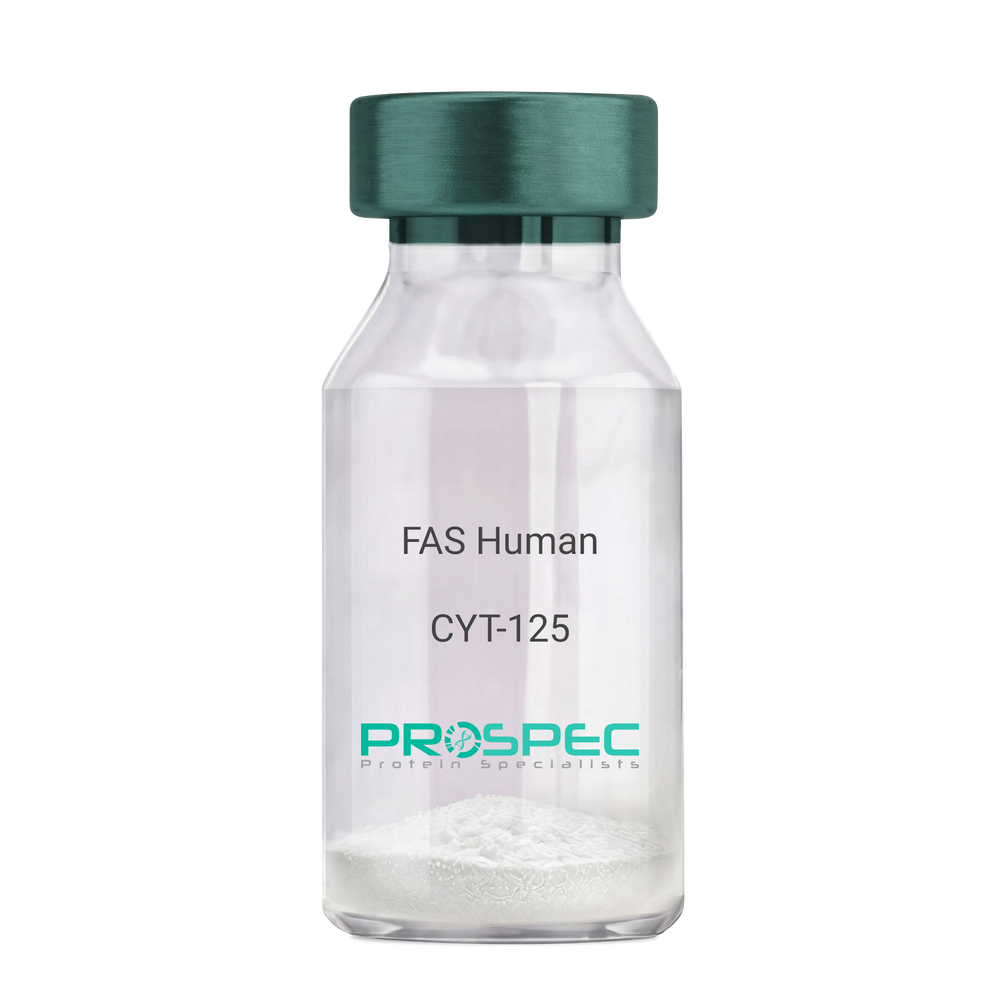
  • View Data Sheet

    Name :

    FAS Human

    Description:

    sFas Receptor Human Recombinant

    Tumor necrosis factor receptor superfamily member 6, Apo-1 antigen, Apoptosis-mediating surface antigen FAS, FASLG receptor, CD95, FAS, APT1, FAS1, APO-1, FASTM, ALPS1A, TNFRSF6.

    Product # :

    CYT-125

    Price :

    Quantity :

    Shipping Method :

    Room Temp Icon

    Shipped at Room temp

    Add To Cart

    More Info

    • description
    • source
    • formulation
    • purity
    • biological activity
    • More Info

    Description

    sFas Receptor Human Recombinant produced in E.coli is a single, non-glycosylated polypeptide chain containing 157 amino acids and having a molecular mass of 17.6kDa.The FAS is purified by proprietary chromatographic techniques.

    Source

    Escherichia Coli.

    Formulation

    FAS protein was lyophilized from a 0.2µm filtered concentrated solution in 1×PBS, pH 7.4.

    Purity

    Greater than 95.0% as determined by:
    (a) Analysis by RP-HPLC.
    (b) Analysis by SDS-PAGE.

    Biological Activity

    The ED50 was determined by its ability to inhibit the cytotoxicity of Jurkat cells is between 10-15 µg/ml in the presence of 2ng/ml of hFasL.

    More Info

    • Introduction

      Fas and Fas Ligand (FasL) are members of the TNF superfamily and are type I and type II transmembrane proteins, respectively. Binding of FasL to Fas initiates apoptosis in Fas-bearing cells. The apoptosis mechanism involves the recruitment of pro-caspase 8 through an adaptor molecule named FADD followed by processing of the pro-enzyme to active forms. These active caspases subsequently cleave a variety of cellular substrates leading to the eventual cell death. sFasR is able to inhibit FasL-induced apoptosis by acting as a decoy receptor whicht serves as a sink for FasL. The full length Fas Receptor is a 319 a.a type I transmembrane protein, which contains a 157 a.a extracellular domain, a 17 a.a transmembrane domain, and 145 a.a cytoplasmic domain. The mature human Fas ECD shares 55%, 58%, a.a sequence identity with the mouse, rat, Fas, respectively.

    • Synonyms

      Tumor necrosis factor receptor superfamily member 6, Apo-1 antigen, Apoptosis-mediating surface antigen FAS, FASLG receptor, CD95, FAS, APT1, FAS1, APO-1, FASTM, ALPS1A, TNFRSF6.

    • Physical Appearance

      Sterile Filtered White lyophilized (freeze-dried) powder.

    • Stability

      Lyophilized FAS although stable at room temperature for 3 weeks, should be stored desiccated below -18°C. Upon reconstitution FAS should be stored at 4°C between 2-7 days and for future use below -18°C. For long term storage it is recommended to add a carrier protein (0.1% HSA or BSA). Please prevent freeze-thaw cycles.

    • Solubility

      It is recommended to reconstitute the lyophilized FAS in sterile 18M-cm H2O not less than 100µg/ml, which can then be further diluted to other aqueous solutions.

    • Amino Acid Sequence

      MRLSSKSVNA QVTDINSKGL ELRKTVTTVE TQNLEGLHHD GQFCHKPCPP GERKARDCTV NGDEPDCVPC QEGKEYTDKA HFSSKCRRCR LCDEGHGLEV EINCTRTQNT KCRCKPNFFC NSTVCEHCDP CTKCEHGIIK ECTLTSNTKC KEEGSRS.

    • Background

      What is the molecular weight/Mw of FAS Protein?
      FAS Protein has a total Mw of 17.6kDa.

      What is the source or expression system of FAS Protein?
      Escherichia Coli.

      What is the Purity of FAS Protein?
      FAS Protein is >95% pure as determined by SDS-PAGE.

      What is the Biological Activity of FAS Protein?
      The ED50 was determined by its ability to inhibit the cytotoxicity of Jurkat cells is between 10-15 µg/ml in the presence of 2ng/ml of hFasL.

      What is the amino acid sequence of FAS Protein?
      MRLSSKSVNA QVTDINSKGL ELRKTVTTVE TQNLEGLHHD GQFCHKPCPP GERKARDCTV NGDEPDCVPC QEGKEYTDKA HFSSKCRRCR LCDEGHGLEV EINCTRTQNT KCRCKPNFFC NSTVCEHCDP CTKCEHGIIK ECTLTSNTKC KEEGSRS.

      What applications can FAS Protein be used in?
      FAS Protein can probably be used in western blot, ELISA and Lateral Flow.

      What is the endotoxin level for FAS Protein?
      The endotoxin level is minimal, FAS Protein was purified using conventional chromatography techniques..

    ProSpec's products are furnished for LABORATORY RESEARCH USE ONLY. The product may not be used as drugs, agricultural or pesticidal products, food additives or household chemicals.

    Fas Human
  • View Data Sheet

    Name :

    DHH Human

    Description:

    Desert Hedgehog Human Recombinant

    HHG-3, Desert Hedgehog homolog, MGC35145, Desert hedgehog protein, DHH.

    Product # :

    CYT-467

    Price :

    Quantity :

    Shipping Method :

    Ice Icon

    Shipped with Ice Packs

    Add To Cart

    More Info

    • description
    • source
    • formulation
    • purity
    • More Info

    Description

    DHH Human Recombinant produced in E.Coli is a single, non-glycosylated, polypeptide chain containing 197 amino acids (23-198) and having a molecular mass of 22 kDa. DHH is fused to His-tag (20 a.a.) at N-terminus and is purified by proprietary chromatographic techniques.

    Source

    Escherichia Coli.

    Formulation

    DHH solution containing 20mM MES pH-5.5, 0.5mM DTT and 20% glycerol.

    Purity

    Greater than 95.0% as determined by SDS-PAGE.

    More Info

    • Introduction

      DHH is part of the Hedgehog family which encodes signaling molecules that are involved in regulating morphogenesis. DHH protein is a precursor that is autocatalytically cleaved, the N-terminal portion is soluble and contains the signalling activity while the C-terminal portion is involved in precursor processing. Additionally, the C-terminal product covalently attaches a cholesterol moiety to the N-terminal product, restricting the N-terminal product to the cell surface and preventing it from freely diffusing throughout the organism. Defects in DHH protein have been associated with partial gonadal dysgenesis (PGD) accompanied by minifascicular polyneuropathy. DHH plays a role both male gonadal differentiation and perineurial development.
      DHH plays a role in intercellular signaling which is essential for a variety of patterning events during development. DHH functions as a spermatocyte survival factor in the testes & is essential for testes development.

    • Synonyms

      HHG-3, Desert Hedgehog homolog, MGC35145, Desert hedgehog protein, DHH.

    • Physical Appearance

      Sterile filtered colorless solution.

    • Stability

      Store at 4°C if entire vial will be used within 2-4 weeks. Store, frozen at -20°C for longer periods of time. For long term storage it is recommended to add a carrier protein (0.1% HSA or BSA).Please prevent freeze thaw cycles.

    • Amino Acid Sequence

      MGSSHHHHHH SSGLVPRGSH MCGPGRGPVG RRRYARKQLV PLLYKQFVPG VPERTLGASG PAEGRVARGS ERFRDLVPNY NPDIIFKDEE NSGADRLMTE RCKERVNALA IAVMNMWPGV RLRVTEGWDE DGHHAQDSLH YEGRALDITT SDRDRNKYGL LARLAVEAGF DWVYYESRNH VHVSVKADNS LAVRAGG.

    ProSpec's products are furnished for LABORATORY RESEARCH USE ONLY. The product may not be used as drugs, agricultural or pesticidal products, food additives or household chemicals.

    Dhh Human
  • View Data Sheet

    Name :

    FGFR4 Human

    Description:

    Fibroblast Growth Factor Receptor 4 Fc Chimera Human Recombinant

    Fibroblast Growth Factor Receptor 4, EC 2.7.10.1, JTK2, TKF, Tyrosine Kinase Related To Fibroblast Growth Factor Receptor, Hydroxyaryl-Protein Kinase, Protein-Tyrosine Kinase, Tyrosylprotein Kinase, CD334 Antigen, EC 2.7.10, FGFR-4, CD334, FGFR4.

    Product # :

    PKA-233

    Price :

    Quantity :

    Shipping Method :

    Room Temp Icon

    Shipped at Room temp

    Add To Cart

    More Info

    • description
    • source
    • formulation
    • purity
    • biological activity
    • More Info

    Description

    Soluble FGFR-4a (IIIc) Fc Chimera Human Recombinant fused with Xa cleavage site with the Fc part of human IgG1 produced in baculovirus is a heterodimeric, glycosylated, Polypeptide chain and having a molecular mass of 170 kDa. The FGFR4 is purified by proprietary chromatographic techniques.

    Source

    Insect Cells.

    Formulation

    CD334 was lyophilized from a concentrated (1mg/ml) sterile solution containing no additives.

    Purity

    Greater than 90.0% as determined by:
    (a) Analysis by RP-HPLC.
    (b) Analysis by SDS-PAGE.

    Biological Activity

    Determined by its ability to inhibit human FGF acidic-dependent proliferation on R1 cells. The ED50 for this effect is typically at 15.0-30.0 ng/ml.

    More Info

    • Introduction

      Fibroblast growth factors (FGFs) comprise a family of at least eighteen structurally related proteins that are involved in a multitude of physiological and pathological cellular processes, including cell growth, differentiation, angiogenesis, wound healing and tumorgenesis. The biological activities of the FGFs are mediated by a family of type I transmembrane tyrosine kinases which undergo dimerization and autophosphorylation after ligand binding. Four distinct genes encoding closely related FGF receptors, FGF R1 - 4, are known. All four genes for FGF Rs encode proteins with an N-terminal signal peptide, three immunoglobulin (Ig)-like domains, an acid-box region containing a run of acidic residues between the IgI and IgII domains, a transmembrane domain and the split tyrosine-kinase domain. Multiple forms of FGF R1 - 3 are generated by alternative splicing of the mRNAs. A frequent splicing event involving FGF R1 and 2 results in receptors containing all three Ig domains, referred to as the a isoform, or only IgII and IgIII, referred to as the b isoform. Only the a isoform has been identified for FGF R3 and FGF R4. Additional splicing events for FGF R1 - 3, involving the C-terminal half of the IgIII domain encoded by two mutually exclusive alternative exons, generate FGF receptors with alternative IgIII domains (IIIb and IIIc). A IIIa isoform which is a secreted FGF binding protein containing only the N-terminal half of the IgIII domain plus some intron sequences has also been reported for FGF R1. Mutations in FGF R1 - 3 have been found in patients with birth defects involving craniosynostosis. The complex patterns of expression of these receptors as well as the specificity of their interactions with the various FGF ligand family members are under investigation.

    • Synonyms

      Fibroblast Growth Factor Receptor 4, EC 2.7.10.1, JTK2, TKF, Tyrosine Kinase Related To Fibroblast Growth Factor Receptor, Hydroxyaryl-Protein Kinase, Protein-Tyrosine Kinase, Tyrosylprotein Kinase, CD334 Antigen, EC 2.7.10, FGFR-4, CD334, FGFR4.

    • Physical Appearance

      Sterile Filtered White lyophilized (freeze-dried) powder.

    • Stability

      Lyophilized FGFR4 although stable at room temperature for 3 weeks, should be stored desiccated below -18°C. Upon reconstitution FGFR4 should be stored at 4°C between 2-7 days and for future use below -18°C.For long term storage it is recommended to add a carrier protein (0.1% HSA or BSA).Please prevent freeze-thaw cycles.

    • Solubility

      It is recommended to reconstitute the lyophilized FGFR-4 in sterile PBS not less than 100 µg/ml, which can then be further diluted to other aqueous solutions.

    ProSpec's products are furnished for LABORATORY RESEARCH USE ONLY. The product may not be used as drugs, agricultural or pesticidal products, food additives or household chemicals.

    Fgfr4 Human
  • View Data Sheet

    Name :

    PECAM1 Human

    Description:

    Platelet Endothelial Cell Adhesion Molecule 1 Human Recombinant

    Platelet endothelial cell adhesion molecule, PECAM1, CD31, CD31/EndoCAM, endoCAM, GPIIA', PECA1, PECAM-1, Platelet Endothelial Cell Adhesion Molecule 1.

    Product # :

    CYT-924

    Price :

    Quantity :

    Shipping Method :

    Ice Icon

    Shipped with Ice Packs

    Add To Cart

    More Info

    • description
    • source
    • formulation
    • purity
    • More Info

    Description

    PECAM1 Human Recombinant produced in Sf9 Baculovirus is a single, non-glycosylated polypeptide chain containing 582 amino acids (28-601a.a.) and having a molecular mass of 65.5kDa (Migrates at 70-100kDa on SDS-PAGE under reducing conditions).PECAM1 is fused to an 8 amino acid His-tag at C-terminus & purified by proprietary chromatographic techniques.

    Source

    Sf9, Baculovirus cells.

    Formulation

    PECAM1 protein solution (0.25mg/ml) containing Phosphate Buffered Saline (pH 7.4) and 10% glycerol.

    Purity

    Greater than 95.0% as determined by SDS-PAGE.

    More Info

    • Introduction

      Platelet endothelial cell adhesion molecule (PECAM1) induces susceptibility to atherosclerosis. PECAM1 averts phagocyte ingestion of closely apposed viable cells by transmitting detachment signals, and transforms function upon apoptosis, thus promoting tethering of dying cells to phagocytes. The encounter of a viable cell with a phagocyte via the homophilic interaction of PECAM1 on both cell surfaces as a result causing the viable cell's active repulsion from the phagocyte.

    • Synonyms

      Platelet endothelial cell adhesion molecule, PECAM1, CD31, CD31/EndoCAM, endoCAM, GPIIA', PECA1, PECAM-1, Platelet Endothelial Cell Adhesion Molecule 1.

    • Physical Appearance

      Sterile filtered colorless solution.

    • Stability

      Store at 4°C if entire vial will be used within 2-4 weeks. Store, frozen at -20°C for longer periods of time. For long term storage it is recommended to add a carrier protein (0.1% HSA or BSA).Avoid multiple freeze-thaw cycles.

    • Amino Acid Sequence

      QENSFTINSV DMKSLPDWTV QNGKNLTLQC FADVSTTSHV KPQHQMLFYK DDVLFYNISS MKSTESYFIP EVRIYDSGTY KCTVIVNNKE KTTAEYQVLV EGVPSPRVTL DKKEAIQGGI VRVNCSVPEE KAPIHFTIEK LELNEKMVKL KREKNSRDQN FVILEFPVEE QDRVLSFRCQ ARIISGIHMQ TSESTKSELV TVTESFSTPK FHISPTGMIM EGAQLHIKCT IQVTHLAQEF PEIIIQKDKA IVAHNRHGNK AVYSVMAMVE HSGNYTCKVE SSRISKVSSI VVNITELFSK PELESSFTHL DQGERLNLSC SIPGAPPANF TIQKEDTIVS QTQDFTKIAS KSDSGTYICT AGIDKVVKKS NTVQIVVCEM LSQPRISYDA QFEVIKGQTI EVRCESISGT LPISYQLLKT SKVLENSTKN SNDPAVFKDN PTEDVEYQCV ADNCHSHAKM LSEVLRVKVI APVDEVQISI LSSKVVESGE DIVLQCAVNE GSGPITYKFY REKEGKPFYQ MTSNATQAFW TKQKASKEQE GEYYCTAFNR ANHASSVPRS KILTVRVILA PWKKVEHHHH HH.

    ProSpec's products are furnished for LABORATORY RESEARCH USE ONLY. The product may not be used as drugs, agricultural or pesticidal products, food additives or household chemicals.

    Pecam1 Human
  • 1
  • …
  • 40
  • 41
  • 42
Your browser does not support the video tag.

Products

  • Cytokines
  • Growth Factors
  • Chemokines
  • CD Antigens
  • Neurotrophins
  • Hormones
  • Enzymes
  • Viral Antigens
  • Recombinant Proteins
  • Natural Proteins
  • Monoclonal Antibodies
  • Polyclonal Antibodies
  • Thermal Packaging

About

  • Company
  • Founder
  • Contribution
  • Contact Us
  • My Account

Ordering

  • Ordering Method
  • Ordering - Credit Card
  • Ordering PO
  • Shipping Fees
  • FAQ's

Legal

  • Terms & Conditions
  • Privacy
  • Site Map
  • info@prospecbio.com
  • Facebook
  • Instagram
  • Linkedin Profile

© 2026 ProSpec-Tany TechnoGene Ltd. All Rights Reserved.

  • Choosing a selection results in a full page refresh.
  • Opens in a new window.